"From the first fuzzed out note of guitar on this record you'll know you're dealing with two heavy instrumental Psychedelic Funk sides. For our 14th regular release, we reached back into our acetate archive to bring you the never heard before Chordata. This recording seems to be related tangentially to Mancefield & Brother Man Band. And though we believe the group is likely from NJ/NY, we haven't been able to pin it down.
""Super Dynamite"" on the a-side features heavy guitar work, punchy horn stabs and arrangements, and heavy percussion. And what great Funk song doesn't have a drum break? Two thirds of the way through the side, Chordata delivers a pure drum and percussion break that extends while the guitar player and horns add a discordant layer to the mix.
The b-side, ""What It Is"" takes us on a jazzy trip that is like a group of teenagers dropping acid and trying to recreate a mix of Miles Davis' ""Bitches Brew"" and a lost Funkadelic session. It’s heavy, sonic, drenched in sweat, and amazing. The guitar player goes off on this side and is the focus. And while this is a less accessible recording, it might end up being your favorite side after repeated listens. "
quête:the teenager
"From the first fuzzed out note of guitar on this record you'll know you're dealing with two heavy instrumental Psychedelic Funk sides. For our 14th regular release, we reached back into our acetate archive to bring you the never heard before Chordata. This recording seems to be related tangentially to Mancefield & Brother Man Band. And though we believe the group is likely from NJ/NY, we haven't been able to pin it down.
""Super Dynamite"" on the a-side features heavy guitar work, punchy horn stabs and arrangements, and heavy percussion. And what great Funk song doesn't have a drum break? Two thirds of the way through the side, Chordata delivers a pure drum and percussion break that extends while the guitar player and horns add a discordant layer to the mix.
The b-side, ""What It Is"" takes us on a jazzy trip that is like a group of teenagers dropping acid and trying to recreate a mix of Miles Davis' ""Bitches Brew"" and a lost Funkadelic session. It’s heavy, sonic, drenched in sweat, and amazing. The guitar player goes off on this side and is the focus. And while this is a less accessible recording, it might end up being your favorite side after repeated listens. "
Black Vinyl[21,13 €]
Bathed in a green haze, the crowd oozed to the mutant rock and roll roaring from the basement's dusty depths — everything and everyone was sweaty and sticky. But as Speedy Ortiz crammed into the back corner, their grins just inches away from ours, D.C.’s Dougout became a moshed-and-sloshed sauna of 20-somethings delirious on rock euphoria.
After spending much of the new millennium bored out of my skull by network soap indie, Speedy Ortiz — not to mention its pals in Pile, Ovlov, Grass is Green and the rest of New England’s burgeoning basement scene — was rock's wild howl. The songs were unpredictable, yet weirdly memorable, swaggering with a winky and wry sense of self. Riffs would twist with a topsy tenderness, then slam a ruptured discord. Sadie Dupuis' sphinxian-yet-sensitive lyrics were not only matched but accentuated by her coil-sprung vibrato. How could Speedy Ortiz not immediately become my new favorite band?
What began as a short-lived solo project recorded in Dupuis' off-hours as a rock camp counselor became a four-piece band in Northampton, Mass., by the end of 2011: Dupuis on guitar and vocals with drummer Mike Falcone, bassist Darl Ferm and guitarist Matt Robidoux. They made cool mixtapes, cracked inside jokes and gushed about teenagers that opened for them on tour. They freaked out (via LiveJournal) when they met the bassist from Polvo or Helium's Mary Timony, but also rolled their eyes at '90s indie-rock comparisons. The band's first single — the gender-bending got-laid grunge yowler "Taylor Swift'' — elicited that rare response of the simultaneous giggle and headbang. The Sports EP amped up the taut yet rubbery riffery.
Released July 9, 2013, Major Arcana is filled with wedding chapel exorcisms, oiled-down attractants and criminally twisted puny little villains — this is Dupuis' haunted lexicon as she scales the toxic Aggro Crag of a breakup. And while Dupuis wrote these songs, the band's convulsing arrangements and diverse influences sprawled the squigglier edges of feedbacked fuzz to mete out matters of the heart. Falcone — who, it's worth noting, has a knack for vocal harmony — swung as much as he smashed the drums. In easily tipoverable songs, Ferm's burly bass and percussive overdubs gave the unruly glee its momentum. Robidoux ripped skronky guitar solos and countered Dupuis' riffs with decorative splatter. Over a four-day marathon session at Sonelab in Easthampton, recording engineer Justin Pizzoferrato sparked the studio imagination of Speedy Ortiz — not only leaning into gritty tones but layer-caking dense dynamics that made these songs pop and pulverize.
For all her sweet-toothed seething, Dupuis was not easy on herself. Everyone's allowed the idiot growing pains of your 20s and the misery that follows, but I can only imagine the emotional exhaustion that playing these songs on the road, night after night, must have wrought. "But you left something on my lips: a mark so sick," she repeats over the doomy destruction that ends the album. Thinking back to the many Speedy Ortiz shows I caught in those early years, including an unofficial after-after party for my own wedding, "MKVI" often served as the noisy down-and-out closer — heads would bang in solidarity as the crowd became co-authors in the chaos, the biting phrase now a hex, Speedy Ortiz forever our coven. —Lars Gotrich
To celebrate the 10th Anniversary of Major Arcana, Speedy Ortiz release a remastered edition on Carpark Records.
NEA Jazz Master, Toots Thielemans, is widely considered to be the preeminent jazz harmonica
player. It is safe to say that before him, the harmonica in jazz was simply not done, and Thielemans
can be credited with legitimizing the instrument in the genre. Born in Brussels, Belgium in 1922.
Theileman’s excelled on accordion as a small child, before picking up the guitar as a teenager after
hearing Django Reinhart. Along the way, he taught himself to play harmonica as a hobby. In 1948,
during a visit to the US, he sat in on guitar with a jazz group at small club in New York and was
“discovered.” Engagements soon followed with the likes of Benny Goodman, Charlie Parker, Miles
Davis, Oscar Peterson, Dizzy Gillespie, Quincy Jones and more. As the story goes, in response to a
musicians’ union restriction, Thielemans was forbidden to play guitar at a gig. So, he pulled out his
harmonica. The rest, as they say, is history. He went on to have a long and prolific career on the
instrument, as both a band leader and session musician. With his unique sound, he became a go-to
for film scores in the 1970s (The Pawn Broker, Midnight Cowboy). Perhaps most notably, Thielemans
is unconsciously known to generations for having played the melody on Sesame Street’s famous
closing theme. Organized as a purely jazz session, the date here prominently features a young Joanne
Brackeen on piano. It is perhaps Brackeen’s presence that makes this set so interesting. As an
avant-garde player she provides the vehicle for Thielemas to explore more advanced ideas. The
album covers a wide range of material, including two originals by Brackeen, alongside standards by
Coltrane, Ellington, Mercer and Mancini.
Hadsel ist das erste neue Album seit Beiruts 2019 veröffentlichtem "Gallipoli". Aufgenommen auf der norwegischen Insel Hadsel, kurz nachdem ein körperlicher und mentaler Zusammenbruch Condon dazu zwang, seine Tournee für 2019 abzusagen, suchte er nach einem Ort, an dem er sich erholen konnte, nachdem er sich in einem Zustand des Schocks und der Selbstzweifel befand. In der Isolation arbeitend, erklärt Condon: "Ich war in einer Trance verloren. Ich stolperte blindlings durch meinen eigenen mentalen Zusammenbruch, den ich seit meiner Teenagerzeit verdrängt hatte. Er kam und läutete mich wie eine Glocke. Ich quälte mich mit vielen Dingen der Vergangenheit und der Gegenwart, während die Schönheit der Natur, die Nordlichter und die furchterregenden Stürme um mich herum ein beeindruckendes Schauspiel boten. Die wenigen Stunden Licht brachten die unergründliche Schönheit der Berge und Fjorde zum Vorschein, und die stundenlange Dämmerung erfüllte mich mit gedämpfter Erregung. Ich würde gerne glauben, dass die Landschaft irgendwie in der Musik präsent ist. Das Ergebnis ist eine Sammlung von Liedern, die diese Verletzlichkeit, den Sinn für Selbstbestimmung und den Glauben daran, dass man nach einem Zusammenbruch wieder lernen kann, allein zurechtzukommen, auf wunderbare Weise widerspiegeln."
Australian rock band Tonight Alive burst onto the scene in 2008 as teenagers, blending power pop and rock, quickly finding success with their debut album, ‘What Are You Scared Of?’, and becoming a crowd favourite at festivals like the Vans Warped Tour and Bamboozle. ‘Underworld’ is the band’s final and most organic album yet, a raw and real insight to a band reconnecting with their authentic selves. One of the songs that emerged from the sessions is ‘Temple’, the song that launched the new era of the band and one written when lead vocalist Jenna McDougall was experiencing severe depression and fatigue - the lyrics penned when she was totally entrapped in being sick in her mind, body and soul. The rawness of the song became an anthem at BBC Radio 1 (debuting as the Rockest Record Of The Week). The album takes the listener on an emotional journey of the underworld we all have within us, dissecting our internal darkness and discovering peace. Songs like ‘Disappear’ featuring guest vocals from Lynn Gunn (PVRIS) and ‘My Underworld’, a stirring duet with Corey Taylor (Slipknot / Stone Sour) showcase the diversity of the band’s sound and triumphantly scream to the world that Tonight Alive will always live on. For fans of PVRIS, All Time Low, You Me At Six, Pierce The Veil, Paramore.
La preuve is a rearguard action. Most of the people who inspired it are dead or retired. Old teenagers flay their former loves. They bear witness to a bygone era, but happily embraced, digested and spat out. Everything was still possible. Or possible at last. Psychedelia opened the doors of perception. Romanticism wasn't relegated to a dull formatting, a cheese without a rind. The group Poudingue, which started out ten years ago, has some fine leftovers. These are the crumbs from purgatory.
The proof (la preuve, in French) is in the pudding (poudingue, in French) is an expression coined by Friedrich Engels meaning that the value, quality or truth of something must be judged on the basis of direct experience or its results. The expression is a modification of an old saying that makes the meaning a little clearer: the proof of the pudding is in the eating.
Nicolas CHEDMAIL – vocals, guitar, bass, keyboard, trumpet, French horn, trombone, helicon, pipes, flute, siren, alto sax, harmonica, melodica, violin, cello, shahi baaja, sanza / texts 2 4 5 6 9 10 / music 1 to 10 Frédéric MAINÇON – guitar, vocals / texts 1 3 7 8 9 / music 3 4 7 8 9 Jean-Jacques BIRGÉ – synthesizer, sampler, effects, field recording, erhu, inanga, shahi baaja, waldteufel, vocals / music 1 3 4 5 9 Guest: Benjamin SANZ – drums
Debut album from The Goa Express, led by Clarkey alongside his brother Joe and best friends Joey, Naham and Sam They met as young teenagers in Burnley - growing up in the rural shadow of England's industrial north, music was a means of escape and a vessel for friendship. Their shared adolescent experiences shaped their collective attitudes and behaviours and, ultimately, the sound and spirit of their band. 6music playlists and Radio 1 support has followed along with a heavy touring scheduleeoAgCwAgA&sourceid=chrome&ie=UTF-8
Midwestern psychiatrist Suzanne Mathis' world is turned upside down when she decides to protect Mae, a fragile teenager on the run from a cult. As Suzanne’s daughter Jules begins to suspect there’s more to Mae’s story, a series of incidents – seemingly brought on by Mae’s presence - leave the family in chaos. Soon the Mathis family is fighting for survival against a strange cult while Suzanne and a local police detective try to unravel the clues of Mae’s past and sinister happenings in the town she escaped. Adapted from Daria Polatin’s best-selling book inspired by true events, DEVIL IN OHIO is a thrilling, shocking tale of demonic mayhem and mystery in the heart of small-town America.
British composer Will Bates incredible work on DEVIL IN OHIO began with a hymn for the cult, written before shooting. It expanded with songs for Bishop Briggs and Maiah Manser, with melodies for hurdy-gurdy and synth, until it became a haunting world of its own, blending score, soundtrack and diegesis. Now, together with Netflix Music, we’re excited to release DIO’s first-ever full-length soundtrack on vinyl.
- A1: The Man Made Of Stone 07:01:00
- A2: Window To The World 03:58:00
- A3: What Awaits Me 05:22:00
- B1: He Once Was 12:17:00
- B2: Underneath The Orphan Moon 03:53:00
- B3: Clouds That Never Rain 05:17:00
- C1: Bulletproof 04:17:00
- C2: Somewhere North Of Nowhere 06:46:00
- C3: Summoned From Afar 07:33:00
- C4: Love Is Still The Light 04:42:00
- D1: There Goes My Baby 03:50:00
- D2: Orphans Of The Universe 10:39:00
- D3: Elegant Vampires 04:27:00
Pattern-Seeking Animals sind eine bahnbrechende Prog-Rock-Band, die die Grenzen der musikalischen Erkundung immer mehr erweitert. Bestehend aus John Boegehold, Ted Leonard, Dave Meros und Jimmy Keegan, fesselt die Band mit komplexen Kompositionen. Auf ihrem 4. Album nähern sie sich neuen Klangwelten und Themen, die sie mit der DNA ihrer bisherigen Arbeit zu ihrem bisher einprägsamsten und stärksten Album kombinieren. Boegehold erklärt: "Da dies unsere vierte Veröffentlichung in weniger als 5 Jahren ist, war es meine Absicht, nicht über bereits bekanntes Terrain zu gehen. Wir haben andere Sounds, Texturen und Musikstile verwendet und sind auch ganz anders an den Gesang herangegangen." Der neue Ansatz macht sich nicht nur in Produktion und Sound bemerkbar, sondern auch bei den Texten. "Die Themen umfassen einen nordischen König, der über das Leben nachdenkt, während er erobert wird, einen alternden Sucher auf dem Weg zur Erleuchtung, Außerirdische, die Menschen jagen und sich der Gefangennahme entziehen, einen konfliktbeladenen Soldaten vor und nach dem Ersten Weltkrieg, eine schwangere Teenagerin, die eine schlimme Situation zu Hause hinter sich lässt, einen widerwilligen Helden, der in seiner letzten Schlacht siegt, und die Freundin eines Mannes, die ihn wegen seiner Verschwörungstheorien verlässt." Die Fans werden mit der ersten Single "Window to the World", einem energiegeladenen Up-Tempo-Art-Rock mit einem Hauch von Ska und Reggae, etwas Neues erleben. "Somewhere North of Nowhere" ist ein geradliniger Prog-Song mit einzigartigem Bridge-Teil. "Underneath the Orphan Moon" ist eine düstere Ballade über ein Teenager-Mädchen, das einer schlimmen Situation entflieht. Der stimmungsvolle und cineastische Song erinnert an einen klassischen Elton-John-Song, mit echter Streichergruppe. Das Album ist erhältlich als Ltd. 2CD Digipak und Digitalalbum (inkl. 3 Live-Bonustracks von ProgStock 2022) und als 2LP Gatefold 180g (inkl. 2 Live-Bonustracks von ProgStock 2022).
Der prägende Sound von Martin Rev, der vor allem im Zusammenspiel mit seinem langjährigen musikalischen Partner Alan Vega und der gemeinsamen Band Suicide in seiner Radikalität und Einzigartigkeit zu einem Einfluss für mehrere Generationen von Musikern werden sollte, findet seinen Ursprung insbesondere in der essentiellen Energie des Rock"n"Rolls, der Rev als Teenager prägte und so etwas wie die musikalische Entsprechung der urbanen Atmosphäre seiner Heimatstadt New York war. Nachdem Rev zunächst im Free Jazz und freier Musik nach neuen musikalischen Ausdrucksformen suchte, entwickelte er rasch eine Faszination für die elektronische Klangerzeugung, die es ihm ermöglichte, völlig alleine und autark zu arbeiten. Er experimentierte mit einfachstem Equipment, kombinierte verschiedene Geräte und Effekte und übersetzte so die Wurzeln des Rock"n"Rolls in einen neuen, bisher ungehörten elektrisierenden Sound, der sowohl der Beginn von Suicide als auch einer spannenden Solo-Karriere sein sollte. Die vorliegende Sammlung "The Sum of Our Wounds" umfasst verschiedenste Aufnahmen, die zwischen 1973 und 1985 entstanden. Dabei ist die Zusammenstellung weitaus mehr als nur eine Kollektion von Demos und Outtakes; vielmehr hat man das Gefühl, ein in sich geschlossenes Album zu hören und sich selbst Kompositionen, die einem bereits bekannt sind, gänzlich neu zu erschließen. Die Kassettenstücke besitzen in ihrer spröden Brüchigkeit eine große Sensibilität, eben wie eine Sammlung von Verwundungen.
RIYL: The Fall, Royal Trux, The Dead C, Shirley Collins, ’70s British progressive rock, Dean Blunt.
Throughout their legendary, decade-long run, the Shadow Ring were an enigmatic force on the international musical sub-underground. Before their disbandment in 2002, this shambolic rock outfit, formed by a group of rowdy teenagers in southeast England, left behind a mighty run of eight LPs, a handful of 7"s, and a spate of raucous live shows and cryptic zine appearances on both sides of the Atlantic, all which have bolstered their enduring word-of-mouth mystique. Beginning this year with the first-ever vinyl pressing of the self-released pre-Shadow Ring tape The Cat & Bells Club (1992), Blank Forms Editions is conducting a systematic retrospective of the storied group, including a multi-year LP reissue effort and a forthcoming comprehensive CD box set and an over five hundred page book. Recorded in summer of 1994 at S.H.P studios (frontman Graham Lambkin’s parents’ home), the group’s sophomore record Put the Music In Its Coffin is a more sinister, saturnine affair than their debut City Lights. Coffin was many listeners’ introduction to the Shadow Ring, who had hitherto self-released their music, courting a steady stable of international fans through the magazine and mail-order catalog Forced Exposure. For their follow-up, the duo reached out to the ascending Philadelphia label Siltbreeze, whose eclectic roster of sneering, low-fidelity rock and noise connected disparate subterranean scenes from rust-belt America to the English Midlands, Dunedin, and beyond. As luck would have it, Siltbreeze proprietor Tom Lax was already a fan of the band’s first record and arranged to release both a 7” and their “difficult second album.” The connection proved to run deeper than vinyl within six months, Lax would pick up the pair from the airport for their spring 1995 US tour. This episode marked not only their first trip to the States but their first live performances at all, formally introducing the Shadow Ring to the American underground and solidifying the allure of the Folkestone pair. From the get-go, the record has a menacing, vile ambience. Its opening track “Horse-Meat Cakes,” inspired by an anecdote by pulp author Philip K. Dick about how he and his wife subsisted off low-grade pet food when he first arrived in San Francisco, sets the tone lyrically and sonically. Subsequent tracks are filled with Rabelaisian body horror and sinewy, haptic diction. “I try to pass out vital organs, convinced that they are waste,” intones Lambkin in “Heart, Liver & Lungs,” before a chorus of detuned guitars kicks in, nearly drowning out the speaker’s account of consuming chevaline intestines. Later songs similarly detail vernacular cooking (“Caribbean Porridge,” about a cornmeal hangover cure), bodily processes (“Nocturnal Middle Rumbles,” about nighttime defecation), and creaturely conflict (“Crystal Tears” and “Spin The Animal Dial”). The album’s makeshift percussion and teenaged rawness resembles the verve of City Lights, while its screeching strings and gnarly distorted vocals give it a sparse, miasmic atmosphere that look towards the uncompromising, otherworldly experimentation of the band’s Hold Onto I.D. (1996) and Lighthouse (1997), making this one of the Shadow Ring’s most distilled musical statements
Throughout their legendary, decade-long run, the Shadow Ring were an enigmatic force on the international musical sub-underground. Before their disbandment in 2002, this shambolic rock outfit, formed by a group of rowdy teenagers in southeast England, left behind a mighty run of eight LPs, a handful of 7"s, and a spate of raucous live shows and cryptic zine appearances on both sides of the Atlantic, all which have bolstered their enduring word-of-mouth mystique. Beginning this year with the first-ever vinyl pressing of the self-released pre-Shadow Ring tape The Cat & Bells Club (1992), Blank Forms Editions is conducting a systematic retrospective of the storied group, including a multi-year LP reissue effort and a forthcoming comprehensive CD box set and an over five hundred page book. Recorded and self-released by the group's own Dry Leaf Discs in 1993, City Lights is the debut record of the then duo Graham Lambkin and Darren Harris_an assured arrival statement teeming with stripling angst and ambition. Lifelong chums Lambkin and Harris were barely nineteen and living at home in the seaside town of Folkestone, Kent, with few overhead expenses. The two were freshly employed as a forklift operator at a hardware store and an aide at a home for children with disabilities, respectively, affording them the time and funds to commit to a proper full-length release. Frontman Lambkin describes the album as a "microscopic examination of leisure activities, this time centered around a nightclub," a conceit surging through its lyrics, song titles, cover art (depicting an audience of cats and mice at the Leas Club, a Folkestone fixture), and flip side (replete with fictional bandmates and pseudonymous liner notes). On a recently-acquired secondhand guitar, Lambkin plays repetitive, brooding licks that form the record's backbone, weaving in and out of sync with Harris's free-form percussion and the pair's sing-song poetry. Tracks range from unraveling nursery-rhyme ditties to extended jams awash with Casiotone and toy piano noodling. The duo's musical hobby-horses work themselves in: the influence of Mark E. Smith's breathless deadpan, the headless outer-edges of ESP-Disk's back catalog, the eerie atmospherics of Hirsche Nicht Aufs Sofa, and the deconstructed rock tunes of the Dunedin scene are all detectable, although there is a sui generis quality to the Shadow Ring's artless temerity. "I've got to see and taste those city lights," intones Lambkin on the album's title track_indeed, this is a record of naked drive and pent-up desperation, and a shimmering glimpse of what's to come. For Fans of The Fall, Royal Trux, The Dead C, Shirley Collins, '70s British progressive rock, Dean Blunt.
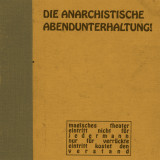
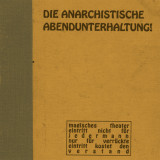
In 1995 the self-titled full-length debut of Die Anarchistische Abendunterhaltung (DAAU) was released. The band consisted of four young, 'classically derailed' musicians who played their own compositions with acoustic instruments such as violin, cello, clarinet and accordion. Their work contained influences from Roma music, Eastern European folk, klezmer and jazz, but was performed with the energy, rebellious spirit and Sturm und Drang of a bona fide punk band. DAAU was part of the fertile Antwerp scene, which also produced dEUS, Zita Swoon and Kiss My Jazz, and soon signed an international record deal with Sony Classical.
The group's influential first record, which has been out of print for a while, is now finally being released again and is available on vinyl for the very first time.
In those early days, DAAU consisted of four young, classically trained musicians who tackled their instrumental compositions with a true punk spirit. 'If we'd had guitars, bass or drums at that time, we would probably have been just another rock band', says accordionist Roel Van Camp, who, together with his schoolmates Buni Lenski on violin, the latter's brother Simon on cello and Han Stubbe on clarinet made up the Antwerp quartet. 'With our acoustic instruments we tried to create our own version of the music we loved listening to, from sixties rock and prog to new wave.'
The quartet, which initially played in streets and cafes, appealed to a diverse audience and sometimes joked that they were a classically trained unit that had 'gone off the rails'. 'As befits teenagers, we wanted to shake things up', Stubbe remembers, 'even though we always kept cherishing our classical backgrounds.' Van Camp: 'Our education was never supposed to feel like a straitjacket. We were free-spirited enough to ignore the laws and regulations of the music academy and to create our own sound. Our compositions were open to influences from Roma music, Eastern European folk, klezmer and jazz'. 'That eclecticism was a direct result of the zeitgeist', Han Stubbe adds. 'We loved different styles and happily mixed them together'.
The monniker Die Anarchistische Abendunterhaltung was derived from Steppenwolf, a novel by German writer Hermann Hesse about a character who was outside society. 'In the book, the narrator talks of a theatre', Van Camp explains. 'And at the entrance there is a warning sign sign that says: if you go in here, you are guaranteed to lose your mind. That was an apt description of the way our music worked'.
Almost all tracks on DAAU's first album were 'Drieslagstelsels' (or 'three-course rotations'). The term referred to an agricultural method of the early Middle Ages, but also to the fact that each song of the group consisted of three major movements. Van Camp: 'The titles of those pieces referred to our method of writing. We piled up a huge bunch of ideas, because we wanted to tell more than just one story. With each composition, we took the listener for a ride'.
In 1995 the self-titled full-length debut of Die Anarchistische Abendunterhaltung (DAAU) was released. The band consisted of four young, 'classically derailed' musicians who played their own compositions with acoustic instruments such as violin, cello, clarinet and accordion. Their work contained influences from Roma music, Eastern European folk, klezmer and jazz, but was performed with the energy, rebellious spirit and Sturm und Drang of a bona fide punk band. DAAU was part of the fertile Antwerp scene, which also produced dEUS, Zita Swoon and Kiss My Jazz, and soon signed an international record deal with Sony Classical.
The group's influential first record, which has been out of print for a while, is now finally being released again and is available on vinyl for the very first time.
In those early days, DAAU consisted of four young, classically trained musicians who tackled their instrumental compositions with a true punk spirit. 'If we'd had guitars, bass or drums at that time, we would probably have been just another rock band', says accordionist Roel Van Camp, who, together with his schoolmates Buni Lenski on violin, the latter's brother Simon on cello and Han Stubbe on clarinet made up the Antwerp quartet. 'With our acoustic instruments we tried to create our own version of the music we loved listening to, from sixties rock and prog to new wave.'
The quartet, which initially played in streets and cafes, appealed to a diverse audience and sometimes joked that they were a classically trained unit that had 'gone off the rails'. 'As befits teenagers, we wanted to shake things up', Stubbe remembers, 'even though we always kept cherishing our classical backgrounds.' Van Camp: 'Our education was never supposed to feel like a straitjacket. We were free-spirited enough to ignore the laws and regulations of the music academy and to create our own sound. Our compositions were open to influences from Roma music, Eastern European folk, klezmer and jazz'. 'That eclecticism was a direct result of the zeitgeist', Han Stubbe adds. 'We loved different styles and happily mixed them together'.
The monniker Die Anarchistische Abendunterhaltung was derived from Steppenwolf, a novel by German writer Hermann Hesse about a character who was outside society. 'In the book, the narrator talks of a theatre', Van Camp explains. 'And at the entrance there is a warning sign sign that says: if you go in here, you are guaranteed to lose your mind. That was an apt description of the way our music worked'.
Almost all tracks on DAAU's first album were 'Drieslagstelsels' (or 'three-course rotations'). The term referred to an agricultural method of the early Middle Ages, but also to the fact that each song of the group consisted of three major movements. Van Camp: 'The titles of those pieces referred to our method of writing. We piled up a huge bunch of ideas, because we wanted to tell more than just one story. With each composition, we took the listener for a ride'.
„Dick This!“ von dem Rockabilly-Projekt Dick Brave and the Backbeats wurde erstmals 2003 veröffentlicht und erreichte Platz 1 der offiziellen deutschen Album-Charts und wurde mit Doppel-Platin ausgezeichnet. In dem Album wurden Pop-Klassiker im Rockabilly-Projekt neu interpretiert. Jetzt wird es als 1LP auf schwarzem Vinyl wieder neu aufgelegt.
- Guy Mitchell - Rock-A-Billy
- Frankie Avalon - De De Dinah
- Gene Vincent - Say Mama
- Buddy Holly & The Crickets - Oh, Boy
- Ernie Freeman - Raunchy
- Conny Francis - Vacation
- Little Richard - Long Tall Sally
- Wanda Jackson - Cool Love
- Fats Domino - Hello Josephine
- Big Bopper - Chantilly Lace
- Dale Hawkins - My Babe
- Elvis Presley - Hard Headed Woman
- Bobby Darin - Splish Splash
- Carl Perkins - Blue Suede Shoes
- Eddie Cochran - Summertime Blues
- Fats Domino - Blueberry Hill
- The Everyl Brothers - Bird Dog
- The Chordettes - Lollipop
- Chick Berry - Roll Over Beethoven
- Frankie Lymon & The Teenagers - Why Do Fools Fall In
- Love
auchen Sie ein in die aufregende Welt des Rock‘n‘Roll . Unsere neue Vinyl-Serie “Rock’n’Roll Hits“ enthält eine sorgfältig ausgewählte Sammlung von 20 originalen Rock‘n‘Roll-Hits aus den 1950er Jahren, die die Ära des Rock‘n‘Rolls in seiner Blütezeit einfangen.
Mit legendären Künstlern und unvergesslichen Songs bietet diese Schallplatte ein Stück Musikgeschichte zum genießen. Mit dabei sind: Guy Mitchell, Frankie Avalon, Buddy Holly, Little Richard, Elvis Presley, Fats Domino uvm. Erleben Sie die Energie und den Spaß der 1950er Jahre Rock‘n‘Roll-Szene auf dieser hochwertigen Vinyl-Schallplatte. Perfekt für Liebhaber der Musikgeschichte und Fans zeitloser Hits.
Es ist vier Jahre her, dass Cherry Glazerr ihr glänzendes drittes Album "Stuffed and Ready" veröffentlicht haben, aber Clementine Creevy hatte es nicht eilig. "Ich habe diese Jahre damit verbracht, mich selbst und meine Beziehungen unter die Lupe zu nehmen und darüber zu schreiben", sagt sie. "Ich schätze, ich komme mit einer Menge Mist klar." Cherry Glazerr ist seit Creevys Highschoolzeit viel unterwegs, und als die Pandemie ausbrach, tauchte sie in eine statische Existenz ein. Creevy beschreibt Cherry Glazerrs ehrgeiziges neues Album "I Don't Want You Anymore" als ihre bisher persönlichste und roheste Musik, eine Sammlung von Songs, die diese Zeit der Selbstaufgabe verarbeiten. Es ist das erste Album, das sie seit Cherry Glazerrs Garage-Rock-Debüt "Haxel Princess" selbst produziert hat, das vor fast einem Jahrzehnt erschien, als Creevy noch ein Teenager war. Creevy beschreibt "I Don't Want You Anymore" als ein "reifes" Album, was mehr mit ihrer persönlichen Entwicklung zu tun hat, als mit dem Album selbst, das in wahrer Cherry Glazerr-Manier am besten als Extremely Fun beschrieben werden kann. Für die Produktion des Albums hat sich Creevy mit dem Produzenten Yves Rothman zusammengetan, der vor allem für seine Arbeit mit Yves Tumor bekannt ist. Die Leadsingle "Soft Like a Flower" ist ein Beispiel für diese Entwicklung. Ein düsteres Gitarrenriff leitet den Track ein, bevor Creevys unverhüllter Gesang einsetzt. Sie singt von einer verzehrenden Besessenheit und wird im Refrain von ihrer langjährigen Bandkollegin Sami Perez unterstützt. Es ist ein stolzes, gefühlvolles Stück, das Creevy einen "Evanescence-Moment" nennt. "Es ist ein echter `losing your fucking shit'-Style", sagt sie. "Ich wollte, dass dieses Album nur aus Herz und Seele besteht. Völlig offen." "I Don't Want You Anymore" nutzt das Element der Überraschung zu seinem Vorteil; jeder Track ist eine radikale Neuinterpretation dessen, was Cherry Glazerr ist und sein kann. "Bad Habit" beginnt mit einer spiralförmigen Gesangsschleife, die Creevy zu Hause aufgenommen hat, und entwickelt sich zu einem delirierenden Downtempo-Dance-Track, ohne dass jemals eine Gitarre zum Einsatz kommt. Der darauf folgende Track "Ready for You" wird im funkigen Stakkato gesungen, und die anfänglich sparsame Bassline in der ersten Strophe wird schließlich von einem massiven, statischen Gitarrenriff überholt, das einen daran erinnert, dass es sich hier im Kern um ein Rockalbum handelt. Dies sind Songs, die das Leben des Hörers untermalen, eine Partitur, die zu jeder Gelegenheit passt. Das titelgebende Stück ist ein Versprechen an eine namenlose Person, aber der sich wiederholende Text in der Bridge könnte genauso gut als Liebesbrief an den Hörer dienen: "In the end, you're always holding me."