The Left Side is the latest body of work from the Iggy Pop-endorsed teens since the release of their acclaimed second EP We Aren’t Getting Out But Tonight We Might in summer 2022. With Saul at the creative helm, The Left Side is a mature and cerebral body of work with Saul once again writing and producing the entire EP (with co-production by Ali Chant (Yard Act, Katy J Pearson, Dry Cleaning) on ‘Conman’ and ‘ITSA’). Written in Saul’s bedroom, the EP is a retrospective insight into the young band’s journey so far as they tie up their teenage years.
A coming of age saga, the EP acts as a vehicle for Saul to dive into the psyche behind emotional evolution, and to unpack the complexities of maturity and the ability to say goodbye to the past. These themes present themselves not only in the songs, but right down to the title of the EP itself - which refers to the fact that the left side of the brain is responsible for comprehension.
Summarising the EP, Saul says: “It’s the closest we have been to knowing what picture we want to paint. It’s another window into the musical space we wish to explore, yet I think we’re closer to having our sound. I think the project signifies the end of a section in our lives, moving out from the haze of the moment and reflecting on our teenage years and all its chaos with more understanding.”
L’objectif have drawn instant acclaim across their two EPs to date with support coming from key tastemakers at 6 Music (where previous single ‘Feeling Down’ was daytime playlisted after being premiered by the station’s Steve Lamacq) such as Amy Lamé, Tom Robinson, and of course Iggy Pop, BBC Radio 1’s Jack Saunders (who made the band his Next Wave featured artist and featured
‘Burn Me Out’ and ‘Do It Again’ as Daily Delivery) and Gemma Bradley, Radio X’s John Kennedy, Apple Music 1’s Matt Wilkinson, and Australian national broadcaster triple j. The effervescent young band have already received ‘ones to watch’ tips from national media outlets NME (First On), The Line Of Best Fit (On The Rise), The Observer (One to watch), The Sunday Times Culture (Breaking Act), and more.
Search:the young p
This is The Wreckery album that never was but always should have been!
At the crest of the Australian post punk era, The Wreckery played atmospheric rock with film-noir swagger and renegade attitude, carving a loyal following. Critics quickly positioned them as successors to a darkly exciting avant-garde Melbourne tradition previously marked out by The Birthday Party.
Early recordings for Rampant Records (1985-87) showcased The Wreckery's fusion of swamp blues and noir-jazz, delivered with a deadpan, reckless, and romantic cut (check out the 'Ruling Energy' video!). Creative tensions saw the band implode as they were reaching their peak with the Laying Down Law album (Citadel Records, 1988). Yet another great and dangerous rock 'n' roll band who became a danger to themselves.
35 years later, the new album Fake is Forever delivers on unfulfilled promises, revealing The Wreckery on fire like never before. The DNA is still there – the signature sound of Charles Todd's baritone sax; the scathing lyrics and vocals of Hugo Race; the distorted angular guitars of Clayton-Jones; the eclecticism of multi-instrumentalist Robin Casinader; Nick Barker and former Plays With Marionettes drummer Frank Trobbiani fuse as the solid engine room of this iconic group. All the original edge with a new maturity and control.
The songs still emanate from the deep, dark end of the musical gene pool. The sarcastic, provocative lyrics of 'Smack Me Down', 'Get A Name' and 'Young People'; the musical fury of 'Stole it from Alpha Ray' and 'Evil Eye', the romantic melodrama of 'The Devil in You' and 'Whistle Clean', the deranged rock of 'Dragonfly' and 'Garbage Juice' – The Wreckery's range is as vast as it is ferocious. Whereas the band in the 80's were brash and angry this record finds the band conjuring quiet menace, sensual, intoxicating.
Hugo Race – vocals, guitars, keys
Ed Clayton-Jones - guitar, piano, synth, Mellotron, slide guitar , Solina string synth
Nick Barker – bass guitar and backing vocals
Charles Todd - the saxophones
Robin Casinader - Hammond organ, mellotron, mandolin and violin
Frank Trobbiani - the drums and percussion
Recorded by Andrew 'Idge' Hehir at Soundpark Studios, Melbourne
Mixed by Hugo Race at Helixed
Mastered by Toto Strapporava at 3Faders Studio, Buenos Aires
Published by Peermusic
This is The Wreckery album that never was but always should have been!
At the crest of the Australian post punk era, The Wreckery played atmospheric rock with film-noir swagger and renegade attitude, carving a loyal following. Critics quickly positioned them as successors to a darkly exciting avant-garde Melbourne tradition previously marked out by The Birthday Party.
Early recordings for Rampant Records (1985-87) showcased The Wreckery's fusion of swamp blues and noir-jazz, delivered with a deadpan, reckless, and romantic cut (check out the 'Ruling Energy' video!). Creative tensions saw the band implode as they were reaching their peak with the Laying Down Law album (Citadel Records, 1988). Yet another great and dangerous rock 'n' roll band who became a danger to themselves.
35 years later, the new album Fake is Forever delivers on unfulfilled promises, revealing The Wreckery on fire like never before. The DNA is still there – the signature sound of Charles Todd's baritone sax; the scathing lyrics and vocals of Hugo Race; the distorted angular guitars of Clayton-Jones; the eclecticism of multi-instrumentalist Robin Casinader; Nick Barker and former Plays With Marionettes drummer Frank Trobbiani fuse as the solid engine room of this iconic group. All the original edge with a new maturity and control.
The songs still emanate from the deep, dark end of the musical gene pool. The sarcastic, provocative lyrics of 'Smack Me Down', 'Get A Name' and 'Young People'; the musical fury of 'Stole it from Alpha Ray' and 'Evil Eye', the romantic melodrama of 'The Devil in You' and 'Whistle Clean', the deranged rock of 'Dragonfly' and 'Garbage Juice' – The Wreckery's range is as vast as it is ferocious. Whereas the band in the 80's were brash and angry this record finds the band conjuring quiet menace, sensual, intoxicating.
Hugo Race – vocals, guitars, keys
Ed Clayton-Jones - guitar, piano, synth, Mellotron, slide guitar , Solina string synth
Nick Barker – bass guitar and backing vocals
Charles Todd - the saxophones
Robin Casinader - Hammond organ, mellotron, mandolin and violin
Frank Trobbiani - the drums and percussion
Recorded by Andrew 'Idge' Hehir at Soundpark Studios, Melbourne
Mixed by Hugo Race at Helixed
Mastered by Toto Strapporava at 3Faders Studio, Buenos Aires
Published by Peermusic
96kHz - 48-bit HD Audio with digital booklet including original photography by Christopher Kayfield and liner notes by Shaun Brady.
Pianist Kevin Hays, bassist Ben Street, and drummer Billy Hart reunite for a second, scintillating trio date, BRIDGES, featuring original compositions by Hays and Hart with classics by Wayne Shorter, Bill Frisell, The Beatles, and Milton Nascimento.
Hays Street Hart, the trio of pianist Kevin Hays, bassist Ben Street, and legendary drummer Billy Hart, recorded their acclaimed 2021 debut, ALL THINGS ARE, under less than optimal conditions. The album began life as a performance in honor of Hart’s 80th birthday in December 2020, live-streamed from an empty Smoke Jazz Club in the final weeks of that grueling pandemic year. Despite those adversities, the music they created that night was spectacular enough to convince all involved that it should be released.
Two years later, the trio has reconvened, this time fully cognizant that they were going to record an album at Sear Sound Studios in NYC. The captivating BRIDGES brilliantly spotlights the unique chemistry and shared spirit of exploration that emerged fully formed on that initial impromptu session. The title succinctly hints at some of the reasons why Hays, Street and Hart work so well together: this is a trio that bridges generations, certainly, as well as a wealth of diverse experience and inspiration. But it also sums up a mutual desire to bring people together through music.
“In this world that seems to be crumbling beneath our feet,” Hays explains, “we sense the need to make allies where there might be adversaries. On the most intimate level, interpersonally and inter-psychically we set out to overcome any number of misunderstandings and adversarial situations.”
Not that there was any antagonism to overcome within the trio itself. More than anything, Hays Street Hart is a mutual admiration society of the highest order. The esteem in which the pianist and bassist hold Billy Hart likely goes without saying. The drummer was ordained in 2022 as an NEA Jazz Master, just one of the many honors he has chalked up over a breathtaking career. He began his career with an apprenticeship under the revered vocalist Shirley Horn and went on to make notable music with such luminaries as Miles Davis, McCoy Tyner, Herbie Hancock, Wes Montgomery, Jimmy Smith, Stan Getz, and as part of the quartet Quest featuring David Liebman and Richie Beirach.
But Hart is if anything, even more laudatory toward his younger bandmates. Street has been a member of the drummer’s stellar quartet for two decades, alongside pianist Ethan Iverson and saxophonist Mark Turner, a tenure that speaks for itself. As for Hays, Hart is quick to place the pianist in the exalted company of some of his iconic former collaborators.
“I’ve been lucky enough to have the chance to perform with Herbie Hancock and McCoy Tyner,” says Hart modestly. “Each generation presents their own equivalent, and Kevin is an example of the latest innovations. There was Herbie and McCoy, then it was Chick Corea and Keith Jarrett, and then you have what's coming next. I think Kevin is definitely part of that continuum.”
Though Hays sticks strictly to the piano on BRIDGES, he is also an accomplished singer whose vocal instincts fuel his inventive and lyrical melodicism. Street points to those facets as key to the connection between the pianist and Hart, who has enjoyed several meaningful collaborations with vocalists.
“It always seems to me that Kevin has the capacity to sing in his mind and then accompany himself on the piano,” Street describes. “That makes for such a nice connection with Billy, who has played with and learned from so many singers. I don't even feel like we're playing as a piano trio most of the time; it feels more like a quartet.”
Those qualities are especially clear on Hays’ “Butterfly,” which opens the album. Though it’s performed here as an instrumental, the pianist has composed lyrics for the piece, and its gorgeous, song-like quality shines through. Hays also contributed the breathtaking ballad “Song for Peace,” highlighted by Hart’s gentle, embracing brushwork and Street’s sturdy, stentorian tone. The pianist’s third original, “Row Row Row,” is constructed on a twelve-tone row, but as the playful title suggests, it has none of the more stringent qualities of the serialist composers.
Hart’s stunning “Irah,” originally recorded on his quartet’s self-titled 2006 debut, is dedicated to the composer’s mother and was recorded at Street’s suggestion. The bassist also brought guitarist Bill Frisell’s reflective “Throughout” to the date, imagining Frisell’s Americana influences would resonate with the similarly inclined Hays, who approaches the tune with a harp-like beauty. Hays’ love of pop and rock music is also reflected by the inclusion of The Beatles classic “With a Little Help from My Friends.”
The trio pays tribute to the late, great Wayne Shorter with “Capricorn,” originally released on the composer’s 1969 Blue Note album SUPER NOVA and later included on the Miles Davis Quintet set WATER BABIES. Hart called Shorter one of a kind. I think of the many times I heard him excel – with the Maynard Ferguson Big Band, with Art Blakey's Jazz Messengers, with Weather Report. And in each case, he was innovative.”
BRIDGES closes with the title track, a dazzling piece by the great Brazilian singer and songwriter Milton Nascimento, which Hays calls “one of my favorite compositions ever, by anybody.”
BRIDGES was recorded under ideal studio conditions by a now-established trio with a weeks-long European tour under their belts. Perhaps what’s most remarkable about the album is not that Hays, Street, and Hart play so masterfully together – with three artists of their caliber, who could expect any less? – but that this second outing maintains the bold spirit of inquisitiveness and spontaneity that its predecessor naturally possessed. Credit that to a trio perpetually determined to discover new bridges worth building.
Enid Valu normally relies on lenses and light to express herself. Known to create stunning visuals, to capture sonic worlds with her preferred instrument (the camera), the US-born, Munich-based photographer and video artist has been working with various bands, shooting concerts, creating music videos, visualizing what she hears. However, now that she’s become an indispensable part of the local scene, she for once ditches the cam and steps up to the mic instead – appearing as featured vocalist on two of the four brand-new covers Hochzeitskapelle recorded for the forthcoming EP entitled “We Dance.”
“It’s later than you think,” she reminds us, just like Stephen Malkmus once did in Pavement’s “We Dance” – beautifully rearranged and reworked some three decades later. Also musing about “Stockholm Syndrome,” just like Yo La Tengo’s bass player James McNews did back then, this new Hochzeitskapelle interpretation is obviously less reminiscent of Neil Young, if compared to the original take. Instead, their Yo La Tengo cover feels almost like a song recorded by The Notwist – which, interestingly enough, is not because two of The Notwist’s core members also play in Hochzeitskapelle. Nope, it’s the vibe of Enid Valu’s guest vocals that somehow points in that direction.
As for the two remaining cover choices, it’s all-instrumental business as usual. For Low’s classic “Silver Rider,” it’s the banjo that does Alan Sparhawk’s vocal part, whereas the trombone soon joins in, contributing Mimi Parker’s second vocal layer as the tune unfolds. Eventually adding a German song to the mix – Wir Sind Helden’s “Elefant” –, it’s an EP that comprises four beautiful half-forgotten indie classics that Hochzeitskapelle reworks, adding the group’s unique, charmingly handmade/oddball “Rumpeljazz” trademark. One can immediately tell how much they love the original tracks: these are recordings, done by fans and admirers who aren’t even trying to sound much like the musicians who wrote them. However, the new versions are so compelling in their own right, they make you want to revisit the original tracks as well… (Dirk Wagner)
Plizzken are back in a big way with their eagerly anticipated second LP, Do You Really Wanna Know? These German punks' debut LP was the first full length where lead singer Sebi sang entirely in English. Since that album's release to great acclaim from the international street punk commu- nity, Sebi suffered the setback of a debilitating workplace accident, but triumphantly rose above all expecta- tions for recovery, making a hard-hit- ting new record with his long-running band Stomper 98 to boot! Returning their focus to Plizzken, Sebi and the crew are locked in and razor tight, crafting 13 brand new tracks of anthemic working class street punk that will thrill their fans while taking them by surprise. What will strike listeners immediately is a renewed focus on melody and hooks. In short, these songs are CATCHY! By the time the handclaps come in on the fourth song, "Memory Lane," you may just find yourself dancing around the room to these tunes. Likewise for the post-punk/new wave influenced groove that drives tracks like "I Don't Wanna. "Without sacrificing the realism and grit with which they face the world and sound the alarms for the working class to rise up, Plizzken sound renewed, positive, and keen to encourage everyone ready "TO FIGHT THE GOOD FIGHT," as the gang vocals on "Mad World" put it. Although they are all punk rock veterans with decades playing music, Do You Really Wanna Know? has the energy of a hungry young band who are not about to waste a new lease on life. Combining street level punk rock 'n roll with a genuine pop sensibility and a rabble-rousing spirit, executed with the chops of seasoned players, Do You Really Wanna Know? is truly a record that will have old fans dancing and singing along with fists in the air, hand in hand with what is certain to be an army of new ones.
- A1: Yo Swagger
- A2: Munchies
- A3: Off The Dime
- A4: Beep Me
- A5: But The World Won't Break Me (Ft Tripsixvivo)
- A6: Yawn!!
- B1: Fat Ketchup (Ft Speckman)
- B2: Kein Problem (Ft Vitus04 & Kaba)
- B3: Bottom Line
- B4: The Techno Dj Superstar Conspiracy (Skit)
- B5: Poster Man
- B6: Continuity
- B7: Speith Keith (Ft Dainell Aiken & Jonas Gersema Trio)
- B8: Eyo Swagger
After his first two one-off singles "Black Pegasus" and "Day Without You" introduced DJ Swagger's massive songwriting abilities and love for recording instruments, his first album on Kommerz Records, "Chemistry Forever", showcases his background in UK-leaning elec- tronic music as well as new tendencies towards neo soul, indie pop and jazz. Welcome DJ Swagger to the Kommerz Records stage and prepare for the album to drop on March 22nd.
The 25-year-old from West Germany's Bielefeld is pretty much the archetype of a so-called Wunderkind. At his young age the producer, DJ, multi instrumentalist and songwriter released more than 40 vinyl records including two solo albums and endless rave tracks since turn- ing 16. As of most recently and even though coming from an electronic music background DJ Swagger's creative agenda ventured more and more into classic songwriting and taking over the role of lead vocalist of his one-man-band. His third solo album "Chemistry Forever" show- cases this transformation from UK-influenced electronica towards neo soul and indie without losing its listeners at any point. His subtle melancholic vocal performance and the just as subtle, yet constant pop appeal make this equation solve itself magically. From electro, 2 step and breakbeat over hip-hop, indie and R&B to a final bebop (!) madness - "Chemistry Forever" is a trip for music lovers while each and every song has heavy potential to be listened to on repeat.
Besides his own vocal performances DJ Swagger also invited rappers TripSixVivo (London), Vitus04 (Bielefeld), Kaba (Paris) and poet Dainell Aiken (NYC) for mesmerizing guest perfomances. Additional production work came from Hamburg dance producer Speckman and jazz outfit Jonas Gersema Trio.
Aaaand since we called him a Wunderkind: Be aware that he's not only a next level musician, but studied graphic designer, illustrator and most likely many more things. Just an example: Most recently he sold self-made perfumed candles through his D.I.Y. label and fashion brand Goddess Music. He obviously designed everything around the album, directed the music videos and merch drops are to be expected.
For us, brothers Lukas and Jonathan, the love story goes way back though. In the midst of the long gone lo-fi house hysteria (2017-2018) we discovered the Bielefeld native's dance floor productions, which fused hip-hop braggadocio with pumping electronic music. We kept following up on his ever evolving musical journey into new genres and felt super honored when he reached out to release his upcoming projects via Kommerz.
Original released in 1979
Passion and perspective permeate the sound of this legendary record! Ryusei Tomoyose, a famous tenor saxophonist from Okinawa, pours his whole life into this, the only leader's work.
Ryusei Tomoyose is a tenor saxophonist from Okinawa. At the end of the 1960s, he studied under Sadao Watanabe in Tokyo, and after returning home, he devoted himself to nurturing young musicians and became a leader in the Okinawa jazz world. This work, recorded in 1979, is Tomoyose's first and only leader work. The title "Dana" is an exclamation in the Okinawan dialect that has the meanings of "ah" and "finally." Tomoyose was 43 years old at the time of recording, and had already had a career spanning more than 20 years. He is captivated by the vivid and lustrous tenor saxophone in songs such as the vibrant "Movement," the dignified exoticism of "Kirisame," and the motif of the sandy beaches of Yoron Island in "Merabi Samba." It is a valuable record of Okinawan jazz and a masterpiece that shows the depth of Japanese jazz.
Ben Webster was considered one of the ‘big three’ of swing tenors along with Coleman Hawkins (his main influence) and Lester Young. ‘Blue Saxophones’ is a studio album recorded in 1957 by Coleman Hawkins and Ben Webster. Accompanied by a rhythm section with Herb Ellis guitar, Alvin Stoller drums and Ray Brown on double bass led by Oscar Peterson. They just blend together beautifully, and with the great Oscar Peterson on piano, the approach is always very tasteful. This encounter shows the two veterans at the peaks of their powers. Most of the album is a relaxed meeting of old friends, though. Coleman and Webster duet beautifully on the heads of “La Rosita” and “It Never Entered My Mind”. Limited Edition on Cool Blue coloured vinyl.
The Wandering Hearts sind eine britische Americana-Band, die für ihre bezaubernden Harmonien und ihr zu Herzen gehendes Songwriting bekannt ist, das von Bands wie Simon & Garfunkel, Fleetwood Mac, Crosby, Stills, Nash & Young und First Aid Kit beeinflusst wurde. Ihre beiden Alben "Wild Silence" (2018) und "The Wandering Hearts" (2021) wurden von der Kritik gelobt und erreichten Platz 1 der UK Americana Charts sowie über 16 Millionen Streams in Großbritannien und den USA. Beide Alben wurden bei den UK Americana Awards für das „UK Album of the Year“ nominiert. Auf ihrem dritten Album beschreibt das Trio - Tara Wilcox Gesang, A.J. Dean [Gesang, Akustikgitarre] und Francesca "Chess" Whiffin [Gesang, Mandoline] in elf Tracks eine Zeit des Wachstums und der Veränderung. "Mother" wurde in der Spätphase der Pandemie im Hinterzimmer eines ihrer Häuser in einem ziemlich abgelegenen Teil der ländlichen Grafschaft Durham geschrieben und aufgenommen, mit einem alten Klavier und einigen guten Mikrofonen, Verstärkern und einer Fülle von Instrumenten. Während dieser Zeit des Schreibens des Albums, der Aufnahmen und der Tourneen, waren Tara und Chess beide schwanger und wurden zum ersten Mal Mutter. „Mother“ wurde so etwas wie eine Analogie für das Album und The Wandering Hearts erforschen diese mütterliche Transformation.
"British singer-songwriter Billie Marten rose to fame at a very young age by posting her music on YouTube. Her first EP was released at the age of fifteen. She received a lot of critical acclaim and was even nominated for the BBC's Sound of 2016 award. Her second album Feeding Seahorses by Hand proved to be just as successful as her debut, with songs such as ""Vanilla Baby"", ""Mice"" and ""Cartoon People"" gaining popularity over the years. Feeding Seahorses by Hand is available as a limited edition of 750 individually numbered copies on orange and white marbled vinyl and includes a 4-page booklet. "
Feeding Seahorses By Hand by Billie Marten, released 22 March 2024, includes the following tracks: "Betsy", "Blue Sea, Red Sea", "Toulouse ", "Bad Apple " and more.
This version of Feeding Seahorses By Hand comes as a 1xLP. This release comes with (a) Insert(s).
The vinyl is pressed as a marble, orange & white disc.
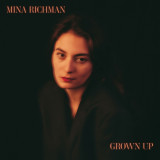
In Berlin geboren, aber in der Kleinstadt Bad Salzuflen aufgewachsen, pendelt Mina zwischen den Welten und entdeckt in der CD-Sammlung ihrer Tante Schätze wie Joan As Police Woman und Nina Simone. Soul und Blues, die Hip-Hop-Kultur und die Revolte der großen Singer-Songwriterinnen stehen Pate, als sie an ihrer Debüt-EP ,Jaywalker" (2022) arbeitet, mit der sie als beste Newcomerin für den PopNRW Preis nominiert wird. Von ihrem Vater ,aus Versehen" zur Feministin erzogen - wie sie es einmal in einem ,Zeit"-Interview formulierte - bediente sie sich für ihren Künstlerinnennamen beim berühmten Cher-Zitat ,Mom, I am a rich man". Ihr Solidaritäts-Song ,Baba Said" geht während der Revolution im Iran schlagartig viral und verschafft der Sängerin über Nacht auf dem ganzen Globus Aufmerksamkeit. Das Musikalische mit dem Gesellschaftlichen zu verbinden war ihr schon immer ein Anliegen. Mit renommierten Festivalslots bei dem New Fall, Herzberg und Reeperbahn Festival und Supportshows für Maxim, Anna Calvi und Alice Merton zeigt Mina, dass sie ,mit 25 Jahren schon eine ganz schöne Powerfrau ist." (WDR 5, 2022) Mit ihrem Debütalbum ,Grown Up" stellt sich Mina Richman nun dem Erwachsenwerden. Mit schonungsloser Ehrlichkeit kehrt sie in ihre Kindheit zurück und verarbeitet streitende Eltern, kulturelle Entwurzelung und den gesellschaftlichen, wie auch ihren persönlichen Umgang mit ihrem Körper. Ehrlich. Queer. Selbstbestimmt. Auch musikalisch ist Mina gereift und stellt einen Sound mit Einflüssen aus Soul, Folk, Indie und HipHop vor, zeigt dass Amy Winehouse, Ronda oder die Alabama Shakes nicht spurlos an ihr vorbei gegangen sind, beleuchtet die schönen Seiten des Erwachsenwerdens: Mut und liebe Menschen, die einen begleiten. Das Album ,Grown Up" wird am 15. März 2024 über Windig erscheinen und anschließend auf einer großen Release Tournee vorgestellt.
"Make It Big" ist genau das, was WHAM! geschafft haben, als sie 1984 ihr zweites Album veröffentlichen. Mit den Hitsingles "Wake Me Up Before You Go-Go", "Everything She Wants", "Freedom" und "Careless Whisper" festigte das Album ihren Platz als Pop-Ikonen. Zum ersten Mal seit über 30 Jahren ist "Make It Big" jetzt auf Vinyl erhältlich, und zwar in einer limitierten Auflage in weißem und schwarzem Vinyl.
What Do We Do Now is the fifth solo studio LP recorded by J Mascis since 1996. This is obviously not a very aggressive release schedule, but when you figure in the live albums, guest spots, and records done with his various other bands (Dinosaur Jr., The Fog, Heavy Blanket, Witch, Sweet Apple, and so on), well, to paraphrase Lou Reed, "J's week beats your year." What Do We Do Now began to come together during the waning days of the Pandemic. Utilizing his own Bisquiteen Studio, J started working on writing a series of tunes on acoustic with a different dynamic than the stuff he creates for Dino. "When I'm writing for the band," he says, "I'm always trying to think of doing things Lou and Murph would fit into. For myself, I'm thinking more about what I can do with just an acoustic guitar, even for the leads. Of course, this time, I added full drums and electric leads, although the rhythm parts are still all acoustic. Usually, I try to do the solo stuff more simply so I can play it by myself, but I really wanted to add the drums. Once that started, everything else just fell into place. So it ended up sounding a lot more like a band record. I dunno why I did that exactly, but it's just what happened." Two guest musicians are playing this time out; Western Mass local Ken Mauri (of the B52s) plays piano on several tracks. Since J himself has some experience with keys, when asked why he needed a hired gun, he says, "Ken is great, and he plays all the keys. I tried playing some keyboards on the first Fog album, but I'm really only comfortable playing the white notes, so it's kind of limiting. laughs Nowadays, I could just turn the pitch on a mini Mellotron to play different sounds, but black keys just seem hard. For whatever reason, I just like banging on the white ones. Seems like it's harder to figure out how to stretch your fingers around the other ones." Mauri has no such qualms and plays all the keys very damn well. He sounds especially great on "I Can't Find You," where he is Jack Nitzsche to J's Neil Young, creating one of the album's loveliest tunes. The other guest musician, Matthew "Doc" Dunn, is also prominent on this track. Dunn's steel guitar manages to both widen and soften the musical edges of the music, giving it a full classicist profile. Dunn is an Ontario-based polymath who J met through Matt Valentine. After J played on Doc's great 2022 Sub Pop single, "Your Feel," he figured it was time for payback. Both Dunn and Mauri add beautifully to the songs here, helping to transform them from acoustic sketches into full-blown post-core power ballads. What Do We Do Now is the finest set of solo tunes J has yet penned, and the way they're presented is just about perfect. Asked if he would be touring to support the album, J says he'll be doing some weekend dates, but he probably won't be putting a band together. And I'm sure these songs will sound great solo and acoustic, but the arrangements on this album are truly great and put a cool, different spin on Mascis' instantly Recognizable approach to making music. So, what do we do now? Not sure. But apparently, what J does is to make one of his most killer records ever. Hats off to him. - Byron Coley
Fixed Rhythms is proud to release a masterpiece double LP by Texas techno young star, Decoder aka Gautham Garg (as seen on Axis Records, Float Records, Amotik, Molecular, Science Cult, Subsist and more). He also runs the fabulous new imprint Toca alongside Jay York. Fixed Rhythms released a 12” EP entitled “Boulder” under his Cratan alias in 2021, and copies zipped on out the door. Not expecting this to be any different.
This is 8 tracks of hypnotic, bendy techno (with a C1 electro switch-up). You’re instantly transported to the depths of the cosmos within your mind on the first needle drop. User beware, this will hypnotize the dance floor. A track for all moments of the deep dance, with a D2 that ends the double LP with a powerfully optimistic sonic statement.
Mastered by Dietrich Schoenemann.
Design by Nick Owen.
Distributed by One Eye Witness.
Limited edition of 300 copies on black vinyl. Don’t sleep!
2024 repress!
Blinding double pack of heavily old school influenced bleep, direct from the depths of England by prolific young producer, Tom Carruthers. These are heavily sample based mpc productions that harken to the carefree days when the pills were pure and the music was fresh and never stopped. When house was techno and techno was house, this long player takes the best elements from say Chill Records, early-Warp and the best Nu-Groove creating timeless dance tracks made for the warehouse dj. Essential stuff here. TIP!
$1 Bin Breaks: Sakura (Edit) by Odetta / On The Hill (Edit) by Oliver Sain / Enchanted Lady (Edit) by Milt Jackson With The Ray Brown Big Band b/w Survival (Edit) by Annette Peacock / Sunrise (Edit) by The Originals / A Few More Kisses To Go (Edit) by Issac Hayes / Go On & Cry (Edit) by Les McCann | Galaxy Sound Company — GSC45-041 | Very special hot-off-the-test-presses donut via the always on-point @galaxy_sound_company crew. This will be number 41 in their cop-on-site 45 series, set to be released in 2024. This time out we are treated to 7 “$1 Bin Breaks” &, as with many in the GSC45 series, these are the sources of some of your fav hip-hop jams.
Side A:
1) “Sakura” by Odetta; Sampled in “Tried By 12” by The East Flatbush Posse
2) “On The Hill” by Oliver Sain; Sampled in “Tell Me” by Pete Rock & C.L. Smooth, “Day One” by D.I.T.C., “Young G’s” by Puff Daddy, The Notorious B.I.G., Jay-Z & Kelly Price
3) “Enchanted Lady” by Milt Jackson With The Ray Brown Big Band;
Sampled in “Dinnit” by De La Soul, “Escape” & “Carmel City” by Pete Rock & C.L. Smooth, & “Ijuswannachill“ by Large Professor
Side B:
1) “Survival” by Annette Peacock; Sampled in “Braggin' Writes” by J-Live, “Rules We Live By” by Lord Finesse, “Scientists of Sound” by Brand Nubian, “Kunta Fly Shit “by Ghostface Killah, “Video Game” by J Dilla
2) “Sunrise” by The Originals; Sampled in “Accepte Mon Concept” by 2 Bal 2 Neg' & “Guess Who’s Back” by Scarface, Jay-Z & Beanie Sigel
3) “A Few More Kisses To Go” by Issac Hayes; Sampled in “Tonight's Da Night” by Redman, “Ain't No Fun (If the Homies Can't Have None)” by Snoop Dogg, “Rough Life” by Shabba Ranks, “Is There a Heaven 4 a Gangsta?” by Master P, “B-Cuz I Got a Girl” by Nate Dogg, “The Life” by Alicia Keys
4) “Go On & Cry” by Les McCann; Sampled in “Tha Next Episode” by Snoop Dogg & Dr. Dre, “Runnin' Wit No Breaks" by Warren G, “No Pain” by Lords of the Underground
Mr. Thelonious Edits
File under: HIp Hop breaks , Jazz Funk, Funk, Samples breaks
WAREHOUSE FIND! INSTOCK NOW Long overdue restock of this Kelley Stotlz staple! Pressed up on his own label, CHUFFED! And we’re chuffed as ever to have more Kelley on our racks.. 17 Incredible tracks! This time Kelley genre plays in the POWER-PUB world, with dashes of Undertones, Stiff Records, 80's Iggy evenly applied. A chance buy of a $75 Japanese Electric Guitar conducive only to power chords, and repeated spins of the Mick Trouble LP made for a wild week of recording this edgy delight. Recorded Fall 2019 at Electric Duck Studios SF, CA. Mastered by Sir Mikey Young. Brought to you by Chuffed Records, a Puzzling Records Company. 250 pressed on split black and white vinyl.. a beauty mate!
Rock & Roll, indeed. Ruth Brown’s sizzling full-length debut — also known by its eponymous title — symbolizes what was exciting, fresh, invigorating, and raw about the burgeoning style in its halcyon days. Originally released in 1957, and reissued here in audiophile quality for the first time in partnership with Atlantic Records’ 75th anniversary, the set remains a testament to one of the most pioneering and talented vocalists to ever command a stage.
Mastered on Mobile Fidelity Sound Lab's renowned mastering system in California, pressed at RTI, housed in a Stoughton jacket, and strictly limited to 2,000 numbered copies, Mobile Fidelity’s 180g mono LP of Rock & Roll plays with an immediacy, vibrancy, and fullness that showcase the reach, power, and emotionalism of Brown’s voice. The sound of her support musicians — brassy horns, swinging rhythm combos, echoing backing vocalists, rollicking pianists, jaunty guitarists — is made clear and vivid, helping the upbeat fare to jump, juke, and jive with newfound energy and exuberance. In a related manner, Brown’s slower, more understated material crackles with an intimacy and passion that let you know you're in the presence of a woman who has lived what she sings. The longtime Rock and Roll Hall of Fame member deserves nothing less.
In an era dominated by big-throated vocalists, few — if any — came grander than Brown. The singer, whose repeat million-selling ‘50s success with Atlantic Records led many to call the then-indie label “The House That Ruth Built,” charted two dozen R&B hits in the span of a decade for the fledgling imprint. Rightly coined “Miss Rhythm,” the extroverted Brown put Atlantic on the national map, became the best-selling female musician of the ‘50s, and established a precedent that would ultimately lead to Grammy and Tony Awards. Her early works have lost none of their fire or flair.
Akin to many full-length LPs of its era, Rock & Roll doubles as a collection. Its 14 tracks comprise some of the more famous sides Brown recorded for Atlantic, beginning in 1949 with the all-time-great rendition of the ballad “So Long,” and continuing through 1956. After the song caught the public’s ear, the Virginia native briefly became known for her smoldering style with lovelorn material and torch songs, approaching them (see “Oh What a Dream,” “Old Man River”) with a combination of pained sadness and hardened resilience that had no contemporary equal. Encouraged to pursue the style by Atlantic Records co-founder Ahmt Ertegun, her R&B-driven material soon made her a constant chart presence.
Demonstrating what fellow legend Bonnie Raitt deemed “sex with class and dignity,” Brown merges blues and jazz, swing and gospel in electrifying fashion. She dares you not to move, dance, and get on your feet. A majority of Rock & Roll explodes with uptempo runs and jaunty readings of hot-blooded R&B numbers. Sweaty and sultry, bawdy and bold, Brown eclipses the anthemic blare of the saxophones and joyful clatter of the 88s, singing with a slight catch in her voice and hurricane-gale force that threatens to blow the roof off whatever room her voice occupies.
Evidence abounds. Listen to her prod the band and encourage the band members to blow a fuse on a sizzling “Hello Little Boy,” complete with cries and wails; stretch her phrasing to the heavens on the swaying “Wild Wild Young Men,” laden with romp-and-stomp beats; plead and persuade on the snaking “5-10-15 Hours,” which flips the script on the age’s notions of dominance; use her raspy tones, high notes, and breath control to mesmerizing effect on the smash “Mama He Treats Your Daughter Mean,” recorded with a group led by Ray Charles; survey the scene and take charge on the steaming “As Long as I’m Moving”; and tap a classy albeit flirtatious vein on “Lucky Lips,” which dented the pop charts as her first crossover hit.
Throughout Rock & Roll, Brown knows the lyrical connotations and spirited architecture of the songs inside-out. Her assertive voice — never harsh, strident, or false — is the epitome of the passionate desires and sonic strains that turned into nascent rock ’n’ roll. Brown played a pivotal role in helping the style develop, the record a timeless reminder of a lasting legacy that will never be forgotten.