4Weed Records is very grateful to announce its new 12inch vinyl release.
Featuring Higher Regions’ boss Mighty Prophet outta Italy and the young and highly talented Baodub outta Spain.
On A side ‘Cradle Of Civilization’, Mighty Prophet shows his hi-quality dub producer’s skills. Played by King Shiloh as last tune in many dances, this track and its dub side fit perfectly in your heavy dubwise selection! Meditative melodies and spacey arrangements. Just powerfull!
B side ‘Echo Cave' arrives with an incredibly potent sub-line, combining tribal percussions, ancestral echoes and superb drum work to provide an energetic vibe. A jewel by Baodub!
Cerca:the young p
Joe Lucas creates music under a few monikers most often as Causa and notably has appeared on Tusk Wax, Boogie Box and Birdie.
The Causa sound elegantly touches on deep house grooves and melodic techno but with contemporary style and is an obvious choice for the Verdant family. The Locks EP is released as Sixtyone leaning towards Detroit flavours with intricate percussion layered with warm soulful keys.
Previous releases have attracted high profile remixes from Kuniyuki, Luv Jam and Young Marco and that trend continues. On the flip of The Locks Stojche provides a burly, peak time reshape of Zelo upping the Detroit vibes. Hiver's reshape of the delicate Tregnanton original adds a firm kick, swinging bassline and heady 303 sparkle with dazzling effectiveness.
21-year-old New Zealand musician Arjuna Oakes's debut EP,
The Watcher, is a showcase of his ability as a singer-songwriter, instrumentalist and producer, and a testament to his depth of engagement with music. The first two tracks on the EP fit neatly
within the jazz-infused soul music landscape he is quickly becoming part of, but the latter half of the EP is far harder to categorise.
Featuring instrumentation from some of New Zealand’s most exciting young jazz musicians, The Watcher explores a wide variety of themes and musical ideas, with Arjuna’s charismatic soul vocals and robust sonic palette serving as a connective thread. From big social issues to personal relationships and internal self-discoveries, across The Watcher, Arjuna takes his cue from the title track and exploration of mass surveillance, and it’s relevance within our everyday lives.
This watcher theme continues throughout the rest of the EP, with the stories told rendered as if being observed by an outside force. Decorated by cinematic soundscapes, hypnotic grooves, creative improvisation and catchy melodies, Arjuna's debut is a test palette for his future projects, one that makes his enthusiasm to develop and explore themes and style in song abundantly clear.
Pacific Express emerged from Cape Town, South Africa in the 1970s. The band were from the so called "Coloured" community and were ground breakers in both musical and political arenas. The founder members Paul Abrahams (Bass), Jack Momple (Drums) and Issy Ariefdien (Guitar) were joined by Chris Schilder (Piano), Vic Higgins (Pecussion), Barney Rachabane (Alto Sax), Stompie Manana (Trumpet) and Zayn Adams & Kitty Tshikana on vocals for their second album "On Time" in 1978.
On several occasions the group fell foul of Apartheid laws and discrimination by the state broadcaster, SABC. On one occasion they were asked to leave the stage of an international tour by Australian act John Paul Young, because the law forbade racially mixed performers on the same stage. The promoter, management and band members all resisted and once he incident made the Australian newspapers the authorities had little choice and turned a blind eye.
And so to the music. The most important thing. The LP opens up with the slick jazz-boogie funk of "We Got A Good Thing Going On", a perfect vehicle for the vocals of Zayn and the statement-of-intent, on-point musicianship of the band.
"I Hear Music" is the first of three smooth sweet string-laden ballads to feature on the LP. The majority of the songs on the LP were written by keyboard player Chris Schilder. As well as high-craft songwriting Chris also contributes layers of effortless musicality with his Rhodes and piano. "Good Old Days" (the only cover on the LP) is next and its smooth-rock grooves swing effortlessly to the fore. The A-Side of the vinyl closes with the instrumental jazz funk of "Saturday Night".
The flip side of the album opens with the bands biggest commercial success. A sweet soul ballad penned "Give a Little Love". Stepping outside their usual sound. This hit however was not without controversy as the video was removed from the TV airways after the South Africa Broadcasting Corp realised that the group were of mixed race, which was against rules for so called local artists in public performance at the time.
"Dream" follows on with the driving jazz rock and travelling keyboard solos. "Reaching Out For Love" is a power-pop boogie groover powered by guest vocalists Erica Lundy and Kitty.
"Say The Last Goodbye" is the last of the trio of ballads. A smooth style moment sounding all the bit like a 70's US TV drama closing theme. The LP features with a funky workout where the band show off their chops and slick level of musicianship.
Besides the success in southern Africa this album became a regional hit as a pirated music cassette in Nigeria. It was also released in France and Japan.
The band would go on to record one further LP in 1979 and a single in 1981. They carried on performing however well pass that. Throughout their years together the band acted as central hub for Jazz musicians within the Cape Town area. Players as Tony Cedras, Jonathan Butler and Alvin Dyers gaining experience alongside established names such as trumpeter Stompie Manana and alto saxman Barney Rachabane.
Here at World Seven we are ever so pleased to be re-releasing what we consider the bands finest album moment.
Award-winning bassist Daniel Casimir and vocalist Tess Hirst release their debut album via pioneering London-based record labe Jazz re:freshed. Following the success of Daniel Casimir's critically acclaimed debut EP 'Escapee' which featured Hirst on vocals and fellow rising stars on the scene Moses Boyd, Joe Armon-Jones and Shirley Tetteh, this album - 'These Days' is inspired by the duo's London surroundings, delivering thought-provoking lyricism, neo-soul and modern jazz
Casimir, a former Birmingham Conservatoire student, has collaborated with Julian Joseph, Jason Rebello, Benet McLean, Lonnie Liston Smith, Nathan Facey, Shane Forbes, Chihiro Yamanaka, Ashley Henry, David Lyttle, Nubya Garcia, The Tracey Quintet (Meantime Jubilation), Tom Harrison (Unfolding In Tempo), Jasmine Power (Stories And Rhymes), Camilla George and Art Blakey Jazz Messenger saxophonist, Jean Toussaint.
Named Young Jazz Musician of the Year by the Musicians' Company in 2016, Casimir has received plaudits for his arrangements and recital, while Hirst has made a name for herself with her vocals on the jazz circuit having moved between London, Leeds and LA to hone her craft. What sets Hirst apart as a musician is not only the originality of her music but her perspective of herself as an artist. She is an Ethnomusicology Graduate of SOAS and her writing style walks us through her upbringing in West London and down the halls of academia
Casimir and Hirst fuse traditional jazz sounds into beautiful compositions, narrating their way through a political and cultural landscape across these twelve tracks. The frenzied groove heavy'Security' addresses the need to trust one another and how we protect ourselves personally, while the rich atmospherics of 'Freedom' combined with Hirst's vocals, explore liberation and the rejection of duty - from a female perspective.
At the heart of 'These Days', Casimir plays with a passion and power that resonates throughout each composition. His knack for complex chord changes are highlighted in 'What Did I Do', bringing an energy and enthusiasm to the track while Hirst decries our changing capital. Elsewhere, references to John Agard's poem 'Listen Mr. Oxford Don' in 'The Magic Money Tree', explore the past and its relevance to now while a re-imagining of Charles Mingus' 'Fables Of Faubus' further ensures this theme remains central to the essence of the album.
Daniel Casimir and Tess Hirst have already received radio support from BBC Radio 3, BBC Music Introducing and Jazz FM, along with coverage in the London Evening Standard and Jazzwise Magazine
'Don't Let Them' interpolates elements of 'Fables Of Faubus' written by Charles Mingus (c) 1959. Published by Jazz Workshop Inc. Administered by BMG Rights Management (UK) Ltd. Used by permission. All rights reserved.
Black Truffle is pleased to present Realejo, the first vinyl release from Brazilian sound artist and composer Manuel Pessoa de Lima. Having composed works for diverse contexts including cinema, contemporary dance, theatre and television, Lima’s live appearances often take the form of self-reflexive lecture performances that combine electro-acoustic sound, red light, video and spoken text, moving unpredictably from the hilarious to the distressing.
Realejo consists of two side-long pieces of highly idiosyncratic electro-acoustic collage, beginning with recordings Lima made of himself playing the organ in the Schloss Solitude Chapel in Stuttgart. Exploring the peculiarities of the instrument’s mechanics, Lima made hours of recordings with the organ stops half-way open, moving from haunting gliding tones to oddly tuned fair-ground melodies reminiscent of the record’s namesake realejo, a hand-cranked organ traditionally found in Brazil as the musical accompaniment to the work of fortune-telling parrots.
To these organ sounds, Lima added recordings of a security guard made in São Paulo: ‘Just before coming to Stuttgart, I started making field recordings of a security guard in São Paulo. It's something pretty common in residential areas: they sit in a chair with a whistle, and use that to signal when people arrive, leave or pass by in the street. This particular security guard, Miguel Viana, works on the same street my parents live, and where I had my childhood, and he has worked there since I was a small child. He has watched the street at night, from 8PM to 6AM, every single day, except Sundays, for over 30 years’.
The poignant sounds of the security guard’s whistles punctuate Lima’s electro-acoustic environment, which also includes raw digital synthesis, recordings of his friends’ infant child, audio lifted from Youtube, and, on the LP’s second side, elements taken from an earlier work, ‘36 English to Portuguese Lessons’. Finely chiselled from dozens of hours of source material into a detail-rich, mercurial structure, Realejo is alternately jarring and seductive, introducing listeners to a young composer with a powerfully individual voice.
- A1: The Jugglers 4.51
- A2: This World Has Music 5.58
- A3: Twilight Zone 5.28
- A4: Put It Where You Want It 5.17
- B1: Show Your Hand 4.30
- B2: Back In ’67 4.12
- B3: Reach Out 4.04
- B4: T.l.c. 8.07
Widely and rightly regarded as one of the best ever soul and funk bands, the now legendary Average White Band tore-up the rule book and conquered the US, UK & International charts with a series of soul and disco hits between 1974 and 1980. AWB’s repertoire has been a source of inspiration and influence for many R&B acts and they are one of the most sampled bands in history, remaining relevant today, continuing to reach new generations of younger audiences. Snoop Dogg, Fatboy Slim, Ice Cube, Puff Daddy, TLC, Rick Ross, will.i.am and Mark Ronson amongst countless others, have all borrowed sections of their grooves. ‘Show Your Hand’ is the debut album by AWB and was originally released in 1973 on MCA Records, having been recorded in London. It was produced by AWB with Robin Turner and set up a tantalising deal with the US giant, Atlantic Records.
This debut album, by prodigious keys player, composer and producer Joe Armon-Jones, is buoyant, celebratory and welcoming. With a background in jazz, he draws from influences in dub, hip-hop and soul. Different traditions are infused and commingled together. Soulful brass arrangements are coloured with carefully-tuned atmospherics, individual flashes of brilliance are bound into the album's bigger picture.
He's part of London's young, jazz-influenced music scene. Drawn from that same close-knit circle, the album features the likes of Moses Boyd, Nubya Garcia and Oscar Jerome. It's playing with those - along with Ezra Collective, which he co-founded, and touring with the likes of Ata Kak and Pharoahe Monch - which has honed his playing and grown his ideas.
It's made for a record with an unmistakable depth. He draws on deep musical understanding, making music which is warm and has a feeling of joy. A document of his vision for bringing together his different influences, it's also a testament to hard-earned, head-turning musical virtuosity.
TERANGA BEAT proudly presents MAR SECK, a delicate singer and songwriter who marked the history of Senegalese music. TIP!A cross over between Cuban compositions and Senegalese Folklore, his songs gave birth to Salsa-Mbalax, the popular dance music of '70s Senegal that went onto influence a new generation of Senegalese musicians including a young Youssou N'Dour. Featuring 12 tracks recorded over three different sessions, ‘Vagabonde’ focuses on the best of MAR SECK’s career. The first recordings are taken from a raw and unreleased 1969 session at the Dakar National Radio. Recorded with his first group SUPER CAP-VERT from Rufisque, it captures an 18-year old MAR singing the first version of his now famous composition “Vagabonde”. The remaining six tracks from the session includes a beautiful cover of Fonseca’s “Sibouten”. A 1973 live recording is also featured here, made with the STAR BAND de DAKAR in Saint Louis. Previously unreleased, it comes from a time when MAR was establishing his name playing at the legendary Miami Club in Dakar, the “École de Passage” for all great Senegalese musicians. The final two tracks (one of them unreleased) finds MAR accompanied by the most complete band of Senegal, the NUMBER ONE de DAKAR. The 2LP & CD booklet includes photos and liner notes outlining MAR’s career. LP version comes with silk screen print, European 60s style, gatefold sleeve. All tracks are mastered & mixed from the original recording tapes.
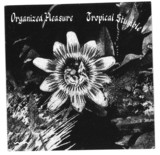
"In popular imagination, the early 80s were dreadful. Thatcher and Reagan led the world on a diet of austerity, unemployment and depression. The Berlin Wall separated East from West. The Sex Pistols had broken up. In sum, the future was unsure. Belgium was no exception. While Punk had been declared dead by some, its spirit was still roaming in country parishes and city alleyways. As the Catholic bourgeoisie provided young people with few opportunities, music was an obvious pastime. Teenage hopes of starting a band and putting out a record were everywhere. Organized Pleasure and Satin Wall were two bands living the dream. In contrast to a thousand others, they left us sounding evidence. This split 7” gathers two tracks originally recorded in 1981. It was the first and only studio excursion for both groups. After some local gigs, the people involved moved on to other projects. While their music is illustrative for the era, their story is distinct. Same but different."
ALEX ATTIAS presents his new single featuring GEORGIA ANNE MULDROW on vocals and KID K playing soulful jazz keys . The track is simple and groovy , warm and soulful, exactly what Alex is into right now . Alex is very happy to have Georgia Anne Muldrow singing on an uptempo track and Kid K playing Rhodes , analog keys and moog bass. Theres also Cicco the percussion man laying great congas and percussions as well as Arthur Donnot young musician on sax giving the track a live jazz dimension.The B side is a dub instrumental to get the musical vibe of this track made with love . Another great release for Visions Recordings in 2019. Watch out for more goodies in the near future .
Havazelet's story is both fascinating and mysterious. She was born in Aden, Yemen, in 1936 as Havazelet Damari, she immigrated to Israel when she was 8 years old and grew up in the disadvantaged Ezra neighborhood, in south Tel Aviv. Havazelet discovered her love for singing when she was a teen, when she would sing at feasts and family events. At one of these events she was discovered by an impresario who decided to take her under his wing.
He asked her to change her family name from Damari to Ron, as there was already a young singer called Shoshana Damari in Israel, who was becoming quite popular. In March 1960 Havazelet Ron's only Israeli album, "The Music of the Desert" was released, produced by the "Makolit" label, featuring Yemenite folk songs. Both songs on this 7" are from that album. The identity of the promoter, the album's recording date and location, and the identity of the musicians, could not be found.The album was ahead of it's time in that it introduced an innovative sound, comprised of drums, electric guitar and an organ, making it one of the first albums in Israel to record this type of composition.
... However, it confused the Israeli audience of the time: The vocals were in Yemeni-Arabic, preventing it from being played on the radio, which mainly played Hebrew music, moreover, it was too innovative and far from traditional music for the Yemenite scene. The album fell between the cracks and her big breakthrough to mainstream did not happen.
Following the album's failure, Havazelet left Israel in 1963 and went to Germany, where she performed in festivals, TV shows and recorded several more albums. All of this was made possible by her unique singing talent in five languages - Hebrew, Yemeni-Arabic, German, English and Yiddish, her impressive appearance and remarkable stage charisma. The European audience enjoyed the original music she produced and her Yemenite-style cover versions of Hebrew songs.
In 1968 Havazelet married and a year later retired from the music scene. In 1980 she returned to Israel but she left again four years later, this time to Los Angeles, where she worked as a kindergarten teacher. Havazelet Ron passed away in Los Angeles, in 2013, after a long battle with cancer. In Israel, her name is almost unknown among music lovers in general and among record collectors in particular.
Paul Young’s debut album No Parlez launched him as one of the most talented musicians of the early ’80s. The record reached number one on the UK Albums Chart and remained in the Top 100 for 119 weeks. After he released the third single from the album, a cover of the Marvin Gaye classic “Wherever I Lay My Hat (That’s My Home)”, the song reached the first position in the UK Singles chart.
Afterwards the second single “Love of the Common People” and the follow-up single “Come Back and Stay” charted all over Europe.
The last one proved that he was capable to chart with his own material as well. His great vocal individuality made him one of the most beloved singers of the early ‘80s.
... Unfortunately he couldn’t hold on to this success, but 'No Parlez' will always remind us of the great musician he once was.
Detailed Information about this LP:
'No Parlez' is available as a limited edition of 2000 individually numbered copies on purple marbled (purple & solid red mixed) vinyl.
Young cosmonaut having decided to fill the silence of space with ethereal and dreamlike of house Music, his productions resonate throughout the cosmos. Very young, he dreams of interstellar travel through the broader electronic music. He left the high reliefs of the Alps to prepare for New York and began producing music. Quickly recognized in the Hip-Hop industry, he does not forget his dreams of stellar conquest and now comes back to the House Music. This second mission takes Aerial Boy to a new Galaxy where he will face his own demons.
The hyper talneted Stellar Om Source (NOT NOT FUN, RVNG, NO 'LABEL) blowing up new styles on this one!
"If there is one thing that leaps out from Stellar OM Source’s music, it is the sense of a highly active mind at work. There is an indivisible feeling that a real person is behind this dynamic flurry of tones, waves, vibrations and modulations. On I See Through You, the first full Stellar OM Source release in over four years, the spark that first LP piqued the interest of so many listeners is glowing stronger than ever.
In the 2010's, Christelle Gualdi carved a name as one of the most essential live electronic musicians around, dazzling dancers and home listeners in kind with her bombastic, acidic hardware jams. Circumstances outside her control forced a stop for the Stellar OM Source project. It was touring, including two shows in the summer of 2019 at Dekmantel Festival and Listen! that Gualdi credits as year highlights, which proved to be the integral jump-start to the engine.
Inspiration came rushing back thanks to the human connection of performing. Seeing a younger generation connect with her put fresh charge into the circuitry of her gear. All this accrued into new material on the road, and thus I See Through You was born.
The spirit of 2013’s cult favourite Joy One Mile is alive and well on I See Through You. There is once again immediacy, urgency and lust. But Stellar OM Source stepping into a comparatively more poppy and playful mode on these four tracks could also throw some. Fundamentally she says, it comes from a similar place, and ends with an enmeshed and positive outcome. Gualdi credits both “1995 rave” and “the clarity, bass and breath” of hi-def hip-hop productions as being twin northern stars for her to follow.
The artwork comes from friend and highly respected photographer & director Pierre Debusschere, whose work similarly flits between arresting close-ups and, well, the widescreen luxe of Beyoncé videos. “I’m definitely not a purist anymore,” Gualdi laughs – and with club-ready impact meeting human warmth, this shows in abundance.
“Night Alone” wastes no time in getting the listener up to speed. Is that an LFO sample running through “Night Alone”? Is this a lost Metro Area classic? Is that Stellar OM Source taking a diversion into searching Ibiza-rousing vocal for a moment, or did we imagine that in a heat haze? Where are the kicks? Oh there they are. How many elements are buried and revived within just over five minutes?
It’s hard to tell. Before we know it, “Lost Codes” is up and away, keeping pulses racing. A pitter-patter of baby kicks feel like a pre-tremor before a welting electro-Italo lead crashes into play. With fizzing energy, rasping synths and a frisson of danger, fans of Unit Moebius and The Hacker will be doing somersaults of joy.
“White Echoes” wastes kicks off the flip side with low gurgles descending briefly like a UFO reverse parking into the spot SOS had vacated. Soon, 303s are twisting like Chinese burns while warm chords offer a salve. The mood maintains on “Wild Palms”, the only song on this record not to feature additional mixing work from Peaking Lights’ dub-wise sensei Aaron Coyes.
True to form, the B2 is all Stellar: elements switching up and out, with all the fun and frenzy of capital-L Live action. Kick drums and bassline darting back and forth like a synchronised swimming routine, all elements in concert. The momentum of a runaway mine cart that you can’t help but strap yourself to. I See Through You is one for the dancers who have given Stellar OM Source the motive to move forward once again."
Two years after an acclaimed first album, Al Sunny and Favorite Recordings proudly present Planets, carrying on their collaboration and bringing it to another level.
Al Sunny is a young and talented singer/musician/composer emerging from the French soul music scene. During his conservatory studies, he refined his knowledge and confirmed his desire to write and compose. He quickly matured the music that he truly loves, inspired by artists such as Tim Maia, America, Al Green, and Al Jarreau. Giving birth to the majority of his compositions through his guitar, he always seeks to bring his songs’ melody to the forefront. During his studies he kept experiencing live performing on different scenes and confirmed his choice for a musical career, while also meeting many brilliant musicians, including Florian Pellissier, who later introduced him to Pascal Rioux and Favorite Recordings.
It resulted in 2017 in Time to Decide release, a dazzling first album establishing Al Sunny’s music and writing style, looking towards the 70s and 80s Westcoast movement, infused with Blue-Eyed-Soul, Pop and Folk flavors. Built on the same influences, Planets is made of 8 new compositions (including a CD and digital bonus), and is clearly a continuation of its cadet, asserting Al Sunny’s talent and singing skills.
Fully recorded live and analogic in Paris, this new album also stands out by an impressive level of production, faithful to some classics of the genre. Mixing catchy melodies, soulful vocals, warm and heavy bass, strong beat and beautiful guitars and keyboards harmonies, Planets just perfectly meets the AOR and Modern-Soul golden era standards.
“Osondi owendi. What is cherished by some is despised by others. One man’s meat is another man’s poison. Different strokes for different folks. To each their own. Osondi owendi.
It’s a conventional aphorism in the Igbo language but if you utter the word “osondi owendi” in Nigeria today, the first thing that comes to anybody’s mind is the cucumber-cool highlife music maestro Chief Stephen Osita Osadebe and his legendary album that takes its name from the adage. Released in 1984, Osondi Owendi was instantly received as Osadebe’s magnum opus, the crowning event of an exalted career stretching back to the early years of highlife’s emergence as Nigeria’s predominant popular music.
Stephen Osadebe first appeared on the music scene in 1958 as a spry, twenty-two year-old vocalist in the Empire Rhythm Skies Orchestra, directed by bandleader Steven Amechi. With his dapper suits, urbane Nat King Cole-influenced vocal stylings and jaunty, uptempo, calypso-scented dance tunes, he personified the frisky spirit and anxious aspirations of a young, educated generation that had come of age in the wake of the Second World War, in a Nigeria that was rapidly shaking off British colonization and marching towards an independent future. 1959 would be the year that he truly made his mark in the business with his debut solo single “Lagos Life Na So So Enjoyment.” A giddy exhortation of the music, sex, fun and freedom availed by life in the big city, the song became a sensation and an anthem, and Stephen Osadebe became the leader of his own popular dance band, the Nigerian Sound Makers.
Osadebe would ride this wave of acclaim through most of the nineteen sixties, but a change in direction would be called for at the dawn of the seventies. As Nigeria emerged from a devastating civil war, so did a new generation of youth inspired by rock and funk, confrontational sounds reflective of a more violent, less idealistic era. All of the sudden, the idioms of the post-WWII dance orchestras that nurtured Osadebe’s cohort seemed quaint, the stuff of nostalgia. Osadebe needed to evolve to respond to the new tumultuous, turned-up times.
His response? He cooled it down.
Abetted by a new crop of fire-blooded young players, Osadebe slowed his music to a mellow, meditative tempo, brought forward the lumbering, Afro Cuban-accented bass and percussion, from the rockers he borrowed searing lead lines on the electric guitar. Over this musical bedrock, doesn’t so much as sing as he dreamily muses, coos, sighs aphorisms, words of wisdom and inspiration. “When one listens to my music, all I say appears meaningful,” Osadebe explained his lyrical approach, “at times they are in the form of proverbs which provoke much thought afterwards.” The result is a blend that is both rollicking and soothingly languid. Osadebe christened the style Oyolima—a tranquil, otherworldly state of total relaxation and pleasure. Osondi Owendi represents oyolima at its finest, and possibly Nigerian highlife in epitome.
Osondi owendi. What is cherished by some is despised by others. In some way, the album’s title constitutes a paradox. Because Osondi Owendi is a record that it’s almost impossible to imagine being despised by anybody."
Official first reissue of this Senegalese gem recorded in 1981 and produced by Ibrahima Sylla.
Remastered, available on a limited LP with 4 pages booklet.
At the dawn of the 1980s, Senegal was immersed in the "beautiful era" of Cuban influences, African-American soul and funk.
A group of passionate musician friends want to shine in this construction of a revolution in Senegalese music. Their credo will be to claim a spiritual search, that is the meaning of the word Gestü in Wolof. The group of friends gathers around the young guitarist leader As El Haji Malick Diouf who is joined on vocals by Tidiane Bathily, reinforced by Couri Ndiaye and Abdou Bâ, on drums Abdou Kane, on bass guitar Jean-Pierre Gomes, Madiama Diop (saxophone, clarinet) and finally on tumbas Djiby Ndiaye.
They released their first album Diabar in 1981, recorded at Golden Baobab studio under the direction of Senegalese producer Ibrahima Sylla. This unique record of the group will leave the youthful and dynamic imprint of a Senegalese musical revolution like the Orchestra Baobab or the Etoile de Dakar.
Villager, aka Alex Young is a dynamic new producer who has been signed to the iconic Boysnoize Records for two fresh new EPs, kicking off with the superb ‘Aura’.
Sly Stone is a songwriter and record producer, mostly famous for his role as front man for Sly and the Family Stone. The band played a critical role in the development of soul, funk, rock, and psychedelics in the 1960s and '70s.
Sly Stone was identified as a musical prodigy at a young age. By the time he was seven, Sylvester had already become proficient on the keyboards and by the age of eleven he had mastered the guitar, bass, and drums as well. While still in high school, Sylvester had settled primarily on the guitar and joined a number of high school bands.
In 1993 he was inducted into the Rock and Roll Hall of Fame as a member of the group.
High On You (1975) is the first solo album by songwriter and multi-instrumentalist Sly Stone. For the most part Stone performed a large part of the instrumentation for each song on his own by using multi-tracking. The album prominently features vocalist Rudy Love and includes the singles I Get High on You', Le Lo Li' and Crossword Puzzle'.