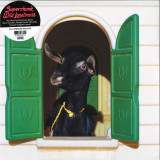
Unhuman & Petra Flurr is the collaborative synthpunk-technoid project of BITE label stalwart, Berlin-based Greek artist Unhuman and legendary queer wave figure Petra Flurr. 'Mala Vida' is their debut album on BITE that further evolves their sound beyond genre borders. The duo deliver an 8-track LP consisting of punk body music exhibiting the team's mastery on production, their androgynous vision and diverse influences. Petra Flurr's staggered, often effected, vocals cruise over pounding beats, bold iconic hooks and psychedelic atmospheres. His lyrics reference the seedy underbelly of Berlin's sex underground. Meanwhile, Unhuman's productions broadly range from the post-punk references of 'Labyrinth' to the new beat grooves of 'Short Life' featuring Ukrainian duo Garden Krist to the melodic orchestrations of 'Rush'. All this is reinterpreted by techno duo New Frames on a digital remix of 'Unzivilisiert'. 'Mala Vida' is a direct inspiration from their debut performance at Berghain for last year's BITE label night. After which, they swiftly retreated to the studio to compose, still in their platform heels. The two paint a coat of neon red over their preexisting batcave of sound. While the artwork by Liam Noonan compliments the gender fluidness of the album, distorting and digitally manipulating images of the creators themselves. Using heavy rhythmics, wavy mandates, an androgynous stare and unavoidable sexuality, Unhuman & Petra Flurr introduce us to their culled brand of queer death techno. Always with a wink.
Debut full length vinyl from the UK/Italian duo of Ecka Mordecai and Valerio Tricoli, working together as Mordecoli. Individually these two travellers have carved out a path of ghostly musique concrete (Tricoli) and textural cello wandering (Mordecai). Alter is proud to present the album Château Mordécoly a result of two musicians (and friends) coming together to explore the middle ground of their individual investigations.
The results of a red wine induced residency at London’s Cafe Oto, Château Mordécoly is a panoramic audio field exploring both the physicality of sound, informed by the voice, cello and pictish harp of Mordecai, and the artificial manipulations of Tricoli’s revox tape machine. The delicate tension between the physical ‘real’ and the distortive ‘new’ leverages this release far beyond a tipsy residency and shifts it into a top tier electroacoustic take on the zeitgeist. Solo cello and voice appear rooted in the timbre of time. The magnetic tape is both a friend and covert manipulator.
The physical elements open themselves to disfigurement as a means of propagating the fantastical audio that unfolds from the initial enquiry. There’s no witchery or wizardry on part of either player but rather a symbiotic passing of the baton as the line between the real and the non-real flow in and out of themselves. The results are at once sedate, shocking and subversive.
Château Mordécoly is a disembodied sonic landscape; a phantasmagorical world of fantasy unfolds as the delicate beauty of Mordecai’s playing and singing is transformed into a playful and unusual landscape. Epoch’s are evoked as the visual stimuli resulting from these alchemical transformations conjure everything from a haunted house to the Middle Ages.
Intergenerational trio Dry Speed is one of the best-kept secrets of the Belgian free jazz and improvisation scene. Formed in the early 2000’s, trumpet player Joachim Devillé and saxophonist Thomas Olbrechts were in their twenties at that time, while drummer – their teacher at the art school in Brussels - Dirk Wauters was already in his fifties. Logically, twenty years later the first one are in their forties and the third one in his seventies. They only released a couple of CDs before “Indium” but never stopped to play, for themselves and for audiences, in concerts.
'Too often we describe music using classifications; genres like “jazz,” “experimental,” “avant- garde” are an easy shorthand to relay the rough parameters of the music to another person who may not have heard it. But these words are useful because they’re so vague, and they are most often used when the impression the music makes is equally vague. But when a group makes sounds that move the listener, these terms don’t hold up.
Dry Speed has released a record that is, at turns, futuristic and organic. It feels alien and new, like plastic or titanium, but at the same time as if it is shrouded in the natural, growing like moss or amplifying the sound of a great tree’s roots. ‘Indium’ gives the listener multiple entry points into the trio’s music: from a broad soundscape to a densely knitted series of minute and exacting musical gestures.'
- Nate Wooley
“This device isn’t a spaceship, it’s a time machine. It goes backwards, and forwards… it takes us to a place where we ache to go again. It’s not called the wheel, it’s called the carousel. It lets us travel the way a child travels - around and around, and back home again, to a place where we know we are loved.”
(Don Draper)
Call Back Carousel is an audio time-travelogue, a slideshow of the mind’s eye - projecting Kodachrome memories directly into the listener’s mind by means of sound alone. It is a way of travelling without ever having to leave the home. A vicarious vacation for the imagination. Pure audio escapism.
Each episode is based on a found tape of a pre-recorded slideshow commentary. Most of these tapes were made by amateur tape recording enthusiasts and hobbyist photographers of the 60s and 70s. Their recorded commentaries would at one time have been used in conjunction with a sequence of 35mm slides but only the taped voices now remain. The recordings themselves come from Vernon's own archive of found reel-to-reel tapes that he has collected over the past twenty years.
Using these found slideshow commentaries as a framework, a series of musical soundscapes have been created to bring the absent images to life, activating the listeners’ imagination in the classic tradition of ‘cinema for the ears’. It’s a little like looking through a family photo album where only the hand written captions and mounting corners remain; the photographs themselves have all been removed. The evocative rattle and clack of the projector shuffles through different slides as the fragile voices of our tour guides accompany us on a sonic journey that fractures time - and through the cracks, the past bleeds through into our present.
Names You Can Trust continues its years-long revival work with one of Panama's most gifted and legendary soul artists, Ralph Weeks, returning the singer to the studio for another brand new recording that highlights the now 80-year old's still silky vocals and masterful songwriting. Up for the challenge with their own studio savoir-faire is a most fitting and genuine purveyor of modern day soul themselves, Ben Pirani and The Means of Production, whose output on Palmetto Street Recording and Colemine Records has already achieved high praise and collectible status in just a few years. The mission, record two unreleased home studio demos that were penned and tracked in the early 1980's and recently excavated from Ralph's extensive archive of personal songs. These original compositions were faithfully given the full treatment and arrangement they never received, but always deserved. The A-Side, "Nobody Loves Me (Like You Do)", a quintessential Ralph testimonial of love, now shines alive and...
The colossal Caposile Music strike once more with a heavy hitting house EP. This sought after summertime jam comes from resident and long time family member, Maggio. The flourishing Italian talent enforces the driving force that is After Caposile with three driven and animated grooves for the peak hours of the party. Accompanying him with a stellar remix is acclaimed live performer and producer, Vitess, the Frenchman showcasing his consistent sound, living up to the Caposile ethos with great effect.
This is “Discoline”.
Title track “Discoline” cruises on an irresistible elastic groove, shimmering synths and pads shine bright, breathing life into the rolling structure of the track. This one living and breathing a pure and infectious summer time energy. Packing a serious punch is “Vertigo”, built upon crisp drum arrangements and another dynamite bass line for the heads. If you are looking to go up a gear on the floor then you are in the right place.
On the B side Maggio’s “Outer Space” leads the way. The aptly named track prepares you for lift off with its distinctive chugging, sub heavy bass. Sprinkles of spaced out vocals tease you down a path of curiosity. Vitess rounds off the EP with another recipe for dance floor frenzy in his remix of “Discoline”, playful yet effective frequencies to ignite the flight, an essential for the record bags of many in the coming months.
CPSL005 lands off the back of the “Sound Of Garden” volumes 1 and 2, and with this latest addition to the catalogue it ensures the label and club continue to cement themselves at the forefront of the scene for underground minimal and house, continuing to spread like wildfire. Become part of the Caposile family this summer with some sincere day time action from within their circle.
Recogiendo
Ordena ahora - una vez que hayan recibido suficientes pedidos, el artículo se reimprimirá.
We couldn't be happier to announce the first Mapache Records compilation after all these years. ONE MILE FROM HEAVEN is a dreamy travel through the 70's and beyond private singer songwriters scene.
There have always been privately-pressed records. Such a "private" LP is an album that has been composed, performed, recorded and edited usually very-DIY style by the very artist or by an amateur label. A private press record is, above all, an act of the artistic urge. It's an act that takes place outiside of the industry out of need, out of a lack of knowledge, out of love, out of a drive, out of ambition... you can choose among the many reasons.
Depending on their genre, origins, time, and above all, quality, some of these efforts have become valuable pieces for the music collector. Having been created behind the "canonical history of music" written by the industry, every now and then an archaeologist will bring to the surface an artifact they have found in some basement or flea market, or that was kept covered in dust in the shell of some old recording studio soon to be torn down.
All these records have their own story, and some are still especially relevant, and others are but small footnotes in the encyclopedia of music that made their way into the margins of the mainstream world. These are the most limited of editions (and mostly locally made ones) of largely unsociable and mostly unobtainable records--and when found, they are often exorbitantly priced. Many of these marginalized and onscure artists have stayed alive only through the wonderful work of tireless song rescuers, music lovers, vocational archivists, collectors, and record labels with an idealistic drive. These romantics have been rescuing and indexing a form of music that very few have showed interest in until recent years. This record is a tribute to all of those who managed to make these songs not be lost to time. Above all, this release is a tribute to all those artists who recorded their songs on their own, mostly because they couldn't keep the music inside themselves.
rand, the exciting new collaboration between pianist Jan Gerdes and electronic music producer Frank Bogdanowitz, is proud to present their debut album "Peripherie".
With Gerdes' background working alongside renowned composers such as Karl-Heinz Stockhausen, Wolfgang Rihm, and Helmut Lachenmann, and Bogdanowitz's extensive touring experience as Dr.Nojoke in the experimental minimal techno scene, rand brings together the worlds of acoustic and electronic music in a unique and captivating way.
Recorded live in 2019 at Berlin's Chez-Cherie Studios with no overdubs, the pieces were created through both improvisation and composition with Gerdes having access to three pianos during the recording process.
The resulting music is characterized by atmospheres that exist away from the conventional limelight, with musical elements blending together in a fluid indeterminacy.
The album showcases rand's ability to blur musical edges and create a wide ocean of sound, with piano and electronics taking listeners on a journey between detachment and connection.
rand's "Peripherie" represents the next step in their musical journey, following the release of EPs "I" and "II" on Bandcamp, a one-hour music improvisation for The POOL Berlin collective,
and a track on the Nonclassical label's "I hope this finds you well in these strange times Vol. 4" sampler.
The cover painting for "Peripherie" was created by Jan Gerdes, adding another layer of artistic expression to the project.
With their debut album, rand is set to make a name for themselves on the international stage and push the boundaries of what is possible in the world of contemporary music.
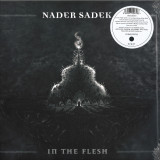
“In the Flesh” is the brainchild of Egyptian-born, New York-based conceptual artist Nader Sadek. Known for his impressively twisted sculptures, masks, and installations used for example by bands such as MAYHEM and SUNN O))), Sadek is now venturing into the realm of recorded music- including songwriting credits on this album! The band NADER SADEK emerges out of a collaboration between Sadek and some of extreme music’s most talented artists with its core made up out of songwriter/vocalist Steve Tucker (ex-MORBID ANGEL), CRYPTOPSY drummer Flo Mounier and Norwegian composer/guitarist Rune Eriksen (AVA INFERI, ex-MAYHEM). A host of guest-appearances lends additional weight to the musical impact of “In the Flesh” by leading artists such as Attila Csihar (MAYHEM), Travis Ryan (CATTLE DECAPITATION), Tony Norman (MONSTROSITY), Descructhor (MORBID ANGEL), and Nick McMaster (KRALLICE). “In the Flesh” is firmly based on a technically masterfully executed unique style of Death Metal with a pitch black twist that creates a multi-cultural symphonic abyss where melody and corrosion meet. As a work conceptual art “In the Flesh” is best explained like this: NADER SADEK invite you on a journey to the depths of the earth, where substances of a repulsive nature dwell. Beneath the earth’s crust, over millions of years creatures have disintegrated and decayed until taking on ghastly new life as petroleum. Like a return of the undead, petroleum and its derivates have wrought cross-cultural conflict, environmental pollution, and economic distress. With a visual and aural assault, Sadek’s new work “In The Flesh” re-interprets petroleum’s sinister insinuation into our everyday lives. Nine songs and a series of original drawings video works explore several aspects of the commodified resource we find ourselves fatally dependent on. “In the Flesh” exploits the sonic links between death metal and gasoline-dependent heavy machinery such as automobile and airplane engines. These links shaped the process of musical composition itself: The album opener, “Petrophilia”, kicks in with a sound evoking an engine starting up. Another song, “Of This Flesh (novus deus)”, follows the sonic structure of a car shifting gears. While continuing to link musical composition to mechanical transformations, other songs depart from engine-based references. The outro to the album, “Nigredo in Necromance” which is already accompanied by a video, dwells on an individual’s recognition that he must die in order to reunite with his deceased lover. The song riffs on the life-in-death of an oil-drenched society, as the lovers’ reunite in their decomposition and rebirth as petroleum. This theme also drives the track “Mechanic Idolatry”, which channels the uncanny thrust of Sadek’s recent artistic output, as live human beings provide the fuel for machines transforming themselves into flesh.
Recent times have seen After Caposile become one of the most sought after locations on the underground circuit, and this reflects in their acclaimed record label - Caposile Music. This Spring they have prepared a stellar release of firm favourites from the club. “The Sound Of Garden” release will come in two parts, both on 12” and will include a heavy hitting lineup such as Romanian duo Super Moon (Arapu & Priku), family members and residents Maggio, Francesco Maddalena, and Yaar Kü, Silat Beksi, Mihai Pol, Giuliano Lomonte and Sublee. A perfect blend of club affiliates, coming together to provide the soundtrack from that famous garden.
Volume One kicks off with the dynamite combination of Arapu & Priku under their Super Moon moniker. Hypnotic movements set a serious tone for the journey ahead, mysterious elements simmering throughout “I Can Help”. Dreamy meets dance floor in Maggio’s aptly named “Just Landed” floating synths calmly lift you, but you remain grounded by the killer elasticated groove. After delivering the previous EP on the label Yaar Kü returns with a stripped back encounter, his unique touch shining bright. Silat Beksi provides a certain sunshine jam with his track “Jaho”, you immediately feel the warmer times are coming, after parties in the sun.
Landing just a few weeks after is the equally special Volume Two, packed full of ammo for the tastemakers. Mihai Pol inaugurates proceedings with “Sugar Rush”, the 7 minute quest boasts shimmering synths and a sweet bass line to match. Francesco Maddalena ups the ante with his garage influenced “Breath Of Air”, an energy boost for the peak times of the party. Giuliano Lomonte’s “More Time” rumbles from the get go, begging to be played on a high quality system to allow each of the intricate details to speak for themselves. Last but not least is Sublee, his “Day Six” track is a chugging body of work, blurring the lines between house and minimal with a raw edge.
With a huge European tour on the table, and a release of this stature After Caposile are flying high at the moment with an indispensable team behind the project. Expanding on their party paradise location, but simultaneously propelling innovative underground sounds under the Caposile Music offshoot. Both Volume One and Two will land this May, right on cue for the summer time madness.
Recogiendo
Ordena ahora - una vez que hayan recibido suficientes pedidos, el artículo se reimprimirá.
Symphony Orchestra is a new group from Maximilian Turnbull and Michael Rault. Both Rault and Turnbull are accomplished songwriters, performers and producers in their own right, with Turnbull leading The Badge Epoque Ensemble, playing with the group Darlene Shrugg, and once releasing records under the name Slim Twig and Rault having released several psychedelic rock & roll classics under his own name in the past decade. The pair have worked together in various capacities for many years, writing and recording together on U.S. Girls' In A Poem Unlimited, and contributing to each other's releases, but the debut LP from Symphony Orchestra (due out May 12th on Telephone Explosion) marks their first release as an official entity.
Needless to say, there is a potent creative chemistry between Rault and Turnbull and Radiant Music showcases the alchemy between their distinct skill sets. The album is an exercise in pure collaboration. After years spent focusing on solo projects and working as hired guns on other projects, the duo came together with no specific intentions other than to work free of boundaries and direction. Freeing themselves from the familiar pressures of deadlines and expectations, they found a sense of discovery through togetherness. Duties on this project were split between Rault acting primarily as a one-man rhythm section and lead vocalist with Turnbull bringing chord sketches and his trademark aphoristic lyrical musings to the table. Trading off roles on guitar and keys from song to song, the duo's deft approach to melody bleeds through their instrumental parts as much as it does through Rault's vocal melodies. The majority of this album was self-engineered over the course of three sessions in 2018, at Michael's Montreal studio. Dormant during the pandemic, Rault's move to Los Angeles and the birth of Turnbull's twin sons, work reignited in 2022. The latterly tracked instrumental 'Concerto' and ballad 'Unthink The Thinkable' provide a dynamic depth to the album perhaps attributable to this tumultuous pause. Mixing came courtesy of Steve Chahley & Tony Price (U.S. Girls, BÉE, Jane Inc, etc).
In all of their work, Rault and Turnbull have made a hallmark of elaborately precise production and arrangement, Radiant Music is no different, though its pared-back simplicity provides a streamlined directness. The pairing of Rault's soulful, elastic vocal with Turnbull's evocatively cerebral lyrics provides a thrilling sensation unlike anything else in their respective catalogs. With an explosive, groove-forward approach, kaleidoscopic walls of vocal harmony and technicolor displays of guitar work, these 31 minutes of music will most certainly stimulate the mind of any fan of classic pop rock and funk. The blown-out breakbeats, winsome woven vocal melodies and propulsive wah-wah guitars of the title track evoke memories of an after-school cartoon special that never really existed outside of a lysergic daydream. "Harp In The Wind" is a perfect moment of overcast melancholy complete with ribbons of weeping synthesizers and velcro-fuzz guitar that could rip a clean line through Kevlar. "Know Thyself" and the harmony-rich "Intersection" are standout tracks that find a kinship in Stereolab's space-age effervescence. "Concerto" is a slab of beaming, mischievous funk that nods to Billy Preston's extraterrestrial keyboard explorations.
Radiant Music, like the best pop music, is life-affirming, confectionary, and enticing. Symphony Orchestra have created an album that hits you right where you need it, anchoring heady, adventurous sonic ideas down to a solid foundation of masterful songcraft, virtuosic instrumental performances and undeniable groove. Not a bar, nor beat is wasted.
*MILKY CLEAR VINYL - 300 COPIES ONLY FOR WORLD!!* Technology + Teamwork’s fizzling synths, interweaving textures and punchy rhythms are beguiling on their long-awaited debut album We Used To Be Friends. However, at the heart of it all it’s the connection between the group’s two members, Anthony Silvester and Sarah Jones, the friendship the much-travelled duo have managed to maintain for nearly 15 years and a showcase of the slow-burning construction of the electronic world that they’ve surrounded themselves with. We Used To Be Friends is ultimately the tale of two storied artists in their own right, holding onto each other through personal and career twists and turns, relocations and broader movements through respective phases of their lives. Silvester and Jones first met and then collaborated as part of biting post-punk five-piece XX Teens in 2008, eventually breaking off to forge their own path together even as the latter’s demand as a drummer grew. Performing with everyone from Hot Chip, Harry Styles and Bloc Party among many others, Jones has been a constant percussive presence across the sphere of alternative UK pop music – she’s also found time for her own solo project Pillow Person and played on records by the likes of Puscifer and Kurt Vile. Silvester meanwhile has performed in art galleries across Europe including: Fridericianum in Kassel, Kölnischer Kunstverein in Cologne, and Vleeshal in Middelburg, as well as providing sound design and composing work for several art films. Technology + Teamwork is the constant throughout all of that though. “Technology + Teamwork's name perfectly describes how we work” Silvester explains. “Sometimes the teamwork is between each other and sometimes it’s between us and the technology.” Although going by the name Technology + Teamwork as far back as 2014, two events conspired that pulled the project into focus for the pair of them: firstly, Silvester spent a year constructing a soundproof studio shed on the border of London and Essex where he lives. Secondly, inevitably, the pandemic brought the globe-trotting Jones back home to just seven miles away from her long-time collaborator and friend. “We probably hung out more than we had for a few years” says Silvester. “Also, after all her Pillow Person releases Sarah had gotten really good with recording vocals and knowing what did and didn’t work and had a really good home studio set up. We still worked separately though, exchanging ideas via email and WhatsApp.” As with many artists through 2020 and early 2021, working separately was a new necessity that they were forced to adapt to. However, it became clear that there were creative benefits to it. “It really changed our sound and our sounds became a lot more focused as a result” Jones says. “I wanted to use the same ideas of improvisation that I might use while playing the drums for myself and apply that to melodies and lyrics.” The album bristles with hyperpop modernity. You can hear it in the manipulated vocals most prominently on Big Blue’s disco strut and on Moving Too’s heady mix of pitched up voice and burrowing sub bass. However, the pair also looked to San Francisco and the West Coast synthesis movement of the 60s, Silvester inspired by the likes of Suzanne Ciani and Don Buchla. The plaintive lo-fi and melancholy of Amsterdam incorporates Mutable Instrument’s Marbles by Émilie Gillet which – inspired by Buchla’s own synthesis work – outputs random voltages to give the track an air of unpredictability. It’s something that occurs throughout the album, the duo revelling in the happy accidents that disrupt the flow of their hook-laden pop. “The ‘Buchlian’ ideas of music having randomness and uncertainty, completely freed us up” Silvester explains. “It felt a bit like having more members in the band, machines that didn't do what you expected or intended.” Perhaps more subtly, is the influence of 17th and 18th century Baroque music, with Silvester drawing a line between it and the 90’s R’n’B he and Jones both love – exemplified perhaps best on K+B’s percussive claps and sultry grooves. The portentous juddering synthpop of the title track, meanwhile, alludes specifically to Handel’s Sarabande. It’s typical of an album that only needs a scratch of its seemingly glossy surface to unearth a myriad of contorted touchstones and reference points that’ve fermented beneath it. Thematically there’s an anxious sense to the record, with tracks often balancing above a quiet sense of unerring tension even at their most bombastic. Moving Too is the result of an existential doubt that hit Silvester while out cycling, with the outro refrain "it's not enough to die you also have to be forgotten" a take on something Samuel Beckett once said. These worries are echoed on the album’s closing track What A Year, which borrows a lot of lines from the late drag performer and fashion designer Dorian Corey including the grimly defiant "you're gonna leave your mark somewhere in this world just by getting through it”. Those clouds offer a counter point to We Used To Be Friends, but then isn’t that what great pop albums do? Technology + Teamwork undoubtedly love the craft of the hook and the song, but they always position themselves left of centre, prepared to scuff things up, pull something out of shape or manipulate something to leave it sounding warped. Much like their friendship, nothing here is particularly linear – and it’s all the better for it. Bio: Anthony Silvester & Sarah Jones first collaborated as part of biting post-punk five piece XX Teens in 2008, eventually breaking off to forge their own path together even as the latter's demand as a drummer grew. Performing with everyone from Hot Chip, Bat for Lashes, Harry Styles and Bloc Party (among many others), Jones has been a constant percussive presence across the sphere of alternative UK pop music - she's also found time for her own solo project Pillow Person and played on records by the likes of Puscifer and Kurt Vile. Silvester meanwhile has performed in art galleries across Europe including Fridericianum in Kassel, Kölnischer Kunstverein in Cologne, and Wleeshal in Middelburg, as well as providing sound design and composing work for several art films. Technology & Teamwork is the constant throughout all of that though. "We Used To Be Friends" proves that Technology & Teamwork undoubtedly love the craft of the hook and the song, but they always position themselves left of centre, prepared to scuff things up, pull something out of shape or manipulate something to leave it sounding warped. Much like their friendship, nothing hear is particularly linear - and it's all the better for it.
Recent times have seen After Caposile become one of the most sought after locations on the underground circuit, and this reflects in their acclaimed record label - Caposile Music. This Spring they have prepared a stellar release of firm favourites from the club. “The Sound
of Garden” release will come in two parts, both on 12” and will include a heavy hitting lineup such as Romanian duo Super Moon (Arapu & Priku), family members and residents Maggio, Francesco Maddalena, and Yaar Kü, Silat Beksi, Mihai Pol, Giuliano Lomonte and Sublee. A perfect blend of club affiliates, coming together to provide the soundtrack from that famous garden.
Volume One kicks off with the dynamite combination of Arapu & Priku under their Super Moon moniker. Hypnotic movements set a serious tone for the journey ahead, mysterious elements simmering throughout “I Can Help”. Dreamy meets dance floor in Maggio’s aptly named “Just Landed” floating synths calmly lift you, but you remain grounded by the killer elasticated groove. After delivering the previous EP on the label Yaar Kü returns with a stripped back encounter, his unique touch shining bright. Silat Beksi provides a certain sunshine jam with his track “Jaho”, you immediately feel the warmer times are coming, after parties in the sun.
Landing just a few weeks after is the equally special Volume Two, packed full of ammo for the tastemakers. Mihai Pol inaugurates proceedings with “Sugar Rush”, the 7 minute quest boasts shimmering synths and a sweet bass line to match. Francesco Maddalena ups the ante with his garage influenced “Breath Of Air”, an energy boost for the peak times of the party. Giuliano Lomonte’s “More Time” rumbles from the get go, begging to be played on a high quality system to allow each of the intricate details to speak for themselves. Last but not least is Sublee, his “Day Six” track is a chugging body of work, blurring the lines between house and minimal with a raw edge.
With a huge European tour on the table, and a release of this stature After Caposile are flying high at the moment with an indispensable team behind the project. Expanding on their party paradise location, but simultaneously propelling innovative underground sounds under the Caposile Music offshoot. Both Volume One and Two will land this May, right on cue for the summer time madness.
Recogiendo
Ordena ahora - una vez que hayan recibido suficientes pedidos, el artículo se reimprimirá.
fter 1 EP, 2 albums acclaimed by the national press and a marathon tour around the world, the French band Grand Blanc decided to take some time.
Time to recharge their batteries, time to rethink the band, time to strengthen their ties even more by isolating themselves for almost a year in a house in the Picardy countryside. It is this new place and the daily contemplation of nature that gave the band this new mutation.
A new album carried by a renewed instrumentation like harp, folk guitar, pedal-steel, electronic goldsmiths in the service of a dystopian tale, of a quest for colour in a world that has become pale. Here is the return of Grand Blanc, on new territories that they have patiently tamed, signed on their own label called PARAGES.
KAU is an instrumental project based in Brussels consisting of André Breidlid (drums), Matteo Genovese (bass) & Jan Janzen (keys). Representing various European backgrounds, their coming-together is in the spirit of the city they grew up in.
Taking inspiration from jazz, they create a head-bobbing atmosphere using bassy beats and catchy melodies. By implementing acoustic instruments, the trio stays true to an organic and rich sound, granting themselves the liberty for improvisation & spontaneous happenings. Influenced by artists like BADBADNOTGOOD & Christian Scott, their music is contemporary, powerful, and audacious.
The EP "III" is the collaboration between the three core members of the band and Maxime Dereux, talented French saxophonist already guested on "II". Having built strong musical ties over the course of the last years, the idea to make more music together arose naturally without a shadow of a doubt.
The result is a 4 track EP with a high concentration of powerful riffs and sharp themes. The title song 'Mad Max' perfectly represents madness incarnated. On "Moonwalker" they go to new places with ever-changing melodies and sax lines. 4 minutes of holding on to your seat in anticipation of the next measure.
This EP also features Brussels born and bred rapper "Jay MNG" who has made a name for himself around many concert halls & festivals in Belgium. Having collaborated notably with Commander Spoon and Kuna Maze, the polylinguistic rhymes of Jay MNG left a mark on this emerging music scene. Enraged, banging in whatever language that may be, Dutch, French or English, he manages to make a massive impact on the atmosphere of the tracks and add his own flavour.
KAU is an instrumental project based in Brussels consisting of André Breidlid (drums), Matteo Genovese (bass) & Jan Janzen (keys). Representing various European backgrounds, their coming-together is in the spirit of the city they grew up in.
Taking inspiration from jazz, they create a head-bobbing atmosphere using bassy beats and catchy melodies. By implementing acoustic instruments, the trio stays true to an organic and rich sound, granting themselves the liberty for improvisation & spontaneous happenings. Influenced by artists like BADBADNOTGOOD & Christian Scott, their music is contemporary, powerful, and audacious.
"II" is the second EP released by KAU. After experimenting with beats and live instruments, this second opus marks the evolution towards a more hybrid and powerful sound defined by their willingness to create extended compositions. The trio adds a unique flavor to each track by inviting guest artists to take part in the production. The bobbing and gritting atmosphere reigning in this EP is in the continuum of their first release, keeping in touch with their identity.
To many crowds the world over PBR Streetgang are known and loved for their talents behind the turntables, selecting at most major festivals and clubs of note but to others they are producers and remixers whose eclectic taste and evolving style has seen them enjoy longevity and critical acclaim. This album is a rare selection of originals and remixes that shows the breadth of their work.
Featuring early original hits that propelled them into the limelight, like ‘Downstroke’ and ‘J2Thab’, and more recently their stand out disco tinged nugget from their debut album ‘Late Night Party Line’.
Previously un-pressed remixes like the cult classic rework of Romathony’s – 'Bring You Up' and the slow chuggy sleaze of Bryan Ferry – One Night Stand and the teary eyed euphoria of their remix Hot Chip’s - 'Melody Of Love'.
This compilation represents an honest retrospective of the production and remix talents of PBR - always keeping true to their sound and themselves.
Limited Vinyl Press.
DJ Support from a very broad base.. from Paul Woolford and Bicep to Jennifer Cardini and Daniel Baldelli.
A lost MPB gem from rural Finland! We Jazz presents the first ever reissue of this rare 1990 local release by Brazilian duo Rosanna & Zelia. 7" EP with inside out 3mm spine sleeve. RIYL: Gilberto Gil, Joyce, Musica Popular Brasileira, bossa nova, bossa jazz
Liner notes by Mikko Mattlar:
"Rosanna & Zélia were a Brazilian duo of singers and musicians Rosanna Guimarães Tavares and Zélia Nogueira da Fonseca. They moved from Minas Gerais, Brazil to Europe in 1988, released five albums in Germany between 1993–2004 and featured vocals on an Ian Pooley house track Coração Tambor before Rosanna died of cancer in 2006. Zélia still continues her career in Germany, touring actively and releasing new music.
The duo's journey from Brazil to Germany also included two brief visits to Finland. In the years 1989–1990, they spent time in the small town of Seinäjoki in Ostrobothnia. Rosanna & Zélia performed Brazilian music in Finnish clubs and festivals and recorded a 7" EP for local label Maumau Music. The record was distributed mostly in the Seinäjoki area, but the three songs are well-performed and authentic Brazilian MPB, so the largely unknown record now gets its first reissue for a wider audience on We Jazz Records.
But how did two Brazilian women find their way to a small Finnish town to record an EP? The main reason for this was music journalist and promoter Risto Vuorinen, who was on a holiday in Albufeira, Portugal, where a friend of his lived. The streets were almost empty that evening, but Vuorinen and his friend heard fine guitar playing and singing from a bar. There were Rosanna and Zélia performing on a small stage, and the two Finnish men happened to be the only customers. When the artists ended their performance, Vuorinen's friend, who spoke Portuguese, went to talk to them. Rosanna and Zélia told him they had recently come from Brazil and are trying to gain ground in Europe with their music.
Because Rosanna and Zélia didn't know where they would head next, and because Vuorinen liked their music, he thought of bringing the duo to his hometown, Seinäjoki. They immediately liked the idea, and in the autumn of 1989 they arrived in Finland. The national Finnish jazz festival was held in Seinäjoki, and Vuorinen thought Rosanna & Zélia's Brazilian music would fit right in. They performed at the festival and in November 1989, also made recordings in a local studio with backing musicians from Seinäjoki.
Music enthusiast Pertti Hakala had a record shop and label Maumau Music in Seinäjoki releasing music from local artists. He released a three-track EP from the sessions. with two tracks written by Rosanna & Zelia themselves and their cover version of Extra (Brazilian Reggae), written and originally performed by Gilberto Gil in 1983. A small pressing was made for the Finnish market, and Hakala also sent a box of records to Brazil, but for some reason it was sent back.
After their first visit to Finland, Rosanna & Zélia headed back to central Europe, but Vuorinen decided to organize more performances for them for the next summer. Maybe he also wanted to show them the beautiful Finnish summer, as Rosanna and Zélia had so far seen the country only during the darkest autumn. The duo came back to Finland for the summer of 1990 and performed at the Womad world music festival organized as a part of local Provinssirock. They also played in Nummirock and Puistoblues, both respected music festivals, and performed on TV in Helsinki.
Rosanna and Zélia lived in a small apartment in Seinäjoki and played two to three gigs per week all summer. Because there were only two of them, even small pubs could afford to book them, and in 1990 the economic situation in Finland was good. It was before a major economic depression hit the country. The duo travelled by bus or train, and because they were an acoustic duo, they could easily carry their instruments in public transport. Vuorinen got excellent feedback from organizers. Rosanna and Zélia were good performers, but also really nice people.
With the income from their summer gigs, Rosanna and Zélia could buy a PA mixer and other musical equipment. When the summer 1990 turned to autumn, they continued their journey from Seinäjoki to Germany where they settled down."
Before MF DOOM donned his mask and became one of the most prolific MC-producers of modern Hip-Hop, he was a member of KMD, an early ‘90s rap group whose work still goes criminally under-appreciated to this day.
Following their 1991 debut album, Mr. Hood, the former trio shed one member leaving only two remaining – Subroc and his brother, Zev Love X (better known today as MF DOOM). Originally scheduled for release in 1994, their sophomore album Black Bastards showed clear progression from their debut. It was a truly amazing record, both sonically and lyrically, full of youthful creativity and tinged with the stresses of growing up as Black men in urban America. Songs like the lead single “What A N*gga Know”, the slippery, bass-driven “Get U Now”, and the album’s title track explore Black consciousness viewed through young-but-experienced eyes. Musically alternating between bouncy and raw – many times both, concurrently – the tracks gave the MC’s the springboard they needed to express themselves clearly.
Sadly, Subroc would face a sudden and untimely death in 1993, just as the duo were finishing the album. Grief-stricken, his brother Zev Love X – now the sole remaining member of the group – was determined to carry the legacy of KMD onward, but Elektra Records unceremoniously shelved the project in the eleventh hour, due to controversy surrounding the album’s provocative cover art. Following the fallout with Elektra, Zev tried for years to release the album on other labels, but he was continually met with dead ends. Struggling through the pain of losing his brother, coupled with the inability to release their final project together, a discouraged Zev Love X quietly withdrew from the scene and began quietly plotting his revenge on an industry that had broken him spiritually. Thus, in order to understand the true origin story of the super-villain, MF DOOM, one must recognize and appreciate the evolution of his former group, KMD, and the backstory of their pivotal album, Black Bastards.
From samba and bossa nova through to baile funk, with carioca expressions of jazz, rock and hip hop in between, the sound of Rio de Janeiro, while continually evolving, has always held an unnameable quality which reflects the magic and mystique of the city itself. Multi-instrumentalist and arranger Antonio Neves is the city’s newest trailblazer: the enfant-terrible of Rio’s music scene, leading a vital and diverse constellation of both emerging and well-known artists advancing the city’s musical legacy.
“It all started one sleepless night, after watching a Quincy Jones documentary”. Inspired by the legendary music magnate, Neves began writing a list of artists residing in Rio de Janeiro “people that I admire, that I consider geniuses of their instruments, who share with me affinities, anxieties and projects.” The list included some of Brazil’s most revered living musicians who Neves has worked with in recent years: Hamilton de Holanda, Leo Gandelman and Dorival Caymmi. Neves also called on some of Brazil's most exciting emerging talents including Alice Cayymii and Ana Frango Eletrico.
A Pegada Agora É Essa (The Sway Now) is Neves’ second album: a vibrant portrait of the current Brazilian music scene. From the regional to universal, popular to erudite, samba to rap, Latin rhythms to jazz, MPB and pop to good old rock'n'roll, Neves walks with fluency and mastery amongst all the musical genres that Brazil has to offer.
“My offer to the musicians was complete freedom to express themselves through the songs I proposed – classics like “Summertime”, “Luz Negra” and “Noite de Temporal”, and compositions of my own – creating a space of authorship for the band and the guests. A space for inventions, purges, delusions, laughter. The idea was to bring the freedom of jazz crossed by Brazilian rhythms, such as the traditionals Partido Alto (A Pegada Agora É Essa) and Jongo (Jongo no Feudo and Luz Negra); rhythms of African-Brazilian religions like Candomblé (Noite de Temporal) and Umbanda (Forte Apache); and a tribute to newest Rio de Janeiro’s contribution to Brazilian music, the Funk Carioca (Simba)”.
Coming from a musical family, Antonio’s father, Eduardo Neves, was a renowned conductor and a professor at Juilliard School of Music and the California Jazz Conservatory. In the bohemian neighbourhood of Lapa, aged 14, Antonio began his career as a drummer, before experimenting with brass. He would soon become a skilled trombonist and arranger achieving the recognition of his teachers and peers. It wasn’t long before he would be playing with some of the biggest names in Brazilian music, such as Hamilton de Holanda, Leo Gandelman, Moreno Veloso, Kassin and Elza Soares.
His debut album as a trombonist was PA7 (2017, Rock It), released at the same time he was travelling the world playing with artists like Moreno Veloso, Kassin and Leo Gandelman, and recording the albums Jobim, Orquestra e Convidados (2017, Biscoito Fino), with Mário Adnet and Paulo Jobim; and Elza Soares Canta e Chora Lupi (2017, Coqueiro Verde Records). More recently, Neves was the arranger for the acclaimed Little Electric Chicken Heart album, by Ana Frango Elétrico, which has been nominated for a Latin Grammy and voted 2019’s ‘Brazilian Music Revelation’ by The Art Critics Association of São Paulo.
Gated kick off 2023 with a corker of a remix package, featuring an epic electro workout from Radioactive Man and lo-fi deep house from Max Wheeler of Anushka fame.
Marcela Dias Sindaco’s breathy Portuguese vocals always lent themselves to remixes and these five cuts use them to great effect.
Keith Tenniswood’s storming version of Missao Controle kicks off the EP, with a near-8-minute bass-heavy acid monster that retains the original’s funky elements but pushes them way into the future.
German upstarts not even noticed take Extincao nice and deep for those loved-up dancefloor moments, again bringing in melodic elements from the original, but twisting them just enough to flow into a dreamy acidic breakdown.
Flip to the B and Anushka’s Max Wheeler goes it alone, with a deep and crackly analogue house version of Dois Lados. Injected with just a smidgeon of jazz, this is definitely one for the heads.
Next up, longtime Gated collaborator Dip Shim, whose debut album only just dropped, brings a straight-up electro jam version of Pro Meu Bem, with haunting pads and insistent arpeggios.
Rounding off the EP is Perseus Traxx’s deeper than deep take on Missao Controle, a tripped out reverby journey laden with his signature hardware sound.
ENARCHY is the debut album by Leipzig-based producer and singer Maria die Ruhe. It is the result of a deep and thorough look the
artist took into both her own inner workings and the world around her. In 14 tracks, she explores different types of energy,
oscillating between head and heart. Final destination of this sometimes painful process of self- exploration is the embodiment of
her own power and creativity; the realization, that she manifests her role as catalyst, healer, and fighter for freedom and equality
by reporting on her experiences. These songs are about nothing less than that. And you can also dance to them.
In a musical sense, Maria surpasses herself compared to previous releases. She is bolder, more explorative and dissolves genre
boundaries. Acoustic instruments like the cello and the piano unite playfully with electronic beats. Her expressive voice speaks and
sings from the lowest lows to the loftiest heights. Her self-disclosing lyrics communicate the deepest messages of the soul. One can
tell right away: something is at stake here, this is about a real human living through something real, and now reporting from the
front lines of the human experience.
With lines like „Things are changing all the fucking time“ (ENARCHY) she posts a reminder for the current zeitgeist and the resulting
global uncertainty. „Some things need to be destroyed before they can heal“ is a demand for openness towards change, even if it is
challenging, requires energy, and leaves behind some scars.
In ART IS THE ONLY REAL TRANSLATION OF LIVING FOR ME, Maria uses sentences like „I’ve been trying to please you, I got headaches
and I still don’t fit“ to express her desperation with existing structures of injustice and the lack of livability of the artist lifestyle.
„Ah, you’re an artist - and what do you do professionally?“ Everyone loves music and art! When, o when, will the understanding
follow that there need to be people who make this art as a central part of their lives?
Frustration takes turns with hope and a growing acceptance of the self. In EQUALISTA, Maria discusses antiquated conditions like the
inequality between the sexes in a kind of manifesto, with a simple proposal for solution: „Let’s both be selfish and raise our
energies, to create a whole world with all the things we need.“
In WE BELONG TO NEVER, Maria sings about the everyday horror of toxic relationships. Lines like „Disengagement and rage, I’ve become such a slave.“ express the despair of the emptiness that results from a lack of affection. She also describes treacherous
narcissistic manipulation: „You cut me small just to feel tall.“
In SKIN, she confesses: „I’m not as enough as everyone else.“ and describes the long and painful way from rejecting her own body
to loving herself unconditionally. „I hate what I feel, while I pretend to be free“ means she doesn’t want to be reduced down to
her body, doesn’t want to be seen as an instagrammable, thoroughly designed product; she wants to be acknowledged as an
individual.
In LOST, she poses a question that many are currently forced to ask themselves: „What do we do with all this solitude?“ Maybe
making use of the reclusion by exploring the shadow self. „Can you cope with the truth?“
The conclusion: energy is being freed up through the means of self-experience and living through the personal darkness -
ENARCHY. The realization: every human being is self-determined and should simply do what they feel. It is everyone’s right to
choose their own life’s path. Here, intuition serves as a signpost. This is both feminine and strong.
ENARCHY celebrates an embodied anarchy by working through the personal shadow and the genuine, healthy integration of the
struggle survived - not as a destructive rebellion, but as a testament of shameless, joyful self-empowerment.
„In the end, I want to be alive, because in reality, I’m free.“
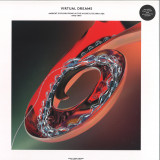
Music From Memory is delighted to be turning 50 with a special release: MFM050 - V/A - Virtual Dreams: Ambient Explorations In The House & Techno Age, 1993-1997 (3xLP/2xCD). The first in a series of compilations, alongside more in depth artist-focused releases, Virtual Dreams will delve into music produced during the 1990’s that redefined the boundaries of ‘Ambient’. This was music that explored the possibilities of Ambient music within a new setting, created often by House & Techno music producers for a world beyond dance floors but made very much with the pre and post-clubbing listener in mind.
When House and Techno exploded out of America in the mid 1980s a whole generation was redefined not only musically but also culturally and chemically speaking. Peaking, quite literally, with a second ‘Summer of Love’ in 1988, millions of young people across the world would experience the life-changing ups of a brave new world but with it of course came the downs; enter the concept of a ‘Chill-out’ room. Whilst early Chill-out rooms lacked a specific sound and were often soundtracked by music such as reggae and soul, slowly young Techno and House producers themselves would become increasingly interested in developing a futuristic ‘Ambient’ soundtrack to a world beyond the thud of the main room.
‘Ambient’ in this new age now though had sharper teeth than in Brian Eno's key text for ‘Music for Airports’, instead here the sounds were the mode of transport rather than the backdrop. While the melodies were pretty, the soundscape steered away from the pastoral, dreaming of outer-space and technology as opening up exciting new dimensions. Much like in the first Summer Of Love; the musicians were again exploring psychedelic, mind-altering and transcendental possibilities of music. And also much as in the first Summer Of Love, a psychedelic visual language would accompany the music. Though now the tracks could be accompanied by music videos, utilising early CGI techniques, they would look almost entirely to the future: envisioning technology, nature and humanity intertwined in a new Utopian future. Virtual Dreams of a better world.
From Ambient and early Chill-out classics, to lesser known one-off projects, as well as Ambient deviations by some of House and Techno’s leading producers, Volume One of Virtual Dreams features tracks by Bedouin Ascent, LA Synthesis, LFO, Marc Hollander, Mark Pritchard & Kirsty Hawkshaw, Richard H. Kirk and more.
To celebrate our 50th release the first 1000 copies include a holographic 'Virtual Dreams' sticker plus a special insert poster with artwork by Victoria Pacheco and design by Steele Bonus.
DOES NOT INCLUDE the Vinyl´s themselves that need to be purchased separately!
NOTON - VIRUS 'reMASTER' Vinyl Slipcase
Limited Edition Vinyl slipcase celebrating Alva Noto & Ryuichi Sakamoto's VIRUS series. The slipcase can accommodate the 5 LPs Vrioon, Insen, Revep, Utp_, and Summvs (reMASTER) LPs and comes in an eco-friendly, cream shaded Muken paper.
Design by Carsten Nicolai.
Charlotte de Witte, without doubt one of Belgium's fastest rising talents in the techno circuit, and known from two strong EP's on Tiga's Turbo label, makes her debut on OFF.
The EP starts off with 'Trip', aptly name due to its cinematic sound design and arrangement. Charlotte's trademark use of vocals ooze character, and haunting synths complemented by a laidback but steady drum-foundation are the ingredients of this track.
Sweden's Techno-legend Cari Lekebusch delivers the first remix, a functional and linear interpretation, which is sure to be heard on festival dancefloors during the late summer.
TWR72 of Amsterdam, themselves very much what you would call a 'current breakthrough act', are responsible for remix number two, a contemporary interpretation based on syncopated rhythms.
The EP is completed with 'Repeat', a reduced drum-tool built around a repetitive vocal hook.
Altogether a strong statement of a promising young artist and another proof of the ongoing evolution of OFF Recordings.
Recogiendo
Ordena ahora - una vez que hayan recibido suficientes pedidos, el artículo se reimprimirá.
British musician, multi-instrumentalist, producer and DJ cktrl returns with the release of his new EP ‘Yield’. Born from a desire to change the narrative around contemporary Black British music, the boundary-pushing musician aims with this project to prioritise the art of bonafide musicianship. A stark departure from cktrl’s previous work, ‘Yield’ is a celestial and palpably more inward body of work that harkens back to the pre-electric age of modal jazz while simultaneously pulling in elements from the disciplines of classical and baroque music. Speaking on the project’s sonic identity, cktrl says: “I want to be able to show that you can make things from scratch again that have that feeling and beauty without having to sample an old record. Even though that’s an art-form within itself, I want to show raw orchestration and instrumentation can be the sole source” The origins of the title came from a period where cktrl was looking to find solace in himself after an introspective period of grief and heartbreak. As an intentionally instrumental project with minimal vocals, cktrl wants prospective listeners to see these new songs as guided meditations where they can wholly insert themselves in it. Eliciting and reaping whatever feelings come to the fore. Speaking on what ‘Yield’ means to him as a concept, cktrl explains: “Some people who I've asked to define the word ‘yield’ have looked at it from a harvest point of view, whereas others have seen it as something to submit to, to render, like you're giving up yourself. I see it as a barometer for how you feel - no matter if you're at your lowest or your highest vibration, you still need to show up for yourself. You still have to be present. It’s about getting the best from yourself no matter where you are in life” The new project is the follow up to last year’s ‘Zero’ which featured collaborations with esteemed contemporaries like the GRAMMY-nominated Mereba and anaiis. Upon the project’s release, it was met with a plethora of critical acclaim from highly regarded publications and platform such as British Vogue, Dazed, CRACK Magazine, Resident Advisor, NOTION, Harper's Bazaar and ES Magazine for its sprawling and experimental scope, spanning avant-garde jazz, classical music, alternative R&B and electronica. cktrl has a tune for every occasion: as content making beats by himself at home in Lewisham as he is amongst this generation’s fashion and cultural vanguards. Music has been a part of his life for as long as he can remember: from clarinet lessons throughout his school life to fond memories from his NTS days. Moulded by a unique blend of his West Indian heritage, years of classical training in both the clarinet and saxophone, cktrl strives to do what hasn’t been done before. His approach to creation is decidedly wide-ranging and broad. In fact, where sonic descriptions might fail to encompass the breadth of cktrl’s scope, three words surface when he unpacks his musical aims: freedom, range and feeling. Elsewhere, throughout his career, cktrl has been recognised and heralded by fashion and film VIPs as he firmly embeds himself within the black cultural renaissance emerging here in Britain. Acquiring a global network of creatives that include the late Virgil Abloh, Bianca Saunders, Tremaine Emory, Saul Nash, Maximilian Davis, Ahluwalia, Stephen Isaac Wilson, Sean Frank, Campbell Addy, Ib Kamara and Jenn Nkiru who secured him a cameo in Beyoncé’s ground-breaking film ‘Black Is King’.
From a research work started in full lockdown three years ago, finally sees the light (or darkness) Echi Senza Fine, a remastered collection of sound material by Tasaday. Inspired by the controversial media story in 1971 of the discovery of a tribe in the Philippines that apparently had technology that had stood still in the Stone Age, the project officially borrows the name Tasaday in 1984 from the evolution of Nulla Perreale, in turn union of Die Form (musical part) & Orgasm Denied (performative part).
To put it in the words of Marcello Ambrosini, the Tasadays find in Die Form the controlled destruction of the form after its careful design and construction, while in Nulla Iperreale the spontaneity free from any possible superstructure. They declare themselves new primitives, not in the perspective of a nostalgic return to a pre-industrial or prehistoric external world, but in the exception of an inner experience in stark contrast to the leviathan of the single utilitarian thought that has dominated the West for centuries.
Their production-action does not allow itself to be tempted by the repetitiveness used by many industrial groups of those years, thus resulting seminal in the evolution of the scene. Their impulse to go further and not remain caged in the format of the new wave is witnessed by their particular sound vocabulary that sees, along with the use of conventional instruments, the use of DIY tools such as Chopper Vox and highly sui generis tools, like the Camolofono, cariole loaded with sheets, stones, tubes, chains and “garbage” of various shapes and sizes.
A discography dotted with primordial electronic experiments that reaches the new millennium through several vinyl records and an endless number of cassettes. From this undefined and mysterious number of tapes that is born Echi Senza Fine: 14 tracks (+ 2 digital bonuses) remastered, collected by Asymmetrical, who also edited the release insert, a collage of visual and textual material from their fanzines. A series of 300 transparent vinyl + Insert.
SHDW & Obscure Shape return to their mothership label From Another Mind with their six-track 'Vergessene Welt' EP, signalling the first material on the imprint for 18 months.
Founded in 2015, the launch of SHDW and Obscure Shape's label From Another Mind saw the Stuttgart-based DJ/producers establish themselves via a wealth of self-released material while welcoming a long list of high-profile remixers, including Rodhad, James Ruskin and Dax J. However, the pair's evolution saw new ventures explored and attention focused wider afield with the launch of their second label Mutual Rytm in 2022. Utilising their A&R skills, the label has seen the duo curate and invite a selection of up-and-coming and established names while also delivering their first EP on the label in Summer, 'Poetic Justice'. Exploring the techno sounds of tomorrow while drawing on influences of the past, the label quickly turned heads and has become a go-to for many. Following a brief hiatus, the attention is now turned back towards From Another Mind as the pair explore their origins and the signature FAM sound once again, opening the New Year with six fresh productions across their 'Vergessene Welt' EP.
Opener 'Planet Der Sturme' is an exhilarating ride through driving basslines, menacing synth lines and hard-hitting percussion to march towards the peak hours and set the tone for what's to come. 'Der Urknall' is a trippy and murky dive through off-kilter textures and regimented percussion, while 'Das Gefallene Konigreich' ups the energy levels further with sharp metallic tones, skittering hats and subtle haunting melodies launching deep into the late night hours.
On the flip, 'Geburt Der Erde' brings a slice of paired-back, groove-led techno as a slick acid line takes control and ebbs and flows throughout the track's six-minute duration, before closing the physical record via the delicate yet compelling sonics of title cut 'Vergessene Welt' - showcasing a deep dive into far-reaching corners of the genre.
'A Winged Victory For The Sullen' is the first installment of the new collaboration between Stars Of The Lid member Adam Wiltzie and L.A. composer Dustin O'Halloran. The duo agreed to leave the comfort zone of their home studios and develop the recordings with the help of large acoustic spaces, hunting down a selection of 9ft grand pianos that had the ability to deliver extreme sonic low end.
Other traditional instrumentation was used including string quartet, French horn, and bassoon, but always juxtaposed is the sound of drifting guitar washed melodies. The recordings began with one late night session in the famed Grunewald Church in Berlin on a 1950's imperial B?sendorfer piano and strings were added in the historic East Berlin DDR radio studios along the River Spree. One last session on a handmade Fazioli piano in a private studio on the Northern cusp of Italy, before the final mixes took place in a 17th century villa near Ferrara with the assistance of Francesco Donadello. All songs were then processed completely analogue straight to magnetic tape.
Their secret to harvesting new melodic structures from the thin air of existence was for the duo to push themselves to dangerous territory, realising that clear thinking at the wrong moment could stifle the compositions. The final result is seven landscapes of harmonic ingemination. In 'Requiem For The Static King Part One' ? created in memory of the untimely passing of Mark Linkous ? they have taken the age-old idea of a string quartet and then shot it out of a cannon to reveal exquisite new levels of sonic bliss.
Of the 13 minute track 'Symphony Path?tique', Wiltzie says 'after almost 20 years of struggling to create interesting ambient drone music, I feel like I have finally figured out what I am doing'. Notable guest musicians include Icelandic cellist Hildur Gudnadottir, as well as Erased Tapes label comrade Peter Broderick on violin. A Winged Victory For The Sullen is not a side project ? it is the future of the late night record you have always dreamed of. A Major release for Forte, Non exportable.
Following the vision of their substantial project entitled "Dysphoria I Euphoria" , the French duo Kas:st come back with a new Ep on Flyance Records. 4 tracks on their artistic universe fluctuates between hypnotic rhythms, dark and mind-blowing emotions, constantly looking to reach the "mental" aspect that they love in modern techno and in which they identify themselves with.
The new record by Tropa Macaca brings together two pieces, Animais Sintéticos and Aerossol, which were previously presented in an exhibition context, at gnration in Braga and at PADA in Barreiro, in the years 2022 and 2020, respectively. Both exhibitions, which took the title of the pieces, presented themselves as immersive installations that allied music to Joana da Conceição's paintings and videos. These two exhibitions are different pacts between the audible and the visible, and of both with the world.
Here are the texts that accompanied the exhibitions, as well as links to visual report.
Animais Sintéticos, gnration, Braga, 2022
The exhibition Animais Sintéticos exists like a landscape, the kind we remember
when we are not there, alive, but suspended inside us. Enigmatic for us who created
them, they accompany us, and if we imagine that one day they had a beginning, an
original referent outside of us, the time they have already spent with us forces us to
doubt that this is so. Time has uprooted them, torn them from that place. We look
closer, we reflect, we examine, we meditate, and when, as in a quantum leap, we
originate what becomes there, we believe that it has always been there, that we have
crossed the glass, that we have come close to the mystery. It is a landscape like this
that is offered in this exhibition. One of those that say more about us than about the
world, at a time when we already know what we already felt, that we are not the
world. An exercise in quantum paleontology, where the painting, the music, and the
moving image are echoes of this place we inhabit, between promise and ruin. A
confrontation, in the form of an elegy, in search of reconciliation.
RIYL: Toro y Moi, Helado Negro, Rosalía, Tame Impala, Cuco.
Follow up to their 2019 breakout ‘Foam,’ of which Pitchfork said “Foam demonstrates that it’s possible to draw from everywhere, without sounding quite like anything else.” Lead to tours supporting Durand Jones & The Indications, Belle & Sebastian, Chicano Batman, Crumb, Innerwave, and festival appearances at Pitchfork Festival Chicago and Primavera Sound LA. ‘Last Spa on Earth’ is wildly unique and creative music, mixing the sounds of Indie, Electronic, Drum & Bass, Reggaeton, Latin Hip Hop, and more to create a sound all to their own. Divino Niño are no strangers to bold reinvention. When Camilo Medina and Javier Forero friends whose bond dates back to their childhoods in Bogotá, Colombia moved to Chicago and recruited guitarist Guillermo Rodriguez to form a band, they were psych-pop outsiders playing live shows with a drum machine. With the addition of drummer Pierce Codina, their 2019 breakthrough and debut LP for Winspear, Foam, solidified their place as local indie rock mainstays. Soon after, multi-instrumentalist Justin Vittori joined to round out their lineup. Once again, with their masterful, unpredictable, and eminently danceable new album, the band has done something radical: They totally upended the way they write songs, eschewing practice room jams for unrelentingly collaborative beats, implied grooves for immersive dance floor heaters, and mellow vibes for frenetic doses of reggaeton, electropop, and trap on their most adventurous and ambitious work to date. Welcome to the Last Spa on Earth. Written and recorded over the past two years, Last Spa on Earth deals in release and catharsis: confronting your darkest moments and coming out better for it. The album artwork, done by Medina, a longstanding visual artist, depicts a dreamy, yet graffiti-tagged spa, void of physical bodies so listeners can envision themselves in this unique environment. It represents the yin and yang approach Divino Niño took while creating the album: the serenity of the spa and the chaos of the party. Ultimately, the band’s desire is to provide healing in the same way one feels after sweating, shivering, stretching, and resting at the spa against the backdrop of the world’s darkness. Last Spa on Earth is the cathartic product of Divino Niño letting go of their musical preconceptions, past traumas, and future anxieties to embrace change, chaos, and each other’s contributions both to these songs and to each other. Track Listing: 01. LSE 02. Nos Soltamos 03. Tu Tonto 04. XO 05. Toy Premiado 06. Ecstasy 07. Drive 08. Miami 09. Mona 10. Especial 11. Papelito 12. I Am Nobody
With an extensive legacy and a list of alter egos longer than your arm, Martin Damm aka Biochip C achieves a delicate balancing act on this 11 year old record, a handful of extras copies of which were recently unearthed in what can only be described as a highly fortunate 'warehouse find'. He pulls off a delicate balancing act here, letting the abrasive, industrial punk rock side of his music off the leash to frolic unhindered, while never losing sight of the needs of dancefloor and its needs across the six tracks. Highlights? Well, the title track's speedy electrofunk is highly addictive, 'Eraser' has a driving, chunky techno edge that fans of Force Inc will love, while the double dub speed grooves of 'Knobgine' and 'Liquid Silence' are forces of nature in themselves.
25 years of KOMPAKT is no reason to get hysterical. Then again, it's a nice occasion to have a laid back look at the situation in electronic music today. Minimal techno in all it's varieties is now established as the worlds best dance music, as you may know. So far, so good. What's next Nothing. Dance on!
I've gain two essential insights with the passage of time. First off, that music which over the years only knew 'faster, better, stronger' and 'forwards ever - backwards never' can constantly repeat, quote and loop itself without killing itself. A music that suspends the meaning of time and eventually can set a parallel, better universe of fantasy against the twisted grimaces of reality. Again and again.
And secondly, that getting older living in/with this music is a quite relative term to which ideally a serenity of age can ring a bell. This shows that 25 years after 1993 so many protagonists, enthusiasts, DJs, musicians, relentlessly rave fighters - with all personal advancement - are still there and still celebrate, play or produce this/theirs music; and compete themselves and their music just with that.
Two such heroes of the neat and tidy bass drum culture are with no doubt T.RAUMSCHMIERE aka MARCO HAAS and REINHARD VOIGT. From day one, those two figureheads have given live-techno the glam of stage-diving rock 'n' roll, long before vodka and beer prevailed as alternative lube for ecstatic dancefloors.
Even better they both now raise the glass at the longest techno-bar in the world named KOMPAKT EXTRA/SPEICHER. With DREI MILLIONEN KO¨LSCH, Reinhard Voigt continues to establish his savvy 'way into sound', which he's pursued for a few years now on his many releases. He's turning genre cliche´s into a very personal take with his defiant mix of the deepness of a lonesome cowboy and his implicit faith in the dancefloor and gives the music a very personal touch of ennnoblement of the faith in itself. Technos dignity shall be inviolable.
For me, AUGEN ZU by T.RAUMSCHMIERE is one of the most beautiful masterpieces of bass-heavy 'Umta Umta' techno. A few strikingly brilliant vocal lines from the master himself, put through the machines and combined with a relentlessly sequencer that says it all. This cheers my heart and we will always need such tracks to remind us of ourselves. And to forget about ourselves. Smash hits of unreason! Or the prettiest declaration of love to a music which gets its magical moments from what's happening between the bass drum-beats. But only by this when the bassdrum remains linear and will do so forever. Both Marco Haas and Reinhard Voigt know that. Because after techno comes always techno.
Wolfgang Voigt - May, 2018 Wolfgang Voigt - May, 2018
25 Jahre KOMPAKT sind kein Grund sich aufzuregen. Aber dennoch ein schöner Anlass, einen gelassenen Blick auf die Lage der elektronischen Musik zu werfen. Denn der globale Minimal-Techno, in seinen unterschiedlichen Spielarten, hat sich bekanntlich längst als beste Tanzmusik der Welt etabliert. Recht so. Was nun Gar nichts. Weitertanzen.
Zwei essentielle Erkenntnisse haben sich bei mir im Laufe der Zeit durchgesetzt: Erstens - dass eine Musik, die über Jahre nur ein »Höher, Schneller, Weiter« oder ein »Forwards Ever - Backwards Never« kannte, sich ständig wiederholen, selbst zitieren und loopen kann, ohne daran zu ersticken. Die Bedeutung von Zeit und Vergänglichkeit im besten Sinne außer Kraft setzen und der hässlichen Fratze der Realität eine parallele, bessere Welt der Fantasie entgegensetzen kann. Immer wieder.
Und zweitens: dass »Altern in/mit dieser Musik« ein sehr relativer Begriff ist, dem bestenfalls Altersgelassenheit etwas sagt, Alter. Das zeigt sich immer wieder im schönsten Sinne, wenn 25 Jahre nach 1993 so viele Akteure, Enthusiasten, DJs, Musikanten, unkaputtbare Kampfraver, bei aller persönlichen Weiterentwicklung, immer noch da sind und immer noch diese/ihre Musik abfeiern, auflegen oder eben produzieren und sich und ihr Tun auch nur daran messen lassen müssen.
Zwei solche Recken der gepflegten Bassdrumkultur sind zweifelsohne T.RAUMSCHMIERE aka MARCO HAAS und REINHARD VOIGT. Zwei Rampensäue der ersten Stunde, die Live-Techno den Glam des Rock'n'Roll Stagedivings gegeben haben, lange bevor Vodka und Bier sich als alternative Gleitmittel eines ektatischen Dancefloors in der Breite durchgesetzt hatten.
Umso schöner, dass sich eben diese Beiden mal wieder an der längsten Techno-Theke der Welt, genannt KOMPAKT EXTRA/SPEICHER über die beiden Seiten einer Schallplatte hinweg musikalisch zuprosten. Mit dem Track DREI MILLIONEN KÖLSCH setzt REINHARD VOIGT seinen smarten »way into sound« fort, den er schon seit ein paar Jahren auf diversen Veröffentlichungen konsequent verfolgt. Mit einer trotzigen Mischung aus lonesome cowboyhafter Deepness und dem unbedingten Bekenntnis zum Dancefloor schafft er es, den Klischees des Techno eine sehr persönliche Note der Veredelung des Glaubens an sich selbst zu geben. Die Würde des Techno ist unantastbar.
Der Track AUGEN ZU von T.RAUMSCHMIERE ist für mich eines der schönsten Meisterstücke in der Tradition des oktavbassgeschwängerten Umta-Umta Techno. Einige wenige markant brilliante Textzeilen, vom Meister selbst in deutscher Sprache durch die Maschinen geschickt, gepaart mit einem Sequenzer der keine Gefangenen macht, lassen keine Fragen offen. Da geht mir Herz und Rucksack auf. Solche Tracks werden wir immer brauchen, um uns an uns selbst zu erinnern. Um uns immer wieder selbst zu vergessen. Smash-Hits der Unvernunft! Oder die schönste Liebeserklärung an eine Musik, die ihre magischsten Momente immer aus dem gezogen hat, was zwischen den Bassdrumschlägen passiert. Das funktioniert aber nur, wenn die Bassdrum gerade ist und es für immer bleibt. Und Marco Haas und Reinhard Voigt wissen das. Denn nach Techno kommt immer noch Techno.
Known as the “Dynamic Duo” Pig&Dan celebrate twenty years by making a long-awaited debut on Crosstown Rebels next month. The two-track Rock You All Night EP draws inspiration from the USA’s heritage house scene, with a slice of Hot Filtered Disco!
The influences of Chicago and New York are heard right from the offset, with rolling homegrown stabs coupled next to heavy and wholesome bassline grooves. There’s an inherent feel-good atmosphere to the piece, reflective of the era’s freedom and openness, before Let Yourself Unwind finishes proceedings on a similarly euphoric close. Disco-esque melodies flitter beneath an upbeat, repeating vocal as choir-like instrumentals build to create the perfect synergy for both dancefloor and radio play.
Pig&Dan have firmly established their presence as one of electronic music’s most esteemed duos. The pair’s releases speak for themselves, be it on Sven Väth’s Cocoon, Adam Beyer’s Drumcode or John Digweed’s Bedrock to name a mere few of the labels they’ve found success on. Their DJ performances are similarly impressive, with recent years marking the launch of a new live show that debuted across some of the biggest global stages, including Fabric (London), Warung (Brazil) and AIM festival (Canada).
Cascading through kaleidoscopic stardust and forming in the outer reaches of the music universe, transcending time and distance, cosmonaut musicians Mo Morris & Zeben Jameson reconnect to write & record songs from opposite sides of their planet (Bali and London) written over the internet during the pandemic. Landing the much anticipated and eagerly awaited new A Mountain of One album "Stars planets dust me".
Welcome to the formative British psych electronic heroes A Mountain Of Ones 3rd studio album.
Mastered and reimagined and a full forthcoming album rework by electronic wizard, master selector & global superstar Ricardo Villalobos, featuring additional collaborations from 80s/90s Balearic legends "The Woodentops`s" front man "Rolo McGinty,”, Japan’s cult heroes ``Dip in the Pool" and "Unkle" and "Toy Drum`s" Pablo Clements.
UK Dub master "Dennis Bovell MBE" also makes an incredible appearance on the "Custards Last Stands" dub versions. Now available on a ltd Japanese 10". A beautiful artwork series generously loaded in by photography legend Dick Sweeney, and co-mixed by Dea Barandana in Indonesia. With its cosmic pop sound, soulful soaring, balearic sensibilities and feel good choruses it carries all the weight of a much needed revo- lution in psychedelic, conceptual ever popular music and sounds & feels like the infamous crossover album that promised to come from the heady days of the bands ascend last time round.
So here’s some back story, garnered from the hearsay, folk law, the myths and the legends, of 10 years ago, in case, like Mo & Zeb, if they'd remembered any of it, they probably weren’t there, after 2 much acclaimed albums and sellout shows vanishing in a cosmic cloud of dust the yin and yang brothers Mo Morris (ZSOU/Electric Stew) & Zeb Jameson (Oasis/Tricky/Pretenders) uncoupled and each em- barked on a pathfinder mission to equip themselves for their inevitable return... they just didn’t know it at the time... and as the global community ground to a halt 2 years ago they sought refuge from opposite sides of the planet in each other's company again.
The solace and rejuvenation it gave had them re-emerging as invigorated, inspired and wiser music creators, this has given rise to the evolution of their 3rd all important album‘s sound.
Zeb "our capacity as human beings is more phenomenal and limitless and way beyond the conventional thinking of society constructs but also in complete harmony with the intelligence and brilliance of advancing technologies".
Experiencing this energy together, as dedicated and devoted music pioneers, these great collaborative universal truths were revealed, imbed and steeped in their writing and recording experience as the music touched and resonated with all involved to create the fresh and fully formed A Mountain Of One 2.0.
Mint Condition - A record label focused on excavating the outer fringes of classic House and Techno. Unreleased mixes, classics, overlooked gems and never heard before material, mined from the last 30+ years of contemporary dance music are the order of the day. From Chicago, Detroit and New York to London, Nottingham and beyond. Mint Condition have got their digging hats on to bring you exclusive heat and those rarer than rare jams that have been in your
wants list for years. Dig in....
Back in 1997, UK house legend Charles Webster, this time under his DJ Profile alias, unleashed these killer tracks. Originally released on the sorely missed London nightclub The End's label, this fine 12" set a benchmark for what would become a very exciting time for the UK's underground scene, both tracks are widely considered to be up there with Charles' most sought after work.
A-side 'Prove It' kicks off with swinging drums that deliver the funk, percussive elements rattle & shake and the low slung bass line keeps the track firmly on the dancefloor. The soothing chords, acid overtones and the evocative vocal hook are mesmerising and soulful.
Over on the flip, 'Realization' is a bumping analogue monster. The kicks are solid, the snares swing and an infectious rolling bass line carries the track throughout. Darker acidic touches sit alongside delicate synth riffs and emotive chords that lift, drift and lose you in a world of wonderfully woozy deep house sonics.
Never has the late night dance floor sounded so good, and this slab of wax is a must have that typifies a halcyon period in underground house history. The tracks themselves have remained exciting and relevant, achieving cult status amongst the most discerning DJs, record collectors and music heads alike. Legitimately re-released with the full involvement of Charles Webster, lovingly remastered by London's Curve Pusher from the original sources especially for Mint Condition. 100% legit, licensed and released. Dug, remastered, repackaged and brought to you by the caring folks at your favourite reissue label - Mint Condition!
It might seem tongue-in-cheek on the surface, but the fact that the title of Eldritch Priest's sprawling debut vinyl release, Omphaloskepsis, is the Greek translation for “navel-gazing” unlocks something essential to the Vancouver-based composer and writer's singular outlook.
Perhaps even more telling is the title of Priest's 2013 book Boring Formless Nonsense: Experimental Music and the Aesthetics of Failure (Bloomsbury), whose 300-odd pages read as though you've been dosed with potent hallucinogens. Throughout the text Priest addresses—celebrates, even—the titular elements via various musical examples, including that of his peers. What's so bewildering it is that his descriptions of how boredom, formlessness, and nonsense manifest are laced with the very tactics he's depicting. Passages tie themselves in knots, footnotes engulf the “primary text,” he even deliberately misleads the reader.
The restless stasis of Omphaloskepsis could be regarded as an extension of this book's wayward spirit. Things unfold fairly slowly and consistently but it'd be a stretch to describe it as properly contemplative. Like attempting to meditate with a high fever, any sense of tranquility is constantly derailed as one succumbs to queasy agitation. The piece's foundation is a seemingly endless guitar melody; an organic meander that neither seems to repeat or offer any concessions to narrative directionality. Priest unfurls this rambling cantus firmus in a rich, clean, jazz-like tone, but as it's played, it's repeatedly tangled with snarls of dense digital processing and shadowed by stumbling virtual “band.” These strident interjections blatantly contrast with the guitar, yet they aren't so violent as to offer more than a faint itch of distraction. As such, the distinctive amorphousness that this piece asks us to inhabit for its 54-minute duration leaves a strong impression, but also feels utterly intangible.
In addition to his recorded forays, Priest's disorienting music has also been performed by top-tier interpreters such as the Arditti Quartet, Quatuor Bozzini, Philip Thomas, Anton Lukoszevieze, and Continuum. While living in Toronto he co-founded the collective neither/nor with John Mark Sherlock, which featured a cross section of musician-composers playing each other's work including Eric Chenaux, Doug Tielli, Eric KM Clark, Heather Roche, and Rob Clutton. “Though the name refers specifically to a loosely knit group of composers and performers,” remark's the collective's website “neither/nor is also a sensibility that refuses art’s messianic pretensions and the gaping maw of commercialized society, opting instead for art’s right to be esoteric.” In 2021, when Eric Chenaux and Martin Arnold relaunched their neither/nor-adjacent Rat-drifting imprint, an album by Priest, Many Traceries, was among the first to be released. Perhaps unsurprisingly, Priest was a student at the University of Victoria, a school that's come to be known for fostering such staunch individualists as Arnold, Linda Catlin Smith, Allison Cameron, and Anna Höstman.
As a scholar, Priest writes from a 'pataphysical perspective and deals with topics such as sonic culture, experimental aesthetics and the philosophy of experience. Priest brings these interests to his job as an Associate Professor in the School for the Contemporary Arts at Simon Fraser University, interests that also inform his work as a member the experimental theory group The Occulture. In addition to Omphaloskepsis, his new book, Earworm and Event: Music, Daydreams and Other Imaginary Refrains,
Like every record Superchunk has made over the last thirty-some years, Wild Loneliness is unskippably excellent and infectious. It’s a blend of stripped-down and lush, electric and acoustic, highs and lows, and I love it all. On Wild Loneliness I hear echoes of Come Pick Me Up, Here’s to Shutting Up, and Majesty Shredding. After the (ahem, completely justifiable) anger of What a Time to Be Alive, this new record is less about what we’ve lost in these harrowing times and more about what we have to be thankful for. (I know something about gratitude.
I’ve been a huge Superchunk fan since the 1990s, around the same time I first found my way to poetry, so the fact that I’m writing these words feels like a minor miracle.) On Wild Loneliness, it feels like the band is refocusing on possibility, and possibility is built into the songs themselves, in the sweet surprises tucked inside them. I say all the time that what makes a good poem the “secret ingredient” is surprise. Perhaps the same is
true of songs. Like when the sax comes in on the title track, played by Wye Oak’s Andy Stack, adding a completely new texture to the song. Or when Owen Pallett’s strings come in on “This Night.” But my favorite surprise on Wild Loneliness is when the harmonies of Norman Blake and Raymond McGinley of Teenage Fanclub kick in on “Endless Summer.”
It’s as perfect a pop song as you’ll ever hear sweet, bright, flat-out gorgeous and yet it grapples with the depressing reality of climate change: “Is this the year the leaves don’t lose their color / and hummingbirds, they don’t come back to hover / I don’t mean to be a giant bummer but / I’m not ready / for an endless summer, no / I’m not ready for an endless summer.” I love how the music acts as a kind of counterweight to the lyrics.
Because of COVID, Mac, Laura, Jim, and Jon each recorded separately, but a silver lining is that this method made other long-distance contributions possible, from R.E.M.’s Mike Mills, Sharon Van Etten, Franklin Bruno, and Tracyanne Campbell of Camera Obscura, among others. Some of the songs for the record were written before the pandemic hit, but others, like “Wild Loneliness,” were written from and about isolation.
I’ve been thinking of songs as memory machines. Every time we play a record, we remember when we heard it before, and where we were, and who we were. Music crystallizes memories so well: listening to “Detroit Has a Skyline,” suddenly I’m shout1singing along with it at a show in Detroit twenty years ago; listening to Overflows,” I’m transported back to whisper-singing a slowed-down version of it to my young son, that year it was his most-requested lullaby.
Wild Loneliness is becoming part of my life, part of my memories, too. And it will be part of yours. I can picture people in 20, 50, or 100 years listening to this record and marveling at what these artists created together beauty, possibility, surprise during this alarming (and alarmingly isolated) time. But why wait? Let’s marvel now. - Maggie Smith
Greyscale's most personal release and perhaps the most important for label owner grad_u aka Aleksandr Martinkevič. Earlier this year, Alex was diagnosed with cancer. Certainly a horrible thing to hear and there has definitely been some low moments in certain stages of the journey. At just 36 years old, many of us are shocked that such a young person can develop cancer. After some research he found out that younger and younger people are randomly getting cancer studies show. An alarming trend to learn about. However, there has also been a lot of other learning and different new levels of appreciation for the simple things in life as a new higher level of inspiration in making music has manifested. And this new release encapsulates that. Alex has also felt a duty to make things better for others. Focusing on what can be improved as he wants to highlight research, treatment and the overall communication of this disease to more people in the electronic music scene. Part of the proceeds from this new album will be donated to the National Cancer Institute in his homeland of Lithuania.
Alex wants everyone to know that catching these signs early and getting regular checkups are your best chance at beating cancer. Thankfully Alex did this also and his treatments have gone well. Alex plans still stay steadfast with his label and his life. Simplifying things with the love from his family and friends, focusing on his hobbies
along with making sure he makes his health his #1 personal priority.
The name for this full length release is titled 'T2NO'. grad_u's most introspective work yet features 8 emotional tracks overall. The honesty expressed in this album is blunt and to the point. These tracks take you on an audio journey thru grad_u as he expresses his feelings thru the entire process in each stage.
Beginning with two wonderful ambient tracks named 'Genetic Mutation' & 'Carcinogen'. In the opener, Chords rain over you as a beautiful ambient melody peeks out underneath it followed by a more stark and hazy field of interference. From the gentle opener to the more tension filled follower, the personal journey of grad_u is
developing before your ears. The b-side of 'Neoplasm' is a bit more somber but also has a ray of light in it.
Introspective as it can get, this is a true journey through an uncertain future. 'MRI scan' needs no explanation....
The second half of the album begins the understanding of what grad_u was going thru. 'Malignant Transformation' gives off that feeling of the human body working thru the science. Fight or flight becomes the theme for this track. 'Adenocarcinoma' almost gives off the sound of cells rebuilding themselves. Sci-fi meets real life in this epic battle. 'Resection' continues this scientific sounding reflection on the body healing with sounds of movement and time. As if the body is working itself out. Lastly and triumphantly comes the closing
track 'Waking up to a New Life'....
The emotional journey of this album isn't for the faint of heart. It leaves nothing to the imagination. It works thru all the emotions that can come with such and life changing event like having cancer. We want to thank grad_u for sharing his story with us. This story can happen to anyone...
"I would like to take this opportunity to express my great gratitude to doctors A. Dulskas, G. Jurevičienė, V. Sidorov and all staff in Abdominal Surgery and Oncology Department at NCI. Thank you for your expert care and for saving my life.
Also, big big thank you my family and closest friends for all their love and support during this difficult period of time and always being there for me."
Special thanks to Lithuanian Council for Culture, associations AGATA and LATGA for support of this special project.
Part of proceeds from the album will be donated to National Cancer Institute, Lithuania