Darwin Chamber is a veteran of the prog game, and now that sound is very much back en vogue, it's no wonder new generations are falling for the American's sounds. Back in March, he dropped this EP which was inspired by a San Fran acid trip, and it became an instant classic that meant the initial translucent yellow vinyl edition, limited to 303 copies, soon sold out. Now it reappears on black wax and obviously it still bangs. 'The Acid Test (DJ Spun mix)' is a heavy, raw jam with plenty of trippy details, warped pads and vocals that come and go so subtly you can't really be sure they're there. 'Never Coming Down' is a deep and dark workout with cold analogue hits and paranoid vocals, then '25th Century Acid Cat' is a little brighter with its synths but no less of a mind-fuck. 'Get Down' is gurgling, coruscated, sleazy and mid-tempo acid techno for the freaks. Brilliant.
YARN Records proudly presents its 9th vinyl release, born from a special connection made in 2025 at the Rat Camp private gathering in Bulgaria. There we met the NOTYOURTYPE crew and shared a vision of capturing the spirit of that unique experience on wax. The result is a collaborative record featuring tracks from Enivrèz Vous, Dryspirit, Jarzz, and GAZ (Getsu & Zlatin) — a collection that reflects the creativity, friendship, and underground energy that brought us together.
Bassmæssage is the oldest and most consistent bass night in Leipzig Germoany, pushing local soundsystem culture and grass roots artivism. We are about to welcome a fresh release "for all who like it low and want it vibrant"!
After two installments of bass-heavy multi-genre various-BPM grooves on Volume One in 2015 and on Second Drop in 2023 here comes the full triplet in this line of bass music vinyl compilations featuring acts who have been mÊssaging our nights. This time on Threenity, one side side is running garagewise 130, flipped by a more dubsteppish 140 area, all drowning in dark sinister midranges, mindful drum programmings and heavy-weight lows for huge speakers, to be released around 9th May 2026 on a 2 floor DIY soundsystem night in Connewitz!
Opening with genre wizzard LUI from Leipzig, showing how dirty and fonkey a garage bit can actually go. Bricks of beats on a fundament of nasty bass concrete, roofed by a vast selection of uplifting samples are vibing for sure.
Trainsient is the deep bass moniker of Leipzig's Plastiks running DDNBC, delivering a heavy tribal statement of a lost place of a deep grime, overgrown with flutey leaves and dreamy synth lianes hiding da moddership.
Psionide from Dresden with estonian roots is celebrating a vinyl debut with a slow-jungle dream-breaks bit between retro and future, braindance and dance, listening and bassline coaster.
Son du Maquis outa Toulouse sneaks in low in a classic dubstep manner, only to drop the lowest wobble possible right throughout the ride.
Miles Won transmitting from Plugwhiz, nails headnodding with his beat writing skills. Where bass meets hip hop, the grass has never been greener.
Finally, veteran like Dub Across Borders cabling from Copenhagen is delivering the contemplating outro: a melancholic 140 halftime not only to send you home but right into the night sky.
These six peaces are found on a heavy cut vinyl, ready to shake your system. As bonus there is another papercraft Basstelbogen cover, which lets you build your own BM logo and a 1:3 ratio record player on top. Mach's mit, mach's nach, mach's b‰sser!
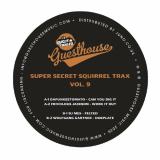
Now over two decades into its story, DJ Mes' Guesthouse Records imprint continues to serve up floor-friendly heat - fun, groove-driven, party-starting house tracks from a mix of newcomers and label stalwarts. There's much to enjoy on the label's latest vinyl outing, a ninth instalment in the ongoing Super Squirrel Tracks series of compilation style EPs. Dafunkeetomato kicks things off with the swirling, filter-rich disco-house heaviness of 'Can You Dig It', before Frivolous Jackson does a terrific job in beefing up and cutting up disco loops on the DJ Sneak-esque 'Work It Out'. DJ Mes opens side B with the low-slung, P-funk-goes-house excitement of 'Felter', while Wolfgang Gartner goes deep, warped and sub-heavy excellence of 'Dubplate', which boasts more than a nod or two to late noughties fidget house.
BB. Angel makes his debut on Harmony Rec. with “Shaitania,” a record that beautifully drifts between mystic storytelling and swampy trance inspired by a fictional country. Each track references a certain place, balancing hypnotic rhythms and warm progressive basslines with melodic depth.
Featuring rare- and first-on-vinyl tracks from beloved producers such as 2000 And One, Stasis, and CiM. Remastered by DMX Krew and with an accompanying online essay by Oli Warwick.
Across eight carefully selected slices of starry-eyed machine soul, Cold Blow presents an exquisite tour through backroom techno and downtempo electro. With a focus on thematic flow and an immersive listening experience, the London-based label explores works from leading lights of the 1990s and previously unreleased cuts that celebrate the human heart that can be discovered in synthetic sound practices. The development of techno in the 1990s saw the music evolve in different directions across the world. From the expressive blueprint laid out by the Detroit pioneers, a wide range of tempos and energies emerged. Techno's evocative synthesis and intricate drum machine programming was especially potent for deeper explorations away from the dancefloor. Documents Of A Different Reality casts back to when technology was steering quantum leaps in communication and creativity and the future was shot through with naive optimism. It was also a time when the media and industry hadn't caught up with the music to box it into distinct categories. As such, there's a sense of creative freedom that informs the older tracks on the album, from 2000 And One and Sandy Huner's sparkling example of early Dutch techno to London-based LA Synthesis' detailed take on braindance and the majestic night sky vision of cult legend Stasis. There's also space for rare, late 90s machine funk from Icelandic outlier Thor alongside Connective Zone's charmingly fractured bleep dream and a more contemporary offering from Barcelona-based duo Permutation. Meanwhile Mind Control and CiM both capture the spirit of stylistic fusion with twitchier rhythms that take influence from hardcore and jungle as much as techno. With an atmospheric through-line of melancholic pads and harmonious leads, this small but perfectly formed collection naturally follows on from previous, equally thought-out compilations on Cold Blow, and adds a distinct perspective on the history and continuing legacy of pioneering early ambient techno.
Finland-based producer Slowct is a new name, but his Panelia EP — the second 12″ to come from the rising DISCO.VERY imprint — lands with a quiet confidence and a rich, sunlit warmth. Pressed in an edition of just 300 copies, vinyl only, this is music that nods to the 90s without ever sounding trapped there: the chord language, the swing, the palette all carry echoes of that golden era, yet the production breathes with a fresh, contemporary clarity.
Across four tracks, Slowct blends house music with hip-hop shuffle, street-soul texture, and Balearic drift. There’s an unhurried, melodic quality here — drums with weight, chords that float rather than pound, melodies that feel both familiar and pleasantly unexpected. Made for summer parties, late drives, and those hazy moments when the sun sits low and the speakers are just loud enough.
On the remix front, GFH (Grooves From Heaven) steps in on “Panavia” and delivers something genuinely singular. Lush and humid, yet unmistakably futuristic. It’s a remix that twists the original into new and wonderful shapes.
2026 Repress
The ocean- the infinity, the beauty, the colour, the sound: a truly seductive place. With the sound of ocean waves Smallville's beloved artist Moomin invites us to enter his second full length album A Minor Thought". A selection of wonderful tracks initiate some exciting house music moments at our favorite clubs, improved at Panorama Bar, Robert Johnson and of course the Golden Pudel among many others.. Engaged with a fantastic collection of analogue synths and drum machines, Moomin is always on a hunt of the most delicate samples. After his big first album The Story About You' and a number of beautiful works on his own imprint Closer", he was already back on Smallville's new little baby Fuck Reality' to deliver a 12 for the 2015 summertime. Of course Moomin was also part of the Smallville 10 years Compilation Smallville Ways' and delivered again for Smallville 46. Now he appears with another string of beauty- A Minor Thought. There will be a lovely fullcover artwork package with printed Inlays for the vinyl version by Smallville's one and only Stefan Marx.
Coming off the back of what could only be described as ‘THAT’ CBRK001 track, we are thrilled to welcome Lindsey Herbert back to circuit|breaker with our first full length artist EP. Lindsey presents four highly effective, stripped back weapons - displaying her artistry in style. ‘You and Me’ opens the A side, perfectly encapsulating the essence of Lindsey’s signature peak time sound. An unfolding journey, leading with a wonky, yet sinister synth on top of driving percussive elements. As we begin to explore the world of the A1, the track is elevated once more, with a homemade vocal cut, paired with some expertly engineered percussion, giving us a greater sense of depth and flow through call and response techniques. Up next is ‘Tunnel Vision’ - a minimalistic tool injected with a thumping low end, dense rhythms and metallic textures, exhibiting a unique atmospheric restraint
with the dance floor in mind. As the track progresses we are introduced to a murky bleep sequence, keeping the track grounded for those deeper moments on the floor.
The B side launches into ‘Fluctuations’, once again presenting us with a classic peak time slammer. Carrying the track, a huge funky swinging hook, enticing the listener into its trance, feeling like it will never let you go. Amongst its energy, there is a sensation of playfulness that will invite the listener into its groove and functionality. We cap off the release with ‘Fragments of Light’ - a stripped back, potent cut, indulging into a more textural approach and allowing the track to breathe through subtle atmosphere, moments of low end resonance and percussive exchange. A detroit-esque dub hitgives the track a soulful offering and reminds us of the nucleus of techno.
Roman Flügel returns to Running Back with another chapter in an ongoing love affair between machine funk and dancefloor euphoria. Following a string of releases stretching from Garden
Party to the recent Dusty Jukebox EP, this latest offering continues a path that has become unmistakably his own.New Release Information
There are no dietary restrictions here. Just generous portions of basslines, rave signals, bleeps, and rhythm tracks, all layered with the kind of instinctive musicality that makes Roman’s productions feel both immediate and timeless. The spirit of early rave culture remains a guiding force, not as nostalgia but as a living source of inspiration, feeding into House music’s endless capacity for joy, surprise, and communal release.
As ever, the objective is simple: celebrate the moment. Preferably loud, preferably together, and preferably with plenty of icing on top
There are records that do not so much belong to an era as they pass through it, leaving traces rather than statements, circulating in the margins where function outweighs discourse. World Cup, written at the end of the 1990s by Kiko, emerged in precisely that way — as a techno track whose presence was felt less through promotion than through repetition, carried from booth to booth, absorbed into the working vocabulary of DJs who recognized in it something immediate and self-evident. Its architecture is minimal yet insistent, driven by tension and release, a form of clarity that resists ornament and instead privileges duration, pressure, and movement.
When it resurfaced in 2006, it did not return as a revision but as a continuation, reaffirming its role within the ecology of the dancefloor. The same internal logic remained intact, allowing it to re-enter circulation without friction, as though it had simply been waiting to be picked up again. In both instances, the track operates less as a fixed object than as a tool — something to be used, extended, and recontextualized in real time.
Bringing together these two versions alongside Tainted Life, the release traces a subtle but telling trajectory. If World Cupdefines a certain techno functionalism, Tainted Life reveals another dimension: a proto-Italo sensibility that gestures toward what would later coalesce as electroclash, not through stylistic declaration but through texture, tone, and attitude. Long absent from digital circulation and largely confined to obscurity, it appears here not as a rediscovery, but as a piece whose relevance has simply remained latent.
Nothing has been added, nothing has been altered beyond what was necessary to restore presence. The recordings are allowed to exist in their own continuity, detached from the temporal markers that might otherwise confine them.
The artwork, conceived by H5, extends this approach into the visual field. Its restraint is not aesthetic minimalism for its own sake, but a form of structural clarity, where composition and absence articulate a space in which the record can be encountered without interference, as if resurfacing from a parallel timeline that never fully closed.
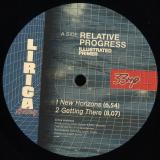
Celebrating 1 year of Lirica with a special reissue of this heavily sought after album from UK duo Relative Progress, remastered with a fresh design, still paying homage to the original asthetics
Inweys is the new project from Scottish musicians Conal Blake (Feedback Moves, Domestic Exile, Infant Tree) and Murray Collier (Dip Friso, Grim Lusk, Real Landscape). Their debut self-titled 12’ was recorded in the summer of 2024 at La Chunky Studios in Glasgow.
They asked Fielding Hope of Counterflows Festival to write a short summary of the record:
“Inweys debut release arrives as four pieces of broken body music. Lurking, barely human fragments brought into the present. Using a short drum-machine improvisation as core material, the pieces are formed from a processes of mining and re-mining for small details, with each fragment zoomed in on and turned into new pieces. There’s a transformation taking place, but one that doesn’t obscure the materiality of the recording tapes as sticky, corrosive matter. On skewed and stretched fabric they enact their palimpsestic play, sketching and altering the grid with itchy technologies. What their edits and improvisations don’t say they let space say the rest, with vacuum aerated frames for bass to diffuse and beats to wriggle. More King Tubby than Cage, more Mantronix than Reich: minimalism with molten tips.
Both Conal and Murray’s past work has embraced malleable and iterative technologies; music whose feeliness figures itself out in space in a messy precomposed/improvised dialectic. This is the sort of thing most “new music” experimentalists (or anyone who spends most of their time obsessively manipulating tapes in expensive studios) often can’t achieve; a liveness, birthed from learning in situated play. Like the lore of Phuture’s Acid Trax, a poverty of material is at the heart of this, rendering the work with an abortive conviction: a corpse waking to consciousness becomes amphibious. Instead of the composer we have a relation, two people navigating the awkward spooling between the two reels of tape. Inweys is scots for “inwards”, and in their working process this is what they do. But the result is circular motion. Until the tape runs out, all in ways move out.”
2026 Repress
The ocean- the infinity, the beauty, the colour, the sound: a truly seductive place. With the sound of ocean waves Smallville's beloved artist Moomin invites us to enter his second full length album A Minor Thought". A selection of wonderful tracks initiate some exciting house music moments at our favorite clubs, improved at Panorama Bar, Robert Johnson and of course the Golden Pudel among many others.. Engaged with a fantastic collection of analogue synths and drum machines, Moomin is always on a hunt of the most delicate samples. After his big first album The Story About You' and a number of beautiful works on his own imprint Closer", he was already back on Smallville's new little baby Fuck Reality' to deliver a 12 for the 2015 summertime. Of course Moomin was also part of the Smallville 10 years Compilation Smallville Ways' and delivered again for Smallville 46. Now he appears with another string of beauty- A Minor Thought. There will be a lovely fullcover artwork package with printed Inlays for the vinyl version by Smallville's one and only Stefan Marx.
RB013 marks Rhythm Buro's 13th release, arriving in the form of a Various Artists compilation titled 'All Things Broken'. Much like its predecessor 'There Will Be Light' - the label's ambient compilation - this project was built around a single unifying idea: bringing together a diverse set of tracks centred on deep breakbeat sounds, for lack of a better term. With that vision in mind, curator Igor Glushko reached out to a dozen like-minded artists - Ukrainian and international, long-time collaborators and fresh faces alike. A year and a half later, 'All Things Broken' is finally here.
Contributing artists (in alphabetical order): Alex Albrecht, Forest On Stasys, Haze, Hidden Element, HVL, Ina Kacz, Na Nich, Orion, Radiant Futur, SI Process, The Sailing Oysterman (aka Shjva and Ilya Semashkevich), Volodymyr Gnatenko.
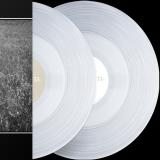
The compilation comes as a 2xLP and includes an insert poster featuring 'Flame and Water', a drawing by Ukrainian artist Oleksandr Kryzhanovskyi that serves as the centrepiece of the release's artwork. Oleksandr also contributed additional works from the same series, which appear on the labels of both records.
Applying the solid structures of floor-focused Berlin techno to the expressive space of introspective electronica, Answer Code Request returns to Delsin with his first album in eight years. Halo finds Patrick Gr?ser broadening his sound palette more than ever before, matching atmospheric synthesis with dynamic beat constructions true to his impressive legacy while breaking new ground. Across Halo, smoky clouds of pads and chords lend the album an introspective quality in the grand tradition of ambient techno. In front of these haunting melodic forms, Gr?ser is free to explore all manner of rhythmic directions. There are fractured, downtempo micro beats and angular fractals on the likes of 'Fading Shadows' and 'Refraction' that take their cues from breakbeat -- finely detailed drum sequences constantly evolving into new arrangements. A pointed nod to D&B rears its head on the aptly named, hard-edged 'Fracture' and you might hear a firmly submerged hint of ravey acid coursing under 'Sublith'. Elsewhere, the firmer kick-anchored pulse of the classic Answer Code Request sound manifests for more forthright techno excursions such as 'Halo' and 'Bliphar'. In the context of the album, though, these tougher tropes are channeled into mesmerising soundscapes that soften the attack without diminishing the potential for club impact. In this era of his craft, Gr?ser moves instinctively through the sounds and approaches that inspire him, and the end result is an album that feels natural and open, all the while steadily progressing the ongoing evolution of Answer Code Request.
b A2 Let's Try = Let's Try!; Written-By Original Score Written By – Koji Kondo
[c] A3 お花畑にて = In The Flower Garden; Written-By [Original Score Written By] – Koji Kondo
[e] A5 対クッパ戦 = Battling Bowser; Written-By [Original Score Written By] – Koji Kondo
[g] A7 Super Pipe House = Super Mario House; Written-By [Original Score Written By] – Koji Kondo
[p] B7 ごきげんスター = Irrepressible Star; Written-By [Original Score Written By] – Koji Kondo
[z] C5 ねぇねぇジーノごっこしようよ = Play "Save The World" With Me!; Written-By [Original Score Written By] – Koji Kondo
[xd] D1 土管からコンニチハ = Greetings From The Pipes; Written-By [Original Score Written By] – Koji Kondo
[xk] E1 Long Long Ago… = Long, Long Ago...; Written-By [Original Score Written By] – Koji Kondo
[xl] E2 ちょっとドキドキ = A Little Anxious; Written-By [Original Score Written By] – Koji Kondo
[xt] F2 対 クリスタラー戦 = Battling Culex; Written-By [Original Score Written By] – Nobuo Uematsu
[xu] F3 クリスタラー戦での勝利 = Victory Over Culex; Written-By [Original Score Written By] – Nobuo Uematsu
[xv] F4 クリスタラーの会話 = Conversation With Culex; Written-By [Original Score Written By] – Nobuo Uematsu
[yb] G5 オノレンジャー参上 = The Axem Rangers Bust In; Written-By [Original Score Written By] – Koji Kondo
[yc] G6 クッパ城(其ノ弐) = Bowser's Keep (Second Visit); Written-By [Original Score Written By] – Koji Kondo
[yi] H5 お・し・ま・い・! = The End!; Written-By [Original Score Written By] – Koji Kondo
[b] A2 Let's Try = Let's Try!; Written-By [Original Score Written By] – Koji Kondo
[c] A3 お花畑にて = In The Flower Garden; Written-By [Original Score Written By] – Koji Kondo
[e] A5 対クッパ戦 = Battling Bowser; Written-By [Original Score Written By] – Koji Kondo
[g] A7 Super Pipe House = Super Mario House; Written-By [Original Score Written By] – Koji Kondo
[p] B7 ごきげんスター = Irrepressible Star; Written-By [Original Score Written By] – Koji Kondo
[z] C5 ねぇねぇジーノごっこしようよ = Play "Save The World" With Me!; Written-By [Original Score Written By] – Koji Kondo
[xd] D1 土管からコンニチハ = Greetings From The Pipes; Written-By [Original Score Written By] – Koji Kondo
[xk] E1 Long Long Ago… = Long, Long Ago...; Written-By [Original Score Written By] – Koji Kondo
[xl] E2 ちょっとドキドキ = A Little Anxious; Written-By [Original Score Written By] – Koji Kondo
[xt] F2 対 クリスタラー戦 = Battling Culex; Written-By [Original Score Written By] – Nobuo Uematsu
[xu] F3 クリスタラー戦での勝利 = Victory Over Culex; Written-By [Original Score Written By] – Nobuo Uematsu
[xv] F4 クリスタラーの会話 = Conversation With Culex; Written-By [Original Score Written By] – Nobuo Uematsu
[yb] G5 オノレンジャー参上 = The Axem Rangers Bust In; Written-By [Original Score Written By] – Koji Kondo
[yc] G6 クッパ城(其ノ弐) = Bowser's Keep (Second Visit); Written-By [Original Score Written By] – Koji Kondo
[yi] H5 お・し・ま・い・! = The End!; Written-By [Original Score Written By] – Koji Kondo
[b] A2 | Let's Try = Let's Try!; Written-By [Original Score Written By] – Koji Kondo
[c] A3 | お花畑にて = In The Flower Garden; Written-By [Original Score Written By] – Koji Kondo
[e] A5 | 対クッパ戦 = Battling Bowser; Written-By [Original Score Written By] – Koji Kondo
[g] A7 | Super Pipe House = Super Mario House; Written-By [Original Score Written By] – Koji Kondo
[p] B7 | ごきげんスター = Irrepressible Star; Written-By [Original Score Written By] – Koji Kondo
[z] C5 | ねぇねぇジーノごっこしようよ = Play "Save The World" With Me!; Written-By [Original Score Written By] – Koji Kondo
[xd] D1 | 土管からコンニチハ = Greetings From The Pipes; Written-By [Original Score Written By] – Koji Kondo
[xk] E1 | Long Long Ago… = Long, Long Ago ..; Written-By [Original Score Written By] – Koji Kondo
[xl] E2 | ちょっとドキドキ = A Little Anxious; Written-By [Original Score Written By] – Koji Kondo
[xt] F2 | 対 クリスタラー戦 = Battling Culex; Written-By [Original Score Written By] – Nobuo Uematsu
[xu] F3 | クリスタラー戦での勝利 = Victory Over Culex; Written-By [Original Score Written By] – Nobuo Uematsu
[xv] F4 | クリスタラーの会話 = Conversation With Culex; Written-By [Original Score Written By] – Nobuo Uematsu
[yb] G5 | オノレンジャー参上 = The Axem Rangers Bust In; Written-By [Original Score Written By] – Koji Kondo
[yc] G6 | クッパ城(其ノ弐) = Bowser's Keep (Second Visit); Written-By [Original Score Written By] – Koji Kondo
[yi] H5 | お・し・ま・い・! = The End!; Written-By [Original Score Written By] – Koji Kondo
Slope114 are Dmitri SFC & Elise Gargalikis, a duo that makes their house music live from home in San Francisco. That lends it a rare musicality and melodic lushness that sit their work right up there with deep house forefathers. This outing starts with the slouchy goodness and endearing bass of 'Dystopian Blues', complete with aloof vocals that exude cool. The dub is even more pillow and smooth than the Mark Ambrose mix that brings a little more roughness to the drums but still locks into a hypnotic vibe. 'Emu 2' is a gentle rhythm with dusty pads and candle-lit chords for when slow-burn subtlety is prized over immediacy. Classy stuff.
What's the point of the howl of string to speaker, the hammering of stick-on skin? Is it transcendence, elevating the human spirit by catharsis in sound? Or is it summoning chaos, a purgatory in which to bask in all that’s unclean, the better to feel alive?
Why not both? Because that’s what’s on offer on Diet Of Worms, the second Rocket release by The Shits, Leeds via Newcastle’s titans of disgust and deliverance. This is a feast for the senses in the worst way possible - primal rock boiled down to its essence and flung full in your face. Using repetition, tortured vocal invective and heads-down intensity as blunt instruments, these eight tracks are an unprecedented torrent of acidic salvation. Whilst lurking somewhere on the decadence-destruction axis between the nihilism of prime Stooges and the bloody blackout of Braimbombs, Diet Of Worms is possessed of a legitimately uncompromising hostility that both elevates and debases it to co-ordinates unknown.
There are revelations here in the riffage and the rancour, even if they are the kind that occur in the bleary miasma of the lock-in, or witnessing the streetlight blur of the subsequent stagger home. Even more single-minded and remorseless than the band’s Rocket debut ‘You’re A Mess’, this is a record that demands full immersion. Whether it’s ‘Then You’re Dead’ hammering on a pulverising garage-stinking riff until it begs for mercy, or ‘Change My Ways’, whose Creedence-In-Hell swagger and lurch is that of abjection transmuted into joy, this is psychedelia forcibly removed from its comfort zone of pastiche, and thrust into a bad-trip realm of the vivid and nightmarish.
But rarely has the process of making beauty and horror indivisible seemed like so much fun. If Werner Herzog was right, and the only harmony in the universe is that of overwhelming and collective murder, then The Shits are the true music of the spheres.
The world of UKG is as fruitful as ever right now and someone who continues to make fresh moves in it is IsGwan, a Melbourne/Naarm-based artist adding his own twist to the classic template. London label Bad Parrot welcomes him for a series of bouncy and bright originals as well as some on-point remixes. 'Next To Me' has low-key groove that skates and scuffs along with a classic r&b vocal from Amber Ferraro, adding the sunshine. There's a slow, more bass-driven heft to 'All That You Want', 'On Your Mind' is sun-baked and blissed out and 'Feel Free' brings more adventurous synth work to a busier framework. Of the remixes, Harvey Sutherland brings his usual sun-facing synth sounds and Rich Ellis makes 'Feel Free' into a more dark and gritty low-end workout.
Derek Kamm is the American producer behind the Kidislive project and brings more than two decades of experience.
The Long Island-raised DJ and producer has previously received support from the likes of Richie Hawtin, Marco Carola and Carl Craig, while releasing on Visionquest, but now hones his craft, combining influences from micro house, minimal and experimental. Fresh off a third outing on 8 Head Records, he is back on his own new label to explore more compelling grooves.
Opener 'Down To The Penny' has a lively carnival feel, with an excitable mix of shimmering synths and subtle guitar riffs bursting through the mix. Sweeping filters ramp up the scale as more delicate melodies hang in the air, helping to hypnotise the dance floor. There is plenty of sunshine in the rich, multilayered instrumental 'Never Stop Reaching', which builds through rousing chords and florid flute lines. Vocals arrive with an empowering message that will bring real rapture. The fantastic 'Dipper Fox' is a rugged rhythm with chunky bass and a muscular feel that's softened by wispy, swirling synths and soaring choral vocals. Last but not least, 'Shorty Circuitry' is a study in emotional soundscaping - a warm, effervescing brew with strings and breathy vocals, long-tailed chords and a sense of joy all swarming around a subtle bass guitar that moves things onward and upwards.
As one of the most Sought after artists of the recent years, there is no doubt that "Alarico" is on the front line of the new generational techno movement.
After recent releases in labels such as Klockworks, Token and Mutual Rytm, The Milan Based producer taking the gloves off and Debuting his first solo EP on his Co owned label "Primal instinct" alongside Chlar.
The anticipated 5 tracker release "Carnal Fever", is an impeccable showcase of Alarico's ability to push his musical aesthetics even further and keep developing his signatured modern minimalistic textures into new levels.
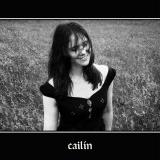
Eleven years in the making, Kate Nash’s sixth studio album Cailín is a love letter to her Irish heritage. Produced by KoOoLkOjAk and recorded on the west coast of Ireland at Stiúideo Cuan, under the watchful eye of pioneering trad musician Charlie Lennon, Cailín is a raw, raucous album combining traditional Irish sounds with punk energy, nods to hip hop production and Nash’s knack for a killer hook.
“This was my first music,” says Nash, who grew up in an Irish community in North Harrow, where she attended a Catholic school. When visiting her mother’s “loving, vibrant Irish family” in Ireland every summer, she found that music infused the fabric of life in a way that felt natural and instinctive. “All my earliest musical memories were in Ireland: live music in the pub, going to Sharon Shannon gigs, seeing the best accordion player you’ve ever seen and it’s a bored-looking eight-year-old boy in a puffer jacket. There’s a real respect for musicians.”
Marrying punk protest songs with a joyful celebration of trad music, Cailín explores themes of colonialism, inequality, religion, internalised shame and forgiveness and family, drawing on the rich texture of Irish folklore and mythology. The tradition of strong Irish women is at the heart of the record, from the young girls celebrated on the “90s grunge eyeroll” of title track ‘Cailín’, to the resourceful single mother navigating the housing crisis in ‘Póg Mo Thóin’ (“There’s all these politicians arguing with each other on news programmes, then you cut to people’s real life and it’s like, can’t you just fucking help them?”), to Nash’s grandmother, memorialised in the poignant yet joyful ‘Irish Saints’.
Eleven years in the making, Kate Nash’s sixth studio album Cailín is a love letter to her Irish heritage. Produced by KoOoLkOjAk and recorded on the west coast of Ireland at Stiúideo Cuan, under the watchful eye of pioneering trad musician Charlie Lennon, Cailín is a raw, raucous album combining traditional Irish sounds with punk energy, nods to hip hop production and Nash’s knack for a killer hook.
“This was my first music,” says Nash, who grew up in an Irish community in North Harrow, where she attended a Catholic school. When visiting her mother’s “loving, vibrant Irish family” in Ireland every summer, she found that music infused the fabric of life in a way that felt natural and instinctive. “All my earliest musical memories were in Ireland: live music in the pub, going to Sharon Shannon gigs, seeing the best accordion player you’ve ever seen and it’s a bored-looking eight-year-old boy in a puffer jacket. There’s a real respect for musicians.”
Marrying punk protest songs with a joyful celebration of trad music, Cailín explores themes of colonialism, inequality, religion, internalised shame and forgiveness and family, drawing on the rich texture of Irish folklore and mythology. The tradition of strong Irish women is at the heart of the record, from the young girls celebrated on the “90s grunge eyeroll” of title track ‘Cailín’, to the resourceful single mother navigating the housing crisis in ‘Póg Mo Thóin’ (“There’s all these politicians arguing with each other on news programmes, then you cut to people’s real life and it’s like, can’t you just fucking help them?”), to Nash’s grandmother, memorialised in the poignant yet joyful ‘Irish Saints’.
LP,180, 2018 REISSUE - REMASTERED FROM ORIGINAL TAPES, CAREFULLY REPRODUCED ORIGINAL ART
The two sides of 1973's Big Business / Wind of Change are mainly the work of thegreat Keith Mansfeld but there's a killer cameo each from Alan Hawkshaw and David Snell to help deliver a thematic suite, diverse in mood, applicable to dramatic and environmental situations'. A Be With favourite and truly one for the heads.
The Big Business of side A is all the work of Keith Mansfeld. It's heavy on the suspense and features the vital Hot Property', an insistent groove so good that Madlib sampled it to lace the ace Long Awaited' by Lootpack with Dilated Peoples.
Sleeping Giant 1' is a more feshed out version of the equally-dazzling Fatal Error', evoking the orchestral magic of David Axelrod. Indeed, it conjures images of Diamond D falling over himself in the early-to-mid 90s to loop its intoxicatingly
eerie soundscape. Complete with guitar flls that recall Paris, Texas-era Ry Cooder, you need this record for this piece alone.
The horn-and-fute-led "Tycoon" is a head-nodder and "Power Complex" has some fantastic percussion. Other highlights include the breezy glide of Whistle Stop Tour' and its sister groove Clean Air.'
Over on Side B is the more expansive Wind Of Change, which includes the David Snell and the Alan Hawkshaw contributions. But these ain't no fller. Snell's shufing International Flight' sounds like a smooth Dorothy Ashby track tossed from the heavens. Hawkshaw's Road And Rail' is about as luxurious and strung-
out as the great man gets and it might just be the highlight of this whole set.
Not to be outdone, if Mansfeld's Balance Of Power' doesn't make you feel like king of the world then you must be playing it wrong. Oh, and did we mention World In Action'!
As with all ten re-issues, the audio for Big Business / Wind of Change comes from the original analogue tapes and has been remastered for vinyl by Be With regularSimon Francis. We've taken the same care with the sleeves, handing the reproduction duties over to Richard Robinson, the current custodian of KPM's
brand identity.
LP,180g, 2027 REISSUE - REMASTERED FROM ORIGINAL TAPES, CAREFULLY REPRODUCED ORIGINAL ART
Veteran library musician Alan Parker recorded with session vocalist Madeline Bell for his Themes International Music label and the result was 1976's The Voice of Soul.
The sensational uptempo dancer 'That's What Friends Are For' is probably the most well known track on the record, and is a big hit on the rare groove scene, but it is by no means an anomaly. The Voice of Soul is essentially a perfect, sophisticated soul album with heaps of swagger and sass from beginning to end.
Its once generic-sounding title is now deservedly defnitive.
And the whole LP oozes sex. It oozes sex so much that it could have soundtracked a period porn flm. Indeed, parts of it did. 'Love Is All' and 'You've Got What It Takes' both featured on the infamously banned Pretty Peaches from the same year.
As is usual with library records, The Voice of Soul was hard to get even when it was frst released. It's next to impossible now. So here's your opportunity to own what is in our opinion one of the fnest rare soul LPs of the late 70s, and a superb example of Madeline Bell's superlative vocal talents.
But that's not the whole story. As well as pitching the record as 'a varied selection of modern female vocal features which are equally suitable for background or radio programme usage', the original release notes go on to explain that 'the corresponding backing tracks are issued on TIM 1022 The Sound of Soul. Therefore it is possible to edit from vocal to instrumental version and vica versa where commentary or scene changes occur.'
So yes, all of the backing tracks from The Voice of Soul were released as The Sound of Soul, and we couldn't re-issue one without re-issuing the other.
As with all ten re-issues, the audio for The Voice of Soul comes from the original analogue tapes and has been remastered for vinyl by Be With regular Simon Francis. We've taken the same care with the sleeves, handing the reproduction duties over to Richard Robinson, the current custodian of KPM's brand identity.
With Panorama, Frank Maston pays homage to the classic era of library records and Italian soundtracks of the 70s. A blissed-out, grooving collection of filmic cues, it continues the unique brilliance of Tulips and Darkland. Elegant and easy, subtle and stylish, breezy and beautiful; this is his Maston-piece. Commissioned by legendary label KPM, Panorama cements Maston as a master of modern classics and the most mesmeric of contemporary composers.
In early 2020, Be With suggested to Frank that he should make a KPM record. He wasn't aware that they were still putting out new library records - but he was super keen: "It was completely surreal and it still hasn't fully sank in that I have a record in that catalog, sitting alongside those incredible albums that were so influential to me."
Frank was visiting family in his hometown of LA in March 2020 when the world ground to a halt so the KPM project arrived at a fortuitous moment. Having fantasised about committing to a record with no distractions, with a proper budget, access to his gear and space to work in - to really dig in and try to write and arrange the best work he could possibly make - it was a real "be careful what you wish for" moment. But, as Frank explained, "it completely saved my year and sanity to have something to focus on and get excited about. It was my lifeline." He spent seven months on it, working almost every day.
Maston had already been making library-influenced music so when KPM outlined the criteria for the tracks it was exactly what he had been doing all along. He thought the best approach would be to make a follow-up to Tulips that had a parallel life as a KPM record. Enjoying complete creative freedom, “gave me the drive to power through and dig in deep. I'm not sure if I could have kept myself on such a rigorous recording schedule under my own steam, and I think the momentum I had writing and recording it is part of the strength of this record."
Maston’s sleek retro-groove instrumentals emulate the classic KPM “Greensleeve” reel-to-reel recordings that provided mood-setting music for mid-century cinema, television, and radio programs. Apparently in close conversation with the John Cameron-Keith Mansfield KPM pastoral masterclass Voices In Harmony, Maston's Panorama could be heard as that record's funky follow-up. Yes, it's *that good*. Another reference point from the hallowed library would be Francis Coppieter's wonderful Piano Viberations.
Opener "First Class" is a blissed-out groove, featuring the soothing vocals of Molly Lewis and a glistening harp over drums, a two-note bass motif (from Eli Ghersinu of L'Eclair) and an assemblage of guitars, synths, French horn and glowing vibraphone. Acid Lounge, anyone? The irresistibly funky "Easy Money" is a gorgeous cut led by more of Molly's vocals, pastoral flute and Rhodes, underpinned by drums and percussion, grooving bass, chilled guitars and synth strings. Kicking the tempo up, the percussive "Storm" is a vibin' filmic-fusion jam where psychedelic guitars (courtesy of Pedrum of Allah Las/Paint) organ, jazzy flute, Rhodes and vibes all compete for a place in the sun, over drums and walking bassline.
The heavenly "You Shouldn't Have" is a delicate, melancholic wonder; a dreamy instrumental where the melody is shared by a whistle, harpsichord and celeste, over a cyclical piano chord sequence and bass, synths, guitars, organ and distant French horn. The tempo rises again with the passionate, sticky "Fling", a summery, nostalgic groove with skipping drums and percussion, warm bass and electric guitar, yearning flute and synth strings. The brilliantly titled "Fool Moon" has that Voices In Harmony sound down pat. A romantic slow-mo dreamscape of Rhodes and harpsichord, piano, light drums and softly strummed acoustic guitar.
Side B opens with "Medusa", a hopeful, mellowed-out track with shuffling drums, feel-good flute, muted horns, glowing Rhodes and synth strings. The soft and gentle "Morning Paper" is an elegant way to start the day; a beatless blend of flute, guitar, percussion, ambient synths and vibes. The upbeat head-nod jam "Scenic" has that widescreen car-chase feel, uptempo drums and percussion, grooving bass, piano, synths and ambient electric guitar. "Adieu" is a smooth summer vibe, relaxing with brushed drums, Rhodes, flutes and horns. Molly Lewis's gorgeous vocals steal the show, alongside vibes, jamming organ and synth strings.
"Hydra" is another laid-back 70s-sounding retro cinema cue with light drums and percussion, walking bass, spacey synths, clavinet, glowing vibraphone, vintage organ and electric guitar. Closer "Jet Lag" is a laconic bow out; bass-driven drum machine soul, featuring hand percussion, Rhodes, vibes, synths and organ.
Multi-instrumentalist Frank played a bit of everything across Panorama. Yet, humble as ever, he believes the time, energy, and enthusiasm of all of the musicians invited to the sessions helped him realise his vision: "There were two Italian flautists who really understood what I was going for. Two french horn players, cor anglais, a vibraphonist and a flügel horn player. I've never involved this many people in my projects before, and yet the result is the most "me" record I've ever made."
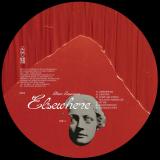
Musically, a strong Italian theme runs through the record. Frank is fascinated by ancient Rome and both his parents are Italian (Maston was originally Mastrantonio before anglicisation). So, it felt natural to fully embrace these strands and tie everything together with the striking artwork. The Romans were influenced by Greek culture, emulating their art and architecture, which, in turn, influenced Renaissance era artists. Frank acknowledged this tradition when reflecting on his place in the lineage of library and soundtrack composers. He then asked his friend Mattea Perrotta, a painter and sculptor, for some sketches. What he received was exactly what he had in mind: "Especially the theater mask, which really captures the range of moods on the album". Frank arranged them as per the cover and it soon felt right: "I wanted to make a cover that was reminiscent of the classic KPM albums without making it too pastiche - so it has its own identity and looks at home alongside other library records, while still fitting in nicely in the KPM catalogue." The last step was for us to introduce Frank to Be With-KPM’s Rich Robinson, who helped put together the back and centre labels and align it all within the KPM standard.
Panorama is a perfect title for the album. With no opportunity to travel for tours or recording projects, Frank arranged postcards from his collection on his desk with beautiful views of the mediterranean coast, the Roman Colosseum and Cinque Terre. These also served as visual prompts: "That was part of the sonic concept - imagining myself driving down the mediterranean coast with this music on, with the top down." Additionally, the range of moods and vibes - "I tried to make each song very different from the previous one in terms of tempo and arrangement and feeling" - speaks to the idea of a Panorama of music and sounds and emotions. The last track was originally called Panorama, but KPM already had that title in their catalogue so it was changed to "Jet Lag", which, as Frank notes, "is perhaps even more fitting, since the trip is over".
Teddy Swims returns with his most personal album to date, UGLY, out January 22, 2027, featuring singles “Mr. Know It All” and “Perfect Man.”
Following the global success of I’ve Tried Everything But Therapy, Swims turns the mirror inward. Written across a transformative year and a half, UGLY finds him confronting the parts of himself that are harder to face - unraveling old patterns, questioning long-held beliefs, and reckoning with the stories we tell ourselves about who we’re supposed to be.
At its core, UGLY reframes what it means to heal. Growth isn’t about making the struggle beautiful or finding an easy way through it. It’s about facing what’s uncomfortable, giving yourself grace while having accountability, and unlearning the things that keep you from moving forward. UGLY is Teddy at his most vulnerable and self-aware - finding strength not in perfection, but in finally embracing the parts of himself he once tried to hide.
Field Records proudly presents the first complete vinyl edition of Monolake’s seminal excursion into experimental dub techno, Hongkong. Originally released on the now-classic Chain Reaction label in 1997, this collection of early singles by Robert Henke and Gerhard Behles has gone on to become a vital listening experience in its own right - a genre classic alongside the other groundbreaking works from the likes of Porter Ricks and Vladislav Delay.
The tracks which make up Hongkong were made while Henke and Behles studied computer science and immersed themselves in Berlin’s techno scene. Their early forays into computer-based music production were enabled by the use of the Max/MSP programming environment, forming a backdrop to the landmark work they would undertake in developing the Ableton Live DAW. Henke and Behles travelled to Hong Kong in 1996 to attend the annual International Computer Music Conference, and while there recorded extensive field recordings. These recordings became the glue that pieced together their collaborative tracks into a fluid listening experience for a CD-compilation at Chain Reaction’s request.
While absolutely rooted in the embryonic sound of European dub techno, Monolake’s early work possesses a back room, headphone-ready demeanour which lends itself to the album listening experience. In the cascade of rhythms created by precision engineered delays and subliminal, expansive spatial world building occurring throughout Hongkong, the stage is set for a full and thorough immersion. Before the Monolake sound progressed into a more pointillist form of computer music as Henke’s solo project, Hongkong presented a gritty, grainy sonic still tied in some way to the traditional methods of techno production, even as the artists’ ideas were sending the sequencing and arranging in exciting new directions.
Remastered and presented for the first time as a complete double 12” package, this is the definitive edition of an essential work in the evolution of experimental techno. As Henke himself explains, “twenty-five years later, this record still holds immense value to me in many ways.”
For thirty years, Alden Tyrell has been at the forefront of electronic music. This analogue alchemist has concocted heady grooves that transmute genres: acid, disco, electro, house, italo and techno; no style left unturned. Under his Tyrell Corporation moniker, he returns to the Bordello with a sound forged for dancefloors. Midnight Machines is a warm embrace that melts electro‑disco with star‑gazing synthlines. “Midnight Machines Pt. 1” balances robust melodies and incising snares with soulful undercurrents and joyous breaks. Past energies are re‑channelled. Arpeggiators rumble as beats throb. Beneath it all, there is a greater consideration of the interplay of elements.
This focus pulsates through speaker cones on the needle‑drop of “Love in Decay.” Elated key changes and bright shifts are tempered by bittersweet moments, early‑morning light piercing fresh mists of grey. Tempos rise on the flip with “Midnight Machines Pt. 2.” Sci‑fi‑scored disco lifts ever higher as scaling notes untether themselves from the floor and soar above vibrant rhythms. Coy and alluring, the bright “Romance Obscura” closes the record. Cowbells and bending wavelengths open into an expansive, intoxicating melody where keys search the horizon as arms fold around celestial bodies.
One of the UK’s best loved and most respected dance music producers, Michael Gray, unveils his exciting third artist album, ‘You & Me’, on his own ever vibrant Sultra Records. Featuring a superb array of both fresh and regular vocal and musical collaborators, Michael delivers another superb helping of lovingly crafted discofied, boogie and soulful dance treats, where meaningful songwriting, passionate vocal performances and impeccable musicianship combine to create one of Michael’s best bodies of studio work to date!
“I’m really excited about this album. I enjoyed making ‘Optimism’ 2 years ago, but I feel like my sound and creativity have developed further during the production of my third album ‘You & Me’. I think there will be a few tracks that people are not expecting from me… and that’s the joy of making an album! You can really get creative”. – Michael Gray
Across the album, Michael brings together an impressive array of world class talent. Rising 29 year old vocalist Bran Mazz features prominently, delivering fresh performances on the standout cover of Maxwell’s ‘Ascension (Don’t Ever Wonder)’, as well as on ‘I Like The Way’, ‘Medicine’ and ‘Breaking Away’. Chi town house legend Mike Dunn joins Michael on the title track ‘You & Me’, built around a clever sample of Freeez’s ‘Flying High’. Vocal powerhouse Tania Foster turns up the heat on the Latin disco flavoured ‘Shake’. New York singer Kelli Sae lends her unmistakable soul to ‘Give It To Me’ and ‘Detonate’, the latter also featuring singer/songwriter Errol Reid (China Black / Axwell). Jamiroquai’s Derrick McKenzie adds his signature live drums to ‘Detonate’ and ‘I Like The Way’. Sian Lee appears on the current single ‘Gravity’, which is sitting at the top of the Traxsource chart. ‘Universe’ sees Michael deliver an instrumental jackin’ house twist, set for a full single release on Toolroom in June. Adding further depth to the album, superstar diva Phebe Edwards brings her impeccable soulful tone to a cover of Cleo Sol’s ‘Life Will Be’, Brit soul favourite Dyanna Fearon shines on ‘I’m Falling For You’, and Audrey Martells lifts ‘Beautiful’ with her stunning, uplifting vocal.
Produced after a period spent alone, surrounded by the elements of nature, this record brought Katatonic Silentio back to her essence and her roots. The result is a dedication to the dancefloor through the genre she first became involved with, and to the music itself as the conductor of her whole life; an ever-changing entity of the essence of the soul; a bridge to the unknown and the depth of existence. A luminous voyage in the profound lightness of sound. Far from being an intellectual exercise, the album - the first club-oriented release by Krisis Publishing - is a physical and spiritual journey. This one is for the body, mind and soul, so that there may be harmony between the parties, between the inside and the outside, between the self and the other.
There was a regrettable time in Turbo's history when our email filters would prevent anything called Groovedeep from reaching our senior A&R braintrust. We felt we needed to shield their sensibilities and sanity from demos by acts like The Rhythm Pilgrims and Loop Addict, but it ended up costing us potential stars like SonicVisions and Beatweaver. Someone had to stand up and say no more.
With this benighted era behind us, Turbo is proud of itself for presenting you with this pair of decidedly modern bangers from international supergroup Groovedeep, comprised of Toronto's Ciel and DC's James Bangura and Jackson Ryland.
"Funk Solo" packs 145 beats into each and every minute of a delirious techno mindbeast, with remixes from icons such as Shed, Batu, and Mark Broom taking the vibe in all the right various directions. Meanwhile, the bottom of the B-side is a "Big Bass Mix" for those of us who are compelled to slather ourselves in bass-boost ultrasound gel and nestle into the club sub-woofer where the low frequencies massage our kidneys and sacrum and the twinned demons of treble and vision cannot touch us I mean not even close brother.
Sound Therapy is the culmination of over ten years of sonic experimentation, developed across the past three years between Sicily, the United Kingdom, and Brooklyn. It builds on the foundation of the 2021 Dub-Stuy single Pon Pause featuring Al Campbell, whose success became the catalyst for the album’s eight tracks.
Conceived across two distinct halves, the album reflects the dual nature of D-Operation Drop’s sound, moving from one drop and roots/steppers traditions into more modern, forward-leaning bass music. The whole is intended to move the listener between foundation and progression, day and night, light and dark, a dynamic reflected in both the music and album artwork.
Sound Therapy also reflects the collaborative nature of sound system culture, featuring vocalists Blakkamoore and JonnyGo Figure (US), Galas and Marina P (Italy), and Rider Shafique (UK), alongside instrumental contributions from Brooklyn-based saxophonist Troy Mobius. The album was collaboratively mixed in person with McPullish (US) and mastered at Star Delta (UK), with a focus on depth, weight, and sound system translation.
Sound Therapy stands as a complete body of work while establishing a broader musical direction for D-Operation Drop, with further singles, mixes, and related projects to follow.
First Word Records proudly present ‘One 4 Detroit’; the third single from Above The Clouds (aka kidkanevil & Magic Manfred), complete with a remix by 14KT.
This 7" vinyl release follows on from last Summer's MF DOOM cover 'Arrow Root', which received strong support from the likes of Japan's DJ Koco and Philadelphia's DJ Jazzy Jeff, and their recent cover of ‘Change’ which was originally by Shadez of Brooklyn, most notably appearing on DJ Premier's 1997 mix album 'New York Reality Check 101.
One of the original First Word roster, UK Producer/DJ and all-round laptop music geek kidkanevil has developed a distinctive and progressive sound over the years, gleefully exploring the beats and bleeps of the electronic music universe to international recognition. Leeds born, sound system bred and raised on a (un)healthy diet of video games and anime, his solo work inhabits the curious space between bass frequencies and otaku culture. But as a devoted teenage backpack rap nerd, somewhere in the back of kid's mind was a lingering desire to reconnect with his first love, hip hop.
Not long after moving to Berlin he joined a studio space in graffiti plastered Kreuzberg, where he met multi instrumentalist wizard Magic Manfred; a disciple of all things boogie, disco, funk and soul. Born and raised in Berlin, and currently a touring musician for many an act, Manfred's musical map joins the dots from piano lessons at four, to starting a band with his teenage friends, leading him to his true calling - the bass - via the club vibrations of his hometown, which introduced him to the world of DJing and production, and a stint studying in the explosive London jazz scene to finalise his Jedi training.
Bonding over their mutual love of '90s hip hop, a friendship and musical kinship developed, coupled with a desire to honour past eras but push things forward, Above The Clouds was born; named after their joint favourite Primo beat, with a touch of irony regarding their basement based studio of a windowless variety.
kidkanevil explains that “after we made a bunch of piano joints it felt like time for a switch up, I had these raw drums looped and Manfred started playing this simple synth line on the Prophet - it kind of happened in an instant. This one was really a case of capture a moment and let it be. It had this cold, industrial bounce to it that really felt ‘Detroit’ somehow, so it became something of a tribute to that sound. Obviously there’s a rich musical history there that’s beyond anything we could encapsulate, but I hope the respect comes across. From Berlin to the D with love!
We felt pretty strongly that if we’re gonna nod to Detroit, we needed a remix from someone who reps there directly. I’ve been a fan of 14KT since the early 2000s beat scene, and as he’d previously released music on First Word, it made perfect sense to approach him. We asked and did he oblige!! I’m very comfortable saying we got schooled! He really blessed us with an amazing remix that brought a life and soul to what was originally a pretty stark beat, we’re super honoured to have this as our first ever remix.
‘U3P1’ (named after a synth preset so we didn’t forget!) is on the flip - this also came about pretty fast. I was thinking Ummah-era Tribe with the drums, and Manfred once again put down this super nice riff and it grew from there. It kinda felt like it needed some trumpet and it's always nice to highlight some of the amazing musicianship lurking beyond the club systems here in Berlin, so we called up Berlin based trumpeter and composer Paolo de Jesus, who blessed us with a beautiful performance and arrangement. And that was that; we hope you enjoy!”
‘One 4 Detroit / U3P1’ is released on limited 7" vinyl & digital platforms, June 12th 2026.
Rafael makes a statement on his Crosstown Rebels debut with his latest two-track release, ‘Gotta Be Cool’. Out on 26th June 2026, the rising talent lands on Damian Lazarus’ imprint with one of the year’s most sought-after IDs, backed by a collaborative B-side alongside close friend N.O.Y. Long before its release, Rafael’s ‘Gotta Be Cool’ had already taken on a life of its own. Passed between dancefloors and the subject of track ID requests for months, the record became a recurring standout moment in Damian Lazarus’ sets, the kind of track that cuts through instantly without needing explanation. Now officially arriving via Crosstown Rebels, the in-demand DJ/producer’s highly anticipated label debut captures the instinctive approach that has quickly put him on the radar through releases on Beltools, Hot Creations, SZR, Planet X and Maccabi House.
Built around slow-blooming synth flourishes and vocal chants that evoke playful, almost childlike memories, it balances emotional weight with direct club energy - a combination that has made it one of the standout records in the label boss’s sets throughout the year.
On the flip, ‘Teder’ sees Rafael team up with close friend and studio collaborator N.O.Y. for a deeper, more understated cut shaped by layered percussion, fluid grooves, and loose, after-hours energy. ‘Teder,’ made together with my close friend and studio partner N.O.Y, represents a more underground side of the EP,” Rafael adds. “The track is named after the studio complex we work from, and it was actually the first record we created there together. I feel like both tracks showcase two different sides of me as a producer and DJ, with one more direct and euphoric, the other deeper and more underground.”
After their recent LP Mirages (Kraak Records, 2025) with French turntablist Guilhem’All, the group continues to explore collaborations with artists and instruments from diverse musical traditions. Building on decades of uncompromising acoustic exploration, Razen delves deeper into their practice with five improvisational pieces that unfold slowly in time and space. The duo’s radical core - Brecht Ameel and Kim Delcour - finds in Van der Harst a longtime kindred spirit, united by the impact of sound, intonation, and the sheer joy of playing.
To be released on April 24 via VIERNULVIER Records, the artwork for Stained Glass Starling was created by American visual artist Robert Beatty (Oneohtrix Point Never, Christina Vantzou, The Weeknd, Tame Impala). The physical release comes with a 16-page booklet including artwork and an interview.
A long-standing artistic kinship lies at the heart of this project, with first encounters dating back to the early 2000s in Belgian musical improv theatre. Van der Harst’s lifelong experience in improvised music and music theatre, spanning back to the 1980s, combined with a vast arsenal of rare and historical instruments, opens new tonal territories within the Razen universe.
These explorations are not incidental: his family roots in the former Dutch East Indies — through his great-grandfather — provide a quiet backdrop to his enduring affinity for Asian musical traditions. Instruments such as erhu, Javanese kacapi, and others introduce timbres
that bring the music its most pronounced Asian inflections to date.
Yet despite this shift in colour, the underlying ethos remains unmistakably Razen. Working from sound rather than form, the ensemble approaches music as painters approach a canvas: adding layers, contrasts and shades with care. There is no soloist’s ego here; all voices are equal, echoing principles found in gamelan traditions.
Over the decades, Razen and Dick Van der Harst have crossed paths repeatedly, notably through cult theatre productions by Belgian theatre maker Eric De Volder, including Zwarte vogels in de bomen (2002) and Huis der Verborgen Muziekjes I–II (2000–2006). Recording an albumtogether had long been a shared aspiration — a wish that crystallised after a 2024 concert at Concertzaal Miry in Ghent, part of the Ruiskamer series by VIERNULVIER Art Centre.
There is a quiet, seasoned assurance to how Heimyl operates. Perhaps best known under his Lazer Man moniker the Lyon based producer a fixture in France’s undergroove community.
He burrows deep into a groove and lets the room come to him. On this record, that patience yields a formidable four tracker engineered specifically for proper sound systems and slow-burn dancefloors.
The A side sets the trap with "I Want Speak," a masterclass in tension pairing a skippy lock groove rhythm with a fragmented vocal samples.
"Power Cat" maintains the momentum, threading bell-like melodic fragments through a rolling, hypnotic bassline with a light, remarkably effective touch.
The flip is where the record earns its weight, anchored by "Sector 14." Here, pads rise imperceptibly over a relentless groove, mounting a subterranean pressure.
The closer "New Place" shifts gears gracefully, cooling the room down with a looser, sophisticated house sensibility, a natural exhale that hints at Heimyl's broader sonic palette.
This is not a Ben Vida, Booker Stardrum, and Will Epstein record; it’s a Play Time record. That’s a subtle but important distinction, for a couple reasons. One, the sound of Magic Object—a polymetric blend of improv and pulse minimalism for saxophone, drums, and Moog—doesn’t really sound anything like any of their many other ensembles or respective solo projects. And two, it was only while making Magic Object, their debut album, that Play Time realized they were a band at all.
Let’s back up. The roots of the trio date to 2020-21, when Will and then Booker moved to the Hudson Valley, where Ben was already living. The three got into the habit of playing together at Ben’s house, and they soon realized that their hang sessions felt fundamentally different from making music in some falling-down studio in Bushwick. Where those experiences were rushed and cramped, a new sense of time and space now suggested itself. Where once they rat-raced the music, now they relaxed into it.
Early gigs yielded similar revelations. A booking at Tubby’s, the beloved Kingston venue, evolved into a kind of residency. Tubby’s is a small space, fitting around 100 people, with a bar in the front room and a stage in the back. Play Time decided that they didn’t want to play on the stage; they wanted to play in front, among the people in the bar. Rather than hogging the spotlight and overpowering the other voices in the room, they blended with the energy of their surroundings and emerged as a sort of minimalist-jazz-krautrock bar band.
Gradually, they discovered a newfound “elasticity”—Ben’s word—that reshaped the music from inside. “It’s this communal thing,” he says. “It’s vibes. And it’s embedded in the community up here, which feels really vital and nourishing.” They were jamming, but it wasn’t just a free-for-all; they found themselves listening to each other in new ways. “Ben and Booker joke that they’re always playing in different time signatures,” Will says. “We’re all going forward with our own ideas, but we’re open to each others’ as well, and they’re all sort of dancing together.”
“We all have our painterly solo projects,” Will says—where, Booker adds, “we do a lot of studio arranging and thinking and composition that takes shape over a period of time.” Play Time, on the other hand, is all about being in the moment. That spontaneity was key to the process of recording the album. They booked two days in their friend Joey’s studio, a converted wooden barn. “It’s just a live room,” Booker says. “There’s no separation or anything. So we’re all in the space together and it’s got this beautiful, woody sound, and that’s very much the sound of the record.” For two days, they just jammed, for seven or eight hours each day. When it was over, they went through, edited down the portions they liked, and added very judicious overdubs designed to enhance the original recordings without fundamentally altering them, staying true to the spirit of the sessions.
The result is something like a snapshot and a mission statement all rolled into one. “You’re hearing us discover the voice of the band in real time,” Ben says. “We finished those sessions and we were like, ‘Oh, that’s what our band sounds like now.’”
Now, with Magic Object, the rest of us get to find out too.
—
Balmat is a label with a cloudy outline. Jointly shepherded by Albert Salinas and Philip Sherburne, two friends living in Cardedeu, Catalonia, and on the Balearic island of Menorca, Balmat grew out of Lapsus Radio, a weekly show born almost ten years ago. Balmat’s mission is simple: to foster new ideas, expand upon personal obsessions, and put enveloping sounds out into the world.
“Balmat” means “empty” or “void” in Catalan. But quite apart from any negative connotations, we prefer to think of it in terms of possibility: a space waiting to be filled.
After ten years 12 Inch Lovers has become a household name not only because of their parties but also because of the fantastic vinyl samplers they released over the past few years, which were sold out in no time and have become true collector's items.
They now continue in the same vein and once again bring a fresh and contemporary mix of hard to find, original house classics or even classics that never had a vinyl release.
These samplers should therefore not be missing from any 12 Inch Lovers collection.
Sampler 5 begins with the breakthrough record from Norwegian producer "Finnebassen". "If You Only Knew" was a big hit for him in 2012, the record was best known for that hypnotic Aaliyah sample used throughout the entire track. A2 brings the very rare remix of this uber classic "The Sound Of Violence" by "Cassius". The "Franco Cinelli" remix is a very successful approach to this classic.
On B1 we find a real anthem. "World Cup" by "Kiko" is a delightful classic from 1999 but to this day it is impossible to imagine today's DJ sets without it. B2 then brings the delicious "Still In The Groove" from "Reckless", of course in that famous "Def Offenders" remix.
"Phil Fuldner" is still very active as a DJ and producer today. You can find his dreamy "Lights Off" from 2010 on C1. And speaking of dreams. "Winter" by "Aril Brikha" is another incredible classic that should definitely not be missed in your collection.
On D1 we find the Australian and headstrong singer "Sia" with her classic "The Girl You Lost On Cocaine", but in that fantastic and hard to find "Stonebridge Vocal" mix.
Last on Sampler 5 we dive back into the nineties with the memorable club classic "Closer" by "Liquid" on D2.
Moscow's newly emerging Noots makes debuts with an EP that dissolves genre boundaries. Ambient washes, deep house grooves, jungle echoes and experimental textures coexist in a fluid internal architecture. Field recordings, from the daily hum of Moscow's Preobrazhenskaya Ploshchad metro to a friend's impromptu garage session, weave seamlessly into the music to ground his often abstract compositions in the real world. There is beauty in the green synths of 'Sudden Shift' and a blurry psychedelic edge to the ambient pads of 'Flowing Harmony' while a standout Nookie remix takes things into silky d&b territory.
oom 318 Productions and Laced Records are stepping into the fog to bring Akira Yamaoka’s score for the 2026 motion picture, Return to Silent Hill, to vinyl.
This 2LP features 29 specially remastered tracks carefully curated by series composer and executive producer, Akira Yamaoka, to capture the key themes of love, loss, guilt and obsession from Return to Silent Hill and the SILENT HILL 2 video game on which the film is based.
Yamaoka’s musical signature has been an integral part of the series since the first note of the original video game. His work for Return to Silent Hill marks his third time writing music for a motion picture set in the SILENT HILL universe, but this time he returns as the sole composer.
The score for the motion picture was guided by three guiding principles he’s developed while working on SILENT HILL scores – to “not decide music through emotions,” an aspiration to “blur the boundary between music and environmental sound, between reality and the inner world,” and finally, to “not reject beauty.”
“The horror of SILENT HILL is not merely unpleasant or violent. There is always something fragile, human, and irretrievably beautiful mixed within it. Refusing to deny that has remained unchanged since the beginning,” Yamaoka explains.
Working closely with director Christophe Gans, Yamaoka built the score piece by piece to extract the underlying sensibility of the world of SILENT HILL 2 and reconstruct it into music that can stand on its own as a film score. Series veterans will recognize iconic cues from the video games that have been reimagined in tracks such as “Chasing Laura” and “Brookhaven Hospital”.
“The goal was never to replay the game’s music as it was,” Yamaoka explains. “Instead, the challenge was to reinterpret it—to alter its meaning, its distance, and its placement—so it could breathe within the film’s sense of time, imagery, and the inner lives of the characters. It was not a quotation, but a reimagining.”
Whether you consider yourself a master of survival horror or this is your first time stepping into the fog of SILENT HILL, the Return to Silent Hill Original Motion Picture Soundtrack is a melting pot of distorted sounds and jagged textures unified by a single sensation: unstable, murky, and yet somehow beautiful.
In the evolving landscape of modern Southern hip-hop, the pairing of Starlito and Bandplay stands out as a unique bridge between street-level authenticity and refined, calculated musicality. Their collaborative project, Not The Country You Know, functions less like a standard release and more as a manifesto—a masterclass in the chemistry between a seasoned, introspective lyricist and a producer who possesses an intuitive grasp of the region's pulse. It is an exploration of legacy and adaptation, capturing the tension between where they came from and where the culture is currently headed.
Bandplay, long recognized for sculpting the sonic identity of Memphis icons, brings his signature, trunk-rattling 808s to the project, yet he manages to pivot here. The production feels remarkably expansive, masterfully blending the raw, stripped-back aesthetics of classic Tennessee rap with forward-thinking textures that refuse to be confined to a single sub-genre. Complementing this, Starlito operates with his trademark mix of cynical observation and genuine vulnerability. He navigates these beats with the weary grace of an artist who has weathered the music industry's relentless cycles, treating every bar like a necessary piece of a larger, ongoing story.
The album’s title serves as a direct commentary on these shifting tides. Across the tracklist, the duo investigates the growing disparity between the romanticized South and the cold realities of the streets, alongside the inevitable evolution of the music business itself. There is no frantic chasing of streaming-era trends or algorithmic bait here; instead, the project remains a stubborn, confident assertion of artistic identity. By weaving together Starlito’s "voice-of-reason" flow and Bandplay’s evolving, genre-bending sound, Not The Country You Know challenges the listener to abandon their preconceived notions of the region, offering instead a complex, urgent vision of a South that is as haunting as it is vibrant.
Gorizont Sobytiy (Event Horizon), the duo of veteran electronic musician Nocow and his wife, DJ Designer, mark the project's debut with an album worth of material of 'frogg-step' / Pankratov Step. It's safe to say this is an intriguing proposition for even those well-initiated into the world of the contemporary Russian underground. What is perhaps most immediately obvious across the 11 tracks is a clear appreciation for golden-era Rephlex records, as if the duo are reflecting on how the iconic label was perceived in the Eastern bloc at the time. There's a nostalgic touch tugging at the heart strings with the warm ambient tones of 'Bananoivy Twist' or even the ballroom-esque organ melodies of follow up 'Chacha', both swiftly followed by a switch back into frantic gabber style kicks that recur across the album.
To give a little more away in terms of a background story, Nocow and DJ Designer draw influence from a film called Winter Evening in Gagra, a somewhat distant feeling artefact of late-Soviet cinema about a tap dancing champion's late nights spent gallivanting across the glitz of Moscow's pop music scene in the 1980s. Maximalist in its sound design, Pankratov Step draws its name from actor-protagonist Pankratov, not quite an out-of-time soundtrack as such but at the least a wry nod to the former world in which the film takes place. The cascading, brittle synthesis of 'Cemetry's Boss' forms an icy cinematic fusion again with a gabber influence at play whilst a fierce acid line works alongside myriad glitch rhythms and repeating keys on 'Octopus Werk'. Influenced by the local humour and sentimentality surrounding the film, a melodrama with themes of lost art and a kind of old-world transcendence the young circus performer yearns for, the duo use it as a vessel to describe the projects sound - a coalescing of vintage Soviet soundtracks, early IDM, Jake Slazenger and Expert Knob Twiddlers album. 'Pankratov-Step' becoming their own fictional genre. The LP marks another avant-garde chapter in Nocow's long back catalogue, as well as a fully formed collaborative debut for the currently enigmatic DJ Designer. Pankratov Step is the second release on GOST ZVUK sub-label MEMONT, curated by Kuzma Palkin.
Good Morning Tapes are back with a new album of lushest New Age sound-bathing x emotionally gooey trip hop from Andro Gogibedashvili aka Saphileaum.
Saphileaum has spent the past decade in passage between notable houses of atmospheric sorcery - Mule Musiq, Not Not Fun, Slow Life, Constellation Tatsu - and of course Good Morning Tapes, who now host their 3rd meeting, »Heavenly Hills«. A definitive chapter in his ten year saga, it is flush with symphonic strings and sky born keys, breezily urged by percussion that straddles chill out and folk zones. That said there’s also a Balearic - or should that be Black Sea? - appeal to its title tune, that lingers in the glistening wake of »Your Grace«, to the shimmering breaks of a parting piece »Alarko (Cosmic Eagle)«, falling into the space between Boards of Canada’s cult-inspired hauntological nostalgia and Shackleton’s hallowed ethno-dub.
»The tracks in the album were written with the inspiration of the kingdom of Shambhala in the Himalayas. I’m deeply fascinated and touched by it. Even the album title, holds the idea of its Heavenly nature and the tracks are like individual, elemental parts of it. The album is not a journey into Shambhala, but rather a play and a dance with its energy, image and presence in my world. »Alarko (Cosmic Eagle)« is dedicated to my grandfather, Temur Tsiklauri, and I dedicate the whole album to my country Georgia, which I deeply love«.
Hit the North is a DJs’ movement
Not a label. Not a revival. A discipline.
Over the years, the collective travelled across multiple states in the US and parts of the UK, digging deep into private collections, basements, garages, storage rooms and forgotten boxes.
They weren’t looking for classics.
They weren’t looking for hits.
They were looking for attempts.
Artists chasing something bigger than themselves.
Trying to sound like Motown.
Trying to sound like Detroit.
Trying to sound like the records that saved them.
Many of them dreamed — at best — of becoming a one hit wonder.
Most never got that far.
Some never crossed a state line.
Some never crossed the street at the end of their block.
Some never played outside their hometown.
Some never played at all.
What they left behind were fragments.
Raw versions.
Unfinished recordings.
Alternate takes.
Rejected mixes.
Test pressings.
Acetates passed quietly from hand to hand.
Sometimes with real credits.
Sometimes with fake ones.
Sometimes with handwritten labels leading nowhere.
Titles that didn’t match the music.
Stories that changed every time you asked.
Often, the trail simply disappeared.
What remained was intention.
Energy.
Urgency.
Hope pressed into sound.
So the collective worked on it.
They edited certain parts.
Extended others.
Cut what didn’t serve the floor.
Not to modernise.
Not to rewrite history.
But to unlock the power that was already there.
The result sounds like Northern Soul pushed to its breaking point.
Fast. Physical. Emotional.
Built for movement.
Some circulated privately.
Others were never pressed at all.
Recorded in personal studios, borrowed studios, friends’ rooms, temporary spaces.
Always outside the system.
This is not nostalgia.
This is unfinished business.
Hotshot producer D*v*d J*cks*n heroically revives the legendary Puss label, home to some of the most enticing, scandalous and straight out illegal dance music released across the
last 13 years, all supposedly masterminded by K*rn*l K*v*cs of St*d** B*rnh*s fame. Three reasons for this sudden revival: One trancetastic take on a deep cut from the queen of
Swedish pop, an instantly engaging UKG flip of an eternal dance hymn and, lastly, a rugged faux-Baltimorean nugget for all the Kittenz out there.
Following his appearance on the label's 'Enact' compilation, Oliver Rosemann returns this time with a complete statement.
Expanding the singular style that he introduced into a cohesive six track EP, 'Elsewhere' is stripped to its core, raw, intense and absolutely uncompromising.
Muro (DJ/producer known as the king of diggin') has selected tracks from the Japanese Jazz/Fusion label 'Electric Bird'
From their extensive catalog carefully selected and it shines a light on another charm of Electric Bird that transcends the boundaries of jazz and fusion, encompassing groove, mellow-funk.
Now, following great acclaim for Volume 1, CTR is proud to unveil another equally eclectic Post-Punk Era Selection Compiled by Jason Boardman ( Before I Die Records) Celebrated Manchester club-night curator & record Label Owner , DJ & digger - supreme.
A second compilation of late 1970s / early 1980s Post-Punk era bedroom & small studio innovations & DIY Inspirations - Featuring more rarely & never heard cuts from that period. Including tracks from the enigmatic Prana, Blank Students, Janet Armstrong & The Native Hipsters ..A rich vein .
Jason Writes Of Volume 2 :
"It was a delightful shock that No Ones Listening Anyway Volume One was so well received - thanks to everyone one who bought & enjoyed it. This led to John asking me to collate Volume Two, so here it is.
This time all the material was recorded & released in the UK between 1978 & 1984.
I was conscious that there was minimal female energy on Volume One so have tried to rectify that here on Volume Two. I have also tried to make it as varied as possible with none hit wonders, oddities, collectables, under the radar B-sides & a couple of previously unreleased on vinyl selections."
Originally released by Time Capsule in 2021 and long out of print, Stories From Another Time 1982-1988 returns in an upgraded edition following years of demand and rising collector prices on the secondhand market. Widely regarded as a modern cult classic, Mário Rui Silva’s visionary recordings blend acoustic folk, cinematic soul, spiritual jazz and saudade-filled Lusophone rhythm into a deeply timeless and universal work that transcends genre and geography.
This new edition features half-speed mastering cut at Metropolis alongside an expanded 4-page insert with a tribute essay and unseen photographs following Silva’s passing in 2024.
The roots of Angolan popular music explored in the meticulous guitar studies of Mário Rui Silva. For fans of Naná Vasconcelos, John Hassell’s Fourth World ambient, Eduardo Mateo’s psychedelic folk and Cameroonian electronic music visionary Francis Bebey.
Whether on mesmerising acoustic ballads or hypnotic groove-led tracks, the music of Angolan guitarist, researcher and intellectual Mário Rui Silva has a beguiling, melancholy quality, woven into the dynamics of his deft guitar playing.Rhythmically complex yet supremely effortless, the music collected here stems from three albums Mário released in Luanda in the 1980s that reflect his diverse range of influences, from traditional Angolan and West African rhythms to European jazz and classical instrumentation. It is united by a sense of low-key beauty, whether on the chugging opener ‘Kazum-zum-zum’, the jazz-funk keys of ‘Lembrança Dum Velho’, or the twinkling, late-night poly-rhythms of ‘Kizomba Kya Kisanji’.
Born in Luanda, Angola in 1953, Mário dedicated his life to Angolan popular music. His fifty-year career has seen him live between Angola and Europe, rub shoulders with Cameroonian musicians Francis Bebey and Ewanjé, record the seminal album Angola ’72 with fellow Angolan musician Bonga, and draw influence from Brazilian guitarist Baden Powell.
It was the teaching of Angolan legend and Ngola Ritmos co-founder Liceu Vieira Dias that Mário gained a technical, political and spiritual understanding of Angolan musical culture. In the hands of Liceu, the traditional Angolan semba and kazukuta rhythms of the 1940s and ‘50s helped create an emancipatory sense of national pride and collective agency that awakened its listeners to the racism and tyranny of colonial rule, underpinning the country’s push for independence in the process.
What might sound like the intonations of Brazilian influence are what Mário attributes to the “African rhythms taken by the slaves which gave rise to other musical cultures” around the globe. Instead, this music emerged from a collective instinct to assert a cosmopolitan Angolan identity free from the patronising falsehoods of Lusotropicalism.
“There was a need within me to contribute in doing new things,” Mário describes. “In the sense of solidifying the music of Angola that was the result of the meeting of two cultures, and wanting to value the Angolan part whenever possible.”A selection from Mário’s three 1980s albums, Sung’Ali (1982), Tunapenda Afrika (1985) and Koizas dum Outru Tempu (1988) have been compiled here as a 2xLP release by Time Capsule’s Sam Jacob and Kay Suzuki. Together, they provide a snapshot of one man’s journey to the core of his nation’s music, charged with the search for a culture uprooted by colonialism
Irish label Il Corpo returns for its third outing with a hard to pigeon hole 10” from 710 Exit. 2 tracks that sit on the electro end of things but with a generous nod to the sound of Detroit, early UK breakbeat, soul and the deeper realms of electronic music. Close To The Sun feels like more than just a cosmic position. A solid 808 foundation and loose percussion sit beneath a bed of synth lines and soaring pads that are guaranteed to stir the soul. The signal for nostalgia is strong but there are plenty more twists and turns to keep the listener engaged. Warped guitar and soul samples make Strat an infectious workout brimming with experimentation and originality. Effected chords take on an almost vocal quality which talks over the casual, understated funk on offer here. Ever changing tones draw you in and make it hard to distinguish between guitar, synth or human. A unique E.P. which will find its way into the sets of varying selectors at this summer’s gatherings.
We welcome Blade back to Metalheadz for his second release, the 4 track 'Times Gone Bye EP' arriving on Metalheadz Platinum vinyl.
Drawing influence from across the spectrum, from foundational artists to contemporary producers, Blade channels those reference points into a sound that feels rooted in the past but firmly present. There's a looseness to his process that gives the music its character, something that has remained consistent throughout his discography over the last 15 years.
Samurai Music heralds a new seam of spacious, rhythmically curious exploration with the launch of the Saibai sub label, opened in mesmerising fashion by Brendon Moeller.
The overarching premise of Saibai is to nurture a more delicate, meditative inversion of Samurai's physical, dense sound, leaning less on the dynamics of the dancefloor while holding true to the intricate drum play and dubby principles that bind the label's sound together.
In this open-eared, inquisitive environment, Moeller is the perfect fit as an artist with decades of diverse offerings across all kinds of dubwise manifestations. On SAIBAI1, the US-based, South Africa-born producer stretches out with a live-sounding drum palette and exquisitely rendered synth work loaded with detail, character and organic flourishes. It's a light-footed approach with plenty of air flowing through the mix, but there's considerable weight in every notch of the production, not least the imposing channels of sub bass coursing beneath the frequency range.
SAIBAI1 is a feast for the senses, wholly immediate and front-loaded with fascination, setting the perfect tone for Saibai as a platform for charming, immersive electronics that take a fresh diversion from the fundamental core of Samurai's sharply defined sonic focus.
In an engrossing lattice of polyrhythmic beat science and deep atmospheric meditation, Samurai Music is thrilled to welcome Marco Shuttle to the fold for the Sumud EP.
Since his early years locked into the 00s London techno scene, Marco Sartorelli has developed as an artist entirely on his own terms. Through the rush of new ideas and cross-pollination that has characterised cutting-edge techno over the past 20-odd years, Sartorelli has travelled as Marco Shuttle from one considered stylistic concept to the next. On his own Eerie label and across expansive releases for respected outposts such as Spazio Disponibile, Incensio and Astral Industries, he's taken an exploratory approach to rhythm and spatial design while always drawing on intentional thematic frameworks, creating distinctive and immersive dance music in the process.
As Samurai Music continues to celebrate the rich seams of inspiration where deep techno and drum & bass intersect, Sartorelli's malleable, mysterious strain of drum work fits right in and sets a captivating tone for the label's operations in 2026. 'Sumud' is a steely drum mantra dealing in fractured patterns with the primal patina of the early Artificial Intelligence era, while 'Las Dunas de Taroa' leans on gently pulsing melancholia undulating at a half-time pace. 'Iso 50' taps into raw, analogue minimalism once more, evoking the sound of Roman Flugel's Ro70 records in their icy, alien formation. Completing the set, we're guided towards the tense electronica of 'Polylayering What I've Got', where uneasy melodic chimes interlock with intricately programmed drum machines.
There's a distinct sense of golden-era, mid-90s electronica coursing through Sumud EP, but Sartorelli shrouds the classic tools at his disposal in his subtle signature atmospherics, pushing towards a plain of expression that transcends time.
The Austrian imprint Fortunea Records took a little break to fill up their batteries and comes back now this summer with a release by the Bavarian duo Decent Rides. They are around for a couple of years and are also the masterminds behind the label Interloot Records.
On the ‚Like We Do‘ EP they are your guides for a versatile house infiltrated tour. The title-track is an energetic floorfiller with modulated synth sequences and heart stomping drum patterns. Definitely the killer app on this wax.
The second track on the A-side features the tune ‚Mind Maze‘. A funky bouncing bassline, reverberant almost siren sounding tones, staccato vocal samples and high accentuated hats make you blister your feet from your high intensively dance moves.
On track B2, the duo adds further "Colours" to the record. This melancholic deep house tune exudes a beautiful, somber, and yet captivating atmosphere that is impossible to resist. This track could be very effective when played during sunrise or sundown.
And finally, they round off this release with cosmic dub sounds and shimmering chords. "Lembo" invigorates the senses. Every beat on this tech house track is an invitation to let go and feels you the pulse of the underground scene.
Go check this out!
Limited to 200 records. There will be no repress!
Mastering by Patrick Pulsinger.
ALERT: BIG 90s ITALIAN RAVE COMP - a lot of very in demand tunes on here.
Navigators
Franco Falsini and the Interactive Test Universe
There are musicians who follow their time.
And then there are those who seem to move along a different trajectory—like navigators crossing sonic eras without ever truly belonging to any one of them. The story of Franco Falsini belongs to the latter. It is a story that begins long before raves, before techno, before the word “electronic” had even become a recognizable musical genre. A story that moves across continents, technologies, and sonic visions, eventually arriving at a small creative laboratory born in Italy in the early 1990s: Interactive Test. This compilation is a fragment of that universe. But as often happens with the hidden histories of music, understanding it requires going back. Far back.
The Beginning: Machines, Tape and Space
In the late 1960s Franco Falsini leaves Italy and moves to the United States. It is not merely a geographical journey—it is also a journey into a new idea of music. At the time, synthesizers are only just emerging from research laboratories. Multitrack tape recorders allow musicians to build entire sonic worlds on their own. Technology is still far from standardized: every studio is almost an experimental workshop. In Virginia, Falsini builds one of his own. Among cables, oscillators, electric guitars and reels of magnetic tape, a kind of music begins to take shape that resembles nothing else being made at the time. It is not simply rock, and it is not yet truly electronic. It moves somewhere in the space between the two. Out of these explorations emerges Sensations' Fix, the project through which Falsini releases a series of albums during the 1970s. Records that seem to come from a parallel dimension: cosmic landscapes, electronically treated guitars, synthesizers drifting like satellites. Many years later those albums would be rediscovered as visionary works. But at the time they were simply the result of relentless curiosity. A curiosity that would never fade.
The City That Never Sleeps
In the 1980s Falsini’s trajectory leads him to New York. The city is a sonic organism in constant transformation. In its clubs and recording studios something entirely new is beginning to take shape: music built from drum machines, sequencers, and samplers, created for the body before the living room. It is the dawn of modern dance culture. Falsini works as a sound engineer, producer and experimenter. From close range he observes electronic music transforming into a global language. Machines become more accessible, computers begin entering studios, and rhythm takes on an increasingly central role. Yet even in this phase Falsini does not simply follow what is happening. He absorbs. Observes. Reimagines. When he eventually returns to Italy, he brings back not only technical experience but also a clear vision: the conviction that electronic music is an open space, a territory still waiting to be explored.
Tuscany, Early 1990s
At the beginning of the 1990s something is happening in Italy as well. In clubs, abandoned industrial warehouses and clandestine parties, a new scene is beginning to form. It is rave culture: a spontaneous movement bringing together DJs, producers and listeners in a collective experience driven by rhythm, technology, and creative freedom. It is within this context that Franco Falsini, together with his brother Riccardo, creates Interactive Test.
The name almost sounds like a scientific experiment. In many ways, it is. Interactive Test does not emerge as a traditional record label. It begins as a laboratory—a place where ideas, sounds and musical identities can be tested and explored. Around the Falsini studio in Tuscany a small constellation of artists and DJs begins to gather, helping to shape the sound of Italy’s emerging electronic scene. Among them are Andrea Giuditta, Francesco Farfa, Gabry Fasano, Roby Mastelloni, Roby J and many others. Each brings a different musical sensibility. But they all share the same intuition: electronic music is not a genre. It is a language.
The Laboratory of Identities
One of the most fascinating aspects of the Interactive Test universe is its constant play with identity. Franco Falsini releases music under several different names: Open Space, Youth Wave, Agent Fylfoyt, Man Myth Magic. These are not simply pseudonyms.
They are different sonic perspectives, as if each project were a window opening onto a parallel musical universe. Open Space, for example, explores more atmospheric and visionary territories. Youth Wave moves between electronic groove and club-oriented rhythms. Other projects experiment with digital psychedelia or hypnotic techno textures. Interactive Test becomes something more than a label. it becomes an ecosystem.
Domestic Machines, Infinite Worlds
Looking back today at the technology used in those productions, one might almost smile. Many tracks were created on Amiga computers, MIDI sequencers and analog synthesizers wired together in home studios—tools that appear modest when compared to today’s digital possibilities.
Yet precisely these limitations became a creative force. Every sound had to be built, shaped and reinvented. Sequences developed slowly, almost like living organisms. The tracks did not always follow traditional dance music structures; often they felt like genuine sonic journeys. Music built from space.
A Hidden Constellation
Many of the records released by Interactive Test in the 1990s remained for years almost invisible objects, circulating quietly among DJs, collectors, and devoted listeners. Yet it is precisely this underground existence that helped preserve them. Listening again today, one perceives something rare: the feeling of music that does not fully belong to its own time. Music suspended between different eras. Perhaps because it comes from a vision that both precedes and transcends trends.
Continuing the Journey
Looking at Franco Falsini’s entire path—from the electronic psychedelia of Sensations’ Fix to the rave culture of the 1990s—a surprisingly coherent line emerges.
A line defined by exploration.
Each project, each pseudonym, each record appears as a new route within the same great sonic voyage.
Interactive Test was one of its stations.
A laboratory.
A community.
A creative platform.
This compilation gathers some of its traces.
Not as a simple archive of the past, but as a map of a musical territory that continues to expand even today.
Following in the steps of last year's mysterious "Beyond the Garage" 12 inch, L.I.E.S. throws another curveball with a 30 track continuous LP from veteran West Coast producers, Vinny+Charlie. Each side running 20 minutes, this can best be described as a smoked out, haze filled afterparty beat tape on wax. Obscure samples, dusty sp-12 crushed beats, head nodding loops, sweet low rider soul..chopped, sped up, slowed down and ready to wreck your system. Limited edition white label housed in a lp jacket with custom art by LA artist SOB STORY. 300 copies worldwide.
Telling a tale of house music’s early days or roots without mentioning Tony Humphries as a club DJ, remixer and radio disc jockey would make it an incomplete, forged and most of all a bit of a yawn.
Born in Brooklyn in 1957, Humphries’ musical journey is synonymous with New York City’s dance music history and the evolution from uptempo soul music to house: from being a dancer at David Mancuso’s infamous Loft parties to becoming a mobile DJ and getting the call from Shep Pettibone to become his right hand at
the then new Kiss FM radio station, followed by countless remix offers and a legendary residency at Newark’s Club Zanzibar. Next to that one, is was especially his work as a radio disc jockey for said station during most of the 1980s until 1994 that gave him majestic clout. Breaking new records week in, week out,
putting New Jersey acts like Adeva and Jomanda or countless up-and-coming producers from there on the musical map, while simultaneously playing the hottest imports from Europe, trax from Chicago, dance classics and all things straight from New York’s music factory that never seemed to stop.
Going to his vast and almost complete archive of radio shows from way back when he graced those airwaves, we at Running Back Records have pickedNew Release Information original recordings that symbolize his importance as an industry giant and ambassador of this style of music.
„But one thing I would like to point out is that, as a DJ, the music I play is not my music. I want to make it perfectly clear that it is music that is released, and it’s everyone’s music. I do not take any other credit than being the middle person exposing this music.“
(Tony Humphries in: What Kind of House Party Is This?, Jonathan Fleming, 1996)
Onysia delivers another deeply textured installment of its Split Series, bringing together J Gabriel, Thomas Melchior, and Bruno Pronsato for a record full of subtle detail, groove intelligence, and unmistakable late-night character. Subtle, classy and built with real understanding of space, tension and groove, ONYSIA013 is a refined underground statement for lovers of depth, detail and timeless club music.
LOS ANGELES—To celebrate the 40th anniversary of the celebrated Talking Heads and Jonathan Demme’s concert film Stop Making Sense, the set will be re-released as a 2LP and 2CD/Blu-ray set this summer.
Released last year, the sold-out Deluxe Edition of the soundtrack will return as a 2-LP black vinyl on Rhino and 2-LP crystal clear vinyl at retail. Both variants feature a 12-page booklet with liner notes from all four band members –Tina Weymouth, David Byrne, Chris Frantz, and Jerry Harrison—and band photos. The 2CD/Blu-ray version includes the entire 28-page booklet from last year’s Deluxe Edition and a Dolby Atmos mix of the complete concert, mixed by Jerry Harrison and E.T. Thorngren, who also mixed the original release. Both will be available on July 26. Pre-order now.
The band appeared together for a sold-out screening and Q&A last night at the Pantages Theater, the same theater at which Stop Making Sense was recorded. They were joined by Blondshell, who performed “Thank You For Sending Me an Angel.” Another special screening with the band will occur in Brooklyn at the King’s Theater on June 13, with the Q&A hosted by Questlove and The Linda Linda’s performing “Found a Job.” The two events cap off a banner year of celebrations for what many consider to be the best concert film of all time.
The inspiration for Stop Making Sense came when director Jonathan Demme saw Talking Heads perform during the band’s 1983 tour for Speaking in Tongues. Afterward, he approached them with the idea of making the show into a concert film. They agreed and worked together over the next few months to finalize the details. Ultimately, Demme filmed three shows at Hollywood’s Pantages Theater in December 1983 to create Stop Making Sense.
The concert film presents a retrospective of the band up to that point, with a performance that weaves together songs from all six of its studio albums. The show progresses methodically, opening with Byrne onstage performing “Psycho Killer” alone with a drum machine. After each song, he’s joined by a new band member until Weymouth, Frantz, and Harrison are all on stage with him. The group continues to grow throughout the concert as members of the stellar touring band are added: keyboardist Bernie Worrell, percussionist Steve Scales, guitarist Alex Weir, and backup singers Lynn Mabry and Ednah Holt.
The band performs 18 songs in Stop Making Sense, including its recent single at the time, “Burning Down The House.” That summer, the song was in heavy rotation on radio and MTV, helping the song become the band’s first top 10 hit in America. It was, however, a different song from Speaking in Tongues that was destined to deliver one of the film’s signature moments. Talking Heads would perform “Girlfriend Is Better” wearing the now iconic, oversized suit inspired by costumes worn in traditional Japanese theater. For good measure, a picture of David Byrne in the suit also graces the album cover.
Stop Making Sense focuses mainly on music by Talking Heads but does include a few songs recorded outside the band: “Genius Of Love” by Tom Tom Club, “What A Day That Was” and “Big Business” from Byrne’s 1981 album, The Catherine Wheel. Limited edition vinyl versions of both of these albums, along with Harrison’s The Red And The Black, were released for this year’s Record Store Day.
When it arrived in September 1984, Stop Making Sense was an artistic and commercial triumph. The film had people dancing in theatre aisles, and the soundtrack sold over two million copies. Just last year, the Library of Congress added Stop Making Sense to the National Film Registry in recognition of its cultural, historical, and aesthetic significance.
Weymouth praises Demme as a collaborator: “…Jonathan was a very enthusiastic, highly adaptive, and imaginative guy who was just as good a listener as he was a talker and collaborator. From the get-go you just got the impression he was as flexible as he was disciplined. Being team players, that boded well for a great relationship and a great film!”
Harrison says the film still holds up today: “To me, Stop Making Sense has remained relevant because the staging and lighting techniques could have been created in a much earlier time period. For example, Vari-Lights, lights with motors to re-aim them, had just come into vogue. Had we used them, there would have been a timestamp on the film, and it eventually would have felt dated...The absence of interviews, combined with the elegant and timeless lighting, created a film that can be watched over and over.”
Byrne says it’s interesting that this album was – for many people – an introduction to Talking Heads. “We had done a live album before this, but coupled with the film, and with the improved mixes and sound quality, this record reached a whole new audience. As often happens, the songs got an added energy when we performed them live and were inspired by having an audience. In many ways, these versions are more exciting than the studio recordings, so maybe that’s why a lot of folks discovered us via this record.”
Frantz recalls the sheer joy surrounding the entire Stop Making Sense experience. “I’m talking about real, conscious, transcendent joy… I’m talking about what the Southern gospel people call ‘getting happy,’ which means ‘to be filled with the Spirit.’ That is what happened to us onstage every night, and from my seat behind the drums, I recognized that this was happening to the audience too. Joy was visible in front of me and all around me every night.”
Kercha’s debut album ‘Open The Door’ arrives this April via DNO Records. The Black Sea artist’s mystical, disorienting style has set the tone for the label since he dropped the inaugural release six years ago. Now, across 16 tracks — including collabs with Mystic State, Congi, NST, Khromi and Finnoh — his smoky sampledelic dubstep is tighter, heavier, and more curious than ever, with a new sense of danger and bubbling rage that feels fit for our chaotic times.
Themes of movement and change course through the LP. On the opening gambit ‘A Path Into The Unknown’, twinkling arpeggios emerge from the gloom like stars lighting the way. Tracks like the eponymous ‘Open The Door’ and ‘Mind Extraction’ deliver that classic Kercha sound, where left-field samples dart in at right angles. ‘Dangerous Road’ weaves between the call and response action of grotty stabs and devilish subs. ‘Take A Break’, featuring Mystic State, goes on the attack with searing acid. ‘Can’t Wait For Today’, though lethargic in its pace, sees San Francisco-based rapper Finnoh deliver stream-of-consciousness bars that skewer our present and nudge us to revolution.
Work took place over the course of several years, during which Kercha relocated with his family from Russia to Georgia, where he now resides in the capital, Tbilisi. “Sometimes I wrote music while travelling on a bus, sometimes late at night while my family was asleep, sometimes just sitting on the grass in a park, and of course in my home studio as well,” he says. “By the time the album was finished, it included music from different periods, and it may vary in sound and concept.”
Any major upheaval in life will result in moments of hardship, but also hope. Both can be found throughout ‘Open The Door’. There’s times when the darkness threatens to envelope everything: during the cold, crackling ‘Disclosed’ and the eerie, dystopian ‘Infection Of Lies’; on ‘Trigger Activation’, with its grunting lows and broken glass hook, and ‘Ballistics’, where a wall of sub-bass is pierced by shrapnel stabs.
The balancing light comes on ‘4 AM’, featuring Nottingham duo Congi, when clashing swords and cinematic strings, meet a soft Rhodes piano — the juxtaposition between heavy low-end and floaty keys and vox reflecting those moments of transcendence often found in the early hours. From the injection of garage energy on ‘Bubs’, with Edinburgh’s Khromi. And on with ‘My Feeling’, featuring South Russian vocalist NST, which closes the album on a deep but expansive note, bookending the experience with more starlight synth tones.
“It’s a reflection of my life journey and the changes connected with emigration and overcoming various difficulties,” explains Kercha. “This period means a lot to me, which is why the album includes tracks from the time of preparing to leave up to adapting to a new country.”
Still, he wants listeners to be able to derive their own understanding. “I think the essence lies in the ability to contemplate, not in any predetermined meaning,” he says. “I can only say one thing: thank you for appreciating what I do and for your support. I hope it inspires you to make the same firm decisions to change for the better as it did for me.”
Out via 4 x 12” vinyl, ‘Open The Door’ is a captivating artistic statement, showcasing the journey of an artist with a truly original signature sound — a rarity that should be treasured and celebrated.
Rhythms of postmodern realism at the very bottom of the DNO.
Baby T is a space away from her work as B.Traits in which Brianna Price can lean more into the junglist, drum ‘n’ bass and hardcore sounds which she loves so dearly. With BSHEE02, the second drop on Price’s own Banshee label, Baby T delivers a darkside masterclass of an EP. This record is a quartet of system blowers which doesn’t let up for a single second from start to finish.
Opener ‘Times Up’ is urgent from the off - the initial strains of this joint find sirens wailing in the monitors over a twitchy kick/drum/hats combo. From here on it’s distilled raver perfection, the drums taking us on a wild Wipeout-style ride as the subbiest of bass skulks at the bottom of the mix. Imagine a more technoid take on the classic breakbeat freerides of Skanna and you’re not far off the ‘Times Up’ sound.
A remix of ‘Times Up’ from man like Aloka leans with devilish glee into the murky underworld that lurks beneath Baby T’s original. Aloka’s version is extremely eerie in a manner which makes you think of the darkest corners of a DMZ party. When things really kick into gear, driven by an irresistible kick dembow, the effect is hypnotic - think the dubwise junglism of the UVB-76 cohort.
BSHEE02’s B-side kicks off with ‘Coercive Control’. This is a cut which delivers on its title in spades, putting the listener in a trance with an interplay of low-slung bass, whirligig synth tones and more of those perfectly executed broken beats. The acid starts to kick in around the minute mark, and it turns out to herald a total earworm of a lead melody.
There’s plenty of dimly-lit malevolence to BHSEE02 closer ‘Dense Dickwood’s grinding atmospherics and gurgling bass throbs. However, Baby T opting for a half-time drum break here gives the cut a vibe not dissimilar to the weightiest jams of classic Massive Attack - that is, until an absolutely remorseless switch-up occurs halfway through, delivering volley after volley of intense drum hits.
A little over a year ago Tim Reaper made his first appearance in the town LoDubs is based in, Portland, Oregon, at the always forward thinking westside venue Barn Radio. The bill was rounded out by yours truly, Jon AD, who set the standard for the night, which was a boggy, thick warehouse vibe, even though the venue was more of a tightly packed repurposed storefront with an overactive fog machine.
This stop turned into a bit of a several day stopover for the TR, who saw the town, met up with other Portland people, and after that was left with a bit of a aural vision of the whole experience, the DIY ethos of the Portland, and the desire to document these impressions on the label of his bill mate for the aforementioned night, LoDubs.
Shortly thereafter "Triumphant March" arrived at the LoDubs mailbox, and reverb heavy, oozing slab of Jungle funkiness.
Upon realizing this would be good material for a dubby remix, the next step was reaching out for people to do so, and Beatrice M was at that time really getting noticed with their take on Dub. This year has seen them really move up the ranks, needless to say.
Obscure disco gem from 1985. Singer Penny Mtya, like many others, journeyed from small-town South Africa to the bright lights of Johannesburg in search of fame. There her path collided with Muntu Semenya, the son of long-exiled stars Caiphus Semenya and Letta Mbulu, who had recently arrived from the US and was making his mark in SA as a producer and keyboardist. There demo secured a deal with the local office of WEA Records and they soon entered RPM Studios with co-producer Thokoza Memela to record three tracks.
‘Cassanova (Stop That Game)’ is a seven-minute Afrofunk workout reminiscent of Kiki Gyan or Sylvester, showcasing Penny’s sultry vocals and Semenya’s stabbing synths. On the flip side, ‘I Feel It’ is a chugging instrumental climaxing in a fuzzed-out solo from session guitarist Jethro Butow. Defying expectations again, the album closes with a Motown-worthy slow jam, ‘Memories’, a duet with Yandy Mgolombane featuring Mike Faure on sax.
Titled Penny’s Groove, the three-track EP received little promotion on its release and quickly disappeared into obscurity, with the label perhaps unsure of how to market the polished ‘international’ sound and diverse components. The tracks were never performed live and everyone involved in the studio project soon parted ways. Semenya and Mgolombane laid low while Penny returned disenchanted to her home in the Eastern Cape, where she remained active in music but never realised her dream of solo stardom.
Fresh from a run of must-check EPs on Syncrophone Recordings, Black Jazz Consortium man Fred Peterkin inaugurates a new label, Base. The New York-based producer appears to be the man at the helm, since his next scheduled release also appears on the freshly minited imprint. He begins with 'There & Back (Long Player)', a languid, mid-tempo chunk of string-laden deep house classiness, before opting for a breezier, dreamier and sunnier sound on the impeccable 'Something For The Road'. Peterkin's ability to fuse looseness, heaviness and subtly soul-flecked instrumentation comes to the fore on EP highlight 'Rhythm & Movement', while 'BTA10711 (4am Mix)' tiptoes the fine line between dubby deep house and spacey, far-sighted futurism.
Winding Road Records are proud to present the “Last Disco on Earth EP” from the ever-elusive group of “Mar De Novo” which is M & N, Paraiso and Yse Saint Laur’ant. First up on this EP is the title track ‘Last Disco on Earth’ is a monster slab of modern disco. Fat grooves, cheeky melodies and cool glitchy production. Uplifting, positive and energetic - guaranteed to put a smile on the dancefloor. Next up is ‘Over There’ is a twisted slice of bass-heavy undulating house, punctuated by crazy interludes and samples that fly in from nowhere. Starting things off on the B side is ‘Uncanny Valley’ is a sun-kissed downtempo groover, with dreamy strings and wonderful chilled musicality. Following on from that is ‘Reflection’ exudes space, peace, and calm. Guitars and piano intertwine alongside haunting vocals. Soundtrack bliss. Summer vibes. Finally rounding off the EP is ‘Find Love’ rounds off the package with a dreamy balearic sunset vibe.
"Zuhause sterben" by Endstation Altes Krematorium is quite possibly Lux Rec darkest release ever and as such, a perfect closure. This absolute, idle, desperate record will suffocate you, haunt you, certainly annoy you, and all of which is precisely intended. Daniele Cosmo and Florin Buchel gazed long into the abyss, so the abyss gazed back. This recording is what was found down there.
Give me some crystal meth, put it in a line and snort it - there you go."
Ella Fitzgerald meets Gangsta Rap and the Beach Boys encounter their despotic father. AMERICAN PSYCHE by Raymond Pettibon & Oliver Augst is an ABC of Jazz standards and nostalgia on speed, "that the world will never forget."
araviglia, the sixth album by Italian percussionist and producer Gabriele Poso, celebrates collective musicianship through a vibrant, groove-driven sound. Inspired by late 70s Italian disco and global rhythms, the record blends Mediterranean warmth, Afro Caribbean percussion and jazz sensibility, with one foot firmly on the dancefloor. Recorded live to tape in an analog studio in southern Italy, with heavy percussion, Rhodes, Hammond and a full brass section, the album delivers an organic, joyful sound built for both deep listening and global dance floors.
araviglia, the sixth album by Italian percussionist and producer Gabriele Poso, celebrates collective musicianship through a vibrant, groove-driven sound. Inspired by late 70s Italian disco and global rhythms, the record blends Mediterranean warmth, Afro Caribbean percussion and jazz sensibility, with one foot firmly on the dancefloor. Recorded live to tape in an analog studio in southern Italy, with heavy percussion, Rhodes, Hammond and a full brass section, the album delivers an organic, joyful sound built for both deep listening and global dance floors.
You can't put Bebe Rexha in a box. From her Grammy-winning songwriting roots on Eminem's "The Monster" to global chart-toppers with David Guetta and Florida Georgia Line, Rexha has established herself as a premier musical chameleon. With her latest project, Dirty Blonde, she officially enters a new era as an independent powerhouse. Now signed to EMPIRE, the Brooklyn-born star has crafted a 13-song "genre kaleidoscope" that serves as her first-ever visual album, representing a total creative rebirth and a departure from the major-label system she's known since she was a teenager.
Recorded across London, Tokyo, and Europe, Dirty Blonde captures the energy of Rexha's global travels. The project seamlessly blends heavy-hitting dance floor anthems with deep, personal storytelling. With the lead single "New Religion" she takes us straight to the club by reimagining the iconic dance record "Insomnia" by Faithless. On "Tokyo," she explores a drum & bass pulse inspired by a late-night rendezvous in Japan, while "Cike Cike" (produced by long-time collaborator DJ Snake) sees Rexha embracing her Albanian heritage by mixing traditional linguistic roots with modern 808 basslines.
At the emotional core of the album is the lead single, "I Like You Better Than Me." The track strips away the pop-star veneer to tackle themes of insecurity and self-scrutiny, blending raw lyrics with a pop-rock edge. From the Jersey-bounce-meets-country vibes of "Drink and a Little Love" to her vulnerable reflections on fame, Dirty Blonde is a celebration of an artist who is finally playing by her own rules. As Rexha firmly asserts, "The old Bebe is dead," leaving behind a focused, stronger creator who is making the music she truly loves.
Vincenzo De Bull follows up his initial 4 Kicks EP with a truly fitting set of 4 smooth grooves on Kicks 4 Life EP.
Kicking off the A Side is the energetic bass workout of The Jaunt. Driving mix of filtered loops and persistent bass carry this along with accented punctuation courtesy of trippy oscillating vocals, pianos before it’s all brought home post-break with a lovely pad driving more tension to add to the effortless progression. B2, Make It Smooth will contain some recognizable elements for most of the selectors out there, before the cut develops into a new context which will immediately remove your previous associations and make way for a fun, new groove – we don’t have to tell you, but Vincenzo does a superb job of ‘Making it smooth.’
Flip to the B Side for smooth R&B style house vibes courtesy of Move Your Body, an ethereal workout grounded by a solid low and a tugging looped groove, interspersed with enough energy via vocals to keep the floor engaged and moving, but at a lower energy level. Perfect to move into later nights. Tatsuro Lovers rounds out the EP with a midtempo chugger perfect for starting the evening, groovy pool parties or just sitting at home, enveloped in the heady, swirling vibes underpinned by crisp drums and deep low end.
Telling a tale of house music’s early days or roots without mentioning Tony Humphries as a club DJ, remixer and radio disc jockey would make it an incomplete, forged and most of all a bit of a yawn.
Born in Brooklyn in 1957, Humphries’ musical journey is synonymous with New York City’s dance music history and the evolution from uptempo soul music to house: from being a dancer at David Mancuso’s infamous Loft parties to becoming a mobile DJ and getting the call from Shep Pettibone to become his right hand at
the then new Kiss FM radio station, followed by countless remix offers and a legendary residency at Newark’s Club Zanzibar. Next to that one, is was especially his work as a radio disc jockey for said station during most of the 1980s until 1994 that gave him majestic clout. Breaking new records week in, week out,
putting New Jersey acts like Adeva and Jomanda or countless up-and-coming producers from there on the musical map, while simultaneously playing the hottest imports from Europe, trax from Chicago, dance classics and all things straight from New York’s music factory that never seemed to stop.
Going to his vast and almost complete archive of radio shows from way back when he graced those airwaves, we at Running Back Records have pickedNew Release Information original recordings that symbolize his importance as an industry giant and ambassador of this style of music.
„But one thing I would like to point out is that, as a DJ, the music I play is not my music. I want to make it perfectly clear that it is music that is released, and it’s everyone’s music. I do not take any other credit than being the middle person exposing this music.“
(Tony Humphries in: What Kind of House Party Is This?, Jonathan Fleming, 1996)
Following up on the hidden wonder of Ellis Swan's twilight folk-noir masterpiece 3 AM (Quindi Records, 2022), Altrimenti commissions three bold remixes by Madteo, Simone and Mass Prod, with a wayward slant to rival Swan's own outsider status.
Continuing its faithful documentation of the early years of Monolake, Field Records proudly present the first-ever vinyl pressing of seminal 1999 album Interstate. In a kaleidoscopic lattice of micro-rhythms and exquisitely dynamic textural work, Robert Henke and Gerhard Behles fully collaborated for the final time on this record — and created an electronica landmark in the process.
Monolake's evolution from their earlier dub-techno-tinted works saw their exploration of Max/MSP go further out. The duo yielded greater complexity in the behaviour of their sound palette to achieve an organismic quality that remains an enduring influence on so many strands of experimental electronic music today. Interstate is a vivid record that builds up eight different ecosystems of sound and subtly threads elegant grooves through their root structures.
There's a house-like undulation to the low-end driving 'Tangent-I' and 'Tangent-II', but the infinitesimally detailed layers of sound on top swoon from techno synth shimmers to trickling waters, snaking delay trails and pin prick percussion. You can hear the unmistakable, snappy rhythmic thrust of drum & bass driving 'Ginza', but here it's used as an engine for the crispest array of designer percussion and dub-soaked synth chirrups. Across every track, Henke and Behles demonstrate a potent combination, both groovily instinctive and eternally fascinating to try and pick apart.
After Interstate, Behles departed to focus entirely on the development of Ableton Live and Henke steered Monolake towards a leaner — but no less pioneering — sound. Every Monolake record has its own unique context and sound, and the circumstances of Interstate could never be repeated. Capturing the leaps in progress that were being made in digital music production at the end of the millennium, it's an information-rich document of a moment in time that still sounds wildly futuristic 27 years later.
POEME ELECTRONIQUE was Dave Hewson (synthesisers, production), Sharon Abbott (lyrics, lead and backing vocals), Julie Ruler (backing vocals) and Les Hewson (bass), formed in 1980 by Dave Hewson in South London, UK, in 1980. Dave was studying music and as a rare kind of student species he had a deep fascination for New Wave and electronic music thus also playing and recording electronic music ever since like using the Boss DR-55, Cosmo Sound Super Drum, Elka Rhapsody 610, EMS Synthi AKS, Korg MS-20(X2)/Polysix/Polyphonic Ensemble 1000/VC-10 Vocoder, Linn Electronics LM-1, Octave Kitten, Roland RS-09/VP-330 Vocoder Plus, Simmons SDS-V Kit and Yamaha CS-80 on this retrospective POEME ELECTRONIQUE album with original material from 1981/82 only. Over the period of more than two years, Dave has remastered these tracks using the latest high-end tools making them sound better than ever before. The deluxe 2LP vinyl album comprises 16 tracks of which 14 have never been published before. “The Echoes Fade” and “Voice” are the original versions taken off their original 7” from 1982. The album “The Echoes Fade” cannot be described other than being a masterpiece and one of the best-ever early 80’s electropop records ever, and it surely has to be lined up with Rational Youth or Experimental Products’ cult albums (in terms of being minimal synth/wave scene reference albums), but to be frank, Anna thinks that POEME ELECTRONIQUE were even above their level.
Truly, they had deserved to go on the successful path like Depeche Mode, OMD or Soft Cell, but fate was against them as it seems. The main difference to other electropop groups of the time was definitely that Dave did not only master his synths technically-wise, no, he also knew how to actually play, and when you hear his amazing multi-track ‘manual sequencing’, programming skills, great harmonies and melodies throughout the tracks, along with the two girls’ performances – well they can really sing! – you will agree there is some something remarkably extraordinary in these tracks. You will find minimal electropop super hits like “Rendezvous”, “She’s an Image”, “Fragile”, or “Dilemma”; hauntingly beautiful melancholic tracks like “A Mourner’s Lament”, “This Night” or “It’s in the Atmosphere”; darkest minimal electronics on “Inside his Head”; and even more poppier tracks like “Follow”. This record will hopefully be loved by any electronic music lover and most probably marks the highlight in the growing Anna Logue Records catalogue – therefore Anna did not shy away from any costs and the album is truly an outstanding release in every single aspect including sound and artwork presentation. Apart from the bonus tracks you will find in the 2LP deluxe vinyl edition glossy inner sleeves with lyrics to all songs, as well as individual mini 7” sleeves for each song designed by our dear graphic designer Steve Lippert plus many additional group photos on the gatefold sleeves’ inner. After so many efforts and more than two years passing by, Anna is so over the moon to see this release being ready now and we have done all we could to make this an outstanding release, so now it’s up to you to give the band their final glory, but Anna is in no doubt that – at least after hearing the sound samples – you will.