Worldwide Connexion (JGRVWAX007) is the seventh vinyl release on Junked Groove, bringing together five artists from four countries on one deep house / house record.
Side A opens with BMB SpaceKid, delivering an explosive cut driven by swinging percussion, vocal chops, and a heavy low-end. His beat-making roots are front and center, resulting in an undeniable dancefloor mover. Next up, DFRA & Nick Weaver take things into a more hypnotic territory: jazzy, minimal, and smooth, with flowing harmonies and subtle synth movements that quietly reveal a solid classical foundation behind the music.
On Side B, Detroit’s own Javonntte offers a raw house anthem. Pure groove, timeless energy, and that unmistakable feeling of being locked inside the track from the very first synth line. Closing the record, Junky Palms brings a UK-rooted groove built around classic house chords, layered with psychedelic and slightly tense synths. Cold Manchester air and rave nostalgia drift through the mix.
One record, four countries, five perspectives, one groove.
Поиск:thing
Все
Placid aka Paul Wise is the operator in chief at ‘We’re Going Deep’ – an online community and record label born out of a lifelong love affair with the many shades of electronic rhythm, and an obsession for collecting records since 1988. With a mission to share and release new music via his We’re Going Deep and We’re Going Back imprints, you’ll find only the best in underground Acid, Electro, IDM, Techno and House for the dance floor and your listening pleasure.
Up next in the label series, We’re Going Deep is excited to welcome 4 tracks of fresh material from pivotal electronic music maker Gerard Hanson, under his much prized E.R.P. alias. Renown for keeping his profile below the radar and letting the machines do all the talking for him. Hanson’s work as a producer has been much coveted since his debut back in the mid 90s as Convextion. Hailing from Dallas, Texas, he has become something of a hero in the underground Electro community. His work as E.R.P. has left a huge impression on labels such as Frustrated Funk, Bleep43 and Semantica over the years. Renown for his distinctive shimmering machine funk aesthetic, he ably summons the outer reaches of deep space listening thanks to his innate mastery of brooding, sci-fi soundscapes that few can equal.
Following releases for Apnea and Synchrophone, Hanson lifts off with a heartfelt tribute to our recently departed friend James Baker on ‘One4ReKab’. Ascending with the pulse of a steady kick drum, precision snares take hold as whispered vocals seep in and out of consciousness. Underpinned by trademark angular bass tones, soaring strings inject a deep sense of foreboding as all the parts fuse with a fierce glow. Stepping things a notch back as the sonic trajectory levels out, ‘Onward’ takes a more contemplative stance in a fusion of hypnotic drum programming that leads the fray whilst subtle arpeggios flow, all whilst wistful melodies wind you in.
Over on the flipside, Hanson revisits his 2008 composition “Multipole Vector” to launch yet another interstellar cruise by mission in the shape of “Multipole Vector II”. Leading with the simplest of bass progressions and metronomic beat programming, twinkling synth elements reach across the void as chords sweep to and fro to powerful effect. Ending out on the uplifting yet almost IDM inflected tones of “Self Unemployed”, this low tempo air rounds the EP off on an equally captivating note filled with playful charm, that makes this collection of music all the more pleasing.
Repress
Underground stalwarts Voodoos & Taboos make their Duality Trax debut alongside a remix from rising talent Bertie, set to drop on November 8th. Now on its seventh release, Holly Lester’s vinyl imprint blends seasoned pioneers with the next generation of producers. A serendipitous moment at London’s E1 in 2023 was the genesis for the labels latest release, when DT label head Holly Lester unknowingly dropped a Voodoos & Taboos track only for the duo to walk in mid-way. Already known for their standout releases on iconic labels like Phonica, Bordello a Parigi, and Palms Trax's
CWPT, this chance encounter sparked a creative connection between Holly and the pair.
‘Time Out’ kicks things off with swirling synths and the duo's signature alien electronics, set to a playful breaks infused rhythm and morphing bassline, as command and control rings out overhead. ‘Endless Game’ comes with the usual V&T trimmings; an infectious bassline and with a scattering of curious sounds and samples, with a healthy dose of italo-inspired groove - the type of track reserved for bringing a dash of joy to the danceoor amidst a heads down body-moving groove. On the B-side, Australian newcomer Bertie steps up with her remix of ‘Time Out’, following her breakout EP and high-pro¬le remix by Ciel. In a short space of time, Bertie has already developed a signature sound injecting her productions with nostalgic 90s house and contemporary subtext; glued together by crunchy drums and a penchant for wide-eyed rhythms. Sticking to her guns, Bertie’s ip of ‘Time Out’ packs a serious punch, showingwhy she’s an artist on the rise. The EP closes out with the psychedelic ‘All Action’ with its vocoder vocal samples, bubbling acid and teleporting top-lines.
One of the most notable features of the duo's music is their ability to let things evolve over time, their music often accompanied by strong storytelling, an art that has been almost lost in today’s era of instant grati¬cation; their instrumentation often taking on a life form of their own and dosed with surprises.
As we celebrate 30 years of Ten Lovers Music our first offering of the year is a Various Artist selection called Frisson EP Part 1. Frisson is a medical term for the response you get from listening to music, often referred to as goosebumps or a skin orgasm which is caused by the dopamine released in the brain’s reward centres.
Kicking off the A side we have Sound Signals featuring flautist Han Litz, a superb opener. Following on are Future Jazz Ensemble and Don’t Be Afraid, another track from them oozing quality. Onto side AA and Mike Perras is back with another live track featuring keys, drums, bass and a battling flute and sax on Sweet One. Rounding off side AA is Stefano De Santis with Simple Things, an aptly named track for this music that gives us Frisson.
French modular tribalist Sindh launches the Komudo Origins Series on his own label with a fierce first chapter built for deep physical immersion. Still rooted in rythmic ritualism, these four tracks push further into shadowy, shape-shifting techno. 'Sauros' is the beatless opener, all hovering, menacing atmospheres and sonically refracted voices. 'Arbhar' glides along with a sleek, understated techno framework that feels like it's made of pure air. 'Mystic Sun' begins to edge towards the pumping, firing echoes and low level spoken words across a progressive-style builder, before 'Denali' closes things off via thumping, late-night techno charge. Subtle darkness, alien textures and body-focused grooves define this potent new series.
With this seventh instalment of retweaked heat, Perro Bueno Edits once again prove that less is more when you know exactly what you're doing. Both refixes strike a sweet spot between respectful crate-digger sensibility and dancefloor punch while updating Afro-funk classics without sanding off their soul. 'TFOM' puffs out its chest with big, bold, playful horns leading the charge as Latin vocals bring some sunshine and funky bass keeps things moving. 'SMPP' slows the tempo, which means more room to luxuriate between the dumpy kicks and appreciate the sharp horns and organic percussion before some raw vocals bring a Brownian funk edge.
Raw. Deep. Unstoppable.
Born from a transatlantic collaboration, this vinyl delivers soulful house music in all its
shades. Jazzy chords collide with African roots, creating a warm, driving and
uncompromising sound. Four carefully crafted club bangers for every hour of the night
— hypnotic, uplifting, and impossible to let go.
The long-awaited reissue of Toba makes it clear, once and for all, to fans and industry insiders that disco music produced in Italy between the late 70s and early 80s had no chance of success. What was disparagingly called "spaghetti disco", considered a poor imitation of real American disco music, only good for Japanese cartoons. This was the main reason that prompted Italians to record their songs abroad, as Fratelli La Bionda with their pseudonym D.D.Sound in Munich. Luigi Figini, with "Supercool" and "Percussion Sundance" by Edo Martin and Pino Santapaga (the same as "Step By Step" by Koxo), claimed that Kash was a one-off Swedish disco project, a lie that came to light when an Italian test pressing from the previous year, made by GDB, was posted !!! Amin-Peck followed the trend of passing off their songs as foreign music on the intuition of their Roman producers. So ''Love Disgrace'' was released on 7'' by a label called Connection, which never really existed, created for the purpose by Giancarlo Meo, confident that this would bring success to the Bolognese duo who were already creating 'proto Italo-Disco tracks' with a new-wave trend. To make the whole operation seem real, the London agency Ellie Jay Ltd. was involved, contacting Andy Fernbach of Jacobs Studios Ltd. The vinyl was also produced in the UK, otherwise the deception would have been discovered, then imported to Italy by Best Record. Italo-Disco was officially born after this, in 1982, not before! Everything makes sense now ! Real events that actually happened and purely invented names and anecdotes. Just think, even the image of Tony Balch used for the cover of Toba was taken from Grand Theft's 1978 album "Have You Seen This Band?" and reproduced on the new redesigned cover, as were the heads of the other musicians. The idea of a real band called Toba had finally come to fruition and would lead to a second sensational success the following year. Now it all makes sense! Facts and anecdotes that really happened and names and circumstances that are purely fictional. Finally, everything adds up! Real things and invented names of musicians and collaborators. It's important to clarify what we've said above, but we haven't talked about "Make Your Mind Up" and "Don't Take It" and the two masterful remixes performed by Dave Mathmos. In short: with the original versions we'll make Italo-Disco purists happy, with the remix versions we'll please new younger followers with more modern sounds and versions more in line with today's tastes and trends.
Sicilian-born, Amsterdam-based Fran LF returns to Nastia's imprint with three Techno tracks built over a year of studio work, each one telling part of a single story that unfolds across the EP. The narrative moves through different chapters, starting with tracks that shift and transform as they play out, building tension through evolving elements rather than straightforward drops. These are straight-up warehouse cuts - the kind that start one way and shift into something heavier as they unfold. Dubby atmospheres that harden into driving rhythms, basslines that anchor the groove, and synths that evolve throughout.
Closing the record is a remix from Sicilian producer LPV, a close friend and admirer who reworks "Tsufuru Relaxation" with his signature dark, driving approach. He strips it down, adds a relentless bassline, and gives the track a completely different, moody and ethereal energy while respecting what made the original work.
Solid dancefloor techno with enough depth to keep things interesting.
With a keen sense for intricate arrangements and hypnotic grooves, Mäder's debut on Paradijs Boogie crafts a sonic universe that invites both dreaming and dancing. His productions strike a delicate balance between organic elements and contemporary club aesthetics, always driven by a deep passion for musical innovation.
DJ support – Jamie Jones, Seth Troxler Damian Lazarus, Marco Corola, Joseph Capriati, The Martinez Brothers and Rey Colino
S.A.M. returns to Up The Stuss this summer with the third release in the UTSOFF series, delivering a potent double-header that’s been rattling dancefl oors for months. Titled ‘Hit You With My Phone’, the release arrives on 4th July and features two dynamic cuts that further cement the Danish talent’s place in the label’s core family.
A mainstay in Chris Stussy’s recent sets and one of the most talked-about IDs in recent months, title track ‘Hit You With My Phone’ is pure dancefloor dynamite — a helter-skelter ride through organised chaos, laced with warped vocals, frenetic percussion and a relentless groove that grabs you and doesn’t let go. It’s bold, it’s unpredictable, and it’s quickly become one of the most commanding tracks in the Dutch label boss’s arsenal.
On the flip, ‘Got Me Down’ offers a skippy contrast — a low-slung groover that channels tension and release with tightly wound drums and rolling bass, keeping things locked for deeper moments on the floor.
Marking S.A.M.’s third outing on Up The Stuss following their collaborative ‘Get Together’ project with Stussy and the solo ‘Check It Out’ EP, ‘Hit You With My Phone’ sees them explore new ground while staying true to the raw, club-focused ethos of the label. As the UTSOFF series continues to shine a light on uncompromising, forward-facing club music, this latest instalment delivers two cuts built for impact and ready to cause damage.
- A1: The Mountain (Feat. Dennis Hopper, Ajay Prasanna, Anoushka Shankar, Amaan & Ayaan Ali Bangash)
- A2: The Moon Cave (Feat. Asha Puthli, Bobby Womack, Dave Jolicoeur, Jalen Ngonda And Black Thought)
- A3: The Happy Dictator (Feat. Sparks)
- B1: The Hardest Thing (Feat. Tony Allen)
- B2: Orange County (Feat. Bizarrap, Kara Jackson And Anoushka Shankar)
- B3: The God Of Lying (Feat. Idles)
- B4: The Empty Dream Machine (Feat. Black Thought, Johnny Marr And Anoushka Shankar)
- C1: The Manifesto (Feat. Trueno And Proof)
- C2: The Plastic Guru (Feat. Johnny Marr And Anoushka Shankar)
- C3: Delirium (Feat. Mark E. Smith)
- C4: Damascus (Feat. Omar Souleyman And Yasiin Bey)
- D1: The Shadowy Light (Feat. Asha Bhosle, Gruff Rhys, Ajay Prasanna, Amaan & Ayaan Ali Bangash)
- D2: Casablanca (Feat. Paul Simonon And Johnny Marr)
- D3: The Sweet Prince (Feat. Ajay Prasanna, Johnny Marr And Anoushka Shankar)
- D4: The Sad God (Feat. Black Thought, Ajay Prasanna And Anoushka Shankar)
Yellow Bio Vinyl[31,89 €]
The Mountain is Gorillaz’ ninth studio album, a collection of 15 new tracks featuring a stellar list of artists and collaborators. Jamie Hewlett’s album artwork captures the four much-loved animated band members - Murdoc, Noodle, Russel and 2D – in a series of beautifully intricate, hand-drawn illustrations.
The Mountain is Gorillaz 9th studio album. The album is a collection of 15 new tracks featuring artists and collaborators including: Ajay Prasanna, Anoushka Shankar, Asha Bhosle, Asha Puthli, Bizarrap, Black Thought, Gruff Rhys, Idles, Jalen Ngonda, Johnny Marr, Kara Jackson, Omar Souleyman, Paul Simonon, Sparks, Trueno and Yasiin Bey; as well as the voices of Bobby Womack, Dave Jolicoeur, Dennis Hopper, Mark E. Smith, Proof and Tony Allen. Produced by Gorillaz, James Ford, Samuel Egglenton, Remi Kabaka Jr. and Bizarrap (Orange County), The Mountain was recorded in London, Devon, Miami, Jaipur, Mumbai, New Delhi and Rishikesh; and features artists performing in five languages: Arabic, English, Hindi, Spanish and Yoruba. The artwork for The Mountain sees Jamie Hewlett’s distinct, yet ever-evolving, style illustrate the world of Gorillaz with an ever more detailed and beautiful intricacy across a series of hand-drawn illustrations. Circumstances find Murdoc Niccals, Russel Hobbs, 2D and Noodle in India, where our heroes are immersed in the rhythms of mystical music-making as they navigate the mountainous terrain of this thing called life.
It’s a properly transcendent Kalahari debut as S.A.M. makes nods to ’90s Eurodance and deeper, spiritual invocations.
At the helm of multiple labels, but this marks a Kalahari debut for the Danish artist. Sometimes anthemic, sometimes operating from a more meditative space, but always serving as an outlet for ecstatic release. Rapturous big room ascension into more contemplative territory.
Channelling some divine NRG in the vocal hooks, like much of their work, an air of blissed intent cloaks the whole thing. This is a suite of tech and deep house that strikes a balance between the introspective and direct, the metaphysical and corporeal.
Pitting sonic immersion against forward momentum has almost become a blueprint for any Kalahari release, and here, we bear witness to a prime example. Heady stuff.
Show less
Following her debut album, I’ll Look for You in Others (Past Inside the Present), earlier this year, Patricia Wolf joins Spain’s Balmat label with See-Through, her second album. See Through finds the Portland, Oregon musician and field recordist continuing to develop her signature style of ambient, balancing radiant soundscaping with a carefully expressive sensibility. But the new album is also marked by an important difference. Where I’ll Look for You in Others was largely written in response to the death of a loved one, See-Through represents a kind of rebirth.
“After a long period of grief, I had been hoping to find my way to a place of lightness, peace, playfulness, curiosity, and sensuality again,” Wolf says. “What I was surprised and pleased to find is that for the most part, I had.”
She wrote and recorded many of the album’s songs quickly, in preparation for an August 2021 broadcast on the online radio platform 9128 Live. Excited for the opportunity to play live after more than a year of the pandemic, Wolf decided to write all new material for the event, working with a lean setup of Octatrack, Roland Synth Plus 10, Make Noise 0-Coast, and Novation Summit. (In fact, Wolf was the first sound designer invited to create patches for the Summit.) She also picked up an acoustic guitar that her brother had loaned her. “I decided to take the surrealist approach of ‘pure psychic automatism’ to see what poured out of me,” she recalls. “Woodland Encounter,” “Under a Glass Bell,” “The Grotto,” “The Mechanical Age,” “The Flaneur,” and “Psychic Sweeping” are all products of those sessions; the through line holding them together is their exploratory spirit and clarity
of vision.
Other songs, like “A Conversation With My Innocence,” “Recalibration,” and “Psychic Sweeping,” wrestle with the traumas of the preceding year. Though they may linger on the heaviness of loss, Wolf says, “What I discovered is that a stronger archetype had grown inside me to steer my emotions and thoughts to a better place.” Likewise, “Wistfulness” and “Upward Swimming Fish”—her first experiments with VST synthesizers—balance the bittersweet embrace of melancholy with the freedom to choose happiness.
“Pacific Coast Highway,” the album’s lone song with drums, might at first seem like an outlier. But it also signals Wolf’s interest in finding a fusion between the introspection of ambient and the togetherness of beat-oriented music. “Experiencing loss and isolation is what drove me into gentler territories of sound,” she says, “but I want to start making more beat-oriented music. After an extended period of loss and isolation, I’m ready to experience more joyous and social things.”
Listeners with keen ears might recognize the album’s closing song, “Springtime in Croatia”: A different mix of the song originally appeared on the 2021 digital compilation secondnature & friends Vol. II, from the Seattle label secondnature. This marks its first appearance on vinyl, however, and its spiritual home is undoubtedly here, at the close of See-Through. As the bookending answer to the opening “Woodland Encounter”—another song in which field recordings play a crucial role—it closes the circle of an album that is itself keyed to the steadily turning cycles of life.
Since first forming in 2016, London's High Vis have steadily polished their palette of progressive hardcore with shades of post-punk, Brit pop, neo-psychedelia, and even Madchester groove, mapping a middle ground between hooks and fury, melodies and mosh pits. Singer Graham Sayle describes their third album 'Guided Tour' as an axis of competing forces: "It's trying to be a hopeful record, while also being incensed." Rounded out by drummer Edward 'Ski' Harper, guitarists Martin MacNamara and Rob Hammaren, and bassist Jack Muncaster, the band's deep roots in the UK and Irish DIY hardcore scenes have kept them grounded but growing, inspired equally by restlessness and righteous anger. As Sayle puts it, "Everyone's scratching, everyone's working all the time, and their idea of relaxing is just getting fucked and avoiding reality. This album is an escape from that."From its opening seconds of a cab door slamming, a car revving away, and a baggy rhythm swinging to life, 'Guided Tour' sounds like a band reaching for new heights, bristling with energy. Recorded across a few weeks at Holy Mountain Studios in London with producer Jonah Falco and engineer Stanley Gravett, the results feel dynamic and dialed-in, like anthems burned into sense memory through sweat and repetition. Harper cuts to the chase: "We had a clear idea going in, every moment got used. Maybe when we're 60 we can sit around and get a drum sound right, but for now it's about getting things done."The album's 11 songs span the spectrum of contemporary guitar music, sharpened by experience, camaraderie, and societal frustrations. From swaggering street punk ("Drop Me Out," "Mob DLA") to jangling indie sneer ("Worth The Wait," "Deserve It") to heavy alt ("Feeling Bless," "Fill The Gap") to shoegazey spoken word ("Untethered"), the group's chemistry transmutes any style to their unique intensity. Sayle champions this evolving fusion: "For years coming from hardcore, we had pretty clear boundaries - other scenes were separate worlds. Now things are getting more blended, drawing from different places."Nowhere is this sentiment flexed more boldly than on "Mind's A Lie," a dance- punk anthem inspired by Harper's love of house, garage, and pirate radio. Stabs of sampled female vocals (by celebrated South London singer and DJ Ell Murphy) build into a razor wire rhythm of low-slung bass, tense drums, and sparkling guitar before Sayle's staunch voice starts barking harsh truths ("Face to face with all I've known / I can't call these thoughts my own"). After a sudden breakdown, the track regroups and takes off, cruising into the horizon in a haze of chiming guitars and Murphy's ascendant voice, from the streets to somewhere beyond.
Isella doesn’t flinch from the horror stitched into the fabric of the feminine experience. Citing writers like Plath Margaret Atwood, and Mona Awad as germinal influences on her lyricism, Isella plunges into the underbelly of expectations of good-girlhood, of valiant womanhood. In her songs she splays out the stakes of it all, plumbing the viscera, unearthing the blood, guts, dirt, and decay lurking beneath. By the time she hit fifteen, Isella’s taste had expanded and grown darker and more mature. Artists like Nine Inch Nails and Tom Waits became a conduit for the kind of raw intensity she’d always been drawn to, and gave her permission to push herself to new depths of expression. This is evidenced on her latest EP; That freedom that Reznor et al. endowed to the songwriter are evidenced on her latest EP; Something is a shell . Isella’s vocals swing from coolly detached to emotional detonation, often in the span of the same song. She brings listeners into a world colored by feminist hyper-realism, challenging listeners to re-define ideas of femininity, and safety; to see that things are not okay.
2026 Repress
Laurie Torres is a Canadian musician and composer raised in Montréal, Québec by Haitian parents. Since 2008, she has been a trusted stage and studio performer for Julia Jacklin, Pomme, and Land of Talk, as well as being a founding member of Folly & The Hunter, with whom she recorded four studio albums and toured Canada, Europe and the UK.
In 2023, Laurie shifted focus to work on her own creations, a process of making time - the will and the need becoming omnipresent. Drawing creative inspiration from contemporary artists like Tirzah, Gia Margaret, Valentina Magaletti, Tara Clerkin Trio and ML Buch, 'Après coup' finds Torres intersecting at a pivotal moment where artists whose marginalized identities are at the forefront in creating a beautiful array of "other options".
"Being othered and tokenized as a woman who plays music, as well as a queer and black person, takes a toll, while also positively feeding a strong urge to push and be seen."
Centering around piano, drums and synthesizer with interweaving field recordings, 'Après coup' follows the precursor ep 'Correspondances' in the form of a sprawling 11-track album. Translating directly from French - afterwards, after the event - its title subliminally points at something deeper between the lines. Recorded in 2023 between tours in a small window of time where 'normal' life hadn't quite recommenced, Torres meticulously crafted her debut solo material in view of surrounding nature, all providing the perfect nourishment for long streams of improvisation. Built right up to the edge of a lake, Studio Wild in St-Zénon, Québec offered an unparalleled location and set up for her freeform creativity.
Instrumental music seemed like a natural response and evolution for Torres who had long basked in the world of "pop music" as she elaborates: "I had an urge to use creativity as a sort of resting place, a place where things can unfold slowly and take time to reveal themselves. In other worlds words, I felt the need to make something slower, more elusive"
The immediacy of Torres' recorded takes doubled with minimal overdubs create a fiercely direct, intimate and unpolished lo-fi beauty. 'Après coup' then is self-reflective, open and inclusive with Torres allowing herself to be fully seen. An album to be felt at close distance with unrivalled authenticity. This album stands as a testament to Laurie's artistic evolution and serves as a beacon, inspiring her to continue nurturing her own creative pursuits and finding exhilarating freedom.
- 1: Numbers 3:7-8
- 2: Out In The Garden
- 3: Star V
- 4: The Chicken Is Naked And Afraid
- 5: Above The Neck
- 6: Evergreen Soldier
Clear Smoke coloured vinyl[27,94 €]
Isella doesn’t flinch from the horror stitched into the fabric of the feminine experience. Citing writers like Plath Margaret Atwood, and Mona Awad as germinal influences on her lyricism, Isella plunges into the underbelly of expectations of good-girlhood, of valiant womanhood. In her songs she splays out the stakes of it all, plumbing the viscera, unearthing the blood, guts, dirt, and decay lurking beneath. By the time she hit fifteen, Isella’s taste had expanded and grown darker and more mature. Artists like Nine Inch Nails and Tom Waits became a conduit for the kind of raw intensity she’d always been drawn to, and gave her permission to push herself to new depths of expression. This is evidenced on her latest EP; That freedom that Reznor et al. endowed to the songwriter are evidenced on her latest EP; Something is a shell . Isella’s vocals swing from coolly detached to emotional detonation, often in the span of the same song. She brings listeners into a world colored by feminist hyper-realism, challenging listeners to re-define ideas of femininity, and safety; to see that things are not okay.
- A1: Les Masques - Il Faut Tenir (1969)
- A2: Isabelle Aubret - Casa Forte (1971)
- A3: Christianne Legrand - Hlm Et Ciné Roman (1972)
- A4: Jean Constantin - Pas Tant D'chichi Ponpon (1972)
- A5: Billy Nencioli & Baden Powell - Si Rien Ne Va (1969)
- B1-: Marpessa Dawn - Le Petit Cuica (1963)
- B2: Jean-Pierre Sabar - Vai Vai (1974)
- B3: Sophia Loren - De Jour En Jour (1963)
- B4: Isabelle - Jusqu’à La Tombée Du Jour (1969)
- B5: Sylvia Fels - Corto Maltesse (1974)
- C1: Frank Gérard - Comme Une Samba (1972)
- C2: Ann Sorel - La Poupée Des Favellas (1971)
- C3: Charles Level - Un Enfant Café Au Lait (1971)
- C4: Andrea Parisy - Les Mains Qui Font Du Bien (1970)
- C5: Audrey Arno - Quand Jean-Paul Rentrera (1969)
- C6: Aldo Frank - T’as Vu Ce Printemps (1970)
- D1: Christianne Legrand - Cent Mille Poissons Dans Ton Filet (1972)
- D2: Clarinha - Lemenja (1970)
- D3: Hit Parade Des Enfants - Aquarela (1976)
- D4: Jean-Pierre Lang - Tendresse (1965)
- D5: Magalie Noël - Une Énorme Samba (1970)
- D6: Françoise Legrand - La Lune
Ever since the late 1950s bossa-nova revolution, Brazil’s influence on French music has been undeniable. Pierre Barouh, Georges Moustaki and a vast array of lesser known artists, all made the Musica Popular Brasileira (MPB) an axis of promotion at the service of a cool and metaphysical, modern and mixed Brazilian lifestyle. Some were seduced by the poetic languors of the bossa, some were looking for fun, and others just loved the American hybridization of jazz-bossa, jazz-samba.
What is bossa nova? One of its creators, Joao Gilberto said: "Its style, cadence, everything is samba. At the very start, we didn't call it bossa nova, we sang a little samba made up of a single note - Samba de uma nota so .... The discussion around the origins of bossa nova is therefore useless”. It is nevertheless useful to remember that these magnificent Brazilian songs, which the guitarist describes as samba, were shifted and balanced around improbable chords. "I like things that lean, the in-betweens that limp with grace," said Pierre Barrouh, quoting Jean Cocteau.
With emotion, arrangements for violin and supple guitar licks, bossa nova rapidly changed. A transformation that can be heard in the Tchic, tchic, French Bossa Nova 1963-1974 compilation, the result of a cultural reappropriation, which traveled through the United States and supplemented itself in France.
A musical revolution that has remained significant, bossa nova was born in Rio. From 1956 to 1961, Brazil lived through its golden years. In five years, the country had invented its modernist style. Elected president in 1956, Juscelino Kubitschek de Oliveira, an elegant man with a broad forehead, brandished a promising slogan: "Fifty years of progress in five years". He quickly got to work. Not worried about increasing debt, he launched the project for a new federal capital, Brasilia, designed by the communist architect Oscar Niemeyer. Volkswagen opened state-of-the-art factories and created the “fusquinha”, the Beetle. In Rio, the Vespa made its first appearance. The Arpoador Surf Club crew run into the “girl” from Ipanema, Helô Pinheiro - the tanned garota ("chick"), between a flower and mermaid, who at 17 walked by the Veloso bar, where the fiery author and composer, Tom Jobim and Vinicius de Moraes, were getting drunk on whiskey. From then on, bossa symbolized cool.
In 1958, Joao Gilberto recorded Chega de Saudade, which the directors of Philips denied, calling it "music for fagots". The marketing director, who believed in it, secretly pressed 3000 78-inch vinyls and distributed them at schools around Rio, creating a tidal wave.
American jazzmen then took over. In particular, trumpeter Dizzy Gillespie and guitarist Charlie Byrd. In November 1962, the Brazilian Ministry of Foreign Affairs funded a "Bossa-Nova" concert at Carnegie Hall in New York, inviting the genre’s pioneers. Unprepared, the show soon turned to disaster. But the troupe was invited to the White House by Jackie Kennedy. The first lady loved "the new beat" and in particular Maria Ninguem, a song by Carlos Lyra, later covered by Brigitte Bardot.
In Brazil, the 1964 military coup quickly ended this euphoria. The destructive atmosphere that ensued pushed many Brazilian musicians to leave, if not to exile. Thus, Tom Jobim, Sergio Mendes and Joao Gilberto arrived to the United States. In New York, Joao Gilberto met saxophonist Stan Getz. At the time, he was married to the Bahianese Astrud Weinert Gilberto, who had a German father. She had never sung before, but she knew how to speak English. Getz therefore asked her to replace her husband on The Girl From Ipanema. The Getz/Gilberto record with Tom Jobim on piano, was released in March 1964. Phil Ramone, the "pope of pop" was in charge of sound.
Bossa nova arrived in Paris through the classic “guitar-voice” channel (Pierre Barouh, Baden Powell, Moustaki…) But France loved jazz and Paris had already welcomed its American contributors. All these good people were to pass through Saint-Germain-des-Prés. The cabaret l'Escale became the Mecca of Latin American sound where one could find Pierre Barrouh and his friends, such as the Camara Trio, samba-jazz aces, whose only record was published by the Saravah label. With a band strangely called Les Masques (a band that included Nicole Croisille and Pierre Vassiliu, among others), the Camara Trio recorded an interesting Brazilian Sound, including the track Il faut tenir which is present on this tasty compilation of rarities.
Other enlightened musicians can also be found on the compilation, such as Jean-Pierre Sabar (songwriter for Hardy, Auffray, Leforestier ...) and the French pop rock organist Balthazar. In 1975, Sabar recorded Aurinkoinen Musiikkimatka on a Finnish label, which featured the crazy Vai, Vai, included on this record. We are now following the footsteps of Brazilian electronic musicians such as Sergio Mendes, Eumir Deodato or Marcos Valle who created funk and disco sounds on their keyboards and synthesizers. A style that influenced Véronique Sanson when she wrote Jusqu’à la Tombée de la nuit in 1969 for Isabelle de Funès, the niece of Louis and a great friend of Michel Berger - Sanson did end up singing this track on her 1992 Sans Regret record.
The pinnacle of exoticism and travel, Sylvia Fels’ Corto Maltese includes bongos, sea mist and ocean sounds. The title was taken from Jacky Chalard’s concept album written in 1974, Je suis vivant, mais j’ai peur (I am alive, but I am scared), based on Gilbert Deflez’s science fiction novel.
However, bossa nova extended the scope of popularity. "In the 1970s, I was a fan of Sergio Mendes, Getz / Gilberto. I fell in love with this music that I knew because I had been an orchestral singer, " explained Isabelle Aubret, who in 1971 delivered a composite record of covers by the very funky Jorge Ben, Orfeu Negro, Tom Jobim, Vinicius de Morais and Jean Ferrat. "I recorded this album for Meys Records in Paris, far from Brazil, with wonderful musicians, François Raubert, Roland Vincent, Alain Goraguer...". The latter wrote the arrangements for Casa Forte, a very percussive title borrowed from Edu Lobo, one of the initiators of the bossa who spent time in California. "Jazz and bossa came together and produced very rhythmic music. I love singing, it allows me to dream, to have fun, to feel a high on stage, and these songs brought me joy, made me swing, my singing felt like a dance.”
The world tours of French singers and their desire for the tropics, often brought them to Rio with its hills, forests, caipirinhas and tanned bodies. There are surprises though, like this Iemenja (Iemenja is the goddess of the sea in the Afro-Brazilian candomblé religion). Not unlike the composer and musician Jean-Pierre Lang, based in Sao Paulo, Claire Chevalier taught Brazil to Brazil. In 1970, the singer and painter published a 45-inch vinyl, Mon mari et mes amants (My husband and my lovers), under the improbable pseudonym of Clarinha (little Claire). She was then living in Rio, with her husband, Joël Leibovitz, who founded a band called Azimuth, and who owned a record label specialized in "sambas enredos" songs for samba school parades.
For its B side, she asked Pierre Perret to come up with lyrics for a song composed by Carlos Imperial: "Oh goddess of the sea, o goddess Iemenja, I bring a white rose to adorn your long hair ..." . "Perret came to see us, and we had fun, remembers Joël Leibovitz. We wrote Lemenja for fun, we recorded it at the Havaí studio, behind the Central do Brasil the central station. Erlon Chaves, the arranger who worked with Elis Regina, joined us" adding his share of Afro-Brazilian percussions and funky brass to the mix.
There is a common misunderstanding in Franco-Brazilian history: that bossa, admittedly hedonistic, is perceived as funny, even though the poets who wrote the texts are often philosophizing on the human condition. Its French interpreters pull it towards a carnival inspired universe, far removed from its fundamental essence. Thus, Jean Constantin covered the famous Samba da minha terra, an ode to the art of samba written by the classic Bahian composer Dorival Caymmi, renaming it with the enticing title of Pas tant de tchi tchi pompon: "On your pier there is no tchi tchi / when you arch your back, you know everything is alright ”(lyrics by Gérard Calvi). This expedited bossa aims for the absurd, but retains a certain elegance.
Indeed, Jean Constantin was not an idiot, the rather large man had a huge mustache and liked fantasy, (Les pantoufles à papa, Le pacha, inspired by cha-cha-cha-cha, salsa and jazz) but he was also the lyricist of Mon manège à moi interpreted by Edith Piaf, the composer of Mon Truc en plume by Zizi Jeanmaire and the soundtrack of François Truffaut’s 400 Blows. Le Poulpe, published in 1970, from which this bossa is extract, was arranged by Jean-Claude Vannier, an accomplice of Serge Gainsbourg’s Melody Nelson. In short: "There is enough of samba / By looking at the parasol / Because my poor cabeza / Is going to die in the sun".
Even the American actress Marpessa Down, who was at the heart of the bossa nova revolution with her role as Euridyce in Marcel Camus’ film Orfeu Negro, winner of the 1959 Cannes Palme d'or, fed the clichée with Je voudrais parler au petit cuica - "Tell me how you manage to always make people want to dance / It's true, I must admit that I cannot resist your magic" - in consequence, once can hear the cuica, a little drum inherited from the Bantu.
But bossa nova had many angles. Societal, of course, pushing actresses who were symbols of women's liberation like Brigitte Bardot, Jeanne Moreau, or Sophia Loren to engage in the exercise of accelerated bossa. In February of 1963, Sophia Loren made a record in French in Rome, Je ne t'aime plus, featuring the song De jour en jour, a bossa written by two Italians, Armando Trovajoli and Tino Fornai, which was released a little later by Barclay. Bossa accompanied the 1960s, a decade of moral liberation. Ann Sorel, who interpreted La Poupée des favellas, caused a sensation with L’amour à plusieurs, a provocative song written by Frédéric Bottom and Jean-Claude Vannier. As for the actress Andrea Parisy, she displayed her bourgeois cheekiness in Marcel Carné's Les Tricheurs before interpreting Les mains qui font du bien. And Magalie Noël, the friend of Boris Vian, who sung Johnny fais-moi mal, was hired to sing Une énorme Samba, composed by Alain Goraguer (arranger to Gainsbourg, Bobby Lapointe and Jean Ferrat) with lyrics by Frédéric Botton.
But in the end, of what wood is bossa nova made of? The answer is given by Christianne Legrand, daughter of Raymond the conductor, and sister to Michel the composer: "With me, with jà" - jà means "immediately" in Portuguese. In 1972, the singer, an expert in vocal jazz and a member of the Double Six, published Le Brésil de Christianne Legrand. Two songs included on the Tchic Tchic compilation that demonstrate how bossa, jazz, funk, rock, etc. work like a swiss army knife: the music is used to denounce broken systems, or miracles, HLM et ciné roman, Cent mille poissons dans ton filet, two songs from the O Cafona soundtrack, a successful telenovela broadcast, at the time in black and white, on TV Globo. The first was adapted in French by the fighter and friend of the Legrand tribe, Agnès Varda. The second is content with a play on words, jostling them into a summer fun.
Véronique Mortaigne

_NRV011 welcomes Romanian craftsman Firesc for a deep, stripped and deliberate three-track journey built for long blends and late-hour tension.
“Travelling Monk” unfolds across eleven patient minutes — a rolling, meditative groove anchored by subtle low-end pressure and finely detailed percussion. The arrangement breathes, evolves and locks into a steady hypnotic stride designed for extended transitions and heads-down floors.
“Resiclap” tightens the focus. Snapping drums and elastic rhythm work drive the groove forward with crisp minimal precision, balancing restraint with just enough swing to keep things playful.
On remix duties, Andrei Ciubuc reinterprets “Resiclap” with a darker, more driving edge. His version sharpens the rhythmic framework and reinforces the low-end weight, turning it into a focused, late-night weapon without sacrificing the original’s subtlety.
A refined, functional release that stays true to the understated aesthetic _NRV is becoming known for — built for selectors who value patience, space and control.
Marking their 51st release, long time label collaborator and friend Owain K returns to 200 with a brand new solo 4 track EP, Kinematic Equations.
Having joined 200 back in 2012 with the “Colonius EP”, a lot has happened in that time. With 50+ releases on the imprint and Owain setting up his own blog and a label under the Innate banner. However, some things remain - mutual friendship, a shared love of underground Electronic music and Kölsch!
15 years on the Welsh rooted, Bristol (UK) based artist delivers some of his best music to date in the shape of the “Kinematic Equations”. A four track journey into astral electronics that weave together his take on deep space sounds, fused with a healthy dose of dubby aesthetics that are close to the label’s heart.
Starting with the rhythmic pulse of ‘Axial Shifts’ on side A, chords steadily arc into life as the intensity rises and falls, all whilst keeping a measured trajectory. Drifting into the ether, ‘Open Cluster’ fills the zone where heavy sub meets filtered percussion to a rounded 909 kick, set with dreamy atmospherics and shimmering delays.
On side B ‘Eta Aquarid’ blazes a powerful trail to machine-like rumbling and evolving pads which burst brightly over the course. Last but not least, the magical aura of ‘Ghost Of Jupiter’ appears - a fusion of glimmering melodies that float over driving bottom end and steady percussion, bringing the EP to a perfect conclusion.
Written and produced by Owain Kimber
Mastered by Emanuel Geller at Salz Mastering
- A1: Miami
- A2: Lullaby
- A3: Dryer
- A4: Dazzle
- A5: Green Eyes
- B1: Born Again
- B2: Did A Dj Ever Save Your Life
- B3: It Stopped Raining
- B4: The Walk
- B5: Seq24
- B6: Summers Almost Gone
- C1: Intro
- C2: St. Nazaire
- C3: Open Window
- C4: Cemetary
- C5: Hot Day
- C6: Rome
- C7 5: Am
- D1: Too Tired To Sleep (Awake)
- D2 12: Hours
- D3: Peace
- D4: Wildly Oscillating
- D5: Sugar Plums
- D6: Still
- D7: My Lovely
Once I Was Young and The Airplane Album find the producer taking yet another sonic right turn. "These records were made in the same year with a very similar creative process. I moved almost completely away from sampling, experimented more than ever with ambient and techno elements and used the album format as a way to tell a story about moments in my life." Once I Was Young is a storytelling work that journeys through analogue synth-pop, modulated techno and raw, dusty drums with otherworldly melodies. Moments of beauty come through escapist, naturalistic ambient tracks and fusions of Kraftwerkian sequencing with more classical piano, while stark, clubready grooves keep things moving. Airplane contrasts similar shades of light and dark, synthetic and organic, rough and smooth. Glitchy, imperfect analogue sounds, knackered drum machine grooves and eerie synth phrasing evoke a post-human world with icy atmospheres. Elsewhere, warmth comes from bittersweet melodies and loose, funky drums that ooze retro-future charm.
Once I Was Young and The Airplane Album show a diff erent side to Escobar, one that embraces introspection and experimentation while exploring a whole other world of meaningful machine soul
2026 sees Robert Hood going back to his minimal techno roots and then flip things forward with remastered releases from his ground-breaking label, M-Plant. Throughout this year the Perpetual Masters series has been dropping one track per week, digitally, from Hood's extensive catalogue with remastering by legendary German producer, Thomas Heckmann. Now coming to vinyl are two of these remastered tracks.
Robert Hood's "Psychic / Pole Position" is a classic which features his stripped-back minimal techno style that helped define the sound in the late '90s. Both tracks are built around hypnotic rhythms and sparse, precise grooves characteristic of Hood's influential production ethos. Originally released in 1999, the EP reflects Hood's focus on minimalist electronic structures and dance floor functionality, and has remained a sought-after piece among fans of the genre.
- 1: Through Darkened Glass
- 2: Very Heavy Greening
- 3: Wet Skull
- 4: The Magus
- 5: Exodus
- 6: Music For Mandrax
- 7: Return To Earth
- 8: The Middle Way
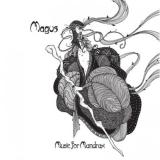
A magus is a wizard…a sorcerer. Magus, the band, is certainly interested in such things (who isn’t), but the name is especially apt due to the band’s approach to alchemy, the blending of rock, gothic, proto metal, and psychedelic styles to create a sound that is, ultimately, unique. Part of that uniqueness comes from the instrumentation. While guitar is often a dominant instrument of the rock oeuvre, the Fender Rhodes generally plays a supportive role. Not so here, where Jessica Weeks’ deft use of the keyboard dovetails with Greg Weeks’ more standard six-string approach. Not standard is the band’s sound. Doomy yet inspirational, dour yet vibrant, the duo’s tunes map sinister realms whose subjects span metaphysical creatures to enigmatic portals. You know, the typical stuff that rubs elbows with a magus.
Formed in late 2024, Magus sprung from a desire by both artists to experiment with darker, heavier sounds. Long enamored of artists like Flower Travelling Band,, Black Sabbath, and Deep Purple, the duo delved deeply into trance like riffs and euphoric solos to create the backbone of what has become their debut album, Music for Mandrax. This thirteenth Language of Stone offering features grounded, metronomic grooves, organic, lugubrious synth lines, and tandem vocals (supplied by both Weekses) that, in total, weave a heavy, trancelike spell sure to entice fans of bands as disparate as Sabbath is to Pink Floyd. Recorded at Weeks’ Hexham Head studio (to analog tape, of course), the band enlisted long-time counterparts Jesse Sparhawk (bass) and Ben McConnell (drums) to round out their sound and lock down the grooves that propel the album.
Mixed by Brian McTear and Amy Morrisey at Miner Street in Philadelphia, the band’s fully realized vision came to fruition, which left only the album art to contemplate. The band, wishing to further the gothic aesthetic of their sound, enlisted fashion designer and artist extraordinaire Hogan McLaughlin (Game of Thrones) to create the starkly beautiful line drawings of the front and back covers. The duo travelled to Salem, MA to complete the package with Courtney Brooke Hall, who shot the moody and evocative photographs that grace the gatefold release’s inner panels.
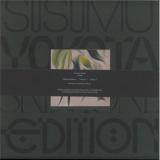
Sakura is without doubt the most loved and lauded entry in Susumu Yokota’s catalogue.
The music unravels like cascades of petals falling from the eponymous cherry blossom trees. Yokota intended to ‘express ki-do-ai-raku (the four emotions; joy, anger, sorrow, and happiness) through music’, and throughout Sakura, the effect fluctuates between profound tranquillity, hesitation, melancholy and joy with ease, addressing the fickle nature of human emotion, while transcending the inclination to label moods entirely.
Sakura became Yokota’s best selling album. It was greeted with universal acclaim, lauded by Philip Glass and Brian Eno and launched Yokota internationally.
‘A bittersweet beauty, heightened by the sadness that all things must one day end.’ - Martyn Pepperell
- 1: Please
- 2: Come Closer
- 3: A Boy Like You
- 4: Ring The Alarm
- 5: My Baby
- 6: Have You Seen Me Dance
- 7: Somewhere Else
- 8: I Drink The Light
- 9: Wavelengths
- 10: Side By Side
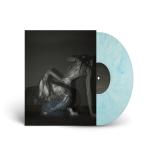
- 11: The Thing
- 12: In A Minute
- A1: Dean Martin - You're Nobody Till Somebody Loves You
- A2: Tony Bennett - Rags To Riches
- A3: The Ink Spots - Whispering Grass (Don't Tell The Trees)
- A4: The Shirelles - I Met Him On A Sunday (Aka "Da Doo Ron Ron")
- A5: Robert & Johnny - You're Mine
- A6: Howlin' Wolf - Smokestack Lightning
- A7: The Cramps - The Creature From The Black Leather Lagoon
- B1: Jimmy Smith - Walk On The Wild Side
- B2: Jimpson & Group - The Murderer's Home
- B3: Santo & Johnny - Sleep Walk
- B4: Lonnie Johnson - Tomorrow Night
- B5: Glenn Miller & His Orchestra - Moonlight Serenade
- B6: Muddy Waters - Hoochie Coochie Man
- B7: The Berlin Radio Symphony Orchestra - Radetzky March
- C1: The Harptones - Life Is But A Dream
- C2: Bing Crosby With Victor Young's Orchestra - Just One More Chance
- C3: Charlie Parker - I'll Remember April
- C4: Johnnie Ray - Cry
- C5: Benny Goodman - Moonglow
- C6: Lavern Baker - Tweedlee Dee
- C7: Frankie Carle - I Want A Girl (Just Like The Girl)
- D1: Ray Charles - Come Rain Or Come Shine
- D2: Bo Diddley - Road Runner
- D3: Brenda Lee - I'm Sorry
- D4: The Marvelettes - Please Mr. Postman
- D5: Jackie Gleason - Melancholy Serenade
- D6: The Hot Club Of France With Django Reinhardt & Stéphane Grappelli - What Is This Thing Called Love
- D7: The Danleers - One Summer Night
For their first musical outing of 2012, Dubkasm take a walk down the avenues of digital 80s reggae, showcasing the fresh vocals of Rudey Lee and Solo Banton. 8 bit sounds meet tough JA riddims, with shades of Jammy's, Gussie Clarke and Steely & Cleevie, expertly mixed by UK veteran Nick Manasseh with razor-sharp precision. A key figure in Bristol's reggae ancestry, Rudey Lee helped connect the Bristol Sound with its dub origins through collaborations with legendary pioneers Smith & Mighty during the 90's. On his first outing since his appearance on Pinch's debut album 'Underwater Dancehall', Rudey takes us back to his reggae roots with 'Emotion', a soulful dancefloor bubbler with a conscious edge. Solo Banton, ever powerful in his hard-hitting delivery, proceeds to nail the message home with 'Are You Ready', a no-compromise deejay version taking things to a higher level. This cut guarantees a rewind in any dancehall, building on Solo's hit-after-hit track record, proven through his work with Jahtari, Maffi and Reality Shock.
- 1: 24-03-04_Birthday_B4
- 2: Big-Box Store Heart
- 3: Nqa
- 4: Sure Could (A Random Exercise In Life-Altering Party Fouls)
- 5: The Luna Project
- 6: Crash Taylor
- 7: 30Days30Days30Days
- 8: Shitshow Or Boulevard Of Soaking Dreams
- 9: Oh, Donna
- 10: Wten
- 11: Something's Gotta Give
- 12: Pinch Me
When you name your band Prince Daddy & The Hyena, you sort of accept that chaos isn’t a chapter in your story – it’s the entire ethos. Since forming out of Albany, NY’s DIY scene, Prince Daddy & The Hyena have built a career out of reaching their breaking point and continuing forward anyway. Their first LP, produced by Joe Reinhart, captured a very young band figuring things out in real time; their massive conceptual undertaking Cosmic Thrill Seekers followed and pushed their ambition (and patience) to new extremes. Not long after, a serious van accident nearly took their lives, directly informing the intensity of their self-titled record.
Over the last decade, the band has lost close friends and collaborators, endured relationship struggles, and faced countless moments that would have ended most bands without question. But those experiences never slowed Prince Daddy & The Hyena down. On their upcoming fourth album, Hotwire Trip Switch, they recalibrate and reconnect with their roots while sounding more focused and self-aware than ever. Reuniting with Joe Reinhart for the first time in nearly a decade, the album pulls from the punchy lineage of Green Day, the hook-driven quirk of Weezer, the snarky urgency of Joyce Manor and Jeff Rosenstock – all through the distinctly bratty lens of songwriter and vocalist Kory Gregory.
- A1: Sweet Potato Gravy Maurice Simon & Pie Men
- A2: Mmm Mmm Mmm Dave Lewis
- A3: Sorry ‘Bout That Harold Johnson Sextet
- A4: Sophisticated Funk John Roberts
- A5: Chittlin' Salad The Soul Runners
- A6: Hijack Jackie Hairston
- A7: Whip You Little Charles Whitworth
- A8: The Shing-A-Ling Thing The Naked Truth
- B1: I Can't Afford To Lose Him Sound Stage House Band
- B2: Sunny Jerome Richardson
- B3: Bucket O Grease Les Mccann
- B4: Cornbread And Buttermilk Leon Haywood
- B5: Dead The Mark Ii
- B6: The Skrooch Little Eddie
- B7: Flunky Flunky The Soul Set
- B8: Mother Blues Gene Ludwig
The new CA label is back with a second offering of edited hip-hop and r&b gold. These are the sort of steam and sexual cuts that bring real heat to any slow jam session. King Most's 'Waiting 4 U' is first with slow, funky breaks and lavish strings and horns bringing a nice sophisticated and seductive feel. Things somehow get even more smoochy and loved up on the flip, which comes from DJ Homicide_. 'Playin' For Money' is a classic boom-bap sound with low slung bass, libidinous vocals and buttery smooth backing that is going to get hips bumping in no time.
Pleased As Punch presents four tracks from the many shades of house. Groove P featuring Adeva's 'Hold On Honey' opens with a steady groove and bass he's known for, while vocals from Adeva carry you through the track. A2 follows with Saison's 'Keep My Mind'; a deeper, tougher sound they sometimes bring. Fresco Edits' 'You Are the One' adds classic disco flavour that brings warmth to the EP, while Capri's 'Sax Thing' closes with raw, sax-driven energy. Simple, solid tracks made to resonate.
Jexy's back! After conquering post-pando dance floors with his celebrated Bad Timin' label, the Jexter is getting back to basics and bringing things home to his Good Timin' label. This time, the Balearic Bad Boy slams the breaks on the BPMs and delivers an album full of downtempo groovers, angelic diamondry and more hooks than a pirate convention! Get into it!
For over four decades, Mr. Fingers has been shaping the core of house music. Now he returns with a new album that continues his timeless journey through deep rhythms, soulful melodies, and immersive atmospheres. Crafted with the warmth and musicality that define him, the record blends deep house, jazz-infused harmonies, and subtle R&B textures. Mr. Fingers once again reminds us why his music remains essential: hypnotic grooves and heartfelt compositions. Not just music for the club, but also for the quiet spaces...
Prince De Takicardie takes the reins at Opia for our 19th release, channeling a heady mix of polished trance and shimmering prog through his deep dancefloor excursions into all things euphoric. Bass lines twist and roll to ground the EP in a strong sense of pace and momentum while hazy pads and arpeggios whirl and hum to gently nod towards a mellower Balearic influence, all the while still maintaining the energy needed to slot neatly into a peak-time record bag.
Finally, finally, FINALLY! After many years of fruitless praying, a true collector grail can finally grace every turntable the world over. Bright And Shining is a miraculous leftfield library classic from the genius mind of Barbara Moore. It's Highly Addictive Happiness Music TM and one of the coolest records to come out of anywhere...ever! With originals almost impossible to find - and, when they do, going for over £300 - you already know how crucial this beautiful reissue is.
Recorded in 1981 for Sylvester Music Company, Bright And Shining is breezy, dreamy and funky in a perfectly smooth jazzy-soul-groove fashion, with Moore's patented celestial male-female vocal harmonies this time benefitting from the addition of Fender Rhodes and pumping bass lines.
As one particularly enthusiastic Discogs user put it: "If Eno is responsible for Music for Airports, Moore is responsible for Music for Holidays." Indeed, this is brilliantly unique, "maximum happiness music". If you miss the sun-dappled soft-psych soul of Koushik, the heavenly vocal arrangements of the great Library Music doyenne Barbara Moore - her depth, richness, sophistication and warmth - will see you just right.
The gigantic title track, "Bright And Shining", gallops out the gate, all sophisticated, jazzy leisure-soul with sax and guitars backing Moore's effortless vocal swag in this relaxed, mid-tempo head-nod strut. Worth the price of admission alone. Up next, the sunny, vibey "Fly Me High" features strolling, "unworded" vocals (aside from the refrain of the title) alongside breezy alto sax and electric guitar. Pastoral and perfect. The slow'n'sultry "Affluence" presents a moody elegance, a classical "downlifting" gem. Another crucial highlight is the breezy "Going On Holiday". It's happy. It's sunny. It's lively. It's cool and happy. Did we say happy? A mid-tempo, romantic sax workout, "Alto Sex"presents smooth jazzy funk before the first side closes out with the soaring, jazzy "Stay With Me". Seriously uplifting.
Side B opens with "Feel Fine", an excellent uptempo and bright jazz groove. Up next, "Canon" is wracked with refinement, a peaceful, smooth vocal harmony over repeating bass making for an elegant, late-night classic. It's followed by the laconic "Smooth And Soft", a laidback, casual sophisticated soul and easy-feeling jazz gem. The jazzy "Real Thing" is another exercise in strolling sophistication, complete with wordless vocal harmonies. The fairly self-explanatory "Voice Over Sax" sounds precisely how you would expect; a relaxed sax number with heavenly vocal support! To close, the carefree "Feeling Free" is a pleasant, light and breezy mid-tempo groove.
The audio for Bright And Shining has been meticulously remastered by Be With regular Simon Francis, ensuring this release sounds better than ever. Cicely Balston's expert skills have made sure nothing is lost in the cut whilst the records have been pressed to the highest possible standard at Record Industry in Holland. The original, iconic sleeve has been restored here at Be With HQ as the finishing touch to this long overdue re-issue. We'll grant the final word to MillionDollars. on discogs from about 10 years ago: "If you listen to the record on a sunny day you feel like going out surfing in a white linen suit with a blunt on your lips, catching a cool breeze."