The album features a notable line-up of musician such as: Sami Yaffa (New York Dolls/Joan Jett), Dave Richmond (Serge Gainsbourg/Elton John), Christophe Deschamps (Jean-Michel Jarre), Kath Guifford (Stereolab), Will Crewdson (Adam & The Ants/The Selecters), Danny Ray (Bo Diddley/Brian Setzer)...Mastered at the legendary Abbey Road Studios and cut to vinyl across a 180g LP in a gatefold sleeve with booklet. L'homme de l'ombre immerses you from start to finish in a sonic and lyrical journey that rewards your mind and emotions. Here you will find the glamorous rock attitude of Marc O's musicianship colliding brilliantly with the wise and witty writing of french philosopher Bruno Pons Levy. The result is not so much a double identity, but an intangible and powerful third element, much like the mathematical equation described in the song The triangle squared (Le triangle au carré). This song is emblematic of Marc O's persona: a musician of style and vision, crossing cultures and decades to collaborate with a remarkable team and create this, his most personal album. Press quotes: Ten well realised, vintage aesthetic fantasies ****" MOJO "Singular debut set that lurches from glam-punk to Air-meets-Gainsbourg purr, infectiously Pulp-ish electro-rock and gauche, Bowie-esque panther strut. Formidable! 8/10" UNCUT "Never less than fascinating, this is an important and hugely enjoyable work ****" RECORD COLLECTOR "Propelled by his core rhythm section and lyricist collaborator, they address some weighty subjects with passion ****" SHINDIG! "Blends aggressive and powerful textures and melancholic soundscapes to break down language barriers and deliver a powerful, evocative and stunning album" LOUDER THAN WAR "The music is as strong as Pons Levy's lyrics, mingling melodic rock with chanson in the grand tradition ****" RNR
Buscar:third culture
I first discovered khroniky – Ukranian folk songs – in the Highlands of Scotland. I was watching a screening of Bajka, a mesmerising documentary made by the filmmaker Lucia Nimcová and sound artist Sholto Dobie. I knew nothing about these ballads beforehand, but I was fascinated by these odd, beautiful songs, especially the easy way in which they mixed misery and levity, where gentle melodies blend with tales of dark violence. The folk songs describe hardship, murder, torture, death in gulags, heavy drinking, outsmarting men, love affairs. But they’re often very funny too – many of the songs make fun of marriage, and there’s an amazing subcategory of khroniky songs called potka (vagina) songs.
The khroniky have never been properly documented because they were considered too crude, or contained lyrics that were problematic, politically. When Ukrainian folk songs have been archived in the past, it’s normally a sanitised, more polite version of the ones that Lucia remembers from her childhood. Lucia grew up on the other side of the Ukrainian border in Slovakia. She is part of the Rusyn (Ruthenian) minority ethnic group found in the borderlands of Slovakia, Hungary, Romania, Ukraine and Poland. Rusyn is a centuries-old Slavic language, looked down upon as a poor, uneducated dialect by the neighbouring Ukraine and Slovakia. It was forbidden to talk about Rusyn culture at Nimcova’s primary school, but the khroniky stayed in her memories.
“I remember weddings when I was young,” says Lucia, who now lives in Addis Abeba, Ethiopia. “At the end of the night, when everyone was drunk and the young couple would go around their guests, people would sing in Rusyn. There was singing and dancing, and songs about being in prison or falling in love. I picked up the lyrics and sometimes my mum would make my sister and I sing them for people we met on the train. I was about five or six but the lyrics still come back when I sing to my kids.”
Determined that these rich, nuanced, unique songs shouldn’t be forgotten, she decided to record them. Over two years, Lucia, joined by experimental musician Sholto Dobie, visited Rusyn villages high in the Carpathian mountains to rediscover the songs and make the documentary. It was at the beginning of war breaking out in Ukraine in 2014.
“The Rusyn community is a very closed one,” explains Lucia. “Sometimes we’d have to wait several days to hear someone sing; we had to earn their trust before they shared something very personal to them. We’d stay up ‘til 5am at a wedding, then go straight to a morning baptism, or collect haystacks with the villagers, hoping they’d sing while they were working.”
DILO is named after an important independent Ukrainian daily newspaper that was shut down when the Red Army entered Lviv in 1939. The four long tracks on DILO blur field recordings with song; an unpolished, privileged glimpse into a private world. We hear dogs barking and insects buzzing in the summer heat, then a blast of hurdy gurdy or violin will drift in, or a plaintive song soars softly over the rural background noise, with casually harrowing lyrics about a cuckoo, “lifeless in a world of misery”, as translated in the album’s booklet.
For both Lucia and Sholto, it was important not to tamper too much with what they heard. “When you think about ethnography,” Lucia explains, “you have to have a lot of time, love and respect to document it with sensitivity.”
“The songs all have their own atmosphere and intimacy from the spaces they were recorded in and it was important to maintain these particularities and move with them,” adds Sholto, who now lives in Vilnius, Lithuania. “They guide and sometimes interrupt a journey between interiors – domestic spaces; in kitchens, by the fire – and exteriors; marketplaces, cow sheds. We used contact microphones to record metal bridges and fences, and we spent one afternoon recording a wool processing machine, the details of the rattling and tuning wheels are the ground layer for the third track.”
Lucia took rough notes and diary entries during the recording process, which are now shared in the booklet alongside a selection of lyrics, loosely translated, but revealing the depth and astonishing beauty that sometimes lies in the language of these folk songs.
The feel of the album is intimate, flipping between laughter, where a woman sings about selling her pussy to buy a cow in one track, then shifts to a raw, painful truth; an adult son asks his mother why his dad won’t be back for dinner, as he’s gone to war.
Since Lucia and Sholto began working together in 2014, they have shared the audio recordings on radio and film and shown photos in gallery spaces, making sure these special, smutty, poignant songs don’t get lost. This new record and booklet joins that same continuum, another glorious fruit from the same rare tree.
- A1: Laurie Spiegel - Fly By
- A10: Kelman Duran - Dead Cat
- A11: Lafawndah - The Super Lady From Nameless-Town
- A2: Pedro Vian & Pierre Bastien - Memory
- A3: Lyra Pramuk - Cage
- A4: Chassol - Ya!
- A5: Nicolas Godin & Pierre Rousseau - Page Turner
- A6: Pascal Comelade - Segons Com
- A7: Visible Cloaks - Lifeworld
- A8: Raul Refree - Vid2020
- A9: Lucrecia Dalt - Cosa
- B1: Ryuichi Sakamoto - Silence
Ltd White Vinyl Gatefold edition + 32 Page Booklet + Download Code
The LP contains original compositions by Ryuichi Sakamoto, Pascal Comelade, Laurie Spiegel, Lyra Pramuk, Chassol, Nicolas Godin and Pierre Rousseau, Pedro Vian and Pierre Bastien, Visible Cloaks, Kelman Duran, Raul Refree, Lucrecia Dalt, Lafawndah.
+ a booklet with writings by contemporary thinkers like Shumon Basar, François J. Bonnet, and pictures by, Araki, Juergen Teller, Elizaveta Porodina, Dani Pujalte, P Jack Davison, Zhong Lin, Alessandra Sanguinetti, Adrià Cañameras, Javier Tles among others. Lacquer cut by Josh Bonati & Mastered by Rashad Becker
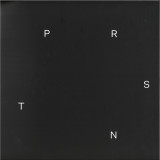
'PRSNT' is a unique global artistic project combining the input of artists across the worlds of music, video and written word which acts as a statement on how we, as consumers, engage with music in the 21st century. Vital electronic musicians including Ryuichi Sakamoto, Lafawndah, Lyra Pramuk, Lucrecia Dalt and Visible Cloaks have each contributed tracks, which are approximately 32 seconds long.
The concept was devised by Created By Us and the Barcelona-based label Modern Obscure Music. They read a study which identified that the overwhelming volume of instantly accessible information online is shortening attention spans and altering how audiences engage with music digitally. Their curiosity about the state of online consumption developed further on discovering that around a third of all listeners using digital platforms skip to the next track, within the first 30 seconds of playing.
Each musician was given a fascinating challenge to create engaging compositions with real artistic merit, inside the confines of this shortened span. Akin to Brian Eno's famous Windows 95 start-up music, the time constraints are crucial, and the compositions are deceptively complex and more substantial than expectations of their nano nature would suggest.
'PRSNT' acts as a critique of flighty feed culture, but is simultaneously constructive, providing something which is either proposed solution, or "if you can't beat 'em join 'em" resignation. Every artist has interpreted the brief differently, resulting in an intriguing blueprint for the potential future of digital music. Could abbreviated micro compositions satisfy, inspire and nourish like their longer counterparts? They certainly take up much less of listeners' busy lives, which are often spent tackling ever-increasing workloads.
More a family than a band, BANDA MAJE formed in a home studio in the historic district of Salerno, in Southern Italy, on the initiative of Peppe Maiellano (composer and keyboards) and Tonico Settanta (producer, rapper and DJ). The collective has an ever-changing number of members, all of whom – a bit like the lively port city they are from – exist at the crossroads between Italian melodies and imported genres like funk, soul and disco.
Released by Four Flies Records, a label specializing in vintage Italian soundtracks and brand new productions with a strong cinematic feel, Banda Maje's debut album "Ufo Bar" transports you to an imagined version of Salerno that combines local tradition and 70s pop and film culture.
Listening to the album's eight funk- and soul- infused tracks also means seeing stories unfold in the streets of this re-imagined city: from the jubilant uprising organised by the women from the Rione Fornelle neighborhood in "Fornellesse", to the cigarette smuggling story in "P' ciel, p' mar, p' terr"; from the distinctly southern Italian pucundria (bittersweet melancholy) in "Sunday Embarcadero", to the saga of provincial nightlife in "Living Disco Club".
While the LP's Side A is sunny and cheerful, its Side B is more nostalgic, almost nocturnal, with bittersweet vibes in "2010" and new wave-influenced synths in "Ago". This variety of moods reflects the emotional depth behind the music of Banda Maje: "We want to leave a trace of what we experience: the narrow little streets brimming with life; our love for Neapolitan music, for Italian soundtracks from the 70s, for B-movies and the saga of cigarette smugglers; our passion for vinyls and cassette mixtapes, not to mention second-hand love affairs and dusty afternoons spent watching third-division football."
HIDE are an electronic duo based in Chicago. The pair create dark and heavy sample - based compositions using a combination of self - sourced field recordings and various pop culture and media references. Their music is textured, minimal, and powerful, giving raw vulnerability an opportunity to unfurl. Their work is honest, confrontational, powerful and thought - provoking.
HIDE's third album, Interior Terror further abandons traditional concepts of song structure in favor of splintered rhythms and fevered, immediate release. Expanding on previous themes of autonomy and empowerment, Interior Terror addresses and questions the corporeal and immaterial body in a physical and metaphysical sense. Turning to the dread inside, reflecting on the world around us,
HIDE gives voice to the power of destruction as a c atalyst for hope, and to the collective experiences of those who've come before us as a wellspring of our own power. Raw vocal delivery of mantra - like prose issued forth yields a raging, plaintive wail that lulls, mocks, questions, proclaims and decries. A dearth of collected field recordings give way to more fluid arrangements while retaining a scathing urgency. The result is minimal, spacious, and jarring; a distant knocking grown into the pulse of a hypnotic dirge, drones emerge from shards of decomposed sound, bending, seething their way through your body.
"Do Not Bow down" is a self - directed spell for fire and regeneration. “Nightmare” explodes, unrelenting; conflating time and space to the beat of repeated blows to the head. A reflection on perpetual suffering, generational traumas and the transformative action of release. Title track “Interior Terror” belies a new brand of body horror informed by the systemic enforcement of a contemporary Western gender binary, touching on experiences of dysphoria and disassociation . “Fear” answers the question 'Where do cops come from
HIDE are an electronic duo based in Chicago. The pair create dark and heavy sample - based compositions using a combination of self - sourced field recordings and various pop culture and media references. Their music is textured, minimal, and powerful, giving raw vulnerability an opportunity to unfurl. Their work is honest, confrontational, powerful and thought - provoking.
HIDE's third album, Interior Terror further abandons traditional concepts of song structure in favor of splintered rhythms and fevered, immediate release. Expanding on previous themes of autonomy and empowerment, Interior Terror addresses and questions the corporeal and immaterial body in a physical and metaphysical sense. Turning to the dread inside, reflecting on the world around us,
HIDE gives voice to the power of destruction as a c atalyst for hope, and to the collective experiences of those who've come before us as a wellspring of our own power. Raw vocal delivery of mantra - like prose issued forth yields a raging, plaintive wail that lulls, mocks, questions, proclaims and decries. A dearth of collected field recordings give way to more fluid arrangements while retaining a scathing urgency. The result is minimal, spacious, and jarring; a distant knocking grown into the pulse of a hypnotic dirge, drones emerge from shards of decomposed sound, bending, seething their way through your body.
"Do Not Bow down" is a self - directed spell for fire and regeneration. “Nightmare” explodes, unrelenting; conflating time and space to the beat of repeated blows to the head. A reflection on perpetual suffering, generational traumas and the transformative action of release. Title track “Interior Terror” belies a new brand of body horror informed by the systemic enforcement of a contemporary Western gender binary, touching on experiences of dysphoria and disassociation . “Fear” answers the question 'Where do cops come from
Electronic producer Intriguant with his 3rd album Spirits on vinyl as a limited release under record label from Singapore, TAV Records.
When it comes to the relationship between electronic music and its interaction with Singapore, we always find the theme of longing connectivity through its panorama even within the many concrete walls and high-rises we have grown accustomed to living in. With Spirits, Intriguant takes the role of an observer and explores the landscapes of many different cultures and sounds that have taken habitat past and present. Driven by hauntingly futuristic break-beats of the 90s, shaped 808s, imagined club sounds of dancing folks, bass-heavy textures reminiscent of Burial, Spirits is both for the late- night vanguards and personal home listening rooms. Intriguant's third album encompasses his experiences as an artist most vividly, highlighting his ability to use the flexibility of electronic music to link floating ideas to the physical world.
The Analog Vault is honoured to be working with Intriguant for our third release as TAV Records.
Following on from the success of ‘Greg Belson’s Divine Disco’ series Greg Belson and Cultures of Soul team up again to explore the world of Gospel Funk. Belson, one of the world's leading collectors and DJs of gospel music, has assembled a collection of some of the rarest Gospel funk records for “Greg Belson’s Devine Funk.”
In addition to the full-length, available on CD and LP, choice selections from the compilation will be released on 7 inch singles in limited quantities. Third in the Devine Funk 7 inch series, includes the laid back breakbeat laced “I Don’t Want to Be Alone" by Allen Gauff Jr.,
searching for freedom is the forthcoming fifth studio album from the Australian singer-songwriter, free-surfer, and environmentalist Ziggy Alberts. This release follows his acoustic EP 'Truly Acoustic', "the perfect blend of relaxing, soulful guitar and wistful lyrics" - Culture Collide, and collaborative EP with Sydney rap duo, Horrorshow, 'I Won't Give You Up' which was described as one of "the most exciting new music releases to listen to in August 2020" by L'Officiel. Ziggy’s platinum-certified third album, Laps Around The Sun 2018 peaked at #9 on the ARIA Charts and included the platinum-certified single Love Me Now, “a raw, pained plea to love” Atwood Magazine. Released independently via his own label imprint, Commonfolk Records.
Following recent super-deluxe editions and multi-format releases of classic Who albums – ‘My Generation’, ‘Tommy’ and ‘Quadrophenia’, and the success of ‘Live at Fillmore’, we follow with The Who Sell Out – this set shaping up to be the most superlative of all…!!
Released in December 1967 – the album reflected a remarkable year in popular culture. As well as being forever immortalised as the moment when the counterculture and the ‘Love Generation’ went global, 1967 produced tremendous musical upheavals as “pop” metamorphosed to “rock”.
Originally planned by Pete Townshend and the band’s managers, as a loose concept album including jingles and commercials linking the songs styled as a Radio London broadcast – born out of necessity as the band’s managers wanted a new album and there weren’t enough songs.
The original plan was to sell advertising space on the album – Jaguar cars, Coca-Cola etc. The jingles pay tribute to the pirate radio stations and expose the myths of ‘pop-culture’ and mock consumer society – way ahead of their time…
The homage to pop-art is evident in both the advertising jingles and the iconic sleeve design – created by David King (art director at the Sunday Times) and Roger Law (who invented Spitting Image) producing four giant images for each band member – Odorono deodorant, Medac spot cream, Charles Atlas and Heinz baked beans (Roger apparently caught pneumonia from sitting in the cold beans for too long).
Photography by renowned portrait photographer David Montgomery (rare out-takes included)
The album is a bold depiction of the period in which it was made – the tail-end of the ‘swinging-60s’ meets pop-art mixed with psychedelia and straight-ahead pop craft. It’s glorious blend of classic powerful Who instrumentation, melodic harmonies, satirical lyrical imagery crystallised for what was only the group’s third album – the ambition and scope is unrivalled by the Who, or any others from that period.
Within the bold concept, were a batch of fabulous and diverse songs – I Can See for Miles (a Top Ten hit) is a Who classic, Rael, a Townshend ‘mini-opera’ with musical motifs that reappeared in Tommy and the psychedelic blast of Armenia City in the Sky and Relax are among the very best material of the 1960s.
One of the most extraordinary albums of any era – it’s The Who’s last ‘pop’ album. Two years later came Tommy – a double concept album about a deaf, dumb and blind kid…
“We were hoping to get free Jaguars. We got fifty tins of free Baked Beans”
Pete Townshend
Despite having been one of the most devastating years in the history of electronic music culture, 2020 has also brought about some creative momentum for music producers worldwide. In the case of Space Echo, it presented an opportunity to complete their third EP for Luv Shack Records.
The energy fuelled “Cha-Cha” is a title track that boasts with all the elements we’ve come to expect from a Space Echo joint; uplifting live drums blended with a classic 4-to-the-floor beat, a funky syncopated bassline, motivational vocal chops and lots of grainy delay. This time however, the main theme is played by a live saxophone that seamlessly fits the formula by switching between rhythmic and melodic phrases throughout the track.
The B-Side takes us to the laid back funk that is “Another Dream”. This sombre slice of sunrise music is jam packed with lush rhodes, live bass and sax and quirky mellotron melodies to boot.
Polish sound wizard Das Komplex gives “Another Dream” the remix treatment, churning out an uptempo disco rendition that is meant to be played on balearic beaches and sweaty afterhours alike.
Comes with printed innersleeve and download code. Limited 300. "Musician, composer and one of the most revered figures for today's younger generation of experimental and alternative Arabic music scenes, Kamilya Jubran (text, oud & vocals), collaborates with long standing musical partner, composer, accomplished trumpet player and seasoned electronic musician Werner Hasler (trumpet & electronics). In Wa (Arabic for and), their third album together as a duo, Kamilya Jubran and Werner Hasler continue to interrogate their listening and their expression, their research and their desires, to unravel a musical universe of possibilities; "a unison of timbres, cultures complementing, the complicity of verses, and modes and languages confronting each other" in the duo's own way of communicating respective origins and contemporaneity. Lyrical, within a sound full of contrast and ornamentation, they pursue an expansion of their repertoire with imaginative interpretation and improvisation." Originally released in CD and digital by Everest Records (Switzerland). Vinyl issued in collaboration with Akuphone. Vinyl mastering by Mark Gergis.
Black Stone Cherry’s third album Between The Devil & The Deep Blue Sea offers another amount of the fully loaded southern rock from the group that was awarded the Best New Band at the Classic Rock Awards in 2007. The opening statement “White Trash Millionaire” refers to the celebrity culture and all the things that will come with being famous. The stomping riffs and country turn of their music is mixed all over the album. They’re bringing something a little bit dirty, but it never get’s too much of the good thing on this record. The melodic compositions, great vocal work and outstanding rhythms makes this another worthy release by the band.
With a hybrid jazz based on African grooves, Ethio-oriental melodies and psychedelic dub this Belgian five-piece creates an atmosphere where ancient and modern sounds fuse into a powerful, hypnotic and groovy sensation.
Receiving critical acclaim for their second album 'Artifacts' (2017), the Belgian quintet are pleased to announce the release of their much-anticipated third album entitled 'Future Flora', released 12th April via Sdban Ultra on vinyl / cd / digital.
Piloted by saxophonist/flutist/composer Nathan Daems (Ragini Trio, Dijf Sanders, Echoes of Zoo), the input of notorious musicians, drummer Simon Segers (MDC III, De Beren Gieren, Stadt), cornet player Jon Birdsong (dEUS, Beck, Calexico), keyboardist Wouter Haest (Voodoo Boogie) and bassist Filip Vandebril (Lady Linn, The Valerie Solanas) leads to the specific universe that only Black Flower is able to create.
Where debut album 'Abyssinia Afterlife' (2014) and 'Artifacts' (2017) bathed in an atmosphere of psychedelics, mythical figures, ancient sounds and modern cultures, new album 'Future Flora' refers to the power of plants and their importance for the future.
"'Future Flora' is a metaphor for the importance of feeding and watering powerful and revolutionary ideas and initiatives that can save our world. You can compare it with plants that fight between the paving stones of the city for their future. These "urban warriors" need water to survive and grow. Their future and ours depends entirely on how we look at the plant world", says Daems.
Black Flower's musical cross-pollination of sounds and rhythms remain on 'Future Flora', but there is still room for a more Western touch with Romanian and Maloya (Réunion) influences. Daems developed his own arrangements where Western, Oriental and Ethiopian scales and chords are fused together to create a real mix of traditional instrumentation and modern electrical vibrations.
The strong underlying groove is omnipresent, but the room for psychedelics, folklore and experimentation grows. Songs like new single 'Hora de Aksum' combine modern western rhythms with doses of Balkan eccentricities while 'Future Flora' takes you on a psyche-delicious 21th century Ethio-dub-jazz trip with echoes of Mulatu Astatke and Fela Kuti.
"The general feeling that dominates is that of strength and perseverance. The feeling that we have to fight for our future and that we have to do it now! The whole album is interspersed with this atmosphere and sounds swirling, haunting and ecstatic. For those who once saw Black Flower live at work, this energy will be extremely recognizable", he adds.
Tilman Robinson’s third album, CULTURECIDE, is an investigation of the anthropocene; a seven part lamentation for our chaotic world.
Tilman Robinson is an Australian composer and sound designer creating electro-acoustic music across a range of genres including classical minimalism, improvised, experimental, electronic and ambient. Tilman’s diverse output focuses on the psychological impact of dense sound employing acousmatic and psychoacoustic principles. His third album CULTURECIDE will be released on Iceland’s Bedroom Community label in April 2020.
CULTURECIDE: “...processes that have usually been purposely introduced that result in the decline or demise of a culture, without necessarily resulting in the physical destruction of its bearers.” D Stein
CULTURECIDE is a rich sonic collage, harvesting sounds from a range sources including field recordings, medical machines that monitor the human body, traditional instruments and synthesisers, often melted electronically. The result is an unsettling paradox with sounds constantly on the edge of recognition. Each piece references a specific socio- political issue ranging from colonialism to neo-liberalism to climate change and the impending singularity of humans and machines. Far from an answer to these questions, CULTURECIDE invites us to meditate on their place in our life and approach personal understanding.
Recorded and produced almost completely in Australia, a land at the forefront of the devastation of climate change, CULTURECIDE was an attempt at catharsis for its author frequently appalled at his country’s incredible apathy and inaction. Mixed by Bedroom Community regular Daniel Rejmer and mastered by Lawrence English, works from the ambitious and unsettling record saw Tilman nominated for the 2019 Melbourne Prize for Music.
Greg Hates Car Culture was Venetian Snares' first ever vinyl release. Long out of print, it came out in 1999, as the third release on Minneapolis label History Of The Future. Aaron Funk's hallmarks were there from the start. His absurdist sense of humour, the razor sharp edits and his use of odd time-signatures. There is a rawness here, not often captured on later records, where you can imagine Aaron playing live in front of a room full of young breakcore fanatics. Indeed most of the tracks here were recorded live, tweaking his effects and EQ on the fly, to DAT from his Amiga. The album opens with "Personal Discourse", recorded in 1997, which samples Aaron calling into a Dominatrix live on community cable TV, while "Fuck A Stranger In The Ass" samples from the film The Big Lebowski. The track "Aqap" has a different sound to the others having been recorded later, in 1998, on Aaron's first PC.
We have also added three hitherto unreleased 1997 tracks to this reissue. Two of them "Eating America.." and "Punk Kids" appeared on Venetian Snares rare self-released 1998 cassette Spells and the long sought after "Milk" was only passed around by his friends.
Greg Hates Car Culture lets you hear the raw energy of a musician at the birth of his sound.
Stefan Fraunberger's Quellgeister#3 Bussd is Recorded entirely on an abandoned church's organ in the village of Bussd, Romania, the album is the third installment of the series by Austrian artist and composer Stefan Fraunberger. His research on the influence of nature on culture touches on time, periphery, memory, and transience as evidenced in his Quellgeister research. The album is an archeological sonic research on the deteriorating Organ discovered in the saxon church in Transylvania.
Tunnelvisions third original outing since 2018’s The Celestial Ritual and 2017’s Midnight Voyage. Channel Tropico offers 6 tracks that show the diverse sound from the Dutch producers duo. A must have for fans of percussive sounds and the analog vintage synthwork.
- A1: Reanimation Music
- A2: War Music, 1St Perspective
- A3: Fairytale Music, 1St Perspective
- A4: Dance Music, 1St Perspective
- A5: Death Music, 1St Perspective
- A6: Dance Music, 2Nd Perspective
- B1: War Music, 2Nd Perspective
- B2: Festivity Music
- B3: Art Music
- B4: Fairytale Music, 2Nd Perspective
- B5: Consolation Music
- B6: War Music, 3Rd Perspective
- B7: Death Music, 2Nd Perspective
Marcus Fjellström's second album Gebrauchsmusik, initially released a decade and a half ago, is a bizarre sound document that deserves a closer look. Listening back to it now only re-confirms the unique mind of the Swedish composer, who sadly died in September 2017, only 37 years old.
"Gebrauchsmusik" is German for 'Utility Music', and his second excursion into post-classical experimentation is exactly that; thirteen tracks with each one written to suit a certain theme. War, art, festivity, sadness, death and resurrection are all interpreted by Fjellström in his unique style, taking a classical framework and distorting, confusing and manipulating them into far fetching scenarios that is only limited by ones own imagination.
Marcus worked with the Swedish Royal Ballet, the Scottish Chamber Orchestra and Sinfonietta Cracovia as well as numerous other orchestras, ensembles and soloists, artists and filmmakers. He spent the last half year of his life scoring the AMC series The Terror. In his works, Marcus often aimed to combine opposites so that they don’t contradict each other, but rather fuse into a natural, third element - “High” and “low” culture, the naïve and the sophisticated, good and bad taste. These are all elements that comfortably blend together in his works. Musical influences range from electronic acts such as Aphex Twin and Autechre to 20th century composers such as György Ligeti and John Cage. Further influences include impressionist composers Maurice Ravel and Claude Debussy as well as film music composers Bernard Herrmann, Angelo Badalamenti and Zdeněk Liška.
Vinyl edition ltd. to 300 copies, incl. 8-page 12" booklet with drawings by Marcus Fjellström.
Few albums have treated human voice and drone as a whole entity like ABoneCroneDrone, the third in a trilogy for Real World Records that this record closed back in 1996. In Sheila Chandra’s own words “it was about the gateways between vocal techniques from different cultures and how it was possible to cross between them within a single word or phrase.”
Indipop Recordings founder Steve Coe, probably best known for helping to popularise the term World Music in the early eighties, produced and worked with extreme accuracy along with Chandra on all drones and set a new industry standard of what was possible in the treatment of voice. With the help of bagpipes, didgeridoos and guitars, ABoneCroneDrone puts drones under the microscope and encourages listeners to retrain their ears to hear the nuances that musicians have always heard in them. Emitting low, chantlike waves, Chandra sings deep spaced atonal words while haunting chord sounds flow and drones slowly interact with listener.
This is the first vinyl pressing. It includes a fold-out insert with a new Sheila Chandra interview, original sleeve notes edited by Chandra herself and unseen pictures taken from the 1996 sessions. Limited to 500 copies, no digital release this time.
“The artistry of ABoneCroneDrone is in the attention to detail. The album is beautifully performed, mixed and compiled with intelligence and strong sense of structure. It makes good use of a listener’s valuable time while issuing a challenge to hear in a fresh way.” John L. Walters, The Wire issue 150.
In the early eighties, Edmond Mondésir, professor of philosophy and Léon Bertide, trade unionist, founded the Bèlènou group. They were actors of the great agricultural strike of 1974, which resulted in the death of two workers (Ilmany and Marie-Louise) and left many wounded. Activists of the patriotic movement Asé Pléré An Nou Lité (Stop crying, Fight), they were part of the identity and the cultural affirmation la revendication identitaire et culturelle of the time. Like the Guadeloupean musician Gérard Lockel and his work on the Gwo Ka, they put the Bèlè, in its traditional form, back in the spotlight during Swaré Bèlè (Bèlè nights).Minimalist and spiritual, a true rural ancestral art from Martinique, the Bèlè combines dance and music from responsorial monodies, which is a choir that responds to the lead singer (Respondè / La vwa dèyè), on codified drum rhythms and ti-bwa (2 sticks that hit the back of the drum or a piece of bamboo). It comes in a series of collective choreographies, working up into the trance. The texts are simple, short and tell the story of everyday life and struggle. While preserving the emotion and the drum’s central place, the fundamental contribution of Bèlènou is to keep the traditional form of Bèlè while adding a modern instrumentation: bass, guitar, saxophone, drums...
Emosyon Tambou-a (Emotion of the Drum) was released in 1990. This third opus of the band expands the musical spectrum in harmonies, arrangements and influences to create a contemporary music anchored in the Bèlè matrix, while keeping the beat, the energy and ancestral roots of music. Bèlènou adapts some classic rhythms: Bélya, Gran Bèlè, Bèlè Pitjé or Ting-Bang rewritten here for an orchestra.With the appearance of long couplets and a complex harmonization of the choruses, Bèlènou's music brings a form of modernity, it opens notably to jazz territory as well as to other forms of music and grooves. Also, Bèlènou leaves the musicians with space for improvisation: not only on the saxophone or the guitar, but also with the drums (cleverly adaptating traditional rhythms to the drums).
The texts sung in Creole are of a social nature, appealing to the solidarity and self-denial of the people (Bélya pou péyi-a, Tout pèp-la sanblé), to the struggle for political emancipation towards a new democracy (Wi ny ké rivé, Ni dé jou, Démokrasi); land protection (Sové tè-a); finally, to the vitality of the Bèlè culture ... (Emosyon Tambou-a, Dansé Ting-Bang)...Culture participates, according to the expression of Aimé Césaire, as "Miraculous Weapons". Bèlènou sings a project of a new and united society. A precursor group, experimental in the its early years, Bèlènou reconciles with talent tradition, modernity and cultural identity.
Lovely crafted tip-on sleeve. Remastered. 700 copies
G&D are back with vol 3 of their edit series... This is one essential 12" vinyl for any serious djs ad disco, Boogie and Cosmic lovers.
They have addicted us to a cultured sound while being fun. The versions always seriously edited by two Italian masters.
With this third release the obscure G&D duo have raised the level of quality. Absolutely essential tune.
The release contains all the seventies song as disco funk boogie and cosmic tune.
Supported by.... Sadar, Red Greg, Volcov, Grusane, Daniele Baldelli, Ge-ology, Hot Buttered soul, Twice.
Life is all about rhythms. We don't know what we're dancing to until we're in so deep we can no longer control ourselves. The rhythm controls us.
Right now both Guti and the Martinez Brothers are dancing to the conga rhythm. Guti's third album, they've been dancing to it since the summer, teasing us with a whole slew of percussive new... And they'll continue throughout 2019. Chance are you will, too. Eventually the rhythm will control all of us. It's too infectious not to.
Here's the 411: 'The Year Of The Conga' is Guti's third and most rooted album to date. It came about through a personal request from brothers Chris & Steve Martinez. Both unapologetic Guti fans they wanted the very first album on their Cuttin' Headz label to be his. The result is a total reconnection back to his Argentinian foundations, his club roots and everything that first lured him to the dancefloor...
'I'm back to my roots and found my Latino groove again,' says Guti who wrote the album throughout 2018, starting it whilst bulleting through Japan by train, the majority crafted in the jungle of Dominican Republic, having collected and sampled native percussion instruments, and then finally mixing down on his return to Europe. 'Every song is full of rhythm and created to make you dance...'
He's not messing around; from the writhing snakelike percussion and rousing calls and cries of opener 'Aee' right through to the final mesmerising waves and farewell struts of finale 'Voladora' this an album is born both for and from the dancefloor. No overthinking, no purism, no exclusion; just unabashed physical hypnosis, fuelled for the floor, guided with gut instinct and years of groovecraft. It's the sound of an artist who's disconnected, explored and reconnected. He's older, he's wider and more in tune with his own pace and palette. One of the most diverse and explorative artists to come from Loco Dice's Desolat stable, this is Guti simplifying his passions down to an essence of everything that's magic about his roots and our shared dancefloor culture.
The highlights are in abundance; those hazy-but-persistent New Jersey organs on 'Telling The Truth', that wobbly sub on 'Red Eye', that shimmering sinewy acid line on 'Se Baila', the spicy pianos and wet horns of 'La Orchestra Fantasma', the list goes on. Each cut designed for deep mix pleasure, each cut rolling with a strong organic flavour and alluring percussive dynamics, each cut showing Guti at his most inspired, warmest, playful and ready to wrap you up so deep in a conga you'll soon lose yourself.
Cuttin Headz, cuttin straight to the chase but never cutting it fine... Let us be the first to wish you happy new year with the first ever album on the currently unstoppable label. We'll wish you a happy new conga, too. 2019's going to be a vintage and Guti and the Martinez Brothers are leading the charge.
Third LP of Cabaret Contemporain, French band (featuring Fabrizio Rat on keys) who use acoustic instruments (piano, guitar, bass, drums, contrabass) to produce a « hand-crafted » club music infused with techno. Inspired by Jeff Mills, Robert Hood or Drexciya, the five members already had a career on classical scene; their idea is not to replay classical techno tunes but to create a new path for the electronic music. 2 tracks featuring with the label boss, Arnaud Rebotini.
« Ballaro », which opens Cabaret Contemporain's third album, begins with light percussions, which seem to turn on themselves, while being conveyed by reverberations close to dub. After a few minutes of convolutions, the piece gets out of hand, transporting the listener into a rich form of pulsating trance, irrigated by a soaring melody and punctuated by persistent piano tones. « La selva »; more subdued, has the same energy, the track ending in an even more powerful way, a kind of paroxysm.
Finally, the strangest and most minimal « Cactus », features a singular groove, which evokes the most brutal house from Chicago, or the sometimes obsessive techno from Detroit. Just like other tracks such as « Transistor » or « TGV », fuelled by sweat and trance, Séquence Collective bears all the intensity of a techno cut for clubs' dancefloors. The only difference being that their music is not played with synths, drum machines or software, but with acoustic instruments. Dual curriculum The band is composed of five musicians and a sound engineer: Fabrizio Rat on piano, Giani Caserotto on guitar, Julien Loutelier on drums, Ronan Courty and Simon Drappier on double bass and of course Pierre Favrez on console. They are all in their thirties and met at the prestigious Paris Conservatoire in the late 2000s. However, all the musicians in the band have a double curriculum and navigate freely between the institutional realm and the underground or pop music scenes. Through classical or contemporary music, jazz and improvisation, rock and experimentation, they share a common passion for the original and futuristic techno of the 1990s, that of Jeff Mills, Robert Hood or Drexciya, which they have decided to reinvent and further in their own way. Not as a simple stylistic exercise practiced by virtuoso musicians, but rather as a new path for modern music, and for their generation. « The original idea » they say, « was to make club music by hand, like craftsmen. Like in the early days of jazz, our band managed to transform itself into a kind of dancing machine. Our music is therefore functional because it is danceable, but also mental and abstract, while offering several layers of listening. You can dance and play, have a purely physical and sensory connection to the music. But you can also immerse yourself in its listening, perceive refined harmonies or more complex rhythmic superpositions »
If the tones of Cabaret Contemporain are truly unique it is because each member of the band has developed a very personal approach through the use ''prepared'' instruments. The strings of their piano, guitar or double bass may recall strange machines with literally incredible sounds, obtained using objects such as chopsticks, clothes pegs, foil, hangers, a tiny pie mould or many other utensils from a DIY store. A collective energy
Cabaret Contemporain is first and foremost a live band that has been performing in venues and festivals since its inception in 2012 (Nuits Sonores, Siestes Electroniques, L'Aéronef, Le Trabendo, Philharmonie de Paris, Gaîté Lyrique, Rewire, Dancity, Barcelona Accio Musical...), both at traditional jazz and contemporary music venues, and more often at electro music hubs. When facing the audience, the band, which plays each of its sets in one go, without a break, shows an intense physical presence, which competes with the musical power of DJs who share the stage with them. Their performance, full of tension and repetition, which requires maximum concentration and a state close to trance from the musicians, is sometimes, according to them, « a mental journey and a mystic experience ». A dimension that brings to mind the historical techno culture and its dancers who, communicating on the dancefloor, were carried until the early hours of the morning by the power of the beat. An album inspired by the stage Since their beginnings, their compositions on record have drawn their energy directly from the practice of their concerts, whether referring to Terry Riley (2014) or Moondog (2015), an EP and an album dedicated to the repertoire of the two American artists, the original compositions of Cabaret Contemporain (2016) and Satellite EP (2017), as well as this new album. Séquence collective can be listened to as a condensed transcription of their inventions and their live experiments. The tracks, more than half of which were improvised during sessions held in the former Vogue studios near Paris, were recorded in live conditions, « like an old school rock band » they say. As usual, they invited a new musician to join them in the studio. After collaborating with Étienne Jaumet or Château-Flight, Arnaud Rebotini, César winner for best film music, added a welcome synth touch on two tracks (Pro- One, Prophet 600), which boosted the group's formidable collective energy. The album ends with « October Glide », again performed with Rebotini, a lyrical and lively track, built on a powerful and slow progression of timbres and percussions, which would ideally find its place at the core of a techno party « peak time »
- 1: Lamb With A Wolf Mask
- 2: Museum Of The Two Of Us
- 3: Nari Yuko Jin
- 4: Nobody`s Gold
- 5: My Black Jacket
- 6: Friendly Enemies
- 7: The End Of Metaphor
- 8: Dirty Dirtiness
- 9: The Place Where Designers Go To Die
- 10: Bean Tale
- 11: The Night Before The Typhoon
- 12: Gangsters, Seoul
- 13: Day Drinking At A Seaside Town
- 14: Bats We Are
The demons of night are out again: Seoul's one-stop shop creative collective Byul.org returns this fall with its third international album, entitled Nobody's Gold, out via Alien Transistor (worldwide) and the group's own Club Bidanbaem imprint (South Korea). Comprising 14 new songs, it's a dizzying, haunting affair that channels the group's manifold influences and references points (from post-punk to Stockhausen and back via club culture) and yet sounds intriguingly coherent.
Moving in and out of the shadows, Nobody's Gold breaks forth as pure sonic landscape - a universe of its own, folding and unfolding into both more experimental patterns, yet also with occasional hooks and dark catchy structures, gracious build-ups flickering among the hazy roar and thunder. After the screak and squeal of 'Lamb with a Wolf Mask,' the foreboding sounds of 'The Museum of The Two of Us' segue into a synthesized party tune about a missing friend being chased by police ('Nari Yuko Yin'), one of several vocal tracks with a sinister edge. Taking things up another notch, 'Friendly Enemies' is probably the closest this group will ever get to creating a stadium-ready anthem. On the other end of the spectrum, 'The Place Where Designers Go To Die' is a magnificent void with an immense and irresistible undertow...
Never too jolly (not even while 'Day Drinking at a Seaside Town' or during takeoff via epic pop tune 'Bats We Are'), Nobody's Gold compiles soundscapes with a very tangible, corporeal presence - iridescent sonic sculptures placed in unlikely settings (e.g. outer space, see: 'Dirty Dirtiness'), born at the fringes where night blends into day and vice versa.
Inspired by everyday life, half-remembered drug/club experiences, Pascal Quignard's disturbing La haine de la musique, Stockhausen and Bill Evans, the new LP sees the collective remain true to its DIY foundations while repeatedly questioning our listening habits and 'the exaggerated love for the concept of love,' as they put it.
Founded around the dawn of the millennium as a group of poetry-loving friends who'd occasionally meet for drinks, Byul.org has long become an extremely prolific and versatile collective within Seoul's scene: Main song-writer TaeSang Cho and his mates Yu Hur, Jowall, YunYi Yi, SuhnJoo YI, HyunJung Suh, and SoYoon Hwang went from publishing to recording, from releasing tunes to design, art direction and more. Although their list of clients includes Atelier Herme`s and the Venice Biennale (they did the Korean Pavilion twice), the group still remains a drinking circle of close friends at its core: Pals who simply like to create and carouse and dream and live and perform and play tunes together.
'Cohesion' is the third full album from Anchorsong - AKA Tokyo-born, London-based electronic artist Masaaki Yoshida. Taking inspiration from Classical Indian Percussion, and '70s and /80s Bollywood film soundtracks
Anchorsong creates a journey of psychedelic, danceable and free-spirited compositions that blur the boundary between rhythm and melody. It was whilst extensively touring his previous album, 'Ceremonial', that Masaaki
became deeply fascinated with percussion, and shifted his attention away from the African drums present on his last record to the music of the Middle East, South East Asia, and then more specifically to the sounds of India. 'The Indian
percussion was the one I was most fascinated with, so I began to dig into that genre deeper, I started with classics like Ravi Shankar, and the more classical Indian musicians. But then I began to explore the world of Bollywood and movie
soundtracks which is another world and the more I listened to composers like Sapan Jagmohan, Rajesh Roshan and Kalyanji Anandji, the more the concept of the new record began to form.
Choosing to work with traditional Indian instruments like the tabla and dholak, Yoshida wanted to use instruments that possessed melodic qualities, and could be tuned to work in the context of electronic music. He found that when Indian
percussions mixed with other instruments they began to sound like a melody that blurred the border between rhythm and melody. The concept of bringing together contrasting elements and cultures is evident from the album's title,
'Cohesion'. Here Anchorsong has brought together musical traditions and sounds from across borders, forging a truly unique body of work. Having reached new heights with 'Ceremonial' through accolades such as BBC 6Music's #5 Album
Of The Year, 'Cohesion' looks to build on such successes through the coupling of a comprehensive European tour kicking off around the release of the album.
- A1: Franz Von Papen
- A2: Konstantin Freiherr Von Neurath
- A3: Wilhelm Freiherr Von Gayl
- A4: Johann Ludwig Graf Schwerin Von Krosigk
- A5: Hermann Warmbold
- A6: Hugo Schäffer
- B1: Franz Gürtner
- B2: Kurt Von Schleicher
- B3: Paul Freiherr Von Eltz-Rübenach
- B4: Magnus Freiherr Von Braun
- B5: Franz Bracht
- B6: Johannes Popitz
- B7: (Bonuswitz)
Shortly before the turn of the year 2017/18, my friend Jan Müller wrote me an e-mail: »Dear Martin, I'll send you the new album of my band ›Dirty Dishes‹ now. The album is titled ›Kabinett Von Papen‹. It is a concept album, which has the third-last government cabinet of the Weimar Republic as a subject. So, please tell me how you see it - whatever your verdict, I'll use it as an incentive to put my mind and body in the service of global pop culture even more so in the future«.
Dirty Dishes is founded in 2005 by Jan »Rasmus Engler« Müller (Tocotronic) and Rasmus »Jan Müller« Engler (MHerrenmagazin, Little Whirls, Ludger) when the two are bored during recording sessions for the second album of their group Das Bierbeben. Immediately, they write two pieces of music (»Bon Giorno«, which has alcohol and drug abuse as a subject, as well as »Drink a Coke«, a Brigitte-Mira-dedicated anthem for the caffeine-containing soft drink), which are released in the same year as a single under the title »Hurra...! Endlich Ferien!« on the label K.i.N.d.V. Two years later, the duo releases their debut album »Tea Is Not Our Cup of Coffee«. Here one can hear the first experimental and more conceptual works such as »Dirty Dishes as Goofy as Asterix«. The following albums (»Mit uns nicht!«, 2009, and »Von der raffinierten Kunst, jemanden in einen Tümpel zu stoßen«, 2013) juxtapose song and experiment. The first pure concept album, including now-permanent members ALEXANDER (Schrottgrenze, Station 17), Guido vom Flockenberg (Back On The Road), Isabella Stellmann (pedagogue) and Zopfus (ByteFM), is »Der Egel vom Tegel - Die kleine Rock-Operette der Dirty Dishes« (2010), followed by »Round about Ignaz Kiechle«(2013). The latter brings together songs that deal with significant events in the life of former Agriculture Minister Kiechle and were recorded freely improvised in just one recording session.
On the now-available »Kabinett Von Papen«, composed in monastic retreat, each piece is named after a minister from Papen's presidential cabinet (1.6.1932-3.12.1932) and represents them tonally and/or lyrically succinct.
It is said that every generation casts its mind back to a previous era in times of crisis; the resources that will allow us to decode the questions of our moment may lie in the myths of another era.
Le Renard Bleu, the new musical and cinematic collaboration between Lafawndah and composer Midori Takada, and filmmakers Partel Oliva, takes a cross- generational echo as ground zero for recovering a crucial myth for uncertain times: the blue fox.
As transmitted by Takada, the fox appears in both ancient Senegalese and Japanese folktales as the trickster archetype; belonging both to the heavens and to the earth, the fox is the agent of chaotic good, shaking the world up when its energy has become stagnant. Above all else, the fox is famous for its cunning nature.
Renard Bleu marks the first new music released by Takada in nearly twenty years; it would be difficult to overstate the importance of her return to the public eye. Her first solo record, 1983's Through the Looking Glass, has been rediscovered and heralded as a lost classic; the influence of her percussion trio, the Mkwaju Ensemble, continues to permeate and inspire a new generation entranced by its lucid beauty, playfulness, and sensual patience. Takada has performed in numerous film score orchestras, including the ensemble for Akira Kurasawa's Dreams, coincidentally a key influence on Renard Bleu.
In the ensuing years, Takada has worked closely with theater group the Suzuki Company of Toga on productions of Electra and King Lear, an experience, she says, that allowed her to pursue 'a unity of music, body and space.' Recent live solo performances have evinced the depths of her exploration of all three.
Equally, it is Lafawndah's freedom of tone, decentralized maps of ancient and modern music cultures, and alloying of devotional intensity with modern songcraft casts her as a distinct relative of Midori Takada's.
Over the course of two EPs, self- directed music videos, and countless live performances, Lafawndah has drawn out an uncompromising exploration of how theater, situational intervention, and choreography can amplify the affective palate of forward pop music. One can trace the influence of artists such as Meredith Monk, Carlos Sara, and Andy Kaufman as much as musical antecedents AR Rahmann, Missy Elliott, or Geinoh Yamashirogumi.
It is in a mutual commitment to this unity that Lafawndah, Takada and Partel Oliva find fertile aesthetic common ground.
The music of Renard Bleu originated in Takada's preoccupation with the legend of the fox; after constructing a vivid instrumental composition dramatizing the spirit animal's journeys through waterphone, bells, marimba and various forms of drums, Lafawndah responded - in her inimitable mix of fairytale and undertow-- with melodies and lyrics capturing a dialogue between her and the fox himself. Eventually, the duo met in Tokyo for a week of communing with the material at Avaco Creative Studios, where new elements were composed on site.
Created in partnership with KENZO and premiered today via their channels, it was Partel Oliva who imagined a contemporary cinematic frame for the myth of the fox to re- appear, creating a hybrid of choreography and narrative around Takada and Lafawndah's performance of their joint composition (also titled Le Renard Bleu.) Returning to film in Japan for the third time, Partel Oliva's moving image work (Club Ark Eternal, The Pike and the Shield) has set the standard for and revolutionized the fashion art film. Their deployment of original music, dance, and a highly stylized mis en scene coalesces here in the casting of Los Angeles krump artist Qwenga as the eponymous fox, stalking the halls of the ancient Noh theater in which Takada and Lafawnda's performance takes place.
Why call up the myth of the fox now In Le Renard Bleu, Lafawndah and Takada's collapsing of distance between generations, styles, and milieus intimates that the relationship to time must be shaken. The future lies in fragments in the past; to remember is to recover it; the fox rises to thicken the plot.
teppas Records presents 'Osaka Steppas' Vol. 3, the third in a series of releases showcasing the Japanese underground dub movement. This edition features Osaka producers Hiroshi and Roots Masashi in collaboration with Spanish producer Ojah and well-respected UK singer Rudey Lee. The Osaka Steppas' raw and unrelenting sound developed in the subterranean clubs of Osaka, a port city famous for its counterculture night life. Inspired not only by the sounds of Jamaica, but also drawing inspiration from UK and European soundsystem culture with enough bassweight to test even the toughest of soundsystems. Presented in a beautifully designed full colour sleeve inspired by the works of the legendary ukiyo-e woodblock artist, Hokusai. This release is not to be missed.
Side A features an earth rocker riddim from Ojah & Hiroshi, with conscious lyrics sung by the legendary Rudey Lee.
Side B features a much sought after dubplate from Osaka producer Roots Masashi, a deep, dark & mystical steppa.
Music Mania and Indica Dubs is proud to present the third release in their Mania Dub series. Following the classic 'Almighty Dub' (MD001) and 'Rastafari' (MD002) comes another of the UK Dub scene's most renowned producers; The Bush Chemists, with one of their most popular anthems from 1996: Light Up Your Spliff. Douglas Wardrop began creating music using a 4-track recorded in 1989, before forming The Bush Chemists in 1993 with Paul Davey and Culture Freeman.
- A1: Heron Dance
- A2: Twilight Song
- A3: Yes—Singing
- A4: Dragonfly Song
- A5: A Homesick Song
- A6: The Willows
- A7: Lullaby—Lahel
- B1: Long Singing
- B2: The Quail Song
- B3: A Teaching Poem
- B4: A River Song
- B5: Sun Dance Poem
- B6: A Music Of The Eighth House
Music and Poetry of the Kesh is the documentation of an invented Pacific Coast peoples from a far distant time, and the soundtrack of famed science fiction author, Ursula K. Le Guin's Always Coming Home In the novel, the story of Stone Telling, a young woman of the Kesh, is woven within a larger anthropological folklore and fantasy. The ways of the Kesh were originally presented in 1985 as a five hundred plus page book accompanied with illustrations of instruments and tools, maps, a glossary of terms, recipes, poems, an alphabet (Le Guin's conlang, so she could write non-English lyrics), and with early editions, a cassette of field recordings' and indigenous song. Le Guin wanted to hear the people she'd imagined, she embarked on an elaborate process with her friend Todd Barton to invoke their spirit and tradition.
For Music and Poetry of the Kesh, the words and lyrics are attributed to Le Guin as composed by Barton, an Oregon-based musician, composer and Buchla synthesist (the two worked together previously on public radio projects). But the cassette notes credit the sounds and voices to the world of the Kesh, making origins ambiguous. For instance, The River Song' description reads, The prominent rhythm instrument is the doubure binga, a set of nine brass bowls struck with cloth-covered wooden mallets, here played by Ready.' According to writer and long-time friend of LeGuin, Moe Bowstern (who pens the liners for the Freedom To Spend edition of Kesh), Barton built and then taught himself to play several instruments of Le Guin's design, among them the seven-foot horn known to the Kesh as the Houmbúta and the Wéosai Medoud Teyahi bone flute.' Barton's crafting of original instruments lends an other-worldly texture to the recordings of the Kesh, not unlike fellow builders Bobby Brown and Lonnie Holley. Bowstern notes, Other musician / makers have crafted their own Kesh instruments after encountering the earlier cassette recordings that accompanied some editions of the book.' Both Barton and Le Guin are sensitive to the sovereignty of indigenous Californians and were careful not to trample the traditions of the Tolowa people who lived in the valley long before the Kesh. You research deeply, and then you bring your own voice to the table,' said Barton. Within the Kesh culture, the numbers four and five shape the lives, society and rituals. Barton composed loosely around these numbers, patiently listening to the land of Napa Valley for signs and audio signals from the natural elements. Todd incorporated ambient sounds of the creek by Le Guin's house and a campfire they built together. The songs of Kesh are joyful, soothing and meditative, while the instrumental works drift far past the imaginary lands. Heron Dance' is an uplifting first track, featuring a Wéosai Medoud Teyahi (made from a deer or lamb thigh bone with a cattail reed) and the great Houmbúta (used for theatre and ceremony). A Music of the Eighth House' sends gossamer waves of the faintest sounds to float on the wind.' Like the languages invented in the vocal work of Anna Homler, Meredith Monk, and Elizabeth Fraser, the Kesh songs and poems play with the shape of voice.
The Music and Poetry of the Kesh cassette was meant to accompany and enhance the experience of reading Always Coming Home. Presented in this edition as a long-playing album, where only traces of the book linger (the jacket offers some of Le Guin's illustration, and a letterpressed bookmark featuring the the narrative modes of western civilization and the Kesh valley is included), the music alone breaking the silence of what might be. It can transport—offering a landscape for imagining a future homecoming. One in which we are balanced, peaceful, and tend to the earth and its creatures. A line from the Sun Dance poem reminds us, We are nothing much without one another.' Freedom To Spend gives new life to the recordings of the Kesh people in the first ever vinyl edition of Music and Poetry of the Kesh, out on LP, and digital formats on March 23, 2018. The LP will include a deluxe spot printed jacket with illustrations from Always Coming Home, a facsimile of the original lyric sheet, liner notes by Moe Bowstern, multi-format digital download code and a limited edition bookmark letter pressed by Stumptown Printers in Portland, OR.
This past Monday, January 22, Ursula passed from this realm to another leaving a life spent building and exploring other worlds while challenging social concepts of the real word she inhabited.
Freedom To Spend had been working under Ursula's enthusiastic endorsement and with Todd Barton, her musical collaborator on Kesh, to give the music that accompanied her 1985 epoch a new life. With the Le Guin family's encouragement to move forward with our planned release, we are humbled to play this small role in sharing Ursula's work.
As Pete Swanson, one third of Freedom To Spend, stated, Ursula's legacy is her work which transformed the world, and this is another piece of the universe that her imagination birthed becoming real.' Listen to A Teaching Poem / Heron Dance' below.
Aria Rostami and Daniel Blomquist are from San Francisco, CA, though Rostami has recently moved to Brooklyn, NY. Rostami and Blomquist's work occurs in two stages: the gathering/preparation of source material and the live performance. Rostami and Blomquist's source material primarily focuses on the exchange of information, repetition and decay, and surrendering aspects of creative control. The source material is either sampled and altered by Blomquist or composed and recorded by Rostami. Sometimes this material is repeatedly passed back and forth to be altered, others, it's barely touched.
Following prior albums on Glacial Movements and Jacktone, the duo return with their third full length, "Distant Companion" named after the multiple star Polaris. Comprised of Polaris Aa in orbit with Polaris Ab which in turn, are in orbit with a distant companion, Polaris B. Polaris, aka The North Star, was the star that American slaves followed to freedom. It carries with it a history of Civil Rights, a cosmic history of our origins, as all stars do, and a glimpse into the past as it floats light years away. The first two songs of "Distant Companion" were recorded during a protest performance at Grey Area Foundation of the Arts in San Francisco that featured artists representing communities, cultures and countries on the travel ban list (Executive Order 13769.) For this performance they sampled voice recordings of Persian poets Rumi, Hafez and Forough Farakhzad. Every generation seems to find, in their own way, that the pursuit for equality is not linear, but that we must know our pasts, be in tune with the present and have a will for a better future. This record stands on the shoulders of communities, artists and movements that have made art in protest of oppression, and we hope, in some way, to make a contribution to this conversation. All songs have been mastered for vinyl by George Horn at Fantasy Studios. Cover artwork features a collage by London-based artist Anthony Gerace, and each copy includes a postcard featuring a photo of the duo.
Dutch artist Mokona returns to Templar Sound for his third release on the label with 'Love in Restricted Areas', described as being set in a private laboratory complex deep inside a forest, recorded during the summer after long nights of medical research.
* 'Love in Restricted Areas' continues the lush and serene soundscapes explored on 2015's 'Breathless' EP, while mixing more club friendly tracks like 'Perfumed Steel' and 'A.N.G.E.L. Guard System' with the meditative as found in 'Heart Sync' and 'Natalie's Aquarium Lab'. With a strong cinematic feel permeating throughout, and having taken his name from a character of the manga xxxHOLiC, which explores Japanese mythology and culture, it makes perfect sense that a track like 'Cupid's Bow' feels like it could have been lifted from a Studio Ghibli soundtrack.
* Though hard to pin down to a single genre, Mokona has produced a beautifully layered record that is just as fitting for head phone listening as the chill out room.
The third release in Danse Club's Black Series is a collaborative effort between Dutch tech house hero Lauhaus and countryman Rik Woldring with a standout remix from Boris Werner. Lauhaus has long been at the heart of the underground electronic music scene, releasing on go-to imprints like 100% Pure and Area remote as well as his own Soweso and We Dig. labels, whilst Rik Woldring is very much a talent on the rise who has impressed in Amsterdam with his unique after hours DJ sets. Together the pair crafts some infectious and charismatic grooves that fit perfectly with the increasingly essential Danse Club . Opening track 'Context' is a tight arrangement of looping bass, silky and silvery percussion and myriad sonic effects that create intrigue from start to finish. It's the sort of thing that makes you sweat on the floor but has enough detail to keep your mind occupied, too. Boris Werner, another stalwart of the Dutch tech scene, turns in a superb mix of 'Context'. His remix is deeper and more stripped back, with bobbling drums and perfect claps driving the thing along. Subtle pads warm things through and shadowy voices bring a sense of light night mischief to proceedings. Lauhaus & Rik Woldring then turn in 'Aint No Time', a liquid bit of shape shifting tech house funk that is rich with colourful melodies and well placed spoken word musings. It's music for the floor that is fun as well as functional and last track 'Spearmint' is just the same. This ones a bit tougher and more taught with rubbery synth and basslines wrapping round each other for 9 heady minutes as delightful synth patterns slowly smear and spread in the skies up top. Another cultured release from the Danse Club label that proves tech house, when done well, is still a hugely rewarding genre.
The third instalment of the Bodybuilder Quartet has arrived, and once again label boss Nachtbraker adds an exciting name to the Quartet Series manifesto. Moscow native Kuzma Palkin previously released a double 10' and a double 12' on quality Russian imprint Gost Zvuk, but is also known for his productions under his Audiocad (Between Us) and Kausto (Shanti Records) noms de guerre. Make sure to check those out if you haven't already. Here, Kuzma serves up an EP as deep as they come, with greasy, industrial and glitchy sounds floating on steady beats. Title tune 'Macho Culture' is a peaktime roller for darker club spaces with its deep melodic stabs, slapping snares and a haunting synth. Also on the A is 'Muscle Mass Increase', which is cut from the same haunting cloth but comes with an edgy saw synth that will have the punters reach for the lazers. Flip over for 'Proper Sauna Chill', which comes with a thumping kick, beautifully crafted sound design details and an undeniable groove. Closing Kuzma's Quartet Series debut EP is 'Krepkiye Bitsepsky', another showcase of amazing sound design and warped stabs floating over a steady break beat and groovy bass line to round things off nicely.
- A1: Love Love Love
- A2: Carnival (Feat. Shermar)
- A3: Work It Out (Feat. Fritz Helder)
- B1: Morse Code
- B2: Painting By Numbers (Feat. Uhahuh)
- B3: The Huggers
- C1: Porcelain (Feat. Iwona Skwarek)
- C2: Open House (Feat. Tee Flowers)
- C3: Daydream (Feat. Da Chick)
- D1: Hidden Affection (Feat. Best Youth)
- D2: Like A Man (Feat. Marta Ren)
- D3: Say It Slow (Feat. Georgia Anne Muldrow)
- D4: My Ladybug
Moullinex is back with his finest album up to date, HYPERSEX, a collective love letter to club culture and its celebration of difference, freedom and love. In his third length, Moullinex reached out to several guest singers: Fritz Helder (Azari & III), Georgia Anne Muldrow (Flying Lotus, Mos Def), Iwona Skwarek (Rebeka), Best Youth, Marta Ren, Da Chick, UhAhUh and Tee Flowers, crafting a uniquely fresh piece that combines many of his musical influences, from the funk, groove and sunshine of his debut "Flora" to the psychedelia and tropicalia of 'Elsewhere'. Moullinex is the alter ego of the Portuguese producer and multiinstrumentalist Luis Clara Gomes. He's established himself as one of the leading artists in the modern disco scene, with several singles such as 'Take My Pain Away' and 'Maniac' ft. Peaches, and remixes of acts like Røyksopp, Cut Copy, Two Door Cinema Club and Grammyawarded artist RAC. The road to HYPERSEX has been paved by various singles and videos in 2017, expanding the spirit of collaboration to directors and visual artists, and gathered wide support from international tastemakers across the globe, including Vice, NPR, KCRW, Triple J, Majestic Casual, Les Inrockuptibles and Tsugi Mag. HYPERSEX is like Hypertext between humans, a system designed to multiply ideas and connections between people. The dance floor is the perfect medium.
Betino's Records proudly presents its third release: an EP by the very sharp collective The Big Hustle. The band founded in 2014 by bass player and composer Sébastien Levanneur, brings
together 70's old school funk with the hippest actual sound with influences spanning from Steely Dan to Snarky Puppy, from Mandrill to Lettuce and from Herbie Hancock (Manchild era) to Soulive.
With mighty horn players, a rock and funky rhythm section, and percussions added to it, The Big Hustle's music has a very large variety of sound landscapes. Still, the music never loses the groove and always stays close to the funk.
The A side opens with "Afrorever", a tribute to African culture and music. The guest of honor on this song is legendary Malian musician Cheick Tidiane Seck, longtime partner of Salif Keita, and collaborator of Joe Zawinul, Carlos Santana and Damon Albarn to name a few. After Cheick's introduction, the songs jumps into a typical afrobeat vibe featuring a tight and powerful horn section, suddenly breaks into an electro funk groove and ends in a furious percussive party.
Second track on the A side is "Faure is the Magic Number". It is dedicated to Thomas Faure (co-composer of the track) and François Faure (both featured on this song on tenor sax and keyboards respectively). This piece displays the band's ability to blend jazz-funk groove with a heavy hip-hop beat. Kind of DJ Premier meets Steely Dan.
The B side starts with "Afrorever (Sun's Up Mix)". Through this mix, one can acknowledge instantly Olivier Portal's touch. From the very first chords, he conveys us into his realm blending warm and melancholy keyboards with an old school deep-house rhythm pattern.
The fourth track is called 1, 2, 1, 2'. It is a purely improvised moment in the studio while the band was sound checking before recording with special guest rapper Raashan Ahmad. Nicolas Gueguen had the good idea to press the R button and what you hear is basically what happened afterwards.
Enjoy!
On Arise , Zara McFarlane returns to a buoyant UK jazz scene with a head-turning third album. Exploring the musical possibilities of British-Jamaican identity, it's a cultural exchange that's born of London's current musical climate. Released on Gilles Peterson's Brownswood Recordings, it sees her working with much-feted drummer and producer Moses Boyd. Both rose through London's Tomorrow's Warriors programme, a finishing school for many young vanguards of the live, ascendant jazz scene springing up across the UK capital. Sharing Caribbean family heritages, it's a product of their joint exploration of the meeting points between jazz and the rhythms of Jamaica, reggae, Kumina, calypso and nyabinghi, shaded with hints of the psychedelic.
Zara's breakthrough 2012 track, a jazz cover of Junior Murvin's 'Police and Thieves', provided a jumping off point to further explore the blurred, colourful territory in between jazz and roots-reggae. Covering Nora Dean's 'Peace Begins Within', she breathes a syncopated groove into a soulful, reggae classic. A beautifully poised version of the Congos' Fisherman teases out the poignant lyrical content of the 1977 classic. Meanwhile new, original compositions from Zara, like 'Fussin' and Fightin'' and 'Freedom Chain', combine a deep, reverberating bass with a steady-stepping roots rhythm. Album opener 'Ode To Kumina' touches on the kumina tradition brought to Jamaica by indentured labourers from The Congo in the later part of the 19th Century. Part of Zara's deeper research into her Caribbean heritage, it alludes to a deep-rooted culture encompassing music, dance and religion.
Similarly, 'Silhouette' arose from that same research, in this case, however, it was about how records and documents often get lost in Jamaica. It kind of came out of the idea of black history and blackness and feeling like you're trying to find yourself,' she explains. Trying to be proud of your history and who you are. And never forgetting the things that brought you to where you are.' Alongside drummer Moses Boyd on production, the album features a stellar line up of some of the key players on the London scene Binker Golding on tenor sax, Peter Edwards on piano, Shirley Tetteh on guitar, Nathaniel Cross on Trombone and an unusually restrained turn on Clarinet from Shabaka Hutchings.
Shared between all of them is a tendency to find the common points between different musical ilks: from US hard bop jazz, to dub and London-rooted hybrids and permutations, the band on Arise reflect the musical diversity of their home. Boosted by new platforms, like East London showcase Church of Sound and a newly-refreshed Jazz Café, the record surfs the momentum currently propelling jazz-influenced music in the UK.
For Zara, Jamaica's musical legacy is deeply intertwined with her sense of the place itself. Spending whole summers in the hills of Jamaica, it's the sounds and smells which she most vividly associates with her stays there. In particular the local sound systems which were an everyday feature of the local area, be it in shops or bars, each of the small local shacks would have a sound system where they'd play music through the day and evening.
From where my nan used to live, in Cauldwell there's a sound system almost opposite her house,' she says. So you feel this boom of the bass, and then all the smells of the hills and the greenery of Hanover. When you land in Jamaica and you go to walk off of the plane, the heat and the smells hit you and it feels like home away from home for me. When I hear Jamaican music, these are the senses that come.'
About the label:
under the cold stars we dwell
nothing but emptyness in our hearts
divided and alone
while drifting towards an inevitable void
we are dancing
we are dancing as if this void does not exist
and our nakedness is just another protecting shield
About Meer:
Meer is the experimental and ambient project of the techno rave producer Ambre. In between industrial sonorities, occult rhythms, arabic references and electric guitar improvisations, Meer aims to combine the occidental and oriental cultures. Through dark atmospheres inspired by his North African roots,
he composes his first EP on Voidance Recordings, 'Yawm Alhissab, Rabbok Sayakouno Aadowok ».
About the EP:
A1: Rouhk Hia Sada Al Aadam is starting the EP in a frenzy. Drones and blasts of noise are echoing the nothingness buried deep within our souls while constantly pushing hard against battering percussion as if trying to a way out of this agony.
A2: Al Nasr Wa Al Hazima in contrast is an ambient tune, with field recordings and arabic references resembling some kind of solace at first, before turning into a more discomforting mood with a slow and steady beat kicking in after the first third of the track.
B1 Aindama Yahino Al Nar, Kolo Chayin Sawfa Yahtark is raising the tension again, machinegun-like percussion is pushing the track forward, while deep drones are opposing a contemplative mood, thus evoking the feeling of a disaster lurking just around the corner.
B2 The Nastika Remix of Aindama Yahino Al Nar, Kolo Chayin Sawfa Yahtark is turning the original track inside out. The mysterious producer(s) emphasize the more occult parts while piling up layers of layers of sound and in doing so create an even darker mood.