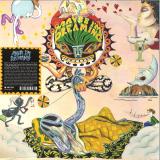
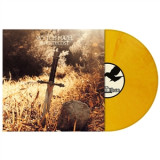
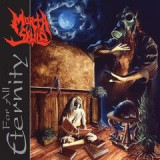
Limited marbled vinyl. WYRD, the third full-length album by Crawling Chaos, is an anthology-based work built around a series of archetypes tied to the concept of destiny, fate, and becoming. In the Northern European culture these ideas are encapsulated in the term wyrd, as opposed to notions of free will and self-determination. The main theme is expanded and explored across the album's ten tracks following a narrative thread which unites some of the most fascinating female figures of classical mythology, European folklore, and history-from the Norse Norns to Macbeth's witches serving Hecate, from the Greco-Roman Furies to the fearsome Thessalian necromancers. As with Crawling Chaos' previous works, WYRD is full of literary quotes and easter eggs, offering subtle nods to the most curious among the listeners. Musically speaking, the album is uncompromising, heavy, and very dark.
'it’s his loosest, dreamiest dispatch yet, an enveloping and atmospheric collection that constantly comes together and breaks apart.'
Maxo releases his new album Mars Is Electric. Earlier this week, Maxo released a third haunting video, directed by Vincent Haycock, from the visual world of ‘Mars’ for the title track. Maxo previewed the album with the release of singles “Human?” and “Donahoo’s Chicken” this spring, which arrived with equally raw, inventive, and unnerving music videos.
Mars Is Electric is Maxo’s first official release since he dropped two critically acclaimed albums in 2023 with Even God Has A Sense of Humor and Debbie’s Son. His fifth full-length album finds the Southern Californian artist self-aware and mature. Having lived the last decade of his musical life intentionally creating specific bodies of work rooted in imagery, observation, and capturing moments, Maxo spent this previous year freely creating without a specific plan, relieved from all obligations and restrictions.
“This is the first time that I really didn’t care, I didn’t approach things so seriously,” the artist shrugs off, meaning that without expectations or specific goals, his creativity flourished. This opening finds the artist having conversations he’s been avoiding, having lived silently in the pain of those topics for the past few years. Exploring uncomfortable themes about personal life, relationships, and family fractures, life before and after the loss of innocence, and an abundance of existential spirals.
The exploration was not only thematic but also musical in nature. During the creation process, Maxo was immersed in a wide array of music from past to present - France Joli, $amaad, Steve Spacek, Cherelle, DJ Quik, Lisha G - influences that seeped their way into these songs. The album opens in a loose, dreamlike state—experimental and searching, mirroring the emotional fog of someone looking for something real to hold onto. But as it progresses, so does Maxo’s energy as he fiercely rides and weaves on songs with a contagious confidence, producing some of his most kinetic and lyrically impressive music to date.
As the work and vision coalesced into a body of work, Maxo found that he was unlocking a creative language with his collaborators that felt wholly new - a new understanding of why and how he was making art for this world. What emerged from this year-long process was a new musical journey and a future where Maxo refuses to be another bad example of what could be, refusing to mind the blueprint set down. Maxo is the sole voice on the album featuring production by lastnamedavid, Quelle Chris, Baird, Groove, and more.
Listen to Mars Is Electric above, see full album details below, and stay tuned for more from Maxo very soon.
CATCHY, MESMERIZINGLY BEAUTIFUL, DREAMY CHAMBER POP WITH A FOLKY TWIST
Music can have a multitude of emotional impacts and can create inner worlds out of voices, sounds, and moods.
If you open heart and ear to the mesmerizing, hauntingly beautiful soundscapes of AURI, you might find a beacon of light inside a sonic realm untouched by today’s often scary, grim realities; a dreamscape that can be profoundly uplifting.
On their third studio album, III - Candles & Beginnings’ the stars have aligned yet again. Propelled by the unique and celestial voice of Johanna Kurkela, the magical textures of Nightwish mastermind Tuomas Holopainen and the almost unlimited musical palette of Nigtwish multi-instrumentalist Troy Donockley, Auri have presented a world to be unlocked with the senses, blending folk, progressive and symphonic elements, world music, pop and avantgarde.
Right after completing Nightwish’s 2024 monument Yesterwynde, the songwriting for the third chapter in Auri’s musical adventures started in 2023, with Troy writing in Yorkshire and Tuomas and Johanna working their creative magic in Kitee, Finland. By Autumn 2024, a 10-song demo was complete, setting the stage for what would become another breathtaking Auri journey. The band and their trusted engineer Tero “Teecee” Kinnunen took the mixing process to sunny Spain, letting the Andalucian vibes infuse the music whereas in March 2025 mastering was wrapped up by Tim Oliver at the legendary Real World Studios - a ground-breaking recording complex started by Peter Gabriel in 1989.
The album is a tapestry of emotions - each song a world of its own, touching on childhood memories, vivid life experiences, and even a nod to one of the group’s most beloved places on Earth - The Lion Inn at Blakey Ridge, a historic spot nestled in the North York Moors and one of the most remote pubs you will ever find.
Visually, the cover artwork by Pete Voutilainen, layout and watercolors by Mikko Pankasalo plus calligraphy by Johanna Kurkela provide wonderful illustrations perfectly capturing Auri’s unique musical visions.
With guest musicians like Frank Van Essen (strings), Jonas Pap (cello), Juho Kanervo (basses), and the incredible drumming and percussion courtesy of Nightwish’s Kai Hahto, Auri III - Candles & Beginnings is as lush as it is atmospheric and provides astonishing dynamics.
Having been a studio endeavor in the past, Auri is finally going on tour with their first-ever live European trek kicking off in August 2025, followed by summer festivals in 2026, allowing you to hear, see and feel songs from their previous two albums, as well as brand new pieces from III - Candles & Beginnings.
Old-time and traditional music stay exciting for their contrasts. Exacting instrumentation honed through mentorships and late-night jams at fiddler's conventions tangles with a community-sourced inventiveness that influences variants and new sounds. Joseph Decosimo is a master of this genre for this very reason, blending deep technique with an openness and curiosity that keep his music crackling with life. A "marvelous fiddler" (No Depression) and banjo player who braids "exultation and veneration" (INDY Week) into his music, on his third solo album Fiery Gizzard Decosimo gathers a close-knit ensemble of friends from his musical career to infuse his interpretations of fiddle and banjo pieces with a contagious communal joy. As an artist working with traditional music from the South and Appalachia, Decosimo chooses songs based not only on historical significance and lineage but also his own sensory approach. For Fiery Gizzard, his ear was tuned to otherworldly tones and mystery, sourcing from field recordings such as Virginia fiddler Luther Davis' hypnotic version of "Shady Grove" while amping up the music's psychedelic potential. On the middle Tennessee banjo composition "Flowery Girls," a VHS of bluesman Abner Jay inspired Decosimo to rig up a pickup inside a fretless banjo and play it thr ough a tube amp to capture some of Jay's edge and funkiness. But to round out the sound and keep it kinetic meant galvanizing a genre-eschewing crew to jam out - and not in a "spaced-out drooly" kind of way, he laughs, but as a sort of "responsive conversation." Decosimo has always been a community-minded artist. He began playing as a seventh graderin Tennessee, fostering relationships with older players at jams and in homes, a learning mode natural to his inquisitive nature and desire for musical connection. A folklorist by intuition, he later became one by profession, studying with old-time legend Clyde Davenport, teaching in East Tennessee State University's renowned bluegrass program, and receiving his PhD at the University of North Carolina with a dissertation titled "Catching the `Wild Note': Listening, Learning, and Connoisseurship in Old-Time Music." In North Carolina, Decosimo kicked about in the verdant environment of Durham and Chapel Hill's folk and indie scenes, collaborating with artists including Alice Gerrard, Hiss Golden Messenger, and Jake Xerxes Fussell. This community has influenced his own music, including his "sublime and strangely heartening" (Bandcamp Daily) 2022 release While You Were Slumbering and Beehive Cathedral, Decosimo's 2024 "Appalachian mountain music treasury" (New Commute) trio album with Luke Richardson and Cleek Schrey for Dear Life Records. Continuing on this path, Fiery Gizzard is home base for a loose outfit of mostly Tarheel-based musicians from within and beyond traditional music. Inspired by a tour with fiddler Stephanie Coleman (Nora Brown), guitarist Jay Hammond, and synth builder and multi-instrumentalist Matthew O'Connell, Decosimo assembled studiomates based on close friendships and comfort. Coleman, O'Connell, and Hammond contribute to Fiery Gizzard, along with bassist and producer Andy Stack (Helado Negro, Wye Oak), horn player Kelly Pratt (Beirut, David Byrne), Mipso and Fust's Libby Rodenbough, Joseph O'Connell (Elephant Micah), andtrad/experimental artist Cleek Schrey. Decosimo's fiddle and banjo work is virtuosic, intricate and simple simultaneously, a testament to his many years of study. On some tracks, his playing or lovely, plain-hearted singing is the centerpiece, such as on his interpretations of Texan street preacher Washington Phillips' 1929 recording "I Had a Good Father and Mother" or the Eastern Kentucky fiddle barn-burner "Glory in the Meetinghouse," famously played by Luther Strong for Alan Lomax. But there's also a trusting open-door policy, like where Southern Appalachian tune "Ida Red" relaxes into Coleman's sweet, confident fiddling and Hammond's loping guitar. As a bandleader, Decosimo's confidence and enthusiasm for the music reveal the heart of traditional music and how it can come to life through community. Fiery Gizzard is Joseph Decosimo as a powerful champion of traditional music - a sponge who soaks up as much as he squeezes out, a responsive artist who makes his genre accessible, and a magnet who can bring musicians of all sorts into his orbit with his same passion.
‘Maybe I’m Dreaming’ is the latest collection selected by Mikey Young (Total Control, EddyCurrent Suppression Ring) and Keith Abrahamsson (Founder and Head of A&R at AnthologyRecordings), the mangled minds behind the beloved ‘Follow the Sun’, ‘Sad About the Times’,and ‘…Still Sad’ compilations. The twenty tracks of ‘Maybe I’m Dreaming’ make a conscious(and unconscious) detour from its predecessors, sourced entirely from private press releases,spanning new decades and production modes within homespun folk, soft rock and otherwise70s and 80s FM radio adjacent music. The magic of ‘Maybe I’m Dreaming’ is the untold story of the artists behind these songs; thosewho missed the big time, but whose song craft and unrequited care hit the right notes, bothhigh and low.
Where ‘Follow the Sun’ and ‘Sad About the Times’ introduced us to the fame chasing, ambitioncrashing crooners who missed their shot in the mainstream, ‘Maybe I’m Dreaming’ delvesdeeper into the isolated wilds - a private world where production quirks, late-night tape hiss andone-man studio dreams were not necessarily a choice but the hand that was dealt.
With the parameters set to ‘private press only’, Young and Abrahamsson follow a circuitous trailof invention and emotion, documenting a spirit that’s more homespun, sometimes lonelier andoften a little weirder. The guitars still strum, but the keyboards’ hum is more prevalent andprecious; wistful harmonies brush up against lo-fi drum machines; a bittersweet fog lingeringover even the brightest melodies.
As with their previous collaborations, Young and Abrahamsson weren’t interested inconstructing a museum or drafting a historical survey. ‘Maybe I’m Dreaming’ is a sentimentalmixtape, assembled late at night when the mind wanders and old memories blur with imaginedfutures, those within reach and those far too mysterious to ever encounter. Songs wereunearthed in personal collections, deep YouTube burrows, dilapidated web archives and thedim corners of Discogs, with many selections tied not only to intuition but to personalconnection. Some tracks arrived via friends - Kelley Stoltz, a frequent guide for Young, tipped him off toboth Peter Kraemer’s lost gem ‘Let the Light Slip’ and Awakening’s revelatory closer - addingan unseen but deeply felt thread of camaraderie to the compilation.
The journey takes in a wide, strange sweep: The Watson Brothers Band’s ‘Just Whistle’ opensthe collection with a sigh and a shrug, a song that feels like it’s been waiting for decades to beheard again. Jim Huxley’s ‘Tessa on a Magazine’, rediscovered after a long and winding searchby Young, shimmers with a distinctly Australian melancholia. The heartbreak of Rick Penta’s‘My Story Changes’ and Twice As Nice’s delicate ‘Thoughts of You’ float easily alongside themore buoyant, radio-dream sheen of Barracuda’s ‘Baby I Love You’ and MAK’s sunshinedappled ‘That’s Life’.
Widening the aperture to the late 1970s and early 1980s allows for a deeper exploration intoevolving production techniques and musical technologies. The Squad’s ‘D.L.M.H.I.M.A.’ andChristoph Spendel Group’s ‘Forever’ crackle with the kind of bedroom synth warmth that couldonly come from the analogue age, while the soulful, yearning undercurrent of Awakening’s‘Gotta Do Somethin / Might As Well Cultivate’ caps the collection with a call for action - ormaybe just acceptance - in an accidental Brian Eno ‘Here Come the Warm Jets’ parroting.
While ‘Maybe I’m Dreaming’ moves away from the ‘sad man with guitar’ archetype that hoveredover its predecessors, it remains tethered to a familiar emotional gravity - a balance of longingand lightness that defines this corner of the musical universe. Each track shuffles gentlybetween resignation and hope, sadness and serenity, as if the artists themselves were chasinga dream just beyond reach, recording not for fame but for the simple act of getting it, thatprimal, creative itch, out into the world.
Available on CD and 2LP, featuring the third eye-opening artwork of Dang Wayne Olsen. Thedouble LP set arrives in an outrageous double-wide spine jacket with printed inners and adream journal entry by Pacific Northwest artifactual authority Josh Lewellen.
out of Stock
Last delivered 14 months ago available to reorder, subject to availability
2025 repress in a new colour variant (Pearl White colour vinyl) with printed innersleeve. The third album proper for "Country-got-Soul"s finest, The Delines, on Decor Records sees them exploring the US Gulf Coast, not far from where Amy Boone grew up. The songs in this cinematic opus all focus around this area and are inspired by when Amy asked Willy Vlautin to write her a song like Tony Joe White"s "Rainy Night In Georgia" after her tragic accident being hit by a car in 2016 and her 3 year recovery. This follows on from 2019"s The Imperial which was number one in the UK official AMA charts for two weeks. Written and partially recorded before lock down the rest of the album was finished last Summer, produced by John Morgan Askew at his Bocce studios just outside of Portland, Oregon.
The discovery of Doris Dennison's score represents a genuine musicological breakthrough—what once would have been "a tree falling in the woods" thirty years ago now holds the potential to render "a thunderous clap in our minds." While researching Anna Halprin's lesser-known collaborators, scholar Tom Welsh uncovered the archives of AA Leath, one of Halprin's principal dancers. Buried within these materials was Dennison's handwritten score for Earth Interval, dated May 1956. Born in Saskatchewan, Canada, in 1908, and raised near Seattle, Dennison (1908-2009) encountered John Cage while teaching Dalcroze eurythmics at the Cornish College of the Arts. She joined Cage's earliest percussion quartet—alongside Margaret Jansen, the composer and his wife Xenia—in the group widely regarded as having performed the first complete concert of percussion music in the United States. This historic December 1938 concert was followed by tours and the landmark May 1941 performance at the California Club, comprising Cage and Lou Harrison's Double Music, the premiere of Cage's Third Construction, and Harrison's 13th Simfony.
As Bradford Bailey observes in his extensive liner notes, Earth Interval demonstrates "an extraordinary balance of elements that imbues the piece with a sense of clarity, directness, and constraint that is both distinct and ahead of its time." The work's most remarkable innovation lies in its approach to extended techniques, particularly Dennison's notation for the central movement: "In 2nd movement, 1st player lowers + raises a gong into a tub of water while beating." This technique, absorbed from Cage's experimental vocabulary, generates what Bailey describes as "fields of acoustic abstraction that bend and warp time through sustained resonances, beat, and space." The temporal sophistication of these manipulations anticipated Karlheinz Stockhausen's Mikrophonie I (1964) and Annea Lockwood's water-based sound investigations by over a decade. After joining Mills College as dance accompanist, Dennison maintained crucial connections to the Bay Area's experimental scene, collaborating with figures like Merce Cunningham and programming Cage's music throughout the 1950s.
Comprising three movements—Land Form, Air Tide, and Earth Play—Earth Interval is scored for recorder, drums, gongs, maracas, muted gongs, and bowl gongs. In total, the piece is just under eight minutes: "a fleeting glimmer of moment in time, a life spent at the cutting edge, and a singular creative vision that packs a powerful punch." When viewed in historical context, placed in contrast to roughly contemporaneous avant-garde percussion works by Cage, Harrison, Louis Thomas Hardin (Moondog), and Harry Partch, or important precursors like Edgard Varèse's Ionisation (1931) and Henry Cowell's Ostinato Pianissimo (1934), it's clear that Dennison was following her own path. Earth Interval is not derivative. It is a precursor to what was yet to come, alluding to developments of avant-garde and experimental music that wouldn't begin to appear on the cultural landscape until the 1970s and '80s, with the emergence of Post-Minimalism and more idiosyncratic artists and ensembles like Midori Takada, Ros Bandt, Peter Giger, Frank Perry, Christopher Tree, Michael Ranta, Gamelan Son of Lion, and Niagara.
This recording by Chicago's Third Coast Percussion, captured in March 2022, represents the first complete documentation of this pioneering work. The ensemble's interpretation reveals the piece's remarkable contemporaneity while maintaining its historical specificity. Where Cage, Harrison, and Partch employed "self-consciously off-kilter polyrhythms," Dennison's rhythmic sensibility anticipates minimalist developments by nearly a decade, yet integrates "forceful rests, as well as sharp shifts in sonic character, tempo, and meter, that break the momentum and breathe a sense of life into the piece's structure." This positions her work closer to Post-Minimalism decades before its emergence. The architectural approach demonstrates Dennison's understanding that "the composer almost entirely disappears" in favor of phenomenological listening experience, creating what might be called an egoless music that places its realities and meaning entirely in the ear of the beholder. The present recording, realized by Chicago's distinguished Third Coast Percussion ensemble, represents a significant achievement in experimental music scholarship and performance practice. As specialists in the Cage tradition and contemporary percussion repertoire, Third Coast Percussion approached Earth Interval with the historical sensitivity and technical precision required to illuminate Dennison's subtle compositional innovations. The March 2022 recording sessions, engineered by Colin Campbell, capture both the work's intimate chamber music qualities and its bold exploration of extended techniques. The ensemble's interpretation reveals the piece's remarkable contemporaneity—its ability to speak directly to current musical concerns while maintaining its historical specificity.
This recording serves multiple scholarly functions: it provides the first complete documentation of Dennison's compositional voice, offers insight into the broader network of experimental music practitioners surrounding Cage and Harrison, and demonstrates the sophisticated level of compositional thinking that was occurring within the Bay Area's dance-music collaborations of the 1950s. The work's emphasis on phenomenological listening—what might be called an "egoless" approach to musical experience—places it within a lineage of American experimental music that prioritizes perceptual process over compositional personality. The work's original obscurity—limited to AA Leath's performances at venues like the 1957 Pacific Coast Arts Festival at Reed College—paradoxically allowed it to remain "entirely on its own terms," free from the constraints of historical categorization. Drawing on Jacques Derrida's Archive Fever, the argument emerges that "the archive can acknowledge, celebrate, and resurrect" overlooked voices, transforming our understanding of experimental music history. The present Blume edition, featuring Third Coast Percussion's authoritative interpretation, includes a lavishly illustrated 16-page booklet designed by Bruno Stucchi / dinamomilano, containing complete scholarly apparatus, historical photographs, and detailed production notes. This recording enables "cross-temporal intersectionality," allowing Dennison to "belong to a newly formed and more dynamic understanding of the present and past," demonstrating how forgotten voices can reshape entire historical narratives when given proper scholarly attention and performance advocacy.
- 180 GRAM AUDIOPHILE VINYL
- PVC PROTECTIVE SLEEVE
- MIKE OLDFIELD'S TUBULAR BELLS IS INSPIRED
BY THIS ALBUM
- FEATURED IN GRAND THEFT AUTO IV ON THE
RADIO STATION 'THE JOURNEY.'
- 50TH ANNIVERSARY LIMITED EDITION OF 500 INDIVIDUALLY NUMBERED COPIES ON TRANSPARENT VINYL
Keyboard virtuoso Terry Riley started experimenting with different instruments in the '50s. One of his electronic music landmarks is his third album A Rainbow in Curved Air. Through the use of overdubbing, he recorded all the instruments to feature on the title track. The composition consists of three movements, each representing another part of his musical influences. As the song progresses, its structure goes through frequent changes. It's an colorful, psychedelic, atmospheric and revolutionary song. The second track consists of a loop of saxophones and is the dreamy and calm opposite of the title track. Fans of electronic music, such as Tangerine Dream and Klaus Schulze, would love this record. Taking inspiration from Hindustani classical music and jazz techniques, Riley's masterpiece influenced many musicians, from the likes of Brian Eno to Emeralds.
A Rainbow in Curved Air 50th anniversary limited edition is available as 500 individually numbered copies on transparent vinyl.
Experience the Double-Platinum 1996 Album in Audiophile Sound for the First Time
Mobile Fidelity’s Numbered-Edition 180g 45RPM 2LP Set Is Sourced from the Original Analogue Tapes
1/2” / 30 IPS analogue master to DSD 256 to analogue console to lathe
If great art, as many believe, is inherently polarizing, then the Stone Temple Pilots’ Tiny Music… Songs from the Vatican Gift Shop easily ranks as the California-based band’s finest album. Simultaneously celebrated and castigated upon release in spring 1996, the group’s third full-length finds vocalist Scott Weiland and company expanding their “grunge” palette with a smart blend of glam rock, psychedelia, jangle pop, and other related styles. Having benefited from long-view reassessments that shed the biases and meanness of initial criticisms, the double-platinum effort is now largely and rightly seen as a creative masterwork. All the more reason why it deserves reference-grade production.
Overseen by producer Brendan O’Brien, Stone Temple Pilots used bedrooms, hallways, bathrooms, and the lawn to capture a broad blend of textures, spaciousness, and ambience that helped underline the group’s obvious (and somewhat unexpected) leap from normal “alternative” status to an artist whose aspirations went beyond that of many of its contemporaries. You can hear the multitude of details and tonalities with previously unattained clarity, presence, and scope on this fantastic reissue, which also delivers the impact and punch every rock record deserves. Another tremendous asset: The depth, grain, and pitch of Weiland’s voice.
For all the contagious choruses and glossy melodies that help make Tiny Music… Songs from the Vatican Gift Shop sparkle, the vocal performances of the late singer arguably rank as the best that the much-missed Weiland committed to tape. None other than the Smashing Pumpkins’ Billy Corgan — who, like many peers and critics, felt a pressing need to reevaluate the record as both time marched on and the self-importance attached to the “alternative” scene faded — praised Weiland’s efforts by noting: “Like Bowie can and does, it was Scott's phrasing that pushed his music into a unique, and hard to pin down, aesthetic sonicsphere.”
Smooth and diverse, those traits are everywhere on Tiny Music… Songs from the Vatican Gift Shop. From the clever combination of emotional closeness and distance he brings to the catchy albeit ultimately melancholic “Lady Picture Show”; to the lounge-fly balladeering that causes “And So I Know” to lightly swing akin to a bleary-eyed house band’s final number at a 4 A.M. bar; to the effortless cool and laissez-faire casualness he articulates on the grinding “Pop’s Love Suicide”; to the dimensional raspiness, defiant energy, and let-loose wail that sail through the crunchy “Big Bang Baby.”
The latter tune, the record’s first single and per Weiland a conscious attempt by the band to deconstruct its prior approaches, clearly borrows from the Rolling Stones’ “Jumpin’ Jack Flash.” Because of it, the song drew all kinds of barbs from naysayers. Their disdain extended to most material on Tiny Music… Songs from the Vatican Gift Shop, which indirectly references other prized acts such as the Beatles, Cheap Trick, T. Rex, and Lush. Those cynics failed to grasp that Stone Temple Pilots were paying homage and having a blast, with even Weiland, then battling serious substance-abuse and legal issues, getting in on the action.
Stone Temple Pilots’ skeptics also turned a deaf ear to the records’ stellar pop craftsmanship, sticky hooks, and sly commentary on music-industry machinations and fame. Not to mention the band’s intent, made clear from the outset. In an interview conducted in 1994, guitarist Robert DeLeo stated: “The last thing I wanted to do with this band was make everybody believe we invented something.”
Seen through that lens and the hindsight afforded history, and appreciated independent of the self-righteous authenticity standards of the day, Tiny Music… Songs from the Vatican Gift Shop sounds borderline fearless while authoritatively checking all the right boxes for fun, flavor, and finesse. Part winking send-up, part tribute to the glitter rock age, and part middle finger towards the hip crowd that didn’t know what they were missing, this mid-90s classic repeatedly invites you to drop the needle and press play.
Oliver Dollar presents Contemporary Part Three on Rekids The third instalment features collaborations with Ben Silver, Boogs, and Hazmat, and features Apropos and Boog Brown.
Berlin’s Oliver Dollar unveils part three of his ‘Contemporary’ series, releasing on Radio Slave’s Rekids 4th April 2025 and following up last year’s parts one and two, which featured the likes of Harvard Bass, Brillstein, ADMN, and Austin Ato, and won support from the likes of Nightmares On Wax, Anja Schneider, Laurent Garnier, Carista, Jennifer Cardini, Dam Swindle, and more.
Part three of Contemporary sees Oliver Dollar invite another cast of hotly tipped collaborators, kicking offthe EP with Melbourne DJ and producers Ben Silver and Boogs - both resident DJs at Revolver Upstairs - for ‘Cosmic Weapon’. Their track features lush, poignant chords underpinned by a rolling groove, with vocal samples warped, chopped, and sliced above for a mind-melting trip. Up next, ‘What Cha’ Gonna Do?’ sees Dollar team up with Apropos, whose inimitable voice previously featured on ‘Contemporary Part One’, and talented Detroit vocalist and Dilla’s Delights’ Boog Brown for a soulful duet. Last up is another Motor City link-up featuring Hazmat Live on production alongside Oliver Dollar for the infectious House energy of ‘Ought To Be Love’, joined by the earworm vocals of Members of the House front vocalist William Beaver, aka Billy Love, known for his work bringing Motown-style gospel vocals to Techno and House with notable Detroit artists like JeffMills, Theo Parrish, Moodymann, Kevin Saunderson, and many more.
drum work. Closing out the ‘I Feel’ EP, Tal Fussman works with fellow producer 8-AN to drop the dream-like strings of ‘Life Itself’, another deep track that is as club-ready as it is introspective.
out of Stock
Last delivered 46 days ago available to reorder, subject to availability
Reality Shock is proud to announce the release of "Mission", a brand new 7" single by Afrikan Simba, with accompanying dub mix by Kris Kemist.
Mission is the title track of the recently released third studio album from the internationally acclaimed roots reggae chanter Afrikan Simba. Originally hailing from Nigeria & residing in East London, Afrikan Simba is well established in the roots reggae world, known for his conscious, spiritual, and uplifting lyrics. With a career spanning several decades, Afrikan Simba has worked with legendary sound systems like Jah Shaka, Aba Shanti, and Channel One as well as artists like Luciano, Nereus Joseph, Little John, Earl Sixteen & many more, performing at countless shows & festivals across the globe.
Mission 7" is produced by Mercury nominated producer Patrick Williamson in collaboration with Kris Kemist of Reality Shock Records, who has been working closely with Simba for over 20 years. The song features Backing vocals by Indra & brass by Tribuman. On the flip side of the 7" is a heavyweight dub version mixed by Kris Kemist at Reality Shock Studio.
Warrant was formed in 1984 in Hollywood, Los Angeles, California, and experienced success from 1989 to 1996 with five albums reaching international
sales of over 10 million. The band first came into the national spotlight with their double platinum debut album Dirty Rotten Filthy Stinking Rich (1989) and
one of its singles, "Heaven", which reached No. 2 on the Billboard Hot 100. The band's success continued in the early 1990s with the double platinum album
Cherry Pie (1990), which provided the hit song of the same name. In 1992, Warrant released their third album the critically acclaimed Dog Eat Dog.
The record achieved only moderate commercial success compared with the first two albums, but still sold over 500,000 copies reaching Gold status and
charting at No. 25 on the US Billboard charts. The band's fourth album Ultraphobic (produced by a returning Beau Hill) was released in March 1995
and, featured the singles "Family Picnic", "Followed" and the ballad "Stronger Now". Now to celebrate the 30th Anniversary of Ultraphobic it has been
remastered and will be re-released on CD.
After the remarkable success and acclaim that greeted her second album Carry Them With Us (tak:til / Glitterbeat, 2023), Scottish composer and small pipes player Brighde Chaimbeul returns with a magic(k)al third album, Sunwise, which sees her push forward experimentally but also immerse her music more deeply in tradition, folklore and mystery.
Chaimbeul has travelled in a short time from her roots as a teenage piping contest winner into a fearless, widescreen artistry. She appeared on avant-pop paragon Caroline Polachek's last album, has collaborated with Canadian composer/saxophonist Colin Stetson on her previous album (and this one also) and in the last couple of years has graced the stages of premier experimental festivals such as Big Ears (USA), Le Guess Who? (NL) and Supersonic (UK).
Sunwise is a revelatory album, steeped in landscape, ritual, minimalism and the eternal presence of the drone.
The highly anticipated 3rd full-length by this Finnish band. Morbific is a rotten-to-the-core Death Metal trio deformed in the filthy and profaned boneyard of Kitee in early 2020, featuring Olli (guitar), Jusa (vocals / bass) and Onni (drums). The band’s Pestilent Hordes demo was unleashed in the summer of 2020, and it rapidly gained them some following amongst the finest gourmets of the variety of festering, moldering and disgusting Death Metal that’s malignantly influenced by Autopsy, Rottrevore, Deteriorot, Mortician, Grave, Maimed, Undergang, Impetigo and ancient Finnish masters of death and decay, such as Funebre and Disgrace. Shortly after, in the spring of 2021, the debut full-length Ominous Seep of Putridity saw the odious light of day to unanimous praise by both the fans and the media. Just a year later, and now aligned with Memento Mori, Morbific released their second full-length, Squirm Beyond the Mortal Realm. Aptly titled, the album quickly became a cult favorite of utterly uncomfortable, slimy Death Metal. Now, Morbific are prepared to eclipse such a sewer-dwelling “highwater” mark with Bloom of the Abnormal Flesh. Whereas its not-inconsiderable predecessor confronted the listener with a blown-out, almost demo-level feel, the Finns’ third full-length proves that they can move and mesmerize and maim no matter what the soundfield is. And on Bloom of the Abnormal Flesh, it’s a raw-yet-robust show of strength, “classic” Death Metal production in a most late 80’s fashion; just witness that gurgling, fuzz-tinged bass and feel its radioactive waves envelope you. But production is one thing and songwriting is another, and with the latter, Morbific are truly hitting their stride here. Lumbering and stomping, with well-timed bouts of disgusting gallop or even ragged blasts, their songwriting twists and indeed squirms with off-kilter insanity; some would call it chaos, if not for the exceptionally tight musicianship on display here, with the sum result being an uncomfortableness that bubbles up from a deeper gutter. Thankfully, Bloom of the Abnormal Flesh conveys its dark, disgusting and unconventional aura across every element -said chops simply heighten these sensations- and is, thus far, Morbific’s best melding of form and content. Cro-Magnon as ever but somehow enlightened in the creepiest sense possible, Morbific continue their reputation as Finland’s filthiest and Death Metal’s untrendiest weirdoes. Vividly captured by Chase Slaker’s cover artwork, Bloom of the Abnormal Flesh is the foulest stench only for the brave!
Legendary artist, Raincoats co-founder, songwriter, filmmaker, and feminist icon Gina Birch has announced her eagerly awaited second solo album, Trouble, arriving via Third Man Records on Friday, July 11. Pre-orders are available now.
Trouble is heralded by today’s premiere of the album’s blistering centerpiece, “Causing Trouble Again,” available for streaming now. An official music video – directed by famed photographer/filmmaker Dean Chalkley and featuring an all-star collective of fellow female artists including Birch’s longtime friend and co-founder of The Raincoats, Ana da Silva, Neo Naturists co-founder Christine Binnie, singer-songwriter Amy Rigby, X-Ray Spex and Essential Logic co-founder Lora Logic, painter Daisy Parris, artist Georgina Starr, writer Jill Westwood, multi-disciplinary artist and activist Bobby Baker, award-winning costume designer Annie Symons, veteran photographer and Raincoats collaborator Shirley O’Loughlin, and many more – is streaming now on YouTube.
“For the ‘Causing Trouble Again’ video, after hearing Bob Dylan sing about a white ladder all covered with water, I became obsessed with white ladders,” Gina Birch says. “ I decided to use five white ladders, three with seven rungs…I realized later that this references Jacob’s Ladder and a connection from Earth to heaven, but I think I was thinking of ladders as a symbol of getting on, getting up. I wanted to have a choreographed movement with four of us with these ladders. How do we move with ladders? Do we move together, do we fight, do we dance? “I also wanted to reference the wind scene from the film, The Colour of Pomegranates, and to include as many artist women from the Women in Revolt exhibition as I could.
SHDW's Mutual Rytm imprint is back with its third release of 2024, marking a full label debut from Sonic Propaganda with their 'Native' EP.
Sonic Propaganda comes from the collaborative minds of Earwax and Rosati, a pair who favour dark and intense techno sounds and take inspiration from Jeff Mills and Robert Hood. In the studio, they blend analog and digital technologies into smoky warehouse atmospheres and immersive journeys that connect with listeners on an emotive level, and this full EP lands following their contribution to the third instalment of the Mutual Rytm's Federation Of Rytm compilation series in February.
The powerful 'Native' opens up at high speed with tightly coiled drum loops that never let up. Sleek metal percussive sounds peel off the grooves and lock listeners into a perfect state of hypnosis. 'Soul Pressure' is just as absorbing, with a tense bassline keeping you on edge as the train-like drums march under incendiary hi-hat ringlets. There is plenty of perfect machine funk to 'Terminal', which has more rusty synth textures and chopped-up vocal fragments humanising the turbulent grooves. 'Basic Path' brings an extra skip to the kicks as they enter, scuffed up and flowing just above the groove, while vocal pulses and twitchy synth modulations bring the detail. 'Body Empire' closes the vinyl package with a deeper vibe and pensive synths that add warmth and soul to the brilliantly mechanical grooves, while digital bonus 'Acid Riot' closes with squelching acid lines amongst a swell of analog crunch and laser-sharp percussion.
out of Stock
Last delivered 6 months ago available to reorder, subject to availability
For Earth Below 50th Anniversary Edition: 4-Disc 50th Anniversary Edition: Original 1975 Mix (2025 Remaster), 2025 Extended Stereo Mix, Outtakes & Rarities, Live in Los Angeles, 1975. Housed in DVD style media book with extended liner notes by David Sinclair featuring interviews with Robin Trower and Bill Lordan and rare photographs.
For Earth Below, the third studio album by British guitar legend Robin Trower was released in 1975 and is considered one of his most prominent works from his time as a solo artist after leaving Procol Harum. For Earth Below continued to build on the success of his previous album Bridge of Sighs, solidifying him as an arena touring artist in the States, reaching number 5 on the Billboard chart.
Following the exit of Reg Isadore, the exciting Bill Lordan (Sly & The Family Stone) joined the band shortly before the recording of this album, giving a new driving force to the outfit.
To celebrate the 50th Anniversary of this classic, Chrysalis Records are proud to present the most expanded edition of the album to date featuring the original album remastered at AIR mastering, a newly unearthed extended stereo mix of the entire record, a disc of outtakes, rarities and BBC sessions with the majority previously unreleased and a newly mixed concert taped live in Los Angeles from the For Earth Below tour, never available in its entirety before.
At the centre of the package is a booklet featuring newly written liner notes by acclaimed journalist David Sinclair and interviews with Robin Trower and Bill Lordan.
We are pleased to confirm the latest release on the ECHO EDITS label with the third slice of action from THE PREACHER.
Since we first heard these break laden edits earlier this year, we’ve been super excited to unleash these beaty-beauties ASAP
Nicely timed to coincide with LA based - Greg Belson’s current U.K. Tour of clubs, radio stations and slots at Glastonbury - preorders go live now - with an official release date of 4th July 2025
out of Stock
Last delivered 15 months ago available to reorder, subject to availability
Keys To The World, Richard Ashcroft's third solo album, landed in January 2006 and quickly crept like a mile-a-minute vine to number two, whereto it clung for some time. Produced by long-time collaborator Chris Potter, it marks the former Verve frontman's last solo full-length for ten years, before its later supersession by 2016's These People. The LP leans heavy on orchestration, its string arrangements by Julian Kershaw performed by the London Met Orchestra, and electric viola parts from Bruce White sallying over its songwritten entirety. Sonically, Ashcroft dialled down the bombasticity of earlier outings for an analgesic, string-swept sound, dividing the lauds: praised by some for its melodic clarity maturer songwriting, others found it all too safe, though that didn't stop it going Platinum in the UK.
The Australian master of the dark synth arts is back and – boy – he is out for blood.
We’ve been missing Marc Dwyer solo project Buzz Kull since his latest single Last In The Club from late 2019 and since back then we knew he was up to something. At first glimpse, the minimal wave days of We Were Lovers seem far away now that Marc has gone full Club Body Music with his upcoming new album, but there is a thread that binds Buzz Kull hits from the past such as Into The Void, Avoiding The Light and New Kind Of Cross with these ten new cuts: a thread of darkness proper to the most handsome man in the game and that’s here to stay.
Echoes of 90’s era Front 242 and Front Line Assembly will resonate from tracks like Fascination and Dead Inside; elements of early body music flirting with the dark side of British synthpop will rave from the grooves of Dancing with Machines and Man on the Beat, while late 80’s Belgian new beat cellar-like vibes rise from Do You See and Burn it to the Ground.
But Buzz Kull’s third full-length is not just about music subgenres we all know and love, it’s about a feeling that comes alive only with the dark and drives you through the small hours just to leave you drained and filled at once. The creature of the night is on the loose, the sticky dancefloor its natural habitat, its lust for the upside-down world of the club can’t be cured.
out of Stock
Last delivered 7 months ago available to reorder, subject to availability
Launched in London in December 1976, punk stalwarts 999 are one of the most successful and long-lasting acts of the upstart movement. Third studio album The Biggest Prize In Sport was their first for Polydor, the band's competency at a peak, despite the temporary appearance of fanboy drummer Ed Case, drafted in from the Southall Crew supporters when Pablo LaBrittain broke his arm. Often ranked as the greatest album of their entire career, The Biggest Prize In Sport had noticeably smoother edges than their earlier work, yet still holding plenty of bite, the combination pushing it into the Billboard top 200 in the USA. Unmissable!
It's the quiet ones we should watch, they always say. Which is particularly astute advice right now, when loud, constant self-declaration and saturated 'brand' visibility have become the norm. But above the babble and brightness, some voices will always speak quiet volumes - with calm eloquence and the kind of certitude that comes from valuing the playing out, not just the prize.
Sweden's José González is just such a voice. He first charmed his way into the UK's earshot via the murmurous and elegant, classically finger-picked folk pop of his 2005 album, Veneer, which has since sold over a staggering 430, 000 copies in UK alone. Two years later came In Our Nature, a further exploration of José's influences (Argentinian Folklore, the '60s US folk tradition and the British pastoral folk-pop style of the same era), on which he resisted the temptation to beef up his alluringly introvert aesthetic. The albums made the UK Top 10 and Top 20 respectively.
Conceived as the natural third part in an acoustic trilogy, Vestiges & Claws is a(nother) hushed and delicate solo set that forefronts the artist and guitarist's compellingly intimate vocal style and intricate playing technique, but it's often strikingly rhythmic in nature and cohere's perfectly, with hand claps and taps on the body of his instrument underlining the songs' mantric rise-and-fall pattern, while elsewhere, over-dubbed guitar parts and multi-tracked vocal harmonies entwine to sweetly immersive effect.
The title refers to both cultural practices and biological features that survive despite having lost their original function, and to currently useful tools, ie the 'claws' of modern life.
Vestiges & Claws was recorded almost entirely by José and self-produced, mostly in his Gothenburg home, using computer plug-ins to achieve a warm, analogue sound. He prefers working alone, mainly for artistic reasons. 'There were a couple of things that enabled me to complete this record: one was curiosity, to be able to play percussion and do a lot of harmonies and also to produce and mix the album; the other was aesthetics. I love to listen to Arthur Russell and Shuggie Otis, to music that has been done mostly by one person in their solitary state.'
As José sees it, the record is his personal, 'zoomed-out eye on humanity on a small, pale blue dot in a cold, sparse and unfriendly space. The amazing fact that we are all here, an attempt at encouraging us to understand ourselves and to make the best of the one life we know we have - after birth and before death.
Over the last four years, the German-born and South Korea-based artist Sion has been steadily making a name for himself in the music industry. The Voice Germany Season 10 semifinalist is a self-taught singer, songwriter and producer who can do it all.
Sion can play guitar, piano, synthesiser, DJ and much more, just name it.
Early inspirations for Sion include Frank Ocean and Porter Robinson, and his music so far has been a wonderful mix of eclectic soundscapes.
Now, Sion is back with his best project yet, his third EP ‘Sociavoidance’. The five-track extended play is full of lush vocals, vibrant production, a multitude of different layered textures.
The genre-defying artist blends elements of indie electronica, hip-hop, alt R&B, glitch pop and more. Thematically, the body of work explores disassociation in the age of the internet, vulnerabilities, social interaction, self-reflection and relationships.
It’s a heartfelt, genuinely beautiful, experience. Sion is inviting the listener into his colourful, exciting and often unpredictable world on ‘Sociavoidance’.
Over the past near-decade, Lancashire's medieval metal phenomenon WYTCH HAZEL have been honing an uncommonly wholesome, rustic and devotional brand of timewarped hard rock that's all their own, with 2016's Prelude and 2018's II: Sojourn summoning to mind fevered images of Robin Hood and his Merry Men grooving to Jethro Tull and Thin Lizzy. Yet within moments of pressing play on their third LP, III: Pentecost, the musty mystical minstrelsy takes a back seat in favour of a rich, sumptuous, anthemic late-night drivetime vibe, passionately embracing the most high-end smash-hit classic rock and metal circa its late 1970s heyday. "I thought I put a lot into the second album, but this album has been an absolute obsession," stresses the band leader, Colin Hendra. "Every aspect had to be as good as possible. We've gone back and forth, Ed was tinkering with it for months on end. There's quadruple tracking going on with the rhythm parts, then we've doubled, tripled and quadrupled all our lead parts to get that richness and fullness of sound, all meticulously planned with pages and pages of organisational notes. It wasn't just `get in the studio and see how it goes!'" he laughs. "One day I did 14 hours of vocal recording. All vocals are double-tracked, I can't express how much hard work that is. The last album feels like a breeze compared to what we've done with this - and I don't plan on ramping it down!" Musically there are gorgeous self-professed touches of Black Sabbath, Blue Öyster Cult, AC/DC and early Scorpions_"With the soloing I was trying to go for Michael Schenker" beams Colin_while the scampering headbanger I Will Not initially took a nod from Angel Witch, who Hendra was helping out on second guitar back in 2015 when the track was composed, before studio treatment made it sound "a lot more Wytch Hazelly". But perhaps the most lateral comparison is to a band from the opposite spiritual realm, with Archangel an explicit homage to Swedish faux-Satanic devil cult Ghost. "I find them fascinating, Ghost; musically great, the songwriting is spot-on," enthuses the frontman. "We share an intrinsic connection, with Bad Omen honcho Will Palmer being the person who discovered us both. "Music is created for all, it's a common grace for everyone," he affirms, "which is why the music that shows the glory of God the most, in my opinion, is not music created by Christians. It's Black Sabbath!"
Michi Sarmiento takes center stage on this explosive double-sider from PANORAMA Records, the third release in their 'DISCOS PANORAMA' series, created in collaboration with the legendary Discos Fuentes from Colombia. On the A side, 'Mirame San Miguel' by Michi Sarmiento Y Sus Bravos (1972) brings that irresistible Colombian groove, full of energy and horn-driven soul. Flip it over for 'Cumbia Raja' by Michi Sarmiento Y Su Combo Bravo (1970), a classic cumbia weapon that’s been igniting dancefloors for decades. The Combo Bravo, led by Blas 'Michi' Sarmiento, was a pioneering force in the rise of salsa and tropical sounds in Colombia during the late '60s and early '70s. This reissue delivers absolute Colombian dancefloor HEAT—killer Latin music, built for DJs, collectors, and anyone who loves it loud.
out of Stock
Last delivered 15 months ago available to reorder, subject to availability
Swingrowers are known for their mixture of JAZZ, SWING, POP and ELECTRO, they have extensively toured Europe and North America, opening sell-out shows for Parov Stelar, Chinese Man & Caravan Palace. On top of delivering official remixes for Caro Emerald and Swing Republic, Swingrowers also boast musical collaborations with The Lost Fingers, Gypsy Hill, DJ Pony Montana and have had their own songs remixed by Bart&Baker and Jamie Berry.
Following on from their debut album 'Pronounced Swing Grow'ers' in 2012, Swingrowers have released their second album 'REMOTE' in early 2015, followed now by 'OUTSIDEIN', the band's third full-length studio album. This new release shows their expert musicianship and most meticulous production to date, mixing genres from jazz to electronica, from gypsy-swing to full-on rock'n'roll with a melodic pop sensibility.
Hampus Lindwall’s Brace for Impact might just be the first album of post-internet pipe organ music. It’s an album of five new contemporary classical compositions, all performed by the composer himself on the 78-stop grand organ at St. Antonius church in Düsseldorf, Germany. Featuring the electric guitar of SUNN O)’s Stephen O’Malley on the title track. A highly visceral forty-five minutes of music with undeniable elemental power.
As 2024 came to a close, in New York and Paris chords rang out from thirty-two-foot pipes for the first time in half a decade. Following twin fires in 2019, the grand organs at the cathedrals of St John the Divine and Notre-Dame, amongst the largest instruments in their respective countries, had finally been restored. The news was justly celebrated in the international press, but the incidents were far from isolated. In England, the city of Norwich hailed the return of its cathedral’s five manual organ in 2023 and just two years earlier York Minster heralded a “once-in-a-century” refurbishment of its own 5,000-plus pipe instrument. Meanwhile, further organ restoration projects are ongoing at churches in Liverpool, Bradford, Bristol, Winchester, and Washington DC. Significant as they are to their respective communities, they’re also emblematic of a wider rebirth for one of humanity’s oldest musical instruments.
The organ is having a moment. Over the last few years, albums by the likes of Kali Malone, Ellen Arkbro, Anna von Hausswolff, FUJI|||||||||||TA, and Áine O’Dwyer, as well as projects in the visual arts by Sollmann Sprenger, Cory Arcangel, Massimo Bartolini and many other talented artists, have given a new prominence to the old ecclesiastical stalwart. The pipe organ bears historical traces which stretch back to the third century BC. But that doesn’t mean it can’t speak to a contemporary moment haunted by algorithms and networked culture. Hampus Lindwall’s Brace for Impact is an album of organ music for today.
To fans of black metal, Dødheimsgard need no introduction, being one of the great purveyors of the Norwegian Black Metal creative evolution.
The band was formed in 1994 by Aldrahn (Thorns) and Vicotnik (Ved Buens Ende). The early incarnation was that of a raw and at often melodic black metal band, with their debut album also featuring Fenriz of Darkthrone on bass. In recent years, Dodheimsgard has become known for its eclectic musical ventures and poignant mood shifts, with a less chaotic, more considered approach compared to their earliest works. Following the 'Kronet til Konge' and 'Monumental Possession' opuses, there was a shift in direction as demonstrated on 1998's 'Satanic Art' EP and by Dødheimsgard's third album, 666 International, Vicotnik had taken over a lot of the writing duties, with DHG's style becoming more technical yet ferocious black metal, with strong experimental ideas and industrial elements.
Vicotnik's riffs were inspired by cult bands such as Thorns and perfectly entwined with Aldrahn's delightfully twisted lyrics and immense vocals to create something truly unique. In its 666 International incarnation, DHG (as they were later to be known) featured a line- up of well- respected Norwegian musicians including Czral (Aura Noir, Ved Buens Ends, Virus), Apollyon (Aura Noir, Immortal), plus Mr Magic Logic (Fleurety) on keyboards, as the album was constructed over a period of time. All in all, 666 International is rightly regarded as a highly influential masterpiece of avant-garde metal by many since its release in 1999.
Repress of 2018’s classic compilation from Brownswood.
A primer on London’s bright-burning young jazz scene, this new compilation brings together a collection of some of its sharpest talents. A set of nine newly-recorded tracks, We Out Here captures a moment where genre markers matter less than raw, focused energy. Looking at the album’s running order, it could easily serve as a name-checking exercise for some of London’s most-tipped and hardworking bands of the past couple of years. Recorded across three long, fruitful days in a North West London studio, the crossover between each of the groups speaks to the close-knit circles which make up the scene.
Surveying the way that London’s jazz-influenced music had spread outside of its usual spaces in recent years, this album bottles up some of the vital ideas emanating from that burgeoning movement. Giving a platform to a scene where mutual cooperation and a DIY spirit are second-nature, it’s a window into the wide-eyed future of London’s musical underground.
Ubiquitous, much-lauded saxophonist Shabaka Hutchings is the project’s musical director. His own recent projects span from South Africa-connected, spiritually-minded jazz players Shabaka and the Ancestors to Sons of Kemet, who match diasporically-connected compositions with viscerally-direct live shows. His entry on the album, ‘Black Skin, Black Masks’, is typically difficult-to-define: with an off-kilter, shifting rhythmic backbone, repeated phrases – mirrored between clarinet and bass clarinet – shape the track with an alluring hue. His input ties together a deft, genre-agnostic sensibility that’s shared through all the players on the record.
Theon Cross – who’s also part of Sons of Kemet with Hutchings – starts his track, ‘Brockley’, with the solo, distinctive low rumble of his tuba. Winding and mesmeric, it sees tuba and sax lines winding together in rhythmic and melodic parallels. Ezra Collective – whose drummer and bandleader Femi Koleoso has toured with Pharaohe Monch – run a tight, Afrobeat-tipped rhythm on ‘Pure Shade’, with the final third changing gear into a melodic, momentous closing stretch.
Joe Armon-Jones, whose ludicrous chops on the piano have seen him touring with the likes of Ata Kak, showcases earworm-like, insistent motifs on ‘Go See’, balanced with a playful, improvisatory approach with room for ad-libbing and solos a-plenty. Taking a softer tact than many of the other entries, Kokoroko – whose guitarist Oscar Jerome has been making waves with his solo material – spin a lyrical, steady-paced meditation on ‘Abusey Junction’, matching chanted vocals with gently-played guitar.
Nodding to spiritual jazz influences, Maisha’s ‘Inside The Acorn’ is a wandering, explorative rumination, balancing delicate washes of piano and percussion with sharp interplay between flute and bass clarinet. In contrast, Nubya Garcia’s ‘Once’ is taut and carefully-poised, her tenor sax guiding a carefully-built energy to an explosive conclusion. And finally, Triforce’s ‘Walls’ is a performance in two parts: starting with Mansur Brown’s languorous, lyrical guitar, the second half switches up to a low-slung, g-funk-tipped groove.
out of Stock
Last delivered 8 months ago available to reorder, subject to availability
Front man Austin Getz doesn't blink when asked to sum up Turnover's third full-length, Good Nature. "Learning," he replies. "This whole record is about learning. Opening your eyes to new things, going outside of your comfort zone, and learning to grow into something new."The album's unique blend of musical and spiritual growth is immediately audible on the opening track, "Super Natural," a late-summer idyll of intertwined guitar parts and laidback vocals. Listening to how the leisurely "Nightlight Girl" melts into a more propulsive selection like "Breeze," and the way Good Nature flows together as a seamless whole, it's also evident that the foursome has been paying closer attention to how artists from earlier eras made full-length albums: the range of textures, tempos, and dynamics on Good Nature are infuenced in part by bossa nova, cool jazz, electronic music, and psychedelic grooves. This infux of new infuences and inspiration, navigated by Peripheral Vision producer Will Yip, results in the band's best album to date. Good Nature comes from a place of calm and contentment, nurtured by looking inward.
Crafted entirely on an analog monophonic synthesizer with no overdubs, Pièces Monophoniques is a tribute to simplicity in an era of limitless digital possibilities. Since his debut album, Music For Prophet (Les Disques du Festival Permanent, 2017), Majorca-born composer Marc Melià, now a long-time resident of Brussels, has been redefining the contours of electronic music through a minimalist, reductionist approach. Much like a solitary hike through the vastness of mountains, where one carries only the essentials, Melià’s work invites listeners on a journey stripped of excess, focusing instead on the purity of sound and intention.
While some have dismissed monophonic music as overly simplistic, others have embraced its distinct charm. Historical records, such as those by Johannes Quasten, reveal that early Church leaders were drawn to monophonic music because it resonated with the era's cosmological beliefs, highlighting the harmony and unity of all creation. In an age of digital abundance, Marc Melià deliberately embraces constraint, crafting an album that thrives within a limited palette of choices. Yet, from these self-imposed boundaries emerges a stunning universe, brimming with rich textures and elegant harmonies. For his debut album, Melià worked exclusively with a Sequential Prophet. With Pièces Monophoniques, his third LP, he returns armed solely with an analog monophonic synthesizer and handcrafted MIDI sequences etched directly onto a single stereo track. These recordings seek to uncover beauty within the boundaries of limitations and simplicity, rejecting any embellishments that are not essential. Melià presents the bare skeleton of music, highlighting the power of absence and silence as creative forces. Like the hidden mass of an iceberg, what is not heard becomes as significant as what is heard.
The album navigates the boundary where the quest for an uninhibited emotional response intersects with the mechanical sounds generated by synthesizer circuitry. Despite being a collection of beatless tracks, a pulse occasionally surfaces, like in the closing piece, "224 Steps. A sharp sequence blended with multiple delays and reverbs creates the vaporous celestial specter of multiple voices in "Illusions of Polyphony", while "Échoes et Fantasies" conjures the illusion of dual harmony. The expansive reverbs and silences between the euphoric synth phrases in "Overture" transport us to an imaginary magestic landscape shaped out of an electric field. "Resonances," a one-note drone-like sequence, embodies the album's aims as a series of resonances created with the synth filter emerge from the fundamental note.
"Pièces Monophoniques," aims to contribute to a tradition that dates back to the dawn of humanity. After all, there is no denying that the earliest music crafted by humanity was monophonic, from the soothing lullabies sung to newborns to Gregorian chants, traditional labor songs, and the repertoire of solo compositions by countless composers.
Morta Skuld formed in Milwaukee in 1990, going on to release three albums on Peaceville Records (initially via legendary sub-label Deaf Records) in the early-mid 1990's
The band's debut, 'Dying Remains' was released in 1993. In 2017 the band, led by founder David Gregor returned to Peaceville with their first studio album in 20 years, the brutal opus 'Wounds Deeper Than Time', followed by 'Suffer For Nothing' & 2024's critically hailed 'Creation Undone' album.
'For All Eternity' was the band's third studio album, originally released in 1995. Morta Skuld brought a refreshing blend of heavy & brutal Death & Doom along with more atmospheric & at times melodic elements. Forging a different path to the straight forward high-octane Death Metal releases prevalent in the US scene at the time, this was an element which helped to distinguish Morta Skuld from many of its peers. The album notably features a cover of the song 'Germ Farm', originally by cult death metal act, Dr, Shrinker.
Where the Butterflies Go in the Rain is the third studio album from the enchanting songstress, Raveena. Blending powerful storytelling with early 2000s pop, Where the Butterflies Go in the Rain sees music continuing to play the central role as both a catalyst and medium in her personal and creative growth. With newfound clarity, Raveena delves into themes of new love, maturity, comfort, and domesticity that reflect the peace of mind she currently inhabits. Speaking on this evolution and how it informed the album’s creative, she shares, “Butterflies are so delicate that they have to hide in leaves and flowers until the rain passes so that their wings don’t get crushed in the rain. I felt like that was kind of a metaphor for where I was in my life. I needed to go back to comfort—to deep rest—and stop weathering storms.” On the most instinctual level it’s an album that should conjure simple pleasures like the joy of a summer road trip with loved ones.
Embracing the sounds of classic artists like Fleetwood Mac, Brandy, Bob Marley, Joni Mitchell, and Marvin Gaye, to name a few, Where the Butterflies Go in the Rain draws inspiration from people who, “are really good at capturing the beauty and loss of life in the same breath,” she describes. In her signature style, Raveena seamlessly unites that expansive songwriting with traditional Indian instruments and feel-good early 2000s pop hits —putting forth a work that’s more unabashedly herself than any that’s come before.
Raveena reflects on her forthcoming album, “I don't think I've ever understood a record so well before—It wasn’t like the process I used to have with past albums where I was more anxious about being at my best. This time, it was all intuition, and I knew the album was right when I finally had the feeling of rest.”
The deluxe release sees the addition of 3 tracks. Sun Don't Leave Me - contemplating the feeling of wanting to hold onto one more beautiful sunset, one more passionate embrace, before things change again and hard times strike again - and a reimagined version of Lose My Focus with UMI, bringing fresh energy to an album that’s more unapologetically Raveena than ever.
On her debut album, Lucy Gooch stays true to her electronic foundations, while incorporating more acoustic instrumentation and digging deeper into her folk roots through songwriting. But at the heart of Lucy's music is her rapturous vocal, with which she has experimented more than ever over the course of her first full-length. Many of the pieces on 'Desert Window' started out as vocal improvisations from which she pulled a narrative. Taking cues from the incantatory chanting found in middle English poetry such as 'The Names of the Hare', as well as the prescient imagery in contemporary works like 'The Hearing Trumpet' by Leonora Carrington (1974). "To a larger extent, this became an experiment in placing my voice in a more narrative way, while remaining oblique," Gooch explains. While her previous work could be compared to drawn-out landscapes punctuated with moments of romance and radiance, this album feels grounded in materiality and the everyday. Gooch's voice is at times strident, while elsewhere restrained and broken. "I lost connection to my voice and then had to rediscover it, which was exhilarating. There were these bursts of energy where I'd be messing around and occasionally stumble upon something". There are hushed melodies and exhausted squalls, creating dissonance and space. The result is an atmospheric balance between Kate Bush and Cocteau Twins harmonies, Vangelis major chords, and a juxtaposition of folk ambience reminiscent of the offset madrigals of The Third Ear Band and Italian cult film composers Goblin. It is a complex and elegant album, an all-consuming series of songs that reach into jazz, electronica and classical song construction.
On her debut album, Lucy Gooch stays true to her electronic foundations, while incorporating more acoustic instrumentation and digging deeper into her folk roots through songwriting. But at the heart of Lucy's music is her rapturous vocal, with which she has experimented more than ever over the course of her first full-length. Many of the pieces on 'Desert Window' started out as vocal improvisations from which she pulled a narrative. Taking cues from the incantatory chanting found in middle English poetry such as 'The Names of the Hare', as well as the prescient imagery in contemporary works like 'The Hearing Trumpet' by Leonora Carrington (1974). "To a larger extent, this became an experiment in placing my voice in a more narrative way, while remaining oblique," Gooch explains. While her previous work could be compared to drawn-out landscapes punctuated with moments of romance and radiance, this album feels grounded in materiality and the everyday. Gooch's voice is at times strident, while elsewhere restrained and broken. "I lost connection to my voice and then had to rediscover it, which was exhilarating. There were these bursts of energy where I'd be messing around and occasionally stumble upon something". There are hushed melodies and exhausted squalls, creating dissonance and space. The result is an atmospheric balance between Kate Bush and Cocteau Twins harmonies, Vangelis major chords, and a juxtaposition of folk ambience reminiscent of the offset madrigals of The Third Ear Band and Italian cult film composers Goblin. It is a complex and elegant album, an all-consuming series of songs that reach into jazz, electronica and classical song construction.
The Ottawa composer/performer and head of Black Bough Records plays every instrument on his CST debut: an accessibly avant-garde work of dark/ambient modern chamber music. Mark Molnar has been a linchpin of the Ottawa experimental music scene for over two decades, spanning contemporary classical, electroacoustic, industrial/noise, and improv. As a string player in a wide range of projects, an organizer and curator of innumerable shows, and via his own avantgarde label Black Bough Records, Molnar's unflagging contributions to independent music culture in Canada's capital city have been significant. EXO is his Constellation debut: a remarkable and bracing suite of post-classical composition on which Molnar plays every instrument. Meticulously self-recorded, primarily with strings, harp, and piano, EXO balances thematic melodicism, polytonality, and dissonance across three elegiac pieces of exquisitely expressive dynamism. This is exacting modern chamber music that blends formal and harmonic complexity with a solemn emotive sensibility accessible to a broad audience. Listeners that yearn for some edge and disquietude in a landscape of often all-too-approachable post-classical music should find EXO eminently worth their time and attention. While Molnar is a highly trained string player, and studied music under Aubrey Wolfe, microtonality with James Tenney, and composition with R. Murray Schafer, his trajectory has been entirely and intentionally outside the academy, signalling a socio-artistic commitment to DIY culture, forged from an early passion for the sonic worlds of post-hardcore, post-punk, no-wave, free improv, power electronics, and other independent/underground musics. His classically-informed works have been described as "tense currents of musical modernism invigorated with punk's raw vitality." EXO carries an undercurrent influenced by dark industrial and ambient metal in particular, with microphones purposely placed to pick up the low-end frequencies of the piano body, and of a bass drum positioned as a resonant skin in the acoustic space; an electroacoustic strategy organically meshed to the crisply defined and pristinely recorded pointillisms and polychords of strings, harp, and piano, which feed into this noisefloor of crepuscular sub-bass disquietude and decay. It's a production aesthetic that lends EXO a distinct undertow of tension and feeling, a sort of roiling maximalism where the chamber instrumentation traces arcs and waves of form and flow as if drawn from a dark, impervious ocean below. It also reinforces the profound hermeticism of Molnar's process, as a forbiddingly solitary creative act of immersion and navigation. The album artwork, featuring semiabstract stills of the sea by British photographer Ed Allen, further reifies this metaphor. The album's opening piece 'Sub Luna' (and its shortest at 8 minutes) showcases Molnar's adeptness at naturalistic and flowing complexity: tight cascades of climbing and descending chordal clusters hold their polytonal densities for various durations, yielding to more clarified harmonic suspensions and motifs, as melodic themes led primarily by violins in the higher registers provide a fractured lyricism. Molnar says: "the opening and closing figures of this piece act as opposing shorelines; the shorelines provide a reliable expression of range and key signature, and the tides come in and swallow them up, the motion of a body that addresses the relationship between states of lucidity and melodic figures." On 'Terre Sacer' everything happens in soupier waters, as a slow and doleful theme, anchored by grinding bass notes, circles in a gyre of dark resonances, until glistening strings gradually ascend to enrobe a plaintive and gently harrowing single-voiced ostinato over the composition's final third. Molnar's drone, ambient, minimalist, and goth-industrial influences are on display here. Side Two of EXO features the 18-minute multi-movement 'pallida Mors' (pale death): a waterfall of heterophony introduces dense chordal movements where strings are recorded and mixed to evoke pipe organ, in the album's most overtly dissonant and (anti)liturgical sequence. This gives way to ever more open and fragile spaces, before a resurgence of dark clusters and noise treatments introduces a final repeating piano coda, shrouded in devastated bass resonance, settling into what Molnar calls "a meditative hollow." Constellation is honoured to release this work by Mark Molnar, a longtime fellow-traveler whose selfless and boundlessly generous activities as an independent arts enabler sometimes obscure his own accomplished and uncompromising artistry. We trust EXO can help shed some much deserved light on this fine composer. Thanks for listening.
HARMONY019—Night Out is the third collaborative EP by Alfred Czital and Ayū, dedicated to high-energy dance music and inspired by their nightlife experiences.
The A-side opens with Alfred Czital’s transcendental solo track, “Universal Language,” a composition infused with punchy beats and sonic whispers. It’s followed by Ayū’s “Magnetic,” a fast-paced, progressive bubbler featuring ultra-sensual vocals.
The B-side delivers a soundscape of grooves and scattering melodies. It begins with “Physical,” a collaboration between Alfred Czital and Ayū inspired by early 2000s trance anthems, uplifting sounds, and hazy vocals. “Love Letter from Montevideo” closes the record with a memoir inspired by Uruguayan rolling electronica.
out of Stock
Last delivered 4 months ago available to reorder, subject to availability
Ukrainian composer Katarina Gryvul presents her third LP, SPOMYN, on Subtext. SPOMYN ('recollection') is an exploration of memory’s fragile, fragmented nature, revealing how it shapes the core of who we are. Each track is a fragment — a flicker of something lost, distorted, or forgotten — brought to life through unmediated emotion, acting as an invocation of continuity, connecting us to those who came before us and the fleeting moments of their existence that still resonate within us, and become elements in the lattice of our own selves. Gryvul’s corrupted choral pop compositions, augmented with full frequency electronic and organic experimentation, characterize SPOMYN’s uncanny and chimeric sound. Much like the blurred edges of memory itself, SPOMYN resists resolution, inviting listeners to disintegrate into worlds that linger in shadow and evoke the beauty of the unknowable.
Following her last LP Tysha (‘silence'), released in early 2022 on the Ukrainian imprint Standard Deviation, SPOMYN finds itself in a changed and fractured world in which the urgency to maintain a clear remembrance of the past in the face of erasure and misinformation is ever increasing.
Katarina Gryvul explores the simultaneously fixed and fluid nature of collective and personal narratives by filtering the remembrances of her cultural and musical experience through an idiosyncratic and intuitive approach to music production. The result is aggressively iconoclastic while holding dear the essence of the traditions she has inherited. Katarina Gryvul is a classically trained composer, violinist, and music producer. She blends concept of holophony with avant-garde techniques to develop distinct soundscapes through instruments, voice, analog synths and spatial audio.
"In 2020, Chick Corea—27-time GRAMMY® winner, National Endowment for the Arts Jazz Master, and one of the most iconic figures in jazz—hit the road with his powerhouse trio of Christian McBride and Brian Blade, and embarked on what would be his final tour. Candid Records and Chick Corea Productions proudly present the recordings from that tour as Trilogy 3, the third installment from this extraordinary group. This unforgettable double live album showcases their unparalleled chemistry and cements their legacy in contemporary jazz history.
With years of collaboration to draw from, 9-time GRAMMY®-winning bassist Christian McBride and 4-time GRAMMY®-winning drummer Brian Blade bring a profound musical connection to their work with Corea. Their longstanding partnership fuels a dynamic, ever-evolving soundscape that elevates the art of the jazz trio to new heights.
Following the critically acclaimed Trilogy (2013) and Trilogy 2 (2018) albums, which each earned two GRAMMY Awards® including Best Jazz Instrumental Album, Trilogy 3 marks yet another milestone for this celebrated ensemble. The release brings together live performances from their February-March 2020 tour, cut short by the onset of the pandemic, capturing the trio’s extraordinary interplay and artistic brilliance. The album features fresh interpretations of jazz standards and Chick Corea originals, including the first trio recording of Corea’s iconic composition ""Windows"" since its appearance on the album Now He Sings, Now He Sobs, nearly six decades ago.
Widely regarded as one of Chick’s most acclaimed ensembles, this trio has consistently pushed the boundaries of jazz with technical brilliance, playful camaraderie, and deep emotional resonance. Trilogy 3 invites listeners to join these masters on a journey through music that is both timeless and groundbreaking."
Fit for Consequences: Original Recordings, 1984–1987 is the first ever archival release from Repetition Repetition, the “two-man electric minimalist band” consisting of Ruben Garcia and Steve Caton hailing from Los Angeles in the mid 1980’s. Repetition Repetition’s unique blend of cosmic art-rock minimalism / maximalism was self-released across a series of cassettes produced in micro editions, and while garnering the attention and participation of luminaries such as Harold Budd, remained under the radar during the band’s existence. Fit for Consequences: Original Recordings, 1984–1987 collects select material from across the duo’s catalog.
It was over a plate of Mexican breakfast food when Ruben Garcia and Steve Caton first told Harold Budd of Repetition Repetition and the worlds they intended to explore by respective way of synthesizers and guitars --- a rendezvous instigated by the former’s fan mail to the legendary composer. If the upstarts entered this restaurant from a one-way street of admiration, they would leave with not only Budd’s interest but, sometime later, a blessing in the wake of many hours shared by the three in Garcia’s Los Angeles home recording studio: “This is going to be difficult, but God help them, I think they’re great,” noted Budd in a USC lecture in 1985. Now several degrees removed from prior rock music aspirations, the real game was afoot.
Between 1984 and 1988, Repetition Repetition operated within something akin to the underground of the experimental underground, although even that designation perhaps overstates the case. The duo’s sparse output consisted of three cassettes self-released on Garcia’s Third Stone Music label: Repetition Repetition (1985), Lakeland (1987), and The Machinist (1987). Their songs would also be included during this period on Trance Port Tapes’ vital scene-scanning compilations assembled by A Produce. Live performances occurred with similar infrequency, but Garcia and Caton counted converts in quality over quantity, numbering among them the aforementioned Budd, a Chambers Brother, and, judging by a memorably drop-jawed reaction following a rare Repetition Repetition gig, Jackson Browne.
Likewise, critical support materialized in the form of KCRW deejays Brent Wilcox and Dean Suzuki, whose steady airplay positioned Repetition Repetition’s music amidst fearless company like Jon Hassell, Hiroshi Yoshimura, and Richard Horowitz. Yet, to hear fellow Trance Port featured players like Tom Recchion and Bruce Licher of Savage Republic tell it, Garcia and Caton moved as ghosts --- a notion more vexingly endorsed by the silence of record companies that failed to come knocking --- and therein lies an overarching truth to the work itself.
Journey to the heart of Repetition Repetition and one discovers a collective ear impossibly attuned to the hypnotic possibilities of stylistic convergence, the resulting music possessed of seamless multimodalities which beckon to a glimmering plane of the disembodied. Where Caton sought his artistic fixes at an intersection of popular genres, Garcia zoned in on the sonically spare, drawing from the same wellspring as the Enos and Rileys of his personal avant-garde pantheon, and in their coming together the two tapped into a deeper cosmic source. Synthetic walls of keyboard sound in forever states of reprise met waves of shimmering --- and at times even punishing --- guitar in reply, their soundscapes hovering convincingly between, as suggested in fittingly dualistic fashion in a press kit assembled by Garcia, such disparate sensations as bird flight in one song and oil drilling in the next.
But don’t call it a push-pull dynamic, as this was a creative partnership founded upon fluidity and organicism by way of, naturally, repetition. In contrast to, say, the Bressonian ideal of repetitive motion as a great stripping away, the concept in the hands of Garcia and Caton equated to ascendancy via continuous unfolding, a maximal route to minimalism. To be sure, their recording philosophy morphed over the course of the act’s short history, and what started as a process defined by consistent in-person interplay developed into a more isolated method formulated by Garcia, who eventually took to his own one-man bedroom-studio sessions in order to fully chart any and all potential ostinato-loaded paths which he could travel down, the Tascam-captured resonances subsequently provided to Caton as blueprints from which to take flight himself, adding layer upon layer of steel to the proceedings.
If the practice and execution changed, however, the evidence certainly didn’t rest in the results: The seamlessness remained, and, despite the brevity of their time together, so has Repetition Repetition. With this finely calibrated collection of songs in Fit for Consequences: Original Recordings, 1984–1987, Freedom To Spend sees to it that the private worlds of Garcia and Caton can now be visited by all rather than just the count-‘em-on-both-hands lucky few whose musical endeavors or collector vocations carried them into this once-distant dimension.
Repetition Repetition’s Fit for Consequences: Original Recordings, 1984–1987 will be released on Freedom To Spend in vinyl and digital editions on May 30, 2025. The collection includes extensive liner notes from Bill Perrine, and wil be offered alongside Over & Over, a supplemental collection of music available exclusively as a mail order cassette from Freedom To Spend and RVNG Intl.