DJ Swagger Minor Major Grand Schemes Nearing that halfway mark into 2022, you'd think Bielefeld's most illustrious producer DJ Swagger would have begun losing steam. Following a successful string of releases throughout the New 20's - consistently solid slabs on Thirty Year Records, ec2a, Timeisnow, plus killer collaborations with LUZ1E as DJ DOOM - the young musician pulls out his second full-length on his own GODDESS MUSIC imprint in the form of a slick, multi-genre double-pack: Minor Major Grand Schemes. MMGS is as much a refinement as it is an expansion of Swagger's stylistic bag of tricks, maneuvering through modern styles of club music, pop sensibilities and sleek production techniques that ticks off boxes for both DJs and casual listeners alike. You got your cheeky intros/interludes and your trap-pop miniatures; dusky UKG street devotionals and bonkers dubstep tools; sexy vocal features, clickity-clack percussion, and biiiig low-end. This is what DJ Swagger says about his new LP: This album is the most DJ Swagger sound yet. It wraps up all my influences from techno over hiphop to breakbeat and IDM. I had such a great time working on this and watching the process. I'm beyond grateful for the features and beautiful people that consistently helped me shape this piece of music. As said this is my very own project on my own label. Probably the largest project I ever started and drove to finish. Minor Major Grand Schemes stands for the balance between objective and subjective reality. Your perception of things mirrors on how you see them, feel them and take them for yourself. Minor major, so to say, important or not-so-important, grand schemes, means that things might get more or less important on how you value them. This is at least what I learned for myself doing a long-term therapy late 2020 into early 2021 against depression and OCD. As my view changed, so did my surroundings. As my surroundings changed, so did my view. I found that to be a really important and crucial lesson on how to deal with fear, anxiety and feelings alike. The toughest thing is to learn how to shift your mind towards another, more positive direction. That might take time, a lot of hard work and a strong will. Be sure that it is okay to ask for help, always. If I didn't get the help I got during my down times, I don't know where I would be now. This is why I decided on that name for this album. Consider yourself important and beautiful at any given time. Have fun and enjoy listening to Minor Major Grand Schemes.
out of Stock
Last delivered 3 years ago available to reorder, subject to availability
Eighteen sacred psychedelic suppositories from the laboratory of mad scientist and scalpel-happy pop mutilator Jean-Pierre Massiera. Includes
the rarest and most sought after fuzz funk, spooked surf and
interplanetary prog from ‘The French Joe Meek’ and all his schizoid splitpersonalities and freakish friends - The Maledictus Sound, Chico
Magnetic Band, Visitors, Human Egg, The Pirhana Sound and Jesus
himself.
Let Finders Keepers introduce you to some old friends of theirs - Charlie Mike Sierra, Jean-Pierre Areisam, JPM and Co. Erik, The Horrific Child, Jesus, Les Maledictus Sound, Human Egg... This might sound like they’re flicking through the imaginary LP racks in the record shop from ‘A Clockwork Orange’ or perhaps congratulating the runners up in a
Halloween fancy dress competition but for the previously uninitiated you
have just been ordained into the congregation of the many split
personalities of one Mr. Jean-Pierre Bernard Massiera. Bow down to the
nine-headed monster as he mutates and shape-shifts back through time
to his humble beginnings in a Buenos Aires province ravaging and
pillaging the music of the European people for his own twisted
benediction along the way.
This might, as intended, sound a little bit dramatic but if there is one
single ingredient that gives the eccentric Jean-Pierre Massiera his
distinct flavour it’s a large dollop of drama. Add sprinklings of
schizophrenia, shock, myth and macabre and you are on the way to a Bmovie broth with an acquired taste that has, like all the best cheese,
taken over thirty years to mature to perfection. Like all the best monsters,
his split personality is the key to his infamy and the secret of his blood
sucking success.
This is why Jean-Pierre Massiera is (un)commonly known for two key
periods in his career which, like a worm, can be split down the middle to
thrive and flourish independently. To cut a long story short, Massiera is,
above all, a lover and purveyor of musique fantastique, and is willing and
able to hijack whichever stylistic vehicle that passes him buy in order to
do feed his lust. In the earlier part of his career he honed his sordid craft
amongst psychedelic circles in Nice and Quebec. From late 1972
onwards he moved to Antibes and started a disco revolution and
became an in demand cosmic record producer. For years, prog rock
obsessives and disco aficionados have wondered if there was two
unrelated freak merchants called Jean-Pierre Massiera but, in this rare
instance, exploito-maniacs from both sides of the cosmic coin are united
by the work of this singular, single-handed monstrous music
manufactory.
Remastered and available once again on deluxe black vinyl since the
initial Finders Keepers limited edition 2009 pressing
Far Out Recordings proudly presents Milton Nascimento's Maria Maria. Recorded in 1974 and unreleased until almost thirty years later, the album was written as the soundtrack to a ballet which dealt with the legacy of slavery in Brazil. Raw, atmospheric and emotionally charged, Maria Maria reveals one of Brazil's greatest ever songwriters at his creative peak. Featuring an all-star cast of fellow Brazilian legends including Nana Vasconcelos, Joao Donato, Paulinho Jobim, and members of Som Imaginario, Maria Maria holds what Milton considers to be the definitive versions of some of his classic songs, including 'Os Escravos De Jó' and 'Maria Maria'.
Originally released in 2003 as a double CD package, with Milton Nascimento's 1984 follow up ballet soundtrack Ultimo Trem, Maria Maria will be available on vinyl for the very first time from December 2019, with Ultimo Trem set for vinyl release early 2020.
Milton Nascimento possesses one of the most immediately recognizable voices in Brazilian music: high and sweet and as breathtakingly sublime as that of any soul singer. It was this voice that the legendary Brazilian singer Elis Regina fell in love with back in 1964, having heard Milton perform his song 'Canção do Sal (Sultry Song)' at a private party in Sao Paulo. Ellis went on to record the song in 1967 -giving Milton his first hit in Brazil and beginning a career that has spanned over 50 years.
Born in Rio on the 26th October 1942, Milton moved with his adoptive parents at the age of 18 months to Tres Pontas, a rural town in the state of Minas Gerais, 500 miles north of Rio. He began his musical career as a young teenager, singing in a crooner style he learnt from listening to Brazilian singers and US groups such as The Platters on the radio. Hungry for more opportunities to perform, Milton moved to Belo Horizonte, the capital of Minas Gerais, at the age of twenty. By the beginning of the 60s Milton had made a name for himself both as an accomplished singer and guitarist.
Milton became part of a local network of musicians, film makers, dancers, theatre directors and writers that included the journalist and song writer Fernando Brant as well as lyricist Marcio Borges and his younger brother Lo Borges. Together these four wrote and produced what would become Milton's milestone album, 'Clube da Esquina (Club on the Corner)'. The originality of 'Club da Esquina' shaped the local scene, and it reflects the essence of 'the Nascimento Sound'. Milton's religious upbringing as an Afro-Brazilian Catholic saw him exposed to church choral music from an early age. His love of this genre of music is apparent in both his celestial falsetto and vocal choral arrangements. This collection also displays his early fascination with evocative, non-verbal, scat-style singing, spare, harmonic guitar work and local folk music, jazz and rock.
In 1976, Milton and Fernando Brant teamed up with a new contemporary dance company called Grupo Corpo, whose Argentinian choreographer Oscar Araiz, would become a collaborator with the two musicians. Together, they conceived a show based on the composite life story of the daughter of a black slave called Maria. Nascimento wrote music to Brant's lyrics and "Maria Maria" was premiered in the main theatre of the Belo Horizonte Palacio das Artes that year. "Fernando wrote the lyrics for the ballet, but there were originally no lyrics for the theme song, "Maria Maria'". Milton and Fernando worked on the lyrics together, basing them on folk stories about black women of the countryside. Adds Milton "These memories are mostly things that we witnessed – Fernando and I – rather than what we experienced ourselves.
Milton's music is impressionistic, emotional and romantic. Relying on songs without lyrics as well as evocative vocalizing and choruses, Milton experimented heavily with Afro-Brazilian percussion and taped jungle sounds. His composing method for these recordings was highly unconventional: "I wrote the music for 'Maria Maria' in a tiny Rio apartment with friends and their kids running around and having fun! I love to be in noisy places, surrounded by people", he says.
The music on 'Maria Maria' was performed by an impressive group of young musicians who are today household names in Brazilian music, including Naná Vasconcelos (percussion and effects), Toninho Horta (guitars) and Paulo Moura (sax). Several vocalist including Naná Caymmi, Fafá de Belém, Beto Guedes, and Milton himself, had hits in years to come with reworkings of these songs.
Milton says his compositions follow his visions "like a movie", and he believes that reflects his long love affair with cinema. "I only began composing because of enjoying the movies so much," he says. "I wrote my first song "Peace for the Coming Love" after seeing 'Jules et Jim' (the cult 60s French film directed by François Truffaut), with my friend Marcio Borges. We went early in the morning and watched it four or five times in a row, then went to Márcio's home and wrote the song."
The songs also include solo spoken passages set to music, clearly influenced by this style of French art cinema. On the title track, Maria's story is narrated and translated to music through the use of African Percussion, drums and metal signifying the field slave tools of the day. 'Trabalhos (Works)' runs to work rhythms and whipcracks: no words, just pain. 'Lília' documents the beating of the slave woman. After 'A Chamada (The call)' and the triumphant 'Era Rei e Sou Escravo (I was a king now I am a slave' things begin to turn and Milton employs tropical jungle cries to symbolize freedom. 'Santos Catholicos x Candomble (Catholic Saints vs Candomble)' represents the battle between African and European religions through the music of both sides. Milton's heavenly falsetto pours into 'Francisco' and 'Pai Grande (Great Father)' and the outstanding 'Eu Sou Uma Preta Velha Aqui Sentada no Sol (I'm an old black lady, sitting under the sun)' conjures images of an old woman sitting deep in the forest, her memories painted in drums, piano and voices.
out of Stock
Last delivered 6 years ago available to reorder, subject to availability
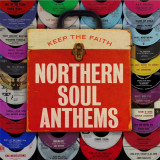
Demon Music is proud to bring together a selection of popular and exciting classic Northern Soul Anthems on a new 2LP thirty-three track collection. These are the original recordings by some familiar names and one or two that may have passed you by.
As the Sixties came to a close and the initial success of labels like Atlantic and Motown began to wane, there remained a dedicated fanbase of Soul devotees who would rather be out on the floor than wearing flowers in their hair. They continued to seek out new and previously overlooked releases, many on small labels that had never enjoyed chart success, making surprise hits of a few in the process.
Northern Soul could easily have passed into music history as a fad, something on the fringes of mainstream popular music; instead its popularity has remained and even grown. It is no longer the preserve of venues in the north of England (who had always attracted coachloads of devotees from across the nation), with Soul clubs opening in Europe, Asia, Australia and even - in perhaps the ultimate example of "coals to Newcastle" – America
Every few years Northern Soul enjoys a resurgence in popularity and welcomes a new generation of younger fans, keepers of the faith. This collection is for those with a passing interest and fans both old and
new - music fashions may change but the quality, the infectious excitement and the urge to get up and dance has endured in these fantastic records.
This is a very serene, almost entracing record that seems to inhabit its very own space, between "classical" ambient music (Eno, Budd), "systems music" (Reich, Glass, Riley, Hassell), japanese kankyo ongaku (Hiroshi Yoshimura, Takashi Kokubo), even hinting at what would become 90's ambient electronica (B12, Nuron, SAWII-era Aphex Twin or the Fax +49-69/40464 label). Actually, Lech would be one of the few artists to perform at the first-ever Sonar Festival (Barcelona) back in 1994 (together with Suso Saiz, Esplendor Geometrico, Mixmaster Morris or Laurent Garnier).
A key early effort from this musician and A/V artist whose career spans well over thirty years and a miriad of works, performances and instalations: Art Futura, Sonar, ISEA, Ars Electrónica (Austria), Festival Videoformes (France), Festival de Nuevas Músicas (Madrid & Sevilla), Ciclo Experimental LEM (Barcelona), Knitting Factory (New York), The Korner (Taipei), Festival Pop Komm (Cologne-Germany), Festival Experimenta (Madrid), Festival DAFT @ Taipei (Taiwan), ART BEIJING, Festival EXIS @ Seúl (South Korea), JMAF (Tokio, Japan) or Artefact:Chernobil 33 (Kiev-Ukraine).
The Wah Wah edition has been mastered from the original tapes, reproduces the original sleeve artwork and and features an insert with photos and info.
It is a strictly limited edition of 500 copies only.
out of Stock
Last delivered 4 years ago available to reorder, subject to availability
Until recently, it was thought that we had heard all there was to hear from Saâda Bonaire. The German studio project's 1980s recordings had been compiled on the now cult-classic double LP Saâda Bonaire, released by Captured Tracks in 2013. Though the group had continued working until 1994, founder Ralph "von" Richtoven had firmly stated that all of their post-1986 work was lost. Released now for the first time ever, 1992 compiles the band's long-lost early nineties material. Produced between Bremen and New York City, the 12 songs presented here capture the group's attempts at steering their trademark fusion sound (reggae, afro-funk, Eastern music, and sultry German female vocals) into uncharted nu jazz, trip-hop, and house territories. It's no surprise, given both the time lapse and the fluid nature of the project, that these recordings differ sonically from the 1980s material. 1992 finds Saâda Bonaire folding new influences from the time (house, hip-hop, rap) into their eclectic sonic universe. Vocalist Andrea Ebert's soulful voice -the result of a church choir background and an early love of American soul and jazz music- offset Stephanie Lange's laid-back, more German-sounding vocals. This unique interplay bolstered the band's new direction - evident in their inspired takes on James Brown's "Woman" and Syreeta Wright and Stevie Wonder's "To Know You Is To Love You". The American influence was also made literal via contributions by renowned DJ Matthias Heillbronn and rapper Jimmy Lee Patterson, both of whom lent some stardust to the tracks at François Kevorkian's Axis Studios in NYC. Unfortunately, the demo recordings were considered too bizarre for 1990s record label standards, and as a result were never published. As with all things Saâda Bonaire, the discovery of these discarded recordings feels like a sort of magical impossibility. It's been nearly ten years since the release of the last compilation, and thirty since the recordings were originally captured. That they still manage to sound fresh and avant garde is a testament to Saâda Bonaire's flair for creating pop music for past, present, and future outsiders.
out of Stock
Last delivered 18 months ago available to reorder, subject to availability
Architect by day and musician by night, Jaime Tellado picks up as Skygaze, and returns to the fold of Flumo Recordings with his brand new 12”, the ‘Astral Trip’ EP; combining his knowledge of architecture with a love for sound to construct and merge acid house, broken beat and atmospheric melodicism.
The 'Astral Trip' EP follows releases on Guayaba records, Riverette and Thirty Three Circular. And remixes for Ed is Dead and Contours & Yadava, earning support/plaudits from the likes of Mr. Scruff, Simbad, k15, Andrew Jervis, Gilles Peterson, amongst others.
The common denominator throughout the release is the balance and combination of various elements, exploring a multifaceted contemporary dance sound whilst paying homage to the foundations of the sounds that we listen to today.
‘Minor Mood’ pays tribute to Chicago and Detroit with its high paced house rhythm, acid synths, and piano lines, whilst ‘City Cathedratics’ slows the tempo down to lay the groundwork for a dreamy synth-laden soundscape.
Whilst the majority of the project is a solo exploration in dance music and its multi-layered context and history, the contributions of vocalist Ruben Ondina lift the high-paced, synth house grooves of ‘Gimme Five’ to another level. Meanwhile, the broken beat influence of London is keenly felt on ‘Nigh Heat’ and ‘Wagwan’, their rhythms emphasised further by harmonic and melodic exploration via atmospheric synths, melodic improvisation and irresistible synth bass lines.
Skygaze reconstructs the rhythms and synths into his own fresh and unique package to paint a picture of spiritual wonder, richness and excitement.
DJ Support:
Severino / Horse Meat Disco
Ashley Beedle
Fouk
Just Her
John Digweed
Oliver Dollar
DJ Feedback:
Ashley Beedle - Fantastic EP and difficult to pick one track! 'Wagwan' will be ft. on my April 'Heavy Disco Spectacular' radio show on Worldwide FM.
Michel De Hey - Very nice release
Diynamic / Connaisseur - Very nice cosmic vibes!
Xinobi - serious knowledge of groove on this release.
Lex Ludlow - Super nice!!!
Joshua James - Groove on this...
Just Her - Gimme five is really nice
Fouk - Loving this!
Tom Simpson - some good stuff ....summer is coming.
Junior Simba - peng !
Willie Rosado - nice soulful sound
out of Stock
Last delivered 2 years ago available to reorder, subject to availability
Muddy Monk was revealed alongside Parisian artists Myth Syzer, Ichon and Bonnie Banane on 'Le Code'. From his native Switzerland, he imposes a fine, synthetic universe that plays a major role in the renewal of French-language song. The journey began in 2018 with 'Longue Ride', a cathartic first album that he describes as 'a kind of therapy' and that was unanimously acclaimed by the critics. In 2020, he returns with 'Ultra Tape', a mixtape which, with the benefit of hindsight, is the first step towards his second album. We discover a more raw universe. Darker too. A superb launching pad for his second album.
With Ultra Dramatic Kid, Muddy Monk delivers a radical new piece, a bubble of just over thirty minutes in which he manages to work his magic and make us dance on the edge of his emotions. As if everything could change in an instant towards happiness or chaos. An electric album and a sublime dive into his universe, which draws equally from Daft Punk, Rage Against The Machine and Travis Scott. A project that takes the form of a global experience, both auditory and visual, since almost all the tracks on the tracklisting have been put into images by Felix de Givry, the whole forming a short film to be discovered with the release of the project. In the end, Ultra Dramatic Kid is an uncompromising album in which it is a pleasure to get lost. An album that further establishes the Swiss artist as one of the artists capable of redefining the contours of French-speaking music for many years to come.
out of Stock
Last delivered 4 years ago available to reorder, subject to availability
“Slave Driver” pushes the boundaries of Thrash Metal once again, intense and aggressive in its purest form available! Dead Head have been around since the late 80`s which was a golden and extremely fertile period for Thrash Metal, and it shows. Their style is just about as aggressive as Thrash can logically get before having to refer to them as death metal whilst thankfully managing to retaining a slight 80`s vibe. Everything about “Slave Driver” just ooozes unadulterated seething hatred, and aural violence. The raging, savage, heavy yet scything hyperfast guitar riffs are so crammed with maliciousness that you instantly realise that Slayer have in all reality been effectively dead for years. The vocals which easily rival any Thrash band in history for delivering snarling savage hatred, should show Kreator what they have been incapable of producing since Pleasure to Kill. The fast cannon like drumming is unrepentant, and forms a perfect malevolent percussive backing for this brutal aural bashing. The mix is just as professional as you could want from a Thrash album, the guitar tone is crunchy and vocals are just right: spitting hatred and virtue in the same breath. If the band’s previous albums haven’t cemented them into the annals of Thrashistory just yet, “Slave Driver” will seal the deal. It’s an impressive statement from an overlooked band. Dead Head have remained very consistant with their releasing of very high quality Thrash/Death music for over thirty years. Hail the best Thrash band around today, they have been criminally overlooked for far too long.
Chris Korda is an internationally renowned multimedia artist, whose work spans thirty years and includes electronic music, digital and video art, performance and conceptual art, and culture jamming. Chris pioneered the use of complex polymeter in electronic dance music, and invented a unique MIDI sequencer in order to explore polymeter composition techniques. Chris composes and performs music in a variety of genres, and has released many albums on labels such as Perlon, Mental Groove, and Gigolo Records. Chris also worked as a computer programmer for thirty-five years.
Her new album "Passion For Numbers" is one of the very few album in the world entirely composed in complex polymeter, meaning that each pieces of music uses several prime meters simultaneously. A unique way to compose music with a new generation of musical algorithmic, inside which Korda injects the DNA of neo classical, ambient and jazz music.
This refreshing album will please you whether you are into complex musical composition, experimental music or just seeking for a beautiful, emotional and accessible musical moment. This is a "In your hearts not the charts" album, as Irdial Discs once said.
Pleases read an extract of Chris Korda's letter about Passion For Numbers, included as insert in its entirety in this vinyl release:
This is an album of piano music, but I wrote it without a piano. Not having a piano turned out to be constructive, because I had to rely on my brain instead of my fingers, and particularly on my imagination and inner hearing. The album belongs to a category called phase music, and it’s also algorithmic, or more precisely rules-based generative music.
I don’t write music in the usual sense of the word “write.” I build kinetic sculptures, and the sculptures generate my music. My sculptures are virtual, meaning they’re invisible machines that exist only as data within my home-grown software.
My process is related to the work of a relatively obscure early 20th century artist named Thomas Wilfred. Like me, Wilfred was an engineer-artist, and built machines that generated art from phase shift.
My music is in complex polymeter, meaning it’s not just in odd time, but in multiple odd time signatures, and not one odd time signature after another sequentially, but all of them running concurrently. Most music isn’t constructed this way, which is why I needed to develop custom software in order to compose my music. My software is called The Polymeter MIDI Sequencer, and you can easily find it on the Internet. I also use music set theory, change-ringing and gray code, explanations of which can be found in Wikipedia.
Chris Korda
out of Stock
Last delivered 4 years ago available to reorder, subject to availability
Following widespread acclaim for his recent LP ‘Always Inside your Head’, on March 4th / April 8th Matt Cutler AKA Lone releases four re-works of tracks from the album, entitled ‘Natural Aerials’.
On ‘Natural Aerials (Mouth of God Part Two)’, Lone utilises a similar sound palette as album track ‘Mouth Of God’, but rebuilds it into a brand new banger. Energetic, deep, trancey and driven by jungle-schooled breakbeats, with bassbin shuddering low-end, he delves deeper into the vortex. Whereas the album was made predominantly using software, Cutler has since been buying hardware – and this marks the first track made on these newly acquired synths.
Based around a version from Lone’s recent sold-out live show at London’s Village Underground, on ‘Inlove2 (One Thirty Mix)’ he ups the original’s BPM count, with sights set firmly on the dancefloor. Taking cues from the ‘Ambivert Tools’ series, this is a high-grade, proggy, main room acid rush.
On ‘Visited By Astronauts (SHERELLE Had A Groove Remix)’, the fast-rising star takes an ambient interlude from the album, and gives it what she calls “a space age, footwork jungle twist”. Her first released remix, Sherelle continues an impeccable purple patch, with a re-rub that’s both airy and light, but also heavily percussive, full of propulsive forward motion. She states, "it’s a pleasure and honour to remix for Lone, as being a long time fan, it's a beautiful thing to be able to collaborate. I really wanted my first remix to be special and also for someone who I hugely admire, so Matt asking me to be involved in this process wastruly magical!”
‘Echo Paths Ebb And Flow’ takes a downtempo album highlight, strips it back to just the synths, then unfurls them into a blissful ambient work that’s melodic, warm and fuzzy, swaddling the listener in candy floss clouds.
out of Stock
Last delivered 16 months ago available to reorder, subject to availability
First-Lady of Detroit and longtime member of the Planet E Communications family DJ Minx continues the label’s thirty year anniversary celebration with her ‘Do It All Night’ EP, out on 12” and digital platforms January 28. The EP features a peak time remix from the stratospheric talent Honey Dijon.
out of Stock
Last delivered 2 years ago available to reorder, subject to availability
Historically informed violin player, prize-winning street musician, new age experimentalist, chamber ensemble performer and conservatoire deviant. The career of Valentina Goncharova (b. Kyiv 1953) shares parallels with those associated with the broader new music movement of the 20th century and the dissemination of home recording technologies.
Valentina’s was a youth spent immersed in the world of classical music study under soviet rule, first in Kyiv- later in Leningrad & now St. Petersburg, from the age of 16. With the supervision of professors M. Vayman and B. Gutnikov she learned concert violin and developed alternate playing styles alongside skilled pianists. A student of the Leningrad conservatoire during the years 1969 - 1983, her repertoire included music for violin and later expanded to contemporary music composition.
The improvisatory nature of free jazz and then-budding experimental rock circles also intrigued Valentina during this period in Leningrad. Departing from the rules of the conservatoire, she briefly performed in underground rock clubs alongside future members of the industrial group Pop- Mechanika (Popular Mechanics). This perpetual state of flux is central to the variety found within ‘Recordings Vol. 1’, though as opposed to any degree of uncertainty Valentina’s practice is one
in flux by way of earnest curiosity.
Pushing further into an exploration of solo electro-acoustic sounds, she took to home taping on a modified Olimp reel to reel recorder. Intrigued by the manipulability of dubbing and the fresh sounds of DIY effects chains, Goncharova developed pickups alongside her husband Igor Zubkov. Her infatuation with the music of Stockhausen, Xenakis, Ganelin Trio and Pierre Boulez channels through considerations of space and erratic sound design, the 3 movements of ‘Metamorphoses’ embodying this textural approach to musique concrete.
The compositional skills developed in Leningrad unfold in the romantic gestures of ‘Higher Frequencies’, whilst manipulated cello combines with synthesise keys across ‘Passageway To Eternity’.
The slow, pulsating drone soundscapes recall the likes of Robert Rutman’s US Steel Cello Ensemble or even deep listening pioneer Pauline Oliveros.
The juxtaposition of written notation and improvisatory flare is central to Goncharova’s sound world. This period of home recording documents a confluence of minimalism, free form and flirtations
with new age tropes (inc. bell chimes and cavernous vocal mantras).
Experimenting with unusual performance techniques, such as shouting into amplified cello strings, Valentina’s home studio functioned as a place to foster full artistic and creative freedom
away from any academic strictures.
Relocating to Estonia in 1984, and in parallel to the deeply personal music of ‘Recordings Vol. 1’, Valentina performed at jazz festivals and gave classical concerts across Eastern Europe. In a sense, the recordings on these discs offer only a glimpse into her lifelong body of work. Over the past few decades she has taught at Tallinn Music College, expanded and updated post- Soviet popular music repertoire, collaborated with the Russian Philharmonic Society of Estonia and given concerts and charity events alongside the Catholic Church.
Hers is a life dedicated to the exploration of sound, a career forged through careful study and ceaseless intrigue. In a time where technological interconnectedness has allowed for music of the pas
to be continually mined and evaluated through new lenses, Shukai present an artist whose tendency for private home-taping had allowed recordings to go unheard for thirty years.
out of Stock
Last delivered 5 years ago available to reorder, subject to availability
Back in 1968, a pair of Germanic behind-the-scenes sound
librarians called Horst Ackermann and Heribert Thusek left a
tiny but indelible pinprick on the history of German Pop in the
misshaped form of a sexy horror cash-in concept album called
‘Dracula’s Music Cabinet’. Shelved at a micro-cosmic axis
where Krautrock meets lesbian vampire Horrortica and easy
listening meets psychedelia, the delayed reaction of this mutant
concoction eventually exploded in the mid-1990s in the hands of
a generation of ‘record diggers’ sending currency-crushing
tremors through the wallets of mods, rockers, hip hoppers and
psych nuts around the plastic-pillaging planet. The vinyl junkies
had resurrected a monster but, like addicts do, they ravenously
sucked it dry and moved on looking for the next fix to feed their
habit.
Luckily for some, Ackermann and Thusek were also creatures
of habit. And it wouldn’t take a genius to figure out that they
were holding the next dose, but by the turn of the millennium
the mad scientists had been given a thirty-five-year head start
on the pop archaeologists and their mythical sequel was literally
light-years ahead of their previous draconian instalment.
Encouragingly, the unclosed cabinet left a shiny white clue in
the form of its closing track ‘Frankenstein Meets Alpha 7’.
The Ackermann and Thusek duo were far from dynamic. They
were undercover agents hiding behind user-friendly mock-rock
monikers and, like most B-Musicians, the only way to sniff them
out would be to read the small print. But when an unidentified
record on an unknown label with a title like ‘Science Fiction
Dance Party’ crops up in the Eins Deutschmark crates it’s not
exactly rocket science - although the track titles might suggest
otherwise. ‘The End Of A Robot’, ‘Monster On Saturn 1’,
‘Galactic Adventures Of The Outer Space Fleet’, ‘The Whistling
Astronauts’, ‘Death Rays Out Of The Universe’… The tell-tale
signs are all there and if that doesn’t clench the deal then what
will?
Even rarer than its horror counterpart, this ultra-rare record
regularly reaches sums in excess of €400 plus online.
out of Stock
Last delivered 4 years ago available to reorder, subject to availability
Album - 3 singles - vinyl “Make all the uncertainty and adventure of growing up sound like the best days of your life” - UPSET “A ripper that channels sounds from all throughout punk history” - Brooklyn Vegan "On a take-no-prisoners assault" - Tom Robinson, BBC 6music “California compacted into three rowdy minutes” - The Rodeo “Scorching slacker pop” - CLASH Reminders approach punk rock from where they know it best: a forgotten seaside town. Formed on the Isle of Wight in 2017, the band cut their teeth writing songs about teenage lust and suburban boredom, gaining attention after they independently released Water Sports and Major Cities. Fresh-faced and excited, the then-teenagers coined their sound 'beach punk'; a tongue-in-cheek ode to their hometown that they stand by today. Firmly solidifying their identity as breakneck but bubblegum, a pop-tinged punk band, Reminders work to introduce themselves to anybody willing to listen. After an unexpected hiatus during COVID which delayed the release of their album, the band are now raring and ready to go with their new label home at Venn and forthcoming tour dates. Already championed at radio by BBC Radio 1, BBC 6Music and BBC Introducing, as well as landing placements on esteemed Spotify and Apple Music editorial playlists alike, they were labelled 'scorching slacker pop' by the influential CLASH Magazine, dubbed 'About to Break' by UPSET Magazine, and have already shared stages with rock legends and pop stars Liam Gallagher, The Killers, and Camila Cabello. Debut album Best Of Beach Punk released 1st April 2022
Recorded in 1991 by the quintet of vocalist Billie Ray Martin and Birmingham-based electronic musicians Brian Nordhoff, Joe Stevens, Les Fleming and Roberto Cimarosti, Electribal Soul was conceived as the sequel to the band’s 1990 debut album, Electribal Memories.
Electribal Memories had yielded the hits ‘Talking With Myself’ and ‘Tell Me When The Fever Ended’ and pushed Electribe 101 to the forefront of a crossover electronic scene that fused dance music with pop savvy. They were snapped up by Phonogram, managed by Tom Watkins and hailed as “the next band to meet the Queen” by i-D. The band took the coveted support slot for Depeche Mode on their epochal World Violation tour and supported Erasure at Milton Keynes Bowl. Seen as the next big thing, everything pointed toward enduring critical success for Electribe 101, and the band settled into putting their second album together.
“There was a degree of confidence among us when we came to write the second album,” recalls Billie Ray Martin. “To me, the songs we put down sound like some of our finest moments.” More immediately lush and warm than the dancefloor-friendly structures of Electribal Memories, the clue to the sound of Electribal Soul lies in the second word in its title: soul. Songs like the aching sensuality of opening track ‘Insatiable Love’ or the emboldened defiance of ‘Moving Downtown’ showcase Billie Ray Martin’s distinctive vocal range as it moves from haunting quiet to dramatic, euphoric rapture. Lyrics from ‘Moving Downtown’ had found their way into ‘Pimps, Pushers, Prostitutes’ by S’Express, and the song would appear as ‘Running Around Town’ on Martin’s 1996 solo album. The strikingproduction on the version of the song presented on Electribal Soul suggests classic late sixties soul influences, such as those of legendary Motown producer Norman Whitfield, with the long shadow cast by Kraftwerk never being far away.
‘Deadline For My Memories’, the song that provided the title for Martin’s first solo album, was originally intended for the second Electribe 101 album. Its lyrics document a sense of freedom and liberation from the darkness of a bad relationship, accompanied by jazzy piano and organ sounds over a quiet rhythm and discrete electronics. In contrast, ‘A Sigh Won’t Do’ finds Martin in soothing vocal mode, despite its devastating message about the final ending of a strained relationship, her lyrics framed by restrained and subtle beats and sounds.
To spend time with Martin’s voice on Electribal Soul is to find yourself moved deep into the ordinarily impenetrable emotional corners of your own psyche. “I was into big ballads at the time and listening to all kinds of US and UK singers, and I was also young enough to want to prove myself as a belter of ballads,” explains Martin of the classic soul edge the album showcased.
Electribal Soul heads into darker territory with ‘Hands Up And Amen’. Originally written by Martin in Berlin in the period before moving to London and forming Electribe 101, the song was then perfected and enhanced by the band’s production nous. ‘Hands Up And Amen’ savagely documents the mugging of a woman in Queens, NY at gunpoint, only to resolve itself with a middle section that nods reverently toward gospel tradition. The song coalesces around a regimented break and burbling synths, finally ending with layers of urgent synth sounds.
Meanwhile, a cover of Throbbing Gristle’s ‘Persuasion’ takes us into a seedy world of sexual coercion and creepy infatuation, predating Martin’s chilling version of the track with progressive house unit Spooky two years later. Supported by a minimal, nagging rhythm and barely-fluctuating sounds, Electribe 101’s take on ‘Persuasion’ makes for uneasy listening, even though Martin manages to inject a sort of twisted sympathy for the protagonist as the song progresses.
That Electribe 101 were as comfortable offering complicated, nuanced tracks like ‘Persuasion’ alongside pop house bangers like ‘Space Oasis’ – written by Billie Ray Martin with Martin King before Electribe 101 was formed – is testament to the way the band wove their way effortlessly through electronic music reference points. Framed by light, jazzy piano melodies and string sounds, the energy of ‘Space Oasis’ soars so high that it could easily reach the moon, while highlighting how well-suited Martin’s voice has always been to club music. We hear the same reminder of her dance music credentials on ‘True Memories Of My World’, finding her describing a Hollywood actress who reflects on being used by directors to sell her ‘tears’.
Hooking up with the Birmingham-based Nordhoff, Stevens, Fleming and Cimarosti after placing a Melody Maker ad in 1988 (“Soul rebel seeks musicians – genius only”), it was clear that Martin had found a group that recognised the unique power and importance of her voice. Having worked with genres as diverse as reggae, rock and R&B, the four producers proved to be perfect collaborators, presenting carefully-sculpted backdrops that emphasised the towering emotional dexterity of her voice.
“Listening back to these tracks now, I was reminded of what a bunch of great musicians they were,” says Martin. “They had a rule that if a part still sounded good after a day or two then it could stay. If it bothered the vocals, it would go.” Even more so than on Electribal Memories, Electribal Soul places Martin at the captivating centre of these pieces, surrounding her voice with everything from dubby rhythms to chunky R&B beats to nascent trip hop breaks; wiry, acid-hued synths uncoil gently without ever dominating, while horn samples and lush, disco-inflected strings provide a rich, naturalistic accompaniment for Martin’s emotional outpourings.
The band finished mixing the album at London’s Olympic Studios in 1991. They were assisted by Apollo 440’s Howard Gray on production duties for ‘Deadline For My Memories’, ‘Insatiable Love’ and ‘Space Oasis’, with Gray supported by talented engineer Al Stone. Pre-release promo tapes were issued and an enthusiastic energy started to build around the band’s anticipated second album.
It was not meant to be. Against a backdrop of a worsening relationship with Tom Watkins, and a disinterested Phonogram, instead of receiving a positive reaction to the new tracks, Electribe 101 were swiftly dropped by their label. Electribal Soul languished, unreleased, and the band yielded to pressures that had been building and split up. After collaborating with Spooky and The Grid, Billie Ray Martin went on to release her seminal debut solo album in 1996, with it securing the era-defining hit ‘Your Loving Arms’, while the other group members continued to work together as The Groove Corporation.
Thirty years after the songs were recorded, we’re now finally able to hear what the second and final chapter of Electribe 101’s story sounded like. Electribal Soul shows that the band had really only just got started when they dropped their first album in 1990. Heard only by a select and privileged few, what followed elevated the band’s music to a completely new level, making Electribal Soul musical buried treasure of the most precious and rare variety.
Electribal Soul will be released on LP, CD and digital formats on 18th February 2022 through Electribal Records. The physical formats include extensive liner notes from Billie Ray Martin, and the album sleeve features unseen archive photographs by Lewis Mulatero from the original 1990 sessions with the band that were never used in the sleeve designs for Electribal Memories.
out of Stock
Last delivered 4 years ago available to reorder, subject to availability
With thirty years of active, nefarious service under their bulletbelts, NECROPHOBIC are undisputed legends of the death and black metal underground. Formed in 1989 by drummer Joakim Sterner, the Stockholm blackhearts propagated a singular and fearless vision from the very start, confirming their prowess with now legendary debut album The Nocturnal Silence in 1993. Eschewing the self-conscious amateurism and primitive sonics that many of their peers held dear, NECROPHOBIC established a bold and vivid identity of their own, conjuring a densely melodic but endlessly wicked take on macabre extreme metal that countless lesser bands have since emulated. With “Hrimthursum”, the 5th full-length album, NECROPHOBIC already injected its blasphemous attack metal with melody and atmospherics, not to mention a great attention to instrumental detail, in the first place when the album was released in 2006. The Swedish black death metal legends are re-releasing this full-length record as first out of nine upcoming re-issues in total. The album will be available as Ltd. CD Jewelcase in slipcase, Gatefold LP & Poster and Digital album. A must have for every black and death metal maniac out there!
The latest release from this iconic country catalog brings together 40 of Hank’s greatest gospel songs from the Mother’s Best recordings.
From the GRAMMY award-winning team, this collection is produced by Cheryl Pawelski with restoration by Michael Graves and new liner notes by Colin Escott.
Includes the classics “I Saw The Light”, “Farther Along”, “I’ll Have A New Life” & “When The Saints Go Marching in”
Heiko Voss has earned near mythical status as a torchbearer for the emotional, deeply felt and quietly radical style of electronic music. The blissed-out radiance of his Kompakt Pop single, “I Think About You” remains one of the label catalog highlights and a stellar run of collaborative singles as Schaeben & Voss; others might know him for his stewardship of the excellent, much-underrated Firm imprint. But with his new album, 3:30 Minutes To Live, released by Michael Mayer’s label Imara, Voss returns after a long silence with a beautiful collection of songs that hymn heartbreak with a lusciously melodic touch.
There is something definitive and newly confident in 3:30 Minutes To Live that has it feeling like a real statement of intent if compared to his earlier releases. “Although it’s not, 3:30 Minutes To Live feels like my debut album,” Voss reflects. “All releases before were more song sketches or electronic dance tracks.” Bunkering down in Teary Eyes Studio, Voss worked up somewhere between thirty and forty sketches of songs, which he whittled down to the twelve collected here, all of them situated in a unique space, but very much in accord with Voss’s defining aesthetic, which he describes as “indie pop music with a lot of guitar, electronic elements and a great love for melancholic ‘80s synth-lines.”
Voss is sensitive to both variety and consistency – 3:30 Minutes To Live sits together as an assured, vibrant collection of pop songs, but it’s marked by all kinds of surprising incident, like the guitar solo that erupts out of “This Is My Life”, or the acoustic guitar-led melancholy of the closing “This Summer”. It’s all borne of the alchemy of the studio process and the intimate romance of music-making. “If you constantly feel a little bit like you’re in love while writing and producing your music – simply because of the sound of the synth flowing warmly and gently through the room, or because the sequence of notes awakens something in you, or even a randomly arising groove in the loop of a guitar lick makes you shout, ‘Ha!!’ – then it usually becomes a beautiful song,” Voss nods. “Those moments make me happy.”
There’s also a delicious tension between the push of the music, its melodic lushness and gliding, ballerina-like movement, and the darker currents that pull through Voss’s lyrics, inspired by a “short, dramatic and toxic love affair.” This may read like familiar terrain for a pop album, but the way Voss weaves language through both the extra-linguistic joys of music and the inarticulate speech of the heart somehow allows for direct communication that is simultaneously plain-spoken and deeply profound. “Say It” is a simple, devastatingly effective plaint of alienation; “She Wasn’t Lonely” a simple portrait of everyday living set to chiming, clacking guitars, the music in the bridge taking astral flight as the titular character ‘lets herself go.’
A smart and sharp collection of songs that captures you with its gorgeous melodicism just as it blindsides you with its aching heart, 3:30 Minutes To Live is Heiko Voss at his most assured and open-hearted best.
Heiko Voss hat sich als Fackelträger einer emotionalen, von ganzem Herzen kommenden und nicht auf den ersten Blick radikalen Spielart von elektronischer Musik einen nahezu mythischen Status erarbeitet. Das schiere Glück, welches seine Kompakt Pop-Single "I Think About You" aus dem Jahr 2003 immer noch ausstrahlt, macht sie nach wie vor zu einem der Highlights des Label-Katalogs, wo sie neben einer ganzen Reihe hervorragender Singles als Schaeben & Voss steht; andere kennen Heiko vielleicht durch das tolle und vielfach unterschätzte Label Firm, für das er zusammen mit Thomas Schaeben verantwortlich war. Mit seinem neuen Album “3:30 Minutes To Live”, das am 4. März 2022 auf Michael Mayers Label Imara erscheint, kehrt Voss nun nach einer langen Pause mit einer wunderschönen Sammlung von Songs zurück, die den Herzschmerz – getragen auf den Schwingen unwiderstehlicher Melodien – ausgiebig besingen.
“3:30 Minutes To Live” kommt mit einer gehörigen Portion Überzeugung und Selbstbewusstsein daher, was im Vergleich zu seinen früheren Veröffentlichungen wie ein bewusstes Statement wirkt. "Obwohl es das nicht ist, fühlt sich ‘3:30 Minutes To Live’ wie mein Debütalbum an", meint Voss. "Alle meine vorherigen Veröffentlichungen waren eher Song-Skizzen oder elektronische Dance-Tracks."
Im Teary Eyes Studio arbeitete Voss zwischen dreißig und vierzig Songskizzen aus, die er auf die zwölf hier versammelten Songs reduzierte, die alle ihren eigenen Raum einnehmen, dabei aber sehr gut mit Voss' übergeordneter Ästhetik harmonieren, die er als "Indie-Pop-Musik mit viel Gitarre, elektronischen Elementen und einer großen Liebe für melancholische 80er-Jahre-Synthies" beschreibt.
Voss ist sowohl für Abwechslung als auch für Konsistenz empfänglich - “3:30 Minutes To Live“ ist eine selbstsichere, lebendige Sammlung von Popsongs, die aber auch von allerlei Überraschungen geprägt ist, wie dem Gitarrensolo, das aus “This Is My Life” herausbricht, oder die von einer Akustikgitarre getragene Melancholie des abschließenden “This Summer”.
Das alles ist entstanden aus der besonderen Alchemie des Studioprozesses und der intimen Romantik des Musikmachens. "Wenn du beim Schreiben und Produzieren deiner Musik ständig das Gefühl hast, ein bisschen verliebt zu sein – einfach weil der Klang des Synthesizers warm und sanft durch den Raum fließt, oder weil die Notenfolge etwas in dir weckt, oder sogar ein zufällig auftauchender Groove im Loop eines Gitarren-Licks dich ein 'Ha!' ausrufen lässt – dann wird daraus meist ein schöner Song", nickt Voss. "Diese Momente machen mich glücklich."
Es entsteht eine besondere Spannung zwischen dem positiven Elan der Musik, ihrer melodischen Verschwendungssucht, den gleitenden, Ballerina-artigen Bewegungen und den dunkleren Strömungen, die durch Voss' Texte ziehen, die von einer "kurzen, dramatischen und giftigen Liebesaffäre" inspiriert sind. Das mag sich wie ein vertrautes Terrain für ein Pop-Album anhören, aber die Art und Weise, wie Voss die Sprache sowohl durch die nonverbalen Elemente der Musik als auch durch den nicht artikulierten Ausdruck des Herzens verwebt, ermöglicht eine Art direkte Kommunikation, die gleichzeitig ausgesprochen klar und trotzdem tiefgründig ist. “Say It" ist eine erschütternd einprägsame Anklage von Entfremdung; "She Wasn't Lonely" ist ein einfaches Porträt des alltäglichen Lebens, untermalt von klappernden Gitarren, in dem die Musik einen astralen Flug unternimmt, während die Titelfigur sich "gehen lässt".
“3:30 Minutes To Live“ ist eine kluge und scharfsinnige Sammlung von Songs, die den Zuhörenden mit ihren wunderschönen Melodien fesseln, aber auch mit einer Menge schmerzenden Gefühlen konfrontiert. Ein Album, auf dem Heiko Voss ganz bei sich ist und Euch dabei mehr als nur sein Herz öffnet.
out of Stock
Last delivered 4 years ago available to reorder, subject to availability
The occult and folk music have been friends for a while. In the 21st century, hauntology and the resurface of some cult soundtracks from the 1970s and 1980s helped to create a new sense of folk, not associated with the typical acoustic feeling, but more relatable with library, krautrock/kosmische and industrial music. João Kyron and Tony Watts, long time collaborators since the late 1990s with their band Hipnótica, and more recently with Beautify Junkyards (Ghost Box) are well acquainted with this friendship. Hidden Horse is their new project as a duo and “Opala” their first release.
With eight tracks and almost thirty minutes, their first release explores dense and greyish urban utopias. The song titles explore ideas that mix sci-fi, horror, science, space and urban phobia, and the music Kyron and Watts create delivers, using electronics and drums with great relish. Their relationship as musicians, which spans more than two decades, can be felt in the way their music flows with a continuous dialogue.
“Opala” is always keen to take you to another dimension. It lives in its own twilight zone, where the obscure entangles the most obvious senses of reality. It sounds like Jacques Tati “Playtime” with a hauntology soundtrack: it kind of feels that this imaginary world is real, but it’s not. And it sucks you in to be a part of it and enjoy it: close your eyes and let yourself go while listening to “Levitação Magnética” or “Fantasmas do Planeta”. You will feel like a foreigner in a new city.
"Rock and metal music have always been a haven for those who have bigger stories to tell; who have grander emotions to convey. For more than thirty years, Finnish figureheads Amorphis have done their best to carve their very own niche in heartfelt yet aggressive, melancholic yet soothing tunes. On “Halo”, their staggering fourteenth studio effort, the Fins underline their trailblazing status as one of the most original, culturally relevant and rewarding acts ever to emerge from the land of the thousand lakes. In the past, mythology and legend took the role of today’s pop culture: Stories and a set of values uniting us by giving us a voice and a tapestry on which we can find each other and identify with something. By weaving the tales of Finnish national epos “Kalevala” into their songs and interpreting them in a timeless way, Amorphis combine the role of ancient minstrels and luminaries of the modern world, honouring tradition without getting stuck in the past. The vibrant, lively, and touching beauty that is “Halo” highlights their musical and storytelling mastership on a once again soaring level: It’s a progressive, melodic, and quintessentially melancholic heavy metal masterwork plucked from the fickle void of inspiration by original guitarists Esa Holopainen and Tomi Koivusaari, bassist Olli-Pekka Laine, drummer Jan Rechberger, longtime keyboardist Santeri Kallio and vocalist Tomi Joutsen, the band’s long-standing lyrical consciousness Pekka Kainulainen and a selected group of world class audio professionals led by
renowned Swedish producer Jens Bogren. Considering the band’s prolonged journey in the forefront of innovative metal music, it’s difficult to grasp how Amorphis manages to raise the proverbial bar time and time again, presenting a more than worthy finale to the trilogy begun with 2015’s “Under the Red Cloud” followed by 2018’s “Queen of Time.” “It really is a great feeling that we can still produce very decent music as a band,” says Holopainen, a founding member of the band. “Perhaps a certain kind of self-criticism and long experience culminate in these latest albums.” To the songwriter himself, “Halo” sounds both familiar and different. “It is thoroughly recognizable Amorphis from beginning to end but the general atmosphere is a little bit heavier and more progressive and also organic compared to its predecessor,” he elaborates. Tomi Joutsen, the man with vocal cords capable of unleashing colossal, bear-like growls as well as singing soothing, mesmerising lullabies, adds, “To me, ‘Halo’ sounds a little more stripped down compared to ‘Queen Of Time’ and ‘Under The Red Cloud.’ However, don’t get me wrong: when a certain song needs to sound big, then it sounds very big.” He’s right, of course: By stripping down some of the arrangements, the monumental moments become even more monumental. That’s of course also thanks to producing renaissance man Jens Bogren who harvested the thirteen final tracks from a batch of thirty songs Amorphis offered him. “Jens is very demanding, but I really like to work with him,” says Holopainen. “He takes care of the whole project from start to finish, and he allows the musician to focus on just playing. I may not be able to thank Jens enough. Everything we’ve done together has been really great, and this co-operation has carried Amorphis significantly forward.” Indeed. Setting off with the stormy grandeur of opener “Northwards,” Amorphis take us on an epic journey through the lands of the north, their rich cultural and historical heritage and musical traditions. This is not only an album for fans or metal connoisseurs. It’s a must for every imaginative mind out there with a soft spot for cinematic soundscapes, triumphant melodies and breathtaking dynamics measuring the borderlands of light and dark. However, no Amorphis album would be complete without the imaginative and poetic storytelling of renowned lyricist and “Kalevala” expert Pekka Kainulainen. “From day one, Pekka has always been an enthusiastic and prolific lyricist for Amorphis,” says Joutsen. “It is a slow process of translating archaic Finnish poetry into English and adapting it our progressive rhythms. Fortunately, Pekka does everything on time and with great care.” Since 2007’s “Silent Waters,” Kainulainen has been navigating the mythological waters of his homeland with great skill and respect. For “Halo,” he outdid himself once again. “‘Halo’ is a loose themed record filled with adventurous tales about the mythical North tens of thousands of years ago,” he explains. “The lyrics tell of an ancient time when man wandered to these abandoned boreal frontiers after the ice age. While describing the revival of a seminal culture in a world of new opportunities, I also try to reach the sempiternal forces of the human mind.” Thirty-one years after their inception, with uncounted global tours under their belt and fourteen albums deep in their career, Amorphis still proves to be the musical fountain of youth, an extraordinary band constantly reinventing itself without abandoning its mystical roots. With “Halo”, they deliver an astonishing album that deserves to be played everywhere, transcending the realms of metal and rock by its sheer profoundness and musicality."
"Rock and metal music have always been a haven for those who have bigger stories to tell; who have grander emotions to convey. For more than thirty years, Finnish figureheads Amorphis have done their best to carve their very own niche in heartfelt yet aggressive, melancholic yet soothing tunes. On “Halo”, their staggering fourteenth studio effort, the Fins underline their trailblazing status as one of the most original, culturally relevant and rewarding acts ever to emerge from the land of the thousand lakes. In the past, mythology and legend took the role of today’s pop culture: Stories and a set of values uniting us by giving us a voice and a tapestry on which we can find each other and identify with something. By weaving the tales of Finnish national epos “Kalevala” into their songs and interpreting them in a timeless way, Amorphis combine the role of ancient minstrels and luminaries of the modern world, honouring tradition without getting stuck in the past. The vibrant, lively, and touching beauty that is “Halo” highlights their musical and storytelling mastership on a once again soaring level: It’s a progressive, melodic, and quintessentially melancholic heavy metal masterwork plucked from the fickle void of inspiration by original guitarists Esa Holopainen and Tomi Koivusaari, bassist Olli-Pekka Laine, drummer Jan Rechberger, longtime keyboardist Santeri Kallio and vocalist Tomi Joutsen, the band’s long-standing lyrical consciousness Pekka Kainulainen and a selected group of world class audio professionals led by
renowned Swedish producer Jens Bogren. Considering the band’s prolonged journey in the forefront of innovative metal music, it’s difficult to grasp how Amorphis manages to raise the proverbial bar time and time again, presenting a more than worthy finale to the trilogy begun with 2015’s “Under the Red Cloud” followed by 2018’s “Queen of Time.” “It really is a great feeling that we can still produce very decent music as a band,” says Holopainen, a founding member of the band. “Perhaps a certain kind of self-criticism and long experience culminate in these latest albums.” To the songwriter himself, “Halo” sounds both familiar and different. “It is thoroughly recognizable Amorphis from beginning to end but the general atmosphere is a little bit heavier and more progressive and also organic compared to its predecessor,” he elaborates. Tomi Joutsen, the man with vocal cords capable of unleashing colossal, bear-like growls as well as singing soothing, mesmerising lullabies, adds, “To me, ‘Halo’ sounds a little more stripped down compared to ‘Queen Of Time’ and ‘Under The Red Cloud.’ However, don’t get me wrong: when a certain song needs to sound big, then it sounds very big.” He’s right, of course: By stripping down some of the arrangements, the monumental moments become even more monumental. That’s of course also thanks to producing renaissance man Jens Bogren who harvested the thirteen final tracks from a batch of thirty songs Amorphis offered him. “Jens is very demanding, but I really like to work with him,” says Holopainen. “He takes care of the whole project from start to finish, and he allows the musician to focus on just playing. I may not be able to thank Jens enough. Everything we’ve done together has been really great, and this co-operation has carried Amorphis significantly forward.” Indeed. Setting off with the stormy grandeur of opener “Northwards,” Amorphis take us on an epic journey through the lands of the north, their rich cultural and historical heritage and musical traditions. This is not only an album for fans or metal connoisseurs. It’s a must for every imaginative mind out there with a soft spot for cinematic soundscapes, triumphant melodies and breathtaking dynamics measuring the borderlands of light and dark. However, no Amorphis album would be complete without the imaginative and poetic storytelling of renowned lyricist and “Kalevala” expert Pekka Kainulainen. “From day one, Pekka has always been an enthusiastic and prolific lyricist for Amorphis,” says Joutsen. “It is a slow process of translating archaic Finnish poetry into English and adapting it our progressive rhythms. Fortunately, Pekka does everything on time and with great care.” Since 2007’s “Silent Waters,” Kainulainen has been navigating the mythological waters of his homeland with great skill and respect. For “Halo,” he outdid himself once again. “‘Halo’ is a loose themed record filled with adventurous tales about the mythical North tens of thousands of years ago,” he explains. “The lyrics tell of an ancient time when man wandered to these abandoned boreal frontiers after the ice age. While describing the revival of a seminal culture in a world of new opportunities, I also try to reach the sempiternal forces of the human mind.” Thirty-one years after their inception, with uncounted global tours under their belt and fourteen albums deep in their career, Amorphis still proves to be the musical fountain of youth, an extraordinary band constantly reinventing itself without abandoning its mystical roots. With “Halo”, they deliver an astonishing album that deserves to be played everywhere, transcending the realms of metal and rock by its sheer profoundness and musicality."
In over thirty years of regularly meeting with reggae artists and musicians in the UK and Kingston, I never encountered anything like the feeling of being around the Xterminator camp during the nineties. It wasn’t just the depth of talent that owner Philip “Fatis” Burrell could call upon or even the quality of his productions, but the sense of purpose he instilled in people. At times, it felt as if he and his group of largely Rasta artists had aligned themselves with a higher power - not just in their reasoning sessions, but when someone stepped to the mic and opened their heart, as well as their mouth. If you recorded for Fatis, you went into the studio empty-handed - no lyrics - and put your trust in the Almighty. That was the rule and the artists who passed through Xterminator had to really feel what they were singing or deejaying about.
Heavenly Recordings announce the release of ‘Heavenly remixes 3&4 - Andrew Weatherall volume 1&2’, a brace of compilation albums collecting together some of the finest remixes from the label’s long-time friend, collaborator and go-to remixer. These compilations follow ‘Heavenly remixes 1 & 2’, which showcases some of the label’s other great remixes.
By the time Heavenly was born in the spring of 1990, Andrew Weatherall was already an inspirational sounding board, as well as a fellow traveller on the bright new road that stretched out ahead, thanks to the massive cultural liberation of acid house. Back then every energised meeting could be turned into a fortuitous opportunity in this burgeoning new underground economy. Bored of your job? Start playing records out! Start a club night! Get in the studio!
Start a label! Just don’t stand still. Commandments Andrew would follow for the rest of his life.
At the start of things, Andrew was a regular visitor to Capersville - the pre-Heavenly press office run by label founder Jeff Barrett (soon to become Andrew’s manager). It was there that he famously picked up a copy of Primal Scream’s unloved second album and singled out a
track that would later become ‘Loaded’, after being given an instruction to “fucking destroy” it by the band’s Andrew Innes; it was there too that the idea to remix the first Heavenly release
came about.
Andrew’s mix of that first Heavenly record is very much a product of its time. ‘The World According To Sly and Lovechild’ is a swirling bass punch topped with a hypnotic marimba line and the kind of ecstatic diva vocal that you’d hear coming out of the speakers all night at postShoom clubs like Yellow Book.
His take on the label’s next release - Saint Etienne’s ‘Only Love Can Break Your Heart (A Mix of Two Halves’) - would set the template for his next three decades of audio exploration. A drawn-out imperial dub, the track builds and builds with a moody intensity (partly down to the
melodica played by Weather Prophets legend Pete Astor) that’s far more Kingston JA at dusk than Kingston-upon-Thames at kicking out time. It’s both a dancefloor record to get lost in and
headphone psychedelia of the highest order - a perfect example of what he did better than anyone else.
Between 1990 and his untimely death in 2020, Andrew fed more Heavenly bands through the mixing desk than those of any other label. Consistently, he returned visionary music to the
office, often in person for (at least) one ceremonial playback - a ritual that would involve the volume cranked up high and Andrew rocking back on his heels, eyes closed, lost in the alchemy of it all.
Each time, he would warp and twist originals into beautiful new shapes - elasticated club records that might evoke Detroit techno one second and Throbbing Gristle the next, before wheel-spinning into something akin to The Fall produced by King Tubby.
Andrew’s studio adventures would always be guided by that early advice to destroy the source material. It’s why he was the first name that came up when remixes were discussed; the first number on the speed dial. Listening back to these remixes now - to thirty years of glorious outsider sounds - it bangs home again just how fucking good Andrew was.
out of Stock
Last delivered 4 years ago available to reorder, subject to availability
On an early morning in November 2015, THE GHOST INSIDE was involved
in an accident that claimed the lives of their driver, the lives of everyone
in the other vehicle, and resulted in multiple injuries for all of the band
members
Jonathan Vigil (vocals) suffered from a fractured back, ligament damage, and
two broken ankles. Zach Johnson (guitar) has since had 13 surgeries for a femur
injury. Andrew Tkaczyk (drums) ultimately lost his leg. The future of the band was
very much up in the air throughout 2016, as everyone struggled to recover.The
road to recovery was both mentally and physically extensive but THE GHOST
INSIDE were determined to get back to doing what they love. Nearly four years
later, the band did just that, returning to the stage July 2019. Originally meant to
take place at the historic Shrine Auditorium, tickets sold out so quick that the gig
had to be moved to the parking lot, selling double the venues capacity. Over 8000
people witness this return to the stage. The accident will always be a defning
moment for THE GHOST INSIDE, but never what defnes them.
The Plague Within is the 14th studio album by the British band Paradise Lost. It was the band's return to their death doom roots, ranking among the most diverse albums they have ever recorded. Paradise Lost reward the listener with plenty of memorable moments and fantastic guitar riffs. This album broods and builds more with each subsequent listen, and each time you feel a little more entangled in its web.
The gothic metal band Paradise Lost are considered to be the pioneers of the death-doom genre and a big influencer for the gothic metal. They have been active for over thirty years, in a stable line-up where only the drummers changed during the years
Black Truffle is pleased to announce For McCoy, a new work by Eiko Ishibashi dedicated to the widely loved character of Jack McCoy, portrayed by Sam Waterston in Law & Order. Following on from Hyakki Yagyō (BT064), For McCoy finds Ishibashi further exploring the unique space she has carved out in recent years, bringing together musique concrète techniques, ECM-inspired jazz, lush layers of synths and hints of pop into immersive and affecting structures crafted in her home studio, aided by a group of close collaborators.
Beginning with overlapping layers of descending flute lines, the expansive ‘I Can Feel Guilty About Anything’ (whose two parts stretch out over more than thirty minutes) unfolds with a free-associative logic, embracing dreamlike transitions and unexpected cinematic cuts. As a hovering cloud of synthetic tones and multi-tracked voices fans out from the spare opening moments, Joe Talia’s skittering cymbals settle into a gently propulsive groove, soon joined by melodic fragments performed by Daisuke Fujiwara on multi-tracked saxophone. As the drums cede to field recordings and ominous synth figures, the uncommon meeting of saxophone and electroacoustic techniques call to mind the more spacious moments of Michel Redolfi and André Jaume’s Synclavier-propelled oddity Hardscore or the early work of Gilbert Artman’s Urban Sax. As the piece continues on the LP’s second side, distant dialogue rumbles beneath a surface of processed flutes, blurring into a cavernously reverberant backdrop for stark ascending lines performed by MIO.O on violin. Eventually, the piece settles into a gorgeous passage of abstracted dream pop, where Ishibashi’s multitracked vocal harmonies glide atop synth chords, errant pings and snatches of outdoor sound.
Fragments of melodic material reappear throughout the spacious opening piece, finally stepping to the forefront on the closing track, ‘Ask Me How I Sleep at Night’. Here, over a shuffling groove supplied by Jim O’Rourke on double bass and Tatsuhisa Yamamoto on drums, layers of flutes, saxophones and guitars sound out melodies whose combination of twisting irregularity and soulful immediacy calls up prime Keith Jarrett, while their closely voiced harmonies suggest Kenny Wheeler or even Wayne Shorter’s Atlantis. In a classical gesture of closure, the web of melodic lines eventually leads back to the descending flute figures with which the record began. Presented in an immersive, impeccably detailed mix by Jim O’Rourke and arriving in a sleeve featuring Ishibashi’s beautiful drawings of Jack McCoy, For McCoy is an essential release for anyone following the enchanted and unique path being forged by Eiko Ishibashi.
out of Stock
Last delivered 3 years ago available to reorder, subject to availability
A Colourful Storm presents Tangerine, a collection of songs by Reiko and Tori Kudo. Recorded at Village Hototoguiss, Japan, in 2011 and 2012 and Cafe Oto, London, in 2009, Tangerine is the result of over thirty years of improvisation and intimacy between Reiko Kudo and Tori Kudo (Maher Shalal Hash Baz, Fushitsusha, Noise, Ché-SHIZU). Their live performances would welcome local musicians, neighbourhood children, friends and passersby on stage while in the studio, they have been joined by Ikuro Takahashi (LSD March) and Takashi Ueno (Tenniscoats), releasing on indie labels such as Geographic and K. A touchstone of contemporary Japanese folk minimalism and significantly the last recorded appearance of the duo. Originally released on CD by Hyotan in 2013 and presented for the first time on vinyl by A Colourful Storm. Full-colour sleeve with insert, postcard and lyrics in Japanese and English.
out of Stock
Last delivered 4 years ago available to reorder, subject to availability
All By My Ownsome' is the frst solo offering from Jackson Lynch
The album features fve original songs by Jackson Lynch as well as traditional
folk, blues and gospel songs in Lynch's distinctive style and arrangements. Born
in Ireland, Jackson Lynch moved to New York City's East Village when he was
young. Jackson is an integral part of the New Orleans music world with his band
The Janks. He now resides in Red Hook, Brooklyn where he is also a vital part of
the New York music scene.
Jackson Lynch plays solo, with The Janks and with his string band The Down Hill
Strugglers, hailed by Amanda Petrusich in the New Yorker as, "the very best
interpreters of traditional material presently going.”
Originally released on cassette in 1993 and now for the first time on vinyl, this is an incredible document from a teenage Arrington de Dionyso. All the seeds of his 30+ career are engrained on these fully formed Tascam recordings. "Bobcatflamethroat" was originally released as "Pine Cone Alley Cassette #9" in August of 1993. The songs were recorded on a Tascam Porta-One 4 Track cassette studio inside a secret area in the basement of the College Activities Building at the Evergreen State College, known as "Happyland". This album has never before seen a digital release of any kind, however there is one song "Everything is Broken" which later became part of the original "canon" of Old Time Relijun after that band was formed in 1995. That song was re-recorded on the first Old Time Relijun album "Songbook Vol. I" released in 1997. I still dig most of the tunes on this one- these were all written and recorded while preparing to welcome a new young life into the world (my daughter Lucinda, born August 22, 1993). So while not specifically "Children's Music" per se, the tunes are wild, hopeful, optimistic yawps of playful abandon for all ages. There are a number of "inside jokes" that only would have made sense to the very tight knit inner circle hat I considered my "core" group of friends at that point in my life. I also think there are more than a few "hits" on here. I was 18 years old! Anyone who has followed the last thirty years of my musical career should find something of interest and delight on this album. For some reason I chose to record most of the guitar and bass parts "direct" without an amplifier- I'm not sure why I did that but it's a unique sound in retrospect. There's a decent dose of throatsinging and other odd vocal techniques, proving that I dove deep into this territory of vocal exploration at a very young age. Also plenty of mouth harps, flutes, kazoos, and clarinet, although this was just BEFORE I bought my first bass clarinet. The song "Kite Dragon Hypnosis" showcases the very first time I EVER recorded anything with a saxophone! The lyrics are reflective of my interests in the theories of "Ethnopoetics" as put forth by Jerome Rothenberg in many of his books such as "Shaking the Pumpkin" and "Technicians of the Sacred", as pathways to understanding the universality of myth and shamanism as connective threads through human poetic expression. And yes, if you know something about the Evergreen State College, I did indeed receive 16 credits for working on this album.
La Maison's story is essentially an oral one, like for many bands in those years. Casual encounters, records found and exchanged, demos recorded at home, live club shows in a country that in those years was changing socially and culturally at the speed of light, and was molding itself at the rate of a fluid modernity. The tracks of this album, Collected Tape Experiments 1980-1984 tell the story of a world where synthesizers and drum machines coexist and replace traditional rock instruments. Where homemade overdubs broaden the spectrum of sonic possibilities and the "cut and paste" of tapes is done, literally, by hand. A world in which the first infatuations for wave and industrial are contaminated with no prejudice by the rhythms and sounds of funk and disco. A milestone for those who want to understand the vibrant landscape of Italian music of the eighties, many times too hectic and elusive to be captured in real time. Twenty one tracks on CD and twelve on vinyl, most of them never published before, see the light of day more than thirty years after their creation. - Livia Satriano
Legendary Brazilian group Orquestra Afro-Brasileira are reborn for first new album in over fifty years, produced by Beastie Boys collaborator Mario Caldato Jr.
Led by maverick composer Abigail Moura, Orquestra Afro-Brasileira were one of the most influential yet overlooked groups in Brazilian music history. Operating for almost thirty years until 1970, they released just two albums - the first of which, Obaluayê, has recently been reissued by Day Dreamer Records - and left behind a legacy of Afro-Brazilian consciousness that continues to resonate today.
Combining Yoruba spirituality, folk tales, Candomblé chants and West African percussion with the instrumentation of the big band jazz tradition in the United States, the Orquestra placed Afro-Brazilian heritage in a new and vital context. Weaving emancipatory narratives into complex poly-rhythms and powerful, syncopated horn lines, the group educated and enlightened all those who saw them perform.
For Abigail’s protégé and percussionist on the group’s 1968 album Carlos Negreiros, the message of the group’s music had a profound impact: “I became aware of what it is to be black,” he says, “discovering the extraordinary potential of the Afro-Brazilian culture in the making of the national ethos.” Now the last remaining member of the original Orquestra, Carlos was tracked down by producer Mario Caldato Jr. - whose credits include Beastie Boys, Marcelo D2 and Seu Jorge among others - to oversee the first new album of Orquestra Afro-Brasileira material since 1968.
“I was overwhelmed with the percussive rhythms, beautiful deep vocals and combined energy,” Caldato Jr. explains. “It felt like the most authentic Brazilian roots music I had ever heard. It was raw and dynamic, a pure organic sound and energy. It was a spiritual experience.”
Alongside arranger Caio Cezar, Carlos assembled his Orquestra to record five tracks at Berna Ceppas’ Estudio Maravilha 8 studio in Rio De Janeiro. With percussion, horns and vocals cut in single takes over three days, the session captured the intuitive, pure and natural spirit of the group in full flow.
Following the success of the initial session, five additional tracks were recorded at the iconic Estudio CIA dos Tecnicos in Copacabana to complete the album. Mixed by Caldato Jr., 80 Anos is a contemporary incarnation of Abigail Moura’s vision, bristling with the flair of the original recordings.
out of Stock
Last delivered 4 years ago available to reorder, subject to availability
The Levellers have been a gang on the road for over thirty years and, unable to tour since early 2020 due to COVID, they were bored.
As the band started to arrive at their home for the last quarter of a century - Metway Studios - to film and record a ‘live in the studio’ set, a second nationwide lockdown was announced, making it impossible for Simon to make the trip down from Scotland…what to do?.
With everyone eager to play, there was no turning back. The band sent Simon their final takes, while he recorded his parts at home.
What you can see and hear on The Lockdown Sessions is the Levellers few people get to witness.
Old friends doing what they do best - having a riot. Of their own. The excitement of being back together is palpable.
The Lockdown Sessions is available on three limited edition coloured vinyl LPs or CD, with each format including a DVD of the full film of the Levellers, live in the studio running through songs from the last album, Peace and some of their greatest hits.
Composer, electronic music innovator, and Pere Ubu's original synthesist Allen Ravenstine returns to Waveshaper Media with the diptych LP (comprised of 1 EP per side) Nautilus / Rue De Poisson Noir, the final two parts in Raventine’s Tyranny of Fiction series. Waveshaper Media first came into contact with Ravenstine when we interviewed him in 2012 for our modular synthesizer documentary I Dream Of Wires.
Nautilus / Rue De Poisson Noir brings together 21 of the prodigious composer’s recent lyrical and abstract compositions collectively comprised of the sounds of analogue and digital synthesizers, alongside traditional acoustic instruments. The first 10 recordings, subtitled Nautilus, are found on Side A of this LP while the second 11, Rue Du Poisson Noir, comprise Side B.
Using a singular blend of acoustic and electronic instrumentation, each track on Nautilus, weaves its own wayward travelogue amidst stray bits of audio verité and wafting musical fragrances—by turns tropical and foreboding. Rue De Poisson Noir takes cues from its fragmentary companion both in palette and approach, slithering between cinematic intrigue, off-brand jazz, avant-garde mischief, and fried electro without ever batting an eye. Together they form a beguiling collection of hyperrealist miniatures that remains strange, restless, inquisitive and — most of all — evocative throughout.
For those in the know, Allen Ravenstine has been one of the most creative synthesizer players of the past forty-plus years. Ravenstine started out in the mid-1970s experimenting in his Cleveland apartment with an analogue EML 200 synthesizer, eventually creating a piece in 1975 that became known as Terminal Drive. While he had no intention of releasing his compositions, word got out about the kind of sounds he was experimenting with, which led to an invitation to join pioneering “avant garage” group Pere Ubu for the recording of the group’s first 45, “Thirty Seconds Over Tokyo.” He soon joined Pere Ubu full-time, bringing to the band’s sound unpredictable textures, effects, bleeps, squalls, pulsating washes of sound—whatever he felt could enhance the soundscape of the band’s performances and recordings.
By the early 1990s, Ravenstine had grown sick of the road, band infighting and the music industry in general. Deciding a change was needed, he opted to forego music altogether, making his living as an airplane pilot. His music career remained in limbo until 2012, when an interview for the I Dream Of Wires documentary, alongside Robert Wheeler who had succeeded him as Pere Ubu’s synthesist, turned into a recording session for the duo, leading to a series of collaborative releases. As well as having his 1975 Terminal Drive recordings released to great acclaim in 2017, Ravenstine has been prolific in recent years, with Nautilus / Rue De Poisson Noir now marking his 4th solo full-length.
out of Stock
Last delivered 4 years ago available to reorder, subject to availability
To write these few lines, we spoke to saxophonist François Jeanneau, an old friend of Jacques Thollot who also played on several of his albums, including the “Watch Devil Go” which interests us here. He told us a story which, according to him, sums up the personality of Thollot. A noted studio had reserved three days for a Thollot recording session. The first morning was devoted to sound checks and putting some order in the score sheets which Jacques would hand out in a somewhat anarchic manner. Then everyone went for lunch. When the musicians returned to the studio, Thollot had disappeared. He wasn’t seen again for the three days. When he reappeared, he had already forgotten why he had left, The music of Jacques Thollot is in the image of its’ author: it takes you somewhere, suddenly escapes and disappears, returning in an unexpected place as if nothing had happened.
Four years after a first album on the Futura label in 1971, Jacques Thollot returned, this time on the Palm label of Jef Gilson, still with just as much surrealist poetry in his jazz. In thirty-five minutes and a few seconds, the French composer and drummer, who had been on the scene since he was thirteen, established himself as a link between Arnold Schoenberg and Don Cherry. Resistant to any imposed framework and always excessive, Thollot allows himself to do anything and everything: suspended time of an extraordinary delicacy, a stealthy explosion of the brass section, hallucinatory improvisation of the synthesisers, tight writing, teetering on the classical, and in the middle of all that, a hit; the title-track - that Madlib would one day end up hearing and sampling.
“Watch Devil Go” was in the right place in the Palm catalogue, which welcomed the cream of the French avant-garde in the 70s. But it is also the story of a long friendship between two men. Jacques Thollot and Jef Gilson had known and respected one another for a long time. Though barely sixteen years old, Thollot was already on drums on the first albums by Gilson starting in 1963 and would play in his big band (alongside François Jeanneau once again), ‘Europamerica’, until the end of the 70s.
In a career lasting half a century and centred on freedom Jacques Thollot played with the most important experimental musicians (Don Cherry, Sonny Sharrock, Michel Roques, Barney Wilen, Steve Lacy, François Tusques, Michel Portal, Jac Berrocal, Noël Akchoté...) and they all heard in him a pulsation coming from another world. (Jérôme "Kalcha" Simonneau)
Kalipo prepares to launch his new album Happy Little Accidents, which counts with twelve electro-focused tracks as well as the participation of feature artists Rampue, Ira Atari, Oberst & Buchner and subkutan. Iconic 80s painter and TV host, Bob Ross is celebrated for his thirty-minute landscapes, recognizably soothing voice as well as the 'happy little quotes' he imprinted on pop culture. One of Ross' most memorable turns of phrase, "We don't make mistakes; we just have happy accidents," went on to encourage thousands worldwide. And not just painters. "For me, this album was about letting the songs develop very quickly and not evaluating them too much, or trying to avoid mistakes," says German electronic music producer, Kalipo (Jakob Häglsperger) who named his latest release Happy Little Accidents after Ross' signature phrase. "Bob Ross really impressed me as a child, he was always so accessible to everyone and demonstrated how easy it was for anyone to work creatively," says Kalipo, who translated Ross' fast and instinctive wet-on-wet painting technique to music-making on Happy Little Accidents. The 12 tracks that make up PART I and PART II of the album are a celebration of the method - sometimes it's a floaty journey with tinkering sounds, at other times dark fast beats create the core of the music, but there's always a sense of intuition and heart driving Kalipo's productions.
out of Stock
Last delivered 4 years ago available to reorder, subject to availability
Belched from Hell’s depths into the rustic charms of the Witch County, Suffolk thirty long and disturbing years ago, CRADLE OF FILTH are undisputed giants of the heavy metal realm. Imperious purveyors of a perennially unique strain of dark, dastardly and wilfully extreme metal, with deep roots in the worlds of gothic horror and occult curiosity, the band led by Dani Filth has weathered three decades of tumult and trial, earning a formidable reputation as both a singular creative force and one of the most riotously entertaining live bands the metal world has ever produced.
From primitive early works like 1992 debut »The Principle Of Evil Made Flesh« to more expansive and theatrical classics like ‘Cruelty And The Beast’ and ‘Midian’, CRADLE OF FILTH defied trends and constructed their own idiosyncratic world of foul grandeur, becoming one of the UK’s most notable metal bands in the process. Since then, they have traversed the world countless times, hoovering up plaudits and praise from an ever-expanding international fan base. Resolutely prolific, the band’s catalogue has grown in depth and stature all the while, irrespective of line-up changes or the whims of the faithful.
In more recent times, CRADLE OF FILTH have hit an unmistakable hot streak of creativity and urgency. As a new line-up coalesced around the creation of 2015’s »Hammer Of The Witches«, fresh impetus propelled the band to new heights, as the revitalised crew became more in demand around the world than ever before. 2017’s ‘Cryptoriana - The Seductiveness Of Decay’ repeated the trick with even more explosive flamboyance. Until a global pandemic brought the music industry to a jarring halt, CRADLE OF FILTH were almost permanently on the road and absolutely fucking flying. As a result, it should surprise no one that the band’s brand new album, ‘Existence Is Futile’, is yet another monumental and electrifying journey through the dark.
Buoyed by these recent triumphs, CRADLE OF FILTH recorded »Existence Is Futile« during 2020, piecing the record together in isolation, at Grindstone Studios in Suffolk with studio guru Scott Atkins (Devilment/Benediction/Vader). Although instantly recognisable as the work of these veteran blackhearts, the thirteenth CRADLE OF FILTH album is a wholly different beast from its immediate predecessors. Pitch-black, perverse and at times absurdly brutal and extreme, it hangs together with mesmerising fluidity. It is also absolutely rammed with giant, rousing melodies and moments of jaw-dropping invention. No one could mistake the venomously catchy likes of ‘How Many Tears To Nurture A Rose?’ or monstrous ballad ‘Discourse Between A Man And His Soul’ for anything other than CRADLE OF FILTH, of course, but ‘Existence Is Futile’ confirms that the band’s exploratory instincts remain as sharp as ever.
Underpinned by its huge and disarmingly organic production, »Existence Is Futile« is plainly the darkest and most unsettling album CRADLE OF FILTH have made in a while. Eschewing the band’s trademark twisted storytelling in favour of horrified glimpses into the mortal void and ruminations on the inevitable destruction of life on Earth, its poignancy and relevance to the cluster of nightmares facing humanity in 2021 is impossible to ignore, even if Dani Filth insists, not unreasonably, that he didn’t anticipate a global pandemic when the news songs were being written.
With the best possible timing, CRADLE OF FILTH were already due to make a new album during those long, lonely months of lockdown in 2020. Having grabbed the opportunity with both hands, Dani avows that unavoidable isolation from the rest of the world was the best possible incentive to get the job done, while also adding plenty of eerie atmosphere to the whole experience.
Sonically speaking, ‘Existence Is Futile’ is easily the most powerful and dramatic record CRADLE OF FILTH have ever made: it’s the sound of band’s enviable onstage chemistry spilling over into the studio, propelling each member of the band to new levels of intensity. Combined with the expected labyrinthine arrangements and moments of spellbinding bombast, ‘Existence Is Futile’ may be the most vivid representation of the CRADLE OF FILTH experience yet.
Also, diehard fans will be thrilled to learn that horror icon Doug 'Pinhead' Bradley makes a welcome return to the CRADLE fold, lending his dulcet tones to the epic ‘Suffer Our Dominion’, and to one of the forthcoming new record’s bonus tracks, as Dani explains.
“There are also two bonus tracks in addition to the album, one of which is the culmination to the ‘Her Ghost In The Fog’ trilogy, which began on »Midian«.
For this we had little hesitation in enlisting our friend and actor Doug Bradley to reprise his narrative role. Doug lives in Pittsburgh, which he refers to ‘The Pit’, thus we directed his narrative over Skype from his local studio. He adopts this almost David Attenborough-ish role on ‘Suffer Our Dominion’, which is possibly the most politically astute song we’ve written of late. As a band we usually shy from branching into politics, but it’s something that needed spouting. The fact we’re fucking our ecology up and desperately need to address the situation pronto…”
So, if we’re all going to perish in the fire of our own stupidity, we might as well have a suitably deranged and destructive soundtrack to do it by.
A bewitching, fearless nosedive into the abyss, the band's thirteenth studio album confirms the ferocious efficacy of CRADLE OF FILTH in 2021. Bold, brave, wildly imaginative and heavy as hell, the band’s latest runaway train-ride through the flames is the perfect album for these most imperfect of times. As Dani concludes, “Be like the virus! Mutate and survive!”
Belched from Hell’s depths into the rustic charms of the Witch County, Suffolk thirty long and disturbing years ago, CRADLE OF FILTH are undisputed giants of the heavy metal realm. Imperious purveyors of a perennially unique strain of dark, dastardly and wilfully extreme metal, with deep roots in the worlds of gothic horror and occult curiosity, the band led by Dani Filth has weathered three decades of tumult and trial, earning a formidable reputation as both a singular creative force and one of the most riotously entertaining live bands the metal world has ever produced.
From primitive early works like 1992 debut »The Principle Of Evil Made Flesh« to more expansive and theatrical classics like ‘Cruelty And The Beast’ and ‘Midian’, CRADLE OF FILTH defied trends and constructed their own idiosyncratic world of foul grandeur, becoming one of the UK’s most notable metal bands in the process. Since then, they have traversed the world countless times, hoovering up plaudits and praise from an ever-expanding international fan base. Resolutely prolific, the band’s catalogue has grown in depth and stature all the while, irrespective of line-up changes or the whims of the faithful.
In more recent times, CRADLE OF FILTH have hit an unmistakable hot streak of creativity and urgency. As a new line-up coalesced around the creation of 2015’s »Hammer Of The Witches«, fresh impetus propelled the band to new heights, as the revitalised crew became more in demand around the world than ever before. 2017’s ‘Cryptoriana - The Seductiveness Of Decay’ repeated the trick with even more explosive flamboyance. Until a global pandemic brought the music industry to a jarring halt, CRADLE OF FILTH were almost permanently on the road and absolutely fucking flying. As a result, it should surprise no one that the band’s brand new album, ‘Existence Is Futile’, is yet another monumental and electrifying journey through the dark.
Buoyed by these recent triumphs, CRADLE OF FILTH recorded »Existence Is Futile« during 2020, piecing the record together in isolation, at Grindstone Studios in Suffolk with studio guru Scott Atkins (Devilment/Benediction/Vader). Although instantly recognisable as the work of these veteran blackhearts, the thirteenth CRADLE OF FILTH album is a wholly different beast from its immediate predecessors. Pitch-black, perverse and at times absurdly brutal and extreme, it hangs together with mesmerising fluidity. It is also absolutely rammed with giant, rousing melodies and moments of jaw-dropping invention. No one could mistake the venomously catchy likes of ‘How Many Tears To Nurture A Rose?’ or monstrous ballad ‘Discourse Between A Man And His Soul’ for anything other than CRADLE OF FILTH, of course, but ‘Existence Is Futile’ confirms that the band’s exploratory instincts remain as sharp as ever.
Underpinned by its huge and disarmingly organic production, »Existence Is Futile« is plainly the darkest and most unsettling album CRADLE OF FILTH have made in a while. Eschewing the band’s trademark twisted storytelling in favour of horrified glimpses into the mortal void and ruminations on the inevitable destruction of life on Earth, its poignancy and relevance to the cluster of nightmares facing humanity in 2021 is impossible to ignore, even if Dani Filth insists, not unreasonably, that he didn’t anticipate a global pandemic when the news songs were being written.
With the best possible timing, CRADLE OF FILTH were already due to make a new album during those long, lonely months of lockdown in 2020. Having grabbed the opportunity with both hands, Dani avows that unavoidable isolation from the rest of the world was the best possible incentive to get the job done, while also adding plenty of eerie atmosphere to the whole experience.
Sonically speaking, ‘Existence Is Futile’ is easily the most powerful and dramatic record CRADLE OF FILTH have ever made: it’s the sound of band’s enviable onstage chemistry spilling over into the studio, propelling each member of the band to new levels of intensity. Combined with the expected labyrinthine arrangements and moments of spellbinding bombast, ‘Existence Is Futile’ may be the most vivid representation of the CRADLE OF FILTH experience yet.
Also, diehard fans will be thrilled to learn that horror icon Doug 'Pinhead' Bradley makes a welcome return to the CRADLE fold, lending his dulcet tones to the epic ‘Suffer Our Dominion’, and to one of the forthcoming new record’s bonus tracks, as Dani explains.
“There are also two bonus tracks in addition to the album, one of which is the culmination to the ‘Her Ghost In The Fog’ trilogy, which began on »Midian«.
For this we had little hesitation in enlisting our friend and actor Doug Bradley to reprise his narrative role. Doug lives in Pittsburgh, which he refers to ‘The Pit’, thus we directed his narrative over Skype from his local studio. He adopts this almost David Attenborough-ish role on ‘Suffer Our Dominion’, which is possibly the most politically astute song we’ve written of late. As a band we usually shy from branching into politics, but it’s something that needed spouting. The fact we’re fucking our ecology up and desperately need to address the situation pronto…”
So, if we’re all going to perish in the fire of our own stupidity, we might as well have a suitably deranged and destructive soundtrack to do it by.
A bewitching, fearless nosedive into the abyss, the band's thirteenth studio album confirms the ferocious efficacy of CRADLE OF FILTH in 2021. Bold, brave, wildly imaginative and heavy as hell, the band’s latest runaway train-ride through the flames is the perfect album for these most imperfect of times. As Dani concludes, “Be like the virus! Mutate and survive!”
Live at The Troubadour is a live album by James Taylor and Carole King, originally released in 2010. In November of 1970, the two rising stars first performed together at The Troubadour in West Hollywood, California. Thirty-six years later, James Taylor, Carole King and members of their renowned original band “The Section” (featuring guitarist Danny Kortchmar, bassist Leland Sklar and drummer Russell Kunkel) returned to the Troubadour for a three-night, six-show run to celebrate the venue’s 50th anniversary. These historic moments are documented in Live at The Troubadour. The remarkable recording features 15 songs and 75 minutes of stunning performances of their collective biggest hits including “You’ve Got A Friend,” “Fire and Rain,” “I Feel The Earth Move” and more.
Bill Gage is a quasi-famous singer with a raw, rock ’n’ roll voice.
Cheater Slicks are an infamous, raw, rock ’n’ roll band. Put the two
together and the resulting album is a stream-of-conscious stew of
wild, fuzz-drenched rock ’n’ roll!
Some history: both Cheater Slicks and Bill Gage’s band BILL
began in Boston in 1987, and it was sometime around then that Gage
first sang with Tom and David Shannon playing guitars, in Gage’s
bedroom in Laconia, New Hampshire. It was an intense and primal
sound that was not forgotten by those involved.
Gage’s singing has been compared to Captain Beefheart, David
Thomas, Damo Suzuki, and Yoko Ono. However, Gage clearly has his
own sound, which includes guttural yells, sweet crooning, and bluesy
meanderings—all seemingly told from a tarpaper shack porch under
the oceans of Mars.
Cheater Slicks have from the start been a brain-melting rock ‘n’ roll
dream / nightmare of a band. Steeped in the wild guitar interplay and
pounding drums of classic noisy underground rock groups (Cramps,
Scientists, Velvet Underground), they have created their own unique
and ever-evolving style that has only gotten deeper and sharper over
the years.
In spring 2018, when Cheater Slicks were presented with the idea
of a collaborative record with Gage, they wasted no time, and began
writing and arranging new songs for the project. Gage traveled to
Columbus to record at the legendary Musicol studios in November of
that year. It was a great session and came together as if it were always
meant to be. After thirty years of performing, is the world finally ready
for Bill Gage—accompanied by the seismic Cheater Slicks?
All profits from this record will benefit the Arts Resources programs
of the National Association for Down Syndrome.