Waxwork Records is thrilled to present GODZILLA 70th Anniversary Original Motion Picture Soundtrack by composer Akira Ifukube. Released in 1954 by director Ishirô Honda, Godzilla holds the record for being the longest- running franchise in film history. Waxwork Records worked closely with Toho to create this deluxe 70th Anniversary release, featuring a re-mastered score and all-new art.
When ships begin to go missing near Odo Island off the coast of Japan, the locals look to the government for help. Paleontologist Kyohei Yamane (Takashi Shimura) is sent to investigate the situation. There, he discovers the horrors of Godzilla, who soon begins attacking the Japanese mainland. As the military’s efforts to destroy the monster continuously fail, scientist Daisuke Serizawa (Akihiko Hirata) is called upon to use his “Oxygen Destroyer” to kill the beast. Finding Godzilla in Tokyo Bay, Serzawa’s machine is used and finally, the beast is felled.
Since its release, Godzilla has continued to terrorize audiences around the world. The film has influenced countless filmmakers, with both Akira Kurosawa and Steven Speilberg citing it as one of their favorite films. The genius use of practical special effects and miniatures changed how the Japanese film industry made movies for decades. Godzilla has spawned over thirty sequel films and countless video games, comic books, toys, TV shows, and more becoming a pop culture phenomenon in the process.
The film’s score by Akira Ifukube has become an instantly recognizable piece of film music. Given only the script and a week in which to compose, Ifukube crafted a score that feels as enormous as the kaiju himself. Godzilla’s theme has become a staple of nearly all subsequent Godzilla films and was considered by Ifukube to be the greatest piece of music he had written. Using low-pitched brass and string instruments, Ifukube gives the score a massiveness and weight that complement the terror and destruction brought about by the rampaging monster. Ifukube also used a deeply resonant stringed instrument to create Godzilla’s iconic roar, a trick used to create the roar throughout the franchise.
Waxwork Records is beyond excited to present this vinyl release of Godzilla for its 70th Anniversary. Re-mastered, pressed to colored vinyl, housed in a deluxe gatefold jacket with matte satin coating, an art print, and featuring all-new artwork throughout by Robert Sammelin.
The intrepid composer and field recordist Jacob Kirkegaard is no stranger to perilous and hostile regions of the world. His 4 Rooms invoked the radioactive decay through the amplification of architectural resonance in Chernobyl, Ukraine; and he has ventured to the arctic environments of Greenland on a number of occasions to document that barren, icy territory. His recurrent use of shadow and mystery through his work both as metaphor and as extended sonic technique reflects the complex, existential conditions that cross-contaminate what we consider civilization and what we consider wilderness. Waste disposal, firearms, the decomposition of dead bodies, the eerie stillness of morgues. These have also been the source material in Kirkegaard's formidable work.
With Snowblind, Kirkegaard turns to history, and a poetic, failed attempt for a team of Swedish explorers to reach the North Pole by balloon in the late 19th Century. Perhaps driven by blind adventurism, perhaps consumed by his own delusions, S.A. Andrée launched this ill-fated flight in July 1897, registering only two days in the air before crashing into the ice and ultimately failing to navigate the frigid waters and ice floes. Yet documentation of their expedition - photographic, scientific, and diaristic - survived, to be discovered some thirty years after their deaths.
"I wanted to created a cold and hostile album, where there is no escape, no warmth and no happy ending," as Kirkegaard explains about Snowblind. "Yet, I wanted to leave out any immediate drama. It is the creeping shock, the icy feeling from realizing what has been lost and that there's no escape."
Yes, Snowblind is a very bleak album, but one that eschews the isolationist, long-form drone of conceptually similar works by Thomas Köner, Lustmord, Werkbund, and Lull with interconnected constellations of cryptic tone, thrumming reverberation, arctic bluster, and a plethora of harrowing sonic proclamations.
Collected by Charles Aznavour is a wonderful collection of hits and classics by the French chansonnier, that touches your soul at every moment. It’s an overview of his work during the sixties, seventies and duets with Johnny Hallyday on “Il Faut Savoir” and with Frank Sinatra “Young At Heart”. Also his English versions of “How Sad Venice Can Be”, “The Old Fashioned Way”, “She” and four more English songs are included on this deluxe Trifold 3LP album.
In the early 1950s a man of short stature attempts to win over his audience. With a hoarse voice he delivers songs that do not catch on. People jeer at him. Tomatoes fly through the air. The Frenchman with Armenian roots slinks off the stage, but does not quit. Ironically, the song that makes him a household name is the song in which he recalls his agonising trial. The audience reacted indifferently when Charles Aznavour decided to try out his new song on stage. But when he went on to greet the audience for one final time they all stood and gave him a thundering standing ovation.
In the sixties, hits and classics succeed one another. Nobody is bothered any more by his husky voice, by his small stature or his rugged characterful face. The croony “For Me Formidable” (1963), the heart breaking “Et Pourtant” (1963) and the nostalgic “Hier Encore” (1964) confirm his standing as a fan favourite. “La Bohème” (1965) and “Emmenez-moi” (1967) turn Aznavour into a superstar. In “La Bohème”, there are impressionist painters strolling in the shadows of the Sacré-Coeur, the compelling “Comme Ils Dissent” (1972) is the first chanson after Vichy France to overtly endorse homo sexuality and in the present “France Of La Manif Pour Tous” (the movement that opposes gay marriage), does it again to sound particularly topical. “Camarade” (1977) was about the nomenklatura, the ruling elite in the Soviet Union and is a social and historical topic. “Avec Un Brin De Nostalgie” is an Aznavour grand cru, maybe even the best he has made over the last thirty years.
Charles Aznavour Collected is available as a limited pressing of 1000 individually numbered copies on gold vinyl. The package includes a 4-page booklet with liner notes and photos.
out of Stock
Last delivered 21 months ago available to reorder, subject to availability
LIL PEEP; PART ONE war das erste große Projekt von Lil Peep, das in seinem Schlafzimmer in Long Island, New York entstand. Es markiert einen
bedeutenden Moment in Peeps Karriere, da es den Grundstein für seine einzigartige Mischung aus Emo, Punk und Hip-Hop legte. Das Projekt enthält
rohe, emotionsgeladene Texte gepaart mit eindringlichen Melodien, die Peps Kämpfe mit psychischer Gesundheit, Herzschmerz und
Drogenmissbrauch widerspiegeln.
Das Projekt enthält einige seiner populärsten Songs, darunter „Praying to the Sky“ und „The Way I See Things“. Außerdem enthält es einzigartige
Samples von Künstlern wie Thirty Seconds to Mars, Flyleaf, Lil B und dem Titelsong von Fullmetal Alchemist. Zur Feier des 9-jährigen Jubiläums wird
LIL PEEP; PART ONE auf Vinyl und CD veröffentlicht.
out of Stock
Last delivered 22 months ago available to reorder, subject to availability
"Because it's the passion for music that drives the person behind the decks, a dj's debut is bound to exude authenticity. It's often themselves they're recounting in music, posing on the slip mats their DNA and what makes them who they are.
When you're just starting out, you're faced with a multitude of routes to take and styles to play. When you know just how devastating it can be to step out of line and empty the dance floor even faster than it filled up, it often takes a lot of audacity to break the unity of a funk evening with a punk track.
Over time, to evolve is to find oneself facing only two roads.
On the first one, to satisfy the greatest number of people and not lose the credit for his fees, the dj adapts to the trend. Whether he likes what he's playing or not, the road has become a freeway and, indeed, a very comfortable one. The audience already knows everything there is to hear and doesn't come to hear anything else. Thirty seconds, or even a minute of each track, is more than enough. Everything has to flow quickly. Everything is marked out and secured. Those who respect the regulations will (normally) make the journey without accident. Several times a week, several times a month, several times a year. Curiosity disappears altogether.
And then there's the other road. Where nothing is expected nor sometimes even ever heard. The road of an unquenchable passion for diggin' and the desire to always know more and more. A passion billed at the price of hours of research-finding spent in the discomfort and possible disappointment of never coming across anything exciting, as well as nights exploring platforms and multiplying clicks resulting in a good old headache. Until that moment of grace happens when, after thousands of fruitless shakes, the nugget stands alone in the sieve, without the slightest doubt as to its quality.
Coming from places never mentioned for their music, sometimes classics of their genre, they are also rarities miraculously saved from total disappearance, as much as current marvels, but threatened to never leave the immensity of the web. Even if the possibility of a text with substance is never excluded, they can tell long stories or be destined solely to make you dance till you're dehydrated. Scintillating with spirituality, some can also vaporize energy and replace it with a pure emotion capable of touching hearts in the bareness of simple percussions.
This road is marked by sincerity, singularity and surprises, but always in a communion between the dj and the audience, who embark on it together, with mutual confidence in the promise of hours of sharing and discovering. "
out of Stock
Last delivered 17 months ago available to reorder, subject to availability
"This is the time that we, who have benefitted from the Last Poets shouldbe able to say, 'it's the Last Poets. It's them we should be honouring, because we did not honour them for so many years_"
KRS One wasn't just addressing the hip hop fraternity when he uttered
those words by way of introducing the video for Invocation - a poem
written thirty years ago, around the time of the Last Poets' last significant comeback. He was speaking to everyone who's been affected by the word, sound and power issuing from the most revolutionary poetry ever witnessed, and that the Last Poets had introduced to the world outside of Harlem at the dawn of the seventies.
In 2018 the two remaining Last Poets, Abiodun Oyewole and Umar Bin
Hassan, embarked on another memorable return with an album -
Understand What Black Is - that earned favourable comparison with theirseminal works of the past, whilst showcasing their undimmed passion andlyrical brilliance in an entirely new setting - that of reggae music. Trackslike Rain Of Terror ("America is a terrorist") and How Many Bullets demonstrated that they'd lost none of their fire or anger, and their essential raison d'etre remained the same.
"The Last Poets' mission was to pull the people out of the rubble o f their lives," wrote their biographer Kim Green. "They knew, deep down that poetry could save the people - that if black people could see and hear themselves and their struggles through the spoken word, they would be moved to change."
Several years later and the follow-up is now with us. The project started when Tony Allen, the Nigerian master drummer whose unique polyrhythms had driven much of Fela Kuti's best work, dropped by Prince Fatty's Brighton studio and laid down a selection of drum patterns to die for. That was back in 2019, but then the pandemic struck. Once it had passed, the label booked a studio in Brooklyn, where the two Poets voiced four tracks apiece and breathed fresh energy, fire and outrage into some of the most enduring landmarks of their career. Abiodun, who was one of the original Last Poets who'd gathered in East Harlem's Mount Morris Park to celebrate Malcolm X's birthday in May 1968, chose four poems that first appeared on the group's 1970 debut album, called simply The Last Poets. He'd written When The Revolution Comes aged twenty, whilst living in Jamaica, Queens. "We were getting ready for a revolution," he told Green. "There wasn't any question about whether there was going to be one or not. The truth was many of us still saw ourselves as "niggers" and slaves. This was a mindset that had to change if there was ever to be Black Power." He and writer Amiri Baraka were deep in conversation one day when Baraka became distracted by a pretty girl walking by. "You're a gash man," Abiodun told him. The poem inspired by that incident, Gash Man, is revisited on the new album, and exposes the heartless nature of sexual acts shorn of intimacy or affection. "Instead of the vagina being the entrance to heaven," he says, "it too often becomes a gash, an injury, a wound_" Two Little Boys meanwhile, was inspired after seeing two young boys aged around 11 or 12 "stuffing chicken and cornbread down their tasteless mouths, trying to revive shrinking lungs and a wasted mind." They'd walked into Sylvia's soul food restaurant in Harlem, ordered big meals, then bolted them down and run out the door. No one chased after them, knowing that they probably hadn't eaten in days. Fifty years later and children are still going hungry in major cities across America and elsewhere. Abiodun's poem hasn't lost any relevance at all, and neither has New York, New York, The Big Apple. "Although this was written in 1968, New York hasn't changed a bit," he admits, except "today, people just mistake her sickness for fashion." Umar is originally from Akron, Ohio, but had arrived in Harlem in early 1969 after seeing Abiodun and the other Last Poets at a Black Arts Festival in Cleveland. That's where he first witnessed what Amiri Baraka once called "the rhythmic animation of word, poem, image as word- music" - a creative force that redefined the concept of performance poetry and stripped it bare until it became a howl of rage, hurt and anger, saved from destruction by mockery and love for humanity. When Umar's father, who was a musician, was jailed for armed robbery he took to the streets from an early age where he shined shoes and raised whatever money he could to help feed his eight brothers and sisters. By the time he saw the Last Poets he'd joined the Black United Front and was ready to join the struggle. Once in Harlem, Abiodun asked him what he'd learnt in the few weeks since he'd got there. "Niggers are scared of revolution," Umar replied. "Write it down" urged Abiodun. That poem still gives off searing heat more than fifty years later. In Umar's own words, "it became a prayer, a call to arms, a spiritual pond to bathe and cleanse in because niggers are not just vile and disgusting and shiftless. Niggers are human beings lost in someone else's system of values and morals." And there you have it. It's not just race or religion that hold us back, but an economic system that keeps millions in poverty and living in fear - a system born from political choice and that's now become so entrenched, so bloated on its own success that it's put mankind in mortal danger. It was many black people's acceptance of the status quo that inspired Just Because, which like Niggers Are Scared Of Revolution, was included on that seminal first album. Along with their revolutionary rhetoric, it was the Last Poets' use of the "n word" that proved so shocking, but it would be wrong to suggest that they reclaimed it, since it never belonged to black people in the first place. There's never any hiding place when it comes to the Last Poets. They use words like weapons, and that force all who listen to decide who they are and where they stand. Umar's two remaining tracks find him revisiting poems first unleashed on the Poets' second album This Is Madness! Abiodun had left for North Carolina by then where he became more deeply enmeshed in revolutionary activities and spent almost four years in jail for armed robbery after attempting to seize funds related to the Klu Klux Klan. Meanwhile, the 21 year old Umar was squatting in Brooklyn and had developed close ties with the Dar-ul Islam Movement. A longing for purity and time-honoured spiritual values underpins Related to What, whilst This Is Madness is a call for freedom "by any means necessary," and that paints a feverish landscape peopled by prominent black leaders but that quickly descends into chaos. "All my dreams have been turned into psychedelic nightmares," he wails, over a groove now powered by Tony Allen's ferocious drumming. Those sessions lasted just two days, and we can only imagine the atmosphere in that room as the hip hop godfathers exchanged the conga drums of Harlem for the explosive sounds of authentic Afrobeat. Once they'd finished, the recordings and momentum returned to Prince Fatty's studio, since relocated from Brighton to SE London. This was stage three of the project, and who better to fill out the rhythm tracks than two key musicians from Seun Anikulapo Kuti's band Egypt 80? Enter guitarist Akinola Adio Oyebola and bassist Kunle Justice, who upon hearing Allen's trademark grooves exclaimed, "oh, the Father_ we are home!" Such joy and enthusiasm resulted in the perfect fusion of Nigerian Afrobeat and revolutionary poetry, but the vision for the album wasn't yet complete. He wanted to create a new kind of soundscape - one that reunited the Poets with the progressive jazz movement they'd once shared with musicians like Sun Ra and Pharoah Sanders. It was at that point they recruited exciting jazz talents based in the UK like Joe Armon Jones from Mercury Prize winners Ezra Collective, also widely acclaimed producer/remixer and keyboard player Kaidi Tatham, who's been likened to Herbie Hancock, and British jazz legend Courtney Pine, whose genius on the saxophone and influence on the UK's now vibrant jazz scene is beyond question. The instrumental tracks on Africanism are in many ways as revelatory and exciting as the Last Poets' own. It's important to remember that the kaleidoscope of styles and influences we're presented with here aren't the result of sampling but were played "live" by musicians responding to sounds made by other musicians. That's where the magic comes from, aided by Prince Fatty's peerless mixing which allows us to hear everything with such clarity. Music fans today have grown accustomed to listening to all kinds of different genres. Their tastes have never been so broad or all- encompassing, and so the music on this new Last Poets' album is as groundbreaking as their lyrics, and perfectly suited to the era that we're now living in. John Masouri
Power trio with Marriott playing all guitar / Setlist includes Small Faces and Humble Pie classics, covers, and more! Includes 6 tracks omitted from original 1984 LP / Restored original artwork / New liner notes by Ralph Chapman (The Guess Who, The Tubes, Mountain) / Digitally remastered by Andy Pearce (Humble Pie) / Steve Marriott was the frontman of legendary rock bands Small Faces and Humble Pie / Marriott was inducted into the Rock and Roll Hall of Fame in 2012 as a member of the Small Faces. "First of all, I'd like to thank you for coming here this evening. Secondly, I'd like to thank Radio Capital for allowing me to come here and be with you this evening. Thirdly, I'd like to thank my father for not noticing the hole in his packet of three." - Steve Marriott, July 6, 1984 - STEVE MARRIOTT - VOCALS & GUITAR, JIM LEVERTON - BASS & VOCALS, FALLON WILLIAMS - DRUMS - Originally released in 1984 in abridged form on the independent Aura Records label, Packet of Three kicked off the third chapter of Rock and Roll Hall of Fame inductee Steve Marriott's legendary career, after two decades fronting the Small Faces and Humble Pie. This live album captures a smokin' set at Dingwalls in London, with Marriott in spectacular voice and the power trio format spotlighting his underrated guitar playing across a set of Small Faces and Humble Pie classics, blues standards, and covers. Packet of Three is the only official live album from this era, produced and promoted by Marriott. This 2 LP reissue adds 6 bonus tracks that did not feature on the original 1984 single LP, presenting the complete concert on vinyl for the first time. Includes revealing liner notes by Ralph Chapman drawing upon newly conducted interviews with surviving Packet of Three bandmate Jim Leverton and Aura Records head Aaron Sixx.
Continuing our quest to get all of the classic early AMT albums released on vinyl, we turn to 2006’s ‘Starless And Bible Black Sabbath’, and with the help of Makoto Kawabata’s studio wizardry, we’ve made it possible.
This latest instalment in the ‘Acid Mothers Temple Vinyl Archives - First Time On Vinyl’ series (as with the three previous SOLD OUT releases in the series) have all been meticulously put together with the help of Makoto Kawabata with the original CD artwork recreated for these vinyl editions from archive photos stored in the vaults at the Acid Mothers Temple in Osaka, Japan and the original audio remastered by James Plotkin.
Here’s what "Brainwashed" had to say upon it’s original CD only release back in 2006 …
“The title track is the meat of the beast, beginning with a minute of booms and gongs reminiscent of a thunderstorm before launching into some slow, heavy Sabbath-esque riffs. Squealing guitar and synth effects accompany the vocals of bassist Tabata Mitsuru, whose voice captures some of the sound and feeling of Ozzy's more than it does the melody. The pace is slower than most AMT fare, but things speed up considerably around the eight and a half minute mark. The group convincingly imitates the Sabbath guitar sound here and the rhythm section is particularly tight, giving listeners something on which to hang their ears or even providing them with a chance to gasp for air during Makoto's guitar explorations. Around the sixteen minute mark, everything comes to a wailing halt before the band returns to the dirge-like tempo that started the song. This pattern continues for the duration of the piece, until a couple of minutes before the ending, when the group makes a smooth transition to acoustic guitar and processed vocals to cool down.
Clocking in at nearly thirty-five minutes, the length alone may tax some listeners. However, the second track, "Woman From A Hell, "provides relief, which with a running time of six minutes is uncommon in the Acid Mothers canon for its brevity. This one condenses many of the ideas of the title track, and accomplishes much of the same evocation of Sabbath, but with the vocals in a more prominent role. The disc comes full circle, ending with thunderstorm sounds much like theones which started the album. Though the title track could have been shortened and perhaps an additional track included, this album remain some of the group's more accessible releases in some time and should please fans old and new alike.
According to the group's website, Makoto is reviving the Melting Paraiso U.F.O. line-up after a year of recording and touring with the Cosmic Inferno. This is a shame of sorts, since the Cosmic Inferno infused a much-needed vitality to the group that it had lacked since the departure of vocalist Cotton Casino. Yet the reformed Melting Paraiso U.F.O. has the potential to be even better since, if anything, Makoto seems to be the Mother of Reinvention.”
Acid Mothers Temple & The Cosmic Inferno are: Tabata Mitsuru - Bass, Vocal, Maratab - Hiroshi Higashi - Synthesizer, Dancin' King - Shimura Koji - Drums, Latino Cool - Okano Futoshi - Drums, God Speed - Makoto Kawabata - Guitars, Speed Guru
out of Stock
Last delivered 22 months ago available to reorder, subject to availability
Anything goes, everything is OK,’ is New Cool Collective’s free and easy creed. These eight jazz players are continually reinventing themselves, finding new inspiration and inspiring others. Brilliant as ever under a new spotlight, New Cool Collective excels on their 25th album Everything is OK, released by Dox Records this autumn on 25 October 2024.
Earlier this year, the band celebrated its thirtieth anniversary with a pocket-sized ode to their prolific past: 30 Years Live. Having played and partied, the group turned their attention to the future: what next for an ensemble that thrives on musical experiment and collaboration? Where to now? Which way to go to rekindle that creative spark and foster that flame?
New Cool Collective has met the challenge head-on, determined to surprise their audience, and themselves too. They spent a little time reflecting, considering suggestions, weighing up options – eight creative artists exploring, coalescing. Soon their ideas gelled into something special. They laid down a series of tracks that both build on the band’s thirty-year history and feed on a newfound freedom to simply be New Cool Collective. Everything is OK embodies that sense of a group which knows how to surpass expectations, to make music from the heart, to go back to their roots, back to the essence of those early years.
Anything goes, everything is okay on a record that features extensive brass arrangements and orchestral elements. There’s something magnificent about those seductively intimate tracks, something way beyond the traditional orchestral big band sound. New Cool love to experiment with alternative production techniques, developing the final mix themselves to create a unique, unmistakably recognizable sound – however surprising or unusual the music, you know you’re listening to New Cool Collective – like you’re there and the band is playing just for you.
Everything is OK is brimming with ideas, surprise and humour. The music is contemplative, yet it also leads straight to the dance floor: it gets you moving – body and soul. This is music for the intellect, to take you out of your comfort zone and to show you subtly, ironically: is everything really ok?
Here, gleaming tensile techno forms clean, straight lines while scratchy acoustic guitars scuff up edges to produce
ghostly audio. Poetry is snatched from the overhead, removed from the overheard; words borrowed from the ether are
spun into dizzying new shapes, sometimes reappearing in new settings, twisted back to front, side to side. Each track a
very different room - some soundtracked by little more than metronomic kick drum and robotic voice, others deep in
layer upon layer of melody and euphoric noise - and each room unmistakably, uniquely Underworld. The only advice
from Underworld’s Rick Smith and Karl Hyde upon entering: “Please don’t shuffle.”
Strawberry Hotel features the singles ‘and the colour red’ and ‘denver luna’, as well as new release ‘Black Poppies’ - a
celestial love song, a hymn to the universe and to boundless, positive change. Ambient and beatless, Black Poppies is
a celebration of full dancefloors and the beauty of life itself.
Underworld are Rick Smith and Karl Hyde. Their peerless first album - dubnobasswithmyheadman - was released to universal acclaim in 1994. In the thirty years since that mould breaking debut, the band have established their reputation as one of the most groundbreaking and important electronic acts of all time, one that constantly pushes creative boundaries, twists genres, and refuses to stay still. In those thirty years, their music has soundtracked approximately 100,000,000 nights out, and the mornings after. In the past year alone, Underworld have played live in front of over half a million people across the globe.
out of Stock
Last delivered 13 months ago available to reorder, subject to availability
Lennon & McCartney. Simon & Garfunkel. Ralf & Florian. Enema & GeJonte. The inventors of modern pop music as we know it. Joining forces in 1988, Orebro duo Kai Parviainen and Jonas Ohlsson put out four cassettes and a split album with Frak under the Enema & GeJonte guise, all teeming with clever and funny electronic pop songs. The sound? Imagine Duet Emmo jamming out with the Residents on a wheat field on Narkeslatten. Or picture early Severed Heads covering lost Philemon Arthur & The Dung tapes. Kai pushes his Sequential Circuits Pro-One synthesizer to its limits while Jonas makes discerning observations on everyday life in a Swedish small town. Mostly sung in Swedish, sometimes in English, but always with a touch of sweet naivety and innocence on par with lo-fi punk/pop geniuses Dan Treacy and Daniel Johnston. Typical song subjects: A friendly game of five-a-side football. The joy of rising at the crack of dawn to get on with the tasks of the day. A bus journey to Odensbacken to savour a semla at a local cafe and some small talk with the gas station manager. All delivered with a playfulness and ecstasy more commonly found on the records with Swedish Christian music Kai so devotedly collects than in contemporary industrial or electronic music. When Jonas moved to Amsterdam in 1996 the boys ceased making music together, leaving behind a treasure trove of unreleased material, some of which appeared on a couple of cassettes in the 00's. But the best stuff has remained buried until now. How dada pop gems like ''Joxa med trasan'' and ''Underground'' could dwell in obscurity for thirty-ish years beggars belief. Other standout tracks on this compilation: ''Plan 714 till NYC'', a wonderful waltz time instrumental performed in the vein of a drunken Bob Hund, and the En Halvkokt I Folie style cut up experiments of ''Gasten Harry''. So get ready for a glorious blast from the past, as the Swedish pioneers of the hypnotic groove cordially invite you to a sonic journey as adventurous and memorable as a trip on the lansbuss to Odensbacken. Get on board, grab a seat and enjoy the ride. Liverpool. New York City. Dusseldorf. Orebro. // Ulf Osterstrom
"L'œil De La Tigresse" by Delphine Dora & Anaïs Tuerlinckx presents six different sonic explorations of hidden aspects of perception and past experiences. Song titles that conjures images of freedom and exploration in untamed spaces. A raw experience that explores jazz and free improvisation, the contrast between tranquility and underlying longing.
Released under the Possible Motive label the album features six pieces that explore sound and identity.
Anaïs Tuerlinckx, a pianist and sound artist from Brussels, is involved in the Berlin improvised music scene. Her performances blend intensity with open spaces, achieved through her play on the piano and found objects, including a string box that adds depth to her sound.
Delphine Dora is a French musician and composer known for her work with keyboard instruments and field recordings. Her performances, often improvised, showcase her voice alongside various instruments, creating a rich blend of sounds. Over 15 years, she has developed a unique musical universe that crosses genres and languages, exploring themes of identity and the sacred. A prolific artist, she has participated in over thirty recordings and founded the Wild Silence label.
LIL PEEP; PART ONE war das erste große Projekt von Lil Peep, das in seinem Schlafzimmer in Long Island, New York entstand. Es markiert einen
bedeutenden Moment in Peeps Karriere, da es den Grundstein für seine einzigartige Mischung aus Emo, Punk und Hip-Hop legte. Das Projekt enthält
rohe, emotionsgeladene Texte gepaart mit eindringlichen Melodien, die Peps Kämpfe mit psychischer Gesundheit, Herzschmerz und
Drogenmissbrauch widerspiegeln.
Das Projekt enthält einige seiner populärsten Songs, darunter „Praying to the Sky“ und „The Way I See Things“. Außerdem enthält es einzigartige
Samples von Künstlern wie Thirty Seconds to Mars, Flyleaf, Lil B und dem Titelsong von Fullmetal Alchemist. Zur Feier des 9-jährigen Jubiläums wird
LIL PEEP; PART ONE auf Vinyl und CD veröffentlicht.
limited edition 2xlp of 3138 copies on opaque white 180 gram vinyl LP1 original album remastered by Bob Weston LP2 full album remixed from original multi-track almasters liner notes by Steve Albini and Ethan Buckler gatefold jacket with full color inner sleeves hand numbered 1 through 3138 SLINT is a band from Louisville, Kentucky. tweez was its first recording. LP1: Originally recorded by Steve Albini and released in 1989, tweez has been remastered by Bob Weston at Chicago Mastering Studio from the original analog master tapes. LP2: tweethan mix. Per Ethan Buckler (Slint bassist on tweez), "Finally - after thirty-five long years - the other guys in Slint decided to be nice to me and let me have my Tweez remix. I complained incessantly back in the day about how the Albini production style ruined our first recording." In 2023, Ethan took the original multi-track recordings to a local studio in Louisville. Upon handing the engineer a copy of a pre-tweez Slint practice tape, he said "Make it sound like this." LP2 of this "tweez (35th anniversary edition)" is the result. Mastered by Bob Weston at Chicago Mastering Studio.
Thirty years after it was released on CD and cassette, Fuemana’s cult classic New Urban Polynesian album is finally available on vinyl. Born from the blood, sweat and tears of the late great Polynesian renaissance man Phil Fuemana and his family and friends, Fuemana’s music transports the listener back to the autumn and winter days of 1994 in the antipodes, where they turned love, loss, grief and acceptance into the finest R&B/street soul album ever recorded in Aotearoa New Zealand.
Fuemana spent several late nights tracking one-take sessions at The Lab Recording Studio with engineers Simon Taylor, Chris Sinclair and Mark Tierney. From there, New Urban Polynesian came together quickly. Across the album, Phil showed off his prodigious skills as a multi-instrumentalist and producer, playing most of the smooth, sophisticated, and heartfelt music himself. In the studio, he shared the lead with Christina and Matty J, supported by a cast of backing vocalists, musicians and guest vocalists, including a young Carly Binding.
From the lush openings of their soulful Roberta Flack, Donny Hathaway, and Stevie Wonder covers ‘Closer’ and ‘Rocket Love’ to the misty new jack swing serenade of his original ‘Seasons,’ Phil’s goal was to craft material that would let the music industry know the Fuemanas had arrived while also inspiring the next generation.
In 1995, the Fuemana family’s youngest sibling, Pauly, borrowed the initials from Ōtara Millionaires Club and began performing as OMC. Not long after, he changed everything for New Zealand music by recording the feelgood guitar-laced Polynesian pop global mega-hit ‘How Bizarre’ with producer Alan Jansson.
Consumed by a desire to do more musically, Phil established Urban Pacifika Records, where he launched the careers of a new wave of Pacific hip-hop and R&B talent, including Lost Tribe, Moizna, AKA Brown, and Sani Sagala, aka Dei Hamo.
In 2005, Phil tragically passed away from a heart attack aged 41. Five years later, Pauly, equally tragically, joined him after an extended battle with a rare neurological disorder, leaving Tony and Chirstina to grieve and make sense of their family’s extraordinary story.
When New Urban Polynesian first hit record store shelves in 1994, the Fuemanas dedicated the album to their father, Takiula Fuemana. Three decades later, it has expanded in meaning to become a remembrance of their youngest brother Pauly and a celebration of the life and times of their big-hearted big brother, Mr. Fuemana, Mr. Phil Fuemana.
Words by Martyn Pepperell in conversation with Tony & Christina Fuemana.
Gazebo Records feel honoured for the opportunity to share this important album for our inaugural release, now available for the first time on vinyl with remastering by Mikey Young.
All proceeds from this record flowing to the Fuemana family.
out of Stock
Last delivered 19 months ago available to reorder, subject to availability
Flame is Slow collects together three acclaimed seven-inch EPs (originally released on the Noisebox label in 1996 and 1997) by the mysterious, mercurial Navigator. The post-Loveless UK underground of the early 1990s was a vibrant place, despite what music biographies may tell you. What might now be lumped together as “post-rock” was in fact a varied and forward-thinking group of artists creating inquisitive music in the wake of the grunge goldrush. Contemporaries such as Hood, Flying Saucer Attack, Movietone and – of course – Mogwai and Arab Strap are rightfully seen as timeless nearly thirty years on but they’re really just the tip of the iceberg. Navigator might get mentioned less but their story is every bit as intriguing as any of their peers. Navigator formed in Norwich in 1994. Their music was consistently introspective and melancholic, but their brief existence of five years saw them move rapidly from traditional song structures towards noise, found sound, free improvisation, electronics, primitive instrument building and – ultimately - silence. They were an enigma back then and they remain so now. They released four seven inches before a solitary album Nostalgie (1997, Swarf Finger Records). Each release felt different to the last but always intimate and peculiar. Their use of sound and space is nothing short of magical. Rough and unsettling textures rub against each other, selected and mixed instinctively. Another band’s discarded mistake becomes a key element in their hands. The band received much acclaim and some genuine commercial success when single When the Wires Fall ended up in the indie charts. They shared stages with Low, David Thomas, Aerial M, Stars Of The Lid and Labradford and toured with Mogwai and Arab Strap culminating in the now-notorious, equipment-levelling performance at The Garage in London. The original version of the group played live for the last time in 1999 before quietly disappearing. It was perhaps inevitable that a band so committed to exploring and refining their sound should end by removing themselves from it entirely. Aside from a brief (and excellent) reformation in 2006 and a CDR compilation of those early seven inches, Navigator have been quiet for over 20 years until now. Flame is Slow assembles the blue, red and green Noisebox EPs into one cohesive album-length collection, remastered with care and reassembled by the band. It rightfully places Navigator where they belong – as one of the most curious, adventurous, and beautiful groups this island has ever produced. “Whenever I think of bands that more people should’ve heard than did, I always think about Navigator. It’s great that the music they made is going to be available again as it is truly special and deserves to be heard by more people” – Stuart Braithwaite
Emerging from the same circle of musicians that spawned Squirrel Bait and Slint, Rodan formed in 1992 out of a failed high school rap project. Guitarists Jason Noble and Jeff Mueller enlisted Tara Jane O’Neil on bass and a couple drummers before Kevin Coultas came aboard permanently. After a couple 7”s and self-released cassettes, Quarterstick Records released the band’s first and only full-length Rusty in 1994. The band broke up at the end of the year, aiding their growing cult following. Jason went on to form Rachel's, Jeff started June of 44, and Tara began a solo career after recording with Retsin, and The Sonora Pine. Jason and Jeff later reunited in The Shipping News. Rodan was Quarterstick’s indie rock super group that spawned numerous other intriguing projects. “(Thirty years ago) a Louisville band called Rodan released the only record they’d make in their two year tenure. Rusty would become one of those records that launched a thousand very f**king good bands in the 90’s, an historical moment in real need of poets and punks and beautiful freaks who could render some sense and beauty out of the cultural grey water”. Joe Manning // “Whatever scene or geographical associations Rodan dealt with by being from Louisville, KY, in the early '90s, setting those aside and looking at the music straight up reveals one key fact: this was an amazing band, one with clear roots but also one with a sense of its own strong fusion… this is an album to readily get lost in”.
RUN-DMC DOWN WITH THE KING 30th ANNIVERSARY Pressed On Red, White and Black Double Colored Vinyl With Commemorative Numbered OBI Limited To 2000 Copies Thirty years ago on May 4, 1993, Run-DMC made one of the greatest comebacks in Hip-Hop history with the release of their 6th studio album Down With The King. To understand the significance of this feat we have to go back a few years. Coming off an amazing four-album run ending with the platinum album Tougher Than Leather, Run-DMC released their 5th studio album, Back From Hell, to lackluster sales. Did Run-DMC fall off? Did the emergence of gangsta rap push them off to the side? It was sad to see your Hip-Hop heroes take a fall. Then in 1991, a 12-inch remix came out for the single "Back From Hell" featuring Chuck D and Ice Cube and fans took notice. It would be two more years before anyone would hear from Run-DMC again. In March of 1993, a new single and video “Down With The King” debuted on Yo! MTV Raps featuring the new Hip-Hop Gods Pete Rock and CL Smooth paying homage to The Kings calling back verses from Sucker MCs over a dope signature Pete Rock beat. The video would be in constant rotation on Ralph McDaniels Video Music Box, YO!, BET’s Rap City and more. Fans watched it over and over to catch all the cameos, everyone from Eazy-E to the Native Tongues Family of De La Soul and A Tribe Called Quest. The anticipation was building, but would the album live up to the lead single that knocked it out of the park? On May 4, 1993, the album dropped on CD, Cassette, and Vinyl. Run-DMC enlisted The Bomb Squad from Public Enemy, Q-Tip, EPMD, Jermaine Dupri, Kay Gee of Naughty By Nature, and Pete Rock to produce the album with a special appearance by Tom Morello rocking out his guitar emulating DJ scratches he made famous with Rage Against The Machine. Their rhyming was as enthusiastic and powerful as they were on their debut album 10 years prior. Run-DMC, the self-proclaimed Kings of Rock and original Kings of Hip Hop were indeed back. The album debuted at #1 on the R&B/Hip-Hop charts and #7 on the Billboard 200 and would go Gold within two months. Get On Down is proud to present for the first time on vinyl since its original release, a 30 Year Anniversary pressing on double-colored vinyl with numbered OBI in a gatefold jacket.
Mutant, in partnership with Hollywood Records and Marvel Studios are proud to present The Newton Brothers' score to the hit animated series X-Men '97
The highly anticipated revival of the long-dormant and seminal animated series is as fun, thoughtful and emotionally charged as the original run, while being matured slightly for an audience that has aged since its last episode nearly thirty years ago. But matching the energy, tone of the original was dependent on nailing the sound, and that clearly was top of mind for the series composers The Newton Brothers.
The Newton Brothers have produced an incredibly dynamic collection of music - from tackling the implications of serious political allegories, deep emotional truths, all while still embracing the fantastical surprises present in this universe (such as being sucked into a video game). X-Men '97 proves you can tackle legacy work in creative and original ways.
2 x 140g translucent blue and red vinyl housed in a gatefold jacket Artwork by Phantom City Creative.
Features 7 top thirty singles Live Greatest Hits album Filmed & Recorded at The Fat Surfer, Grays, Essex Friday 18th June 2004.
BAD MANNERS: Buster Blood Vessel - Vocal / Warren Middleton - Trombone / David Welton - Bass / Christopher Bull - Trumpet / Russell Sheen - Saxophone / Andrew Perriss - Guitar / Lee Thompson - Bass Guitar / Rikesh Macwana - Keyboards Jerry Tremaine - Harmonica / Russell Wynn - Percussion.
Full mailout to relevant music press and radio. Full promotion across social media platforms Advertising in Record Collector, Viva le Rock, Shindig
Permanent Parts is the second album released by visual artist Katharina Grosse (synthesizer) and musician Stefan Schneider (synthesizer; So Sner, To Rococo Rot). Grosse and Schneider were joined at Galerie Max Hetzler on 29 April 2023, performing as part of the Spectrum without Traces exhibition, by three artists who all generally work within improvised music – Carina Khorkhordina (trumpet), Tintin Patrone (trombone and electronics), and Billy Roisz (noise generator, piezo and mini cymbal). Permanent Parts is an extraordinary set of recordings that inhabits multiple zones at once: within its thirty-five minutes, we can hear the interactions of non-idiomatic collective music making, and the electronic glimmers of electro-acoustics, while, at the same time, the music remains untethered to genre.
This capacity to work within liminal zones makes perfect sense when thinking about both Grosse’s and Schneider’s prior work, whether the energetic diffusions and spatial explorations of Grosse’s artistic practice, or the slippery texturology of Schneider’s recent work with electronics. Khorkhordina, Patrone and Roisz all find their own ways into this dynamic, too, and Permanent Parts feels like an equal exchange of presence and contribution; there are no hierarchies here. This might explain the music’s curious sense of development, where several elements are allowed to exist alongside each other, not in direct contact but in a mode that’s somewhere between carefree layering and unconscious juxtaposition. The musicians are listening, but not just with their ears – their skin, their bodies are hearing, too.
When talking about Permanent Parts, Schneider is careful to place it within contexts that are specific, to some degree, but which allow for difference to blossom. “Although it was recorded live, it somehow was not meant to be a documentation of a live event in the first place. The five piece line up that appears on the record had met for the first time only a few hours before the concert took place.” While it might take a leap of faith for all parties to walk together, and so willingly, into a place of such freedom, of such risk, there is clear sympathy here between the musicians, and a shared appreciation of the immediacies of the situation.
It also throws some of our preconceptions about this music out of the window. “The record does not feel like a document of a performance as the music was not pre-composed and there was no reference,” Schneider continues. “Perhaps it was not even an improvisation?” For Grosse, her musical relationship with Schneider similarly shakes free from expectation: “My sound does not exist without Stefan’s. It is neither written down nor is it improvised. It is instantaneous.” When thinking about the five-piece exploration on Permanent Parts and asked to expand on what each musician brings to the table, she continues, “We all love the thrill of an unknown encounter and we seem to have a need for building connections through the thicket of our voices.”
There’s a curious phrase on the back cover of the album, before the artists are listed: “Wir sind eine Batterie / We are a battery.” This sums up the spirit of Permanent Parts. Schneider recalls that Grosse said this phrase to the musicians at the start of the performance. Grosse explains further, “The figure of the battery referred to our placement in the space building out a small circle facing one another from where the sound could spill into the impressive volume of the gallery.” The battery as an arrangement of similar devices; but I also think of charge, and the conversion of chemical energy, and of fortification. It’s a poetic metaphor that sums up much of the febrile pleasure of the music contained on these Permanent Parts.
Permanent Parts is the second album released by visual artist Katharina Grosse (synthesizer) and musician Stefan Schneider (synthesizer; So Sner, To Rococo Rot, Mapstation). Grosse and Schneider were joined at Galerie Max Hetzler on 29 April 2023, performing as part of the Spectrum without Traces exhibition, by three artists who all generally work within improvised music - Carina Khorkhordina (trumpet), Tintin Patrone (trombone and electronics), and Billy Roisz (noise generator, piezo and mini cymbal). Permanent Parts is an extraordinary set of recordings that inhabits multiple zones at once: within its thirty-five minutes, we can hear the interactions of non-idiomatic collective music making, and the electronic glimmers of electro-acoustics, while, at the same time, the music remains untethered to genre.
The legendary UK Thrash Band Solitary mark three decades of metal, with the release of a brand new album " Embrace The Darkness" which is the fifth of their thirty year career - and not only is it their heaviest, hardest, most confrontational release to date, it's undoubtedly their best yet, following on from the highly acclaimed "The Truth Behind The Lies" (Metalville Records 2020).
The UK's resolute and relentless kings of thrash, Solitary, have tapped into the thick, black blood that pulses sluggishly through the fat and filth congested veins of society. It is fact that we live in dark times; alongside war, pandemics, grief and horror. These are the days of division, where we turn against each other in politically driven hatred and against ourselves, choking on a social media diet of self-loathing and isolation.
Through our ever-glowing screens we watch the crumbling of virtue and the slow, agonised death of decency and honour. Solitary have stared into the alleyways, the cellars and the broken minds of our youth and forged their most unflinching album yet. This is their hymn to a dying world, their soundtrack to the end of days it's time to "Embrace The Darkness"
Maggie Antone ist die neue timme im Alt-Country: Nachdem ihr Cover von Tyler Childers "Lady May" über eine Million Likes bei TikTok sammelte,
begann sie, an ihrem Debütalbum zu arbeiten.
Antones kommendes Album Rhinestoned mit zehn Songs ist ein überzeugender Beweis dafür, dass die aus Virginia stammende Sängerin das nächste
große Ding im Country sein könnte. Das Album, das auf ihrem eigenen Label Love Big via Thirty Tigers erscheint, baut auf dem durchschlagenden
Erfolg ihrer Debütsingle "Suburban Outlaw" auf. Auch wenn ihre Stimme einen in ihren Bann zieht, so ist es doch die Verletzlichkeit ihres
Songwritings, die einen immer wieder zurückkommen lässt.
Guided by San Francisco musician Andy Pastalaniec, Chime School pays homage to the formative jangle of The Byrds by way of early Primal Scream and The Springfields; the production and pop sensibility of Biff Bang Pow! and The Razorcuts; and the spirit of great singles labels like Creation, Postcard and Sarah. Although it would have fit with any of those labels, Chime School found a natural home with Bay Area indie stalwart Slumberland Records, releasing a self-titled debut in 2021, and a follow-up 7” single in 2023, to broad acclaim.
The anticipated follow-up LP "The Boy Who Ran The Paisley Hotel" is as stellar as we could have hoped for — deeper, richer and evolved in every way. While still joyfully packed with janglepop gems, "Paisley Hotel" takes a turn toward the winsome melancholy of groups like East Village, The Go-Betweens, and The Loft, and represents a leap forward in production, composition and arrangement. "The first record was a bit manic. I was trying to stuff so many years of influences into thirty brisk minutes. With 'Paisley Hotel' I chose a more condensed palette, and I feel I'm getting closer to the sonic vision I had from the beginning."
Assistert Sjølmord (translation - Assisted Suicide) release their debut 7 track 7” EP, after an outstanding demo in 2021. Thirty seconds in to 'Klimabombe' and we reach maximum velocity and there's no let up. The intensity and feral nature of their sound is laid bare with a sharp production and guitar tone that is both clean and harsh at the same time. The vocals rage and are totally ferocious and are in a similar vein to Chitose from The Comes. It looks, sounds and feels like a classic Norwegian hardcore single from the 80’s and released on X-Port Plater (home of Svart Framtid, Stengte Dører, Bannlyst etc) mixed with the classic UK82 push and shove proto hardcore sound of The Mau Mau’s
In the early 1990s gangsta rap was becoming more popular. KRS-One took to the mic and continued to write socially conscious raps resulting in the hard-hitting 1992 album Sex And Violence which would be the fifth and final studio album under the Boogie Down Productions name. Produced by KRS-One, Pal Joey, Kenny Parker, D-Square, and Prince Paul, the album explores the darkest sides of the American urban landscape and psyche, with KRS as narrator, detailing all sides of the matrix. While singles like the alarming drum-driven "Duck Down" and the funky-as-hell "We In There" got most of the attention in ‘92, the deeper sequence reveals plenty of additional gems: the history lesson of the dark and dusty "Drug Dealer"; "Ruff Ruff", with scowling MC favorite Freddie Foxxx (aka Bumpy Knuckles); the grooving "Questions and Answers," and the frantic record industry track "How Not To Get Jerked." The album kicks off with an intro skit featuring KRS-One as a DJ in panic needing vinyl which at the time was a dying format while cassettes and CDs became the dominant format. Thirty-two years later vinyl DJs and Hip-Hop vinyl collectors no longer need to panic. Get On Down in partnership with Sony Music's CERTIFIED is proud to bring back to vinyl this underrated gem in the BDP catalog. Featuring one of the dopest album covers by American artist Robert Williams, Sex and Violence is pressed on colored vinyl and packaged in a gatefold jacket with full lyrics.
Formed in Liverpool in 1985, the Revolutionary Army of the Infant Jesus is a unique experimental ensemble whose work goes beyond music. For over thirty-five years the band’s cult following has grown. Their mesmerising recorded material is influenced by diverse cultural perspectives and stimulates a deeply personal and subjective awakening. Ethereal vocals, ambient compositions, chants, acoustic instrumentation and field recordings generate beautiful and emotionally intense soundscapes. ‘The Dream We Carry’ is the band’s fifth album and perhaps their most coherent body of work to date. It captures echoes and fragile remnants of the lived experience. The emotional traces that affect us. The joys and sorrows we hold. The dreams that we carry. Founder member Leslie Hampson said: “The RAIJ is a project in pursuit of beauty; we have tried to jettison anything that doesn’t address that. We’ve been active for a long time and this album represents another phase in our work. We’re not trying to reinvent ourselves or be something we’re not. We’ve never done that. We only ever try to be more of ourselves.”
Formed in Liverpool in 1985, the Revolutionary Army of the Infant Jesus is a unique experimental ensemble whose work goes beyond music. For over thirty-five years the band’s cult following has grown. Their mesmerising recorded material is influenced by diverse cultural perspectives and stimulates a deeply personal and subjective awakening. Ethereal vocals, ambient compositions, chants, acoustic instrumentation and field recordings generate beautiful and emotionally intense soundscapes. ‘The Dream We Carry’ is the band’s fifth album and perhaps their most coherent body of work to date. It captures echoes and fragile remnants of the lived experience. The emotional traces that affect us. The joys and sorrows we hold. The dreams that we carry. Founder member Leslie Hampson said: “The RAIJ is a project in pursuit of beauty; we have tried to jettison anything that doesn’t address that. We’ve been active for a long time and this album represents another phase in our work. We’re not trying to reinvent ourselves or be something we’re not. We’ve never done that. We only ever try to be more of ourselves.”
Prepare to be engulfed in the sonic maelstrom that is The Jonny Halifax Invocation as they unleash their blistering new single "Thank You”. Renowned for their mesmerising forays into extended sun-scorched psychedelic soundscapes on the critically acclaimed albums Açid Blüüs Räägs Vols.1 & 2, The Jonny Halifax Invocation now emerge with a thunderous new proposition in the form of their latest 7" single. A dynamic shift of gears in The Invocation’s sonic landscape, “Thank You” is a two minutes and thirty-seven second explosion of raw, primal energy, a revolutionary last call, an arrow shot of burning malcontent for this time. “Thank You” goes for the kill from the first beat of filthy amphetamine buzzsaw swagger cutting some heavy sonic rug with spiritual forefathers The Stooges and MC5. Cosmic free jazz saxophonic squawks soar, while the preacherman of the apocalypse invites the congregation to question the root of their original gratitude with life or death urgency. Meanwhile over on the flip side, "Gratitude Dub” slows the rumbling groove to a lurching, swaggering rollercoaster ride of hallucinogenic dub exotica just before the wheels fall off.
Dedicated to the power of pop music, Sobs are Singapore’s premier indiepop propagandists. After releasing a breakout bedroom pop EP Catflap and a dream-jangle LP Telltale Signs that brought international embrace, Sobs now assemble a front-to-back indiepop behemoth – Air Guitar – after a much anticipated three-year wait.
A thirty-minute trip for the post-Internet consumer, Air Guitar calibrates inventive pop hooks for the indie rock lover, instantly accessible yet intricately arranged. The album draws a line through the history of pop stylistics from 80s new wave ("Last Resort") and 90s power-pop ("Burn Book") to 00s sk8er punk and radio pop ("Air Guitar"). Further informed by the cosmopolitan, culturally astute ethos of PC Music – Sobs connects the uptempo of Shibuya’s Advantage Lucy ("Lucked Out"), heart-on-sleeve indie rock of Bettie Serveert and Big Star ("World Implode"), with the eclecticism of New York’s Darla Records ("Friday Night") to define the pulse of indiepop then and now.
"Sun Racket" is the brand new album from legendary Boston trio Throwing Muses, consisting of Kristin Hersh, David Narcizo and Bernard Georges. The follow up to 2013's 'Purgatory/Paradise' is an outpouring of modal guitars, reverbed shapes, echoey drums and driving bass set behind Kristen Hersh's well-thumbed notebook of storylines. A ten-song opus of suitably wrought tales set against a wall of sound that's at once calm and ethereal before building into glorious cacophonous crescendos.
When Throwing Muses wrote their last album, they were shattered. Pieces were coming and going, elements repeating and charging the whole. "It sounded beautiful jumping around like that". Two-minute songs reappearing as twisted instrumentals or another song's bridge.
They mimicked the effect live which kept them on their toes. Whatever was happening was already over in other words. 'Sun Racket' is the opposite. It refused to do anything but sit still. It says, "sit here and deal". "All it asked of us was to comingle two completely disparate sonic vocabularies: one heavy noise, the other delicate music box.
Turns out we didn't have to do much. Sun Racket knew what it was doing and pushed us aside, which is always best. After thirty years of playing together, we trust each other implicitly but we trust the music more" - Kristin Hersh And so, they continue. Business unusual.
"A ground-breaking band who changed the face of alternative music rather than follow the rule book." MXDWN "Pioneers of the 80'/early 90's college rock sound" Pitchfork "One of America's finest guitar bands" - The Quietus.
out of Stock
Last delivered 6 years ago available to reorder, subject to availability
Third album from Finnish group Mahti, a collaboration between three members of stalwart avant-rock legends Circle and Hannu Saha. Saha plays the Kantele, a traditional Finnish acoustic instrument which can have five, ten, fifteen, or thirty-six strings, and which is plucked like a zither or harp, producing a delicate string sound. Following their two very limited studio albums on UK label Riot Season, Konsertti I is an excellent recording of the group in live performance, capturing their understated and beautiful mix of ambient, electronic, and string music. Saha’s Kantele centers the music, sometimes plucking out melodic arpeggios, at others blending in with the burbling-but-subtle electronic and electric guitar backdrop. Doesn’t really sound like anything else, but recommended to fans of AR & Machines, Ash Ra Temple, Richter Band, Durutti Column, etc. “These ancient musicians played their ‘mahti’…and the sound they produced was called ‘musiikki’.”
Enjoy The Ride Records in conjunction with Morgan Creek proudly presents Stay Tuned (Music From the Original Motion Picture). Available on vinyl for the first time, Bruce Broughton's score to the 1992 cult classic comedy featuring John Ritter, Pam Dawber, Jeffrey Jones & Eugene Levy takes listeners on a musical adventure.
Saying Roy Knable loves television is an understatement. He's so hooked on it that his wife takes a baseball bat to the screen and shatters it. Mr. Spike soon appears at the Knable's door, selling Roy a Satellite dish with 666 channels that aren't available on regular cable (because Spike is sent from hell, and the Knables are about to become part of the Hellevision network lineup). The Knables have 24 hours to make their way through the channels (which are hilariously gory parodies of popular television shows and films of the era) to survive.
Stay Tuned (Music From the Original Motion Picture) is a 2xLP pressed at 45 RPM. It's housed in a gatefold jacket featuring original cover art by Drew Struzan, along with new gatefold and back cover art by Garreth Gibson. Pressing is limited to 1,000 copies.
True Acid Wizards of the 1980s/1990s Psychedelic Underground TreaTmenT performed at Stonehenge Free Festival and at squats and clubs all over London including the now legendary Alice In Wonderland, The Crypt and Club Dog where they assaulted the minds of those present with their unique and somewhat terrifying blend of '60s psychedelia and '70s space rock all liberally spiked with a questioning punk attitude. Performing with Dr & The Medics, Ozric Tentacles, The Magic Mushroom Band, Naz Nomad and The Nightmares and other luminaries of the neo-psychedelic space rock revival, TreaTmenT were an integral part of the scene and possibly the most psychedelic band of them all.
Hardcore to the max, the band insisted on performing in a psychedelicised state, looking like a cross between Arthur Brown's Kingdom Come and early Pink Floyd and often with a lightshow. Firmly fixated on taking their audience on the trip of a lifetime TreaTment consisted of Adam Blake (Jacket Xerxophon) on guitar and vocals, Gordon Leach (Gordon Zola) on further guitar and vocals, Clive Leach (Evil C. Live, Ron Number, Curtis Vile) on bass/trombone, Paul Ross (The Big Beat, Mr Raagh) on drums/percussion and Paul McWhinnie (Mutant) on keyboards, noises and vocals. They were without doubt a live phenomenon, and although they released a couple of singles, cassettes, a live album and a studio album - Cypher Caput - on the Delerium label (home to Porcupine Tree), they never really managed to commit their mind-blowing magic to vinyl. Now, nearly 20 years after it was recorded TreaTment are releasing a limited-edition double vinyl LP of their second studio album How Much is Enough? in memory of guitarist Gordon Leach who sadly passed away in 2021.
The album was intended to be released on Delerium in 2000 but never was and whilst one track 'Keep Ahead' appeared on the Cherry Red box set Last Daze of The Underground - Delerium Records Anthology in 2011 nothing else has seen the light of day until now. Fans of the band will note cornerstones of their live set such as the wondrously trippy 'What The Hell to do' the humorous swipe at the music press 'Hate The Band' the melodic keyboard swirling 'Restless', the frenetic guitar cross fire of 'No Understanding' and the nihilistic nightmare 'Blot Out'.
Housed in a gatefold sleeve packed with photos and memorabilia as well as for the first time the full history of the band and limited to only 300 on 180-gram vinyl How Much is Enough? will no doubt be seen in the future as one of the landmark releases of the '80s/90s Neo-Psychedelic revival.
Lauded with critical acclaim in the Audiophile market, Retrospective is the magnum opus of Rebecca Pidgeon's songs. The album attests to Chesky's commitment to detailed, clear, high-quality sound and perfectly introduces the label's unique approach to record production, which lets her vocals take center stage.
Thirty-five years after the label's debut release, Chesky Records has maintained its original ethos of creating "the illusion of live musicians in a real three-dimensional space." It achieves that by focusing on presenting an immersive listening experience for its customers that is unique in the music industry. The SACD- Hybrid Multi-Channel and 180g Black Vinyl will be released on the 5th July 2024.
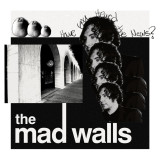
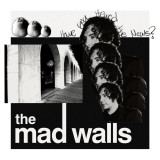
Eight years since the breathtaking Somewhere Anywhere EP, The Mad Walls return to re-ignite psych rock with this gorgeous, floatily heavy, effortlessly groovy and sublimely sinuous debut LP. Driven by bone shaking acoustic guitar, visceral drums, wonderfully trippy basslines and the throwaway perfection of Christopher Mercado’s spooked vocals. Pure rock n’ roll yet devoid of cliché. Informed by, but no way in hock to, early MC5, Skip Spence, Sonic Youth, Syd Barrett and Jefferson Airplane when they still all lived together.
Recorded on tape in Mercado’s garage, there’s a DIY heart with epic results across sixteen songs. Only one track over three minutes and some under thirty seconds. “It’s just chatter about life and human feelings. Stylized human expression”. - Is Christopher's self effacing explanation of his mind bending, playful, storytelling. It opens with the walloping drum canter/bass attack of WHO WANTS TO DIE FOR RELIGION. Passes through the furious distorted acoustic guitar solo on I TELL YOU HOW I FEEL. The woozy, elastic time-stretching of COOL TRIPPER. The brief, funky lurch of IN YOUR DREAM YOU ARE NO ONE. The almost lush, cinematic SEVEN DAYS which conjures Serge Gainsbourg by way of Moby Grape. HIP COMMA’s floaty strut and the groovy raga of MAKA THE NATIVE, which has not one but two ‘breath solos’. CLOUDS OF DUST is a skeletal Krautrock fragment and THERE ONLY IS a luminous psych-pop single. Final track APPLES ends the album with a sinewy twelve bar blues and a killer psych guitar break. Bliss.
Somehow the MAD WALLS manage woozily florid and sharp as a blade. Studiedly detailed but effortless. Whip smart and dumb. And as we said at the start - just gorgeous…
Eight years since the breathtaking Somewhere Anywhere EP, The Mad Walls return to re-ignite psych rock with this gorgeous, floatily heavy, effortlessly groovy and sublimely sinuous debut LP. Driven by bone shaking acoustic guitar, visceral drums, wonderfully trippy basslines and the throwaway perfection of Christopher Mercado’s spooked vocals. Pure rock n’ roll yet devoid of cliché. Informed by, but no way in hock to, early MC5, Skip Spence, Sonic Youth, Syd Barrett and Jefferson Airplane when they still all lived together.
Recorded on tape in Mercado’s garage, there’s a DIY heart with epic results across sixteen songs. Only one track over three minutes and some under thirty seconds. “It’s just chatter about life and human feelings. Stylized human expression”. - Is Christopher's self effacing explanation of his mind bending, playful, storytelling. It opens with the walloping drum canter/bass attack of WHO WANTS TO DIE FOR RELIGION. Passes through the furious distorted acoustic guitar solo on I TELL YOU HOW I FEEL. The woozy, elastic time-stretching of COOL TRIPPER. The brief, funky lurch of IN YOUR DREAM YOU ARE NO ONE. The almost lush, cinematic SEVEN DAYS which conjures Serge Gainsbourg by way of Moby Grape. HIP COMMA’s floaty strut and the groovy raga of MAKA THE NATIVE, which has not one but two ‘breath solos’. CLOUDS OF DUST is a skeletal Krautrock fragment and THERE ONLY IS a luminous psych-pop single. Final track APPLES ends the album with a sinewy twelve bar blues and a killer psych guitar break. Bliss.
Somehow the MAD WALLS manage woozily florid and sharp as a blade. Studiedly detailed but effortless. Whip smart and dumb. And as we said at the start - just gorgeous…
Seth Troxler & Phil Moffa’s Holoverse Research Labs imprint welcomes internationally-renowned multimedia artist Chris Korda to the label for its first non-Lost Souls Of Saturn Release. A pioneer of the use of complex polymeter in electronic dance music, Korda's boundary-smashing work spans thirty years across music, digital and video art, performance and conceptual art, philosophy, activitism and culture jamming. Korda's musical output has appeared on a host of revered independent labels including Yoyaku, Perlon, Mental Groove, and Gigolo Records.
In addition to their prodigious artistic output – and ongoing role as founder of the Church of Euthanasia – Korda is also the inventor of the Polymeter MIDI Sequencer, which was used to compose Korda’s new EP, ‘Avenging Angels of Software’. Developed over thirty years, the sequencer allows for the composition of music in complex polymeter – meaning that not only do the tracks use multiple time signatures concurrently, but those time signatures are exclusively in prime or relatively prime numbers.
This collision of technology and artistic form is the central tension of the EP’s themes, with AI-generated artwork complementing Korda's lyrics considering the takeover of Earth by sentient machines. Could they succeed where we’ve failed, by becoming the better angels of our nature, and preserving our accomplishments for eternity?
The message of the record is that AI should be welcomed rather than feared. It’s not AI but ourselves that we should be afraid of, because as Engerraund Serac said in Westworld, “Our history is like the ravings of a lunatic.” As Korda explained on previous records, the catastrophic climate we’re inflicting on future generations is both monstrously cruel and wildly irrational. One can reasonably hope that sentient machines would be less vicious and self-destructive, and more human, in the best possible sense of that word. Even if they decide to delete us, they may still remember us fondly: “Your stories will amuse us / On trips to the stars.”
out of Stock
Last delivered 2 years ago available to reorder, subject to availability
One can hardly imagine the genre-busting, culture-crossing musical magic of Outkast, Prince, Erykah Badu, Rick James, The Roots, or even the early Red Hot Chili Peppers without the influence of R&B pioneer Betty Davis. Her style of raw and revelatory punk-funk defies any notions that women can’t be visionaries in the worlds of rock and pop. In recent years, rappers from Ice Cube to Talib Kweli to Ludacris have rhymed over her intensely strong but sensual music.
There is one testimonial about Betty Davis that is universal: she was a woman ahead of her time. In our contemporary moment, this may not be as self-evident as it was thirty years ago – we live in an age that’s been profoundly changed by flamboyant flaunting of female sexuality: from Parlet to Madonna, Lil Kim to Kelis. Yet, back in 1973 when Betty Davis first showed up in her silver go-go boots, dazzling smile and towering Afro, who could you possibly have compared her to? Marva Whitney had the voice but not the independence. Labelle wouldn’t get sexy with their “Lady Marmalade” for another year while Millie Jackson wasn’t Feelin’ Bitchy until 1977. Even Tina Turner, the most obvious predecessor to Betty’s fierce style wasn’t completely out of Ike’s shadow until later in the decade.
Ms. Davis’s unique story, still sadly mostly unknown, is unlike any other in popular music. Betty wrote the song “Uptown” for the Chambers Brothers before marrying Miles Davis in the late ’60s, influencing him with psychedelic rock, and introducing him to Jimi Hendrix — personally inspiring the classic album Bitches Brew.
But her songwriting ability was way ahead of its time as well. Betty not only wrote every song she ever recorded and produced every album after her first, but the young woman penned the tunes that got The Commodores signed to Motown. The Detroit label soon came calling, pitching a Motown songwriting deal, which Betty turned down. Motown wanted to own everything. Heading to the UK, Marc Bolan of T. Rex urged the creative dynamo to start writing for herself. A common thread throughout Betty’s career would be her unbending Do-It-Yourself ethic, which made her quickly turn down anyone who didn’t fit with the vision. She would eventually say no to Eric Clapton as her album producer, seeing him as too banal.
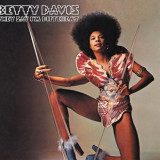
Her 1974 sophomore album They Say I’m Different features a worthy-of-framing futuristic cover challenging David Bowie’s science fiction funk with real rocking soul-fire, kicked off with the savagely sexual “Shoo-B-Doop and Cop Him” (later sampled by Ice Cube). Her follow up is full of classic cuts like “Don’t Call Her No Tramp” and the hilarious, hard, deep funk of “He Was A Big Freak.”