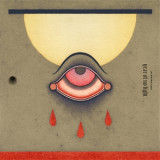
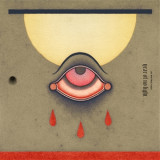
The Battle of the Year Poland 2025 Official Soundtrack is a powerful compilation created especially for b-boys and b-girls, capturing the energy and raw essence of the Polish breaking scene. Curated to accompany the prestigious Battle of the Year Poland event, this release features exclusive tracks from some of the most respected and influential producers in the country.
The tracklist showcases an all-Polish lineup, including talents such as Oer Beatz (IBE Beat Battle Winner), DJ Plash (Official DJ – Olympic Games 2024 Paris), the legendary DJ 600V, DJ Pablo, and many more. Each beat is crafted to elevate the dancefloor and pay tribute to the roots and future of hip-hop culture in Poland.
This soundtrack is not just a musical release—it's a celebration of movement, rhythm, and community, reflecting the strength of the Polish breaking scene on the global stage.
"Chasing the funky symphonies that filled my head and my dreams..."
December 25th, 2023 - an Instagram post. Stimulator Jones shared half a dozen FIRE tracks from his beat tape archive. We were immediately drawn to the rough hewn boom bap.
"I'd release that", Rob commented.
Hours of material was shared and the result is this: Cool Green Trees (1999-2005). A collection of beats and loops Stimulator Jones created between the ages of 14-20 at home in his basement, bedroom and computer room in Roanoke, Virginia.
You will not believe the profound soulful genius contained within these naive schoolboy melodies.
December 25th, 1998 - 25 years ago to the day and his much-coveted Yamaha SU10 sampler was finally bestowed upon young Stimmy AKA Sam Lunsford: "I immediately hooked up a CD Walkman to the input jack and looped the beginning two bars of Grover Washington Jr.'s "Mercy Mercy Me". I don't know what exactly was so thrilling about hearing two measures of music repeating over and over but it was so infectious and hypnotizing and enthralling to me. I'll never forget that ecstatic rush of making my first loop - an uncontrollable, gleeful smile plastered all over my face." When you hear the pocket breakbeat symphonies featured here on Cool Green Trees, you'll feel the same sense of frisson.
In the wake of his Stones Throw breakthrough - Exotic Worlds & Master Treasures - Stimulator Jones was pegged by many as a 90s throwback artist. However, he literally IS a 90s artist. He's been recording music most of his life and he's now 40. He created the bulk of Cool Green Trees as a teenager. Everything before 2004 was recorded when Sam was still in school. He was in 8th grade when he made the 1999 tracks - he didn't even have his learner's permit. This album is a snapshot of a young man in a simpler time. Things were still mysterious back then and he was flying blind, relying on his ears and having to figure things out for himself: "I had no road map for becoming a beatmaker. I have been collecting music since I was a kid, I am a lifelong digger and seeker of cool and interesting sounds. I was there in the golden age of Hip Hop, and while I may have been a suburban white kid in Roanoke, Virginia, I was tuned in and I bought so many classic albums when they came out. I was attracted to Hip Hop because of the musical and poetic quality. I was hypnotized by the rhythms, partially because I was a drummer. I didn't brag about collecting my breakbeat records or making beats - it was something I did in isolation. It wasn't something I generally wanted to bring attention to and it didn't really score me any cool points. I certainly wasn't flexing on social media about it."
Hell, he can do that now!
Opener "Pharoah Jones" was inspired by Yesterday's New Quintet and Madlib's ability to capture that classic 70s sound whilst playing all the instruments. Sam created this one stoned afternoon by laying down a 2 bar loop and a shaker loop on his Yamaha SU700 sampler. He hung a microphone from the ceiling and played his Yamaha Stage Custom drum kit over the top before adding ender Rhodes and playing his dad's Selmer tenor sax through an Electro Harmonix Memory Man echo pedal. Yes! Up next, "Ghost Gospel" utilises a dope loop from a gospel record and adds some soul-funk drums overtop, whilst working that filter knob. Says Sam: "The loop reminded me of something Ghostface would rap over. The sample was in 3/4 waltz time but I flipped it for a 4/4 groove, a technique I picked up from RZA. "Ill Feeling" uses sped-up pieces from a dusty old funk record and putting them over a classic NOLA drum loop; gain chopping up a slow, bluesy 3/4 time signature and bending it to a 4/4 groove. Classy shit. "Capital Punishment" features drums tapped in live, inspired by MF Doom's Special Herbs series. "Do Not Adjust" consists loops found on a compilation of 70s French music at Happy's Flea Market, a classic Roanoke digging spot.
The sublime, evocative title track, "Cool Green Trees" was created when Sam was still living at home. He dumped samples off his SU10 into the family desktop and arranged them in a demo version of Pro Tools: "This track was sort of my ode to the DJ Shadow style of sample based production. Super spacey, slow, and moody. The heavily filtered drums were inspired by Alec Empire's 'Low on Ice' album. I later added some scratches and sounds from a Spider Man storybook record." "Chill Scratch" snags the final bit of a bossanova record and pairs it with a drum loop before adding experimental scratching run through an Electro Harmonix Memory Man echo pedal. "Poisonous Fumes" was made using a sampler, mixer and a turntable; a kind of mixtape beat collage with added scratches and sounds from various records. Using dialogue from superhero records was a nod to Madlib. "Welcome Aboard The Starship" is dark, downtempo trip-hop with a spooky bent. Sam paired a slow, hard drum loop with a guitar sample grabbed off a psychedelic rock record. To finish, he added various backwards sounds and weird atmospheric effects and a little scratching. Swoon.
Side B opens with "Keep On Runnin", made on a borrowed Roland SP202 sampler. Having always loved the sound of the Lo-Fi filter on those machines, reminiscent of the Emu SP1200, Sam always imagined Del or another of the Hieroglyphics crew rapping over this beat. You can certainly hear why. "Sounds Impossible" sees Sam experimenting with layering multiple kick samples at different volumes to create patterns similar to those heard by Showbiz and Lord Finesse during their God-level 1995 period. "Painted Faces" was made by chopping up a REDACTED record which he had gotten from Happy's Flea Market and paired it with a REDACTED drum loop. By the time Sam recorded "The Knew Style", he had acquired a shitty old 1960s portable turntable off eBay. It didn't function properly when he bought it but his brother opened it up, cleaned it out and got it working: "I remember he told me that there was a bunch of sand inside of it when he opened it up, as if its previous owner had taken it to the beach. I would take that turntable on my Happy's Flea Market digs so I could preview records...that's how I found this loop."
"Chicken Wing Blues Sauce" loops up a classic blues joint and pairs it with some REDACTED drums. A bit of filtering and arranging et voilà! "Kool Breeze", from 1999, is one of Sam's oldest surviving beats, as is "Sexx Bullets". The Roots sampled the same record, leaving Sam frustrated yet vindicated. "Soul Child" was an early SU10 creation, looping a dusty old Soul Children 45 and pairing it with 70s rock drum loops to great effect. "Take Off Runnin" was another loop found digging with a portable turntable. Paired with some boom bap drums it makes for a hypnotic head-nod groove. "Centurian" was intended to be a little beat interlude a la Pete Rock. The sample is from a sun-dappled soft-psych record and it's paired with a Robin Trower drum loop that just happens to fit perfectly. Sometimes you slap things together kind of haphazardly and magic happens. "Bozack" was the first beat Sam made using Pro Tools, his first foray into using chopped sounds instead of loops, an exciting new world. "Church" is beat interlude using a Phil Upchurch loop with the "Long Red" drums - a favourite break of Dilla et al. Sam was really on a tear in late 2004, probably because he was unemployed and phoneless and able to just make beats all day. He made "Splash One" on a borrowed Yamaha SU700 and again was experimenting with tapping the drums in live with his fingers, instead of using a loop or sequenced pattern. Channeling 9th Wonder, Sam used a water splash sound effect from a Batman record as a percussive element, hence the title (also a 13th Floor Elevators reference). The main loop is a backwards portion of one of his favourite Roy Ayers songs.
"Hank" is another fun little beat interlude thing, created on a borrowed Roland SP202 sampler with the fantastic Lo-Fi effect that resembled the Emu SP1200 at a fraction of the price. "73 goatee", from 99, is another of his oldest surviving beats, created in his bedroom with his Yamaha SU10 and his brother's Vestax MR-300 4-track recorder: "This one will always feel special. I can remember having a feeling all the way back then on the night that I created it that this was a solid beat with a catchy loop. There was something in the Fender Rhodes melody that resonated with me emotionally, and I had never heard a producer sample that portion before. I felt like I had found my own unique sound, my own unique loop. It came from an Ahmad Jamal '73. I actually even recorded myself rapping and scratching over this beat way back then, I still have that version in all its imperfect sloppy glory."
Sam explains just how much these tracks mean to him: "They all have immense historical and sentimental value and I'm proud of them. These beats come from an innocent, simple time when I was just figuring out how to craft these sounds. They're something very personal to me. They are the initial part of a journey that I really was taking *alone*. There was no YouTube. I couldn't Google shit. I didn't even know any other beatmakers, producers or DJs in my town that could teach me anything. It was always just me, alone, in a room with some equipment - chasing the funky symphonies that filled my head and my dreams. What I was doing wasn't cool. Most of my peers thought I was a weirdo and couldn't care less. Creating these sounds was an anti-social endeavour. In a sense, I felt like it was me against the world, and all I had to instruct and assist me were the recordings produced by my heroes - RZA, DJ Premier, Erick Sermon, Beatminerz, Showbiz, Diamond D, Beatnuts, Prince Paul, The Bomb Squad, Pete Rock, Q-Tip, E-Swift, Mista Lawnge, DJ Shadow, Cut Chemist, Peanut Butter Wolf, El-P and so many more...I dedicate this collection to them, and to my older brother Joe who has always been a musical and technical guiding light for me.
This was a time before every kid was a self-described producer and beatmaker, before everyone had a DAW, before Kanye and "chipmunk soul", before Red Bull beat battles, before there was any social media beyond chat rooms and AOL Instant Messenger, before Soundcloud, before SP-404 mania, before lo-fi beats to study to, before Splice, before targeted ads for MIDI chord packs, etc. In 99 when I told people that I had a sampler and made beats I was mostly met with bewildered confusion and indifference. Kids and adults alike would wonder why I got this weird machine for Christmas instead of something worthwhile like a Playstation or a mountain bike or even a guitar for that matter because at least that could be used to make "real music". Back then, sampling was still not widely respected as an art form - it was seen as lazy, talentless and unoriginal at best and outright criminal theft at worst. I had gotten respect for playing drums and guitar and things of that nature but this was a step in the wrong direction in the eyes of many."
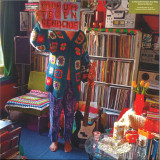
The cover photo is a picture of Sam standing on his back porch in the latter part of 1998, just before he got his first sampler. He was 13 years old, in 8th grade. His dad took the picture with his 35mm film camera: "I actually wanted to be pointing my dad's .22 pistol at the camera lens but he wouldn't let me. He gave me an old walking cane to use instead. The Tommy Hilfiger puffer jacket came from the lost and found at William Fleming High School where my mom worked as a secretary. I was thrilled when she brought it home because we never spent money on expensive name brand clothing like that - we were for the most part strictly a sale rack, bargain bin, thrift store, yard sale, flea market kind of family when it came to clothes. My watch is some cheap off-brand fake gold department store watch." Mastering for this vinyl edition was overseen by Be With regular Simon Francis and it was cut by the esteemed Cicely Balston at Abbey Road Studios to be pressed in the Netherlands by Record Industry.
out of Stock
Last delivered 15 months ago available to reorder, subject to availability
This Project is really a two in one offering. Combining the three tracks from Ringer’s 2021 release, the “Meta Music EP” and his darker more aggressive moniker, Black Sued’s offering the “Rogue EP”. The EP is sort of a yin and yang. Monotone is a deep chordal track with uplifting vocals and a pulsing almost distorted bassline. This track is complimented with minimal drums and a simple yet beautiful synth riffs that bring it all together. New Plan is a fast paced cut that insights the listener to move. The drums and chords wrestle in a rhythmic dance while Ringer’s voice projects the essence of this side of the 12”. Positivity and persistence, the energy is alive in this track. YIA, an acronym that stands for Yes I Am, is meditative and filled with affirmations for the listener. Deep solemn chords, and the sounds of a thunder storm take the listener into a inner place of self reflection. The affirmations are for the listener to embody, a solid thought provoking end to this side of the 12”.
Rogue, the title track of this side of the record, is an intelligent, dark and jazz filled groove, that takes the listener on a journey. The groove is easy to catch, and wraps the listener into an almost mysterious landscape of rhythm and melody. Keeping the tone of this side of the 12” is Maze. The chords and rhythm walk in tandem to a beat that almost favors a marching band. A higher energy feel arrives as the 16th high hats meet a long defining chord that take this track to the next level. Deep Dirt reminds me of a drum machine tweaking or malfunctioning. The ominous chords paired with the distorted synth and bass lines that carry the listener through the filth that is this track.
out of Stock
Last delivered 14 months ago available to reorder, subject to availability
Compiled by Philip King
“And then came the rise of synth pop : blokes with dodgy haircuts hunched over keyboard-operated
machines stuffed with wires and do-it-yourself tone oscillators making sounds like a brood of geese
passing gas in a wind tunnel. Whoopee! This is the way the ‘70s ended : not with a blood-curdling bang
bang but with a cheap, synthesized, emasculating whimper.”
NICK KENT, NME.
All The Young Droids: Junkshop Synth Pop 1978-1985 is a new compilation that charts the
underbelly of the epoch-defining sound of the synthesiser in 80s popular music. Compiled by Philip
King (previously seen compiling All The Young Droogs, Glitterbest and Boobs - The Junkshop
Glam Discotheque), the music here connects the dots between DIY synth enthusiasts grappling with
new, cheap synthesisers at the tail-end of punk and wannabe, jobbing songwriters enthral to the new
music pioneered by Gary Numan, Depeche Mode and Daniel Miller’s Mute Records. Featuring rare
tracks of auto-didactic progressive pop music, proto-techno punk, shoot-for-the-stars-land-in-the-gutter
chart flops and heralded, underground synth classics, School Daze paints a picture of beautiful failure.
Complete with extensive sleeve notes written by King and never before seen imagery, all 24 tracks
were remastered by RPM in-house engineer Simon Murphy, many from vinyl copies due to lost master
tapes. The story told on All The Young Droids is one of the dawning opportunity presented by both the
emergence to the market of cheaper analog synthesisers and the distribution networks plus indie labels
that exploded with the advent of punk music in 1976. While the music that sprouted out all over the
globe in the wake of these factors was decried as fake, plastic, a refutation of punk’s guitar-led
revolution, it’s telling that much of the music on All The Young Droids.. was created in bedrooms,
ramshackle studios and home-made set ups with often borrowed equipment. In the era of record labels
jumping to capitalise on the success of The Sex Pistols, The Clash (both on major labels, of course)
these artists struggled to stand out from a new gold-rush with next to no budget or PR team. With radio
and labels desperate for the new Yazoo, what resulted was a testament to necessity being the mother
of invention.
At the time, the synthesiser was the music of the future, a shiny new machine that could paint like an
orchestra with a single finger and a 4-track. In the hands of Manchester avant-pranksters Gerry & The
Holograms it’s a pulsing, sardonic weapon.. the only instrument on the Messthetics classic lampooning
of New Wave fashion. In Hamburg, a 16 year old Andreas Dorau used it to write and record (with his
female classmates on vocals) a global smash in Fred Vom Jupiter (later licensed to Mute Records).
The hard-to-find English version (Fred From Jupiter, natch) is included here. Many artists with alreadystoried careers caught the bug and recorded synthesiser-fuelled peons to space, computers, the future
and, of course, love-interests. Harry Kakoulli, late of Squeeze, recorded a solo album in 1979 that
included the incredible power-synth-pop smash-that-never-smashed I’m On A Rocket. Similarly, Ian
North of Neo and American Power Pop stalwarts Milk ’n’ Cookies bought a Korg MS20 and used a
tape machine to record We’re Not Lonely, an absolute lost-classic of minimal synth pop. We’re Not
Lonely also features on the Junkshop Synth Pop sampler 7” twinned with John Howard unreleased
track You Will See, released April 12th 2025.
There are plenty of compilation debuts in evidence. Sole Sister were a mysterious trio who were
featured on the Scaling Triangles compilation of female-fronted, queer-adjacent post-punk /
underground music that also featured The Petticoats. Selwin Image were from San Francisco and
featured members of the recently defunct power pop/punk group The Pushups. Their stupidly catchy
The Unknown fizzes with New Wave energy - think XTC to Sparks but remains unreleased until now.
Dream Unit’s A Drop In The Ocean is an early synth wave cut, positively teaming with Joy Division
instrumentation, previously only released on a long-forgotten and super rare, self-released EP.
Incandescent Luminaire’s Famous Names belies an archetypal struggle of a small-town trying to
make it in a cruel industry but is a thrilling New Romantic-Synth Wave cross over with a OMD
gloominess that’s a joy to hear. Feminist Minimal Wave track I Am A Time Bomb by performance artist
Peta Lilly and Michael Chance is a revelation destined for new found cult status. It was released on 7”
and lost until now.
The flipside to the subterranean, never-made-it synth pop mentioned above are the ambitious, even
fruity attempts at success that have a perennial elegance to their confidence. New Jersey-ite Billy
London (real name Ed Barth) tried to cash in on the synth boom with Woman, released by a major
label, a lurching new wave track built on the Louie Louie rhythm and a wonderfully camp Lou Reedstyle sleazy vocal before exploding in the synthesised chorus. The song bombed but with a chorus like
this, you have to wonder why? Ex-Glitter Band member John Springate’s My Life is truly epic, with
doomed chord progressions and massive sounding drums turning into at least 3 different songs in the
course of the track. Before you wonder what’s going on the song resolves with a glorious return to the
main refrain.
The dry-ice-dressed dance floor is well catered for too. Design’s Premonition and Vision’s Lucifer’s
Friend are stone-cold minimal synth bangers, well loved but given a new lease of life here. The
Warlord’s The Ultimate Warlord was released in 1978, a homespun proto Hi NRG banger that was
later re-recorded by The Immortals in Canada who had a club hit with it. One-man- band Disco
Volante’s No Motion was re-issued by Synth wave label Medical in 2012 but makes its first vinyl
compilation appearance here. Close your eyes and you can imagine what Lawrence of Felt would have
sounded like with some cheap Korgs a little earlier in his career. Gibraltar-based trio The Microbes
imagined a computer programming people to dance - how prescient - and ended up with a propulsive,
robo-funk track with splendid rubbery bass playing over a tectonic drum machine. Previously picked up
by Belgian label Stroom TV, Dee Jay Bert & Eagle’s heavily Euro-accented I Am Your Master
demands the listener to “come to paradise!” In a frankly terrifying manner.
All The Young Droids is the first compilation to peel away from the narrative that dour, Minimal Synth
and Cold Wave were the only musical children of the first rush of synth pop. Philip King and School
Daze Records describe a much more complicated world: along with the austere, Brutalist children of
Daniel Miller (who produced Alan Burnham’s Bowie-Low-influenced Science Fiction here) was a
plethora of desperate cash-ins, accidental mainstream hits, ambitious pop dramas and major label
punts that went nowhere. Crucially, the compilation blurs the line between junk and treasure. What if the
two things are interchangeable. What if it’s all science fiction?
out of Stock
Last delivered 10 months ago available to reorder, subject to availability
Unreleased electronic / jazz / madness from two titans of jazz and experimentation: JOHN SURMAN and KARIN KROG.
I could now write a load of blown up puffery about how amazing this is, but everyone does that, and a lot of the time it’s all a load of bollocks. But basically this was sent to me by Karin / John when I asked if they had anything hanging about that had not been released. This came through and blew my tiny mind. Like something from prime Annette Peacock “Pony” period. Here is what John Surman said…
John Surman writes:
Back in 2012/13 there had been some talk about a big futuristic open air urban dance/theatre production for about 80/100 actors/dancers with lasers and all kinds of lighting effects on different stages. I was invited to get involved and, together with Ben and Karin, we eventually decided to get to work on some ideas. I think that the original plan was that in performance there would be a mixture of live music and electronica.
Not altogether surprisingly, bearing in mind the complexity of the project, it never moved forward and developed into anything more than an interesting idea. It was probably over ambitious & I guess the funding never came through.
The only information I that I can find relating to the production refers to two silent movies made in 1927/1928 by the filmmaker Eugene Deslaw, entitled `La Marche Des Machines´ and `Les Nuits Électriques.These were clearly intended to act as inspiration for the project.
After months turned into years it became obvious that the project was going nowhere, and so the recorded music laid around gathering dust until Johnny Trunk asked Karin if she had any interesting music that he might be interested in releasing. One thing led to another and so, finally, Electric Element found a home!
For anyone interested in the equipment used this will have to be an approximation since the memory might be playing tricks. Karin was probably using a Yamaha Rex50 f/x unit, a Roland VT-3 Voice Transformer and an Oberheim Ring Modulator. I was playing Bass Clarinet and Contrabass Clarinet through various f/x units together with a Yamaha WX5 wind synth. All the instruments and voice were also processed through Ben´s equipment. After writing this I asked Ben for his recollections and he came up with the following:
John, Karin and I created this music in 2 or 3 days in the winter of 2013 at their studio in Oslo, Norway. I followed up with another 2 or 3 days of mixing, editing and post-processing . We kept a collaborative, improvisational and free-form approach to the sessions. I grew up immersed in music such as Cloudline Blue, the 1979 duo album of Krog/Surman, and this felt like a similar approach. I have mixed sound for many of their live duo concerts and I would use effects and electronics as an
accompaniment and counterpoint to the performed music. The relation of organic and artificial sound sources in music has always fascinated. In this case, I used some contemporary digital signal processing to introduce my own aesthetic into the conversation, in particular using granular synthesis to recombine small 'clouds' of sound into alternate forms. Some of the software tools I used included Ableton Live, Max/MSP and Reaktor.
out of Stock
Last delivered 14 months ago available to reorder, subject to availability
Wytch Hazel's stellar 2016 debut Prelude confirmed these Lancastrian apprentice wizards to be Britain's most promising new hard rock band. Two years on, that promise comes to abundant fruition on II: Sojourn, an album that moves Wytch Hazel on from the innocence and exuberance of the debut to a darker, more profound and complex place, carefully wrought into optimum shape by the band's singer, guitarist, songwriter and mastermind Colin Hendra. "I'm really into the idea of an album," notes Colin. "I don't do mix-tapes, I don't listen to singles, I'm interested in albums. I want to make a good, listenable, cohesive work, that is the whole thing." Asked what inspirations were brought to bear this time, Colin has good news, and even better taste: "I was listening to plenty of Judas Priest, Thin Lizzy and Wishbone Ash last year," remarks the frontman. "This seems to be more of a hard rock album, where the last one was more rock-folk. It's definitely more rock than folk!" The most crucial influence fully expresses itself via Les Paul guitars in sweet twin harmony through cranked Super Lead Marshalls - "Exactly the same type of amp that Thin Lizzy would have used," beams Colin - a benefit of working in James Atkinson's Hand Of Law Studio, a converted gaolhouse in Leeds. "We knew there would be a lot more great gear, more amps, more options," enthuses Colin of this productive new work environment. "We were more prepared, we planned better. I had a lot more vocals to record on this album, pretty much every song has at least three harmonies, but James is a really chilled out guy, he made it easy for us. I had a very clear idea of how I wanted each song to sound, I thought about every single aspect. I probably over-prepared for this album, and it paid off!" Wytch Hazel's proud, avowed Protestant Christianity continues to set them apart from the occult hocus-pocus of their peers, and the very title Sojourn has a Biblical inspiration: "It's used a lot in the Old Testament, people would travel somewhere to stay for a short period of time," explains Colin, comparing the idea to Wytch Hazel's development since Prelude. "We're going to reside here with this sound for a while, and the next album might not sound the same. Come and have a listen to this aspect of Wytch Hazel - it's a temporary stay. We'll be here for a while, then there will be something else. I'm always writing, it's a constant stream, but I'm always trying to raise the bar, because I don't want the next album to be not as good as the other ones!"
This is an album made during a crucial period in South Africa’s history during which there was a palpable feeling of a slow turning towards the collapse of the apartheid state side by side with an increasingly well-organised culture of resistance through the formation of the United Democratic Front (UDF) and various affiliated bodies. However, as a result, there was increased pushback from the state security establishment, a turning to dirty tricks and the formation of hit squads whose members murdered and tortured many of our friends and created chaos throughout South Africa as well as neighbouring countries.
This album is situated in this political environment however it took advantage of the new do-it-yourself music technologies available at that time. Technologies that made it possible to make and release records without interference from traditional record company executives. Two musician friends of mine pooled their resources after their respective bands had broken up. Ivan Kadey (National Wake) and Lloyd Ross (Radio Rats) built an 8-track recording studio control room and fitted it out in a second hand caravan and called it Shifty. They parked it in a garage attached to the only house left in a demolished and derelict mining village near Soweto on the outskirts of Johannesburg.
All the work on this album was completed there, mainly after hours and mostly alone where I enjoyed an exhilarating freedom to develop a whole new set of musical skills and ideas, incorporating my love of a wide range of music I’d grown up with. Influences of 1970s progressive/kraut/and psychedelic rock combined with mbaqanga bass styles, early reggae/dub and Indian tabla rhythms. Stockhausen, early Zappa and Holgar Czukay were radio text and shredding influences, and Chris Cutler’s band Henry Cow & Art Bears helped me see a way to political expression. Mostly though was the exciting post-punk and no-wave music coming through to us from Europe and America: bands like This Heat, the Mekons, Raincoats, Sonic Youth and Pere Ubu were immensely important to me as was my reading from the period: J.M.Coetzee’s first 3 novels are strong influences on Free State Fence; the stark landscape, superstition, ritual, and sexual repression are in many of his settings. JG Ballard was a constant presence throughout that period, especially whilst living in such a surreal environment, surrounded by mine dumps, but mostly I think the whole French post-modern philosophical movement—Derrida, Foucault and of course, Baudrillard’s Simulacra and Simulation—set out a new sense of possibilities, possible ways to express oneself, ways to think, and ways to try and analyse the political intersection of public and private life. Most important at that time was the influence of sound recordings I had made and experiences garnered from working as a sound recordist on documentary films. These financed my work and later the studio and were consistent employment throughout the 1980s. Film work also enabled me to experience much of South Africa that was hidden from most. The track Independence Day is a good example; drawn from some time spent in the rural homeland of Venda. This then was the first full length Kalahari Surfers album, completed in summer of 1984 it was taken to EMI pressing plant but rejected by the cutting engineer as being ""political, pornographic and anti religious"". Chris Cutler at Recommended Records took up the challenge and released the album through his label. He wrote the original liner note
"Wind, Again" is Sary Moussa’s fourth studio album and second album on Other People. Based between France and Lebanon, Moussa returns with a riveting electro-acoustic album informed by his ever-changing relationships to space, listening, and resonance as well as his growing interest in the study of harmonics in electronic and electro-acoustic music.
Years in the making, “Wind, Again” approaches distinct musical worlds and languages by bringing together improvisations by musicians performing on Western and West Asian instruments such as the Hammond organ, clarinet, saz, and buzuk with electronic arrangements and textures. Rather than force a rapprochement of these musical worlds through the instruments, and keenly aware of the weighty sonic histories they carry, Moussa proposes another way through which they can exist together in contemporary electronic composition.
Composed of six tracks, each of which demonstrate an array of recording and processing techniques, the album generates moments of tension produced by the synthesis of textural, tonal, and harmonic encounters that Moussa calls “shadows”, which outline an impressionistic musical language, existing at the edge of familiarity. Such moments permeate tracks like “Everywhere at once” and “Violence” that open with the Hammond organ and the saz respectively and slowly reveal an expansive field of sounds that showcases each of the musicians’ characteristic performances and Moussa’s densely layered textures. It is a latent yet unrelenting tension through which the composer invokes rather than represents a collective experiential state, especially familiar to those who know his environment. In “Wind, Again” these shadows are articulations of sounds steeped in traditions they are never quite tethered to. Such articulations are implied and alluded to, they play within a musical reference without the latter explicitly existing in the recording, always teetering, never completely here nor there.
Sonically and musically, the album is fueled by the cultural, social, and personal realities that Moussa was brought up and lives in.
Both personal and musical ties with the musicians who feature on the album is central to Moussa’s practice. In the title track “I will never write a song about you”, musician Julia Sabra opens with rolled piano chords, followed by Paed Conca on clarinet and Abed Kobeissy on buzuk, before Moussa’s electronic processing pieces together, lifts, and sustains the melodic direction of the track that emerged from the musicians’ separate improvisations. For Moussa: “The initial connection between the three performances was made on a track that no longer existed, the original recording was both an obstacle and necessary step for the track we hear on the record. It’s as if we were all telling different stories and I pulled on the thread that held them together”. The track, and more generally the record, is tinged with a melancholy of things lost, though it never fully succumbs to it.
“Everything inside a circle”, Moussa’s most personal track and for which he provides the only vocals on the record, harkens back to a childhood memory of listening to music with his mother in a car: “There was a sound I was looking for — a memory of a sound and how I first heard it. This track is a hybrid of that memory and what I wanted to make of it”. The track relies heavily on generativesystems and perhaps embodies most the ambiguous quality of the record’s music in its refusal to be pinned down by one musical tradition or another.
“Wind, Again” is both familiar and alien, cold and warm; it pays homage to the mechanics, materials, and tactility of the instruments and converges acoustic and synthetic spaces. What anchors the sound of the album are the elements of a whole that cannot find its own idiosyncrasy and that is precisely why Moussa’s album is a tour de force.
out of Stock
Last delivered 15 months ago available to reorder, subject to availability
A highly respected figure for dancers and artists alike, Markus Suckut offers his signature built-to-last sound to Fuse with 'Moments'. In this style, confidence is key and Suckut provides soul to club music in a way few have been able to. Simple yet ever so refined, the German artist furthers his sound with the Belgian label with rolling tracks that reach beyond the dancefloor yet again. 'Moments' is just that, a collection of instances spent inside the mind or outwards into the world in order to move and connect.
The A1 remains usually the first impression of every record, so it makes sense that 'Patience' would mark the beginning of this eight release for the Brussels' club. A bubbly yet impactful track, 'Patience' rolls through six minutes in no time with eccentric percussion and a viscous low-end. Unafraid to break the codes in order to push his sound forward while respecting the essence of what makes the genre great, Suckut puts years of mastery at work in order to find balance and air between his elements. This impressive low-end rhythm is continued into 'Resurrection' - which is more of an exploration of dissonance and texture than its predecessor. With hi-hats whipping around the stereo field through metallic bends and a harmonic kick/bass, the record knows for what context 'Resurrection' is reserved for. 'Myth' then comes along to lighten the load with a positive groove and an extraverted arrangement, maintaining balance to the overall EP. Complete with a subtly modulating live-played percussion that echoes the character of a vocal and layered over an almost vintage drum sequence, the persistence of 'Myth' finds a sweet spot between techno and house, making it a versatile tool in almost any record bag. The soul of the EP, however, belongs to its title track 'Moments'. Appropriately named, this fourth piece concludes Markus Suckut's latest statement for the dancefloor. A suspension of time in structure as much as in melody, the producer takes the time to unveil each element of the record while maintaining a burning intriguing throughout. A truly timeless piece reserved for only the most special moments and most deserving crowds, Suckut proves once again that his understanding of emotion through his medium will echo his music across the world for years to come.
out of Stock
Last delivered 14 days ago available to reorder, subject to availability
Enjoy The Ride Records, in partnership with New Cannibal Society, proudly presents the 2xLP Expanded Deluxe Vinyl release to the Cult-Classic Horror/Comedy Cannibal! The Musical, directed by Trey Parker, co-creator of South Park and The Book of Mormon. Cannibal! The Musical is the true story of the only person convicted of cannibalism in America - Alferd Packer. The sole survivor of an ill-fated trip to the Colorado Territory, he tells his side of the harrowing tale to news reporter Polly Prye as he awaits his execution.
While searching for gold and love in the Colorado Territory, he and his companions lost their way and resorted to unthinkable horrors, including toe-tapping songs! Packer and his five wacky mining buddies sing and dance their way into your heart... and then take a bite out of it! Cannibal! The Musical is Oklahoma meets Friday The 13th Part 2. The film stars Trey Parker (South Park), Matt Stone (South Park), Dian Bachar (Baseketball, Orgazmo), Jason McHugh (Orgazmo) and Toddy Walters (Orgazmo).
For this newly expanded release, the stereo, music, and effects tracks were pulled from the digibeta tapes (thought to be lost) and have been remixed from scratch. This soundtrack also features complete dialogue scenes that lead into songs. What you'll hear is the best quality this soundtrack has ever heard! Cannibal! The Musical is housed in a gatefold jacket with brand-new art by Garreth Gibson. It is pressed on 2xLP vinyl for the first time and features 22 additional tracks available on the format for the first time, including instrumentals, dialogue, and score music. Pressed across four colorful variants, Side B also features a pop-up center label. What a Shpadoinkle day!
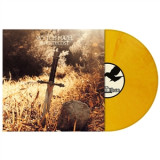
Haunting, discordant and deeply unsettling, `Les Maîtres Fous' (`The Mad Masters') was written by French post-metal collective Year of No Light in response to French filmmaker Jean Rouch's controversial 1950's docufiction of the same name. Commissioned by Musée Du Quai Branly in Paris for their 2012 `L'Invention Du Sauvage' exhibition, trance-metal pioneers Year of No Light approached the ritual practices of the Hauka movement as depicted in the film and responded with their uniquely hypnotic heaviness. Performed only twice, once at the exhibition on the 6th January, 2012 and again in Bordeaux on the 29th January, 2015; this release is a live recording of the second and final performance of `Les Maîtres Fous'. Whilst Year of No Light have a long history of collaboration with forward-thinking filmmakers and visual artists, the sensitivity of this documentary's problematic subject matter and the intensity of the band's performance made this performance both a physically and emotionally demanding experience; something that can be keenly felt upon listening. Founded in September 2001 by a collection of Bordeaux's heavy scene stalwarts as an ongoing side project encompassing elements of sludge metal and shoegaze, Year of No Light released their debut album, Nord, in 2006 to critical acclaim. The subsequent years however saw a significant lineup change with the band replacing their vocalist with a third guitarist to become a fully instrumental sextet incorporating aspects of black metal, drone electronica and dark ambient into their already formidable sound. 2010's four track epic Ausserwelt and the 2013 follow up Tocsin saw Year of No Light distilling their punishing sound even further; stalling the tempo to a glacial crawl and tuning guitars ever downwards to new uncharted depths. Consolamentum, the band's first full-length release in nine years and their first with Pelagic Records, brought the outfit's crushing double-drumming percussion to the fore as a masterclass in dynamic control saw Year of No Light embrace the highest highs and the lowest lows of the intervening years. Now approaching their 25th anniversary, `Les Maître Fous' is a pressing reminder that, despite the band's long and ongoing journey, Year of No Light have never been afraid to experiment, to take risks, to square up to life's ugliness and look it straight in the eye. FOR FANS OF Neurosis, Cult of Luna, SWANS, ISIS, Russian Circles, My Bloody Valentine, Chelsea Wolfe. The Dim Gleam edition is kind of a beige vinyl colour
Haunting, discordant and deeply unsettling, `Les Maîtres Fous' (`The Mad Masters') was written by French post-metal collective Year of No Light in response to French filmmaker Jean Rouch's controversial 1950's docufiction of the same name. Commissioned by Musée Du Quai Branly in Paris for their 2012 `L'Invention Du Sauvage' exhibition, trance-metal pioneers Year of No Light approached the ritual practices of the Hauka movement as depicted in the film and responded with their uniquely hypnotic heaviness. Performed only twice, once at the exhibition on the 6th January, 2012 and again in Bordeaux on the 29th January, 2015; this release is a live recording of the second and final performance of `Les Maîtres Fous'. Whilst Year of No Light have a long history of collaboration with forward-thinking filmmakers and visual artists, the sensitivity of this documentary's problematic subject matter and the intensity of the band's performance made this performance both a physically and emotionally demanding experience; something that can be keenly felt upon listening. Founded in September 2001 by a collection of Bordeaux's heavy scene stalwarts as an ongoing side project encompassing elements of sludge metal and shoegaze, Year of No Light released their debut album, Nord, in 2006 to critical acclaim. The subsequent years however saw a significant lineup change with the band replacing their vocalist with a third guitarist to become a fully instrumental sextet incorporating aspects of black metal, drone electronica and dark ambient into their already formidable sound. 2010's four track epic Ausserwelt and the 2013 follow up Tocsin saw Year of No Light distilling their punishing sound even further; stalling the tempo to a glacial crawl and tuning guitars ever downwards to new uncharted depths. Consolamentum, the band's first full-length release in nine years and their first with Pelagic Records, brought the outfit's crushing double-drumming percussion to the fore as a masterclass in dynamic control saw Year of No Light embrace the highest highs and the lowest lows of the intervening years. Now approaching their 25th anniversary, `Les Maître Fous' is a pressing reminder that, despite the band's long and ongoing journey, Year of No Light have never been afraid to experiment, to take risks, to square up to life's ugliness and look it straight in the eye. FOR FANS OF Neurosis, Cult of Luna, SWANS, ISIS, Russian Circles, My Bloody Valentine, Chelsea Wolfe
Sherlock Hound is the animated series from the masterpiece directed by Hayao Miyazaki and coproduced by TMS Entertainment and RAI, wich was broadcasted for the first time in 1984. The series was a success and remains to this day one a beloved classic in the world of Japanese animation.
To celebrate the recent 40th anniversary of the series, we are pleased to offer this sublime edition with its 2 discs gathering the soundtracks from the TV series and for the initial animated film (The Blue Ruby & Underwater Treasure), completed by a 8-page booklet, illustrated with beautiful artworks.
The soundtrack to the animated series was composed by Kentarô Haneda (well known for his work on the Space Adventure Cobra series) and includes the two signature songs performed by Da Capo. The anime film soundtrack is the work of Kunio Muramatsu, and also includes two songs performed by Haruko Kuwana. Immerse yourself in the fascinating atmosphere of this cult 80s anime!
Over the past near-decade, Lancashire's medieval metal phenomenon WYTCH HAZEL have been honing an uncommonly wholesome, rustic and devotional brand of timewarped hard rock that's all their own, with 2016's Prelude and 2018's II: Sojourn summoning to mind fevered images of Robin Hood and his Merry Men grooving to Jethro Tull and Thin Lizzy. Yet within moments of pressing play on their third LP, III: Pentecost, the musty mystical minstrelsy takes a back seat in favour of a rich, sumptuous, anthemic late-night drivetime vibe, passionately embracing the most high-end smash-hit classic rock and metal circa its late 1970s heyday. "I thought I put a lot into the second album, but this album has been an absolute obsession," stresses the band leader, Colin Hendra. "Every aspect had to be as good as possible. We've gone back and forth, Ed was tinkering with it for months on end. There's quadruple tracking going on with the rhythm parts, then we've doubled, tripled and quadrupled all our lead parts to get that richness and fullness of sound, all meticulously planned with pages and pages of organisational notes. It wasn't just `get in the studio and see how it goes!'" he laughs. "One day I did 14 hours of vocal recording. All vocals are double-tracked, I can't express how much hard work that is. The last album feels like a breeze compared to what we've done with this - and I don't plan on ramping it down!" Musically there are gorgeous self-professed touches of Black Sabbath, Blue Öyster Cult, AC/DC and early Scorpions_"With the soloing I was trying to go for Michael Schenker" beams Colin_while the scampering headbanger I Will Not initially took a nod from Angel Witch, who Hendra was helping out on second guitar back in 2015 when the track was composed, before studio treatment made it sound "a lot more Wytch Hazelly". But perhaps the most lateral comparison is to a band from the opposite spiritual realm, with Archangel an explicit homage to Swedish faux-Satanic devil cult Ghost. "I find them fascinating, Ghost; musically great, the songwriting is spot-on," enthuses the frontman. "We share an intrinsic connection, with Bad Omen honcho Will Palmer being the person who discovered us both. "Music is created for all, it's a common grace for everyone," he affirms, "which is why the music that shows the glory of God the most, in my opinion, is not music created by Christians. It's Black Sabbath!"
Further explorations into the deep space of the future/past by two master- improvisors who compose their wordless paintings out of thin air. Their collaborative powers are nowhere near their peak and this voyage takes them further into the Uncharted. These pieces unfold as revelatory mind blooms. Creating a canopy of sound forms inside which they speak the rarifi ed language of world creating. This isn’t just music, it’s a journey without maps, Inside.
This new LP takes Nelson & Kramer deep under the earth's seas, pulling the listener down beside them as they explore the uncharted currents that fuel the human imagination, fl uid, always moving, and always changing. It is an excursion into the lowest depths of Ambient Music, and a new beginning from the very place where life itself began. The fl oor of the ocean has a new sound, and it is breathtakingly beautiful.
The first and most independent of all independent producers, Joe Meek needs little introduction. He was the first to chart in both the UK and the USA with an independently produced song -which was actually recorded in his home’s kitchen- when The Tornados' Telstar took the world in 1962. Meek was, of course, one of the most in vogue producers of the first half of the 1960s, providing the soundtrack to the evolution of UK Rock’n'Roll to Swinging London, scoring hits with actors like John Leyton (Johnny Remember Me), showmen like Screaming Lord Sutch and bands like The Outlaws and The Tornados. He also produced a wide stream of R&B and freakbeat 45s that are nowadays hardly sought after by the collectors with the biggest bank accounts.
Joe Meek experimented with all kinds of recording techniques in his home studio, his tricks and gimmicks won his productions chart placement and critical and public acclaim, but none of his projects was so advanced and way out as the avantgarde experimentation showed in his I Hear a New World electronic symphony from 1960. Aided by The Blue Men formed by Rod Freeman (group leader, guitar, vocals), Ken Harvey (tenor sax, vocals), Roger Fiola (Hawaiian Guitar), Chris White (guitar), Doug Collins (bass), Dave Golding (drums) -also known as Rodd-Ken and The Cavaliers- who provided a tight base to his electronically produced sounds, Meek came up with what he envisioned as the soundtrack of the future, the sounds he envisioned were to be heard in outer space. It was too way out for its time, certainly. To the point that of all the opus, only four tracks saw the light of day on a 7" EP released on Triumph, Meeks very own label. It wouldn’t be until 1991 that the whole recordings from the I Hear a New World sessions would see the light of day on a CD issued by the RPM label.
Wah Wah offers a new reissue of this now classic early electronics masterpiece, housed in a beautiful front-laminated back-flapped sleeve and offered as a limited 400 copies only black vinyl version and an ultra-limited 100 copies only transparent purple vinyl. Get yours before they fly!
RIYL : Delia Derbyshire and The BBC Radiophonic Workshop, Louis and Bebe Barron’s soundtrack to Forbidden Planet, Raymond Scott, Tom Dissevelt & Kid Baltan, Morton Subotnick…
The first and most independent of all independent producers, Joe Meek needs little introduction. He was the first to chart in both the UK and the USA with an independently produced song -which was actually recorded in his home’s kitchen- when The Tornados' Telstar took the world in 1962. Meek was, of course, one of the most in vogue producers of the first half of the 1960s, providing the soundtrack to the evolution of UK Rock’n'Roll to Swinging London, scoring hits with actors like John Leyton (Johnny Remember Me), showmen like Screaming Lord Sutch and bands like The Outlaws and The Tornados. He also produced a wide stream of R&B and freakbeat 45s that are nowadays hardly sought after by the collectors with the biggest bank accounts.
Joe Meek experimented with all kinds of recording techniques in his home studio, his tricks and gimmicks won his productions chart placement and critical and public acclaim, but none of his projects was so advanced and way out as the avantgarde experimentation showed in his I Hear a New World electronic symphony from 1960. Aided by The Blue Men formed by Rod Freeman (group leader, guitar, vocals), Ken Harvey (tenor sax, vocals), Roger Fiola (Hawaiian Guitar), Chris White (guitar), Doug Collins (bass), Dave Golding (drums) -also known as Rodd-Ken and The Cavaliers- who provided a tight base to his electronically produced sounds, Meek came up with what he envisioned as the soundtrack of the future, the sounds he envisioned were to be heard in outer space. It was too way out for its time, certainly. To the point that of all the opus, only four tracks saw the light of day on a 7" EP released on Triumph, Meeks very own label. It wouldn’t be until 1991 that the whole recordings from the I Hear a New World sessions would see the light of day on a CD issued by the RPM label.
Wah Wah offers a new reissue of this now classic early electronics masterpiece, housed in a beautiful front-laminated back-flapped sleeve and offered as a limited 400 copies only black vinyl version and an ultra-limited 100 copies only transparent purple vinyl. Get yours before they fly!
RIYL : Delia Derbyshire and The BBC Radiophonic Workshop, Louis and Bebe Barron’s soundtrack to Forbidden Planet, Raymond Scott, Tom Dissevelt & Kid Baltan, Morton Subotnick…
From a 4x5m room stacked with vinyl, ashtrays, magazine drafts, and semifunctional synths, Stompin n Risin rises again—reincarnated but not revised.
Originally a spontaneous ritual from the days of blunted dreaming and one-eyeopen ambition, this track first snuck into the world under a different name (Jacobite Fool, courtesy of those tasteful Belgians at International Feel) and went on to become a cult curio. Now, it’s back—rebuilt with the very same machines that once hummed beside the mattress, but still left to run wild like they used to.
The rest of the EP stays close to that spirit: music as lived experience, jammed with friends, lovers, and ex-boyfriends (literally). Lucy’s Electricity is a shimmering daydream, born from a jam with Daniele Labbate, recharged by a whirlwind wedding, and soundtracked by a bittersweet guitar line courtesy of the groom’s bride’s ex. A track for walking into churches—or out of time entirely. A personal favorite of the artist, and maybe the only funeral anthem with this much static joy.
One takes things inward—made with the Moog One for open-air yoga sessions during the era of no-dancing-but-still-dreaming. It’s a sun-dappled, slow-motion dancefloor where breath and bass align. Love 2 Love closes the circle: an unearthed jam with long-time collaborator and platonic supermodel Hanne Uekermann, revived from hard drive purgatory and infused with new life. A love song to the music, the moments, and the friendship behind it.
This record isn’t just a collection of tracks. It’s a lived-in photo album, a soft pulse through oceanic memory, a reminder that all sound comes from life, and maybe all life comes from sound.
out of Stock
Last delivered 14 months ago available to reorder, subject to availability
Stepping up to the plate for the second release of our catalog, we are pleased to share 'Aura Protocol', a four-track collection that taps into the emotive and melodic depths of 90s influenced progressive house from Mexico based Producer, Mahkina.
The A1 track ‘God, How Do I Handle This’ kicks off the EP with an introspective mood, blending atmospheric pads and hypnotic bass-lines. The deep, melodic structure recalls the emotional core of 90s prog, while evolving into an intricate tapestry of sounds. The second track ‘Flavour & Spice’ plays into Mahkina's latin roots. A fusion of playful percussion, and lush chord progressions, evoking the vibrant energy of classic 90s house, with an added modern twist from the artist's production style.
Flipping over to the B-Side, ’Sacoodelo" takes listeners to a well placed euphoria. Combining driving rhythms with evolving loops and rich synth work, its experimental side takes influence from the rhythmic structures of classic trancey house. The final track ‘Connected’ feels like the emotional and sonic culmination of the EP. Taking the listener on a more expansive journey, weaving through moments of tension and release via atmospheric build-ups, emotional breakdowns, and a sense of resolution toward the end.
RLF002 is a well represented embodiment of Mahkina's ability to fuse classic styles with contemporary sounds, resulting in an immersive, dynamic listening experience that resonates with both the heart and the body.
out of Stock
Last delivered 12 months ago available to reorder, subject to availability
Suburban Architecture continue their series of sought after 4 track EP releases with their 7th offering, 'Vivid'. This latest release once again draws heavily on influences from the jazzier, atmospheric strains of mid to late 90s Drum & Bass. Putting a contemporary spin on sounds rooted in this golden era of dance music, this new 4 track collection spans sounds from jazzy atmospherics to slightly harder edged sonics.
Opening track 'Vivid' sets the mood with atmosphere by the pound. Deep, melancholy keys drowned in reverb underpin cycling chimes and haunting vocal samples before giving way to a tearing drum track. 'Waiting' meanwhile is all about layers and texture. Lush textured vocals marry with atmospheric pads, shimmering arps and flutes before releasing into punchy, intricately programmed drums.
Over on the flip 'After All' is led by a powerful vocal refrain which carries lush pad work into crashing breakbeats and a bassline that delivers matching energy. 'Rising' closes out the release with a jazzy roller that continually shifts gears, from horn-laden atmospherics and complex drum arrangements to rowsing vocals and strings.
out of Stock
Last delivered 15 months ago available to reorder, subject to availability
The Bluebells' Sisters is a perfect snapshot of early '80s "Sound of Young Scotland": Glasgow indie pop with bittersweet spirit, sharp hooks, and heartfelt harmonies. Signing to the then-nascent London Records, and working with a procession of esteemed producers (including Elvis Costello who became a mentor and teacher to the band), The Bluebells enjoyed three UK hits in the 1980s ('Cath', 'Young at Heart' and 'I'm Falling') before touring widely throughout Europe and North America, developing their live sound and signing to Seymour Stein's Sire Records in the U.S.
A decade later in 1993 that 'Young at Heart' hit the U.K. No 1 spot following its use as a T.V. advert for Volkswagen. Fast forward to this decade The Bluebells have reformed with a flurry of shows across the past two years including a triumphant return to Glasgow at Barrowlands for Celtic Connects, and just announced for the Acoustic Stage for Glastonbury Festival 2025.
This new edition of Sisters has been remastered and produced in consultation with the band, using the best audio sources available, including non-album singles and B-sides, bonus tracks from the original cassette edition and new liner notes from Will Hodgkinson.
Dame-Music continues to celebrate its 15 Years with the release of Vol. 2
15 Years Of Dame-Music series is an ode to the unmistakable sound of the TB-303, a core element of Bloody Mary's widely respected sound and label.
Continuing the strong momentum from Vol. 1, this release features four standout tracks from some of the most respected and forward-thinking names in electronic music: DEAS, Ben Sims & Ritzi Lee, Viikatory, and the highly anticipated return of Jerome Hill vs Fear-E to the Dame-Music roster.
Spanning three curated volumes, the “15 Years of Dame-Music” series highlights the label’s enduring commitment to underground dance music culture and its dedication to vinyl and analog sound.
out of Stock
Last delivered 15 months ago available to reorder, subject to availability
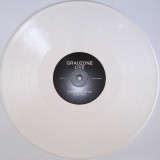
WRWTFWW Records is very happy to release Swiss cult band Grauzone’s recording of their April 12th 1980 live show at Gaskessel in their hometown of Bern. The 9-track album, documenting the very beginnings of the group, is available as a limited edition white vinyl LP in heavy 350gsm sleeve with special artwork by band member Stephan Eicher.
Experience the early Grauzone days, live from Bern, Switzerland, with a concert recorded at legendary local venue Gaskessel, with Martin Eicher on guitar and vocals, Christian G.T. Trüssel on bass, Marco Repetto on drums, Stephan Eicher on synth, and Claudine Chirac on saxophone. The performance is a true time capsule of the early 80s underground, showcasing the punk side of Grauzone with renditions of songs that were never officially released, as well as future fan-favorite “Moskau”. A piece of Swiss music history, This limited release is a must have for all Grauzone fans and DIY archivists.
About Grauzone:
The pioneering band from Bern (Switzerland) had a short-lived but highly-regarded career which birthed a cult discography that still fascinates and resonates today. Consisting of core members Martin Eicher, Stephan Eicher, and Marco Repetto, and on-and-off participants Christian GT Trüssel, Claudine Chirac, and Ingrid Berney, the elusive group broke new grounds in the early 80s, experimenting with punk and industrial music, early techno sounds, minimalism, new wave, pop, and various electronics. With an innovative and polished approach to design, visuals, performance, and all around style and philosophy on top of their superb music, the constantly transforming unit developed a whole experience - the Grauzone experience: wild and unpredictable, yet sophisticated and cohesive, or as Swiss music historian Lurker Grand would call it, "an Art band with a Punk attitude".
Completely rejecting the music industry rules and refusing to play the game of promotion, touring, release schedules, and TV appearances even though they had a multi-platinum international hit with the song "Eisbär", the band quickly disintegrated in full convention-defying glory, leaving behind an inspiring music legacy for the world to discover and discover again, one generation after the other.
Stephan Eicher went on to be, arguably, the most successful Swiss musician ever, with an international career extending from pop chanson to experimental escapades and collaborations with Moondog, artists Sophie Calle and Sylvie Fleury, and author Martin Suter among many other luminaries. Marco Repetto flourished as a techno and ambient producer, releasing multiple projects including releases on Aphex Twin’s Rephlex label.
out of Stock
Last delivered 15 months ago available to reorder, subject to availability
12" RED Color Vinyl / With Black Solid Jacket and Large Sticker
The Unofficial Edits & Overdubs by Joaquin Joe Claussell
Finally comes the first of a two-part forthcoming EP's, Extended Versions taken from the highly successful Joe Claussell Afro Edits & Overdubs Series previously released on LP and CD.
Influence of hallucinations induced by chewing roots from the iboga plant on the works of Joaquin Joe Claussell's Edits & Overdubs IBOGA Compilation. The iboga plant is indigenous to the humid, tropical climates of West Central Africa, including Gabon, Cameroon, Congo, and Angola, which are home to the 2nd largest rainforest in the world. It has been used for centuries in spiritual initiation ceremonies and practices, particularly by the Bwiti tradition and religion in Gabon.
Joaquin Joe Claussell was inspired by these influences and went into the studio to create a compilation of edits and overdubs of African vibrational sounds and rhythms. The result is a collection of nine compositions that showcase the future possibilities of this influential work.
Tested for months on dance floors across the globe every on this complication are sure to continue setting dance floors on fire where ever spun.
Extended Versions Cuts Taken Limited Vinyl EP featuring selected cuts from the compilation. Listen loudly and enjoy the experience!
Thank You for Listening
out of Stock
Last delivered 70 days ago available to reorder, subject to availability
One of Norways most acknowledged and established drummers, is finally ready to unleash his debut album as an
solo artist. DUMMY THICC - who’s real name is Sigmund Vestrheim - has played for acts such as Boy Pablo,
AURORA and with his own R&B/Soul-group Giddy Gang.
This album tells the story of DUMMY THICC, with crisp
snares and drums being the focal point of the soundscape. He invites a bunch of his friends in on the
journey, members from Giddy Gang, Ivan Ave and Vuyo jumps on the mic and instruments to help DUMMY
THICC complete his awaited debut album. The album is a travel in sound, and a perfect introduction to the world
of DUMMY THICC as a producer and artist.
Sit back and enjoy 44 minutes of beautiful beats, R&B and hiphop in the spirit of DJ Harrison, Ohbliv, Madlib and other inspirational figures that have been a key source
for Sigmund.
By now an essential part of the Mindgames story, Kloke follows up his LP with Tim Reaper on Hyperdub with 4 tracks of Jungle vitality. As always with Andy's productions, there are fragments of memories that you can't quite identify embedded in the tunes framework, but the Kloke magic is using these familiar elements to build new tunes that enhance and embody this era of sound perfectly albeit with a distinctly recognisable identity. Of course this is the raison d'être of the Jungle revivalist producer set, but very few have mastered it like Kloke.
Slightly more floor-centric than his last Mindgames set, Mindgame 8 has a rugged vibe with punchy b lines and jagged breaks, doubling down on it's embedded authenticity.
Evolving from a performance lecture by philosopher and Jonna Bornemark at Orionteatern in Stockholm, ‘Hyperit’ (Swedish for a volcanic stone; hypersthenite in English) is inspired by Jennefelt’s performances alongside Bornemark. Before each performance, Jennefelt would plant a lawn on stage, with dirt, sand, gravel, rocks, weeds, and a body of water placed underneath. During the performance, Jennefelt would dig a hole in this lawn, delving progressively deeper and recording soundscapes in the process, with microphones attached to her tools of excavation.
With ‘Hyperit’, Jennefelt expands these ideas into a distinct incarnation of experimental world building, reenvisioning the lecture composition project with new sounds, vocals and field recordings. Using the performance lecture as a springboard, she explores the interior geological matter on ‘Hyperit’, sculpting electronic music inspired by the terrain of meteorites, magma and the Earth’s innermost composition. In this Jennefelt aims to capture a sense of being ‘inside’ the eponymous volcanic stone, or, as it’s known in her native Swedish, of being ‘inside the mountain’.
Recorded and composed at Stranden Ateljéer, EMS and Palazzo Stabile 2023. Mastered by Giovanni Conti at Artefacts Mastering, Berlin. To Bruno. Front cover art by Sara Melin. Graphic design by Oskar Laurin.
The Last Question is the first album by electronics master Tim Clark. It collects his early works, when he was the Music Director of the Strasenburgh Planetarium in Rochester, N.Y. These tunes were the soundtrack to the planetarium’s adaptation of Isaac Asimov’s The Last Question short stoy. The idea was conceived by Von Del Chamberlain, director of teh Abrams Planetarium, and was taken to fruition in a joint venture bewtween the Abrams and Strasenbergh Planetariums, were the shows were premiered in 1972.
Clark composed and produced the works in the Strasenberg Planetarium’s own sound studio, equipped with three Ampex 440 recorders, a 4-channel mixing board with 18 inputs and a Moog Synthesizer. The album was released as a private pressing in 1973 and it has since become an elusive collector’s piece among electronic music afficionados. Comes with remastered sound and straight reproduction of the original artwork.
ULTRA RARE OUTER SPACE PRIVATE PRESS!
RIYL : Tonto’s Expanding Head Band, Iasos, Peter Davidson, Michael Stearns, Steve Roach...
The Last Question is the first album by electronics master Tim Clark. It collects his early works, when he was the Music Director of the Strasenburgh Planetarium in Rochester, N.Y. These tunes were the soundtrack to the planetarium’s adaptation of Isaac Asimov’s The Last Question short stoy. The idea was conceived by Von Del Chamberlain, director of teh Abrams Planetarium, and was taken to fruition in a joint venture bewtween the Abrams and Strasenbergh Planetariums, were the shows were premiered in 1972.
Clark composed and produced the works in the Strasenberg Planetarium’s own sound studio, equipped with three Ampex 440 recorders, a 4-channel mixing board with 18 inputs and a Moog Synthesizer. The album was released as a private pressing in 1973 and it has since become an elusive collector’s piece among electronic music afficionados. Comes with remastered sound and straight reproduction of the original artwork.
ULTRA RARE OUTER SPACE PRIVATE PRESS!
RIYL : Tonto’s Expanding Head Band, Iasos, Peter Davidson, Michael Stearns, Steve Roach...
The Soulful Trio, a band from Barcelona made up of three musicians with an international background (Spain, Holland, Argentina, USA, France) after playing their repertoire live in different venues for several months, with their songs well shot, have decided to record "Said & Done", in one of the best studios of Barcelona, nine original compositions of Soul-Jazz with derivations towards funk and blues.
Music reminiscent of the classics of the Hammond B3 organ trio such as Jimmy Smith, Jack McDuff, Lonnie Smith, Richard “Groove” Holmes or Big John Patton, reinventing the sound and bringing it closer to today with their vibrant fusion of genres full of energy.
Enjoy this instrumental Soul-Jazz album with these young veterans Homero Tolosa (drums), Pablo Sánchez (guitar) and Lucas Herrera Fernández (Hammond B3) in all their splendor with their respective instruments including the exciting & dynamic sounds of the Hammond B3, the great electric guitar groove of solos and huge variety of rhythms, playing a music that is always intense and made from their hearts.
Following his 2019 debut on the label with Amphibious / Lucid Dreams, Bristol-based producer Drone returns to System Music for another exploration into the darker corners of sonic frequencies and low end pressure.
Entitled Flooded EP, this is Drone’s biggest project to date and features 4 original, epic tracks accompanied by an incredible remix from SP:MC. The EP kicks off with 20k, an introduction laden with off-kilter, haunting eeriness and pulsating bass and percussion. Next up is Entropy, a truly ethereal track. Spatially beautiful yet isolating and cold. The title track, Flooded, is a monster of a track which intimidates and excites with eyes down and gun fingers raised. Rounding off the body of work is Fear which hits hard with crisp drum patterns and a throbbing bassline, almost evoking a sense of nostalgia, tying it in seamlessly with a typically electrifying remix from SP:MC
out of Stock
Last delivered 14 months ago available to reorder, subject to availability
Nautilus are back again, back to the future, with their teaser for the upcoming studio album in 2026! The first single for the theme-based release deals with a true anime icon and a legendary soundtrack, which Nautilus imaginatively and skillfully reinterprets in their typical groove sound. In the feature, Japanese singer and sanshin virtuoso Anna Sato beams the song into a next dimension with her singing.
The single is rounded off by a master of club remixes, DJ and producer Delfonic from Berlin, a highly respected artist by Gilles Peterson, who gives the piece a magical touch for every deep dance floor with heavy beats.
Be quick on this unique release.
"Space is infinitely large and anything is possible in this universe."
Captain Future
out of Stock
Last delivered 10 months ago available to reorder, subject to availability
I’d clocked this kid coming in to the shop over the last 6 months, quiet, serious, head down, digging through ALL the records, intently listening and then buying and scurrying off… Not the most chatty BUT he did let slip he was making music, and then it made sense, he was in the shop for one reason and one reason only… to find music he could use to make his own music. The kid is 17 this is the start of his musical journey. I suppose its been a Bristol thing for a long time, maybe its the same in other cities but here there’s been people taking other people’s music and bending it to their own will for a long time, making it their’s but also somehow making it OURS, it always seems to sound like its from here… So when ZEE asked if he could play me some music he’d made it wasn’t a surprise that it sounded like it came from here, the darkness, the clever twists and turns, soulful but heavy… I said it sounded like ’Shoegaze Hip-Hop’ which he seemed to like… So here’s three tracks that I hope you dig them as much as I do…. Tom Friend (Friendly Records).
Dark, brooding hip-hop instrumentals that joins the dots between Company Flow, The Bug and Dilla. A killer vibe from tipped new West Country producer, ZEE! Limited gold vinyl copies available in an edition of 100 — don't miss!
50 years after the genre turned the music world upside-down, GRADE 2 bring the raw power of old school punk to a new generation. Their second release on Tim Armstrong"s legendary Hellcat Records is a thumping 15 track tour de force melding the uncompromising ethos of punk with the howl of contemporary injustice, personal identity and frustrations of Gen-Z youth, authentically told by three lads with punk coursing through their veins. Formed on their native Isle of Wight when they were just 14 years old, Jack Chatfield (guitar & vocals), Jacob Hull (drums) and Sid Ryan (bass & vocals) honed their craft covering punk pioneers before creating a sound uniquely theirs: ten years on, the eponymous Grade 2 is their magnum opus. The new album was produced by the band along with Tim Timebomb (Armstrong) and T.J. Rivers at Armstrong"s Ship Rec Studio in Los Angeles. "Returning to Ship Rec Studio resparked that magic dynamic" says guitarist Jack Chatfield. "When we"re in there I feel like we reach our full potential. Tim would offer tweaks and tips for some songs, while others he"d compliment as finished first time we played them." "We worked flat-out recording this record," says drummer Jacob Hull, "but we never felt pressured, Tim keeping us in the zone to make the best tunes of our lives.
The 2018 live performance captured on Carlos Niño & Miguel Atwood-Ferguson’s Chicago Waves marked another beautiful turning point for International Anthem. The set was recorded at our then HQ, Co-Prosperity, the day after Niño and Ferguson performed as part of Makaya McCraven’s Universal Beings ensemble to celebrate the release of his album by the same name and recreate their contributions to the music on the record’s “LA Side”.
The release of the recording as the Chicago Waves album at the height of the COVID-19 Pandemic drove home the unmistakable sound of togetherness audible in its grooves in a way that only a society trapped in their houses for a year can truly understand. But as that year fades further into the rearview mirror, Chicago Waves still maintains its power. It’s not a mystery—this is what togetherness sounds like.
The IA11 Edition LP features our IARC 2025 obi strip, plus a new 16-page 11x11" insert booklet with additional photos and extensive new liner notes by IARC co-founder Scott McNiece.
Originally released in 1981, this is Mizutama Shobodan's legendary debut album. A wild theatrical mix of avant-post-punk material worked out by one of the most uncompromising women’s brigades ever. An outstanding document from ›another‹ Japan!
»Mizutama Shobodan were a force of nature – powerful and original and unapologetic. I saw them live before I heard the first record and was very impressed. I liked the way the group interacted, it was a very good atmosphere between everybody. I really liked the contrasting sounds and styles of Kamura and Tenko, two very different kinds of voices that really worked well together.« (Fred Frith)
Mixed by master Fred Frith and released in Japan in 1985, this is Mizutama Shobodan’s sophomore album. Another dangerous ride with the fearless Polka Dots Fire Brigade and a further step into the Japanese dreamland.
»Mizutama Shobodan were a force of nature – powerful and original and unapologetic. I saw them live before I heard the first record and was very impressed. I liked the way the group interacted, it was a very good atmosphere between everybody. I really liked the contrasting sounds and styles of Kamura and Tenko, two very different kinds of voices that really worked well together.« (Fred Frith)
Civilistjävel! x Mayssa Jallad’s ‘Marjaa: The Battle of the Hotels (Versions)’ is a radical response to Mayssa Jallad’s 2023 original LP, a lyrical account of epochal events in Beirut at the dawn of Lebanon's civil war. ‘…(Versions)’ sees Civilistjävel! (aka Swedish producer Tomas Bodén) apply a stripped, dub methodology to Mayssa's rich stems, refracting the Arabic source through the hazy prism of Northern European electronica. Retaining ‘Marjaa…’s deep spatial framing and vaporous, shifting nature, traces are lifted and set down in a new landscape: a ghost of a ghost. Informed by Tomas' singular strand of ambient, minimalist, dub techno, ‘… (Versions)’ recalls the reductive, shimmering pulse of pioneering Berlin-based practitioners Basic Channel/Chain Reaction, but with the parameters stretched into the ether. Where versions typically focus on a rhythm, here the anchor is the tone and texture of Mayssa’s voice, around which a new world has been constructed. Disembodied and liminal, it conjures an eerie panorama that feels like a postscript to the original, further emphasizing the geopolitical events that have had such devastating effect in Mayssa’s homeland of Lebanon since that record’s release. ‘Marjaa…’ (tr. ‘reference’) combined Mayssa Jallad’s two main vocations: music and urban research/architectural history. The album was co-written with Fadi Tabbal and based on Mayssa's Historic Preservation master's thesis (‘Beirut’s Civil War Hotel District: Preserving the World’s First High-Rise Urban Battlefield’). The thesis examined a 5-month conflict that took place within Beirut's skyscraper-laden luxury hotel district of Minet El Husn near the start of the Lebanese Civil War. Addressing a post-war generation who have never been taught this difficult history, ‘Marjaa…’ was an attempt to process trauma, and “a call to protest for the renewal, rather than the recycling of the political class that once destroyed the country and holds us, to this day, hostage of its violence.” Often perceived as a mysterious, shadowy presence, Civilistjävel! has come increasingly to the fore in recent years through a consistently dazzling stream of records, released both anonymously and via Fergus Jones’ FELT imprint, often appearing with scant information and tracks for the most part untitled. Having featured tracks from ‘Marjaa…’ on mixes, and included the album in his picks of 2023, in early 2024 Tomas asked Mayssa to provide vocals for a track on his album ‘Brödföda’. Mayssa remembers, “Tomas asked me to choose one of the tracks he was working on. I was in Boston at the time, so I took a walk and chose a track. I wrote the lyrics at the public park, wondering if I was the only one around that was losing sleep over the genocide in Palestine and the war in South Lebanon. I went back to the apartment and recorded the vocals on my phone, while listening to the track on headphones. Tomas reworked it with the voice and sent it back. I liked it immediately.” Despite the geographical distance from Beirut to Uppsala, Sweden, where Tomas resides, Mayssa’s contribution sounds very much at home in Civilistjävel!’s atmospheric, contemplative sound-world. Tomas’ request was reciprocated by Mayssa soon after, resulting in the spectral, glassy ambience of ‘Etel, Kharita (Version)’. This was followed by an invitation to work on more tracks, which Tomas immediately embraced, intensively jamming out versions live to two-track tape in downtime between travelling. If not entirely dissimilar to his regular working practice, the immediacy of it was unusual. Much was improvised live with just a keyboard (not tethered to a grid), and a restricted set-up that largely forbade later edits - only the rhythm tracks are programmed. A sharp conceptual thinker and composer, Tomas takes creative liberties with Mayssa’s songs in a way that is deeply felt and sympathetically aligned, whilst unashamedly outside of the original context of the record. The voice is leaned into as an instrument, without the clear, specific details of language, and this axis provides an uncertain, amorphous footing - structure is often suggested or hinted at, before disappearing or collapsing into fog, and folding back into the message within the song. A somewhat unprecedented source for an album of versions, even those familiar with ‘Marjaa: The Battle of the Hotels’ may at points struggle to hear the songs these versions are rebuilt from, despite the vocal narratives remaining virtually intact. The light has shifted; eroded buildings are foregrounded; fragments of memories appear in chiaroscuro. Signs and signifiers have been replaced. Shorn of the original's warm guitar, ‘Baynana (Version)’ feels like an ominous visitation, the sun no longer visible. ‘Holiday Inn (March 21 to 29) (Version)’ is a molten, clattering invocation. The beat-less tracks nod towards the cold, otherworldly sound-scaping of late '90s isolationism. More propulsive and embodied, ‘Holiday Inn (January to March) (Version)’ and ‘Kharita (Dub)’ are strobing, iridescent techno - lithe, shifting and mutating with almost implausible finesse. A stunning addition to Civilistjävel!’s growing catalogue, ‘…(Versions)’ is a luminous counterpoint to ‘Marjaa…’, and a welcome reminder of how incredible that record remains.
out of Stock
Last delivered 15 months ago available to reorder, subject to availability
"High urgency music with a very personal expression of the artist: in one way or another", this has always been the important or maybe even the core factor of every Cortizona release so far.
So it was just a matter of time until DJ Marcelle/Another Nice Mess, longtime fan of The Fall and Jiskefet, topnotch producer, dj wizard with three turntables (and a lovely person in general) - and myself - would collaborate towards a Cortizona release.
I guess the initial idea of working together with DJ Marcelle/Another Nice Mess dates back to 2019. One day she called me four times in five minutes just to hear Mark E. Smith's voice message on my phone. Since then there has been no going back. I mean: what's not to love about her?
Some time ago, she sent me the digital files of her new LP 'Sorry, No Service'. One of the tracks, 'Sorry, No Silence', features the Nan Goldin sample: 'this is clearly ethnic cleansing', taken from Goldin's impressive speech to which the audience cheered in support at the opening of her exhibition at the Neue Nationalgallerie in Berlin end of 2024.
Two weeks later Marcelle contacted me again: her German label refused to release the track. This was the moment we had both been waiting for: at last Cortizona and Marcelle would work together!
The album is due to be released later this year, but, with things as they are in Gaza, it is important to issue 'Sorry, No Silence' as a stand-alone track as soon as possible.
Talking about urgency!
'Sorry, No Silence' resonates feelings of global despair over the genocide in Gaza and the moraland political bankruptcy of 'western values'. It does so over a repetitive, militant tribal beat, complete with heavy basslines. The spirits of Mark Stewart, On-U Sound and Muslimgauze loom over the track, but as is always the case with Marcelle, both on stage and in the studio: she has an authentic style of her own, where playfulness meets courage and - also in this case - anger meets rhythm.
'Sorry, No Silence' is a track I didn't know I was waiting for. A track reflecting the sign of the times. The 12'' also features an even more heavy (and faster) dub version and the avant garde track 'Never Again Means', featuring more Nan Goldin samples: 'never again means never again for everyone'.
For obvious reasons the proceeds of this 12 inch and the digital Bandcamp release will be donated to PCRF, Palestine Children's Relief Fund.
Support more than welcome.
(written by Philippe Cortens)
out of Stock
Last delivered 15 months ago available to reorder, subject to availability
Wonderwheel recordings is proud to present the first full-length album from
producer Robin Perkins, aka El Buho. Balance represents a meeting of different currents that make up Buho's music: a fascination with the natural world, and its protection, a fascination with the rhythms, traditions and sounds of Latin America and a fascination with modern electronic music and production aesthetics. The album is peppered with Cumbia, Son Jarocho, Andean instrumentation & Afro-Colombian rhythms. Mixed with this, Robin integrates this idea of "nature music" - putting the sound of a misty forest, the songs of birds, of crunching leaves under foot or the rhythmic tapping of rain alongside synthesized sounds, electronic clicks or claps, deep basses. Trying at once to give them their own space but in a new, surprising perspective - it draws electronic music into something more soft, natural, different and appealing.
Balance is also an album that celebrates community and collaboration, showcasing collaborations with ten different artists form Latin America and beyond, both producers, instrumentalists and singers. Including more of a lyrical presence than his previous EPs, Perkins solicited the participation of talented singers like Dina al Wedidi from Cairo, Luzmila Carpio from Bolivia and the incredible decimas of Mexican poet Citlaly Malpica. The album also features the likes of harpist Veronica Valerio, Argentine multi-instrumentalist Rumo Tumba, jarana player Pablo Emiliano from Mexican Son Jarocho group Semilla and members of the Shika Shika family (the global collective he co-run's) Uji, Barrio Lindo, Kaleema, Minük and Jhon Montoya.
El Buho's music has an incredible power to convey feelings, atmospheres, memories or messages. The message that sits behind this music is to value on the one hand the power of community, of collaboration and of our modern, globally, connected world but also the remembrance, protection and celebration of the very earth we depend upon for our existence.