Deaf Club continues their scathing indictment of society with their second full-length album, being released on Southern Lord and Three One G: We Demand a Permanent State of Happiness. Fast wit and faster blast beats are mainstays of the band, but there is also a sense of growth. This is their strongest songwriting yet, incorporating more hooks and good old-fashioned moments to mosh while staying as weird as ever. Raygun guitar riffs and unexplainable sounds abound. Justin Pearson, Brian Amalfitano, Scott Osment, and Jason Klein excel at inciting emotion in the face of apathy and voicing disgust amid a world rapidly burning.
Mutant, in partnership with Back Lot Music and Focus Features are proud to present the premiere physical release of David Holmes masterful score to Steven Soderbergh's latest thriller BLACK BAG. Ever since their first collaboration on OUT OF SIGHT, and throughout their OCEANS-trilogy, Holmes and Soderberg create an energy and verve with their productions. BLACK BAG is no outlier; percussive and inventive, and vibey throughout, this score is equal parts pulse-pounding and seductive. Playfully underscoring spy-tropes with kitchy 60's intrigue instrumentation and modern electronic sensibilities, Holmes has crafted something truly unique.
Legendary and pioneering Träd, Gräs och Stenar is considered Sweden's oldest rock band to introduce psychedelic underground music. The group originally formed in 1967 as International Harvester, later became Harvester, and eventually evolved into Träd, Gräs och Stenar. Their unique blend of psychedelic rock and traditional Swedish folk music was groundbreaking at the time-and still resonates with new generations of listeners today. This long-awaited "Green Album" from 1970 marks their very first release under the name Träd, Gräs och Stenar. Now, for the first time since its original release, it's being reissued on vinyl-complete with rare photos, an in-depth story, and a 30x60 cm poster. Decades later, the band continues to perform under the name TRÄDEN, now with only one original member. He is joined by a new generation of acclaimed musicians, who are keeping the spirit alive and carrying the sounds and legacy of Träd, Gräs och Stenar into the future.
180g, turquoise vinyl. Perhaps the hardest thing about Soul music is convincing. If the place and the experiences don't somehow shine through and meet us, we risk missing out on what's on offer completely. "But first_ are you experienced?" as Jimi Hendrix asked. That's precisely why Soul music is difficult in Sweden. There are few who can portray their experiences in music in a way as convincing as in the Black US Soul tradition. This however seems almost provocatively easy for Bror Gunnar Jansson to do. On the album People, it's as if he pours both lyrics and melodies that have grown slowly in life and that come naturally if you grow up on the right soil. And on almost every song, it only takes a few bars for Bror Gunnar Jansson & The Escapism to show who their musical relatives are. Although Gunnar seems to move freely in musical landscapes ruled by the greats of seventies soul from Al Green, Curtis Mayfield and Aretha Franklin, as well as in some of the fringes of blues and jazz territory, both he and drummer and producer Christopher Cantillo explain that the album has took a long time brewing. And that what may appear obvious and simple has sprung out of a friendship that spans more than half of their lives.
Requiescat Record is the new EP by New Brutalism, a minimal rock quartet formed in Knoxville, Tennessee, in 1998. The band comprises vocalist Shane Elliott, guitarist/vocalist Matt Hall, bassist/vocalist David Basford, and drummer Carey Balch. The three-track release - "088," "087" and "089," in keeping with their strict numerical naming convention - was recorded in 2021 by the late, great Steve Albini at Electrical Audio, and mastered by Bob Weston at Chicago Mastering Service in 2025. For the band, "less is more" became a guiding principle - channeled through an unwaveringly raw, direct, and honest approach to sound. Out of partly sound, partly aesthetic, mainly a thirst to build, New Brutalism performs on aluminum instruments built by the band members. They chose the material because itE¼s lighter than steel, more consistent than wood, and easy to machine. Above all, itE¼s precise - and thereby, can produce precise music. In 2021, New Brutalism entered Electrical Audio to record Requiescat Record. Named after a Latin term meaning a prayer for the repose of a dead person, Requiescat Record retroactively became a dedication to AlbiniE¼s memory. The band acknowledges that so much of the aesthetic, interests and sounds they admired are a product of his influence and the circle of artists around him. His death instigated a state of urgency. A desire to act became more pressing, to strike more often, and usher in a new era of productivity. Shattered and kinetic, forgedby time and tragedy, with god-given sonicquality, Requiescat Record may acknowledge the dead, but this music feels ever so alive.
Requiescat Record is the new EP by New Brutalism, a minimal rock quartet formed in Knoxville, Tennessee, in 1998. The band comprises vocalist Shane Elliott, guitarist/vocalist Matt Hall, bassist/vocalist David Basford, and drummer Carey Balch. The three-track release - "088," "087" and "089," in keeping with their strict numerical naming convention - was recorded in 2021 by the late, great Steve Albini at Electrical Audio, and mastered by Bob Weston at Chicago Mastering Service in 2025. For the band, "less is more" became a guiding principle - channeled through an unwaveringly raw, direct, and honest approach to sound. Out of partly sound, partly aesthetic, mainly a thirst to build, New Brutalism performs on aluminum instruments built by the band members. They chose the material because itE¼s lighter than steel, more consistent than wood, and easy to machine. Above all, itE¼s precise - and thereby, can produce precise music. In 2021, New Brutalism entered Electrical Audio to record Requiescat Record. Named after a Latin term meaning a prayer for the repose of a dead person, Requiescat Record retroactively became a dedication to AlbiniE¼s memory. The band acknowledges that so much of the aesthetic, interests and sounds they admired are a product of his influence and the circle of artists around him. His death instigated a state of urgency. A desire to act became more pressing, to strike more often, and usher in a new era of productivity. Shattered and kinetic, forgedby time and tragedy, with god-given sonicquality, Requiescat Record may acknowledge the dead, but this music feels ever so alive.
‘Tedere Baldadigheden’, Guido Belcanto's new, long-awaited album in a production by Firmin Michiels and Guido Op De Beeck, was released on 4 October, 2024 at the beginning of a very extensive, sold out tour. It is a special retrospective from an award-winning singer who looks back with melancholy and humour on the many mischievous adventures that marked his life. Love prevails, but tragedy and tristesse also leave their mark on Belcanto himself and the scarred souls of the many colourful characters who come to life in his songs.
This 15th studio album undoubtedly represents a new high point in Belcanto's oeuvre, which now numbers over 300 songs, with 11 of his own songs and 2 surprising adaptations of songs by Eels and Guido's idol Renaud. Besides members of his loyal backing band Het Broederschap, guest musicians such as Stoy Stoffelen, David Poltrock, Evert Verhees, Jan De Smet, Alban Sarens, Adriano Cominotto and Chris Peeters also play along. Also notable are certainly the passages of Lara Chedraoui (Intergalactic Lovers) and The Bonnie Blues.
For more than 40 years, Guido Belcanto has been creating a universe all his own with his songs. A warm, recognisable home for everyone, young or old, rich or poor, winner or loser. A home too, masterfully brought to a stage where the audience is allowed to be themselves without embarrassment, praising happiness, measuring the damage suffered, letting the tears flow and the laughs ring out.
The Belgian leading punk band The Kids, founded by Ludo Mariman, made their debut in 1978 with their landmark titleless album, surely deserving to be part of the global top list of great seventies punk albums. After another four studio albums, the band called it a day... only to resurface a good ten years later, at the end of the 1990s. Since then, The Kids have become an international cult punk band, much in demand in Belgium and abroad (USA, Germany, France, Italy, Japan…), mainly focusing on their initial seventies punk repertoire, with many classic songs that have effortlessly survived the ravages of time.
The Kids are still the most angry Belgian band, which says a lot about the eagerness and sharpness of Ludo Mariman and his mates. The Kids, for sure, still are an absolute top band!
"Flabbergasted" was recorded early 2001 at the AB Club in Brussels and released the following year on CD, which sold out quickly. Starman Records issued the album in 2015, making it available on vinyl for the very first time, with restored audio and entirely new artwork. Sold out long ago, it was followed by a second print run in 2023 on limited colored vinyl. An album you can’t miss—sharp as a razor blade and containing many of The Kids' classics, along with a couple of contemporary punk covers. The band still tours actively and will celebrate, in 2026, their 50th anniversary.
On an evening in November 2020, Belgian artist Nicolas Rombouts (Dez Mona, Stef Kamil Carlens…) and American-then-Brussels-based artist Matt Watts (+2024) met at Studio Caporal in Antwerp, behind Central Station. Just a week after the suicide of friend and artist Loloman (aka Ward Zwart), and in the wake of the end of a marriage marred by pain, addiction, and depression. The two had spoken by phone and agreed to a recording session.
That evening, they shared their loss in conversation, on muted piano, contrabass, and electronics. Compositions were shared and improvised, and by the next day, their album Muted Songs For Piano was complete.
It is meant to be listened to in one full trip from beginning to end. You’ve traveled across the galaxy and are looking back through a telescope at this world and its lonesome mausoleum of memory. Sounds you can almost hear, and movements you can almost feel, though you know it has passed in the time its light has taken to reach you.
Muted Songs For Piano is an impressive and extremely intense listening experience, an album that engages in a heroic battle with the personal nocturnal demons of the two composers.
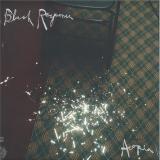
Naarm/Melbourne trio Acopia return with Blush Response, their highly anticipated third album, and first release on Scenic Route. Arriving September 12, this 8-track LP captures the band at their most open and self-assured—an emotionally resonant work shaped by silence, space, and sincerity.
At its core, Blush Response is an exploration of emotional distance, unresolved feelings, and the quiet tension between vulnerability and strength. It’s introspective and melancholic, yet with an underlying clarity that marks a new chapter for the group.
Formed in 2018 by Kate Durman, Lachlan McGeehan, and Morgan Wright, Acopia began with a minimalist palette—slow tempos, sparse arrangements, and a distinct sense of restraint. Since then, they’ve evolved into a more fluid and expressive unit, blending elements of dream pop, downtempo, indie, and post-punk into a sound that’s as delicate as it is disarming.
Following the release of 2022’s Chances and their self-titled 2023 album, Acopia gained significant critical momentum with praise from Pitchfork, The Guardian, The FADER, and The Beat. Pitchfork described their work as “a nod to 1980s ennui and 2020s anxiety”—an apt summation of their unique place in today’s musical landscape. Their growing international footprint includes support slots for Bar Italia and Tirzah, festival appearances at Golden Plains, Rising, and NTS Naarm, and a sold-out 2024 headline show at London’s Lexington.
Recent collaborators include UK producer Daniel Avery, who’s shown strong support for the band—elevating their profile across both electronic and alternative audiences.
With Blush Response, Acopia deliver their most expansive and expressive project to date—anchored by the emotional depth fans have come to expect, but now sharpened by bold songwriting and a broader sonic reach. Their arrival on Scenic Route marks an exciting new era, one that’s already resonating with tastemakers, record buyers, and a fast-growing global fanbase.
out of Stock
Last delivered 10 months ago available to reorder, subject to availability
Witchfinder General formed in 1979 and were part of the New Wave of British Heavy Metal (NWOBHM) movement during the early 1980s. They are strongly influenced by Black Sabbath, and are widely recognised today as one of the pioneers of the doom metal style. Their 1982 classic debut album "Death Penalty" has been re-issued for the first time with this new track listing featuring two rare live tracks on heavy weight 180gsm vinyl contained within a protective polypropylene bag.
Witchfinder General formed in 1979 and were part of the New Wave of British Heavy Metal (NWOBHM) movement during the early 1980s. They are strongly influenced by Black Sabbath, and are widely recognised today as one of the pioneers of the doom metal style. Their 1983 classic "Friends Of Hell" has been re-issued for the first time with this new track listing featuring a rare live track on heavy weight 180gsm vinyl contained within a protective polypropylene bag.
In 2022, Daniele “Shield” Contrini of Rebirth Records proposed Paraíso to the great man himself, a compilation honouring Alfredo’s legacy. After Alfredo’s passing in December 2024, the project was final; with artists rallying to honour his vision and memory.
Before becoming a global clubbing hotspot, Ibiza embodied freedom—a place where sunrises blurred into sunsets and music became a way of life. In the 1950s and '60s, the island drew artists, hippies, and outsiders seeking escape and creative liberty.
In 1976, Alfredo Fiorito, fleeing political repression in Argentina, arrived in Ibiza and stayed. A former music journalist, he soon began DJing at Amnesia, a farmhouse-turned-club where time bent and boundaries dissolved. With eclectic, genre-defying sets, Alfredo blended reggae, flamenco, soul, rock, and early house, crafting a hypnotic energy that captivated a generation.
British DJs like Trevor Fung, Paul Oakenfold and Danny Rampling brought this “Balearic Beat” back home. But Balearic wasn’t a style it was a mindset. As DJ Leo Mas said, it was “a state of mind,” where rhythm, spirit, and psychedelia merged.
Other clubs like KU, Es Paradis, Pacha, and Lola’s amplified the movement. Visual artists such as Yves Uro gave it a striking identity, and DJs like César de Melero, DJ Pippi, and Jon Sa Trinxa carried the sound into a new era. José Padilla’s sunset sessions at Café del Mar birthed chill-out music as breath, not just beat.
But the 1990s brought change. Laws requiring roofs on clubs altered the open-air magic. Commercialisation followed; freedom became luxury, and many pioneers left.
Still, the Balearic spirit lives—raw and untamed. It pulses in hidden parties, intimate venues like Pikes and Hostal La Torre, and sacred places like Benirrás and Las Dalias.
Featuring 16 tracks of classic and true Balearic sound; alongside House & proto-House tracks that Mr Fiorito spun, the album also includes an unreleased Alfredo track and stands as a tribute to the man, the music, and the enduring spirit of true Ibiza.
out of Stock
Last delivered 37 days ago available to reorder, subject to availability
Part 2 of our series of official reworks of The Warmer Music catalogue
For this new 12 Inch we are still in the warm Michael Franks land. A full MF compilation will be coming later.
After our first 12 Inch with DoctorSoul Reworks, we now return with more smooth, high class Edits/Reworks by 3 outstanding modern producers of soulful/jazzy dance vibes.
Michale Franks is one of the most prolific musicians of the Californian Westcoast/Jazz/AOR/Yacht scene, the one and only Michael Franks, who approved personally the new version. Over the languorous course of 33 years and 16 albums, Michael Franks has mesmerized an international legion of fans with his one-of-a-kind artistry. Seamlessly weaving lyrics of stunning sensuality, wit, reflection and literary eloquence over music that tastefully utilizes top shelf shadings of jazz, soul, pop, chamber and music from around the globe. His music was covered by countless international stars, like The Carpenters, Shirley Bassey, Rin
out of Stock
Last delivered 12 months ago available to reorder, subject to availability
Gusgus are continuing their weird fusion of 80’s and 90’s vibes in the spirit of their last album DanceOrama. This time its nostalgic futuristic raving, delivering 2 nasty bits for those Dj’s bringing stranger journeys on floor, or some madness when the crowd is vulnerable for some alter reality experience.
out of Stock
Last delivered 15 days ago available to reorder, subject to availability
Formed in the early 1980s, Primal Scream paid their indie rock dues and experimented with their sound for almost a decade before finding their feet with the era-defining dance/rock hybrid Screamadelica album. It spawned their first hit singles, ‘Loaded’, ‘Come Together’ and ‘Movin’ On Up’, after which they became a chart regulars for over a decade. This carefully curated 17-track collection, first issued in 2019, covers their fascinating journey from 1986 to 2000, taking in their most successful period but also detailing the evolution of their sound before they broke into the mainstream.
Includes insert with lyrics
Featuring the songs "Im Nin Alu-2000", "Show Me" and "Give Me a Sign" a.o.
Limited edition of 750 numbered copies on gold coloured vinyl
Ofra Haza is the eponymous 1997 album by Israeli singer Ofra Haza. It was produced by Frank Peterson (Enigma, Gregorian) and features
Pino Palladino on the bass guitar. The album was recorded in Hamburg and at Abbey Road Studios in London and contains an updated version of the
hit song "Im Nin' Alu". It also features the singles "Show Me" and "Give Me a Sign".
This was Ofra Haza's final full-length studio album before her passing in 2000.
To celebrate 10 years of Medusa Outdoor, the renowned Belgian collective presents a unique various LP with international quality techno tracks from Ida Engberg, Petter B, Radio Slave, Progression and many more. The tracks were selected with passion by Medusa Outdoor residents Michael Forzza and Jochen Robberecht who both contributed an unreleased new track, especially for this exclusive anniversary album. The various LP is housed in a beautiful hand-numbered gatefold sleeve. Only 500 copies were pressed in Berlin.
out of Stock
Last delivered 12 months ago available to reorder, subject to availability
‘Acker Bilk was a bowler-hatted Titan of Trad jazz who conjured a warm, sentimental sound from his clarinet.’ So began the Daily Telegraph’s affectionate obituary for Acker Bilk, who died in November 2014, aged 85. It inevitably and correctly identified ‘Stranger On The Shore’, his biggest hit, as ‘among the best-selling records of the 20th century. Enjoy not only ‘Stranger…’ but many more examples of his mellifluous mastery here on this 180g Vinyl set.
Everybody loves the vocal sound of Bob Marley. But what about the music that supports his songs? This album contains a variety of mostly instrumental remixes of well-known Bob Marley songs. An eclectic mix of names have put their personal stamp on some of Bob’s classic tunes with some Interesting results. Cypress Hill’s Sen Dog has taken on ‘African Herbsman’, while Sheep On Drugs have had a stab at ‘Don’t Rock My Boat’. These and many more versions will keep the head nodding at the very least.
Many have followed in her stiletto-heeled footsteps, yet there is, was and only ever will be one Marilyn Monroe. Amazing as it now seems, Hollywood’s greatest ever sex symbol enjoyed less than a decade at the peak of the acting profession. The movies she made and the iconic images they contained, such as the billowing skirt from The Seven Year Itch, remain staples of popular culture. Andy Warhol turned her image into pop art, but Marilyn’s ‘15 minutes of fame’ made an unprecedented impact. Music was another gift she left the world, and this collection of songs reminds us she could do much more than merely look good
Valencia-based band Wau y Los Arrrghs!!! is made up of five punk rock hooligans as raw and real as chaos itself _ led by one of the wildest frontmen around, Juanito Wau. Yes, there's garage rock here, no doubt _ but you'll also find blasts of punk, rock 'n' roll, pop, and even a splash of surf. This joint release with Slovenly Records brings back two anthemic tracks from Spain's undisputed kings of garage punk! Originally produced by Jorge Explosion over a decade ago, "Copa, raya, paliza" and "Es un buen día" are guaranteed party-starters no garage DJ should be without. Pressed on neon pink vinyl.
Le Le - the electronic cult trio of Piet Parra, Rimer London, and Pepijn Lanen (Faberyayo) - brings together their finest work on a double LP for the very first time. Great Stuff is a carefully curated selection of their most beloved tracks, newly remastered for this release. From dance floor classics like Breakfast to eccentric pop gems like Skinny Jeans, Great Stuff showcases why Le Le has held a unique place in the Dutch music and art scene since their debut. Now available for the first time on double LP - a must-have for fans and collectors alike.
out of Stock
Last delivered 12 months ago available to reorder, subject to availability
We are excited to announce the return of the iconic Totally Wired series with a brand new collection on LP and CD. The first 50 orders will include a special art print of the artwork. We are also doing a limited edition T-shirt to celebrate this milestone!
In 1988 Acid Jazz released its first compilation album ‘Totally Wired: A Collection From Acid Jazz Records’. Compiled by Eddie Piller and Gilles Peterson it collated 11 tracks that summed up the early days of our scene, mixing new label signings, cool new records being played in our clubs and a couple of oldies. It sold well to the then small scene and set the template for a series, that in the wake of the international success of The Brand New Heavies, Jamiroquai, The James Taylor Quartet and others exploded. By the time that Volume 5 appeared, we were selling tens of thousands of copies, with major label artists vying for inclusion.
By that point ‘Totally Wired’ was a phenomenon, that sign-posted changes in both the directions of new music, but of the oldies that were played on the scene. It gave DJs new tunes to play and soundtracked 1000s of Cafés and bars the world over in the age of the CD. It was largely retired at the end of the 90s and as times changed.
Over the years we have been asked to return to the scene of the crime, but it has never quite felt right, until now. With vinyl back, and the need for easy to digest compilations becoming neccessary in the chaos of streaming’s ‘I can listen to anything I want, but can’t think what that might be’ is evident, but also we are feeling excited about where Acid Jazz is right now. New artists on the label are making great records, Matt Berry has a Top thirty album, and The Brand New Heavies are headlining the Royal Albert Hall. It’s easy to make an exciting album when that is happening.
So we are releasing “Totally Wired: A New Collection From Acid Jazz” and treating it like the important milestone that it is. From the Acid Jazz sid we have new and exclusive recordings by Matt Berry, Chris Bangs and new signings Earth-o-Naut and Quiet Fire, there is also a recent white label only 45 cut by the Soul Revivers – released ahead of their new album due this Autumn and featuring Kokoroko’s Shiela Maurice-Grey and Anoushka Nanguy. For the oldies we have dug deep into our own archives to bring you the Acid Jazz Orchestra’s version of Corduroy’s ‘Something In My Eye’ and The Brand New Heavies astounding funk take of Aretha Franklin’s ‘Rock Steady’. These are all joined by recent scene records by Carmy Love – one of the greatest voices in the UK – The Romero Brothers, and BDQ, carrying the series onwards at last.
out of Stock
Last delivered 77 days ago available to reorder, subject to availability
We’re excited to present this special edition vinyl celebrating Lofi Girl’s collaboration! For the second year running, we’re proud to sponsor the Champions Chess Tour 2024—the largest online chess tournament in history with a $1.7 million prize fund and the world’s top players competing for glory.
This vinyl features our curated compilation, synthwave beats to play chess to, blending the focus and creativity of synthwave music with the strategy and brilliance of chess.
Thank you for joining us on this journey—let the games (and the beats) begin!
out of Stock
Last delivered 13 months ago available to reorder, subject to availability
Australia's powerhouse Hammond Organ trio Cookin' On 3 Burners serve up a heavy double-sider, offering DJs and collectors a taste of what's to come from their first studio LP in six years, due October 2025. With a 27-year legacy in the global funk and soul scene, CO3B have earned praise from the likes of Dusty Groove, Wax Poetics, and Rolling Stone Australia, and boast over 2 billion streams worldwide — thanks in part to their breakout hit "This Girl" (Kungs remix).
Side A – Cookin' The Books
A gritty, upbeat Hammond-led instrumental cooked low and slow in the heart of Melbourne's funk scene. It's all business up front — deep pocket drums, greasy organ licks, and guitar work that snaps and struts. No vocals, no fat — just a raw funk workout that's ready for the crates.
Side B – Give a Little Bit More (feat. Stella Angelico)
A classic-feeling, mid-tempo soul joint with a message that cuts deep. Longtime collaborator Stella Angelico delivers a powerful vocal performance about generosity, empathy, and turning things around when it matters. With uplifting lyrics, smooth horns, and a groove that nods to vintage 45s, this one lands straight in the heart — timeless, spiritual, and soul-drenched.
Captured live to tape at Soul Messin' Studios using vintage gear, the record oozes warmth and authenticity. Supported with airplay from Craig Charles (BBC6) and limited to just 500 copies on black vinyl in a Soul Messin' Records disco sleeve, this 45 is a must-stock item for funk, soul, and groove-focused retailers.
FFO: The Meters, El Michels Affair, Menahan Street Band, Quantic, Daptone Records
out of Stock
Last delivered 13 months ago available to reorder, subject to availability
Celebrating 20 years of defining, and redefining, electronic alt-pop - Metronomy ‘GREATEST HITS’ is the first comprehensive collection of their “smash hits” spanning across all 7 studio albums, and will be release alongside a separate album of BBC Sessions.
Formed in 1999 by Joseph Mount, Metronomy has released six acclaimed studio albums and become one of the UK's most influential electronic acts. Known for their distinctive visual aesthetic, innovative production techniques, and energetic live shows, Metronomy continues to bridge the gap between experimental electronic music and accessible pop. From the charm of early tracks like "You Could Easily Have Me" to the sophisticated pop of "The Look" and the dance floor magic of "Love Letters," Metronomy's distinctive sound has consistently pushed boundaries while maintaining their unmistakable identity.
The previously unreleased BBC Sessions reveal another dimension to these songs, capturing their magnetic live energy and Joe’s evolving approach to arrangement and performance, all recorded between 2009-2019 across BBC6Music, BBC Radio 1 & BBC Radio 2.
out of Stock
Last delivered 13 months ago available to reorder, subject to availability
In Guadeloupe, many people think that jazz and ka music are like a ring and a finger. To some extent, the same could be said about so called Latin music and the music played in the French West Indies.
Both aesthetics were born in the Caribbean and bear so many connections that they can easily be considered cousins. In constant dialogue, there are lots of examples of their fruitful alliance and have been for a while. The English country dance that used to be practiced in European lounges came to be called kadrille in Martinique and contradanza in Cuba. They both featured additional percussion instruments inherited from the transatlantic deportation. Drawing from shared feelings about the same traumatized identity – later to be creolized – it would be hard not to assume that they were meant to inspire each other. The golden age of the orchestras that graced the Pigalle nights during the interwar period further proves the point. As soon as the 1930s, Havana-born Don Barreto naturally mixed danzón and biguine music in a combo based at Melody's Bar. In the following decade, Félix Valvert, a conductor who was born and raised in Basse-Terre in Guadelupe, also worked wonders in Montparnasse with La Coupole, which was an orchestra made up of eclectic musicians. Afro- Caribbean performers of various origins were often hired on rhythm and brass sections in jazz bands, which used to enliven the typical French balls of the capital. In the 1930s and onwards, Rico’s Creole Band was one of them.
Martinican violinist-clarinettist Ernest Léardée, who would become the king of biguine music as well as the main figure of French Uncle Ben's TV commercials (a dark stigma of post-colonial stereotypes), had musicians from the whole Caribbean sphere play at his Bal Blomet – and they all enchanted "ces Zazous-là" (according the words of Léardée's biguine-calypso piece). In les Antilles (French for French West Indies), music history started to speed up in the 1950s, when trade expanded and radio stations grew bigger. The Guadelupean and Martiniquais youth tuned in their old galena radio sets to South American and Caribbean music. As for the women traders, les pacotilleuses, they bought and sold goods across different islands (the "passing of items through various hands" was thought to be most pleasurable) and brought back countless sounds in their luggage. Such was the case of Madame Balthazar, who once returned from Puerto Rico with the first 45rpm and 33rpm to ever enter Martinique.
Out of this adventure was created the famous Martinican label La Maison des Merengues, a music business she opened and undertook with her husband and which proved to be a major landmark. At the end of the 1950s, in Puerto Rico, Marius Cultier competed in the Piano International Contest playing a version of Monk's Round 'Midnight. He won the first prize and this distinction foreshadowed everything that was to come. Cultier, the heretic Monk of jazz, was quickly praised for writing superb melodies, always tinged with a twist that conferred a unique sound to his music. It didn't take long for the gifted self-taught musician to get to play with Los Cubanos, making a name for himself thanks to his impressive maestria on merengues.
The rest is history. Besides, in the late 1950s, Frantz Charles-Denis, born into the upper middle class in Saint-Pierre and better known by his first name Francisco, went back home after working at La Cabane Cubaine – a club located rue Fontaine where he had caught the Latin fever. Francisco's music was therefore heavily marked by his Cuban cousins' influence, which gave the combos he led a specific style and also led to renewal. Things were swinging hard in La Savane, located in the main square in Fort-de-France. He set up the Shango club close by and tested out the biguine lélé there, a new music formula spiced up with Latin rhythms. Soon afterwards, fate had him fly to Puerto Rico and Venezuela.
As for percussionist Henri Guédon (percussions were only a part of his many talents), he was born in Fort-de-France in May 22nd 1944, the day marking the celebration of the abolition of slavery. As an old man, he could remember that in " his father's Teppaz, a lot of hectic 6/8 music was constantly playing...". In the opening lines of his Lettre à Dizzy, a small illustrated collection of writings published by Del Arco, he highlighted the huge impact that cubop had on him as a teenage boy, around 1960. He eventually turned out to be the lider maximo in La Contesta, a big band steeped in Latin jazz. He was also the one who originated the word zouk to describe music which brought the sound of the New York barrio to Paris. It was the culmination of a journey that started in Sainte-Marie: "a mythical place for bélé, the equivalent of Cuban guaguancó". In the early 1960s, the tertiary economy developed to the detriment of agriculture. Yet rural life was where roots music emerged in Martinique and in Guadeloupe.
Record companies played a major part in the process of Latin versions sweeping across the islands – before reaching everywhere else. Producer Célini, boss of the great Aux Ondes label, and Marcel Mavounzy, both the head of Émeraude records - a firm which was founded in 1953 - as well as the brother of famous saxophonist Robert Mavounzy, were big names to bear in mind. Although there were many of them - all of whom are featured on this record - Henri Debs was definitely the major figure in the recording adventure. He proved to be so influential that he even got compared to Berry Gordy. In the mid 1950s, when he acquired his first Teppaz, he worked on his first compositions: a bolero and a chachacha. Then, he became the one man who made people discover Caribbean music, from calypso to merengue. He was among the first ones to rush out to San Juan, Puerto Rico, to buy records and distribute them through a store run by one of his brothers in Fort-de-France. He had members of the Fania All Star come and perform there, which he was madly proud about. He was also the first one to pay attention to Haitian music, such as compas direct and various other rhythms which would soon flood the market. As a result, many of the combos hitting his legendary studio would end up boosted by widespread "Afro-Latin" rhythms. However, he never denied his identity: gwo ka drums were given a major role, although they were instruments which had long been banned from the "official" music spheres. The present selection bears witness to such a creative swarming. Here are fourteen tracks of untimely yet unprecedented cross-fertilization: all types of music rooted in the Creole archipelago have found their way, whatsoever, to the tracklisting. Whether originating from the city or being more rural, they all go back to what Edouard Glissant, in an interview about the place of West Indian music in the Afro-American scope, called "the trace of singing, the one which got erased by slavery." "It is so in jazz, but also in reggae, calypso, biguine, salsa... This trace also manifests through the drums, whether Guadelupean, Dominican, Jamaican or Cuban... None of them being quite the same. They all point to the idea of a trace, seeking it out and connecting to each other through it. This is the hallmark of the African diaspora: its ability to create something new, in relation to itself, out of a trace. It may be the memory of a rhythm, the crafting of a drum, a means of expression which doesn't resort to an old language but to the modalities of it." The opening track features one of the emblematic orchestras of this aesthetic identity, criscrossing many music types from the archipelago. The 1974 Ray Barretto guajira – Ray Barretto was a major New York drummer influenced by Charlie Parker and Chano Pozzo – is magnificently performed by Malavoi, a legendary Fayolais group (i.e from Fort-de-France). Additionally, the compilation ends on a piece by Los Martiniqueños de Francisco. It symbolically closes the circle as it is a genuine potomitan of Martinique culture which also functions as a tireless campaigner for Afro-Caribbean music. Practicing the danmyé rounds (a kind of capoeiria) to the rhythm of the bèlè drum, it delivers a terrific Caterete, a kind of champeta of Afro- Colombian obedience which was originally composed by Colombian Fabián Ramón Veloz Fernández for the group Wgenda Kenya. The icing on the cake is Brazilian Marku Ribas, who found refuge in Martinique in the early 1970s, bringing his singing to the last trance-inducing track. These two "versions" convey the whole tone of a selection composed of rarities and classics of the tropicalized genre, swarming with tonic accents and convoluted rhythms. It is the sort of cocktail that the West Indians never failed to spice up with their own ingredients. For instance, the Los Caraïbes cover of Dónde, a famous Cuban theme composed by producer Ernesto Duarte Brito, has a typical violin and features renowned Martinique singer Joby Valente and his piquant voice.
The track used to be – or so we think – their only existing 45rpm. The meaningful Amor en chachachá by L'Ensemble Tropicana, a band which included Haitian musicians among whom was composer and leader Michel Desgrotte, also recalls how Latin music was pervasive in the tropics in the mid-1960s. They were the ones keeping people dancing at Le Cocoteraie in Guadelupe and La Bananeraie in Martinique. Around the same time, another "foreign" band, Congolese Freddy Mars N'Kounkou's Ryco Jazz, achieved some success on both islands by covering Latin jazz classics – such as their adaptation of Wachi Wara, a "soul sauce" by Dizzy Gillespie and Chano Pozo whose interweaving of strings and percussions can have anyone hit the dancefloor. How can you resist Dap Pinian indeed, a powerful guaguancó by Eugene Balthazar, performed by the Tropicana Orchestra and published by the Martinique-founded La Maison des Merengues? It also acts as a symbol of the maelstrom at work. Going by the name Paco et L'orchestre Cachunga, Roger Jaffory used to play guaguancó too: his Fania-inspired Oye mi consejo is one example of his style. Baila!!!!! Dancing was also one of the Kings' focus points. Oriza is a Puerto Rican bomba and a "classic" originally composed by Nuevayorquino trumpeter Ernie Agosto, which reserves major space for brasses, giving it a special sheen.
Emerging from the New York barrios crucible was also La Perfecta, a Martinique group originating from Trinidad, whose name directly references the totemic Eddie Palmieri figure as well as his own band, also called La Perfecta. Here they borrow Toumbadora from Colombian producer and composer Efraín Lancheros and interpret it by emphasizing percussions, which set fire to the track even more than the wind instruments. The same goes for Martinique's Super Jaguars, who use Tatalibaba – a composition by Cuban guitarist Florencio "Picolo" Santana which was made famous by Celia Cruz & La Sonora Matencera – as a pretext for sending their cadences into a frenzy. In a more typically salsa vein, the Super Combo, a famous Guadelupean orchestra from Pointe-Noire that was formed around the Desplan family and had Roger Plonquitte and Elie Bianay on board, adapt Serana, a theme by Roberto Angleró Pepín, a Puerto Rican composer, singer and musician also known for his song Soy Boricua. Here again, their vision comes close to surpassing the original. In the 1970s, L'Ensemble Abricot provided a handful of tracks of different syles, hence reaching the pinnacle of the art of achieving variety and giving pleasure. They played boleros, biguines, compas direct, guaguancó and even a good old boogaloo - the type they wanted to keep close to their hearts for ever, "pour toujours", as they sang along together in one of their songs. Léon Bertide's Martinican ensemble excelled at the boogaloo which had been composed by Puerto Rican saxophonist Hector Santos for the legendary El Gran Combo.
Three years later, in 1972, Henri Guédon, with the help of Paul Rosine on the vibraphone, tackled the Bilongo made famous by Eddie Palmieri. Such a classic!!!!! And so were the Aiglons, the band from Guadelupe: choosing to execute Pensando en tí, a composition by Dominican Aniceto Batista, on a cooler tempo than the original, they noticeably used a wonderfully (un)tuned keyboard in place of the accordion. On the high-value collectible single – the first one released by Les Aiglons under the Duli Disc label – there is a sticker classifying the track under the generic name "Afro". Now that is what we call a symbol. Jacques Denis
out of Stock
Last delivered 6 months ago available to reorder, subject to availability
Occasionally, one experiences serendipitous events in life. On the 13th of July this year, I received a message from Tim Trapnell, who had discovered an unknown 60’s track on YouTube and expressed his admiration for its exceptional quality. Intrigued by the message, I clicked on the link and was immediately captivated by the musical composition. Within minutes, I embarked on a quest to uncover more information about the band and the particular track. On the 16th of July, only three days after, I’ve received a message from Jim Bojorquez (aka JC), the lead vocalist of the Baron of Soul, “Hello Yann, I was delighted to hear that you have discovered and enjoyed my original composition, ‘Time or vs Tide.’ It was written by myself and Clark Baldwin. that the recording was performed live and this song was never released in any format back in the day. I have reached out to Jim Bojorquez the next day and we spent a considerable amount of time conversing via video chat about his illustrious 60-year music career as an artist in San Jose, California.
I proposed to Jim that I could release two songs from The Barons of Soul through Epsilon Record Co. I re-mastered both songs and made a deal with Jimmie that same day. So today, I am so pleased to present these two previously unissued tracks. "Time or Tide" is a powerful uptempo piece featuring an exceptional brass section and a Hammond B3. The vocals are exceptionally punchy and catchy, ensuring an unforgettable listening experience. "I Loved and I Lost” is a remarkable take of the Impressions classic written by Curtis Mayfield’s If you are an enthusiast of 60s uptempo music like Tim and myself, then this new and exceptional 45 is an absolute must-listen and must have!
Mysterious amazing Detroit Techno! Admist this cultural famine, artists in the underground must survive many battles. With the starving wolfpack the battle within to remain true, and love, can feel impossible at times. But if we don’t do this for the love, we cannot endure.This is total heart and soul. If you dont believe in it I don't think you should get in it. All music is original, handcrafted and focuses on intrinsic groove.
Introducing the Evil B-Side Twins — A New Era from Yazzus & DJ TOOL
Two of the most unpredictable forces in the underground are colliding at full velocity: YAZZUS and DJ TOOL are proud to launch Evil Twin Rekords — a label and collaborative project born from the wildest corners of their shared sonic imaginations.
Under the moniker The Evil B-Side Twins, the duo are setting out to warp time and space through a blazing fusion of trance, gnarly breaks, and techno rhythms. Their sound? Think hyper-speed rave transmissions beamed in from another galaxy — distorted basslines, and acidic euphoria intersecting 90’s psychedelic textures as they soundtrack a playful, alien-friendly universe. It’s high-energy, no-rules, evil as hell club music with a space-age edge. And their debut EP Relentless Spirit delivers just that.
Four rave-ready ‘in your face’ anthems, breaking the boundaries of modern electronic music. A collision of catchy grooves, iconic motifs from the old school trance world and mental melodies that you won’t forget easily.
Evil Twin Rekords isn’t just a label. It’s a wormhole into a sound that’s too futuristic, too feral, and too fun to fit into anyone’s algorithm. Expect inter-dimensional anthems, and records that feel like they’ve been smuggled from the B-side of a black hole.
This is rave culture turned inside out — full-throttle, unapologetically weird, and always one step ahead. From the UK to Scandinavia let the band expand your horizon and welcome you to the Evil Era. Listen without prejudice.
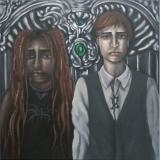
The artwork is a specially commissioned portrait of the twins, hand painted by friend and collaborator Ryo Koike, known for his eerie, whimsical fantastical style. Throughout his visual ident, he provides an imaginative window into the twins’ cosmos and beyond.
out of Stock
Last delivered 13 months ago available to reorder, subject to availability
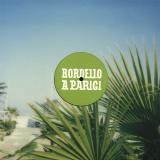
Balearic sounds and Mediterranean warmth are the inspirations for Bruno Belissimo’s Bordello A Parigi debut. Drawing on disco, house and funk, Ottimo! is a four tracker of electronic exuberance with Belissimo’s musical ability and range immediately spilling from the speakers. Guitar strings curve around synthlines in the title piece, percussive textures giving way to the mantra-like refrain of “Ottimo!” Thick bass echoes into beaming keys for “Meduse.” Bright notes cascade, grooves melting with vocoder lyrics as classic disco tones are reimagined in this modern mirrorball medley. Organic rhythms introduce the flip. “Mirage” opens to ripples of bongos and toms as a loose structure takes hold. Hedonistic chants rise to a shimmering chord, kicks and snares funnelling the building energy as bold blasts and samples shriek with delight. “Las Piramides De Ibiza” brings the quartet to a close. Clean drum patterns support joyous notes, a machine dipped voice calling time.
out of Stock
Last delivered 7 months ago available to reorder, subject to availability
• We launch our Soul Harmony label with a fabulous tape discovery from Golden State Recorders. At the time of recording, 87th Off Broadway lived in the small town of Seaside, California and were based in Monterey. They wrote their own songs, four of which were recorded at an April 1972 session, arranged by Los Angeles Rene Hall. The tape lay dormant for decades. ‘Instant Replay’ is the final of the four to belatedly be issued; the others being funk released on Ace’s BGP label. The group morphed into another outfit called Welfare who had ‘What About The Child’ released (with a name change to Gold) in 1977 on the MRC label. This song is of the highest quality as are the intricate harmony vocals. Advance plays on the Lowrider scene have been very well received.
out of Stock
Last delivered 12 months ago available to reorder, subject to availability
Celebrating 20 years of defining, and redefining, electronic alt-pop - Metronomy ‘GREATEST HITS’ is the first comprehensive collection of their “smash hits” spanning across all 7 studio albums, and will be release alongside a separate album of BBC Sessions.
Formed in 1999 by Joseph Mount, Metronomy has released six acclaimed studio albums and become one of the UK's most influential electronic acts. Known for their distinctive visual aesthetic, innovative production techniques, and energetic live shows, Metronomy continues to bridge the gap between experimental electronic music and accessible pop. From the charm of early tracks like "You Could Easily Have Me" to the sophisticated pop of "The Look" and the dance floor magic of "Love Letters," Metronomy's distinctive sound has consistently pushed boundaries while maintaining their unmistakable identity.
The previously unreleased BBC Sessions reveal another dimension to these songs, capturing their magnetic live energy and Joe’s evolving approach to arrangement and performance, all recorded between 2009-2019 across BBC6Music, BBC Radio 1 & BBC Radio 2.
out of Stock
Last delivered 12 months ago available to reorder, subject to availability
“'Lyceum' is a fountainhead of unqualified greatness. It’s a strange, sad sound harking back to old school tunesmanship – Aztec Camera, ‘Rattlesnakes’, prime-time Felt – but the whole affair is permeated with a resonant, almost tearful quality. ‘Lyceum’ is reminiscent of Galaxie 500’s ‘Today’ in that it sounds like it cost less than a round of drinks to produce. But the lo fi sound merely enhances the misty glazed-pop sound and raises the hallelujah choruses to the forefront. Rather than drowning them in production mush. Don’t pass it by”.
– Bob Stanley, Melody Maker 1989
Hailing from the suburbs of Glasgow, this five-piece are best known for their three starry-eyed albums on the renowned Sarah Records - this being an expanded version of their first (an eight-track 10” at the time).
By the tail end of the 1980s the independent music scene in the UK was turning its back on the polish and over-indulgence of the mid-80s with its gated drums and wallpaper production. And those who weren’t stretching the boundaries of sonic innovation had tuned back to the post-punk ethos of ramshackle charm and zealous melody, even dousing the spirit with some political fervour once more. Influences were more likely to be Television and the Television Personalities than MTV.
The Orchids and The Sea Urchins were the first two bands to release 7” singles on the Sarah label having previously begun their recording existence on a shared flexi disc in 1987 (The Sea Urchins went on to become Delta, whose classic album ‘Slippin' Out’ from 2000 will be the second release on Circuitry). The Scottish five-piece released ‘I’ve Got a Habit’ and ‘Underneath the Window, Underneath the Sink’ as EPs before really finding their feet with ‘Lyceum’; the tracks, remastered from the original Toad Hall tapes are included on this reissue as are the three songs from the ‘What Will We Do Next?’ 7” (this collection closes with the frazzled stretch that is ‘Yawn’). 'Lyceum' was originally released in August 1989.
The album opens with ‘It’s Only Obvious’ and its gloriously youthful chorus of “who needs tomorrow when all I need, all I needed was you”. James Hackett somehow appears both forthright and rejected, something that one of their musical heroes The Go-Betweens also had down to a fine art. It barely takes a breath until midway through side two where ‘Hold On’ (sounding suspiciously like an unlikely objective) descends into the intro of ‘Blue Light’, the counted-in ‘1, 2, 3, 4’ whispered like the most hopelessly dejected rally. If that sounds depressing it isn’t. This record by The Orchids was a spirited source of comfort for an 18 year old at the time and still shudders with the best type of melancholy, one that’s spirited not indulgent. If you’re not familiar with the band’s charm, this is where you should begin.
'Lyceum' is released on double black vinyl by new label Circuitry.
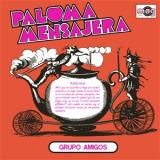
"Paloma mensajera" (featuring members of New Juggler Sound / Laghonia) shows the shift that was taking place within Peruvian rock away from psych and hard rock which had predominated during the early 70s. The style adopted by Grupo Amigos (and other bands and artists during this period) highlights the influence of soft rock, UK, US and Latin American folk rock and, above all, the desire to keep the melodic greatness of The Beatles alive. This reissue includes bonus tracks and extensive liner notes. DESCRIPTION "Paloma mensajera" (featuring members of New Juggler Sound / Laghonia) shows the shift that was taking place within Peruvian rock away from psych and hard rock which had predominated during the early 70s. The style adopted by Grupo Amigos (and other bands and artists during this period) highlights the influence of soft rock, UK, US and Latin American folk rock and, above all, the desire to keep the melodic greatness of The Beatles alive. The positive reception albums by artists such as We All Together, Telegraph Avenue and Zulu garnered between 1972 and 1975, marked a change of paradigm and in preferences within the Peruvian rock scene. Eclecticism gained new ground, to the detriment of the sectarian and orthodox, while melody grew more present and visible, moving away from the progressive experimentation that typified underground Peruvian rock up to the beginning of the 70s. For their first single on MAG, included on this reissue, the band adopted a formula in which Beatles harmonies converged symmetrically with folk motifs. 'Dirty Girl' was a hit on the radio. A full album followed but only a fairly small number of copies of the album were pressed, which seems to have been the main reason for omitting it from the historical accounts of Peruvian rock music from the late 90s onwards. In "Paloma mensajera" all compositions were penned by the group, after several years during which cover versions were a staple. Some of the musical resources that the band had at their disposal in terms of composition and arrangements are striking and even surprising, considering that they were a debut band, whose members were under the age of 20. The arrangements included the clever use of a Moog synthesizer which had just arrived at the MAG studio. The success achieved by the Beatles tribute performances played by the members of Grupo Amigos for decades have eclipsed the songs that Edmundo, Andrés Da Ros and Simón Ames composed with youthful enthusiasm and energy between 1972 and 1973 to the point where they have almost been forgotten. This re-release of "Paloma mensajera" should help rectify this major injustice. It includes bonus tracks and extensive liner notes.
Gastr del Sol"s second album returns at last to the vinyl format - its first physical manifestation in well over a decade. Once again, a drop of the needle may ignite any number of queries, summed simply in one: What IS this music? Such is the potent energy of Crookt, Crackt, or Fly, retaining its otherworldly qualities some 32 years and countless musical movements since. Crookt, Crackt, or Fly expands upon The Serpentine Similar"s minimalist stance in unexpected ways, imposing further austerity in the soundscape but for an unpredictable expansive quantity periodically overflowing, waves of blood sluicing through the elevator doors. This is partially due to a change within the group dynamic: the departure of bassist Ken "Bundy" Brown and the arrival of a new partner for guitarist and singer David Grubbs - guitarist and sound fuckerer Jim O"Rourke. O"Rourke"s initial work with Gastr involved editing and recomposing recordings of the Grubbs-Brown-&-sometimes-John-McEntire lineup, producing an utterly outré collage of cut-ups and other types of tape processing. This became the "20 Songs Less" single, after which he was invited to play with the group. It was a time of flux; Brown recalls playing a Gastr show at the Metro around this time featuring himself, John McEntire, Grubbs and O"Rourke - and one of the pieces played was a Tortoise song! Throughout these shifts, Gastr del Sol"s music was never less than fully considered and composed, even in moments redolent with the suggestion of the random and the non-sequitur. Grubbs and O"Rourke made no attempt to replicate Serpentine"s arrangement of thick, scaly drones and hypnotic song-visions in their own partnership, finding Crookt, Crackt,"s sound instead in spiny, gamelan-like interactions between their (mostly acoustic) guitars, played precisely in and out of formation with bright, fleet-fingered abandon. O"Rourke"s fondness for field recordings and his capacity for tape manipulation intersected with Grubbs" sensibilities, edifying his evolving song style: written with increased sharpness and sly surreal humor, sung closer to silence. Halfway into "Work from Smoke", the sudden collapse of the sound-walls around us signals Crookt, Crackt"s major departure. From the thicket of guitars, a swell of drones and free-jazz squeals, made up of bass clarinet, vibraphone and organ, pulls the listener into an entirely other acoustic space. "Every Five Miles" derails in similarly tactile fashion: a guitar duet boils up thunderously, then fragments and spirals apart. As a free electric guitar part crops up, improbably holding the center, the acoustic space around it continues to disintegrate in ambient stereo. A wedding of folk music idioms to classical, improvised and modern compositional modes (including Gastr"s own formative post-punk mode), Crookt, Crackt, or Fly is a song-based reality steadily giving way to its alternative alchemies playing out within.
Back from the undead in the fresh (because we believe in upgrades & afterlifes!) is this new pressing of the first of all Gastr del Sol records, The Serpentine Similar. It is one of several distinct initiators of a definitive musical drift in the 1990s, and a drift all of its own, to boot! At the time, this album was largely heard within an underground whose boundaries were clearly defined - but if today"s sound-pool of "commercial" music is deeper and wider than it was back then, it is without a doubt due to the cracking open of certain doors of perception by Gastr del Sol, alongside their esteemed others. The year was 1992. After a bruising run of tour dates the year before, the final lineup of Bastro, a power-trio of David Grubbs, Ken (Bundy) Brown and John McEntire, retired, exhausted. Shortly thereafter, they were rebirthed, sans drums, via a new set of ideas composed in the cut-down configuration of Grubbs on guitars, keyboards and vocals and Brown on bass. Playing in duo format opened up sound and intention, leaving the need for speed (and the stock in rock) out, while letting in an expanse of brooding, droning acoustic space that highlighted the songs" serpentine shapes. This was something so radically different as to require a new calling card: henceforth, Gastr del Sol. Signing to Teen Beat, Gastr del Sol completed The Serpentine Similar in late 1992 for release the following year (the DC reissue came in "97). In the final rendering, Serpentine"s roof-rent, white-sky execution was attenuated with several percussion appearances from the prodigal John McEntire. Over the next five years, his cameo presence was a constant in Gastr del Sol"s steadily-evolving tradition of significant breaks from tradition at every turn. There would be an even more significant tradition-breaker onboard for all this; following the release of The Serpentine Similar, Jim O"Rourke joined Grubbs in Gastr as Brown exited (to focus on Tortoise, with McEntire et al). For the new Gastr duo, a world of new directions in music awaited, the future became the past, and the music of Gastr del Sol emerged from the thin air, then returned there. Now, The Serpentine Similar has been returned to vinyl from the temporal streams of contemporary music listening, a glorious rematerializing of all its spatial details on LP for the first time in 20 years.
In truth, singing is not all that different from acting. Performing a song is very similar to playing a role in a theatrical production. A singer's delivery — the way they interpret and emphasize certain parts of a song — is much like what an actor does with their character.
That's why we often find singers who go on to gain popularity as performers — some on stage, but more often on the silver screen (film).
These are called 'singing stars' — vocalists who are also featured actors, usually given roles specially created to suit their primary strength: singing.
Among them, a few have become even more famous for their acting talents, which sometimes surpass their singing ability. However, the number who manage to do this successfully is very small. Oslan Husein is lucky enough to be counted among that small number. As his fame as a singer began to rise sharply, he also began his film career as an actor. It's true that he had previously appeared in a film, but only as an extra, alongside the orchestra he performed with.
Following that, he appeared in several other films, including Detik-detik Berbahaya, 1000 Langkah, Kasih Tak Sampai, Hadiah 2.000.000,-, Maut Menjelang Magrib, and Antara Timur dan Barat. Six films over a span of just about 2.5 years — quite an impressive achievement.
Over time, a number of songs that Oslan had performed in his films began to accumulate. Together with a few additional songs — also from films — there were eventually enough to compile into one long-playing (LP) record.
And so, accompanied by Jack Lemmers — who, for this project, created special arrangements and musical treatments unlike the usual (for example, the use of four guitars at once) — Oslan carried out the recordings at Irama studios.
By releasing this LP of songs from the silver screen, Irama took an exciting step forward and opened many new possibilities in its history. Because the world of recorded music and the world of film, wherever they are in the world, are like siblings — and they work best when they collaborate, shoulder to shoulder, in harmony.
Connection is the new ten song LP from Los Angeles powerhouse Orgone featuring collaborations with Cyril Neville, Kelly Finnigan, Pimps of Joytime, and more. The album is the inaugural release on 3 Palm Records, distributed by Colemine Records and Secretly Distribution. A spiritual follow up to fan favorite Bacano, Connection is gritty, lean, and tight soul and funk at its best. It explores the invisible threads that bind us all, spiritually, emotionally, and artistically. Much like the collage that adorns the cover, this hard hitting collection of songs illuminates the essence of Orgone: a musical pastiche of different vocalists, heavy riffs, vintage production, and a core rhythm section that never disappoints. The synergy created in these songs demonstrates that the whole is truly greater than the sum of all the individual parts and players.