NOAR is a young collective of enthusiasts in electronic music from Dresden.
The aim is to bring locals from dresden and eastern germany on the screen of like minded people. The scene is bursting with talents and audiophiles of several generations and therefore we want to give these talents a platform and make their output accessible to like-minded people.
‘Clone Scratch’ by Friedrich Ernst comes with a distinct electro vibe for build ups in a club and vocals in dreamy watery manner reminds us what’s up to us.
‘locknr01’ by The Isolator gives us a cold industrial goosebumps. A whole factory is under pressure performing that straight electro tune while heavy strings foreshadow its collapse. Here and there screws turn out of the steel beams, soft like bubbles. You have to take cover to avoid being shot.
A3 by Anachronism follows straight up. ‘Lost Control by Distance’ shows us what unconsciousness feels like. In this breakbeat thunderstorm we are sitting in a crashing airplane not quite ready for what's coming next.
With ‘Establishment’ the thunderstorm lightens and suddenly soft sunrays from Planetary Secrets come through the cloud cover. You are dreaming with soft melodies warming up your face while your body is moving to uk influenced breakbeat.
The duo KAWA KAWA is making their release debut with B2. This track clearly serves you on peak times with lovely and rough vocals while its energy easily lets you understand what a desire means.
The EP is finished with a fast electro belter from Otis Key. With it’s minimalistic approach
‘Copy Natural Processes at the Nanoscale’ lets you dive into the grid of existence with your electron microscope. From time to time you can see light coming from underneath with cold strings layered between the rhythm.
Dude what if...Is it… the matrix?
Поиск:this means war
Все
Kharkiv born artists Komponente & Kurilo have been an integral part of the local scene in the past years both as DJs, Live-Act and Producers.
Now further apart since the beginning of the war they are still united in music and we are happy to finally share this EP with which was originally conceived when both artists were still Kharkiv based during the pandemic.
Kurilo has since made the journey to the New York via Berlin in recent months. While Komponente took refuge in Kyiv for some time after having sat out most of the fighting in and around Kharkiv while lending a helping hand to families and elders who couldn't manage or didn't have the means to leave the city when russia attacked.
At this point we are just happy and thankful to have both of them still with us and to be able to finally get this EP out which by now seems to have travelled from a past life to us in the here and now.
Pandemics or War this is Electronic Music charged with pure emotions produced during one crisis, released during the next and we will still dance to it during whatever comes next!
Futuristic Brussels based four-piece ECHT! are set to release their sophomore album 'Sink-Along' on the 5th May via the groove-obsessed Sdban Ultra label. Receiving critical acclaim from the likes of Gilles Peterson (BBC Radio 6 Music) and Mixmag for their debut release 'INWANE' (2021), ECHT! takes the best of Jonwayne, DJ Rashad, J Dilla, Ivy Lab, Tsuruda and Aphex Twin, resulting in an unrivalled sound.
In a society geared almost exclusively toward the technological, ECHT! forges a different path, one that instead replaces the mechanical with the human. At the heart of their creative process made up of actual skin and bone, the influences of trap, bass music, jazz and hip-hop burst forth through their expert playing of instruments.
'Sink-Along' showcases a rawer and more straight-forward approach than their debut. Whether on the bass-heavy opener 'Glide' or the beat-to-beat sounds of 'Cheesecake' and 'Bryan Brains', ECHT! confirms its taste for deep, dark beats pushed to the extreme. No one can remain indifferent. A more luminous universe is brought to the fore on the introspective 'Vault-A' and 'Dawn In Duden' but at the core of 'Sink-Along', the common denominator is a warm and organic groove, evident on the inventive 'Rouf-rouf' and 'Mtwk part2'. "For this album we wanted to make strong and opposite emotions coexist: a dark and intense apocalyptic tendency, and a life and dance impulse that runs through everything. A paradox that is reflected in the wordplay of the title 'Sink-Along'."
Releasing their debut EP 'DOUF' in 2019, the following year, ECHT! finished third in Red Bull Elektropedia's 'Fresh on The Scene' category and the EP was nominated for 'Best EP'. ECHT! released three sublime live studio sessions titled the BREWmixes in 2021, which received support from tastemakers including LEFTO, Worldwide FM and Belgian national radio station Studio Brussel (StuBru). Their debut album 'INWANE' soon followed.
Echt means 'vrai de vrai' - 'true' or 'real' in brusseleir (Brabantian dialect of Brussels). The name is a direct reference to the fact that their sound transmission is 'real', performed with conventional musical instruments as opposed to computer music which the production might suggest. It also relates to the fact that none of the members of the band are originally from Brussels - bassist Federico Pecoraro is from Italy, keyboardist Dorian Dumont is from France and drummer Martin Méreau and guitarist Florent Jeunieaux are both from the Mons region on Belgium.
British musician, multi-instrumentalist, producer and DJ cktrl returns with the release of his new EP ‘Yield’. Born from a desire to change the narrative around contemporary Black British music, the boundary-pushing musician aims with this project to prioritise the art of bonafide musicianship. A stark departure from cktrl’s previous work, ‘Yield’ is a celestial and palpably more inward body of work that harkens back to the pre-electric age of modal jazz while simultaneously pulling in elements from the disciplines of classical and baroque music. Speaking on the project’s sonic identity, cktrl says: “I want to be able to show that you can make things from scratch again that have that feeling and beauty without having to sample an old record. Even though that’s an art-form within itself, I want to show raw orchestration and instrumentation can be the sole source” The origins of the title came from a period where cktrl was looking to find solace in himself after an introspective period of grief and heartbreak. As an intentionally instrumental project with minimal vocals, cktrl wants prospective listeners to see these new songs as guided meditations where they can wholly insert themselves in it. Eliciting and reaping whatever feelings come to the fore. Speaking on what ‘Yield’ means to him as a concept, cktrl explains: “Some people who I've asked to define the word ‘yield’ have looked at it from a harvest point of view, whereas others have seen it as something to submit to, to render, like you're giving up yourself. I see it as a barometer for how you feel - no matter if you're at your lowest or your highest vibration, you still need to show up for yourself. You still have to be present. It’s about getting the best from yourself no matter where you are in life” The new project is the follow up to last year’s ‘Zero’ which featured collaborations with esteemed contemporaries like the GRAMMY-nominated Mereba and anaiis. Upon the project’s release, it was met with a plethora of critical acclaim from highly regarded publications and platform such as British Vogue, Dazed, CRACK Magazine, Resident Advisor, NOTION, Harper's Bazaar and ES Magazine for its sprawling and experimental scope, spanning avant-garde jazz, classical music, alternative R&B and electronica. cktrl has a tune for every occasion: as content making beats by himself at home in Lewisham as he is amongst this generation’s fashion and cultural vanguards. Music has been a part of his life for as long as he can remember: from clarinet lessons throughout his school life to fond memories from his NTS days. Moulded by a unique blend of his West Indian heritage, years of classical training in both the clarinet and saxophone, cktrl strives to do what hasn’t been done before. His approach to creation is decidedly wide-ranging and broad. In fact, where sonic descriptions might fail to encompass the breadth of cktrl’s scope, three words surface when he unpacks his musical aims: freedom, range and feeling. Elsewhere, throughout his career, cktrl has been recognised and heralded by fashion and film VIPs as he firmly embeds himself within the black cultural renaissance emerging here in Britain. Acquiring a global network of creatives that include the late Virgil Abloh, Bianca Saunders, Tremaine Emory, Saul Nash, Maximilian Davis, Ahluwalia, Stephen Isaac Wilson, Sean Frank, Campbell Addy, Ib Kamara and Jenn Nkiru who secured him a cameo in Beyoncé’s ground-breaking film ‘Black Is King’.
Speedy J and Steve Rachmad join forces as Speedy & Steve for a four-track techno EP on Luke Slater's Mote-Evolver this February.
Dutch artists Speedy J and Steve Rachmad have long been defining the techno underground with seminal tunes on a range of influential labels. For their new release, the duo jammed in Speedy's studio for their new release, working the live results into four fresh and powerful new tracks, kicking off a new series of live collaborations on Luke Slater's Mote-Evolver.
The intense and textural 'Reddo' kicks off with industrial synth lines designed for maximum warehouse impact before 'Dabler Nine' brings its deep rolling drums and mind-melting synth lines late into the night. 'Right Well and Clean' has fresh, airy kick drums rolling beneath harsh and icy hi-hats before 'Rotor' closes the release in cosmic fashion with spiralling pads and intensely layered synths and drums.
This new series will see artists collaborating in person, with each EP capturing the creative moment as it happens, with results aimed squarely at the dance floor. Each release in the series has artwork in a specific style that combines one item from each artist, which means something to them, into one new image.
Today we have a piece from Kharkiv. Yes, THAT Kharkiv, the hometown of the Ukrainian dynamic duo of Komponente and Kurilo with their Trance Pandemic label, also the city on the frontier of the Russian/Ukrainian war. Living in a much calmer city in Ukraine, it’s really hard for me to imagine making any production plans there, in this case, it means nothing but honor and respect for the guys. Red and black colouring was changed to yellow and blue (the colors of the year), the music is still great.
Mannequin's 100th - a comp looking forward featuring an international and serious cast... BIG TIP!
The modern synthwave scene would be significantly poorer without the keen ear and tireless efforts of the Mannequin label run by Alessandro Adriani. Geographically situated within the nerve centers of Rome and Berlin, yet with a musical spirit that easily transcends these boundary lines, Mannequin's back catalog has been an important component in the modular assemblage that makes up electronics-based independent music in the 21st century, and an important reference point for those who need to defend against the lazy accusations that this such is purely retro' in its form and content. Recent accolades and accomplishments - being named Resident Advisor's label of the month' for May of this year, starting the 'Death of the Machines' 12' series, and being given the 'green light' for bi-monthly parties at the Säule room in Berghain - have been earned through Mannequin's unflagging commitment to sonic diversity and Adriani's own realization that the anxious and sharp-edged sounds associated with, say, the Cold War of the 1980s can convey a completely different message today. Adriani says it best when claiming that there is no such thing as 'old' or 'new' music...only the music of now'. With this cogent statement of intent, Mannequin continues to go on exploratory missions to find the best and most relevant aspects of genres like acid, industrial, EBM, post-punk, coldwave and still more.
Which brings us to Mannequin's newest project and 100th release overall: the Waves of the Future double LP compilation, which itself is not a conventional retrospective collection. Case in point - none of the artists appearing on this collection have put out their own releases on Mannequin yet, despite acting as Mannequin's unofficial ambassadors (via DJ sets and other means). This makes the set even more compelling rather than less so, since it shows how Mannequin fits into a larger picture that includes other scene leaders and label owners including Beau Wanzer, Willie Burns (WT Records), Silent Servant (Jealous God) and Ron Morelli (L.I.E.S.). Of equal importance is how Waves of the Future projects a sense of aesthetic resilience and continuity, showcasing just how well the current artists allied with Mannequin employ and re-interpret the sonic lexicon that appears on that label's reissues of 'classic' acts such as Nocturnal Emissions, Bourbonese Qualk, Din A Testbild and Doris Norton.
However, none of this would matter as much if the music itself didn't have strong potential for lighting a blaze in the dark corners of the human imagination, and of course for forcing bodies into motion. Each track here pivots around a couple of key sound elements that seem to set the stage for the next track to come: see the sputtering / chopped ghost voices on Morelli's Charges Won't Stick,' which easily informs the slicing drone and authoritarian beat of Shawn O' Sullivan's Ill Fit,' which then lays down the emotional foundation for the sequencer-powered With You' from An-I & Adriani or the glassy landscape of Illum Sphere's Exhaustion'. Elsewhere, the wired mischief of Not Waving intersects easily with the spherical electro-funk and coded commands of Beau Wanzer. When all the disparate parts of Waves of the Future are soldered together, it perfectly illustrates Mannequin's non-linear philosophy and Adriani's suggestion that Mannequin listeners directly engage with the music rather than trying too hard to analyze or dissect it.
INGERABLE, which means “inedible” or “unpalatable” in French, was the adjective a record label used to describe Cathy Claret when she showed them the song inspired by a Caló poem that is now part of our upcoming release, “Por el Chiben.” The piece was born in 1987 when the artist was living in Can Tunis (Barcelona), inspired by a poem she heard from Uncle Bastián. Years later, when recording her first album, she included this composition, but the artist was censored for not fitting commercial standards. Now, Alhaja Records revives it in an album with two versions: a flamenco one, featuring Emilio Caracafé on guitar, and an electronic one, produced by Wará.
With »News from Planet Zombie«, The Notwist return to view after years of exploration and experiment with an album rich in both melancholy and positivity, sketched across a suite of thrilling, fiercely committed pop songs. It’s an album reflecting a chaotic world, but responding with warmth and generosity, to achieve creative and spiritual consolidation. Recorded in their home base of Munich, it reconnects with the security of the local to explore the troubles of the global: a guiding impulse writ large across this album’s eleven songs. It’s also the first studio album since 1995’s »12« that the entire band recorded together in the studio in its expanded live formation.
A new album by The Notwist is always a curious endeavour; their musical language is as consistent and resilient as the contexts for creativity are unpredictable and ever shifting. For »News from Planet Zombie«, the core trio of Markus and Micha Acher and Cico Beck embraced the plural possibilities of writing together, bringing songs to the collective and then arranging, rehearsing and recording that material live, in the studio.
The result is an album that’s energised, fully in ›the now‹, with spectacular moments where you can hear the magic bubbling up in the dynamic between the Achers, Beck, and fellow members Theresa Loibl, Max Punktezahl, Karl Ivar Refseth, and Andi Haberl. If »Teeth« begins »News from Planet Zombie« quietly and reflectively, by »X-Ray« everyone’s supercharged, blasting out future anthems with the collective energy cranked up high. The chiming keys of »Propeller« skim the instrumental’s surface like stones across burbling water; »The Turning« clangs its way into one of the album’s most heartwarming melodies.
»News from Planet Zombie« was recorded over one week at Import Export, a non-profit space for arts and music. You can tell, too; there are some pleasingly rough edges here, as though The Notwist’s striving for hazy perfection means they’re also confident enough to let the songs breathe and mutate between our ears. That openness to chance also takes in guest turns from friends both local and international, reflective of a cosmopolitan Munich: Enid Valu joins in on vocals, while Haruka Yoshizawa guests on taishōgoto and harmonium, Tianping Christoph Xiao on clarinet, and Mathias Götz on trombone.
The Notwist aren’t best known for cover versions, but »News from Planet Zombie« features two: a gorgeous version of Neil Young’s »Red Sun« (from 2000’s »Silver & Gold«), which the group originally developed for a theatre play directed by Jette Steckel, and a take on Athens, Georgia folk-pop gang Lovers’ »How the Story Ends«. They slot into the album’s narrative perfectly, nestling in like old friends, revealing The Notwist as poetic interpreters. Played well, the cover version is both acknowledgement of fellow travellers and act of generosity, and The Notwist nail both aspects here.
And that narrative, the way the album plays out? »News from Planet Zombie« acknowledges the distress of our current geopolitical impasse, while reminding us there are collective ways forward. Fed through the figure of the zombie, Markus Acher explores our anxieties: »In the title and some lyrics I reference B- and horror-movies, which is a reference to the crazy world at the moment, which seems to be like a really bad and unrealistic B-movie.« But there’s a reminder here not to lose the thread entirely, that these things, too, will pass.
»The river here in Munich I often go to has been there forever and will be there long after us,« Acher reflects, pinpointing an important source of succour for him, »always the same but always changing. Very calming, but also always reminding me that like this river time only flows into one direction and you can’t go back. Every moment is very precious.«
Artwork by Marie Vermont
The Notwist:
Markus Acher: vocals, guitar
Micha Acher: bass, sousaphone, euphonium, trumpet
Cico Beck: electronics, keyboards, guitar, recorder, percussion
Theresa Loibl: bassclarinet, clarinet, piano, harmonium, organ
Max Punktezahl: guitar
Karl Ivar Refseth: marimbaphone, vibraphone, glockenspiel, congas, percussion
Andi Haberl: drums, dulcimer
+
Enid Valu: vocals on 1, 2, 3, 4, 5, 7, 9, 10, 11
Haruka Yoshizawa: taishōgoto on 6, harmonium on 9, 10, 11
Tianping Christoph Xiao: clarinet on 4, 10, 11
Mathias Götz: trombone on 4, 10, 11
- 1: You Wanna Dance Or What?
- 2: Interlude - It Won't Always Be Like This
- 3: It Always Was
- 4: This Is The Place
- 5: Interlude - What You Need To Hear
- 6: Could Be Forever
- 7: Mum Does The Washing
- 8: Don't Let It Get You Down
- 9: My Love
- 10: Interlude - How I Found Forgiveness
- 11: Brother
- 12: Whatever Comes
- 13: Choose Yourself
- 14: Everything Everywhere All At Once
- 15: Everything Everywhere All At Once - Reprise
- 16: Turn It Around
- 17: What Is Redemption
Lately, it feels like the world is one endless bad news cycle. Joshua Idehen isn’t here to pretend otherwise – but on the spoken word artist’s new album, I Know You’re Hurting, Everyone Is Hurting, Everyone Is Trying, You Have Got To Try, he provides a phenomenal sonic, poetic space. Made with his creative partner, musician Ludvig Parment, the album (out 6 March 2026) is an urgent but transcendent collection that holds you through it all, filled with grief, euphoria and hope.
I Know You’re Hurting… comes after the virality of Idehen’s track Mum Does The Washing, a wry and whipsmart poem examining how the world works (which started life as a Twitter thread), set to Parment’s spacious beats. The song has seen the pair propelled beyond Idehen’s wildest dreams this past year.
Across the album, that means uplifting choirs, cozy samples and exuberant, sometimes house-tinged beats. “I am personally drawn to music that transports you to a place, or scene or mindset,” says Parment. This is topped with ruminative musings on morality and human connection; about the longer loves in life – like friendships, family – that sustain us. These come from Idehen and Parment, along with a host of friends and collaborators, including writers Leone Ross and Charlotte Manning, and vocalist Amanda Bergman, to help expand on the topics of the record without sounding preachy. Similarly, there are musical guests including saxophonist Pete Fraser and Shabaka Hutchings on flute, each helping to imbue the album with a rich warmth.
- 1: The Festering Depths
- 2: Beckoning Of The Moss Ridden Tombs
- 3: Fields Of Flayed Skin
Me Saco Un Ojo Records proudly presents the debut EP of Croatian death-doom maniacs Decrepit Altar.
Gloomy guitars greet you with a charnel atmosphere, eerily descending into the graves. This subsides to showcase putrescent riffing and gargantuan drums with a monolithic heaviness, the perfect recipe for fetid death-doom excellence. Morbidly snarled vocals reverberate into the abyss with the spectral instruments perfectly enshrouding their malignant presence.
Combining crushing heaviness with savage and creeping aggression, these three tracks lurk in shadowy cemeteries awaiting your arrival only to punish you with their flagellating horrors. From the warping progressions to the primal bludgeoning force, it will not take long for you to feel this band means business with their first release.
Each sinuous and stringy tendril of terror flows organically from the last, presenting darkness and evil with a veritably claustrophobic and tense sound. Churning malice and groove in equal measure, their vile concoction of festering offal is something pungent and addictive that keeps you coming back for more.
All three of these twisted offerings give something of their own with a personality and character while fitting together to forge a trinity of depraved darkness that doomed death metal fans will certainly cherish. Prepare for egregious defilement…
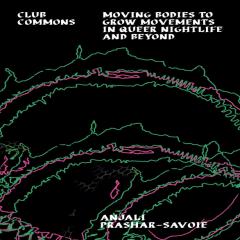
Queer communities have long transformed parties into something powerful: spaces where care flourishes, injustice gets challenged, and new worlds are danced into being. But today, DJs command huge fees while behind-the-scenes workers earn below minimum wage. Corporations profit from our culture while communities that created these spaces are displaced. As venues shut and workers burn out, it’s clear that something has gone deeply wrong.
Club Commons: Moving Bodies to Grow Movements in Queer Nightlife & Beyond by Anjali Prashar-Savoie takes you inside hidden stories of resistance and reinvention. We meet the people reshaping nightlife from below: abolitionist security teams creating safety without police, sober raves doubling as mental health support, radical childcare at parties, venues becoming worker cooperatives, and free party crews reclaiming public space. Through their work, we see how party-throwing skills build movements, how refusing to play changes everything, and why protecting queer nightlife means transforming who owns it.
Quotes
“When Anjali shines her perceptive light on dancefloor culture, everything is better illuminated. I can’t wait to read this book. It’s one we need.” Emma Warren (author of Dance Your Way Home/Up the Youth Club)
“Anjali’s one of the most exciting and insightful voices writing about dance music today, bringing fresh perspectives, intellectual rigour and emotive power to a conversation that’s too often homogenous, superficial or cynically commercial. Club Commons promises to be an essential and overdue book: a chance to reexamine the queer history of club culture, celebrate and critique its present, and map out radical possibilities for its future.” Ed Gillett (author of Party Lines)
“Beautifully written and unique, Anjali Prashar-Savoie’s behind-the-scenes journey through queer nightlife is as thorough as it is fascinating. Documenting a world that commercial interests are rapidly destroying, Club Commons is proof that queer culture holds the key to a better future for the dancefloor and beyond.” Professor Sam Parsley (author of Minor Keys, coach, DJ and founder of In the Key, a directory and platform championing the careers of women, trans and non-binary electronic music producers)
“Club Commons: Moving Bodies to Grow Movements in Queer Nightlife & Beyond is a vital reminder of how important the dance floor is to connect, unfurl and envision new futures. The text highlights the historic and existing care work entangled with the club space, particularly in providing temporary sites of refuge and embodied joy for Black and LGBTQIA+ communities. This is juxtaposed with research on the corporate and carceral commodification of nightlife in recent years, which exposes the false premise that club spaces are always radical. This book affirms my belief that the non-commercial nightlife ecosystem is an essential part of our social change infrastructure, rather than a luxury. Club Commons is a call to action to reclaim this space on our own terms and revive the underground.” Camille Sapara Barton, (author of Tending Grief: An Embodied Guide to Being with Grief Individually and in Community)
Although humans possess language as a means of communication, We sometimes hurt each other simply by intending to. In war, bullets kill people. If we consider words to be like bullets, they can be violent and cause mental suffering. However, when communication causes problems, the only way to solve them is through more communication. I thought: wouldn't it be wonderful if those bullets could turn int flowers instead? In everyday life, when we talk, laugh and share moments with friends and family, Those moments can be transformed into flowers. Keeping this in mind, I created this album. (Hidetoshi Koizumi aka Hybrid Leisureland)
- Threetoone
- Freaks Of Nature
- Burning Air
- First Contact
- Humans
- March Of The Lost Souls
- Underground
- Ashes To Ashes
- It Up To You
- This Means War
- The Hum
Rot/Schwarzes Ink-Spot Vinyl, limitiert auf 300 Exemplare. Drei Buchstaben. Drei Musiker. Drei Instrumente. Drei Jahre. Graf Zahl hätte seine Freude an diesem Album_ HUM loten ihre dunklen Stoner-Klangwelten weiter aus. ,three" bringt sowohl druckvolle Post-Rock-Songs als auch psychedelische Klangexperimente. Jeder Track scheint eine Idee zu verfolgen; jeder eine 4-Minuten-Reise. Die Themen drehen sich um Umweltzerstörung, gesellschaftliche Irrwege und Spacetrips. ,three" ist das Album für die Apokalypse oder für einen Abend im Weltraum. Der Spaß kommt dabei nicht zu kurz: Die Dunkelheit wird auf fetten, langsamen Grooves präsentiert. Die Stücke sind kompakt und melodisch. Katharsis ist das Ziel: Wer mit offenen Ohren hört, dem könnte es nach den 11 Tracks und 41 min besser gehen_ Eine aufregende Reise durch musikalische Klangwelten (Surf, Gothic/Dark Wave, Kraut und Prog-Rock) mehrerer Jahrzehnte. Die HUM-typischen schweren Riffs (im Schatten von Godzilla) mit komplexen Rhythmen und Breaks werden erweitert durch neue Elemente wie Surfgitarre, Synthiesounds und gesangliche Experimente. Der meist mit Effekten verfremdete Gesang wird spärlich und gezielt eingesetzt mit oft kurzen Textfragmenten, welche die Stimmung der Songs textlich untermalen. Dazu kommen drei instrumentale Soundcollagen, die als düstere Überleitung zwischen den Songs dienen. Ein gewisser roter Faden scheint sich thematisch durch das Album zu ziehen. Red/black ink spot vinyl. Limited to 300 copies. Three letters. Three musicians. Three instruments. Three years. The Count would have loved this album...HUM continue to explore their dark stoner soundscapes. "three" features both powerful post-rock songs andpsychedelic sound experiments. Each track seems to pursue an idea; each one a 4-minute journey. The themesrevolve around environmental destruction, social aberrations, and space trips."three" is the album for the apocalypse or for an evening in space. But there's no shortage of fun: thedarkness is presented on fat, slow grooves. The pieces are compact and melodic. Catharsis is thegoal: if you listen with open ears, you might feel better after the 11 tracks and 41 minutes...An exciting journey through musical soundscapes (surf, gothic/dark wave, kraut and prog rock) spanning severaldecades. The heavy riffs typical of HUM (in the shadow of Godzilla) with complex rhythms and breaksare expanded by new elements such as surf guitar, synth sounds and vocal experiments. The vocals, mostlydistorted with effects, are used sparingly and purposefully, often with short text fragments that underscore the moodof the songs lyrically. In addition, there are three instrumental sound collages that serve as dark transitions betweenthe songs. A certain common thread seems to run through the album thematically.
- A1: Threetoone
- A2: Freaks Of Nature
- A3: Burning Air
- A4: First Contact
- A5: Humans
- A6: March Of The Lost Souls
- A7: Underground
- A8: Ashes To Ashes
- A9: It Up To You
- A10: This Means War
- A11: The Hum
- A1: Nobody Move, Nobody Get Hurt
- A2: This Scene Is Dead
- A3: Inaction
- A4: Can't Lose
- A5: Callbacks
- A6: Cash Cow
- B1: It's A Hit
- B2: The Great Escape
- B3: Textbook
- B4: Lousy Reputation
- B5: Worth The Wait
- B6: What's The Word
- C1: Mucho Mas
- C2: Surprise
- C3: Ram It Home
- C4: Callbacks Under The Sea
- C5: Hoppipolla
- D1: Sie Hat Vat Vermisst
- D2: Nobody Move Under The Sea
- D3: History Repeats
- D4: This Means War
- D5: Great Escape Under The Sea
- D6: Be My Baby
With Love and Squalor ist das Major-Label-Debüt der Rockband We Are Scientists. Das Album erschien im Oktober 2005 bei Virgin Records in Großbritannien und erreichte Platz 43 der Charts. Dank einer treuen Fanbasis wurde es 2006 – rund sechs Monate nach Veröffentlichung – mit Gold ausgezeichnet. Durchschnittlich verkaufte sich das Album 4.166 Mal pro Woche, bevor es zertifiziert wurde.
Der Titel ist inspiriert von der Kurzgeschichte For Esmé – with Love and Squalor von J.D. Salinger, ursprünglich erschienen im New Yorker und später in der Sammlung Nine Stories.
Zum 20-jährigen Jubiläum erscheint nun eine limitierte 2LP-Edition mit unveröffentlichtem Archivmaterial, B-Seiten, Akustik- und Live-Versionen. LP1 kommt in Pink, LP2 in Rot
The word "amateur" originates from the Latin word "amator," meaning "lover" or "admirer". This Latin term is derived from "amare," which means "to love". The French adopted "amateur" from Latin, and the English then borrowed it from French, initially retaining the sense of someone who loves or is devoted to something. Over time, the English usage of "amateur" also developed a meaning related to a lack of professional skill or experience. How did a word derived from love become a slur? Is love really so defenseless? They say love conquers all, but in reality isn’t love quite ridiculous? It has no intention, no motive, no agenda. How could it possibly prevail? It can’t be bought or sold, or so they say.Its mere existence can't be proven or even measured. What an impossible thing. Trying and failing, time and time again, no wonder cynicism always seems to win. I see “amateurism” as a delighted, even foolish, protest. Protest against everything. Of what’s expected of someone, or expected of someone to desire or strive for. To be elite, to be expert, to be professional, to be a master, to excel and succeed. Where’s the joy in that? I just want to have fun. I want to want. I want to love. And keep doing it, forever. I want to have fun, even when it’s tiring and sometimes even heaven is boring as hell. I want to be bad. I want to do my own thing. “I vant to be alone”. I want to be someone so dedicated to their passion that it starts to seem like there’s something wrong with them. All the way. We can take it all the way, and never get it back. ” - Molly Nilsson Amateur is the 12th studio album by Molly Nilsson. Deep in the teeth of a career that threatens to tip into something resembling a “legacy,” Molly Nilsson celebrates with an album recorded instinctively, quickly and bursting with so many moments of emotional brilliance and clarity it may be her greatest yet. Hers has been a career spent reaching out, perennially powerful in her earnestness, a warrior ridiculously defenceless and armed with a glittering sincerity. Shearing herself of the machinations of the music industry, recording at home, writing direct to the heart. Amateur is a jubilee for losers. A treatise in 13 songs, Amateur states clearly that we should live our life with eternal curiosity, offers us an open hand of comradeship out of the rat race. The songs on the album are both some of the most personal of Nilsson’s career and the most anthemic. First single How Much Is The World asks us to re-evaluate value in the face of a Neo-liberal system squeezing the life out of our loves. Pulsing opener Die Cry Lie satirises the commercialisation of emotion in the form of a shout-along diss-track. With a pounding rhythm track held down by gorgeous chord changes, heartbreaker Valhalla carries the torch for the main themes of the album: never growing up, making mistakes with kindness, moving on. When the drums crash in on the line “It’s going to get better now, you’ll see, going to be much better off without me” there is a world of feeling swirling about in the vocal delivery. One reading of the track might be that it’s a break up song but the subtext is classic Molly Nilsson: by living truthfully, making mistakes, we’re active agents against the myriad oppressions of the world. All The Way takes the theme for a run into the eternal sunset. It’s a manifesto for living fully. “Take it all the way, and never get it back” - it’s the process that’s the important point. The journey not the destination. Big Life, follows on like a part 2: An ode not only to Molly Nilsson’s career of endless gigs, endless connections with people, it’s a massive ode for following your dreams, doing it yourself. Closer The Bitter End is a powerful anthem for friendship, another definition of love infused in Nilsson’s work, A beautifully poignant ode to comradeship til the end, it seems to be the songwriter approaching aging, approaching life’s inevitability with the same vigour and earnestness, the same love of life she enjoyed at the onset of her career. There are moments on Amateur shrouded in reverb, slightly out of focus, forcing the listener to step deeper into the Mollyverse.. Nilsson’s open-armed beseeching to the world permeates every beat, every chord. These are songs exploding with life: the chunky, aggressive bassline on the punker Get A Life can’t hide its massive, catchy chorus. The sweeping Swedish Nightmare might be a tongue-in-cheek self-reference, but at its heart it’s a song about the duality of living life large, what is a dream, what is a nightmare? Molly Nilsson says you can’t have one without the other, and why would you want to? Here’s to making mistakes.
- A1: That Musician Thats Dead
- A2: Preference Is A Good Friend, Mind
- A3: No One Can Sing That Well
- B1: Last Herald
- B2: Mo**Real
- B3: Things Keep Happening
OOOOH! by Alex Bad Baby Lukashevsky with Cocoa Corner (2025)
Celebrated veteran of Toronto’s music scene, known for his boundary-pushing approach to folk and avant-garde music, twists rock music into strange and brilliant new shapes with the help of young jazz players, U.S. Girls, and his own immensely talented son.
OOOOH! is hard on the outside and soft on the inside. Made in the spirit of unity,
humanity, and poetry — disobediently renouncing the glory of personal triumph for the
generosity of an honest experiment. On the last track of the album you’ll hear “Or do you only ever never want to make a single enemy? / That’s not freedom or humility / It’s nothing, honestly.” Oooh, that's a bad baby!
A celebrated Toronto songwriter and performer, Alex Lukashevsky has always been disobedient. Which simply means, nothing is off the table when he’s looking for his
poetic voice; when trying to find the realest I of the teller. As he sings on the lead track “that musician that’s dead” The musician is radical/ it’s the world that’s demented/ listening with their eyes, the music looks dented/ they’re over-represented.
OOOOH! was recorded in January 2024 at Sound Department in Toronto, engineered by Patrick Lefler (ROY), mixed by Grammy-nominated producer Matt Smith. All the songs were tracked live off the floor in two days, with one extra day for recording vocals, to keep the recording fully alive and breathing. As leader of Deep Dark United, as a solo performer, and a sideman in Brodie Wests’ Eucalyptus and Luka Kuplowsky’s Ryokan Band, Alex has been an outsized influence on the Toronto music scene that spawned acts like Broken Social Scene and Owen Pallett. (Pallett, who has toured with Lukashevsky, went so far as to record an entire album’s worth of Alex’s songs, backed
by a full orchestra.)
Lukashevsky has approached each of his albums and projects as something completely new, using only the musical boundaries he creates with each song. Even when he
has recorded songs with nothing but his voice and his own acoustic guitar accompaniment, the results are never “stripped down” or “back to basics,”
Gong! How do you get to heaven / have fun! have fun!
It’s cool to approach music as a game of “spot the influence”; Burt Bacharach-meets-Black Flag; Lana Del Rey-meets-LCD Soundsystem etc. Glorified mash-ups are promising because of their conversational nature. But they can turn us into hyperboreans; blowing cold air beyond ourselves while doing what we can to remain warm. To devise a game or a narrative is to have a winner and a loser, but we all know that just as you win/ so you lose. And does anything really change? Alex Lukashevsky and Cocoa Corner are more at ease drawing blind contours or playing an old game like consequences. They let things add up without knowing particularly how. Cognition is recognition.
Lukashevsky, in addition to writing all the songs, plays guitar and sings on OOOOH!, doing both in ways that are soulful and spikey at the same time. Joining him on guitar and vocals is his oldest child, Charlie Lukashevsky, who, at 23, is already a talented performer and songwriter in his own right. Cocoa Corner also includes Aidan McConnell, an in-demand drummer and composer, Jack Johnston, a jazz bassist and Barry Harris acolyte, and percussionist Evan Cartwright (The Weather Station, U.S. Girls, Cola, Tasseomancy), who plays steel pan and marching drum.
Working with his son and with other younger musicians is central to the album’s
unpredictable aesthetic. It reinvigorated the sound in unexpected ways. Lukashevsky says, “I had to reconsider my own instincts. I had to deal with being 99 years old.”
In addition to these performers, the album includes a tasty contribution from Meg
Remy, the visionary musician and producer who is the leader of the critically acclaimed
project U.S. Girls. Remy duets with Lukashevsky on the imagistic and sprawling album
closer “things keep happening.”
About that album title: OOOOH! is taken straight from “that musician that’s dead” an
arch and unhinged comment on the exertion required to navigate a lifetime of music making.
Lukashevsky’s delivery of that one emotive word is a kind of cultural posture, but also a
hundred percent primitive expression. The impact is never less than visceral. His vocal
delivery ranges through rich baritone blues to keening falsettos to a kind of sprechstimme that periodically steps out from the music to grab the listener’s shirt. He
doesn’t sound too nice, but he is sincere. When life gives you lemons lament.
For OOOOH! his first official full-length album since 2012’s Too Late Blues, (a collection of knotty-yet-effervescent tunes built upon the enchantingly serpentine harmonies of Lukashevsky and his vocal collaborators, Felicity Williams (Bahamas, Bernice) and Daniela Gesundheit (Snowblink, HYDRA)), Alex has once again broken apart and rebuilt his own approach to music. Or rather (because that sounds too over-determined), he
has allowed his music to build itself into strange new shapes that only fleetingly and
coincidentally, but happily, resemble anything that might be called rock and roll. There is some editorializing within the song’s lyrics— Lukashevsky even cheekily contributes to the “spot the influence” game with the line “Muddy Waters, Rite of Spring!” a funny preemptive strike against anyone already reaching for some variation of avant-blues to describe what the song is up to here. In fact there are many names checked on this record (literally and in spirit); they are the lily pads that trace the path of this expression! Palestrina, Peter Pears and Benjamin Brittain, Andrés Segovia, Stravinsky, Lotte Lenya, Alice Coltrane, Skip James, Chuck Berry, D’Gary, Betty Carter, Mukhtiyar Ali, Chuck D, Yoko Ono, Hailu Mergia, David Bowie, Jane Siberry. rhythm is a skeleton mansion / haunted by melody / feckless prodigy / the world is under a spell / cast by some demon angel / Practice day and night / Try as hard as hell / no one can sing that well Musicians are often worried by the way in which they are prepared to fail rather
than how they would like to succeed; it’s such a deep concern that it tempers their creativity and shackles their process. Current cultural proclivities, tend to comfort a certain kind of artistic failure and abnegate another kind. How many testimonials, full of heartfelt care and investment, have you heard for Taylor Swift, and yet a craftsman like Chris Weisman is often dismissed easily as though he’s doing something anti-social. what’s throwing itself in my ears and my eyes / arrogant devil ad hominem christ.
The music you will hear on this recording veers off in multiple directions at once,
and features a rock and roll spirit with a divergent heart. This is no sclerotic clomp of the Average Rock Song, but in fact a flood of humanity in all its darkness and moodiness and unpredictability. If most performers make songs that are like sports cars or pickup trucks to drive around, Lukashevsky has built something more akin to a rowboat in a tree: it’s weird and beautiful.
A record born of insurmountable joy and simultaneous profound loss; World Maker marks a time of great change for Psychonaut, both personally and musically, as the band burn away the philosophical narrative complexities of previous offerings with a searing, panoramic clarity that implores us to savour the beauty of the now as a means of leaving a legacy for the future. The traditional, three-piece line up of Belgian, psychedelic post-metal collective Psychonaut has long belied the compositional prowess, captivating narrative depth and crushing live presence of a band now operating at the forefront of forward-thinking, contemporary heavy music. Having sent a shockwave through the post-metal and prog scenes with their three times repressed Pelagic Records debut Unfold The God Man in 2020 before following it up with the transformative metaphysical complexities of 2022's Violate Consensus Reality, Psychonaut have played prestigious Belgian open-air festivals like Alcatraz, Rock Herk and Boomtown Festival as well as boutique events such as Soulcrusher, Roadburn Redux and A Colossal Weekend whilst sharing stages across Europe with the likes of Amenra, Brutus and Pelagic labelmates The Ocean and PG.Lost. The seed of World Maker took shape just as the campaign for Violate Consensus Reality came to a close, with the news that guitarist/vocalist Stefan De Graef was to become a father. This tilting of life's axis led De Graef, like most fathers-to-be, to re-assess what was really important. As such, the music he was inspired to write felt free of the band's previous philosophical and spiritual foundations and instead took the form of life lessons for his unborn son, a legacy of love in case something were ever to happen. This hopeful euphoria shines keenly throughout World Maker as an uncharacteristically optimistic warmth; from the reverberating Rhodes organ on the titular opening track and the meandering, free-jazz inspired guitar solo that introduces `Everything Else is Just The Weather' to elements of world music, electronica and the otherworldly voice of Dutch multi-instrumentalist and old friend Anthe Huybrechts (Anthe/Helion Creek) most notably on tracks like `Origins' which also features tabla, a pair of indian hand drums, as its propulsive heartbeat. Whilst Psychonaut's giant riffs, punishing polyrhythms and guttural vocal rage are more resplendent than ever, there is a wider dynamic spectrum to World Maker that sees the band proudly exploring their more delicate, intimate extremes as well as their most aggressive and abrasive. Not long after the birth of De Graef's son came the devastating news that both his own father and Psychonaut bassist/vocalist Thomas Michiels' father had been diagnosed with advanced cancers. Living day-to-day and torn between joy and grief, the band found themselves shedding the grand scope and world-shattering agenda of Violate Consensus Reality to focus on the here and now. Lead single `Endless Currents', the first full track on the album, explodes in a barrage of staccato guitar tapping but mellows to let the powerful, newly pared back lyrics ring out as a call to embrace the flow and follow joy. The song's final few words `Lead the way. / Soar. / Everlong.' double as both a greeting and a goodbye as the trio build their formidable post-metal might to a thunderous breaking point. Similarly, the pulsing, propellant `Stargazer', named so for De Graef's son being born in stargazer position, pairs delicate guitar motifs and folk-inflected optimism with huge and sprawling breakdowns as some of the band's most genre-pushing work to date; asking difficult but important questions of what happens next. It is `And You Came With Searing Light' though that most immediately exemplifies Psychonaut's redirected ambition on World Maker, as euphoria collides with blinding fury. The first track written for the album, `_Searing Light' is easily the most complex and initially wouldn't sound out of place on Violate Consensus Reality. Originally meant to be the new album's opening track; the decision to defer its impact, not to mention its compositional and dynamic gravity, speaks of a fundamental change to the band's very core. The words "Discover the world with wide eyes" recurring throughout speak as much to those having lost a part of their world as they do to those seeing it for the first time. Amidst such turbulent times, the band found strength and support within their Post-Metal community. The album was recorded and produced by the band alongside their longtime collaborator and close friend Chiaran Verheyden (Hippotraktor) with help and advice from Psychonaut's live engineer Victor, who will no doubt make this album sound just as awesome on stage. Even the artwork for World Maker was a family affair, being designed by close friend Sam Coussens of Belgian cosmic sludge metallers Pothamus. In the face of life's soaring highs and desolate lows, World Maker is direct and brave without sacrificing any of Psychonaut's raw power, creative innovation or inimitable musical depth. Where their previous full-length offerings have charted grand introspective courses through time and space, World Maker is breathtaking in its uncompromising clarity: a father singing to his newborn son as a son bids his own father farewell. FOR FANS OF Mastodon, Russian Circles, Tool, Gojira, The Ocean, Pelican, Hypno5e, Cult Of Luna, Amenra
“Tunggak Semi” is the third album from Indonesian musician and producer Bambang Pranoto. Originally released in 2000, it’s an exemplary slice of what has become his signature style, a dream-like meditation on aspects of nature, combining elements of accordion, acoustic guitar, flute and percussion. The compositions cross eastern and western notation to inhabit a world of their own, a world between worlds, where harmonies reflect the beauty and joy of nature.
Bambang had a rather atypical entry into music, and studied electronics and telecommunications, before he took advantage of the wave of computer software like Cubase and Protools in the 1990s that enabled him to set about recording his own compositions and soundscapes. After playing in groups, he developed his own approach to constructing his productions. He invites musicians to record interpretations of his themes, which he then pieces together in Protools like a jigsaw puzzle. “The musicians have never even met!” he chuckled on a Skype call.
“Tunggak Semi” refers to the giant trees that appear all over Bali, and their process of renewal and regeneration. “If you cut the tree, and leave the roots, they will grow again. Everytime we cut, they grow again. It’s limitless. This philosophy means there’s always something new coming, whether an idea or music, anything.” This approach has grown out of Bambang’s studies into meditation, including Indian and Chinese scriptures, also Balinese and Indonesian religions. Music, like meditation, is a daily practice, and acceptance of the music and its ‘unfinishedness’, forms a central part of the process.
“We must not just think, but we must also feel, and we must accept that feeling,” explains Bambang, and that’s a step of opening one’s mind to possibility. It seems in keeping with two of Bambang’s musical inspirations, namely Ryuichi Sakamoto and Peter Gabriel, both known for their love of world folk music, and fusion of musical traditions. That’s mirrored in Bambang’s own collage-like approach, recording elements and piecing them together to make something unimagined. While the acoustic sound palette for “Tunggak Semi” is rooted in live recordings, Bambang is not afraid to put the digital technology to good use.
“We have to use the computer as a tool in the best way we can,” Bambang says. “Sometimes people say music is made by people, not by the computer, but it’s just another piece of equipment. What can we compose from this equipment? It’s technology music!”
Written and produced by Bambang Pranoto at interactive garden studio, Depok, Bogor between September and December 2001. 2025 version remastered by Wouter Brandenburg at Brandenburg Mastering.
- A1: Malavoi - Te Traigo Guajira
- A2: Los Caraibes - Donde
- A3: Tropicana - Amor En Chachacha
- A4: Ryco Jazz - Wachi Wara
- A5: Eugene Balthazar - Dap Pignan
- A6: Roger Jaffort - Oye Mi Consejo
- A7: Les Kings - Oriza
- B1: Les Supers Jaguars - Tatalibaba
- B2: Super Combo De Pointe A Pitre - Serrana
- B3: L'ensemble Abricot - Se Quedo Boogaloo
- B4: Henri Guedon - Bilonga
- B5: Les Aiglons - Pensando En Ti
- B6: Los Martiniquenos - Caterate
In Guadeloupe, many people think that jazz and ka music are like a ring and a finger. To some extent, the same could be said about so called Latin music and the music played in the French West Indies.
Both aesthetics were born in the Caribbean and bear so many connections that they can easily be considered cousins. In constant dialogue, there are lots of examples of their fruitful alliance and have been for a while. The English country dance that used to be practiced in European lounges came to be called kadrille in Martinique and contradanza in Cuba. They both featured additional percussion instruments inherited from the transatlantic deportation. Drawing from shared feelings about the same traumatized identity – later to be creolized – it would be hard not to assume that they were meant to inspire each other. The golden age of the orchestras that graced the Pigalle nights during the interwar period further proves the point. As soon as the 1930s, Havana-born Don Barreto naturally mixed danzón and biguine music in a combo based at Melody's Bar. In the following decade, Félix Valvert, a conductor who was born and raised in Basse-Terre in Guadelupe, also worked wonders in Montparnasse with La Coupole, which was an orchestra made up of eclectic musicians. Afro- Caribbean performers of various origins were often hired on rhythm and brass sections in jazz bands, which used to enliven the typical French balls of the capital. In the 1930s and onwards, Rico’s Creole Band was one of them.
Martinican violinist-clarinettist Ernest Léardée, who would become the king of biguine music as well as the main figure of French Uncle Ben's TV commercials (a dark stigma of post-colonial stereotypes), had musicians from the whole Caribbean sphere play at his Bal Blomet – and they all enchanted "ces Zazous-là" (according the words of Léardée's biguine-calypso piece). In les Antilles (French for French West Indies), music history started to speed up in the 1950s, when trade expanded and radio stations grew bigger. The Guadelupean and Martiniquais youth tuned in their old galena radio sets to South American and Caribbean music. As for the women traders, les pacotilleuses, they bought and sold goods across different islands (the "passing of items through various hands" was thought to be most pleasurable) and brought back countless sounds in their luggage. Such was the case of Madame Balthazar, who once returned from Puerto Rico with the first 45rpm and 33rpm to ever enter Martinique.
Out of this adventure was created the famous Martinican label La Maison des Merengues, a music business she opened and undertook with her husband and which proved to be a major landmark. At the end of the 1950s, in Puerto Rico, Marius Cultier competed in the Piano International Contest playing a version of Monk's Round 'Midnight. He won the first prize and this distinction foreshadowed everything that was to come. Cultier, the heretic Monk of jazz, was quickly praised for writing superb melodies, always tinged with a twist that conferred a unique sound to his music. It didn't take long for the gifted self-taught musician to get to play with Los Cubanos, making a name for himself thanks to his impressive maestria on merengues.
The rest is history. Besides, in the late 1950s, Frantz Charles-Denis, born into the upper middle class in Saint-Pierre and better known by his first name Francisco, went back home after working at La Cabane Cubaine – a club located rue Fontaine where he had caught the Latin fever. Francisco's music was therefore heavily marked by his Cuban cousins' influence, which gave the combos he led a specific style and also led to renewal. Things were swinging hard in La Savane, located in the main square in Fort-de-France. He set up the Shango club close by and tested out the biguine lélé there, a new music formula spiced up with Latin rhythms. Soon afterwards, fate had him fly to Puerto Rico and Venezuela.
As for percussionist Henri Guédon (percussions were only a part of his many talents), he was born in Fort-de-France in May 22nd 1944, the day marking the celebration of the abolition of slavery. As an old man, he could remember that in " his father's Teppaz, a lot of hectic 6/8 music was constantly playing...". In the opening lines of his Lettre à Dizzy, a small illustrated collection of writings published by Del Arco, he highlighted the huge impact that cubop had on him as a teenage boy, around 1960. He eventually turned out to be the lider maximo in La Contesta, a big band steeped in Latin jazz. He was also the one who originated the word zouk to describe music which brought the sound of the New York barrio to Paris. It was the culmination of a journey that started in Sainte-Marie: "a mythical place for bélé, the equivalent of Cuban guaguancó". In the early 1960s, the tertiary economy developed to the detriment of agriculture. Yet rural life was where roots music emerged in Martinique and in Guadeloupe.
Record companies played a major part in the process of Latin versions sweeping across the islands – before reaching everywhere else. Producer Célini, boss of the great Aux Ondes label, and Marcel Mavounzy, both the head of Émeraude records - a firm which was founded in 1953 - as well as the brother of famous saxophonist Robert Mavounzy, were big names to bear in mind. Although there were many of them - all of whom are featured on this record - Henri Debs was definitely the major figure in the recording adventure. He proved to be so influential that he even got compared to Berry Gordy. In the mid 1950s, when he acquired his first Teppaz, he worked on his first compositions: a bolero and a chachacha. Then, he became the one man who made people discover Caribbean music, from calypso to merengue. He was among the first ones to rush out to San Juan, Puerto Rico, to buy records and distribute them through a store run by one of his brothers in Fort-de-France. He had members of the Fania All Star come and perform there, which he was madly proud about. He was also the first one to pay attention to Haitian music, such as compas direct and various other rhythms which would soon flood the market. As a result, many of the combos hitting his legendary studio would end up boosted by widespread "Afro-Latin" rhythms. However, he never denied his identity: gwo ka drums were given a major role, although they were instruments which had long been banned from the "official" music spheres. The present selection bears witness to such a creative swarming. Here are fourteen tracks of untimely yet unprecedented cross-fertilization: all types of music rooted in the Creole archipelago have found their way, whatsoever, to the tracklisting. Whether originating from the city or being more rural, they all go back to what Edouard Glissant, in an interview about the place of West Indian music in the Afro-American scope, called "the trace of singing, the one which got erased by slavery." "It is so in jazz, but also in reggae, calypso, biguine, salsa... This trace also manifests through the drums, whether Guadelupean, Dominican, Jamaican or Cuban... None of them being quite the same. They all point to the idea of a trace, seeking it out and connecting to each other through it. This is the hallmark of the African diaspora: its ability to create something new, in relation to itself, out of a trace. It may be the memory of a rhythm, the crafting of a drum, a means of expression which doesn't resort to an old language but to the modalities of it." The opening track features one of the emblematic orchestras of this aesthetic identity, criscrossing many music types from the archipelago. The 1974 Ray Barretto guajira – Ray Barretto was a major New York drummer influenced by Charlie Parker and Chano Pozzo – is magnificently performed by Malavoi, a legendary Fayolais group (i.e from Fort-de-France). Additionally, the compilation ends on a piece by Los Martiniqueños de Francisco. It symbolically closes the circle as it is a genuine potomitan of Martinique culture which also functions as a tireless campaigner for Afro-Caribbean music. Practicing the danmyé rounds (a kind of capoeiria) to the rhythm of the bèlè drum, it delivers a terrific Caterete, a kind of champeta of Afro- Colombian obedience which was originally composed by Colombian Fabián Ramón Veloz Fernández for the group Wgenda Kenya. The icing on the cake is Brazilian Marku Ribas, who found refuge in Martinique in the early 1970s, bringing his singing to the last trance-inducing track. These two "versions" convey the whole tone of a selection composed of rarities and classics of the tropicalized genre, swarming with tonic accents and convoluted rhythms. It is the sort of cocktail that the West Indians never failed to spice up with their own ingredients. For instance, the Los Caraïbes cover of Dónde, a famous Cuban theme composed by producer Ernesto Duarte Brito, has a typical violin and features renowned Martinique singer Joby Valente and his piquant voice.
The track used to be – or so we think – their only existing 45rpm. The meaningful Amor en chachachá by L'Ensemble Tropicana, a band which included Haitian musicians among whom was composer and leader Michel Desgrotte, also recalls how Latin music was pervasive in the tropics in the mid-1960s. They were the ones keeping people dancing at Le Cocoteraie in Guadelupe and La Bananeraie in Martinique. Around the same time, another "foreign" band, Congolese Freddy Mars N'Kounkou's Ryco Jazz, achieved some success on both islands by covering Latin jazz classics – such as their adaptation of Wachi Wara, a "soul sauce" by Dizzy Gillespie and Chano Pozo whose interweaving of strings and percussions can have anyone hit the dancefloor. How can you resist Dap Pinian indeed, a powerful guaguancó by Eugene Balthazar, performed by the Tropicana Orchestra and published by the Martinique-founded La Maison des Merengues? It also acts as a symbol of the maelstrom at work. Going by the name Paco et L'orchestre Cachunga, Roger Jaffory used to play guaguancó too: his Fania-inspired Oye mi consejo is one example of his style. Baila!!!!! Dancing was also one of the Kings' focus points. Oriza is a Puerto Rican bomba and a "classic" originally composed by Nuevayorquino trumpeter Ernie Agosto, which reserves major space for brasses, giving it a special sheen.
Emerging from the New York barrios crucible was also La Perfecta, a Martinique group originating from Trinidad, whose name directly references the totemic Eddie Palmieri figure as well as his own band, also called La Perfecta. Here they borrow Toumbadora from Colombian producer and composer Efraín Lancheros and interpret it by emphasizing percussions, which set fire to the track even more than the wind instruments. The same goes for Martinique's Super Jaguars, who use Tatalibaba – a composition by Cuban guitarist Florencio "Picolo" Santana which was made famous by Celia Cruz & La Sonora Matencera – as a pretext for sending their cadences into a frenzy. In a more typically salsa vein, the Super Combo, a famous Guadelupean orchestra from Pointe-Noire that was formed around the Desplan family and had Roger Plonquitte and Elie Bianay on board, adapt Serana, a theme by Roberto Angleró Pepín, a Puerto Rican composer, singer and musician also known for his song Soy Boricua. Here again, their vision comes close to surpassing the original. In the 1970s, L'Ensemble Abricot provided a handful of tracks of different syles, hence reaching the pinnacle of the art of achieving variety and giving pleasure. They played boleros, biguines, compas direct, guaguancó and even a good old boogaloo - the type they wanted to keep close to their hearts for ever, "pour toujours", as they sang along together in one of their songs. Léon Bertide's Martinican ensemble excelled at the boogaloo which had been composed by Puerto Rican saxophonist Hector Santos for the legendary El Gran Combo.
Three years later, in 1972, Henri Guédon, with the help of Paul Rosine on the vibraphone, tackled the Bilongo made famous by Eddie Palmieri. Such a classic!!!!! And so were the Aiglons, the band from Guadelupe: choosing to execute Pensando en tí, a composition by Dominican Aniceto Batista, on a cooler tempo than the original, they noticeably used a wonderfully (un)tuned keyboard in place of the accordion. On the high-value collectible single – the first one released by Les Aiglons under the Duli Disc label – there is a sticker classifying the track under the generic name "Afro". Now that is what we call a symbol. Jacques Denis
- Gånglåten
- Ysta Finskan
- Gunnars Dilemma
- Bengans Vals
- Bosses Låt
- Räva
- Upsala Gård
- Musik Från Liljevalchs
- Mr. Beautiful
- Collage Från Konserthuset
- Gulan (Från Pistolteatern)
Reissue, 2LPs, black and purple colored. Limited to 500 copies. Fläsket Brinner means Burning Flesh and is a suitabel name for this group that started in 1970 playing music with influences from the time, like kind of jazzrock, psychedelia, folkmusic and long improvisations that often ended in extacy. Bo Hansson did not often play his music live, but he often joined Fläsket Brinner in concerts, sometimes he played the Hammond but also guitar or cow bell. This, their debut album, has been long awaited for different reasons but is now finally released including a lot of bonus material on a second LP. Side A and C plus "Bosses låt" on side B are recorded at The Concert Hall in Stockholm December 1st 1970 (on 2-channels) when Fläsket Brinner was warm up for Frank Zappa and Mothers of Inventiom. Bo Hansson was participating in that concert on Hammand Organ alternativ Cow Bell when Sten Bergman played the organ. B 6 is recorded at Liljevalchs Hall of Art during the 3rd Gärdetfest that was held indoors November 20th 1970 (on 8-channels) B 1, 2, 4, 5 are recorded in the newly started Studio Decibel January 17th and 18th 1971. Sides A, B and C are recorded and mixed by Anders Lind. D-side "Gulan" is recorded at Pistolteatern in Stockholm (on 2 channels) February 14th by Claes-Göran Flodén.

- 1: Scream - Ameri-Dub
- 2: Ignition - Anger Means
- 3: Soulside - Name In Mind
- 4: Broken Siren - No You Cannot Go
- 5: Christ On A Crutch - Off Target
- 6: King Face - Dirty Wings
- 7: Rain - Worlds At War
- 8 3: Swann Street
- 9: Marginal Man - Stones Of A Wall
- 10: One Last Wish - Burning In The Undertow
- 11: Fugazi - In Defense Of Humans
- 12: Thorns - Responsibility
- 13: Fire Party - Pilate
- 14: Fidelity Jones - Blood Stone Burn
- 15: Red Emma - Candle
- 16: Shudder To Think - Let It Ring
REPRESS
New Delhi-based Peter Cat Recording Co. will release their debut album, ‘Bismillah’ on June 14, 2019 via French independent label Panache Records. Debut UK live shows are soon also to be announced by the band.
Peter Cat Recording Co. could almost have a question mark on the end of its name. Not least as founder & frontman Suryakant Sawhney refuses to explain where that name really comes from or what it means (perhaps a reference to the Tokyo jazz club owned by Haruki Murakami), but also since the very existence of the band itself raises a raft of questions. When was the last time we fell for an indie rock band for the right reasons? Not because the band in question nostalgically imitate a perceived ‘golden age’ but because they innately embody the fundamentals of such music: fantasy, sincerity and the freedom to make music without rules or career aspi- rations. And when was the last time this kind of band sounded like Sinatra, Barry White, the sweetest doo-wop, humid fanfares and a psychedelic wedding band, all at once? And all of this coming from India?
In truth, the story of Peter Cat Recording Co. was written within the triangle of San Francisco, Delhi and Paris.
In the first of these cities, Sawhney (a native of Delhi) pitched up to study film-making. More distracted by the city’s peaking live scene of the early noughties, this is where he started to make music and to sketch out an idea for the band.“
The people I lived with supported my idea of writing music, they introduced me to great mu-
sic. There used to be a great garage scene in San Francisco, like The Oh Sees also Ty Seagall, Mikal Conin, all those bands. This is a world I had never seen in my entire life. A big inspiration from San Francisco was that you could record yourself. You don’t need to be in a studio and spend a lot of money to make an album. You can do it”.
At the end of the 2000s, Suryakant returned home to New Delhi, and started his band for real, more or less the same band that plays today. “I wasn’t so concerned about will we be performing, will we be the greatest band, will we be trendy. I just wanted to make something that was consequential and important for us, I think. Something which would last, something people could listen to and be like « this is life changing ». It was for the sake of beauty”.
For the first few years and in India alone, this is exactly what Peter Cat Recording Co. did, in total indifference to the rest of the world. This was until young Parisian label Panache stumbled across the band online via Vice’s THUMP subsidiary, stupefied by the band’s cosmic video for seven-minutes-and-counting track, ‘Love De- mons’. And so in spring of 2018, ‘Portrait Of A Time: 2010-2016’ was released on Panache - making the first international release from Peter Cat Recording Co., bizarrely enough, an anthology of re-mastered, hidden gems from the band’s ramshackle back catalogue, previously recorded in Suryakant’s own living room. With Peter Cat’s off-kilter charm hitherto unheard of beyond the fringes of India, the release provided a gateway op-
Whilst the title track found its way onto Tracks Of The Year lists at the Guardian & NME, it was tricky for new PCRC enthusiasts to get a firm grip on the startling push/pull between the immediate, uncanny music this release gathered, and the cultural backdrop of New Delhi at which it was so startlingly at odds.
Opportunity for a wider fanbase to fall in love with their cloud-like, drunken songs for the first time.
If discovering your favourite new band via a ‘Best Of’ feels a curious premise, then ‘Bismillah’ does more than hint towards the promise of Peter Cat Recording Co’s future. Blending gypsy jazz, psychedelic cabaret, space disco, bossa supernova, Bollywood and uneasy listening with kaleidoscopic ease, in many senses, the band’s knack hasn’t altered. Always different, paradoxical, unpredictable yet somehow familiar. The new album opens to the strains of bird chatter, the whisper of a city’s soundscape and the first few notes from an instrument which seem to be calling us to the departure lounge, a fore-shadow of the flight ‘Bismillah’ launches its listener
on. Suryakant sings with the detached, rueful elegance of Sinatra marooned on a desert island, whilst his band create small space-time capsules which navigate their way through genres and eras – including the future – and between nostalgia and eccentricity.
Peter Cat recently trailed ‘Bismillah’ with the release of ‘Floated By’, an appositely titled musing on failure & missed opportunities, punctuated by the fulsome brass section which weaves through so much of the album.
The languid, blue quality to the track is offset by the attendant music video, created with footage shot, implau- sibly enough, at Suryakant’s own marriage ceremony (needless to say, the wedding band hired for the day was of course, Peter Cat Recording Co.) Sawhney dryly notes; “Hopefully it’s not a many-a-times-in-a-lifetime event. You can’t fake that set, those people actually having a good time, being really emotional and intense.” ‘Bismillah’’s colour-drenched album cover also captures Suryakant’s father-in-law making his wedding toast on that same day - a nod back towards the cover of ‘Portrait Of A Time’, itself a black & white image taken at the wedding ceremony of Suryakant’s own father.
A stumbling but gracious collection of songs rooted in a kind of drunken soul music, the melancholy nature of some of the songs on ‘Bismillah’ renders them almost liquid, before they develop into more dance-like shapes. Suryakant’s rangy voice swoops from the falsetto glide of ‘I’m This’ to the beat-up baritone blown along by the warm breeze of ‘Soulless Friends’. The elliptical structure of album opener ‘Where The Money Flows’ also al-
lows for the use of brief bursts of autotune effect on his vocal without feeling incongruous, whilst the desultory lyrics of ‘Heera’ (a Hindi word for diamond) - sharing something with the Morricone school of grand storytelling - have an emotional weight that would impress even coming from a native English speaker. Perhaps the most gleefully unpredictable moment on ‘Bismillah’ comes with the illusory, vocal loops on the intro to ‘Memory Box’, errupting into 8 exhilarating minutes worth of unbridled, string-backed disco joy. A cat might have nine lives, but on ‘Bismillah’ and beyond, Peter Cat Recording Co. are hinting towards an un- knowable multitude of dimensions. Throw them all together, and it equates less to a listening experience and more to an out-of-body experience.
Peter Cat Recording Co. are: Suryakant Sawhney (vocals/guitar/organ), Dhruv Bhola (bass), Kartik S Pillai (organ/guitar/electronics), Rohit Gupta (horns), Karan Singh (drums)
2025 Repress
Tobias Bernstrup is a contemporary musician and video artist born 1970 in Gothenburg, Sweden. He received an MFA from Royal College University of Fine Arts Stockholm in 1998. Using the visual language of pop culture, video games, sci-fi, classicism and gothic noir, he has created a stage persona with notorious live performances. Dressed in elaborate costumes of skin-tight rubber suits and fetish gear, Tobias' external appearance is androgynous. He raises questions about representation of identity, the body and physical space in both virtual and non-virtual realities. Between 1997 and 1998 he self-released two limited CD-R EPs. In 2002 his debut album 'Re-Animate Me' was released by Tonight Records followed by two limited 12' singles for the song 27' and the Italian version Ventisette'.
.
27' is a 5-song EP collecting 4 different mixes of the title track plus one unreleased song from the 'Re-Animate Me' recording sessions. The material on this EP is closely connected with the world of computer games which Bernstrup also inhabits. Bernstrup's music is influenced by 1980s Italo disco and synth pop, reminiscent of Kraftwerk, Depeche Mode and Ken Lazlo. On the A-side is the original mix at 115 bpm followed by the Lazer Mix set to an faster beat and additional arpeggiations and heavier bass drum beats. Lyrically the song tells the story of a good looking 27-year old boy from a small town searching for love with any man who can spoil him. On the B-side are both the vocal and instrumental of Ventisette', the Italian translation of the song 27.' Both versions of Ventisette' are stripped back compared to the A-side but keep the melodies in tact. Also released for the first time ever is the demo Dirty Money' a Pet Shop Boys influenced song about male prostitutes ready for a night out working the streets.
All songs have been remastered for vinyl by George Horn at Fantasy Studios. For the jacket Eloise Leigh transformed the original portrait of Tobias into a Warhol-like painted polaroid with a striking likeness to Liza Minelli with blue eye shadow and red lipstick. Each copy includes a photo postcard with lyrics and notes. I would rather create alternative routes to experiencing and understanding the world, understanding what it means to be human today,' says Bernstrup. We are more artificial than we want to admit.'
YES! Originally released in 2000, Mark de Clive-Lowe's Six Degrees captures the early essence of what would later be known as broken beat, club-jazz and future soul; bridging the sounds of 70s jazz-fusion, jungle, hip-hop, house and Afro-Cuban rhythms. With fender rhodes, synths and an MPC2000 at the core of his production, de Clive-Lowe blended live musicianship with beat-driven sensibilities in a way that was ahead of its time.
Originally released in New Zealand via Kog Transmissions, the album found its way onto the global stage when Universal Jazz UK picked it up. Now, 25 years later, Be With is proud to present a special anniversary vinyl reissue, celebrating a landmark album that laid the foundation for an international career spanning continents, collaborations, and countless musical evolutions. Limited to just 400 copies for the world, these are gonna fly.
In 1998, a 23-year-old Mark de Clive-Lowe set off on a year-long journey that would shape his career and musical identity. Fuelled by an insatiable curiosity and a grant from New Zealand supporting emerging artists, he traveled across the globe — digging through record stores in San Francisco, immersing himself in the rhythms of Havana, collaborating in London’s underground studios and experiencing the jazz legacy of New York. Along the way, he crossed paths with pioneers, mentors and kindred spirits who would deeply influence his sound.
Six Degrees is the sonic diary of that transformative year — a musical world tour distilled into one groundbreaking album. It's both a snapshot of a pivotal moment in de Clive-Lowe’s life and a timeless statement of creative exploration.
The jazzy jungle vibes of "Roundtrip" opens proceedings, inspired by de Clive-Lowe's deep love of drum & bass. It kicks off with a rhythm pattern picked up in Havana, combined with Lonnie Liston Smith-style Rhodes textures and a rolling jungle breakbeat. Sublime. Up next, "La Zorra" is a moving tribute to the folkloric 6/8 rhythms he was surrounded by in Cuba. Afro-Cuban music had a huge impact on his sound and this track reflects those deep grooves brilliantly. Hip-hop has also been a major influence since de Clive-Lowe's teenage years and Manuel Bundy’s scratches bring an essential turntable element to "Melodious Funk", giving it that raw boom-bap edge.
Underground favourite "El Día Perfecto" came about by de Clive-Lowe wanting to write something as catchy as Incognito’s "Colibri", combined with his deep love for Lonnie Liston Smith. Effortless as it sounds, it pretty much wrote itself, seemingly. "Cosmic Echoes" is a nod to house music, but on the chiller side. Named after Lonnie Liston Smith’s band, with bouncy bass, a steady 4/4 groove and chopped tabla percussion, the mood this track conjures up is special. The deeply soulful "Day By Day" became the biggest track from the album, partly thanks to DJ Spinna’s remix and Café del Mar featuring it on their compilation. Cherie Mathieson’s vocals shine here. The lyric came to de Clive-Lowe while hanging out at Cause Célèbre in Auckland: “Day by day, side by side, hand in hand, no turning back.”
"Restless" is a jazz-funk jam built on a classic drum break, heavily influenced by Roy Ayers and the Mizell Brothers. Named in homage to Phil Asher’s Restless Soul moniker, his impact on de Clive-Lowe's journey can’t be overstated. Following on, "Mindscape" is a darker, rawer drum & bass track. The chopped-up drum break and moody synths channel everything he loved about the deeper, more atmospheric side of the genre. "Control" continues the jungle influence — this one’s all about the heavy grooves and deep bass, inspired by nights out listening to Jumping Jack Frost and Grooverider in packed basement clubs.
"Por La Mañana" is a musical snapshot of walking the Malecón in Havana in the morning sun. The city had such a profound impact on de Clive-Lowe and this track captures some of that energy and movement. Penultimate gem "Motherland" is a nod to his Japanese heritage. The melody draws from Japanese scales, shifting between moody introspection and uplifting harmony. Built on a chopped live drum break he recorded in Tokyo years earlier. We end with "El Día Perfecto (Reprise)", a stripped-down reprise featuring percussion, vocoder, Rhodes and synths — leaving the listener with a warm, uplifting final moment.
Speaking to Be With, de Clive Lowe explained just how much celebrating the 25-year anniversary of this album means to him: "Since then, I’ve released so much more music, but Six Degrees still resonates — it captures a really special moment in my life. A turning point, a fork in the road that ultimately changed everything. It’s amazing to reflect on where this journey has taken me, and I’m incredibly grateful for it. I still remember the night I finished "El Día Perfecto". I took a minidisc of it to my friend Cian’s DJ set at Galatos in Auckland. He plugged it in, and I watched the dancefloor move to something I’d just created hours earlier — it was a magical moment.
When Six Degrees was first released, the internet was still in its early days. There was no YouTube, no streaming, no instant global access to new sounds. The album was my way of bringing together all the music and places I had experienced over that year, blending them into something uniquely mine. It introduced me to listeners around the world and opened the doors to a career that would take me to more countries, collaborations and experiences than I ever imagined.
25 years later, I’m so grateful for everything this record set in motion. It’s a document of a moment in time, but it still feels alive — and I’m thrilled to share it again in this special anniversary edition."
Mastering for this 25 year vinyl edition was overseen by Be With regular Simon Francis and it was cut by the esteemed Cicely Balston at Abbey Road Studios to be pressed in the Netherlands by Record Industry. The original artwork has been lovingly brought back to life by de Clive-Lowe himself, with updated liner notes written specially for this landmark reissue.
Kindred spirits Passepartout Duo and Inoyama Land embody the essence of play - charting a new chapter and reinvigorating the environmental music and electronic landscape.
Passepartout Duo is formed of Nicoletta Favari (IT) and Christopher Salvito (IT/US), who since 2015 have been on a continuous journey travelling the world's corners, engaged in a creative process they term "slow music". Having been guests of many notable artist residencies and with live performances in cultural spaces and institutions, their evocative music escapes categorisation. With no fixed abode their musical pilgrimage brought them to Japan first in 2019, which prompted a deep connection to Kanky? Ongaku 'environmental music', a genre in which Inoyama Land is often associated with, soundtracking the duo's first immersive experience. In 2023 the duo revisited Japan and set out to reconnect in particular with the music of Inoyama Land, performed by Makoto Inoue and Yasushi Yamashita. The highly revered album 'Danzindan-Pojidon' (1983) produced by Haruomi Hosono amongst other well publicized and acclaimed reissues (Light in The Attic Records' Grammy-nominated compilation 'Kanky? Ongaku'), produced a global resurgence and admiration of the environmental music movement. Nicoletta took the lead to seek out Inoyama Land and in making contact successfully their intrigue and eagerness to meet was warmly reciprocated, and the group scheduled to meet in the form of a spontaneous improvisation session. "We're deeply concerned with what it means to be a duo, and what it means for people to connect through music."
Radio Yugawara is a unique one-off transmission from a specific place and point in time, unlikely to ever occur again. The respective duo's approach can really be described as "tuning in", a tuning into each other, to themselves, and to the surrounding nature of Yugawara. Like waves that travel off-world, sounds travel through the universe and can be lost forever if we don't seek them out. In finding a harmonic affinity within their instruments and a spiritual kinship in their interwoven performance, Radio Yugawara at its core is an interpretation of feeling, of close human interaction and the true essence of discovery.
"The album is both a transmission from a location, but also a tuning into the surroundings and to each other. Music in this kind of ephemeral moment is much less about active creation and more about discovering something which is already there in the air."
- I
- Ii
Sediment is an assemblage of field recordings made in the Swiss canton of Jura on a single day in August 2022. Jura's rock and limestone formations create a complex topology which hosts a diversity of sound spaces; human, more-than-human, geophonic, subterranean and extra-terrestrial. By walking and driving through this landscape curious pockets of activity are revealed to the listener. The layers of strata that make up Jura; earth, rock, forest, cables, pipes, factories, planes and radio towers inform the sound strata. These recordings incorporate and embrace these many layerings; the acoustic, radio, magnetic, vibrational, tectonic, resonant.
Over the course of a day Tim Shaw and Laurent Güdel followed their ears, they visited forests, mountains, rivers, hydroelectric plants, caves, radio broadcast towers, wind turbines, train tracks, sacred wells, man made tunnels and abandoned factories, harvesting sounds from this tangled and ever-changing soundscape. Using various listening devices they attempted to listen into the full spectrum of activity, hydrophonic, geophonic, air-pressure, electromagnetic and radio.
Sounds harvested include pieces of limestone being submerged into water, electromagnetic fall out from cell towers, the resonance of a limestone processing factory, VLF radio, the mechanisms of infrastructure, radio controlled airplanes and acoustic signals. These files are mixed and blended together to create a new stratification.
The final compositions were separately pieced together in each of the artist's studios using the collective corpus of recordings. The result is two different sonic interpretations of this layered, ancient and complex landscape.
Tim Shaw works with sound, light, and communication media to create performances, installations, and site-responsive interventions. His practice spans environmental sound art, digital media, media archaeology and walking. He frequently presents his work at festivals, in forests, caves, warehouses, up mountains, and in museums and art galleries all over the world.
Laurent Güdel explores analogue synthesis, phonography, and sound archives through multi-channel electroacoustic compositions, live performances, installations, and audio publications. His work explores the politics of sound, the means of production of early electronic music, and the archaeology of audio technologies, their infrastructures and institutions. He is also co-curator of Kopfhörer, a series dedicated to live experimental music.
Japanese pianist Yumiko Morioka initially released Resonance, her first and only solo recording, on Akira Ito's ‘Green & Water’ imprint in 1987. Whilst by no means a commercial failure, the album was mostly found in the background of Japanese TV documentaries, maternity clinics and healing shops before drifting into relative obscurity.
By 1994, Morioka had relocated to America and her solo music career had given way to the joys of starting a family and her new life in California. It was, and still is, a shock for her to learn that Resonance had gained the attention of a new audience outside of Japan through blog posts and YouTube album uploads.
After hearing Resonance for the first time ourselves back in early 2017, we tried for months to track Morioka down about a reissue. This news reached her at a particularly trying time in her life following the devastating loss of her home in the 2017 California wildfires.
Her home had recently been razed, destroying all of her possessions, musical equipment, scores and recordings. Morioka was lucky to escape with her life; her quick thinking neighbour raised the alarm in the middle of the night giving her just enough time to escape safely before then tragically watching her home burn to the ground.
In the aftermath, Morioka returned to Japan in an attempt to rebuild her life. She found work writing music for commercial projects and pop acts before recently opening her own chocolate shop in the Jiyugaoka neighbourhood of Tokyo - back where it all began.
‘’Space and time moved at a different speed than now’’ – Yumiko Morioka
A lifelong student of the piano, Morioka was born in Tokyo in 1956. A child prodigy, she took up the instrument under her mother’s tutelage at just three years old and by her teens she had won multiple piano scholarships. Her talent was so obvious that she was invited to train in America, eventually graduating from the San Francisco Conservatory of Music with a piano major during John Adams’ reign as head of composition.
After graduation, Morioka returned to Japan but struggled to find her place musically, working mostly on commercial songwriting assignments. Frustrated, and at times embarrassed by her musical output, she turned to the works of Brian Eno and the surroundings of her coastal home in the Izu Peninsula south of Tokyo for inspiration. It was here that she began to work on the compositions that would eventually become Resonance.
Recorded on a Bösendorfer grand piano, much of Resonance was made in an attempt to soothe her creative soul. Constructed from unwritten improvisations with additional instrumentation added later, Resonance explores the space between notes. As such, it's a record that feels open and inviting, permeated throughout with a sense of confident serenity.
The sparse, delicately played notes are allowed to reverberate and echo through the spaces between themselves, giving each track a feeling of both grandeur and intimacy. Like the great pioneers of classical and ambient music, there's a timelessness to Resonance - a comforting, familiar feeling, as if these melodies have always existed.
Resonance drew influence from the popular environmental music culture prevalent in Japan during the late 80s, but it was also heavily inspired by Western musicians such as the avant-garde Parisian composer Erik Satie. Listening today, it still feels fresh and pertinent; a warm, contemplative reflection of a travelled woman.
Resonance has been lovingly remastered by Séance Centre's Brandon Hocura and given new artwork by Métron Records’ label head Jack Hardwicke.
- A Fragile Peace
- Writing History
- The Thousand Kingdoms
- An Ancient People
- Suffer No Light
- Lorelai's Theme
- Akard's Theme
- Kobolds Can Dance
- Manifest Hymn
- Into The Unknown
- Song Of Silence
- Uncharted Land
- Age Of A Thousand Kings
- Fleeting Harmony
- Foreboding Shadows
- Mounting Tension
- Crusaders Of The Divine Wheel
- Garin's Theme
- Horns Of War
- Dogs Of War
- 1: 2Turning The Tide
- 1: 22Live Or Die
- 1: 23Echoes Of Silence
Songs of Silence is a beautiful turn-based strategy game of fantasy warfare. Leading one of the game's distinct factions, it is the player's task to conquer randomized maps through military might, subterfuge or arcane means. Intriguing hero stories grounded in a rich fantasy world create emotional bonds and give meaning to the player's actions. Roguelike meta-game progression, based on heroes' personal stories and unlocking new features and content via playing, ensuring long-time motivation and keeping the game excitingly fresh. The atmospheric soundtrack of the game is composed by Hitoshi Sakimoto, the famous artist behind all-time favourites such as Final Fantasy Tactics, Final Fantasy 12 and Valkyria Chronicles. Sakimoto describes his way into creating the soundtrack for Songs of Silence: "Regarding Songs of Silence, the stage design and the world-building are incredibly detailed and meticulously crafted. The settings are thoroughly developed and each region has its own unique culture. Given this highly refined world, I believe that my role was primarily to support and enhance the atmosphere with sound. At the same time, I wanted to ensure that the music conveys the uniqueness of this world. When people see it, I want them to feel its strong presence while also recognizing that it is a world unlike anything they have seen before. Expressing this uniqueness and reinforcing the impression it leaves is, in my view, the role of music and sound." But Sakimoto's music isn't just pushing the gamer's experience, it aims to add a little extra in a way that only his profession is able to: "It's a bit difficult to describe the specific 'feeling' I was aiming for, but I intend to create sounds and music that people have rarely heard before. Since the world itself is already well-defined, my approach was to add an extra layer - something that cannot be conveyed through visuals or text alone - through music."
Apollo / R&S are delighted to welcome back The Primitive Painter, aka the duo of Roman Flügel and Jörn Elling Wuttke for a timely reissue of their 1994 lost classic self-titled album of sonorous IDM.
Growing up in Frankfurt, in the 80s and 90s the duo met at an indie rock club in their home town of Darmstadt, bonding over their shared obsession with the first wave of acid, Chicago house and early Detroit techno as well as their patronage of now iconic Frankfurt club nights like The Omen or Dorian Gray or the infamous Delirium Record shop run by scene stalwarts Ata (Robert Johnson) and Heiko MSO (Playhouse).
Taking inspiration from the likes of The Black Dog and Transmat as well as seminal compilations such as Planet E’s Intergalactic Beats and Warp’s Artificial intelligence compilation the duo honed their inventive take on the Detroit techno blueprint under the monicker Acid Jesus, debuting on their freshly minted Klang Elektronik label. The label was started in conjunction with Ata and Heiko after Fluegel & Wuttke (regular patrons of the Delirium store) pressed a demo on them, muttering the immortal line; “Please listen to the tape, we are big Mr. Fingers fans.”
Through the mid ’90s the project flourished giving rise to a classic album and a brace of singles that number amongst the best of the era’s techno, winning them a influential fans most notably Sven Väth, David Holmes and Andrew Weatherall who invited them to play live at one of the legendary Sabresonic parties in London.
Alongside the success of the Acid Jesus project, the duo found great inspiration in outside of the club, including an ambient happening when the KLF came to play Frankfurt; “There were live sheep eating grass on stage while they played at Mark Spoon’s club XS”, as well as cinematic influence from the likes of Jim Jarmush and Wim Wenders. It was however the euphonic IDM grandeur of Apollo Recordings self titled compilation of 1993 that really got their creative juices flowing: “It was a ten track compilation with artists like David Morley, Model 500, Aphex Twin which still sounds so good today,” Jörn enthuses. “ It was really the trigger to go away from the Detroit sound and more towards the big melodies of B12 etc.”
Deciding to make their tribute to this style of music the duo turned out 10 tracks of gauzy, melodious electronica in a white hot fever, one after another over the ensuing months. Settling on a name for the new project they picked ‘The Primitive Painters’ taking inspiration from the band Felt. “We are both children of the C86 movement,” explains Jörn. “this attitude of noisy art school influenced rock like Primal Scream, MBV, The Jesus & Mary Chain really inspired us to take a DIY approach to our music.”
They sent the resulting demo cassette to Renaat at R&S / Apollo. “We really had no expectations,” Jörn explains. “So we were shocked and delighted when we received a fax saying that he wanted to release it”.
The resulting release was bungled by an R&S mix up that attributed the album to the duo’s own Klang Elektronik label which confused both fans and distributors alike, denying the release the critical boost and attention that it so richly deserved. Accordingly the release slipped out without much fanfare, with a chastened Fluegel & Wuttke returning to their Acid Jesus activities which would eventually lead to their blockbusting success as Alter Ego.
Over the ensuing years the reputation of The Primitive Painter album has only grown, with second hand copies (only 500 vinyl were pressed) changing hands for exorbitant amounts on Discogs, leading us to this opportune moment of a richly deserved ‘first’ release on the label for which the project was started, Apollo / R&S.
“This really brings us full circle,” says Jörn. “Apollo / R&S meant and means so much to us as artists and so it was bittersweet to not have the official release - to put that right all these years later feels really good.”
This new vinyl release comes in re-created original gatefold artwork and includes all original 10 tracks (Stoned Soul Picnic was previously on the CD only).
LP in printed inner sleeve. The Joy of Coincidences is the debut album from the intriguing Barcelona-born and raised musician and singer-songwriter of British and German descent. The songs are stories and related feelings that reflect upon mankind observed through our eyes in different circumstances. This reflection is told through intimate music coming from folk-inspired pop.
The Joy of Coincidences is the debut album from the intriguing Barcelona-born and raised musician and singer-songwriter of British and German descent. Within the midst of movement, noise and chaos of the city, Bianca Steck searched for calmness and silence in order to write these twelve songs. Whether in a bar, on a tram, under a tree in a park, on a bench or on the balcony of her little apartment in Brussels overlooking the square, there must always be room for curiosity regarding the world we live in. Hence, this album was born through her compelling need for a conscious observation of our society and surroundings.
The songs are stories and related feelings that reflect upon mankind observed through our eyes in different circumstances and the consequent understanding of ourselves along this process. This reflection is told through intimate music coming from folk-inspired pop. Rooted in classical tradition, Bianca Steck chooses instruments such as harp, cello, double bass, upright piano, and flugelhorn and blends these warm sounds with synths, omnichord, drums, electric bass... in a very delicate way in order to create a dreamy landscape of sound. This carefully chosen music together with lyrics that tell real down to earth stories seen through the eyes of her imaginary world are the realm of this work.
BiancaSteck sees coincidences as small and playful interruptions of our everyday concerns, of life. We live in extremely uncertain times where many worries reign over our minds and there needs to be some kind of lightheartedness to move forward, to survive. Within all this complex spiral of thoughts, in the Joy of Coincidences the essential seed of simplicity prevails over the existential crisis.
The album is produced together with Catalan pianist and composer Nil Ciuró and features guest appearance Hania Rani with whom Bianca Steck toured as a support act across London, Paris, Berlin, Utrecht, Antwerp and other European cities and venues.
All demos were recorded in her apartment in Brussels with very simple means and were later on recorded in a studio in the mountains of Catalunya.
Following a live show at the Kontra-Musik showcase in the summer of 2024 in Malmo, PST aka Porn Sword Tobacco got so inspired that he went straight into the studio to work on new music. This EP is the result of that warm summer night. The title of the EP in Swedish, Inga Konstigheter, means something that is very straight to the point. And this record is exactly that - no frills. Produced by PST, hand stamped by Ulf-Ulf.
The hornsman instrumental has a long legacy in the realms of reggae music. Don Drummond, Tommy McCook, Vin Gordon, Rico Rodriguez, Eddie Tan Tan. The list players behind this tradition could go on and on. The notes they played across eras from ska to rock steady to the deepest dubwise steppers bellow through the wind and the wire like a Warrior Charge ….
…It is within this tradition that Ital Counselor’s next weighty contribution to the musical world of QUALITY reggae fits…
…From the very first sonorous note emanating from the mighty Soothsayer’s Horn Section the listener can tell the Dub Organiser means business. That’s right. Once again, the Ital Counselor teams up with Chris Lane of Fashion Records for a cantankerous churning steppers meant to burn out all weak heart sound who try come test.
As evidenced from this 12”s namesake, the humble Soul Dragon Temple of Tone Sound System and IC partners in crime out of Philadelphia, USA, the Soul Dragon Anthem breaths some serious fire. The hard hard rhythm churns relentlessly while the bassline rolls like Dragon’s breath calling all in the dance to spring heel skank straight through all four cuts.
The Dub Organiser stirs a cauldron of dense dub at points conjuring aspects of Lee Perry’s classic Black Ark sound while maintaining his own distinctive spin on the mystical mixing arts. Shards of sound echo and delay. Mr. Lane takes the bassline to aquatic depths as the DRAGON DIVES DEEP……Cut 1…Cut 2…Cut 3…Cut 4…
This one is dedicated to all home town hi-fi’s forwarding reggae and sound system culture outernationally. So without further ado, all soundman and woman worth your salt it is time to DROP the needle on this track. Watch the Dragon FLY and let the Dub Organiser and the Soothsayer Horn’s “Soul Dragon Anthem” BREATH FIRE through your SPEAKER BOX!!!!!!
- Another Kind Of Hate
- Suburban Dreams
- Judgement Day
- World Of Deception
- Unbroken Faith
SINGLE-SIDED BLACK VINYL[17,02 €]
"Through the old school" ist ein wütend-kompromissloses Manifest gegen den Ungeist dieser Zeit und hochexplosiver Hybrid aus NYHC und englischem Streetpunk/ Oi der rauhen Sorte. Die Südeuropäer von "No Restraints" könnte man auch als "Italien's Agnostic Front" bezeichnen! Nach ihrem längst vergriffenem Debüt-Album "Stand your ground" und der Split mit "This means War" haben sie sich nicht nur live einen exzellenten Ruf erspielt - ihr Song "Streetcore Worldwide" ist längst über alle Grenzen zur Szene-Hymne geworden. Mit dem Opener "Another kind of hate" ihrer neuen 5-Track Mini-LP setzen sie ihre Mission beeindruckend fort: Fernab von Klischee's und aufgesetzter Strassenromantik knallt dieser kranken "world of deception" die ganze Verachtung und Hass von Shouter Johnny Wesson entgegen. "No Restraints" wissen wovon sie singen! "Suburban Dreams" sind alles andere als "easy living". Ihren Sound hat die Band dabei weiter perfektioniert ohne ihren Stil zu verändern. Eben "through the oldschool"! Einseitig bespieltes 5-Song Minialbum als klassisch schwarzes oder Blutrot mit Schwarz farbiges Vinyl!
ONE-SIDED BLOODREDBLACK VINYL[17,86 €]
"Through the old school" ist ein wütend-kompromissloses Manifest gegen den Ungeist dieser Zeit und hochexplosiver Hybrid aus NYHC und englischem Streetpunk/ Oi der rauhen Sorte. Die Südeuropäer von "No Restraints" könnte man auch als "Italien's Agnostic Front" bezeichnen! Nach ihrem längst vergriffenem Debüt-Album "Stand your ground" und der Split mit "This means War" haben sie sich nicht nur live einen exzellenten Ruf erspielt - ihr Song "Streetcore Worldwide" ist längst über alle Grenzen zur Szene-Hymne geworden. Mit dem Opener "Another kind of hate" ihrer neuen 5-Track Mini-LP setzen sie ihre Mission beeindruckend fort: Fernab von Klischee's und aufgesetzter Strassenromantik knallt dieser kranken "world of deception" die ganze Verachtung und Hass von Shouter Johnny Wesson entgegen. "No Restraints" wissen wovon sie singen! "Suburban Dreams" sind alles andere als "easy living". Ihren Sound hat die Band dabei weiter perfektioniert ohne ihren Stil zu verändern. Eben "through the oldschool"! Einseitig bespieltes 5-Song Minialbum als klassisch schwarzes oder Blutrot mit Schwarz farbiges Vinyl!
Composer Ahmed Essyad was born in Salé, Morocco, in 1938. After studying music at the Rabat Conservatoire (Morocco) he moved to Paris in 1962, where he became a student of Max Deutsch and, later, his assistant. Trained in the avant-garde practices of Western musical composition, he also claimed the Amazigh folk music of Morocco as a fundamental source of inspiration for his work.
In 1965, he was already incorporating elements of oral tradition in his work so as to question the language of his time, and therefore had to cope with the limits of musical notation and communication with musicians who did not share his cultural references. It was difficult to agree on what was implicit, 'behind the notes,' especially regarding the management of musical time and micro-intervals. In search of new compositional tools, he turned to electro-acoustic music. Working in a studio made it possible for him to be the interpreter of his own work, which ensured a certain continuity with music of oral tradition. The pieces presented here were produced between 1972 and 1974 in a studio dedicated to electro-acoustic music, the S.M.E.C.A, which was part of the Music Workshop founded by Jorge Arriagada in Paris. The studio was equipped with EMS and Minimoog synthesizers, a piano, a marimba, a xylophone, as well as various percussion instruments and a tape delay system.
With Toubkal (1972), Ahmed Essyad's interest in ethnomusicology dates back to his training at the Rabat Conservatoire. In 1958, along with Maryvonne Sauvage and Ouahid El Omari, he took part in a campaign to collect popular and traditional music. In his subsequent compositional work, he frequently relied on this experience to further his research on gesture, vocal technique, timbre and instrumental playing. Sultane (1973) is the fruit of a reflection on the ground and the land. Inspired by a war song recorded in Taza in the 1950s, the first movement is festive. The five movements show a clear alternation between dense, rhythmic sections and slower passages from which electronically distorted voices emerge. One of the voices is that of Ahmed Essyad himself. The two parts of Lectures pour bandes magnétiques (1974) are based on two different poems, one by Rainer Maria Rilke, and the other by Bona de Mandiargues. This work celebrates the fundamental role of the body in the musical act: the voice is the body, breathing is the origin of all musical phrasing.
The practice of electro-acoustics may have been a mere parenthesis in Ahmed Essyad's long and prolific career as a composer of contemporary music, but the works presented here are nonetheless important. They show how strongly he both supported North African popular forms of expression and opposed its folklorizing through simplistic and 'exotic' representations. It's not about fusing together East and West - impossible, he says: "the real point is to open up an imaginary space where another modernity can exist outside the largely Eurocentric framework of avant-garde music. Synthesis means anticipation, knowledge. As for me, I'm increasingly ignorant. I write to discover what I don't know. Music feeds me, it pollinates me. It's my daily wine."
- Always Keep Giving Up
- Thirsty And Disgusting
- Maggot
- Fear Of Romance
- This Means War
- It's Getting Dark
- Smart Jokes
- Big Fish
- Trainwreck
- Burn Piggy Burn
- Over You
- I'm Not Alright
Coloured Vinyl[20,13 €]
Früher war alles besser. Alles außer CHRISTMAS, die von Jahr zu Jahr unaufhaltsamer wurden. Wenn andere Bands auftauchen und schnell wieder verbrennen, haben sich CHRISTMAS dazu entschlossen, einfach alle Arschlöcher zu überleben. Mit Erfolg: 20 Veröffentlichungen in 14 Jahren. 550 Shows in 18 Ländern und 21 verschlissene Ex-Bandmitglieder. Der Hardcore-Zug rollt, gepanzert mit Tonnen von Kronkorken, angetrieben von alles verbrennendem Wahnsinnsidealismus (mit der Betonung auf Wahnsinn). Immer dämonisch dem scheintoten Geist des Rock-n-Roll ins Gesicht grinsend, kurz am Abgrund der Nachpunkgeschichte vorbei und CHRISTMAS sehen dabei noch verdammt gut aus!
- Always Keep Giving Up
- Thirsty And Disgusting
- Maggot
- Fear Of Romance
- This Means War
- It's Getting Dark
- Smart Jokes
- Big Fish
- Trainwreck
- Burn Piggy Burn
- Over You
- I'm Not Alright
Black Vinyl[20,38 €]
Farbiges Re-Vinyl (random coloured!), Inside-Out Cover, Recyclingkarton. Booklet. Limitiert auf 300 Exemplare. Früher war alles besser. Alles außer CHRISTMAS, die von Jahr zu Jahr unaufhaltsamer wurden. Wenn andere Bands auftauchen und schnell wieder verbrennen, haben sich CHRISTMAS dazu entschlossen, einfach alle Arschlöcher zu überleben. Mit Erfolg: 20 Veröffentlichungen in 14 Jahren. 550 Shows in 18 Ländern und 21 verschlissene Ex-Bandmitglieder. Der Hardcore-Zug rollt, gepanzert mit Tonnen von Kronkorken, angetrieben von alles verbrennendem Wahnsinnsidealismus (mit der Betonung auf Wahnsinn). Immer dämonisch dem scheintoten Geist des Rock-n-Roll ins Gesicht grinsend, kurz am Abgrund der Nachpunkgeschichte vorbei und CHRISTMAS sehen dabei noch verdammt gut aus!
The making of a maiden album can be a capricious process. One moment of outright musical flow paired with another period of sustained creative struggle are feats experienced by seasoned producers the world over. So when Miraclis was forced to hole away in his makeshift studio - in the midst of a global pandemic - the stage was set for something magical. Now it will see the light of day for the very first time.
Having released two singles on Secret Teachings to critical acclaim already this year, Chilean talent Miraclis will accomplish a milestone achievement in July with the release of his debut album: Origin Of Truth.
Difficult experiences were fundamental to the creation of such work, as were Miraclis’ inherent musical interests. He explains: “Origin Of Truth had its birth during the pandemic. I created it as a way of communicating to myself the sensations and feelings that were spinning around my head at the time. I've always been inspired by Bristol trip hop, as well as classical rock, and these genres definitely contributed to the making of these melancholic tracks. In a way I wanted to fuse all the musical influences that were part of my childhood, up until this point now, so this album really means a lot to me. It was my way of communicating, when there was a lack of social contact and communication itself was hard to come by.”
It's this meditative quality that initially drew Damian Lazarus to the project. “It’s a record that has its roots in electronic music, but it’s a very alternative, very deep, melancholic album. I find it both soothing and stirring at the same time, and that’s a quite interesting juxtaposition in that it feels edgy but delicious at the same time,” says Lazarus. “The fact that this was written in this place surrounded by the most incredible desert landscapes makes this a very important piece of work to me. It doesn’t sit in any particular genre, which is why it feels right for a Secret Teachings release. It hints at so many genres that I as a DJ am quite into, and it feels like a first as it’s unique and unclassifiable. That mystical, esoteric, edgy feel makes this a perfect release for the label.”
Sonnet opens proceedings, with ghostly vocals residing next to raw instrumental elements throughout. Miraclis’ signature guitar riffs soon converge on saddened keys, paving the way for Scienter. It takes the form of an instrument-based, electronic-inspired cut, building slowly before reaching a crescendo midway through via an enrapturing acoustic solo.
Floating Child comes next, brimming with a darker intensity courtesy of broody synth pulses and rhythmic hi-hats, as Shiver arrives next. There’s a rock-leaning sensibility to the piece that gives way to earnest lyrical offerings, opening swiftly into the breakbeat-esque world of Perceptions. Hard-hitting drums act as the focal point, with electric chords adding depth and intrigue, whilst Bright continues in a similarly heartfelt vein.
Introspective pads leave us feeling pensive, ahead of Interstellar taking us on a celestial journey through warped bass tones. Acting as the LP’s penultimate number, it’s a four-and-a-half minute showcase of guitar-based musical goodness and one that perfectly sets the stage for Trapped, a closing saga of suitably emotive proportions.
Miraclis earned his stripes as a DJ under the name Max Clementi in his native Chile, as well as Spain after a stint at the Barcelona SAE Institute. Playing and writing music since his parents gave him his first guitar at age twelve, he found himself inspired by synth wave, electronic pop, trip hop, and psychedelic rock of the ‘80s and ‘90s, drenching himself in music by the likes of Massive Attack, Tricky, Depeche Mode, and Nine Inch Nails. However, it wasn’t until he had to move back to Pucón to take care of his father during the pandemic that he began working on what would become Origin Of Truth.
Serendipity seems to play a large part in Crosstown Rebels’ new label Secret Teachings. Just look at the story of how Damian met Miraclis in the first place. It involved a chance midnight encounter in Pucón, Chile at a woodland campfire after the DJ was locked out of his hotel room. This meeting of minds was the start of a remarkable friendship, where Miraclis invited Lazarus to stay at his house and break bread with his family. The two kept in touch, exchanging music and ideas as a result.