Having initially met more than a decade ago at a local community radio station, sometimes doing guest slots on each other’s live, improvised noise shows, Cormac Culkeen and Dave Grenon knew they had a mutual interest in working with sonic textures. They listened to each other’s bands for a handful of years, and in 2017, “made good on a threat” that they’d been making for quite a long time: to start a band. At Cormac’s gentle but clear urging—declaring that they’d gone ahead and booked a space in which to record a video—the two wrote their first song, “Sebaldus,” an ambitious 12-minute trip, which also serves as the fireworks finale to their self-titled debut album. With surges of pathos that smooth out into something more soothing in turn, Cormac goes: “The hunter, you’ve seen him / The archer, his arrows are strong / And hunger, you’ve known her / I know the winter is long.” The track is as much about enduring a Canadian winter as it is about the eponymous 8th century hermit, shot through with sublimated desire. As Cormac put it, Joyful Joyful’s songs are “a little bit outside of time.” But while the lyrics beg close, oblique reading unto themselves, there’s also a distinct sense that they’re only one of many more ways that the duo shapes sound. Cormac, whose voice is like a sea with irregular tides, lights up about an idea in traditional sean-nós Irish music that songs already exist and are out there; it’s up to the singer to become the conduit. This belief in music as something to be channelled, and something more than sound, resonates with the singer’s fundamentalist religious past. To paraphrase: lots of group singing, harmonies, no instrumentation, totally unmediated, no priest, congregational—not choral, not a performance, not about talent, the spirit moves through people. “Of course that informs how I think about singing,” Cormac says. So, when they were exiled from the church because of their queerness, they took the music with them, dislocating it from its dogmatic bounds but not from its transcendent potential. This record might be thought of, then, as a kind of queering of sacred, devotional traditions—or at the very least, a space where all of these things can be held at once. Perhaps perceivable by some as contradictions, these intersecting influences create the conditions for an incredibly singular sound. Dave is steady and exploratory in his handling of this multiplicity, arranging sounds as they’re revealed, corralling them, coaxing them into form. “Because Dave is there,” Cormac says, “I get to sing three times higher, and three times lower, and faster, and backwards, and all of these sounds! That are there. They’re all there.” When asked about early musical memories, Cormac recalled an immediate fascination with harmony: from demanding that the first person they ever heard singing it explain what they were doing, to always (still, to this day) singing in harmony with their twin sister around the house, to being part of a children’s choir that sang soprano in Handel’s Messiah—not realizing until they entered the room with all the other ranges that their learned melody was but one part of the whole. Just as tellingly, Dave reflects on his early attraction to “abstraction and becoming abstract,” describing childhood afternoons messing with microphone and speaker feedback loops, producing long, enduring sounds with almost undetectable variations. In a way unique to the coalescing of these two listeners, notions of harmony are central to their output. Dave samples field recordings, old keyboards and synths, and vocal drones, running the live singing through four or five parallel effects chains, sampling and treating everything again in the moment. “Another way to put it is that Cormac’s voice comes into the board and then comes back out shifted, delayed, and shattered; Cormac and I hear it, live with it, and respond,” Dave says. This work is contingent not only on a deep intuition (neither of them read sheet music) of polyphony and due proportion (something St Thomas Aquinas famously listed as an attribute of beauty) but also on their connection to each other and ability to read subtle cues. Dave says they’d hold each other’s hands while performing if it was more convenient to do so, riffing on something else Cormac mentioned about traditional Irish singing: that someone would always hold the singer’s hand, for fear that without a tether to the ground they might find themselves utterly lost, unsure how to return. Joyful Joyful doesn’t shy away from offering such experiences of departure; they’re willing to unsettle their audiences because they themselves are unsettled. Their shared penchant for spooky, heavy music, and self-described “omnivorous” listening practices equip them with an array of sonic concepts that support this effort; Diamanda Galás, The Rankin Family, Pan Sonic, Pauline Oliveros, Keith Fullerton Whitman, Yma Sumac, and Catholic hymnody were just a few that came up. Observing their audience gives them insight about the effect of each song—something they considered while arranging the album. Its arc is marked by soft, sometimes sudden oscillations between cacophony and euphony, day and night (listen for insects), and from sexual, visceral entanglements to more ephemeral, celestial ones. Front to back, it arouses expansion, unraveling. Of lightning, Vicki Kirby writes: “quite curious initiation rites precede these electrical encounters. An intriguing communication, a sort of stuttering chatter between the ground and the sky, appears to anticipate the actual stroke.” By all accounts, something similar seems to happen at Joyful Joyful shows, between those on the stage and those off it, between what’s earthly and what’s beyond. “A lightning bolt is not a straightforward resolution of the buildup of a charge difference between the earth and a cloud … there is, as it were, some kind of nonlocal communication effected between the two,” writes Karen Barad, extrapolating on Kirby’s thought. Cormac acknowledges that while they and Dave play a role in this mysterious charge that comes about, they’re not solely responsible. However ineffable it may be, it’s undoubtedly a form of communion—and a sensuously shocking one at that
Suche:thom
- A1: Strange Fruit
- A2: Yesterday
- A3: Fine & Mellow
- A4: I Gotta Right To Sing The Blues
- A5: How Am I To Know
- A6: My Old Flame
- A7: I'll Get By
- A8: I Cover The Waterfront
- B1: I'll Be Seeing You
- B2: I'm Yours
- B3: Embraceable You
- B4: As Time Goes By
- B5: He's Funny That Way
- B6: Lover Come Back To Me
- B7: I Love My Man (Aka Billie's Blues) (Aka Billie's Blues)
- B8: On The Sunny Side Of The Street
Limited edition 180g bronze coloured vinyl, includes a unique sticker
"These are top- notch performances at the very peak of Holiday's power as an
artist." (Thom Jurek)
Billie Holiday was probably the most lyrical and expressive female vocalist in jazz
history. This set compiles her complete sessions for the legendary Commodore
label. Made between Billie's contracts for Columbia / Okeh and Decca, these
recordings present her in top form, backed by excellent small groups featuring
such names as Frankie Newton, Freddie Webster, Tab Smith, Vic Dickenson, Eddie
Heywood, and Sidney Catlett.
Among the highlights of the set are Billie's first version of the shocking "Strange
Fruit", which she used to conclude her stage performances, as well as readings of
famous standards she would never record again, such as "As Time Goes By" and
"I'll Be Seeing You".
Tracks: Side A: 1 Strange Fruit / Yesterdays / Fine And Mellow / I Gotta Right To
Sing The Blues / How Am I To Know? / My Old Flame / I’ll Get By / I Cover The
Waterfront / I'll Be Seeing You / I’m Yours / Embraceable You / As Time Goes By /
He’s Funny That Way / Lover Come Back To Me / I Love My Man (Aka Billie’s
Blues) / On The Sunny Side Of The Street
Since his debut with the "Darling Darling Darling"track, immediately spotted by the media as well as by electronic music lovers, Louis Warynski has continued to evolve a world that belongs to him alone, over the last ten years and eight albums.Like Lewis Caroll's universe, Chapelier Fou's music is multiple, simple and complex, serious and light, classic and modern. Louis Warynski's work is woven on a classical basis, but it is constantly disrupted by subtle electronic arrangements and rhythms, thus taking the tracks outside of all convention.We find in Chapelier Fou the facetiousness of French composers such as Erik Satie, François de Roubaix or Robert Cohen Solal, not hesitating to blend pop and concrete music, but also this formidable capacity to make serious what is not serious, and vice versa of course. His music, very much at home on screen as well as on stage, has everything that makes up the trait of genius composers: accessible in appearance and adaptable in all forms. This is how Chapelier Fou has performed on stage as a soloist, juggling between violin, guitar, keyboards and pedals, in trio, quartet and even in orchestral formation with the Orchestre National of Metz. Often described as "electronic chamber music", it was expected that one day Chapelier Fou would offer us a version of his music without a single electronic or electrified part. It is now done with this Ensemb7e who performed on the stage of L'Arsenal de Metz, broadcasted by Arte Concert. Chapelier Fou Ensemb7e has received direct support from a wide audience, but also from venues programmers where the septet has been performing since June 2021. Ensemb7e stands for a mainly wooden septet: violin, viola, cello, piano, clarinet and drums accompany the multi-instrumentalist composer. It's hard to resist such musical enthusiasm! The magic happens immediately because the re-reading of these little jewels in pop format gives a touching and fulfilling dimension to Chapelier Fou's work: even more dreamy versions, sometimes more mischievous, but the richness of the classical instruments and the obvious pleasure of the musicians in interpreting them give a new life to all these titles that have filled us with wonder. It therefore seemed obvious to us after listening to his Ensemb7e concerts that there was more than a concert to be recorded, but a real album to offer. A studio album, but with the energy and vitality of a live one, produced with the care and generosity of Thomas Poli (who has collaborated with Dominique A, Yann Tiersen and many others).
''The acts Mermaid Chunky call to mind here tend to lean on a blithe naivete: Animal Collective, Peaking Lights, youthful Norfolkians Let’s Eat Grandma and fuckwitted freak-folkers Cocorosie. This isn’t a fashionable sound in 2020 – venture your own sociopolitical reasoning – and I reckon I’ve found the one record of its type I want to hear this year.''
Mermaid Chunky are an audiovisual duo made up of artists Freya Tate and Moina Moin. Bathing in milkmaid serenity and improvised chaos, the duo boast of pumping trance rhythms, sad Easter time chicks and seriously arousing sax solos. Much of their cultivation has come out of the mossy club culture of Stroud's SVA and London's Total Refreshment Centre, collaborating with the likes of Alabaster DePlume, Danalogue, Donna Thompson, Grove, Snapped Ankles (UK tour support) and Yama Warashi.
Their debut Faith and Industry album VEST (produced by Capitol K at Total Refreshment Centre), was birthed last year out of a history of improvised cheek and club dexterity forefronting their live shows and audiovisual solstice celebrations, recently captured by British Vogue's 2021 PRIDE series. Championing this action is the Mermaid Chunky Mothership, a gang of fellow artists and performers, often clad in nauseous satin frills, swamping the stage with french mime and slut drops (Roundhouse 2021, End Of the Road 2021, SVA Solstice always.) The MC gang just scoured their PRS Woman Make Music funding so who knows what they will be stirring up in the heat of summer soup 2022 (the most ducks in a year we will ever experience.) The only way for you to find out is to join the chunklett buffet and dip your wicked, webbed fingers into something mega.
Mermaid Chunky will perform Camp Bestival (Shropshire), Kite Festival (Oxford) and at Orbury Common’s PrahEP launch (a collaborative audiovisual May Day celebration) at the Brunel Goods Shed, SVA, Stroud 30th April - 1st May.
They will aslo be collaborating with Percolate Music on a series of London based audiovisual events this year focused on experimental, electronic womxn performers, visual artists and DJs. More special announcements to be revealed in the present future of your past.
The early days of the man affectionately known to his peers as Tubbs' are chronicled in some detail in the notes to this LP's predecessor and companion volume, not unreasonably titled "King Tubby's Classics Chapter 1". It's unlikely that anyone who buys Volume 2 will not already have Volume 1, but for the few who don't it's only fair that we start the note with a short précis of the early life and career of the boy born to be 'King ...
Superchunk’s Incidental Music: 1991-1995 is the band’s second compilation of singles, B-sides, and EPs, originally released in 1995 shortly after their landmark album Foolish. It collects fan favorites from soundtracks such as “Shallow End” and B- sides like “On the Mouth,” as well as covers of The Magnetic Fields, The Verlaines, The Chills, and even Motörhead. AllMusic’s Fred Thomas says it all: “Incidental Music is an essential piece of the Superchunk discography and a snapshot of the band as it transitioned from the scrubby radiance of its early days into the more nuanced songwriting machine it became throughout the mid-’90s.” Exclusively for Record Store Day 2022, the double LP makes its first reappearance on vinyl since its original release, with LP1 on opaque green and LP2 on opaque orange housed in a gatefold jacket.
- A1: Silly Games – Janet Kay
- A2: Hopelessly In Love – Carroll Thompson
- A3: I’m In Love With A Dreadlocks - Brown Sugar
- A4: I’m Still In Love With You – Marcia Aitken
- A5: Keep It Like It Is - Louisa Mark
- A6: Can’t Go Through With Life - Marie Pierre
- A7: Caught You In A Lie – Louisa Mark
- B1: We’ve Got A Good Thing Going – Sugar Minott
- B2: Money In My Pocket – Dennis Brown
- B3: You Make Me Feel So Good – Ruddy Thomas & Susan Cadogan
- B4: Dim The Light – Winston Reedy
- B5: Someone Loves You, Honey – June ‘J.c.’ Lodge
- B6: Taxi – Leroy Brown
- C1: Night Nurse – Gregory Isaacs
- C2: I’m So Sorry – Carroll Thompson
- C3: Getting Cozy - The In Crowd
- C4: When Push Comes To Shove – Freddie Mcgregor
- C5: Lovers Race - Sugar Minott
- C6: Wildfire – Dennis Brown & John Holt
- D1: I’m Still Waiting – Delroy Wilson
- D2: Walk Away - Marie Pierre
- D3: Love Has Found A Way – Dennis Brown
- D4: Paradise (In Your Eyes) – Winston Reedy
- D5: Ghetto Queen – John Holt
- D6: Key To The World – Ruddy Thomas
The first British reggae sub-genre to achieve ‘outernational’ success and influence the music of Jamaica, lovers rock was a dominating force in the UK scene, from the mid-Seventies through to the close of the Eighties.
Developed largely as a counterpoint to the more militant style of roots reggae, the romantically-themed genre was heavily influenced by the styles of US R&B and the predominantly soulful Jamaican rock steady sound of the Sixties.
Despite the style achieving mainstream success with a number of major UK chart hits, lovers rock received scant attention in the mainstream media until the screening of Steve’s McQueen’s award-winning 2020 BBC TV series, “Small Axe”, the highlight of which was an aptly titled episode that paid tribute to the style and its impact upon British culture.
Since then, interest in the genre has continued to grow internationally and reflecting this trend comes this handsomely packaged album which is presented in 2 physical formats – 2x LP and 3CD.
Comprising the most popular and influential recordings in the style, the collection includes works by such legendary British performers as Janet Kay, Carroll Thompson and Louisa Mark, alongside established Jamaican reggae royalty, notably Gregory Isaacs, Dennis Brown, John Holt and Sugar Minott.
With its focus firmly upon the best-loved romantic reggae sounds of the Seventies and Eighties (whilst the 3CD set also digs deep into the archive), this essential collection of dancefloor favourites provides the most authentic representation of lovers rock sounds yet to see issue.
- A1: Neo & Trinity Theme (Johnny Klimek & Tom Tykwer Exomorph Remix)
- A2: Opening: The Matrix Resurrections (Alessandro Adriani Remix)
- A3: My Dream Ended Here (Marcel Dettmann Remix)
- A4: Nosce (Almost Falling Remix)
- B1: Bullet Time (Moderna Remix)
- B2: Back To The Matrix (Eclectic Youth Remix)
- C1: Welcome To The Crib (System 01 Remix)
- C2: Flowing (Thomas Fehlmann Remix)
- C3: Temet (Esther Silex & Kotelett Remix)
- D1: Choice (Psychic Health Remix)
- D2: Monumental (Gudrun Gut Remix)
The infusion of electronic music into the score ultimately expanded into the inclusion of 11 remixes on the album, and it was an amalgam of inspirations which brought that idea to fruition. Both composers have worked extensively with electronic music, including their work on the celebrated, techno-infused Run Lola Run soundtrack.
Liam Gallagher is not the kind of artist who was going to be stopped by the sizeable problem of not being able to play to an audience during lockdown. So when the idea of playing a playing and filming a live stream show came up, he looked at the precedent set by the Sex Pistols and The Clash and decided to hit the River Thames, armed with a boatload of attitude, a phenomenal live band (including Bonehead) and an arsenal of classic songs.
The show has been captured in full on the new live album ‘Down By The River Thames’, which will be released on May 27th via Warner Records.
Originally streamed on December 5th 2020, the show became one of the most memorable performances of the lockdown era. From iconic Oasis favourites (‘Supersonic’, ‘Cigarettes & Alcohol’) to big hitters from his two all-conquering #1 solo albums (‘Wall of Glass’, ‘Once’), Liam’s inimitable snarl boomed across the Thames and dominated London’s gloomy winter skyline. There were plenty of welcome surprises too: debut solo performances of the Oasis songs ‘Hello’, ‘Fade Away’ and ‘Headshrinker’, and the first live version of ‘All You’re Dreaming Of’. Liam’s voice is absolutely on point throughout, with a full-throttle snarl of anger and attitude that doesn’t compromise any of the finesse of the studio recordings.
Liam commented, “So here it is, the gig they said we could never pull off! As we were in lockdown, bored and depressed, rock ‘n’ roll came to save the day once again. It was a top night and a top gig and it’s captured here on record for you to all enjoy.”
‘Down By The River Thames’ is now available to pre-order now. It will be released on orange double-vinyl, CD and digital formats. The CD and download formats will be available at a special price of £5.
‘Down By The River Thomas’ provides a timely reminder of Liam’s live experience, which returns this month when he headlines a Royal Albert Hall show for the Teenage Cancer Trust. It will be followed by his summer UK headline tour, which includes two nights at Knebworth Park – all 160,000 tickets sold-out in a matter of moments – as well as other mammoth outdoor shows in Manchester, Belfast, Glasgow and Dublin. Please see his website for a full list of his international tour dates.
Liam will also release his eagerly anticipated third studio album ‘C’MON YOU KNOW’ on May 27th. Previewed by ‘Everything’s Electric’, the biggest solo hit of his career so far after hitting the Top 20, the album is available to pre-order now.
LIMITED EDITION OF 300 YELLOW VINYL COPIES
Shawn Lee follows up his country-soul solo album "Rides Again", released in 2019, with an even more personal, intriguing set of songs. The US born and London based prolific singer, songwriter, musician, producer, arranger, filmmaker and author puts the story of "Rides Yet Again" in his own words.
"When the original pandemic lockdown of 2020 ascended upon the world, I found myself like many others a prisoner in my own home. I began thinking about making new music. What do I wanna do I pondered… 'Rides Again' was a personal once in a lifetime album or was it? After some reflection, I realised there was more to this story, this sound. As I eventually crept back to my studio ducking and diving all the way, I started writing and recording new songs for Rides YET Again. The lyrics heavily informed by life during lockdown, my new dog Carla and my recent health problems. I had suffered a stroke which left me with some brain damage and I struggled with Aphasia for well over a year with extremely impaired speech. It was hard … I found solace in song and a musical context to share my ups and downs. It was a beautiful place to retreat to. John Pickup brought his brilliant orchestral treatments. Also Nichol Thomson, Tom Walsh, Mike Davis & Andy Ross blessed me with their sublime horn stylings. Suffice to say I'm really quite fond of this little record. Much love to you wherever you may be."
Years in the making – ‘Hillbillies In Hell’ (13) presents 16 timeless tribulations - a Lovecraftian clutch of Ancient Terrors, Sinful Seductions, Grinding Poverty, Debilitating Disfigurement, Hell's Eternal Maze of Hardships and God's Blazing Light of Redemption.
A misty shroud of marginal 45s - some of these sides are impossibly rare and are reissued here for the very first time. All for your cautionary listening pleasure.
SEE Little Richard Miller witness THE FIRE CAME DOWN! HEAR Dee Mullins declare I AM THE GRASS! ATTEST to Eddie Noack's brutal final fate in BARBARA JOY!
The Carter Family - 2001 (Ballad To The Future), Henson Cargill - Skip A Rope, Porter Wagoner - Julie, Eddie Noack - Barbara Joy, Waylon Jennings - The Road, Sammi Smith - Birmingham Mistake, Norma Jean - One's On The Way, Wendy Bagwell And The Sunliters - This Train, Dee Mullins - I Am The Grass, Hank Thompson And The Brazos Valley Boys - I Cast A Lonesome Shadow, Porter Wagoner - Lonely Comin' Down, Henson Cargill - The Pain Will Go Away, The Carter Family - Poison Red Berries, Bobby Bare - When I've Learned, Roger Miller - I Know Who It Is (And I'm Gonna Tell On Him), Little Richard Miller - The Fire Came Down
- 1: White Over
- 2: Time To Drink
- 3: Rites Of Spring
- 4: Interlude
- 5: I Think, I Think
- 6: Litres Into Metres/Susurrus
- 7: Ghost Story (Flexidisc - Bonus)
Repress[24,16 €]
This is the second Haress album, a five piece from Shropshire. They channel the sounds of Fairport Convention, Lungfish, Papa M, Earth, Robert Wyatt, John Fahey, and Talk Talk. Taking influence and making it their own. The first vinyl press comes with a bonus flexi disc telling the story of the week the band spent recording the album, the weirdness, the positively supernatural happenings. On this album the core duo of Elizabeth Still and David Hand are joined by David Smyth (Mind Mountain, Kling Klang) on drums, Chris Summerlin (Hey Colossus, Kogumaza) on guitar, Thomas House (Sweet Williams, Charlottefield) on vocals and Nathan Bell (Lungfish, Human Bell) on trumpet. In early 2020 the group travelled to a disused water mill in North Wales for a week to record with engineer Phil Booth (JT Soar) and his mobile studio. The stories of what occurred are told on the flexi disc that accompanies the LP but the group’s plans for a relaxing break in the country were scuppered by events that were either highly unusual, or positively supernatural (depending on your own beliefs in such things). Well-made plans were abandoned and the recording was forced to develop according to the location it was being made in. Chance and accident were welcomed as a collaborator rather than a saboteur and the group exited the sessions extremely freaked-out but with the makings of an album. Ghosts is an incredible piece of work and posits Haress on their own when it comes to developing new approaches to traditional musical forms. The music contains many moments of immediate joy - the relative pop of House’s vocals on White Over, the wild horns of I Think I Think, the rush of warmth as Time To Drink morphs into focus. But it also stretches the sound Haress have carefully developed almost to breaking point with sections of music that feel like somebody - something - else is steering the ship. The 2 final songs – Litres Into Metres and Sussurus – are joined together by a collage of site-specific sound. It was decided to add the output from a detuned long wave radio to this section on the final night of recording. Static hissed from the device but as soon as the record light illuminated, a rich male baritone voice sang loud and clear from the radio, taking a solo right where it was needed and then disappearing into space forever like the Ghosts of the title.
Sdban Records is delighted to announce the reissue of this genre-defying jazz album originally released on library label Selection Records in 1972.
Delving into the story of the American pianist and composer Phil Raphaël reveals more questions than answers. He was born in New York where he played with Charlie Parker, Jon Eardley and Howard McGhee, but a 1951 recording with Red Rodney for Prestige Records is the single remaining trace of his bebop days. Raphaël appeared under unknown circumstances in Belgium in the 1960s, playing among others at the 1966 Jazz Bilzen festival, and he eventually settled in Brussels. A multifaceted musician, he did not limit himself to jazz and also worked in pop groups, directed the music for the spectacle Hair, and even had a brief residency at Pol's Jazz Club where he played the music of Johann Sebastian Bach four nights per week.
His album 'Stop, Look, Listen', which was recorded with the rhythm section of Babs Robert's group, consists of four long genre-defying tracks colored by the dreamlike vocals of opera singer Rose Thompson. A surreal blend of genres, hard to pin down. It's highly imaginative jazz, that much is sure. Raphaël shifts from serene late night piano jazz to more free or even spiritual passages, magnificently paired with the otherworldly vocals of Rose Thompson. The LP was put out by Selection Records, a label that primarily issued library music at the time, and thus went largely unnoticed upon release. The recording makes clear that Phil Raphaël was a highly gifted artist whose talent will forever remain undervalued, since it was his only effort as a leader. Raphaël's passage through the Belgian nightlife was just as mysterious as his music, and few people seem to remember him. Drummer Bruno Castellucci describes him as remarkable, both as a musician and as a person: "He was a hippie before there were hippies. He wasn't part of the system but he had a system of his own."
Thomas Leer and Robert Rental’s ‘The Bridge’ is re-issued on vinyl for the first time since its original release in 1979, and on CD for the first time since 1992. With Robert unfortunately passing away in 2000, this record, Leer and Rental’s one and only album together, stands alone in capturing the duo’s pioneering capabilities.
‘The Bridge’ was originally released on Throbbing Gristle’s Industrial Records label in 1979 and is considered to be an early electronic avant-garde synth-pop masterpiece, seeing the likes of John Foxx, Propaganda, Art of Noise and ABC citing the pair as key influences.
The release of this album aligns with the longawaited London debut of the exhibition ‘From The Port To The Bridge’ which will be held at The Horse Hospital in central London from 21st January until 10th February 2022. The exhibition, which was previously shown in Greenock in 2018, shares the story behind Thomas Leer and Robert Rental and the making of the album.
White vinyl LP includes sleeve notes and high definition audio download code.
Pachakuti is a musician and producer with family roots in Colombia. He plays keys, tenor saxophone and clarinet. While living and working in Berlin, he draws inspiration from the natural world, investigative travels, and ancestral traditions of Latin America and beyond. His expressive and rhythmical playing and his instantaneous compositions are directed at the human core, arousing subtle experiences. While not being conformed to one style, it always invokes a sense of liveliness and depth to be delved in. young.vishnu is a producer and DJ. He has studied philosophy and music in Hildesheim, Germany, which heavily influenced his views on meaning and mythology in music. In his DJ sets he selects and plays classic and contemporary Funk, Soul and Afrobeat. His practice as a DJ informs his work behind the boards directly, adding also more organic grooves and broader spectrum of musical styles to his in Hip-Hop based production. If you had to put one single tag on their forthcoming album Dédalo, the best choice would be Jazz. That being said, Pachakuti and young.vishnu's sound worlds might be better described in their own words: "We just make music and try to incorporate what we love about it". They are musical freethinkers with shared interests in eastern philosophy and botany who interweave Hip-Hop, Latin and Funk with musical storytelling and world mythology. Undoubtedly, their most ambitious work to date, Dédalo (Spanish synonym for labyrinth), recorded and produced over the course of a year, shows Pachakuti & young.vishnu's ambitions and growth. Where their debut work Semilla (2020) centered around the image of the seed, Dédalo takes on the entire garden. Besides playing multiple instruments by themselves, Pachakuti & young.vishnu invited a growing group of befriended musicians into the studio, including percussionist maestro Eric Owusu (Pat Thomas, Ebo Taylor, Jembaa Groove) and drummer Leon Raum (Bokoya, Wyl), as well as Brazilian newcomer vocalist Laíz, and members of their former band project Soularkestra. The 16 recorded songs, ranging from 1:19 to 14:58 minutes, take you on an emotionally honest, metaphoric journey through the maze of human existence, of modern society and mythic poetry. The mostly instrumental tracks build on expressive melodies, layered rhythms, and a wide range of musical instruments, merging the sounds of Jazz with the classical word of orchestras and choirs, and urban soundscapes with traditional instruments such as the Andean Kena and Charango, the Colombian Gaita and Marimba de Chonta, and an Indian harmonium. The Album thus weaves together past and future, and diverse cultural threads, sounds and ideas in an act of cultural appreciation and global conscience. Mixed and mastered by Roe Beardie at The Brewery Studios, Berlin. The album artwork itself merges the visionary art of Mexican painter Sergio Chávez Hollar with an original artwork-inlay of Brazilian artist Laíz and the work of Carsten Pölking of the Nima Compositions Archive.
Dédalo will be available digitally and on double-vinyl with inside-out print cover and colored inlay with credits and painting by Laís De Mello Barbero.
The remastered, repackaged set Music From Grizzly Man contains all of the out of print material Thompson recorded for the acclaimed documentary. Richard Thompson's score for “Grizzly Man” Werner Herzog's 2005 documentary film of real life and death in the Alaskan wilderness is one of the best-kept secrets in the British guitarist's epic canon: an instrumental masterpiece disguised as a movie soundtrack. Recorded over two days as Thompson played live in the studio to Herzog's footage – mostly alone, at times in chamber settings with cello, piano and percussion – these tenderly detailed melodies and quietly visceral improvisations are cinema in their own right, rendered with pictorial instinct and the dazzling technique forged in Thompson's lifelong passage through traditional folk, psychedelia, North African modes and intensely personal songwriting. Here is Thompson at his natural best – finger-picking dance; snake-curl twang and singing-wire harmonics – in a solo clarity that runs from jig-like joy to deep-note meditation, the "Main Title" blues march with its echoes of Fairport Convention's "Sloth" to the long night of "Treadwell No More," a harrowing darkness in slicing treble and tremolo shiver. Produced by guitarist Henry Kaiser, Grizzly Man is a record of powerful solitude as bold and majestic as the land in Herzog's film; as intimate as prayer and essential Richard Thompson.
From mimicking drum sounds with their mouths and then processing the result to create a world of intricate, intimate sound; to recording a short EP’s worth of work at the snail’s pace of a minimum 12 months, the Sydney based duo Thomas Gray & Liam Ebbs approach their work with a fascinating blend of impulse and consideration. Sounds can be carefully sulptured, massaged, edited and reworked, only to be thrown out the window and replaced with a whole new set of material at a moment’s notice. The pair pay acute attention to mood, space and atmosphere; they are not afraid to take their time. Listening to their compositions is like travelling through the countryside on a train, downriver on a boat, or rising into clouds through the windows of a commercial airliner. Gray and Ebbs’ music, it feels, is an accompaniment to thought and feeling, a personal soundtrack to carry in one’s head. As Eno said when famously coining the term ‘ambient’ - “Ambient music must be able to accommodate many levels of listening attention without enforcing one in particular; it must be as ignorable as it is interesting.” In 2022, the pair will return with a new EP, ‘Blue’, their first for the Bedroom Suck Records label. The five tracks on Blue continue to explore the world that lies somewhere between organic and electronic, between natural sound and manufactured signal. Acoustic instruments make a notable appearance, as does a strong lead vocal in ‘It’s Alright’. The music is evocative, nostalgic and inspirational; It leaves one feeling hopeful.
- A1: Elvis Presley Hound Dog
- A2: Duane Eddy Rebel Rouser
- A3: Clarence 'Frogman' Henry (I Don't Know Why) But I Do
- A4: The Rooftop Singers Walk Right In
- A5: Wilson Pickett Land Of 1000 Dances
- A6: Joan Baez Blowin' In The Wind
- A7: Creedence Clearwater Revival Fortunate Son
- A8: The Four Tops I Can't Help Myself (Sugar Pie Honey Bunch)
- A9: Aretha Franklin Respect
- B1: Bob Dylan Rainy Day Women #12 & 35
- B2: The Beach Boys Sloop John B
- B3: The Mamas & The Papas California Dreamin
- B4: Buffalo Springfield For What It's Worth
- B5: Jackie Deshannon What The World Needs Now Is Love
- B6: The Doors Break On Through (To The Other Side)
- B7: Simon & Garfunkel Mrs. Robinson
- B8: Jefferson Airplane Volunteers
- C1: The Youngbloods Let's Get Together
- C2: Scott Mckenzie San Francisco (Be Sure To Wear Flowers In Your Hair)
- C3: The Byrds Turn! Turn! Turn! (To Everything There Is A Season)
- C4: The 5Th Dimension Aquarius / Let The Sunshine In (The Flesh Failures)
- C5: Harry Nilsson Everybody's Talkin
- C6: Three Dog Night Joy To The World
- C7: The Supremes Stoned Love
- D1: Lynyrd Skynyrd Sweet Home Alabama
- D2: The Doobie Brothers It Keeps You Runnin
- D3: Gladys Knight & The Pips I've Got To Use My Imagination
- D4: Willie Nelson On The Road Again
- D5: Bob Seger & The Silver Bullet Band Against The Wind
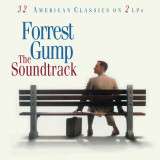
- D6: Alan Silvestri Forrest Gump Suite
- C8: B.j. Thomas Raindrops Keep Falling On My Head
- C9: Randy Newman Mr. President (Have Pity On The Working Man)
Double black vinyl LP format of the 1994 OST from one of the all time classic films. Features 32 songs including Elvis Presley, Aretha Franklin, The Four Tops, Bob Dylan, The Beach Boys, The Mamas & Papas, Simon & Garfunkel, The Byrds, Lynyrd Skynyrd, The Supremes, Willie Nelson, Joan Baez and more. Marketing activity.
Boogie Butt Records presents its new reissue. Originally Released in 1983 on Becket Records, Time To Throw Down, is a party banger, between P.Funk & Boogie, created by the one & only Paul Thomas, founder of the "Magic Crew", The Circle City Band. Bandleader Paul Thomas had produced three 12" single's released under the title Circle City Band in 1983-84, one of those records titled Magic became extremely popular in the mid1980's, but this record was supposed to be the 4th 12inch single on Becket Records.
At the same time in 1983, when Reggie Griffin and Paul Thomas was mixing this instrumental track in L.A, the reverend "Rickie Clark" originally from "Circle City" in Indianapolis, came to see them hearing what there was doing, and fall in love with this track, asking if he could used it for himself .
The "Circle City Band" (CCB) is made up of eight remarkably talented souls. The band is lead and managed by founder, producer/musician/singer/songwriter Paul Thomas otherwise known as "P" aka the "Funky Skunk" and also features long time friends and mentors, including the legendary award-winning, multi-musician/songwriter/producer Reggie “Mr. Everything” Griffin of Tech-No-Funk fame
The rerelease of Je Dis Oui on vinyl from Pink Martini. The album features 15 new tracks and includes guest appearances from ARI SHAPIRO, IKRAM GOLDMAN, KATHLEEN SAADAT AND RUFUS WAINWRIGHT “Pink Martini is a rollicking around the world music adventure…if the United Nations had a house band in 1962, hopefully we’d be that band.”—Thomas M. Lauderdale, The album features bandleader Thomas Lauderdale and his “little orchestra,” as well as lead singers China Forbes and Storm Large. “Je dis oui!” is Pink Martini’s ninth studio album; the album features three original songs co--‐written by Thomas Lauderdale. The album also features a stunning version of the classic “Blue Moon” by Rufus Wainwright, “Finnisma Di”, a new Arabic version of the band’s early hit “La soledad” sung by NPR’s Ari Shapiro, and songs in English, French, Arabic, Farsi, Portuguese, Turkish, and the band’s first forays into Armenian and Xhosa. Pink Martini have now sold over 3 million albums worldwide.