Cerca:those three

Generi
Tutto
JESCA HOOP - KISMET 2x12"

Jesca Hoop

KISMET 2x12"

2x12inchLASTLLP19
LAST LAUGH
13.10.2023

Jesca Hoop"s debut album Kismet (2007) stands out as one of those rare examples of a newcomer getting it right on the first try and winding up with one hell of a tough act to follow. September 2023 sees Kismet"s 16-year anniversary and to celebrate, Hoop is reissuing Kismet on vinyl paired with The Complete Kismet Acoustic, a live stripped back version of the album. While Kismet brims with studio wonders and the absolute joy of diving into the medium with musical giants that include Stewart Copeland, Matt Chamberlin, Blake Mills, Shawn Everett and Tony Berg, The Complete Kismet Acoustic brings us to the heart of Hoop"s character with just two acoustic guitars and three voices. Listening back-to-back is a striking experience. This double gem is the first ever vinyl pressing of both titles and is not only a must have for the collectors of Hoop"s work but an essential for those new to the realm.

pre-ordina ora13.10.2023

dovrebbe essere pubblicato su 13.10.2023

28,99
Setting - Shone a Rainbow Light On LP

The debut recording by Setting, a trio comprising Nathan Bowles (solo/trio, Pelt, Black Twig Pickers); Jaime Fennelly (Mind Over Mirrors, Peeesseye); and Joe Westerlund (solo, Califone, Sylvan Esso, Jake Xerxes Fussell). Deluxe LP edition features 140g black virgin vinyl and a reverse board jacket with art by Timothy Breen. Deluxe CD edition features a gatefold jacket with art by Timothy Breen. RIYL: Popol Vuh, Brian Eno’s Ambient 4, Harmonia, The Necks. Setting, befitting its name which can be read as noun or verb, and simultaneously suggests the sun, or any star in the firmament from our earthbound perspective; a story and its surroundings, its scenic context or mise en scène; or a psychedelic experience, as in the prescription to mind one’s “set and setting” arose outdoors, uncontained and unconstrained by architecture. The group’s debut recording Shone a Rainbow Light On traverses textural, phosphorescent topography with a certified organic folk-engine. Kosmische correspondences are inevitable and valid, but also somewhat deceptive, given this meditative music’s terrestrial rootedness in the familiar natural world, more in native humus and humidity than in outer space. Fuelled by a vibratory hybrid of acoustic and electronic instrumentation, these four stately longform pieces sound like a UFO slowly sinking into a peat bog (or, as we call it in North Carolina, a pocosin). An instrumental trio comprising Nathan Bowles (solo/trio, Pelt, Black Twig Pickers) on strings, keys, and percussion; Jaime Fennelly (Mind Over Mirrors, Peeesseye) on harmoniums, synthesizers, and piano zither; and Joe Westerlund (solo, Califone, Sylvan Esso, Jake Xerxes Fussell) on drums, percussion, and metallophones, Setting established its own setting and found its footing in regularly scheduled improvisational sessions outside Westerlund’s home in Durham, North Carolina, beginning in 2021. The three players began as two, in the context of occasional Bowles and Westerlund percussion duo performances dating back to 2018. Fennelly provided the initial impetus to gather and play together with intentionality and discipline, as well as an harmonic adhesive and thickening agent in the grain and gravity of his harmonium and synthesizer. As always, Bowles’s background as a pianist and drummer informs his approach to banjo, imparting a woodiness, a piney verticality and resinous tang. Westerlund’s training with Milford Graves is apparent in his polyrhythmic flow and its correspondences to human circulatory and corporeal rhythms. They recorded their collective discoveries with engineer Nick Broste in the spring of 2022.The record begins, like the group’s name, and like the language of its unique instrumental interplay, with ambiguous grammar: “We Center,” the first and longest track at thirteen and a half minutes, builds patiently to a percolating climax of tidal heaving, with ceremonial connotations. “Zoetropics,” the shortest piece, follows, offering a more diaphanous counterpoint to the density of its predecessor. The zithery, shivering “A Sun Harp,” its title redolent of Sun Ra, showcases Westerlund’s unfettered drumming, which skitters restlessly until anchored, at its conclusion, by a minor bass progression. Finally, “Fog Glossaries” exhales through the maritime and meteorological evocations of its title, distant buoys clanging. Although certainly elements and strategies of so-called ambient and drone musical traditions are invoked and deployed, those diffuse terms feel inadequate to describe everything else happening here: the devotional valences, the minimalist rigor, and even submarine jazz inclinations perceptible beneath the surface. Throughout this four-movement program, which invites deep listening, it is often difficult to differentiate individual instruments from the massed choir of the group’s unified sonic presence. At times what sound like field recordings cicadas, birds, wind, water splash out of this slow but powerful current, only to be revealed as overtones produced by harmonium, banjo, or cymbals. Setting’s sound is fundamentally synthetic in the sense of synthesis, not artifice—in a manner remarkable for its almost entirely acoustic arsenal of instrumentation, often registering as the product of a single alien technology, perhaps the rainbow lights of that bog-marooned UFO. (“Setting,” of course, can also refer to a machine’s variable operational amplitude its temperature, volume, speed, elevation, etc.) Sometimes the most seemingly extraterrestrial lifeforms are in fact our unfamiliar earthbound neighbors. Despite the destruction of many such habitats, the coastal plains of eastern, tidewater North Carolina is home to more pocosins freshwater, evergreen wetlands with deep, acidic, sandy, peat soils than anywhere else in the world. These threatened peat-bog ecosystems are the only native environment to sustain the carnivorous Venus flytrap, among other oddities. The sonic ecosystem of Setting similarly deep, acidic, and boggy contains equivalent wonders, savage and delicate, for listeners willing to take the time to sink.


pre-ordina ora13.10.2023

dovrebbe essere pubblicato su 13.10.2023

27,31
KRIS DEFOORT & VERONIKA HARCSA - PIECES OF PEACE LP

Rarely could a project be called such a culmination point of a career as what Kris Defoort presents with Pieces of Peace. Just about all the backgrounds, influences and acquaintances the iconic Belgian composer and improvising pianist collected throughout his long career come together in this distinct and original musical adventure.

Together with vocal artist Veronika Harcsa and three fellow musicians, he forms a chamber orchestra in the strict sense of the word, although they are by no means restricted to that one idiom. As an experienced opera and classical composer, Kris Defoort dribbles the timbres, harmonies, dynamics and, if you like, drama of a complete (opera) orchestra through these compositions, supplemented by an inescapable layer of jazz, obviously the other form of music that remains continuously prominent in Kris' life and DNA.

As always in his work, also improvisation is added as a core element, not least thanks to the voice and inventive personality of Hungarian vocalist Veronika Harcsa, a true European reference in this field. This duo has worked together regularly over the past decade, including for Diving Poet Society (2017, W.E.R.F.148) and in DUET: pure vocal and piano improvisations, on poems by Theodor Roethke, Peter Verhelst and William Blake.

Those musical ideas formed the framework when composing the final new song cycle Pieces of Peace. The duet was then quickly expanded into a quintet, with Lode Vercampt on cello, Jean-Philippe Poncin on clarinets and Benjamin Sauzereau on electric guitar. These three musicians are as well compagnons de route of Kris has since many years, allowing him to incorporate each one's own playing style in a special way throughout these compositions: therefore, the entire orchestral spectrum (woodwinds, strings, percussion) is thus prominently represented through these five instruments.

Intimate and joyful, playful and complex, lyrical and rhythmic, ... and layered and full of detail, each track on the eponymous record unfolds like a story in itself. They are all states of emotions, impressions from real life - another reference to opera. They are also an ode to the voice, the human instrument par excellence. As improvised compositions (or composed improvisations?), Pieces of Peace represents a constant evolution that offers hope, softness and inspiration in times when all this sometimes dares to be lacking.

pre-ordina ora06.10.2023

dovrebbe essere pubblicato su 06.10.2023

21,43
DANIEL VILLARREAL - LADOS B

On October 15th & 16th 2020, drummed Daniel Villarreal was joined by guitarist Jeff Parker and bassist Anna Butterss for two afternoons of recording in the backyard of Chicali Outpost in Los Angeles. For all three musicians, it was the first ensemble recording session they"d done in-person since the pandemic locked the world down just seven months prior. Some choice moments from the sessions made it onto Villarreal"s critically-acclaimed 2022 album Panamá 77, bust most of the music remained unreleased. Lados B is a deep dive into the high-level spontaneous music made by Villarreal, Parker and Butterss across those two days in 2020. Villarreal is heard leading the group through various rhythmic modes and structures for improvisation - flow as informed by the Latin soul of Fania Records as it is by the otherworldly trance of Brain Records - while Parker and Butterss draw on their extensive experience playing free together (as heard on Parker"s recently-released Mondays at the Enfield Tennis Academy, and the LA side of Makaya McCraven"s 2018 LP Universal Beings) to build harmonic buoys for their spontaneous melodicism. The result is a beautifully vivid illustration of context, creativity, and collective composition from a particularly rich moment in history.

pre-ordina ora06.10.2023

dovrebbe essere pubblicato su 06.10.2023

29,37
MUDHONEY - SUPERFUZZ BIGMUFF (35TH ANNIVERSARY VINYL EDITION)

Limited Loser Edition on Mustard Yellow vinyl. In 1988 Mudhoney released their debut 7" single, "Touch Me I'm Sick," and it rapidly became the defining anthem of the Seattle scene that, shortly thereafter, took the world by storm. Punk? Garage? G****e? Who cares when it rips this much! The B side, "Sweet Young Thing Ain't Sweet No More," ain't no slouch, either. Later in 1988, the band followed up with Superfuzz Bigmuff, a six-song EP so overflowing with chaotic rock energy it warped thousands of minds, and inspired countless guitarists to immediately search for the titular fuzz pedals. In the words of Dynamite Hemmorage's Jay Hinman: "My feeling - and I know I'm not alone in this one - is that for all the play and worldwide attention several Seattle-area bands got during the 1988-92 period, at the end of the day (and even at the time), there was Mudhoney - and then there was everybody else. To me, you, and most everyone who was paying close attention to underground rock music during those years, Mudhoney still sound like the undisputed kingpins of roaring, surging, fuzzed-out, punk rock music. These first recordings were so life-affirming upon their release, connecting everything great about the sixties (biker movies, fuzzboxes, old guitars, three-minute songs) with the frothing, punk rock of the early 80s, that a whole new style of music was born. They called it grunge, but to me it was amped-up, clear-the-room, ramalama rock that exploded like Nagasaki live, and it was about as joyous and as fun a noise as anyone'd heard in years." These 2023 colored-vinyl editions of the two releases celebrate the 35th anniversary of Mudhoney's opening salvos, and we couldn't be more excited to have them back in print.

pre-ordina ora06.10.2023

dovrebbe essere pubblicato su 06.10.2023

23,49
Gratin Carnival - Such December LP

Alien Transistor is proud to announce a reissue of Such December, the fourth album by Japanese indie folk-pop artist, Gratin Carnival. Listeners might already know Gratin Carnival from their appearance on the Alien Parade Japan compilation of indie pop groups working with brass and woodwind; compiled by Markus Acher of The Notwist and Saya of Tenniscoats, it introduced this beautiful genre to the wider world. Gratin Carnival’s “Just Watching” was one of the many highlights of that compilation, and its gentle bossa-folk glide reappears on Such December.

Originally released in 2020, Such December captures beautifully the happy-sad charm of Gratin Carnival. The project of Koreyuki Mitsunaga, Gratin Carnival started in 2011; Mitsunaga had been home recording for some time and decided on the name as an umbrella for his music-making. Mitsunaga’s main instruments are guitar, which he uses to great effect throughout, his gorgeous acoustic playing reminiscent of players like Ueno Takashi of Tenniscoats or João Gilberto, and alto saxophone and clarinet. Those three instruments make up the core of Gratin Carnival’s sound, along with Mitsunaga’s charmingly doleful singing.

Recording at his parents’ home, with a four-track cassette recorder and a MacBook, Mitsunaga created Such December during 2020, though the songs on it stretch back to 2016. The closing “On The Train” was the first song written for the album – “a song about a small trip,” Mitsunaga recalls – and from there, he built a beautiful collection of songs that sit together perfectly. There’s great clarity in Mitsunaga’s writing, with nothing extraneous getting in the way of the lucid arrangements and gorgeous melodies; there’s something of chamber jazz about it at times, so it’s no surprise that Mitsunaga shares his love of Benny Goodman’s small group playing.

He's also a fan of Japanese folk artists like Kenji Endo and Kyouzou Nishioka, and grew up listening to Japanese popular music, The Beatles, and The Carpenters. You can hear trace elements of all this in Such December, in the clear-headedness of the melodic decisions made by Mitsunaga, and the quiet charm of the song’s gentle arrangements. They take on different shapes live, too, where Mitsunaga often invites other musicians to join in – his live band currently includes Masafumi Ezaki (trumpet), Nahoko Kamei (bass clarinet, piano, keyboards) and Tadashi Yonago (trombone, self-made instruments).

As with plenty of musicians from the Japanese underground, Mitsunaga is involved in other music, too – he’s been working with The Otoasobi Project, which performs music in collaboration with individuals with learning disabilities, and their families; and he’s also involved in improvised music. With Such December, though, you get to hear Mitsunaga’s music at its most personal and individual, ten songs of still, gorgeously poised indie folk-pop, where the swooning clang of six strings meets the breathy bliss of woodwind and brass.

pre-ordina ora06.10.2023

dovrebbe essere pubblicato su 06.10.2023

24,16
CHASTITY BELT - NO REGERTS LP

Limited Black & White Swirl Vinyl. On December 29, 2012, three songs into Chastity Belt's first KEXP in-studio, something extraordinary happened: they shared "Black Sail" with the world. That year, I'd seen Chastity Belt play countless basement, bar, and DIY shows all over Seattle, but nothing could've prepared me for how my friends turned patience and quiet observation into something so affecting and effortlessly cool. Ten years later, "Black Sail" isn't just a fan favorite - it's practically a statement of purpose for the great albums that followed. But before those records, there was No Regerts: the sound of four friends evolving from a party band into a "real" one (whatever that means) in real-time. They're above it all on "Seattle Party," "Happiness," and "Evil," but remain the sirens of Whitman College's cursed frat houses - see the explosive choruses of "James Dean," "Healthy Punk," and "Pussy Weed Beer." When No Regerts came out in the summer of 2013, Seattle - and the world at large - took notice. I still hear these songs in surprising places, and they still surprise me - just as they did a decade ago. If you missed out the first time, this is your second chance.

al

pre-ordina ora06.10.2023

dovrebbe essere pubblicato su 06.10.2023

24,79
Adrien Calvet & Boo Williams - Stay At Home Chi-Town

Since his career started over three decades ago back in 1981, The Chicago house veteran Boo Williams has been heavily involved in the house music industry, racking up highly strong reputation with his massive discography which includes a wide range of influences.

Hooking up with Mr Green Velvet, aka Curtis Jones’, much celebrated Relief Records in the mid-‘90s, the hard, jackin’ sub-label of Cajual, and later releasing on the tough-as-nails Dutch label Djax, 1996 saw Boo produce his seminal album with the bouncy house of ‘Home Town Chicago’, the first of a series of reissues by Anotherday Records.
Boo has since gone on to record for reputable imprint such as Ovum Recordings, Relief Records and Rush Hour.

For those who have religiously followed Boo over the many years, he continues to deliver as promised, once again bringing the driving beats and textured etherial soundscapes as you'd expect from the master‘. And for those who are just tuning in for the first time, Boo will open up your ears to a new level of sound.

Many things have been said, written and rightfully attributed to DJ and Producer Boo Williams' monumental career: "innovator".
As Boo Williams said: «House music will never die! Love, peace and hair grease».

Label owner, Adrien Calvet, is in charge of the B side. Always trying to push boundaries of raw sounds and electro glitch.

non in magazzino

Ordina ora e ordineremo l'articolo per te presso il nostro fornitore.

12,56

Last In: 2 years ago
Jogo Duro - Compro Ouro

Jogo Duro

Compro Ouro

10inchSINUB0603C
NUBLU Records
30.09.2023

Ladies and Gentlemen, meet Jogo Duro, a collaboration between Ilhan
Ersahin and some outstanding Sao Paulo musicians Guizado, Ze Nigro,
Samuel Fraga, Chicao & Tony Gordin who also happen to be great friends
These are players who will be familiar to those following the careers of Ceu, Otto,
Curumin, Tulipa Ruiz and the late, great Gal Costa. This record is the result of the
amount of time Ilhan has spent in Sao Paulo over the last decade due to putting
on the Nublu Jazz Fest there every year. With all the contacts, connections and
friendships formed over the course of making an annual music festival happen,
musical cross-pollination (usually simply referred to as "jams") was inevitable but
this time it was decided to do it in a studio with tape rolling rather than on stage,
which is certainly a more productive approach than merely talking about it over
beers at a local bar!
Everything happened fairly spontaneously over three days in the studio,
everybody brought songs, ideas and creative energy and before you know it an
album was born, which will be released in November after three singles come out
over the spring and summer.

pre-ordina ora30.09.2023

dovrebbe essere pubblicato su 30.09.2023

25,00
Jogo Duro - Pebolim

Jogo Duro

Pebolim

10inchSINUB0602C
NUBLU Records
30.09.2023

Ladies and Gentlemen, meet Jogo Duro, a collaboration between Ilhan
Ersahin and some outstanding Sao Paulo musicians Guizado, Ze Nigro,
Samuel Fraga, Chicao & Tony Gordin who also happen to be great friends
These are players who will be familiar to those following the careers of Ceu, Otto,
Curumin, Tulipa Ruiz and the late, great Gal Costa. This record is the result of the
amount of time Ilhan has spent in Sao Paulo over the last decade due to putting
on the Nublu Jazz Fest there every year. With all the contacts, connections and
friendships formed over the course of making an annual music festival happen,
musical cross-pollination (usually simply referred to as "jams") was inevitable but
this time it was decided to do it in a studio with tape rolling rather than on stage,
which is certainly a more productive approach than merely talking about it over
beers at a local bar!
Everything happened fairly spontaneously over three days in the studio,
everybody brought songs, ideas and creative energy and before you know it an
album was born, which will be released in November after three singles come out
over the spring and summer.

pre-ordina ora30.09.2023

dovrebbe essere pubblicato su 30.09.2023

25,00
Die Anarchistische Abendunterhaltung - Die Anarchistische Abendunterhaltung

In 1995 the self-titled full-length debut of Die Anarchistische Abendunterhaltung (DAAU) was released. The band consisted of four young, 'classically derailed' musicians who played their own compositions with acoustic instruments such as violin, cello, clarinet and accordion. Their work contained influences from Roma music, Eastern European folk, klezmer and jazz, but was performed with the energy, rebellious spirit and Sturm und Drang of a bona fide punk band. DAAU was part of the fertile Antwerp scene, which also produced dEUS, Zita Swoon and Kiss My Jazz, and soon signed an international record deal with Sony Classical.

The group's influential first record, which has been out of print for a while, is now finally being released again and is available on vinyl for the very first time.

In those early days, DAAU consisted of four young, classically trained musicians who tackled their instrumental compositions with a true punk spirit. 'If we'd had guitars, bass or drums at that time, we would probably have been just another rock band', says accordionist Roel Van Camp, who, together with his schoolmates Buni Lenski on violin, the latter's brother Simon on cello and Han Stubbe on clarinet made up the Antwerp quartet. 'With our acoustic instruments we tried to create our own version of the music we loved listening to, from sixties rock and prog to new wave.'

The quartet, which initially played in streets and cafes, appealed to a diverse audience and sometimes joked that they were a classically trained unit that had 'gone off the rails'. 'As befits teenagers, we wanted to shake things up', Stubbe remembers, 'even though we always kept cherishing our classical backgrounds.' Van Camp: 'Our education was never supposed to feel like a straitjacket. We were free-spirited enough to ignore the laws and regulations of the music academy and to create our own sound. Our compositions were open to influences from Roma music, Eastern European folk, klezmer and jazz'. 'That eclecticism was a direct result of the zeitgeist', Han Stubbe adds. 'We loved different styles and happily mixed them together'.

The monniker Die Anarchistische Abendunterhaltung was derived from Steppenwolf, a novel by German writer Hermann Hesse about a character who was outside society. 'In the book, the narrator talks of a theatre', Van Camp explains. 'And at the entrance there is a warning sign sign that says: if you go in here, you are guaranteed to lose your mind. That was an apt description of the way our music worked'.

Almost all tracks on DAAU's first album were 'Drieslagstelsels' (or 'three-course rotations'). The term referred to an agricultural method of the early Middle Ages, but also to the fact that each song of the group consisted of three major movements. Van Camp: 'The titles of those pieces referred to our method of writing. We piled up a huge bunch of ideas, because we wanted to tell more than just one story. With each composition, we took the listener for a ride'.

pre-ordina ora29.09.2023

dovrebbe essere pubblicato su 29.09.2023

19,54
Die Anarchistische Abendunterhaltung - Die Anarchistische Abendunterhaltung

In 1995 the self-titled full-length debut of Die Anarchistische Abendunterhaltung (DAAU) was released. The band consisted of four young, 'classically derailed' musicians who played their own compositions with acoustic instruments such as violin, cello, clarinet and accordion. Their work contained influences from Roma music, Eastern European folk, klezmer and jazz, but was performed with the energy, rebellious spirit and Sturm und Drang of a bona fide punk band. DAAU was part of the fertile Antwerp scene, which also produced dEUS, Zita Swoon and Kiss My Jazz, and soon signed an international record deal with Sony Classical.

The group's influential first record, which has been out of print for a while, is now finally being released again and is available on vinyl for the very first time.

In those early days, DAAU consisted of four young, classically trained musicians who tackled their instrumental compositions with a true punk spirit. 'If we'd had guitars, bass or drums at that time, we would probably have been just another rock band', says accordionist Roel Van Camp, who, together with his schoolmates Buni Lenski on violin, the latter's brother Simon on cello and Han Stubbe on clarinet made up the Antwerp quartet. 'With our acoustic instruments we tried to create our own version of the music we loved listening to, from sixties rock and prog to new wave.'

The quartet, which initially played in streets and cafes, appealed to a diverse audience and sometimes joked that they were a classically trained unit that had 'gone off the rails'. 'As befits teenagers, we wanted to shake things up', Stubbe remembers, 'even though we always kept cherishing our classical backgrounds.' Van Camp: 'Our education was never supposed to feel like a straitjacket. We were free-spirited enough to ignore the laws and regulations of the music academy and to create our own sound. Our compositions were open to influences from Roma music, Eastern European folk, klezmer and jazz'. 'That eclecticism was a direct result of the zeitgeist', Han Stubbe adds. 'We loved different styles and happily mixed them together'.

The monniker Die Anarchistische Abendunterhaltung was derived from Steppenwolf, a novel by German writer Hermann Hesse about a character who was outside society. 'In the book, the narrator talks of a theatre', Van Camp explains. 'And at the entrance there is a warning sign sign that says: if you go in here, you are guaranteed to lose your mind. That was an apt description of the way our music worked'.

Almost all tracks on DAAU's first album were 'Drieslagstelsels' (or 'three-course rotations'). The term referred to an agricultural method of the early Middle Ages, but also to the fact that each song of the group consisted of three major movements. Van Camp: 'The titles of those pieces referred to our method of writing. We piled up a huge bunch of ideas, because we wanted to tell more than just one story. With each composition, we took the listener for a ride'.

pre-ordina ora29.09.2023

dovrebbe essere pubblicato su 29.09.2023

20,97
Andrzej Korzyński - Third Part Of The Night

As one of the most triumphant and beguiling directorial debut features to emerge from the fruitful Polish New Wave, Andrzej Zulawski’s 1971 film Third Part Of The Night not only earned the thirty-year-old filmmaker a place next to other radical Polish directors such as Polanski, Skolimowski and Has, but also galvanised a creative bond with long running collaborator and composer Andrzej Korzyński, providing fans of foreign abstract/suspense cinema with a potent creative fusion to match those of Polanki/Komeda, Fellini/Rota and Argento/Goblin, amongst others.

Quite simply one of the heaviest psych rock film soundtracks of all time Andrzej Korzyński’s short and unreleased score matched the blueprint that adorned the drawing boards of conceptual French jazz orch rock composers like Jean-Claude Vannier, Francois De Roubaix and Alain Gourageur, creating a soundtrack that unknowingly begs comparison to Masahiko Satô’s Belladonna Of Sadness and Billy Green’s Stone. As one of the first progressive pop writers to come out of the vibrant (but carefully scrutinised) Polish beat scene with his bands Ricecar 64 and later Arp Life (and composing for national heroes such as Czeslaw Niemen, Niebiesko-Czarni and Test) Korzyński’s growing passion for conceptual rock and jazz music soon lead to instrumental composition and soundtrack scores.

His cinematic debuts scoring two consecutive transitional new wave films for Andrzej Wajda (in collaboration with the radical Polski pop groups Trubadurzy and Grupa ABC) also provided Korzyński with another significant cinematic muse in that of the stunning actress Malgorzata Braunek with whom they would both eventually achieve their finest performances under the direction of the ravenous first-timer Żuławski. Third Part Of The Night (1971) perhaps epitomises that triangular on-screen unison in its vibrant youth and feeds it through a hallucinogenic mangle finding astonishing beauty (within a repulsive synopsis) against a bleak and shattered backdrop and accompanied by progressive, psychedelic orchestral rock music – elements which would intensify for all three creatives with the next film, Diabel, which was banned by the Polish government the following year until 1988.

Third Part Of The Night also marks the public unison of Żuławski and Braunek whose later private romantic relationship is said to form the basis for another defining Żuławski/Korzyński defining endeavour with the 1981 film Possession exactly a decade later, encapsulating a period that bequeaths a previously unopened vault of some of the composers finest and most inspired sonic adventures.

pre-ordina ora29.09.2023

dovrebbe essere pubblicato su 29.09.2023

3,74
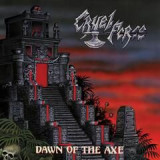
CRUEL FORCE - Dawn Of The Axe LP

'Dawn of the Axe' harkens to dustier, more archaic times - ones where subgenre delineations weren't so strict and all was mostly heavy metal. For sure, Cruel Force can still thrash with the best of them. The nine songs comprising the 39- minute album exude a wider variety of moods and dynamics, and also sees Cruel Force exploring their more epic side, with three of those songs topping six minutes.

No matter the mood or dynamic, though, energy bristles from every second of 'Dawn of the Axe'- riff, rhythm, lead, vocal, everything - and with the slightly-more-atmospheric recording style, it all gels together to create the band's strongest and most complete statement to date.

No matter how you (axe) slice it, there's no wimping out whatsoever!

It's rare for a band to be away a full decade and then come back with their best work, but such is the case with Cruel Force and 'Dawn of the Axe'. There's some strange magick brewing in the Devil's Dungeon, and they've crossed the Styx to bring you that Power Surge!

pre-ordina ora29.09.2023

dovrebbe essere pubblicato su 29.09.2023

23,49
Various - Disco Records #4

Several Years Ago, the Disco Records Dj Crew Members Got Their Hands on a Couple of Original 70s Obscurities, While These Standout Records Shone Brightly in Their Own Right, the Team Finally Decided to Put Them Out as Those Obscure Old Records Fetch Eye-Wateringly High Prices on the Second-Hand Market. Due to Popular Request & Lovingly Mastered to the Highest Possible Standards, They Are Now Available to Play and Share in Very Special Moments at Parties Around the World. This Will Surely Be One of the Most Keenly Anticipated Disco Release of the Year. for Our First Release, We Are Extremely Proud to Bring You at Last, Three Very Hard to Find Disco Anthems on Sides a & B in Their Glorious Full Extended Versions...

non in magazzino

Ordina ora e ordineremo l'articolo per te presso il nostro fornitore.

11,98

Last In: 8 months ago
Walter Etc. - When The Band Breaks Up Again LP

Named after the fictional character created by James Thurber-- popularized by Ben Stiller in 2013's The Secret Life Of Walter Mitty--Hayes has always channeled his thoughts and emotions through that character, rather than write about himself directly. "I really related to the character of Walter Mitty," says Hayes. "He's known for daydreaming too much and being lost in his head, which has been accurate to the Walter in my songs.

But really it's all just a cover up because back in those days we were still on family computers and I didn't want anybody to see songs by Dustin Hayes on iTunes." The band released a number of EPs and albums before going on something of a hiatus in 2015. But the creative itch was something Hayes couldn't stop scratching, and in 2016 he reformed the band as Walter Etc., the idea being to allow members to come and go as they please, weaving in and out
of records as life and schedules allowed.

Now, though, Walter Etc. have returned with When The Band Breaks Up Again, a new album made by the original three members with a very telling title. "The three of us got into music together via Green Day and more '90s pop-punk and skate punk stuff," explains Hayes.

pre-ordina ora22.09.2023

dovrebbe essere pubblicato su 22.09.2023

32,73
Bérurier Noir - Ils Veulent nous Tuer (1983-2023 Edition)

Ils Veulent Nous Tuer is Bérurier Noir's 3rd maxi 45tours, the title of which is borrowed from the slogan of a banner unfurled by the mutineers from the roof of Fresnes prison. It was an apt title for the group, too, since at the time of its release, the political and police authorities decided to destabilise them by associating them with the Black War activists and arresting many of the Bérus' entourage.

It's a dark album, with hard-hitting lyrics rooted in the social reality of the time (1988) and tackling subjects as diverse as the problems of access to food for the precarious (On A Faim !), prison repression (Sur Les Toits), the excesses of marginal youth (Mineurs En Danger) and the omnipresence of the military and police in our daily lives (Et Hop !). The album compo

--
The band's name alone evokes the epic of alternative rock: rebellious and committed.

Born by mistake on a February evening in 1983, Bérurier Noir soon found themselves the driving force behind a vast "Mouv'ment d'la Jeunesse", determined to take control of their lives in the face of a society that was ultra-conservative at the time. Times have hardly changed.

From their first self-produced records distributed by hand to the creation of self-managed labels, from concerts in squats and wild appearances at demonstrations, on the street or in the metro to endless tours, from interviews given to fanzines and free radio stations to unclassifiable appearances in the mainstream media, Bérurier Noir waged the most exciting war of independence in the history of French rock, with just a microphone, a guitar, a drum machine, a few red noses and patched-up theatre masks.

François, Loran and their 'Troupeau d'Rock' gave the last finger to this turbulent, irredeemable raia, committing hara-kiri at the height of their glory, during three final concerts in the heart of Paris in November 1989.

Forty years after its birth, Bérurier Noir's work continues to resonate, whether at demonstrations or free parties, fuelling the hopes of all those who wish to turn this world upside down and build a truly libertarian society based on solidarity and brotherhood.

For those who missed this unprecedented adventure, the Archives de la Zone Mondiale label is bringing you 8 recordings by Bérurier Noir in the form of limited-edition reissues on highly original colour vinyl ("crown" finish), distributed throughout the year.

pre-ordina ora15.09.2023

dovrebbe essere pubblicato su 15.09.2023

19,54
Killah Priest - Mystery Channel

Killah Priest’s Mystery Channel EP is his first release on 600 Block Records after his acclaimed features on Pugs Atomz’ Test Drive LP in 2022. The EP, coming on limited edition vinyl, features two original productions from Tusk57, an amazing Tall Black Guy Productions remix, and instrumentals of all three tracks. Tall Black Guy’s remix of Mystery Channel is a soulful jazzy take on the EP’s namesake, bringing his signature style to his first collaboration with 600 Block Records. From humble origins in Detroit, raised on a healthy diet of Motown, Jazz and early Hip Hop...Tall Black Guy has become a standard bearer for the current hip hop beats scene. Through a steady stream of productions filled with incredibly clever sample flips and deft production chops, he has won fans across the world, including Gilles Peterson, Lefto, Jazzy Jeff, Questlove and countless others. Killah Priest made his first appearances on such Wu-Tang side and solo projects as Gravediggaz’ 6 Feet Deep, Ol’ Dirty Bastard’s Return to the 36 Chambers, and Genius/GZA’s seminal Liquid Swords. His contributions to those releases especially Liquid Swords’ “B.1.B.L.E. (Basic Instructions Before Leaving Earth),” essentially a Priest solo track paved the way for the release of the MC's acclaimed debut album, 1998's Heavy Mental, and a lengthy and respected career in the hip-hop underground. In addition to his prolific solo work, he was an integral member of the groups Sunz of Man, the HRSMEN (aka the Four Horsemen), and Black Market Militia. About Tuskb 7 - A musician turned producer, Tusk57 brings a live feel to recording sessions and is most at home leading a band in front of a live audience. He is a multi-instrumentalist songwriter who has released multiple records under many other stage names in various genres, garnering critical acclaim including a Billboard hit. He is how based in LA and is using this moniker to develop a signature textured sound for hip hop and soulful music.

pre-ordina ora15.09.2023

dovrebbe essere pubblicato su 15.09.2023

23,32
A.R. Kane - A.R. Kive LP 4x12"

A.r. Kane

A.R. Kive LP 4x12"

4x12inchRGIRL133
ROCKET GIRL
08.09.2023

A.R. Kive collates the three most astonishing works from that most miraculous of duos - A.R. Kane - comprising the ‘Up Home’ EP from 1988 that signified the band’s dawning realisation of their own powers and possibilities, their legendary debut LP ‘sixty nine’ (1988) and its kaleidoscopic, prophetic double-LP follow up ‘i’ (1989).

In founder-member Rudy Tambala’s new remastering, the music on these pivotal transmissions from the birth of dream pop, have been reinvigorated and re-infused with a new power, a new depth and intimacy, a new height and immensity. Vivid, timeless and yet always timely whenever they’re recalled, these records still force any listener to realise that despite the habits of retrospective myth-making and the
safe neutering effects of ‘genre’, thirty years have in no way dimmed how resistant and dissident to critical habits of categorisation A.R. Kane always were. Never quite ‘avant-pop’ or ‘shoegaze’ or ‘post-rock’ or any of those sobriquets designed to file and categorise, A.R. Kive is a reminder that those genres had to be coined, had to be invented precisely to contain the astonishing sound of A.R. Kane, because
previous formulations couldn’t come close to their sui generis sound and suggestiveness. This is music that pointed towards futures which a whole generation of artists and sonic explorers would map out. Now beautifully repackaged, remastered and fleshed out with extensive sleeve notes and accompanying materials, ‘A.R. Kive’ reveals that 35 years on it’s still a struggle to defuse the revolutionary and inspirational possibility of A.R. Kane’s music.

A.R. Kane were formed in 1986 by Rudy Tambala and Alex Ayuli, two second-generation immigrants who grew up together in Stratford, East London. From the off the pair were outsiders in the culturally mixed (cockney/Irish/West Indian/Asian) milieu of the East End, with Alex and Rudy’s folks first generation immigrants from Nigeria and Malawi, respectively. The two of them quickly developed and fostered an innate and near-telepathic mutual understanding forged in musical, literary and artistic exploration. Like a lot of second-generation immigrants, they were ferocious autodidacts in all kinds of areas, especially around music and literature. Diving deep into the music of afro-futurist luminaries such as Sun Ra, Miles Davis, Lee Perry and
Hendrix, as well as devouring the explorations of lysergic noise and feedback from contemporaries like Sonic Youth and Butthole Surfers, they also thoroughly immersed themselves in the alternate literary realities of sci-fi and ancient history (the fascination with the arcane that gave the band their name), all to feed their voracious cultural thirsts and intellectual curiosity.

It was seeing the Cocteau Twins performing on Channel 4 show the Tube that spurred A.R. Kane into being - “They had no drummer. They used tapes and technology and Liz Fraser looked completely otherworldly with those big eyes. And the noise coming out of Robin’s guitar! That was the ‘Fuck! We could do that! We could express ourselves like that!’ moment”, recalls Tambala - and through a mix of
confidence, chutzpah, ad hoc almost-mythical live shows and sheer innocent will the duo debuted with the astonishing ‘When You’re Sad’ single for One Little Indian in 1986. Immediately dubbed a ‘black Jesus & Mary Chain’ by a press unsure of WHERE to put a black band clearly immersed in feedback and noise, what was immediately apparent for listeners was just how much more was going on here - a
tapping of dub’s stealth and guile, a resonant umbilicus back to fusion and jazz, the music less a conjuration of past highs than a re-summoning of lost spirits.
The run of singles and EPs that followed picked up increasingly rapt reviews in the press, but it was the ‘Up Home EP’ released in 1988 on their new home, Rough Trade that really suggested something immense was about to break. Simon Reynolds noted the EP was: Their most concentrated slab of iridescent awesomeness and a true pinnacle of an era that abounded with astounding landmarks of guitar-reinvention, A.R. Kane at their most elixir-like.

If anything, the remastered ‘Up Home’ that forms the first part of ‘A.R. Kive’ is even more dazzling, even more startling than it was when it first emerged, and listening now you again wonder not just about how many bands christened ‘shoegaze’ tried to emulate it, but how all of them fell so far short of its lambent, pellucid wonder. This remains intrinsically experimental music but with none of the frowning orthodoxy those words imply. A.R. Kane, thanks to that second generation auto-didacticism were always supremely aware about the interstices of music and magic, but at the same time gloriously free in the way they explored that connection within their own sound, fascinated always with the creation of ‘perfect mistakes’ and the possibilities inherent in informed play.

‘sixty nine’ the group’s debut LP that emerged in 1988 had
critics and listeners struggling to fit language around A.R. Kane’s sound. As a title it was telling - the year of ‘Bitches Brew’, the year of ‘In A Silent Way’, the erotic möbius between two lovers - and as originally coined by the band themselves, ‘dream pop’ (before it became a free-floating signifier of vague import) was entirely apposite for the music A.R. Kane were making. Crafted in a dark small basement studio in which Tambala recalls the duo had “complete freedom - We wanted to go as far out as we could, and in doing so we discovered the point where it stops being music”. There was an irresistibly dreamy, somnambulant, sensual and almost surreal flow to ‘sixty nine’s sound, but also real darkness/dankness, the ruptures of the primordial and the reverberations of the subconscious, within the grooves of remarkable songs like ‘Dizzy’ and ‘Crazy Blue’. Alex’s plangent vocals floated and surged amidst exquisite peals of refracted feedback but crucially there was BASS here, lugubrious and funky and full of dread, sonic pleasure and sonic disturbance crushed together to make music with a center so deep it felt subcutaneous, music constructed from both the accidental and the deliberate, generous enough to dance with both serendipity and chaos. ‘sixty nine’ remains - especially in this remastered iteration - ravishing, revolutionary.

The final part of this ‘A.R. Kive’ contains 1989’s astonishing double-LP ‘i’ which followed up on ‘sixty nine’s promise and saw the duo fully unleash their experimental pop sensibilities over 26 tracks, plunging the A.R. Kane sound into a dazzlingly kaleidoscopic vision of pop experiment and play. Suffused with new digital technologies and combining searingly sweet and danceable pop with perhaps the duo’s strangest and boundary-pushing compositions, the album did exactly what a great double-set should do - indulge the artists sprawling pursuit of their own imaginations but always with a concision and an ear for those moments where pop both transcends and toys with the listeners expectations. Jason Ankeny has noted that “In retrospect, ‘i’ now seems like a crystal ball prophesying virtually every major musical development of the 1990s; from the shimmering techno of ‘A Love from Outer Space’ to the liquid dub of ‘What’s All This Then?’, from the alien drone-pop of ‘Conundrum’ to the sinister shoegazer miasma of ‘Supervixens’ — it’s all here, an underground road map for countless bands to follow.” Perhaps the most overwhelmingly all-encompassing transmission from A.R. Kane, ‘i’ bookended a three year period in which the duo had made some of the most prophetic and revelatory music of the entire decade.

After ‘i’ the duo’s output became more sporadic with Tambala and Ayuli moving in different directions both geographically and musically, with only 1994’s ‘New Clear Child’ a crystalline re-fraction of future and past echoes of jazz, folk and soul, before the duo went their separate ways. Since then, A.R. Kane’s music has endured, not thanks to the usual sepia’d false memories that seem to maintain interest in so much of the musical past, but because those who hear A.R. Kane music and are changed irrevocably, have to share that universe which A.R. Kane opened up, with anyone else who will listen. Far more than other lauded documents of the late 80s it still sounds astonishingly fresh, astonishingly livid and vivid and necessary and NOW.

pre-ordina ora08.09.2023

dovrebbe essere pubblicato su 08.09.2023

105,84
CHRIS JORIS - UNTIL THE DARKNESS FADES LP

Belgian jazz veterans W.E.R.F. records and JazzLab are celebrating their 30th anniversary together with three unique creation projects for which they are joining forces. One of them is with percussionist Chris Joris, a veteran of Belgian jazz who is releasing a haunting new project.

Until the Darkness Fades' immediately says something about Chris Joris' career path, in which the musical and the personal invariably overlap. This percussionist has written one of the most colorful chapters of Belgian jazz. For many years he was active within various genres, but is now mostly praised as the percussionist who constantly demolished boundaries. Not only between all those oppressive genre boxes - pop, experiment, theater, world music, jazz - but also between complete worlds.

Chris Joris was playing "world jazz" long before there was that term, and he signed on for some hot-blooded jazz classics, with "Out Of The Night" perhaps the best-known example. That album was originally released in 2003, was then unavailable for years, but is back on shelves in 2023 and on vinyl for the first time. And rightfully so. Joris also eagerly seized the prospect of a new tour and a brand new album for a musical self-portrait. With "Until the Darkness Fades," he highlights different aspects of his musical identity, both expected and unexpected.

Joris composed new material, but also keeps a prominent place for free improvisation. It will be a tantalizing dichotomy full of hybrid sounds, with familiar and less familiar sounds, between romanticism and uninhibited adventure. He explores these in the presence of notable associates on violin and cello. In this way, he combines earthy percussion with the freedom of jazz and the elegance of chamber music. Discover this story of a Belgian master who is far from finished.

pre-ordina ora08.09.2023

dovrebbe essere pubblicato su 08.09.2023

21,43
Articoli per pagina:
N/ABPM
Vinyl