Over the past few years an increasing number of bands hailing from the former USSR have been appearing on the screens and the phones of the so-called Western world’s underground music enthusiasts.
With most of them being pretty obscure and only a very few ones having established a worldwide following (Motorama, Molčat Doma) the Sovietwave tag has worked usefully enough as a tool to identify a wide range of bands each one with a different sound and yet something in common. Whether it be the harsh weather or just the distance creating an exotic effect, there is some icy-cold touch with these bands that immediately makes you know they’re from Russia, regardless of the language they perform.
This goes for Blind Seagull too.
The trio from Kaliningrad, a small russian enclave on the Baltic Sea between Poland and Lithuania, has been around since quite a few years now, releasing tapes and limited edition vinyls on labels like Detriti, Sierpen and Pine Hill.
Finally taking up the challenge of writing a longer full-length (previous albums were seven or eight track long at best), the trio led by Denis Zarubin has created twelve new songs that shine a light on the impressive skills of this young combo to deliver very classic and yet extremely fresh and modern cold post-punk gems.
Keeping it short and sweet, their two-three minutes long compositions cut right to the chase of the darkwave soul: stomping drum machines, frozen guitar arpeggios, tense bass riffs. The formula is occasionally rocked by the intervention of laser synths, noise raids and gothic chorale, while the industrial pièce of the title-track and the IDM-tinged collaboration with experimental giants Xiu Xiu ‘Fear’ will show how this band stands out and how their upcoming, new album is the best proof of this.
Superlux Records continues its release schedule this December with a debut EP from Taymor Zadeh. The four-track Life Goes On EP includes three originals from the UK-based artist, as well as a special remix from One Records co-founder, Subb-an. Speaking on the production process behind the EP, Taymor describes how “ Life Goes On was made using a tb303, roland mc505, a 909 which I borrowed from a good friend, some vocal samples from old tape recordings and a load of imagination.”
The A Side gets underway with Bubbleworks , and Taymor’s “imagination” is plain to see. It’s a no-nonsense club-ready cut, with thick hats and an up-tempo lead bassline residing next to an array of bubble-sounding pops throughout. That same late-night feel continues into Life Goes On , as eerie vocals flitter between pulses of acid and punchy, whip-like drums. On the B Side, Gekula takes the lead. Fast-paced with clear minimal influences, we’re graced with eight minutes of dancefloor-geared delight as distorted voices reside atop a driving kick-hat backbone, before Subb-an’s remix continues in the same vein, taking us deep into 5 AM territory with glitchy synths and plenty of dark, low-slung percussion.
With an ethos of quality over quantity at his core, Taymor Zadeh has carved out a bespoke sound within the electronic music sphere. In recent times his releases have been welcomed by Stephane Genacia’s Highpath Records as well as Luca C’s See Double imprint, a testament to his keen ear for production. Berlin-based Subb-an is a leading figure in the UK minimal scene. As co-founder of One Records, 2020 has seen the label celebrate ten years of releases with a two-part vinyl sampler, including tracks from the likes of Anna Wall, Matthew Johnson and more besides.
Honey Soundsystem releases 'Cosmologist', the latest offering from our Resident DJ: Robert Yang aka Bézier. A multi-instrumentalist, Robert was trained in saxophone starting at age 10, before moving onto a Fender Telecaster after high school. After being exposed to Southern California rave culture in the late 90s, he moved onto DJing and collecting records. By the time he planted his roots in San Francisco in 2005, Robert had built an impressive analog synth-based studio, which also serves as the creative hub for his riveting live performances.
'Cosmologist' explores Robert's personal universe with three tracks that connect his varied musical lineages. "Cosmos", a celebration of the late 80s/early 90s KIIS FM universe, is built around an infectious freestyle hook that morphs into a seven minute tour of intersecting styles. "Ether" begins as gothic night-driving electro, but breaks into fantasy-scapes inspired by Italo and 1980s Japanese anime theme songs. The final track, "d. Quelle", clocks in at over 11 minutes, incorporating bebop jazz solos drawn from his early exposure to improvisation techniques by Charlie Parker, Cannonball Adderley, and Stan Getz. All songs have been mixed by Mark Pistel (Meat Beat Manifesto, Consolidated) at Room 5, San Francisco and EQed for vinyl by George Horn at Fantasy Studios.
There is a hush most of us only knew as children, the warm drift between familiar household sounds and being carried to bed, a place that belongs to you and to some self you have not met yet. June McDoom’s debut full-length, Follow the Light, lives in that dream space and then keeps walking, slipping out of time and waking somewhere new, barely familiar enough to feel like home yet wholly your own. She came up in a Jamaican household on the edge of the Florida Everglades, an existence built of extended family, communal care, bass and harmonics. Her father, a carpenter and a student of sound, built his own speakers and kept three sound systems going across as many rooms. His low end would rise through her bedroom floor like some wayward cat while she lay above it with folk records, finding harmonies that were new and hers alone. Two musics in one room. Lushness as past and premonition. She found folk on her own, somewhere between the cast recording of The Sound of Music and Simon and Garfunkel, while everyone around her called it sleepy music. She did not mind being the only one. The solitude let her fall for harmony first, before words, before anything else, and harmony is still the thing she reaches for. Generationally speaking, the music was already in the air. Her grandfather, Colin Smith, is a distinguished mento man who played banjo and guitar and built his own rumba boxes, worked to keep Jamaica’s oldest acoustic folk form alive. Mento is the root of all of it: ska, rock steady, reggae, dub and everything after. He is the one who put a guitar in her hands. An inheritance, a gift and a map. Even her name is part of it, though she will tell you she landed on it more by feel than reason. She records as June McDoom, born Alyssa, June being a nickname one of her grandmothers, Joan, went by, a name she thought was cool to carry and simply liked the sound of. An etheric channel that reverberates all the same. A dub all its own.
Made slowly and by hand with her longtime partner Evan Wright, Follow the Light lays the harmony of folk over the rhythm of dub, with Dionne Warwick, Minnie Riperton, Pentangle and the washed guitars of Cocteau Twins haunting its outer edges. Voice and guitar seeking each other out first, then everything else stacked across long days in the studio they keep at home, restraint kept on purpose. The lead single “Without You” is the whole method surfacing, split open and sparkling like a geode in a creek bed. Angelic heroics, and nothing less.
At the heart is family. Her grandmother Aggie, the light behind “Memory,” guiding still. And underneath, the quieter truth the record keeps: none of us are only one person, but a continuum of selves, the ones who shaped us and the ones we have yet to meet. Future you is an ancestor your current self gets to greet. Press play and the same invitation is yours: A few minutes out of time, a place that turns familiar the longer you stay until you surface somewhere new and find it was yours all along
There is a hush most of us only knew as children, the warm drift between familiar household sounds and being carried to bed, a place that belongs to you and to some self you have not met yet. June McDoom’s debut full-length, Follow the Light, lives in that dream space and then keeps walking, slipping out of time and waking somewhere new, barely familiar enough to feel like home yet wholly your own. She came up in a Jamaican household on the edge of the Florida Everglades, an existence built of extended family, communal care, bass and harmonics. Her father, a carpenter and a student of sound, built his own speakers and kept three sound systems going across as many rooms. His low end would rise through her bedroom floor like some wayward cat while she lay above it with folk records, finding harmonies that were new and hers alone. Two musics in one room. Lushness as past and premonition. She found folk on her own, somewhere between the cast recording of The Sound of Music and Simon and Garfunkel, while everyone around her called it sleepy music. She did not mind being the only one. The solitude let her fall for harmony first, before words, before anything else, and harmony is still the thing she reaches for. Generationally speaking, the music was already in the air. Her grandfather, Colin Smith, is a distinguished mento man who played banjo and guitar and built his own rumba boxes, worked to keep Jamaica’s oldest acoustic folk form alive. Mento is the root of all of it: ska, rock steady, reggae, dub and everything after. He is the one who put a guitar in her hands. An inheritance, a gift and a map. Even her name is part of it, though she will tell you she landed on it more by feel than reason. She records as June McDoom, born Alyssa, June being a nickname one of her grandmothers, Joan, went by, a name she thought was cool to carry and simply liked the sound of. An etheric channel that reverberates all the same. A dub all its own.
Made slowly and by hand with her longtime partner Evan Wright, Follow the Light lays the harmony of folk over the rhythm of dub, with Dionne Warwick, Minnie Riperton, Pentangle and the washed guitars of Cocteau Twins haunting its outer edges. Voice and guitar seeking each other out first, then everything else stacked across long days in the studio they keep at home, restraint kept on purpose. The lead single “Without You” is the whole method surfacing, split open and sparkling like a geode in a creek bed. Angelic heroics, and nothing less.
At the heart is family. Her grandmother Aggie, the light behind “Memory,” guiding still. And underneath, the quieter truth the record keeps: none of us are only one person, but a continuum of selves, the ones who shaped us and the ones we have yet to meet. Future you is an ancestor your current self gets to greet. Press play and the same invitation is yours: A few minutes out of time, a place that turns familiar the longer you stay until you surface somewhere new and find it was yours all along
Black Truffle is thrilled to announce a second volume of unheard concert performances from legendary Pakistani kyhal singer Salamat Ali Khan, recorded at Berlin’s Neue Nationalgalerie as part of the MetaMusik festival in 1974. Like the first volume, the immaculate recording by Michael Hönig (of krautrock legends Agitation Free) captures Khan performing a single extended raag in the company of Shaukat Hussein Khan on tabla and Hussein Bux Khan on harmonium. In addition to his stunningly inventive and moving vocal performance, Khan is heard accompanying himself on a specially tuned alpine zither (in place of the traditional swarmandal, an Indian style of zither). The lack of an underlying tanpura drone gives the music its characteristic floating quality, with the three instruments and voice masterfully dancing around one another as they sketch the outlines of this grand, 40-minute Raag Chandrakauns.
If anything, this epic performance of the late-night Raag Chandrakauns is even more seductively spacious and psychedelic than the music heard on the first volume. Obeying the traditional shape of Hindustani classical vocal music performance, a gradual rise in both pitch and rhythmic activity, the music hovers for twenty minutes in a reflective calm, the pulse only gently stated by the tabla while harmonium ornamentation and zither strums float by. In this meditative space, Khan gradually orients us to the contours of the raag, beginning with long notes at the bottom of his register. His improvisation at once builds with a stunningly firm sense of internal logic and seems liberated to explore every melodic and ornamental byway that comes up along the way. By the time we turn to the record’s second side, the music has grown into something far more frenetic, with virtuoso tabla passages at times occupying centre stage between Khan’s increasingly rhythmic melodic variations. Concluding with a sequence of unison tabla and voice passages of breathtaking complexity, the performance is met with rapturous applause. Arriving in a blue-toned variant of the first volume’s sleeve, with acclaimed musicologist Peter Pannke’s liner notes in the original German, Metamusik Festival Berlin ’74 Volume II is not to be missed. Essential listening not just for Hidustanti classic aficionados, but for anyone who needs reminding of the magic of collective music making in the moment.
Remastered limited edition double vinyl with double-sided screenprinted poster-cover (sleeve folds out to be one huge poster). A real collectors item!
When Off Off came out around June 1984, one couldn’t speak of an independent music scene in Portugal. Warm Records’ vague existence didn’t have any impact and Dansa do Som’s inaugural release appeared only in December. 10 years after the revolution, after two IMF interventions, a lot of political instability (not to say turmoil, in the first couple of years) and the natural excesses of a sudden burst of freedom, the Portuguese consumer had more choices but a generally poor standard of living. There was no entrepreneurial culture and serious second thoughts about investing private money in risky ventures.
After many complaints about the whole music scene (institutions, critics and record label executives, popular and classical music alike), something that would continue well beyond the end of the decade, Telectu decided to finance, record, produce, release and sell an album with complete independence from outside structures. Their karmic reward was profit. According to Vítor Rua, Off Off was the only album fully payed by the duo and the only one that really payed off. Not an easy accomplishment for a double LP housed in a large (also double-sided) screenprint with complicated cuts and folds. The artwork was conceived by António Palolo, a friend and multidisciplinary artist. It was based on a collage of heavily saturated and xeroxed polaroids framed in shocking pink and green. Palolo was considered the third member of Telectu, regularly producing slides, video and other visual support for their shows. The inspiration for the type of cover came from GRM’s Gramme series.
Off Off is divided in four distinct sides, each one corresponding to a “theme” or “function” related to Telectu’s manifold artistic interests and interactions. The titles are also gateways to influences and a small portion of Portuguese cultural life:
- Side 1 / “Diagonale” is dedicated to Egídio Álvaro, art critic and gallery director (he opened Diagonale in Paris). Performance art was arguably his main artistic concern over the years, so the music on this side is suggested for use by one or more performers in live or playback situations. The three tracks segue into each other, linked by a synth arpeggio much in the same way as Telectu’s previous “Belzebu” álbum (1983);
- Side 2 / “Anarké” is dedicated to the composer Filipe Pires, one of Jorge Lima Barreto’s recurring invocations when asked about worthwhile contemporary music in Portugal. It is subtitled “concert music”, proposing «a new form of listening». Three tracks also, and these are separated by “clap interludes”, which basically consisted in the following: JLB and VR each had a pair of headphones on, and they clapped their hands according to the rhythm of the music each one was listening. Both musicians were interacting with a different Steve Reich piece: Vítor with “Music for Mallet Instruments”, Jorge with “Six Pianos”. The result is disjointed clapping, an awkwardly deliberate celebration of their own music. Telectu applauded themselves.
- Side 3 / “Cornucópia” is subtitled “music for theatre” and dedicated to Luís Miguel Cintra and Luís Lima Barreto (JLB’s brother), both connected to the Cornucópia theatre company. The side consists of several short pieces previously used as interludes in the Cornucópia staging of “Mariana Espera Casamento” (1983). Field recordings, mood pieces, ambience and a numeric poem (“Soneto Soma 14x”, by E.M. de Melo e Castro) read by João Perry, a quite well-known stage actor. His voice is treated with a flanger effect;
- Side 4 / “Palolo” is “video music”. It’s a one-take mix recorded from cassette sources (Telectu studio experiences) and done live while watching António Palolo’s Om film (1978) projected on the living room wall. It’s a deep, immersive, quasi-mystical 20-minute piece perfectly suiting the meditative, abstract, fluid images created by Palolo by mixing paint and water inside a bathtub. One imagines the Cosmos, hardly suspecting the technique. The film is 90 minutes long, so the music on the LP is of course edited.
The six titles on sides 1 and 2 evoke demons, all of them with conflicting symbolism, since it varies from culture to culture, religion to religion. No explanation is given and Vítor Rua has no idea where this imagery comes from. During virtually the whole stretch of the 1980s, Jorge was the one in charge of titles and concepts, and Vítor didn’t bother too much even reading the liner notes :) In any case, when you synchronize the listening experience with the imagery, a powerful impression emerges, a feeling of being in the presence of these entities while placing yourself inside the sonic narrative.
Off Off is undoubtedly a seminal album in the history of electronic music, as much Heldon as Fripp & Eno, jazz and American minimalism, cosmic out-thereness, mantric miniatures. Telectu at the height of their powers, still very early on, delivering an album-manifesto advocating intermedia art and the fierce independence of Portuguese musicians «from the scum of capitalist music industry monopolies. It’s a path to follow, albeit one that requires enduring hardships and retaliation from music industry gangsters.» Despite a few journalists deemed «capable of being free», the media are «enslaved by the dominant and fascist imbecility of the speculators of light music.» Off Off is addressed to those journalists «and to an audience angry at the cultural misery imposed upon us ..., certain that this music will open new horizons of musical pleasure in the conception of Portuguese avant-garde music, and in the open consciousness of us all. OFF OFF repeats Freedom.»
Those two words are a direct lift from Alberto Arbasino’s 1968 book Off Off, the basis of which is a critical analysis of Theodor Adorno’s and Dwight MacDonald’s ideas concerning the stratification of culture in different levels (high, mid and low) and the pervasiveness of mass culture in the form of a culture industry. In very simplistic terms, and that is precisely the point that inspired Jorge, Arbasino argued that it was possible and desirable to effect a revolution from below, cultivating alternative circuits completely cut-off from what he termed the in-in reality. Telectu’s record was a deliberate demonstration that it could be done, displaying Freedom in the face of all the gatekeepers and other human obstacles.
In the early 2000s, Belgium had almost no answer to what was brewing in London, the dark, hypnotic intersection of techno and house soul that Terry Francis, Nathan Coles and Mr. C were shaping at nights like Wiggle and The End. Fred Nasen (A&R Visitor Records) fell in love instantly. While working as an import manager at N.E.W.S. Records, he had a front-row seat to the records coming out of that scene, and the conviction that someone in the Benelux needed to do something about it. With Kozzmozz as one of the few local parties willing to back the sound at their parties & N.E.W.S Records giving Fred carte blanche,, Visitor Records was born and lasted for around 41 releases till 2006.
Now almost 25 years later, these 5 vinyl samplers withmuch sought-after tracks from the label are available - never repressed since their original release.
VISITOR2501 kicks off the series with three Fred Nasen productions made with longtime collaborator Dimitri De Wever. 'Landcruising' and 'Static' laid the blueprint early on: tight, groove-driven and built around the kind of melodic basslines that defined the label's sound. On the flip, 'Sunday Visitor (A Visit From The Mingers)' - a remix from The Mingers, the UK tech house alias of producers Mike Parsons and Timmy Stuart, stretches out to nearly eight minutes of peak-time hypnosis, and remains one of the most sought-after cuts from the Visitor back catalogue.
out of Stock
Last delivered 23 days ago available to reorder, subject to availability
Tiffany Day has quickly emerged as one of the most compelling voices in hyper-digital pop, blending emotional chaos, internet-born edge, and forward-thinking production into a sound entirely her own. Born in Toronto and raised in Kansas, Tiffany first broke through with a viral cover of “Hallelujah,” building a YouTube audience of over 500,000 subscribers before graduating high school. She began releasing original music in college, quickly developing a devoted fanbase drawn to her wit, vulnerability, and genre-fluid instincts.
A self-directed creative force, Tiffany has made her live show a defining pillar of her artistry, fusing choreography, visuals, and electronic-driven transitions that push her beyond traditional pop performance. In 2024, she independently funded and sold out several headline shows across a North American tour. She later expanded into the DJ scene, launching BASSFLUFF, a series of standalone events that generated viral moments DJing everywhere from gyms to nail salons.
Her 2025 releases marked a sharp sonic evolution, leaning into electroclash and hyperpop textures. Singles like “BREAKUP,” “TELL ME WHAT I DID,” and “START OVER” generated millions of views across platforms and earned coverage from NME, Ones to Watch, On The Radar, and beyond, positioning her at the forefront of a new wave of digital-native pop artists.
That momentum culminates in her album HALO, released April 3, 2026 via Broke Records. The project debuted at #1 on the Apple Music Electronic chart and #25 on the Billboard Electronic/Dance Albums Chart, drawing early co-signs from artists like Laufey and Yunjin (LE SSERAFIM) alongside coverage from Pitchfork, The FADER, NYLON, LA Times, and more. To mark the release, Tiffany staged three headline shows—each of which sold out in under five minutes. With her production across nearly every track, HALO marks Tiffany's most cohesive and ambitious work to date, solidifying her not just as an artist to watch, but as a defining voice in the next era of hyperpop.
Tiffany Day has quickly emerged as one of the most compelling voices in hyper-digital pop, blending emotional chaos, internet-born edge, and forward-thinking production into a sound entirely her own. Born in Toronto and raised in Kansas, Tiffany first broke through with a viral cover of “Hallelujah,” building a YouTube audience of over 500,000 subscribers before graduating high school. She began releasing original music in college, quickly developing a devoted fanbase drawn to her wit, vulnerability, and genre-fluid instincts.
A self-directed creative force, Tiffany has made her live show a defining pillar of her artistry, fusing choreography, visuals, and electronic-driven transitions that push her beyond traditional pop performance. In 2024, she independently funded and sold out several headline shows across a North American tour. She later expanded into the DJ scene, launching BASSFLUFF, a series of standalone events that generated viral moments DJing everywhere from gyms to nail salons.
Her 2025 releases marked a sharp sonic evolution, leaning into electroclash and hyperpop textures. Singles like “BREAKUP,” “TELL ME WHAT I DID,” and “START OVER” generated millions of views across platforms and earned coverage from NME, Ones to Watch, On The Radar, and beyond, positioning her at the forefront of a new wave of digital-native pop artists.
That momentum culminates in her album HALO, released April 3, 2026 via Broke Records. The project debuted at #1 on the Apple Music Electronic chart and #25 on the Billboard Electronic/Dance Albums Chart, drawing early co-signs from artists like Laufey and Yunjin (LE SSERAFIM) alongside coverage from Pitchfork, The FADER, NYLON, LA Times, and more. To mark the release, Tiffany staged three headline shows—each of which sold out in under five minutes. With her production across nearly every track, HALO marks Tiffany's most cohesive and ambitious work to date, solidifying her not just as an artist to watch, but as a defining voice in the next era of hyperpop.
When everything around is racing blindly toward ruin, change direction and spin as fast as you can until you defy gravity and rise above the ground into blissful madness. "K-drone", the debut album by three renegades—Jakub Šimanský, Michal Vaľko, and Ján Podracký—is like a hallucinatory Calvary with five stations. Each station is a time-loop capsule, a tiny utopia sneering at the phantom progress of the world outside.
The opening track, "Speedrone", is pure vertigo; for seven long minutes, there's nothing to hold onto. Šimanský’s banjo cuts through the air, Vaľko’s hurdy-gurdy sounds like someone scraping a rusted sheet of metal with a handful of nails, and Podracký’s bass recorder hums like a slowly intensifying migraine. "Sine" is like a train journey through a barren wasteland, where the images outside the window constantly repeat like a bad trip. "Pro DJ" starts like a gig in a bar at the end of the line—a gig that never actually goes anywhere. It’s as if all three are locked in a spasm, their repeated motifs turning into haunting earworms. "Alien Radigue" shifts into a strange idyll in a clearing in the middle of the forest, where an unknown bird species trills in the background. The end and definitive dissolution come in "Slush", where everything suddenly slows down. Šimanský plucks a simple guitar melody, Podracký’s harmonica drifts from side to side like a boat gently rocking by the shore, and Vaľko’s hurdy-gurdy drones like a drunken mosquito buzzing around.
"K-drone" sounds like an acid anti-western movie recorded in a tucked-away burrow, like smoke-soaked folk and experimental campfire songs echoing through a deep forest. It evokes Third Ear Band's "Alchemy", it screeches and repeats like some of Henry Flynt's experiments, and you could easily imagine hearing it drifting from one of the windows on the cover of Hala Strana's eponymous album.
Jakub Šimanský is the bard of Czechoslovak guitar primitivism, an earthy folk sommelier whose fingerpicking you may also know from the duo Šimanský Niesner. Michal Vaľko, aka Line Gate, needs no introduction to fans. He has released three albums on mappa, and his hurdy-gurdy meditations hold an important place in the drone and minimalist music scene. "Den", "Apex", and "Trap" have become essential listening. Ján Podracký is a self-taught composer and musician whom you might know from various participatory music projects, such as an orchestra where all the players play diatonic harmonicas. Besides harmonicas, he has long explored a wide range of flutes. In short, a pied piper who will guide you through other worlds.
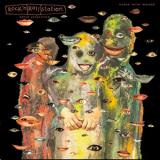
A long-overdue return to one of the most singular moments in Nurse With Wound's sprawling discography. Originally issued in 1994, Rock 'n' Roll Station marked a turning point - the album where Steven Stapleton's decades-long engagement with collage, musique concrète, and the outer limits of post-industrial sound first met the hypnotic, rhythm-driven studio sensibility of Colin Potter. What began as a request to rework some of the more percussive sections of 1992's Thunder Perfect Mind mutated, under Potter's hand, into something else entirely: an hour of swivelling grooves, warped exotica, and looping psychedelia, channelling the ghosts of Pérez Prado, Graham Bond, Joe Meek, and Jacques Berrocal into the most rhythm-conscious work the group had ever made. Three decades on, it remains one of the most beloved entries in the NWW catalogue. Issued by United Dirter as a limited LP, this new VIP edition reframes the album through four extended remixes and reworkings, each running close to or beyond ten minutes - a deep re-engagement with the source material by the extended Nurse With Wound family. Joining the usual suspects of Colin Potter, Matt Waldron, Andrew Liles, and Diarmuid MacDiarmada is an unexpected and historically significant presence: Jean-Jacques Birgé, the French composer, filmmaker, and co-founder of Un Drame Musical Instantané, whose GRRR imprint (founded 1975) famously appeared on the original Nurse With Wound List nearly half a century ago. A quiet circle, closing. The LP arrives as forerunner to a more ambitious project still to come: The Iron Lung Gives Way To The Surgical Stocking, a 5CD set due later in 2026, of which these reworks offer a first glimpse. Housed in striking new full-colour artwork by Babs Santini - Stapleton's longstanding visual alter ego. 500 ww copies in black & orange vinyl. Genre/Style: Electronic / Dark Ambient / Experimental / Drone
Severed Heads reattach themselves to Dark Entries for an expanded reissue of their 1991 opus Cuisine (With Piscatorial). As originary Aussie industrial legends – although founder Tom Ellard would balk at being branded as such – Severed Heads shaped the continental subcultural sound with their kitchen electronics, chaotic tape loops, and infectious nursery-rhyme-esque melodies. Cuisine (With Piscatorial) was the long-running project’s ninth album, and is a commentary on the state of music. Ellard explains: “The whole food joke is really about what music's about and how disposable it is; people have records like they have cups of coffee.” The album also presents a turn away from the dancefloor formalism of the era, which Ellard dismissed as already sufficiently explored. Cuisine brings us punchy pop kernels of the prime Heads variety, all clocking in around three minutes. Cuts like “Pilot in Hell” and “Ugly Twenties” rank among the band’s best through their deadly skewering of synth pop tropes. But the album also offers us a Piscatorial section, where Ellard felt free to “go fishing for ideas.” Here we get a taste of the project’s demented cut-up sensibilities, like on the “Quest for Oom Pa Pa” suite, where vintage jazz records are collaged into an angular nightmare. This double-LP reissue is the first time that Cuisine (With Piscatorial) will appear on vinyl, with a previously unreleased early version of “Seven of Oceans.” Also included is a 6-page booklet with liner notes, lyrics, and press clippings.
After the wild Afro-jazz fusion of Trancedance (reissued as BT118) and the meditative solo Christer Bothén Donso n’goni (BT133), legendary Swedish multi-instrumentalist Christer Bothén returns to Black Truffle as part of a dream quartet completed by the three members of Ghosted: Oren Ambarchi (guitar), Johan Berthling (bass) and Andreas Werliin (drums). Recorded at a rustic studio built by Werliin and Hans Fredriksson in the sylvan surrounds of Hamburgsund, Sweden across a few days in September 2023, Serpentine offers up four generous slices of hypnotic repetition and shimmering resonance, cut through with wild bursts of Bothén’s bass clarinet.
The depth and ease of the quartet’s rapport is evident from the first moments of the opening title-track. Berthling’s resonant upright bass locks into a head-nodding ostinato that makes sensitive use of a prominent end-of-phrase rest, opening spaces through which Werliin’s continually shifting statements of the pulse shine through. Having worked together in various groups for many years, Berthling and Werliin are masters at playing subtle games of difference and repetition, creating a driving rhythmic flow animated by perpetually changing details: here, you can never step in the same groove twice. Weaving through it all is Ambarchi’s now-signature Leslie-cabinet guitar tone, sounding out long chords at times strikingly close to a Hammond, while also creating intricate cross-rhythms through the play of his tremolo modulations against the bass and drums. When Bothén enters five minutes in, the growl of his bass clarinet at first works deep in the collective brew, carving off brief staccato phrases and twisting them into fragmented melodies. As he moves into the instrument’s higher registers, Bothén’s playing becomes wilder, twinning with Ambarchi’s guitar in shimmering arcs like a 21st century update of the Garbarek-Rypdal pairing immortalised on Sart.
Each of the four pieces explore different possibilities of a shared language. On ‘Antigorite’, another hypnotic bass riff emerges gradually from an atmospheric haze, eventually developing into a frenetic rhythmic workout propelled by Werliin’s cowbell. Berthling sits out for ‘Lizardite’, while Bothén moves from bass clarinet to the Donso n’goni, the sacred Wassoulou hunter’s harp he has studied for half a century; the resulting performance streamlines the approach heard on other tracks into pure modal propulsion, sparkling with harp-like arpeggios from Ambarchi’s guitar. On the closing ‘Chrysotile’, the bottom drops out, leaving a swampy, churning mass of wavering organ-like chords, roaming bass runs, and distant toms, over which Bothén floats bass clarinet figures by turns bluesy and abstract, the whole thing landing somewhere between classic ECM and the most blasted freeform moments of early Amon Düül II. Bearing a delicate calligraphic abstraction by Bothén on its cover and beautiful documentation of the recording sessions on its inner sleeve, Serpentine is a powerful reminder of the magic that can happen when inventive musicians just get together and play.
Nollman and his cohort took a considered approach to developing sonic relationships with the orcas and other animals they encountered, always keeping a respectful distance as they found one another with their ears. Orcas' Greatest Hits collects hydrophone recordings drawn from over 60 hours of interspecies collaboration recorded between 1985 and 2002, showing the playful ways in which Nollman engaged the orcas from the portable studio floating above their home. What we hear is the focused listening by the cetaceans and humans as they search out sonic space among one another, finding in that dialogue potential common ground for deeper understanding.
HARTHBALL are an avant/noise/rock wrecking ball of a band from Nanaimo, Canada. Rooted in total improvisation, free expression, and a deeply psychedelic sensibility, EarthBall operate on pure instinct.
They hurtle onwards in a combustion of spontaneous composition, shooting from the hip, as they fall out of the sky ablaze. The group encompasses Isabel Ford (vocals, bass), John Brennan (drums, percussion), Jeremy Van Wyke (vocals, guitar, trumpet), Kellan Maclaughlin (guitar, talkbox), and Liam Murphy (saxophone). Each member brings a rich and varied musical history, with past and present projects including Shearing Pinx, Plan Your Future, Kamikaze Nurse, Eschatons, and Psychedelic Dirt. Collectively and individually, they have collaborated with artists such as Deerhoof, Raven Chacon, Chris Corsano, and William Hooker, deepening the band’s exploratory reach and collective language.
Since forming in 2021, EarthBall have released six cassettes and three fervently received LPs on Upset The Rhythm, including November’s widely acclaimed Outside Over There. Their latest release, Actual Earth Music - Volume 3 & 4, follows the first instalment in the series and captures two mind-quaking highlights from last winter’s European tour. This is EarthBall plunging to full fathom five, transforming into something rich and strange - channeling the fleeting moment as it fractures, erupts, and dissolves into the unknown.
Side A captures a thumping performance at Cave12 in Geneva. Frazzled from a white-knuckle alpine descent, the group settles into a hypnotic sprawl, stretching time and form across a colossal 53-minute set (with the first 22 minutes presented on the LP; the full performance appears on the CD edition). The Cave12 recording is a study in tension and release; ruminative, volatile, and barely contained. Drums stumble and surge, saxophone howls cut through the air, and Ford and Van Wyke’s voices briefly pull together the circle twice, before the tumult lapses into a spinning maelstrom.
Side B meanwhile presents a scorched excerpt from EarthBall’s crushing performance at Le Guess Who? Festival. As Van Wyke reflects: “Having the most excellent Dwarfs of East Agouza play before us only heightened our intention to bring the noise. Listening back, the thing that strikes me most is how we truly were operating in the ever-elusive but always sought-after ‘group mind’. Ninety-degree changes are super tight. Izzy and I are finishing each other’s sentences. Liam’s horn is cradling our outer and inner space. Kellan’s talk box rains down like the voice of a reawakened spirit, and all this havoc is safely stowed in the rumbling ox-cart of John’s solid drumming”.
Actual Earth Music - Volume 3 & 4 marks another ascent in EarthBall’s ever-expanding, totemic discography, an ecstatic storm of raw immediacy and unfiltered expression.
The Debut LP released by Cardinal Fuzz (UK) & Feeding Tube Records (USA). Presented in a hand stamped metallic copper ink (front and back) print on a black card sleeve with insert. Recorded during downtime but sounding anything but casual, Celestial Power emerged when Dead Sea Apes’ Brett Savage and Chris Hardman linked synaptic overload with Cardinal Fuzz’s own Dave Cambridge to form a three-headed amplifier cult. Heavy, raw, and deeply resonant, this is music that embraces volume, repetition, and the beauty of imperfection. What they’ve summoned is a sprawling liturgy of overdriven guitar mantras: brutal, blown-out, and gloriously repetitive. Imagine the Velvet Underground locked in a warehouse mainlining the kosmische pulse of some forgotten Krautrock commune while Bardo Pond’s ash-coated spirit hovers overhead, scattering embers into a storm of PSF-style amplifier abuse. Not so much songs as tectonic events. Not riffs, but rituals. This thing doesn’t purr it howls. You hear the room breathing. You hear amplifiers gasping as they’re pushed past mercy, past design, into some ecstatic mechanical breakdown. Every repetition drills deeper, pushing beyond the horizon line until time itself starts peeling back in sheets. And that’s the point. This is repetition as revelation. Volume as transcendence. Human hands wrestling raw electricity into shape, then losing control of it entirely. On “Mandate Of Heaven,” the circle widens with the arrival of Nik Rayne (The Myrrors), adding another dimension to the ritual, a desert prophet stepping into the feedback storm, pushing the album’s gravitational pull even further into the void. No compromise. No softening. No edges filed off. Just pure voltage, scorched earth repetition, and the kind of heavy psychedelic communion that feels less like listening and more like surviving. Step inside. Bring ear protection. Or don’t. 4 Tracks - 42 Minutes.
"Imagine a classic singer/songwriter record loaded with the intimacy and grit reminiscent of Alex Chilton or Nikki Sudden." Shindig
Los Angeles singer-songwriter Tracy Bryant returns with his new album The Well, which is his first release since 2019’s critically acclaimed Hush. His fourth solo album, The Well marks a striking new chapter, trading his signature guitar-driven sound for piano-led songwriting that took root during the pandemic. The album was born out of one of the most turbulent periods of his life, written in the wake of his father’s sudden passing and birth of his first child. It was produced by longtime friend and compatriot Joo-Joo Ashworth at Studio 22 in Cypress Park, CA, and mastered by Dave Cooley at Elysian Masters. The nine songs are filled with raw emotion and driving motorik rhythm, telling tales of loss and love, relationships beginning and ending.
When the pandemic upended Bryant’s promotion for Hush and brought his 2019 European tour to a halt, he found himself at home rediscovering his musical roots at the piano, listening to Vince Guaraldi and Arthur Russell to take inspiration for the song structures. Without a band around, Bryant used the instrument to create both rhythm and melody, which resulted in a repetitive and precise backbeat, which was elevated when he began working with drummer Carmeron Gartung to rehearse the new songs. This different approach would define the style of The Well, creating an amalgamation of sounds with classic songwriting structures blended with post-punk, 90s indie, krautrock and psychedelia.
To produce the record, Bryant turned to Joo-Joo Ashworth, who share a friendship stretching back to 2011 (when Joo Joo was only 18) when both of their bands, Corners and Froth, were at the forefront of the bourgeoning Los Angeles/Echo Park music scene of the time and embarked on their first national tours together. Ashworth, who has since become one of underground music’s most respected producers, recorded the album throughout 2024/2025 on half inch tape at Studio 22 in Cypress Park, California, giving The Well a warm, considered sound that matches the weight of its subject matter.
The album’s emotional core was forged by two significant life events arriving in close succession. In January 2022, Bryant’s father passed away unexpectedly at the age of 67. Just three months later, Tracy and his wife welcomed their first child. The Well is a direct result of those experiences, a songwriter processing grief and joy, endings and beginnings in real time.
The nine songs take the listener on a meticulously crafted journey through the nooks and crannies of Bryant’s mind. Spanning 37 minutes, the album is an exploration of classic songwriting elements moving fluidly between driving beat punk, like “Weight” and “Widow”, and more melancholic tracks like “Halfway” and “Danny”. Album opener “Cold Floor” sets the tone immediately, Bryant’s lyrics confronting the day of his father’s death with unflinching directness – the breezy California piano sound is in direct contrast to the heavy theme. The Bowie-esque title track is perhaps the album’s most expansive moment – a fully realised epic composed with a dynamic flare.
The Well feels like an arrival. Dramatic and expansive, it is a true, visceral reflection of the life changing events that altered the course of Bryant’s life. Fans will be surprised by the heavy focus on piano but they will welcome the change as a bold turning point for an artist who has lived long enough to know exactly what he wants to say.
Some previous press:
"feels like a slice of California, down to its ringing post-surf guitars and bright melodies, but cross-cut with a folk sensibility more aligned to the work of Elliot Smith or, on occasions, Conor Oberst." Uncut - lead album review
"…sees the Los Angeles rocker confront both the finer and uglier aspects of love and life, combining classic rock with psychedelic tinges and catchy melodies." Evening Standard 4*s
STINGRAY returns three years after Fortress Britain. Back with a new line up and an ever more savage sound, massive sounding on a 5 track 12” EP.
ENEMY is London on a plate. Stench-tinged hardcore punk born of the ever reaching infinity of Britain’s complex and confusing capital. Nihilistic acid burns in the style of NEUROOT, DEATH SIDE and DOOM, under a few minutes per piece, peppered with prosciutto-dipped VAN HALEN style solos Ala later WRETCHED or SHOTGUN SOLUTION. Vocal visitations by Ciara Savage bring frightening melodic elements into the occasional foray into truly irresistible mosh, not far from the barbed wire trailblazing of GASTUNK, SOD, and SACRILEGE before flying back into fast paced passages of “Scandinavian Jawbreaker” worthy velocity.
Recorded at Fuzzbrain by Jonah Falco. Mixed and mastered by Chris Corry at the Paincave. Draped in a Tin Savage sleeve, and released on the ever eternal home of musical suffering, La Vida Es Un Mus Discos.
The eleventh release from label Early Morning, run by Guy J, presents a three-track EP totaling 22 minutes and 23 seconds, reinforcing his position as one of the most disciplined and forward-thinking figures on the global scene. Despite intercontinental recognition, Guy J continues to approach his work with restraint and focus, treating sound not as a finished achievement but as an ongoing exploration. His imagination remains a constant source of carefully developed ideas that resonate through a restrained yet expressive intensity.
The opening track, Piece of Cake, sets the tone with confident momentum, unfolding through a precisely balanced structure where hypnotic rhythm meets expansive spatial design. Selector expands the palette with a fierce bassline drive, textured atmospheres, random squeaks, and euphoric build-up, building on the opening piece and taking the vibe into psychedelic territory.
The release concludes with Against the Wall, a composed and decisive finale. Strong rhythmic foundations, paired with suggestive female narrative vocal samples, bring the record to a resolved and coherent close.
In Sheep’s Clothing announces the long-awaited vinyl pressing of Marc Leclair’s beloved 2005 album Musique pour 3 femmes enceintes. The album will also be available on streaming for the first time via Community Music Group.
For years after Marc Leclair released Musique pour 3 femmes enceintes, he heard from listeners who had lived with the record in an unusually intimate way. Many described how the music became part of the emotional landscape of the months leading to birth. “I never expected that,” Leclair says. “Many women told me they listened to the record throughout their pregnancies. They said it made a real difference, that it helped them. It became more than just a record.”
First issued on CD in the early 2000s, Musique pour 3 femmes enceintes (Music for Three Pregnant Women) now returns in a new edition from In Sheep’s Clothing Hi-Fi, appearing on vinyl for the first time as a double LP. The record is being pressed in Detroit at Archer Record Pressing, the historic plant behind deep-groove classics by Juan Atkins, Kevin Saunderson, Underground Resistance, UR’s Jeff Mills, and J Dilla.
Listeners who know the Montreal-based Leclair through his better-known work as Akufen might be surprised by the tone here. During the same years he was shaping the intricate micro-sampling tracks that made Akufen a cult figure on labels including Perlon, Force Inc. and Trapez, Leclair was quietly developing this far more personal project. The meticulous craftsmanship remained the same, though the focus shifted from the hyper-detailed cut-up rhythms of his dance records toward something slower and more atmospheric. “I always compare my work to a jeweler,” Leclair says. “It’s really very precise. I’m a bit of a detail freak. I can spend hours or days on just one phrase in one song. Everything has to be perfectly put together.”
The project began almost accidentally. A few members of Leclair’s circle became pregnant nearly simultaneously, including one who had long believed she couldn’t conceive. The first track he recorded for the project wasn’t meant to advance a larger concept, he says. “It was meant to highlight the fact that three of my closest friends became pregnant at exactly the same time.”
Leclair was already a father with a three-year-old daughter, so the emotional terrain of early parenthood was familiar. Gradually the idea expanded. “I began thinking, why not make a whole album that celebrates this and also follows the entire pregnancy, the nine months,” he says. The music developed piece by piece, including a track originally commissioned by the Berlin experimental duo Rechenzentrum that would later become the album’s opening movement.
Nearly seven years passed between the first composition and the finished album, and the music mirrors the strange arithmetic of pregnancy itself. What begins as a single idea multiplies outward, sounds layering and branching until the album feels less like a sequence of compositions than a living process unfolding in time. “I work very slowly,” Leclair says. “Everything has to be something I’m completely behind. I never want to rush anything. I want things to come naturally.” Across its 72 minutes, the album blossoms with the patience of a long meditation on time, growth and emergence.
When Musique pour 3 femmes enceintes first appeared via Mutek, it circulated quietly but steadily. Critics who discovered it later recognized its unusual scope. In a 2006 Pitchfork review, Mark Richardson gave the record an 8.1, calling “150e Jour” “an unfailingly gorgeous and tightly sequenced quilt of guitar and piano samples reminiscent of Tangerine Dream,” and describing “85e Jour” as infused with “viscous pop ambient drift, the gauzy synth pads ebbing and flowing with rhythm.” Boomkat described the album as “a majestic opus from a producer that's always promised so much — here delving into a panoramic construction of almost visibly radiant music that works so beautifully through each and every second of its 72 minute lifespan.”
The new In Sheep’s Clothing Hi-Fi edition finally presents the record in the format Leclair long imagined. “I always thought that record deserved a vinyl edition,” he says. Spread across two LPs, the music now has room to unfold at its natural pace. More than twenty years after it first appeared, Musique pour 3 femmes enceintes remains what it was from the start: a carefully shaped meditation on transformation and the quiet miracle of life beginning.
Me Saco Un Ojo Records proudly presents the third album from UK death metal savages Cryptworm.
Distasteful gurgles erupt amidst those familiarly grotesque grooves and bubonic bouncing riffs. Cryptworm have been a prolific entity with their prior EPs, albums and more seeping into the crypts of the underground at an impressive rate. Now sinking their teeth into you with “Infectious Pathological Waste”, you can hear how their sound has refined to an unstoppable force of blunt force trauma. As the bludgeoning commences you will be pulled in by the disgusting performances of all three members as the convulsing spew of guitars and regurgitating vocals flow like molten rot atop a crushing drum performance. Powerful drum fills and autopsy-invoking riffs are something this band has seemingly mastered creating, because there is no shortage of this magnificent mutilating music flowing forth from the speakers to maim you.
Sometimes a death metal band simply just grasps what sound they are going for and runs the distance with it. Cryptworm are one such band who have always felt very naturally able to concoct the foul distillations of death they bestow upon us. Ranging from those stomping hooks to more thrashy viciousness, this is a wickedly paced record that will have you gorging on its putrescent fruits time and time again. Whether blasting forth total fury or ripping chunks off you with flesh-coated hooks, these barbarians do not falter in their delivery of violence and sadism. Eight tracks, sitting at 35 minutes is all you need to become infested. By the end your carcass will be rolling with maggots, twitching just enough to hit play again…
"We just wanted a kiss that makes you want to kiss..."
From a sample to the most iconic kiss in music video history… When Demon released "You Are My High" at the end of 1999, it created a frenzy. Nominated at the Victoires de la Musique and the MTV Awards, the track was on everyone’s lips—including the CSA's, which tried to censor it. 25 years later, the "You" shines brighter than ever, captivating each new generation in turn.
A Top 10 hit in France upon release and certified gold within months, "You Are My High" skyrocketed thanks to its video—three minutes of a single-shot French kiss. Briefly banned by the CSA (who quickly realized it’s hard to censor something you see in every film), the clip ended up playing non-stop on music channels, defining an entire era.
Today, the "You"—as its creator fondly calls it—is considered one of the crown jewels of French Touch 1.0 (Daft Punk, Stardust, Cassius, Modjo, The Supermen Lovers...). With nearly 150 million streams across platforms, its legacy holds strong and continues to inspire a new wave of artists. Among the most iconic reinterpretations: a lo-fi cover by Agar Agar, remixes by DJ Snake and Central Cee, the You and Me video by Disclosure and Flume, and even a Jean Paul Gaultier campaign.
out of Stock
Last delivered 25 days ago available to reorder, subject to availability
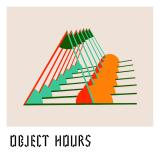
Leather-jacket krautrock? Indeed. Welcome to the world of Carrboro NC's Object Hours. These generous saviors consist of three Triangle scene lifers who all worship the riff but imagine what happens if the riff fell into the middle of your favorite CAN LP. Yes, it lives up to the hype.
"Solved By Walking" was recorded in the winter of 2025 at Betty's in the Chapel Hill woods, these are mighty rock slabs ready for all seasons. Rock believers have felt the ripples and knew the day was coming. Object Hours is a band that fits right in on stage alongside acts as varied as Kim Gordon and Tropical Fuck Storm, bringing the house down in these and similar moments. These are songs that groove, peel paint, sandblast, inspire unconscious movement, make your head bob - frequently all at the same time. These are the jams inspired by the time that you heard "Fun House" coming out of that dude's car with the windows down in the middle of the summer, the ones inspired by the kids who own 3 copies of "Daydream Nation," the ones who listen to the last 1:30 of Wire's "Too Late" over and over. This is the band that has a timer on stage so they don't keep each song playing for days on end, the band whose Bandcamp bio succinctly summarizes their approach thusly: "We try to keep songs under 25 minutes for your sake." Every word here should be inspiration for you to *want* and *need* to hear this record and every word here is true. Just you wait.
Real heads know and the rest of the heads are getting ready to find out. Get ready for Object Hours' "Solved By Walking".
DYING VICTIMS PRODUCTIONS is proud to present MIDYRASI’S KULT’s highly anticipated debut album, Italian Dark Sound, on CD and vinyl LP formats. MIDRYASI'S KULT are revolutionary and uncompromised. Featuring veterans from such Italian doom stalwarts as Doomsword, Midryasi, Agarthi, and Fiurach, their unique blend of elements from the NWOBHM, doom metal, and early black metal – all fused in their distinctive national dark-sound tradition, which includes such cult legends as Black Hole and Death SS – results in an obscure, hypnotic, and exciting formula. In March 2025, after just one week on Bandcamp, MIDYRASI’S KULT were intercepted by Caligari Records, who released on cassette their debut demo, Mountain Devil. Featuring three songs in a concise 15 minutes, this demo reaped international acclaim for its originality and attitude. But that was but a foretaste of darker delights to come. Witness the first full-length of MIDRYASI’S KULT, Italian Dark Sound.
Truly titled, Italian Dark Sound is an intoxicating spelunk into catacombs both idiosyncratic and indefinable. Totaling 32 time-/mind-expanding minutes, the eight primary tracks here – the outro is titled “The Lost Son of Sylvester Anfang,” which should offer an obvious clue to the black-metal-minded out there – each offer something different from the next, and yet all add up into a shadowy experience that’s both rocking and atmospheric. In fact, if one were to single out an aspect between the demo and album, it’s that MIDYRASI’S KULT exude more energy on this full-length without sacrificing any of their occult aura. But, just like that demo, Italian Dark Sound features supremely pro production – gritty, earthy, and yet kaleidoscopic in texture – under the guidance of Gabry "The Way" Strada, head of RDF Studio and who’s now collaborating on the upcoming Doomsword new album. In the vein of an open artistic project, all the artwork is made by vocalist / bassist Geilt himself, and up to 11 musicians have been involved in these recordings
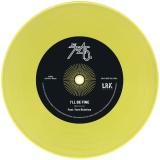
The 7:45s are a soul collective from Manchester, UK – the brainchild of songwriter and bassist Sam Flynn. Inspired by the house bands of labels from Motown to Big Crown, the young collective spotlights guest vocalists on each tune. Named after 7-inch vinyl, The 7:45s write snappy singles that blend the vintage feel of rare groove with the songcraft of perfect pop. BBC Radio 6 Music has played seven songs by The 7:45s this year.
Clocking in at under three minutes, 'I'll Be Fine' is a short and snappy soul sensation. The guitar hooks your ear, the rhythm reels you in, and the arrangement keeps you on your toes – adding exuberant horns, break downs and build ups. Featured vocalist Yemi Bolatiwa shines through the song's bittersweet theme, that it's better to have loved and lost… 'I'll Be Fine' has been played on BBC Radio 6 Music. Craig Charles called it "Proper up-tempo soul of the highest order".
Out on February 20th 2026. The album release will be preceded by the single " The Praise of Folly part 1". First 13 minutes of a long composition that will take up the entire side A of the album for a total of 21 minutes. Guitarist Alessandro Santori says about the album: " We are very excited to finally release these three songs that we have worked hard to arrange on over the past two years. Once again we invite the listener to join us on a journey beyond the constraints of song form and genre, and to dive into The Praise of Folly like reading a book where you never know what will happen when you turn the page... sometimes exactly what you expect, but very often... absolutely not.
From the production point of view we pushed even more on the live aspect and sounds of the single performance. We decided to not edit and comping between different takes of each song but to choose which one to use on the base of general feeling and then add some post arrangements to emphasize specific passages. We definitely did not want to create a perfect Frankenstein but to take the listener in the room with us during the performance, as in concert".
Out on February 20th 2026. The album release will be preceded by the single " The Praise of Folly part 1". First 13 minutes of a long composition that will take up the entire side A of the album for a total of 21 minutes. Guitarist Alessandro Santori says about the album: " We are very excited to finally release these three songs that we have worked hard to arrange on over the past two years. Once again we invite the listener to join us on a journey beyond the constraints of song form and genre, and to dive into The Praise of Folly like reading a book where you never know what will happen when you turn the page... sometimes exactly what you expect, but very often... absolutely not.
From the production point of view we pushed even more on the live aspect and sounds of the single performance. We decided to not edit and comping between different takes of each song but to choose which one to use on the base of general feeling and then add some post arrangements to emphasize specific passages. We definitely did not want to create a perfect Frankenstein but to take the listener in the room with us during the performance, as in concert".
DJ Quik is a giant of West Coast hip-hop. With his fourth album Rhythm-Al-Ism he created his masterpiece, a perfect hip-hop album. As Quik explains, “the name Rhythm-Al-Ism alone tells you what I was doing. I was mixing up rhythms. I was meshing R&B with hip-hop and jazz. And a little bit of comedy”. It’s absolutely sensational and as with a lot of mid-90s albums those original vinyl copies are now rare so here’s the Be With re-issue.
A preternaturally gifted producer/rapper, DJ Quik has produced scores of LA gangsta rap classics. He’s released platinum and gold records of his own, as well as helped craft them for the likes of Tupac, Snoop Dogg, and Dr Dre. Quik has always been quirkier and more interesting than his gangsta rap peers, both musically and lyrically. An old-school funk producer at heart, he’s also incredibly nice on the mic. His raps often deal in boasts, jokes and good times but also cover his beefs, his trials and his trauma. Partying and pain, all mixed up. DJing and producing hype beat tapes from age 14, Quik’s tracks blended the languid funk and rubbery synths of Zapp and George Clinton with a gangsta aesthetic, creating a more danceable foil to Compton’s more typical nihilistic hedonism. Ultimately, his records sound custom engineered to drift out over sun-soaked barbecues.
Released in 1998 on Profile, Rhythm-Al-Ism was the closest Quik ever got to making a commercial splash. “You’z A Ganxta” and “Hand in Hand” made radio waves across the country and the less radio-friendly tracks like “Medley For A ‘V’” were bumping out of car stereos. Combining his soulful, jazzy P-Funk/G-Funk beats with his effortlessly smooth flow, Rhythm-Al-Ism was the quintessential West Coast Party. Squelchy synths, bouncy bass, monstrously knocking drums and freaky keys - this is peaking acidic party-rap, straight out the gate. Music for gliding, for skating, for time with your people and your poison. Sunshine. No cares. BBQs. Heavy smoke in the air. Dripping with wit and good humour. A real swing to the vibe.
The album opens with Quik setting out his mission statement with “Rhythm-Al-Ism (Intro)”, telling us what this is all about before the self-explanatory “We Still Party” rocks the spot. It’s definitely all about the party here, complete with Quik’s signature head-nod/body-moving beat. Next up, the undeniable laidback funk and dripping swing of groove-laden “So Many Wayz”. This positively slaps.
Then we get to the three huge singles. The R&B-tinged radio-friendly minor-hit “Hand In Hand” closes the first side only for the flip to get straight into the rolling and scratching of bleepy computer-funk banger “Down, Down, Down” (featuring a particularly nice use of Howard Johnson’s epochal “So Fine”). The effortlessly smooth, flute and guitar-laced “You’z A Ganxta” completes the trio. Next up the fast-paced, vocoder-enhanced, woulda-beena-global-hit “I Useta Know Her”. This coulda (shoulda) been a single too. Head-nod funk workout “No Doubt”, with its ace sample of Prince's “Sexy Dancer”, closes out the second side.
“Speed” races out the gate on the second disc, sampling Edwin Birdsong’s “Rapper Dapper Snapper” in a harder, better, faster, stronger way than those daft Parisian punks. Amphetamine-swift raps over soaring, string-drenched b-boy beats. A total anthem. Up next, the staggering, near 8-minute laconic, lounge-y sax-rap of “Whateva U Do” cools things down and smooths things out with its flute wrapping around a sample of Smokey Robinson’s “So In Love” and some oh-so-classy lounge-piano tinkling. And speaking of smooth, things don’t get much smoother than the blissfully melodic glider-anthem “Thinkin’ ’Bout U” riding that ace flip of SWV’s “Use Your Heart”. Exceptional.
The exquisite funky-flute-slapper “Medley for a ‘V’ (The P***Y Medley)” opens the fourth and final side, with star turns from Snoop Dogg and a typically suave Nate Dogg. It’s followed by the supremely skanked-out “Bombudd II”, a beautifully sweet reggae-fuelled ode to the herb. “Get 2Getha Again” is slick funk. Stunning.
This 2022 Be With double LP re-issue has been mastered for vinyl by Simon Francis, cut by Pete Norman and pressed at Record Industry. Unusual for the time, Rhythm-Al-Ism was originally pressed as a double and we’ve reproduced the original LA vibe picture sleeve and insert to match.
As that original front cover says, this is “over 70 minutes of commercial free music” and it’s absolutely perfect from start to finish. There are no stand-out tracks here. It’s all gold.
: Rhythm-al-ism (2LP)
out of Stock
Last delivered 19 months ago available to reorder, subject to availability
FRQNCY LDN, the new project from Alex Lavery and James Ford (producer du jour and one half of Simian Mobile Disco), are releasing their debut album ‘The White Edition’ on 5 September via PRAH Recordings. Alongside the news of their debut album, the duo are sharing the first taste in ‘Matthias’ Wajd’, which they describe as “a rousing, instrumental piece from the middle of the set where the whole ensemble became balanced providing moments where Raven played violin with haunting yet uplifting melodies within the cavernous reverb of the church. Interestingly, at this moment, most of the audience who had been laying down rose to watch the performance like a gig, like an awakening.”
Initially conceived as a live project with earlier performances at churches in London and at Glastonbury, FRQNCY LDN’s music is a mix of strings, gongs, oscillators, FX, and spoken word, and the result is a musical experience unlike any other. Now that immersive magic has been captured on their debut release through Prah Recordings.
The music that FRQNCY LDN are releasing as their debut album is from an extraordinary live take from a performance at St Matthias Church in Stoke Newington last year, and thanks in no small part to the serendipitous bunch of musicians they assembled: composer and violinist Raven Bush, clarinettist Arun Ghosh, cellist Satin Beige Chousmer, and harpist Chloe Chousmer-Kerr. Alongside Lavery and Ford and assisted by engineer Animesh Ravel, they were able to capture the music to a world class level.
FRQNCY LDN has its roots in a supermoon that occurred three summers ago, after the hottest day of the year. Two of Lavery’s friends gave a sound bath that evening. “I’m not overly into astronomy or anything but the experience was nuts,” he says. “I had to find out what had just happened. What felt like forty minutes was actually two and a half hours. We were all out. It was so profound that I was hooked.”
He immediately signed up for a sound therapy course where he learned about what he calls a “brain hack” to meditation. “The thing about sound therapy is there’s a lot that’s meditation-based, and I find meditation really difficult. I’ve got a very busy brain. What was alluring about this process of sound immersion, a sound bath, whatever you want to call it, is it’s basically a hack to making your brain get into a meditative state.”
FRQNCY LDN’s early shows crystallised their ideas into a project, and Lavery brought poet Nikita Gill on board as a vocalist. “One of the first poems she gave to me, ‘Unwitches’ was in response to me explaining that I’d love this project to be perceived as something anyone could access. It’s not just for the sound meditation or the yoga, or the mushroom crowd. No one should be turned off by connotations from where the music comes from, I love music but I’d never be into that because it’s too woo-woo. Nikita said she’d had this poem for a long time but she’d never found the right home for it.”
And in an increasingly busy and fraught world, the need to tune out for an hour or so, and maybe tune in to something more profound, is only going to get bigger.
Sweatmaster releases a new full-length album after a 15-year hiatus via Svart Records Sweatmaster, one of the aristocrats of Finnish garage rock, is making a big comeback with the release of their fifth album More! in January 2026. After the release of their 2010 album Dig Up the Knife, the band took a long break, which ended a few years ago with live performances both domestic and abroad. At the same time, new material began to emerge in the rehearsal room, and the band quickly found a common strategy for working on it. "We were unanimous about the strengths of our band and decided to get to the heart of the matter. The main idea was to make straightforward songs carried by the vocals. The kind that would work well live with our aggressive playing style," says the band's drummer Matti Kallio. Svart Records will release Sweatmaster's fifth album early next year. More! is a sharp package of fourteen songs that has not been polished to death. "We wanted a raw and electric sound for the new album, built tightly around the three of us playing. The aim was to stick to Sweatmaster's original energy and not spread ourselves too thin. However, despite our efforts, the intervening years brought some new tones with them," guitarist Mikko Luukko explains the background of the new album. The album's first single will be released on Friday, September 19th, and according to singer-bassist Sasu Mykkänen, Destroyer is the essence of Sweatmaster. "The drum fill draws you into the pull of the electric triangle. The guitar taps at the ballads and wants nothing more than to drive the rhythm until the passionate vocals take over. The song doesn't lead anywhere, it's already there. 2 minutes, 37 seconds. Wham bam. Here you go." More! is available for pre-order now at Svart’s webstore on Svart exclusive vinyl, limited coloured vinyl, classic black vinyl, and CD. Release date January 30th, 2026.
Sweatmaster releases a new full-length album after a 15-year hiatus via Svart Records Sweatmaster, one of the aristocrats of Finnish garage rock, is making a big comeback with the release of their fifth album More! in January 2026. After the release of their 2010 album Dig Up the Knife, the band took a long break, which ended a few years ago with live performances both domestic and abroad. At the same time, new material began to emerge in the rehearsal room, and the band quickly found a common strategy for working on it. "We were unanimous about the strengths of our band and decided to get to the heart of the matter. The main idea was to make straightforward songs carried by the vocals. The kind that would work well live with our aggressive playing style," says the band's drummer Matti Kallio. Svart Records will release Sweatmaster's fifth album early next year. More! is a sharp package of fourteen songs that has not been polished to death. "We wanted a raw and electric sound for the new album, built tightly around the three of us playing. The aim was to stick to Sweatmaster's original energy and not spread ourselves too thin. However, despite our efforts, the intervening years brought some new tones with them," guitarist Mikko Luukko explains the background of the new album. The album's first single will be released on Friday, September 19th, and according to singer-bassist Sasu Mykkänen, Destroyer is the essence of Sweatmaster. "The drum fill draws you into the pull of the electric triangle. The guitar taps at the ballads and wants nothing more than to drive the rhythm until the passionate vocals take over. The song doesn't lead anywhere, it's already there. 2 minutes, 37 seconds. Wham bam. Here you go." More! is available for pre-order now at Svart’s webstore on Svart exclusive vinyl, limited coloured vinyl, classic black vinyl, and CD. Release date January 30th, 2026.
Abacus - The Relics E.P. - A Deep-House Masterpiece from 1994 Re-Released Somewhere around 1993 or '94, a quietly profound landmark in deep house emerged: The Relics E.P. by Austin Bascom, better known as Abacus, originally released on Chicago's Prescription Records (catalogue #006). With four tracks spanning roughly 26 minutes, this record has since gained cult status among DJs, collectors, and aficionados of the deeper, more soulful yet futuristic side of house music. Abacus crafted a quintessential deep-house journey: warm grooves, lush textures, scorched sub-bass, and a deeply introspective futuristic atmosphere. Bascom produced a record that never chased trends, but instead quietly built a lasting legacy. This record remained rare and highly sought after. In an era when house music was splintering into countless directions - even reaching the pop charts - The Relics E.P. planted its flag firmly in the underground, soulful terrain. Collectors and DJs continue to cite it as essential deep house, often describing it as ''one of the finest deep-house records of all time.'' Its scarcity and enduring emotional pull have only strengthened its legend. Decades on, The Relics E.P. continues to surface in DJ mixes and playlists, and as a touchstone for producers seeking that timeless balance of groove and emotion. Now, three Decades later, Clone Classic Cuts is proud to present a fully remastered edition of The Relics E.P., including previously unreleased material from the same recording sessions. Pressed on 140-gram virgin black vinyl, this edition restores and elevates a true cornerstone of deep-house history.
out of Stock
Last delivered 15 days ago available to reorder, subject to availability
Chicago producer Ellery Cowles lands on Apnea Records with three tracks that draw from the city's foundational rhythms while reaching for something more devotional. Walking by Faith isn't chasing nostalgia--it's after deeper ground. "Fall of Jericho" kicks things off with syncopated Chicago swing colliding with latin percussion and acid basslines that curl and bite in equal measure. "Fly" builds around a looped vocal fragment, letting raw drum patterns stretch and breathe as the track slowly reveals itself. Closer "Crying of Yahweh" is the most patient of the three--seven minutes of hypnotic techno coiling around latin rhythms, carrying a quiet spiritual weight that lingers long after it fades. Cowles moves between reference points with ease--Chicago house, devotional threads, latin heat--but never forces the connection. The music feels like it's been lived in rather than simply constructed, generous with its time and intentional with its space. Out now on Apnea Records.
out of Stock
Last delivered 7 months ago available to reorder, subject to availability
Michael Mayer returns to the Speicher series for his first release since last year’s brain-bursting The Floor Is Lava album. And yes, the floor is indeed lava when Mayer is on peak form, as he is here, with three tracks that oscillate, effortlessly, between the twin poles of Mayer’s music: dancefloor detonation and heart-wrenching beauty. To be fair, there’s more of the former here, but there’s beauty in generous discipline, too, and the unrelenting “Cry Me A Raver” feels, somehow, like it brings together decades of Kompakt pleasure in six giddy minutes – disco-fied arpeggios, glistening and hand-burnished textures, abstruse patterns that fall in and out of step. “Don’t Sync With My Tag” stomps with destructive glee, a beat as undeniable as the shaker cross-rhythms are silkily sexy. There’s always been something practical, functional, and utilitarian about Speicher, but it doesn’t get more everyday DJ-life than this: Mayer tells us the title is “a super-annoying message that pops up every time you open Rekordbox. Nobody knows what it means. It’s a DJ mystery.” But who needs answers, anyway? By the time you’ve started to get close to solving the riddle, Mayer’s taken you to Detroit via Cologne with “It Isn’t What It Isn’t”, a little doffing of the cap to Rhythim Is Rhythim. “You’re May, I’m Mayer, I used to tell him,” Michael chuckles. This made one of our cats almost jump out of its skin, with its stealthy slyness – creeping, amorphous electro noise; percussives that just won’t quit; the whole thing flooded with twitchy strip-light energy and silver-machine flare- outs.
Speicher is as Speicher does, and this is a damn good one. Make Mine Mayer!
Michael Mayer returns to the Speicher series for his first release since last year’s brain-bursting The Floor Is Lava album. And yes, the floor is indeed lava when Mayer is on peak form, as he is here, with three tracks that oscillate, effortlessly, between the twin poles of Mayer’s music: dancefloor detonation and heart-wrenching beauty. To be fair, there’s more of the former here, but there’s beauty in generous discipline, too, and the unrelenting “Cry Me A Raver” feels, somehow, like it brings together decades of Kompakt pleasure in six giddy minutes – disco-fied arpeggios, glistening and hand-burnished textures, abstruse patterns that fall in and out of step. “Don’t Sync With My Tag” stomps with destructive glee, a beat as undeniable as the shaker cross-rhythms are silkily sexy. There’s always been something practical, functional, and utilitarian about Speicher, but it doesn’t get more everyday DJ-life than this: Mayer tells us the title is “a super-annoying message that pops up every time you open Rekordbox. Nobody knows what it means. It’s a DJ mystery.” But who needs answers, anyway? By the time you’ve started to get close to solving the riddle, Mayer’s taken you to Detroit via Cologne with “It Isn’t What It Isn’t”, a little doffing of the cap to Rhythim Is Rhythim. “You’re May, I’m Mayer, I used to tell him,” Michael chuckles. This made one of our cats almost jump out of its skin, with its stealthy slyness – creeping, amorphous electro noise; percussives that just won’t quit; the whole thing flooded with twitchy strip-light energy and silver-machine flare- outs.
Speicher is as Speicher does, and this is a damn good one. Make Mine Mayer!
out of Stock
Last delivered 21 days ago available to reorder, subject to availability
Supergroups existed before Emerson, Lake & Palmer formed in 1970. And, as we all know well, many came after. But few, if any, matched the English trio’s chemistry and its elevated combination of virtuosity, vision, and verve. Having influenced a multitude of followers, ELP’s prowess was obvious from the start. The band’s self-titled debut stands as a towering statement of creative imagination, execution, and discipline more than five decades after its original release.
Mastered at MoFi’s California studio, housed in a Stoughton jacket, and pressed at Fidelity Record Pressing, Mobile Fidelity’s numbered-edition 180g 33RPM LP of Emerson, Lake & Palmer presents the benchmark album in audiophile sound. Clear, dynamic, and balanced, this collectible edition honors the perfectionist approaches that both informed the playing and recording of the record.
Distinguished with black backgrounds, this reissue brings to light the epic scope, tonal depth, and mind-bending degrees of musicianship on display. Aspects — textures, nuances, effects, melodies, tempo changes — that go hand-in-hand with the trio’s compositions and interplay are rendered amid broad soundstages and delivered with pinpoint detail. Whether you’ve owned multiple copies of this touchstone or seeking out your first version, you’ll relish the presence, separation, imaging, and crispness that help make every song come across as if the group has set up shop in your listening space.
Opening the door to the seemingly infinite possibilities of progressive rock while steering clear of excess, Emerson, Lake & Palmer achieved a rare feat in that its complex, cerebral music didn’t prevent it from attaining mainstream success. The gold-certified effort launched the career of a band that would sell tens of millions of records. It also landed a Top 50 single in the form of the ballad “Lucky Man,” whose vocal harmonies, folksy strumming, multi-tracked instrumentation, and breakthrough Moog solo almost feel quaint in the face of the other fare on the album.
Comprised of genre-defying originals and hybrid arrangements of two classical pieces, the album Rolling Stone originally and rightly said is “best heard as a whole” matches outrageous ambition with the otherworldly skills of three musicians who remain among the finest to ever pick up their respective instruments. While Emerson soon drew the lion’s share of headlines for his ability on keys — clavinet, Moog, piano, Hammond organ, and pipe organ included — Greg Lake’s aptitude on guitar and bass, along with well as Carl Palmer’s monster talents behind the kit, created a three-headed hydra that devoured everything in front of it.
That extends to the radical reinterpretation of Bela Bartok’s “The Barbarian” that begins the LP, a performance that in less than four-and-a-half minutes runs the gamut from distorted to churchy to angular and blustery. More classical flourishes, keyboard wizardry, hard-rock heaviness, and gothic signatures emerge throughout “Knife-Edge,” which reimagines music by Leos Janacek and J.S. Bach — and ultimately invites you to explore a cathedral of sound teeming with separate bursts of keys and percussion.
And did someone say “drumming”? Check out Palmer’s monster salvo on “Tank,” a rhythmic showcase that marches out with knee-bent notes and mirror-reflected passages. Or dive into the mythological suite “The Three Fates.” Replete with three parts and Emerson playing the pipe organ at Royal Festival Hall, it shoots off sonic fireworks via sophisticated arpeggios, jazz improvisations, dancing counter-meters, sizzling chords, and a few explosions. Please don’t hold anyone at MoFi responsible if your system cannot handle it; this is heady stuff.
Indeed, everything on Emerson, Lake & Palmer is there for a purpose. Whether you aim to attempt to dissect all of the notes, shifts, and polyrhythmic bluster or just want to absorb this album as one living, breathing organism, this version invites you to do both as many times as you desire.
Rot/Schwarzes Ink-Spot Vinyl, limitiert auf 300 Exemplare. Drei Buchstaben. Drei Musiker. Drei Instrumente. Drei Jahre. Graf Zahl hätte seine Freude an diesem Album_ HUM loten ihre dunklen Stoner-Klangwelten weiter aus. ,three" bringt sowohl druckvolle Post-Rock-Songs als auch psychedelische Klangexperimente. Jeder Track scheint eine Idee zu verfolgen; jeder eine 4-Minuten-Reise. Die Themen drehen sich um Umweltzerstörung, gesellschaftliche Irrwege und Spacetrips. ,three" ist das Album für die Apokalypse oder für einen Abend im Weltraum. Der Spaß kommt dabei nicht zu kurz: Die Dunkelheit wird auf fetten, langsamen Grooves präsentiert. Die Stücke sind kompakt und melodisch. Katharsis ist das Ziel: Wer mit offenen Ohren hört, dem könnte es nach den 11 Tracks und 41 min besser gehen_ Eine aufregende Reise durch musikalische Klangwelten (Surf, Gothic/Dark Wave, Kraut und Prog-Rock) mehrerer Jahrzehnte. Die HUM-typischen schweren Riffs (im Schatten von Godzilla) mit komplexen Rhythmen und Breaks werden erweitert durch neue Elemente wie Surfgitarre, Synthiesounds und gesangliche Experimente. Der meist mit Effekten verfremdete Gesang wird spärlich und gezielt eingesetzt mit oft kurzen Textfragmenten, welche die Stimmung der Songs textlich untermalen. Dazu kommen drei instrumentale Soundcollagen, die als düstere Überleitung zwischen den Songs dienen. Ein gewisser roter Faden scheint sich thematisch durch das Album zu ziehen. Red/black ink spot vinyl. Limited to 300 copies. Three letters. Three musicians. Three instruments. Three years. The Count would have loved this album...HUM continue to explore their dark stoner soundscapes. "three" features both powerful post-rock songs andpsychedelic sound experiments. Each track seems to pursue an idea; each one a 4-minute journey. The themesrevolve around environmental destruction, social aberrations, and space trips."three" is the album for the apocalypse or for an evening in space. But there's no shortage of fun: thedarkness is presented on fat, slow grooves. The pieces are compact and melodic. Catharsis is thegoal: if you listen with open ears, you might feel better after the 11 tracks and 41 minutes...An exciting journey through musical soundscapes (surf, gothic/dark wave, kraut and prog rock) spanning severaldecades. The heavy riffs typical of HUM (in the shadow of Godzilla) with complex rhythms and breaksare expanded by new elements such as surf guitar, synth sounds and vocal experiments. The vocals, mostlydistorted with effects, are used sparingly and purposefully, often with short text fragments that underscore the moodof the songs lyrically. In addition, there are three instrumental sound collages that serve as dark transitions betweenthe songs. A certain common thread seems to run through the album thematically.
Lost Verses returns with "Voices From Beyond", its sixth release and for the first time, a Various Artists compilation showcasing four distinct approaches to the dance floor.
Christian Wunsch opens the record with a hypnotic and forceful trip, Oxygeno follows with intense energy and spatial atmospheres, Lakej brings his mesmerizing and more industrial signature sound, while Endplate closes with a driving track but with an emotional touch.
A VA that balances strength, depth, and elegance, reinforcing the distinctive sonic identity of Lost Verses.
out of Stock
Last delivered 81 days ago available to reorder, subject to availability
15th Anniversary Edition. Black Vinyl. When Dinosaur Jr. reunited, more than 20 years after their formation and legendary dissolution, the worry was that these guys were just flogging the back catalog, taking the old show on the road as a marketing gimmick. But the 2007 release of Beyond gave a hearty Marshall-driven "F**K YOU!" answer to those inquiring ears. Restoring the sound established by the unassailable hat-trick gambit of their first three albums -- Dinosaur, You're Living All Over Me, and Bug -- Beyond continued the band's march into rock greatness by making old ears smile and new ears bleed afresh. And then came Farm, the 9th full length record by the original line-up: J Mascis, Lou Barlow, and Murph. If Beyond was Dinosaur Jr.'s return to form, Farm is proof that Dinosaur Jr. could (and still do, to this day!) deliver timeless, exhilarating rock music. Farm encompasses Dinosaur Jr.'s signature palette: soaring and distorted guitar, unshakable hooks, honey-rich melodies. At times wholly 70's guitar-epic, at times perfect for sitting by a babbling brook with Joni and Neil, these songs get into your head and stay there, bouncing happily around. The ear-catching "Plans" is nearly seven minutes of classic whipped-topping rock dessert, while "I Don't Wanna Go There" is a meat-and-potatoes main dish, mixing unapologetic lead guitar with straight-ahead delivery a la James Gang or Humble Pie. This expanded deluxe edition of Farm features four songs never pressed to vinyl and never given worldwide release:"Houses", "Whenever You're Ready" (The Zombies Cover), "Creepies" (Instrumental), and "Show". "Whenever You're Ready", a cover of classic pop-rockers The Zombies, is impossibly good for a hidden gem; Murph stomps in with a sledgehammer to the kit, J and Lou layer low-end and fuzz like two halves of one brain, and right when things feel biggest, airy and colossal, there's J with a lightning bolt of a guitar solo. Pure electricity and melody like only he can make. Recorded in J Mascis' Bisquiteen studio in Amherst, Massachusetts, Farm was produced by Mascis himself, and delivers the singular, unique energy of one of America's greatest living rock bands.
Red vinyl, limited to 1200 copies worldwide. In late November 2024 Brutus performed three sold-out shows at the legendary Ancienne Belgique venue is Brussels. A year later sees the band celebrate these shows with the release of a complete live concert movie and album from the third of these shows; sixteen songs, ninety-two minutes, this is Brutus 'Live in Brussels'. That run of three shows in Brussels marked the end of the band's touring cycle for latest studio album, 2022's Unison Life: "'Live in Brussels' is what we want to leave behind after three years of touring 'Unison Life' across more than 20 countries and almost 200 shows. We made it together with our close live crew, the same people who were with us on every step of the tour. For us those three nights in Brussels were intense but beautiful. We're proud we managed to capture it like this; a live document where picture and sound work together to put you inside that night".
out of Stock
Last delivered 10 months ago available to reorder, subject to availability