2023er LP Nachpressung auf schwarzem Vinyl! Nach eigenen Angaben verbrachten Gitarrist Mike Sullivan und Drummer Daniel Turncrantz eine gewisse Zeit in amerikanischen Nationalparks und fuhren durch Berglandschaften, als sie "Station" aufnahmen. Ihr Album klingt auch entsprechend episch, monumental und besitzt eine unglaubliche Tiefe. Sullivan und Turncrantz bekamen prominente Unterstützung vom THESE ARMS ARE SNAKES/BOTCH Bassisten Brian Cook, während sich Morgan Henderson von den BLOOD BROTHERS (R.I.P.) auf "Xavii" dem Kontrabass annimmt. Aufgenommen in Seattle von Mastermind Matt Bayles (ISIS, MASTODON, MINUS THE BEAR), verpasste er der Band diesen intensiven und beeindruckenden Klang und achtete gleichzeitig darauf, dass "Station" den Namen Album auch wirklich verdiente: ein kohärentes Werk, vom ersten Lied Campaign bis zum letzten Lied mit Double Bass Xavii. Insgesamt sechs Stücke befinden sich auf "Station" und es ist ohne Untertreibung instrumentaler Postrock at its best! Ein echtes Kunstwerk. Gegründet 2004 haben RUSSIAN CIRCLES von Anfang an mit Versatzstücken des Metal, Elementen des Minimal Jazz und kryptischen Riffs, die so klangen, als sei ein Komet in einer Großstadt eingeschlagen, verwirrt, polarisiert und unendlich verzückt. Ihre Musik verwebt einen Teppich aus intensivsten cinematischen Eindrücken, der einem auf der einen Seite mit seiner Härte den Boden unter den Füßen wegzieht, es auf der anderen Seite aber auch versteht, den Aufprall zu bremsen und für Kopfkino ohne Gleichen sorgt. "Enter", ihr Debüt von 2006, bescherte RUSSIAN CIRCLES Shows mit Größen wie TOOL, DALEK, DAUGHTERS und PELICAN. RUSSIAN CIRCLES setzen mit "Station" genau dort an, wo sie mit "Enter" aufhörten, erschließen sich aber gleichzeitig einen neuen Weg in die musikalische Tundra, um Kopf und Körper mitzuziehen und nicht nur dem Jahre 2008, sondern der ganzen Musikgeschichte ihren Stempel aufzudrücken.
2023er LP Nachpressung auf schwarzem Vinyl! Nach eigenen Angaben verbrachten Gitarrist Mike Sullivan und Drummer Daniel Turncrantz eine gewisse Zeit in amerikanischen Nationalparks und fuhren durch Berglandschaften, als sie "Station" aufnahmen. Ihr Album klingt auch entsprechend episch, monumental und besitzt eine unglaubliche Tiefe. Sullivan und Turncrantz bekamen prominente Unterstützung vom THESE ARMS ARE SNAKES/BOTCH Bassisten Brian Cook, während sich Morgan Henderson von den BLOOD BROTHERS (R.I.P.) auf "Xavii" dem Kontrabass annimmt. Aufgenommen in Seattle von Mastermind Matt Bayles (ISIS, MASTODON, MINUS THE BEAR), verpasste er der Band diesen intensiven und beeindruckenden Klang und achtete gleichzeitig darauf, dass "Station" den Namen Album auch wirklich verdiente: ein kohärentes Werk, vom ersten Lied Campaign bis zum letzten Lied mit Double Bass Xavii. Insgesamt sechs Stücke befinden sich auf "Station" und es ist ohne Untertreibung instrumentaler Postrock at its best! Ein echtes Kunstwerk. Gegründet 2004 haben RUSSIAN CIRCLES von Anfang an mit Versatzstücken des Metal, Elementen des Minimal Jazz und kryptischen Riffs, die so klangen, als sei ein Komet in einer Großstadt eingeschlagen, verwirrt, polarisiert und unendlich verzückt. Ihre Musik verwebt einen Teppich aus intensivsten cinematischen Eindrücken, der einem auf der einen Seite mit seiner Härte den Boden unter den Füßen wegzieht, es auf der anderen Seite aber auch versteht, den Aufprall zu bremsen und für Kopfkino ohne Gleichen sorgt. "Enter", ihr Debüt von 2006, bescherte RUSSIAN CIRCLES Shows mit Größen wie TOOL, DALEK, DAUGHTERS und PELICAN. RUSSIAN CIRCLES setzen mit "Station" genau dort an, wo sie mit "Enter" aufhörten, erschließen sich aber gleichzeitig einen neuen Weg in die musikalische Tundra, um Kopf und Körper mitzuziehen und nicht nur dem Jahre 2008, sondern der ganzen Musikgeschichte ihren Stempel aufzudrücken.
Bollywood rarities handpicked and remastered on a double LP release with laminate gatefold and multi-layered flower petal foldout. Featuring rare, overlooked or not-previously-on-vinyl music from Bappi Lahiri, R. D. Burman, Ilaiyaraaja, Kalyanji-Anandji, Anand Milind, Raamlaxman and Kirti Anuraag released between 1982 and 1986. Mastered for and cut to vinyl by multi Grammy-nominated Frank Merritt at his mastering studio The Carvery.
Naya Beat is incredibly proud to present the first in our series of ‘Awaaz’ (‘sound’ in Hindi) archival projects focused on uncovering the sounds of 1980s Bollywood Original Soundtrack Recordings (OSTs). Series 1 focuses exclusively on the musical output of CBS Gramophone Records & Tapes (India) Ltd. Active during India’s peak disco era – a time when synthesisers and drum machines became a mainstay in Indian popular music – CBS India became a home for established composers to be experimental, up-and-coming composers to get their start, B-movie soundtracks, and straight-to-VHS releases.
Expertly curated by Naya Beat co-founders Turbotito and Ragz, who were given unprecedented access to the original label archives, this compilation is not just a collection of four-to-the-floor Bollywood disco (although there are plenty of those). ‘Awaaz’ is designed to take listeners on a musical journey that includes everything from leftfield electronic and mood music to outrageous proto house.
Be it classic and hard to find cuts like Ilaiyaraaja's "Aye Zindagi Gale Lagaa Le" and “Mere Jaisi Mehbooba” (Bappi Lahiri’s Hindi remake of Herbie Hancock's “Rockit”), or the instrumental mood music of Kirti Anuraag’s VHS movie soundtracks, to the proto house of Raamlaxman’s “Dil Gadbad Jhala” and Kalyanji-Anandji’s “Aage Bhi Dushman,” or the synth and guitar drenched breakdance madness of R. D. Burman’s “Dekho Idhar Jano Jigar,” the music on this compilation captures the output of a label that was unique as it was unconventional.
An homage to the genre, every detail in this stunning release has been lovingly crafted. From the laminate cover to the absolutely incredible foldout, to the cut-out and collage design, to the font type and layout, there are countless authentic details and nods to classic Bollywood releases of the era. As much of the album has been made in India as is possible. The sleeves have been handmade in New Delhi. The liner notes have been compiled by music archivist Nishant Mittal (aka Digging In India).
out of Stock
Last delivered 3 years ago available to reorder, subject to availability
R&B SOUL STEPPER THAT HAS FEEL GOOD SUMMER VIBES
IN EVERY NOTE. WILL BEE DOES AN OUTSTANDING
PERFORMANCE ON VOCALS AND TIGHT PRODUCTION FROM
LEE AND MATT MAKE THIS A ESSENTIAL.
out of Stock
Last delivered 3 years ago available to reorder, subject to availability
Hailing from Macclesfield, Cheshire, and growing up in Cheadle Hulme, John Mayall had already made a name for himself on the Manchester blues scene before relocating to London in 1963 at the urging of Alexis Korner.
Following the breakup of The Bluesbreakers in 1968, Mayall took a three week break in LA, and it proved an eye-opener for him. As a result, Blues From Laurel Canyon was a concept album of sorts, a view of a Brit Abroad at a time when it wasn't de rigueur to travel. 2401 especially is an incredible confection – acknowledging Cream, foreseeing Led Zeppelin; Mick Taylor's slide guitar would soon be heard in the Rolling Stones. Fly Tomorrow is a nine- minute blues- rock tour de force.This re-issue faithfully replicates the original 1968 Decca Records UK stereo release with gatefold sleeve and is pressed onto high quality 180g vinyl.
Cable Ties are a fierce, tense rock’n’roll trio. They take the three-minute punk burner and stretch it past breaking point to deliver smouldering feminist anthems. Post-punk and garage rock hammered together by a relentless rhythmic pulse. Jenny McKechnie channels her struggles into songs that resonate deeply, giving voice to feelings often buried in modern life. Shauna Boyle and Nick Brown are a rhythm section anchored in Stooges primitivism, relentlessly hammering out a bedrock for McKechnie’s guitar pyrotechnics and vocal wallop. Three friends summoning a rhythmic tide to deliver anthems that turn latent anxieties into a rallying cry.
The band has been committed to an inclusive feminist and political outlook since its inception in 2015, exploring issues of gendered violence, colonialism, and sexual assault. The band members have been involved in benefit shows, organized DIY festivals, and volunteer with Girls Rock!, a not-for-profit organization that aims to empower female, trans, and gender non-binary youth in music.
Cable Ties are dedicated to their local community and independent networks, and to playing diverse and inclusive shows. They have toured Australia a number of times and have developed into a lean and efficient touring band who deliver powerful and meaningful shows. Their debut self-titled album, released in 2017 on Poison City Records, was a Triple J feature album and album of the week on 3RRR, with strong support nationally from community radio. They have also self released three 7” singles which have all sold out. The debut album is on its third vinyl pressing.
The band toured UK/Europe in 2017 supporting Jen Cloher, and played Punk’d Festival in Berlin. They returned to the UK in May 2019 to play The Great Escape and shows with Tropical Fuck Storm and Amyl & the Sniffers. In Australia they played Bigsound 2018 and festivals such as the national Laneway Festival tour in 2018, Boogie Festival 2018, The Plot 2017, and Meredith Music Festival in 2016. Cable Ties have supported artists such as Joan Jett, The Kills, Camp Cope, and Cash Savage. They won Best Hard Rock Act at the 2017 National Live Music Awards and were nominated in five categories. They won the Corner Music Award in 2017, have been nominated for eight Age Music Victoria awards, and were longlisted for The Australian Music Prize 2017.
Graham Lambkin (of Shadow Ring fame) returns with a long awaited epic double LP, Aphorisms, his first major solo outing since Community (Kye, 2016). Recorded mostly during the early winter months of 2022, in post-pandemic New York and post-Brexit London, Aphorisms assembles the sonic detritus of daily life into hauntingly intimate aural soundscapes. Made between Lambkin's residence in East London and Blank Forms in New York, Aphorisms superimposes the two spaces onto one another creating an imaginary stage where his musical dramas unfold. A transatlantic mediation on the rooms where Lambkin has lived and worked, Aphorisms summons up hallucinatory vistas by way of the composer’s collage technique, layering field recordings, piano, guitar, percussion, vocal fragments, and repurposed elements on top of one another in double, triple, and quadruple exposures. Like the Shadow Ring’s Lindus (Swill Radio, 2001) recorded between Folkestone and Miami Aphorisms ruminates on estrangement and displacement, catching Lambkin as he returns to London after two decades of living in the States, in his words, “leaving home to return home.” Aphorisms continues Lambkin’s synthetic-naturalist approach to sound-making, twisting disparate and unique elements together to create the sensation of a coherent sonic space. At the heart of his practice is the illusion of form, whereby Lambkin combines sonic elements, documenting the moment that they coalesce into music only to disintegrate back into incidental sound. The album is centered around two pianos, one in New York and one in London, sounding together as if through the ether, creating a spectral atmosphere that Lambkin fills with melodic snippets, fragments of songs, spoken-word musings, and guttural barks or “the animal purity of voice,” as he has it. The superimposition of the two spaces is maximized in the album's closing titular track, where, much like on earlier works such as Salmon Run (Kye, 2007) and Softly Softly Copy Copy (Kye, 2009) fragments of familiar melodies float through the mix as though being played from afar. Aphorisms is Lambkin at his best, extending methodologies only hinted at previously and taking his now-idiosyncratic mission statement to a new chapter.
Five years after the release of their last studio album, legendary UK musical institution, Soft Machine, return with a brand new CD/LP,
Other Doors. Boasting new material and two numbers drawn from their extensive historical repertoire, Other Doors finds the band on their usual fiery form.
Featuring John Etheridge (guitars), Theo Travis, (saxes, flutes, Fender Rhodes piano, electronics), Fred Thelonious Baker (Fretless bass),
John Marshall (drums), Other Doors also features two guest appearances from long-serving bassist Roy Babbington, who retired from the band in 2021.
Other Doors was recorded at Temple Music Studios, a facility owned by the late Jon Hiseman during July and August 2022.
It’s a location of which the band is particularly fond, explains John Etheridge. “Working at Jon Hiseman’s studio was special,
especially with Ru Lemer who is a brilliant engineer. He’s fantastically quick and that’s very good as we record mainly live in the studio. It’s come out really well and I think it sounds great.”
On Other Doors they’ve revisited the very first album, originally released in 1968, to include Kevin Ayers ‘Joy Of A Toy. Fred Baker, makes his studio debut with Soft Machine.
A well-known figure on the Canterbury Scene not only is he the perfect choice for the group but he’s also is a long-term fan of the repertoire.
“The way I look at it is that this is all great music which we’re continuing to preserve and keep alive as we play it but also we’re adding to it all the time,” he explains.
The idea for revisiting the number was Theo Travis’ he says and has been part of the band’s live setlist for a while.
The album also contains Penny Hitch, a track originally heard on 1973’s Soft Machine Seven.
If the album ushers in a new member in the shape of Fred Baker, it also acts as a fond farewell to drummer John Marshall, who joined Soft Machine midway through the recording of 1972’s Fifth.
At the age of 81 Marshall has decided to retire making Other Doors his final studio album with the group. “I’ve known John since 1975 when I first joined Soft Machine and of course,
we’ve worked through the years together intermittently ever since. His drumming always meant a lot to me,” says Etheridge.
“We worked over three days in the studio and John played great. It sounds terrific.”
Indeed, Marshall is on whip-cracking form throughout the album bringing his trademark musicality and decisive presence.
With Other Doors, he brings his distinguished career to a rousing conclusion.
Intense, celebratory, and consistently impressive. Other Doors is the sound of a group determined to press forwards with an
integrity and sense of purpose that’s quintessentially and definitively Soft Machine.
Third in a trilogy of LPs of Library Music miniatures from composer and multi-instrumentalist Daniel O’Sullivan (Æthenor, Ulver, This is Not This Heat, etc) following 2020’s Electric Māyā and 2021’s Fourth Density. For heads, the term “Library Music” in 2021 might evoke dodgy Italian gray market LPs and crate diggers hunting for “funky breaks” - but London’s venerable KPM Music is working with groundbreakers like Daniel to open up new avenues for composers to experiment. The 15 tracks on “The Physic Garden” are fully-formed and orchestrated compositions, which would be highlights on anyone’s LP, never mind as incidental music. Of the music, Dan says: “The Physic Garden is an album of diverse instrumentals inspired by a swathe of verdant vistas from manicured gardens and follies to urban common land, overgrown and forgotten. Convalescent memories in the shape of psychedelic auditory botanics.”
Key tracks include the droning acoustic folk of the title song; the Canterbury-esque rolling horn and woodwind melody of “Return the Heart” (with expert drum kit from Frank Byng); The prog-ish odd meter interlude “Buttercup Tea”; The quiet ambience and delicate melody of “Dusty Feather:”; and the Eno-like drift of “Vapourer Larvae.”
“Library music. Akasha. Here you accept that music behaves like a thing to accentuate another thing, seemingly unrelated. A beautiful, shining blankness. Not passive. An opportunity to wade. A brief encounter with an open-ended destiny. As in, you never know who or what it will be partnered with. With library music the emphasis tends to be on functionality and less on sonic self-portraiture. So it compels you to be concise, like what is the function of this work? The distance is liberating. It’s less “What Am I? and more “What Is This?”. It compels you to be brief, each little cell is a world of its own in an assemblage of miniatures all vibrating in their collective identity. Then there is the occult nature of library music which is fetishized by many for its ability to induce time travel, often to send us back to some televisual memory. However, despite its broad-brush strokes, the library can be so profoundly alien, especially when experienced independently of the televisual realm; an unruly chimera of genre mutations, compositional curiosities and the deepest wallpaper you ever laid ears on. Perhaps the observances of library music can help unshackle us from our artistic insecurities and delusions, where one is drawn to the shape of music as a whole instrument unto itself; as a vehicle carrying our intention and consisting of everything we have to give at that moment; so things that are seemingly unrelated are ultimately connected.” – Daniel O’Sullivan
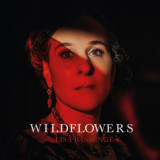
Lisa Bassenge ist zurück, und sie hat Blumen mitgebracht. Mit "Wildflowers" vollendet sie ihre Trio-Trilogie, wieder mit Jacob Karlzon am Klavier und Andreas Lang am Bass - wie schon bei "Borrowed and Blue" (2018) und "Mothers" (2020).
Elf Songs sind es diesmal, scheinbar querbeet und doch aus einem Guss. Von Dolly Parton bis Depeche Mode reicht die Bandbreite auf "Wildflowers", von Bob Dylan bis Death Cab for Cutie. Dazu Lisa Bassenges hintergründig-melancholische Eigenkomposition "Morning Song". Ein bunter Strauß, aber so wie die drei ihn arrangieren und darbieten, wirken die einzelnen Stücke nicht zusammengewürfelt, sondern wie Kapitel einer Erzählung. Jedes schillert für sich, doch das Ganze ist mehr als die Summe seiner Teile.
Das gilt auch für das Trio selbst. Die beiden Musiker - Jacob Karlzon aus Schweden und Andreas Lang aus Dänemark - betten Lisa Bassenges unverwechselbare Stimme in einen warmen, im besten Sinn skandinavischen Sound: entspannt, aber stets verbindlich; sehr spielfreudig, aber nie aufdringlich. "Dieser Sound hat uns gefunden", sagt Lisa Bassenge. Und auf "Wildflowers" haben die drei ihn zur Vollendung gebracht. Jeder Takt des Albums bezeugt die unglaubliche Chemie zwischen der Sängerin und den Musikern.
Was die Songs außerdem verbindet, ist die Qualität der Lyrics. Es sind poetische Texte von existentieller Tiefe, und in Lisa Bassenges eindringlicher Interpretation und glasklarer Phrasierung werden sie zum berauschenden Kopfkino.
Ist das nun Jazz, Pop oder Chanson? Mit "Wildflowers" zeigt das Lisa Bassenge Trio einmal mehr souverän, wie fließend die Grenzen zwischen vermeintlich ganz unterschiedlichen Genres sind. Diese Musik braucht keine Schublade. Es geht ihr um die Schönheit und Wahrheit der Songs.
MEANTIME das neue Album des kanadischen Songwriters Grant Davidson aka Slow Leaves, handelt vom Warten auf etwas Bedeutsames im Leben und davon, wie all die alltäglichen Dinge, die während des Wartens passieren, das eigentlich Bedeutsame ausmachen. Wenn man blinzelt, verpasst man es; wenn man zu viel nachdenkt, verpasst man es. Wenn man Glück hat, gibt es in der Zwischenzeit die Liebe und den Tod und nicht viel weniger. Das Album ist durchzogen von einer eleganten Erdigkeit, Meantime ist eine Sammlung von Folksongs, die mit paisleyfarbenen 1960er- und 70er-Jahre-Tönen verziert sind. Während die Musik eine Retro-Sensibilität aufweist, wird diese durch eine Unmittelbarkeit in den Texten ausgeglichen, die ihn fest in der heutigen Zeit verankert. Slow Leaves ist ein in sich geschlossenes Soloprojekt, bei dem Davidson jeden Aspekt der Musik und ihrer Präsentation kuratiert, einschließlich der Rolle des Multiinstrumentalisten, Produzenten, Coverdesigners, Fotografen und Videofilmers. Er betrachtet die Gesamtheit dieser verschiedenen Aspekte als wesentliche Teile eines größeren Projekts der Selbsterkenntnis durch künstlerische Methoden. Sein Folk- und Psych-Rock-Stil erinnert an ältere Songwriter wie Mickey Newbury, Nick Drake, Roky Erickson, Gene Clark und Neil Young. Aber sie leben auch in der Welt der modernen Klassiker wie Andy Shauf, Bonny "Prince" Billy, Bedouine, Big Thief und Bill Callahan. Seine seidige Stimme wurde schon mit Roy Orbison oder Bryan Ferry verglichen.
Das Tingvall Trio feiert 2023 sein zwanzigjähriges Bandjubiläum. Besonders bemerkenswert ist, dass das Trio seit der Gründung bis zum vorliegenden neunten Album, BIRDS, immer in der gleichen Besetzung agiert. Neben dem Pianisten und Namensgeber Martin Tingvall am Piano sind dies Omar Rodriguez Calvo am Kontrabass und Jürgen Spiegel, der für Drums und Percussion verantwortlich zeichnet. Und die Drei in Hamburg ansässigen Musiker haben es geschafft, in diesen vielen Jahren eine Erfolgsgeschichte zu schreiben, die ihresgleichen sucht: mehrere ECHO JAZZ Preise als Ensemble und Live-Act des Jahres, insgesamt sechs JAZZ Awards in Gold, zwei Impala Awards für internationale Verkäufe, eine ganze Serie von No.1 Jazz Chart Alben und viermalige hohe Platzierungen in den Deutschen Top 100 Album Charts - im deutschen Jazz durchaus als herausragend zu bezeichnen. Mit BIRDS erreicht diese Entwicklung nun ihren vorläufigen Höhepunkt.
Wie immer ist Martin Tingvall für alle Kompositionen verantwortlich, die Stücke wurden aber vom Trio gemeinsam in Proben und Konzerten zur Aufnahmereife in Arrangement und Spiel erarbeitet. Und natürlich findet man auf dem Album wieder Titel mit Ohrwurmcharakter, wie etwa 'Woodpecker', 'Hummingbird' oder 'Air Guitar'. Wunderbare Balladen wie 'The Day After' mit einem gestrichenen Kontrabass von Omar Rodriguez Calvo, wechseln sich ab mit Stücken wie 'Africa', das sich in seiner Leichtigkeit sofort in die Gehörgänge schraubt. 'SOS', der Hilferuf, unserer Erde endlich eine Überlebensperspektive zu geben, bietet virtuosen Tingvall Trio Sound und eine berührende Komposition. Mit seinem Solo - Stück 'Call For Peace' steuert Martin Tingvall abschließend einen besonders introvertierten Moment bei.
Die äußerst einflussreichen Khanate kehren mit ihrem ersten Album seit 14 Jahren zurück und entwickeln ihren einzigartigen und charakteristischen präzisen, zeitlich abstrakten Doom über alle Grenzen hinaus. Khanate sind Stephen O'Malley (Sunn O))), KTL), James Plotkin (OLD, Scorn, Phantomsmasher), Alan Dubin (OLD, Gnaw) und Tim Wyskida (Blind Idiot God). Die Saat für To Be Cruel wurde im Oktober 2017 gepflanzt, als Tim und Stephen eine Woche in der englischen Landschaft im Orgone Studio mit Jamie Gomez Arrellano verbrachten. James begann, diese Sessions zu umfassenden Musiksuiten zu verarbeiten, ein Prozess, den die Band klassischerweise bei allen ihren früheren Alben angewandt hat. Im Frühjahr 2018 wurden erste Songarrangements vorgeschlagen und in der zweiten Jahreshälfte wurden Bass-, Synthesizer- und Gesangsspuren hinzugefügt. 2019 wurde das Schreiben und Aufnehmen abgeschlossen, bevor es 2020 an Randall Dunn übergeben wurde, der es zusammen mit der Band abmischte. Die drei Songs, aus denen To Be Cruel besteht, sind komplex, kraftvoll und vielschichtig. Die Musik ist allumfassend, trocken, lebendig, reichhaltig und überaus hart.
Die äußerst einflussreichen Khanate kehren mit ihrem ersten Album seit 14 Jahren zurück und entwickeln ihren einzigartigen und charakteristischen präzisen, zeitlich abstrakten Doom über alle Grenzen hinaus. Khanate sind Stephen O'Malley (Sunn O))), KTL), James Plotkin (OLD, Scorn, Phantomsmasher), Alan Dubin (OLD, Gnaw) und Tim Wyskida (Blind Idiot God). Die Saat für To Be Cruel wurde im Oktober 2017 gepflanzt, als Tim und Stephen eine Woche in der englischen Landschaft im Orgone Studio mit Jamie Gomez Arrellano verbrachten. James begann, diese Sessions zu umfassenden Musiksuiten zu verarbeiten, ein Prozess, den die Band klassischerweise bei allen ihren früheren Alben angewandt hat. Im Frühjahr 2018 wurden erste Songarrangements vorgeschlagen und in der zweiten Jahreshälfte wurden Bass-, Synthesizer- und Gesangsspuren hinzugefügt. 2019 wurde das Schreiben und Aufnehmen abgeschlossen, bevor es 2020 an Randall Dunn übergeben wurde, der es zusammen mit der Band abmischte. Die drei Songs, aus denen To Be Cruel besteht, sind komplex, kraftvoll und vielschichtig. Die Musik ist allumfassend, trocken, lebendig, reichhaltig und überaus hart.
Lewis II was the follow up to Lewis Taylor's epochal, self-titled debut album. It was initially released in 2000 and this double LP release, its first ever vinyl edition, has been heavily anticipated for nearly a quarter of a century. It's often years before most listeners catch up with an album's breathtaking vision and devastating execution, and so it has proved with Lewis II; it stands up exceptionally well today.
After Island rejected Lewis Taylor's second release (later released as The Lost Album), he returned to the studio to record Lewis II. Less esoteric than Lewis Taylor, Lewis II is a more polished, sophisticated funk and mature uptempo soul than the dark psych-soul of his debut. The production, whilst slicker, is a bit tougher, with more crisp, R&B-flavoured grooves and head-nod beats and more bass pumping up his voice. The vocal intensity present on album number one doesn't abate. Indeed, as Lewis himself noted, "my voice is better on Lewis II and the vocals are high in the mix."
The moody funk of "Party" sounds like a mad blend of Riot-era Sly Stone and Brian Wilson. It rides a stuttering drum machine groove with acapella harmony vocals arriving halfway through to stay for the duration. "My Aching Heart", with its clean, slick, late 90s R&B drums, could surely have been a single. Perhaps Lewis's idiosyncratic melodies would've been too challenging for the charts. Lewis *had hoped* "You Make Me Wanna" would be a single but the dank, organ-drenched groove, coupled with the growling eroticism of Lewis's vocals would've, again, made this beyond the pale for most mainstream music fans. Somewhat incongruous acidic synths and bleeps give way to a laconic summertime groove on breezy highlight "The Way You Done Me", all funky acoustic guitars and stunning, good-time vocals. Sumptuous ballad "Satisfied", a real fan favourite, marries unusual instrumentation with classic soul-ballad structure and closes with a monster guitar solo which almost out-Princes Prince in its gritty melodicism, set against sweeping strings of real majesty. Prog-Funk-Rock!
The dubbed-out, spaced-out "Never Gonna Be My Woman" is the closest the album comes to classic D’Angeloesque neo-soul, with echoes of the esoteric funk featured across Maxwell's contemporaneous Embrya. But what follows is on some next level business. As Lewis's biggest fan, Geoffrey Scull, noted, "the "I'm On The Floor" / "Lewis II" / "Into You" song cycle stacks up against any other consecutive 15 minutes of recorded music, ever!" And who are we to argue with that? These could've been hits for Justin Timberlake during his fascinating Timbaland-collaborating days, such is the sonic and textural pop experimentation at play here. The extraordinary title track sounds like an outtake from Marvin Gaye’s Trouble Man and spends its last third as a searingly dark piano-led psychedelic-guitar-crunching soul instrumental. Just astounding. And then. AND THEN! The way it segues into, er, "Into You" is just straight up genius. Goosebumps galore on this one, no words can describe its celestial brilliance. Just kick back and be beguiled by the "Let me come on over again" refrain that ornately adorns its sensational coda. Phew.
The swoonsome, lovelorn ballad "Blue Eyes", apparently written in the spirit of Marvin’s "Vulnerable", is a lush, slow swinger with some gorgeous noir touches. To close, Lewis completely retools Jeff Buckley’s beloved, beautiful "Everybody Here Wants You" and, while talking some liberties, even manages to surpass the original. Yes, really! With soaring, fiery vocals set against icy piano and psychedelic guitars, Lewis recasts Buckley's effort as dramatic, ethereal soul.
When it came to translating the original CD booklet into a 12 inch LP sleeve, thanks to some suggestions from Cally Callomon (head of Island’s art department, who designed all the sleeves for Lewis’s two Island albums and their singles) and his trusting us with his “Lewis Taylor” folder full of various negatives, test prints and whatever else he was able to salvage from the old Island art department, we’ve gotten pretty close to what the original LP sleeve would’ve looked like if it existed. Simon Francis’s vinyl mastering, presents the eleven tracks over a double LP so, as ever, the record sounds outstandingly good. The records have been cut by Cicely Balston at Air Studios and pressed at Record Industry.
out of Stock
Last delivered 3 years ago available to reorder, subject to availability
Batov Records “Middle Eastern Grooves’ 7” series have become staples in the sets of DJs looking to broaden their sets to incorporate psychedelic and Middle Eastern sounds alongside the familiar funk, jazz, and soul catalogue. In the process, the series has enjoyed support across BBC 6 Radio Music, from Gilles Peterson to Gideon Coe, and made waves around the world, from Radio Nova and FIP in France, across the Atlantic to KEXP and Music Is My Sanctuary,
and laid the seeds for debut albums from series staples, Sababa 5 and Şatellites.
The compilation opens with the desert funk sound of "Badawee" by the iconic producer and multi-instrumentalist, Kutiman, followed by the instrumental edit of "Ya Raiyat" by Tel Aviv digging pioneers Radio Trip. Other highlights include the deranged & spooky synths of “The Egyptian” by Baharat, a prime example of the label's core sound, the
psychedelic Middle Eastern groove bomb "Deli Deli" by Şatellites, and “Nasnusa”, Sababa 5’s acclaimed collaboration with Japanese vocalist Yurika Hanashima.
Batov Records is thrilled to announce the release of ‘Middle Eastern Grooves’, a double gatefold LP compilation of standout tracks from the label’s highly successful series of 7” singles released
under the same name, hand selected by label co-founder DJ Kobayashi. Spanning from 2015 to the present day, the compilation features a mix of classic favourites, new releases, and neverbefore-heard gems from some of the most talented emerging artists.
The compilation also includes some exclusive tracks, released here for the first time. Following their recent collaborative EP, Sababa 5 back the newly discovered vocalist Shiran Tzfira with a simple but
effective combo of synths and percussion on the haunting “Manginat Mahepeha”.
Şatellites band leader Itamar Kluger contributes “Saved From The Jazz” from his new psychedelic funk project Eje Eje - watch out for the drums on this!
And finally, underground belly dancing princess turned Mediterranean psych chanteuse, Cherry Bandora, contributes the hypnotic “Esý”.
This first volume of highlights from the Middle Eastern Grooves 7" series offers a comprehensive look at the evolution of the label's sound and its place in the wider musical context. From surf rock
to Mediterranean psych, this collection showcases the diverse and captivating sounds of the Middle East and its influence on modern music. The compilation will be available on double gatefold vinyl and for digital download and streaming from 19th May, 2023.
When he isn’t managing Batov Records, DJ Kobayashi can be found digging for grooves and melodies that stand out from the norm, and sharing them at the likes of Brilliant Corners, Spiritland, and his biweekly show on Soho Radio. His vast collection spans funk and beats from across the globe, and reflects, of course, a particular
predilection for Middle Eastern grooves. His refined tastes have created a great demand for his selections, leading to him playing alongside the likes of Islandman, Balkan Beat Box, The Apples, and Baba Zula.
Kultrocker orchestrieren Anti-Nazi Kampf auf der dunklen Seite des Mondes.
Nach der Veröffentlichung der 'Love Is Still Alive' EP präsentiert die slowenische Kultband Laibach ihr brandneues Album und den Soundtrack zu 'IRON SKY : THE COMING RACE.'
'The Coming Race' (Regie: Timo Vuorensola, 2019) ist die Fortsetzung des Films 'Iron Sky' (2012), in dem Nazis planen, die Welt zu übernehmen, nachdem sie in einer geheimen Militärbasis auf der dunklen Seite des Mondes geschlummert haben. Laibach wurden beauftragt, die Musik für die finnische düstere Komödie zu komponieren, die Kultstatus erlangte und über Crowdfunding mehr als 1 Million Dollar einbrachte, wobei ihr Original-Soundtrack weithin gelobt wurde.
Dieser Soundtrack ist genauso episch und cineastisch wie der erste und bietet eine musikalische Reise mit orchestralen Scores und Bonussongs auf der CD und dem Download, darunter der Track 'The Coming Race', der die kraftvollen Vocals der slowenischen Grammy-Gewinnerin Amaya in den Laibach-Mix einbringt.
Schwarze LP mit ausführlichen Linernotes und Download Codes für Bonus-Songs
In the centre of deep space we tune in to the radio broadcasts from an old Class T interstellar spaceship. The emissions endlessly resonate the frequencies of the seventeenth release on the label HC Records by one of the titans of the Valencian scene, The Lost Boys, new pseudonym of the DJ and producer Raszia.
With releases on labels such as Bass Agenda, Subsist or Hxagrm Records, the artist mesmerises our senses with the Exiles of Mars Ep, available in both double vinyl and digital.
Syncopated rhythms are the protagonists across four original tracks together
with remixes by four electro legends: Boris Divider, Estrato Aurora, Dark Vektor, and Filmmaker.
The EP’s first cut is a remix of "Wall Of Bricks" by the legendary Boris Divider, which gives the track an air of crystalline, synthetic and cosmic sound, very much in line with his latest works on the Generative Operations series. Next, we find the original version, where the kick drums are heavier, the synths and basses more colourful and the acid sequences take centre stage in an odyssey of sidereal intensity.
On the record’s flip side, a feeling of overwhelming melancholy takes root in our soul. Valencian Estrato Aurora mentally transports us to the mysterious red sand of Mars in a precise exercise in symphonic minimalism with his remix of "Exiles of Mars", which mutates the original idea with velvety pads, synths and a slow and rapturous hypnotism that sinks us to unfathomable depths.
The Lost Boys' original concept on B2 is a combination of Miami Bass-style breaks and a demonic mantra-like main synth line, backed by what seems like an infinity of pearly effects and secondary melodies, pushing the track towards a crescendo punctuated by a dry and sharp snare.
The second disc’s opener "Bust My Moves" is a masterclass in deconstruction and reconstruction by Dark Vektor with his "Electro Escuadrón Remix”. The genius from Terrassa provides powerful lyrics loaded with a message about the modern rise of the 808 movement. We return to the original Lost Boys version on C2, a futuristic martial discourse takes shape with combating breaks combined with rave chords and brief episodes of respite, almost dreamlike, in the middle and end of the track’s exciting development.
On the D side, rough frequencies verging on distortion materialise through our ship's speakers as we pick up the Colombian Filmmaker’s remix of "Data Recovery For Brains". A psychotronic final appetiser that combines harshness and elegance in the use of the rolling kick drums and saturation of the sound, it is without a doubt the ideal soundtrack to narrate the collision of two galaxies. The closing of the EP features the original track, in which The Lost Boys show us his most mental and lysergic side as the track progresses along a slow and comforting broken rhythm, made dynamic by clever use of diverse acid sequences and clairvoyant stellar melodies.
The complete artistic experience is enhanced in all dimensions with accompanying artwork by
Daniel Requeni and videos elaborated by Frank-F.
Mastering as usual by Steve Voidloss at Black Monolith Studios in London (UK).
out of Stock
Last delivered 3 years ago available to reorder, subject to availability
Blue Lake is the musical moniker of American born, Copenhagen based multidisciplinary artist and musician Jason Dungan, who signs to the Tonal Union imprint for the release of his new longform album ‘Sun Arcs’. It follows 2022’s release ‘Stikling’, earning a nomination for ‘Album of the Year’ at the Danish Music Awards plus warm praise from The Hum blog and musicians and DJs alike including Jack Rollo (Time is Away/NTS) and Carla dal Forno. A self taught player, Dungan began freely experimenting with self-built multi-string instruments, preferring to build his own hybrid 48-string zither and working in the realms of left-field ambient music, off kilter folk and improvised acoustic minimalism.
The starting point of ‘Sun Arcs’ saw Jason travel for a week alone to Andersabo, a cabin set in the idyllic Swedish woods just outside of Unnaryd, known also as the music project, festival and residency space which has been run by Dungan since 2016, hosting artists like Sofie Birch, Johan Carøe and Ellen Arkbro. Whilst writing 1-2 pieces per day, a conscious decision was made to leave behind everyday distractions and shut out the outside world to instead focus on the natural passage of time as Dungan recalls: “My only sense of time came from these daily walks out in the woods with my dog, and an awareness of the sun’s path as it moved across the sky each day.”
The album’s immersive world unfolds with the opener ‘Dallas’, an ode to his home state and a musical synthesis of these two disparate spaces (Texas and Denmark), the touchstones of Dungan’s life. A folk-esque single acoustic builds to a flowing arrangement of clarinets, organ and cello drones coupled with percussion. ‘Green-Yellow Field’ chimes in as the first of two solo oriented zither recordings twinned with the dreamlike title track ‘Sun Arcs’, both densely rich as cascading and overlapping harmonic tones resound. ‘Bloom’ emerges with a krautrock psyche before an eruption of cello drones, slide guitar and free-ranging zither playing, ushering in the anticipation of spring. With half of the recordings conceived in Andersabo, Jason returned to Copenhagen to form the album's centre piece ‘Rain Cycle’ which features a tempered Roland drum machine alongside shifting zither improvisations. ‘Writing’ explores the shimmering harp-like qualities of sweeping playing figurations with Dungan mapping out adjusted tuning “zones” on the zither for unconventional but creatively liberating effects. ‘Fur’ captures the feeling of openness and the momentum of time, seeing Dungan perform waves of solo clarinet, often in one takes and embellished with textural drones, a zither solo, and layers of guitar. ‘Wavelength’ the album's closer is fondly inspired by the film works of Michael Snow and Don Cherry’s seminal live album ‘Blue Lake’ (1974), as it builds out from a drone-generated zither chord and features an alto recorder solo. Dungan found a deep connection to Cherry’s stripped back performance ethos, focusing on the core beauty of minimal instrumentation creating a genre-less meeting between folk and jazz. A dialogue is formed between the solo and the bandlike performances, interlinked in a geographical duality with all finding a sense of commonplace as musical sketches of visited landscapes. The bountiful instrumentation ebbs and flows as further layers emerge with Dungan constructing his material much like an artist would, recording and reviewing, adding and subtracting.
Musically it portrays a form of double life led by an American-identifying person living in Scandinavia, and a new found presence in Denmark, seeking out underdeveloped marshlands and barren stretches of beach adrift from other rhythms and distractions. Highlighting their individual and potent importance Dungan concludes: “Both places feel like “me”, I think on some level the music is always some kind of self-portrait.” ‘Sun Arcs’ depicts the intricate balance of nature’s cycles and the paths outlined by the seasons, from a winter dormancy to a warm sun drenched scene. The album scales new glorying heights and further defines Dungan’s musical narrative, inhabiting a unique space in left-field, improvised and experimental music, borning his most accomplished compositions to date. A singular and visionary expression, drawing on an array of instruments and sound worlds with a renewed sense of joy and discovery.
The album's rich tapestry was mixed by Jeff Zeigler (Laraaji, Mary Lattimore, Kurt Vile /Steve Gunn) and mastered by Stephan Mathieu (Kali Malone, KMRU, Félicia Atkinson).
out of Stock
Last delivered 3 years ago available to reorder, subject to availability
Santana's self-titled debut album announces the arrival of a new Guitar God. Made during the legendary bandleader's most fruitful and creative period, the classic 1969 set functions as an accessible entry point into the tangy worlds of Latin music by way of an intoxicating blend of Afro-Cuban percussion, jazzy tempos, exotic leads, bluesy riffs, and psychedelic accents.
Indeed, separation between Carlos Santana's fluid fills, spicy solos, and broiling grooves and pianist Gregg Rolie's soulful Hammond organ runs allows the music to come alive with a newfound freshness and radiance. Songs simmer, with each passage bursting forth with vibrant colour. Just like the equally essential follow-up Abraxas, Santana also lays claim to one of the biggest (and unfortunate) production gaffes in music history.
For nearly four decades, copies were produced with the left and right channels reversed, meaning that everything was placed in a backwards manner. This even extended to compilations on which individual songs from Santana were included. Rest assured that, in addition to boasting reference audiophile sonics, this 180g 45RPM 2LP set gets all the specifications exactly right. And with a record of this magnitude, you want everything to be perfect.
Bound by natural chemistry and earthy spirituality, the record's innovative synthesis of myriad styles goes beyond anything that came before – as well as nearly everything that's followed. Playing with the finest band that the iconic guitarist ever had, Santana doesn't water down any exotic roots or simply incorporate mainstream Western styles into a Latin framework. This is a true hybrid, responsible for opening up borders, transcending cultural divides, and, most importantly, exhilarating the senses.
Released just weeks after the band blew minds at Woodstock, the groundbreaking record stands alongside Miles Davis' Bitches Brew and Jeff Beck's Beck-Ola as a pillar of rock fusion. Featuring the Top Ten radio smash "Evil Ways" and jam favorite "Soul Sacrifice," it hasn't aged a day. Hear like never before why Rolling Stone says Santana is #149 on its list of the Greatest Albums of All Time.
Amy Dabbs and Athlete Whippet deliver a perfectly crafted journey through house music with 'Into You' on Aus Music.
The duo's different yet wholly complementary musical backgrounds - Amy Dabbs bringing her extensive experience as a DJ & electronic music producer, and Athlete Whippet with his background as an instrumentalist & live band musician - have created a winning combination on Into You EP. The product of which is an intricately composed, highly musical suite of tracks produced to perfection for the dancefloor.
Having met for the first time at Cinthie's Elevate store in early 2021 for her DJ Kicks launch party, the compilation featuring one of Dabbs' earlier tracks, Amy Dabbs & Athlete Whippet stayed in touch, which culminated in the decision to start working together in the studio in their shared hometown of Berlin.
Amy Dabbs has released a string of lauded 12"s since her 2020 debut, including her latest highly acclaimed EP on Shall Not Fade, in addition to collaborating with Coco Bryce, launching her own imprint Dabbs Traxx last year, and featuring regularly on BBC Radio1 Dance.
Athlete Whippet, headed up by Robin Braum, have delivered a myriad of esteemed releases across Toy Tonics, Rhythm Section and Tartelet, which have earned heavy support from Pete Tong, Jamz Supernova and Tom Ravenscroft, to name a few.
Teaming up for the first time here, Amy Dabbs & Robin Braum deliver a fiery three-tracker for Will Saul's Aus Music, covering a variety of moods across the versatile EP. Kicking off the A-side is 'Deep In Your Love', with swirling pads and emotive strings tangling around a tear-jerking vocal refrain, which make for a highly moving opener. A2, 'Into You' continues the emotional journey with lively percussion, subby basslines, and sensuous vocal samples overlaid with luscious analogue chords played out on the Juno 106. On the flip, 'Milkshake' closes out proceedings with a glorious blend of anthemic hands-in-the-air piano riffs and deep acid grooves. This track is a surefire summer hit, set to ignite airwaves and the dancefloor in equal measure.
out of Stock
Last delivered 2 years ago available to reorder, subject to availability
In the mid-'60s, Albert Ayler found himself at the center of major transformations within jazz. On his albums for ESP-Disk', his delivery was radically aggressive and his tone blistering – aiming for something beyond the New Thing. His music would be further energized when (at the behest of John Coltrane) Bob Thiele signed him to Impulse! As Ayler told The Plain Dealer at the time, "It's not about notes anymore. It's a sound – a feeling. The approach we're taking will discontinue the use of the word 'jazz.'"
In Greenwich Village, Ayler's first LP on Impulse!, perfectly captures the Cleveland-born saxophonist's radiant intensity. Sourced from a pair of live engagements – February '67 at the Village Theatre on New York's Lower East Side and December '66 at the Village Vanguard – these recordings show an improved clarity in production and performance.
Both sets feature two basses (including Alan Silva and Henry Grimes) which allowed the ensemble to go in different harmonic directions while maintaining an organic unity. Of particular interest are "For John Coltrane," a tribute to Ayler's mentor who would pass later that year, and "Truth Is Marching In" where trumpeter Donald Ayler joins his brother to celebrate and ultimately deconstruct several jazz traditions to stunning effect.
Vibrant in sound and vision, Albert Ayler's In Greenwich Village is a landmark statement in free jazz and a career high-point for this truly original artist. Superior Viaduct is honored to present this classic album on vinyl for the first time domestically in 30 years.
When Chet Baker lit up the West-Coast scene during the 1950s, he became a Jazz idol who
appealed to a younger generation and impressed even the most acerbic critics. He jammed
alongside Tenor Sax stars Vido Musso and Stan Getz, and joined Alto Sax legend Charlie
Parker on various West-Coast gigs. Hailed as the Prince of Cool, Chet caused a sensation
when his mellifluous Trumpet tones were first heard blending with Gerry Mulligan's deep
toned Baritone Saxophone in the famous Mulligan Quartet . It was in 1952 when they joined
forces on tunes like Walking Shoes and Line For Lyons. It wasn't long before they departed
ways with Chet establishing his own Quartet that launched a recording career blessed by
the plethora of performances gathered on this triple LP set. He plays his distinctive style of
trumpet along with presenting Chet the singer. Our collection opens with Let's Get Lost and
My Funny Valentine before advancing to include I Fall In Love Too Easy, The Thrill Is Gone,
That Old Feeling and Chetty's Lullaby. So, let's get lost in the eternally cool world of Chet
Baker.
Remastered Reissue von '3 Sessions In A Greenhouse', einem verschollenen Klassiker aus dem Katalog eines der angesehensten und einflussreichsten zeitgenössischen Songwriter Brasiliens, Lucas Santtana. Erstmals auf Vinyl - remastered von Dub-Schamane Stefan Betke aka Pole - featuring Tom Zé und den Manguebeat-Pionier Gilmar Bola 8, vereint Santtana auf diesem Meisterwerk durchgeknallten Samba und Baile Funk mit Verzerrungen im Original-Black-Ark-Style und spirituellem Dub-Dread und legt den Grundstein für das wegweisende, fünf Jahre spätere 'Sem Nostalgia' Album, das ihn als elementare Kraft der aktuellen brasilianischen New Wave etabliert.
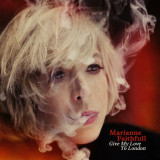
Die letzten vier Alben von Faithfull im 21. Jahrhundert waren alle stark, aber dieses übertrifft alle. Zu Marianne Faithfull's Autorenkollegen zählen Nick Cave, Anna Calvi, Ed Harcourt, Patrick Leonard und Tom McRae. Auch ihre Bandkollegen lesen sich durchaus als All-Star-Einheit, darunter Ed Harcourt, Adrian Utley, Dimitri Tikovoi, Rob und Warren Ellis. Nick Cave schrieb zusammen mit Faithfull einen Song (das zarte 'Deep Water') und einen für sie: das glorreiche 'Late Victorian Holocaust', wohl der Key-Track des Albums. 'Give My Love to London' ist ein so vollständiges Porträt der Künstlerin - zumindest seit den späten 70er Jahren - wie nie zuvor. Insgesamt zeigt es keine Abschwächung in ihrer kreativen Renaissance. Die limitierte LP-Neuauflage ist 180Gr. schwer und erscheint passend zum Artwork auf rotem Vinyl!
"Ob man sie nun Darkwave, Synth-Pop, Post-Punk, EBM oder anders nennen sollte, was Body of Light machen, ist Tanzmusik. Und was die Tanzmusik angeht, so trifft sie jede Genusszone genau ins Schwarze." - Treble Bitter Reflection, das vierte Album der Wüstenbrüder Alex und Andrew Jarson alias Body Of Light, verfeinert ihren schwelenden, stürmischen Synth-Pop zu einer transformativen Suite von Hymnen, Träumereien und Abrechnungen. Nach dem Neo-EBM-Klassiker "Time To Kill" (2019) suchten sie nach Inspirationen aus versteckten Momenten in ihren eigenen Arkanen - Kassetten aus der Kindheit, Heimvideos, verworfene Demos - und stellten sich die Frage: "Wie können wir das wachsen lassen?" Gesampelte Schnipsel von Stimmen, Geräuschen, Synthesizern und Feldaufnahmen flackern in der Peripherie der 11 Tracks von Bitter Reflection auf und murmeln wie halb vergessene Nostalgien oder verdrängte Erinnerungen. Zusammen mit Josh Eustis von Telefon Tel Aviv, haben Body Of Light in Los Angeles eine erweiterte Palette von Live-Instrumenten - Klavier, Bass, Saxophon, Akustikgitarre - zusätzlich zu alten Akai-Samplern, Moogs und archaischer Hardware in Bitter Reflection integriert, was dem Album eine eklektische, unvorhersehbare Sound-Palette verleiht. Dies ist Musik zwischen den Zwillingsflammen von Wahrheit und Sehnsucht, Romantik und Realität, Katharsis und Kontrolle, geboren aus einem Band, das durch Jahre, Träume und Blut besiegelt wurde. Bitter Reflection führt durch eine Galerie der anhaltenden Faszinationen von Body Of Light: Depeche-eske Deklarationen des Schreckens und des Exzesses, grüblerische Dancefloor-Epiphanien, liebeskranke Spiegel-Balladen mit orchestralen Stabs von Art Of Noise und sanfte Thomas-Dolby-Melancholien der Stadtsilhouette.
"Ob man sie nun Darkwave, Synth-Pop, Post-Punk, EBM oder anders nennen sollte, was Body of Light machen, ist Tanzmusik. Und was die Tanzmusik angeht, so trifft sie jede Genusszone genau ins Schwarze." - Treble Bitter Reflection, das vierte Album der Wüstenbrüder Alex und Andrew Jarson alias Body Of Light, verfeinert ihren schwelenden, stürmischen Synth-Pop zu einer transformativen Suite von Hymnen, Träumereien und Abrechnungen. Nach dem Neo-EBM-Klassiker "Time To Kill" (2019) suchten sie nach Inspirationen aus versteckten Momenten in ihren eigenen Arkanen - Kassetten aus der Kindheit, Heimvideos, verworfene Demos - und stellten sich die Frage: "Wie können wir das wachsen lassen?" Gesampelte Schnipsel von Stimmen, Geräuschen, Synthesizern und Feldaufnahmen flackern in der Peripherie der 11 Tracks von Bitter Reflection auf und murmeln wie halb vergessene Nostalgien oder verdrängte Erinnerungen. Zusammen mit Josh Eustis von Telefon Tel Aviv, haben Body Of Light in Los Angeles eine erweiterte Palette von Live-Instrumenten - Klavier, Bass, Saxophon, Akustikgitarre - zusätzlich zu alten Akai-Samplern, Moogs und archaischer Hardware in Bitter Reflection integriert, was dem Album eine eklektische, unvorhersehbare Sound-Palette verleiht. Dies ist Musik zwischen den Zwillingsflammen von Wahrheit und Sehnsucht, Romantik und Realität, Katharsis und Kontrolle, geboren aus einem Band, das durch Jahre, Träume und Blut besiegelt wurde. Bitter Reflection führt durch eine Galerie der anhaltenden Faszinationen von Body Of Light: Depeche-eske Deklarationen des Schreckens und des Exzesses, grüblerische Dancefloor-Epiphanien, liebeskranke Spiegel-Balladen mit orchestralen Stabs von Art Of Noise und sanfte Thomas-Dolby-Melancholien der Stadtsilhouette.
Domenico Crisci has been releasing music for more than ten years, starting with famous labels such as L.I.E.S. and its sub-label Russian Torrent in the US, or Opal Tapes and its sub-label Black Opal in the UK, which really established his career, followed by vinyls on Semantica and Jealous God, but since 2016 he has started his own label Summa Cum Laude, where he has released Collin Stange, Sour and Lowfreq77 records next to his own music.
Born Under Another Sun is a four-song EP that has turned out to be a very unpolished, pulsating, tight and raw material, with a more stripped down sound compared to Domenico's well-known early sound. He continues to not overly overdone, operating with few sounds and eschewing all the nowadays boringly mindless, fashionable overly noisy industrial hammering. As he has done throughout his respectable full career run, on this vinyl he has managed to remain self-identical throughout and has delivered another proper techno record from his hands!
out of Stock
Last delivered 3 years ago available to reorder, subject to availability
Nothing compares to Lewis Taylor and nobody crafts a "B-Side" quite like him. Indeed, his long deleted B-Sides are the stuff of legend. So, gathered together for the first time on one slice of wax, we present The Damn Rest: an album's worth of B-Sides from the era of the 1996 Lewis Taylor ("Damn") album. More off-the-wall and abstract than the album proper, these rare, underheard tracks burst with Lewis's uncompromising genius. A lot more experimental, the music is still drop dead beautiful. The Damn Rest is the essential bridge between Lewis Taylor and Lewis II.
Lewis Taylor's self-titled masterpiece from 1996 was to be originally called Damn. You can see the word right there on the from cover. However, concerns over distribution in the US scuppered this desired title. When thinking about what to call this collection of essential B-Sides from the era of that first album, we thought The Damn Rest would be appropriate. But these tracks aren't simply throwaways or outtakes, as Lewis himself states: "each little group were recorded specifically for the release of each 'single'." These B-Sides were simply the next thing to happen after self-titled, and before Lewis II. In other words, you need this!
The collection opens with "Asleep When You Come", the A2 on the original "Lucky" 12". It's a slow-mo string-drenched soul offering, cast in cinematic soft-focus with a vocal performance from the heavens set against wonky, shuffling drums and delicate instrumental flourishes. Beautiful. Also from the "Lucky" single, "You Got Me Thinking" may actually be Lewis' funkiest moment and is definitely one of our favourites, a great, gently psychedelic funky club track, that's for sure. Next, the gorgeous, meandering "I Dream The Better Dream" is just sheer, metronomic bliss, with shades of Stevie Wonder. Just ask D’Angelo, who included the track on his Feverish Phantasmagoria show for Sonos. Not only a celebrity-fan-favourite, it's Lewis's, too: "My favourite has always been this track. In my fantasy it’s what early Soft Machine would’ve sounded like if Marvin Gaye was their lead singer."
As we move to the B-sides from the "Whoever" single, the first to feature is "Pie In The Electric Sky / If I Lay Down". It's a brilliantly sprawling classic. A head-nod funk workout in two parts; part psychedelic heavy soul jam, part breezy Marvin-esque near-instrumental of the deeply lush variety. It needs to be heard to be believed. Astonishing! Flip over for "Waves", a shimmering, dramatic, sweeping string-led fan favourite. The climax of the song is just too stunning for words. It's followed by the deep wyrd-soul of "Trip So Heavy" the final, dizzying track from the "Whoever" single and another celestial funk delight featuring strings, organ, twisted bass and heavy drums. From the "Bittersweet" 12", "A Little Bit Tasty" is a building, schizophrenic soul-jazz epic that starts out with Lewis performing a call and (distant) response with himself over a gentle mid-90s drum loop before snatches of heavy, crunching metal guitars blast apart the otherwise neat song structure. Ultimately, it's unarguable that The Damn Rest is worth it for the inclusion of the jaw-dropping "Lewis III" alone. A dazzlingly lush and stunningly sophisticated prog/soul hybrid that owes as much to "Pet Sounds" as "What's Going On" with arrangements that grow and unfold in layers. Just sparkling.
A compilation like this feels like one of those promo-only rarities they used to give out to a select few back in the good old days, so when it came to the artwork it only made sense to follow what Cally Callomon (head of Island’s art department) had done for the singles and promos back in the 90s. He even did us some fresh scribbles of “The Damn Rest” to match his handwriting that’s all over the first album and its singles. We hope you like it as much as the music contained within. Simon Francis’s vinyl mastering ensures these classic recordings sound as great as they deserve to. The record has been cut by Cicely Balston at Air Studios and pressed at Record Industry. We've lost Prince. We still have Lewis.
out of Stock
Last delivered 3 years ago available to reorder, subject to availability
Lewis Taylor's legendary magnum opus: The Lost Album. "Now you're talking. That's my favourite LT album. Unlike all of the others, there isn't anything about it that embarrasses me." Straight from the genius's mouth. What can we say about this? Well, it's the most requested record ever at Be With Towers. The Lost Album was the intended follow-up to his first album but Island rejected it for fear of "confusing" the marketplace and its conception of Lewis as a soul artist. Their loss. It's a breezy sunset masterpiece.
The genesis of this incredible record needs unpicking a bit. Lewis stopped promoting the first album after a year and went home to record a completely different record that was the most un-R&B album you could probably ever hear: "I pushed in such an extreme direction the other way with what eventually became The Lost Album. It was a knee-jerk reaction to a perceived ‘trapped in R&B’ feeling I was going through at the time. Some people around me were in favour of it and others weren’t. In the end I think I lost confidence in it and did Lewis II instead." We did at least get Lewis II, which is a remarkable album, and he kept Island happy...for a bit. Not long after, Lewis was dropped. And what was to become The Lost Album could've been...er...lost. Forever.
Thankfully, however, Lewis and longtime partner Sabina Smyth revisited those scrapped demo tracks in 2003. They decided to re-arrange, re-record and then self-release them. So it was that the brand new version of The Lost Album finally dropped in late 2004. It's sheer perfection, and we don't say that lightly. The Lost Album was a fully 50/50 collaboration between Lewis and Smyth. As well as production, Sabina did a lot more writing on it, from the melody to "Listen Here" to the chord sequence for "Let's Hope Nobody Finds Us." Thankfully, Sabina is credited this time around.
No, it's not straight up "soul music" in the vein of his previous work. Yet, in its perfectly formed suite of one dozen songs, The Lost Album is dripping in soul. It's so warm, so effervescent and so alive with possibilities. It features deep, fresh imprints on well-loved, accessible sounds. It's a proper 70s style double album. Just one listen and the musical influences on The Lost Album are fairly self-explanatory, as Lewis recently told us, but it's always nice to hear that, in case we were in any doubt, he was definitely channeling Love, Yes, Brian Wilson, CSN, Laura Nyro and, of course, Todd Rundgren. The influences don't end there: "I’m particularly fond of my bass playing on that album, there’s a lot of Chris Squire going on which is cool."
Deep orchestral opener "Lost" is a sublime, harp-laced, string drenched gem, a cinematic, melancholic Axelrod-esque mini-epic that simply beguiles. Written by Smyth, it evokes Donny Hathaway's celestial "I Love The Lord, He Heard My Cry" from Extensions Of A Man. The only problem is the brief 90 seconds running time. It segues into the classic Brian Wilson-meets-power-pop-rock splendour of "Listen Here" which, with its outstanding extended harp-licked beatless intro, sounds like the younger cousin to Boston's "More Than A Feeling". We then drift into the ringing guitars of classic 70s rock anthem "Hide Your Heart Away". It's Lewis's personal favourite, "especially the multi-tracked guitar solo – I was listening to Boston at the time, which was fun." A-ha!
A new version of the heart-stopping, shoulda-been-a-massive-pop-hit "Send Me An Angel" opens Side B before the arrival of, in Lewis's completely correct words, "the clear standout, "Leader of the Band"; the perfect distillation of everything that album was trying to achieve." Soaring, piano-led Rundgren-esque power pop that makes the hairs on the back of your next stand on end. Truly, otherworldly. This is pure pop for now (and then) people. The simple jangly brilliance meets experimental prog-rock of "Yeah" sounds like simultaneously like prime CSNY and late 90s Radiohead (if they'd had a slightly more accessible bent and could write better tunes).
Oh, you wish The Beach Boys had continued writing amazing songs beyond Holland? Well, allow us to point you in the direction of the downlifting stunner "Please Help Me If You Can" and the warm textures and brilliant atmospherics of goosebump-inducer "Let’s Hope Nobody Finds Us". Words can't really describe the sheer beauty of these songs. So we'll stop trying. Just listen. Listen, listen, listen. Closing out this remarkable side of music, the accidentally Balearic "New Morning" should be blasting out at every sunrise set in Ibiza, this summer and forevermore.
The final side opens with the vaguely Beatlesey "Say I Love You". It's just classic, soaring pop-rock songwriting and should strictly be canonical. It's that good. The sassy, Stonesy swagger of "See My Way" injects enough rock'n'roll attitude to compensate for the rest of record's peace-loving, AOR sun-dappled vibe whilst album closer, "One More Mystery", emerging out of the rubble of the previous track, comes on initially like a Baroque-Pop George Harrison before piling crunching drums and screeching guitar solos atop the dreamy harmonies til close.
When asked what it means to have these records available on vinyl for the first time, Lewis is in no doubt: "It’s great and it’s really nice to be able to offer fans a different listening experience. There’s a whole other dimension with vinyl that taps into that whole nostalgia thing, well for me anyway. Something about the physical aspect of pulling it out of the sleeve and putting it on, it does tend to make you feel like you’re more engaged."
Lewis was adamant that he wanted all new artwork for The Lost Album vinyl sleeve and his brief was just the sort of classic tropical-beach-at-sunset you’d want to see on the front of a record that sounds like this. On the finished sleeve, the beach at sunset is just where we start out, before heading up through the painterly clouds and heading out into the stars. And yes, the lettering is a definite subtle nod to all those in-between-period Beach Boys bootlegs we all love. Simon Francis's sensitive mastering combines with Cicely Balston's precise cut for Alchemy at AIR Studios so the album sounds appropriately outstanding. The immaculate Record Industry double LP pressing will ensure this previously lost masterpiece stays forever found.
out of Stock
Last delivered 3 years ago available to reorder, subject to availability
'Dream From The Deep Well' is the new album from celebrated Irish singer songwriter Brigid Mae Power. Recognised as a purveyor of dreamier pop with folky leanings, this new album is a departure; a unique marriage of traditional stylings and very modern melodies; a breath-taking soundtrack which underpins her gorgeous vocal. Filled with personal tales of offspring and grandparents, the lovelorn and the lost, it's the essence of re-imagined folk music, from the traditional intro and outro that act as bookends. It's folk music, but not as we know it. In these ever-confusing and often annoying times, Brigid brings us modern folk for modern folk, with her evocative vocal, doubling back on itself with strings, steel guitar, horns and mellotron adding to its baroque loveliness. It's waving back at her rootsy past, daubing new colours on a much-loved canvas. 'Dream From The Deep Well' is a new visionary beginning from a gifted songwriter. Elsewhere, there's the lovelorn longing of her version of Tim Buckley's 'I Must Have Been Blind', alongside a moving tribute to the late Ashling Murphy, a 23-year-old Irish primary school teacher and traditional Irish musician who was attacked and killed while jogging along the Grand Canal just outside Tullamore, County Offaly. It's a harrowing story, delivered with overwhelming compassion. In the best tradition of old school folk music, it opens up a pressing issue to a wider audience. It's an album that's politically primed and socially aware; a broadside for us all, this is Brigid Mae Power's most complete album yet. "Her haunting voice, an instrument that raises the everyday to a near-mystical realm." The Guardian. "The Irish singer-songwriter flits between past and present; between traditional and modern forms; between the heaven in her voice and the earthbound epiphanies of her words." Pitchfork
From Elvis in Memphis retains the distinction of being the most cohesive, passionate, mature, and emotionally invested record Elvis Presley ever made. Named one of the 500 Greatest Albums of All Time by Rolling Stone, the white-soul landmark features backing by "The "Memphis Boys" and teems with rhythm-heavy country, gospel, R&B, and blues. Lauded for its natural, open sonics, the 1969 set now comes across with remarkable clarity, presence, and warmth courtesy of a premium restoration befitting a king.
Mastered from the original master tapes, pressed on MoFi SuperVinyl at RTI, and strictly limited to 10,000 numbered copies, Mobile Fidelity's UltraDisc One-Step 180g 45RPM 2LP box set of From Elvis in Memphis unearths the ravishing inner detail, sticky rhythms, and brilliant arrangements of Chips Moman's inspired production. In short, this unparalleled reissue unlocks the spirit and gestalt of the recording and takes you inside American Sound Studio. It also brings you up close and personal with Presley's singing – widely considered by many to represent the finest of his career – located dead-centre amidst the instrumental hurricane. Equally impressive are the contributions of the aforementioned Boys, and how their Southern-brewed playing – a balance of leisure with swiftness, grandiosity with concision, freedom with control – dovetails with Presley's vernacular.
The lavish packaging and gorgeous presentation of the UD1S From Elvis in Memphis pressing befit its extremely select status. Housed in a deluxe box, it features special foil-stamped jackets and faithful-to-the-original graphics that illuminate the splendor of the recording. No expense has been spared. Aurally and visually, this UD1S reissue exists as a curatorial artifact meant to be preserved, pored over, touched, and examined. It is made for discerning listeners that prize sound quality and production, and who desire to fully immerse themselves in the art – and everything involved with the album, from the images to the finishes.
Sharing much in common with the full, rich, orchestrated Stax Records sound, From Elvis in Memphis oozes with choice nuances and distinctive flourishes that on this ultra-hi-fi edition not only arise with previously unheard transparency and sharpness, but complement and serve the whole. Take the specific tonalities and blending of violas, cellos, and horns that communicate mood and serve as counterpoints. Or lively performances of the backing quintet, and how the piano and Hammond organ trace the lines of the melodies and Presley's lead. Listen to the uplifting support provided by the cadre of backing vocalists (more than a dozen credited), unrivalled in Presley's canon and a precursor to the approach he'd soon adopt in Las Vegas.
Of course, From Elvis in Memphis precedes the icon's transition into his glitzy jumpsuit phase – and follows his merciful move away from the hoary soundtrack work that consumed nearly a decade of his creative life and prompted a rebirth that began in 1968. As the bridge between eras, the record seizes on Presley's rejuvenated attitude and commitment to quality, facets that drip from the fervency with which he delivers every word. For the same reasons, and for the fact it traces back to Presley's original roots and hip-shaking guise, the album further remains a cornerstone of American music history.
Writing about the work's 40th anniversary for Rolling Stone, James Hunter correctly observed: "From Elvis in Memphis represented the full-on immersion in the Memphis idea of Elvis Presley, the American singer second only to Frank Sinatra for the ability to conjure a particular sonic universe with his merest vocal utterance. And from the album's first song, in which a bluesy Elvis espies a woman 'Wearin' That Loved On Look,' to its last, in which a more straight-up-pop Elvis regrets the injustices of life 'In the Ghetto,' his fully engaged, newly energized voice finds its most logical album setting in years."
Incredibly, Presley and company completed more than two dozen cuts for From Elvis in Memphis. One, "Suspicious Minds," turned into the vocalist's final chart-topping single and lingers as one of his most beloved rock n' roll numbers. Even though it never formally appeared on the record, the non-album song is included here as a bonus track and attains newfound depth, energy, and swagger. Coupled with the other dozen tracks – including the sultry "Power of My Love," balladic take of Dallas Frazier's "True Love Travels on a Gravel Road," and driving cover of Hank Snow's I'm Moving On" – it makes for the finest Elvis listening experience available.
Das Amsterdamer Indie-Rock-Quartett Loupe erkundet auf seinem Debütalbum 'Do You Ever Wonder What Comes Next?' Themen des jungen Erwachsenwerdens, des Lebens in der Großstadt und menschlicher Beziehungen in einem Geflecht aus mitreißenden Harmonien, frei fließenden Rhythmen und ausdrucksstarkem Gesang. Dabei gelingt es der Band, einen zugleich aufregenden wie hypnotisierenden Sound zu entwickeln.
Loupe sind Julia Korthouwer (Gesang, Keybord - sie/ihre), Jasmine van der Waals (Gitarre - they/them), Lana Kooper (Bass - sie/ihre) und Annemarie van der Born (Schlagzeug - sie/ihre). Fu?r die Band fällt mit ihrer viel beachteten, ersten Single 'Leave Me There' plötzlich alles an seinen richtigen Platz. Loupe veröffentlichen zwei fantastische EPs - 'Older' (2021) und 'Spring '19' (2022) - und erspielen sich den Ruf einer beeindruckenden Live-Band. So werden sie gleich zweimal hintereinander zum Eurosonic Festival eingeladen und begleiten Bands wie Porridge Radio, Moss oder Lovejoy.
Nun veröffentlichen Loupe ihr Debütalbum 'Do You Ever Wonder What Comes Next?'. Darauf betrachten sie das Erwachsenwerden aus unterschiedlichen Perspektiven. Die Stücke erzählen von Selbstermächtigung, von der Suche nach dem eigenen Weg und einem eigenen Platz. Was die Band antreibt, ist das "Was kommt als Nächstes?" in der großen Frage, die der Albumtitel aufmacht; die ständige Bewegung, um diesen Silberstreifen über den Horizont hinaus zu jagen: unablässig auf der Suche nach Mut, Trost und Abenteuer im ruhelosen Jetzt.
A wild and funky collection of Afro grooves that was ahead of its time in 1977 and has become a collector’s item in recent years, especially due to the growing international interest in Colombian picó sound system culture. Fruko and his studio bands Wganda Kenya and Kammpala Grupo treat us to a diverse set of African and Caribbean styles, laced with crazy synths, psychedelic guitar and infectious pan-African polyrhythms. By the time Discos Fuentes released the album “Wganda Kenya Kammpala Grupo” in 1977, Wganda Kenya’s discography was expanding with many 45 singles and appearances in various artists collections. The group’s 1975 debut record “África 5.000” was a full length LP in the U.S. and a various artists compilation in Colombia, which was followed by the self-titled long player the following year. However, Kammpala Grupo, which shared the album’s title and was credited to three songs on the record, had never appeared before, yet was basically the same studio group as Wganda Kenya. Most likely the creation of this short-lived studio band was just a ploy by the label to make it seem like there were more groups playing the type of exotic afro tracks favored by the picotero DJs of Colombia’s Caribbean coast (especially in Barranquilla and Cartagena). 1974 Discos Fuentes’ management had sent musician, band leader and producer Julio Ernesto “Fruko” Estrada to the coast on an A&R mission to discover what people were dancing to in the verbenas (communal open air neighborhood parties) run by the owners of picó sound systems (decorated mobile DJ rigs). Always game for an adventure, Fruko was tasked with bringing some popular examples of these esoteric, hard-to-find African, French and Dutch Antillean records back to Medellín to serve as inspiration (or to outright copy) so that the label could enter into the growing regional market and spread its popularity to the interior of Colombia and other Latin American countries via its own studio creation, Wganda Kenya. Fuentes was always returning to exploit the rich African-rooted culture of the coast as it had with the cumbia and other regional genres before, so in a way it was not surprising that they were attuned to this particular niche phenomenon from a marginalized sector of the population. The most popular genres with the champeta dancers in the 70’s and 80’s were styles like Congolese rumba, highlife, afrobeat, juju, mbaqanga and soukous as well as the music of Haiti, Guadeloupe, Martinique, Curaçao and Dominica, all of which were fiercely guarded by the DJs who had managed to acquire them often through extreme means of travel, barter and intense digging. The record kicks off with the joyful ‘El Gallo Africano’ which features exquisite interplay between Sepúlveda’s highlife style guitar and an authentic-sounding African style saxophone, perhaps played by Carlos Piña. In reality it was ‘Go Call Police Chief’ by prolific Nigerian highlife guitarist Chief Oliver Sunday Akanite, aka Oliver De Coque. Next up is Kammpala Grupo’s ‘La Yuca Rayá’ (‘Grated Yuca’), written by Isaac Villanueva in a style he termed son haitiano which sounds much more like Zimbabwe Shona mbira music. Wganda Kenya’s ‘Caimito’ (star apple, a type of tropical fruit), on the other hand, is actually a cover of a relatively well-known Haitian merengue song. Kammpala Grupo then takes us from the French Antilles to the multi-cultural discotheques of Paris, where a cover version of Black Soul’s Afro-boogie anthem ‘Black Soul Music’ is retooled and renamed ‘King Kong’, perhaps in a nod to the 1976 remake of the monster flick of the same name. Side two introduces us to the infectious merengue rebita of Angola via ‘La riphyta’ with “Paparí”, aka Mariano Sepúlveda, doing the vocals and faithfully replicating the Angolan guitar style. ‘La Trompeta Loca’ (‘The Crazy Trumpet’), probably the nuttiest track on the album, is an ingenious cover of ‘Ye Gbawa Oo Baba (Tribute To Nigeria)’ by Joe Mensah of Ghana. As with all their covers of African tunes, this rendition tightens up the original with some pop sheen, more consistent drumming and higher production values, remaking it into a powerful slow-burning dance floor filler. This is followed by one of the most powerfully original songs to come out of the entire Wganda Kenya project, Mike Char’s reggae anthem ‘El Nativo’ with Joe Arroyo on vocals. The record ends on a more authentically Caribbean sounding note with the instrumental ‘El testamento’, a cheerful islands banger with bright brass, syncopated calypso beats and chunky cuatro guitar (or ukulele). The original was in the mento genre and titled ‘Sweet meat’, written and recorded by Jamaican trumpeter Bobby Ellis. First time reissue. 180g vinyl.
Selected by Jim O’Rourke for his Tone Glow list of 25 albums that “never got their due”, Org was founded in the early 90’s by Espen Jensen and Kjetil D Brandsdal who would later go on to variously record as Elektrodiesel, Noxagt and Ultralyd in the swirl of the highly active Norwegian underground. “Org" was the only album the pair recorded as a duo, pressed in a meagre edition of just over 100 copies which disappeared almost as soon as they were made, lodged in the memory of the select few who have managed to hear it in the years since.
Made up of three long tracks, the near 20-minute ‘001’ opens the album with an extended organ zone-out matched with scraping factory machinery saturated into a dense cloud of harmonic fuzz. There's something transcendental about the sound that intersects with microtonal Alice Coltrane (particularly the unfairly maligned organ-only edition of "Turiya Sings"), as well as Pauline Oliveros and Ramleh. It’s music that pulls you in subconsciously; before you know it, you're fixating on the uncomfortable grind of metal on metal, buried mechanical rhythms and liturgical organ vamps that wind between industrial cacophony and sacred ritual music. For its last few seconds, we go into a full death metal tearout that fades out before it takes full flight, a glorious wtf.
‘002’ connects between minimalist drone styles and shoegaze, distorting fuzzed organ into pliable, dreamlike warbles that end up sounding like Kevin Shields' ‘Loveless’-era glides, or even Sunn O))) at their most devotional. Never losing the numbing overdriven mettle, its a piece that sounds spiritually entwined with Matthew Bower's Skullflower - a minimalist re-reading of high-contrast guitar music that takes all the psychoacoustic power and none of the annoying posturing.
For ‘003’, subaqueous organ is joined by synth and drum machine, sounding like the inspirational spark for Religious Knives' screwed 'n chopped cosmic psychedelia. The choice of sounds links it to Antena's foundational electro samba recordings too, but the overwhelming drone - a constant on all three compositions - connects the music to minimalist spirituals that have simmered beneath the DIY/avant garde for decades.
‘Org’ sits heavy on the nerves with overproof levels of mulched amp worship and ungodly, palms-down organ chords and wheezing, bezonked lines of melodic thought. 25 years out of sight and marinading in the archives, with the benefit of hindsight we can better understand the role these sounds played in the development of music in the contemporary sphere. It’s an important piece of the puzzle, one that makes valuable connections that, over time, have looked progressively more faint.
"Warren 'Sonny' Sharrock died of a heart attack at the age of 53 in 1994. At the time of his death, many writers noted that he had recently landed a contract with a major label (RCA) and was perhaps 'destined for big things.' In my opinion, these writers missed the point. Although Mr. Sharrock may not have been successful financially (as though that might be a primary motivating goal for any true artist), he was uncommonly successful aesthetically. Certainly, there are a few dubious moments to be found inside his oeuvre, but Mr. Sharrock produced several of the most mind-shredding avant-garde albums ever recorded. Premier among them is Black Woman.
"Originally released on the Vortex label in 1969, Black Woman may be the universe's first true statement of guitar skronk majesty. It also represents Mr. Sharrock's first date as a leader and stands as the sole documentation of a band that well-understood the essentials of energy. Besides Sharrock's explosive guitar, the band features the omni-directional percussion mastery of Milford Graves (then in the midst of recording Love Cry with Albert Ayler), the gorgeous post-tongue vocalizing of Sonny's then-wife Linda Sharrock, the sinuous bass presence of Norris Jones (later known as Sirone) and some the most explicitly abstract piano work ever recorded by Dave Burrell. That Black Woman was produced by flautist Herbie Mann, a guy not well-known for his affinity to fire music, makes it even more intriguing." – Byron Coley
Das neue Album 'Systemic' von Divide and Dissolve untersucht die Systeme, die uns von Natur aus binden, und fordert ein System, das das Leben für alle erleichtert. Es ist eine Botschaft, die zur Kernintention der Band passt: Musik zu machen, die ihre Vorfahren und das indigene Land ehrt, sich der weißen Vorherrschaft zu widersetzen und auf eine Zukunft der Befreiung von Schwarzen und Indigenen hinzuarbeiten.
Wie sein Vorgänger 'Gas Lit' wurde auch 'Systemic' von Ruban Neilson von Unknown Mortal Orchestra produziert.
Man spürt die tiefe Absicht in der Musik von Divide and Dissolve. Ihr dichter Sound ist überwältigend schwer; ein dissonantes Hämmern von Schlagzeug, Gitarren, Klavier, Synthesizern und Saxophon, verwoben mit Passagen orchestraler Schönheit, die ein Gefühl des Aufatmens vermitteln. 'Systemic' ist ein dichter Klangteppich, der zu gleichen Teilen aus Schönheit und Angst besteht und selbst für Gelegenheitshörer ein umfassendes Erlebnis darstellt.
Die LP ist auf mintfarbenem Vinyl gepresst und wird in einer Deluxe-Hülle mit bedrucktem Einleger und Download-Karte geliefert.
Für Fans von Sunn O))), Low, Southern Lord Records.