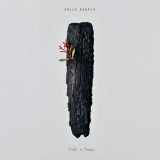
Drag City is excited to present the first ever vinyl pressing of guitarist Lee Underwood"s under-sung 1988 acoustic guitar opus, California Sigh. Guitarist Lee Underwood"s syncretic blend of jazz, folk, and blues was a tremendous force behind Tim Buckley"s genre-stretching late 60s/early 70s music - but his 1988 acoustic guitar opus California Sigh has remained a unsung footnote to his story. Until now! This first time vinyl-edition reveals Lee"s free-floating acoustic moods, with synths and co-production from ambient avatar Steve Roach, as a soulful work of tranquility and transcendence. In the years following the release of California Sigh, Lee wrote and recorded two solo piano CDs, Phantom Light and Gathering Light. Additionally, he wrote Blue Melody: Tim Buckley Remembered, a memoir of their time together, as well as three books of poems, Timewinds (2010), Diamondfire (2016) and Into Light (Poetic Matrix Press, 2021). He continues to live in Northern California.
quête:ti pi cal
SABÏRE has now returned in 2024 with a 15 track epic, self-styled "half-concept" album, "Jätt", 5 years in the making. SABÏRE began at the tail end of 2010 as an idea to have a band that played simply what came naturally on guitar to Scarlett Monastyrski with no set genre or category. Simply the natural music. Shortly thereafter, the concept grew to accompany that sound with a big show and distinctive stylisation. The biting and sharp sound production, along with their personal lyrics, birthed for them a label for their music: ACID METAL. Not to be confused with the mind altering substance, Acid Metal took its name from the concentrated corrosive fluid not unlike the blood of the Xenomorph in the Alien films. The instruments are awash with acidic modulation, "like a drop of acid in the dark." The lyrics all hold a tinge of biting realism that once realised by the listener, stings them like a droplet of acid resting upon their skin. To take their metaphor further, their distinctive production style let's stand apart from the rest of the "modern" sound that degrades the potentcy of many new bands. They call it "brick culture," because it all sounds the same. Concentrated acid burns all the way through anything solid leaving a hot trail behind it, like the band continues to do so with garnering the attention of the world of heavy music. Band leader Scarlett Monastyrski comments : " 'Jätt' is meant to be THE sound of SABÏRE. A monolith to what we stand for artistically. We wanted this album to be its own art piece rather than simply a collection of arbitrary songs, a really 'blue' coloured sound. The physical copies hold beautifully styled texts detailing the concept for those chosen songs, as well as small epistles to accompany each track," says . “ 'Jätt' is a “blue” sounding album; the colour. You may understand that more when listening to the album yourself. The cover of 'Jätt', “Dante and Virgil in the Ninth Circle of Hell” - Gustav Doré, 1861, could be seen through a symbolic lense in which the listener is symbolised as Dante, the artist as Virgil, and the bodies locked within the ice of frozen lake as the music surrounding them; we as the artist are shepherding the listener through the mire. This could be perceived like this, or you may just see it as an attractive album cover. “ "We put our heart and soul into this one and can't wait to give our Wild Ones and Acid Fiends what they've been so patiently waiting for
January 2023, Dorset. Snow is piled at the door, icy roads are closed, and Emily Cross is in a coffin. Not a setting typical for a rebirth. But for Loma, this is where they bring their band back from the brink. "It's like a demon enters the room, whenever we get together", writer, singer and instrumentalist Cross says of the struggle to bring new Loma music into the world. Following the release of their 2020 second album Don't Shy Away, Loma's three members were cast around the globe and the band-not for the first time-entered a deep sleep. Multi-instrumentalist and recording engineer Dan Duszynski remained in his studio in Don't Shy Away's central Texas heart, but Cross, a UK citizen, moved to Dorset, and writer and instrumentalist Jonathan Meiburg left the US for Germany to research a book. In the pandemic years, even being in the same room was impossible, and attempts to start a new record faltered. The following winter, in an attempt to salvage the record and the band, Cross suggested they regroup in the UK, in the tiny stone house-once a coffin-maker's workshop-where she works as an end-of-life doula. With minimal recording gear and few instruments, Loma turned two whitewashed rooms into a makeshift studio, using a padded coffin as a vocal booth. It was a turning point. They scrapped much of what they'd made, letting a new place set a new course. The one-lane roads, hedgerows and dark skies of Dorset gave the new songs an ineffable but unmistakable Englishness. The band used the ruin of a 12th-century chapel as a reverb chamber-surprising hillwalkers who peeked in to find them singing to no one-and the sounds of Cross's chilly workshop wormed their way into the recording: a leaky pipe, a drummer's brushes on a metal lampshade, the voices left on an ancient answering machine. What emerged was How Will I Live Without A Body?: a gorgeous, unique, and oddly comforting album about partnership, loss, regeneration, and fighting the feeling that we're all in this alone. Many of its songs have a feeling of restless motion; faceless characters drift through meetings and partings, tangling together and slipping away. "I Swallowed A Stone" is like a nightmare with a happy ending; "How It Starts" and "Broken Doorbell" reflect on the challenge (and necessity) of wrestling with agoraphobia. Though the record nods to the trio's separate lives- a German percussion ensemble, a pair of Texan owls, and the surf at Chesil Beach make guest appearances-the core of Loma's sound remains intact: earthy, organic and deeply human, anchored by Cross's cool, clear voice. Loma's previous album, Don't Shy Away, was galvanized by the unexpected encouragement and contributions of Brian Eno. This time, they found inspiration in another hero, Laurie Anderson, who offered a chance to work with an AI trained on her entire body of work. Meiburg sent her a photo from his book-in-progress about the once and future life of Antarctica; Anderson's AI responded with two haunting poems. "We used parts of them in a few songs," he says. "And then Dan noticed that one of its lines, 'How will I live without a body?' would be a perfect name for the album, since we nearly lost sight of each other in the recording process." In the end, Loma's efforts to reconnect with one another are the album's central focus: what do you owe a shared past, when everyone and everything has changed? "Making this record tested us all," says Duszynski. "I think that feeling was alchemized through the music." Alchemized, because How Will I Live Without A Body? is by no means a stressed-out record: an undercurrent of deep calm runs through it. But maybe 'relaxed' isn't the right word. It's more like a feeling of relief, of making it through a tough journey together.
Lenticular Sleeve / White Vinyl. When Jack Tatum began work on Life of Pause, his third full-length to date, he had lofty ambitions: Don't just write another album; create another world. One with enough detail and texture and dimension that a listener could step inside, explore, and inhabit it as they see fit. "I desperately wanted for this to be the kind of record that would displace me," he says. "I'm terrified by the idea of being any one thing, or being of any one genre. And whether or not I accomplish that, I know that my only hope of getting there is to constantly reinvent. That reinvention doesn't need to be drastic, but every new record has to have its own identity, and it has to have a separate set of goals from what came before." What came before: a rightfully acclaimed, much beloved display of singular pop craftsmanship. Tatum's dreamy, unexpected 2010 debut, Gemini, was written while he was still a student at Virginia Tech University. Its equally disarming follow-up, 2012's Nocturne, marked the first time he'd been able to bring his bedroom recordings into a studio, to be performed and fully realized with the help of other musicians. There has been a set of wonderfully expansive EPs in between_each hinting at new directions and punctuating previous ideas_but with Life of Pause, Tatum delivers what he describes as his most "honest" and "mature" work yet, an exquisitely arranged and beautifully recorded collection of songs that marry the immediate with the indefinable. "I allowed myself to go down every route I could imagine even if it ended up not working for me," he says. "I owe it to myself to take as many risks as possible. Songs are songs and you have to allow yourself to be open to everything." After a prolonged period of writing and experimentation, recording took place over several weeks in both Los Angeles and Stockholm, with producer Thom Monahan (Devendra Banhart, Beachwood Sparks) helping Tatum in his search for a more natural and organically textured sound. In Sweden, in a studio once owned by ABBA, they enlisted Peter, Bjorn and John drummer John Ericsson and fellow Swedish Radio Symphony Orchestra veteran Pelle Jacobsson, to contribute drums and marimba. In California, at Monahan's home, Tatum collaborated with Medicine guitarist Brad Laner and a crew of saxophonists. From the hypnotic polyrhythms of "Reichpop" to the sugary howl of "Japanese Alice" to the hallucinogenic R&B of "A Woman's Wisdom," the result is a complete, fully immersive listening environment. "I just kept things really simple, writing as ideas came to me," he says. "There's definitely a different kind of `self' in the picture this time around. There's no real love lost, it's much more a record of coming to terms and defining what it is that you have_your place, your relationships. I view every record as an opportunity to write better songs. At the end of the day it still sounds like me, just new."
All Again. That's the title of the upcoming full-length record from Philadelphia's Queen of Jeans. The LP tracks an entire arc that, by the final hazy vibrato wash of "Do It All Again," bleeds back into the ambient first seconds of the record. "Thought I'd call tonight, hear how you're dealing," Miriam Devora sings to a distant lover on opener "All My Friends" in a neon-lit, melancholy tenor, the precise sound of lonesome love. The full band joins her in a beautiful night time sway, but it's still no use: "I got all my friends around, but I'm not home til I'm alone with you."The rest of the record follows this relationship as it tumbles through loneliness and longing, to elation and joy, to pain and anger, and finally to its foggy close, where Devora admits, "If I got to do it all again, I'd find you there like I did back then."Releasing on Memory Music, All Again is principally an enveloping, rich indie-rock record, changing dance partners between cheek-to-cheek '60s pop sweetness, '90s alt-rock dirt, spacious and pained emo, and the songcraft and melodicism of the sharpest acoustic singer-songwriter acts. Devora (vocals, guitar, keys) and Matheson Glass (lead guitar, piano) took extra care this time to create a Queen of Jeans full-length that reflected in sound and structure the emotional depths they were exploring.It's the first time since their 2015 debut, Dig Yourself, that they've had a full band, with drummer Patrick Wall and bassist Andrew Nitz, to build with. Where on releases like 2022's sparkling lockdown-pop Hiding In Place Devora and Glass had gone into producer and mix/master engineer Will Yip's Studio 4 with sketches and worked with Yip to arrange the songs in studio, this time, they went in with a complete vision for the record. That allowed them to use studio time to expand the record's sonic boundaries. "We had a lot more room to play with some of the ear candy we've always wanted to explore and get weirder in the studio," says Glass.Those elements lend a physicality and playfulness to the memory and emotions that unfurl through All Again. "We're trying to tell the story of when you look back at an important relationship," says Glass. "Years go by, and the more you reflect on it, it becomes more warped and the facts become a little bit more murky. We wanted to play with that and get surreal with the story." (Literally: listen for a "monster" voice in the already-released banger "Karaoke.") The record's artwork, conceptualized by Devora, renders this idea with devastating clarity.
- A New Era (Mortal Kombat 1 Main Theme)
- The Beginning
- Huckster Sorcerer
- Fengjian
- Cage Mansion - Stage
- Katara Vala,' In Theaters Now
- Wu Shi Academy - Stage
- Liu Kang's Champions
- Outworld Parade
- Feast Of Jerrod
- The Great Hall - Stage
- Defender Of The Tarkatans
- The Flesh Pits - Stage
- Through The Living Forest
- The Living Forest
- Soul-Stealer
- Reptile's Run
- Sun Do - Stage
- The Story Of Sento
- The Lin Kuei
- Treasure Chamber - Stage
- Sentinel Of The Hourglass
- Dark Doubles
- The Fire Tempte - Stage
- The Pyramid - Stage
- Timeline Faceoff
- The Pyramid Summit - Stage
- The Realms In Balance
- Second Chance
- Reunion
- Summon The Titans
Enjoy The Ride Records in conjunction with WaterTower Music, Warner Bros. Games, and NetherRealm Studios proudly presents the Mortal Kombat 1 (Original Video Game Soundtrack).
It's In Our Blood. Mortal Kombat 1 is the latest title in the acclaimed Mortal Kombat video game franchise developed by award-winning NetherRealm Studios. The game introduces a reborn Mortal Kombat Universe that has been created by the Fire God Liu Kang, featuring reimagined versions of iconic characters as they’ve never been seen before, along with a new fighting system, game modes, bone krushing finishing moves, and more.
Mortal Kombat 1 (Original Video Game Soundtrack) showcases the game's music by Wilbert Roget, II and features stage music composed by Dan Forden, Stephanie Economou, Nathan Grigg, Dan Negovan, Dean Grinsfelder, Casey Edwards, and Joel Corelitz.
Wilbert Roget, II is a veteran composer in the video game and film industries. He joined LucasArts as a staff composer in 2008, where he scored several games in the Star Wars universe, including Star Wars: The Old Republic and Star Wars: First Assault. He later became a freelance writer, scoring Mortal Kombat 1, Star Wars: Outlaws, Call of Duty: WWII, the Emmy Award-winning Star Wars: Vader Immortal, and many other high-profile game scores. He has also written for Japanese anime, scoring the upcoming Gundam: Requiem for Vengeance. His work has earned him several awards and nominations from ASCAP, the Game Audio Network Guild, the Academy of Interactive Arts and Sciences (D.I.C.E. Awards), and others.
Roget also co-founded Impact Soundworks, a successful music software company, and is an accomplished lecturer on game music. He frequently gives online masterclasses and tutorials on music composition and production and has a passion for teaching the craft. He is an avid multi-instrumentalist, performing solo flute, keyboards, world instruments, and guitar on many of his scores.
Available on vinyl for the first time, Mortal Kombat 1 (Original Video Game Soundtrack) is a 3xLP, housed in a soft touch gatefold jacket with spot gloss accents. It includes a full-color double-sided 12" x 24" poster.
- A1: Bye Bye Betty
- A2: Moments Of Joy
- A3: Lemongrass Citronella
- A4: Cant Stand In The Past
- A5: Besafe Airtel
- A6: Today Only Happens Once
- A7: Incense Holder
- A8: Salt And Sugar Look The Same
- A9: A Lead Balloon
- B1: Sandalwood In The Summer
- B2: How They Made It
- B3: Somewhere In Time
- B4: Old Plates And Desirable Traits
- B5: Drawing To Relax And Pass The Time
- B6: The Maybes Are Endless
- B7: Yume-No-Yume
- B8: Twice
- B9: Expected To Fade
Music From Memory is pleased to announce the upcoming release of ‘Salt And Sugar Look The Same’, a collaborative album from Tim Koh and Sun An.
Tim Koh is an American multi-instrumentalist and visual artist born and raised in Los Angeles. He has been touring, releasing music and showing art works internationally for nearly two decades. Sun An is a Southern California-based graphic designer, art director, and sound designer who has self-released music since 2012.
‘Salt And Sugar Look The Same’ plays somewhat like a dreamlike collage; across 18 short compositions, finger-picked guitars melt with electronics and warped samples to create a form of American Primitivism bent and refracted through Tim and Sun’s unique lens.
Their collaborative journey unfolded gradually, exchanging snippets via email over the span of a year or so, Sun in LA and Tim in Berlin. Amidst personal struggles and uncertainties, the act of recording and composing became a refuge, a safe space where they could navigate life's complexities together. Though they didn't converse much, mostly just sending music, their musical dialogue spoke volumes, shaping a narrative that evolved naturally over time. As they shared their musical ideas, they discovered a profound sense of connection and understanding with one another. The music became a conduit for healing, bridging the gaps between them and offering comfort in times of need.
Their musical influences and backgrounds anchored them. From reminiscing about past scenes to exploring cultural intricacies of being Korean American in Los Angeles, infused with a natural sense of shared identity, their collaboration reflected a mergence of old and new memories into a hallucinatory, dream-like experience. Across the 18 compositions that make up the album, incense emerges as a poignant motif, symbolizing the passage of time. Each incense stick becomes a vessel carrying the essence of moments gone by, while the holder becomes the custodian of these ephemeral memories.
‘Salt And Sugar Look The Same’ invites the listener on a boundary-transcending journey of introspection, joy, and pain, creating an experience that lingers long after the last note fades.
Sleeve art by Brian DeGraw, design by David McFarline.
2024 repress.
Five years ago, back in September 2016, Stefano Gentile published a photographic book entitled IL SILENZIO DEI TUOI PASSI (The Silence of Your Steps), which collected a series of 56 pictures, both in b/w and colour, dedicated to the nights in Venice. The book was a journey through the most remote "calli" and "campi" (streets, alleys and squares, as they're called in Venice) in search of the true 'breath' of the city, far away from the hordes of tourists who 'attack' it every day during daylight hours.
On such occasion, renowned musician Gigi Masin composed a 30 minutes epic ambient track entitled VENEZIA 2016 which was the perfectsoundtrack to the images included in the book. The track was published on CD and released bounded with the book itself in a limited edition of 480 copies only, and has been unavailable for years now.In 2021 Gigi Masin returned to that great piece of music and to its timeless sounds. Finally, Silentes can now offer PLAYS VENEZIA, Masin's latest work contanining a re-edited version of that 'pearl', accompanied by two unreleased tracks composed and recorded in the same period.
Once again inspired by the city, Masin created an enduring and wonderful ambient masterpiece, a sort of return to the origins, to his home. Adding to the intrinsic quality of the originals, the tracks were beautifully mastered by Brandenburg Mastering in Amsterdam. PLAYS VENEZIA is simply an unmissable release and one of Masin's greatest accomplishment in a long carrier that never ceases to amaze us.
* CASSETTE VERSION **
Five years ago, back in September 2016, Stefano Gentile published a photographic book entitled IL SILENZIO DEI TUOI PASSI (The Silence of Your Steps), which collected a series of 56 pictures, both in b/w and colour, dedicated to the nights in Venice. The book was a journey through the most remote "calli" and "campi" (streets, alleys and squares, as they're called in Venice) in search of the true 'breath' of the city, far away from the hordes of tourists who 'attack' it every day during daylight hours.
On such occasion, renowned musician Gigi Masin composed a 30 minutes epic ambient track entitled VENEZIA 2016 which was the perfect soundtrack to the images included in the book. The track was published on CD and released bounded with the book itself in a limited edition of 480 copies only, and has been unavailable for years now.In 2021 Gigi Masin returned to that great piece of music and to its timeless sounds. Finally, Silentes can now offer PLAYS VENEZIA, Masin's latest work contanining a re-edited version of that 'pearl', accompanied by two unreleased tracks composed and recorded in the same period.
Once again inspired by the city, Masin created an enduring and wonderful ambient masterpiece, a sort of return to the origins, to his home. Adding to the intrinsic quality of the originals, the tracks were beautifully mastered by Brandenburg Mastering in Amsterdam. PLAYS VENEZIA is simply an unmissable release and one of Masin's greatest accomplishment in a long carrier that never ceases to amaze us.
Originally released in 1983 on Hessian.
Bryn Jones’ work was justly known for its excess—of tracks created, of rhetoric, of volume levels, of repetition, of length—and the sometimes indiscriminate way he produced material as Muslimgauze carried over into his approach to the part of the business that involved getting people to actually hear his music. Known for the deluge of DATs he’d share with the labels he worked with, Jones also didn’t necessarily restrict himself to just one outlet.
Very early in his career, in the same year the first two Muslimgauze LPs came out (1983), Jones released an obscure 7” single with completely blank black sleeve art on a label called Hessian. »Hammer & Sickle« is to date the only release on Hessian (which may have just been Jones himself?). Those two LPs, Kabul and Opaques, are fascinating in the context of the full swath of Jones’ work. They’re much spacier, more drifting, and notably less interested in using the kind of Middle Eastern percussion and other instrumentation that’s such a distinct element on many Muslimgauze releases. »Hammer & Sickle« operates in a similar territory, but if anything a little further out from the main body of Jones’ work.
The side-long title track and the three b-sides here are all cut from the same cloth, spacious productions that mainly play rounded synth percussion against echoing, ›bag of wire‹-style dub hits. After the lengthy examination of »Hammer & Sickle« itself, the other three cuts experiment with altering pitch, duration, tempo, and other elements as if testing the ways Jones could vary the effects of the title track without ever ditching its component parts. His sound was already quickly evolving (even the next year’s Buddhist on Fire is closer to what fans likely picture when they think of the »Muslimgauze sound«), leaving »Hammer & Sickle« an intriguing and valuable portrait of one of Jones’ early side investigations.
- A1: Mr Righteous (Intro)0 35
- A2: You Need Knowledge 3 45
- A3: 88 Soul 3 12
- A4: Black Shakespeare 3 02
- B1: For My People ..It's Spiritual 2 55
- B2: Lonely At The Top 3 56
- B3: Just Listen 4 05
- B4: California Dreamin' 4 33
- C1: Purity 3 59
- C2: Kunta Kente 4 20
- C3: 1993 Shit 3 49
- D1: We Got Plots 3 38
- D2: Do Win-Dis 4 11
- D3: Hope She Remembers Me 3 15
A Gilles Peterson-approved deep jazz-rap classic.
2024 first time vinyl release, 140g double vinyl, remastered audio with restored artwork.
Limited and Non-Returnable.
Holy grail hip-hop alert! Superstar Quamallah's Invisible Man was never released on wax so, to celebrate the 15th anniversary of this astounding record, we present the first ever vinyl edition. A stunning record which gained accolades upon its initial release, such as a prominent feature on Gilles Peterson's renowned Best Of 2009 show, it's one of the most essential jazz rap albums of all time.
Deep jazz rap on that mellow-melodic tip, Invisible Man is an unforgettable album with nothing but dope beats and dope bars. There's a strong chance this album has passed you by but we truly believe it to be a lost hip-hop masterpiece. It supremely captures the essence of a golden age classic without being slavish to the past. No, this ain't some facile throwback rap. It's a fresh and deeply soulful, original album shot through straight from the heart. Perfect to chill to, Invisible Man is profoundly jazz-oriented and captures with simplicity and sincerity the essence of hip-hop circa 1983-1994. It sounds like vibing with your nearest, dearest and oldest friends on a long hot summer night as the tantalising thought that anything is possible fills the air. You know what, we can just call this "magic hour rap" and we think you'll know what we mean. It's just beautiful. Just Listen.
Brooklyn-born, California-based emcee, DJ, and producer Superstar Quamallah was active in the West Coast underground scene throughout the 90s and recorded extensively with such revered names as Defari and Tajai. His parents were some serious artistic heavyweights, too; his father was soul organist Big John Patton, a giant in the jazz world known for his releases on Blue Note whilst his mother was an active designer. However, he remains relatively unknown. Invisible Man, named ostensibly after the classic Ralph Ellison novel, could also refer to how he is viewed by the public at large. With close affiliations to the Hieroglyphics, Dilated Peoples and Likwit crew, his debut EP "Don't Call Me John" arrived in 1999 on ABB Records, after which he took a sabbatical from recording which included graduate school, travelling, teaching at Inglewood High and eventually a professorship of African Studies at Berkeley.
With a laidback flow and deep, relaxing presence on the mic, Superstar Quamallah is equal parts Big Daddy Kane, Rakim and Guru. Invisible Man is refined, soulful, feel-good hip-hop of the old school. Its wise, spiritual and literate sound, combined with the summertime vibes projected by the smooth beats and the nostalgia-inducing samples and vocal scratches, created jazzy boom-bap rap reminiscent of prime De La Soul, A Tribe Called Quest and Gang Starr.
Irresistibly bouncing opener "You Need Knowledge" loops sparkling pianos, horns and a nagging whistle refrain with scratched vocal refrains from Slick Rick, Mobb Deep and Guru. The super-smooth head-nod classic "88 Soul" also utilises a beautifully swelling piano line and dusty breaks whilst Quamé reminisces about his childhood in NYC. Deeply moving, the silky, sultry "Black Shakespeare" is built around an elegant piano loop and goes hard on the superman lover tip whilst "For My People...It's Spiritual" is transcendental rap in conversation with Rakim and older gods. The "Moment Of Truth"-sampling "Lonely At The Top" is striking for its undiluted boom-bap stylings and the staccato flute-hop of "Just Listen" is riddled with soulful refinement. The deeply-affecting, wistful-yet-triumphant bells and horn-drenched single "California Dreamin'" is top-tier rap of unimpeachable quality. What a flow!
Another highlight is the rich melodic piano-rap of "Purity", a beautiful ode to the foundations of rap and those keeping the culture authentically alive. Beautifully played instruments and spiritual jazz samples elevate the deep thinking present on "Kunta Kente" whilst the darker jazz-tinged battle-rap of "93 Shit" goes super hard both in a lyrical sense and with its no-holds drum punches. The breezy Rhodes and string loops that serve as the sonic backdrop to the slinky jazz rap of "We Got Plots" are just gorgeous as our hero evokes Common's "I Used To Love H.E.R." with a head-spinning tale of crime, deception and double crossing. And some twist! "Do Win-Dis" has a tense crime-funk backing and rolling beats which complement Quamé's flow perfectly before the record is rounded out by the tough yet jazzy brilliance of rap confessional "Hope She Remembers Me". Just sensational.
Upon its original release, Quamallah himself declared: "My favorite time period for Hip Hop music was definitely between 1983 and 1994 with 1988 and 1993 being two years that standout as extremely impressive years musically and culturally. The fashion, slang, movies, TV shows and vibe during those years was incredible. While totally submerged in the feelings and music of that entire time period, I went to work on Invisible Man and I am excited for people to hear the result! It is an album that I would want to hear from some of my favorite artists of the past and present today. This is not a RETRO trip for me; this is me at my best lyrically and spiritually using the accessories of the 80s and 90s to fuel me. I am a 88 soul as the song states!"
This album goes deep. It goes all in. When Invisible Man first came out it had a real hold on us here at Be With HQ. We couldn't stop listening to it. We'd venture to say it's one of the top 25 rap records of the 2000s. In the years since its release, it has remained a criminally underrated record, an increasingly hidden gem. We sincerely hope this first time double LP release will go some way to correct this.
It's been mastered for vinyl by Simon Francis, cut by Cicely Balston and pressed at Record Industry. Finally available on the format it should always have been on, it must never be rendered invisible again.
180 Proof Records & BBE Music continue to bring new life to the Strata catalogue, this time with the short-lived label's swan song: Larry Nozero’s 1975 passion project, Time. The final album to be released on Strata Inc., Time is a dream- like mix of mood, an album full of range, tempo, and feeling; from the impulsive and airy rendition of the jazz standard “All The Things You Are” to the brooding melancholia of “Tony,” Nozero’s Time is destined to become known among aficionados as a classic of 1970s jazz. Like time itself, each song is open to individual interpretation - something Nozero himself confessed to on the album’s original liner notes, saying “It got so deep that we decided to call the group and our album after that concept of TIME, because it seemed to mean something to just about everyone.” A native of Detroit, Nozero spent time in Charles Moore’s Detroit Contemporary 5 (part of Strata Inc.) before being drafted into the military. While enlisted, Nozero capitalised on his time by honing his craft in the Army Band. By the time he returned to Detroit, Nozero had little trouble landing high-profile gigs. No stranger to success, Nozero’s previous credits and collaborators include Henry Mancini, Sergio Mendes, and playing Soprano sax on Marvin Gaye’s iconic 1971 album, What’s Going On. Working with his cousin and collaborator Dennis Tini, Time is unlike many albums of the era in that it truly feels like a work fuelled by freewheeling expressionism. The pieces are funky, soulful, strange and soothing all at once. Tini’s stand-out contribution to the album is “Tune for L.N.”, a funk-fuelled piece of rhythm-centric jazz. A distinguishing feature of the album is the use of wordless vocals. The scat work on part two of “Chronicle Of The Murdered House” adds a distinct counterpoint to Nozero’s reed work, while the high pitch bebop of “Baubles, Bangles and Beads” closes out the album with a carefree and buoyant groove. Time has been remastered by the Grammy nominated studio The Carvery, along with the artwork, which has been restored and includes never seen before photos.
- M5: (Jet-Set)
- M27: (Psychedelic Trap)
- M46: (Hammond Valzer)
- Seq. 6 (Psychedelic Suspense)
- Fate Had Planned It So (Film Version)
- Seq. 1 (Easy-Living)
- M18: (Shake)
- Seq. 2 (Jazz Pour L'action)
- M2: (Bossa)
- Seq. 3 (Main Theme)
- Seq. 4 (Samba-Jazz)
- Seq. 5 (Rhythmical Suspense)
- M5: Bis (Bossa)
- M19: (Shake)
- Seq. 7 (Pop-Jazz)
- M22: (Bossa)
Four Flies is thrilled to announce a reissue of Piero Umiliani's soundtrack to the 1969 giallo thriller "Orgasmo" (called "Paranoia" in English speaking countries), the first of three erotically charged films directed by Umberto Lenzi and starring cult siren (and Oscar nominee) Carroll Baker. Back in 2020, we unveiled the first-ever release of this iconic soundtrack, whose master tapes were thought lost for decades. After some serious detective work in the composer's archives, our team managed to salvage and restore the original tapes, bringing Umiliani's score back to life for all to enjoy. Due to popular demand, this reissue, unlike the 2020 release, bears the film's original Italian title. Recorded shortly after "Sweden: Heaven and Hell" in late 1968, Orgasmo is undoubtedly one of Umiliani's finest works. The score perfectly captures the stylish and sleazy vibe of Lenzi's film, its acid-drenched visuals, ...
a 01. Fate Had Planned It So (film version) [feat. Lydia MacDonald]
[b] 02. M5 (jet-set) [feat. Giulia De Mutiis]
[f] 06. M27 (psychedelic trap) [feat. Alessandro Alessandroni & Giulia De Mutiis]
[i] 09. M46 (hammond valzer) [feat. Lydia MacDonald]
[l] 12. Seq. 6 (psychedelic suspense) [feat. Giulia De Mutiis]
- A1: Sk8Er Boi (Let Go/Single - Arista 2002)
- A2: Girlfriend (The Best Damn Thing/Single - Rca 2007)
- A3: What The Hell (Goodbye Lullaby/Single - Rca 2011)
- A4: Complicated (Let Go/Single - Arista 2002)
- A5: Don't Tell Me (Under My Skin/Single - Arista/Rca 2004)
- B1: I'm A Mess (With Yungblud) (Love Sux Deluxe/Single - Elektra/Dta 2022)
- B2: He Wasn't (Under My Skin/Single - Arista/Rca 2005)
- B3: Losing Grip (Let Go/Single - Arista 2003)
- B4: My Happy Ending (Under My Skin/Single - Arista/Rca 2004)
- B5: Bite Me (Love Sux/Single - Elektra/Dta/2021)
- C1: Nobody's Home (Under My Skin/Single - Arista/Rca 2004)
- C2: I'm With You (Let Go/Single - Arista 2002)
- C3: When You're Gone (The Best Damn Thing/Single - Rca 2007)
- C4: Bois Lie (Feat. Machine Gun Kelly) (Love Sux/Single - Elektra/Dta 2022)
- C5: Smile (Goodbye Lullaby/Single - Rca 2011)
- D1: Love It When You Hate Me Feat. Blackbear (Love Sux/Single - Elektra/Dta 2022)
- D2: Rock N Roll (Avril Lavigne/Single - Epic 2013)
- D3: Here's To Never Growing Up (Avril Lavigne/Single - Epic 2013)
- D4: Keep Holding On The Best Damn Thing/"Eragon" Soundtrack/Single - Rca 2006
- D5: Head Above Water (Head Above Water/Single - Bmg 2018)
Neon Green Vinyl[31,05 €]
Ahead of her upcoming headline tour, eight-time GRAMMY®-nominated diamond-certified icon Avril Lavigne announces her first-ever Greatest Hits album set for a June 21 release via Legacy Recordings, the catalog division of Sony Music Entertainment. Avril Lavigne - Greatest Hits will be available on 12" vinyl, CD and digital formats and is now available for pre-order. The album will be available in 12" black vinyl and a Target-exclusive 12" vinyl neon green pressing. The album packaging includes new photos and a personal note to fans from Avril.
An essential compilation from all phases of Avril's pioneering career as one of the 21st century's breakout pop icons, Avril Lavigne - Greatest Hits features 20 career-spanning fan-favorites from her record-smashing catalog including the RIAA 3x platinum-certified "Complicated" and 2x platinum-certified “Sk8er Boi” from her chart-topping 2002 debut album Let Go (Artista) through her seventh studio album Love Sux (Elektra/DTA) with songs such as “Bite Me,” “Bois Lie” feat. Machine Gun Kelly and “I’m A Mess” with Yungblud.
Avril Lavigne will bring her Greatest Hits on the road for a series of unforgettable concerts in 2024. The Avril Lavigne: The Greatest Hits tour kicks off on Wednesday, May 22 in Vancouver, BC at Rogers Arena, with stops in Los Angeles, Las Vegas, Phoenix, 2x Toronto, Charlotte, Nashville, Chicago and more before wrapping up on Wednesday, Sept 18 in Calgary. All Time Low and Simple Plan will join Avril on select dates throughout the tour as special guests and direct support, with Royal & the Serpent and Girlfriends joining select dates as opening acts.
Four of Avril's studio albums – Under My Skin (Arista/RCA - 2004), Best Damn Thing (RCA - 2007), Goodbye Lullaby (RCA - 2011), and Avril Lavigne (Epic - 2013) – will be released for the first time in 12" vinyl editions expanded to include bonus recordings formerly available as digital-only tracks. Amazon will offer an exclusive metallic silver pressing of Under My Skin, an exclusive 2LP surge green pressing of Goodbye Lullaby (with nine bonus tracks) and an exclusive opaque baby blue pressing of Avril Lavigne (with three bonus tracks). Avril's D2C store will offer their own exclusives including a 2LP 12" neon pink vinyl pressing of The Best Damn Thing (with five bonus tracks).
Released in January 2023 in expanded digital and 2LP 12" vinyl formats as Let Go (20th Anniversary Edition), Avril's 2002 studio debut is being re-struck in a new 12" vinyl pressing for the Avril Lavigne catalog reissue celebration.
- A1: Sk8Er Boi (Let Go/Single - Arista 2002)
- A2: Girlfriend (The Best Damn Thing/Single - Rca 2007)
- A3: What The Hell (Goodbye Lullaby/Single - Rca 2011)
- A4: Complicated (Let Go/Single - Arista 2002)
- A5: Don't Tell Me (Under My Skin/Single - Arista/Rca 2004)
- B1: I'm A Mess (With Yungblud) (Love Sux Deluxe/Single - Elektra/Dta 2022)
- B2: He Wasn't (Under My Skin/Single - Arista/Rca 2005)
- B3: Losing Grip (Let Go/Single - Arista 2003)
- B4: My Happy Ending (Under My Skin/Single - Arista/Rca 2004)
- B5: Bite Me (Love Sux/Single - Elektra/Dta/2021)
- C1: Nobody's Home (Under My Skin/Single - Arista/Rca 2004)
- C2: I'm With You (Let Go/Single - Arista 2002)
- C3: When You're Gone (The Best Damn Thing/Single - Rca 2007)
- C4: Bois Lie (Feat. Machine Gun Kelly) (Love Sux/Single - Elektra/Dta 2022)
- C5: Smile (Goodbye Lullaby/Single - Rca 2011)
- D1: Love It When You Hate Me Feat. Blackbear (Love Sux/Single - Elektra/Dta 2022)
- D2: Rock N Roll (Avril Lavigne/Single - Epic 2013)
- D3: Here's To Never Growing Up (Avril Lavigne/Single - Epic 2013)
- D4: Keep Holding On The Best Damn Thing/"Eragon" Soundtrack/Single - Rca 2006
- D5: Head Above Water (Head Above Water/Single - Bmg 2018)
Black Vinyl[28,53 €]
Ahead of her upcoming headline tour, eight-time GRAMMY®-nominated diamond-certified icon Avril Lavigne announces her first-ever Greatest Hits album set for a June 21 release via Legacy Recordings, the catalog division of Sony Music Entertainment. Avril Lavigne - Greatest Hits will be available on 12" vinyl, CD and digital formats and is now available for pre-order. The album will be available in 12" black vinyl and a Target-exclusive 12" vinyl neon green pressing. The album packaging includes new photos and a personal note to fans from Avril.
An essential compilation from all phases of Avril's pioneering career as one of the 21st century's breakout pop icons, Avril Lavigne - Greatest Hits features 20 career-spanning fan-favorites from her record-smashing catalog including the RIAA 3x platinum-certified "Complicated" and 2x platinum-certified “Sk8er Boi” from her chart-topping 2002 debut album Let Go (Artista) through her seventh studio album Love Sux (Elektra/DTA) with songs such as “Bite Me,” “Bois Lie” feat. Machine Gun Kelly and “I’m A Mess” with Yungblud.
Avril Lavigne will bring her Greatest Hits on the road for a series of unforgettable concerts in 2024. The Avril Lavigne: The Greatest Hits tour kicks off on Wednesday, May 22 in Vancouver, BC at Rogers Arena, with stops in Los Angeles, Las Vegas, Phoenix, 2x Toronto, Charlotte, Nashville, Chicago and more before wrapping up on Wednesday, Sept 18 in Calgary. All Time Low and Simple Plan will join Avril on select dates throughout the tour as special guests and direct support, with Royal & the Serpent and Girlfriends joining select dates as opening acts.
Four of Avril's studio albums – Under My Skin (Arista/RCA - 2004), Best Damn Thing (RCA - 2007), Goodbye Lullaby (RCA - 2011), and Avril Lavigne (Epic - 2013) – will be released for the first time in 12" vinyl editions expanded to include bonus recordings formerly available as digital-only tracks. Amazon will offer an exclusive metallic silver pressing of Under My Skin, an exclusive 2LP surge green pressing of Goodbye Lullaby (with nine bonus tracks) and an exclusive opaque baby blue pressing of Avril Lavigne (with three bonus tracks). Avril's D2C store will offer their own exclusives including a 2LP 12" neon pink vinyl pressing of The Best Damn Thing (with five bonus tracks).
Released in January 2023 in expanded digital and 2LP 12" vinyl formats as Let Go (20th Anniversary Edition), Avril's 2002 studio debut is being re-struck in a new 12" vinyl pressing for the Avril Lavigne catalog reissue celebration.
- 1: Aretha Franklin - Respect
- 2: Stevie Wonder - For Once In My Life
- 3: Marvin Gaye - I Heard It Through The Grapevine
- 4: The Supremes - Baby Love
- 5: The Drifters - Save The Last Dance For Me
- 6: Booker T. & The Mgs - Green Onions
- 7: Arthur Conley - Sweet Soul Music
- 8: Wilson Pickett - In The Midnight Hour
- 9: Sam & Dave - Soul Man
- 10: Carla Thomas - B-A-B-Y
- 1: Dionne Warwick - Walk On By
- 2: Ben E. King - Stand By Me
- 3: Percy Sledge - When A Man Loves A Woman
- 4: Otis Redding - (Sittin On The) Dock Of The Bay
- 5: Jimmy Ruffin - What Becomes Of The Brokenhearted
- 6: The Temptations - My Girl
- 7: Mary Wells - My Guy
- 8: Robert Knight – Everlasting Love
- 9: Smokey Robinson & The Miracles - The Tracks Of My Tears
- 10: Erma Franklin - Piece Of My Heart
- 1: Ike & Tina Turner - River Deep Mountain High
- 2: Dusty Springfield - Son Of A Preacher Man
- 3: Marlena Shaw - California Soul
- 4: Nina Simone - To Love Somebody
- 7: Marvin Gaye & Kim Weston - It Takes Two
- 8: The Crystals - Da Doo Ron Ron
- 9: The Ronettes - Be My Baby
- 10: The Chiffons - He's So Fine
- 1: The Supremes - Where Did Our Love Go
- 2: Martha Reeves & The Vandellas - Dancing In The Street
- 3: Four Tops - I Can't Help Myself (Sugar Pie Honey Bunch)
- 4: Bob & Earl - Harlem Shuffle
- 5: Reparata & The Delrons - Captain Of Your Ship
- 6: The Toys - A Lovers Concerto
- 7: Aretha Franklin - I Say A Little Prayer
- 8: Dionne Warwick - Don't Make Me Over
- 9: Stevie Wonder - My Cherie Amour
- 10: Otis Redding - Try A Little Tenderness
- 5: James Brown - It's A Man's Man's Man's World
- 6: Sly & The Family Stone - Dance To The Music
Continuing from the release of Northern Soul Classics, this excellent value 2LP compilation brings together 40 essential tracks from a generation of artists inspired by gospel and rhythm and blues. Immerse yourself in the sweet soulful voices of Aretha Franklin, Marvin Gaye, Stevie Wonder, Nina Simone, The Supremes, Ike and Tina Turner and many more!
2024 Reissue
redux packaging. aja monet's poems are a work of gravity. They are a fundamental for which all things are attracted, considered upon and enacted towards. Her work moves, constantly, between origin and outcome, allowing them to exist in converse. In her debut album when the poems do what they do, we glimpse her indefatigable commitment to speak. Those thematic origins of this album at times center around Black resistance, love and the inexhaustible quest for joy.In when the poems do what they do aja monet appears as a woman of letters and storm, her poems do not roar in pentameter - but rather in storm surge because, "Who's got time for poems when the world is on fire?!." And this work isn't one to pull apart into one liners, these are poems of things felt. There is a fullness here that can't be encapsulated in even the boundaries that language offers. aja monet is a griot, a storyteller, a chronicler, and your grandmother telling you about her first love all at once. These are baby making poems - literally the spring enacting upon the cherry trees. These are poems of urgency and want and the rallying cry to demolish the insidious systems from which our futures seem to be wrought, in other words, "If we had a sense of humor we'd be more radical. More migrant than citizen we'd breathe the air clean and ration our resources...we would melt ALL the guns." You will find yourself readying arms because of these poems, and simultaneously mourning the unstoppable loss of names already destined to be immortalized. aja monet crafts a work as she always does, that can be entered from many doors. These aren't poems for poets, but poems for everyone.She is joined in effort on this album by musicians Christian Scott (trumpet), Samora Pinderhughes (piano), Elena Pinderhughes (flute), Luques Curtis (bass), Weedie Braimah (djembe) and Marcus Gilmore (drums). Together creating music that is insistent and unrelenting. There are songs reminiscent of jazz club virtuosity and melee, others of a healing balm in gilead, and the chords of Castaway move like that of the call to intercessory prayer.
The EP by Bézier "Negative Velocity" sees the Californian artist (now for a few years a Berlin resident) initiate the launch of their new German-based record label "Körperspannung".
For 'Negative Velocity', Bézier collaborated with Bay Area drummer and avant-garde musician Dave Easlick taking live recordings of him on a drum kit warping and wrapping his pieces into curves and ellipses to project mappings outward into the atmosphere. From Easlick's source material Bézier generates a technological, multi-dimensional landscape through mental manipulation of sound waves bending the fabric of time and space. For both the title track and on the b-side 'Diabolical Embroidery' the lattice work here involved sampling and resampling every puncture from Easlick to atomize, pressurise, polish and disintegrate into fine particulate matter while reassembling parts back together fortifying the sonic tapestry further.
'Deep Sea State' is an exercise showcasing the raw form of Easlick's drumming but laced with an adamantium frame. Melodies from Bézier's musical training past haunt the entire interlude.
Missing out on that super-chill, uber-jittery minimal groove thing? Let"s get real, real Ghosted again. Oren Ambarchi has been collaborating with the Fire! trio (Mats Gustafsson, Johan Berthling and Andreas Werliin) for over a decade - and both Johan and Andreas played on Oren"s Live Hubris as well. Oren and Johan began music-making together back in the early aughts - but it wasn"t until 2021 that the three of them got together to record music. That became the first Ghosted album. When they were done, it was clear they had founded a new group. A music of sustained tension and deep atmosphere marked by subtle, shifting dynamics, Ghosted was released in May of 2022 to psyched response everywhere; the trio embarked upon an ongoing series of concert bookings around Europe, with loads of other people in the world still hoping to have the chance to be in the room at the next show. Two years on, Ghosted has gone through several represses, now it"s time for the "dreaded follow up album"! Rather than go back to the well, the guys decided to tear everything down and start all over again, reimagining themselves from scratch. Just kidding! As we"ve noted, Oren, Johan and Andreas have been playing together for years and years, developing an essential telepathy within their shared space. They get each other and feed each other"s music processes on an elemental level. Why change that? What made the most sense was to go back to Daneil Bengtsson at Studio Rymden in Stockholm for a couple days, then have Oren and Joe Talia mix and Joe master it at Good Mixture in Melbourne again, then get Pål Dybwik to do some well-distinctive cover art, and once more, call it a record. That"s just what they did - and it should be no surprise at all that the new Ambarchi/ Berthling/Werliin album looks and sounds as engrossing as their debut, if not more so! Ghosted II has a definitively fresh quality radiating throughout. The mutual feeling among the three players goes deep, allowing for lots more to say every time they get together - a further recombination of elements, a new expedition through alternative angles... there"s always more, and incredibly, it"s all improvised, with next-to-nothing prepared going in and minimal overdubs after they"ve laid things down. References are shared in shorthand, with just a single word, like "Santana," or "Police" acting as working titles for certain pieces on this record (have a guess!). It"s a disservice to call them jams: above and beyond the innate feel of the songs, there"s a strong sense of structure, informed by the band"s communal aesthetic, and edified immeasurably by their time spent in concert the last couple years. As noted at the top, these guys balance their music improbably between a relaxed feel and a nervy resolve, as each member holds down their corner in an open sound field. Making Ghosted II, the band found that there"s a different kind of tension making something for an established project rather than the kind one feels making something for the first time - and they used this new variety, as before, as a kind of fuel - driving their terse minimalism fruit-fully through the process of succumbing to and then transcending guilty pleasures. Finding fresh territory in funk sketches, jazzy heads, ambient pastorals and droning soundtrack pieces, Ambarchi, Berthling and Werliin compellingly haunt a mad variety of spaces, leaving us wanting to get Ghosted II.
- A1: Alton & Eddie - Muriel
- A2: Jiving Juniors - Dearest Darling
- A3: The Echoes & Celestials - Are You Mine
- A4: Jimmy Cliff - Dearest Beverley
- A5: Keith & Enid - Send Me
- A6: The Downbeats - Midnight Love
- A7: Chuck & Dobby - `Til The End Of Time
- B1: The Mellowlarks - Album Of Memory
- B2: Horthens & Stranger - True Love
- B3: Dobby Dobson - Diamonds &Amp; Pearls
- B4: The Charmers - I`m Going Back
- B5: The Blues Busters - Pleading For Mercy
- B6: Owen & Millie - Do You Know
- B7: Laurel Aitken - Heavenly Angel
- C1: Lloyd Clark Smithie`ssextet - Now I Know The Reason
- C2: The Charmers & Prince Buster - Now You Want To Cry
- C3: The Rhythm Aces & The Caribs - A Thousand Teardrops
- C4: Jiving Juniors - Have Faith In Me
- C5: Chuck & Dobby - I Love My Teacher
- C6: The Blues Busters - Call Your Name Forever
- C7: The Echoes Celestials - I Love You Forever
- D1: Wilfred Jackie Edwards - Hear My Cry
- D2: Jiving Juniors - Valerie
- D3: The Magic Notes - Why Did You Leave Me
- E1: Higgs & Wilson - When You Tell Me Baby
- E2: Lloyd Adams - I Wish Your Picture Was You
- E3: The Moonlighters - Don&Apos;T You Know
- E4: Ricketts & Rowe - Dream Girl
- E5: Annette & Shenley - The First Time We Met
- E6: Belltones - I`ll Always Call Your Name
- E7: Ruddy & Sketto - Little Schoolgirl
- F1: Derrick & Patsy - Crying In The Chapel
- F2: The Blues Busters - I`ve Done You Wrong
- F3: Jiving Juniors - My Sweet Angel
- F4: Higgs & Wilson - Change Of Mind
- F5: Wilfred Jackie Edwards - Never Go Away
- F6: Rupert Edwards - Guilty Convict
- F7: Keith & Enid - Worried Over You
- D4: The Moonlighters - Julie
- D5: Higgs & Wilson - How Can I Be Sure
- D6: Jiving Juniors - Sweet As An Angel
- D7: Alton & Eddie - My Heaven
Death Is Not The End together all three LP volumes of the critically acclaimed If I Had a Pair of Wings LP compilation series for a bundled edition.
"...all of the music on this compilation is the result of the forward-thinking artists and producers that realised the worth of local Jamaican artistry during a time when the island's leading political figures had not yet managed to throw off the colonial yolk. These are sounds with a certain innocence and the optimistic promise of better to come, with the influence of American pop ballads and doo-wop looming large, yet already pointing to the innovations of the future. Listen keenly and take in the sounds of the Jamaican music industry at its very beginnings, its singers and players drawing from the popular styles of the island's larger neighbour and already changing those styles into something their own." - David Katz
Lauren Laverne's comp of the week on BBC Radio 6 Music w/c 11th Jan.
- A1: Back On Top Again
- A2: Another Love Lay Over Feat Shirley Diamond
- A3: I Lost My Baby On Face Book Feat Donnie Mckisic
- A4: Keep It On The Hush Hush
- A5: Get In Touch With Me
- B1: What Happened To The 0-0 Wee
- B2: Can I Still Be Your Friend
- B3: I'd Be A Fool 2 Fool Around With You
- B4: I Put A Claim On That Thing
In the history of Black American soul music many recording artists have been called “Legends” some deservedly and perhaps some not so deserving of this current over used accolade? I might be a tad biased here, perhaps? but in my book one James Howard McCelland a.k.a Jesse James has surely earned the right to be called a “Legend” this octogenarian performer has weathered many storms and shifts in musical trends and styles over the years but like the trouper that he is albeit in lower keys these days he still manages time and time again to come up with the goods! “Back On Top Again” is Jesse James latest production album, a project filled with recent and current recordings in a southern soul style that has likened in passing by several respected soul scribes to the Malaco Sound I’ll let the record buying public make their own minds up on that one, I’m sure veteran DJ Bob Jones won’t mind me using his quote below:
The album also features two of Jesse’s friend’s with Donnie McKisic providing the rapping and additional backing vocals on the upbeat “I Lost My Baby On Face Book” and Shirley Diamond who you may recall from Soul Junction’s recent 45 release “You Don’t Know Who You Sleeping With” (SJ1021) returning with another excellent Diamond & James duet “Another Love Lay Over” as a further foot note the featured song “I’d Be A Fool 2 Fool Around On You” is an excellent cover version of what was a previously unissued Harvey Scales song until Soul Junction released it as the flipside their thirteenth 45 single release way back in 2011.
Album Sleeve Notes:
At the dawn of the 1960’s a young aspiring soul singer from Richmond, California by the name of James H. McClelland was honing his performing skills in several local nightclubs. At one particular show the compere struggled to pronounce the young performer’s surname and to hide his embarrassment he hurriedly introduced him as ‘Jesse James’, which became Jesse’s Stage name to the present day.
Jesse’s big break came through his aunt who at that time just happened to be dating West Coast Blues and R&B Legend Jimmy McCracklin. The aunt suggested to McCracklin the he should take a listen to her talented nephew, suitably impressed McCracklin produced Jesse on a song he’d written “I Will Go” for the local Shirley label. The release is credited to Jesse James & The Royal Aces a bunch of local musicians that Jesse had grown up with which included Slyvester Stewart a.k.a Mr “Dance To The Music” himself Sly Stone” on guitar. “I Will Go” was quite a popular record locally and led to a further four Jesse James releases on Shirley culminating in Jesse’s most sought-after record the delightful “Are You Gonna Leave Me”in 1966. The following year Jesse recorded the minor hit “Believe In Me Baby” released by the local ‘Hit’ label before being picked up by 20th Century for national distribution. While signed to 20th Century Jesse recorded a self-titled album and three other 45 singles before leaving the label.
Following a solitary 45 release for the Uni Label in 1969 Jesse formed his own Production and Publishing company ‘South Richmond Music’ releasing 45’s on his own label logo’s Zea and Zay before returning to 20th Century for a second time during 1974, releasing two 45 singles of which the sublime “If You Want A Love Affair” reaching #92 in the Billboard R&B charts in 1975, a song that would later receive worldwide acclaimed and is now regarded as Jesse’s signature tune. Ron Carson had been the producer on the later 20th Century releases and it was he that placed one of Jesse’s songs “The Same Thing Happens” on the Happy Fox label’s blaxploitation album “Black Fist”.
Into the 1980’s Jesse leased some of his songs for release on the Atlanta Georgia, Midtown label, a solitary release on the Moonlite Hope Music label (a lead single for a proposed album that never materialised) followed before Jesse joined Max Kidd’s Washington based TTED label. The TTED imprint was to yield Jesse’s biggest hit record “I Can Do Bad By Myself” reaching #61 in the R&B Charts. Following TTED Jesse formed Gunsmoke records releasing “Love On The Side” in 1988, from there on Jesse has continued to regularly release numerous studio albums though the 90’s into the new millennium and on to the present day.
Now well into his seventh decade as a performer this most resilient and enduring performer, has never been one to let the grass grow under his feet. He still performs live shows and is actively writing, producing and recording fresh new material. Soul Junction have now gathered together some of Jesse’s most recent and new recordings to form this album project which is aptly titled “Back On Top Again” Ride on Jesse James!
Splatter Vinyl[18,07 €]
Info: The soulful power of Asabi Goodman's vocals is finally on vinyl! Blunted Stylus ft. Asabi Goodman s' "Rhythm's Got Soul" has "groove and style" reminiscent of the back-to-back, wall-to-wall packed dancefloors of the fever-pitched disco era, steady spinning in at 115 BPM. The highly anticipated collaboration between the renowned singer/ songwriter Asabi Goodman, and producer/arranger Geoff Boardman A.K.A. Blunted Stylus brings authority and intrigue to the dance floor, with soul.... "Free your mind and the mirror ball will follow".
Side A "Rhythm's Got Soul bursts through the stratosphere 'all frequencies blazing!"
Treating the listener to pitched horns, filtered drums, those sultry Asabi vocals, reinforced by the everlasting bass from Andrew 'Bigfoot' Leslie.
Momentum steps up with the rhythm guitar of Dave VHS, accompanied with vamp keys and hectic percussion.
The SOULICITORS are the band on this release 'sitting in the groove', syncopated and loose after the MPC4000 sample treatment, a sort of new paradigm of band-samples soul-fusion exploration!
Side B "Rhythm's Hot" (Afro Instrumental) is a monster cut on the flip, a relentlessly persuasive percussion groove, well timed transitions spread smooth like butter, akin to Midnight Marauders chords, styled across 'A Taste Of Honey' bassline for example, on an Afrocentric trip building up to the disco-fever instrumental strut.
Asabi Goodman is an American born (Oklahoma), entertainer now calling Australia home, consistently performing in stage and screen productions, and touring with bands and Broadway musicals (Hairspray! The Musical, CHICAGO). Asabi's vocal ability effortlessly elevates from 'sweet and soulful' to 'commanding and powerful', all the while showing unmistakably that her passion for the audience, and respect for the song is at the heart of every performance.
Geoff Blunted is an Australian producer, avid record collector, and co-founder of the ground breaking sample-funk group the 'RESIN DOGS' (1996-2005) extensively touring and producing. From the early days in the 80's of cutting his teeth in mixtapes, and volunteering at community radio at 4ZZZ in 1988 (arguably the golden era of hip hop) hosting Australia's first dedicated Hip Hop show "Just2Def" that aired for 1 year. Four Jazz-funk sample albums under his belt, 'Rhythm's Got Soul' arrives cued-up ready! The track highlights Geoff's ability to blend his time proven sample ethic into a resonating dynamic disco experience.
Mike Paradinas, veteran producer and Planet Mu label owner has written a new album called ‘Grush' and it's full of weird bangers that reclaim the 'dance' part of the woeful term IDM. A back-to-first-principles record, inspired in part by the group of artists IDM was coined for; melodic dance music that didn't come out of urban scenes, but interpreted them from a distance. The tracks on ‘Grush’ are all road-tested live favorites developed with feedback from Mike's touring partner and visuals guy Mora (Jan Moravec). It's a detailed and energetic journey which replicates the flow of a live gig. A lot of the tracks have been made in hotel rooms in response to shows, ‘Imperial Crescent’ is named after a Japanese Hotel, as is ‘Belvedere’ in Prague, while some tracks such as ‘Hyper Daddy’ were created specifically to play live. Drums are confidently at the fore here and the album feels like it traces Mike's musical history and interests neatly around his sweetly nostalgic melodies, with atmospheres and structures which twist and turn with a charming softness which contrasts with the tension in the drums. Take ‘Hyper Daddy’s’ spiralling notes and twinkling piano which remind one of early Black Dog or Omni Trio rushing alongside splashy jungle drums, or the aquatic acid footwork of the title track with its drums softly bubbling and kicking. Elsewhere there's territory which harks back to his Tusken Raiders pseudonym, like the heads down Drexciyan funk of ‘Windsor Safari Park,’ which transforms from moody electro into a sunny hardcore track midway.
- If I Lose
- You Promised
- The Wise Man
- The Morning After
- Moon Ride
- More Understanding Than A Man
- More Understanding Than A Man (Instrumental)
- There I Was
- Kiss & Tell
- Half-Way In Love
- Goodbye July
- Four Letter Words
- Hurry On Home
- I Ought To Stay Away From You
- I Love
- Under My Umbrella
- I Don't Intend To Spend Christmas Without You
- Sunday Morning
- Thoughts
- Love Songs
- Don't Go Away
- Take A Picture
- Sun
- What Can I Give You
- Come To Me Slowly
- The 8.17 Northbound Success Merry-Go-Round
- Something's Wrong With The Morning
- Think Of Rain
- Can You Tell
- Someone I Know
- Love
- Why Do I Cry
- Spanky And Our Gang
- Most Of My Life
- It's Alright Now
- Timothy Gone
- The Hum
- Please Believe Me
- Yes I Am
- I Think A Lot About You
- I'd Like To See The Bad Guys Win
- Values
- California Shake
- Hold Me Dancin
- Shine
- Goodbye July
Black VINYL[68,03 €]
Words And Music" ist eine 3xLP-Box mit dem Werk der im Jahr 2021 verstorbenen Sängerin und Songwriterin MARGO GURYAN. Als Zeugin von Revolutionen in Jazz und Pop hat sich GURYAN ihren Platz im Pantheon der Songwriter verdient. Dass sie jahrzehntelang weitgehend unbekannt war, liegt nicht an zerstörten Träumen, sondern an ihren eigenen Entscheidungen und Prioritäten. Von den bescheidenen Anfängen über die Höhepunkte ihres barocken Pop-Meisterwerks "Take A Picture" von 1968 und die gesammelten Demos bis hin zur jüngsten viralen Verbreitung von "Why Do I Cry" - das Boxset "Words And Music" fängt die gesamte Karriere von GURYAN ein, einschließlich 16 bisher unveröffentlichter Aufnahmen und einem 32-seitigen Booklet, das ihre ganze Geschichte erzählt. Produziert wurde die Box von ihrem Stiefsohn Jonathan Rosner, ihrem Freund und Historiker Geoffrey Weiss und den Numero Group-Mitarbeitern Douglas Mcgowan, Rob Sevier und Ken Shipley. Alle Tracks wurden von Jessica Thompson neu gemastert. In ihrer Blütezeit veröffentlichte GURYAN nur ein einziges Album: "Take A Picture" von 1968. Da MARGO jedoch kein Interesse daran hatte, aufzutreten, zu touren und für ihr Werk zu werben, wurde das Album damals kaum beachtet. Dennoch wurde die Platte in den 1990er Jahren zu einem begehrten Kultobjekt. Eine neue Generation von Hörer*innen lernte ihre Arbeit kennen, als "Take A Picture" im Jahr 2000 neu aufgelegt wurde. Kurz darauf folgten die gesammelten Demos, eine unglaubliche Zusammenstellung von ausgegrabenen alternativen Aufnahmen und neu veröffentlichten Songs, die MARGO selbst betreut hat. GURYANs Leben war in den dazwischen liegenden Jahren weiterhin von Musik erfüllt; sie wurde Musiklehrerin, schrieb weiterhin Songs und pflegte Freundschaften mit einem wachsenden Kreis von Anhängern. Die Geschichte von MARGO GURYAN ist die einer Frau, die von klein auf in die Tiefe ging und nie Angst vor Veränderungen hatte. Ihr Gespür für Ton, Phrasierungen, Spannung, Präsenz und Texte, die treffen, machen ihren Namen heute zu einem Synonym für ausgefeiltes Songhandwerk und die unnachahmliche Coolness der 1960er Jahre. Ihr Einfallsreichtum und ihre Technik stellen sie in die Tradition von Kammer-Pop-Ikonen wie Brian Wilson und Burt Bacharach, während die bittersüße Offenheit in ihren Beschreibungen des Frauseins einen Mittelweg zwischen Carole Kings Pop-Fabrik und der Singer-Songwriter-Ära aufzeigt. Aber die unaufdringliche Strenge von MARGOs künstlerischer Stimme ist ganz ihre eigene.
- A1: Big Tv
- A2: There Goes Our Love Again
- A3: Space I
- A4: First Time Caller
- A5: Mother Tongue
- A6: Getting Even
- B1: Change
- B2: Be Your Man
- B3: Space Ii
- B4: Tricky To Love
- B5: Heaven Wait
- B6: Goldmine
- C1: Big Tv (Demo)
- C2: There Goes Our Love Again (Small Tv Version)
- C3: First Time Caller (Small Tv Version)
- C4: Mother Tongue (Demo)
- C5: Tricky To Love (Demo)
- D1: First Time Caller (Live)
- D2: Getting Even (Live)
- D3: Be Your Man (Live)
- D4: Big Tv (Live)
- D5: There Goes Our Love Again (Torn Remix)
blue LP[27,31 €]
Atmosphärische Klanglandschaften und intime Texte haben die Londoner Postpunk Bands Ende der 2000er Jahre in die Herzen unzähliger Fans gespielt. PIAS veröffentlicht jetzt das legendäre White Lies Album 'Big TV' (2013) als Deluxe 2LP neu. Die Doppel-Vinyl enthält Live-Versionen der wichtigsten Albumtracks sowie brandneue Linernotes, Notizen und seltene Bilder.
- A1: Big Tv
- A2: There Goes Our Love Again
- A3: Space I
- A4: First Time Caller
- A5: Mother Tongue
- A6: Getting Even
- B1: Change
- B2: Be Your Man
- B3: Space Ii
- B4: Tricky To Love
- B5: Heaven Wait
- B6: Goldmine
- C1: Big Tv (Demo)
- C2: There Goes Our Love Again (Small Tv Version)
- C3: First Time Caller (Small Tv Version)
- C4: Mother Tongue (Demo)
- C5: Tricky To Love (Demo)
- D1: First Time Caller (Live)
- D2: Getting Even (Live)
- D3: Be Your Man (Live)
- D4: Big Tv (Live)
- D5: There Goes Our Love Again (Torn Remix)
2x12"[30,04 €]
Atmosphärische Klanglandschaften und intime Texte haben die Londoner Postpunk Bands Ende der 2000er Jahre in die Herzen unzähliger Fans gespielt. PIAS veröffentlicht jetzt das legendäre White Lies Album 'Big TV' (2013) als Deluxe 2LP neu. Die Doppel-Vinyl enthält Live-Versionen der wichtigsten Albumtracks sowie brandneue Linernotes, Notizen und seltene Bilder.
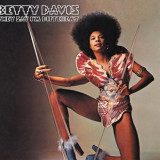
One can hardly imagine the genre-busting, culture-crossing musical magic of Outkast, Prince, Erykah Badu, Rick James, The Roots, or even the early Red Hot Chili Peppers without the influence of R&B pioneer Betty Davis. Her style of raw and revelatory punk-funk defies any notions that women can’t be visionaries in the worlds of rock and pop. In recent years, rappers from Ice Cube to Talib Kweli to Ludacris have rhymed over her intensely strong but sensual music.
There is one testimonial about Betty Davis that is universal: she was a woman ahead of her time. In our contemporary moment, this may not be as self-evident as it was thirty years ago – we live in an age that’s been profoundly changed by flamboyant flaunting of female sexuality: from Parlet to Madonna, Lil Kim to Kelis. Yet, back in 1973 when Betty Davis first showed up in her silver go-go boots, dazzling smile and towering Afro, who could you possibly have compared her to? Marva Whitney had the voice but not the independence. Labelle wouldn’t get sexy with their “Lady Marmalade” for another year while Millie Jackson wasn’t Feelin’ Bitchy until 1977. Even Tina Turner, the most obvious predecessor to Betty’s fierce style wasn’t completely out of Ike’s shadow until later in the decade.
Ms. Davis’s unique story, still sadly mostly unknown, is unlike any other in popular music. Betty wrote the song “Uptown” for the Chambers Brothers before marrying Miles Davis in the late ’60s, influencing him with psychedelic rock, and introducing him to Jimi Hendrix — personally inspiring the classic album Bitches Brew.
But her songwriting ability was way ahead of its time as well. Betty not only wrote every song she ever recorded and produced every album after her first, but the young woman penned the tunes that got The Commodores signed to Motown. The Detroit label soon came calling, pitching a Motown songwriting deal, which Betty turned down. Motown wanted to own everything. Heading to the UK, Marc Bolan of T. Rex urged the creative dynamo to start writing for herself. A common thread throughout Betty’s career would be her unbending Do-It-Yourself ethic, which made her quickly turn down anyone who didn’t fit with the vision. She would eventually say no to Eric Clapton as her album producer, seeing him as too banal.
Her 1974 sophomore album They Say I’m Different features a worthy-of-framing futuristic cover challenging David Bowie’s science fiction funk with real rocking soul-fire, kicked off with the savagely sexual “Shoo-B-Doop and Cop Him” (later sampled by Ice Cube). Her follow up is full of classic cuts like “Don’t Call Her No Tramp” and the hilarious, hard, deep funk of “He Was A Big Freak.”
Originally released in 1987, Life Time is the full-length debut by Rollins Band. This reissue—released on ROLLINS’ 2.13.61 label—has been remastered for vinyl by TJ LIPPLE and includes updated artwork by JASON FARRELL. Henry Rollins on Life Time: “Life Time is the first studio record by the Rollins Band. We did our first practice on 04-07-87 and went out on a long tour of America and Europe. On the road we wrote songs and put them into the set. By late October we finished the shows in London, UK. We went up to Leeds where Chris had a place to live and booked studio time at the same place that he and I did the Hot Animal Machine recordings a year before. I had no producer for this record and feared that since everyone in the band had strong opinions on how it all should be done that if we tried to do it ourselves we would do more harm than good. I called Ian MacKaye and asked for help. He got on a plane and came right out. That's Ian. We got straight to work as we had little time or money. All twelve songs were cut and mixed in a few days. We would do a take and Ian would tell us that it was good and we were moving on. When someone would say that they wanted to do it over again, he listened patiently and then asked again which song we wanted to do next. We got it all done and dragged it back to America for about 3,200 dollars. My, how things have changed. The album cover was drawn on the back of a diner place mat by Stephen Myers as a gift for my then roommate, Laura. Only the offset reproduction of the piece remains as the original went with her when she gave up her room. She shot herself a few years ago. Special thanks to Ian for coming to the rescue on such short notice. Thanks to you for checking this out.” Download code for full album plus live tracks. Also comes with lyric insert.
The Intercommunal Free Dance Music Orchestra was created in 1971 by French free jazz pianist legend, François Tusques. Free Jazz, was also the name of the 1965 recording Tusques made along with and other Michel Portal, François Jeanneau, Bernard Vitet, Beb Guérin and Charles Saudrais. Six years later, in 1971 Tusques would go ahead of free jazz.
Wondering if free jazz wasn’t a bit of a dead end together with Barney Wilen (Le Nouveau Jazz) or even solo (Piano Dazibao and Dazibao N°2), Tusques formed the Inter Communal Free Dance Music Orchestra, an association under the banner of which the different communities of the country would come together and compose, quite simply. If at first the structure was made up of professional musicians from the jazz scene it would rapidly seek out talent in the lively world of the MPF (Musique Populaire Française).French Popular Music, ndlt
Compiling extracts from concerts given between 1976 and 1978, L’Inter Communal demonstrate the “social function” which inhabited free jazz and popular music at the time calling upon Spanish singer Carlos Andreu along with Michel Marre, Jo Maka, Adolf Winkler and Jean Méreu. Andreu, claimed Tusques, was a griot “who created of new genre of popular song improvised with our music, based on events going on at the time”.
L’Inter Communal can start the festivities: on “Blues pour Miguel Enriquez”, it is first Thelonious Monk who is invoked in an homage to one of the leading figures of the Chilean revolution, and a victim of Pinochet. The circumstances may be serious, the music, though, is not. The musicians light a bonfire to bring together on the same frequency France and Spain, the Americas and Africa: “L’heure est à la lutte” (the time to fight is here ndlt), is the new song offered by the l’Intercommunal Free Dance Music Orchestra... As if proof were needed that their music is still more than timely!
At the frayed bottom-edge of Indiana - just a moderate bike ride north of Louisville, Kentucky - multi-instrumentalist, artist and songwriter Ryan Davis' Americana-noir soundwaves have been emanating for years in a myriad of forms. As driving force for the lauded State Champion, long-running member of Tropical Trash, administrator of the esoteric and excellent Cropped Out festival, and lone proprietor of the Sophomore Lounge label, Davis lays down his first proper 'solo' release with Dancing On The Edge, a rich, 2LP tapestry of tunes that absolutely glows over seven expansive cuts. It's a pure collage of modernity and heritage. Recorded in early 2023 with help both in-studio and remotely from peers like Joan Shelley, Catherine Irwin (Freakwater), Will Lawrence (Felice Brothers, Gun Outfit, John Early), Jenny Rose (Giving Up), Christopher May (Mail the Horse), Elisabeth Fuchsia (Footings, Bonnie "Prince" Billy), and Aaron Rosenblum (Son of Earth, Sapat), the results herein are melancholic, gentle, minimal yet colorful in mood: a lilting highway accompaniment of crisp instrumentation and a relaxed, amiable approach to vocals with rhapsodic wordsmithery. Fans of the aforementioned artists as well as those of Souled American, David Berman, Kurt Vile and 'Comes A Time'-era Neil should all easily find bounty. While bare-boned and uncluttered in presentation, many of these pieces track over 6 minutes allowing a fair amount of expansiveness. Dancing On The Edge stares down into the navel of the American Experience underbelly with a fair amount of outward reach. Besides the Kosmische-synth and violin stabs reaching into a European element, stately organ swells build a musical bridge between 1969 Southern California and Felt's latter era smooth moves, with layers of intelligent gesture taking this well beyond the realm of its archetypal indie troubadour/acoustic songwriter tag. Music and mint juleps never went down so well together." Originally released via Ryan's own label, Sophomore Lounge, in the US late 2023, it picked up some incredible reviews: best of 2023 in both Pitchfork and Rolling Stone, 9/10 lead review in Uncut, and a raft of other notable publications. "This is the sound of someone bearing a torch." - Bill Callahan (Smog) - RIYL Silver Jews, BPB, Lambchop, Cass McCoombs, Sparklehorse.
In March 2023, @ turned heads with their debut album Mind Palace Music that utilized an array of acoustic instrumentation and densely layered harmonies, like the great outsider folk records of the 60s and 70s and placed it in a modern setting. If Mind Palace Music was @ playing on story mode, their new EP Are You There God? It’s Me, @ is the darker, stranger side quest.
Mind Palace Music was written in very specific circumstances. The band was formed while they were confined to their homes during quarantine — Victoria Rose in Philadelphia and Stone Filipczak in Baltimore — exchanging musical sketches over iMessage and email. Even though the world has opened back up and they’ve been able to play together live, this EP was again created remotely while in their respective cities. What did change, however, was the production.
Are You There God? It’s Me, @ is @’s foray into electronic music — consisting primarily of software instrumentation (with the occasional flute, guitar or bass part sprinkled in). The band’s experience producing in this style was minimal, but they found the new process to be a rewarding exercise allowing them to explore new textures and structures made possible by computer music. Where their previous acoustic recordings had a looser and more human feel, these new songs allowed them to experiment with autotune and quantized beats. Rose was able to resurrect her passion for classical choir by singing and recording a capella vocal arrangements to be incorporated into Filipczak’s instrumentals.
Across five songs, @ call upon a higher power, as the title suggests, in search of fulfillment. While they try to remain hopeful, daily suffering casts doubt on whether that high power even exists. On “Soul Hole,” overtop an autotuned vocal loop and hyper-pop-esque production, Rose repeats “I’m going to the soul hole and I’m never coming back,” hoping to leave behind the material world and the desires that comes with it. “Webcrawler,” named after the pioneering search engine, might be considered Are You There God?’s epic. @ sees their search for meaning in life akin to how search engines pull together data from all over the internet to find answers. The music itself is even reminiscent of dial-up internet connection, with droning keys and machine-like drum programming until overheating and erupting into chaos, in the form of heavy-metal shredding, only to cool down again back on a loading screen.
While the band confesses the departure from their usual sound may only be temporary, it’s an exciting listen full of twists and turns that surprised even themselves. “We’re both really dramatic in our musical sensibilities and don’t shy away from ridiculous choices,” Rose recalls, “which can really be exaggerated when working mostly with electronic sounds.” Full of soul searching and sonic experimentation, Are You There God? It’s Me, @ is an encapsulating spiritual saga for the digital age.
Split Colour Heavyweight Vinyl Repress!
'2 Sim' is a phrase the references mobile phones with two sim cards to describe people of mixed heritage, dual nationality or multiple residence. After being called 2 Sim in conversation with a stranger while on a walk through Freetown (a recording of this moment features on the record) Duval began to explore what the 2 Sim experience is in contemporary West-Africa.
2 Sim EP was created from 2 months of field recordings and interviews with family, friends and peers in Freetown Sierra Leone. These site specific recordings are collaged with solo piano recordings and production recorded in Sierra Leone and the UK. The EP is accompanied by a short film/ music video of the same name which Duval shot and Directed whilst making the record.
2 Sim EP is the second release from Carrying Colour which follows on from 2017's 'Sen Am'"
Piezo’s Ansia imprint returns for its 8th outing ‘Imago’, inviting Berlin’s Unity Vega for a split EP of uptempo dancefloor explorations that mine that fertile space between footwork, drum’n’bass, dancehall and experimental contemporary club sonics.
Unity Vega leads the charge with ‘No Body No Mind’ - a waterlogged darkside skanker that sits somewhere between the half-stepping jungle of the UVB-76 crew and the kind of oddball dancehall deconstructions often peddled by Ansia's extended circles.
Appearing again on the flip, Vega ups his pace on ‘Set Em’ - a nervy footwork roller that pits gully hip-hop vocal chops against rising bell chords and washes of delayed noise. Think Rashad dubbed out by Kevin Martin and you’re in the right ballpark.
Label head Piezo’s contributions continue along similar lines, albeit in his own unmistakable style. ‘Toughts, Heavy’ also finds the midpoint between d’n’b and dembow, this time marrying a gurgling acid bassline with a euphoric-turned-paranoiac trance lead.
Up next, ‘Nel Frigo Ah’ strips things back to the raw, banging basics: a looping vocal call pinned down by a frenetic crescendoing drum workout.
To close, Japanese legend Foodman delivers a pots-and-pans rework of ‘Thoughts, Heavy’ - a true curveball tool for the adventurous DJs amongst us.
- If I Lose
- You Promised
- The Wise Man
- The Morning After
- Moon Ride
- More Understanding Than A Man
- More Understanding Than A Man (Instrumental)
- There I Was
- Kiss & Tell
- Half-Way In Love
- Goodbye July
- Four Letter Words
- Hurry On Home
- I Ought To Stay Away From You
- I Love
- Under My Umbrella
- I Don't Intend To Spend Christmas Without You
- Sunday Morning
- Thoughts
- Love Songs
- Don't Go Away
- Take A Picture
- Sun
- What Can I Give You
- Something's Wrong With The Morning
- Think Of Rain
- Can You Tell
- Someone I Know
- Love
- Why Do I Cry
- Spanky And Our Gang
- Most Of My Life
- It's Alright Now
- Timothy Gone
- The Hum
- Please Believe Me
- Yes I Am
- I Think A Lot About You
- I'd Like To See The Bad Guys Win
- Values
- California Shake
- Hold Me Dancin
- Shine
- Goodbye July
- Come To Me Slowly
- The 8.17 Northbound Success Merry-Go-Round
THINK OF RAIN VINYL[72,69 €]
Words And Music" ist eine 3xLP-Box mit dem Werk der im Jahr 2021 verstorbenen Sängerin und Songwriterin MARGO GURYAN. Als Zeugin von Revolutionen in Jazz und Pop hat sich GURYAN ihren Platz im Pantheon der Songwriter verdient. Dass sie jahrzehntelang weitgehend unbekannt war, liegt nicht an zerstörten Träumen, sondern an ihren eigenen Entscheidungen und Prioritäten. Von den bescheidenen Anfängen über die Höhepunkte ihres barocken Pop-Meisterwerks "Take A Picture" von 1968 und die gesammelten Demos bis hin zur jüngsten viralen Verbreitung von "Why Do I Cry" - das Boxset "Words And Music" fängt die gesamte Karriere von GURYAN ein, einschließlich 16 bisher unveröffentlichter Aufnahmen und einem 32-seitigen Booklet, das ihre ganze Geschichte erzählt. Produziert wurde die Box von ihrem Stiefsohn Jonathan Rosner, ihrem Freund und Historiker Geoffrey Weiss und den Numero Group-Mitarbeitern Douglas Mcgowan, Rob Sevier und Ken Shipley. Alle Tracks wurden von Jessica Thompson neu gemastert. In ihrer Blütezeit veröffentlichte GURYAN nur ein einziges Album: "Take A Picture" von 1968. Da MARGO jedoch kein Interesse daran hatte, aufzutreten, zu touren und für ihr Werk zu werben, wurde das Album damals kaum beachtet. Dennoch wurde die Platte in den 1990er Jahren zu einem begehrten Kultobjekt. Eine neue Generation von Hörer*innen lernte ihre Arbeit kennen, als "Take A Picture" im Jahr 2000 neu aufgelegt wurde. Kurz darauf folgten die gesammelten Demos, eine unglaubliche Zusammenstellung von ausgegrabenen alternativen Aufnahmen und neu veröffentlichten Songs, die MARGO selbst betreut hat. GURYANs Leben war in den dazwischen liegenden Jahren weiterhin von Musik erfüllt; sie wurde Musiklehrerin, schrieb weiterhin Songs und pflegte Freundschaften mit einem wachsenden Kreis von Anhängern. Die Geschichte von MARGO GURYAN ist die einer Frau, die von klein auf in die Tiefe ging und nie Angst vor Veränderungen hatte. Ihr Gespür für Ton, Phrasierungen, Spannung, Präsenz und Texte, die treffen, machen ihren Namen heute zu einem Synonym für ausgefeiltes Songhandwerk und die unnachahmliche Coolness der 1960er Jahre. Ihr Einfallsreichtum und ihre Technik stellen sie in die Tradition von Kammer-Pop-Ikonen wie Brian Wilson und Burt Bacharach, während die bittersüße Offenheit in ihren Beschreibungen des Frauseins einen Mittelweg zwischen Carole Kings Pop-Fabrik und der Singer-Songwriter-Ära aufzeigt. Aber die unaufdringliche Strenge von MARGOs künstlerischer Stimme ist ganz ihre eigene.
- A1: I Love What You Do To Me
- A2: Baby (What You Want Me To Do)
- A3: Sweet Flustrations
- A4: What You Don’t See (Is Better Yet)
- A5: Nuff Said (Part I)
- B1: Tell The Truth
- B2: Pick Me Up (Take Me Where Your Home Is)
- B3: Moving Into Hip Style-A Trip Child!
- B4: I Love Baby
- B5: Can’t You Hear Me Callin’
- B6: Nuff Said (Part Ii)
‘Nuff Said was the third album recorded by husband-and- wife duo Ike and Tina Turner in 1971, following up the 1970 hit album Workin’ Together. All tracks were recorded at Ike & Tina’s recording studio Bolic Sound, Inglewood, California.
The album features compositions by Leon Ware, Philip Reese, Aillene Bullock, Ike & Tina and the funky two-part instrumental track “’Nuff Said”.
Joe Nora exemplifies Californian cool from the bay to LA. With a wide production palette that varies from dusty instrumental and alternative hip hop to breezy indie R&B, his range falls under a vibe that only he personifies. On his forthcoming album, Puzzle Face delves into the journey of navigating confusion and rebuilding oneself after facing adversity.
When Man Man released its last album, "Dream Hunting in the Valley of the In Between," frontman Honus Honus (née Ryan Kattner) was in a state of unrest, oscillating between hope and cynicism. Perhaps fittingly, the album dropped during the pandemic, a time at which we could all relate. But, much like that bizarre turn of events, the ennui now seems so distant to Man Man. A revived sense of purpose washes through Man Man's new album, Carrot on Strings, radiating a mix of calm and confidence. Kattner always embodied a wild-man pied-piper vibe: his melodic, unhinged art-rock was at once intriguing and angsty. He was so alluringly creative that you went along with it, even if you were never sure where Man Man would take you. Carrot on Strings is no less inventive, but its ethos is radical in context of the band's two-decade career. "When I was younger, I would feed off of chaos. I would, you know, be upset and get drunk and smash chairs," Kattner explains. "Now those chairs are in my head: It's less of an outward projection, more of an interior monologue." The name "Carrot on Strings" came to Kattner while experimenting with the sound of someone munching on the vegetable, which you can hear in the cacophonous, similarly named song. It alludes to how success always seemed to dangle uncertainly before him, often just out of reach. But listen intently and you'll hear a more content Kattner finding an uneasy peace: "Life, as far as I've known it, has always been side hustles. Would it be great if I could go into a studio and record for a year without figuring out how to finance it? Yeah, it would be," he says. "But ultimately, I need to keep making music because art is an extension of my psyche. It's how I have learned to translate the palpitations of my heart. Simply put, I'd go insane without it." Growing up as a multiracial Hapa kid (half Filipino, half white) with a father in the U.S. Air Force, Kattner lived an itinerant childhood that included a few pivotal years in Germany, where he honed in on an appreciation for out there German cinema and art. His film obsessions and screenwriting background were crucial to Carrot on Strings. The album nods to the films of Werner Herzog and Rainer Werner Fassbinder as much as Italo-disco, Randy Newman, goth rock, and avant pop. (Kattner continues to work in the film industry with an acting role in the upcoming horror-comedy movie Destroy All Neighbors, for which he also served as composer; music supervising season 1 & 2 of the Interview With The Vampire AMC TV series; and shopping around, with director Matthew Goodhue, a script he wrote that he describes as a Wim Wenders road movie on acid.) In a bid to not overthink anything - his last album took seven years to make - he recorded the bulk of Carrot On Strings in five days in Mant Sounds studio in Glassell Park, Los Angeles with "very chill" producer Matt Schuessler, who had worked on Man Man's cover of Neu!'s "Super" for the seminal Krautrock band's box set. The resulting album represents a newfound sense of self for Kattner, who finds himself inspired and at peace both personally and artistically in ways that eluded him for most of his first 15 years playing music. When, on Carrot On Strings, you hear Kattner croon humbly, or sing of the tension between his outsize stage persona and the thoughtful, soulful guy he actually is, you're hearing Kattner liberate himself. "I first got into music to escape from myself," he says. "And now, it sounds so corny, but I have zero doubt that music ended up saving my life."
A home, a house, has countless frequencies. Each room, each corner feels different. Swings differently. And as you grow older, you realize which corner is yours. But yeah, it takes time…
It certainly marks the end of an era when the house one called home as a kid no longer exists. This home, it was the starting point of so many journeys. Of one big, ongoing journey. And so it feels good, soothing, reassuring to at least return to a spot nearby – to that (proverbial) hill from where you can see it. Feel the vibe that made you.
Andi Haberl’s debut solo album as Sun is sort of dedicated to that house. It’s a journey leading to that hill overlooking everything that made him. It’s not about nostalgia, not about actually returning to a specific place. Instead, it’s about finding a personal frequency, an overlapping of sounds and samples, an open space that mirrors and extends whatever frequencies felt right at different points in time.
“To me, the results feel like Gold Panda/Four Tet meets Steve Reich meets Krautrock meets film scores. I just really wanted to create moods that touch me – and ideally others, too.”
Talking about his first solo album, Haberl recalls many stages: early compositions that ended up on Alien Ensemble’s albums, early DIY/home studio/multi-instrumentalist inspirations (Le Millipede), new technologies that came and went, even a set of wildly convincing arrangements (done with Cico Beck’s crucial input) that ultimately became stepping stones for yet another round of DIY takes. “It was a long, recurring process, and the songs went through so many different versions,” he says, talking about phases of growth (“I added more and more equipment over time”) and pruning, “cleaning up my music a bit.” Tending towards instruments that open up space, and slowly falling in love with sampling, he certainly didn’t rush things once it was time for interior design decisions ;)
“During this whole process I got to learn so much about my own taste, how I prefer to listen to the pieces, which musical elements really matter to me… and what my own voice is. For example, that acoustic elements are most important to me: the banjo, piano, drums, my voice, glockenspiel, trumpet, melodica. Anything that opens up some space.”
Every journey begins with a search: “Missing” with its plucked chords opens like a sunrise over pastoral plains, gently leading the way towards the intricate, playful explosion that occurs once a certain amount of energy (“Sun”) hits dirt and other surfaces: things grow, clot and curdle into new shapes, like new buds; layers of sound move forward, drenched in Spring’s new light. Relying on samples to ask for precipitation (“Rain On Me”), robotic “Low” goes from barren to bass-heavy after its midway shift in pace, full of loops plucked from the shade.
Towards the album’s midpoint, things are suddenly reversed: “Cluster” has that backwards pull, you can’t tell what’s what, yet everything is perfectly locked in, as the pace increases once again. And before the title song shimmers with densified cheering (to eventually stand tall like early Lymbyc Systym), “Beside Me” swipes you off your feet with its booming bass drum. The beat returns once again (“Daydream”), full of searching voices underneath, and at “Dawnday,” we can finally catch a melancholy view of the house. Voices hum. It’s the score moment of the album. Everything makes sense now. A happy end of sorts?
“I want to take people on a journey. A personal journey, too, because when my parents split up and sold the house I grew up in, I felt a bit like the ground had fallen out from under my feet. But I have dedicated the album title and the accompanying piece to this house… so I can keep it in good memory.”
“I Can See Our House From Here” has been a long time coming. It’s been a long journey. Homeward-bound. Leading to a place that’s really Haberl’s – his sound. His frequencies.
Known as a long-time member of The Notwist and various other bands/projects (Alien Ensemble, AMEO, jersey, Ditty etc.), Berlin-based drummer/composer Andi Haberl has also worked with My Brightest Diamond, Till Brönner, Owen Pallet, and Kurt Rosenwinkel, to name a few. “I Can See Our House From Here” is his first solo offering.
Black Truffle is pleased to announce Resonant Trees, the first vinyl release from French composer-performer Léo Dupleix. An active member of the international community of younger musicians working with just intonation, Dupleix has composed works for solo instrumentalists and ensembles in Europe and Japan, as well as performing extensively on harpsichord, piano and electronics. His music is distinguished by a formal clarity and elegance of surface, gently shaping pure intervals into delicate melodic patterns and shimmering harmonic planes.
Resonant Trees presents two side-long pieces for harpsichord and ensemble, both setting slowly repeating patterns played on harpsichord and guitar within an environment of sustained tones. Dupleix performs on a French double manual harpsichord (tuned to a just intonation scheme of his own devising) and Prophet synthesizer, joined by Juliette Adam (bass clarinet), Johanna Bartz (traverso flute), Cyprien Busolini (viola), Fredrik Rasten (6- and 12-string guitars), and Mara Winter (traverso flute). The harpsichord begins Resonant Tree I alone, slowly sounding out a series of arpeggiated chords that emphasise the unique (and for unaccustomed listeners, sometimes unsettling) harmonic and timbral qualities of justly tuned intervals. Long tones from synthesiser, bass clarinet, viola and Baroque traverso flutes slowly creep into the spaces between the arpeggiated chords, joined after several minutes by delicate patterns of harmonics played by Rasten on acoustic guitars.
On Resonant Tree II, a similar structure and ensemble (without the flutes) are used with quite different results. We again hear only the harpsichord at first, but this time playing a series of flowing melodic lines, each of which is repeated several times. Joined again by long tones from the ensemble, here the viola is particularly prominent and its interplay with the harpsichord creates fascinating acoustic effects. In both pieces, repetition gives the music a static, stable quality while, at the same time, the exact shape of the repeating patterns remains difficult to grasp. As Dupleix writes, these pieces dream of music as ‘space and a sound that one could grasp in one’s hand.’ As the near-static quality of the repetitions and long tones with little incident make these two stretches of musical time feel like spaces for the listener to inhabit, the small variations on a narrow range of related material act like a three-dimensional object whose each facet is examined in turn. At once austere and seductive, Resonant Trees takes its place beside the work of contemporaries like Catherine Lamb, while also calling up the languorous melodic world of Mamoru Fujieda, the dignified melancholy of Satoshi Ashikawa’s classic Still Way and the espaliered chamber atmospherics of the Obscure catalogue.
- Can't We Be Friends
- Isn't This A Lovely Day
- Moonlight In Vermont
- They Can't Take That Away From Me
- Under A Blanket Of Blue
- Tenderly
- A Foggy Day
- Stars Fell On Alabama
- Cheek To Cheek
- The Nearness Of You
- April In Paris
- Don't Be That Way
- Makin' Whoopee
- They All Laughed
- Comes Love
- Autumn In New York
- Let's Do It (Let's Fall In Love)
- Stompin' At The Savoy
- I Won't Dance
- Gee, Baby, Ain't I Good To You?
- Let's Call The Whole Thing Off
- These Foolish Things (Remind Me Of You)
- I've Got My Love To Keep Me Warm
- Willow Weep For Me
- I'm Puttin' My Eggs In One Basket
- A Fine Romance
- Ill Wind
- Love Is Here To Stay
- I Get A Kick Out Of You
- Learnin' The Blues
Ella Fitzgerald was an great American jazz singer, sometimes referred to as the "First Lady of Song", "Queen of Jazz", and "Lady Ella". She was noted for her purity of tone, impeccable diction, phrasing, timing, intonation, and a "horn-like" improvisational ability, particularly in her scat singing. Louis Armstrong, nicknamed "Satchmo", "Satch", and "Pops", was an American trumpeter and vocalist. He was among the most influential figures in jazz. His career spanned five decades and several eras in the history of jazz. Together Ella & Louis recorded various songs. On this 3 LP in a gatefold sleeve the complete “Ella & Louis”& “Ella & Louis Again” albums (30 tracks). All these tracks were recorded in Hollywood in 1956 & 1957 with on most tracks Oscar Peterson on piano, Herb Ellis on guitar, Ray Brown on bass. Buddy Rich played drums on Ella & Louis. Louie Bellson drums on the “Ella & Louis Again” tracks. This Classic Albums Collection is a must have for music lovers.
One of the best reggae albums of the ‘80s and one of the real highlights in the Real Authentic Sound label catalog finally gets an LP reissue! Lascelle “Wiss” Bulgin, Albert “Apple Gabriel” Craig, and Cecil “Skelly” Spence all contracted childhood polio, and met at a Jamaican rehab center; in the ‘70s, they formed Israel Vibration and their first record, The Same Song, released in 1978 on the Top Ranking label, was an international smash. But by the time they released Strength of My Life in 1988, it had been seven years since they had made a record, having fled Jamaica in the intervening years to seek better health care and to escape the dancehall scene. Against all odds, Strength of My Life turned out to be a triumph, the beginning of the group’s partnership with the Roots Radics and a reaffirmation of the love the group’s members had for each other and a celebration, as the title goes, of the strength of their lives (we defy you not to be moved by the title track). That’s Augustus Pablo on melodica on “Greedy Dog” and Dwight Pinkney on guitar on “Jah Love Me,” by the way. Roots reggae royalty!
The Madlib Invazion Music Library Series Entry #12: DJ Muggs takes the Soul Assassins approach to source music - deep, dark, dank.
The Madlib Invazion Music Library Series was created by Madlib and Egon to give their creative friends a chance to stretch out and indulge in whatever type of music they wanted. This music was created for easy, one-stop clearance in film and television synchronization usage and for sampling. You can also enjoy these albums in the way that many do with the best of the best vintage library catalogs – listen, ponder, repeat.
Red Vinyl - In the Pines seemed, at the time, an eccentric career move. The Triffids were widely believed, by their modest but fervent fanbase and a legion of crusading critics, to be but one determined, faithful leap from ascent to the stratospheres. wandering off into the outback, much like one of the deranged characters that had inhabited Born Sandy Devotional, did not seem calculated to redeem the tantalising promise of that astounding album. The Triffids knew what they were doing, though: In the Pines is a thing of modest majesty, at once haunted by the desolation of its circumstances (the gothic folk waltz of the title track, the knelling, intense Kathy Knows) and suffused with the infectious camaraderie of people making music for the joy of it (a rowdy singalong of Bill Anderson's country standard Once a Day, led by Graham Lee, at what one can only suspect was the end of a very, very long day). In the Pines has often been likened, in terms of both songwriting quality and spirit, to Bob Dylan and the Band's The Basement Tapes, and it is not unduly flattered by the comparison.
On Pedro The Lion’s new album Santa Cruz, critically acclaimed musician David Bazan returns with a new chapter in his ambitious and ongoing recording project - 5 albums devoted to places he lived in throughout his life. Santa Cruz is Bazan’s third album in the series and follows up where 2022’s Havasu and 2019’s Phoenix left off. Tracks like "Modesto" and "Little Help" foreshadow Bazan's exposure and ultimate love of classic rock n' roll records, while songs like "It'll All Work Out" showcase his unique approach to synthesizers, something he introduced with the 2005 self-titled Headphones album. The stories on Santa Cruz highlight Bazan’s teenage years and solidifies what he sees as an exposition in a traditional three-act structure. After 25 years refining and building what he calls his “garden of songs,” David Bazan has sold hundreds of thousands of albums, performed in sold-out venues and living rooms around the globe, and played high-profile live sessions with the likes of NPR’s Tiny Desk, KEXP, WNYC’s Soundcheck, WXPN’s World Cafe and many others. His music has been featured in outlets such as The New York Times, Pitchfork, Rolling Stone, SPIN, Vox, Paste, Aquarium Drunkard and others.
The fourth album by Love Battery, 'Straight Freak Ticket' (1994), now out for the first time on vinyl! Remastered by Jack Endino (Nirvana, Soundgarden, etc.) 'Straight Freak Ticket' is the 4th album by Seattle alternative rock band Love Battery. It was originally recorded in 1994 and released only in USA and on CD format - now it is being released on vinyl for the first time. The Seattle Post-Intelligencer called the album "a solid, well-produced album of guitar-based rock with catchy hooks and a strong dose of psychedelia." USA Today labeled the album "a psychedelic tour de force and dramatic leap forward," writing that "the antigrunge guitar riff-o-rama of Ron Nine and Kevin Whitworth propels the Seattle quartet's most adventurous and listenable tunes to date." The band, featuring members of Mother Love Bone, Green River, Skin Yard, The Presidents of the USA, is: Ron Nine - Vocals, Guitar Kevin Whitworth - Guitar Jason Finn - Drums Bruce Fairweather - Bass
- A1: Joe Dukie & Dj Fitchie - Midnight Marauders 7 21
- A2: Ian Brown - The Gravy Train (N O W. Mix) 5 01
- A3: Tony Allen Ft Damon Albarn - Every Season 4 07
- A4: The Rootsman - Show Some Love 5 39
- B1: King Kooba - California Suite (Vagabond Mix) 6 03
- B2: Quincy Jones - Listen (What It Is) 4 14
- B3: Cortex - La Rue 4 27
- B4: Tom Scott And The L A Express - Sneakin’ In The
- C1: Search - Action Tape 1 (Madscope Mix) 5 29
- C2: Large Professor - 'Bout That Time 4 03
- C3: Tranquility Bass - Cantamilla 4 31
- C4: Mad Doctor X - Intergalactic Throwdown 6 04
- D1: Dusty Springfield - Spooky 2 44
- D2: Focus - Having Your Fun 3 43
- D3: Nightmares On Wax - Brothers On The Slide Dub (Exclusive Cover Version) 4 23
- D4: Brian Blessed - The White City Part 1 (Exclusive Spoken Word) 10 18
The Late Night Tales compilation is a bit of a ‘stealth’ project for me personally. I’m very proud of it, but at the time, I probably didn’t appreciate it as much as I do now because there was so much going on. You do these things in-between touring and you don’t really have time to reflect on them because you’re immediately onto the next thing. It’s nice to know that it’s getting re-released. George Evelyn - Nightmares on Wax May 2024 This ain't no normal nightmare, kid. This is Nightmares On Wax, aka DJ EASE, aka George Evelyn. Born under a bad sign, with lino in hand, Mr. Evelyn went forth into the world and breakdanced (brokedance?). It's what you did in the 80s when you were young, loved hip hop and couldn't rap for toffee. When house arrived they turned their clever hands to it. Bleeps and beats is what it was. That's what everyone said. But there was always a bit more than a bunch of bleeps to what Nightmares On Wax did. The north never really took the name very seriously (Sweet Exorcist even named their album Clonk as a pisstake). Then George flipped the script and went and did Smokers Delight, the beats not so much seminal as semolina: gloopy and slow and sweet and lovely. And now we have this: a 2024 reissue of his seminal Late Night Tales compilation. Tom Scott's 'Sneakin' In The Back' — one of the most sampled beats in hip hop — makes an appearance in its full glory, while Quincy Jones, the inspiration for NOW's 'Nights Interlude', backs up the classics with ‘Listen (What It Is)’. Evelyn's hip hop sensibility is to the fore throughout and nowhere is this more evident than on ‘Intergalactic Throwdown' by former Freestylers' DJ, Mad Doctor X. And can we forget the sublime version of the Classic IV's 'Spooky' by darling Dusty? No, we can't. Finally — oh, finally! — there is the now-traditional cover version, with George serving up a soupy version of 'Brothers On The Slide' that gives a nod of respect to the original British funk soul brothers, Cymande. This ain't no nightmare at all: it's Nightmares On Wax.
Once upon a time, DJ’s were like soaring eagles, they would spread their musical wings and fly high to wherever they wanted to go musically. It wasn’t uncommon to hear hip house and go go played alongside disco and funk, or techno being dropped on either side of something a lil’ mo’ soulful. Then the DJ’s wings were clipped and clubs became musical cages for the more adventurous DJ’s, clubs evolved into one-dimensional musical prisons and beats bubbles. Unconventionally, Marcus McGowan hails from South Carolina, and it would be fair to argue that South Carolina is a bit of a house music wasteland? Perhaps it’s this simple geographical blip that has nurtured McGowan into creating a sound that can’t be affiliated to any particular city, cities such as Detroit that is generally associated with techno, Washington is the undisputed town of go go, or Chicago, which is renowned for acid house, hip house, and jackin’ house, and of course, New Jersey is the spiritual home of soulful house. What McGowan has created is a fresh, new vibe that appears to be crossing many musical boundaries and the test pressing mailout appears to have united music lovers from numerous genres of house music AND techno alike, with its deep, techy, jazzy, soulful, sweet and melliferous flavoured vibe. Luke Una boasted that “it’s the record of the year so far”, MFSB’s Yogi Haughton called it a “classic in the making”, but all said and done, the test pressing feedback from the handful that were passed out to music lovers around the U.K. is unanimous, it’s jus’ a frikin’ solid double hitter that can’t be pigeon-holed. This is a record for majestic, soaring DJ’s and music lovers, not scabby, common or garden Columbidae garbage foragers. It’s a slice of intellectual music that will perch McGowan very high up in the producer pecking order!
- A1: Intro
- B1: The Magic Number
- C1: Change In Speak
- C2: Cool Breeze On The Rocks (The Melted Version)
- D1: Can You Keep A Secret
- E1: Jenifa Taught Me (Derwin’s Revenge)
- F1: Ghetto Thang
- G1: Transmitting Live From Mars
- G2: Eye Know Feat Otis Redding
- H1: Take It Off
- H2: A Little Bit Of Soap
- I1: Tread Water
- J1: Potholes In My Lawn
- J2: Say No Go
- K1: Do As De La Does
- L1: Plug Tunin' (Last Chance To Comprehend)
- M1: De La Orgee
- N1: Buddy (With Jungle Brothers And Q-Tip From A Tribe Called Quest)
- O1: Description
- P1: Me Myself And I
- Q1: This Is A Recording 4 Living In A Fulltime Era (L I.f.e.)
- Q2: I Can Do Anything (Delacratic)
- R1: D A.i.s.y. Age
- S1: What’s More (From The Movie Soundtrack Hell On 1St Avenue)
- V1: Buddy (Native Tongue Decision Part 2)
- T1: Jenifa (Taught Me) (12” Mix)
- U1: Buddy (Native Tongue Decision Part 1)
3 Feet High and Rising is the debut studio album by hip-hop trio De La Soul, and was released on March 3, 1989. It marked the first of three full-length collaborations with producer Prince Paul, which would become the critical and commercial peak of both parties. It contains the singles, “Me Myself and I”, “The Magic Number,” “Buddy,” and “Eye Know”. The album title came from the Johnny Cash song “Five Feet High and Rising”. It is listed on both Rolling Stone’s 200 Essential Rock Records and The Source’s 100 Best Rap Albums. When Village Voice held its annual Pazz & Jop Critics Poll for 1989, 3 Feet High and Rising was ranked #1. It was also listed on Rolling Stone’s The 500 Greatest Albums of All Time.
Released amid the 1989 boom in gangsta rap, which gravitated towards hardcore, confrontational, violent lyrics, De La Soul's uniquely positive style made them an oddity beginning with the first single, “Me, Myself and I.” Their positivity meant many observers labeled them a “hippie” group, based on their declaration of the “D.A.I.S.Y. Age” (Da. Inner. Soul. Yall). Sampling artists as diverse as Hall & Oates, Steely Dan and The Turtles, 3 Feet High and Rising is often viewed as the stylistic beginning of 1990s alternative hip hop (and especially jazz rap). 3 Feet High & Rising was chosen by the Library of Congress to be added to the National Recording Registry for its cultural significance and general excellence.
This special boxset release of De La Soul’s 3 Feet High and Rising includes twelve 7” custom singles pressed on splatter vinyl and housed in custom sleeves, housed in a box that includes a 7” pinup and a double-sided 7” slipmat, and is available first at record stores as part of RSD Black Friday. "
- A1: You Don't Have To Wait W/Cubicolour
- A2: Revision Ft. Giovanni
- A3: Go Back Ft. Desire
- B1: Wervik
- B2: Hooligan Plex
- C1: All Night (Garage Verson) Ft. Oscar And The Wolf
- C2: You're My Desire Ft. Mystic Bill
- D1: Serpent Jazz W/ Avnu
- D2: Get Out Of Here Ft. Perry Farrell
- D3: Just You And I
- E1: Clickbait (This Ain't Hollywood) W/ Avnu
- E2: Shine On & On (Orbital Tribute)
- F1: Nasty W/ Tyler Hill
- F2: Stop That
- F3: Moon Sky (House Version) Ft. Ishi
Renowned US producer Maceo Plex releases his highly anticipated third album, ‘’93', a homage to his three-decade journey through the realms of electronic music. Marking both a passion and a prolific career, the maestro presents a tantalising body of work that masterfully blends House, Hip Hop, Global Bass, Techno, Breaks, and Electronica. This audacious fusion delves into historic and modern influences, crafting an audio journey that transcends time, rich in history yet boldly future-facing.
‘’93' is a cross-genre exploration, seamlessly balancing emotion with hard-hitting beats. Maceo Plex collaborates with a stellar lineup of artists, including Diplo for his contribution on ‘You Don’t Have To Wait’ with Cubicolor, Oscar and the Wolf, Perry Farrell (Jane’s Addiction), Johnny Jewel and Desire, Kirsty Hawkshaw, Mystic Bill, AVNU, Giovanni, Ishi, and Tyler Hill, resulting in a diverse and dynamic musical affair.
This album narrates the story of a highly esteemed artist at a pivotal juncture in his career, consistently evolving towards new directions. Departing from the early deeper house sound that initially defined him, Maceo Plex intentionally ventures into new territory, steering away from his famed melodic and techno direction in recent years. Nevertheless, '93' retains the essence of Maceo Plex's signature style, transcending various sounds and genres in a manner reminiscent of his electrifying DJ sets, meticulously curated for the dancefloor and the crowds.
‘93’ vinyl LP by Maceo Plex is available on Lone Romantic from 17th May 2024.
Key Feedback Quotes:
Pete Tong - Maceo is such a talented producer. A sonic juganaut. An inspiration to so many aspiring music makers. He's a master of analogue and digital in the studio. He's a total 'one of'.
Kolsch - Incredible album!!!!
Artbat - “Very cooooool album!
Gregor Tresher - Wow, now this is what I call an album! Extraordinary stuff, I love it! Big up, Eric!
Hot Since 82 - Nothing short of sensational. My fav producer and DJ who consistantly sets the bar far too high and we all play catch up. Love it.
Rodriguez Jr - Awesome album. LOVE IT. Such a wide spectrum of influences here. Respect!
Laurent Garnier - Very cool. Will play these
Hernan Cattaneo - This is a really good album!
Wehbba - happy to finally see the album coming out, lots of gems, Nasty, Just You and I, Get out Of Here and You're My Desire are my main picks.
Eelke Kleijn - Already listened to the whole album on Spotify. Fantastic. Miles ahead of everyone else. Thanks for sending this, will play many of these for sure.
AFFKT - all tracks are amazing
Ida Engberg - Loooove this release! Stop that and Serpent jazz for me, can't wait to play them. Lone Romantic killing it!
Victor Ruiz - Honestly, you’re a genius! 10/10 productions always.
Pig&Dan - Great to hear new tunes from one of my favorite producers out there
Oliver Huntemann - some real gems on here
Fideles - wow, love it all
Peter Kruder - Love 'em all! Thanks for sending my way!
Yotto - Sick Sick Sick work!
Jody Wisternoff - Insane tracks from Maceo!!!
Terr - Amazing music as always, thx!
Nicolas Masseyeff - Solid release! Full Support!
Paige - Nasty is an absolutely mind-blowing track!!
Braxton - Incredible Album. .
Dense & Pika - Wicked stuff from Maceo.
Eli Brown - Always great music from Maceo Plex.
Anden - Congrats on the album! Love it!
Sergio Muñoz / Fur Coat - Great work from Eric! Congratulations.
La Fleur - So many gems in there, looking forward to having a proper listen from start to end! Thx
Captain Mustache - Big work here from Maceo, congratz!
Alex Kennon - This is a masterpiece!
Timo Maas - Clickbait is a cool track, I like the deep funk.
Martin Eyerer - This is a great album!! I love nasty most, but all great.
Nick Warren - This is such a great album.
Laurent Garnier - Very cool EP. Will play these.
Jonas Rathsman - Stop That sounds interesting
Warehouse Find!
The masterful, supergroup of Phreek lead by Patrick Adams, sees three of its sought-after masterpieces, two of which have never been on a 12 inch, officially reissued and remastered on a label that’s fast becoming a go-to for in demand reissues, South Street Disco.
A pure classic, ‘Weekend’, was born back in ‘78 written by Leroy Burgess and James Calloway and produced by Patrick Adams and Burgess, they lead an expertly curated troupe for this massive Paradise Garage staple and Larry Levan favourite. That late ‘70s sound where synthesisers rose to prominence, sees a combination of cosmic keys, freakish strings and power-play funk guitars, tied together with tight percussion, bold basslines and Christie Shire’s lead vocals, that whole heartedly captures the spirit of disco. Famously remade into a house anthem 10 years later by Todd Terry, ‘Weekend’ is a timeless slice of celestial magic.
In a similar fashion ‘Everybody Loves A Good Thing’ does another blast around the cosmos - a Universal Robot Band feel emanating from the buzzing synths and awe-inspiring vocal prowess of Leroy Burgess, coupled with ‘Shining’ star, Venus Dodson. As uplifting as it gets, complete with a killer piano breakdown to draw out every ounce of anticipation.
Flip it over and a whole side is devoted to the greatness of ‘I'm a Big Freak R*U*1*2’. A mesmerising, fast-paced, disco workout with sensuous groans, sleazed up, supernatural keys and a heavy bass that just goes and goes and goes! Favoured by the biggest and best out there, from Ron Hardy to Theo Parrish, it’s got the power and energy to light up even the most demanding of dancefloors.
Favorite Recordings proudly presents this new official single reissue of “Feel So Good Inside”, by Lamar Thomas. A killer deep-disco and very rare collectable single, fully coordinated for reissue by French respected DJ and Tropical rare-groove specialist, Waxist Selecta.
Lamar Thomas is an American singer, composer and producer who made a short solo career in the 70s, and then formed the duo Thomas & Taylor. He has also penned few songs for Johnny Bristol, Garland Green, Nancy Wilson, Maynard Ferguson, or Johnnie Taylor among others.
In 1980, he recorded this 2 tracks single for MCA Records, who released it on a 7inch left almost unnoticed at that time. 30 years later, this brilliant disco production has become a classic rare-groove title for a few DJs and diggers, with among them, French collector and DJ, Waxist Selecta (aKa Julien Minarro).
Schooled about this rarity by DJ Klas (aKa Josh Goldman), he then made it a real favorite in his various DJ sets. Curious to learn more about this forgotten piece, he also liaised with Lamar through the web, and discovered that all the masters had burned in a California fire at Universal.
As Julien already worked on an upcoming reissue project with Pascal Rioux and Favorite Recordings (more details in 2015), he offered him and Lamar to arrange a proper official reissue and produce a new master from his own vinyl copy. Coming out in a 12inch version built for dancefloors, the package also includes a great extended mix by Waxist.
- 1: Different Type Time (Prod. Quelle Chris & Cavalier)
- 2: Custard Spoon (Prod. Quelle Chris)
- 3: Can’t Leave It Alone Feat. Eric Jaye (Prod. Glassc!Ty)
- 4: Come Proper (Prod. Jacob Rochester)
- 5: Touchtones (Prod. Aummaah)
- 6: Déjà Vu / Tydro ‘97 (Prod. Messiah Muzik / Quelle Chris)
- 7: Doodoo Damien (Prod. Quelle Chris)
- 8: Baby I’m Home (Prod. Wino Willy)
- 9: Yeah Boiii (Prod. Quelle Chris)
- 10: All Things Considered (Prod. Wino Willy)
- 11: Pears (Prod. Malik Abdul-Rahmaan)
- 12: Told You (Prod. Fushou)
- 13: Badvice (Prod. Low Key)
- 14: Think About It Feat. Billzegypt (Prod. Obliv)
- 15: Up From Here / 7Th Ward Spyboy (Prod. Ahwlee / Quelle Chris)
- 16: Manigaults / I Miss Them (Prod. Ruffiankick)
- 17: Lazaroos (Prod. Vinny Cuzns)
- 18: Bespoke Feat. Dominic Minix (Prod. Hann_11)
- 19: 50 Bags Feat. Lord Chilla (Prod. Child Actor)
- 20: Axiom / My Gawd (Prod. Glassc!Ty / Quelle Chris)
- 21: Flourish (Prod. Quelle Chris)
"It seemed that if I didn’t somehow repeat the process of greatness, and do so immediately, multiple times away to satisfy playlist and binge watch culture, then I “wasn’t shit”. After a while I was like “nah this doesn’t feel good,… I don’t know if I am finding joy in this”. I would record songs and not release them, obsess over sessions recorded in my home with 30 takes of vocals and wake up only to delete them. When it began to feel right I found solace in an epiphany that I was not obligated to operate at any other wavelength. I am moving on a different type of time, and that doesn’t expire." -Cavalier
For heads of a certain time period of NYC hip-hop, Brooklyn born, New Orleans-based rapper and songwriter, Cavalier was the one that got away. The outrageously talented artist whose name and reputation preceded him everywhere you went in the scene. The rapper who everyone knew was so dope that he had to blow, but who never seemed concerned with any of that. The pretty boy draped in Polo who stole every live show with a feather in his hair and a mouth full of gold fronts. The cat so dedicated to his own independence that even indie labels stopped trying to sign him and projects came when they came, but when they came they were undeniable.
Cavalier was THAT guy for a lot of us; a silver-tongued philosopher with an eye for the poignant details of black life and a delivery as effortless as a young Ken Griffey’s swing. All that said, it never really felt like Cav had that moment in the spotlight that we always assumed was coming. After chiseling away through headier cult corners of the NYC hip-hop scene Cavalier was recognized for his memorable co-pilot to Quelle Chris’ 2013 Mello Music debut, Niggas Is Men. The critically acclaimed LP helped propel Quelle Chris into the forefront of indie hip-hop (and also happened to be the first production credits for Messiah Muzik). Cav followed up with his first full length, Chief, which sports a notable Raekwon feature but also early work from producers like Ohbliv and Tall Black Guy. A relocation to New Orleans and partnership with producer/vocalist Iman Omari yielded two more projects: 2015’s Lemonade EP and Private Stock in 2018. Great records all; eagerly sought by collectors and signal boosted by influential media like OkayPlayer, Solange’s Saint Heron, and Pitchfork. Cavalier’s bonafides have never been in question, but his new album Different Type Time feels like a revelation—a sonic suspension bridge between his rich history and the artform’s future.
Different Type Time doesn’t sound like the future though, its vibrations are somewhere all their own. It sounds like jazz, like a conversation overheard in roti shop, or a pool hall, or the foyer of your old building on a fall day, front door propped open with a brick. The blues is in there too, and the south—the American South, and theGlobal South, and South Brooklyn. It’s not that it sounds like the past, but you can hear everything that came before in the thick of the basslines and the yearning of the keys. Different Type Time also doesn’t sound like now, it sounds like RIGHT NOW; the bounce of the lyrics like the staccato of basketball in the park, carried on a spring breeze.
Although he doesn’t rap on DTT, Quelle Chris plays a pivotal role; producing eight songs and serving as associate producer/consigliere to Cav throughout the creative process. “There is no time wasted in explaining things when I collaborate with Quelle. He understands the universe I am in and the realities I want to create. He’s in them. And I don’t think I can envision one without him,” Cavalier explains. Messiah Muzik, Wino Willy, Ohbliv, Ahwlee, Child Actor, Fushou and several other producers round out the credits, all lending their talents to the album’s spaciously soulful sound. At the center of all these alchemies is Cavalier, nimbly dancing in and out of pockets like a sidewalk game of jumprope. Different Type Time is a masterclass in this thing we call hip-hop; daring and original, yet always standing deeply rooted in the culture.
"Espontaneamente se Tenta: Aventuras Sonoras de Djalma Corrêa is an album of deeply exploratory pieces by legendary percussionist and composer Djalma Corrêa. This double-LP set features previously unreleased recordings that cover a wide range of sonic experiments, revealing an unknown side of the prolific and groundbreaking Brazilian artist. Most of the tracks on this album were digitized for the first time – directly from the original tapes – and were compiled in collaboration with Corrêa just before he passed.
The result is a wild and unsettling collage that shows us just how original and intense Corrêa could be: from the unorthodox electroacoustic piece Evolução (Para Fita e Filme), which channels ancestral African inspirations to create a sonic cosmogonical narrative, to the proto-mixtape Exemplo de Sintetizadores, in which he transitions from transcendental drones to astral cha-cha-chas.
While the compilation might seem disjointed at first listen, it is in fact the most accurate translation or representation of his central concept: spontaneous music. Djalma's relationship with sound was always guided by his fearless approach to listening, and by his audacious and dynamic interaction with both musicians and equipment, which enabled him to work across a wide array of genres: from jazz to completely abstract music, always through a personal DIY ethic.
Corrêa developed a strong bond with experimentalist and inventor Walter Smetak, with whom he shared a studio during his formative years at Universidade Federal da Bahia. Suite Contagotas, featured in this collection, is no less than a sonic materialization of that bond: an experiment revolving around dripping water and its randomness – a tentative exploration of the ideas and possibilities envisioned by Smetak for his audacious, albeit unrealized, Estúdio OVO.
Djalma, however, is best known for his studio work in historical albums, including many by Caetano Veloso, Gilberto Gil and Jorge Ben, and for his own polyrhythmic opus Baiafro. The last track is an early recording called Bossa 2000 dC, first performed by Djalma at the 1964 Nós, Por Exemplo concert, an event which is often cited as marking the beginning of the Tropicalia movement. At the time, he was the only artist in the lineup using electronic devices to create sounds, e.g. medical oscillators and contact mics to augment his percussive palette.
The artwork is an amalgamation of material found in the Djalma Corrêa Archive (currently managed by his son Caetano Corrêa) and other material created during the period in which the record was being put together. The intention is to guide the listeners through this possibly tempestuous soundscape, giving them additional resources so that they may draw their own meanings and make their own sense of this extremely immersive and original experience – which is like nothing we've ever heard before."
very dope.
With this EP an attempt is made at documenting the vibrant action happening during the late 1970s and early 1980s in the Pioneer Valley area of Western Massachusetts, US. The story is richer than the snapshot we present here, and a more detailed account is to be found in the accompanying book that can be purchased separately.
The Five Colleges in Hampshire County congregated a vast student population that inevitably interacted with the towns in the area. Bars, music and record stores, live music and a lot of experimentation and free thinking. Hampshire College, especially, promoted new approaches to teaching, subjects that might be considered radical by some even today, although a more favourable context would now surely exist for openly debating such topics as American Indians, Kayak Design, Black Oral Tradition, Food Management, etc. And the music? The immediate "punk effect" motivated the creation of numerous bands, many short lived, others evolving into New Wave / Power Pop territory, eventually crossing into Post-Punk experimentation. What is captured in "Noho EP" is a more electronic disposition, favoured by the existence of EMS gear and other equipment at Hampshire College and University of Massachusetts. We chose to focus on a group of musicians who, for a time, played together in different combinations under the loose umbrella of the Tekno Tunes label and the structure around it.
These musicians come from very different backgrounds and the nucleus portrayed here consisted of Christopher Vine, Elliott Sharp, James Whittemore and Nicholas Brown.
Of the several line-up changes The Scientific Americans went through, it was actually only the duo of Chris Vine and Jim Whittemore who recorded "Among Bodge Watt". Never before released, it is a companion piece to their track "El Salvador" available on the 1981 ROIR tape-album "Load & Go!". The Sci Ams were founders of the Tekno Tunes label and also created the Tekno Tours "concert promotion agency", under which name they exposed local audiences to bands such as The Stranglers, The Slits, Pylon, Pere Ubu, The Psychedelic Furs, The Bush Tetras, Steel Pulse, etc. Their own sound kept progressing but at its best there's a solid dub undercurrent, pretty obvious in "Among Bodge Watt".
Human Error was born out of a collective jam by Chris Vine, Elliott Sharp, Jim Whittemore and Nick Brown. Elliott Sharp had moved to Northampton in August of 1978 and naturally became involved in the local music scene, hooking up first with Whittemore at a hi-fi audio store where he worked at the time. Basement jams followed stimulating conversations, and other musicians joined the sessions. "Clandestinator" sounds gorgeously loose, an effortless groove coming from a quasi-dub set-up. Nothing here seems calculated, the music just flows, contagious and irregular as the handclaps in the mix.
The Higher Primates later evolved into a "proper" band but started as Nick Brown's solo project. The Primates only ever released a (now sought-after) 7" single in 1980 (on the Tekno Tunes label, precisely). Both tracks on "Noho EP" were recorded the following year and never released until now. "Auto Music in the Disco Dub Style" is self-explanatory, with a steady, mid-tempo TR808 beat running through, supporting synth squelches, echoes and reverbs, a fat bassline, dissonant melodic lines and odd vocal snippets. Kind of a DJ tool when the concept was barely in place. The more uptempo "Teresa Variations" adds a Fender Jazz bass and Selmer sax to the electronics. It actually sounds more "Disco", even with the robotic, unintelligible vocals. On top of this, the vibe is sealed by the overall Radiophonic Workshop analogue strangeness applied to a dance beat.
A landmark publication celebrating the life and work of American musician and composer Arthur Russell, the man the Guardian called 'One of the 20th century's true musical visionaries'
The music of Arthur Russell defies classification. From his pioneering compositions as part of New York's vibrant avant-garde scene (alongside artists including Philip Glass, David Byrne, Laurie Anderson, John Cage, and Allen Ginsberg) to his genre-expanding disco productions, from his new wave and art pop to his posthumously released folk songs, Russell crafted timeless and foundationally influential work until his premature death in 1992 from AIDS-related illnesses.
Now, in a landmark publication assembled by critically-acclaimed writer Richard King, Travels Over Feeling collects the extensive ephemera found in Russell’s New York Public Library archive, along with pieces from the personal collections of those who were closest to him. Combining unseen visual material—handwritten scores, lyrics, photos, letters, and drawings—with new texts by King and extensive original interviews with Arthur’s collaborators, contemporaries, family, and friends, Travels Over Feeling paints a portrait of Arthur Russell unlike any which has come before, revealing a true picture of one of the most distinctive artists of the last fifty years.
Charles Arthur Russell Jr., better known as Arthur Russell (May 21, 1951—April 4, 1992) was an American cellist, composer, producer, singer, and musician from Iowa whose work spanned a disparate range of styles. After studying contemporary composition and Indian classical music in California, Russell relocated to New York City in the mid-1970s, where he became involved with both Lower Manhattan's avant-garde community and the city's burgeoning disco scene. His eclectic music was often marked by adventurous production choices and his distinctive voice. He died from AIDS-related illnesses in 1992.
Richard King was born in South Wales and for the last twenty years has lived in the rural county of Powys, in mid-Wales. He is author of Original Rockers (2015), which was shortlisted for the Gordon Burn Prize, and How Soon Is Now? (2012), which was Sunday Times Music Book of the Year. The Lark Ascending was published in 2019, and was a Rough Trade, Mojo, and Evening Standard Book of the Year. His latest book, Brittle with Relics, was published in February 2022.
Luxury Apartments have spent long enough pondering in the orb of creative frustration as art charged city dwellers and have alchemised a jagged piece of guitar work that calls on the past for a quick catch up before cracking on with their day as a witty, energised and wiry punk band. Formed before your favourite East London neighbourhood became full of high rises, cockapoos and pubs with Madri & Beavertown on Draft, there’s a whole swath of words you could use to describe Luxury Apartments, but doing so might draw too many parallels to estate agent listings wo we’re gonna let their track record and new LP do the talking… LA played with the likes of TOY, TELEGRAM, Deep Tan, Es, The Chisel and Rifle before even having an LP. Mixing dry humour with a belting live show served them well while the guys were woodshedding and earnt them early fans such as Graham Coxon and Jamie Reynolds, who I can only gather shed a single tear of seeing where they came from with all the chaotic guitar-busting, skin-splitting, bottle-smashing madness of an early LA show. But we’re here talking about NOW and NOW is the time to get your pre-order for their first LP, a half hour of power smashing the atoms of 80s c86 indie on lead track ‘Energy’, 77 punk on ‘Wire’ and new garage rock explosions on ‘Taliban’ which morph in to a piece of black wax that’s 100% guaranteed to get the disenfranchised wiggling, the fed-up hurling half bricks through foxtons windows and the punk lifers flipping off yet another boss before carving out another fork in their paths of resistance.
SIMON AND GARFUNKEL’S SWAN SONG: BRIDGE OVER TROUBLED WATER FEATURES METICULOUS PRODUCTION, GORGEOUS SONGWRITING, AND HEALING SPIRIT
Sourced from the Original Master Tapes and Limited to 4,000 Numbered Copies: Mobile Fidelity’s 180s SuperVinyl 33RPM LP Plays with Staggering Detail, Clarity, and Definition
1/4" / 15 IPS analogue master to DSD 256 to analogue console to lathe
Unifying, soothing, comforting: Simon and Garfunkel's Bridge over Troubled Water quickly became the album of an era upon release in 1970, the benchmark set serving as a beacon of hope and hymn of reassurance during a time marked by polarizing changes, social unrest, uncertain politics, and the dawn of a new era. These uplifting reasons — to say nothing about the gorgeous songwriting, meticulous production, and watershed performances — attest to why it is more relevant than ever in our current climate. Music, Bridge over Troubled Water simultaneously suggests and proves, heals all wounds and lifts all boats.
The seminal effort Rolling Stone named the 51st Greatest Album of All Time reaches illustrious sonic and emotional heights on Mobile Fidelity’s 180g SuperVinyl 33RPM LP. Pressed on MoFi SuperVinyl and strictly limited to 4,000 numbered copies, this ultra-hi-fi collector's edition brings you closer to music that picks up where the duo's Bookends leaves off. You'll enjoy deep-black backgrounds and pointillist details. Seemingly every note, breath, and movement is reproduced with exquisite accuracy, clarity, and balance. Each rotation benefits from SuperVinyl’s ultra-low noise floor and superb groove definition.
The best-selling record in the U.S. for several years running and winner of six Grammy Awards — including nods for Record of the Year, Album of the Year, Song of the Year, and Best Engineered Recording — Bridge over Troubled Water endures as a staple of accessible sophistication, angelic elegance, effortless singing, unhinged ambition, and therapeutic spirit. While it would turn out to be the final studio set for a duo surrounded by creative and personal disagreement, Simon and Garfunkel's collaborative ethos and soaring harmonies — combined with reflective narratives centred on the American experience, friendship, romance, and farewells — combine to turn the 11-track work into a paean to resolution, reconciliation, calm, and balance.
Home to the legendary title track graced by Garfunkel's pacifying solo lead vocals as well as the equally famous folk ballad "The Boxer," Peruvian-based "El Condor Pasa," upbeat "Cecilia," and rock ’n’ rolling "Baby Driver,” Bridge over Troubled Water remains as renowned for its musical diversity as its lyrical poignancy. Moving beyond the templates they'd perfected on four prior albums, Simon and Garfunkel embrace a then-unimaginable swath of styles. Rock, pop, gospel, country, R&B, South American, and jazz strains course throughout the songs, each sparked with bold experiments yet grounded in a well-orchestrated melange of melody, rhythm, and classicism that makes everything personal, familiar, and warm.
Not for nothing is Bridge over Troubled Water one of the finest-sounding albums ever made. Featuring instrumentation helmed by members of Los Angeles' fabled Wrecking Crew as well as multiple choral and string sections, songs took hundreds of hours to complete and involved pioneering recording techniques. Evoking both Phil Spector's live"Wall of Sound" approach as well as inventive effects, Bridge over Troubled Water is a triumph of texture, atmosphere, and architecture. Our audiophile edition brings the record's unique traits to the fore.
Whether the reverberation generated by Garfunkel's cassette recorder on "Cecilia," echoing drums captured in a corridor heard throughout "The Boxer," automobile noises peppering "Baby Driver," layer upon layer of voices dotting "The Only Boy Living in New York," or echo-chamber percussion on the title track, details comes through with stunning accuracy, clarity, and dimensionality. In every regard, Bridge over Troubled Water exudes genius.
A landmark recording and masterful symphony of performance, composition, and execution, Miles Davis' E.S.P. established the template jazz would follow for the following decade. The 1965 record splits the gap between accessible hard-bop and the cutting-edge approach Davis increasingly pursued into the 1970s. Adventurous, sophisticated, and yet altogether cohesive, E.S.P. stands out not only due to its elastic compositions but via its chemistry, interplay, and feeling attained by the instrumentalists. The first album Davis' classic second quintet made together, it's also very arguably the group's best. Never before has the effort been experienced in such transformational sound.
Pressed at RTI, this 180g 45RPM 2LP set of E.S.P. renders the music's dynamics, pitch, colors, and textures with lifelike realism and proper scale. Reference-caliber separation, wall-to-wall soundstages, and distinct images magnify the intensity and beauty of Davis and Co.'s creations. Whether it's the distinctive snap of Tony Williams' drum sticks against the snare head, air moving through Davis' trumpet, acoustic thrum of Ron Carter's bass, or upper register of Herbie Hancock's piano, the sound is better than you'd even hear in the most intimate jazz clubs. Prepare to be swayed on every level.
For many, E.S.P. looms among the decade's best albums if only because of the significance of Davis' line-up. While Hancock, Williams, and Carter are holdovers that began playing with one another on 1963's Seven Steps to Heaven, Wayne Shorter functions as the secret weapon and key addition responsible for this ensemble hitting a new peak. Indeed, the saxophonist helped pen two of the seven compositions here – notably, E.S.P. is entirely comprised originals and clocked in as one of the longest-running jazz LPs issued at the time – and, more importantly, grants Davis the confidence and leeway necessary for the eruption of enigma, steadiness, and tension.
As he did with John Coltrane year earlier, Davis hangs back and picks his moments to solo, with Shorter stepping up to supply the churn. Their bandmates respond in kind, itching to take off into new stratospheres all the while keeping their improvisations grounded and connected to the piece at hand. Guided by Davis' visions and inspired by current boundary-pushing works by the likes of Ornette Coleman, Cecil Taylor, and Coltrane, the magnificent results spark with variation, harmony, emotion, energy, and brilliant movement.
Interlocking lines drive "Little One," alternating rhythms pulse through the funky "Eighty-One," melodies soar on the balladic "Iris," the aptly titled "Mood" broods over minor-key structures, and "Agitation" – goosed by a two-minute percussive introduction by Williams – delivers on its promise. No record – and no group of musicians – have ever balanced coherent themes and exploratory playing in better fashion than Davis' quintet on E.S.P. It's the avant-garde record even jazz traditionalists love, and essential on every level.
"ANNO DOMINI picks up Black Sabbath’s story in 1989, two decades and multiple lineup changes into the band’s groundbreaking career as metal originators. At the time, membership had solidified around riffmaster and founding member Tony Iommi, legendary drummer Cozy Powell (Jeff Beck, Rainbow, Whitesnake), singer Tony Martin, and longtime Black Sabbath collaborator and keyboardist Geoff Nicholls (Quartz, Bandy Legs).
The group originally released Headless Cross in 1989 on I.R.S. Records, the first of five albums Sabbath recorded for the label. Praised by fans and critics alike, the band’s 14th studio release produced three singles: “Devil And Daughter,” “Call Of The Wild,” and the title track. Bassist Neil Murray (Whitesnake, Gary Moore) joined for the “Headless Cross Tour” and stayed to record Sabbath’s next album, 1990’s Tyr. Named for the Norse god of war, the album explores similar mythological themes in songs like “The Battle Of Tyr” and “Valhalla.” On “The Sabbath Stones,” the band channels Old Testament fire and brimstone into a classic bruiser.
In 1992, following a successful world tour, this incarnation of Black Sabbath was put on hold when the band reunited temporarily with Ronnie James Dio. Two years later, Martin and Nicholls were back in the studio with Iommi to record 1994’s Cross Purposes. The band was completed with the addition of founding Sabbath bassist Geezer Butler and drummer Bobby Rondinelli of Rainbow.
The Tyr-era Black Sabbath lineup reunited in 1995 when Powell and Murray returned to record Forbidden. It was the band’s 18th studio album, and its last for nearly 20 years.
Contents:
Vinyl box set includes:
• Newly Remastered Versions Of :
- Headless Cross
- Tyr
- Cross Purposes
• Brand New Remix By Tony Iommi Of Forbidden
• 1989 Headless Cross Tour Replica Concert Book
• 40 Page Book with Photos, Artwork and Liner Notes
• 1989 Headless Cross Replica Colour Poster"
For fans of Duster, LSD and The Search for God, The Microphones. Double LP (NO BOOKS!) First official physical copy of fan-made compilation of alternate tracks and demos from cult phenomenon album Deathconsciousness. Freshly remastered. With the broader adoption of the internet around the turn of the century, how people would engage with and discover underground music would change forever. As a result of the new digital era, DIY was now worldwide, and no band embraced this new frontier better than Have A Nice Life. Formed in 2000 by duo Dan Barrett and Tim Macuga, the Middletown, CT-based pair would, throughout the 00s, self-release and share a number of demos and home recordings via early social media channels as well as establish its in-house label ENEMIES LIST HOME RECORDINGS. These first steps set in motion Have A Nice Life’s rise to renown as an icon of underground music in the internet age, culminating with the release of its pivotal 2008 debut album, Deathconsciousness. Through word of mouth and online discussion, Deathconsciousness became subject to viral praise thanks to its synthesis of bleak post-punk, lo-fi shoegaze, and carpets of hypnotic drone music. Eventually, this humble self-released project would attain the status of a post-internet cult classic, amassing Have A Nice Life a fervent online following that the band would interact with in kind. In an effort to thank and continue to engage with Have A Nice Life’s internet cult following, Barrett and Macuga would regularly share links to old demos, works in progress, and outtakes from the recording of Deathconsciousness. Over time, a group of fans would compile these demos into an unofficial release. Dubbed Voids, this fan-made compilation several alternate takes of tracks from Deathconsciousness, as well as a handful of early versions of songs that would appear on Have A Nice Life’s two following albums, The Unnatural World and Sea of Worry. While undeniably reminiscent of their final album version counterparts, the earlier versions of these tracks each feel distinct in a way that makes the moody, decidedly lo-fi aura of Voids an essential slice of the Have A Nice Life discography. Hungry for more from the enigmatic duo, fans swarmed around this compilation, accompanied by loud calls for it to receive a physical release. Seeing that demand and with the band’s blessing, a pair of fan-made tape pressings of Voids would be released via Music Ruins Lives, a DIY label run by Have A Nice Life superfan Thom Wasluck, also known for his band Planning for Burial. Between both instances of the tape swiftly selling out and the compilation’s long absence from streaming services, Voids has historically been an elusive release to track down, only available in the obscurest corners of the internet or physically on the secondary market at eye-wateringly high prices.
Over a decade since its initial, unofficial release in 2011, The Flenser is proud to reissue Have A Nice Life’s Voids for the first time ever in an official capacity in physical form. Originally released digitally in early 2023 and freshly remastered for the occasion, this reissue of the beloved compilation will receive its first-ever wide release on physical formats (CD/LP/Cassette). This release also marks the first time fan-favorite tracks from Voids “Sisyphus”, “I’m Doctor House”, and “Human Error” will be available on vinyl and CD. Like a symbolic passing of the torch, the physical versions of the 2023 Voids reissue come with a foreword essay written by Wasluck, the previous custodian of Voids during the Music Ruins Lives days.
Czechoslovakian big band legend Gustav Brom has graced dancefloors with his music for a long time, you've probably heard his work and not realised it. PANORAMA returns with "Calling Up The Rain", from his 1976 album "Gustav Brom plays for you Pop Jazz and Swing" Gustav infused big band jazz and a latin groove into this dancefloor weapon, Organ solos, Trumpet solos and a screeching guitar solo. What's not to love?
Presented as a reissue by the newly launched London-based record label, PANORAMA Records, "Calling Up The Rain" reaffirms the label's discerning direction and "Don't Judge A Record By It's Cover" attitude. Championed by Gilles Peterson, Patrick Forge and a few other legends in the game, PANORAMA Records aims to reintroduce this big band hit to new audiences, establishing itself as a tastemaker in the business of reissuing global grooves. It comes with a sticker on the front with quotes from tastemakers Patrick Forge, Rainer Trueby and Zag Erlat (My Analog Journal).
With this release, record collectors can anticipate a discovery of Gustav's anthem, for the first time on a 45 and a first time official reissue, a full blown party starter, as Panorama Records presents "Calling Up The Rain" as a timeless reissue. The label shook mountains with it's first release of Gitte and Inger, with huge DJ support from Gilles Peterson, Ross Allen and other great tastemakers. PAN002 is here, Buy or cry!
Nathaniel Russell is a multi-disciplinary artist from Indiana who creates drawings, paintings, prints, murals, objects, videos, and music, often with friends and fellow artists. And in 2023, he packed up his car and drove from his home in Indiana all the way to North Carolina to record new music with his long-time friend Amelia Meath (Sylvan Esso, The A's) at Betty's, the wooded studio haven of Sylvan Esso, where recent releases from The Tallest Man on Earth, Caroline Rose, Wednesday, The A's, The Mountain Goats, Flock of Dimes, Indigo de Souza, and many more have been born. This record began with a funny and sad idea Russell had about a funeral. "I imagined a picture of a funeral with a merch table. It was an idea full of darkness and sweetness to me. Immediately I thought about what my merchandise would look like, what it would be. I began to think about what the record for sale at my funeral would sound like. I started to think about the songs I have made up and sung to and with my friends, family, and myself over the years. I noticed how the songs I had sung the longest seemed connected to others from a different time. I had changed some words and how I played them but they were all of me and my time on earth. I heard how these things fit together. Of course I now needed to see this project become a reality." Songs Of was produced by Meath, engineered by Alli Rogers, and features additional performances from Joe Westerlund (Megafaun, Califone) and Nick Sanborn (Sylvan Esso, Made of Oak).
Bill MacKay and Drag City are delirious with pride to announce the discovery of a new territory: Locust Land, a record which seeks to reflect the nerve-shredding consciousness run amok in our world today - and somehow allay it with sound. Bill"s music is a visceral crackling where it meets the air, and Locust Land can"t help but reflect its era more than any other in his discography. It"s been five years since the release of Fountain Fire - but in the interim, Bill has barely stopped moving, collaborating with artists across the spectrum, including cellist Katinka Kleijn, banjo player Nathan Bowles and keyboardist Cooper Crain. He"s also contributed to recordings by Steve Gunn, Ryley Walker, Bill Callahan & Bonnie Prince Billy (Blind Date Party), and Black Duck (on their self-titled record featuring Douglas McCombs and Charles Rumback). Forget five years - how"d he even get Locust Land squeezed out of his temporal lobes? Bill"s sense of music as art is constantly modulating - lifting off from where it is found and naturally migrating to some other place. Sometimes, that"s elsewhere - others, it"s simply to be found deeper inside the starting point. And so, the action of moving on informs the landscape of Locust Land. This manifests in several different ways. A restless energy and urgency is repeatedly felt - in the driving momentum of "Keeping in Time," "Glow Drift," and "When I Was Here" - while a dogged persistence radiates from the tone colors and percussion of "Oh, Pearl." Mating a dirge-like desolation with sparkling guitars, "Radiator" adds darkness and depth. The sense of searching, displacement and longing in vocal tracks "Keeping in Time," "Half of You," and "When I Was Here" speak literally to the tumult of current vibrations. Within the arrangements, there"s also departure from previous norms - in addition to the brilliant guitar work for which he is known, Bill plays a variety of keyboards, from piano to organ to synth, extending his music with the available voicings, while enriching the sound field without abandoning his signature brevity. For fans of his singing, and following in the recent tradition of Fountain Fire as well as his collaboration with Nathan Bowles, Keys, Locust Land expresses with an increased vocal presence - and heightened engagement, with Bill"s words and melodies drawing us closer. Also different: on his previous solo recordings, Bill played every sound. Here, he has invited other illustrious Chicagoans to join him: Sam Wagster (The Father Costume, Mute Duo) plays bass on three songs, two of which feature the percussion playing of Mikel Patrick Avery (Natural Information Society, Jeff Parker, etc.). Additionally, Janet Beveridge Bean (Eleventh Dream Day, Freakwater) adds otherworldly vocal textures to the elegiac "Neil"s Field." Whether played alone or with companions, this music projects the strength of a universal collective. Even with a piece that might earlier have passed for blissful pastorale, Bill displays some declamatory motives. The reverie which opens the album, "Phantasmic Fairy," embodies both transcendent and desperate moods, with Bill"s ineffable slide guitar playing afloat, with organs and synths, in a dream state suffused with a sense of foreboding - a requiem, perhaps for the days of unencumbered bandwidth? On the other side of the album, the strength to continue to hope appears in the lifting melodicism/exoticism of the album-closing title track, leaving the listener with the sense of having achieved a hard-won space - a place of personal contemplation and dissent, one that everyone on the planet deserves to visit every single day on earth. With cover art also by Bill MacKay (the third of his albums on Drag City to feature his work), Locust Land stands as a thoroughly personal statement from Bill to everyone everywhere.
Deluxe 180g vinyl. Art Edition LP includes set of six 12”x12” art cards.
The follow-up to Kee Avil's acclaimed 2022 debut Crease: "A stunning debut" (The Quietus); "A whiplash style of uninhibited exploration" (The Wire); "Kee Avil's debut is a force" (Foxy Digitalis); "A work of Frankensteinian wonder" (Electronic Sound); "A tightly coiled, finely wrought vision of avant-pop" (Exclaim); "A debut of fiendish creativity" (Bandcamp Album Of The Day / Albums Of The Year) Kee Avil's music is both adventurous and intimate, intellectually challenging and emotionally resonant. The Montréal guitarist and producer's 2022 debut LP Crease garnered plaudits from outlets like The Wire, The Quietus, Mojo and Foxy Digitalis, picking up a Canadian Juno Award nomination and Bandcamp Album Of The Day and Albums Of The Year along the way. Its intricate construction, unnerving atmospheres, and knife-edge take on avant-pop prompted comparisons to early PJ Harvey, This Heat, and Gazelle Twin. A remix EP with work by claire rousay, Ami Dang, Cecile Believe, and Pelada brought collaborative perspectives to four Crease tracks, offering new pathways within those songs. With Spine, Kee Avil strips back her heavily textured compositions, opening up a much rawer sound. She calls it folk… and while traditionalists might scoff, this is urgent music that reflects the precarity of modern life, as well as the jarring mixture of electronic and real-world interactions that have become the fabric of our day-to-day experiences. There's a hypnotic post-punk somnambulance to it all, using the repetition and fracturing of melodic phrases interwoven with delicate electronics to create curious and persistent hooks. While not a concept album, themes of time's passage, remembrance, and decay crop up across multiple tracks. Each track intentionally only has four elements - guitar, electronics, and two other instruments, with Kee's voice and guitar pushed to the front. Within this minimalist framework, the juxtaposition of beauty and discomfort that is key to the Kee Avil sound stands out in skin-prickling relief. "We're shaped by many versions of ourselves," says Avil. "I was looking back at these versions of myself and what could have been, what didn't end up being and what did end up being, and going back like that through time. Seeing the future, the past." Spine was written in Kee Avil's home studio after a lapse in writing while touring Crease and working on other projects. She is a well-known and respected member of the Montréal experimental scene, and formerly ran Concrete Sound Studio with Zach Scholes, who continues to work with her as a producer on Spine. Compared to the three years that went into making her debut, Spine emerged in a matter of months - a process that may also be a factor in its intensity and sharpness: "This record was much harder, like it was really discovering everything from scratch." In her desire to not simply replicate or extend the sound of Crease, she felt she had to rip up the rule book, write in a different way, and pare back songs against her usual instincts. Sometimes, when we work against our ingrained habits, we get to the core of who we really are. Spine is an exercise in that process. Without over-intellectualizing or being didactic, it hits immediately and emotionally, especially if you are a person who has spent much time in the process of self-examination. Kee's voice hisses, whispers, and chants; her guitar bends and rings; electronics skitter and crackle; violin creaks like a door in the wind. There is something so evocative about the atmospheres she creates that it's easy to overlay one's own feelings onto her work, but to do that wholly would be to overlook one of the most important things about Spine: Kee Avil's clear and thoughtful vision. This isn't just the next step forward in her artistic trajectory; it's a stunner of a record that stands on its own, a bracing and thrilling listen that has much to reveal about the contradictions inherent in being human. - jj skolnik
"I was in a dream, but now I can see that change is the only law." With a credo adapted from science fiction author Octavia E. Butler, an album title from a collection of metaphysical poetry, and an expansion in consciousness brought on by personal crisis, guitarist and songwriter Shana Cleveland learns to embrace a changing world with unconditional love on News of the Universe, the new full-length from California rock band La Luz. News of the Universe is a record born of calamity, a work of dark, beautiful psychedelia reflecting Cleveland's experience of having her world blown apart by a breast cancer diagnosis just two years after the birth of her son. It's also a portrait of a band in flux, marking the first appearance for drummer Audrey Johnson and the final ones from longtime members bassist Lena Simon and keyboardist Alice Sandahl, whose contributions add a bittersweet edge to a record that is both elegy for an old world and cosmic road map to a strange new one. But is there any band in the world more suited to capturing the chaos of change in all its messy beauty than La Luz? Formed by Cleveland in 2012, La Luz is beloved for their ability to balance bedlam and bliss, each new record another fine-tuning of the band's mix of swaggering riffs with angelic vocals borrowed from doo-wop and folk; a band so reliably great that it makes the huge step forward in confidence and sheer musicality that is News of the Universe all the more formidable. Cleveland, also a writer and painter, has developed into a truly original songwriter with her own canon of haunted psychedelia. Yet if Cleveland has spent years writing songs about ghosts, what lurks in the shadows of News of the Universe is nothing less than death itself. "There are moments on this album that sound to me like the last frantic confession before an asteroid destroys the earth," says Cleveland. The powerful sense of openness that permeates News of the Universe is at least partially due to the fact that it is a record made entirely by women-from the performing, writing, and producing all the way through to the recording, engineering, and mastering. Working with producer Maryam Qudos (Spacemoth), the all-female environment allowed Cleveland to feel safe tapping into difficult places and expressing hard emotions women are socialized to suppress. Unashamedly vulnerable, unabashedly feminine, and undeniably triumphant, News of the Universe is another knockout record from a band so reliably great that it has perhaps led people to overlook how pioneering La Luz really are: women of color in indie music forging their own path by following their own artistic star into galaxies beyond current musical trends, always led by an earnest belief in the cosmic power of love and a great riff. Never is that more true than on News of the Universe, which might be La Luz's most brutal record to date but also their most blissful.
Clear/Black Smoke Vinyl[38,87 €]
Svart Records are proud to release the long-awaited full length album "SÁLA" by Kati Rán in May 2024
If the most profound treasures are often the most deeply buried, the journey to uncover them is vital process of discovery. Five years after the 15-minute single “Blodbylgje” signaled the birth of a new, more primordial, and immersive vision after the dissolution of her band L.E.A.F., Nordic dark folk artist Kati Rán has expanded on its oceanic theme for her long-awaited full-length album, “SÁLA”. Embarking on a far-reaching musical and personal travelogue, it’s a reawakening of both the feminine narratives submerged and fragmented within Norse mythology, and the enduring, healing powers held within.
Named after the Old Norse word for ‘soul’ and ‘sea’, “SÁLA” is an act of ‘soul retrieval’, the shamanic art of trauma recovery, be it illness, death, heartbreak or loss, and the reintegration of a splintered self. Across its 13, wide-ranging, elegantly unfolding tracks, the album is an embodiment of different feminine voices and perspectives – from the Norse nine daughters of the sea, or ‘billow maidens’, through various historical and fictional figures to the late-night voices we hear in our most liminal states – all with tales to tell, riddles to solve, challenges to be accepted and guidance to offer. It’s a multiplicity that, like the ocean itself, belongs to a vast, restless dynamic: a matrix of mysteries, unfathomable depths and ever-shifting currents, accumulating into an elemental, regenerative source of power.
Recorded in a barn in Húsafell, Iceland – home to glacier ice caves and a rare lava stone marimba rediscovered for the track “Stone Pillars” – as well as Finland, Norway and at home in Kati’s native Netherlands, “SÁLA” is as much chronicle of Kati’s own perspective-shifting recording process as it as a pilgrimage through different viewpoints and internal states. That itinerate urge is also reflected in the use of different languages, ranging across Norwegian, Old Norse, Icelandic, and, for the first time, English, her combination of ancient texts, historical reimagining’s and unguarded personal reflection backed up by deep research into the most resonant recesses of Nordic lore.
Spun throughout every thread of “SÁLA” is a sense of communion - with the power of stories to offer moral guidance and the thrill of the unknown; with the element of water, recreated across the album both in field recordings and the agelessly organic nature of the music itself; with the archetypes whose qualities we are called upon to embody at our most critical moments; and with the internal hidden realms forever whispering at us from the far edges of our consciousness.
Appropriately, it’s a collaborative venture too. As well as working closely together with Finnish producer Jaani Peuhu, there are contributions from across the musical spectrum, including extreme metal vocalist extraordinaire Gaahl, the Icelandic female choir Umbra Ensemble, renowned Norwegian jazz musician Karl Seglem, Björk and Brian Eno contrabassist Borgar Magnason, members of pagan folk acts Völuspá, Gealdýr, Heilung and Theodor Bastard and even Napalm Death’s Mitch Harris on vocals.
For all the many sources “SÁLA” draws from, the result is a singular, intimately transformative rite of passage, and a retuning of the heart to the reverent continuity of the sacred. It will take you from the opening title track’s chest-pounding rhythmic pulse emerging from a traditional Norwegian bukkehorn (recorded by Karl Seglem), a galloping horse-rider and Kati’s glacial, velveteen chant, through “Kólga’s” recounting of female persecution through the ages borne on the most gossamer-light yet unbreakable of timbres and “Stone Pillar’s” gently percolating, deep wells of abandonment and incantations to recovery. “SÁLA” closes with the track “Sátta” - Old Norse for ‘peace’ and ‘reconciliation’ – ending the album as it began with the bukkehorn, as it weaves rich drones and experience-stamped poems and prayers, Kati’s vocals the most sensitively tuned of emotional barometers. An album made in dedication, and in thrall to, its own sense of destiny, “SÁLA” is, as all quests must ultimately be, a homecoming.
Album introduction written by Jonathan Selzer.
Black Vinyl[34,87 €]
Svart Records are proud to release the long-awaited full length album "SÁLA" by Kati Rán in May 2024
If the most profound treasures are often the most deeply buried, the journey to uncover them is vital process of discovery. Five years after the 15-minute single “Blodbylgje” signaled the birth of a new, more primordial, and immersive vision after the dissolution of her band L.E.A.F., Nordic dark folk artist Kati Rán has expanded on its oceanic theme for her long-awaited full-length album, “SÁLA”. Embarking on a far-reaching musical and personal travelogue, it’s a reawakening of both the feminine narratives submerged and fragmented within Norse mythology, and the enduring, healing powers held within.
Named after the Old Norse word for ‘soul’ and ‘sea’, “SÁLA” is an act of ‘soul retrieval’, the shamanic art of trauma recovery, be it illness, death, heartbreak or loss, and the reintegration of a splintered self. Across its 13, wide-ranging, elegantly unfolding tracks, the album is an embodiment of different feminine voices and perspectives – from the Norse nine daughters of the sea, or ‘billow maidens’, through various historical and fictional figures to the late-night voices we hear in our most liminal states – all with tales to tell, riddles to solve, challenges to be accepted and guidance to offer. It’s a multiplicity that, like the ocean itself, belongs to a vast, restless dynamic: a matrix of mysteries, unfathomable depths and ever-shifting currents, accumulating into an elemental, regenerative source of power.
Recorded in a barn in Húsafell, Iceland – home to glacier ice caves and a rare lava stone marimba rediscovered for the track “Stone Pillars” – as well as Finland, Norway and at home in Kati’s native Netherlands, “SÁLA” is as much chronicle of Kati’s own perspective-shifting recording process as it as a pilgrimage through different viewpoints and internal states. That itinerate urge is also reflected in the use of different languages, ranging across Norwegian, Old Norse, Icelandic, and, for the first time, English, her combination of ancient texts, historical reimagining’s and unguarded personal reflection backed up by deep research into the most resonant recesses of Nordic lore.
Spun throughout every thread of “SÁLA” is a sense of communion - with the power of stories to offer moral guidance and the thrill of the unknown; with the element of water, recreated across the album both in field recordings and the agelessly organic nature of the music itself; with the archetypes whose qualities we are called upon to embody at our most critical moments; and with the internal hidden realms forever whispering at us from the far edges of our consciousness.
Appropriately, it’s a collaborative venture too. As well as working closely together with Finnish producer Jaani Peuhu, there are contributions from across the musical spectrum, including extreme metal vocalist extraordinaire Gaahl, the Icelandic female choir Umbra Ensemble, renowned Norwegian jazz musician Karl Seglem, Björk and Brian Eno contrabassist Borgar Magnason, members of pagan folk acts Völuspá, Gealdýr, Heilung and Theodor Bastard and even Napalm Death’s Mitch Harris on vocals.
For all the many sources “SÁLA” draws from, the result is a singular, intimately transformative rite of passage, and a retuning of the heart to the reverent continuity of the sacred. It will take you from the opening title track’s chest-pounding rhythmic pulse emerging from a traditional Norwegian bukkehorn (recorded by Karl Seglem), a galloping horse-rider and Kati’s glacial, velveteen chant, through “Kólga’s” recounting of female persecution through the ages borne on the most gossamer-light yet unbreakable of timbres and “Stone Pillar’s” gently percolating, deep wells of abandonment and incantations to recovery. “SÁLA” closes with the track “Sátta” - Old Norse for ‘peace’ and ‘reconciliation’ – ending the album as it began with the bukkehorn, as it weaves rich drones and experience-stamped poems and prayers, Kati’s vocals the most sensitively tuned of emotional barometers. An album made in dedication, and in thrall to, its own sense of destiny, “SÁLA” is, as all quests must ultimately be, a homecoming.
Album introduction written by Jonathan Selzer.
- A1: Samba 00 04:58
- A2: Panorama 00 04:39
- A3: Golfo Mistico 00 04:34
- A4: Open Sky With Tears Of Blue 00 04:56
- A5: Contemporary Lullaby 00 03:05
- A6: Requiem 00 02:55
- B1: Whispers 00 04:19
- B2: Modular Clouds In Rome 00 03:21
- B3: Piano Bells 00 03:30
- B4: Space Call From Mars 00 03:01
- B5: Tuning The Orchestra With Tears Of Blue 00 03:22
With Lucifer, Kompakt presents an album of rare beauty from two masters of modern music. A family affair, it’s a collaboration between the Italian father-and-son duo of Luciano Michelini and Lorenzo Dada, whose combined histories bring to Lucifer a depth of experience alongside clarity of vision and a finely tuned, neatly developed combined compositional voice. A lovely, beguiling suite of music that combines the electronic and the acoustic, the urban and the pastoral, its gorgeous night-eye vision and tender melancholy sits neatly within the Kompakt universe, while offering the curious listener some rich new perspectives.
There is already plenty to know both artists by. Lorenzo Dada creates across multiple fields – a techno producer and DJ who has already worked with the likes of Jay Haze, Fete, Leo Benassi, and Der, he’s released a small clutch of stylish, smartly designed EPs, and a solo album, Second Life (2018). His complementary background in classical music and composition informs his ensemble project, Tears Of Blue (who appear on Lucifer), where Dada paints with neo-classical tones for a quartet of violin, viola, cello and grand piano, supplemented by electronics for live performance.
Luciano Michelini’s history is yet richer. He may be best known, to many, for his piece “Frolic”, the theme to Larry David’s Curb Your Enthusiasm series; it was also sampled by Snoop Dogg for 2022’s “Crip Ya Enthusiasm”. But there’s much more to Michelini’s story. A successful soundtrack composer, Michelini both studied and taught at the Conservatoro di Santa Cecilia, and worked for RCA from the sixties to the eighties; his soundtracks from this period are gorgeous examples of the form, particularly his work for Il Decamerone Nero (1972), L’Isola Degli Uomini Pesce (1979), and the devastatingly gorgeous Dimensione Donna (1977).
In the eighties, Michelini and his wife Anna Gutling founded the Electronic Music Division studio and academy in Rome, which is where the majority of Lucifer was recorded. Dada reflects on the experience: “We never worked together before, so it was all new for both of us,” with Michelini adding, “I truly love this experience with my son. He’s a talented pianist and composer. I am not very familiar with electronic music nowadays, but we did it fluently.” There’s certainly a familial energy at play through Lucifer, and you can hear how Dada and Michelini, through exploration and experiment, find a shared language, balancing Dada’s tendency toward minimalism, and Michelini’s composerly voice.
Lucifer flows as a suite that interweaves electronic music with acoustic instruments: the lonely sigh of saxophone; Michelini’s lush, verdant piano; the weeping strings of Tears Of Blue (recorded at the studio of Michelini’s friend, the late Maestro, Ennio Morricone). These multiple voices are located within the electronic sighs and swarms from Dada’s kit; there are moments of propulsion, and passages of lambent drift, where the album revels in its tonal sweetness. If it flows so effortlessly, that’s because Lucifer was designed that way, as a suite or a sonata of sorts.
And the title? Dada reflects, “Lucifer was an angel who decided not to be one anymore. The miracle of life is that we can decide what we want to be, even if we are born as angels or vice versa.” This feels somehow apposite: there’s certainly something of the transformative, and the transportive, in Lucifer, a unique family collaboration of rare poetry and sensitivity, where two generations meet in the modern crucible that is the electronic music studio.
Black/White Swirl Vinyl, limited to 200 copies. Hannover based band RESOLUTIONS is back with their sophomore album "Monster Mirror" out May 24th, 2024 via End Hits Records, marking their 10th year as a band and the newest addition to the End Hits Records roster. Starting in 2013 and after releasing their demo, several 7"s and 2016's "Weightless" album while playing hundreds of shows across Europe, RESOLUTIONS return with 10 catchy songs combining elements of alternative and melodic punk rock bands from the 90s and 2000s. Growing through discomfort while aiming on keeping their sound true to songs and records they love, the five piece band created 10 highly energetic songs that formed a uniquely sounding album with lyrics focussing on the aspect of self-reflection and the lacking urge of constant 24/7 self-optimization in the world's current living pace. This very same discomfort pushed RESOLUTIONS to step out of their to date comfort zone of the genre's almost stereotypical trusty three chords and gruffy vocals to perform on a clean but powerful recording which was done by Alex Sickel at Tiny Pond Studios, who worked with the band already on their first LP - "Weightless".? "Monster Mirror" calls for fans of bands with somewhat dark and (over-) thoughtful lyrics, yet accessible and driving melodies like HOT WATER MUSIC, ALKALINE TRIO and JIMMY EAT WORLD.
Rob Zombie and Waxwork Records have partnered to release an exclusive, curated line of classic Horror movie soundtracks. “Rob Zombie Presents” features several never-before-released film soundtracks that were personally selected by the singer, songwriter, and filmmaker. “I have always been a huge fan of movie soundtracks. So I jumped at the opportunity to work with Waxwork on this project.” Says Zombie, “I can’t wait to release these albums. So many of these films are greatly under appreciated and, they all contain such great music. So, to be able to release these deluxe packages is a dream come true.“ - Rob Zombie In collaboration with Rob Zombie, Waxwork Records is thrilled to release Rob Zombie Presents HOUSE ON HAUNTED HILL Original Motion Picture Soundtrack by Von Dexter. Starring Vincent Price, HOUSE ON HAUNTED HILL is a 1959 American Horror film produced and directed by William Castle. Vincent Price plays an eccentric millionaire, Frederick Loren, who, along with his wife Annabelle, has invited five people to a house for a ""haunted house"" party. Whoever stays in the house for one night will earn $10,000. As the night progresses, the guests are trapped within the house with an assortment of terrors. The film uses many props used in carnival haunted houses to generate fear and terror. The film is also known for its promotional gimmick, Emergo, which included a ""flying skeleton"" that would appear over the audience as they enjoyed the film in a movie theater. Waxwork worked with the rights holders of the original film elements which have been restored, allowing for the best source material of this never-before-released soundtrack album. In addition to the original music by composer Von Dexter, this release features segments of the film's dialogue and sound effects appealingly included and sourced from the restored original soundtrack. Included in this very special release is the first part of an exclusive two-part interview conducted by Rob Zombie with Vincent Price's daughter, Victoria Price. Part two will be included with Waxwork's upcoming release of Rob Zombie Presents The Last Man On Earth! Von Dexter (1912-1996) was an American composer born in Aurora, Illinois. He later moved to Chicago where his professional music career began playing in bars and nightclubs. After gaining a music degree at USC, he moved to California where he became the West Coast MD for NBC. In addition to House On Haunted Hill, Dexter composed the scores for other William Castle films including 13 Ghosts and The Tingler."
Limited to 500 LPs and 500 CDs. New album from the most danceable post-punk pop band in the UK. It's like something has exploded! CRUMBS have been incubating this, their second album, for a few years now. Who knows how they kept all the energy in check. It must have been like sitting on a volcano. The songs burst out with pure pop fire, sending splinters of guitar, sharp lyrics and snatches of the catchiest backing vocals. The rhythm section (Jamie and Gem): it's like Delta 5 meeting Le Tigre in a dark alley in Leeds, fusing blindly and completely, and then forcing its way into the back entrance of a venue, sending volts through the limbs of the unwitting punters, forcing them to dance. This is TIGHT. And as the lights come on and the indie kids throw themselves around, Ruth's vocals sweetly assault their ears with anger, joy, political intelligence - and all around, Stuart's guitar, sometimes twangly-melodic like the B52s, sometimes sweet and ringing like a memory of Scars, sometimes furious and feeding back, keeps you alert and thirsty for more. These songs do NOT outstay their welcome. Starts and ends are cut hard: no pre-echo, no wistful, drawn-out regretful fade-outs. CRUMBS have imbibed the key lessons taught by The Gang Of Four and The Au Pairs: never let the energy dissipate. But there is more than anger here. The band have smuggled a pop sweetness into the disciplined shapes of their angular songs. You're Just Jealous has sharp edges, but it's generous too. The album will be available as a vinyl LP, CD, download and on streaming services. CRUMBS - a brief history. They are based in Leeds, where they are active movers in the DIY scene that currently thrives in the North of England. They recorded a Marc Riley session in 2016, released their first album (on Everything Sucks) in 2017, toured extensively in 2018 and 2019, playing at the Brudenell Social Club with Swearin' and Jeffrey Lewis, and at plenty of fests such as LaDIYfest and Specialist Subject's birthday all dayer in Bristol, A Real Cool Fest in Bradford, Mousetival in Stockton and the Cambridge Indie pop Alldayer. They spent the pandemic creating these new, tightly-wound, irresistible pop songs. These are the people in CRUMBS and these are their influences: Stuart (GUITAR) - Bauhaus, Gang of Four, Shop Assistants // Gem (DRUMS) - Beat Happening, The Raincoats, Antelope // Jamie (BASS, BACKING VOCALS) - Delta 5, ESG, Chic // Ruth (VOCALS) - The Go-Go's, Mika Miko, Paint It Black Collectively - 80s pop music
SIHR: sonic manifesto by a post-anything quartet feat. multi-instrumentalists from the Mediterranean inland Sea. New folklore for a devastated planet, including Frédéric D. Oberland (Oiseaux-Tempête), Grégory Dargent (H), Tony Elieh (Karkhana) & Wassim Halal (Polyphème).
After a few concerts/screenings improvised as a duo in Cairo and Beirut, as well as for the Rencontres d’Arles, the Lille photography center and the Belgian magazine Halogénure, Dargent and Oberland have teamed up with mavericks Elieh and Halal for a puzzling cross-border manifesto. The first sonic moves of this eclectic quartet, made in a bunker studio somewhere between Paris and Berlin, urgently took the form of a quest, that of a neo-folklore for troubled times, a music seeping with many kinds of atavism and experimenting in all directions. A fertile no-man’s-land where trance and contem- plation, jazz and electronica, acoustics and electricity would merge in a stimulating mystical magma.
From the possible emergence of a Babelian language to the shared desire to rediscover music as a ceremonial act, this encounter took place over three days of improvised sound bacchanalia, the phases of which were all recorded by Benoit Bel (Zombie Zombie, Thurston Moore Group, Oi- seaux-Tempête). A hallucinated and generous testimony, SIHR is a synergy of many different worlds and many different possibilities, the sonic vision of a present conjugated in a hybrid tense and exalted by too many tangos danced on the glowing ashes of our days.
Multi-instrumentalist & photographer, Frédéric D. Oberland has been leading the Oiseaux-Tempête collective for over ten years, lying somewhere between avant-rock and free jazz, repetitive music and electronics. Founding member of the bands FOUDRE! and Le Réveil des Tropiques, he’s also perfor- ming solo and composing soundtracks for cinema and installation art. Since 2018, Oberland co-cu- rates the NAHAL Recordings imprint alongside producer Mondkopf.
Electric guitarist, oud player, composer and photographer, Grégory Dargent cultivates his musical schizophrenia and identity through improvised music, trance music, jazz, hijacked maqam, repeti- tive music, pop, electro-acoustic installations and French chanson. From L’Hijâz’Car to Babx, from Berber singer Houria Aïchi to Rachid Taha, from Trio H to Sirventés enragés, from music for images to contemporary choreography, from the most acoustic of ouds to the most nuclear of guitars, he conducts, accompanies, composes, deciphers, questions, delves, makes mistakes, bounces back, ar- ranges, orchestrates and tirelessly shares his creative passions.
Tony Elieh is one of the pioneers of experimental music in Lebanon. A founding member of the first post-rock group of post-war Lebanon, The Scrambled Eggs, he has since developed his unique elec- tric bass skills in various groups and styles of music including collaborating with in groups such as Karkhana, Calamita and Wormholes Electric. Relocated in Berlin in recent years, he has performed a solo set of heavily processed bass generated sounds.
Is Wassim Halal only a darbuka player? Maybe !? But what about his music, compositions, ideas. You can find him with Polyphème playing and co-composing popular-contemporary music with Gamelan Puspawarna, or next to the french bagpiper Erwan Keravec, with the Bey.Ler.Bey trio (w/ Laurent Clouet & Florian Demonsant) working on an improvised-balkan-already-improvised-music, with per- formers and drawers Benjamin Efrati and Diego Verastegui, with Gregory Dargent and Anil Eraslan in H, creating a new pedal generating »Random taksim«, composing his own »Poème Symphonique pour 100 youyou« or composing pieces for ensembles.
2024 Repress
Released on Cherry Red in 1981, Threat To Creation spotted the collaboration between two mystical entities: Creation Rebel and New Age Steppers. Forerunners of the british dub scene the two bands shared several members, a who’s who of the On U-Sound school and key figures of the Bristol and London scene. Adrian Sherwood is – obviously – the man behind the desk a craftsman on its own, a character with no borders and one of the most sought after producer of the time. The supergroup is ran by post-punk stalwarts Bruce Smith (The Pop Group) on drums and Keith Levene (PIL) on guitar. Ari Up of The Slits sits on piano and organ, while masters Crucial Tony is both on bass and guitars. Members of African Head Charge – bass player George Oban, Eskimo Fox and Style Scott on drums – are welcomed addition to the line-up. Threat To Creation is still recognizable as an album ahead of its time, a futuristic blend filling the gap between the Jamaican heritage, the so-called (post) industrial revolution and the studio witchery of the whitey man.
- A1: Welcome To Mathematics
- A2: Ten And A Hundred
- A3: Plus And Minus Five
- A4: Soft Mirrors
- A5: Colliding Clowns
- A6: Swaggering Cowboy
- A7: Plus And Minus Eight
- A8: Accelerating Athletes
- A9: Halving Rectangles
- A10: Myriad Mosaics
- A11: Shapely Patterns
- A12: Composite Cookbook
- A13: Agitated Banjo
- A14: Clocking The Day
- A15: Jumping Pyramids
- B1: Shadows In Four Aspects
- B2: Unitary Climb
- B3: Colossal Triangle Split
- B4: Apple Tree Angles
- B5: Child’s Angled Views
- B6: Old Seagull And Chips
- B7: Seaside Romp
- B8: Fair By The Sea
- B9: Tranquil Snail
- B14: Running Big And Wee
- B15: Take It Away
- B10: Masts And Nets
- B11: Numbered Rows
- B12: Slipping And Sliding
- B13: Perfect Postman
Limited black vinyl. Full colour sleeve with unseen pics of Ron Geesin in his studio doing maths stuff on the back.
Wow! So you’re telling me Ron Geesin made this kooky electro groovy score to a really progressive maths educational programme on Central TV in 1980 and it’s musically anarchic and amazing and it’s never been issued before? Until now. Wow again!!!! And there’s 30 tracks!!! Trunk Records we love you...
Basic Maths was the second educational TV Series for the Midlands-based ITV station for which I composed, played and recorded all music and noises. The first series, also for budding mathematicians in the 7-10 age group, was Leapfrog in 1978 produced by ATV (Associated Television): Basic Maths was for the newly-formed Central Television, the work spanning 1980-1981; both series were of twenty-eight parts.
The most worthy idea for both of these series was to project mathematics into life by means mainly of non-verbal sound and vision, with both animated and live action films, linked by two presenters, Fred Harris and Mary Waterhouse. In my role as Media Composer, I had had quite enough of voice overs, therefore music well under, so this fairly radical educational approach at the time encouraged my creative juices to run unhindered. Of course the sound had to do something with the picture and not just use it as a carrier for peacock display. It had to duet, play with and explain the visual content using novel and engaging techniques, so this involved the usual and sometimes intricate mathematical calculations which constantly exercised my already reasonable school maths.
Temples of Jura is proud to present ‘The Great Beyond’, the ninth studio album from Ilija Rudman. The concept of the album is the afterlife with words from Nikola Tesla, Slavoj Zizek, Jim Morrison, JF Kennedy, Charles De Gaulle, WH Auden, Azar Nafisi and Eleanor Roosevelt woven together to tell the story of ‘The Great Beyond’ and what may lie ahead for us all. The voice itself was created by Ai (let’s call him ERIC) and is set beautifully to music that has a timeless cinematic quality. Ilija only uses pure Analogue equipment in the creation of his music, resulting in a rich tapestry of basses, drums, chords and lead sounds. He’s been a prolific producer for over 20 years now with a discography that runs deep with more than 100 Vinyl EP releases and 8 studio albums, but we feel he’s reached the pinnacle with this concept album. We’ll leave the final word to ERIC “You gain strength, courage and confidence by every experience in which you really stop to look fear in the face.”
Composed by Jim O’Rourke and pieced together by Jim together with longtime collaborator and trumpeter Eivind Lønning at Jim and Eiko Ishibashi’s home in the Japanese mountains, this engrossing new album blows brass wails and tense fanfares across O'Rourke's manipulated Kyma tapestries for a deep, captivating trip into the aether.
Eivind Lønning has been sharing ideas with O'Rourke for several years: the duo collaborated on music for the Whitney's 'Calder: Hypermobility' exhibition, and Lønning played trumpet on O'Rourke's brilliant 2020 album 'Shutting Down Here'. For this new work, Lønning headed to O'Rourke and EIko Ishibashi's home studio in the Japanese mountains, where he teased unfamiliar, alien textures from his trumpet to open the labyrinthine three-part composition. O'Rourke took the material and subsequently funnelled it through his Kyma system, transforming it into a swirl of sound that hums alongside Lønning's original takes. The album was composed, mixed and mastered by O'Rourke, with everything's based on Lønning's virtuosic performance.
The album begins by cautiously introducing us to its sonic palette: wavering, bird-like horn wails that O'Rourke contorts around quiet synth oscillations and computerised swarms. Lønning's spittle-drenched blasts are given the spotlight, but O'Rourke's manipulations - often gentle and illusory, and sometimes utterly lacerating - lift the sounds into completely new territory. When Lønning begins to turn rhythmic cycles using the trumpet keys, popping with his mouth to compliment its leathery timbre, O'Rourke replies with dense, hallucinatory drones, juxtaposing unstable electronics with Lønning's breathy, sustained notes. All these sounds coalesce into a dizzy vortex, but O'Rourke is careful not to overwhelm the senses, dropping to near silence as the first act transitions into the second. O'Rourke pelts Lønning's vertiginous wails, steadily mutating them into Xenakis-like stabs until they sound like cybernetic strings and icy tones that extract the tension from Lønning's brassy harmonics.
The third act is more screwed, with O'Rourke allowing Lønning's improvisations wail into cathedral-strength reverb, accompanying the sound with glassy penetrations and throbbing subs. Here, Lønning sounds as if he's heralding the arrival of a celestial being, piercing the atmosphere with bright, sustained tones and muted, jazzy flourishes. O'Rourke hangs back, carefully spinning the notes into naturalistic fibres and orchestral drapery, before he allows the electronics to subside completely and the trumpet to echo into the imposing negative space.
'Most, but Potentially All' is a dumbfounding piece that shifts the dial on contemporary experimental music; dizzyingly complex but never showy, it's the kind of record you can spin repeatedly and hear something different each time. As an exploration of the trumpet, it's a unique expression, and as a progression of electro-acoustic compositional techniques, it draws a deep trench in the sand, setting a new standard.
December 2012 I showed up totally exhausted in Vancouver BC after touring stupidly and relentlessly for however many straight months and got a job at a call centre raising money for the Red Cross. It was a scent free office but one time this woman cooked a piece of fish in the microwave for 10 minutes on low and hot boxed the whole office - we got sent home early no pay. There was the other woman I named the Call Centre Coltrane because her pitch and routine usually involved improvised flights of fancy that went off in both directions at once somehow landing back down with a credit card number and a donation. I used to sleep under the desk. I was there a few months and at the time I reconnected with John Brennan who I had played with briefly in Montreal at the Mutek Festival. In Montreal John was running an experimental music night at a burrito shop downtown called Garbage Night. While in Vancouver I began connecting with the music scene there and would go hang out with the Shearing Pinx lads who I think lived with Sydney the bass player at the time. I knew Nic and Jer from an AIDS Wolf Tour and was so stoked to get to know them both better. I really fell in love with that era of Vancouver's music scene.
Fast Forward to today. 2024
Actually it was the dying days of 2023 but you get it and John asks if I'll sit in with Earth Ball and I keep thinking about Earth Balance, the vegan butter everyone eats here. I brought my aching bones and my ipads on the beautiful ferry named the Queen of Oak Bay and out to Nanaimo BC, home of the nanaimo bar (a dessert treat - special to this region - that seems to be more popularly found under the weird glass sneeze guards in office building deli's out east in Ontario.... anyhoops ). No one in Nanaimo wants to talk to me about the famous treat. I asked a couple of people. Silence. Nanaimo is like London, Ontario but more fried and by the sea. The town is filled with blown out old sea dawgs with tin coffee pots and loose leaf tobacco, then there's the usual streetfolk you find in this part of the Canadian Pacific Northwest and a bunch of bohemians who I guess have left Vancouver behind - that fine city having become uninhabitable for those not making over 100k a year. And then up the way are all the retirees.
Yup Nanaimo is a strange one. They mined the shit out of this region and Nanaimo is surely haunted by those buried in mining shafts or maimed by the heavy machinery or blown up by accident in the explosives store house. And when Earth Ball fire up the amps in Izzy and Jer's basement you can hear the voices of the ghosts hum through electrical lines and out the speakers, Kellen's hued feedback, Izy's sturdy basslines, Jer's paperbag guitar tone and rumble pack zaps, Liam's (aka the Kid) sheets of sound and Brennen's multidirectional drums.
You wouldn't guess Earth Ball was auto-composing and from what my rat brain can tell - the lyrics are improvised too...Improvising lyrics and singing them is the hardest thing to do in all of music.. Izzy and Jer are pros. And their attitudes are pro too.
The live show is scorched and without naming names they've been known to make headliners nervous. Lucky ones will get to see them live as they tour this beast of a record entitled ‘It’s Yours’ (out May 17th on Upset The Rhythm) and I hope I'm one of them.
But now you, fan of fun but totally fucked up music, have the opportunity to Ball with them thanks to Upset The Rhythm. Enjoy
-Alex Moskos, Montreal QC, Feb 2024
"Es ist kein Gospel, kein Soul, kein Blues, kein Rock'n'Roll. Es ist alles davon - und das aus gutem Grund.", sagt der Künstler selbst über sein neues Album 'Cut To Black', sein erstes Studioalbum seit 'Know Where To Run' von 2016 und sein insgesamt zehntes. Wenn man so will die musikalische Fortsetzung seiner im September 2021 erschienenen Memoiren "Up Above The City, Down Beneath The Stars".
Nach neun Studioalben, darunter das 96er Werk 'Oedipus Schmoedipus', (mit Gastperformances von Jarvis Cocker, Nick Cave und Billy McKenzie (The Associates)), das Mercury Prize nominierte 'Soul Murder' (1999), und sein jüngstes Album, 'Know Where To Run', das durch eine US-Tour mit Nick Cave & The Bad Seeds - nach 23 Jahren - inspiriert wurde, bewegt sich das neue Album des Magazine, The Birthday Party und ehemaligen The Bad Seeds Bassisten, das Elemente aus Soul, R&B, Hip-Hop und Funk mit künstlicher Intelligenz kombiniert, Stilistisch von hedonistischen Limousinenfahrten durch die Disco der frühen Achtziger ('Manhattan Satin') bis zur futuristischen Klanglandschaft eines Stücks wie 'Was it a Dream?'. Im Zentrum stehen drei Tracks, die mit dem alten Aberglauben an den Blues als Musik des Teufels und der Kirche als Zentrum von Beichte und Erlösung aufräumen: 'These Would Be Blues', 'Please Don't Call On Me' und 'Amen White Jesus'. Wie immer erfreut sich Adamson an raffinierten Wortspielen und assoziativen Klang- und Bildwelten.
To celebrate 50 years of this mighty band - A brand new studio album by the legendary Johnny Moped! Green vinyl limited to 425 copies! First up, that title - Quonk! What's that all about? Johnny - I have no idea where the name Quonk! come from! it seemed rather weird for a possible album title. Slimy - Incidental noise that's picked up _. We are a bit like that _ Johnny Moped's Quonk! is very Quonk le Donk (saucepan lid landing on head) and it's available soon from all Damaged record outlets. Marty - This one's for Toad really. It was his call and it's a great title for a Moped album. Robot - The band suffers from Quonking pretty regularly, so we thought we'd make a whole album of it. It's been five years since your last album Lurrigate Your Mind. How come it's taken so long to write and record this one? Johnny - it must have taken up to five months to rehearse for that album. Around the same time as previous albums. Slimy - Toads are slow moving creatures. Marty - Because we're old and very very lazy. Robot - That's pretty quick for us, it was over 30 years between 'Rock 'n' Roll Rookie' and Cycledelic. We wanted to make sure it passed quality control before letting it loose on the world. It sounds like you had a fun time recording it. Is that the case or was it more painful this time round? Johnny - We did have a lot of fun recording those albums starting from Real Cool Baby and Lurrigate Your Mind. Classic albums! I have enjoyed recording all of our albums from Cycledelic up to our latest album (problems aside!) Slimy - Creating Quonk! was fun _ always thrills me when the sounds come together _ Johnny and his band have a plethora of tunes. Yeah! It was alright. Marty - Bits were really easy and other bits were really hard. A lot of the songs on any Moped album really only take shape in the studio. And Dick Crippen helps a lot with how they turn out. I'm very proud of this album and the band and Johnny have worked really hard to make the best record we can. Robot - Yeah it's always fun making a Moped record. Johnny's totally at home in the studio environment...and the pub across the road. Give him the lyrics, he takes hold and delivers the goods in one take. There are some brilliant songs on the new LP. Can you tell us what 'Oh Jane' is about? Johnny - Jane is a traveller on that song, nothing to do with an ex-girlfriend of the same name! Slimy - That's about Johnny's love life. Marty - Over to you Rob.. Robot - Johnny wrote it about his love affair with a certain TV starlet who spends most of her time cruising around the world. I'll give you a clue - it ain't Susan Calman! 'Things May Happen' is being released as a single. What inspired you to write that song? Johnny - I did not write 'Things may happen', that is a Slimy Toad song; but I did not have a problem with it being released as a single. Slimy - The extraordinary lightness of being ... just the path and what's on it. Marty - This is Toad's one and it's a cracker! Robot - I think it's about the possibility of London buses running on time, or Crystal Palace winning a trophy. Johnny turned 70 last year, celebrating in style with a gig at London's 229 Venue. Some people have said it was the best Moped gig ever. How was it from your point of view? Johnny - Yes it was a gig at the 229 club to remember for all the right reasons, it was a blinder of a gig. Slimy - I thought Johnny's birthday gig was a rip-roaring success _ I enjoyed it _ The next Moped gig will be the best Moped gig ever and the one after that. Marty - It's not the best gig as far as how we performed. But as far as the turn out and the size of the crowd that came along to celebrate Johnny's birthday it was the best vibe of all the gigs for certain for me. Robot - Yeah I think it was up there with the Koko gig a few years back, great sound and a great crowd, yeah one of the best. This year marks the 50th year of Johnny Moped. What have been the high (and low) points for the band in the last five decades? Johnny - Not much was happening with the band gigwise. we were in hiatus between 2006 up to 2016 when we were getting gig bookings thick and fast, including mini-German tours and three dates in Norway and one in Sweden. Slimy - The constitution of these thoroughbred punk rockers is testimony to getting up and rocking out _ Johnny is not stopping he's class. Marty - I've only been in the band since 2017 and before that was the driver and shit carrier and before that a fan and also the band are my mates. So not one low point for me at all. Robot - I don't recall any low points...being in the band is one long high. You'll be back out on the road this summer. Any message for fans who'll be coming to see you? Slimy - You better believe it! You enjoyed that you bums or I'll kill you! Tomcats! Marty - Be afraid. Be very afraid! Robot - Enjoy the show...things may happen!
"Imagine: It’s sometime in the back half of the 19th century, America. You’re sitting in the parlor of your mansion, or in the only room of your shack; things are dusty and smell like sweat and hair, no matter how wealthy you may be. You don’t own a phonograph, and you don’t know who Tony Hawk is, but you have an inkling of how good the word 'shred' is going to feel when it enters the local slang. Suddenly, a tall, elegant figure with beautifully maintained fingernails emerges from some corner of the room, carrying a guitar. He says in a soft voice, 'I have a transmission for you, from the coming few centuries. Would you like to hear it? I figured you wouldn’t have a dongle, so I brought my guitar.' You may be apprehensive, but you shouldn’t be. Shane happens to be an internationally renowned virtuoso of the guitar. Specifically, he’s the kind of virtuoso who is as deep on style as he is on technique. His technical prowess is almost maddeningly complete; aiming paradoxically for the yards-long target called “breadth” he’s somehow hit all of it, 500 arrows piercing every pore of the landscape. He has that much technique not for the sake of guitar worship but to best bring the music forth clearly and in his own hand, like a pearl formed in a specific sea. I know this because I’ve sat next to him in multiple countries and American states and seen him deliver transmissions of that extreme honesty, with that extreme capability. Like Derek Bailey’s 'Ballads,' this record brings you into the room and the breath of a true musician whose mastery does not overshadow his appreciation of the music that inspired it. The title, 'Repertoire,' underscores the beautiful songs he chose to perform, all standards of 20th century musical excellence. The in-time persistence of his blues-walked 'Lonely Woman.' The grand registral descent he performs on 'Pithecanthropus Erectus,' like a rare document of the trip down from Everest. Dig how 'Better Get Hit in Your Soul,' emphasizes the folk blues water coursing through Mingus’s Ellingtonia, how Aphex Twin’s 'Avril 14' and the Minutemen’s 'Cohesion' sound so much older than Cage’s 'Totem Ancestors.' 'Repertoire' puts forth the idea that time is arrangement: time and arrangement are each only as successful as they are faithful to their origins and expansive in their style. Again, lest you fear the alien smoothness some associate with the concept 'virtuoso,' remember here we’re dealing with a time- traveler. His virtuosity is home grown, born of human work rather than some abstract or divine touch; the aim is not to go beyond the realm of human technical possibility but to expand it in the direction of human, meaning, timely. This guy can play anything, and for you, for this record, which sounds intimate and as present as a transmission from a time-traveler, he chooses to."—Wendy Eisenberg
2024 Repress
If ever an album could transport you to the hazy sunshine and imagined halcyon paradise of Southern California in the mid-1980s, could capture the early evening warmth of hanging at an inclusive boogie jam as it approaches “magic hour” in Santa Ana or Anaheim, then it’s Vaughan Mason and Butch Dayo’s Feel My Love. A brilliantly produced deep slung, low rider funk classic originally released on Salsoul in 1983. It’s a masterpiece of “funk love music”.
Yes, this is indeed a perfectly formed five track “mini LP” of unparalleled heat, but there’s one song here that, above the rest, represents Orange County boogie-funk. A straight killer beloved by all that have had the pleasure of moving to it. A track that can fill up a dance floor within seconds of its starting. That song is the eternal title track, “Feel My Love”.
This is a work of art that made people fall in love with the funk. It transcends the limitations of genre. “Feel My Love”’s deceptive simplicity makes it perfect to drop during a house set, a classic funk party or at a west coast rap jam. It’s sexy, deeply emotional, melancholic, hopeful, passionate and just radiates so, so much raw energy. This is music.
The rest of the record is hardly filler though. Opener “Oh, Love” is a dizzying, emotional slow jam. With heaven-sent vocals riding gorgeous, sweeping keys that alternate between sweet twinkling lines and funk-fuelled stabbing. It’s sensational. A rollerskating jam named “Rollalong Songs” is an ultra-swish piece of dance floor dynamite. Its slick drums, staccato piano and neck snapping claps underscore Dayo’s buoyant vocals. It’s essentially “Bounce, Rock, Skate, Roll Part II”.
The flip begins with “Party On The Corner”. Smoother than silk vocals, day-glo synths, a bubbling bassline and guitar licks that surely received the Prince seal of approval. It’s another example of how Vaughan Mason and Butch Dayo flirt with perfection so routinely. The most majestic closer, the kaleidoscopic, cow-bell-assisted synth-funk heater “You Can Do It” is a proto-rap groover that truly smokes.
This prized LP is a stone cold jam and finding original copies on vinyl at affordable prices has been tough for years. Mastered brilliantly by Simon Francis, cut by Pete Norman and with lovingly reproduced artwork, this fresh Be With reissue ensures this legendary LP now sounds, looks and feels as sensational as it should.
2024 Reissue
This is a very collectable EP within the breakbeat/hardcore scene with copies changing hands in excess of £350.00. Written by London born Mixmaster Max whose first step into public life was that of a breakdancer in the early 80’s when he was just a kid with a crew called The Back Street Warriors, showcasing his talents at the infamous Covent Garden jams of the same era. He then got into DJing and scratching and entered the DMC Championships and is credited as the inventor of the Topsy Turvey – stacking turntables on top of each other for a DJ routine!
As like many DJ’s around the late 80’s in London he gravitated out of hip hop and into the rave culture and from here he started to perform at many events such as Fantazia, The Pirate Club, Turnmills and the Hacienda in Manchester as well as a residency on a Friday night alongside John Saunderson - the General Manager of DMC - at Camden Palace. From his club work he started to play on the London pirates Kool FM and Centreforce and on legal stations Peoples Choice and Avenues FM.
These tracks are precursors to the soon to blossom jungle scene and highlight Max’s musical history with his creative sample play. You won’t find much more authentic hardcore than this EP, which really highlights the sound of London back in 1993.
Fucked Up are one of the most prolific hardcore punk bands of our generation. Since their 2001 inception, they’ve challenged listeners with thoughtful artful chaos and a seemingly limitless drive for musical experimentation. Because of this, they’ve also become a record collectors worst nightmare; releasing over 80 recordings and collaborations on countless labels that include Arts & Crafts, Matador, Jade Tree, and more. Fucked Up “Year of the Hare” is the latest installment of their Zodiac themed releases. Over a two year period, it was recorded and constructed at Electrical Audio, Key Club Studios, and Candle Studios. Title track “Year of the Hare” is a 21 minute epic that frantically mixes traditional instrumentation, piano/synths, flutes and sax, experimental editing/soundscapes, and guest vocals from great Isla Craig into one dizzying experience. While B-Side “California Cold” slowly builds and deconstructs over an 8 and a half minute stretch. Organically shifting from jangly melodic-punk anthem into a fuzzed out psychedelic jam session. Eclectically blending musical styles and voices in the most, well, Fucked Up way possible.
"Philadelphia’s So Totally are a portrait of utmost devotion, and how longevity in any kind of relationship can’t occur without it. Since 2015, the band originally called So Totally In Love has humbly studied their surroundings and themselves, perfecting a sound that from inception was present. So Totally’s shimmering guitars and melodies typically sit underneath lush vocals that concurrently embed themselves in a listener’s subconscious, haunting them with heavy mood and nostalgia for 90’s rock groups like Swirlies, Pixies, and The Breeders. Previous releases, and their dedication to spending years playing regionally, brought So Totally to the point of singular focus on drafting a third album, entitled Double Your Relaxation, while in quarantine in 2020.
Upon formation, So Totally collectively bonded over an admiration of Land of Talk. While the influence is certainly present in vocalist/guitarist Roya Weidman’s sugary vocals, the band's love of comfortably resolving melodies, and auxiliary percussion, So Totally sonically have more in common with bands like Sonic Youth, My Bloody Valentine, and Spirit of the Beehive…creating massive walls of sound on each record that plainly implies the quartets towering live experience. Such huge tones aren’t only because of Weidman and guitarist/vocalist Matt Arbiz playing, but the collective effort of the band, which is rounded out by bassist Ryan Wildsmith and drummer Joe McLaughlin.
Lyrically and thematically, Double Your Relaxation explores where influence and “hypnosis” exist in life, specifically in environment, media, relationships, and self (via mental illness), bouncing between perspectives of witnessing, interacting with, and contributing to illusion and how that ultimately affects our idea of identity. The moody and, at times, surreal nature of the songs lends itself very appropriately to the shoegaze and heavy indie style So Totally plays, making them a perfect addition to the canon of the genre."
The legend continues. The pioneer cult band Esplendor Geométrico offers us their new album, Strepitus Rhythmicus, of machine-like and futuristic post-industrial music. The new album includes 9 tracks on a limited-edition vinyl LP and 11 tracks on the CD digipack version. After recording an album of the amazing new project ASA together with Uwe Schmidt/ATOM TM (Raster 2023), the pioneer cult band Esplendor Geométrico offers us their new album. Electric pulse of mechanical rhythms, hidden voices, and factory noises. E.G. reinvent themselves again and again without losing their unique essence. Based now in Islamabad and Rome, Arturo Lanz & Saverio Evangelista have not stopped their live performances all over the world in the last years with great success. Born in 1980 as a trio, and currently a duo formed by Arturo Lanz (founding member) and Saverio Evangelista (member since 1991), Esplendor Geométrico is an influential and international electronic cult band and also a rare case in the Spanish music scene, as they have developed their own independent path aside from tags, fashion or trends, in spite of being often classified as industrial music. Their career during this four decades hasn't had interruptions. They haven't stopped composing, releasing albums or playing live (with more intensity since the nineties), and they have continued for the simple pleasure of making music. Esplendor Geométrico has achieved a personal and distinct style that can be appreciated from their 80's albums, when they used analog synthesizers and primitive electronic percussion, to the present time with new digital tools. Their influence has marked many later artists, usually classified in the so-called industrial music or rhythm & noise, as well as artists from current techno and certain types of experimental noise music.
Elaine Brown has led a life of distinction. Appointed in August 1974 by Huey Newton from his exile in Cuba to be the one and only female leader of the Black Panther Party, Elaine has pursued a career of community service that continues to this day. But her debut 1969 album Seize the Time leaves one wondering what would have happened had she not put her musical career second. She was first discovered as a performer while singing Thomas Dorsey’s “Precious Lord” at the funeral service for Panther Bunchy Carter. Afterwards, Panther’s Chief of Staff David Hilliard had her audition for him accompanying herself on piano. That session led to her composition “The Meeting” (about an encounter with Eldridge Cleaver) being adopted as the Black Panther Party National Anthem, and an album was commissioned. Elaine enlisted Los Angeles jazz legend Horace Tapscott and his PanAfrikan Peoples Arkestra to arrange and back her, and Seize the Time was born—which the Black Panther Party’s newspaper called “the first songs of the American revolution.” Blending influences ranging from Bob Dylan to classical, and anchored by Elaine’s powerful delivery of her deeply-felt lyrics, this album will stir your blood whether you agree with its politics or not. Now, with the cooperation of Elaine Brown herself, Seize the Time sees its first-ever American LP reissue, complete with original “uni-pak” packaging featuring lyrics and liner notes, plus an insert with new liner notes by Pat Thomas, author of Listen Whitey! The Sounds of Black Power 1965-1975.Limited run of 950 copies in deep purple vinyl. SIDE ONE 1. Seize the Time 2. The Panther 3. And All Stood By 4. The End of Silence 5. The Meeting (The Black Panther Party National Anthem SIDE TWO 1. Very Black Man 2. Take It Away 3. One Time 4. Assassination 5. Poppa’s Come Home SELLING POINTS • Elaine Brown Is an Activist First and Musician Second • But Her 1969 Debut Seize the Time Shows Things Could Have Gone the Other Way • She Was Appointed in 1974 by Huey Newton from His Exile in Cuba to Be the One and Only Female Head of The Black Panther Party • She Has Pursued a Career in Community Service That Continues to This Day • First Discovered as a Performer When Singing Thomas Dorsey’s “Precious Lord” at the Funeral for Panther Bunchy Carter • Then Panther’s Chief of Staff David Hilliard Had Her Audition for Him Accompanying Herself on Piano • An Album Was Commissioned, and Brown’s “The Meeting” (About an Encounter with Eldridge Cleaver) Became the Black Panther Party National Anthem • Seize the Time Was Arranged by L.A. Jazz Legend Horace Tapscott, and Features His Pan-Afrikan Peoples Arkestra • A Unique Record Featuring Influences Ranging from Dylan to Classical, All Anchored by Brown’s Impassioned Singing and Deeply-Felt Lyrics • First-Ever American LP Reissue • Includes Original Uni-Pak Jacket with Notes and Lyrics • Also Contains Insert with Notes by Pat Thomas, Author of Listen Whitey! The Sounds of Black Power 1965-1975 • Deep Purple Vinyl Pressing • Limited to 950 Copes • This Release of Seize the Time Is Fully Authorized by Elaine Brown Herself STREET DATE: MAY 3, 2024 (Limited Deep Purple Vinyl Edition) iBarcoder Trial ELAINE BROWN BLACK PANTHER PARTY BLACK PANTHER PARTY ELAINE BROWN VAULT
Allchival present their second look at the music of Roger Doyle and Operating Theatre (a little known proto synth-pop act and experimental theatre group that he led.)
In reverse chronological order the second disc contains music from the United Dairies release of 1979 – ‘Rapid Eye Movements’. Experimental tape work heavily influenced by the French school of music concretists and recorded at various points during the 70s in Finland, Holland and Ireland, although it is most certainly a Roger Doyle solo record the label ran by Nurses With Wounds John Fothergill decided to release it under the group name for reasons now lost to the fog of time.
After this a volte-face towards a more accessible sound, coming via his friendship with future Hollywood actress Olwen Fouéré and her connection to the theatre. It also featured the vocals of a young Spanish immigrant Elena López- bucking the 80’s trend by moving to rather than from Dublin. With Fouéré adding the theatrical element to the group (an almost essential part of any early 80s synth act) alongside pulsing synths, brass, a vocoder and the electro acoustic production talents of Doyle himself, it was the first time a Fairlight sampler was used in an Irish studio setting and gives a prescient but alternative take on the new wave sound that came to dominate the charts soon after.
Doyle’s work on the newly released Fairlight sampler had brought him to the attention of U2’s Bono who had seen a feature about his sampling experimentations and reached out to him for piano lessons. This led to a deal on the bands embryonic Mother records for what Doyle calls his first “popular song” - Queen of No Heart - which alongside “Spring is Coming” made up the backbone of the EP which was released some years later (1986) on the Mother Records label. Established by U2 in 1984 and initially intended to launch Irish bands, many of the acts – including this one – were subsequently unhappy about the label’s haphazard approach to releases and lack of promotion. The record was released as a die cut 7 inch with the two main tracks and a 12 inch EP with additional tracks – ‘Part of My Make-Up’ / ‘Atlantean’ / ‘Satanasa’. The Mother experience was for Doyle and the rest of the group a frustrating one with no promotional plan and no tour. After that Operating Theatre as a quasi pop project ‘just kind of fizzled out’ says Doyle.
Doyle, the musical maverick at the heart of the act, continues to produce to this day and has released 30 albums. A frequent collaborator we round out the record with a remix from another Irish outsider - Morgan Buckley of the Wah Wah Wino fame.
Digital Base, producer and DJ from Seville, has been producing Breakbeat music tracks for more than 30 years, being one of the oldest producers on the scene who is still active. He was one of the people responsible for the legendary iBreaks label and co-founder of the promoter and label Ibreaks Spain, being a reference for the hardcore breaks sound at the end of the 90s and a pioneer of the Techfunks & Electro House Breaks sound at the beginning of the century. His creations have evolved over time, currently leading to a substyle that some call "Liquid Breaks" without forgetting the Old Skool of yesteryear. Labels aside, from his label Old Skool Records he has us accustomed to the release of extraordinary compositions with a high emotional charge, musicality and impeccable rhythms, which give a timeless character to everything that comes out of his studio. In this new vinyl titled "He Didn't Do It On Purpose", you can find all these ingredients, which define the genuine sound that Digital Base has forged over low heat, made to last in times of immediacy.
Solo Throat is the first solo LP from vocalist, composer and movement artist Elaine Mitchener. Drawing on the work of African-American and African-Caribbean poets Edward Kamau Brathwaite, Aimé Césaire, Una Marson and N. H. Pritchard, these twelve new vocal compositions disrupt semantic sense, play with the margins of lyrical translation, and give rise to new voicings. Elaine Mitchener is a veteran of vocal expression in the global Black Avant Garde, traversing free improvisation, cross-disciplinary music theatre and contemporary composition with clarity and joy. Most recently, Mitchener has been improvising and composing with the written word as source material - challenging classical ensembles with her piece (“the/e so/ou/nd be/t/ween”), and commissioning composers Matana Roberts, Jason Yarde and George Lewis to respond to the work of Sylvia Wynter (“On Being Human as Praxis”, Donaueschinger Musiktage, 2020). Her performance of Umbra poet N.H Pritchard’s text FR/OG at OTO in 2021 was a revelation - a solo vocal recasting of the powerful visual-material form that Pritchard uses to disrupt semantic ‘sense’. Building on this performance, Solo Throat takes the work of Pritchard alongside poets Edward Kamau Brathwaite, Aimé Césaire and Una Marson as its source material. Its compositions are a loose translation - a carrying from text to voice which holds multiplicity and celebrates the transformative power of literary possibility. Surrendered to the spacing and repetition of consonants and vowels, Michener’s exceptional phonetic freedom gives rise to a sensuous experience which intensifies the roles of rhythm, timbre and breath in expressing meaning. Solo Throat comes together as much through difference as similarity. Mitchener’s own solo improvisations sit alongside the work of Brathwaite, Césaire, Marson and Pritchard, forming a constellation of unlikely alignments which make no aesthetic conclusion. Instead, Solo Throat is a site of encounter, an irreducibly plural de-composition of words into a heterogeneous assemblage of sounds and impulses, emphasising what Anthony Reed calls, “the play on and the surplus of margins of lyrical translation to resituate other pathways of expression”. Just as the poets cited use white space to complicate our act of reading, so Mitchener utilises silence and multiphonics to complicate the act of voicing and the way we listen. Genre: Experimental / Vocal / Poetry
It's the one all the massive have been waiting for! Part 2 of the Salford sage - DJ Absolutely Shit's 'Memoirs Of A Crust Monster'. More hyped up tear outs, soundsystem ruffage, and bass 'n breaks love songs from our Hell's Angel-dodging beat freak.
Kicking things off with glowing neons and super-charged subs is 'Higher', a modern jungle monster decorated with classic hip-hop samples and a well known diva vox squealing through the melee.
A serious 'watch your bassbins' track - RL HQ have safety tested this on the most robust car stereo systems and so far have yet to avoid any cabinet damage - proceed with caution!
'Lost In Space' rolls outta the speaker stacks with a b-boy swagger and loose breaks. A tribute to classic breakdance electro galvanized with Ab Shit's intricate trademark production chops. You'll want to crack out your finest red Puma classics and a slick tracksuit for this one.
Onto 'Out On Love' and between you and me, someone needs to call the social service for samples - as it's unlikely you'll ever witness a more blatant case of sample molestation. Squeezing every last drop out of a catchy piano lick, TV snippet and drum break; the track really does highlight the unrivaled programming prowess of our Irlam renegade who's taken SP1000 trickery to its absolute zenith.
'Money Talks' sees our cheeky ragamuffin dictate a life affirming sunrise over Pomona - pre-gentrification of course; a thousand smiles and memories of old Mancunia shimmering in the early morning industrial haze. And an abject slight at those who put profits above people - another poignant ode to our changing cityscape driven by the most addictive boogie-based groove and clattering Linn drums.
Spine-tingles and fanny flutters guaranteed ALL DAY on this one cru!
Look out for the full 16 track album due on C90 cassette and digi download coming very soon...
RL x
UK jazz ensemble The Jazz Defenders release their third album "Memory In Motion" in April on Haggis Records (home of The Haggis Horns and Malcolm Strachan). The Bristol jazz boppers deliver another quality release of original material that takes in their usual diverse mix of influences and genres, from timeless acoustic jazz referencing the classic sounds of Blue Note Records, to a more contemporary fusion where jazz meets soul, funk and hip-hop.
Although they love to mix things up, their roots are in the classic acoustic jazz quintet sound of the late 1950s/early 1960s, back when hard bop and modal jazz ruled. They have already explored this musical path well on their previous albums but they still deliver a couple of classic inspired jazz cuts here. "Chasing Fantasies" and "Fuffle Kerfuffle" both give the band some space to cut loose on solos over swing jazz beats that will keep their original jazz audience happy. The latter bubbles away with a jazz shuffle beat that would make drum legend Art Blakey smile.
"Meanderthal" and "Snakebite Playfight" bring soul to this jazz party. Exactly like jazz legends Lee Morgan/Herbie Hancock/Freddie Hubbard etc did back in the early-mid 1960s. The first is a feel-good, toe-tapping gem that's heavy on the backbeat and short and snappy on the solos, the exact reasons that made it the perfect opening single from the album. "Snakebite Playfight" comes with a jaunty New Orleans shuffle before transforming into a heavy psychedelic soul jazz burner, flipping back with ease to the NOLA shuffle for the Mardi Gras meets bebop piano solo by band leader George Cooper.
"Rolling On A High" is a hip-hop/jazz banger that sees the band continue their collaborations with UK rapper Doc Brown, a perfect combination that began on their second album "King Phoenix''. This time, the Doc spits some old-school block party-style bars over a bouncy uptempo funky beat with the band cooking up some soul stew behind him. Definitely dancefloor material.
Another uptempo jam is the heavy jazz fusion jam "Net Zero". It kicks off with some live broken beat kit playing and piano/bass staccato vamping before taking off into Headhunters territory on the solos, sounding both contemporary and classic at the same time. This is The Jazz Defenders at their fiercest and toughest and delivering a track that will have jazz dancers worldwide in an utter frenzy.
It's not all uptempo numbers or dancefloor-oriented compositions on this album. Two tracks take the musical dynamics right down to give a temporary break from the high-energy numbers. "Take A Minute" has a rolling double bass line locked into the groove while the horns play a lazy and laid-back theme with vibes embellishment, sounding like some trippy independent film soundtrack. Another recurring musical reference point for this band over the years.
The album finishes on a poignant and introspective note with a beautiful piano and double bass feature for George Cooper and bassist Will Harris. It's called "Enigma", it was recorded live in Paris and it closes the album on a peaceful note evoking the music and playing of Bill Evans. The perfect way to close this brilliant third album from The Jazz Defenders.
With Memory In Motion, pianist George Cooper and his band undoubtedly pay great homage to a golden era of jazz music that they love, but also elaborate on this influence with a wealth of modern musical experience, to create their own raw and vibrant compositions. The result is an enthrallingly unique sound that is as danceable as it is listenable.
Warehouse Find!
Last month saw the re-release of the this stone-cold classic from 1988. Now we give you the re-edits from The Black Madonna, Adjowa and Jimpster. The Black Madonna should need little by way of introduction seeing as she is almost singlehandedly regenerating Chicago's House music legacy through brilliant
her brilliant productions as well as her position as booker and resident at the legendary Smart Bar. It seemed only right and proper to have the youngest generation of Chicago native revisit such an infuentional classic from the first wave of House. With only the stereo track to work with she stretches things out
and teases with a filter-frenzied arrangement and plenty of twists and turns to bring a fresh new spin to In The Heat Of The Night.
Adjowa grabbed our attention after his amazing Science And Soul 10' last year and seemed the perfect choice to bring some seriously raw warehouse vibes to the release. He certainly goes for the jugular with a more in depth remix adding extra bass and beats with plenty of grit and dirt. Finally, Jimpster gives us his Stretchdit, keeping the vibe of the original intact but offering up an extended DJ friendly version with extra hats, FX and a
sprinkle of pixie dust adding sizzle and drama. We hope you agree that with club music like this sounding every bit as mind-
blowing today as it did in 1988 it seems only right to help introduce such innovative, influential and timeless music to a wider audience.
The prolific and versatile Ian Martin arrives on Shipwrec with four tracks that make up Future Dawn. Cosmic Garden opens. A piece that blurs genre lines; soft synth-lines are coupled with ruffled rhythms that immerse the listener in gentle orchestral ebbs and flows. Sounds of isolation introduce Future Dawn, modulations reaching over an ever-widening expanse before strings descend. Drums arrive late in this atmospheric journey, one that pulses with a primal energy while conjuring vivid images. The ominously titled Dead Calm opens the flip. Soundtracks have always been an inspiration for Martin and the scores of the silver screen are at the forefront of this work. Brittle beat patterns are the bedrock on which melodies whirl - a bitter acid bass bubbling as tension builds to paranoic peaks. Darker skies loom with the marine chop of Phantom Machine finishing. A flotsam and jetsam of hi hats swirl in the liquid undulations of distorted bass and aquatic echoes, rougher rusted rhythms providing ballast to the eddies and maelstrom of Martin's machines.
They’re back! This time the Finnish seers Mahti venture even deeper into the unknown on their third release Musiikki 3, assisted by the creativity of English musicians Richard Dawson and Sally Pilkington.
LIMITED MIRAGE BLUE/GREEN MARBLE COLOURED VINYL LP WITH DOWNLOAD CODE. NON-RETURNABLE.
The music reaches for space and roots at the same time bringing forth Mr. Dawson's earthy guitars and angelic voice while Ms. Pilkington weaves ethereal layerings with her synths and joins occasionally the choir.
Hannu Saha conjures ancient Karelian spirits with his kantele while Muumu, Lehtibabba and Mätky mesmerize the listener with their unique mix of electro, rock and noise.
The end result is an album full of Musiikki unlike you've never heard before!
“These ancient musicians played their ‘mahti’… and the sound they produced was called ‘musiikki’”
Hannu Saha - string kanteles ,Tomi Leppänen - sequencer/drum brain/synthesizers , Jussi Lehtisalo - noise/vocals, Teemu Elo - guitar/synthesizers, Richard Dawson - guitar/vocals , Sally Pilkington - keyboards/vocals
Fast approaching the label's two year anniversary, what better way to celebrate than with a double header of LP's from the stalwarts of the modern atmospheric scene. Fresh from his incredible album on Over/Shadow, ASC continues to find a new lease of life rekindling the atmospheric drum & bass scene of the 90's, slowing down the pace to reveal a depth that's just not achievable with higher tempos. Reflections is the culmination of ASC's work in the genre, picking up where others jumped off, and breathing new life into music with old school breaks and sensibilities at its core.
A1 - Still Motion
Opening the album with the airy sounds of a lively coastline, Still Motion is a glorious, unique throwback gem which takes inspiration from elysian points in time in the history of atmospheric drum & bass. Snappy beats and eager kick drums contrast perfectly to the serenity of the keys and a warm, soothing bassline which rumbles along below, unleashing a deep three note melody which will be in your head all day from the first listen.
A2 - Glaciers
Delicate beat work and timid bells introduce Glaciers, before jungly breaks take over and the depth of the piece takes shape with long, mournful strings punctuated by an emotive melody, boring its way into your soul. The track displays a dense, contemplative vibe that must be heard to comprehend, heavy with impact as you are compelled to release your own inner thoughts to slowly dance with ASC's intense production.
B1 - Mirage
Another slice of intense atmospherics awaits with Mirage, beginning with crisp breaks and the sounds of water droplets plunging into the abyss. A cacophony of effects are splashed around the mix while melancholic pad work surrounds the ever-changing breaks, patient melodies waiting their turn to seize the moment. The distinctive ''feel my soul'' vocal sample delivers a simple message - this is a track from within.
B2 - Constellations
Switching up the vibe is Constellations, opening with ASC serving up a barrage of detailed breakbeats that frolic merrily before soothing pads rise in the backdrop, joined by a serene female vocal sample and calming echoed effects. Mild intrigues its atop as our breaks are gradually and subtly layered with intricate detail towards a laid-back conclusion, offering a perfect mid-point breather to the LP.
C1 - Diffusion
An eerie, continuous melody - slightly reminiscent of Tubular Bells - opens and punctuates Diffusion, leading into a typically punchy and energetic masterclass of edited breaks. Tense pad work provides a haunting backdrop to the track, while understated sub bass hides beneath a quadruple hit of low, tuneful tones. The distinctively pitched vocal sample complements the composition to create a truly unique slice of atmospheric drum & bass.
C2 - Dreams
Utilising a detailed, zestful break previously heard in certain classics from the old Progression Sessions days, ASC showcases his superb editing skills to chop the break into something quite scintillating and new. Dreams is one of those tracks which has something fresh to offer the ear each time you listen, riddled with complexity yet also dancefloor friendly with some sumptuous pad work and whispered samples in the backdrop.
D1 - Frozen in Time
A deeply atmospheric piece, Frozen in Time delivers a weighty break pattern which thumps its way into the foreground while a tense, endless melody reflexively grips your attention - and holds it. Building a dramatic, thoughtful vibe with long, washing synths and rising notes, ASC's aural storytelling prowess works in parallel to the nervous energy of the melody, creating a memorable slice of ethereal drum & bass.
D2 - Prototype
Closing out the LP we have something suitably special with Prototype, taking inspiration from far & wide with an experimental feel, showcasing ASC's versatility and command of the apache break. Beats are edited and scattered like dense confetti in the mix, as a varied array of effects mingle around clouds of synths and deep basslines. A signature female vocal yearns ''take me away'' - Prototype, like the rest of the album before it, fulfills that desire in style.
Words by Chris Hayes (Spatial / Red Mist)
- A1: The Soul Stirrers - Wade In The Water (Chatter - Lp1)
- D4: Sam Cooke - Yield Not To Temptation (Chatter)
- D5: Sam Cooke - Yield Not To Temptation
- D6: Sam Cooke - Couldn't Hear Nobody Pray
- D7: Sam Cooke - Somewhere There's A God
- D8: Mel Carter - That's Heaven To Me
- E1: The Simms Twins - You Send Me (Demo)
- E2: The Simms Twins - Just For You
- E3: The Valentinos - Somewhere There's A Girl
- E4: Johnnie Taylor - You Were Made For Me
- E5: Johnnie Taylor - When A Boy Falls In Love
- E6: Johnnie Taylor - Soothe Me
- E7: The Valentinos - That's Where It's At (Chatter)
- E8: Lc Cooke - That's Where It's At
- E9: Johnnie Taylor - Everybody Wants To Fall In Love
- F1: Billy Preston - Keep On Loving You
- F2: The Simms Twins - I'll Always Be In Love With You
- F3: Johnnie Morisette - Baby We've Got Love (Chatter)
- F4: Johnnie Taylor - Baby We've Got Love
- F5: Johnnie Morisette - Baby, Lots Of Luck
- F6: Johnnie Morisette - Put Me Down Easy
- F7: Johnnie Morisette - Rome (Wasn't Built In A Day) (Wasn't Built In A Day)
- F8: Johnnie Taylor - Greazee (Part 1 & 2)
- G1: Johnnie Morisette - I Gopher You
- G2: The Simms Twins - I Gopher You (Chatter)
- G3: Lc Cooke - You're Always On My Mind
- G4: The Valentinos - I Need Lots Of Love
- A2: The Soul Stirrers - Wade In The Water
- G5: The Valentinos - Don't Throw Your Love On Me So Strong
- G6: The Valentinos - Black Night
- G7: The Valentinos - Damper
- G8: The Valentinos - You Can Run (But You Can't Hide) (But You Can't Hide)
- G9: Meet Me At The Twisting Place (Chatter)
- G10: Meet Me At The Twisting Place
- H1: Good Good Loving
- H2: The Wobble
- H3: Lookin' For A Love (Chatter)
- H4: Lookin' For A Love
- H5: I've Got A Love For You
- H6: I've Got A Girl (Chatter)
- H7: I've Got A Girl
- H8: Tired Of Living In The Country
- H9: It's All Over Now
- A3: The Soul Stirrers - I'm A Pilgrim
- A4: Rh Harris & His Gospel Paraders - Praying Ground
- A5: Rh Harris & His Gospel Paraders - Somebody (Chatter)
- A6: The Soul Stirrers - Somebody
- A7: Rh Harris & His Gospel Paraders - Sometimes
- A8: The Soul Stirrers - Amazing Grace
- B1: The Soul Stirrers - Pass Me Not (Lp2)
- B2: The Soul Stirrers - Oh Mary, Don't You Weep (Chatter)
- B3: The Soul Stirrers - Oh Mary, Don't You Weep
- B4: The Soul Stirrers - Since I Met The Savior
- B5: The Soul Stirrers - God Is Standing By
- B6: The Soul Stirrers - Lead Me To Calvary (Rehearsal)
- B7: The Soul Stirrers - Listen To The Angels Sing
- B8: The Soul Stirrers - Don't Leave Me Alone
- C1: The Soul Stirrers - Stand By Me Father
- C2: The Soul Stirrers - Jesus Be A Fence Around Me
- C3: Rh Harris & His Gospel Paraders - Lead Me Jesus
- C4: Rh Harris & His Gospel Paraders - Free At Last
- C5: The Soul Stirrers - Looking Back (Chatter)
- C6: The Soul Stirrers - Looking Back
- C7: The Womack Brothers - Born Again
- D1: The Womack Brothers - Wait On Jesus
- D2: The Womack Brothers - Time Brings About A Change
- D3: Sam Cooke - Must Jesus Bear The Cross Alone
Sam Cooke’s SAR Records Story 1959-1965 gathers significant recordings of SAR Records – the label Sam Cooke co-founded, produced the majority of records for and was instrumental in operating. Groundbreaking artists such as The Soul Stirrers, Johnnie Taylor, Billy Preston, and Bobby Womack’s group The Valentinos are all featured, in addition to Sam himself. “The whole SAR Records Story is infused with Sam Cooke’s rapturous sense of how sacred gospel and sexual soul flow together, unbroken,” stated Milo Miles on NPR’s Fresh Air upon the set’s initial release almost three decades ago. In an era where black-owned labels were a rarity, Los Angeles based SAR Records was founded at almost exactly the same time as Motown, its Detroit counterpart. SAR was established in 1959 by Sam Cooke, music publisher J.W. Alexander, and S. Roy Crain, Cooke’s road manager and founder of gospel group The Soul Stirrers. The acronymous name standing for Sam Alex Roy, SAR sought to keep gospel music alive while simultaneously crossing over to pop audiences in the secular world. LPs 1 and 2 of the set focus on the former, while LPs 3 and 4 encompass the latter. From choosing talent, to writing a great number of songs, to producing, SAR was entirely the fulfillment of Cooke’s vision on a musical/creative level. The superstar singer, who had already crossed over from the gospel world himself, tirelessly coached the vocalists during SAR recording sessions, emphasizing diction. His methods are heard throughout the collection, as he is heard speaking to artists between takes. “And by Sam being there with you and just giving you that special attention, you wanted to give it to him like it was supposed to be. I think that’s what made SAR, SAR. Because he was selling himself through different artists.” – Bobby Womack. VERY LIMITED 1-2 COPIES ONLY PER SHOP
- Barbara Lynn - (Until Then) I´ll Suffer
- Willie Tee - Dedicated To You
- The Drifters - I Dig Your Act
- The Dynells - Call On Me
- Barbara Lewis - You Put A Song In My Heart
- Dee Dee Warwick - What Manner Of Man
- Bettye Swann - It´s Time To Say Goodbye
- Wilson Pickett - I´ve Come A Long Way
- Sam & Dave - Still Is The Night
- Darrell Banks - Here Comes The Tears
- Doris Troy - He Don´t Belong To Me
- The Isley Brothers - The Last Girl
- Aretha Franklin - I Can´t See Myself Leaving You
- Judy Clay - The Love Of My Man
Little Beat More is proud to present you a two-track EP by Turist, a Vienna based psychedelic Dembow project, founded to combine the energy of a live band with the tightness of an overdub session. ?Turist made it their mission to revive handmade music from the 60's and 70's aiming for the dancefloors of today!
The two tracks demonstrate how they interlace heavy basslines, colorfully echoing guitars and driving drums, drawing inspirations spanning from Ghanian highlife to Peruvian cumbia.
“Skeet”, on Side A, is the band’s manifesto with their special blend of Caribbean dance rhythms and Californian surf music psychedelia. Side B's "Ez Up" is a straightforward champeta song, the Afro-Colombian style that fuses sweet soukous guitar lines with uplifting soca rhythms, making you want to immediately look for the nearest Pico Soundsystem.
Set off on a rhythmic journey following Turist in their musical nomadism with us!
- A1: Goldne Abendsonne, Wie Bist Du So Schön
- A2: Aprilnacht
- A3: Urin Deiner Blüten 1
- A4: Mutter Maria Zwischen Den Himmeln
- A5: Requiem Für Eine Ringelnatter
- A6: Urin Deiner Blüten 2
- B1: Apfelbaum, Kuh Und Backofen
- B2: Nie Kann Ohne Wonne, Deinen Glanz Ich Sehn
- B3: Requiem Für Ein Schwalbennest
- B4: Morgensonne
- B5: Afra Altar Maidbronx
Originally released on tape by SicSic in 2014, Aprilnacht commemorates a decade of music from Brannten Schnüre and marked the spring in a tetralogy of albums about the four seasons when it came out. Back then the Würzburg-based project consisted solely of Christian Schoppik, who later welcomed Katie Rich to take over the vocals. He used to perform as Agnes Beil, but dropped the name when, while making this album realized his music was becoming "much gentler and more fragile". Aprilnacht already captured the particular musical ideas that Schoppik would thoroughly keep exploring, delving deeper and deeper into the use and manipulation of samplers from sources so diverging as to wander between the five continents to post-war German family television and cult cinema. Heir of the ritualistic intensity of Coil, of the intricate sampler assemblies of Ghédalia Tazartès', and of the dusty, dismal old ballads from around the world, Brannten Schnüre manages to make these paths cross in a territory that is as inherent as it is uncanny; sieged by the past and intimate as a hearth. An organic approach to folk, ambient, and sound collage, where ethereal yet thoroughly textured pieces coalesce in enthralling, delicate, and innermost musical rituals.
The album cover paintings reveal the temper: dreary old towns where shadows come to dim the slow passage of crepuscular colors, a soft area of reanimation where wind and light come close and foresee the night of spring. Aprilnacht was inspired by the stories of German philosopher and writer Friedrich Alfred Schmid Noerr, whose work exhaustively examines the conflict between paganism and Christianity, safeguarding myth in a way that Schoppik describes as boldly modern, humorous and unpredictable in its variations of the Germanic folklore motifs. "I wanted to do the same with the music," he states, and the music here could as well be suitable for a night when household deities welcome wandering will-o'-the-wisps, water nymphs, and gyrovagues to discuss Perchta's leadership of The Wild Hunt, but this album is not a folk tale, it's not an elegy to worlds already gone, hidden in years; it's an intersection of routes that open mysteriously before our ears like a congregation of vapors. Aprilnacht is a gathering of voices; "There are too many children, and none of them keeps quiet," reads the last verse of «Requiem für eine Ringelnatter.»
Sensuality drips over the music to celebrate both the voluptuousness and tragic quality of nature; "It's raining on me, urine from your flowers," Schoppik sings in «Urin deiner Blüten» and later on, faced with a snake's erotic features, as if he wanted to be embraced by it: "Your quick, sharp tongue and your warm venom; that's what the pond is missing." Orality is where this profusion of contents thrives. When the voices get closer and condense, the words reveal the saliva employed to pronounce them; we feel the mouth and the tongue, but when breath envelops them in sorrow and softens their edges, they sound distant, diffused in the atmosphere, letting go of the body that held them. These two vocal facets oscillate permanently and interact naturally with the fertile assembly of samplers and instruments that develop throughout the album, which condense and disperse impersonating each other, interweaving to search for a specific syntax. Tangled whisperings of enigmatic phrases, timid voices that stick out to check the scene but hide away quickly, shivering trance chants and monastic ambiances, distant screams and clamors in between chaos and warfare swirl until bursting into subtle songs where even Mother Mary comes forth softly. Soothed by foggy atmospheres and crackling punctuations, these voices shape a vulnerable crowd, an occasion of fragility. Along this swarm of songs thrown into thin air, accordions sound like heavy-breathing lungs; clarinets sigh like curtains shaking; violin solos wander around like bees; Gjallarhorns cries distend like fleeing cattle; glockenspiels evoke remote music boxes and inherited toys; backward emanations emerge like slender waves retreating. On the banks of stretching loops and ember textures is where the songs slowly nest, collecting the words to find their tone.
A poem by Jorge Teillier says, "To talk with the dead you have to choose words that they recognize as easily as their hands recognized the fur of their dogs in the dark. To talk with the dead you have to know how to wait: they are fearful like the first steps of a child. But if we are patient one day they will answer us with a flame that suddenly revives in the fireplace." This may be Brannten Schnüre's main purpose: To find the voice to speak to those of whom we were a vision. Not in mourning, but acknowledging the obscure and volatile nature of spring's regenerative force, searching for the treasure of balance, as evidenced in the lyrics of «Requiem für ein Schwalbennest,» "Its nest was destroyed so many times before it was finished, and despite that, the shallow builds as if it is infatuated." The same idea is here in the words of Schmid Noerr, who made poetry an act of resistance to the horror of Nazism; "Since having seen the ability of a brilliant spirit to die, with a calm mouth that everyone saw, health is true again and we affirm it, even if rivers of blood flow." And as we call for the dusk's kindness, waiting to return home and eat with our kin by the stove, our ears become used to the games of the night. We feel like we're rowing on wetlands, while the "moon musick" keeps us vigilant against the slightest movement of water or sweet moan because eeriness here is imperative for survival. Do not succumb to the insipid howl of death, for nothing may last but mutability. You see, the rock has moved a little during the night; the rest is just wind fleeing from the void.
Little Beat More is proud to present you a two-track EP by Turist, a Vienna based psychedelic Dembow project, founded to combine the energy of a live band with the tightness of an overdub session. ?Turist made it their mission to revive handmade music from the 60's and 70's aiming for the dancefloors of today!
The two tracks demonstrate how they interlace heavy basslines, colorfully echoing guitars and driving drums, drawing inspirations spanning from Ghanian highlife to Peruvian cumbia.
“Skeet”, on Side A, is the band’s manifesto with their special blend of Caribbean dance rhythms and Californian surf music psychedelia. Side B's "Ez Up" is a straightforward champeta song, the Afro-Colombian style that fuses sweet soukous guitar lines with uplifting soca rhythms, making you want to immediately look for the nearest Pico Soundsystem.
Set off on a rhythmic journey following Turist in their musical nomadism with us!
Kee Avil's music is both adventurous and intimate, intellectually challenging and emotionally resonant. The Montréal guitarist and producer's 2022 debut LP Crease garnered plaudits from outlets like The Wire, The Quietus, Mojo and Foxy Digitalis, picking up a Canadian Juno Award nomination and Bandcamp Album Of The Day and Albums Of The Year along the way. Its intricate construction, unnerving atmospheres, and knife-edge take on avant-pop prompted comparisons to early PJ Harvey, This Heat, and Gazelle Twin. A remix EP with work by claire rousay, Ami Dang, Cecile Believe, and Pelada brought collaborative perspectives to four Crease tracks, offering new pathways within those songs. With Spine, Kee Avil strips back her heavily textured compositions, opening up a much rawer sound. She calls it folk—and while traditionalists might scoff, this is urgent music that reflects the precarity of modern life, as well as the jarring mixture of electronic and real-world interactions that have become the fabric of our day-to-day experiences. There's a hypnotic post-punk somnambulance to it all, using the repetition and fracturing of melodic phrases interwoven with delicate electronics to create curious and persistent hooks. While not a concept album, themes of time's passage, remembrance, and decay crop up across multiple tracks. Each track intentionally only has four elements—guitar, electronics, and two other instruments, with Kee's voice and guitar pushed to the front. Within this minimalist framework, the juxtaposition of beauty and discomfort that is key to the Kee Avil sound stands out in skin-prickling relief. "We're shaped by many versions of ourselves," says Avil. "I was looking back at these versions of myself and what could have been, what didn't end up being and what did end up being, and going back like that through time. Seeing the future, the past." Spine was written in Kee Avil's home studio after a lapse in writing while touring Crease and working on other projects. She is a well-known and respected member of the Montréal experimental scene, and formerly ran Concrete Sound Studio with Zach Scholes, who continues to work with her as a producer on Spine. Compared to the three years that went into making her debut, Spine emerged in a matter of months—a process that may also be a factor in its intensity and sharpness: "This record was much harder, like it was really discovering everything from scratch." In her desire to not simply replicate or extend the sound of Crease, she felt she had to rip up the rule book, write in a different way, and pare back songs against her usual instincts. Sometimes, when we work against our ingrained habits, we get to the core of who we really are. Spine is an exercise in that process. Without over-intellectualizing or being didactic, it hits immediately and emotionally, especially if you are a person who has spent much time in the process of self-examination. Kee's voice hisses, whispers, and chants; her guitar bends and rings; electronics skitter and crackle; violin creaks like a door in the wind. There is something so evocative about the atmospheres she creates that it's easy to overlay one's own feelings onto her work, but to do that wholly would be to overlook one of the most important things about Spine: Kee Avil's clear and thoughtful vision. This isn't just the next step forward in her artistic trajectory; it's a stunner of a record that stands on its own, a bracing and thrilling listen that has much to reveal about the contradictions inherent in being human. — jj skolnik.
A punk classic, gloriously anthemic power pop from the cult UK outfit. On 17 March 1978, a mere six months after the release of their self-titled debut, The Boys second album “Alternative Chartbusters” was released (once again, produced by Dangerfield & Steel). As AllMusic recognises, “Alternative Chartbusters” was way ahead of its time, a buried treasure that only got dusted off much later: “Condemned at the time for offering up little more than a straight carbon copy of its predecessor, the second Boys’ album has since ascended to the pantheon of power pop greats, a combination of the band's own inestimable position at the forefront of what, by early 1978, was already a burgeoning movement, and their seemingly effortless grasp of the rudiments of, indeed, a great pop song.” Along with the Sex Pistols, Clash and the Damned, The Boys were part of the first wave of the mid-1970’s UK punk explosion. Armed with an arsenal of killer Steel/Dangerfield songs The Boys became the first UK punk band to sign an album deal in January 1977 and subsequently released two albums, their self-titled debut and the follow-up “Alternative Chartbusters” in quick succession. Highly regarded by the music press and their contemporaries, yet somehow criminally ignored by a wider punk audience, unable to grasp their heritage of vintage rock ‘n’ roll that went back to Chuck Berry courtesy of The Beatles. Their well-crafted songs, together with Steel and Dangerfield’s layered harmonies, even led to them being described as ‘The Beatles of Punk’
Arguably one of the best punk albums of the 70s, The Boys self-titled debut (produced by Dangerfield & Steel) is a cult UK classic. The album is filled with the pop punk gems, the kind of immediate salvos that would elevate Buzzcocks into the charts. In the intervening years, the history of punk rock has been written and re-written and a whole heap of bands have been sidelined. The Boys’ debut album, re-mastered here still sounds as fresh and immediate as it did back then and it also includes two classic punk rock singles in ‘I Don’t Care’ and ‘First Time’ (the latter, along with The Undertones "Teenage Kicks", the ultimate punk anthem of teenage romance and adolescent angst). Along with the Sex Pistols, Clash and the Damned, The Boys were part of the first wave of the mid-1970’s UK punk explosion. Armed with an arsenal of killer Steel/Dangerfield songs The Boys became the first UK punk band to sign an album deal in January 1977 and subsequently released two albums, their self-titled debut and the follow-up “Alternative Chartbusters” in quick succession. Highly regarded by the music press and their contemporaries, yet somehow criminally ignored by a wider punk audience, unable to grasp their heritage of vintage rock ‘n’ roll that went back to Chuck Berry courtesy of The Beatles. Their well-crafted songs, together with Steel and Dangerfield’s layered harmonies, even led to them being described as ‘The Beatles of Punk’.
It was the summer of 1996 in London. Rat Scabies had his studio 'The Arch' underneath Kew Bridge, in which various projects were recorded. At some point, Rat (The Damned), Derwood Andrews (Generation X) and Glen Matlock (Sex Pistols) drifted in to rehearse and write songs to record an album. Pretty soon they were ready to start recording, but they didn't have a singer. They called upon an old friend Gary Twinn (20 Flight Rockers), who flew in on the red eye from Los Angeles and immediately started recording. It may have been a good idea to give Gary time to get over the jet lag, and write some more songs. But Gary's lyrics were working well and it was sounding so good they started laying down the tracks. A day or so later, Martin Lee Stephenson, a young hot mixer came down to the Arches and mixed the seven tracks that were recorded. The plan was to do a few more songs and have a finished album. Gary went back to the west coast and started booking shows. It was all looking good, and it was fun. Then Glen called to say the Pistols had offered him to reform with a world tour called Filthy Lucre, and he'd be doing that for the next six months at least. So, Dead Horse was truly dead, and the whole idea was abandoned. These tapes have been on the shelf for almost 30 years. These tapes are being released in the interest of music history, and the fact that they were never quite finished shouldn't matter to anyone. The quality of the people involved shines through.
The title track of Unklevon’s ‘UN1C’ album starts with a steady snare-heavy beat, foreboding atmospherics and a futuristic vocal. It introduces the France-based producer’s Detroit-inspired electro LP and also marks his debut full-length, landing on Boysnoize Records, a label Unklevon’s been affiliated with since 2022.
For the second track on Unklevon’s ‘UN1C’ LP, the International Chrome & Nechto artist is joined by Maral for ‘Bag Secured’, adding her sensual vocals to a raw cut featuring rough synthlines and racing rhythm. ‘Science Club’ then continues with infectious and hypnotic energy driven by a deep, earworm vocal before ‘Speed Chains’ picks up pace with speedy basslines and rhythms shot through with bleeps.
Ukranian singer Alina Pash infuses Unklevon’s ‘High Key’ with fantastic modern hip-hop flair, with ‘All 4 Homies’ returning to the club with cut-up sampling and tripped-out electro sonics. Boysnoize Records’ Boys Noize also teams up with Unklevon for ‘Spa8cid’, a menacing dancefloor heavy-hitter which eases into the acid madness of ‘Miami South Express’ which follows.
Next up, Unklevon and Vel drop the aptly named ‘Transed About U’, a true peak-time roller boasting hypnotic trance-like gated vocals, with German electro superstar DJ MELL G joining him for ‘Wizard Snakes’, taking a more classical approach with rich synth lines and crisp drum work. Closing out this fantastic first album from a promising name in the global electro spheres is ‘Call Me Von’, another amped-up, bass-laden track ready to rock the warehouse.
The definitive vinyl reissue of the Nancy's 1966 sophomore album contains the hits "Bang, Bang". "Sand" and "How Does That Grab You, Darlin'?". This special Record Store Day Exclusive is pressed on Orange Cream vinyl and features audio freshly remastered from the original analog tapes by GRAMMYr-nominated engineer John Baldwin. It also includes two bonus tracks: "The Last Of The Secret Agents?" and the previously unreleased "If Things Don't Start Picking Up". This beautifully packaged and expanded gatefold LP with 20-page booklet featuring Q&A with Nancy & GRAMMYr-nominated co-producer Hunter Lea also includes never-before-seen photos from Nancy Sinatra's personal archive. Less than two weeks after "These Boots Are Made for Walkin'" made it to the top of the charts, Nancy was back in the studio working on the follow-up. With a newfound confidence and a fresh batch of songs, How Does That Grab You? is a snapshot that captures the fun, creativity, and genius of an artist embracing her moment. The album includes the sparse masterpiece "Bang, Bang," the Boots-esque "How Does That Grab You, Darlin'?" and Nancy & Lee Hazlewood's very first duet, the proto-psychedelic "Sand." Equal parts strong, sultry, and savvy, Nancy Sinatra has long been ahead of her time_both in her choices as an artist and as a businesswoman. Unapologetically, she established her own path early on and paved the way for decades of female artists to come_all while firmly maintaining control over her career, her image, and her music. In 1965, Nancy Sinatra changed the face of music, fashion, and culture.
Today, the Toronto-born-and-raised singer, songwriter, producer, and multi-instrumentalist Charlotte Day Wilson announces her highly-anticipated sophomore album Cyan Blue out May 3rd via Stone Woman Music / XL Recordings Along with the announcement of her new album comes the release of first single, "I Don"t Love You", a stark and devastatingly beautiful confessional, highlighting Wilson"s immaculate production skills and chill inducing vocals laid atop smooth groove piano chords and soft drums. The track also arrives with a visual directed by Dani Aphrodite featuring layered low fi footage of the artist and producer performing at home, living every day life and having moments of solitude in her car, a theme that comes up throughout the album. Cyan Blue finds Wilson crafting a smoothly woven cyan tapestry of her eternal influences; thumping gospel piano, warm soul basslines, atmospheric electronics, and penetrating R&B melodies. Yet, it possesses a sense of vastness that rings in a new era for Wilson, one in which she"s embracing collaboration and newfound creative openness tinged with wistfulness and yearning and a reflection on youthful innocence. "I want to look through the unjaded eyes of my younger self again," Wilson explains of making Cyan Blue. "Before there wasn"t as much baggage, before so much life was lived. But I also wish that my younger self could see where I am now. It would be nice to be able to impart some of the wisdom and clarity that I have now onto her." Working with producers like Leon Thomas (SZA, Ariana Grande, Post Malone), and Jack Rochon (HE.R, Daniel Caesar), Cyan Blue demonstrates Wilson"s sonic expertise while also showcasing the next evolution of her time-bending songwriting. Through 13 hypnotizing tracks, she continues to use music as a vessel for unpacking relationships, which in turn allows her to meet and understand herself in life-spanning, panoramic focus. But, on Cyan Blue, she challenged herself to kick her perfectionist tendencies. "Before, I was extremely intentional about creating music with a strong foundation, a bed of artistic integrity," Wilson reflects. "But that was a bit stifling, like, "Let me just make a great piece of art that will stand the test of time, no pressure." Now, I think I"m getting out of this frozen state of needing everything to be perfect. I"m more interested in capturing feelings in the moment as they happen and leaving them in that moment." While this is only her second album, Wilson"s influence in music has made a major mainstream impact. Wilson broke out in 2016 with her critically acclaimed EP, CDW, followed by 2018"s Stone Woman and made her debut studio album an official coming out moment in 2021 with the critically acclaimed, self-released Alpha. Over the past decade, she"s been sampled by Drake, John Mayer, and James Blake, while Patti Smith has recently praised and covered Wilson"s 2016 breakout single "Work." Additionally, she"s collaborated with artists like Kaytranada, BADBADNOTGOOD, and SG Lewis, demonstrating that there"s no sound Wilson can"t adapt to and sprinkle her cyan-colored magic over.
The opening line of Emily Dickinson’s short poem ‘‘Hope’ is the thing with feathers’ inspired the central image of Emily Barker’s new single ‘Feathered Thing’, written while she navigated cumulative grief.
When Barker was first introduced to producer Luke Potashnick (Gabrielle Aplin, Jack Savoretti, Katie Melua) in May 2022, she brought with her a full album’s worth of songs. But after visiting Potashnick’s storied studio, The Wool Hall and hearing his ambitious production ideas, she was inspired to write one more song.
“I also needed to process some heavy news” she comments. Barker and her husband Lukas Drinkwater had been trying to start a family. Following a couple of failed IVF cycles (and other “starts that we’d lost”), they investigated adoption and had decided to relocate to Australia to be closer to Barker’s family.
“It felt like we couldn’t work out what we wanted, but we finally reached a point where we both felt at peace with not having kids,” Barker recalls. “It had been an incredibly intense time, coinciding with a house move and the pandemic.”
And then Barker found she was pregnant. “We’d done all these things to try to make it happen, and then it happened naturally (and against all biological odds). Having previously navigated losses throughout our pregnancy journey, we now had to get our heads around what having this new person in our lives might look like - emotionally and practically.”
Soon after work began on the album, Barker had a miscarriage.
“Songwriting has always been a way of processing throughout my life.” Barker reveals how the new song came quickly as she sat at her piano at home. She shared an early version with Potashnick and remembers him politely asking, “Do you mind telling me what this is about?”
“I think I’d left it too abstract, initially,” she reflects. “It was difficult to open up about the miscarriage, but Luke was very supportive and encouraged me to dig a little deeper without necessarily being specific. I revisited the lyrics, and the result is much stronger.”
“I went to the burnt-out woods/ A tourist with some damaged goods/ Remembered how the trees withstood fires before…”
“The opening line is a metaphor for knowing that I’ll get through this,” Barker clarifies. “It’s about recovery and hope, allowing yourself both the space to grieve and permission to move on”. But Barker’s optimism is never misplaced – she knows the imprint of imagined futures and lost children are carried in hearts and minds forever:
“It’s so hard to let go, wanted to know wanted to know you …”
“I think that it's important to share and normalise these stories, which are all too common, yet not openly spoken about. People hide their pain and don’t want to burden friends and family. I think behind all this anguish, there’s a deep, often untold story.”
Now that Barker is settled back in Western Australia, she’s embracing being an auntie. “I’ve got three younger siblings over here who I’m close to, and they all have kids,” she enthuses. “I look after my brother's kids, aged two and five, one morning a week.”
Recorded - along with the entirety of the new album - at The Wool Hall, ‘Feathered Thing’ begins gently, with oscillating piano and distant drums, until the arrangement gradually transforms into an instrumental dervish of vibrant strings, bass drones and cymbal crashes. Throughout, Barker’s vocals float tantalisingly like a slipstreaming feather.
Watch the video, filmed at The Wool Hall here. The Wool Hall is a studio in Beckington, Somerset, set up by Tears for Fears in the 1980s and used by artists including The Smiths, Pretenders, Joni Mitchell and many more.
Emily Barker is an award-winning singer-songwriter, best known as the writer and performer of the theme to the hugely successful BBC crime drama ‘Wallander’ starring Kenneth Branagh.
Her last album, 2020's ‘A Dark Murmuration of Words’, was produced by Greg Freeman and recorded at StudiOwz, a converted chapel in the Welsh countryside. Lyrically probing, by turns both dark and optimistic, Barker searches for meaning through the deafening clamour of fake news and algorithmically filtered conversation, delivering a timely exploration of the grand themes of our age. It garnered widespread acclaim, with Uncut calling it “…a kind of Australian equivalent of PJ Harvey’s Let England Shake”.
Barker has released music and toured as a solo artist as well as with various bands and collaborations, most notably her long association with Frank Turner, and has written for TV and film, including composing the soundtrack for Jake Gavin’s lauded debut feature ‘Hector’ starring Peter Mullan and Keith Allen.
‘Fragile as Humans’ is scheduled for release on May 3rd 2024 through Everyone Sang/Kartel Music Group. The album will also feature earlier singles: the vast, cinematic ‘Wild to be Sharing This Moment’ and the meditative, crestfallen ‘Loneliness’.
Before "Svengali" came to describe any vaguely megalomaniacal personality in the entertainment industry-from the genuinely evil Phil Spector and Colonel Tom Parker all the way to their Diet Rite equivalent Jack Antonoff-he was a literary character who was probably the prototypical megalomaniacal personality in the entertainment industry. The antagonist in the famously mid and otherwise unmemorable 19th century novel Trilby, Svengali is depicted as a machiavellian manipulator who transforms the guileless titular character into a famous singer. Mo Troper's Svengali is a deeply psychological record with the throbbing heart of a fragile giant. It is a meditation on evil-ness. At certain points across Svengali's 13 tracks, Troper relishes his own innate evil-ness; just as often he's repulsed by it. Like any Mxo Troper album, Svengali is a collection of razor-sharp pop songs that sound like they were written yesterday, or in 1990 by Paddy McAloon, or in 1966 by Brian Wilson, or in 1936 by some unheralded Tin Pan Alley great. Troper has always belonged in the Pop Hook Hall of Fame but his latest and sixth LP of original material is, lyrically, a "look, there are levels to this" moment.
- A1: 1000 Light Years Ft. High Times Players, Lloyd Obeah Denton
- A2: In The Shadow Ft. Vin Gordon, Glen Dacosta, Sheldon "Atiiba" Bernard
- A3: Whitewater Ft. Ibo Cooper, Lew Chang
- A4: Memories Of Old Ft. Ernest Ranglin, Tyrone Downie
- A5: Rose Hall’s Birds Ft. Vin Gordon, Glen Dacosta
- B1: Squirrel Inna Barrel Ft. Ernest Ranglin, Vin Gordon, Karl Bryan
- B2: Under The Cotton Tree Ft. Glen Dacosta, Ibo Cooper, Cat Coore
- B3: 45 Charles Street Ft. Roots Radics, Dwight Pickney, Dean Fraser
- B4: Everlasting Love Ft. Sly & Robbie, Dean Fraser, Peace Diouf
Bringing together over 50 of Jamaica's greatest session musicians, whose work spans from the birth of reggae in the late 1960s until today, Roots Architects is the largest gathering of Jamaican musical talent on one all-instrumental album. Never before have so many veterans, who helped create the immortal rhythms that made reggae internationally successful, been assembled to play on new material without vocals. This album aims to celebrate and pay tribute to the unsung heroes of reggae music: the rhythm builders or Roots Architects.
The project is the brainchild of Swiss keyboardist and producer Mathias Liengme. In 2013, he travelled to Kingston, Jamaica, to produce The Inspirators project, an all-star album gathering Leroy ”Horse-mouth” Wallace, Lloyd Parks, Earl ”Chinna” Smith and Sangie Davis, the four of them acting both as musicians and vocalists. This first experience in Kingston studio life paved the way to what would become the Roots Architects project. In February and March 2017 Mathias Liengme travelled for the fifth time to Kingston to record as many of reggae’s greatest living veteran musicians as he could. With the help of a few of these Architects like Robbie Lyn, Fil Callender or Dalton Browne, he managed to gather over 50 session musicians aged 60 to 85 on nine instrumental songs.
Roots Architects are legends back together in Kingston studios doing what they do best: creating in-strumental music all together!
Who is Leon Dinero? From whence did he come? The soulful singer dropped his first single this past June, tearing up a ska version of Lee Fields & Sugarman 3's classic "Lover Like Me". Backed by The Frightnrs, and with Victor Axelrod in the producer's chair Leon returns with "If You Ask Me", a gorgeous piece of wax that draws inspiration from the deep vaults of Jamaican Rocksteady.
Originally penned for The Frightnrs' debut long player but never tracked as such, this version showcases Dinero's timeless vocal delivery - his voice etched with honey-dipped imperfections that call to mind the classic vocals of Alton Ellis and Hopeton Lewis. Gracing the flip-side is"Bandits", a lyrical takedown of the continuing gentrification of New York City that rides the A-Side's instrumental in pure Jamaican DJ style. Vocal duties for this stellar side are brought to you by Screechy Dan, who's often described as the glue that holds the NYC reggae community together.
Beyond his classic tunes like"Pose Off" and "Big Bills", Screechy has nurtured generations of young artists, sound systems and selectors, forging deep ties that bind Jamaica to New York and veteran artists to the new school. Victor Axelrod expertly handles the production by employing the rhythmic powerhouse that is The Frightnrs to help mine the sweetness of rock steady for the A-side whilst tempering it with the drum and bass toughness of classic rub-a-dub for the flip. We're looking forward to much more to come from this extraordinary group of musicians!
In the dynamic landscape of contemporary jazz, Scottish pianist and composer Fergus McCreadie has carved a remarkable niche. Since 2021, his career has skyrocketed, marked by two acclaimed album releases that propelled him into the limelight – shortlisted for the Mercury Prize and clinching the Scottish Album of the Year (SAY) for "Forest Floor." His debut with Edition Records, "Cairn" (2021), set the stage for a journey deeply rooted in natural themes. McCreadie's latest venture, "Stream," continues this intriguing exploration, this time delving into the essence of water. Accompanied by his long-standing comrades, David Bowden and Stephen Henderson, the album flows with the fluidity of its namesake. It's a musical stream that flows through the rich landscapes of Scottish folklore and the sophisticated avenues of contemporary jazz, blending them seamlessly. The album's narrative is a testament to the trio's evolving musical identity, meticulously crafted to mirror a journey from darkness to light. McCreadie shares, "What I like most about this album is that it evolves from dark to light as the album goes on. It's a sort of cloudy skies to sunnier skies journey, quite different from previous albums where the track sequence was more arbitrary." Their sound, a nuanced tapestry woven with delicate touches and bold strokes, speaks of their confidence and exuberance in forging a distinct path. "Stream" is an exploration of shared passions and expressions, pushing the boundaries of their musical language and vocabulary to new depths. With "Stream," Fergus McCreadie, Bowden, and Henderson offer a refreshing antidote to the predictable. Their music is a celebration of individuality, a journey that resonates with the trio's unique voice. It's an invitation to listeners to immerse themselves in a soundscape that's both familiar in its Scottish roots and revolutionary in its jazz execution – a goal every artist aspires to achieve. "Stream" is a musical narrative that flows like water – sometimes calm, sometimes tempestuous, but always moving forward. For those seeking a fresh, engaging, and authentic musical journey, Fergus McCreadie's "Stream" is a listening adventure not to be missed.
Stream by Fergus Mccreadie, released 3 May 2024, includes the following tracks: "Driftwood", "Sun Pillars", "Stony Gate", "Coastline" and more.
With Les Liaisons dangereuses 1960, Roger Vadim stirred up a scandal. Based on the famous epistolary novel by Laclos, the director presented audiences in the early 1960s with a film in which libertinism, scheming and the upper middle classes intertwine in 1960s Paris. Gérard Philipe and Jeanne Moreau excel, and the film is often considered one of Vadim's best. It also owes much to its music, which reflects Vadim's taste for jazz. For the soundtrack to Les Liaisons dangereuses, the director called on Art Blakey and his Jazz Messengerswhose exceptional musical qualities make for a record full of daring musical ideas and a marvellous choice of brilliant themes. The majority of the tracks feature Art Blakey's Jazz Messengers of mid-1959 with trumpeter Lee Morgan, tenorman Barney Wilen, pianist Boby Timmons and bassist Jymie Merritt joining the explosive drummer/leader. This beautiful re-issue of the original recording is pressed on 180g vinyl at GZ, and packaged in a deluxe gatefold tip-on jacket with the original liner notes and a photo of Gérard Philippe and Jeanne Moreau from the film, and additional notes by recording producer Marcel Romano from 1988.
Steph Richards has already made quite a name for herself in the worlds of avant garde music and creative jazz - She has recorded for Relative Pitch and Northern Spy, worked with Laurie Anderson, Anthony Braxton and Ravi Coltrane and studied with Wadada Leo Smith - As co-producer of the FONT Music Festival, Richards worked for years alongside fellow trumpeter Dave Douglas. Her records have been praised for displaying her evident virtuosity and inventiveness, the New York Times calling Richards "boldly inventive." NPR's Nate Chinen says Richards is "ingenious" and Downbeat insisted that she is "the latest figure of note" in jazz while All About Jazz cuts to the chase, saying simply, that Richards "kicks ass." It's an impressive history and litany of praise for a young trumpeter, but with her latest full-length for Northern Spy, Power Vibe, Richards pushes even further, marrying avant garde and cinematic moods with a kind of infectious and patently pleasing tunefulness that is certain to expand her dedicated audience even further. The addition of "sensory electronics" -- subtle but compelling textures and tactile rhythms which are physically triggered by drum-mounted sensors -- compels fascination here, interweaving a kind of aural hyper-lucidity throughout the record. Though boldly original, this music strides surefootedly alongside the work of contemporaries like Nicole Mitchell and Rob Mazurek and the late jaimie branch
An album of originally unreleased Sun Ra, over 50 years after it was recorded, back in print on lightning yellow vinyl! Sun Ra is still trying to get our attention 50 years after dispatching this transmission. Humanity's path since then makes his message even more urgent today. Years after Herman Poole "LeSony'r Ra" Blount "left the planet" he's still trying to reach us, to wake us up and to change our destiny. Sun Ra and the Arkestra weren't a traditional studio band, and every star in the vast galaxy of their discography reflects this. The origins of these records can be hard to pinpoint at times, but when it comes to Thunder Of The Gods, it's a bit easier. "Calling Planet Earth - We'll Wait For You" was discovered on tapes from Ra's, Universe In Blue, believed to be recorded in '71. The raucous title track and "Moonshots Across the Sky" are unearthed from the '66 Strange Strings sessions. Modern Harmonic has once again paired Ra's sonic art with the visual art of "The Father of Modern Space Art," Chesley Bonestell, whose 1952 work "Formation of the Earth's Continents" spralls across the front and back covers
The Path is the latest album from Belbury Poly (aka Ghost Box records founder Jim Jupp). This time round Jupp has recruited a full band roster to expand his own unique electronica. He is joined by occasional Belbury Poly collaborator Christopher Budd on Bass and Guitar, Jesse Chandler (of Midlake, Mercury Rev & Pneumatic Tubes) on flute, clarinet and keyboards, Max Saidi on drums plus narration from author and poet, Justin Hopper.
Musically it takes as its starting point a particular moment of early 1970s British film soundtracks by the likes of Roy Budd and Roger Webb; a soundworld of easy-going jazz and funky rhythms gently coloured with pastoral strings and flutes. The Path, however, is unmoored from time or place thanks to Hopper’s narrative style, Chandler’s rustic flutes and keys, Budd’s soulful psychedelic guitars and Jupp’s production and electronics. The co-writers were all chosen for their unique abilities and an
intuitive understanding of the ongoing Belbury Poly project. The spoken word elements form a loose, open-ended narrative; very much an album with spoken word rather than a spoken word album.
The Band and Album Recording:
Christopher Budd: Electric Bass, Double Bass, Guitars, Electric Sitar
Jesse Chandler: Piano, Synths, Mellotron, Flute, Clarinet
Justin Hopper: Narration
Jim Jupp: Electric Piano, Synths, Mellotron, Percussion, Sound Effects
Max Saidi: Drums, Percussion
The project came together over two years, beginning with a conversation between Hopper and Jupp during a walk on the Sussex South Downs. Originally, it was to tell the tale of an American academic unravelling while adrift in an alienating English landscape. From the beginning, the pair wanted on a narration integrated lyrically into the piece, rather than dropped on top. The words gradually became more film-noir and open to interpretation; occasionally a little tongue-in-cheek. The final
texts explore a folklore of alienation; the way we impact the landscape and it impacts us.
Belbury Poly:
Jim Jupp has released EPs, singles and seven albums on Ghost Box as Belbury Poly. It’s generally a solo project, but he calls on a floating roster of like-minded musicians to extend the sound beyond studio based electronica. He is also one half of The Belbury Circle along with Cate Brooks (of The Advisory Circle) - occasional collaborators with John Foxx. He has recorded library tracks for KPM, BMG and Lo-Editions. He’s remixed tracks for several artists including Beautify Junkyards,
John Foxx and Bill Ryder-Jones (The Coral) and co-written a song with Paul Weller for his 2020 album On Sunset.
Cate Brooks is back with her seventh release for Clay Pipe Music. Never one to stand still, ‘Easel Studies’ finds her pushing the boundaries of sound synthesis and experimentation on the Buchla Music Easel while still sounding beautifully beguiling and hypnotically melodic.
"On this day in 2015, at exactly Midday, I took delivery of a wildly exotic musical instrument. To call it a synthesizer would be a misrepresentation; it’s really more of a tactile, living, breathing entity than anything else. It had originally supposed to have been delivered on the day before, but had somehow been mislaid in the labyrinths of the Royal Mail sorting office at Elephant and Castle.
I sat patiently and quietly all morning, waiting for its imminent arrival. I had already read through the ‘manual’, which is more of a concept / design for living, written by synthesis legend Allen Strange.
With Noon approaching, I became a little anxious- my local postie, Barrie, was usually here by about 10:30am and there was no sign of him.
At 11:58, Barrie walked past, completely ignoring my house. Obviously concerned, I stood at the door and waited for him to walk back toward his van. As he came back, he smiled and I called out, quizzically “Barrie?”. His reply was “Yes I have!” and walked back to his van, collecting a large box and bringing it to my door. I remember the weather was muggy and my neighbour was attending to her rose bushes, as the cheery and helpful postie deftly navigated around her busy secateurs.
I took the box inside, opened the top and just looked at the inner box for a while. I took a photo of it, which I still have. It felt like quite a momentous occasion, because I felt that this instrument would take me to different sonic spaces than I was used to. It wasn’t my first experience with Don Buchla’s instruments by any means, as I’d learned to use his 200e system. But this was quite a different beast.
My cat Brillo came to inspect the box and I set the Music Easel up on the floor and plugged it in. The result of that very first experiment became “Pendula”.
In the following days and weeks of that summer, I created many more experiments on the Easel, quite often with Brillo either sat on me as I played, or trying to climb up on the instrument itself, attempting to move the faders and switches himself.
By the end of August, I had amassed some thirty-something pieces, which I put aside for future reference. I had learned a lot about this instrument, its idiosyncrasies, subtleties and ways of working.
Sadly, Brillo died in September of 2015. I like to think that his last summer with me was a comforting experience, curling up and listening to the sonic experiments taking place, as he regularly did for the sixteen years he was with me. The first track on the album, “Con Brillo” is my little tribute to him.
Fast forward to 2021 and I rediscovered all of these experiments. Some were almost unlistenable, but some had a beguiling charm about them- perhaps the sound of someone not really knowing what they’re getting into. They needed mixing and balancing, so I set to work. I also wrote a new piece, with exactly the same recording chain, in the same way, in the same room. This became the suitably titled final track “Hindsight”.
The Music Easel has remained a constant source of sonic worlds for me to explore. It because the main instrument on the album Agri Montana, for example and has cropped up on many other records I’ve made since.
I would especially like to thank David at Postmodular for selling the Music Easel to me, after phoning him and disturbing his Sunday afternoon outing to Hyde Park (sorry about that David). I always promised I would send him a copy of something I had produced on it, so hopefully he will enjoy Easel Studies."
As I finish writing this, I notice that it is, once more, exactly Midday.
I hope you enjoy Easel Studies too.
Cate Brooks (21st of May, 2023).
Stephen EvEns highly anticipated new album Here Come the Lights is set for release, March 29, the album is self-produced and mastered with Sean McGee (Abbey Road) will be released via Onomatopoeia (Hurtling, William D. Drake, Crayola Lectern). The album celebrates the recent success of his limited-edition vinyl only release, Smoking Is Cool (recorded with Steve Albini). Here Come The Lights takes a step into the future, as folk-art tales are interspersed with psych rock magic and post-punk sensibilities amidst swooping and motoric guitars, sound effects and metronomic happenings, in this rich tapestry of life. A Song For Europe teases, cracking, and fizzing onto our radar, this ‘love affair to Europe’ is a celebration of a continent and moments in time, complete with virtuoso guitar, full backing choir and grunge atmospherics. Firefly has a pure folk aesthetic, sound effects, symphonies, and percussion combine in a call to find one’s true strength. BBQ Head picks-up more of a groove, interspersed with rapping style lyrics fused with the fuzzy intermission of 7 Bells. Lazy Eyes takes on a more mournful and melancholic hue, depicting a couple’s evasive looks over dinner, as they avoid the elephant in the room, cracks into a soaring space-rock ending. A Tree takes us on a kaleidoscopic journey into the forest, as EvEns takes a moment out from modern life, where he and his dog Rudy escape into the autumnal wilderness. A Bee takes on a more high glam Roxy Music appeal meets 70s novelty pop, fun and exhilarating. The album is polished off with a song of hope called Happy New Year, metronomic beginnings, gentle Hammond orchestrations weigh-up the importance of friendship and the meaning of success. Multi-instrumentalist and talented musician Stephen EvEns tours with his own guitar and full band line-up. The album welcomes a whole host of Brixton Hill Studios collaborators, accompanied by former Echobelly/Curve bassist Debbie Smith, Cardiacs alumni Bob Leith and William D. Drake, and Hurtling guitarist and sometime My Bloody Valentine keyboard player Jenny Macro, Stephen EvEns plays live at The Lexington, alongside labelmates from Onomatopoeia
- A1: Surfing Zavial
- A2: Hangout Feat Hedvig Larsson & Cutty Wren
- A3: The Rooster Calls Feat Josephine Nightingale
- A4: Zambujeira
- A5: Porto De Abrigo Feat Ally Garrido
- B1: Till I Landed Feat Tiago Saga
- B2: Ganja Day Feat Naomi Falcon
- B3: Just Dancing Feat Ally Garrido
- B4: Land Of The Healers & Dealers Feat Cutty Wren & Josephine Nightingale
- B5: Rui's Garage
Sundub Society - featuring Josephine Nightingale, Ally Garrido, Tiago Saga, Naomi Falcon, Cutty Wren, Hedvig Larsson. The Bahama Soul Club are a German-based group whose unique blend of soul, jazz, funk, blues, bossa nova, afro and Caribbean influences has firmly put them on the map as one of the most exciting contemporary outfits of the black music scene. Inspired by the blissful energies of the sun drenched coast and the multicultural verve of tattooed wave riders, spiritual seekers, rainbow healers, mystic maidens and dreadlocked beauties, .... and of course the funky smell of sandy flip flops. Lush arrangements painted with sun-soaked brushes, captivating hangout vibes, shuffling bits of Reggae, woven threads of 70s roots, traditional rhythms and beats and sounds of the South Western Algarve. Sincere, artistic, full of spirit and definitely unique. No striving for the worldly charts. An album recorded mainly with the local legends. Stoned troubadoures, poetic pirates, authentic rebels. The songs were born from a vague idea after the release of "Bohemia After Dawn", the last album on which a few artist friends from the Algarve had already contributed. There is always a special magic in the neighborhood when sunny midday jams morph to sundown sessions to party-till-dawn skanks. We then just put those jams on tape. So, ten sundubby love songs to 'Oh, those sandy beaches'!
Afro-Cuban star Daymé Arocena has announced her new album 'Al-Kemi' which will be released on February 23 via Brownswood Recordings. It is her first album since 'Sonocardiogram' in 2019.
Dayme's new single "American Boy" accompanies her album announcement. No other song on the album embodies Arocena’s artistic liberation like “American Boy” - an exhilarating, futuristic slice of progressive pop. “I wrote it ten years ago, but thought it was too much of a pop song,” Dayme reflects. “In an indirect way, the music industry had shown me that I wasn’t welcome in that world. There isn’t a Black woman like me who enjoys the kind of success usually reserved for Rosalía or KAROL G. The image of music genres like salsa or bachata has been painfully distorted throughout the years. You are supposed to clone and fuse yourself in order to conceal your Black or indigenous side. They told me I didn’t fit in that world, but I’m going to prove them wrong.”
When Daymé decided to switch gears and record her fourth studio album in Puerto Rico with the iconic producer Eduardo Cabra (Calle 13), she never imagined that she would end up moving there.
“From the moment I stepped foot on the island, I realized that I never wanted to leave,” says the 31 year-old Cuban singer/songwriter with a hearty laugh. “At the time, I had spent three years away from Cuba, living in Canada with my husband. I called and asked him to come over to Puerto Rico, and to please bring all my stuff. It wasn’t a conscious decision on my part. It was simply love at first sight.”
Relying on instinct and intuition is how Daymé has managed her career since she burst on the international scene with 'Nueva Era,' her prodigious debut album, in 2015. Now, she has fully reinvented her sound with 'Al-Kemi,' a revolutionary – and transformative – fusion of neo soul singing, Afro-Caribbean beats and slick new millennium pop.
The album is titled 'Al-Kemi' with the Yoruba word for alchemy. "It means the cosmovision of transformation," she explains. "It is mixing all the elements to achieve an unbeatable result, full of shine and light, like gold springing from the skin."
From the cosmopolitan smoothness of lead single “Suave y Pegao” – an effortless fusion of jazz, bossa nova and urbano stylings with reggaeton star Rafa Pabön on guest vocals – to the smoldering neo-soul of “A Fuego Lento,” with Dominican singer Vicente García, Daymé’s latest album relies on sacred formats of the past but rearranges them in a conscious quest to redraw the very definition of what Latin pop is supposed to sound like.
“It was definitely a team effort,” she reflects from her new home in San Juan. “Flexibility may well be my biggest virtue. I’m always open to every possible suggestion when it comes to making things better. My piano player, Jorge Luis "Yoyi" Lagarza, and I worked on the demos with the rest of my band. Then with Eduardo Cabra’s direction, we enlisted musicians from all over the Caribbean – Cuba, Puerto Rico, the Dominican Republic. Everybody added their energy and coloring.”
It was Daymé’s piano player who originally suggested she contact Eduardo Cabra known for combining commercial aptitude with a refined sense of craftsmanship. Not only did Cabra accept the singer’s offer, but he also invited her to stay at his home during the four months when they recorded 'Al-Kemi' in his Puerto Rico studio.
“I had no idea that he was familiar with my music,” she enthuses. “Eduardo has been in the industry for a long time, and he comes from a world that is more global and commercial than mine. He was the ideal candidate for this project, but I initially didn’t know if he would understand the social, psychological and personal complexities of the message that I wanted to express.”
“Daymé is one of the most talented musicians that I’ve ever worked with,” says Cabra. “Working together was a joy, because she knew exactly the kind of fusion that she was going for: a cross between her Afro-Cuban roots – which clearly are strong on this album – with the more contemporary vein of analogue synths, samples and a bit of electronica. We wanted both worlds to communicate, to be both respectful and disrespectful to the ancestral colors. I feel comfortable with both, and even Calle 13 walked the two paths. This is also the album where Daymé opened up to the Caribbean at large. Her understanding of harmony and her performance skills are out of this world.”
Born in Havana in 1992, Daymé grew up immersed in Afro-Cuban folk, but also listening to cassette tapes of Sade Adu, her father’s favorite singer. She was identified as a prodigious
talent at only 8 years old and soon started studying music. After studying at the prestigious Amadeo Roldán conservatory, she became co-founder and band member of the Cuban-Canadian jazz collective Maqueque in 2017. With the collective, she launched several international tours and earned a GRAMMY nomination.
“In Cuba, the emphasis on technique is exacerbated,” Daymé explains. "At the same time, opportunities are scarce on the island. A career in music provides a potential for escape, which is why the competitiveness is off the charts.”
Black Truffle is pleased to announce The Mountains Pass, a major new work from Olivia Block. A key player in Chicago’s vibrant experimental music scene since the late 1990s, Block has developed an extensive body of work grounded in a personalised, at times emotive approach to the studio-based practices of the musique concrète tradition, while also encompassing improvisation, orchestral pieces, sound installations, and a sustained engagement with the piano. On The Mountains Pass, recorded by Greg Norman at Steve Albini’s Electrical Audio and meticulously edited and constructed over the course of three years, Block pushes into new terrain, introducing her singing voice and drums played by Jon Mueller into flowing assemblages that move seamlessly from ruminative organ tones and fragmented piano airs to explosions of sizzling synths and thundering percussion. Like many of Block’s past works, which include, for example, a sculptural installation using the sound of oyster beds, The Mountains Pass draws inspiration from nature and the animal world. Time spent in a particular mountain range in Northern New Mexico informs this suite of pieces, whose lyrics and titles refer particularly to animal life in the area. Beginning with bursts of white noise and delicate synthetic pops and squeaks, opener ‘Northward’ very soon reveals the special direction the album will take, as lyrical piano lines are joined by Block’s fragile voice, singing words written from the perspective of f2754, an endangered Mexican gray wolf who wandered more than five hundred miles from Arizona to New Mexico in 2022. The fragment of song quickly breaks off, leaving us with a ghostly electronic hum. ‘The Hermit’s Peak’ follows, one of two epic pieces at the album’s core. Beginning with chiming, almost harpsichord-like tones, it moves through episodes of spacious, ruminative piano, Jon Mueller’s sparkling cymbals, stuttering cut-up piano sounds, and a climax of keening organ and trumpet tones (performed by Thomas Madeja). Continuing the exploration of vintage keyboard and synth tones heard on Block’s Innocent Passage in the Territorial Sea (Room 40, 2021), the music sometimes suggests the great outer-limits works of 70s Italian prog figures like Franco Battiato or Arturo Stalteri in the languorous drift of synthesizer, organ, and piano tones and the meticulous yet organic flow of its construction. ‘Violet-Green’ opens the second side with another epic journey, its lyrical content concerning ‘a mysterious bird die-off and a forest fire’. Block’s crystalline voice and rich piano chords at times call up the restrained chamber songs of Janet Sherbourne, but fragmented and threaded through passages of woozy pitch-bent keyboards, hypnotic distant thuds, tinkling bells, and searing distorted synth tones. On ‘f2754’, the freedom of the roaming wolf surges through dense layers of rapid keyboard attacks and long organ tones over a propulsive drum performance straight out of Animal Magnetism-era Arnold Dreyblatt. This distinctive sound world is then reencountered in a darkened mirror image in the uneasy, metallic shimmer of the closing ‘Ungulates’, named in reference to a heard of elk roaming through the mountains. Like Battiato’s Clic or Gastr del Sol’s Upgrade & Afterlife, The Mountains Pass inhabits the underexplored terrain where the beauty of song coexists with a radical formal openness, illuminating the deep musicality and warmth that have been present in Block’s work all along.
- A1: Magic Momentum
- A2: Rockets To Mars
- A3: The News These Days
- A4: Life (Skit)
- A5: Love Vibration
- B1: Original Flow
- B2: Hold On
- B3: Surviver (Skit)
- B4: Tatamaka Pt.1
- B5: Tatamaka Pt.2
- C1: Time (Skit)
- C2: Time
- C3: Jinja (Skit)
- C4: Kochirakoso
- C5: Our Tactus
- C6: Nah Personal
- D1: No Chains
- D2: Push Comes To Shove
- D3: We No Let Y'all In
- D4: Mexico (Skit)
- D5: Future For Our Children
We Release JAZZ is very happy to announce an exciting new body of work by Joseph Deenmamode aka Mo Kolours. The singular musical spirit’s new 21-track album Original Flow is available as a double LP housed in a heavy 350gsm sleeve with original artwork by Mo Kolours himself and the classic WRJ obi strip, as well as in digipack CD and digital formats.
A catalog of critically acclaimed records, including his self-titled debut (2014), ‘Texture Like Like Sun’ (2015), 2018 album ‘Inner Symbols’ and three companion EPs, established Deenmamode as a prodigious musician and vocalist. Pitchfork extolled his “hypnotic, tribal-infused dance grooves”, DJ Mag appreciated the “colourful celebration of soundsystem culture”, and Resident Advisor advocated that “no one sounds quite like Mo Kolours”. Musical analogies were drawn by The Guardian as “The best album Curtis Mayfield never made with A Tribe Called Quest and Lee Perry” and Mojo as “like Marvin Gaye produced by J Dilla”.
Five years ago, Deenmamode moved to the Japanese countryside. Far away from familiarity, he contemplated his place and further questioned his identity. “I had none of my ‘own’ people around. I had time to really find what makes me tick musically. Japan has helped me go back to those subconscious leanings, really go deep, and reflect the aspects that make up my story”.
The tracks on ‘Original Flow’ have been constructed from sessions, improvisations and soundbites captured around the world during this time; collecting contributions from musicians including Deenamode’s brothers Reginald Omas Mamode and Jeen Bassa plus Andrew Ashong, Charles Bullen, Dwaye Kilvington, Eddie Hick, Stefan Asanovic, Myele Manzanza, Ross Hughes, and Tom Dreissler. Deenamode says “I’m proud of this album’s creative process. Coming from a tradition of scouring through hours of records, I wanted to create my own samples, to find that perfect loop that no other producer could put their hands on. I decided to invite a group of friends and acquaintances, who also happen to be incredible musicians, to a studio in Crystal Palace to improvise based on some loose ideas I had. We spent all day, and recorded everything”.
‘Original Flow’ is an album of UK street-soul nouveau, future indigenous jazz fusion, Rasta Segga, Nyahbinghi jazz, Malagasy Hebrew hip hop. While retaining a spirit of exploration and improvisation, it sees Deenmamode grow and flex beyond beat tape brevity, expanding composition and stretching his musical muscle to play live with other musicians. Themes of empowerment, overcoming adversity, and mental liberation coexist with notes from ancient history, futurism, and science, as well as musings on family and togetherness.
‘Magik Momentum’ springs from a discussion that features at the start of the song, an inspiring mentor answering a question from Deenmamode about improvisation and what role it plays in life when planning and manifesting the future. ‘Rockets to Mars’ questions the lack of care for the billions of people with nothing, while governments plan to explore space. “This sparked a comparison in my mind to a Sonny Okuson song that I would reference when performing. Okuson’s song talked of the lack of resources in many communities in the world, while governments go to the moon”.
He says the music behind ‘The News These Days’ is “possibly my favourite on the album”. Looped like he would a late sixty jazz-fusion sample, there was nothing added and the track was complete within a matter of minutes. “It was the first and best moment from the entire Crystal Palace session”, he adds. The album’s contrasting title track with minimal instrumentation played solo by Deenamode. While frustratingly searching for gems in past recordings, he thought in a burst of ego, “I don’t need no-one else to make a dope beat!” picked up his ravanne, (the traditional frame drum of his fathers home-land of Mauritius), pressed record, and started to play. He says, “In my thoughts were the rhythms of the Nubians in Upper-Egypt and Sudan, the swing of the huge drums played by Mauritanian women, of-course the Sega beat of Mauritius, and the ever inspiring beat of James Yancey”.
Driven by UK broken beat, Cuban congas, Nigerian and Mauritian inflections, ‘Love Vibration’ follows the concept that all emotions carry a vibratory frequency and pays homage to the frequency of creation and the power of love. The two part ‘Tatamaka’ tells of the history of Deenmamode’s ancestors, the maroons of Mauritius. “We are people who managed to run from our oppressors and find refuge in a corner of the island called ‘Le Morne’ where they could not reach us. One bloody day they came in numbers to re-capture, to revenge. Many of us chose to jump to our deaths, rather than be taken back into subjugation. The poem by Creole Richard Sedley Assonne says; “there were hundreds of them, but my people, the maroons chose the kiss of death over the chains of slavery”. Tatamaka was the name of a famed maroon leader who was murdered for claiming his, and our people’s freedom. The song is the imagined journey of escape and freedom by an ancestor of the maroons of Le Morne”.
Born in the west midlands and raised on the traditional sega music of his father’s Indian Ocean homeland of Mauritius alongside records by the likes of Jimi Hendrix, Santana and Michael Jackson; his influences expanded with late 90s jungle and drum and bass nights in Bristol, experiments at art college in Camberwell, and the rich culture of Peckham, “at the time we called it the Afro Quarters of London” says Deenmamode, adding hip hop, dub, soul and soundsystem styles to his individual sound.
He explains, “I love drum music, from hand-drums to 808s. I love music from the ancient past, heritage music, indigenous music, traditional music passed down from the beginning of time. Music from the body, hand claps, grunts and foot stomps. Music with audible depth, busy, bustling, highly charged. Music from the soul, the music from beyond. I love music from the islands and the mountains. The music of the streets, hustle music, alleyway beats. Club music”.
He describes the creative process as thinking in images. “The visual world and the world of sound seem to intermingle in my thought process. When I play the drum with my eyes closed, a world of imagery dances and moves with beat. Improvised drumming feels like I am listening to what I want to hear, rather than trying to play what I want to hear. Following the rhythm and finding new pathways to walk within the patterns is what I experience. In this way I often feel I am just a listener, instead of the player”.
Original Flow is pressed on biovinyl, a sustainable alternative to traditional vinyl. Biovinyl replaces petroleum in S-PVC by recycling used cooking oil or industrial waste gases, resulting in 100% CO2 savings in bio-based S-PVC production. Furthermore, it is 100% recyclable and reusable, embracing the circular economy ideology.
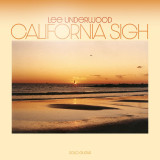
CNTS sind zurück!
Nach einem Wirbelsturm von Tragödien, sowohl global als auch persönlich, sind Gitarrist Mike Crain (Dead Cross, Retox, Festival Of Dead Deer), Schlagzeuger Kevin Avery (Retox, Planet B) und Sänger Matt Cronk (Qui) mit dem neuen Gitarristen Koko Arabian und Bassist Rico Adair zurück, um ihr zweites Album zu veröffentlichen.
Nach der Veröffentlichung ihres Debüts "Cunts" (2019) konnten CNTS eine kurze Tour einschieben, bevor die Welt auf Eis gelegt wurde. In der Pause wurden Aufnahmen gemacht und Pläne für die Zukunft geschmiedet. Alle Pläne wurden jedoch über den Haufen geworfen, als Matt Cronk bei einem Autounfall verletzt wurde, was zu einem chirurgischen Missgeschick führte und ihn mit einem gelähmten Stimmband zurückließ, unfähig zu sprechen, geschweige denn zu singen. CNTS gaben schweren Herzens ihr Ende bekannt. Bis zum Winter 2023 widmeten sich die Mitglieder von CNTS anderen Projekten, als Cronks verletztes Stimmband entgegen den Prognosen seiner Ärzte zu heilen begann und seine Stimme innerhalb von zwei Monaten zurückkehrte. Im März dann waren CNTS zuversichtlich, dass sie es noch einmal versuchen könnten.
Gestärkt durch Cronks Genesung und die neue Besetzung, verbrachten CNTS den Rest des Jahres mit der Arbeit an ihrem neuen Album Thoughts & Prayers, dessen Titel von der Banalität unserer kollektiven Reaktion auf Krisen inspiriert ist. Inspiriert von ihren jüngsten Herausforderungen haben CNTS mehrere Jahre der Frustration und des Elends in ein gut artikuliertes und aggressives Statement kanalisiert. Songs wie "Smart Mouth" und "Thoughts And Prayers" erzählen von Cronks Schmerz und Wut während seiner verschiedenen Verletzungen und der anschließenden Genesung. "I Don't Work For You" und Eating You Alive" handeln von der Ungerechtigkeit des modernen Lebens. "For A Good Time (Don't Call Her)" ist eine Wutrede auf das uralte Thema des Streits mit dem romantischen Partner.
- A1: Act Of Innocence 3:03
- A2: Get On My Love 2:55
- A3: The One You Call 2:49
- A4: Lion's Den 3:24
- B1: Parked Car Conversations 3:11
- B2: Last Kiss Last's The Longest 3:07
- B3: Call It Love 2:55
- B4: Tell My Heart 3:01
- C1: Song To Myself 3:07
- C2: Oh My Love 2:57
- C3: On Your Side 2:57
- C4: Gorgeous 2:41
- D1: Best Thing 3:03
- D2: Safely Home 3:13
- D3: Leftover Love 2:57
Die irische Pop-Rockband Picture This kündigt ihr lang erwartetes viertes Studioalbum "Parked Car Conversations" an, das am 26. April 2024 (via Hansa Records, Deutschland) erscheinen wird. "Parked Car Conversations" wird als Picture This' ehrgeizigstes Werk bezeichnet, das bisher veröffentlicht wurde. Das Album besteht aus 15 Tracks, die die Band in den letzten drei Jahren geschrieben hat. Viele von ihnen, wie z.B. "Song To Myself", beleuchten eine emotionale Tiefe, die auf früheren Alben unberührt blieb, und zeigen die Band - insbesondere Texter und Sänger Ryan Hennessy - von ihrer verletzlichsten Seite. Das Album ist ein Einblick in Hennessys persönliche Hürden, die damals unüberwindbar schienen. Die Stärke, solche Situationen zu überwinden, und das daraus resultierende Wachstum stehen im Mittelpunkt von "Parked Car Conversations". "Parked Car Conversations" wird als CD, LP und limitierte Fotobuch Edition erhältlich sein. Letzteres bietet einen ebenso intimen wie einzigartigen Einblick in den Alltag der Band. Vom ersten kleinen Gig bis zur Headline-Show beim Electric Picnic, Irlands größtem Musikevent mit über 70.000 Besuchern. Aber auch durch die Studioaufnahmen und Videodrehs entsteht hier zum ersten Mal ein komplettes Bild der Band und zeigt die Band persönlicher denn je.
Born of Austin's underground musical melting pot; Glassing's 2017 debut album `Light and Death' erupted out of the famously genre-resistant scene. 35 minutes of harrowing blast beats, searing angular feedback and frontman/bassist Dustin Coffman's sandpaper screams that set out to redefine the idea of heavy music to better reflect increasingly heavy times. Two subsequent full-length releases, 2019's `Spotted Horse' and 2021's `Twin Dream', plus especially the band's last release, the eponymous two-track EP, `Dire and Sulk' paved way for the new longplayer. More discordant, more distorted and somehow even angrier than before `From the Other Side of the Mirror', Glassing prove that uncertain times call for decisive measures. Recorded across two years of intense fits and starts, affectionately nicknamed `Hell Weeks' by the band, `From the Other Side of the Mirror' is a metaphysical foray into the fractured, warped impressions of ourselves that exist only in the minds of others. Working again with producer Andrew Hernandez, who the band liken to a fourth member at this point, Glassing pushed themselves harder, faster and more punishing than ever before. As their first full-length release with Osment and their first release on Pelagic Records, `From the Other Side of the Mirror' became an opportunity for a new beginning, free of any pre-existing limitations or thresholds. As Coffman tells us, "This allowed us to forgo a lot of the convention and structure we've relied on in the past, the substitution was for raw expression. Kindred to the emotions that birthed it, this record is spirited, painful and unmethodical." There's an indescribable, beautiful rawness to this album that comes from Glassing throwing everything on the table in plain sight, rather than polishing ideas for the benefit of others until they're unrecognisable, perfect and fake. FFO Portrayal of Guilt, Neurosis, Converge, Botch, Pelican, Unsane, This Will Destroy You, Chat Pile, Old Man Gloom, Départe
John Wright’s 1960 debut album “South Side Soul” was originally released on the Prestige label and recorded at Van Gelder Studios. Along with Wright (piano), the album features Wendell Robert (bass) and Walter McCants (drums). This new edition of the album is released as part of the OJC Series and is pressed on 180-gram vinyl at RTI with (AAA) lacquers cut from the original master tapes by Kevin Gray at Cohearent Audio. It is presented in a Tip-On Jacket.
- 01: Dante Inferno (Intro)
- 02: All Alone (Feat. Masta Ace & Torae)
- 03: Lyrikal Landslide (Feat. Ruste Juxx & Nutso)
- 04: What`s Done Is Done (Feat. Ide & Jise One)
- 05: Deja Vu (Feat. Rasheed Chappell & Soul The American Dream)
- 06: Im Here (Feat. Dontique `& Cf)
- 07: The Mecca (Interlude)
- 08: Disobedience (Feat. Clever One)
- 09: Call Of The Wild (Feat. Team Thoro (Absouljah & Spicco & Halfa Brick))
- 10: She`s Broke (Feat. Guilty Simpson)
- 11: Believers (Interlude)
- 12: Ambition Of The Shallows (Feat. Napoleon Da Legend & Paloma Pradal)
- 13: Just Listen (Feat. Wildelux)
- 14: Longevity (Feat. G.o.d. Part 3, J-Merk & Jamil Honesty)
- 15: Who Be The Realest (Feat. King Magnetic)
- 16: Making Cuts (Feat. Dj Nix`on, Dj Topic, Ordœuvre & Dj Duke)
- 17: Hell`s Storm (Feat. Q-Unique, Hex One & Milez Grimez)
- 18: Maniac (Feat. Xplicit Content (Unkn?Wn, Fatha Death & Eternel & Apacalypze))
- 19: Damned (Interlude)
- 20: Other Shit (Feat. Dirt Platoon & Wyld Bunch)
- 21: Projects (Feat. Spit Gemz & Eff Yoo)
- 22: The Payback (Feat. Ems (M-Dot & Revalation & Mayhem))
Stuck in the depths of a dark alley, blocked by yet another breeze, hitting a stone wall, road sign ahead: Dead End.
Impasse. "Cul-de-sac".
Hip‐hop. The original, some would say, official music of the late 20th Century Bronx.
Some say it has endured it's fair share of distractions, detractors and defectors. Some say it has murdered itself, having been abandoned by its so‐called best men, those who have gone off in other directions, or who have, simply, just beat‐retired. Yet, there are plenty of Soldier Monks still out there, prepared to sweat it out in the Temple of Machinery and Mics.
Low Cut honored this cause four years ago, with his MPC crafted minimalist version of NY Minute and he's back to ring the bells and unsheathe the samples!
The starting point of Dead End's production remains the 90's boom-bap, but the will to carry it even further brings it to its destination. By decorating it with rich samples flushed out after digging through vinyls pressed several decades ago, it is guided by a compass pointing deposits to the East. With sound quality inherited from a fastidious composition and mix works, using inspiration rather than just being a copycat, Dead End celebrates it without setting it up as a museum piece.
Picturing the beatmaker stuck in the depths of a dark alley, ended with a brick wall, is easy. But far from isolated in his Parisian basement, Low Cut has rung phones in New York, Baltimore and Detroit, rounding up the faithful. He magnetized the hidden but sharp forces, and gained attendance of legends. The casting of Dead End : Ruste Juxx & Nutso, Dirt Platoon, Guilty Simpson, Torae, Rasheed Chappell and the stainless Masta Ace, among other beat crushers. Also starring DJ Duke, Nix'on, Topic and Ordoeuvre with their DMC titles crates, for a deep beatfight on bars scarified of scratches.
Heavy atmosphere, martial beats and street soul, Dead End is also the final episode of the projects initiated by Low Cut, based on the model of a producer inviting various MCs.
He will then replace his turntable needles, refresh his sample banks, and settle the BPMs of his productions on more abstract frequencies.
Book[57,94 €]
Here In, Absence" ("Here, In Absence" for the book) is the result of the dialogue between the Finnish photographer Mikael Siirilä and the music artists The Humble Bee & Offthesky initiated by IIKKI, between March 2023 and January 2024.
After a first release in 2019 on IIKKI ("All Other Voices Gone, Only Yours Remains"), a second one in 2020 on LAAPS ("We Were The Hum Of Dreams"), Craig Tattersall (The Humble Bee) and Jason Corder (Offthesky) come back with a third stunning out-of-time beauty, paired with the Mikael Siirilä photography works.
Craig Tattersall is a former member of The Remote Viewer and Famous Boyfriend bandmate Andrew Johnson. Tattersall's music can be found these days more often under his alias The Humble Bee; as a founder member of The Boats; and in his collaborative works with the likes of Bill Seaman in The Seaman And The Tattered Sail. He has run the wonderful label Cotton Goods from 2008 to 2015 and since 2009 he has recorded 16 solo albums on his moniker The Humble Bee and almost the same under his name on some collaborations.
Jason Corder is experimental-ambient multimedia artist based in Denver, CO. He has been producing music, video art, audio software, and the occasional interactive sound sculpture, for over 20 years. He teaches private courses on generative music and occasionally lectures on various sound design topics at Denver University. He currently is the Audio Director at the Denver based videogame studio Dire Wolf. Over the years, he has worked with labels such as Home Normal, 12k's term, Facture, LAAPS and more. Over the years he has performed at Mutek, Decibel, Communikey and other festivals, sharing the bill with likeminded artists Pole, Matmos, William Basinski, and more.
Mikael Siirilä: "I am a darkroom artist (b. 1978) based in Helsinki, Finland. My small individual photographs examine the themes of absence, presence and outsiderhood. My characters appear immersed in their inner worlds and moments of being: simultaneously absent and intensely present. The pictures also reveal the outsider’s gaze, lost in observation and reflection. My pictures are true observations captured with minimal interaction with the subjects. Their origin is in the act of looking, and they feel causally connected to the world. The craft of printmaking is inseparable from my artistic expression. I work solely with black & white film and the darkroom. The slow, contemplative process lends the pictures a calmness. I make physical pictures I want to stare at, feel and become lost in. Again and again."
Fine Art Book, Ltd. to 500 copies:
Hardcover book printed on Munken Lynx 150g/m2 // 80 pages, 18cm x 24cm, 51 photos // Logo and slot embossed // Selective UV varnish // Visible seam and cutting cover pages // Hand-numbered, hand-stamped.
Keplar presents the first-ever vinyl edition of the 2003 album »From Tokyo to Naiagara« by Tujiko Noriko. This reissue with new artwork by Joji Koyama is an abridged version of the album as Tomlab label owner Tom Steinle and producer Aki Onda had originally intended to publish it alongside the original CD version. Written by the France-based Tujiko while she still lived in Japan, »From Tokyo to Naiagara« followed up on her two seminal Mego albums and marked a turning point in both the artist’s career and personal life: While she was preparing to leave Japan behind, she succinctly connected the dots between her experiments in pop music and her interest for more abstract sounds. Tujiko worked primarily with a Yamaha synthesizer and an MPC sampler while also incorporating contributions by other musicians such as Onda, Riow Arai and Sakana Hosomi into the pieces. Sometimes approaching an IDM and clicks’n’cuts-style production or working with trip-hop and hip-hop beats while using conventional song structures in the most unconventional of ways, the album showcases her multifaceted influences and skills as a singer and musician to full effect.
Tujiko fondly remembers the time when she made the album. »I had a lot of time for myself back then and I didn’t even feel like I was very busy,« she says today. She describes producing it in close collaboration with Onda, who would relocate to New York City shortly after, as »quite Tokyo and very local.« They explored parts of the city that they hadn’t yet been to for a photography project (finding, among other things, a coin laundry called Naiagara—a transliteration of Niagara). This left its mark on a record that mixes melancholia with joy. The driving opener »Narita Made,« named after one of Tokyo’s airports, already makes this clear: Tujiko’s wistful vocals and lyrics like »I miss you terribly« emphasises the sense of bittersweetness that forms the common thread for a sonically diverse and stylistically open-ended album—this music is looking back while moving forward. It is probably no surprise that its reissue too evokes tender memories of Onda and Steinle in Tujiko, while also reminding her of what lies ahead. »I have so much more to do and not enough time for that,« she muses, before quickly adding: »But I also feel less alone having that album again.«
Influenced in equal parts by the experience of strolling through previously unknown Tokyoite back alleys and thinking about the paths not (yet) taken, »From Tokyo to Naiagara« is precisely that: the perfect travel companion for a journey that leads its listeners from past to future.
Jon Langford's been in more bands than you have digits and that's true even if you were born with a few extras! From his early days in Mekons, Delta 5, Three Johns and even Sisters Of Mercy (booted for not wearing black) to a veritable explosion of one-off recordings and performances with more names than we could ever hope to list in full. A Wikipedia description for this group, The Bright Shiners (described therein as 'circa 2022 through at least 2023, in Northern California') provides some sense of the complex taxonomy needed just to keep track of Jon's massive oeuvre. Happily, that's an understated description of a serious new outlet for his endless creativity, and The Bright Shiners' recording activities have produced a full album, Where It Really Starts, the first recording in a collaboration with Tamineh Gueramy, Alice Spencer, and Jon's frequent musical partner, John Szymanski. Jon's never sung or written better, and the sense that the band realised they were onto something great is palpable in an instant. Each song is a minimalistic jewel - there's nothing here that doesn't need to be - yet the album is unsparing of aptly astonishing adornment - wonderful harmonies, horns, mellotron, bowed guitar, piano. looped percussion and more), by our reckoning this is one of Jon's finest works of art and his best outfit outside The Mekons themselves Jon Langford & the Bright Shiners will tour mercilessly throughout 2024.
The Morning Papers Have Given Us the Vapours was made with the black watch bandmates and producers/engineers Rob Campanella (Brian Jonestown Massacre, The Tyde, The Warlocks) and Andy Creighton (The World Record, Parson Red Heads). Ben Eshbach, formerly of The Sugarplastic, arranged the strings. Kesha Rose guests on lead vocals on the second single, Oh Do Shut Up. And the great Lindsay Murray once again lends her beautiful backing vox to a number of tracks.
the black watch songwriter/frontman John Andrew Fredrick wrote the ten songs on this, his Los Angeles-based band's latest album, entirely unselfconsciously, with no set goal in mind other than to revel in the joy of songwriting, and, eventually, the luxury of recording his music with his more-than-accomplished band. The Morning Papers Have Given Us the Vapours, produced separately and together by Rob Campanella and Andy Creighton evinces the black watch's often stunning ability to, as Andy Gill once observed in The Independent, "find chaos in the calm, melody in the miasma."
Fredrick, who has also published four comedic novels and a book on the early films of Wes Anderson, jovially describes himself as "a recovering Anglophile--one who'll never, one hopes, fully recover." From his home studio in the Angeleno Heights district of L.A., he waxes eloquent about how being branded, as it were, as a too-ardent lover of British music, film, and literature has left him as bemused as has the tag "prolific" that is often affixed to reviews of his work.
"I just don't think it's all that interesting to note that we've made so many records. Looked at one way, it's a sort of deflection from talking about the timbre if not the quality of the individual songs. Though I know it can be intimidating for fans who've just discovered us--a sort of 'My goodness, where do I start with this band that has put out LPs since 1988?' I get it. I do. I picture someone standing at our slot at a bin at a record store becoming overwhelmed at the prospect of picking the 'wrong' title. And then walking away and not picking up anything from us!" Fredrick laughs. "What can you do indeed?"
He started his career as a songwriter as a result of an American Football injury that left him bedridden in the home he grew up in in Santa Barbara, California. The year The Beatles immortal double-album came out at Christmastime he broke his leg so badly that he had to be home-schooled for an entire year. His parents, ex-teachers themselves, refused to let him watch telly for more than an hour a day. He propped a Silvertone acoustic on top of the massive cast that screamed all the way up to his thigh from his toes, and began to write little melodies and lyrics that, doubtless, did not in the least mask his love for the Fabs, The White Album in especial.
And he read and read and read--histories of the American Revolution and Civil War, mostly, and as many Dickens novels as his mum and dad could bring him. "That year," Fredrick observes, "surely made me who I am today. Proof that intensely unfortunate-seeming events can prove most fortunate. As a sport-mad kid, it made me absolutely mental that I was exiled from the activities I loved most and the school teams I played on. What a blessing undisguised that injury was! Not that I'd like to experience anything like it ever again, mind you."
Fredrick can even recall a few of the melodies he wrote as boy ("Utterly trite, of course, completely jejune"); and in a way, The Morning Papers Have Given Us the Vapours showcases a kind of get-back-to-where-you-once-belonged sensibility. "I didn't intend, this time, to make an album per se. I write both songs and fiction in order to find out what happens, to find out what I might want to say," he notes. "Rob often asks me what a particular song is about; and I often reply that I either don't know, or would prefer that others say. Same thing goes for when people ask me where they should start with our discography. I never know what to say. Our LP from 2011, Led Zeppelin Five (remastered in 2021 for its tenth anniversary), has been our best seller, I think--but that may be because some stoned Zepheads thought their gods had perhaps put out a record they'd missed!"
Despite being deadly serious about music-making, TBW's been known to either whimsically or perversely title their albums. Examples: Jiggery-Pokery (an allusion to John Lennon assessing George Martin's productions), After the Gold Room (a pun on the Neil Young classic plus a local eastside L.A. watering hole), Sugarplum Fairy, Sugarplum Fairy (echoing Lennon's famous count-off to A Day in the Life), Fromthing Somethat (a garbled spoonerism/lyric while doing a vocal), Brilliant Failures (the 2020 release that, along with Fromthing Somethat, was named Album of the Year by venerable indie rock magazine The Big Takeover), and the aforementioned LZ5.
For the new LP, the band recruited longtime friends and allies Ben Eshbach (the Emmy-Award-winning frontman of The Sugarplastic) and Lindsay Murray (Gretchens Wheel) to compose and arrange strings and sing heaps of lovely backing vocals, respectively.
And the result? A collection of songs that Fredrick, in his quite-but-not-quite self-deprecatory way, might call another set of brilliant failures. "Every song, every LP we do, is a failure of sorts--no matter how powerful or beautiful or pleasing-to-us it turns out," John concludes. "I have often said that my aim is to write songs as good as anything on The Beatles... and I will never achieve my goal. And thus I'll have to keep at it, keep trying. And chin-chin to that!"
And now your attention's been brought to a band (or you've heard of them or heard a track or two down the years) that has been pegged by The L.A. Weekly as "a national treasure" as well as "the most criminally-neglected indie pop group imaginable."
So here's to the prospect of that ostensible neglect becoming as much of a thing of the past as John Andrew Fredrick's year-long stint in bed.
A milestone of the Black music movement, originally released on Vault in 1969. The debut album of Elaine Brown was arranged by piano player amd composer Horace Tapscott, conducting the Californian Pan-Afrikan Peoples Arkestra. A true political manifesto, the album is an accurate meeting between black poetry and spiritual jazz. After her debut Elaine went to release an eponymous second album on Motown. Elaine Brown is an African American activist and a former leader of the Black Panther Party - Minister of Information and Chairman.
- Listen Up Punk ! (1.15)
- 430: Kings Road (Punk Meets Rock’n’roll) (1.34)
- Machine Bubble Disco (1.15)
- Dangerously Close To Love (1.08)
- Buzz-Cocks Are Coming (1.05)
- I’m A Damned Disciple (1.07)
- The Class Of 76 (Punk Year Zero) (1.30)
- The Punk Rockers Gig Prayer (0.37)
- Someone Dropped A Bomb In The Uk (0.59)
- Looking At The Decals On Steve Jones Guitar (1.39)
- Anarchy Tour After Grundy (Punks Out On Parole) (2.47)
- The Satellite Kid (0.59)
- All You Need Is Punk (2.03)
- I Used To Play Bass In A Punk Rock Band (1.07)
- A Punky Night In Soho (1.19)
- When The Two 77’S Clashed (1.31)
- Kiss Me Punk (Till My Mouth Gets Numb) (1.05)
- Punk Rock Fanzines (1.24)
- Punk Rock Clothes For Heroes (1.06)
- Punk Times (1.06)
- 45: Random Punk Memories (2.46)
- Punk Rock Jubilee 77 (0.56)
- The Ballad Of Johnny Rotten (1.42)
- Punk Badge (0.45)
- Punk Rock Pictures On My Wall (1.38)
- Not Another Punk Rock 45 (1.31)
- Holiday In Someone Else’s Misery (1.21)
- The Last Punk On Portobello Road (Ode To Joe) (1.48)
- Flogging Punk Rock (0.38)
- Never Seen A Bad Picture Of Debbie Harry (2.12)
This Album is a collection of what I call Punk Art Poetry.
Poetry put together like a lyric to tell a certain story or explain a thought on some punk related matter. Some of these stories did actually turn themselves into a song which I released on my Punk Art imprint.
Most of these poems were influenced or inspired a piece of art I was working on.
Hope you like them or can relate to these stories.
Thanks for your indulgence
FUJI||||||||||TA returns to Hallow Ground with his second full-length for the label after we had released his international breakthrough album »iki« in early 2020. Active since 2006, the Japanese composer and sound artist has become prolific since the release of »iki,« releasing a slew of records while also touring the world. His new album »MMM« is Yosuke Fujita’s most complex so far. Changing the set-up of his pipe organ by switching to an electric air pump allowed him to activate new sonic and compositional potentials of the instrument, while he also expanded upon his experiments with his own voice. »MMM« is a masterpiece of conceptual and formal rigour—a testament to how multi-layered and versatile the music of FUJI||||||||||TA can be.
Previous releases had already showcased Fujita's interest in working with the rhythmic potentials of the organ he built himself in 2009. Replacing its hand-operated air pump with an electric one allowed him to work with it more freely and simultaneously record its sounds. This marked the starting point for the opener »M-1,« for which he recorded the pipes by waving a gun microphone close to it, thus creating shifting rhythmic patterns. The piece engages in a perpetual play of repetition and difference, balancing sonic intensity with compositional dramaturgy. For »M-2,« the artist uses his voice and works with a singing technique he has developed over more than a decade: constantly exhaling and inhaling, he puts a strain on his internal organs in order to create what he calls a »third voice.« The resulting piece is built on a throbbing rhythmic foundation topped by wordless melodies.
»M-3« closes the album as a synthesis of these two pieces, but is far more than the mere sum of its parts. The subtle tonal shifts of the organ take on a more subdued role this time, and Fujita’s scat growling and singing reappears in processed form. »M-3« combines the rhythms and melodies of the previous pieces to let something entirely new emerge out of them, much like the album is based on perpetual changes and recombinatory strategies. In fact, Fujita explains, the acronymic title can be read in many ways: this album is minimalistic, but freely mixes and mingles different materials in magical and even metaphorical ways while also paying its dues to his wife and daughter—M. and M. Just like its title can mean a lot of different things, »MMM« itself is ever-evolving, traversing different moods and opening itself up to a plethora of interpretations at each of its many turns.
In Season 5, the long-awaited fifth full-length by beach-pop project The Tyde, frontman Darren Rademaker unveils his vision of an ’80s-inspired Suave Nouveau, with a clutch of sweet, melancholic love songs evoking lush mustaches, mellow macho, the ghost of Jimmy Buffett, white sand beaches, flamingos swooping across a cerulean sky, speedboats cutting through the bay and pastel linen suits billowing in the breeze as the sun dips beneath the horizon. “Spanish conquistador Juan Ponce de León ‘discovered’ Florida in 1513, naming the peninsula La Florida, the flowering land. In Season 5, Rademaker reflects on his own return to the flowering land, and the artistic diaspora that caused him to quit California in 2020 in search of a New World of his own. ‘I lived in Florida from the ages of ten to twenty-five, but never really got to explore it,’ he says. ‘When I came back, I decided to really embrace the whole Florida aesthetic. I moved into an art deco home in Sarasota with pink seashell lamps. I visited Key West, like seven times. I also quit smoking weed and cigarettes, and stopped saying shit like LOL and amazeballs. It felt different. It felt good.’ “The record features the talents of many good friends, including Dan Horne, Colby Buddelmeyer, Matt Correia (Allah-Las), Clay Finch (Mapache), Albert Hickman, Derek James (The Entrance Band), Alex Knost (Tomorrow’s Tulips) and Adam MacDougall (Circles Around The Sun / Black Crowes), with artist / musician Matt Fishbeck (Holy Shit) designing the deco-inspired album artwork. “And as much as they are inspired by the past, these songs are keenly aware of an uncertain future—because there is no such thing as a time machine, and there is no going back. Ultimately, Season 5 asks the question—where do we go after the sun sets on our dreams? Where the fuck is the New New World? In Rademaker’s eyes, it no longer exists in any specific American geography—rather, all hope remains in the timeless, unending power of music, and its power to take us to the places we wish we could be. Even if they don’t exist anymore.” — Caroline Ryder
Earth, Our Planet?”: A call for environmental awareness. This time, Pedro Vian - the founder of Modern Obscure Music - presents his fourth solo album (following his 2020 release, "Ibillorca"). Due for release in spring 2024, "Earth, Our Planet?" promises to immerse us in a moving odyssey, crossing the boundaries of musical genres to provoke an urgent meditation on the protection of our planet. On this occasion Vian has composed the album influenced by the myth of the eternal return, the compositions are long and repetitive, generating states of pure trance.
Pedro Vian, singular for his fusion of genres and styles, ventures into even more complex territories in "Earth, Our Planet?". From the first listen, it is evident that this work treads the line of convention and breaks the boundaries of electronic and experimental music with artistic dexterity. The album weaves together texture, hypnotic rhythms and melody. Each track reveals his distinctive ability to create immersive landscapes, guiding the listener into deep emotional introspection. This is not just music; it is a transformative experience.
The beauty of this album lies not only in the musical vision. The album features high-calibre collaborations that add layers of creativity and elegance. Trumpeter Pierre Bastien, whose early productions left an indelible mark on Aphex Twin's Reflex label, infuses "A Day in Rotterdam" with a unique emotional resonance. Violinist, Asia, renowned for her avant-garde approach and ability to conjure unique landscapes, elevates the album's opening tracks "Urobóros" and "Les Tambours Subterraniens". Their skill and sensitivity intertwine perfectly with Vian's artistic vision. In addition, Italian producer Daniele Mana, with whom Pedro Vian collaborated closely on his previous album "Cascades", known for his experimental approach and talent for creating extraterrestrial atmospheres also contributes to "Les Tambours Subterraniens". His artistic perspective adds more complexity and texture to the piece, pushing the boundaries of contemporary electronic music. There is also a collaboration with Raül Refree, an artist with whom Vian worked with last year, presenting “Font De la Vera Pau”, an album that The Guardian defined as "a wonderful piece of electroacoustic music, a captivating mix of strings and analogue synth drones which sometimes flirts with Alice Coltrane-ish spiritual jazz". With "Earth, Our Planet?", Pedro Vian not only offers up some of his best work to date, but it is also a call to reflect on our relationship with the natural world. As a part of a planet where environmental awareness is more crucial than ever, he urges us to protect and preserve our world as an extension of ourselves. This extensive work is a statement, Vian addresses the notion that too often we prioritise immediate needs over the well-being of the planet. It highlights the fact that we often consider the Earth as a possession when, in reality, we are but a part of it.
Yuval Havkin, also known as Rejoicer, is one of the foremost exponents of downtempo music, inspired by the fusion of jazz and hip-hop. His new album thus draws on his early influences while exploring the world of calm, melodic electronic music that borders on ambient.
This Is Reasonable has a chill-out feel to it, a record filled with melodies and atmospheres that, throughout its eleven tracks, conveys a sense of calm and floating, akin to ambient music. Stripped of the clichés of the genre, the album is built around subtle melodies and rich harmonies from keyboards and synths, which borrow as much from the spirit of jazz as from the inventions of electronica, whilst being supported by a gentle groove. This equilibrium is perfectly captured by Rejoicer's moniker, a term that evokes both the idleness of artificial paradises and a soft, caring form of spirituality.
Musical path
Yuval Havkin was born in Israel in 1985, and grew up in England before returning to his homeland. He began studying classical piano as a child, but was put off by such conservative teaching and turned to hip-hop and beatmaking in his teens. Throughout the 2000s, he learned his skills "on the job", working with musicians he met in Tel Aviv, a local scene that nurtured a sense of community and emulation. Back then, he was particularly impressed by the grooves and electronic inventions of Detroit producer Dabrye, who had a revelatory effect on him, before he discovered legendary musicians Madlib and Jay Dee aka J Dilla, who led him down the path of beatmaking.
Yuval Havkin's music career got off to a more serious start in the late 2000s with the creation of his own label, Raw Tapes, both based in Tel Aviv. Blending jazz, funk and hip hop, whilst still embracing pop influences, the label's productions showcased the richness of the new Israeli scene combining cool, elegance, playfulness, and a degree of research and inventiveness, thanks to the talent of artists and bands such as Duo Brothers, Maya Dunietz, iogi, Nitai Hershkovits, the Buttering Trio and Rejoicer, the artist's most personal project.
In 2018, Rejoicer's warm and engaging sounds caught the attention of the prestigious Los Angeles label Stones Throw, renowned for having signed his idols Madlib and J Dilla, not to mention Aloe Blacc and Peanut Butter Wolf (its founder). Two albums followed, Energy Dreams (2018) and Spiritual Sleaze (2020), both of which demonstrate his instrumental mastery, jazz culture and lush orchestrations. Both albums are on a par with more renown sampling prodigies of the beat scene, and gave him his first international recognition.
Now based between Los Angeles and Savyon, near Tel Aviv, this hyperactive and instinctive artist simultaneously pursues a career as a composer, musician and label owner, member of numerous bands and collective projects (Apifera, PlayDead, collaborations with Jimi Prasad and Avishai Cohen) while also offering his studios and production skills to other artists.
“Fela Kuti meets Aphex Twin”
This new Rejoicer album, which follows three earlier jazz-tinged records, marks a new and more personal musical direction for an artist who previously favored group work and collaborations. Following his meeting with Mathias Duchemin, founder of the Circus Company record label and a keen enthusiast of the new Israeli jazz scene, Yuval chose to delve into a more electronic and sequenced style of music, playing Prophet 6 and 8 synths, a Juno 60, a Minimoog and his Fender Rhodes keyboard, in contrast with the more organic sounds of his previous albums.
While a few tracks on this new album may sound like a laid-back version of some of the Warp label's early electronic classics by Aphex Twin or Boards of Canada, Yuval Havkin claims to have also been inspired by the great Fela Kuti, particularly in his search for harmonies between bass, keyboards and percussion, and by his elder trumpet-playing friend Avishai Cohen, a musician he particularly admires.
Beyond these various influences, This Is Reasonable is an album of compelling and bewitching melodies. The moods, peacefulness and sheer beauty of This Is Reasonable are, indeed, quite paradoxical, in stark contrast to the country's tragedies (the title explicitly refers to recent political disputes in Israel) and the war currently raging less than a hundred miles from his studio. A paradox fully embraced by the artist, who views his music as a response to the violence of our times.
Although it felt like the world had stopped spinning, at times, it was during these days, months, and years of uncertainty that many of Venice’s “Stained Glass” songs were conceived. Each member of Venice was quietly and privately cataloguing their artistic interpretation of this new reality and uncertainty by recording or writing down little snippets of ideas, like guitar riffs, melodies, or lyrics…all of these came about while looking at life through a new lens.
They set up the writing circle using an electronic drum kit, small tube amps, direct acoustic guitars and bass and the sm58 stage microphones for vocals. This small and simple setup allowed the band to work on ideas at low-volume levels by using headphones or low-level playback through studio monitors without bothering the neighbors with live drums. “Lunches made by Michael’s wife, Danielle, and visits from their dog Sachi, kept us grounded and let us stay in the creative bubble without leaving that space”, says bassist, Mark Harris. Michael and drummer, Andre Kemp, who co-produced Stained Glass, would later re-record the drum tracks with real drums in a friend’s studio.
“The beauty of this approach on Stained Glass was that one person’s idea would be presented to the other 5 musicians and each guy added a different color to that idea”, says Michael. “Whether it was an unexpected drum beat, or a moving guitar line, those simple ideas turned into pieces of art, colored by the different musical and lyrical contributions. That only happens when you are working that idea out, together, and playing as one unit”.
That was the main inspiration for the album title; like a kaleidoscope, each guy's experience and taste in music was bringing a different color to the songs, but together their contributions made one piece of art, one song. Michael concludes, “if you zoom out, each song becomes its own color and all those songs or colors come together to form one big piece of art, one big piece of ‘Stained Glass’”.
Gimme, Gimme, Gimme Desire, an everlasting grip of that youthful energy, that fire and fury you felt playing a style of music that gives you a lifelong addiction and appreciation. If you’ve once been part of that certain something, that became part of your identity, it never lets you go. Drummer Sascha, bassist Jan, guitarists Philipp and Tobias know how it is getting older but still feeling the fire. The four friends shook up the scenes out of Frankfurt in the 90s and 00s. They played in different bands, they toured Europe and the US of A, they were mods, punks, hardcore kids. And they never lost their connection and love for their music. That’s why they got together some years back, rehearsing and writing songs just for the heck of it. Out of pure desperation the four of them were thinking about staying a goddamn instrumental band, maybe working with projections and shit to fog the fact that there was something initial missing: a singer. The road was calling their names, and they wanted to play shows and let you and you and you know what they got... So, they gave it one last try to find somebody to fill the void behind the mic. What helped was a platform – basically Tinder for musicians – to find that certain somebody. They kept it simple and only dropped one thing: #blackflag. On the other side of the screen there is Sam, a mystical, ghostly punkrock fairy. Sam shares that same hashtag, and she wants to sing. So, why not give it a try? Sam takes the offer, shows up in the rehearsal space, and the rest is history. Sam owns it. Sam is prepared. Sam can sing, scream, kick ass and has the lyrics to back it all up! On different occasions they now set stages on fire. They played a sweaty show in a packed Molotow cellar at Reeperbahn Festival, they joined the “Female Fronted Is Not A Genre” festival at legendary SO36 in Berlin and took the place by storm. They are ready. They were born ready. And they have that record to prove it. As any classic hardcore/punk LP it’s almost over before it started. Ten songs in twenty minutes. That’s the way. I Am A God sets the tone: “You think that I’m a girl?”, Sam asks, “Let me tell you I am a god/ And you know that I’m heaven sent.” What else would Sam be? The legendary hashtagged Californian hardcore icons drip out of every note here. This is old-school knowledge, played today. Fast, furious, and packed with energy. But it’s way more than just a bland tribute. It’s a middle-finger that finds its own direction. Salary Man allows itself a certain amount of melody – also carried by Sam who obviously can do more than bellow. Or Somewhere that shows that The Pill is a more dimensional band that can even Hüsker Dü things up if they are willing to. The Bitter Pill presents itself surprisingly angular and kind of melancholic. And What’s New almost makes its way into post-hardcore territory. Inbetween Switch and Off give you all the Greg Ginn vs. Dez Cadena your damaged souls were desperately striving for. The debut album Hollywood Smile will be released on April 5th, 2024 by Hamburg’s Sounds Of Subterrania.
Mit der Veröffentlichung ihres fünften Albums betreten Imminence verschiedenste musikalische Bereiche und zeigen auf ihrer Reise als Band eine große Vielfalt.
Das bahnbrechende Alternative-Metalcore-Ensemble Imminence stammt von der Südküste Schwedens und hat sich in den letzten Jahren mutig eine Nische im Musikbereich geschaffen. Allen Erwartungen zum Trotz hat das Quintett akribisch einen Klangteppich geschaffen, der die Grenzen des Genres überschreitet. Ihre mutige Verschmelzung klassischer Streicharrangements, verwoben mit der rohen Kraft wilden skandinavischen Metals, erschafft ein fesselndes Hörerlebnis. Sowohl klanglich als auch visuell erweisen sich Imminence als ein Leuchtfeuer der Innovation und Spannung und etablieren sich nicht nur als Band, sondern auch als Pioniere, die neue Gebiete in der sich ständig weiterentwickelnden Musiklandschaft erschließen.
Angeführt vom Sänger und Geiger Eddie Berg, den Gitarristen Harald Barrett und Alex Arnoldsson, dem Schlagzeuger Peter Hanström und dem Bassisten Christian Höijer; Imminence entfesseln ihr musikalisches Können auf dem kommenden Album „The Black“. Machen Sie sich bereit und atmen Sie tief durch, während Imminence uns auf den großen Sprung in die Tiefen von „The Black“ vorbereiten, einem kühnen Versprechen einer beispiellosen musikalischen Odyssee, die sich allen Konventionen widersetzt und Sie einlädt, sich auf den Aufstieg eines neuen Genre-Klassikers einzulassen.
Die Band wagt sich in eine düsterere und stärker auf Orchester ausgerichtete Welt vor und definiert die Grenzen der modernen Alternative-Szene immer wieder neu. Imminence Erforschung ist mehr als nur Musik; Es ist ein mutiger Abstieg in unbekannte Gebiete, der ihre Position als Pioniere in der Landschaft einzigartiger und hochinnovativer musikalischer Ausdrucksformen festigt.
- „Dies ist die größte Annäherung an eine selbstbetitelte Veröffentlichung, denn diese Platte spricht Bände darüber, was Imminence als Band ausmacht.“ Durch die Einflüsse aus unserer gesamten Diskographie, gemischt mit unseren skandinavischen Wurzeln, kann man Elemente aus unserer gesamten Geschichte hören, die jedoch von einem unstillbaren Hunger angetrieben werden. Das Album ist wahrscheinlich das konzeptionellste, das wir je geschaffen haben, und ich war noch nie so stolz auf ein Werk. Die lyrischen Konzepte setzen den Weg früherer Veröffentlichungen fort und drehen sich um psychische Gesundheit und Depression. Aber dieses Mal gibt es kein Zurückhalten. Es ist wütend, verzweifelter und aus den Fugen geraten, durchdrungen von Angst und Dunkelheit. Wir haben es uns auch erlaubt, das Album in unerwartete Räume schweben zu lassen und so eine musikalische Reise mit starken Kontrasten zwischen Licht und Dunkelheit zu schaffen. Es ist ein „Eat Your Heart Out“, ein kompromissloser Beweis dafür, was „Imminence“ geworden ist. Das ist das Schwarze.“ – Eddie Berg
Mit der Veröffentlichung ihres fünften Albums betreten Imminence verschiedenste musikalische Bereiche und zeigen auf ihrer Reise als Band eine große Vielfalt.
Das bahnbrechende Alternative-Metalcore-Ensemble Imminence stammt von der Südküste Schwedens und hat sich in den letzten Jahren mutig eine Nische im Musikbereich geschaffen. Allen Erwartungen zum Trotz hat das Quintett akribisch einen Klangteppich geschaffen, der die Grenzen des Genres überschreitet. Ihre mutige Verschmelzung klassischer Streicharrangements, verwoben mit der rohen Kraft wilden skandinavischen Metals, erschafft ein fesselndes Hörerlebnis. Sowohl klanglich als auch visuell erweisen sich Imminence als ein Leuchtfeuer der Innovation und Spannung und etablieren sich nicht nur als Band, sondern auch als Pioniere, die neue Gebiete in der sich ständig weiterentwickelnden Musiklandschaft erschließen.
Angeführt vom Sänger und Geiger Eddie Berg, den Gitarristen Harald Barrett und Alex Arnoldsson, dem Schlagzeuger Peter Hanström und dem Bassisten Christian Höijer; Imminence entfesseln ihr musikalisches Können auf dem kommenden Album „The Black“. Machen Sie sich bereit und atmen Sie tief durch, während Imminence uns auf den großen Sprung in die Tiefen von „The Black“ vorbereiten, einem kühnen Versprechen einer beispiellosen musikalischen Odyssee, die sich allen Konventionen widersetzt und Sie einlädt, sich auf den Aufstieg eines neuen Genre-Klassikers einzulassen.
Die Band wagt sich in eine düsterere und stärker auf Orchester ausgerichtete Welt vor und definiert die Grenzen der modernen Alternative-Szene immer wieder neu. Imminence Erforschung ist mehr als nur Musik; Es ist ein mutiger Abstieg in unbekannte Gebiete, der ihre Position als Pioniere in der Landschaft einzigartiger und hochinnovativer musikalischer Ausdrucksformen festigt.
- „Dies ist die größte Annäherung an eine selbstbetitelte Veröffentlichung, denn diese Platte spricht Bände darüber, was Imminence als Band ausmacht.“ Durch die Einflüsse aus unserer gesamten Diskographie, gemischt mit unseren skandinavischen Wurzeln, kann man Elemente aus unserer gesamten Geschichte hören, die jedoch von einem unstillbaren Hunger angetrieben werden. Das Album ist wahrscheinlich das konzeptionellste, das wir je geschaffen haben, und ich war noch nie so stolz auf ein Werk. Die lyrischen Konzepte setzen den Weg früherer Veröffentlichungen fort und drehen sich um psychische Gesundheit und Depression. Aber dieses Mal gibt es kein Zurückhalten. Es ist wütend, verzweifelter und aus den Fugen geraten, durchdrungen von Angst und Dunkelheit. Wir haben es uns auch erlaubt, das Album in unerwartete Räume schweben zu lassen und so eine musikalische Reise mit starken Kontrasten zwischen Licht und Dunkelheit zu schaffen. Es ist ein „Eat Your Heart Out“, ein kompromissloser Beweis dafür, was „Imminence“ geworden ist. Das ist das Schwarze.“ – Eddie Berg
Necrot continue their ascent to the forefront of American aural extremity, pushing the boundaries of style and continuing to recast metal in their image. Founded by bassist, vocalist and principal songwriter Luca Indrio and drummer Chad Gailey in 2011 – guitarist Sonny Reinhardt joined the next year – the Oakland, California, trio offer Lifeless Birth (in continued collaboration with Tankcrimes) as a culmination of their to-date efforts to encapsulate and push forward the deathly stylings of 2020’s Mortal and their 2017 debut, Blood Offerings. It’s not about giving up a ferocity that’s helped make them a household name among the converted. Instead, Necrot use that same, by-now-characteristic intensity as the backdrop for an expanded songwriting palette. They’ve always been a band who stood out. The maturity they show on Lifeless Birth confirms that’s been the plan all along. It is a vision of what metal can be and do in 2024, tearing down old barriers and keeping those traditional elements that make it stronger. Recorded with Grammy-winning producer Greg Wilkinson (who has helmed all three Necrot albums) and mastered by Brad Boatright at Audiosiege, Lifeless Birth pivots fluidly between technical intricacy, progressive poise and all-out brutality. Scouring lead work will have thrash heads nodding knowingly, and an overarching groove reaches out across the metal microgenres with a righteous call to worship. Its songs are memorable and varied, unpretentious but able to rear up with statelier violence. At the same time, “Drill the Skull,” “Cut the Cord,” “The Curse” and others prove that just because a song is beating you into the ground doesn’t mean it can’t also be forward-thinking. Or catchy. After having their Mortal tour plans scuttled owing to the covid pandemic, family health issues that led Luca, who became a US citizen in 2016 and currently lives in Mexico, to return to Italy for a time canceled what would have been their first tour post-plague. Still, despite this and Chad suffering a broken back, requiring multiple surgeries and intense physical therapy to be able to drum again, period, Luca being struck with Bell’s Palsy the night before he was originally due to fly to the studio to record, and Sonny requiring multiple surgeries on his hands in the months since they finished, Necrot charge forward with material distinguished in its real-world point of view and willingness to look beyond extreme metal tropes in lyrics, the melodies of its guitar solos, and unbridled audience engagement. For a collection of songs that feel so much written for the stage, it should be no surprise tours early in 2024 and summer festivals are to be announced. Mortal (2020, Tankcrimes) was #2 on Billboard's Top New Artist chart, #30 on the Top Current Albums chart, #4 on the Current Hard Music, and #10 on the Heatseeker Albums chart for week of release. Necrot have toured in North America, Europe, Australia and Japan, and shared the stage with Cannibal Corpse, Immolation, The Black Dahlia Murder, Suffocation, Morbid Angel, and hundreds of others. Expect no letup as Lifeless Birth brings Necrot all the more to their own place among metal’s superlatively aggressive proliferators. – JJ Koczan
"When I moved to Minnesota from Pittsburgh in 1994 all I brought with me was a big duffle bag and an acoustic guitar. I was 19. In that bag was a Radio Shack cassette recorder. I spent that time writing and filling up a tape with new songs. A few years later I earned enough money from my restaurant jobs to buy an old reel-to-reel 4-track recorder and some other instruments which allowed me to slightly expand my production ideas. More songs kept flowing and I made my self-titled album adding drums and bass. Over the next few years, as things grew, those sparse cassette songs fell on the back burner until 2002 when I decided to re-record a bunch of them at a higher quality. To keep with their original vision, I asked engineer Tom Garneau if he could record me playing them live in his living room. We left the production minimal and rough which I think serves these particular songs well. No overdubs. Just solo acoustic guitar and vocals. I called the album Simple Life. It was originally just a limited release. Until now. I hope you enjoy it."
‘Musica E Computer’ is a momentous release from Slow Motion label head Fabrizio Mammarella and Rodion recorded in the legendary Marche Synth Museum (Museo Del Synth Marchigiano).
A fully functional recording space that houses a fusion of several private collections of Italian electronic musical instruments gathered over the many years since their creation. The Marche region, being home to some of the most ground-breaking and foundational instruments, has created the likes of Crumar, Farfisa and Elka with innovative use from the likes of Tangerine Dream, Pink Floyd and Vangelis.
The opening track ‘Iris’ sets the exceptional tone for this release. Fully exploring the realms within the Marche with an eerie, metallic tropical soundscape showing their discoveries’ breadth. ‘A Corrente Alternata’ brings us back to Mammerella and Rodion’s revered partnership as unmatched creators of enigmatic, timeless earworms. The driving bassline sits beautifully within the characterfully saturated drums and tweets of an equally enigmatic synthesiser.
‘Un Segnale Di Speranza‘ launches us into the infectious, mind-bending signature arps of Mammerella and the rising harmonies of Rodion, with another ground-shattering bassline and arcane vocoders that transport you to peak time at Slow Motion’s Italorama Bar. ‘Musica E Computer’s’ soundscapes provide rich blends of the synthetic and organic sounds of the Italian region, acting as a geographic coda that can also be heard in ‘La Domenica Del Villaggio’.
‘La Memoria Dei Sistemi’ slips us back into the energetic, electronic environment that Rodion and Mammerella have so delicately crafted. Driving us through the celestial alchemy of this atmospheric track, which leads us to the chiming finish of ‘Una Nuova Era’. This ties together a transcendent homage to Musica E Computer’s recording surroundings and a bar-setting conclusion to another captivating masterpiece from the duo.
After a long period of silence from the Teenage Bad Girl project, Greg Kazubski and Guillaume Manbell had the strong desire to get together to create music together again.
If the first two albums, Cocotte (2007) and Backwash (2011), were entirely produced remotely by exchanging audio files, for this third opus, the French electro duo found themselves in the studio for several weeks. Greg and Guillaume wrote and composed together and side by side, the 13 titles of Separate. Each piece transcribes the spontaneity felt by the group during these sessions. There we find electronic sounds which give pride of place to disco funk, tinged with modernity and pop melodies flirting with the eighties.
The nineties are often described as a hedonistic decade, a party decade when all arrows pointed upwards. In music culture, first things that comes to mind is the peak of club music, big-mouthed and drunken British rock bands, extreme Black Metal, and the high-energy "Scandi-rock" - a scene that the Euroboys members themselves were part of, in bands like Gluecifer, Team Spirit, Fair Fuck and Turbonegro. "Soft Focus" broke out from the noise after the nineties, and started introducing new vibes in the rock genre. With inspiration from the music scene that grew out of Laurel Canyon and California in the early seventies, Euroboys came up with a rock album that was soft on the edges, warm sounding with bittersweet melodies. Today, names like Fleetwood Mac, Eagles and David Crosby are of course gods on the retro sky, but it wasn't like that in 2004. This first time on vinyl reissue of "Soft Focus" has been remastered from the original tapes, and also features two bonus tracks that resurfaced in the process, mixed and released for the first time.
To record "Ease the Work", Hour traveled via ferry with an entire studio’s worth of equipment to an old off-Broadway theater on Peaks Island in Maine, months before the first tourists would show up. The week-long session started with an island-wide power outage that halted recording on the first day, and ended with twelve songs that walk steadily between longing and contentment, sentimentality and subtlety, the lift of harmony and the compulsion of a melody you wish would play forever. Hour’s music cuts a broad pathway, and remains hard to classify or compare. Perhaps most at home beside work from Bill Frisell, Eiko Ishibashi, ECM Records, or the Louisville experimental chamber group Rachel’s, Ease the Work shows us life on the boundary of composition and improvisation. It reaches for the sweeping gestures and inspired pacing of classic film scores, Frank Sinatra ballads, and Scott Walker’s pop orchestra. It also retains the arresting intimacy of the band’s early work. Strings swell and harmonize in counterpoint with electric guitar, clarinet, and piano, while drums, synth pads, and field recordings complete the aural world.
"Ease the Work" by Hour includes the following tracks: "Stoner", "Brain Scrub", "Dying of Laughter", "The Most Gorgeous Day in History" and more.
This release comes with a Download Code.
Known for classic collaborative albums with artists like J Dilla, MF DOOM, and Freddie Gibbs, widely celebrated producer Madlib is a sampling savant who has crafted beats for the likes of Erykah Badu, Anderson .Paak, Tyler The Creator, Logic, De La Soul, and many more. The California artist’s latest project is Liberation 2, his second collaboration with hip-hop icon Talib Kweli. A global call for unity through space and time, the acclaimed album features appearances by Q-Tip, Westside Gunn, Roc Marciano, Roy Ayers, Goapele, Wildchild, Pink Siifu, and more. Now, the remarkable jazz-inflected Madlib instrumentals from Liberation 2 are receiving a proper vinyl release. Following in the footsteps of past Madlib instrumental classics, this limited-edition collection features 14 compelling tracks from one of the most gifted musical minds in hip-hop history.
- 01: Otis Redding - These Arms Of Mine
- 02: James Brown - Think
- 03: Mary Wells - The One Who Really Loves You
- 04: Marvin Gaye - Stubborn Kind Of Fellow
- 05: Ray Charles - Hit The Road Jack
- 06: The Marvelettes - Please Mr. Postman
- 07: Jimmy Ruffin - Don’t Feel Sorry For Me
- 08: Ike & Tina Turner - A Fool In Love
- 09: Wilson Pickett - If You Need Me
- 10: Aretha Franklin - It’s So Heartbreakin’
- 11: The Impressions Feat. Curtis Mayfield - Little Young Lover
- 12: Sam Cooke - Twistin’ The Night Away
- 13: Stevie Wonder - Contract On Love
- 14: The Crystals - He’s A Rebel
- 15: The Drifters - I Count The Tears
- 16: Chuck Jackson - The Breaking Point
- 17: The Isley Brothers - Shout
- 18: The Temptations - Check Yourself
- 19: Maurice Williams & The Zodiacs - Stay
- 20: Booker T. & The Mg’s - Green Onions
- 21: Maxine Brown - Wanting You
- 22: Barrett Strong - Money (That’s What I Want)
- 23: Solomon Burke - Cry To Me
- 24: The Coasters - Yakety Yak
- 25: Ben E. King - Stand By Me
- 11: C.t.a
From the bouncy, catchy acts at Motown (like The Temptations, The Marvelettes, and Stevie Wonder), to the horn-driven, gritty soul of Stax/Volt (such as Otis Redding and Booker T. & The MG’s), there was much diversity within classic soul. This essential LP edition contains 25 of the most legendary original songs of the idiom. If you’re looking for a way to start a soul music collection on vinyl, this would be a fantastic set to begin with. Here you can find the most influential artists, from the genre’s inception in the 1950s until 1962. The track listing covers the period when R&B was giving way to soul music. It includes smashes and classic soul anthems by such celebrated figures as Sam Cooke, Ray Charles, Otis Redding, Aretha Franklin, James Brown, Ike & Tina Turner, Ben E. King, and Marvin Gaye, to name a few. The underlying virtues of the R&B/soul music exposed here are represented by a direct emotional delivery, a pride and artistic integrity, and a feeling within the music which transmits itself to the listener. You can call it soul or R&B, it can be more or less intense, lively or educational, but it has to have those ingredients to truly succeed. From the explosion and growth of American soul, and its lasting impact upon the U.S. charts since then, this defining era is still regarded as one of history’s greatest musical movements. All of this remastered material represents a formidable slice of American popular culture, allowing listeners to experience some of the finest and most emblematic tunes of the soul genre.
tapetopia 006 In 1983, some more subdued sounds began to waft from the GDR punk underground into the second half of the ’80s. At five to the end of time, it was perpetually striking midnight and the occasional punk band would mix a little laudanum into their potential for aggression. Portents in this vein preceded a dark wave whose foamy crest would break on fog walls of dry ice. Especially in Leipzig and East Berlin, a chain-rattling zeitgeist produced bands that drew from a dark well. Many of these bands arose from the still hot or already cold ashes of punk. The two founding fathers of Neuntage Alt, René Glofke and Taymur Streng (nicknamed “Strangler”), knew each other from the East Berlin punk scene. The third man aboard, Mike Sauer, played drums in the early 1980s for Sendeschluß, a punk band that, lost in thought somewhere in the no-man’s land between punk and post-punk, faded away in 1984. Punk was no longer the order of the day, but it was a form of expression among many and easy to combine. Glofke and Streng found common ground in experimental set-ups with such otherworldly names as Medusa Brahma or Die zeitweilige Erscheinung.
From this far-flung point of departure, a short tunnel led straight into the black light of Neuntage Alt, the coldest star in the low-hanging sky above East Berlin. Neuntage Alt appeared at the end of 1986, during the last blackout phase of the GDR, on the threshold between the underground and the so-called “other bands” – a scene that used the non-socio-critical approach of German Wutwave (“anger wave”) in order to be allowed to perform publicly. In the context of this scene, Neuntage Alt did not belong to the inner circle. Moreover, the band’s subcultural base was initially in Mahlsdorf, on the south-eastern edge of East Berlin. This was where the DIY sound studio of amplitude apostle and great modulator Taymur Streng was situated. Strangler held the position of house electrician and keyboard god in various projects. One of them had the bland alias Mahlsdorfer Wohnstuben Orchester, behind which the avant-garde court chapel of the bungalow studio was concealed. There Taymur also conspired with the East Berlin underground band Ornament & Verbrechen (tapetopia #001). Ronald Lippok of Ornament & Verbrechen remembers how once, at the opening of a joint session, he and his brother Robert attended Taymur’s engaging slide show of his collection of test patterns. Afterwards, they created a piece with the psychedelic title “Das sentimentale UfO”, which sheds an iridescent light on the bizarre atmosphere in the studio. Taymur’s obsession with technology was legendary. The home studio was also his living space; a circuit, a machine park of screwed and soldered equipment, a single keyboard orgy. His own creations were also based on circuit diagrams found in the radio amateur magazine “Funkamateur”. Its somewhat clueless subtitle “Praktische Elektronik Für Alle” (Practical Electronics for All)
Early Moods’ sophomore album A Sinner’s Past is the ultimate dosage of classic early 70s proto-metal, 90s grunge riffing and timeless songwriting delivered with an explosive youthful energy. The Los Angeles area quartet burst onto the scene fully formed with a sound that somehow simultaneously merged gritty underground Street Doom with slick “big box” Heavy Metal melodies on their self-titled RidingEasy debut album in 2022. And it’s the band’s highly skilled musicianship paired with exquisite aesthetic taste — in addition to their killer live show — that has made them an immediate popular favorite. A Sinner’s Past takes those elements several steps higher with a nod to Soundgarden’s huge sonic depth, the low-mid fuzz drenched tones of Sabotage and classic 70s melodies and structures of Ulli Roth-era Scorpions. The latter in particular inspiring the album’s intricate tonal shifts and shimmering twin leads. “I’m very proud of these songs,” says guitarist Eddie Andrade. “We did a lot of different things, took a lot of chances and show a lot of growth, and I think people will pick up on it. I was trying to use more open chords, not the typical styles. We came off touring with Candlemass and Pentagram, sharing those shows with our heroes really pumped us up. We went into the studio just hungry to record.” The album was recorded near the band’s home base in Pico Rivera, CA by Allen Falcon of Birdcage Studios, who also mixed their debut album. “He’s a good friend of the band and we wanted to be more comfortable, in a relaxed environment for this,” Andrade says. “He had a lot of input and his ideas made a lot of impact on this recording.” The band started recording in May 2023, then worked on the album on and off for 3 months between tours, which also lends to its very refined sound. Early Moods was founded in 2015 by Andrade and vocalist/keyboardist Alberto Alcaraz after a few years of playing in thrash and death metal projects before the two realized that the classic doom that they’d grown up with was what they really wanted to explore. Going through a few lineup changes while delving deeper into the diverging influences that were calling, Early Moods arrived at the sound and lineup that grew their fanbase locally. The band released their debut EP Spellbound in 2020 on German label Dying Victim Productions, followed by their self-titled debut full length on RidingEasy Records in 2023. Early Moods is Oscar Hernandez on lead guitar, Chris Flores on drums, Elix Felciano on bass, Alcaraz on vocals/synth and Andrade on guitar.
The latest in a prolific string of solo and collaborative releases by James Rushford, Turzets collects a pair of new works primarily created and recorded last year while the Australian composer-performer was in residence at La Becque, an art center on Lake Geneva in Switzerland. The side-length piece "Fallaway Whisk" explores hesitation in its many forms_reticence of speech, sonic restraint_using live, abstracted translations of text from English to German against a lush and swelling soundscape. On the flip side, "Quire" is a work in ten movements influenced by the composer's study of late medieval repertoire on portative organ, weaving the instrument's woodsy interlocking melodies with angelic Yamaha CS-80 synth sweeps and stuttering glitches. The combined effort is somewhat a departure for Rushford, working in traces of Klaus Schulze, concrete poetry, and ars subtilior into a precise and ever-unfolding tapestry. Rushford's work draws from a wide range of collagist and improvisatory musical languages, staking out an idiosyncratic stylistic space that has been variously described as "electro-acoustic experimentation with a beating heart" (Boomkat) and "haunted Jacobean ASMR" (The Wire). Investigating the creases, cracks, and folds in traditions ranging from early music to New Age, Rushford's work subtly exaggerates seemingly liminal aspects such as atmosphere and the bodily presence of the performer until these take on a weight equal to musical elements such as pitch, rhythm, and timbre. In recent years, Rushford's solo work has been guided by his theorization of sonic images, particularly the shadow, which has inspired pieces as diverse as an hour-long companion to Federico Mompou's 1959-67 piano cycle Música Callada (2016) and a sumptuous translation of the play of light across flat surfaces into synthetic sound (The Lake from the Louvers, Shelter Press, 2021). His long-standing performance practice for piano, portative organ, synthesizers, and electroacoustic devices, is constantly infused with a delicacy of touch and a harmonic sensibility in which unorthodox tunings coexist with influences from fin de siècle Impressionism, the twentieth century avant-garde, and popular musical structures. He has worked with a vast range artists including Klaus Lang, Annea Lockwood, David Behrman, Tashi Wada, Haroon Mirza, Dennis Cooper, Ora Clementi, crys cole, Oren Ambarchi, Kassel Jaeger, Will Guthrie, and Graham Lambkin. He has performed as Golden Fur (with Sam Dunscombe and Judith Hamann) and Food Court (with Joe Talia and Francis Plagne).
Having built a loyal local Antwerp following off of the success of their 2019 debut self released album, ‘Forgotten Kingdom’, and growing reputation for electrifying stage performances, Kolonel Djafaar achieved worldwide recognition in 2021 for the ‘Cold Heat’ EP on Batov Records, attracting praise from Music Is My Sanctuary (“triumphant), and support from Gideon Coe on BBC 6 Radio Music, and DJs across Worldwide FM, Soho Radio, Le Mellotron, and KEXP.
The group overcame busy schedules and frequent quarantine periods to hit the studio in February 2022 to lay down four tracks. However, the creative itch persisted, leading to an intense writing session in August, deep in the heart of a tranquil forest. From noon until midnight, the band immersed themselves in the creative process, embracing the freedom to make noise without restraint.
Fueled by hearty breakfasts, unwavering focus, and the ambient clucking of chickens roaming the studio, Kolonel Djafaar crafted the majority of ‘Getaway’. This period marked a pivotal shift as a number of new band members joined just in time for the August sessions.
Membership changes, including Emiel Lauryssen joining on trumpet, alongside guitarist Philip Matthhijnssens, the band's palette has broadened and new sounds are able to break through. From psychedelic rock and soul influence of the Daptone Records’ affiliated Budos Band, surf rock (“Urban Dweller”), Morricone Spaghetti Western guitar, and Afro Cuban (“Kelmendi”), alongside the brassy Afrobeat and Ethio jazz vibes the group have been known for.
The broader dynamics of ‘Getaway’, and the band’s more cinematic and experimental approach, is particularly apparent on "Siren’s Glitch" and "Phil’s First Tear". The latter, first conceived by drummer Anton Van Hove, features the lead guitar doubling up with the bass guitar for added impact. Whilst the origins of "Convoi Exceptionnel", a brass & synths stomper of a march, trace back to a jam session during the band's Hungarian tour, another vital period of prolonged time together, capturing the organic essence of their experiences on the road.
Each track on ‘Getaway’ holds a unique connection to at least one band member, and all benefit from a collaborative approach to songwriting. "Sparking Clover'', an Ethio-inspired psych & soul groover penned by tenor saxophonist Doyin Smith, carries a poignant undertone inspired by personal loss, while psych rock leaning tracks like "Apologies in Advance" showcase the band's evolution and increasing professionalism in crafting a distinct sonic experience.
The curious cover art depicts a lone individual heading down an empty city street towards a large mysterious glowing object, evoking the common emptiness and struggle of urban life, and the search for meaning or just something better. The band envision the object to represent this album, offering a beacon to like-minded listeners. Kolonel Djafaar invite music enthusiasts on an immersive journey, to ‘Getaway’ from the daily grind of life, on an album reflecting diverse influences and marking a new chapter in their musical exploration.
, Old fat furry cat-puss , Wake up and look at this thing that I bring, Wake up, be bright , Be golden and light , Bagpuss, Oh hear what I sing. 12th of February, 1974, and for an audience of small children at 1:45pm, a life irrevocably coloured by the wayward wonderings of one saggy cloth cat. Some 44 years later and Earth Recordings opens the door to Bagpuss & Co. once again, revealing for the first time the original music in all its newly-mastered splendour. The 32 tracks that make up the main body of the compositions are – like all good folk music – a patchwork of traditional pieces, half-remembered tunes and pure improvisation. It's testament to Sandra Kerr and John Faulkner's musicianship that the recordings work so well, not only within the context of the television episodes, but as an album in its own right. Of the recording, Oliver Postgate (in his exquisite autobiography 'Seeing Things') says: "Between them Sandra and John could play every sort of instrument from a mountain dulcimer to an Irish fiddle. They knew and could sing every tune in the world and didn't bother with written music, except as a last resort. They were exactly suited to Gabriel the Toad and Madeleine the Rag Doll and in those roles were happy to play whatever music and sing whatever songs would be needed." Those songs manifested themselves as reworkings of familiar tunes ('I Saw A Ship'; 'Row Your Boat'; 'Bucket's Burning'), takes on traditional ballads ('Brian O'Lynn'; 'The Frog Princess'; 'Weaving Song'; 'The Old Woman Tossed Up in a Basket') and delicious flights of fancy ('The Bony King of Nowhere'; 'Turtle Calypso'; 'Uncle Feedle'). The counterpart to Madeleine and Gabriel's more polished ditties are the interludes from the mice; a raggle-taggle chorus that accompanies the creatures' efforts of help (with the mice once famously going on strike when they were not permitted sang as they worked). Again, Postgate muses: "Once I had worked out a few episodes I would make a very rough list of the bits where I though music would be appropriate. I would send it to Sandra and John to think about. Then we would borrow a fairly silent room in a remote house and, taking the various articles that we intended to celebrate with us, would spend a happy day with a tape recorder, thinking up and recording whatever songs and tunes came to mind." The outtakes provide an intimate – and often very humourous – insight into the trio's work ethic, if it can be called such a thing. (By all accounts they sound as though they're having a very jolly time indeed.) Highlights include alternative opening words and end music, as well as Postgate sound-checking in character as Bagpuss. This never-before heard audio provides a real treat for fans (and indeed those new to the Smallfilms stable) – affirmation again to the enduring quality of these special recordings, and the beloved programme that inspired them. "An accidental classic of the folk-roots underground that we never dared hope we’d hear with such clarity."Stewart Lee