DJ support: Tim Sweeney, Make A Dance, Parris, Pleasure Voyage, Camillo Miranda
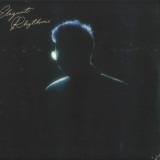
Back yard - Back yard is the first single from the new Teen Daze album, Elegant rhythms, and features singer-songwriter Andy Shauf on drums, and LA jazz staple, Sam Wilkes, on bass. This is a stark change in sound for Teen Daze, who’s last album Interior was an exploration of neon-lit House music. Back yard is a mellow groover, conjuring up images of Laurel Canyon in the 70s, yet still with its flourishes of contemporary sounds.
We’re out of phase again - We’re out of phase again is another vulnerable glimpse into the inner world of Teen Daze, and marks the release of his most personal album to date, Elegant rhythms. In contrast to the synthesized, digital world of his prior album, Interior, here we’ve been brought into a lush, organic arrangement, brought to you in large part to the stunning bass playing by Sam Wilkes. While the verses pulse forward, the chorus slows things down, and evokes the sophisti-pop sounds of The Blue Nile. This track is a stunning showcase of the world of Elegant rhythms.
Nothing’s gonna change my love - Teen Daze returns with his second single of the year, Nothing’s gonna change my love. The stark change in sound, as heard on previous single Back yard, is on display here again: a smouldering, 2 and a half minutes of slow jazz-pop, indebted to the great Sade, or perhaps the feeling of leaving downtown LA at 2 AM. Lyrically, we hear a story of a love, challenged by the unpredictable nature of our lives. This may be Teen Daze’s smoothest song to date.
Neighbourhood - Neighbourhood is the third single from the recently announced LP from Teen Daze, Elegant Rhythms. Along with Andy Shauf on the drums, and Sam Wilkes on the bass, Teen Daze gives us a languid tour of his quiet neighbourhood. The sun has set on the pleasant, tree-lined streets, and a stranger, more surreal environment presents itself. The song plods forward at an extremely comfortable pace, held down by the paradoxically loose-yet-tight rhythm section. Lyrically, we walk around the Neighbourhood at night, and while the chorus reveals a type of sobriety, the vibe of the song makes it easy to feel a little…effected.
Fade away - Fade away sets the tone for Elegant Rhythm’s side B: a deeply personal, though somewhat veiled, confession of loss. How does it feel to grieve something that was never really here? A smouldering, slowly progressing first half erupts in synthetic noise, and then fades into the ether with it’s repeating refrain, “I can feel you / feel you fade away / when there’s nothing / nothing left to say”.
Fall ahead - A sweet piano tune which serves as a quiet break in the record, intended to help the listener reflect and take a moment of pause before we reach the final two songs on the album.
HST underwater - The penultimate track on the record tells a story where the narrator finds themself in an alien, yet oddly familiar place. Arpeggios soaked in crystal blue water flow through the stereo field, while the narrator, vocoded and drenched in autotune, searches for meaning and purpose in a confusing world. This is one of Teen Daze’s most cinematic, emotional songs yet.
In the rain - It’s never really made explicitly clear on this record, but a lot of these songs find Teen Daze wrestling with life as a new father, and this song, the final on the album, expresses the fears of generational trauma. A touching, tender ode to his children, we hear Teen Daze at his most personal and vulnerable. The falling rain surrounds some absolutely breathtaking bass playing from Sam Wilkes, and Teen Daze’s signature ambient keyboard sounds.
Radio Support: Ruf Dug (Soup To Nuts on NTS)
Suche:tig ten
The Berlin-based artist Simina Grigoriu debuts on DCLTD. The opener ' Declare Me' steps up the energy with searing intent, while never losing a sense of deep brooding atmosphere. One for the marathon Sunday afternoon sets. ‘Astral Waters’ bubbles away with tight drum work and a deep Motor City vibe. ‘Technology of Prayer’ mixes late-night techno soundscapes with driving rhythms. An essential tool for bridging moods during longer sessions. And finally ‘The Right Calibre’ positions tribal rhythms at the fore for a rolling cut that doesn’t take a backwards step from creating plenty of tension through the mid-section via a stirring break.
Musician, composer, bandleader and musical rubik’s cube, Laurent Bardainne is a saxophonist who trained at The Paris Conservatory.
He’s collaborated with Pharrell Williams, Cassius and Philippe Katerine to name just a few and presents here his latest project, ‘Tigre d’eau Douce’ Also co-founder of electro rock band Poni Hoax (Tigersushi Records), Limousine, a duet with Camelia Jordana and more recently Sabrina & Samantha for Ed Banger. This album, sees a return to his first love of jazz, The Tigre d’eau Douce, represents a species doomed to disappear. So using melodies, chants and solos as an escape guide, his tenor saxophone takes us to a higher place,
one where John Coltrane and the great figures of jazz reside. These LP tracks bounce between the grooves and soul of the 1970’s, where
percussion and saxophone pave the way. ‘Marvin’ allows the fluffy keys of the Hammond organ to open out into a pensive melody that feels familiar. Carrying on the journey, the tough asphalt of hip hop is visited on tracks like ‘Bachibouzouk’ and ‘Felin M chant’, whereas more tropical themes are explored on tracks like ‘Kinshasa’.
Ten years after his first full-length effort ‘Man Is Deaf’ landed him firmly in the runnings for DJ Mag’s album of the year, prodigal son Michael Anthony Wright AKA Brassica returns to Civil Music with a deeply accomplished, painstakingly whittled LP of hydraulic electro slickness, rich synthscapes, and hooky, peak-time tearjerkers for the most discerning front-left lifers. ‘Tribeless Gathering’ is a barnstorming testament to Brassica’s stylistic and timbral deftness, touching down in the elusive epicentre of the club/home listening venn diagram with ease.
From the elastic, neon acid pointillism of opener ‘Hop Kweng’ to the mardy, miasmic plod of closing chugger ‘Changa Hill’, Brassica seamlessly segues between avenues of influence, his notoriously omnivorous musical knowledge roadmapping each turn. Raised on a diet of everything from early rave standards to metal, and schooled in avant garde sonics as a student of sound design at LCC, Brassica does a peerless job of sublimating his countless influences into a record of refined, heterogeneous, and most crucially, catchy, club moods.
Less spartan than his more recent oeuvre on Feel My Bicep, and less baroque than his technicolour experiments in postmodern synth pop with vocalist Stuart Warwick, Tribeless Gathering represents Brassica’s triumphant return to the main room, replete with rushy hooks primed for the planet’s finest soundsystems, and passages of heads-down tension bound to draw listeners right to the edge of their seats. Overall it is a concise and refined testament to Wright’s command of spectral sonics and effortless ability to pressurise a dancefloor. It is no surprise that he has also worked as a prolific mastering engineer, tuning music from a plethora of dance disciplines for maximum club impact. This work extends to his own projects (including this one), cementing them as rare expressions of complete artistry from studio to turntable.
As we delve deeper into the record, we are ushered through a series of accomplished and varied club moods, each channelling a unique cocktail of influences, but retaining a warm, ebullient analogue sensibility unique to Brassica’s work. This playful scope of influence calls to mind James T Cotton or Machinedrum’s experiments in dance music form, but Wright manages it all under one roof, wrangling everything from sashaying wub-laden two step to snarling Dillinja-esque FM damage into something inherently his.
Choice cut ‘Change Yourself’ layers an almost Cerrone-like piano refrain over radiant surges of saturated bass, dubby, strobing chords and a jagged, driving break, building to a jaw-clenching apex of dancefloor elation, while the rude, playful half-step of ‘Elevation’ breaks down the vintage speed garage formula into linear fragments, utilising a tight palette of resonant bass slugs, infectious synth leads and Papua New Guinea-style vocal strobes. The aptly named ‘Hold Tight’ fuses heart-in-mouth UK ‘ardkore pads with glissando acid disturbance and surgical snare fills in a formula which recalls the ethereal grit of Nubian Mindz’ 00s experiments in big-smoke break science, while the questing melodic arcs and arpeggiated squarewaves of ‘Pinball Marinara’ could easily have soundtracked an 80s sci-fi epic, beset with sparkling, bare-bones drum programming and hazy beds of sub sediment.
With ‘Tribeless Gathering’, Brassica both irreverently fuses and pays homage to the many unique and weird permutations of UK dance music. The short lived gathering of junglists, ravers and house hotsteppas of a similar name may have long since dissipated, along with the tribes themselves, but across these 11 tracks, he lays a blueprint for a new sound of togetherness.
"Deep Dancefloor Jams of African Disco, Funk, Boogie, Reggae & Proto Electro Music 1977-1986reggWhen a passionate DJ and crate digger intuitively selects music for a DJ compilation, without artistic compromise and without the burden of trends, AfroMagic vol.1 emerges from the depths of his soul. Herewith we present the new favorite phonomancer’s tool for all the DJs who experience the dance floor as a sanctuary and a source of freedom and love.
The most fundamental thing that defines African music is that it was created for dancing. In African dance, there is often no clear distinction between ritual celebration and social recreational entertainment – one can seemlessly merge with the other. Because dance and rhythm have more power than gesture and more richness than words, and because they express the deepest experiences of human beings, dance is in itself a complete and self-sufficient language. It is truly an expression of life with all of its emotions – joy, love, sadness and hope – without which there is no African music and dance. For the African people, dance and music are integral parts of the body and soul, thus depicting the expression of life, current emotional states, visions or dreams. Through hypnotic repetitive music and dance, people communicate with each other and with the souls of the dead, the animals, the plants, the stars, the Gods… They free the body and the spirit through ecstatic states, reaching a healing sense of freedom, happiness, and satisfaction.
Throughout history, this transcendental perception of rhythm and dance originating from Africa, influenced popular music worldwide, thus creating new living and breathing forms of musical genres – freeing them from their industrial mold. Funk, disco, soul, boogie, reggae, dancefloor jazz etc., developed in parallel all over the world. It is foolish to perpetually discuss where they originated from and who were the creators of all these fiery dance floor genres – being obvious that they directly or indirectly originate from the African continent and its people who were as well, over the centuries, influenced by disturbing socio-cultural factors of colonialism. However, no one can enslave the soul. The seeds of free and uninhibited dance and rhythm, true to their original form, initially first sprouted onto the USA’s fertile fields of clubbing and popular music while later evolving in other parts of the world.
The disco funk club culture manifested itself as a phenomenal explosion of artists and grooves in the second half of the 70s in the USA. Shortly it spread around the world continually reigning over charts in its various forms – to this day. Clubs emerged where the DJ is an almighty shaman and the dancers are a tribe united under one roof. This urban ritual had and still has a single goal: togetherness, freedom, and love. Clubs have evolved into temples where we free ourselves from the burden of a consumerist lifestyle and suppressed emotions – a place where we receive love and give love – to be who we really are.
Disco funk clubbing was such an influential global phenomenon that its influence can be observed in various other genres from the disco funk era i.e. progressive rock, which mutated by layering complex rock arrangements with a disco funk groove resulting in hybrids, highly sought by today’s diggers, producers and collectors. The profit-hungry music industry of the 80s very quickly commercialized the original disco funk sound by amputating of its original Afro groove to be able to easily ‘sell’ it globally. So, the original disco funk groove became underground again, and it has remained so until this day. Today, for a DJ to unearth that ravishing groove that will lead the dancers to the stars, he must dig passionately like a true musical archaeologist in search of that groove that picks you up after just a few initial beats. That groove which forces the atoms in your body to vibrate, that groove which unites the body and releases the burden.
The AfroMagic compilation series is created as a tool for real DJs who stick to the aesthetics and essence of clubbing.
This continuation of the Afromagic compilation by DJ Borovich was created in a private jam session which served as an escape route from intense and complex love problems.
Unconsciously driven by intuition and emotion and following a live mix tape framework where many tunes are arranged instantaneously, Borovich narrates his story with a strong rhythm that cuts loose even the most blocked off energy nodes and restores happiness to the spirit and the body.
The musical experience of the groove is completed by the lyrics of the songs, which symbolically give DJ Borovich universal answers to his questions arising from questioning the boundaries, nuances and other forms of love.
When considering that Borovich’s selection was created to facilitate an escape from the burdens of reality through rhythm and dance, we can be sure that Afromagic Vol. 2 will have a 100% uplifting, energized and spaced-out effect on the listeners.
The intro to A1, “Feeling Happy” by the Apostles, introduces us to an experienced and slow, cool and irregularly tight groove containing a confidently sung chorus that instantly gives a sense of freedom and hints at the remainder of Afromagic Vol. 2: “I’m gonna feel happy, ´cause I know I’m gonna be myself.” After the anthemic song mantra of the Apostles, Aigbe Lebarty uncompromisingly continues with a dirty disco rhythm. Acidified by accented synths that elevate it to shamanic levels and held together by a female tribal choir, we embark on an uncompromising ritual disco journey. Without a moment to take a breather the prog funk band Mighty Flames and their Road Man launch a highly vicious and raw, thick funk groove spiced with acid synths and dirty RnR breaks, raising the bar for the A side. Jimi Hendrix himself would surely praise it given the ultimate freedom and virtuosity in the solo sections. With the last tune on A side DJ Borovich decides to burn the floor with Geraldo Pino’s psychedelic, acid furious groove and lyrics which describe this HEAVY part of love problems: “The way she walk, the way she talk, the way she does a funky dances, she is really really heavy – that woman”.
While the A side represents a compact intoxicating afro groove machine that separates us from reality and lifts us up to the stars in over 23 minutes, the B side is a treasure trove of proto sub-genres gems. This selection represents the mission of the Afromagic: to find singular events in African recorded discography of popular music from the 70s and 80s that give evidence to the birth of new modern genres on the Dark Continent even before they emerged in the U.S.A. or Europe. The beginnings of electronic music influenced genres are represented back to back with 80s synth jazzy pop, all painted in African colours.
The B side opens big with Jake Sollo and a huge reggae blues number singing about the humiliation of a man – goosebumps guaranteed! “You think I’m nobody that’s why, you don’t know the way for me, I’m somebody I know, I found myself at last”. Adolf Ahanotu then enters the scene with a hard sliding tackle at B2 and an exotic rare disco funk dancefloor napalm. A ‘Sensation’ that would ignite even the coldest of introverts. While we approach the end of the compilation the narrative revolves again and takes a different turn. No less and no more than to the proto-electro that Baad John Cross serves us in “Give Me Some Lovin´”. The fat and repetitive broken electro synth groove, championing many early 90s electro tracks, is presented here without hesitation and with constant tension accompanied by a mantric chorus “Gimme some, gimme some, gimme some looooovin’, EVERBODY!!!”. Finally, we’re guided to the end of Afromagic Vol. 2 by Eji Oyevole’s 80s synth pop style presented in an authentic afro manner, giving us a glimpse at yet another released Afromagic edition, as well as giving an answer to DJ Borovich’s love problems. A smoothly broken electronic rhythm resembling electrified highlife sounds, carried on the wings of a virtuoso dreamy saxophone on top of which Eji presents the most intimate parts of himself. Finalizing the track with a symbolic chorus, on the surface referring to the dancefloor and simply having fun, but in actuality referring to the skill and happiness of living: “I´m a dancer, I can dance”. So, get up and dance among the stars with DJ Borovich and Afromagic.
Bolina Records, born in Italy and based in Stockholm, is the brainchild of the Cerrado Studio crew, a dynamic team of artists and DJs who have been organizing events and innovative initiatives since 2008.
Veteran DJ-producer Sebra Cruz (formerly of Margot and A&R for Bolina Records), after releasing his debut album with Life And Death by Dj Tennis, has teamed up with his protégé, Giacomo Cancellieri. Over the years, Cancellieri has become one of Sebra's favorite artists, with Sebra often describing him as a truly brilliant mind, consistently impressed by the new tracks he produces. Giacomo has notable releases on Rebellion and Margot Records.
"Rollerball," titled after Norman Jewison's 1975 film, carries a powerful anti-war message. It includes 4 versions plus an acapella, the latter intended to encourage DJ-producers of various genres to incorporate it in their tracks, thereby spreading the anti-war message on dance floors worldwide.
The original mix captures the essence of intimate club settings — intense yet lucid, with a sound texture fitting for an underground label. It continuously and forcefully spreads the anti-war message with deep seriousness.
The Funky Vocal Mix offers an Italo-French vibe, blending the smooth ambiance of 2000s dance music with a raw vocal tone.
Buck's version, hailing from Otranto, a quaint seaside town in the extreme south of Italy and owner of Substrato label, is marked by solid, rolling grooves that complement a deep and refined atmosphere.
Delphi's remix, one half of Tiger And Woods with Marco Passarani, completes the set. Its arrangement skillfully connects Chill and Detroit styles, infusing the project with a sense of robustness and insight.
The wax is hot. The tunes are massive. Oath’s sub-label, Last Year at Marienbad, dispenses a foursome of punchy house tracks for its fifth release, lovingly crafted by some of the genre’s finest producers.
‘The Way We Flow’ by Sam Paradise pairs detuned, lo-fi samples with thumping kicks, and muffled drums. Just when those innocent lo-fi elements simmer, the drums slam back into your periphery harder than ever, making for an absolute dancefloor smasher.
‘De Nuit (3 A.M)’ by Nu-Cleo descends deeper. Swinging drums and chocolatey, indulgent keys lay the basis for a hypnotic acid bassline. Real tension builder.
Flipping over to the B-Side – careful, it’s hot – is ‘She Wrote’ by Gloved Hands. Seemingly just a ride through a well-made bouncing synth and house groove combo at first, this track soon shows off Gloved Hands’ knack for leftfield flavours. There’s an unexpected trap-esque vocal that gets re-contextualised for the club alongside piercing synths and a bulging broken beat.
‘Hard Deep’ by Rick Wade is an obvious one. The stalwart of the house scene serves up another of his zesty, masterful grooves. Shimmering, effortless keys steer a tight drum groove while a subtle bassline nestles between the kick’s low end.
Four cuts from four house experts. Is there much more a dancefloor could ask for?
The Nashville, Tennessee, garage rock group were signed as teenagers to the prestigious XL in the UK and Thurston Moore's Ecstatic Peace label in the US, with whom they released two widely acclaimed albums. They went on to tour with the likes of Arctic Monkeys, Sonic Youth, Le Tigre etc and have been cited as influences for groups such as Paramore and Big Joanie. This is the first new album in 15 years.
Sampled by Dr.Dre and Jay-Z, cult combo CALIBRO 35 release the new studio album "DECADE" and celebrate 10 years.
Italian super cult combo CALIBRO 35 release their 6th much awaited studio album "DECADE" on February the 9th 2018. "DECADE" marks 10 years of Calibro 35's releases and it's the very first album recorded by Calibro with an orchestral-inspired enlarged line-up that features horns, strings and percussions. Mixed and recorded by CALIBRO's usual suspect and Grammy Award winner Tommaso Colliva, on the album all the influences collected by the band during their last ten years' journey like music, collaborations, movies, gigs, books find their space. "DECADE" is CALIBRO 35's "time capsule" and is as rare and complex as a timeless work.
Musically CALIBRO 35's inner influences like Ennio Morricone, listen for instance to the epic journey of the album's end credits "Travelers", Luis Bacalov and David Axelrod are still there but are now mixed with elements from afrobeat or cosmic jazz. "Psycheground" sounds like Tony Allen involved in writing a score for a vintage Hollywood production while Sun Ra lurks on "Modo". Everything is mixed up with new influences from modern musical languages. References to Jaga Jazzist, Budos Band or Alternative Jazz and Alternative Hip Hop new acts such as Makaya McCraven, Yussef Kamaal, Oddisee can all be found on the album. In tracks such as "Modulor "you realize that Decade is certainly not a point of arrival and expresses the ambition of the band to look further and evolve. All classic Calibro's vintage instruments such as clavinet, eco, analog synths, fuzz guitars are now supported by new ones such as Dan Bau, Balafon and Waterphone ("Polymeri") in the band's new wall of sound. Thanks to the enlarged line-up and the orchestrated parts involved, which pushed the band to experiment new methods of composition, Calibro 35 on "DECADE" sound strong, full and tight as never before.
Active since 2008 CALIBRO 35 enjoys a worldwide reputation as one of the coolest independent band around. During their ten years career, they have been sampled by Dr. Dre on his Compton album, Jay-Z Love Child & Damon Albarn, they shared stages worldwide with the likes of Roy Ayers, Muse, Sun Ra Arkestra, Sharon Jones, Thundercat, Headhunters and as unique musicians they've collaborated with, amongst others PJ Harvey, Mike Patton, John Parish and Stewart Copeland and Nic Cester (The Jet). Described by Rolling Stone magazine's as "the most fascinating, retro-maniac and genuine thing, that happened to Italy in the last years", Calibro 35 now count on a number of aficionados worldwide which includes VIP's fans such as Dj Food (Ninja Tune), Mr Scruff and Huey Morgan (Fun Lovin' Criminals) among others.
The new batch from the bottomless edit archives of Danny Krivit is an uptempo, guitar-heavy excursion into two cuts of danceable rock from opposite sides of a decade.
“Marbles” originally came out late in 1970, the result of a collaboration between the fiery British guitarist John McLaughlin and drummer Buddy Miles. Miles was hot off his time with Jimi Hendrix, and producer Alan Douglas, who’d been instrumental in putting together the Band of Gypsys group, attempted another crossover combination with a brand new, blazing guitar god. Also on the date was Larry Young, an organ player best known for his expansive jazzy albums on Blue Note, and several veterans of Buddy Miles’ funk-rock combos. The resulting mixture produced in “Marbles” a powerful, driving rhythm anchoring an addictive riff that steamrolls through the cut in a fashion not unlike the motorik sound of Velvet Underground or Can. Mr. K’s edit leans heavily on the drums, naturally, with a long, tailor-made intro and a mesmerizing focus on the main riff, extending things well past the seven-minute mark.
Ten years later, the world of music was in an entirely different place but a good guitar riff coupled with a driving beat was still powerful currency on the dancefloor. This time, the group was Scottish new wave-punk group APB, whose single “Shoot You Down” had garnered unexpected peak time play in cutting edge NYC hotspots Danceteria, the Peppermint Lounge, the Ritz and the Mudd Club. “Shoot You Down” combines the urgency of the Clash with the free for all vibe that characterized the downtown scene (and throws in a chant borrowed from P-Funk for good measure). Mr. K has created a long instrumental opening that leads into the vocals, giving the tightly-wound 7-inch single a proper extended 12-inch treatment it deserved but never had before.
The sound is crisply remastered for club play, and stretched over the breadth of a 12-inch single. Both of these tracks are appearing on the long-format player for the first time.
Whiskey Disco returns with another brilliant EP by Australian producer Kayroy, known for creating new intersections between edits, reworks, and originals that the label is known for.
A driving, tension-heavy original A-side reminiscent of early Sound Stream, complimented by two wonderfully selected reworks - a smartly tightened up beautiful instrumental gem originally by Japanese guitarist & composer, Shigeru Suzuki, and an almost necessary revision of euro-disco genius Alec Costandinos’s opus "Romeo & Juliet".
A wide ranging and fantastic record all around.
Following up to Rob Belleville's inaugural delivery, Fluid Electronics returns in 2021 with a new collaborative EP courtesy of Dutch veteran Jarno, the man behind Trouw's infamous Below evenings, and Fluid Electronics' co-founder and owner Shirazi, back in full swing after a ten-year break from production. The EP features remixes from Amsterdam's Love Over Entropy and seminal Rotterdam-based duo, Duplex.
The A-side finds Shirazi and Jarno dishing out a vaporous dub with the focus track, "Late Night Thoughts". Engineering a mix of reverb-drenched atmospheric techno laced with hedonistic house accents and mystique-imbued melodies on a dreamy tip. Upping the tempo and overall vibe of the track, Love Over Entropy's remix propels its listener in a blazing corridor of synth arpeggios and luminous chords.
The flip side sees Shirazi go solo on the ethereal "Continue Learning", all in evocative spaciousness and textural finesse, as it merges the immersive depth of Basic Channel-esque envelopes with further straightforward floor dynamics. Clone-affiliated duo Duplex provides a tighter, jacking match to the original's vaster headspace, tweaking it into a proper clinical club-ready weapon.
It’s time for the label founders to take control over our spaceship. Clusterhead offers four slices of proper abstract techno for those who know.
Release starts with Alteración del orden: a broken kick spiced with elastic synth washes and microdrones sets the pace while the rest of the percussive elements appear softly in the arrangement. The main sequence grows and mutates as minutes go by, reverb and stereo treatment goes heavier until repetition makes the desired effect on the virtual dancefloor.
Second cut Resiliencia Incesante again relies on broken kicks and processed synth lines. The BPM rate is higher here and the percussive elements are snapper and tighter. Sounds twist and change over time as the frequency range grows. An industrial ode to obscurity.
On the flip side, Automutilación creativa brings us again into oblivion, shuffled grooves obsessive sequences continuously moving and high pitched synthetic drums running through the stereo field.
Closing the release we have Notzing on board, still recovering from his amazing experimental work on our label, we give him again the commands of our spaceship to translate his mental obsessions in this superb rework of Automutilación creativa.
One more time we push the sound boundaries on behalf of timeless futuristic music in touchable format.
ESPAÑOL
Es hora de que los fundadores del sello tomen el control de nuestra nave
espacial. Clusterhead ofrece cuatro rebanadas de techno abstracto para aquellos que saben de lo que hablamos.
El disco comienza con Alteración del orden: ritmos rotos condimentados con sonidos elásticos de sintetizador y microdrones marcando el ritmo, mientras que el resto de los elementos percusivos aparecen suavemente en el arreglo. La secuencia principal crece y muta a medida que pasan los minutos, la reverberación y el tratamiento estéreo se vuelven más presentes hasta que la repetición produce el efecto deseado en la pista de baile virtual.
Como segundo corte Resiliencia Incesante nuevamente se basa en bombos rotos y líneas de sintetizador procesadas. La tasa de BPM es más alta aquí y los elementos de percusión son más rápidos y ajustados.
Los sonidos se retuercen y cambian con el tiempo a medida que aumenta el rango de frecuencia. Una oda industrial a la oscuridad.
En la cara B, Automutilación creativa nos trae de nuevo al lado oscuro, grooves mezclados, secuencias obsesivas en continuo movimiento y percusiones sintéticas de alto rango recorriendo el campo estéreo.
Cerrando el lanzamiento tenemos a Notzing a bordo, todavía recuperándonos de su asombroso trabajo experimental en nuestro sello, le damos de nuevo los comandos de nuestra nave espacial para plasmar sus obsesiones mentales en esta soberbia reelaboración de Automutilación creativa.
Una vez más empujamos los límites del sonido en nombre de la música futurista atemporal en formato táctil.
Bringing a combination of two conceptual artists Ultrastretch 11 moves away from dance music to present this comtemporary off kilter.
On the A side, Montreal based producer Ohm Hourani, known for minimalistic jazz influenced works on his own imprint ANOMA and beyond, with compositions showcasing infusions of organic sounds combined with modular synthestisers, drum machines and vocalists such as his collaboration with award winning Jazz singer and Vocalist Diminique Fils Aime.
On this release he presents a 14 minute stripped down, intrinsically and subtly arranged combination of elements Initiale by a minimalistic kick drum joined by a synth driven, quirky / hypnotic mind drilling element paired with the finest straight hihats delicately placed on the background as the Constant. The subtle movement of the track is introduced by percussive drumming, vocals and piano keys forming the most beautiful atmospheric melody. The last element of surprise brings shuffling hihats bringing amazing swing to the overall elegantly slick piece.
The B side brings the highly sought-after drummer Samuel Rohrer. Ranging from ECM sideman to member of KAVE, a quartet alongside techno pioneer Max Loderbauer, Stian Westerhus and Tobias Freund as well as collaborative works with Ricardo Villalobos and Laurie Anderson, he is known for his unique sound aesthetics on advanced musical cross-pollination, developments of improvisation in acoustic jazz and wider horizons of live electronics.
Rohrer also brings a hypnotic reinterpretation but in a very different manner / mood than the A side. Initiated by strings combined with Rohrer’s tight drumming patterns at the forefront and bass line underneath as the constant, combination by which forms a tense yet peaceful core pattern to this track. To compliment this, synths create movement by adding cosmic and quirky sounds forming an atmospheric soundscape with the whispering vocal “shake it” on top. Overall, the paradoxical relationship between tight (rhythm) and lose (soundscape) is presented in perfect harmony with each other.
We know you've been waiting for this one since last summer! Caspa's debut on Youngsta's ridiculously on-point Sentry has been one of the most requested releases in a very long time. Hot on the heels of releases by dBridge, Nomine and Akcept, the Sub Soldier comes in hard with two absolute burn-ups...
'Gutter Riddim' is a stately spacious construction where every weighty element is carefully considered and plays a key role in the momentum. Tightly sprung tension buzzes through it with high voltage as Caspa lays down some of his darkest designs to date. 'Hot Head' hurls us even deeper into the shadows. A true teaser piece, the first bass line is a staccato stab that gives you just enough time to settle into the groove before the real big-balls bass line comes hurtling out of nowhere.
Rewind every single time, this has been causing uncut mayhem for the few DJs lucky to have it early enough. Timelessly gully and a perfect way to kick the doors of 2018 in. As those who were at Sentry's first anniversary at Fire earlier this month will corroborate: London's heart rate is pounding away at 140 again, some of the most crucial bass music is coming out of the city and Sentry, Youngsta and Caspa are slap bang in the heart of it. The wait is over... Enjoy.
- A1: Red Axes & Man Parrish Ft. Roy Garrett - Hot Rod To Hell And Back
- A2: James Infiltrate - Chaos
- B1: Queen Atom - Tributemaki
- B2: The New Black - Androids Are Sexy
- C1: Red Axes - Clear Beats
- C2: 100Hz - Whisper
- D1: Red Axes - Time To Take It
- D2: Sluts`n Strings & 909 - Past The Gates
- (10") A. Redrago - Spikes
- (10") B. Redrago - Frequency
Red Axes step into the fabric presents series with a release that feels both inevitable and deeply personal. Known for their hypnotic, psychedelic approach to club music, the Tel Aviv–based duo bring a narrative-driven sensibility that aligns seamlessly with fabric’s legacy of long-form storytelling and forward-thinking curation.
Across years of performances at fabric and other key global institutions, Red Axes have developed a reputation for sets that unfold patiently and unpredictably, drawing dancers into a world where groove, tension, and atmosphere take precedence over genre or trend. Their contribution to the fabric presents series reflects this ethos: a carefully sculpted journey that prioritises mood, momentum, and emotional depth, while remaining firmly rooted in the physical language of the dancefloor.
Formed by Dori Sadovnik and Niv Arzi, Red Axes emerged from Tel Aviv’s underground with a sound shaped by post-punk, acid, krautrock, and cosmic disco influences. Over the past decade, they have built a catalogue defined by raw textures, twisted melodies, and a distinctly human looseness, qualities that translate as powerfully in the club as they do on record. Their releases and remixes for labels such as Phantasy, Correspondant, Running Back, Dark Entries, and Permanent Vacation have established them as artists who consistently operate just outside the expected.
As DJs, Red Axes are celebrated for their ability to stretch time on the dancefloor, weaving obscure selections, unreleased material, and leftfield classics into slow-burning, trance-inducing narratives. This approach has seen them invited to venues and festivals including Panorama Bar, De School, Bassiani, Dekmantel, Sonar, and Primavera Sound, where their sets are defined not by peaks alone, but by the tension built between them.
With the forthcoming fabric presents Red Axes release, the duo deliver a statement that captures years of shared musical intuition and a deep respect for the club as a communal, transformative space. It is a mix that rewards close listening as much as physical immersion, a snapshot of Red Axes at their most focused, expressive, and uncompromising.
To mark the launch of their forthcoming fabric presents album, the duo unveil the lead single, “Hot Rod To Hell”, a bold reworking of Man Parrish and Roy Garrett’s 14-minute spoken-word electro epic, reimagined through Red Axes’ signature psychedelic lens.
Stripped back and refocused, the original’s narrative tension is transformed into a hypnotic, downtempo house track built for late-night immersion. A rolling, elastic groove anchors the track, while pulsing low-end, subtly warped synth lines, and tightly controlled percussion create a sense of slow, smouldering momentum. The spoken vocal elements drift through the mix like fragments of memory, lending the track a ritualistic, cinematic quality without overwhelming the dancefloor.
- Identified Patient – The Female Medical College Of Pennsylvania (Marcel Dettmann Pitched High Version)
- Tocotronic – Bis Uns Das Licht Vertreibt (Marcel Dettman Version 2 Remix)
- Cristian Vogel – Untitled (Marcel Dettmann Cut)
- John Bender – Victims Of Victimless Crimes (Marcel Dettmann Cut)
- Clark – Dirty Pixie (Marcel Dettmann Edit)
- Junior Boys – Work (Marcel Dettmann Remix)
- Mutant Beat Dance - The Human Factor Ft. Naughty Wood (Marcel Dettmann Edit)
- Experimental Products – Who Is Kip Jones (Marcel Dettmann Cut)
- Marcel Dettmann – Water Feat. Ryan Elliott (My Own Shadow Remix)
- Severed Heads – We Come To Bless The House (Marcel Dettmann Edit)
- Albert Kuningas - Astraaliprojektio (Marcel Dettmann Edit)
- K.alexi Shelby – Season Of The Real (Marcel Dettmann Edit)
- Ian North – Sex Lust You (Marcel Dettmann Edit)
- Ford Proco – Expansión Naranja (Feat. Coil) (Marcel Dettmann Edit)
- Nitzer Ebb – Shame (Marcel Dettmann Edit)
- Frank Duval – Ogon (Marcel Dettmann Edit)
- Yello – Limbo (Marcel Dettman Version 2 Remix)
- Conrad Schnitzler – Das Tier (Marcel Dettmann Edit)
LP 3x12"[28,99 €]
A DJ, producer and significant figure in contemporary electronic music, Marcel Dettmann steps forward to contribute to Running Back’s ongoing Mastermix series. Whereas previous editions of Mastermix have taken an ear to the sound of lapsed, legendary clubs such as Wild Pitch and Front, Dettmann’s curation deftly captures the man himself in ongoing perpetual motion, raiding the vault for his own precision-tooled edits, long-employed on dancefloors to devastating effect. Alongside a continuous mix, this release arrives as a 3LP gatefold, and as a limited edition cassette.
Closely associated with Berlin’s techno landscape, Dettmann was born and raised in the former GDR, then later immersed in the bleary-eyed counter cultural landscape of post-unification Berlin. Initially oriented by post-punk, industrial and new-wave music, Dettmann has been DJing since 1993, always expanding and perfecting his repertoire. He later began working behind the counter at the city’s tastemaking rave boutique Hard Wax, and a decade after he first dropped a needle, became (and remains) resident at notable local nightspot Berghain/Panorama Bar, where his instincts have helped sculpt the signature sound of both main dancefloors.
Of course, you’re probably not asking, “Who is Marcel Dettmann?” More importantly, you might want to know; just what treats has he gifted us here? The trip begins with a simple pitch-shift skywards, transforming Identified Patient’s creeping ‘The Female Medical College of Pennsylvania’ into a peak-time freakout, before an alternate take on Toctronic’s ‘Bis uns das Licht vertreibt’ emerges from the vaults for the first time. Dating from 1995, and one of Dettmann’s all-time favourites, Cristian Vogel’s ‘Untitled’ clambers back into the box with respectable cuts, while John Bender’s ‘Victims of A Victimless Crime’ kicks off the flip sporting a new arrangement, transporting us back to the foundations of a confident, stripped-back sound.
A few subtle edits to Clark’s perilously funky ‘Dirty Pixie’ takes us to Dettmann’s remix of Junior Boys. Produced in 2010, it transposes the Canadian duo’s sophisticated pop with our curator in his minimal prime, and has since become an irresistible prize for high-minded diggers. The same can be said for Experimental Products’ explosive proto-electro anthem ‘Who Is Kip Jones?’, empowered from pricey Discogs purgatory with just the slightest of tweaks. It’s deservedly sandwiched between the guiding influences of Chicago and Detroit in the form of Mutant Beat Dance’s raw ‘The Human Factor’ and a shimmering new version of previous solo production ‘Water’, featuring close friend and Ostgut Ton ally, Ryan Elliot.
The second half of the Mastermix seamlessly connects the mechanical past and digital present of EBM and industrial in the dance, with Dettmann’s instincts as a guiding hand. Severed Heads’ iconic ‘We Have Come To Bless This House’ emerges with mere nips and tucks, while Nitzer Ebb’s ‘Shame’ is significantly reimagined as a highwire act of rhythm and tension, setting up a sensual second take on a 2017 remix of ‘Limbo’ from Swiss synth heroes, Yello.
Core musical memories are shaken and stirred with a context-shifting take on Frank Duval’s emotional classic ‘Ogon’, while Ian North’s ‘Sex Lust You’ and Ford Proco’s notable Coil collaboration ‘Expansion Naranja’ effectively throb with only minor adjustments, respectfully imagined as “shadow versions”. Meanwhile, a simple breakbeat lifts Albert Kuningas’s ‘Astraalprojektio’ in the direction of wide-eyed dancefloors, while a fresh take on K-Alexi Shelby’s ‘Season of The Real’ inexplicably emerges somehow even funkier than before.
The conclusion of the compilation leads back to Das Tier from the prolific experimentalist Conrad Schnitzler, whose swirling synths and hypnotic vocals are duly tightened by Dettmann, but only as he puts it, “in conversation with the original.” Concluding three discs and thirty years of commitment to the dancefloor, this Mastermix not only offers us the opportunity to eavesdrop on this endless exchange, but to gain some sought-after material for our own record collections.
The Pink Satin is the Greaser Man. This is a homage to the early sounds of house music. TPS Gears up with his Yamaha PSS-780 and PSS-580 and fires FM basslines to spread the whimsical word of disinformation and minor truths. The world is full of hate today. Try not to take everything so serious.
- A1: In The Name Of The Father
- A2: Fearless
- A3: Rage
- B1: Destroy Me
- B2: Dionysus
- B3: Conclave
PRESIDENT are an anonymous UK-based collective operating at the intersection of heavy music, electronic experimentation, and cinematic atmosphere. Refusing to conform to the traditional structures of genre or identity, PRESIDENT prioritise intent over image—shifting the spotlight away from individuals and firmly onto the work itself.
Musically, they create a hybrid sound rooted in alternative and post-rock, layered with industrial textures, programmed beats, and dynamic arrangements that lean into tension, release, and emotional weight. Their material moves with precision—considered, deliberate, and always atmospheric. Every element serves the wider vision. Having launched without fanfare and operating without personal profiles or commentary, PRESIDENT has cultivated intrigue through minimalism and control. Their visual and sonic identity is cohesive and considered—every release, image, and post feeds into a tightly held narrative. There is no chaos here. There is no guesswork. Built to exist outside the noise, PRESIDENT are not here to chase attention. They are building something that invites deeper investment—designed to be discovered, not sold. After 3 months of cryptic teasing, anonymous UK-based band PRESIDENT are taking the Rock scene by storm. Post one of the most talked about performances of Download, PRESIDENT unveiled their debut EP, King Of Terrors.
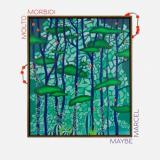
French artist Swan Wisnia, under her solo project molto morbidi, announces her second album Maybe Marcel for release on April 17th via No Salad Records. An experimental album forged in both tenderness and turmoil, combining art / weird pop and baroque pop, the album moves between the intimate and raw to the playful and inventive, creating a universe that is at once dark and hopeful.
"What inspires me are artists who stand by their influences while transcending traditions," she explains. "Artists who are recognisably their own." Drawing inspiration from everything from Siouxsie Sioux to The Raincoats to Broadcast, Lizzy Mercier Descloux, and ESG, Wisnia balances melodic sensibility with the experimentally daring, creating a body of work that is both timeless and wholly original.