Emerging from the forced exile of 2020-2021, Barton found himself with a large number of songs. Taking inspiration from the line of English singer-songwriters that runs from Nick Drake through Lloyd Cole to Pete Doherty and beyond, he chose 10 that lent themselves to an indie-folk aesthetic and began work on the new album, “Manchester Sun”.
Ever the storyteller, Barton weaves tales of first kisses, of soldiers trying in vain to remember their hometown, of missed opportunities and unreliable childhood memories. He casts Orson Wells as a modern day dictator, perched on high in a carousel, and tells the story of the spray-painted marriage proposal that appeared overnight on a motorway bridge 50 miles from London.
Manchester Sun was recorded in England with Barton playing most of the instruments himself, moving through guitar, bass, drums, percussion and Hammond organ during an intensive week-long session in the peaceful, rural setting of Echo Studios. The album places Barton and his acoustic guitar centrestage, with additional contributions from long time collaborators
Suche:tim exile
We, the label, asked Ben Wallers (ex-Country Teasers) to write a press release for his new album. "Press Release And Give Me The Disc as Peter said to Murphy said to Daniel said to Ash said to J said to the drummer subs please check name was it Martyn Atkins? No... scratch that please Roger, there's nothing funny about not knowing all the members of Bauhaus. Announcing the new album by The Rebel, yay! Wow! Fucking hell, great! How long is it this time? Oh it's getting on for the optimal 45 mins. Fit on side of a D90 but go bit wobbly near end of SA90. I am listening to my copy on vinyl record, it's much better than tape. That's the intro. Once upon a time there was a man/boy a sort of immature Peter's Pan type pan-pipe type who COULDNT WOULDNT grow up a bit like Keith Richards and who er where was i? The Vagina Museum is very near Maureen Paley's art gallery where if you hurry you can see some INCREDIBLY GOOD paintings/art. Anyway once upon a time it was february 2021 if that's last year or 2020 if it was the one before that, i've lost count, honestly this Covid thing is SO confusing isn't it? Anyway. Ducking fomestic crisis as usual reached boiling point again and i fucked off didn't i, did a runner, off to Turkey wiv a lih-ooh bih-uh ragarahn me ed, first of all 2 weeks on George's spare mattress, then 2 weeks in Merlin's magical tower, then a week in a fucking EasyJet Hotel with no windows, then at last my new exile retreat, Congreve Ho. Meanwhile Dad got me a new recording device the size of a VHS tape, the Tascam D-POO 8 S-E-X multitrack. Quality, oscar mike golf!! Urine for a surprise Listener/s! Ural b sayin "Y could ont he ov get 1 of these B4?" Well! Paid off the fuckin mortgage, didden Eye listenerz. Paid the fucking mortgage of. Dad said "Lets get you a reward Son! Anything name it!" Well i said ... can you fix it for me to touch Britney's hat? The one she wore for the Milkshake video. Great album. Recorded it in exile, from where i write this press release and give me the tape Kevin Haskins." And he did. Tracklist: 1. Nemo To Self 2. I’m Wok Inner Gdn.C 3. A Cretian Build-Up 4. Lays A Seamless Transition 5. A Bottle Of Timotei Hair-Shampoo 6. Long Way Off 7. Teulleodd Hapys (Dave 1) 8. I Aint Gonna Lie To Ya 1 9. Bisgeden Am Swper Eto (Dave 4) 10. Put Your Fucking Glasses On So You Can Fucking See 11. Happy Families (Dave 3) 12. Pyfgosycfs 2/Aquafauna 13. Dave Two Ukraine Nil 14. Nemo Self 2
Ndikho Xaba was born in 1934 in Pietermaritzburg, KZN, South Africa. For thirty-four years — 1964 -1998 — he lived in exile in the US, Canada and Tanzania. Originally issued by Trilyte Records out of Oakland, California, this 1970 recording is bracing, freewheeling Now Thing, suffused with SA idioms, and focussed by a political urgency wiring together US Black Power, Black Aesthetics and the anti-apartheid front-line like nothing else. You can hear Trane from the off — 'a spiritual offering to my ancestors' — and plenty of Sun Ra, with whom The Natives several times shared double-bills. (Xaba was to become close with Phil Cohran and the AACM.) Freedom is a gutbucket-soul rendition of the people's anthem; Nomusa is dedicated to Xaba's new wife, a poet and CORE activist from Chicago. The thunderous finale Makhosi features drummer Keita from the West Indies, and Baba Duru, who studied percussion in India, before winding up with Xaba blowing eerily through a horn made from a giant piece of tubular seaweed. Hats off to Matsuli for this outstanding reissue.
- 1: How Far We've Come
- 2: I'll Believe You When
- 3: All Your Reasons
- 4: These Hard Times
- 5: If I Fall
- 6: Can't Let You Go
- 7: Come Dancing
- 8: Long Day
- 9: Push
- 10: 3 A.m
- 11: Real World
- 12: Back 2 Good
- 13: Bent
- 14: If You're Gone
- 15: Mad Season
- 16: Disease
- 17: Unwell
- 18: Bright Lights
"Exile on Mainstream" ist das erste und einzige
Compilation-Album der amerikanischen Rockband
Matchbox Twenty. Diese Veröffentlichung aus dem Jahr
2007 enthält 7 neue Songs, die in einer von Steve
Lillywhite produzierten Session entstanden sind, sowie 11
der größten Hits der Band. Diese Wiederveröffentlichung
markiert die erste Farbvinyl-Edition (weiß) des Albums
und die erste Neuauflage seit 2007.
A huge, booming sound prevails across these ten songs, riddled with hooks and accessible in its own odd way: you might catch shards of WIPERS,INSTITUTE"Philadelphia death rock/dungeon punk band Poison Ruïn consolidate their two EPs into one ten-song, self-titled album. Brained, fleshed, and recorded by Mac Kennedy, this effort is one of a personal nature. The sonic nature of the album has a human looseness, apparent like a cassette tape warbling from being wound and rewound. At times the songs sound thin and brittle, as though they are breaking apart simply by being played. The lyrics walk the same path and describe a world of cosmic horrors and environmental disaster. With their soft, eerie, medieval-hall introductions, each song transports the listener to a world of runes and swords, but staves off dorkiness with the relevance of a chewy post-punk center. Rife with sweetly stark guitar hooks and drums that flail like a death march, this self-titled LP gives off black metal at first glance. On further inspection, there is a gradation of inspirations ranging from pond-hopping blues guitar solos, heavy-handed punk drumming, gothic ambiance, and progressive song structures."
TRACKLIST: 1.Carrion 2.Crucifix 3.Demon Wind 4.Sacorsanct 5.Fog of War 6.Paladin's Wrath 7.Doppelganger 8.Morning Star 9.Exiles/ Hell Hounds
Picture Vinyl
Das Warten hat ein Ende: Arch Enemy sind zurück mit dem Nachfolger von 'Will To Power' aus dem Jahr 2017, und sie haben noch nie so hungrig geklungen. 'Deceivers' ist eine Sammlung des straffsten, stromlinienförmigsten und vor allem extremsten Metals und besteht aus 11 Tracks, die ihre Fans zum Schwärmen bringen werden. Jeder Track ist erbarmungslos eingängig und gnadenlos brutal, und mit Titeln wie 'Deceiver, Deceiver', 'House Of Mirrors', 'Handshake With Hell' oder 'Poisoned Arrow' hat das schwedische Quintett noch nie besser geklungen
- A1: Handshake With Hell 5:38
- A2: Deceiver, Deceiver 3:51
- A3: In The Eye Of The Storm 4:09
- A4: The Watcher 4:58
- A5: Poisoned Arrow 3:51
- B1: Sunset Over The Empire 4:03
- B2: House Of Mirrors 3:40
- B3: Spreading Black Wings 4:46
- B4: Mourning Star 1:36
- B5: One Last Time 3:49
- B6: Exiled From Earth 4:44
- 01: Arch Enemy Into The Pit 3:52
- 02: Arch Enemy Diamond Dreamer 3:53
Picture Vinyl[24,33 €]
Handnummerierte Ltd. Deluxe 2LP + CD Artbook, das eine mehrfarbige Vinyl (jedes Design ist einzigartig), eine Zoetrope/Picture Vinyl, eine CD, zwei Bonustracks, einen Kunstdruck und ein 36-seitiges Booklet im LP-Format mit Liner-Notes enthält. Das Warten hat ein Ende: Arch Enemy sind zurück mit dem Nachfolger von 'Will To Power' aus dem Jahr 2017, und sie haben noch nie so hungrig geklungen. 'Deceivers' ist eine Sammlung des straffsten, stromlinienförmigsten und vor allem extremsten Metals und besteht aus 11 Tracks, die ihre Fans zum Schwärmen bringen werden. Jeder Track ist erbarmungslos eingängig und gnadenlos brutal, und mit Titeln wie 'Deceiver, Deceiver', 'House Of Mirrors', 'Handshake With Hell' oder 'Poisoned Arrow' hat das schwedische Quintett noch nie besser geklungen
CoviDub is not just a Dub album, but an album that historically tracks and records the unprecedented events of 2020 to 2022 when the world was shut down, when many countries became islands and many islands became isolated planets!!
Reflecting an era where false news eclipse real news, a time when social media is more effective than the official media. Yet within these serious times racism still prevails and present day Rasta fails to fulfill Marcus dreams of Black unity.
This is an album for folks who think out of the box. Let’s take the piss out of the hypocrites!!
The wait is over: Arch Enemy are back with the follow up to 2017’s ‘Will To Power’, and they have never sounded hungrier. Delivering a collection of the tightest, most streamlined, and, more importantly extreme metal, ‘Deceivers’ is comprised of 11 tracks that will have their fan base salivating. Every track is ruthlessly catchy and mercilessly violent, and with the likes of ‘Deceiver, Deceiver’, ‘House Of Mirrors’, ‘Handshake With Hell’ or ‘Poisoned Arrow’ the Swedish quintet have never sounded better. Released on July 29th, 2022, it is available in 4 formats, all of which offer something special for the fans. First, there is the hand-numbered Ltd. Deluxe 2LP + CD Artbook which includes a multicolored vinyl (each design is unique), zoetrope/picture vinyl, CD, two bonus tracks, art print and a 36-page LP-sized booklet with liner-notes. The similarly exclusive Ltd. Deluxe CD Box Set includes a special edition CD “PocketPac” (eco-friendly packaging), two bonus tracks, a 32-page DIN A5 booklet (with liner-notes), tote bag and metal pin. Then there is the limited black and colored LP that comes with an 8-page booklet and Obi-Strip, and finally the special edition CD that also comes with a “PocketPac” (eco-friendly packaging) and a 16-page booklet.
Tape
Mexican sound artist Concepción Huerta is also a skilled photographer and video artist, and all of these aptitudes come together in the kinematic elements of her musical thesis. Her narrative seems to be an uninterrupted communication with movement as an axis: it pauses and falls with cadence at some moments; it agitates in disturbance at some others. But one movement perpetually crosses the other, even if sometimes imperceptibly.
Her sound work evokes displacements similar to what we could understand as a force of zero gravity. Taking this criterion as a backbone of her most recent work, the idea behind Harmonies from Betelgeuse focuses on the transmission of electricity between body and machine, between the organic and the inorganic. ––Strong loads of sound pulses move away from Earth's gravity through tape-manipulation. Betelgeuse is a star that belongs to the Orion constellation, but, since it has been expelled from its stellar association, it is considered a fugitive ––An exile. Harmonies from Betelgeuse is composed of eight pieces built as a whole, accompanying and destroying each other like theatrical parts of a cosmic tragedy. A beautiful analogy about impending extinction and exile.
Mastered by Rafael Anton Irisarri
Photos by Mateo Barbuzzi, design by Daniel Castrejón
It's been 10 years since Finnish troubadour, The Mattoid, returned to
Scandinavia after a decade living as an 'illegal alien' (stress the alien) in
Music City
During his time in Nashville, he recorded 4 albums with Cleft and 1 of decidedly
crooked covers for JEFF the Brotherhood imprint, Infinity Cat. 'Great Lovers' was
recorded and mixed during Mattoid's ten year exile between Nashville, Helsinki
and London. It serves as the final piece in a set of albums constituting a
subsequent, catalog spanning comp for release in later 2022, along with first time
pressings of his previous two full length albums on vinyl!
One of the most legendary LPs from Uruguay remains a hidden treasure in the rest of the world. It is the first LP by singer Diane Denoir. Diane was a regular in the “Conciertos Beat” (“Beat Concerts”) of Montevideo's 1960s scene where she performed with Eduardo Mateo on guitar (leader of El Kinto, one of the most influential bands in "candombe beat", and the ones who coined the term), Roberto Galletti on drums and Antonio Lagarde on double bass. Diane was also Mateo's muse throughout the early years of his career, he wrote several songs for her, among them “Esa tirsteza,” “Y hoy te vi,” and the classic “Mejor me voy.” Eduardo Mateo would become one of the biggest names of all times in Uruguay's musical scene. Diane, instead, found herself outside the country when the military coup installed a non constitutional government in Urugay in 1973 and was wisely advised by friends not to go back home to avoid trouble with the new dictatorial regime. A brave defendant of Human Rights, she had been very active against torture, thus becoming a target for the dictatorial regime military intelligence. She exiled in Argentina and Venezuela, and she later settled in Europe and didn't perform in public or record again until recent years when she returned to her home country.
On her eponymous 1972 debut album, Diane fused all her influences in one solid sound through songs created by Uruguayan songwriters (Eduardo Mateo, Urbano Moraes –bassplayer for El Kinto,– Daniel Amaro, Giuso Bellanca), plus Argentinian lyricist Edgardo Lisi. She had released a couple of 7" between 1966 and 1970, but it is her debut album –which would be her only one until her 2008 comeback– that made her legend grow among future generations of music lovers.
It's hard to name artists in the same dimension as Diane Denoir for reference, but be sure that you will love this LP if you like the candombe beat scene of El Kinto, Tótem or the Fattorusso brothers (Hugo and Osvaldo) in their post Los Shakers works, but also the bossa nova sound and even artists of their own like Vainica Doble.
Very limited edition, only 500 copies made. Remastered sound. Comes in upgraded artwork, gimmick cover with printed inner sleeve.
Having initially met more than a decade ago at a local community radio station, sometimes doing guest slots on each other’s live, improvised noise shows, Cormac Culkeen and Dave Grenon knew they had a mutual interest in working with sonic textures. They listened to each other’s bands for a handful of years, and in 2017, “made good on a threat” that they’d been making for quite a long time: to start a band. At Cormac’s gentle but clear urging—declaring that they’d gone ahead and booked a space in which to record a video—the two wrote their first song, “Sebaldus,” an ambitious 12-minute trip, which also serves as the fireworks finale to their self-titled debut album. With surges of pathos that smooth out into something more soothing in turn, Cormac goes: “The hunter, you’ve seen him / The archer, his arrows are strong / And hunger, you’ve known her / I know the winter is long.” The track is as much about enduring a Canadian winter as it is about the eponymous 8th century hermit, shot through with sublimated desire. As Cormac put it, Joyful Joyful’s songs are “a little bit outside of time.” But while the lyrics beg close, oblique reading unto themselves, there’s also a distinct sense that they’re only one of many more ways that the duo shapes sound. Cormac, whose voice is like a sea with irregular tides, lights up about an idea in traditional sean-nós Irish music that songs already exist and are out there; it’s up to the singer to become the conduit. This belief in music as something to be channelled, and something more than sound, resonates with the singer’s fundamentalist religious past. To paraphrase: lots of group singing, harmonies, no instrumentation, totally unmediated, no priest, congregational—not choral, not a performance, not about talent, the spirit moves through people. “Of course that informs how I think about singing,” Cormac says. So, when they were exiled from the church because of their queerness, they took the music with them, dislocating it from its dogmatic bounds but not from its transcendent potential. This record might be thought of, then, as a kind of queering of sacred, devotional traditions—or at the very least, a space where all of these things can be held at once. Perhaps perceivable by some as contradictions, these intersecting influences create the conditions for an incredibly singular sound. Dave is steady and exploratory in his handling of this multiplicity, arranging sounds as they’re revealed, corralling them, coaxing them into form. “Because Dave is there,” Cormac says, “I get to sing three times higher, and three times lower, and faster, and backwards, and all of these sounds! That are there. They’re all there.” When asked about early musical memories, Cormac recalled an immediate fascination with harmony: from demanding that the first person they ever heard singing it explain what they were doing, to always (still, to this day) singing in harmony with their twin sister around the house, to being part of a children’s choir that sang soprano in Handel’s Messiah—not realizing until they entered the room with all the other ranges that their learned melody was but one part of the whole. Just as tellingly, Dave reflects on his early attraction to “abstraction and becoming abstract,” describing childhood afternoons messing with microphone and speaker feedback loops, producing long, enduring sounds with almost undetectable variations. In a way unique to the coalescing of these two listeners, notions of harmony are central to their output. Dave samples field recordings, old keyboards and synths, and vocal drones, running the live singing through four or five parallel effects chains, sampling and treating everything again in the moment. “Another way to put it is that Cormac’s voice comes into the board and then comes back out shifted, delayed, and shattered; Cormac and I hear it, live with it, and respond,” Dave says. This work is contingent not only on a deep intuition (neither of them read sheet music) of polyphony and due proportion (something St Thomas Aquinas famously listed as an attribute of beauty) but also on their connection to each other and ability to read subtle cues. Dave says they’d hold each other’s hands while performing if it was more convenient to do so, riffing on something else Cormac mentioned about traditional Irish singing: that someone would always hold the singer’s hand, for fear that without a tether to the ground they might find themselves utterly lost, unsure how to return. Joyful Joyful doesn’t shy away from offering such experiences of departure; they’re willing to unsettle their audiences because they themselves are unsettled. Their shared penchant for spooky, heavy music, and self-described “omnivorous” listening practices equip them with an array of sonic concepts that support this effort; Diamanda Galás, The Rankin Family, Pan Sonic, Pauline Oliveros, Keith Fullerton Whitman, Yma Sumac, and Catholic hymnody were just a few that came up. Observing their audience gives them insight about the effect of each song—something they considered while arranging the album. Its arc is marked by soft, sometimes sudden oscillations between cacophony and euphony, day and night (listen for insects), and from sexual, visceral entanglements to more ephemeral, celestial ones. Front to back, it arouses expansion, unraveling. Of lightning, Vicki Kirby writes: “quite curious initiation rites precede these electrical encounters. An intriguing communication, a sort of stuttering chatter between the ground and the sky, appears to anticipate the actual stroke.” By all accounts, something similar seems to happen at Joyful Joyful shows, between those on the stage and those off it, between what’s earthly and what’s beyond. “A lightning bolt is not a straightforward resolution of the buildup of a charge difference between the earth and a cloud … there is, as it were, some kind of nonlocal communication effected between the two,” writes Karen Barad, extrapolating on Kirby’s thought. Cormac acknowledges that while they and Dave play a role in this mysterious charge that comes about, they’re not solely responsible. However ineffable it may be, it’s undoubtedly a form of communion—and a sensuously shocking one at that
- A1: Opening: The Matrix Resurrections
- A2: Two & The Same
- A3: Meeting Trinity
- A4: It's In My Mind
- A5: I Fly Or I Fall
- B1: Set & Setting
- B2: Into The Train
- B3: Exit The Pod
- B4: The Dojo
- B5: Enter Io
- B6: Inside Io
- C1: Escape
- C2: Broadcast Depth
- C3: Exiles
- C4: Factory Fight
- C5: Bullet Time
- C6: Recruiting
- D1: Infiltration
- D2: I Like Tests
- D3: I Can't Be Her
- D4: Simulatte Brawl
- D5: Swarm
- D6: Sky Scrape
- D7: My Dream Ended Here
Tom Tykwer discussed the composers’ work on The Matrix Resurrections. “There’s a powerful and distinct musical legacy here. In my opinion, The Matrix Trilogy is one of the great scores of all time. And what’s particularly fantastic about it is that it was also, to my knowledge, one of the first film scores that so implemented electronic music and connected it with progressive late-modern orchestral music. It started a movement, which we are paying tribute to with this music. And yet, this film is playful and emotional with complex development, open in every direction. Johnny and I felt our challenge for the music was to pay tribute to The Matrix lineage and also support this cinematic endeavor of expanding that legacy to explore new directions. That needs to be represented in the music and that is what we are trying to investigate musically.”
Johnny Klimek elaborated, “We spent several months working on material for The Matrix Resurrections, building the main themes, crafting alternative arrangements and electronic variants. We had a lot of fun mixing electronics with classical orchestra. The technology has come so far since I started scoring film.”
The Matrix Resurrections - Original Motion Picture Soundtrack Includes all 24 tracks composed for the film by Johnny Klimek and Tom Tykwer, mastered for vinyl and pressed on 2x 180 Gram Black vinyl, with original artwork by Mondo's creative director Mo Shafeek
Running Wild were formed in Hamburg in 1976 and have become one of the most vital and influential heavy metal bands to come out of Germany. They are also credited with inventing the now infamous sub-genre, ‘Pirate Metal’ which is so popular today. The band still command a rabid, global fanbase too, the recent Noise reissue series saw all nine chart in the German album charts. To this day they still headline huge indoor shows and headline festivals.
Two years and one pandemic after his previous release, the Italian, London-based solo project M!R!M is back with a new full- length album.
Inspired by the synth pop classics, as well as from cold and dark waves, multi-instrumentalist Jack Milwaukee has been releasing material on labels such as Fabrika and Manic Depression until his first record on Avant! ”The Visionary” back in 2020.
On April 22 his fourth LP ”Time Traitor” will be released and we’re excited to say this is Milwaukee’s most personal job to date.
If you are familiar with his work, you know the DIY/lo-fi approach of his first recordings was already gone with his previous LP but these new ten recordings dig even deeper, drawing the outlines of a fantasy world lost within the foggy memories of a collective childhood.
Possibly locked in his bedroom for the necessary time, Milwaukee has been able to recreate an imaginative realm of 80’s FM suggestions, scattering a number of acoustic clues from different parts of this parallel, yet so familiar dimension. It’s almost like M!R!M is sending us a message in a bottle with each of these new tracks and each message tells a different story.
Post Fight has a punchy pop-punk riff drove by solid synthwave beats, Faultless Pitch hosts a mellow, funky bass line over a solemn drum gate, Desert Love screams italo like nothing else and it was indeed composed four-handed with fellow artists Nuovo Testamento, Say Nothing features SDH singer Andrea Pérez’s backing vocals to invoke a dream-like scenario.
There is even a Turquoise Days’ Grey Skies cover that is just one more perfect example of Milwaukee’s ability to take a single item from the suitcase of the past and make it extremely current in a handful of minutes.
All this is adorned by semi-instrumental postcards with suggestive names such as Moody Moon, Peninsula and Goodnight Galaxie that will guide you through this journey across M!R!M sound-&-memory experience.
- A1: The Art Attacks - I Am A Dalek
- A2: The Drive - Jerkin
- A3: Johnny & The Self Abusers - Saints & Sinners
- A4: Trash - Priorities
- A5: The Carpettes - Help I'm Trapped
- B1: Stormtrooper - I'm A Mess
- B2: The Electric Chairs - So Many Ways
- B3: Social Security - I Don't Want My Heart To Rule My Head
- B4: Neon Hearts - Venus Eccentric
- C1: The Cybermen - Cybernetic Surgery
- C2: The Killjoys - Naive
- C3: The Reducers - Things Go Wrong
- C4: Johnny Moped - No One
- C5: Neon - Bottles
- D1: V2 - Speed Freak
- D2: The Exile - Fascist Dj
- D3: Lucy - Feel So Good
- D4: Machines - True Life
- D5: Dansette Damage - Nme
Soul Jazz Records are releasing PUNK 45: I’m A Mess, a new collection of punk and D-I-Y rare 45s from the UK, as a one-off pressing limited-edition double album with a bonus 45 exclusive
for Record Store Day 2022.
Soul Jazz Records’ long-lasting Punk 45 series are high-quality editions of early punk 45s. While previous editions have focussed on the early days of punk in Los Angeles, Cleveland, Akron, France, and proto-punk, this new edition focusses on mainly do-it-yourself, or self-released 45s, all made in the UK in the early days of punk.
While only a handful of Punk 45s were released in 1976, the following two years produced an avalanche of them. Aside from the few punk bands who signed to major labels, many of these singles were self-released private press 45s or independent label 45s. With limited distribution and access to the media, many of these sunk without trace and were lost in history. This album features many of these independent punk 45 gems, lost nuggets of gold from the sea of time!
The bands featured here come from all across the United Kingdom. Here you will find The Drive, Scotlands’ answer to the New York Dolls, Dansette Damage from Newcastle, Stormtrooper, from the Isle of Wight and many more - a snapshot of some of the finest private-press 45s ever made.
Other bands include Cybermen, The Exile, Neon as well as the early punk incarnations Johnny and The Self-Abusers (who later became Simple Minds) and The Killjoys (with vocals by Kevin Rowland who later formed Dexy’s Midnight Runners).
These are all one-off and super rare releases from bands that you have probably never heard of! – totally hidden gems from the wastelands of the early days of punk. Totally in keeping with the
spirit of the time, this is high-octane, righteously-independent - DIY or die!
The RSD special edition comes with an exclusive 45 of Stormtrooper ‘I’m A Mess’/’It’s Not Me’.
Loss and hope, isolation and communion, the cessation and renewal of purpose. Timeless and
salient, these themes echo throughout the fifth album from Midlake, their first since ‘Antiphon’
in 2013.
From the cover to the title and beyond, a longing to reconnect with that which seems lost and
seek purpose in its passing sits at the record’s core. The cover star is keyboardist/flautist Jesse
Chandler’s father, who, tragically, passed away in 2018. As singer Eric Pulido explains, “He
was a lovely human, and it was really heavy and sad, and he came to Jesse in a dream. I
reference it in a song. He said, ‘Hey, Jesse, you need to get the band back together.’ I didn’t
take that lightly.”
A desire to commune with the past and connect with present, lived experience asserts itself
from the opening of the album. ‘Bethel Woods’ sustains and develops that reconnection,
evoking the steadfast and contemplative urgency of ‘The Trials of Van Occupanther’ to back a
lyric steeped in yearning for a paradisal time and place of hope and optimism. Soaring guitars
and atmospheric noise effects extend a sonic scope further developed by ‘Glistening,’ where
arpeggios dance like light glancing off a lake. In just three songs, Midlake reintroduce
themselves and reach out into fresh territory with a richly intuitive dynamism, honouring their
past as a seedbed of possibility.
Elsewhere, the prog-enhanced funk-rock of ‘Gone’ seeks to find hope in relationships that
seem fragile. The ELO-esque ‘Meanwhile…’ draws inspiration from what happened when
Midlake paused after ‘Antiphon’, developing universal resonance as a song about the beautiful
growths that can emerge from the cracks and gaps between things. ‘Dawning’ draws on 1970s
soft-rock stylings for another song searching for hope, its keyboard line reaching out towards
an uncertain future while everything seems to collapse around it; ‘The End’ reflects on the
difficulties of partings.
On-hand was new collaborator John Congleton, who produced, engineered and mixed the
album, marking Midlake’s first record with an outside producer. “I can’t say enough just how
much his influence brought our music to another sonic place than we would have,” says Pulido.
“I don’t want to record without a producer again. Part of that is the health of the band, because
as you get older you get more opinionated and you kind of need that person who says, ‘No, it’s
going to be this way!’ It’s hard to do that with your friends.”
The result is a powerful, warming expression of resolve and renewal for Midlake, opening up
new futures for the band and honouring their storied history. Formed in the small town of
Denton, with roots in the University of North Texas College of Music, Midlake delivered an
auspicious debut with 2004’s ‘Bamnan and Slivercork’. For the follow-up, they looked further
afield and deeper within to deliver 2006’s wondrous ‘The Trials of Van Occupanther’, a modern
classic pitched between 1871, 1971 and somewhere out of time: between Henry David
Thoreau and Neil Young’s ‘After the Gold Rush’, between 1970s Laurel Canyon thinking and a
longing for something more mysterious.
Confidence bolstered by a growing fanbase and a developed sense of their own far-reaching
abilities, Midlake - a band acutely attuned to seasonal shifts - then embraced change. In 2010,
they visited darker psych-folk thickets for ‘The Courage of Others’ and backed John Grant on
his lustrously spiky breakthrough album, ‘Queen of Denmark’. When singer Tim Smith departed
Midlake in 2012, Pulido stepped up to the lead vocal role for 2013’s freshly exploratory
‘Antiphon’, teasing out singular routes through vintage electric-folk pastures.
In reuniting, the bandmates were adamant that Midlake needed their absolute focus. The result
is an album of tremendously engaged thematic and sonic reach with a warm, wise sense of
intimacy at its heart: an album to break bread and commune with, honour the past and travel
onwards with. In ‘Bethel Woods’, Pulido sings of gathering seeds. On ‘For the Sake of Bethel
Woods’, those seeds are lovingly nurtured, taking rich and spectacular bloom.
LP pressed on 180g vinyl in a gatefold sleeve printed on matt card and printed inner sleeve
with lyrics and digital download card.
Loss and hope, isolation and communion, the cessation and renewal of purpose. Timeless and
salient, these themes echo throughout the fifth album from Midlake, their first since ‘Antiphon’
in 2013.
From the cover to the title and beyond, a longing to reconnect with that which seems lost and
seek purpose in its passing sits at the record’s core. The cover star is keyboardist/flautist Jesse
Chandler’s father, who, tragically, passed away in 2018. As singer Eric Pulido explains, “He
was a lovely human, and it was really heavy and sad, and he came to Jesse in a dream. I
reference it in a song. He said, ‘Hey, Jesse, you need to get the band back together.’ I didn’t
take that lightly.”
A desire to commune with the past and connect with present, lived experience asserts itself
from the opening of the album. ‘Bethel Woods’ sustains and develops that reconnection,
evoking the steadfast and contemplative urgency of ‘The Trials of Van Occupanther’ to back a
lyric steeped in yearning for a paradisal time and place of hope and optimism. Soaring guitars
and atmospheric noise effects extend a sonic scope further developed by ‘Glistening,’ where
arpeggios dance like light glancing off a lake. In just three songs, Midlake reintroduce
themselves and reach out into fresh territory with a richly intuitive dynamism, honouring their
past as a seedbed of possibility.
Elsewhere, the prog-enhanced funk-rock of ‘Gone’ seeks to find hope in relationships that
seem fragile. The ELO-esque ‘Meanwhile…’ draws inspiration from what happened when
Midlake paused after ‘Antiphon’, developing universal resonance as a song about the beautiful
growths that can emerge from the cracks and gaps between things. ‘Dawning’ draws on 1970s
soft-rock stylings for another song searching for hope, its keyboard line reaching out towards
an uncertain future while everything seems to collapse around it; ‘The End’ reflects on the
difficulties of partings.
On-hand was new collaborator John Congleton, who produced, engineered and mixed the
album, marking Midlake’s first record with an outside producer. “I can’t say enough just how
much his influence brought our music to another sonic place than we would have,” says Pulido.
“I don’t want to record without a producer again. Part of that is the health of the band, because
as you get older you get more opinionated and you kind of need that person who says, ‘No, it’s
going to be this way!’ It’s hard to do that with your friends.”
The result is a powerful, warming expression of resolve and renewal for Midlake, opening up
new futures for the band and honouring their storied history. Formed in the small town of
Denton, with roots in the University of North Texas College of Music, Midlake delivered an
auspicious debut with 2004’s ‘Bamnan and Slivercork’. For the follow-up, they looked further
afield and deeper within to deliver 2006’s wondrous ‘The Trials of Van Occupanther’, a modern
classic pitched between 1871, 1971 and somewhere out of time: between Henry David
Thoreau and Neil Young’s ‘After the Gold Rush’, between 1970s Laurel Canyon thinking and a
longing for something more mysterious.
Confidence bolstered by a growing fanbase and a developed sense of their own far-reaching
abilities, Midlake - a band acutely attuned to seasonal shifts - then embraced change. In 2010,
they visited darker psych-folk thickets for ‘The Courage of Others’ and backed John Grant on
his lustrously spiky breakthrough album, ‘Queen of Denmark’. When singer Tim Smith departed
Midlake in 2012, Pulido stepped up to the lead vocal role for 2013’s freshly exploratory
‘Antiphon’, teasing out singular routes through vintage electric-folk pastures.
In reuniting, the bandmates were adamant that Midlake needed their absolute focus. The result
is an album of tremendously engaged thematic and sonic reach with a warm, wise sense of
intimacy at its heart: an album to break bread and commune with, honour the past and travel
onwards with. In ‘Bethel Woods’, Pulido sings of gathering seeds. On ‘For the Sake of Bethel
Woods’, those seeds are lovingly nurtured, taking rich and spectacular bloom.
LP pressed on 180g vinyl in a gatefold sleeve printed on matt card and printed inner sleeve
with lyrics and digital download card.
nothing,nowhere. commented on the new album detailing, “TRAUMA FACTORY is an accumulation of songs written during a confusing time. it is about accepting the present and following your true north through the pain and suffering of human life. I wanted to make an album that was truly genreless and inspire others to challenge themselves artistically. I believe the most inspiring art is unpredictable and unrestrictive. to me that’s what TRAUMA FACTORY is.”
Over the course of 15 tracks, TRAUMA FACTORY cuts deep and finds nothing,nowhere. once again emerging from darkness, shedding external expectation, and moving forward into the glow of pure creation. Whether it be the anesthetized beats and intoxicating lull of “love or chemistry,” the cold piano-laden longing of “crave,” or the emotional immediacy of “upside down,” nothing,nowhere. paints from a wide palette of pain.
nothing,nowhere. is the musical endeavor of Vermont songwriter, singer and guitarist Joe Mulherin. For Mulherin, nothing,nowhere. is about a connection. It’s one he finds with fans around the world, who gather to see him play on tour and to listen to his songs online. It’s that connection that urges the singer to place his fears aside and step onstage each night to share his art. He sees the potential to help, to make a change, however small it may be and that is why he brings his music out of the Vermont wildness.
Funky organ groove with a spritual soul swing !
One of the most influential and underground Hammond organists of the 1960's was "Big" John Patton as he was then known. If it was the groove that you wanted Patton was your Man and he made several albums for the legendary Blue Note label, many of which went on to sell for eye watering prices. As his style went out of favor, some of the recordings never saw the light of day until almost 20 years later and at the same time Patton slipped into the background. He resurfaced in the 1980s and went into the studio. Among his albums Soul Connection, originally released in 1983 on Nilva Records has now been re-released
Patton had a strong band with him on this record. Avant Garde trombonist Grachan Moncur III fits in just nicely with some funky lines and solo's. Acid jazz Guitar Hero Melvin Sparks rides in the all important funk grooves but the revelation has to be saxophonist Grant Reed, who you may know from the Jazz Room Release of "Shamek Farrah & Folks" and who was a mainstay of the Mongo Santamaria set up. Jazz Exile Alvin Queen has been part of the sound set ups of Junior Mance, Stanley Turrentine and Charles Tolliver, among others.
The whole album sounds as if it was laid down in a Rudy Van Gelder session in the mid 60's and then languished in a vault somewhere, waiting until the fan base had returned.
One concerned with illness (no, not that one) and recovery. Inside to outside. Darkness into light. A way through the woods. The Doozer aka Simon Loynes is now seven LPs into a subterranean solo voyage begun in 2007, and to those of us who have followed it, the songs that make up Convalescence could be seen to embody a kind of late style - ultra-lucid, pared-down, precise; seemingly simple in form, richly complex in effect. Where The Doozer’s last outing, 2018’s Figurines (FTR360), showcased his songs at their most propulsive and and electrified, Convalescence is a more hushed, hermitic, even claustrophobic affair - dispensing with percussion almost entirely, the focus is tight on Loynes’ voice and plangent acoustic guitar, with occasional daubings and interludes of wheezing keyboard, all recorded to Tascam 246 4-track cassette in Edinburgh, Summer 2019. For a considerable chunk of time, health issues had left Loynes unable to sing. On this record you can hear him rediscovering his voice: its unique grain, its responsiveness, its capacity for creating and sustaining emotional ambiguity, for oscillating elegantly between whimsy and woundedness. As with previous Doozer albums, there’s an arcadian impulse at the heart of Convalescence: a sense of exile, or withdrawal, from ‘The Garden’ - and the need to return. The idea that, in your lowest ebb, you might recover your sense of self somewhere in the pastoral landscape of your memories. We're told the shadow of Malcolm Lowry looms large over the record – Lowry the void-chaser, the great misadventurer. Does Convalescence report from the abyss? If so then it's with a coolness and control, a lightness of touch, that conceals as much as it reveals. But beyond the neurosis, the ironic deflections, the flashes of matter-of-fact bleakness (“there isn’t time / there isn’t love”), there lies a deep, Lowry-ish romanticism, and a rejection of pessimism: even at its lowest ebb, Convalescence gestures towards an immense and loving truth – and knows that the possibility of that truth is far more interesting than the numerous ways in which it might be denied. A co-release with Feeding Tube Records USA.
- A1: John Mehegan – Mabomvana
- A2: The Jazz Epistles - Uku-Jonga Phambili
- A3: Dollar Brand Trio - Eclipse At Dawn
- A4: Miriam Makeba - Ngola Kurila
- B1: Chris Mcgregor & The Castle Lager Big Band – Switch
- B2: Gideon Nxumalo - Chopi Chopsticks
- B3: Miriam Makeba - Love Tastes Like Strawberries
- B4: Dollar Brand – Gafsa
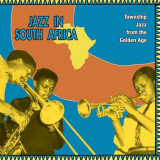
South Africa is in fact the only country in the whole African continent that has developed a strong Jazz tradition. Initially influenced by the great American stylists, (Ellington, Gillespie...) South Africa gradually developed its own soulful style based on a distinctive taste for melody and a deep sense of groove. Masterfully selected from the so-called Golden Age of the genre, (late Fifties / early Sixties), this compilation represents the best introduction to the work of a large and varied body of musicians and composers who inevitably developed their music as part of the historical Anti-Apartheid struggle, and as means of self expression in the dark times of exile. Kippie Moeketsi, Hugh Masekela, Dollar Brand, Chris McGregor, Dudu Pukwana, Mongesi Feza, Barney Rabachan, Nick Moyake and of course the queen Miriam Makeba are just some of the main voices represented here. A bunch of true warriors. in one word: A must!
Vice Squad are a UK Punk Rock band who’s first single releases included the classic ‘Last Rockers’ 7” in 1981. This was followed by the landmark albums ‘No Cause For Concern’ in the same year and ‘Stand Strong Stand Proud’ in 1982 which were both released on EMI. Since then Vice Squad have delivered short sharp songs with incisive political lyrics and a dash of humour spat out over a thunderous rhythm and machine gun Rock ’n’ Roll guitars. Their latest releases are the EPs 'Born In A War' and 'Ignored To Death V2' taken from the forthcoming album ‘Battle of Britain’ set for release on their own Last Rockers label in May 2020. The band have become 100% DIY since forming Last Rockers Records in 2009. In keeping with the DIY ethic the previous albums were recorded in the band’s own ‘Sci Fidelity’ studio South London and the new album ‘Battle of Britain’ continues this with the band maintaining full artistic control with the benefit of global distribution via Cargo. Their last album ‘ Cardboard Country’ was launched on the back of a very successful Pledge campaign raising funds for the Shelter homeless charity in line with the album title which was inspired by 'Cardboard City', the name given to the settlement of homeless people living in cardboard boxes near London's Waterloo station. Vice Squad is fronted by raucous voiced singer/guitarist Beki Bondage who was famed for being a teenage champion of Animal rights long before the current popularity of veganism. Vice squad’s song ’Humane’ was one of the first ever Animal Rights songs. Beki has been featured on the front cover of a number of influential music tabloids such at Melody Maker, NME, Sounds, Record Mirror and Smash Hits. After a hiatus, Beki formed a new version of Vice Squad in 1997 featuring longstanding members of her post VS outfit The Bombshells and they have released several quality albums of powerful punk songs that have been very well received across the world. Vice Squad are considered one of the most influential punk rock bands of all time, paving the way for other female Punk and Rock singers and influencing male performers such as Dave Grohl of Nirvana and Foo Fighters fame who was introduced to Vice Squad via his sister’s record collection. The first rule of Punk is there are no rules and Vice Squad ably illustrate this with ‘Battle of Britain’. Written, Recorded and Mixed by Beki Bond and Paul Rooney in their home studio. The 13 track album opens with the blistering ‘Ruination’ which cuts through the bullshit of small time promoters and blaggers with consummate swagger and melody while ‘I Dare To Breathe’ is an amphetamine driven anthem to paranoia. ‘When You Were 17’ is almost-tender and tells of first tattoos and under age booze whilst the more chilling ‘Ignored To Death’ rails against isolation and homelessness. The explosive ‘Born In A War’ rages along like a missile ravaging a third world country and warns ‘See how they treat refugees? That’s how they’ll treat you and me’. Elgar’s ‘Nimrod’ reworked with a pulsating industrial bass segues into title track, 'Battle Of Britain' where Beki's vocals soar like a Spitfire over the crunching de-tuned riff and spit fury over the hypocrisy of putting war memorials before people. The dystopian ‘Poverty Face’ hits you with the opening line ‘Disinheriting the meek, slyly killing off the weak’ and is counter balanced by the more upbeat ‘How The Other Half Lives’. ‘No Evil’ is a relentless attack on the normalisation of the suffering and death of billions of animals for the meat industry. Battle of Britain's hard hitting collection of anger and riffage pulls no punches in covering topics from austerity and factory farming to the pernicious influence of the Mainstream Media - ‘Led by lies lambs to the slaughter, tax exiles say who you vote for’. Brexit, fake patriotism and cognitive dissonance all get a good kicking too. The penultimate track, 'You Can’t Fool All Of The People' mixes baritone guitar with violin and Celtic rhythms climaxing in an epic James Bondesque heavy guitar/orchestral blend and breaks every rule in the Punk Police hand book whilst pleading for unity against a rigged political system. ‘Pulling Teeth’ with its ominous riff and hilariously frustrated lyrics ‘Dithering jibbering solid as jam, is it fair I’m both the woman and the man’ closes the album in manic style
UK Dub pioneers Alpha & Omega (Greensleeves / A&O Records) represent the foundation of soundsystem culture and bass music migration from Jamaica, via the UK, to the world. Formed in the 1980’s and with over 30 studio albums to their name. Finally, for the first time in three decades Steppas Records has launched the A&O full LP reissue series. The latest in the series is 'Overstanding' a timeless and much sought after album originally released in 1992 currently only available at sky high prices if at all! Lovingly re-mastered and presented in the original sleeve featuring the iconic A&O artwork. Overstanding is another genre-defining album and a true piece of musical history.
When you mix Guinea, Mali, Senegal, Cuba and Australia, you find yourself with many cultures. We represent Africa, sure, but also we represent diversity. That is the essence of Ausecuma Beats. We want to come together, to bring all people together to share the knowledge of what we have learnt.
We all see the hard work that lies ahead in the future. It’s not easy, and we all have different ways of thinking. But there is also something we all share, and that is humanity, and family. We have to teach our children, to help them on their journey.
This album can be defined by the song Tombo. It’s about giving respect to your teacher. All the knowledge we bring to this album has come from someone who in their turn gave it to us. If you like the music, you hear it, you dance, great! But remember, someone created this, they gave it to us, and now Ausecuma Beats are giving it to you. So we dedicate this album to our teachers.
The name of this album is Musso; it means woman. We want to dedicate this album to those who gave us life. It doesn’t matter how strong we are, how tough we are, or how lucky we are in the chances we have been given. There is always someone who is worrying about us; there is no-one who can be thinking about us more than our own mother. So this album especially is dedicated to the women in our lives, and is sending respect to all women around the world. - Boubacar Gaye, Melbourne, July 2021
Does returning to a place have a sound? Can the ear have a memory? And what if places which we return to are just empty shells? Choreographed rooms which we need to play, fill from scratch each time with fragments from the past and present, layer upon layer, familiar and still somehow always new and differently assembled. Paula Schopf’s Espacios en Soledad are acoustic walks around present day Santiago de Chile, the city where she was born - which she always left, had to leave and to which she always returns - but more than anything also through her own memories which resonate throughout the public places, squares, streets though still in their own way remain strange.
„Every immigrant in the world has a piece like this - a kind of missing link, something which is incomplete. And every time one returns to the home country you are looking for it. For me it was a matter of sound.“ (Paula 2019).
In the mid 70s leaving Santiago was a flight of exile as a child with her family. Leaving in 1990 was an autonomous decision to head for Europe, Berlin, where the wall fell, where the heavens opened up all at once and electronic music became a kind of new home to so many. Paula Schopf belonged there. For her the Ocean Club at Tresor club was a central place where friends and mentors like Gudrun Gut and Thomas Fehlmann made it possible for her to get really into it. Dancing, being and feeling your body, forgetting oneself in the bass and beats, who one is and where one’s from, to becoming the DJ Chica Paula. Chile was very far away during this time, Latin America was more just a code, a musical and habitual cliche to be cautious of. This was especially true for the culture of the Chilean exile, the pathos of the “Canto Nuevo”, the sound and ideologically charged instruments of the „música andina“, for example the Zampoña, Quena or Charango. Techno was the greatest thinkable alternative to this even if or perhaps because so many kids exiled from Chile became key figures in the German and European scene: Ricardo Villalobos, Dandy Jack, Cristian Vogel, Matias Aguayo and many more.
How does returning to a place sound? Does the ear have its own memory? The field recordings which were recorded in Santiago de Chile in 2016 and form the central sonic material for Espacios en Soledad represent the paradox for Schopf’s return to her home country after emigrating: the inevitable drifting apart of her own lived time from that of her former home. Already the Venezuelan and Colombian hawkers are unmistakable signs of the deep change in Chilean society which has happened in recent years due to immigration. Which is in contrast to the old lady who sits on the floor in a pedestrian zone and without break sings the same three songs by Violeta Parra and then keeps falling asleep while doing so. The fragile presence of her voice is joined with a repertoire which is almost mythologically timeless in Chile in a particularly moving way.
By layering, ordering and conjoining such found sounds from modern day Santiago this piece become about the urban sound of Chile’s present. But more than anything by doing this Paula Schopf becomes an arranger of her own sonic memory or sound-triggered memories of returning to this city. Just as techno and Berlin helped her for such a long time to get away from too strong of an identification as a Chilean in exil, now with Espacios en Soledad she has found a way to bring these two seemingly disparate lives and remembered worlds together.
Matthias Pasdzierny
“I’ve lost track of how many times I’ve listened to Age of Exile in the past few weeks. I got a preview before it came out and on the first listen I was hooked. My first impression was that it sounded like Kaleidoscope (with whom Straw Man Army shares members), but it’s reaching toward something more like the song-oriented anarcho punk of Zounds and Crisis. I’ve been playing this record into the ground in the subsequent weeks, though, and there’s so much more to hear than a simple “this kinda sounds like this” comparison. One thing Straw Man Army shares with Kaleidoscope is a sense of rhythmic sophistication and inventiveness. We expect that a neo-anarcho band will have some interesting marching band snare patterns, but there’s so much more to the tracks on Age of Exile. Every song has a unique groove (or rather several of them, frequently overlapping), giving the album a sense of scope and breadth far beyond most contemporary punk records. And then there’s the sense of melody, which is equally sophisticated. While the interwoven rhythms make each song seem like a dense tapestry, the guitar melodies have a sense of sweetness and directness that makes Straw Man Army seem approachable and human. And then there are the lyrics, which I haven’t been able to dig into thoroughly, but are as dense, poetic, and vibrant as the music, focusing on how to live in the rubble of empire. Age of Exile is a striking album no matter which aspect of it you focus on, and it’s so distinctive and consuming that I can already tell it’s going to be a big part of the soundtrack to this part of my life.”
- A1: Versions Of The Truth
- A10: Break It All
- A11: White Mist
- A12: Out Of Line
- A13: Wretched Souls
- A14: Far Below
- A15: Threatening War
- A16: The Swell
- A17: The Final Thing On My Mind
- A2: In Exile
- A3: Warm Seas
- A4: Our Mire
- A5: Build A World
- A6: Demons
- A7: Driving Like Maniacs
- A8: Someone Pull Me Out
- A9: Uncovering Your Tracks
The Pineapple Thief, are one of the leading lights of Europe’s experimental rock domain, led by post-progressive mastermind Bruce Soord & reinforced by Gavin Harrison (King Crimson) on drums.
Following the release of their latest studio album ‘Versions Of The Truth’ in September 2020, the band were preparing to start the album’s live campaign, when like so many other artists, their plans were put on hold by the continuing global pandemic.
Eager to still perform & connect with their fans across the globe, in April 2021, The Pineapple Thief filmed an extravagant on demand live event entitled ‘Nothing But The Truth’ directed by band videographer George Laycock (Blacktide Phonic/Visual).
Bruce Soord explains” “The Pineapple Thief is equally about the studio & the stage, so it was hugely disappointing that we were unable to tour, especially as we were excited to be able to perform the
new album ‘Versions Of The Truth’ live for everyone. Being able to do this film, especially under the circumstances, was invaluable. We all knew we did not want to shoot a film of us standing on stage staring at an empty room. We wanted something special, something ‘cinematic’ so we have created something unique & something very, very special that I am proud to have been a part of. I can’t wait for people to hear it.”
Drummer, Gavin Harrison adds “Nothing But The Truth” is a highlight for this band in terms of captured performance.
The Pineapple Thief’s 2018 anthemic release ‘Dissolution’ garnered worldwide acclaim from both media & fans, earning them their first UK Top 40 album, #1 UK Rock & Metal album & #22 on the German album charts. It took them on two extensive sold-out European headline tours & their first ever tour of North America.
‘Versions Of The Truth’ raised the standard yet again by delivering, quite possibly, one of the most important rock albums of 2020.
‘Nothing But The Truth’ captures The Pineapple Thief at their very best performing songs from their illustrious catalogue including for the first time live, songs from ‘Versions Of The Truth’.
The release will coincide with the rescheduled UK & European live shows this autumn & continue into 2022 with more dates to be announced.
The soundtrack to ‘Nothing But The Truth’ will be released on a gatefold black vinyl double LP with an 8-page printed colour booklet.
No one combines death and black metal quite like Poland’s Hate . With unflinching viciousness and a sense of atmosphere unique to the band, on Rugia, their twelfth full-length, they push the boundaries of their craft even further. Writing for Rugia commenced shortly after Auric Gates of Veles was released. However, Hate soon began to tour extensively in support of their then new opus, and the production of new music was put on the back burner. But come 2020 and the COVID pandemic, the band’s touring plans with Belphegor and Suffocation were abruptly cut short. With this unexpected infusion of free time, the band decided to buckle down and finish writing the material they were working on. .” The album title is taken from the archaic name of a German island on the Baltic Sea now called Rügen. In ancient times, Rügen or Rugia, was a site of holy pilgrimage to the pagan Slavic people. It was the very heart of the western Slavic faith, housing the fabled stronghold of Arkona. The album is at its core a tribute to Rugia and its tribes and the culture they created. The band elected to once again track the album in the Hertz Recording Studio in Poland, and it was recorded, mixed and mastered by the Wiesłaski Brothers (Behemoth, Decapitated).
Summer was conceived as an entry point for Sonae to access and wrestle with difficult themes, to engage with them authentically, artfully, personally. It was also the starting point for a collaborative audio-visual project with video artist Jennifer Trees (the confronting multimedia installation that premiers in September 2021 at Stadtgarten, Cologne).
Summer articulates these ideas using the unique musical and sonic language that Sonae has been developing across previous releases. The expressive textures and tender melodics of 2015’s Far Away is Right Around the Corner; the atmospheric noise and brute unease of 2018’s I Started Wearing Black; the vicious edges of her 2019 remix-tape Music For People Who Shave Their Heads. Summer is haunted by blistered cellos and spectral string drones, the elegant and emotive movement around diatonic harmonies that echo the classicism and bucolic themes of Vivaldi’s The Four Seasons (1775). Like Vivaldi, Sonae’s work is programmatic, presenting a progressive, intensifying narrative and suggesting aural phenomena of the natural world - buzzing insects, breaking rocks, waves crashing, dust and heat rising - and characterising the seasonal spirit as capricious, volatile and punishing. In these ways, Summer is related to pastoral traditions of European classicism, evoking the aura of doomed and dust-blown gothic grandiosity. It also has feet firmly planted within the lean, sound worlds of underground techno - pulsating four-on-the-floor beats with deep, vibrational sine-wave sub kicks; elegantly bleak, distorted atmospherics that straddle the uncanny space between corrosion and euphoria. The result is a visceral and poetic listening experience. Original, highly affecting, fully engaging body, mind and soul. (…)
Sonae’s music evokes imagination, provokes emotion, and disrupts and defies expectations. She explores the edges and intensities of experience, creating audible and embodied sensations that suggest the physical, atmospheric, and psychological effects of global warming on a living organism. We feel the fatigue, the slowness, sweatiness, dizziness, the sensations of uncomfortable warmth and burning; the atmospheres are hazy, dark and heavy, articulations are brutish and tactile, crunchy and sharp; there is restlessness and resignation, desolation and awe.
Summer is not a warning. It is not an explanation or an argument. It offers no answers. Summer simply holds up a mirror and asks us to experience and behold both the beauty and the brutality of our present reality. It is a work of protest, grief and hope, and it functions as a space for the listener to reckon with these truths and sensations for themselves. (Leah Kardos, London, June 2021)
Sonae (Sonia Güttler) is a German electronic producer and DJ, based in Cologne. Her acclaimed debut album was released in 2015 with Monika Enterprise (Berlin) followed on the same label with her second album in 2018 : ‘’I Started Wearing Black’’. Her Third album ‘’Music For People Who Shave Their Heads’’ has been released in 2019 with bit-phalanx (London).
Sonae plays live solo and with the label collective Monika Werkstatt at places like Institut Für Zukunft (Leipzig), Meakusma Festival (Eupen), Ausland (Berlin), Pop Kultur Festival (Berlin), Fusion Festival (Germany), Uh-Fest (Budapest), Cafe Oto (London), 23rpm Festival (London) The Cube (Bristol) and more on the same bill with Squarepusher, Plaid, Darkstar, Kyoka, Frank Bretschneider, Tim Exile.
Music in Exile is excited to announce a new 12” maxi-single release from the “King of Music”, GORDON KOANG. Titled Coronavirus / Disco, this double-A-side release share’s Gordon’s messages of peace, love and positivity, and is his first original offering since his acclaimed Unity album was released in late 2020.
The first single, Coronavirus, was penned by Koang in July 2020 as a response to his personal experiences of the global pandemic. As his hometown of Melbourne went into lockdown, Gordon resided in the outer suburbs of Melbourne with his cousin, Paul, and his four-stringed, guitar-like instrument, the thom. Throughout this single, Gordon offers his condolences to those affected by the pandemic, alongside messages of his faith in frontline workers and the hope that circumstances will improve soon. “People suffer a lot. I ask that God gives the doctors the big wisdom to defeat the coronavirus. When people hear my song, I hope that this music counsels them. The song has a lot of meaning, it is telling them to be hopeful.”
With the cancellation of a national tour and numerous festival appearances, Covid-19 had not only impacted Gordon’s career here in Australia but also his opportunity to visit family he hadn’t seen in five years. After receiving Australian permanent residency, Gordon and Paul were now able to visit family in Uganda, however this was made incredibly difficult due to border closures and the potential health risks. Taking a last minute opportunity, Gordon and Paul travelled to Africa and whilst excited to visit their families, they also experienced the impact of the pandemic on their home communities. “In Africa, it is not like us here, there is no medicine and in Africa there is also no Centrelink if you are in lockdown. It is difficult getting services. Even getting food is difficult.”
After two weeks in hotel quarantine, Gordon and Paul returned to Melbourne, eager to record music once more. With lockdown lifting, Gordon headed to the studio with a new band featuring Zak Olsen (ORB, Traffik Island) Jack Kong (Baked Beans, Traffik Island), David “Daff” Gravolin (ORB), and Jesse Williams (Leah Senior, Girlatones). This new release is the result of these studio sessions, jamming and recording at Button Pusher in Preston, Melbourne.
For the DJ’s out there, both tracks will feature on a limited edition, 12” maxi single vinyl complete with pull-out poster from Gordon, encouraging listeners to stay positive during this difficult time.
“My condolences to you, my audience in lockdown. We are all suffering from coronavirus. Let us stand firm and be strong. Let us look after each other, until the time comes when God brings us together. I give my condolences to people who have died of coronavirus, in aged care and disability. We are heartbroken for everyone. Let us take it easy, and pray in our houses, all around the world. If you believe in God, pray to the God you believe in, and they will help you. God will give us the chance to go back to normal and open all events. Even if it is a bad time now, there will be a change and it will be a good time for us. Thank you to everyone.” - Gordon Koang
Liz Phair announces ‘Soberish’, her highly-anticipated new album and first collection of original
material in eleven years. Produced by Phair’s longtime collaborator Brad Wood - known for helming
Phair’s seminal albums ‘Exile In Guyville’, ‘Whip-Smart’ and ‘whitechocolatespaceegg’ - ‘Soberish’ is
released via Chrysalis Records.
Almost thirty years since her peerless debut album ‘Exile In Guyville’ was released (voted #56 in
Rolling Stone’s 2020 list of the 500 Greatest albums Of All Time), Phair returns with a new record that
will both intrigue and satisfy her long-standing fans and introduce her to a smart young audience
whose contemporary heroes have been reading from Phair’s playbook since they first picked up a
guitar.
Liz Phair has achieved the kind of status in her industry rarely bestowed on recording artists. Her
albums in the 1990s were central to the indie rock canon of the day. Her image was featured in
countless magazines, early Apple commercials and Gap ads. Her eponymous album for Capitol
Records in 2003 took Phair in a pop direction that ruffled some critics’ feathers but nonetheless went
gold, galvanizing a host of new fans, particularly among young women who fell in love with hits like
‘Why Can’t I’ and ‘Extraordinary’, tracks that were featured in several major films and TV shows,
including 13 Going On 30, Raising Helen and How To Deal. Liz has picked up two Grammy
nominations and a spot in Pitchfork’s Greatest Albums Of The 90s, with over five million record sales
to date (including three US gold albums). She sang ‘God Bless America’ at the opening game of the
Chicago White Sox World Series victory in her hometown in 2005.
‘Soberish’ is a portrait of Phair in the present tense, taking all of the facets of her melodic output over
the years and synthesizing them into a beautiful, perfect whole. She’s at the top of her game in the
recording studio, drawing upon years of experience in television composition to weave through the
songs daring and unexpected sound design. With Brad Wood’s exquisite engineering and masterful
production, the result is a wholly fresh yet satisfyingly familiar sound that challenges on the first listen
and seduces with each subsequent play through. The earworms are strong with this one.
Phair says, “I found my inspiration for ‘Soberish’ by delving into an early era of my music development,
my art school years spent listening to Art Rock and New Wave music non-stop on my Walkman. The
English Beat, The Specials, Madness, R.E.M.s Automatic for the People, Yazoo, The Psychedelic
Furs, Talking Heads, Velvet Underground, Laurie Anderson, and the Cars. The city came alive for me
as a young person, the bands in my headphones lending me the courage to explore.”
None of the arrangements on Soberish are traditional songwriting standards but the hooks are so
catchy, the imagery so compelling, that the listener is drawn effortlessly along with the music. There
are the off-kilter, unexpected guitar chords listeners will recognize as her signature style, a mainstay
from her earliest work; the instantly knowable choruses of her most pop-friendly songs of the early
2000s; the frank lyricism and storytelling that has opened doors for countless women picking up
guitars and attempting to speak about their experiences.
Phair shares insight into the meaning of her title: “‘Soberish’ can be about partying. It can be about
self-delusion. It can be a about chasing that first flush of love or, in fact, any state of mind that allows
you to escape reality for a while and exist on a happier plane. It’s not self-destructive or out of control;
it’s as simple as the cycle of dreaming and waking up. That’s why I chose to symbolize ‘Soberish’ with
a crossroads, with a street sign. It’s best described as a simple pivot of perspective. When you meet
your ‘ish’ self again after a period of sobriety, there’s a deep recognition and emotional relief that
floods you, reminding you that there is more to life, more to reality and to your own soul than you are
consciously aware of. But if you reach for too much of a good thing, or starve yourself with too little,
you’ll lose that critical balance.”
Music in Exile announce their forthcoming remix EP, featuring reworkings of Music Yared by Melbourne cult hero, Mikey Young (Total Control, Eddy Current Suppression Ring, The Green Child). SINDAYO - MIKEY YOUNG REMIXES features remixes of an original track from Music Yared’s self titled debut EP, released last year through Music in Exile. In addition to today’s announcement, we’re delighted to also share the first single, Sindayo (Mikey Young’s Masinko Remix - Radio Edit), out March 26 via Music in Exile.
Mikey Young’s legacy is well known throughout the Australian music scene, most notably as part of garage punk band Eddy Current Suppression Ring, and synth-driven outfit, Total Control. However, the talents of Young extend well beyond the performance setting to the world of engineering and mastering with his name appearing in the liner notes of an incredible number of releases, becoming something of a trademark of quality. In this release, Young showcases his skill and nuance, creating a remix where tradition and sonic exploration co-exist.
Anbessa Gebrehiwot and Haftu Reda are masterful players of krar and masinko, traditional string instruments from Eritrea and Ethiopia. Now based in Melbourne, Australia, the pair collaborate with multi-instrumentalist Dale Gorfinkel to create an innovative ensemble sound that celebrates their East African culture. The band's seemingly endless repertoire ranges from modern takes on folk songs to new, original compositions with Anbessa’s strong vocal presence a perfect match to Haftu’s sweet lyrical modesty.
Music Yared’s compositions are inspired by traditional Etheopian and Eritrean folk songs and they sing about love, distance, separation and culture. Their songs also feature virtuosic mastery of traditional instruments - the krar, (a 5 string lyre style instrument), and the masinko (a single string violin-like instrument that is played using a bow.) Although inspired by tradition, Music Yared’s compositions embrace the notion that music is always developing and changing with the times. Taking influence from traditional folk songs, Music Yared finds newness and originality through their personal approach to their lyrics, their treatment of rhythm, and the creation of new beats. This change and openness to new sounds is also apparent in their instrumentation, as they pair their traditional instruments with drums, as well as samples of bass lines and percussion.
Given their openness to new musical approaches and experimentation, it only seems fitting for the songs of Music Yared to be remixed, allowing further exploration of their inherent musical attitudes towards change and development. The first single from the EP, Sindayo (Mikey Young’s Masinko Remix - Radio Edit) traverses new sonic territory, pairing the traditional character of Music Yared with contrasting ideas from different sonic landscapes. Beginning with a musical acknowledgement to the original song, Young’s remix then changes direction into a new sonic world; synth pads and melodies swell and intertwine, samples interject, whilst grooving electronic beats underpin a new approach to texture and song structure.
Recorded by Dale Gorfinkel in Thornbury. Mixed and mastered by John Lee at Phaedra Studios.
Remixed & additional production by Mikey Young in Rye.
- A1: Latest Record Project
- A2: Where Have All The Rebels Gone?
- A3: Psychoanalysts' Ball
- A4: No Good Deed Goes Unpunished
- A5: Tried To Do The Right Thing
- B1: The Long Con
- B2: Thank God For The Blues
- B3: Big Lie
- B4: A Few Bars Early
- C1: It Hurts Me Too
- C2: Only A Song
- C3: Diabolic Pressure
- C4: Deadbeat Saturday Night
- C5: Blue Funk
- D1: Double Agent
- D2: Double Bind
- D3: Love Should Come With A Warning
- D4: Breaking The Spell
- D5: Up County Down
- E1: Duper's Delight
- E2: My Time After A While
- E3: He's Not The Kingpin
- E4: Mistaken Identity
- F1: Stop Bitching, Do Something
- F2: Western Man
- F3: They Own The Media
- F4: Why Are You On Facebook?
- F5: Jealousy
Gordon Koang, South Sudan’s enigmatic superstar and ceaseless fountain of infectious, upbeat pop music, kick starts 2021 by revealing a series of remixes from his recent Unity album, this time partnering with two of the undisputed leaders of electronic music in his adopted home city of Melbourne, Australia - Sleep D and Andras.
Stranded overseas after civil war tore apart their country over six years ago, Gordon and his cousin Paul Biel Kueth, who were on tour performing to expatriate communities in Australia, were forced to apply for humanitarian protection and made the heartbreaking decision to leave their families stranded at home, on the chance that citizenship would be granted and reunification made possible.
After languishing on the outskirts of Melbourne’s suburbs for many years, Gordon met the Music in Exile label, a not-for-profit run by members of Melbourne’s flourishing music scene in order to create more opportunity for the city's numerous refugee and migrant musicians. He immediately assembled a band and tracked his eleventh full-length album, Unity (his first recorded album featuring performances in English and made widely available).
In the midst of a successful run of singles and festival performances around Australia, the Covid-19 pandemic hit, derailing Gordon’s newfound success and growing status as the darling of Melbourne’s vibrant music scene. Forced to find alternatives, Gordon reached out to some of his newfound friends in that city’s community. The result - this set of startling remixes by some of the finest voices in electronic music today.
Gordon, who was born blind in a small village in South Sudan’s Upper Nile Valley, began composing on the thom, a five-stringed instrument sometimes referred to as a Sudanese banjo, He started busking on the streets of Juba, accompanied by his cousin Paul Biel, who would sell homemade cassettes and CD’s. His anthems of peace, love and unity struck a chord, and before long Gordon found himself as something of a folk hero and a voice for peace in a country torn by ongoing conflict.
Now resettled in Australia, Gordon records and releases music in order to support his family back home in East Africa. He still awaits Australian citizenship, and forges on in the hope that this may one day be granted, allowing him to reunite with his wife and family in his newfound home.
Unity is Gordon’s eleventh full-length album and first to be recorded in Australia. It was produced by Stefan Blair and Liam Parsons of Melbourne lo-fi legends Good Morning, and features an ensemble cast of Australian performers. South Sudan and Y Dah are taken from the album, reimagined here by Andras and Sleep D. The remixes were a gift to Gordon and his family, with no fees paid or royalties due - all proceeds go directly to Gordon to help him reunite with his family.
The dusty streets of apartheid-era Soweto, 27 July 1987. The politically charged funeral of a young activist who fled South Africa to became a commander in the military wing of Nelson Mandela's African National Congress. Police await in armoured cars. The funeral is restricted by specific government decree.
The man being buried is Peter Motau, assassinated in neighbouring Swaziland on the orders of South Africa's most notorious government-sanctioned killer, Eugene de Kock, orders carried out by his secret police unit in a bloody ambush.
For De Kock and the apartheid government, Peter Motau was a terrorist. For the singing, chanting mourners at his funeral, he was a freedom fighter, a hero from the streets of Soweto itself.
ZA87 is a raw audio document of one extraordinary day under apartheid. A father mourns, himself breaking the regulations declaring any political statements at the funeral illegal. Young activists, the "Comrades", sing in praise of the banned ANC's military wing, sirens blare, helicopters hover overhead, a police officer orders all television and photojournalists to leave. Nigel Wrench's microphone remains. Also there is Winnie Mandela, on behalf of the ANC's exiled leadership. Banned from speaking at the funeral, she speaks instead into Wrench's microphone and stages a remarkable intervention as the police seek to detain activists.
The authorities sought to keep the events of that day away from the eyes and ears of anyone who wasn't there. ZA87 breaks that silence.
Nigel Wrench is an award-winning journalist whose career began in South Africa under apartheid. He is the winner of a Sony Award for "Out This Week", BBC Radio's first national lesbian and gay news programme, and a New York Radio Award for BBC Radio 4's "Aids and Me", chronicling his experience of living with HIV. "Few journalists have quite so intimately captured the essence of their era's great moral panics as Nigel Wrench" (The Quietus).
ZA87 is the follow-up to Wrench's acclaimed first cassette on The Tapeworm, ZA86, "a remarkable documentation of South Africa under apartheid in 1986" (Boomkat), "chilling and at times stunningly beautiful" (The Quietus), "stylistically not dissimilar to Adam Curtis's 2015 documentary 'Bitter Lake', its hypnagogic float through the rushes feels curiously vivid, free of the dating or distancing effect further media packaging might bring" (The Wire).
In 1981, London-based E.G. Records released the debut album from a young Ghanaian group called Edikanfo. Edikanfo quickly rose to international notoriety following the release of “The Pace Setters” because of the infectious, forward-looking highlife meets afro-funk synthesis the band committed to tape. But the album also caught an additional wind of publicity due to its producer, the already legendary British musician and sound conceptualist Brian Eno. During that time, Eno was researching and openly propagating West African musics. He often mentioned his love of Fela Kuti and called his own rhythm-driven experiments the search for a “vision of a psychedelic Africa.” He had recently been collaborating with The Talking Heads on their Avant-funk masterpiece “Remain in Light” and with The Talking Heads frontman David Byrne on “My Life in the Bush of Ghosts,” an album which foretold the sort of cross-pollination and global music interconnectivity that today we take for granted. Eno and Edikanfo’s work together at Studio One in Accra (Ghana) was yet another inspired morphing of soundworlds and processes and a significant touchstone for both artists. As Brian Eno recently noted: “the actual recording sessions were joyful - the band played with such verve that you couldn't resist.”
But just when the sky seemed the limit for Edikanfo, the coup d’état in Ghana on the last day of 1981, tragically put the brakes on the band’s quickly developing fortunes. For years after that, the country endured enforced curfews at night, which of course ultimately gutted the live music scene in Accra and elsewhere. Because of this and other financial setbacks, the band ceased activity and its members spread out in exile, all over the world. It clearly seemed as though the story of Edikanfo, one of Ghana’s greatest bands of that era, had come to a premature end.
Now, almost four decades later, Edikanfo has returned. And with its surviving members gearing up to reissue and tour their classic 1981 album, “The Pace Setters,” the band is once again excitedly pointed towards the future.