On the Mixbone EP, two tracks from Eric Copeland’s 2017 record Goofballs get reworked by five of leftfield electronic music’s heaviest hitters. The Goofballs LP finds the Black Dice founding member conducting hectic, dancefloor-oriented experiments; The Vinyl Factory called it a “mangled, spangled journey into the fringes of industrial disco and hallucinatory club tackle.” Mixbone capitalizes on this direction with remixes that recontextualize and reshape the propulsive energy of the original songs into wholly different forms.
New York techno powerhouse and Allergy Season boss Physical Therapy contributes two aptly named takes on “Mixer Shredder” – the “Tegel Mix” churns with industrial EBM low-end, and the breakbeat and wubby bassline make the “Gatwick Mix” unmistakably English. NHK yx Koyxen remixes Eric for the second time, with a jittery and woozy electro interpretation of “Neckbone.” Cooper Saver, best known for his Far Away parties in Los Angeles, turns in one of the most unexpected remixes, keeping it 4/4 and creating what sounds like Shep Pettibone making acid house.
Coming off of her 2017 EP on Technicolour/Ninja Tune, Machine Woman decided to remix both tracks. With “Neckbone,” she adds a barely-discernible robotic narrative vocal, allegedly about Ryan Gosling. “Mixer Shredder,” on the other hand, travels from hissy lo-fi techno into something quite tranquil and beautiful. And with previous releases on 1080p, Freakout Cult, and Wania, Vancouver’s LNS channels the melodic electro tones of classic Bleep-era Warp, like a lost track from LFO or Drexciya.
“Danceable” might not be the first word one thinks of when describing Eric Copeland’s solo releases. But in a manner not dissimilar to the way Black Dice shaped the parameters of experimental music, the remixes here expand the limits of what the club can and should look like.
quête:tim le el
- A1: Mona Lisa
- A2: Let There Be Love
- A3: Got A Penny
- A4: When I Fall In Love
- A5: Love Letters
- A6: Too Young
- B1: Unforgettable
- B2: It's All In The Game
- B3: Sweet Lorraine
- B4: For All We Know
- B5: To The Ends Of The Earth
- B6: Ramblin' Rose
- C1: Let's Face The Music And Dance
- C2: I'm Gonna Sit Right Down And Write Myself A Letter
- C3: Love Me As Though There Were No Tomorrow
- C4: Get Your Kicks On Route 66
- C5: Tenderly
- C6: These Foolish Things (Remind Me Of You)
- C7: Ain't Misbehavin
- D1: The Very Thought Of You
- D2: Papa Loves Mambo
- D3: The More I See You
- D4: At Last
- D5: When Sunny Gets Blue
- D6: Those Lazy Hazy Crazy Days Of Summer
Nat King Cole was born Nathaniel Adams on the 17th March 1917 in Montgomery, Alabama, USA. His family held a key position in the local black community with his father being pastor of the local Baptist church.
His first professional break came touring with the Broadway show “shuffle along” which eventually found its way to Los Angeles. Where Nat ended up playing at the century club on Santa Monica boulevard. This was an in-place for musicians and Nat’s already developed and incredible piano playing became a great attraction eventually forming a trio with Oscar Moore on guitar and Wesley Price on bass. With Nat’s great voice and add libs the trio were a great success in 1939/40.
In 1943 Cole signed to the infant Capitol records and began his enormous string of hits for that label and eventual amazing career partnership with the great arranger and orchestra leader Nelson Riddle. This was at the time of popular music already pioneered by Bing Crosby and latterly Frank Sinatra and something Nat would become a master of, with his by now incredible, highly developed and unique voice which we all instantly recognise.
Right up until his untimely and tragic death on 15th February 1965, Nat made a string of successful records for capitol, a string of film appearances, and the first black presenter of his own tv show, which ran for many years and introduced a whole host of new and old artists to the television screens. As is so often with people so talented, Nat’s life was short but extremely successful. He was a well loved and admired person with his vibrant and kind personality with many great friends and colleagues and made an enormous contribution to the music industry, civil rights and the world in general.
As a singer and pianist, he was exceptionally talented, and his voice will live on in immortality. His ability to express and sing any song was quite extraordinary to say the least and these recordings are a fine example of that ability. A must have for all music lovers!
Coming up next on Papa Records is something truly special – a limited edition 7” of The London Community Gospel Choir (LCGC) with their uplifting new single, "Rather Be" remixed by talented producer/DJ - Ayce. A release to surely joyously ignite dancefloors.
As one of the most dynamic and inspiring forces in the UK music scene, LCGC is Europe's premier contemporary Gospel choir. Their sound seamlessly blends Soul, Funk, House and R&B while maintaining a powerful message of God’s love, peace, and unity through their refreshing and vibrant take on Gospel music.
LCGC has shared the stage with a long list of music icons, such as Elton John, Madonna, Sam Smith, Ellie Goulding, Jessie J, Adele, Gorillaz, Blur, Gregory Porter, Justin Timberlake, and Mariah Carey, and their collaborations continue to expand.
Originally from Hackney, East London, Ayce 'The Beat Junkie' is a skilled DJ, musician, and producer. His early success as a highly sought-after keyboard player paved the way to working with major artists such as Jessie J, Tinie Tempah, Duffy, Wretch 32, and Paul Carrack, among others. Ayce creates a brand of house music that's soulful and funky, crafted to get you moving. Focusing on powerful, often choral-style vocals in both his original tracks and remixes, his music not only energises but also leaves you feeling uplifted.
LP limited to 500 LP copies. Nina Garcia ’s first solo record widely available via international distribution. Nina has collaborated with artists like Stephen O’Malley, Sophie Agnel, Fred Frith, Antoine Chessex, Louis Schild, Leila Bordreuil, and supported for bands like Sonic Youth, SUNN O))). After a decade of performing concerts under the Mariachi guise, Nina Garcia has finally unveiled her unique approach in Bye Bye Bird, her first album under her name. Bye Bye Bird is her second solo album. With no pretence or demonstration, the album is a captivating blend of chiaroscuro, melodies, and raw emotion. Nina Garcia’s album takes on an almost documentary-like quality by adopting a simple approach to gesture and sound recording. It offers a candid portrayal of a moment, a lack, a state, and a breathtaking energy. With ostinato as her only credo, Nina Garcia’s music is an experiment in freedom, where the peaks answer the abysses, and the power of movement and the emotion of sound serves as her compass. From very short (01:28) to never very long (07:34), the eight tracks that make up this set explore a moment, a space, a mechanism, an intention or a way of doing things. As a common feature of almost all these pieces (all but one, the last), Nina Garcia explores a new technique. She adds to her instrumentation, reduced to the essentials (a guitar, a pedal and an amp), an electromagnetic microphone which, when held in hand, makes it possible to listen in on the exact zones where the vibration of the string creates a sound amid vast spaces of silence. The guitar is unplugged, and the body/instrument relationship changes in dimension. In this series of variations, you can get caught up in masses of noise seen from very, very close up, evocations of melodies in the making, feedback on ridgelines, pulsations that hold their own, modulations weakened by exhaustion and harmonic bursts that hint at better days to come. Neither hopelessly chthonic nor beatifically ethereal, Bye Bye Bird is a sum of musical pieces that make a whole and give voice to echoes of what has been, the presence of what is and the hope of what will be, a record movement in the form of flight and salvation. Since 2015, Nina Garcia has been researching and creating around the electric guitar, halfway between improvised music and noise. On numerous stages in Europe and North America, she has played occasionally with Stephen O’Malley, Sophie Agnel, Fred Frith, Antoine Chessex, Louis Schild or with Luke Stewart and Leila Bordreuil’s Feedback Ensemble, in addition to more regular formations in which she participates, such as the ensemble Le Un, mamiedaragon, Autoreverse (with Arnaud Rivière), duets with trombonist Maria Bertel and percussionist Camille Émaille, and the installation piece De Haut En Bas, De Bas En Haut Et Latéralement (with Christophe Cardoen, Jennifer Caubet, Etienne Foyer, Anna Gaïotti and Romain Simon). “Nina Garcia has been actively moving the art of noise guitar into surprising and intriguing new spaces. She has been at it for some time now, a bit of a secret weapon all the while hiding in plain sight. As I listen to her music and ruminate upon seeing her perform it brings me to a realization which I have with very few musicians: the ego inherent in making art can be transcended through a purity of direct action. At least that’s the feeling I have when experiencing Nina’s music which comes across as serious and radical and wholly engaged in the moment of its creative impulse.
- A1: Satta Massa Gana-Ken Booth
- A2: Guiding Star-Horace Andy
- A3: Shame&Pride-Leroy Smart
- A4: Stick By Me-Dennis Brown
- A5: Can’t Get Me Out-Cornell Campbell
- A6: Riding For A Fall-John Holt
- A7: Once Upon A Time-Delroy Wilson
- A8: The Village-Gregory Isaacs
- B1: Ride On Girl-Johnny Clarke
- B2: Mighty King -Freddie Mcgregor
- B3: Whip Them King-Linval Thompson
- B4: Lead Us Jah Jah-Barry Brown
- B5: Everybody Needs Love-Pat Kelly
- B6: Alton Ellis - Play It Cool
- B7: Count Prince Millar - Mule Train
- B8: Owen Grey - Natty Bongo
The Sound System has become part of today’s musical/cultural heritage, playing the people’s favourite hits or just as important, breaking some new tunes.
But perhaps less known are the roots of the Sound System, which began way back when…in Kingston….
Around the late 1940’s the Sound System began to overtake the big bands that usually played at the dances in Kingston.
The American Rhythm and Blues records that were so popular at the time would find their way to Jamaica via the merchant sailors and migrant workers returning from their stints in America. For economical reasons alone it would pay to have a DJ on hand to play these hits rather than a 10 piece band that could eat and drink the promotor out of the house and on curried goat!!
The early Sound Systems were basic affairs built around a single record deck, a valve amp and a speaker.
But by the 1950’s they had grown to purpose built speakers the size of wardrobes that could be heard blocks away.
Record producer Bunny ‘Striker’ Lee would remember the time ‘Sound Systems was like our radio station…not many people on the island would own a wireless, so it was the way for the people to hear their music.
So this selection of Lovers, Ballads, Root’s classic’s made the Sound Sytems of Jamaica the place to be.
So sit back and enjoy the ride….SOUND SYSTEM ROCKERS …one and all
A long-lost vinyl album is back in stock: for the last 20 years, Kosmischer Pitch by Jan Jelinek, originally released in 2005 on ~scape, existed only as a digital download. Right on time for the 20th anniversary the remastered album is available again on vinyl. The digital version includes two previously unreleased pieces from that period.
What the press said about Kosmischer Pitch back in 2005:
“For Kosmischer Pitch, Jelinek draws from the obsessed-over rock produced by his German countrymen in the 1970s. (…) Trance-inducing repetition is constantly modulated by variations that hover on the threshold of audibility. (…) one of the more remarkable bodies of work in electronic music.” - Pitchfork
„Like the cosmic compositions it delicately references, Kosmischer Pitch is proof that the higher and lower pleasures can triumphantly combine.” - The Wire Magazine
“ The old Jelinek approach can also be heard on the new album - not least the “Pitch” in the title, which, as Martin Büsser explains in the info sheet, refers specifically to Wild Pitch House, generally to manipulation/exploitation of the sense of time - but there are striking differences: clear vintage synth, guitar and drum sounds, very subtle club references.” - Groove
“t's impossible to know how many layers of sound Jelinek has stacked up on any of these eight tracks, but each one seems to take on a shadowy, ghost-like life of its own as it morphs across time and space. Minimalist, yes, in a way, but thick as a wool rug.” - AllAboutJazz
- A1: X Y. R - Wind Chimes Voices
- A2: Frunk29 - Journey In Search Of The Holy Gray
- A3: Sip - Grand Avenue
- A4: New Mexican Stargazers - Headlights In Rearview
- B1: White Poppy - On Love
- B2: Essential Key - Cold City
- B3: Unknown Me - Mirage Of Ocean
- B4: Magnétophonique - V50 Tone Transfer
- B5: David Edren - Vienya
- B6: Andra Ljos - Silver Wings And A Drop Of Blood
- C1: Wave Temples - Side Quest
- C2: Golden Hallway Music - Evening Sky People (Yaman Dream)
- C3: Vague Imaginaires - Vi La Corniche
- D1: Filthy Huns - Bleached Skull In The Desert Moonlight
- D2: Severed+Said - Flesh Tectonics
- D3: Robedoor - Drainage
Although many a vibe has shifted since the days of dubbing NNF001 one at a time on the floor of a Koreatown bachelor apartment in February of 2004, using stolen photocopies and tie-dyeing J-cards with wine, the label’s essential premise has not. Then, as now, the vision was to elevate and enshrine outsiders, foragers, hidden gems, and hybrid sounds on cheap tapes or affordable records, to be savoured and shared in the here and now. 399 catalogue titles later, the centre still holds.
To toast the label’s 20th anniversary and 400th release, we commissioned a gold roll call of alumni and affiliates: Alley Of The Sun. Named in homage to the Malibu mystic music fountainhead, skewed through a smoggy sideways lens, the 16-song, 90-minute, double LP suite spans every shade of NNF’s Pacific palette: rainforest ceremony, skyway motorik, Tascam rapture, silhouette shoegaze, basement vapour, astral ascension, jazz shadows, 5th world tropics, lucid dream drone, desert quests, prophecy electronics, ritual wreckage.
Equal parts snapshot, tapestry, and time capsule, the compilation reflects the breadth of NNF’s two-decade exploration and evolution, from simple soil to a sea of dunes. True undergrounds have no set sound or fixed polarity, only flashes of transient magic and forking paths, to be cherished and championed for as long as the candle lasts.
Damon Wild steps up to Synewave with The Mood Machine, a thrilling exploration of some sleek and stylish techno. 'Make Believe' opens with a dancing line of hi-hats over pulsing sonar-like blips and driving bass. It's a future take on Detroit techno that leads into the mystic sounds of swirling pads of 'Reflection'. 'Elevate' slows things down with a more moody blend of pads and glitchy beats over rolling drums and 'Starliner' then melts theming with intricately woven layers of sheet metal snares and linear kicks. All four of these are timeless and high-quality techno tools.
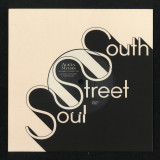
Alicia Myers - I Want To Thank You & Don't Stop What You're Doin' are staple classics and for the first time since their initial release in 1981 are together on one piece of vinyl. A serious double header!
Both tracks are produced by Kevin ‘Mr Groove’ McCord, heralded as Dam Funk’s favourite producers and one of the founding members of Al Hudson & The Soul Partners & One Way before going on to contribute to hundreds of r&b, funk, disco, and boogie dancefloor movers in the ’70s and ’80s.
At the height of his career he produced his One Way band members, Alicia Myers debut solo album, Alicia featuring both tracks on this release. I Want To Thank You, a certified classic that never fails to elicit a joyous reaction anytime it’s played & Don't Stop What You're Doin' famously sampled by J Dilla for ‘What It’s All About’ by Slum Village feat. Busta Rhymes on the legendary ‘Fantastic Vol.2’ album.
Another fully licenced and remastered essential release from the South Street family!
- A1: Disco To Go
- A2: Warship Touchante
- A3: Nappy
- A4: Birdie
- B1: Just Like You
- B2: When You’re Gone
- B3: Amorous
George Clinton’s imagination knew no bounds and, defying normal music industry convention, by 1978 had five bands signed to three different record labels. One of these comprised of three Parliament / Funkadelic female backing singers working under the name of Parlet, whose debut single, ‘Pleasure Principle’ was released on Casablanca Records in March 1978.
It was Clinton’s idea that two other backing singers, Lynn Mabry and Dawn Silva, become the Brides Of Funkenstein, a character he invented for the 1976 Parliament LP, “The Clones Of Dr Funkenstein”. “I have to be honest – at first, I hated the name and I thought George was kidding,” Mabry told Blues & Soul, “But I have gotten to like it – especially just the Brides.”
Clinton got the Brides signed to Atlantic Records and their first single was ‘Disco To Go’ / ‘ When You’re Gone’. The A-side was written and produced by Clinton and Bootsy Collins and had originally featured in live shows by Collins’ live band. Clinton was asked by Black Echoes why the song was recorded by the Brides rather than Bootsy. “He could, and it would have been a smash too,” he replied. “But we thought it sounded too much like James Brown, so we gave it to the girls. Now it don’t sound like James Brown.” It certainly did not and this electronic bass and horn-powered banger – complete with an Old MacDonald nursery rhyme refrain – debuted on the Billboard Hot Soul Singles chart at #80 on 30th September 1978. By the time the P-Funk crew were flying across the Atlantic in early November it had peaked at #7. Sadly for UK fans, ‘Disco To Go’ was only available on import although a Black Echoes review stated it was a “Slow chunky handclapper. It sounds not unlike Funkadelic’s own ‘Coming Round The Mountain’”.
‘Disco To Go’, went gold in America selling over 500,000 copies. It was the perfect springboard for the Brides debut LP, “Funk Or Walk” which quickly climbed into the upper reaches of the R&B chart and even saw the duo embark upon a signing tour of record stores. All of the songs on “Funk Or Walk” were written by legends of P-Funk, such as Bootsy Collins, Rodney Curtis, Bernie Worrell, Gary Shider and Clinton. “George has got thousands of tracks,” Mabry told Black Echoes. “When we go into the studio he says, ‘Like this one?
Maria Callas was born to a Greek family in New York in 1923. Her vocal training took place in Athens, where her teacher was the coloratura soprano Elvira de Hidalgo, who had sung with Enrico Caruso and Feodor Chaliapin. After early performances in Greece, Callas’s international career was launched in 1947 when she performed the title role in Ponchielli’s La Gioconda at the Arena di Verona in Italy.
Her voice defied simple classification and her artistic range was extraordinary. In her early twenties she sang such heavy dramatic roles as Gioconda, Turandot, Brünnhilde and Isolde, but over the course of her career her most famous roles came to be: Bellini’s Norma and Amina (La sonnambula); Verdi’s Violetta (La traviata); Donizetti’s Lucia di Lammermoor and Anna Bolena, Cherubini’s Medea and Puccini’s Tosca. Though her timbre was not always conventionally beautiful, Callas’s musicianship and phrasing were in a class of their own. She brought characters to vivid life with her skill in colouring her tone and making insightful use of the text.
She is credited with changing the history of opera: by placing a perhaps unprecedented emphasis on musical integrity and dramatic truth, and by transforming perceptions – and reviving the fortunes – of the bel canto repertoire, particularly Bellini and Donizetti.
The 1950s marked the height of Callas’s career. Its base lay in the opera houses of Italy, and she became the prima donna assoluta of Milan’s legendary La Scala – notably in the productions
of Luchino Visconti – but her operatic appearances also encompassed London’s Royal Opera House, the New York Metropolitan Opera, Paris Opéra, the Vienna State Opera, and the opera houses of Chicago, Dallas, Houston, Lisbon, and, in the early 1950s, Mexico City, São Paolo and Rio de Janeiro.
From 1959, when she started a life-changing love affair with the Greek shipping magnate Aristotle Onassis, her performing career slowed down and her voice became more fragile. Her final stage performances came in 1965, when she was only 42.
There were many plans for a return to the stage – and for further complete recordings – but they never reached fruition, though in 1974 she gave a series of concerts in Europe, North America and Japan with the tenor Giuseppe di Stefano; he had partnered her frequently in the opera house and in the studio, not least in the 1953 La Scala Tosca under Victor de Sabata, considered a landmark in recording history. Callas died alone in her Paris apartment in September 1977.
- At Ends
- Copper Entries
- All Canals Dry
- On The Folding Of Leaves
- Servitude
- The Grinding Wheel
- Pale Stars
- Glory Fades
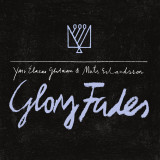
Glory Fades is a song book written using a common collaborative musical language developed by Yair Elazar Glotman and Mats Erlandsson, building intimate musical spaces, primarily focused on acoustic instrumentation with electronic counterparts contributing light and shade. Throughout the eight songs on the record, each piece unfolds according to its own logic while simultaneously reflecting the overarching tonality of the song book as a whole. The music focuses on the topography outlined by a melodic and harmonic modal framework and the exploration of the negative space found in the decay and in between the notes. There is a tension in this music caused by a reduced and stark emotional expression on the surface and the complex structures hidden underneath, where the harmonic material shimmers and shifts, and tempo and time signature modulates imperceptibly. The instrumentation forms a non-traditional chamber ensemble consisting of plucked and bowed acoustic guitars, zithers, bells, double bass, violin and percussion with additional treatments through manipulated tape and reamplification techniques. Mats Erlandsson is part of the vibrantly re-emerging field of drone music in Stockholm, Sweden, and is associated with practices characterized by the extensive use of sustained sound. Utilizing synthesized and recorded analog and digital sound, contaminated field-recordings and extensive tape processing his music slowly unfolds sets of precisely tuned harmonic material while textural properties of the imaginary rooms where the music takes form shifts, shimmers and moves from sparse and open to dense and claustrophobic. In addition to his own artistic practice, Erlandsson holds a position as studio technician at the world-renowned Elektronmusikstudion (EMS) in Stockholm and has frequently presented electroacoustic music and new music from Sweden in concert. Yair Elazar Glotman is a composer and a musician based in Berlin. Glotman trained in classical music as an orchestral contrabass player and in electroacoustic composition. His work for film as well as his independent musical releases are informed by both classical and electroacoustic traditions, and employs a range of improvisation, extended contrabass techniques, and a special interest in textural and spatial compositions and in combining analog and digital processing. His compositions for film began through his close work with the influential, late composer Jóhann Jóhannsson, writing additional music for Mandy (2018) and co-composing Last and First Men (2020). He also collaborated on two oscar-winning soundtracks (Joker and All Quiet on the Western Front). Glotman also regularly releases and performs his own music, which has been released on notable labels including Deutsche Grammophon, Bedroom Community and Subtext Recordings. As a duo Glotman and Erlandsson have been collaborating since 2015 and have previously released music on the labels Miasmah Recordings and 130701. This record is the third installment in a series of collaborative records and live presentations by Yair Elazar Glotman and Mats Erlandsson and will be their first published by XKatedral.
- Belt Of Orion
- Vestiges
Belt of Orion by Stockholm-based Isak Edberg is the composer's second solo release on XKatedral, and his first to focus solely on instrumental music in the form of two pieces of extended duration for solo piano. Isak Edberg is a composer of electronic and acoustic music as exemplified by Ondulations from 2017 and Lamé written in 2010 and released in 2022, both on XKatedral. Edberg was also a member of Golden Offense Orchestra, active from 2012 to 2014. Edberg writes that his music is informed by an enchantment of being and a search for holiness, rapture and transcendence through stillness, contemplation, dreaming and an attempt to uphold the present. Edberg regards his music to be an adornment of time. The two works presented here were composed in the south of France and in Stockholm during a period spanning the years 2016-2018. The music was inspired by the cold winds, starry nights and desolate, palely bright landscape of the provençal autumn, as well as reflections during a time of escapism and isolation in the life of the composer. More concretely, this music grew out of hours of improvised playing on an old piano while living alone on the countryside, during which harmonic structures and gestures were slowly worked out by means of performing and listening, assessing and balancing sounds and silences. Stylistically, the music draws on a range of sources, such as Feldman's use of space and resonance as projected through both harmonic and temporal distance, the ritualistic gestural repetitions of Satie, as well as Messiaen's resonant harmony, together with some of the harmonic lushness of Scriabin's late work. Belt of Orion is a piece that explores the contrast of two musical textures, the one being fluid, airy and progressive, the other being static, steady and repetitive. The music sequences through a series of harmonic tensions in search of a place of peace, exposing a rift in the weave of time where everything momentarily stands still. In Vestiges repetitive and rhythmic materials form a major part of the musical structure, while sections of sparse, floating harmonies temporarily interrupt with reflective pauses of stillness. The music thus employs two different and contrasting kinds of musical hypnosis, with the aim of cradling the listener into a dark and perhaps unsettling sleep. The music on this recording was performed by the renowned Swedish pianist Mats Persson, who has for many decades been a legend in the art music scene of Stockholm. Through his languid yet distinct interpretations the delicacy and intimacy of these works are elegantly brought to the fore. The recordings heard here were made over the course of two evenings at Fylkingen in Stockholm. Isak Edberg's music moves slowly through the seemingly endless world that is harmonic sound. In his practice he uses heavily reduced and carefully controlled materials to create states of maximum clarity.
Repress!
LOUIE VEGA RE-IGNITES THE DISCO CLASSIC 'DANCE (DISCO HEAT)' BY SYLVESTER
Grammy awarding winning producer & 5 time Grammy nominated Louie Vega continues to send dance floors into a peak hour frenzy with his remixes of disco classics on Nervous Records. The inspiration to delve into masters from this era began when he started remixing masters from the SAM Records catalogue, which is owned by Nervous Records, and with whom Louie has a long history going back to Nervous' early 90's origins. Louie is that unique producer who has had success in multiple genres of music including House, R&B, & Freestyle and he has brought that talent to help re-ignite New York disco classics like Vicky D's "This Beat Is Mine" and Convertion's "Let's Do It" featuring Leroy Burgess, as well as charting topping disco hits from John Davis & The Monster Orchestra "Bourgie Bourgie" & "Up Jumped The Devil".
This time, Louie put his focus on a track outside of the SAM Records catalogue, and one that was an international disco hit that also crossed over to becoming a 1978 pop hit, namely Sylvester / Dance (Disco Heat). Using elements from the 1978 version and combining them with his own original musical and percussion contributions, along with new vocal performances from renowned singer Cindy Mizelle, Louie has refashioned and reignited this 39 year-old production into a 2018 club anthem.
This past year has seen Louie continue to fortify his position as one of the industry's most prolific producers. Remixes from his Grammy - nominated best dance album "Louie Vega Starring...XXVIII' have consistently sold out on its vinyl release and hit number 1 on charts on multiple digital platforms. 2018 will see collaborations with Kenny Dope under their legendary and world-renowned Masters At Work and Kenlou monikers, as well as co-productions with The Martinez Brothers and Joseph Capriati.
Louie along with Anané Vega recently created one of the summer's premier club destination at their Ibiza summer residency The Ritual with Anané & Louie Vega at Heart. He continues to cross the globe from Europe to South Africa to Asia and back as one of the world's most sought after DJ's, and incredibly is able to maintain a weekly radio show on WBLS for the last 8 years and his NYC residency at Cielo under The Roots NYC moniker for over 13 years.
- Protection
- Glimpse
- Crawling Spirit
- Philm #1 (Vox)
- Static Electrician
- Red Scratch
- If It Wasn't Wolves, Then What Was It?
- Static Electrician (Symphonic)
- Untitled
- Untitled
- Untitled
- Untitled
- Untitled
- Untitled
- Untitled
- Untitled
- Gnomic Verses
- Untitled
- Untitled
- Glisten#2
- Zwolf
Infinite Fog are delighted to present another piece of the intriguing COIL puzzle. In the mid 1990s the core team of John Balance and Peter Christopherson were continuing their exploration of the outer reaches of electronic sound production as exemplified by the "Born Again Pagans" release, originally an EP only, featuring both the hugely danceable "Protection" smash which had Danny Hyde's influence writ in large letters all over it, as well as the first outings of their intriguing more ambient/glitch-based ElpH material, probably their most haunting and haunted works. This new 3LP anthology re-edition collects all of the ElpH material which didn't appear on their later "Worship the Glitch" album, namely the pHILM #1 10", a host of very rare compilation tracks as well as a number of at the time unreleased pieces in the same vein. The stunningly presented release also features the ElpH entity's last ever appearance originally available as part of raster noton's award winning 20' to 2000 series of releases, the "Zwölf" EP.
All the material has been lovingly remastered by Jessica Thompson with re-imagined design-work by Oleg Galay and including a replica of the original St. Sebastian on acid poster.
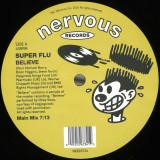
Super Flu has crafted a unique and special track with a fresh reinterpretation of Cher’s legendary Grammy Award winning song “Believe.” Infusing raw electronic beats and atmospheric soundscapes, this track reimagines the classic in a way that resonates with the burgeoning underground dance community, but at the same time retains the essential melodic elements of the tune that gave it such universal appeal. Experience the haunting allure and hypnotic rhythms that only Super Flu can deliver, redefining a timeless anthem for the next generation of listeners.
Early support from Keinemusik, Black Coffee, LP Giobbi, Blondish, Desiree, Adam Ten and more
- A1: Plaza
- A2: He’s A Liquid
- A3: Underpass
- A4: Metal Beat
- A5: No-One Driving
- B1: A New Kind Of Man
- B2: Blurred Girl
- B3: 030
- B4: Tidal Wave
- B5: Touch And Go
Recorded 1979 at Pathway studios, an eight-track studio in Islington, North London, this is an album of inventive, timeless electro-pop. Mastered from the original analogue tapes, the album still sounds incredible thanks to Foxx’s minimalist approach, which was partly inspired by his experience of watching Lee “Scratch" Perry produce records at Island Records’ studios in the 1970s. Engineer Gareth Jones - who later worked on some of Depeche Mode’s finest recordings - also proved to be a fantastic collaborator and innovator on this record.
John Foxx:
"I was in retreat from bands, touring, etc, mightily convinced that electronics were the future, and reading too much J.G. Ballard. I lived alone in Finsbury Park, spent my spare time walking the disused train lines, cycled to the studio every day and wobbled back at dawn, imagining I was the Marcel Duchamp of electropop. Metamatic was the result. It was the first British electronic pop album. It was minimal, primitive technopunk. Carcrash music tailored by Burtons.”
This is another vital instalment of Get Physical Music's classic reissue series, which is now scheduled for a vinyl release. It features a track first released in 1994 and was also part of DJ Pierre's Wild Pitch: The Story album back in 2017. It comes with an Emmanuel Satie edit of the Ricardo Villalobos Dub and a stellar remix from South Africa's Jazzuelle, first released in 2017.
DJ Pierre's name is forever synonymous with house music, particularly the acid sound he pioneered in the' 80s. Staying true to the underground since then, he's consistently released vital tracks, innovated with his Wild Pitch style and now his Afro Acid label. Pierre continues to push boundaries with each new outing while this reissue proves that his earliest works are still some of house music's best ever.
'What is House Muzik' is an almost 10-minute masterpiece that's perfectly designed for gritty warehouse spaces and comes complete with an anthemic vocal monologue. It's dark and distorted with monstrous kicks and oversized hi-hats, a frazzled lead synth line and a marching groove that is lit up with strobe-lit details to get hands in the air. The original also comes alongside an acapella version.
Next up, we have an edit from melodic master Emmanuel Satie, who takes Fellow Ricardo Villalobos's epic 36-minute 'What Is Dub' version and splices it into a floor-friendly and perfectly paced 7-and-a-half-minute edit. Originally dropping in 2015, it now sees its way onto vinyl for the first time. Finally, South Africa electronic production don Jazzuelle drops a remix that lives up to its name with a dive into the deeper realms of acid.
Brigid Mae Power’s latest release, Songs for You, is a heartfelt collection of cover songs dedicated to her father. This album features her unique interpretations of tracks written by legendary artists like Roy Orbison, Tom Verlaine, Neil Young, and Cass McCombs, among others.
With a minimalist yet emotionally resonant sound, Songs for You offers a fresh take on these timeless songs while remaining deeply personal. Brigid Mae Power’s ethereal vocals and atmospheric arrangements bring a sense of nostalgia, reflection, and heartfelt tribute, making this album a powerful bridge between memory and music.
While many of the songs are performed solo, Brigid is joined by Ryan Jewell on drums and Shahzad Ismaily on bass, with Brigid herself playing vocals, guitar, electric guitar, organ, and accordion. Tracks 1, 3, 4, 7, and 8 were recorded at Analogue Catalogue by Julie McLarnon, while tracks 2, 5, 6, and 9 were recorded at home. The album was expertly mixed by Sean McErlaine and mastered by Brian Pyle.
- Cities On Flame With Rock And Roll
- The Red & The Black
- Flaming Telepaths
- Astronomy
- This Ain't The Summer Of Love
- (Don't Fear) The Reaper
- I Love The Night
- Goin' Through The Motions
- Godzilla
- In Thee
- The Marshall Plan
- Black Blade
- Joan Crawford
- Burnin' For You
- Shooting Shark
- Take Me Away
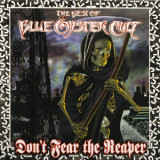
Released in 2000, Don't Fear The Reaper: The Best of Blue Öyster Cult is a comprehensive compilation album showcasing the most iconic tracks from Blue Öyster Cult's storied career. Spanning their early 1970s beginnings to their success through the 1980s, the album features hits like the legendary "Don’t Fear The Reaper," the hard-hitting "Godzilla," and the haunting "Burnin' for You." Known for blending hard rock with elements of metal and psychedelia, Blue Öyster Cult’s complex guitar work and enigmatic lyrics shine throughout this collection. The album highlights the band’s innovative sound, which helped shape the rock genre with its unique mix of heavy riffs, intricate harmonies, and dark themes. For both longtime fans and new listeners, Don't Fear The Reaper: The Best of Blue Öyster Cult is a must-have, offering a perfect introduction to the band's most influential and timeless tracks. Don't Fear The Reaper: The Best Of Blue Öyster Cult is a limited edition of 2000 numbered copies on translucent blue coloured vinyl.