Radio Slave's 'Venti' is released on Rekids on May 17th and is a twelve-track celebration of Matt Edward's most prominent alias' history. Starting life as a series of singles that began in 2023, 'Venti' sees Edwards explore lower tempos, House, Disco, and the Pop reinterpretations that birthed the moniker back in 2001.
From Venti’s opening track onwards, a glistening piece of piano-led house that's become an anthem at Sean Johnston and the late Andrew Weatherall's lauded ALFOS parties, it is clear that Edwards is keen to celebrate the past but through the lens of now. A Radio Slave favourite, 'Wait A Minute', is updated to include a powerful vocal from Nez. Kylie's 'Can't Get You Out of My Head' - a track that kicked Radio Slave into the modern dance music consciousness is reinvented as an Italo-inspired cover featuring Michael Love Michael delivering glorious vocals. 'Wild Life' and 'Wake Up', another two tracks that, as singles, dominated house and disco sets of the great and good in 2023, feel simultaneously fresh while paying homage to the origins of House - message-heavy vocals and all. A cover of Audion's 'Mouth to Mouth' and Edwards' tribute to Terry Hall, the Fun Boy Three reimagining 'The Lunatics' are keen displays of Radio Slave's knack for taking on beloved tracks and making them his own. The lasers-set-to-stun cut-and-paste nu-disco of Radio Slave’s 'Jaws' is a muscular and timely reminder that the punch of a track lies in its feel rather than tempo, while Edward's command of dub aesthetics and unmatched ability to stretch grooves into a tension-filled journey shines through on 'New Balance' and the epic closer, 'Thirty-Six'. Never one to entirely give into the throes of the 4:4, the cinematic electro of 'Stranger In The Night' and Balearic Cagedbaby collab 'Amnesia' round out 'Venti' as the whole Radio Slave experience - as intense as it is subtle.
One of the most prolific and critically lauded electronic music artists of the past two and half decades, Matt Edwards was born in Catford, London, in the early 1970s. When acid house hit the city, Edwards was deep in the scene, and he's remained there since. Residencies at the groundbreaking Ministry of Sound and an 'unofficial' residency that has seen him become one of Panorama Bar's most booked DJs during his 15-year stint living in Berlin have provided the grounding for an enviable tour diary that continues today.
His Rekids imprint, a label that has platformed some of dance music's biggest names, has been regarded as a high benchmark for two decades with Matt as sole A&R. Collaborations with legendary artists such as DJ Hell and Robert Hood, releases for Running Back, R&S, Innervisions, Figure and more, and a remixography that simply couldn't be repeated in modern music show just how important Radio Slave is.
Search:tim le el
2025 Repress
Following the success of last years Babe Roots EP, Echocord revisits the package with reworks from Forest Drive West, Mike Schommer, Felix K, DB1 and Babe Roots themself.
London’s DB1 leads the package with his take on ‘Work Hard’, a mostly beatless interpretation fuelled by oscillating white noise, winding dub chords and snippets of the original’s dub reggae vocals. Hidden Hawai’s Felix K then ups the energy levels with a high-octane take on ‘Sufferation Time’, driven by upfront, shuffled and distorted drums and unfaltering, tension building dub swells.
The hotly tipped Forest Drive West steps up next to remix ‘Jah Nuh Dead’, a typically classy reimagining from the Livity Sound artist, stipping things back to ethereal pads, off-kilter percussion and sporadic echoes of the original composition. Former Deepchord member Mike Schommer’s take on ‘Bless Me’ follows, the pioneer of contemporary dub techno delivers a cinematic rework employing sweeping voices, glitched out electronics and resonant swells alongside the bouncy dub reggae groove of the original.
Lastly Babe Roots revisit one of their own compositions, ‘Sufferation Time’, delivering a more refined feel this time round with more impetus on drums and dark, hypnotic synths to contrast the original’s more vocal focused feel.
You get older, you have a family, and you start to slow down-that's how things are supposed to go, right? Not for Montreal band Corridor, who have returned on their fourth album, Mimi, with a sound and style that's more widescreen and expansive than anything that's preceded it. The follow-up to 2019's Junior is a huge step forward for the band, as the members themselves have undergone the type of personal changes that accompany the passage of time; even as these eight songs reflect a newfound and contemplative maturity, however, Corridor are branching out more than ever with richly detailed music, resulting in a record that feels like a fresh break for a band that's already established themselves as forward-thinkers. Mimi immediately recalls the best of the best when it comes to indie rock-Deerhunter's silvery atmospherics immediately come to mind, as well as the spiky effervescence of classic post-punk-but despite these easy comparisons, Corridor remain impossible to pin down from song to song, which makes Mimi all the more thrilling as a listen. "The goal was to work differently, which is the goal we have every time we work on a new album-to build something in a new way," Robert explains. "This time, we took our time." And so in the summer of 2020, Corridor's members-Robert, vocalist/bassist Dominic Berthiaume, drummer Julien Bakvis, and multi-instrumentalist Samuel Gougoux-holed away in a cottage to engage in the sort of creative experimentation that would lead to Mimi's ultimate creation. Corridor tinkered with the songs' raw parts digitally and remotely over the next few years, with co-producer Joojoo Ashworth (Dummy, Automatic) lending their own specific talents in the theoretical booth. The process was a byproduct of not having access to their rehearsal space due to the COVID-19 pandemic, but also a result of the four-piece leaning harder into incorporating electronic textures than on previous records. "For a long time, we identified as a guitar-oriented band, and the goal of making this whole record was trying to get away from that," Berthiaume states. Berthiaume also describes Mimi as a record about "getting older" and "figuring out new parts of life"-but despite any claims of transitional growing pains from the band, Mimi is a record bursting with new energy and life, a vibrance that's owed in no small part to Gougoux joining the band full-time after pitching in on live performances in the past. "I come more from a background of electronic music, so it was nice to involve that with the band more," he explains, and Mimi contains a distinct rhythmic pulse reminiscent of classic era-post-punk's own melding of dance and rock textures. Over bright, chiming guitars and ascending synths, Robert addresses his looming mortality on "Mourir Demain": "I wrote it when my girlfriend and I were shopping for life insurance," he laughs. With our little daughter growing up, we also considered making our will. I said to myself, 'Oh shit, from now on I'm slowly starting to plan my death." Don't mistake this as music about dead ends, though, as Mimi embraces and champions unfettered creativity while paving a way for Corridor's own bright future. "We just focused on making a record that sounded the way we wanted," Gougoux exclaims while discussing the band's aims. "There were no limitations when it came to what was possible."
- A1: Magic Momentum
- A2: Rockets To Mars
- A3: The News These Days
- A4: Life (Skit)
- A5: Love Vibration
- B1: Original Flow
- B2: Hold On
- B3: Surviver (Skit)
- B4: Tatamaka Pt.1
- B5: Tatamaka Pt.2
- C1: Time (Skit)
- C2: Time
- C3: Jinja (Skit)
- C4: Kochirakoso
- C5: Our Tactus
- C6: Nah Personal
- D1: No Chains
- D2: Push Comes To Shove
- D3: We No Let Y'all In
- D4: Mexico (Skit)
- D5: Future For Our Children
We Release JAZZ is very happy to announce an exciting new body of work by Joseph Deenmamode aka Mo Kolours. The singular musical spirit’s new 21-track album Original Flow is available as a double LP housed in a heavy 350gsm sleeve with original artwork by Mo Kolours himself and the classic WRJ obi strip, as well as in digipack CD and digital formats.
A catalog of critically acclaimed records, including his self-titled debut (2014), ‘Texture Like Like Sun’ (2015), 2018 album ‘Inner Symbols’ and three companion EPs, established Deenmamode as a prodigious musician and vocalist. Pitchfork extolled his “hypnotic, tribal-infused dance grooves”, DJ Mag appreciated the “colourful celebration of soundsystem culture”, and Resident Advisor advocated that “no one sounds quite like Mo Kolours”. Musical analogies were drawn by The Guardian as “The best album Curtis Mayfield never made with A Tribe Called Quest and Lee Perry” and Mojo as “like Marvin Gaye produced by J Dilla”.
Five years ago, Deenmamode moved to the Japanese countryside. Far away from familiarity, he contemplated his place and further questioned his identity. “I had none of my ‘own’ people around. I had time to really find what makes me tick musically. Japan has helped me go back to those subconscious leanings, really go deep, and reflect the aspects that make up my story”.
The tracks on ‘Original Flow’ have been constructed from sessions, improvisations and soundbites captured around the world during this time; collecting contributions from musicians including Deenamode’s brothers Reginald Omas Mamode and Jeen Bassa plus Andrew Ashong, Charles Bullen, Dwaye Kilvington, Eddie Hick, Stefan Asanovic, Myele Manzanza, Ross Hughes, and Tom Dreissler. Deenamode says “I’m proud of this album’s creative process. Coming from a tradition of scouring through hours of records, I wanted to create my own samples, to find that perfect loop that no other producer could put their hands on. I decided to invite a group of friends and acquaintances, who also happen to be incredible musicians, to a studio in Crystal Palace to improvise based on some loose ideas I had. We spent all day, and recorded everything”.
‘Original Flow’ is an album of UK street-soul nouveau, future indigenous jazz fusion, Rasta Segga, Nyahbinghi jazz, Malagasy Hebrew hip hop. While retaining a spirit of exploration and improvisation, it sees Deenmamode grow and flex beyond beat tape brevity, expanding composition and stretching his musical muscle to play live with other musicians. Themes of empowerment, overcoming adversity, and mental liberation coexist with notes from ancient history, futurism, and science, as well as musings on family and togetherness.
‘Magik Momentum’ springs from a discussion that features at the start of the song, an inspiring mentor answering a question from Deenmamode about improvisation and what role it plays in life when planning and manifesting the future. ‘Rockets to Mars’ questions the lack of care for the billions of people with nothing, while governments plan to explore space. “This sparked a comparison in my mind to a Sonny Okuson song that I would reference when performing. Okuson’s song talked of the lack of resources in many communities in the world, while governments go to the moon”.
He says the music behind ‘The News These Days’ is “possibly my favourite on the album”. Looped like he would a late sixty jazz-fusion sample, there was nothing added and the track was complete within a matter of minutes. “It was the first and best moment from the entire Crystal Palace session”, he adds. The album’s contrasting title track with minimal instrumentation played solo by Deenamode. While frustratingly searching for gems in past recordings, he thought in a burst of ego, “I don’t need no-one else to make a dope beat!” picked up his ravanne, (the traditional frame drum of his fathers home-land of Mauritius), pressed record, and started to play. He says, “In my thoughts were the rhythms of the Nubians in Upper-Egypt and Sudan, the swing of the huge drums played by Mauritanian women, of-course the Sega beat of Mauritius, and the ever inspiring beat of James Yancey”.
Driven by UK broken beat, Cuban congas, Nigerian and Mauritian inflections, ‘Love Vibration’ follows the concept that all emotions carry a vibratory frequency and pays homage to the frequency of creation and the power of love. The two part ‘Tatamaka’ tells of the history of Deenmamode’s ancestors, the maroons of Mauritius. “We are people who managed to run from our oppressors and find refuge in a corner of the island called ‘Le Morne’ where they could not reach us. One bloody day they came in numbers to re-capture, to revenge. Many of us chose to jump to our deaths, rather than be taken back into subjugation. The poem by Creole Richard Sedley Assonne says; “there were hundreds of them, but my people, the maroons chose the kiss of death over the chains of slavery”. Tatamaka was the name of a famed maroon leader who was murdered for claiming his, and our people’s freedom. The song is the imagined journey of escape and freedom by an ancestor of the maroons of Le Morne”.
Born in the west midlands and raised on the traditional sega music of his father’s Indian Ocean homeland of Mauritius alongside records by the likes of Jimi Hendrix, Santana and Michael Jackson; his influences expanded with late 90s jungle and drum and bass nights in Bristol, experiments at art college in Camberwell, and the rich culture of Peckham, “at the time we called it the Afro Quarters of London” says Deenmamode, adding hip hop, dub, soul and soundsystem styles to his individual sound.
He explains, “I love drum music, from hand-drums to 808s. I love music from the ancient past, heritage music, indigenous music, traditional music passed down from the beginning of time. Music from the body, hand claps, grunts and foot stomps. Music with audible depth, busy, bustling, highly charged. Music from the soul, the music from beyond. I love music from the islands and the mountains. The music of the streets, hustle music, alleyway beats. Club music”.
He describes the creative process as thinking in images. “The visual world and the world of sound seem to intermingle in my thought process. When I play the drum with my eyes closed, a world of imagery dances and moves with beat. Improvised drumming feels like I am listening to what I want to hear, rather than trying to play what I want to hear. Following the rhythm and finding new pathways to walk within the patterns is what I experience. In this way I often feel I am just a listener, instead of the player”.
Original Flow is pressed on biovinyl, a sustainable alternative to traditional vinyl. Biovinyl replaces petroleum in S-PVC by recycling used cooking oil or industrial waste gases, resulting in 100% CO2 savings in bio-based S-PVC production. Furthermore, it is 100% recyclable and reusable, embracing the circular economy ideology.
"All our dreamers lose to the light" - from "Angels Go Home" When the pandemic began, and the world shut down, so did the process of creating for Iron & Wine's Sam Beam. In its place was a domesticity that the singer hadn't felt in a long time, and although it was filled with many rewards, making music was not one of them. Reflecting on that time, Beam notes: "I feel blessed and grateful that I and most of my friends and family made it through the pandemic relatively unscathed compared to so many others, but it completely paralyzed the songwriter in me. The last thing I wanted to write about was COVID, and yet every moment I sat with my pen, it lingered around the edges and wouldn't leave. This lasted for over two years." The journey back began with a recording session in Memphis to record a handful of Lori McKenna tracks for the EP Lori with friend and producer Matt Ross-Spang. The cathartic experience reconnected Beam with his love for making music, and soon enough the paralysis had passed, and he was finishing lyrics and booking studio time for what would become Light Verse. Light Verse was recorded with engineer and mixer Dave Way at his studio Waystation high up in Laurel Canyon (with an additional session at Silent Zoo Studio with a 24-piece orchestra), with a host of talented musicians joining Beam: Tyler Chester, Sebastian Steinberg, David Garza, Griffin Goldsmith, Beth Goodfellow, Kyle Crane, and Paul Cartwright. And, Fiona Apple joined Beam on vocals for the duet "All In Good Time." Beam lyrically once again takes focus on a series of both fictional and personal insights, filled with desperate characters and wide-eyed optimists, offering promise and a dose of heartache, tears and laughter, life and love. Taking stock in the album's title, he jokes, "Light verse is a form of poetry about playful themes that often uses nonsense and wordplay, and it's my first official Iron & Wine comedy album!_. Just kidding_." While true this may be Iron & Wine's most playful record, Beam says the title mostly reflects the way the songs were born with joy after the heaviness and anxiety of the pandemic. Where recent records like Beast Epic or Weed Garden gave air to the disquiet of middle-aged frailty and brokenness, these songs trade that for the focus acceptance can bring. Moment by moment, they delight in being pointed or silly (or both) and attempt beauty over prettiness. Light Verse arrives April 26th, and it's Iron & Wine's seventh full-length overall and fifth for Sub Pop Records. Fashioned as an album that should be taken as a whole, it sounds lovingly handmade and self-assured as a secret handshake. Track by track, its equal parts elegy, kaleidoscope, truth, and dare.
About 20 years ago, Carlos Giffoni quickly made a name for himself both as a noise guitarist and a laptop noisician upon arriving in New York (via Florida and Venezuela). His expertly curated annual No Fun Festival, as well as his No Fun label, further solidified him as a key figure in the international noise scene. The festival's success proved the formula for experimental and improvised music fests could work with the noise underground as well, but it also capitalized on the faster rate of connections being made between geographically disparate artists as a result of the (still relatively nascent) internet. Back then Carlos would play his laptop like a pinball machine, in contrast to the static stage presence of most laptop performers, and his solo music, like many others' at that time, expressed a less dark and dour vision of the implications of harsh noise. By the close of the 2000s, he had stopped doing the festival, switched gears musically to playing the lighter No Fun Acid sets, and moved to LA. Now he has re-emerged in a big way with Dream Walker, his first full-length since 2018's Vain (and only his second since 2010). Inspired by the masterful performances and diffusions he heard at the February 2023 GRM electronic music festival in Paris, particularly sets by old friends Lasse Marhaug, Jim O'Rourke, and Eiko Ishibashi, he began conceptualizing new music of his own in response, turning to synthesizers and other hardware to produce a work more firmly in the tradition of European electronic music than anything else he's done. Intended as a late night listen that evokes the edge of consciousness, with Carlos getting as close as possible to a trance state during the actual recording and mixing, each of the eleven tracks transition into one another rather than being standalone discrete pieces, forming two side-long suites that proceed like stages of a dream. Unabashedly tonal and repetitive, the glistening opener "Now Dream," the droning "Sleep Walker," and the closing triptych of "Lost in Descanso," "Sunrise," and "The Hidden Path" occupy a power electronics-ambient nexus that feels spiritually close to the Mego label. Elsewhere, "Ticking Clock" is reminiscent of Stereolab's non-easy listening vintage electronic side, while the two-part arpeggiated "Euphoria" recalls early Oneohtrix Point Never (which Carlos released on No Fun). The contrast between "One Breath"'s crackling opening and its remarkably fluid and soaring sustained synthesized chords is a distillation of the album's lingering tension between electronics' ability to project mechanical rupture as well as the organic and the infinite _or "walking between dreams," as Carlos himself puts it. Produced by Lasse Marhaug (who also mastered Carlos' first solo album, Welcome Home, back in 2005), released by Stephen O'Malley (who I remember DJing at the No Fun fest), with cover art and photos by personal friends, Carlos considers the album a family affair. But Dream Walker most of all heralds a maturation of the artist, and stands as a record that exists out of pure desire, rather than obligation or force of habit; a statement of reconnecting with music not by merely revisiting it, but by building on what's come before, both in his own work and in the music he loves. -Alan Licht, New York, December 2023
CNTS sind zurück!
Nach einem Wirbelsturm von Tragödien, sowohl global als auch persönlich, sind Gitarrist Mike Crain (Dead Cross, Retox, Festival Of Dead Deer), Schlagzeuger Kevin Avery (Retox, Planet B) und Sänger Matt Cronk (Qui) mit dem neuen Gitarristen Koko Arabian und Bassist Rico Adair zurück, um ihr zweites Album zu veröffentlichen.
Nach der Veröffentlichung ihres Debüts "Cunts" (2019) konnten CNTS eine kurze Tour einschieben, bevor die Welt auf Eis gelegt wurde. In der Pause wurden Aufnahmen gemacht und Pläne für die Zukunft geschmiedet. Alle Pläne wurden jedoch über den Haufen geworfen, als Matt Cronk bei einem Autounfall verletzt wurde, was zu einem chirurgischen Missgeschick führte und ihn mit einem gelähmten Stimmband zurückließ, unfähig zu sprechen, geschweige denn zu singen. CNTS gaben schweren Herzens ihr Ende bekannt. Bis zum Winter 2023 widmeten sich die Mitglieder von CNTS anderen Projekten, als Cronks verletztes Stimmband entgegen den Prognosen seiner Ärzte zu heilen begann und seine Stimme innerhalb von zwei Monaten zurückkehrte. Im März dann waren CNTS zuversichtlich, dass sie es noch einmal versuchen könnten.
Gestärkt durch Cronks Genesung und die neue Besetzung, verbrachten CNTS den Rest des Jahres mit der Arbeit an ihrem neuen Album Thoughts & Prayers, dessen Titel von der Banalität unserer kollektiven Reaktion auf Krisen inspiriert ist. Inspiriert von ihren jüngsten Herausforderungen haben CNTS mehrere Jahre der Frustration und des Elends in ein gut artikuliertes und aggressives Statement kanalisiert. Songs wie "Smart Mouth" und "Thoughts And Prayers" erzählen von Cronks Schmerz und Wut während seiner verschiedenen Verletzungen und der anschließenden Genesung. "I Don't Work For You" und Eating You Alive" handeln von der Ungerechtigkeit des modernen Lebens. "For A Good Time (Don't Call Her)" ist eine Wutrede auf das uralte Thema des Streits mit dem romantischen Partner.
"At the time I'd have been fairly upfront about wanting to release tracks that were faster than most and in a style that wasn't straight electro. Some of these tracks fell into a weird middle ground for me, so they got put aside. It had been 20 years since I'd heard any of them and on listening back I reckoned that time had been kind to them so I started remastering them and uploading to Soundcloud alongside some classic 12" releases from my label Trama Industries.
For me, it was interesting to hear sounds and techniques emerging on some later tracks that would form the basis of my later projects like Legion Of Two and Of One. I'd kinda forgotten about that. Huge thanks to Eddie and Intrinsic Rhythm for suggesting a release and believing in the project"
Christina Kubisch’s Stromsänger finds this legendary sound artist at the top of her game mixing electromagnetic wave recordings with a score for six voices, creating powerful results. Stromsänger is based on a collaboration with the Norwegian vocal ensemble Trondheim Voices and on a special experience while researching and recording electromagnetic waves in the city of Trondheim.
“The general theme of the composition is the idea of sounds which travel. During a tram ride from the city up to the hills with an old tram I discovered not only stunning views of the surrounding landscape but as well a special soundscape. Wearing a custom made induction headphones, I could hear the normally hidden electromagnetic fields of the tram, which were so impressive and musical to me that I immediately decided to base my piece for Trondheim Voices on this discovery.
As a start, a series of pure vocal recordings were produced by Trondheim Voices while listening to a choice of electromagnetic tram sounds and following score instructions. This material was mixed in my Berlin studio and afterward was played back through a multi-loudspeaker setup into the room of the Elisabeth Church in Berlin and was instantaneously recorded. The emerged recording was played back and recorded again. The process of playing back the previous recording was repeated numerous times, generating numerous “re-recordings”, until the voices sounded aethereal and abstract. The last one of these recordings became the very beginning of the Stromsänger piece.
Part A is based on the electromagnetic sounds of the waiting tram and previously recorded voices. The singers come on stage and start to sing together with their recorded part which slowly fades out while the live singing takes over: a kind of choral for electrical tram waves and voices.
Part B is based on the actual tram ride with strong and intense electromagnetic sounds. The single recordings were treated electronically and were divided into six channels. Each singer has chosen one of these files and improvises with the magnetic sounds as a soloist or in duos or trios.
Part C is based on the itinerary of the tram ride to Lian, where a pilgrim's path starts. The names of the single stops, which have very beautiful and poetic names, are performed together as a kind of "sound poetry". The singers walk around on stage and/or can choose special positions for their performance. The recording of the word "Lian", the final stop, was recorded beforehand and played back and re-recorded several times in the open Norwegian landscape near the final tram stop. The voices slowly disappear and fade out.”
Christina Kubisch, 2024
- A1: A Part Of Me / There Are Such Things 4:36
- A2: When There Is Love 4:44
- A3: Black Butterfly 3:28
- A4: Angel Face 5:38
- B1: The Nearness Of You 5:40
- B2: Can't Help Singing 2:32
- B3: Close Your Eyes 3:08
- B4: I Should Care 5:46
- C1: You Came A Long Way From St. Louis 3:57
- C2: C'est Si Bon 5:44
- C3: The Jitterbug Waltz 3:16
- D1: Time After Time 4:34
- D2: You Won't Forget Me 5:15
- D3: First Came A Woman 5:41
In her intimate 1992 recording with jazz piano legend Hank Jones, AbbeyLincoln contemplates the subject of love, sounding more optimistic than usual. About When There is Love Lincoln noted in 1992: “I have a sombre outlook and assessment of the world in which we live, but I also have love, love for the beautiful man that makes life bearable in an otherwise unbearable world. So this is my offering on the altar of conjugal love.” She offers highly personalized interpretations of four of her originals and ten standards, among which Duke Ellington's "Black Butterfly," "The Nearness of You," "You Came a Long Way from St. Louis," Fats Waller's "Jitterbug Waltz" and "You Won't Forget Me" are most memorable. A truly moving testament from two of jazz's finest artists. This 140-gram vinyl is the first international vinyl reissue, pressed at Pallas, and is presented in a wide-spine, single-sleeve jacket.
Iconic death thrash metal band PENTAGRAM (Chile) was formed in Santiago, Chile in 1985. At the time, the country was roiling from political upheaval, but that didn't stop Anton Reisenegger, Juan Pablo Uribe, and (former drummer) Eduardo Topelberg from ingesting and eventually emulating the brutalist, evilest forms of metal from around the world. PENTAGRAM (Chile) now unleash their new album ' Eternal Life of Madness’ and is comprised of guitarist/vocalist Anton Reisenegger, guitarist Juan Pablo Uribe, drummer Juan Pablo Donoso, and bassist Juan Francisco Cueto. PENTAGRAM (Chile) marched forward from their debut 'The Malefice' (2013) while preserving the savage DNA that informed Darkthrone, At the Gates, Dismember, Napalm Death, and many others. The band ’s new album 'Eternal Life of Madness’ feature the crushing heft of "Possessor," "El Imbunche," "The Portal," and "Deus Est Machina, » which is a far-off salute to the group's classic "Spell of the Pentagram" from their 1987 first Demo. PENTAGRAM (Chile) doesn't exist merely for nostalgia reasons—though supporting Slayer in Santiago in 2019 was a highlight of past accomplishments. Their timely resurrection is unadulterated metallic passion. "When the pandemic hit, and I was in lockdown at home in Spain, I started writing riffs for a new LOCK UP album," says Reisenegger, who plays guitar in grind legends BRUJERIA and Chilean groove-thrash masters CRIMINAL. "I realized some of the stuff I wrote had the original Pentagram (Chile) feeling, so I put those ideas aside. They started piling up, so when the LOCK UP ’The Dregs of Hades' record was done, I began arranging them and working remotely with our drummer, Juan Pablo Donoso. I didn't even realize I had all that material in me, but it was somehow untapped. We had a 'false start' a few years before when original guitarist JP Uribe, JP Donoso, and I got together and started jamming on some new riffs. 'The Portal' came out of those sessions. » Though never explicitly political lyrically, PENTAGRAM (Chile) have issued angst-ridden proclamations throughout their 39-year existence.
Green Vinyl[22,06 €]
In many ways, the music of Writhing Squares could have only originated in Philadelphia; the city itself a microcosm of creatives, go-getters, freaks & weirdos that have coalesced into a supportive & boundary-pushing crew. Former Purling Hiss bassist Daniel Provenzano & Ecstatic Vision sax-player & vocalist Kevin Nickles' first musical missive was shot forth in 2013 (the self-released CDR "Live In Space") & various singles, split releases, albums (and a double-album) later we arrive at the duo's fourth full-length "Mythology", their third for Chicago-based Trouble In Mind Records. "Mythology" picks up the pieces left shattered by their previous double-album "Chart For The Solution" and reconnects the broken shards together like Kintsugi, the ancient Japanese technique for mending broken ceramics, infusing the breaks with powdered gold. The Squares themselves are like mad-scientists, taking the ruined detritus populating junk shops & surplus outlets & constructing their own sonic laboratories in their New Jersey basements to record, mix & tweak "Mythology"s eight tracks. Their new location allowed the band to regroup, reassess & reconstruct their sound from the ground up, shearing away the cosmic excess of 2021's "Chart For The Solution" to a sharper point. Tracks like `Barbarians' & `LEM' are classic Squares; brutal, aggressive, unwavering assault of Motorhead/Stooges-inflected sci-fi punk scree, while others like `Chromatophage's mutant funk & `Cerberus's techno-slink owe a serious debt to electric-era Miles Davis or Herbie Hancock & show that the group has more to offer than bludgeoning you with sonic force. Provenzano's bass & electronics are like a tank rolling across the terrain - a gnarly construct of Hawkwind-ian headiness & `Vincebus Eruptum's snarl - uncaring of what gets in the way. Nickles' brass vacillates between Stooges-influenced sleaze, jazzy no-wave stabs, & cacophonous sonic storms, strafing the listener into oblivion. The duo are joined on "Mythology" by drummer John Schoemaker - who contributed drums to "Chart For The Solution"s epic closing track `Epilogue' - whose percussive pulse adds an organic swing to The Square's sonics, particularly on album closer "The Damned Thing"s cosmic strut. "Mythology" tackles a multitude of themes, from fantastical tales of hellhound `Cerberus' or the comic-inspired "Eternity " to `Chromatophage's colorful/evil yarn about animals that eat colors (or a Magic: The Gathering card) to the true-life influenced `Acid Rain' that deals with the uncertainty of consuming drinking water after a chemical spill in the Delaware River. Elsewhere, `Ferrell' is an homage to the late, great Ferrell "Pharaoh" Sanders & `The Damned Thing' by a short horror story penned by Ambrose Bierce about an animal whose coloring is invisible to the naked eye. Writhing Squares are in a transitional phase, mapping out a new sonic mythology for themselves after crossing the event horizon into unknown space. "Mythology" is streaming on most DSPs & released on black vinyl & limited fluorescent green vinyl (while supplies last) on April 26th, 2024.
Black Vinyl[21,22 €]
In many ways, the music of Writhing Squares could have only originated in Philadelphia; the city itself a microcosm of creatives, go-getters, freaks & weirdos that have coalesced into a supportive & boundary-pushing crew. Former Purling Hiss bassist Daniel Provenzano & Ecstatic Vision sax-player & vocalist Kevin Nickles' first musical missive was shot forth in 2013 (the self-released CDR "Live In Space") & various singles, split releases, albums (and a double-album) later we arrive at the duo's fourth full-length "Mythology", their third for Chicago-based Trouble In Mind Records. "Mythology" picks up the pieces left shattered by their previous double-album "Chart For The Solution" and reconnects the broken shards together like Kintsugi, the ancient Japanese technique for mending broken ceramics, infusing the breaks with powdered gold. The Squares themselves are like mad-scientists, taking the ruined detritus populating junk shops & surplus outlets & constructing their own sonic laboratories in their New Jersey basements to record, mix & tweak "Mythology"s eight tracks. Their new location allowed the band to regroup, reassess & reconstruct their sound from the ground up, shearing away the cosmic excess of 2021's "Chart For The Solution" to a sharper point. Tracks like `Barbarians' & `LEM' are classic Squares; brutal, aggressive, unwavering assault of Motorhead/Stooges-inflected sci-fi punk scree, while others like `Chromatophage's mutant funk & `Cerberus's techno-slink owe a serious debt to electric-era Miles Davis or Herbie Hancock & show that the group has more to offer than bludgeoning you with sonic force. Provenzano's bass & electronics are like a tank rolling across the terrain - a gnarly construct of Hawkwind-ian headiness & `Vincebus Eruptum's snarl - uncaring of what gets in the way. Nickles' brass vacillates between Stooges-influenced sleaze, jazzy no-wave stabs, & cacophonous sonic storms, strafing the listener into oblivion. The duo are joined on "Mythology" by drummer John Schoemaker - who contributed drums to "Chart For The Solution"s epic closing track `Epilogue' - whose percussive pulse adds an organic swing to The Square's sonics, particularly on album closer "The Damned Thing"s cosmic strut. "Mythology" tackles a multitude of themes, from fantastical tales of hellhound `Cerberus' or the comic-inspired "Eternity " to `Chromatophage's colorful/evil yarn about animals that eat colors (or a Magic: The Gathering card) to the true-life influenced `Acid Rain' that deals with the uncertainty of consuming drinking water after a chemical spill in the Delaware River. Elsewhere, `Ferrell' is an homage to the late, great Ferrell "Pharaoh" Sanders & `The Damned Thing' by a short horror story penned by Ambrose Bierce about an animal whose coloring is invisible to the naked eye. Writhing Squares are in a transitional phase, mapping out a new sonic mythology for themselves after crossing the event horizon into unknown space. "Mythology" is streaming on most DSPs & released on black vinyl & limited fluorescent green vinyl (while supplies last) on April 26th, 2024.
A new Toy Tonics EP. It’s the second by Venezuelan house DJ and producer Gee Lane. Including amazing remixes by NYC mainstay musclecars!
Gee Lane’s debut EP Metamorphosis (with remixes by Demi Riquísimo and Divorce From New York Remix & PIEK ) came out last October.
But as Virginie (her real name) is a steady name of tue Toy Tonics crew now and plays almost every weekend at one of the worldwide Toy Tonics Jams it makes sense to put out a follow up fast.
Gee Lane originally from Caracas now in Barcelona is a passionate DJ and vinyl digger with an extraordinary positive energy and attitude. A DJ diva in a positive way. A unique personality with a very strong style (in music but also as a person) and very elaborated ability to read and play with the dancers. Like the first EP also this one was recorded in Barcelona and Berlin with a little help by Robin Braum from Athlete Whippet. The music reflects well her roots and passion for everything what came out from New York’s dance culture. You can hear influences from the 80‘ promo disco scenes as well as the 1990 Body & Soul/ Francois Kervorkian / Joe Claussell universe. In fact Gee Lane after being raised in Caracas and musically educated by her father from a very early age, (a composer and musician) she moved to New York at a very young age in the late 90's where she fell in love with the HOUSE scene. And especially everything that happened at the famous and influential ’Body & Soul’ club.
This culture increased her curiosity to become a DJ (and vinyl digger herself) who is not just interested in house music but wants to explore other genres such as funk, Hip-Hop, jazz and Latin sounds and include these vibes into her DJ sets. A vinyl collector (and long time record shop employee) since then, she is known for her musical eclecticism that leads her to mix everything what she wants ...
Gee Lane now is a steady member of the Toy Tonics Krew and is already playing the Toy Tonics Jams all around Europe.
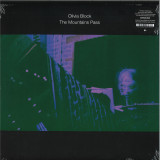
Black Truffle is pleased to announce The Mountains Pass, a major new work from Olivia Block. A key player in Chicago’s vibrant experimental music scene since the late 1990s, Block has developed an extensive body of work grounded in a personalised, at times emotive approach to the studio-based practices of the musique concrète tradition, while also encompassing improvisation, orchestral pieces, sound installations, and a sustained engagement with the piano. On The Mountains Pass, recorded by Greg Norman at Steve Albini’s Electrical Audio and meticulously edited and constructed over the course of three years, Block pushes into new terrain, introducing her singing voice and drums played by Jon Mueller into flowing assemblages that move seamlessly from ruminative organ tones and fragmented piano airs to explosions of sizzling synths and thundering percussion. Like many of Block’s past works, which include, for example, a sculptural installation using the sound of oyster beds, The Mountains Pass draws inspiration from nature and the animal world. Time spent in a particular mountain range in Northern New Mexico informs this suite of pieces, whose lyrics and titles refer particularly to animal life in the area. Beginning with bursts of white noise and delicate synthetic pops and squeaks, opener ‘Northward’ very soon reveals the special direction the album will take, as lyrical piano lines are joined by Block’s fragile voice, singing words written from the perspective of f2754, an endangered Mexican gray wolf who wandered more than five hundred miles from Arizona to New Mexico in 2022. The fragment of song quickly breaks off, leaving us with a ghostly electronic hum. ‘The Hermit’s Peak’ follows, one of two epic pieces at the album’s core. Beginning with chiming, almost harpsichord-like tones, it moves through episodes of spacious, ruminative piano, Jon Mueller’s sparkling cymbals, stuttering cut-up piano sounds, and a climax of keening organ and trumpet tones (performed by Thomas Madeja). Continuing the exploration of vintage keyboard and synth tones heard on Block’s Innocent Passage in the Territorial Sea (Room 40, 2021), the music sometimes suggests the great outer-limits works of 70s Italian prog figures like Franco Battiato or Arturo Stalteri in the languorous drift of synthesizer, organ, and piano tones and the meticulous yet organic flow of its construction. ‘Violet-Green’ opens the second side with another epic journey, its lyrical content concerning ‘a mysterious bird die-off and a forest fire’. Block’s crystalline voice and rich piano chords at times call up the restrained chamber songs of Janet Sherbourne, but fragmented and threaded through passages of woozy pitch-bent keyboards, hypnotic distant thuds, tinkling bells, and searing distorted synth tones. On ‘f2754’, the freedom of the roaming wolf surges through dense layers of rapid keyboard attacks and long organ tones over a propulsive drum performance straight out of Animal Magnetism-era Arnold Dreyblatt. This distinctive sound world is then reencountered in a darkened mirror image in the uneasy, metallic shimmer of the closing ‘Ungulates’, named in reference to a heard of elk roaming through the mountains. Like Battiato’s Clic or Gastr del Sol’s Upgrade & Afterlife, The Mountains Pass inhabits the underexplored terrain where the beauty of song coexists with a radical formal openness, illuminating the deep musicality and warmth that have been present in Block’s work all along.
- A1: La Leçon Particulière
- A2: Le Passager De La Pluie, Par Anne Sila
- A3: Bilitis
- A4: La Valse Du Mariage, Par Reina Kitada
- A5: La Chanson De Mélissa, Par Lorène Devienne
- A6: Itinéraire D’un Enfant Gâté
- B1: Un Homme Et Une Femme
- B2: 13 Jours En France, Par Anne Sila
- B3: Concerto Pour La Fin D’un Amour
- B4: Les Étoiles Du Cinéma
- B5: Love Story, Par Katia Plachez & Lorène Devienne
- B6: The Final Dot (Titre Inedit)
Francis Lai is France's best-selling international film composer, with hits such as "Love Story", "Bilitis" and "Un Homme et une Femme".
International hits in the USA, Germany, the UK and South America, as well as in Korea and Japan, where the Francis Lai Orchestra recorded the tribute album "13 Jours au Japon" just a few months ago, during a tour that took them to Tokyo, Osaka, Nagoya and elsewhere.
A limited-edition Vinyl featuring the composer's cult tracks, including the 100 million-stream digital hit "La Leçon Particulière", "Concerto Pour la Fin d'Amour", five songs and, for the first time, his unpublished posthumous work "The Final Dot".
"13 Jours au Japon" (13 Days in Japan) is the ultimate vinyl tribute, featuring 25 musicians and singers covering the multi-award-winning works of the man nicknamed in the USA: "the artistocrat of melody"!
Embarking on our musical journey with Wiremu, originally from New Zealand and now based in Leeds, we set sail with his EP, "The Subtle Hustle." Beyond a personal passion, Wiremu's dedication to music production serves as a tribute to his Maori heritage, infusing his compositions with profound cultural depth. "The Subtle Hustle," the opening track, forges a dynamic tone with deep bass, punchy percussion, and house-infused Rhodes chords. Minimal references and synthetic rips seamlessly fuse, creating a captivating dance track. "Beat-Up Town," the second track on the A side, is a dance floor blockbuster with bouncy bass, accompanied by an 808 kick drum. Keyboard work integrates chords into a dynamic groove, making it stand out among dance tracks. "Key Notes Frequency Quotes," opening the B side, introduces lead hi-hats contributing to a great dynamic. Vocal inserts layer over ripped synthesizer parts, creating a house vibe filled with energy and style. Closing the record, 'Have You Written On The Wall?' takes us on a journey through running percussion and minimalistic elements, skilfully compressing space and stretching time, accompanied by atmospheric backing.
nit is the genius underdog of the current French chanson scene. After playing along with Sébastien Tellier or Juliette Armanet (a huge success in France), after remixing Phoenix, Myd, Dita Von Teese, Cola Boyy, Tony Allen or Jane Birkin, here he comes with his debut album. The balearic sound is always a big nit influence, feel good electronics & lush acoustic chords.
Spotted by French label Record Makers (Sébastien Tellier, Kavinsky, AIR, Cola Boyy) with his 2017 “Dessous de plage” first EP, nit has since grown from funky DIY library music to a lush and complex groovy sound. The magic of this debut album “Big Bang Puzzle” is a keen sense of composition and an innate affinity for 90’s European electronica.
It’s a playful album, the work of an artist at the peak of his craft, determined to twist styles and references (Daft Punk, Ennio Morricone, Robert Miles, Vangelis...) in order to give them a new form.
“Big Bang Puzzle” is a tangle of psychedelic and cartoon-esque pieces, an abstract modernist painting of sounds inspired by vintage pop music. The cover, created by Swiss artist Flora Mottini, offers a first glimpse of his brand new universe.
But it’s also by collaborating with French iconic design studio H5 that nit suddenly enters the French Touch genealogy. nit takes the shape of an n that grows legs and arms to become a cheeky cartoon character traveling through a real space-time continuum. Parisian H5 studio has been involved since the end of the ‘90s in the design of strong visual concepts for French Touch’s elite (Etienne de Crécy, AIR, Mirwais). French music at its best from which nit is a direct descendant. And one who expands and opens even further: pop, italo-disco, trip-hop impulses, Morriconian cavalcades, lo-fi aesthetics, Caribbean music. Producer and mixer Lucien Krampf (Oklou, Ascendant Vierge, Casual Gabberz, CRYSTALLMESS) was the person in charge of mixing this ambitious record.
nit is both a question and an answer, and a musical enigma that pushes us to explore the far reaches of our imagination…
- 1: Wanna See A Dead Body?
- 2: Boxed In
- 3: Clout Chaser (Ft Elliot Morrow)
- 4: Greatest Of All Time
- 5: Mortality Salience
- 6: At Midnight
- 7: Into The Void
- 8: Definition Of Insanity (Ft. Henry Everitt And Roger Rivadeneira)
- 9: Fairweather
- 10: Thot Police
- 11: Flying Pigs
- 12: Inside Joke (Ft Galaxy Eater)
- 13: Vested Interest
- 14: Karoshi (Ft Alexander Jones)
- 15: Feed The Blade
- 16: Goatcore
- 17: Expired
ACxDC—full name Antichrist Demoncore—are anything but subtle. So to make sure that their message is heard loud and clear, they take things a step further, smashing these ambiguous, sophisticated, and abstract notions into a pulp and shoving them down throats. What’s left are sharp, caustic, and unabashedly vicious bits of truth and poisonous tongue-in-cheek propelled by bursts of powerviolence, metallized hardcore, and grindcore. Over the seventeen short songs, the music closely follows these themes.
Tara Nome Doyle's latest EP »Agape« marks her return to the music scene after a two-year hiatus following the success of her acclaimed sophomore album »Værmin« (Modern Recordings, BMG, 2022).
»Agape« is a profoundly intimate collection of songs documenting TND's emotional journey through grief, commemorating the passing of a loved one. Each track explores different facets of this emotional landscape, showcasing TND's otherworldly performances and unique approach to songwriting.
This self-produced EP represents an artistic leap for the Norwegian-Irish songwriter. Skill-fully capturing the arresting beauty of her compositions, TNDs minimalistic arrangements feature the haunting melodies of Norwegian-Scottish cellist Sunniva Shaw of Tordarroch (known for her work with Fay Wildhagen, Liv Jakobsen and Juni Habel). The ethereal atmosphere they create together evokes a distinctly Scandinavian eeriness while TND's dedication to crafting poetic lyrics and vivid storytelling pays tribute to her Irish singer-songwriter roots.
The EP's title »Agape« translates to unconditional, selfless love - a sentiment that permeates each of the six tracks. This timeless collection of songs aims to be a comforting and cathartic companion for anyone caught in the throes of grief. 1