F.S.Blumm enters Andi Otto's studio with a whole palette of strings and a mission to create quirky, peaceful soundscapes. The artists intertwine acoustic and electric guitars, harps, electric bass, psaltery and cello in eleven electronica compositions ranging from neo-classical gravity ("Entangleland") to spaced-out dub jams ("Active Fault Map"). "Yukiyama" evolves in multilayered patterns braided over warm tape-noise. "Kilani" reminds of Rabih Abou Khalil's ECM recordings, with its oriental scale and a beat that counts to seven. The tunes shine most when silence takes over, when the sounds find space to unfold and decay. Far from being trivial ambient lullabies, these compositions burst with detail: Bells rattle, a kalimba resonates, and vintage synths induce their voltage into the acoustic framework. Andi Otto and F.S.Blumm have been musical collaborators in the studio as well as on stages between Berlin and Tokyo for more than a decade now, the heyday being their previous duo album "The Bird And White Noise" in 2014. On "Entangleland", Andi Otto contributes the cello, harp and synth recordings and takes care of the mixing. Compared to his recent releases on Multi Culti or Shika Shika, these tracks are less dancefloor oriented. The calm of this album is a flourishing environment for Otto to pluck the acoustic cello which we usually hear in a more processed way in his solo works. F.S.Blumm contributes guitar and bass recordings as well as saturated percussion echoes from his self-made spiral box. Blumm is famous for his acoustic solo productions since his early outings on Morr Music or Tomlab. He has also appeared on Pingipung a few times, for example with his album "Up Up And Astray" or as a Lee 'Scratch' Perry collaborator with the "Quasi Dub Development" project. He recorded three duo albums together with Nils Frahm and is a member of the mighty "Jeff Özdemir & Friends" collective in Berlin. "Entangleland" sees the two artists weave together a mass of acoustic motifs, synthetic melodies, riddims and improv jams where the magic emerges from the sum of the parts. "It's not about accompanying a cello theme with the guitar or vice versa," Andi Otto says. "Entangling sound means letting go of hierarchies, that no one is first. Our studio is not a control room, it's a place of imagination where we take things apart and make things whole."
quête:tim le el
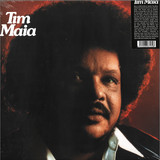
1970’s best-kept Bossa Nova secret. Surrounded by mystery for nearly 50 years due to its obscurity, this is one of the most honest, personal and unpretentious albums of it's genre.
A selection of 12 exquisitely crafted songs supported by measured, subtle arrangements. The list of musicians born or raised in the Tijuca district of Rio de Janeiro is long and illustrious and includes names that have shaped Brazilian music: Tom Jobim, Roberto Carlos, Tim Maia, Milton Nascimento, Jorge Ben or Erasmo Carlos – to mention but a few.
We can now add to that list another name: Werther. In 1970, a man by that name recorded an album unique in its personality, its honesty, and its lack of pretense. In a time when Bossa Nova had become a global phenomenon and its main characters were already household names in Brazil, Werther assembled a collection of songs that uncannily – almost naively – remind us of the time when Bossa Nova was just a group of youngsters making music. His songs are about simple things: bohemian life, the sea, love.
Despite Werther and his friends being only in their teens, without any previous experience recording music, those working behind the scenes were not equally amateur. Producer Peter Keller had already worked with Aloysio De Oliveira in the quintessential Bossa Nova label Elenco, and was also an initial partner in Roberto Quartin’s cult label Forma.
Studio owner Bill Horne was a very loved character in the Rio jazz scene who had regularly taken part in the legendary meetings in Nara Leão’s apartment and befriended some of Brazil’s most respected musicians. Some of these musicians were, for example, Naná Vasconcelos and Edison Machado, who provided small contributions to Werther’s album.
Heralded by both mainstream and indie press on it's release as an instant British classic, this seminal album rocketed from the underground to five-star acclaim right across the board.
A tense yet energetic journey through the highs and lows of living in the British counterculture of the time, it effortlessly mixed the old and the new, rock and roll and electronica, the past and the future- and brought this eclectic sound to a global fanbase. Now available as a 15th Anniversary Remastered Edition.
Entitled ‘My Heart Is Hungry And The Days Go By So Quickly’ Danish singer and songwriter Jacob Bellens presents his fifth solo album. Thanks to his unique voice and his talent for heartfelt melodies, over the years Jacob, also known as frontman of I Got You On Tape and Murder, has become one of the most distinctive figures on the Scandinavian music scene. Slightly darker in tone than its predecessors ‘Trail Of Intuition’ (2018) or ‘Polyester Skin’ (2016), the new album lets us see the world through Jacob’s eyes.
Somewhere between left-field pop and a classical singer/songwriter approach, the songs were recorded in two sessions with producer Mads Brinch, drummer Tobias Laust, bass player Jonas Westergaard, keyboardist Malthe Rostrup and guitarist Tobias Fuglsang. “So many good friends and amazing instrumentalists have contributed to the sound“, explained Jacob. “And mostly, people were playing what they felt the song needed, which was an incredibly inspiring way of just letting the process develop naturally, and take on a life of its own.” As such, the recordings give off a distinct light-footed and organic feel. Rich in metaphors, the lyrics deal with personal perceptions based on everyday life occurrences that at the same time hint at the meaning of life in general - or at least suggest a higher perspective. The sonical expression is timeless but also modernistic and the lyrical point of view is refreshingly diverse, never just black or white. The sad songs have uplifting, often surreal qualities, and the lighter, uptempo songs also invite to a certain darkness. A flower basket full of difficult emotions, sprinkled with magical fairy dust that somehow makes everything worthwhile.
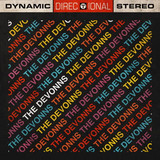
The Devonns dust off the golden age of 70's Chicago Soul with their self-titled debut album on Record Kicks. Straight from the streets of Chicago, Illinois, The Devonns (pronounced "De vaughns") are the brand new soul outfit and the latest addition of the Record Kicks' family, whose self-titled debut album that drops April 03, is an assortment of influences taking us back to the heyday of soul.
Drawing influences from bands such as The Dramatics, The Isley Brothers and Leroy Hutson, yet bringing in their own unique modern twist, influenced by artists such as Jamie Lidell and Raphael Saadiq; singer Mat Ajjarapu explains how unintentionally, the rich heritage of Chicago's history with soul music influenced him.
"The city was at the epicentre of a lot of good music back in the 50's all the way to the 80's, a lot of the labels specialising in soul were based in the Chicago and we even had our own sound known as "Chicago soul". Through several years of crate digging it surprised me how many songs I loved were recorded in this city, for example one of my favourites is this great little song by The Natural Four, produced by Leroy Hutson 'Can This Be Real', and released via Curtom Records."
The band started in 2016 after multi-instrumentalist and songwriter Mathew Ajjarapu dropped out of med school and found himself unemployed and drifting. Listening to music constantly at the time, he found inspired to put a band together and create his own music. Pairing up with some of the best musicians Chicago has to offer, he founded The Devonns: the rhythm duty is entrusted to Khalyle Hagood (bass), Ari Lindo (guitar) and Khori Wilson (drums).
Originally he wanted to focus on 50s style doo-wop, similar to The Flamingos; rich in reverb and vocal harmonies, but in the first initial practise they had it was evident the band clicked on their love of soul music from the 70s, so their music took a natural turn towards that sound, with tracks such as the Wilson Pickett-esque single 'Tell Me'.
The release took almost two years to complete as Mat explains "I am a perfectionist, I had a very specific vision in my head about how it should sound and I wasn't going to rest until I achieved it."
"This is a definitely a throwback soul record, as well as being drawn to lush and intricate arrangements of Motown, I was also inspired by the more lo-fi works of smaller labels such as Chess and Capsoul, and I wanted to capture the magic they had in those recordings in our record, as everything feels too precise nowadays" clarifies Mat.
It was thanks to his engineer Mike Hagler, who introduced him to Paul Von Mertons (Mavis Staples, Paul McCartney, Elton John) who arranges and conducts for Brian Wilson's live touring show and after a 45 minute phone conversation about what Mat wasn't keen on, on the album, he realised Paul totally understood where he was coming from.
After a few months wait for Paul to get back from touring they entered the studio with "Paul's players" and as soon as they hit record, Mat explains "I was getting chills up my neck, it was one of the happiest days of my life, and finally we had nailed it!"
Tracks such as 'Come Back; which Mat wrote in ten minutes on a $300 Daneelectro Singlecut guitar initially, came to life, with Paul's rich string arrangements and features guitarist and percussionist Ken Stringfellow (R.E.M.).
It still took a few months to get the recording process finished but finally after a torturous nineteen months they album was finally finished.
The result is an album filled with lavish arrangements and catchy melodies which take us on a nostalgic musical journey inspired by chic 70s soul, yet the band don't hesitate to add their own unique and elegant contemporary stamp to the record.
In October 2018 DJ Rocca and Almunia member Leo Ceccanti joined forces to deliver “Rhythm Collision”, a three-track EP of jangling, sun-kissed grooves, psychedelic dub disco and Afro-Cosmic flavours on Really Swing. 18 months on, one of that set’s standout cuts has been given a new lease of life courtesy of fellow Italian producer Alessandro Pasini AKA Deep 88. Since making his debut a decade ago, Pasini has earned a reputation as one of house music’s understated heroes – an artist whose hardware driven, retro-futurist take on deep house tends towards the timeless, melodic and atmospheric. With a deep love of turn-of-the-90s dream house, Larry Heard productions and sun-baked chords, his dancefloor-focused productions have often been called Balearic.
It’s perhaps fitting then that his reworks of Rocca and Cecanti’s “Ever Changing Bubbles” are as Balearic as they come. His “Balearic Mix” sets the tone, with Pasini layering trippy, dubbed-out and ear-catching elements – Ceccanti’s eyes-closed electric guitar solos, jangling acoustic guitar chords, warm dub disco bass, echoing spoken word samples, fluttering flute solos, drowsy organ motifs and the pair’s delay-heavy vocals – atop a crunchy, head-nodding, live style beat. While it deviates from the duo’s original version, it inhabits a similar sonic space – albeit in a more dancefloor-friendly way. Pasini excels himself on the accompanying “Balearic Dub”, stripping the cut back to its raw essentials – drums, metronomic bass –while toughening up the percussion and adding delay-laden instrumental snippets. It’s warm, woozy and otherworldly, with echoing voices, tactile musical motifs and restless delay trails combining to create a suitably hazy and intoxicating mood. By the time the touchy-feely flute and acoustic guitars begin to dance across the sound space, you’ll be lost in the groove and too happy to notice.
Los Afroins was the flagship salsa band of the obscure but beloved INS label from Colombia. Their 1975 LP "Goza La Salsa" is just as hard to find as their first record, and contains 10 bright and sassy salsa dura treasures that light up the dance floor with their incessant rhythms, syncopated trumpets and trombone and buoyant melodies. There are smoking covers of hits by Panama's Bush y sus Magníficos ('Salsa Al Pindin') and Bronx timbalero Orlando Marín and His Orchestra ('Está De Bala') as well as updated renditions of old Cuban chestnuts 'La Masacre' (written by Joseíto Fernández of 'Guantanamera' fame) and 'Matusa' (originally titled 'Macusa', composed by Francisco Repilado aka Compay Segundo).
The entire record makes for a very tasty and satisfying party platter filled with guaguancó, mozambique, pachanga, descarga and bolero that deserves to be more accessible and better known by today's fans of Colombian salsa who may have heard of The Latin Brothers or Sonora Carruseles, but have yet to discover the short-lived but highly sought after Los Afroins. "Goza La Salsa" is presented here in facsimile artwork and pressed on 180 gram vinyl.
“The aptly named Goza La Salsa (Enjoy Salsa) is the second album by Los Afroins, the flagship salsa band of the obscure but beloved INS label (Industria Nacional Del Sonido Ltda., Medellín, Colombia). The combo's repertoire focused mostly on cover versions hit tunes from New York, Cuba and Puerto Rico, both classic and contemporary, but for this record, their sophomore outing from 1975, their arrangements got tighter and there are more original compositions, which makes for a satisfying evolution in both style and content. Pianist Agustín "El Conde" Martínez, who would later work with Joe Arroyo and Juan Piña, led the group and did some arranging, with studio session production by INS artistic director Alfredo "Sabor" Linares. The vocals were handled by a pair of fresh-faced singers, Lucho Puerto Rico and Roy "Tayrona" Betancourt, who would later go on to fame in the 1980s, the former with his own Lucho Puerto Rico Y Su Conjunto Sonero and Conjunto Son Del Barrio (both in collaboration with Alfredo Linares), and the latter with Willie Salcedo, Reales Brass De Colombia, and Los Caribes. Additional arrangements were by Luis Felipe Basto of Los Black Stars and Luis E Mosquera, while the rest of the band was made up of INS related studio musicians. Goza La Salsa is just as hard to find as their first record and contains 10 bright and sassy salsa dura treasures that light up the dance floor with their incessant rhythms, syncopated trumpets and trombone and buoyant melodies. There are smoking covers of hits by Panama's Bush y sus Magníficos ('Salsa Al Pindin') and Bronx timbalero Orlando Marín and His Orchestra ('Está De Bala') as well as updated renditions of old Cuban chestnuts 'La Masacre' (written by Joseíto Fernández of 'Guantanamera' fame, and a hit for Cuarteto Caney) and 'Matusa' (originally titled 'Macusa', composed by Francisco Repilado aka Compay Segundo and made famous by Duo Los Compadres). This time around there are six excellent originals with the hottest pair being Lucho Puerto Rico's theme song 'Puerto Rico Power' and the percussion heavy final track, 'Alejada' sung and composed by Roy Betancourt. Just like the first album, the entire record makes for a very tasty and satisfying party platter filled with guaguancó, mozambique, pachanga, descarga and bolero that deserves to be more accessible and better known by today's fans of Colombian salsa who may have heard of The Latin Brothers or Sonora Carruseles, but have yet to discover the short-lived but highly sought after Los Afroins." Pablo E Yglesias DJ Bongohead of Peace & Rhythm
Bastard Jazz is proud to present the sophmore solo album by one of the gems of the New Zealand underground soul scene, Isaac Aesili. Woven through electronic soul, with threads of jazz, funk, R&B and house music, Isaac's 'Hidden Truths' is the stylistic unification of all his previous projects (Karl Marx, Funkommunity, Sorceress) into a dazzling and diverse body of work. Three years in the making, its depth is clear from the first listen, and is peppered with some of New Zealand's finest soul and jazz musical talent, including two stunning female feature vocalists from New Zealand; Ladi6 and Rachel Fraser.
The album opens with an ominous instrumental 'Mirror' setting a dark a tone for the album the start, shimmering with shades of Dilla swing snapping over metallic chords and a graceful trumpet solo that enters midway through. Wild feat. Ladi6' is a heavy downbeat future soul joint with stratospheric synths layered over driving beats that build alongside the elegant vocal weavings of New Zealand's first lady of soul, Ladi6, while 'Player' sees Isaac's unique vocals tell a tale of dangerous seduction within a synth funk-driven dancehall cum house music that feels like the Gap Band on a tropical vacation. 'Jungles' is a deep, native and ocean-like soundscape that begins with syncopated synths and beats that collide dramatically into a frantic, sweeping synth outro, followed up by'Realms' , an intricately crafted song that has sonic elements from techno-house that are other-worldly accompanied by live drums that flip after the breakdown into a swinging conclusion of the album's first half.
'Run Every Way' is an epic percussion-driven electronic blues that begins with a vocal chorus from Isaac that could just as easily be interpreted lyrically as a warning about climate change as it could an expression of the inner-self, while "Refugee" is also a heavily percussion orientated joint that fuses romantic classical strings with otherworldly synth stabs and Isaac's haunting vocals moving climactically into a tender coda conclusion. "Rain Gods" feat. Rachel Fraser is a heavenly pathway into Rachel's luxurious vocals with clever lyrics merging the soaring synths and looped bassline into a short yet memorable chorus'and 'Steps' is classic Isaac Aesili production including deep Rhodes chord changes, a knocking beat with layers of percussion, synths and horns providing a warm emotive accompaniment to Isaac's vocals. 'Last Minute' is a simple yet sophisticated jewel of space and time that concludes the vocal tracks of the album in a proper soulful style, and 'Maureen' rounds out the album as an expressive instrumental outrolude that features Isaac's trumpet.
Isaac Aesili is an Internationally acclaimed solo artist and the producer and creative force behind Funkommunity, Sorceress and Karlmarx. Isaac's original productions have been supported internationally by DJs such as Gilles Peterson (BBC Radio 6 Music), Benji B (BBC 1), and Lefto (Belgium, Worldwide FM). His trumpet playing features on many collaborations including 'Layer' by Julien Dyne (Wonderful Noise/BBE) and 'Midnight in Peckham' by Chaos in the CBD (Rhythm Section). A world-renowned musician on both trumpet and percussion, Isaac is a member of the Lord Echo band. His music fuses Soul, Funk, Jazz, Afro and Latin styles with R&B, Hip Hop and Electronic music. Isaac's much anticipated sophomore solo album "Hidden Truths" is out on Bastard Jazz (NYC) in 2020.
Classic album from Italian post-rock collective port-royal pressed on vinyl the first time....180gm transparent blue 2LP w/download.
Flares was the debut album from Genoa post-rock quintet port-royal. The album was initially released in 2005 by the quality-minded UK indie label Resonant Recordings.
Flares has become a watermark of the more contemporary amalgam of ambient, electronica and post-rock. And, is considered a classic of the genre.
Spintink Music stylistically name-dropped Eno and Explosions in the Sky when describing Flares. Tiny Mix Tapes commented that Flares "reveal(s) moments of unde-niable brilliance." and Exclaim! remarked, "this music is both inherently simple while being intricately complex and deserves to be placed in your stereo." "Intoxicating," "rewarding," and "masterpiece" are just some of the adjectives used to describe Flares upon its release.
To commemorate the album's 15th anniversary, port-royal have teamed up with their current partner of ten years, the Oakland based n5MD, to bring you Flares on vinyl for the first time. Remastered and remixed explicitly for vinyl from the original stems. Flares 15th-anniversary edition will be out March 27th on double 180-gram trans-parent blue vinyl.
SEATTLE -- Pearl Jam will release their much-anticipated eleventh studio album, Gigaton, on Monkeywrench Records/Republic Records on March 27, 2020 in the US. Internationally, the album will be released and distributed by Universal Music Group. Produced by Josh Evans and Pearl Jam, Gigaton marks the band’s first studio album since GRAMMY award-winning Lightning Bolt, which was released on October 15, 2013.
“Making this record was a long journey,” explains Mike McCready. “It was emotionally dark and confusing at times, but also an exciting and experimental road map to musical redemption. Collaborating with my bandmates on Gigaton ultimately gave me greater love, awareness and knowledge of the need for human connection in these times."
Gigaton’s cover features Canadian photographer, filmmaker, and marine biologist Paul Nicklen’s photo “Ice Waterfall.” Taken in Svalbard, Norway, this image features the Nordaustlandet ice cap gushing high volumes of meltwater.
In support of Gigaton, Pearl Jam will embark on their first leg of North American tour dates in March and April. The 16-date tour kicks-off on March 18 in Toronto and wraps with a two-date stint in Oakland April 18-19. Full tour dates follow.
Pearl Jam's North American tour is in addition to the band's previously announced European summer tour.
With their 2013 debut single "Vintage Voudou," Conjunto Papa Upa cemented themselves as the torchbearers of a rare breed of Afro-Caribbean psychedelic soul, a clear delineation from the wonderful world of Venezuelan poly rhythms. That original song, named after the short lived but heavily influential Amsterdam brick and mortar record shop that band leader Alex Figueira founded, was a perfect clue into the deep exploration that Papa Upa would begin to take on their musical journey.
Like the store itself, known for it's solid connection to the musical footprints put down in relatively undiscovered places like Suriname, Curacao, Cabo Verde, Portugal and of course Figueira's native Venezuela, Papa Upa has captured a sound that is entirely unique, a new concoction of influences that at once sound strange, yet totally familiar (...) Perhaps because Venezuela shared such a rich & diverse mix of sounds from the Atlantic, Caribbean & US, a kindred spirit to their neighboring country, Colombia, an equal in terms of their industry output from the 60's & 70's, yet not nearly as publicized and compiled in recent years. Like many places in the greater Afro-Caribbean nexus, they were musically ahead of their time.
This futuristic mélange of sounds is reflective of Papa Upa itself, made up of musicians from Venezuela, Uruguay, Cuba & The Netherlands, all living, practicing & recording at Figueira's
Amsterdam studio, Barracão Sound. With such a wide range of tropical influences, in a cosmopolitan and diverse city like Amsterdam, it's no wonder that Papa Upa's first extended project would find kinship in a collaboration with New York's Names You Can Trust.
The story of 'Get Tragic' can be traced way back to the relentless gigging off the back of their 2014 self-produced and self-titled record, when the heels finally fell off of Blood Red Shoes at the end of that same year. A near-decade of incessant road time and a non-stop pace of life finally took its toll, with the band stopping only to quickly hammer out 'another ten songs' to release as their next record, before ploughing straight back into touring. The pair exhausted themselves to the point of collapse. 'We didn't, at any point, have a breather,' says Steven Ansel (drums and vocals), 'We probably didn't see each other for about 10 days a year, tops, for six or seven years.' Understandably, such incessant close proximity led to implosion. 'We got the to the end of the fourth record and were like, 'F**k you, I never want to see you again','Steven adds, half-laughing, half-sighing.
R&S welcome electronic composer Matthew Puffett AKA Future Beat Alliance with his killer single ’Never Forever’ a sublime slice of broken beat techno that originally had a limited release on his “Patience and Distance” album in 2009. It now comes backed with a first rate remix courtesy of R&S regular Afriqua.
A veteran of the UK electronic scene originally from Oxford but now located in Berlin, Puffett made his name in the late 90s with a string of sought after releases on Void Records under the aliases Mode-M and Soul Electrik before settling on the Future Beat Alliance handle. Notching up releases with the likes of Delsin, Rush Hour and Versatile as well as with the storied Tresor imprint, both as a DJ and an artist. In 2019 Matt started his new imprint Reward System to self release new creations.
Life long friend from Oxford, Mo’ Wax and Unkle maestro James Lavelle reached out in 2012, which led to a further creative chapter in Puffett`s story that culminated with him co-writing & programming on Unkle’s 5th studio album ’The Road Part 1’ as well as some singular work in film and television. “The moving image plays a key creative motive in my process,” Matthew explains. “Sound & picture married together is such a powerful combination that always inspires me every time to make my own version, 'Never Forever' is one of my many attempts to try and
capture that.”
Taking cues from modern cinema masters like Denis Villeneuve, Panos Cosmatos, Steven Soderberg and Jonathon Glazer and their respective composers, Puffett's widescreen sonic craftsmanship alongside his irresistible rhythmic sense are a key part of what makes Future Beat Alliance music so alluring; "I want my tracks to guide the listener on a exit route far from this world”
Legendary album of Jacaszek from 2009, first time on vinyl, 180g, gatefold, with downloadcode
PENTRAL (lat: inside, spirit, temple).
Michal Jacaszek's new project is an attempt to describe a gothic church interior by means of sounds. A temple owes its special atmosphere not only to visual elements but also to characteristic acoustics – reverb, enhancing and prolonging a slightest whisper into infinity. Jacaszek spent several days in three Gdansk historic churches (Oliwa Cathedral, St. Nicolas' church, St. Mary's Basilica) recording chanting, organs, and also a broad spectrum of accidental noises. Source sounds were were used only as a stimulus which releases the sound of the whole inside, and as such, they were consequently retouched in the post production process. Studio work and also the atmosphere of melody and arrangements were subordinate to the idea of portraying the church as a place filled with distant mysteries, a huge music instrument.
- A1: We No Be Machine
- A2: Mr Ali
- A3: Yenimno
- A4: Material Microdots
- A5: Hey No I Say
- B1: Digital Timeline
- B2: Fire
- B3: Makoma (Feat Wiyaala)
- B4: Smoke Screen
- B5: Nipa Bi
- C1: Free Up (Feat Morena Leraba, Spoek Mathambo & Syntax)
- C2: Safari Ya Muziki (Feat Pendo & Leah Zawose)
- C3: Gamashie Choice (Feat Afla Sackey)
- C4: Sohaa Gb3K3
- C5: Waters Of Congo
- D1: Onipa (Feat Wiyaala)
- D2: Kukuru
- D3: Kon Kon Sa (Feat Wiyaala)
- D4: Promised Land (Feat Jally Kebba Suso)
Afro futurist sensations Onipa unleash their debut album, combining Afro grooves, electronics and fierce energy for an effervescent celebration of cultural and musical encounters.ONIPA means ‘human’ in Akan, the ancient language of the Ashanti people of Ghana. It’s a message of connection through collaboration: from Ghana to London, our ancestors to our children, Onipa brings energy, groove, electronics, Afro-futurism, dance and fire! Born out of deep collaboration between long-time friends K.O.G (Kweku of Ghana of KOG and the Zongo Brigade) and Tom Excell (MD, guitarist and writer of acclaimed jazz/ soul afrobeat pioneers Nubiyan Twist), the group features KOG on vocals, balafon and percussion, Tom Excell on guitar, percussion and electronics, Dwayne Kilvington (Wonky Logic) on synths and MPC and Finn Booth (Nubiyan Twist) on drums.
The group have worked closely with Ghanaian star Wiyaala who features on three tracks, singing in the Sisaala language from the North of Ghana. The album also features collaborations with South African rapper Spoek Mathambo, Lesotho star Morena Leraba, Ghanaian percussion master Afla Sackey and Tanzanian sisters Pendo & Leah Zawose, each adding their own flavour to the project. “Through the musical prisms of London and Ghana our influences join together to create, a fundamental thread of traditional African rhythms, instrumentation and storytelling, interwoven with electronics, urban soundscapes and synth bass. We use technology, but it should never use us, our music is live and about deep human connection.” (Onipa)
The landmark 1980 album, representing a period of consolidation for Patrice Rushen. Her studio reputation as a go-to pianist and arranger among other artists and musicians was well established and was growing exponentially. Although never originally planning a career as a solo artist, she had built this side of her work through three Prestige albums and two sophisticated soul and disco albums for Elektra, 'Patrice' and 'Pizzazz'. "I was lucky to have a group of musicians that I knew well by the time of these recording sessions," remembers Patrice. "I had my pick of really incredible players because of all of the studio work I was doing. I also played with Lee Ritenour, Harvey Mason and others almost on a weekly basis at The Baked Potato club in L.A." Tracks include the singles 'Don't Blame Me', 'Look Up!' and 'Never Gonna Give You Up'. "'Never Gonna Give You Up' came out of playing ideas at home. Bassist Freddie Washington was living with my family while he tried to get a foothold in L.A.'s music scene and that groove came out of those jams. With 'The Dream', I had been listening to Minnie Riperton's 'Come To My Garden', one of my favourite albums. With Charles Stepney's arrangements, I saw that he didn't have to use large instrumentation to be orchestral in his approach. So, 'The Dream' was a homage to that kind of writing." "After 'Posh', we had a much better idea from the performance side what was important in our music and that informed my next album, 'Straight From The Heart'. We took a little break after 'Posh' was released, although I was still writing and working regularly on scores for film and TV. That had always been my main focus in my music."
- A1: Gift
- A2: Company Book
- A3: Your Favourite Thing
- A4: What You Want It To Be
- A5: Gee Angel
- B1: Panama City Motel
- B2: Can't Help You Anymore
- B3: Granny Cool
- B4: Believe What You're Saying
- B5: Explode And Make Up
Sugar were the US alternative rock trio fronted by ex-Hüsker Dü vocalist / guitarist Bob Mould. Released in 1994, File Under: Easy Listening is the group’s second and final full length studio album. Includes the singles ‘Gee Angel’, ‘Your Favourite Thing’ and ‘Believe What You’re Saying’. Following on from their successful debut release Copper Blue and critically acclaimed EP Beaster, ‘FU:EL’ found the group continuing to experiment with dark textures and pop melodies.
The album became Sugar’s third top ten release in the UK album charts and continues to draw a cult following today. For the first time, the album is presented on heavyweight 180g clear vinyl.
The third in the releases where label favourites are represented for today and backed with a remix / version by a contemporary producer of repute, presents 80s leftfield pop-rock band In Embrace. Appearing here are two versions of The Living Daylights, the original long version and a re-recorded live take, plus additional versions by Timothy J Fairplay.
Coming out of the midlands Post Punk / fanzine scene Gary Knight and friends formed the original incarnation of In Embrace in 1981. Picked up by Glass Records, the early, edgy live recording were re-proposed as Knight developed his 'non-musicianship' with an interest in the possibilities of the studio.
The original "Uncut" version takes it's anti-war themed vocal and lays it over a Jah Wobble inspired bassline and tense electronic rhythm. As it builds, the pressure mounts a visceral sense of oblivion of 9+ minutes of deep dubbing and repeating refrain.
Next to this the "Live In Studio" version sees the later 3 piece band replay it out in an energetic raw form that makes a worth addition. Handing the versions, plus backing tracks to Timothy J Fairplay offered a radical departure. His brooding Redub and Bonus mixes take the track to a darker place, drawing out the induced, relentless madness Knight always intended.
The outstanding 1971 debut by piano player and arranger Osmar Milito features his amazing cover of Herbie Hancock's Cantaloupe Island plus several classic Brazilian songs by Marcos Valle, Jorge Ben and Ivan Lins among others. Fierce samba jazz and bossa all the way through! The line-up of performing artists could hardly be more impressive: Quarteto Forma on vocals, Luis Ea, Marcos Valle, Pascoal Meirelles. This brilliant album is up there with the best work of Arthur Verocai and Marcos Valle. Presented in facsimile artwork and pressed on 180g vinyl
During the 90s, a walk around London’s Camden Market inevitably meant listening to the music with groove that the most popular DJs had made fashionable at the time: soul jazz instrumentals and Brazilian music targeting the club dancefloors. Among all those songs that ended up becoming classics of the scene was the amazing cover version of Herbie Hancock’s ‘Cantaloupe Island’ that Osmar Milito had recorded in 1971. This song was probably the main reason that made his LP for Som Livre one of the most sought after Brazilian records by collectors from all over the world. Now we finally have a new opportunity to enjoy this album, reissued on vinyl for the first time.
Along with the aforementioned version of Herbie Hancock’s song, this first album by piano player and arranger Osmar Milito is full of versions of Brazilian classics, from Marcos Valle to Jorge Ben or Ivan Lins. Fierce samba jazz and bossa all the way through! Note that Milito spent the first years of his career as a member of the backing band of big artists such as Elis Regina, Jorge Ben, Nara Leão... and after two years working with Sergio Mendes in the United States, he returned to Brazil and recorded his first LP.
The line-up of performing artists on this album could hardly be more impressive: Quarteto Forma on the vocals, Luis Eça, Marcos Valle, Pascoal Meirelles (what an amazing drummer he is!)... and both sides of the record hide a seamless sequence of solid tune after solid tune with similar doses of instrumental and vocal tracks. Just listen to the magnificent ‘Garra’, ‘Que bandeira’ or ‘Rita Jeep’, or the sweet samba that gives its name to the record, and you will see why this LP should be up there, next to the best works of Arthur Verocai and Marcos Valle.
With the original UK 7” of this release now as rare as hen’s teeth, and with the group having recently ‘reformed’ for one last album together, the Mr Bongo replica re-release of this 1990 masterpiece by Gang Starr couldn’t be more timely.
The now-legendary duo of DJ Premier and Guru dropped this at the height of hip-hop’s sampling of jazz, which had led to a creative leap forward for the genre. Yet while others plundered in the dark, this instant classic wore its influences on its sleeve and paid verbal homage to the musicians they were sampling. The “melodious funk” of “Thelonious Monk” gets namechecked, while the track samples two of his records, including 1958’s Bop gem ‘Light Blue’.
While both versions presented here have common elements, the ‘Movie Mix’ – so-named for the song’s appearance on the soundtrack to Spike Lee’s mythic jazz biopic ‘Mo’ Better Blues’ – goes in a few different directions to the ‘Video Mix’. Rather than just drop in an instrumental for the B-side, DJ Premier instead shows his versatility by switching up the base track (Kool & The Gang’s 1971 ‘Dujii’) and layering in other samples. In more ways than one, his virtuosity here echoes the improvisation of a jazz musician, akin to Denzel Washington’s Bleak in the movie.
Of course, he’s not the only show in town. The late Guru’s voice is as mellifluous as an instrument itself here, his potted history of the genre and the artists of jazz delivered with his own unmistakable cadence. Without this record, would he have gone on to make his ‘Jazzmatazz’ projects.
Following a successful EP in 2019, featuring remixes from Osunla
& Pocz, Olindo Records are proud to present “Wono”, the debut collaborative album from Koichi Sak& Afla Sackey.
The album is a deep exploration of Koichi's love of both electronic and West African music, in close collaboration with Ghana-born master percussionist, singer, band leader, teacher and songwriter, Afla Sackey.
Featuring 7 tracks ranging from the meditative “Yamb”, which features master kora player Kadialy Kouyate, to the acid infused, slow house workout of “Niege”. Passing through a contemporary highlife take on advance single “Suolo” and an album version of the previously released “Jingo”.
Koichi Sakai is a London-based producer and DJ, a well-known head in London music circles thanks to his role in co-founding the legendary Afrobeat Vibration nights alongside Dele Sosimi. He has previously recorded and released music with Kay Suzuki as Afrobuddha, and they recorded a set together for Boiler Room.
Afla Sackey is leader of 10-piece afro funk and highlife orchestra, Afrik Bawantu, and the man who the likes of Kokoroko call when they need some extra power on the percussion or a singer to lead their Church of Sound tribute to Ebo Taylor.
Koichi Sakai & Afla Sackey’s first collaborative project on Olindo Records, the “Wono” EP released late last year, received widespread support, particular from Gilles Peterson on BBC Radio 6 Music, Defected Radio, Mafalda, Hector Plimmer & Zakia (NTS), Tony Minvielle (Jazz FM), Tim Garcia (Música Macondo/Jazz FM), Music is my Sanctuary, TwistedSoul, Mari* & Papaoul (Worldwide FM), Alan McKinnon and DJ Harv.
We still have copies of Koichi Sakai’s Wono ep OR004 and Betsayda Machado LP ORLP003 should you like more.
Compression and expansion, focus and surrender, tension and release - the elusive state of balance is less of an inert, perfect condition than it is an interaction or moderation over time between polarized points. Rarely is it defined nor clearly prescribed. Through careful examination of the factors and conditions involved can a possible pathway be uncovered, in any particular scenario. The attached transmission is not a declaration of balance, nor a prescription towards it. But rather, it is like a snapshot captured of an object in motion.
Nantes-based Australian drummer and percussionist Will Guthrie returns to Black Truffle with Nist-Nah. Like his previous solo record on the label, the abrasive hip-hop concrète of People Pleaser 'BT027', Nist-Nah finds Guthrie branching out in a new direction, this time in a suite of six percussion pieces primarily using the metallaphones, hand drums and gongs of the Gamelan ensembles of Indonesia.
The music presented here is grounded in Guthrie’s travels in Indonesia and study of various forms of Gamelan music, from the stately suspended temporality of the courtly Javanese Gamelan Sekatan, to the delirious, thuggish repetition that accompanies the Javanese trance ritual Jathilan, to the shimmering acoustic glitch of contemporary Balinese composer Dewa Alit and his Gamelan Salukat.
However, far from an exercise in exoticism, Nist-Nah develops out of Guthrie’s extensive work with metal percussion in recent years (as heard, for example, on his 2015 LP for 'IDEAL', Sacrée Obsession), where gongs, singing bowls and cymbals are used to build up walls of hovering tones and sizzling details.
Though Guthrie is broadening his palette to explore Gamelan instrumentation and pay tribute to his love of this sophisticated yet elemental percussion music, the pieces presented here are equally informed by Guthrie’s interests in free jazz, electro-acoustic music and diverse experimental music practices, exploring long tones, extended techniques, and non-metered pulse.
'Nist-Nah' presents a variety of approaches across its six pieces, from the crisp, precise rhythmic complexity of the opening title track to the droning textures of ‘Catlike’ and ‘Elders’.
On the epic closing ‘Kebogiro Glendeng’, Guthrie offers an extended, layered rendition of a Javanese piece belonging to a repertoire primarily used for warmups, beginner’s groups and children first learning Gamelan, elegantly gesturing to his own amateur status while using the piece’s insistently repeated melody as an extended exploration of the hypnotic effects of repetition, falling in and out of time with himself to create woozy, narcotic effects until the piece eventually dissolves into a wavering fog.
Kicking off 2020 – Great Circles takes a step away from the dance floor with the release of the monolithic new work from Philadelphia-based artist Radere, ‘I Do Not Want What I Have.’ This long-in-gestation set of slow burning electronics and shadowy drones is part of the label’s growing selection of releases dedicated to deep listening, following on from the 2017 Prefix Moniker LP.
Radere is the ongoing project of Carl Ritger, who has worked under the nom de plume since 2009 and has deep ties to the Great Circles family. He played some of his earliest shows at Inciting HQ, the recently shuttered, label-affiliated venue, and invited Justin Gibbon AKA Westov Temple and Great Circles label founder to contribute to some of his earlier recordings. While he started out as a more straightforward ambient guitarist, Ritger’s work developed into more experimental textures as he explored modular synthesis and processed found sounds.
Ritger’s releases from his time spent living in Denver, CO c. 2011-2018 are marked by a particular strain of east coast nihilism and an angular aesthetic that keeps the listener off balance. Now back in his native Philadelphia, the two long-form pieces that comprise ‘I Do Not Want What I Have’ represent a perhaps more nuanced meditation on pain and loss. “Spitty Kisses,” the 15-minute album opener, takes aim at the listener with a brutal salvo. It is almost sadistic in its sonic intentions – acerbic modular sound and abrupt stuttering in the material leave a listener personally affected. “You’ve Been A Ghost Your Whole Life,” on the flip, delivers a salve for the A-side’s wounds and resolves its masochistic tones.
Written through a period of intense personal trauma as a means to seek comfort and solace through creative action, it’s clear that the puerile humor of nihilism is gone and grown out of in Ritger’s work.
FFO: taking long walks off of short piers, the legend of the monk Kelpius living among the trees of the Wissahickon, traditional creation and destruction stories in polytheistic faiths, and John Coltrane.
The record is accompanied by a digital-only series of remixes by friends of the artist and regular collaborators, including new works from Borne and Shivers, as well as Great Circles alums Westov Temple, Chaperone, and WOLF DEM.
- A1: Marc Melià – Permanent Waves (04 26)
- A2: Pletnev – Marc O’polo (06 31)
- A3: Douglas Greed – Vancouver (04 11)
- A4: Middle Sky Boom – Missing Drive (05 13)
- B1: Thomass Jackson – Mithra (07 07)
- B2: Goldmoon - Bells (04 08)
- B3: Krikor – Sally Hardesty (05 34)
- C1: Morgan Blanc – Werde Der Du Bist (04 52)
- C2: Cora Novoa – Virtual Aesthetics (04 35)
- C3: Nsdos – Al-G (05 43)
- C4: Rebeka Warrior – Ich Komme Zurück (04 49)
- D1: Theus Mago – Idealistic Stone (07 33)
- D2: The Populists – Prehistoric Lemurs (05 19)
- D3: Acid Love Triangle – Instant Track (06 42)
Back in 2018, Lumière Noire celebrated its first anniversary with a compilation featuring thirteen exclusive tracks by an eclectic group of electronic musicians – a family portrait of sorts. A few months later, a second volume of From Above, compiled by the label's artistic director (and DJ) Chloé, once more brings thirteen established acts together with promising upstarts. The first compilation was the embodiment of the label policy advocating for both artistic excellence and a widening of electronic aesthetics – bopping from deviant house music to adventurous IDM and to the rigor of dancefloor techno, among other electronic explorations. Some of the artists featured are now closely associated with Lumière Noire, while others were more established performers such as Benedikt Frey, Lauer, Jonathan Fitoussi, Il Est Vilaine, Dave e Brun (half of Swayzak) and Frank Agrario, as well as upcoming artists such as C O N T R A (a side project by none other than Iñigo Vontier), Sutja Gutierrez, Théo Muller, Markus Gibb, Bajram Bili, and a sprinkling of UFOs circling the genre (Suuns' Ben Shemie, Drvg Cvltvre, and electro-acoustic combo Lumi). This group photo laid down a number of paths for a label in perpetual evolution.
Since then, the Parisian entity has continued to grow within the international electronic scene, releasing Local Suicide's Leopard Gum EP, Iñigo Vontier's first LP, and planning another slew of releases for 2020. The lineup for this second volume of From Above is once again equally intriguing, offering a crescendo-like track listing over a double LP format, which is a feat of sorts for a "Various Artists" compilation.
Marc Mélias' fascinating, unsettling Permanent Waves gets the proceedings going with a contemplative track that provides a serene opening to the odyssey on which From Above will be taking the listener. Pletnev continues on with the playful, hooky Marco O’Polo, a fundamentally techno track built over a seductive 90s-inspired breakbeat. Douglas Greed (whom Chloé remixed on BPitch a few years back, and had himself remixed track from her album Endless Revisions featuring Ben Shemie’s vocals), supplies Vancouver, a slice of ambiance à la Boards of Canada, supported by a gripping breakbeat. The rhythmic arpeggio of Israeli producer's Middle Sky Bloom makes his contribution a hypnotic, disconcerting slice of dark disco. Thomass Jackson, a safe bet in the new wave of the Latin-American electronic music blowing its sometimes hot, sometimes cold wind, proposes Mithra, a dancefloor incantation to the Antiquity's bull god. With Bells, Goldmoon delivers a track that is both melodic and nostalgic, tinged with rhythmic samples, Moog basses and solar backgrounds. Longtime friend of Chloé, Krikor, who has released two albums on L.I.E.S. Records (Pacific Alley and Saudi), offers a moment of respite with Sally Hardesty (a nod to fans of horror movies), a heavenly and bewitching track that, paradoxically, hints at the highly energetic second half of the compilation. Discovered with Confidences EP released on Lumière Noire, the young French producer Morgan Blanc asserts himself here with Werde Der Du Bist ("Become who you are"), a song with luminous chords and midtempo rhythms to start the second half of the compilation by raising the tension. Galician producer, DJ and designer Cora Novoa continues the rollercoaster's ascent with her Virtual Aesthetics, which once again brings those acid tones – this time without the vertigo. Equally corrosive, but tenser and more percussive, the uncategorizable NSDOS' AL-G attempts to give order to a chaotic electronic world full of violence and danger. Rebeka Warrior (half of the duo Kompromat alongside compatriot Vitalic), takes on a more nostalgic vibe with Ich Komme Zurück, a French/German techno chant evoking a secret dream of a track from a bygone era. Three years after the release by Lumière Noire of Moderna and Theus Mago's stroboscopic Dog Is Calling You, Theus Mago makes a solo comeback with Idealistic Stone, a most acid of club tracks, rattled by the modulations of the inevitable TB 303. French electro-rock saltwarth Yan Wagner's dancefloor alter ego The Populists' Prehistoric Lemurs gives an almost Orientalizing twist to Kraftwerk's techno-pop. To close things off, the collection's last track, the appropriately-named Instant Track by impromptu encounter between Hervé Carvalho (Acid Arab), Jacques Bon (Smallville) and Demian (Kompakt) Acid Love Triangle, releases the pressure with a long, bittersweet reverie that leaves the listener, at the end of these thirteen musical adventures, to rest languorously on an artificial and welcoming shore.
Max Graef and Julius Conrad are Ratgrave. ‘Rock’ is their
second album - ongoing transmissions of Electronic PFusion from Earth. It follows a stellar debut on Funkineven’s imprint Apron. The duo’s sound palette draws inspiration from 80's funk, soul, rock and electronic but through a contemporary lens from two versatile multiinstrumentalists.
In their own words: “Rock is the essence of energy and
vibration we felt in different styles of music, almost like a
parallel component connecting all things we like. In the
process of recording the new album we kept coming back
to this essence no matter what style the original idea was.
There was the raw and brutal energy of Jazz-Rock, a lot of
video game influences that somehow adhered this essence
just as well as quieter Pop and Psychedelic passages that
we recorded. Among other things we absorbed a lot of
heavy music during the time of the recording like Blue
Cheer, Black Sabbath, Frank Zappa or Jimi Hendrix and
realized while writing our own music how much impact
they had even on quieter songs. This is why ‘Rock’ felt like
the perfect title although the music ranges from P-Funk
and Spiritual Jazz to various styles of Pop and beyond.”
Max Graef has previously collaborated with Glenn Astro on
records for Ninja Tune and both artists have previously
released on Tartelet.
This marks the fourth official album on Black Focus, a
London label founded by Kamaal Williams.
4pp digipack. 180g vinyl LP in reverse board printed sleeve
with 3mm spine and digital download card.
Three artists discover the wider field of dark electronic dance music. Although young, these producers already have a big understanding of sound. A sound which is past-oriented but every track has a certain twist which makes the music contemporary and timeless.
On A1 – Dein Letztes Hemd – Nicola Toma from Berlin combines acid cuts with German Vocals (by Camila Strasdas) and a pushy bassline. Nothing else needed. Zurich’s Prioleau opens up a totally new world on A2. ‘Never Trust A Mirror’ is an energy driven tune without compromises. A dark new wave-y and kraut influenced masterpiece.
On the b-side are two tracks produced by Hesychia369, a well-known producer from Zurich under a new alias. With ‘Dmbrisded’ and ‘Diffspherez’ he shows his love for acid basslines and fast rhythms.
It's been a long, winding road to Hailu Mergia's sixth decade of musical activity. From a young musician in the 60's starting out in Addis Ababa to the 70's golden age of dance bands to the new hope as an emigre in America to the drier period of the 90s and 2000s when he mainly played keyboard in his taxi while waiting in the airport queue or at home with friends. More recently, with reissue of his classic works and a re-assessment of his role in Ethiopian music history, Mergia has played to audiences big and small in some of the most cherished venues around the world. With 2018's critical breakthrough "Lala Belu" Mergia championed himself and consolidated his legacy, producing the album on his own and connecting with listeners through the sheer creative power of his version of modern Ethiopian music. His subsequent performances revealed an artist who is in no way stuck in the nostalgia for the "golden age" sound. The press agreed, including the New York Times, BBC and Pitchfork, calling his music "triumphantly in the present" in its Best 200 Albums of the 2010's list. Mergia's new album "Yene Mircha" ("My Choice" in Amharic) encapsulates many of the things that make the keyboardist, accordionist and composer-arranger remarkable_elements that have persisted to maintain his vitality all these years, through the ebb and flow of his career. The rock solid trio with whom he has toured the world most recently, DC-based Alemseged Kebede (bass) and Ken Joseph (drums), forms the nucleus around which an expanded band makes a potent response to the contemporary jazz future "Lala Belu" promised. "Yene Mircha" calcifies Mergia's prolific stream of creativity and his philosophy that there is a multitude of Ethiopian musical approaches, not just one sound. Enlisting the help of master mesenqo (traditional stringed instrument) player Setegn Atenaw, celebrated vocalist Tsehay Kassa and legendary saxophone player Moges Habte from his 70's outfit Walias Band, Mergia enhances his bright, electric band on this recording with an expanded line up on some songs. Mergia produced the album which features several of his original compositions along with songs by Asnakesh Worku and Teddy Afro. An artist still reinventing his sound every night on stage during his marathon live sets, this 74-year-old icon refuses to make the same album twice. The album feels as urgent and risky as his concerts can be, pushing the band to the outer limits of group improvisation and back with chord extensions during his exploratory solos. "Yene Mircha" captures this live experience and fosters an expansive view of what else could be in store for this tireless practitioner of Ethiopian music.
Matt Karmil's fifth album is a meditative collection of woozy loops and soft focus house. STS371 is the follow-up to IDLE033, - - - -, ++++ and 2018's acclaimed Will. Matt Karmil is British born - growing up in the rural town of Salisbury, near Stonehenge. Suffering a prolonged illness as a child, he spent much time indoors whiling away the long hours by playing with a classical guitar. Eventually he was well enough to see the world that had almost left him behind, and he spent his early twenties as an international traveller, DJing, record collecting and working as a producer-engineer in London, Paris, Stockholm and Berlin. In 2012 he decided to settle on Cologne âÇ" a city famed for its excellent club scene and ultra-minimal take on techno via the collective of artists and producers around the Kompakt label. With a studio established in Cologne, Matt made his LP debut with the well received (but hard to Google) "----", combining dusty samples and elegant tape hiss with scuba-diving grooves and minimalist vibes. In the same year he released the jubilant club anthem 'So You Say' on Tim Sweeney's Beats In Space label and remixed John Talabot and Axel Boman's (Talaboman) single 'Sideral'. Recent years have seen a raft of new releases from Matt, remixing XPress 2 for Skint, the albums idle 033 and ++++, as well as 12"s for YumAc Records, Idle Hands, Endless Flight and Studio Barnhus, received with great reviews in publications from The Wire to Resident Advisor and beyond. 2016 also saw Matt much in demand for his skills in engineering, mixing and mastering, working extensively with Matias Aguayo for Crammed Discs, Kornel Kovacs for Studio Barnhus and Talaboman for R&S, among many others. At the invitation of artist Christine Sun Kim, Matt composed a sub-20Hz piece for Bounce House at Sound Live Tokyo 2015, while his video collaboration with Boston's MIT Media Lab, Time Moods, was premiered in late 2017.
'Slacking Off'... The sought-after 1973 Bahamas recorded percussion-led gem that landed on the scene thanks to Jared Boxx. Renowned DJ and proprietor of New York's Sound Library, Jared unleashed this elusive monster soul-funk jam onto wantslists worldwide via his 'Thanks For Waiting' mix in 2009 and it's remained unobtainable until now. Recorded at 'King' Eric Gibson's Elite Recording Studio in 1973, the track features Theo Coakley of T-Connection on keys, British engineer Allen Mottershaw aka MOTT on solo guitar and Nassauvians lead vocalist and guitarist Tommy Goodwin, who relocated to the Bahamas at least a decade earlier from the US. Featured b-side 'The Time Is Now' is a previously unreleased dreamy AOR island recording from the vaults of Elite Studios made the following year with his friend Don Lepage, sung together with Tommy on guitar and Don on harmonica. Both cuts now available on limited 7" from Backatcha Records for playback far and wide .
Wildflower (Leon Brichard, Tom Skinner, Idris Rahman) continue to explore areas of groove-based improvised jazz on their 2nd album. Taking a slightly freer approach to the writing process, simple but effective melodies and bass motifs are explored to to create fully realised pieces with dynamic extremes that bring a full range of emotion. Recorded over a two day session at Fishmarket Studios in London, the band sounds relaxed and at ease, giving space to explore intricate improvised interplay and dialogue fully whilst at the same time building to fiery powerful climaxes and emotional peaks. Skinner is on fire here whilst Rahman and Brichard trade riffs and push the harmonic and rhythmic boundaries. Rahman’s use of clarinet and bamboo flute plus additional layers of woodwinds, Skinner’s unique approach to stripped-down use of his very personalised kit, and Brichard’s use of both acoustic and electric basses make for a sonic landscape that is both unique and highly approachable. Touching on heavy spiritual vibes whilst taking in dark alternative grooves and delicate folk-like tunes, the overall sound remains instantly accessible
Sax, Flutes and Clarinet: Idris Rahman
Electric and Double Bass: Leon Brichard
Drums: Tom Skinner
Beyond the Mikrosector, passed the Love Quadrant and over the Intersect lies another reality that exists in contrary to our own. This is where we now find Mr. 8040, the Space Dimension Controller, on a planète contraire, a world very much like our own, but one that runs in opposite to the norm. Here he toys with intergalactic Detroit funk and sequenced machines, creating celestial signals of minimalistic, atmospheric boogie. It’s a new course of interconnected, cinematic electro that exists outside of time and yet is apt for moments of timelessness.
Within the world of astrophysics there are select scientists out there that believe space-time gradually loops in on itself. Within this infinite realm of time and space, we can find ourselves once again living our past lives. It’s in this eternal domain that the Space Dimension Controller returns once more, applying his knowledge from the planète contraire to his absorbing palette of C-beams, moon-lit orchestrations, and graviton beats. Matured from his time cavorting through the core of the unknown, the Space Dimension Controller’s sound becomes more focussed, filled with the knowledge of the worlds his visited.
On the A side, Mr. 8040’s strain of progressive and unequivocal deep-space disco lends towards his studio competence, creating lush melodies that will have even the geysers of Enceladus erupting in time along with the symphony of syncopated drum machines. On the flipside, the prodigious Jack Hamill, aka. the Space Dimension Controller, flexes his machine savviness once more creating a timeless electro-funk rhythm for a timeless, time-travelling pioneer.
For the first release of the new decade we are honoured to introduce LA-based Oxóssi who has conjured a captivatingly sinister sonic palette for his debut EP on the label.
Sama
A scorching 8-bar intro catapults us straight into 'Sama', the first track of the release, where abandoned-jungle-ruins atmospheres meet threatening wooden flutes and weighty wobs - Oxóssi is not messing about. The narration proceeds with a melody sung by a penetrating laser-beam-like synth, which adds a space layer to this organic banger, getting more and more detuned throughout the track while kickstarting a call-and-answer march between the flute and synth-wob melodies. Don't expect to uncover the secrets of 'Sama' at a first listen, this intricate creation will keep revealing itself listen after listen.
Saut Dans Le Vide
An alluring pad harmony and a hidden inspirational message from the artist introduce the fascinatingly titled 'Saut Dans Le Vide', a masterful arrangement of unrelenting piano chords, subtle choir stabs, dreamy flute leads and compellingly staggering drums. Elements keep artfully alternating throughout this convoluted composition which arouses a pensive, melancholy-nuanced hopefulness.
Undead
It's time to get glitchy here, as 'Undead' makes its entrance. Shimmering melodies rain down in a glittery shower of eerie purple confetti, surrounded by rattling white noise strikes and playful-yet-mighty bass hits. As the story evolves, an 8-bit synth lead briefly takes us to a post-apocalyptic landscape before we momentarily wake up from this psychedelic daydream, just in time to take a breath and dive back in for round two.
Parasols (Ali Renault) applies ABS to the bpm with the new beat friendly ‘Diaz’; a slasher disco stalker prowling the lower east side of somewhere deep in your residual nightmares. Red Corner thwacks hard and dusky like a dustbin full of grit. Now your as giddy as the time you had your first bucket. The mutated commentary that underpins this clash of pans melts woozily into ‘Sacrifice’, which comes on all Baldelli inspired like some Rimini horror fest where Benetton and Timberlands frug it out amongst shadows in the Mediterranean dusk. Bursting with energy the finalimente of this accomplished brace of toons is possibly the standout, ‘Cessana Learning’ leers and lurches with weird gut belches that are both melodic and disorienting at the same time; shifting gears midpoint into some glorious electro chimes that will strike a chord with fans of other post techno luminaries such Ed DMX. Get some of this, enjoy flagellate and try to stay conscious!
- A1: Darıldım Darıldım - Akbaba İkilisi
- A2: Misket - Kına Gecesi Ensemble
- A3: Gönül Dağı - Mehtap Tuna
- A4: Topal - Sarı Zeki
- A5: Karanfilli Yar - Handan Yazgan
- A6: Yine Gönlüm Sende - Mehmet Karakoç
- A7: Mercanlar - Sultan Sümbül
- B1: Yaz Dostum - Gülcan Opel
- B2: Nar Tanesi - Mehtap Tuna
- B3: Dom Dom Kurşunu - Sarı Zeki
- B4: Mavilim Hangi Ellidir - Handan Yazgan
- B5: Sarı Yıldız - Kına Gecesi Ensemble
- B6: Asrın Bozuk Düzeni - Aşık Emrah
Uzelli Kaset was established in 1971 by Muammer and Yavuz Uzelli in Frankfurt, Germany. Their music resonated not only with the longing that Gastarbeiter (guest workers) felt for the homelands and families they had left behind and the melancholy brought by their difficult living and working conditions in Germany, but also with the joy that welled up at village weddings on their days off, and the long car or train journeys home. Reaching the remotest corners of Germany as well as Turkey, Uzelli Kaset was soon more than just a music company; it became a companion to Turkish workers living far from home. Not counting the handful of 8-track tapes and 14 LPs released in the early days, the catalog consisted entirely of cassettes.
When they opened their Istanbul office in 1977, Uzelli moved beyond production and became successful in the areas of reproduction, distribution and marketing. Taking the catalogs of other production companies under its umbrella, it continued its rapid growth.
The 90s became the CD decade, and because Uzelli Kaset had not released its catalog in CD format, hundreds of albums remained unavailable to an entire new generation. Because the albums had not been released in LP form either, musical explorers ran into the same problem. Remaining active and serving in various areas of the music industry, Uzelli carefully preserved its visual, audio and document archives, ensuring their survival to the present day.
After an immense amount of work, this catalog, which had long awaited discovery by new generations, was finally released in digital format. For record collectors seeking the spirit of those times, we also began offering this special selection of compilation albums in vinyl format. As we created this series, our goal was to guide listeners toward new discoveries, and open new pages for music lovers to explore. Leaving our rich, multifaceted catalog to genuine musicians, curators and artists, our desire became to approach the recordings of that period from a different perspective.
We are overjoyed to know that our continuing meticulous work will bear fruits whose taste and aroma have been long forgotten.
Uzelli
buffering juju, the title of dumama + kechou's debut album, relates to the process of "excavating spiritually charged content from within". The duo's textural sound, driven by cyclical song structures and chant making, not only captures the angst of the modern world but mines this state of affairs for regenerative potential.
dumama (vocalist and uhadi player) + kechou (multiinstrumentalist with a focus on indigenous African instruments and handmade instruments) met in Cape Town in 2017. There was an instinctive pulse to the initial clutch of shows they played together, blowing open vast sonic and conceptual possibilities. "I guess we were in similar places with our music processes in trying to push healing music to the edges and be more experimental with it," says dumama. The narrative of the album unravels as a piece of magical realism informed by South African folklore and reality, detailing a woman's liberation story where the characters shift shape and traverse multiple realms, deploying various iterations of their power or lack thereof. "It has an organic, natural, cyber and modern kind of energy - all rooted in African aesthetics of sound and storytelling," says kechou. All of this sits on a bed of the duo's unique musical language, one that, although applied electronically in the form of looping and soundscaping, is founded on approaches to string, vocal and percussion tones that reflect a merger between Northern and Southern African heritage.
Recorded primarily in Cape Town and Johannesburg over the first quarter of 2019, buffering juju is a conduit to a past we were not necessarily present for, and a future where threatened indigenous technologies thrive in an increasingly digitised world.
Skalpel, internationally recognised ambassadors of Polish music, reissue their classic and best-selling album Highlight on limited purple vinyl.
For over two decades, Marcin Cichy and Igor Pudło have fused traditional Polish jazz with forward-thinking electronica. Their distinctive sound caught the attention of Ninja Tune, resulting in two critically acclaimed albums - Skalpel and Konfusion – followed by a Gilles Peterson Worldwide Award nomination, extensive international touring, and praise from NME, The Wire, DJ Mag and beyond.
While Transit marked a shift from sample-based production to virtual instrumentation, Highlight sees Skalpel at their most expansive and refined. Drawing on Miles Davis’ electric era, minimalism, and the legacy of Warp and Ninja Tune, the album balances deep jazz heritage with contemporary electronic textures.
A defining title in the band’s catalogue, Highlight remains both timeless and forward-looking - now available in a special purple vinyl edition.
Ferrum is a large-scale exploration of inharmonic timbres, oscillating between brutal grinding textures and intricate percussive singularities, created by digitally transforming recordings of various metallic objects.
Susanne Kirchmayr's new album takes a close personal look at the spectral richness of iron and other metals, in various shapes and sizes, recorded, processed and arranged to a carefully curated selection of musical miniatures. Some of the results are an obvious nod to her Electric Indigo DJ alias, music that could be played on the dance floor of an alien cargo ship, both highly familiar and foreign at the same time. Others offer almost steady-state like meditative qualities, vibrations from deep within, on a sub atomic level, full of light and motion on the tiniest possible scale. The limitation in material opens up a seemingly unlimited world of colours and rhythms, oscillating, resonating and highly immersive.
Mix 1 (20:00)
1.1 Don Shelley– Dance To The Music 1:24
1.2 Lee Marrow– Cannibals (Baa-Bou - Baa-Bou) 0:37
1.3 Panorama – War In Love 0:37
1.4 Brian Auger– Night Train To Nowhere 0:54
1.5 Sylvi Foster– Hookey 0:39
1.6 Mike Cannon– Voices In The Dark 0:18
1.7 Steel Mind– Bad Passion 1:15
1.8 Brian Ice– Talking To The Night 0:39
1.9 Valerie Dore– The Night 0:58
1.10 M Basic– OK. Run 0:18
1.11 Mac Jr.– Elephant Song 0:26
1.12 Scotch– Disco Band 0:56
1.13 Koto– Japanese War Games 0:34
1.14 Miko Mission– How Old Are You? 0:51
1.15 Silver Pozzolli*– Around My Dream 0:36
1.16 Baby's Gang– Happy Song 0:17
1.17 Sky Creackers– You Should Be Dancing 0:12
1.18 Marzio Dance– You Can Do It 1:09
1.19 N.O.I.A.– True Love 0:28
1.20 Kano– I Need Love 0:25
1.21 N.O.I.A.– Stranger In A Strange Land 0:33
1.22 Miko Mission– The World Is You 0:45
1.23 Torrevado– Living In The Shuttle 0:35
1.24 Electric Mind– Can We Go 0:33
1.25 Kano– Another Life 0:34
1.26 Flexx – Love Theme From Flexxy-Ball (You´ll Never Change No More) 0:49
1.27 Duke Lake– Dance Tonight 0:26
1.28 Doctor's Cat– Feel The Drive 1:24
1.29 Cheaps– Moliendo Cafe 0:42
Mix 2 (20:00)
2.1 Koto– Visitors 0:05
2.2 Ken Laszlo– Tonight 0:23
2.3 Time– Shaker Shake 0:16
2.4 Diviacchi– Waiting For Heaven 0:33
2.5 Brand Image– Are You Loving? 0:38
2.6 Fred Ventura– The Years (Go By) 0:23
2.7 Koto– Jabdah 0:28
2.8 Capricorn – I Need Love 0:56
2.9 Duke Lake– Do You 0:37
2.10 Doctor's Cat– Watch Out! 1:13
2.11 J.D. Jaber– Don´t Stop Lovin´ 0:48
2.12 Marzio Dance– Rap-O-Hush 1:13
2.13 Tommy Bow– Dance Tonight 0:53
2.14 Ryan Paris– Dolce Vita 1:03
2.15 Stopp– I´m Hungry 0:24
2.16 Baby's Gang– Challenger 0:06
2.17 Charlie– Spacer Woman 0:21
2.18 Chris Luis– The Heart In The City 0:32
2.19 Fun Fun– Colour My Love 1:05
2.20 Stylóo– Pretty Face 1:11
2.21 Faxe– Time For Changes 0:34
2.22 Scotch– Money Runner 1:32
2.23 Nico Band– Let It Show 1:24
2.24 Baby's Gang– Jamin 1:03
2.25 Den Harrow– A Taste Of Love 1:24
2.26 Baby's Gang– My Little Japanese Boy 0:55
Limited edition 180g 12″ record featuring 5 bangers. Comes with high-quality gloss sleeve featuring Gobsmacked skull artwork.
Taking influences from underground spaces and dark clubs, the GOBSMACKED! 12” series kicks off with a bang, dropping a five track vinyl from Diarmaid O Meara. The Irish producer describes himself as “trying to push the boundaries of electronic noise” and he couldn’t be more right. It’s just 30 minutes long and hugely pulsing, but packs more punch than a gym full of heavyweight boxers. “While working on new tracks in the studio, I’m always trying to create my own personal rave, and when I find myself in the middle of a dark and twisted sound, then I know I’m on to something,” he says of the creative process in his Berlin bunker studio.
The 12” includes a number of previously released digital singles by Diarmaid O Meara, which have been his chart topping and most widely played tracks, that have not yet made it onto black gold until this point. Featured as multiple Beatport number ones, peak time festival big room sounds, countless Boiler Room recordings, the 12” is a collection of club belters, tried and tested over countless sound systems and DJs.
At Diarmaid O Meara’s touch in the studio, the technotic sounds released from his control become alive, while dark vibes take a stormy ride through intense rhythms. Track titles like ‘Selfish Bass’ convey the vibe of music that chews up and spits out razor-sharp techno and rave fusions that race to tempos upwards of 140BPM. There are playful techno tracks like ‘In Your Head’ next to euphoric rave ups like ‘Live In The Night’ and bass contortions like ‘Ripcord’ that are masterfully concise but utterly devastating. Not to mention the ever hypnotic, chugging sounds meets massive crescendo of ‘Improbable Strip’.
“Whenever something crazy emerges through a rig, enough for you to you hear people screaming in ecstasy, and you know the production has delivered”, he says. And it is exactly this momentum that GOBSMACKED! wants to deliver – it sounds loud and obnoxious but also fun that draws on real appreciation for dancefloor destruction as well as countless hours of studio work. Therefore, it is no surprise that the artwork for the series also features the style of the well known Gobsmacked bunker parties run in Berlin venues like the infamous Griessmuehle, where said music has probably been overplayed to crowds with goldfish length memories. .
Following on from Myele Manzanza's acclaimed 2019 jazz album, 'A Love Requited', we have a 2020 addendum to that project; an EP of remixes by a set of diverse musicians from all corners of the globe.
Detroit legend Theo Parrish starts off the proceedings. Theo & Myele have previously worked together on various projects over the years, such as with live outfit, The Unit, whilst Myele's 'Surgery Session' of Theo's track 'Moonlight' was picked up by The Vinyl Factory last Summer as well. On his remix of 'Itaru's Phone Booth', Theo maintains the tempo & structure of the original track, whilst tempering the horns and adding some spaced-out keys & a little low end theory to the equation, making this a flip seasoned with Theo's unique flavour.
Mark de Clive-Lowe follows with the most uptempo track on the EP, a delightful bruk refix of 'Big Deal'. Fellow New Zealander, regular collaborator (notably on Manzanza's sophomore album 'OnePointOne') and hugely respected musician in his own right, MdCL delivers a hefty groove direct for the clubs; heavy drums & sci-fi synths lead the way atop of the original's powerhouse horns, switching up with some MAW-esque 4/4 tribal business to close out.
Cardiff's finest, Earl Jeffers & Don Leisure, aka First Word label-mates Darkhouse Family, kick off the flipside with their take on the appropriately titled 'Family Dynamics'. Fresh from their solo & combined projects (producing for Kamaal Williams, running house label Melange, and creating beat-tapes like Halal Cool J & Shaboo), the duo turn out some punchy boom-bap vibes which pulsate throughout the track, accompanied by some sweet vocal hooks, transposing the original into a plucky heads-down neo-soul tinged stomper.
Borrowed CS is another New Zealand artist that's been bubbling away in the underground NZ electronic scene for several years now, as a DJ and a musician. He ends this selection of remixes, taking the original jazz components of 'Pencarrow' and transforming it into a synth-boogie lead piece of brooding broken beat - a 'Clear Path Depiction' even.
Released on Worldwide Award-winning UK label, First Word Records, the original album was also co-produced by another antipodean label-mate, Ross McHenry, who released a new album recently.
The son of a Congolese master percussionist, Myele Manzanza's roots in jazz and African rhythm are well established. Adding his long-time influences of hip hop and dance music into the mix, this EP exemplifies his approach to fusion, and his persona as an ever-evolving artist, drummer & composer. Since his days as part of Electric Wire Hustle, he had his debut release on BBE, has released three solo albums, and done tours & collabs with folks like Jordan Rakei, Miguel Atwood-Ferguson, Recloose & Amp Fiddler. Since moving to London from New Zealand late last year, he has already shared stages with Hiatus Kaiyote, The Bad Plus & Alfa Mist, rocked The Jazz Cafe & Ronnie Scott's, and ably demonstrated his DJ side-hustle chops at stations like Soho Radio, Worldwide FM & NTS, as well as behind the decks in a few danceries across the capital, and behind his drum kit daily.
Already hard at work on brand new material, expect to catch Myele Manzanza live at various shows & festivals across the UK & Europe this coming Summer.
'A Love Requited - The Remixes' is available on 12" vinyl & all digital outlets from March 6th 2020.
The Devonns dust off the golden age of Chicago Soul.
Straight from the streets of Chicago, Illinois, The Devonns (pronounced "De vaughns") are the brand new soul outfit and the latest addition of the Record Kicks' family, whose self-titled debut album that drops April 06, is an assortment of influences taking us back to the heyday of soul. "Tell Me" is the 1st single from their anticipated full length and sees the lights on limited edition 45 on March 06 and digital. Drawing influences from bands such as The Dramatics, The Isley Brothers and Leroy Hutson, yet bringing in their own unique modern twist, influenced by artists such as Jamie Lidell and Raphael Saadiq; singer Mat Ajjarapu explains how unintentionally, the rich heritage of Chicago's history with soul music influenced him. "The city was at the epicentre of a lot of good music back in the 50's all the way to the 80's, a lot of the labels specialising in soul were based in the Chicago and we even had our own sound known as "Chicago soul". Through several years of crate digging it surprised me how many songs I loved were recorded in this city, for example one of my favourites is this great little song by The Natural Four, produced by Leroy Hutson 'Can This Be Real', and released via Curtom Records." The band started in 2016 after multi-instrumentalist and songwriter Mathew Ajjarapu dropped out of med school and found himself unemployed and drifting. Listening to music constantly at the time, he found inspired to put a band together and create his own music. Pairing up with some of the best musicians Chicago has to offer, he founded The Devonns: the rhythm duty is entrusted to Khalyle Hagood (bass), Ari Lindo (guitar) and Khori Wilson (drums).
Originally he wanted to focus on 50s style doo-wop, similar to The Flamingos; rich in reverb and vocal harmonies, but in the first initial practise they had it was evident the band clicked on their love of soul music from the 70s, so their music took a natural turn towards that sound, with tracks such as the Wilson Pickett-esque single 'Tell Me'.
The release took almost two years to complete as Mat explains "I am a perfectionist, I had a very specific vision in my head about how it should sound and I wasn't going to rest until I achieved it." "This is a definitely a throwback soul record, as well as being drawn to lush and intricate arrangements of Motown, I was also inspired by the more lo-fi works of smaller labels such as Chess and Capsoul, and I wanted to capture the magic they had in those recordings in our record, as everything feels too precise nowadays" clarifies Mat. It was thanks to his engineer Mike Hagler, who introduced him to Paul Von Mertons (Mavis Staples, Paul McCartney, Elton John) who arranges and conducts for Brian Wilson's live touring show and after a 45 minute phone conversation about what Mat wasn't keen on, on the album, he realised Paul totally understood where he was coming from. After a few months wait for Paul to get back from touring they entered the studio with "Paul's players" and as soon as they hit record, Mat explains "I was getting chills up my neck, it was one of the happiest days of my life, and finally we had nailed it!"
Another win for the Glowing Pin as Müller & Wandt drop a fresh new age groover on a killer club dub tip. Elsewhere Phazer Boys, Suzanne Kraft, Philipp Otterbach and River Yarra remix the pscht out of their favourite tracks from ‘Instrumentalmusik..’. Expect Goan hits, cosmic trips, loved up rave and chilled out wave on this flawless five tracker.
Growing Bin becomes Glowing Pin for the most anticipated rematch of the century. Back at the beginning of 2018, Wolf Müller and Niklas Wandt went head to head for a box office smash, throwing a high school percussion tray, wall of hardware and voodoo skull into the ring for the tribal trip of ‘Instrumentalmusik Von Der Mitte Der World’. Now the multi-instrumental duo face off once again, but this time it’s a royal rumble with Phazer Boys, Suzanne Kraft, Phillip Otterbach and River Yarra all bringing the noise to the Glowing Pin.
Müller and Wandt dominate the action on the A1, playing loose with sampler vox, serene pads and future primitive rhythms on the unreleased ‘Fun Dub’ of the also unreleased ‘Dub Dub’. Imagine Ferris Bueller’s trampoline tumble trading Chicago to the Weissenhof and you’ll sense the mood of this New Age groove. Germany’s number one party dudes, those freaky Phazer Boys take a break from dropping killer Candomblé cuts to reach for the lasers on the A2, taking ‘Ahu’ to another dimension. Dripping in neon body paint and armed with fire poi, the Düsseldorf duo power up progressive house sequences, didgeridoo bass and thumping tribal house percussion for a wall-shaking, speaker-breaking remix.
The B1 belongs to synth whiz Suzanne Kraft who revels in glistening, gliding glory on an expansive remix of ‘Auflösung’. Sleek, serene and futuristic, the track shimmers like Fritz Lang’s Metropolis, free from inequality and rendered with the 5D(ub?) majesty of a DMT breakthrough.
B2 hears Salon associate and serious talent Philipp Otterbach take over on a stripped back and psychedelic post punk dub of ‘Expedition’. Angular bass by Süne Große and a stuttering rhythm underpin astral flourishes and the hazy vocals of Lucas Croon before the African elements begin to move to the forefront.
Last man standing is Australian outlier River Yarra, who leads us into the Krautback with a chugging dub of ‘Weltraumsandalen’. Lent a lysergic sparkle by a percolating one-note bassline, this slow motion stunner masters perpetual motion amid the eerie echoes of the bush, organic percussion and electronic animal cries fading into the night. Let the pins glow again.
Patrick Ryder
Third time is a charm they say. But if the first 2 times were already so memorable, what more can you ask for?
Nebraska comes in with a bang for his third release on Heist after ‘Soften the Wireless’ EP in 2016 and ‘Metaphor to the floor’ in 2017. It’s hard to believe it has been 3 years since his last appearance on Heist, but with ‘Y’miss me baby?’, Nebraska takes back center stage with another releasefull of disco flavored electronics. Italian disco man-of-the-moment Giovanni Damico comes along for the ride and delivers a stunning 80’s flavoredremix.
It’s not to say that Nebraska (Alistair Gibbs) has been sitting still since 2017. He’s launched his own label ‘Friends & Relations’ where he explores his cut-and-paste style even more with some seriously cool disco dubs and other sonic adventures. Furthermore, he made a guest appearance on Aaron Dae and JKriv’s Razor ‘n tape Reserve. Apart from his regular musical explorations, he has also published a book (Surprise party every week) where we get a glimpse of how Gibbs sees the world.
His view is one of humor and positivity and one of creating new meaning through rearranging context. This is certainly true for his music and this new EP on Heist. The title track ‘Y’miss me baby?’ oozes funk with a clever combination of samples from different contexts put together to create something altogether new, yet familiar. The track has a real 80’s disco vibe to it and the vocoder adds even more to the ‘Zapp & Roger’ flavor of things. It’s a laidback track that feels like it was recorded on a gloomy Sunday evening with no pressure on anything and just room for fun.
The vibe takes a complete left-hand turn with ‘Dip and Flip’, a high energy house track that rattles, loops and bleeps into a full-on disco frenzy.
The b-side kicks off with Italian disco wizard Giovanni Damico remixing the title track. He’s had a great run recently with releases on Lumberjacks in Hell and more recently on Star Creature, where he’s found a home to explore his own view on modern day boogie. His ‘jam’ remix flips the track into a freeform arrangement where guitars, disco claps, delays and retro synth licks all work together for a great taste of Italian boogie.
The EP finishes off in true Nebraska style, with yet another curveball. ‘Xia long bao’ sounds like a lost Nick Holder track from the 90’s with its loopy island style Rhodes and lazy chanting. The choice of samples along with the catchy groove makes this a signature Nebraska track and a quality closer for this single.
We are super happy to have Nebraska back on Heist and with this amazing EP, you are certainly going to create smiles on your dancefloor of choice.
Yours Sincerely,
Lars & Maarten
Vermonische Melodien is a collection of compositions by DJ-producer M.RUX, made with old VERMONA machines from Eastern Germany. The nine Electronica tracks can’t conceal their influences from Exotica records of the 1960s as well as their fondness for vintage music technology. We hear voices singing lullabies (“Magische Time”), mumbling chopped up syllables (“Seelnatrax”) or reciting a Shakespeare quote (“Bakelit”) - are they real? Yes! But they are mostly generated by the world’s first speech synthesis hardware, the IBM 704 from 1954, and processed into off-key melodic beauty with vocoders. "I’ve always been curious about musical visions from the 1970s", says M.RUX about his inspiration for Vermonische Melodien. "Those nifty Vermona machines can today be seen as future machines from the 1970s. They seem almost mystical to me. Like relics from an epoch long ago… and I wanted to find out how music from that time could have sounded." On the album M.RUX uses, above all, equipment by Vermona, a brand from Eastern Germany manufacturing electronic musical instruments until 1990. The drum machine VERMONA ER-9 (1976) was the first instrument M.RUX ever possessed. It forms the rhythmical backbone of his studio on this record. The melodies on the other hand have mainly been played on a Vermona Formation-1, a suitcase synthesizer from 1980. Although these two machines are joined by countless other instruments and effect units, their particular soft sound is present in every single moment of this soothing album. "I also take a deep bow to the late Reinhard ‘Lacky’ Lakomy", M.RUX adds. "His releases were the first electronic instrumental records on the Amiga label which has been a huge influence for my work in general and this record in particular." M.RUX has appeared as a solo producer with his “In the Hold“ EP (2016) on his own YNFND imprint. Before that he had become famous for his edits which gently transform songs by Nina Simone, Townes Van Zandt, Tom Zé and many more into slow, dancefloor-ready gems. Pingipung is proud to present this first full-length album by M.RUX. He is not only a talented multiinstrumentalist and original producer but also a skillful remixer - as he has shown twice to the Pingipung audience in the last two years with his touches on Umeko Ando’s Ainu folklore songs
The label is delighted to welcome Kris Baha with his first 12" for Especial. After killer remixes of Sfire and Red Axes for the label, his name as an artist, with his darker take on dance music, has risen and risen.
With releases on Bahnsteig 23, CockTail d'Amore and Pinkman, Baha has become a respected artist in just a few years. Building analogue equipped studios in Melbourne and Berlin, DJing, producing and mixing have all led to atonal ear, where success came through dedication.
Following his debut album Palais, Barely Alive acts as release from these years of sweat. A call to all in this modern world, the song exemplifies a move from club music to a freedom in sound and song, as vox crash against 808 and Arp 2600. Remixes start with Timothy J Fairplay a name synonymous with Especial. Here TJF laces his trademark echoplexxed wash for a cold wave mover. Next prodigy Job Sifre builds on his acclaimed debuts with a remodel that goes straight to 'that' basement, mixing his love of electro, new wave and industrial. To close, the legend of Das Ding creates a re-alternate remix, fusing his unique fuzz with Baha's ode for a brittle finale.
First vinyl reissue of this 1977 LP by one of the great figures of Brazilian music. Brilliant tracks like E necessario, Verao carioca, Venha dormir em casa or Musica para Betinha make it one of the strongest albums to come out of Brazil in the 1970s. Presented in facsimile artwork and pressed on 180g vinyl. TIP!
Tim Maia was born in 1942 in the suburbs of Rio de Janeiro and started his musical career at an early age, along with close friends such as Roberto Carlos or Jorge Ben. Carlos would eventually help him to get a deal for his first single at CBS.
During the 70s Maia started to incorporate soul and funk elements into his style. After a two-year period involvement in the Racional cult in Brazil, Maia's funky style was still at its best when he released this album in 1977. It was his first and only recording for Som Livre, the legendary label that became extremely popular due to the many soap operas soundtracks in its extensive catalogue.
Laurine Frost's debut album 'LENA' reinterpretates Dostoyevsky's surreal novel and presents an utopistic self-revelation that leads to an exquisite musical journey. A weird collage of jazz and dub-fusions as an extension of wonky polyrhythmic patterns and the organic abstraction of bass-heavy drums, breaks and percussions. Call it as electronica, IDM or techno – anyhow, you are wrong. This album doesn't seem to fit into any genre. Laurine Frost tends to master his story-telling skills by inviting the listener to 13 imaginary scenes that can be approached, heard and understood from different points of view. A living and stirring masterpiece that is independent from time and actual trends.
Tripeo collaborates with fellow Dutch artist Cadans on his self-titled imprint with three original cuts entitled ‘Non Perfect Drone Replication’.
Over the years, Darko Esser aka Tripeo has become a truly respected figure within the techno world. Widely known for helming his acclaimed Wolfskuil Records, BALANS and self-titled label where he’s released an array of his own impressive productions, Darko continues to edge out a corner of the techno sphere through a regular gig and release schedule that’s been of consistent quality for over 20 years. ‘Non Perfect Drone Replication’ marks Tripeo’s first release of the new decade seeing him link up with Dutch producer Cadans who has releases on Clone, Neighbourhood and Hardgroove (when not producing drum and bass as Icicle).
‘Drone’ begins with tense atmospheres and haunting leads underneath the humming percussion and oscillating synths that surge as the track progresses before ‘Non PC’ employs energetic rhythms underneath wavering modulations and spectral tones that keeps this peak-time cut enticing through till the end. To finish, ‘Perfect Replication’ offers up an electro cut that’s peppered with a nostalgic yet modern feel through breaky grooves, alleviating pads and stabbing tones.
Max D's latest LP is the first full length album on 1432 R. It's a milestone from the Future Times boss, who's been holding it down in his creative corner of electronic music for over a decade. The album opens fast and fierce with I Think Our Souls Are Other People, a storm of live percussion and widescreen drone. And then from track to track, it strips itself down, mellows itself out, and rides on hypnotic loops. Many Any Dolo Brush is something of a cameo from Max’s Dolo Percussion moniker, giving way to the first of three field recording miniatures that glue the album together and provide a sort of romantic center. Fly Around The Room is a true half-time float, with a melody that sits in your ear while drums zip past. Shoutout Seefeel, a 130 mind cleanser, is full of the namesake shoe gaze and thick hovering techno drums. Lullabiological features the keyboards of 1432 R's own Dawit Eklund, wandering off the deep end like some dream that can't be shaken. Cuz It's The Way rounds out the work with a groove made for the dance floor. Max D and 1432 R: we are always on some hopeful shit.
“The combined forces of Frederik Valentin & Loke Rahbek first found a way into the world in 2017 with the album 'Buy Corals Online'. Together they now present 'Elephant', an eight-track album that composes an inquisitive space with it's parts.
The economy of movement across Rahbek and Valentin's new collaborative album makes for a gentle transmission of its abstract intimacies. This presence, which we caught glimpses of on their previous work 'Buy Corals Online', is shaped by the delicate interplay between acoustic instrumentation and synthetically rendered sounds. Hauntingly melodic at times, the album feels like a suite of uncanny lullabies that grant access to realities that can only be found in dreams.
Rahbek and Valentin are always leading us somewhere and showing us something—one piece of the scene at a time, coming and going with different parts of a puzzle that eventually settles into a complete form. And through all this we perceive an inviting restlessness on their behalf, encouraging us to stray further and further into the private space of 'Elephant'. Valentin is perhaps best known for his work in the exquisite atypical pop group Kyo, though his widereaching music and videography practices covertly underpin his flagship projects.
Most recently, Valentin has been working with Yung Lean as both producer on his 'Nectar' album as Jonatan Leandoer127 as well as on their commission for Sweden's Cullberg Ballet. As Croatian Amor, Rahbek has made similar forays into unworldly pop and his work with Christian Stadsgaard as Damien Dubrovnik has been as critical as their cofounding of Posh Isolation.
Modest interventions from processed field-recordings and semi-erupting synths invite you to zoom in enough to hear the human hand. An attention to listening, to how sounds cradle the small movements and gestures that naturally accompany the playing of guitar, piano, and viola, is acutely developed by Rahbek and Valentin.
It's in this way that 'Elephant' persuades us that even small stories unfurl into the most intricate and tremendous of sagas"
- A1: Moon Hike
- A2: Pre-Memory Circle
- A3: Song For The Spirit Flights
- A4: Heart Way (Chapeau) (Chapeau)
- A5: Up In Flames (Feat Iogi)
- A6: Aura Sight
- A7: Earth Talk (Feat Sam Wilkes)
- B1: Crystal Lagoon
- B2: My Beans (Feat Kerendun)
- B3: The Pride, Oh, The Pride
- B4: No Bells Rang That Day (Feat Nitai Hershkovits)
- B5: Lemons (Feat Jenny Penkin)
- B6: Third Eye Jungle Run
- B7: Eagle In The Lodge
- B8: There Is Time
Rejoicer is a Tel Aviv-based musician making cosmic jazz-tinged electronica. 'Rejoicer' has collaborated with Mndsgn, Georgia Anne Muldrow and Dudley Perkins, as well as being a member of the band Buttering Trio and running the Raw Tapes label.
Several tracks on ‘Spiritual Sleaze’ include vocals, with featured guests including iogi, KerenDun, Nitai Hershkovits, Jenny Penkin and Sam Wilkes. Key tracks from the album have had videos made by visual collaborator Jengo, who will also tour with Rejoicer to perform their live A/V show in 2020.
Rejoicer cites Sun Ra, Aphex Twin, Steve Reich, Dabrye, Eric Satie, Wu Tang Clan and Scientist among his musical inspirations. For fans of Kiefer, Mndsgn, Teebs, Flying Lotus, BADBADNOTGOOD, Thundercat, Shigeto.
Press - Reviews & features in 405, RA, Faze, Clash, Mojo, Electronic Sound, Stamp The Wax, Mixmag, Faze, Musikexpress, Jazz News, Tsugi. / Online - 6 Music, Worldwide FM, NTS, Radio Nova, ByteFM, EGO FM, Triple J, Double J.
The Detroit Reels Project, est. 2019.
We are proud to welcome to the world of Unissued Soul something we have been working on since almost a year. When Brad Hales from Peoples Records out of Gratiot, Detroit, invited us over to discuss the project I had no idea of what was going on.
Turns out a posse was coming together to handle a very relevant archive of reel tapes, mainly containing demo takes from a handful of recording Studios based in the area. After the discovery and the subsequent physical restoration of the reels (baking and transferring to a workable format), we at would play the role of complete/arrange and release those original recordings rolled up on a spindle since 50 years.
We have set up a little sister label called Cannonball Detroit with the not-so-easy task to handle the “artistic” side of this delicate plan. All releases within this program bear an arranged/finished version on Side A and original reel demo on Side B.
From the moment of its release, Iñigo Vontier’s El Hijo del Maiz has become one of the most gripping albums of the moment. With South American and Middle Eastern sounds and his conception of music as ritual, the Mexican DJ keeps electronica in check as a valid mix of influences. The EP El Hijo Del Maiz (Remixes) marks the end of an episode which started, in good company, last autumn on the Lumière Noire label. The second track of his album, Bo Ni Ke, is distinguished by its original - almost implausible - universe, with a Japanese-inflected vocal filter and oriental flutes taking the beats into a crazy trance. Leaning on the 4/4 rhythm, Simple Symmetry’s remix of the track is also very playful (Iñigo Vontier recently remixed Nar for Simple Symmetry). The Moscow duo, noted in particular for the brilliant EP Plane Goes East released on Disco Halal (the Moscoman label which makes the link between east and west), pulls the track over to another - less terrestrial more psychedelic - universe, in their well identified ethno-underground style.
The remix of Bo Ni Ke by Nicola Cruz, French-born Ecuadorian producer, enlivens the track by playing on the sounds of voices and South American percussion. Also present in his fascinating album Siku released a year ago on the ZZK Records label, they overlap with the demonological whims of Iñigo Vontier but also those of Nicolas Jaar, who was revealed to him as he was starting out.
The inaugural track of the album Xu Xu (subject of the previous EP, only released as a digital version) has been remixed by Roman Flügel, allowing a vinyl release of this incredible track. You could pick out the science of this headliner in a million. Flügel has been on the electronic scene since the early days, learning the ropes under the aegis of prestigious labels Playhouse, Dial and Klang.
He has recently enhanced some emblematic tracks signed Daniel Avery, Koze, Âme, Radio Slave and C.A.R. and here once again the pioneer of techno is working miracles to create a more cerebral version of this track.
Concluding the EP with Thomass Jackson, his co-founder of the label Calypso Records, who we will soon be able to find on the compilation / family portrait of the label Lumière Noire From Above Vol. 2, Iñigo Vontier offers up a genre-busting version of the title Marijuana, like an ataxic play time, deliberately smoky for an explicitly licentious title.
As a long-time friend of the Connected label, Le Croque makes his debut with a superb single that comes with a remix from Themba. At the forefront of the ever-growing Greek afro-house scene and part of The Madorasindahouse team, Le Croque has also released on Open Bar Music and King Street, and DJed alongside such legends as Black Coffee, Adam Port and &Me. For this release he teams up with Berlin via Munich vocalist HRRSN who came to electronic music from soul and R&B and has released on such labels as Stil Vor Talent, Suol and Noir Music. This latest partnership leads to a beautiful deep slice of electronic hypnosis on 'Melancholia.' The track has a driving rhythm that is sparse and simple, with lush keyboard refrains and vocals soaring in the drop. It is the sort of majestic and melodic offering that will make for a fantastic high point in any set, while the dub keeps things even deeper for more intimate moments. Remixer Themba has swiftly risen to prominence over the last few years and is at the forefront of the South African house scene. Here he delivers a sharp and striding groove that is joined by stabbing bass, with fading, string-like notes and dubbed vocal refrains taking things to another level as HRRSN comes into the spotlight and delivers a message from the heart. This is a subtle but celebratory house package packed with plenty of emotion.
ASC is back on the label, now stronger than ever, this time orbiting the Gallery section, and show us how elegantly he is able to take textures and techno to the next level.
There is no exaggeration when we say that this artist is a pillar in our label and the way he is able to show us how techno can have infinite beautiful layers on each listen is outstanding.
Comes in a hand-stamped cardboard sleeve.
The blending of Don and Phil Everly’s voices is truly one of the great sounds of post-war American popular music. Derived from Folk and traditional styles brought to the USA via immigrant communities, their seamless vocal harmonies had its precursors in mid-twentieth century duo / family Country music acts such as the Louvin Brothers, Delmore Brothers and many others. The Everlys, however, were able to bring the fraternal harmony approach into the mainstream pop market of the late 1950s by dint of their youth, good looks, and that other, far more elusive quality – timing. Recorded for the Cadence label in Nashville in 1957, their first album “The Everly Brothers” features the singles “Bye Bye Love” (US # 2, UK # 6) and “Wake Up Little Susie” (US # 1, UK # 2). Issued in a faithful reproduction of the original LP sleeve, the inner sleeve features annotation by Alan Robinson. The record is pressed on 180 gram white viny
“We shan't have any more trouble from that meddling Doctor!” Demon Records presents a double bill of unique full-cast BBC radio adventures for Jon Pertwee as the Third Doctor, based on the enduringly popular BBC TV series. The Paradise of Death reunites the Doctor, Sarah Jane Smith and the Brigadier for an adventure that takes them from Hampstead Heath to the far-flung planet of Parrakon, where they face dangers aplenty from the hostile Freeth and Tragan.
In The Ghosts of N-Space, which features Jon Pertwee’s final performance as the Doctor, the Time Lord is in Sicily where he discovers trouble in the form of spectral monsters from another dimension. Presented across 3LP x 12” 180g Heavyweight Blue Vinyl & 3LP x 12” 180g Heavyweight Yellow Vinyl, these two fast-paced adventures were specially written for radio by former Doctor Who
producer & writer Barry Letts. Co-starring Elisabeth Sladen and Nicholas Courtney, both also feature the incidental music and Doctor Who theme arrangement of Peter Howell of the BBC Radiophonic Workshop. Among the supporting cast for the stories are Maurice Denham, Sandra Dickinson, Harold Innocent, Peter Miles, Richard Pearce, Harry Towb and Stephen Thorne. Accompanying the coloured vinyl LPs are full episode billings, cast and credits, and six illustrated
sleeves that form a superb double-sided artwork montage. Dummedy-dum, Dummedy-dum, Dummedy-dum, Dum-dum…
Container is the project of American noise veteran Ren Schofield, originally from Providence, Rhode Island, and now based in London. Container first appeared at the turn of the decade with a slew of freakish tapes for various small labels. In wake of thesereleases, Editions Mego offshoot Spectrum Spools –run by old friend John Elliott of the band Emeralds –took the punt to release his debut LP, a collection of mutated Techno tracks simply titled ‘LP’.
The record gained attention quickly in the Electronicmusic scene largely thanks to Schofield’s unique production style that separates him from forms of conventional dance music. Whilst the music of Container sits perfectly fine within the genre and is functional enough to blow apart the walls of any club, years on the US noise circuit have given Schofield’s brand of techno a rawness and direct intensity that stands out in the club and crosses over into other sub-sections of the underground.
His modest set up of Roland MC-909, a four-track porta studio and anarray of pedals allowed him to hone his scuzzy and bewildering beat music over the years, leading to three more well received, and literally titled, LP’s. Over this time period Container also released some EPs on Morphine, Liberation Technologies and Diagonal, did a variety of remixes for acts likeFour Tet, The Body, Panda Bear and Fucked Up plus maintained a healthy touring schedule that reached over every continent.
His exhilarating live show has hit pretty much every major electronic music festival andclub in Europe, as well as tours and gigs with a diverse range of acts such as Wolf Eyes, Zola Jesus, Daughters, Pharmakon and Ryley Walker.Almost a decade since his debut, Container arrives on ALTER with his first non-”LP” titled album called ‘Scramblers’. The title taken from both a Baltimore street drug and a Rhode Island Diner he used to eat at with his father.
Schofield elaborates: “The juxtaposition between these two Scramblers is a great one. I wanted to pay homage to a nice name that lends itself to both depraved and wholesome contexts and do my part to carry on the tradition.” The eight tracks have their origins in live performance and a more high-octane delivery is noticeable when compared with previous Container albums.
‘Mottle’ sits in a mysterious zone between the productions of EVOL and early Ruff Sqwad. Fierce electro cuts like ‘Trench’ and ‘Nozzle’ work alongside the nauseous slink of ‘Duster’, which in typical Container fashion morphs into a frenzy in no time.
A frenzy which may be linkedcosmically to the fact that ‘Scramblers’ was recorded, mixed and mastered in one day, reinforcing further his unorthodox and fun approach to club music.
”Are you ready to take your turn now?” asks a mischievous voice at the beginning of DJ Marcelle’s new album. But by this point you don’t have a choice: you better buckle up for a joyride through the wild, unpredictable imagination of a true electronic music auteur. ‘Saturate The Market, Now!’ is stuffed with the kind of raw, rhythmic workouts and playful humour we’ve come to know and love from the long-serving Dutch artist. Let’s start with the music: Marcelle pinballs between pumping outsider house, brilliantly weird acid and musique concrète experiments where anything could happen at any given time. Then there are her famous track titles, which take another aim at nightclub patriarchy (‘Technicians And Their Light Effects’, the successor to last year's 'Technicians And Their Smoke Machines') at the same time as displaying a keen sense of satire (‘I Fell In My Own Cesspit!’) and revealing a difficult relationship with the sour, massive rock that for her is ‘German Bread’. With artwork featuring a collage of puppets found in her Amsterdam house and Marcelle’s own on-the-road photography, this is yet another album that sets her a mile apart from the paint-by-numbers dance music producers - or “accountants” as she’s witheringly described them.
Marcelle arrived via punk, post-punk, avant garde and dub and lives by the independent, forward-thinking spirit inherent in those scenes. A sense of freedom is imbued in her work, unsurprising given that this album was written in two weeks and was made entirely on her own collection of machines (save a few choice vocal samples). It’s Marcelle’s eighth vinyl-only release for Jahmoni Music from Munich and follows on from last year’s ‘One Place For The First Time’ which swiftly sold-out and is now onto a repress. The vinyl is released alongside a 10” featuring extended and dub versions of triumphant album-cut ‘Everything Not Yet’.
So are you sitting comfortably? Well Marcelle would prefer if you weren’t. Because this is music for misfits to move to. The very opposite of business techno. A missive from a cult DJ with an enviable record collection and a fearless artist who couldn’t give a flying fuck about dance music norms. Saturate the market with pure energy – let’s do this!Seb Wheeler, Mixmag
- A1: Spooky - Frankie Greer Quartette
- A2: Early In The Morning - Bill Beau Trio
- A3: String Around My Heart - Eunice Haze
- A4: My Man - Phylis Hendricks
- A5: Kitchen Cookin - Eddie Buster Band
- B1: Coming Home Baby - Ronny Pellers Satin Sound
- B2: Under The Covers - The Kats
- B3: The Mustang (Pt 1&2) - The New Philadelphians
- B4: Evil Ways - The Lido
- B5: El Mexicano - Brazada
- C1: Title Town - Herb Crawford Jazz Ensemble
- C2: Louisville Assembly Plant - The Runningboards
- C3: Little Sister (Pt 1&2) - The Headliners
- C4: Body Wave - Victoria
- D1: Radiation Funk - Maxwell
- D2: Oh Linda - Starfoxx
- D3: Come On - Johnny Spinosa
- D4: Monkey Time - Johnny Spinosa
+ Bonus 7" 400 ltd!
Christina Aguilera, Donny Hathaway, and Gregory Porter. If you are curious to learn how these three names are connected with Movements Vol.10 then all you got to do is to keep on reading.
Those of you who have been enjoying Tramp Records' Movements series from the very beginning know that this series is not just about funk. It actually covers a wide spectrum of genres: early Rhythm & Blues, Soul-Jazz, Latin-Soul, heavy James Brown-style Funk, and mid-70's pre-Disco. The track listing is, as on all previous volumes, selected in chronological order.
For this, our 10th jubilee album, we go back in time more than 60 years. The Frankie Greer Quartet opens the set with their beautiful composition "Spooky". Just as sweet is "Early in the Morning" by the Bill Beau Trio which was recorded in 1958. What Eunice Haze, Phylis Hendricks and the Eddie Buster Band have in common is the fact that each of them has recorded only one 45rpm single in their musical career.
Johnny Spinosa's "Come On" is a fierce Rhythm 'n Blues monster of the highest order. The same goes for The New Philadelphians. No one would question if "The Mustang" was announced as an unreleased Blue Note recording by Lou Donaldson from 1968. Cleveland Eaton, who became one of the most versatile and best jazz bassists in 1970s, started out with his band The Kats in the late 1960s. "Under the Covers" was arranged by none other than Donny Hathaway (of "The Ghetto" fame) with who he has worked closely together in his early days.
Probably one of the finest and most sought after versions of "Coming Home Baby" out there has been recorded by a german dude and bis band, Ronny Pellers Satin Sound. Another excellent cover version is delivered by The Lido which should leave any latin-jazz fan speechless. "El Mexicano" is an inconspicuous little groover while the next two tunes by Herb Crawford's Jazz Ensemble and The Runningboards are more in the soul-jazz vein. Listen to the dummer on "Louisville Assembly Plant" who goes nuts!
First released on digital formats back in 2016, and here now given a richly deserved full vinyl release, 'Holy Science', the debut outing from Amirtha Kidambi and her New York based quartet The Elder Ones, is a work of dazzling singularity. Delicately yet unashamedly divulging its complex network of influences at every turn, 'Holy Science' simultaneously disperses of boundary and limitation, emerging as an album steeped in tradition yet located firmly in the futuristic present.
Amirtha Kidambi, the Elder Ones' leader, composer and vocalist, was a child of South Indian heritage, and she grew up immersed in the tradition of devotional singing, joining in with free-form, improvised Bhajans on regular Sundays. She began simultaneously accompanying her voice with the harmonium from the age of three.
These formative experiences continued to instruct and merge with her ongoing musical explorations as she went on to study Classical music, all the while ingesting the Punk, R&B and Rap that surrounded her. A particularly significant discovery was that of free and avant jazz, and in particular the music of Alice and John Coltrane, in whom Kidambi found clear echoes and parallels with those Bhajans and Ragas of her earliest musical awakenings.
All these influences collide on 'Holy Science', at times as explosive blasts of sky-opening thunder, at others as moments of soothing, meditative bliss. These holy bursts are enacted by Kidambi's assembled musicians and are given permission to explore the science of spiritual alchemy, plundering their individual and collective soul for the sake of musical expression, and all of the unpredictable and profound revelations such an approach might yield.
'Holy Science' is a work underpinned by traditions, be they the Bhajan spirituals, or the Jazz and Classical avant gardes, that are in their own manner, archetypal. But perhaps most importantly, all of these forms contain an inbuilt capacity for discovery and progression.
Amirtha Kidambi's musical pathway has been defined by a studied determination to occupy this specific space, the unbounded realm of improvisation and exploration, summoning the acquired instruments of experience, knowledge, culture and tradition to unlock secrets of the past, present and future. The most cherished music is often remarked upon as having a timeless quality – ancient, modern and futuristic, all at once. And so it is with 'Holy Science'.
Canadian born, Berlin based producer Aquarian makes his full length album debutThe Snake That Eats Itselfon Bedouin Records.
This record follows his collaborative EPs with Deapmash as 'AQXDM" and is his first solo release since his 2016 experimental mixtape for Quiet Time. Nearly five years in the making, 'The Snake That Eats Itself' is Aquarian's most complex, diverse and emotive work to date, plunging his trademark UK sound-system/techno hybrids into a self-contained, cinematic universe streaked with heavy influences from industrial, IDM, drone and dark pop music.
It's written in Brooklyn, New York, in a deeply transitional, yet seemingly endless period preceding his relocation to Berlin, the title of the album refers to the Ouroboros, a mythological serpent symbolizing the cycle of birth and death and infinity itself.
'The Snake That Eats Itself' pits Aquarian's most abrasive and brutal moments next to his most wistful and introspective.
Viscerally thick layers of tape saturation envelop the album as sludgy synths ooze against brittle atmospheres; breakbeats fragment, explode and disintegrate into swarms of delay and noise; scorched, metallic percussion - sampled from a year-long demolition and construction project next to his apartment - forge the rhythmic backbone of the album. These elements, however, seamlessly make way to startlingly crystalline and shimmering ambient passages, offering a sense of reprieve and balance.
Available on vinyl for the first time since its original release in 1984, Outernational Sounds proudly presents Build An Ark pianist Nate Morgan’s second outing for the celebrated Nimbus West label – the conscious and spiritualised sounds of Retribution, Reparation.
Pianist Nate Morgan (1964-2013) was a central figure on the Los Angeles jazz undergound. A core member of the circle around the legendary bandleader, pianist and community organiser Horace Tapscott, Morgan had been part of Tapscott’s U.G.M.A.A. (Union Of God’s Musicians and Artists Ascension) since he was just a teenager, and was a key member of the Pan Afrikan People’s Arkestra, known as ‘The Ark’. Through the 1980s and 1990s he kept the PAPA flame alive, organising the Ark’s sprawling songbook, running legendary jam sessions, and keeping LA’s deep jazz roots well watered. By the early 2000s he was bringing hard won knowledge to a new generation as part of the Build The Ark collective. He was a musician’s musician, at the beating heart of the radical, community-minded Los Angeles jazz network that Tapscott and his associates had first put together in the early 1960s.
Retribution, Reparation was the second of the two LPs Morgan recorded for Tom Albach’s storied Nimbus West imprint. His first, Journey Into Nigritia (Outernational Sounds OTR- 008), had been a declaration of arrival laced with energies drawn from Cecil Taylor and Coltrane. One year later, with nods to Herbie Hancock (‘One Finger Snap’) and Ellington (‘Come Sunday’), Retribution, Reparation was a confident statement of purpose. Politically charged with pan-Africanist and Black nationalist sentiments inspired by Marcus Garvey, and titled with uncompromising directness, the album focusses the soundworld of the Ark into a surging, restless masterpiece of spiritualised modal jazz. With Danny Cortez on trumpet and Ark stalwart Jesse Sharps on saxophones the frontline is explosive (this set is also one of the few places the extraordinary Sharps can be heard in a small group setting), while Fritz Wise and Ark regular Joel Ector hold down the rhythm section. Morgan’s forceful, Tyner-like chords and virtuosic solos and bind the music together. From the poised drama of the opening dedication to Tapscott’s U.G.M.A.A. (‘U.G.M.A.A.GER’) to the propulsive militancy of the title track, Retribution, Reparation spreads the word: ‘Advance to Victory, Let Nigritia Be Free!’
“Andy Bey is one of those few jazz vocalists who are so singularly personal and distinctive in style that they communicate the material they choose more in the manner of an instrumentalist than a vocalist. On these recordings from 1995, his first after 1974’s “Experience And Judgment”, he sings and accompanies himself on piano on a series of standards, including four by Duke Ellington (including “I Let A Song Go Our Of My Heart” and “In A Sentimental Mood”), two by George & Ira Gershwin (“Someone To Watch Over Me” and “Embraceable You”), Cole Porter’s “You’d Be So Nice To Come Home To”, Jerome Kern’s “Yesterdays”, and others by Ann Ronnell and Tadd Dameron. The setting is intimate and showcases his broad range from baritone to falsetto and his angular and often sparse piano accompaniment. This is the first time these recordings have been issued on vinyl.”
- 01: Lord Beginner - Sons And Daughters Of Africa
- 02: The Lion - Royal Wedding
- 03: The Mighty Terror - The Hydrogen Bomb
- 04: Dai Dai Simba - Modern Telephone
- 05: Willie Payne & The Starlite Tempos - Wa Sise
- 06: The Mighty Terror - The Emperor Of Africa
- 07: Louise Bennett - Bongo Man
- 08: Marie Bryant - My Handy Man
- 09: Nigerian Union Rhythm Group - Tortoise Mambo
- 10: Calypso Rhythm Kings - Boul Ve Se
- 11: The Mighty Terror - Life Is Like A Puzzle
- 12: The Mighty Terror - Chinese Children
- 13: Bill Rogers - Hungry Man From Clapham
- 14: Lili Verona - Underground Train
- 15: The Lion - Highway Code
- 16: Billy Sholanke - Kana Kana
- 17: Calypso Rhythm Kings - L’année Passée
- 18: Lord & Lady Beginner - One Morning
- 19: West African Rhythm Brothers - Ema Foju Ana Woku
- 20: Trinidad Steel Band - Caroline
part 8[26,01 €]
Still deeper forays into the musical landscape of the Windrush generation. A dazzling range of calypso, mento, joropo, steelband, palm-wine and r’n'b. Expert revivals of stringband music, from way back, alongside proto-Afro-funk. An uproarious selection of songs about the H-Bomb and modern phones, prostitution and Haile Selassie, mid-life crisis and the London Underground, racism and solidarity, the Highway Code and a 100% West Indian Royal Wedding.
For example some frantic British-Guianan joropo music-hall about Eatwell Brown from Clapham, who starts out biting off a piece of his mother-in-law’s face at a party, then devours everything in his path… a chunk of Brixton Prison, a Union Jack, a policeman’s uniform. Or Marie Bryant — collaborator of Lester Young and Duke Ellington — taking time off from skewering the South African PM Daniel Malan at her West End revue, to contribute some arch, swinging filth about uber-genitalia. Superior sound, courtesy of Abbey Road, D&M and Pallas; lovely gatefold sleeve; full-size booklet, with full notes, and fabulous previously-unseen photographs, including a set from the family archive of Russ Henderson (who led the first, impromptu Notting Hill Carnival march, in 1966).
Calum Gunn has spent the past few years becoming a key figure in the European electronic avant-garde. As well as releasing his own music through labels like Entr'acte, FLUF and Tsuku Boshi, the Berlin-based Gunn also helms Conditional Records, one of the most forward-thinking computer-music imprints to emerge in recent times.
Gunn's Addenda EP, his debut drop for Central Processing Unit, contains some of his most dynamic work to date. While his commitment to experimentalism remains, these four tracks represent a clear shift in focus for Gunn - namely that, for perhaps the first time in his career, he is making music that is club-friendly. A whole host of dancefloor innovators are recalled when listening to Addenda - particularly Autechre, Analord-era AFX and several of Mark Pritchard's projects as well as Gunn's contemporaries Rian Treanor and Renick Bell.
These tracks never sit still, their rhythms constantly evolving and turning themselves over. Addenda's first two cuts use metronomic hi-hats to keep these ever-changing grooves in check. With its thwacking kicks and snares, opener 'Esephony' enters the fray with the heft of an early Wiley riddim. Atop these drums we find squeaky half-melodies interlocking and breaking apart, meaning that the overall effect is not dissimilar to the tweaking beats that Pritchard came up with as part of Africa Hitech. 'Esephony' is followed by 'Moebu', another track that harks to grime through its fluttering lead synth. The way that this single-note line snakes above a slow, steady drum pulse pitches 'Moebu' halfway between Last Japan and rRoxymore.
Gunn increases the tempo in Addenda's second half. 'Ternenmarz' introduces itself with more blarts of bass, but whereas these were steady on 'Esephony' they now jump around unexpectedly. Gunn holds the erratic kicks in place with twittering hats and snares - indeed, when you factor in its gnarly synth lines, 'Ternenmarz' steers closer than any other cut here to the high-grade electro drops that CPU has made its name with. Closer 'Pins' supercharges the snap of 'Esephony' to 145 bpm before Gunn softens up the track with reverb-drenched synths that nod to the sombre post-grime of Mr. Mitch's Gobstopper Records.
With the Addenda EP, Calum Gunn has achieved something that proves elusive to so many producers - making club tracks that are at once innovative and immediate, their experimental tendencies serving to elevate their dancefloor impact.
RIYL: Rian Treanor, Africa Hitech, Autechre, Renick Bell, Brainwaltzera
We are very proud to presents this official and first ever reissue of The First Coming, by Twylyte ’81, an extremely rare and underrated Soul-Jazz album produced and released in 1981. Twylyte ’81 was a 3 pieces band composed of Frank Jones Jr., Alfred Brown Jr. and John
Belzaguy, who, except for John, have never recorded anything else than this incredible album. The First Coming is primarily standing out by a superb composition, mixing touch of Soul, Jazz, and Disco together. It secondly shines thanks to the amazing deep and spiritual
voice of the band leader, Frank Jones Jr., whose vocals style can sometime remind of John Lucien. Even more impressive is the fact that these 3 fellas were all less or close to 18 years old when composing and recording this beauty. As did others brilliant hidden projects such as Ted Coleman Band, or Minority Band, it was also useful for Twylyte ’81 to receive the support of JSR Records, a kind of non-profit label dedicated to help young bands and artists in recording and producing their own records. Here are a few words from Al Brown Jr. about this release: “After 38 years, I still have the euphoric feeling while listening to this album. I would say that this was one of my greatest achievements. I want to say "Thank you" Pascal Rioux and associates for sharing the group's vision with the rest of the world. I pray the listeners will feel a portion of what we tried to convey through these songs. When I first began this project, I thought it was just killing time. Being 17 years old at the time, I didn't see the music we worked on being recorded. We (Frank and I) were in a basement practicing each song. Who knew that this music would be recorded let alone picked up 38 years later? I still remember every beat, drum roll, every stop/start; everything. Wow, the nostalgia of it all. I wish this album much successful and I hope in the future I can perform this album live.
The Flying Luttenbachers’ “Shattered Dimension” is the first offering by the seminal cult band since 2007. It is released on CD and download on March 1st, 2019 via ugEXPLODE Records and on gatefold double LP in April 2019 via the Austrian God Records label. The current New York City based version of the group on this recording features stalwart leader and primary composer Weasel Walter on drums, saxophonist Matt Nelson (GRID, Elder Ones), bass guitarist Tim Dahl (Child Abuse, Lydia Lunch) and guitarist Brandon Seabrook.
M!R!M is the solo project of Jack Milwaukee, italian multi-instrumentalist based in London since 2011. Inspired by early 80's synth pop, cold and dark wave, M!R!M has been releasing on labels as Fabrika and Manic Depression. Since his debut album, he’s been touring and playing shows all around Europe building an important following and a significant name within the scene.
On January 31st, 2020, Avant! Records will release his third full-length, The Visionary. Still featuring Milwaukee at the helm along with selected collaborators as supplementation, The Visionary is a further evolution in M!R!M sound, which showcases how the musician’s vision has evolved throughout the years.
Holding firmly to the vibes that recall the most dreaming 80’s, Jack Milwaukee this time blends together that typical FM synth timbre, which has always characterized the artist, with deeper and sumptuous sounds found within the notes of Mellotron and sax; overcoming previous Lo-Fi approaches to undertake a solid, prominent and more mature path.
The Visionary is a collection of songs pieced together in a meaningful and harmonious way where the storytelling is very vivid and fundamental. Trapped between hope and melancholy each track evolves smoothly into another one until it gets to a mystical end, a point of no return. From syncopated punchy bass lines drove by solid drum beats to elegant violin quartets accompanied by almost religious choirs, The Visionary is an engaging work that doesn’t remain only inside the robes of shimmering synth-pop tunes but also explores more intimate and private territories as an ode to the most deep feelings.
Pulling from the ‘pop’ approach of mid 80’s synth-pop pioneers like New Order, The Wake, Tears For Fears to most iconic figures of the Italian 80’s era, M!R!M dialed in on a clear understanding of it's own specific sound, which has since evolved. The Visionary is the ultimate unified vision of M!R!M’s work, it’s the sweetest transition of the most nostalgic daydream.
ISAN’s Robin Saville reveals an ambient album, which merges the Electronica aesthetics of his main project with field recordings, drones and acoustic instrumentation.
A lot of things have been written about what happens to the mind when the body starts moving. Instead of reciting poems of the inevitable self-help books, let’s get straight to the point: For many, taking walks on a regular basis is both liberating and empowering. It is not necessarily so much about the exercise, but rather finding one’s own rhythm in life. Robin Saville – of ISAN fame – is such an ambler His walks inspired him to base his third solo album – his first one for Morr Music – on the out of the way places he came to see and experience while being out and about.
Clocking in at just under 40 minutes in total, "Build A Diorama" is both a subtle culmination and a poignant antipode to what Saville has achieved together with Antony Ryan as ISAN. While the aesthetics might seem similar in places, Saville opts for a decisively different pace when it comes to writing and producing. Progress is steady, and change, however, is slow – like looking at a diorama for a long period of time in the ever so slightly changing light or as a flaneur focussing on one particular spot, a found object so-to-speak, waiting for the mind to orchestrate it appropriately, giving it sense and meaning.
Built around quiet field recordings, Saville’s six compositions transform this highly personal and, therefore, difficult-to-convey experience into a comprehensible exploration of beauty. Where ISAN almost exclusively uses electronics, Saville deliberately expands this well-established palette with acoustic instruments like bass guitar, chimes and glockenspiel, aiming for an even more suitable musical manifestation of what the walker sees and feels once he fully engages in his passion. Ranging from blissfully pulsing pads allowing for complete associative freedom ("The Deepdale Halophyte Economy") to the playful minimalism of an orchestra dominated by busy bells ("Bosky"), Saville’s "Build A Diorama" is not just a valuable addition to his musical output, but an essential audio guide for those striving to explore, learn and understand.
London-based folk-psych-country band The Hanging Stars return with their eclectic third studio album, A New Kind Of Sky, due out on 21 February 2019. Carrying on their exploration of transatlantic psychedelic folk and cosmic country, the new album blends twelve-string, harmony-laden lullabies with soft rock anthems to create a guilded box of bucolic folk-rock. As well as the band’s signature wistful pastoral escapism, there are lyrical concerns about the recent past; the systematic division of people, values, facts and humanity in The West in general - and the UK in particular. The band weave the same thread they have always woven but this time with a more unified vision, creating a kaleidoscopic poncho for these times.
The Hanging Stars comprise songwriter, singer and guitarist Richard Olson, Sam Ferman on bass, Paulie Cobra on drums, Patrick Ralla on guitars, keys and vocals, and renowned pedal steel player Joe Harvey-Whyte. Returning guest Collin Hegna from Brian Jonestown Massacre plays an instrument called a Marxophone on “Choir of Criers”. They also welcome Sean Read of The Rockingbirds and Dexy's Midnight Runners, who adds horns to “Three Rolling Hills” and “I Was A Stone”.
The main bulk of the recording for the new album was done live in the studio at Echozoo in Eastbourne with Dave Lynch. For the first time, the band decided to dive straight in to the recording studio following their German tour in 2018. Having lived in each other’s pockets and playing their new songs every night, the band were as tight and primed as they could possibly be. There ensued a few, very long, days of recording, capturing the essence of the band in their element.
The songwriting process was even more collaborative for this album, with the usual co-writes between Richard Olson, Sam Ferman and Patrick Ralla enhanced by Joe Harvey-White’s arrangements and Paulie Cobra’s harmonies. The biggest difference is that Sam Ferman sings lead on the first single “‘(I’ve Seen) The Summer in Her Eyes”, a song about lost love and self doubt channeled through two and a half minutes of garage pastoralism.
The album’s title track “A New Kind of Sky” tells a story from the point of view of somebody who idealises a past that never existed. The band go glam-rock on the stand-out track “I Will Please You”, a tale of a cult leader/world leader and his irresistible (for some) charm from the point-of-view of his most recent victim and “Heavy Blue” is a country music tale of drunken debauchery seen through the eyes of an inexperienced young man. The triumphant trumpet-driven song “These Rolling Hills” is a minor-key tale of a journey into the hills of Marin County, California undertaken by Paulie and Richard to visit friends Asteroid No. 4, with a most interesting outcome.
The Hanging Stars released their debut album Over the Silvery Lake in 2016, which received plaudits from broadsheets such as The Times, who described it as; "An album with enough of a hazy, sun-dappled charm to make the capital's dreariest weather bearable”, as well as The Guardian, who said; “Mersey-laced harmonies and just a whiff of the Gun Club.” They picked up a good amount of support at 6 Music and “The House on the Hill” scored a much-coveted 10/10 by John Robb on Steve Lamacq’s Roundtable.
Their second album Songs For Somewhere Else in 2017 received critical acclaim from the likes of Uncut (Revelations article), Shindig (several features and 4* review) as well as The Quietus and The Line Of Best Fit, plus radio support from Gideon Coe and Bob Harris (they performed an Under the Apple Tree Session for Bob Harris in January 2019).
Whilst playing their own successful sold-out headline dates, the band were invited to share the stage with Teenage Fanclub, The Clientele, Wolf People, The Long Ryders and GospelbeacH, as well as playing festivals such as Liverpool’s International Festival of Psychedelia, Red Rooster, Ramblin' Roots, UK Americana Festival and The Long Road.
The Word is one of the better kept secrets of 1980s Austrian disco music. Yet once you put the needle on this record, you notice that it sounds oddly familiar. The awe inspiring signature piece “Lobster” has the same analogue, slow moving aesthetic as Zenit’s timeless “Waiting” that was featured on Edition Hawara’s first release. The same goes for the three other wonderfully unconventional, proto electronic songs: “Easy”, “All My Life” and the eponymous “ The Word”. And there are even more commonalities with Zenit’s LP: The vocals are Linda Sharrock’s, who here teamed up with Karl “Charly” Ratzer and Peter Ponger, the twin brother of legendary Falco producer Robert Ponger. The result of this collaboration is, well, also quite legendary. How this kind of sound emerged in Vienna in 1984 is still a bit of a mystery, but clearly all the stars were aligned when Sharrock, Ratzer and Ponger were jamming in the studio. We are very proud to share this secret with you. Just as there are very few lobsters in landlocked Vienna, there are very few records like this out there.
Completing a red hot trio of remix EPs of Calm’s By Your Side album is this final part with Lucas Croon, Cantoma and Gallo and Yuri Shulgin all serving up expansive and mind altering new versions.
He doesn’t release often but when he does you need to listen to Lucas Croon. His unique take on ‘Before Landing’ is a proper dance floor heater to get you on your toes. Once you're there, a gentle rush of rave euphoria tases over you and sends shivers down your spine as old school breakbeats and glowing pads complete the trip.
Elsewhere, long time Balearic pin up, scene hero and all round blissed out boss man Phil Mison has a new album corn gin the spring. Before that, he becomes Cantoma for a timeless version of ‘You Can See The Sunrise Again’ that has bright blue skies and jaunty chords making you move.
Regular label artist homie Gallo is in the form of his life right now - he's resident DJ at Hell Yeah's weekly Balearic night Buena Onda in Berlin, has a growing reputation for being one of the best eclectic selectors in the game and is currently working on compiling the forthcoming BUENA ONDA comp with label head Marco. He gets long legged on his deep cut remix of ‘Sky Color Passing’ which is another killer that slowly but surely works you in a slow motion acid trance.
Completing this most exquisite outing is Yuri Shulgin, a multi-instrumentalist music producer from Tajikistan with credits on Cocktail d'Amore Music. His spellbinding take on 'Ending of Summer, Beginning of Autumn' is a fusion of jazz, leftfield and electronica will have you in a spin and your head lost in the clouds amongst the twinkling stars and cosmic pads.
Tim Digby-Bell, Peter Kriek and Ariaan Olieroock are Cubicolor. In 2016 they released their debut album ‘Brainsugar’ via acclaimed independent label Anjunadeep. Accumulating over 40 million streams, the album won praise from Mixmag, Resident Advisor, Consequence of Sound and DJ Mag, who described it as “a startlingly accomplished debut” in their 9/10 review.
Originally an electronic duo comprised of Dutch producers Ariaan and Peter, Cubicolor became a three-piece band with the arrival of British singer-songwriter Tim in 2015, after collaborating on breakthrough single ‘Falling’.
A published poet and playwright, Tim’s musical upbringing was rooted in playing guitar and listening to Nick Drake. Combined with Ariaan’s encyclopedic knowledge of electronic music and Peter’s love of late romantic classical, created what Clash described as “a beautiful, haunting fusion of ideas.” In 2018 the band delivered, and then shelved, their second album…
“It had twelve tracks, a different name, all the artwork was done and a date was set for it to be released. We got home and listened to it, then called each other and decided to drop the whole thing. The next week we went back into the studio and started again.
We loved the record we made but for some reason, it didn't feel right, so we didn't keep anything, we shut ourselves on the boat in Amsterdam where we work and didn't stop until we'd written a new album.” A year after going back to the drawing board, the trio now presents ‘Hardly A Day, Hardly A Night’.
Inspired by the cycles of time, and the cyclical movements of the planets, the new 12 track record weaves together themes of loss, hope, and acceptance. “There were a lot of moments when we weren't sure we'd ever find what it was we were looking for. On the way, we lost friends, lost loves, battled health issues, lost an album, lost each other and came back together again.
It feels like a lifetime has passed but the world keeps spinning and I guess we knew we would eventually find our strength and make the album we wanted to make.” Showcasing their remarkable production techniques and textured sound design throughout the album, Cubicolor continues their unconventional rise to the upper ranks of the electronic music world.
The band will celebrate the album release with a listening event in London in February 2020, before taking their live show to festivals around the world in the summer.
Their 2016 debut album ‘Brainsugar’ picked up wide spread support including backing from BBC Radio 1's Annie Mac, Pete Tong and Phil Taggart, BBC 6 Music's Nemone and Tom Ravenscroft, Joris Voorn, and Kölsch and accumulated over 40M streams. 'Brainsugar' - Press pickup included Mixmag, RA, Thump, Consequence of Sound and the album was given a 9/10 review in DJ Mag.
Cubicolor are Amsterdam based producers Ariaan Olieroock and Peter Kriek, and British singer-songwriter Tim Digby-Bell. They made the album on Peter’s studio boat in Amsterdam. Ariaan built the custom modular synths, mixing desks and speakers that the band use in their studio - every Cubicolor sound is created from scratch.
They also DJ and release music as 16BL on Anjunadeep. one of the labels most loved and legendary acts, responsible for some of the biggest releases in the label's back catalogue.
• TWO INCREDIBLE SIDES • FIRST EVER 7-INCH RELEASE OF THE CULT “POURING WATER ON A DROWNING MAN” • PROBABLY THE MOST SOULFUL 45 YOU’LL BUY THIS YEAR!
LEE MOSES is back on Outta Sight in 2020. The cult soul figure caused a stir last year with our first ever reissue of the legendary “Bad Girl” (OSV188), still available.
Now, thanks to our friends at Gusto we are proud to present the FIRST EVER 7" SINGLE of the soul-defining side “Pouring Water On A Drowning Man”! This landmark track has been known to collectors since the mid-Sixties thanks to James Carr’s Goldwax recording and it has been covered many times by the likes of Percy Sledge, Otis Clay and in more recent times by Elvis Costello.
But none of them hold a candle to Lee Moses who tears into the track and spits out a definitive so-soulful masterpiece. Who needs a B-side when we give you something of this magnitude! Ok, so we’ll spoil you with the Dynamo-dynamic rarity “Never In My Life” produced by the legendary Johnny Brantley. A truly stunning 45 to see the New Year in!
- A1: Girls Of Iskandariah
- A2: Night Entertainer (Azef El Layl) (Azef El Layl)
- A3: The Joy Of Lina (Farha) (Farha)
- B1: Dance Of Tenderness
- B2: Jamileh
- C1: A New Candle
- C2: Once A Year (Zourouni) (Zourouni)
- D1: A Flower Of My Imagination (Ya Zahraren) (Ya Zahraren)
- D2: A Night At The Station (Leylet Al Mahatta) (Leylet Al Mahatta)
- D3: Love Of Laura (Ya Laure Houbbouki) (Ya Laure Houbbouki)
The first release in Ernesto Chahoud’s ‘Middle Eastern Heavens’ reissue series for BBE Music, we are delighted to present Lebanese maestro Ihsan Al-Munzer’s 1979 album ‘Belly Dance Disco’.
In late 70's and early 80's Beirut, Lebanese organist, composer and arranger Ihsan Al-Munzer made a series of pioneering synth-driven fusion albums that reimagined Middle Eastern music. The records came at a pivotal time in Lebanon’s musical history of avant garde experimentation that was blossoming, just as the country’s 15-year civil war took hold.
Ihsan Al-Munzer’s first release as a solo artist, ‘Belly Dance Disco’ aimed to fuse ‘Western’ modern music and bellydance to make it more accessible to the local audience in the late 1970s. “I wanted to put a mixture of European beat with Arabic percussion, but I made the European rhythm and harmony very easy to listen to for the Arabic ear – soft and understandable” says Al- Munzer.
Today, the composer’s music has made the return journey back to the West; with tracks on the album featured by hip hop artists such as Mos Def, who sampled Al-Munzer’s composition ‘Joy of Lina’ on his 2009 song ‘The Embassy’.
The 10-track album was released in 1979 on the legendary Voix De L’Orient label, which was also home to pioneering Lebanese composers The Rahbani Brothers. One of the earliest artists to introduce the synthesizer to Middle Eastern music, Al-Munzer leads the band, playing the main melody lines on the Kawai Organ and Solina String Synthesizer. Three of his original compositions feature on the album, alongside creative re-imaginings of Turkish and Arabic folklore and modern classics, pushing the boundaries of bellydance music to chime with the international scene.
Al-Munzer’s five titles from the 1970's and 1980's are part of BBE’s ‘Middle Eastern Heavens’ reissue series, a collection of groundbreaking productions from Lebanon, curated by Lebanese DJ, compiler and music researcher Ernesto Chahoud.
Notes by Natalie Shooter, a music journalist and researcher based in Beirut, edited by Will Sumsuch.
Canyons are places of mystery and beauty. The interesting thing is, while they are one of the great wonders in the history of planet earth and attract scientists of all kinds of disciplines, they have also been a popular retreat for artists and musicians. You will have heard of Topanga Canyon, Rickie Lee Jones and Chicago recorded here. Laurel Canyon is even more well known, a mythical place where Crosby, Stills & Nash developed their unique vocal sound while hanging around Mama Cass' place. Or was it in Joni Mitchell's house on Lookout Mountain? Ok, you get the picture. There is something unexplainable, almost magical going on in canyons.
Maybe that's why Andy Platts and Shawn Lee were thinking of "Canyons" when they wrote and recorded their third album as Young Gun Silver Fox. With "West End Coast" and "AM Waves" these two very talented musicians, singers, songwriters, arrangers and producers already explored all things Westcoast, AOR, Softrock and Boogie. But - especially if you are a into the golden age of this sound running from circa 1976 to 1984 - you will be aware that there is no return once you started digging these unconditional musical delights with their timeless compositions, untouchable musicianship and refined arrangements. The great albums from that era appeared when punk broke and the musical establishment was shaken to the ground. Today they sound more up to date than ever. Who would have thought back then?
On "Canyons" Young Gun Silver Fox turned it up to eleven. They are nothing but "Kids" cruising in the fast lane, totally over the top searching for the "Dream Woman", touching down in Tokyo caught in a "Long Distance Love Affair", imagining the theme for a lost 70s TV series starring "Danny Jamaica", being on the winning side in a "Private Paradise", getting deep and soulful in "Things We Left Unsaid" and wondering how to spread "All This Love". Their bass lines, sound layers, brass arrangements and harmony vocals are immaculate. Everything fits perfectly. Just like this. "Who Needs Words" when everything is crystal clear? Exactly!
"Canyons", after all, are magical places of rare beauty. (Mr. Mellow - Porcaroc Club/Mr. Mellow's Sunday Scene/Soho Radio).
Sotomayor is the electronic music project with afro latin influence by siblings Raul (music production) and Paulina (vocals). It is a dance music project that fuses rhythms like cumbia, afro beat, dancehall, Peruvian "chicha" and merengue with futuristic electronic beats.
The band debuted in 2015 with "Salvaje," an album that allowed them to perform in several festivals around the globe in countries like England, US, Mexico and Colombia.
The album received excellent reviews from foreign media in countries like Japan, Australia, United Kingdom, Chile, United States and Colombia. They also appeared in more than 25 lists of the best of the year from medias from all around the world. 2020 will see the release of "Orígenes" their 3rd studio album trough the NY based label Wonderwheel Recordings.
This album was recorded between Mexico and Puerto Rico, and was produced by the 28 times Grammy Winner Eduardo Cabra aka "Visitante" from the legendary band "Calle 13." In this production Sotomayor explores a new Afro Caribbean vision in the music, much more dance floor focused, and highly influenced by percussion
A member of popular techno trio Agents of Time, Italian artist Fedele goes solo AF on his Turbo debut, No Mercy for Beginners. Against the backdrop of a nightmare international tour experience, Fedele channeled his negative feelings away from people and into creating darkly euromotional dancefloor catharsis. Try it sometime.
Sharp-eared lovers of listening may notice that lead track “Riot Revolte” purloins the loin jewels (the street-tough vocals) from Tiga’s 2004 classic, “Pleasure from the Bass.” DJ Hell noticed the shit out of this, introducing a mutant variation on the PFTB baseline into his lurid after-hours remix. Moreover, the entire EP recalls the legendary run of killer electro records that kicked off what many, many people refer to as Turbo’s Silver Age in the early-mid 2000s. This may be utterly meaningless, or it may herald the coming era of compressed cyclical time that will dictate dance music taste in the 2020s with the sort of mathematical precision rarely found outside pie chart software. Either way, you heard it here first.
Cocada, a project which emerged as a diffuser of the musical talent present throughout Latin America, quickly spread its sounds to the four corners of the world, becoming a great initiative for electronic music. We couldn't be happier by this time, Cocada's first release as a record label is born with some respected artists and a beautiful story behind.
The wonderful artwork was illustrated by the Brazilian artist Paula Dornelles, who dedicates herself to the production of experimental artworks, she was able to convey through all her creative potential the depth of the meaning present in the word "freedom", a small sample of Latin American talent also in the visual arts.
On the album, who begins the work is the Brazilian duo, Diogo Vaille and Marcelo Abreu aka Bruce Leroys, with "Liberdade" (Original Vocal Version), a rework of a classic MPB song. The artists managed to perfectly merge the melancholy voice present in the song with a deep and dense bass line, bringing all the emotion present in the lyrics, causing goosebumps.
However, the duo isn't alone in this release. None other than Ricardo Villalobos has also left his trademark with a great remix, featuring fuller grooves and inserting multiple textures for the track.
Melodies International are glad to step forward with their latest reissue and 19th release, exploring the sounds of London locals Synchrojack: Daylight and 900th Lifetime, two slabs of mid 90s UK house at its best. MEL019 will be available in January in vinyl 12-inch format.
Melodies International is a reissues record label based in London founded by Floating Points in 2015, dedicated to unearthing, restoring, contextualizing and offering new leases of life to the best of scarcer and lesser known soul, disco, jazz, house and beyond.
Originally from Portsmouth in the UK, Synchrojack is a London based production duo formed by Dean Slydell and Greg Wheeler in the mid 90s. Both deeply into records and production gear, they connected through figuring out how to set up a shared studio in Dean's parents' home and starting to produce electronic music in their late teens.
They were completely taken over by the sounds of Detroit and Chicago that were getting imported at the time. Starting out trying to emulate those sounds they loved, tracks by Model 500, Glenn Underground, Lil Louis, Steve Poindexter and Mike Dunn among many others, what came of Dean and Greg's sessions wasn't a carbon copy but their own distinctive sound.
They began releasing on Russ Gabriel's mythical UK label Ferox records in 1995 and would go on to release a string of releases throughout the 90s, using the moniker Downlink as well. MEL019 presents two tracks by Synchrojack, one from each of their two first EPs released on Ferox, both in 1995.
Above anything, what's clear listening to Synchrojack is their deep love, knowledge and appreciation for music and their talent as producers, channeling their many influences into their own sound. Daylight is a bouncy, stripped back drum heavy banger that just steams ahead with percussive synth patterns and a hypnotic deep bassline whilst 900th Lifetime brings a dramatic sci-fi vibe reminisent of some of the best out of Detroit.
For Patrick Flegel, Cindy Lee is more than just a recording music project. It is the culmination of a lifelong exploration of art, the electric guitar, queer identity and gender expression. "Singers like Patsy Cline and The Supremes carried me through the hardest times of my life," explains Flegel, "and also provided the soundtrack to the best times."
Following the dissolution of Canadian experimental indie band Women, Flegel would delve deeper into songwriting that bends further toward high atmospherics and bracing melodies – a unique space where splendor naturally collides with experimentation. Delivering moments of sheer beauty through somber reflections on longing and loneliness, Cindy Lee is something to hold onto in a world of disorder.
What's Tonight To Eternity, Cindy Lee's fifth long-form offering, showcases the project's most entrancing strengths: ethereal snowdrift pop and sly nods toward classic girl-group motifs. Recorded at Flegel's Realistik Studios in Toronto and featuring younger brother Andrew Flegel on drums, the album travels hand in hand with a spectral guide.
Flegel found inspiration for Cindy Lee in the form of Karen Carpenter, drawing on the singer / drummer's early recordings as well as her look and style. "I found a deep interest and comfort in Karen's story, which is a cautionary tale about the monstrosity of show business, stardom at a young age and being a misfit looking for connection. The darkness and victimizing tabloid sensationalism she suffered is easily tempered and overwhelmed by her earnest output, her artistry, her tireless work ethic. Something utterly unique and magical takes shape in the negative space, out of exclusion. What I relate to in her has to do with what is hidden, what is unknown."
What's Tonight To Eternity remains a mix of pop culture indoctrination, pain and suffering, hopes and dreams, fierce confrontations and wide-open confessional blurs. Closing with the song "Heavy Metal" (dedicated to the memory of former Women bandmate Chris Reimer) and adorned by Andrea Lukic's Journal of Smack artwork, the album continues the bold and rewarding path on which Cindy Lee has embarked.
* "The Longest Sleep Through The Darkest Days" is the sophomore album from Plymouth shoegaze post-pop electronic project Winterlight. The project was originally a solo endeavor started by Tim Ingham back in the mid-oughts but now sees his daughter Isabel taking on bass guitar duties.
* This new album is the culmination of nearly seven years of on and off creative spurts, false starts, and second guesses reflecting the turmoil hinted at in the album's title. Yet those that follow Winterlight know Tim's been making music pretty much all along and releasing occasional demos via his Soundcloud.
* This lengthy process has yielded one resounding result: If it ain't broke, don't fix it. "The Longest Sleep Through The Darkest Days" has all the Winterlight earmarks: divine organs, thoughtfully constructed drums, the occasional electronic flourish and, Oh... Those immaculately soaring guitars! While Ingham considers Winterlight to be post-pop, and for the most part the duo still brings those melodies to the table in spades, there are some unique changes happening under the surface in the album's bookends that move way beyond simple ear candy. This shows The Inghams are starting to take risks while still staying true to the original vision for the project.
Greek artist June makes his debut on Mannequin Records with the 'Silver Demon' LP. The album explores a futuristic dystopian world where transcendence and oppression coexist, where claustrophobia and infinite openness coincide. A world of contrasts that is the product of the artist‘s active imagination and conscious effort to confront the subconscious.
The album was recorded using original techniques from the golden era of electronic music (late 70s to mid 80s) with an arsenal of vintage analog synthesizers, drum machines and effect processors (originating) from the same time period. While the aesthetics of the classic precursors emerge through the minimal, deep, dark architecture of June's music, Silver Demon prevails with the artist's characteristic originality.
Mastered by Rude 66.
Graphic design by Lee Douglas.
'Ten Percent' is a full multi-track remix of the classic Double Exposure song from 1976. Originally mixed for 12’ by legendary producer Walter Gibbons, this rework has been executed by the elusive Robbie Casa Blanco and he’s given it more of a contemporary disco club feel with a brand new keyboard solo by the superbly talented Johnny Tomlinson, he is currently keyboardist for world-renowned music-maker Bonobo.
Dr. Packer is world renowned for his disco/nudisco reworks, this time he tackles the 1985 classic, 'Feel So Real', Steve Arrington, working it up into a chugging, grooving dance floor favourite, and finally seeing the light of day after much demand from music aficionados. You Got Me Loving You, Melba Moore was originally an album cut only running 03:28 min. , finally this get's the 12" treatment with that classic Dr. Packer sound.
Featured heavily by Melvo Baptiste on the Glitterbox show and highly sort after by the top DJ's in the world, this nu-disco/disco remix sees the light of day on this high quality piece of Vinyl.
At home, in the islands of Cabo Verde, there was grog, or grogu, a strong sugarcane moonshine not dissimilar to Colombian aguardiente, copiously consumed at Funaná parties. In the diaspora, in Europe, there was leite quente (hot milk). "I can still remember the taste of the first leite quente I drank in Lisbon," says Antonino Furtado Gomes, Pilon's drummer and current band leader.
Synthesize the Soul, Ostinato Records' second compilation, revealed chapter one of the Cabo Verde cultural story in Europe, zooming in on visionaries like Paulino Vieira who made Lisbon the headquarters spearheading the musical revolution taking place within Cape Verdean emigre communities across Europe in the 1980's. Musicians from across the diaspora would eagerly travel to the Portuguese capital to record.
Grupo Pilon represents the second chapter of the Krioulu diaspora story. In smaller pockets, second generation musicians were independently contributing to one of the most lush periods of cultural innovation by immigrants in Europe. In Luxembourg, in 1986, a group of teenagers formed the largely unknown (outside of Cape Verdean circles) but consistently brilliant band named after the blunt instrument used in the islands to pound corn for Cabo Verde's national dish, cachupa.
With only five members, Pilon combined searing estilo Krioulu drumming and the hybrid ColaZouk style with blissful synth work and rugged guitar licks, creating a stripped-down, addictive sound that masterfully straddled two worlds, a seductive electro-Funaná carnival born from the first few sips of hot milk.
The band drew from the inspiring political changes of the day: the release of Nelson Mandela in South Africa and the fall of the Berlin Wall. The right to democracy became a constant theme in Pilon's songs.
With access to better opportunities than their parents' generation, Pilon's roster were part time musicians. Music was not part of their academic upbringing nor a full-time gig. Their rhythm and style were wonderfully imperfect, made out of rawer skills and inexperience. Pilon did not follow the templates established by revered Cabo Verde bands. Keyboard player Emilio Borges played off beat and the band preferred arranging their songs to start from the beat normally heard in the middle of a composition rather than the beginning.
These two elements made Pilon's music simple, unique, and inimitable. From 1997-2015, a lack of concerts and professional musicians proved near fatal. Today, Antonino and what remain of the original quintet are slowly piecing back together the puzzle of their once mighty outfit from an unlikely pocket of Europe. In it's heyday in the 90's, Pilon serenaded audiences in Paris, Lyon, Marseille, Lisbon, Rotterdam and Frankfurt, securing their reputation as a respected and unifying cultural force.
This LP, drawing from the six most powerful songs from Pilon's three-album catalog, is the serving of still fresh leite quente to spice the summer and maybe even fuel the next generation of musicians in the Krioulu corners of Europe.
Maceo Plex hasn't dropped an original on Drumcode since 2014 when the hugely popular 'Conjure Infinity' EP was released. Despite this, he's been a significant feature at DC events over the last year.
Sharing a tight relationship with Adam Beyer, the pair have laid down memorable B2B sets at Warehouse Project, Ultra Music Festival, and the Resistance opening party in Ibiza this summer, thus cementing their tight musical bond.
Produced in the early part of 2019, 'Destination Mars' marks his terrific return to Beyer's iconic label. The track is trademark Maceo, a master class in tension and release, characterized by a slick low-end bass hum that gathers steam as crunchy drum lines and breathy vocal accents combine effectively with the main vocal lead, a contribution from Josh Wink, no less.
... No surprise, it went down a storm when debuted at Time Warp's mammoth 25th-anniversary party in April and has been highlighting the Ellum boss' sets ever since.
The ever-reliable Raxon is charged with remix duties, stripping back the track's engine to focus on a central melody, chugging bassline, and hypnotizing vocal effects. Shall Ocin's re-rub is made for misty-eyed mornings as celestial pads result in a transcendental finale to bring it home.
Wewantsounds is delighted to continue its Akiko Yano reissue program with the reissue of her superb double album recorded with YMO at a time when she was part of the group’s touring line up between 1979 and 1980. The album is pure Akiko Yano featuring her superb singing and piano playing, enhanced by touches of YMO’s synth-pop sound (check her cult version of YMO’s classic, “Tong-Poo”). It is the first time the album is released outside of Japan and the deluxe 2-LP set features the original artwork with gatefold sleeve and 4-page insert.
When "Gohan Ga Dekitayo" came out in 1980, Akiko Yano had been touring with Yellow Magic Orchestra for more than a year. She'd play keyboards alongside the three founding members, Haruomi Hosono, Ryuichi Sakamoto and Yukihiro Takahashi, plus guitarist Kenji Omura and Synth wizard programmer Hideki Matsutake (as part of the 1980 North American tour, she'd also feature in the group's cult TV appearance on Soul Train for a memorable rendition of "Tighten Up") and they are all present on "Gohan Ga Dekitayo."
The double LP, whose title could be translated by "Dinner is ready," was co-produced with Ryuichi Sakamoto and recorded at two legendary studios: Tokyo's Alfa Studio "A" and Los Angeles' Sound City. It was Akiko's first shift towards a fuller synth sound following four studio albums mixing Pop and Jazz Funk, including her landmark debut from 1976, "Japanese Girl". A shift that would continue with the release of "Tadaima" in 1981, also featuring the YMO musicians.
?The fourteen tracks featured on "Gohan Ga Dekitayo" find Akiko in top form mixing her singer-songwriter's sensitivity with the electro-pop sound of YMO. It's interesting to note though that it is very much an Akiko Yano album even if the group is present on the album (interestingly they do also play analog instruments on the album). Akiko is clearly the one in charge with a string of beautiful compositions and the rendition of one of the group's classics, "Tong Poo" which she reinvents as a slower, less metronomic-paced song adding her own lyrics.
?Other highlights on the album include "Dogs Awaiting..." an hypnotic composition featuring fascinating electro arrangements or "Coloured Water" sung in English by Akiko accompanying herself on Fender Rhodes with subtle percussion by Tatsuo Hayashi and electronics by Ryuichi Sakamoto.
There are many more great moments on this superb album which announces the further experiments of "Tadaima". "Gohan Ga Dekitayo" is an album that urgently needs to be (re)discovered by her growing international fanbase and Wewantsounds is happy to reissue it worldwide for its 40th anniversary.
Samuel Rohrer CONTINUAL DECENTERING With his Arjunamusic label and a growing catalog of categorydefying releases, Samuel Rohrer continues to quietly, yet confidently, make a name for himself as a genuinely unique Gigure within the European electronic music realm. In the current era, talk of blurring boundaries between musical genres and attitudes is more the rule than the exception, but not always something done with any degree of success. Rohrer is one of those rare alchemical explorers to have truly created a hybrid which is all his own, one that does not just exist to melt distinctions for its own sake, but is a natural result of years of experimentation with both the determination of electronic music and the ludic spirit of ‘free improvisation.’ On his newest offering, Continual Decentering, this vision is applied to a set of mostly in real time (live) performed explorations. In keeping with his many years’ worth of fruitful collaborations, the tonal palette on this new record is one that is expectedly rich for those familiar with his work, yet still surprising in terms of how exactly the differing tonal colors come together. Representative tracks like Spondee and The Fringe are brimming with dub pulses, noir shivers and blooming timbral variations that are in many places carefully isolated / focused and in other places blended together in vivid fusions. In terms of the emotional atmosphere created here, the pensive and questioning tone hearkens back to the ‘wide open’ state of electronic music in the mid-late 1990s, yet with a greater clarity and maturity of vision that makes this music feel like a possible answer to aesthetic questions being raised at that time. As with Rohrer’s most recent solo work, like the Range of Regularity LP, Continual Decentering showcases the artist’s skill in turning the drum kit into a lead instrument. While the term “lead instrument” denotes a kind of exuberant “Glash,” or a clear separation from the rest of the voices in an ensemble, we can take the term to mean something different throughout this listening program of 13 short vignettes: that is to say, everything else within the audible environment exists to complement the character of the percussive playing rather than to stand apart from it. It helps that Rohrer has, in fact, developed a unique and complex hybrid system in which drum hits trigger modular synthesizer processes, the use of which makes for an incredibly fluid response time between distinct sonic events. In contrast to the previous Range... LP, this new offering is propelled less by interlacing threads of intensity and more by a shared sense of deep listening. As displayed on pieces like All Too Human, there is a profound sense of attention to silences or thoughtful pauses that maybe hints at another crucial aspect of Rohrer’s style: over the course of this program, we tend to hear the player not only playing but listening, an activity which makes perfect sense given the sense of instrumental dialogue already mentioned. All of the above come together to give Continual Decentering a “live”-ness that will easily translate from recorded document to dynamic performance.
To call Marcos Valle 'a legend' of Brazilian music is much more than just easy press-release hype. As singer, writer, musician and record producer, Marcos has played an integral role shaping the sound of the country’s music from the 'golden era' of the 60's and 70's, through to the modern day. Alongside his brother, Paulo Sergio Valle, they have penned a huge catalogue of classic songs, not just for themselves but for other greats such as Elza Soares, Astrud Gilberto, Claudia to name a few.
‘Braziliance!’ takes things back to the early heady days of Marcos’ career with the bright and optimistic sound of Rio's Bossa Nova scene. It includes an instrumental version of ’Crickets Sing For Anamaria’ or 'Os Grilos’ in Portuguese, which would also be re-recorded with vocals. Though only in his early twenties at the time, ‘Braziliance!’ depicts very sophisticated production for a musician so young. Recorded in 1966, produced by Louis Oliveira and Ray Gilberts with arrangements by the very talented Emir Deodato, the album was released on Warner Bros. Records.
The artwork presents a very clean-cut, wholesome looking Marcos but darker things were around the corner for Brazil. The ‘Tropicalica’ movement was on its way and about to shake thighs up both musically and politically.
Unlike some of his Bossa Nova contemporaries, Marcos continued to stay relevant, surfing the changes and adapting to the musical developments that culture and society projected and needed, without comprising his art. Under exclusive license to Light In The Attic Records & Distribution, LLC | Mr Bongo Records.
- 1: The Faltering Sky
- 2: Intrinsic
- 3: Room
- 4: Exit Ghost
- 5: Valse I
- 6: August 2-22
- 7: Shuiyeh
- 8: Berlin 6-11
- 9: White Sun
- 10: Undertow
- 11: Mayerling
- 12: Ferndell
- 13: Alcina
Part II[16,18 €]
Die Cut Sleeve with download. It’s a strange betweenworld, bookended by sleep and the jolt of being wide awake in a place where you wonder how you got there. You know the feeling… It seems familiar but the colours are, well, unreal. In a high-ceilinged room, a grand piano plays lush melodies as, meanwhile, somewhere, an Alice In Wonderland clock ticks, cellos are bowed, a swarm of something vibrates and the hallucinatory crowd around Rosemary’s Baby babble. An echoey electronic hum builds and falls like a 50s refrigerator passed through and effects board, things run backwards, staccato strings are plucked… and that’s not the half of it. “I’ve never been happy staying in one particular school of musical thought. The fun has been turning things on their heads, to try something you were not supposed to do.” We’re on an immersive and adventurous travelogue with the former member of the legendary Tangerine Dream, Paul Haslinger - this is a man who knows how to build tension, hold moods, illustrate contempt, lies, passion and pleasure; He can create fear, loathing and love - he’s been unlocking the nuances of such emotions in a hugely successful career as a TV and film soundtrack composer (Halt And Catch Fire, Underworld and the Golden Globe-nominated Sleeper Cell). ‘Exit Ghost’ is his long thought out opus, a moment caught in time, flicking through reference points, taking an ethereal excursion that permeates musical genres as it becomes awash with intricate sounds and cross-pollinating rhythms. Built originally from the warmth of his grand piano ‘Exit Ghost’ resonates with purity and power, from an eerie and evocative betweenworld, that’s at once expansive and rolling, then intoxicating and suffocating in equal measures; modern composition at its most uplifting; cerebral, celebratory, intense and beautiful. “The soul searching in connection with this record was extensive. Finding places of resonance, giving a colour to your memories. It was more challenging because it’s not somebody else’s narrative. Finding the core of your own story can be the most difficult task of all.” Created over the span of eight years and filled with literal and personal references, the album itself is a testament to the search - a quest filled with hints, particles and suggestions.
Craigie Knowes step into the new decade with a 5 track 12" by Dallas resident, Cygnus. Cygnus has a prolific back catalogue that includes several releases on CPU, the legendary Breakin' Records and his own imprint, Biosoft. Impactful IDM and Masterful Electro across all 5 cuts - making this a fitting addition to one of the most impressive back-catalogues of any stateside IDM/Electro long-timer.
- A1: Four Below Zero - Esp
- A2: Florence Miller - The Groove I'm In
- A3: Personal Touch - It Ain't No Big Thing
- A4: Jesse Gould - Out Of Work
- B1: Wild Honey - I've Been Working
- B2: Smokie Brook - Long Time Ago
- B3: Sentimental Souls - It's Party Time With Getting In The Groove
- B4: Eddie Owen - Determination
- B5: Hooker - Hooker (Part 1)
- C1: Dennis Mobley - Superstition
- C2: Magnetic Touch - Ain't Gonna Be A Next Time
- C3: Ella Hamilton & Don Willis Spoon Band - I'm Gonna Fool You!
- C4: Eddie Owen - Shake Off That Dream
- D1: Sons Of Darkness - What It Look Like
- D2: Flame & The Sons Of Darkness - Solid Funk
- D3: King David - Hitch Hike One More Time
- D4: Henry Brooks - Mini Skirt
- D5: Otis & The King Pins - Funky Donkey
Peter Brown is one of the ultimate in Harlem underground music business entrepreneurs. From the 70's, all through the 80's he had a stream of releases on a plethora of labels, but ultimately under the
P&P banner. From soul, to disco to the birth of hip hop, he covered all the street sounds of New York and in a series of comps Demon are exploring his legacy. P&P soul and funk covers the 1970's with a number of rare, sought after masterpieces and some
equally essential obscurities.
From the former category we have the magnificent ESP by Four
Below Zero, Dennis Mobley's Rare Groove instrumental version of Superstition and Florence Miller's soul floor filler 'The Groove I'm In' Super rare funk is present from Wild Honey, Smokey Brooks and Flame & The Sons. The roots of disco is well represented with Magnetic Touch's original version of Ain't No Big Thing and Ella Hamilton's I'm Gonna Fool You.
- A1: Concrete & Glass
- A2: Back To Your Heart (Feat Kate Nv)
- A3: We Forgot To Love (Feat Kadhja Bonet)
- A4: What Makes Me Think About You
- A5: Time On My Hands (Feat Kirin J Callinan)
- B1: The Foundation (Feat Cola Boyy)
- B2: Catch Yourself Falling (Feat Alexis Taylor)
- B3: The Border
- B4: Turn Right, Turn Left
- B5: Cite Radieuse
- C1: Concrete & Glass
- C2: Back To Your Heart (Feat Kate Nv)
- C3: We Forgot To Love (Feat Kadhja Bonet)
- C4: What Makes Me Think About You
- C5: Time On My Hands (Feat Kirin J Callinan)
- C6: The Foundation (Feat Cola Boyy)
- C7: Catch Yourself Falling (Feat Alexis Taylor)
- C8: The Border
- C9: Turn Right, Turn Left
- C10: Cite Radieuse
When Air’s Nicolas Godin released his debut solo album, Contrepoint (2015), he channelled the influence of Bach into a rich, resonant and hugely rewarding spread of musical explorations. One soundtrack (A Very Secret Service) later, Godin builds on equally fertile conceptual foundations for the follow-up. Released through Because Music on 24th January, Concrete and Glass is an exquisitely crafted set of variations on architectural reference points: mounted with minimalist precision and delivered with an abundance of pop warmth, it finds Godin in his element, working seductive wonders with poise and style to spare.
For Godin, the album circles back to his formative work as half of ground-breaking French electronic group Air. Revered modern architect Le Corbusier was an influence on the young architecture graduate’s music, notably on his 1997 debut “Modular Mix”. Twenty-plus years later, Le Corbusier featured on a list of modernist architects Godin was invited to compose tributes for, tributes intended to be heard as the soundtrack to site-specific installations around the world.
In its soft ambient pulse and melting minimalism, lead track “The Border” is a perfect entry-point to Godin’s hymns to buildings, arranged and co-produced with Pierre Rousseau. Its levitating synths, vocoder vocals and scudding bass hove into view with understated elegance, all the better to accommodate the discreet slow-build of delicate details within. As with Air, Godin makes gorgeously light work of every angle: this is music that seems entirely unperturbed by gravity, occupying an elevated atmosphere of its own.
Elsewhere, the title-track’s clean synth lines, crisply apportioned arrangements and tender timpani offer another inviting entry-point, sculpted with architectural clarity. While Godin’s vocoder vocals also hark back to Air’s early work, the album accommodates a diverse spread of guest vocalists elsewhere. Hot Chip’s Alexis Taylor guests on the falsetto-soul dream-pop of “Catch Yourself Falling”, one of Godin’s sweetest melodies yet. Oxnard singer/activist Cola Boyy brings soul to the righteously engaged “The Foundation”; the squelchy synths and buoyant grooves burn slow, allowing the stealthy arrangements and message room to resonate. Psychedelic soul singer Kadhja Bonet sings with measured serenity over tremulous synths on “We Forgot Love”, while Russian experi-pop artist Kate NV brings a gracefully aching romanticism to the blissful swoon-pop of “Back to Your Heart”.
Additionally, Australian conceptual provocateur Kirin J Callinan contributes a vocal of restrained drama to “Time on My Hands”, a midnight-drift soft-pop ballad with a silky allure. One of the quickest tracks to record for the album, it emerged in collaborations between Los Angeles (”During some lively sessions in Mac DeMarco’s studio,” notes Godin) and Paris. After he missed his flight home, Callinan stayed in France for a day as the guitar solos were recorded, complementing the song's air of sleek luxuriousness.
Between its title-track and the sultry, smoky jazz stylings of closer “Cité Radieuse”, Concrete and Glass is an album that truly travels, in tune with its global pitch. For Godin, it marks another milestone in a musical journey that began when Air’s 1998 debut album, Moon Safari, became the sublimely weightless soundtrack of its time. For Concrete and Glass, Godin builds on his storied past with tremendous finesse, charm and fluency, opening fresh windows of perspective at every lovingly executed turn.
Italian cult combo CALIBRO 35 release their highly anticipated 7th studio album "MOMENTUM" on January 24th 2020. "Momentum" follows "DECADE" their previous studio album released in 2018 that had marked 10 years of Calibro 35 and it stands out as a new starting point for the project. In the last 10 years Calibro 35 have dug the golden age of soundtracks and they had been to the future with "S.P.A.C.E.", "Momentum", as the band stated: "represents a look at nowadays and a reflection about making music right in the time that we're living".
Inspired by the work of artists such as Tortoise, Jagajazzist, Dj Shadow, Budos Band, Stelvio Cipriani, Ennio Morricone, Sandro Brugnolini, White Noise, Comet is Coming, JPEGMafia and DJ Signify, compared to the previous Calibro 35's full lengths on the 10 tracks that make up the new album, band's instruments and sounds have increased in number and complexity as well as reality.
The music palette is further extended by incorporating even more synths and electronic sounds, but keeping everything true and 100% real, with all the instruments played live and with no presets or programming. The two featurings on the album serve the cause as well. On the first single "Stan Lee", they collaborated with rapper, producer and songwriter Illa J a former member of super group Slum Village and younger brother of the late legendary hip hop producer and rapper J Dilla.
On "Black Moon", the combo from Milan provided the groove for London-based artist MEI. "If Decade was the sum of everything that the band had felt in the previous ten years", Calibro 35 says, "Momentum is the prequel of what you will hear in the next ten".
To mark the new beginning and come full circle, the recordings took place under the expert hands of usual suspect Tommaso Colliva, in the same studio where Calibro released their self titled debut album twelve years ago.
- A1: The Explosions - Hip Drop
- A2: Aaron Neville - Hercules
- A3: Bo Dollis & The Wild Magnolia Mardi Gras Indian Band - Handa Wanda
- A4: The Meters - Handclapping Song
- B1: Eddie Bo - Check Your Bucket
- B2: Professor Longhair - Big Chief
- B3: Cyril Nevilille - Tell Me What's On Your Mind
- B4: Lee Dorsey And Betty Harris - Love Lots Of Lovin
- C1: Mary Jane Hooper - I've Got Reasons
- C2: Lee Dorsey - Who's Gonna Help Brother Get Further
- C3: Huey Piano Smith & His Clowns - Free Single And Disengaged
- C4: Eddie Bo - Hook'n'sling (Pt Ii)
- D1: The Gaturs - Gator Bait
- D2: Danny White - Natural Soul Brother
- D3: Ernie K Doe - Here Come The Girls
- D4: Dr John - Mama Roux
- E1: Allen Toussaint - Get Out Of My Life Woman
- E2: The Explosions - Garden Of Four Trees
- E3: Robert Parker - Hip-Huggin
- E4: Chuck Carbo - Can I Be Your Squeeze
- F1: Gentleman June Gardner - It's Gonna Rain
- F2: Marilyn Barbarin - Reborn
- F3: The Meters - Just Kissed My Baby
- F4: Sonny Jones - Sissy Walk (Pt Ii)
Album features Ernie K Doe’s ‘Here Come The Girls’, The Meters, Eddie Bo, Professor Longhair, Lee Dorsey, Wild Magnolias and more.
This is the definitive collection of New Orleans Funk featuring acknowledged masters next to some of the earlier artists who shaped the meaning of funk. The album is also filled with many rare, sought after and undiscovered funk tracks. It covers the period from the emergence of New Orleans Funk in the early 1960's through to the mid-seventies.
The record is an essential part of anyone in any way interested in Funk's record collection. It has some vital ingredients in it that you can't find elsewhere. With the sound of the New Orleans Funeral March Bands, Mardi Gras Indian Tribes and Saturday Night Fish Fries all as inspiration New Orleans Funk developed into a unique sound.
New Orleans is a port town. Originally owned by the French, this was where many slaves were brought from the West Indies. Many of these slaves came from Haiti and brought with them the religion of Voodoo and its drums and music. It became one of the first parts of America to develop a strong African-American culture leading to the invention of Jazz in the early 1900's.
A main feature of Jazz in New Orleans were the Jazz Funeral Marching bands. Solemn Brass bands accompanying a coffin would, on burial, be joined by a second line of drummers and dancers which would turn the event into a celebration of the spirit cutting free from earth. This African tradition is strong in New Orleans and still goes on to this day. The backline drums play a syncopated style that is neither on the beat nor the off-beat. It is these rhythms that are the basis of New Orleans Funk.
The album comes with a booklet presenting a historical explanation to how and why this music came about, and with lots of information about the people involved.
Reviews: "A Perfect Primer For Funk Fans" Q (Top 5 albums of the year). "Probably the finest compilation that Soul Jazz has released. Essential" Time Out.
For its second vinyl release, Eternal Ocean is proud to present ‘Static Flow’: the debut EP of Timo Bürgler AKA Awo Ojiji. Creating his own unique sonic world, Awo Ojiji has delivered a four track body of work that feels at once fresh and familiar. Opening the EP, ‘Lifeforms’ swings out of left field with an off kilter swagger sure to inspire more than a few unique dancefloor experiences. On the interior comes ‘Grainhive’, a groover that strikes a deep and rare balance of emotive texture and raw bassline energy. Flipping over, we find ‘Laura’s Lodge’, perhaps the most oblique tune of the bunch, where slick and expertly crafted percussion compliments the alien sound design that rides out the tune into its own dimension. Closing the record, ‘Swarm Align’ invites the dancer on a journey inwards, deftly maneuvering through a myriad of sonic waypoints until finally finding its way home, to be filed straight away under ‘Deep/Last Song’. Based in Graz, Austria, and having honed his skills alone and through close involvement with the disko404 family, Awo Ojiji steps up in offerance of a unique and personal statement. Taking influence from the current climate and deep history of electronic music and finding a space that is honest and genuine, this is music for the body, mind and soul.
For the first time, Len Faki decides to dish out a full foursome of his Deepspace-mixes, sharing one of the most profound entries into the series yet. Originally released within the last couple of years. The atmospheric and dubbed-out ’Biker Scene’ is one of riding blissfully under a sky illuminated by the milky way, followed by a streamlined update on the soaring metallic shuffle that is ’Depth Charge’, its tribal undertones prowling in the underbrush. The flip tucks NYC‘s Craft‘s wild synth work into a tight corset, channeling its lively energy even more effectively for the floor. Closing out with A Sacred Geometry, the Berlin/Rome-connection‘s finely plucked synths glide above elated pads and a skittering rhythm.
- A1: Get Funky 1933 (Feat The Color Grey, Pomrad)
- A2: Oh Baby 1939
- A3: Royale With G's 2013 With Gramatik
- A4: Roller Disco 1980 (Feat Hi Levelz)
- A5: Overview Effect 1972 With Møme (Feat M I.l.k.)
- A6: Kanagawa Waves 1831 With Fakear, Balkan Bump
- B1: Payeng's Ark 1979
- B2: Cloud Nine 2000 (Feat The Color Grey)
- B3: Time Machine 1985
- B4: Electric City 2015
- B5: Keep Moving Up 1978
- B6: Paris Jazz Club 1920 (Feat Anomalie)
For The Geek and VRV, everything is a matter of time. Since they first met six years ago, the two beatmakers have been broadcasting their music to the four corners of the world, and their collaboration is as strong as ever after the years. Vanguards of the French instrumental hip-hop scene, they’re coming out today with their first album, Time Machine, a synthesis of the sounds and the ideas they’ve been working on from the very beginning of their careers. A trip back through time, as its name suggests, demonstrating the range of sound possibilities that they created in previous projects and on their international tours.
The release of their hit “It’s Because” in 2013 launched them on the scene as French producers who managed to break into the United States, with sampling as their musical base. Closer to home, the Coachella, Osheaga, and Solidays music festivals were won over by the pair’s complementarity, which made the success of their BTOS beat tapes and their EPs, Electric City and Origami.
But since everything is a matter of time, it was sometimes necessary to just let things go, take a break and think things over before coming back even stronger. A year and a half ago, The Geek and VRV started to slow things down, in order to take a step back and concentrate on this new album. With one overriding idea: to explore different eras and time periods, and transpose them into our modernity. Each track is associated with a pivotal year in music. With “Paris Jazz Club 1920”, the first single on the album, we're plunged into the cozy atmosphere of the cabarets, featuring the virtuoso Montreal pianist Anomalie. A meeting made possible thanks to the famous beatmaker Gramatik, who was a fundamental inspiration for their music, and who is also present on the album, as well as the flagship producers Fakear and Møme.
On Time Machine, The Geek and VRV have turned on their time machine to bring us to the year of James Brown’s birth, and find the unstoppable groove of “Get Funky 1933”. Always with hip hop in sight. The explosion of disco inspired them to record “Roller Disco Party 1980”, and the film Back to the Future was behind “Time Machine 1985”. The mixing of different time periods means that the styles, genres and atmospheres are channeled to perfection. The Geek and VRV have been preparing for this trip for five years now. With Time Machine, the time has come for them to begin their exploration, and to take us along for the ride.
A record to be enjoyed to its very last second AM Jazz is set to place this songwriter where he just might, finally, receive the recognition he deserves; from unsung hero to a truly worthy candidate for being called up to join the City of Manchester’s ranks of great musical icons. Whether you prefer to know him as Mr. Roberts or simply call him Al, it’s time to become acquainted with the real Jim Noir.
Tossing his bowler onto the hat stand and sliding on his slippers, AM Jazz sees ‘Jim’ putting his feet up whilst Alan Roberts takes the lead. A creative masterpiece for the record player and the mantlepiece, it’s a multi-layered album that features close friends including those dearly departed, and is his truest record to date, by a songwriter painting his own hypnotic Portrait of the Artist as a Young Man.
“I haven’t 'felt' like Jim Noir for a long time. I’m not sure I ever did; it was a construct of other people’s imaginations,” reveals Al. “AM Jazz is definitely the kind of music I make generally. It harks back to when I started making music years ago and didn’t worry about capturing a particular style. It will be nice to show people more of that.
It's the best album I've written; real hypnotic minimalism, the good stuff!” 15 years since he recorded the first ever 'Jim Noir' EP, AM
Jazz is the record all Noirheads won’t be surprised Al had inside him.
Letting the Beatlesesque stylings of his most recent album Finnish Line be (5 years ago no less), AM Jazz suits the Noir repertoire of his catalogue so far and is another homegrown offering which sees the Daveyhulme composer tinkering in his suburban Manchester studio once more, with the magic of his computer work sorcery, analog and tape recordings.
“For this I went back to the slightly more haphazard way I wrote my first album, Tower Of Love, wherein I’d use things in front of me, or a bit wrong like headphones for a microphone, to make the most Hi-Fi Lo-fi album ever.”
Whilst a brief disappearance of Jim’s online persona may have provoked bleak theories as to his whereabouts, Al had little time for digital distraction. Whilst writing and creating with friends, he has worked on electronic pet project, FAX with former Alfie guitarist, Ian Smith, and the vintage analogue house meets electro sound of his own solo EP Granada Personnel Recovery, as well as producing local band, Shaking Chainsor, and helping long-time musical colleague, Aidan Smith with his long-awaited 'The Planets' project; “I’ve been writing in dribs and drabs when I feel like it,” Al says. “I used to write all day everyday but it’s a lot harder now I’m (feeling) over 100 years old.” Never not sonically exploring or being inspired by the sounds around him, there was even a red-carpet moment when he appeared as a film premier guest after a couple of his songs were selected for the OST of director Jason Wingard’s film Eaten By Lions.
Performing all AM Jazz’s instrumental parts himself but also, at the right moment, bringing in present and past pals along the way, sexy lounge song, ‘Hexagons’ features 'Phil Anderson' and Mark Williamson singing and playing “legendary OTT guitar solo” respectively. Meanwhile the orchestration of ‘Peppergone’ waltzes like a beautifully romantic ode to Beethoven’s Moonlight Sonata – a tribute to dearly departed best friend 'Batfinks' who originally wrote the chords in his song 'Peppercorn.' “I hope he doesn’t think it’s shit,” Al jests. Listen closely and you may even find a few unsuspecting celebrity guest appearances as, perhaps, it could be the very first album to feature soundbites of podcasts sneaking onto the recordings. “I will have a podcast on if I’m recording; Adam Buxton, Athletico Mince, Frank Skinner or Richard Herring… I’m sure some mics will have picked them up, like in the old Tower of Love days,” he says referring to his breakout debut.
Culled from around 50 tunes AM Jazz moves like the time of the day, from dawn to night, stirring from the pop of ‘Good Mood’ and ‘Upside Down’s Beta Band groove. “As the album was playing, I imagined this smoky backstreet with all those neon signs outside clubs at about 4am,” Al says. Mellow ‘TOL Circle’ is like Percy Faith’s Theme From A Summer Place synthesized, capturing the style of TV library music or movie soundtrack obscurity that has always stirred Al’s curiosity, and the album plunges into a vast chasm of instrumental exploration with ‘Mystermoods,’ visiting Japan’s funky synth whiz duo Testpattern and Hakabashi Sakamoto. Darkening and deepening in intensity, ‘Eggshell’ is like an undiscovered gem from Angelo Badalamenti’s cutting room floor, the Panda Bear shimmer of ‘Lander’ is where blissful positivity and sadness meet, about another of his friends who left the world too young. “By the album’s close, its nearly time to let go and enter the ether,” he says of the album’s story. “Like one would do when they take their final sigh on this earth.”
Stellar full-length album selection of archival material from Tim Jackiw ranging from timeless late night techno and deep space soundtracks through to electronic jazz and ambient atmospheres. All music sequenced and recorded in Tim's Adelaide-based bedroom studio between 1995 to 1997 using an Amiga 500 interfaced to various analog synthesizers, drum machines and samplers. Limited colour vinyl double pack - big tip!
Ô Paradis was created by Demian Nada in Barcelona during the 1990’s. Ever since then he has perfected his post-industrial minded free spirited folk-pop sound. The music of Ô Paradis is based on repetitive loops and samples on top of which instrumentation is added. The vocals and lyrics are very recognisable and are an important aspect of the melancholy songs and dark tunes.
Among his 20-something albums are some classics that have attracted an audience in the field of post-industrial music. “Cuando el Tiempo Sopla” is one of the classic albums by Ô Paradis …
Originally this record was released on compact disc in 2007 on the now defunct but legendary post-industrial label Punch Records.
This album represents the style and sound of Ô Paradis in a very striking way. After all those years it still sounds fresh and relevant
and has lost nothing of its power and charm … Also it features collaboration with like minded artists Jürgen Weber from Novy Svet and Tairy Ceron from Ait!/Punch Records.
Now “Cuando el Tiempo Sopla” is available for the first time on vinyl and serves both as a collector piece for the fans as well as an introduction to a new audience…
"21" is the well-crafted, sharp and original first album by the duo HILA, composed by American cellist Artyom Manukyan (who already worked with Kamasi Washington, Daedalus, Flying Lotus, Run DMC, Gretchen Parlato, Raphael Saadiq, Clive Lowe Mark...) and french producer Dawatile.
The combination of jazz, Los Angeles beat-scene and the vibrations of 80s and 90s Soviet Armenia make it a striking and unprecedented fusion. These kind of nostalgic and unconventional references forcefully shake the codes of mainstream culture to create a sincere, raw and intimate expression.
"HILA" was born from a spontaneous and intense creative impulse between Artyom Manukyan, a Los Angeles-based Armenian celloist and his partner in crime, David Kiledjian aka Dawatile, a French multi-instrumentist of Armenian descent. This project is proving to be a true master stroke given that it only took 21 days for the duo to make it a reality.
"HILA" was made in less a moon cycle but captivates and electrifies audiences upon its first outings. "H.I.L.A" colors the warmth of the Californian "High" with Armenian vibes. The artists chose this name for their creation since both have a close and valuable connection to these locales. This journey began in 2007, on the day Dawatile went to Yerevan, the capital of this small country in the Caucasus mountain to realize a first fusion project centered around local folkloric music genres.
There he was introduced to local musicians including the Armenian Navy Band, one of the country's foremost groups in which Artyom played the bass and cello. In this context, he also met many musicians such as Tigran Hamasyan and Norayr Kartashyan. This will be the beginning of connections between Lyon, Yerevan and Los Angeles. The following year, the two artists will be be seen performing next to Taylor Mc Ferrin at the Jazz à Vienne festival. More recently, they partnered up again when the cellist, who had freshly relocated in California, invited Dawatile to produce his album. As soon as the studio’s threshold was crossed, they decided to postpone this record and create a joint project: Hay (as the Armenians call themselves) / High In Los Angeles. HILA was born at the end of these 21 days of intense creation. The association of Artyom Manukyan and Dawatile is the combination of two visions, two versions of Armenia, two personalities, the reunion of the Eastern and Western blocs.
One grew up nurtured by the sounds of hip-hop and jazz in Europe and the other by art music and Russian-influenced 1980s Armenian folkloric music before moving to L. A., Ca. The cornerstone of it all, the glue that unites everything : Armenia and music. They generate a new identity synthesizing two perceptions, their complicity transcending these cultural discrepencies. To achieve this, they will scour through images of Artyom’s childhood, within the popular culture of Soviet Armenia. Together, they revisit this decidedly retro vibe, based on the work of Caucasian groups inspired by African American music. This background is rehashed and fused with ancestral Armenian sounds. The DNA of the album "21" is molded by these dear influences.
We can also hear the ancestral sounds of Armenia, a country at the edges of both Europe and Asia. The presence on two tracks of Armenian music Master Norayr Kartashyan, infuses the languor of past melodies and traditions. These purposeful anachronistic sounds offer a fantastic depth to this powerful opus. Listening to the album, one can appreciate the successful fusion of styles and influences. Those combinations, however, manage to preserve individual identities only to enhance the art through an adamant musical dialogue.
Being driven by the urge to transpose Armenian musical traditions into a unique universe, the daring artists, offer an innovative combination by blending, for the first time, these ancestral sounds with the world of Los Angeles beat-scene and jazz. An invention largely fueled by the magic strings of Artyom and maestro Miguel Atwood-Ferguson, a pillar of the genre in Los Angeles combined. These associations resonate with a triumphant equilibrium. HILA is musical uncharted territory in which Artyom's cello strings intertwine to ignite the harmonies of keyboards, the machines, the vocals and electronic layers Dawatile pieced together. HILA plays the soundtrack of an adventure set between Armenia around the end of the Soviet era and a mysterious near future.
Artyom Manukyan grew up in Armenia in the 90s. At the time, he studied Russian classical music while learning jazz with assistance by his father, a music journalist. Being an unconditional music lover, he went on to sharpen his skills at the prestigious Berkelee College of Music. Subsequently, he’s been lucky enough to travel the world touring with numerous acts and mainly with the Armenian Navy Band. The group has fostered alacritous success honored by a BBC Award as a crowning achievement. He moved on 10 years ago and made his way to L.A. with his cello on his back. In the City of Angels, he quickly became a popular figure of the jazz and hip-hop scenes thanks to his first album "Citizen". He’s accompanied prestigious musicians such as Kamasi Washington, Melody Gardot, Daedalus, Flying Lotus, Run DMC, Gretchen Parlato, Raphael Saadiq, Clive Lowe Mark, or Vulfpeck. He released his solo album on the cello, "Alone" in October 2019.
Dawatile is a bold producer and multi-instrumentist as well as a passionate and resolute musician molded by jazz. As a versatile artist, he handles and juggles the saxophone, the keys, the bass and composition. Simultaneously, Dawatile produces cross-over projects and soundtracks for the movie industry. He, as well, has had the opportunity to be a part of many tours, including with his electro hip-hop band, Fowatile and more recently with the "Future Kreyol" trio, Dowdelin. Being the ever workaholic, he has under his belt a string of prestigious collaborations with the likes of Talib Kweli, Foreign Beggars, Roy Ayers, Tigran Hamasyan, Mathieu Boogaerts, Voodoo Game and Piers Faccini. His taste for developing new musical recipes and his know-how in production make him a much sought-after album producer. In concert, the HILA duo offers a sober, precise and rhythmic performance. "21" is an aerial and lively album taking the audience on an at times joyous and sometimes melancholic dreamlike journey. The magic of "HILA" operates at the speed of light and positions it already as an avoidable group.
LP IN STOUGHTON JACKET, PRINTED INNERS, OBI STRIP WITH FOUR OF SAMANTHA KEELY SMITH'S INCREDIBLE CONSCIOUSNESS MEMORY LANDSCAPES GRACING THE ALBUM SLEEVE.
The Pyroclasts album is the result of a daily practice which was regularly performed each morning, or evening during the two week Life Metal sessions at Electrical Audio during July 2018, when all of the days musical participants would gather and work through a 12 minute improvised modal drone at the start and or end of the day’s work. The piece performed was timed with a stopwatch and tracked to two inch tape, it was an exercise and a chance to dig into a deep opening or closing of the days session in a deep musical way with all of the participants. To connect/reconnect, liberate the creative mind a bit and greet each other and the space through the practice of sound immersion. The players across the four pieces of Pyroclasts are Tim Midyett, T.O.S., Hildur Guðnadóttir, and as always Stephen O’Malley & Greg Anderson.
The music on Pyroclasts is inextricably woven to Life Metal. It exists on the very same tape reels, was explicitly recorded by Steve Albini. The brightness and vividity of that glorious session glares through these four tracks, the precision and radiance, prismatic lustrousness of the saturation, the elemental sculptural shapes, the abstract renderings. It is a sister, or perhaps a shadow album. Or perhaps the now apparent miasma or aether. But it also exists in a form of a pause, a time space which exist in between and around the compositional structures of Sunn O)))’s titanic works.
For the listener or recipient/participant there are deep rewards within the patience of pulling down the walls and letting the music feel, and feel the music. To be immersed will reveal great detail and colour, clarify image, encourage a depth of focus and stillness which may lead to a quite profound experience. Sitting inside the space of time. A deep form of elementalism, even atomism, and connection with presence moment, time and reality.
Sunn O))) would invite their audience to consider these points of perception when experiencing and listening to Pyroclasts. Sunn O))) would also invite and encourage the audience to use Pyroclasts as a lens to review and reexperience the complexity of the Life Metal album, and even to interrupt its sequence with Pyroclasts. This elaboration can bring the astute listener both abyssal, hallowed rewards.
Pyroclasts was recorded and mixed by Steve Albini at Electrical Audio on two inch tape July 2018, and mastered by Matt Colton through all analogue AAA process at Metropolis July 2019.
Stephen & Greg would like to dedicate this album to the memories of Ron Guardipee, Kerstin Daley & Scott Walker.
Twelve years have passed since eedl released their masterpiece “Everse” spa.RK, 2007 and in that time the duo -formed by Miguel Ángel Martínez and Joan Duat- have shied away from the spotlight and stage. Despite this apparent lethargy, their previous two works - "Parallemped EP" spa.RK, 2003 and the aforementioned "Everse"- provided them with cult national scene status, while raising more than a few eyebrows among European “headz”. Both works continue to sound overwhelmingly modern and
undated, an obvious signal that eedl is a special breed of cutting edge electronic music.
Although creatively silent for a number of years they have remained musically active. As well as his career as a product designer, Miguel Ángel has applied his musical experience to the technology sector, and since 2016 has fully immersed himself in “modular”–Winter Modular, Plankton Electronics and Patching Panda–; Meanwhile, Joan, office programmer and classically trained pianist, has found his equilibrium with work and building a family life.
"Unstored" is their long awaited return to the fray and their second studio album. It is comprised of eight songs, some of which have been have been slow cooked since 2002, with others gestating more recently. Maybe such a long hiatus seems excessive, but the meticulousness nature and obsessive love for detail found in "Unstored" more than justifies the wait, which at times felt like a long goodbye.
This collection of songs navigates between perfectionist electronica, new generation electro, noisy harmonies, glitch and deconstructed rhythms; a sonic memoire with strong roots in British experimental electronic music -reminiscent of Autechre or Plaid-, another reason in understanding the longing produced by their extended absence.
It is therefore with great honour that in early January 2020, Lapsus will release the new album from the elusive eedl project in a luxury edition format.
The drum and bass chart-topping artist, CURRENT VALUE, whose tunes are often a staple of Aphex Twin’s performances, returns to METHLAB RECORDINGS with his SENEX LP, which features twenty one of his most technical and innovative sonic works on the
ike-minded label.
A twin release with it's more upfront & riotous cousin PUER delivered via Souped Up Recordings, SENEX displays its half of the CURRENT VALUE sound with an expansive array of sonic sequences marked by their forward thinking sonic character and the singular timbres for which CURRENT VALUE is known.
Early in the album’s span come the glittering arpeggios of MEGACITY, which filter downwards above the bassline pursuit that plays out beneath their fluttering rays. Further in, DISMANTLE deconstructs a set of classic rhythms before reshaping them within the milieu of it's hazy pads under the pressure of it's mechanical low frequency generator.
An elysian piano melody wafts through the opening percussion of FRIENDLY TAKEOVER and therein masks the brutalist companion frequencies that await within the track’s second section.
ACCESS POINT surges within a stream of bitcrushed binary at the albums third quarter, and opens the way for the enigmatically warped sonics that course through the albums final sections and flow within the depths of it’s voidborne closing track, CRYSTAL BALL.
With SENEX, CURRENT VALUE delivers one half of his joint 11th and 12th albums as he explores his most experimental sonic leanings to both a further breadth and depth than ever before upon the METHLAB RECORDINGS label.
Matasuna Records starts the new year 2020 with a brilliant release, featuring two contemporary tracks by Paris based Afrobeat band Batunga & The Subprimes, available for the first time on vinyl.
Batunga & The Subprimes was founded in Paris in 2009 by musicians from different backgrounds, united by the will to mix traditional African music with other elements (Latin, Jazz, Second Line and even Rock) and to bring this explosive mix on the streets & on stage. After many shows all over Europe and beyond, their first official album Man in the Field was published in 2017, followed by their EP Let dem In in late 2019. Matasuna has chosen two extraordinary cuts of these self-released albums to release them on vinyl for the first time.
Gates Of Ouantou from their EP is a great tune that sets the bar for contemporary Afrobeat and has all the ingredients for a timeless classic: the arrangement, the instrumentation and the interplay of the seven musicians in the song are excellent and will immediately draw you into its spell. A real gem and great tune!
Man in the Field on flipside is a cut of their first official album. Unusual is the use of a banjo in an Afrobeat song but not surprising that this fits in very well and also shows that classical structures can be broken up and developed in a new approach/context. Another great piece of this extraordinary band that has been operating under the radar - until now!
Wah Wah 45's are proud to present "Cages", the third album from southern soul boys The Milk. Having released "Favourite Worry", their critically acclaimed sophomore album and first for independent label Wah Wah 45's, in 2015, the band are able to trace the seeds of the latest LP back to their recording sessions with producer Paul Butler (Andrew Bird, Michael Kiwanuka, Nick Waterhouse) almost five years ago, blending elements of soul, funk and rock together to create their own unique sound, inspired by some of their favourite artists such as Bill Withers, Traffic and the Isley Brothers.
"I can't wait to hear you write songs that look outward" - these words from Paul subconsciously had a lasting impression on the band. To atone for more inward-looking sentiments on "Favourite Worry", there had to be a shift in perspective. During the formative stages of the new album The Milk started pursuing a Nichiren Buddhist practice. The values and principles they discovered during this have informed every aspect of the record.
"We wanted to write an album that looked outside of the walls, to people, society and the environment - embracing real freedom in musical expression by utilising more complex rhythmic structures, extended harmony and dissonance to paint an original and authentic-sounding record" explains If their debut, "Tales from the Thames Delta", was inspired by hedonism and "Favourite Worry" by introspection, "Cages" is an impassioned conversation with the world. Racism and division are all on the rise. British society is being pulled apart by forces that seek to divide us and rip the compassion and empathy from our minds and hearts. We have become distracted from the more urgent challenges of boundless consumerism, climate change, and the mental health emergency reeking havoc on our streets.
We are the birds in the cage, tied by cheap thrills and fake news to a limited world vision that is no longer fit for purpose. The good news? We can all choose to challenge this view. "Cages" is equal parts the dark black shadow of how far we've fallen and the blazing sunlight whose rays of hope can still change the world. Four life-long friends, Ricky Nunn (vocals), Mitch Ayling (drums) Luke Ayling (bass) and Dan Le Gresley (guitar) formed their first band when they were still at school in Essex, playing countless working men's clubs, and finally became The Milk.
The band have built up a following of dedicated fans around the UK, which has resulted in them selling out venues such as Scala, Koko and Shepherds Bush Empire. Keen to get back on the road where they feel most at home and where the guys really shine, the band offer up a compelling set of diverse styles, matched with an ability to effortlessly intertwine songs together, gives their music a continuous feel to it. Since signing to Wah Wah 45's, the band released their second album "Favourite Worry", which became one of BBC 6 Music's albums of the year, sold out London's Union Chapel, toured with the Fun Lovin' Criminals and completed a sell-out UK tour climaxing at London's KOKO in Camden town. ... More live dates coming very soon!
Ever since dropping her critically-acclaimed debut LP Online Dating through Central Processing Unit back in 2017, Tryphème (Tiphaine Belin) has marked herself out as one of the more unique voices in contemporary electronica. We mean that literally - Belin's productions are characterised by frequent use of vocals, either processed to provide atmosphere or deployed high in the mix as passages of singing/spoken word. When these are wedded to her typically deft electronic productions the results are lush, atmospheric and moving.
Two years on from Online Dating and Tryphème has returned to CPU with the six-track Aluminia EP. While Online Dating leaned into a range of rave styles, Aluminia is more painterly, with Belin putting greater emphasis on timbre and texture. 'Lava', 'Fey' and 'Cry Silent Cry' are some of the most innovative tracks Belin has produced to date.
While another producer would allow listeners to luxuriate in such warm synth tones, Belin doesn't let you get comfortable, constantly surprising you with innovative structural choices or unexpected sounds. The way in which 'Lava' is agitated by chattering voices and processed singing recalls both the uncanniness of Holly Herndon and the maximalism of A. G. Cook, while the synth line that snakes through 'Cry Silent Cry' nods to Lorenzo Senni's recent trance deconstructions. Beats and bass take precedence in Aluminia's midsection.
This is the portion of the record which most closely recalls Online Dating - 'Eedyu' and 'X-Ray Mantra' are more settled than the other cuts on Aluminia, and it's here that the 90s electronica influences that so often inform CPU's output are most keenly felt. Those who enjoyed Bochum Welt's recent Seafire full-length - itself another CPU drop - will be able to get behind these tunes.
The two sides of Aluminia are combined in penultimate number 'In A Cyber Spiral'. The track's eerie beginning, with its ghostly vocals and nagging drums, is reminiscent of Hype Williams. Soon things morph into a leftfield digi-dub replete with speaker-crushing sub. Halfway through Belin wrong-foots us again, cleverly flipping the drums from half-time to a kind of fluttering breakbeat. It's the most diverse and unique production in a record full of them, drawing on everything from IDM to Eskibeat, and a track which furthers Tryphème's status as an exciting new artist on the European electronics scene.
When was the last time EDMX served you what you expected? Maybe you drop the needle down in anticipation of some slick boogie-inflected synth pop and get walloped in the face with hellfire techno. Perhaps you were itching for body-popping electro and got cerebrally hijacked by pagan coldwave.
On this latest magnum opus, his first on Queen Nanny. Ed Upton is in the mood to get down low in every sense of the word. On the frequency range, this is a record dripping with lard-fed bass at every turn. The arrangements too are devilishly low in channel count – raw riddims with just a few key ingredients to do the necessary damage. Then there are the tempos, which predominantly set cruise control at 90 BPM and glide.
It’s not hard to tell where EDMX’s inspiration has sparked from on this album – in the spirit of celebrating the compatability of oddball sonics from all corners of the globe, he’s patched his sound into a specific vibe and struck gold with some of the most distinctive riddims you’re likely to hear all year.
Repress
Be With Records present the hugely anticipated first ever vinyl release of r'n'b star Cassie's seductive debut. A late-night classic of chilly electro-soul, the self-titled album has influenced many in the dance music fraternity since its original CD-only appearance back in 2006. Particularly revered by Jamie xx, Four Tet, Hot Chip and Tri Angle Records, the r'n'b cognoscenti went into overdrive when rumours of this release first leaked.
Perhaps most famously, it features the slick summer smash "Me&U" which reached No.6 in the UK charts and topped the US equivalent. Yet the remaining 10 tracks serve to create a "minimalist r'n'b" masterpiece; the intricate and space-filled arrangements are laced with sinister synth bleeps that wouldn't have been out of place on an early 90s Warp record. The dark, hypnotic high ends coupled with Cassie's ice-queen delivery made this stand out from the tired crowd of mainstream r'n'b at the time. It still sounds wholly and eerily unique.
Like all Be With releases, this record is officially licensed and has been cut by Frank Arkwright at the legendary Abbey Road Studios. Pressed on audiophile 180gram vinyl - befitting the heaviness of the music contained within - it also features the original artwork set elegantly within its 12"x12" borders.
It’s that time of the year again: we’re finishing our 6th year of Heist Recordings with our annual potpourri of remixes with this
year’s artists on ‘The Round up part VI’. This year, we’ve got a few really cool newcomers on the label like Demuir, Perdu and
Makèz, as well as label mainstays Fouk and yours truly delivering a great collection of remixes.
The EP starts off with label heads Detroit Swindle giving their high-energy take on Fouk’s ‘Need my Space’. They’ve chosen for
a stabby club version of the more introverted original, with different layers of synths building up alongside a pumping drum track
and a punchy Moog bassline. Check the break for a nice dreamy broken beat section before the track comes back into full
dancefloor madness.
Makèz have only just released their well-received debut EP and now they’re flanking Detroit Swindle on the A-side with their
remix of Perdu’s hit ‘Sacramento’. They replace the broken beat vibe of the original and instead go for a 4x4 track with a driving
bassline, warm pads and subtle placement of Perdu’s original elements.
On the B-side, we have Fouk reinterpreting Demuir’s take on Detroit Techno with their remix of ‘3nity returneth’. Their version is
a tom-heavy high-energy club track with a strong nod to the past, whilst still keeping that strong Fouk signature intact. They
mangle the vocal sample in a drunk and twisted break before setting the track back on fire with an extra acid line for good
measure.
The B2 goes to Perdu’s dreamy slow burning remix of Detroit Swindle’s classic house bomb ‘Music for clubs’. His version takes
the tempo down and dials the dreamy level up a notch. A mellow but punchy acid line and worldly synth hits give this remix it’s
cool twist and it’s a great showcase of Perdu’s view on the broad world of house music.
This year’s Round up finishes with Demuir’s trippy ‘playboy edit’ of ‘Random Visits’ by Makèz. He takes the vocal sample and
layers it behind a haunting string, dreamy keys and a steady groove. It’s got a funky vibe where Demuir’s knack for a good
groove fits perfectly with the fresh original.
The Round up is a special moment for us each year and we’re excited to share these reinterpretations of another year’s worth of
house from the world of Heist Recordings with you.
Yours Sincerely, Lars & Maarten.
Joe Lucas creates music under a few monikers most often as Causa and notably has appeared on Tusk Wax, Boogie Box and Birdie.
The Causa sound elegantly touches on deep house grooves and melodic techno but with contemporary style and is an obvious choice for the Verdant family. The Locks EP is released as Sixtyone leaning towards Detroit flavours with intricate percussion layered with warm soulful keys.
Previous releases have attracted high profile remixes from Kuniyuki, Luv Jam and Young Marco and that trend continues. On the flip of The Locks Stojche provides a burly, peak time reshape of Zelo upping the Detroit vibes. Hiver's reshape of the delicate Tregnanton original adds a firm kick, swinging bassline and heady 303 sparkle with dazzling effectiveness.
As electronic musician Lorenz Brunner sketched his vision for the first Recondite full-length on Ghostly in five years he took a step back to assess who and where he was as an artist. 2013’s Hinterland accelerated a progression — he’s since been touring around the world and releasing music with labels such as Hotflush and his own Plangent Records — yet, for him, the album cast a shadow of pressure that widened over time. As with most art forms, perhaps especially music, there is an expectation to change, to creatively pivot elsewhere with each project. After careful consideration, Brunner rejects this notion with his new work, opting alternately to use the icy Hinterland as an aesthetic and tonal template for a like-minded map of evocative compositions aptly titled after the German word “stillstand,” now presented as Dwell.
“I am coherent with what I do, even if I’m not reinventing myself,” Brunner says contentedly. In regards to the album title, he adds, “It’s like when you’re on a hike and you stop and look at the scenery; you may know which path you want to go next but right now you are dwelling.” The title also doubles as a reference to everyday domestic life, a restorative haven for Brunner between tours. Like Hinterland, he incorporates a subtle range of field recordings to intensify the textural atmosphere. While he worked at home on “Mirror Games,” Brunner noticed the buzz coming from across the room, where his wife was using an electric toothbrush, naturally harmonized with the track. He decided to push that frequency further and record the device directly, syncing vibrations for added urgency across the propulsive piece as well as parts of the ambient “Interlude 2.”
Windswept, moody, and melodic, moments on Dwell linger with emotional resonance. The title track sends an eerie synth loop through a field of techno kicks. The beats recede for a breather four minutes in as if to survey the surroundings. If Brunner pivots anywhere — possibly just a new perspective afforded by being confidently stationary in his craft — it’s by leaning more into hip-hop structures. He’s an avid rap fan and his love for those production techniques is notably present on “Nobilia,” a queasy shuffler (titled in reference to the Super Nintendo game Secret of Evermore), “Interlude 1,” which skitters in lockstep with contemplative synth chords, and “Surface,” an isolatory, ruminative sequence. The closer “Moon Pearl” soothes and shimmers like its namesake, a cherished gem in The Legend of Zelda series that allows carriers of the gem to retain their shape and essence in the Dark World.
In an era where constant reinvention and highly self-reflexive brand awareness reigns supreme in the music industry, Brunner as Recondite does something many artists try to avoid, he dwells in his own established identity, one that has garnered him a devoted fanbase. His murky electronic productions, built around mirage-like pads and clipped drum programming, have proven to be highly functional and spectrally enveloping; Dwell is not a return to form, it is a further study of the shapes, it is the modes, and the structures Brunner has trademarked.
As electronic musician Lorenz Brunner sketched his vision for the first Recondite full-length on Ghostly in five years he took a step back to assess who and where he was as an artist. 2013’s Hinterland accelerated a progression — he’s since been touring around the world and releasing music with labels such as Hotflush and his own Plangent Records — yet, for him, the album cast a shadow of pressure that widened over time. As with most art forms, perhaps especially music, there is an expectation to change, to creatively pivot elsewhere with each project. After careful consideration, Brunner rejects this notion with his new work, opting alternately to use the icy Hinterland as an aesthetic and tonal template for a like-minded map of evocative compositions aptly titled after the German word “stillstand,” now presented as Dwell.
“I am coherent with what I do, even if I’m not reinventing myself,” Brunner says contentedly. In regards to the album title, he adds, “It’s like when you’re on a hike and you stop and look at the scenery; you may know which path you want to go next but right now you are dwelling.” The title also doubles as a reference to everyday domestic life, a restorative haven for Brunner between tours. Like Hinterland, he incorporates a subtle range of field recordings to intensify the textural atmosphere. While he worked at home on “Mirror Games,” Brunner noticed the buzz coming from across the room, where his wife was using an electric toothbrush, naturally harmonized with the track. He decided to push that frequency further and record the device directly, syncing vibrations for added urgency across the propulsive piece as well as parts of the ambient “Interlude 2.”
Windswept, moody, and melodic, moments on Dwell linger with emotional resonance. The title track sends an eerie synth loop through a field of techno kicks. The beats recede for a breather four minutes in as if to survey the surroundings. If Brunner pivots anywhere — possibly just a new perspective afforded by being confidently stationary in his craft — it’s by leaning more into hip-hop structures. He’s an avid rap fan and his love for those production techniques is notably present on “Nobilia,” a queasy shuffler (titled in reference to the Super Nintendo game Secret of Evermore), “Interlude 1,” which skitters in lockstep with contemplative synth chords, and “Surface,” an isolatory, ruminative sequence. The closer “Moon Pearl” soothes and shimmers like its namesake, a cherished gem in The Legend of Zelda series that allows carriers of the gem to retain their shape and essence in the Dark World.
In an era where constant reinvention and highly self-reflexive brand awareness reigns supreme in the music industry, Brunner as Recondite does something many artists try to avoid, he dwells in his own established identity, one that has garnered him a devoted fanbase. His murky electronic productions, built around mirage-like pads and clipped drum programming, have proven to be highly functional and spectrally enveloping; Dwell is not a return to form, it is a further study of the shapes, it is the modes, and the structures Brunner has trademarked.
Releasing his first ever vinyl release 'El Sunset' on James Holden's, Border Community back in 2007, Chilean producer Ricardo Tobar has since been held in high regard by the seminal UK producer. Intricately constructing his way around the parameters of emotionally-lead, highly atmospheric electronic music, Ricardo has brought his sound forward to grace the rosters of Jennifer Cardini's, Correspondant, ESP Institute and MUSAR Recordings. Continuing to extend his already significant discography, he now returns to MUSAR Recordings for a third time with the 'After The Movie' EP.
Ricardo's 'After The Movie' EP forms a selection of cuts that have been held in his locker for quite some time. Uncovered by MUSAR Recordings label head, David on a podcast from way back, it seemed only natural that this unreleased music from Ricardo would find its home on the Amsterdam-Tel-Aviv label.
"This EP is quite special to me because it reflects a long timeline in my work. The 'After The Movie' track had been in the vault for ages until David from MUSAR found it in an old podcast; it really takes me back to those first steps in recording music." Ricardo Tobar
Across his EP, Ricardo plays with varying textures and arrangements that in turn provide a cross-section of his sound that has expanded and developed over time. 'After The Movie' presents the experimental ambience synonymous with his early works, whilst 'Parques' brings an idyllic, cinematic feel with strictly crafted synth arrangements riding high, post-rock influences also show through. 'Regain Your Power' represents a change of course, whilst also channeling a political message punctuated by social unrest taking place in Ricardo's home country, Chile. He abandons experimentalism in favour of tougher 4x4 elements, allowing his machines to run riot.
"The mixture of ideas and feelings on this EP have a politically charged spirit, as electronic music always does. A few weeks after I finished 'Regain Your Power' the whole Chilean social explosion took place with the same ideals I had in mind when recording the track." Ricardo Tobar
Stepping up on the remix is a pair whose names are etched into the history of UK electronic music, Andy Turner and Ed Handley a.k.a. Plaid. Reworking title track 'After The Movie', they produce an emotive, soundscape complete with droning basslines and ex-terrestrial flourishes.
Since relocating from Amsterdam to Bergen on the Netherlands’ north west coast, Tom Trago has gone back to basics. Every day he jams out tracks in his home studio using a small selection of electronic instruments, drum computers and effects units, a process that allows him to quickly capture ideas, emotions and the intense moments he experiences while making music.
It’s these diverse and sometimes surprising musical moments that will be showcased on Trago’s new DIY record label, Jong Nederland. The imprint is named after the building where he now lives and works, an historic and storied place that has been home to artists of all descriptions since the 1960s. Each vinyl release will feature tracks made by Trago using his improvised, straight-to-tape technique, packaged in handcrafted sleeves illustrated by internationally renowned Dutch artist – and fellow Bergen resident – Pieter Bijwaard.
The Jong Nederland story begins with two tracks of undulating, slowly shifting dancefloor voodoo rich in crunchy drum machine hits, lilting electronic melodies and instinctive dancefloor warmth. On the A-side you’ll find “Whisper”, a hypnotic but fluid affair where hushed melodies tumble down over off-kilter polyrhythmic machine drums, spaced out effects and bubbly, ever-changing analogue electronics.
B-side “Belltower” sees Trago up the tempo a little and bounce us towards the farthest reaches of the galaxy. Utilizing a rubbery rhythm track full of sturdy but supple kick-drums and hissing cymbals, Trago layers up fizzing synthesizer lines, poignant minor key chords, wiggling acid-style motifs and starburst electronics to fire the synapses and stir the senses. Like its’ A-side companion, “Belltower” gently twists and turns throughout, reflecting the real time, hands-on changes made by its creator during the spontaneous sessions that led to its creation.
Chicago-based contemporary electronic musician Steve Hauschildt has composed panoramas of synthesized sound for over a decade. First within his former band, Emeralds, an American touchstone of 2000s home-recorded psychedelic noise music, and later across a steady and critically-acclaimed stream of solo releases spanning ambient techno, arpeggiated electronica and post-kosmische styles utilizing synthesizers, computers, and digital processing. In 2018, he extended a collection of rich, visceral tracks titled Dissolvi, his first release on Ghostly International and his most collaborative work to date. Just a year later, Hauschildt returns with Nonlin, an album that's freer, leaner, and looser, both structurally and conceptually; less linear compared to its predecessor, but still captivating. Developed and recorded in several studios during and around the edges of tour - Chicago, Los Angeles, New York, Tbilisi, and Brussels - this material emulates an alienating encounter with a smattering of places, a replicant of culture shock, a solitary and stark experience with uncanny environments, melody and dissonance as oblique locales. Nonlin finds Hauschildt evolving his palette of tools, integrating modular and granular synthesis. The improvisatory and generative nature of modular systems, when paired with his signature grid-oriented and hand-played techniques, guides these compositions slightly out of line to hypnotic effect. Opener "Cloudloss" permeates the mix with an unsettling smog, which reappears and all but engulfs "A Planet Left Behind." On cuts like "Attractor B" and "Subtractive Skies," pockets of air rest between sequenced pulses, whose crumpling and flattening folds build into a restrained rapture of crisp frequencies and milky reverb-swallowed coruscations. The album's title track and centerpiece logs on to a foreign network, a fractured percussion signal that modulates and stutters into static amidst curious melodic sparkling in the hazy bandwidth. "Reverse Culture Music" casts an elegant and brooding stream of strings, pizzicato and churning bow from Chicago cellist Lia Kohl, against chiming minimalist synth frameworks. A surprising pattern emerges in the taciturn systems at work. Hauschildt continues to expand his already horizon-wide repertoire, here exploring the effects of corrupting coordinates; a flight subject to the collapsable abilities of time in remote spaces, a smearing of the axis to elegiac ends.
- A1: Michna - Triple Chrome Dipped
- A2: Dabrye - Temper
- A3: Dark Party - Active
- A4: Tycho - Cascade (Live Version)
- A5: Jdsy - All Shapes
- B1: Deastro - Light Powered
- B2: Matthew Dear - R+S
- B3: Flyamsam - The Offbeat
- B4: Cepia - Ithaca
- B5: Aeroc - Idiom
- C1: The Reflecting Skin - Traffickers
- C2: Ben Benjamin - Squirmy Sign Language
- C3: Kill Memory Crash - Hit + Run
- C4: Osborne - Wait A Minute
- D1: Milosh - Then It Happened
- D2: 10 32 - Blue Little
- D3: Mux Mool - Night Court
- D4: Solvent - Hung Up
Legend has it that Brian Eno’s concept of ambient music came to him while laid up in a hospital bed after an automobile ac-cident in the 70's. A friend brought him some records, playing them too low to be properly heard, and Eno couldn’t get out of bed to adjust the volume. While the record spun softly, Eno’s idea for music you could ignore as easily as you could give it your full attention, like a sort of sonic wallpaper, was born. It’s in that spirit of quiet isolation that Ghostly International, in associ-ation with Adult Swim, shares Ghostly Swim 2, our way of giving listeners a space to get away from the manic holiday bustle.
For those keeping track at home, Ghostly is wrapping up its 15th anniversary as an Ann Arbor/Brooklyn-based indie. 2014 has seen the company soundtracking video games (Playstation’s Hohokum), collaborating with awesome companies like Warby Parker and VOID watches, and clearing 300 releases of for-ward-thinking music with records from Tycho, Com Truise, and HTRK. What better way to end this banner year than to revisit one of our favorite partnerships from the past decade and a half?
Released in 2008, Ghostly Swim was praised for its adventurous survey of exploratory dance and pop music. Our curatorial focus has shifted this time around, moving further inward (spiritually) and outward (as far as our roster goes) to reflect the electron-ic underground in all of its hazy and vibrant experimentalism. Ghostly Swim 2 is a document of textured ambient zone-outs and woozy, granular house and techno that will help you find some downtime away from The Most Wonderful Time of the Year. So sit back, lower the volume, and enjoy our selections.
After taking time out to search for the right blend of carefully curated tracks, Bristol-based dancefloor futurists Innate return with a third multi-artist EP - shot through with melody, warmth and soul.
A quartet of timeless-sounding tracks full of stargazing sounds, undulating acid lines, far-sighted electronics and crackling beats, the A side kicks off with Perseus Traxx's "Drifting In Space": a loose-limbed exercise in analogue house deepness that wraps slowly shifting pads, meandering melodies and pulsating TB-303 motifs around broken house drums.
Welcoming Australian scene stalwart Ewan Jansen to the fray with "Sinders", he effortlessly blurs the boundaries between far-sighted, Motor City style techno and the kind of head-in-the-clouds analogue sounds that have always been his forte.
On the flip, Reedale Rise adds his touch with "Coral". In keeping with the brilliance of his 2018 debut album "Luminous Air", he drops a colourful, picturesque voyage into deep electro territory rich in ear-catching melodies, engaging chord sequences and crunchy machine percussion. To round, label co-founder Owain K returns with "Teifi", another ultra-deep treat: an enveloping, dancefloor excursion rich in fluttering lead lines, slowly expanding chords, vintage bass and punchy drums. A fitting conclusion to Innate's latest immaculate, eyes-closed voyage."
TERANGA BEAT proudly presents MAR SECK, a delicate singer and songwriter who marked the history of Senegalese music. TIP!A cross over between Cuban compositions and Senegalese Folklore, his songs gave birth to Salsa-Mbalax, the popular dance music of '70s Senegal that went onto influence a new generation of Senegalese musicians including a young Youssou N'Dour. Featuring 12 tracks recorded over three different sessions, ‘Vagabonde’ focuses on the best of MAR SECK’s career. The first recordings are taken from a raw and unreleased 1969 session at the Dakar National Radio. Recorded with his first group SUPER CAP-VERT from Rufisque, it captures an 18-year old MAR singing the first version of his now famous composition “Vagabonde”. The remaining six tracks from the session includes a beautiful cover of Fonseca’s “Sibouten”. A 1973 live recording is also featured here, made with the STAR BAND de DAKAR in Saint Louis. Previously unreleased, it comes from a time when MAR was establishing his name playing at the legendary Miami Club in Dakar, the “École de Passage” for all great Senegalese musicians. The final two tracks (one of them unreleased) finds MAR accompanied by the most complete band of Senegal, the NUMBER ONE de DAKAR. The 2LP & CD booklet includes photos and liner notes outlining MAR’s career. LP version comes with silk screen print, European 60s style, gatefold sleeve. All tracks are mastered & mixed from the original recording tapes.
A truly special reissue of a fantastic and incredibly rare Afro-disco 12” from 1978, Tumblack - 'Caraiba/Invocation'. Originally released on the seminal French disco label Barclay, you'd be hard pressed to even find an original copy in the UK, let alone for a reasonable price, so it's high time an officially licensed, remastered reissue came around.
Taking the A side of this EP Stefano Ritteri provides a “Spaziale Version” of 'Caraiba' that seamlessly blends elements of African, Afrobeat, Funk and Disco styles, with segments that continually morph and evolve into new tracks. Irresistibly funky and percussive drumming patterns and melodies hypnotise the listener, with only the occasional outbreak of African chanting breaking up the grooves.
The B-side contains the original version of “Invocation” that is effectively one long drum track broken down into 7 segments that never drop a beat alongside the original version of 'Caraiba' in all it's glory. As EP's go, this really does take the listener on a journey to Africa, via 1978 New York, and is a true one of a kind. And for all those sample-spotters out there, there's no end of complex drum patterns and basslines to dive into.
These two new tracks continue to push the band’s sound into new territory; ‘Overture 1’ is a brand-new composition from Ruby Rushton keyboard player Aidan Shepherd. Taking inspiration from bands like Weather Report and Soft Machine, it's explosive introduction leads you to a dub-like breakdown, creating an open space for Shepherd to let loose his synthesizer for some deep space, Headhunters’esque exploration.
Yardley Suite - is a song first conceived by band leader Ed ‘Tenderlonious’ Cawthorne back in 2012. Having lied dormant for several years it felt like an appropriate time to pull it back out the bag. It’s a composition inspired by Cawthorne’s solo work as an electronic producer, under his alias Tenderlonious. Always wanting to merge his various approaches, ‘Yardley Suite’ is the perfect mix of Jazz and House. With a steady four to the floor beat and snappy horn lines it's sure to work its magic on dancefloors around the globe.
Having focused on improvisation and more “open” compositions in the past, the bands new direction is geared towards tighter, more groove-orientated arrangements. This exciting new material is yet further evidence that this is a highly prolific band at the top of their game, continually evolving, stretching out their own unique sound across the full jazz spectrum.
DJ Support: Tom Ravenscroft, Bradley Zero, Huey Morgan, James Endacott, Kev Beadle, Chris Phillips, Tony Minvielle, Tim Garcia, Delia Tesileanu, Kamaal Williams, Al Dobson Jr, Contours, Poly-Ritmo.
Havazelet's story is both fascinating and mysterious. She was born in Aden, Yemen, in 1936 as Havazelet Damari, she immigrated to Israel when she was 8 years old and grew up in the disadvantaged Ezra neighborhood, in south Tel Aviv. Havazelet discovered her love for singing when she was a teen, when she would sing at feasts and family events. At one of these events she was discovered by an impresario who decided to take her under his wing.
He asked her to change her family name from Damari to Ron, as there was already a young singer called Shoshana Damari in Israel, who was becoming quite popular. In March 1960 Havazelet Ron's only Israeli album, "The Music of the Desert" was released, produced by the "Makolit" label, featuring Yemenite folk songs. Both songs on this 7" are from that album. The identity of the promoter, the album's recording date and location, and the identity of the musicians, could not be found.The album was ahead of it's time in that it introduced an innovative sound, comprised of drums, electric guitar and an organ, making it one of the first albums in Israel to record this type of composition.
... However, it confused the Israeli audience of the time: The vocals were in Yemeni-Arabic, preventing it from being played on the radio, which mainly played Hebrew music, moreover, it was too innovative and far from traditional music for the Yemenite scene. The album fell between the cracks and her big breakthrough to mainstream did not happen.
Following the album's failure, Havazelet left Israel in 1963 and went to Germany, where she performed in festivals, TV shows and recorded several more albums. All of this was made possible by her unique singing talent in five languages - Hebrew, Yemeni-Arabic, German, English and Yiddish, her impressive appearance and remarkable stage charisma. The European audience enjoyed the original music she produced and her Yemenite-style cover versions of Hebrew songs.
In 1968 Havazelet married and a year later retired from the music scene. In 1980 she returned to Israel but she left again four years later, this time to Los Angeles, where she worked as a kindergarten teacher. Havazelet Ron passed away in Los Angeles, in 2013, after a long battle with cancer. In Israel, her name is almost unknown among music lovers in general and among record collectors in particular.
After their successful cooperation in the band Arbeit Adelt! Dani Klein and Willy Lambregt started Vaya Con Dios, together with contrabass player 'Dirk Schoufs'. All three musicians shared the same passion for jazz, opera & gypsy/Balkan music, a combination of music styles that was hardly known in Belgium at the time.
Vaya Con Dios (Spanish for Go with God!') stood out for its mixing of these styles, as well as the distinctive voice of lead singer Dani Klein. He's one of the most successful Belgian music acts ever, having sold more than 7 million albums and more than 3 million singles.
Night Owls is the second studio album by Vaya Con Dios, originally released in 1990. The album was certified platinum in several countries, including Germany, France, The Netherlands and Belgium.
The album spawned several international hit singles like Nah Neh
Nah', What's A Woman' and Night Owls'.
As part of the Brewed In Belgium campaign, Night Owls is available as a limited, numbered transparent vinyl edition.
Heinrich Dressel was an archaeologist, epigraphist and numismatist, creator of a table, still in use, for the cataloging of Roman amphorae. For over ten years, one of the founders of MinimalRome, Valerio Lombardozzi, has embraced the name of the German scholar, becoming both the guardian of a dense collection of sounds from the past and the creator of new brilliant electronic ones. “Completion Of The Amphoras Table”, originally released on cd by Legowelt's Strange Life Records, was the final chapter of the so-called 'Studium Amphorae Trilogy', a triptych of albums which tried to 'evoke' in notes not only the discoveries and the studies of Monte Testaccio's fragments made by the former pupil of Theodor Mommsen.
The first vinyl release of “Completion Of The Amphoras Table”, curated by Souterraine.org and Envlp_Imprint, fills not only a recording void, but also gives posterity a remarkable album to rediscover, worthy successor of “Mons Testaceum” (2007 ) and “Escape From The Hill” (2008),
which reconstructs one more time the ghostly atmosphere of a Rome at the dawn of the 20th century. Heinrich Dressel adopts the stylistic features of gloomy soundtracks and, above all, relies on a set of polyphonic synthesizers that, starting from the rare Elka Syntex, favor the composition of abstract textures, punctuated by some appropriate variations, and harmonies which, net of the
deep bass, make every single track even more magnetic.
'Agartha Stories' is a record we were looking forward to release for quite some time. Hailing from the Venice area in Italy, Bruscagin & Visnadi are representing a specific sound from that region, a certain type of melodic techno but with its very own sound design we have rarely heard before. Hear the interesting story behind it. As half forgotten legends from ancient civilisations like Celts, Aztecs, Vikings and Incas say, there is a mythical place located in the centre of our planet. This enchanted place is called Agartha and only accessible through hidden gateways under different places on our Earth's surface, like the Pyramid of Giza, Mato Grosso or Mount Epomeo. Agartha is populated by an ancient civilization that survived Atlantis. What diversifies these inhabitants from our society is the respect and the love they feel for the nature and the fundamental elements that are substantial for the progress of human beings. Following their 'Indian Stories' release on Lost & Found, Bruscagin & Visnadi dedicate their second episode of the saga to the mysterious civilization of Agartha
´
- A1: Après Le Vin
- A2: Philadelphie Story (With Soko)
- A3: La Dispute
- A4: L'enfer
- A5: Elle S'échappe
- A6: Le Cadeau
- A7: Le Sacre Du Printemps (With Asia Argento)
- B1: Le Souvenir
- B2: Les Trois Cloches
- B3: Bonbon
- B4: L'ennui
- B5: Bonbon
- B6: La Question
- B7: Au Sommet
Musique de film imaginé (music for film imagined) is a soundtrack that pays homage to the great European film directors of the late 50's and 60's, such as François Truffaut & Jean-Luc Godard (to name but two), created by Anton Newcombe on behalf of the Brian Jonestown Massacre for an imaginary French film. Guests on this daring symphonic experience are French chanteuse and multi-instrumentalist SoKo and Italian actress, singer and director Asia Argento. SoKo is signed to Because Music and her track 'We Might Be Dead by Tomorrow' was featured in the viral video 'First Kiss', which has garnered over 63 million views and debuted at number 9 in the Billboard Hot 100 last year. Asia Argento, who has starred in music videos for Marilyn Manson, Placebo and Tim Burgess, recently wrote the storyline for ASAP Rocky's music video and short film 'Phoenix', which has had over 5.5 million hits. Both vocal performances are in French. Anton Newcombe recorded Musique de film imaginé in Berlin in August 2014, after a successful European tour for the Brian Jonestown Massacre.
The Panda Men were an ancient warrior cult, fabled to roam the deep African forests in search of the elixer Bonfirma which would grant them super human strength, allowing them to transform into Pandas and thus continue their bloody reign. This classic early Legowelt is finally back in print for the first time in 13 years, celebrating Creme's 20th birthday!
The hyper talneted Stellar Om Source (NOT NOT FUN, RVNG, NO 'LABEL) blowing up new styles on this one!
"If there is one thing that leaps out from Stellar OM Source’s music, it is the sense of a highly active mind at work. There is an indivisible feeling that a real person is behind this dynamic flurry of tones, waves, vibrations and modulations. On I See Through You, the first full Stellar OM Source release in over four years, the spark that first LP piqued the interest of so many listeners is glowing stronger than ever.
In the 2010's, Christelle Gualdi carved a name as one of the most essential live electronic musicians around, dazzling dancers and home listeners in kind with her bombastic, acidic hardware jams. Circumstances outside her control forced a stop for the Stellar OM Source project. It was touring, including two shows in the summer of 2019 at Dekmantel Festival and Listen! that Gualdi credits as year highlights, which proved to be the integral jump-start to the engine.
Inspiration came rushing back thanks to the human connection of performing. Seeing a younger generation connect with her put fresh charge into the circuitry of her gear. All this accrued into new material on the road, and thus I See Through You was born.
The spirit of 2013’s cult favourite Joy One Mile is alive and well on I See Through You. There is once again immediacy, urgency and lust. But Stellar OM Source stepping into a comparatively more poppy and playful mode on these four tracks could also throw some. Fundamentally she says, it comes from a similar place, and ends with an enmeshed and positive outcome. Gualdi credits both “1995 rave” and “the clarity, bass and breath” of hi-def hip-hop productions as being twin northern stars for her to follow.
The artwork comes from friend and highly respected photographer & director Pierre Debusschere, whose work similarly flits between arresting close-ups and, well, the widescreen luxe of Beyoncé videos. “I’m definitely not a purist anymore,” Gualdi laughs – and with club-ready impact meeting human warmth, this shows in abundance.
“Night Alone” wastes no time in getting the listener up to speed. Is that an LFO sample running through “Night Alone”? Is this a lost Metro Area classic? Is that Stellar OM Source taking a diversion into searching Ibiza-rousing vocal for a moment, or did we imagine that in a heat haze? Where are the kicks? Oh there they are. How many elements are buried and revived within just over five minutes?
It’s hard to tell. Before we know it, “Lost Codes” is up and away, keeping pulses racing. A pitter-patter of baby kicks feel like a pre-tremor before a welting electro-Italo lead crashes into play. With fizzing energy, rasping synths and a frisson of danger, fans of Unit Moebius and The Hacker will be doing somersaults of joy.
“White Echoes” wastes kicks off the flip side with low gurgles descending briefly like a UFO reverse parking into the spot SOS had vacated. Soon, 303s are twisting like Chinese burns while warm chords offer a salve. The mood maintains on “Wild Palms”, the only song on this record not to feature additional mixing work from Peaking Lights’ dub-wise sensei Aaron Coyes.
True to form, the B2 is all Stellar: elements switching up and out, with all the fun and frenzy of capital-L Live action. Kick drums and bassline darting back and forth like a synchronised swimming routine, all elements in concert. The momentum of a runaway mine cart that you can’t help but strap yourself to. I See Through You is one for the dancers who have given Stellar OM Source the motive to move forward once again."
Influential UK artist Man Power makes his Skint Records debut this December with a thrilling new offering featuring Berlin’s Private Agenda.
Man Power is a true electronic virtuoso who has proven he can do searing acid, raw techno and expressive disco with equal elan.
As well as running his own Me Me Me labels, he has appeared on top outlets like ESP Institute and Correspondent and now impresses once again with the help of Berlin’s Private Agenda.
The electric original version of ‘Do It Thin’ is an intense and steamy affair with Eurobeat synths and Italo piano chords that are sure to make a huge impression on the crowd. Vocals that Bronski Beat would be proud of soar to the heavens and get hands in the air whilst the hard hitting drums drive things forward.
Dramatic chords build the suspense, leading you towards an epic, guitar laden breakdown with well sequenced synths adding weight and colour. Edgy and expressive, it is a real stomper with a fusion of myriad different styles.
An instrumental version is also supplied that removes the vocal and allows the studio skills and musicianship to really shine, this was a showstopper in Man Power’s recent Boiler Room set and it not to be missed.
Man Power marks his Skint debut here with the same sense of timelessness and quality that has defined his career to date.
“Osondi owendi. What is cherished by some is despised by others. One man’s meat is another man’s poison. Different strokes for different folks. To each their own. Osondi owendi.
It’s a conventional aphorism in the Igbo language but if you utter the word “osondi owendi” in Nigeria today, the first thing that comes to anybody’s mind is the cucumber-cool highlife music maestro Chief Stephen Osita Osadebe and his legendary album that takes its name from the adage. Released in 1984, Osondi Owendi was instantly received as Osadebe’s magnum opus, the crowning event of an exalted career stretching back to the early years of highlife’s emergence as Nigeria’s predominant popular music.
Stephen Osadebe first appeared on the music scene in 1958 as a spry, twenty-two year-old vocalist in the Empire Rhythm Skies Orchestra, directed by bandleader Steven Amechi. With his dapper suits, urbane Nat King Cole-influenced vocal stylings and jaunty, uptempo, calypso-scented dance tunes, he personified the frisky spirit and anxious aspirations of a young, educated generation that had come of age in the wake of the Second World War, in a Nigeria that was rapidly shaking off British colonization and marching towards an independent future. 1959 would be the year that he truly made his mark in the business with his debut solo single “Lagos Life Na So So Enjoyment.” A giddy exhortation of the music, sex, fun and freedom availed by life in the big city, the song became a sensation and an anthem, and Stephen Osadebe became the leader of his own popular dance band, the Nigerian Sound Makers.
Osadebe would ride this wave of acclaim through most of the nineteen sixties, but a change in direction would be called for at the dawn of the seventies. As Nigeria emerged from a devastating civil war, so did a new generation of youth inspired by rock and funk, confrontational sounds reflective of a more violent, less idealistic era. All of the sudden, the idioms of the post-WWII dance orchestras that nurtured Osadebe’s cohort seemed quaint, the stuff of nostalgia. Osadebe needed to evolve to respond to the new tumultuous, turned-up times.
His response? He cooled it down.
Abetted by a new crop of fire-blooded young players, Osadebe slowed his music to a mellow, meditative tempo, brought forward the lumbering, Afro Cuban-accented bass and percussion, from the rockers he borrowed searing lead lines on the electric guitar. Over this musical bedrock, doesn’t so much as sing as he dreamily muses, coos, sighs aphorisms, words of wisdom and inspiration. “When one listens to my music, all I say appears meaningful,” Osadebe explained his lyrical approach, “at times they are in the form of proverbs which provoke much thought afterwards.” The result is a blend that is both rollicking and soothingly languid. Osadebe christened the style Oyolima—a tranquil, otherworldly state of total relaxation and pleasure. Osondi Owendi represents oyolima at its finest, and possibly Nigerian highlife in epitome.
Osondi owendi. What is cherished by some is despised by others. In some way, the album’s title constitutes a paradox. Because Osondi Owendi is a record that it’s almost impossible to imagine being despised by anybody."
Voluptuous and catchy, Bronswick creates hauntingly electro songs and realistic sound fiction, with hints of both pastel and charcoal. Together, immersed in a creative connection revealed by their first EP Errances (Lisbon Lux Records), Catherine Coutu and Bertrand Pouyet are creating timeless pop sounds, between new-wave urban electro and synth-pop.
“Lugar Alto presents their very first release: the incredibly rare and absolutely stunning “Homenagem”, by Leonardo V. Boccia. This is a forgotten gem from the eighties that examines traditional Brazilian themes such as choro, northeastern folk, and capoeira with touches of eighties electronics and new age.
Leonardo Boccia is a musician, multi-instrumentalist, composer, researcher and university professor of Culture and Society at the Federal University of Bahia, whose interests include sound studies, manipulation of sound media, audiosphere and aesthetics, musical theatre, audio culture and neuromusic.
Born in Italy, this respected academic studied music in Berlin, moved to Rio de Janeiro and established himself in Salvador where he was invited to research the northeastern music of Bahia. There he created the experimental group Macchina Naturale, an eclectic combo that performed regularly during his stay. In November 1980, Boccia participated in the first Instrumental Music Festival of Bahia as a soloist where he performed works of his own.
But it was in 1983 that Professor Boccia composed, directed and produced the LP Homenagem. With photos by renowned photographer and artist Mario Cravo Neto for the front and back cover of the booklet, the album presents new and original compositions for instrumental ensembles, such as: Choro Fantasia – for guitar and berimbau -, Canção para Iracema, Homenagem and Lenda do Sertão. The LP was originally released on January 3rd, 1984, with a live performance in the main hall of the Castro Alves Theatre under the title Tribute to Brazilian Music, with the participation of vocalist Sueli Sodré, who contributes to the album, instrumentalists Zeno Millet and Onias Camardelli, accompanied by choreography and visuals.
Much of Homenagem examines the genre of Brazilian music known as Choro, or Chorinho, a genre which appeared in Rio de Janeiro in the 19th century. Choro is regarded as the first typically Brazilian urban music and, over the years, it has come to be considered one of the most prestigious genres of national popular music. Stylistically, it originates from Lundu, a percussion-based rhythm of African inspiration but also influenced by European genres. The instrumental composition of choro was based on the trinca flute, guitar and cavaquinho. Over time, other wind and string instruments were incorporated.
Here, in Homenagem, Professor Boccia deliberately mixes the old and the new, the traditional and the innovative; the album is the environment of Chorinho reconsidered and recontextualized, and its melodies and harmonies still capable of surprises. Just listen to “Terra e Povo” – it has an almost proto-acid-house quality to it, while the synth washes on “Mãe Natureza” with the ethereal vocal stylings of Sueli Sodré ushering in the progressive quality of the album.
Too long out of print, new label Lugar Alto now offers you the chance to reappraise this fascinating reissue of yet another forgotten chapter in Brazilian music.”
“Beautiful, beautiful. Magnificent desolation.”
(Buzz Aldrin’s first words when he joined Armstrong on the surface of the moon) Now that the world has come to a standstill please let us guide your attention towards this special 12”. Round and ever-turning like the moon, it rests on the record player. Move the tonearm and the disc will ooze strangely comforting tones.
Exuberant, yet melancholic at the same time.
RSS Disco have created a psychedelic, blissful jam that moves currents & constantly changes shape. Meandering voices inhabit the sphere, a pumping bassline secures the foundation. The warp core is frail at this power level but seems to be holding up.
Frequencies unravel, the bridge heats up. This must be fairy dust made of moon rocks.
On the dark side of the moon, we find ?Aera (Permanent Vacation, Innervisions) ?with his signature arp-fest. Elevating the original track form the surface to the stars, we have left home and there is no intention of ever coming back.
Aviador Dro are without a doubt the most avant-garde and influential techno-pop band from Spain. They started in 1979 and this year are celebrating their 40th anniversary playing shows, re-releasing some old works, publishing a book and also a new album.
“Acción Contra El Pasado” was recorded in Madrid in December of 1980 and is one of the oldest live performances of which there is a recording evidence. This concert is legendary not only for its age, but also for including some unreleased songs, a couple of early covers by Kraftwerk and Sex Pistols and vintage versions of classics tracks.
“Aviador Dro y su Maquinaria Humana” (exactly as it was announced on the original flyer) was formed at that time by Biovac N, Fox Cicloide, Placa Tumbler, Derflex Tipo IARR, CTA 102, X, Metalina 2 and Cyberjet. A priceless piece of history restored and remastered from the original cassette recorded directly from the mixing desk.
Limited edition of 400 copies with a A2 size colour poster.
Drawings created by the Polish artist Michał Arkusiński.
- A1: Desencanto - Contraviento
- A2: Tras Tus Ojos - Jaime Roos Y Estela Magnone
- A3: De Los Relojeros - Eduardo Darnauchans
- A4: Kabumba - Hugo Jasa
- A5: El Chi-Li-Ban-Dan - Eduardo Mateo
- B1: En Este Momento - Travesía
- B2: Capítulos - Mariana Ingold
- B3: Llamada Insólita - La Escuelita
- B4: Y El Tiempo Pasa - Hugo Jasa
- B5: Bombinhas - Leo Masliah Y Jorge Cumbo
- B6: A Ustedes - Fernando Cabrera
Synth ambiences, acoustic landscapes, deep songwriting and subtle candombe percussions combine in most of the musical output released in Uruguay during the 80s. A very unique sound was developed within the narrow boundaries of Montevideo by just a small group of very talented artists. These sounds reverberated in singer-songwriting, jazz fusion approximations, experimental music and the work of musicians at the intersections of these worlds.
In “América Invertida”, ethereal vocal arrangements and acoustic guitars cohabit with synthesizers and drum machines; Candombe and Latin American music form a fellowship with new wave and dream pop.
"América Invertida" is presented with obi strip, deluxe artwork finishing and insert including extensive liner notes and previously unseen photos. Most of the tracks are reissued here for the first time.
This compilation is the fruitful output of a collaboration with Montevideo based label Little Butterfly, the first of many to come
Sly Stone is a songwriter and record producer, mostly famous for his role as front man for Sly and the Family Stone. The band played a critical role in the development of soul, funk, rock, and psychedelics in the 1960s and '70s.
Sly Stone was identified as a musical prodigy at a young age. By the time he was seven, Sylvester had already become proficient on the keyboards and by the age of eleven he had mastered the guitar, bass, and drums as well. While still in high school, Sylvester had settled primarily on the guitar and joined a number of high school bands.
In 1993 he was inducted into the Rock and Roll Hall of Fame as a member of the group.
High On You (1975) is the first solo album by songwriter and multi-instrumentalist Sly Stone. For the most part Stone performed a large part of the instrumentation for each song on his own by using multi-tracking. The album prominently features vocalist Rudy Love and includes the singles I Get High on You', Le Lo Li' and Crossword Puzzle'.
DeForrest Brown Jr. is an outspoken theorist, journalist, curator, visual artist and musician. Raised in the deep South, DeForrest moved to New York a few years ago and has been shaking things up IRL and online ever since.
- He asks difficult questions that make us relook at how we think
about race, class, post-racial ideas, historical events and the social
structures in America.
- His work defies narrow bags and he’s truly a unique cultural polygot
comfortable booking an artist like Felicia Atkinson at Issue Project
Room or shaking up people on the street with his “Make Techno
Black Again” hat line.
- His project Speaker Music was inspired by Rhythmanalysis, a book
of essays by urbanist philosopher Henri Lefebvre as well as
considerations of momentum and the “chronopolitical” from British
cultural theorist Kodwo Eshun. Mobilizing freely improvised
electronic percussion and stereophonic audio recordings, Speaker
Music yearns to caress, engineer and sculpt sentiment into a multi-
textural rhythmic body, quivering moments into a collapsed
“nonpulsed time.”
- His debut for Planet Mu centers around weary sonic portraiture of
sonorous and cybernetic energy music – a music encoded with an
encrypted heat but made “with empathy and without excess.” His
“touching of frequencies” unveils a romantic abstraction of sonic
narratives that recalls previous innovations by musicians such as
Les McCann, Urban Tribe and James Stinson.
DeForrest Brown Jr. will be present at Unsound Festival in October at which he’ll be launching a new publication w/ Primary Information.
He will also present a special event at respected New York art gallery Artist Space on Friday December 13th at which he’ll be launching a book related to the album.
Additional dates will happen between October and next Spring - A Video will also be launched when the album is announced in early October (...).
ALTA’s debut release, 'Reasons' is the product of many long nights making music together in a back room at Hannah and Julius’ Brunswick home. It was self-recorded over 10 months, from January 2018 to November 2018, using midnight sessions, tape delay effects and a literal room full of wall to wall synths to carve out a world all their very own. "It's a collection of songs written together in our home studio - No cowriters or anything, just us two experimenting making the music,” says the band.
The album was later mixed by Seekae’s George Nicholas in Sydney and mastered by Grammy-winning engineer Chris Gehringer at Sterling Sound (Rihanna, Janelle Monae, Chvrches).
Thematically, the album’s title alludes to the sense of complacency that often sets in when people start making excuses for themselves.
“It’s this internal thing,” Julius explains, ‘always coming up with reasons why things did or didn’t happen, or reasons why someone else did something. Often it’s self-preservation but it’s also bullshit.”
‘Push’ follows on from previous singles ‘Figured Out’, ‘Back On It’ and ‘Twisted’, which have just under 2 million streams on Spotify since their release and are receiving global attention, with spins on BBC Radio 1 and praise from the likes of The Line of Best Fit and CLASH.
At streaming, ALTA have seen huge support locally and internationally, with their 2019 releases featuring in Spotify’s New Music Fridays, Indie Arrivals, The Local List, Just Chill, Front Left, New Dance Beats and The Office Stereo, plus Best Of The Week on Apple Music.
Melbourne fans will witness ALTA performing tracks from Reasons for the first time ever at Northcote Social Club on Saturday 5 October. Tickets are on sale now via Northcote Social Club’s website.
Reasons is an intricate and emotional body of work that will see ALTA step out from Melbourne’s underground scene, and into the international limelight. Pre-order your copy today.
- A1: Laurent Garnier - Water Planet
- A2: Mono Junk - Beyond The Darkness
- B1: Psychick Warriors Ov Gaia - The Valley
- B2: Melody Boy 2000 - Plenty Of Love
- C1: Drax Ltd Ii - Amphetamine
- C2: Dan Curtin - 3Rd From The Sun
- C3: Front 242 - U-Men
- D1: The Prince Of Dance Music - E3 E6 Roll On
- D2: Pan Sonic - Lahetys/Transmission
- D3: Burial - Archangel
Beyond Space And Time is the new record label from Japanese music festival, Rainbow Disco Club (RDC). RDC has been welcoming music loving people to Japan for over a decade. Throughout the festival's history, RDC have been fortunate to constantly encounter performers and DJs who've collaborated with them in establishing a beautiful dance floor year in, year out. These relationships have lead RDC to start their own label, and now gives them the opportunity to reveal one of the best-kept secrets: What is in a DJ's record bag?
This time around, festival regular DJ Nobu kindly opens up his collection and shares the music he loves with us all. On visual duty we welcome Senekt - his representational yet contemporary drawing illustrates the emotion we feel from DJ Nobu.
We have much more music to come in future from artists that we trust and respect.
▼ DJ Nobu describes 10 tracks this way ▼
A1. Laurent Garnier - Water Planet
Highly respected French DJ/Producer Laurent Garnier has been releasing tracks for decades capturing the very essence of Detroit Techno and Breakbeat. He always manages to create something truly emotional. This is not his biggest hit, but it's my favorite.
A2. Mono Junk - Beyond The Darkness
This track represents the very early days of Techno with it's ravey atmosphere. It has a primitive feel, and the obscure mixdown sounds almost unbalanced. That said, this one really stands out when DJing. Very cool.
B1. Psychick Warriors Ov Gaia - The Valley
It was always my intention to include this track in a compilation if were I ever to do one. It has a fat underlying groove, with some indigenous spices thrown in. The whole thing is put together beautifully. No complaints!
B2. Melody Boy 2000 - Plenty Of Love
I wanted to include a track that had Jacking feel to it - that is my definition of dance music. This track mixes well in both Techno and House DJ sets.
C1. Drax Ltd. II - Amphetamine
This is my all time favorite track by Thomas P Heckman. It asks questions and strikes down all the boring 'wanna be cool' techno tracks. It is obviously a well known tune already, but I include it here because I'm often asked for it's track ID from new kids in the game. This is a classic that should be passed down.
C2. Dan Curtin - 3rd From The Sun
Curtin's refined synth grooves and bass lines make this a true timeless classic. It do not get tired of listening to his rhythms and melodies - he always gets it just right.
C3. Front 242 - U-Men.
The originator of Electric Body Music. Their husky vocals, hard rhythms and strong synth basslines made the group very popular at the time, and they are still to this present day. To me, this track represents what the Belgian New Beat scene is all about.
D1. The Prince Of Dance Music - E3 E6 Roll On
This is the track I played the most up until around 2006. It is a genuine house track that cuts through trends in music. A hidden floor killer.
D2. Pan Sonic - Lähetys / Transmission
Electronic music has existed for decades, and if you are to choose some of the best from all scattered & hidden places, Pan Sonic's 'Lähetys / Transmission' must be considered. The track emerges beautifully - breaking structures and transcending the past. Every layer of the piece is produced with such delicacy and care, that as a whole it magically drags you into the world of the unknown.
D3. Burial - Archangel
This track merges melancholic emotions with technological prowess at the highest level, and deeply impacted the dance music scene on it's release. I recently played this track at the end of my set at the forward thinking Terraforma Festival in Milan. It faded out to huge applause from the open minded crowd. A moment to be remembered.
The vitality you hear on Antique Blacks is a testament to the unique energy of the community around The Foxhole Cafe in Philadelphia, as Ra honed his unique brand of Afro-Futurism through the late 60';s and 70's. Cosmic theatre, spiritual chants, and experimental electronics make this record an essential document that was ahead of its time. Ancient to future! BIG TIP !
The 1970s saw change in Sun Ra's recorded output, and as far as we can tell, the content of his live performances. By the middle of the decade, Sun Ra's music no longer seemed comprehensible as part of the jazz New Thing – quirkier, more idiosyncratic elements were more to the fore.
At this time, 1974, every Sun Ra record still surprised, and seemed radically different from everything else he had released up to then. The musical universe proposed by free jazz had never circumscribed Sun Ra. He had been part of the movement, but was able to use the possibilities it suggested without being limited by its conventions.
The Antique Blacks illustrates this well. Recorded as a radio broadcast in Philadelphia, according to Dale Williams, it has a well defined but oddball structure. Sun Ra was a master architect, very concerned to use the unfolding of an album, a broadcast or a live performance to create a satisfying structure.
Song No 1 starts on an upbeat note, it's a lively, tonal introduction, featuring John Gilmre on tenor saxophone, Sun Ra on roksichord, Dale Williams, then aged 15, on guitar, and Akh Tal Ebah on trumpet.
Sun Ra's poetry is featured on There Is Change In The Air, a track which has on occasion been used for the album title: in its original incarnation as a Saturn LP, there was no dedicated sleeve artwork, and this record appeared under many names. Ra's poetry is allusive, elusive and paradoxical, and this was its first major appearance on a record. During instrumental passages, Dale Williams' guitar is heard, along with the saxophones of Marshall Allen and Danny Davis.
The Antique Blacks is a similar setting for a Sun Ra poem, which encompasses "spiritual men", and Lucifer as a dark angel. The Arkestra is heard in conducted improvisational ensembles, in between the sections of the poem.
This Song Is Dedicated To Nature's God has Arkestral vocals, with John Gilmore's voice in th foreground. Williams' guitar is once again prominent in the instrumental passages.
Sun Ra's poetic declamations provide the structire for The Ridiculous I and The Cosmos Me, which also has a fine unaccompanied tenor solo by John Gilmore, keyboard improvisations by Sun Ra, and closes with bass clarient from Eloe Omoe.
Sun Ra's keyboards are heard with minimal Arkestra support on Would I For All That Were – a fine synthesiser improvisation, with electric piano left hand accompaniment.
Tension is resolved by Space Is The Place, which rounds the album out in an upbeat mood, with Akh Tal Ebah, James Jacson and Sun Ra prominent among the vocalists. The closing section includes the chant Sun Ra And His Band From Outer Space, often used at the close of live performances. This isn't strictly live, though: in one line the vocal is played backwards on tape!
Through the combined brilliant minds of Fabrice Lig, Kiko Navarro, Karim Sahraoui and Jean Vanesse, the new musical force known as Quadra 163 has arrived. Working together in Jean Vanesse's Belgium studio, their debut EP, "Spin Coaster EP" was born.
Through intense live collaboration over 3 full days, the results are these incredible original tracks and a remix from the American house legend, Osunlade (Yoruba Records). Belgium's Elypsia Records have an absolutely essential release here for those looking for proper club weapons - each track dreamt up by a crew of producers with decades of critical acclaim and club credibility.
Osunlade kicks off the release on A1 with his rework of 'Spin Coaster.' The remix is a late night machine jam saturated with sharp synth textures and a shuffling rhythm which will lock the dancefloor tightly in place. A perfect blend between House and Techno, it's a shining example of Osunlade's keen ability to capture imagination with function, tension with release.
'Ghetto Beat' steps up as the A2, with a drum heavy cut full of off-kilter hits and tones which twist and turn in frequency and timbre. It's the type of track that will get the crowds cheering and jackin' and dancing without a break. A proper tool to slam into the set whenever energy levels need to lift higher and things need to get slightly twisted.
Title track 'Spin Coaster' sets up the B-side with a master session of prime time techno making magic. A playfully thick bassline resonates in and out of the analog rhythms while a synth tone builds tension over the track's entire duration. A few breaks for the clubbers to catch their breath are placed in the perfect spots - but only for a brief moment before things kick back in.
Rounding out the release is 'Ghetto Train,' an absolutely mental banger designed to melt the minds of those fortunate enough to be on the dancefloor when it's dropped. Relentless rhythms, huge hand claps and a sharp staccato shuffle drive the tune whilst synth stabs grow filthier with each passing phrase. Clearly the results of an insane studio session from the crew.
Neka Neka' (on General Purpose) is the first solo release by multi-disciplinary artist, Ex Ponto (Ivan Mašic). Coming of age during the mid-90s Melbourne rave scene, Ivan was infected with music by the legendary Kate Bathgate on 3RRR community radio.
Hearing music by the likes of Oliver Lieb, Will E Tell, HMC & and other producers of the time, an infection quickly turned into a music obsession that lives on today.
In the following years Ivan would go on to manage one of Melbourne's longest running record stores (Dixons Records) and in 2005 built a recording studio, aptly named The Womb. From 2005-15, he produced and played on over 20 albums for improvisation collective, Council of Elders and experimental, no-wave band, Wunderlust.
'Neka Neka' is a nod to ex-Yugoslavian experimentalists of the 80s (Rex Ilusivii, Kozmetika, Miha Kralj etc) and the thriving, late-night hedonism of Belgrade's Club 20/44.
Following a string of releases via his own bbbbbb recors, along with bodies of work on трип Recordings, February 2019 saw Bjarki debut on !K7 Records with the ‘Happy Earthday’ album.
With the album considered to be the Icelandic producers first full debut LP, ‘Happy Earthday’ offered a conceptual collection of music which Bjarki thought he would never release. Influenced by his home country of Iceland as well as the planet’s environmental issues, the album received support across the board from the likes of The Quietus, DJ Mag, Pitchfork, XLR8R, FACT and CLASH Music, along with being crowned Mixmag’s ‘Album of The Month’.
As part of the limited edition 200 copy box set version of ‘Happy Earthday’, a secret album of original music was available to hear unbeknown to listeners. Now receiving a full release this December on double vinyl and digital platforms, Bjarki will release his second full album of the year via !K7 Records. ‘Psychotic_Window’ is a further extension of the experimental artists creative vision whilst continuing to address environmental themes and nature.
Combining influences from techno, breakbeat, IDM, electronica and more across all of his studio output, ‘Psychotic_Window’ is Bjarki’s final signoff for 2019. The new 14-track album follows in line with one of his most significant years to date, highlighted by performances at major events including Dekmantel and DGTL Festival, along with pioneering eclectic new sounds via his bbbbbb recors label.
“After ‘Happy Earthday’, people have been asking me about the secret tracks and it made me feel that they deserve a proper release. Each track means a lot to me as I made them during a depressing phase in my life; I was pretty broke, working many shit jobs and also just being super lazy, uninterested in leaving my apartment.
Before I started touring, I had these periods where I could write so much music without thinking, pouring my heart out to comfort my thoughts and feelings without trying. I doubt that this kind of window will come back to me anytime soon, my way of music making has changed a lot after going on tour. At that time, I was listening to a lot of Coil, Chris Carter and Cosey Fanni Tutti. I think every struggling artist goes through these phases of being sleep deprived, staying up and making music all night. This was my psychotic window.” -
Bjarki
Being heavily influenced by the house sounds coming from the U.S. past and present it should not come as a surprise that Red D‘s WPH imprint is launching a new 12” series on which his favorite producers from Detroit, New York, Chicago and beyond get to shine in all their glory. A whole slew of Detroit and New York friends of the label have already confirmed to take part in this series, so good things await us!
But to kick things off we are extremely happy to present label boss Red D’s collaboration with Reggie Dokes, who has been a WPH regular since the very early days. Reggie Dokes and Red D a.k.a. RD² team up for three tracks full of electronic soul and analogue dirt, ranging from the ethereal beauty that is ‘Sharing Angels’ to the minimal dance of ‘Beyond Borders’ and the tribute to their respective cities of birth ‘From D To Shining D’. To complete the E.P. Reggie contributes the solo track ‘Birth Day’, bringing his trademark deepness to the table.
Time will tell if there was a better way to start this new series on WPH, but we are pretty happy with this one as it is. Stay tuned for more and enjoy!
Lefto: ‘Sharing Angels’ & ‘Birth Day’ are my favourites!
Red Rack’em: ‘Beyond Borders’ & ‘Birth Day’ for me. Loving the chords and choppy melodicness of them.
Satoshi Fumi: I really love ‘Sharings Angels’ & ‘Beyond Borders’. Timeless tracks!
Fabrice Lig: ‘Sharing Angels’ is magnificent!
Following January’s acclaimed vinyl debut from Exterior and summer’s much-loved Kota Motomura EP, Edinburgh’s Hobbes Music label ends 2019 with its first album release, also a debut, from GAMING, a fresh new braindance electronica project straight outta Glasgow.
GAMING is a new solo outing that brings together a lifelong love of music and technology and creating left field, rhythmic electronica. It’s the sound of IDM, nineties techno and mensch maschine computer music that is as spontaneous as it is programmed. It's a bit of a grower and may take time to get under your skin....
“Scenes From A Deserted City is a collection of tracks that started as a set of riffs, loops, rhythms and grooves and unfurled around a sense of growing unease about the future of the urban environment around me.
It’s an album that started out as sound…and ended up as a way of telling stories about the age of anxiety we live in, how our world is changing, and how we find a way through that.
This is DIY electronica from Glasgow – it was made on a growing collection of digital and analogue synths and FX units, including a bunch of modular racks, each with its own idiosyncrasies and character that belies the assumption of the binary.
The studio where it was recorded – an abandoned, and often very cold, school building reclaimed by the community some twenty years ago – offered up stories of resilience, even when all seems lost. (I’m not sure what the mice contributed but they definitely climbed in and out of some synths).
This album is ultimately about my changing relationship with Glasgow, a city I’ve lived in for more than 25 years. It’s about how I feel now about the increasing sense of urban decay and how the city can be a very isolating place. It’s about how I reflect on my younger creative self trying to find a direction but mainly feeling a sense of dislocation and not fitting in. And it’s about the questions I have about how that relationship is changing, how it will be forced to move forward.
The result is a soundtrack for walking home on your own, in that headphone bubble when it’s just you focusing on that music that makes sense to you alone. It’s for early in the morning, after the night before, or going to work with the memories of that slipping and sliding inside your head. It’s about how it feels to be both elated and lonely, to be lost in the familiar, despairingly hopeful.”
With its latest release Matasuna Records continues to explore contemporary Afrobeat from different countries. After the last trip to the Swiss Mittelland, this time the journey goes across the English Channel to discover more new & authentic Afrobeat and serve it on a tasty vinyl single.
Heroes of Limbo is a new studio project from long-time collaborators, producer and multi-instrumentalist Glenn Fallows (The Impellers, Disposable Breaks, Andres y Xavi) and trombonist/arranger Gram 'Canyon' Treldavs.
Reimagining classic and contemporary pop as authentic 70's Afrobeat and Highlife from Nigeria and Ghana, this first release asks you to fire up your time machine in your mind and wonder what would the Happy Mondays sound like if they'd played at Fela Kuti's Afrika Shrine, rather than Manchester's legendary Hacienda Club? What if Disclosure were not a Mercury Prize-nominated electronica duo, but a Highlife Orchestra based in Accra, Ghana?
Madchester Woman takes Ebo Taylor's African Woman and uses it as a chassis for a cut 'n shut reworking of Happy Mondays' 1990 classic 'Loose Fit' - a hot and explosive mixture as you can easily hear!
White Noise, featuring vocals from Clair Fallows (The Impellers, Soul Grenades), re-works Disclosure & Aluna George's electro-house anthem into an uplifting slice of afro-disco dancefloor shuffle.
When it comes to underground New York Disco, Donna McGhee's highly sought-after 1978 LP, "Make It Last Forever," ranks among the best in the genre, thanks to Donna’s singing and the production skills of legendary producers Greg Carmichael and Patrick Adams.
Featuring five songs penned by the producing pair, it's got their quintessential Disco sound of the late 70s topped by Donna McGhee's superb vocals. These have also blessed recordings by The Fatback Band, Phreek, Bumblebee Unlimited and The Universal Robot Band around the same time.
The album has been an elusive affair since it first came out in 1978 and this is one the first times in decades it is widely available in its original form with newly remastered audio. Donna McGhee has been one of the key female singers of the New York disco scene, gracing several cult albums with her superb singing. The Brooklyn native began her career singing Gospel in her grandmother's choir from an early age, honing her skills and making a name for herself locally as a talented singer.
Her first break in the industry came when she was spotted by bass player Johnny Flippin, who invited her to join his band.
The group was none other than The Fatback Band led by drummer Bill Curtis. This was 1975 and the album was "Raising Hell."
McGhee's vocals can be heard throughout the album including the dancefloor classic "(Are You Ready) Do The Bus Stop" and after this initial collaboration, she stayed with the group for a another few years recording “Night Fever” in 1976 and touring with them all around the country. Following an encounter with producer Greg Carmichael, Donna McGhee jumped ship and started working with the prolific producer and his partner Patrick Adams.
A string of collaborations followed with singles and albums that have become the stuff of legend over the years: Donna can indeed be heard singing with Bumblebee Unlimited, Universal robot Band and on Phreek's classic self-titled album from 1978, singing on the track "May My Love Be With You."
In 1978, After Greg Carmichael set up his own label, Red Greg Records, he and Adams decided to get McGhee in the recording studio and produce her first solo album. With the pair playing most of the instruments, they got five tracks out of the session. The result, "Make It Last Forever" is an all-time Adams/Carmichael classic: funky disco arrangements with a touch of synths over a pulsating groove magnified by McGhee's superb sexy singing.
All five tracks have become classics in their own right.
We wanted to make a promo text for this release, but then this message by Alphabets Heaven came thru:
Subtitles is my love letter to salsa. A torn, scribbled, badly translated love letter to an old address that the resident left years ago. But fuck it, it's still a love letter.
Every since I heard Larry Harlow's La Cartera about 12 years ago I've been trying to find out as much as I could about salsa. So much of it runs counter to everything I know about dance music, and yet it so clearly bangs. So on and off for the last 10 years I've been buying salsa, trying to work out how many imprints of Fania there were, trying to get my head round the horn arrangements, and generally having a great time with basically no contact with anyone who was actually a part of the culture in anyway. My Spanish is pretty bad as well, so all I really know is quite a few songs are about farmers.
Subtitles is my shot at salsa. My completely uneducated stab at something that's way too complex to just guess at. Not surprisingly, it sounds nothing like salsa. What's weird is that it sounds like pretty much everything else I listen to. I think in many ways it's the most honest thing I've ever made. By completely failing at making salsa I've managed to blend together all the club music, art music and everything else I've loved. You might hear some UK funky, or whatever the 2019 version of that is called. You might hear some minimalism. You might hear some psyched out shit. You also might hear a gigantic fucking mess. Subtitles is a translation to a film done so badly you find out more about the person who translated it than the film. I was trying to tell you about the film, but maybe you'll like the subtitles.
Shout to London Afrobeat Collective for the horns Memotone for the cello Deft for the Woos. Shout out to Scratcha DVA for being Scratcha DVA.
Since forming in 2006 post-punk experimentalists Sebastian Melmoth have been on a thoughtful and adventurous musical journey. In a constant state of aural evolution, the London-based four-piece has a delivered a string of albums and EPs that variously touch on everything from garage-rock, grunge and lo-fi pop, to electro, new wave, dark ambient and music concrete, all the while drawing on a myriad of literary and artistic influences.
The band’s first release for Artificial Dance digs deep into their admirable and eye-opening catalogue and draws together some of the Amsterdam-based label’s favourites from the more electronic end of the band’s output. Entitled “The Dynamics of Vanity” – a comment on Western culture’s obsession with rehashing the past and the band’s own in-built distrust of artistic naval-gazing – the set is not a ‘best of’ retrospective but rather a ‘sort of’ selection of stylistically interconnected cuts that gives a very specific snapshot of the band’s work.
Check for example “Icarus”, a drowsy, hypnotic and sample-laden soundscape that effortlessly joins the dots between post-rock, pitched-down electronica and early morning ambient, or the slowly unfurling throb of thought-provoking opener “The Engineering of Consent”, a swelling, melancholic post-jazz meditation on propaganda and governmental mind control featuring spoken word samples from William S Burroughs in conversation with Brion Gysin, Timothy Leary, Les Levine and Robert Anton Wilson.
The showcased songs are typically hard-to-pin-down, too, with the re-imagined gothic horror break-up cut “Prosopagnosia’ and slow-burn audio addition of “Waiting For Godot” being joined by the wide-eyed morning dream-pop hallucinations of “Seeds (Descent Into Decadence)”. It all adds up to a collection that expertly showcases one engaging thread – of many – running through Sebastian Melmoth’s esoteric body of work.
After stand out releases this year on Version and Wisdom Teeth Piezo returns to Ansia with a new 2 track EP Art Attack Gone Wrong / perccssszzzz. As has been evident with past records Piezo has always had a strong ear for using interesting sounds which have been expertly sculpted to create a unique sound universe.While releasing on other labels has allowed him to work closely with his peers the freedom of having his own label allows for him to explore his influences from the Italian rave scenes in a more direct manner. For ANSIA004 these influences are streamlined into a techno orientated sound palette with traditional four-on-the-floor beat patterns but with an approach more related to the sounds of Diagonal than Berghain.With 'Art Attack Gone Wrong' the milanese producer merges dancefloor efficiency with a playful approach to distortion, melody and sound design, while on the flip you will find 'perccssszzz', a no-frills heavy-swinged drum workout which, as the names suggests, refuses to include pretty much anything else than percussive elements. This time Ansia goes dark for the vinyl edition with white-ink stamped Tweetie on black label - and last but not least, 180gr vinyl cut deep and loud!
One of the original catalysts of Latinx music in New York City, MAKU Soundsystem has been the connective tissue for several creative projects, bands and community roots for over a decade. As a group with a rotating membership, they've recorded multiple albums both DIY and for worldwide labels. Throughout their various iterations, the heart and mission of the ensemble has consistently built bridges, rather than tearing them down, remaining a remarkable beacon of positivity in a consistently competitive environment. The inspiring atmosphere has nurtured several notable musicians and acts over the years, including members of Combo Chimbita, Dilemastronauta, Bulla en el Barrio, Leon Brothers and Prince of Queens. Now down to a core group of three musicians, alongside percussionist Moris Cañate, MAKU and Names You Can Trust have finally teamed up for a vinyl edition after many years of collaborative shows and connections.
Perhaps their rawest and darkest recordings to date, this stripped down quartet is an ode to the creative source of their core members, lead singer & bassist Juan Ospina, drummer Andres Jimenez and guitarist Camilo Rodriguez. The A-side, "Culebra Coral" is a snakebitten taste ofla cumbia, played with an experience and restraint that only enhances the end result. It's a free driven approach born from familiar experimentation, rather than modern day trends — a singular jam, refined from years of playing together. Part psych, part cumbia, total MAKU. The B-side, "Contra Tambor," is emblematic of the group's roots in the traditional sounds of thetambora, a drum-forward percussive arrangement that follows Jimenez and Cañate on a free-driven approach to the ritualistic movements of the drums, this time drowned with an antidote of analog FX, synthesized glitches and atmospheric coros.
I remember the first time I read W.E.B. DuBois eclectic masterpiece The Souls of Black Folk. The way in which this Weberian scholar flowed from personal account to prose to sociological analysis to music and even political intervention has had a lasting impact on my own work as a cultural anthropologist. It made me understand that as scholars we must use different means in order to give expression to the totality of the lived experience: There is only so much in an academic text.
The experience of alienation has always been at the heart of my scholarly and artistic practice. I have used academic writing, lecturing, theatre performance and electronic improvisation to understand and represent it as a theoretical concept, postcolonial condition and lived experience. I believe, some issues need to be told like a story, some analyzed in most abstract terms and others need to be sung like a gospel. The medium changes the message.
In this sense, I guess, I’m a singing cultural anthropologist.
For some time now I have been engaged in the use of dystopian themes and sounds to paint a sonic picture of structural racism and whiteness of our present. But recently I have grown weary of this Ballardian idea of Future Now and the resulting phantasmagorian aesthetics myself and others have been invested in. The widespread availability of Digital Audio Workstations, sequencers, loopers and delay pedals has lead us into a futuristic cul de sac best described by Mark Fisher as the very absence of future.
Likewise, I am most skeptical of the “naturalist” countermovement, the return of folk. Especially in Germany, I am convinced there is no such thing as an innocent or progressive folk musical expression as it is always connected to the idea of the homeland (“Heimat”) which in turn produces the colony. It seems to me, the current zeitgeist is stuck between a “museum of a dystopian future” and a “museum of an idealized past”, but I wanted to sing about the present.
So, I involuntarily returned to pop music in its two-folded meaning of something popular and addressing not an essentialist notion of “Volk” or its woke cousin “communities”, but society as a whole.
I entered the studio just with a few lo-fi sounding melodies and rhythms from my circuit bent CASIO synthesizer. I had no clue what the finished product would sound like. But as soon as Markus started drumming, in a way strangely reminding me of CAN’s Ethnographic Forgery Series, my uptight sounds were suddenly embedded within a warmer global sound spectrum. The alien at home and abroad and the strange overlapped: We were seeing one and the same sound differently but were gently held together by Tobias’ producing.
Making music is about building coalitions. It’s about suggesting an articulation of styles, sounds and people, that hasn’t materialized, yet, but may help us in the current crisis: I wanted Amon Düül II to send their drug induced archangel thunderbird to rescue the refugees, that had tried to escape the police by climbing up a tree in Munich in 2016. I wanted Sun Ra to taunt far-right protesters in Chemnitz in 2018. And I wanted to mourn the loss of a former kebab shop cum discotheque that served as proof that there is such a thing as a minoritarian universalism.
SCHLAND IS THE PLACE FOR ME is a pop album featuring songs of alienation, not only as a tragic experience, but as a pop-cultural promise. Maybe Bill Callahan sung it best, “I am Star Wars today, I am no longer English grey”. I want those who suffer from alienation to stand in alliance with those who seek alienation, and vice-versa. A coalition, that tolerates the possibility that we are moved by the same groove for contrary reasons.
Fehler Kuti
Munich, Autumn 2019
Music by Julian Warner, Markus Acher & Tobias Siegert
Saxophone on RINDERMARKT by Franz Brunner
Trombone on RINDERMARKT and IL by Matthias Götz
Recorded and mixed by Tobias Siegert in Munich.
SONTAGSFAVORIT mixed by Dario Albiez in Dusseldorf.
Mastered by Duphonic in Augsburg.
Artwork by Atelier Grande, Munich.
Beastly sounds for a zombie nation as classic 80s gaming soundtrack Shadow of the Beast gets debut vinyl edition with a recording taken from the original platform game, and new artwork from acclaimed illustrator Keith Rankin.
Composed by David Whittaker for the 1989 Amiga platformer of the same name, Shadow of the Beast sees its first ever vinyl release courtesy of the UK's Lag Records, presented in also its first mastered edition as directly taken from the original game system.
A prolific VGM composer, Whittaker holds more gaming soundtracks to his name than any other, with titles such as Lazy Jones to his name, as (in)famously sampled for the 1999 club hit Zombie Nation.
Shadow of the Beast remains a prime example of his pioneering hands-on approach, programming music directly with instrumental samples of his own on a Korg M1 synthesizer. The tunes make for a singular combination of Spaghetti Western-style tension mixed with world beats. Tracks like The Plains play with harder rhythms like warped speed techno, while a hard-to-miss melancholy pervades the Underground suite.
The fiendishly difficult Shadow of the Beast itself was an interesting example of game design for its time, recorded at a frame rate to match arcade machines as opposed to monitors, and loaded with a 128 colour palette. Two sequels later followed in the 1990s, along with a 2016 remake for the Playstation console.
The soundtrack comes ready for a 2019 audience with mastering courtesy of Jerome Schmitt at the AirLab, and brand new artwork from acclaimed illustrator and musician Keith Rankin in collaboration with artist Ellen Thomas. Shadow of the Beast will also come on transparent purple vinyl, in standard LP format.
Since debuting on the label in May 2017, East London duo Earthboogie has been part of the extended Leng family. In rhat time, Izak Gray and Nicola Robinson have delivered a swathe of superb singles and a fine debut album, 2018’s critically acclaimed Human Call. Here they present their sole single of 2019, a two-track fusion of intergalactic, terrestrial and tribal elements reflective of their by-now trademark style. Fittingly, lead cut “Creepy Steve” – a previously unheard workout recorded during the sessions for Human Call – contains many of the musical ingredients that made Earthboogie such an enticing proposition. It boasts a raw, fuzzy and driving analogue bassline, densely layered tribal percussion, dub disco-influenced guitars, woozy electronics and sporadic blasts of African style chanting. As if that wasn’t enough to get the blood pumping, Gray and Robinson have also thrown in some extended, rock style guitar solos and more cowbells, bongos and timbales than you can shake a stick at
It comes accompanied by a previously unheard remix of “Human Call”, the title track from their superb debut album, by friend and fellow musical fusionist Joel Harrison. His version is warm, woozy, driving and percussive, brilliantly re-imagining Earthboogie’s original version as a supersonic slab of peak-time ready deep house. The band’s original chanted vocals, guitars and melodies slowly rise above bustling, all-action drums, weighty bass, alien-sounding electronic flourishes, poignant trumpet parts and seriously dreamy sustained chords.
'Pulse Code EP' by Amberflame - Andrei Zakharov's (aka An-2) side project aimed at finding the right balance between organic yet experimental sound - is a selection of top-notch electronica with the flair of old-school disco and everything inbetween. The crafty and meticulous use of a variety of custom analogue hardware give way to keeping an open mind with production and sound design, which varies greatly, but at the same time, shares a coherent quality throughout the EP.
The opening track "Hope" sets the mood with its melancholic airy strings and pulsating arpeggios developing effortlessly until the groovy guitar bass kicks in lighting things up and giving the mix a completely new perspective.
Taking a more experimental edge 'Pulse Code' is a PCM-inspired leftfield electronica piece which goes a new direction with its solid synthwork and fluent drum programming.
The title of the closing cut 'Dreamscape' speaks for itself: it is a meditative electro-focused affair
Shasta Cults is the musical project of Canadian electronics technician Richard Smith. For almost two decades, Smith was the official Buchla & Associates go-to repair person for studios, collectors, and musicians around the world, having worked with artists like Aphex Twin, Suzanne Ciani, Mort Subotnick and institutions like NYU, The Library of Congress and Mills College in Oakland, Ca.
Recording demonstrations of the rare equipment that found its way on to his workbench is how Smith describes the origins of Shasta Cults. Although sounds have been trickling out for decades via Soundcloud and other outlets, it wasn’t until 2017 that Smith recorded his first album using one of these rare instruments – the Buchla 700. Configurations, released this past September by Important Records, features eight tracks of heavily-modulated, wave-shaped explorations drenched in effects, and was the catalyst for his latest releases.
Recorded over the span of 3 months in the fall of 2018, this album was programmed solely on the only fully-functional Buchla Touché. Developed in the early 1980s with hardware by Don Buchla and software programmed by musician David Rosenboom, the Touché features waveforms generated internally by twenty-four digital oscillators using frequency modulation and sophisticated digital and analog signal processing for timbre and output assignment, all of this controlled via a six-octave black and white keyboard, unusual for a Buchla instrument.
This LP is a continuation on themes first heard on Configurations, with more consideration given to the generation and capturing of the pieces. This album is less dark than previous releases, showcasing the incredible fidelity of the hardware used and Smiths evolution as an audio engineer. Put on some headphones, find a comfortable chair, and let this LP transport you to the mystifying southern cascades of Siskiyou County.