Cerca:time has changed

Generi
Tutto
Kenny Summit - Burnin' EP

30 years as a full-time touring nightclub DJ sounds like one hell of a career, and for Kenny Summit it's as much of a milestone as it is a turning point. Having shared the stage with greats such as David Byrne, Stevie Wonder, Chaka Khan, George Michael, Kylie Minogue and Prince over the years, Kenny took that influence and inspiration and decided it was time for him to get behind the mic too.

‘Burnin’ is a song written, produced and performed by Kenny Summit that speaks on a desire that's been burning inside of him for three decades. Across those 30 years he’s made many an influential friend too, three of which come on board to remix ‘Burnin’ - the late great Paul Johnson, D&B icon DJ Aphrodite and Brooklyn legend DJ Spinna.

"I caught the fever for house in 1990 and by 1992 I was booked for my first DJ gig at New Jersey's famed Zanzibar nightclub where house legend Tony Humphries held court on a weekly basis. Something changed that night, a fire started and its been building, growing inside of me and now it's time to put paper to pen and write my own songs."

Clearly influenced by the artists Kenny's worked with over the years, ‘Burnin’ is a culmination of one man's journey through dance music; from the Nile Rogers-ish 70s guitar riff to the whining Steely Dan-like keys, to the lush strings and synth pop stabs that would make Moroder blush, the track itself is masterfully produced and punctuated with Kenny's unique uplifting vocals, sang in a manner as if David Byrne and Boz Scaggs were put together and yet still very uniquely Kenny Summit.

Up on remix duties the late great Paul Johnson, Chicago's shining star, serves up a dark, very much after house vibe, that still keeps that trademark Paul Johnson sound. Drum & Bass icon DJ Aphrodite applies his unique sound to ‘Burnin’ with a stellar remix the D&B community has been patiently waiting over three years for. And finally, long-time friend, Brooklyn's DJ Spinna steps up, who after hearing the track commented 'this needs a dope DUB! Leave it to me, imma hook you up bruh!'. The Discoelectric Dub does not disappoint.

In Stock

Disponibile in Stock e pronto per la spedizione

11,13
Various - Tchic Tchic: French Bossa Nova 1963-1974  Colored Edition LP 2x12"
  • A1: Les Masques - Il Faut Tenir (1969)
  • A2: Isabelle Aubret - Casa Forte (1971)
  • A3: Christianne Legrand - Hlm Et Ciné Roman (1972)
  • A4: Jean Constantin - Pas Tant D'chichi Ponpon (1972)
  • A5: Billy Nencioli & Baden Powell - Si Rien Ne Va (1969)
  • B1-: Marpessa Dawn - Le Petit Cuica (1963)
  • B2: Jean-Pierre Sabar - Vai Vai (1974)
  • B3: Sophia Loren - De Jour En Jour (1963)
  • B4: Isabelle - Jusqu’à La Tombée Du Jour (1969)
  • B5: Sylvia Fels - Corto Maltesse (1974)
  • C1: Frank Gérard - Comme Une Samba (1972)
  • C2: Ann Sorel - La Poupée Des Favellas (1971)
  • C3: Charles Level - Un Enfant Café Au Lait (1971)
  • C4: Andrea Parisy - Les Mains Qui Font Du Bien (1970)
  • C5: Audrey Arno - Quand Jean-Paul Rentrera (1969)
  • C6: Aldo Frank - T’as Vu Ce Printemps (1970)
  • D1: Christianne Legrand - Cent Mille Poissons Dans Ton Filet (1972)
  • D2: Clarinha - Lemenja (1970)
  • D3: Hit Parade Des Enfants - Aquarela (1976)
  • D4: Jean-Pierre Lang - Tendresse (1965)
  • D5: Magalie Noël - Une Énorme Samba (1970)
  • D6: Françoise Legrand - La Lune

Ever since the late 1950s bossa-nova revolution, Brazil’s influence on French music has been undeniable. Pierre Barouh, Georges Moustaki and a vast array of lesser known artists, all made the Musica Popular Brasileira (MPB) an axis of promotion at the service of a cool and metaphysical, modern and mixed Brazilian lifestyle. Some were seduced by the poetic languors of the bossa, some were looking for fun, and others just loved the American hybridization of jazz-bossa, jazz-samba.


What is bossa nova? One of its creators, Joao Gilberto said: "Its style, cadence, everything is samba. At the very start, we didn't call it bossa nova, we sang a little samba made up of a single note - Samba de uma nota so .... The discussion around the origins of bossa nova is therefore useless”. It is nevertheless useful to remember that these magnificent Brazilian songs, which the guitarist describes as samba, were shifted and balanced around improbable chords. "I like things that lean, the in-betweens that limp with grace," said Pierre Barrouh, quoting Jean Cocteau.


With emotion, arrangements for violin and supple guitar licks, bossa nova rapidly changed. A transformation that can be heard in the Tchic, tchic, French Bossa Nova 1963-1974 compilation, the result of a cultural reappropriation, which traveled through the United States and supplemented itself in France.

A musical revolution that has remained significant, bossa nova was born in Rio. From 1956 to 1961, Brazil lived through its golden years. In five years, the country had invented its modernist style. Elected president in 1956, Juscelino Kubitschek de Oliveira, an elegant man with a broad forehead, brandished a promising slogan: "Fifty years of progress in five years". He quickly got to work. Not worried about increasing debt, he launched the project for a new federal capital, Brasilia, designed by the communist architect Oscar Niemeyer. Volkswagen opened state-of-the-art factories and created the “fusquinha”, the Beetle. In Rio, the Vespa made its first appearance. The Arpoador Surf Club crew run into the “girl” from Ipanema, Helô Pinheiro - the tanned garota ("chick"), between a flower and mermaid, who at 17 walked by the Veloso bar, where the fiery author and composer, Tom Jobim and Vinicius de Moraes, were getting drunk on whiskey. From then on, bossa symbolized cool.

In 1958, Joao Gilberto recorded Chega de Saudade, which the directors of Philips denied, calling it "music for fagots". The marketing director, who believed in it, secretly pressed 3000 78-inch vinyls and distributed them at schools around Rio, creating a tidal wave.

American jazzmen then took over. In particular, trumpeter Dizzy Gillespie and guitarist Charlie Byrd. In November 1962, the Brazilian Ministry of Foreign Affairs funded a "Bossa-Nova" concert at Carnegie Hall in New York, inviting the genre’s pioneers. Unprepared, the show soon turned to disaster. But the troupe was invited to the White House by Jackie Kennedy. The first lady loved "the new beat" and in particular Maria Ninguem, a song by Carlos Lyra, later covered by Brigitte Bardot.

In Brazil, the 1964 military coup quickly ended this euphoria. The destructive atmosphere that ensued pushed many Brazilian musicians to leave, if not to exile. Thus, Tom Jobim, Sergio Mendes and Joao Gilberto arrived to the United States. In New York, Joao Gilberto met saxophonist Stan Getz. At the time, he was married to the Bahianese Astrud Weinert Gilberto, who had a German father. She had never sung before, but she knew how to speak English. Getz therefore asked her to replace her husband on The Girl From Ipanema. The Getz/Gilberto record with Tom Jobim on piano, was released in March 1964. Phil Ramone, the "pope of pop" was in charge of sound.

Bossa nova arrived in Paris through the classic “guitar-voice” channel (Pierre Barouh, Baden Powell, Moustaki…) But France loved jazz and Paris had already welcomed its American contributors. All these good people were to pass through Saint-Germain-des-Prés. The cabaret l'Escale became the Mecca of Latin American sound where one could find Pierre Barrouh and his friends, such as the Camara Trio, samba-jazz aces, whose only record was published by the Saravah label. With a band strangely called Les Masques (a band that included Nicole Croisille and Pierre Vassiliu, among others), the Camara Trio recorded an interesting Brazilian Sound, including the track Il faut tenir which is present on this tasty compilation of rarities.

Other enlightened musicians can also be found on the compilation, such as Jean-Pierre Sabar (songwriter for Hardy, Auffray, Leforestier ...) and the French pop rock organist Balthazar. In 1975, Sabar recorded Aurinkoinen Musiikkimatka on a Finnish label, which featured the crazy Vai, Vai, included on this record. We are now following the footsteps of Brazilian electronic musicians such as Sergio Mendes, Eumir Deodato or Marcos Valle who created funk and disco sounds on their keyboards and synthesizers. A style that influenced Véronique Sanson when she wrote Jusqu’à la Tombée de la nuit in 1969 for Isabelle de Funès, the niece of Louis and a great friend of Michel Berger - Sanson did end up singing this track on her 1992 Sans Regret record.


The pinnacle of exoticism and travel, Sylvia Fels’ Corto Maltese includes bongos, sea mist and ocean sounds. The title was taken from Jacky Chalard’s concept album written in 1974, Je suis vivant, mais j’ai peur (I am alive, but I am scared), based on Gilbert Deflez’s science fiction novel.


However, bossa nova extended the scope of popularity. "In the 1970s, I was a fan of Sergio Mendes, Getz / Gilberto. I fell in love with this music that I knew because I had been an orchestral singer, " explained Isabelle Aubret, who in 1971 delivered a composite record of covers by the very funky Jorge Ben, Orfeu Negro, Tom Jobim, Vinicius de Morais and Jean Ferrat. "I recorded this album for Meys Records in Paris, far from Brazil, with wonderful musicians, François Raubert, Roland Vincent, Alain Goraguer...". The latter wrote the arrangements for Casa Forte, a very percussive title borrowed from Edu Lobo, one of the initiators of the bossa who spent time in California. "Jazz and bossa came together and produced very rhythmic music. I love singing, it allows me to dream, to have fun, to feel a high on stage, and these songs brought me joy, made me swing, my singing felt like a dance.”


The world tours of French singers and their desire for the tropics, often brought them to Rio with its hills, forests, caipirinhas and tanned bodies. There are surprises though, like this Iemenja (Iemenja is the goddess of the sea in the Afro-Brazilian candomblé religion). Not unlike the composer and musician Jean-Pierre Lang, based in Sao Paulo, Claire Chevalier taught Brazil to Brazil. In 1970, the singer and painter published a 45-inch vinyl, Mon mari et mes amants (My husband and my lovers), under the improbable pseudonym of Clarinha (little Claire). She was then living in Rio, with her husband, Joël Leibovitz, who founded a band called Azimuth, and who owned a record label specialized in "sambas enredos" songs for samba school parades.


For its B side, she asked Pierre Perret to come up with lyrics for a song composed by Carlos Imperial: "Oh goddess of the sea, o goddess Iemenja, I bring a white rose to adorn your long hair ..." . "Perret came to see us, and we had fun, remembers Joël Leibovitz. We wrote Lemenja for fun, we recorded it at the Havaí studio, behind the Central do Brasil the central station. Erlon Chaves, the arranger who worked with Elis Regina, joined us" adding his share of Afro-Brazilian percussions and funky brass to the mix.

There is a common misunderstanding in Franco-Brazilian history: that bossa, admittedly hedonistic, is perceived as funny, even though the poets who wrote the texts are often philosophizing on the human condition. Its French interpreters pull it towards a carnival inspired universe, far removed from its fundamental essence. Thus, Jean Constantin covered the famous Samba da minha terra, an ode to the art of samba written by the classic Bahian composer Dorival Caymmi, renaming it with the enticing title of Pas tant de tchi tchi pompon: "On your pier there is no tchi tchi / when you arch your back, you know everything is alright ”(lyrics by Gérard Calvi). This expedited bossa aims for the absurd, but retains a certain elegance.

Indeed, Jean Constantin was not an idiot, the rather large man had a huge mustache and liked fantasy, (Les pantoufles à papa, Le pacha, inspired by cha-cha-cha-cha, salsa and jazz) but he was also the lyricist of Mon manège à moi interpreted by Edith Piaf, the composer of Mon Truc en plume by Zizi Jeanmaire and the soundtrack of François Truffaut’s 400 Blows. Le Poulpe, published in 1970, from which this bossa is extract, was arranged by Jean-Claude Vannier, an accomplice of Serge Gainsbourg’s Melody Nelson. In short: "There is enough of samba / By looking at the parasol / Because my poor cabeza / Is going to die in the sun".

Even the American actress Marpessa Down, who was at the heart of the bossa nova revolution with her role as Euridyce in Marcel Camus’ film Orfeu Negro, winner of the 1959 Cannes Palme d'or, fed the clichée with Je voudrais parler au petit cuica - "Tell me how you manage to always make people want to dance / It's true, I must admit that I cannot resist your magic" - in consequence, once can hear the cuica, a little drum inherited from the Bantu.


But bossa nova had many angles. Societal, of course, pushing actresses who were symbols of women's liberation like Brigitte Bardot, Jeanne Moreau, or Sophia Loren to engage in the exercise of accelerated bossa. In February of 1963, Sophia Loren made a record in French in Rome, Je ne t'aime plus, featuring the song De jour en jour, a bossa written by two Italians, Armando Trovajoli and Tino Fornai, which was released a little later by Barclay. Bossa accompanied the 1960s, a decade of moral liberation. Ann Sorel, who interpreted La Poupée des favellas, caused a sensation with L’amour à plusieurs, a provocative song written by Frédéric Bottom and Jean-Claude Vannier. As for the actress Andrea Parisy, she displayed her bourgeois cheekiness in Marcel Carné's Les Tricheurs before interpreting Les mains qui font du bien. And Magalie Noël, the friend of Boris Vian, who sung Johnny fais-moi mal, was hired to sing Une énorme Samba, composed by Alain Goraguer (arranger to Gainsbourg, Bobby Lapointe and Jean Ferrat) with lyrics by Frédéric Botton.

But in the end, of what wood is bossa nova made of? The answer is given by Christianne Legrand, daughter of Raymond the conductor, and sister to Michel the composer: "With me, with jà" - jà means "immediately" in Portuguese. In 1972, the singer, an expert in vocal jazz and a member of the Double Six, published Le Brésil de Christianne Legrand. Two songs included on the Tchic Tchic compilation that demonstrate how bossa, jazz, funk, rock, etc. work like a swiss army knife: the music is used to denounce broken systems, or miracles, HLM et ciné roman, Cent mille poissons dans ton filet, two songs from the O Cafona soundtrack, a successful telenovela broadcast, at the time in black and white, on TV Globo. The first was adapted in French by the fighter and friend of the Legrand tribe, Agnès Varda. The second is content with a play on words, jostling them into a summer fun.


Véronique Mortaigne

pre-ordina ora17.04.2026

dovrebbe essere pubblicato su 17.04.2026

27,31
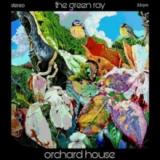
The Green Ray - Orchard Hosue LP

It seems almost inevitable that at some stage Blue Matter and The Green Ray would be working together, and we’re delighted to say that this is now about to happen. When Blue Matter co-boss, Nick Saloman, was living in Walthamstow, he sat in with The Green Ray many times at the late-lamented Plough Inn on Wood Street (now a mini-supermarket). In more recent times Nick’s band, The Bevis Frond has played live with them on several occasions, and without wishing to disrespect any former members, the current Green Ray line-up sounds as good as they’ve ever sounded, if not, dare we say, even better than before. The Green Ray was originally assembled in the mid-90s by Ken Whaley & Richard Treece, two key members of Walthamstow legends, Help Yourself. During the last 30 years or so, they have released 7 albums and one 12” single.

Sadly, the line-up has changed quite frequently due to the passing of several of their number. Ken & Richard passed away some years ago, and more recently bassist Jeff Gibbs departed this world. However, now under the all-seeing eye of guitarist Simon Whaley, the current line-up is continuing to fly the East London freak flag high. Not long ago Simon asked us if Blue Matter would like to issue their latest offering, and we came back with a resounding “yes please”. ‘Orchard House’ is a superb album, full of great playing and great songs. There are shades of Mighty Baby and Help Yourself (at their trippiest), plus a West Coast atmosphere which put us in mind of Quicksilver and The Grateful Dead. It’s taken some time to happen, but at last Blue Matter & The Green Ray have come together to issue an unmissable album. So don’t miss it.

pre-ordina ora10.04.2026

dovrebbe essere pubblicato su 10.04.2026

23,32
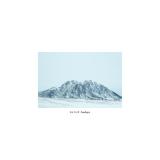
Kit Grill - Andøya LP
  • 01: Cottongrass
  • 02: Tundra
  • 03: Cold Blow
  • 04: Desolation
  • 05: Ascending
  • 06: Voices
  • 07: Metamorphosis
  • 08: First Light
  • 09: Kaleidoscope
  • 10: Adrift
  • 11: White Fields
  • 12: Last Light

London-based musician, composer, and NTS resident Kit Grill presents his extraordinary new album 'Andøya', inspired by a solo residency on the eponymous Norwegian island, a profoundly dramatic territory situated in the Vesterålen archipelago, inside the Arctic circle.

With evocative, sonorous ambient, drone, minimalism, experimentalism, and modern classical music, Grill captures the environmental essence of a remarkable region; an isolated Nordic landscape of small coastline villages, raw peatlands and sublime mountain ranges, surrounded by wide, open views of the Arctic ocean.

Drawn from his experience on solitary excursions around the island - hiking, exploring, and encountering the locals - 'Andøya' is a beautifully stark, stirring exploration of acoustic phenomena, seclusion in nature, and the expressive power of unique landscapes. For Grill, the trip entailed a surreal day-night cycle, and his experience has had far-reaching, existential implications, both for his practice and his perspective:

"On the 8th January 2025 I travelled to the Norwegian island of Andøya, in the Arctic Circle for a three week solo residency. Surrounded by sea, snow, and mountains, I lived in isolation and travelled around the island each day documenting the landscape. At 10am, the background light of the sun beneath the horizon would light the day and in the 4 hour window of light, I would hike into the mountains and explore the wilderness. It was a profound experience that changed the way I thought about sound, solitude, and what it means to be alone in nature."

"Since returning, I created a body of music informed by that time to try and capture the vastness and unpredictability of the Arctic landscape. The album moves through the sensory extremes: ice cracking, storms forming and fading, the rumble of tectonic plates, waves crashing, harsh winds, trudging through snow, and the sharpness of freezing air. The album aims to reflect both the landscape itself and the shifting emotions that came with living in isolation and the Arctic environment. The music and photography serve as a recorded diary of my time there, documenting the experience."

pre-ordina ora10.04.2026

dovrebbe essere pubblicato su 10.04.2026

23,32
Karizma - Can't Call !t (2x12")

Karizma

Can't Call !t (2x12")

2x12inchR2LP034-C
R2 Records
30.03.2026

It’s been 12 years since Karizma’s last album, and in that time the world has changed beyond recognition.
What has remained constant is Karizma’s commitment to constantly pushing the boundaries of his sound and defying categorization, effortlessly moving from down-tempo soul, hip-hop, house and electronic dance, and connecting it all with his emotive production and his ear for moving a dance- floor.
“Can’t Call !t” is a double album that sees Karizma craft 17 tracks to take his music in ever new directions. As always, he pours his heart into every cut, always with a message and purpose of intent.
Like all of us, Karizma’s wondering what comes next, which way things will go. Can you call it?

non in magazzino

Ordina ora e ordineremo l'articolo per te presso il nostro fornitore.

25,00

Last In: 5 months ago
Kreator - Under The Guillotine – Box Set

6 LPS, DVD, 40 PAGE BOOK, CASSETTE
AND FIGURINE USB DRIVE

Endless Pain
(Swirl vinyl with original artwork & inner sleeve)
Pleasure To Kill
(Splatter vinyl with original artwork & inner sleeve)
Terrible Certainty
(Splatter vinyl with original artwork & inner lyric sleeve)
Extreme Aggression
(Half/half vinyl with original artwork & inner lyric sleeve)
Coma Of Souls
(Splatter vinyl with original artwork & inner lyric sleeve)
Renewal
(Swirl vinyl with original artwork & inner lyric sleeve)
Some Pain Will Last DVD
Containing ‘From The Vault’ mini documentary, plus two previously unreleased audio live concerts and an Andy Sneap remix of Live In East Berlin 1990.

Formed in Essen, Germany in 1984, Kreator are arguably the most influential and successful European thrash metal band ever, like many of their European speed metal brethren, Kreator fused Metallica's thrash innovations with Venom's proto-black metal imagery. Often credited with helping pioneer death metal and black metal by containing several elements of what was to become those genres. The band has achieved worldwide sales of over two million units for combined sales of all their albums, making them one of the best-selling German thrash metal bands of all time. The band’s style has changed several times over the years, from a Venom-inspired speed metal sound, later moving in to thrash metal, and including a period of transitioning from thrash to industrial metal and gothic metal throughout the 1990s. In the early 2000s, Kreator returned to their classic thrash sound, which has continued to the present. Their last studio album ‘Gods Of Violence’ charted top twenty in ten countries, including a number one slot in their home country of Germany.

pre-ordina ora27.03.2026

dovrebbe essere pubblicato su 27.03.2026

168,87
PARIAH - Blaze of Obscurity Re-Issue
  • 1: Missionary Of Mercy
  • 2: Puppet Regime
  • 3: Canary
  • 4: Blaze Of Obscurity
  • 5: Retaliate!
  • 6: Hypochondriac
  • 7: Enemy Within
  • 8: The Brotherhood

Pariah’s cult album re-issued! “Blaze of Obscurity” brings you pure Thrash Metal fury! Satan changed their name to Pariah in 1988-1989. There’s Heavy Metal, Power Metal, Thrash Metal, Death Metal, the list seems almost endless. Sub-genres are important in metal and bands are quickly classified and labeled. Pariah (the last re-incarnation of Satan) is one of few bands that are difficult if not impossible to classify. Is it Heavy metal? NWOBHM? Thrash Metal? Pariah did not make it easy to describe their sound. It might be too sophisticated to simply label it Heavy Metal, which in its infancy was a rather simple affair.

They don’t sound like any Metal band out there, perhaps discounting some of the more aggressive and technical ones, and then the signature NWOBHM sound is added. The guitar playing by Russ Tippins and Steve Ramsey is undeniably what defines Pariah as well as Satan in the past. Undeniably, Satan has gone a long way; from humble NWOBHM beginnings, to Experimental/Melodic Mettal (in Blind Fury) and something that could be described as a NWOBHM/Thrash Metal hybrid (“The Kindred”). It’s as if they’ve been experimenting trying to find their identity, and theyfinally found it. Stylistically, “Blaze of Obscurity” could be seen a step back to “Suspended Sentence”, but this time around they got everything right, down to the last note. Those who have heard Satan know what to expect: great guitar playing.

And sure enough, “Blaze of Obscurity” is a demonstration of guitar mastery and is overall a very guitar-driven album, with plenty of mind-boggling riffs and solos are all over the place, but more importantly, it’s a demonstration of some amazing songwriting as well. This is easily Pariah/Satan’s creative peak and one of the most consistent albums I’ve ever heard, featuring eight great and conceptually perfect songs with lyrics that come across as sophisticated and thought-provoking. It is not fair to put the entire spotlight on Tippins and Ramsey though since the drumming and bass work from Sean Taylor and Graham English really shines. The rhythm is fast and tight, keeping it focused, aggressive and intense till the end. Vocalist Michael Jackson (yes, that’s his name) has to be commended too as this is easily his careers best performance.

The verdict: “Blaze of Obscurity”: the level of musical genius expressed here, along with near flawless songwriting, is more than enough to skyrocket it to heights reserved only for classics. Probably not your choice for some light listening those quiet Sunday evenings, but those who take a more serious, intellectual approach when selecting their music will find very much to appreciate here.
Tracklisting

pre-ordina ora27.03.2026

dovrebbe essere pubblicato su 27.03.2026

28,99
DANIEL ROMANO - Preservers Of The Pearl LP

"The Outfit release career defining new album, Preservers of the Pearl, asserting themselves as messengers of the new wave of underground rock and roll, pushing the movement forward alongside fellow trailblazers Mystery Lights, Sheer Mag, Shadow Show, Uni Boys + more.

Everything has been leading here. Daniel Romano shifts from his position as sole writer, opening the floor to Outfit stalwarts Ian Romano and Carson McHone, and welcoming into the fold longtime friend and legendary Canadian rock-n-roller, Tommy Major. The band is functioning as a true collective — multiple voices and perspectives — all serving one creative pulse. The result is both a new beginning and a homecoming, a complete and fearless statement.

Tracked to tape at their own Camera Varda studio, the album captures the band live in the room — breathing, musing, and believing. It’s the sound of human hands and hearts at work, in a shared moment of co-creation, preserved in real time in stunning hi-fi.

Here is music as communion — rock n roll as experience. Preservers of the Pearl rejects the flattening forces in modern times — what the band calls “the mono-agriculture of the mind.” In a “target culture”, condemned to homogeny and banality, The Outfit refuse polish and uniformity, embracing imperfection as truth, and promoting curiosity through creativity. At the center of it all is a deep spiritual current — what The Outfit calls Rock & Roll Magick: the belief that music is a sacred act, a force that can reconnect the individual to what is larger.

The Outfit are making music that is purposeful and profoundly urgent. Preservers of the Pearl is an invocation - it’s fearless in a time of great compromise, and resolute in an age of peripheral bullshit. Here is a band serving something greater than themselves."

pre-ordina ora13.03.2026

dovrebbe essere pubblicato su 13.03.2026

22,27
DANIEL ROMANO - Preservers Of The Pearl LP

"The Outfit release career defining new album, Preservers of the Pearl, asserting themselves as messengers of the new wave of underground rock and roll, pushing the movement forward alongside fellow trailblazers Mystery Lights, Sheer Mag, Shadow Show, Uni Boys + more.

Everything has been leading here. Daniel Romano shifts from his position as sole writer, opening the floor to Outfit stalwarts Ian Romano and Carson McHone, and welcoming into the fold longtime friend and legendary Canadian rock-n-roller, Tommy Major. The band is functioning as a true collective — multiple voices and perspectives — all serving one creative pulse. The result is both a new beginning and a homecoming, a complete and fearless statement.

Tracked to tape at their own Camera Varda studio, the album captures the band live in the room — breathing, musing, and believing. It’s the sound of human hands and hearts at work, in a shared moment of co-creation, preserved in real time in stunning hi-fi.

Here is music as communion — rock n roll as experience. Preservers of the Pearl rejects the flattening forces in modern times — what the band calls “the mono-agriculture of the mind.” In a “target culture”, condemned to homogeny and banality, The Outfit refuse polish and uniformity, embracing imperfection as truth, and promoting curiosity through creativity. At the center of it all is a deep spiritual current — what The Outfit calls Rock & Roll Magick: the belief that music is a sacred act, a force that can reconnect the individual to what is larger.

The Outfit are making music that is purposeful and profoundly urgent. Preservers of the Pearl is an invocation - it’s fearless in a time of great compromise, and resolute in an age of peripheral bullshit. Here is a band serving something greater than themselves."

pre-ordina ora13.03.2026

dovrebbe essere pubblicato su 13.03.2026

22,27
Kinky Foxx - Is It Still Good to You/ You Got Me Working (7")

This one already has created a nice little stir with the soul crowd, and rightly so.

The A side "Is It Still Good For You" is a wonderful Modern soul chugger that oozes that late night club feel. Simple in its melody and production but bounces along so soulfully. Great vocals but the late Johnny Kemp with the group on some killer backing harmonies.

Kinky Foxx could be described as an ever changing funk machine with nuts and bolts that remained strong over time. This band planted its roots in the Bahamas where the name "Kinky" was given to Joseph Foxx and teaming up with his Brother Donny Foxx formed the musical group named, "DER KINKY FOXX"!!! The two Foxx Brothers added members Kevin Bassett-Guitar, Johnny Kemp-Vocals, and Burnis Stubbs-percussion performing clubs and concerts in the Bahamas. Moving to New York City Kinky Foxx changed members to compete with the major funk venue during the early 80s. Acquiring Dan Atherton Sr. AKA "The Slammin 'Drummer", Larry Robinson-Keyboardist, Timmy Allen-Bass, Kevin Robinson-Guitar these musicians combined forces with Johnny Kemp, Kevin Bassett, and Burnis Stubbs to form the New York City based "Original" Kinky Foxx from '79 to '81, burning up the famous Cellar Club in NYC, the mecca for Black Funk entertainment. With a front line of top musical talent some members moved on to follow solo recording and production careers and contracts. To fill lead gutiarist and Bass guitarist vacancies Jerry Powell was added on guitar,and Leslie Booker was added on bass. In 1982 Kinky Foxx added Vincent Lilly on lead vocals and Curtis Styles on Keyboards.The Foxx released the hit song "So Different" on Sound of New York records in '83 and embarked on a Canadian experiment leaving the US to play briefly in Montreal, Quebec at Club Checkers. The rest is history as the band became so popular in Quebec and Ontario they could have been called Canadian residents, usually working 6 nights a week and 11 months out of the year from '83-'91 . Dan Atherton moved on in '83 to pursue a career as The "Slammin Drummer" for hire, and was sought after by a barrage of major artists,touring with Bobby Brown,New Edition,Levert,Teddy Riley and Guy,Cameo,and Atlantic Starr. Tyrone Govan aka "King" moved in as the Foxx Drummer in '83 and remained with the group until the band went their separate ways in the mid 90's. The Foxx's last performance in the States was in North Carolina on tour and backing Prince's sister Tyka Nelson in the 90's. Currently the band has sparked interest once again writing and recording new material and is forming a reunion show which will eventually lead to additional performances with other recording acts and headline shows.

non in magazzino

Ordina ora e ordineremo l'articolo per te presso il nostro fornitore.

14,71

Last In: 57 days ago
Various - Wizzz! French Psychorama Volume 5 (67-75)

The journey through French-speaking pop archives continues with this fifth volume, packed with fuzz, gimmicks, and dissent. Far from the charts, the selected tracks display a great creative freedom, often backed by corrosive humor. Welcome to the surprising, kaleidoscopic, and colorful world of the late sixties and early seventies, Wizzz!
Born in Montauban, Robert Pico stumbled into music by chance when he met René Vaneste, then artistic director at Pathé-Marconi. René brought him to Paris to record his first 45 RPM EP in 1964. A year later, Pierre Perret introduced him to Vogue, where he recorded his second album with Claude Nougaro’s orchestra. Sylvie Vartan then introduced him to RCA, where he recorded four singles, including the astonishing "Chien Fidèle," a track backed by a hair-rising fuzz guitar. Alongside his solo career, he also composed for other artists like Alain Delon (the song was recorded but remains unreleased), Magali Noël, Bourvil, and Georges Guétary. In the Paris of the sixties, he mingled with Mireille Darc, Elsa Martinelli, Marie Laforêt, France Gall, Françoise Hardy, Petula Clark, Régine, Dani, Serge Gainsbourg, Joe Dassin, Franck Fernandel, Charles Level, and Roland Vincent. Despite his efforts and winning a Grand Prix Sacem for his final record, Robert Pico didn’t achieve the expected success in show business and decided to leave Paris and return to the Southwest, where he devoted himself to writing. He is the author of 23 books (including Delon et Compagnie, Jean-Marc Savary Editions 2025, a memoir about his youth and his many encounters). Today, he is relieved to never have become a celebrity and devotes himself to his work with passion.
In 1969, the Franco-Italian movie Erotissimo was released, directed by Gérard Pirès (who later directed Taxi in 1998, written and produced by Luc Besson). This pop comedy features Annie Girardot, Jean Yanne, Francis Blanche, Serge Gainsbourg, Nicole Croisille, Jacques Martin, and Patrick Topaloff. The soundtrack was written by Michel Polnareff and William Sheller, with lyrics by Jean-Lou Dabadie. "La Femme Faux-cils," performed by Annie Girardot. It recounts the feelings of a rich CEO's wife who seeks to develop her sex appeal under the influence of advertisement and magazines. Groovy, sparkling and light, this track, with ITS lush arrangements humorously critiques consumer society and feminine beauty standards.
“Je suis l’Etat” (1967) is the flagship track of the first EP by singer-songwriter Spauv Georges, aka Georges Larriaga, better known as Jim Larriaga (1941-2022). Born into a family of bakers, the young man was initially planning to become a hairdresser when he discovered English-speaking music through Elvis Presley and the Beatles. After this revelation, he decided he would become a songwriter and gave himself five years to succeed. He recorded his first two EP’s independently for RCA under the pseudonym Spauv Georges; meaning “that poor George”, a nickname given to him by the mother of her friend Jean-Pierre Prévotat (future drummer of the Players, Triangle, or Johnny Hallyday). Portraying a depressed and eccentric young man, Spauv Georges created corrosive and amusing songs that didn’t reach a wide audience, despite a TV appearance with Jean-Christophe Averty.
Supported by his loyal friend and fellow songwriter Jean-Max Rivière, Georges Larriaga met the future singer Carlos in the early '70s, then Sylvie Vartan’s assistant. He wrote songs for Carlos, including the popular "La vie est belle," "Y’a des indiens partout," and "La cantine", which went onto become a huge hit in 1972. He also composed for Claude François (“Anne-Marie”, 1971), Charlotte Julian (“Fleur de province”, 1972), helped launch child singer Roméo (who sold 4 million records), and later wrote the hit "Pas besoin d’éducation sexuelle" (1975) for the young Julie Bataille. In 1971, Jim recorded an album for Disc'Az: “L’univers étrange et fou de Jim Larriaga”, which featured pop gems like “La maison de mon père”.
The story of the song "Zoé" began when Pierre Dorsay, artistic director at Vogue Records, asked Swiss singer and musician Pierre Alain to write a song for a new female singer. The inspiration came when he realized that Zoé (the artist's name) was also the name of France's first atomic battery, created in 1948, which consisted of uranium oxide immersed in heavy water! The lyrics reflect a bubbling energy that must be handled with caution, while the instrumentation echoes this atomic theme, notably with the use of a theremin.
Zoé’s career lasted only as long as a single 45 RPM, but it seems Christine Fontane was the vocalist behind this pseudonym, who is known for several EPs, a good "popcorn" album in 1964, and a handful of children’s singles in the '70s. Regardless, the photograph on the cover is of a different girl entirely.
Later, Pierre Alain continued his career, writing songs for himself, Marie Laforêt, Danièle Licari, Alice Dona, Arlette Zola (3rd place in Eurovision 1982), and achieving multiple gold and platinum records in Canada. Also an inventor with several patents, president of the Romande Academy, and head of the French Alliance in Geneva, he now composes atonal music, books, and poetry. Moreover, he is also the host of "Les Mardis de Pierre Alain" at "Le P'tit Music'Hohl" in Geneva.
Filled with oriental choruses and fuzz guitar, "Fou" is from Jacques Da Sylva's only EP released by Vogue in 1967. Despite the quality of this recording, all traces of this singer disappear after this first effort.
Valentin is a baroque pop singer born in Belgium. He is the songwriter and composer of most of the tracks on his three singles released in the late 60s in Canada. A legend says that he reincarnated himself as Jacky Valentin during the 1970s for a rock'n'roll revival career in Belgium, but his older brother sadly debunked this story. Valentin's first two singles were arranged by Claude Rogen, a Parisian session pianist who had come to Canada to promote the song “Mister A Gogo”, a cover of David Bowie’s “Laughing Gnome”, adapted by singer Delphine, his wife at the time. Far from his usual network, Claude Rogen arranged music for Polydor, including the arrangements for “Je suis un vagabond” in 1969, a jerk tune with string arrangements and a furious optimism.
Jacques Malia wrote, composed, and recorded his only 45 EP for Festival in 1966. “Histoire de gitan” is an incredible beat track with bohemian scat that tells the story of a gypsy musician who came to Paris to make it in the Music-Hall, to no avail. The hero of the song and its author probably shared a similar fate, as Jacques Malia faded into anonymity after this remarkable attempt.
Bernard Jamet recorded two EPs for Barclay in the late sixties and co-wrote several songs with Christine Pilzer, Pascal Danel, and prolific songwriters Michel Delancray and Mya Simile. The track “Raison Légale” (1968), his masterpiece, immerses the listener in a courtroom right when a murderer is being judged, with jerk rhythm and free arrangements. A unique, paranoid, judicial, and psychedelic oddity.
Jean-Pierre Lebrot-Millers started his career in show business in 1967 as a singer and songwriter for the Philips label. After three singles, he wrote several songs of a new kind with his friend Pierre Halioche, in the midst of the sexual liberation movement and the democratization of drugs. With provocative lyrics, “Les filles du hasard” and “Barbara au Chapeau Rose” were released on a Philips singles in 1968. The character of Barbara was inspired by a queen of Parisian nightlife during the psychedelic years: model Charlotte Martin, who dated Eric Clapton from 1965 to 1968, then Jimmy Page from 1970 to 1983. Jean-Claude Petit’s arrangements, with a table-filled intro, soul brass, and Hendrixian guitar, emphasize the flamboyance of a hedonistic and sexy character, whose dog is named Junkie because “Junkie est un nom exquis”! The track was recorded live in three takes with a full orchestra.
Upon its release, the record was censored by Europe 1 and RTL due to its references to drug use. Jean-Pierre Lebrot was then banned from the airwaves and later dismissed by his record label. He changed his artist name to Jean-Pierre Millers, while his companion Pierre Halioche became D. Dolby for a new dreamy composition, “Chilla”, which Jean-Pierre produced himself with arrangements by Jean Musy. Once again, the song was immediately censored everywhere. After this setback, he decided to stop singing and started taking on odd jobs to support his Swedish wife and their son until the day he met Jean-Pierre Martin, then production manager at Decca, who had worked with Manu Dibango. Martin offered Jean-Pierre Lebrot-Millers, then employed at Rank Xerox, the position of artistic director at Decca. He accepted and became, a year later, promotion director (radio, press, TV). He worked on Julio Iglesias’s first album for Decca, which became a massive hit and allowed him to meet Claude Carrère. The latter asked him to write new songs and find their performers, much like a “talent scout.” It’s through him that Jean-Pierre discovered Julie Pietri and Corinne Hermès. He composed “Ma Pompadour” for Ringo, Sheila’s husband, and took the microphone again for the syncope hit “Rendez-Vous” in 1982.
That same year, Jean-Pierre Lebrot-Millers tried to release a track for which he had heavily gone into debt: “Si la vie est un cadeau”. Having recorded it in London, he presented it to numerous professionals, all of whom refused to get involved. The same thing happened with Antenne 2 and the Sacem when he proposed the song as France’s entry for Eurovision. He then met Haïm Saban, who was producing cartoon soundtracks and had just launched the Goldorak theme song. Saban, having listened to the song, declared it had the potential to become a hit. He sent Jean-Pierre and Corinne Hermès to meet the CEO of the Luxembourg radio and television network. The latter received them, asked to hear a verse and chorus a cappella in his office, and immediately hired them to represent Luxembourg at Eurovision 1983. They reworked the arrangements and recorded a new version with Haïm Saban as co-producer. The song ended up winning Eurovision 1983, a great comeback for our hero. He continued producing and hung out with the band Nacash in Belgium when a couple came to introduce their daughter for an impromptu audition in a hotel room. The girl sang “Les démons de minuit” while dancing to a radio cassette. Impressed, he had her take singing lessons for a year and composed a song for her (for which he had the melody and title, but no lyrics). This required him to go on the hunt for a lyricist, who ended up being Guy Carlier. They recorded the song, which was initially a ballad, at Bernard Estardy’s CBE studio, and gave the singer a new name: Melody. They showed the song around their industry network without success. Later, Estardy called Jean-Pierre to suggest changing the rhythm and making it pop-rock. Orlando, Dalida’s brother, liked the result and decided to co-produce the track. “Y’a pas que les grands qui rêvent » became a classic hit. The song has since been covered by Juliette Armanet (as a ballad, like the original) and Valentina.

Born into an aristocratic Breton family, Hervé Mettais-Cartier worked as a DJ at Queen Kiss, a nightclub in Poitiers, where he formed the band Les Concentrés with Michel (an actor) and Christian (a radio technician). Together, they created a repertoire of whimsical songs (“Ma bique est morte”, “J’suis un salaud”, “Fils de dégénéré”...) that they performed on stage dressed in white (in homage to “concentrated milk”). They performed at Bliboquet and Olympia in 1968 for the 10th edition of the “Relais de la chanson Française” organized by L’Humanité-Dimanche and Nous les Garçons et les Filles, sponsored by Pepsi Cola. Winners in the author-composer category, alongside Danish singer Dorte, their visibility allowed them to record a 45, and appear on television in Jean-Christophe Averty’s show. The A-side of the disc features Bruno le ravageur, a casatchok dedicated to Bruno Caquatrix, the director of Olympia, nicknamed in the song “Coq Atroce” or “croque-actrices”. The B-side is dedicated to “Fils de dégénéré”, a quirky tribute to Hervé's aristocratic roots, mixing absurdity with sophisticated vocal harmonies.
After Les Concentrés, Hervé Mettais-Cartier formed the duo La Paire et sa Bêtise with his friend Olivier Robert. They performed in Parisian cabarets and toured with Pierre Vassiliu. In the late 1970s, Hervé began a solo career. He recorded two albums for the Motors label in 1978 and 1979, which did not achieve their anticipated success due to lack of promotion. In 1980, he met Bernadette, with whom he started a family and created a “Chansons à voir” (songs to see) show that he performed until his death at the end of 2024.

Publicité comes from the final EP by the Missiles (Ducretet Thomson, 1966), a disc that also includes “La (nouvelle) guerre de cent ans”, featured on Volume 4 of our Wizzz! series. Please refer to the booklet for the story of the band.

“He’s 1.82 meters tall, 28 years old, weighs 135 kg, is black and Belgian”: this is the description of singer Hegesippe on the back of his sole single (Decca, 1967). He appears on the album cover wearing a Greek toga, like a hippie gag – we are at the end of the year 1967. In “Le crédo d’Hegesippe”, this former bodyguard of Antoine and the Charlots plays the delightful card of the thick brute converted to Flower-Power and non-violence, with arrangements by Jean-Daniel Mercier, aka Paul Mille.
“Ethéro-disco” was released on a promotional record for clients of the Maréchal company (Liège, Belgium) for the New Year 1979. Over a funky rhythm, celebrity impersonations (Brigitte Bardot, Jacques Dutronc, Fernandel…) deliver an enigmatic text about pharmaceutical products like ether, bismuth, and aspartate. The track was composed by Dan Sarravah (responsible for Joanna's “Hold-up inusité” featured on Wizzz! Volume 3) and Tony Talado, who was also a singer (one 45 in 1967), songwriter (with over a dozen credits between 1964 and 1985 in various styles from surf music to disco), author (Devenez Végétarien, Dricot Editions, 1985), ad designer, and psychologist.

Décollez-les is on the A-side of Mamlouk's only single, a pseudonym for Marsel Hurten, who is known for his work on several EPs in the late sixties, as well as composing music for Hervé Vilard’s “Capri, c’est fini”, Claude Channes' “La Haine”, Annie Philippe’s “On m’a toujours dit”, and Nancy Holloway’s “Panne de Cœur”.
This strange song, with Afrobeat horns and absurd dialogues between a chef and his kitchen staff, is the result of a collaboration between Marsel Hurten and one of his neighbors, a photographer from Pavillon-sous-Bois (93), where the musician settled after returning from the Algerian War. A music video was shot to promote the record.
Marsel Hurten was born in Tourcoing (59) into a musical family. At a young age, he joined the brass band founded by his grandfather, playing the piston before studying trumpet at the conservatory, as well as teaching himself how to play the guitar. As an orchestra musician, he toured in France, Belgium, Germany, and England. He released a series of solo 45’s between 1965 and 1968 for the DMF and Az labels before stopping recording to focus on working for other artists (Gilles Olivier, Noëlle Cordier…).
“L’amour nu” (Vogue, 1971) is the work of the short-lived Belgian band Mozaïque. The track, written by singer Jacques Albin, closely resembles another of his compositions, “Carré Blanc”, which he recorded in 1969 for Disc’AZ.
Represented by the Lumi Son micro-label based in Marignane (Côte d'Azur), Jean-Marc Garrigues released two 45 RPMs in the late sixties, defending the French jerk sound. The song “Je dis Non” is a short, joyful ode to youth, pop music, and rebellion.
Songwriter and performer Jacques Penuel released three singles. The first one, “Astronef 328” (Fontana, 1969), features a dizzying series of chords punctuated by sound effects, a sci-fi story, and arrangements by Jean-Claude Vannier.

We would like to sincerely thank Pierre Alain, Moon Blaha, Marsel Hurten, Bastien Larriaga, Jean-Pierre Lebrot-Millers, Bernadette Mettais-Cartier, Robert Pico, Olivier Robert, Claude Rogen, Micky Segura.

non in magazzino

Ordina ora e ordineremo l'articolo per te presso il nostro fornitore.

23,11

Last In: 77 days ago
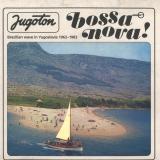
Various - Jugoton Bossa Nova  2x12"

Various

Jugoton Bossa Nova 2x12"

2x12inchEVERLAND-YU009LP
Everland
20.01.2026
 
20

Rich musical history of Yugoslavia reveals a long-lasting love for the music of Latin America.
Entwined in Afro-Cuban rhythms, ballrooms were shakin', swayin' and swingin', gathering musicians who were heavily into jazz bands and orchestras, most notably in Ljubljana, Zagreb, and Belgrade. Jazz could be heard on the streets of Split way back in 1919 when dancing became a symbol of freedom. Radio was the most loved household item, newest sheet music was in demand and collecting records was hip like today. In the aftermath of Second World War, jazz went underground but little by little, things changed and Ella, Satchmo, Dizzy and Miles came to visit, among others. Music festivals shaped the music for entertainment and variety of popular styles showed influences from all over the world. In the early sixties, one particular rhythm crashed on the coast of the Adriatic Sea: the rhythm of bossa nova!

In the whirlwind of various musical styles, Latin American music still played important part of the scene in the early sixties Yugoslavia. Beguine, tango, rhumba, samba, calypso, mambo and cha-cha-cha all found their place on the festivals inspired by famous Sanremo, festival of Italian popular song that largely shaped the musical taste of Europe. It was the era of instrumental rock, R & B and rock'n'roll - sounds of "imperialist America" now played freely on imported and hand-made electric guitars. While dancing halls had been turning into concert venues, bossa nova has come! Eydie Gorme with Blame It on the Bossa Nova and Paul Anka with Eso Besso (That Kiss!) tried to make us learn some new dance moves but it was Joao Gilberto's gentle singing and his new way of playing samba songs, along with Tom Jobim's modern dissonant harmonies and poetry of Vinicius de Moraes that created the magic. When American alto saxophonist and flautist Bud Shank visited Zagreb and Ljubljana in 1963 (with Boško Petrović in his quintet) "it was the first time we heard bossa nova!" remembers Stjepan Braco Fučkar. Jugoton, the biggest record company in Yugoslavia, released 4-track EP Bossa Nova by Bogdan Dimitrijević and his ensemble that same year! While not being fully accepted or understood completely, the archives of Jugoton reveal to us various interpretations of this new trend from their vast catalogue.

non in magazzino

Ordina ora e ordineremo l'articolo per te presso il nostro fornitore.

38,61

Last In: 87 days ago
A.O.A / Oi Polloi - Unlimited Genocide LP
  • 1: A.o.a - Murder In The Woods
  • 2: A.o.a - For Those Who Suffered
  • 3: A.o.a - All Our Anger
  • 4: A.o.a - Death On A Plate
  • 5: A.o.a - Holy Hypocrisy
  • 6: A.o.a - O.s.a
  • 7: A.o.a - Aftermath
  • 8: Oi Polloi - Go Green
  • 9: Oi Polloi - You Cough/They Profit
  • 10: Oi Polloi - Punx Or Mice
  • 11: Oi Polloi - Nuclear Waste
  • 12: Oi Polloi - The Only Release
  • 13: Oi Polloi - Apartheid Stinx

Nearly 40 years ago A.O.A. and OI POLLOI joined forces to condemn what they saw as an Unlimited Genocide. Fast forward to 2025 and nothing has changed for the better, with everybody witnessing a genocide unfolding in front of our eyes daily, while humanity hits rocks bottom. So Sealed Record decided it was the right time to bring back this classic slice of Scottish punks and skins protest music.
Originally released on the ever impressive Children of the Revolution Records Unlimited Genocide features the hardest side of the OI POLLOI vast catalogue. Full of rage and anger, tensely tuneful with earnest anarcho conviction. With A.O.A. On the flip side delivering seven tracks of full in your face hardcore punk, carrying the torch of the DISCHARGE influenced thrash of the era.
The record has a strong 80’s production and touches on green and environmental issues, apartheid, nuclear power, religion, vegetarianism and much more. It’s raw, direct and a great snapshot of an era that is often mimicked but never bettered.
This reissue has been remastered and includes a printed inner sleeve as well as a slightly altered artwork.

pre-ordina ora16.01.2026

dovrebbe essere pubblicato su 16.01.2026

23,49
LEAVING LAUREL - Our Lives Entwined LP
  • A1: And The Storm Started
  • A2: Her Certain Uncertainty
  • A3: That Feeling From Before
  • A4: I Off The Path
  • A5: Ii Into The Night
  • A6: We Carried One Another
  • A7: With All The Love Left
  • A8: Our Lives Entwined

This new chapter marks Gordon’s first solo release as Leaving Laurel - a deeply personal and instinctive body of work born from a period of rediscovery. The record began as an open exploration of whatever music naturally came through, a process that became both freeing and revealing to Gordon. The album is a wordless love story told through sound. An emotional arc that mirrors the stages of falling for someone: the spark, the curiosity, the vulnerability, and the quiet realisation that your heart has opened without you even noticing. The album carries an uplifting, hopeful energy, reflecting both personal growth and newfound love - ‘our lives entwined' is a tribute to Gordon’s journey of finding “the one.” Following the loss that inspired ‘when the quiet comes’, Gordon’s eulogy to his late friend and musical partner Pierce, this album finds light emerging from grief. Where the previous record lingered in somber reflection, this album begins in that same emotional landscape but quickly blooms into something more vibrant and full of life. The opening track transitions from the cold, atmospheric tones of mourning into a more radiant energy - a sonic awakening symbolising the shift that came after meeting someone who changed everything. Sonically, the record expands Leaving Laurel's signature sound while embracing new textures. Gordon moved away from the lo-fi experimentation of earlier works, leaning instead into a more expressive palette driven by synths and fresh instrumentation, while still preserving the nostalgic warmth that defines Leaving Laurel. The result is a collection that feels both renewed and rooted - a reflection of growth, optimism, and the timeless beauty of connection.

non in magazzino

Ordina ora e ordineremo l'articolo per te presso il nostro fornitore.

26,47

Last In: 87 days ago
Trouble - Trouble (35th Anniversary) (2x12")
  • 1: At The End Of My Daze
  • 2: The Wolf
  • 3: Psychotic Reaction
  • 4: A Sinner’s Fame
  • 5: The Misery Shows (Act Ii)
  • 6: R.i.p
  • 7: Black Shapes Of Doom
  • 8: Heaven On My Mind
  • 9: E.n.d
  • 10: All Is Forgiven
  • 1: R.i.p
  • 2: Black Shapes Of Doom
  • 3: Psalm 9
  • 4: The Wolf
  • 5: At The End Of My Daze
  • 6: Assassin
  • 7: The Misery Shows (Act Ii)
  • 8: Psychotic Reaction
  • 9: Bastards Will Pay
  • 10: The Tempter
  • 11: All Is Forgiven

Trouble’s absolute classic: the legendary album from 1990 and the pinnacle of Trouble’s impressive career. Heavy Metal was never better than this! Includes a live bonus CD recorded in Dallas, Taxas (USA)! Trouble’s debut album did great things for Metal and remains one of the darkest, thrashiest Doom albums to date. A lot of things can change in six years, especially when you’re talking Metal and the dates are 1984 and 1990. The decade may have changed them, but not in a way that suggests decay or a decline in the quality of their resolve or their skill as musicians and performers. On the contrary, Trouble’s 1990 self-titled release is arguably their most mature, boasting a fleshed out sound with unparalleled songwriting, a great production, and the time-crafted vocals of Eric Wagner which had improved major in the years since their previous efforts. All of this culminates in what is my mind the most “complete” thing Trouble ever created. From the mid-paced chug of a killer opener in “At the End of My Daze” to the last notes of “All Is Forgiven”, I can’t see filler or anything resembling a weak link. The riffs here are some of the best ever written, by Trouble or anyone else; every song has a manically awesome main riff that demands a display of headbanging. Riffs are undoubtedly the point of focus here; they make the songs, and they’re a timeless variety of great. Also, the interplay between guitarists Bruce Franklin and Rick Wartell is some of the best lead work you will ever hear in Metal. Trouble basically reinvented themselves with this release, and while I think it was a fantastic rebirth, those who aren’t so keen on the laid back stoner vibe they chose to adopt may not see it as a rejuvenation, but a step back (they did go from doom and gloom to collectively embracing their inner acid dropping free love hippie, after all). But the Metal remained fully intact! And as I’ve said, I think this is Trouble at their best. This is originality and innovation at its best, it is supreme quality. A leader of bands paves the way and then steps aside to create something that will serve as an example of how to improve upon an established formula: that is, by doing it really damn well.

pre-ordina ora09.01.2026

dovrebbe essere pubblicato su 09.01.2026

30,21
American Nightmare - Year One (25th Anniversary)
  • 1: Protest Song #00
  • 2: Sore Throat Syndrome
  • 3: Fuck What Fireworks Stand For
  • 4: The Ice Age Is Coming
  • 5: Please Die!
  • 6: The Day The Music Died
  • 7: Farewell
  • 8: There's A Black Hole In The Shadow Of The Pru
  • 9: I’ve Shared Your Lips So Now They Sicken Me
  • 10: Hearts
  • 11: Dead And Gone
  • 12: It's The Limit

American Nightmare's "Year One" collection on 180 gram vinyl for its 25th anniversary. Available again for the first time in decades. Originally released in 2001, the Boston hardcore band’s 25th anniversary release of "Year One" pays tribute to their formative years. This collection unites their first two 7”s, originally released by Bridge 9 Records founder and then-roommate Chris Wrenn, on a 180-gram LP, with all tracks recorded by Kurt Ballou at God City. Originally designed by Jake Bannon (Converge), this edition has been reimagined by Del Jae (Futurismo Records) and singer Wesley Eisold, and comes packaged in a gatefold with an insert of handwritten lyrics and collaged images. "Year One" doesn’t just celebrate a milestone; it reaffirms American Nightmare’s enduring legacy. Their music raised the bar for emotional depth in hardcore, adding a distinctly poetic and existential lyrical approach that set them apart and changed the rules of the scene, paving the way for countless bands that followed

pre-ordina ora26.12.2025

dovrebbe essere pubblicato su 26.12.2025

24,33
MONONKUL - Bokura Ikidomari De Warai Aitai LP
  • A1: Blue Sky, White Sun
  • A2: Interstellar
  • A3: Hotpot
  • A4: Niji Shibai Feat. Daichi Yamamoto
  • A5: 99011281
  • B1: Who Am I Feat. Aaamyyy
  • B2: Ü?
  • B3: Gingua
  • B4: Miracle
  • B5: Premiere

Future pop unit "Mononkuru" has released their first album in nearly seven years since their previous album, "RELOADING CITY," on vinyl!
"Bokura wa Warai at a Dead End," a brand-new pop album featuring guest appearances by AAAMYYY and Daichi Yamamoto, is here!

Seven years after their last album, Mononkuru has finally released their long-awaited new album. Known for their jazz-infused pop, the band has changed their
name to "Mononkuru" in katakana and updated their sound. In addition to the innovative modern pop disco they showcased on recent releases "GINGUA"
and "HOTPOT," this album is packed with highlights, including "Futari Shibai feat. Daichi Yamamoto," a bold new work featuring a featured artist for the first time
for Mononkuru, and "Who am I feat. AAAMYYY," which debuts on an album.

pre-ordina ora19.12.2025

dovrebbe essere pubblicato su 19.12.2025

47,86
FACS - WISH DEFENSE LP

FACS

WISH DEFENSE LP

12inchTIMLPC2194
Trouble In Mind Records
12.12.2025

The duality of "man" is a subject that has been explored in art for centuries, from writings of the Bible to Descartes, all the way up to filmmakers like Lynch, Cronenberg, & Carpenter. Who is your "true self" & what do they want? With their sixth studio album "Wish Defense" (again for longtime home Trouble In Mind Records), Chicago trio FACS take a good, long look in the mirror to face themselves. The return of original member Jonathan Van Herik - who stepped away from the group just before their debut album "Negative Houses" was released in 2018 - replacing longtime bassist Alianna Kalaba brings renewed vigor & a marked angularity from the band's more recent output. The songs still hit hard, but the approach is sideways - the roles have changed since Van Herik's original tenure & his previous time with Case & powerhouse drummer Noah Leger in Disappears; now on bass, Van Herik was originally the group's guitar player and features on the debut, while current guitarist Brian Case played bass. This role reversal has helped the band's dynamic, offering up a different musical perspective than before, now revisiting the trio's long-going collaboration with some distance and time. Case notes that the lyrics on "Wish Defense" revolve around doppelgängers or "doubles", tackling the idea of facing yourself and observing your ideas and motivations. Look no further than the album's title track; "Enter the mirror / Double walker / An intimate / Wish defense / Is it real? / You beside me / The detail / Terrifying / Abject self / Your grief / A public / Performance". Case lays out the entire album's theme in one stanza; Are your actions & emotions your true self? Or are they a performative aspect of that "other" person you put forward? Case says that ultimately the sentiment is "_don't let the bastards get you down, there's something beyond this moment, like hope - but not in the naive belief that ultimately people are good". "Wish Defense"s artwork is also a subtle reference to "Negative Houses"' art, returning to that album's black & white starkness & minimalism. The album's checkerboards everywhere are offset reflections of themselves, mirrored with the album's lyrics printed front & center on the cover. Everything is out in the open. A final note; "Wish Defense" is the last album engineered by Steve Albini. Two days were recorded at Electrical Audio in early May of 2024 before Steve's untimely passing, with renowned engineer & friend Sanford Parker stepping in to finish the session 24 hours later, tracking the last bits of vocals and overdubs. Longtime collaborator John Congleton mixed the album as Albini would have; in Electrical Audio's A room, off the tape, using Albini's notes about the session.

pre-ordina ora12.12.2025

dovrebbe essere pubblicato su 12.12.2025

20,13
Sex Pistols - Retrospective -  A Visual History.... (Book)

To mark the 50th Anniversary of Punk and The Sex Pistols we have relaunched one of the original books on The Sex Pistols. The book details the groups worldwide releases with over 200 colour and black and white illustrations. A detailed timeline of the bands history and list of gigs and appearances up to their initial demise in 1978. The story has not changed since this books first release. The Sex Pistols are the last great Rock `n’ Roll band that signified change. Never before or since has music, art, youth and social statement peaked at the same time. The Sex Pistols were very much a vinyl orientated phenomenon that consisted great artwork. So sit back and enjoy their story through their releases around the world. 96 pages Over 200 pictures of rare and deleted releases throughout the world Plus history of the band and list of gigs and appearances.

pre-ordina ora12.12.2025

dovrebbe essere pubblicato su 12.12.2025

10,71
Original Soundtrack - Outlander: Blood Of My Blood LP
  • A1: Blood Of My Blood - For My Love That's Lost (Feat. Julie Fowlis)
  • A2: The Ellen And Brian Theme (Feat. Julie Fowlis)
  • A3: The Julia And Henry Theme
  • A4: Sun Rising On The Flagstone (Feat. Julie Fowlis)
  • A5: We Two Might Be One
  • A6: Leave A Mark
  • B1: Jacobite Meeting Adjourned
  • B2: The War Chieftain
  • B3: Raindrop Becoming An Ocean
  • B4: The Stone Of Destiny
  • B5: Needfire
  • B6: My Heart Has Changed
  • B7: A Destiny Of Our Own Making

Score composed by Emmy Award-winning composer Bear McCreary

The soundtrack to the first season of Outlander: Blood of my Blood, serving as a prequel to the long-running fantasy TV series Outlander

Limited edition on translucent red coloured vinyl

Emmy Award-winning composer Bear McCreary returns to the Outlander universe for another score, this time for the spin-off Blood of my Blood.

This next chapter in the time traveller’s saga premiered in August 2025 and serves as a prequel to the critically acclaimed Outlander series.

Outlander: Blood of my Blood is available as a limited edition on translucent red coloured vinyl and includes an insert.

pre-ordina ora12.12.2025

dovrebbe essere pubblicato su 12.12.2025

34,87
Articoli per pagina:
N/ABPM
Vinyl