Damian Lazarus reveals the eighth chapter of Crosstown Rebels acclaimed annual ‘SPIRITS’ VA compilation series.
The latest instalment sees the label founder once again curating a carefully balanced lineup of emerging voices and established names, with the eight-track collection set for release on 30th January 2026.
Since its inception in 2017, Damian Lazarus’ SPIRITS series has become a trusted barometer for the year ahead, spotlighting forward-thinking artists and cutting-edge club music from across the global electronic landscape. With ‘SPIRITS VIII’, Crosstown Rebels continues this tradition, delivering a refi ned yet adventurous selection that moves seamlessly between hypnotic house, melodic depth, and late-night energy - building on the momentum of previous volumes and capturing the label’s unmistakable essence.
Opening the release, Raz Alon sets the tone with ‘Hey It’s Me’, a warm and immersive opener that draws listeners in with emotive touches and fluid groove work. Lost Desert follows with ‘Ultima’, leaning into trippy, melodic-tinged sensibilities as tumbling rhythms meet expansive atmospheres and subtly evolving motifs. On the flip, TIMANTI ventures into a captivating voyage with ‘Warrior Spirit’, pairing swirling synths with hazy melodies, before STEB delivers ‘House Of STEB’, a groove-led cut packed with personality, swing, and club-ready flair.
The journey continues with Yuvèe’s ‘Set The Fire’, featuring FADO, a hypnotic and vocal-led track that balances emotional weight with understated rhythmic pressure. Ekoboy then ups the intensity on ‘Lose Control’, combining crisp percussion with infectious momentum designed for peak-time moments. On the final stretch, MADI brings a reflective buy playful touch with ‘Around Me’, weaving lush textures and subtle dynamics into a deeply absorbing listen, before JUAAN closes the compilation with ‘Bass Cliente’, a punchy and bass-forward finale that rounds things out with raw club energy.
With its continued ability to champion new talent while welcoming respected artists into its orbit, Crosstown Rebels remains a vital force within electronic music. SPIRITS VIII stands as another clear statement of the label’s vision, reaffirming its role in shaping the sound of contemporary house and techno.
Поиск:time reveals
Все
Audio taken from a live performance by Anar Band (Jorge Lima Barreto and Rui Reininho) with E.M. de Melo e Castro in November of 1978 at Cooperativa Árvore, Porto. The performance was filmed. A segment was included in »Obrigatório Não Ver«, a weekly programme presented by Ana Hatherly on Public Television’s Second Channel. It was not possible to determine the exact date of the event, and no documentation seems to be available in the relevant archives.
»Encontro que Tenho« and »Profissões«: these titles are specific to this release. Having failed to locate the respective poems after a thorough search in E.M. de Melo e Castro’s body of work, it was deduced both texts were created for the occasion.
Even without a full contextualisation, the sound transmits the spirit of cultural agitation proper to these sessions. When this show happened, Anar Band were Jorge Lima Barreto (ARP Odyssey synthesizer) and Rui Reininho (Ibanez double-neck guitar), with the addition of E.M. de Melo e Castro, whom we shall call a poet but whose creative intervention was far reaching. Besides poetry, also continued his efforts in linking up diverse artistic areas (painting, drawing, collage, performance, video) and his official training in textile engineering. He was one of the artists featured in Henri Chopin's »OU Revue« in 1966, establishing his natural connection to the European concrete/visual/sound-poetry avant-garde. Melo e Castro was also proficient in the agitation of minds and political awareness. A good example in »Profissões«, where initially separate professionals (an intellectual, a fisherman, a soldier, a factory worker) are gradually mixed in a show of interdependency. Symbolically, through his words one listens to a transformation of society, although the same conclusion arises twice: surplus always finds its way to the hands of the capitalists.
That was the state of affairs many were looking to change, an economic and social malaise that the 1974 Revolution in Portugal fully uncovered, when dissident voices could finally be heard in public. Each in his own way, all three participants in this recording were non-believers in the structure of society such as it was presented. Through his books and press writings, mainly concerned with Jazz, Jorge Lima Barreto pushed his way into Portuguese artistic and critical circles since the late 1960s. Consciously and unwittingly, he collected enemies and pointed them by name, people he labelled as reactionary, people who delayed progress, social and cultural mixes, the avant-garde; they even delayed the chaos from which new forms and attitudes arise.
Rui Reininho, a non-conformist by heart, experienced incomprehension from an early age. His anarchic ways, a tendency to baffle others, were revealed through the choice of clothes and accessories, public behaviour, and »real life« performances. Just as Lima Barreto, and even together with him, he enjoyed provoking the extremes: Maoists on one side, right-wing conservatives on the other. He translated leftist books and joined Anar Band precisely on the day a duck or swan or goose (one of them) was thrown on stage in Porto, 1976.
This record documents a concrete action, a snapshot of the agitation, something we have no problem calling punk activism, something which allowed two people with little to no musical training to play and record music. By then, Anar Band had managed to release their only LP in 1977. It’s this performance, however, that reveals the naked rawness of the music: improvisation, mutual listening, and choice of intervention between both musicians and Melo e Castro, clearly sensing when the synth has to change tone, the voice has to make pauses, the guitar punctuates both and finds the space to… scream. The sound was captured by the film crew, adding to the rawness: the instruments are palpable, the voice often too close to the mic. Everything was preserved. First time on disc.
- 1: I’m Signed To Lex Now I’m Up
- 2: You Know My Love Language Right?
- 3: Flewed Out, All Expenses Is Paid For
- 4: Tia Mowry (The Rich Tt)
- 5: Butter Leather Weather
- 6: Drunk Nights In Edgewood (Imysm)
- 7: 360 Photo Booth
- 8: I’m Getting Too Famous (This Time Last Year) Https://Www.youtube.com/Watch?V=Qrleygqbins
- 9: Okay, I Know Who My Twin Flame Is
- 10: Bedford Avenue (Skit)
- 11: So You Really Don’t Miss Me?
- 12: Let Me Reflect / Uber From O’hare
- 13: Texting This Fine Shit For A Month
- 14: Instagram Highlights
- 15: Nah, You’re Mad Extra Https://Www.youtube.com/Watch?V=Toxadunvris
- 16: King Of Charlotte (I Feel Like Trolling)
- 17: Lord Jah-M
Colour vinyl[32,14 €]
“My auntie asked me what’s my path?” spits Lord Jah-Monte Ogbon on his debut from the celebrated Lex Records. The lyric relatably references the cross roads he’s at in his current life, especially as someone right on the cusp of rap stardom. “Recently I’ve been thinking more and more about what comes next in my life,” the artist reveals.
It’s fair to say Ogbon’s Lex LP features less of the sh*t-talking court jester of old. Instead, there’s more of an imperfect man re-examining past mistakes so he can avoid any future forks in the road. There’s a particular focus on overcoming heartbreak, inspiring Ogbon to admit he’s haunted by an ex so badly he now needs to call up the Ghostbusters for assistance.
Since emerging in the late 2010s, Lord Jah-Monte Ogbon has consistently lit up America’s underground rap scene and this is thanks to a refreshingly honest writing style. Amid the exquisitely wavy strings of 2021’s The Missing Link / The Sneaky Link, for example, he rapped: “Everyone thinks they’re player, until their bitch doesn’t come home.” Biting and snappy, the nasally vocals carry the playful verve of comedian Richard Pryor bravely excavating personal Demons to solicit giggles.
All this brash, wry Redman-inspired storytelling continues on the new project. Its first single is titled I’m Signed to Lex, Now I’m Up – a name that mirrors what a big moment releasing a project on the label that once housed MF DOOM represents for Lord Jah-Monte Ogbon’s legacy. “I’m really driven by being able to level up and give my family more financial freedom,” he hopes.
And, if auntie asked what his path was right now, what exactly would the rapper say? Lord Jah-Monte Ogbon concludes: “Auntie: this rapping thing feels like it’s finally about to pay off!”
Alpenglühen starts 2026 with two close friends working together in the 11th one
Atàvic is the collaborative project between Estrato Aurora and Absis, merging two distinct yet complementary approaches to electronic music. The project is rooted in texture, atmosphere, and subtle narrative, allowing sound to evolve organically and without excess.
They together bring a refined sense of space and detail, working with ambient layers, restrained rhythms, and melodic fragments that unfold slowly. Here is a 4 track release with a more tactile and material approach, focusing on timbre, resonance, and sonic density, blurring the line between abstraction and structure.
The alignment between Atàvic and the label lies in a shared appreciation for subtlety, patience, and sonic storytelling, where each release is conceived as a complete and meaningful statement.
With this reference, Atàvic contributes a work that resonates with alpenglühen’s aesthetic ethos while reinforcing the collaborative project’s own identity: music that invites close listening and reveals its nuances slowly.
If you’re looking for a peak-time, dancefloor-driven banger to keep you moving until sunrise, this is not that record.
But if you’re after a mind-blowing experience that challenges and expands your listening (and dancings), this one’s for you. Don’t overthink it.
- A1: Arsen Dedić - Onaj Dan
- A2: Zdenka Vučković - Bosonoga
- A3: Bogdan Dimitrijević - O Barquinho
- A4: Nino Robić - Jedna Nota (Samba De Uma Nota Só)
- A5: Milan Bačić - Hō-Bá-Lá-Lá
- B1: Beti Jurković - Ljuljačka
- B2: Elda Viler - Senca Tvojega Nasmeha (The Shadow Of Your Smile)
- B3: Arsen Dedić - Često Te Sretnem
- B4: Bogdan Dimitrijević - Hershey Bar
- B5: Zdenka Vučković - Izgubljeno (Desafinado)
- C1: Drago Diklić - Moja Draga
- C2: Krunoslav Kićo Slabinac - Tko Si Ti
- C3: Plesni Orkestar Rtz - Plava Krizantema
- C4: Gabi Novak I Radojka Šverko - Za Mene Je Sreća (Samba Da Rosa)
- C5: Dubrovački Trubaduri - Ljuven Zov
- D1: Vikica Brešer - Sunčano Ljeto
- D2: Drago Diklić - Nitko Na Svijetu
- D3: Višnja Korbar - Subotnje Veče
- D4: Arsen Dedić - Večeras
- D5: Jimmy Stanić & Glenn Rich Orchestra - The Girl From Ipanema
Rich musical history of Yugoslavia reveals a long-lasting love for the music of Latin America.
Entwined in Afro-Cuban rhythms, ballrooms were shakin', swayin' and swingin', gathering musicians who were heavily into jazz bands and orchestras, most notably in Ljubljana, Zagreb, and Belgrade. Jazz could be heard on the streets of Split way back in 1919 when dancing became a symbol of freedom. Radio was the most loved household item, newest sheet music was in demand and collecting records was hip like today. In the aftermath of Second World War, jazz went underground but little by little, things changed and Ella, Satchmo, Dizzy and Miles came to visit, among others. Music festivals shaped the music for entertainment and variety of popular styles showed influences from all over the world. In the early sixties, one particular rhythm crashed on the coast of the Adriatic Sea: the rhythm of bossa nova!
In the whirlwind of various musical styles, Latin American music still played important part of the scene in the early sixties Yugoslavia. Beguine, tango, rhumba, samba, calypso, mambo and cha-cha-cha all found their place on the festivals inspired by famous Sanremo, festival of Italian popular song that largely shaped the musical taste of Europe. It was the era of instrumental rock, R & B and rock'n'roll - sounds of "imperialist America" now played freely on imported and hand-made electric guitars. While dancing halls had been turning into concert venues, bossa nova has come! Eydie Gorme with Blame It on the Bossa Nova and Paul Anka with Eso Besso (That Kiss!) tried to make us learn some new dance moves but it was Joao Gilberto's gentle singing and his new way of playing samba songs, along with Tom Jobim's modern dissonant harmonies and poetry of Vinicius de Moraes that created the magic. When American alto saxophonist and flautist Bud Shank visited Zagreb and Ljubljana in 1963 (with Boško Petrović in his quintet) "it was the first time we heard bossa nova!" remembers Stjepan Braco Fučkar. Jugoton, the biggest record company in Yugoslavia, released 4-track EP Bossa Nova by Bogdan Dimitrijević and his ensemble that same year! While not being fully accepted or understood completely, the archives of Jugoton reveal to us various interpretations of this new trend from their vast catalogue.
- 1: Empress
- 2: Run River Run
- 3: Kaleidoscope
- 4: Melting Away
- 5: Hide My Weapons
- 6: Taming The Beast
- 7: Pay It No Mind
- 8: Like A Crown
- 9: Shoulda Woulda Coulda
- 10: Gust Of Wind
- 11: Hiding Place
Hazy Runway Indie Rock That Oozes Vibes
Katie Schecter is for fans of Sharon Van Etten, Caroline Rose, and Amy Winehouse. Raised in NYC, it feels as if Katie Schecter time traveled to present day from a chicer and more sonically cool yesteryear of the future. She effortlessly blends the half-cool, half-kitsch of her home in Nashville that is neither new nor timeless. Deeply soulful and introspective indie rock vibes await the listener when you drop the needle on this LP. Produced with love and care by Nick Bockrath of Cage The Elephant with an incredible set of musicians (Homer Stenweiss, Leon Michels to name a few!) this LP is one that reveals more of itself the more you spin it.
- Brown Is The Color
- Tame
- No Yawn
- All Odds No Chants Feat. Sara Persico & Elvin Brandhi
- Im Bann Der Wehenden Fahnen
- No Place Like
- Home
- Spellbound To Ancestral Curse
- Though The Trees Feat. Iceboy Violet
- Nowhere Everywhere Feat. Elvin Brandhi & Sara Persico
- Who, Me?
The notion of home isn’t precise, even a dictionary will offer multiple definitions. A home can be a place where you live, a place where you belong, where you originate from or a place where you’re given care; it can be a physical space, a land, a people or even a person. The concept isn’t completely universal, but everyone possesses a unique idea of what home means to them. On her fifth album, Ziúr considers not just what home symbolizes from her perspective, but the word’s resonance to the diverse community that surrounds her, and how their stories have impacted her over the years. Indeed, it’s the first time she’s felt it necessary to examine her own nationality. In the past, she’s deliberately avoided labelling herself as German, feeling disconnected from her country’s politics, culture and even the German language itself. In 2025, the idea of Germanness is in flux and progressives are under attack from all sides. The country’s politics aren’t only being turned inward by the growing throng of far-right voices, but by scared moderates, opportunists and those blinded by comfort, willing to ignore hatred to maintain their privilege. Stepping up to provide a different narrative, Ziúr scours her soul, writing and singing in German for the first time and proposing growth and evolution, not fear and regression. “I never considered being part of Germany,” she explains. “But I am.”
A solemn mood permeates the album’s opening track ‘Brown is the Color’, and Ziúr sings in measured, slow-motion breaths over noisy synth oscillations and doomed piano flourishes. Already, it’s a significant departure from her last run of releases, veering away from the frenetic, satirical chaos of 2023’s Hakuna Kulala-released ‘Eyeroll’ or its fantastical, dubby predecessor ‘Antifate’. Ziúr pulls on real world insights here, tracing her oldest, dearest musical inspirations to present her origins to anybody who might be listening. “Cold world is holding up,” she laments with a metallic crunch. “To let go of your heart, let me go.” And her voice emerges from the shadows completely on ‘Tame’; unprocessed, Ziúr sounds naked and vulnerable on ‘Tame’, curving her precise words around broken, lopsided rhythms and jangling new wave guitars. It’s pop music in its own way, inverted and reconstructed to fit snugly into her well-established sonic landscape. On ‘No Yawn’, brittle, downsampled hi-hats and industrial scrapes ping-pong around distorted riffs, provided by James Ó Ceallaigh aka WIFE; “You fail to sugarcoat your half-ass attempt,” she deadpans, “to build your promised wonderland on quicksand.” Even the beatless ‘All Odds No Chants’, a collaboration with Elvin Brandhi and Sara Persico, reveals another room in Ziúr’s autobiographical suite, mirroring György Ligeti’s enduringly influential choral works with its gnarled, dissonant vocal harmonies.
Undefined somatic comfort. The sudden plasticity of time. This record is a result of not needing much and sometimes getting it, playing live here and there and, of course, lots of work. On his third solo vinyl EP Stereometrix reveals a new, carefully developed yet somewhat direct sound of which we suspected him for quite a while.
With Processing Music, Dutch composer and electronic musician Casimir Geelhoed offers a compelling meditation on sound transformation as a metaphor for psychological and emotional processing. Operating at the intersection of overstimulation, introspection and fragility, the album unfolds as a deeply immersive and personal exploration — one that invites the listener to inhabit a space of their own projection, memory and reflection.
Rather than imposing a fixed compositional structure, Processing Music follows a bottom-up approach, allowing form to emerge organically from the interaction of sonic materials. Digital signal processing is not used here as a mere technical tool, but as a poetic device: transformation as narrative, delay as memory, distortion as tension. Through slowly eroding loops, gently collapsing textures and shifting layers of timbre and space, Geelhoed crafts a delicate sound world that is charged with friction.
What may at first seem abstract gradually reveals an emotional core. The album evokes the suspended time of a largo, the layering of memory like an excavation, the psychological tension of perceived spatial expansion. These are not literal themes, but associative keys to a music that operates in a distinctly human sonic language.
Emerging from a series of live performances, Processing Music retains a performative sensibility: the music breathes, transforms, and invites attention to nuance. It slowly unfolds a landscape shaped by the subtle interplay between structure and dissolution.
Casimir Geelhoed has presented performances and installations at festivals such as CTM, Sonic Acts, Rewire, Fiber, SPATIAL, and Aural Spaces. He studied computer science, composition, music technology, and sonology in Amsterdam, The Hague, and Utrecht.
Where music resists becoming personal confession, it creates its own narrative - abstract, precise, and unbound by outside noise. Vibraform by Berlin-based hardware and live artist Peryl provides an analytical yet deeply instinctive view on music. It reflects the duality between flow and restraint, between self-exploration and the healthy act of setting limits. At its core lies a certain nonchalance - a refusal to act on voices and trends while maintaining full commitment to sound itself. Meticulous sound design, unpredictable, morphing basslines and an intentional timeless aesthetic offer a rare window into Peryl's creative state of mind. Even as he tries to sidestep personal narratives, emotions inevitably surface in the music, subtly shaping its character. The result is not a confessional piece of work, but an abstraction that remains universal rather than private, while still carrying a trace of personal truth. Four tracks that are striking a rare balance between novelty, grace and aggressive functionality, including a remix by R?dh?d, offer to find purpose in the act of believing that sooner or later art reveals a logic of its own. ? 2025 The Third Room All tracks written & produced by Dennis Strobel B2 remixed by Mike Bierbach Mastered by Ahmet Sisman Artwork by Daniel Bornmann & Lennard Makosch (STUEDIO.XYZ) Distribution by Clone Pressing by Matter Of Fact
- A1: This Is A Never Ending Story (You Just Need To Close It)
- A2: Hidden Road (For Yoo Jae-Ha)
- A3: It Must've Been The Sunset (That Altered My Memory From That Day)
- A4: Good Morning, Harrison, It's Time To Go
- A5: Let's Walk Down To The Swamp Together
- B1: Rainy Night Ride With Roy
- B2: Crows Over My Shoulder (Take Me)
- B3: Spiral Dance (Up Or Down, I'm Not Too Sure)
- B4: Dear Oddie, Today Rainbows Are Falling From The Sky
- B5: Lying Here Half Awake, I Hear Kids Outside Laughing With Their Hearts
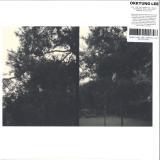
Unlike anything we have heard from her before, Okkyung Lee returns to Shelter Press with "Just Like Any Other Day: Background Music For Your Mundane Activities", a deeply intimate body of recordings at the juncture of ambient music, minimalism, and the baroque, that stands as radical intervention with what experimental music can be, and the place that organisations of sound occupy in our lives. For more than two decades, Okkyung Lee has stood at the forefront of the most radical trajectories of experimental music: a virtuosic cellist and improviser, renowned for her creative rigour and emotive depth. Particularly noteworthy for her range, dexterity, and adaptability, over the last five years Lee's output has revealed unexpected shifts and developments that move far afield from the realms of free improvisation for which she is most well known. 2020's "Yeo - Neun", a heart-wrenching, ambient chamber work - drawing inspiration from the Korean popular music of her youth - was issued by Shelter Press to great critical response, followed closely by "Teum (The Silvery Slit)" - one of a series engrossing electroacoustic works created at Groupe de Recherches Musicales in Paris - on Portraits GRM, and then "Na-Reul" in 2021, regarded by Lee as a closing statement of more than two decades living in New York, which set the precedent of her allowing her emotions to fully occupy the forefront of the music for the first time. Marking her return to Shelter press, "Just Like Any Other Day": Background Music For Your Mundane Activities", encounters Lee upturning the apple cart once again, weaving a profoundly intimate artistic statement on completely unexpected terms. Like its three aforementioned predecessors, "Just Like Any Other Day" belongs to broadening shift in Lee's approach to composing that roughly aligns with her return to her native South Korea, having lived in the United States since her late teens. Infused with a deep reengagement with her own culture and relationship to memory, it is equally a response to those critical challenges and questions provoked by significant life change. Worked on in isolation, and continuously returned to, over the course of four years, the album's nine pieces began with a simple recognition that experimental music is not always what we imagine it to be. It is a practice and a pursuit - a music for which, at its inception, the outcome is unknown - rather than an idiom defined by certain syntaxes, approaches, and qualities of structure and sound. From this departure point, Lee began to inquire after the utility of music itself: what is it for, what does it do, and what place does it (or can it) occupy in our lives? This solitary and durational journey, each composition gradually moving through different phases and evolutions over years, led Lee toward uncharted ground: a music that is not only playful, introspective, and seductive, but also intended to provoke a relationship to experimental music beyond its normative expectations. Rather active or deep listening, it pursues passive listening. Rather than a grand statement, it is discreet. Rather than virtuosity, it embraces the elegant and direct. Even more strikingly, for the first time, the music of "Just Like Any Other Day" encounters Lee leaving the cello entirely behind. Created at home on keyboard, computer, and an inexpensive cassette recorder, "Just Like Any Other Day" presents a remarkable form of ambient music - organisations of sound that become their own environment, to be occupied - intended, as the album's subheading infers, as Background Music For Your Mundane Activities. An expansion of the creative pathways opened by the Korean pop imbued compositions of Yeo - Neun, aspects of electronic process explored by "Teum (The Silvery Slit)", and the emotive foregrounding of "Na-Reul", each of the pieces presented across the two sides of "Just Like Any Other Day" implies something far greater than the limits of its own temporarily: a mood, provocations of memory and place, mirrors for the solitude within which it was made, and palpable emotion lingering just out of grasp. For Lee, each of the album's compositions could be continued or looped for an indeterminate duration: straddling a ground between the minimal and the baroque, enveloping the listener in endless cycles of appreciating, repetitive and rhythmical notes, flirting with the melodic and implying a disembodied imagism that borders on the profound. Remarkably beautiful and direct, Okkyung Lee's "Just Like Any Other Day: Background Music For Your Mundane Activities" - issued by Shelter Press on vinyl - represents a radical reconfiguration of experiential music, stripped to its bare essence in defiance of the widely presumed aesthetic signifiers. Unlike anything we've heard from her before, this immersive body of intimate recordings not only reveals new dimensions of Lee's striking range as an artist, but also of how we might regard and occupy music itself: an ambience to lived and felt like a second skin.
Georgette Sayegh & Melhem Barakat – Belghi Kull Mawaidi & Instrumental:
Finally, hopping across from Egypt to Lebanon for this infectious number, Georgette Sayegh delivers what some consider her magnum opus in a captivating duet together with Melhem Barakat, and on the flipside a stripped-down instrumental version that’s equally catchy.
Georgette Sayegh is a legendary Lebanese singer and actress known for her tender and dulcet voice that echoed the grace and beauty of the inimitable Fairuz yet carried its own unique warmth. Her passion for collecting vinyl at an early age formed her eclectic musical palette, and she eventually caught the eyes of the Rahbani brothers and played the lead role in a monthly play written by Fairuz’s son, Ziad. Georgette’s household classic "Yay Yay Ya Nassini” shot her to stardom across the Arab world in the 1970’s, and till this day carries the exact same nostalgia of a Lebanese summertime anthem – flirtatious, jolly, and unfettered. In Belghi Kull Mawaidi (I cancel all my appointments), Sayegh’s voice entwines with compatriot and fellow household staple, Melhem Barakat in an emotional display of longing and depth - her voice delicate yet powerful, effortlessly blending with Barakat's commanding baritone.
The instrumental version on the flipside (surprisingly a stereo mix) reveals a highly catchy arrangement that is lush and emotive, driven by strings that glide smoothly through the melody, while brass instruments add a touch of drama. The rhythm section, punctuated by a steady percussion, anchors the track, allowing the interplay of instruments to build a sense of urgency and longing, accurately reflecting the struggles and emotional resilience that defined Sayegh’s own life.
This reissue, remastered with painstaking care, brings both versions of Belghi Kull Mawaidi back to life, making it an essential addition to any avid listener, DJ or collector’s shelf. It captures the timeless beauty of two of Lebanon's most cherished musical icons, their voices and instruments merging to create a track that resonates through the ages.
Muhammad Al-Najjar
London, April 2025
credits
Audio restoration and vinyl mastering: Colin Young
Lacquer cut: Timmion cutting lab
Sleeve and label artwork: Grotezk Studio
Under License of Voix de L'Orient
Originally conceived as a compilation of outtakes and live recordings from The Shadow Ring's 1995 stateside tour, Wax-Work Echoes takes its name from the first line of "Put the Music in Its Coffin," the title track of the group's breakthrough release. Lambkin abandons the bitsand- bobs approach, advancing the Shadow Ring concept with entirely original material that builds on the unit's self-mythologizing lyrics, celebrates the clicking of horse hooves, ponders on the sociability of rats and mice, and warns of the dangers of poultry. The first Shadow Ring album to officially include Tim Goss in the main lineup, Wax- Work Echoes reveals the group in its final and lasting form, awash in the outer bounds of atmospheric exploration, with Lambkin's familiar wry and morbid lyricism and the stripped-down angularity of amateurishly detuned guitars fully intact. While Klaus Canterbury and Tony Clark seem all but forgotten, and the shrugged off S. Fritz is listed on the liner notes as performing only "when required," Lambkin did solicit contributions from outside the inner circle. A bit of "Mambo Twist," lifted from a tape of unreleased Vitamin B12 material sent to Lambkin by Alasdair Willis, found its way into "V.E.R.M.I.N.," while an extended epistle contribution from Richard Youngs (and, technically, Brian Lavelle) would be employed in the second half of "Catching Sight/Of Passing Things." Released on CD in 1996 for Bruce Russell's newly minted Corpus Hermeticum, Wax-Work Echoes was recorded concurrently with intense rehearsal periods, in anticipation of the forthcoming "Rose Watson Tour," and was supported by a celebratory fanzine media blitz. The album seemingly absorbs the frenetic excess of the band's transatlantic travels; Wax-Work Echoes channels the trio's wilder instincts into an unresolved catharsis, not yet free of frustration or restlessness. Out of print for almost three decades and available here for the first time ever on long-playing disc, Wax-Work Echoes is a classic from the outer eddies of The Shadow Ring's sound, a must-have for any aficionado's collection: "A window slides, glass slips from frame / And canvas carcass breathes again." Throughout their legendary, decade-long run, the Shadow Ring were an enigmatic force on the international musical sub-underground. Before their disbandment in 2002, this shambolic rock outfit, formed by a group of rowdy teenagers in southeast England, left behind a mighty run of eight LPs, a handful of 7"s, and a spate of raucous live shows and cryptic zine appearances on both sides of the Atlantic, all which have bolstered their enduring word-of-mouth mystique. Beginning in 2023 with the first-ever vinyl pressing of the self-released pre-Shadow Ring tape The Cat & Bells Club (1992), Blank Forms Editions has been conducting a systematic retrospective of the storied group. Wax-Work Echoes and Hold Onto I.D. are the latest releases in a multiyear reissue effort that includes several LPs, a comprehensive CD box set, and a nearly five-hundred-page book.
A“This album is about what it means to be human, and its creation is my offering. I attempt to tell a tale of the human experience in the reflection of my own.”
‘In the Andean mythology, condors are believed to be immortal. It is said that once they feel old, without energy, and useless, they climb to the highest peak and let themselves fall to death.’
The Allegorist is a visionary, enigmatic, transmedia, and boundary-pushing artist known for crafting deep, immersive dark sonic tales. Embracing a wide array of influences, weaving together the mysteries, art and spirituality, the art project defies categorisation, resonating with those who seek the unconventional.
From Birth Until Death is an introspective and immersive concept album that reflects on the essence of the human experience. Crafted over six years by The Allegorist (aka Anna Jordan), the album traces the arc of life—from its fragile beginnings to its inevitable end—using sound art to explore existential and philosophical terrain. Inspired by the Andean mythology of the condor – a symbol of immortality – the album blends electronic soundscapes with raw field recordings, evoking a deep sense of connection between the natural world and human existence.
The album’s progression mirrors the stages of life, starting with the birth of new beginnings and culminating in death, with each track offering a unique reflection on the moments in between. From the dynamic energy of Momentum, to the ethereal, illusionary world of Fata Morgana, the tracks guide the listener through emotions, perceptions, and experiences that shape the human condition.
A distinctive feature of From Birth Until Death is its intricate production. The album incorporates field recordings from Grunewald Forest, a distant roar of a jet, barking dogs, blending the sounds of nature – footsteps in the snow, birdsong, ocean waves – with layered synthesisers and electronic beats. The bass and ambient textures are crafted using an array of analog hardware, while all vocals, both lead and backing, are performed and recorded by Jordan. Some of the vocal takes were intentionally left raw, capturing the spontaneous energy of early recordings, while others were re-recorded to balance the album’s organic yet polished feel. Each element is meticulously crafted, revealing its deeper meaning as the album unfolds like a multidimensional, living sculpture.
At its core, From Birth Until Death is a meditation on the full spectrum of life. The album’s title track, From Birth Until Death, encapsulates this journey, reflecting on the passage of time and the unique experience of being human. The final track, Death, offers a melancholic yet beautiful exploration of endings, not as finalities, but as moments in the grand cycle of life. With its combination of evocative sound design and deeply personal themes, From Birth Until Death invites listeners to contemplate their own lives, offering a moving experience of reflection, growth, and transformation.
About From Birth Until Death
Words By Robin Rimbaud (Scanner)
From Birth Until Death is a deeply personal and reflective album and beautifully crafted. A detailed listen reveals that Jordan was in search of a profoundly human and authentic expression. In an era when so much around us seems defined by speed, Anna Jordan, aka The Allegorist, stands apart – aware that skimming the surface of life is neither sufficient nor rewarding. She reminds us of the value of deep, authentic listening.
The track Andean Condor seductively draws us into a smoky, blurred rhythmic soundscape, capturing the essence of the darkest Berlin nightclub, while Birth pulses with an almost shamanic transformation of sound, moving from the organic to the musical. It features a recording of Jordan’s footsteps in the snow in Grunewald Forest, Germany.
At times, the music feels almost sculptural in shape and tone – lifting, pushing, lilting, opening, and closing – where each piece is given room to fully develop. Many of the works blend synthetic sound with the natural, incorporating the human voice alongside environmental recordings: the wild waves of the ocean, a jet flying overhead, and barking dogs.
With From Birth Until Death, Jordan, like an alchemical architect revealing in the process of getting lost and relinquishing control, leaves us with a taut, immersive soundtrack in which to lose ourselves.
About the album ‘From Birth Until Death’
words by The Allegorist
“The album From Birth Until Death did not come easily to me. I started working on it in 2019, and it underwent many alterations over the years. I produced multiple versions of the tracks each year, but the album name, the track titles, and the album cover art stayed the same for 6 years. Not everything I did fit into the album’s final form, but I hope the heavy selection just made it better. I played this piece live in my techno live set between 2019 and 2020, and in the years after, I performed different art, ambient, and vocal versions of it, most notably the one at the church St. Marienkirche in Berlin in 2022. It just wanted to live and didn’t want to be finished. As I aged, this album aged with me. And now I’m ready to let it go.”
The discovery of Doris Dennison's score represents a genuine musicological breakthrough—what once would have been "a tree falling in the woods" thirty years ago now holds the potential to render "a thunderous clap in our minds." While researching Anna Halprin's lesser-known collaborators, scholar Tom Welsh uncovered the archives of AA Leath, one of Halprin's principal dancers. Buried within these materials was Dennison's handwritten score for Earth Interval, dated May 1956. Born in Saskatchewan, Canada, in 1908, and raised near Seattle, Dennison (1908-2009) encountered John Cage while teaching Dalcroze eurythmics at the Cornish College of the Arts. She joined Cage's earliest percussion quartet—alongside Margaret Jansen, the composer and his wife Xenia—in the group widely regarded as having performed the first complete concert of percussion music in the United States. This historic December 1938 concert was followed by tours and the landmark May 1941 performance at the California Club, comprising Cage and Lou Harrison's Double Music, the premiere of Cage's Third Construction, and Harrison's 13th Simfony.
As Bradford Bailey observes in his extensive liner notes, Earth Interval demonstrates "an extraordinary balance of elements that imbues the piece with a sense of clarity, directness, and constraint that is both distinct and ahead of its time." The work's most remarkable innovation lies in its approach to extended techniques, particularly Dennison's notation for the central movement: "In 2nd movement, 1st player lowers + raises a gong into a tub of water while beating." This technique, absorbed from Cage's experimental vocabulary, generates what Bailey describes as "fields of acoustic abstraction that bend and warp time through sustained resonances, beat, and space." The temporal sophistication of these manipulations anticipated Karlheinz Stockhausen's Mikrophonie I (1964) and Annea Lockwood's water-based sound investigations by over a decade. After joining Mills College as dance accompanist, Dennison maintained crucial connections to the Bay Area's experimental scene, collaborating with figures like Merce Cunningham and programming Cage's music throughout the 1950s.
Comprising three movements—Land Form, Air Tide, and Earth Play—Earth Interval is scored for recorder, drums, gongs, maracas, muted gongs, and bowl gongs. In total, the piece is just under eight minutes: "a fleeting glimmer of moment in time, a life spent at the cutting edge, and a singular creative vision that packs a powerful punch." When viewed in historical context, placed in contrast to roughly contemporaneous avant-garde percussion works by Cage, Harrison, Louis Thomas Hardin (Moondog), and Harry Partch, or important precursors like Edgard Varèse's Ionisation (1931) and Henry Cowell's Ostinato Pianissimo (1934), it's clear that Dennison was following her own path. Earth Interval is not derivative. It is a precursor to what was yet to come, alluding to developments of avant-garde and experimental music that wouldn't begin to appear on the cultural landscape until the 1970s and '80s, with the emergence of Post-Minimalism and more idiosyncratic artists and ensembles like Midori Takada, Ros Bandt, Peter Giger, Frank Perry, Christopher Tree, Michael Ranta, Gamelan Son of Lion, and Niagara.
This recording by Chicago's Third Coast Percussion, captured in March 2022, represents the first complete documentation of this pioneering work. The ensemble's interpretation reveals the piece's remarkable contemporaneity while maintaining its historical specificity. Where Cage, Harrison, and Partch employed "self-consciously off-kilter polyrhythms," Dennison's rhythmic sensibility anticipates minimalist developments by nearly a decade, yet integrates "forceful rests, as well as sharp shifts in sonic character, tempo, and meter, that break the momentum and breathe a sense of life into the piece's structure." This positions her work closer to Post-Minimalism decades before its emergence. The architectural approach demonstrates Dennison's understanding that "the composer almost entirely disappears" in favor of phenomenological listening experience, creating what might be called an egoless music that places its realities and meaning entirely in the ear of the beholder. The present recording, realized by Chicago's distinguished Third Coast Percussion ensemble, represents a significant achievement in experimental music scholarship and performance practice. As specialists in the Cage tradition and contemporary percussion repertoire, Third Coast Percussion approached Earth Interval with the historical sensitivity and technical precision required to illuminate Dennison's subtle compositional innovations. The March 2022 recording sessions, engineered by Colin Campbell, capture both the work's intimate chamber music qualities and its bold exploration of extended techniques. The ensemble's interpretation reveals the piece's remarkable contemporaneity—its ability to speak directly to current musical concerns while maintaining its historical specificity.
This recording serves multiple scholarly functions: it provides the first complete documentation of Dennison's compositional voice, offers insight into the broader network of experimental music practitioners surrounding Cage and Harrison, and demonstrates the sophisticated level of compositional thinking that was occurring within the Bay Area's dance-music collaborations of the 1950s. The work's emphasis on phenomenological listening—what might be called an "egoless" approach to musical experience—places it within a lineage of American experimental music that prioritizes perceptual process over compositional personality. The work's original obscurity—limited to AA Leath's performances at venues like the 1957 Pacific Coast Arts Festival at Reed College—paradoxically allowed it to remain "entirely on its own terms," free from the constraints of historical categorization. Drawing on Jacques Derrida's Archive Fever, the argument emerges that "the archive can acknowledge, celebrate, and resurrect" overlooked voices, transforming our understanding of experimental music history. The present Blume edition, featuring Third Coast Percussion's authoritative interpretation, includes a lavishly illustrated 16-page booklet designed by Bruno Stucchi / dinamomilano, containing complete scholarly apparatus, historical photographs, and detailed production notes. This recording enables "cross-temporal intersectionality," allowing Dennison to "belong to a newly formed and more dynamic understanding of the present and past," demonstrating how forgotten voices can reshape entire historical narratives when given proper scholarly attention and performance advocacy.
Mainstays of the D.C. DIY scene, Pretty Bitter live up to their name. Masters of all kinds of dissonance, they juxtapose stories of haunting and heartbreak with dazzling pop-rock arrangements. Pretty Bitter makes music that gets the emo kids dancing. They’re unafraid to infuse their blistering breakdowns with hits of disco and synthpop—and that’s exactly what they’ve done on Pleaser, their sophomore album, co-produced by Evan Weiss (Into It. Over It., Pet Symmetry) and Simon Small (Strawberry Boy) and out July 25th, 2025 via cult favorite indie label Tiny Engines. Following a string of ethereal singles, their 2022 debut Hinges formally introduced Pretty Bitter and their dreampunk to a rapidly growing audience. Fearlessly led by Mel Bleker and sharing studio and touring members with D.C. punk all-stars Ekko Astral, Pretty Bitter has been embraced by DIY fans far and wide. On Pleaser, Pretty Bitter have amped up the drama of their lush arrangements—a match made in heaven for the emotional ferocity of Bleker’s lyricism. “If everything is out there, nothing’s embarrassing,” they sigh on “I Hope You Do,” expertly toeing the line between the personal and the universal over bright, bubbling synths. On the arresting closer “Outer Heaven,” Bleker sings “Time isn’t a lover in the way it likes to play / I’m getting older, every due I pay / Time isn’t a bandage in the way you always say / I won’t be abandoned by myself again this way.” Their observational, heart-on-sleeve songwriting is as effortless as their flittering between the jangly, dreamy inclinations of rock, pop, and folk. Pleaser is a triumph, an instantly lovable record that reveals just how bright Pretty Bitter’s future is.
- 1: Coyote
- 2: Amelia
- 3: Furry Sings The Blues
- 4: A Strange Boy
- 5: Hejira
- 6: Song For Sharon
- 7: Black Crow
- 8: Blue Motel Room
- 9: Refuge Of The Roads
Mobile Fidelity's UltraDisc One-Step 180g 45RPM 2LP Set Plays with Authoritative Tonality, Airiness, and Clarity:
Pressed on MoFi SuperVinyl and Strictly Limited to
3,000 Numbered Copies
1/4” / 15 IPS Dolby A analogue master to DSD 256 to analogue console to lathe
Joni Mitchell is the only artist who could’ve made Hejira. The legendary singer-songwriter said as much when discussing the album decades after its release. Yet that fact seemed obvious from the moment the gold-certified effort streeted in fall 1976. An adventurous travelogue, probing narrative, and offbeat homage to freedom, Hejira remains an inimitable entry in the catalog of recorded music — a spare, gorgeous, meditative series of sonic vignettes comprised of floating harmonic pop, cool jazz, soft rock, and sensitive vocal elements that beckon feelings of motion, discovery, and self-examination.
Sourced from the original analog master tapes, pressed at Fidelity Record Pressing on MoFi SuperVinyl, and strictly limited to 3,000 numbered copies, Mobile Fidelity's UltraDisc One-Step 180g 45RPM 2LP set presents the record ranked the 133rd Greatest of All Time by Rolling Stone with definitive detail, richness, accuracy, and directness. Marking the first time the revered LP has received audiophile treatment, it's one of six iconic 1970s Mitchell records Mobile Fidelity is reissuing on vinyl and SACD.
Playing with a virtually nonexistent noise floor, dead-quiet surfaces, and superior groove definition, this collectible reissue reproduces in enveloping fashion the tones, textures, and craftsmanship that help Hejira function as the equivalent of a liberating trip down an open road with nothing but blue sky, natural landscape, and fresh air in the immediate vicinity. Passages bloom, carry, decay as they do amid an acoustically optimized environment. Soundstages extend far, wide, and deep, with black backgrounds and pinpoint images adding to the realism.
The reference-grade immediacy, airiness, and presence put in transparent perspective Mitchell’s dense strings of words, stream-of-conscious-like phrasing, and unhurried albeit forward momentum. Likewise, the instrumental contributions of her A-list support musicians — a cast that includes L.A. Express members John Guerin, Max Bennett and Tom Scott, plus Neil Young, Victor Feldman, and Abe Most — emerges with breathtaking clarity and dimensionality.
While Mitchell, whose intimate vocals and abstract guitar parts center everything, Mobile Fidelity's restoration of Hejira further reveals the visionary breadth of guitarist Larry Carlton and bassist Jaco Pastorius. Though heard on only four tracks, Pastorius' fretless bass epitomizes the fluid, subtle, flexible, roomy, and shape-shifting characteristics of songs that often appear to transpire out of nowhere akin to the formation of a puffy cumulus cloud overhead. In sync with Mitchell’s voice, Pastorius’ fusion hovers and floats, suspended in a fog you want to deeply inhale. The "grace notes" Mitchell desired on Hejira can now be heard in full. Ditto the luxurious tapestries of alinear lines, fills, and supplements unreeled on Carlton’s six-string.
Visually, the packaging of this UD1S set complements its identity as the copy to own. Housed in a deluxe slipcase, the LPs come in foil-stamped jackets with faithful-to-the-original graphics. This version is for listeners who desire to become immersed in everything about Hejira, including the unforgettable album cover — a pastiche of 14 different photos Mitchell used a Camera Lucida to assemble into one image that’s anchored by a portrait of her in a stoic pose — and the interior shots of Mitchell skating on a frozen Wisconsin lake wearing a pair of black skates, black shirt, and fur cape.
The notion of skating, feeling an awakening wind whipping against your face, and losing yourself to the surroundings are extremely apt for Hejira, which Mitchell wrote after a sequence of trips and relationships prompted her to reflect on the complicated conflicts between independence and marriage, success and satisfaction, duty and desire — and, more specifically, “the cost of being a woman.” The Canadian native delved into such themes before. But never as she does on Hejira, whose liberating, running-away aura doubles as another of Mitchell’s rejections of tradition as well as a suggestion of a better alternative.
At once observational and personal, expansive and insular, cheerful and poignant, Hejira spans a sea of human conditions, emotions, and circumstances. It addresses drifting, isolation, pleasure, place, time, and surroundings with strikingly poetic discourse matched with music that, save for the crooned ballad “Blue Motel Room,” forgoes conventional structures and choruses.
The jazz-based arrangements, marked by scaled-down percussion and all manner of bent, rounded, and unsettled notes, hint that Mitchell has no exact destination in mind. Excursions such as the moody “Furry Sings the Blues,” funky “Coyote” and edgy “Black Crow” throw open previously locked doors to possibility and journey. They signal it’s time for a welcome departure from norms and the past, one that leads to a heightened sense of clarity and perspective. Or, as Mitchell said upon choosing the album title, it’s time for “leaving the dream, no blame.”
- Vibrate On Ft. Lee "Scratch" Perry, Augustus Pablo
- Fisherman Dub Ft. Lee
- Scratch" Perry, Congos
- War Ina Babylon Ft. Max Romeo
- Sufferers Time Ft. The
- Heptones
- Fever Ft. Jr. Byles
- Scratch The Dub Organiser Ft. The Upsetters, King
- Tubby, Dillinger
- Better Days Ft. Carlton & The Shoes
- Police & Thieves Ft. Jr. Murvin
- Traveling In Dub Ft. Lee "Scratch" Perry
- Upsetters
- River Ft. Zap Pow
- Dreader Dub Ft
- Lee "Scratch" Perry
- Upsetters
Though Scratch may have at times seemed crazy, it is worth noting that creative
genius appears so because geniuses see things others do not see and inhabit
realities unseen. As the music on this album reveals, Lee Perry's Black Ark creations
re-arrange the familiar into something new and magical.
Lee spent his early days working with legendary producers Coxsone Dodd, Duke Reid,
Joe Gibbs, Clancy Eccles and Prince Buster, and by 1968 he was an independent
producer, naming his studio musicians The Upsetters and scoring instrumental hits
with innovative rhythms that helped forge the new reggae style. In 1970-1971 he
produced what many consider the greatest works by the Wailers; in 1968 one of his
Upsetters productions hit #5 on the UK pop chart and more hits followed. That gave
him the funds to build his own studio and in 1973 the legendary Black Ark was born.
Among the many landmark classics cut at Black Ark are such incisive political
commentaries as Max Romeo's "War Ina Babylon," and Junior Murvin's "Police and
Thieves" (covered by the Clash). The Congos' "Heart of the Congos" album is a roots
classic and there are many wonderful obscure singles such as Carlton and the Shoes'
"Better Days." Many dub creations made innovative use of Scratch's sonic wizardry via
echo, phasing, reverb, fanging, wah-wah and various sound effects.
It all came to an end in 1978 as Lee, besieged by extortionists, freeloaders, religious
fanatics and assorted pilgrims, let the studio lapse. And then he set it on fre, some
say due to frustration, others say from mental collapse. He left Jamaica, collaborated
with musicians around the world, toured as a sort of mystic trickster/ shaman and
prospered. But his work at Black Ark will always stand as his ultimate creative
achievement.
- A1: Béton House 5 21
- A2: Motif Lasdun 3 37
- A3: Pioneering Different Approaches 3 15
- A4: I Dream In Concrete 3 45
- A5: Aesthetics Over Ethics 3 53
- A6: Internal Panoramas 3 43
- B1: Foxton Stop Off 4 12
- B2: The End Of Back To Back 4 08
- B3: B6070 1 36
- B4: Cold, Again 3 02
- B5: And Then They Are Gone 2 54
- B6: Skyline Disasters 3 21
- B7: Park Hill Forever 4 32
We always knew we would return to this project because Brutalism remains a profound part of our lives, something we cherish deeply. Inspired by the photographs we have been capturing for a new book, the music emerged effortlessly. Documenting these buildings feels instinctive; this is where we belong.
Our unwavering fixation on symmetry, synchronisation, and repetition endures, but this time we believe the music reveals a more emotional depth. That is the direction we have been moving towards. Some things simply take time, yet this album seemed to take shape of its own accord.
Join us as we walk through these modern day cathedrals, monuments to the people.
- Anafera Chiboda
- Princess Wanga
- Ma Gitala
- Chemwa
- Mwadala
- La Bwino
- Zili Komweko
- Po Lankhula
For their third album on Bongo Joe, Madalitso Band takes a new direction.
After two records capturing the raw intensity of their live performances, the Malawian duo ventures for the first time into the possibilities of the studio — without ever compromising their signature style or energy.
Armed with their handmade babatone, a guitar, and their interwoven voices, Yobu and Yosefe craft a sound at the crossroads of banjo music, kwela, gospel, and African folk. An acoustic trance that’s both minimal and vibrant, deeply rooted in tradition yet undeniably fresh and contemporary. On Ma Gitala, they add new textures: layered vocals, playful percussion, melodic surprises, and guests from their close and family circles.
Always guided by instinct, the band reveals a more intimate and narrative side of their universe — full of memories, spontaneity, and close-knit complicity. An album that captures the joy and creativity of two artists who turned the street into a stage, and the stage into a playground.