Studio One was founded by Clement "Coxsone" Dodd1 in 1954, and the first recordings were cut in 1963 on Brentford Road in Kingston.[1][2] Amongst its earliest records were "Easy Snappin" by Theophilus Beckford, backed by Clue J & His Blues Blasters, and "This Man is Back" by trombonist Don Drummond. Dodd had previously issued music on a series of other labels, including World Disc, and had run Sir Coxsone the Downbeat, one
of the largest and most reputable sound systems in the Kingston ghettos.
In the early 1960s, the house band providing backing for the vocalists were the Skatalites[3] (1964–65), whose members (including Roland Alphonso, Don Drummond, Tommy McCook, Jackie Mittoo, Lester Sterling and Lloyd Brevett) were recruited from the Kingston jazz scene by Dodd. The Skatalites split up in 1965 after Drummond was jailed for murder, and Dodd formed new house band the Soul Brothers (1965–66), later named the Soul Vendors (1967) and Sound Dimension (1967-). From 1965 to 1968 they played 9 a.m. to 5 p.m., 5 days a week, 12 rhythms a day (about 60 rhythms a week) with Jackie Mittoo as music director, Brian Atkinson (1965–1968) on bass, Hux Brown on guitar, Harry Haughton (guitar), Joe Isaacs on drums (1966–1968), Denzel Laing on percussion, and on horns (some initially and some throughout): Roland Alphonso, Dennis 'Ska' Campbell, Bobby Ellis, Lester Sterling, among others on horns during the era of Rock Steady. Headley Bennett, Ernest Ranglin, Vin Gordon and Leroy Sibbles were included among a fluid line-up, to record tracks directed by Jackie Mittoo at Studio One from 1966-1968.
During the night hours at Studio One from 1965-1968, singers like Bob Marley, Burning Spear, The Heptones, The Ethiopians, Ken Boothe, Rita Marley, Marcia Griffiths, Judy Mowatt, Alton Ellis, Delroy Wilson, Bunny Wailer[4] and Johnny Nash, among others, would put on headphones to sing lyrics to original tracks recorded by the Soul Brothers earlier each day. These seminal recordings included "Real Rock" (by Sound Dimension), "Heavy Rock", "Jamaica Underground", "Wakie Wakie", "Lemon Tree", "Hot Shot", "I'm Still In Love With You", "Dancing Mood", and "Creation Rebel".
Jackie Mittoo, Joe Isaacs, and Brian Atkinson left Studio One in 1968, recorded drums and bass for Desmond Dekker's and Toots' biggest hits at other Kingston studios, then moved to Canada. Hux Brown stayed in Jamaica to record on the soundtrack The Harder They Come, The Harder They Fall, and toured in Nigeria with Toots and the Maytals and Fela Kuti. The Soul Brothers (a.k.a. Sound Dimension) formed the basis of reggae music in the late 1960s, being versioned and re-versioned time after time over decades by musicians like Shaggy, Sean Paul, Snoop Lion, The Clash, String Cheese Incident, UB40, Sublime, and countless other Billboard originals and remakes trying to emulate their original Rock Steady sound at Coxsone's Studio One.
Suche:tom x
Idlewild South is the second studio album by American southern rock band the Allman Brothers Band. Produced by Tom Dowd, the album was released on September 23, 1970 in the United States by Atco Records and Capricorn Records. Following the release of their 1969 debut, the Allman Brothers Band toured the United States extensively to promote the album, which had little commercial success. Their performances, however, did create positive word of mouth exposure that extended to more famous musicians, such as Eric Clapton, who invited group leader Duane Allman to contribute to his 1970 album Layla and Other Assorted Love Songs.
The original soundtrack for “Il Casanova di Federico Fellini” (1976) sees Nino Rota putting into music Federico Fellini’s opus on the legendary Venetian icon and “tombeur des femmes” Giacomo Casanova.
Winner of an Oscar for Best Costumes in 1977, the film is one of Fellini's finest, a grotesque and hyperbolic take on the life of Casanova that is matched by Rota’s compositions.
“Il Casanova di Federico Fellini” possibly is one of Rota’s most eerie and enigmatic scores, as if the Maestro had finally poured into a soundtrack all of his love for esotericism.
The music wraps you up like the Venetian mist. The compositions are constantly on the edge of classical music with playful nuances and the use of instruments like viola and cello. Vocals become a cornerstone, echoing the tradition of 18th century Italian opera. However, Rota also leaves room for more experimental and estranging vibes that make the soundtrack a one-of-a-kind voyage into the creativity of the Maestro.
- 1: La Nouille … L'air
- 2: Complainte De La Bete
- 3: Mordue
- 4: Les Vaches Musiciennes
- 5: La Fille Brule
- 6: Un Bezoar Dans Le Ventre
- 7: Failli Tomber
- 8: La Vie Secršte Des Doryphores
- 9: Boue Qui Roule
- 10: Vengeance Tardive
- 11: Ingurgiter Ton Image
- 12: Para Lo Lop
- 13: La Fontaine Noire
- 14: La Violeta
- 15: Je Suis Sur L'autoroute
- 16: Aucel Perdut
- 17: Chant Pour Dissuader L'etre Aim De Sortir La Nuit
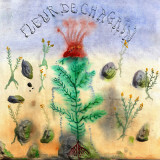
Pauline Marx, formerly of the fantastic duo La Fureur de Vouivre, seems like a being from another time and place; namely, an escaped marauder lurking in the forests of a Bruegel painting and integrating the surreal flora and fauna of a Boschian creation into the scenery and lore of deep Brittany. Her invented mythology is loaded with murky rituals and contorted mantras, backed by the surprising sounds and textures of terrains so earthly and so unreal.
The Devil at the Crossroads
Where do you think you come from? Where do you think you're going? Lasciate ogni speranza, voi ch’entrate: you, with the noodle to the four winds, who pass the threshold of this disc, you better leave all hope there, and glide in the poisonous footstep of the devil your guide.
Where do you think you come from? The mountain is no longer just the mountain; after your passage, it will no longer even be a mountain. Like the whole landscape, it will have been eaten, sauced by invisible leeches. Your nostalgia for the ground and your thirst to find the source will have only discovered a forest of vain words and foul water. Where do you think you're going? At the crossroads, the world is consumed in the previous future. Only the devil will know how to make you overcome the disgust of traditions, and only the love for the devil will give you enough vim to reach your goal: a village, perhaps, but which belongs to no one, a haven to your excessiveness .
The dark tradition to which this game of ternary trampling belongs, like the rhythm of a heart in tune with the inverted world, has no country and no assigned time. Rather a topology of Eve awakened after a thousand-year sleep, an idiosyncratic and possessed reading of our common humus, made up of stories composted in the limbo of the past, of songs captured in extremis vitae and rebus in the privatized antechambers of death.
What does she tell us about? Of our automobile and in love roamings, of the porosity of the membranes that separate beings and things, of the constant inversion of signs. The seventeen stages of this short journey, where intertwine the throbbing of objects, blown horns and rubbed horsehair, form the map of a country never to be found, ours, where only the voice of an old child and the disgusting devil's poisonous charm can guide us.
Gotts Street Park are a proud bunch of throwbacks. The Leeds-based trio - Josh Crocker (bass, production), Tom Henry (keys) and Joe Harris (guitar) - met through various music studies and friendship networks. Individually their tastes are diverse: from North Indian classical to experimental jazz, soul to alternative hip hop but their vision is united: “The idea of doing things live in one room has always been important,” remarks Josh. “That’s how they used to do it. Our identity evolved from that.”
The inception of the collective goes back to around 2012. There have been minor line up tweaks - they currently record with a rotating list of drummers - but the philosophy has stayed the same: an ongoing pursuit to capture the raw, unparalleled vibe that comes from recording music together, usually as one take, sometimes to analogue tape.
That approach is a deliberate call back to the methods made famous by legendary studios like Sun and Stax in Memphis, or FAME and Muscle Shoals in Alabama and their in-house bands. That’s why for years, GSP set up their own studio in a shared house in a tough (but, crucially, affordable) corner of west Leeds, Armley. Gotts Park (historically the home of industrialist Benjamin Gott) was close by - the group’s name was a nod to their local geography but also the fact it sounded like an area plucked straight out of some of their favourite East Coast hip hop releases.
Their work was quickly noticed, and it was from that base where they began working with an eye catching list of collaborators: Rejjie Snow, Kali Uchis, Cosima, Yellow Days, Chester Watson, Greentea Peng and Benny Mails. Tom also played keys in Mabel’s band. Early on, while performing as a band for hire for those artists, they were simultaneously honing their own sound; a deliberately retro “heavy, saturated” atmosphere that married the languid vibe of traditional soul with the pin sharp clarity of contemporary hip hop. Old leanings, sure, but upcycled with their own modern twist. “We’re constantly trying to build a catalogue,” says Tom. “Writing new stuff and sending it out to people.” That’s why after the release of their debut EP, ‘Volume One’, in 2017 the invitations kept coming; most notably from Brits Rising Star award winner Celeste, with whom they recorded two tracks on her debut EP ‘Lately’.
‘Volume Two’ once again features an impressive raft of vocalists - all female - from established names to fresh talent. This time, musically, the overall tone is lighter; less gritty, more optimistic. “It’s definitely not as gloomy,” says Josh. “Still though, there is this kind of dark, mysterious thing that we do a lot that works,” he continues. “Like the song we’ve done with Grand Pax, for example - it’s got that kind of witchy darkness to it. I think if you do a really straight male soul voice, it can be a bit cheesy and sound like you’ve heard it a million times before.”
Their collaborations might be some of the freshest of 2020 but make no mistake: Gotts Street Park are out there looking to create something timeless.
- A1: Intro
- A2: Bloody Money
- A3: Driver's Seat
- A4: Stick You
- A5: Parole Violators
- B1: Iraq (See The World) (See The World)
- B2: Live On Live Long
- B3: Neva Die Alone
- B4: Tony (Top Of New York) (Top Of New York)
- C1: Channel 10
- C2: Capone Phone Home (Interlude)
- C3: Stay Tuned (Interlude)
- C4: Capone Bone
- C5: Halfway Thugs
- C6: La La (Marley Marl Kuwait Mix)
- D1: Capone -N- Noreaga Live
- D2: Illegal Life
- D3: Black Gangstas
- D4: Closer
- D5: Capone Phone Outro
THE CARSTAIRS, Cleveland Horne and Ray Evens, from Detroit, were first known to the UK soul scene for their storming cover of Motown’s “He Who Picks A Rose”, originally by Jimmy Ruffin and Edwin Starr. But, it is their legendary 1973 recording, “It Really Hurts Me Girl” that elevated them into the Northern Soul Hall of Fame. DJ Ian Levine first chanced-upon the song while on a trip to Miami and it is thanks to his foresight and determination that the Northern Soul scene embraced the new contemporary sound of Seventies soul and would consequently change forever. OUTTA SIGHT proudly present the original 1973 Gene Redd Jr. production coupled with the Tom Moulton remix.
Eli Brown steps up to unveil his highly anticipated debut release on Drumcode.
The UK artist hailing from Bristol has long been on Adam Beyer’s radar. He made his debut on Drumcode’s sub label Truesoul in 2019, teaming up with Will Clarke for their standout EP, ‘Our Love’. Since then, Eli Brown’s sound has continued to evolve and develop, with his signature dark and subversive sonics exhibiting on labels such as on Filth On Acid, We Are The Brave and his Arcane imprint earning high praise in techno circles.
His maiden contribution to Drumcode is in the form of his high-octane four track EP ‘Deep Down’. The title track ‘Deep Down’ has been a go-to weapon for Adam Beyer who’s been slaying it at Awakenings, Ultra Europe x Resistance and Loveland. It’s a dynamic, vocal-led production driven by a squelchy psy-laced synth line. ‘Nazareth’ is a pumping acid-infused stomper that galvanised the masses at Tomorrowland. Brown draws inspiration from Detroit for ‘Can’t Stop The Feeling’, a track that delicately balances an exuberant soul vocal with a nostalgic rave vibe. The EP rounds out with the thrilling highlight, ‘Pressure’, as 90’s house chords and gritty synths combine with a luring vocal hook for an ecstatic conclusion to the EP. It went down a treat when Beyer played it at Drumcode’s Off Sonar party in June.
- A1: Realities Of War
- A2: They Declare It
- A3: But After The Gig
- A4: Society's Victim
- A5: Fight Back
- A6: War's No Fairytale
- A7: Always Restrictions
- A8: You Take Part In Creating This System
- A9: Religion Instigates
- A10: A Look At Tomorrow
- A11: Ain't No Feeble Bastard
- A12: Why (Reprise)
- A13: It's No Tv Sketch
- A14: Tomorrow Belongs To Us
- B1: Decontrol
- B2: Never Again
- B3: Death Dealers
- B4: State Violence State Control
- B5: The Price Of Silence
- B6: The More I See
- B7: Ignorance
- B8: Grave New World
White Vinyl[20,80 €]
- A1: Realities Of War
- A2: They Declare It
- A3: But After The Gig
- A4: Society's Victim
- A5: Fight Back
- A6: War's No Fairytale
- A7: Always Restrictions
- A8: You Take Part In Creating This System
- A9: Religion Instigates
- A10: A Look At Tomorrow
- A11: Ain't No Feeble Bastard
- A12: Why (Reprise)
- A13: It's No Tv Sketch
- A14: Tomorrow Belongs To Us
- B1: Decontrol
- B2: Never Again
- B3: Death Dealers
- B4: State Violence State Control
- B5: The Price Of Silence
- B6: The More I See
- B7: Ignorance
- B8: Grave New World
Black Vinyl[18,07 €]
THE CULT DEBUT ALBUM OF INDUSTRIAL BLACK METAL FROM THE
NORWEGIAN PIONEERS, PRESENTED ON VINYL FORMAT WITH
ORIGINAL COVER ART
One of the pioneering industrial black metal forces to emerge in the early 90's,
Mysticum brought to the world a completely unique brand of extreme &
psychedelic discordant black metal with insane drum machine patterns & synths.
They were originally signed to Euronymous' Deathlike Silence Productions label;
such was his belief in the band (Mysticum even featured Hellhammer from
Mayhem in their line-up for a brief period). However, this venture proved to be cut
short following his death, forcing Mysticum to look elsewhere for the release of
their eventual debut album, 'In The Streams Of Inferno', finally surfacing in 1996.
A perfect concoction of cold, primitive black metal & forward-thinking ideas from
an act unafraid to push boundaries, the hell of 'In The Streams Of Inferno' has had
a lasting & profound impact on many since 1996. For this release, the album has
had some extensive remastering work courtesy of Tom Kvålsvoll at Strype
Studios in Oslo to give a better representation of the sound the band initially
intended & includes 2 bonus songs in the form of 'Eriaminell' & 'Black Magic
Mushrooms'.
This vinyl edition of 'In the Streams Of Inferno' includes the original's cover art,
plus printed inner sleeve.
Having spent the past few years supplying low notes as bass player for a who’s who of UK Soul and Jazz talent (including Tom Misch, LoyleCarner, Berwyn, Jordan Rakei, Poppy Ajudha, Jamie Isaac, Puma Blue, Jorja Smith, Alfa Mist & Charlotte Dos Santos) Rudi Creswick steps into the spotlight with his first full length solo offering ‘Different Forms’ on Alfa Mist’s Sekito imprint.
Hailing from Newcastle-Upon-Tyne, Rudi was immersed in club culture from a young age, the low end sonics of which guided his playing, and led him to discovering his own style In the years that followed, Rudi continued to hone his craft, melding the sub rattling sounds of Hip-Hop producers such as J Dilla, MF Doom and Knxwldge with the technical sensibilities of influential Jazz players such as Pino Palladino, Derrick Hodge and Thundercat.
With this record serving as a chance for Rudi to stretch his creative legs, the aim was to showcase the many musical sides of his creative spirit. The first single lifted from the project ‘Sometimes’ enlists the vocal talents of the incredible Emmavie - who dives into self-reflective and cutting, honest lyrics. She explains: “No one ever leads with “often temperamental, quick to anger and generally hot and cold” when describing themselves. Something about Rudi’s laidback production and bouncy singing bass line pulled this reflective and apologetic yet playful subject out of me. “
On the LP, Rudi says: ‘This whole project is thanks to Alfa , Barney Artist and the team at Sekito who’ve helped me realise my dream. They had faith in me for which I’ll always be grateful. The project’s kind of all over the place because there’s so many corners to anyone’s being, inspirations and their musicality, so I wanted Different Forms to reflect that’
Throughout the record, Rudi’s musical prowess and vast influences are laid bare for all to see. From the gliding melodies and twinkling keys and hazy fanfares of second single ‘Peace Of Mind’ (Feat. Manny & The Coloured Sound) through to the sparse and haunting tones of ‘Charlotte’ the LP traverses high peaks and deep valleys, channelling a sense of beauty of textured mystique throughout. Sporting an impressive roster of collaborators including Alfa Mist himself, Trumpeter Sheila Maurice Grey (Kokoroko), Chelsea Carmichael on Tenor Sax, Barrel Jones (Drummer for Nubya Garcia) and Vels Trio’s Jack Stephenson-Oliver (who played synth for the track ‘With Want You’). The lush instrumentation provides an incredible backdrop for esteemed performers such as Barney Artist to drop bars over the crisp drums and laid back strut of ‘Holding The Fence’, meanwhile Berwyn supplies sombre lyrics of the vast expanses of ‘96BPM’. An emotive and engaging listen from start to finish, ‘Different Forms’ is a truly stunning debut.
It almost seems churlish to regard Celtic Frost as one of the great extreme metal bands, because they were so much more than that. It’s better to hail them as among the finest extreme and experimental bands of the 1980s. Refusing ever to do what was expected or demanded, the band constantly changed musical direction, always brought in surprising influences, and kept people guessing as to where they might venture next. Their catalogue of albums is formidable and unmatched. Each is not only unique, but part of an entire tapestry that only now can be appreciated for being a remarkable part of music history. Despite, or maybe because of, constant turmoil on so many fronts, Celtic Frost achieved an artistic level few others would even have dared to dream of aspiring towards. They climbed high because they were never afraid to fall. Which is why the band are now rightly regarded as icons, and iconoclasts.
Released in 1987, only now can people understand just how far ahead of its time this album was. Not only did it have maniacal rhythms, but introduced electronica into extreme metal. On every level, it was a remarkable record, full of visionary ideas and ideals. This release includes alternate versions of tracks from the album and a cover of Dean Martin! The concept and art direction of the release was done by the man behind Celtic Frost, Tom G. Warrior.
- A1: In The Still Of The Night
- A10: I Love Paris
- A11: I Concentrate On You
- A12: It's De-Lovely
- A13: I Get A Kick Out Of You (Bonus Track)
- A14: Just One Of Those Things
- A15: Love For Sale
- A16: Let's Do It (Bonus Track)
- A17: Night & Day
- A18: What Is This Thing Called Love (Bonus Track)
- A19: Anything Goes (Bonus Track)
- A2: It's All Right With Me
- A20: I've Got You Under My Skin
- A21: I Love You (Bonus Track)
- A22: In The Still Of The Night
- A23: Every Tome We Say Goodbye
- A24: Begin The Beguine (Bonus Track)
- A25: So Near & Yet So Far (Bonus Track)
- A26: From This Moment On (Bonus Track)
- A3: Love For Sale
- A4: Just One Of Those Things
- A5: I've Got You Under My Skin
- A6: Every Time We Say Goodbye
- A7: Night & Day
- A8: Easy To Love
- A9: Why Can't You Behave?
- A1: Ghost Story
- A2: The Journal
- A3: Seagrass Attack
- A4: Andy On The Beach
- A5: Where's The Seagrass?
- A6: Stevie's Lighthouse
- A7: Something To Show You
- A8: An Evil Plan
- A9: Weatherman
- A10: Walk To Lighthouse
- A11: Dane
- B1: Morgue
- B2: The Fog Approaches
- B3: Knock At The Door
- B4: Fog Reflection
- B5: Andy's In Trouble
- B6: The Fod Enters Town
- B7: Revenge
- B8: Number 6
- B9: The Fog End Credits
- C1: Prologue From The Fog
- C2: Theme From The Fog
- C3: Matthew Ghost Story
- C4: Walk To The Lighthouse
- C7: Antonio Bay
- D1: Tommy Tells Of Ghost Ships
- D2: Reel 9
- D3: Main Theme (Reprise)
- D4: The Fog Rolls In
- D5: Blake In The Sanctuary
- D6: Finale
- C5: Rocks At Drake's Bay
- C6: The Fog