Sometimes you know it’s coming, sometimes it’s unexpected, but the time to hang your boots will always come. It’s better when you have total control, even better if you end up on a high (or on a low). After seven years of sonic interferences, calibrating the soundscape of field recordings and helping to recreate the old sounds of today, Gonzo is retiring from music. It’s a goodbye, yeah, and a well-crafted one.
But “Ruído(s)” doesn’t sound like an intentional one. You won’t listen to it on any of the thirteen tracks that scavenge for a solution in the space between ambient music and field recordings. You won’t feel it in the intense connection between human and natural sounds and how sometimes everything oscillates in opposite states of mind. You won’t even read it in the intense, but subtle, humor present in some of the pieces. You won’t, because it’s not an intentional goodbye. You only know it is, because you’re reading this.
What is it then? It’s a celebration of random sound. How can you experience something scholastic and, simultaneously, deeply hilarious? Just think about the amazing triad formed by “A Fuga dos Grilos”, “Degredado(s)” and “Cantiga Parva”. First, you’re blessed with six minutes that build up on the idea that sound can be an intense religious experience, echoes going back and forth to create a fantastic Boiler Room feeling (one populated with raving Gonzos doing dabs in front of the camera) that eventually ends up with a cinematic touch: someone saying the title of the song out loud. One second after we are into the Flying Lizards world, with two songs that shake any pretentious seriousness of the previous track.
Is it serious or not? It is. But it doesn’t have to be. In “Ruído(s)” Gonzo recounts pop/electronic history through field recordings and weird-soft beats. More than compiling his seven-year history, Gonzo is more worried to understand where he’s leaving his ideas, Caretaker style. Speaking of Caretaker, Leyland Kirby should think about reviving Caretaker and do a whole album around “Brilhante Cortejo”: it’s haunted ballroom in a ‘cracked’ nutshell.
As the album progresses and the need to revisit it grows, it becomes clearer(?) that “Ruído(s)” is more than an artist self-indulging on his work – in a very good manner. It’s also a condensed catalog of Portuguese music and its sounds, a circular trip down the memory lane of a forgotten country and its landscape. “Ruído(s)” is a goodbye to a country and its traditions. It does it without sulking but with the most respectful loud laugh - the Gonzo way.
quête:total touch
Sometimes, - despite today's high-octane, fast-track and hyper-hysteric music business - you come across things that seem so pure, perfect and poetic that it almost hurts. "Socialo Blanco" is one of these objects.
It appears understated at a first listen, startling at the second and totally enamouring by the third run. To lay it all out on the table: it sounds like a Music from Memory re-issue, looks like a Growing Bins Records discovery and feels like a flea-market-hippie-uncle-record-collection find.
Based on the language (coincidences and misbehaviour included) and direction of the classic EMS Synthi AKS and recorded by hand and directly to tape (no midi, no sync, no computer), it is at once out of time and out of touch with current sound aesthetics, but that only makes it even more contemporary (vintage) - like a great piece of furniture.
Unsurprising, if you know that Feater is helmed by Daniel Meuzard. Hailing from Vienna and having made a name for himself as a trustworthy and skilled studio equipment dealer and working closely with producer and studio engineer Sam Irl, the man has a knack for turning yesterday into today.
Already is his project's second album, "Socialo Blanco" is the result of all of this and some magical and effortless sessions. The voice of Vilja Larjosto from Finland and Ghana's Eric Owusu (Pat Thomas, Ebo Taylor) on percussion, spontaneously invited to the recording sessions by fellow Viennese Giuseppe Leonardi, are the icing on the cake. All of that and especially the non-conformist pop song "Time Million" symbolizes the heart and soul of an album that deserves to be billed as such. And that is no mean feat.
Warehouse Find!
Scottish producer Austin Ato has been making waves the last couple of years having had well received releases on Futureboogie and Phonica White and this year looks to be his best yet! Remixes for Folamour on Classic, Balako on Greco Roman and an EP for Man Power's label Me Me Me will be dropping in the coming weeks, paving the way for his Delusions Of Grandeur debut double A side; Ella / Putting It In My Way.
On Ella we see Austin deliver some pure, unadulterated, house pleasure over eight minutes (although for us it feels like it could go on for days!). A filtering disco loop, synth melody, string stabs, all reinforced by punchy drums and that all important vocal chop. A simple recipe for a track when cooked up in the right way with love, passion and experience.
Flipping over to the AA, Putting It In My Way drops in somewhat bipolar fashion, a barrage of percussive beats and rolling snares building to a drop where Austin Ato skilfully switches the vibe completely, bringing in deep pads, rolling bassline and his own inimitable vocals. A totally unique track which harks back to the good old days when house music had a soulful and musical touch which connected instantly with the dance floor. This feels to us like a producer marking his arrival as an artist to watch closely for, and whose talent extends way beyond the confines of your standard four on the floor fodder.
Closing the release we have an Instrumental Version of Putting It In My Way which may well be your choice for the deeper moments, letting the groove push to the fore and the lush chords shine through the haze of dubby stabs and twisting synth line.
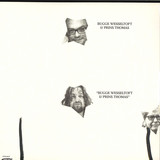
A long time ago, in a Norway far far away in time, keyboardist Bugge Wesseltoft introduced his New Conception of Jazz to the world. We're talking about the late 90s, when Bugge's cosmopolitan blend of jazz, hiphop and techno beats was pretty much the coolest music coming out of Norway at that moment. That was a golden time for Norwegian music, in fact, when the rest of the world began to sit up and take notice that something was stirring up north, and realised the music was more than just glacial tones hurtled from icy mountaintops and frozen lakes. This was the sound of urban Scandinavia.
A few years later came the electronic dance genre 'space disco'. Along with Todd Terje, Bjørn Torske and Lindstrøm, Prins Thomas was at the epicentre of this next big wave to surge out of Norway. Now, the two generations have come together in this exclusive collaboration between Bugge and Prins Thomas on the Smalltown Supersound label. Jazz and electronics combine for that energising vitamin D shot of Nordic sunshine.
The Rainbow Studio in Oslo is a familiar name to anyone who follows the ECM label - many of its classic 1970s jazz albums were recorded there under the eye of resident producer Jan Erik Kongshaug. Bugge and Thomas booked a couple of sessions at the legendary space with Kongshaug at the controls, and improvised some tunes in the style and spirit of some of their favourite ECM moments, like the fresh, open sounds of Codona, Egberto Gismonti, Oregon and Kenny Wheeler. Bugge had previously done a remix of Thomas's 'Bobletekno' in 2015 but this is the first time they have worked together as active musicians. The results - also partly taped at Thomas's home studio - fuse programmed rhythms, live synths and percussion, all captured in a sumptuously spacious acoustic.
For an even more authentic touch they called up one of their all time local heroes and one of Norway's most famous jazz drummers, Jon Christensen, who's been the go-to guy for Jan Garbarek, Terje Rypdal, Keith Jarrett and many more. At 75 years he's still pretty spry behind the kit, as you'll hear on several tracks here.
Make no mistake, though, this is not retro pastiche but contemporary music, coasting on gently insistent programmed grooves and bubbling basslines. The whole thing feels not so much like a consciously hip fusion of DJ and jazz musician, more like two great musicians totally enjoying themselves. Which is exactly what it is.
Key facts:
Bugge Wesseltoft is one of Norway's leading jazz figures. He set up Jazzland Recordings in 1996. His solo Christmas LP It's Snowing On My Piano remains Norway's best selling jazz album!
Prins Thomas's real name is Thomas Hermansen. His label, Full Pupp, means 'full breast'. He's released several albums under his own name, as well as collaborations with Bjørn Torske and Lindström. Check out his amazing Paradise Goulash mixtapes.
Musique Pour La Danse takes a short break from reissuing rare and essential music to bring you a selection of four new and exclusive tracks from the French underground entitled Equipe de Danse. Curated by label co-manager Ed Isar, a DJ and promoter active in the Paris underground since more than a decade, this EP brings together different producers and styles, highlighting the diversity and the creativity currently flowing through the French scene and providing DJs and ravers with quality tunes to work with and dance to.
Automat - Disco Trax
Everyone has a story about how one electronic music experience changed their lives forever, for Ed it was seeing Automat live in Paris in 2006 when he was 18. Automat's Electrospectif LP is still one of the best and most underrated French electro albums of the 21st century. Hearing Disco Trax many years later and realizing this fast-paced banger never got pressed on vinyl was the spark that encouraged Ed to work on this EP. This is irresistible jakbeat with electro and italo influences, timeless and compelling.
Cuften - bgt55ujp0
Cuften is a unique artist from Normandy who prefers being called a musician rather than a producer: he creates and records all his music live on a 100% hardware setup with absolutely no computers involved. With IDM and acid influences as well as a passion for hardcore, his music bridges the gaps between Aphex Twin, Marc Acardipane and Legowelt. This track is a perfect introduction to his world where hard hitting kicks get bodies moving while acid madness gets minds melting and it's actually his first tune ever released on vinyl. Keep an eye out for Purusu, Cuften's own record label which he runs with the help of Ed, a strictly underground affair that is already gathering support from established DJs around the world.
Sina - Faith
This is the very first track by Sina pressed on vinyl and what a belter it is! He is part of the new wave of electronic music activists in Paris with his Subtyl parties that were among the first to encourage today's ravers to side-step the clubs and go party in warehouses half a decade ago. We immediately signed Faith upon hearing it for the first time, spellbound by pounding and dreamy atmosphere, full of dramatic and ecstatic moments. This track exists in a techno universe of its own, as gritty as it is melodic. It never fails to get a reaction from the crowds and has been a staple of Ed's peak time sets lately.
Raymond D Barre - I Don't Know Dave
He's an up and coming producer and live performer from Paris who released a great EP on Nocta Numerica in 2016 and has several projects in the works. Clocking at 108 BPM, this tune is the downtempo cut on the EP. Driven by an 808, structured by FM bass and embellished with some lovely acid touches, this track could be described as 21st century orientalist New Beat or perhaps Egyptian Lover on codeine. Either way, this nod to Belgian vibes and BPM did not go unnoticed by both label managers and this fun and quirky track is often the highlight of downtempo sets.
Points of interest
- Four essential and totally exclusive tracks outside the beaten path and the usual formulas, a great snapshot of the French underground in 2018
- Various Artists, different vibes, something for everyone
- A Musique Pour La Danse release (Frankie Bones, Orlando Voorn, Cron aka Todd Sines, Break The Limits aka Bay B Kane, ..), a label founded and curated by Olivier Ducret of Mental Groove (Miss Kittin, Orbe, Donato Dozzy, Brodinksi...) and Ed Isar (33RPM +8% and Radio Belleville in Paris), releasing forgotten and unforgettable dance music of yesterday and tomorrow.
For those unfamiliar with the Atipic releases, it may seem that Buenos Aires' Jorge Savoretti has chosen to swim upstream on the latest Atipic installment. As for a trained ear, the apparently bipolar approach, elegantly touching quite a few electronic influences from different decades, has a cohesive unity in all the 3 tracks presented.
Hidden under the sharp cut filters from the happy side A tune or building the groove to be unleashed in full swing on Side B, it is up to the dancefloor characters to find these elements.
Rather unconventional, yet totally subjective, Atipic004 is a proof of concept on how different angles can generate twisted and unexpected perspectives on modern electronic music.
1983, in the history of synths, is a key year. During the January edition of NAMM (the most important music fair in the US), indeed, MIDI - the standard protocol for electronic instruments interaction - was introduced to the world. Until then, programming and making synths work together was something practiced by a restricted elite of 'wizards", explorers armed with cables and analog patches, who could create new sonic worlds - but totally temporary, not replicable. Real superheroes of sonic synthesis, scientists of filters who, nowadays, are highly considered by musicians all over the world, after decades of forced exile. In Italy, the seeds of this tradition were planted in RAI's Laboratory of Phonology (in Milan), in the middle of the 1950's; later, pioneers like Piero Umiliani, Federico Monti Arduini (aka Il Guardiano Del Faro), Marcello Giombini, Giampiero Boneschi and Fabio Borgazzi (Fabio Fabor) introduced electronic music in pop. Fabor (together with Antonio Arena) is the protagonist of 'Superman", an album of library music released by the World label (owned by Minstrel group) in 1984. Borgazzi, born in 1920, lived through the whole saga of Italian easy listening music (from big orchestras to the digital revolution), always keeping up with the latest styles and trends. So it's not a surprise, here, to see him using a LinnDrum and the first Japanes synths; and it's perfectly natural to find some electro-funk touches
Omar has a totally unique, individual style and sound still marks him out as a future thinking and utterly unrivaled artist, who has collaborated with so many legendary names that it would be foolish to deny his worldwide reputation - who would dare contradict the likes of Stevie Wonder, Erykah Badu, Carleen Anderson, Angie Stone, Common and fellow fans and followers like Maxwell and Jarrod Lawson
Following on from 2013's album The Man, 2016 sees his new long player further cement this undeniable reputation. Love In Beats is Omars' 8th studio album of his long, illustrious career and may just be the most eclectic & varied to date. Somewhat more electronic in it's conception and sound than it's predecessor, Love In Beats incorporates soul, Caribbean rhythms, an undercurrent of funk, with touches of zouk, a jazzy waltz, spoken word and also features collaborations with Us soul legend Leon Ware, Blue Note pianist Robert Glasper, grime MC Ty, Guadeloupe born singer Jean-Michele Rotin, and Uk soultress Natasha Watts, The Floacist and Mayra Andrade, the Cape Verdean born singer who lives and records in Paris.
Co produced by Scratch Professer, Omars Grammy winning brother,this collection should create excitement worldwide, the sounds are varied - but all have Omars' unique fingerprint on them, style and substance beautifully merged!
Ark & Pit Spector continue their inspired journey with an extended EP full of groovy jams and absorbing rhythms for Hold Youth. The Frenchmen have formed a potent alliance with a series of expertly-crafted, high-quality releases dropping over the last couple of years. On this new EP they go deeper into their sound explorations with five original works and a remix from their Parisian buddy and Hold Youth member, Le Loup. First up, we go into bumping jazzy territory with 'Chauffage Central', a mesmerising cut with swirling pads, soulful vocal clips and a jaunty b-line. Straight up after that, Hold Youth rudeboy Le Loup gives 'Chauffage Central' a funky little rework, throwing live sounding percussion, Nubian vocal clips, trumpet parps and a pumping bassline into the mix which gives a totally different identity. The final track on side A, is a cheeky teaser called 'Petite Ondée'. Rolling out for just under two minutes the track has a muffled, jazz-esque feel to it with a warm rolling bassline and bright, sparkling piano keys.
On the flip we kick off with 'Air Conditionelle', a lush, retro feeling with those oh-so-familiar heavy-hitting eighties snare licks. The bassline takes you to a New York City street and the whole atmosphere is that of an old school NYC neighbourhood, while a spoken-word sample adds a human touch just before the track comes to an end. 'Sub Tropical' goes a little leftfield with an unusual combination of sounds in tandem with a pulsating low end, occasional sax licks and punchy percussion to give it plenty of energy. 'Averse Et Contre Tous' closes out the EP with a slothish ride into the sunset - Ark and Pit Spector show their experimental side presenting an odd union between blues samples, gruff electronic sounds and piano keys.
Another triumphant effort from Ark and Pit Spector, in fact, some of the finest work to date. Make sure you check it out!
- A1: Interview - Salut Des Salauds
- A2: Philippe Krootchey - Qu'est Ce Qu'il A (D'plus Que Moi Ce Négro-Là)
- A3: Gérard Vincent - Gérard Vincent Pas Gérard Vincent
- A4: Style - Playboy En Détresse
- B1: Pierre-Edouard - A Mon Age Déjà Fatigué
- B2: Casino - Pât Impérial
- B3: Bianca - La Fourmi
- B4: Trigo & Friends - La Dégaine
- B5: Hugues Hamilton - Je M'laisse Aller
- C1: Pascal Davoz - Cinéma
- C2: Anisette - Scratch Au Standard
- C3: Pilou - Ça Va
- C4: Henriette Coulouvrat - Miam Miam Goody
- D1: New Paradise - Easy Life
- D2: Gérard Vincent - Tas Qu'à Fermer Ta Gueule
- D3: Ich - Ma Vie Dans Un Bocal
- D4: Attaché Case - Les Crabes
- D5: Yannick Chevalier - Ecoute Le Son Du Soleilv
This is France in the Mitterrand years: fashions fleet as fast as governments. In the early eighties, the happy-go-lucky gather the nectar of each and every new release.
Believing in a bright future for videotex, and loosened up by the sexy talks broadcasted on the budding pirate radios, the new generation dreams of dance floors and holiday clubs. French Boogie, which preserves the spirit of these years of boodle and bunkum, is the ideal soundtrack to their dreams.
What the web now refers to as French Boogie is some synthetic funk reflecting the spirit of those days when nothing was impossible, or so it seemed. Its syncopated flow heralded the dawning of French rap. Often considered as some kind of post-disco, inspired as much by black music as by new wave, this carefree pop music with bawdy lyrics indulged in simple pleasures: holidays, swank and sun were recurrent themes. Totally in tune with its time, it incidentally glorified luxury, success, and a certain consumerism embodied, for instance, in Bernard Tapie.
In popular clubs such as La Main Bleue in Montreuil, or L'Echappatoire in Clichy-sous-Bois - where Micky Milan could be seen behind the decks - an enthusiastic audience discovered this new sonic wave, influenced as much by French pop as by Sugar Hill Gang or Kurtis Blow. The artists who first launched the movement engaged in it wholeheartedly, but as often the case with new music trends in France, humour and casualness quickly became a decoy to impose a new style. This explosive mixture, in which startling and typically Frenchy French lyrics go along New-York-style tunes, is sometimes reminiscent of the kinky comedies directed by Max Pécas or Claude Zidi. On this prolific scene, partly originating from the Jewish community, everybody was looking for success, trying to hit the jackpot with what was to hand. Famous media personalities, one-hit wonders or John Does in quest of fame, all had a go at French Boogie - more or less successfully. Apart from « Vacances j'oublie tout » by Elégance, « Un fait divers et rien de plus » by Le Club, or « Chacun fait ce qui lui plaît » by Chagrin d'amour (produced by Patrick Bruel), very few songs became hits: the story of funk in France is that of a half-baked robbery.
In this myriad of new musicians, the very young François Feldman and Phil Barney pioneered a fresh and hybrid style. Other well-known artists like Gérard Blanc from Martin Circus (Attaché Case), Richard de Bordeaux (Ich), or Jean-Pierre Massiera (Anisette, Pirate Scratch Band, Mandrake, Scratch Man...) added an eccentric touch to this sound-wave, making it often entertaining, and sometimes showy.
Capture d'écran 2015-10-26 à 12.55.43Singers like Agathe (the author of 'La Fourmi' and of the hit song 'Je ne veux pas rentrer chez moi seule') were far more than just window dressing. They even tried to give an ironic and subversive twist to this rather harmless genre. The very vindictive rebel Gérard Vincent shared in this spirit, but as a whole, French Boogie became associated with nonchalance and sauciness. Thus, Stéphane Collaro, Gérard Jugnot, Alain Gillot Pétré and other TV clowns would clumsily contribute to this French variation on funky sounds. In a few but intense years, French Boogie gave all the tips to party with style.
If some hits made it possible for the happy few to get a real house under truly exotic palm trees, the wave actually ebbed away very quickly, leaving quite a few musicians stranded on the shore. Whether they were sincerely motivated, or simply opportunistic, they had failed. In 1984, French Boogie was already breathless, and got merged with other genres: on the one hand, rap and breakdance adapted its flow to a more urban world, especially with Sydney's show, H.I.P.H.O.P, and Dee Nasty's broadcasts on Radio Nova; on the other, italo, new beat and house began to rule over dance floors, even more strongly asserting the will to develop music for clubs.
Squeezed in between the age of disco and that of modern electronic music, French Boogie was a transitional phase, but it remains an amazingly refreshing testimony to the intermingling of pop and underground cultures. The genre was hastily categorized as anecdotal in spite of its pioneering synthetic groove and matchless bass lines. An attentive ear will discover the poetry of the ephemeral beyond the eccentricities of the genre, as well as a certain unexpected avant-gardism. At the origin of major music trends, always cheerful and catchy, French Boogie is what you need to party.
Ontal's work excites many conflicting emotions. Exuberant, convoluted and theatrical plots define the watchwords attached to the Serbian duo. They represent one of the most paradigmatic examples of how industrial/techno can still offer a wide range of pleasant surprises. A visceral understanding of the scenic rhythm space vs. void establishes a metamorphic composition in short of an almost Baroque sensitivity. Always moving around an unstable fringe of intuition-rules-over-eclecticism, together with an attitude of total irreverence against the old aphorisms, but keeping at the same time an incredible discipline of sophistication, produce a situation where anything touched by them have to be immediately placed at the top of the evolution line of the electronic music
Among a thousand projects, Para One is back on the dance floor with 'Club", a new album which was not meant to be one, but believe it or not: it's serious stuff! 'The 'Passion' album is the background for this, as I decided to reshape it for my live act, explains Para One. I've rebuilt the tracks entirely, making live versions for festivals and bigger clubs. Then I found myself with a totally different album. It's not a live album. The tracks have been modified and reinterpreted. It's my tribute to Soulwax's 'Night Versions". Subtlety was not really an option, it had to hit kind of hard. The tracks had to sound real in a club situation and people are now meant to dance to them! It's also a 'treasure hunt' kind of record with many references. It sounds like my DJ sets, when I mix many things and styles, old and new, because that's how a club should sound. It's a place where memories belong.' The pop, melancholic and highly danceable 'Passion", was meant to be listened to at home or on quiet dance floors, but 'Club' only retains the melodies and vocal hooks. It smells like sweat, joy and abandoned bodies. Packed with English acid house piano, huge beats, elegiac vocals, references to UK Garage, EDM filtered french touch and house, 'Club' dives into the heart of dance music. It's a 3.0 rave emblem, a daring record to make people dance without selling out.
For the second instalment from Quantum Entanglement we delve into the misty past, a time when moving parts ruled the dance, when the power of the night rested on a needle and a bassline, and before CDJs calculated the bpm for you...you had to touch things, buy things, and the bassline ruled over all. Acid Thunder, a classic by Fast Eddie, was the first dance record i ever bought. It was important. The guy who sold it to me, at the time a spotty school kid in his school uniform, was called John Stapleton, and the shop was Sidetrax in Bristol. Mentrix totally gets the kinda NY sluttiness of the original, and brings it right up to date....less of a cover, more of a homage, the entanglement of then and now. Need You is an entanglement of two very unlikely BFFs... John Lee Hooker and Joey Beltram. This isn't really a cover, it's more like the offspring of many things, times, and moments - it's like the grandchild of John Lee Hooker's track dated the nephew of Joey Beltram's track and lived in Neukölln. Again, Direct - 'Techno Gone Mad' on R&S was another of my earliest techno purchases - at the time it was considered 'Dutch Hardcore' but now, it's almost cute.... Quantum Entanglement....recycling other people's good ideas since January 2014