Orange Vinyl
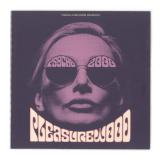
WRWTFWW Records is very happy to announce the release of the new album from legendary Deee-Lite member Towa Tei, celebrating the 30th year of his career. It is available on (orange) vinyl for the first time outside of Japan.
The album, simply titled LP features Japanese music icons Haruomi Hosono and Yukihiro Takahashi (Yellow Magic Orchestra), Yasuaki Shimizu (Kakashi), fellow METAFIVE colleagues Tomohiko Gondo and Yoshinori Sunahara, HANA, Wataru Iga, Shunji Mori, Hidefumi Ino and more.
It was mixed by famed engineer Goh Hotoda and the artwork comes from painter Tomoo Gokita.
Poppy, catchy, dancy, and very funky, Towa Tei’s 10th solo album is 100% delirious ride and a testament to the Deee-Lite member’s ever-expanding creativity, combining simplicity and experimentalism in the most feel-good ways. Indoor, outdoor, and every day of the year, this one will make you dance and smile!
This release is a collaboration between legendary Japanese label Nippon Columbia/Better Days and WRWTFWW Records.
Suche:towa tei
- 1
Hiroshi Watanabe, a musician, photographer, and DJ from the Japanese electronic scene, based in Saitama near Tokyo, has been a prolific figure for twenty-five years. He has explored most major genres of electronic music through more than twenty albums. He proudly becomes the very first Japanese artist of InFiné.
After Ryuichi Sakamoto, he is one of the very few Japanese artists who have gained the favor of Western audiences, alongside notable names such as Cornelius, Towa Tei, DJ Krush, Ken Ishii, Susumu Yokota, and more recently Hiroshi Yoshimura. In Europe, he is best known for his project Kaito, which began in 2001 under the prestigious Kompakt label. The name Kaito, in addition to being the name of his son born the same year, carries a double meaning in Japanese, signifying both "universe" and "secret." These references hint at a spirituality visible in his photographic work and contribute to the elements that make Japanese artists masters of the ambient genre.
The collaboration between Kaito and the InFiné label began with his participation in the compilation "Music Activists 2020 (From Home)," which supported artists affected by the Covid crisis, followed by a remix for the single "Motion" by Rone and Vanessa Wagner in 2023. These initial contributions led to a new album featuring nine tracks of ambient music.
Kaito's new album ‘Collection’ comprises nine ambient and melodic tracks composed during the Covid-19 pandemic. These compositions present a majestic minimal and harmonious therapy in response to the world’s adversities, showcasing the producer’s return to the peak of his art. ‘Collection’ was remastered by another genre legend, the German Rashad Becker, and released on vinyl and CD by InFiné in 2024.
Psycho 2000 - A dark but funky theme that begins with an occulting Italian echo-oscillator drone that is soon followed by pulsating bass and breakbeat drums, leads to tremolo guitars, an ostinato on electric mandolas, strings climbing eloquent ladders, otherworldly electronics, and a cinematic finale.
An evocation of a parade of wooden nutcracker soldiers elaborately dressed in gold-trimmed black uniforms down a wide avenue decorated with mardi gras beads and animal skulls upon golden cobblestones toward a tornado spiralling out purple-hued glissandos and curlicues of elephant smoke.
White Spiritual - Head nod action, the twinkling of a late 60’s Vox Continental II with sickly transistors, the noodling matrix of an intergalactic telephone exchange carried on a bed of bouncy bass with a firm backbeat.
The Johnny Guitar Watson-esque bite and sting of a ‘67 Teisco guitar preludes slabs of unison dark brown moog and organ giving way to the dance of fingers over the black naturals and white sharps of the Continental II.
- A1: Tayuta
- A2: Oshakasyama
- A3: Bagpipe
- A4: Nazonazo
- B1: Nana No Uta
- B2: One Man Live
- B3: Socratic Love
- C1: Mergen Und Gretel
- C2: Rain Sound Child
- C3: Order Maid
- D1: Magic Mirror
- D2: Shout
This is their first new album in almost two years, which is rather short considering the time it took them to prove this theorem.
The songs coexist with a vast amount of musical information, including funk, hip-hop, hard rock, gospel, southern rock, and electronica, and sound open in all directions.
Noda's talent is astonishing, but at the same time, he also uses the metaphor of word play to poke at the truth. Noda's sensitive gaze toward
love and life, which exist side by side with despair, nihilism, and death, cannot be faulted in a work that carefully and skillfully translates such detailed sensitivities into sound. It is an unquestionable masterpiece.
- A1: Say Ahhh
- A2: Mind Melt
- A3: Buttersweet Loving
- A4: River Of Freedom
- B1: Somebody
- B2: When You Told Me You Loved Me
- B3: Stay In Bed, Forget The Rest
- B4: Call Me
- C1: Music Selector In The Soul Reflector
- C2: Sampladelic
- C3: Bring Me Your Love
- C4: Picnic In The Summertime
- D1: Apple Juice Kissing
- D2: Party Happening People
- D3: Dmt (Dance Music Trance)
- D4: What Is This Music?
When one makes mention of Deee-Lite, the 90's house-funk trio of Lady Miss Kier, and DJs Dmitry and Towa Tei, invariably their Billboard smash single “Groove Is In The Heart” will come up, and for good reason. With its Herbie Hancock-sampling bassline, some classic rhymes from Q-Tip, and guest vocals by Parliament-Funkadelic legend Bootsy Collins, the song became an indelible classic of 90s music, a massive commercial hit for Deee-lite and is widely considered one of the greatest dance songs of all time. Although a massive success for the group, “Groove Is In The Heart” led to some pigeonholing from critics and reviewers, who had specific expectations for future records. Rather than deliver more of the same free-wheeling, breezy dance music of World Clique, Deee-lite took a more politically-minded approach with their second album, spurred largely by front-woman Lady Miss Kier, who had a lengthy history of political activism prior to forming the group. 1992's Infinity Within rendered several Dance-chart hit singles, but was not as commercially or critically lauded as its forebear. Deee-lite were undaunted by their change in commercial fortune, regrouping with the addition of junglist DJ Ani, replacing the absent Towa Tei to record their third record. 1994's Dewdrops In The Garden was the result of their efforts, which struck a remarkable balance between the celebratory grooves of World Clique, and the social justice-driven Infinity Within. Lady Miss Kier had done a lot of world-traveling in the time between albums, and the material in Dewdrops was a reflection of her experiences, applying a spirit of global togetherness to their house-funk grooves. Regrettably, Dewdrops In The Garden was not a commercial success, yet it still managed to render its share of #1 Dance Chart singles; the atmospheric techno bounciness of “Bring Me Your Love”, and the spacious funk-house track “Call Me.” Though Deee-lite would disband soon after Dewdrops In The Garden's release, the record remains an unheralded favorite among dance music devotees for its coupling infectiously bright, and soulful melodies, with banging dance-floor grooves, and unshakably optimistic vibes.
- A1: La France Nouvelle
- A2: In Brightest Black
- A3: Tomorrow We Live
- A4: Food For Powder
- A5: Ad Vindicta
- A6: By Tradition
- B1: Dannazione
- B2: Bring Me The Head Of Romanez
- B3: The Western Wall
- B4: White Flags
- B5: Jupiter
- B6: Mar'yana
- B7: Men Against Time
- B8: Herculaneum
A Man Against Time...
Die Schatten des Krieges verdunkeln Europa. Die 20er Jahre des neuen Jahrtausends erwecken beklemmende Erinnerungen an jene Zwischenkriegszeit einhunderte Jahre zuvor, aus der unweigerlich der Zweite Weltkrieg entstand. Nun steht die Ukraine in Flammen, täglich bedrängt von russischen Angriffen. Und Europa ist zerrissen in diesem Konflikt, der oft nur wie der Vorbote eines viel größeren Katastrophe wirkt.
Jerome Reuter hat mit seiner Band ROME die Musik als Mittel gewählt, Europas Schicksal zu kommentieren und zu verarbeiten. Seit 2005 schreibt er Lieder und Konzeptalben, die sich den Schlüsselmomenten der Geschichte widmen, ihre Mythen und Narrative reflektieren und kommentieren. Dabei behandelt er historische Themen aus einer künstlerischen Distanz, dekonstruiert Ereignisse und Ideologeme, betrachtet sie aus unterschiedlichsten Perspektiven und gibt sie uns als Frage zurück. Er wird vom mal melancholischen, mal wütenden Zeitzeugen zum teilnehmenden Beobachter, aus dessen individualsubjektiver Sicht die Dinge unmittelbar mit Pathos aufgeladen erscheinen. Mit ROME sollen wir erkennen, beobachten, erschauern und erschrecken, aber auch neu erstrahlen: "We walk in brightest Black towards the Sun".
Reuters Songwriting gleicht oft einer Reise, auf der sich visuelle Eindrücke mit persönlichen Gesprächen mischen. Als lese man in seinem Tagebuch nach einem turbulenten Tag, der persönlich reflektiert und schließlich in ikonische Metaphern gegossen wird. "Civitas Solis" soll ausdrücklich nicht als Konzeptalbum verstanden werden, wie wir es zuvor so oft von ROME erleben durften. Immer schien sich Reuter ganz jenen Themen zu verschreiben, ging in emotionaler Hingabe und Identifikation auf, nur um dann wieder Distanz einzunehmen, um das Geschehen aus einer neuen Perspektive und in anderem Licht zu betrachten.
Jerome Reuter ist ein Suchender auf den verschlungenen Wegen der Geschichte, getrieben von einer Sehnsucht nach Europa, dem Mythos, der Utopie - zwischen aufgeklärtem Manifest und irrationaler Festung. Als zentrale Metapher dient ihm diesmal Civitas solis, der "Sonnenstaat" aus der utopischen Schrift des Dominikaners Tommaso Campanella (1623). Darin wird der wirtschaftliche und politische Aufbau eines idealen Staates imaginiert - eine der ersten gesellschaftlichen Utopien. In der Welt von ROME kann dieses Modell höchst ambivalent gelesen werden, denn Reuter bewegt sich von jeher assoziativ zwischen Anarchismus und Traditionalismus.
Stilistisch bedient sich ROME auf "Civitas Solis" einer ungewöhnlichen Bandbreite - angelegt zwischen der Liedermacherkunst von Jacques Brel, Leonard Cohen und Townes van Zandt, kalten Dark Wave-Akkorden und akzentuierten Akustikgitarren. Das Wechselbad aus martialischen Hymnen und introspektiven Balladen kehrt zu zahlreichen Schlüsselmomenten aus zwanzig Jahren Bandgeschichte zurück und wie alle ROME-Alben wirft es vor allem Fragen auf. Provozierende Fragen. Was wird unsere Zukunft bringen? Und was bedeutet das für Europa? Uns bleibt nichts übrig, als in die Fern blicken, "standing on the Western Wall". Jerome Reuter ist ein "Man against Time" und mit ihm bezeugen wir den Sturm.
- A1: Pearl & The Oysters - Koi Wa Momoiro
- A2: Mei Ehara - Jusho Futei Mushoku Tei Shunyu
- A3: Rei Harakami - Owari No Kisetsu
- B1: John Carroll Kirby Ft. The Mizuhara Sisters - Fuku Wa Uchi Oni Wa Soto
- B2: Jerry Paper - Bara To Yaju
- B3: Se So Neon - Party
- C1: Yuma Abe - Fuyu Goe
- C2: Mac Demarco - Boku Wa Chotto
- C3: Kukuku - Choo Choo Gatagoto
- C4: Akiko Yano - Rock-A-Bye My Baby
- D1: Sam Gendel - Koi Wa Momoiro
- D2: Cornelius - Bara To Yaju
- D3: Towa Tei - Ai Ai Gasa
Zum 50sten Jubiläum (genau genommen 51sten) des 1973 erschienenen Solo-Debüts von Haruomi Hosono - dem Kultalbum 'Hosono House' - haben sich auf dieser Compilation verschiedenste Künstler versammelt, um mit ihren eigenen Neuinterpretationen einem Werk Tribut zu zollen, dessen Wirkung und Einfluss weit über Japan hinausreicht und auch heute noch spürbar ist. So nannte u.a. Harry Styles es als eine der Hauptinspirationsquellen für sein Grammy-gekröntes Album 'Harry's House'.
Bekanntheit erreichte Haruomi Hosono auch mit dem Elektropop-Trio Yellow Magic Orchestra, dem auch Yukihiro Takahashi und Ryuichi Sakamoto angehörten.
Die Compilation wurde von Josh Bonati gemastert, das Vinyl für ein besseres Hörerlebnis mit 45rpm geschnitten.
Auch für das Artwork ließ man sich durch das Original inspirieren von Tomoo Gokita.
- 2LP: ( inkl. OBI & Einleger mit Archivfoto sowie bedruckter Innenhülle)
Clear Vinyl
Die meisten Bands schreiben Songs über Alltagserlebnisse, Liebesgeschichten, Gedanken zur Welt. Public Service Broadcasting sind anders. Das Quartett aus London taucht tief in die Archive ein und macht aus historischen Begebenheiten packende Konzeptalben. Mit Samples aus alten Nachrichtenfilmen, Archiv- und Propagandamaterial formt die Band packende Geschichten, getragen von cineastischen, meist instrumentalen Rock-, Elektro- und Orchesterklängen.
Dies gilt auch für das neue Album: "The Last Flight" handelt von der letzten Reise der US-Flugpionierin Amelia Earhart, die mit nur 25 Jahren begann, eine Reihe von Rekorden aufzustellen: Sie überquerte als erste Frau im Alleinflug den Atlantik und Pazifik, ihr gelangen mehrere Geschwindigkeits- und Streckenrekorde. Doch ihr Plan, als erste Frau die Welt am Äquator zu umrunden, ging nicht auf. Sie überquerte Amerika, Afrika, den Nahen Osten und Asien, erreichte aber nie die letzte Zwischenstation vor der finalen Pazifik-Etappe, die Howlandinsel. Die bis dahin grösste Suchaktion der Luftfahrtgeschichte mit 4 Flugzeugen und 8 Kriegsschiffen blieb erfolglos. Stattdessen stieg Amelia Earhart in mythische Höhen auf, die nur den mutigsten Abenteurern vorbehalten sind.
Songschreiber J. Willgoose, Esq. war vom "Mythos Earhart" fasziniert: "Ich wollte eine Geschichte mit einer Frau im Mittelpunkt erzählen, weil ein überwältigender Teil des Archivmaterials, zu dem wir Zugang haben, männlich geprägt ist." Aufgenommen im Londoner Bandstudio, mit einem Tag für die Streicher des London Contemporary Orchestra in The Church, sind auf "The Last Flight" u.a. Carl Broemel (My Morning Jacket) an der Eno-artigen Pedal-Steel-Gitarre, die Berliner Stimmen Andreya Casablanca (Gurr)und EERA, sowie Kate Stables (This Is The Kit) zu hören.
Die Zuhörer mögen überrascht sein, dass das Album keine originalen Zeugenaussagen aus erster Hand enthält, sondern neu aufgenommene Dialoge von Schauspielern, darunter Kate Graham, die Amelia vorlas. Diese wurden behutsam bearbeitet, um ihnen Klangeigenschaften und Verzerrungen der 1930er Jahre zu verleihen. Als Ausgangspunkt dienten Earharts Aufzeichnungen aus erster Hand, darunter "Last Flight" von 1937, sowie die Biografie "East To The Dawn" von Susan Butler.
Die meisten Bands schreiben Songs über Alltagserlebnisse, Liebesgeschichten, Gedanken zur Welt. Public Service Broadcasting sind anders. Das Quartett aus London taucht tief in die Archive ein und macht aus historischen Begebenheiten packende Konzeptalben. Mit Samples aus alten Nachrichtenfilmen, Archiv- und Propagandamaterial formt die Band packende Geschichten, getragen von cineastischen, meist instrumentalen Rock-, Elektro- und Orchesterklängen.
Dies gilt auch für das neue Album: "The Last Flight" handelt von der letzten Reise der US-Flugpionierin Amelia Earhart, die mit nur 25 Jahren begann, eine Reihe von Rekorden aufzustellen: Sie überquerte als erste Frau im Alleinflug den Atlantik und Pazifik, ihr gelangen mehrere Geschwindigkeits- und Streckenrekorde. Doch ihr Plan, als erste Frau die Welt am Äquator zu umrunden, ging nicht auf. Sie überquerte Amerika, Afrika, den Nahen Osten und Asien, erreichte aber nie die letzte Zwischenstation vor der finalen Pazifik-Etappe, die Howlandinsel. Die bis dahin grösste Suchaktion der Luftfahrtgeschichte mit 4 Flugzeugen und 8 Kriegsschiffen blieb erfolglos. Stattdessen stieg Amelia Earhart in mythische Höhen auf, die nur den mutigsten Abenteurern vorbehalten sind.
Songschreiber J. Willgoose, Esq. war vom "Mythos Earhart" fasziniert: "Ich wollte eine Geschichte mit einer Frau im Mittelpunkt erzählen, weil ein überwältigender Teil des Archivmaterials, zu dem wir Zugang haben, männlich geprägt ist." Aufgenommen im Londoner Bandstudio, mit einem Tag für die Streicher des London Contemporary Orchestra in The Church, sind auf "The Last Flight" u.a. Carl Broemel (My Morning Jacket) an der Eno-artigen Pedal-Steel-Gitarre, die Berliner Stimmen Andreya Casablanca (Gurr)und EERA, sowie Kate Stables (This Is The Kit) zu hören.
Die Zuhörer mögen überrascht sein, dass das Album keine originalen Zeugenaussagen aus erster Hand enthält, sondern neu aufgenommene Dialoge von Schauspielern, darunter Kate Graham, die Amelia vorlas. Diese wurden behutsam bearbeitet, um ihnen Klangeigenschaften und Verzerrungen der 1930er Jahre zu verleihen. Als Ausgangspunkt dienten Earharts Aufzeichnungen aus erster Hand, darunter "Last Flight" von 1937, sowie die Biografie "East To The Dawn" von Susan Butler.
- A1: Ifo (Identified Flying Object) (Identified Flying Object)
- A2: Runaway
- A3: Heart Be Still
- A4: I Won't Give Up
- B1: Vote, Baby, Vote
- B2: Two Clouds Above Nine (Feat Jamal-Ski)
- B3: Electric Shock
- C1: I Had A Dream I Was Falling Through The Ozone Layer
- C2: Fuddy Duddy Judge (Feat Michael Franti)
- C3: Pussycat Meow
- D1: Thank You Everyday
- D2: Rubber Lover
- D3: Come On In, The Dreams Are Fine (Feat Arrested Development)
Never Before Reissued On Vinyl! After the smash success of Deee-lite's debut record World Clique, and their now-iconic dance club hit "Groove Is In The Heart", anticipation was high for a follow-up from the New York-based dance music trio of vocalist Miss Lady Kier, and producers DJ Towa Tei and Super DJ Dmitri.
For their sophomore record Infinity Within, Deee-Lite opted to venture in a different direction of sorts. The club-embracing disco-funk sounds and groovy vibes of World Clique were everpresent, but while that record contained themes of global togetherness, Infinity Within took a more socially aware route, with politically charged themes of environmentalism, (To show their bonafidese, Infinity Within was one of the first titles to be issued in an ecologically friendly Eco-pak.) sexual liberation, voting rights, and critique of the juidicial system.
Taking major inspiration from the ancient Chinese divination text I Ching, Miss Lady Kier would later explain that Infinity Within was a natural progression for the group, not a departure. Elaborating in an interview with Reflex Magazine, she remarked: "The reason why we titled this new album Infinity Within to balance out World Clique’s idea of looking outward and thinking about unity is if you look outward, you should look inward to see what you’re doing as an individual.
Because people seem to be so passive I’d like to see people turn their TV sets off and start protesting." Infinity Within was not the overwhelming commercial success that World Clique was, but it's tracks shined on the Billboard Dance Club charts, with it's lead single "Runaway" reaching #1 on the chart, bolstered by a Gus Van Sant-directed music video.
The record also featured a slew of top-tier collaborators, including Parliament veterans Bernie Worrell, Maceo Parker and Bootsy Collins (Returning from their appearances on World Clique) as well as Bootsy's brother Catfish Collins, legendary house DJ Statoshi Tomiie, and rap verses from Michael Franti, Jamal-Ski, and a pre-"Tennessee" Arrested Development.
Even though critical reaction at the time was cooler than their debut, over the years Infinity Within has been considered an underrated
gem of 90's dance, a classic of early club and house music, and a remarkable follow-up for Deee-Lite.
- A1: After Minneapolis (Face Toward Mo
- Rning)
- A2: Streets Of Philadelphia
- A3: Chicago Blues
- A4: Baltimore
- A5: By The Time I Get To Phoenix
- A6: Do You Know What It Means To Miss New Orleans?
- A7: Manhattan
- A8: My Heart In San Francisco (Holiday) (Holiday)
- A9: That’s New England
- A10: Alabama (Intro) (Intro)
- A11: Stars Fell On Alabama
- A12: Alabama
- A13: Where Are You?
Der gefeierte Saxophonist Joshua Redman jetzt neu bei Blue Note Records!
Sein Debüt beim Label trägt die Frage „where are we“ im Titel und ist ein sanftes, stimmungsvolles Werk, das sich von Kitsch jedoch weit fernhält. Die Songtitel geben preis, dass es hier um Amerika geht, und um das, was das heutige Amerika für Redman und die anderen an diesem Album Beteiligten bedeutet.
Ein großer Teil des Albums besteht aus bekannten Jazz- und Pop Standards, die in der Neuinterpretation Joshua Redmans immer wieder ein Gefühl des Neuentdeckens bieten.
„where are we“ ist Joshua Redmans erstes Projekt mit durchgehender Beteiligung einer Sängerin, der großartigen Neuentdeckung Gabrielle Cavassa, die mit ihrer geschmeidigen, lässig-intimen Stimme Akzente setzt, genauso wie Redmans Band aus Pianist Aaron Parks, Bassist Joe Sanders und Schlagzeuger Brian Blade, sowie die Special Guests Nicholas Payton an der Trompete, Kurt Rosenwinkel und Peter Bernstein an der Gitarre sowie Joel Ross am Vibraphon.
[a] A1 . After Minneapolis (Face Toward Mo[u]rning) (Face Toward Mo
Über Iris aus dem Raum Stuttgart/Esslingen ist nicht viel bekannt. 1981 hat die siebenköpfige Band ihr einziges Album für das kleine Label PEAK aufgenommen, die natürlich nicht die finanziellen Mittel hatten, Iris zu etablieren. Zudem klang das anspruchsvolle und dennoch teils hart rockende Material nach dem, was man allgemein als Krautrock bezeichnet, oder bezeichnen kann. Somit war ein Drängen in die damals angesagte NDW-Richtung absolut ausgeschlossen.
Der Übergang von den späten Siebzigern zu den frühen Achtzigern war musikalisch auch in Deutschland extrem spannend. Iris hielten stilistisch eher an den Siebzigern fest, was ihnen heute mit dieser Wiederveröffentlichung posthum neue Fans bringen wird. Auch in der Hardrock- und Heavy Metal-Szene gibt es immer mehr junge Bands, die mit der Klangästhetik spielen, die auch auf „Iris“ zu hören ist. Ein
„veralteter Sound“ wird wieder modern.
Die CD und LP kommt mit Liner Notes von Fachmann Michael Lörber. Ausserdem wurden alle Komponenten des Albums, also auch das Textblatt, gescannt und hinzugefügt. Den Audiotransfer hat Patrick Engel (Sony Music, High Roller, etc.) vorgenommen, das Remastering erfolgte durch Neudi.
Ein in Zukunft nicht mehr vergessenes Stück deutscher Rockgeschichte!
Not much is known about Iris from the Stuttgart / Esslingen area.
In 1981, the seven-member band recorded their only album for the small label PEAK, which of course did not have the financial means to mainstream Iris. In addition, the sophisticated yet sometimes hard rocking stuff sounded like what is generally called, or can be called, Krautrock. Thus, a push towards the NDW style that was in vogue at the time was absolutely out of the question.
The transition from the late seventies to the early eighties was musically extremely exciting, even in Germany. Iris stuck stylistically more to the seventies, which will bring them new fans posthumously today with this re-release. Also in the hard rock and heavy metal scene there are more and more young bands playing with the sound aesthetics that can also be heard on „Iris“. An „outdated sound“ is becoming modern again.
The CD and LP comes with liner notes by expert Michael Lörber. In addition, all components of the album, including the lyric sheet, were scanned and added. The audio transfer was done by Patrick Engel (Sony Music, High Roller, etc.), the remastering was done by Neudi.
A piece of German rock history that will not be forgotten in the future!
‘Where is Agartha? What is the specific region in which it lies? Along what road, through what civilizations, must one walk in order to reach it?.’ Saint-Yves d’Alveydre in 1886
Agartha, the debut full-length album by Japanese producer Wata Igarashi, is a mysterious, divine thing. Named for the mythical secret kingdom, understood as a complex maze of underground tunnels, perhaps designed by Martians who colonised the Earth tens of thousands of years ago, it’s a similarly mystical, perhaps even cosmic trip – but this time, exploring an inner, deeply personal cosmos. Beautifully detailed and bustling with rich incident, it takes Igarashi’s music to new places, which still retaining his unique sonic imprimatur; in this respect, it’s perfectly at home with Kompakt, a label that’s always encouraged artists to make the visionary music they need to create, to take risks and make sideways steps into uncharted territory.
An eloquent producer and DJ, Igarashi has been releasing techno for eleven years now, appearing on such imprints as The Bunker NY, Delsin, Midgar, and Time To Express; he has also self-released his productions via his WIP net label. Throughout, Igarashi has consistently explored his unique approach to techno and electronic music, one that’s eloquent and poised, even when it shifts into more psychedelic terrain; he’s a master at balancing the sensual and the functional, and he has an unerring ear for the right texture, the right tone, at the right time. He brings all of this into Agartha, his most thorough-going expression of self to date.
For Agartha, Igarashi had a strong concept he wanted to explore. Visualising specific scenes from an imaginary film based on the titular secret kingdom, he created soundtracks for those scenes, spending time during the pandemic in his studio, working away carefully at the ten tracks here. Given his background in creating music for television and advertisements, Igarashi is well-placed to explore the marriage of the sonic and the visual in such intimate ways, but freed from commercial concerns, he let his imagination run riot. He also drew on a rich palette of musical influences – techno is in there, of course, but you can also hear the smoky, improvised jazz of the likes of Miles Davis (to whom the album’s title is an indirect nod), and the minimalism and systems music of Steve Reich.
The latter is particularly pronounced on the gorgeous, beatless drift of “Floating Against Time”, where an arpeggiated sequence lingers, lovingly, around your ears for nine blissful minutes, coasting across swooning drones and waves of ambient noise. “Ceremony Of The Dead”, originally composed as part of a Sony 360 Reality Audio spatial sound concert, is a deep pass into systems composition, with various patterns overlaid and interlocking, before a wordless vocal rises from the depths, a gorgeous counterpoint to the swarming textures that gather across the track. On the other hand, tracks like “Burning” and “Subterranean Life” nudge toward Fourth World territory, painting deluxe dreamscapes of uncertain provenance; the title cut is an abstract drift-world, Igarashi painting an alien tableau dotted by shape-shifting creatures.
Agartha’s conceptual framework means that everything on the album sits perfectly together; listening to it in one sitting is a dizzying, lush experience. Its imaginings of inner landscapes recall, in some respects, the nautical, aqueous mythologies of the Drexciyan universe, though from different perspectives. But the result is Igarashi’s own creation, a deluxe, enchanting trip through the visionary Agartha of this unique producer’s cinematic mind’s-eye.
Wo liegt Agartha? In welcher spezifischen Region liegt es? Auf welchem Weg, durch welche Zivilisationen muss man gehen, um dorthin zu gelangen?'
Saint-Yves d'Alveydre im Jahr 1886
Agartha, das Debütalbum des japanischen Produzenten Wata Igarashi, ist ein geheimnisvolles, göttliches Ding. Benannt nach dem mythischen, geheimen Königreich, das als ein komplexes Labyrinth unterirdischer Tunnel verstanden wird, die vielleicht von Marsmenschen angelegt wurden, die vor Zehntausenden von Jahren die Erde kolonisierten, ist es eine ähnlich mystische, vielleicht sogar kosmische Reise - aber dieses Mal erforscht es einen inneren, zutiefst persönlichen Kosmos. Wunderschön detailliert und voller reichhaltiger Begebenheiten, führt es Igarashis Musik an neue Orte, die dennoch seine einzigartige klangliche Handschrift bewahren. In dieser Hinsicht hat es bei Kompakt ein perfektes Zuhause gefunden - einem Label, das Künstler immer ermutigt hat, jene visionäre Musik zu machen, Risiken einzugehen und seitwärts Schritte in unbekanntes Terrain zu tun.
Der eloquente Produzent und DJ Igarashi veröffentlicht seit elf Jahren Techno auf Labels wie The Bunker NY, Delsin, Figure und Time To Express; außerdem hat er einige Produktionen über sein Label WIP net selbst veröffentlicht. Dabei hat Igarashi stets seinen einzigartigen Ansatz für Techno und elektronische Musik verfolgt, der kontrolliert und ausgeglichen ist, selbst wenn er sich in psychedelisches Terrain begibt; er ist ein Meister der Balance zwischen dem Sinnlichen und dem Funktionalen und hat ein untrügliches Gespür für die richtige Textur, den richtigen Ton zur richtigen Zeit. All das bringt er in Agartha ein, dem bisher umfangreichsten Ausdruck seiner selbst.
Für Agartha hatte Igarashi ein starkes Konzept, das er erforschen wollte. Er stellte sich bestimmte Szenen eines imaginären Films vor, der auf dem titelgebenden geheimen Königreich basiert, und schuf Soundtracks für diese Szenen. Während der Pandemie verbrachte er Zeit in seinem Studio und arbeitete sorgfältig an den zehn Tracks. Mit seinem Hintergrund als Komponist von Fernseh- und Werbemusik ist Igarashi prädestiniert dafür, die Verbindung von Klang und Bild auf solch intime Weise zu erforschen, aber frei von kommerziellem Dünkel ließ er seiner Fantasie freien Lauf. Er schöpfte auch aus einer reichen Palette musikalischer Einflüsse - Techno ist natürlich dabei, aber man hört auch den rauchigen, improvisierten Jazz von Miles Davis (an den der Titel des Albums eine indirekte Anspielung ist) und den Minimalismus und die Systemmusik von Steve Reich.
Letzteres ist besonders ausgeprägt in dem wunderschönen, beatlosen "Floating Against Time", wo eine arpeggierte Sequenz neun Minuten lang liebevoll um die Ohren fliegt und über schwelende Drones und Wellen von Umgebungsgeräuschen gleitet. "Ceremony Of The Dead", ursprünglich als Teil eines Sony 360 Reality Audio-Raumklangkonzerts komponiert, ist ein tiefes Eintauchen in eine Systemkomposition, bei der sich verschiedene Muster überlagern und ineinander greifen, bevor sich ein wortloser Gesang aus der Tiefe erhebt, ein wunderschöner Kontrapunkt zu den wimmelnden Texturen, die sich über den Track legen. Andererseits bewegen sich Tracks wie "Burning" und "Subterranean Life" in Richtung der Vierten Welt und malen luxuriöse Traumlandschaften ungewisser Herkunft; der Titeltrack ist eine abstrakte Scheinwelt, in der Igarashi ein außerirdisches Tableau malt, das von formwandelnden Kreaturen übersät ist.
Der konzeptionelle Rahmen von Agartha ermöglicht, dass alles auf dem Album perfekt zusammenpasst; es in einem Zug durchzuhören ist eine schwindelerregende, opulente Erfahrung. Wata's Vorstellungen von inneren Landschaften erinnern in gewisser Hinsicht an die nautischen, wässrigen Mythologien des drexciyanischen Universums, wenn auch aus einer anderen Perspektiven betrachtet. Aber das Ergebnis ist Igarashis ureigene Schöpfung, ein luxuriöser, bezaubernder Trip durch das visionäre Agartha dieses einzigartigen Produzenten mit seinem cineastischen Blick.
Psycho 2000 - A dark but funky theme that begins with an occulting Italian echo-oscillator drone that is soon followed by pulsating bass and breakbeat drums, leads to tremolo guitars, an ostinato on electric mandolas, strings climbing eloquent ladders, otherworldly electronics, and a cinematic finale.
An evocation of a parade of wooden nutcracker soldiers elaborately dressed in gold-trimmed black uniforms down a wide avenue decorated with mardi gras beads and animal skulls upon golden cobblestones toward a tornado spiralling out purple-hued glissandos and curlicues of elephant smoke.
White Spiritual - Head nod action, the twinkling of a late 60’s Vox Continental II with sickly transistors, the noodling matrix of an intergalactic telephone exchange carried on a bed of bouncy bass with a firm backbeat.
The Johnny Guitar Watson-esque bite and sting of a ‘67 Teisco guitar preludes slabs of unison dark brown moog and organ giving way to the dance of fingers over the black naturals and white sharps of the Continental II.
Der berühmte Filmkomponist John Williams und Starcellist Yo-Yo Ma sind auf diesem einzigartigen Album zu erleben, das Ausdruck ihrer jahrzehntelangen Zusammenarbeit und Freundschaft ist."A Gathering of Friends" enthält zwei Konzerte, die John Williams für Yo-Yo Ma geschrieben hat, sowie Auszüge aus seinen Filmmusiken zu "Schindlers Liste", "Lincoln" und "München". John Williams selbst dirigiert die New Yorker Philharmoniker. John Williams und Yo-Yo Ma lernten sich vor etwa vier Jahrzehnten kennen, als der Oscar-prämierte Komponist Dirigent des Boston Pops Orchestra wurde und Ma gerade seine Solokarriere begann. Ihre Zusammenarbeit erstreckt sich von gemeinsamen Konzerten, der Zusammenarbeit bei Filmmusiken bis hin zur Amtseinführung von Präsident Barack Obama im Jahr 2008 und ist von einer dauerhaften gegenseitigen Wertschätzung geprägt. Von ihren ersten Begegnungen an erkannte jeder im anderen das Verständnis, dass, wie Williams es einfach ausdrückt, "Musik unser Sauerstoff ist".Im Mittelpunkt von "A Gathering of Friends" steht die Ersteinspielung von John Williams' neu überarbeiteter Version seines Cellokonzerts, das er 1994 für Ma komponierte und das beide bereits 2001 für Sony Classical aufnahmen. Während der Aufführungen des viersätzigen Konzerts in den letzten drei Jahrzehnten nahm Williams bereits erhebliche Änderungen an der Partitur vor. Ma merkte an, dass die neue Version sogar "größere Änderungen, strukturelle Änderungen" enthält, mit einem Schlusssatz, der "ein einziger glorreicher Song ist". Ebenfalls auf "A Gathering of Friends" zu hören sind neue Arrangements, die John Williams für Yo-Yo Ma von drei Stücken aus seiner mit dem Oscar ausgezeichneten Filmmusik zu "Schindlers Liste" geschaffen hat sowie ein neues Arrangement für Cello und Streicher von "With Malice Toward None" aus der Filmmusik zu "Lincoln" von 2012. Das Album schließt mit einem Duo-Arrangement für Ma und den Gitarristen Pablo Sáinz-Villegas von "Prayer for Peace" aus dem Film "München" von 2005. Alle drei Filmmusiken sind Teile der langjährigen Partnerschaft von Williams mit Regisseur Steven Spielberg.Das andere Konzertstück auf "A Gathering of Friends" ist "Highwood's Ghost", ein Stück von John Williams für Cello und Orchester, das die Freundschaft zwischen Williams und Ma im Bezug zum legendären Komponisten und Dirigenten Leonard Bernstein dokumentiert. Williams komponierte das Werk zur Feier des 100-jährigen Jubiläums von Leonard Bernstein in Tanglewood im Sommer 2018 und schrieb eindringliche Solopartien für Ma und die Soloharfenistin des Boston Symphony Orchestra, Jessica Zhou, die auch bei dieser Aufnahme mit dem New York Philharmonic die Harfe spielt."A Gathering of Friends" ist das musikalische Highlight einer langjährigen Freundschaft und ein großartiges Album für alle Fans der Musik von John Williams und Yo Yo Ma.
- A1: Mercy (Feat Laurel Halo)
- A2: Marilyn Monroe's Leg (Beauty Elsewhere) (Beauty Elsewhere)
- A3: Noise Of You
- B1: Story Of Blood (Feat Weyes Blood)
- B2: Time Stands Still (Feat Sylvan Esso)
- B3: Moonstruck (Nico's Song)
- C1: Everlasting Days (Feat Animal Collective)
- C2: Night Crawling
- C3: Not The End Of The World
- D1: I Know You're Happy (Feat Tei Shi)
- D2: The Legal Status Of Ice (Feat Fat White Family)
- D3: Out Your Window
Violet Vinyl[25,84 €]
For nearly 60 years, John Cale has been reimagining how his music is made, sounds, and even works. MERCY, Cale’s first full album in a decade, moves through true dark-night-of-the-soul electronic torment toward vulnerable love songs and hopeful considerations for the future with the help of some of music’s most curious young minds. Cale has always searched for new ways to explore old ideas of alienation, hurt, and joy; MERCY is the latest transfixing find of this unsatisfied mind.
John Cale announces MERCY, his first new album of original songs in a decade, out January 20th via Double Six / Domino. For nearly 60 years, or at least since he was a young Welshman who moved to New York and formed The Velvet Underground, Cale has been reinventing his music with dazzling and inspiring regularity. There was the bewitching chamber folk of Paris 1919 followed instantly by the gnarled rock of Fear, the provocative and spare song cycle Music for a New Society followed more than 30 years later by mighty and unabashed electronic updates. Once again, here is Cale, reimagining how his music is made, sounds, and even works. His engrossing 12-track MERCY moves through true dark-night-of-the-soul electronics toward vulnerable love songs and hopeful considerations for the future.
On MERCY, Cale enlists some of music’s most curious young minds: Animal Collective, Sylvan Esso, Laurel Halo, Tei Shi, Actress. They’re only some of the astounding cast here, brilliant musicians who climb inside Cale’s consummate vision of the world and help him redecorate there. Cale turned 80 in March, and he’s watched as many peers have passed away, particularly during the last decade. MERCY is the continuation of a long career’s work with wonder. Cale has always searched for new ways to explore old ideas of alienation, hurt, and joy; MERCY is the latest transfixing find of this unsatisfied mind.
The writings and recordings that shaped MERCY piled up for years, as Cale watched society totter at the brink of dystopia. Trump and Brexit, Covid and climate change, civil rights and right-wing extremism—Cale let the bad news of the day filter into his lines, whether that meant contemplating the sovereignty and legal status of sea ice melting near the poles or the unhinged arming of Americans. Lessons from a life (still being) richly lived floated to the fore, too, nodded to on the previously released “NIGHT CRAWLING.” If we’re always regretting our past, aren’t we conscripting ourselves to permanent disappointment?
During “STORY OF BLOOD,” after the piano prelude gives way to a frame-rattling beat and synthesizers that feel like sunshine splashed across a snowfield, the voices of Cale and Weyes Blood’s Natalie Mering slide past one another, two phantoms trying to find a partner amid the modern din. “Swing your soul,” they both sing in aspiration. In the final verse, Cale remembers this existence is not just about himself. “I’m going back to get them, my friends in the morning. Bring them with me into the light.” The accompanying video by Emmy-winning director Jethro Waters is a mix of disturbing and serene featuring both Cale and Weyes Blood. Its deep tones and religious images emphasize the track’s dark, spiritual mood.
Cale elaborates: “I’d been listening to Weyes Blood’s latest record and remembered Natalie’s puritanical vocals. I thought if I could get her to come and sing with me on the ‘Swing your soul’ section, and a few other harmonies, it would be beautiful. What I got from her was something else! Once I understood the versatility in her voice, it was as if I’d written the song with her in mind all along. Her range and fearless approach to tonality was an unexpected surprise. There’s even a little passage in there where she’s a dead-ringer for Nico.”
Repressed finally. Sometimes a single is released that reaches such dizzying heights of success that it becomes a pinnacle of the decade they're indelibly tied to. "Groove Is In The Heart" by dance-house trio Deee-Lite is one such single. The infectiously quirky, and eminently danceable track is prominently based around samples of "Bring Down The Birds" by Herbie Hancock, and "Get Up" by Vernon Burch, among many others, (Courtesy of dual producers DJs Dmitry and Towa Tei) paired with top-tier guest contributions from JB's veterans Maceo Parker and Fred Wesley, background vocals from Parliament-Funkadelic's own Bootsy Collins, and even a guest rap from Q-Tip, not to mention frontwoman Lady Miss Kier's own siren-like vocals. All disparate and disconnected elements, but ones that would come together to form dancehall greatness, and chart-topping success worldwide for Deee-Lite. "Groove Is In The Heart" managed to reach #4 on the Billboard Hot 100 chart, but excelled at its best on the Hot Dance Club Play chart, where it reached to the #1 spot. On top of its success in America it was a smash internationally, climbing the heights of the charts in the UK, Canada, Australia, and a variety of other countries. It remained in heavy rotation for much of 1990 on MTV as well. As the decades went on, "Groove Is In The Heart" would be ranked among the greatest dance tracks of all time, as well as one of the greatest songs of the 1990s by VH1, Pitchfork, Buzzfeed, and many more. "Groove Is In The Heart" was a potent single for Deee-Lite to lead with, but the album bearing it was nothing to slouch at either. The group's debut record, 1990's World Clique was released to major commercial and critical success, owing just as much to its addictive hybrid of seductive retro aesthetics, modern dancefloor flair, and esoteric, socially conscious messaging, on the back of celebratory club staples like "Power Of Love", "Good Beat", "E.S.P.", and of course "Groove Is In The Heart." World Clique would reach top 20 charts in the US, UK, and Canada in sales, as well as earn rave reviews from NME, Chicago Sun-Times, Rolling Stone, and Slant Magazine, who called it an "essential pop album." A1. Good Beat A2. Power Of Love A3. Try Me On…I’m Very You A4. Smile On A5. What Is Love? B1. World Clique B2. E.S.P. B3. Groove Is In The Heart B4. Who Was That? B5. Deep Ending
- A1: All Ausländer Go To Heaven (Reprise) 05 42
- A2: Deutsche Pässe 02 01
- A3: Professional People 01 53
- A4: The Price Of Teilhabe 03 02
- A5: Automobile Love 02 27
- B1: Bürogebäude In Und Um Frankfurt 04 57
- B2: Dark Boys 01 52
- B3: Freizeit ´20 03 15
- B4: The Good Policeman 03 01
- B5: Proposal For A Worker`s Anthem At Dmu2 Daglfing 02 44
- C1: Doggerland 03 43
- C2: All We'll Ever Need 03 18
- C3: In Every City, In Every Aldi The Blood Of My Brothers And Sisters Taints Your Spargel 03 11
- C4: The Crowd 02 12
- C5: Home 02 59
- D1: Soziokultur 02 10
- D2: Transatlantic Ideology 02 58
- D3: Mjunikcentral Is A Dangerous Place, We Need More Guns To Keep You Safe 3 45
- D4: Wohlfahrt 03 45
In view of the immense Black Lives Matter mobilisation in reaction to the murder of George Floyd and the comparatively meagre societal reaction to the attack in Hanau, the question arises: How come our society does not show the same empathy and solidarity towards its own fellow citizens with Kurdish, Turkish, Bulgarian, Bosnian, Afghan migrant backgrounds or members of the Roma and Sinti?
How limited is our postcolonial discourse if we are unable to address the racist exploitation of those who repair our cars, deliver our parcels or harvest our asparagus?
It’s all a sham. Shake it off like a biometric photograph. Shake off that false consciousness. The Black Diaspora is a transatlantic lie invented by music curators and journalists. Embrace this nuanced return to structures and superstructures, to articulations and historical constellations as analytical tools.
Allow me to dampen your expectations. This is not the sound of decolonisation. This is no compilation of BLM protest songs. This is no celebration of Black emancipatory struggles. You will not be able to play this at your hip post-pandemic house party. This will not go down well with your woke friends. This is music for the square in the room. For that reluctant BAME/Person of Color repelled by your fetishisation of the African-American experience.
This is music for gated communities. This is Fehler Kuti singing of class relations, not of identities and positionalities. This is Fehler Kuti resisting.
Listen to these songs of infrastructure and appraisal of the welfare state. Join me in mourning the broken promises of prosperity for all. Send that “Ausländer“ of your mind to heaven. Colonialism fucked you up. Platform Capitalism is keeping you in chains. Are we to unionise all human and non-human workers at Amazon? Will modernity always have that "forever nigger“? What about those dispossessed field hands harvesting your asparagus?
All is lost. The system is rigged. Because all histories, gestures and identities have been absorbed into this late capitalist apparatus we call diversity. It can integrate anything and anyone. It made me. It is the price of the ticket. And it is unable to challenge its own premise of an atomised society. As if you and I had so little in common.
They will try and help you. They will build a museum for your history and a scholarship program for your future. I warn you. Don‘t let them give you a name. Resist appellation. Don’t get that German passport. Don‘t eat asparagus.
Fehler Kuti, Spring 2021
All songs by Julian Warner. Produced by Markus Acher and Tobias Siegert.
Markus Acher – drums, percussion, backing vocals Micha Acher – sousaphone, trumpet Cico Beck – synthesizer Jenny Bohn – backing vocals Pacifico Boy – vocals Katja Kobolt – spoken word Theresa Loibl – bass clarinet, backing vocals Sascha Schwegeler – steeldrum, kalimba, percussion, backing vocals Tobias Siegert – bass, synthesizers, percussion, backing vocals Julian Warner – piano, memotron, vocals
recorded and mixed by Tobias Siegert at Minga Records, july – december 2020 mastered by Moritz Illner at Duophonic
Cover art and photography by Andreas Neumeister. Layout by Sascha Schwegeler.
Fehler Kuti “Professional People” is part of the same multiverse as “The History of the Federal Republic of Germany as told by Fehler Kuti und die Polizei”. A production by Julian Warner. In cooperation with Münchner Kammerspiele. Funded by the Department of Arts and Culture of the City of Munich. Released by Alien Transistor.
Hosono's solo career would take many twists and turns from this point forward, with forays into exotica, electronic, ambient, and techno, culminating in the massive success of techno pop group Yellow Magic Orchestra (YMO), who made their debut in 1978. Admired by artists ranging from Van Dyke Parks to Mac DeMarco, Hosono continues to forge ahead as he heads into his fifth decade as a musician. With the re-release of his key albums for the first time outside of Japan, his genius will be discovered by a whole new generation of fans around the world.
.
The unbelievably prolific Haruomi Hosono is one of the major architects of modern Japanese pop music. With his encyclopedic knowledge of music and boundless curiosity for new sounds, Hosono is the auteur of his own idiosyncratic musical world, putting his unmistakable stamp on hundreds of recordings as an artist, session player, songwriter and producer.
Born and raised in central Tokyo, his adolescent obsession with American pop culture informed his early forays into country music, which he would revisit later in his career. Hosono made his professional debut in 1969 as a member of Apryl Fool, whose heavy psychedelia was somewhat at odds with his influences, which leaned towards the rootsy sounds of Moby Grape and Buffalo Springfield. The latter was one of the main inspirations for his next group, Happy End, whose unique blend of West Coast sounds with Japanese lyrics proved to be highly influential over the course of three albums. After the band’s amicable break up in 1973, Hosono began his solo career with Hosono House, an intimate slice of Japanese Americana recorded inside a rented house with recording gear squeezed into its tiny bedroom.
Re-issued again, with new liner notes. A wonderful, rare record wrapped in a mysterious yet playful ambiance. Or maybe it's just the impression that the Japanese language often gives me. ''Suiren'' is an odd jazz-fusion-wave tune that sounds like its boiling, waiting to burst but somehow manages to stay in control. Like the nervous tick of a leg fidgeting under the table of a restaurant on a first date. Yasuaki Shimizu is a Japanese composer, producer and saxophone player born in 1954. He worked with Ryuchi Sakimoto on certain arrangements, with the South Korean artist Nam June Paik on art+sound installation pieces and even DJ Towa Tei (of Deee-Lite fame). ''Suiren'' was released in 1981 and is the opening title on the sought-after ''Kakashi'' album and is my personal favorite on this overall brilliant record. It weaves behind new wave, jazz, fusion, ambient and experimental music.Repetitive and hypnotizing, punctuated by exclamation marks on most first mesures, the muted triangle percussion hits me straight in the heart. About 90 seconds into the song, the saxophone makes its appearance and the song goes from ''this is cute'' to ''oh, this is some serious shit!''. Shimizu's saxophone frees the song from the rest of the elements which are more calculated and repetitive.A joyful, mysterious slow-moving train ride led by the artist's mellow voice that rocks us with this calming but funky lullaby. Every phrase is punctuated by the xylophone there to energize the piece, albeit very subtely.
Sparse and reflective, the Chicago native's work occupies a curious space on the periphery of the Techno genre. By stripping back the music to all but its most vital elements - most notably the Sequence, but at the same time maintaining a sense of urgency in its articulation, Litüus crafts exquisite, ghostly shadows of busier, more fleshed out material. Neither intro nor outro, but rather suspended in some middling point of formation - what remains is a remarkably pure examination of minimalist, experimental synthesis.
The enigmatic producer first appeared on the label with19805.-19905 - a collection of reduced hardware sequences released on cassette and 12" in 2015 and 2236 s Wentworth ave continues in much the same vein, though perhaps exploring a marginally more traditionally 'musical' sentiment. Nods to 1970's sound designer Irv Teibel's Environments series sit alongside more overtly contemporary structures, and the mood shifts gently across the recordings - from a low slung, pulsing anxiety to a gentler serenity via heavily ring modulated bells and spring reverbs, softly warping percussion and careful bandpass filtering.
Litüus creates music that is geared neither towards home listening nor the dance floor, but that exists somewhere in between - quite where exactly remains part of the the artist's undeniable allure.
"Teilstueck" (German for part or segment) is the next excerpt of Jacob Stoy's ongoing attempt to translate his surroundings into music. It's his second EP for Uncanny Valley and is even more multifaceted than his debut "Redenswart" from 2012. With "OMG" you'll get the feeling that something sublime will happen right from the beginning. It's one of those tracks whereby time stands still until a mighty synth-line unfolds in all its glory. "CFM" comes in the same musical vein with a similar and slightly melancholic bass-synth dominating the drumming. By far more cheerful is "MKM". Based on a catchy bass line foundation, Jacob Stoy showcases wonderful synth-effects and sound with the beautifully oscillated pad making the cut. This is House music for machine lovers. The flipside starts with "HIM" and probably the most floor-friendly track on the record. The slowly but steadily rising organ chords prepare things and when the carefully targeted percussion elements come in, it feels like summer will never end. In contrast, "QFL" lives from its mysterious atmosphere and is very good example for Jacob Stoy's preference to use Electronica-like sounds for his House Music. The record is rounded up with "HHM" and a little nod towards past times when he used to play in a Jazz band. With its Delay effects, a fuzzy guitar and a great bass melody it's not far away from Krautrock either. For the artwork Jacob Stoy teams up with fellow student Chris Dietzel.
- 1