Structure Series 3 marks the next instalment in Molecular Recordings' ongoing vinyl series, bringing together a selection of artists connected by a common language: deep, functional, uncompromising techno.
Forged between machine pressure, hypnotic movement, and warehouse energy, the release continues the label's tradition of spotlighting both respected figures and emerging producers without distinction. The focus remains where it has always belonged — on the music itself.
Across four cuts, Structure Series 3 moves through shifting textures and intensities, balancing raw groove, atmospheric depth, and precise rhythmic architecture. Built for sound systems rather than algorithms, these tracks are designed to reveal their full weight in the physical space of the dancefloor.
Three decades after its foundation, Molecular Recordings continues to operate beyond trends and short-lived cycles, remaining committed to authentic underground techno and the artists shaping its future.
Structure Series 3 is another transmission from the Molecular network: Built from experience, driven by instinct. Structured for the underground
Hen & Goose returns to the shelves with a heavyweight compilation for their 6th installment.
Gathering friends and family for a versatile 5-tracker, this record explores the raw and emotive side
of House music.
The record opens with a bang: Dukwa delivers a raw, driving peak-time cut that demands attention,
followed by the dusty, swinging grooves of rising talent Moglis. On the flip, Bobby Cazanova sets
the mood with "Realidad" – a lush groover carried by warm pads and a Balearic touch. This paves
the way for label head Júlio Cruz, who delivers a nostalgic, vocal-led Deep House anthem that
blends pure euphoria with a touch of melancholy. Finally, Bobby Analog closes the affair, taking us
back to the roots with his trademark raw and dusty sound.
A record bag essential that works from the peak time to the early morning hours.
Black Truffle is pleased to present Even Colder Spring, the latest release from the mysterious and wildly prolific Cities Aviv (a.k.a. Wilbert Gavin Mays, who also records as African-American Sound Recordings), a rare appearance from the artist outside his own D.O.T. Audio Arts label. For over a decade, Cities Aviv has twisted hip-hop conventions into the most skewed and splayed forms, layering and lacerating twitching loops, extreme production techniques and his mercurial vocal stylings into hermetic décollage. Across 16 tracks, Even Colder Spring charts Mays’ restlessly experimental approach: what sound like fully formed productions are interrupted suddenly after seconds; interjections of field recordings cue unexpected shifts; details drown under layers of fuzz. His vocal delivery takes in rhythmically intricate rap, barely articulate murmurs and freely melodic song, the latter often with a disorientating lack of connection to the track’s harmonies. The lyrical shifts are as paratactical as the musical movements. Apocalyptic visions of social and cultural uniformity alternate with reflections on mortality, glimpses of everyday life and head-scratching one-liners: ‘Maybe Mars is bougie?’ His reference points are as surprising as ever, the Dante quotes of previous releases joined here by a track named after Henri Bergson’s idea of the élan vital. Australian listeners, in particular, might be especially taken aback to hear ‘Closing Door’ open with the phrase ‘the tyranny of distance’.
While Mays’ work can sometimes be claustrophobically bleak, the productions here are often sparkling, at times touching on the shimmer of private-issue New Age sounds and the more playful end of krautrock. The instrumental ‘Martine Drift’ could almost be a snatch of Cluster’s Zuckerzeit caught through dial-up internet. The distant echoing drums of ‘L_area’ cross Persona’s Som with lo-fi IDM, while closer ‘Final Heaven’ dissolves a cloud of loops across almost seven minutes into ecstatic, rippling distortion. The graphic design, at the artist’s request closely modelled on the format of Corwood Industries, offers as good a clue as any to what awaits the listener on Even Colder Spring: a world at once impossibly opaque and intensely personal.
Black Truffle is back with his fourth EP on GAMM!
This time, BT goes all out, exploring everything from spaced-out, European disco to mid-tempo proto-disco and jazz-disco.
Expect disco interpretations flying in every direction on this 12"...exactly what we've come to love from Black Truffle.
All tracks are mastered by Lay-Far on reel-to-reel tape to capture that beautifully organic, warm analog feel.
Massage Brain Cult returns with its second Various Artists compilation, available on vinyl and digital. Featuring tracks from p1nkf1re, Lini, Uf0, Lee, Mause, AZARYC and a djtool by Suso Flores. The release offers a fresh sonic flavor—staying true to the label’s reputation for diversity.
Out soon via Heads In The Clouds - H004 - Josh Wink & DJ ESP - Stairway To Headphones (12") Re-issue from 1995
Communique Records re-issues an classic by Josh Wink & ESP aka Woody McBride on the sublabel "Head In The Clouds"
from 1995. All tracks are re-mastered and re-recorded from original DAT.
Highly recommended!
Cold, Bold & Together (CBT) CBT was founded in Bellingham, Washington in 1971 by percussionist Tony Gable and musicians Solomon Harris, Keith Hooks and twin brothers TC & Jamar Jenkins. It soon became evident that Bellingham was not a particularly welcoming environment for R&B music, so they moved to Seattle to try their luck and plumb the rich supply of venues, which they successfully did until disbanding in 1978. They spent their early Seattle years playing a combination of covers and originals in clubs, later becoming the "go to" opening act for various nationally known artists, such as Ohio Players, Kool and the Gang and Earth, Wind & Fire. While they were paying their club circuit and opening act dues, they squeezed in recording sessions whenever they could and released their own material, which was well-received and got strong regional airplay. However, because of the feudal nature of the music business at the time, they just couldn't break out, and like a lot of Northwest bands with great potential, they inevitably broke up and went their separate ways. Upon disbanding, they left behind a collection of original recordings at Seattle's legendary Kaye-Smith studios.
Unfortunately for CBT, the studio passed through several owners and at some unknown point in time, one of them did the unforgivable and destroyed the storied studio inventory of two-inch tapes and quarter-inch masters. Unknown to the band, a copy of their masters was smuggled out by their producer who added them to his legacy collection of cloned quarter-inch masters. After several years and many moves, he became concerned about the tendency for magnetic tape to deteriorate over time.
He sent the tapes to a Seattle lab to be restored and digitized, with the hope that perhaps, some day, they might be made available for the listening pleasure of R&B fans. The hoped-for day has finally arrived. Russell Paine and Super Disco Edits has pressed two of the Kaye-Smith CBT tracks: "Go For It", a jazz-influenced instrumental, featuring Kenny G, and "Unity", sung by the group en masse with Tony Gable singing lead. The musicians on these tracks are: Tony Gable, leader, vocals and percussion Harry Alexander, drums Kenny Gorelick (now world-renowned "Kenny G"), sax, flute and horn arrangements Chris Ishi, trumpet Michael Young, Trombone Jamar Jenkins guitar, vocals TC Jenkins bass, vocals 1 Philip Woo, keyboards Footnotes: CBT gave legendary saxophonist Kenny G his start in the music business. Kenny was still in high school when he was recruited to play sax and write horn arrangements. Kenny co-wrote, arranged and played sax and flute on the instrumental "Go For It." He rips a smoking tenor sax solo in the middle, which showcases his already masterful technique and solidifies his R&B bona fides. He went on to have a spectacular career recording for Clive Davis and Arista Records. Before his untimely passing in 2016, Tony Gable went on to found contemporary Jazz group, "Tony Gable and 206" (206 being Seattle's then only area code). With songwriting, performance and production help from Kenny G.
Dark Entries helps Suzanne Ciani come out of the closet as Steve! Legendary composer, sound designer, and Buchla maestra Suzanne Ciani has a staggering list of accolades and accomplishments, from scoring Hollywood films to releasing influential new age records to literally designing the Coca-Cola bottle-opening sound. In the late 70s/early 80s, Ciani, while living in New York, acquired an Eventide H 949 harmonizer, which offered high fidelity pitch-shifting. In her words, “When I adjusted the pitch of my voice to 0.80, my natural voice became re-invented as what was clearly a gay man, who I called Steve. I became Steve; and Steve expressed himself as only he could.” Ciani adopted the male persona and collaborated with Peter Baumann of Tangerine Dream on “Steve Goes to a Party.” The track features Ciani-as-Steve adlibbing in decadent and delirious fashion alongside Baumann’s robotically funky beats. Steve would emerge again a few years later at George Louvis’s Stardust Studios in New Jersey, to create “Steve Saves the World,” an absurdist and ecstatic proto-house groover complete with a gospel-esque chorus from the Stardust All-Stars. This EP is rounded out by a birthday wish to Ciani’s then-boyfriend Alfred on “Steve Happy Birthday Wishes” featuring Suzanne. Steve’s Out of the Closet perfectly captures the delirious techno-poptimism of the 1980s downtown avant-garde, with parallels in Robert Ashley’s Perfect Lives or Lynn Goldsmith’s project Will Powers, responsible for the track “Adventures in Success.” The Steve sleeve was designed by Eloise Shir-Juen Leigh, and the record also includes a birthday card with liner notes from Ciani.
Multi-faceted artist Calibre today shares his sixteenth studio album "Feeling Normal". The album is out now to pre-order on Vinyl, CD and on digital platforms via his own independent imprint Signature Recordings.
The record is his first bonafide 140bpm record and a staggering body of work that shows the genius levels of one of electronic music's most respected auteurs. Across the 13 tracks, he transcends through space and time, creating music that will take the listener on a weighty sonic journey. The album announcement is accompanied by two dub versions "Bad" and "Badder" deconstructed from the track "Badman" with DRS from Mark Ernestus available via his Hardwax store January 29th and Bandcamp February 12th. "Getting to work with Mark Ernestus is a real honour, I collected Basic Channel, Rhythm & Sound and his other work for many years and still do. It's hard to avoid the influence of this guy in electronic music across genres and so it is a real pleasure to have him do his thing with the Badman tune which I think sounds closely related."
All of the tracks on the record have been road-tested in Calibre's DJ sets over the last 2/3 years with many of them being sought-out by his hardcore fans. It was only a matter of time then that he put them out for all to consume. With a nod to the dancefloor, the clear idea for the album came about following the release of his most personal album to date "Planet Hearth". "It still works in the headspace but ultimately it's been written for the sweaty club experience we miss now, also after an album like Planet Hearth it felt very liberating to do," he remarks. When writing albums, he often just puts it down to the general chaos of life, not citing any one influence but generally just waits to see what comes. With one of the tracks on the album written 7 years ago on the island of Valentia, It became a project that he spent the intervening years collecting tracks for, not really knowing when he was going to put it together as an album. "The whole album is special to me, everything on there has import and meaning beyond for me, I have spent much time on all these and hope they are special for other people too."
Belfast-born, Berlin-based Calibre - AKA Dominick Martin - shows no sign of slowing down. As a producer, DJ, songwriter, multi-instrumentalist and painter, he is one of the most unique and inspiring living artists. With a career spanning two decades, his ability to remain underground whilst being one of the most-respected is testament to who this enigmatic artist is. To this day, he has never been remixed and has a seriously impressive amount of unreleased music under wraps. With everything on hold and gigs on the backburner, this record is exactly what the world needs right now.
Synth heavy club tracks from Jack Tiraquon aka Space Dimension Controller.
The original A-side version surfaced in 2025 as the sold out (now repressed) Rush Hour Store exclusive white label “SHOP006”.
For TQN007, Tiraquon has invited the elusive YMC to help reshape the material with a new edit.
This is the first physical transmission from Tiraquon Recordings since the sold out compilation in 2022
1st repress of the rare UK compilation “In Reggae Time”.
Originally released in 1970, it brings together a series of very rare tracks issued only on 7" singles around 1967 by Ember Records and its sub-labels.
The sound is not just Reggae—it’s only marginally so—offering a vibrant mix of 1960s UK mod, R&B, Ska, and Northern soul.
Japan’s distinctive punk and new wave scene emerged with the arrival of the “Tokyo Rockers” movement in 1978, led by musicians who had come of age within the underground rock culture of the 1970s. As that scene faded, these artists — energised by the shock of London and New York punk scenes — launched a last, defiant charge that crystallised as "Tokyo Rockers". From the beginning, many "Tokyo Rockers" musicians were deeply drawn to reggae. They listened voraciously to reggae records, especially dub, and even when they were not performing reggae outright, dub-informed ideas permeated their sound. Throughout the evolution from punk to new wave, reggae was absorbed naturally by the musicians at the center of the scene. Yet the connection between these genres was rarely acknowledged in Japan’s music media. In this sense, the creation of this compilation marks a truly groundbreaking moment as it may well offer a new lens through which to view the history of Japanese rock. "Japanese New Wave On Dub" takes a deep dive into the relatively unsung heroes of this culturally unique moment throughout it's first 5 years of maturation. 13 tracks that will embellish the record collection of any true music lover, a beautifully documented piece of niche Japanese underground culture from the firs half of the 80's, faithfully put together by Yuzo Iwata.
The fourth instalment on Daniel Poli's, Suspect Package released in 2002 produced
by Leonora Epremian aka Autonomy. A three-track EP with soulful techno-inspired
textures and rolling, UK groove. The A side features a collaborative project between
Leonora and Daniel Poli.
Marking ELSI’s 10th release, iconic Italian DJ Beppe Loda lands on the imprint with “Universal Waves”. This vinyl-only release is accompanied by a thundering remix from Trent.
Charged with his signature analogue heat and unrelenting low end, Beppe Loda’s Original version delivers on all fronts. Produced in Switzerland back in 2015, “Universal Waves” further refines Loda’s pioneering space disco sound. Acid flutters throughout and dissonant arps hold the grip. Culminating in euphoric pads and esoteric arpeggiators, the cut fits seamlessly into his revered catalogue.
ELSI affiliate and prolific purveyor of sounds Trent joins the bill with his proto-infused remix on the B-side. Leaning further into the original's murkier realms, the fellow Italian keeps the energy driving. Fluent in the nuance of the dancefloor, Trent carves out a version that celebrates his gift for sustaining that darker glow.
Both tracks stay true to the label's mindful ethos, breathing fresh life into Italian gems of the past. “Universal Waves” champions Beppe Loda’s sound, weaving together 1980s magic with present-day club flair
About the many collaborations between Marco Bellini and Alberto Bertapelle, this is probably the oddest and rarest. Built on a Minimoog bassline that evoked the sound and image of someone eating corn on the cob (that’s where the project’s name came from), the track evolves over a head-nodding breakbeat while a modified TB-303 intervenes with a sick, filtered bassline.
Marco Bellini was in Venezia and went to the studio the day after. With the instruments still plugged in, the samplers loaded, and the levels already set, it felt natural to immediately record a second version arranged by him.
The two tracks were assembled and recorded in one night in 1996 at Madhouse Studio in Mestre (set up in Alberto Bertapelle’s attic), with the help of studio engineers Sandro Viola and Carlo Natale.
The record was released in 1996 and pressed on a 10" vinyl.
Lunatics are back with offering number six, and it's a feral one. Welcome to the fold Ugomo AKA Jonathan Pardede of Sunmantra and one of Jakarta's finest. He brings his analog machines, guitar pedals and a drummer's brain that refuses to switch off. Four tracks tickle the big sound system's fancy, featuring drum workouts and acid throughout, with a big sweaty nod to the old school.
Preambule is no polite introduction: drums, acid and synths wind you up like a workout you didn't sign up for, then a chainsaw cuts straight through you at the end.
Trigger picks up exactly where we left off, except now the machines have woken up angry, pumping, chugging and relentless drums. Offfftttt.
Flip it over and Agitated is another trip, and not a relaxing one, full percussion workout right in your face with no apologies, so stretch first.
Feral State closes the mission: we've landed on a new planet, the dust is settling, and we're ready to explore, the perfect comedown for a record that's been trying to kill you all along.
Chainsaws, chugging machines, full-blown percussion workouts and landing on a brand new planet. Feral State by Ugomo is Lunatic 006: drums, acid and old-school attitude from start to finish.
No introduction needed here, the collectors version of 2 previously re-issued LPs on Transmigration no available as one double LP. Now complete with Obi strip and insert.
Susumu Yokota's vision of techno - house, lovingly collected in collaboration with Space Teddy and the Yokota family. Presented through linear notes in English and Japanese with archival photos from Uwe Reineke and Mijk Van Dijk. All tracks have been remastered by Steffen Müller.
Very limited quantities!
2026 Repress
Hypnoxock, aka Victor Solsona from Barcelona, has been releasing all kinds of psychedelic music for over 15 years now! Since focusing on Goa-trance over the last decade, he has gained significant attention and released a full album on Suntripin 2020. His major breakthrough came with the track "Magma", featured on theAcid/303 compilation Acidum Influxum by Suntrip. For many, this was the track of the year - and we wholeheartedly agree.
On this 12" EP, you'll find that standout track, accompanied by three brand-newones: the full acid stomper "The Fabric of Reality", the uplifting morning anthem "Cascade", and a remix of a classic Underhead track. A 12" on wax featuring different styles from one artist? This feels like the '90s! :) Not many copies available- extra distribution thru the well known Flatlife Records Labelgroup.
Enjoy!
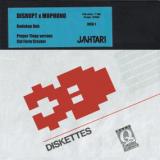
Hard-hitting limited 7” floppy disk by West Coast beat maestro Mophono, mashing up two 8bit mini epics by disrupt and shooting them into outer space.
“Budokan Dub” is the instrumental cut of Roger Robinson’s “Bristol Crystal” from the Jahtarian Dubbers Vol. 6 compilation: a bass heavy mutation of Rob Hubbard’s 1989 fighting game soundtrack, re-worked by disrupt on a DIY commodore synth, with added extra rocket fuel by Mophono, cranking the psychedelics up to eleven.
Made with the same DIY synth, “Proper Tings version” on B is based on the original riddim track for Tikiman’s “Who Goes There”. Mophono now sent it through the cosmic slice machine, turning it into a deadly sound system rattler, designed to take the roof off at those very special moments.
Coming with the additional beat tool “Dub Form Creator” and a nice’n’gritty floppy disc sleeve this crucial little data package is not to be missed!
MONSKI´S SOUND FEELS LIKE A 90s SKATEVIDEO ON VHS - ELECTRONIC, WARM AND LOVINGLY HANDMADE. IMPERFECTIONS WELCOME.
THE MAIN INSTRUMENTS DOUBLE BASS, GUITARS AND ANALOG SYNTHS MELT WITH INTENSE ELECTRONIC RHYTHMS TO DEEP AND HYPNOTIC GROOVES - INSTRUMENTAL AND MOSTLY DOWNTEMPO.
MONSKI EARNS HIS MUSIC GEAR BY SHOOTING FILMS - NO WONDER HIS SOUND IS OFTEN DESCRIBED AS CINEMATIC. INSPIRED BY VISUALS - ESPECIALLY BY CAPTURED PERSONAL MOMENTS WHICH OFTEN TURN INTO HIS RELEASES´ ARTWORK. IT´S HARD TO PUT THIS EP INTO A BOX - ITS UNIQUE STYLE HOVERS SOMEWHERE BETWEEN ORGANIC DOWNTEMPO, TRIP HOP, FOLKTRONICA AND HOUSE.
ENDUROS - 6 TRACKS OF MONSKI´S RAW SIGNATURE SOUND:
ROLLER: THE MOODY DRAGGING TRIP HOP GROOVE (88 BPM) STARTS DEEP AND REDUCED BUT RESOLVES INTO A WIDER CINEMATIC HARMONY OF SYNTHS AND STRINGS.
ENDUROS: EVOLVING FROM ELEMENTS OF ROLLER, IT SPEEDS UP TO 120 BPM AND ENTERS THE REALMS OF ORGANIC HOUSE / FOLKTRONICA. AN UNPOLISHED HANDMADE BEAT WITH DRIVING BASS AND GUITAR RIFFS, CULMINATING IN A MELODIC CLIMAX.
FUNZEL: ORGANIC DOWNTEMPO ELECTRONICA (100 BPM). WARM AND SOFT SYNTH CHORDS AND A SAX SAMPLE ADD A JAZZY FEEL TO THE RHYTHMIC FOUNDATION OF DOUBLE BASS, GUITARS AND PERCUSSION.
ADDITIONALLY THE EP ROUNDS UP THE ALREADY RELEASED TRACKS: RADIO BEAMER, ELECTRIC BOX, AND QUARTZ.
Echoes from Mozambique 1993-2005 is the first time Ghorwane's most cherished recordings have been pressed on vinyl, drawing from three landmark albums spanning the arc of their career. The tracks chosen represent the band at their best: soaring with musicality, punching with feeling, and lifting the spirit.
Remastered by Frank Merritt at The Carvery in London and pressed as a premium double LP by Merchant Records, this is an essential document of one of Africa's great bands, finally given the format their music deserves. Following a celebrated UK and European tour in 2026, Ghorwane remain as vital and active as ever.
For the first time in their celebrated history, legendary Mozambican band Ghorwane are released on vinyl.
Founded in Maputo in 1983, Ghorwane’s unique sound blends traditional rhythms with Afropop, soulful horns and politically charged lyrics that made them simultaneously heroes of the people and a headache for those in positions of power.
As Mozambique’s longest-running band, they have survived the tragic murder of two of their most influential members and institutional censorship, going on to become one of Mozambique's most respected bands and inspiring a generation of artists.
TVPCO has always been a label created by DJs, for DJs. The best proof of this was their sampler series tailored for eclectic sets, where floor-filling dance tracks were consistently contrasted with slower, more atmospheric cuts. Although the catalog gradually expanded to include more listening-oriented music, reissues, and artist albums, the label is returning to its roots for its 16th anniversary.
THE VERY POLISH DANCE VOL. 16 delivers 100% dancefloor bangers from the 70s, 80s, and 90s. The tracklist features gems like "Daj mi", "Serce to jest tancerz", "Zabawa", and "Graj dla nas, graj", along with a stack of delightfully cheesy, slightly cringe-worthy, but undeniable anthems sung in Polish. You'll definitely recognize some from the labels late-night parties (if you ever attended one) or the depths of the internet, while others will be complete surprises.
Both musically and visually, the release pays homage to the iconic Polish compilation tapes that flooded local open-air markets in the 90s, as well as the 80s promotional vinyl sent directly to radio and club DJs.
The brilliant, era-accurate artwork was crafted by the one and only Bartek Szymkiewicz.
COEO are back on Toy Tonics! After uninterrupted touring around the globe, followed by a short creative break the guys come back with an even stronger sound. With the new EP they go more underground again. Its addressed to the clubs and night owls out there, who turn night into day and won't stop dancing!
The sound is based on classic house patterns and includes a lot of cool saxophones, big piano stabs & rhythmic piano solos. They even go tribal, use arpeggios and switch into breakbeat heaven. The four Originals are a great next step in the COEO evolution. The unique warm, catchy atmosphere of the tracks can create that special COEO euphoria which made them a lot of fans. From Moodymann to Disclosure, Mall Grab to Kenny Dope, the list is long.
It’s fantastic to see how popular they became over the last couple of years. The last COEO vinyl sold over 2500 copies and some of their tracks have millions of Spotify plays. It’s DJ FOOD. Pure bliss!
Volume Six in the ongoing saga of the Jahtarian Dub mothership, full of 8-bit explosives, cosmic curveballs and sound system heavy hitters.
Roger Robinson teams up with West Coast beat maestro Mophono (watch out for the limited 7” instrumental “Budokan Dub”!), Maffi and Tapes return with mutated killer riddims, Casio shaman Green Jesus is transmitting from the Polish woods, while The Other Others beam in alongside Daniel Monaco, followed by a special Dub cut from Elijah Minelli x Kiki Hitomi.
On the flip Bo Marley are back with a track previously only released on tape, S.NOVA spreads her haunting vocals over an Alien Trackers depth charge and Slim Levy dubs the Beatles into outer space.
There is more Dub love coming from the newly born Snorks outfit, disrupt appears with a beautiful spaced out hiphop track and Barcelona Dub heroes STA finish the journey with a super hypnotizing brain melter that will see an extended 12” version soon.
A pioneering keyboardist of crossover music in Japan, Jun Fukamachi recorded and released this hidden masterpiece of the early Japanese fusion era in 1975 as part of Toshiba EMI’s audiophile-oriented high-fidelity analog “Pro Use Series”.
Now, it returns on clear red vinyl.
Backed by a powerhouse rhythm section consisting of drummer Shuichi “Ponta” Murakami and bassist Ray Ohara, Fukamachi showcases a rich palette of analog synthesizer sounds, while Kenji Ohmura delivers breathtakingly intense and fluid guitar solos.
The centerpiece of the album is the approximately 14-minute jazz-funk epic “Bamboo Bongo”, a standout track that perfectly captures the virtuosity and adventurous spirit of this landmark recording.
2x12" 180g black vinyl
Gatefold
2x printed Innersleeves
Dl-Card
D1 "Running" exclusive track - only available via album vinyl
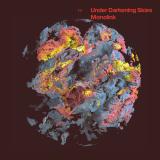
Monolink's second full-length musical opus, which follows on from the critically lauded release of his debut LP Amniotic back in April 2018, Under Darkening Skies features twelve exquisite new vocal-led compositions, including his internationally celebrated hit singles, Otherside and The Prey.
Speaking about the album: "Under Darkening Skies is an album that's connecting different dots in my life, representing phases or moments I went through. I wanted to go back to writing actual songs again instead of adding vocals to a beat, which gave me the freedom to express more musical facets of myself. Eventually it became the most diverse record I have made so far, influenced by a time of global social and economic uncertainty at an ever-increasing tempo of change, like a dark cloud approaching. "
Rick Silver returns with “Value Pack,” a fast-paced house/techno release built around heavy grooves, acid-driven synths, lo-fi textures and distorted production. Raw and energetic, the tracks combines warehouse-ready intensity with gritty, analogue-inspired sounds, delivering a hard-hitting cut designed for late-night dance floors.
Magazine Announces 15th Anniversary Remaster of Barnt’s Techno Classic Geffen
Cologne-based record label Magazine celebrates the 15th anniversary of Barnt’s visionary anthem Geffen. One of electronic music's most defining tracks of the 2010s will be reissued in a 2026 remaster edition, marking the first time it receives its own dedicated standalone release.
Originally published on the legendary Cómeme imprint as part of the Various Artists EP The Power Of Now, the track rapidly became a global phenomenon. Looking back, one can hardly imagine Geffen without the 2010s, or, conversely, maybe even electronic music of that era without it. The composition mirrors the expressive possibilities of bedroom producers at the beginning of that decade—an era where artists could launch tracks into the world and have them resonate through their sheer sonic power, without major marketing efforts.
Barnt remembers: "It was one of my earliest tracks. I had just entered art school and didn't own much equipment. My MIDI keyboard only had two octaves. I would always play notes with my right hand while simultaneously shifting through the octaves with my left. This is how the hook line came to life. The production only consisted of seven or eight stems, and barely any equalizers were used during the mixdown. In hindsight, this sparse approach to production probably made it sound different and is why it hits so hard on big sound systems (while sounding unfinished to some on YouTube). At that time, we were doing a small festival on a playground in the center of Cologne. When I played the CDR there, Matias Aguayo demanded it right after. That is how it ended up on Cómeme."
The release comes with two very Magazine-esque reinterpretations from the label's two other co-founders alongside Barnt: a powerful atmospheric club remix by Jens-Uwe Beyer, and Magazine Hallucination, a wild, collaborative, psychedelic mutation by Crato and Beyer.
Jörg Burger, who already mastered the original track, is also responsible for the mastering of this release.
DJ Support: Glenn Underground, Crazy P, Terry Farley, Aroop Roy, Chris Coco, Frank Tope, Greg Wilson, Dom Servini, Francois K, Max Essa, Oliver Dollar, Pete Herbert and many more
Danny Ward’s Balaphonic project, one of many the long-serving performer, producer, percussionist, drummer and DJ has utilised over a career spanning over three decades, has evolved considerably since his first release under the alias 11 years ago. Conceived as a platform to explore his love of Afro-Cuban and Brazilian musical culture, it gathered new impetus during lockdown and the recording of superb first album Resolution Revolutions, which fused these influences with nods to Balearica, dub, dancehall and deep house.
On the Organic Matters EP, Ward’s follow-up to that critically acclaimed set, the Balaphonic musical universe has expanded once more, with the Manchester native showcasing a wealth of eye-catching collaborations and an even more intricately layered and sonically detailed sound rich in live percussion and instrumentation. It’s an ambitious and widescreen musical vision wrapped in sun-soaked melodies, morning-fresh motifs and simmering, sunset-friendly soundscapes.
The dizzying new heights scaled by Ward on Organic Matters is evident from the opening bars of ‘Dew Drops’, a piece created in unison with internationally renowned composer and arranger Robin Dewhirst. Between them, the pair have conjured up a yearning, life-affirming samba shuffler where picturesque piano, xylophone and balafon melodies rise above Ward’s dense, layered Latin percussion and warming bass.
Next, Ward delivers a thrillingly different take on his 2005 composition ‘Switch’, featuring legendary Brazilian jazz vocalist Flora Purim and her equally talented daughter Diana Moreira Booker. Whereas that was a jazzy deep house workout, Ward’s Balaphonic re-make is a shuffling, gentle exploration in 7/4 time – a heartfelt tribute to the Brazilian records with which Purim first made her name in the 1960s and ‘70s.
‘Balaventurers’ sees Ward join forces with an old friend from the North-West scene, R.S.L founder Joe Botham AKA Baleardelica – a multi-instrumentalist and producer whose Flamenco-inspired acoustic guitar motifs provided the starting point for another vividly colourful exploration rich in layered vocalisations, twinkling keys and impeccably arranged percussion.
It’s followed by ‘Life of Strings’, a more up-tempo and dancefloor-leaning excursion written and recorded alongside Amsterdam-based violinist, and composer Katya Gabeli. While Ward’s percussion-rich groove provides propulsion and a rock-solid foundation, it’s Gabeli’s evocative string arrangement that provides the focal point and emotional resonance. It’s a genuinely brilliant collaboration.
To round off a second stunning Balaphonic release on NuNorthern Soul, Ward delivers two simmering, slow-motion delights: the Afro-Cuban rhythms, cascading melodies and melodic percussion motifs of ‘Boxfresh’, and stunning EP closer ‘Home’ – an almost overwhelmingly poignant and beautiful number that gently ebbs and flows on waves of tracked piano, dreamy chords and a comforting sense of closure. It’s a genuinely sublime conclusion to another wonderful Balaphonic release.
10 years since his first edits outing on RNT, label co-founder JKriv digs into his deep well of reworks for a four-tracker of cheeky dancefloor madness. Coming in hot on the A side, I Feel Amor is modern twist on the disco classic anthem, a peak time weapon of epic proportions with hard-hitting beats and churning synths, and the inimitable sing-along vocal (pero en Español). Love Dub is a stripped down deep house affair, a solid driving groove with thunderous bass, synth accents and acapella flourishes. On the B-side, Cuando Bailo is the edit you didn’t know you needed; a callback to a bygone era of one-hit wonder magic, flipped masterfully to be all-club and just a sprinkle of camp. And rounding off the record Dance Sexy takes an obscure purple-hued cover into hypnotic red-light territory, with funky synth stabs riding a pulsing and infectious bass line, in classic JKriv fashion.
Diese Doppel-Vinyl-Compilation lädt ein in die warme, entspannte Welt des Lo-Fi-Sounds - eine Musik, die entschleunigt, Atmosphäre schafft und Nähe erzeugt. Versammelt sind prägende Künstler des Genres, die Lo-Fi, Downtempo, Jazz-Einflüsse und elektronische Gelassenheit miteinander verbinden. Mit Beiträgen von FKJ, Darius, Kid Loco, St Germain, The Mighty Bop, DJ Cam, DJ Spinna und weiteren wichtigen Namen entsteht ein vielschichtiges Panorama zwischen organischen Grooves, sanften Beats und subtilen Melodien. Die Auswahl richtet sich gleichermaßen an langjährige Liebhaber wie an neue Hörer, die Lo-Fi als eigenständige, zeitlose Form elektronischer Musik entdecken möchten. Ein stimmiger, sorgfältig kuratierter Sampler für entspannte Hörsituationen, stilbewusste Sets und alle, die elektronische Musik lieber fühlen als konsumieren. ENGThis double-vinyl compilation invites listeners into the warm, comforting world of lo-fi music - a sound defined by relaxed rhythms, organic textures and understated emotion. Featuring leading artists of the genre, the collection blends downtempo beats, jazz influences and laid-back electronic production. With tracks by FKJ, Darius, Kid Loco, St Germain, The Mighty Bop, DJ Cam, DJ Spinna and others, the album offers a broad yet coherent overview of lo-fi aesthetics. It appeals both to seasoned listeners and newcomers seeking a timeless, atmosphere-driven listening experience. A carefully curated selection designed for calm moments, focused listening and stylish musical environments
Turbo was a part of Joe Robinson and Sylvia Robinson’s All-Platinum Records set up in New Jersey which operated from 1967 to 1979. At one stage the fiercely independent and proudly black owned label threatened to become another Motown or Philadelphia International. That never happened, but the Robinson’s dream of worldwide success came later when Sylvia discovered Rap, recorded Rappers Delight by The Sugarhill Gang and Sugar Hill records was born.
Music historian Steve Guarnori describes All Platinum as "probably the most unusual record company there ever was. Dysfunctional, but at the same time wonderful."
The All-Platinum chaos extended to Turbo. But despite anarchy - some superb albums went straight from manufacture to be deleted and sold as cut-outs - sublime music was created. This 10" 6-track release collects together some of the most hallowed Turbo releases which between them have become cherished by collectors.
Brother to Brother "The Bottle" captures the label at its most astute. Gil Scott-Heron and Brian Jackson’s original version was an album only track on Strata-East so Turbo seized the opportunity to quickly make a worthy cover version and rush release it a single which enjoyed success.
"Ton Of Dynamite" by Frankie "Love Man" Crocker was Turbo’s debut release in 1968 (it actually sounds a later recording). At the time Frankie was a DJ on WWRL radio station in New York and the release was essentially a reward for his previous support of All-Platinum releases. The record (a b-side) is actually made Willie & The Mighty Magnificent who went on to re-record it as
"Funky 8 Corners". It took until 1975 for "Ton Of Dynamite" to get recognition when it became an anthem as the UK Northern Soul scene adopted it as part of the movement away from old skool 1960’s Soul. Whatever its’ provenance, "Ton Of Dynamite" is now revered by the Rare Soul and Funk communities.
The Optimistics "Man" from 1971 is another b side single. The group specialised in smooth harmony Soul but "Man" is a funkier affair which won support from Rare Soul aficionados and will cost you £600 plus if you are lucky enough to locate a copy of the hard to find 45.
Willie & West "Attica Massacre", also from 1971, is an even more elusive single. It is a powerful protest against the killing of 29 prisoners, many black, following a riot at a prison - Attica Correctional Facility in New York. The deaths and a subsequently discredited cover up caused outrage. John Lennon was amongst the first musicans to make a recording about the bloodbath, but the most emotional protest is this Willie & West track. Only 300 copies were manufactured of one of the most powerful civil rights recordings ever made. The vocal sounds like anti-War Edwin Starr at his most bristlingly aggressive.
Perhaps the strangeness of All-Platinum is best illustrated by the later success of Lonnie Youngblood "Sweet Sweet Tootie" which is essentially the backing track of "Attica Massacre" plus exquisite sax playing by Lonnie. Despite it selling 100,000 plus copies the label did not see this as a reason to reissue "Attica Massacre". Strange. Or as Marvin asked "What’s Going On"?
The New Sounds "Don’t Take Your Love From Me" was only issued by Turbo as an album track. Despite good music on it the LP was poorly (it at all)/ promoted and flopped. The superb "Don’t Take Your Love From Me" is a long time Northern Soul / X-Over favourite.
Larry Saunders mesmerising "On The Real Side" made no impact when released on Turbo in 1974 but was nevertheless issued in the UK by London Records. The Northern Soul discerning dancers instantly latched on to its combination of uplifting lyrics, heartfelt vocal and clomping beat and since then its’ appeal has extended across the whole of the Soul community. Without doubt an all time classic.
So six treasures from a label that despite frequently advocating cash out of chaos frequently conjured up awesome music.
ANORAX is grateful to have the opportunity to present this very special Soul selection.
Often credited as the father of multi-media theatre, Alwin Nikolais (1910-1993) took complete creative control over his productions - including cutting-edge approaches to lighting and costume that transformed human bodies into shifting sculptural shapes, while also composing wildly innovative electro-acoustic and synth-based audio as accompaniment.
After initially experimenting with musique concrète and tape manipulation (as demonstrated on the 1959 LP Choreosonic Music of the New Dance Theatre of Alwin Nikolais) Nikolais became the first owner of Robert Moog's synthesizer at the Audio Engineering Society convention in New York in late 1964. Relying heavily on the Moog and later the Synclavier synth/sampler, these 21 tracks document Nikolais' highly-prescient compositions across the mid 1960s through to the late 1980s - existing not only as extensions of his other-worldly choreographic productions, but standalone pieces of foundational mid-century American electronic and experimental music.
"Born in Southington, Connecticut in 1910, Nikolais’s early years and early career were in acting, music and puppetry. It was not until the late 1930s that he began his work as dancer/choreographer in Hartford, Connecticut, where he was commissioned by the Avery Memorial Theatre, a part of the Wadsworth Atheneum, to create an evening-length work to the music of Ernst Krenek. Previously his work and study as a pianist-organist found him accompanying silent films. This sort of accompaniment required from the musician not only a playing skill but also a versatility in improvisation, matching movement to sound, and evoking mood to situation.
Nik was drawn initially to dance by his involvement with the percussion scores used by the illustrious early twentieth century German dancer Mary Wigman. In trying to learn more about percussion, he was lured into dance class and thus his career began. His development of music and dance occurred simultaneously. His introduction to the twelve-tone technique opened his mind to the expanding areas of atonal music, and his dealing with music as sound per se. In 1948, after being appointed director of the Henry Street Playhouse in New York, Nikolais formed the Playhouse Dance Company, later known as the Nikolais Dance Theater, and began his aesthetic orientation toward dance as a study of motion. By the 1950s, he had ceased creating literal dances and began his explorations and eventual milieu as an abstractionist.
Sound became an important part of his abstract theatre. For his first dances, which involved his new thinking of dance as both a visual and kinetic art, he used live percussion scores in which he directed his dancers to play instruments of all nature. There was a combination of children’s toy instruments as well as harsh and resonant automobile brake drums, and other pitched auto parts which he also used to accompany classes. Once he installed his own tape recording machines, he quickly used the limited range these instruments provided in a new way, slowing and increasing speed and reversing sound. He also made the sounds adhere to the choreographic structure (not the other way around), thereby giving the dance its independence from the musical phrasing. But the real need remained: the search for new sound. Nik made a sound library, recording noises and percussion and vocal sounds, which the French aptly called musique concrète. Needless to say, he became a master at splicing bits and pieces.
From 1956 to 1962 Nikolais composed eleven major scores for his theatre pieces using such techniques. In 1963, James Seawright, who at the time was assisting Nik in his productions and also working at the Columbia-Princeton Center for Electronic Music, recorded a sound bank for the production Imago (1963). With this material, Nikolais created his first synthesizer score. Imago won the Paris Grand Prix in 1968 and launched the Nikolais Dance Theatre towards its national and primarily international acclaim.
During the same period, Seawright came to Nik and told him of a young man who had invented and constructed a simplified synthesizer and insisted that Nik visit the electronic fair currently being held in New York. Nik did so and met Robert Moog. He was completely taken by the new machine and after making some suggestions to Moog, (which Moog made), Nik bought the inventor’s first machine with the aid of a Guggenheim Fellowship. Moog himself was astonished by what his machine could produce for Nik. This machine was later acquired by the Museum of Musical Instruments at the University of Michigan at Ann Arbor as the first Moog synthesizer. The Synclavier was Nik’s next source of sound and since the mid-1970s remained the major instrument in the Nikolais soundroom.
Alwin Nikolais has been honored and awarded throughout the world. He has received the French Legion of Honor, the Kennedy Center Honors, National Medal of the Arts, two Guggenheim Fellowships, as well as Mellon, Ford, and Rockefeller grants. He has been a recipient of NEA grants since 1966, been awarded five honorary doctorates, all for his remarkable achievements in Dance Theater. His genius has influenced several generations of artists."
—Murray Louis
Seeking to build with the remnants of forgotten sounds, Mystery Friend is a channel through which all these elements flow and take on meaning, generating a new timeless concept where past and future coexist in harmony. With a deep fidelity and commitment to rhythm, dance, analog machines and samples, this EP is charged with mysticism, darkness and a physical energy designed for trance on the dancefloor.
Acid Tracks EP is the debut release from Sebucan Records (SEBR001), a record store based in Montevideo, Uruguay, founded and led by Louis Merlán, a DJ and selector with over 20 years of experience in the electronic music scene. Produced by Argentine artist Mystery Friend, the EP comes wrapped in a visual identity by Uruguayan designer Diego Prado, translating the sonic concept into imagery of analog machinery and vintage mechanisms, weaving a dialogue between the industrial and the mystical that echoes the music from start to finish. Bordello A Parigi Distribution carries this release beyond Uruguay’s borders and into record shops and collectors’ hands around the world. Acid Tracks EP is an invitation to lose yourself in the groove, to let the ancestral and the futuristic merge into a single pulse. Pressed on vinyl, made to sound loud, to dance to in the dark, and to stay with you.
Since his 2013 debut album, Body Issues, Max Ravitz—better known to you and me as Patricia—has been zeroing in on the kernel of an idea. Across seven albums for labels like Opal Tapes, Spectral Sound/Ghostly International, and Acid Test, he’s applied his hand to a lean, focused vision of electronic music, paring away excess to lavish attention on carefully sculpted acid lines, stealthy drum programming, and warmly emotive melodies. For all their restraint, though, his tracks could never be called merely rote or efficient; even at their simplest, they’re steeped in atmosphere and shot through with layers of mystery. Now, on his first record for Balmat, he strips things down even further, revealing the ambient essence of his music.
Across eight tracks, he pours everything he has into the most minimalist music of his career. Many tracks
seem to have been made with just one synthesizer patch and some carefully applied effects—a honing of
his materials that brings the nuances of his music to the fore as never before. Elastic pitches warp and drift; fleeting harmonies bring out new dimensions in his synths’ timbres. “Murmuration” sounds almost like
Baroque music in its lithe, undulating counterpoints. “Birdsong” takes a classic choral pad and stretches it
horizon-wide. And songs like the closing “Yearn” allow the expressive dimension of his music to fill the
frame as never before.
The title Songs for Josephine pays tribute to Max’s wife. For years, she’s told Max she’d like to hear him
make an album without drums; he assembled these songs over time, always with her in mind. “Even with
my beat-driven music, I’ve gotten a lot of comments in the past about the ambient textures tucked into
those tracks, so I feel like people have been drawn to that aspect of my music for a while,” Max says. “It’s
been an interesting change of pace making a record with that side of my sound as the focal point.”
For listeners familiar with Max’s music, the effect may be uncanny: This is Patricia through and through, but heard in a whole new way.
—
Balmat is a label with a cloudy outline. Jointly shepherded by Albert Salinas and Philip Sherburne, two
friends living in Cardedeu, Catalonia, and on the Balearic island of Menorca, Balmat grew out of Lapsus Radio, a weekly show born almost ten years ago. Balmat’s mission is simple: to foster new ideas, expand upon personal obsessions, and put enveloping sounds out into the world. “Balmat” means “empty” or “void” in Catalan. But quite apart from any negative connotations, we prefer to think of it in terms of possibility: a space waiting to be filled.
Mechatronica presents “Residual Future” by Koloah. Across six tracks, Koloah delivers a striking fusion of futuristic electro, bass-heavy rhythms, and expressive vocal experimentation. Combining powerful machine grooves, processed voices, and detailed synth programming, the EP explores the connection between human emotion and technology. From the driving energy of “Graduate” and the vocoder-driven character of “Vocodex” to the deeper moods of “System” and the sharp rhythm of “Edge”, the release moves through a wide spectrum of electronic forms — balancing dancefloor impact with atmosphere, melody, and a strong sense of storytelling. The journey expands further with “Elevator”, a slower, immersive descent built around hypnotic movement, spacious textures, and a more introspective emotional pull. On the other side, “Jump” pushes the pressure higher — a peak-time electro weapon driven by explosive rhythms, heavy low-end force, and Koloah’s unmistakable futuristic energy. Throughout “Residual Future”, vocals become a central element: fragmented, transformed, and woven into the machinery of the tracks. Human traces merge with precise rhythms and futuristic textures, creating a sound world that is both soulful and synthetic. A distinctive statement from Koloah, delivering forward-thinking electro with depth, emotion, and a unique voice-driven identity.
Perry Louis is a pivotal figure in the UK jazz dance movement. As a dancer and choreographer, producer, DJ, broadcaster, and founder of the internationally respected jazz dance collective JazzCotech Dancers, he is perfectly placed to curate this collection.
Perry has been at the heart of the scene since the early 1980s, from JAFFAS, the Electric Ballroom, Dingwalls, Acid Jazz, Hi Hat, and Messin’ Around, taking its energy and sound as far as Japan, the USA, St. Lucia, India, Canada, and across Europe.
This compilation celebrates 25 years of Shiftless Shuffle, with Perry as its ambassador and driving force. Over the years, he has collaborated with top DJs including Paul Murphy, Gilles Peterson, Snowboy, Colin Curtis, and Shuya Okino, helping shape the UK jazz dance sound into a global phenomenon.
The album blends deep jazz, fusion, Latin, and groove-driven tracks, reflecting both the scene’s rich heritage and its forward momentum.
From the brand-new exclusive track by Kyoto Jazz Massive, Get It Together (Samba Fusion Mix), to Bunny Brunel’s Fickle Funk appearing on vinyl for the very first time, and the hard-hitting Caribbean Fire Dance by Tom Grant, this compilation tells the story of a movement—an underground culture born on UK dancefloors that has now captured a worldwide audience.
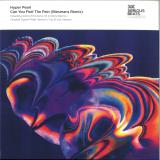
HYPER PEARL'S ICONIC TRANCE ANTHEM "CAN YOU FEEL THE PAIN" RETURNS WITH NEW REMIXES BY BIESMANS AND ZZINO.
First released in the mid-1990s, Hyper Pearl's cult classic Can You Feel The Pain is set to make a powerful return. Released via Serious Beats Classics, the new package features brand-new remixes from Biesmans and Zzino, alongside remastered versions of the original mixes.
Biesmans: "I grew up with the Serious Beats compilations and started buying my first vinyls around the time "Can You Feel The Pain" got released. Remixing this project really felt like a full circle moment for me."
Joining the release is a brand-new remix from Zzino, one of the pioneers of the Belgian techno movement and a key figure behind Hyper Pearl. His version reconnects directly with the track's roots while bringing fresh energy and perspective.
Together, these remixes celebrate the enduring legacy of "Can You Feel The Pain" while introducing the track to a new generation of listeners. The release highlights the lasting influence of Belgian electronic music and demonstrates how truly great records continue to evolve across decades.
About Biesmans:
Biesmans is a Belgian producer residing in Berlin, composer, and DJ known for his cinematic approach to electronic music. Blending elements of house, techno, synth-pop, and ambient music, his work has earned support from tastemakers and audiences across Europe and beyond.
About Zzino:
Zzino is widely regarded as one of the founding figuresof Belgium's techno scene. As a DJ, producer, label owner, and creative force behind numerous influential projects, he has played a pivotal role in shaping the country's electronic music landscape for more than three decades.
Deep in the sea lives one of Earth's most ancient creatures: the Nautilus. Hunted for its beautiful shell and now, through our global evolution, endangered, like so many other beings. Perhaps most astonishingly, no one has ever observed a baby Nautilus in the wild. The title track of this debut EP takes you on a dark journey, searching through the deep ocean for this elusive animal.
On the other side, I don't believe in Fermi’s Golden Rule, is a sonic interpretation of a statement made during a quantum field theory lecture, questioning the experimental mathematics often used to derive the famous rule. But actually, trying to express the confusion about quantum physics in general.
The dub-infused EP is mainly inspired by the pioneering magic of Detroit’s electronic music scientists and the experiments of European electro wizards.
On the occasion of the 40th anniversary of the release of Remek Depo, the very first electronic record from the former Yugoslavia, the group Beograd has decided to unveil eight previously unreleased tracks in the context originally intended. The band initially planned to title their first album as Mrak ( eng. Dark). Recorded with Du Du A and other collaborators, this album serves as a manifesto of resistance—not only in Belgrade and Yugoslavia but everywhere else.
The A-side opens with the track 1984, named after George Orwell’s seminal novel. This piece was recorded in a single night in the same year, featuring Zoran Zagorcic (Du Du A) and one of the first Yamaha DX7 synthesizers. It encapsulates the dark and tense atmosphere of Belgrade during a period marked by economic crisis, characterized by shortages of essential products like coffee and oil, as well as electricity restrictions. This oppressive environment also impacted personal relationships, leading to unconventional expressions of passion and desire, as exemplified by the subsequent track from 1985, Mracni Predjet Zelja (eng: That Obscure Object of Desire). However, the primary source of frustration was political, stemming from the abuse of nationalism and the incitement of inter-ethnic conflicts within the complex Yugoslav society. This sentiment is vividly illustrated in the songs Hare Krishna and Belgrade Beat, recorded just before the country’s collapse in 1991. Remarkably, despite their protest, these songs convey messages of strong optimism and hope. In “Belgrade Beat Dejan Kostic (Du Du A) raps and Dejan Stanisavljevic sings. ”Od Studija B do Amerike, Beograd širi svoje talase, mi nismo sami u nama je svet, dolazi veliki preokret” (eng. “From Studio B to the USA, Belgrade spreads its waves, we are not alone, the whole world is with us, a great change comes!”). It is no surprise that this song was frequently broadcast on student Radio Index during the student and anti-war protests in 1992.
The B-side features contemporary songs produced by Beograd, which reflect protests against the current societal conditions in post-war Belgrade. Crafted with musical clarity and irony, these tracks satirize figures of repression, hitting their mark with an almost childlike purity, reminiscent of Hans Christian Andersen’s fairy tale, “The Emperor’s New Clothes.” The collaboration between Dejan Stanisavljevic, the leader of the Beograd and the Du Du A group not only influenced his musical expression but also laid the groundwork for the group’s socially engaged music in their later career.
As we remember the two late leaders of the Du Du A group, Dejan Kostic and Zoran Zagorcic, alongside the recently departed member of the Beograd, Milan Bubalo, this gramophone record stands as an important testament to the contributions of previous generations of artists in the fight for a fairer society. We hope it will inspire the younger generation in their current struggles, especially at a time when such inspiration is needed more than ever.