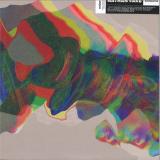
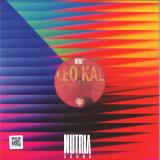
RareTwo Inc. aka DJ Sneak and Tripmastaz are back together for 33 chambers EP, the next Respect The Craft release.
Words by Sneak:
"On a hot Ibizan summer the Rare Two fellas spent a period of 33 days on the island making tracks in a house garage with a couple of pieces of affordable gear and a whole lot of talent. We managed to create 33 tracks often burning them on CD to take to djs like Ricardo Villalobos at Amnesia and seeing the instant reaction of the crowd. We are a mega team of same mentality dudes who create from the heart breaking all rules and getting music done for a purpose. The Tripmastaz and Sneak Team is one to expect many great dance floor killers. As we call them Guttah Styles!
Words by Tripmastaz:
Recently I found these projects and since they were done on just a laptop and cheap small speakers, I gave them proper analog mixing and mastering.
All tracks remain exactly the same form and arrangement as they were originally done, including track Aww Lawd, that was featured on R. Villalobos BBC Radio 1 Pete Tongs mix back in 2018.
Mike Grinser at Mandmade Mastering did the lacquer cut and made it sound very crisp and loud a lot like it would've been cut in the 90s.
Blue Hour distills over a decade of artistry into his debut album Selva, unearthing eight tracks inspired by ancient wisdom and forgotten worlds.
Blue Hour is the moniker of Luke Standing, a multifaceted artist, producer, and label owner navigating between past and present electronic dance music. Over more than a decade, Standing has built a career balancing transformative craft with a sharp curatorial approach, earning him respect across the global scene. After years of sonic experimentation, he now releases his debut LP Selva. “I never set out to make an LP – it just wrote itself,” he says. “I followed my intuition, and the music found its own path.”
Born and raised in the UK, Standing grew up in parallel with club culture, moving between Brighton, Bristol and Berlin while running club nights and establishing himself under former aliases Furesshu and Esoteric.
He launched his Blue Hour project in late 2013, shortly after relocating to Berlin. Initially a platform for his own music, Blue Hour quickly became a collaborative hub, blurring the lines between personal output and curation. Over time, Standing has cultivated an international ecosystem of like-minded artists while continuously expanding his own sonic horizons.
Selva marks his first full-length studio album, weaving a lifetime of influences into a cohesive narrative inspired by ancient wisdom and forgotten worlds. The eight-track double LP transforms his inner dialogue into a subconscious story pulling inspiration from a labyrinthine network of influence and experience. “I followed the music obsessively, reflecting and refining until the story revealed itself,” Standing explains.
“To me, the LP evokes Amazonian or Mayan jungles, themes of exploration, the mysteries of the natural world, wisdom passed down through generations. I didn't set out to write about these things consciously,
they just emerged on their own.” he adds.The album was shaped through intensive work in his studio and periods spent in subtropical locations.
Listening closely, Selva unfolds like a modern ceremony: the opening tracks channel his early UK dance influences, shifting into blends of traditional and contemporary techno, then expanding into melodic soundscapes before concluding with transcendental textures and atmospheres. The result is an introspective journey where functionality and emotive storytelling coexist, revealing a depth in Blue Hour we haven’t heard before.
Whether performing, curating, or producing, Standing operates with a deep commitment to sound, culture, and collaboration. More than an artist, he is an architectural thinker of what electronic music could become. “Every release is my own metamorphosis,” he says. “This LP reflects my current form, and I’m curious to see what the next chapter brings.” Few artists can unify a lifetime of genre-spanning influences into a sound as sharp and focused. On Selva, Blue Hour does exactly that, opening a new era of deeper
immersion from his Berlin-based label.
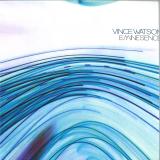
One of Vince Watson’s biggest selling tracks (but rarest vinyl records) finally gets a repress on wax. This time fully remastered and mixed and on his own Everysoul Audio imprint. The original vinyl release on Osunlade’s Yoruba Records in 2015, and was a very limited vinyl run. Now it sounds better than ever and on fresh wax. The track is backed up by a new dancefloor version of ‘Reach For The Sun’, a track that featured on the ‘Every Soul Needs A Guide’ album. This time its flexing jazz vibes, a driving addictive rhythm and ‘Jaguar-esque’ uplifting chords and strings.
a A1: Eminesence [2026 Rework]
[b] B1: Reach For The Sun [Floor Mix]
This second album by Bitsy Knox and Roger 3000 is an intimate and unsettling journey through mental, geographical, and emotional landscapes. Blending spoken word, ambient layers, and minimalist electronic textures, each track unfolds like a fragment of poetic autofiction—a tentative mapping of the invisible. The introspective texts probe solitude, desire, language, and time, in a chiaroscuro of tension and digression.
Clock Poets returns with Get Down, the seventh release on the label and a floor-focused statement from Spanish producer Baltazar, based in Palma de Mallorca and founder of the Sapernika platform. Known for selecting and developing distinct, groove-centred voices from the underground, Clock Poets hands the reins to an artist who understands hypnosis, repetition and tension as tools rather than effects.
The A-side, “Get Down”, is a pumping minimal cut shaped by slightly tribal percussion loops and a locked-in groove that builds momentum through subtle shifts rather than overt peaks. Hypnotic male vocal samples circle like a mantra, weaving ritual into rhythm as the track steadily tightens its grip on the floor. On “Try On Trust Me”, the formula expands: a female vocal, washed in reverb and echo, floats between melodic textures and soft pads, creating a more spacious, emotive framework while maintaining the same disciplined drive and forward motion. Closing the record, “On My Way” dives deeper — a stripped-back 4/4 minimal construction infused with Arabic and double harmonic scale influences. Spatial, meditative and profoundly hypnotic, it stretches time and space, offering a moment of emotional suspension within the dancefloor continuum.
With Get Down, Baltazar doesn’t chase trends — he commits to groove, sophisticated repetition and unique atmospheres. In doing so, he both reinforces Clock Poets’ sonic identity and injects it with a fresh, trance-like intensity, proving once again the label’s consistency without predictability.
This record contains six tracks by Freephilipp and Robin — two Bremen-based musicians who meet where the void of digital subculture and experimental electronic music opens up. Freephilipp contributes four glitch-driven pieces that move between IDM-tinged ambient, electro, atmospheric broken beats and junglish fragments. Random Chords Memory is one of the reasons this release needed to be carried out into the nexus: it stands on its own, just like the rest of the EP, yet it may be the signature track of Freephilipp’s nocturnal enthusiasm — mixing between night shifts and sharing production skills with the people around him. Robin (zckr rec / ph17) completes the EP on the flipside. Tau-37 and Omega5, named after two star systems, invite you onto a dub-soaked, drifting flight. The Basic Channel- esque impact of Tau-37 rounds out the journey in combination with Omega5, whose drone-laden soundscape slowly opens and dissolves. This music was never meant to be produced for an audience. It is a document of what it sounds like when you say goodbye to the outer world and begin building landscapes in another.
Following an exclusive, instantly sold-out preview during ADE 2025, Shades marks the highly anticipated second release from Life Cycle. The official release is finally here, featuring two tracks that perfectly encapsulate the vision Life Cycle first introduced with its debut release, ‘Magic Happens’, a true musical journey without boundaries. With Shades on Side A and Love Touch on Side B, the record delivers two distinct sonic vibes, carefully crafted by the label’s founder and the producer behind the release, Fabrizio Fattore.
After the well-received Kreme de la Kreme EP, D3 Classic Edition returns with another essential vinyl release. This time, they present four rare and highly sought-after tracks from the talented Toyin Agbetu—all newly re-mastered from the original DAT tapes. Showcasing some of his finest work as The Dark Knights, this collection is a treasure trove for fans of deep, soulful grooves and classic, old-school rhythms. Featured are four must-have tracks: I Do Believe, Party Time, Piece of Time, and U Gotta Slow Down—the latter released under Agbetu’s other alias, Nemesis, and making its debut on vinyl.
But there’s more: the release also includes a brilliant reinterpretation of Piece of Mind by London producer K15, who adds his signature spacious, broken-beat style to the original, breathing new life into a classic track. For vinyl collectors and true aficionados, this is an absolute must- own.
Diversion Ends EP highlights the classic sound of chicago acid house, whilst yet emerging into a much deeper and experimental lane of electronica. With three original tracks and an intellectual yet pumping remix from Berlin’s Cinthie, the EP is prepared for the most exciting club playing DJ’s - those who love a curveball yet appreciate a strong, consistent groove.
Lulah Francs has played some of the most respected venues and festivals in electronic music. Her DJ sets have spanned iconic institutions like fabric London, where she’s shared lineups with leading international talent, and she’s played at major events such as Gottwood, Lost Village, and La Terrrazza Barcelona. In addition, Lulah champions grassroots culture through her own event series sub:terra, a collective and club night inspired by the spirit of early acid house, having invited selectors such as Niks, Jaye Ward, etc and taken over strong institutional rooms such as Fabric Room 3.
Analog Fingerprints Vol. 0 is a compilation bringing together the early 2000s works of Marco Passarani under his Analog Fingerprints alias, collecting key tracks originally released on Rome’s Plasmek and Pigna labels.
For Numbers, the story starts long before the label itself. In their formative years, digging in Glasgow’s Rubadub, Passarani’s records felt like dispatches from a future city. Releases on his own Nature Records and on labels such as Generator and Interr-Ference Communications were mind blowing: rooted in Detroit techno, Chicago house and electro, yet pushing somewhere new. Much like fellow travellers Autechre, who would remix him in 2001, Passarani’s music balanced machine funk with restless experimentation.
Information was scarce, and you would hear these records first on the dancefloor or at listening stations in shops like Rubadub. Print fanzines like Ear and early web outposts such as Forcefield offered only fragments. But there was a palpable axis forming between Detroit techno and a new European wave of record labels including Skam, Rephlex, Clone, Viewlexx and Nature itself. It was the sound that defined Saturday nights at Rubadub’s ‘69’ parties in Paisley, just outside of Glasgow.
Passarani’s records, in particular, were instrumental in bringing together the future Numbers co-founders. Richard had already booked him pre-Numbers; meanwhile Calum (Spencer) and Jack (Jackmaster), then 16/17 year olds working alternate Saturdays in Rubadub, were so enamoured with the Roman sound that they travelled to Rome for the Bitz Festival in 2003 to seek out Passarani and Lory D at their source.
The first Analog Fingerprints release landed as a 12” on Plasmek in 2001, following the fractured, IDM-leaning 6 Katun material. For Passarani, the project marked a recalibration. A DJ first and foremost, he had moved into production via early computer setups, from a Commodore Amiga through primitive PC audio, Cubase and Logic, later experimenting with Ableton. The IDM scene had offered a playground for trial and error, but there was always a tension between abstraction and the dancefloor. Analog Fingerprints became the bridge: still intelligent, but with more dance than distance. After years of broken beats and complex arrangements, he wanted directness without surrendering identity.
Working closely with Francesco de Bellis and Mario Pierro in the Pigneto district, the trio formed Pigna as a vehicle for reclaiming a more accessible dance sound, deliberately steering away from the minimal wave beginning to dominate Europe. Sessions were fast, instinctive, often stretching late into the night with friends dropping by. It was a studio as social space, production as collective energy.
“In that constant search for balance, Analog Fingerprints was my way of expressing something closer to the classic dance floor. The track 'Tribute' - a tribute to my favourite early Detroit techno track of all time, 'First Bass' by Separate Minds - came after I realised I had almost lost my connection with the dance floor. The simplest step was to take inspiration from early Chicago and Detroit and twist it in our Roman ‘Pigna’ way. My goal was to create more accessible dancefloor tracks by mixing my unconscious Italo roots with my teenage love for that early US sound, ensuring the result was as far as possible from the minimal sound that was starting to dominate everywhere.” - Marco Passarani
Technically, the Analog Fingerprints tracks span a transitional era: Roland TR-909, SH-101 and Alpha Juno hardware met early software experiments. A Novation Drumstation rack stood in for the unattainable TR-808, syncing with TB-303 and TR-606. Yet the true secret weapon was Jeskola Buzz, a tracker-style modular environment that allowed step-by-step parameter control and strange melodic constructions, later exported into the audio sequencer. Even the lead on ‘Tribute’ came from an early PPG Wave-style plugin. It was hybrid thinking at a moment when digital tools still felt unstable but full of possibility for technologists like Passarani.
Behind the music sat Finalfrontier, a loose Roman collective orbiting Nature and Plasmek. Distribution and production were intertwined; importing obscure records into Italy built connections with like-minded outsiders across Europe and the US. Expensive phone bills and fax machines forged an “electronix network” that linked Rome to Clone, Viewlexx, Skam, Rephlex, Rubadub and Detroit’s Underground Resistance. There was a shared sense of survival and resistance, of operating against commercial systems.
Passarani recalls “The first time I found a sheet of paper inside an Underground Resistance 12” with info about upcoming releases... and a huge picture of Spock on the back. Imagine that: you love the music, you love Star Trek, and there’s someone on the other side of the ocean sharing those same values and sounds. It was the perfect match. We even gave our original company the suffix ‘Finalfrontier’: that says it all.”
Feedback in that era arrived physically: distributor faxes, conversations with visiting DJs, the experience of playing abroad and meeting kids who had connected with the records. Glasgow became a key node in a scattered outlier network. Passarani personally brought the first two Nature releases to Fat Cat in London, playing them in-store. Shortly after, a fax arrived from Rubadub in Glasgow requesting copies.
“I still remember that phone buzz and the fax paper slowly sliding out, with someone I didn’t know saying they wanted 75 copies of Nature 001. Or like the time we got a fax from the Rephlex crew just saying, “Hello Nature Records, Keep up the good work.” That was how we knew the message was getting through. It was a fantastic feeling; just one piece of thermal fax paper as an analog notification - the mood for the entire week would change.” - Passarani
The connection to Glasgow has since stretched across generations. As Passarani reflects, links often fracture as scenes renew themselves, but in Glasgow something different happened. New and old mixed seamlessly. There was a visible trust in what came before, and a willingness to carry it forward rather than discard it. Observed from Rome, it was deeply encouraging.
Analog Fingerprints Vol. 0 captures that moment of exchange: Rome to Glasgow, Detroit to Europe, experiment to dancefloor. It documents an artist recalibrating his sound and a network of scenes discovering one another in real time, connected by vinyl, faxes and shared intent.
Originally released in 2004, this record now fetches up to 50 euros for a used copy on Discogs. It has recently regained attention and support from current DJs and featured on Paramida’s mix for The Mudshow.
Da Sunlounge handles the A side with a funky, jacked-up track, while the B side features a collaboration with Office Gossip (Winding Road / Urban Tourq) for some deep, twisted tech house music. This release was initially supported in 2004 by Inland Knights, The Lawnchair Generals, Hipp-e, The Littlemen, and David Duriez.
Kenshi Yonezu’s cinematic new chapter comes to life on vinyl.
This special single features Kenshi Yonezu’s latest hit IRIS OUT, the evocative theme from CHAINSAW MAN – THE MOVIE: REZE ARC, Top 5 of the Billboard Global 200 charted song,
becoming the highest-ever charting position for a Japanese language song, alongside JANE DOE, a powerful collaboration with J-pop icon Hikaru Utada. Blending Yonezu’s inventive
production with Utada’s signature vocals, the track marks a landmark meeting of two of Japan’s most visionary artists.
The release also includes Yonezu’s global platinum hit KICK BACK, together with fresh remixes by Frost Children and 2 more, each reimagining the song through a distinctive creative lens.
Pressed on single black 45 RPM vinyl, IRIS OUT/JANE DOE is housed in a sleek single-pocket jacket with a fold-out 12”x24” insert including an Illustration by Kenshi Yonezu, making it a
must-have for collectors and fans of Kenshi Yonezu’s bold, genre-defying sound.
French talent Hyden makes label debut on Mutual Rytm with conceptual new techno EP, 'To Whom It May Concern'. Hyden is a potent force in the French underground, creating powerful techno with dense percussion, immersive grooves and subtle nods to classic influences - all through his own unique lens. Having delivered standout releases in recent years, here he offers up sounds "anchored in psychoanalysis, time, and emotional residue" as he makes his mark on SHDW's Mutual Rytm imprint, delivering influences of dream logic and surrealism as the palette moves between brutality and introspection. "It's hypnotic music for moments of rupture where something breaks or breaks through". Opener 'Manifest Content' is inspired by Freudian theory and explores the surface illusions of thought and dream. It's about the dissonance between what we perceive and the deeper meaning that slips away beneath and is a deep and dubby techno track with flashes of unsettling melody. 'Bruises' is emotional trauma made sonic. This piece delves into invisible scars and traumas, residues of past conflict or intimacy - it's slow-burning, heavy and raw. 'Jikan' is a meditation built on time and its erosion. Inspired by the Japanese concept of impermanence, it reflects fleeting moments, decay and the tension between stillness and motion with jacked up but warm drums and turbulent bass. Next, 'Free Will' is born from inner conflict and plays with deterministic rhythms and evolving layers, questioning whether we are truly in control or just passengers in a prewritten sequence. The vocal mentions, "creatures, you're out of time" to bring darkness to the intense but sleek rhythms. The streamlined physicality of 'Swarm' channels the primal force of collective movement and is a nod to the loss of individuality in group behaviour. In addition, the package is loaded with digital bonus cuts. 'Yumehara' is a dive into surreal dream-states and evokes subconscious landscapes where logic dissolves and emotion reigns, while 'Lu Bu' is brutal and warlike and named after the legendary Chinese general that captures impulsive violence, betrayal and reckless glory with relentless energy and rhythm. Lastly, 'Neon Pale' is a synthetic dreamscape about fading beauty under artificial light - a melancholy ode to cities at night and the loss of warmth in modern life.
The 18th release on Ohm Series features tracks by Anton Lanski, Drisan, Bruno Bleckmann, OHM & Lentza.
Another strong curated release by the labelowner Bjarnar Jónsson!
Frequencies Rhythm Life proudly presents the new release from Berlin-based DJ Merci. The Orbit EP is a powerful journey through deep grooves and Brazilianinspired rhythms, featuring three original tracks crafted for the dancefloor.
Completing the release is an outstanding remix by Chicago house legend Glenn Underground, who injects his unmistakable acid-driven touch into ‘Test’, pushing the track into a bold new dimension.
‘In Virus Times’ is an acoustic instrumental piece by Lee Ranaldo.
Composed during the pandemic, ‘In Virus Times’ is released as a onesided LP with an etching on Side B. The cover is a beautiful photo by
Lee’s friend, the great Brazilian photographer Anna Paula Bogaciovas.
Originally released as one track as part of a collaboration with Lucien
Jean for Le Presses du Reel, the music was featured on a mini CD that
accompanied a book that featured two short stories.
‘In Virus Times’, released by Mute, sees the track transformed into 4
pieces and is available on transparent turquoise vinyl with digital
download and an exclusive poster, designed, signed and individually
numbered by Lee Ranaldo. The poster design is based on an electron
microscope photo of the COVID-19 molecule.
Lee has written some of his own ‘loner notes’ for the release:
“This recording began on an evening in September 2020, stuck at home
in lower Manhattan during the dark days of the Covid-19 pandemic as
we came out of a deadly summer. A heightened sense of anxiety
stemming from the then-upcoming US Presidential elections as well as
the virus seemed to pervade all aspects of life, for myself and everyone I
knew. Its minimal quality reflects the sense of ‘motionless time’ that
many of us felt. I set up some microphones in our darkened living room
(studios being closed due to Covid restrictions), coaxing out one simple,
repetitive phrase, and then another, sounding them out into the air. The
casual home ambience - a siren or truck rumbling down the street out
the window; someone talking around the table in another part of the loft;
water running - intrudes at points. I worked to develop a few simple
thematic elements, but mostly I wanted to hear the notes and chords
ringing out, hanging in the air for a long time on that evening when the
world seemed close to stopped on its axis.
“I’d been listening closely to Morton Feldman’s catalog throughout the
pandemic. His sparse, long-duration music could often be heard playing
on repeat as we spent endless days locked inside. His willingness to do
very little, with very simple elements, and to such profound effect, has
been inspirational. I found the vast open spaces in his works thrilling,
miraculous, and comforting in those empty times. Additionally, the Drop
D guitar tuning used here has prompted my own variations on Bach’s
works for solo cello, open strings droning against melodic lines, so
simple and perfect…” - Lee Ranaldo, New York City, August 2021
Lars Huismann returns to Mutual Rytm as he delivers the second instalment of his "Sounds From The Past" trilogy on the label.
As SHDW & Obscure Shape's Mutual Rytm imprint continues to grow, it's clear that the DJ and producer pairing have a strong vision for the label and are building an equally impressive roster of artists to form the imprint's core family members. One of the early standouts is Lars Huismann, who arrived to deliver a selection of impactful offerings influenced by the "golden years" of techno in his own unique style crafted by various production techniques. Having featured on the label's opening VA and delivered the first EP for MR002, racking up a wealth of global support in the process, mid-November welcomes a return for the Berlin-based talent as he serves up six fresh cuts in his signature sound for "Sounds From The Past II".
Opener "Sounds From The Past II" is an action-packed title cut fusing typically slick rolling grooves with hazy melodies and atmospheric releases of tension, while "Propulsion" takes cues from its title and sees precise drum shots, echoed background vocals and a tunnelling groove taking the track right into the thick of the action.
On the flip, B1 "Loucura" brings a percussive workout as frantic organic drums and resonant brass melodies bring a party
to proceedings, with "Stroke" and "Nudge" both armed with tough kicks, zipping synths and more subtle vocal work.
Digital buyers get an extra exclusive in the form of "Dub Division", welcoming a slightly more subdued but equally as impactful track guided by dubby chords and peppy hi-hats to close the show.
DJ Amir takes another deep dive into the back catalogue of Detroit's legendary Strata Records to curate a 2nd volume in his Strata Records – The Sound of Detroit compilations. Whereas volume one took in the soulful edge of the Strata canon this volume, as Amir says, 'leans into the label's groovier, funkier edges whilst still celebrating its bold, avant-garde spirit.' DJ Amir's relationship to the Strata label has resulted in the release of the long lost Charles Mingus live 'Jazz in Detroit' box set released on BBE Music along with re-issues from The Lyman Woodard Organisation and re-imaginings of Strata's genre defying music by Berlin based DJ and producer collective, Jazzanova as well as remixes from Kai Alce, Wajeed, Henrik Schwarz, re.decay and DJ Amir himself and, of course, volume one of The Sound of Detroit. Featuring music from The Soulmates, Fito Foster, Keith Boone & Janice Coombs and The Contemporary Jazz Quintet amongst others, The Sound of Detroit volume 2 absolutely exemplifies the importance of Strata Records in the history of innovative Black music as well as its place in the cultural landscape of Detroit as a powerhouse city for art and music. Released by BBE Music in collaboration with 180 Proof Records as a triple vinyl LP and high res. digital download DJ Amir presents Strata – The Sound of Detroit volume 2 really is a gem of a compilation to grace any serious music head's record collection.
Elevation, released in 1974 on Impulse! Records, finds saxophonist Pharoah Sanders expanding his spiritual jazz vision on an album that balances ecstatic expression with focused ensemble interplay. Produced by Ed Michel and recorded in 1973 across two live performances and a studio session, Elevation features a dynamic ensemble including Joe Bonner on piano, Calvin Hill on bass, and Michael Carvin on drums.
The album’s open forms, modal grooves, and spiritual themes underscore Sanders’s ongoing search for transcendence and cultural affirmation through sound. With chant-like melodies, circular motifs, and immersive rhythmic textures, pieces like “The Gathering” and the title track reflect a more meditative and exploratory side of Sanders’s aesthetic. Elevation comes towards the end of Sanders’ tenure on Impulse!— a cohesive and spiritually resonant statement that bridges the raw fire of earlier albums with a deeper, more spacious sound.
The album’s open forms, modal grooves, and spiritual themes underscore Sanders’ ongoing search for transcendence and cultural affirmation through sound. With chant-like melodies, circular motifs, and immersive rhythmic textures, pieces like “The Gathering” and the title track reflect a more meditative and exploratory side of Sanders’s aesthetic. Elevation marks the culmination of his Impulse! discography — a cohesive and spiritually resonant final studio statement that bridges the raw fire of earlier albums with a deeper, more spacious sound.
The Verve Vault series is always mastered from analog tapes and pressed on 180g vinyl at Optimal.
a A1. Elevation 18:26
b A2. Greeting To Saud (Brother McCoy Tyner) 4:15
[c] B1. Ore-Se-Rere (Nigerian Juju HiLife) [6:20]
[d] B2. The Gathering [14:09]
[e] B3. Spiritual Blessing [6:20]
[a] A1. Elevation [18:26]
[b] A2. Greeting To Saud (Brother McCoy Tyner) [4:15]
[c] B1. Ore-Se-Rere (Nigerian Juju HiLife) [6:20]
[d] B2. The Gathering [14:09]
[e] B3. Spiritual Blessing [6:20]
[a] A1. Elevation [18:26]
[b] A2. Greeting To Saud (Brother McCoy Tyner) [4:15]
[c] B1. Ore-Se-Rere (Nigerian Juju HiLife) [6:20]
[d] B2. The Gathering [14:09]
[e] B3. Spiritual Blessing [6:20]
[a] A1. Elevation [18:26]
[b] A2. Greeting To Saud (Brother McCoy Tyner) [4:15]
[c] B1. Ore-Se-Rere (Nigerian Juju HiLife) [6:20]
[d] B2. The Gathering [14:09]
[e] B3. Spiritual Blessing [6:20]
Audience’ was a 14-track record that signalled a shift back to Hayes Bradley's dancefloor roots. It was a collision of breakbeats, trip-hop, and ambient textures that perfectly balanced nostalgia and forward-thinking sounds, and now it gets spun into all new worlds by some of the scene's most acclaimed contemporary stars.
Special Request, aka UK powerhouse Paul Woolford, has shaken up the scene with his thrilling mix of jungle, bass, techno, rave, and hardcore in recent years. The hugely prolific producer knows exactly how to blow up the club and does that here with two reworks of '& I Love U'. The Special Request Extended Mix is a meticulously crafted jungle workout, featuring precision drums, rising synth tension, and gorgeous melodies that dart throughout and will appear on the vinyl release only. The VIP version focuses more on celestial memories for a heavenly escape.
Next is Shanti Celeste, a house and garage favourite who crafts emotional, high-impact sounds on her own Peach Discs. Her remix of 'Play It As It Lay' is a bubbly, soft-focus, late-night sound with earworm synth motifs and rich bass that sinks you in deep for a nice, heady trip.
Piori is an alias of Canadian musician Francis Latreille, who has built a sprawling discography full of hyper-detailed techno steeped in science fiction and fantasy. He flips 'Awareness' into a zoned-out affair, with broken beats and cosmic synth waves over a bold bassline that shows, once again, why his productions are in such demand.
Last but not least is Kaifeng-born sound artist, DJ, and producer Yu Su, whose truly unique sound has made her a cult underground star. She flips 'Dear Treasure' into a slow motion and sleazy chugger with dark disco energy and raw live drums, shady vocal loops and otherworldly melodies that seep into your consciousness.
Walter Thomas’s “Chicago Knights” LP features a retrospective of songs written and released between 1987 and 2009, primarily with the Roland 1824 and the Fostex 8 track reel to reel. Channeling the spirit of underground soul and dance music specifically rooted within the greater area of Chicago, Illinois–a city known for its deep and healthy soul and r&b roots–this compilation features 8 of its 9 tracks on vinyl for the very first time.
The intro track “I Wanna Get Witcha” dates back to 1987, holds a proven track record of kicking off many a dance floor, rocking clubs worldwide in a blur of boogie-funk, disco, and soul. “Immaturity” and both versions of “Fed Up” echo the emotional differences and tensions between lovers in a spat. “Magic City” served as the anthem and homage to its namesake roller skating rink in 90s-era Waukegan, IL. While “Chicago Knights” is a relentless mid-tempo groove inspired by the aggressive motorists that dominate Chicago roadways, “2nd Chance” drops the tempo to a slow r&b roll, preaching the ethos of love, peace, and forgiveness.
Last but certainly not least, “E&J’s” was a real commercial jingle used for a once legendary BBQ joint “E&J’s” in Illinois: a short bonus track to close out the LP. These 9 tracks are just a touch of Walter’s expansive body of work, and we’re stoked to bring them to you on wax.
Walter Thomas is a singer, songwriter, producer, arranger, and composer from North Chicago, IL known for his soulfully smooth arrangements and vocals. Walter has toured internationally with quintessential soul groups like the Temptations and Friends of Distinction, as well as opening for performers including the Floaters, Bette Wright, The Emotions, and The Drifters. His decades of touring with nightclub and concert performances have honed this gifted artist into a seasoned and refined live act.
As Nathan Fake rises from the nocturnal subterranea and rave catharsis of his previous records, on Evaporator, he resurfaces into the domain of daylight, bringing a tangible sense of air rushing against your face, of big skies, and endless landscapes. The idea of pop accessibility that trickled into 2023’s Crystal Vision is refracted here through the prism of sweeping ambient, deep electronica, and trance uplift. Evaporator is Fake’s idea of “airy daytime music”, with each track a different barometer reading across the album’s varying atmospheres, which range from vibrant sunbursts, bracing rainscapes, and fine mists of clement melodics. “It’s not overtly confrontational electronic club music,” states Fake. “It’s quite pleasant, it’s accessible. As I was progressing through making the tracklist, I called it a daytime album. It doesn’t feel like an afterparty album.” For the past decade Fake has been gingerly introducing collaborations with heroes and friends alike into his lone, idiosyncratic working process. Border Community alumni Dextro AKA Ewan Mackenzie transmutes his ferocious drumming for Pigs Pigs Pigs Pigs Pigs Pigs Pigs into the blurred choral thump of ‘Baltasound’. ‘Orbiting Meadows’, meanwhile, is his second collaboration with Clark, an eerily idyllic duet where microtonal 18EDO piano clangs slowly twirl around wailing pads. Evaporator marks the junction point of old technology and ever fresh creativity for Nathan. The trusty “dinosaur” age software, particularly Cubase VST5, that has powered two decades of music is rarely updated. “I used to sort of feel a bit ashamed of using such old software, and then I kind of had an epiphany – that’s just how I work”, comments Fake. “That’s just how I play. I’m very fond of these old tools, and I get the most joy out of them, but now I’ve incorporated new technology too.” When an artist accumulates so much synergy with their instrument, music making becomes instinctual. By Fake’s account, much of Evaporator just fell into place. The album title arrived randomly in his head (“it felt completely perfect. Airy.”), ideas looped and developed until things locked into place and just felt right. ‘The Ice House’ is a fleeting glimpse of the sonic world he taps into in this creative state, its glassy FM synths built around a counterpoint between rough-hewn crystalline arpeggios and sparse yet gravitas-bearing bass. “That riff I just wrote out on the keyboard, I just played it forever and ever and ever. The original track ended up being really short. Here you go, and it’s gone!” These unplanned channellings of sound call forth records from Fake’s past while he looks ahead, perhaps getting at the very essence of his musicianship. The opener ‘Aiwa’ (“the breeziest,” he muses) reminds of the introspection that characterised Providence, excited by the fire and grit of Steam Days’ textural experiments, its chunky slams and clatters surging into a flood of harmonic buzzing as they reach out for old wisdom. ‘Hypercube’ stampedes in a similar chronological confluence, infusing an incessant synth line reminiscent of the golden age of rave with the crackling, ecstatic energy of modern festival anthems. Like the vaporisation of liquid to particles, everything that Evaporator presents has a mutant desire to be amorphous. Sounds rarely settle; the irradiated garage beat of ‘Bialystok’ is pitched downwards to driving, rebounding effect, while ‘You’ll Find a Way’ warps static into shivering energy, cinematic synth strings building anticipation into a gradual gush of chords. This translates into a more expansive stereo field than Fake has explored before. ‘Slow Yamaha’ saves the wildest, most kinetic transformations for last with a cornucopia of crispy melodies and fried drums; a sibilance of cymbals on the left, a susurrus of shakers on the right, and kaleidoscopic lasers pulsing and fizzing all around. Evaporation culminating in pure excited atoms. In a world where music has increasingly become background content, making albums remains lifeblood for Fake: “It makes me realise how long; twenty years is ages! It’s weird to see how much the world has changed. Release day back then you did fuck all, now you spend all day on socials. When I grew up the people who made the electronic music I was into were quite mysterious, and the artwork was very abstract. There was a massive distance between you and that music, and that was a key part of it, really. Now it helps to be an extrovert, and I'm just not, but the album marks the first time my face has graced the cover art. I’ve never wanted to do this before, I'm very shy, and generally I don’t like being seen,” he professes. “But, twenty years in, I supposed I could try something new. I'm very lucky that I'm somehow surviving in this world, where the media world favours extroverts and interesting looking people. It’s not my world but somehow I’m still in it.” Evaporator continues to prove Nathan’s necessary presence, with some of his most engaging, varied, and magical music yet.
That’s a project led by a flamenco guitarist who turns out to be a talented lyricist and singer.
Billy Sharp received early support from Billie Eilish on SoundCloud and later from Nils Hoffman, who fell in love with his toplines. This first glimpse into his musical landscape reveals an intriguing personality, touching contradictions, but beyond that and more simply: a voice, a guitar, and mesmerizing melodies.
We're talking about music that moves, transcends, and resonates with the listener's emotions. All the tracks are elegantly carrying the project's message: introspective and passionately intense.
Billy Sharp unveils "Rose Tint," an EP with a strong identity, destined to be one of those timeless pieces. Billy worked meticulously on each of the 4 tracks composing this debut EP, resulting in an impressive outcome. The first notes of the opening track are sure to captivate anyone with their touching vocals and top lines. The EP builds in intensity with each performance, culminating in "2013," a danceable and nostalgic track.
The upcoming release scheduled for 2026 is made by the Irish London-based artist Cherrie Bea. Emerging electronic artist carving out a distinct space in the UK scene with thoughtful, deep and atmospheric productions that blend house, ambient textures and soulful guitar work. Their debut EP Jafar’s 21st introduced a warm, late-night sound that’s already earned support from underground tastemakers and NTS. Their latest release, Pearlescent, highlights Cherrie Bea’s playful, experimental edge, a collection of carefully crafted tracks that invite listeners to feel, interpret and experience the music in their own way Cherrie Bea stands as a reserved and introspective figure within the electronic scene, serves as a true statement piece, live instrumentation, ethereal synths, processed vocals, and dense harmonies wrapped in a late-night / early-morning atmosphere. The forthcoming “Pearlescent” EP, released on Series of Taboo, fully embraces that mindset: 4 tracks blending house, funk, and a touch of electro.
On 'Vesturgata Gaze', Hitam traverses a new biome. Geographically and metaphorically. Through this introductory release on Omen Wapta, a remarkable voice in techno lunges into artistic deliverance. Here we, the listeners, find ourselves with an EP that harbours the emotive voltage of a perspective-pivoting trip. Tectonic shifts reshuffle subterranean frequencies, rhythmic phrases carry the timbre of ancient rainfall and we humbly stand witness as ceremonial incantations demarcate indigenous land. In elusive ways, this record assigns a bardic function to mostly nonverbal music. All five tracks consistently resemble traces of life-affirming encounters by sculpting Iceland's geological features into sound. 'Vesturgata Gaze' shows that commitment and intimate collaboration, taking on bold artistic ventures, touching moss and glaciers - that's what can break the mould.
Aspecto Humano presents a new, eerie 12” —Murder is Meat— featuring four raw tracks by Orlok 101, a vampiric figure shrouded in mystery, shadows, and penumbra.
INDUSTRIAS MEKANIKAS is back with the third instalment of the ANTIKHRIST VISIONS saga. This release is particularly symbolic: it’s the ninth in the catalogue, marked by the infernal numerology that runs right through the whole series. It’s a descent into a sonic underworld, where noise becomes ritual and pleasure is just pure agony.
The artist tasked with opening this new chapter of the saga is the mighty Óscar Mulero, an essential figure on the national electronic scene and one of our biggest international ambassadors, whose career has left a deep mark on contemporary music. Here, with Faceless, he delves into dark, precise, and devastating electro territory; a spiritual machine that dictates the pulse of chaos.
Next up, we’ve got Pressurized Modulator with Reddrum: hard, crunchy, industrial electro, absolutely buzzing with electrical tension and twisted sonic matter.
Closing out the A-side is Jacko Volvone (aka Hoax Believers) with Quieren Cerrar Las Fábricas: a track that expertly blends electro, techno, and post-punk echoes, resulting in a tense, distorted, and combative sound, like a working-class echo shouting from the abyss.
Flipping over, the B-side opens with Hanging Nuts (made up of Waje Martín, Fake Robotik, and Ruben Montesco). They unleash a murky descent of filthy, distorted, primal electro, slashed through with guitars and raw, guttural vocals: a genuine chant from beyond the grave. The second cut marks the debut of Techselektah & Phil Fork with Champagne No Potable: a raging street anthem packed with fury, energy, and social criticism, where Spanish vocals emerge amidst EBM structures that have that ‘80s spirit, reinterpreted with today’s raw edge. And the big finish is down to HBK1 alongside Rigor Mortis, with Instinto Caníbal: a full-on explosion of electro-industrial and EBM that awakens the body’s most primitive urges.
Antikhrist Visions Vol. III is a sonic summoning from the lands of Hades: ritualistic matter, organic sound, and primal force. A testament to pleasure and torment—Tormento do Gostar—etched into the vinyl as if it were molten iron.
Bound to break the new year in with all our might, we are excited to unveil our new baby, RYCX. Expanding the scope of our main catalogue to bottle what we consider pure techno quality with its idiosyncrasies and inherent untamedness, RYCX will serve as our platform of choice to embrace the more minimalist, dubby vibe of techno, focussing on tracks that sound more like a rabbit hole, trippier, psychedelic, and immersive, yet still powerful enough to fill a dance floor. Kicking off the journey is 'RYCX01' by Ruben Ganev, up with his debut solo release after contributing a track to our 2023-issued 'Heimat' VA. The music here featured packs the very defining qualities RYCX aims to engage its audience with: a raw, inspired, quality-driven combination of force and thoughtfulness, ruggedly honest yet built to meet the expectations of the most picky dance floors and home listeners out there. Ganev's quartet of stormy churners, cut from the most hypnotic cloth and eerily vibrant machine funk, has us diving deep into a throbbing furnace of charred dubs, steely industrial reliefs and post-apocalyptic atmospheres. A most fitting manifesto in sound, telling the beads of the sonic revolution in march.
Essential 1969 album from Gal Costa, one of the defining voices of the Tropicalia movement. It showcases a bold fusion of psychedelia, Brazilian pop, rock, and samba, featuring standout tracks like Caetano Veloso's 'Baby' and Caetano and Gilberto Gil's 'Divino Maravilhoso,' as well as songs written by other iconic artists such as Jorge Ben and Erasmo Carlos.
A timeless classic that still sounds fresh and relevant. 180g vinyl reissue.
- All tracks selected by DJ Yoshizawa Dynamite. Includes the first ever vinyl release of The Peanuts' "Ohara Bushi" track, originally released only on tape in 1970.
- Fully licensed King Records masters.
- Mastering and lacquer cut by Jukka Sarapaa at Timmion Cutting Lab, Helsinki, Finland.
- 180g heavy vinyl pressing, reverse board jacket.
- Artwork by Nicolas Kerembellec (Nker).
---
Active as a professional DJ in Japan since the late eighties, DJ Yoshizawa Dynamite is also a renowned remixer, compiler and producer. An avid record collector and an expert of Wamono music, Yoshizawa has published in 2015 the now-classic Wamono A to Z records guide book, which instantly sold-out. The book unveiled a myriad of beautiful and rare records from a highly prolific, but still then unknown, Japanese groove scene. He has also selected a large part of the music in our highly acclaimed Wamono compilations.
For this brand new chapter in the series, Yoshizawa explores King Records' legendary catalog and unearths exceptional, rare and unknown musical gems. King Records has been releasing music since 1931 and is one of the most prestigious labels in Japan. Traditional Japanese music, known as "Minyo", are ancient songs once sung by fishermen, coal miners and sumo wrestlers. They are reimagined here with vibrant afro latin, rock, rare groove and funky arrangements in this killer selection of music released on King between 1963 and 1979. Also worth mentioning is the track Ohara Bushi by The Peanuts, which was released only on tape in 1970 and is now available for the first time ever on vinyl format.
Put the needle on the record, turn up the volume and dig right now into the Wamono sound - the cream of the Japanese funk, soul, rare groove and disco music developed throughout the years since the end of the fifties in Japan!
---
180GWALP08 - Manufactured and distributed by 180g.
M’Bamina – African Roll (1975)
The story of an album born between Africa, Italy, and the nightclub culture of the 1970s
In the heart of 1970s Italy — a country undergoing profound social change and a music scene just beginning to open itself to distant sounds and cultures — an extraordinary, almost improbable story took shape. It is the story of a group of young African musicians who found their way to Europe, of a Turin nightclub that became a crossroads for communities and experimenters, and of an album which, released in small numbers and largely unnoticed at the time, is now considered a rare jewel of Afro-fusion.
The band called themselves M’Bamina — an ensemble of musicians from Congo, Cameroon, and Benin, who arrived in Italy in the early Seventies. Settling between northern Italy and the Pavia area, they began performing in small clubs and community events, bringing with them a vibrant rhythmic heritage: African polyrhythms, call-and-response vocals, funk-infused bass lines, and Caribbean or Afro-Latin colours absorbed along their musical journeys. Their raw, contagious energy on stage quickly drew attention.
Meanwhile, in Turin, another story was unfolding. There was a venue becoming almost legendary: Voom Voom, one of the city’s liveliest nightclubs, run by Ivo Lunardi. The club attracted an eclectic crowd — students, artists, foreigners, night owls — and Lunardi quickly understood that the dancefloor wasn’t just a place for music, but a melting pot for a new kind of cultural energy. Out of this vibrant atmosphere came his idea: to turn the club’s name into a small independent record label, Voom Voom Music, capable of capturing the spirit of those years and giving voice to unconventional projects.
When Lunardi heard M’Bamina, he immediately sensed that this was the sound he had been searching for: fresh, different from anything circulating in Italy at the time, and capable of blending African tradition with funk and European sensibility. He brought them into the studio.
Production was handled by Lunardi along with Christian Carbaza Michel, while the engineering was entrusted to Danilo Pennone, a young sound technician with a sharp, intuitive ear.
The recording sessions — held in Turin in 1975 — produced a remarkably warm and direct sound. The music feels almost live: grooves rooted in African tradition, but open to funk-rock structures and modern arrangements. It is a natural fusion, never forced. Tracks move between tribal rhythms, funk basslines, light electric guitars, congas and Afro-Latin percussion, with call-and-response vocals and melodies that echo both Congolese tradition and the lineage of Latin jazz. Not by chance, one of the album’s most striking tracks, Watchiwara, reinterprets a Latin standard through M’Bamina’s own rhythmic language.
The album was titled African Roll — a name that was already a statement of intention. It is African music that “rolls,” that moves, adapts, transforms within a new geographic and cultural setting. It is not strictly Afrobeat, nor Congolese rumba, nor Western funk: it is a spontaneous, hybrid blend, shaped more by lived experience than by any calculated aesthetic program.
When African Roll was released, the world around it barely noticed. Distribution was limited, and 1970s Italy had yet to develop a cultural framework for receiving such music. The national music press rarely paid attention to African or “world” productions. The album slipped into silence — though the band’s own story did not.
M’Bamina continued performing across Europe and Africa, even sharing a stage in Cameroon with none other than Manu Dibango. By the late Seventies, they moved to Paris, signed with Fiesta/Decca, and recorded a second LP, Experimental (1978). Meanwhile, the peculiar record they had made in Turin began to resurface quietly among vinyl collectors, Afro-funk enthusiasts, and DJs hunting for forgotten grooves.
That is when the album’s fate began to shift.
Over the decades, African Roll emerged as an almost unique document: a snapshot of an intercultural Italy before the word “intercultural” even existed, a fragment of migrant history, a spontaneous experiment in musical fusion born far from major industry circuits but rich in authenticity. Original copies began commanding high prices on the collector’s market, and the album became recognized as one of the hidden classics of European Afro-fusion from the 1970s.
Today, more than fifty years later, this reissue finally restores visibility and dignity to a project that deserves to be heard, studied, and celebrated. It is not simply an album: it is the testimony of a rare cultural encounter, born in an Italy unaware of how fertile such exchanges would one day become.
It is the story of a visionary producer, an extraordinary band, and a fleeting moment in which music, migration, and nightlife came together to create something genuinely new.
African Roll is — now more than ever — the sound of a bridge: between continents, between eras, between cultures. A record that, after rolling far and wide, has finally come home.
Wolfgang Haffner is one of Europe's most respected jazz drummers, known for his impeccable sense of timing, groove, and atmosphere. Though rooted in jazz, his musical language transcends genre boundaries, guided by pulse and subtle nuance rather than tradition alone. For Cocoon Recordings, he now enters an entirely new dialogue, offering warm, organic reinterpretations that honor the spirit of the source material while opening a fresh sonic horizon. The result is a meeting of two artistic worlds where Sven Väth's timeless energy and Haffner's refined touch flow naturally into a new musical form, an encounter between two artistic universes, merging into something both unexpected and deeply musical.
Fusion is a groove driven piece built around a clear, flowing melody, allowing Haffner to reinterpret it acoustically through a jazz lens. Its straight, driving pulse lets him explore the track's rhythmic and melodic interplay with clarity and nuance.
L'Esperanza, originally a dreamy, trance like track, envelops listeners in strings, filtered downbeats, and a playful synth melody, a perfect canvas for Haffner's warm, organic touch. Its ethereal layers and subtle tension allow him to explore the track's emotional depth while preserving its entrancing charm.
Barbarella, emblematic of Sven Väth's early 90s vision, carries the energy and innovation of a club classic. Haffner's reinterpretation transforms it into a rich, acoustic exploration that honors its hypnotic essence. By emphasizing the track's iconic motifs and underlying drive, and by drawing out the track's essential elements, he bridges its electronic origins with a new, organic perspective.
Together, these three reinterpretations form a cohesive journey that celebrates the timeless essence of Sven Väth's music while revealing a new dimension through Haffner's masterful touch, a release that invites listeners to experience familiar classics in a completely new light.
Somewhere long ago in a vinyl galaxy near you We Play House Recordings released an E.P. called ‘This Is Still Belgium Vol 1’. The release was called like that because the music on it could only have been made by Belgians. Vol 2 never happened…until now. Label boss Red D has always been inspired by the rich Belgian club music of the 90’s and inevitably those influences have sneaked into his own productions, but never as clear as on the three tracks you are reading about now.
And so the original WPH series has been revived with WPH 024.5, aptly called ‘This Is Still Belgium Vol 2’. The music is situated somewhere between house, progressive house and early trance music, basically club music with soul & melody at its core.
On the A-side we find Red D teaming up with his friend Mona Lee, a soul sister who has been making waves in recent years in soulful house circles and who comes up with the vocal prowess to match Red D’s emotional trip of a track and heartfelt lyrics. Can you handle the break?
The B-side opens up with ‘Tides’, a deep hypnotic builder for late night eyes-closed dance floors and closes with ‘Papillon’, a track that came to life long ago in the minds of Telepaticos (Marcos Salon & Sandro Valcke). When Red D heard a demo version of this one the melody got stuck in his head and never really left him. Many moons later he rediscovered the parts of this one on a hard drive and got to work on his interpretation that features on this E.P. Safe to say the track holds a special place in Red D’s heart and we’re sure you’ll feel it as well!
140g vinyl, remastered, double LP with the original LP along with a second record of 14 rare tracks
Sweet And Nice is the vital debut album from Jamaica’s undisputed first lady of song Marica Griffiths. It’s reggae at its most soulful. Slinking through a tight ten tracks of R&B and pop-sourced material, it became an instant best seller. 45 years after its initial release the LP is available again on vinyl, now as a double LP, with an extra record collecting 14 rare tracks.
Sweet And Nice has appeared over the years with a revised running order and under different titles. But the original’s opening sequence of loping soul is legendary, even beyond reggae circles. These songs are now returned to how they were presented on that first Jamaican release, and under their intended album title. Be With doesn’t mess with magic.
Marcia’s version of “Here I Am (Come and Take Me)” has long been lusted after, played by genre-hopping selectors to snapping necks for decades now. It’s followed by the sophisticated, rollicking wah-wah funk of “Everything I Own” and the slice of smooth lovers soul par excellence that is “Green Grasshopper” and her ace, lilting Neil Diamond cover “Play Me”.
The thundering, humid funk of “Children At Play” “sounds uncannily like a precursor of Massive Attack”, as FACT Mag astutely noted when they put Sweet And Nice at number 16 in their list of the 100 best albums of the 1970s. Otherworldly, moody and essential.
Side two keeps the fire burning. “Sweet, Bitter Love” should leave you swooning, and is also one of the album’s alternate titles. Curtis Mayfield’s already-eternal “Gypsy Man” is up next, recast as proto-lovers rock.
“There’s No Me Without You” is elevated to canonical status by the majestic, forlorn horns of the Federal Soul Givers and Marcia’s heartbreaking delivery. And if this doesn’t get you then surely the next track will: arguably the definitive version of Ewan MacColl’s “The First Time Ever I Saw Your Face”. Yes, seriously.
“I Just Don’t Want To Be Lonely” re-takes its rightful place at the end of the LP’s second side… but we couldn’t leave it at that. So we added an entire second record of rare material recorded around the same time as Sweet And Nice, much of it unavailable since it was originally released. Some of these songs have only ever been found on now unattainable 7" singles and no, rarity doesn’t always correspond with quality, but in this case we’re talking about some seriously jaw-dropping music.
Amongst 14 extra tracks you’ll find the exquisite late-60s singles “Melody Life” and “Mark My Word” which, along with the sumptuous reading of “Band Of Gold”, are now £100 records, if you can find them! Just sayin’. There‘s also a fantastic version of “The First Cut Is the Deepest” and an alternate take of “Play Me” with producer Lloyd Charmers adding his own vocals.
Everything’s been remastered of course, including the original LP, so Sweet And Nice now sounds even sweeter, and even nicer.
NUTRIA Sounds proudly welcomes Leo Kal to the family with his debut EP, The Roots EP (NUTRIA 004). Across five tracks, Leo Kal delivers a deeply musical statement—grounded, expressive, and rich with intention—perfectly aligning with what NUTRIA Sounds continues to cultivate: organic sound, essential rhythm, and soulful movement.
The Roots EP showcases Leo Kal’s true musicianship, blending groove, harmony, and texture into a body of work that feels both timeless and forward-thinking. Each track is driven by feel and craft, emphasizing connection over excess and allowing the music to breathe naturally on the dancefloor and beyond.
Celba opens the EP with an uplifting, bouncy groove—light on its feet yet firmly rooted, setting a joyful and inviting tone.
Station Verlaine soars effortlessly, carried by smooth, flowing keys that glide across a warm, rhythmic foundation. Roots, the EP’s title track, shines with warm piano lines and earthy percussion, embodying the spirit and intention behind the project.
Round 50 delivers the EP’s most club-friendly moment, channeling a spacey, late-’90s feel with a modern, refined touch.
Second Eyes closes the EP on a downtempo, junglesque note, wrapping the listener in texture and atmosphere while leaving them wanting more.
With this release, NUTRIA Sounds continues its mission to highlight nutrient sounds for the soul and the feet—music that is honest, rooted, and deeply connected. Leo Kal’s debut stands as a confident and inspired entry into the catalog, reinforcing the label’s commitment to artistry, balance, and musical integrity.
In a sharp-angled, fiercely inventive reflection on the nature of club culture and digital fatigue, Simo Cell and Abdullah Miniawy reunite to deliver their new album, Dying is the internet, to Dekmantel's UFO series.
French producer Simo Cell has blazed a singular path from his dubstep-influenced origins to become a leading light in contemporary leftfield club music, twisting up adventurous rhythms and flamboyant production in pursuit of a perpetual freshness for the floor. Egyptian singer, poet, producer and composer Abdullah Miniawy has become equally omnipresent in the past 10 years, straddling the arts world and leading with his piercing Arabic lyricism while maintaining an eternally curious spirit that leads into open-ended, experimental music from the abstract to the propulsive.
Following up on their 2020 EP for BFDM, Kill Me Or Negotiate, Miniawy describes their sharply focused new album as "a playful prophecy about the triggers of a new global revolution." Cell considers the title, Dying is the internet, to be a mantra about "how the internet lost its soul," becoming "less about sharing ideas and more about surviving in a digital business ecosystem." Deliberately at odds with the reel-ready two-minute attention span of the average social media surfer (i.e. everyone), the pair set out to make an album that takes its time to reveal nuanced ideas and expressions. Rather than one-note despair for the modern malaise, Cell and Miniawy offer a philosophical reminder that this present moment in the human experience is a temporary phase, no matter how overwhelming it feels.
Dying is the internet finds Miniawy experimenting with auto-tune across the record, while Cell has developed his voice design chops and compositional instincts, moving closer to fully realised song structures without losing the fundamental 'clubbiness' of each track. The result is a cohesive, wildly original kind of heavyweight dance music that slings out hooks left right and centre, from Miniawy's laconic trumpet looming through low-slung 'Reels in 360' and 'Travelling In BCC' to the persistent handclaps that bring 'Living Emojis' to life. Miniawy's poetry explores the power of insistent, repeated phrases in a break from his more typically structured form.
Kenyan powerhouse Lord Spikeheart adds extra snarl to stripped-back, slow-burn opener 'I See The Stadium', but otherwise Dying is the internet is purely the work of Miniawy and Cell casting their considerable chops out into unexplored territory. The results are electric, bound together by a consistent economy of sound that burrows into a shroud of bass-heavy minimalism barely masking Cell's incredibly detailed studio flex. Even the beatless flourish of the Miniawy-produced 'Tear Chime' comes loaded with physicality — a sensory rush at the mid-section of the album bookended by some of the most idiosyncratic club music in recent memory.
Both Simo Cell and Abdullah Miniawy have already proved themselves as fearless innovators across different fields. The strength of their partnership lies in their ability to make space for each other while letting their distinctive sonic identities ring loud and true. Dying is the internet has immediacy and physicality to translate over a soundsystem, but its intricacies are purpose-built for repeat visits and contemplation, unveiling hidden dimensions the deeper you dive into it.
Unreleased Records is the label founded by Arodes, recognized for its afro-house, melodic, and club-oriented sound within the international electronic music landscape. Through a combination of high-quality productions, a strong and carefully developed artist roster, and an expanding live platform, Unreleased Records positions itself as a forward-thinking imprint that bridges underground credibility with international audience reach, and are now, after much demand, debuting on vinyl, with this standout 4 tracker EP with 3 tried and tested club bangers, and 1 unreleased gem.
So far, “Gwele,” “Don’t Mind,” and “Nothing’s Changed” have already been supported by heavyweights of the scene, including, Ante Perry, Black Coffee, Bluckther, Camilo Franco, Carl Bee, Chus & Ceballos (Ceballos), Cincity, Deer Jade, Djuma Soundsystem, Enoo Napa, Facundo Mohrr, Hyenah, Jonathan Kaspar, Joseph Capriati, Mauricio Brigante, Moeaike, Nicolas Masseyeff, Queen Rami, Sasha Carassi, Simone Vitullo, THEMBA, and Xinobi.
French DJ and producer Hemka makes a striking solo debut on Mutual Rytm with 'Introspection'.
Born in Marseille and based in Paris, Hemka has been shaping her take on techno for over a decade, steadily growing her international presence with music on respected imprints such as Token. Her music fuses the raw energy of 90s techno with modern textures and is fast-paced, groovy and laced with subtle psychedelia. By weaving in her own vocals, Hemka adds a deeply personal and authentic layer that resonates with both the body and mind. Following the strong reception of her track 'Fragrance' on the 'Federation Of Rytm III' compilation, this potent new EP is a powerful reflection of her bold, emotional and forward-thinking artistic voice and the start of an exciting new chapter with SHDW's Mutual Rytm.
'Abyss' kicks off with tightly coiled, heavy-hitting drum funk and eerie synths that never let up while ghoulish vocals layer in extra darkness and anxiety. 'Time' is another sleek, stripped-back but banging wedge of linear techno excellence and 'I Can't Shine' layers up paranoid vocals with high-speed glitches and rubbery drums to ensure maximum impact in the club. The excellence continues with 'The Bad Place' with booming drums and moody synth atmospheres, getting you up on your toes and keeping you there. Last, 'Unchanged' fizzes with static electricity as wordless vocals refract around the mix next to wispy synths and icy hi-hats. Digital bonus cuts 'Voice In My Head' and 'Eternity' round things out with more heady and intense techno for driving deep into the night.
London-based producer IZCO is set to release his latest single, “Guiding Star (feat. Reek0)”, blending soulful nostalgia with the raw energy of the capital’s underground sound.
Drawing from influences that span UK dance music, hip hop, and soul, IZCO’s music captures both the energy of the dancefloor and the emotion of lived experience. Over the years, IZCO has become a key figure in London’s cross-genre underground scene, collaborating with artists like Reek0, Greentea Peng, Sam Wise, Liam Bailey, and Novelist, and performing at iconic venues and festivals across the UK and Europe.
His previous releases, including tracks like soulboy - IZCO Remix, Beauty Inside, and OBiNRin - IZCO Remix, showcase his knack for crafting warm, sample-rich productions that balance classic influences with a distinctly modern edge. Whether behind the decks or in the studio, IZCO continues to push boundaries, creating music that feels timeless, authentic, and deeply rooted in community.
“Guiding Star” is no different. It pairs warm, vintage soul textures with the sharp percussion and bass-driven pulse that have defined IZCO’s sound across his discography. Featuring long-time collaborator Reek0, the single bridges eras and styles; a homage to the past while firmly rooted in the energy of today’s London.
Speaking on this release, IZCO says:
“Guiding Star. That classic shit, Combining the soulful sample with the London grit, real London track. Inspired by a mixture of 70s soul, US hip hop and UK grime.
Made this track without thinking much, the sample spoke for itself.
Reek0’s vocal was from one of the first sessions we ever did years ago, and it had never been released but it sounded perfect on this track. A taste of nostalgia, this track reminds me of good memories and friendships. Simple but meaningful. And an honour to use such a beautiful sample”
Later this year, fans will be able to own an exclusive 7-inch vinyl edition of Guiding Star, featuring both the original and instrumental versions - a collector’s piece for crate diggers and fans alike. Out on the 5th December.
With “Guiding Star (feat. Reek0)”, IZCO continues to carve out his place as one of the most versatile and soulful producers in UK production, grounding every beat in authenticity, emotion, and connection
We’re kicking off the new year with a very special Australian vinyl release.
Our 8th record comes from Sydney and features Zankee Gulati with stunning vocals by Amega on Dark Side, alongside a beautifully crafted remix by Pambouk. The release is completed by two captivating B-side tracks, Sojourney and Agida, from fellow Sydney artist mredrollo.