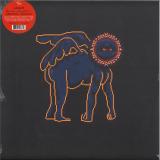
Presenting the second vinyl release of Chez Doc, featuring Call Intro, Oter Order, Joshko and its owner Vikk. Black Shiokara refers to a traditional Japanese elaboration of the squid, which is presented only in his own black ink.
The record is designed not only for peak time moments, but it varies from House in its pure essence, to Breakbeat, to dreamy Deep-House and Rastafari Vocals. The EP embodies the spirit of unpolished, pure dance music, making it a must-have soundtrack for anyone seeking a record for different moments.
Suche:tradition
Jimmy J & Cru-l-t are back on top form with two brand new old skool rave tracks! Bach Again see's them stepping outside their comfort zone to deliver a classically influenced and harder than expected A side. Flip to the B side for the more traditional J&C sound, and a full on euphoric vocal rave workout!
Next up in the Mr Bongo Cuban Classics series is an outing by the mighty Juan Pablo Torres from 1978. Released on Cuba’s state-owned Areito imprint, Algo Nuevo showcases trombonist, bandleader, arranger and producer Juan Pablo Torres' unique scope of sound. A melting pot of an album that weaves together jazz-funk and traditional Afro-Cuban genres with tripped-out synth touches and dancefloor grooves.
The opener 'Pan Caliente' is a fiery celebration, combining a driving groove with Latin percussion, feverish horns and infectious “la-la-la” vocals. The wild, squelching cosmic synthlines give an otherworldly touch to proceedings that sit nicely on a modern dancefloor. 'Guajira 2001' is perhaps Juan's future-focussed take on the vibrant style of Cuban dance-led music called guajira. Blistering bongos, congas and claves moving together with trumpets, trombones and twanging acoustic guitars that you can’t help but bounce to.
Other highlights include, 'Cacao', a Cuban cosmic funk strutter that places the claves upfront, with a scatting vocal line and percussive climax reminiscent of George Kranz electronic disco anthem 'Din Daa Daa' from 1983. Elsewhere, 'Elvira' further showcases the psychedelic essence of many of the album’s tracks. A deep Latin workout where tasty percussive breaks and scorching keys blend with trippy vocals and rumbling synths.
A varied album encompassing a variety of Afro-Cuban genres and rhythms entwined with flashes of mind-bending cosmic influence. Algo Nuevo is a further jewel in Cuba’s musical crown of riches, with plenty of dancefloor treats and downtempo numbers held within
Slow-moving finger-picked ambient folk straddling the synthetic and organic divide – that is “The Ending Was A Typical Part”, the first album by the Zurich-based duo Gūsū. It combines the tradition of playing the guzheng with electronic instruments, allowing different yet harmonious worlds to collide.
The collaboration between Xueyan Chen and Nicolas Balmer alias Gūsū was born out of their shared musical explorations in 2022 and has evolved into a dialogue of sound. Chen’s guzheng, an instrument deeply linked to Chinese history, resonates with improvised and self-composed melodies, freeing its pentatonic scale from its traditional bounds. Her playing is underscored with the cryptic hum of Balmer’s modular synthesizers, the deep bass and layered textures that combine the organic with the electronic. Together they create a sonorous exploration of identity, displacement and unity.
Xueyan Chen has been playing the Guzheng since her early childhood. With her moving to Zurich, Switzerland she started reimagining its historical identity through improvisation and self-composed melodies. With this approach, Chen emancipates the instrument from its classical heritage, weaving a contemporary and deeply personal narrative. Nicolas Balmer meanwhile brings a contrasting yet complementary dimension with modular synthesizers, bass guitar, and electronic textures. His layered soundscapes amplify and distort the Guzheng’s pentatonic timbres, enveloping them in mysterious tones and expansive harmonics.
We, at UDG have further fined-tuned already a great design concept of our flight case into one specially for the most discerning DJ/producer. Constructed from aluminum thus providing an extremely stable structure with lighter weight compared to traditional flight cases. The inner sides are protected with pick & pluck foam that consists of two separate layers, each allowing user to create individualized adapted compartments. The pick & pluck foam allow you to pluck out any desired shape you require for various-sized DJ-controllers and providing the additional option of creating another slot underneath the controller for laptop or cable storage. This pick & pluck foam creating an easy, do-it-yourself customized system of case interiors.
The UDG Ultimate Pick Foam Flight Cases are designed to keep your gear protected from accidental damage when you transport it to and from gigs. They’re compact and lightweight yet tough enough to keep your gear safe.
EAN 8718969212694
Color Black
Weight 4,55 kg / 10.01 lbs
Outer Dimensions (W x H x D) 49 x 42.3 x 21 cm | 19.3 x 16.6 x 8.3 inch
Inner Dimensions (W x H x D) 48 x 41.3 x 20 cm | 18.9 x 16.2 x 7.9 inch
Material Aluminum
Protection Corrosion resistant aluminium profiles with strong rounded corners
Fully-lined with high density foam protective padding & foam on lid
Two side strong butterfly lock & solid metal hinges
Rubber feet at the bottom for support in standing
Extra's Lighter weight than traditional flight cases
Black Diamond finishing surface
Ergonomic & sturdy carry handle
Pick & pluck foam with two separate layers
Replacement pick & pluck foam is available to purchase
Rear cable access hole with cover
Fits Technics SL-1200MK7, SL-1200MK6, SL-1200 MK5, SL-1200 MK4, SL-1200 MK3, SL-1200 MK2, SL-1200GR, SL-1200GAE,
Denon VL12 Prime,
Pioneer PLX-1000, PLX-500
Reloop RP-8000 MK2, RP-8000 Straight, RP-8000, Reloop RP-1000M, RP-1000 MK2, RP-2000 MK2, RP-2000 USB MK2, RP-4000 MK2, RP-7000, RP-7000 MK2, RP-7000 MK2 GLD, RP-7000 MK2 Silver,
Audio Technica LP120-USB, LP120XUSB, LP1240-USBXP, LP1240-USB, LP140XP, LP3, LP5, LP7, LPW40WN,
Stanton STR8-150 M2, ST-150 M2, T.52, T.55 USB, T.62 M2, T.92 M2 USB,
Mixars STA, LTA,
Vestax PDX-3000, PDX-3000Mix, PDX-3000MKII,
or similar size turntable
- A1: Bratach Bana (White Banners)
- A2: Co Ni Mire Rium? (Who Will Have Fun With Me?)
- A3: Mor A' Cheannaich
- A4: Martin Martin
- A5: Chi Mi Na Morbheanna (I See The Great Mountains)
- B1: I Bhi A Da
- B2: Seinn O!
- B3: Mile Marbh' Aisg Air A' Ghaol (A Thousand Death Shrouds On Love)
- B4: Air Fail A Lail O (Falalalo)
- B5: Fraoch A Ronaigh (Heather Of Rona)
Mouth Music, a Scottish-inspired musical project with core members Martin Swan and Talitha Mackenzie, mixed Gaelic vocals (including the traditional ‘mouth music’ techniques of sung rhythms) with African percussion and dance sounds. The self-titled debut album was originally released on the Triple Earth record label in 1990 on CD and in limited quantities on vinyl. The Gaelic technological music is now more widely available through this Forest Jams re-issue.
A Paradise In The Hold is an album of yearning. It’s about Ivor Novello Award winning Yazz Ahmed’s dual heritage, drawing on traditional music and folklore as well as her own personal experience as a British-Bahraini woman. A sweeping epic where tradition meets innovation, she melds ancient rhythms with contemporary musicianship. The record is a tribute to the sorrowful songs of Bahrain’s pearl divers, the strength of Arab women, and the celebratory rhythms of women's traditional drumming circles, while also telling the story of Yazz’s own decade-long voyage of selfdiscovery. The album also marks Yazz’s first foray into writing lyrics, in both English and Arabic, bringing a new dimension to her expansive sound. The project features an impressive roster of collaborators, including vocalists Natacha Atlas, Brigitte Beraha, and percussionist Corrina Silvester. With A Paradise In The Hold, Ahmed delivers a groundbreaking fusion of tradition and innovation, creating a contemporary jazz project that is set to make a lasting impact on the genre
Produced by Grammy Nominated producer Leon Michels (El Michels Affair, Clairo). Big Crown Records is proud to present Derya Yıldırım & Grup Şimşek’s latest album Yarın Yoksa. The show stopping intensity of Derya backed by the psychedelic soul of Grup Şimşek with production by Leon Michels has yielded a stand out record that challenges genre with a broad appeal and a powerful message. They refer to themselves as “outernational” over international as they say it suggests a sound that’s more inclusive or “beyond borders.” Derya, who sings and plays the bağlama, is German born to Turkish parents. Drummer Helen Wells is Berlin-based by way of South Africa while keyboard player Graham Mushnik and guitar/bass player Antonin Voyant are both French. The collective influences they bring to Anatolian music make for a completely unique and fresh sound that both pushes the genre forward and champions its rich heritage. Yarın Yoksa which translates to If There Is No Tomorrow delves into deeply personal pain and collective resistance with a central thread of loss, longing, and hope for change running throughout. The lyrics are poetic and rely heavily on symbolic language, metaphors, and storytelling while the music shifts track to track making each tune stand out on its own but work together perfectly as an album. “Cool Hand”, the first single released on Big Crown in September of 2024, is a beautiful juxtaposition of intensity and light-heartedness over a thoroughly infectious groove. The message is poetic and complicated, repeatedly declaring “I love you, I’m crazy about you” but ultimately finding a sense of peace through accepting a broken heart. “Direne Direne” is a protest song that embodies the struggle and tireless pursuit of justice encouraging people to resist oppression. Derya’s lyrics soar over the psych-soul musical backdrop as her story of personal struggle transforms to a universal call for resilience and strength. The slow and weighty vibe of “Yakamoz” lets onto the meaning of the lyrics even to those who don’t understand Turkish. It is a deeply moving song that captures the profound emotions connected to displacement and loss without knowing if you will ever return. The steady groove of the band, along with the anguished vocals paint a vivid picture of the devastation experienced by the protagonist who ultimately realizes that her roots are within her and anywhere she goes is her home. Nine of the tunes on the album are original compositions but they also take on three Anatollian folk songs with their own inimitable approach. The acapella introduction of “Misket”, a folk song from Ankara/Türkiye, will stop you in your tracks. The tune deals with death and how the living cope and continue a relationship with those who have passed away. Another traditional tune from Sivas that they put their signature sound to is “Hop Bico”, a tune about a playful character named Bico who is a symbol of vitality and spirit. The synth intro grabs your ear from the first note and the earworm chorus encouraging Bico to lead the group in celebration and embrace life through dance has the same effect on everyone who hears it. The band has taken a big step forward that you can hear on this record. Derya’s passion and authenticity is front and centre and the music is too moving to deny. Yarın Yoksa is sure to captivate the hearts and minds of all those who hear it, and just wait till you hear them play it live… Upcoming Tour Dates (+More To Be Added): 18th March The Deaf Institute, Manchester / 19th The Jam Jar, Bristol / 20th Scala, London / 21st Norwich Arts Centre.
Founded by Robbie Redway and psychedelic researchers Mathieu Seynaeve and WaiFung Tsang, UK-based 'United Freedom Collective' has grown into a network of artists including Jordan Stephens, Falle Nioke, Eliza Shaddad, Labdi, William Rees and Facesoul. Originally conceived around psychedelic therapy sessions, online yoga and breathwork channels, the musical scope has expanded on each of the four EPs released on Maribou State's 'Dama Dama' label, and here continues with their debut on Multi Culti. This time Robbie takes the lead on production and sole vocal duties on all five tracks, presenting a range of influences and style. Lead single 'Between Memories' blends tropes of ecstatic dance with uplifting vocal piano house, somehow making flutes fit in with Detroit strings to epic, hands-in-the-air effect.' Title track ‘Bright Patterns’ bridges the gap between Jungle, Jai Paul, and Jamiroquai, a fusion of funky filtered disco-house and electroclash with side-chained pop vocal hooks. ’El Yo’ smooths things out, a dope, laid back groove with a measured reflection on psychedelic healing and the perils of spiritual bypassing. ‘Higher Drums’ warms things back up for the dancefloor with trumpet, afro-latin percussion, and flute flourishes. Finally, ‘Moonshine’ is a soaring, Amapiano-inflected post-desert-house ballad. Influenced, in their words, 'by birds, trees, Buddhism, yoga, headless way meditations, Jungian analysis, Zen Taoism, Chinese plant medicines, indigeneity, Amazonian and psychedelic cultures, icaros and world healing traditions,' the music is eclectic, ranging from afro-inspired jazz to Chinese folk, psych-rock to dub and dance music, an ambitious and inclusive range, collabs that extend well beyond the borders of western musical traditions. Their sound was described by Clash Magazine as an 'aural mosaic that glitters with colour and potential,' and while the sheen of the production and precision of the arrangements might seem a departure from Multi Culti's left-field endeavours, the psychedelic idealism and global connectivity make it a natural fit with the open-ended ethos of the label. Having already had radio support from KEXP, BBC6 Music (Laverne, Ravenscroft, Charles, Nemone, Letts), Jazz FM and Worldwide FM (Gilles Peterson), with a live show that sold out Dalston Curve Garde and The Waiting Room as well as supporting Maribou State for their recent comeback show at Islington Assembly Hall in London the collective's future is looking exceptionally bright.
Mr Bongo proudly presents an official reissue of an iconic, exploratory album by Indian maestro of the sitar, Ananda Shankar, aptly titled 'Ananda Shankar And His Music'.
Released on His Master's Voice in 1976, the album is a sublime collage of sitar-funk, traditional Indian classical music and psychedelic grooves, from the Indian sitarist, composer and musician. Nephew to India’s legendary sitar virtuoso Ravi Shankar, Ananda’s musical family and upbringing led to a deep respect and love of the wealth of music that emanated from his birthplace. His travels to the west coast of America in the late ‘60s though, saw Shankar immersed in the full swing of psychedelic rock. The collision of these two musical worlds with a whole range of other Eastern and Western influences on 'Ananda Shankar And His Music', is a truly entrancing combination.
First big in the UK in the mid-‘90s jazz/rare groove club scene, when it was unearthed by adventurous DJs and crate diggers, the sensational Indian-funk tracks 'Streets Of Calcutta' and 'Dancing Drums' became firm dancefloor favourites. The mixture of drum-heavy funk with Indian music and psychedelia is the perfect melting pot. Flavourful and balanced, it still feels fresh and exciting 40 years on.
Like a fine wine, this album keeps getting better with age and once-overlooked tracks are now seen in a new light. Aside from the main 'club' cuts that many have praised and loved, 'The River' is a part blissed-out, Balearic gem, part cosmic wild west soundtrack, that would provide the perfect complement to any sunset session. Elsewhere, 'Dawn' is a spiritual and meditative journey into Indian classical music, with ‘Cyrus’ floating you away to heavenly heights. On a different tip, 'Back Home' fuses styles and themes via an organ and Moog-infused, tripped-out excursion, whilst 'Renunciation' hits with a psych-rock sentiment to its sitar-soaked grooves.
A beautiful time capsule of Eastern culture meets Western influence, where experimentation and intrigue produced a fusion of sounds that still sound as vibrant and alluring as they have ever been.
Recut, the elusive DJ and producer whose roots trace back to Southern Italy but whose sound resonates globally, is back with a scorching new release titled "Narcotic Tango". This four-track EP, out on vinyl only, is a deep dive into the raw energy of Acid House and Chicago's underground, delivering an unforgettable experience for both DJs and dancefloors alike.
Opening with "Narcotic Tango", Recut lays down a track with intense rhythmic drive. The throbbing bassline and shimmering hi-hats combine with a tantalizing arpeggio that elevates the track to a hypnotic level. It’s a club banger with an irresistible groove, and once you’ve heard it, you won’t forget it. Next up, "Acid Street" transports listeners into a world of deep, dark synthetic atmospheres. The pounding drum machine and the rumbling analog bassline carry the track forward like an unstoppable force, while the overall vibe conjures a sense of gritty dancefloor energy that never lets up. "Jack On Acid" brings the heat with an unapologetically raw Chicago-inspired sound.
With a deep, looping acid groove and a steady, driving rhythm, it channels the essence of the Windy City’s storied dance music tradition, offering pure, unfiltered Acid House energy. Finally, "Feel The Heat" kicks things into overdrive with its infectious blend of New York house and Latin-infused vibes. This track is all about dancing until the break of dawn, breaking boundaries with its smooth yet aggressive energy and contagious rhythm. Recut’s unmistakable style shines through, blending the wild, experimental spirit of Acid House with the raw, soulful energy of Chicago House. Whether you're a vinyl collector, a club DJ, or simply a lover of pure dancefloor joy, this EP is an essential addition to your collection. A seasoned DJ and producer with a passion for underground sounds, Recut has been carving his name in the electronic music scene for years. With his eclectic mix of influences and cutting-edge production skills, he continues to push boundaries and captivate audiences worldwide.
Inés Granja is one of the most important singers and composers of the traditio-nal marimba music of the Colombian South Pacific, with more than 50 years of experience. This musical tradition has been declared an Intangible Cultural He-ritage of Humanity by UNESCO.
REMEMBRANZAS To the rhythm of cununo, bombo, and guasá, and accompanied by the melody of the marimba and choral games, this album is rooted in traditional rhythms such as juga and aguabajo. At the same time, it proposes new sonorities with guitar arrangements and a brass section. It also explores genres such as the Peruvian zamacueca, Cuban son, and salsa; and instruments such as the African kora.
There's iconic. Then there's *iconic*.
A MASSIVE speaker-smashing release, decades overdue. It's been bootlegged - shamefully so, many times over the years - but finally we present the first ever officially licensed reissue of this truly special Afro-disco-not-disco LP from 1979. A favourite of Harvey, Antal, Young Marco and, er, every great DJ to ever play deep records ever, basically. It's not hard to see - or, indeed, *feel* why.
Gem after gem of relentless, irresistibly funky gold, it's an incredibly revelatory album with endlessly complex drum patterns and basslines to dive into, throughout. Truly, this is uniquely FIRE music, unlike anything else you've ever heard, based on Gwo ka music from the gorgeous islands of Guadeloupe and Martinique. A thrilling synthesis of primal, hypnotic drums - the most tribal of percussive elements high in the mix throughout - with the loping synth pyrotechnics of, amongst a whole host of other greats, Wally Badarou and bass power of disco funk don Sauveur Mallia (Arpadys, Spatial & Co.)
Originally released on the seminal French label Barclay, you'd be hard pressed to even find an original copy in nice condition anywhere, let alone for a reasonable price, so it's high time an officially licensed, remastered reissue came around. It's just the latest in a long line of Be With reissues where the music sounds like the - drop-dead dazzling - cover. This here is a true drum attack. BUY ON SIGHT!
Tumblack was a short-lived project, produced and arranged by electronic wizard Yves Hayat and it can certainly be regarded as one of the first examples of Zouk, mixing powerful disco-funk arrangements with Gwo ka, traditional music from Guadeloupe. Gwo ka is an Antillean Creole term for "big drum". You can say that again! It refers to both a family of hand drums and the music played with them, which is a major part of Guadeloupean folk music.Whilst the first side is credited to the exceptional Tumblack band, the flip is given over to "Tumblack & Friends". These weren't just any old friends. Oh no, they were the absolute cream of the French scene (think Arpadys, Voyage, Le Club, Giant, CCPP, Synthesis, Swing Family) such as Sauveur Mallia, Wally Badarou, Marc Chantereau on percussion, Slim Pezin on guitar and Jean-Paul Batailley and Pierre Alain-Dahan handling drum duties.
The urgent, frantic "Fracas" gets things moving straight away with a cavalcade of drums and percussive funk before giving way to the stratospheric "Invocation", one of the album's many, many highlights. It's effectively one long heavenly drum break, a really hard, raw, tribal drum workout without a whole lot else going on - and all the better for it! One to make you sweat, no question. Up next, "Jubilé" is announced with a bellowing accapella voice, chanting the titular name before the heaviest of kicks smashes out your system and lulls you into an absolute state of bliss for nearly 6 minutes. Whoooooosh! Rounding out the sensational A-Side, "Vaudou" is a scratchy, funky patterned drum workout which - yep, yet again - absolutely slays your neck muscles, making them snap and contract in extraordinary fashion. TURN IT UP!
Ushering in the B-Side, the brief, fidgety, African chant-funk of "Parlement" segues seamlessly, beautifully into "Waka", an overwhelmingly rich gem of percussive funk. You do not want this to end, once it hits its stride. For maximum heavenly drum pleasure, you'd need to go a long way than the moment "Waka" feels like it's fading out before it kick-drum-blend into the mighty "Caraïba (Intro)". It's just staggeringly good. It's a minute-long layered drum prelude to the gigantic track which follows. Indeed, "Caraïba" is arguably the best loved and most well-known cut off the LP. And with good reason...featuring that Mallia bass, warm Rhodes and clavs, synth magic, memorably alto sax lines and, of course, tribal chanting.
Another mighty super-ahead-of-its-time classic, the bouncing bass heavy synth funk of "Chunga Funk" deploys Mallia and Wally Badarou (on Mini Moog) exceptionally well. I mean, come on, that bassline is just ridiculous. Try not to move to this one. This extraordinary record closes out with the more traditional Gwo ka sounds of "Bateau La Passé", the tribal chorus making the hairs on the back of your neck stand up.
Tumblack really is a gorgeous late-70s disco-not-disco essential. It's an absolute MONSTER that will completely blow you away; and, yes, it's as compelling and trance-inducing as the cover. The audio for Tumblack has been carefully remastered by Be With regular Simon Francis, ensuring it sounds better than ever. Cicely Balston's expert skills have made sure nothing is lost in the cut whilst the records have been pressed to the highest possible standard at Record Industry in Holland. The cover of Tumblack is so iconic and we sought special permission from original artist Hélène Majera to recreate this at Be With HQ. It absolutely zings off the print and serves as the perfect finishing touch to this long overdue re-issue.
- A1: Belle Vie
- A2: Ahh-Haa Ft Lamine Sonko
- A3: Asskin For More Ft Sampa The Great
- A4: Aunty Modu
- A5: Vibe Breaktion Interlude
- A6: Ohellyeh Ft Bilalli & Vida Sunshyne
- B1: Kingdom | Come Ft Lamine Sonko
- B2: Sa Udade (Interlude)
- B3: Lions
- B4: Sankofa
- B5: Slow Down Learn Fast Ft Bilalli
- B6: Heal Up Ft Lamine Sonko
- B7: Ancestors (One Love)
WE ARE EXCITED TO PRESENT THE NEXT RELEASE ON THE NORTHSIDE LABEL, COURTESY OF MELBOURNE HIP HOP / AFROBEAT GROUP : COOL OUT SUN.
Melbourne's Afro Hip Hop veterans, Cool Out Sun are releasing their sophomore LP 'A LION IS A LION' October 4th.
Spearheaded by the duo of Nfa Jones and Sensible J (known for their work across 1200 Techniques, REMi, Sampa The Great & solo projects) are joined by a star studded line up of guests. These include Sampa The Great, Lamine Sonko, Immy Owusu, Vida Sunshyne, Bilalli and more as COS aim to shine light on on their local circle of creatives and inspirations.
Cool Out Sun creates music bridging the traditions of classic Hip Hop with the traditions of Afrobeat, Afro soul & roots music blending West African language and culture with modern sonics that jump out the speakers. Beats are built on the MPC & refined with all live instrumentation & vocals recorded in their lofi indie label, House of Beige studio in the middle of nowhere.
The group's explosive live show has them performing consistently, and their music has been getting a lot of Australian airplay as well as spins across the US, EU and the UK radio.
Cool Out Sun songs go deep into social subjects and storytelling with historical and cultural messaging hidden in catchy hooks and heavy grooves. This collection of songs continues this theme while leaning into the more vibrant side of what Cool Out Sun cooked up in the studio in the creation of this album, 'A LION IS A LION.
To order copies at the WHOLESALE RATE of $25 comes with a minimum of 3 units with each order. Shipping can be arranged and also records can be picked up from here in Fitzroy at Northide.
From the needle drop, the listener is swept away by Moving Still. The Jeddah-born, Dublin-based artist graces Bordello A Parigi with Close to the Shams, four works that summarise his broad range and even broader influences. Pulsating percussion push piano plumes and brass blasts in “Zaman.” A SWANA-inspired scent weaves through the track, with snare rolls adding spice and speed to this heady opener. Tempos drop for “Bang of Luban.” Beats are bolstered, acid squirms lending texture, while the central melody bends and turns from traditional refrains to house reimaginings.
Those traditional undercurrents continue into the B-Side. The title piece is big and bold, kicks split into broken beats while nuanced mizmar notes dip and dive with a swallow-like agility. “Sunday Rollover (Suntop Mix)” calls time on the quartet. A relaxed rhythm gives support and space to low-slung lounge lines, a dreamy and enchanting finish to an EP that illustrates the breadth and depth of Moving Still.
The album’s title deftly gestures to the sheer vastness of astronomical dimensions, while simultaneously capturing the musical breadth within, where the eight planets are imagined as the eight notes of an octave. The work draws inspiration not only from earlier compositions —most notably Gustav Holst’s The Planets—but also from the rich astronomical and cultural contexts surrounding these celestial bodies. Here, the focus transcends direct citation of melodic motifs, instead embracing an intriguing conceptual approach on a meta level, unfolding in a series of vividly contrasting soundscapes. These contrasts shape a sweeping sonic journey, one that fully embraces the album format with both arms, inviting the listener to venture into realms both strange and wondrous, feeling the immensity of the interstellar space that lies between them. Contrast, after all, is the brushstroke that enriches our world.
Embarking on an auditory voyage, "Astral Guide" establishes the sonic framework that propels us into the boundless expanses of the cosmos. Its ethereal tones evoke the vastness of space, crafting a mood ripe for exploration within the realms of sci-fi. The subsequent tracks unfold like constellations, weaving a rich tapestry of sound that seamlessly marries cinematic soundscapes with pulsating, club-oriented rhythms. This album invites listeners to traverse its immersive landscapes, whether nestled in the comfort of home or dancing under the starlit sky, each note a guide through the transcendent experience of a nocturnal journey.
"Solar Flares" draws its inspiration from the awe-inspiring expanse of solar phenomena, capturing the majestic power of the sun as it reaches into the cosmos. This track resonates with the idea that energy, while vital, can also be a force of destruction when unleashed with overwhelming intensity. The composition beautifully mirrors the sun’s duality, where brilliance and devastation coexist, inviting listeners to reflect on the delicate balance between creation and annihilation. Through its rich textures and dynamic shifts, "Solar Flares" serves as both a homage to the celestial and a poignant reminder of nature's formidable power.
"Mercury – The Winged Messenger" embodies a meticulously crafted soundscape where artistry meets astronomy. The tempo of 173.6 BPM, derived from precise astronomical data, propels the composition into a vibrant realm that resonates with cosmic energy. Synthwave sound design intertwines seamlessly with the fluid rhythms of Drum’n’Bass, imbuing the piece with an uplifting dynamism that evokes the ethereal grace of Mercury itself. In this sonic exploration, listeners are invited to ascend on wings of sound, navigating the celestial tapestry of the universe with each invigorating beat.
"Venus, The Bringer of Peace" strikes a decidedly cozy note, presenting a poignant contrast to the more tempestuous themes often found in cosmic narratives. This composition evokes a nostalgic vision of an optimistic era, one in which humanity transcended borders and embraced the infinite possibilities of space exploration, where no destination felt too distant. The dense, languid atmosphere envelops the listener, creating a tangible sense of serenity that unfolds gradually, allowing for a meditative journey through sound. Each note serves as an invitation to linger in this tranquil embrace, reflecting on the harmonious potential of our collective aspirations and the beauty of connection in a vast universe.
The central theme of „Gaia, The Bringer of Life“ —originally not part of the planetary cycle— is the profound enabler of life on Earth. The arrangement delicately mirrors the slow, tentative unfolding of this potential, marked by an initially sparse orchestration that gradually builds in momentum. This progression crescendos, embodying the explosive dynamism of the Cambrian burst of life, ultimately culminating in a euphoric fanfare—a triumphant, celebratory flourish echoing life’s victorious emergence.
"Blue Moon" unfolds as a contemplative reverie on the tranquil clarity of a night sky, now seldom glimpsed in its natural purity, unclouded by the relentless haze of urban light. The listener is drawn into the vast embrace of the star-strewn firmament, a journey that sways between euphoric awe at nature’s sublime beauty and a profound melancholy for its fragile and imperiled state. Musically, this duality finds expression in the delicate interplay of modal mixtures, while an ever-shifting triplet groove, poised at the intersection of Outrun and melodic house, lends a pulse that is both nostalgic and forward-looking—echoing the beauty and transience of a world on the brink.
Rather than replicating the original composition of „Mars, The Bringer of War“, this interpretation seeks to evoke its profound, foreboding atmosphere. Cyberpunk emerges here as an ideal genre, channeling the dark, relentless march synonymous with Mars, the ancient god of war. The piece reverberates with intensity, as distorted vocalizations rise, embodying the anguish and visceral torment that shadow war’s violent crescendo. This auditory descent into conflict captures the relentless pulse of warfare, where sound itself becomes an embodiment of suffering and fury.
Majestically, "Jupiter, the Bringer of Jollity" emerges on the celestial stage, sweeping away the somber tones with its radiant vigor. Drawing inspiration from the triumphant strains of the original, and borrowing a melodic motif in the refrain, the piece expresses joy and buoyancy through a shift to a major key and the lilting sway of a danceable 12/8 meter. Spirited and exuberant, it leaps boldly from major to minor and back again, playfully shifting time signatures to capture a mood of unbridled festivity and jollity.
Here, a more conciliatory concept is chosen than in the original inspiration. „Saturn“ aligns with the number six, being the sixth planet from the Sun and bearing the iconic hexagonal pattern at its northern pole. What, then, could be more fitting than to render this piece in a 6/8 time signature? The arrangement unfolds with a multifaceted richness, mirroring the countless stones and ice fragments that form the foundations of Saturn’s majestic rings.
„Uranus“ adopts the theme of a light-footed, dancing instrumentation, giving the impression of perpetual motion, never quite settling. This musical choice harmonizes with the planet’s own orbit, as it spins with breathtaking velocity, teetering and swaying, seemingly unable to attain rest or stability.
The chill and vastness of the cosmos find expression in „Neptune, The Mystic“. At its core, an electronic soundscape envelops a classical arrangement, its unreachability intensified by an ethereal, otherworldly choir. Hovering at the outermost boundaries of the solar system, where warmth is but a distant memory, the composition lingers in a slow, contemplative tempo, evoking a realm where space for speculation stretches wide and silence reigns supreme.
Though Pluto may have lost its planetary status, and its companion Charon never achieved one, this shift in classification subtly aligns with the cosmic scale invoked here—one that mirrors the musical tradition of an eight-note sequence. Fittingly, the album closes with „Kuiper Belt“, a composition emblematic of the turbulence and vitality of countless smaller
celestial bodies that, though diminutive, find their rightful place within the vast architecture of the solar system.
They say nature is the greatest composer, shaping the universe with a symphony of chaos and order, beauty and danger. It is this duality that fuels the artistic vision of Edictum—a producer who, armed with a doctorate in chemistry, delves as deeply into the mysteries of molecules as he does into the depths of sound. In the tension between the vastness of the cosmos and the microscopic processes that dictate life’s rhythm, Edictum creates sonic landscapes that dissolve the boundaries between science and art.
His music is a story of contrasts—a sonic tale where the raw forces of nature clash with the intricate structures of human culture. Opposites intertwine to form a harmonious whole: the primal rhythms of the earth meet the celestial melodies of the cosmos, the rigid laws of physics blend with the boundless freedom of art. Edictum explores these polarities with meticulous devotion, each composition an expedition into uncharted soundscapes—a quest to give voice to the unfathomable.
With over 20 years immersed in the realms of electronic music, Edictum has honed a keen sense for rhythm and movement. His driving beats compel both body and mind into a hypnotic flow. Yet beyond the pulse of dance lies a complex framework of conceptual thought. Today, his creative focus revolves around holistic album projects—self-contained worlds with overarching narratives that embrace contrast and complexity. Each track stands alone as a fragment of the whole, but together, they weave a cohesive tapestry, much like the chapters of a novel that guide the listener on an emotional and sonic journey.
Edictum’s distinctive musical signature has earned him international recognition. With over 150 releases, many on prestigious platforms like the iconic *NewRetroWave* label, and collaborations with artists such as Jan Johnston, Azumi Inoue, Powernerd, and Turbo Knight, he has solidified his place in the global electronic music scene. His latest work, *A Cosmic Scale*, marks his seventh vinyl album and is released under his own label, *Echoes of Expanse*. The label’s name is no coincidence—it captures the essence of his art: echoes of infinity, the vibrations of the universe distilled into a singular sonic experience that carries the listener ever further into the boundless expanse of sound and space.
Love Raid is first in a series of cassette-only mixtapes with the cult WFMU show and blog Bodega Pop collecting assorted digs from across New York's bodegas and cell-phone stores. This first edition is focused on leftfield, novelty, and protest 45s from across the Arabic world recorded between 1960 & 1974.
"A series of random discoveries in the mid-1990s led me to abandon American and British pop and focus on non-English-language music, predominantly Arabic, for the next two decades.
Feeding my ears required biking down to Bay Ridge, Brooklyn, or hopping on the subway to Steinway Street in Queens, where I would pop into a handful of the local bodegas and immigrant-run cell-phone stores, some of which offered music from North Africa and the Middle East on cassettes and compact discs.
When CDs spiralled into obsolescence in the mid-2010s, I reluctantly made the switch to vinyl, concentrating on 45s and intentionally filling holes not well represented in the digital era – more artists than not hadn't made the transition from analog in the 1980s. This meant focusing on singles by a lot of artists I'd not heard of, and it quickly became evident just how much of the era – from approximately 1960 to 1974, when 7" records were all but abandoned in Egypt and Lebanon – had been forgotten.
What also became evident was the breadth of popular music issued by even hegemonic titan Sono Cairo. The consensus is that state radio and music publishing ignored traditional folk, shaabi, and other lowbrow pop in favor of the exalted art song we associate with Oum Kalthoum, Abdel Halim Hafez, and Farid al-Atrash.
While this active neglect of the broadest Arabic pop spectrum is mostly true, I accumulated a not inconsequential number of what I can only describe as "novelty" records by mostly one- and two-hit wonders. From catchy gimmicks like the "doktor, ya habibi" of Maha's "Doktor" and the "boom boom boom" of twins Thunai Badr's "Love Raid," to the Monty Python-level silliness of Sayed Mandoline's fake Italian crooning and maniacal laughter in "I Present to You the Mandolin," these were sounds I was genuinely surprised to hear.
Even more remarkable were the songs recorded in English: Karim Shukry's celebratory "Ramadan" and Motyaba & Nada's civil-rights plea "No Black No White" are two of my favorites, and thus included in the present collection.
The tracks compiled here are often as beautiful as they are beguiling, but while the intention was to absolutely put together a solid listen, it was also my hope to slightly expand our understanding of Arabic music of this period beyond not just the usual suspects, but also subjects – and treatment of same."
--Gary Sullivan.
- A1: E Nun Ce Voio Sta
- A2: Squadra Antifurto (Suspense)
- A3: Squadra Antifurto (Azione E Mistero)
- A4: Squadra Antifurto (Azione)
- A5: Squadra Antifurto (Nico A New York)
- A6: E Nun Ce Voio Sta (Versione Fisarmonica E Chitarra)
- B1: Squadra Antifurto (Nico A New York #2)
- B2: Squadra Antifurto (Azione #2)
- B3: Squadra Antifurto (Suspense #2)
- B4: Squadra Antifurto (Azione #3)
- B5: E Nun Ce Voio Sta (Versione Chitarra)
- B6: Squadra Antifurto (Azione E Mistero #2)
- B7: Squadra Antifurto (Azione E Mistero #3)
- B8: E Nun Ce Voio Sta (Titoli Di Coda)
Transparent Amber[31,51 €]
Here at Four Flies, we kind of feel we need a bigger word than 'proud', this time, to present, in collaboration with Beat Records, the first-ever release of the original soundtrack written in 1976 by Guido & Maurizio De Angelis for the legendary Squadra Antifurto, the second chapter of the comedy-infused crime saga directed by Bruno Corbucci and starring Tomas Milian as the iconic Italian Police Marshal Nico Giraldi.
The excitement in this case is nothing short of gigantic, difficult to rein in for those who, like ourselves, grew up adoring the character played by Milian as one of our cult heroes, and dreaming that the soundtracks of the first three films in the saga – the only ones composed by the De Angelis brothers – would one day be released.
Since the launch of our label, Squadra Antifurto has been at the top of the list of film scores we most wanted to release. Until a few months ago, this dream of ours seemed destined to remain just that, so strong was the conviction in all of us that the master tapes were definitively lost, that they had forever vanished into thin air. That's why their recovery, made possible by Maurizio De Angelis himself and the persistence of our friends at Beat Records, is an extraordinary feat.
Nearly 50 years after it was first heard in cinemas, the soundtrack penned by the De Angelis brothers is resurrected in its entirety and can finally shine its incredible power all over us.
Beautifully seeping through this score – like many others composed by the golden duo in the 1970s – are elements from the Italian, and especially Roman, folk tradition, for instance in the warm, heartfelt ballad sung by Alberto Griso, "E nun ce voio sta," which first plays in the opening credit sequence and is then reprised in various forms throughout the film, culminating with the soul-stirring orchestral version that closes the album's tracklist.
But as in any Italian crime film worthy of that name, a different soundscapetakes centre stage: it's the music that accompanies the countless scenes of tension, action, and pursuit that punctuate the film, and which has made us fall madly in love with this score.
The main theme is a prog-funk joyride, drawing inspiration from the traditional tarantella but elevated to irresistible energy thanks to a rock orchestration featuring psychedelic flutes, wild percussion, distorted electric guitars, piano chords, and various feedback and delay effects.
The resulting groove is just mind-blowing, and we almost can't believe it's finally available on a record, completely remastered for vinyl.
We really couldn't be prouder, and dedicate this release to all passionate fans of Italian crime films, the De Angelis brothers, and Tomas Milian aka Nico Giraldi.
Available starting April 12th on standard black vinyl and limited coloured vinyl (transparent amber, limited to 300 copies).
The record captures an expansive performance in Poitiers, France in November 2023. First working together in an unpredictable trio with minimalist legend and eccentric extraordinaire Charlemagne Palestine, Ambarchi and Thielemans quickly established a remarkable musical chemistry that led to an ongoing series of duo concerts, including the performance documented on their LP Double Consciousness (Matière Mémorie, 2023).
Kind Regards finds the duo refining their shared language while continuing to take risks, allowing the music’s gravitational pull to lead them from meditative calm to unexpectedly expressive passages of melodic invention and rhythmic drive.
Recorded in sparkling fidelity and carefully mixed by Ambarchi’s longtime collaborator Joe Talia, the LP contains a single unbroken performance, stretching out for over 45 minutes. Guitar and drums weave together into a symbiotic whole that nevertheless affords us ample opportunity to marvel at the highly personal approaches these two musicians have developed to their chosen instruments through decades of diverse collaboration and prolific performance. The set begins with Thielemans’ hypnotic tom patterns, around which Ambarchi’s wavering, shimmering guitar tones—achieved with the help of the rotating speaker of a Leslie cabinet—flurry and swirl. Thielemans’ drums play subtle tricks with time and perception, adding and dropping beats within repeated patterns to create an effect at once rhythmically insistent and liquified. Growing at first into a rapidly pulsing texture of brushed drums and flickering harmonics, the music builds momentum into an irregular groove over which Ambarchi’s guitar is transformed into haunting, monumental electric organ chords, strikingly recalling the Wurlitzer work of Alice Coltrane, before settling into a section of gentle portamento melody embedded into the tactile clicks and clangs of Thielemans’ percussion.
When Thielemans adopts a more traditional jazz approach to the kit in some of the set’s second half, the results are stunning, demonstrating a feel for shifting accents and sensibility to the touch of the stick on the drum or cymbal that recalls greats like Jack DeJohnette or Billy Hart (one of Thielemans’ mentors). And when Ambarchi turns up the heat, he does so in an unexpected and delightful way, letting loose a swarm of jittering delayed tones straight out of Henry Kaiser’s classic It’s a Wonderful Life, with a more active use of the guitar’s fretboard than his usual approach to the instrument allows. As the performance draws to a close after a climactic episode of distorted harmonic groans and crashing cymbals that manages to be at once thunderous and carefully attuned to detail, it is clearer than ever that, for these two serial collaborators, this is a very special pairing.
Kind Regards shows us the kind of magic that can happen when two masters who have dedicated decades to reimagining their instruments simply begin to play, following the music wherever it goes.
From an artist in their seventies, you probably wouldn’t expect to hear an album like this. But Brazilian drumming legend Ivan ‘Mamão’ Conti has been experimenting and innovating for the last half a century. As one third of cult Rio jazz-funk trio Azymuth, Mamão was at the root of the group’s ‘samba doido’ (crazy samba) philosophy, which warped the traditional samba compass with jazz influences and space age electronics. Even with his lesser known jovem guardua group The Youngsters, Mamão was experimenting with tapes and delays to create unique, ahead-of-its-time sounds, way back in the sixties. More recently Mamão recorded an album with hip-hop royalty Madlib under the shared moniker ‘Jackson Conti’.
With his first album in over twenty years, and the first to be released on vinyl since his 1984 classic The Human Factor, Mamão shares his zany carioca character across eleven tracks of rootsy electronic samba and tripped out jazz, beats and dance music. Featuring Alex Malheiros and Kiko Continentino on a number of tracks, the Azymuth lifeblood runs deep, but venturing into the modern discotheque (as Mamão would call it), Poison Fruit also experiments with sounds more commonly associated with house and techno, with the help of London based producer Daniel Maunick (aka Dokta Venom).
Take a bite of Mamão’s psychoactive Papaya and join the maestro on a weird and wonderful stroll through the Brazilian jungle.
United by a love for the music of Mamão and Azymuth, the CD and digital edition also feature the previously released remixes and dubs from some of today’s most forward-thinking producers with a penchant for percussion, including IG Culture, the 22a crew, Max Graef and Glenn Astro.
The Magic Movement proudly presents Bosquemar's new EP "Manco"
The title track is a remarkable showcase of Bosquemar’s distinctive sound, combining field recordings as the main ingredient, acoustic instruments, electronic rhythms, and dub influences. Rodrigo Gallardo, a key figure in the South American downtempo scene and ex-member of the renowned band Matanza, adds his well known vocal presence to the track. His contribution infuses Manco with authenticity and depth, creating a rich, multi-layered listening experience.
On his new EP, Bosquemar invites listeners on a profound sonic journey, transcending typical boho aesthetics to explore deeper psychedelic territories. This single reflects his mastery of folktronica, blending traditional and electronic elements to craft a transformative sound that resonates deeply with the listener.
With Manco, The Magic Movement continues its tradition of curating innovative music that pushes the boundaries of organic and electronic fusion. By merging traditional instruments with modern production techniques, the label showcases the soulful depth and creative vision that define its releases.
Born in 1989 in Bamako, Mali, Nfaly Diakité is a member of the Donsow, Bambara animist hunters. Nfaly Diakité is named after his grandfather, the late Nfaly Diakité, one of Mali’s most respected donso chiefs. His grandfather did not play, but as a leading figure in the donso brotherhood, he was always accompanied by musician Yoro Sidibé. Nfaly grew up alongside Yoro Sidibé, who became his first master of the donso ngoni, a type of eight-stringed antelope skin harp. After leaving school to devote himself to his instrument, Nfaly continued his apprenticeship with Diakaria Diakité and Oumar Sidibé, two donso masters from the Wassolo region.
He quickly made a name for himself in the donso community and was much asked to play at the traditional ceremonies of his brotherhood. He then met percussionist Ibrahim Sarr and joined the BKO Quintet, with whom he recorded an album and toured Europe and the United States. His virtuosity on the donso ngoni soon attracted attention, and he took part in numerous music and dance festivals in Mali and abroad, with the aim of raising awareness of this little-known traditional instrument.
Nfaly Diakité is also a Kônô, meaning that he is responsible for passing on the history and culture of the Bambara people through music and song. He pursues his mission by combining tradition with more contemporary sounds and by collaborating with artists from a wide range of musical backgrounds. For him, music is a means of conveying messages of peace, love and harmony, and his compositions evoke the values of respect, tolerance and open-mindedness.
‘Tribute to Toumani Koné’ is Nfay Diakité’s first solo album, recorded in Bamako in June 2020. On the album, Nfaly is the only singer, providing backing vocals and playing the donso ngoni and keregne. The album is a tribute to the storyteller and poet Toumani Koné, the greatest donso ngoni player since N’gonifo Bourama. Nfaly Diakité is a representative of the new generation of donso ngoni players and he wishes to pay tribute to Toumani Koné, who throughout his long career has been a symbol of courage, daring, loyalty and honesty.
The nine-track of this solo album leaves no room for hesitation. Three instruments (donso ngoni, voice and keregne) manage to carry one into another dimension without ever tiring. The fitting and precise rhythm is a deep but melodious transe. Nfaly’s voice plays between expressive urgency and calm wisdom, and the choruses with his own voice multiply the planes of dimension of the music. The donso n’goni, of which Nfaly is an excellent player, sounds rough and earthy but always clear and sharp. All the strength of a music that does not belong to a single musician but to a long cultural tradition of which he is the spokesman is expressed here. The young Nfaly, thanks to his experience and sensitivity, succeeds on his own in pushing us into this world without feeling the weight of tradition but only the liberation of music that sounds all the more contemporary. This album is to be listened to in its entirety as one tight journey between repeated formulas, highlights and moments of rest within the same relentless rhythm. The densest moment is probably found in the heart of the album, between the tracks Nankama (the predestined one) and Mogote Diabeye (no one can please everyone). Here, the message, which can be deciphered from the translation of the lyrics, seems to transcend language barriers and intepret us directly about our human condition, urging us to move our bodies to the dense rhythm of life.
With an intrigue for a particular niche of old UK hardcore which takes cues from Sheffield bleep ambience, heady rave futurism and soft, almost new age synth pads, Blank Mind presents ‘Lost Paradise: Blissed Out Hardcore 91-94’. Though the records gathered for the compilation span a short three-year period and bridge the gap between scenes, the collection manages to find a sweet spot where the influence of Warp’s Artificial Intelligence, back room chill out sonics and the nascent jungle boom meet with elements of Italian piano house and slower breakbeat cuts.
Opting to focus on atmosphere to highlight shared connections; in this case the duality of often serene and calming soundscapes with frenzied breaks and bass (see Hedgehog Affair’s ‘Parameters’ and Luxury’s ‘Twirl’ respectively); Lost Paradise is a formidable collection of tracks plucked from a thriving time for British dance music experimentation. The general themes of ascension and escapism channelled through digital samplers are also inescapably linked to a turbulent time in politics, beginning in the post-Thatcher years and culminating in the year the harshest anti-rave Criminal Justice Act came into force.
Initially building the compilation around DJ Mayhem’s track ‘Inesse’, Blank Mind label founder Sam Purcell and Amsterdam based producer Tammo Hesselink began a process of swapping favourites and deep cuts to spread across this 2x12” doublepack. The compilation avoids any obvious centrepieces through masterful sequencing, allowing for moments of refrain and tempo changes in a way that helps add to their overall vision of what this music is and can be; “We wanted to frame hardcore in a different light, looking at this idea of ecstasy through the traditional meaning of the word and exploring that symbolism”. By drawing from what some might consider the softer edges of the movement, the pair offer a look into the relevance of these tracks in the contemporary era, where the past years have seen both an explosion in popularity of old ambient/new-age music and a certified jungle revival.
Dajusch unleashes the 'Ambition EP', a raw and uncompromising statement of techno tradition. Berlin-based producer, DJ and sound engineer Dajusch returns with his latest four-track EP, a high-powered offering that channels the essence of Detroit and Chicago techno while pushing the boundaries of contemporary club sound. Known for his deep connection to electronic music's pioneering roots and his work behind the scenes as a mastering engineer, Dajusch brings an intense and refined energy to this release. The EP opens with the single 'No Mas', a relentless percussive workout where hypnotic synths intertwine with driving drum patterns, setting the stage for an unyielding ride. The title track 'Ambition' follows suit with a high-octane groove, combining raw machine-funk aesthetics with a pulsating bassline and intricate, evolving textures that command the dance floor. On the flip side, 'Split' takes a darker and more cerebral turn, layering industrial-tinged sonics over a tight, rolling beat, blurring the line between peak-time energy and introspective depth. Closing out the EP is '36g', a heady, propulsive cut that builds into a whirlwind of syncopated rhythms and distorted stabs, rounding off the record with a powerful, no-holds-barred climax. With Ambition, the Spandau20 artist Dajusch reinforces his position as a purist and innovator, delivering a release that feels both timeless and forward-thinking. Whether experienced in the heart of a sweaty warehouse or through the pulse of a late-night drive, this EP stands as a testament to the raw, unfiltered power of techno.
- A1: Flôr Di Nha Esperança
- A2: Vaquinha Mansa
- A3: Amor Di Mundo
- A4: Paraiso Di Atlantico
- B1: Sorte
- B2: Carnaval De São Vicente
- B3: Desilusão Dum Amdjer
- B4: Nho Antone Escaderode
- C1: Beijo De Longe
- C2: Roma Criola
- C3: Perseguida
- C4: Maria Elena
- D1: Cabo Verde Mandá Mantenha
- D2: Terezinha
- D3: Sodade (Bonus Track)
- D4: Luiza (Bonus Track)
A native of the island nation of Cape Verde, Cesaria Evora was known as the country’s foremost practitioner of the morna, a combination of West African percussion with Portuguese fados, Brazilian modinhas, and British sea shanties. After a short singing career in the 1970’s, she returned in the late ‘80s with a string of fine albums.
Her 1999 album Café Atlantico (a reference to her home where she frequently entertained guests) is a much-acclaimed masterpiece, finding Cesaria Evora venturing into more Latin American musical landscapes, as opposed to Portuguese, which dominated her previous albums. Evora draws from traditional Cuban and Brazilian music to mesmerizing effect. The music is heart-breaking and nostalgic, warm and tragic all at once.
Café Atlantico is available as a limited edition of 1000 numbered copies on gold coloured vinyl, housed in a gatefold sleeve.
2026 Repress
Oscar Mulero keeps busy in his studio facilities as usual. His musical output keeps growing and always wandering into new directions and flavors while preserving his artistic integrity. For this Ep on his very own Pole Group imprint he showcases his combative side after some excursions into more profound and intricate territories.
Poisonality EP is about the wise use of distortion on techno, is about non conforming with the seasonal standards, about investigating new rhythms, new types of arrangements and new boundaries in sound design, always remembering the roots.
Aroma de Falso Amor is the first exercise, exploring the abrasive power of broken distorted beats, overdriven drones and textures and hyper dynamic song structures. The result is a non conventional techno workout, essential to give spice to any set.
Poisonality gives name to the EP and works with asymmetry combined with the right dose of crispiness, creating a super shuffled hi tech jam. Chaotic, hypnotic and mental.
Iris Malicioso opens the B side with an eye on the funkier Detroit tradition combined with the power of the best British influences from the nineties. Here drums and stabs are the main ingredients, interleaving, mutating and constantly evolving. Hi tech funk in its purest expression.
Dos Pequeños Zorros closes the tracklist, again focusing on the dancefloor and keeping the ingredients minimal, continuous and obsessive with a rugged, constantly twisted sequence running over a precise groove, keeping things busy through all the structure
• John Lee Hooker is not an artist who plays by the rules that govern what we generally accept as “traditional” blues music—he very rarely plays in 12-bar format when he performs his songs. On his most popular tune, ‘Boogie Chillen’, his lyrical and musical phrases last anywhere as short as nine or ten, or maybe fifteen or even nineteen measures long, depending on how long he wants to “boogie” on his guitar riffs that roll and tumble between his patented vocal phrases.
Blawan returns with ‘BouQ’, the follow-up to his acclaimed 2023 “Dismantled Into Juice” EP; one that was heralded by Pitchfork as “dazzling… part of a long, proud tradition of UK club tracks that turn the dancefloor on its ear” and Resident Advisor as “mind-melting… truly unchartered territory.” “Fires”, the first single revealed from his freshly-announced new EP, has received global support from the likes of Four Tet and Skrillex over the summer, and sees Blawan push his distorted, syncopated productions into a new broken-pop lane, his own vocal creating an intense, visceral hook that rips through the track's multi-layered, pulsing beats.
a A1 NPCs Making Hot Dinner 2m 35s
b A2 Fires 3m 39s
[c] B1 Done Eclipse [3m 30s]
[3m 23s]
The second outing of Johannes Volk for Running Back picks up, where Extra Dimensions left us: traditional techno components, an inclination for melodies, 80s electro(nic) pop and aesthesia for ecstasy. Something for everyone’s taste and nothing tacky.
Lightweave is like the conversation that Giorgio Moroder and Wolfgang Voigt never had („I Feel Sägezahn“). With a power plant of a bass line that’s pretty much all you need.
The direct connection to the EPs artwork is Cubistic Pathway. Painted with acryl on canvas as a birthday present, it’s like the title tracks little and playful brother and a homage to 16bit platform games like Turrican or Contra.
Fragments of Moments is the sort of piano-not-piano-house stomper that classic techno DJs love, while Sense of Wonder is one of those songs without vocals that appeals to 80(8)s-kids and their offspring.
Last but not least, Emotional Message and its hypodermic breakbeat dates back to 2011, wears the heart on the sleeve, and screams tearjerker, bear hug or elevation. If you can’t get enough of that, there are three digital bonus tracks, that mix, re-mix and fixate the topics you just read about. Volk’s populi!
‘Belgium is too small for pianist Alex Koo’ – De Tijd
‘Stunningly original’ – Downbeat Jazz Magazine
‘Fabulous technique, sounding downright genius at times.’ – London Jazz News
‘When listening, Keith Jarrett’s name came to mind several times. Not because Koo’s playing is similar to that of the American master, but because it is of the same exceptionally high level.’ – Trouw
‘Koo’s compositions and playing are absolutely world class.’ – Written in Music
The son of a Belgian missionary sent to Japan in the seventies and a Japanese peace activist, pianist and composer Alex Koo refuses to be boxed into any traditional category. As the renowned German Jazzthetik magazine put it, "Alex Koo defies categorization."
With ten uniquely personal tracks, Blame It on My Chromosomes is more than a musical statement; it is a form of self-therapy. "The only way not to spiral into depression as a jazz musician nowadays is to vent and lose yourself in the music," Koo shares. "Music needs a purpose beyond self-promotion. For me, it's about accepting who I am and letting go of anything else."
Featuring celebrated trumpeter Ambrose Akinmusire on two tracks, Blame It on My Chromosomes highlights Koo's fearless versatility. One of these tracks, "Jonass," is dedicated to Koo's childhood friend who tragically passed away, adding a deeply personal layer to the album. "When we were kids, we would skate and do stupid things with shopping carts, inspired by Jackass," Koo recalls. "That's why we called Jonas 'Jonass'-he had the biggest smile you could imagine, his laugh was contagious, yet he also was the most reckless one among us."
Koo, praised as "stunningly original" (Downbeat Jazz Magazine), is known for creating music that transcends genre boundaries, blending jazz, indie, contemporary classical and film music with innovative freedom. A native of rural West-Flanders, Belgium, he began his musical journey as a classical piano prodigy at the age of five. In his teens, he developed a passion for jazz and improvisation, earning praise from jazz legends such as Kurt Elling, Kenny Werner, and Brad Mehldau. Koo has even been described as "of the same rare high level as Keith Jarrett" (Trouw). His 2019 album, Appleblueseagreen, featuring Mark Turner and Ralph Alessi, was included in Downbeat's Best Albums of the Year.
Alongside Koo, Blame It on My Chromosomes features his longstanding trio, whose fearless interplay brings the album's narrative to life. The trio, with Koo on piano, Dré Pallemaerts on drums, and Lennart Heyndels on bass, represents the very best of the Belgian jazz scene. Their intuitive chemistry and artistry are the driving force behind the album's emotive power, with special guest Ambrose Akinmusire adding a transcendent layer on two standout tracks.
Oslo’s Sex Judas feat. Ricky announces 2 x LP for Norway’s Snick Snack Music
The band’s varied concept album portrays a break-up of epic proportions and releases Jabnuary 2025
Digital Release Date: 3rd May 2024
Vinyl Release Date: Jan 2025
“Are you ready for the big disaster? The moment when everything unravels?
On their third album, Sex Judas feat. Ricky portrays a break-up of astronomical proportions. The band's mascots, Sex Judas and Ricky, embodied by artist Sindre Goksøyr, find themselves in the midst of a separation, and their feelings are sprayed all over the big screen.
But what is actually going on? Sex Judas feat. Ricky consists of the musicians Tore Gjedrem (Ost & Kjex), Sidiki Camara, Ivar Winther, Tracee Meyn, Tore Brevik, Kristian Edvardsen and Linn Nystadnes, a stellar team part of Oslo's musical underground. Together, they play a mixture of funk, disco, post-punk, traditional music from Mali and electronica that always moves the dance floor, with two previous critically acclaimed albums on the Scottish Optimo Music and a Norwegian Grammy to show.
Sex Judas’ third album, ‘The Book Of Dreams / After Sex’, is a double disc and a two-part musical affair. In the first part, Sex Judas' version of the breakup is depicted in a band format, with music inspired by the alternative 80s. Think Grace Jones, Tom Tom Club, DAF, No Wave, and the Compass Point Studio backing band in a blissful cocktail.
In part two, depicting Ricky’s breakdown, the band has created their most experimental music to date in close collaboration with contemporary composer Ole-Henrik Moe. The songs influenced by Ole-Henrik's tones are fluid and beautifully ambient, with inspiration ranging from 30s and 40s film music, Norwegian folk, contemporary electronica and IDM topped with Moe’s modern string arrangements.” - Snick Snack Music
Limited Edition White Vinyl
At the forefront of a rising wave of Brazilian artists captivating international audiences, Nyron Higor brings a quiet yet potent sense of wonder to his new self-titled album. Born in Maceió, Higor’s latest work is rooted in the traditions of Northeastern Brazilian music and golden-era MPB. Within the peaceful surroundings of his home, Higor weaves these roots together with global influences and contemporary production techniques, for a uniquely dreamlike vision of hope.
Following the success of his self-released debut Fio de Lâmina—an instrumental record of delicately balanced rhythmic and harmonic patterns, which earned support from tastemakers like Mr. Scruff, Gilles Peterson, and John Gomez—Higor’s new album is a move towards a more expansive, lyrical exploration of transcendence and triumph. As Higor explains, “This album is a test of resistance and a big event in my life as a young Black man from the Northeast and coming from a humble background, financially speaking, its context is political.”
Taking his demos and unfinished tracks to São Paulo, Higor worked alongside friends and collaborators from Brazil’s vibrant contemporary music scene—including fellow Maceioense artists Bruno Berle, Batata Boy, and New York-based Brazilian vocalist Alici Sol—assembling a rich musical landscape and a cutting edge development on the musical world from which he emerges.
For Higor, the process of recording and producing in close collaboration with Berle and Batata Boy allowed him to fully cultivate the emotive power of his compositions. Album opener "Ciranda" sets the tone with a slow frevo rhythm, as wistful trombone melodies and melancholic acoustic guitar harmonies create an atmosphere both intimate and grand. Lead single "São Só Palavras," featuring Alici Sol and Bruno Berle, captures both the lightness and depth of young love in an all too fleeting minute-and-a-half moment of soaring brilliance.
Building upon the instrumental sound of his debut, “Louro Cantador” with its playful organ, birdlike whistles and elegant acoustic guitar, emanates a kind of rare natural beauty, as each sound dances amidst the gentle pulse of Higor's bass—his main instrument.
Through ten carefully crafted tracks, Higor’s acuity for sound and silence draws listeners into a place that feels both deeply personal and universally resonant. “Above all, I value making music that brings me genuine satisfaction. I’m always looking for depth in the things I create.”
This album is a testament to the timeless themes that define Higor’s artistry, as well as his creative drive to overcome the obstacles he faces. Conveying his feelings of jubilance for his work, Higor notes, “This work is liberating, contemplative and victorious!” Each track invites the listener to experience the raw intimacy, the joy and longing, and the otherworldly ingenuity of Brazilian music, which seems to endlessly keep us coming back for more.
CREDITS
Ciranda (Nyron Higor)
Tico Lima: Trombone, Nyron Higor: Drums, Bass, Synthesizers, Electric Piano, Guitar, Molho de Jatobá, Ganzá, Caxixi, and Indigenous Whistle
Louro Cantador (Nyron Higor)
Nyron Higor: Drums, Bass, Keyboards, Guitar, Percussion, and Direct Sound
Demo Love (Nyron Higor)
Nyron Higor: Drums, Bass Synth, Keyboards, and Synthesizers
São Só Palavras feat. Alici, Bruno Berle (Nyron Higor, Batata Boy, Alici Sol, and Bruno Berle)
Alici Sol: Vocals, Bruno Berle: Vocals and Bass, Nyron Higor: Drums, Guitar, Keyboards, Synthesizers, and Whistles
Estou Pensando Em Você feat. Johanna (João Menezes, Rubens Adati)
Nyron Higor: Vocals, Johanna: Vocals. Bruno Berle: Vocals, Rubens Adati: Piano, Guitar, Programming, Stefan Costilhes: Bass, Batata Boy: Programming
Maravilhamento feat. Nathalia Grilo (Nyron Higor, Nathalia Grilo)
Nathalia Grilo: Vocals, Nyron Higor: Drums, Bass, Guitar, Keyboards, and Synthesizers
Som 24 (Nyron Higor)
Nyron Higor: Sampler, Keyboard, Bass Synth, Vocoder, and Steel Guitar
Pizzicato (Nyron Higor)
Nyron Higor: Double Bass and Keyboards
Eu Te Amo (João Menezes)
Nyron Higor: Vocals and Bass, João Menezes: Guitar, Batata Boy: Rhodes Piano, Bruno Berle: Xylophone
Me Vestir De Você feat. Johanna (Paulo Novaes and João Menezes)
Nyron Higor: Vocals, Johanna: Vocals, Bianca Godoi: Drums, Bruno Berle: Bass, Guitar, Percussion, and Rhodes Piano, Batata Boy: Rhodes Piano and Guitar
===================
Tracks 1, 2, 3, 4, 6, 7, and 8 were recorded by Nyron Higor in Maceió
Track 4: Bass and Synthesizers recorded by Ico dos Anjos. Vocals recorded by Batata Boy at Estúdio Rural
Track 5: Guitars, Bass, Programming, and Pianos recorded at Inhame Estúdio. Coproduced by Rubens Adati
Tracks 9 and 10 Recorded and Co produced by Ico dos Anjos
Mixed by Batata Boy, Ico dos Anjos, Bruno Berle, and Nyron Higor
Mastered by Batata Boy
Produced by Batata Boy, Bruno Berle, and Nyron Higor
Lacquer Cut by Caspar Sutton Jones @ Gearbox Records
Cover photo by Claudio Virginio
Vinyl centre label artwork by Tadáskía
Sleeve design by Alessandro Renaldin
Damian Lazarus uncovers ‘SPIRITS VII’, the seventh chapter of Crosstown Rebels’ visionary annual compilation series. The eight-track package sees the Crosstown Rebels founder curate another stellar lineup of emerging and established talent for the latest instalment of the ongoing highly acclaimed series.
Since its debut in 2017, Damian Lazarus’ SPIRITS series has become a definitive platform for rising stars and established talent pushing cutting-edge sounds, consistently setting the tone for the year ahead. With the release of ‘SPIRITS VII’ this February, Crosstown Rebels continues its tradition of curating groundbreaking talent, delivering an impressive collection of tracks from both new and returning names. Building on the momentum of previous volumes, the eight-tracker offers an expertly crafted selection of deep grooves, hypnotic rhythms, and forward-thinking productions - providing a glimpse into the future of house and techno while staying true to the genre’s roots.
Opening the release, US-based duo Lisbona Sisters present ‘OK GURL’, a trippy and warping track with their original vocals that sets an otherworldly tone. Next, Netherlands-based SHARE follows releases on Mobilee and Abracadabra with ‘Oh Please…’, an acid-led cut with hooky vocals from Def Eff that leave a lasting impression. Next, Bonafique, part of the Maccabi House family, infuse ‘Desperadio’ with signature Middle Eastern influences and organic, rhythmic drums, while Dino Lenny delivers ‘I Have Sampled Father’, a playful yet off-kilter cut loaded with a kaleidoscope of diverse elements balanced by captivating grooves.
The journey continues with Upercent’s ‘Where Are You’, a dynamic composition characterised by soaring synths, sharp drums, and heavy bass licks. Collaborating on ‘Le Tourbillon’, Timo Maas & Inámo craft a hypnotic blend of grooves and sweeping melodies, perfect for late-hour moments. Recorded in his Ibiza studio, John Monkman energises the collection with ‘Colours’, a track brimming with intricate synth work, standout vocals, and dynamic sound design, before Enamour closes with ‘Jackpot’, a dreamy and hazy masterpiece featuring colourful sonics and enchanting soundscapes.
With its distinct ability to uncover hidden gems and elevate them to global recognition, Crosstown Rebels remains a leading force, and this latest edition of SPIRITS proves precisely why it remains at the forefront of the global electronic scene as one of its most vital imprints.
La Pointe debut on Damian Lazarus’ Secret Teachings with ‘Umbra’, featuring remixes from Nathan Fake and Jonny Rock. The experimental label opens its 2025 schedule on 24th January with the Geneva-based trio’s warping original backed by a pair of late-hours remixes from two of the best in the scene.
Emerging from a confluence of rave culture and artistic mastery, La Pointe make an impressive label debut on Damian Lazarus’ Secret Teachings imprint with the enigmatic ‘Umbra’. The release, set for 24th January, is accompanied by stellar remixes from revered producer Nathan Fake and the ever-versatile Jonny Rock, delivering a sonic journey that transcends the ordinary. La Pointe, a trio formed by Geneva-based techno pioneers Crowdpleaser and Entlet alongside New York City’s Jonny Sender, represents a fusion of cultural and musical legacies. Rooted in the dynamic after-hours scenes of Geneva and New York’s underground club culture, the trio creates music that is both innovative and steeped in tradition. Their studio, located in an old factory by the meeting point of the Rhone and Arve rivers, lends its name—and its industrial inspiration—to their project.
The original mix of ‘Umbra’ is a hypnotic exploration of light and shadow, blending atmospheric melodies with deep, pulsating rhythms—a testament to their ability to craft soundscapes that resonate emotionally and physically. Nathan Fake’s remix ventures into intricate, textural layers, marrying ethereal tones with electronic intensity. Jonny Rock injects a raw, off-kilter groove and late-hours energy into his reinterpretation, blending his eclectic influences from disco, funk, house, and beyond. The genesis of La Pointe is as captivating as its sound. Crowdpleaser and Entlet are celebrated architects of Geneva’s rave scene, running the legendary after-hours party The Shark for over a decade and hosting luminaries like Alexander Robotnik, Boo Williams, and Sonja Moonear. Jonny Sender, a stalwart of New York’s downtown music revolution in the 80s to 00s and bass player of post-punk band KONK, brought his unique perspective honed in venues like Mudd Club to the trio when he moved to France. This debut appearance on Secret Teachings is not just a collection of influences but a narrative woven from decades of underground culture and musical exploration - making it a perfect fit for Lazarus’ label as he continues to champion boundary-pushing artistry, curveball signings and inspired remix curation.
2025 Repress
Returning to TRIP after last year's fantastic 'cheerful pessimist' EP, Vladimir Dubyshkin presents 'budni nashego kolhoza', an abstract portrait of the 'everyday life of a collective farm.' On these driving, iridescent tracks Dubyshkin is as self-assured as he is unhinged. He advances with a controlled intensity - taunting vocal cuts loop and spiral over pulsating, muscular rhythms that seem moments away from derailing. It's a gripping descent into delirium, dragged ankle-first by Dubyshkin.
10, 9, 8, 7, 6… the countdown to blastoff has started! Paris-based band Setenta is preparing for their upcoming 20th anniversary by releasing their sixth album, Apollo Solar Drive. The record is poised to be their best yet and is the culmination of an odyssey of artistic discovery. Setenta has been constantly striving for illumination through the years, yet also exploring the dark side of the human condition along the way. As the band describes it, this record is an Afro-Latin retro-futurist tribute to the sun. If their previous album, Materia Negra, launched the Setenta space shuttle crew into the void of “dark” matter and black holes, they now change course and valiantly approach the sun at full warp speed, taking us from darkness into the light. Miraculously, Setenta manage to bring some of the rhythmic and harmonic material they’ve explored on Earth with them, yet boldly dare to go where no one has gone before, challenging themselves to take their music, and their audience, to uncharted dimensions and new realms of existence.
In keeping with the themes of Materia Negra, FIP (Radio France) selection in 2020, Setenta’s sixth mission to explore “the great beyond” of “inner space” is aptly titled Apollo Solar Drive, emphasizing the band’s turning to the life-giving light of the sun for inspiration while playfully echoing the title of Eddie Palmieri’s Latin funk and social commentary masterpiece, Harlem River Drive. The overall vibe is warm and positive, propelled by the dual energy thrusters of funky, fierce beats and deceptively complex arrangements, yet going down smooth in the best sense of the word, like your favorite tropical cocktail or classic jazz dance fusion record of the 1970s. Of course this delicious treat is served with a special Setenta flavor all its own.
This time around, Apollo Solar Drive celebrates the trajectory of the band’s unique interstellar journey by deploying a resolutely jazzy, “funkadelic” angle to their beloved Afro-Latin music. Setenta’s band members tell their truths as a collective, with an emphasis on instrumental sections, focusing on the interweaving of multiple keyboards and guitars, while condensing the vocals to group choruses, as opposed to the solo voices of the past. The overall approach is more futuristic in its conception and realization, from the arrangements to the sonic engineering, although the rhythmic base still remains rooted in Afro-Cuban traditions as well as those of other Caribbean nations.
Pablo E. Yglesias (DJ Bongohead) of Peace & Rhythm (USA)
In his second EP, Scott Avery takes us on a journey through the life of MK2680—a fictional android, Martian, and human hybrid living between Earth and Mars in the year 3000. A young historian traveling through space and time searching for ancient African music traditions, MK2680's time machine malfunctions on a routine trip to Earth, leaving him stranded in Detroit in 1992. Techno, a genre he had yet to encounter, dominated the dance floors and airwaves during this time. Blown away by its emotional depth, futuristic sound, gritty textures, driving rhythms, and minimal yet hypnotic arrangements, MK2680 endeavored to make music to find a place in the universe. The result is the Dark Side of Mars.
La Sonora Mazuren is the latest addition to the already rich indie-tropical scene out of Bogotá, Colombia. Deeply rooted in the popular sounds and rhythms of South America, the group draws from cumbia, chicha, guaracha, champeta and other styles mostly from Ecuador, Colombia and Peru.
Far from being folklorists or revivalists, La Sonora Mazuren combines synthesizers and electric guitars with accordion and percussion to create a futuristic style indebted to early pioneers such as Polibio Mayorga or Bogota’s own Eblis Alvarez, of Meridian Brothers fame, who also produced their debut album.
The result is a psychedelic feast reminiscent of the golden years of Tropicalia.
Their first album, Bailando con Extraños, got them many accolades in Europe, in France in particular where the band toured in the fall of 23 and again in the summer of 24.
Their follow up album, Magnetismo Animal, was mostly tracked in rural Normandy, during one of their European tours, and completed in Bogotá. Barbès Records (Roots of Chicha, Chicha Libre, Chico Trujillo) will be releasing it in the fall.
Franz Mesmer and his theory of animal magnetism provide the running theme for their new album. A collection of songs linked by the idea of a shared trance-inducing energy, channeled through rhythms and sound experiments. Musical inspiration for the album come from Colombian gaita, vallenato and cumbia, Peruvian huayno and chicha, Ecuadorian Sanjuanitos - a panoply of Afro-Andean traditions filtered through a futuristic vision of dance music that melds percussion-heavy polyrhythms and psychedelic sounds.
Band members are all active on the new tropical Bogotá scene. Keyboardist and accordionist Ivan Medellin and bassist Nicolas Eckardt are members of cult band Romperayo. Percussionists and singers Giovanna Mogollón and Diana
Sanmiguel are also 2/3 of popular trio LA PERLA.
- A1: Vajolet (Feat Lukas Lauermann, Wolfgang Pfistermüller & Flip Philipp)
- A2: Autostrada Del Brennero (Feat Diggory Kenrick)
- A3: Latzfonser Kreuz (Feat Mamadou Diabate & Hamidou Koita)
- A4: Lago Di Garda (Feat Roger Robinson)
- A5: Alfa Romeo 145 (Feat Kwame Yeboah)
- A6: Feltuner Hütte (Feat Osman Murat Ertel)
- A7: Avrupa Köprüsü (Feat Osman Murat Ertel)
- A8: Europabrücke (Feat Susanna Gartmayer)
- B1: Ancient Atoll (Feat Reinhilde Gamper, Martin Mallaun & Flip Philipp)
- B2: Latemar (Feat Reinhilde Gamper & Martin Mallaun)
- B3: Brennerautobahn (Feat Taka Noda)
- B4: Echoes Part I (Feat Flip Philipp)
- B5: Echoes Part Ii (Feat Flip Philipp)
- B6: Transit Tribe (Feat Didi Kern)
- B7: Latemar (Reprise)
12"[23,49 €]
Ulrich Troyer has been producing music now solidly for over twenty years within a largely genre free framework, but whilst navigating forms such as avant-garde, techno, leftfield, field recording, electronica, glitch and ambient it is the aesthetics of dub that guide his creative direction. Not really recognisable in an orthodox form as remixed versions of roots reggae songs but in the way sonics are manipulated with space, the application and layering of delay, reverb and echo that fixes his output well within the scope of what might be called futurist dub.
The nearest comparisons to his new album TRANSIT TRIBE can only be established by a synthesis of some of the more adventurous explorations in modern music such as African Head Charge, Jon Hassell, Pole (Stefan Betke), Bill Laswell or even Miles Davis; featuring a diverse selection of artists and friends not only from Vienna and environs but also from around the world, sounds are not so much fused but allowed to float along the continuous flowing tide of warm waves of bass.
Rather than to allow the names of Ulrich Troyer's collaborators be merely listed in the album credits, what they bring to this joyful affair needs to be outlined, albeit briefly: Co-producer credits go to Osman Murat Ertel from Istanbul, who employed a variation on the old foolproof Nick Lowe method for checking out the impact quality of his own sound productions by playing tracks through his car sound system speakers!
Murat is a member of the electro-psych-folk group Baba Zula where he plays electric saz, oscillators and theremin and played a key part in the creative development of the album. Mamadou Diabate, the balafon master originally from Burkina Faso and now resident in Vienna, has developed his own unique technique of playing solos that replicate the sound of three instruments playing in unison; however the multi-talented Mamadou is engaged here on singing and playing the talking drum. From South Tyrol Reinhilde Gamper is a member of the experimental trio Greifer who are bringing the sound of the zither into the twenty-first century using new playing techniques and electronic gadgets. Susanna Gartmayer is an Austrian composer and bass clarinetist specialising in improv and multimedia sound research. Diggory Kenrick has been engaged with creating new dub fusions and also re-energising classic rocksteady and roots reggae classics, renowned for his interventions on flute. Didi Kern is an electronic dance musician and drummer from Vienna with a focus on free improvised music. Hamidou Koita, a singer and multi-instrumentalist, is from a traditional Griot family in Burkina Faso but now resident in Vienna and a regular musical partner of Mamadou Diabate playing drums and calabash. Austrian Lukas Lauermann is both a studio and live musician playing cello, also working on electronic sound design and writing string arrangements. He has recorded extensively and appeared on stage with both Mark Lanegan and Hans-Joachim Roedelius. Martin Mallaun is a Tyrol-born specialist in both the development of the zither in modern music and also as a researcher in the effects of climate change on the vegetation of Alpine ecosystems. Mystica Tribe is the musical alias of Tokyo-based dub/techno producer Taka (Takafumi) Noda. He collaborated with Vienna's own Vegetable Orchestra on 2020's "Transplants (Mystica Tribe Version)". After studying classical percussion Flip Philipp is now a jazz vibraphone player and member of the Vienna Symphony Orchestra. Wolfgang Pfistermüller is a member of the Vienna Trombone Quartet and the developer of the incredible bass-trombone Aurora with its uniquely warm and resonant sound. Roger Robinson is a renowned British poet, winner of many contemporary poetry prizes and member of the experimental music group King Midas Sound. Kwame Yeboah is a Ghanaian born UK based keyboard wizard who tours regularly with Yusuf / Cat Stevens, Ms. Dynamite and Pat Thomas.
So contained on the album is an astonishing mix of musicians and instruments: sounds of cowbells recorded in the South Tyrolean alps processed by modular synthesizers and heavy analogue bass synths combined with instruments such as zither, bass-zither, electro saz, flute, talking drum, trombone, cello, vibraphone, marimba, djembe, contra-alto clarinet, melodica, Farfisa - all bound together by organic live-drums and dub effects.
Liner notes by Steve Barker
For 'The Ones', Chicago House and Disco producer, Rahaan has pulled together a plethora of musicians and vocalists to create a smokestack of soul fuelled excellence on this ten track album. From the amazing vocals courtesy of Marcus J. Austin and Nancy Clayton on the opener, 'We Are The Ones', through the amazing instrumental City Rain Supreme and the vocals of Spike Rebel on the anthemic 'Forever', this album absolutely excels. The promise made on the original three track EP released on BBE Music in the Summer of 2023 is well and truly delivered on. Working with live musicians throughout the recording process has added layers of finesse and genuinely unfeigned authenticity in the overall sound of this album. Carnell Newbill's basslines and keys, Todd Swope's Afrobeat inspired guitar licks and the horns of Ohio Players legend Kenny Anderson all blend organically with the aforementioned vocalists to create an album of sublime music befitting the best traditions of the Chicago House canon. Rahaan Young is a DJ and producer who has been DJing since playing at parties in his native Chicago the 1980s. As a DJ he's enjoyed residencies at both The Spot and Buddha Lounge as well as entertaining and moving dance floors around the globe with DJ sets that show his music knowledge and exquisite taste. The Ones is mastered at the Grammy nominated Carvery Studios and will be released on vinyl and digital on BBE Music, adding to the catalogue of innovative and highly pertinent releases from artists, musicians and producers from across the world.