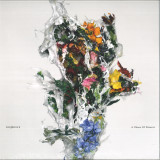
Amuleto Apotropaico has a way to fend off demons by channeling a secular spiritualism rooted in a rigorous but playful connexion to the infinite possibilities of noise. The propulsion of their continuous music ebbs into and flows out of this primordial flux through their unique brand of brutalist liturgy.
Amuleto Apotropaico is a Portuguese duo consisting of António Feiteira (drums & electronics) and Francisco Pedro Oliveira (guitar, flute & electronics) formed in 2021. Having grown up together, saturated in the lore of their hometown of Santa Maria da Feira, the duo now resides in Porto and continues to moor their rhythmic rituals in the traditions of Northern Iberia.
None of this is a nostalgic look back to a time-that-never-was. Amuleto Apotropaico's cycles are ouroboric: every step forward invokes a simultaneous step backward such that their observance of sonic ceremony (seeming to invoke a now-forgotten tradition) becomes a constructivist gesture that shapes its own legacy. If time-travel exists, this duo has found out how.
For their self-titled first release (also the first release of the Perf label), António Feiteira has culled, recomposed and processed recordings from the band's last two years of concerts in order to create a exciting 4-tracker. Apotropia I & II, which open sides A and B on the vinyl release, are both textural meditations on subtle density. Feiteira's sensitive percussion flourishes are married to Oliveira's modular-enhanced flute and guitar patterns. Albedo e Rito showcases the duo's sense of melodic contour while crescendoing to a peak of lightness. Bruxa do Calhau Branco, lifts the whole journey into an astral dimension where multi-layered drums, synths and digital clicks breathe out, announcing that their moment of worship has settled back into the ubiquitous hubbub of room hum.
Поиск:traditions
Все
Native Call explores the roots of ancient Latin America, weaving five hypnotic tracks inspired by the myths and mysticism of the Maya civilisation. Each piece is a fragment of Maoh's universe; a world where past and present collide, evoking sacred rituals, celestial beliefs, and the hidden lore of a lost era.
Deep rhythms and haunting atmospheres guide the listener through a soundscape where ancient traditions meet contemporary electronic expression.
Multi-instrumentalist and composer J.H. Burch gives new intensity to a neglected ethnographic and folklore reality: the rural Amazigh poets of the Ait Bouguemez valley of Morocco. His vision of cultural exchange led him to the vocal repertoire of the all-female Troupe Asnimer, whom for decades have been amongst the most important custodians of the various Amazigh oral art forms in the region. The Asnimer women recite in chorus songs written by numerous anonymous authors, some dating back centuries, making their tradition and a fluid and constantly evolving collective oeuvre. Each of the tribal forms has its own time and place, some like Tamawayt are poems of travel and lamentation, Timnadin of daily labour, others are sung as Sufi rites. From the Asia and the Pacific, J.H. Burch succeeds here through his knowledge of different sound traditions and a varied use of instrumentation (baglama, santur, tanpura, kamanche, organ, deyurey, electronics, percussion), and in becoming a conduit for Asnimer, frames the collaboration without distorting its ancestral and rural physiognomy. On the contrary, the songs of the Amazigh tribes of the Haut-Atlas are colored through afro-asiatic spiritual arrangements of meditative sensitivity. Limited to 200 copies.
La Pambelé Unveils Nací Mestizo, A Bold New Album Reviving Salsa with a Contemporary Twist Bogotá’s heavy guaguancó orchestra, La Pambelé, proudly presents their highlyanticipated second studio album, Nací Mestizo, now available on all major digital platforms as of November 27th. This album pays tribute to the golden era of salsa, particularly the 1970s, while breathing new life into the genre with modern lyrics and stories that resonate deeply with Latin communities.
All while maintaining a distinct Bogotan essence that highlights the city’s unique cultural flavor. Nací Mestizo seamlessly blends the timeless salsa brava sound with contemporary themes, reflecting the everyday lives of people across Latin neighborhoods. The album’s songs capture the struggles, passions, and joys of ordinary people, presented through the vibrant rhythms of salsa, creating a musical experience that connects the past with the present. Building on Their Rising Popularity Prior to the album’s release, La Pambelé debuted the singles “Amargura” and “Perdí mi Corazón”, which quickly captivated audiences and set the stage for the full album's success. The band’s electric performance of these tracks at the MedPlus Coliseum in Bogotá, before an audience of 22,000 attendees awaiting Marc Anthony, was met with enthusiasm as fans danced and applauded.
This moment marked a significant milestone for the orchestra, cementing their place as a rising force in the global salsa scene. Additionally, La Pambelé’s growing visibility has been marked by their appearances at major festivals such as Salsa al Parque and features on prominent radio stations, including Radio Nacional de Colombia and Latina Stereo. These platforms have helped introduce La Pambelé’s signature sound to a wider audience, building anticipation for the release of Nací Mestizo and reaffirming their influence in Colombia’s tropical and alternative music scenes. A Contemporary Salsa Sound with Classic Roots La Pambelé’s unique blend of traditional salsa brava and contemporary Latin storytelling is showcased through their distinctive nine-piece orchestra, which includes piano, conga, flute, trumpet, trombone, timbales, bongos, and baby bass. The dynamic vocals of Miguel RoRebolledo and Lorena Contento elevate the album’s themes, creating a sound that invites listeners to their feet and onto the dance floor. Under the direction of Camilo Toro Morato, the orchestra has honed its signature style, pushing the boundaries of salsa while staying true to its roots. As a proud defiance of stereotypes about Bogotá’s musical abilities, La Pambelé’s name pays homage to legendary Colombian boxer Kid Pambelé, symbolizing resilience and strength.
The name also draws from the Bantú language, meaning "defender of one's own," reinforcing the band’s connection to their Colombian heritage and pride in their distinctive sound. Global Recognition and Continuing Influence Since the release of their self-titled debut album in 2022, La Pambelé has gained international recognition, especially within the vinyl collector community. Theirdebut album was released in both 45” and LP vinyl editions, further solidifying their unique position in the contemporary salsa movement. Influenced by salsa greats such as Markolino Dimond, Eddie Palmieri, Edy Martínez, and Ismael Miranda, La Pambelé has carried forward the torch of salsa brava with passion and innovation. Nací Mestizo marks a significant evolution in the orchestra’s journey, melding the old and the new, and cementing La Pambelé as a driving force in the future of salsa music. A Collector’s Dream With their 2022 debut album garnering international recognition, La Pambelé’s vinyl releases—including 45” and LP editions—have become coveted items for salsa collectors worldwide. Their music is a bridge between classic salsa traditions and a modern vision, appealing to seasoned fans and new listeners alike. About La Pambelé La Pambelé is a heavy guaguancó orchestra from Bogotá, Colombia, known for their vibrant, rhythm-driven sound that blends 1970s salsa brava with modern Latin influences. With a unique nine-piece lineup and powerful vocals, the band continues to break boundaries, defying expectations and inspiring audiences around the world
After a collage tape collab with Bardo Todol back in 2022 (SUC52, Magnetic Road to Hell) Robert Millis finally gets his Discrepant debut proper, a much overdue entryin our random catalogue of lost musical oddities.
The not so self explanatory title Interior Music explores Millis obsession with hidden sounds and its anomalies. An hermetic rearrangement of emptiness could be another more big headed title. But I leave the man to talk about his thing:
‘’The phrase interior music occurred to me a few years ago as a way to describe some recent work. It’s about the resonances inside of hollow wooden chambers (and hollow heads) like gramophones and talking machines, music boxes, instruments, metal containers, and resonant rooms. It’s about exploring tiny audio fragments—single notes, vinyl and shellac surface noise, recording mishaps and anomalies—and arranging them into something meaningful. It is about my own interior mishaps and anomalies and attempts to arrange THEM into something meaningful. It also references “interior design” with the placement of sounds in specific locations, layers or in juxtapositions.
Inspirations include Steve Roden’s lowercase work, Toshiya Tsunoda’s field recordings, Eliane Radique’s slowly shifting ambiances, and the musique concrete of Pierre Schaeffer, as well as the dhrupad and kayal traditions of Indian classical music—especially Kesarbai Kerkar and the Dagar family who have a sublime way of stretching out individual notes and exploring their endless permutations, combinations and connotations.’’
Robert Millis is a sound artist known for his work with Climax Golden Twins, the Helen Scarsdale Agency, the soundtrack to cult horror film Session 9, the Victrola Favorites book and cassette series, and many releases on Sublime Frequencies including Indian Talking Machine, Paris to Calcutta: Men and Music on the Desert Road, compilations of the earliest music recorded in Korea, Japan and Myanmar, and the documentaries This World is Unreal Like a Snake in a Rope and Phi Ta Khon: Ghosts of Isan. Somehow he is a Fulbright scholar (to India 2012-13) and the recipient of a Guggenheim Fellowship (2020). He has or currently does play with AFCGT, Idol Ko Si, and/or Telescoping.
Black Vinyl + Art Print[17,61 €]
Black+ Limited Art Print + Limited 150 Page H[41,13 €]
YELLOW VINYL[16,77 €]
The record is largely sung in Scots language, one of Scotland’s three official languages along with Gaelic and English. “Scots gives me a way of expressing myself which is connected directly with the landscapes I love. It brings the songs alive and it is a fascinating language. The name of the record is in Scots - Forefowk means the people who came before, or ancestors. When we say ‘mind me,’ we can mean a few things- remind, remember, watch over or care for me. The record explores how tradition needs to be constantly reconnected with, built upon, looked after, and shared.”
Quinie sings with a style inspired by Scottish Traveller singers. “I began singing unaccompanied Scots Song in 2015 after hearing Scots Traveller singer Sheila Stewart on the radio. Initially I felt like I shouldn't sing these songs because I'm not a Traveller, and I saw people around me doing that in a way that made me uncomfortable. But on the other hand this music made sense to me and I felt driven to learn. Over the years I have met Traveller friends who taught me that settled people sharing these songs could contribute to raising awareness. Scottish Travellers are marginalised and discriminated against in modern Scotland, despite being custodians of so many of our important traditions. So I started to perform them and tell this story. From there I built on my repertoire and started writing my own songs”.
To develop this record, Quinie travelled across Argyll with her horse. They went on a pilgrimage of sorts through the ancient landscapes of the West of Scotland to explore the interconnected relationships between people, ancestors, animals, and place. The album’s vinyl release is accompanied by a book and film, documenting this unusual research process.
Forefowk, Mind Me was recorded in August 2024 at The Big Shed in Highland Perthshire with support from Creative Scotland. Quinie is accompanied by an ensemble of musicians: Ailbhe Nic Oireachtaigh (viola), Oliver Pitt (duduk, bouzouki, percussion), Harry Górski-Brown (small pipes, violin), and Stevie Jones (double bass, recording, and mixing). Each of these artists brings their own distinctive voice, bridging contemporary experimental practice with worlds of traditional and early music.
- Annunciation 06:12
- Riel 04:52
- Stone Leaf And Pond 04:11
- Katwijk 04:01
- Dongen 05:20
- Tilburg 03:09
- Maryam 04:51
- Two Wings 04:53
Originally released on Ben Chasny's own Pavilion imprint in 2011.
"I was invited by the Incubate Festival and the city of Tilburg to participate in an artist residency where I would explore the region’s unique chapels built for the Virgin Mary. After writing the music for about six months by drawing on memories of the encounters with the chapels and using techniques inspired by Gaston Bachelard’s Poetics Of Reverie, I flew back to Tilburg to perform the music at the Incubate Festival. We recorded the evening and I released the result on my Pavilion label. Each cover was hand painted white on white in the old Pavilion style. I created a stencil and used graphite powder to make the design that is inspired by the sun imagery in Athanasius Kircher diagrams."
Roadside chapels express the identity of the inhabitants of North Brabant, a Dutch province, bordering on Belgium. Roman Catholicism has been the dominant religion in this southern part of the Netherlands since the eighth century. For about a century and a half this religion was strongly suppressed. Only when the French revolutionaries preached freedom of belief around 1800 could the people of North Brabant exercise their faith again. This was the start of a very strong emancipatory development from which a special form of the Roman Catholic faith arose that fully determined everyday life of the people here. This faith was the determining factor in life and the measure of all things. After the second Vatican Council (1962-1965) the reins of the catholic faith in Brabant were loosened as well. This was the start of a revolutionary process of secularisation. Within a decade hardly anything was left of the almighty influence of the Roman Catholic Church and this situation has lasted up to the present day.
In spite of the almightiness of the official, Vatican ruled, Roman Catholic faith, North Brabant has always and perhaps notoriously fostered an undercurrent of popular belief as well. This is a kind of belief in which elements of the official faith and age-old pre-Christian traditions are combined. Worshipping relics, holding pilgrimages and processions, the use of water from holy wells, popular art, recitations and songs, festivals, rituals, folk traditions, superstition and the like are all examples of popular devotion. These matters have strongly influenced and formed the identity of the present-day population of North Brabant. It is part of their immaterial heritage.
An obvious and still very much visible form of popular devotion are the roadside chapels. In Brabant some 400 can be found, most of which have been devoted to Mary. Chapels are small buildings in which Mary or other saints are worshipped. They can be found within villages or towns or in natural surroundings. Always at the finest spots! The beauty of the environment adds a primary religious or mystical feeling to the visitor. Local people attach great value to their chapels. In spite of the overall secularisation in society they are still at the centre of cultural and social life. Where people in North Brabant can hardly be found in the churches nowadays, this doesn’t mean at all they are no longer religious. On the contrary, religious feelings are perhaps stronger than ever, but now people have to find their own expression of them. That’s why they fall back on the age-old popular belief in which chapels play an important role. We can even witness new forms of popular belief with chapels as their focal point. An example of this is the scattering of ashes of people who have been cremated. Chapels clearly also play a role in the lives of young people. On an average five new chapels are added every year.
I have studied the popular culture and belief and the identity of the inhabitants of North Brabant for over thirty years. I have published over forty books on these subjects. In 2010 I was approached by the organisation of the Incubate Festival in the North Brabant town of Tilburg. Their request was for me to lead the American composer and guitarist Ben Chasny around a number of chapels in the province devoted to Mary. He had been invited to North Brabant to write some new compositions. Ben Chasny then chose to be inspired by these chapels and that’s how we met. I was especially curious how an American would react to something as specific and small as a roadside chapel in North Brabant, since we tend to think here of (people in) America in terms of ‘big-bigger-biggest’. Would an inhabitant of this enormous country with this prevailing culture be able to grasp and respect the identity of some 2.5 million people in North Brabant with their chapels? The answer to this question lies hidden in the compositions he made and that can be listened to on this album. Yes, Ben Chasny has been able to convert the phenomenon of a simple chapel devoted to Mary into music. The physical and the spiritual have found each other. What a beautiful world…just listen! - Paul Spapens
- The Stars' Shelter
- Light's Blood
- Shores Of Otherness
- The Stars' Shelter (Ii)
- 9: Th Episode
- Darkness In Movement
- A Flowery Dream
'Atmospheric death metal'. Three simple words to describe one's music, chosen by JADE mainman J. himself, although they don't seem to quite pay justice to the gigantic scope of their music. Because ever since the release of their debut demo back in 2018 they've proven again and again to be more. Much more. Historically speaking, the word 'jade' referred to a rare but valuable mineral in ancient times all over the world. From Mesoamerican cultures to Chinese and Southern Asian ones, the greenstone was conferred with deep spiritual symbolism and used to connect the earthly level to the unknown. The history of countless traditions, legends and cults remain as an endless source of topics in terms of lyrics for the band, with a rich historical narrative also poetized. JADE's music is described by J. as "a tribute to the timeless obscure metal language, from early death/doom manifestations to later atmospheric black acts, in a really heavy, intense and epic form which transcends ages, as the greenstone cult has endured." The sophomore album, and second full-length after last year split LP with SANCTUARIUM, Mysteries Of A Flowery Dream carries an ominous wave of darkness, redefining heaviness with new levels of musical production and arrangements, compared by J. to "a journey into the dialogue between conscious and subconscious dreaming states and the mysteries around." The album's lyrics are in direct line of those themes, echoing the celestial world and how it can help us overcoming ominous times ("The Stars' Shelter"), how dreams can be interpreted as omens ("Light's Blood") and how they allow us to travel the Mayan cosmovision and its various worlds for guidance, healing and messages ("Shores Of Otherness"), among others. You can even find on the cover artwork elements of the ancient Mesoamerican cosmovision, mainly the powerful moon goddess Ixchel, a creative yet destructive entity, portrayed here as the Spider and threading human fate like an umbilical cord, determined to give life but also to destroy it if needed. A frightening, fragile yet utterly fascinating balance perfectly illustrated by Mysteries Of A Flowery Dream.
A Chaos Of Flowers is an album that builds on their ferocious 2023 album nature morte. BIG|BRAVE"s music has been described as massive minimalism. Their fusillades of textural distortion and feedback emphasize their music"s frayed edges as much as its all-encompassing weight. The potency of the trio"s work is their singular artistry combining elements of traditional folk techniques and a modern deconstruction of guitar music. Gain, feedback, and amplitude are essential. For A Chaos Of Flowers guitarist/vocalist Robin Wattie drew heavily on the poems of artists whom Wattie found kinship in, their words resonant with experiences of those often sidelined by cultural norms. "I discovered that most poems from folk traditions or in the public domain seem to be by men - to which I could not quite relate. In my search, I rediscovered some of my favorite works and poets," says Wattie. Guitarist Mathieu Ball and drummer Tasy Hudson help Wattie shape poetry into pieces as dense and impenetrable as they are vulnerable. BIG|BRAVE achieve their colossal sound through minimalist approaches, a deft understanding of dynamics and an inventive employment of percussion and distortion. The trio reconceptualize what it is to be heavy or minimal, challenging perceptions with their illumination of painfully overlooked perspectives. Guest guitarist Marisa Anderson lends earthen, blues-inflected atmospheres to the album, where guitarist Tashi Dorji and saxophonist Patrick Shiroishi amplify the squall. Working closely with frequent collaborator and producer/engineer Seth Manchester, the internal tumult of Wattie"s voice rings out in warbles, haunting echoes, and unearthly harmonies across bold immense walls of distortion. BIG|BRAVE have collaborated with metal monsters The Body on a previous Thrill Jockey release, Leaving None But Small Birds, and have toured internationally with bands like SUMAC, Godspeed You! Black Emperor, SUNN O))), and Lingua Ignota. As they continue to ascend in their journey as pioneers in the contemporary metal scene, it"s safe to say that BIG|BRAVE are here to stay.
It says a lot about the interconnectedness of the global dubwise underground that it took downtime with Bristolian Neek in Portland to spur the link between ZamZam and Feel Free Hi Fi out of the Minneapolis Twin Cities. Once he put us on to them we were hooked- not only by their brilliant music but by their rigorously DIY approach and aesthetic. Heavily inspired by the more esoteric angles of early digi-era JA dancehall and UK dub (Shaka, Disciples, Mixman and Gussie P being some touchstones) the duo create a sound both reverential and unique, steeped in the traditions but striking out hard left into idiosyncratic territory all their own. Releasing all of their works up to this point on their own fantastic Digital Sting label, we’re excited to showcase them on ZamZam.
- A1: Emerge
- A2: Taranoías
- A3: The Prodigal Ones
- A4: Ànv
- A5: Premonition
- A6: Awen
- B1: Anamcara
- B2: The Harvest
- B3: Memories Of Innocence
- B4: All Is One
- B5: Aeon Of The Crescent Moon
- B6: The Prophecy
Pressed on Bio Mint Vinyl LP
Eluveitie, formed in 2002 by Chrigel Glanzmann, has consistently merged modern metal with Celtic musical traditions. Originating from the Swiss Alps and deeply rooted in Celtic history, mythology, and spirituality, the band has become a cornerstone of the modern metal scene.Their debut, "Vên" (2004), set the stage for a unique blend of melodic death metal and traditional folk. Subsequent albums like "Slania," "Everything Remains (As It Never Was)," "Helvetios," and "Origins" solidified their reputation. The acoustic albums "Evocation I – The Arcane Dominion" and "Evocation II – Pantheon" showcased their versatility.
In 2022, Eluveitie released the singles "Aidus" and "Exile of the Gods," marking a new chapter in their musical journey and thematical cycle pursuing the lyrical
concept opened by their last studio album "Ategnatos". These tracks were followed by the announcement of their upcoming album, "ÀNV," set for release in April 2025. The first single from this album, "Premonition," has just been unveiled, offering a glimpse into the band's evolving sound.
Over the years, Eluveitie has undergone lineup changes, including their latest addition with Lea-Sophie Fischer on violin in May 2024. Despite these changes, the band's essence and soul remains untouched. With nine studio albums, numerous tours all around the globe, and headline shows worldwide, Eluveitie continues to be a dynamic force in the metal genre.
As they approach the release of "ÀNV", Eluveitie remains committed to their roots while exploring new musical horizons. Coming as one of their most profound and earnest albums, "ÀNV" presents a result of more than 20 years of intense involvement with Celtic mythology and spirituality, translating deeply pagan knowledge for a modern generation.
Eluveitie's journey reflects a dedication to authenticity and innovation, ensuring their place as a defining presence in modern metal.
- A1: Di Ma Dangwa
- A2: Di Ma Sesa
- A3: Elie
- A4: Moussina
- A5: Nsi Sim Nti
- B1: Elongi
- B2: Mouna Maria
- B3: Edubé Na Loba
- B4: L’hymne À L’amour
- B5: Nobody Knows
This project by Manu Dibango, the legendary saxophonist and pioneer of Afro-fusion jazz, delves into a musical universe where the saxophone becomes the voice of a spiritual and introspective quest. Sax & Spirituals Lamastabastani merges jazz, gospel, and African influences to weave a dialogue between sacred traditions and modern expressions.
With this work, Dibango pays tribute to the spiritual roots of music while reaffirming his commitment to sonic innovation. The project's minimalist and meditative approach speaks to both the soul and the senses, offering a musical experience imbued with depth and humanity.
Norman Westberg (guitar), Giridhar Udupa (ghatam, konnakol, khanjira, percussion) and Jacek Mazurkiewicz (double bass, electronics)An extraordinary meeting of three artists from three different musical worlds and three different continents. Norman Westberg (ex-Swans) and Jacek Mazurkiewicz have already released one album together "First Man In The Moon" in 2021 (published by the Swiss label Hallow Ground).In the new project, they are accompanied by Giridhar Udupa, an Indian master of ghatam (a clay percussion instrument that looks like a jug). The album will feature 3 long trance compositions, referring to ambient, krautrock, free jazz and Indian music.Jacek Mazurkiewicz describes the creation of this album as follows:"I met Norman Westberg while supporting the Swans tour in Poland as 3FoNIA. A few years later, during Norman's tour with Gira, we recorded a duet.The trio session took place similarly to the previous duet session during Norman's solo concert in Warsaw on the Swans tour.Recorded with Adam Toczko, a quick meeting on a day off from work.I invited Giridhar Udupa to the trio, whom I had met earlier during the period when I co-founded the band Limboski. I once invited Wacek Zimpel to play a few concerts with Giridhar. Wacek later created Saagara and I was wondering about some unusual musical context in which I would find myself with Giridhar. I was looking for an interesting sound configuration, but also a cultural one, with a different approach to creating music. I got the impression that for both Norman and Giridhar it was a fairly fresh meeting, not obvious. And on the other hand, ordinary - everyone did their own thing."Detroit guitarist Norman Westberg moved to New York in 1980 and became a part of the experimental music scene that was experiencing its golden age. Westberg himself became a permanent fixture when he joined the iconic avant-rock band Swans in 1983, and was the only member other than frontman Michael Gira to play with them for most of the band's run, both until their 1997 disbandment and his return in 2010. Westberg has also been involved with other legendary New York noise-rock acts, including Jim Thirlwell's Foetus and the post-Swans Heroine Sheiks, in which he played with Cows frontman Shannon Selberg; and in 2014, he joined the noise-rock supergroup Hidden Rifles, whose members included Mike Watt of Minutemen and Mark Shippy of U.S. Maple. Westberg's solo compositions, most often for solo guitar and a set of effects, draw on drone and post-minimalism, bringing to mind dark ambient passages from Swans albums.Giridhar Udupa is an extremely valued teacher and world-renowned artist, an Indian master of ghatam (a clay percussion instrument that looks like a jug). He was born into a family with long musical traditions. He began learning to play at the age of four, guided by his father. At the age of twelve, he already had his first performances behind him. He currently gives concerts alongside the greatest masters. He has received many prestigious awards. He performs in the USA, Spain, Canada, France, Switzerland, Germany, Oman and Kuwait. Giridhar Udupa is a member of the band of the Indian vocalist Bombay Jayashri, nominated for an Oscar for the best song for the film Life of Pi. He is one of the founders of the Layatharanga band. He also plays virtuoso other traditional instruments of South India, such as mridangam and kanjira, and is excellent at using the konnakol technique (a type of rhythmic vocalization).For three decades, the artist has been a global ambassador and icon of Carnatic music. He is the founder of The Udupa Foundation, a charity organization established in 2015 to promote Indian music, performing arts and culture. He has participated in recording dozens of albums. He is also well-known in our country thanks to his cooperation with Polish performers, which resulted in excellent artistic effects, such as the famous Indialucia - Michał Czachowski's group / project or the Saagara formation, led by Wacław Zimpel. Udupa also played on the album Lechoechoplexita, released by Leszek Hefi Wiśniewski, and on the album of the band Layatharanga, released in our country.Jacek Mazurkiewicz is interested in music in the broad sense. He puts his sounds together based on emotional impressions and pulse. Combining acoustics with electronics, he is constantly looking for a new sound. Solo as 3FoNIA, in a duet with Mikołaj Trzaska or Tomek Dąbrowski, the JMB trio with Wojtek Jachna and Jacek Buhl, in the Modular String Trio quartet, the Afrobeat quintet Faso Tamala are just some of his musical incarnations. With Patryk Zakrocki, as part of an audio mission, he massaged hundreds of pairs of ears in the Inner Ear Massage Office. He also deals with sound design, composing and producing music for films and theatre performances. He collaborated with many Polish and foreign artists.
"Vilhelm Bromander Unfolding Orchestra returns with Jorden vi ärvde (""The Earth We Inherited""), the follow-up to their acclaimed 2023 debut, In This Forever Unfolding Moment. Set for release on April 25, 2025, the album deepens Bromander’s unique fusion of cosmic jazz, free jazz, folk music and Indian classical traditions while carrying a powerful message about environmental and social responsibility.
Bromander composed this work as both a dedication to his children and a reflection on humanity’s role as caretakers of the planet. “The album is an attempt to spread light, beauty, hope, and resistance while acknowledging the gravity of our times,” he explains. “Right-wing forces are rising, wars continue, and climate disasters escalate. How do we find the strength and hope to change?”
The music balances urgency with a deep trust in humanity. Bromander’s meticulous arrangements, performed by an all-star ensemble, offer moments of both fiery resistance and serene contemplation. Tracks like “Jorden vi ärvde, den skall oss också ärvas” unfold patiently, blending vibrant improvisations with lush orchestration. The evocative ballad “Erde”, with stunning solos by pianist Alex Zethson and the bass-player himself, nods to Charlie Haden’s Liberation Music Orchestra, while “For Dewey” pays tribute to the elastic interplay of Keith Jarrett’s legendary quartet, high-lighting the fire-y saxophone playing of Elin Forkelid. The closing piece, “Calliope,” channels Indian classical influences, with harp evoking a swarmandal’s shimmering resonance.
With Jorden vi ärvde, Bromander expands his artistic vision, weaving together intricate compositions with a passionate call to action. The result is an album that doesn’t just demand to be heard—it invites listeners to reflect, feel, and, ultimately, act."
Koinè is the new album by Pellegrino & Zodyaco, a record that explores the desire to escape by interpreting it as an act of emancipation, an aimless journey in search of creative freedom. The demonstration that escapism, when it is conscious, can bring us back to the heart of things. Inspired by Éloge de la fuite by Henri Laborit, the album embarks on a journey to discover a “common language” (Koinè), blending Neapolitan roots with a global and contemporary musical vision. It blends melodic traditions with disco, funk, jazz fusion, and world music, experimenting with vintage instruments, ethnic percussion, and Mediterranean atmospheres. Pellegrino, a pioneer of the “new school” Neapolitan sound, after 4 years since his last LP “Morphé” (2020) continues the path started with Zodyaco I (2018), painting an authentic portrait of modern Naples and celebrating musical contamination as a form of creative euphoria.
- Rabat
- Federation Tunisienne De Football
- Fan For A Twenty Years Old Human Beingb
- A World Of Wonder
- C'mon Tigre
- December C
- Commute
- Queen In A
- Life As A Preened Tuxedo Jacketd
- Building Society - The Great Collapse
- Building Society - Renovation
- Welcome Back Monkeys
- Malta (The Bird And The Bear)
Drawing inspiration from a wide range of cultures and musical traditions, C"mon Tigre is a dynamic duo that developsits identity into a collective of musicians and artists from all over the world. Along the years, they have collaborated with musicians such as Colin Stetson, Seun Kuti, Arto Lindsay, Xênia França and artists Gianluigi Toccafondo, Harri Peccinotti, Danijel Zezelj and Paolo Pellegrin to name a few. TEN, which stands for Tenth Edition Newness, is an expanded edition of their iconic Self Titled debutalbum, which was initially publishedin 2015 through Africantape on a limitedvinyl pressing. It sold out quickly, was later repressedby the band and sold out again. Today, it finds its chance to be reissued with the Computer Students_äó treatment. Fans will love this remastered version, which sounds substantially better than the original. The album"s expansion features a slightly altered record cover in addition to a 12-page booklet with a number of writings and images. TEN will be offered on double blackvinyl, audiophile quality pressing 180-gram, inside a gatefold cover. The entire package is housed in a unique heat-sealed aluminum Type-2 foil bag, courtesy of Computer Students_äó.
Japanese bamboo flute maestro and goat (JP) cohort Rai Tateishi makes an impressive debut statement with his holistic attempts to transcend the limits of ancient instruments to reveal gently delirious insights.
‘Presence’ is a triumph of improvised, elemental musicality that distills aspects of myriad folk traditions in pursuit of the artist’s own truth. For 40 minutes of singularly weird, locked-in performance, Rai Tateishi diverges his formative training in the shinobue (a bamboo flute) to applications for its elder sibling, the shakuhachi, and its distant relatives in the khene mouth organ of Northeastern Thailand and Laos, and even the Irish flute, with remarkable results returned from each.
Piece to piece, Tateishi adapts a spectra of unusual and extended instrumental experiments to articulate uniquely animist sound arrangements, with judicious use of a ring modulator and delay effects only subtly altering his sound in real-time, gelling the harmonics and smoothing off its contours. Some 15 years of studies and accreted knowledge of histories, timelines, and spirits are deftly tattered in the air and rebound in precisely complex ribbons that become all the more impressive by virtue of its in-the-moment recording.
Presented with no overdubs, the six works were recorded by label head and KAKUHAN/goat lynchpin Koshiro Hino across three days of adventurous improvisation capturing the breadth of Tateishi’s vision in a mix of succinct flights of fancy and one durational wonder where he really cuts loose. An opening piece of rapid percussive fingering and rasping sets the tone for increasingly intricate explorations of the shinobue, and bluesy cadence of a reedy Thai khene - antecedent of the shō - whipped into headier harmonic overtones, whilst his 5th piece for Irish flute best recalls Ka Baird or Michael O’Shea’s lysergic impishness, and a 13 minute closing piece most boldly fucks with folk and jazz traditions, in-depth and with the genre short-circuiting audacity of Rahsaan Roland Kirk.
Landing in the wake of prism-shaking works by Will Guthrie & Mark Fell, goat (jp) and Kakuhan; Tateishi’s ‘Presence’ more than lives up to NAKID’s impressive levels, unflinchingly operating by its wits with a verve and dare-to-differ moxie that gets at it from the first hit to the last, harnessing the kind of skill and ingenuity that’s distinctive but still strikingly minimal and overwhelmingly physical. It's a remarkable achievement.
- A1: Porto Feliz (Mozar Terra)
- A2: Janeiro (Ion Muniz)
- A3: Serena (Steve Sacks
- B1: A Chegada (Dom Salvador)
- B2: Para Ana (Ricardo Dos Santos)
- B3: Pra Nova (Aloisio Aguiar)
- B4: Constelação (Alfredo Cardim)
- C1: Ascensão (Mozar Terra)
- C2: Clodes (Alfredo Nascimento)
- C3: Naquela Base (Guilherme Vergueiro)
- D1: Atlantico (Ricardo Dos Santos)
Gatefold 2LP
Far Out Recordings proudly presents a landmark discovery in Brazilian jazz: the long lost album by drumming pioneer Edison Machado. Recorded in New York City in early 1978 but never released, Edison Machado & Boa Nova captures a pivotal figure in Brazilian music history at the height of his artistic powers.
Combining North and South American jazz traditions with Machado's revolutionary samba innovations, Edison Machado & Boa Nova represents a triumph against the odds. After facing persecution under Brazil's military dictatorship and being forced to sell his drum kit in 1976, Machado found renewed creative purpose in New York with the Boa Nova ensemble. The resulting album captures the essence of his genius - sophisticated yet wild, controlled yet daring, leading an ensemble of some of the best jazz, samba and bossa nova players of the day.
At just fifteen years old, Machado revolutionized Brazilian music through an accident that would change everything - when his snare drum broke during a performance, he began playing samba rhythms on the cymbal. This innovation, known as "samba no prato" (samba on the cymbals), brought new layers of dynamism to samba and proved instrumental in the development of bossa nova alongside contemporaries like Antonio Carlos Jobim and João Gilberto.
A complex and passionate figure, Machado was notorious for his militant perfectionism and "attacking" style of drumming. Having spent some years of his youth in the Brazilian army, musicians often remarked that he played as if he were at war. But his innovative style, while exhibiting complete control and sophistication, somehow so often danced right on the edge of chaos and wild abandon.
After making his name in Rio's legendary Beco das Garrafas (Bottles Alley) in the 1950s and early '60s, Machado went on to form Bossa Três - the world's first instrumental bossa nova group. His influence spread internationally through collaborations with Stan Getz, Sergio Mendes, Antônio Carlos Jobim, Milton Nascimento, and Chet Baker, while his 1964 album Edison Machado É Samba Novo stands as a masterpiece of Brazilian jazz.
At 80 minutes in length, Edison Machado & Boa Nova, the lost 1978 New York sessions, is a singular achievement in Brazilian jazz. The format itself is a rarity in the canon. It’s packed full of exceptional technical precision and creative vitality, with sophisticated arrangements and masterful improvisation from its exceptional sextet of Brazilian and US musicians: Paulinho Trompete (flugelhorn/trumpet), Ion Muniz (tenor saxophone), Steve Sacks (baritone saxophone), Mozar Terra (piano), and Ricardo dos Santos (double bass).
The album features unheard compositions by Brazilian masters Dom Salvador (Salvador Trio, Harry Belafonte, Edu Lobo), Guilherme Vergueiro (Raul De Souza, Leon Ware, Joyce), Aloisio Aguiar (Arthur Verocai, Airto) amidst the plethora of captivating original material by the members of the Boa Nova ensemble.
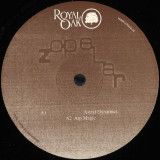
"Zopelar makes his debut on the Clone Royal Oak series with a 4 track Ep, delivering some of his unique blend of house grooves firmly rooted in the 90's Chicago, New York and Detroit house traditions. Pedro Zopelar is a musical wizard from Sao Paulo and is twisting the classic sounds and production methods into a fresh sonic Brazilian Caipirinha cocktail."
Following up their critically-acclaimed 2024 LP Avoude (5 stars and 'Top of the World' on Songlines, Bandcamp top pick, Le Monde, BBC Radio, Pop Matters and more), Sol Power Sound is proud to present a blistering EP of remixes from the thrilling psychedelic West African outfit, Dogo du Togo & the Alagaa Beat Band.
Combining iconic traditional Togolese rhythms and melodies, Dogo du Togo’s sound is anchored in the country’s often overlooked, but extraordinary rich cultural history, reflecting the local Vodun religion and traditions that permeate everyday life in Togo.
For the remixes, Sol Power Sound enlisted a cast of renowned producers to rework the scorching originals into deeper club-friendly burners.
Captain Planet leads off the A side with a modern and percussive African house groove that will get any room with a pulse up and jumping
Sol Power All-Stars ask the question 'what if Prince joined Dogo du Togo in 1983?' and answer with a blistering dance funk track laced with synths, arpeggios, and Moog.
Rounding out the A-side is Detroit legend John Beltran, who transports Dogo and crew to Bahia for an Afro-Brazilian balearic heat rock. Perfect for your next sunset soiree.
Blair French, another Detroit icon, leads off the B-side with a deep and organic house groove that works equally well day, night, or early morning.
Sol Power All-Stars reappear again on side b with their mid tempo groovy Afrobeats flip of Von Na Agbeto, the one track that was not featured on Dogo’s LP.
Finally, DC mystery man Glenn Echo gets loose and trippy on the boards with a psychedelic digi dub (in 12/8!) that rattles your chest and puts your being directly into the echo chamber.