THE ELECTRONIC VISIONARIES RETURN WITH THEIR NEW STUDIO
ALBUM
.On their new album 'Raum', Tangerine Dream develop the concept of its
precursor EP (Probe 6—8) further
Composed & produced with full access to Edgar Froese's Cubase arrangements
(& Otari Tape Archive with recordings from 1977-2013), Thorsten Quaeschning,
Hoshiko Yamane & Paul Frick deliver late-night real time compositions combined
with classic studio productions, sequencer driven haunting soundscapes
alternate with anthemic warm synthesizers.
Composed in a time of social distancing & cancelled shows, the tracks cannot
exactly be recreated (or will at least need significant re-instrumentation for a live
performance). With the 17-minute 'In 256 Zeichen', they lay the fundament of this
record. 'Continuum', with its repetitive sequence & broken beat shows glimpses of
acid sounds & increasing choral atmospheres. 'You Are Always On Time' is built
on PPG wavetable sounds & eerie field recordings. The title track 'Raum' makes a
nod towards the early live studio performances like 'Zeit' & 'Phaedra' - the melody
accompanied by a chorus- like Roland Jupiter 8 part. An ambient rave Moog
Minitaur sequence highlights the final peak, till the violin slowly transports the
listener out. A heavy Moog bass marks the beginning & the end of this 15-minute
piece.
'Raum' is the band's second studio album after the passing of the founder Edgar
Froese in 2015. With deep respect for the sound of the previous five decades, this
record continues in the ever-evolving pathway of Tangerine Dream.
The band will be supporting the release of 'Raum' with live shows in 2022, starting
with an extensive headline tour of the UK in March. 'Raum' will be released as a 7
track CD presented in a digipak with a 12-page booklet
Search:trans am
A few years back I had this dream: I was walking through vast grasslands
towards a solitary hill
On top of the hill was a movie house. On the marquee: History of Jazz.I kept
thinking about it. What was in the movie house? What happened before? What
followed? Why was I going there? Why "History of Jazz"? To reach some kind of
insight, I began a film script, extending the dream tenfold. The script morphed
into a novella-sized book, a series of songs, and finally, a "mind-movie" podcast,
forming this labyrinthine, multi- medium story – equal parts dream, film and
waking life. Figuring out how to transcend the traditional parameters of the album
to create a more panoramic story- vision is something I've been unconsciously
trying to do for some time. I've been pushing against the edges – toying with
narrative, characters and visuals with Easterween and Niagara, a weird children's
book Daydreams for Night – but the scope of life behind Rialto felt too
irrepressible and expansive to be boxed in an album. The book and podcast have
kicked open the doors – allowing the album to lead or serve where it should.In
Rialto's extended narrative, Klaus (loner, insomniac) is working a stint as a driver
for a small town writer's festival. Following a series of unsettling paranormal
events, he finds himself agreeing to a strange request - to deliver a film reel in
time for its premiere at a secluded movie house - the Rialto. The journey leads
him through a circuit of strangely located, oracular movie houses, screening a mix
of dreams, fantasies, memories and prophecies - numinous films of personal
revelation. Inhabiting the movie houses are underworld characters and spirits
with ambiguous motivations, some helping and some hindering Klaus's quest. It's
a Dantesque, deep cleanse pilgrimage to untangle bitterness and trauma,
rediscover a lost clairvoyance, ancestry, and ultimately, the medicinal source of
eternal youth. A metaphysical noir. A hyperstition.Rialto's album stars seven
singer-artists playing characters alongside mine: Tamara Lindeman (The Weather
Station), Daniel Knox, Thom Gill (Owen Pallet, Beverly Glenn- Copeland), Ryan
Driver (Jennifer Castle), Felicity Williams (Bahamas), Robin Dann (Bernice) and
Martin Tielli (Rheostatics). All Toronto- based like me except Daniel (Chicago).
Performed by the Venuti String Quartet with arrangements by Andrew Downing.
Produced by Jean Martin (Tanya Tagaq). It's my 13th album and fourth on Tin
Angel - previous releases on Tin Angel: Miracle In The Night (2019), Small Town
Water Tower (2016), and Niagara (2014). Each of Rialto's eight podcast episodes
features a chapter from the book performed by a cast of twenty five - made up
almost entirely of musicians – including the speaking voices of the
aforementioned singers, as well as Meg Remy (U.S. Girls), Claudia Dey, Veda Hille,
Devon Sproule, Luka Kuplowsky and others. Rialto is available as a 101-page eBook (illustrations by David Ouimet) on Sud de Valeur Press. Premiere
performances begin fourth quarter 2021. Happy Rialto listening, reading,
watching, dreaming...
- A1: The Moonlight Duel
- A2: Determination: Father's Message
- A3: The Dragon Ninja
- A4: Mysterious Woman
- A5: Bravery: On The Clutches
- A6: Reminiscence
- A7: A Sudden Development
- A8: Like A Howling Gale
- A9: In Hiding: Pursuing The Nightmare
- A10: Eyecatch
- A11: The Cia
- A12: The Sanctuary Of Shadows
- A13: The Amazing Ryu
- A14: Crisis
- A15: Surprise Attack: The Wicked God's Secret Maneuvers
- B1: Malth The Crimson Terror
- B2: The Truth Concealed
- B3: Melancholy Destiny
- B4: Requiem
- B5: The Truth Concealed (Reprise)
- B6: The Menace Of Jaquio
- B7: Showdown: At The Portal Of Death (Battlefield) (Battlefield)
- B8: The Demon's Incantation
- B9: In A Pinch: The Ordeal Of Battle
- B10: At The End Of The Battle
- B11: Irene: Overture Of Dawn (Prelude)
- B12: Credits
- B13: Game Over
- B14: Cinema Display Sound Attack 1
- B15: Cinema Display Sound Attack 2
- B16: Sound Effects
- C1: Insert Coin
- C10: Las Vegas Stage Boss
- C11: Round Clear 3
- C2: Game Start
- C3: La Stage
- C4: La Stage/Grand Canyon Stage Boss
- C5: Round Clear 1
- C6: Ny Stage
- C7: Ny Stage/Transcontinental Railroad Stage Boss
- C8: Round Clear 2
- C9: Las Vegas Stage
- D1: Grand Canyon Stage (Japan) (Japan)
- D2: Grand Canyon Stage (Usa) (Usa)
- D3: Round Clear 4
- D4: Transcontinental Railroad Stage
- D5: Round Clear 5
- D6: Final Stage
- D7: Final Stage Boss
- D8: Time's Up
- D9: Game Over
- D10: Credits
- D11: High Score Screen
- D12: Round Clear 1 (Usa) (Usa)
- D13: Round Clear 2 (Usa) (Usa)
- D14: Round Clear 3 (Usa) (Usa)
- D15: Round Clear 4 (Usa) (Usa)
- D16: Round Clear 5 (Usa) (Usa)
- D17: Game Over (Usa) (Usa)
Ninja Gaiden, of the most iconic and beloved 2D action game series ever created, was first released in the arcades in 1988, while making its console debut on the Nintendo Entertainment System (NES) later in the same year. At the time of the console release, Ninja Gaiden was renowned not only for its deep storytelling beautifully visualized by TECMO’s unique “cinema scenes,” but also through its legendary chiptune soundtrack, whose unique rock-’n’-roll sound and drum beat instantly became a formative musical experience for players who were only just getting into video games.
Ninja Gaiden: The Definitive Soundtrack is divided into volumes. The first, Ninja Gaiden Vol. 1, features the music of both the NES title and the Arcade game, both titled Ninja Gaiden. These legendary soundtracks have been digitally restored under the supervision of Keiji Yamagishi, one of the original series composers. The booklet includes a comprehensive roundtable discussion among several members of the original development team, including the director, producers, artist and composers; an essay by game historian Ray Barnholt; and original archival artworks.
"Black Truffle proudly presents The Refrain from Melbourne-based artist Francis Plagne, whose growing catalog of collaborative and solo releases range from song-based work to abstract audio collages.
Closely aligned with Plagne's Moss Trumpet LP (released by Penultimate Press in 2018), The Refrain’s two side-long tracks mix sounds of the mundane with the otherworldly; rising, receding and overlapping. The result feels like being led through a series of scenes devoid of context or direction. Furthermore, it’s hard to define the scenes as either inviting or disconcerting, as they’re often both at the same time. As the record progresses sounds reappear and are juxtaposed so as to only hint at the familiar. A hall of mirrors, perhaps?
Completed in 2020 using material recorded from 2012-2020, the record uses tapes of shelved, unfinished, and forgotten projects that featured field recordings from various locations, domestic sounds of plastic bottles, bubble wrap, creaking chairs, voice, and instrumental recordings, including an appearance from crys cole on Casio. These pieces were re-amped, processed and edited, then additional instrumental pieces featuring synths, guitars, plastic saxophone, melodica, and percussion were added, the results shaped into drifting, episodic assemblages.
Although essentially a tape piece, The Refrain presents as a crude, non-idiomatic composition that feels both timeless and transitory. It’s a million miles from the polish and rigour of GRM, perhaps more in line with Jacques Bekaert’s eponymous Igloo LP, or Costin Miereanu’s Luna Cinese. The Refrain could be read as a psychedelic Krapp’s Last Tape; one man’s response to listening through forgotten and discarded tapes, reflecting, reconciling, and forging a new path. A potent tonic for these absurd times."
-- Nick Hamilton, August 2021
Clear Smoked Vinyl
"As a child of the 80s a highlight of Saturday morning TV was an episode of Transformers. My first attempts at sampling and music production was sampling the 1986 movie on my Amiga 500. Then last year during lockdown I decided to dig out the samples and have another bash and ended up with two tracks which I thought were pretty cool... and here we are!"
- Soul Intent
Khruangbin and Leon Bridges announce their latest collaborative EP, ‘Texas Moon’, out on Dead Oceans.
An extension of the two’s chart-topping four-song ‘Texas Sun’ journey, ‘Texas Moon’ is an introspective stroll through the dark. “Without joy, there can be no real perspective on sorrow,” say Khruangbin. “Without sunlight, all this rain keeps things from growing. How can you have the sun without the moon?”
Crediting their mutual home state for inspiration, ‘Texas Moon’ pensively examines Texas’ musical perception, while paying homage to the marriage of country and R&B that’s become synonymous with the lone star state. Propelled by rolling guitar licks, conga and bongo, lead single ‘B-Side’ meditates on meeting in a dream and frolics across the nearing contemplative night-time state with its longing joy.
Elsewhere on ‘Texas Moon’, the artists channel a newly intimate musical scope that’s illustrated most dramatically when the spacy sensuality of the minimalistic ‘Chocolate Hills’ leads into the stark spirituality addressed on ‘Father Father’, a reminder of both acts’ gospel roots. Over a simple rolling guitar figure, Bridges pleads with the heavens - “Look at the mess that I made / Just a man with unclean hands” - only to be reminded of God’s eternal love.
For Khruangbin, one song in particular was indicative of the trust that Bridges put in them. “The song ‘Doris’ is about his grandmother making the transition from this world to the next realm,” says Khruangbin’s Donald Ray ‘DJ’ Johnson Jr. “It’s a very somber, very deep record. And when someone places that kind of work into your
hands, the last thing you want to do is junk it up, overproduce it, or do too much. We treated it with the respect it deserved, and treated Doris with the respect she deserves.”
“It’s like a short story...,” says the band’s Laura Lee of the music. “And it leaves room to continue having these stories together. It’s not Khruangbin, it’s not Leon, it’s this world we created together.”
Upon its release, ‘Texas Sun’ soared to the No. 1 slot on Billboard’s Emerging Artists Chart along with landing the No.1 on spot on Americana/Folk Albums, among many others. Significantly, both parties’ musical directions were deeply affected by their time working together on ‘Texas Sun’.
Khruangbin’s most recent studio album, ‘Mordechai’, moved their own vocals to the forefront, a change they readily admit was a direct result of working with Bridges.
Their sound was also tapped for remix / reinterpretation of a Paul McCartney song for the ‘McCartney III Imagined’ project. Meanwhile, in addition to his genre-defying Grammy-nominated album ‘Gold-Digger’s Sound’, Bridges has put out several other challenging, shared collaborative tracks, including work with John Mayer, Lucky Daye and, most recently, Jazmine Sullivan. Each of the artists appeared recently on Austin City Limits and will tour throughout the new year.
- A1: Chamber Spins Three
- A2: Punishment
- A3: Shades Of Grey
- A4: Business
- A5: Black And White And Red All Over
- B1: Man With A Promise
- B2: Disease
- B3: Urban Discipline
- B4: Loss
- C1: Wrong Side Of The Tracks
- C2: Mistaken Identity 4
- C3: We’re Only Gonna Die (From Our Own Arrogance)
- C4: Tears Of Blood
- C5: Hold My Own
- D1: Business (Demo)
- D2: Urban Discipline (Demo)
- D3: Loss (Demo)
- D4: Black And White And Red All Over (Demo)
BIOHAZARD formed in Brooklyn in 1988 and soon after released their first demo. The band consisted of founding members Billy Graziadei (vocals, guitar), Bobby Hambel (lead guitar) and Evan Seinfeld (vocals, bass). After the release of their second demo in 1989, drummer Anthony Meo left the band and drummer Danny Schuler replaced him. BIOHAZARD released their combined the urban sounds of hard-core, metal and rap with scorching lyrics describing the forces at work in our modern urban lives. With an impressive career spanning over 20 years with 10 albums (on both indie and major labels), the band sold over 5 million records. In 1990, Biohazard signed a recording contract with Maze Records. The band's self-titled debut album was poorly promoted by the label and sold approximately 40,000 copies. The album's subject matter revolved around Brooklyn, gang-wars, drugs, and violence.
In 1992, Biohazard signed with Roadrunner Records and released Urban Discipline, which gave the band national and worldwide attention in both the heavy metal and hardcore communities. The video for the song "Punishment" became the most played video in the history of MTV's Headbanger's Ball, and the album sold over one million copies. The band also began opening for larger acts such as Pantera, Suicidal Tendencies, House of Pain, Fishbone, and The Cro-Mags. In 1993, the hardcore rap group Onyx brought on Billy Graziadei for an alternate "Bionyx" version of their hit single "Slam" with Biohazard as their backup band. This led to a collaboration on the title track of the Judgment Night soundtrack. The soundtrack would go on to sell over two million copies in the United States. Months later, the band left Roadrunner Records and signed with Warner Bros. Records Inc. who released their third studio LP, State of the World Address. The album was produced by Ed Stasium in Los Angeles and contained the single "How It Is" featuring Sen Dog of Cypress Hill, for which a video was also shot. During their 1994 tour, the band made an appearance on the second stage at the Monsters of Rock festival held at Castle Donington. State of the World Address went on to sell over one million copies, and Rolling Stone magazine selected the Biohazard logo as the best logo of the year.
This was the last Biohazard album with Bobby Hambel, who left due to differences with the rest of the band. The band recorded their fourth studio album, Mata Leao, as a three piece in 1996. It was produced with the help of Dave Jerden. For the 1996-97 Mata Leao Tour, former Helmet guitarist Rob Echeverria joined the band. The band also played on the Ozzfest mainstage alongside Ozzy Osbourne, Slayer, Danzig, Fear Factory, and Sepultura. While touring Europe in support of the Mata Leao album, the band recorded their Hamburg, Germany, show for their first live album, No Holds Barred (Live in Europe), which was released in 1997 through their former label, Roadrunner Records. The band signed to Mercury Records and released their fifth studio album, New World Disorder, in 1999, once again with Ed Stasium as a producer.
The relationship with Mercury Records soured quickly as the band felt betrayed and misunderstood by the label. They severed their ties with the label amidst the merger of Mercury Records, Island Records, Def Jam Records, and Polygram into the Universal Music Group. The following year, Biohazard signed two new record deals with SPV/Steamhammer in Europe and Sanctuary Records for the remainder of the world. Despite the new record deals, the band took some personal time in order to work on other projects. Graziadei and Schuler also collaborated in transforming the band's rehearsal Brooklyn studio into a digital recording studio, known as Rat Piss Studios and soon after changed the name to Underground Sound Studios. Re-investing into the band, Graziadei and Schuler honed their engineering and productions skills while recording and producing local acts and new Biohazard demos. The band then undertook the process of writing, recording, and producing their own music. Their studio work led to the band's sixth studio album, Uncivilization, released in September 2001.
The album featured several guest appearances by members of bands such as Agnostic Front, Hatebreed, Pantera, Slipknot, Sepultura, Cypress Hill, Skarhead, and Type O Negative. Shortly after the release of Uncivilization, guitarist Leo Curley left the band and was replaced by former Nucleus member Carmine Vincent, who had previously toured with Biohazard as part of their road crew. The band had to cancel scheduled European festival dates when Carmine Vincent underwent major surgery. The band did manage to find a temporary guitarist, Scott Roberts, formerly of the Cro-Mags and the Spudmonsters, in time to join the Eastpak Resistance Tour with Agnostic Front, Hatebreed, Discipline, Death Threat, Born From Pain and All Boro Kings. Biohazard completed their seventh studio album in seventeen days; Kill Or Be Killed was released in 2003. While touring North America with Kittie, Brand New Sin and Eighteen Visions, Biohazard announced that Roberts would remain as their permanent lead guitarist. The tour was curtailed when it was announced that Seinfeld had fallen ill. With more downtime due to Seinfeld's illness, Graziadei and Schuler collaborated to mix Life of Agony's live comeback album, River Runs Again: Live 2003. Once Seinfeld was healthy again, the band toured Japan and North America, headlining over bands such as Hatebreed, Agnostic Front, Throwdown, and Full Blown Chaos.
By the end of 2003, the band had begun recording its eighth studio album, Means To An End. The completed album was lost in a studio disaster, forcing the band to completely re-record the album, which was finally released in August 2005. In October 2004, Graziadei announced that Means To An End had been the final Biohazard album and that he would continue playing with his new band Suicide City as his main focus. One month later, on the Biohazard website, it was announced that there would in fact be a 2005 Biohazard tour. On December 15, 2005, Seinfeld and Graziadei participated in the Roadrunner United conglomerate event at the Nokia Theater in New York for an all-star event. The show opened with Biohazard's "Punishment," performed by Seinfeld, Graziadei, Sepultura's Andreas Kisser, former Fear Factory member Dino Cazares, and Slipknot's Joey Jordison. Graziadei and Schuler relocated their recording studio to South Amboy, New Jersey and renamed it Underground Sound Studios. The studio was renovated to include a live room with 20-foot (6.1 m) ceilings and 4,000 square feet (370 m2) of studio space. After Schuler's departure from the studio business, Graziadei relocated the studio to Los Angeles and changed the name to Firewater Studios. In January 2008, the classic lineup of Evan Seinfeld, Billy Graziadei, Danny Schuler and Bobby Hambel made the announcement that rehearsals had begun for a 2008 summer tour to commemorate the band's 20th anniversary. They toured Australia and New Zealand in April with Chimaira, Throwdown, Bloodsimple and headliners Korn to celebrate their newly declared reunion. The band also took part in Persistence Tour 2009, and announced at one of their shows that they were working on a new record. Biohazard brought in producer Toby Wright to work on the album and after several months at Graziadei's Firewater Studios in Los Angeles, the band completed their recording sessions. In June 2011, Biohazard announced that Evan Seinfeld had quit the band and Scott Roberts returned to replace Seinfeld for two UK dates but no decision regarding a permanent replacement was made. In January 2012, the band decided that Scott Roberts would remain with the band as a permanent member. The new album, Reborn In Defiance, was released worldwide, with the exception of North America, on January 20, 2012 through the Nuclear Blast label. In support of the album, Biohazard embarked on a short co-headlining tour of Europe with Suicidal Tendencies in the latter half of January 2012. After touring the world in support of Reborn in Defiance, the band entered the studio to work on a new release and after a falling out, Roberts departed the band.
Biohazard remains as it’s core founding members of Graziadei, Shuler and Hambel. Graziadei has since ventured off onto a solo career as BillyBio and teamed up with Cypress Hill frontman Sendog to start Powerflo. Both groups are working on their second releases due out late 2021 and early 2022.
Khruangbin and Leon Bridges announce their latest collaborative EP, ‘Texas Moon’, out on Dead Oceans.
An extension of the two’s chart-topping four-song ‘Texas Sun’ journey, ‘Texas Moon’ is an introspective stroll through the dark. “Without joy, there can be no real perspective on sorrow,” say Khruangbin. “Without sunlight, all this rain keeps things from growing. How can you have the sun without the moon?”
Crediting their mutual home state for inspiration, ‘Texas Moon’ pensively examines Texas’ musical perception, while paying homage to the marriage of country and R&B that’s become synonymous with the lone star state. Propelled by rolling guitar licks, conga and bongo, lead single ‘B-Side’ meditates on meeting in a dream and frolics across the nearing contemplative night-time state with its longing joy.
Elsewhere on ‘Texas Moon’, the artists channel a newly intimate musical scope that’s illustrated most dramatically when the spacy sensuality of the minimalistic ‘Chocolate Hills’ leads into the stark spirituality addressed on ‘Father Father’, a reminder of both acts’ gospel roots. Over a simple rolling guitar figure, Bridges pleads with the heavens - “Look at the mess that I made / Just a man with unclean hands” - only to be reminded of God’s eternal love.
For Khruangbin, one song in particular was indicative of the trust that Bridges put in them. “The song ‘Doris’ is about his grandmother making the transition from this world to the next realm,” says Khruangbin’s Donald Ray ‘DJ’ Johnson Jr. “It’s a very somber, very deep record. And when someone places that kind of work into your
hands, the last thing you want to do is junk it up, overproduce it, or do too much. We treated it with the respect it deserved, and treated Doris with the respect she deserves.”
“It’s like a short story...,” says the band’s Laura Lee of the music. “And it leaves room to continue having these stories together. It’s not Khruangbin, it’s not Leon, it’s this world we created together.”
Upon its release, ‘Texas Sun’ soared to the No. 1 slot on Billboard’s Emerging Artists Chart along with landing the No.1 on spot on Americana/Folk Albums, among many others. Significantly, both parties’ musical directions were deeply affected by their time working together on ‘Texas Sun’.
Khruangbin’s most recent studio album, ‘Mordechai’, moved their own vocals to the forefront, a change they readily admit was a direct result of working with Bridges.
Their sound was also tapped for remix / reinterpretation of a Paul McCartney song for the ‘McCartney III Imagined’ project. Meanwhile, in addition to his genre-defying Grammy-nominated album ‘Gold-Digger’s Sound’, Bridges has put out several other challenging, shared collaborative tracks, including work with John Mayer, Lucky Daye and, most recently, Jazmine Sullivan. Each of the artists appeared recently on Austin City Limits and will tour throughout the new year.
They are here, all over: sudden, random molecular movements. Invisible and yet extremely effective. Perceptible only to those who turn on things from a peculiar outlook. Now Rio unfolds the second edition of “Risks Issues Opportunities”, bringing interstellar musical developments full of little, yet profound molecule advances. Eight mystical fate spinners, with the muscle to shed some light on unanswered questions, that will stay unanswered after all. Monolithic, yet deeply fragile compositions, made by terrestrials like Leipzig based producer Syncboy, Pannotia from Sydney, Italy based dusty drum machines lovers Twoonky, Charlotte Simon, known as one half of the art duo Le Trucs from Frankfurt, Berlin mystic’s like Airaboi or Nadia D'Alò of the duo INIT, Brooklyn based “The Thing” housekeeper Willie Burns and Vienna’s symbolist sound poet Bocksrucker. They all created electric signs for the above. Murky analogue prophesiers without prophecy, bringing headway music against the greedy frontier spirit. Hypnotic tones out of a hazy musical outer space. Like a dream that forgot to dream, they wave around with veiled frequencies full of ray, processed through analogue machine power. Music, that is able to in sight humans to an Atget photography. Able to transmit flashes to the firmament, to stars that wander darkling in eternal space. And yes: to some who listen a sudden physical movement might transpire, despite the fact that all was made without a particular practical value. Art for art's sake. In favor of an alternative to reality. Compellingly haunted by itself. Like stone, that awaits a random molecular movement.
"Rock and metal music have always been a haven for those who have bigger stories to tell; who have grander emotions to convey. For more than thirty years, Finnish figureheads Amorphis have done their best to carve their very own niche in heartfelt yet aggressive, melancholic yet soothing tunes. On “Halo”, their staggering fourteenth studio effort, the Fins underline their trailblazing status as one of the most original, culturally relevant and rewarding acts ever to emerge from the land of the thousand lakes. In the past, mythology and legend took the role of today’s pop culture: Stories and a set of values uniting us by giving us a voice and a tapestry on which we can find each other and identify with something. By weaving the tales of Finnish national epos “Kalevala” into their songs and interpreting them in a timeless way, Amorphis combine the role of ancient minstrels and luminaries of the modern world, honouring tradition without getting stuck in the past. The vibrant, lively, and touching beauty that is “Halo” highlights their musical and storytelling mastership on a once again soaring level: It’s a progressive, melodic, and quintessentially melancholic heavy metal masterwork plucked from the fickle void of inspiration by original guitarists Esa Holopainen and Tomi Koivusaari, bassist Olli-Pekka Laine, drummer Jan Rechberger, longtime keyboardist Santeri Kallio and vocalist Tomi Joutsen, the band’s long-standing lyrical consciousness Pekka Kainulainen and a selected group of world class audio professionals led by
renowned Swedish producer Jens Bogren. Considering the band’s prolonged journey in the forefront of innovative metal music, it’s difficult to grasp how Amorphis manages to raise the proverbial bar time and time again, presenting a more than worthy finale to the trilogy begun with 2015’s “Under the Red Cloud” followed by 2018’s “Queen of Time.” “It really is a great feeling that we can still produce very decent music as a band,” says Holopainen, a founding member of the band. “Perhaps a certain kind of self-criticism and long experience culminate in these latest albums.” To the songwriter himself, “Halo” sounds both familiar and different. “It is thoroughly recognizable Amorphis from beginning to end but the general atmosphere is a little bit heavier and more progressive and also organic compared to its predecessor,” he elaborates. Tomi Joutsen, the man with vocal cords capable of unleashing colossal, bear-like growls as well as singing soothing, mesmerising lullabies, adds, “To me, ‘Halo’ sounds a little more stripped down compared to ‘Queen Of Time’ and ‘Under The Red Cloud.’ However, don’t get me wrong: when a certain song needs to sound big, then it sounds very big.” He’s right, of course: By stripping down some of the arrangements, the monumental moments become even more monumental. That’s of course also thanks to producing renaissance man Jens Bogren who harvested the thirteen final tracks from a batch of thirty songs Amorphis offered him. “Jens is very demanding, but I really like to work with him,” says Holopainen. “He takes care of the whole project from start to finish, and he allows the musician to focus on just playing. I may not be able to thank Jens enough. Everything we’ve done together has been really great, and this co-operation has carried Amorphis significantly forward.” Indeed. Setting off with the stormy grandeur of opener “Northwards,” Amorphis take us on an epic journey through the lands of the north, their rich cultural and historical heritage and musical traditions. This is not only an album for fans or metal connoisseurs. It’s a must for every imaginative mind out there with a soft spot for cinematic soundscapes, triumphant melodies and breathtaking dynamics measuring the borderlands of light and dark. However, no Amorphis album would be complete without the imaginative and poetic storytelling of renowned lyricist and “Kalevala” expert Pekka Kainulainen. “From day one, Pekka has always been an enthusiastic and prolific lyricist for Amorphis,” says Joutsen. “It is a slow process of translating archaic Finnish poetry into English and adapting it our progressive rhythms. Fortunately, Pekka does everything on time and with great care.” Since 2007’s “Silent Waters,” Kainulainen has been navigating the mythological waters of his homeland with great skill and respect. For “Halo,” he outdid himself once again. “‘Halo’ is a loose themed record filled with adventurous tales about the mythical North tens of thousands of years ago,” he explains. “The lyrics tell of an ancient time when man wandered to these abandoned boreal frontiers after the ice age. While describing the revival of a seminal culture in a world of new opportunities, I also try to reach the sempiternal forces of the human mind.” Thirty-one years after their inception, with uncounted global tours under their belt and fourteen albums deep in their career, Amorphis still proves to be the musical fountain of youth, an extraordinary band constantly reinventing itself without abandoning its mystical roots. With “Halo”, they deliver an astonishing album that deserves to be played everywhere, transcending the realms of metal and rock by its sheer profoundness and musicality."
"Rock and metal music have always been a haven for those who have bigger stories to tell; who have grander emotions to convey. For more than thirty years, Finnish figureheads Amorphis have done their best to carve their very own niche in heartfelt yet aggressive, melancholic yet soothing tunes. On “Halo”, their staggering fourteenth studio effort, the Fins underline their trailblazing status as one of the most original, culturally relevant and rewarding acts ever to emerge from the land of the thousand lakes. In the past, mythology and legend took the role of today’s pop culture: Stories and a set of values uniting us by giving us a voice and a tapestry on which we can find each other and identify with something. By weaving the tales of Finnish national epos “Kalevala” into their songs and interpreting them in a timeless way, Amorphis combine the role of ancient minstrels and luminaries of the modern world, honouring tradition without getting stuck in the past. The vibrant, lively, and touching beauty that is “Halo” highlights their musical and storytelling mastership on a once again soaring level: It’s a progressive, melodic, and quintessentially melancholic heavy metal masterwork plucked from the fickle void of inspiration by original guitarists Esa Holopainen and Tomi Koivusaari, bassist Olli-Pekka Laine, drummer Jan Rechberger, longtime keyboardist Santeri Kallio and vocalist Tomi Joutsen, the band’s long-standing lyrical consciousness Pekka Kainulainen and a selected group of world class audio professionals led by
renowned Swedish producer Jens Bogren. Considering the band’s prolonged journey in the forefront of innovative metal music, it’s difficult to grasp how Amorphis manages to raise the proverbial bar time and time again, presenting a more than worthy finale to the trilogy begun with 2015’s “Under the Red Cloud” followed by 2018’s “Queen of Time.” “It really is a great feeling that we can still produce very decent music as a band,” says Holopainen, a founding member of the band. “Perhaps a certain kind of self-criticism and long experience culminate in these latest albums.” To the songwriter himself, “Halo” sounds both familiar and different. “It is thoroughly recognizable Amorphis from beginning to end but the general atmosphere is a little bit heavier and more progressive and also organic compared to its predecessor,” he elaborates. Tomi Joutsen, the man with vocal cords capable of unleashing colossal, bear-like growls as well as singing soothing, mesmerising lullabies, adds, “To me, ‘Halo’ sounds a little more stripped down compared to ‘Queen Of Time’ and ‘Under The Red Cloud.’ However, don’t get me wrong: when a certain song needs to sound big, then it sounds very big.” He’s right, of course: By stripping down some of the arrangements, the monumental moments become even more monumental. That’s of course also thanks to producing renaissance man Jens Bogren who harvested the thirteen final tracks from a batch of thirty songs Amorphis offered him. “Jens is very demanding, but I really like to work with him,” says Holopainen. “He takes care of the whole project from start to finish, and he allows the musician to focus on just playing. I may not be able to thank Jens enough. Everything we’ve done together has been really great, and this co-operation has carried Amorphis significantly forward.” Indeed. Setting off with the stormy grandeur of opener “Northwards,” Amorphis take us on an epic journey through the lands of the north, their rich cultural and historical heritage and musical traditions. This is not only an album for fans or metal connoisseurs. It’s a must for every imaginative mind out there with a soft spot for cinematic soundscapes, triumphant melodies and breathtaking dynamics measuring the borderlands of light and dark. However, no Amorphis album would be complete without the imaginative and poetic storytelling of renowned lyricist and “Kalevala” expert Pekka Kainulainen. “From day one, Pekka has always been an enthusiastic and prolific lyricist for Amorphis,” says Joutsen. “It is a slow process of translating archaic Finnish poetry into English and adapting it our progressive rhythms. Fortunately, Pekka does everything on time and with great care.” Since 2007’s “Silent Waters,” Kainulainen has been navigating the mythological waters of his homeland with great skill and respect. For “Halo,” he outdid himself once again. “‘Halo’ is a loose themed record filled with adventurous tales about the mythical North tens of thousands of years ago,” he explains. “The lyrics tell of an ancient time when man wandered to these abandoned boreal frontiers after the ice age. While describing the revival of a seminal culture in a world of new opportunities, I also try to reach the sempiternal forces of the human mind.” Thirty-one years after their inception, with uncounted global tours under their belt and fourteen albums deep in their career, Amorphis still proves to be the musical fountain of youth, an extraordinary band constantly reinventing itself without abandoning its mystical roots. With “Halo”, they deliver an astonishing album that deserves to be played everywhere, transcending the realms of metal and rock by its sheer profoundness and musicality."
"In Vivo" is the result of the photographic work of Klavdij Sluban at the Fleury-Mérogis Young Offender Institution (France) from 1995 to 2016 Beds in addition to his work from Izalco prison, located in El Salvador, from 2008 visiting rooms connected to the music of Gareth Davis.
Gareth Davis is an artist, composer and musician living in Amsterdam. He plays clarinet(s), the result of a somewhat impulsive purchase whilst window shopping in Covent Garden, London, around ten years before the turn of the century. The serendipitous location of a rather wonderful (and equally important, rather cheap) second hand record shop less than 10m from the bus stop required for seven years of schooling, combined with delivering newspapers on a daily basis, lead to a somewhat eclectic, dusty and generally unclassified taste in music.
The result. Activity covering sonic art and contemporary classical music through rock, improvisation and noise with collaborations that have included the premiering of new written pieces by composers such as Bernhard Lang, Peter Ablinger, Toshio Hosokawa and Jonathan Harvey, soloist with orchestras including the SWR Symphonieorchester, Warsaw Philharmonic and Orquesta de la Comunidad de Madrid, performances with groups and performers ranging from the Neue Vocalsolisten and Arditti Quartet through to improvisers Elliott Sharp and Frances Marie Uitti, electronic artists Robin Rimbaud and Merzbow and multimedia work with artists including Christian Marclay and Peter Greenaway.
"In Vivo" is his second solo release after to have recorded a bunch of collaborative albums with artists such as Scanner, Machinefabriek, Steven R. Smith, Kleefstra Brothers, Frances-Marie Uitti, Merzbow, Adain Baker, Duane Pitre and more...
Klavdij Sluban, winner of the European Publishers Award for Photography 2009, of the Leica Prize (2004) and of the Niépce Prize (2000), main French prize in photography, is a French photographer of Slovenian origin born in Paris in 1963.
He develops a rigorous and coherent body of work, nourished by literature, never inspired by immediate and sensational current affairs, making him one of the most interesting photographers of his generation. The Balkans, the Black Sea, the Baltic Sea, the Caribbean, Central America, Russia, China and the Antarctic (first artistic mission in the Kerguelen islands) can be read as many successive steps of an in-depth study of a patient proximity to the encountered real.
His images have been shown in such leading institutions as the Metropolitan Museum of Photography of Tokyo, the Maison Européenne de la Photographie in Paris, the Rencontres d’Arles, the Museum of Photography in Helsinki, the Fine Arts Museum in Canton, the Musée Beaubourg, the Museum of Texas Tech University. His many books include East to East (published simultaneously by Actes Sud, Dewi Lewis, Petliti, Braus, Apeiron & Lunwerg with a text by Erri de Luca), Entre Parenthèses, (Photo Poche, Actes Sud), Transverses, (Maison Européenne de la Photographie) and Balkans -Transit, with a text by François Maspero (Seuil). Since 1995, Sluban has been photographing teenagers in jails. In each prison he organizes workshops with the young offenders to share his passion. First originated in France, in the prison of Fleury-Mérogis with support of Henri Cartier-Bresson during 7 years, as well as Marc Riboud and William Klein punctually. This commitment was pursued in the disciplinary camps of Eastern Europe –Serbia, Slovenia, Ukraine, Georgia, Moldavia, Latvia – and in the disciplinary centres of Moscow and St Petersburg as well as in Ireland. From 2007 to 2012, Sluban has been working in Central America with imprisoned youngsters belonging to maras (gangs) in Guatemala and Salvador. In 2015, he started photographing imprisoned teenagers in Brazil. In 2013, the musée Niépce showed a retrospective of K.Sluban’s work, After Darkness, 1995-2012. In 2015/16, he was awarded the Villa Kujoyama Residence in Kyoto, Japan. K.Sluban is member of national and international jurys, such as prix Niépce, prix de la Jeune Photographie de Niort, prix Leica, All About Photo…
Eve Adams offers solace within life's shadows. Un-numbing senses with anthems of surrender and tender-hearted tales that tingle with Californian folk-noir, her album Metal Bird takes flight with the turbulence and romance of Hollywood’s golden age, and meditates on the mysteries of love, death, insecurity and loneliness.
Like a match struck in a cobwebbed attic, Adams voice is a fiery detective, unafraid to explore the unseen; the liminal spaces between mourning and rapture, between the coldness of a corpse and the heat of cremation. Imagery of flight and the denial of gravity floats slyly through the ten songs on Metal Bird by the California-born musician and hints at the experience of being caught in purgatory, like a passenger on a plane ride from Hell to Heaven.
Combining airy folk with haunting soundscapes the album takes listeners on an auditory voyage from sonorous lullabies, to dreamy ambience, skeletal jazz, 1930s torch songs and 1940s film noir. Metal Bird has a distinct, genuine tone, with orchestral arrangements, ambient hallucinations and high fidelity vocals that are unafraid to be heard loud and clear.
For those who are hopelessly enamoured with a by-gone time, there is solace in these songs and sounds. Flickering back and forth between dread and hope, the unrelenting march towards a spiritual transformation and the realization that each of us are driven by our own dreams and as much as we want to hold it in our hands, often it is intangible. The sublime remains elusive, existing somewhere in the heart, and it sounds like Eve Adams knows this best.
- 1: Don't Be Shy
- 2: Dialogue 1 (I Go To Funerals)
- 3: On The Road To Find Out
- 4: I Wish I Wish
- 5: Tchaikovsky's Concerto No.1 In B
- 6: Dialogue 2 (How Many Suicides)
- 7: Marching Band / Dialogue 3 (Harold Meets Maude)
- 8: Miles From Nowhere
- 9: Tea For The Tillerman
- 10: I Think I See The Light
- 11: Dialogue 4 (Sunflower)
- 12: Where Do The Children Play?
- 13: If You Want To Sing Out, Sing Out (Ruth Gordon And Bud Cort Vocal)
- 14: Strauss' Blue Danube
- 15: Dialogue 5 (Somersaults)
- 16: If You Want To Sing Out, Sing Out
- 17: Dialogue 6 (Harold Loves Maude)
- 18: Trouble
- 19: If You Want To Sing Out, Sing Out (Ending)
50 Jahre nach seiner Erstveröffentlichung wird der Original-Soundtrack zu Hal Ashbys Kultfilmklassiker
„Harold and Maude“ aus dem Jahr 1971 am 11. Februar als 1LP und 1CD veröffentlicht.
Der Erfolg und der Kultstatus des Films wurden durch den skurrilen und ergreifenden Soundtrack verstärkt, bei dem alle Lieder von Cat Stevens gesungen werden. Die neueste Ausgabe des Soundtracks wird
erstmals die 9 Originalsongs von Cat Stevens sowie zusätzliche Dialoge und Instrumentalmusik aus dem
Film kombinieren. Für „Don’t Be Shy“ und „If You Want To Sing Out, Sing Out“ wurden im Archiv von
Island Records bisher ungehörte Audio-Master entdeckt, und der gesamte Ton wurde in den weltberühmten
Abbey Road Studios neu gemastert. Diese Ausgabe enthält außerdem eine verbesserte Verpackung mit
Linernotes, Songtexten, Transkription der Filmdialoge und Fotos von der Paramount Pictures Produktion.
TIME magazine counts Gifted Gab amongst the top female rappers in America. "Cause & Effect" is her vinyl debut, showing off Gab’s singular style, mixing complexity with wit, confidence with seduction, bars-upon bars of rapping with R&B melodies. Half of the album is hard-hitting gangsta murder music, while the flip side is effortlessly smooth. "It's for the after-party, the kickback. When you finally got the one you’ve been vibing with all night up close and personal,” as DJ Mike Ramos describes in the liner notes. Seattle underground hip-hop label Crane City Music is proud to release a special, limited-edition vinyl version of “Cause & Effect” on transparent red wax. The record is the color of blood and love, both appropriate analogies for its twin sides. It has been specially mastered by Adam Straney, has liner notes from DJ Mike Ramos, and is limited to 1,000 numbered copies.
Emerging Italian producer D3070 shares his name with a type of flamethrower; quite apt given the amount of flame emojis that have been dropped in the comments sections of where his debut release on CYBERDOME has been teased.
Staying true to the Cyber aesthetic, ‘Booster’ is a melting cut of dungeon electro; oozing with bright, neon sludge which - once consumed - takes its hold on the individual by driving them into a dancing frenzy. ‘Voyager 1’ is a dreamier trip; ambient leaning, but with that signature doomed-out funk.
‘Deep Impact’ plays out like an unauthorised lining on a otherworldly space rock; brimming with intrigue, mystery and slow-mo, anti-gravity textures, before ‘New Era’ signals the dawning of a fresh, ethereal start through its scattered breaks and transcendental inspiration.
‘Humint’ finally brings us back down to earth as we venture back downstairs towards the darkness; a fitting start to the young artists back catalogue.
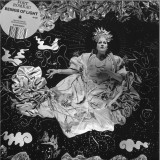
- Followup to 2015's Insides. - RIYL: Jacques Greene, Leon Vynehall, DJ Seinfeld, Project Pablo - Features cover art by Salvador Dalí protégé Steven Arnold. - Silver halide (gray + black marble) vinyl limited to 1,500 copies worldwide - Vinyl is housed in a black dust sleeve inserted in to a matte varnish jacket with metallic silver spot color // After a run of critically-acclaimed singles and EPs, British producer Michael Greene, aka Fort Romeau, returns to the full-length format with Beings of Light, the long-awaited follow-up to 2015's Insides and his second LP on Ghostly International. While a prolific DJ who orients many of his productions for the dancefloor, Greene still sees the album as the ultimate statement of intent, "a space to stretch out, to speak in full paragraphs rather than stunted sentences." He has explored several stylistic fragments in recent years (including the summer 2018 anthem "Pablo," hailed a Best New Track by Pitchfork), but when faced with the extended pause to the dance community in 2020, Greene felt compelled to focus on a larger body of work. Embracing a back-to-basics mentality, he amassed over a dozen hours of sounds, asking himself throughout the sessions: "Does the music move you? Is it honest?" He came out the other end with Beings of Light, an expressive collection traversing rainy day ambient, moonlit disco, and dream-like techno in pursuit of the power found within our subconscious. Album opener "Untitled IV" ushers in a sprinting tempo in its exploration of the human voice, a recurring device in the Fort Romeau project. Greene uses it as a compositional layer, disembodied with its context often opaque or reduced to a single phrase. Here the voice is scattered in percussive twitches, colliding with a kick drum to induce a near state of hypnosis as horns sound off in the distance. Propulsive standout "Spotlights'' is Greene's ode to the romanticised New York City that lives in our hearts, nocturnal and carefree. A vocal snippet repeats the title with a breezy poise, reminiscent of classic house cuts. "Ramona'' honors the beloved Robert Johnson club in Offenbach, Germany. Hazy, spacious, and sustained, Greene designed the beat with their system in mind, "also with a strong nod to the more modern lineage of exceptional minimal house music from Frankfurt," he says. Two ambient pieces surround the track, "(In The) Rain" sets the scene and "Porta Coeli" (a Latin phrase which loosely translates to "heaven's gate") soundtracks the comedown. The album's closer, the title track, is an arc constructed with atmospheric textures, euphoric swings of percussion, and a well-placed piano refrain, "Beings of Light" is adaptive; one could imagine it reverberating from a club, scoring the emotional apex of a film, or radiating through the realm of dreams.
Möbius is an aerial ballet created by Cie XY in collaboration with the choreographer Rachid Ouramdane, and composers Jonathan Fitoussi & Clemens Hourrière.
One of the most sensitive sets of ears in Paris, GRM affiliate Jonathan Fitoussi meets Clemens Hourrière for a beautiful 3rd album called "Möbius". After their acclaimed "Five Steps" 2015 & "Espace Timbrés" 2018 on Versatile records, Fitoussi & Hourrière tethered again to the classic Buchla modular synthesiser, but this time for composed the soundtrack of an amazing aerial ballet in collaboration with Cie XY and famous choregrapher Rachid Ouramdane; Widescreen results
-
"For Möbius we have teamed up with two composers, Jonathan Fitoussi and Clemens Hourrière; for several years now they have shared a common passion for electronic instruments with their unique incredible sound. We soon found there was a lot of common ground between our own acrobatic research and the way they create music : their sounds meeting, colliding or clustering together in a slow and finely nuanced progression, requiring the same continuous adjustment as our own process. This constantly evolving music with its expansive percussion will leave the door wide open to flights of the imagination, transporting us to strange atmospheres, at times disturbing, at others invigorating..." Cie XY
Words have a force of their own: a life generated by their meaning and by the imaginary world they refer to; a power increased by the dynamic interplay with other words. Just put 'Moon' and 'Apollo' together, and you'll be almost inevitably transported to mankind's greatest adventure: the Moon landing and, before that, the space race between the US and USSR, the early missions, and the incredible technological challenges faced at the time by astronauts and engineers.
It is against this imaginative background that beat-maker and bass player Moonbrew and organist and keyboardist Paolo Apollo Negri conceived The LEM Tales project. Their collaboration, too, is the coming together of 'Moon' and 'Apollo', and of their two worlds: a sonic universe where hip hop meets funk, pop merges with jazz, old school interacts with new possibilities, and urban and space blend into something new.
The LEM Tales - Chapter One narrates the space race from the American point of view. This vinyl edition, which includes two exclusive tracks (*) not on the digital release, takes us on a journey from "Project Gemini" - NASA's second human spaceflight program - to "Tranquillity Base" (*) (the site on the Moon where Armstrong and Aldrin landed and walked in July 1969) , through tracks titled "Capsule Communicator" (the individual in the mission control center who maintained communication with the astronauts in space), "EMU" (Extravehicular Mobility Unit, better known as the spacesuit), "Saturn V" (a threestage, liquid-fuelled rocket used between 1967 and 1973), and "Mercury Seven" (*) (the group of seven astronauts chosen for the Mercury Program in 1959).
Inspired by iconic images that are part of our collective visual memory, Moonbrew and Apollo's first collaborative effort tries to provide a contemporary sonic representation of what the past means to us today – and, perhaps, will mean to future generations. It does so through a feast of vintage synthesizers, transistor and tonewheel organs, string machines, electric pianos, tube amplifiers, obscure analogue devices, electric bass, and modern samplers.
An old-school hip hop approach was used in the first stages of writing the album: individual drums hits from old, dusty records were first sampled and then physically played on real instruments to create patterns and build up the rhythm section. Moonbrew then laid down the electric bass grooves and Apollo layered his dreamy, evocative vintage keyboards on top. The result is a combination of different styles, sounds and genres that is fresh, original and contemporary while being clearly influenced by many musical legends of the past.
The LEM Tales - Chapter One is released by Four Flies in partnership with Record Kicks.
Fraxinus emerges from temporary suspension with a monolithic 6-track offering on his new self-release label Powerplant. This is his debut EP Position Displacement, carved from a solid block of Devonian granite. After a 4-year dormancy, the Amsterdam-based artist returns with a 30 minute transmission of earth-shaking kick drums, thunderous percussion and razor-sharp sound design. The label’s inaugural release simultaneously marks the first proper outing for the artist, following a run of compilation features & special edition vinyl excursions dating back to 2014. Position Displacement is a journey of divergent moods & cadences, from the wistful flutes of opener Overland to final track Laced’s uncompromising arpeggios. Billowing melodies & piercing stabs run in tandem with a pummelling & steppy rhythm section; Source Code builds steadily, paving the way for Pass One’s warehouse-ready assault. The blooming, fluorescent synths of 115 (Kondo) - named for the mythical Amsterdam club - create a mid-way moment of euphoria, before Larch marches on with its clattering drums. The tracks clearly contain DNA from Fraxinus' foundations with the Her Records cohort – lean, direct & forward-thinking. This time around the aesthetic is more focused, transferred to techno schematics but veering away from 4/4 fare. The sonics have been compacted into dense slabs of energy, primed for soundsystem dispatch. Wholly original, crafted with precision; the EP serves as a powerful statement of intent for both artist & label. Position Displacement will be released 05/11/2021 on 12” vinyl and digital download, presented with full sleeve artwork. The record is followed by a further 2 EPs on Powerplant as we enter 2022.