A product of the transformative power of dance music, Ede moved Berlin after he experienced something magical while dancing to Ame at
Berghain. So enchanted was he by the pivotal moment that he set his sights on making music to be released by Innervisions… And that happened
three years later when his track ‘Jenny’ made it into the label’s ‘Secret Weapons 11’ compilation. Ede’s dark, new wave style has also
piqued the interest of Jennifer Cardini, who signed his music to a V/A on her Correspondant Music label recently. Now the producer joins the
TAU family for a full EP, featuring four original cuts.
‘Raum’ jumpstarts the collection with menacing allure. Whirring analogue forms the core of this deadly track, keeping it tight in the low end
while various layers of synth fizz and snarl. An urgent riff joins the fray, adding depth and energy. Across almost 10 minutes Ede showcases his
ability to create a dark atmosphere and imbue his music with spinetingling theatrics. Fans of the riff will be pleased to find a beatless version of
‘Raum’, which will be useful for creating dramatic moments during DJ sets no doubt.
On side B, ‘Zeit’ brings the pace down slightly. A melancholy synth line evokes feelings of sorrow, while the beat pumps along. Ede uses the full
8 minutes of this track to really build the tension, finally unleashing it halfway through. This could easily be used on the soundtrack for a cyborg
action movie set in the future.
Last up, ‘Unendlichkeit’ is a further demonstration of Ede’s love of futurism, new wave and film noir circa 2080. Here he tells a story with the
machines, each one adding their contribution to the narrative which gets more and more chaotic as the tune progresses.
A very impressive EP, and we’re sure you’ll agree it’s something quite special.
Cerca:transform
The interventions of Spring Heel Jack — sly repetitions, uncanny intrusions of feedback and melody, expansive organ chorales — subtly transform the proceedings, focusing with microscopic precision on the dramatic power and lyrical poise of their collaborators and throwing the sonic complexities of the ensemble into vivid contrast.’
‘Verdigris’ the new EP from Japanese artist Atsushi Izumi, is a deep dive into the crevice of the mind. It is an exploration of where fearful emotions lie and confronting them. It is only through this conflict that light can shine through in the end.
The Osaka native has a background in music and sound design and as such found his sound going through a metamorphosis from Drum n Bass to a more experimental sound. His EP ‘Snow’ was released under the subtract imprint last year and saw the initial phase of this transformation. It was followed up by ‘Lansing / Mistrust’ via The Collection Artaud, which continued his growth of using slowed out heavy percussions surrounded by frantic synths and modulations.
Atsushi Izumi’s use of long drawn out hallow synths is like an ominous cemetery at night before these powerful percussions detonate in. He uses heavy spaced out bass drums, either as a single or double beat, which simmer as they echo and roll. They are surrounded by these chaotic, textured synths, which can sound like a cicada, hovering and distorted to give a mechanical effect. It feels like being thrown into the woods late at night, eerie yet calm in the beginning, before extreme panic sets in and you feel like you’re being chased.
Japan witnessed the end of the world up close and it is still reflected in their art and music: it delves into the sadistic and explores deep themes of melancholy and the apocalypse. This is juxtaposed against pure joy and serenity, showing that life is there to be enjoyed and struggles have an end, which is translated quite coherently to this piece.
As an extra bonus to all this, there is a scintillating remix from ANFS. The Greek adds a bit of pace to the track Zeit. He is an artist who enjoys frantic distorted techno and it shows in this cut. He takes the basic elements but whereas the original slowly introduces the percussions, ANFS bangs straight in. It’s structured yet frantic and a massive sound.
‘Verdigris’ is due for release on 17th May 2019 under the mysterious Swiss label Thrènes, that is known for eye-catching signature artwork and a deep and dark techno sound.
Omena label boss Tooli delivers three tracks all inspired and dedicated to Tompkins Square Park.
Two of the UK's unsung heroes NY*AK and Mark Hand transform the title track into a 15 minute journey with plenty twists and turns.
Transcendence was not only Alice Coltrane's last studio album for Warner Bros., it would also be her last studio work for nearly three decades. While Eternity and Radha-Krsna Nama Sankirtana followed the composer's muse through an exciting range of musical styles and influences, Transcendence is perhaps the most fully realized of the three LPs, synthesizing the best elements of each into a monumental whole.
Side one consists of intimate compositions with Alice's pointillist harp enhanced by intricate string arrangements. At times, the emotional climaxes in "Radhe Shyam" and the title track sound like the score to an epic film. This would be the closest Coltrane ever came to chamber music, yet rendered with her uniquely spiritual tint.
Side two moves into celestial territory with uplifting chants, light handclaps and bluesy organ. These call-and-response chants, featuring members from her Ashram, completely embody both African-American gospel and Hindu devotional traditions, an uncanny fusion that is transformed through Alice's pure spirit.
What runs through the album's two musical halves is a powerful sense of devotion and discovery. At this point in her life, Coltrane was on a journey toward truth through sound, and Transcendence gives the listener a front row seat to this quest.
Following their hotly tipped 2018 debut album 'On' - Altin Gün returns with an exhilarating second album. 'Gece' firmly establishes the band as essential interpreters of the Anatolian rock and folk legacy and as a leading voice in the emergent global psych-rock scene. Explosive, funky and transcendent.
Some words from the label:
The world is rarely what it seems. A quick glance doesn't always reveal the full truth. To find that, you need to burrow deeper. Listen to Altin Gün, for example: they sound utterly Turkish, but only one of the Netherlands based band's six members was actually born there. And while their new album, Gece, is absolutely electric, filled with funk-like grooves and explosive psychedelic textures, what they play - by their own estimation - is folk music.
'It really is,' insists band founder and bass player Jasper Verhulst. 'The songs come out of a long tradition. This is music that tries to be a voice for a lot of other people.'
While most of the material here has been a familiar part of Turkish life for many years - some of it associated with the late national icon Neset Ertas - it's definitely never been heard like this before. This music is electric Turkish history, shot through with a heady buzz of 21st century intensity.
Pumping, flowing, a new and leading voice in the emergent global psych scene.
'We do have a weak spot for the music of the late '60s and '70s,' Verhulst admits. 'With all the instruments and effects that arrived then, it was an exciting time. Everything was new, and it still feels fresh. We're not trying to copy it, but these are the sounds we like and we're trying to make them our own.'
And what they create really is theirs. Altin Gün radically reimagine an entire tradition. The electric saz (a three-string Turkish lute) and voice of Erdinç Ecevit (who has Turkish roots) is urgent and immediately distinctive, while keyboards, guitar, bass, drums, and percussion power the surging rhythms and Merve Dasdemir (born and raised in Istanbul) sings with the mesmerizing power of a young Grace Slick. This isn't music that seduces the listener: it demands attention.
Altin Gün - the name translates as 'golden day' - are focused, relentless and absolutely assured in what they do. What is remarkable is the band has only existed for two years and didn't play in public until November 2017; now they have almost 200 shows under their belt. It all grew from Verhulst's obsession with Turkish music. He'd been aware of it for some time but a trip to Istanbul while playing in another band gave him the chance to discover so much more. But Verhulst wasn't content to just listen, he had a vision for what the music could be. And Altin Gün was born.
'For me, finding out about this music is crate digging,' he admits. 'None of it is widely available in the Netherlands. Of course, since our singers are Turkish, they know many of these pieces. All this is part of the country's musical past, their heritage, like 'House of The Rising Sun' is in America.'
As Verhulst delves deeper and deeper into old Turkish music, he's constantly seeking out things that grab his ear.
'I'm listening for something we can change and make into our own. You have to understand that most of these songs have had hundreds of different interpretations over the years. We need something that will make people stop and listen, as if it's the first time they've heard it.'
It's a testament to Altin Gün's work and vision that everything on Gece sounds so cohesive. They bring together music from many different Anatolian sources (the only original is the improvised piece 'Soför Bey') so that it bristles with the power and tightness of a rock band; echoing new textures and radiating a spectrum of vibrant color (ironic, as gece means 'night' in Turkish). It's the sound of a band both committed to its sources and excitedly transforming them. It's the sound of Altin Gün. Incandescent and sweltering.
Creating the band's sound is very much a collaborative process, Verhulst explains.
'Sometimes me or the singer will come in with a demo of our ideas. Sometimes an idea will just come up and we'll work on it together at rehearsals. However we start, it's always finished by the whole band. We can feel very quickly if it's going to work, if this is really our song.'
Just how Altin Gün can collectively spark and burn is evident in the YouTube concert video they made for the legendary Seattle radio station KEXP. In just under 20 minutes they set out their irresistible manifesto for an electrified, contemporary Turkish folk rock. It's utterly compelling. And with around 800,000 views, it has helped make them known around the world.
'It certainly got us a lot of attention,' Verhulst agrees. 'I think a lot of that interest originally came from Turkey, plenty of people there shared it.'
That might be how it began, but it's not the whole tale. The waves have spread far beyond the Bosphorus. What started out as a deep passion for Turkish folk and psychedelia has taken on a resonance that now travels widely. The band has played all over Europe, has ventured to Turkey and Australia and will soon bring their music to North America for the first time.
'Not a lot of other bands are doing what we do,' he says, 'playing songs in that style and seeing folk music in the same way.'
Second Lp From French Electronic Talent Thylacine
Regardless Of Whether Or Not The Thylacine, A Species Of Marsupial With A Tiger-striped Back, Still Lives
In Tasmania Or Not, It Is In Argentina That This Young Star Of The French Electro Scene Decided To
Record His Second Album. To Create A Follow Up To Transsiberian, His Brilliant First Album That He
Recorded In 2015 Aboard The Train That Links Moscow To Vladivostok, William Rezé, Aka Thylacine,
Bought A 1972 Trailer, One Of The Famous All-aluminum Airstreams.
After Painstakingly Transforming The Trailer Into A Recording Studio, He Put His Beautiful American On
A Freighter Across The Atlantic And Got It Back A Month Later In Buenos Aires.
He Was Drawn To South America By The Pull Of The Unknown, The Absolute Absence Of Reference. He
Wanted To Immerse Himself In Desert And Lunar Landscapes, Explore Multicolored Canyons, Sand
Dunes, Giant Cacti Forests, Snow-capped Peaks... And Write, Alone, In The Intimacy Of His Nomadic
Studio.
After Making Stops In The Middle Of Nowhere, He Returned With Ten Tracks That Marvelously Combine
Moderat's Aerial Melodies, The Solar Touch Of Nicola Cruz, And The Techno Power Of Paul Kalkbrenner.
His Electronica Is Often Laden With Saxophonehis Instrument Of Choice, Which He Started Playing At
The Age Of 6 At A Conservatoryand Features Vocals From Julia Minkin (of Kid Francescoli), Clara
Trucco (a Member Of The Trio Femina), And Juana Molina, "considered The Argentinian Björk," Says
Thylacine.
Mission Accomplished: The Young Angevin's Vaporous Layers Are Tinged With Charango, A Local
Instrument, And Melodies Inspired By Traditional Argentinian Songs. "i Wanted To Go Back To A Music
With A More Acoustic Sound."
And The Tracks Follow One Another, Telling The Story Of His Extraordinary Odyssey: The Hypnotizing the
Road Expresses The Miles Of Road Traveled; The Captivating Tale Of santa Barbara Evokes The Close
Ties Between Inhabitants Of A Tiny Village In The Andes; And The Rhythm Of 4500 M, Cut By The Flow Of
The American Rapper J. Medeiros, Recalls The High Desert Where Thylacine Once Had To Sleep, Forced To
Stop For The Night By Storms Of A Rare Intensity.
Three Months And Ten Thousand Kilometers Later, This "concept Album" Is Ready; It's Called Roads Vol.
1, And Its The First Installment Of A Collection That The 26-year-old Thylacine Expects To Add To As He
Continues His Travels. His Itinerant Studio, Ingeniously Equipped With Solar Panels, Will Take Him,
Hopefully, Very Far.
Next up on LOVEiT is head honcho JK himself, presenting a fine Reminiscence to 90s french house on the A1. With his remix, italian Jo Pariota transforms the title track into a veritable detroit house groover by adding warm pads and driving hats. JKs B1 is a moody deephouse affair including jazzy keys and a thought provoking spoken word sample by a certain saturn-visiting cosmic poet. The Rare Sun Recall Mix by .WS takes you places: riding out on an uptempo tribal beat, it slowly starts to fall apart before vanishing into ambient bliss. - morri313 Early Feedback: Lay Far (Atjazz Record Company / Local Talk / 4 Lux) Congrats on the release! Loving the 'Being Neglected As An Artist
Mutex is a masterful artist that knows how to transform feelings into music. This release on the Transparent catalog represent his debut on the label with a beautiful coordination of synths and grooves, the record doesn't give a real clue of when it was done really, all we know is that it will definitely keep the testament of time in your collection. All on pink & black mixed vinyl.
Daniel Avery broadens the exquisite sonic universe established on last year's critically-acclaimed sophomore LP Song For Alpha, presenting the collected B-sides & Remixes. Showcasing cuts from the album's writing and recording process, as well, Avery also invites a number of his contemporaries and some of the most vital underground producers in the world to rework his original material, with transformative results.
The frosty melancholy of Citizen // Nowhere is reworked by London producer Manni Dee into something altogether monstrous. Introducing itself with a kick drum powerful enough to level a warehouse, and only getting more urgent from there forward, Dee's remix blends a knowing rave glint in the eye with a nonetheless uncompromising stance.
The Copenhagen-via-Moscow producer Anastasia Kristensen immediately justifies her status as a rapidly rising talent on the scene, locking into a delicate yet no less powerful groove for her sparkling remix of Glitter. Seamlessly heightening the almost meditative qualities of Avery's original, she weaves a blissful rhythmic trip, taking in razor-sharp percussions and spectral dub techno.
A longstanding fixture on the Midwest US rave scene, Patrick Russell applies his typical grit to 'Song For Alpha's firmly dancefloor focused centrepiece, Diminuendo. In subtly shifting the focus to the track's passages of overwhelming feedback, he sculpts a black hole of snarling electro and piston-like breaks, sure to prove an inviting wormhole to those willing to surrender further, deeper and darker.
Ted Scotto began his musical life as a trumpet player, but got his foot in the door of production soundtracks when he composed the theme for the 1968 French animated series 'Les Shadoks'. Soon taking on the pseudonym Yan Tregger (chosen for its nonspecific, English-sounding connotations), Scotto wrote and recorded more than thirty library records, ranging from funk and R&B tunes to deep dives into the then-prevalent Italo-Disco sound.
He also continued to record commercial music (including two albums with his disco act M.B.T. Soul and the under- water trumpet novelty hit 'Bubble Bubble'), and work on film
scores.
In 2018, Mark Grusane adapted the track 'Riff On' from Catchy LP for BBE Records, which later decided to reissue Catchy and Duck & Drakes on vinyl. For this new 12inch release,
Yan Tregger has done us the honor of reworking two unpublished tracks from the M.B.T project. You will have a bliss listening to two originals tracks, slightly transformed, and two
reworks that will make you travel through Balearic and Dub atmospheres, preserving to the maximum the soul of the original grooves.
This release announces a turning point in the production. Parisian Soul converges on an exclusive and unique dimension with a live sampler concept on stage to remix their Maxi vinyl in real time. Surrounded by pianist Alexandre Destrez (St Germain, Dimitri from Paris and Dj Yass), and percussionist Edmundo Carneiro (St. Germain, Bob Sinclar, De La Soul).
Fifth part of the Strata-East Dolphy Series, Glass Bead Games is arguably the crown jewel of the Strata East movement, an amorphous genre that treads an unusual path between post-bop, 70's avant-garde and spiritual jazz, with a groove.
Glass Bead Games is full of revelations at many levels. First, the decade of the 1970s did produce genuinely creative, "human" new music flowing from the jazz mainstream; second, Bill Lee was more than Spike's dad: he was a superlative bassist, a team player of the first order, a powerful catalyst who, if anything, deserves to be better known than his son; third, Billy Higgins was, as so many musicians insist, a once-in-a-lifetime drummer—the bellows inspiriting the collective flame.
Most importantly, Clifford Jordan was an artist of the first order, his playing so effortless and unforced, unselfconscious and focused, mature and wise that, at a time when altissimo fury was all the rage, it's small wonder his authentic voice frequently went unheard. His musical rhetoric is so personally expressive, its substance so compelling, the listener couldn't care less about the extraordinary technique required to convey its captivating message. Compared to some of his more acclaimed peers he's a less aggressive yet paradoxically more directive and shaping influence. The climaxes, rather than spelled out, are merely suggested, registering with deep and lasting impact on the listener. It all comes down to learning the language, those precious little beads. Not every player, including Jordan or the listener, can use it like Shakespeare, but all can learn to read Shakespeare and understand its principles of arbitrariness and serendipity, of invariance and transformation.
Jordan, no less than Shakespeare, requires a like-minded cast of players—in this case four musicians of such redoubtable proficiency that each remains committed to keeping the beads in play. He's not a man content with a mere musical "dialogue" with his fellow musicians nor is he about to take the initiative in pulling his troops up to his level. Instead he begins to tell a musical story that's so compelling his three comrades are inspired equally to contribute to a collaborative narrative. This is brilliant music-making by a Coltrane- influenced successor who feels no obligation to mime the predecessor. It may be the most significant saxophone performance on record since Coltrane and, providing the listener stays with it for any length of time, the most deeply satisfying. Jordan's game—so effortless, unforced, and "level"—erases distinctions between composed and improvised, soloist and ensemble, narrator and narrative, the dancer and the dance. It seems incapable of wearing out its welcome.
By Samuel Chell/All About Jazz
Chicago-based Matt Warren has been a DJ for forty years and has been a producer since 1984, when he released his debut single Rock The Nation. This inspired Matt to cofound Sunset Records in 1985, which released several house classics. However, in 1987, Matt resigned from Sunset Records and founded AKA Dance Music.
The first single that AKA Dance Music released was Bang The Box, which sold over 50,000 copies in America and nowadays, is regarded as the first hard house track. Bang The Box was the first of seven singles that AKA Dance Music released between 1987 and 1988. By then, Matt's second label was part the history of house music.
After the demise of AKA Dance Music, Matt Warren continued to travel the world DJ in some of the top clubs. Meanwhile, Matt continued to produce new music, remix tracks by some of the biggest names in music.
By the nineties, Matt was also writing, arranging, mixing, and producing a wide variety of artists and bands. He sometimes was asked to play on a number of albums. However, he still loved house music, and worked on several releases.
As the new millennia dawned, Matt continued to work in a variety of roles in the ever-changing music industry, and occasionally released some new music. Over the next few years, Matt has been working as a producer, engineer and remixer, which meant he had to put his own career on hold, until he began working with a familiar face.
In 2016, Matt was reunited with house diva Pepper Gomez, who was now running her own label Wake Up! Music. By then, Pepper Gomez had dawned the MyMy Lady G moniker and embarked upon a career as producer. She had travelled to Chicago, to record Elena Andujar's genre-meting album Flamenco In Time at Matt's Sound Studio Recording. Matt took charge of engineering, programming, mixing and production on Flamenco In Time while MyMy Lady G added backing vocals and assumed the role of executive producer on this groundbreaking project. After the completion of Flamenco In Time, MyMy Lady G asked Matt Warren if he would like to record an album
It didn't take long for Matt to answer in the affirmative, and in early 2018, he hit the comeback trail. He was accompanied by a group of talented musicians and vocalists including gospel singer and soulful diva Jan McGhee, Elena Andujar and legendary house diva Pepper Gomez who plays a starring role on the album. That album was recorded over the course of several months, and eventually became Music Is My Life which marks the comeback of Mark Warren.
Matt Warren has been away to long, now one of the pioneers of Chicago House makes a welcome return with a groundbreaking new album. This is Music Is My Life, the first ever Nu House album, which is guaranteed to transform Matt Warren's career and become part of dance music history.
New album from London-based Dutch-Zimbabwean pop
innovator Rina Mushonga.
Mushonga doesn't follow a linear path. The artist's music -
a blend of Afropop, indie and electro flourishes - is
informed by her own zigzagging life journey: Mushonga
emigrated from Zimbabwe to the Netherlands, then to the
diverse South London suburb of Peckham, where she now
lives and works.
Having read 'Metamorphoses' for the first time,
Mushonga's self-confessed 'year of transformation' ensued,
drawing upon myriad ideas and personal experiences.
Full of reflections on the cosmos and our place within it,
'In A Galaxy' is the musical embodiment of these musings,
whilst Mushonga also admits there's more than a passing
nod to the opening text on 'Star Wars' but on the whole
refers to how relative space and time are in how we
interact.
Four years in the making, 'In A Galaxy' was recorded in
Mushonga's adopted home in Peckham with producer Brett
Shaw, whilst having laid much of the foundations of the
tracks together with musical bestie and synth whisperer
Frans Verburg in his Rotterdam basement studio. The
resultant cornucopia of intelligent, diverse pop - that
Mushonga herself describes as sounding like 'Paul Simon
in a sweaty, African dancehall club' - is a welcome
introduction to 2019.
LP pressed on pink vinyl
Third LP of Cabaret Contemporain, French band (featuring Fabrizio Rat on keys) who use acoustic instruments (piano, guitar, bass, drums, contrabass) to produce a « hand-crafted » club music infused with techno. Inspired by Jeff Mills, Robert Hood or Drexciya, the five members already had a career on classical scene; their idea is not to replay classical techno tunes but to create a new path for the electronic music. 2 tracks featuring with the label boss, Arnaud Rebotini.
« Ballaro », which opens Cabaret Contemporain's third album, begins with light percussions, which seem to turn on themselves, while being conveyed by reverberations close to dub. After a few minutes of convolutions, the piece gets out of hand, transporting the listener into a rich form of pulsating trance, irrigated by a soaring melody and punctuated by persistent piano tones. « La selva »; more subdued, has the same energy, the track ending in an even more powerful way, a kind of paroxysm.
Finally, the strangest and most minimal « Cactus », features a singular groove, which evokes the most brutal house from Chicago, or the sometimes obsessive techno from Detroit. Just like other tracks such as « Transistor » or « TGV », fuelled by sweat and trance, Séquence Collective bears all the intensity of a techno cut for clubs' dancefloors. The only difference being that their music is not played with synths, drum machines or software, but with acoustic instruments. Dual curriculum The band is composed of five musicians and a sound engineer: Fabrizio Rat on piano, Giani Caserotto on guitar, Julien Loutelier on drums, Ronan Courty and Simon Drappier on double bass and of course Pierre Favrez on console. They are all in their thirties and met at the prestigious Paris Conservatoire in the late 2000s. However, all the musicians in the band have a double curriculum and navigate freely between the institutional realm and the underground or pop music scenes. Through classical or contemporary music, jazz and improvisation, rock and experimentation, they share a common passion for the original and futuristic techno of the 1990s, that of Jeff Mills, Robert Hood or Drexciya, which they have decided to reinvent and further in their own way. Not as a simple stylistic exercise practiced by virtuoso musicians, but rather as a new path for modern music, and for their generation. « The original idea » they say, « was to make club music by hand, like craftsmen. Like in the early days of jazz, our band managed to transform itself into a kind of dancing machine. Our music is therefore functional because it is danceable, but also mental and abstract, while offering several layers of listening. You can dance and play, have a purely physical and sensory connection to the music. But you can also immerse yourself in its listening, perceive refined harmonies or more complex rhythmic superpositions »
If the tones of Cabaret Contemporain are truly unique it is because each member of the band has developed a very personal approach through the use ''prepared'' instruments. The strings of their piano, guitar or double bass may recall strange machines with literally incredible sounds, obtained using objects such as chopsticks, clothes pegs, foil, hangers, a tiny pie mould or many other utensils from a DIY store. A collective energy
Cabaret Contemporain is first and foremost a live band that has been performing in venues and festivals since its inception in 2012 (Nuits Sonores, Siestes Electroniques, L'Aéronef, Le Trabendo, Philharmonie de Paris, Gaîté Lyrique, Rewire, Dancity, Barcelona Accio Musical...), both at traditional jazz and contemporary music venues, and more often at electro music hubs. When facing the audience, the band, which plays each of its sets in one go, without a break, shows an intense physical presence, which competes with the musical power of DJs who share the stage with them. Their performance, full of tension and repetition, which requires maximum concentration and a state close to trance from the musicians, is sometimes, according to them, « a mental journey and a mystic experience ». A dimension that brings to mind the historical techno culture and its dancers who, communicating on the dancefloor, were carried until the early hours of the morning by the power of the beat. An album inspired by the stage Since their beginnings, their compositions on record have drawn their energy directly from the practice of their concerts, whether referring to Terry Riley (2014) or Moondog (2015), an EP and an album dedicated to the repertoire of the two American artists, the original compositions of Cabaret Contemporain (2016) and Satellite EP (2017), as well as this new album. Séquence collective can be listened to as a condensed transcription of their inventions and their live experiments. The tracks, more than half of which were improvised during sessions held in the former Vogue studios near Paris, were recorded in live conditions, « like an old school rock band » they say. As usual, they invited a new musician to join them in the studio. After collaborating with Étienne Jaumet or Château-Flight, Arnaud Rebotini, César winner for best film music, added a welcome synth touch on two tracks (Pro- One, Prophet 600), which boosted the group's formidable collective energy. The album ends with « October Glide », again performed with Rebotini, a lyrical and lively track, built on a powerful and slow progression of timbres and percussions, which would ideally find its place at the core of a techno party « peak time »
Dutch producer Tripeo returns to his self-titled imprint this March to release four ethereal cuts entitled 'We Have Power In Numbers'.
With a discography of over thirty releases across nearly two decades, Darko Esser aka Tripeo has truly established himself as a key figure within the techno world. His open-minded and forward-thinking approach to music allows his ideas to continually develop and transform, which reflects through his vast material on his Wolfskuil Records imprint. The label recently hosted an exciting new wave of techno artists such as Shlømo, Rumah, PTA (Ambivalent & Physical Therapy) and Cadans, who collaborated with Tripeo on a Rekids release at the end of 2018.
'We Have Power In Numbers' kicks off with sparkling, acid arpeggios, encapsulating pads and weaving modulations before 'Hoax' delivers shuffling percussion, shimmering synth lines and stabbing, bass grooves.
'Pandora's Box' follows on the flip with haunting oscillations, growling resonations and an off-beat 909 clap throwing you right in the groove until 'Pay It Forwards' finishes things off with electro-tinged flavours, tantalising pads and stirring melodies.
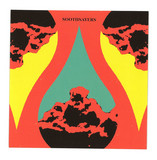
For The Best Part Of Two Decades Now, South London Afro-dub Dons Soothsayers Have Been Preaching Their Politically Charged Good Vibrations To A Growing And Loyal Fan Base. Their Live Shows Are Legendary And Vary From Off-the-cuff Community Friendly Gigs In Brixton, To Festival Headline Slots And Tours Across Europe And Beyond. Having Recently Filled London's Jazz Caf To Much Acclaim, And In Anticipation Of Their New Album, Tradition, Out On Wah Wah 45s In June, Soothsayers Unleash The Second Single To Be Taken From It. It's A Double Header Of Sorts That Shows The Band's Knack Of Reinterpreting A Cover Version Or Two For The Dance Floor.
Sleepwalking Is A Take On Fela Kuti's 1971 Classic Black Man's Cry. It's A Chant Of Frustration Aimed At Disenfranchisement From The Process And Features Afrobeat Ambassador Dele Sosimi On Guest Vocal Duties.
It Questions If We Are Sleepwalking Into The Abyss, And Is A Revolutionary Song About Taking Power Back Into Our Own Hands! Although It's Challenging To Do Justice To A Bob Marley Cover, On Natural Mystic Soothsayers Cradle The Spirit Of The Originator And Turn It Upside Down, Transforming The Familiar Into A Journey Back To Africa Via Their Trademark Groove.
Spiritual Jazz Flutes And Percussion Combine With The Floating Vocals Of The Mighty Cornel Campbell, While The Song's Main Melody Is Emphatically Reproduced By Soothsayers Horn Section To Stunning Effect.
* 180g Vinyl cut at D&M including CD and DOWNLOAD CODE! *
** played by Steve Barker, BBC Radio Lancashire, ON THE WIRE, 1.12.2018 **
*** interview and exclusive mix etc radio, WNUR FM, Chicago, 4.1.2019 ***
** interview & airplay of the whole album @ OE1, ORF - Zeitton Extended 3rd of february 2019 **
In his latest composition, DOLOMITE DUB, the Vienna-based South Tyrolean sound artist Ulrich Troyer presents his perceptions of a several-day high alpine hike across the Dolomites transformed into a soundscape.
The more than 40 minute track DOLOMITE DUB leads the listeners through this landscape of heights transgressing different moods - in which autobiographical memories flash up as well.
Subsequently to the experimental dub trilogySongs for Williamand the EPDeadlock Versions, a cooperation with Vin Gordon and Didi Kern, DOLOMITE DUB features besides Didi Kern on drums & percussion, Susanna Gartmayer on contra-alto clarinet and Juergen Berlakovich on bass, both long-time ensemble members of the joint project "The Vegetable Orchestra".
White Shadows In The South Seas is the title of a book written in 1919 by Frederick O'Brien as part of a trilogy he wrote based on his experiences living in the Pacific islands in the early part of the 20th century. His book was taken as the starting point for a film to be directed, initially, by Robert Flaherty (famous at the time for his groundbreaking documentary / fiction film Nanook Of The North) with W.S.Van Dyke as his support. The film, ultimately, apart from the title, had little to do with O'Brien's book and Flaherty left the film after a few months leaving Van Dyke to finish it.
I purchased O'Brien's book, along with many others, from Basement Books, a secondhand bookstore in Melbourne/Australia. Part of my 'Islomania' and on going fascination with all things Pacific. When I discovered there was a 1929 silent film based on the book I sought it out and started to present it as part of my 'Live Music/Silent films' repertoire. Tabu by Frederick Murnau, which coincidently also had Flaherty as co-director originally, was the first film I ever wrote / improvised a score for and presented as a live film/music performance. My repertoire extends to over 23 films now.
My eclectic and diverse musical and artistic interests extend into 'Hawaiian', 'Exotica', 'Ambient' and 'Electronic' Music. I have produced several volumes of so called 'Electronic, Ambient, Exotica' on CD and Vinyl, including Kiribati, Globe Notes, Rayon Hula ( on Vinyl, CD and digital format ) and most recently, New Globe Note on Vinyl and White Shadows In The South Seas on CD.
White Shadows In The South Seas features some of the music presented in my live screenings of the 1929 silent film.
The film is the story of Dr. Matthew Lloyd, an alcoholic doctor who is disgusted by the exploitation by white people of the natives on a Polynesian island. The natives dive for pearls, however, numerous accidents occur and one diver dies. In anger, Dr. Lloyd punches Sebastian, the employer. As revenge and to prevent further interruption of his activities, he tricks Dr. Lloyd onto a ship with a diseased crew (thinking they are ill) and his men rough him up and send the ship off into a storm. Dr. Lloyd survives and is washed ashore on an island where none of the natives have ever seen a white man before. Lloyd is rescued and ultimately falls in love with the chief's daughter, who is Taboo, hence Lloyd is prevented from pursuing his love for her. An incident occurs and a young boy is thought to have drowned but Lloyd is able to revive him, earning him points and permission with the chief's daughter. Lloyd begins to realise that the local islanders have no sense of the value of the black pearls which grow in abundance around their island and he starts to dive for them and collect them. One morning the white man Sebastian unexpectedly turns up on a scooner and starts to offer the islanders trade for their pearls. Llloyd tries to interrupt the encounter and is shot and dies. His wife and the islanders morn for his dead body and, symbolically, the passing of a way of life.
Mike Cooper plays - Electric and acoustic lap steel guitars / electronics / Zoom Sampletrack / Kaos Pad / Casio SK1 / Korg Drum Machine / Self Made Instruments.
It also features field recordings made on Pulau Ubin by Mike Cooper during a month as Artist In Residence for The Artist Village / Singapore.
I would like to acknowledge and thank Lawrence English (Room40 Records) for his assistance and encouragement with the original recordings and the CD version of White Shadows In The South Seas.
All music written and played by Mike Cooper PRS/MCPS - except Po Mahina (trad. Arr. Cooper) and Hilo Hanakahi (trad. Arr. Cooper)
Recorded and Mixed at the Steelworks in Rome 2012/2013.
A White Shadow In The South Seas
In February 2014 'A White Shadow In The South Seas' was the title of an audio-visual installation I made at the Teatro In Scatola in Rome, Italy, presented as part of a series of sound installations titled 'Visitazioni' produced by Proposte Sonore.
The essay below, as well as our collection of Hawaiian shirts, Exotica and Hawaiian vinyl records, was an inspiration for this installation.
'..the transformation and reconstitution of the souvenir commodity as an indigenous ethnic art form and a scarce relic of Hawai'i's romanticized past...' from - Clothing and Textile Reasearch Journal - From Kitsch to Chic by Marcia A. Morgado.
And....
Michael Thompson's Rubbish Theory (1979)
' ...a critical aspect of Western culture is the pre-disposition to see objects in terms of two overt categories: the transient and the durable. Objects identified as transient have finite life spans and lose value over time, whereas those identified as durable have infinite lives and over time increae in value....category assignments are arbitrary, but once assigned a category membership determines relative value. Fashion apparel-by defenition-is assigned to the transient category; paintings commonly are designated durables....how is it that transient objects.. ( e.g. Hawaiian shirts and vinyl records ) ..sometimes become durables.
Objects assigned to the rubbish category are largely invisible, have no value and, ideally, no life span. Fashion for example, no longer worn and relegated to the back of the wardrobe has fallen into the covert rubbish category. But rubbish can be rescued and transformed. Thompson says ' What I believe happens is a transient object gradually declining in value and in expected life span may slide across into rubbish. Here it exists in a timeless and valueless limbo where it has a chance to be re-discovered and be successfully transformed to a durable. Such transferes are radical: objects gradually slide from transcience to rubbish, but the transformation from rubbish to durable involves an all-or-nothing leap across two boundaries, that separating the worthless from the valuable and that between the covert and the overt. Things drift into obscurity but they leap into prominence.
The delightful consequence of this hypothesis is that in order to study the social control of value we must study rubbish.
The rubbish-to-durable transformation is accompanied by the development of highly specialized knowledge derived from the discovery of subtle variations and complex details that went unnoticed in the objects transient stage. The discoveries initiate renewed interest in the object and its market value begins to climb. As prices soar beyond the reach of ordinary people, the object becomes available only in high priced collectors' markets. Furthermore, as market values rise, the aesthetic value of the object undergoes a reassessment as well, and it becomes increasingly apparent that the objects intrinsic beauty has been overlooked. Ultimately the object is re -assigned as a durable and becomes recognized as a timeless classic.
Exotica, Ambience and Pacificism - A dialogue with Mike Cooper & Professor Philip Hayward Deputy Pro Vice Chancellor of Research Southern Cross University, Lismore, Australia.