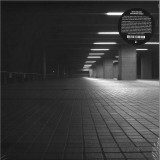
Three years after Stroom TV released his debut album Modified Perspectives, Kolàr released, Loops & Pieces, a documentation of sounds he has been working on in the period 2017-2020. According to Kolàr, this tape, also his first release for Dauw, was full of vaporous drafts transforming into solid forms with the help of time and distance. Compared to his previous work, the music on Loops & Pieces is much more stripped down and minimal, yet the dreamy character remained.
On Liquid Rhythm, we see Kolàr combining approaches of both albums. Using synths and acoustic instruments, he created 10 songs reflecting his typical playful yet melancholic aesthetics.
Buscar:transform
Reissue of the Count Basie Orchestra's 1970 album 'High Voltage',
arranged by Chico O'Farrill and featuring Eddie "Lockjaw" Davis, Cecil
Payne, Joe Newman, Freddie Green and Harold Jones among others
When in January, 1970 Count Basie entered the studio with his 17-piece big band
to record 'High Voltage', he ushered in the last full decade as bandleader of his
Orchestra. The Orchestra had left its imprint on the sixties by recording with the
likes of Frank Sinatra and Ella Fitzgerald. There would be more great albums with
star vocalists in the seventies, but the band's purely instrumental works, which
had begun in 1965, would also continue. Back then Basie had engaged acclaimed
Cuban composer/arranger Chico O'Farrill to arrange the music for such concept
albums as "Basie Meets Bond" and "Basie's Beatle Bag", transforming them into
crossover gems.
On 'High Voltage' O'Farrill demonstrates his affinity to Basie's big band sound, this
time with a repertoire of standards. For this album, Basie specifically chose
pieces the band had never recorded in their more than 30-year existence. This is
saying something, since the band covers such an impressive span of jazz history,
from the beginning of the swing era to the bop-influenced bands of the 50's on
through to the present album.
The Count's new drummer Harold Jones propels Fred Fisher's "Chicago" with a
tremendous drive. The Rogers and Hart classic "Have You Met Miss Jones"
features beguilingly dense deep- register horn lines and an almost languorous
piano, and Eric Dixon's tasty flute solo spices up "The Lady Is A Tramp". With its
smoky sophistication, Eddie Lockjaw Davis' Tenor dominates "Bewitched",
whereas guest trumpeter Joe Newman's muted tongue-in-cheek solo highlights
"Day In Day Out". Of course, Basie himself also steps forward: for instance, on the
Fats Waller-like intro to "I'm Getting Sentimental Over You", and with the playful
grace notes on "If I Were A Bell"." Reminiscent of the Las Vegas shows the band
performed with Frank Sinatra, "Get Me To The Church On Time" is also a
masterful dialogue between the horn sections.
The next remix installment from Psychemagik’s LP, “I Feel How This Night Should Look”, comes from longtime mates and sonic colleagues, Warehouse Preservation Society, and esteemed dancefloor cornerstone, Bushwacka.
W.P.S., the mutant duo from Los Angeles, have cropped up remixes and originals with reckless abandon these past years, and here, transform the Psychemagik source material into a breakbeat-infused act of nuclear fission, striking out the gate with heavy rhythms that meltdown into a steady hypnotic groove, all accompanied by dubbed vocal stabs and poignant arpeggios.
Bushwacka's remix of Valley Of Paradise has echoes of some of his earlier signature works. Centered breaks and floating pads guide through his cosmic rendition, whilst still retaining a strong melodic anchor from the original track, and glued together with a thick bouncing bassline - a trip for sure!
Vinyl Edition of 300 copies
Aesthetical in collaboration with Sync presents "Detect" by Marco Monfardini.
Originally developed as an audio/video live performance, Marco Monfardini based his research for Detect on the decoding of inaudible sounds, sound generated by electromagnetic emissions left from electronic devices and inaudible to the human ear. By using various electro-smog detectors Marco Monfardini creates a sort of detection mapping where electromagnetic emissions are the starting point for the sonorous development of each single composition.
A path that creates a parallel with our lives by questioning how much these emissions affect unconsciously our choices, tastes and perceptions, seeking a relationship between the massive use of technology in everyday life and our emotional state.
The album Detect is developed in 15 tracks in continuous play, an imperfect, faulty mosaic inhabited by invisible beings manifesting themselves in the form of sound streams, mutable entities that find a definitive form in the pattern of the compositional structure.
The album opens with “aR1 detection", sounds of pure detection place themselves in the sound space giving the initial coordinates for the exploration of unconscious parallel areas. The boundaries transform and gradually expand until they flow into the structure of "kernel variations", a growing rhythmic pattern decodes the impulses projecting a perspective that dissolves in the unstable and fluctuating electromagnetic emissions of the subsequent "[a]3020t detection", "binary defect "and "core[2] ". “[A.box]emission” confronts the use of sound downloaded random from internet sample banks and the emissions generated during the download itself, micro sound fragments arrange themselves in an organized and regular pattern, shaping a rhythmic structure. The first part ends with the short “[sa]6030” and “[det]x1a”, absence and presence provide an alternation of movements, inaudible and elusive signals all trying to establish a contact with our perception. “det : scan” opens the second part of Detect, a sort of scanning, leaving EMF (electromagnetic field) textures, a static multilayer that progressively expands until it dissolves into the rhythmic emissions of a common smartphone “[4s]detection”.The track “[rs]zone” " is pushing itself deeper, two minutes of sound speleology that reveal the existence of sound artifacts that seem to vanish getting in contact with the light accented by the bass drum of "[det] 0100+" a constant, rhythmic pumping, a luminous pulsation that reveals an apparent void, which seems to subside entering in the winding and waving atmosphere of "conductive [area]" and "[s3] microfunktion". Detect comes to the end with “[emf]terminal” a mirror of the unarrestable technological acceleration intercepting the flow of data that feeds the system of communication , digital micro waste suffocates the living space by centering up the invisible in an unconscious map.
[a] A1
[c] A3
[e] A5 core[2]
[f] A6 [A.box]emission (2)
[g] A7
[i] B2 [4s]detection
[j] B3
[k] B4 [det]0100+
[l] B5 conductive[area]
[m] B6 [s3]microfunktion
[n] B7 [emf]terminal
Mondo, Backlot Music and Howe Records are proud to present the a soundtrack nearly 40 years in the making: the complete restored score album to David Cronenberg's 1983 masterpiece VIDEODROME.
Single LP w/ printed inner sleeve + DL. Sophomore solo album from Emma Ruth Rundle, (Marriages (Lead Vocals/Guitar) and Red Sparowes (Guitar)). “…a sophomore effort of Cat Power-like tenderness and PJ Harvey-level intensity” The Fader / "...a sort of old-souled wisdom, conjuring the vastness of a sea." – Pitchfork // Emma Ruth Rundle’s 2nd solo album, Marked for Death, mines feelings of loss, defeat, heartache and self-destructiveness to emerge with the most honest and compelling accomplishment of an already prolific career. She shapes vast, evocative landscapes of sound, combining them with lyrics of devastating candor. Self-determination and resiliency, disguised in this case as coming to terms with overwhelming defeat, are key aspects of her personality. Transforming pain into works of great beauty makes her the compelling artist she is. A more adventurous production than her solo debut Some Heavy Ocean (2014, Sargent House), the eight compositions on Marked for Death, helmed by engineer/co-producer Sonny DiPerri, emphasize dynamics and vocal melodies, variable tuning, and a dense layering and texturing of guitars. Nevertheless, fear and self-doubt linger in the shadows of Rundle’s mind, providing an incessant counterpoint to her ambitious talent and sultry, albeit de-emphasized, allure. Exemplified by the candid, unglamorous cover portrait, Marked For Death takes a persuasive argument for its creator’s utter helplessness in the shadow of defeat. And through a potent dose of dark, hypnotic rock every bit as satisfying as her work with Marriages and Red Sparowes, Marked for Death’s most resonant element is Emma Ruth Rundle herself, settling in to her role as singer/songwriter. Her rich voice, alternately jostled and cradled by the sounds conjured from her guitar, feels more present, perhaps even more deliberate, than ever before. // UK publicity Silver PR - Early press support/features already confirmed with Pitchfork, The Fader, The Independent, Interview, VISIONS, Music Radar, New Noise, BBC and MUCH more tbc.
Turbo Recordings presents its grandest achievement yet, a reimagining of Plastikman's 1998 magnum opus "Consumed", Transformed as a new collaborative composition between original artist Richie Hawtin and musical genius Chilly Gonzales. This is an album three decades in the making, brought into the world by Executive Producer Tiga. A masterpiece of restraint, depth, and music as architectural vision, "Consumed" was profoundly influential, defining the soon-to-emerge minimal movement. Shortly after its 20th anniversary, Chilly Gonzales was inspired to compose accompanying piano pieces (counterparts) for each of the tracks and shared them with Tiga, who became the conduit between both artists and led the project to fruition on his label. Hawtin mixed the new combined work, allowing each artist their own space within the project,more of a sonic conversation between them than a conventional collaboration. Consumed in Key will be available as a deluxe triple vinyl LP. The artwork is a reinterpretation of the original album's, flipped to black and white and with the cutout size transposed to the dimensions of a piano key, the die-cut in the white outersleeve revealing a shiny black foil stamp on the black innersleeves.
- A1: Marie Knight - That's No Way To Treat A Girl
- A2: Jack Montgomery - Dearly Beloved
- A3: J. B. Troy - Live On
- A4: Porgy & The Monarchs - My Heart Cries For You
- A5: Freddie Chavez - They'll Never Know Why
- A6: Clarence Reid - I'm Your Yes Man
- A7: Lou Lawton - Knick Knack Patty Wack
- A8: The Gentlemen Four - You Can't Keep A Good Man Down
- A9: Betty Moorer - Speed Up
- B1: The Masqueraders - Do You Love Me Baby
- B2: The Ivories - Please Stay
- B3: Leslie Uggams - Love Is A Good Foundation
- B4: Lord Thunder - Thunder
- B5: Maxine Brown - Let Me Give You My Lovin'
- B6: Billy Thompson - Black-Eyed Girl
- B7: Chuck Jackson - Hand It Over
- B8: Stanley Mitchell - Get It Baby
- B9: The Platters - With This Ring
WELCOME to the third volume in our Wigan Casino mini-series exploring the diverse playlist of the world's No.1 Northern Soul venue. The 23rd September 2018 marks the 45th Anniversary of the super club and we have selected 18 tracks that we hope capture the unique atmosphere of the huge ballroom and the mesmerizing dance moves that held us spellbound all those years ago.
WIGAN CASINO finally closed its doors in December 1981 after eight long years of weekly All-Nighters, during which time it came to define Northern Soul. The term had, of course, been coined years earlier, but it was the Casino Soul Club that established the style of music and the scene to the wider public.
The Casino transformed the Northern Soul scene into a mass youth movement with its own sound track, uniform, cultural icons and a 100,000 strong membership. In reality, the stereotype of moustachioed young men in baggy trousers and vest tops, festooned with sew-on patches, was actually quite short lived. Northern Soul was ever evolving and as the Seventies progressed so did the music and the fashion, embracing soulful-disco and jazz-funk. Today, 45 years on, it is still evolving and attracts followers from all over the globe to its international Weekenders and Festivals. Right On!
A harrowing classic, Billie Holiday's personal favorite among her '50s albums captures the singer 17 months before her death, her once honeyed voice, scarred and weakened from punishing life, its ravages highlighted by the 1958 session's crisp sonics and the contrasting "satin" of Ray Ellis' sleek string arrangements. Yet it is that very contrast that explains the power of these performances: In revisiting its torchy standards, Holiday reduces them to their core of pain and longing, transforming "I'm a Fool to Want You," "You Don't Know What Love Is," and "You've Changed" into naked declarations as mesmerizing and unsettling as a horrific accident. Any postrocker that presumes pop standards and string sections automatically translate to "easy listening" hasn't listened to this. This 1997 version adds unreleased takes and a beautiful 20-bit digital transfer to extract every shivering pang of Holiday's music. --Sam Sutherland
Critically acclaimed artist, producer and NTS radio host Kit Grill is set to release his new album 'Spirit' on the 18th February 2022 via his own imprint Primary Colours.
Having received glowing praise from electronic music tastemakers including Boiler Room, Resident Advisor, Electronic Sound, The Ransom Note, Headphone Commute, Inverted Audio and more, Grill's endless enthusiasm to write and produce music has seen him amass a rich and varied catalogue taking in influences including acid house, new wave, post-punk, ambient, electronica and techno.
Kit Grill's new album Spirit is a reflective collection of songs written and produced at the same time as 2020's Fragile. "The aim was to write an album completely different to Fragile, something much slower and open. I wanted to have a real distinction between the 2 records and producing them at the same time helped create this difference in sound and pace. Where Fragile is about maintaining an energy, Spirit is about creating a sparse uncluttered world." Spirit moves between hope and grief, transforming Grills personal experiences into a stillness of shimmering beauty.
Written and produced by Kit Grill
Mastering by Ryan Schwabe
Cover photography by Kit Grill
Die Debüt-EP des jungen Quintetts Priestgate auf Lucky Number wurde von Nick Hodgson (Alfie Templeman) produziert und Caesar Edmunds (Foals, The Killers, PJ Harvey) abgemischt. Die Band entstand als Kampfansage an die Rastlosigkeit und Eintönigkeit des Landlebens und war eine Reaktion auf die spärliche lokale Musikszene um sie herum, die es ihnen ermöglichte, ihren eigenen, einzigartigen Sound ohne zusätzlichen Druck der Konformität zu entwickeln. Priestgate kombinieren helle Gitarren-Pop-Hooks mit dunklen Texten und erschaffen so ihre eigene angstgeladene Mischung aus Hypnose und Euphorie, die zu Vergleichen mit The Cure und The Maccabees führt.
'Priestgate: gothic dream pop to crush small-town boredom.' - NME Radar 2022
'Already sounds like a future indie classic in waiting, quite honestly, and might be one of the best singles by a new band this year.' - DORK
'The five-piece open in shimmering guitar pop landscapes, before 'Bedtime Story' is transformed into something rather more surreal, barbed, and creative.' - CLASH
Previous album released on Dead Oceans. Previous album was a collaboration with Brian Eno. Past press coverage from Pitchfork, SPIN, The Guardian, Drowned in Sound, Dusted, The Quietus, and many more. Since the release of his last album 2017’s Finding Shore, a collaboration with Brian Eno pianist and singer-songwriter Tom Rogerson’s life has undergone a number of dramatic transformations. While writing his new album Retreat to Bliss, Rogerson had a child, lost a parent, and received his own diagnosis of a rare form of blood cancer. The new decade brought him from Berlin to the Suffolk of his childhood, composing profound pieces of minimal songwriting in the church next to his parents’ home. Rogerson studied composition at the Royal Academy of Music under mentors like Harrison Birtwistle, and he made his live debut as an improvising pianist in 2002, before releasing an improvised record with Reid Anderson (Bad Plus) and Mike Lewis (Happy Apple, Bon Iver) in 2004. He formed the band Three Trapped Tigers in 2007, expertly blending elements of electronic, jazz and noise rock into a cohesive whole. The band earned a reputation for innovative live shows and went on to perform and collaborate with artists like Brian Eno, Deftones, and the Dillinger Escape Plan. It was working with Eno, another Suffolk native, that eventually led Rogerson back to his roots and back to a place where he could write Retreat to Bliss, his solo debut album. “All my life, the piano has been my constant companion, my confessor, my best friend, and my worst enemy,” Rogerson explains. “I’ve always written music on and for the piano, but it felt too personal, too private to release.” Indeed, listening to Retreat to Bliss feels almost like eavesdropping, as though you’re crouched in the belfry of a Suffolk church, bearing witness to a form of musical bloodletting. For the first time in his noteworthy career, Rogerson has combined masterful piano playing and subtle electronics with the texture of his own voice, an attempt to express deeply private emotions that were difficult to articulate using instrumental music alone. “The last few years have brought some struggle, some joy, and a lot of change. My response has been to retreat to what I trust the most: the piano, my voice, and the landscape I grew up in. That’s how the album got its title, and how I came to be ready finally to release a solo record.” The eleven tracks that make up Retreat to Bliss were recorded by Leo Abrahams (Brian Eno, David Byrne, Grace Jones) over the course of just a few days, a process that emphasized spontaneity and the artist’s own commitment to improvisation. Secular yet devotional, intensely personal yet profound, the experience of listening to Retreat to Bliss seems to evade characterization. It’s physical and emotional, a glimpse into the mind of an artist who has chosen exposure over withdrawal, who uses his command of the piano to chart an unflinching path forward, never looking back. UK press campaign by Someone Great. Press Quotes "A meeting of minds that is full of rewarding surprises, challenging and surprising one another, and their listeners, with music that feels alive and wondrous…” Pitchfork // "Both mournful and dazzlingly optimistic, a taste of the conflict found so ofen in nature and reflected so elegantly across the course of the record.” The Line of Best Fit // "Many avant-garde instrumental albums exist to craf a mood; Rogerson and Eno merge these moods, sounds and themes together efortlessly and radiantly on Finding Shore” Exclaim // Track List 01 Descent 02 Oath 03 Buried Deep 04 Toumani 05 Drone Finder part 2 06 Chant 07 Rapture 1 08 Open Out Span Wide View 09 A Clearing 10 Retreat To 11 Coda
The Sub Pop debut by ever-evolving art-punk band Guerilla Toss, who have done prior releases with DFA, Tzadik, NNA Tapes and Feeding Tube Records. This album follows a 2020 Sub Pop Singles Club release.
Past releases have received great reviews, including acclaim from The Needledrop, Stereogum (Best EPs Of 2019) and more.
Dig deep enough inside yourself - start treating your body as your sanctuary rather than your enemy - and eventually you’ll find yourself blooming right back out into the sun. That’s the transformation Guerilla Toss trace on their newest album ‘Famously Alive’, their effervescent Sub Pop debut. After a decade sprinkling glitter into grit, building a reputation as one of the most ferociously creative art-rock groups working, the upstate New York band have eased fully into their light. This is Guerilla Toss at their most luminescent - awake, alive and extending an open invitation to anyone who wants to soak it all up beside them.
Singer and lyricist Kassie Carlson, multi-instrumentalist Peter Negroponte and guitarist Arian Shafiee wrote ‘Famously Alive’ at home in the Catskills during the pervading quiet of the pandemic year. The uncertainty of COVID-19 lockdowns and the total disruption of routine forced Carlson to negotiate with herself in new and challenging ways. “You have to be with yourself all the time during the pandemic,” she says. “I had to figure out a way to manage my anxiety. The pandemic was hard, but it helped me get comfortable inside my own body. My peace of mind came out of being thrust into the deepest shit. This album is all about being happy, being alive, and strength. It’s meant to inspire people.”
‘Famously Alive’ finds Guerilla Toss coming into the fullness of their power, celebrating their prismatic idiosyncrasies from a place of optimism and abundance. It is a joyous album, equal parts bizarre, accessible and fun.
The Sub Pop debut by ever-evolving art-punk band Guerilla Toss, who have done prior releases with DFA, Tzadik, NNA Tapes and Feeding Tube Records. This album follows a 2020 Sub Pop Singles Club release.
Past releases have received great reviews, including acclaim from The Needledrop, Stereogum (Best EPs Of 2019) and more.
Dig deep enough inside yourself - start treating your body as your sanctuary rather than your enemy - and eventually you’ll find yourself blooming right back out into the sun. That’s the transformation Guerilla Toss trace on their newest album ‘Famously Alive’, their effervescent Sub Pop debut. After a decade sprinkling glitter into grit, building a reputation as one of the most ferociously creative art-rock groups working, the upstate New York band have eased fully into their light. This is Guerilla Toss at their most luminescent - awake, alive and extending an open invitation to anyone who wants to soak it all up beside them.
Singer and lyricist Kassie Carlson, multi-instrumentalist Peter Negroponte and guitarist Arian Shafiee wrote ‘Famously Alive’ at home in the Catskills during the pervading quiet of the pandemic year. The uncertainty of COVID-19 lockdowns and the total disruption of routine forced Carlson to negotiate with herself in new and challenging ways. “You have to be with yourself all the time during the pandemic,” she says. “I had to figure out a way to manage my anxiety. The pandemic was hard, but it helped me get comfortable inside my own body. My peace of mind came out of being thrust into the deepest shit. This album is all about being happy, being alive, and strength. It’s meant to inspire people.”
‘Famously Alive’ finds Guerilla Toss coming into the fullness of their power, celebrating their prismatic idiosyncrasies from a place of optimism and abundance. It is a joyous album, equal parts bizarre, accessible and fun.
- 01-01: Desiderii Marginis - The Wind From Nowhere
- 01-02: Troum - Outside (Archaic Landscape)
- 01-03: Troum - In-Side (Archaic Mind-Scape)
- 02-01: Martin Bladh _ Karolina Urbaniak - The Poisoned Well
- 02-02: Anemone Tube - Road Of Suffering I-Iii (I. Hunger For Sense Pleasures, Ii. Hunger For Existence, Iii. Hunger For Non-Existence)
- 02-03: Anemone Tube - Primordeal Recollection
- 02-04: Anemone Tube - Sea Of Trees - Taking Death As Path
Desiderii Marginis, Troum, Martin Bladh & Karolina Urbaniak and Anemone Tube, who have gathered to pay homage to the first four novels of British writer J.G. Ballard: »The Wind from Nowhere«, »The Drowned World«, »The Drought and The Crystal World«, which are often seen as disaster novels. Each of the four projects presents a very unique take on the chosen work, using the respective text as a starting point to offer sonic representations of and (further) perspectives on these books, using drones, field recordings, words and much more to create evocative and richly layered soundscapes.
Adorned by a painting of German artist Alex Tennigkeit depicting a sphinx-like hybrid creature, a phoenix rising from the ashes of our civilization, the double album also includes an in-depth essay by Michael Göttert (African Paper) on Ballard's works in which he argues that the novels can best be understood as texts of transformation, as well as texts by the sound artists.
The double album starts with Desiderii Marginis' track “The Wind From Nowhere”, on which field recordings and intense drones suck the listener into a stormy vortex. Troum interpret The Drowned World, and their two dynamic tracks illustrate both the changes happening to the (outer) landscape and the (inner) world of the protagonists. Martin Bladh & Karolina Urbaniak make use of sound and words on “The Poisoned Well”, their interpretation of The Drought, referring to Shakespeare, the Bible and scorched earth policy amongst other points of reference. The album closes with Anemone Tube's take on The Crystal World, using field recordings made in Japan’s Mount Fuji forest. “Sea Of Trees” aims to show a devolutionary process, in which man gains access to his actual spiritual home – a primordial wisdom, which lets him discover an internal non-dual space, allowing to ultimately becoming one with the earth as body-being consciousness – the ‘perfect dream’ landscape.
Like only the most gifted storytellers, Matisyahu spins the rare kind of stories that simultaneously enlighten and enthral and expand the audience’s sense of possibility. On his eponymous new album, the Grammy Award-nominated singer/songwriter/rapper shares his most autobiographical work to date, merging that personal revelation with a shapeshifting collision of reggae and hip-hop and boldly inventive pop. Produced by Salt Cathedral (a Brooklyn-based duo comprised of Colombian musicians Juliana Ronderos and Nicolas Losada), the result is an undeniably transformative album, one that invites both intense introspection and unbridled celebration. About “Chameleon” On the album’s dancehall-infused lead single “Chameleon,” Matisyahu presents a potent piece of self-reflection spiked with equal parts idiosyncratic wordplay and warmly expressed wisdom (“Turn an evil eye inverted to let the light in/Illuminate the evil till dem heart get sizzlin’”). “Chameleon” Quote “Chameleon has two facets. On the one hand it is able to blend with its surroundings in order to survive without sticking out. On the other hand is the shedding of its coat in order to grow. The story line continues here as our protagonist must learn both the necessity to blend in it at times but also to continue to grow and change.”
- A1: Life Of The Butterfly
- A2: Quiet Storm
- A3: Ci Son Parole Ft. Claudia Giannotta
- A4: Caterpillar Ft. Asheblasta
- A5: Ikigai Ft. Odeeno
- A6: Solitude
- A7: Alaska Ft.claudia Giannotta
- A8: Gigante Rossa Ft. 17Am
- A9: Primavera
- B1: Dammi Sole Ft. Claudia Giannotta
- B2: Urim Turimm Ft. Astratto
- B3: Wabisabi
- B4: Pupa
- B5: Onda
- B6: Kinzukuroi Ft. Claudia Giannotta
- B7: Nankurunaisa Ft. Kuranes
- B8: Onda (Francesco Fisotti Rework)
Butterflies go through a four-staged life cycle: egg, caterpillar, pupa (chrysalis) and then adult as a butterfly. The transformation from caterpillar to butterfly happens in the chrysalis where the caterpillar body dies to give life to a new, beautifully winged body. This album is an ideal soundtrack to this amazing phenomena, a representation to inner transformation and deep evolution.
As pieces of musical curation go, Kenny Dope’s reimagining and reediting of the Wild Style breakbeats is outstanding. While the music from the ‘Wild Style’ OST is truly seminal, the story behind it is even more fascinating.
Underneath the voices of important rappers from hip-hop’s first wave – Cold Crush Brothers, Double Trouble, Rammellzee, Busy Bee and more – were a selection of backing beats that have underpinned and influenced a whole lot of hip-hop ever since.
It would be easy to mistake them for genuine breakbeats dug out of crates, but they’re not. Overseen by hip-hop impresario Freddie Braithwaite – better known as Fab 5 Freddy – in collaboration with Blondie’s Chris Stein – the songs from the Wild Style soundtrack are all unique creations intended as a homage to the early breakbeats.
Drummer Lenny Ferrari – who had played for Aretha Franklin before emerging on the punk scene – and bassist David Harper played many of the iconic grooves, two somewhat forgotten participants in shaping a legendary sound. They – and Chris Stein – weren’t even in the same studio at the same time.
Kenny Dope, a long-time fan of the music, later acquired the original reel-to-reel tapes from Charlie Ahearn, the film’s director. Using the Wild Style breakbeats – many just a minute or so long – he transformed them into longer edits that give them more room to breathe. ‘Down by Law’ and ‘Subway Beat’ are two of the most famous, breakdance classics that summon up visions of graffiti’d trains speeding through the South Bronx.
10th anniversary reissue of this rhythmically churning one-man-band monster of an album, recorded in a single inspired studio session & originally released in 2012 on Editions Mego.
From the original Editions Mego press release:
“For anyone who still associates Oren Ambarchi exclusively with the clipped, bass-heavy tones of solo electric guitar works such as Suspension, this rhythmically churning one-man-band monster of an album-length piece might seem to come out of nowhere. However, listeners who have followed the breadth of his work for the last few years (solo and in projects with collaborators from Jim O’Rourke to Stephen O’Malley and Keith Rowe to Keiji Haino) will have noted how Ambarchi has allowed increasingly clear traces of his enthusiasms as a music listener (for classic rock, minimal techno and 70’s fusion, among other areas) to surface in his performances and recordings, all the time filtering them through his signature long-form structures and psychoacoustic sonics.
Recorded in a single inspired studio session, Sagittarian Domain displaces Ambarchi’s trademark guitar sound from the centre of the mix, its presence felt only as an occasional ghostly reverberated shimmer. Endlessly pulsating guitar and bass lines sit alongside electronic percussion and thundering motorik drumming (familiar from his work with Keiji Haino) at the core of the piece, locking into a voodoo groove like Faust covering a 70’s cop show theme. The work is founded on hypnotic almost-repetition, the accents of the drum hits and interlocking bass and guitar lines shifting almost imperceptibly back and forwards over the beat as they undergo gradual transformations of timbre. Cut-up and phase-shifted strings enter around the half-way mark like an abstracted memory of the eastern-tinged fusion of the Mahavishnu Orchestra’s classic Visions of the Emerald Beyond, before returning for an extended, stark yet affecting come-down coda, equal parts Gavin Bryars and Purple Rain.
While Sagittarian Domain contains traces of a diversity of influences, it mines all of them to uncover something that is clearly an extension of Ambarchi’s own investigations up to this point, exhibiting the same care for micro-detail and surrender to the physicality of sound that are present in all of his work, extending them in new ways to repetition, pulse and rhythm”.