Buscar:transformation
GP04 is brought to you by DJ Ali, the Lebanese-Australian artist based in Melbourne. In this EP, Ali explores the realms of percussive Techno, showcasing his distinctive use of melodies, vocals, and irresistible rhythms. Transformation EP is a collection of tracks where the perception of time is manipulated and stretched into a parallel realm. Come on board & enjoy the journey!
Celebrating 50 years since the release of the iconic Cathedrals album, U.S. disco legend D.C. LaRue returns with never-before-released remixes of all four original classics—pressed on strictly limited vinyl.
Top contemporary disco producers The Reflex, Dr. Packer, and Mannix breathe new life into LaRue’s 1976 masterpiece:
The Reflex (Stevie Wonder, Cerrone) delivers dancefloor-driven edits using digitized analog multitracks.
Dr. Packer (First Choice, Loleatta Holloway) reinvents one of LaRue’s biggest hits with fresh, soulful energy.
Mannix, head of Dafia Records, adds deep, dubby textures to complete this dynamic remix package.
Each track is respectfully reimagined—maintaining the emotional depth of the originals while enhancing clarity, rhythm, and relevance with modern production.
Bonus: Includes two standout remixes from LaRue’s second LP The Tea Dance—"Overture" (The Reflex) and "O Ba Ba" (Mannix).
These remixes aren’t just nostalgic—they’re timeless. Essential for collectors, DJs, and anyone who lives for disco.
Grab your copy before it’s gone.
Fuzzy Blanket Recordings out of Portland returns with a mesmerizing Various Artists EP, weaving together four deep excursions into house and dub-infused atmospheres. Each track unfolds like a story - warm, textured, and deeply hypnotic. From glowing deep house grooves to magical, dub-touched explorations, this collection captures the label’s unique spirit: intimate, timeless, and endlessly inviting. A record made for dreamers and dancers alike.
- A1: Transformation Time
- A2: Ámame
- A3: Love Me Like I Love You
- A4: Renacer (Feat. Combo Chimbita)
- A5: Funky People
- A6: Anger Problem
- B1: Sad Boy
- B2: Your Day Will Come (Feat. N8Noface)
- B3: Ride
- B4: Over You
- B5: Life And Death
- B6: Doris
Nach Jahren als Frontmann der beliebten L.A.-Band Chicano Batman schlägt Bardo mit "Transformation Time", seinem ersten Soloalbum bei Stones Throw, ein neues Kapitel auf.
Mit einer Mischung aus lateinamerikanischen Rhythmen, Funk-Grooves, Indie-Rock und Punk-Attitüde spiegelt seine Musik seine Wurzeln in Kalifornien, Mexiko und Kolumbien wider und schöpft aus einer lebendigen Mischung von Einflüssen - von R&B und klassischem Rock der 70er- und 80er-Jahre bis hin zu Cumbia, Vallenato und Salsa.
Schwarzes Vinyl mit Retro-Marketing-Aufkleber und bedrucktem Textblatt.
Closing off a four release run with Samurai Music and affiliated labels, Eusebeia collaborates with Aisatsaana for the Transformation EP on Samurai Music. The combined creative perspective and approach of the two artists results in a textural adjustment, a glistening and psychedelic sheen is sprinkled over the tempered kick/break/bass combos. It's a perfect EP that smoothly traverses mood waves.
András Cséfalvay makes simple music with a potent atmosphere. A well-known figure in the Slovak underground (artistic, literary and music) scene, he returns after years of silence with a collection of intense songs. It's music which tackles both fantasy concepts and environmental trauma; Cséfalvay, armed only with the voice of a bard and his own hand-made guitar, will kindle your imagination and take you to the most unexpected corners of your mind.
More than a singer, on 'Future Role of the Church in the Forthcoming Enviromental Transformation' Cséfalvay acts like a narrator, wearing his heart on his sleeve. He sings of his hate of percussion instruments, Jupiter and other planets, tells tales of guns and love, nature and Mithrandir. His unique style is completely absorbing, despite the minimal, traditional set-up known from his live performances. Existential, yet light, these twelve songs mark a welcome return of a fascinating artist who presents his own vision of the past, present and future – it's bleak and existential, but also filled with purity and honesty that's impossible to resist.
'Future Role of the Church in the Forthcoming Environmental Transformation' is András Cséfalvay's second album, and his first for the sincere label Weltschmerzen.credits
Veils Of Transformation 1972 - 1980 is a collection of the earliest works of Gregory Kramer, one of the 20th century masters of textural electronic music. This collection is available on CD and cassette with liner notes from Gregory Kramer and Kaitlyn Aurelia Smith, who first brought this fascinating work to the attention of Important Records.
“Greg is one of the pioneers of electronic music and these pieces are unique opportunities to discover how intricate and dynamic early synthesizers are.” Kaitlyn Aurelia Smith
Kramer developed a musical language focused on continuous transformation of timbre, yielding a continuity of attention. This musical language, formed of timbral change, is a compelling aesthetic in its own right and a source of meditative experience. The four works on this album share a deep sense of order derived not from organizing pitches or rhythms, but from the evolution of timbre itself.
Gregory Kramer (b. 1952) is a pioneering electronic composer, inventor, researcher, teacher and author. In 1975 he co-founded Electronic Musicmobile, a synthesizer ensemble later renamed Electronic Musicmobile, a series of synthesizer concerts in New York from which he formed the Electronic Art Ensemble, a highly regarded all electronic quartet. His work extended to developing synthesizers and related equipment. Kramer also co-founded the not-for-profit arts organization Harvestworks in New York City. He is recognized as the founding figure of the intensely cross-disciplinary field of data sonification. Since 1980, Kramer teaches Buddhist meditation.
The four compositions collected here each represent Kramer’s unique approaches:
The structure of Meditations on 32 Parts of the Body (1978) is derived from the means of its production. Recording 5 people chanting an ancient meditation text, then layering to gradually achieve more than one million voices. The layering was all done using analogue tape recorders. The decomposition of the sound reflects the anomalies of tape machines out of sync, and the build up of artifacts from the audio tape itself, such as uneven response curves and tape hiss, are all engaged as musical materials.
Role (1972) was generated using one complex patch on a large hybrid Buchla 200/100 system. Emerging from a zeitgeist that valued pure synthesis as a combined artistic and technological research. At the time this piece was realized its as exceedingly difficult to produce electronic sounds that were internally complex.
Blue Wave (1980) is built on Kramer’s timbral development technique Veils Of Transformation which allows for disparate timbres to be woven into a continuously developing sound.
Monologue (1977) is a virtuosic performance of a massive patch on a Buchla/Electron Farm hybrid electronic instrument. Built into the patch is a pathway for continuous transformation of voice and voltage-controlled synthesizer. The blunt, raw and sometimes harsh sounds of this piece reflect an attitude prominent among composers that music can, or even should, be difficult, contrary to what’s already been done and, by all means, new.
Multi-instrumentalist UMUT ÇAĞLAR (KONSTRUKT, KARKHANA), former BABA ZULA-drummer FAHRETTIN AYKUT and the Finnish saxophone player / shakuhachi specialist JONE TAKAMAKI join forces in a stunning improvised live set that blends Free Jazz with East-Asian ZEN-sounds.
The idea for "Myth Of The Drum. Urban Transformation" dates from an art exhibition in Istanbul 2017 where FAHRETTIN AYKUT exhibited an installation called "Urvban Transformation" that combined painting and music, dealing with the relation of humankind and earth which is symbolized through a tree put upside-down.. AYKUT, former drummer in the Turkish group BABA ZULA and these days a well-known architect in Turkey, asked his longtime friend UMUT CAGLAR, multi-instrumentalist in KONSTRUKT and KARKHANA, to join for an actual performance … CAGLAR on his side was in touch with JONE TAKAMAKI who has been a central figure of the Finnish Free Jazz / Avantgarde scene since the 1970s. His album "Universal Mind" (1982) is a sought-after collector's item of European Spiritual Jazz, he was a member of the group ROOMMUSHKLAHN (with RAOUL BJÖRKENHEIM a.o.) and in 1991 he joined the ECM signed Finnish jazz/rock/improv collective KRAKATAU, founded and run by RAOUL BJÖRKENHEIM, and last but not least TAKAMAKI received the first ever Pekka Pöyry Award. Besides being deeply rooted in jazz, he is also a specialist in Japanese shakuhachi and hocchiku flute playing which makes this adhoc-trio so extraordinary: repetitive drumming, shamanistic throat sounds and plenty of string and reed instruments, a constant ebb and flow of sounds and energy … neither pure jazz nor world music but a blend of both, forming a fascinating third! Meditative in its continuously pulsating rhythm, cathartic in the moments of sonic outbursts …
A few months after the Istanbul art fair performance, the trio (augmented to a quartet by ALAN WILKINSON) played 2 showsatLondon's Cafe OTO and gossip has it saying that THURSTON MOORE who attended the show confessed afterwards that he was very touched emotionally.
Credits:
All Music by Fahrettin Aykut/Umut Çağlar/Jone Takamäki.
A Konstrukt Joint.
Jone Takamäki: tenor saxophone, ney, shakuhachi, clarinet.
Umut Çağlar: guimbri, kalimba, gralla, zurna, mey, flutes.
Fahrettin Aykut: electronic percussion; drums, cymbals.
Recorded live at BantMag. Havuz/Bina in Istanbul (October 3rd, 2017) through a Tascam portable recorder.
Produced by Umut Çağlar.
Mastered & cut by Anne Traegert at D&M, Berlin
West coast composer, artist, and producer Kaitlyn Aurelia Smith has chartered a pioneering career with multiple critically-acclaimed albums since 2015. Following the release of The Kid in 2017, Smith focused her energy in several directions. She founded Touchtheplants, a multidisciplinary creative environment for projects including the first volumes in her instrumental Electronic Series and pocket-sized poetry books on the practice of listening within. She's continued to explore the endless possibilities of electronic instruments as well as the shapes, movements, and expressions found in the physical body's relationship to sound and color. It is this life-guiding interest that forms the foundational frequencies of her most recent full-length, The Mosaic of Transformation, a bright, sensorial glide through unbound wave phenomena and the radiant power discovered within oneself. "I guess in one sentence, this album is my expression of love and appreciation for electricity," says Smith. While writing and recording, she embraced a daily practice of physical movement, passing electricity through her body and into motion, in ways reflecting her audio practice, which sends currents through modular synthesizers and into the air through speakers. Not a dancer by any traditional definition, she taught herself improvisatory movement realizing flexibility, strength, and unexpectedly, a "visual language" stemming from the human body and comprised of vibrational shapes. Understood as cymatics, as Smith says, "as a reference for how frequencies can be visualized," much like a mosaic. Smith describes her first encounters with this mosaic; "the inspiration came to me in a sudden bubble of joy. It was accompanied by a multitude of shapes that were moving seamlessly from one into the other...My movement practice has been a constant transformation piece by piece. I made this album in the same way. Every day I would transform what I did yesterday...into something else. This album has gone through about 12 different versions of itself." As it has arrived, in a completed state, The Mosaic of Transformation is a holistic manifestation of embodied motions. Smith's signature textural curiosity that fans have grown to adore pivots naturally into a proprioceptive study of melody and timbre. Airy organ and voice interweave with burbling Buchla-spawned harmonic bubbles. "The Steady Heart" quivers to life, peppering blasts of wooden organ between winding vocal affirmations. As with a body, moving one portion requires a balance and counterbalance; here, subtle tonal twitchy signals fire in conjunction with coiling arias to create a mesmeric core. When the beat arrives at the midway mark, a swooping and jittery waltz, a sense of stasis in motion, a flow state, is sonically achieved. As soon as it syncs, it disappears back into the swirling ebbs of electric force. Other tracks stray into more ruminative physical realms. "Carrying Gravity" is built around string-like pads that expand and contract like a solar plexus, becoming taught and then loose. If the record could be summarized in a single movement, it is the 10-minute closing suite, a rapturous collage called "Expanding Electricity." Symphonic phrases establish the piece before washes of glittering electric peals and synthesized vibraphone helix into focus. Soon, Smith's voice grounds it all with an intuitive vocal hook, harmonized and augmented by concentric spirals of harp-and-horn-like sounds. Smith's music doesn't capture a specific emotion as much as it captures the joys of possessing a body, and the ability to, with devotion and a steady open heart, maneuver that vessel in space by way of electricity to euphoric degrees.
The palm trees whistle in the pink meteor shower. An entanglement of
nature’s mystical tones settle. Sonics trigger movement in the Oceans crust while giants filter the earth’s waters, thrusting the waters with their gnarly space knobs. The damsel in distress is a hadronic mechanical design like no other, moulded, tested and shaped by the entheogen melanges of the Omegian race. Many a cosmic knight whipped there sword out to retrieve , but in rightful and aware conquest the dilation and deja vu of multidimensional experiences returned the opal tone to the Omega Men. The Midi rain will dance , and the grooving aqua orbs of life will continue on.
Limited Edition White with Red vinyl w/DL
For fans of Electronic / Jazz hybrids like: Anenon, Arve Henriksen and RinneRadio
Transformation is the debut album from Parisian multi-instrumentalist Axel Rigaud.
Rigaud's style as a whole is the exploration of the crossroads of electronic music and jazz. By blending steady big bottomed analog synth arpeggios, shuffling beats, and swirling jazz influ- enced reed instruments Rigaud makes the juxtaposi-tionional a compelling and interwoven whole.
Only a few moments on the album does one genre eclipse the other. Even when this happens one finds that the sax or flute are being electronically manipulated or the elec- tronics have that all to special swing.
While seemingly new ground for n5MD Miles, Coltrane and Weather Report are often in the rotation at n5HQ. So it makes perfect sense that Rigaud has found a home for his debut on n5MD.
A split release on Nation's sublabel, Kode. Two exclusive tracks from Transformation & Beau Wanzer..
Transformation:
This 2nd document of their time in the makeshift studio for another 15 minute psychedelic slo-trip continuing steps in creativity, gaining access to various pieces of musical equipment, hitting the garage, practicing and recording in hopes of making it, entitled "Sketch 4"
Beau Wanzer:
Beau Wanzer returns to Nation on a split release with Transformation. Over the past year Wanzer's output has been fueled by deformed synths, grim vocals, and hard hitting drums more suited for dungeon dance floors than heady home listenings. For his next release he offers an icy subdued drum machine workout. 'Oklahoma 3' was recorded in the winter of 2009 while visiting his parent's house over the holidays. A combination of roland drum machines, sampled jazz tones, and ambient atmospheres the track sets a tone for a bleak winter in the countryside.
Conformal transformations into haunting darkness. Vinyl only - 180gr vinyl.
Mo's Ferry presents Dapayk solo's new double A-side single - Transformation . This is not only a two track preview of his upcoming album - #nofilter , but also a return to his roots of experimental ways and angularity in his production. But don't worry, this record is anything but old - Dapayk says: - It's more reduced, more analog and dirtier than anything i have ever done before.
Jeff Mills does the dance a favour with remastered and unreleased cuts of some all-time classic.
Mills presents a previously unreleased version of the savage “Suspense” from his Drama EP AX006, 1993, alongside the haunting synth pads and fizzing 909 hustle of “Gamma Player” from Millsart’s Humana AX012, 1995 on the A-side.
The flipside features a fresh cut of the bleeping, intrepid deep-space sound design of “Transformation B (Rotwang’s Revenge)” from his Metropolis soundtrack, and the hypnotic energy of “Hydra and Synergy,” as used in his Exhibitionist 2 (2015) mix.
Minimal Wave presents a reissue of the seminal first album from Swiss Wavers, Guyer's Connection. Tibor Csébits and Philippe Alioth formed Guyer''s Connection in Basel, Switzerland when they were only 14 and 15 years old. At the time they were in a new wave rock band called 'Kurtzschluss' which they decided to break from in order to make purely electronic music. They began with two synthesizers, a drum machine, a 4-track tape recorder and a multitude of ideas. They channeled their unique and humorous vision into their first album, entitled Portrait which they produced themselves and self-released in 1983. Over the years, the album became a highly sought after minimal synth cult classic. It stands alone as one of the strongest examples of Swiss Minimal Wave, and probably the only one that is in Baseldytsch.
- A1: I.o.t.a. (Instrument Of The Ancestors)
- A2: Play It Up
- A3: Overload
- A4: Blam
- A5: Williehook (Skit)
- A6: Aerosol
- A7: Vital Transformation
- B1: You Can Always Count On Me (Ft Shana Jenson)
- B2: These Are The Things I Really Like About You (Ft Dudley Perkins)
- B3: Canadian Hillbilly
- B4: Conmigo (Reprise)
- B5: Bobbie's Dittie
- B6: Ciao
Georgia Anne Muldrow returns with a modern soul classic in the
making - 'Overload', via Flying Lotus's Brainfeeder record label.
An incredibly talented vocalist, songwriter and producer,
Georgia Anne Muldrow effortlessly spans jazz, soul and hip hop
and, during her 12 year career, has collaborated with Madlib,
Erykah Badu, Dev Hynes aka Blood Orange, Bilal and Robert
Glasper.
'Overload' was executively produced by Flying Lotus, Aloe Blacc
and Dudley Perkins.
For fans of NxWorries, Erykah Badu, The Internet, Madlib.
Notable collaborations on 'Overload' include Dudley Perkins,
Shana Jenson, Moods, Lustbass and Mike & Keys (50 Cent,
Nipsey Hussle, Snoop Dogg, G-Eazy), who contribute
production to four tracks including the sleek, anthemic title
track alongside Khalil (Dr Dre).
CD digipack. LP pressed on 180g heavyweight black vinyl in an
artworked innersleeve housed in a 3mm spined outer sleeve
with digital download card included.
Artwork by Martin Norwood (Nice Dreams Studio). Layout by
Adam Stover.
'No one sings a heavy love song like Georgia Anne Muldrow' -
Pitchfork Best New Track
'Beautifully poised between classic 90s R&B and something
strange, disorientating and psychedelic.' - The Guardian
Subliminale Materiale is the 5th installation on Lustpoderosa. Kind of a split EP. The A side with two remixes and two original jams of Jack Pattern on the B side. With this release we want to point out the remixes on the A side. Both done by Lustpoderosas favourite producers and DJs: Sneaker aka Dunkeltier (Uncanny Valley, Rat Life, Frigio) and Kris Baha (Power Station, Pinkman Cocktail D`Amore) . We guess you know and love them as much as we do.
Enjoy the new and unformated dub style from Concrete Elephant... Sound builder of the everyday life... Sampled and replayed through the filtaz.
For his new full-length on Second End Records, Lyon-based artist Jonnnah turns deeply inward. Conceived as a form of therapy, as much as a reflection and a testimony, the record retraces a process of introspection and confrontation with one’s own history, looking back at origins, DNA, and the invisible ties that connect us to our ancestors, while opening paths toward new connections.
The double-sided structure of the album makes this journey tangible. The first side lingers in uncertainty : opaque atmospheres, fragmented rhythms, and restless textures mirror the doubts, questions, and fragile states of self-analysis. The second side, in contrast, embraces clarity and resolution, dense yet luminous soundscapes where reconciliation and acceptance take shape, culminating in The Blue Comet, a piece charged with finality and revelation.
Opening with the multipart suite N-zero, symbolizing the beginning of therapy, and closing with O-one, evoking the soul’s original purity, the record traces a complete emotional and spiritual cycle. Between them, the third edition of Insomnia Never Ends once again portrays the struggle between sleep and the irresistible pull of musical distraction, a fragile tension that runs through the album as a whole.
The record condenses Jonnnah’s language into something rawer and more direct. Layers of dub and dub sonic resonate against ethereal ambient passages, while techno impulses maintain tension and forward motion. Each piece feels at once intimate and expansive, designed as much for solitary listening as for collective experience.
A new chapter in Jonnnah’s trajectory, the album is a document of transformation : from shadow to light, from questioning to acceptance.
- A1: Wolf's Theme
- A2: Harappā
- A3: Body And Soul
- B1: Doxie
- B2: Chattanooga Choo-Choo
- B3: I Can't Get Started
- B4: Viva Giappone
During his time with the Yosuke Yamashita Trio, Nakamura poured his entire being into every note, weaving flashes of inspiration and raw impulses into powerful blows in the early 1970s. With this work, he undergoes yet another transformation. As Nakamura himself described: “Sharing space with everyone, feeling as if we’re flying freely like birds that’s the ideal.” Here, layers of sound and moments of silence expand the sonic space, and within it, Nakamura’s saxophone runs vibrantly and unrestrained.
Highlights include the exhilarating “Wolf’s Theme”, inspired by Kazumasa Hirai’s Wolf Guy series; the nostalgic melodies and relaxed groove of “Harappa”; elegant, richly textured interpretations of standards like “Body & Soul” and “I Can’t Get Started”; and the dynamic, liberating energy of “Viva Giappone”. In every track, Nakamura’s ideal is vividly realized. Featuring contributions from Toshiyuki Daitoku, Aki Takase, and Ryojiro Furusawa.
- Wänderer
- Castle
- Lament
- Genom Sorgen (Ft. Vs
- Angest
- Mörker Över Mörker
- Three Winters Away
- Drömsång
- Raven King
- Vigil
- Eternal Martyr (Ft. Bladee)
- Trollsång (Ft. Spöke)
- Land Av Evig Natt L
- Land Av Evig Natt Ll
- Gates
- Morning Star
- Outro (Ft. Varg2)
"Morning Star" zeigt Kekht Aräkh auf dem Weg zu einer authentischeren, verfeinerten Version seiner selbst. Das Album wurde in Berlin und Stockholm aufgenommen und entstand in einer Phase intensiven persönlichen und künstlerischen Wachstums. Es verbindet aggressive Black-Metal-Passagen mit immersiven, strukturierten Klanglandschaften, die sowohl intim als auch weitläufig wirken. Seit seinen Anfängen in Mykolajiw, Ukraine, hat Dmitry (alias Crying Orc), der alleinige Kopf hinter dem Projekt, einen unverwechselbaren Weg innerhalb des Black Metal gesucht. Diese Vision entfaltete sich durch sein Debütalbum "Through the Branches to Eternity EP" (2018) und die Alben "Night & Love" (2018) und "Pale Swordsman" (2021), die eine charakteristische Spannung zwischen wildem, viszeralem Black Metal und zarten, introspektiven Balladen etablierten. Auf "Morning Star" erreicht diese Dynamik eine neue Tiefe. Das Album entstand in einer Phase künstlerischer Klarheit und erkundet eine rauere, persönlichere Gefühlspalette, geprägt von Stress, Angst und langen Phasen der Schreibblockade, was ihm eine seltene Unmittelbarkeit und Verletzlichkeit verleiht. Dmitry nahm fast alle Instrumente selbst auf, das Schlagzeug stammt von Jonathan (Spira Me, Vanskapth, Olycka). Bladee steuerte den Gesang bei und war Co-Autor der Texte zu "Eternal Martyr", eine unerwartete Zusammenarbeit, die eine intuitive Chemie offenbart. VS--55 und Varg2Ö fügen abstrakte Samples und subtile Texturdesigns hinzu, die "Morning Star" seine unverwechselbare Körnigkeit und analoge Wärme verleihen, während James Ginzburg (Emptyset, Osmium) sich um das finale Mastering kümmerte und die dynamische Tiefe und atmosphärische Fülle verstärkte. Mehrere Tracks greifen früheres Material mit neuen Perspektiven wieder auf. ,Wänderer" und ,Drömsang" wurden teilweise neu aufgenommen oder komplett neu interpretiert. Intensive, treibende Passagen kollidieren mit spärlichen, kontemplativen Zwischenspielen und erzeugen eine Landschaft, die sowohl viszeral als auch eindringlich ist. Themen wie Isolation und Wanderschaft tauchen in "Wänderer" auf, traumhafte Melancholie in ,Drömsang", existenzielle Kämpfe in "Angest" und Reflexionen über Zeit und Transformation in "Three winters away". Mit "Morning Star" verbindet Kekht Aräkh vergangene Erkundungen mit neuer kollaborativer Energie und produziert ein Album, das die Black-Metal-Tradition der 90er Jahre würdigt und gleichzeitig Lo-Fi-Wärme, melancholische Melodien, klangliche Experimente und emotionale Offenheit umfasst. Das Ergebnis ist ein zutiefst persönliches Statement - ein Album, das sowohl eine Ankunft als auch eine Fortsetzung seiner künstlerischen Reise darstellt.

- 01: Maanitus &Amp; Tšiižik
- 02: Markka
- 03: Melkutus
- 04: Letška
- 05: Kuuen Parin Hoirola
- 06: Brišatka
- 07: Tšiižik
- 08: Kirkonkellot
- 09: Kirkonkellot Korkea
- 10: Hoirola, 3 Parin
- 11: Lippa
- 12: Kyngäkiža
- 13: Ristakondra
- 14: Vanha Polkka
- 15: Viistoista
- 16: Vanha Valssi
- 17: Kiberä
- 18: Maanitus Kuokan Kanteleella
- 19: Tuuti Lasta Nukkumahe
Vinyl[22,65 €]
Death Is Not The End present a further volume of Arja Kastinen's eerie amalgamations of 110 year old wax cylinders with her own meticulously transcribed takes, this time focussing in on Armas Otto Väisänen's field recordings of kantele player Iivana Mišukka (b. 1861 d.1919).
"Ivana Mišukka (1861–1919) was one of the Karelian kantele players recorded by the folk music researcher Armas Otto Väisänen on wax cylinders in 1916 and 1917. In the early 20th century, the remote areas of Border Karelia were undergoing the final phase of a transformation in musical culture, with the ancient runo song tradition giving way to newer forms of music. This transition is reflected in Mišukka's repertoire and choice of instrument. The ancient small kantele, hollowed out of a single piece of wood, was already rare at the turn of the century. Mišukka's kantele was a new type of instrument with 26 strings, constructed of several parts, but he played it using the traditional plucking technique. Like other Border Karelian kantele players, his repertoire consisted of music rooted in runosong culture, as well as newer dances and songs from the east and west. Most of the recorded material falls into the latter category.
Ivan Bogdanov Mišukka was born out of wedlock in Suursara village, Suistamo, on 1 May 1861. He began playing the kantele at the age of five or six, quickly mastering the instrument. In adulthood, he was considered one of the area's best master players. Mišukka was landless for most of his life and lived in different parts of the Suistamo parish. His first wife, Tekla Markintytär, died in 1897 at the age of 40, and his second wife, Jevdokia Filipintytär Jeminen, died in 1907 at the age of 50. Seven children were born from the first marriage, two of whom died young. The third wife, Maria Ignatintytär Gurnan (Kuurnanen), was a well-known master of lamentations. Together with Maria, Iivana Mišukka worked as a tenant farmer in the village of Suursara. Mišukka suffered from rheumatism, which prevented him from participating in physical work like Maria. This was apparently partly the reason why Iivana Mišukka went to earn extra money by playing the kantele on gig trips. He often had other traditional artists from Suistamo as his travelling companions, such as the runosingers Konstantin Kuokka and Iivana Onoila. Iivana Mišukka died in Leppäsyrjä village, Suistamo, on 18 May 1919 at the age of 58, and his kantele was donated to Teppana Jänis.
Mišukka only used 14 of the 26 strings on his kantele, playing the same tunes either a fourth higher or lower. He tuned his kantele to the major scale using fifths, except for a low seventh scale degree on the upper strings, but not below the fundamental. Since he did not use the seventh note of the scale on the upper strings at all, he could use the major scale both lower and a fourth higher with this tuning. According to Mišukka, the sound of higher, or 'finer', strings is 'more beautiful', while that of lower ones is 'greater'. Among runosingers, the size of the thirds varied, ranging from major to minor to neutral. A similar phenomenon can be observed in kantele tunings, where the third, sixth and seventh scale degrees vary in a comparable way.
During a meeting, Väisänen suggested that Mišukka play the smaller kantele belonging to Konstantin Kuokka. The idea was to bring it closer to the horn to improve the recording quality. However, the kantele was completely out of tune, and now Mišukka tuned it to the Lydian scale (track 18).
Using the old plucking technique, Mišukka placed his right middle finger on the fundamental tone, his right index finger on the second scale degree, his left middle finger on the third scale degree and his left index finger on the fourth scale degree, and his right thumb on the fifth. The thumb also played the notes above the fifth note of the scale. As Mišukka remarked to Väisänen: 'Peigaloll' tuloo enemb ruadoa' (the thumb has to do more work). However, he did not use the seventh note of the scale on the upper strings at all. Below the fundamental note, he played the seventh and sixth notes of the scale with his right middle finger of and the fifth note of the scale with his right ring finger. This fifth scale degree below the fundamental is almost always used as a drone. Sometimes, when the melody required it, Mišukka, like other players, also varied the fingering. He would also occasionally strike the same string with the side of his fingernail after plucking it.
The wax cylinder recordings of Karelian kantele players are kept in the archives of the Finnish Literature Society in Helsinki, Finland. Copies were made of them onto reel-to-reel tapes in both the 1960s and 1980s. The 1960s copies are mono and the 1980s copies are stereo. However, not all kantele recordings from these decades have survived.
The sound of the kantele is difficult to hear in wax cylinder recordings due to its low volume, and it occasionally becomes completely obscured by noise. During the copying process, the cylinder sometimes rotates unevenly, resulting in breaks or jumps in the music. Additionally, the rotation speed of the cylinder in the copies does not correspond to the performance speed of the original music, which alters the pitch. However, since Väisänen's precise notes are available in the archive, it is possible to deduce the melodies, their speed, and the tuning level of the kantele in the recordings. Of the copies of the original recordings from the 1960s and 1980s, I have selected the one that best met the requirements of this publication and adjusted the speed of the recording to align with Väisänen's notes. To enhance the listening experience, I have replayed the songs, which now partly overlap the old recordings on this release."
— Arja Kastinen
- 01: Maanitus &Amp; Tšiižik
- 02: Markka
- 03: Melkutus
- 04: Letška
- 05: Kuuen Parin Hoirola
- 06: Brišatka
- 07: Tšiižik
- 08: Kirkonkellot
- 09: Kirkonkellot Korkea
- 10: Hoirola, 3 Parin
- 11: Lippa
- 12: Kyngäkiža
- 13: Ristakondra
- 14: Vanha Polkka
- 15: Viistoista
- 16: Vanha Valssi
- 17: Kiberä
- 18: Maanitus Kuokan Kanteleella
- 19: Tuuti Lasta Nukkumahe
Tape[16,39 €]
Death Is Not The End present a further volume of Arja Kastinen's eerie amalgamations of 110 year old wax cylinders with her own meticulously transcribed takes, this time focussing in on Armas Otto Väisänen's field recordings of kantele player Iivana Mišukka (b. 1861 d.1919).
"Ivana Mišukka (1861–1919) was one of the Karelian kantele players recorded by the folk music researcher Armas Otto Väisänen on wax cylinders in 1916 and 1917. In the early 20th century, the remote areas of Border Karelia were undergoing the final phase of a transformation in musical culture, with the ancient runo song tradition giving way to newer forms of music. This transition is reflected in Mišukka's repertoire and choice of instrument. The ancient small kantele, hollowed out of a single piece of wood, was already rare at the turn of the century. Mišukka's kantele was a new type of instrument with 26 strings, constructed of several parts, but he played it using the traditional plucking technique. Like other Border Karelian kantele players, his repertoire consisted of music rooted in runosong culture, as well as newer dances and songs from the east and west. Most of the recorded material falls into the latter category.
Ivan Bogdanov Mišukka was born out of wedlock in Suursara village, Suistamo, on 1 May 1861. He began playing the kantele at the age of five or six, quickly mastering the instrument. In adulthood, he was considered one of the area's best master players. Mišukka was landless for most of his life and lived in different parts of the Suistamo parish. His first wife, Tekla Markintytär, died in 1897 at the age of 40, and his second wife, Jevdokia Filipintytär Jeminen, died in 1907 at the age of 50. Seven children were born from the first marriage, two of whom died young. The third wife, Maria Ignatintytär Gurnan (Kuurnanen), was a well-known master of lamentations. Together with Maria, Iivana Mišukka worked as a tenant farmer in the village of Suursara. Mišukka suffered from rheumatism, which prevented him from participating in physical work like Maria. This was apparently partly the reason why Iivana Mišukka went to earn extra money by playing the kantele on gig trips. He often had other traditional artists from Suistamo as his travelling companions, such as the runosingers Konstantin Kuokka and Iivana Onoila. Iivana Mišukka died in Leppäsyrjä village, Suistamo, on 18 May 1919 at the age of 58, and his kantele was donated to Teppana Jänis.
Mišukka only used 14 of the 26 strings on his kantele, playing the same tunes either a fourth higher or lower. He tuned his kantele to the major scale using fifths, except for a low seventh scale degree on the upper strings, but not below the fundamental. Since he did not use the seventh note of the scale on the upper strings at all, he could use the major scale both lower and a fourth higher with this tuning. According to Mišukka, the sound of higher, or 'finer', strings is 'more beautiful', while that of lower ones is 'greater'. Among runosingers, the size of the thirds varied, ranging from major to minor to neutral. A similar phenomenon can be observed in kantele tunings, where the third, sixth and seventh scale degrees vary in a comparable way.
During a meeting, Väisänen suggested that Mišukka play the smaller kantele belonging to Konstantin Kuokka. The idea was to bring it closer to the horn to improve the recording quality. However, the kantele was completely out of tune, and now Mišukka tuned it to the Lydian scale (track 18).
Using the old plucking technique, Mišukka placed his right middle finger on the fundamental tone, his right index finger on the second scale degree, his left middle finger on the third scale degree and his left index finger on the fourth scale degree, and his right thumb on the fifth. The thumb also played the notes above the fifth note of the scale. As Mišukka remarked to Väisänen: 'Peigaloll' tuloo enemb ruadoa' (the thumb has to do more work). However, he did not use the seventh note of the scale on the upper strings at all. Below the fundamental note, he played the seventh and sixth notes of the scale with his right middle finger of and the fifth note of the scale with his right ring finger. This fifth scale degree below the fundamental is almost always used as a drone. Sometimes, when the melody required it, Mišukka, like other players, also varied the fingering. He would also occasionally strike the same string with the side of his fingernail after plucking it.
The wax cylinder recordings of Karelian kantele players are kept in the archives of the Finnish Literature Society in Helsinki, Finland. Copies were made of them onto reel-to-reel tapes in both the 1960s and 1980s. The 1960s copies are mono and the 1980s copies are stereo. However, not all kantele recordings from these decades have survived.
The sound of the kantele is difficult to hear in wax cylinder recordings due to its low volume, and it occasionally becomes completely obscured by noise. During the copying process, the cylinder sometimes rotates unevenly, resulting in breaks or jumps in the music. Additionally, the rotation speed of the cylinder in the copies does not correspond to the performance speed of the original music, which alters the pitch. However, since Väisänen's precise notes are available in the archive, it is possible to deduce the melodies, their speed, and the tuning level of the kantele in the recordings. Of the copies of the original recordings from the 1960s and 1980s, I have selected the one that best met the requirements of this publication and adjusted the speed of the recording to align with Väisänen's notes. To enhance the listening experience, I have replayed the songs, which now partly overlap the old recordings on this release."
— Arja Kastinen
- 1: Nocturnal Vestige
- 2: Malediction Manor
- 3: It Comes At Night
- 4: I See Shadows
- 5: Nefarious Enclave
- 6: Hymns Of The Memoir
- 7: There Is No Light
- 8: Your Presence Lingers Here
- 9: Transition
- 10: The Last Revelation
With „Darkness Is My Crown“, DEFACING GOD present their most personal and intense album to date. The Danish extreme metal visionaries once again fuse blackened death metal, symphonic darkness and occult atmosphere - this time with a strong focus on inner conflict, loss, transformation and resilience. The album stands as an unfiltered reflection of confronting darkness head-on and reshaping it into strength, identity and purpose. „Darkness Is My Crown“ is a powerful artistic statement, defined by authenticity, emotional depth and uncompromising vision, further solidifying DEFACING GOD’s place within the modern extreme metal landscape. The album will be released on March 27, 2026, and was mixed and mastered by Tue Madsen (Heaven Shall Burn, Babymetal, Belphegor …) at Antfarm Studios.
- A1: Dornen - Decay 3:08
- A2: Lomi / Dornen - Black Ice 5:03
- A3: Lomi - Pulsar Flow 4:50
- A4: Dornen - Primary Mirror 3:28
- A5: Dornen - Signal 1:56
- A6: Lomi - Change Of Horizon 4:03
- B1: Lomi / Dornen - Interlude 3:44
- B2: Lomi - Étude 4:38
- B3: Dornen - Azimuth Descent- 2:58
- B4: Lomi - Pederzani Structure- 3:46
- B5: Dornen - Axis 2:54
- B6: Dornen - Radiation 4:43
A Sudden Burst of Noise is a study in equivalence between rotational frequency, material structure and sonic form. The album is based on sonified pulsar data and field recordings captured at a concrete radiotelescope located in the Eifel region of West Germany.
Following the core concept of BRUTALISM, architecture and infrastructure are not treated as backdrop but as structural agents. The radiotelescope – its reinforced concrete body, rotational mechanics and scientific function – serves as compositional framework. Rotational movement becomes rhythm. Structural tension becomes texture.
Measured cosmic data becomes sound.
The source material consists of astronomical measurement data translated into sound, combined with field recordings from the site itself: interacting with exposed concrete, mechanical resonance and electromagnetic presence. Dornen and Lomi process these elements into compositions that oscillate between abstraction and physical density.
The result is not a documentary representation of the site but a sonic architecture derived from it. Each track reflects a structural component: axis, mirror, descent, radiation. The record unfolds as a sequence of material states – from reduction and
erosion to rotation and amplification.
With A Sudden Burst of Noise, BRUTALISM continues its transformation of material, texture and structure into sonic forms. The vinyl format captures our site-specific research process as a physical object.
- A1: Where Do We Go From Here
- A2: Feels Like Heaven
- A3: Weapons
- A4: Is It Love
- A5: Can’t Pull Me Down
- A6: Melt
- A7: Wildfire
- B1: Coming Close
- B2: Set Me Free
- B3: Tattoo
- B4: Lose That Light
- B5: Kiss The Sky
- B6: True Love
WILDFIRE is the long-awaited new studio album from Loreen, set for release on 27th March. Marking her first full studio album in nearly a decade, WILDFIRE is a powerful and intimate body of work that explores emotion, perception and inner transformation, a record that allows the full emotional spectrum to exist, from vulnerability and pain to freedom, love and truth.
The album features the global phenomenon “Tattoo”, alongside fan-favourite “Is It Love” and the transcendent new single “Feels Like Heaven”, co-written with Sia. Together, the tracks reflect Loreen’s unique ability to fuse raw emotional honesty with cinematic pop, creating music that is both deeply personal and universally resonant.
Loreen is the only female artist to have won the Eurovision Song Contest twice and has amassed over 9 billion streams worldwide. “Tattoo” topped radio airplay and singles charts in five countries, further cementing her status as one of the most distinctive and influential voices in modern pop.
With WILDFIRE, Loreen returns with an album that is fearless, expansive and profoundly human
- Burn It Down
- Can't Wish You Well
- Make It A Lie
- Rescue
- Bury Me
- Safeword
- Four Wheel Freedom
- Now That You're Gone
- Here To Stay
- Feel You Coming
- Oxygen
- Release Me
Wish You Well is the powerful new album from US rock band Lansdowne, a journey through renewal, resilience, and transformation. Built around the pillars of physical, mental, and spiritual health, the record channels real emotion into anthems about breaking down and rebuilding stronger than ever.
Featuring the explosive singles "Burn It Down", "Make It a Lie", and "Release Me", Wish You Well captures Lansdowne at their most inspired, merging raw energy with purpose-driven storytelling. Available now on CD Digisleeve with a 16-page booklet, and as a limited edition transparent blue vinyl, strictly limited to 500 copies for collectors and fans alike.
- 1: Exuvia
- 2: Nagal
- 3: Coil
- 4: Lithos
Ice Blue vinyl[23,49 €]
After that album, in addition to an intense schedule of headlining shows, she was invited to support prestigious artists such as experimental folk paladins Heilung and the historic gothic rock band The Cult on their extensive tours across Europe and the United Kingdom. It was during her performance at the Hammersmith Apollo in London, as part of the tour with Heilung and Eivor, that the album "Live in London" (2024) was recorded -- a testament to her overwhelming performative power, a cathartic ritual capable of transcending genres and styles.
Blending folk metal, dark ambient, pagan ritual, psychedelia and operatic elements, and entirely composed, performed and sung by Lili Refrain, "Nagalite" combines in its title two words: "Naga," from Sanskrit, meaning "serpent," bearer of ancient knowledge; and "Lite," from the Greek lithos, "stone," something that endures beyond space and time, embodying earth, world and family. From this fusion emerges a symbolic being -- a stone- serpent -- the living body of metamorphosis, emblem of an imaginary transformation through four serpentine alchemical states, the four tracks that make up the suite. It is a sonic reflection on an era marked by war and horror, in which the artist traces a possibility of resilience and new life.
After that album, in addition to an intense schedule of headlining shows, she was invited to support prestigious artists such as experimental folk paladins Heilung and the historic gothic rock band The Cult on their extensive tours across Europe and the United Kingdom. It was during her performance at the Hammersmith Apollo in London, as part of the tour with Heilung and Eivor, that the album "Live in London" (2024) was recorded -- a testament to her overwhelming performative power, a cathartic ritual capable of transcending genres and styles.
Blending folk metal, dark ambient, pagan ritual, psychedelia and operatic elements, and entirely composed, performed and sung by Lili Refrain, "Nagalite" combines in its title two words: "Naga," from Sanskrit, meaning "serpent," bearer of ancient knowledge; and "Lite," from the Greek lithos, "stone," something that endures beyond space and time, embodying earth, world and family. From this fusion emerges a symbolic being -- a stone- serpent -- the living body of metamorphosis, emblem of an imaginary transformation through four serpentine alchemical states, the four tracks that make up the suite. It is a sonic reflection on an era marked by war and horror, in which the artist traces a possibility of resilience and new life.
As Nathan Fake rises from the nocturnal subterranea and rave catharsis of his previous records, on Evaporator, he resurfaces into the domain of daylight, bringing a tangible sense of air rushing against your face, of big skies, and endless landscapes. The idea of pop accessibility that trickled into 2023’s Crystal Vision is refracted here through the prism of sweeping ambient, deep electronica, and trance uplift. Evaporator is Fake’s idea of “airy daytime music”, with each track a different barometer reading across the album’s varying atmospheres, which range from vibrant sunbursts, bracing rainscapes, and fine mists of clement melodics. “It’s not overtly confrontational electronic club music,” states Fake. “It’s quite pleasant, it’s accessible. As I was progressing through making the tracklist, I called it a daytime album. It doesn’t feel like an afterparty album.” For the past decade Fake has been gingerly introducing collaborations with heroes and friends alike into his lone, idiosyncratic working process. Border Community alumni Dextro AKA Ewan Mackenzie transmutes his ferocious drumming for Pigs Pigs Pigs Pigs Pigs Pigs Pigs into the blurred choral thump of ‘Baltasound’. ‘Orbiting Meadows’, meanwhile, is his second collaboration with Clark, an eerily idyllic duet where microtonal 18EDO piano clangs slowly twirl around wailing pads. Evaporator marks the junction point of old technology and ever fresh creativity for Nathan. The trusty “dinosaur” age software, particularly Cubase VST5, that has powered two decades of music is rarely updated. “I used to sort of feel a bit ashamed of using such old software, and then I kind of had an epiphany – that’s just how I work”, comments Fake. “That’s just how I play. I’m very fond of these old tools, and I get the most joy out of them, but now I’ve incorporated new technology too.” When an artist accumulates so much synergy with their instrument, music making becomes instinctual. By Fake’s account, much of Evaporator just fell into place. The album title arrived randomly in his head (“it felt completely perfect. Airy.”), ideas looped and developed until things locked into place and just felt right. ‘The Ice House’ is a fleeting glimpse of the sonic world he taps into in this creative state, its glassy FM synths built around a counterpoint between rough-hewn crystalline arpeggios and sparse yet gravitas-bearing bass. “That riff I just wrote out on the keyboard, I just played it forever and ever and ever. The original track ended up being really short. Here you go, and it’s gone!” These unplanned channellings of sound call forth records from Fake’s past while he looks ahead, perhaps getting at the very essence of his musicianship. The opener ‘Aiwa’ (“the breeziest,” he muses) reminds of the introspection that characterised Providence, excited by the fire and grit of Steam Days’ textural experiments, its chunky slams and clatters surging into a flood of harmonic buzzing as they reach out for old wisdom. ‘Hypercube’ stampedes in a similar chronological confluence, infusing an incessant synth line reminiscent of the golden age of rave with the crackling, ecstatic energy of modern festival anthems. Like the vaporisation of liquid to particles, everything that Evaporator presents has a mutant desire to be amorphous. Sounds rarely settle; the irradiated garage beat of ‘Bialystok’ is pitched downwards to driving, rebounding effect, while ‘You’ll Find a Way’ warps static into shivering energy, cinematic synth strings building anticipation into a gradual gush of chords. This translates into a more expansive stereo field than Fake has explored before. ‘Slow Yamaha’ saves the wildest, most kinetic transformations for last with a cornucopia of crispy melodies and fried drums; a sibilance of cymbals on the left, a susurrus of shakers on the right, and kaleidoscopic lasers pulsing and fizzing all around. Evaporation culminating in pure excited atoms. In a world where music has increasingly become background content, making albums remains lifeblood for Fake: “It makes me realise how long; twenty years is ages! It’s weird to see how much the world has changed. Release day back then you did fuck all, now you spend all day on socials. When I grew up the people who made the electronic music I was into were quite mysterious, and the artwork was very abstract. There was a massive distance between you and that music, and that was a key part of it, really. Now it helps to be an extrovert, and I'm just not, but the album marks the first time my face has graced the cover art. I’ve never wanted to do this before, I'm very shy, and generally I don’t like being seen,” he professes. “But, twenty years in, I supposed I could try something new. I'm very lucky that I'm somehow surviving in this world, where the media world favours extroverts and interesting looking people. It’s not my world but somehow I’m still in it.” Evaporator continues to prove Nathan’s necessary presence, with some of his most engaging, varied, and magical music yet.
Outstanding monimal grooves! In Spanish, Salida means “exit”, but in this EP, it becomes a metaphor for emergence. Not a way out, but a way through. From beneath layered emotions and dormant states, a new force begins to pulse. Textures rise from the underlayer. Grooves fracture silence. Each track is a signal of rebirth, slow, deep, inevitable. The artwork reflects this moment. From cracks of vivid red, new life pushes forward in green. It’s not escape. It’s transformation. This is Salida, the first breath of something real.
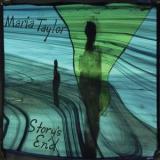
- Story’s End
- Shades Of Blue
- Sorry I Was Yours (Feat. Conor Oberst)
- Tricky
- Never Thought I’d Feel
- New Powerlines
- Nathaniel
- Be Careful What You Want
- Everything Is Fine (My Loves)
- Change Is Coming Soon (Green Butterfly Sequel)
Acclaimed songwriter Maria Taylor, best known for her work with Azure Ray, returns with her forthcoming album ‘Story’s End’, a hushed,
cinematic collection that unfolds like an intimate narrative of loss, healing and quiet transformation.
Featuring contributions from Mike Mogis, Conor Oberst, Nate Walcott and Ben Brodin, the album pairs Taylor’s intimate vocals with widescreen strings, bell-like piano and atmospheric arrangements
- A1: Worms In (Feat Laraaji)
- A2: Beneath The Overpass (Feat Shuta Yasukochi)
- A3: Gravel (Feat Loris S Sarid)
- A4: Highway At Night (Feat James Bernard & Marine Eyes)
- A5: Fading Form (Feat Kmru)
- A6: Death Display (Feat Diatom Deli)
- A7: Bloat (Feat Haruhisa Tanaka)
- A8: Larvae (Feat Ki Oni)
- A9: Autolysis & Putrefaction (Feat Green-House)
- B1: Clouded (Feat Golden Brown)
- B2: Countless Wheels Keep Turning (Feat Early Fern)
- B3: Everyone Passing (Feat Gregg Kowalsky)
- B4: Ways To Be Remembered (Feat Kallie Lampel)
- B5: Fur & Exhaust (Feat Ben Seretan)
- B6: Active Decay (Feat Patricia Wolf)
- B7: Melting Into Asphalt/Springing From The Earth (Feat Nailah Hunter)
- B8: Worms Out (Feat Laraaji)
Constellation Tatsu welcomes US artist Brendan Principato aka Saapato for what is a hugely conceptual new album based around decomposition. It was sparked when Saapato saw a dead fox lying by the side of the road on his way home from a job in a local warehouse. He used that as a jumping-off point to interrogate "transformation, interconnectedness, and renewal" and the five stages of decomposition, namely fresh, bloat, active decay, advanced decay and dry/remains. Several collaborators help him on his way as he sketches out various instrumental textures which variously have occasional shards of light, lingering melancholy and a subtle sense of hope.