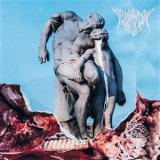
Candiria’s classic album 300 Percent Density reissued on vinyl in February Hailing from Brooklyn, New York, Candiria is one of the precursors of the mathcore genre. Formed in 1992 by vocalist Carley Coma, guitarists Chris Puma and Eric Matthews, and drummer/bassist/keyboardist/trumpeter Kenneth Schalk, the band was part of the second wave of New York hardcore, but subsequently expanded its performance to also play jazz, hip hop and progressive rock. 300 Percent Density is Candiria’s fourth studio album, originally released by Century Media in 2001. Critically praised for its experimental mix of metal, jazz, hip-hop, and hardcore, the album’s intricate arrangements and adventurous sound have made it a classic, stated by fans and critics as the band’s best work to date. The 25-year-old album is available on wax again in February 2026 via Svart Records. “Candiria have always been—and remain—a favorite among the group’s peers, because musicians already possess the vocabulary to understand the intricacy of the band’s arrangements and the tireless care and craft that went into perfecting them. Like the Dillinger Escape Plan and Converge, Candiria pressed hard to break through the monoculture of metal’s awkward transitional years and pave the way for similarly experimental bands.” -Decibel Magazine
A chance meeting in Mexico City set Points of Inaccessibility into motion. When Ibero-American composer Rafael Anton Irisarri crossed paths with Dutch media artist Jaco Schilp at MUTEK in 2024, a conversation about how technology shapes perception revealed an unexpected common ground. Schilp invited Irisarri to a spring 2025 residency at Uncloud, the Utrecht-based collective he co-founded, where Irisarri's sound began to take form amid an environment shaped by Schilp’s visual research.
The Uncloud studio was located inside the former Pieter Baan Centre, a forensic psychiatric prison where suspects of violent crimes were once confined. Its long history of silence and containment shaped the atmosphere in which the project developed. Within this setting, Irisarri coaxed long bowed-guitar tones through a network of pedals and looping systems. The raw gestures thickened into a vaporous and architectural field of sound. Schilp processed the material through a custom point-cloud software patch that produced images in continuous flux. The visuals flickered, dissolved and reformed like memories that resist coherence, functioning as a digital Rorschach that reflected the observer’s own perception.
Amid these spectral echoes, the project evolved into an examination of how the past persists within present signals. Memory endures as residue and interference, continually shaping perception even when its source has faded.
Schilp’s visual process required a continuous stream of sound in real time. Irisarri improvised throughout the residency, generating material that allowed the visuals to develop in parallel. Once back in his New York studio, he began shaping the recordings by carving pathways through the improvisations and mapping selected passages into MIDI. This process allowed him to build outward from the bowed-guitar material with minimal overdubs, adding Prophet 5 textures, Moog bass and strings that expanded the harmonic field while keeping the original performances at the center. To refine the structure, Abul Mogard provided editorial input, working with Irisarri’s stems to guide transitions and strengthen the overall pacing. The material, originally created under conditions of immediacy and constraint, evolved into a fully realized work through careful revision, patience and sustained reworking.
The title engages the geographic concept of the Poles of Inaccessibility, locations defined solely by their distance from all surrounding points. Irisarri adapts this idea to the conditions of digital life, where new forms of inaccessibility arise through the informational enclosures that structure perception. What appears to be a fully connected network often produces a deeper kind of separation, one shaped by the filtering logic of the systems that mediate experience. In this sense, the digital sphere mirrors its geographic counterpart. We inhabit spaces saturated with signals, yet the possibility of genuine contact becomes increasingly remote.
At its core, Points of Inaccessibility considers what can be understood as the new rituals of capitalist realism. Irisarri uses the term digital shamanism to describe the forms of simulated connection that organize contemporary life. These systems promise comfort through algorithms, influencers and AI interlocutors, yet they often reproduce the same conditions that generate loneliness in the first place. What appears as connection becomes the echo of connection, a sequence of gestures that imitate solidarity while withholding it. Like the geographic poles, these rituals are defined by distance. They pull us into environments where everything is illuminated, yet meaningful proximity becomes increasingly rare. In this sense, the work approaches a hauntology of the present, a reflection on futures that have stalled and intimacies that have been thinned by the algorithmic infrastructures that surround us.
This thematic tension unfolds across the album’s four movements. Faded Ghosts of Clouds introduces the work with textures that rise and dissipate in slow cycles, creating an atmosphere that resists clear definition. Breaking the Unison occupies a pivotal position in the sequence and focuses on the moment when the individual and the system fall out of alignment. Its shifting patterns trace the scattering of signals that once suggested connection, revealing the instability at the heart of contemporary perception. Signals from a Distant Afterglow forms the center of the album and features vocals by Karen Vogt, whose presence enters the sound field like a fragile transmission shaped by distance and delay. The closing piece, Memory Strands, follows motifs that appear, recede and briefly intersect before returning to quiet. Across these movements, the album outlines a landscape in which emergence and disappearance continually inform one another.
Listening to Points of Inaccessibility is an encounter with a sound field that is constantly in flux. Elements surface briefly, shift position and recede, creating a sense of motion that resists stable interpretation. The music moves between closeness and vastness, carrying traces of memory while withholding a clear point of resolution.
The album’s visual identity completes the project’s conceptual arc. In Mexico City, where Irisarri and Schilp first met, Daniel Castrejón transformed stills from Schilp’s point-cloud visuals into the cover image. The final artwork captures a single suspended frame of the digital material, a moment extracted from a field that is normally in constant motion. Its surface recalls the texture and abstraction found in the work of Catalan artist Antoni Tàpies, where material presence and erasure coexist within the same plane.
What emerges is a work that examines the tension between technological systems and human presence. Points of Inaccessibility asks whether connection is still possible within environments shaped by mediation and delay, or whether we have become isolated points within the very networks that promise proximity. What possibilities for relation persist within environments organized by algorithms and interruption? And how are we meant to understand presence when so much of it is constructed at a distance?
Points of Inaccessibility will be released on BioVinyl on February 6, 2026, with audiovisual performances planned throughout 2026.
Mastered by Stephan Mathieu
Artwork by Jaco Schilp
Design and layout by Daniel Castrejón
Artist photo by Iulia Alexandra Magheru.
out of Stock
Last delivered 7 months ago available to reorder, subject to availability
A house is something that is so deeply temporary, yet it can hold so much energy. How do we carry or leave behind those energies while transitioning into new spaces? How does each space we occupy for some time shape us and how do we tear ourselves away from it and its influence once it’s time to go? These are some of the core questions behind CC Sorensen’s new album for mappa, ‘Phantom Rooms’ – it’s a record about movement, change, transformation, family, juxtapositions… but most of all, home.
CC Sorensen was reflecting a lot on their childhood home in rural Kansas, USA while working on this music. The album could be characterised by a familial, chamber feel and both of CC Sorensen’s brothers, Ryan and Nyal Ruehlen, make an appearance on ‘Phantom Rooms’, among other instrumentalists. Using a wide palette of sounds – CC Sorensen alone in charge of keyboards, software instruments, voice, electronics, percussion, trumpet, guitar and field recordings, in addition to guests on pedal steel, voice, chimes, saxophone and drumset – the American musician crafts music as mysterious as it is inviting. The idea behind it would be almost surrealist – ghostly rooms in houses where we live – if we all didn’t know exactly what CC Sorensen means. Home isn’t something concrete, but it’s also not just an abstract concept. It’s a space beyond space; home in itself is a phantom room we enter. And what enables us to enter is the object of exploration here.
CC Sorensen’s approach is playful – tracks like “Beat Bot” and “Plastic Portals” are almost fun – but also contemplative. They make thoughtful, meandering chamber music intertwined with field recordings and electronics. Reeds, strings and percussion often set the atmosphere – sometimes airy, gentle, at other points more insistent – as the music grapples with departure, instability, deep reflection and imagined future spaces. Especially in the closing “Bexar” there’s a tangible yearning for a stable home, a longing to rekindle and keep ablaze this beautiful familial connection to a physical place. It’s both music that invites to reflect and music that in itself reflects; desires, hopes and dreams.
out of Stock
Last delivered 8 months ago available to reorder, subject to availability
Mutable Ground is an album created through an exchange of recordings between Anna and Yannis. The project is rooted in the idea of sudden shifts in current events and the ever-growing emotions tied to loss, change, and tension. Each track title is inspired by unstable phenomena and objects, reflecting the potential for unexpected movement and the transitions of both nature and humanity. Repetitive, chaotic drum patterns, vocals that echo sounds of wounded or lost animals, hollow soundscapes reveal a sonic world where creation and destruction coexist—where people dance around fires, caught between fragility and resilience.
Joe Allotta's solo project (drummer, composer, and singer) was born from his need for freedom of expression after numerous experiences
as a session musician for artists such as Davide Shorty, Johnny Marsiglia, Funk Shui Project, Mario Biondi, Leburn Maddox, Giles Robson,
Amy True, and Imaani (Incognito).
His compositions embody the desire to make jazz, in its various forms and influences, accessible to the widest possible audience without sacrificing the impact of an engaging and captivating live performance.
Joe Allotta blends hip hop, funk, and drum 'n' bass with contemporary jazz, perfectly blending vocals with his performances. He combines
his rhythmic exploration with a sweet and surprising voice, capable of lending further emotional depth to his music.
"Transition" is a musical journey that reflects a life in constant motion, where everything seems fleeting, fast, and fleeting, immersed in the
frenetic rhythms that surround us every day. The title also encompasses a more intimate dimension: the growth of his artistic identity. Joe is
no longer just a drummer and composer, but also a singer. His intense and surprising voice intertwines with his drumming in a continuous
dialogue, opening up new expressive possibilities and adding further depth to his musical language.
The album was produced in the studios of the Sghetto Club in Bologna, where Joe, together with his producer Jacopo Trapani, spent weeks
researching and experimenting: rehearsing, playing, processing and synthesizing sounds, developing and arranging ideas, thanks also to
the collaboration of extraordinary musicians. The result is a work that blends instinct and research, intimacy and openness, movement and
transformation: exactly what Transition aims to convey.
CREDITS
Giuseppe "Joe" Allotta: Compositions, Vocals, Drums, Bass, Keyboards
Jacopo Trapani: Compositions, Recording, Mixing
Chicco Allotta: Piano (Track 1)
Giovanni Galdo: Bass (Track 1)
Riccardo Dalle Vedove: Trombone (Track 1)
Piergiorgio Perrella: Guitar (Tracks 2, 5, 8, 9)
Elijah Lee Last Jacinto: Piano (Track 6)
Matteo Diego Scarcella: Sax (Track 6) Francesco Brini: Master
Tilaye Gebre is one of Ethiopia’s most soulful saxophone giants, with a musical legacy that’s hard to surpass. A founding member of the Equators, later renamed the Dahlak Band, he was a key figure in Ethiopia’s vibrant hotel music scene and a sought-after musician and arranger for artists like Aster Aweke, Mahmoud Ahmed, Tilahun Gessesse, and Muluken Melesse.
Tilaye — still going strong — was at the epicenter of the Ethiopian music scene during one of the most turbulent periods in the country’s history. Tilaye’s musical trajectory, regardless of the forms it has taken over the decades, is simply ceaseless. The road to a musical career spanning six decades started out winding, and the first steps came almost as a fluke.
With the Dahlak Band, Tilaye had managed to secure a musical residency at the legendary Ghion Hotel, where they honed their skills and developed their musical expression to unparalleled levels. From the late sixties onwards, Dahlak Band lit up Addis Ababa with a mixture of James Brown and Wilson Pickett tunes, rhythm and blues, soul, funk, and the sound of the disco era — mixed with modern Ethiopian styles — serving up majestic concoctions with full-range instrumentation, featuring trumpet, keyboard, saxophone, bass, drums, and guitar. Through their hotel sessions, Tilaye developed further as an arranger, arranging fellow band member Muluken Melesse’s first solo album, Muluken Melesse with the Dahlak Band (Kaifa Records – LPKF 39), recorded during the turbulent years of 1975–1976, following the fall of Haile Selassie. Everything was in flux in this transitional period, but a constant was how Tilaye stood in the spotlight. On that record, there’s a loose vibe to the soundscape that lets Tilaye’s skills shine, while all the other musical contributions coalesce into a slowly cooking atmosphere where the groove at times fluctuates into psychedelic territory, making the music stand out from most contemporaries.
Most of their recorded output came from one-take live cassette recordings at the Ghion, or from music shops at that time — one microphone at the front, hit record: no EQ, no reverb, just some delay. Some of the Dahlak Band’s releases featured Tilaye as frontman, such as Tilaye’s Saxophone with the Dahlak Band from the late 1970s — typical of a rare groove on the Ethiopian scene — with excursions into reggae territory, including the band’s characteristic sound featuring Tilaye Gebre (tenor and alto saxophone), Dawit Yifru (organ), David Kassa (electric guitar), Shimelis Beyene (trumpet), Moges Habte (tenor saxophone), Abera Feyissa (bass guitar), Tesfaye Tessema (drums), and Muluken Melesse (cowbell). The Dahlak Band’s output was so prodigious that they simply couldn’t be pigeonholed.
No saxophonist in Ethiopia influenced the sound of popular music more than Tilaye in the 1970s, yet his recordings have been hard to come by for ages, which has meant that newcomers to the scene have gems to uncover in retrospect. Arguably, Tilaye shifted gears when he relocated to the U.S. to such an extent that his musicianship became even more renowned, accompanying the greatest of his contemporaries internationally. Tilaye is one of Ethiopia’s all-time greats, with a musical legacy — both as musician and arranger — that’s hard to surpass. It’s a wonder to be able to enjoy a recording like this half a century later.
out of Stock
Last delivered 6 days ago available to reorder, subject to availability
For Fuse Imprint's eleventh release and the first of 2026, Rosati unveils 'Divina Nostalgia', an ode to vibrancy in dance music through four truly euphoric tracks. The Italian artist focuses on the enduring power of vintage production with a much-needed spotlight on techno's optimistic underbelly, resulting in a sound that is both charismatic and electrifying.
'Division' sets the tone of the EP with playful percussion and bright synth work that unravels as the track progresses. Rosati utilizes the full character of the 909 for the flair that drives the record: rides, claps, and open hi-hats thunder through the arrangement in celebration of each transition. The artist then zeros in on 'Echoes', tightening the energy with an unflinchingly analog bassline and lush pads that round out the harsher edges of the percussion. This serves as a more linear approach for immediate effect; where the track favors minimalism, it provides maximum impact.
Gradually turning up the energy, 'Orbital' jumps through toms and filtered chord stabs to emphasize the record's extroverted nature. The synths dazzle along the rolling drums for a track that possesses house's temperament but techno's insistence. Finally, the title track 'Divina Nostalgia' concludes the EP in a moment of pure release. If you wondered where jazz comes into the picture, just ask Rosati. Organs, Rhodes, swing, and sustained tension slice through to a victorious finish line that highlights dance music's command of the present moment.
out of Stock
Last delivered 7 days ago available to reorder, subject to availability
Ascension marks the Manjumasi debut of Brazilian producer Canavezzi, distilling the label’s trademark quirky sophistication through a distinctly South American lens. The EP drifts between deep house, dub-soaked textures, micro-details and tech-driven grooves, always subtle, never obvious.
Across the record, Canavezzi works in tiny movements: flickers of percussion, vapor-trail chords and basslines that feel less “written” and more sculpted over time. Nothing shouts, everything glows. It’s the kind of sound that sneaks into a warm-up set and is still echoing in your head when the lights come on.
True to the San Francisco imprint’s ethos of deep, complex, melodic grooves with a playful twist, Ascension is built for dancers and listeners alike, equally at home on a smoky after-hours floor, a rooftop at sunrise or late-night headphones.
A thoughtful slice of contemporary house from Brasil to Manjumasi, Ascension is less about peak-time fireworks and more about that slow, undeniable lift: a steady climb into its own hypnotic orbit.
out of Stock
Last delivered 42 days ago available to reorder, subject to availability
Força Maior combines the vital saxophone explorations of Pedro Alves Sousa with the infinitely subtle electronic processing of Pedro Tavares. Sousa (aka Má Estrela) is known for manipulating his woodwind through guitar pedalboards & amplifiers, creating far-from-ordinary sonics rooted in unceasing curiosity. For his part, Tavares (aka funcionário) conjoins video & sound work to create space for the pensive wanderings where memory and imagination interlace.
The album Morte Lilás was recorded over a week in June 2023 in Pedro Alves Sousa's family farm, located in the village of Ferreirim, near Lamego, in Portugal. The partly abandoned farm served as the residency, studio, and inspiration for the album: it is a 400-year-old granite farm that belonged to a member of the "40 conspirators"—a group that led the revolution for Portugal's independence from Spain in the 17th century.
Morte Lilás is a remarkable album of committed meditation. Each day on the farm was a recording day for the two Pedros: Sousa on sax & electronics, Tavares on sampler & processing. Apart from slight sonic incursions from the surrounds—the birds on 'Quinta à tarde'—and the sporadic use of sine tones, the source sounds all start from the saxophone. It is then processed both by Sousa & Tavares. The album unfolds as a saxophonic tapestry that breathes with quiet intensity. Each piece invites close listening, revealing fine gestures and tonal shifts that shape a contemplative, ambient space. Força Maior move with calm precision.
The album opens with the unhurried overture 'Quinta à Tarde' a Portuguese pun on Eno's Thursday Afternoon that announces the textures at play. Sousa's breathy entrance is paired with a soft, delicately shifting, backdrop. As the track progresses, time seems to stretch. The arrangement resists urgency, favouring subtle evolution over dramatic turns. Pensive layers shift & drift, creating a sense of suspended motion that brings the listener into the environs of Morte Lilás. 'Quinta à Tarde' is a long-form fade, shifting emphasis from Sousa to Tavares.
'Cubos' continues the gauzy feel, but with a more up-tempo tilt. Rhythmic clicks & pings setup a swung time for the sax to interpose melodic lines that are fed back & bent with cascading delays. Força Maior in distilled form.
Força Maior is in top form on the title track 'Morte Lilás', a sprawling centrepiece that showcases their command of atmosphere & emotional pacing. By turning up the reverberation & leaning into a continuous format, they dissolve the gap between hypnotic trance & articulate reverie. Then, a moment of stillness. The track pauses, not abruptly but like a tide pulling back, revealing the contours beneath. What follows is a return to the album's more relaxed architecture: understated rhythms, softened textures, and a sense of spaciousness that opens space for reflection. It is a transition that feels organic, as if the song itself needed to exhale before settling back into its contemplative groove.
'Menta' is another short-form miniature of the band's signature contours: beautiful loops of air pressure gradients that carry an emotive weight & light.
The album closes with 'Cascata do Inferno'. The title suggests violence, but the music whispers instead—an atmospheric cascade of breath & tone that emerges in slow, deliberate waves. Short melodic cycles are matched by shimmering electronic chords. It's a piece that rewards patience, draws the listener in to drift downstream, eyes closed, into the serene turbulence of its current.
Predatory Void returns with their third record, an EP titled `Atoned in Metamorphosis`, a concentrated statement of intent that compresses the band's restless energy into four precise movements. The music negotiates extremes: patient, reverb-saturated passages give way to sudden, metallic eruptions; subterranean basslines provide narrative weight beneath volatile guitar textures, vocals growl, wail and lament as drums alternate between measured architecture and volcanic release. The result is an austere, immersive sound that is both incandescent and violently sharp. Conceptually the EP takes on the ugly shadow of the unconscious and cathartically wrestles the demon onto canvas. Calling on elements from sludge, doom and black metal, as well as the unrelenting energies of hardcore and contrasting slower, haunted atmospheres, Predatory Void's signature sound is as volatile and piercing as ever. Concise, tight compositions that hook you in melody and then rage in filthy agony. The music can be confrontational, but it is never gratuitous_force is deployed to clarify rather than to overwhelm as emotional depth is at all times the compass. The production aesthetic prioritises fidelity to performance: takes are preserved for their immediacy, dynamics remain uncompromised, and the mix privileges contrast so that quiet moments carry as much dramaturgical weight as full-band climaxes. `Atoned in Metamorphosis` consolidates Predatory Void's forward motion and stakes a claim for a sound that prizes architectural heft and textural nuance in equal measure. Listeners should expect an immediate physical response in what is undeniably an ardent expression, and enjoy the reward of cumulative detail, for the EP dares you to listen closely: to feel transitions as processes, and to accept tension as a pathway to release. Predatory Void invites engagement, not escape, and demands to be met on its own terms, boldly. RIYL Hexis * CELESTE * Wallowing * LLNN * Downfall of Gaia * Witching
Predatory Void returns with their third record, an EP titled `Atoned in Metamorphosis`, a concentrated statement of intent that compresses the band's restless energy into four precise movements. The music negotiates extremes: patient, reverb-saturated passages give way to sudden, metallic eruptions; subterranean basslines provide narrative weight beneath volatile guitar textures, vocals growl, wail and lament as drums alternate between measured architecture and volcanic release. The result is an austere, immersive sound that is both incandescent and violently sharp. Conceptually the EP takes on the ugly shadow of the unconscious and cathartically wrestles the demon onto canvas. Calling on elements from sludge, doom and black metal, as well as the unrelenting energies of hardcore and contrasting slower, haunted atmospheres, Predatory Void's signature sound is as volatile and piercing as ever. Concise, tight compositions that hook you in melody and then rage in filthy agony. The music can be confrontational, but it is never gratuitous_force is deployed to clarify rather than to overwhelm as emotional depth is at all times the compass. The production aesthetic prioritises fidelity to performance: takes are preserved for their immediacy, dynamics remain uncompromised, and the mix privileges contrast so that quiet moments carry as much dramaturgical weight as full-band climaxes. `Atoned in Metamorphosis` consolidates Predatory Void's forward motion and stakes a claim for a sound that prizes architectural heft and textural nuance in equal measure. Listeners should expect an immediate physical response in what is undeniably an ardent expression, and enjoy the reward of cumulative detail, for the EP dares you to listen closely: to feel transitions as processes, and to accept tension as a pathway to release. Predatory Void invites engagement, not escape, and demands to be met on its own terms, boldly. RIYL Hexis * CELESTE * Wallowing * LLNN * Downfall of Gaia * Witching
Here comes a special project with the late great Milton Henry, recorded in New York for Black Redemption a few months before his transition. Two rootikal rddims by Birmingstrong’s King Stanley set the tone and provide a perfect backing to Milton Henry’s poetic voice. ‘My Story, My Song’ back to back with ‘Lake Of Fire’, each with a dub version, ready for your stereo… his works, words and voice will live on forever more!
Loaded with tension and anchored by bold textural and stylistic contrasts, Sam Slater’s third solo full-length finds the British sound artist, composer, and engineer grappling with his creative contradictions head-on.
Having spent a life time in bands and producing records, Sam transitioned somewhat by accident through his work with Johan Johansson into working as a composer on high profile projects such as his collaboration with Hildur Guðnadóttir on the Grammy Award-winning Joker and Chernobyl, and with Pulitzer Prize-winning journalist Mstyslav Chernov on the soundtrack to the lauded 2000 Meters to Andriivka. Having a vast set of interests and influences is an asset when helping realise a directors vision for a soundtrack, but one's own musical voice can end up being constrained. In Lunng, Slater has gone back to his wildly divergent range of influences and rather than shy away from the extremes, he's used them to create a singular vision.
Take the opening track “Heatsick”: Slater imagines an extravagant fusion of 2000s drone metal and vintage British brass, welding ear-splitting overdriven drones and blown-out choral vocals to stirring trombone swells from veteran player Hilary Jeffery. On paper, it’s hard to imagine—but Slater’s intentionality conducts these polarizing elements into a surreal blur of sonic extremes, with the guitars’ relative harshness softened by Jeffery’s eerily nostalgic colliery echoes.
His last solo album, I do not wish to be known as a Vandal (Bedroom Community, 2022), showcased this breadth by assembling a team of collaborators including Sam Dunscombe and Yair Elazar Glotman. On this record he’s linking up with acclaimed multi-instrumentalist Maria W. Horn, idiosyncratic sax virtuoso Bendik Giske, versatile percussionist Adam Betts, and the aforementioned Jeffery, Slater ushers these players toward a lattice of calculated confutations.
Working to explore the tension between the divergent practices of his collaborators—Lunng was meant to be challenging. On “Praya”, Giske’s familiar overblown horn phrases are almost vaporized, vanishing among Slater’s weightless synths and Horn’s chillingly hoarse vocals. There are traces of Horn’s Funeral Folk project, but Slater shifts the emphasis, letting her voice brush past the other elements like a hallucination.
Slater’s use of extremes isn’t just in the micro; dynamics drive the album’s overall flow. “Praya” sets the stage for the record’s heaviest, most prickly moment: “Passengers”. Here, Horn’s voice cracks, rasps, and gurgles over serrated synths and Betts’ ritualistic drums. Slater turns an industrial symphony into a folk opera—dark, dramatic, and strangely beautiful—etched with Giske’s fluttering phrases.
But the mood soon shifts. Slater careens toward chaos, unleashing double-time rhythms and piercing textures familiar to anyone with a soft spot for classic black metal. These grotesque incongruities are deliberate; Slater surveys years of musical conflict and leans in, using dissent as fuel to build kinetic energy.
The weight of sentimentality bears down on “Black Metal Rewind (Night Drive Astra, 2006)”, melting teenage memories into hypnagogic ambience—shoegaze dreams whirled with angelic choral delusions. On “Death by Nostalgia, 1688”, he ventures further into polarizing territory, distorting AutoTuned voices with cryptic strings and medieval tonalities, unsettling any stable sense of past or present.
In this record Slater focuses on pure energy, color, and mood. Lunng distills years of listening into a bracing brew—boiling each sound down to its essence, then serving it with unflinching intent.
Hello Spiral returns to the same North London block, the same triangulated geometry of balconies and courtyard, but with a shift of orientation. His previous record looked outward from the eighth floor, these four new recordings move inside, into the building’s arteries. Joe explores the hallways of the complex where he has lived and listened for years, using the same tool as before, an iPhone and its voice memo app. The recordings were made in situ, each exactly eleven minutes, captured without ceremony.
The hallways feel different. Less private, less scenic, more neutral. They are the connective tissue between hundreds of domestic units, a space of transit rather than rest. The carpet absorbs certain frequencies. The fire doors catch and release pockets of air. The lights hum. Elevators drone in soft cycles of arrival and departure. These are the institutional sounds of shared living, yet once recorded they begin to behave strangely. A kind of internal weather appears.
As with the previous album, Joe remains attentive to what is often overlooked, irrelevant or discarded. The hallways, with their scuffs and signage, their coded access and polite functionalism, provide an unexpectedly rich field. The ambience is not shaped by storms or scaffolding, not by birds or street spill. Instead the material is the building’s own breath, its mechanical rhythms, the low frequency traces of neighbours, the occasional shuffle of footsteps that pass but do not return.
Joe talks about this record as a possible middle chapter in a trilogy. If so, it sits between the exposed openness of the balcony and whatever comes next. A hinge point. These recordings continue Joe’s long practice of defamiliarization, sharpening attention to the unnoticed while withholding narrative. They invite repeated listening, not for revelation, but for the subtle shifts that occur when a familiar space is treated as an instrument.
Una interpretación de Soinuarenbidea II debería partir de esta premisa: todo es posible, nada es aleatorio, y en sí mismo es un imposible de aleatoriedades. El escenario planteado explora la idea de realidad aumentada desde una percepción sonora, ambiental y colectiva. La obra transita hacia adelante y hacia atrás recreando experiencias extintas de porvenir incierto, tratando de facilitar un fin pacificador. Cada pieza sonora se crea, se despliega, se repliega y se destruye, en una torsión permanente de toda la realidad que hace posible cada fragmento musical, cada identidad acústica, cada espacio sonoro. Lo onírico, la ficción, y el viaje están continuamente presentes, y es en el transitar de cada fragmento donde se produce el diálogo de la exposición musical. Los elementos de esta ficción se recrean continuamente, en un continuum donde se entrelazan y se van contorsionando a medida que crecen o decrecen con cada fragmento de síntesis concreta. Los temas explícitamente musicales son el magma que conduce a dar voluptuosidad al disco, siendo la piel un contexto o límite que en sí mismo fluctúa indefinidamente en texturas y configuraciones posibles. Y la urdimbre del silencio es la síntesis que está continuamente presente y que trata de cohesionar los fragmentos en continua colisión expresiva. Las grabaciones de campo proporcionan el material sonoro concreto, y como un fractal sonoro cada una de ellas ofrece diferentes grados de interpretación que a su vez conduce a nuevos fragmentos y nuevas creaciones. Así que se puede pensar que esta es una síntesis de una posible realidad, pero interpretable en infinidad de maneras. Un movimiento y una estaticidad implícitas que generan estructuras y dinámicas acústicas. Lo que se escucha no es real, pero en sí mismo forma parte de la realidad, creando un escenario expectante. Lo cinematográfico, plástico y teatral, danzante y dinámico cobra importancia en este juego, porque se trata de contar una historia, una experiencia recreada desde los puntos de vista del arte visual. Es a su vez hilo conductor y entretenimiento, discurso político y puro divertimento. Es desde este espacio de convivencia artística que tiene sentido la totalidad y justifica el formato sonoro planteado. La contradicción de la obra es patente en el formato, y es a su vez el planteamiento de una accidentalidad en el devenir vital. Contenedor de Ruido recoge todas estas contradicciones y las manifiesta en la obra Soinuarenbidea II. Es una historia sonora, es un cuento acústico. Es un fragmento de vitalidad en imágenes audibles. Es una invitación a la reflexión, a la crítica, al disfrute, a la meditación, a la celebración. Y sobre todo es esperanzadora apreciación de la realidad como algo maleable que confeccionamos colectivamente, que requiere de una paciente observación y la participación colectiva global, en un mundo finito pleno de diversidades y del que ignoramos prácticamente todo, al que deberíamos volver con respeto y devoción.
Soinuarenbidea II-ren interpretazio batek premisa honetatik abiatu beharko luke: dena da posible, ezer ez da ausazkoa, eta, berez, ausazkotasun ezinezko bat da. Planteatutako agertokiak errealitate areagotuaren ideia aztertzen du, soinu-, ingurumen- eta talde-pertzepzio batetik abiatuta. Lanak aurrera eta atzera egiten du, etorkizun zalantzagarriko esperientzia desagertuak birsortuz eta helburu baketsua lortzen saiatuz. Soinu-pieza bakoitza sortu, hedatu, tolestu eta suntsitu egiten da, musika-zati bakoitza, identitate akustiko bakoitza eta soinu-espazio bakoitza ahalbidetzen dituen errealitate osoaren etengabeko bihurdura batean. Onirikoa, fikzioa eta bidaia etengabe daude presente, eta pasarte bakoitzaren joan-etorrian gertatzen da musika-erakusketaren elkarrizketa. Fikzio honen elementuak etengabe birsortzen dira, continuum batean, non sintesi zati zehatz bakoitzarekin hazi edo txikitu ahala elkar lotzen eta bihurritzen diren. Esplizituki musikalak diren gaiak diskoari atsegintasuna ematera eramaten duen magma dira, azala testuingurua edo muga izanik, testura eta konfigurazio posibleetan mugarik gabe aldatzen dena. Eta isiltasunaren irazkia etengabe presente dagoen sintesia da, zatiak etengabeko adierazpen-talkan kohesionatzen saiatzen dena. Landa-grabazioek soinu-material zehatza ematen dute, eta soinu-fraktal batek bezala, horietako bakoitzak interpretazio-maila desberdinak eskaintzen ditu, eta horrek, aldi berean, zati eta sorkuntza berrietara eramaten du. Beraz, pentsa daiteke errealitate posible baten sintesia dela, baina hamaika modutan interpreta daitekeena. Egitura eta dinamika akustikoak sortzen dituzten mugimendu eta estatikotasun inplizitu bat. Entzuten dena ez da erreala, baina, berez, errealitatearen parte da, eta agertoki espektakularra sortzen du. Zinematografikoak, plastikoak eta antzerkikoak, dantzariak eta dinamikoak garrantzia hartzen dute joko honetan, ikusizko artearen ikuspegitik birsortutako istorio bat, esperientzia bat, kontatzea baita helburua. Aldi berean, hari gidaria eta entretenimendua da, diskurtso politikoa eta dibertimendu hutsa. Elkarbizitzarako espazio artistiko honetatik osotasunak zentzua du eta planteatutako soinu-formatua justifikatzen du. Obraren kontraesana nabarmena da formatuan, eta, aldi berean, bizi-bilakaeran istripu-tasa bat planteatzea da. Zarata-edukiontziak kontraesan horiek guztiak jasotzen ditu eta Soinuarenbidea II obran adierazten ditu. Soinu istorio bat da, ipuin akustiko bat. Bizitasun zati bat da, irudi entzungarrietan. Hausnarketarako, kritikarako, gozamenerako, meditaziorako eta ospakizunerako gonbidapena da. Eta, batez ere, itxaropentsua da errealitatea modu kolektiboan egiten dugun gauza xaflakor gisa hautematea, behaketa pazientea eta partaidetza kolektibo globala eskatzen dituena, dibertsitatez betetako mundu mugatu batean, ia guztia kontuan hartzen ez duguna, eta errespetuz eta debozioz itzuli beharko genukeena.
An interpretation of Soinuarenbidea II should start from this premise: everything is possible, nothing is random, and in itself is an impossible randomness. The proposed scenario explores the idea of augmented reality from a sonic, environmental, and collective perception. The work moves back and forth, recreating extinct experiences of an uncertain future, seeking to facilitate a peaceful end. Each sound piece is created, unfolds, retreats, and is destroyed, in a permanent twisting of all reality that makes each musical fragment, each acoustic identity, each sonic space possible. The dreamlike, the fictional, and the journey are continually present, and it is in the transit of each fragment that the dialogue of the musical exposition takes place. The elements of this fiction are continually recreated, in a continuum where they intertwine and contort as they grow or diminish with each fragment of concrete synthesis. The explicitly musical themes are the magma that leads to the work's voluptuousness, the skin being a context or boundary that in itself fluctuates indefinitely in possible textures and configurations. And the warp of silence is the synthesis that is continually present and seeks to unite the fragments in a continuous expressive collision. The field recordings provide the concrete sound material, and like a sonic fractal, each one offers different degrees of interpretation that in turn lead to new fragments and new creations. So one can think of this as a synthesis of a possible reality, but interpretable in an infinite number of ways. An implicit movement and staticity that generate acoustic structures and dynamics. What is heard is not real, but in itself is part of reality, creating an expectant scenario. The cinematic, plastic and theatrical, dance and dynamic aspects take on importance in this game, because it is about telling a story, an experience recreated from the perspective of visual art. It is at once a common thread and entertainment, political discourse and pure entertainment. It is from this space of artistic coexistence that the whole makes sense and justifies the proposed sound format. The contradiction of the work is evident in its format, and it is, in turn, the presentation of an accidentality in the course of life. Noise Container gathers all these contradictions and manifests them in the work Soinuarenbidea II. It is a sound story, an acoustic tale. It is a fragment of vitality in audible images. It is an invitation to reflection, to critique, to enjoyment, to meditation, to celebration. And above all, it is a hopeful appreciation of reality as something malleable that we collectively craft, requiring patient observation and global collective participation, in a finite world full of diversity and of which we know practically nothing, to which we should return with respect and devotion.
Paisajes sonoros, diseño sonoro, drones y música grabada, realizada y arreglada para Contenedor de Ruido por David Aranaz. Coro: Basandere Ahotsak. Producido y mezclado por David Aranaz. Mástering: Estanis Elorza. Fotografía: David Aranaz. Texto: David Aranaz. Traducción: Saioa Aranaz Oreja. Trabajo y Diseño artístico: Cristina Martinez. Edición: Contenedor de Ruido Producciones y Sarbide Music. Distribución: Contenedor de Ruido.
Contenedor de Ruido agradece el apoyo en la realización de Soinuarenbidea II al coro Basandere Ahotsak y en especial a Eva Orbara Goicoa.
Soinuarenbidea II está dedicado al pueblo palestino.
Paisajes y objetos Sonoros, samplers y otras músicas transformadas para Soinuarenbidea II
Burlada: Paseos sonoros matinales por Merindad de Sangüesa, Calle Mayor, Capuchinas, Parque Uranga y varias iglesias y plazas. Pasajes del cotidiano: basura de papel, cristal y plástico.
Pamplona: Cementerio de San José. CEIP Sanduzelai /// Quinto Real: Fábrica de Armas, Puerto de Urkiaga y alrededores. Suite del silencio, bosques en movimiento /// Fábrica de armas de Orbaiceta: regatas, biosques, paseo sonoro hasta regata /// Belate: Puerto de Belate y alrededores. Vacas en pradera junto a las turberas /// Bardenas Reales: Suite de guitarra y Suite del silencio, estepa desértica /// Austria: Tranvías de Graz y Viena. Muchedumbre del metro de Viena.
Voces cinematográficas de: Matanza en Texas, Robocop, Espíritu Sagrado, Solo los Amantes Sobreviven, Voces de Gaza, Yojimbo, Terciopelo Azul, Los 7 Magníficos.
La pista A2 está dedicada a la memoria de David Lynch.
La pista B4 está dedicada a Eva Orbara Goicoa.
Pista A4: Contiene interpretaciones de piano de Three Piano Pieces Op.11 de Arnold Schoenberg.
Pista A5: Es una interpretación expandida con síntesis FM del Concerto Op. 24 - Etwas lebhaft - de Anton Webern.
Pista A7: Contiene la canción Besarkatu ninduzun (Letra de Josune López y música de Josu Elberdin) en interpretación de Basandere Ahotsak en la iglesia de Burutain bajo la tormenta.
Pista B2: Contiene la canción Recuerdos de la Alhambra (Fernando Tárrega) en interpretación torsionada de David Aranaz Sarasa.
Pista B14: Contiene la canción Agur María (Letra y Música de Estíbaliz Robles “Estitxu” y arreglo exclusivo de Alfonso Ortiz para Basandere Ahotsak) en interpretación de Basandere Ahotsak.
Equipamiento para Soinuarenbidea II.
Micros de condensador SE7, configuración XY y ORTF; Micros de cinta ORTIZ LUTHIER configuración XY y Blumlein; Grabadoras MARANTZ y ZOOM; Sintetizadores y samplers Elektron MONOMACHINE SPS-1, MACHINEDRUM SFX6 y MODEL:SAMPLES. Dave Smith MOPHO. Torso Electronics S-4. Sintetizador Modular 333 DIY; Guitarra clásica ALHAMBRA 6P; Esculturas Sonoras tipo Baschet, cristal y metales; Mesa Soundcraft FX16ii; Interface de Audio RME Babyface Pro FS; DAW Logic Pro; Procesamiento de modelado analógico con Acústica Audio, Waves, Softube, Brainworx, Sonible, Analog Obsesion, Tokio Dawn. Metering de Logic y RME DigiCheck . Amplificación Hafler PRO2400. Monitorización BW DM602 S3. Mezcla digital; Mastering híbrido.
Like a head resting on a train window, gazing at the horizon without anxiety, Jesper Ryom's debut album breathes a wind of freedom and propels us toward the unknown, to no destination in particular.
Beyond the sensations of movement it evokes, this work is a marvel of unexpected mixtures. Seamlessly transitioning from progressive sounds to genuine French touch inspirations, it sails through the ages while maintaining a dreamlike homogeneity. This long-awaited offering from one of Copenhagen best-kept mysteries invites listeners on a captivating journey.
out of Stock
Last delivered 8 months ago available to reorder, subject to availability
Delve into the quirky and psych-tinged world of Brazilian pianist, composer and multi-instrumentalist Mauricio Fleury.
With more than a hint to Brazilian jazz greats like Azymuth, Deodato and CTI Records in their prime, Revoada is a groove based jazz-framed record, primed with other transitory musical vignettes which touches on Turkish psych and soul-jazz born out of the 70's film soundtrack genre.
Revoada is a 6 track album and storyboard of Mauricio's migration and travels through Brazil's geographical oddities , its rural and urban enclaves. Recorded in Brazil, it's the result of numerous treks through funky flea markets, soaking up old vinyls and vintage cultural artefacts combined with a new life led in Berlin since 2022.
Mauricio, as well as a founding member of Bixiga 70 (google Brazilian Afrobeat pioneers), a band he fronted for over 12 years, is also an in-demand collaborator and musician who as a pianist, guitarist and even percussionist has shared stages and studios with the likes of Brazilian greats including Gal Costa, Emicida, Lucas Santtana, João Donato and Liniker.
In 2007 he had a life-changing experience meeting Tony Allen, at the Red Bull Music Academy. After hanging out, chatting music and life, Tony insisted to Mauricio to participate with Tony in a jam with blacktronica and soulful house music pioneers Ron Trent, Theo Parrish and Steve Spacek. Mauricio sums it up, "From that moment on, I was never afraid to collaborate musically with anyone, no matter who's playing. It also brought me to researching the connection between Brazilian music and Afrobeat which is something that still means the world to me".
Another unforgettable session Mauricio undertook happened alongside João Donato and Marcos Valle, playing Donato's classic album Quem É Quem, live, a record seen as a blueprint for second generation bossa nova. Mauricio has worked with Gal Costa on two albums, Estratosférica Ao Vivo and her last studio album A Pele do Futuro. Fabio Sá and Vitor Cabral (bassist and drummer on Revoada) were playing with Gal at her last concerts, including in Berlin in 2022 before she passed.
In contemporary music, Mauricio was part of Toy Selectah and Mexican Institute of Sound's Compass project. He's worked with Colombia's Los Pirañas and has even recorded a mysterious and unreleased album with Quantic.
Revoada shows signature traces of Thelonious Monk, Ramsey Lewis' swinging soul sound, Deodato's drama, and styles from further afield, spreading into Turkish psych and Ethiopian jazz, when the time is right. Each track, led always by Mauricio playing multiple instruments with a choice selection of guests and core members on bass and drums, highlights Fleury's meticulous approach to finding the right timbre, utilising his arsenal of organs and effects pedals to set the mood, taking the listener to a specific place or memory that has shaped him.
A vinyl DJ for over 25 years and someone who is immersed in digger and collector's culture, Mauricio places a lot of emphasis on the importance of the complimentary relationship between two artforms (DJ and composer/producer) in the sense of having a broad repertoire of musical knowledge, references and perhaps predictably, being a Brazilian, understanding the connection between rhythms. This is an impressive debut album that struts itself right into the runout groove.
out of Stock
Last delivered 8 months ago available to reorder, subject to availability
Kulture Galerie releases its 3rd Digital Artefacts cassette tape: "Mediterranean Blue" by NYC's own Alien D. Alien D is back on Kulture Galerie. Prior to this, Daniel Creahan has been featured on labels such as Lillerne Tapes, Banlieue Records, and Theory Therapy, and now shares a 6 track EP called Mediterranean Blue that lands on Filippo MSM's tapes series Digital Artefacts, the label's more experimental output.
The work is something of a companion piece to his recent release on Theory Therapy, “For the Early Hours of the World in Bloom,” exploring similar states with a more hazy, fluid sensibility. The compositions here trace back to a week spent several years prior on the Puglia coastline, where, in the midst of a read through of Helene Cixious’s Tomb(e), he began compiling a series of works drawing the gleaming sun, swirling waves and jagged, rocky coastline of the region, mixing in fragments of slow, pulsing low end, wafting synth elements and a range of processed samples dwelling on states of transition, life and love. Waves and dripping water swirl around lilting saxophone, kick drums drown the mix in heavily side-chained throbs of bass, and breaks rush in and out of the mix, making for a series of recordings that seem to view the dancefloor as a dream, always front of mind but hazily remembered.
“I was obsessed with these balances between the light-washed, dusty landscape and these quiet modest homes dotting the hills, and all I could think about was the passage of time, falling in and out and back in love, and the slow drift of memory,” he says. “It was like waking up with a new thought.”
out of Stock
Last delivered 9 months ago available to reorder, subject to availability
This new chapter marks Gordon’s first solo release as Leaving Laurel - a deeply personal and instinctive body of work born from a period of rediscovery. The record began as an open exploration of whatever music naturally came through, a process that became both freeing and revealing to Gordon. The album is a wordless love story told through sound. An emotional arc that mirrors the stages of falling for someone: the spark, the curiosity, the vulnerability, and the quiet realisation that your heart has opened without you even noticing. The album carries an uplifting, hopeful energy, reflecting both personal growth and newfound love - ‘our lives entwined' is a tribute to Gordon’s journey of finding “the one.” Following the loss that inspired ‘when the quiet comes’, Gordon’s eulogy to his late friend and musical partner Pierce, this album finds light emerging from grief. Where the previous record lingered in somber reflection, this album begins in that same emotional landscape but quickly blooms into something more vibrant and full of life. The opening track transitions from the cold, atmospheric tones of mourning into a more radiant energy - a sonic awakening symbolising the shift that came after meeting someone who changed everything. Sonically, the record expands Leaving Laurel's signature sound while embracing new textures. Gordon moved away from the lo-fi experimentation of earlier works, leaning instead into a more expressive palette driven by synths and fresh instrumentation, while still preserving the nostalgic warmth that defines Leaving Laurel. The result is a collection that feels both renewed and rooted - a reflection of growth, optimism, and the timeless beauty of connection.
out of Stock
Last delivered 8 months ago available to reorder, subject to availability
With Ylh Bye Bye, Swiss-Moroccan producer Sami Galbi delivers a raw and electrifying debut album after the success of his first single Dakchi Hani / Rruina. Merging North African folk, chaâbi, and trap with forward-thinking electronic club music, his punk energy and DIY ethos stem from years immersed in Lausanne"s underground squat scene, shaping a sound that"s both deeply personal and politically charged.
out of Stock
Last delivered 9 months ago available to reorder, subject to availability
Vinyl gatefold jacket includes a 12x12 insert reproduction of the original LP jacket art.Recorded in 1956 and released in 1957, Supersonic Jazz is arguably the first long-playing album by Sun Ra and His Arkestra on his Saturn label. However, it was not recorded as a debut. Rather, the album was assembled from tapes recorded during a number of sessions at two Chicago studios (RCA Victor and Balkan), and several tracks had been released as singles before their inclusion on this album. (Sunny's first fully realized commercial album was 1957's Jazz by Sun Ra, produced by Tom Wilson on his short lived/soon to be defunct Transition label.) Prior to these sessions, Sunny was still arranging for the Red Saunders Orchestra and singer Joe Williams, in addition to arranging for and coaching doo-wop ensembles. As Sunny's ambitions achieved liftoff, the Arkestra coalesced, began building a repertoire (mostly of Ra's originals), and making forays into studios. Deciding it was time for commercial releases, Sunny and business partner Alton Abraham launched Saturn (sometimes called El Saturn) as a record company in 1956. As a first offering, Supersonic Jazz is a pinnacle Sun Ra release. While reflecting many prevailing bebop, Latin, and R&B conventions of the mid-1950s, it's evident that Sun Ra's musical voice and vision were starting to propel him away from the jazz mainstream. Biographer John Szwed finds on these recordings "characteristics which seemed alien to swing, bebop, or the new, more soulful and hard-edged music which was coming to be called hard bop."
Ten years after her first release, electronic musician Mor Elian presents her debut album Solid Space. Showing her full artistic range, the LP drifts between dream-like listening states and experimental club spaces. Written in a transitional time, these compositions arrived in emotional, unfiltered bursts. Solid Space brings together ambient textures, early IDM structures, and experimental electronics, with distant, hazy vocals converging into a single, subconscious flow. It is released by adventurous electronic music label topo2 on November 28, 2025. The record is pressed on 180 grams of ICCS-certified bio-vinyl, housed in a heavy full-colour sleeve, and comes with a download-code to the full release. Mastering is done by Ike Zwanikken, mixing by Gramrcy, artwork courtesy of Kees de Klein, and poetry written by Eelco Couvreur. Additional production and mixing on track 7 by Carrier.
—
in the half-sleep: a voice
not anyone’s, just sound.
what it touches, it mirrors
learning to name itself.
a throat opens —
to hum through bone
to say nothing correctly.
we coexist as opposites
in our mother tongue, dreaming
the things we were never meant to touch.
there is a channel
between pulse and sentence —
a being moving through
the being that once answered to me.
to feel and not own the feeling,
each of us made visible
by the other.
out of Stock
Last delivered 7 months ago available to reorder, subject to availability
Rot/Schwarzes Ink-Spot Vinyl, limitiert auf 300 Exemplare. Drei Buchstaben. Drei Musiker. Drei Instrumente. Drei Jahre. Graf Zahl hätte seine Freude an diesem Album_ HUM loten ihre dunklen Stoner-Klangwelten weiter aus. ,three" bringt sowohl druckvolle Post-Rock-Songs als auch psychedelische Klangexperimente. Jeder Track scheint eine Idee zu verfolgen; jeder eine 4-Minuten-Reise. Die Themen drehen sich um Umweltzerstörung, gesellschaftliche Irrwege und Spacetrips. ,three" ist das Album für die Apokalypse oder für einen Abend im Weltraum. Der Spaß kommt dabei nicht zu kurz: Die Dunkelheit wird auf fetten, langsamen Grooves präsentiert. Die Stücke sind kompakt und melodisch. Katharsis ist das Ziel: Wer mit offenen Ohren hört, dem könnte es nach den 11 Tracks und 41 min besser gehen_ Eine aufregende Reise durch musikalische Klangwelten (Surf, Gothic/Dark Wave, Kraut und Prog-Rock) mehrerer Jahrzehnte. Die HUM-typischen schweren Riffs (im Schatten von Godzilla) mit komplexen Rhythmen und Breaks werden erweitert durch neue Elemente wie Surfgitarre, Synthiesounds und gesangliche Experimente. Der meist mit Effekten verfremdete Gesang wird spärlich und gezielt eingesetzt mit oft kurzen Textfragmenten, welche die Stimmung der Songs textlich untermalen. Dazu kommen drei instrumentale Soundcollagen, die als düstere Überleitung zwischen den Songs dienen. Ein gewisser roter Faden scheint sich thematisch durch das Album zu ziehen. Red/black ink spot vinyl. Limited to 300 copies. Three letters. Three musicians. Three instruments. Three years. The Count would have loved this album...HUM continue to explore their dark stoner soundscapes. "three" features both powerful post-rock songs andpsychedelic sound experiments. Each track seems to pursue an idea; each one a 4-minute journey. The themesrevolve around environmental destruction, social aberrations, and space trips."three" is the album for the apocalypse or for an evening in space. But there's no shortage of fun: thedarkness is presented on fat, slow grooves. The pieces are compact and melodic. Catharsis is thegoal: if you listen with open ears, you might feel better after the 11 tracks and 41 minutes...An exciting journey through musical soundscapes (surf, gothic/dark wave, kraut and prog rock) spanning severaldecades. The heavy riffs typical of HUM (in the shadow of Godzilla) with complex rhythms and breaksare expanded by new elements such as surf guitar, synth sounds and vocal experiments. The vocals, mostlydistorted with effects, are used sparingly and purposefully, often with short text fragments that underscore the moodof the songs lyrically. In addition, there are three instrumental sound collages that serve as dark transitions betweenthe songs. A certain common thread seems to run through the album thematically.
As one of the Netherlands' most famous saxohonists and the daughter of Hans Dulfer, Candy needs no introduction.
Big Girl is Candy Dulfer's third album and marks her transition to a sound more informed by funk, hip hop and R&B.
The album includes a collaboration with Trijntje Oosterhuis before she became widely known as a singer and features the single "Wake Me When It's Over", written by bass virtuoso Marcus Miller.
Big Girl is available as a 30th anniversary edition on white coloured vinyl and includes an insert.
Like a head resting on a train window, gazing at the horizon without anxiety, Jesper Ryom's debut album breathes a wind of freedom and propels us toward the unknown, to no destination in particular.
Beyond the sensations of movement it evokes, this work is a marvel of unexpected mixtures. Seamlessly transitioning from progressive sounds to genuine French touch inspirations, it sails through the ages while maintaining a dreamlike homogeneity. This long-awaited offering from one of Copenhagen best-kept mysteries invites listeners on a captivating journey
Itako's new release on Sonic Groove signifies a creative evolution, stepping away from his electro-techno inspirations such as those on Maceo Plex's Lone Romantic Imprint. This fresh offering delivers a blend of deep, mental, and acidic techno that fits seamlessly into the many genres of today's techno sound, a perfect synergy that connects at home, in transit or on a dancefloor.
out of Stock
Last delivered 10 months ago available to reorder, subject to availability
In 2015 when potential remixes of BIPP were first floated the unequivocal response from SOPHIE was “No remixes..” a long pause followed “..unless it’s Autechre”. We asked, and five years later an email from Autechre arrived “sorry this is so late, hope it's still of some use”. An Autechre live show recording from a Numbers show in 2005 had first inspired SOPHIE to source the equipment used to craft new music including BIPP, LEMONADE & more. The BIPP Autechre mx is 3 minutes 33 seconds long, stripped back and loose. Sounding like Autechre paying tribute to some serious late 80’s influences. The duo's interpretation channels an imagined transition point between NY electro and UK street soul, that pitched down SOPHIE vocal reconfigured into a wanna-be Latin Freestyle Natasha King, jiving over a deep slice of TR-606 funk technology.
out of Stock
Last delivered 3 years ago available to reorder, subject to availability
After a brief hiatus, Lay Down The Groove is thrilled to be back with its 10th release, an EP that captures the essence and evolving spirit of the label.
Transcend EP marks the debut production of Palazzo, an Argentinian DJ and now Melbourne-based artist. This five-track release is the result of a deeply personal creative process, reflecting his transition from DJing to music production. Inspired by a broad spectrum of influences, the EP weaves together elements of House, Balearic, Tribal, and Latin rhythms, a rich and textured showcase of Palazzo’s unique musical vision.
To round off the release, the EP includes a deep and spacious Dub version of the track “Turquoise”, reimagined by label heads Lay Down The Groove, adding their own signature touch to the project.
out of Stock
Last delivered 9 months ago available to reorder, subject to availability
Doomcannon Announces Powerful New Album 'Somewhere In Between' Capturing The Quiet Turbulence Of Transformation. New Single 'the Truth' Out Now Is A Soulful Prelude To A Record About Healing, Growth & Self-Belief.
DoomCannon is the alter ego of South London native Dominic Canning, a musical force who cut his teeth as part of genre-pushing groups TriForce and Project Karnak. A proud graduate of Kinetika Bloco and Tomorrow's Warriors, he has shared stages with Celeste (as her musical director), and has graced platforms from the BRIT Awards to 'Later… with Jools Holland'.
His 2022 debut album 'Renaissance'on Brownswood Recordings earned critical acclaim for its expansive sound and political urgency. Now, with 'Somewhere In Between', DoomCannon turns the lens inward—exploring personal growth, emotional honesty, and the hard-earned lessons found in transition.
Side A takes us across the pond for a British funk-rock classic: “Give It To You” from UPP’s 1975 self-titled LP. Already sacred in sample lore, its breakbeat (written by drummer Jimmy Copley) has fueled Eric B. & Rakim, Gang Starr, Jeru, Del, DJ Shadow & more. This edit amplifies the raw pocket — drums, fills, transitions — pushing them forward w/o losing grit. Produced by Jeff Beck, UPP’s LP fused funk, fusion & rock, giving the break shimmer & weight beyond pure drum programming. For DJs, this is precision-built: roomy enough to drop hats, scratches, or vocals, yet solid enough to ride raw.
On the flip, the S.S.O. Orchestra’s 1977 gem “Faded Lady.” Lush, cinematic textures — strings, vocals, bass, pads — laced in funk/soul arrangements. Sample lineage runs deep: Diamond D (“I Went for Mine”), Busta Rhymes’ “New York Shit,” Nas’ “Something Foul.” This edit doesn’t destroy or over-chop — it finds the sweet spots, letting the horns, pads & mood breathe. Not a break tune but a vibe: atmosphere & weight for DJs to lean into.
Together, these 2 sides deliver a powerful juxtaposition:
out of Stock
Last delivered 10 months ago available to reorder, subject to availability
These albums are important because they are Sun Ra's first recordings before the Saturn sessions, made in 1956 when the Chicago musicians were searching for something more, something beyond.
In 1957, Transition Records gave us Volume 1, but before Volume 2 could be released, the label went bankrupt, and it took more than a decade for it to finally be released on the Delmark label. Today, for the first time, both volumes are available, as they were meant to be from the beginning.
Volume 2 is presented here for the first time with the silver cover originally planned by Transition!
Vanbur – artist duo consisting of composers Jessica Jones & Tim Morrish – are releasing their debut album release this autumn. The album scoops up Earthing and my dove, to sleep, made famous by the Netflix show ONE DAY, alongside previous material from their debut EP ‘Human’ including In Cold Light which had a huge TikTok moment around the show’s release. Written over several years, ‘Of Becoming’ reflects a maturing of Vanbur’s sound as they themselves have gone through major life changes and transitions, which are addressed both lyrically and sonically in this impressive body of work. There’s a dreamlike quality to the album, representing the sometimes disorientating dichotomy found in immense change of wistful nostalgia and strength found in adaptation. Recorded at Church Studios with a 12-piece ensemble, the album weaves between lush orchestral heights such as Of Becoming and Friends of Mine and edgier alt-pop bangers such as Strange Kind Of Creature. Jess’ vocals are at times ethereal and textured, and at times lean further into her song-writing sensibilities with their most personal lyrics yet. With the pair’s range and skillset across production and composition fully explored, the album is a triumph of song-writing. The band have worked with filmmaker and Creative Director Matt Houghton on a strong visual aesthetic, from key artwork to narrative promotional films shot on 35mm. With graphic design by Torsten Posselt, the vinyl will have a tactile and natural quality tying in with the analogue feel of the campaign. Vanbur’s debut EP, Human, was released in 2018 and received press coverage in Clash, Ear Milk, Higher Plain etc and was played across BBC 6Music shows. The had their debut performance at the 100 Club and plan to bring a scaled up version to stages in 2026. The follow up remix EP included remixes by Mogwai and Katie Gately, and their music has been placed in hit-shows including One Day (Netflix), The Rising (Sky), Hanna (Prime) and Queens (Nat Geo).
This Transition's label album features the concert that Donald Byrd Sextet gave in Detroit on August 23th, 1955 organized by the New Jazz Society, a group formed under the impetus of Kenny Burrell, one of the key influences in Detroit jazz.
The reissue of this hard-to-find album is significant for a number of diferent reasons. Its very rarity is one attraction for certain collectors, but more important perhaps is the fact that it was the first recording as featured artist for trumpeter Donald Byrd. It is also extremely revealing of the depth of the jazz scene in 1950s Detroit, which had nurtured Byrd and from which he was just emerging at the time of this concert.
Slip is Paul Abbott’s response to his 3 day residency at OTO in 2023. It’s a continued exploration of the acoustic-digital hybrid drum setup Abbott has been developing for some time, which involves drum kit and synthetic sounds combined closely—through an entanglement of limbs and cables—in an intimate but strange relationship with each other.
Paul Abbott hasn’t had any formal musical training, but has a long history of making music, having collaborated for years with Seymour Wright, Pat Thomas, Michael Speers, Cara Tolmie, Anne Gillis and many others. Eventually, led by a profound suspicion of what is fixed or limited, Abbott began finding other ways to organise sound - or what he calls ‘material’:
“I wanted a way to 'persuade' or guide the possibility of something happening - my activity or the events of an algorithmic composition - for example, but without certainty or formalism. It felt to me, during playing, that certain ideas had a particular sort of shape, but more than the form of a line. I began to write alongside (before/after) playing the drums, and ‘characters’ began to enter the scene as a more wobbly, and therefore appropriate option to notation. Working with these characters allowed me to simultaneously approach body, imagination, language and music: without dividing things up or separating these aspects from each other. It allowed me to leave things messy and entangled, whilst trying to deal with form and specificity: wanting to have some things feel or respond differently to other things at other times.”
In approaching his residency, Abbott developed a fixed cast of characters - crystal, lleaf, reiy.F, reiy.C, strike, nee, qosel, sphu and aahn. They each communicate using different kinds of movement and drum kit/s, and Abbott choreographed them as ‘dances’ based on different feelings, or outlines of behaviours suggestive of ways of moving (body, drums, sounds). He then arranged these characters into ‘compositions’: one for each performance day, with each composition featuring multi-layered activity - options for behaviours, ways to move around the rooms, play drums, develop synthetic sounds, change the lights or re-distribute the sound in the space.
After the performances, Abbott took home 9 hours of recordings split into up to 28 multitrack channels for each day, and re-organised his cast once more into a performance for 2LP, CD and digital. It’s an enormous amount of work - but Abbott is activated by the process. For him, the pleasure of unstable edges, possibilities, slippages, is the vital attraction. Like all living organisms, Abbott’s characters have malleability and responsivity. They stimulate a bundle of possible behaviours, a tendency to act a certain way, a temperament, a boundary of respective limits or affordances.
It’s an affective way of working, inclusive of Roscoe Mitchell, Sun Ra, Nathaniel Mackey and Milford Graves. In ‘Pulseology’(2022), Milford Graves reminds us, ‘Breath varies, so cardiac rhythm never has that (metronomic) tempo. It’s always changing. All the alignments of the heart are determined based on the needs of the cells, specifically tissues and organs. The heart knows if it needs to speed up.’ In Slip, to slip, in a heartbeat, is to descend not into the grid of the even metre accorded to the heartbeat, but into a play of mutability and modality. To change is the condition of the heart.
Apex Ten, a Belgian trio hovering in Space Rock, Desert/ stoner Rock and Psychedelic, mainly instrumental, offers a unique experience at each appearance. Fans of bands such as Electric Moon, Ecstatic Vision, Colour Haze, Kyuss or Hawkwind will be able to relate to them during the spacial, strange and contemplative atmospheres they develop. The sound is based on the energetic and powerful bass sound, paired with catchy and energetic drum lines. On top of it, the guitar melodies enable the crowd to travel and dissociate. In addition, the powerful vocal accompanies the listener and becomes the leader of this cathartic experience. On stage, Apex Ten brings their music to life with captivating performances that transport audiences into their expansive sonic world. Their ability to seamlessly transition between delicate, introspective moments and thunderous crescendos makes each show a mesmerizing experience. With a growing reputation for their innovative approach and dedication to their craft, Apex Ten is carving out a distinctive place in the modern rock landscape. For those seeking music that challenges convention and stirs the soul, Apex Ten is a band that stands at the forefront of creative exploration
On Beacon Hill: at twilight we find Anthony Moore, roots winding backwards to the halcyon days of Slapp Happy and the "70s progressive art rock scene, at guitar and piano. With the atmospheres and accompaniments of AKA & Friends, he breathes infernal new life into songs from his six decades of multivarious music making. This new delivery system is unto a séance, a communal incantation, twining Anthony"s avant and pop traditions together in a darkly radiant coil of folky chamber music; a rope to lower the listener through cobwebs and murk, unveiling new life beneath Anthony"s mad old lines. AKA are Anthony Moore, Keith Rodway and Amanda Thompson. A pagan family of sound worshipers hailing from that unholiest of all places: Hastings UK, home of Crowley and Turing. Like their sinister forbears in that infamous tradition, this latest trinity shares a passion for subverting pattern and number, factoring unlikely permutations arising from sea and horizon, greensward, the southerly aspect, and the planisphere as half-world. Their equatorial shore speaks of a planet of water and earth, fire and air. AKA"s humble tools of choice for this endeavor are guitar, piano, organ, synthesizer and vocals. The Friends of AKA are Tullis Rennie, trombone and electronics; Olie Brice, double bass; Richard Moore, violin; and Haydn Ackerley, guitar. They too navigate the shoreline of the south coast, haunt the same taverns and regularly play together in whatever combinations fit the bill. Leaving the drums (and their drummer) at home to realize anew these dreamladen songs, AKA & Friends ensure that the notes fall around the beat and not on it, so as to define the pulse with absence. As such, time is liberated, prised free from the merciless clock; a rhythm of waves, passing through a steady-state universe of no beginnings and no endings. Discontinuities are dissolved, all is transition.
A central figure in the contemporary scene, Setaoc Mass delivers five tracks of intimidatingly dystopian techno for Fuse's next release. Synth-heavy and melodically focused, the UK native brews moody tones over his signature percussion to provide a touch of improvisation for balance. In Static Rush, genres and influences collide under the persistence of concrete club music.
A haunting synth sequence opens FUSE10 with 'The Sky Above', showcasing Setaoc Mass's intentions for the rest of the release. Playing with decay and sifting through shakers, the seasoned producer fills the spectrum with constant tension throughout the entirety of the A1. In 'Shaded', whipping white noise over sixteenth synth notes, the pressure rises and falls with whistling accents on the transitions. Keeping the dancer on their toes with a lively arrangement, Setaoc Mass keeps his hands on all elements to maximise the record's progression. Moving to the B side, Feeling blends harmony and robust tone. Claps thunder through the track's warehouse acoustics, complemented by a sharp lead cutting through a heavy low end. The structure remains elusive and quick like the previous two, and it boasts a full, grinding sound destined for peak-time sets.
The end of Feeling then dips down into a two-track journey of ethereal sound designs and soft melodies. Keeping the rhythm swinging, Flutter By settles the atmosphere with an IDM-inspired iced synth and pads. This change of emotion pushes depth into the record, providing a welcome surprise in Static Rush. Setaoc Mass then signs off with the final contribution to the EP, Overload. Pushing further than ever into melody with hints of Detroit electro and a complete absence of a kick, the producer teases a slithering arrangement that ends his record with a bold conclusion.
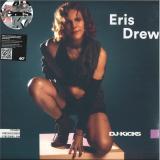
The next instalment in the classic DJ-Kicks series is a selection of rapturous house, blissed-out breaks, and transcendent rave from the high priestess of the motherbeat herself, Chicago"s Eris Drew. DJ, producer, musician, long-time resident at Chicago"s Smartbar, and co-creator of the T4T LUV NRG party and label, Eris Drew has been DJing since the early 90s, and has since taken her ecstatic house and high-energy, uncompromising mixing style to clubs, raves, and festivals worldwide. Eris" DJ-Kicks mix is 79 minutes of, as she puts it "the funky, emotional, ecstatic house-and-breaks backbone that defines my sound", and includes tracks, remixes, and exclusives by Moby, Calisto, DJ Garth, Onionz, DJ Who, Kair, Hoof, and Toka Project, as well as from Eris herself and partner Octo Octa. The result of countless hours of digging, her selection delves into the rattling breaks, rave stabs, and haunting strings of classic and lost "90s hybrid house-and-breaks jams, and matches them with more recent digs, the mix moving back and forth between emotive, bittersweet, and evocative, to raw, tough, and twisted with consummate ease.
out of Stock
Last delivered 3 months ago available to reorder, subject to availability