The Conspiracy Hailed From Mount Pleasant, A College Town In The Center Of Michigan. Originally Formed As The Allusions, They Became Nino & The Nomads Before Changing Their Name To The Conspiracy In 1966. For The Next Few Years The Group Stayed Busy On The Live Circuit. "we Were Booked All Over The State," Remembers Singer Aquilino Soriano. "every Weekend We'd Be Somewhere. We Were About Two And A Half Hours From Detroit, So We'd Go Down South, We'd Go Up North, We'd Go Everywhere. There Was This Network Of Teen Clubs Where Kids Didn't Have To Be 21 And Everybody Could Go. It Was Fantastic." In 1967 The Group Had What Aquilino Describes As "probably Our Apex Moment". Kustom Amplifiers Sponsored A Statewide Battle Of The Bands Tournament, And The Conspiracy Battled Through Several Rounds Of Competition To Make It All The Way To The Finals In Saginaw. "it Was A Statewide Thing That Culminated There," Remembers Aquilino. "question Mark & The Mysterians And A Couple Of Others That Were Notables Were Also In It - And We Won It! We Got Our Award From Bob Seger." The Prize Was Thousands Of Dollars Worth Of Gigs And A Tuck And Roll Kustom Pa System, Which The Band Put To Use As They Moved Forward Into 1968, Brimming With Confidence. A Roving Capitol A&r Man Caught Their Show In Cadillac, Michigan, And Encouraged Them To Write Some Original Songs And Go Into The Studio. So In 1968 That's What They Did. `dream World' And `with You' Were Recorded At A Studio In Grand Rapids And The Session Turned Out Exceptionally Well. "it Just Floored Me That We Didn't Sit Down And Write Some More Songs," Says Aquilino, "because I Thought We Did A Pretty Good Job." `dream World' Is Particularly Great With A Soulful Lead Vocal, An Insistent Fuzz Guitar Line, Waves Of Hammond Organ, A Catchy, Harmonized Chorus And An Insistent Dance Groove. Shades Of The Doors, The Young Rascals, The Blues Magoos And Src. A Mixdown Of The Tape Was Forwarded To Their Contact At Capitol Records, But Ultimately No Deal Was Signed. "we Were Just Starting To Separate From High School," Remembers Aquilino. "it Was The Start Of That Transition. I Was Class Of '67, They Were Class Of `68. There Was The War In Vietnam. You Could Go To College To Avoid The Draft. It Was A Lot Of Decisions And I Guess What Happened Is Nothing Really Happened From Us Recording. I Mean They Liked It, They Made Us An Offer, But I Think That The Parents Weren't Really Happy With That. I Think That There Was Some Dissent In The Band Too." The Conspiracy Broke Up In Early 1969 And The Tape Of The Only Original Songs They Ever Played Remained Unreleased And Unheard Until 2018, When Soriano Brought The Original 1" 8-track Session Tape Into Earthling Studios In El Cajon, California, Where It Was Mixed And Mastered By Mike Kamoo For This Release. "getting This Out On Vinyl - It's What We Dreamed Of!" Aquilino Grins. "even If It Took Fifty Years To Happen!" Mike Stax
'Best electronic live set i've seen in two years!' CHRIS CUSACK (BOOKER, BLOC GLASGOW)
Fresh and heady slice of cerebral techno and out-there electro flavours.
EXTERIOR is the artist moniker of Edinburgh producer Doug MacDonald. Exterior represents his transition to electronic music and an embrace of the dancefloor. Doug played hardcore and noise-rock for a long time before eventually abandoning collaboration, nostalgia and formulaic rebellion in favour of synthesis. What he gained on the way was an understanding of the power of live drumming and years of finely honed performance-skills, something of an aberration in dance music.
Exterior thus represents a convergence of disparate personal and musical pleasures. Accordingly Exterior draws on rhythmic mavericks as divergent as Fugazi//Battles//Swans as well as DJ Spoko//Clark//Hieroglyphic Being. In addition, there is a deep undercurrent of melody and texture, drawing on the likes of Burial//Miles Davis//Bjork. Eschewing the modern home computer in favour of an exclusively hardware based approach, Exterior espouses a physical relationship to what is at heart an abstract practice, composing electronic dance music.
Perhaps it's unsurprising, then, that one of the things which really sets Exterior apart is his intoxicating live show. He gets the crowd going every single time he performs, so infectious is his energy, as he throws shapes and struts his stuff behind the gear, clearly 100% in the moment and his element.
His debut EP 'Public Transport' was released on London/Barcelona-based Land Recordings earlier in 2018. Having made his international headlining debut in Berlin in September, more continental sorties are currently being arranged (see below).
This record represents a significant move forward in sophistication and club-readiness.
On remix duties, anonymous analogue techno lover DALI returns on the back of four slices of extended club gear released via two Hobbes Music 12"s (2017-18), boasting colour-themed, screen-printed sleeves and an uber-simple design for that evergreen minimal aesthetic with a hint of mystique. These gained excited support/plays from the likes of Ben UFO, Nina Kraviz, Daniel Avery, DJ Deep, Laurent Garnier, Avalon Emerson, Twitch, XDB, Bill Brewster, Bawrut, Tom Findlay (Groove Armada) and many more... Clocking in (again) at just over 9 minutes, her 'Collapsing Star' remix is another marathon-length effort and does exactly what it says on the tin. Setting the beats to classic electro, everything's pushed hard until it all seems ready to fall rapidly apart (and it very nearly does), before dissolving in a fiery sizzle: a more visceral, dance floor accompaniment to Exterior's heady affair.
With one of the hippest jazz albums of recent years under their belt, Jukka Eskola Soul Trio is back with a fresh new single. It's truly a double-sider of the highest order, as both of the tracks deliver a completely distinct flavor.
"Tiny B" on the A side is a neat bossa jazz number, and as usual in top of the genre, the lightness serves only as a facade. The composition starts to evolve before the listener gets too comfortable, transitioning into a beautiful cinematic section, which is followed by tight solos by Eskola on trumpet and Mikko Helevä on organ. The trio rises beyond its numbers, as the maestro Teppo Mäkynen overdubs his drumming with added percussion and vibes.
Hiding on the B side is a furious jazz dance burner, which sees the trio rise to energy levels that surpass even Five Corners Quintet in their tightest form. "Stick of a Branch" is highly syncopated business that takes its cues from a sound refined by 1970's independent afrocentric jazz groups. It's a style, which is inherently modernist, without a slightest interest in mass appeal, and firmly rooted in the blues.
If you need some no nonsense organic jazz on your turntable, it's hard to go wrong with this single.
out of Stock
Last delivered 7 years ago available to reorder, subject to availability
The four tracks on this EP represent a bit of a transitional phase for Louis Jaquet (aka Kid Who), marking a move from a basic setup with an MPC2000XL sampler and a computer to a fully-fledged hardware studio. The initial versions of these tracks were quick jams that he had made early on in this change, but which had lay dormant on his hard drive for some time, before being revisited and reworked for this release with the new equipment.
'Rhythm Code' began life as an exercise in using only freely distributed software synths, and the majority of those sounds are still there, bar some additional acid sequences and tweaks to the rhythm parts.
On 'ZF Cut' his focus switched to samples, in an effort to squeeze the most he could out of his MPC, which at the time had only recently been upgraded. The unassuming beige box gives colour to anything you feed into it (breakbeats in particular), and a host of basic onboard effects add further quirky character, in this case hollow drones and rumbles which are the core of the track.
One of Kid Who's early purchases was a cheap old Yamaha multitrack cassette recorder, which presents many opportunities for sound manipulation. Different tape speeds, tape types and manual manipulation during playback open up a world of noisy, woozy atmospheres, some of which formed the basis of 'Spool Night'.
Of all four, 'Timescape' required the least revising, and the version presented here is very close to the original, 100% computer-based draft. Although the beat was built with Roland 707 drum machine sounds, a staple of early Chicago house records, he wanted to juxtapose these with a more up-to-date techno aesthetic, with a handful of final touches added in the new studio to finish
Seven Dials Records enlist the expertise of Hugo alongside Fiona McMartin on vocals for their fourth release - the heavyweight UKG tinged, 'Cold Fingertips'.
There's a dark UKG flavour to the 'Vocal' mix, reminiscent of the transition from UKG into early dubstep yet softened with those silky tones. Layers of sub bass and wonky synth lines intertwine, with the skippy, 2-step rhythm providing the perfect basis for Fiona's alluring voice. Label boss Seb Zito takes it more US in style, switching to a 4x4 swung beat, chopping the vocals into a mesmerising melodic element, and adding a host of spin back samples for full garage enlightenment.
Take to the flip for a dubbed-out version of the original, allowing those killer sub synths to come to the fore whilst echoing out the vocal refrains. Closing out the EP the 'Ethereal' mix ventures deep into the realms of dubstep with monstrous undertones, glitching stutters and celestial pulsations, ready-made to cause damage in the dance.
Tradition futuristic Cumbia travelsound through Caraibs, Africa, Andines, Spain, India, ... Superb open minded compilatio nbringing loads of bloody good tune... and a pure spirit :! ENJOY !
Santo Sangre is a project by San Francisco-based artist, producer and DJ Gonzo Manuel. On its first release, Quetzal, perhaps a reference to the central-American bird with bright, ornate plumage Gonzo taps into a Latin-accented, tribal feel that is ably carried on rolling, syncopated percussion with an organic essence, a birdsong-like chant, sporadic and light bursts of actual song and haunting string chords that cut across the sound spectrum, adding dark energy and urgency to the track. This one will sit nicely out on its own, bringing a hybrid organic/robotic essence to the dance or would work equally well rinsed around in the mix, with all its elements appearing and disappearing at just the right time as a transition ascends and peaks.
Oakland producer Indy Nyles remix builds on the tribal theme by enhancing the syncopated aspect of the percussion. He augments this further with a pretty and drifting melody line composed of glassy keyboard sounds. The sense of drama this creates is boosted further by a breathy and repetitive voice sample. This concoction drives along nicely until around the 5 minute mark when Nyles drops a menacing, snaking thread of 303 bass, stabs of icey strings and echo and delay effects that amplify the shadowy, seductive allure of his remix. Its a new sounding track but the acid line and syncopation bring to mind some of the psychedelic, breakbeat classics of San Franciscos halcyon, rave era.
Rounding things up is the Slope 114 Remix. Here Dmitri Ponce and partner
Elise Gargalikis take the track on a house journey that is, like Indys mix, brand new sounding but possessed by the spirits of the classics. Elises vocal flourishes bring to the mind the Latin house, tribalist dynamism of Louie Vega and Indias River Ocean numbers while Dmitri nudges the bassline from chunk and funk to acid and massive without sacrifcing the subtlety of the maneuver. The subtle aspect being that a techno, a tech-house and a straight up house heads will be able to bounce this one to the box without leaving her generic comfort zone: the true mark of a classic.
This release is a strong start for this new artist, look out for more fire from this Bay Area talent
Drama were the Canadian duo of Eric Simpson (Vocals, Bass Guitar, Guitar) and Don Stagg (Keyboards). Formed in in Mississauga, Ontario in 1978, the pair had previously played together in progressive psych bands Majik and VIIth Temple. Almost every Saturday, Eric and Don would record one song on a TEAC 4 track tape recorder after a couple of takes with very little over dubbing. The pair were influenced by what was playing on the radio during the recording sessions. Everyone else at that time was in a rock or pop band yet Drama were making electronic music. The pair released their debut LP 'Loneliness' on Psycho Records in 1979. There were 500 albums made and about 200 ended up in the garbage as band members shuffled from apartment to apartment. This was followed by a 4-track 7' later that year featuring live drums and additional guitar.
Seance Centre says it best, 'On Loneliness, the pair traded in their velvet and chord charts for thin ties and a cheap drum-machine. The LP still carries a whiff of patchouli, but the sound stings of solder and electricity, and inhabits a nascent zone somewhere between krautrock and new-wave. The vocal cuts are all clustered on the A-side, starting with an ode to the inefficiency of the Toronto Transit Commission - some things never change! The dystopian sci-fi themes are par for the League, and highlights are the love ballad 'Anna King' and the charming 'Feable'. The instrumentals on the B-side feel decidedly more Teutonic, and have a certain CBC charm that sounds like JP Decerf recording for Parry Music. It even opens with a slinky stoned Pink Panther.' For this first time vinyl reissue we've expanded to a double LP with a bonus album of the 4 songs from Old Hollywood 7' and 9 previously unreleased tracks and demo versions. All songs are remastered for vinyl by George Horn at Fantasy Studios in Berkeley. The vinyl comes housed in a jacket with original photo by Don Stagg taken from his apartment rooftop overlooking Toronto of a young teenager sniffing glue and includes an insert with photos and liner notes by Drama.
On her deeply moving debut album At Weddings, Sarah Beth Tomberlin writes with the clarity and wisdom of an artist well beyond her years. Immeasurable space circulates within the album's ten songs, which set Tomberlin's searching voice against lush backdrops of piano and guitar. Like Julien Baker and Sufjan Stevens, she has a knack for transforming the personal into parable. Like Grouper, she has a feel for the transcendent within the ordinary.
Born in Jacksonville, Florida, and now based in Louisville, Kentucky, Tomberlin wrote most of At Weddings while living with her family in southern Illinois during her late teens and early twenties. At 16, she finished her homeschooling curriculum and went to college at a private Christian school she describes, only half-jokingly, as a "cult." By 17, she had dropped out of school, returned home, and begun to face a period of difficult transition in her life. The daughter of a Baptist pastor, Tomberlin found herself questioning not only her faith, but her identity, her purpose, and her place in the world.
"I was working, going to school, and experiencing heavy isolation," Tomberlin says of the time when she first began writing the songs on At Weddings. "It felt monotonous, like endless nothingness. It was a means to get through to the next step of life." In songwriting, Tomberlin found relief and lucidity she had trouble articulating otherwise. When she was 19, she wrote "Tornado" on her parents' piano, and began to develop confidence in her music. A year later, she had written enough songs to fill an album.
Throughout At Weddings, Tomberlin's lyrics yearn for stability and belonging, a near-universal desire among young people learning to define themselves on their own terms for the first time. "I am a tornado with big green eyes and a heartbeat," she sings on "Tornado," her voice stretching to the top of her range. Rich, idiosyncratic imagery — a fly killed with a self-help book, brown paper bags slashed violently open, clouds that weep over a lost love — sidle up to profound realizations about learning to be alive in this world. "To be a woman is to be in pain," Tomberlin notes on "I'm Not Scared." On "A Video Game," she muses, "I wish I was a hero with something beautiful to say."
Tomberlin cites the hymns she grew up singing in church as her greatest musical influence, and while At Weddings in many ways documents the unlearning of her childhood faith, it's easy to hear the reverential quality of sacred music in her songs. "A lot of hymns talk about really crazy stuff — being saved from the depths and the mire, judgment. When you actually realize what you're singing, it becomes really overwhelming," Tomberlin says. "I grew up singing in church. I was still helping to lead worship when I started coming to terms with the realization that I didn't know if I believed. I felt nauseous and shaky reading these words I was singing and feeling their intensity. If I did believe this, how could I sing these words without being scared out of my mind That's what's influenced how I write."
At Weddings is laden with reverence for music itself, for the power it has to heal others and help people navigate their lives. It is a record about learning to love oneself and others without reservation, from a place of deep sincerity — a lifelong challenge whose tribulations Tomberlin articulates beautifully. "My number one goal with my music is for honesty and transparency that helps other people find ways to exist," she says. With At Weddings, this remarkable young songwriter offers up comfort and wonder in equal measure.
a1 | Any Other Way
a2 | Untitled 1
a3 | Tornado
a4 | You Are Here
a5 | A Video Game
b1 | I'm Not Scared
b2 | Seventeen
b3 | Self Help
b4 | Untitled 2
b5 | February
Eastern Bloc Warsaw is a new Polish record label founded by Piotr Klejment, based in Warsaw, Poland - the first country in Europe where the transition from the communist system to democracy took place. It is a definition of desire for freedom combined with respect and a sense of belonging to places. The main goal of label is to promote music and artists from former Eastern Bloc.
Piotr Klejment started music journey as a DJ in 2005. His DJ sets mixed together very disparate styles. Years ago, along with friends, he founded a group called Underground Perception. They invited a lot of prominent artists (for example Juan Atkins, Kevin Saunderson, Joey Beltram, Marcel Dettmann) and gave them a chance to play for the first time in Poland in the legendary M25 Club. He stayed there as an artistic manager and resident for three years. His two first releases appeared on Technosoul Records (also a collective of DJ's & producers from Poland, which member he also was). The releases came out with remixes by Perc, Sleeparchive and Polish techno legend - Echoplex.
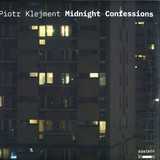
Photography on the cover of EP 'Midnight Confessions' shows authentic Warsaw bloc .
Sarah Davachi presents her masterpiece, Gave In Rest. Her most fully studio-recorded album ever, she collaborates with Montreal heavyweights to create an album that uses both modern minimalism and early church music as departure points.
Sarah Davachi has quickly risen in prominence since her first release five years ago, and Gave In Rest represents her highest artistic achievement. By infusing her compositional style within a predilection for medieval and Renaissance music, Davachi unearths a new realm of musical reverence, creating works both contemplative and beatific, eerie yet essentially human. Gave In Rest is a modern reading of early music, reforming sacred and secular sentiments to fit her purview and provide an exciting new way to hear the sounds that exist around us.
Between January and September of 2017, Sarah Davachi lived in flux; storing her belongings in Vancouver, she spent the summer in Europe, occasionally performing in churches and lapidariums and seeking respite from her transitional state while surrounded by such storied history. This latest album echoes that emotional state of solitude and ephemerality, reaching towards familiar musical landscapes but from oblique perspectives.
'I named each track after a particular time of day as a way of expressing my experiencing different moments of quietude, how morning and night are both independent and interconnected entities in this regard,' she says. Her titles evoke canonical phrases referring to morning or evening prayers, as well as Latin and German phrasings for metaphors about the time of day. 'From my perspective, there is a lot of loneliness on this record, and I think it is as much about beginnings as endings,' she continues. 'In a way, it's about the prospect of the unknown as it manifests alongside a very inward form of grieving—really the essence of what constitutes a period of transition.
Davachi has mined a bottomless landscape where listeners can witness music's participation in their solitudes. Gave In Rest lends a voice to her personal exploration with a firm, intuitive stance.
New collaborative album from two of the world's most revered sound artists. 'At its best, William Basinski's music inspires the sort of rapturous testimony usually reserved for peak experiences, cult leaders and the dead.' Pitchfork // 'Awe-inspiring: strange, elemental, and profound.' AllMusic // For over half a decade, William Basinski and Lawrence English have been in regular contact with one another. During that time their paths have crossed repeatedly in various cities; Zagreb, Los Angeles, Hobart and more, in a variety situations. It was from these chance encounters - and the strange familiar of lives lived in transit - that their first collaboration, Selva Oscura, was seeded. The phrase Selva Oscura draws its root from Dante's Inferno. Literally translated as 'twilight forest,' it metaphorically speaks to both those who find themselves on the unfamiliar path and more explicitly the nature of losing one's way in place and time. Each of the extended pieces on this record maps an acoustic topography that draws on the concept of drifting into the strange familiar. The works each dwell in an ever shifting, yet fundamentally constant state of unfolding. As one sound fades away, another is revealed in its place, creating a sense of an eternal reveal. Selva Oscura was recorded in Brisbane and Los Angeles simultaneously. The compositions were each created through a process of iteration and rearrangement that inverted the micro and macro characteristics of the raw sonic materials. Dynamics and density were chiselled with restraint and at other times intensely reductionist approaches to create a limitlessly deep, but open sound field - as rich as the suggested place from which its title is drawn.
Quest, transit, chaos, mutation, transfiguration, ascension and illumination. These are some of the steps followed in the journey of life that are embodied on each track of the album Adonai. The solo debut of the multi-instrumentalist composer Marco Paul condenses a career of more than ten years, in which, the search for the truth of oneself and authentic sound has traveled and nurtured from different genres and cultures. Adonai is an odyssey that combines sounds and images of the earthly and oneiric worlds: an audiovisual work that opens several windows to the different perceptions of the facts that make up the life of the human being.
After 9 years of constant international touring, 6 albums and more than 400 live performances with the bands Sour Soul, Ratbot and Funk My Jesus, as well as the conception and musicalization of the award-winning short films "Undermine" and "24K All You Need Is Gold", Marco Paul decided to retire to an island in the Caribbean, where he found and refined his sound. Thus, between 2014 and 2016 he created the music for Adonai, a work produced by Aitor Etxebarria under the label of Forbidden Colours.
The recording includes guest musicians from different countries such as Aitor Etxebarria (synthesizer, electronic magic) and Hibai Etxebarria (double bass) from the Basque Country; Michael Alan Hams (drums and percussion) and Joe D'Etienne (trumpet) from the United States; and Fatima Gozlan from Hungary (Ney and Derbake).
The consummation of the work is a mid length film created in 2018. It consists of 5 chapters directed by 5 different directors.
The audiovisual journey begins with the conception of the philosophical "Filius", an alchemical symbol that represents the inner child, which transforms the experiences of life into the soul's gold. Later, in "Sylvian" (title that refers to the brain fissure that contains the auditory cortex), by listening to the subtle message that surrounds us, our consciousness and perception expand. Then, in "Tiamat", the pristine chaos that gave birth to the gods, embodies chaos, the confusion generated by the multiple voices: on one hand the moral and imposed precepts, on the other hand, the inner voice that seeks the liberation of the infinite possibilities. In "Hawa", through the recognition of the power of solitude and introspection self-reflective awareness is reached. Finally "Adonai" is the ascension to enlightenment: the further connection with the absolute. As an encore (only available in vinyl) "Teurári" is a gift: a tiny flower where all the points of the universe merge.
Feldermelder's "The Sound Of" is a collection of tracks created in hotel rooms around the world. These little anthems tell stories about places filled with a sense of purpose, a particular emptiness, or a feeling of transit. Places that have fallen out of snyc with the rest of the world. "The Sound Of" is a homage to personal moments worth keeping alive in one's memory.
The flexi disc features the track "Harmony" and was an insert in Zweikommasieben Magazine #14. The screen-printed inlay by Mathias Forbach / Fichtre features an index of sounds and frequencies used in the composition. The flexi disc comes with a download code for four additional tracks.Feldermelder's influences range from the decomposed structure works of old pioneers of Electronic Music to classical Jazz, electronic and analog music from the now, before and tomorrow. The diversity of the music that inspires him, finds reflection in his own sonic adventures, forming his ever evolving sound, combining as map and compass to guide his artistic outbursts. Feldermelder is co-founder of -OUS records and member of the art collective encor.studio. He has been performing internationally with his recent audiovisual live show "Erratic" and the AI-driven installation "Initiation", among others.
4th album from Dutch electronic duo Tangent .
Limited Edition 180gm Orange vinyl LP w/DL of full CD tracklisting.
Previous coverage from Arctic Drones, Collective Zine, Igloomag, Soundblab
Approaching Complexity is the fourth album from Netherlands based ambient-beats duo Tangent.
This follow-up to 2016s Collapsing Horizons finds the duo expanding their sound by adding reoccurring expressive piano themes to their composite of skyward ambience and unfolding beat formations.
The album is said by the duo of Ralph van Reijendam and Robbert Kok to be 'about the transition from basic forms to complex struc- tures which are often seen in nature during the transi- tioning of seasons.' They add that 'Life awakens from hibernation and evolves from being introverted to becoming extroverted, even building upon the remnants of previous cycles and evolving into new realms.'
Approaching Complexity for Tangent is all about their evolution as progression has been a clearly defined constant in their output as a whole. Each work effort- lessly transitioning unto its predecessor.
OTHER TITLES FROM TANGENT
- MD248 / Collapsing Horizons / LP
From the inheritor of John Coltrane's mouthpiece a re-integration of deep South African jazz roots with the Black Atlantic spiritual jazz continuum.
Celebration's release trumpeted the emerging dawn of South Africa's epochal changes. Sainted and blessed, Bheki Mseleku appeared as the herald of a new era, a prophet of rebirth and reconnection. This is a work signalling transition and change, and a sign of a South African music that was properly reconnected with global currents - a music that could journey far beyond the stifling combination of exile and oppression in which it had been bound.
Recognising Bheki as a kindred spirit to her late husband, Alice gave him the saxophone mouthpiece that John Coltrane had used during the recording of A Love Supreme. Coltrane was a permanent touchstone for the pianist, one of the few who Bheki felt had the same esoteric and spiritual focus as himself: 'the only musicians I know of who were deeply into this were Coltrane, and Pharoah and Sun Ra', he told an interviewer in 1992.
While the idioms of post-Coltrane spirit jazz are certainly to the fore on Celebration, they are energised by a swift and original musical vision, quite specific to Bheki's music, in which whole musical systems - the marabi and mbhaqanga jazz of the townships, American jazz, European classical, and more - are seamlessly mended together by the pianist's quicksilver musical sensibility and legendary technical ability.
Celebration was originally released on compact disc and cassette in the middle of 1992 by World Circuit. It was Bheki's first statement under his own name, and the first recorded presentation of his personal musical vision. This vision had been tempered across two decades which had combined intense professional playing with profound personal trials in both the spiritual and earthly domains, all set against the greater backdrop of South African political turmoil and exile in Europe.
The band brought together musicians hailing from three signally important points within the interconnected, communicating spaces of the Black Atlantic continuum - North America, post-colonial Britain, and southern Africa. With them, Mseleku created the first major South African-led musical statement to be produced after the sufferance of exile was ended. The ultimate and most egregious remnant of the centuries-long colonial era, apartheid, was finally being dismantled as they played. At this critical point, Mseleku's musical spirit work, channelled from a higher source, spoke of a time to come where all divisions might be transcended by a greater unity.
Italian sound artist GIULIO ALDINUCCI drops his 2nd album on Karl: "Disappearing In A Mirror" is again a truly masterfully composed and sound-designed ambient masterpiece and a more than worthy follow-up to the critically acclaimed "Borders And Ruins" which made it onto several year's best lists for 2017.
Over the course of four solo albums on labels like DRONARIVM plus EPs and collaborative albums (a.o. with IAN HAWGOOD), GIULIO ALDINUCCI successively has been refining his skills as composer and sound designer. His elegant style which blends ambient and field recordings came to full impact on his 2017 album "Borders And Ruins" which gained the Italian sound artist a lot of critical praise and made it onto several year's best lists, a.o. ALDINUCCI's latest effort is again not only a musical masterpiece ofsublime beauty and sacral majesty, it also deals with philosophical concerns. Where "Borders ..." was areflection on the instability of borders - borders as an extreme attempt to discriminate and rationalize that turnsinto a source of chaos and cultural ruins on both sides - and their impact on the relationship between people and territory, "Disappearing In A Mirror" raises the very personal question of identity. In the words of ALDINUCCI himself:
" 'Disappearing In A Mirror' focuses on the fluidity of the identity concept, highlighting the harmonious coexistence of contradictory elements and the transitional features that characterize every transformation. It is a reflection on the current situation of change and disruption and at the same time it is a gaze into the human timeless soul and its inner soundscapes."
Inner is the 5th full-length from Bordeaux composer Franck Zaragoza's Ocoeur. Inner evolves from 2016's Reversed by arching away from the piano-centric works and focusing a bit more on ambient synth motifs. The piano (Mother, Unseen), strings (Inner, Shelter), and sound design (Passage, Echo) are still ever present, but Zaragoza elongates his sounds out by allowing the synths to swoon, drift, and decay. Each note having its proper and due time to ascend. While there is a transition in the overall feel of Inner from Zaragoza's previous output, it feels like the natural progression in the Ocoeur catalog.
XGLARE (all caps), is Jessee Egan, a Brooklyn-based producer, sound designer and multimedia artist. She has released music under multiple aliases since 2011, most notably on AY Japan. Her latest incarnation, XGLARE, balances warped sound design, unearthly atmospheres and experimental rhythms that reject genre boundaries.
Representing Brooklyn in full force on the debut record, 'Morph EP,' XGLARE yields incredibly heavy atmospheres. This is a mature record showing patience, design and a thoughtfulness sorely lacking in much of the electronic music scene. Beats and dance elements take center stage alongside impossibly powerful, almost elemental transitions. Track 1, Lymph sets the tone with an updated halcyon rave sound. Imagine standing in a field in the countryside at an illegal rave at 6 in the morning as the sun is rising, wind blowing in the air. Track 2 Fossa feat ARIADNE, an Opera trained singer, immediately submits you to whisper shouting, a highlight of the album. In between more dance floor-oriented tracks, Spore and Plexus, sit two sound design gems, title track Morph with its pounding rhythmic charges and vast reverberated rooms, and Ganglia, which reminds of early Do You Know-era Squarepusher. A well-rounded EP showing off the many talents of XGLARE also comes housed in beautiful artwork designed by Egan herself.
You may know of 'Rude Movements', an early dance music classic produced by SunPalace (Mike Collins and Keith O'Connell) back in 1983 that brought together protohouse, balearic beats and funky vibes. In 1984, the tune quickly became an anthem that could regularly be heard at David Mancuso's 'The Loft' or at Larry Levan's 'Paradise Garage' for example.
Thanks to Mike Collins, the studio veteran still in the business after more than 35 years and currently busy perpetuating the legacy of SunPalace, more material from the archives
has been 'surfacing' over the past few years on UK-based record labels. After a very productive meeting earlier this year, Parisian label Chuwanaga is really proud to present four unreleased songs produced between 1982 and 1984! Co-written by Mike Collins from SunPalace and Breeze McKrieth, a founder member of Britfunk bands Light Of The World and Beggar & Co, these Lost Songs are the almost forgotten result of this seminal collaboration, an exclusive musical rendez-vous between experienced studio music makers and funksters at the top of their game, including some of the finest Britfunk musicians. Bringing together eighties influences and futuristic sounds, the result covers a wide range of genres, from jazz-funk to new wave: it captured a unique
moment in British musical history, a smooth transition to a more electronic sound. Definitely not one to be missed!
Ben Buitendijk returns to his Rotterdam based label, Oblique Music with three stirring techno cuts entitled 'Alternative Hypothesis'.
After Buitendijk's quintessential 2013 'Promised land' track on Mosaic, his sound's transition into tougher territories, prevalent in his series of releases via Oblique that demonstrate a palette of space-induced modulations. The label continues to create
emotionally driven techno of a deeply layered nature, having also released music by Deniro, Koen Hoets, Emmanuel Top, Refracted, and more.
Kicking off with a journey enveloping 9-minute track, 'Contamination Zone' is delicately filled with synthetic ambience and undulating minimalism. The track's energy gently grows throughout as the bleeped synth line and looping percussion patiently rises in intensity. 'Stardust' follows, continuing to transcend visionary type melodies in symmetry with acutely composed drums.
'Alternative Hypothesis' adopts a left-of-centre drum groove, harmonising authentically with the uplifting, otherworldly swells constant throughout, keeping the force of the track totally balanced.
The keeping of pets marks humans' attempt at taking possession of a part of reality that is not at his disposal. Dressing a piece of the real that lives according to entirely non-human rules and which only in the saddest case does not resist the discipline of the human symbolic order vehemently and in a sustained matter, is a violent act of protection. Because in the non-place of the real, all that which we are helpless in the face of looms: the non-logical and the nameless, the violence and the noise, yet also the unrestrained and unfiltered desire.The innocuous figure of the pet marks a gateway to an investigation of these eerie milieus, while electronic dance music lends itself to this investigation in an outstanding way. This constellation marks the subject of Column's 'Pets II.'
Column is the name of Cologne based renaissance man Jan Philipp Janzen, who, as chief emissary of Cologne's pop internationalism, has been playing the field in various functions for Von Spar, Cologne Tapes, Urlaub in Polen, Owen Pallett, Scout Niblett or The Field, and who has also, in one way or another, been involved in most relevant records coming out of Cologne for the past number of years. After his excellent solo debut 'Pets I' (Areal, 2016), Janzen presents another extraordinary record in 'Pets II,' perfectly complemented by another ghostly oil work of Burkhard Mönnich on the cover.Sonically, 'Pets II' marks a clear development for Column. In its exploration of the thresholds of the real, it sets two points of focus, corresponding with the split in sides A and B.
Side A, on which Janzen teams up with long-time friend myr. (PNN), explores the uncanny as a fissure of the symbolic order, and the subsequent breaking in of the real. It opens with two peaktime rockets that have their wooden, nether-regional groove narrated by grim, down-pitched vocals. The ethereal remix by Leibniz (hundert) seems to be observing the situation from a hiding place, and is the side's clandestine and no less dark closer.
Side B, for which Janzen invited studiomate Marvin Horsch (Dorfjungs/Beats in Space) along, delivers two swaying synthesizer workouts, the second of which, 'Molly and Swerve,' is directed firmly at the dancefloor again. What is at stake here is the transition between a free, undirected jouissance of the real and a more ordered becoming-lust. Here, as in Map.ache's (Kann/Giegling/Altin Village) remix which closes out 'Pets II,' it becomes clear what connections dance music can foster between a free, impersonal desire and the sphere of interpersonal wanting, but also the losses that are negotiated in it. Above all, however, it becomes evident what a courageous daring project 'Pets II' is in all of its conceptual and aesthetic determination; with Von Spar's standout 'Garzweiler' 12' (Altin Village & Mine, 2017), it documents a New Cologne Realism.
* Mirae Arts (founded By Elbert Choi) Is A New Label Based In The Suburban Bowels Of El Cerrito, California, Usa. Elbert Choi, Originally From South Korea, Is Inspired By The Mountainous Landscapes Of Northern California And Is Focused Primarily On Releasing Music With Blissful & Natural Soundscapes.
* The Debut 12' Ep On Mirae Arts Is Called Prayers By The Lake, Produced By Seraphim Rytm. Seraphim Rytm, Based In Belgium, Is The Alias Of Damaskin, The Veteran Master Of Dark Hypnotic Techno Who Has Releases On Esteemed Labels Such As Unknown Precept, Noiztank, And 10 Label (japan). Damaskin Debuted As Seraphim Rytm With A Celestial Album Called Aeterna On Vancouver's Silent Season, Which Was Reviewed By Resident Advisor As Being 'deeper-than-deep Techno Shrouded In The Damp Atmospherics Of The Rainforest'. Prayers By The Lake Continues The Sonic Journey Into The Beautiful Complexities Of Nature And This Time Invoking Images Of An Isolated Lake Surrounded By Mountains In Seasonal Transition. The Ep Consists Of Three High-powered Ceremonious Tracks And Concludes With A Beautiful Ambient Closure.
* The Artwork Is By Landscape Photographer Cody Cobb Who Is Responsible For The Artwork On Haxan Cloak's Breakthrough Album, Excavation (tri Angle). Cody Has Also Worked For Labels Such As Permanent Vacation And 10 Label.
* 180g Vinyl Pressed At The Highly Reputable Gotta Groove Records, Cleveland, Ohio.
J Colleran's majestic lead single 'bERA' began as a simple experiment using pianos and arpeggiators that slowly developed into a shimmering elemental piece. The coinciding video, directed by Gray was inspired by the photography series by Anton Polyakov who documented the people of Transnistria, an independent state affected by the constant intimidation of military conflict.The film shows the slow shifting balance of power from physical force to the over bearing emptiness of a room. Gray describes the featured bodybuilder flexing to a visible lack of audience as 'a shimmering golden symbol of power and also a fragile vessel shaped around a trauma. The presence of a long gaze and the rapid deterioration of strength reveals a true identity.Recent quick-fire single 'O+SOH' served as a transitional primer for the Irish producer and classical pianist, forming the perfect base from which to launch 'Gardenia' — a sweeping experimental soundscape inspired by childhood memories and the natural beauty of his native Ireland.
Jordan transformed his life this past year. It was a time of transition from one state of mind to another and falling in love. This record encapsulates this mental transition as well as a physical transition from his longtime home of New York to his new one in San Francisco.
Sfetsas formed GFO in 1976, in order to accomplish an ambition dating back to his 1960's Avant-garde period in Paris: to create a piece of work that would expand the boundaries of Greek traditional music. The result is a Progressive-Jazz Fusion masterpiece comprising complex and intriguing compositions, and performed by Athens' best musicians of the day.
.
Sfetsas grew up on the island of Lefkada where he studied classical music from an early age at the local conservatory. At the same
time he was genuinely connected to traditional music and especially to the sound of the clarinet, the lead instrument in the region's
folk music. From a young age Sfetsas would perform with Gypsy orchestras in local feasts. It was this experience that inspired him
to create the GFO after his return from Paris in 1975. Sfetsas founded the orchestra while working at the National Radio, an orchestra comprised mostly of members of the Variety Music Orchestra, who had a solid background in both classical and traditional music. In that way, he was able to realise his ambition. Something he could not do in Paris, since it was impossible to find musicians trained
in both musical cultures.
The recordings on this album, forming only a small part of his overall body of work with GFO, are previously unreleased. The music
was recorded Stereo on Reel Tape and with high standards for the time, with the current mastering process highlighting even more
the quality of the recordings. The result is a truly impressive and pure audiophile album.
Following 2017's 'Path of Ruin', DJ Richard returns to Dial with his much-anticipated sophomore LP, 'Dies Iræ Xerox'. Undoubtedly one of the most distinctive and fully-formed electronic producers in recent memory, DJ Richard imprinted the sound of a bubbling US underground with his label, White Material, founded in 2012 alongside Young Male. His first solo LP for Dial, 2015's 'Grind', found DJ Richard delicately establishing a discipline between his East Coast noise heritage and a physical, emotive tradition of house music, mastered during an extended stay in Berlin. Now firmly settled once more in his hometown of Providence, 'Dies Iræ Xerox' is a personal and uncompromising journey that finds the Rhode Island native in reflective form, journeying without compromise into both his creative influences and personal psyche. In part adapting its title from the Latin hymn 'Dies irae', otherwise known as 'Day of Wrath', 'Dies Iræ Xerox' melds the physical and psychological aspects of DJ Richard's production ethos in sharper, more widescreen vision than before; the oceanic swells of ambience yet more powerful, and the rigid basslines sharper still. With the chaos of the Berlin club scene an increasingly distant memory, the album is enriched with a contemplative, even brittle tone, as informed by film soundtracks and literature as the pulse of city living. Still, this is new material from DJ Richard, a touring DJ as distinctive as any other to be found behind the decks at some of the world's finest clubs and festivals. On 'Dies Iræ Xerox', the artist finds the space to write 'the records I really want to play', and each suggests a template for genuine dancefloor transcendence, beginning with the electrifying 'Vanguard' . The sludgy yet sophisticated crawl of 'Tunnel Stalker' sets the tone for the menacing yet somehow melancholy EBM of 'In Broad Daylight', while the record draws to a breathless close with the affecting, drum machine lethargy of 'Gate of Roses'. Drawing little distinction between his more physically rousing material and searching soundscapes, 'Dies Iræ Xerox' instead finds a passage of catharsis throughout both. 'Dissolving World', the album's breathtaking centerpiece, is a choral feature hypnotically overwhelmed by walls of electronic feedback, forging a dramatic link between old ways and new. On the bold and near-beatless 'Ancestral Helm' and 'Final Mercy', DJ Richard seems to grant both music and raw emotion the ability to simply float in the air, brilliantly, poignantly unresolved. If 'Grind,' inspired by the weathered coastlines of Rhode Island, was a record concerning "the border between civilization and the ocean," then 'Dies Iræ Xerox' is an unapologetic follow-up concerning that between macabre obsessions and fear of death. Produced during a murky, transitional period, DJ Richard found himself particularly drawn to Medieval European art and mysticism, fascinated by depictions and philosophies of the antichrist and end-times. Greatly influencing the uncompromising, apocalyptic tone of the album, these investigations have created an engaging and personal vision of the 'Day of Wrath.'
Bluestaeb's Evolution From A Beatmaker To A Producer Is His Sophmore Album everything Is Always A Process'.
He Is One Of The Key Figures Of A New Generation Of Up And Coming Hiphop Beatmakers, Who Have Emancipated From Genre Thinking And Instead Merge Old School Aesthetics With A New School Attitude And Organic Instrumentation.
Everything Is Always A Process Re-iterates Bluestaeb's Overall Approach To Life (and Thinking), But Also Has Direct Reference To The Making Of The Album Itself, Which Began With Moving From Berlin To Paris In 2015 In The Search Of New Influences And A New Creative Environment.
Created Between 2015 And Early 2018, Eiaap Embodies The Process Of This Transition - As Well As Collaboration With Instrumentalists And Vocalists From All Over The World And Recording In Different Studios In Paris, London & Berlin.
"meeting All Those Musicians And Trying Out New Ways Of Producing By Using Real Analogue Synths, Rhodes, Drums And Percussion Etc. Made It Possible To Overcome The Creative Boundaries Of A Home Studio With Just A Midi Keyboard" / Bluestaeb
Influenced By Madlib's "shades Of Blue" And Trained In African Drum Techniques Such As Djembé And Daruka, Bluestaeb Had Been Crafting His Own Beats Since His Teenage Years And Gradually Found His Sound Identity Through Experimenting With Hiphop And Jazz - First To Be Heard By A Broader Music Community In 2013, When He Released His Debut Album "1991 Extraterrestrial" (radio Juicy). Since Then The Prolific Young Artist Has Released Numerous Solo And Collaboration Projects ("b.l.u.e. Friday" In 2015 And - sidekicks With S. Fidelity In 2016). In 2016, He Produced Collaborative Album "lit - Lost In Translation With Rapper Juju Rogers, A Keen Manifesto Against Racism, Xenophobia And The Rise Of Anti-heroes Such As Donald Trump.
Today, Bluestaeb Lives And Works In Paris And Berlin And Is Set To
Release His Third Solo Album everything Is Always A Process', A
Smooth Neo Soul-induced Epic Featuring Artists Such As Noah Slee, Harleighblu And Melodiesinfonie, Via Jakarta Records In 2018.
Moral Fiber sub-label Souzou is back with it's second release. 'Freedom (SZ002)' is an exclusive EP by Sander Ellerman (Jelly Beast Recordings). As a regular on Souzou's counterpart Moral Fiber, Sander Ellerman is known for his delicate tunes, subtle changes and well thought-out transitions. With three brand new original tracks he perfectly displays the label's bass-driven, minimalistic techno sound. Nima Gorji delivers a penetrating remix for title track Freedom.
LYBES DIMEM is a project by visual artist and musician Lukas Rehm. With a focus on digital sound-de- sign, elaborate beat structures and the use of error, the music plays with cognitive phenomena and abstraction while maintaining an emotional refuge. LYBES DIMEM is presented in formats ranging from spatial sound experiences to sy- nesthetic shows complementing the auditive layers with visualiza- tions of real-time data, computer graphics and moving image. Lukas Rehms installative art, and compo- sitions have been internationally presented and awarded with multi- ple emerging arts prices.
SYNCLEFT CHRONEM is the first album released by LYBES DIMEM in both digital and vinyl format and accompanied by a moving image artwork. The title reflects the pro- jects interest in the potential of difference, cognitive frictions and exertion: sync = variability in the processing of auditive and visual signals, syncleft = the synaptic cleft, which is a crucial empty spa- ce in biological neural networks, chronem = the chroneme as a the- oretical unit to measure the time of
an articulated sound. Mathemati- cally clean sounds juxtapose pat- terns and transitions familiar from the realm of organic acoustics. Multi-layered noise textures ex- plore the simulated space. A tem- porary continuity is provided by percussive and melodic elements, right until the next escalation, eventually awaiting a concluding resolution.
The visual language explores dif- ferent phenomena and techniques of cognition inspired by the rhe- torics of big science (computer graphics, discontinuity of materi- al, pop cultural references). Both the moving image artwork and the graphic design of the release pay tribute to the multi-layered appro- ach of the music. The design of the vinyl cover by studio BNAG.cc uses subtractive colour synthesis to interchange between abstract for- mality and representationalism.
SYNCLEFT CHRONEM is the first release by LYBES DIMEM on SVS Records following a first encounter at the SVS residency at the 4D Spa- tial Sound Institute in Budapest.
Hybris Is A State Of Dissoluteness, Of Loss Of Control, Of Greed And Of Lustfulness. Following That Motto, Wice Takes His Listeners On A Journey Through A Hybristic Process On His Second Steinlach Ep, Which Chooses An Enchanting And Euphemistic Entrance Into Hybris With Absent (no Aggression). Gentle Pads Create A Peaceful And Dreamy World That Is Turned Into A Fascinating Landscape Of Sound By Trippy Drums And Dopey Synths And So Pushes Wide Open The Gate To Hybris. The Threateningly Booming Hb11 Then Finally Enters The State Of Hybris: Synths And Drums Pump Adrenaline In Heads And Bodies, Dancing Turns Into Greed, The Complete Lack Of Control Sets In. That Lack Of Control Riots Towards Its Peak With The Eponymous Hybris, Which Tears The Listener In Technoid And Gritty Manner Into The Abyss Of Hybris And Holds Him Captive Down There. Hybris Is Followed By Nemesis, The Divine Punishment Ending In Death: Wice Interprets This Transition Towards Nemesis With Hertz, A Playful And Breaky Good-night Kiss, Which Feels Pretty Damn Good And Resonates Bittersweetly.
Combo Lulo is that rare possibility of true magic moments manifested. Embodying the classic sentiment of a New York supergroup with an ensemble of friends and like-minded musicians whose resume is too full of credits and accolades to grasp in one shot, the band is a testament to what can happen when locked together for a two-day session in a Brooklyn studio.
Drawing inspiration and direction from band leader, composer and multi-instrumentalist Mike Sarason, Combo Lulo moves side to side from effortless Jamaican foundation rhythms into the further reaches of Caribbean influence...incorporating a natural transition between Jamaican classics and the essence of Afro-Latin ritmo. It's a musical match made in heaven and, more importantly, it's carried out with the gentle and deft touch of veteran studio musicians with deep appreciation and nuanced understanding. Together with Names You Can Trust, it's a locked in groove that is a perfect slice of roots, collaboration & present day experimentation that is sure to have any listener feeling nice.
An artist as versatile as Alex Krüger is a rare find these days, not only did he release numerous EP's and albums as Tigerskin or Korsakow since the mid 90s, he's also been on the forefront of the 'Dub Techno' movement since 1999 with outings on classic labels such as 'Raum...Musik", 'Force Tracks' and '3B/ United States of Mars". Now ten years after his last album on 'Opossum Recordings' Alex is back with this well crafted genre bending full length 'Caves & Cages". From deep techno cuts through rippling ambient excursions to funky reggae infused live jams with Haushausen this work is yet another milestone in the creative bubble Alex lives in (i.e. his studio). A predominantly analogue producer, Alex recorded most sounds for 'Caves & Cages' on his modular synths and vintage gear at Organic Domain during 2017 and early 2018. Throughout the album tension ebbs and flows effortlessly via syncopated subs, analogue improvisation, subtle chord stabs and sustained swells interspersed with textured field and home recordings. The ambient opener 'Intra' sets the tone for the album. Rich with alien atmospheres, distant soundscapes, out of reach voices and licks of live instruments dug up from numerous recordings dating back as far as 30 years, even before Alex started his electronic journey. The sojourn ventures deeper from there. Subaquatic dub techno is the mood on 'King's Cave", 'Helix' and 'In Air' only surfacing ever so slightly for moments of clarity where shimmering tops and glistening synth lines shed some light on the steady grooves. The tracks 'Future History' and 'Transition State CIV' border on deep house territory.
Having grown up with and on the internet, Martin Steer (1986) has transformed its pull into a concept album that is just as immediate and intangible as the digital world. Bad Stream is guitars and machines vanishing in the spaces between Radiohead and Nine Inch Nails only to reemerge amidst Ambient, Noise, and Drone. Bad Stream, then, is his modus operandi - a hybrid soundtrack to the feelings of resignation, isolation, and cynicism within neoliberal cyberspace and to that strangely numbing comfort of bodies transmuting into zeros and ones in real time.
'I look at my phone even when I play guitar,' says Martin Steer, 'and that isn't even entirely voluntary. The 2010s really changed my perception of how digital technologies and social media affect me as a musician. Through Bad Stream I want to make sense of this particular kind of anxiety, and to use sensory overstimulation as a way to develop an independent and progressive musical language.'
The past seven years took Martin and his laptop and guitar from Berlin to Mexico and Nepal and, as a founding member of Frittenbude, into the German charts and to various festival stages. And yet, Bad Stream is a true 'Berlin album,' out of Friedrichshain, Neukölln, and Kreuzberg and will be released on Martin Steers own label ANTIME. It was recorded with real drums and programmed beats, with shoegaze guitars, acid baselines, piano, smartphone synths, violins, field recordings from the darknet and his voice, whose hopeless timbre conveys reflections on systems, the future, drugs, people, and his own place. In his ever expanding A/V live shows and in the music videos, this is supplemented by complex visuals.
Dapayk Solo, Berlin based producer and veteran of the minimal techno scene, announces the release of his 10th studio album 'The Calling'. This latest project will be the producer's first solo album since
2015. The 8-track double 12inch LP will be available via Dapayk Solo's label Mo's Ferry Productions and comes with a free download voucher for the extended 12-track digital album.
The first track on this LP 'The Calling' shares its name with the album and starts off with a pang of energetic, chopped beats before exploding into a brassy melody, continuously gaining momentum.
'Blackout' immediately announces itself as a next generation Detroit House anthem. The rolling synths, hi hats, and vocals make this one of the most outstanding tracks on the album. 'Aurora' stays true to its name with a buildup composed of throbbing ethereal synths that give the track an otherworldly vibe. 'Flood' transports listeners to the dancefloor with its pulsating bassline combined with Komplement's quaint vocals.
The second part of the album begins with 'After All', one of the most enticing tracks on the album. It combines the groovy rhythm of four to the floor percussion with tantalizing vocals by VARS before New Release Information 'Low Tinnitus' reverts to Dapayk's signature minimalist sound. The transition into 'Wanderer' continues the momentum built up by the previous tracks. The closing 'Walk With Me' is a deep-house jam that features a rhythmic shaker layered under Mental Bend's powerful vocals.
Dapayk Solo, alias Niklas Worgt, isn't afraid to try new things. With 5 aliases under his belt, he continuously strives to experiment with different styles and production techniques to create innovative sounds. Throughout the span of two decades he went from producing drum'n'bass to house to ultimately crafting the groovy, edgy techno sound that he's now known for.
With more than ten LP releases and over 70 single releases on his record, he is one of the main protagonists in the world of underground electronic music. In 2017, he released an LP titled 'Harbour' with his wife Eva Padberg under one of his many projects, Dapayk & Padberg. While that album aimed to steer away from traditional club beats, 'The Calling' sees Dapayk reassume his deep, dark, and infectious sound. While Dapayk is often categorized as a minimal producer, the LP proves that he is capable of extending beyond the scope of a single genre. 'The Calling' is just another example of why Dapayk has managed to stay in the scene for so long: he loves electronic music and he's great at
making it, too.
Includes 12' Vinyl and Deluxe CD album, 30 page hard back book
Now that I've been to Nashville,' Kylie Minogue says with audible affection, I understand. It's like some sort of musical ley-line...'
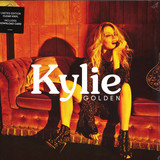
Golden, Kylie's fourteenth studio album, is the result of an intensive working trip to the home of Country music, a city whose influence lingered on long after the pop legend and her team returned to London to finish the record: We definitely brought a bit of Nashville back with us,' she states. The album is a vibrant hybrid, blending Kylie's familiar pop-dance sound with an unmistakeable Tennessee twang. It was Jamie Nelson, Kylie's long-serving A&R man, who first came up with the concept of incorporating a Country element' into Kylie's tried-and-trusted style. That idea sat there for a little while, with Minogue and her team initially unsure about how to bring it to life. Then, when Grammy-winning songwriter Amy Wadge's publisher suggested Kylie should come over to collaborate in Nashville, a city Kylie had previously never visited, something clicked. You know when you're so excited about something,' she recalls, that you repeat it an octave higher and double the decibels I was like that. 'Nashville! Yes! Of course I would!'. I hoped it would help the album to reveal itself. I thought 'If I don't get it in Nashville, I'm not going to get it anywhere.''
Kylie's Nashville trip involved working alongside two key writers, both with homes in the city. One was British-born songwriter Steve McEwan (whose credits include huge Country hits for Keith Urban, Kenny Chesney and Carrie Underwood), and the other was the aforementioned Amy Wadge, another Brit (best known for her mega-selling work with Ed Sheeran). It was then a truly international project: Golden was mainly created with African-German producer Sky Adams and a list of contributors including Jesse Frasure, Eg White, Jon Green, Biff Stannard, Samuel Dixon, Danny Shah and Lindsay Rimes, and there's a duet with English singer Jack Savoretti.
However, the album's agenda-setting lead single Dancing was, significantly, first demoed with Nathan Chapman, the man who guided Taylor Swift's transition from Country starlet to Pop megastar. If anyone knows how to mix those two genres, Chapman does. Nathan was the only actual Nashvillean I worked with. He's got a huge studio in his house, which is probably due to his success with Taylor... there's plenty of platinum discs of her, and others on his walls.' There's something of the spirit of Peggy Lee's Is That All There Is, of Dylan Thomas' Do Not Go Gentle Into That Good Night, even of Liza Minnelli's Cabaret about Dancing, a song which not only opens the album but sets out its stall, providing a microcosm of what is to come. You've got the lyrical edge, that Country feel, mixed with some sampling of the voice and electronic elements, so it does what it says on the label. And I love that it's called 'Dancing', it's immediately accessible and seemingly so obvious, but there's depth within the song.'
The experience of simply being in Nashville was an overwhelming one, before Kylie had even arrived. Once I knew I was going to Nashville, people talked about the place with such enthusiasm. They said without doubt I would love it and, I would come back with songs. They were sending lists of restaurants, coffee shops and bars. It really was a beautiful and genuine response and it felt like I was about to have a life changing experience and in a way, I did.' The reality came as something of a surprise, when she found a far more modern metropolis than the vintage one she'd envisaged. I thought it would be like New Orleans: little houses and bars, with music spilling out onto the street. It reminded me more of Melbourne: apartment blocks going up everywhere! The main strip, Broadway, where the honky tonk bars are, that's where the street was filled with music and it was just amazing.' Mainly, Minogue remembers the heat and humidity. It was 100 degrees. It was like it was raining with no rain.' She also relished the chance to wander around unrecognised, visit a few venerable music bars and soak in the atmosphere. I didn't get to the Grand Ole Opry or the music museums but I managed to go to a couple of the institutions there like The Bluebird Cafe and The Listening Room, and just by being there, through some kind of osmosis, you get this rejuvenated respect for The Song, and the writing of The Song. There's no hoo-hah around it. There's a singer-songwriter there, talking about the song and singing the song, to an audience who are there to listen. Although, I have to confess I was guilty of starting to clap too soon during a long pause at the end of one of the songs. The guy made a bit of a joke out of it and got a laugh from it, but I thought 'Of all people in the audience, no...''
It's probably no coincidence, therefore, that every track on Golden is a Kylie co-write, making it arguably her most personal album to date. The end of 2016 was not a good time for me,' she says, referring to well-documented personal upheavals, so when I started working on the album in 2017, it was, in many ways, a great escape. Making this album was a kind of saviour. I'd been through some turmoil and was quite fragile when I started work on it, but being able to express myself in the studio made quick work of regaining my sense of self. Writing about various aspects of my life, the highs and lows, with a real sense of knowing and of truth. And irony. And joy!'
The songwriting process allowed Kylie to get a few things out of her system. Initially, she admits, it was cathartic, but it also wasn't very good. I think I was writing too literally. But I reached a point where I was writing about the bigger-picture, and that was a breakthrough. It made way for songs like Stop Me From Falling and One Last Kiss. It also meant I had enough distance to write an autobiographical song, like A Lifetime To Repair, with a certain amount of humour. The countdown in that song: 'Six-five-four-three, too many times...'. I don't know if that will be a single, but I can just imagine a girl with framed pictures of past boyfriends, and kind of going 'Oh god, when am I going to get this right'' When she listens back to Golden, Kylie can vividly hear the Nashville in it. It is, she'll agree, probably the first time that a Kylie album has sounded like the place it was made. You wouldn't normally relate my songs to the cities. Can't Get You Out Of My Head sounds more like Outer Space than London. But Shelby '68, for example, was written in London but it was done with Nashville in mind. It's about my Dad's car, and my brother recorded Dad driving it! I don't think I'd have written a number of the songs, including Shelby '68 and Radio On without having had that Nashville experience.'
The latter, she says, is about music being the one to save you.' Throwing herself into the making of the record, she says, crystallised that idea. If there's one love that will always be there for you, it's music. Well, it is for me, anyway.' That song, in particular, carries nostalgic echoes of the golden age of Country, as heard through Medium Wave transistors and tinny home stereos in the distant past. Like any child of the Seventies, Kylie had a basic grounding in Country music, mainly absorbed from older family members. My Step-Grandfather was born in Kentucky and though he lived most of his adult life in Australia, he never stopped listening to his beloved Country artists.' If there's any classic Country singer whose imprint can be heard on Golden, it's Dolly Parton.
Kylie saw Dolly live for the first time at the end of 2016, at the Hollywood Bowl. It was like seeing the light,' she beams. It was incredible. Everyone, whether they know it or not, is a Dolly Parton fan. When I was in Nashville, I did pick up a T-shirt that said 'What Would Dolly Do' Maybe that should be my mantra.' And, whether consciously or otherwise, there's a timbre and trill to Kylie's vocals on Radio On that is distinctly Parton-esque. My delivery is quite different on this album,' she says. A lot of things are 'sung' less. The first time I did that was with Where The Wild Roses Grow. On the day I met Nick Cave, when I recorded my vocals, he said 'Just sing it less. Talk it through, tell the story.' This album wasn't quite to that extreme, but a lot of the songs were done in fewer takes, to just capture the moment and keep imperfections that add to the song. I remember on my last album, a lot of producers were trying to take out literally every vibrato they heard. And that's not natural to my voice. I mean, I can make myself sound like a robot, but it's nice to sound like a human!' Working within the Country genre also gave Kylie permission to write in the Nashville vernacular. Because we were going there, I wasn't afraid to have lines like 'When he's fallen off the wagon we'd still dance to our favourite slow song', 'Ten sheets to the wind, I was all confused', 'I'll take the ride if it's your rodeo'. The challenge of bringing a Country element to the album made the process feel very fresh to me, kind of like starting over. I started to look at writing a different way, singing a different way.'
If ever Kylie lost confidence in the Country-Pop concept, and found herself pondering This is great, but back in the real world - my real world - how will this work', Jamie Nelson was there to badger her into sticking to the path. We found a way to make it a hybrid with what we'll call my 'usual' sound. It had to stay 'pop' enough to stay authentic to me, but country enough to be a new sound for this album. The closer we zoomed in, and the more we honed it, I knew Jamie was right. We sacrificed good songs that weren't right for this album, because we wanted it to be as cohesive as possible. The songs that were hitting the mark were these ones, so we decided to be strong, and that's how we wrapped up the album. What he said, that stuck with me, was that 'I'd hate to get to the end of this and really wish we'd gone for it.'' Having worked with Kylie for so long, Nelson was able to put this latest shift of direction into perspective. He said 'You've traditionally done it throughout your career. You had your PWL time, then you did a complete turn when you went to deConstruction, then another complete turn with Spinning Around, and R&B dance-pop, and then another turn with Can't Get You Out Of My Head, icy synth-pop, and this is another one.' He was right. It felt like the right time to have a change sonically. New label, new stories to tell, and a new decade almost upon me.'
Kylie Minogue will, it's scarcely believable, turn 50 this year. This looming milestone is partly behind the album's title, and title track. I had this line that I wanted to use: 'We're not young, we're not old, we're golden' because I'm asked so often about being my age in this industry. This year, I'll be 50. And I get it, I get the interest, but I don't know how to answer it. And that line, for my personal satisfaction, says it as succinctly as possible. We can't be anyone else, we can't be younger or older than we are, we can only be ourselves. We're golden. And the album title, Golden, reflects all of this. I liked the idea of everyone being golden, shining in their own way. The sun shines in daylight, the moon shines in darkness. Wherever we are in life, we are still golden.' One of the album's shiniest moments is Raining Glitter, an exuberant banger which ventures closest to Kylie's traditional dance-pop comfort zone. Eg White, who is one of the producers and writers and a great character, was talking about disco one day. I said 'I love disco, but you know the brief.' We needed to be going down the Country lane, so to speak. But we managed to bring them both together. When I wrote it, I was thinking about the Jacksons video for Can You Feel It where they're sprinkling glitter over everyone. And I think there's a Donna Summer record that's got that feel to it. I think that's my job: I basically leave a trail of glitter after every show I do anyway.'
Kylie is looking forward to the challenge of incorporating the Golden material into her live shows. Mixing these songs in with my existing catalogue is going to be fun. And it could be fun to do some of those songs with just a guitar. It'll make my acoustic set interesting...'Her incredibly loyal fans - to whom one Golden song, Sincerely Yours, is intended as a love letter' - will, she believes, have no problem with her latest stylistic shift. My audience have been with me on the journey, so I shouldn't be afraid that they won't come with me on this part. I've had fun with it, and I'm sure they will too.'
The time spent making Golden has, Kylie says, been a time of creative and personal renewal. I've met some amazing people, truly inspiring writers and musicians. My passion for music has never gone away, but it's got bigger and stronger.' And if there's an overriding theme to the record, it is one of acceptance. We're all human and it's OK to make mistakes, get it wrong, to want to run, to want to belong, to love, to dream. To be ourselves.'
I was able to both lose and find myself whilst making this album.'
One year into his music production career, WHB' is the startling debut release from Brooklyn's Kellen303. A unique hybrid, the tracks are inspired by goth rock/industrial, footwork and vogue music. It's perhaps a happy but unlikely accident that they also fit into Keysound Recording's dark, rolling UK sound. Across five tracks, four cut to vinyl, Kellen303 maps out his unique but bleak vision. The title track, a relentless volley of thunderous kicks, samples a phone interview Kellen303 held with a grime MC close to Keysound's hearts. 'What's Happening Brotha' is titled such because these songs were made at a very dark time in my life,' he explains. I decided to turn my anger and frustrations into music.' There is also a visual/thematic component to my music. Specifically, within the world of 'Planet X.' Where 'Planet X' is a song about going war, the Interstellar mix is song about traveling to that war in suspended animation. The song take place in a dream state where thoughts, emotions and images from the day are passing in and out of the subconscious.' As his thoughts suggest, Kellen303 is also an intensely visual person: outside DJing, he's a filmmaker and screenwriter. He also co-founded Transit FM, a vibrant American web radio station. The EP also features a vocal from Bronx based Afro-Dominicano MC, Rainey.
Off the back of Rudeboyz follow up EP entitled Gqomwave, Goon Club Allstars are back with an EP from UK Funky producer KG. In 2007 Karen Nyame, otherwise known as KG, was at the Nottingham Trent University producing beats on Fruity Loops. Slightly isolated in Nottingham - away from the UK Funky scene's London epicentre - KG posted her tunes on popular UK Funky message boards and Facebook pages, but never had an opportunity to properly stake her claim as one of the scene's heavy hitters. 808 and Midnight (Flute Riddim) are two lost anthems from that era, although receiving support from the likes of Marcus Nasty and others, they were largely forgotten amongst the numerous stand out tracks of the era, appearing rarely in mixes of those lucky enough to have digital copies. 808 is the party anthem, it's joyous, quivering melodies ascend above the thumping kick drum, while relentless crashing snares and carnival whistles rain down - guaranteed to heat up the coldest of dancefloors. Midnight (Flute Riddim) on the flip side is the softer, slinkier bubbler. Built for smouldering club action and hot sunny days. BSNYEA is a new addition to Goon Club Allstars' burgeoning family of artists. Hailing from the Bronx he is a veteran of the Borough's Litefeet genre that soundtracks the performances of subway dancers cross New York City's transit system. On his remix of 808 he focusses on the whistles and gutter synth lines adding in booming bass drums and lock inducing chants. Hitmakerchinx comes fresh from his anthemic Night Slugs compilation. Bringing his signature FDM energy he drops the tempo and builds on the light, airiness, letting the flutes play out softly underneath the thumping drums.
Matuss continue to deliver deep and soulful techno via her vinyl only imprint Absence Seizure, which she helms alongside Abe Duque.
Opening with 'Whistler', Matuss delivers heavyweight bass tones, dubbed out drums and obscure synthesiser transitions before 'Zoya The Destroyer' provides eerie atmospheres, crisp percussion and subtle mid-range motifs which sit on top of a melodic low-end.
On the flip side we have 'Stranger things', which sets an ominous tone with murky ambiences and ethereal pads underpinned by a powerful kick, rumbling sub-bass and percolating rhythms to close the release.
These rolls, these hums, these sudden rushes, this song, these peaceful circlings, these sudden outbursts, these returns to quiescence - what do they remind us of
This piece's trajectory could also be a representation of the dramatic unfolding of a day - of a life - from sunrise (climate 1) to night-time (landscape 4) via restless encounters, transitions (1 to 3) that announce the drama climaxing in landscape 3, before reaching its denouement in climate 4... A whole concrete 'story'.
The subterranean properties inherent to listening gently shift our ideas...
François Bayle
First performance: 19 March 1979 - Grand Auditorium of Radio-France,
Ina-GRM's Cycle Acousmatique. .
Toupie dans le ciel (1979), 21'
A wave is swaying on two minors thirds. This constantly uniform yet constantly varied swaying revolves in a swarm of sharp designs that blink on and off in a layer of growing density and mobility.
Distance, speed, pressure, density, temperature, colour, intensity, are the "themes" of the 27 short interconnected cells flowing together though this seemingly unified movement.
Occasionally, a breach in the texture reveals skyes dotted with little comets. In the centre, a slow gliding picks up the distant harmonics of a basic chord. Toward the end, this gliding returns with a fiery burst.
Fine lines and whirs are generated from the song of a spinning antique top.
To end on a lighter note the title Toupie dans le ciel - Spinning Top in the Sky reminds us of Lucy in the Sky with Diamonds by The Beatles as well as Lucy, the oldest Australopithecine (3 million years), our African grandmother in the Erosphere...
The overall title Erosphere alludes to the desire inherent to the listening experience, and to the very primitive cues that sustain the auditory attention and are the basis of all musical pleasure.
François Bayle
First performance: 21 January 1980 - Grand Auditorium of Radio-France,