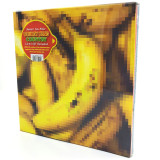
From the mountains with the flavor of the sea is the fifth release on the label containing fantastic productions ranging from Switzerland, Finland and Japan. a release that contains unique emotions and atmospheres from each producer involved capable of being translated magnificently on the dance floor. deep, dubby, minimalist with deep sounds as we like. limited edition of 200 copies on a fantastic 180 gr vinyl, not to be missed, since there will be no repress.
quête:translate
Singer, songwriter and composer Melike Şahin is set to releases her new album AKKOR via Gülbaba Records in partnership with Day Dreamer
An empowering assertion of survival that propels traditional Anatolian pop and folk influences into the future, AKKOR rises like a phoenix from the flames to reintroduce the Turkish superstar diva to an international audience. An expression of Şahin’s personal growth, the album is an affirmation of her growing status as the voice of a generation, and hose lyrics have been adopted as a callto rights for the women’s movement in Turkey.
Recorded live in London with producer Martin Terefe (London Brew, Buika, Jamie Cullum), AKKOR features a selection of the most talented and forward-thinking musicians on the scene, including guitarists Dave Okumu and violinist Raven Bush, as well as terling Campell (David Bowie) on drums, Glen Scott (Eric Bibb) and Nikolaj mTorp Larsen on keyboards. Bringing an international feel to her mheart-rending performances, the record represents the most focussed and complete expression of Şahin’s sound to date. Melike Şahin has made a career of facing down criticism and censorship to make sumptuous and provocative music that captures the defiant tone of progressive creativity in contemporary Turkey. Having performed around the world with Turkish psych legends BaBa ZuLa, Şahin released her debut album Merhem in 2021, gathering billions of streams and building a reputation for unforgettable live performances in the process. Influenced by the style of Sade, cutting an elegant and beguiling figure on the stage. Where Şahin describes Merhem as about healing, she says AKKOR is about survival, both on an emotional level, coming to terms with difficult relationships, childhood trauma and the pressures of newfound fame, and on a social level, in continuing the champion the rights of the oppressed in the face of state and media violence. Powerful and vulnerable in equal measure, AKKOR demonstrates an orchestral grandeur and a dramatic flair drawn from Şahin’s love for traditional Anatolian pop and folk music, injected with the urgency of contemporary production. Bound together by Şahin’s inimitable voice AKKOR skips between Middle Eastern melancholy and classic disco hedonism, for an album that is as stylistically open, pluralistic and affirmative as the messages the music carries.
Although she does not describe herself as an activist, Şahin’s poignant lyrics have come to define the women’s movement in Turkey, with the words, “I deserve each and every inch of this smile,”adorning protest banners on International Women’s Day and celebratory posters at Pride.
“This is the moment that I told myself, Yes, I am an artist,” Şahin says. “I am bearing all of the other things because of this, because I am affecting people's lives, and I am giving some power.” AKKOR – which translates as candescent – finds Melike rising again and burning brighter than ever before.
Overall though, Şahin says AKKOR is her rebirth album – a statement of self-empowerment, through which she hopes tocontinue to raise up the voices of those around her. “You are seeinga woman who falls down, but who rises again and flies,” sheexplains. “Maybe she doesn't win, maybe she doesn't lose, but she's a survivor,” Şahin concludes. “She is a phoenix.”
2025 Cream VINYL REPRESS.
When Alex Stephens (A.K.A. Strawberry Guy) self-released his debut single last year, he was merely doing it out of a love for songwriting. What he wasn't expecting was a million Youtube streams and an avid fanbase. Now, the South-Wales born, Liverpool-based songwriter is ready to release a full EP of his compelling, lushly produced dream-pop.
Born outside Cardiff, Strawberry Guy moved to Liverpool to study music and grow as a writer. 'I knew that it was a very artistic city with all it’s creative history, it seemed like the perfect place to move to.' he says. Whether it's playing keyboards in The Orielles or just being part of the city's growing musical scene, Alex plays music for the love of music, something that heavily translates into his adept songwriting.
The intense emotional feel of the tracks he writes is down to Alex's songwriting process, recording the entire EP in his bedroom & producing it himself. 'I feel that it’s important to me to only write/record when you’re channeling some kind of emotion, so I would only work on it when I was in the right mood to do so.' He answers when asked about the isolated environment into which he put himself for the recording process.
Much of the inspiration for Alex's work comes from experience rather than other artists. 'When something significant happens to me, all I want to do is make music.' In terms of musical touchstones however, there's the obvious dream-pop contemporaries such as Beach House and Weyes Blood, coupled with great songwriters of old like Nat King Cole or Harry Nillson. Sonically, a blend of orchestral & synthesized melodies layer together to act as a platform for his heartfelt lyrics.
Opener 'Without You' is a fine example of this, a break-up song of sorts, with an infectious keyboard melody and swirling synths over which Alex contemplates whether it's even possible to find lasting love. The lyrics 'Do you really have to talk about the things you do with him? Do you really have to talk about your love?' hit particularly heavily.
Contrast this with the final track, the titular 'Taking My Time To Be', a powerful song of self-discovery. Beginning with downtempo piano and drums, the song breaks out into a saxophone and synth solo that wouldn't go amiss on a Badalamenti soundtrack. 'The song is about me learning to be comfortable with myself, but then wondering if I'll be accepted for being myself' Alex imparts. It's a fitting closer to a EP driven by emotion and experience.
With Bhelize Don't Cry, Uzi Freyja unveils her childhood alter ego, Bhelize—a name known only to her family, now released as a daring new identity. This album, crafted as a letter to her “inner child,” is an honest dialogue between the adult she has become and the little girl she once was.
Over 12 tracks, Uzi Freyja takes us on a visceral journey, navigating between vulnerability and strength. She recounts her trials and triumphs, affirming an unbreakable resilience and a unique, uncompromising identity. Each track captures a key moment, an intense emotion, a facet of her striking universe.
An intimate, uncompromising story: Uzi Freyja delivers more than just an album; this is a blazing confession that transcends the personal to strike a universal chord, resonating deeply with listeners.
Stage energy translated to the studio: With over 100 performances since 2021, Uzi Freyja brings her on-stage intensity to this album. Bhelize Don't Cry is designed to be both felt and danced to, inviting everyone to let go and “shake that Bunda” with no reservations!
A raw balance between gentleness and power: Moving between delicate confessions and pulsating beats, Uzi Freyja crafts a world where each track oscillates between pure emotion and raw energy, captivating the listener from start to finish.
Producers S. Fidelity, Bluestaeb, and Melodiesinfonie form a powerhouse trio known for their innovative blend of RnB, House, and 2-Step sounds. Their collaborative magic often unfolds in unique settings, such as a picturesque studio in the South of France, where they crafted their long awaited EP "365 P". The trio's ability to capture the essence of live sessions and translate it into vibrant, downtempo grooves has earned them a reputation already. As a result the group created these most vibey tracks between RnB, House & 2-Step to their catalogue ever - catching the vibe of this beautiful sessions together with douniah.
“Being Stuck in a loop with someone. repeating the same conversations over n over while nothing changes.” - douniah
"We started working on a joint project in Paris at Bluestaeb’s flat in 2017 already. Over the course of the years following, we tried to continue working on the project remotely from Berlin, Paris and Zurich. With only one conclusion: we need to be in the room together to make this a record that feels exciting to us. This May we finally closed ourselves in for a week and created what has become this beautiful EP with tons of live recordings." - S. Fidelity
Following the success of his debut EP on WeMe records, Binary Digit is back with a brand new 6-track EP dedicated to the mythical Balearic Islands. From the very first tracks, we find the atmosphere represented by the legendary island of Ibiza, synonymous with partying, relaxation and getting high. The rest of this EP is a good definition of the well-being and the holy and benevolent feeling that all these clubbers can offer every year, who come to party in an atmosphere of sharing and respect, and above all who make a point of honor of ecology by favoring swimming. The track "Smkndpe", literally translated from Latin as "how to better consume your herbal tea", is already a hit on Tik Tok to accompany the best female influencer of the moment! We end this ep with the track "Overdoze In Ibiza", which will bring this well-deserved vacation to a close.
After the incredible interest in the KOSMONAUCI debut album, we created a dedicated version for the Japanese market. "Japan Edition" has an insert translated into Japanese. The vinyl is black (180g). The label also has Japanese markings. Each record also has a special Japanese OBI.
U JAZZ ME is a boutique label rooted in U Know Me Records.
"Sorry, nie tu"is the debut album of the boys band KOSMONAUCI. The album consists of original compositions by the band members that were created over several years and evolved with the artists. The music of the Cosmonauts derives from jazz and improvisation, but over time the musicians have developed many new ways and possibilities to draw from many other, seemingly distant musical genres. Songs characterized by improvisation and rhythm of drum & bass or hip-hop are one of the characteristic features of the album "Sorry, nie tu". The music of the band KOSMONAUCI is stylistically extensive and at the same time very coherent, thanks to the combination of beautiful lyrical melodies with catchy and often surprising polyrhythms or bold improvisations. KOSMONAUCI have been playing together since high school, which can be heard very well in the chemistry of the whole band and the emotions flowing from the album. On March 21, 2024, the premiere of the debut album entitled "Sorry, nie tu" will take place. The album will be released by U Jazz Me, a sublabel of U Know Me Records. It will be the inaugural sublabel album.
KOSMONAUTS– a boys band originating from jazz traditions, which in its musical language draws onhip-hop,drum & bassandimprovisation. The instrumentarium, which includes saxophone (Miłosz Pieczonka), bass (Bartłomiej Lucjan), vibraphone (Tymon Kosma) and percussion (Jan Pieniążek), creates a unique style of the group, balancing between emotional melodies and polyrhythmic structures. The roots of the band's music go back to the jazz traditions of the 1950s to the 1990s. Their current sound, on the other hand, is much more varied by the search for ideas in genres such as hip-hop, drum & bass, alternative pop or the contemporary London Yass scene. KOSMONAUCI have been playing with each other since high school and have known each other since elementary school. They went to school together, to the concerts and grew up together in the field of music as well. The artists have classical and jazz education, which gives them a wide range of possibilities in the field of improvisation, performance and composition. Each of them has an individual style and different inspirations, which find a common denominator in the band, allowing them to create a unique style of playing and sound. Despite the fact that they have been active on the music scene in Poland and abroad since 2018. Their first album is released in 2024. Over the past few years, KOSMONAUCI have had the opportunity to perform at renowned jazz festivals, collaborate with renowned artists and learn from the best artists in Europe. The resultant of all these factors is the band's debut album "Sorry, nie tu", which will be released on the sublabel of the U Know Me label - U Jazz Me.
Following their groundbreaking collaboration with Art Ensemble of Chicago, Comme à la Radio, Areski and Brigitte Fontaine began recording almost exclusively together as a duo.
Deeply rooted in North African and European folk traditions, the album features evocative vignettes with breezy vocals and minimal accompaniment of classical guitar, strings and woodwinds.
As always, there is a mercurial quality to their lyrics. The title track (translated as "I Do Not Know This Man") suggests at once Apostle Peter's denial and a poetic acknowledgement. On "C'est Normal" Fontaine playfully questions the status quo while Areski offers satirical answers. What makes Je Ne Connais Pas Cet Homme one of their best-loved albums, though, is its remarkable sense of intimacy – as if Areski and Fontaine beckon listeners into their strange and beautiful world.
This first-time domestic release continues Superior Viaduct's reissue campaign of Fontaine's classic '70s catalog.
For ALT014, Altered Circuits presents its first Various Artists release. In addition to the label's co-founder, three friends of the label appear on this heterogeneous, club-oriented 12''. Portal, with its breakbeat layered drum section and spartan bass hook, sounds like classic Innershades from the start. When the angular leads and slowly phased, ominous chords hit, we are reminded of the artist's fondness for the new beat genre and his ability to translate its tropes and conventions to the present. On Show You Love, Mr. Ho combines skippy two-step drums with an MS20 type of flat bass. After introducing a one-bar mid-bass arpeggiator, gently swelling pads, leisurely spread side riffs and reverb-drenched musings join, calibrating the vibe to lush and groovy. On the other side, Oshana treats groove as the focal point with her Hey Kiss Kiss contribution. Over its 6-minute course, the snappy 909 kick rarely relents while a bunch of often short, many a time looped sequences emerge and disappear, unfolding a hypnotic tapestry of textures. Rising talent Salomee closes the VA with Late Night Summer, a track capable of setting the floor in motion at any moment. It revolves around a portamento-heavy, neon-tinged lead that lingers long after the track ends and a sturdy, efficient one-note bass pulse.
Back in stock due to popular demand, the 12th release in our signature Brazil 45’s series saw a reissue of two certified classics from Brazil’s rich musical tapestry.
On the A side, Brazilian Samba luminary Elza Soares, covers Jorge Ben’s classic ‘Mas Que Nada’. Originally featured on her brilliant 1970 Sambas & Mais Sambas LP on Odeon, it’s tougher drums, punchy piano and Elza’s stunning vocal tones make this a perfect dancefloor heater. With over 34 albums to her name in a career that spanned 60 years, Elza is a certified legend of Brazilian music.
Little is known about the artist responsible for the B side track, Elizabeth. Nicknamed ‘Gatinha do Mato’ (loosely translated as ‘Jungle Cat’) she was involved in the Jovem Guarda movement that fused rock n roll and youth culture with Brazilian styles in the ‘60s.
‘Vou Falar-Lhe Francamente’ is a majestic, horn-infused number laced with emotion, that we originally found at one of our favourite, now defunct, spots ‘Tony’s Hits’ in Sao Paulo. The record was originally released on 7” on RGE in 1970.
I Will Find You” takes listeners on a journey through Mathame’s greatest inspiration, Franchino, who’s love for electronic music inspired not only the brothers, but the entire nation. As this track reveals itself, the duo’s devotion to creating meaningful music that is deeply rooted in their own influences reverberates throughout as they translate its gripping sonic identity through their own, distinct lens.
Throughout their career, Mathame (brothers Matteo and Amedeo Giovanelli), have been elevating fans to new heights through their sophisticated compositions that infuse cinematic soundscapes with ethereal energies and raw, real emotions that command movement. While Franchino’s version of this track was originally introduced in 1993 and influenced some legends of the italian progressive techno pioneer scene such as Ricky Le Roi and Mauro Picotto, the Mathame record is actually a rework of Clannad’s theme song from the soundtrack of the 1992 film “The Last of Mohicans”, which the duo first incorporated into performances during their 2019 Cercle set in Mexico City.
“I Will Find You” has since become an anthemic and defining element of Mathame's performances, inclusive of the duo’s 2023/2024 world tour, and has already garnered critical acclaim. The release of “I Will Find You” carries a special endorsement from its original composers, Clannad. The Grammy and BAFTA award-winning band has expressed their delight in seeing their music embraced and reinterpreted by not only new generations, but new genres, as the duo breathe new life into the track's legacy.
From the solitude of volcanic Mount Etna to stages around the world, Italian DJ and producer duo Mathame connect audiences around the globe through transportive music that transcends genres, generations and dimensions. More than another DJ duo, Mathame are sonic alchemists whose productions unfold as poignant odysseys that blur the lines between reverie and reality. Defying convention through their sound, the brothers masterfully immerse listeners into the futuristic realms they conjure, pulsating with sensorial magic and ethereal energies that linger in the air akin to candles in a great cathedral. Their first LP, “MEMO” was a technically driven masterpiece, paving the way for colossal collaborations with global talents like Tiësto and John Summit and amassing over 6 Million streams on Spotify and support from the likes of industry authorities such as Forbes’ 15 Best Albums List of 2023.
The arrival of their solo record “I Will Find You” signals a return to their shared artistic vision and will be released in tandem with the announcement of the duo’s Ibiza Residency concept - NEO - at the beloved electronic temple, Amnesia. Born from an inspirational journey in Tokyo, Japan this past year, Mathame will introduce their most groundbreaking concept to date that masterfully blends the worlds of technology, artificial intelligence and their profound performances with a sense of mysticism that dances between what is seen and what is heard. The cinematic experience - complete with a setup, development and climax - will take place at Amnesia under the HORIZON framework from June 7 to July 5, and from September 13 to 27, with each chapter boasting an eclectic lineup of performances from the likes of The Blaze (DJ Set), Mind Against, NTO and more.
“Other Phases Of Sleep” is Amsterdam based artist Kennedy’s first excursion beyond his ever-consistent imprint “Dream Machine”. On this EP he further explores the ethos behind his creative process he describes as - "a series of thoughts, sensations and sounds occurring from a person's mind, translated by machines."
The EP calls to mind the effervescent and driving energy of early Metroplex material while also paying homage to the Vancouver Sound and the optimistic vibe of the early 90s. Playful, sophisticated, and life-affirming dance music for those looking to uplift their mind, body, and soul.
Pacific Rhythm alumni Space Ghost rounds out the EP with a masterful remix of “Asleep” that slows the energy down to a crawl and leans into his love of UK Street Soul and cosmic flourishes.
Scientists from Stereo 45 headquarters have finally translated the warp code sequence, opening up a parallel-time-rift connection across the vast known universe. They've enlisted the help of Tim Reaper, Dwarde, DJ Sofa, Nectax & Sketchy Rida to venture into the portal and report back their findings in the form of club-ready atmospheric Jungle.
- Wedge
- For Heaven's Sake Pt. 2
- The Doctor
- Tamper-Resistant
- State Of Being
- The Other Room
- Save Your Beers
- Jon Goes To Camp
- Parasites Lost
- Groundhog Day Parade
- The Vow
- Treatment Center Blues
- 80: 20
Recorded by Grammy-winning producer Chris Dugan (Green Day, Weezer), this LP is a triumphant return after 7 years for the Cincinnati-based quartet Introducing "80/20," the highly anticipated new album from the acclaimed punk rock band, The Dopamines. Recorded by Grammy-winning producer Chris Dugan (Green Day, Weezer), this album marks a triumphant return to the scene after 7 years for the Cincinnati-based quartet, renowned for their raw energy, blistering melodies, and unapologetically honest lyrics. "80/20" perfectly encapsulates the true sound and character of The Dopamines. Each track is a testament to The Dopamines' evolution, blending their signature breakneck tempos with refined songwriting and complex arrangements. Chris Dugan's masterful production highlights the band's musicianship, capturing every nuance of their performance with clarity and intensity. Lyrically, "80/20" delves deep into themes of alienation, addiction, and the search for meaning through the lens of a chaotic punk band. Each song is a vignette of personal struggle and societal critique, written with the brutal honesty and sharp wit that fans have come to expect from The Dopamines. Chris Dugan's involvement brings a polished edge to the album without sacrificing the raw energy that defines The Dopamines. His expertise in capturing live performances translates into a recording that feels immediate and authentic, immersing listeners in the band's world. "80/20" is more than just an album; it's a declaration of The Dopamines' place in the punk rock pantheon. With its potent mix of aggression, melody, and emotional depth, this record is set to become a staple in the collections of punk enthusiasts worldwide. Don't miss out on this landmark release from one of the most compelling bands in contemporary punk rock
- 1: Kitaro Rides A Boat
- 2: Daily Hotel
- 3: Slowly Walking
- 4: Piggyback
- 5: Castle Ruins
- 6: In The Can
- 7: Came To Sell Water Meter By Measure
- 8: Eiji Mitooka’s Arrangements
- 9: Cheap Flat
- 10: Year One And Public
Kumio Kurachi is a Japanese singer-songwriter who has been active since the 1980's.
This is his 11th solo album and only the second to be released outside of Japan following ‘Sound of Turning Earth’ (2018) on bison. Though his songs are written and performed primarily on guitar, “Open Today” is a return to Kurachi’s full, multi-instrumental recording style - featuring drums, bass, strings, keys and Kurachi’s rich, distinctive vocals in multiple voicings. Incredibly, all instrumental performances and arrangements were performed and recorded by Kurachi himself - marking a brilliant return to the fully fleshed out visionary world we fell in love with on Supermarket Chitose (Enban, 2006). The super fine detail and dense landscapes of ‘Open Today’ should come as no surprise really - Kurachi is an illustrator by trade and it bleeds right through to his music. Even to the non-native speaker Kurachi’s vocals hold centre stage - at times enormous and thundering over urgent guitar and toms, then switching to softly spoken words amongst keys. Frequently Kurachi multiplies, whether multitracking himself or summoning voices for the characters he writes from sightings on train platforms or supermarkets. His lyrics - translated to English for both formats - are more like poetry, and though written about the mundane they quickly become surreal, bringing the quality of dreams into the everyday. The hours spent on buses, trains or walking home towards a cheap flat - familiar to us all - are catalysts for microcosms of detail.
Again, we shouldn’t be surprised - Kurachi is well known in Japan for winning the national championship of NHK's "Poetry Boxing" in 2002, which also might explain his amazing Discogs photo. Poet, illustrator, multi-instrumentalist - Kurachi is thought of by many as a genius. He’s worked with Jim O’Rourke, Tori Kudo, Eiko Ishibashi and Taku Unami (who did the mastering on this LP). There are lines to be drawn between Kurachi and Kazuki Tomokawa or Kan Mikami, but also Francis Plagne and Fairport Convention.
Ultimately though there is nothing else like it - it’s a brand of strange songcraft that’s totally captivating.
'Mei Semones' sweetly evocative blend of jazz, bossa nova and math-y indie rock is notonly a way for her to find solace in her favorite genres, but is an intuitive means ofcatharsis. "Blending everything that I like together and trying to make something new -that's what feels most natural to me," says the 23-year-old Brooklyn-based singer-songwriter and guitarist. "It's what feels most true to who I am as an artist." Plinking guitar tones and asymmetrical time signatures exemplify her forays intoangular indie rock more now than ever before, especially on her debut Bayonet Recordssingle "Wakare no Kotoba"_its wide-interval arpeggios in odd meters being some ofthe most technically difficult guitar work Mei has ever implemented in her songwriting.Translated to "parting words'' in English, the self-described "anti-love song" serves as afarewell to a toxic friendship, complete with orchestral swells and crashing guitars. Originally from Ann Arbor, Michigan, Semones began playing music at a young age,starting out on piano at age four before moving to electric guitar at age eleven. Afterplaying jazz guitar in high school, she went on to study guitar performance with a jazzfocus at Berklee College of Music. College is where she met her current bandmates,including string players Noah Leong and Claudius Agrippa, whose respective viola andviolin add softness and multidimensionality to Mei's intricate guitar work. After releasinga slew of singles and an EP in 2022, coinciding with her move to New York City, Mei andher band have since gone on to collaborate with post-bossa balladeer John Roseboroand embark on their first-ever tour with the melodic rock outfit Raavi. Semones chronicles infatuation, devotion, and vulnerability in her songs, complete withsweeping strings, virtuosic guitar-playing and heartfelt lyrics sung in both English andJapanese, that have all become part of her sonic trademark: ornately catchy, genre-fusing compositions serving as the backdrop to tender lyrics touching on theuniversalities of human emotion.
- Too Much Sake
- Sayanora Blues
- The Tokyo Blues
- Cherry Blossom
- Ah! So
The Tokyo Blues is an album that reflects Horace Silver's deep musicality, cultural curiosity, and love for the blues
Its combination of relaxed grooves, melodic beauty, and hints of Eastern influence make it a unique and memorable work within Silver's extensive catalog. It's a perfect example of how jazz can both explore new territories and remain grounded in its own traditions, showcasing Silver's versatility as both a pianist and a composer. Released in 1962 it is considered a gem within Horace Silver's prolific career and offers an intriguing combination of Horace Silver's unique jazz language with the subtle influence of his experiences in Japan, producing a warm, thoughtful, and musically rich album. Horace Silver's The Tokyo Blues is the result of his quintet's tour of Japan in 1961, which left a strong impression on him. While on tour, Silver was struck by the culture, atmosphere, and aesthetics of Japan, which he sought to translate into the musical language he was deeply rooted in hard bop. The album, however, doesn't feature overt Japanese musical scales or instrumentation, but rather evokes a mood and a sense of place. Silver's approach was more about integrating his impressions of Japan, its serenity, beauty, and mood of reflection, into the compositions. He did this within the framework of the jazz tradition, creating music that remains unmistakably his own. His quintet was already known for its catchy themes, complex rhythms, and inventive solos, and The Tokyo Blues adds a layer of atmospheric and emotional depth to that established style. In the early 1960s, Horace Silver was at the height of his creative powers. His work was instrumental in shaping the hard bop movement, a style that emphasized blues, gospel, and soul influences over the more intricate, intellectual sounds of bebop. The Tokyo Blues stands as an example of Silver's ability to evolve his sound while staying true to the groove-based essence of hard bop.
With "Ululo", pianist and composer Koki Nakano immerses us in the depths of his emotions, carried by the striking voices of Jordy, WAYNE SNOW and Yael Naim. For his fourth album, Japanese pianist and composer Koki Nakano moves beyond the conceptual to reveal an intimate and visceral musical expression, a reflection of his deep emotions. Each piece conveys the desire and passion of a cry. The title "Ululo" (which translates to "Howl" or "Cry" in Latin) echoes a childhood memory of being in his father"s arms, yearning to touch the moon. This unfulfilled desire, reminiscent of a famous haiku by famous poet Issa Kobayashi, symbolizes his early realization of his limitations in the face of the vastness of the world and the seemingly unattainable. Koki reinvents himself with a unique fusion of piano and modern vocal collaborations. He is joined by UK rap sensation Jordy and the captivating voices of WAYNE SNOW and Yael Naim. He offers an avant-garde music style distinguished by its emotional simplicity and sonic depth. Beyond virtuosity, Koki explores his classical sensibilities by blending subtle ambient textures with his poignant and sophisticated melodies. While "Ululo" is a cry of frustration with melancholic tones, it is also romantic, filled with beauty, humor, and light.
Berlin-based dance night and sound system SHUSH present their first musical offering: six soulful tracks that encapsulate the unique spirit of their functions and underlying community. Atlanta house ambassador Stefan Ringer lends his touch on deep vocal cut ‘Focus’, electronic jazz maestro Ziggy Zeitgeist serves up the late-night coaster ‘Yours To Make’ (feat. Jitwam), whilst SHUSH’s own D’Monk deals the dubbed-out damage of ‘Love Or Lust’, a raw house cut heavy on the 909s. Alongside them, producer Whodat offers a slapper in her own distinctive Detroit-style, AMA//MIZU comes with an introspective downbeat roller whilst Dweller presents one of his stunning orchestral works.
Spread across two sides of a 12”, these bold selections translate their feeling both on and off the dancefloor.
The eighth and latest slate of refined retro-futuristic synth-pop by Liz Wendelbo and Sean McBride aka Xeno & Oaklander is named after and inspired by "the study of what not to do, a negative image of a positive, the other side, the other:" Via Negativa (in the doorway light). Recorded in the fall of 2023 at their modernist Connecticut home fashioned into a two-story synthesizer laboratory and mixing studio, the album is uniquely visionary in spirit yet precision in execution, a contrast central to the duo's enduring chemistry. Embryonic piano sketches were translated to nuanced modular systems, which McBride weighted with "harmonic padding," tuned percussion, and a spectral transfer device capable of "rendering spasms of rhythmic overtonal filigree." Despite the technological complexity of their craft, emotively the songs require no deciphering - these are technicolor widescreen anthems of the cybernetic age. The eponymous opening track sets the pace, soaring sleekly over glittering synths and call-and-response vocals about arias, shattered light, and faces in stereo. From there the record expands and contracts, cycling through a gallery of moods and masks, animated by the band's fascination with drama, "the idea of personae," and theatrical characters. Track by track, a murky, tragic backstory reveals itself: forlorn figures navigating a treacherous mercury mine, alternately poisoned by fumes or buried in collapsing caverns. The tension between Teutonic, utopian synthetic pop and lyrical narratives of ghosts in silos, ruined mills, and the traumas of mineral excavation creates a compelling friction, alternately futurist and obsolete, elevated and subterranean. Wendelbo describes the music's polarities perfectly: "The heavy machinic din of extraction in contrast with the enchantment of the mined precious gems and metals." From bilingual odes to bloodstones ("O Vermillion") to cosmic chrome dance floor classics ("Lost & There" "The present tense can never feel real / So many pasts conspire in the burning sun") to strutting EBM sensualities ("Actor's Foil"), Xeno & Oaklander re-prove themselves masters of the axis of technology and poetry, snaking cables and synesthesia, mining melodies and myths across 15 years of focused artistry. Theirs is a muse still gilded and gleaming, burnished red and silver, attuned to "the unobservable, the unfamiliar, that which you don't see directly."
The eighth and latest slate of refined retro-futuristic synth-pop by Liz Wendelbo and Sean McBride aka Xeno & Oaklander is named after and inspired by "the study of what not to do, a negative image of a positive, the other side, the other:" 'Via Negativa (in the doorway light)'. Recorded in the fall of 2023 at their modernist Connecticut home fashioned into a two-story synthesizer laboratory and mixing studio, the album is uniquely visionary in spirit yet precision in execution, a contrast central to the duo’s enduring chemistry. Embryonic piano sketches were translated to nuanced modular systems, which McBride weighted with "harmonic padding," tuned percussion, and a spectral transfer device capable of "rendering spasms of rhythmic overtonal filigree." Despite the technological complexity of their craft, emotively the songs require no deciphering – these are technicolor widescreen anthems of the cybernetic age.
The eponymous opening track sets the pace, soaring sleekly over glittering synths and call-and-response vocals about arias, shattered light, and faces in stereo. From there the record expands and contracts, cycling through a gallery of moods and masks, animated by the band’s fascination with drama, "the idea of personae," and theatrical characters. Track by track, a murky, tragic backstory reveals itself: forlorn figures navigating a treacherous mercury mine, alternately poisoned by fumes or buried in collapsing caverns. The tension between Teutonic, utopian synthetic pop and lyrical narratives of ghosts in silos, ruined mills, and the traumas of mineral excavation creates a compelling friction, alternately futurist and obsolete, elevated and subterranean. Wendelbo describes the music’s polarities perfectly: "The heavy machinic din of extraction in contrast with the enchantment of the mined precious gems and metals."
From bilingual odes to bloodstones ("O Vermillion") to cosmic chrome dance floor classics ("Lost & There" "The present tense can never feel real / So many pasts conspire in the burning sun") to strutting EBM sensualities ("Actor's Foil"), Xeno & Oaklander re-prove themselves masters of the axis of technology and poetry, snaking cables and synesthesia, mining melodies and myths across 15 years of focused artistry. Theirs is a muse still gilded and gleaming, burnished red and silver, attuned to "the unobservable, the unfamiliar, that which you don’t see directly."
The eighth and latest slate of refined retro-futuristic synth-pop by Liz Wendelbo and Sean McBride aka Xeno & Oaklander is named after and inspired by "the study of what not to do, a negative image of a positive, the other side, the other:" 'Via Negativa (in the doorway light)'. Recorded in the fall of 2023 at their modernist Connecticut home fashioned into a two-story synthesizer laboratory and mixing studio, the album is uniquely visionary in spirit yet precision in execution, a contrast central to the duo’s enduring chemistry. Embryonic piano sketches were translated to nuanced modular systems, which McBride weighted with "harmonic padding," tuned percussion, and a spectral transfer device capable of "rendering spasms of rhythmic overtonal filigree." Despite the technological complexity of their craft, emotively the songs require no deciphering – these are technicolor widescreen anthems of the cybernetic age.
The eponymous opening track sets the pace, soaring sleekly over glittering synths and call-and-response vocals about arias, shattered light, and faces in stereo. From there the record expands and contracts, cycling through a gallery of moods and masks, animated by the band’s fascination with drama, "the idea of personae," and theatrical characters. Track by track, a murky, tragic backstory reveals itself: forlorn figures navigating a treacherous mercury mine, alternately poisoned by fumes or buried in collapsing caverns. The tension between Teutonic, utopian synthetic pop and lyrical narratives of ghosts in silos, ruined mills, and the traumas of mineral excavation creates a compelling friction, alternately futurist and obsolete, elevated and subterranean. Wendelbo describes the music’s polarities perfectly: "The heavy machinic din of extraction in contrast with the enchantment of the mined precious gems and metals."
From bilingual odes to bloodstones ("O Vermillion") to cosmic chrome dance floor classics ("Lost & There" "The present tense can never feel real / So many pasts conspire in the burning sun") to strutting EBM sensualities ("Actor's Foil"), Xeno & Oaklander re-prove themselves masters of the axis of technology and poetry, snaking cables and synesthesia, mining melodies and myths across 15 years of focused artistry. Theirs is a muse still gilded and gleaming, burnished red and silver, attuned to "the unobservable, the unfamiliar, that which you don’t see directly."
~~~From Mississippi and Olvido Records~~~~~~ Steel-string guitar and vocals by the great Giorgos Katsaros, a mythic figure of Greek rembetiko. Our obsession with underground Greek music continues with 10 ultra-rare recordings of heartbreak and vice from rembetiko legend Giorgos Katsaros. Katsaros, who by some accounts lived to be over 100 years old, carried the old songs of Greece to the Diaspora in the United States, bridging centuries of music in one storied lifetime. Born in 1901 on the Greek island of Amorgos, Katsaros' was enchanted with the songs he picked up as a kid in the streets of Piraeus and Athens. Encouraged by his grandfather, an amateur singer, Katsaros developed a style that mirrored his upbringing - centuries-old Asia Minor songs, island rhythms of his homeland, well-known Athenian songs of the time, and anonymous `rebetiko' songs. Katsaros' songbook was vast, but he was most drawn to the street life and music of the manges of early 20th-century Greece: outcasts who dealt with the indignities of an unstable economy and an inauspicious future with the old standbys: wine, hash, and dancing. These ten tracks are remastered from Katsaros's 64 surviving early recordings, many rarely heard since their original release. Hypnotic melodies plucked over repeating thumbed basslines back his deep, mournful voice. Katsaros brought this nostalgic late-night music to smoke-filled rooms of Greek exiles in Chicago, Philly, and New York, where he emigrated in 1917. He continued to travel the country and play until his music was supplanted by more modern styles in the 1950s. He retired to the town of Tarpon Springs, FL, famous for its Greek sponge fishers, til a late-in-life revival brought him back to Greece for a few massive concerts and national accolades in the 1990s. Like many great artists, Katsaros carefully curated his own mythic backstory over the decades. He sometimes claimed he was born in 1888, making him 109 on his passing, and conflicting accounts of his birth and travels circulate to this day. Greek researchers Stavros Kourousis and Konstantinos Kopanitsanos, who also compiled these tracks, contribute groundbreaking new historical research on Katsaros' life. Lyrics, poetically translated by Tony Klein, further fill in the picture. Clean and rare 78s were remastered by Stereophonic. Katsaros has never sounded better than on this LP, pressed on heavy black vinyl, with extensive notes and lyrics.
The seeds of composer Rafael Anton Irisarri’s latest LP were first planted during his 2016 tour in Italy, months before that Autumn’s unexpected presidential election. The linguistic glitch of an innocuous diner in Milan named “il Mito Americano” – meant as “The American Dream” but translated literally to English as “The American Myth” – sparked a series of ideas, both conceptual and musical.
Amid the chaos of 2020, while exploring the stark world of brutalist architecture and inspired by the false fronts of Potemkin villages, a vision started to take shape: FAÇADISMS. Composed over three years, it’s a late capitalist lament of simmering electric despondency.
Irisarri’s obsession with repeating motifs mirrors the cyclical nature of our tumultuous political history. The album’s eight tracks heave and storm like a tempest being drained of its rage. This is the sound of majestic dissipation, of morning afters, fashioned from a mournful haze with cavernous guitars and granular twilight. A euphony of a receding tide as one sifts through the remnants of what remains: dust, delusion, and memory.
Opening with the somber gauze of “Broken Intensification," FAÇADISMS moves fluidly between moments of absence and abandon. Ashen swaths of electronics billow above smoldering embers of melody, guitar, and scattered streaks of processed strings and voice, as on the rapturous doom of “Control Your Soul's Desire for Freedom,” featuring Julia Kent on cello and Hannah Elizabeth Cox on vocals. "The impoverished peoples of the Americas have known all along that 'freedom' is a cruel illusion crafted by the elites, akin to Potemkin's fake villages designed to impress Catherine the Great," Irisarri indicates. "FAÇADISMS illustrates a twisted inversion where the rulers deceive their subjects with illusions of safety, democracy, and free speech to create a grotesque mirage of control over their own lives.”
Elsewhere, Irisarri leans into passages of hushed oblivion (“Hollow,” “Dispersion of Belief”), while ragged drones rumble and disintegrate into wind-battered ambient wreckage. One has the sense that it’s all too late. The hour of fury has passed. The beauty has come and gone. Irisarri’s muse has become the crack in the façade of the unraveling myth.
The record closes with a climax of grand departure. Co-written with Kenyan sound artist KMRU, “Red Moon Tide” surges from flickering elegy to celestial disquiet, roiling waves of hymnal descent, and bristling noise. The effect is unsettling and unmooring: a soundtrack for the soul leaving the body, only to discover a void. It’s the sound of the center not holding, of shared illusions being dissolved in a tunnel of white light.
The cover photograph captures a profound sense of desolation. Taken in the historic shanty town of La Perla, Puerto Rico, where Irisarri spent his childhood, brutal colonial mysteries are lost to time. A skeletal concrete structure decays against an expansive blue horizon. Only the shadow of its shell ripples on the empty sea.
Has the American myth finally run its course?
The seeds of composer Rafael Anton Irisarri’s latest LP were first planted during his 2016 tour in Italy, months before that Autumn’s unexpected presidential election. The linguistic glitch of an innocuous diner in Milan named “il Mito Americano” – meant as “The American Dream” but translated literally to English as “The American Myth” – sparked a series of ideas, both conceptual and musical.
Amid the chaos of 2020, while exploring the stark world of brutalist architecture and inspired by the false fronts of Potemkin villages, a vision started to take shape: FAÇADISMS. Composed over three years, it’s a late capitalist lament of simmering electric despondency.
Irisarri’s obsession with repeating motifs mirrors the cyclical nature of our tumultuous political history. The album’s eight tracks heave and storm like a tempest being drained of its rage. This is the sound of majestic dissipation, of morning afters, fashioned from a mournful haze with cavernous guitars and granular twilight. A euphony of a receding tide as one sifts through the remnants of what remains: dust, delusion, and memory.
Opening with the somber gauze of “Broken Intensification," FAÇADISMS moves fluidly between moments of absence and abandon. Ashen swaths of electronics billow above smoldering embers of melody, guitar, and scattered streaks of processed strings and voice, as on the rapturous doom of “Control Your Soul's Desire for Freedom,” featuring Julia Kent on cello and Hannah Elizabeth Cox on vocals. "The impoverished peoples of the Americas have known all along that 'freedom' is a cruel illusion crafted by the elites, akin to Potemkin's fake villages designed to impress Catherine the Great," Irisarri indicates. "FAÇADISMS illustrates a twisted inversion where the rulers deceive their subjects with illusions of safety, democracy, and free speech to create a grotesque mirage of control over their own lives.”
Elsewhere, Irisarri leans into passages of hushed oblivion (“Hollow,” “Dispersion of Belief”), while ragged drones rumble and disintegrate into wind-battered ambient wreckage. One has the sense that it’s all too late. The hour of fury has passed. The beauty has come and gone. Irisarri’s muse has become the crack in the façade of the unraveling myth.
The record closes with a climax of grand departure. Co-written with Kenyan sound artist KMRU, “Red Moon Tide” surges from flickering elegy to celestial disquiet, roiling waves of hymnal descent, and bristling noise. The effect is unsettling and unmooring: a soundtrack for the soul leaving the body, only to discover a void. It’s the sound of the center not holding, of shared illusions being dissolved in a tunnel of white light.
The cover photograph captures a profound sense of desolation. Taken in the historic shanty town of La Perla, Puerto Rico, where Irisarri spent his childhood, brutal colonial mysteries are lost to time. A skeletal concrete structure decays against an expansive blue horizon. Only the shadow of its shell ripples on the empty sea.
Has the American myth finally run its course?
The seeds of composer Rafael Anton Irisarri’s latest LP were first planted during his 2016 tour in Italy, months before that Autumn’s unexpected presidential election. The linguistic glitch of an innocuous diner in Milan named “il Mito Americano” – meant as “The American Dream” but translated literally to English as “The American Myth” – sparked a series of ideas, both conceptual and musical.
Amid the chaos of 2020, while exploring the stark world of brutalist architecture and inspired by the false fronts of Potemkin villages, a vision started to take shape: FAÇADISMS. Composed over three years, it’s a late capitalist lament of simmering electric despondency.
Irisarri’s obsession with repeating motifs mirrors the cyclical nature of our tumultuous political history. The album’s eight tracks heave and storm like a tempest being drained of its rage. This is the sound of majestic dissipation, of morning afters, fashioned from a mournful haze with cavernous guitars and granular twilight. A euphony of a receding tide as one sifts through the remnants of what remains: dust, delusion, and memory.
Opening with the somber gauze of “Broken Intensification," FAÇADISMS moves fluidly between moments of absence and abandon. Ashen swaths of electronics billow above smoldering embers of melody, guitar, and scattered streaks of processed strings and voice, as on the rapturous doom of “Control Your Soul's Desire for Freedom,” featuring Julia Kent on cello and Hannah Elizabeth Cox on vocals. "The impoverished peoples of the Americas have known all along that 'freedom' is a cruel illusion crafted by the elites, akin to Potemkin's fake villages designed to impress Catherine the Great," Irisarri indicates. "FAÇADISMS illustrates a twisted inversion where the rulers deceive their subjects with illusions of safety, democracy, and free speech to create a grotesque mirage of control over their own lives.”
Elsewhere, Irisarri leans into passages of hushed oblivion (“Hollow,” “Dispersion of Belief”), while ragged drones rumble and disintegrate into wind-battered ambient wreckage. One has the sense that it’s all too late. The hour of fury has passed. The beauty has come and gone. Irisarri’s muse has become the crack in the façade of the unraveling myth.
The record closes with a climax of grand departure. Co-written with Kenyan sound artist KMRU, “Red Moon Tide” surges from flickering elegy to celestial disquiet, roiling waves of hymnal descent, and bristling noise. The effect is unsettling and unmooring: a soundtrack for the soul leaving the body, only to discover a void. It’s the sound of the center not holding, of shared illusions being dissolved in a tunnel of white light.
The cover photograph captures a profound sense of desolation. Taken in the historic shanty town of La Perla, Puerto Rico, where Irisarri spent his childhood, brutal colonial mysteries are lost to time. A skeletal concrete structure decays against an expansive blue horizon. Only the shadow of its shell ripples on the empty sea.
Has the American myth finally run its course?
A followup to his 2022 debut Dayyani released on his own label, Trop Op " sees the drummer delve deeper into the mood of pedal steel, trumpet and Nordic folk he discovered early in his writing practice and develop it into a bigger, more comprehensive vision. Featuring eight original compositions and an arrangement of a traditional Swedish folk song, Dayyani s simple yet sophisticated writing style is focussed on lyrical thematic melodies, rich folk harmony, and showcasing each member of the sextets musical identity.With years of playing together in a number of up and-coming Danish jazz groups including Tigeroak, Nordlys trio and Vingborg/Valencia Quartet, the ensemble is well versed in giving each other space to express their voices freely. Soaring reverberated arcs from the pedal steel, subtle drum grooves and expressive, tasteful improvisations offer up an imaginative fresh perspective on contemporary Nordic jazz. The records title translates to Step Up ", referring to Dayyani s view that we all need to step up for our communities and share more of ourselves to the people around us. "We live in a time where there is an increasing focus on our mental health, and personal growth where we need to take care of ourselves. In doing so, I think we can sometimeswithdraw too much into ourselves, focus on the inner self and forget to stand up for eachother and the community surrounding what we do.
Teslasonic is the solo project of Gianluca Bertasi, who delivers a fine blend of Electro, Italo, Acid, Downtempo and atmospheric elements, featuring a mesmerising remix by the legendary DJ Overdose. Libero Pensiero translates directly to ''free thought''. That's exactly how you should approach this six-track EP. Each track stands on its own, yet together, they form a cohesive narrative of creative freedom. Teslasonic makes his second appearance on Tiger Weeds with Libero Pensiero EP, following his contribution on the label's first VA compilation.
For Patricia Kaas' her sixth album Dans Ma Chair, she went to New York to work together with the successful producer Phil Ramone (Ray Charles, Billy Joel, Paul Simon), Lyle Lovett and, for the second time, James Taylor. With Taylor, she recorded the duet ""Don't Let Me Be Lonely Tonight"". Two singles from the album received silver status, ""Je voudrais la connaître"" and ""Quand j'ai peur de tout"". The latter was written by Diane Warren and later succesfully translated and covered by Sugababes as ""Too Lost in You"". The album went to #1 in Belgium and reached the Top 10 in Finland, French, Germany, and Switzerland. Dans Ma Chair is available as a limited edition of 1000(?) individually numbered copies on red coloured vinyl and includes an insert.
~~~From Mississippi and Olvido Records~~~~~~ Steel-string guitar and vocals by the great Giorgos Katsaros, a mythic figure of Greek rembetiko. Our obsession with underground Greek music continues with 10 ultra-rare recordings of heartbreak and vice from rembetiko legend Giorgos Katsaros. Katsaros, who by some accounts lived to be over 100 years old, carried the old songs of Greece to the Diaspora in the United States, bridging centuries of music in one storied lifetime. Born in 1901 on the Greek island of Amorgos, Katsaros' was enchanted with the songs he picked up as a kid in the streets of Piraeus and Athens. Encouraged by his grandfather, an amateur singer, Katsaros developed a style that mirrored his upbringing - centuries-old Asia Minor songs, island rhythms of his homeland, well-known Athenian songs of the time, and anonymous `rebetiko' songs. Katsaros' songbook was vast, but he was most drawn to the street life and music of the manges of early 20th-century Greece: outcasts who dealt with the indignities of an unstable economy and an inauspicious future with the old standbys: wine, hash, and dancing. These ten tracks are remastered from Katsaros's 64 surviving early recordings, many rarely heard since their original release. Hypnotic melodies plucked over repeating thumbed basslines back his deep, mournful voice. Katsaros brought this nostalgic late-night music to smoke-filled rooms of Greek exiles in Chicago, Philly, and New York, where he emigrated in 1917. He continued to travel the country and play until his music was supplanted by more modern styles in the 1950s. He retired to the town of Tarpon Springs, FL, famous for its Greek sponge fishers, til a late-in-life revival brought him back to Greece for a few massive concerts and national accolades in the 1990s. Like many great artists, Katsaros carefully curated his own mythic backstory over the decades. He sometimes claimed he was born in 1888, making him 109 on his passing, and conflicting accounts of his birth and travels circulate to this day. Greek researchers Stavros Kourousis and Konstantinos Kopanitsanos, who also compiled these tracks, contribute groundbreaking new historical research on Katsaros' life. Lyrics, poetically translated by Tony Klein, further fill in the picture. Clean and rare 78s were remastered by Stereophonic. Katsaros has never sounded better than on this LP, pressed on red vinyl, with extensive notes and lyrics.
The Relegation is something that we've been working on for roughly the last couple of years. With this being our first full length album following two previously self released EPs, Exemplifying Their Defeat and Dawn of Terror, we wanted to make sure that this effort stayed true to the Martyred recipe, but also allowed us to showcase the evolution of the band as well. During the time between the last release and working on this one we were able to harness our individual darker times & experiences, and translate them into this in the most honest and brutal way we could_as a band I believe that's what we have done with The Relegation.
Transparent vinyl. The Relegation is something that we've been working on for roughly the last couple of years. With this being our first full length album following two previously self released EPs, Exemplifying Their Defeat and Dawn of Terror, we wanted to make sure that this effort stayed true to the Martyred recipe, but also allowed us to showcase the evolution of the band as well. During the time between the last release and working on this one we were able to harness our individual darker times & experiences, and translate them into this in the most honest and brutal way we could_as a band I believe that's what we have done with The Relegation.
Mint Green Vinyl.[22,27 €]
Since first bonding over Slowdive at a Texas karaoke bar six years ago, musicians Uriel Avila and Jonathan Perez have grown trauma ray into Fort Worth's foremost flag bearer of crushing shoegaze. A five-piece rounded out by bassist Darren Baun, drummer Nicholas Bobotas, and guitarist Coleman Pruitt, the band's debut album, Chameleon, captures their evolving sound at an apex of majestic devastation. A fusion of downer hooks, gauzy melancholia, and bulldozer riffs, the album heaves and crashes across 50 minutes of stacked amplifier alchemy. Lyrically the songs trace similarly lofty and brooding terrain; Avila says "The theme is death. And a chameleon, like death, can shape-shift in and out our lives in different forms." Chameleon opens with "Ember," dreamy and distant, alternately anthemic and apocalyptic, defeated and deafening. Lead single "Bishop" perfectly encapsulates trauma ray's depth and dimension, ripping out of the gate with "the biggest, baddest, saddest wall of sound." Lyrics about being burnt at the stake and "tossed in the flame" float above a stop-start assault of precision distortion, eventually expanding into a lush, heavy, sorrowful end coda. "Spectre" is a mysterious, introspective dirge, envisioned as a "mellow, slowcore, Duster-thing," all feeling and heavy fuzz chords (with no lead guitar). Avila wrote it, "to be a hymnal" from the perspective of someone who won't let go - a ghost, an ex, a shadow self. Although the album is rich with subtleties, graceful lulls, and "breaths of air," the band's three guitar attack is its defining force, a power flexed to its peak on "Bardo." Perez's intentions were blunt: "I wanted to write a riff that was hard as fuck." The result is alternately mean and eerie, veering between noisy one string bends and surging headbang, mapping a middle ground between Unwound and early-Deftones. One of trauma ray's greatest gifts is their ability to make doomy, sledgehammer heaviness sound like an earworm, without production tricks or gimmicks: "Riff, verse, chorus, three guitar parts - that's all you need." This quality is particularly apparent on the title track, a churning slab of amplifier worship, swirling chords, and heavenly, defeated vocals about not belonging, shape-shifting, and death ("A twisted face / Void of attention / An empty space / In your reflection"). "U.S.D.D.O.S" closes the album, swaying across seven minutes of grey skied guitar and haunted voice, subtly thickening as it deepens. Feedback and shrapnel gradually begin raining down, like a satellite disintegrating in the atmosphere. Titled as an acronym after a poem by Chilean writer Roberto Bolaño that loosely translates to "a dream within a dream," the melody softens, smears, and then disappears, slowly swallowed by the gravity of eternal descent. Chameleon is a masterpiece of craft, balance, melody, lyricism, and gravity, flexing a fresh vision of loud-quiet-loud architectures and the vertigo depths of blasted harmonics. From Slowdive to Nothing, to Hum and beyond, the band absorb and expand on their influences into a rare and dedicated alchemy. trauma ray's cinematic tempest is a gathering storm only just taking flight.
Black Vinyl[21,22 €]
Since first bonding over Slowdive at a Texas karaoke bar six years ago, musicians Uriel Avila and Jonathan Perez have grown trauma ray into Fort Worth's foremost flag bearer of crushing shoegaze. A five-piece rounded out by bassist Darren Baun, drummer Nicholas Bobotas, and guitarist Coleman Pruitt, the band's debut album, Chameleon, captures their evolving sound at an apex of majestic devastation. A fusion of downer hooks, gauzy melancholia, and bulldozer riffs, the album heaves and crashes across 50 minutes of stacked amplifier alchemy. Lyrically the songs trace similarly lofty and brooding terrain; Avila says "The theme is death. And a chameleon, like death, can shape-shift in and out our lives in different forms." Chameleon opens with "Ember," dreamy and distant, alternately anthemic and apocalyptic, defeated and deafening. Lead single "Bishop" perfectly encapsulates trauma ray's depth and dimension, ripping out of the gate with "the biggest, baddest, saddest wall of sound." Lyrics about being burnt at the stake and "tossed in the flame" float above a stop-start assault of precision distortion, eventually expanding into a lush, heavy, sorrowful end coda. "Spectre" is a mysterious, introspective dirge, envisioned as a "mellow, slowcore, Duster-thing," all feeling and heavy fuzz chords (with no lead guitar). Avila wrote it, "to be a hymnal" from the perspective of someone who won't let go - a ghost, an ex, a shadow self. Although the album is rich with subtleties, graceful lulls, and "breaths of air," the band's three guitar attack is its defining force, a power flexed to its peak on "Bardo." Perez's intentions were blunt: "I wanted to write a riff that was hard as fuck." The result is alternately mean and eerie, veering between noisy one string bends and surging headbang, mapping a middle ground between Unwound and early-Deftones. One of trauma ray's greatest gifts is their ability to make doomy, sledgehammer heaviness sound like an earworm, without production tricks or gimmicks: "Riff, verse, chorus, three guitar parts - that's all you need." This quality is particularly apparent on the title track, a churning slab of amplifier worship, swirling chords, and heavenly, defeated vocals about not belonging, shape-shifting, and death ("A twisted face / Void of attention / An empty space / In your reflection"). "U.S.D.D.O.S" closes the album, swaying across seven minutes of grey skied guitar and haunted voice, subtly thickening as it deepens. Feedback and shrapnel gradually begin raining down, like a satellite disintegrating in the atmosphere. Titled as an acronym after a poem by Chilean writer Roberto Bolaño that loosely translates to "a dream within a dream," the melody softens, smears, and then disappears, slowly swallowed by the gravity of eternal descent. Chameleon is a masterpiece of craft, balance, melody, lyricism, and gravity, flexing a fresh vision of loud-quiet-loud architectures and the vertigo depths of blasted harmonics. From Slowdive to Nothing, to Hum and beyond, the band absorb and expand on their influences into a rare and dedicated alchemy. trauma ray's cinematic tempest is a gathering storm only just taking flight.
"Ukraine's most beloved and enduring band Okean Elzy will release their first-ever English-language studio album, Lighthouse, on October 11 via Elektra. The group herald the record’s announcement with the title track and new single ‘Lighthouse’ featuring John Rzeznik of Goo Goo Dolls. Produced by John Feldmann (Blink 182, Avril Lavigne, 5 Seconds of Summer), and co-written by Slava, Feldmann and Eva Arnby Busacker (5 Seconds of Summer, Landon Barker), the track also features Travis Barker on drums. A portion of the proceeds from the song will be donated to United24, an initiative launched by the president of Ukraine in support of the country during the ongoing war. The song is accompanied by a cinematic music video – available to stream on the band’s You Tube Channel
Okean Elzy’s lead vocalist Sviastoslav ‘Slava’ Vakarchuk says, ""The creative process was a unique experience for me. Working alongside Feldy and Evey was both fun and inspirational. The song came together in a matter of minutes. Having Travis on drums took the vibe up to a whole other level, and is yet another example of how special the human camaraderie and support is on this track.""
""Lighthouse is a very powerful metaphor for me,"" Slava continues. ""As a Ukrainian I couldn't think of a better metaphor to express our hope for the future, which is part of why the song and album bear that name.""
Okean Elzy radiate luminous energy through ‘Lighthouse’. Anchored to a steady beat, warm guitars ebb and flow beneath a heartfelt promise, “Take my hand, I’ll get you through the storm.” The momentum builds as the song climaxes on an uplifting chorus, “Tonight, I’ll be your lighthouse, shining on.” Meanwhile, Vakarchuk and Rzeznik lock into a bold and bright back-and-forth. The music video seamlessly translates this energy to the screen, capturing the chemistry between the frontmen.
With their upcoming album, Okean Elzy aims to transcend borders and share the rich tapestry of Ukrainian culture with audiences around the world. The album will include collaborations from Travis Barker (Blink-182), Paul O'Duffy and Diane Warren.
In support of Lighthouse, a portion of their North American tour’s proceeds will be donated to Open Eyes Fund, specifically supporting their Drive For Life initiative, whose goal is to deliver 30 ambulances, along with essential medical equipment to the frontlines where urgent medical assistance is required. These efforts will be in addition to the 242 ambulances already delivered to Ukraine and 36,000 lives saved previously by Open Eyes. Following their North American tour, Okean Elzy are set to headline the O2 Academy Brixton in London on December 4. Check out the full confirmed itinerary below. General on-sale begins today at 10am local time.
Consistently selling-out stadium shows, winning multiple YUNA Awards (the nation’s equivalent to the Grammys or the BRITs), and topping airplay charts, Okean Elzy are undoubtedly Ukraine’s biggest band."
Nour Mobarak’s Dafne Phono is an adaptation of the first opera, Dafne, composed and written by Jacopo Peri and Ottavio Rinuccini in 1598. Drawing on the myth of Daphne and Apollo from Ovid’s Metamorphoses—a story of unrequited love, patriarchal possession, conquest, and transformation—Mobarak’s multimedia and multispecies reimagining splinters the opera’s Italian libretto. Alongside English and Greek versions, it is translated into some of the world’s most phonetically complex languages—Abkhaz, San Juan Quiahije Eastern Chatino, Silbo Gomero, and !Xoon. In this process, the narrative—and an artifact of Western culture—is dismantled, metabolized, and rendered into unruly utterances that shape the sensorium as much as they do the capacity for sense-making. These voices are given material form by a cast of mycelium sonic sculptures whose rhizomatic compositions and broadcasted recordings resemble the formation and mutation of language over time, reconstituting speech into a new, polyphonic body politic, composed of voices whose striking, poetic utterances transfix and transcend meaning.
The A-Side of the record presents a stereo version of Mobarak’s 15-channel sound installation, Dafne Phono. The B-Side uses a recording of a portion of the translation process the libretto underwent in Namibia, live-processed by the artist.
The LP is published on the occasion of Nour Mobarak’s exhibition at The Museum of Modern Art, New York (October 26, 2024–January 12, 2025), with support from Sylvia Kouvali.
Artist Bio:
Nour Pamela Mobarak (Lebanese-American, b. 1985, Cairo, Egypt) lives and works between Los Angeles; Bainbridge Island; and Athens, Greece. Her works have been shown at Sylvia Kouvali (formerly Rodeo), London/Paris; Schinkel Pavillon, Berlin; MIT List Visual Arts Center, Cambridge, MA; Amant, Brooklyn; JOAN, Los Angeles; Kim? Contemporary Art Centre, Riga; Miguel Abreu Gallery, New York; Hakuna Matata, Los Angeles; and Cubitt Gallery, London. Exhibitions at the Museum of Modern Art, New York, and Castello di Tivoli Museo d’Arte Contemporanea, Turin, are forthcoming. She has performed at Western Front, Vancouver; 2220, the Hammer Museum, and LAXART, Los Angeles; Cafe OTO, London; Renaissance Society, Chicago; the Museum of Contemporary Art, San Diego; and elsewhere. Her music has been released by Recital (Los Angeles), Cafe OTO’s TakuRoku (London), and Ultra Eczema (Antwerp), and she has had sessions on BBC Radio 3, NTS Radio, and Dublab Radio. Mobarak’s writing has been published in Triple Canopy, F.R. David, The Claudius App, and the Salzburg Review, and her first catalog, Sphere Studies and Subterranean Bounce was published by Recital (2021). She received a BA in English and Media Studies from Sussex University and did further studies at Université Paris-Sorbonne, Paris IV. She has held residencies at Denniston Hill, New York and the Institute of Contemporary Art, Los Angeles, and was the recipient of the 2023 FOCA fellowship award. Mobarak was a 2024 faculty at Bard College MFA program.
Dafne Phono Vocalists:
Apollo: Renato Grieco (Italian)
Cupid: Arnou Argun (Abkhaz)
Dafne: Agnes | xaye (!Xoon)
Ovid: Olivia O’Dwyer (Latin)
Venus: Don Eugenio Darias (Silbo Gomero)
Abkhaz Chorus: Liana Ebzhnou, Murman Guaramia, Fatima Kharzalia, and Gunda Osia
Chatino Chorus: Felix Daniel Peña Mendes, José Vasquez Canseco, Catalina Candelario Matias, and Claudia Garcia Baltazar
!Xoon Chorus: Franco Tsame, John Djujui Klosi Barase, and Charity Tsame
Clarinet: Steve Kado
It has now been four years since our return to earth in "2020 back to earth". There we had found a cold and inhospitable place, humanity was inexorably channeled on the path to extinction. We therefore decided to flee immediately in search of another planet where we could dwell.
We therefore came to New Babylon, a planet inhabited by humanoids but also by monstrous and ravenous creatures. There are "giants" that march about raising immense clouds of dust, stealing and plundering everything from people. Giants much like our corporations, they know no defeat and have no weaknesses, at least apparent ones.
There are old warriors like jarek who wait for war to feel like heroes, to feel alive. They find their dimension within the battle, where the line between hero and assassin magically blurs.
There are pyramids erected by men who think they are gods and turn the things life gives them into weapons and death, changing their use and meaning. Little men who think themselves omnipotent, burying knowledge of how life works under piles of lies.
We find a myriad of slaves, surrendered to live in huge troughs. They toil at nothing and find meaning in nothing. They prefer a convenient lie to an inconvenient truth.
In short, we realize that we have arrived in a world very much like earth. We are aliens but in a certain way we feel at home. We want to know, to understand, to evolve. We don't recognize ourselves in this deceived humanity, we don't give in, we believe. Nature, life is wonderful but when one thing loses its usefulness life gently explains to it that it is time to make room for something else. This existence has already explained to the dinosaurs.
Kayleth continue their journey, never stopping because who seeks will find itself.
"New Babylon ranks next to Space Muffin as Kayleth’s best album for me and one that contains some of their best grooves of their career to date." - Outlaws Of The Sun
"Sit down and really take in We Are Aliens as it’s a joy to listen to, but are the aliens we think exist, just like us? Let Kayleth take you on their journey of discovery." - The Sleeping Shaman
"On this album the Italian five manage to translate heroism into wild and wonderful sounds, often sounding even more like a grungier, metal version of Monster Magnet, mixed with mix a definitive love for Kyuss, Orange Goblin and a prog rock outfit like Riverside." - Stoner Hive
"It’s a call to arms for the dreamers and the rebels, a reminder that no matter how dark the journey, there is always light to be found. This album is a must-listen for anyone into psych stoner rock!" - Witching Buzz
"New Babylon is a triumph. It’s an album that demands to be listened to in full, each track a journey through heavy riffs and cosmic themes." - Iron Backstage
"Listening to a piece like 'New Babylon's Wall,' you can appreciate the richness and sonic fertility of the group, with beautiful melodies enriched by the right amount of electronics, starting from a psych conception of the stoner sound, and there is no lack of prog elements, all with beautiful melodies. As mentioned earlier, a sci-fi band in both approach and essence." - InYourEyesEzine
"KAYLETH doesn't reinvent anything, but they absolutely crush it by the rules!" - Rock'N Force
"Stoner rock has rarely sounded as original, diverse and intoxicating as it does here!
Eaux proudly announces a new collaborative mini-album from label boss Rrose and Polygonia. Containing six tracks and over 40 minutes of music housed in a fully printed sleeve with artwork by Jon-Paul Villegas, the record focuses squarely on the dancefloor while infusing it with the kinds of psychoactive drones, intricate polyrhythms, and relentless modulations that have come to identify both of their approaches to sound. Featured heavily are their shared interests in sonic shapes that resemble natural forms and conjure tactile feelings, in this case related to themes of skin-like surfaces and circulatory systems experienced simultaneously on a micro and macro level. While several of the tracks hover in a flexible tempo range between 125 and 130 bpm, "Stretcher" reaches up to 142, and the closing track "Vena Cava" trades the kick drums for spectrally processed percussion and endlessly diverging high-frequency pulses.
The story behind the release starts in 2022, when Rrose reached out to Polygonia after noticing that her tracks were appearing in their sets more frequently than any other artist. Never before had Rrose proposed a collaboration with someone they hadn't met before, but there was such an obvious connection in their approach to sound that it felt necessary. As it turns out, Polygonia had only become interested in techno after hearing Rrose perform at a festival in 2018. It all made sense, and they began sharing sketches and unfinished ideas with each other, trading them back and forth until they reached completion. Without any announcement of their collaboration, the two artists have since been asked to share the stage together several times. It seems there are other people out there sensing a connection...
Bios:
RROSE
Rrose is an alias of the multi-disciplinary artist Seth Horvitz, born and raised in California, and currently based in London. Active since 2011, the Rrose project explores the intersection of hypnotic techno, experimental composition and psychoacoustic phenomena with a meticulous touch. The first major breakthrough was 2012's "Waterfall" for Sandwell District which followed "Motormouth Variations," a collaborative project with composer, improviser, and activist Bob Ostertag. After the shuttering of Sandwell District, Rrose established Eaux, a home for further solo productions and collaborations. Building on his studies in electronic composition and history at Mills College, Rrose's electronic pieces blur the lines between thrillingly claustrophobic club tracks and destabilizing sound art explorations. In 2015, she released an extended version of James Tenney's postcard composition "Having Never Written a Note For Percussion" for solo gong, and in 2018 collaborated with Charlemagne Palestine on "The Goldennn Meeenn + Sheeenn" for two grand pianos. These works overlapped with the development of Rrose's singular techno: EPs like "Vanishing Pools," "The Ends of Weather" and "Arc Unknown" as well as 2019's debut LP "Hymn to Moisture" and last year's follow up "Please Touch." Rrose is also active as a touring DJ and live performer, equally comfortable commanding sweaty warehouse dancefloors and seated audiences in historic concert halls. Appearances include Unsound, Atonal, Semibreve, Dekmantel, Mutek, Sonic Acts, Nuit Sonore, Mostra, Parallel, Theatre Graslin, Nextones, and Berghain.
-----
POLYGONIA
Polygonia represents a multidisciplinary music and art project conceived by Lindsey Wang from Munich, Germany.
She draws inspiration from her many years of practicing various acoustic instruments and her keen interest for other cultural forms of expression, which she translates into the digital language of electronic music and art.
Her productions' soundscape exudes a mystical, organic quality, featuring intricate and compelling rhythms. Polygonia's sound palette ranges from energetic, groovy Deep Techno, Downtempo, Grey Area to textural and/or harmonic Ambient. Besides, she is not afraid to include influences from the genres House, Drum and Bass, Electro etc.. In addition inspiration from nature play a major role in many of her productions. Exemplary for her style are for instance her 'Otro Mundo' EP (2023) on Bambounou's Bambel Imprint, her 'Bloom' EP (2022) on the American record label Sure Thing, the release 'Deformed Human Nature' (2021) on her own label IO, as well as the album 'Abbilder einer vergessenen Welt' (2021) on the Korean label Huinali.
Her DJ and live sets too reflect her passion for different genres. Depending on the time of day and setting, Polygonia shows a different musical side. What unites all her dance music sets is the hypnotizing effect that invites to completely lose oneself in the world of sounds for a longer period of time. Several voices from the audience also confirm that the musician always tells a complex story within her mixes, allowing for very clear highs and lows. In the same set there can be very harmonic passages, which provide emotional moments and on the other hand extremely texture-heavy dark tracks, which establish a connection with the subconscious and put the listener in a kind of trance.
Polygonia has already visited numerous of prestigious venues. She is now a regular at Tresor or Berghain in Berlin and additionally started her residency in 2023 at Munich-based BLITZ club.
On this LP you hear two kanteles built by the Master Luthier Rauno Nieminen. One of them is a copy of a historical instrument built by the folk poet Ontrei Malinen in 1833. It is carved from single piece of pine, and it has five bronze strings. The other one is carved from a single piece of spruce. Its lowest seven strings are bronze, and highest three strings are English iron. On most tracks the two kanteles are played simultaneously.
For me, playing these instruments is searching for meaningful ways to interact with wooden objects from another time. By choosing a set of 5 to 15 frequencies and plucking them, I'm able to think, feel, and imagine more than I could without the instruments. the patterns that emerge from the vibrating strings give temporal shapes to thoughts.
The music on this album is improvised. It was recorded at home after dark and outdoors in daylight during 2020-2022. No overdubs or edits were made afterwards. On the last track the kantele is accompanied by detritus gathered from the forest floor.
Tuokioita translates to moments. This music is about colouring time.