
5
Auf Lager
Bei uns am Lager und sofort versandfertig
Last In: vor 21 Tagen
19,54 €
Bei uns am Lager und sofort versandfertig

Der Artikel ist noch nicht erschienen. Du kannst den Artikel jetzt vorbestellen, dieser ist nach Wareneingang für dich versandbereit.

Bei uns am Lager und sofort versandfertig
Bestelle jetzt und wir bestellen den Artikel für dich beim Lieferanten.

erscheint voraussichtlich am 25.09.2026
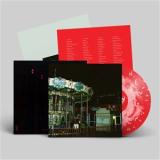
Auf der Carnival EP versammeln Trauma Ray einige ihrer stärksten, intensivsten und experimentellsten Werke. Seit ihrem Durchbruch mit Chameleon, ihrem Debütalbum von 2024 bei Dais Records, hat die Band in der aktuellen Welle der Shoegaze-Revivalisten sich weiter etabliert, ist dabei aber immer agiler geworden und sind 2025 mit Kollegen wie Deafheaven, Loathe, und Toucheì Amoreì auf Tour gewesen. Mit einer Mischung aus blitzschnellen Riffs und karger Schönheit entwickelt sich ihr Sound weiter und knüpft an die Laut-Leise-Laut-Größen aus Metal, Grunge und Shoegaze von Slowdive bis Smashing Pumpkins an. Die Carnival EP taucht in stimmungsvolleres, intellektuelleres Material ein, als würde man ihre früheren Ausflüge vor einem Zerrspiegel betrachten. Diese Songs vermitteln ein deutliches Gefühl der Unruhe, entstanden in einer flüchtigen Zeitspanne, was beweist, dass die Band unter Druck und wenn sie aus den dunkelsten Ecken ihres Unterbewusstseins schöpft, am besten funktioniert. Das wortlose ,Carousel" leitet die beunruhigende Atmosphäre der EP mit Störgeräuschen und melancholischen Gitarrenklängen ein, die in ,Hannibal" übergehen, einem hymnischen Track voller kraftvoller Riffs und roher Emotionen. Die Band hat diese Art von purer Kraft schon mal gezeigt, von ,Solstice" aus dem Jahr 2018 bis zu "Chameleon", während ,Hannibal" mit einem Hauch von beispielloser Boshaftigkeit, Schlängeligkeit, ,Stone Temple-y, Alice in Chains-y", wie Avila witzelt, verzerrt ist. Textlich greift er die Angst der Teenager auf, das Gefühl, zerlegt und abgelehnt zu werden. ,Méliès", benannt nach dem französischen Illusionisten und Filmemacher, wechselt zwischen schweren, schlammigen Akkorden und einem himmlischen Refrain, ,von etwas Beängstigendem zu etwas wie einem Traumzustand", sagt Avila, der die surreale Abstraktion seines Namensvetters kanalisiert. ,Funhouse" taucht in den Doom Metal ein, mit spärlicher Gitarrenarbeit und dem wahrscheinlich langsamsten BPM der Band. Im Gegensatz dazu rüttelt, blitzt und hämmert der letzte Track ,Clown", als hätte der Hörer das andere Ende eines Horrorhauses erreicht und wäre nun vollständig in die grelle, verwirrende Beleuchtung des Jahrmarkts eingetaucht. Personifiziert durch eine knorrige, synthetische Leadgitarre erinnert ,Clown" an Robin Williams, einen Archetyp tragischer Fröhlichkeit, der zeigt, dass diejenigen, die am meisten versuchen, andere zum Lachen zu bringen, insgeheim vielleicht die Traurigsten sind. Klanglich verweist die Band schnell auf den Einfluss von ,Undone" und ,Stuck on You" von der Kultband Failure aus den 90ern, neben dem allgegenwärtigen Loveless, was die Größe von Trauma Ray ausmacht: fünf Musiker, die das, was sie lieben, aufnehmen, synthetisieren und erweitern. Die Carnival EP bietet einen kurzen und sehr loopbaren Abstecher in die Dunkelheit einer Band, die von Minute zu Minute beeindruckender wird.
erscheint voraussichtlich am 21.08.2026

red into clear coloured vinyl[25,00 €]
Carnivalfinds the Fort Worth trauma ray captures some of their strongest, most intense, and exploratory work within the boundaries of a whirlwind year. The breakout success of Chameleon, their 2024 debut on Dais Records, further established the band amidst the current wave of shoegaze revivalists, yet increasingly agile, able to weave between scenes, touring throughout 2025 with the likes of Deafheaven, Loathe, and TouchéAmoré. A confluence of blitzing riffs and stark beauty, theirsound continues to evolve, nodding to loud-quiet-loud greats across metal, grunge, and shoegaze from Slowdive to Smashing Pumpkins. Carnival delves into moodier, more cerebral material, like holding theirpast excursions against a funhouse mirror. There's a distinct sense ofunease in these songs, built as a band in a fleeting window of time, proving they work best under pressure and when pulling from thedarkest corners of their subconscious. The wordless "Carousel" ushers in the EP's unsettling atmosphere withblasts of static and downcast strums giving way to "Hannibal", ananthemic track packed with power riffs and raw emotion. The band has hit this kind of sheer power before, from 2018's "Solstice" to Chameleon's title track, while "Hannibal" contorts with a tinge ofunprecedented evil, slithery, "Stone Temple-y, Alice in Chains-y," Avilaquips. Lyrically, he taps into teenage angst, the feeling of beingdissected and rejected.
erscheint voraussichtlich am 20.02.2026

Carnivalfinds the Fort Worth trauma ray captures some of their strongest, most intense, and exploratory work within the boundaries of a whirlwind year. The breakout success of Chameleon, their 2024 debut on Dais Records, further established the band amidst the current wave of shoegaze revivalists, yet increasingly agile, able to weave between scenes, touring throughout 2025 with the likes of Deafheaven, Loathe, and TouchéAmoré. A confluence of blitzing riffs and stark beauty, theirsound continues to evolve, nodding to loud-quiet-loud greats across metal, grunge, and shoegaze from Slowdive to Smashing Pumpkins. Carnival delves into moodier, more cerebral material, like holding theirpast excursions against a funhouse mirror. There's a distinct sense ofunease in these songs, built as a band in a fleeting window of time, proving they work best under pressure and when pulling from thedarkest corners of their subconscious. The wordless "Carousel" ushers in the EP's unsettling atmosphere withblasts of static and downcast strums giving way to "Hannibal", ananthemic track packed with power riffs and raw emotion. The band has hit this kind of sheer power before, from 2018's "Solstice" to Chameleon's title track, while "Hannibal" contorts with a tinge ofunprecedented evil, slithery, "Stone Temple-y, Alice in Chains-y," Avilaquips. Lyrically, he taps into teenage angst, the feeling of beingdissected and rejected.
erscheint voraussichtlich am 20.02.2026

erscheint voraussichtlich am 05.12.2025

erscheint voraussichtlich am 31.10.2025

Trauma Collective returns with a commanding techno statement from Lowsystem, unveiling Echoes of the Mind – a four-track EP that traverses the fractured landscapes of consciousness and club ritual.
Opening with Finding Reality, a shadow-drenched industrial roller, Lowsystem sets a brooding tone with relentless low-end pulses – the perfect tension-builder for murky warehouse settings. The title track channels the raw, unfiltered energy of early club nights, blending classic techno grooves with an urgent modern edge.
Flipping to the B-side, Distorted Perception descends into darker realms – a peak-time arsenal armed with pounding kicks, razor-sharp synth stabs, and intricately swinging hi-hats that shift the dancefloor into hypnotic frenzy. Closing with Cognitive Dissonance, Lowsystem dissolves rhythmic certainty, crafting fractured broken beats and eerie atmospheres that challenge perception and push sonic boundaries.
The vinyl edition deepens the experience with a printed insert revealing the artist’s creative vision. Also available digitally across all platforms.
Bestelle jetzt und wir bestellen den Artikel für dich beim Lieferanten.
erscheint voraussichtlich am 30.09.2025

Laura Jane Grace, Emmy-nominierte Musikerin, Autorin, Aktivistin und Against Me!-Gründerin/Songwriterin meldet sich mit ihrem dritten Studioalbum "Laura Jane Grace In The Trauma Tropes – Adventure Club" zurück – ein kraftvolles neues Statement mit einigen ihrer intensivsten und anregendsten Songs. Aufgenommen in Athen (GR), enthält es sensationelle Features externer Kollaborateure, bekannt als "The Trauma Tropes", darunter Graces Frau Paris Campbell (vocals) sowie die Athener Musiker Jacopo Fokas (bass) und Orestis Lagadinos (drums). Auf dem Keytrack "Your God (God's Dick)" schmettern sie die wohl hymnischsten Texte in Graces Historie, mit einem an Queens Power-Pop erinnernden A-cappella-Intro. In "Wearing Black" kritisiert Grace die Kommerzialisierung und Polizeipräsenz bei Pride-Veranstaltungen und stellt dabei ihren charakteristischen Punk-Ethos und ihre raue, unverhohlene Haltung voll zur Schau. Grace arbeitete mit Künstlern wie Miley Cyrus, Joan Jett und Weezer zusammen, trat auf Festivals wie Coachella, Reading & Leeds Festival oder Lollapalooza auf, erhielt einen Emmy-Nominierung für ihre Arbeit an der AOL-Serie "True Trans" und platzierte sich mit ihrer Autobiografie "Tranny: Confessions Of Punk Rock's Most Infamous Anarchist Sellout" auf der Billboard-Liste der 100 besten Musikbücher aller Zeiten.
erscheint voraussichtlich am 18.07.2025

Heavily supported by Flight for years, we’re extremely excited to at last welcome the inimitable Quartz to p:m, who serves up a sublime 4-tracker for our 10th single. Deeper and more emotionally reflective than previous Quartz releases, this is transcendental music that takes you to outer space and beyond…
Tracklist:
A1. W.Y.N: cosmic pads, jungle-y breaks, and a colossal bassline evoke images of Jupiter and molten lava, while a seductive vocal riff you’ll hum for days weaves in and out. A dance floor favourite.
A2. Taking Me Down: tight rolling beats, sparkly vox, filtered fx, and bass snarls sound like a tug of war between Venus and Mars. Straight up D&B produced alongside Quartz’s childhood friend, Pennygiles.
B1. Trauma Response: diving further into Techno- and Autonomic-inspired territory, this title track is best described by Paul Woolford aka Special Request “Man this tune is f***ing nuts. Reminds me of Black Dog and half of Detroit but through our UK lens, but totally NOW.”
B2. What Is Real Love: an orchestral intro replete with timpani and violins gives way to the big question - what is real love? - almighty bass weight, and a healing, warm golden sun feel. Simply majestic.
Bestelle jetzt und wir bestellen den Artikel für dich beim Lieferanten.

Vienna-based producer Mahk Rumbae—one half of the industrial/experimental duo Konstruktivists and the force behind Codex Empire—unleashes his latest EP Rotten Fodder on Trauma Collective. This four-track weapon fuses raw, dark energy with cerebral soundscapes, pushing the limits of both sound design and rhythmic intensity.
The EP kicks off with "Oracular Soul," a relentless, pulsating techno opener that sets an uncompromising tone. "Commissioner of Grief" follows, a dystopian "arabesque'' journey packed with atmospheric tension and heavy beats. On the flip side, 'Force the Tools Available' draws you into razor-sharp industrial breaks that grip and mesmerize from start to finish. Closing it all out is "Maelstrom of Shit," an apocalyptic ride of syncopated drums and chaotic soundscapes, leaving a brutal, lasting impact.
Bestelle jetzt und wir bestellen den Artikel für dich beim Lieferanten.

Mint Green Vinyl.[22,27 €]
Since first bonding over Slowdive at a Texas karaoke bar six years ago, musicians Uriel Avila and Jonathan Perez have grown trauma ray into Fort Worth's foremost flag bearer of crushing shoegaze. A five-piece rounded out by bassist Darren Baun, drummer Nicholas Bobotas, and guitarist Coleman Pruitt, the band's debut album, Chameleon, captures their evolving sound at an apex of majestic devastation. A fusion of downer hooks, gauzy melancholia, and bulldozer riffs, the album heaves and crashes across 50 minutes of stacked amplifier alchemy. Lyrically the songs trace similarly lofty and brooding terrain; Avila says "The theme is death. And a chameleon, like death, can shape-shift in and out our lives in different forms." Chameleon opens with "Ember," dreamy and distant, alternately anthemic and apocalyptic, defeated and deafening. Lead single "Bishop" perfectly encapsulates trauma ray's depth and dimension, ripping out of the gate with "the biggest, baddest, saddest wall of sound." Lyrics about being burnt at the stake and "tossed in the flame" float above a stop-start assault of precision distortion, eventually expanding into a lush, heavy, sorrowful end coda. "Spectre" is a mysterious, introspective dirge, envisioned as a "mellow, slowcore, Duster-thing," all feeling and heavy fuzz chords (with no lead guitar). Avila wrote it, "to be a hymnal" from the perspective of someone who won't let go - a ghost, an ex, a shadow self. Although the album is rich with subtleties, graceful lulls, and "breaths of air," the band's three guitar attack is its defining force, a power flexed to its peak on "Bardo." Perez's intentions were blunt: "I wanted to write a riff that was hard as fuck." The result is alternately mean and eerie, veering between noisy one string bends and surging headbang, mapping a middle ground between Unwound and early-Deftones. One of trauma ray's greatest gifts is their ability to make doomy, sledgehammer heaviness sound like an earworm, without production tricks or gimmicks: "Riff, verse, chorus, three guitar parts - that's all you need." This quality is particularly apparent on the title track, a churning slab of amplifier worship, swirling chords, and heavenly, defeated vocals about not belonging, shape-shifting, and death ("A twisted face / Void of attention / An empty space / In your reflection"). "U.S.D.D.O.S" closes the album, swaying across seven minutes of grey skied guitar and haunted voice, subtly thickening as it deepens. Feedback and shrapnel gradually begin raining down, like a satellite disintegrating in the atmosphere. Titled as an acronym after a poem by Chilean writer Roberto Bolaño that loosely translates to "a dream within a dream," the melody softens, smears, and then disappears, slowly swallowed by the gravity of eternal descent. Chameleon is a masterpiece of craft, balance, melody, lyricism, and gravity, flexing a fresh vision of loud-quiet-loud architectures and the vertigo depths of blasted harmonics. From Slowdive to Nothing, to Hum and beyond, the band absorb and expand on their influences into a rare and dedicated alchemy. trauma ray's cinematic tempest is a gathering storm only just taking flight.
erscheint voraussichtlich am 25.10.2024

Black Vinyl[21,22 €]
Since first bonding over Slowdive at a Texas karaoke bar six years ago, musicians Uriel Avila and Jonathan Perez have grown trauma ray into Fort Worth's foremost flag bearer of crushing shoegaze. A five-piece rounded out by bassist Darren Baun, drummer Nicholas Bobotas, and guitarist Coleman Pruitt, the band's debut album, Chameleon, captures their evolving sound at an apex of majestic devastation. A fusion of downer hooks, gauzy melancholia, and bulldozer riffs, the album heaves and crashes across 50 minutes of stacked amplifier alchemy. Lyrically the songs trace similarly lofty and brooding terrain; Avila says "The theme is death. And a chameleon, like death, can shape-shift in and out our lives in different forms." Chameleon opens with "Ember," dreamy and distant, alternately anthemic and apocalyptic, defeated and deafening. Lead single "Bishop" perfectly encapsulates trauma ray's depth and dimension, ripping out of the gate with "the biggest, baddest, saddest wall of sound." Lyrics about being burnt at the stake and "tossed in the flame" float above a stop-start assault of precision distortion, eventually expanding into a lush, heavy, sorrowful end coda. "Spectre" is a mysterious, introspective dirge, envisioned as a "mellow, slowcore, Duster-thing," all feeling and heavy fuzz chords (with no lead guitar). Avila wrote it, "to be a hymnal" from the perspective of someone who won't let go - a ghost, an ex, a shadow self. Although the album is rich with subtleties, graceful lulls, and "breaths of air," the band's three guitar attack is its defining force, a power flexed to its peak on "Bardo." Perez's intentions were blunt: "I wanted to write a riff that was hard as fuck." The result is alternately mean and eerie, veering between noisy one string bends and surging headbang, mapping a middle ground between Unwound and early-Deftones. One of trauma ray's greatest gifts is their ability to make doomy, sledgehammer heaviness sound like an earworm, without production tricks or gimmicks: "Riff, verse, chorus, three guitar parts - that's all you need." This quality is particularly apparent on the title track, a churning slab of amplifier worship, swirling chords, and heavenly, defeated vocals about not belonging, shape-shifting, and death ("A twisted face / Void of attention / An empty space / In your reflection"). "U.S.D.D.O.S" closes the album, swaying across seven minutes of grey skied guitar and haunted voice, subtly thickening as it deepens. Feedback and shrapnel gradually begin raining down, like a satellite disintegrating in the atmosphere. Titled as an acronym after a poem by Chilean writer Roberto Bolaño that loosely translates to "a dream within a dream," the melody softens, smears, and then disappears, slowly swallowed by the gravity of eternal descent. Chameleon is a masterpiece of craft, balance, melody, lyricism, and gravity, flexing a fresh vision of loud-quiet-loud architectures and the vertigo depths of blasted harmonics. From Slowdive to Nothing, to Hum and beyond, the band absorb and expand on their influences into a rare and dedicated alchemy. trauma ray's cinematic tempest is a gathering storm only just taking flight.
erscheint voraussichtlich am 25.10.2024

For over three decades Toby Marks, aka Banco de Gaia, has been redefining world electronica, leaving an indelible footprint on the global music scene, rousing many a dancefloor, and inspiring countless musicians to follow. At the forefront of blending acoustic and electronic sounds, integrating themes and techniques from cultures and traditions the world over, Toby has worked with musicians and producers as ingenious and diverse as Pink Floyd's Dick Parry, Natacha Atlas, Tim Wheater and Hawkwind– to name just a few.
Ranging from cinematic ambience to pounding dancefloor-fillers, his music defies genres, and borrows from a wealth of musical sources and styles. Toby's background in jazz and rock combine with his love of dance and world music to produce a glorious, uplifting and, at times, mesmerizing sound.
Bestelle jetzt und wir bestellen den Artikel für dich beim Lieferanten.

Organ of Corti, the trio of Joachim Nordwall (IDEAL Records, The Gagmen), Mattias Gustafsson (Altar of Flies) and Dan Johansson (Sewer Election, Enhet för Fri Musik) returns with another exercise in the slow-motion decay of analog sound. Usher, a minimal hypnotic track on side A reveals its subtle details after multiple listens while the claustrophobic Trauma on the flipside will grab your immediate attention. Machines that hum, sputter, and crackle while slowly moving forward. Vaguely familiar tape loops, spacious synths and crumbling electronics. A journey into the unknown.
The Swedish underground scene continues to deliver some of the best experimental acts and Organ of Corti firmly establish themselves as part of the foundation with a recent self-released cassette, another cd on New Forces and this new single. While their sound has clearly evolved, these alchemists are staying true to their original intention of forging fragments of surreal nightmares.
erscheint voraussichtlich am 01.04.2024

INTRODUCING OAKS23, FROM HAVEN'S LABEL BOSS KEEPSAKES. AFTER YEARS OF PLAYING HIS RECORDS, I AM PROUD TO INTRODUCE THIS SPECIAL RELEASE FROM HIM. IT DIVERGES FROM HIS USUAL INDUSTRIAL CONTEXT AND BRINGING IT MORE TO THE OAKS STYLE, SURE WEAPON FOR DISC-JOCKEYS.
EXPLORING NEW DIMENSIONS TO HIS SOUNDS WITH A FOCUS ON FUNK AND GROOVE, SPRINKLES OF EUPHORIA, ZANY ACID AND HIS USUAL DARK ATMOSPHERES.
Bestelle jetzt und wir bestellen den Artikel für dich beim Lieferanten.

erscheint voraussichtlich am 10.10.2023
erscheint voraussichtlich am 29.09.2023

Bestelle jetzt und wir bestellen den Artikel für dich beim Lieferanten.

Close to five years on from their last transmission, Ulrika Spacek resurface from self-imposed exile with their third album, Compact Trauma, a collection of songs that function as a chance treatise of sorts for our current collective condition. With a title like that arriving at this point in time, it's tempting to interpret the record solely in the context of the global events of the past few years, but the roots of these ten songs arc back much further in time, charged with their own personalised internal damage. Trauma, in its myriad forms, is often hard to qualify, even harder to rationalise. When something begins to go wrong, how do you gain perspective? What is a temporary roadblock, and what is unmitigated disaster? In its first phase of life, Compact Trauma was a document of a band striving to perfect an idea while the universe around them seemed to want to shut down. And then, at an impasse of sorts and with a record halfway complete, it suddenly did. If Ulrika Spacek were a band in need of the breaks applying, it was the force of a global pandemic that made it happen. As the world stood still, Compact Trauma was filed away, unfinished and unheard by the wider world, possibly to remain that way forever. And yet, there was to be a second act. If mutability is our tragedy, it's also our hope, clearer days slowly began to emerge as the bad slipped away. The wound, as the saying goes, is the place where the light enters you. The prolonged break enforced by myriad lockdowns may have separated the group but it also afforded the five time to reflect on what had already been committed to tape.. As the lights came back on and the shutters up, they found themselves drawn back towards Compact Trauma. What they rediscovered was a record that seemed to preempt the shared grief of a global pandemic. Even if the specifics were different, the themes were uncannily similar. Addressing existential freak out, displacement, substance reliance and encroaching self-doubt, these highly personalised songs suddenly took on a wider significance, speaking in part to a bigger narrative. They could have left it alone, but in coming back to what they knew, Ulrika Spacek found their best work yet. RIYL: Mercury Rev, Sonic Youth, My Bloody Valentine, Radiohead, Deerhunter, Atlas Sound, Stereolab.
erscheint voraussichtlich am 10.03.2023

Alle Tracks des Albums entstanden in einer Zeit, die sowohl für die Band als auf für die Welt als Ganzes sehr düster war: Es war 2020 während der Pandemie, als der Großteil des Albums geschrieben wurde.
Die Band hat zusammen sehr hart daran gearbeitet, Musik zu schreiben, welche die Band am besten repräsentiert.
Dieses Album ist viel härter als TRAUMAs letztes Album "As The World Dies" und es gibt viel zu entdecken: Schnelle, schwere Gitarrenriffs, stampfende Drums, donnernde Bässe und als Krönung mörderische Vocals.
"Awakening" ist ein wahrer Heavy-Metal-Hochgenuss für ALLE!
TRAUMA sind sehr stolz auf ihr neues Werk, also reckt die Pommesgabel in die Luft, spielt das Album laut und lasst euch von "Awakening" begeistern!
erscheint voraussichtlich am 09.09.2022

Alle Tracks des Albums entstanden in einer Zeit, die sowohl für die Band als auf für die Welt als Ganzes sehr düster war: Es war 2020 während der Pandemie, als der Großteil des Albums geschrieben wurde.
Die Band hat zusammen sehr hart daran gearbeitet, Musik zu schreiben, welche die Band am besten repräsentiert.
Dieses Album ist viel härter als TRAUMAs letztes Album "As The World Dies" und es gibt viel zu entdecken: Schnelle, schwere Gitarrenriffs, stampfende Drums, donnernde Bässe und als Krönung mörderische Vocals.
"Awakening" ist ein wahrer Heavy-Metal-Hochgenuss für ALLE!
TRAUMA sind sehr stolz auf ihr neues Werk, also reckt die Pommesgabel in die Luft, spielt das Album laut und lasst euch von "Awakening" begeistern!
erscheint voraussichtlich am 09.09.2022

Kenn hat es wieder getan... Es würde Sinn machen, sein vorheriges Werk "Dancing with the Past" als das neue Anacrusis-Album zu bezeichnen und das nicht nur, weil das meiste darauf enthaltene Material mit der Absicht geschrieben wurde, ein Comeback zu feiern. Acht Jahre später meldet sich Mr. Nardi mit einem weiteren Epos zurück, das zwar eine Stunde kürzer ist als der Vorgänger, aber von der Qualität her "Trauma" atmet seinen Nacken. Die epische Länge beider Alben sollte den Hörer aber nicht zurückhalten, denn das hier ist wirklich fesselndes Material von Anfang bis Ende, dunkle Progressive/Thrash-Scheiben, die nichts von dem vermissen lassen, was das Repertoire von Anacrusis zu einem der beliebtesten in der Szene gemacht hat. "Trauma" ist dynamischer und ein bisschen weniger atmosphärisch, was an der geringeren Anzahl der Balladen liegt. Hier sind es nur drei, die sich jeweils einem bestimmten Segment zuwenden aus dem balladesken Bereich, ansonsten bestimmt eine brachiale Kombination aus Progressive und Thrash die Handlung, das schnellere Material pulverisiert, vielschichtige Thrasher voller voller inbrünstiger Tempowechsel und abrupter Stimmungswechsel. Das Herzstück des Albums ist die 11-minütige Odyssee "The Orphan", eine zusammenfassende Reise durch alle Ecken und Winkel des des Anacrusis-Katalogs, ein fesselndes Epos, wie es Anacrusis bzw. Nardi noch nie versucht haben.
Wir wollen glauben, dass die Anacrusis-Fans bereitwillig ins Nardi-Lager gewechselt sind, das in nicht allzu regelmäßiger Folge deftige Genüsse verspricht. Das ist auch gut so, solange er einen ganzen Vormittag füllen kann, wird er bei allen ganz oben auf der Liste stehen.
Für Fans von: Anacrusis, Nevermore, Atheist, Voivod, Forbidden, Control Denied
erscheint voraussichtlich am 10.06.2022

Trauma Collective go out all guns blazing with a fierce offering by ascendant Italian producer Sciahriar Tavakoli aka Sciahri (Sublunar Records/Unknot). The Trauma EP is at once an obviously loyal tribute to the imprint platforming him, while being a visceral soundtrack to the gradual setting in of early morning lights. Wasting no time in exercising his sonic assault, opening cut "Hypnotism" will affect you much like its name suggests on this punishing, splintered- beat body basher, before pummelling you into submission on the strobed-out warehouse techno epic "Plastic Rain". He then ventures into the more abrasive shades of texture and gradient on the experimentally minded "Ava" until getting off-the-grid once more with a descent even deeper into the void, on the knackered closer "Dead Waves".
Bestelle jetzt und wir bestellen den Artikel für dich beim Lieferanten.

Trauma Collective returns to shock to your system on their fifth release, which comes courtesy of Spain's Rafael M. Espinosa aka Geistform. The Barcelona-based artist, also known for his exploits under the Univac alias, has crafted a singular style that exists at the interzone of IDM, digital noise and electro and having earned him releases on Pi Electronics, Femur and Hands Productions in recent years.
Espinosa executes four programs in sonic warfare on the Antena EP, all sounding akin to complex bitstream amplification. A multi-level barrage of frequencies play offense on opening cut "Proxima B", which sets the theme for more widescreen pulsations that gash the senses, as heard on the syntax error of "Note Repeat" and building up to a climax on the monochromatic soundstage of "Norc" - a jagged and angular exploration in bass artefacts and static redux.
Since unleashing the austere techno of Birmingham legend Mick Harris (as Monrella) and hometown hero Kwartz on unsuspecting ears, the Madrid-based collective has now ventured into more experimental spheres, as heard on the off-kilter mentalism of ASC's Loop Research and the brooding atmosphere of Makunaimadama's limited cassette release last year. Antena is the logical progression for the label's next chapter, where it continues to push the threshold of electronic music's outer limits.
Bestelle jetzt und wir bestellen den Artikel für dich beim Lieferanten.

nothing,nowhere. commented on the new album detailing, “TRAUMA FACTORY is an accumulation of songs written during a confusing time. it is about accepting the present and following your true north through the pain and suffering of human life. I wanted to make an album that was truly genreless and inspire others to challenge themselves artistically. I believe the most inspiring art is unpredictable and unrestrictive. to me that’s what TRAUMA FACTORY is.”
Over the course of 15 tracks, TRAUMA FACTORY cuts deep and finds nothing,nowhere. once again emerging from darkness, shedding external expectation, and moving forward into the glow of pure creation. Whether it be the anesthetized beats and intoxicating lull of “love or chemistry,” the cold piano-laden longing of “crave,” or the emotional immediacy of “upside down,” nothing,nowhere. paints from a wide palette of pain.
nothing,nowhere. is the musical endeavor of Vermont songwriter, singer and guitarist Joe Mulherin. For Mulherin, nothing,nowhere. is about a connection. It’s one he finds with fans around the world, who gather to see him play on tour and to listen to his songs online. It’s that connection that urges the singer to place his fears aside and step onstage each night to share his art. He sees the potential to help, to make a change, however small it may be and that is why he brings his music out of the Vermont wildness.
Bestelle jetzt und wir bestellen den Artikel für dich beim Lieferanten.

Trauma Collective returns with four cuts of decidedly hypnotic and abstract techno from ever-prolific ASC. Rounding out the last decade with a string of stand-out releases on his own imprint, Auxiliary, the San Diego producer brings his cerebral sonic aesthetic to the fledgling Madrid label. "Loop Research" showcases a singular artist unbound by tempo and at the top of their game.
Bestelle jetzt und wir bestellen den Artikel für dich beim Lieferanten.

Bestelle jetzt und wir bestellen den Artikel für dich beim Lieferanten.

Mesmerizing electronic music with a bit of EBM echoes, including a stunning remix by Broken English Club.
Bestelle jetzt und wir bestellen den Artikel für dich beim Lieferanten.

erscheint voraussichtlich am 30.11.2017

Bestelle jetzt und wir bestellen den Artikel für dich beim Lieferanten.

Bestelle jetzt und wir bestellen den Artikel für dich beim Lieferanten.

Bestelle jetzt und wir bestellen den Artikel für dich beim Lieferanten.

Bestelle jetzt und wir bestellen den Artikel für dich beim Lieferanten.

Chris Alexander: Musician, Director and former editor of Fangoria presents this, his first album in quite some time, remastered and rejigged for vinyl by us here at GDHQ. The soundtrack for your bleak midwinter. Dark as space, drugged-out helltracks for paranoid dreamers and night-fantastists. Spooktactular art by Eric Lee, Mastered by Alek Stark.
Bestelle jetzt und wir bestellen den Artikel für dich beim Lieferanten.

- Original Motion Picture Soundtrack
- 12 new compositions by Gesaffelstein
- Pressed on two 180gram heavyweight vinyl
- Screenprinted gold on black gatefold & inner sleeves
- Musical score art print on X-Ray paper
- Limited to 1000 copies worldwide
Having changed the face of electronic music with his hard-edged and uncompromising but brilliantly persuasive sound, Gesaffelstein returns with 10 original compositions created for the motion picture soundtrack of new thriller Maryland, which also comprises three classic tracks from his discography.
Pressed on double 180-gram heavyweight vinyl, housed in screen printed gatefold and inner sleeves with one of his musical scores printed on X-Ray paper, this beautiful vinyl edition is limited to 1000 copies.
Gesaffelstein is already an electronic music icon, having conquered dance floors and festivals across the world with the sound of his outstanding 2013 album Aleph, which also spawned two incredible music videos clocking up millions of views in the process.
Acclaimed at Cannes, and starring Diane Kruger and Mathieu Schoenaerts, Maryland is set to become a cult classic.
Bestelle jetzt und wir bestellen den Artikel für dich beim Lieferanten.
