Search:true image

Styles
All
LOS HERMANOS BALLUMBROSIO - HOMENAJE A EL CARMEN

Although Los Hermanos Ballumbrosio are one of the most emblematic groups of Afro-Peruvian music, no single recording has been able to portray the essence of the group... Until now. "Homenaje a El Carmen" ("Homage to El Carmen"), their debut album for Buh Records, sets the record straight: it captures the true spirit of the musical tradition of El Carmen, a city located a few miles to the south of Lima that is home to the largest black community in Peru. Songs based on percussion and zapateo bring back the memories and experiences of a culture that has produced one of the greatest treasures of Peruvian music. "Homage to El Carmen", the third volume of the series "Perspectives on Afro-Peruvian Music", signals the return of the group to the recording studio, and also to the sources of rhythms such as festejo and panalivio, which they interpret with cajón, quijada (jawbone), congas, bongo and batá. The result is a distillation and a testimony of the memories and experiences that portray the cultural universe of El Carmen. We have access to a selection of traditional songs that are heard during the festivities, such as "Guanchivalito", which is played during the Yunza Negra, a ceremony in which a willow tree is cut to bring benefits to the community. "Panalivio " and "Serrana Vieja" are two traditional Christmas carols that are played in the "Hatajo de Negritos" and which reflect the syncretic character of the Afro-Peruvian culture. These songs speak of the difficulties of rural life, but they also serve as a vehicle to demonstrate the Ballumbrosio brother's mastery in the art of zapateo, a dance that is accompanied by violin and bells. The classic "La Esquina de El Carmen" is perhaps the song that best expresses the erotic character of festejo, also known as baile de cintura (waist dance). "Homage to El Carmen" is the highly anticipated return of the Ballumbrosio brothers to the recording studio. They have become indisputable references of Afro-Peruvian music and have displayed their sound and dances around the world. It was time for an album that portrays the essence of the group: a collective spirit, where the tutelary image of Amador Ballumbrosio always shines, and which traces a history from Africa to El Carmen. This album is published in vinyl format in a limited edition of 300 copies. Include 8 full-page booklet with liner notes in Spanish and English. Produced by Manongo Mujica and Daniel Mujica. Cover by Yerko Zlatar.

pre-order now23.12.2022

expected to be published on 23.12.2022

34,50
Baldruin - Kleine Freuden

Baldruin

Kleine Freuden

12inchMAP031LP
Mappa Editions
25.11.2022

Johannes Schebler's musical output is all about establishing a dreamlike territory where sonic settlements can spread at ease. While Grykë Pyje (Johannes Schebler's duo with Jani Hirvonen) presents musical landscapes as open and clear spaces, Baldruin's miniature pieces tend to narrow them down, zooming into domestic sceneries that shift like malleable rooms inside a magic building. These are the quarters where the inhabitants of Schebler's musical world are configured.

Rendered in a tender manner, the tunes in Kleine Freuden (in English: small joys) unfold like a collection of fairy tales and bedtime stories. Fables and lullabies performed in whispering tones seem to carry us through a child's dream where images blend into each other. Compact, yet gauzy and free flowing melodies gather up revealing an ensemble of households where fanciful entities play care freely, leading us along their musical maze. The music is placid, childlike and playful. It wanders around in unwavering estrangement, organizing an unprecedented and intimate space as seen from a bird's eye view.

In the landscape of a bedroom where the night lamp is the sun, we take part in a lively journey, as wonder is warrant and keeper of a warm and pristine environment. Perspective shifts as we rise from bed sheet folds that turn into fragile mountain ranges. We crawl behind furniture and take shelter in secret hideouts while dust falls upon us like a blizzard. Transfiguring notions of scale and time, we are left wondering how long have we been here, wondering if music is the only true measurement of time.

out of Stock

Order now and we will order the item for you at our supplier.

21,81

Last In: 81 days ago
FÖLLAKZOID - FÖLLAKZOID  LP

Green Vinyl

Föllakzoid are nearly unparalleled in the hypnotic lysergic drenched neo-psychedelic experience. On their debut it is mostly a rather bulky one, determined by the downright dirty, distorted electric guitar, which is also usually accompanied by a spacey, howling and herbaceous howling one. In addition, there is fat bass and powerful drums. During the prolific post-napster musical era dominated by myspace, the Chilean musical field opened up so that many bands could broaden their creative spectrum by taking global and timeless references as an aesthetic holy grail. This experimentation had the internet and specialized forums as a search engine, which not only provided the world parameters in trends, but also allowed to find true hidden gems, bands that were adored by a few connoisseurs of the real quality left behind by the record labels. In this context, a group of university students who have known each other from school began to rehearse in the Caracol Vip underground (Santiago, Chile), in a room owned by a local heavy-metal legend, Juanzer. Equipped with tube amplifiers, Marshall and other custom made, the members of that time: Gonzalo Laguna on vocals, Juan Pablo Rodriguez on bass, Domingo García-Huidobro on guitar, Diego Lorca on drums and Francisco Zenteno on second guitar, they began to play endless jams without a strict sense of songs or directed compositional notion. The rule was to follow the noise in a journey through valleys and peaks that allowed the spontaneous appearance of textures, lyrics, phrases and some invented chords that did not resemble anything that had been heard at that time. The rehearsals were transformed into true live performances without an audience, which were only seen by a few curious, among alcohol, smoke and deafening noise, which could only end when the owner of the room (Juanzer) entered to turn off the equipment. Over time he himself stayed as an auditor, witnessing how the musicians stripped themselves in their rehearsals. Considered at that time as play or fun, the idea of forming a band with a name came with the real live performances to which they were invited, without yet having songs made, at the end of 2006. The myth of their first live performance alludes to a numerical superstition, on July 7, 2007, in a small bar in Providencia (Santiago), which also provided the band with an upward recognition for the psychedelic-punk music they were doing, with a voracious vocalist who destroyed everything on stage and a band that stood firm on the endless songs they built. The name that was invented for that occasion was the result of a nonsense about the German word feuerzeug brought to the group by their close friend Alfredo Thiermann (who would later make the cover of the first album and become keyboardist), which the members of that time took and Spanishized at will. This neologism represents the second founding myth of the band since the interest in bands like Can, Neu! and AMON DUUL II and the characteristic motorik rhythm would soon arrive, in the form of kosmische musik. By 2008 the band had already added several live performances and some songs appeared, among which were Directo al Sol and Loop (nod to the English band), which allowed a greater deployment of ambient-noise resources, almost close to the 'concrete' music. The deconstructed rock of Spacemen 3 was also present in the form of repeated sequences on the bass and drums, as the layers of shrill guitars formed the foam of the tide bursting in the darkness of space. With the ideas and general feeling of the sound that they already had, the band made the decision to record their first album with the sound engineer and Juan Pablo's brother, Ignacio 'Nes' Rodríguez, who later together with JP would form the BYM label to make the first CDs of the forthcoming debut of Föllakzoid and other bands that Nes was recording. Sheltered that winter in the studio that Nes had built in an old house in Recoleta, the band recorded the bulk of the songs on the album with a new jam that emerged in that room composed of 1 note and moments of rising intensity: Sky Input I and II appeared to complete a set of songs that came from rock but were slowly passing to a level of trance and cacophony typical of orchestrated and atonal music. With three takes per song but only one take of the jam, the album was finished with a few extra takes and overdubs, some made in the house of Nes himself, who contributed a guitar to Loop, although it does not appear in the credits, and additional takes of "Pelao" Zenteno with delay and reverse for almost all songs. The names of the songs came from the lyrics that Laguna had worked from the live versions to the studio finals, except for Loop, Sky Input and El Humo. The cover of the album, which as mentioned was made by Thiermann, represents well the spirit of those days, when creative magma looked for an outlet through the instruments without any restriction or explicit direction from any of the members of the group. The image of the tree towards the sky speaks of the roots that rise towards the immensity, the nature projected towards the stratosphere. Ideas that the neo-psychedelia of those years seemed to capture well, echoing in the Chilean bands that at that time were gathering around the BYM label. Both the creative fluency and the lack of a musical director ensured that Föllakzoid was an original band that did not impose themselves a way of doing things or sounding, collective music took shape in the most wonderful way, without characters, without a record name, without faces. Just an instant in space. 2022 GALAXY GREEN coloured vinyl

out of Stock

Order now and we will order the item for you at our supplier.

31,72

Last In: 3 years ago
Amos Childs & Sam Barrett - Young Echo Sound: Heavyweight Champion

Mechanical Reproductions stay true to their original mission statement of being 'an outlet for editions of vinyl and print' and, for their third release, serve up a 48 page archive of some of the posters created by Young Echo's Amos Childs & Sam Barrett for the long running nights the collective have been running since 2010.

'Heavyweight Champion is the result of six years' collaborative collage works for Bristol's Young Echo collective.

The collective's 12 members have been running club nights, radio shows and releasing music since 2010. Two of them, Amos Childs & Sam Barrett (who also make music together as O$VMV$M), have been responsible for creating the posters to promote the club nights since the start.

These posters are a regular fixture in the visual landscape of the city, on walls, bins, bus stops and pretty much any other available surface in the lead up to each event. Their informal visual language immediately sets them apart from the other flyers vying for attention. They're intriguing: through not having the artist names featured as prominently as possible they encourage the viewer to take a deeper look. There's dense layers of images and cut-and-pasted phrases to be deciphered - ultimately a far more engaging experience than being shouted at by a generic and large-fonted neon specimen.

Thanks to the local council (and keen fans who would rather see them on their walls at home), more often than not these works are gone soon after they're tacked up, meaning the only archive of them is as low resolution images on various social media channels. 'Heavyweight Champion', then, aims to provide a lasting document of this unique and vital part of Bristol's musical culture...'

pre-order now11.11.2022

expected to be published on 11.11.2022

16,18
DREAMCASTMOE - SOUND IS LIKE WATER LP

dreamcastmoe is the recording project of singer, songwriter, producer, and DJ Davon Bryant, a lifelong resident of Washington, DC. His music moves freely between moods and modes, hypnotic, romantic, traversing electronic, R&B, funk, soul, and hip-hop... Resident Advisor dubs it "soulful, cross-genre dance music." This ability to adapt and finesse, to twist in different directions while staying true and coherent in vision, can be traced to his home city and its complex cultural history. "Most Black kids in DC don't ever get to this point," he says. "This is what I am making this music for, in the DC tradition of soul and empathy and love that is rooted in this city. My music is for real people dealing with shit every day." A versatile, modern artist and collaborator, dreamcastmoe has thrived in the underground since his first uploads to Soundcloud and Bandcamp in 2017 and subsequent releases with labels like People's Potential Unlimited, Trading Places, and In Real Life Music. Bryant's laid-back personality, emotional honesty, and infectious energy shine through his work and how he talks about it, as Crack Magazine notes in their 2021 Rising feature: "a steady combination of confidence, creativity, and calmness." He grew up playing drums in church; he's worked dead-end jobs, had ups and downs, even sold off all his gear one time, but never stopped reinvesting in himself. He is quick to praise his co-producers, rattle off influences _ the visual feel of NBA 2K, the comedic timing of Bernie Mac, the savvy legacy of Duke Ellington, for starters _ and credit resourceful DC breakouts like Ankhlejohn that showed him the roadmap. His voice, a steady instrument, seemingly connects it all, capable of slow falsetto flow, swaggering talk-rap, and outright croon. His storytelling style is choppy yet fluid, like a mixtape, which is how Bryant sees Sound Is Like Water, his debut on Ghostly's International's freeform label, Spectral Sound. The two-part project culminates as a full-length LP release in November 2022. The first side, released as Part I, opens on the blurred beats of "El Dorado," which dreamcastmoe dedicates to his journey. It's a head-nodder, an off-kilter earworm co-produced by Max D (Future Times, RVNG Intl, etc.), with Bryant harmonizing hooks with synth jabs and a pitched-down presence. "Complicated" is the slow jam, delivered smoothly from a Saturday night crossroads. dreamcastmoe is contemplative and committed... gliding and locking ad-libs into skittering rhythms courtesy of co-producer Zackary Dawson _ but also willing to let something go, "acknowledging that everything in life IS NOT easy." "RU Ready" takes off from the jump as a tribute, challenge, and promise to his partner and his city ("The times you sat with me when I needed you the most / Told me the things that I needed to see / Young black man, really trying to be what I can be / And I'm really from DC). In its potent two-plus minutes, the sonics (co-produced by ZDBT) press the message, all cymbal crashes, breakbeats, and serrated synth lines. "Cloudy Weather, Wear Boots" is a blitzing dance-punk track made in collaboration with Jordan GCZ on Bryant's first trip to Amsterdam. The album's flipside opens on "Much More," the first of two synth-and-beat ballads co-produced by ZDBT. Later on "Long Songz," he claims, "I'm not writing love songs no more," prioritizing the vibe with "all my day ones." He calls it "a cry for more normal moments. Everything doesn't have to be a fantasy love story, more time spent getting to the money, growing, and making a way." He saves two of his most propulsive cuts for the finale, co-produced by Sami, co-founder of DC dance label 1432 R. As their titles suggest, "Take A Moment" and "Make Ya Mind" operate as anthems for movement, with Bryant free-flowing commands above wildly-styled percussion. Per Bryant, the latter is both "wake & bake jam" and a "dance floor bomb." His parting line: "Action / You got to show me action / Reaction." The world of dreamcastmoe straddles virtual reality and the realness of DC, images both imagined and lived-in. Bryant has a knack for unexpected melodies but what makes his music so exciting is his capacity to defy the expectations of genre and image. A fluid ingenuity and vulnerability bottled by Sound Is Like Water, and this is just the beginning.

out of Stock

Order now and we will order the item for you at our supplier.

21,22

Last In: 3 years ago
Aurora Borealis - Prophecy is the mold in which history is poured

Aggressive Blackened Death Metal with hooks and technical finesse that invokes the Ancient Gods! Aurora Borealis has been around for years (going back to as far as 1994! and it has mostly self-released their albums. Underground fanatics might remember the band reaching out to promote its music on forums back in the day and tracking its progress, each album was a large improvement over the earlier ones. And through time Aurora Borealis had great drummers ranked in its line-ups: Tony Laureano, Derek Roddy and Tim Yeung, which indicates the quality and level we talk about here. Aurora Borealis plays Black/Death Metal, remaining gritty not unlike Angelcorpse, but being more dynamic comparatively. It has got unique themes and the album artworks represent that. As the band name suggests, they are indicative of the Aurora Borealis phenomenon although the band has progressed to involve sci-fi imagery not far removed from Nocturnus, where artworks are concerned. Musically, the band remains true to its original Black/Death sound but it’s doing it with far more potential and competency than the others. The band’s definitely got a solid US death metal sense, it is not flirting too much with the European style of melody-infused death metal as it may appear. One will be surprised to find it so hard-hitting and gravelly and yet be rife with some of the most driven and enthusiastic activity. It is not solely focused on being technical (which in a way it is) but it is varied and it is catchy. Floridian Death Metal bands have much in common with the way Aurora Borealis structures its songs and there is the ever-present Morbid Angel influence, infected with some early Malevolent Creation rabidity. This is what makes death metal so good, few could contest with that. It’s got Death Metal in its genes, but Aurora Borealis takes the vitriol from Black Metal especially in the vocal department and gives the music an edge that is hard to miss. Here there is that special spice, that sizzling quality that comes from the rasps, adding a certain Thrashiness to it as well. The hooks make this album special, because writing good songs can be safely left in the hands of founding member Ron Vento.

pre-order now04.11.2022

expected to be published on 04.11.2022

29,83
Lee Tracy & Isaac Manning - Is it What You Want

As the sun sets on a quaint East Nashville house, a young man bares a piece of his soul. Facing the camera, sporting a silky suit jacket/shirt/slacks/fingerless gloves ensemble that announces "singer" before he's even opened his mouth, Lee Tracy Johnson settles onto his stage, the front yard. He sways to the dirge-like drum machine pulse of a synth-soaked slow jam, extends his arms as if gaining his balance, and croons in affecting, fragile earnest, "I need your love… oh baby…"

Dogs in the yard next door begin barking. A mysterious cardboard robot figure, beamed in from galaxies unknown and affixed to a tree, is less vocal. Lee doesn't acknowledge either's presence. He's busy feeling it, arms and hands gesticulating. His voice rises in falsetto over the now-quiet dogs, over the ambient noise from the street that seeps into the handheld camcorder's microphone, over the recording of his own voice played back from a boombox off-camera. After six minutes the single, continuous shot ends. In this intimate creative universe there are no re-takes. There are many more music videos to shoot, and as Lee later puts it, "The first time you do it is actually the best. Because you can never get that again. You expressing yourself from within."

"I Need Your Love" dates from a lost heyday. From some time in the '80s or early '90s, when Lee Tracy (as he was known in performance) and his music partner/producer/manager Isaac Manning committed hours upon hours of their sonic and visual ideas to tape. Embracing drum machines and synthesizers – electronics that made their personal futurism palpable – they recorded exclusively at home, live in a room into a simple cassette deck. Soul, funk, electro and new wave informed their songs, yet Lee and Isaac eschewed the confinement of conventional categories and genres, preferring to let experimentation guide them.

"Anytime somebody put out a new record they had the same instruments or the same sound," explains Isaac. "So I basically wanted to find something that's really gonna stand out away from all of the rest of 'em." Their ethos meant that every idea they came up with was at least worth trying: echoed out half-rapped exhortations over frantic techno-style beats, gospel synth soul, modal electro-funk, oddball pop reinterpretations, emo AOR balladry, nods to Prince and the Fat Boys, or arrangements that might collapse mid-song into a mess of arcade game-ish blips before rallying to reach the finish line. All of it conjoined by consistent tape hiss, and most vitally, Lee's chameleonic voice, which managed to wildly shape shift and still evoke something sincere – whether toggling between falsetto and tenor exalting Jesus's return, or punctuating a melismatic romantic adlib with a succinct, "We all know how it feels to be alone."

"People think we went to a studio," says Isaac derisively. "We never went to no studio. We didn't have the money to go to no studio! We did this stuff at home. I shot videos in my front yard with whatever we could to get things together." Sometimes Isaac would just put on an instrumental record, be it "Planet Rock" or "Don't Cry For Me Argentina" (from Evita), press "record," and let Lee improvise over it, yielding peculiar love songs, would-be patriotic anthems, or Elvis Presley or Marilyn Monroe tributes. Technical limitations and a lack of professional polish never dissuaded them. They believed they were onto something.

"That struggle," Isaac says, "made that sound sound good to me."

In the parlance of modern music criticism Lee and Isaac's dizzying DIY efforts would inevitably be described as "outsider." But "outsider" carries the burden of untold additional layers of meaning if you're Black and from the South, creating on a budget, and trying to get someone, anyone within the country music capital of the world to take your vision seriously. "What category should we put it in?" Isaac asks rhetorically. "I don't know. All I know is feeling. I ain't gonna name it nothing. It's music. If it grabs your soul and touch your heart that's what it basically is supposed to do."

=

Born in 1963, the baby boy of nine siblings, Lee Tracy spent his earliest years living amidst the shotgun houses on Nashville's south side. "We was poor, man!" he says, recalling the outhouse his family used for a bathroom and the blocks of ice they kept in the kitchen to chill perishables. "But I actually don't think I really realized I was in poverty until I got grown and started thinking about it." Lee's mom worked at the Holiday Inn; his dad did whatever he had to do, from selling fruit from a horse drawn cart to bootlegging. "We didn't have much," Lee continues, "but my mother and my father got us the things we needed, the clothes on our back." By the end of the decade with the city's urban renewal programs razing entire neighborhoods to accommodate construction of the Interstate, the family moved to Edgehill Projects. Lee remembers music and art as a constant source of inspiration for he and his brothers and sisters – especially after seeing the Jackson 5 perform on Ed Sullivan. "As a small child I just knew that was what I wanted to do."

His older brother Don began musically mentoring him, introducing Lee to a variety of instruments and sounds. "He would never play one particular type of music, like R&B," says Lee. "I was surrounded by jazz, hard rock and roll, easy listening, gospel, reggae, country music; I mean I was a sponge absorbing all of that." Lee taught himself to play drums by beating on cardboard boxes, gaining a rep around the way for his timekeeping, and his singing voice. Emulating his favorites, Earth Wind & Fire and Cameo, he formed groups with other kids with era-evocative band names like Concept and TNT Connection, and emerged as the leader of disciplined rehearsals. "I made them practice," says Lee. "We practiced and practiced and practiced. Because I wanted that perfection." By high school the most accomplished of these bands would take top prize in a prominent local talent show. It was a big moment for Lee, and he felt ready to take things to the next level. But his band-mates had other ideas.

"I don't know what happened," he says, still miffed at the memory. "It must have blew they mind after we won and people started showing notice, because it's like everybody quit! I was like, where the hell did everybody go?" Lee had always made a point of interrogating prospective musicians about their intentions before joining his groups: were they really serious or just looking for a way to pick up girls? Now he understood even more the importance of finding a collaborator just as committed to the music as he was.

=

Isaac Manning had spent much of his life immersed in music and the arts – singing in the church choir with his family on Nashville's north side, writing, painting, dancing, and working various gigs within the entertainment industry. After serving in the armed forces, in the early '70s he ran The Teenage Place, a music and performance venue that catered to the local youth. But he was forced out of town when word of one of his recreational routines created a stir beyond the safe haven of his bohemian circles.

"I was growing marijuana," Isaac explains. "It wasn't no business, I was smoking it myself… I would put marijuana in scrambled eggs, cornbread and stuff." His weed use originated as a form of self-medication to combat severe tooth pain. But when he began sharing it with some of the other young people he hung out with, some of who just so happened to be the kids of Nashville politicians, the cops came calling. "When I got busted," he remembers, "they were talking about how they were gonna get rid of me because they didn't want me saying nothing about they children because of the politics and stuff. So I got my family, took two raggedy cars, and left Nashville and went to Vegas."

Out in the desert, Isaac happened to meet Chubby Checker of "The Twist" fame while the singer was gigging at The Flamingo. Impressed by Isaac's zeal, Checker invited him to go on the road with him as his tour manager/roadie/valet. The experience gave Isaac a window into a part of the entertainment world he'd never encountered – a glimpse of what a true pop act's audience looked like. "Chubby Checker, none of his shows were played for Black folks," he remembers. "All his gigs were done at high-class white people areas." Returning home after a few years with Chubby, Isaac was properly motivated to make it in Music City. He began writing songs and scouting around Nashville for local talent anywhere he could find it with an expressed goal: "Find someone who can deliver your songs the way you want 'em delivered and make people feel what you want them to feel."

One day while walking through Edgehill Projects Isaac heard someone playing the drums in a way that made him stop and take notice. "The music was so tight, just the drums made me feel like, oh I'm-a find this person," he recalls. "So I circled through the projects until I found who it was.

"That's how I met him – Lee Tracy. When I found him and he started singing and stuff, I said, ohhh, this is somebody different."

=

Theirs was a true complementary partnership: young Lee possessed the raw talent, the older Isaac the belief. "He's really the only one besides my brother and my family that really seen the potential in me," says Lee. "He made me see that I could do it."

Isaac long being a night owl, his house also made for a fertile collaborative environment – a space where there always seemed to be a new piece of his visual art on display: paintings, illustrations, and dolls and figures (including an enigmatic cardboard robot). Lee and Issac would hang out together and talk, listen to music, conjure ideas, and smoke the herb Isaac had resumed growing in his yard. "It got to where I could trust him, he could trust me," Isaac says of their bond. They also worked together for hours on drawings, spreading larges rolls of paper on the walls and sketching faces with abstract patterns and imagery: alien-like beings, tri-horned horse heads, inverted Janus-like characters where one visage blurred into the other.

Soon it became apparent that they didn't need other collaborators; self-sufficiency was the natural way forward. At Isaac's behest Lee, already fed up with dealing with band musicians, began playing around with a poly-sonic Yamaha keyboard at the local music store. "It had everything on it – trumpet, bass, drums, organ," remembers Lee. "And that's when I started recording my own stuff."

The technology afforded Lee the flexibility and independence he craved, setting him on a path other bedroom musicians and producers around the world were simultaneously following through the '80s into the early '90s. Saving up money from day jobs, he eventually supplemented the Yamaha Isaac had gotten him with Roland and Casio drum machines and a Moog. Lee was living in an apartment in Hillside at that point caring for his dad, who'd been partially paralyzed since early in life. In the evenings up in his second floor room, the music put him in a zone where he could tune out everything and lose himself in his ideas.

"Oh I loved it," he recalls. "I would really experiment with the instruments and use a lot of different sound effects. I was looking for something nobody else had. I wanted something totally different. And once I found the sound I was looking for, I would just smoke me a good joint and just let it go, hit the record button." More potent a creative stimulant than even Isaac's weed was the holistic flow and spontaneity of recording. Between sessions at Isaac's place and Lee's apartment, their volume of output quickly ballooned.

"We was always recording," says Lee. "That's why we have so much music. Even when I went to Isaac's and we start creating, I get home, my mind is racing, I gotta start creating, creating, creating. I remember there were times when I took a 90-minute tape from front to back and just filled it up."

"We never practiced," says Isaac. "See, that was just so odd about the whole thing. I could relate to him, and tell him about the songs I had ideas for and everything and stuff. And then he would bring it back or whatever, and we'd get together and put it down." Once the taskmaster hell bent on rehearsing, Lee had flipped a full 180. Perfection was no longer an aspiration, but the enemy of inspiration.

"I seen where practicing and practicing got me," says Lee. "A lot of musicians you get to playing and they gotta stop, they have to analyze the music. But while you analyzing you losing a lot of the greatness of what you creating. Stop analyzing what you play, just play! And it'll all take shape."

=

"I hope you understood the beginning of the record because this was invented from a dream I had today… (You tell me, I'll tell you, we'll figure it out together)" – Lee Tracy and Isaac Manning, "Hope You Understand"

Lee lets loose a maniacal cackle when he acknowledges that the material that he and Isaac recorded was by anyone's estimation pretty out there. It's the same laugh that commences "Hope You Understand" – a chaotic transmission that encapsulates the duality at the heart of their music: a stated desire to reach people and a compulsion to go as leftfield as they saw fit.

"We just did it," says Lee. "We cut the music on and cut loose. I don't sit around and write. I do it by listening, get a feeling, play the music, and the lyrics and stuff just come out of me."

The approach proved adaptable to interpreting other artists' material. While recording a cover of Whitney Houston's pop ballad "Saving All My Love For You," Lee played Whitney's version in his headphones as he laid down his own vocals – partially following the lyrics, partially using them as a departure point. The end result is barely recognizable compared with the original, Lee and Isaac having switched up the time signature and reinvented the melody along the way towards morphing a slick mainstream radio standard into something that sounds solely their own.

"I really used that song to get me started," says Lee. "Then I said, well I need something else, something is missing. Something just came over me. That's when I came up with 'Is It What You Want.'"

The song would become the centerpiece of Lee and Isaac's repertoire. Pushed along by a percolating metronomic Rhythm King style beat somewhere between a military march and a samba, "Is It What You Want" finds Lee pleading the sincerity of his commitment to a potential love interest embellished by vocal tics and hiccups subtlely reminiscent of his childhood hero MJ. Absent chord changes, only synth riffs gliding in and out like apparitions, the song achieves a lingering lo-fi power that leaves you feeling like it's still playing, somewhere, even after the fade out.

"I don't know, it's like a real spiritual song," Lee reflects. "But it's not just spiritual. To me the more I listen to it it's like about everything that you do in your everyday life, period. Is it what you want? Do you want a car or you don't want a car? Do you want Jesus or do you want the Devil? It's basically asking you the question. Can't nobody answer the question but you yourself."

In 1989 Lee won a lawsuit stemming from injuries sustained from a fight he'd gotten into. He took part of the settlement money and with Isaac pressed up "Saving All My Love For You" b/w "Is It What You Want" as a 45 single. Isaac christened the label One Chance Records. "Because that's all we wanted," he says with a laugh, "one chance."

Isaac sent the record out to radio stations and major labels, hoping for it to make enough noise to get picked up nationally. But the response he and Lee were hoping for never materialized. According to Isaac the closest the single got to getting played on the radio is when a disk jock from a local station made a highly unusual announcement on air: "The dude said on the radio, 107.5 – 'We are not gonna play 'Is It What You Want.' We cracked up! Wow, that's deep.

"It was a whole racist thing that was going on," he reflects. "So we just looked over and kept on going. That was it. That was about the way it goes… If you were Black and you were living in Nashville and stuff, that's the way you got treated." Isaac already knew as much from all the times he'd brought he and Lee's tapes (even their cache of country music tunes) over to Music Row to try to drum up interest to no avail.

"Isaac, he really worked his ass off," says Lee. "He probably been to every record place down on Music Row." Nashville's famed recording and music business corridor wasn't but a few blocks from where Lee grew up. Close enough, he remembers, for him to ride his bike along its back alleys and stumble upon the occasional random treasure, like a discarded box of harmonicas. Getting in through the front door, however, still felt a world away.

"I just don't think at the time our music fell into a category for them," he concedes. "It was before its time."

=

Lee stopped making music some time in the latter part of the '90s, around the time his mom passed away and life became increasingly tough to manage. "When my mother died I had a nervous breakdown," he says, "So I shut down for a long time. I was in such a sadness frame of mind. That's why nobody seen me. I had just disappeared off the map." He fell out of touch with Isaac, and in an indication of just how bad things had gotten for him, lost track of all the recordings they'd made together. Music became a distant memory.

Fortunately, Isaac kept the faith. In a self-published collection of his poetry – paeans to some of his favorite entertainment and public figures entitled Friends and Dick Clark – he'd written that he believed "music has a life of its own." But his prescience and presence of mind were truly manifested in the fact that he kept an archive of he and Lee's work. As perfectly imperfect as "Is It What You Want" now sounds in a post-Personal Space world, Lee and Isaac's lone official release was in fact just a taste. The bulk of the Is It What You Want album is culled from the pair's essentially unheard home recordings – complete songs, half-realized experiments, Isaac's blue monologues and pronouncements et al – compiled, mixed and programmed in the loose and impulsive creative spirit of their regular get-togethers from decades ago. The rest of us, it seems, may have finally caught up to them.

On the prospect of at long last reaching a wider audience, Isaac says simply, "I been trying for a long time, it feels good." Ever the survivor, he adds, "The only way I know how to make it to the top is to keep climbing. If one leg break on the ladder, hey, you gotta fix it and keep on going… That's where I be at. I'll kill death to make it out there."

For Lee it all feels akin to a personal resurrection: "It's like I was in a tomb and the tomb was opened and I'm back… Man, it feels so great. I feel like I'm gonna jump out of my skin." Success at this stage of his life, he realizes, probably means something different than what it did back when he was singing and dancing in Isaac's front yard. "What I really mean by 'making it,'" he explains isn't just the music being heard but, "the story being told."

Occasionally Lee will pull up "Is It What You Want" on YouTube on his phone, put on his headphones, and listen. He remembers the first time he heard his recorded voice. How surreal it was, how he thought to himself, "Is that really me?" What would he say to that younger version of himself now?

"I would probably tell myself, hang in there, don't give up. Keep striving for the goal. And everything will work out."

Despite what's printed on the record label, sometimes you do get more than one chance.

out of Stock

Order now and we will order the item for you at our supplier.

11,72

Last In: 3 years ago
Fabrice Lig - The Mental Bandwith 3x12"

Fabrice Lig has melody running through his veins. On his quest to explore his deep love for the bitter-sweet yearning of Motor City techno, his tracks transcend trends. Over his three-decade spanning career he has refined his blend of soul-infused dance music to striking effect. His gift for a catchy hook is unmatched. His new studio album "The Mental Bandwidth" shows his musical range as a producer once again. On the album's twelve tracks, he effortlessly traverses, cosmic house, funkified techno and electronica, combining his trademark quirky melodies with playful songwriting and dance floor focused beats. The album format is giving Lig enough space to explore his musical ideas from different directions while staying true to the overall atmosphere. "The idea for the album was to go back to the fundamentals of the original Detroit sound and to find new ways of expressing that soul in my music - as I've been doing for years", explains Lig. With Ann Saunderson and the former Kraftwerk-member Wolfgang Flur, the album features two heavy-weight collaborations that connect the "The Mental Bandwidth" to Detroit's musical legacy, too. Slikk Tim aka Garry Grittness also has a cameo in the form of a funky bassline on "Healing", the pop-infused Ann Saunderson collaboration. The title of the album is inspired by Lig's lecture of Sendhil Mullainathan and Eldar Shafir book "Scarcity: Why Having So Little Means So Much" which explores new approaches to reduce poverty. "The authors discovered that the mental bandwidth of poor people is sometimes really low because of short term issues they are facing and are forced to solve", explains Lig. Those issues are reducing the mental bandwidth for long term thinking capacities, which in turn has consequences for the decision making process. An example: before the quality of education of poor kids is increased, the quality of life they have must be increased. This increases the capacities of the kids to learn more than solely better educational programs.

out of Stock

Order now and we will order the item for you at our supplier.

20,80

Last In: 3 years ago
Lee Tracy & Isaac Manning - Is it What You Want LP

As the sun sets on a quaint East Nashville house, a young man bares a piece of his soul. Facing the camera, sporting a silky suit jacket/shirt/slacks/fingerless gloves ensemble that announces "singer" before he's even opened his mouth, Lee Tracy Johnson settles onto his stage, the front yard. He sways to the dirge-like drum machine pulse of a synth-soaked slow jam, extends his arms as if gaining his balance, and croons in affecting, fragile earnest, "I need your love… oh baby…"

Dogs in the yard next door begin barking. A mysterious cardboard robot figure, beamed in from galaxies unknown and affixed to a tree, is less vocal. Lee doesn't acknowledge either's presence. He's busy feeling it, arms and hands gesticulating. His voice rises in falsetto over the now-quiet dogs, over the ambient noise from the street that seeps into the handheld camcorder's microphone, over the recording of his own voice played back from a boombox off-camera. After six minutes the single, continuous shot ends. In this intimate creative universe there are no re-takes. There are many more music videos to shoot, and as Lee later puts it, "The first time you do it is actually the best. Because you can never get that again. You expressing yourself from within."

"I Need Your Love" dates from a lost heyday. From some time in the '80s or early '90s, when Lee Tracy (as he was known in performance) and his music partner/producer/manager Isaac Manning committed hours upon hours of their sonic and visual ideas to tape. Embracing drum machines and synthesizers – electronics that made their personal futurism palpable – they recorded exclusively at home, live in a room into a simple cassette deck. Soul, funk, electro and new wave informed their songs, yet Lee and Isaac eschewed the confinement of conventional categories and genres, preferring to let experimentation guide them.

"Anytime somebody put out a new record they had the same instruments or the same sound," explains Isaac. "So I basically wanted to find something that's really gonna stand out away from all of the rest of 'em." Their ethos meant that every idea they came up with was at least worth trying: echoed out half-rapped exhortations over frantic techno-style beats, gospel synth soul, modal electro-funk, oddball pop reinterpretations, emo AOR balladry, nods to Prince and the Fat Boys, or arrangements that might collapse mid-song into a mess of arcade game-ish blips before rallying to reach the finish line. All of it conjoined by consistent tape hiss, and most vitally, Lee's chameleonic voice, which managed to wildly shape shift and still evoke something sincere – whether toggling between falsetto and tenor exalting Jesus's return, or punctuating a melismatic romantic adlib with a succinct, "We all know how it feels to be alone."

"People think we went to a studio," says Isaac derisively. "We never went to no studio. We didn't have the money to go to no studio! We did this stuff at home. I shot videos in my front yard with whatever we could to get things together." Sometimes Isaac would just put on an instrumental record, be it "Planet Rock" or "Don't Cry For Me Argentina" (from Evita), press "record," and let Lee improvise over it, yielding peculiar love songs, would-be patriotic anthems, or Elvis Presley or Marilyn Monroe tributes. Technical limitations and a lack of professional polish never dissuaded them. They believed they were onto something.

"That struggle," Isaac says, "made that sound sound good to me."

In the parlance of modern music criticism Lee and Isaac's dizzying DIY efforts would inevitably be described as "outsider." But "outsider" carries the burden of untold additional layers of meaning if you're Black and from the South, creating on a budget, and trying to get someone, anyone within the country music capital of the world to take your vision seriously. "What category should we put it in?" Isaac asks rhetorically. "I don't know. All I know is feeling. I ain't gonna name it nothing. It's music. If it grabs your soul and touch your heart that's what it basically is supposed to do."

=

Born in 1963, the baby boy of nine siblings, Lee Tracy spent his earliest years living amidst the shotgun houses on Nashville's south side. "We was poor, man!" he says, recalling the outhouse his family used for a bathroom and the blocks of ice they kept in the kitchen to chill perishables. "But I actually don't think I really realized I was in poverty until I got grown and started thinking about it." Lee's mom worked at the Holiday Inn; his dad did whatever he had to do, from selling fruit from a horse drawn cart to bootlegging. "We didn't have much," Lee continues, "but my mother and my father got us the things we needed, the clothes on our back." By the end of the decade with the city's urban renewal programs razing entire neighborhoods to accommodate construction of the Interstate, the family moved to Edgehill Projects. Lee remembers music and art as a constant source of inspiration for he and his brothers and sisters – especially after seeing the Jackson 5 perform on Ed Sullivan. "As a small child I just knew that was what I wanted to do."

His older brother Don began musically mentoring him, introducing Lee to a variety of instruments and sounds. "He would never play one particular type of music, like R&B," says Lee. "I was surrounded by jazz, hard rock and roll, easy listening, gospel, reggae, country music; I mean I was a sponge absorbing all of that." Lee taught himself to play drums by beating on cardboard boxes, gaining a rep around the way for his timekeeping, and his singing voice. Emulating his favorites, Earth Wind & Fire and Cameo, he formed groups with other kids with era-evocative band names like Concept and TNT Connection, and emerged as the leader of disciplined rehearsals. "I made them practice," says Lee. "We practiced and practiced and practiced. Because I wanted that perfection." By high school the most accomplished of these bands would take top prize in a prominent local talent show. It was a big moment for Lee, and he felt ready to take things to the next level. But his band-mates had other ideas.

"I don't know what happened," he says, still miffed at the memory. "It must have blew they mind after we won and people started showing notice, because it's like everybody quit! I was like, where the hell did everybody go?" Lee had always made a point of interrogating prospective musicians about their intentions before joining his groups: were they really serious or just looking for a way to pick up girls? Now he understood even more the importance of finding a collaborator just as committed to the music as he was.

=

Isaac Manning had spent much of his life immersed in music and the arts – singing in the church choir with his family on Nashville's north side, writing, painting, dancing, and working various gigs within the entertainment industry. After serving in the armed forces, in the early '70s he ran The Teenage Place, a music and performance venue that catered to the local youth. But he was forced out of town when word of one of his recreational routines created a stir beyond the safe haven of his bohemian circles.

"I was growing marijuana," Isaac explains. "It wasn't no business, I was smoking it myself… I would put marijuana in scrambled eggs, cornbread and stuff." His weed use originated as a form of self-medication to combat severe tooth pain. But when he began sharing it with some of the other young people he hung out with, some of who just so happened to be the kids of Nashville politicians, the cops came calling. "When I got busted," he remembers, "they were talking about how they were gonna get rid of me because they didn't want me saying nothing about they children because of the politics and stuff. So I got my family, took two raggedy cars, and left Nashville and went to Vegas."

Out in the desert, Isaac happened to meet Chubby Checker of "The Twist" fame while the singer was gigging at The Flamingo. Impressed by Isaac's zeal, Checker invited him to go on the road with him as his tour manager/roadie/valet. The experience gave Isaac a window into a part of the entertainment world he'd never encountered – a glimpse of what a true pop act's audience looked like. "Chubby Checker, none of his shows were played for Black folks," he remembers. "All his gigs were done at high-class white people areas." Returning home after a few years with Chubby, Isaac was properly motivated to make it in Music City. He began writing songs and scouting around Nashville for local talent anywhere he could find it with an expressed goal: "Find someone who can deliver your songs the way you want 'em delivered and make people feel what you want them to feel."

One day while walking through Edgehill Projects Isaac heard someone playing the drums in a way that made him stop and take notice. "The music was so tight, just the drums made me feel like, oh I'm-a find this person," he recalls. "So I circled through the projects until I found who it was.

"That's how I met him – Lee Tracy. When I found him and he started singing and stuff, I said, ohhh, this is somebody different."

=

Theirs was a true complementary partnership: young Lee possessed the raw talent, the older Isaac the belief. "He's really the only one besides my brother and my family that really seen the potential in me," says Lee. "He made me see that I could do it."

Isaac long being a night owl, his house also made for a fertile collaborative environment – a space where there always seemed to be a new piece of his visual art on display: paintings, illustrations, and dolls and figures (including an enigmatic cardboard robot). Lee and Issac would hang out together and talk, listen to music, conjure ideas, and smoke the herb Isaac had resumed growing in his yard. "It got to where I could trust him, he could trust me," Isaac says of their bond. They also worked together for hours on drawings, spreading larges rolls of paper on the walls and sketching faces with abstract patterns and imagery: alien-like beings, tri-horned horse heads, inverted Janus-like characters where one visage blurred into the other.

Soon it became apparent that they didn't need other collaborators; self-sufficiency was the natural way forward. At Isaac's behest Lee, already fed up with dealing with band musicians, began playing around with a poly-sonic Yamaha keyboard at the local music store. "It had everything on it – trumpet, bass, drums, organ," remembers Lee. "And that's when I started recording my own stuff."

The technology afforded Lee the flexibility and independence he craved, setting him on a path other bedroom musicians and producers around the world were simultaneously following through the '80s into the early '90s. Saving up money from day jobs, he eventually supplemented the Yamaha Isaac had gotten him with Roland and Casio drum machines and a Moog. Lee was living in an apartment in Hillside at that point caring for his dad, who'd been partially paralyzed since early in life. In the evenings up in his second floor room, the music put him in a zone where he could tune out everything and lose himself in his ideas.

"Oh I loved it," he recalls. "I would really experiment with the instruments and use a lot of different sound effects. I was looking for something nobody else had. I wanted something totally different. And once I found the sound I was looking for, I would just smoke me a good joint and just let it go, hit the record button." More potent a creative stimulant than even Isaac's weed was the holistic flow and spontaneity of recording. Between sessions at Isaac's place and Lee's apartment, their volume of output quickly ballooned.

"We was always recording," says Lee. "That's why we have so much music. Even when I went to Isaac's and we start creating, I get home, my mind is racing, I gotta start creating, creating, creating. I remember there were times when I took a 90-minute tape from front to back and just filled it up."

"We never practiced," says Isaac. "See, that was just so odd about the whole thing. I could relate to him, and tell him about the songs I had ideas for and everything and stuff. And then he would bring it back or whatever, and we'd get together and put it down." Once the taskmaster hell bent on rehearsing, Lee had flipped a full 180. Perfection was no longer an aspiration, but the enemy of inspiration.

"I seen where practicing and practicing got me," says Lee. "A lot of musicians you get to playing and they gotta stop, they have to analyze the music. But while you analyzing you losing a lot of the greatness of what you creating. Stop analyzing what you play, just play! And it'll all take shape."

=

"I hope you understood the beginning of the record because this was invented from a dream I had today… (You tell me, I'll tell you, we'll figure it out together)" – Lee Tracy and Isaac Manning, "Hope You Understand"

Lee lets loose a maniacal cackle when he acknowledges that the material that he and Isaac recorded was by anyone's estimation pretty out there. It's the same laugh that commences "Hope You Understand" – a chaotic transmission that encapsulates the duality at the heart of their music: a stated desire to reach people and a compulsion to go as leftfield as they saw fit.

"We just did it," says Lee. "We cut the music on and cut loose. I don't sit around and write. I do it by listening, get a feeling, play the music, and the lyrics and stuff just come out of me."

The approach proved adaptable to interpreting other artists' material. While recording a cover of Whitney Houston's pop ballad "Saving All My Love For You," Lee played Whitney's version in his headphones as he laid down his own vocals – partially following the lyrics, partially using them as a departure point. The end result is barely recognizable compared with the original, Lee and Isaac having switched up the time signature and reinvented the melody along the way towards morphing a slick mainstream radio standard into something that sounds solely their own.

"I really used that song to get me started," says Lee. "Then I said, well I need something else, something is missing. Something just came over me. That's when I came up with 'Is It What You Want.'"

The song would become the centerpiece of Lee and Isaac's repertoire. Pushed along by a percolating metronomic Rhythm King style beat somewhere between a military march and a samba, "Is It What You Want" finds Lee pleading the sincerity of his commitment to a potential love interest embellished by vocal tics and hiccups subtlely reminiscent of his childhood hero MJ. Absent chord changes, only synth riffs gliding in and out like apparitions, the song achieves a lingering lo-fi power that leaves you feeling like it's still playing, somewhere, even after the fade out.

"I don't know, it's like a real spiritual song," Lee reflects. "But it's not just spiritual. To me the more I listen to it it's like about everything that you do in your everyday life, period. Is it what you want? Do you want a car or you don't want a car? Do you want Jesus or do you want the Devil? It's basically asking you the question. Can't nobody answer the question but you yourself."

In 1989 Lee won a lawsuit stemming from injuries sustained from a fight he'd gotten into. He took part of the settlement money and with Isaac pressed up "Saving All My Love For You" b/w "Is It What You Want" as a 45 single. Isaac christened the label One Chance Records. "Because that's all we wanted," he says with a laugh, "one chance."

Isaac sent the record out to radio stations and major labels, hoping for it to make enough noise to get picked up nationally. But the response he and Lee were hoping for never materialized. According to Isaac the closest the single got to getting played on the radio is when a disk jock from a local station made a highly unusual announcement on air: "The dude said on the radio, 107.5 – 'We are not gonna play 'Is It What You Want.' We cracked up! Wow, that's deep.

"It was a whole racist thing that was going on," he reflects. "So we just looked over and kept on going. That was it. That was about the way it goes… If you were Black and you were living in Nashville and stuff, that's the way you got treated." Isaac already knew as much from all the times he'd brought he and Lee's tapes (even their cache of country music tunes) over to Music Row to try to drum up interest to no avail.

"Isaac, he really worked his ass off," says Lee. "He probably been to every record place down on Music Row." Nashville's famed recording and music business corridor wasn't but a few blocks from where Lee grew up. Close enough, he remembers, for him to ride his bike along its back alleys and stumble upon the occasional random treasure, like a discarded box of harmonicas. Getting in through the front door, however, still felt a world away.

"I just don't think at the time our music fell into a category for them," he concedes. "It was before its time."

=

Lee stopped making music some time in the latter part of the '90s, around the time his mom passed away and life became increasingly tough to manage. "When my mother died I had a nervous breakdown," he says, "So I shut down for a long time. I was in such a sadness frame of mind. That's why nobody seen me. I had just disappeared off the map." He fell out of touch with Isaac, and in an indication of just how bad things had gotten for him, lost track of all the recordings they'd made together. Music became a distant memory.

Fortunately, Isaac kept the faith. In a self-published collection of his poetry – paeans to some of his favorite entertainment and public figures entitled Friends and Dick Clark – he'd written that he believed "music has a life of its own." But his prescience and presence of mind were truly manifested in the fact that he kept an archive of he and Lee's work. As perfectly imperfect as "Is It What You Want" now sounds in a post-Personal Space world, Lee and Isaac's lone official release was in fact just a taste. The bulk of the Is It What You Want album is culled from the pair's essentially unheard home recordings – complete songs, half-realized experiments, Isaac's blue monologues and pronouncements et al – compiled, mixed and programmed in the loose and impulsive creative spirit of their regular get-togethers from decades ago. The rest of us, it seems, may have finally caught up to them.

On the prospect of at long last reaching a wider audience, Isaac says simply, "I been trying for a long time, it feels good." Ever the survivor, he adds, "The only way I know how to make it to the top is to keep climbing. If one leg break on the ladder, hey, you gotta fix it and keep on going… That's where I be at. I'll kill death to make it out there."

For Lee it all feels akin to a personal resurrection: "It's like I was in a tomb and the tomb was opened and I'm back… Man, it feels so great. I feel like I'm gonna jump out of my skin." Success at this stage of his life, he realizes, probably means something different than what it did back when he was singing and dancing in Isaac's front yard. "What I really mean by 'making it,'" he explains isn't just the music being heard but, "the story being told."

Occasionally Lee will pull up "Is It What You Want" on YouTube on his phone, put on his headphones, and listen. He remembers the first time he heard his recorded voice. How surreal it was, how he thought to himself, "Is that really me?" What would he say to that younger version of himself now?

"I would probably tell myself, hang in there, don't give up. Keep striving for the goal. And everything will work out."

Despite what's printed on the record label, sometimes you do get more than one chance.

out of Stock

Order now and we will order the item for you at our supplier.

23,49

Last In: 3 years ago
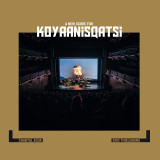
Chantal Acda & Eric Thielemans - Koyaanisqatsi

Dark-folk songwriter Chantal Acda and beyond drums-percussion musician extraordinaire Eric Thielemans propose a new score for Koyaanisqatsi, re-actualising the incredibly beautiful, raw, rhythmic and touching images of this 80-ties cinematographic masterpiece. Slow deep electric waves, lonely synths in sonic desert landscapes, rhythmic pulses, transporting drums and bells, and deeply longing sounds and voices make up the audible fundamentals of this imagined, neo shamanic, ritualistic music to accompany the Earth as it keeps on supporting our post human frenetics even today. This release contains a selection of the musical material scored for a live performance together with the screening of the movie. The live performance premiered on Film Festival Gent and Vooruit in the fall of 2022.

Currently based in Belgium, Dutch-born Chantal Acda (b. 1978) has worked under the Sleepingdog moniker since 2006, making three acclaimed albums that closed on the 'With Our Heads in the Clouds and Our Hearts in the Fields' (2010) album for which she collaborated with Adam Wiltzie (Stars of the Lid, A Winged Victory For The Sullen). They toured the UK and Benelux with Low in 2011. After all this, it was time for her first real solo record. Playing in various formations (Isbells, True Bypass, Marble Sounds) had made her conscious of the patterns that we all, as humans, share in. So, she sought out kindred spirits with whom she might record an album filled with freedom and intensity, and who were conscious of the patterns we so often fall back on. Nils Frahm was the first of these to cross her path. The inventive German pianist and producer is an intense and adventurous performer and was a perfect match for it. Acda also experienced a direct bond with Peter Broderick, a multi-instrumentalist known from his solo work (on labels such as Bella Union and Erased Tapes) and from his work with, among others, Efterklang. Cellist extraordinaire Gyda Valtysdottir from Icelandic group Múm had previously worked with Chantal as a member of the Sleepingdog live band. And lastly, Shahzad Ismaily stumbled into this picture by chance, but when Acda and he found themselves in the same room they formed an instant rapport. After this first record, 3 other solorecords followed. Chantal kept on searching for a deeper connection with the outside world and recorded "The Sparkle In Our Flaws" (2015) and "Bounce Back" (2017). She also released some live recordings with her band and also Bill Frisell, a highly respected jazz guitarist.(2018). These records were released on the German label Glitterhouse. Chantal and her band toured with these records in Europe. In 2019 Chantal created her first music/theatre performance P_wawau for Oerol Festival, The Netherlands. She worked with Valgeir Sigurdson (Björk, Bonnie Prince Billy,...) and singers from Het Nederlands Kamerkoor. As a result of this, she released the recorded music: Puwawau (2019). In 2021 Chantal released her most recent album Saturday Moon. (2021) For this album she worked with her band (Eric Thielemans, Alan Gevaert, Gaetan Vandewoude and Niels Van Heertum) but also with Bill Frisell, Shahzad Ismaily and Mimi and Alan Sparhawk (Low). Saturday Moon was very well received, internationally, by the press.

Eric Thielemans is a drummer and percussionist. Travelling across music scenes and disciplines, Thielemans navigates by means of his own compass. Most known for his resonant solo works like a Snare is a Bell, Sprang, Aural Mist and Bata Baba Loka and many collaborations with musicians in the experimental music scene, as well as the Jazz scene, and indie folk/pop/rock scenes Thielemans keeps on pushing the borders and expanding conscious aural spaces and territories. Recently, Thielemans has collaborated with PVT - a trio together with Mika Vainio & Charlemagne Palestine (album released April 2020) , PAT - a new trio together with Oren Ambarchi and Charlemagne Palestine, A new duo together with Oren Ambarchi, Billy Hart ("Talking about the Weather"), Chantal Acda ("The Sparkle in our Flaws", "Bounce Back", "Puwawau", "Saturday Moon"), Marshall Allen (Sun Ra), Tape Cuts Tape, Distance Light & Sky, Jozef Dumoulin, Trevor Dunn, Shahzad Ismaily, Vaast Colson, Nico Dockx, and many more. Currently Thielemans is working on r-e-s-o-n-a-n-c-e , a culminative work that encompasses and brings to the surface the underlying currents within his life in and with music. Withing r-e-s-o-n-a-n-c-e he investigates the everyday magic through conversations, writing and score writing to invite as many souls as possible to experience and co create the magic in the everyday.

pre-order now16.09.2022

expected to be published on 16.09.2022

18,28
Arma X - Violento Ritual

Arma X burst onto the hardcore scene in 2019 with a demo that made people take notice from day one, seemingly coming out of nowhere, along with a whole host of new bands from Madrid. Taking the best of heavy hardcore styles, whether it’s Cleveland Straight Edge or NYHC Beatdown, Arma X are making it their own with tunes breathing new life into the genre in their debut album, Violento Ritual. Not for the faint of heart, the band are also redefining just how many dive bombs and breakdowns you can have in one song thanks to guitarists Yoshi and Rodri, and we are here for it! Vocalist Leo sings in Spanish, because there will be no appeasing to the English speaking hardcore masses here and rightly so. The result is vocals that just get taken to another level, delivered with Leo’s huge rasping voice not too dissimilar to Integrity’s Dwid, commanding over what sounds like a straight up war zone. Lyrically Arma X rock about the Straight Edge, naturally, as a true form of outsider behaviour within punk and also dark moments of anger in one’s personal life through occult imagery. Meanwhile drummer Tania and bassist Iker waste no time in pummelling out beats you want to smash heads to in the pit. The group are all hard working members of the Madrid hardcore community keeping their local scene vibrant and inclusive for all, reflected in the band themselves. Thanks to that hard work, along with many others from this new generation, the Madrid scene has been growing from strength to strength for the past 3 years. Arma X are part of this new wave of bands and DIY ethic that is selling out local only shows and making a community that stands strong. XXX. For Fans of Bulldoze, Confront, Integrity, Merauder. Genre: Alternative / Punk & Hardcore

pre-order now16.09.2022

expected to be published on 16.09.2022

22,90
Bob Dylan - Nashville Skyline

For an artist whose career is flush with enigma, myth, and disguise, Nashville Skyline still surprises more than almost any other Bob Dylan move more than four decades after its original release. Distinguished from every other Dylan album by virtue of the smooth vocal performances and simple ease, the 1969 record witnesses the icon's full-on foray into country and trailblazing of the country-rock movement that followed. Cozy, charming, and warm, the rustic set remains for many hardcore fans the Bard's most enjoyable effort. And most inimitable. The result of quitting smoking, Dylan's voice is in pristine shape, nearly unidentifiable from the nasal wheeze and folk accents displayed on prior records.

Mastered on our world-renowned mastering system and pressed at RTI, this restored 45RPM analog version zeroes in on the shocking purity and never-again-replicated croon of Dylan's vocals. Enhanced, too, are the images associated with the calmly strummed and picked acoustic guitars and decay connected to the fading notes. The dimensions and ambience of the Columbia studio translate via subtle echoes and natural blend of instruments melding with one another, akin to honey integrating with tea. Providing comparably soothing effects, relaxing vibes pour forth from this reissue, which affords this masterpiece the fidelity it's always deserved. Wider grooves mean more information reaches your ears.

"Is it rolling, Bob?," Dylan famously queries producer Bob Johnston at the beginning of "To Be Alone With You," indicating the laissez-faire feelings that surrounded the sessions and helped yield the laidback, convivial music defining the album – arguably the most unique in the artist's vast catalog. While he dipped his toes into country waters on the preceding John Wesley Harding, Nashville Skyline throws its collective arms around the style in bear-hug fashion and drops any obvious folk references. Everything from the songs' moods to the amicable arrangements reacts against the era's turmoil and popular sounds.

This beautiful and beautifully executed effort might stand as Dylan's most effective protest ever, even if many missed the point upon original release. Advocating peace, love, and old-world allure without calling attention to any characteristic in an overly forward manner, Dylan frames the songs as ballads, rags, lullabies, and gentle honky-tonk dances. He adheres to expeditious brevity, keeping the arrangements tight and free of any filler, thus allowing the melodies to immediately work their magic and place hummable memories inside listeners' heads.

Indeed, if any Dylan masterpiece is overlooked, it's Nashville Skyline. In addition to his superb singing and infallible songs, Dylan enjoys backing from a crackerjack assembly of Nashville session musicians including Charlie Daniels, Marshall Grant, W.S. Holland, Charlie McCoy, Ken Buttrey, and Norman Blake. Country pros, and their respective performances, don't come any better.

As much as on any of his records, Dylan resides in a good place, mentally and emotionally. The idyllic, warmhearted environs of Nashville Skyline stand apart now just as they did in the late 1960s. The sincerity conveyed on the inviting "Lay Lady Lay," relief sighed on the romantic "Tonight I'll Be Staying Here With You," and unlimited promise expressed on the jittery "To Be Alone With You" parallel the lessons-learned yearning and genuine desire found on "One More Night," bracing "I Threw It All Away," and eternal "Girl From the North Country," performed to perfection with Johnny Cash.

pre-order now07.08.2022

expected to be published on 07.08.2022

30,46
David Lynch - Ghost Of Love / Imaginary Girl

In the late 90’s and early aughts, internet video capabilities like Real Video and Quicktime were expanding, proving the early prophecy that ‘anyone would be able to have their own television channel on the internet’ was indeed coming true. After the critical success of Mulholland Drive, director David Lynch doubled down on the medium, funneling virtually all of his time into personally animating, filming, and scoring content for his own internet destination: davidlynch.cm. It was fertile and limitless ground for a creative like Lynch, allowing him to return to the days of his experimental film roots, where it was actually possible for him to have his hands on every element of the process.

It was out of this newfound digital freedom that the early seeds of Inland Empire were born, evolving and fissuring from an internet-bound experiment itself, into something much more expansive. The film collated a variety of ideas and working methods that the recent web paradigm had nurtured in Lynch, one of which was an increased frequency of his own solo music productions. Having finished constructing his own personal recording studio in 1998, he was no longer tethered to the scheduling and high premiums of rented studio time and was free to accelerate his musical experimentation without constraint. As a direct result of this was a unique shift in Lynch’s musical trajectory; a shift that would eventually bear multiple albums and a short film featuring a lounge-crooning monkey. In the first weeks of 2005, Lynch would record a blues instrumental and instead of getting someone else to sing on the song, he would sing, via a formant and pitch-altering piece of equipment known as the Boss VT-1. It was because of the davidlynch animated series “Dumbland” that the director had discovered the device that would enable him to be ‘any character he needed.’ With “Ghost of Love,” Lynch was experimenting with bringing those ‘characters’ into his own musical compositions. Intrue Lynch fashion, it’s difficult to know which inspired which: did “Ghost of Love” birth a scene in Inland Empire, or did the film’s ideas birth the song? Just as “In Heaven” had served to encapsulate Eraserhead, “Ghost of Love” managed to encapsulate Inland Empire allowing its listener to close their eyes and immediately channel the film’s images and mood onto the screen of the mind.

“Ghost of Love” is backed with “Imaginary Girl,” originally released via CD single in 2006 are now finally seeing their vinyl and digital release for the first time in celebration of Inland Empire’s 2022 theatrical re-release. Both are signature cinematic Lynchian classics that feature Lynch on guitar and vocals, accompanied by his long-time collaborator and Sacred Bones staple Dean Hurley on bass.

out of Stock

Order now and we will order the item for you at our supplier.

12,56

Last In: 3 years ago
DKMA - Boston Boy (Vol. 2) LP 2x12"

Dana Kelley, aka DKMA, is a much revered writer, producer, remixer, performer and creative force whose releases have become timeless classics and Holy Grails amongst DJs, music heads and collectors alike. A true artist and innovator, his productions possess the unique ability to engage, transport, challenge and enthral as only next level musicians can.

Grounded in the deep, soulful US House sound of the mid '90's, his earliest releases can be found on Strictly Rhythm, before moving on to produce under his DKMA alias as well as releasing music as Callisto on Guidance. Although Dana sadly passed away in 2013, he left us with a remarkable body of work that has remained both exciting and relevant throughout the last 2 decades and beyond.

Boston Boy Vol.2 is the 2nd in a series of compilations that focuses on Dana's visionary work as DKMA, during his most compelling and creative phase between 1997 and 2002. The compilations themselves are collated from an incredible & far reaching archive of over 20 of Dana's original DATs that have been generously shared with us by the Kelley Family. In the archive, some of Dana's most sought after & cherished works were uncovered, restored and meticulously assembled alongside previously unheard archival material.

The tracks themselves are bold, clever and inventive, characterised by a need for innovation. Passages of deep soulful house underpin more forward thinking electronics without ever losing dance floor appeal. Jazz solos sit imaginatively on top of gritty swinging rhythms, deep infectious b-lines, eerie textures and chord sequences are warm and effortlessly soulful yet with a sound design, sonic range, dynamism and a technical prowess that most could only dream of.

These compilations celebrate the life, vision and art of one of house music's most hallowed producers. Unique and essential, these collections pull together DKMA's most coveted works. Respectfully sourced, restored and compiled from all audio sources courtesy of the Kelley family and Above Board Projects.

Mastered by Frank Merritt at The Carvery, London, with special artwork by Atelier Surplus featuring a special unseen image of Dana from his family's photo albums.

out of Stock

Order now and we will order the item for you at our supplier.

26,26

Last In: 10 months ago
MOUNTAIN MOVERS - WORLD WHAT WORLD LP

Experimental and improvisational psychedelic rock, for fans of White Heaven, Les Rallizes Denudes, Headroom, Düngen, Heron Oblivion, Comets On Fire, The Renderers, Bardo Pond. Mountain Movers arguably are the perfect band for all the true "heads" out there. The New Haven quartet have been at it for 15 years, and the "newest" lineup (now at it for well over a decade; vocalist/guitarist Dan Greene, bassist Rick Omonte, guitarist Kryssi Battalene and drummer Ross Menze) have firmly grasped what it takes to fry brains; achingly beautiful melodies buoyed by a life raft of white-hot guitar scree and mind-melting feedback. "World What World" is the band's eighth album and third for Trouble In Mind Records. "World What World" is the newest chapter of the group's continued explorations and efforts to refine their sound. The lyrics of "World What World"s songs all imply a protagonist on a quest; the title itself is an implied query with no question mark; is it a question, or a statement?. The one-two punch of opener "I Wanna See The Sun" and "Final Sunset" lay out what's in store; Crazy Horse-inspired sandpaper melodies sit comfortably next to improvised, PSF-influenced six-string ragers. The group performs together effortlessly and telepathically, subverting the loud/quiet/loud dynamic that has saturated independent music since the late-Eighties. The loud parts and quiet parts are like waves; indistinguishable from each other, creating a fluid dynamism and intensity that swallows the listener up in its current, sweeping it toward oblivion. Hyperbole, you say? Watch out for midway through "Then The Moon" when the tune's lilting waltz pivots into a casually blistering solo by Battalene before fading into the melancholic "Haunted Eyes" - beckoning you with a mournful sidelong glance. Side Two opens with "Staggering With A Lantern", an elegant, lumbering instrumental improvisation again showcasing the synergistic shredding of the group's guitarists. The sticky lyrical hooks and sideways jangle of "Way Back To The World" and "The Last City"s midnight-hour, mellow singe come next, before concluding "World What World"s journey with "Flock of Swans". The song is the perfect closer and culmination of the album's mission statement. The subjects that populate Greene's songs and visual imagery augment his elegiac lyrics, awash in magical realism and fantastic symbolism; knights, fighters, dragons, masks. Poetic missives are launched from the heart straight into the neural pathways, guided by the rhythm section's otherworldly chemistry and Battalene's masterful control over her instrument. Mountain Movers have been at it too long to care about acclaim. They do it because the music calls out to them, and they let it carry them away.

pre-order now08.07.2022

expected to be published on 08.07.2022

19,96
Asha Puthli - The Essential LP (2x12")

We can't think of many other performers like the singer/songwriter/dancer/actress Asha Puthli who have excelled in such a broad range of genres. From 60s psych, Classical Indian music, Free Jazz, Pop, Soul, Disco, to Rock, the list goes on. A 'best-of' or an 'essential collection' is always going to be a subjective thing, but for what is unbelievably the first official compilation covering the full breadth of Asha's illustrious career, we aimed to provide a snapshot into her ever-evolving musical journey and a tribute to the vast richness of her catalogue.

Some singers want to be famous, others are pop star icons, and some are artists; Asha is the latter. Asha is a true force of nature, regardless of the genre she explores, she fully commits, moves on, and reinvents herself, always progressing. Looking back on Asha's career, it is evident what a trail-blazer she was, opening doors for her contemporaries and those who came later to step through. Whether it was conscious or not, you can recognise Asha’s influence in aspects of Kate Bush's ethereal image and performance, in Donna Summer’s high-smooth vocal sound and disco stylings, and in the gumption and power of Grace Jones.

Kick-starting the compilation is ‘Pain’, the Indian psychedelic garage rock sounds of The Savages featuring Asha. We have to admit, we had to strongarm Asha into letting us include this track at first; also due to its rare nature (and lack of any master tapes) the recording we present here is raw and low-fi. However, we felt its inclusion was important to fully represent the journey of Asha's career, the same consideration was also applied to two of the Asha & The Surfers’ songs that we have included in this collection.

Asha saw a link between jazz and classical Indian music "the improvisation, the minor chords, the free form, the liberalness of the art" we showcase her love of jazz here with seminal works with the legendary Ornette Coleman, taken from the revered 'Science Fiction’ album. Asha's 'CBS years' are represented here, how could we not include 'Space Talk' on this collection, and how these years progressed into her amazing disco offerings such as 'I'm Gonna Dance' & 'Music Machine'. The bizarre 'We're Gonna Bury The Rock With The Roll Tonight' from 1980 has also won us over. A pseudo-50s throw-back song that sounds not un-similar to the post-modern, leftfield, pop of an MIA production to come years later. Rounding off the compilation we have Asha's interpretation of a Michael Jackson classic that sat lost on a cassette-only released in India.

out of Stock

Order now and we will order the item for you at our supplier.

27,02

Last In: 14 months ago
Strawberry Guy - Sun Outside My Window

Tiptoe between the toadstools of Liverpool’s city parks, and amongst the foliage you might find a Strawberry Guy, contemplating his next chord-progression. Composing hi-fi symphonies from within his humble abode, the Welsh-born songwriter is ready to share the fruits of his labour with debut album Sun Outside My Window. A timeless vista of ethereal balladry looking towards 19th Century musical maestros and works of art, it brings new meaning to the term ‘Modern Classic’ and is the most optimistic of lockdown records yet.
“It’s about seeing the simple things in life and them making you happy,” tells Alex Stephens, the Guy behind the Strawberry. “I remember this day when I was really down… looking out the window, the sun beaming in was beautiful, it made me want to go outside – it was simple but made me so happy in that instance.”
A one-man impressionist, painting majestic soundscapes, Strawberry Guy blends truthful lyrics with lush arrangements to conjure new emotive worlds. Inspired by composers of the Romantic period, or Debussy, Ravel, and other classical artists of the 1800s, his wonderland moves like a Monet painting where arpeggios dance between meadows of dazzling dynamics and dramatic key changes. As former keyboard player of The Orielles and Trudy and The Romance, the light through his floor to ceiling windows has caused a dramatic Greenhouse Effect and now ripening on solo terms, his innocent uploads of ‘Without You’ and ‘F-Song’ comfort 2 million Spotify listeners a month. ‘Mrs Magic’ has received 40 million streams, landing at #13 in its chart and countless fan-created videos have appeared on YouTube. “Throughout history composers have tried to capture emotion, painting their own impressionist pictures with musical brush strokes… I guess I’m just trying to do the same and people enjoy that,” he suggests modestly.
Named by musical friends Her’s after his impeccable taste in milkshakes, Strawberry Guy upturns ‘bedroom artist’ perception, as each idea is crafted into a widescreen wonder where vocals tag-team instrumentals and countermelodies flourish within the Georgian walls of his Liverpool flat’s small space. “I want it to sound like I’ve squeezed an 80-piece orchestra into my room, and for listeners to wonder how all those strings got there,” he says. “Working on the 4-part harmonies, the orchestra became real; I began believing in myself.”
Imitating nature’s effect on emotion, like 70s songwriters, or the fantastical soundtracks accompanying vibrant scenes in the Japanese animated Studio Ghibli films and video games, landscape is brought to the fore. Monet’s picturesque Meadow at Giverny features as the album’s accompanying artwork – perhaps a reminder of the rural Welsh countryside views through his childhood home’s window; “I was inspired by how calm and peaceful the image felt. Its painted lines show real-life scenes in a magical way, which to me reflects my music.”
Just as the first Strawberry Guy EP Taking My Time To Be offered a slowing down for the soul, Sun Outside My Window is musically unhurried, written and recorded over 2 years. “Recording as a lone berry meant I could run with my emotions in the moment and deliver something true; it would have been an entirely different album had it been recorded in a studio,” he says.
Modern Classic? Only time will tell. For now this Guy’s happy-sad world is here to get the juices flowing and with, pandemic permitting, a US tour in 2022, life looks a whole lot sweeter. Until then, take it slow, be at one with the wilderness and remember, when life gives you lemons, swap them for Strawberries.

out of Stock

Order now and we will order the item for you at our supplier.

21,72

Last In: 3 years ago
Rolf Hansen - Tableau

Rolf Hansen

Tableau

12inchKALK125LP
Karaoke Kalk
24.06.2022

»Tableau« is Rolf Hansen's second full-length album under his given name and acts as a sequel to his solo debut »Elektrisk Guitar«, released in 2019 through Karaoke Kalk. On the 14 new pieces, the Copenhagen-based composer and musician further explores the sonic possibilities of the electric guitar by opting for a radically different approach and putting great limitations on himself as a performer. »Tableau« is an experimental record in the truest sense of the word, eschewing conventional modes of playing the instrument and instead turning the guitar into a sound source for compositions that are at once abstract and concrete.

Already on his last album, Hansen had found a different approach to playing and composing, but this time went even further and created a set-up in which the electric guitar becomes a different instrument altogether. This is also expressed in its title: a tableau is, broadly understood, an image-forming momentary bodily pause in a dramaturgical or narrative process. In the context of the album, tableau is the form and sound that emerge when the musician’s usual approach to playing and the compositional practice is halted and transformed. To achieve this, the guitar is placed on a table with microphones installed around it and tuned in a static microtonal modality thanks to wooden replacement frets that have been inserted under the strings. This alters how the sounds are being generated with the instrument, which is now played from above, occasionally strummed or stroked with a tool.

The opener »Begyndelse« already sets the tone by punctuating dense layers of sound with a one-note melody that provides a rough rhythmic structure and harmonic anchor for the track that still seems to mutate wildly the further it progresses. Even in moments in which Hansen opts for a more directly accessible approach like on the following »Over Grænsen« or »Tid«, the pieces’ emotional qualities are greatly amplified by their sonic idiosyncrasies. This is best exemplified by the first track on the second side of the LP, »Højre hånd«. Using high microphone gain to magnify the high-frequency acoustic sounds of the electric guitar, Hansen captured a rich near-symphonic changing spectrum of overtones. This is typical for the attention to detail put into the overall record whose approach maximises the music’s affective impact by focusing on minute nuances.

»Tableau« is full of moments marked by almost unnoticeable shifts and changes, offering a wealth of sounds that are as evocative as they come unexpectedly. Despite their aesthetic differences, the kinship between its predecessor »Elektrisk Guitar« and these 14 compositions is undeniable. Both are based on self-imposed constraints, a radical form of reduction that made it possible for Hansen to broaden his sonic palette and compositional approach. Though mostly short, concise, and abstract-sounding, the pieces on »Tableau« speak a clear, varied and simple language.

pre-order now24.06.2022

expected to be published on 24.06.2022

22,14
Decapitated - Cancer Culture

Decapitated

Cancer Culture

12inch4065629605285
Nuclear Blast
27.05.2022

Across eight studio albums, DECAPITATED grew from the adolescent dream of teenagers from a small Central European town to one of the leaders of the metal genre. Each successive album further expands the band’s sound with genre-bending authenticity and integrity. As Metal Injection rightfully observed, “any self-respecting death metalhead knows the name well.”

DECAPITATED’s music is a weapon forged by four young men from a historic medieval-fortified town in Poland, which catapulted them to the top of a worldwide subculture. Like a rose in the devil’s garden, the DECAPITATED story builds triumph from tragedy. The gleeful grotesquery of extreme metal imagery and rifftastic bludgeoning beckons listeners to uncover broader truths.Upon the release of 2017’s Anticult, Metal Hammer declared DECAPITATED “a serious successor to the likes of Pantera and Lamb Of God – a band who can draw new legions into the metal world as its new champions.” Their diverse follow-up, 2022’s Cancer Culture, delivers on that promise.

Instantly recognizable devastation and deceptively sinister hooks abound. Freshly minted DECAPITATED anthems like “Last Supper,” “Hello Death,” “Just Cigarette,” “No Cure,” “Iconoclast,” and “Cancer Culture” shimmer with sonically sharp production and unrelenting bombast. There’s also a newly increased emphasis on melody, even venturing into darkly romantic territory. Wacław "Vogg" Kiełtyka (guitar), Rafał "Rasta" Piotrowski (vocals), Paweł Pasek (bass), and James Stewart (drums) are at the top of their game, delivering the goods at peak performance. Jinjer vocalist Tatiana Shmayluk and Machine Head frontman Robb Flynn make guest appearances.

Set on the descending plains of a mountain range amid a dense forest, Krosno boasts a 14th-century Gothic church, a Subcarpathian museum, and stunning artisan glassware. In this Polish town, teenage music student Wacław "Vogg" Kiełtyka discovered records from bands like Morbid Angel, Cannibal Corpse, Metallica, and Machine Head. The guitarist and his younger brother, drummer Witold “Vitek” Kiełtyka, cofounded DECAPITATED in 1996, inspired by a wide range of technical death, blackened thrash, and local heroes, like KAT and the world-renowned Vader. Death and black metal reigned supreme in the Polish scene of the 1990s, where Behemoth originated as well. In fact, a Vader song called “Decapitated Saints” inspired the band’s moniker.
The organic musical chemistry between the Kiełtykas was akin to the brotherly connectivity and vibe driving Pantera, Gojira, and the classic era of Sepultura. In 2006, Kerrang! praised the first three DECAPITATED albums - Winds of Creation (2000), Nihility (2002), and The Negation (2004) – as “superbly conceived and executed eruptions of technical brilliance and razor-sharp songwriting that turned these youthful Poles into one of the genre’s most widely respected bands.” That year’s Organic Hallucinosis further perfected Vogg’s penchant for blending extremity with catchy hooks.

The rule-breaking ferocity and invention of the first four albums reinvigorated death metal, as DECAPITATED inspired a new generation of bands who followed suit. Sadly, this era came to a shocking end in late 2007. While touring Russia, the band’s bus collided with a large truck near the border with Belarus. Both Vitak and then-singer Adrian “Covan” Kowanek sustained severe head injuries. Tragically, Vitak passed away in a Russian hospital a few days later. He was just 23.Vogg summoned the courage to continue, in honor of his brother and what they created, and returned with a new incarnation of DECAPITATED and the fiercely adventurous comeback album, Carnival is Forever (2011) featuring new vocalist Rafał "Rasta" Piotrowski. Blood Mantra (2014) introduced bassist, Paweł Pasek. Blabbermouth declared it “perhaps the most poised and gutsy” DECAPITATED album, adding “its courageous bends make it a turbulent but pleasurable ride.”

Cancer Culture sounds brilliant, modern, and tasty. “There is no place for any fake, plastic, bullshit drum machine or anything like that,” Vogg insists. “It’s all organic, pure, and clear, showing the true face of the band. Vogg and company entrusted the Cancer Culture mix to David Castillo at Sweden’s Fascination Street Studios / Studio Gröndahl (Sepultura, Carcass, Opeth, Katatonia), and legendary American producer Ted Jensen (Metallica, Slipknot, Pantera, Machine Head, Korn).
The devoted supporters who traveled to see DECAPITATED on international tours with the likes of Lamb Of God, Meshuggah, Soulfly, Fear Factory, and Suffocation over the years will recognize the ever-present pummeling backbone. Longtime fans and newcomers alike will connect to the variety of atmospheric depth throughout Cancer Culture’s ten boundlessly energetic and creative tracks.
“If you told me 25 years ago, in my neighborhood in the South of Poland, that I would be in Machine Head, sharing riffs with Robb Flynn,” Vogg marvels. “It’s simply incredible. It means that everything is possible in your life. That gives me the faith to believe that I can achieve even more in my career. The dreams we have when we are kids, things we can barely imagine, can happen.” Flynn contributes a hauntingly beautiful vocal to the Cancer Culture track “Iconoclast.” “Clean vocal singing is a really new thing in DECAPITATED,” Vogg notes. “It’s really unique and amazing.”

Driven by Vogg’s passion and integrity, the dual emphasis on creative invention and technical prowess maintains DECAPITATED’s stature as genre-leaders in 2022 and beyond. The band’s supporters continually demonstrate confidence and absolute certainty DECAPITATED will deliver.

pre-order now27.05.2022

expected to be published on 27.05.2022

30,88
Decapitated - Cancer Culture

Across eight studio albums, DECAPITATED grew from the adolescent dream of teenagers from a small Central European town to one of the leaders of the metal genre. Each successive album further expands the band’s sound with genre-bending authenticity and integrity. As Metal Injection rightfully observed, “any self-respecting death metalhead knows the name well.”

DECAPITATED’s music is a weapon forged by four young men from a historic medieval-fortified town in Poland, which catapulted them to the top of a worldwide subculture. Like a rose in the devil’s garden, the DECAPITATED story builds triumph from tragedy. The gleeful grotesquery of extreme metal imagery and rifftastic bludgeoning beckons listeners to uncover broader truths.Upon the release of 2017’s Anticult, Metal Hammer declared DECAPITATED “a serious successor to the likes of Pantera and Lamb Of God – a band who can draw new legions into the metal world as its new champions.” Their diverse follow-up, 2022’s Cancer Culture, delivers on that promise.

Instantly recognizable devastation and deceptively sinister hooks abound. Freshly minted DECAPITATED anthems like “Last Supper,” “Hello Death,” “Just Cigarette,” “No Cure,” “Iconoclast,” and “Cancer Culture” shimmer with sonically sharp production and unrelenting bombast. There’s also a newly increased emphasis on melody, even venturing into darkly romantic territory. Wacław "Vogg" Kiełtyka (guitar), Rafał "Rasta" Piotrowski (vocals), Paweł Pasek (bass), and James Stewart (drums) are at the top of their game, delivering the goods at peak performance. Jinjer vocalist Tatiana Shmayluk and Machine Head frontman Robb Flynn make guest appearances.

Set on the descending plains of a mountain range amid a dense forest, Krosno boasts a 14th-century Gothic church, a Subcarpathian museum, and stunning artisan glassware. In this Polish town, teenage music student Wacław "Vogg" Kiełtyka discovered records from bands like Morbid Angel, Cannibal Corpse, Metallica, and Machine Head. The guitarist and his younger brother, drummer Witold “Vitek” Kiełtyka, cofounded DECAPITATED in 1996, inspired by a wide range of technical death, blackened thrash, and local heroes, like KAT and the world-renowned Vader. Death and black metal reigned supreme in the Polish scene of the 1990s, where Behemoth originated as well. In fact, a Vader song called “Decapitated Saints” inspired the band’s moniker.
The organic musical chemistry between the Kiełtykas was akin to the brotherly connectivity and vibe driving Pantera, Gojira, and the classic era of Sepultura. In 2006, Kerrang! praised the first three DECAPITATED albums - Winds of Creation (2000), Nihility (2002), and The Negation (2004) – as “superbly conceived and executed eruptions of technical brilliance and razor-sharp songwriting that turned these youthful Poles into one of the genre’s most widely respected bands.” That year’s Organic Hallucinosis further perfected Vogg’s penchant for blending extremity with catchy hooks.

The rule-breaking ferocity and invention of the first four albums reinvigorated death metal, as DECAPITATED inspired a new generation of bands who followed suit. Sadly, this era came to a shocking end in late 2007. While touring Russia, the band’s bus collided with a large truck near the border with Belarus. Both Vitak and then-singer Adrian “Covan” Kowanek sustained severe head injuries. Tragically, Vitak passed away in a Russian hospital a few days later. He was just 23.Vogg summoned the courage to continue, in honor of his brother and what they created, and returned with a new incarnation of DECAPITATED and the fiercely adventurous comeback album, Carnival is Forever (2011) featuring new vocalist Rafał "Rasta" Piotrowski. Blood Mantra (2014) introduced bassist, Paweł Pasek. Blabbermouth declared it “perhaps the most poised and gutsy” DECAPITATED album, adding “its courageous bends make it a turbulent but pleasurable ride.”

Cancer Culture sounds brilliant, modern, and tasty. “There is no place for any fake, plastic, bullshit drum machine or anything like that,” Vogg insists. “It’s all organic, pure, and clear, showing the true face of the band. Vogg and company entrusted the Cancer Culture mix to David Castillo at Sweden’s Fascination Street Studios / Studio Gröndahl (Sepultura, Carcass, Opeth, Katatonia), and legendary American producer Ted Jensen (Metallica, Slipknot, Pantera, Machine Head, Korn).
The devoted supporters who traveled to see DECAPITATED on international tours with the likes of Lamb Of God, Meshuggah, Soulfly, Fear Factory, and Suffocation over the years will recognize the ever-present pummeling backbone. Longtime fans and newcomers alike will connect to the variety of atmospheric depth throughout Cancer Culture’s ten boundlessly energetic and creative tracks.
“If you told me 25 years ago, in my neighborhood in the South of Poland, that I would be in Machine Head, sharing riffs with Robb Flynn,” Vogg marvels. “It’s simply incredible. It means that everything is possible in your life. That gives me the faith to believe that I can achieve even more in my career. The dreams we have when we are kids, things we can barely imagine, can happen.” Flynn contributes a hauntingly beautiful vocal to the Cancer Culture track “Iconoclast.” “Clean vocal singing is a really new thing in DECAPITATED,” Vogg notes. “It’s really unique and amazing.”

Driven by Vogg’s passion and integrity, the dual emphasis on creative invention and technical prowess maintains DECAPITATED’s stature as genre-leaders in 2022 and beyond. The band’s supporters continually demonstrate confidence and absolute certainty DECAPITATED will deliver.

pre-order now27.05.2022

expected to be published on 27.05.2022

29,03
Items per Page:
N/ABPM
Vinyl