Tuber, steps into the spotlight with his debut EP, a calculated assault tailored for dark and smoke-filled rooms. Five meticulously programmed tracks, each designed to unleash visceral sensations when played on top-tier sound systems. The result is a heady, sweat-soaked experience, drawing dancers into a relentless rhythm that captivates the mind and drives bodies in motion
Buscar:tuber
- 1
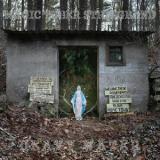
Much like the North Carolina wilds it reflects, Needlefall waxes and wanes from mysterious and unsettling to ecstatic and awe-inspiring, capturing the sacred dimensions of the natural world. Magic Tuber Stringband draw on a host of fellow travelers to realize Needlefall"s intricate arrangements, exemplifying the diversity of contemporary folk movements, placing their work in the tradition of modern innovators like Moondog, Harry Partch, Pauline Oliveros, and labelmate Sally Anne Morgan. The vast forests and mountains that inspire the band as a metaphor for living music traditions - ever-changing and yet still standing, shaped over time by human hands while equally shaping the human experience. Magic Tuber Stringband, from North Carolina, are Courtney Werner and Evan Morgan, accompanied by their regular bassist Mike DeVito. Morgan is an organizer within the local music community, and Werner is a dedicated naturalist involved in local land stewardship. Needlefall answers the question "what does a modern string band sound like?" with powerful new arrangements of traditional songs and transcendent originals. The album is teeming with life, translating abundant ecosystems into arcing melodies and shimmering, mystic drones. The band explains: "If you spend enough time out in the woods you inevitably see or hear things that are hard to explain. I"ve been in caves where it"s total darkness and you"re enveloped by the disorienting sound of dripping water. The natural sights and sounds in these places are often repetitive, percussive, expressive, sometimes unsettling - the way that water carves patterns into rock or tree trunks appear in endless rows."
Changing Mindset is an EP developed around Tuber's title track,
This work is presented as a work of sonic craftsmanship, with a distinctive character that will make you delve towards the limits of electronic music. This sound fuses atmospheric, hypnotic and mental elements, creating a listening experience that goes beyond listening to become a total immersion into the cosmos.
-On the first remix, it denotes a special flavor thanks to the presence of Orbe, a true master in the creation of textures and enveloping sounds. Known for his skill in weaving complex sonic layers, he dives into the core of Tuber's main track, displaying an ability to transform and enrich every musical element.
-The second remix, created by HD Substance, promises to be an experience that will take listeners on a vibrant musical journey, inviting them to surrender to the beat with an infectious energy. The presence of HD Substance, backed by an extensive and outstanding trajectory in the music world, augurs a remix that goes beyond simply being listened to, it is a direct invitation to immerse oneself in the intensity of the sound and let oneself be carried away by the melody.
-The last remix, by Dinamite, adds a touch of elegance and forcefulness, completing the "Changing Mindset" EP. Dinamite, renowned for his ability to fuse musical sophistication with pulsating beats, brings with him an experience-laden perspective.
2022 Repress
In future times, culture historians will refer to Gabor Schablitzki aka Robag Wruhme as a creator of a singular techno sound, a rock in the murky sea of arbitrary musical dullness that befell mankind in the early 21st century.
Furthermore, a lesser known quality of Schablitzki will be praised and explored: He was a relentless wordsmith, a deeply passionate inventor of elegant idioms that enriched German language. Take ‘Freggelswuff’ or ‘Wemmel’ as shining examples.
It’s within this context that a certain cultural artefact released on a Cologne based record label called KOMPAKT (which towards the end of the 21st century made a hardly publicised turn to manufacturing CO2-neutral wall plug systems) that went by the sonorous title ‘Topinambur’ has to be mentioned. Legend has it that Schablitzki claimed to have created the word ‘Topinambur’, unknowingly that local farmers have been marketing a root tuber under the same name since it got imported from America in 1610 AD. The following tenacious copyright lawsuit between Schablitzki and a large agricultural consortium lasted for many years. It isn’t considered as a highpoint in Schablitzki’s turbulent life but it still serves a staircase wit that is passed on from generation to generation amongst Black Forest moonshiners.
Kulturhistoriker künftiger Generationen werden Gabor Schablitzki alias Robag Wruhme als Schöpfer eines singulären Techno-Sounds preisen, als einen Fels in der Brandung der im frühen 21. Jahrhundert vorherrschenden Beliebigkeit. Als DJ und Produzent war ein Meister des deepen Abrisses, werden sie weiterhin formulieren, obschon es weitere 136 Jahre dauern wird, bis die subkulturelle Bedeutung des Wortes 'Abriss' zweifelsfrei geklärt werden konnte.
Es wird aber auch eine weitere einzigartige Qualität Gabor Schablitzkis hervorgehoben werden: Er war ein unermüdlicher Wortschöpfer, der die deutsche Sprache um elegante Idiome wie Freggelswuff oder Wemmel bereicherte. In diesem Zusammenhang findet meist eine Veröffentlichung des Kölner Labels KOMPAKT (welches im ausklingenden 21. Jahrhundert einen wenig bemerkenswerten Wandel zum Hersteller von CO2-neutralen Dämmstoffdübeln vollzog) Erwähnung. Diese Veröffentlichung erschien unter dem klangvollen Namen "Topinambur" und die Legende besagt, dass Schablitzki behauptete auch hier der Nachwelt eine neue Wortschöpfung hinterlassen zu haben, nicht wissend, dass europäische Landwirte bereits seit 1610 A.D. unter diesem Namen ein aus Amerika importiertes Knollengewächs vermarkteten. Der sich daran anschliessende Copyright-Streit zwischen Schablitzki und einem mächtigen Agrarkonzern, zählte nicht zu den rühmlichen Episoden seines bewegten Lebens, sorgt aber seit Generationen als Treppenwitz unter Schwarzwälder Schnapsbrennern für viel Geschmunzel.
- I Want To Die Easy
- Lord Randall
- Everlasting
- Edward
- Doxology (I)
- (A Still, Small Voice)
- Lord Bateman
- Doxology (Ii)
Wenn Sie von Hillsborough, North Carolina, auf der 1-85 nach Norden fahren und die Ausfahrt zur 58 East nehmen, erreichen Sie in fünfzehn Minuten Diamond Grove, ein kleines, nicht eingemeindetes Gebiet im Brunswick County, Virginia, am Meherrin River. Für die meisten Besucher gibt es dort nicht viel zu sehen - für Lebensmittel müssen Sie nach Lawrenceville und für Baumaterial nach South Hill fahren. Doch versteckt in diesem Fleckchen Virginia-Piedmont liegen die Überreste einer Milchfarm aus den 1740er Jahren, deren Haupthaus ein wunderschönes altes Gebäude mit zwei Etagen ist, das noch immer mit Seilbetten und allem Drum und Dran ausgestattet ist. Wenn man heute dorthin fährt, hört man in der Ferne Geräusche von jemandem, der in den vermieteten Nebengebäuden Sojabohnen und Baumwolle verarbeitet, von landwirtschaftlichen Reifen, die über Schotterstraßen knirschen, von quakenden Fröschen und von singenden Meisen: chick-a-dee, chick-a-dee. Aber wenn Sie zufällig im September 2023 vorbeigekommen sind, konnten Sie vielleicht Fiddle-Melodien hören, die von den Kiefern widerhallen, BBS-Geräusche in leeren Räumen und die Klänge von Weirs, die ihr zweites Album und ihr Debüt bei Dear Life Records aufnahmen: Diamond Grove. Weirs ist ein experimentelles Kollektiv, das aus der Musikszene im Zentrum von North Carolina hervorgegangen ist und zu gleichen Teilen aus Oldtime-Folk und DIY-Noise besteht. Die Auftritte von Weirs sind hierarchielos und umfassen zwischen zwei und zwölf Personen. Im September 2023 reisten neun von ihnen die US-58 hinauf, um sich im Wohn- und Esszimmer des Hauptgebäudes einer Milchfarm einzufinden, die noch immer im Besitz der Familie des Bandmitglieds und Organisators Oliver Child-Lanning ist, deren Verwandte seit Jahrhunderten dort leben. Die Besetzung von Weirs - weder endgültig noch besonders wertvoll - umfasst Child-Lanning, Justin Morris und Libby Rodenbough (seine Mitstreiter bei Sluice); Evan Morgan, Courtney Werner und Mike DeVito von Magic Tuber Stringband; sowie die treuen Andy McLeod, Alli Rogers und Oriana Messer, die bis tief in die Spätsommernächte spielten. Das Ergebnis sind die neun Tracks von Diamond Grove, aufgenommen mit einer provisorischen Signalkette, die aus geliehenem Equipment der gesamten Community zusammengestellt wurde. Das Weirs-Projekt begann als Tape-Experimente mit traditionellen Melodien, die Child-Lanning im Winter 2019 unter dem Namen Pluviöse aufgenommen hatte. Daraus entstand das erste Weirs-Album Prepare to Meet God, das im Juli 2020 in Eigenregie veröffentlicht wurde und eine Zusammenarbeit zwischen Child-Lanning und Morris während der COVID-Pandemie war. Die seltsamen Umstände dieses Debüts - eine gemeinschaftliche Tradition von Live-Songs, die isoliert voneinander aufgenommen wurden - werden durch Diamond Grove aufgehoben, ein Album, das in der unwiederholbaren Konvergenz von Menschen, Ort und Zeit verwurzelt ist. Auf dem neuen Album setzen Weirs ihre Suche nach dem besten Weg fort, sogenannte ,traditionelle" Musik weiterzuentwickeln, zu bewahren und zu befreien. Sie sind Songfänger, die Melodien sammeln, die kurz vor dem Vergessen stehen. Ihr wildes, Jahrhunderte umspannendes Repertoire klingt wie eine avantgardistische Jam-Session - eine Art Real Book für eine Szene, die sich mit Porch Jams, Big Blood, Amps for Christ und Jean Ritchie auskennt. Weirs fangen Songs ein, deren Interpretationskanon noch offen genug ist, um neben denen zu stehen, die sie zuvor gesungen haben, aber niemals über ihnen. Dies sind keine Versuche, definitive Versionen zu schaffen. Die Aufnahmen auf Diamond Grove fühlen sich eher wie Besuche als wie Überarbeitungen an. Und die Frage, die Weirs auf diesem Album stellen, ist nicht, wie sie einfach die Tradition ihrer Vorfahren fortsetzen können, sondern wie traditionelle Musik heute klingen könnte. Für Weirs könnte die Geschichte dieser Tradition weniger aus dem Folk-Revival stammen als aus der Musique concrète, weniger aus makellosen alten Meisteraufnahmen als aus etwas wie The Shadow Ring, wenn diese aus dem evangelikalen Süden kämen. Wenn man ,(A Still, Small Voice)" hört, spürt man, wie die Kraft der Hymne etwas Gleichwertigem weicht: den Dielen, dem Knistern des Feuers, dem Zubereiten und Essen von Mahlzeiten. Diese Spannung zwischen Bewahrung und Verfall ist das innere Leuchten von Diamond Grove. Nehmen wir ,Doxology l": Die Melodie von ,Old Hundred", einer Hymne aus der Sacred-Harp-Tradition, wird in MIDI umgewandelt, über iPhone-Lautsprecher abgespielt und in der Septemberluft neu aufgenommen. Für manche Revivalisten mag diese Hymne, gesungen mit der ganzen Pracht gefälschter Auto-Tune-Stimmen, blasphemisch klingen. Aber Ohren, die beispielsweise auf die Hyperpop-Produktionen der letzten Jahrzehnte eingestellt sind, werden sofort die spannungsgeladene Schönheit des digital verfremdeten Shape-Note-Gesangs verstehen. Dieselbe Spannung belebt ,l Want to Die Easy". Weirs' Version basiert auf der Aufnahme von A Golden Ring of Gospel, die in der Folkways-Sammlung Sharon Mountain Harmony verewigt ist. Die Melodien, Texte und Strukturen sind weitgehend unverändert geblieben. Aber die ,reine" Klarheit der Stimmen der frühen Aufnahme ist verschwunden. An ihre Stelle tritt der distanzierte Klang des Silos der Milchfarm, in dem Weirs ihre Version aufgenommen hat, dessen natürlicher Nachhall von zwei Sekunden die ursprüngliche Nähe ersetzt. Auf diese Weise wird der Klang des Aufnahmeortes selbst zu einem Teil der traditionellen Darbietung. Das Herzstück von Diamond Grove ist Weirs' Interpretation von ,Lord Bateman", einer Melodie, die Jean Ritchie als ,große Ballade" bezeichnete: Sie wurde gespielt, wenn die Arbeit getan war und der Tanzabend zu Ende war. Es ist ein Lied aus dem 18. Jahrhundert - so alt wie die Diamond Grove Farm - über einen gefangenen Abenteurer, der laut Nic Jones den Geist eines Errol-Flynn-Films verkörpert. Wie viele großartige und oft a cappella gesungene Interpretationen steht auch bei diesem ,Lord Bateman" die Stimme im Vordergrund und unterstreicht die Bedeutung des Geschichtenerzählens für das Zusammenkommen der Kinder. Neu ist hier der immense Bordun, der die Erzählung in ein unaufhörliches Gewebe elementarer Kräfte verwandelt. Es ist ein verschwommenes Murmeln kollektiver Saiten, das den Kanon von Ritchie und June Tabor ebenso bereichert wie Pelt's Ayahuasca oder Henry Flynt's Hillbilly Tape Music. Obwohl Diamond Grove nicht explizit von der alten Milchfarm handelt, auf der es aufgenommen wurde, kann es nicht umhin, ihr zu ähneln. Alte englische Balladen wie ,Lord Bateman" und ,Lord Randall" ergießen sich über Felder, die einst von der britischen Krone ,vergeben" wurden. Tragische Lieder wie ,Edward" taumeln über Tuscarora-Pfade und Baumwollfelder nach dem Bürgerkrieg. Hymnen wie ,Everlasting l" und ,Everlasting Il" fangen das Mondlicht ein, das seit Lord Bacons Rebellion durch doppelt gehängte Fenster fällt. Und die Nachtvögel trillern noch immer, und die Pflüge pflügen noch immer eine unkomponierte Musik, die darauf wartet, von zufälligen Ohren entdeckt zu werden. Diamond Grove ist in dieser Hinsicht Geschichte. Es ist ein Ort. Es ist Zeit. Es ist das Einfangen von Liedern, Lebendigkeit, Tonbandmanipulation. Wie der niedrige Damm, den das Wort ,Weir" andeutet, ist es eine Verteidigung gegen die Strömung. Es ist eine Verteidigung regionaler Lexika gegen massenproduzierte Umgangssprachen; eine Verteidigung gegen den Glauben, dass wir einfach zu einer einfacheren Zeit zurückkehren können; eine Verteidigung gegen die Vorstellung, dass Volksmusik ,rein" bleiben muss; eine Verteidigung gegen die Behauptung, dass ein Traum von der Zukunft, der in verlorenen Geschichten schlummert, unwiederbringlich verloren ist. Gegen all das verteidigt Diamond Grove traditionelle Musik, indem es sie so klingen lässt, wie die Komplexität der heutigen Zeit - weil es weiß, dass solche Musik und all die Geschichten, die in ihr stecken, auch in Zukunft eine Rolle spielen werden.
The songwriter Joseph Allred is always prolific, but breaks up their string of solo releases for one of the most orchestrated offerings since the excellent Branches And Trees. Allred’s often monastic guitar works are fleshed out here on Old Time Fantasias, turning them towards ensemble visions of country, Americana, and Appalachia. Album opener, “The Groundhog,” features the distinctive piano of Hans Chew, with bass from Daniel Kimbro and brass from Mikey Allred. Elsewhere the new album features Kelby Clark, Courtney Werner (Magic Tuber String Band), Evan Morgan (Magic Tuber String Band), Lydian Bramblia, and Jack Bird in the mix. “I started recording this album in Spring ‘23, thinking I might be making a mostly solo acoustic album with a couple of duets thrown in for good measure. I met Hans Chew at a Nashville show a few months earlier and sent him a few tracks to see if he wanted to add anything to them. Before long the ‘solo acoustic album’ had given way to what’s probably the most involved and densely orchestrated album I’ve made to date. “I enjoyed following some threads of influence that aren’t as easily discernible in my solo playing—I hear some classic country and psychedelic flourishes, baroque pop glockenspiel and horns, percussion ideas that may be cribbed from Danny Elfman and Tom Waits albums, nods to post-rock-filtered western guitar twang, and a little Cocteau Twins dreaminess. “All in all this was a satisfying record to make. I’m especially grateful to the collaborators for adding their touches and making it a less solipsistic affair than it would have been otherwise. The political climate has changed so much over the last two years that I find it hard to imagine I could make a record with this kind of fantastic mood if I started now. I hope that it can maybe re-enchant those of us who are felling disillusioned.” —Joseph Allred
- A1: Slow Patch - Concepto 1
- A2: Alexandre Laeddis And Judy - Nighty Night
- A3: Alexandre Laeddis And Judy - Mecanica 2
- A4: Alexandre Laeddis - Locked Groove
- A5: Judy - Lg1
- B1: R-010 And Tuber - Track 1
- B2: R-010 And Tuber - Track 2
- B3: R-010 - Lockedgroove
- B4: Tuber - Locked Groove 30S
- C1: Declan James - A Rational Case For Self Destruction
- C2: Decoder And Jay York - Lassi
- C3: Decoder And Jay York - Manuel
- C4: Decoder - Phase Locked Groove
- C5: Jay York - Locked Groove
- D1: Barbosa And Mikrotakt - Fit Bird
- D2: Barbosa And Mikrotakt - Npc Music
- D3: Barbosa - Locked Groove-Em
- D4: Mikrotakt - Locked Groove
This release is the first volume of the Phase x Heist Mode collaboration, a double vinyl of various artists with collaborations, singles and locked grooves.
This release reflects the union of both artists and collectives despite the distance of many kilometres.
This first volume is composed of sounds that are very peculiar to each artist but all have a musical connection to each other.
Guitarist EARL HOOKER would undoubtedly have gone on to enjoy a major international career during the Blues/Rock era, had he been blessed with better health; but he suffered from Tuberculosis and sadly died in 1970, at the age of only forty. A cousin of John Lee Hooker, Earl was an exceptional slide player, known widely as “The guitarists’ guitarist”. He recorded few vocals as he was hindered by a stutter, to compensate, he concentrated on developing his playing technique. This compilation concentrates on his earliest recordings for a variety of record labels between 1953-62, several of which were not commercially released until after his death. This is the first time that this body of work has been thus compiled, and many of these sides are difficult to find elsewhere.
"Ride Hooker Ride 1953-1962" by Earl Hooker includes the following tracks: "ON THE HOOK", "MOVE ON DOWN THE LINE", "RAZORBACK", "BELIEVE I’LL SETTLE DOWN" and more.
This version comes on orange/black marbled vinyl.
- Andy Mcleod & Sarah Bachman - Whistlin' Down The Rows
- Sutari - Kuchenny (Kitchen Song)
- Avey Tare - Tabbouleh
- Bells - Union
- Big Trash - The Apples, The Tree
- Sally Anne Morgan - Grain Song
- Magic Tuber Stringband - Bill Hensley's Hoppin' John
- Lavender Blue - Chocolate Beet Cake (For Someone You Love)
- Michael Hurley - Cook Fish, Bake Pie
- Lou Turner - Ride The Melting
- Jess Tsang - Follow The Steps
- Piqsiq - Akuglugu: Then You Stir
- Makka West Feat. Michelle Dove - Earth Array
- Little Mazarn - Thanksgiving
- Crystal Good - Food Poem
- Ziona Riley - Folly Of Tomato
If you made music the way you cook, what would it sound like? For this tape compilation, we invited artists to consider the connection between food and sound, music and cooking. We envisioned an assorted mixtape—an auditory cookbook, of sorts—of songs, poems, field recordings, and aural experiments, inspired by recipes, food preparation processes, dishes, and the experience of eating. We asked: How does attention to sound—the sputtering of the oil, the popping of the kernels, the hum of a rolling boil, the repetitive thump of a mixer—help you to be a better cook? Consider how these rhythmic, arhythmic, polyrhythmic, and droning sounds might inspire your recording. What would an audio recipe sound like? Can you set a rhyming recipe to music? How is a recipe like a musical score? Where do you find space for improvisation between the notes and instructions? What is “jazz baking”? Could the multivocality of a community cookbook be translated by a choir? What food or dish or process is deserving of an ode? What do you like to listen to when you’re in the kitchen? Write a benediction song that can be sung by a group before a meal. After over a year in which dining together en masse was not possible, what is it about the experience of collective eating that you want to express gratitude for? What is your food hymn? Together the compiled tracks–or ingredients, if you will–deepened and expanded our original vision, mixing, cooking, and baking together in a hearty, warm, and inventive aural menu for the most nourishing of communal meals.
Announcing Inguma Records' 10th release - Cognitive Drop - NGM010, featuring four esteemed artists - Tensal, Leiras, Tuber, and Svreca.
Tensal's contribution is a hard-hitting dancefloor track, while Leiras takes you on a bleepy journey through deep space. Tuber's mental offering will immerse you in introspection, and Svreca's brain-melting remix of Tuber's track is a mustlisten for all techno enthusiasts.
To celebrate its fifteenth anniversary, Gondwana Records proudly announces a highly limited edition series of exclusive coloured vinyl pressings by label peers Matthew Halsall, Portico Quartet and Hania Rani plus newcomers Jasmine Myra and Svaneborg Kardyb and catalogue favourites from GoGo Penguin and Caoilfhionn Rose.
Sophomore album from Tenerife based trio, LAGOSS (Gonçalo F. Cardoso, Mladen Kurajica and Daniel García).
Moving away from their megamix vignette based first volume, the trio now experiments with a more song based approach whilst still keeping their trademark jam infused tropicalia and electronic freak outs with an offering to their 1970’s sci-fi masters – enter the lift to the stars.
First proposed by Russian rocket scientist Konstantin Tsiolkovsky and taken to mystical literary heights by Arthur C. Clark in his 1979 book Fountains of Paradise, the concept of a space lift takes a spiritual turn here, with LAGOSS chronicling its construction, right here and there on a near future version of their Island of Tenerife, in the Canary Archipelago.
The album moves freely through ideas and moods akin to the world imagined by Arthur C. Clarke. It conveys a new story by sonically imagining future civilizations in a faux ethnographical exercise whilst exploring current ideas of technology, religion and alternative history by creating its own particular insular sound world.
The album counts with the participation of dear friends such as a synth solo by Spencer Clark (Monopoly Child Star Searchers et all.) and a punchy, full blown remix by Muqata’a. Altogether creating a unique collection of eerie musical moments made of sub tropical moods and cyber exotica jams from a band that keeps growing and evolving into their very own personal sound.
Enter Tenerife in the late 21st Century, meet the Aquachachos and Guayechi, and ascend!
• The premium cuts by the legend that is Link Wray remastered on limited coloured vinyl with free CD
• Stunning artwork by Sophie Lo
• Liner notes by Author Nina Antonia.
It will surely come as no surprise that Quentin Tarantino picked up on Link Wray’s ‘Rumble’ and ‘Ace of Spades’ for the movie ‘Pulp Fiction’. The brooding guitar man; born in North Carolina in 1929, as Fred Lincoln Wray Jnr, hails from pulp territory - the mythic Americana of rock n’ roll. Wray’s mother, from whom he inherited his striking appearance, was a Shawnee Indian, his father was a street corner preacher and grandpa did some jail time. Whilst having contracted tuberculosis when serving in the Korean war affected Wray’s vocals, his guitar playing mostly did the singing for him, but he wasn’t always volatile - ‘Lillian’ and ‘Alone’ revealing the heart beneath the tough exterior. Fiercely independent, when the rock n’ roll boom burst, Wray fashioned a 3-track home studio from a chicken shack and largely extricated himself from the music business although he would continue to record and play, stating ‘Money don’t rule me, record companies don’t own me.’ Nothing owned Link Wray but he owned rock n roll. Though the era of monochrome had ended, Link cast a long shadow, drawing admiration from the likes of Neil Young, Keith Moon and Pete Townshend who noted of Wray ‘He is the king, if it hadn’t been for Link Wray and ‘Rumble’, I would never have picked up a guitar.’ Though often marginalised throughout his career, Wray was like the night, an unquantifiable influence on successive generations of guitarists who sought to scorch rather than soothe. In November 2005, Bob Dylan was just about to step out on stage at the Royal Hall Albert, when he learned that Link had struck his final chord. In tribute to the great man, Dylan commenced his set with ‘Rumble.’
Seventh candy delivery from Bardouin Music with an atmospheric and euphorythmic EP by Lyon-based producer Hyas. This new chapter presents a dreamy and acid story with 5 vault gems - going through electro, speed garage and breakbeat with cloud-grazing synthesizers and echoing effects in the ocean’s depths. Welcome to the unexplored Angel Island Zone.
Soul icon Otis Redding made immeasurable contributions to the form. As a singer-
songwriter, producer, arranger and talent scout, Redding was responsible for some of the
music’s biggest and most lasting hits during the 1960s, though his death in an airplane crash
in 1967 brought his life and career to a tragically premature end. He was born Otis Redding
Junior in 1941 in the small town of Dawson, Georgia, the son of a sharecropper and preacher,
and moved to the city of Macon at the age of two, where he learned to sing at the Vineville
Baptist Church. After singing in the high school band, he performed weekly gospel songs on
radio station WIBB, winning local talent contests after being inspired by Little Richard and
Sam Cooke. Since his father became ill with tuberculosis, Redding began supporting the
family at the age of 15, working as a gas station attendant, a digger of water wells, and
occasionally by playing piano with pianist Gladys Williams at the Hillview Springs Social
Club. Then, in 1958, Redding had a repeat prize run at a talent contest held by broadcaster
Hamp Swain, bringing him first into a group called Pat T Cake and the Mighty Panthers, and
later into Little Richard’s band (during a time when Richard switched rock and roll for
gospel). Moving to Los Angeles in late 1960, debut single “She’s All Right” was issued on
the Trans World label (a subsidiary of Al Kavelin’s Lute Records), credited to The Shooters
featuring Otis; following the birth of their first child and his subsequent marriage to Zelma
Atwood, Redding recorded the popular “Shout Bamalam” for Macon’s Confederate Records
(who swiftly reissued it on the Orbit label since some radio stations objected to the original
label’s confederate flag logo, during a time of terrible racial segregation in the South).
Redding cut the movingly emotive “These Arms Of Mine” at Stax studios in Memphis in
1962, backed by Booker T and the MGs, which surfaced on the subsidiary Volt label in
October, reaching the charts some six months later (and eventually selling a reported 800,000
copies). Subsequent singles “What My Heart Needs” and “Pain In My Heart”/“Something Is
Worrying Me,” recorded in September 1963, formed the bulk of debut album, Pain In My
Heart, which was padded out by standard cover tunes of songs such as “I Need Your Lovin’,”
Ben E King’s “Stand By Me” and Little Richard’s “Lucille.” The album, which surfaced at
the start of 1964, reached the top 20 of the US R&B chart and also hit the Billboard Hot 100;
this edition has an alternate track listing that includes the Trans World debut single tracks
“She’s All Right” and “Getting’ Hip,” as well as “Mary Had A Little Lamb,” the B-side to
“That’s What My Heart Needs.” Carefully remastered, spinning at 45 rpm for enhanced qudio quality.
Truly, the luscious, soulful new album from Manchester singer-songwriter Caoilfhionn Rose (pronounced Keelin) moves through a tapestry of curious musical inflections; nods towards folk, jazz, ambient, electronica and even a subtle influence of psychedelia, it never stands still to take a breath, despite its ethereal and delicate core. Out April 9th on Gondwana Records (Mammal Hands, Portico Quartet, Matthew Halsall, Hania Rani), in Truly, the young singer-songwriter has accomplished a body of work that is both sonically and lyrically wise beyond her years.
Co-produced by Kier Stewart of The Durutti Column following Rose's collaborative endeavours with them on their album Chronicle LX:XL, the musician's song writing draws from a diverse palette of influences, including Building Instrument, Rachel Sermanni, Alabaster dePlume and Broadcast. Rose also professes to a love for beautiful, stripped back, piano based music, such as Dustin O'Halloran and label mate Hania Rani.
Truly came to exist due to a deep-routed need to create – even though its conception was interrupted as Caoilfhionn Rose recovered in hospital from an illness, she found strength within writing music. "In Spring 2019 I took part in a gig swap with my good friend and fellow musician Kristian Harting who is from Denmark. We played several gigs in the UK but unfortunately the Denmark part of the tour was cut short as I was taken ill. I was hospitalised for several weeks and have taken the last year out to recover" says Rose. "I gradually returned to finishing my second album" she continues. "Coming back to creating after being unwell was challenging but also therapeutic. This record marks a difficult time of my life and writing it helped get me through that. I am really grateful to have music as an outlet." It may be this tremendously challenging period that has abetted its characterising qualities.
Rose's beautifully restrained vocal is all at once soothing yet mesmerising. She demands and holds attention through her evident talent yet hypnotises the listener into a trance with her experimental tendencies. "After being unwell, getting back to recording helped me recover my voice after not singing for so long. Finishing bits of songs, writing lyrics and recording vocals helped me get back on my feet and get better."
Lead single from the album – 'Flourish' – is an intoxicating song that meditates on being present in the moment, allowing peace to come to you. "The song 'Flourish' is about looking forwards with hope and possibility, 'let it flow away, let it turn around and flourish'. It's about finding peace and feeling wonder again" says Rose about the track. "'Flourish' hints at the ideas of what could be, how things can unfold if you let go 'and just be here'."
A message of hope is instilled throughout the record, echoed again in 'Fireflies', a song inspired by a campsite in France, which became filled with fireflies at night. "To me 'Fireflies' has a nostalgic and comforting feel. It's about feeling hopeful about the future 'though there may be dark clouds the sun will always come'. There are references to older lyrics I have written. The line 'free from all the chaos' is a nod to a song I collaborated on with The Durutti Column. The song is about acknowledging the past and moving on as 'time is always healing'."
A recurring theme of reflection and being grounded in the present, acknowledging the past and looking forwards with courage is one that envelopes 'Truly', and is something that is echoed in its beautiful swelling flourishes and its tranquillity – resonating with atmosphere, the album all at once sounds so large and yet so subdued. "The line on Every Waking Minute; 'we forget what lies behind the eyes' is about remembering that everyone has their own things going on and challenges to face but we should 'feel every waking minute', become aware of what's unfolding around us outside of our own stories. It's a self-reflective song really, reminding myself that 'life can take you bysurprise', there are going to be ups and downs along the way"
Elsewhere on the album, Rose explores the connection between nature and life on single To Me. "I love going on long walks and the healing power of nature is a recurring theme in a lot of my lyrics. I have a very optimistic outlook and I find solace in the small things like being outdoors."
Caoilfhionn's debut Awaken, co-produced with label mate Matthew Halsall, saw the singer, songwriter and producer tie together remnants of Manchester's musical past with its evolving present. Prior to this, the artist collaborated with one of her biggest musical influences, Vini Reilly of The Durutti Column. The musician worked with the Manchester band on four songs on their album Chronicle LX:XL. "I've learnt a lot from collaborating with musicians like Vini Reilly, Matthew Halsall and my bandmates" says Rose. "This is reflected in my current style and approach to making music. I no longer just write as a therapeutic or reflective process; I can write more abstractly and outwardly."
Kier Stewart of The Durutti Column co-produced her latest offering, Truly, following his band's collaborations with Rose. "I befriended Kier after we worked together. Collaborating with The Durutti Column was my first experience of recording music with other people in a studio." Together, the pair have created something expansive yet fragile – and altogether unique. "He's brought so much to this project" she says. "I feel Keir has brought out the best in the songs, adding really intricate and subtle details and effects. It was inspiring getting to work with Keir and I've learnt a lot from his approach of just experimenting and seeing what works."
TWR72 opens the EP with 'Ultraviolet', an energetic, club-like cut based in a closed and looped rhythm, with a vibrant, minimalist and industrial vision. The sequencing of his bass - giving him futuristic feelings - and the subtle sound of bells adds attraction to a cut intended to blow up the toughest dance floors.
What Alderaan proposes with 'Lino' is an insider techno journey, introspective by nature, textured and exciting. From a dystopian environment and in loop, all of it has one main idea: moving and touching the listener's mind.
Tuber through 'Second Choice' bets on a predominantly techno cut, as floor-friendly as abstract. Here is a sign of his love for the anabolic and the fierce and for that mentaloid touch that sometimes becomes schizoid.
Albert Van Abbe closes the EP with 'Inguma One', a cut that is an extract from the 'Broken Cymbals' set he recorded for Semantica. It's a dub passage in which he uses granular synthesis to create deep and icy atmospheres, giving rise to complex and escapist textures.
- A1: Chamomile
- A2: Plum Blossom
- A3: Tuberosa
- B1: Jasmine
- B2: Orchid
- B3: Rose
- C1: Chamomile Night (Alva Noto Remodel)
- C2: Chamomile Day (Alva Noto Remodel)
- D1: Flower Protocol (Oceanic Remix)
- E1: Flower Protocol (Suzanne Kraft Remix)
- F1: Flower Protocol (Bell Towers Remix)
- F2: Flower Protocol (Laura Groves Remix)
Part I (Disc 1)
The Taiwanese artist Yutie Lee covers six Chinese folk songs about Flowers.
Tuberosa, Rose, Jasmine, Plum Blossom, Orchids & Chamomile all are odes to the beauty of the plant. The flower also being a metaphor for something we are desperately longing for, but can never quite get. However you may want to interpret the songs, they are all telling a story of something pure and indestructible. In the end nature will prevail?
Romantic thoughts created in a time long before the current state of the world.
By artificially mutating her voice, Yutie Lee successfully manages to transfer the songs into 2020s arguably much more complex, dystopian reality. She does this not without a bow to the past, prevailing something of the original songs sweet essence, even adding a layer of humour… in the end leaving the listener with a feeling of good hope.
Part II (Disc 2-3)
To complete the package Yutie Lee’s versions have been remixed by, Alva Noto, Bell Towers, Laura Groves, Oceanic and Suzanne Kraft.
Wilcoxia poselgeri can be found primarily in South and West
Texas, as well as the adjoining Mexican state of Coahulia.
Sometimes referred to as the “Lead Pencil Cactus” or “Dahlia
Hedgehog Cactus” due to its slender stems and tuberous
Dahlia-like root system, Wilcoxia poselgeri grows in the sandy
soils of hills and valleys on either side of the Rio Grande. When
in bloom Wilcoxia poselgeri produces large, moderately
fragrant pink flowers that open during the day and close at
night. Initially erect, Wilcoxia poselgeri gradually begins
sprawling amongst its surroundings as it matures to support
the growing weight of new stems. Regarded as a slow-growing
yet uniquely beautiful specimen, Wilcoxia poselgeri’s relative
ease of cultivation makes it a remarkable addition to any
collection. Our botanists strive to source and produce highquality specimens to enrich your mind as well as your ears.
After many months in the field our team has returned with a
diverse selection of sonic seedlings. Following a series of
meticulous experiments in our research facility each seedling
has been deemed safe for general propagation and cleared for
release.
The second vinyl release from Nollern Records draws together three cuts of minimalistic groove-driven techno.
Francesco Passantino has delivered two hypnotic dance floor excursions built on throbbing basslines and eerie vocal samples. Tuberoom' is a melodic ride with haunting synths and groovy percussion, whilst Tabu' goes a shade deeper, as mesmerising as it is stripped back.
On the flipside the label founders craft a mind-bending modular kissed restyle of the original, with inspiration taken straight from the Far East. Rich in emotive energy, Nollern envelope the track with a prime vocal sample and subtly enchanting chords.
- 1