Zodiak Commune Records presents the fifth release of the White Cyclus serie. This is also the 2nd edition of the KORE serie called White Cyclus V EP.
After when his first album The Butterfly Effect LP got released back in June 2018, our label resident 1NC1N (NL) is back with 2 Acidcore/AcidTekno tracks. We also introduce 2 new talents in the scene. AboutBlank (FR) has already released a high energetic EP on Obs.cur's Future Frequencies, now we are infected with his Acid frequencies! The last track is dedicated to the young Gelbkreuz (AU). Member of the Multiplan Kollektiv and with his first solo EP on Violent Cases, this time it's our turn.
1NC1N - A Kind Of Mental Accord
A total new chapter from 1NC1N's Acidstory. Turn the pages to understand this mental accord.
1NC1N - The Alchemyst
Deep spiral Acidtekno. The only person that can brings you back from the netherworld, is The Alchemyst!
AboutBlank - Kyubi No Kitsune
Very nice uptempo Acid! He has been proven that the Nine-Tailed mythology is alive.
Gelbkreuz - Deamons Breath
Dark and mental Acid from Gelbkreuz. Don't look straight into his eyes. Never let him catch his Deamons Breath!
Suche:turn me up
The OUER guys just live down the road from us in Berlin and we have been crossing paths many times these past years so it is with great joy we can finally present a full EP with their unique approach to electronic music on Dirt Crew Recordings. Since their debut on 'HEIST' in 2016 Xaver and Oliver have consistently pushed their sound and production, on their own OUER imprint they released four EP's up till now and the latest called 'E' is just a few weeks old as we speak. The A side opens with the title track 'Stingray Nebula', a bliss composition of layered arpeggios underlined by a deep sub bass, building steadily towards etheric strings setting in and descending again with a break beat ending that builds perfect grounds for the following dance floor stomper 'Undine'. That second A side track is a great mix of Deep House and Electronica and is what makes OUER's music so special, almost entering trance territories here but keeping those Chicago and Detroit references alive. When we head over to the B side we encounter some new tracks that really made us want to release this EP in the first place. The beautiful 'Thales' contains live bass and percussive instrumentation and is a crossover indie-tronica gem. Following that is the deep 'Inside' where an 'emo' piano themed House jam meets clever vocal sampling and filtered synth stabs to produce a great going groove. Closing out we have some real ambience electronica for you in 'Train Ride to Bratsk', again played mostly live and using acoustic instruments recorded in their Berlin studio the OUER guys are crossing borders again and turned out this piece of goodness. Enter the world of OUER, we hope you like it as much as we do!
- A1: Ikarie Xb-1
- A2: Surveillance On Standby-Alpha Centauri
- A3: A Small Stone In Space
- A4: Sunflower For A New Star
- A5: The Backwoods Of The Universe
- A6: Silver Ball (Vera In Cameo)
- A7: E.v.a. Will Teach You
- B1: The Tigers Breath
- B2: The Dark Star
- B3: Do Not Eat The Fruit
- B4: The Awakening
- B5: Voyage To The End (Of The Universe)
- B6: The White Planet
Liška, the Czechoslovakian word for fox. Beguiling in its beauty, cunning in it's charm. Said to be one of the most intelligent animals on the planet its global family consists of thirty-seven varieties; all of them recognised, respected and feared for their persuasive, creative, resourceful and elusive nature. The Liška we will talk about today is no exception to these hereditary rules and within the grooves of this record Finders Keepers present an 'elusive' musical artefact that best exemplifies every facet of this composer's animal namesake.
Had he not been born in the small Bohemian town of Smecno in the early 1920s the story of The Fantastic Mr. Liška might have well taken a different course. Alternatively, fettered by the hampers of communism, this lifelong resident of Czechoslovakia would never quite find his seat at the same table as the likes of John Barry, Ennio Morricone, Michael Nyman and Stanley Myers, nor drop enough phonographic breadcrumbs to track his legacy. But having waited patiently behind the borders of the wider landscapes of international cinema, Liška's musical brood, spanning multiple stylistic decades and generations, has now started to walk proudly amongst his would-be, latter-day compeers. In an era where music lovers have almost become immune to adjectives like 'lost', 'rare' and 'unreleased' in a climate where previously lesser-known off-kilter master composers such as Vannier, Kirchin and Axelrod have become widely revered, it is perhaps the perfect time for discerning listeners to advance above the feeding trough and seek out this truly pioneering and revolutionary Eastern European composer. Rivalled only by the likes of Krzysztof Komeda and Andrzej Korzynski in Poland, alongside Alexandr Gradsky in Russia, and often splitting workloads with fellow Czech composers like Luboš Fišer, Zdenek Liska's filmography of over almost 300 fully formed movie scores virtually eclipses the achievements of these socialist era luminaries. Respected unanimously in both Czech and Slovakian by studio bosses, producers, directors and actors alike Liška is widely known for his ability to take the existing energy in a reel of film and literally change the polarity to suit his own interpretation while maintaining the full support from his 'client' who would in-turn end up working under this composer's creative direction. Not only was Liška a genius of emotive orchestral and coral composition, his grasp on small group arrangements and intimate, minimal scores set him above the competition. By utilising primitive sample techniques by 'looping' a films existing ambient noise, or rearranging found sounds and dialog into subtle melodic arrangements, Liška would independently develop his own techniques which had simultaneously become known in Paris as musique concre`te. It is a direct extension of these experiments that saw Liška also draw parallels with Walter Branchi (Ennio Morricone's main electronic sidekick) in Italy as well as Daphne Oram in the UK, making Liška a relatively untravelled pioneer of early electronic composition and sound design due to his unlikely global environment. Imprisoned, preserved or reserved; time has been kind to Liška's music.
Taken for the widely played and adored Lenny Williams Spark of Love Album, which was released during the Disco Era of 1976 and featured disco hits like, 'You got me Running', I still Reach and 'Midnight Girl' comes 'Changes.'
Edits and Overdubs Produced and Performed by Joaquin Joe Clausell; Changes is the tune that was mostly ignored from the extensive Lenny Williams music catalogue.
Similar to his past works where he chooses songs that are mostly un popular to the outside world but classics amongst himself and his siblings at home, Joaquin Joe Claussell takes this Jam that he used to groove to at home as a young teenager, lifts it out from obscurity and turns it into something that will sure be played by most DJ's who are into the Lenny Williams Sound, soulful disco and beyond.
Listed at a time length of (5:03) Joe cleverly up lifts this soulful disco composition and extends it to a time of (9:01). He achieves this, as usual, with respecting the original composition and with never anyself-masturbation. In the end, the results are a New Disco Classic that drives with relentless energy and enough soul for anyone who's seeking more soul that hailed mostly from the urban side of American disco music.
So, listen, dance and spin.
Lenny Williams - Changes Edits & Overdubs by Joaquin Joe Claussell will be the first single to come out from the forth coming Joaquin Joe Claussell Presents Edits & Overdubs PT 2 2XCD and Special Limited 7Inch.
- A1: Hugo Mari - Change Ur Ways (Detroit Swindle Remix)
- A2: Kassian - Bad Habit (Alma Negra Remix)
- B1: Adryiano - Me And You And Her (Pitto's Groove Your Body Remix)
- C1: Pitto - You Treat Me Like A Fool (Kassian Remix)
- C2: Detroit Swindle - Cut U Loose (Adryiano Remix)
- D1: Alma Negra - This Is The Place (Hugo Mari Remix)
Rounding up five years of Heist also means we're releasing our fifth version of the Round Up. Last year's edition was full of highlights with Fouk remixing Nachtbraker's anthem 'Hamdi' and Alma Negra going all tribal on Nebraska's 'Big plate chicken'. This year, we've seen a lot of new faces on the label, which has brought us a fresh set of combinations and a couple of really nice revisions of the tracks that made our year.
First up is Detroit Swindle's take on Heist's latest signing Hugo Mari. They chose to remix 'Change ur ways', beefing up the dreamy original. They focus on a simple but effective grainy groove and added a twist on the bass to give a more 'warehouse' feel to it and play around with the lovely detuned keys and vocal chops of the original to great effect.
Alma Negra show you just how loose their limbs are with a Rhodes filled version of Kassian's Acid surprise 'Bad Habit', while the full B side is dedicated to Pitto's personal take on Adryiano's classic house track 'Me and you and her'. His version takes the track into a new territory that lies somewhere between balearic and dreamhouse. Whatever it is, it's got a lovely vibe where the vocal is complemented by airy pads and a touch of acid.
Kassian on their turn, have done a great job on taking Pitto's 'Treat me like a fool' into 4x4 house territory. They've opted for a sub heavy club track where reverbed hits and the vocal take turns over a solid house groove. Next up on the C-side is Adryiano. He's picked Detroit Swindle's moody-but-heavy album track 'Cut u loose' and does what he does best: a steady and nicely distorted filtered house groove that packs quite a punch. The final track of this compilation really is a great pair of artists: Hugo Mari and Alma Negra. Hugo takes the tropical warmth of 'This is the place' and adds a subtle punch with a smart percussion loop and some added pressure on the low end.
So there you go. Another year, another Roundup. We hope you'll enjoy listening to these re-interpretations as much as we do. Yours
Sincerely,
Maarten & Lars.
Fresh off their latest VA, The Press Group hand the reins over to up-and-coming Ukrainian producer Sasha Zlykh, here delivering his debut 12" effort. Clocking in with a quartet of club-oriented weapons and off-road house-y pumpers that shall bring dancefloors to a slow but steady simmer, the Kyiv-based producer blends in an avalanche of breaks-strewn rhythms, bleepy melodies and reshuffled UK bass patterns to create his own distinctive hybrids, halfway straight dance functionality and non-formulaic experimentality.
As playful in essence as it is serious in its execution, 'Lie To Your Mom' EP starts off with the title-cut, which works a wonky swagger that proves all the more infectious as bars fly by. Engineering a finely-woven mix of off-kilter drum programming, raucous analogue belches and volatile harp stabs distorted to the max, the track's shadowy intro is eventually offset by overlapping tides of luminous pads, released as one lets the light break through a vampire den. 'RnB Ritual' follows up close in the vein, meshing a brooding late-night-ish atmosphere with playful percussive mechs and sustained rhythmic accidents.
Flip sides and you'll be treated to a choice pair of remixes from in-house groove traders Rupert Marnie and Youthman. First in line, Marnie turns 'Lie To Your Mum' into a straight jacking and shuffling Chicagoan chugger. Going deeper into soulful terrains and lavishly-textured expanses, TPG's main operator exploits the whole melodic potential of Zlykh's original, bringing its anthemic power to further completion beautifully. More on the dubby end of things, Youthman adds his uniquely vibey touch to the main cut, deftly navigating betwixt a classic deep house kinda vibe, post-rave'y electronics and a Basic Channel-esque sound spectrum, which all in all should have people instinctively clapping their hands as their mind begins to sink into a weirdly introspective sense of euphoria.
As a first listen it was 2 am, 46° in a village Portugal, in a Convent, after a good night out. That moment stroke me from being magic, the energy was perfect, we were laughing and relaxing amongst friends. That listen was pushing the magic further because of the surprises it has all along the journey. A first groaning A simple rhythm Soft realms Noisy Round sounds Type machine sounds, of a sampled hi hat that never reveals, cut cut cut cut. Just because it's fun to not reveal it. And put that fist cut part of the upcoming timber that is not 'yet' one. It's like if the drum pack was used the wrong way, which is a great way. Flipping. (=to flip something) Belp has this ability to bring the most horrible samples in front, and turn over your mind to enjoy what first sounds like 'horrible'. Facade. 'Crocodile' is flipping it over. Rhythmically vibrating, ears are wide open, full attention. I'm into the non-repetition. Track 'Crocodile's call reminds me of the call in 'Klabb' by Deena Abdelwahed as well as within its playful change of tempo, of notes. Who cares The album is like a randomly composed pack. It is not random. It's flipping something, and I like that disturbance, it's what I want to hear. It is alive, through composition, arrangements, falsely randomised, non-arranged, it is a trick; it is the drunk clown playing 'endless preparations for a ceremony' and 'catch'. Not bothering about anything reveals a deep understanding of music and of arts, a crafted album in details. It is years of listening, it is years of challenging ones ears, and putting it all together in this piece.
The second release on AF Trax, again with all profits being donated to Hope Not Hate, is the debut from Al Jerry who has the following to say -
I was initially picturing Al as an ambivalent character trying to evoke in his music deep issues and emotions related to Middle Eastern cultures, but not without a certain self-depreciating sense of humour and a questionable taste for stereotypical arabesque harmonies.
On a personal level, I'm from a family who is half-French, half-Armenian (from Turkey). I grew up with this sort of historical ambivalence in mind, born and bred in the relatively untroubled French culture but not completely oblivious (how could I) of the troubled past of my modern Armenian ancestry who had experienced the first genocide of the 20th century - which as you may know some people and countries still deny its very existence as we speak now in 2018. So, instead of doing something purely on my personal history and origins, I just wanted to celebrate/acknowledge the modern history of the both fascinating and chaotic Middle Eastern cultures.
When I introduced that vague idea of a project/alias to B with an early version of Sana'a Riots, he got instantly into it. The hybrid feel of the project really allowed us to experiment and mess around with odd tonalities and enthused solos. It was the first time for both of us that we manage to collaborate on an EP with someone else. We had never tried something together before and it actually turned out to be a lot of fun. More to come from Al then :)
AF Trax = Against Fascism Trax and is a new label project instituted by JD Twitch/Optimo Music. Its aim is to make a musical and cultural protest in opposition of rising far right politics and ideology in the world. Encouraging artists to make music intended to interrogate these toxic ideas, and with all label profits donated to Hope Not which campaigns to counter racism and fascism. Against Fascism Trax's intent is to provoke conversation, inform and financially support the opposition to fascist thinking. Its simple idea is that we must do something more than just talking. The moral thing to do is to act
The Daktaris is a well-disciplined army of two hundred African Bull Elephants marching relentlessly up your business to the beat from Funky Drummer. Or so began the liner notes on the original pressing of this album.
Truth is often stranger than fiction. In 1998 Desco Records—a precursor to Daptone and Soul Fire records—released The Daktaris' Soul Explosion, ostensibly as a reissue of an unearthed Nigerian LP from the seventies. Though it's now common knowledge that the story was a bit of a hoax, the record's significance as a seminal part of the Afrobeat and afro-funk renaissance of the last two decades cannot be denied. The roots of the Budos Band, Antibalas, and uncountable others can be traced back to this enigmatic afro-funk release.
Now, two decades later, Daptone has remastered the album from the original tapes, including a bonus track that had previously only been available on a 45, and featuring extensive all new liner notes by Bosco Mann telling the bizarre true story behind the Daktaris sessions.
KEY MARKETING POINTS:
- FULLY REMASTERED, including new bonus track, 'In the Middle.'
- Extensive new liner notes by BOSCO MANN explaining the real story behind The Daktaris.
- Features members of The DAP-KINGS and ANTIBALAS.
- Features JOJO KUO (drummer for FELA KUTI) on vox and percussion.
- Originally released on DESCO RECORDS in the 1998, has been out of print for years.
- The spirit of the late, great Fela Kuti runs through The Daktaris' Soul Explosion. - Jazz Times
White Shadows In The South Seas is the title of a book written in 1919 by Frederick O'Brien as part of a trilogy he wrote based on his experiences living in the Pacific islands in the early part of the 20th century. His book was taken as the starting point for a film to be directed, initially, by Robert Flaherty (famous at the time for his groundbreaking documentary / fiction film Nanook Of The North) with W.S.Van Dyke as his support. The film, ultimately, apart from the title, had little to do with O'Brien's book and Flaherty left the film after a few months leaving Van Dyke to finish it.
I purchased O'Brien's book, along with many others, from Basement Books, a secondhand bookstore in Melbourne/Australia. Part of my 'Islomania' and on going fascination with all things Pacific. When I discovered there was a 1929 silent film based on the book I sought it out and started to present it as part of my 'Live Music/Silent films' repertoire. Tabu by Frederick Murnau, which coincidently also had Flaherty as co-director originally, was the first film I ever wrote / improvised a score for and presented as a live film/music performance. My repertoire extends to over 23 films now.
My eclectic and diverse musical and artistic interests extend into 'Hawaiian', 'Exotica', 'Ambient' and 'Electronic' Music. I have produced several volumes of so called 'Electronic, Ambient, Exotica' on CD and Vinyl, including Kiribati, Globe Notes, Rayon Hula ( on Vinyl, CD and digital format ) and most recently, New Globe Note on Vinyl and White Shadows In The South Seas on CD.
White Shadows In The South Seas features some of the music presented in my live screenings of the 1929 silent film.
The film is the story of Dr. Matthew Lloyd, an alcoholic doctor who is disgusted by the exploitation by white people of the natives on a Polynesian island. The natives dive for pearls, however, numerous accidents occur and one diver dies. In anger, Dr. Lloyd punches Sebastian, the employer. As revenge and to prevent further interruption of his activities, he tricks Dr. Lloyd onto a ship with a diseased crew (thinking they are ill) and his men rough him up and send the ship off into a storm. Dr. Lloyd survives and is washed ashore on an island where none of the natives have ever seen a white man before. Lloyd is rescued and ultimately falls in love with the chief's daughter, who is Taboo, hence Lloyd is prevented from pursuing his love for her. An incident occurs and a young boy is thought to have drowned but Lloyd is able to revive him, earning him points and permission with the chief's daughter. Lloyd begins to realise that the local islanders have no sense of the value of the black pearls which grow in abundance around their island and he starts to dive for them and collect them. One morning the white man Sebastian unexpectedly turns up on a scooner and starts to offer the islanders trade for their pearls. Llloyd tries to interrupt the encounter and is shot and dies. His wife and the islanders morn for his dead body and, symbolically, the passing of a way of life.
Mike Cooper plays - Electric and acoustic lap steel guitars / electronics / Zoom Sampletrack / Kaos Pad / Casio SK1 / Korg Drum Machine / Self Made Instruments.
It also features field recordings made on Pulau Ubin by Mike Cooper during a month as Artist In Residence for The Artist Village / Singapore.
I would like to acknowledge and thank Lawrence English (Room40 Records) for his assistance and encouragement with the original recordings and the CD version of White Shadows In The South Seas.
All music written and played by Mike Cooper PRS/MCPS - except Po Mahina (trad. Arr. Cooper) and Hilo Hanakahi (trad. Arr. Cooper)
Recorded and Mixed at the Steelworks in Rome 2012/2013.
A White Shadow In The South Seas
In February 2014 'A White Shadow In The South Seas' was the title of an audio-visual installation I made at the Teatro In Scatola in Rome, Italy, presented as part of a series of sound installations titled 'Visitazioni' produced by Proposte Sonore.
The essay below, as well as our collection of Hawaiian shirts, Exotica and Hawaiian vinyl records, was an inspiration for this installation.
'..the transformation and reconstitution of the souvenir commodity as an indigenous ethnic art form and a scarce relic of Hawai'i's romanticized past...' from - Clothing and Textile Reasearch Journal - From Kitsch to Chic by Marcia A. Morgado.
And....
Michael Thompson's Rubbish Theory (1979)
' ...a critical aspect of Western culture is the pre-disposition to see objects in terms of two overt categories: the transient and the durable. Objects identified as transient have finite life spans and lose value over time, whereas those identified as durable have infinite lives and over time increae in value....category assignments are arbitrary, but once assigned a category membership determines relative value. Fashion apparel-by defenition-is assigned to the transient category; paintings commonly are designated durables....how is it that transient objects.. ( e.g. Hawaiian shirts and vinyl records ) ..sometimes become durables.
Objects assigned to the rubbish category are largely invisible, have no value and, ideally, no life span. Fashion for example, no longer worn and relegated to the back of the wardrobe has fallen into the covert rubbish category. But rubbish can be rescued and transformed. Thompson says ' What I believe happens is a transient object gradually declining in value and in expected life span may slide across into rubbish. Here it exists in a timeless and valueless limbo where it has a chance to be re-discovered and be successfully transformed to a durable. Such transferes are radical: objects gradually slide from transcience to rubbish, but the transformation from rubbish to durable involves an all-or-nothing leap across two boundaries, that separating the worthless from the valuable and that between the covert and the overt. Things drift into obscurity but they leap into prominence.
The delightful consequence of this hypothesis is that in order to study the social control of value we must study rubbish.
The rubbish-to-durable transformation is accompanied by the development of highly specialized knowledge derived from the discovery of subtle variations and complex details that went unnoticed in the objects transient stage. The discoveries initiate renewed interest in the object and its market value begins to climb. As prices soar beyond the reach of ordinary people, the object becomes available only in high priced collectors' markets. Furthermore, as market values rise, the aesthetic value of the object undergoes a reassessment as well, and it becomes increasingly apparent that the objects intrinsic beauty has been overlooked. Ultimately the object is re -assigned as a durable and becomes recognized as a timeless classic.
Exotica, Ambience and Pacificism - A dialogue with Mike Cooper & Professor Philip Hayward Deputy Pro Vice Chancellor of Research Southern Cross University, Lismore, Australia.
Malfunctioning speakers, & digital dreamscapes, SQUIRRELS ON FILM's 4th release explores the outer reaches of techno with impolite, reckless abandon.
Psychedelic sound explorer Its Own infinite Flower, who was
responsible, along with head squirrels Solar & C.l.a.w.s., for San
Francisco underground punk rave/happening Hostile Ambient
Takeover, unleashes his first official release, The Plumes of Love (ARE BLACK!). After contributing a track to 2017's Spacetime Continuum/ Juju & Jordash curated Air Texture V compilation, this four track EP of abstract tech-noise brings the sounds Its Own Infinite Flower refined in the basements & warehouses of the Bay Area's underground music scene to the wider world, whether it's ready or not.
'Drone, Drugs 'n' Dissonance' creeps into life as a thunderstorm of
white noise, out of which a cold-rave pulse somehow metastasizes into something resembling techno, although this is a deformed, uncivilized, unwanted mutation, separated at birth & raised in a toxic wilderness. It builds slowly before turning up in a rage of digital distortion, a black metal dub party held at the edge of a melting glacier. 'Oh, Empire of Roses' is a Dada Phycho Jazz Electro number. Dissonant synth chords snake around each other in a playful ouroboros of manic future funk, never knowing if it's starting or stopping, coming or going. Relentless bass throbs through the track, which almost threatens to bubble into classic acid electro before fizzling out. On side two there is 'Devotion to a Peacock Angel,' an angular breakdance groove for the characters in the bar scene in Star Wars. Electro dub rhythms keep stay grounded as everything else rips apart in all directions over the course of the track. On 'Misfortunes of El Dorado' a soundsystem bangs in the next room, only the deepest bass escaping, shaking reality until it's torn apart in waves of distortion, a classic techno synth string wandering over the top of everything in a full blown Techno Jazz Odyssey.
SQUIRRELS ON FILM continues its adventure at the edges of techno
with the mind bending stylings of Its Own Infinite Flower's debut EP,
fitted with another beautiful hand-drawn, full color sleeve by New York artist Bert Bergen. The Plumes of Love (ARE BLACK!).
Continuing on the thematic thread of soundtracking an imaginary short movie, label founder DJ Tennis aka Manfredi Romano, asks some of the greatest contemporary club producers to take on the task of interpreting this idea in their own unique style. Romano explains that 'the score is a translation of our imagination, memories and emotions into music, with no protocols.' Opening the soundtrack, Vatican Shadow swaps his thunderous techno for a more cosmic and gentle approach, setting the tone for an equally serene soundscape from London based DJ and producer Midland. Japanese Future Terror head honcho, DJ Nobu, layers dense cerebral textures exuding the punk spirit of Life and Death. A similar rule defying energy can be heard by Ninos De Brazil who fuse carnival percussions with straight up old school techno. Both Scuba and Uchi bring the futuristic synths of a space age tomorrow we've all been waiting for. German producer Isolee interprets the task with his minimal productions and Italian producer Cosmo closes the compilation with Psychedelic Soundscapes turning into a distorted gabber missile. As the decade edges closer to it's decade anniversary, Romano proves yet again that Life and Death is a label which evolves through each reincarnation of itself, never failing to impress.
- 01: Intro
- 02: Shinethru (Feat. Ivan Ave)
- 03: Hamptons
- 04: Basement Jazz (Feat. Blu)
- 05: One4Jakarta
- 06: Method Of Madness (Feat. Cashus King (Co$$))
- 07: Corners
- 08: The Art Of Abstract Rap Displace (Feat. Juju Rogers)
- 09: 202 Skit
- 10: A Lil Bit Of (Feat. Chiara Noriko)
- 11: Wrong Turn
- 12: The Verb (Herb) (Feat. Barney Artist And Anthony Drawn)
First opus of the new series is La Batterie, by the UK's Richard Podolor and Sandy Nelson in 1983 in the hypnotic shimmering disco of 'Let There Be Drums.' The music of Polodor and Nelson is being given new life by Kalahari Oyster Cult. Alongside the entrancing original are two remixes. First up is Australia via Amsterdam's very own Max Abysmal with his 'Spooky Remix.' Adopting and adapting the raw energy of the '83 version, Abysmal layers ghostly notes and spectral snares into his mechanical remake. The flip takes on a different slant with 'Shotgun' taken from the EP of twenty fives years ago. A super slick work of understated funk shot through with bold keys and powerful chants to show another side of the UK pair. The fiercely talented Benedikt Frey closes, turning his daringly able hand to 'Let There Be Drums.' He keeps the vocal line, the rest of his rework is dipped in a thick heart of darkness threat. Pulsing thumps, menacing notes and danger lurk in this jungle of Frey's own making.
Samo Records is very pleased to introduce the debut EP from Russian Chandeliers, a new project by Julian Grefe (Pink Skull) and Fringe Society (formerly known as Quell). Berliners by way of Philly and Athens (Greece), respectively, the studiomates have perfectly fused the best bits of their signature styles to create a record that's equally suited for headphones and dancefloors.
"Worm In Worm Out" (A1) kicks things off with a chunky, chuggy rhythm that indeed worms its way into your brain, sprinkling vaguely psychedelic echoes throughout.
"Stay In Seattle" (A2) is a slow-burning charmer that layers bleeps and sizzles over a dark and mesmerizing bassline.
Zombies in Miami put a slightly spooky, frantic spin on "Stay In Seattle" for their mix (B1), turning the moody paranoia into a deliciously foreboding frenzy.
MR TC's take on "Worm In Worm Out" (B2) ups the psychedelia, tones down the bass, and gently hypnotizes you into the best kind of euphoric haze.
"Kosmonauten Aceed" (B3) is an immediately captivating slice of industrial-laced acid with just the perfect amount of krautrock drizzled in.
- A1: City Song
- A2: Long Road, No Turns
- B1: Satan In The Wait
- B2: The Flammable Man
- B3: The Lords Song
- C1: Less Sex
- C2: Daughter
- C3: The Reason They Hate Me
- D1: Ocean Song
- D2: Guest House
Daughters, the Rhode Island-based noise
impresarios, release their first new album in eight
years, 'You Won't Get What You Want', via Ipecac
Recordings.
On the heels of their 2010 self-titled offering, the
members engaged an indefinite hiatus. One fated
dinner and two sold out hometown shows in
Providence in 2013 saw them pick up where they
had left off. Throughout the next four years the
band recorded, eventually culling down 150 ideas
to the ten comprising 'You Won't Get What You
Want'.
'London Fog' coloured vinyl LP.
For fans of The Jesus Lizard, The Birthday Party,
Dillinger Escape Plan
Following up on their debut full length release, 79.5 drops a new and revamped version of their dance floor classic "Terrorize My Heart (Disco Dub)". A tune that leaves no room for gray and finds the ladies of 79.5 walking the line between vulnerability and forthrightness. Setting out with admonishments of love and infatuation that are quickly checked by the bluntness of women who've lived in the Big Apple for years, 'is it her or is it me, that's how it's gotta be'. Remixed and remastered with a new intro for the DJs, producer Leon Michels and engineer Jens Jungkurth managed to take an already smash of a tune to a higher level. For the B side we enlisted one of underground hip hop's brightest stars, Tall Black Guy. His 'Bounce Remix' of 'Terrorize My Heart' is just that. The Detroit producer takes the tune to a different level and turns it into a monster of a head-nodder. Loose drums and chord stabs provide backing track while vocal samples through out keep the track super hype. An easy dancefloor killer for the Hip Hop / R&B jocks.
Next up on High Praise, we're pleased to welcome two long time friends of the label for their first collaborative venture. Introducing Rude & Mean (also know as James Rudie and EVM128). As key members of the infamous CoOp collective, they have been flying the flag for the UK's broken beat revival, turning heads with their intensely soulful productions. Supporters include the likes of Gilles Peterson, Bradley Zero and many more.
'Moments In Soul' and 'Just flow' are two exuberant masterclasses in how to create a joyful edit. Their broken beat background shines through in the meticulous drum programming, giving the performance a natural, live feel and setting it apart from others in their class. Syncopated rhythms, celebratory chords and relentlessly energetic basslines feature throughout - creating a groove so powerful you can't help but be spirited away to the dance floor.
With this release High Praise continue to build their status as a label to keep an eye on, with their party series and clothing line steadily growing in popularity.
Lost Futures is a new label that explores experimental and often radical approaches to dance music from the past. In a musical landscape that increasingly claims to seek and reward new forms and ideas, Lost Futures delves into the recent past to revisit forward-thinking, optimistic projects that, owing to the social, musical or outright political climate, perhaps struggled to find an audience. Allowing only time to re-contextualise these leftfield, sometimes misunderstood and ultimately human bodies of work, Lost Futures taps into the inherent idealism of rave.
LF001 trips back until the early nineties to revisit the alternative scene emerging from the Dutch city of Utrecht. Here, three young men - DJ Zero One (Sander Friedeman), TJ Tape TV (Arno Peeters) and DJ White Delight (Richard van der Giessen) - joined forces to form 'The Awax Foundation'. Inspired by the transcendent and revolutionary electronic music arriving on their shores imported from Chicago and Detroit, combining their knowledge, gear and ever-expanding vinyl collection allowed additional freedom in paying sincere tribute to these intoxicating sounds, while also developing their tastes in a more personal, eclectic direction.
The musical flavours of Awax initially leaned toward acid house and the roots of techno. However, with three different mindsets in the mix, their tastes were rarely fixed. One thing each shared in common was a devotion to collecting rare sounds, specifically more adventurous and international samples than those emanating from the increasingly-hard, masculine dance music emerging from the Netherlands during the period. Inspired by the cross-over global sound of bands like Suns of Arqa, or 'World Music', as it was perhaps patronisingly termed at the time, the trio became interested in the idea of making techno with 'ethnic instruments'.
Of course, this being 1992, none of The Awax Foundation had access to such instruments, instead, they had a vast, collective library of samples from all over the world. There were no collaborations and no clear plan. Instead, they set to work using a Yamaha TX16W sampler, the legendary Atari 1040ST computer, a cheap mixing desk and a couple of low-end synths and FX machines. When Richard mentioned the project to his friend, Akin Fernandez, the London DJ and owner of cult label Irdial Discs, Fernandez was intrigued enough to invite the trio to record a one-hour show for his 'Monster Music Radio' series on London's then-burgeoning Kiss FM.
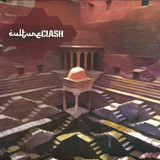
Forced to come up with a name, 'CultureClash' seemed like the obvious choice, even if the members of Awax were only creatively sparring among themselves. Along with the term 'ethno-techno', slightly dubious to a hopefully more conscious Western audience in 2017, these were the only guiding principles to the quietly ambitious project that soon combined cutting-edge machine rhythms with samples sourced from everywhere from Bolivia to Togo, and inspired by everything from Ravi Shankar's epic soundtrack to the Oscar-winning movie Ghandi, to the technical limits of their own setup requiring a dazzling degree of cut-and-paste work. Some tracks even emerged out of academic studies within the ethnomusicology department at The University of Amsterdam.
The show aired on October 2nd, 1992, recorded in one blistering take and without any rehearsals, traversing a huge variety of tempos and styles. If the performance wasn't seamless, it was undeniably thrilling, fresh and ambitious. As such, several labels, including Fernandez's aforementioned Irdial Discs expressed an interesting in commercially releasing CultureClash, while another imprint proposed a series of twelve-inches and an album. But the sheer complexity of the project meant that it never saw the light of day, while the trio embarked on different journeys ahead, both creative and personal.
Twenty five years later, and the original CultureClash lineup and founding members of The Awax Foundation provide the sound of the first release from Lost Futures. An otherworldly, ambitious and optimistic compilation, accompanied by extensive sleeve notes from the trio, CultureClash is a timeless ode to experimentation in dance music's ever-overlapping culture.
- A1: Chapter D (Dark Main)
- A2: Chapter M (Driving)
- A3: Chapter M (Karenina)
- A4: Chapter D (Swing)
- A5: Chapter M (Light)
- A6: Chapter M (Mellow)
- A7: Chapter D (Sparkling)
- A8: Chapter M (Charming)
- B1: Chapter M (Karenina 2)
- B2: Chapter D (Main)
- B3: Chapter M (Cosmic)
- B4: Chapter D (Strumm)
- B5: Chapter M (Reduction)
- B6: Chapter D (Dark)
- B7: Chapter M (Cosmic 2)
'1929 - Das Jahr Babylon" marks Thomas Fehlmann's third full length release of 2018 and presents what appears to be a creative peak in his career that spans beyond his solo career to his early days in Palais Schaumburg, collaborating with Moritz von Oswald as 3MB to his long time work with The Orb. Having left The Orb in late 2017 has set free unforeseen energies in Fehlmann's studio.
A departure from his recent dance floor-friendly album "Los Lagos" (KOM388, KOMCD148) released in September on Kompakt, Thomas Fehlmann's '1929 - Das Jahr Babylon" is a film soundtrack from the documentary that aired on ARD network on September 30, 2018 and is now available as a podcast series.
To compliment the internationally lauded TV series "Berlin Babylon", German director Volker Heise has created a documentary about 1929, the fateful year during Germany's "Weimarer Republik" in which "Berlin Babylon" is settled. Heise's stirring documentary portrays Germany's sizzling capital that is faced with radical changes by the dark forces whom are about to toss the world into the abyss we know as World War II.
This marks the second time that Fehlmann is partnering up with Volker Heise after 2010's marathon documentary "24 Stunden Berlin" which was released as "Gute Luft" (KOM211, KOMCD81) in the same year. Fehlmann's composition for "1929" consists of sample material taken from the era and thwarts the exaggerated lust for life with threatening undertones that anticipate the dawn of mankind's darkest chapter so far. Although all the sounds breathe yesterday's atmosphere this soundtrack bursts with modernity. Fehlmann accomplished the daring feat to musically render the unsettling resemblance between the political situation 90 years ago and our current time.
We at KOMPAKT feel that Fehlmann's score has turned out spectacular enough to give it proper release on limited vinyl and CD as well as on all digital platforms.
Mit '1929 - Das Jahr Babylon" legt Thomas Fehlmann schon seinen zweiter Longplayer innerhalb eines halben Jahres vor und dokumentiert damit eine kreative Hochphase seiner überaus stattlichen Musikerkarriere. Die Trennung von The Orb scheint bei ihm ungeahnte Energien freizusetzen.
Anders als auf dem cluborientierten "Los Lagos" tritt Thomas Fehlmann auf "1929" musikalisch einen Schritt zur Seite. Und das aus gutem Grund: Analog zur international gefeierten Fernsehserie "Babylon Berlin" entstand unter der Regie von Volker Heise der Dokumentarfilm "1929 - Das Jahr Babylon" - ein ergreifendes Sittengemäde Berlins während des Schicksalsjahrs der Weimarer Republik. Wie schon zu Volker Heises vorangegangener Berlin-Doku "24 Stunden Berlin" (2010 erschienen als das Album "Gute Luft" auf KOMPAKT) hat Thomas Fehlmann auch diesmal den kongenialen Soundtrack beigesteuert. Basierend auf Klangmaterial des Jahres 1929 hat Fehlmann eine beeindruckende Musik geschaffen, in der manchmal die übertriebene Lebensfreude und Dekandenz jener Zeit aufflackert. Eine Musik, deren Stimmung jedoch unterwandert ist von den bedrohlichen Strömungen, die Deutschland kurz darauf in seine dunkelste Epoche stossen werden.
Thomas Fehlmann ist damit ein wahres Kunststück gelungen. So sehr die Produktion den Geist einer vergangenen Zeit atmet, so modern mutet sie an. "1929 - Original Filmmusik" klingt somit wie die zu Musik geronnene Erkenntnis, dass sich Gestern und Heute auf erschreckende Weise ähneln.
Wir bei Kompakt sind der Ansicht, dass Thomas Fehlmanns Filmmusik zu "1929 - Das Jahr Babylon' so spektakulär geraten ist, dass wir sie nun als limitierte CD und Vinyl-Auflage, sowie auf allen digitalen Plattformen verfügbar machen.