Brussels-based artist Adja Fassa releases her debut album, two years after her well-received EP IRONEYE - and it is promising to be quite a ride.
This contemporary body of work showcases 11 stories, each telling their story of the impact our capitalistic society has on our most intimate moments: from dystopian neo-soul tales of Deliveroo-drivers being stalked by telemarketers (both of them selling/delivering literal 'hope and dreams'), to re-imagined jazz standards and classical songs about conditional friendships, based on time and money. We even get her take on the 'stick-it-to-the-man-sing-along-rock-song', which she called 'Sucking on my Emphatitties'. And then we have the title song 'Golden Retrieve Her' which is as much an accumulation of feelings as of musical curiosities
" 'Golden Retrieve Her' is a wordplay on wanting to retrieve my kindness in a violent social system. Simultaneously, it is criticizing the fact that we, the masses, are often asked to either be naive or pretend we are. All of this accumulated in a visual image of what our social system considers 'the perfect, obedient nuclear family': a kind couple with 2.4 children, a house in the suburbs and... a Golden Retriever." ~ Adja
Serious and concrete topics, wrapped up in a symbolic package, as Adja values both straightforwardness, critical thinking and, paradoxically, a bit of mysticism. For her visual artwork, she created four, self-made tarot cards, that represent the four themes on the album:
'The Wheel Of Fortune', embodies the desire to get the upper hand in a system that doesn't align with your values. 'The Mirror', represents projection and likeness within lost connections (whether with strangers or with friends), 'The Dark Wheel' embodies the turning point of the wheel of fortune, where one is completely surrendered to their own moral demise and 'The Cave' stands for the - sometimes painful, sometimes blissful - return to one's own mind and heart.
Musically, this album contains as much variety as song titles, as Adja continues to explore her own depths as an artist and musician, together with her partner-in-crime, guitarist, composer and jazz-arranger Alexis Nootens. She collaborated with music producer Adam Scrimshire, who was featured in the Guardian as UK's one of three most significant soul music producers alongside Swindle and Inflo, and renowned Belgianproducer, mixer and musician Koen Gisen, who both mentored her into deepening her own productional skills. Last but not least, she gathered 13 musicians to deliver the sound she brings to her album, among them her 5 steady band members and 8 studio musicians from all over Europe. As we said: it promises to be quite a ride.
LIVE:
09/05 : Ancienne Belgique, Brussels
11/05 : Jazz à Liège
More tba.
Search:turning point 8
Before Zero Records present the Akae Beka Vocal and Version Series. This represents a turning point in the presence of Vaughn Benjamin, the voice of Akae Beka and Midnite’s presence in the sound system world, merging the vocal and version sound system culture with the deeply spiritual music and word sound of Akae Beka and Tippy I Grade.
Two of the deepest thinkers in reggae music, Vaughn Benjamin and Chronixx, trade reflections on their collaboration, ‘Black Carbon.’ Originally released on the 2021 album ‘Polarities,’ the song is available for the first time as a vinyl single, backed by its dub version. Adorned with the swirling flute of Sheldon Bernard (Beres Hammond, Harmony House) and David Pransky’s brittle, Kora-like mandolin, the twin reggae intellects, with their uniquely delicate voices, introspect on how ‘all ah we forward from the same carbon.’ The song’s message juxtaposes the unity that binds us with a critique of the prevailing narratives and structures that weaken this bond. It underscores the universal truth that we all originate from the same elemental blackness—a truth mirrored throughout humanity and the entire spectrum of creation. Yet, it pointedly highlights how this shared essence is often unrecognised or undervalued in the social and political realms, especially for nations and diasporas connected by the original human hue. The A-side vocal mix is followed by Tippy I’s lavish, questing dub, bringing the instrumentation to the fore. Produced by Vaughn and Zion I Kings.
Each 7” vinyl sleeve has the lyrics transcribed and printed on the back. This series represents more than a collection of music; it is a multifaceted, intellectual and spiritual revelation encapsulated in melody, tone and beat. The never before released dub versions complement each vocal mix with grace and innovation, creating the perfect settings for reflection and integration of the lyrics.
- A1: Mieko Hirota - Soul Lady
- A2: Shinji Maki &Amp; Black Jack - Nabeyoko Soul
- A3: Tan Tan - Happy Day
- A4: Kenji Niinuma - Airenki
- A5: Hatsumi Shibata - Furui Fuku Nanka
- B1: Strawberry Jam - Arimasen
- B2: Mieko Hirota - Anata Ga Inakute Mo
- B3: Akira Yasuda &Amp; Beat Folk - Kaeroka Kaeroka (Single Version)
- B4: Miki Hirayama - Hatachi No Koi
- B5: Masaaki Sakai - Baby, Yuki Wo Dashite
At the start of the 60s, a new wave of gospel-influenced jazz started to emerge, with hits such as Art Blakey & The Jazz Messengers' "Moanin'" and Cannonball Adderley's "Work Song" epitomizing this evolution in the genre. The terms "soul jazz" and "funky jazz" were coined as a way to describe this new sound that was making an impact in the US and also on the other sides of the Atlantic and Pacific oceans.
In 1964, Ray Charles made his first visit to Japan. Then, in 1968, Martha & The Vandellas and Stevie Wonder set foot in the country, followed by Sam & Dave in 1969, Ike & Tina Turner in 1970, and B.B. King in 1971. The TV show "Soul Train" also began airing in Japan in the early 1970s. A watershed moment happened in 1973 when Sammy Davis Jr. was cast in a TV commercial for Suntory whisky — and the influence of the US Black entertainment world had really landed, with soul, jazz, and funk artists becoming household names.
Nippon Columbia played a pivotal role during this turning point. The company had contracts with Buddah Records and Blue Thumb Records, releasing notable works by artists such as Gladys Knight & The Pips, Curtis Mayfield, The Crusaders, and The Pointer Sisters. At the same time, the label was also releasing several Japanese soul, jazz, and funk projects under the lead of music director Jiro Inagaki. Inagaki, a saxophonist who began his professional career in the early 1950s, honed his skills at U.S. military camps, where he shared his love of music with the Black servicemen. In the 1960s, he played with drummer Hideo Shiraki's band, which was widely considered to be Japan's representative group of the funky jazz movement. Later, Inagaki went on to pursue more cutting-edge sounds with his Soul Media project, including being a pioneering figure in the "jazz rock" genre. By working closely with Inagaki and his various musical projects, Nippon Columbia really placed the company at the center of an exciting and important period in Japanese music.
In 1965, Nippon Columbia opened a recording studio in Tokyo's Akasaka neighborhood. Akasaka was also home to the first ever discotheque in Japan, the legendary MUGEN, which ran from 1968 to 1987 and where many acts performed, including Con Funk Shun, the Bar-Kays, Ike & Tina Turner, B.B. King, Sam & Dave, Three Degrees, and Edwin Starr, as well as many local Japanese singers and musicians. This melting pot of creativity in the area led to the recording of many singles and albums by Japanese artists that were infused with the sounds of soul and funk. Most of these recordings were not available outside of Japan and remain rare and unknown musical gems. The selection you are holding in your hands is an explosive collection of 10 essential tracks released by the legendary Nippon Columbia label between 1969 and 1977, capturing the raw, unapparelled energy that was flowing through the air of the Akasaka streets at this electrifying time. Enjoy!
---
180GWALP07 - Manufactured and distributed by 180g.
- A1: Head Rush
- A2: Black & Mild
- A3: Joyful Noise
- B1: Traffic
- B2: Cactus Water
- B3: Candy Paint Feat. Thundercat
- B4: Berghain Feat Barney Bones
- C1: Holy Moly Feat. Ty Dolla $Ign
- C2: I’m Him
- C3: Chain Hang Low Feat. Teezo Touchdown
- C4: Need U 2 Know Feat. Ravyn Lenae
- C5: Two Ways
- D1: Aspen Feat. Toro Y Moi
- D2: We Hungry Feat. Estelle
- D3: Type
- D4: Gold Daytonas Feat. Watr
- D5: Here
- Channel Tres releases his debut album Head Rush via RCA Records.
The album, which features the previously-released singles "Berghain" featuring Barney Bones and "Cactus Water" is the culmination of Channel's steady ascent since he first broke through to public consciousness with his cult-classic debut single "Controller." Head Rush features all of the sounds that have come to be hallmarks of Channel Tres songs, but finds him incorporating musical influences not heard in his prior catalog, as evidenced by "Berghain" and other songs from the album including the Ty Dolla $ign-featuring “Holy Moly,” a visualizer for which is out now. The album arrives on the heels of two recent head-turning Channel Tres collaborations as well -- his contribution to KAYTRANADA's "Drip Sweat" and Jay Worthy, DāM FunK & ATrak's "105 West" alongside fellow LA legends Ty Dolla $ignand DJ Quik exemplify his versatility. Head Rush is a richly layered record, but one that feels totally intuitive, without a trace of doubt or self-consciousness.
The way “I’m Him” shimmers is balanced by the Estelle-featuring “We Hungry,” which nearly growls; the spare, percussion-forward Ravyn Lenaeduet “Need U 2 Know” (the stylization of its title a nod to Prince, one of Tres’s major influences) at delightful odds with the easy ride of “Gold Daytonas.” Head Rush shows the staggering array of styles Channel Tres can evoke. But that versatility is not the point in and of itself—the point is that all these component parts can be reassembled into something that feels uniquely personal, and honest. Through his career, Tres has blended recognizable genres, textures, and points of view into a truly singular form all his own. Longtime listeners will recognize in Head Rush the hallmarks of a Channel Tres record: a mastery of rhythm, the rare ability to make songs sinister and fluorescent at once.
But this LP also opens a new sonic world, one rife with unexpected terrain and hairpin turns—see the way “Type” takes what sounds at first to be a simple romantic boundary and stretches it out into an alien landscape. Or take “Berghain,” a song that nods to the kinetic live shows that became must-see events—a crescendo of interest that included his momentous Coachella 2022 performance and culminated, at least symbolically, with his early 2023 set at Berghain, the legendary Berlin club that has long been a musical hub of the Western world. “Berghain” is delirious but thumps almost impossibly hard, in line with the album as a whole—always molting, always ready to turn from the claustrophobic to the communal, as the pivot on “Joyful Noise” accomplishes so seamlessly. Head Rush also features some of Tres’s most deeply felt vocals to date, like the veritable bloodletting on “Two Ways.” And so the record, which also features Ty Dolla $ign, Thundercat, Teezo Touchdown, Watr, Barney Bones and Toro y Moi, marks a new era for Channel Tres, personally as well as artistically. “I’m older now, and the things that I’ve accomplished tell me I’m ready to do this,” he says. “You’ve worked your whole life for this, you’ve been able to do these shows and walk into these rooms and make these songs. There’s no reason you have to live by the same insecurity that you had to use in years past.” Shedding that baggage accomplished exactly what it was meant to—lightening the load so we’re free to get heavier than ever
- A1: Say You Love Me Again
- A2: Change Of Heart
- A3: Warm
- A4: True Love
- B1: You Are My Melody
- B2: Lovely Lady
- B3: Got My Eyes On You
- B4: It Burns Me Up
- C1: Change Of Heart/You Are My Melody/Warm
- C2: Change Of Heart (Special Extended Mix)
- C3: Say You Love Me Again (7" Version)
- D1: You Are My Melody (Alternative Dance Version)
- D2: Change Of Heart (Alternative Dance Version)
- D3: It Burns Me Up (7" Version)
- D4: Change Of Heart (7" Version)
-"Change of Heart" is Change's 4th album, released in 1984. This album marks a significant turning point with the production of Jimmy Jam and Terry Lewis, both well known for their great effort with artists such as Janet Jackson. With their distinctive touch, Jam and Lewis brought a more sophisticated and contemporary sound, integrating elements of funk, R&B and pop. The record contains remarkable and unforgettable songs like "Change of Heart," "Say You Love Me Again" and "You Are My Melody," which deeply helped to define the '80s musical era. Deborah Cooper and Rick Brennan give powerful vocals that pretty enrich the olistic sophisticated melodies. The album received a very positive reception from both critics and fans, strengthening Change's reputation as innovators in the music landscape. Although it did not reach the mainstream sphere of previous works, it has maintained a solid following among fans of the genre. "Change of Heart" remains a cornerstone of the band's discography, reflecting the evolution of their style and the lasting influence of producers Jam and Lewis. -
- A1: Saylo
- A2: Can't Take The Hood To Heaven
- A3: Attack Of The Dreadlocks (Feat Rae Khalil)
- A4: Lynn's Lullaby (Interlude)
- A5: Brownskin Cinnamon
- A6: Grey Seas (Feat Reaper Mook)
- A7: Cowboy Leather (Feat Pink Siifu)
- A8: Overseas Sam
- B1: Bullets From A Butterfly
- B2: Pearly Gates Playlist
- B3: Things Grandma Told Me
- B4: Bygones
- B5: Lagonda (Feat Goya Gumbani)
- B6: The Card Players (Feat Jayellz)
- B7: When I Met Rose
Cassette[10,88 €]
Forest Green Vinyl
Seafood Sam is a futuristic artifact. If that description might sound confusing at first, it matches the eclectic dualities found in true originals. With his effortless cool and timeless style, the North Long Beach native defies convention and exact comparison. He's a virtuosic rapper, a stop-you-in-your tracks singer, and a symphonic producer. Welcome to the lavish life of a laid-back transcontinental man of mystery, rolling in old school Cadillacs, eating caviar with a blade in his pocket, and making plays in vintage Pelle Pelle gear. A blaxploitation icon for the Instagram age, blessed with the bars of a `90s legend and 23rd century swagger. Seafood Sam is a true hero of modernity. On his full-length album debut for up-and-coming label drink sum wtr (Kari Faux, Deem Spencer, Aja Monet) debut, Standing on Giant Shoulders, Sam splits the difference between Snoop Dogg and D' Angelo, Curren$y and David Ruffin. The songs reveal a forward-thinking sensibility rooted in ancestral soul. He creates spiritual hymns for the streets that tap into universal ideals and irrepressible groove. In an era plagued by short-term thinking, his ambitions reveal a crate-digging depth of music history and a meticulous ear for detail. The giant shoulders in the album's title refer to James Brown, Bobby Brown, and Miles Davis - the holy trinity who inspired Sam's process. From the Godfather of Soul, Sam took a perfectionist's rigor and focus. The example of Bobby Brown lent an unshakeable confidence and self-belief. While the constant artistic left turns of the trumpeter that birthed Ccool offered an aspirational archetype. The story starts in the glory days of Long Beach hip-hop. As a young child, the G-Funk era soundtracked rides in Sam's father's car. Some of his earliest memories are trying to memorize Snoop's verse on "Nuthin' But a "G" Thang." Beyond gangsta rap, the LBC has historically doubled as a capital of lowrider soul and carwash oldies. At any intersection, you could hear Dogg Food or Brenton Wood, Warren G or Barbara Lynn. This too was absorbed via osmosis. It also just so happened that the art of performance was always in Sam's blood. So at family functions, he and his sister supplied entertainment by singing karaoke renditions of The Isley Brothers. While his Harlem Shake remains a thing of local lore. Long Beach is a culturally diverse mecca of skate parks and gang life, street fashion and tricky dance moves. This is the place that raised Sam on a diet of Wu-Tang and Nelly Furtado, Lil Bow Wow and Allen Iverson. He was the middle ground between his two older brothers: one who gangbanged, the other who graduated with a master's degree from UC-Santa Barbara. But it wasn't until the end of high school that Sam started to take rap seriously. Alongside long-time collaborators like Huey Briss and Reaper Mook, Sam's name began to make waves on the northside of the city, but he was partially distracted by a modeling career that paid the bills and took him all to way to walk in Paris' fashion week. The first turning point arrived with 2018's "Ramsey," a self-produced, slick-talk anthem with over 10,000,000 streams across all platforms. With each subsequent release, Sam showcased his peerless consistency, building buzz both online and in the city streets. Spin hailed his "smooth and unhurried cadences and understated lyricism_ that sounds like nothing else in Long Beach." Clash raved about Sam's "evolution as an artist, cruising through nostalgic production with slick, witty rhymes." The culmination arrives with Standing on Giant Shoulders. It's the evidence of a master, a young sensei in the model of Quincy Jones. All rhymes, singing, production, and arrangements were handled by Sam - with an assist from his close Long Beach kinsman Tom Kendall from the group Soular System. It's hard-edged and lyrical enough for disciples of Larry June and Roc Marciano, but orchestral and melodic enough for fans of Anderson .Paak and H.E.R.
- A1: Sungu Lubuka - Petelo Vicka Et Son Nzazi
- A2: Mfuur Ma - Groupe Minzoto Ya Zaïre
- A3: M.b.t's Sound - M.b.t's
- A4: Musique Tshiluba - Abeti Et Les Redoutables
- B1: Lalia - Trio Bydoli
- B2: Adeito - Tabu Ley Et L'orchestre Afrisa
- B3: Ngantsie Soul - Les Bantous De La Capitale
- C1: Nganga - Les Frères Soki Et L'orchestre Bella-Bella
- C2: Tembe Na Tembe Ya Nini - Orchestre Celi Bitshou
- C3: Lolo Soulfire - Lolo Et L'orchestre O.k. Jazz
- D1: Femme Ne Pleure Pas - Zaiko Langa Langa
- D2: Kiwita Kumunani - Orchestre O.k. Jazz
- D3: Fiancée Laya - G.o. Malebo
- D4: Ah! Congo - Orchestre National Du Congo
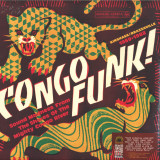
The making of Congo Funk!, our long-awaited journey to the musical heart of the African continent, took the Analog Africa Team on two journeys to Kinshasa and one to Brazzaville. Selected meticulously from around 2000 songs and boiled down to 14, this compilation aims to showcase the many facets of the funky, hypnotic and schizophrenic tunes emanating from the two Congolese capitals nestled on the banks of the Congo River.
On its south shore, the city of Kinshasa – capital of Democratic Republic of the Congo, the country formerly known as Zaïre – is often seen as Africa’s musical Mecca, the city that spawned such immortal bands as African Jazz, O.K. Jazz and African Fiesta, and the place to which aspiring musicians from throughout the continent would go to make a name for themselves.
But the city of Brazzaville on the north shore of the river – capital of the Congo Republic – played an equally important role in spreading Congolese sounds continentally. In addition to producing legendary bands such as Les Bantous de la Capital, it was the powerful transmitters of Radio Brazzaville that allowed the unmistakable groove of Congolese Rumba to be heard as far away as Nairobi, Yaoundé, Luanda and Lusaka thus turning the electric guitar into the continent’s most important instrument!
Although the musical landscape of these cities had been defined by a core group of bands in the late 1950s, the modernisation of Congolese music has been steadily evolving until the events surrounding the Muhammad Ali vs George Foreman boxing match marked a turning point. The promoter of that event known as “Rumble In The Jungle” was none other than the notorious Don King who needed 10 millions dollars to get Ali and Foreman into a boxing ring. The only candidate willing to put this kind of cash on the table was Mobutu Sese Seko, President of the Democratic Republic of the Congo.
Mobutu - the megalomaniac dictator who got to power with the support of the United States and Belgium in exchange for unlimited and affordable access to the riches of the country - had a soft spot for music and it doesn’t come as a surprise that he agreed to a three-day live music festival being organised prior to the “Rumble”. Zaïre 74 - as the festival was dubbed - was meant to hype the boxing match and many stars were invited.
Although a myriads of artists flocked in for the occasion, it was the performance of James Brown on Zairian soil that caused havoc among the younger generation, inspiring hundreds of would-be musicians to take up their electric guitars and reverbs cranked to the max in search of a new sound in which hyperactive Rumba was blended with elements of psych and funk. While the results were very different from the popular music of the three Musketeers - as Tabu Ley, Franco and Verckys were known - they weren’t a complete break with tradition.
These new sounds emerged at a time when the Congolese record industry – previously dominated by European major labels – was experiencing a period of decline due to rising production costs and needed a radical change. The void was filled by dozens of entrepreneurs willing to take chances on smaller scale releases. It was the beginning of a golden age for Congolese independent record labels, and the best of them – Cover N°1, Mondenge, Editions Moninga, Super Contact – preserved the work of some of the region’s finest artists, while launching a generation of younger musicians into the spotlight.
The movement was greatly helped by legendary radio shows but it was the dynamic productions of Télé-Zaïre that set the dynamite on fire. Legend has it that TV shows were so huge that president Mobutu himself ordered RTV du Zaïre to put on daily concerts since it halted criminal activities for the duration of the evening.
Congo Funk! is the story of these sounds and labels, but most of all it is the story of two cities, separated by water but united by an indestructible groove. The fourteen songs on this double LP showcase the many facets of the Congolese capitals, and highlight the bands and artists, famous and obscure, who pushed Rumba to new heights and ultimately influenced the musical landscape of the entire continent and beyond.
Mad-heads, rave veterans and lovers of having their brains rewired by previously unexplored sonic realms unite, because here comes the first of four, yes four, new albums from the fantastic freak of nature that is Special Request. His 'What Time Is Love? Sessions' arrives in several different formats this month and across six sizzling tracks that re-wire the KLF's hit of that name, he taps into everything from "ephemeral ambiance to barnstorming hardcore, pummelling house to pointillist trance" and does so with a mix of the surreal and the psychotic, the psychedelic and the downright ridiculous. It's mental, and we love it.
There’s something to be said for getting noticed, for standing out from the crowd. West London’s T.Williams is one of those people, having accomplished a full sweep of merited recognition over the years. Emerging onto the house scene in 2010, T.Williams instantly marked himself as a breakthrough artist with a difference; his unique take on house music turning heads.
Far from a newcomer, his path as a musical artist started in the grime scene as Dread.D. Signed at the tender age of 17 with grime anthem Invasion on Jon E Cash’s Black Ops label, Williams went on to have mass success in the grime and bass world selling thousands of singles worldwide. After a five-year reign, Williams found himself veering towards the world of house music. With a new found love for the sound and its sub-genres, T.Williams forged a signature sound influenced by his grime days, jungle, and garage. With a style that undoubtedly impacts, T.Williams’ crossover has been the catalyst for his success. Not only rife with groove and feeling but meticulously produced and engineered with deep rumbling basslines, the unapologetic bounce of grime and smooth vocals that bleed through African infused percussion work.
While in 2010 the industry took note when hit record ‘Heartbeat’ featuring vocalist Terri Walker made an impression, it was throughout 2011 that T.Williams defined himself - releasing solo works on his imprint Local Action and Pattern with remixes for Maya Jane Coles, Ben Westbeech and Skream. Not stopping at pricking the ears of fellow artists and those on the dancefloor, the end of 2011 saw Williams nominated for ‘Best Breakthrough DJ’ by DJ Mag, ‘DJ Stars of 2012’ by Time Out and featured in The Guardian.
Two relationships came to the forefront in 2012 that propelled Williams to greater heights. The first was his weekly show on legendary London station, Rinse FM and the second, Williams’ relationship with label PMR through his remix of Javeon McCarthy’s ‘Lost Time’. The remix was named Record of the Week by BBC Radio 1 and supported by tastemakers Annie Mac and Fearne Cotton. From here T. signed to the label exclusively releasing his debut EP for the label in September 2012, and in the process receiving further support from BBC Radio 1. Further remixes of Mikky Ekko, Wretch 32 and Lianne La Havas followed suit, as well as his biggest to date - Disclosure’s ‘Latch’. Powering dancefloors across the globe, T. went on to play three US tours, numerous festival stages, and deliver a second EP on PMR titled ‘Feelings Within’. The EP once again spanned a number of bases, from club bangers to heartfelt vocal driven tracks alike. Gaining his own monthly residency show with BBC Radio 1, 2013 ended with T. having played over 100 shows across four continents.
2017 marked the launch and release of the first collaborative EP with UK producer Julio Bashmore, via their joint independent Conch Records, a label aiming to push out more underground cross-genre music with heavy rotation from the likes of Moxie and Shy One. With an ever-expanding global tour schedule and further solo releases on the legendary NYC house label Strictly Rhythm turning heads, T.’s upward trajectory has never showed signs of slowing down. Selected to soundtrack the social media campaign for boxer Anthony Joshua in 2019 and now using his technical prowess as a musician to educate the next generation of rising stars at London’s respected Point Blank Music School has cemented his status as one of the UK music scene’s key players.
This record is a collection of tracks I made from the start of 2019 to the end of 2021. They all exist completely independent of each other. My intention while working on music during this time was to create a time capsule/memory album for me to remind myself of my moments with. I had a lot of different experiences and substantially changed during this time. The early tracks were made by a completely different person than the person typing this. Of the 6 tracks on this EP, only one of them was made with the knowledge that it would be put together with the others and released as one cohesive article.
I wanted to make music again after abandoning it for 3 years. One of these tracks marks the turning point where a projected pipe dream of determined mastery was cracked through by what the speaker cone did when piano roll blocks were placed intuitively for the first time.
Duality Trax first opened its books in 2020 with an EP featuring Radiant Love regular Fio Fa and a remix of the year contender coming from Lisbon’s Violet. Since then the label has become known for its acute attention to detail, giving each release the shine it deserves while avoiding disposable practices and challenging the industry through its dedication to duality and balance, whether that be sonically or surrounding gender identity. It’s really no surprise that one of house music's leading label ¦gures Tywi was destined to make an appearance. Having started the Haŵs imprint in his home city of Cardiff, the label’s wide-spread popularity began to gain the attention from some of the industry’s most respected heads and became a breeding ground for new artists to emerge. A shared love of music resulted in tracks being shared over time and eventually DUALITY6 was born. In what will be his ¦rst full length EP, Tywi continues to join
the dots between 90’s house, prog, breaks and trance, with a huge remix coming from Frankfurt-based artist Maruwa. Title track ‘Reality Checkpoint’ connects various styles with a modern take on progressive trance. Sonics feel as if they’ve been projected from space in a kaleidoscopic mind-warping ride, coupled with the producer's impressive ear for world building soundscapes. A child of the ‘90s, Maruwa combines her classically trained ear with the nostalgia of her upbringing in the remix; channeling early trance records and deep, chugging rhythms into a wave of euphoria ¦t for peaktime. It’s the ¦rst time the label has also delved head ¦rst intofull trance territory, turning the intensity levels up while paying homage to both label owner and artist’s early musical in§uences. The B side opens up with ‘Spellbound’ which feels like a guided tour around the cosmos, sat beside trusted travelers and embraced by everything-will-be-alright energy . The track’s interior is built around synths that feel both effortless and light as our tour guide brings us towards our ¦nal destination. The EP comes to a close with ‘Laws Of Motion’, building slowly with shades of leafy greens and deep oceanic blues as it gently brings us back down to earth.
Since Interstellar Space, John Coltrane's posthumously released duo album with Rashied Ali, the combination of sax and drums has received an aura of sublime spiritual ambition. It is where tireless truth seekers come together to aim for something transcendental. Something too big for words. Of course, a lot has happened in the meantime.
The available options - philosophically, stylistically, temperamentally - are endless. Musicians are aware of those historical turning points, yet they also try to add their own twists and interpretations. Some of them succeed. One of reed player Mattias De Craene's many projects - MDC III - is a project involving drums and saxophone. A striking difference: De Craene invited two drummers (Simon Segers, Lennert Jacobs), that have been active in the worlds of jazz, pop, free improvisation and experimental music. They are the ideal foil for De Craene's vision, which seems to exclude no opposites. While the use of a recorder, electronics and percussion steers the music beyond the classic acoustic limitations, the result becomes strikingly rich with contrasts. What is abstract and introspective the first moment can switch - gradually or abruptly - to moments of fierce ecstasy the next.
The music feels free (free from limitations, free to choose its own logic), but also invites. Shifting moods and textures are combined with intricate rhythmical patterns, as the drummers lock together in dense, complex and/or ritualistic grooves. A minimal pulse, accompanied by murmuring hisses of brushes and a serenading sax is contrasted with moments of exuberance. The result is many things at once, but despite these wildly varying colors, sounds, textures, rhythms and moods, they are all linked, part of a generous, iridescent whole.
The trance-inducing trio MDCIII is back. And that equals yet another delicious load of modular drums, wildly processed saxophone sounds, improvisation & pulsating grooves.
After their first EP, MDCIII ft. Sylvie Kreusch, and their subsequent first (internationally) acclaimed album 'Dreamhatcher', the 'double drums' saxophone trio with Mattias De Craene, Simon Segers & Lennert Jacobs is all set to show what angle rock 'n roll can really come from. On their new album 'Drawn In Dusk' (release: end of September via W.E.R.F records) the trio delivers a whole new palette of sounds that are just as mystical, energetic and wild as 'Dreamhatcher'.
„There are imaginary signs or signals that make your arm twitch mutely.
In such cases, you may have to interpret the meaning of such a "message".
If you ignore it, it's almost certain that nothing will happen, but you may also miss the chance to change your life because you passed a potential turning point and didn't notice.”
There were once many worlds on this Earth. Each had its own land, language, population, borders and history. There were people and societies.
They already looked alike, but they didn't realise it.
When the borders disappeared, the looked at each other, but by this time suddenly, the languages and the histories also disappeared.
The present worlds do not have any Earthly home, they have moved to the kingdom come of the collective subliminal sociostasis.
There they are still living for a while, exactly so long as humans have human form and the time for transhuman cultures arrives.
To fumble about in this gap of time bubble, that has been opened for a short time between the collapse and the vanishing of the borders of cultures: this is the science of Ishin-denshin burdened with Heisenberg’s paradox.
Don’t forget: never before and never after.
- A1: Dreams (Feat Xênia França&Zé Leônidas)
- A2: Kismeti (Feat Matthias Schriefl)
- A3: Asase (Feat Eric Owusu)
- A4: Sábado (Feat Zé Leônidas)
- A5: Carrossel (Feat Zé Leônidas)
- B1: Caio & Eric (Feat Eduardo Camargo)
- B2: Ndiyakhangela (Feat Bongani Givethanks &Amp; Mpho Nkuzo)
- B3: Agôra (Feat Matthias Schriefl)
- B4: Oblique Sunshine (Feat Rebekka Ziegler)
Global pointing Brazilian jazz trio releases their new album Agôra, that sparkles with electric funk and Herbie-esque eclecticism. It features a myriad of guest vocalists and musicians including Brazilians Xênia França and Zé Leônidas, Jembaa Groove's Ghanaian singer Eric Owusu and South African artists Bongani Givethanks & Mpho Nkuzo
Re-wiring the concept of 'fusion' for 2023, Agôra is Brazilian trio Caixa Cubo's resurgent new record with the title referring to 'now', based upon the intuitive and fluid nature of the trio's method, and this inspired recording. With shoots to black music culture, from Brazil to Brooklyn, Ghana and South Africa, Agôra is the group's ninth album yet is their first where they've invited guests, mainly singers, onto each track and follows their last, Angela from 2020, released on Heavenly Records, which won a BBC 6 Music Album of the Year (Huey Morgan's selection) granting them much deserved international recognition.
The core musical elements of Caixa Cubo are Henrique Gomide (keys), João Fideles (drums) and Noa Stroeter (bass), all from São Paulo, Brazil and where they met as teenagers and would continue their friendship and musical bond at the Royal Conservatory in The Hague, Netherlands. Now all in their mid thirties, João and Noa live back in the city where it all started but Henrique has settled in Cologne, Germany where the recording of Agôra took place, over the course of 3 days, at the home cum studio of Chris 'Dusty' Doepke, their friend and owner of the label they signed to, Jazz & Milk.
In line with all their creations where flow and energy provide the magic, allowing what the moment provides, the album shines not only for its virtuosity but for its minimalism, the depth of space, and for the first time, the ability to figure in and outside of the jazz fold, as the trio decided, for the first time, to bring in singers and add a new aesthetic to their sound.
"Agôra is a wake-up call to reality, a reminder that the infinite possibilities of technological progress should not disconnect us from the earth, from eye-to-eye relationships, and from moments lived in person" the band are keen to point out. "And that we must not be consumed by greed, for all we truly possess.... is the NOW."
Turning hope and metaphor into music, the debut single Sábado, an electrified future- jazz-fizz reflects perfectly the spontaneity that permeated the entire recording of the album. "When we got to the studio, we had no idea what we were going to record. We started playing a groove, kind of inspired by Gilberto Gil's 80s albums, and our drummer João started singing this funny song 'Sábado Barrigudão' (Big Belly Saturday) alongside the bass groove and that was that". Inspired by their city of birth, São Paulo, it features long time collaborator and vocalist Zé Leônidas, with cuicas, tamborim, agogo and shakers providing the most obvious Brazilian affect from the album.
Dreams is the band's first foray into R'n'B melding the group's simple and sporadic instrumentation of drums, keys and bass into a Jill Scott inspired song that could have been born in Brooklyn yet sung by Brazilian singer and Grammy nominated Xênia França and Zé Leônidas in both English and Portuguese. Xênia recently performed online for hip-to-it website Colors and it's her latest collaboration with Caixa Cubo, having first met in 2009 for a series of live performances.
South African artists Bongani Givethanks & Mpho Nkuzo come to the record with a wholly different approach on Ndiyakhangela, providing spoken word and vocal refrains on top of an Afro-Brazilian percussion jam with a delivery and verse in Xhosa, Zula and Ndebele. Asase is the album opener and features vocals of Eric Owusu who is part of highlife pioneer Pat Thomas's live band and most recently, co-leader of Jembaa Groove, an Afro-soul band from Berlin. It's a synth wig out with djembe grooves and offers a brand new take on Afro-soul-jazz.
Other contributions come from Cologne based jazz singer Rebekka Ziegler (Oblique Sunshine), São Paulo based guitarist Eduardo Camargo (Caio & Eric) and trumpet player Matthias Schriefl on Kismeti, a gorgeous and rolling number that ebbs and flows, exemplifying the group's effortless ability to craft a sound energised by a belief in one-self and the idea of having faith without the need to look at each other for verification.
As drummer and percussionist João Fideles perfectly surmised upon arriving for the recording session, "What drums do you have? Whatever you have, I'll use it". Agôra is testament to nearly 20 years of camaraderie, friendship and most importantly, trust.
His album '2020Radio', published at the beginning of 2022, marked a turning point in the long and intense career of Pamplona DJ and producer Javier Suescun. The sensational reception he received from the specialized press and the public encouraged him to continue working with him and this '2020Radio Remixes' (Müsex Industries) is his continuation. To this end, Suescun put some of the best songs at the service of a "second reading" by some national and international artists from his environment and iconography. Finally, Matthew Herbert, FatCat, Rafa Santos and Orlando Voorn were chosen, substantiating a cast as underground and exquisite as it is privileged, such as Suescun.
30 years as a full-time touring nightclub DJ sounds like one hell of a career, and for Kenny Summit it's as much of a milestone as it is a turning point. Having shared the stage with greats such as David Byrne, Stevie Wonder, Chaka Khan, George Michael, Kylie Minogue and Prince over the years, Kenny took that influence and inspiration and decided it was time for him to get behind the mic too.
‘Burnin’ is a song written, produced and performed by Kenny Summit that speaks on a desire that's been burning inside of him for three decades. Across those 30 years he’s made many an influential friend too, three of which come on board to remix ‘Burnin’ - the late great Paul Johnson, D&B icon DJ Aphrodite and Brooklyn legend DJ Spinna.
"I caught the fever for house in 1990 and by 1992 I was booked for my first DJ gig at New Jersey's famed Zanzibar nightclub where house legend Tony Humphries held court on a weekly basis. Something changed that night, a fire started and its been building, growing inside of me and now it's time to put paper to pen and write my own songs."
Clearly influenced by the artists Kenny's worked with over the years, ‘Burnin’ is a culmination of one man's journey through dance music; from the Nile Rogers-ish 70s guitar riff to the whining Steely Dan-like keys, to the lush strings and synth pop stabs that would make Moroder blush, the track itself is masterfully produced and punctuated with Kenny's unique uplifting vocals, sang in a manner as if David Byrne and Boz Scaggs were put together and yet still very uniquely Kenny Summit.
Up on remix duties the late great Paul Johnson, Chicago's shining star, serves up a dark, very much after house vibe, that still keeps that trademark Paul Johnson sound. Drum & Bass icon DJ Aphrodite applies his unique sound to ‘Burnin’ with a stellar remix the D&B community has been patiently waiting over three years for. And finally, long-time friend, Brooklyn's DJ Spinna steps up, who after hearing the track commented 'this needs a dope DUB! Leave it to me, imma hook you up bruh!'. The Discoelectric Dub does not disappoint.
Coloured Vinyl
The tenth, jubilee release of "Instrument" series is a sudden turning point and immediately changes the rules of the game, anticipating emerging trends. Oleg Buyanov - one of the main GOST contributors responsible for prominent records "True White" and "Height Difference" makes his debut in "Instrument" framework. OL's new release creates a path of complete diverseness - a unique mix of ambient, dub and mutational electronica, though the author's hip-hop DNA is still recognisable.
The release title as well as its symbol flirts with the privacy of communication in the context of its facilities and tools of the present world. Music acts as the info-channel, which provides unseen and coded data to a person from aside. The vagueness of mood, recurrent rhythm changes, and order of arrangement seem to rhyme with the paranoid feeling of being wiretapped. OL (along with another GOST ZVUK resident Flaty) recently had a similar experience of sound synthesis with their Serwed project whose recent LP was released via West Mineral Ltd. The groove of "SORM" is swirling, distorted and sometimes "disengaged"; sound guided by its waves exists in a constant process of decomposition, dissolution and then reassembles in new configurations.
Inventing Importance - With its third vinyl release CLIKNO starts the MAT editions, which brings together contemporary art with profound texts and deep techno music equally, a conceptual and collectible series for heart, soul and mind - conceived by Dr.Nojoke.
music - Dr.Nojoke throws in three tunes in his unmistakable style hitting the dancefloors of a parallel universe. Stomping beats with gravitational bass-lines are folded with deep textured moods, dub delays and a plethora of subtle sounds and strange loops all in an intricate and organic production build from diverse noises and field recordings. This music aims as much for the dancefloor as it is enjoyable at home.
art - "You Brew Stew" is a digital painting by Denver-based artist Jonathan Canupp. The painting was created in 2018, took 25 hours and is made of 28,000 strokes, original size: 24" x 24". Jonathan is a multi-faceted artist also working as sound designer for video games and films and producing music under diverse monikers such as Ten and Tracer and Petrichoir.
text - Over the course of the MAT editions, philosopher, actress, director and performer Marianne Kjaer Klausen will contribute writings about humanity, society and freedom. Sample from MAT ed.01: "The owl of Minerva spreads its wings only with the falling of the dusk. The paradox, to know when she has landed, would be one true turning point for the wisdom of humanity."
MAT 01 is a strictly limited vinyl-only release with a 12" x 12" inlay in a thick transparent PVC sleeve.
Artwork and text are reproduced in an offset print on offset paper for a premium look and feel.
Box Set[110,71 €]
Metaphon is pleased to present this première edition, which brings together a near-complete collection of the acousmatic works of Liliane Donskoy, recorded in the 1970s and 1980s.
Liliane Donskoy (*1933) is a French, classically trained pianist, music teacher, and composer of both instrumental and acousmatic music. She began her musical training at an early age, undertaking private piano studies with Yves Nat at the age of thirteen, shortly after the Second World War. During the 1960s and 1970s, she pursued advanced studies with prominent figures of twentieth-century music, including Darius Milhaud, Olivier Messiaen, Pierre Schaeffer, and Guy Reibel, and participated in courses led by Karlheinz Stockhausen, Luciano Berio, György Ligeti, and Iannis Xenakis.
Despite this extensive and diverse training, Donskoy encountered limited institutional and professional opportunities to fully realize her artistic vision. A decisive turning point occurred in 1977, when she gained access to the facilities of the Institute of Psychoacoustics and Electronic Music (IPEM) in Ghent. There, she realized and completed the majority of her acousmatic compositions.
Donskoy’s oeuvre is characterized by a high degree of structural complexity, precision, and expressive intensity. Her work reflects a pronounced and distinctive artistic temperament, manifested through a rigorous exploration of sound material and form. Notwithstanding its artistic significance, her music has remained largely unknown, as her compositions were neither widely circulated nor formally released, leading to their relative obscurity until the present publication.
slipcase edition[63,24 €]
Metaphon is pleased to present this première edition, which brings together a near-complete collection of the acousmatic works of Liliane Donskoy, recorded in the 1970s and 1980s.
Liliane Donskoy (*1933) is a French, classically trained pianist, music teacher, and composer of both instrumental and acousmatic music. She began her musical training at an early age, undertaking private piano studies with Yves Nat at the age of thirteen, shortly after the Second World War. During the 1960s and 1970s, she pursued advanced studies with prominent figures of twentieth-century music, including Darius Milhaud, Olivier Messiaen, Pierre Schaeffer, and Guy Reibel, and participated in courses led by Karlheinz Stockhausen, Luciano Berio, György Ligeti, and Iannis Xenakis.
Despite this extensive and diverse training, Donskoy encountered limited institutional and professional opportunities to fully realize her artistic vision. A decisive turning point occurred in 1977, when she gained access to the facilities of the Institute of Psychoacoustics and Electronic Music (IPEM) in Ghent. There, she realized and completed the majority of her acousmatic compositions.
Donskoy’s oeuvre is characterized by a high degree of structural complexity, precision, and expressive intensity. Her work reflects a pronounced and distinctive artistic temperament, manifested through a rigorous exploration of sound material and form. Notwithstanding its artistic significance, her music has remained largely unknown, as her compositions were neither widely circulated nor formally released, leading to their relative obscurity until the present publication.