Following the last Ma.to's EP we joined forces with two artists taking care of music and artwork on the 4th release. The first one delivered by the infamous Italian legend Miki 'aka' Major Hypnotic Key Institute. His resume and collaboration's list are known and long enough to establish him as a pioneer and precursor of electronic and rave music since the 80s. 4 tracks ranging from slower hypnotic rhythms to speed-up marched techno/trance.
And for the occasion on the artwork we collaborated with friend and genius Conxi at Ivvoki Studio, the result speaks beautifully for itself. Proudly presenting this 4 track Ep with included a repress of an old work from Miki on Interactive Test and a Re-Edit of miki and 2Volt of an early work from the Italian synthpop electronic band A.T.R.O.X.
Well balanced music, techno / trance / minimal spreading pure 90s vibes from both sides but sounding so contemporary.
A Must! have.
quête:two electro
Sublime, unique, sexy and peculiar unreleased scores by electronic and jazz pioneer Ron Geesin, made for the sublime, unique, sexy and peculiar films by maverick director Stephen Dwoskin. There. we’ve said it. And if you have not heard of one or either of these two dudes it doesn’t really matter. Geesin made great music and worked with Pink Floyd. Dwoskin made odd films, most of them are in the BFI permanent collection. They are great and a bit strange.
These superb unreleased soundtracks come from a fascinating, progressive and important period in British film history. They represent an intriguing collaboration between the lively Ron Geesin from Scotland and the American Stephen Dwoskin, who both met in London.
Musically they are minimal, charismatic and quite groundbreaking. Here is the story…
HISTORY:
Steve Dwoskin arrived in London in 1964, aged 25, with several 16mm films in his trunk, shot in the cold-water flats of Greenwich Village. He had been on the fringe of the Factory scene, and some of his films starred Beverly Grant, ‘the queen of the underground’. But they had scarcely been seen, and they didn’t have soundtracks. For almost a year they stayed in the trunk, and stayed silent. Then he met Ron Geesin, somewhere around Portobello Road.
‘Slept last night, completely dressed after working over 12 hours on sound tracks at Ron’s,’ wrote Dwoskin in his diary for 29 July 1965. ‘My films are not anywhere near being anything. I need more energy, more concise and positive ideas and less inhibition. And of course space, money and people.’ Dwoskin, who taught and practised graphic design by day, had recently decided to stay in London beyond the term of the Fulbright scholarship that had brought him there.
Ron, living with Frankie in a basement flat in Elgin Crescent – they would marry the next year, with Dwoskin as best man – was about to leave the Original Downtown Syncopators, the trad jazz band he had joined aged seventeen-and-a-half, and was trying to go solo. On stage he would make vigorous use of piano and banjo; at home Frankie had bought him a new kind of instrument – a tape recorder. ‘Soon I had one tape recorder, two tape recorders, three tape recorders.’
Ron, wrote Dwoskin in his unpublished autobiography, ‘loved to record, and to cut and splice the quarter-inch recording tape to make new sounds. This triggered in me the idea of getting back to my films and finishing them’. Soon he was living in a dank basement in Denbigh Road, a few minutes’ walk from Elgin Crescent. Ron’s soundtracks for Dwoskin’ films, recorded in the Geesins’ flat, encompassed Ron’s very eclectic range of styles – madcap piano and fretted banjo as well as tape manipulation.
Aside from Ron’s soundtracks, some of which belong to films that no longer exist (including Pot Boiler), Frankie would act in one of the films that Dwoskin either lost or never finished during these years. He was disabled, having contracted polio as a child, and Ron and Frankie were both carers and collaborators; Ron had met him when he was struggling into his car.
There was no London equivalent to the underground film scene that Dwoskin had known in New York, and his films remained unseen until such a scene began to come into being, in the autumn of 1966. Some of them made their debut at the Mercury Theatre, near Notting Hill Gate, that September. Dwoskin wrote that Alone, starring Zelda Nelson (from Ron Rice’s Chumlum), and Chinese Checkers, with Beverly Grant and Dwoskin’s friend Joan Adler, went over best.
Soon both Dwoskin and Geesin became involved in the nascent London Film-Makers’ Co-op, which put on screenings in Better Books on Charing Cross Road – ‘if you can call them screenings,’ Ron recalls; ‘I’d call it fifteen blokes in various stages of disarray, peering through the smoke’. One or more of the films had been ‘striped’ with magnetic audiotape; with others ‘we had no means of direct syncing to the picture, so he started the film and I started the tape recorder’.
In the same autumn, Dwoskin moved into a flat almost opposite the Geesins on Elgin Crescent. More collaborations followed, including Naissant, on which Gavin Bryars, whom Geesin had met during a stint on the northern club circuit with novelty act Dr Crock and His Crackpots, played double bass.
Around the end of 1967 Geesin released his first solo LP, A Raise of Eyebrows, and Dwoskin won recognition the Fourth Experimental Film Competition, aka EXPRMNTL 4, an occasional film festival staged at Knokke-le-Zoute in Belgium. By now the films had optical soundtracks.
It was only after this that Dwoskin completed his first ‘British’ films, including Me Myself and I, with Barbara Gladstone, an American dancer who had appeared in Barbara Rubin’s Christmas on Earth, and with whom Dwoskin and Geesin had at one point devised a stage show, never produced. For Moment, a single-shot film, Geesin provided his most experimental score yet. At the time of its debut in 1970, Dwoskin and the Geesins were sharing a house in Ladbroke Grove.
By then, Ron was working with Pink Floyd, and soon afterwards he and Frankie moved out to the country, to be replaced by Bryars both in the house and as Dwoskin’s principal collaborator.
Until now these scores have remained part of the Geesin Archive and have never been issued.
After a first untitled EP came out earlier this year on the occasion of Record Store Day, saxophonist Mattias De Craene (Nordmann) and his drummers Simon Segers (De Beren Gieren/Absynthe Minded) and Lennert Jacobs (The Germans/Hong Kong Dong) also known as MDCIII will launch their blazing debut album Dreamhatcher on 28 September 28th.
Mattias Decraenes sensationally strident sax parts elevate the hypnotising grooves of rhythmic duo aSimon Segers and Lennart Jacobs to an ecstatic level. The almost alarming sound that stems from this combination leaves every listener in the kind of cinematic daze that would enthuse even directors like David Lynch and Quentin Tarantino.
But is it jazz Who cares! As prodigies of the new wave of Belgian jazz, Mattias and his two soulmates effortlessly marry the virtuosity and free spirit of jazz to influences from the other end of the musical spectrum: from tribal rhythms and roots to far out electronics. It makes it hard to categorise their music unless the category extraordinary counts of course!
Queried on his favourite word in the German language, Masayoshi Fujita will pick ‘getragen’ – without a sliver of hesitation. Further questioning will reveal that he loves the term’s semantic signifiers, its inherent sense of “expansive, deep, quiet and sombre.” And yet, ‘getragen’ leaves plenty of room for interpretation: depending on context, it might also indicate wearing apparel or the state of being carried – two more mundane interpretations that I would rather keep from him. Does Masayoshi’s own definition, however, apply to ‘Bird, Lake, Objects’? Only to a limited extent. Compared to previous Faitiche releases, ‘Bird, Lake, Objects’ is certainly the most ‘getragen’ of them all. Nevertheless, this is by far not the first association that comes to mind. From a distance, these tracks seem rather introspective, cautious even – and reflect the recording situation: deliberately pared down, reduced to a single microphone in space and a separate track for all other instruments, each movement and action is chronicled by the treacherous mike. This confronted me with some unexpected and unfamiliar problems. For example, we had to swap out the seating in the studio as my favoured chair had a characteristic creak. Other, external influences were proved our control: fire engine klaxons, street noise and footfall became part of the recordings and their improvisatory nature. Each movement required careful orchestration, fully aware of its irrevocable nature. Space itself was always present and an audible entity, except on ‘Stripped to RM’ (recorded without a microphone or vibraphone track). After extensive deliberations, we decided to forgo the vibes on this piece – a very similar version had already been released in 2008 (on the compilation ‘Enjoy The Silence’, Mule Electronic, 2008). Jan Jelinek, February 2010
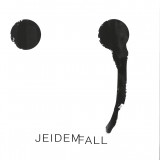
The man in the crowd is a wonderer with relaxed habits. In him the course of things and movement of the city is reproduced. The Düsseldorfer Detlef Weinrich is such a man in the crows. Some one who is constantly listening to future winds through rushes of the past. He loves the night for its free will. And his music tells stories about it. You might know him as a member of the band Kreidler. As a solo artist he goes under the name Tolouse Low Trax. And he's already got three Eps and two albums under his belt. His first solo album „Mask Talk“ thrives on a feathery beat frequency and cool new-wave-strength. His recently released piece „Corridor Plateau“, which appeared as a limited edition to accompany the exhibition „Corridor Plateau“ contains percussive electronics and Industrial sounding like its from the second industrial revolution. His third album „Jeidem Fall“, is also not from here. It sounds like music brought down to earth from the heavens. But its a dark cosmos in which there are only fleeting glimpses of light. All eight tracks were composed in a short space of time over the period of just a few months and fit together perfectly atmospherically. With a musical expressiveness that undoubtedly twists your emotions, „Jeidem Fall“ attacks the subconscious and clouds the mind. The drums have more movement that on „Mask Talk“. Along with the constant tapping of drumsticks goes melodical arpeggios dancing dark and dirty. At times longing vocals drift abstractly through the room, as on „Sa Seline“ or „Geo Scan“, without telling any obvious story.
To sound like stylistic cross references from the present and past is all just speculation for nothing on „Jeidem Fall“ really sounds like anything that has gone before. You could compare the dark minimal timbre of the drum computer aesthetic with Craig Leon's first reductive album „Nommos“. There is also a hint of the minimallist industrial of the Spanish band Esplendor Geometrico in the bubbly textures. But Tolouse Low Trax is still looking from the present into the future and filter and filters all his personal preferences through his MPC and his small synth setup to make them come alive here and now in a new way. Again Tolouse Low Trax has created a truly mysteriously vibrating drum computer music which offers hypnotic magic for the shadowy dance floor. Only a little light should illuminate the whole thing and the bodies that move above them should have no fear from threatening percussion which are displaced into a misty trance. A dark swaying shadowy mass, ideal for a journey at the end of the night and all those non-places where longing sleeps and the last romantics dance while getting drunk.
- A1: Unoxuno - Manifestación En La Superficie
- A2: Quum - Persecución
- A3: Alan Courtis- Los Fieltros
- A4: Pabloreche - Residuo
- A5: Alfredo Horacio Pérez - Avalokiteshvara I
- A6: Unoxuno - Buenos Aires Psicótico
- A7: Luis Marte - Simples Máquinas
- A8: Quum - Stress
- A9: Pabloreche - Rompo
- A10: Conducto - Círculos
- A11: Esófago Zombie - On-Off
- B1: Las Cintas Magnéticas - Pistas Nro 4 & 8
- B2: Zigo - Delureos
- B3: Conducto - Malla
- B4: La Espora Invasora - Comegato
- B5: Jaime Genovart - Querandíes
- B6: Francisco Ali-Brouchoud - Bashō
Late 20th Century outsider music from the outskirts of Buenos Aires featuring Alan Courtis, Pablo Reche, Quum and many more artists from the Argentinian underground.
Setting out as an archaeological excavation, literally exhuming material which has been under the surface for more than two decades, this special compilation features work by established and under the radar artists that helped set the now fertile Argentinian underground.
All tracks were directly digitized from the original cassettes masters (half of them never previously released either). The emphasis being to maintain the original sound quality as it was produced at the time (hence the cassette format). The compilation also showcases a broad spectrum style of music that was done at a specific time with very primitive gear - not by choice but because of the obvious economic restrictions of accessing sophisticated equipment forced these musicians on the DIY road. Domestic tape recorders making cassette loops, broken record players, toy keyboards and the noisy ‘fingers on circuitry’ long before Nicolas Collins championed it on Hand-made electronic music.
Whilst some artists actually had access to professional synths and drum machines (Unoxuno, Quum, Jaime Genovart), they still lacked of standard recording equipment. A crucial document then showing how their unique approach to music making influenced the forthcoming experimental scene of South America making these artists influential cult figures of the underground.
Compiled by Juan José Calarco y Pablo Reche
Digitized & Mastered by Juan José Calarco
The Oystercatcher is the first collaborative LP from Cucina Povera (Maria Rossi) and ELS (Edward Simpson)
Recorded in London over two days, hours' worth of improvisations have been edited down to form these six tracks.
A fragile interplay is at work between Maria's drifting vocals and the ominous churn of Edward's modular synth. Each sonic element takes a turn at leading the way.
The opening track 'Mantle' is formed from sparse, monolithic electronics, woven gently with a thread of vocals. In the closing track 'Eon' Maria's voice shepherds spontaneous bursts of sounds, almost Rave-like if order were imposed, through 15 minutes of turmoil and resplendent until the end.
Maria's vocals make their own trails amongst the noise, bringing to mind the the exploratory language from Ursula K. Le Guin's album 'Music and Poetry from the Kesh', recalling the same understated mystery.
The overall effect of this collaboration is a completely unique creation albeit within a recognisable lineage of predecessors.
The artwork reflects the vision of these two artists, collaged together. Both images are from a trip to Helsinki. Edward's photograph of Tulips caught after dark are reviled by a flash. Maria's seemingly abstract drawing is a graphite rubbing taken from a granite slab of a pavement somewhere in Kallio. Together the two images represent two different methods for capturing a city's haptic landscape.
The album moves with a feeling of transience, which is no surprise given that the idea to collaborate was formed in Helsinki, realised in London and edited together in Rotterdam.
The Oystercatcher tells a fragile tale, one that spins out into the unknown. A cold union of voice and machine, still tentative and probing, learning to co-exist. A kind of fundamental shift whereby shared moments have been turned to sound.
The Oystercatcher is a bird that can freely travel between the earth, sea and sky. The motif is taken from a Tove Jansson short story. A dead bird washes ashore, two different versions of events are presented to how the bird came to die. The album feels like two different stories being presented on top of one another but ultimately coming to the same tragic conclusion.
Cucina Povera is Maria Rossi - Vocals
ELS is Edward Simpson - Synthesisers
Recorded in London across two days during the Summer of 2019
Mastered by Russell Haswell
If you are passionate about local music scenes as much as we are you might already know about the current brood of great bands going on in Cardiff, Wales.
Chain Of Flowers were the first to hail from the Welsh capital, followed by related side projects such as Night Thoughts, more recently came Private World of which the two boys we’re about to introduce are also live members of.
A new wave/synth act from the same city called Plastic Estate is emerging this year.
The duo composed by Nicholas James and Stanley Fouracres have released a few digital singles in 2019 as they’ve opened for The Murder Capital at Sŵn Festival and played alongside the likes of M!R!M, Josiah Konder and The Love Coffin. This Place is their first physical release and it’s due on 7-inch vinyl and digital on June 19.
On the two songs that compose the single, Plastic Estate clearly draw influence from the best UK new wave and pop artists such as Dave Gahan, Paddy McAloon, Roddy Frame and yet there is a sophisticated casualness and an innate freshness in their songwriting that makes them not sounding dated at all.
Amazing composition skills for such a young band and a perfect balance between electronic dance elements and acoustic instruments allow them to pay homage to the above-mentioned masters and to be a perfectly contemporary group at once.
Although it’s possible to pick out some darker lyrics, the overall feel is up-beat and breezy. It’s a contrast that runs through a lot of their music – like a dichotomy between dark, melancholia and happier, brighter feelings.
Whether it’s a happy pop synth riff mixed with sombre lyrics or vice versa, the young Welsh duo is delivering the best 80’s-inspired modern pop craft.
RIYL: Echo & The Bunnymen, Prefab Sprout, Depeche Mode, Orange Juice, Wild Nothing.
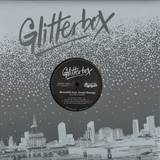
A creative partnership between Tom Laroye and Yam Who, Qwestlife is a trans-continental boogie trip between the two producers' respective homelands of Paris and London. Fulfilling the Glitterbox philosophy by crafting great songs the old school way with analogue and weird electronic gadgetry, Qwestlife's 'Give Me A Minute' appeared first on Glitterbox's Disco Revenge compilation and now graces vinyl for disco connoisseurs everywhere. Featuring the vocals of a frequent Yam Who collaborator, soul diva Jacqui George, 'Give Me A Minute' is an instant party anthem. Disco-fuelled synths and strings plus live sax, trumpet, guitars and bass give a glorious saturated dancefloor vibe rolled into one by sticky hooks and a timeless catchy chorus. Accompanied by the Dubbed Out Version, plus an Accapella and Bonus Beats, this sweet vinyl release provides all the good stuff that Qwestlife have to offer.
Queried on his favourite word in the German language, Masayoshi Fujita will pick 'getragen' - without a sliver of hesitation. Further questioning will reveal that he loves the term's semantic signifiers, its inherent sense of "expansive, deep, quiet and sombre." And yet, 'getragen' leaves plenty of room for interpretation: depending on context, it might also indicate wearing apparel or the state of being carried - two more mundane interpretations that I would rather keep from him. Does Masayoshi's own definition, however, apply to 'Bird, Lake, Objects'? Only to a limited extent. Compared to previous Faitiche releases, 'Bird, Lake, Objects' is certainly the most 'getragen' of them all. Nevertheless, this is by far not the first association that comes to mind. From a distance, these tracks seem rather introspective, cautious even - and reflect the recording situation: deliberately pared down, reduced to a single microphone in space and a separate track for all other instruments, each movement and action is chronicled by the treacherous mike. This confronted me with some unexpected and unfamiliar problems. For example, we had to swap out the seating in the studio as my favoured chair had a characteristic creak. Other, external influences were proved our control: fire engine klaxons, street noise and footfall became part of the recordings and their improvisatory nature. Each movement required careful orchestration, fully aware of its irrevocable nature. Space itself was always present and an audible entity, except on 'Stripped to RM' (recorded without a microphone or vibraphone track). After extensive deliberations, we decided to forgo the vibes on this piece - a very similar version had already been released in 2008 (on the compilation 'Enjoy The Silence', Mule Electronic, 2008). Jan Jelinek, February 2010
First up is Nehuen, an Argentinian born but Barcelona based artist who is notorious for his abrasive dance floor workouts on I Love Acid, BNR Trax and the Classicworks label he co-owns with Cardopusher. Cardopusher is, of course, a true electronic legend from Venezuela. His dizzyingly diverse sound takes in rave, acid, electro, techno and house influences and distills them into hugely
Raw and energetic new forms.
Nehuen's Psyops Part One kicks off with the excellent title track, which contorts acid and electro into a writhing monster filled with dark energy. The visceral 'Toxic' is built on slapping hits and spangled basslines that will tie you in knots as the bumping drums drive things forward. The late-night menace continues on 'Bailar', with tight synth arps layered up in robotic forms over clunky drums that are industrial and futuristic in equal measure. Last but not least, the eerie 'Desire' strikes a more twisted note with double kicks juddering beneath echoing hits. It's pure, filthy, brilliant body music.
Cardopusher kicks off Part Two with the fantastic 'Disobedience' (feat. Lbeeze) a slow-motion drum
workout that is like dark disco mangled through a psychedelic filter, with robotic vocals and stiff arp
jerking your body. 'Abyss Antidote' is then a flurry of drum breaks and electro bass, frazzled synths and whipping hits that keep you on the edge of your seat. Darkness abounds on the gritty 'Initial Decay' (ft. Lbeeze), which layers up taught drums and hits with spraying synths that come from a dystopian planet.
Closing out this epic mini-series is 'Mutant Brain', a cyborg techno meltdown with manic acid for
company.
These are devilishly distorted tracks from two of the best producers around.
Djebali and Jorge Savoretti combine to deliver their ‘Fraires’ EP on Infuse, accompanied by a remix from Stephan Bazbaz.
Two producers at the heart of today’s modern house and minimal scenes, Paris favourite Djebali and Argentinian DJ and producer Jorge Savoretti have grown to become two of the most consistent and impressive talents active within the scene today. With over thirty years of experience between them, releasing material via the likes of Freak’n’Chic, Raum…musik and Cadenza plus Djebali’s own self-titled imprint, the pairing now turn their attention to new ground as they make their collaborative debut on FUSE sister imprint Infuse this summer, offering up three fresh productions via their ‘Fraires’ EP alongside a remix from Tel Aviv’s Stephan Bazbaz.
The slow-blooming and hypnotic sonics of ‘101’ open the EP in style as the two talents merge sweeping synth lines atop of warped electronics and slick percussion shots, whilst Stephan Bazbaz’s remix ups the tempo and builds on the original with a combination of energetic builds and icy hats. On the flip, ‘Pigalle’ delves into a deep journey guided by a resonant lead line and hazy background murmurs, before closing with the classy ‘Devote Ville’ – a smooth and well measured production which oozes sophistication and quality from the opening minute.
Principal is the new solo project by producer and musician Rasmus Allin, who’s first album Treacherous Dub will be released on the Copenhagen-based label StereoRoyal in July 2020.
Best described as an homage to old-school Jamaican dub, Principal’s music features live recorded drums and other instruments. Fused with electronic elements, it celebrates the sound of the original dub pioneers.
Born in 1970, Rasmus Allin has been working as a producer, musician, and songwriter since the mid-nineties, primarily within the realm of electronic music. Inspired by the British trip hop and drum ‘n’ bass scene, he soon gravitated towards Jamaican dub, rocksteady, and reggae. "I found my inspiration in the old Jamaican dub masters like Lee Scratch Perry, King Tubby, Augustus Pablo, and Scientist. I’ve spent endless hours in the studio trying to replicate their sound, using old tape delays, filter boxes, and modulation effects,” he says.
In 2002, Allin formed the band Junkyard Productions, playing major venues and festivals like Elysee Montmartre, Le Triptyque, Télérama Dub Festival, and Roskilde Festival while touring through Denmark, Germany, Switzerland, and France. Alongside this, he continued to hone his skills in producing, co-writing, and remixing music, working with top Danish pop and reggae acts the likes of Natasja, Pharfar, Wafande, Shaka Loveless, and the British girl band All Saints.
Treacherous Dub will be released on vinyl and all major streaming platforms, and will be Allin’s first album of pure instrumental dub tracks —an ambition he’s been wanting to fulfil for years. Marking his debut as a solo artist, the album also marks his premiere as a visual artist, with the album cover lithograph made by Allin himself. For Rasmus Allin, the collaboration with StereoRoyal offered “the perfect opportunity to give the tracks the finishing touches.”
StereoRoyal is a Danish library music label founded in 2010 by and specializes in off-kilter music for film and TV. Originally, the label focused on electronic genres, but over the years has grown to include a broader variety of music produced by some of the most talented composers in Scandinavia.
Two leaders from very different musical worlds, the innovative pianist Bruce Brubaker and scientist-now-electronic-artist Max Cooper collaborate to create this latest expression of music by Philip Glass and tell a story of diversity and vulnerability.
Commissioned by and introduced at the Paris Philharmonie in 2019, Glassforms melds the acoustic concert grand piano with synths and cutting-edge electronic production techniques to create a compelling album and a dynamic live experience.
Rather than just reworking or augmenting via traditional means, Max Cooper and Bruce Brubaker fundamentally rewire Glass’ forms in a manner that’s not possible with human composition tools. Max built a new system for musical expression through coding with software developer Alexander Randon, creating a tool for taking live data from the piano and transforming it into new but intimately related forms which drive his synths on stage.
The result is that each of the pieces by Glass becomes its own electronic “instrument,” an instrument Bruce plays in addition to, and simultaneously with the original piece. As Bruce plays the piano and controls synths with his playing, Max modulates and augments, sometimes adding his own melodies to form hybrid variants.
- A1: Kosei Fukuda - ?? - Enso (4 18)
- A2: Uchi - Zro (6 42)
- A3: Ypy - Circulation (6 44)
- B1: Recent Arts - My Default Emotion (5 43)
- B2: Renick Bell - Organize And Unite (4 09)
- B3: Ma + Kosei Fukuda - ????(????)- Enso No Ma (Furutsuki) (1 30)
- B4: Yvesdemey - The Chosen Home (6 11)
- C1: Tobias - He Turned Into Him (5 52)
- C2: Katsunori Sawa - The Stonewall (5 21)
- C3: Yuji Kondo - Zenith (6 09)
- D1: Rabih Beaini - Circle (8 03)
- D2: Ena - 42 1 (4 36)
- D3: Lemna - Moments In Eternal Recurrence (5 00)
Japanese sound artist and producer Kosei Fukuda’s presents a collaborated vision of the first edition of ENSo¯, a two-day audio-visual event collated around the REITEN label. The ENSo¯ Festival invites its artists and audiences alike to appreciate the merging of the improvisational, with the contemplation of rhythmic cycles, based around the conception of enso¯ – ?? – meaning a hand-drawn circle created by one uninterrupted stroke. Now, with an elongated stretch of time in front of us before the next edition of the festival, the compilation stands to provide a sustained glimpse into the world imagined by Fukuda. Blending spontaneity and gravity alike, the record features an array of idiosyncratic artists set to play ENSo¯, all purveyors of their own shaped sound-worlds.
For the A-side, we have Fukada’s own contribution ‘?? – ENSo¯’; a slice of ambient techno dotted somewhere within a faraway galaxy. Venezuelan noise artist UCHI crafts a fourth-world hymn with tribal percussion on the expansive ‘ZRO’, and Osaka based experimentalist YPY aka Korshiro Hino shapes an elusive polyrhythmic ambience on ‘Circulation’. The B-side presents a colossal improvisational track ‘My Default Emotion’ from Berlin based duo Recent Arts. Formed of Chilean artist Valentina Berthelon and German musician Tobias Freund, the duo are masters in audio-visual experimental performances that both surprise and challenge an audience. Renowned artist, programmer and teacher Renick Bell is noted as a pioneer for live coded performance, conducting mutated rhythms that cut across the landscape of electronic sound. His addition to the compilation is a luminescent IDM piece, titled ‘Organize and Unite’. A polished ambient club track from Fukada and MA titled ‘????(????)’ provides a state of organized tranquility, whilst the track ‘The Chosen Home’ from Belgium artist YvesDeMay, whose move from breakbeat to experimental producer has produced gratifying results for all, is a welcome slice of pensive dub- techno.
The C-side brings us a textured and haunting techno track ‘He Turned Into Him’ with revered German artist Tobias, veteran mainstay with an expert hand in shimmering sound design; Kyoto based 10 Label heads Katsunori Sawa and Yuji Kondo brings sample-heavy rushes of sound, the former with ‘The Stonewall’ and the latter with ‘Zenith’, both multi-faceted in their reference points. The D-Side presents the grainy and expansive ‘Circle’ from Lebanese producer Rabih Beaini, who expertly combines club tropes and avant-gardism in his DJing and music. Hypnotic skeletal beats circulate on the pulsating ‘42.1’ by Tokyo artist ENA. Japanese composer Lemna, the alias of Maiko Okimoto rounds it off with a dreamy noise ambience on ‘Moments In Eternal Recurrence’. Released on vinyl July 24th, the compilation stands as a traversable artefact of the festival, rich in spontaneous beauty.
Black Truffle is pleased to announce a new solo album by Eiko Ishibashi, her first for the label, following on from the duo recording Ichida alongside bassist Darin Gray. Hyakki Yagyō (Night Parade of One Hundred Demons) was produced for the ‘Japan Supernatural’ exhibition at The Art Gallery of New South Wales, Sydney focusing on ghost stories and folklore from the Edo period onwards. As with The Dream My Bones Dream (Drag City, 2018), the album is a response to troubling questions about Japanese history, and the influence of the past upon the present, but finds Ishibashi shifting further away from her earlier piano-led songwriting and showing a deepening interest in electronics and audio collaging.
The two sidelong parts of Hyakki Yagyō feature layered synthesisers, acoustic instrumentation, recited verse and field recordings, at times densely mixed but always with a subtle interplay of changing elements. The influence of European and American forerunners as diverse as Alvin Curran, David Behrman and Strafe Für Rebellion can be traced, yet at the same time Ishibashi evokes the flute and string sounds associated with Japanese storytelling, and draws directly on the subversive literary tradition of Kyoka (‘mad poetry’) with a verse by the 15th-century poet Ikkyū Sōjun repeated throughout the album. Revisiting what has gone before, re-thinking what is possible musically, as a way of articulating what else might be possible in the future.
As Ishibashi’s liner notes make clear, the album reflects an attention to persistent dangers, myths and evasions in Japanese culture – as well as the lurking uncertainties that might threaten positive change. This would seem to be manifested in the emerging melodies soon met by dissonance, erratic collisions and near silence, as well as the eerie manipulation of the double-tracked vocals. Ishibashi’s underlying concerns ring true more widely of course. Hyakki Yagyō is a work of multiplicities, and mystery, a landscape where nothing is as it seems at first, and everything is vulnerable to sudden violent interruptions.
The album was produced with regular collaborators Jim O’Rourke (double bass) and Joe Talia (percussion), and features dancer and choreographer Ryuichi Fujimura performing Ikkyū’s satirical tanka. O’Rourke’s immersive mix creates a three-dimensional effect, with Ishibashi’s various sound sources enmeshing and interacting in captivating ways.
Pressed on coloured vinyl and presented in a deluxe package with an inner sleeve featuring and artist portrait and liner notes from Eiko Ishibashi. Cover and label design by Shuhei Abe.
Back cover design by Lasse Marhaug. Mixed and mastered by Jim O’Rourke.
key selling points:
- Black Truffle is pleased to announce a new solo album by Eiko Ishibashi, her first since her acclaimed 2018 Drag City release The Dream My Bones Dream.
- This album finds Ishibashi shifting further away from her earlier piano-led songwriting and showing a deepening interest in electronics and audio collaging.
- Hyakki Yagyō (Night Parade of One Hundred Demons) was produced for the ‘Japan Supernatural’ exhibition at The Art Gallery of New South Wales, Sydney focusing on ghost stories and folklore from the Edo period onwards and is a response to troubling questions about Japanese history, and the influence of the past upon the present.
- Produced with regular collaborators Jim O’Rourke (double bass) and Joe Talia (percussion), O’Rourke’s immersive mix creates a three-dimensional effect, with Ishibashi’s various sound sources enmeshing and interacting in captivating ways.
- The two sidelong parts of Hyakki Yagyō feature layered synthesisers, acoustic instrumentation, recited verse and field recordings, at times densely mixed but always with a subtle interplay of changing elements, hinting at an influence of European and American forerunners as diverse as Alvin Curran, David Behrman and Strafe Für Rebellion.
- Pressed on coloured vinyl and presented in a deluxe package with an inner sleeve featuring an artist portrait and liner notes from Eiko Ishibashi. Mixed and mastered by Jim O’Rourke.
For that 15th Acid Avengers split EP, we welcome two providers of acid music who know each other very well, as they're also associated in the duo Nite Vision.
On the A-Side, English producer Perseus Traxx, known for his raw house & electro bombs on Bunker, Solar One, I Love Acid or his own imprint Future Flash.
On the B-Side, Barcelona-based producer Mantra, also know under his aliases Myriadd or Acid Phreex, and responsible of several ravey bangers on Pinkman, Creme Organization, Bunker and Polybius Trax.
Two virtuoso producers for five acid pearls!
To say Fredfades and Jawn Rice are House music producers would be sneering at their efforts across genres like Hip Hop, Soul, and Jazz. The Mutual Intentions collaborators have forged a sound together in classic House, siphoning a myriad of influences through their intricate constructions in the studio as solo acts since first meeting in 2007. Becoming fast friends over a shared love of the dusty beats of an SP1200, Jawn Rice and Fredfades started working together while the Mutual Intentions collective gestated around them. Individual works by Jawn and Fred dot the collective’s back catalogue like various nodes of evolution through the course of MI’s output.
“We’ve always been sharing sketches,” explains Jawn Rice, “but I feel that these past years have been more productive in getting some of these sketches out as songs with Fredrik. It’s just a continuation of our friendship.” Emboldened by this friendship and with their finely tuned skills in the studio,
honed to near-perfection, they eventually started making music together. Following two seminal solo LPs – Fredfades’ Warmth and Jawn Rice’s Highlights – the pair consolidated their music as a duo in 2019, striking out with their electrifying debut, Jacuzzi Boyz. In a fusion between Jawn’s electronic inclinations and Fred’s soulful eccentricities, Jacuzzi Boyz established the duo as a new force workingNew Release Information within the broad scope of House music, with a sound imbued in the origin story of House and the genre’s hip-hop allegiances.
In 2020 they continue to pursue music together in the sophomore LP, Luv Neva Fades. Following the release of the title track and lead single, Luv Neva Fades finds the producers cementing their artistic voice and re-enforcing their commitment to a singular sound. Lush Rhodes keys and bouncing percussion lay the foundations for the album, while buoyant bass-lines and sparkling synthesisers provide
the catalyst for a crooning vocal or ruminating melody. It’s a record that thrives in a sultry mood; an LP that basks in the warmth of its analogue origins and cools in the shade of languid chord progressions.
Like Jacuzzi Boys, this album is an extended collaborative affair, as Mutual Intentions’ reach stretches across the Atlantic with guest appearances from Byron the Aquarius, Javonntte, Arthur Kay, Bendik HK and the SP1200 that started it all. Shimmering melodies, hazy harmonies and boisterous beats draw Fredfades and Jawn Rice out of the jacuzzi and onto the dance floor, moving under shimmering stars, where the duo cement what they started with Luv Neva Fades.
Songs for dancing, having fun, and vibing out, B. Bravo's latest project, the "Cosmic Mind" EP, brings listeners to the dancefloor by way of a healthy dose of talk-box, retro synths and irresistable boogie grooves.
Los Angeles producer, talk-boxer, remixer, DJ & instrumentalist, B. Bravo, has been flipping interstellar references and laying down galactic beats for over a decade. From 2009's Analog Starship to 2020's Cosmic Mind EP, the funk in him is alive and well. Born in California with roots in Japan, Bravo combines his love for jazz, soul, hip hop and electronics into his own signature sound of swinging grooves, melodic synths and bouncing analog basslines.
Lennard Poschmann returns to Oliver Hafenbauer's Die Orakel label with a brand-new EP under his O-Wells alias.
'Ebecs' showcases the Robert Johnson resident's subtle, distinct approach to Detroit-ish,
IDM & ambient-influenced electronic music.
Opening track ‘Ectid’ is a free-floating introduction revealing a glorious acid undercurrent. ‘Bbmore’ demonstrates a different kind of approach with the same wistful ingredients, unravelling a tightly wound drum structure from the inside. On ‘Exolite’, the inverse unfolds, as Wells blends experimental textures and introduces stabs of cathartic and deep bass.
Introducing the other half of the release, ‘Culling Virus’ is Wells' take on simmering, paranoid electro. On the pairing of LL0P 1 and LL0P 2, he provides an intermission with two tense locked grooves before concluding the release with the cascading and dense ‘Shnuck’, a psychedelic transmission of complex layered sound design.