Chicago-based producer/multi-instrumentalist Ben Billington makes music under the name Quicksails.
A pillar of the Chicago experimental scene and its branches across the midwest and national DIY circuits, Billington has enriched his communities through overlapping roles as a musician and curator /
promoter of freak sounds for more than two decades. In addition to his work as a solo artist, he has performed with bands such as ONO, ADT, Circuit Des Yeux, Tiger Hatchery, and Ryley Walker’s
band. Billington’s solo recordings as Quicksails encompass everything from free jazz-inspired electro-acoustic production to rhythmic synth-pulse tapestries to music focused on what could be
considered one primary instrument among the many he works with: the drum kit and auxiliary percussion. Surface, his fifth release to appear on Hausu Mountain, combines all of these idioms into
one diverse program while also expanding his palette to rope in his more recent experiments with touch-sensitive custom synthesizers and modular systems. Surface shimmers with a sense of tonal
sophistication and emotional resonance that sets a high-water mark for the Quicksails project.
The album’s mind-bending juxtapositions of electronic and acoustic sound sources of contrasting fidelities charge each composition with energies at once alien and familiar — rooted in free improvisation and
jazz traditions while streaking off into realms of lush synth arrangement, and textural abstraction.
Within Quicksails’s dense fields of sound, one voice stands out with particularly bold contrast: the saxophone of modern experimental stalwart Patrick Shiroishi (Fuubutsushi, The Armed, a multitude of
improvised collaborations on labels like Astral Spirits and Touch Records), who guests on three of the album’s ten tracks. Shiroishi’s sax performances alternately burst out in squalling atonal spirals and
glow with neo-noir melodicism as if glimpsed in the smoke under a streetlamp on a darkened city corner.
Suche:two make one
The Spanish-Dominican label led by the Spanish Sergio Parrado and the Dominican Jee Bear presents its Lmtd series, where art, design and music go hand in hand. A collectible series where each reference is a piece of a mural by the Argentine designer Lucien Le Grub, this being the first of four.
This first reference is the work of Chilean Alejandro Vivanco (Cadenza, Melisma) who joins forces with fellow Chilean Dorian Chavez (8bit, Viva Music) to bring us this incredible “Dabtrack”.
The original cut (A1) is to go back in time, return to the essence of the mid-2000s where artists like Luciano or Ricardo Villalobos put the Andean country in the eyes of the world with their organic micro house. “Dabtrack” is about this, but with a renewed sound, where the organic and the digital embrace to create an intense track, with fat basses that will make the sound system rumble. Special synths that catch you to create a magnificent sound collage.
The A2 is for the master master and lord of the deep sound. We are talking about the Romanian Mihai Popoviciu, who brilliantly reinterprets the track and takes it to his own terrain, but without neglecting the essence of the original and giving it his particular groove that works so well late at night. The groove, together with the set of synths, which elaborates it magnificently, makes his remix of Dabtrack” an indispensable work in the DJ's suitcases.
Now it's time to close this incredible album. For this we have reserved the entire B-side for one of the Chilean artists who has left the most mark in the last two decades on the international electronic scene: Pier Bucci. He takes us on a 12-minute journey through his signature style where anything can happen. Little more to say, we invite you to discover it for yourself. Because it is a work of art.
“Praying to god whether or not I believe there is one” - PH
Petra Hermanova and Unguarded announce In Death’s Eyes (UGD-009), the debut solo LP under the artist’s own name. This LP features nine tracks utilizing folk and sacred musical technique and instrumentation which drift between song and heavy distorted drones. In a disciplined display of beauty, pain, and astute musicianship, Hermanova brings forth a notable accomplishment of an album. In Death’s Eyes confronts death from start to finish with a rare fervor that leaves one feeling it was utterly necessary for Hermanova to produce - to survive. The transcendent impulse, or the influence of religious music, bears heavily on Hermanova’s compositions in her choir arrangements, but is most apparent in her use of pipe organ, opening the record on Black Glass. Having written organ parts for a significant portion of the record, she sought out the renowned organist Denny Wilke to record with her in the Merseburg Cathedral. Captivated by Wilke's profound skill as a player and knowledge of the Ladegast organ, Hermanova invited him to collaborate on Two Deaths where he delivers an impressive improvisation. While religious music offers spiritual solace from grief, folk speaks to the human and earthly as told by the individual, be they songs of suffering or joy, sin or salvation. To Hermanova, the clean promise of liturgical music is not enough to alleviate the blunt pain of grief. Contrasting the spiritual is the voice of the individual sufferer - the folk musician. For Hermanova, the autoharp embodies this contrast. The autoharp, a familiar sound in Appalachian folk music since its mass production in the late 1800’s, is an affordable instrument designed for the unskilled player. It is the antithesis of the organ which is costly, gargantuan, reserved for skilled players, and quite literally a part of the church. Through In Death’s Eyes the sounds of transcendence blend with the worldly, the tension between them poignantly expressing Hermanova’s struggle for spiritual resolution against the reality of death and loss. Like Hermanova’s lyrics, the artwork, conceptualized by Enes Güç and Evelyn Bencicova, is riddled with symbolism and allusion. We find Hermanova on the cover, digitally rendered. Reclining like an anatomical Venus, her vital organs are exposed, suggesting she is denied a transcendent death and is instead immaculately human. Bearing a sickle, her legs are metallic like armor, both symbols of protection. We see here in this image, as we hear in the nine tracks of IDE, the metaphoric state of someone ravaged by loss, choosing to tear herself open in an attempt to heal. - Reece Cox Petra Hermanova is a musician and visual artist based in Berlin. In 2018, Hermanova began working with the autoharp, which has since become the central pillar of her musical practice. Drawing inspiration from folk, medieval drone, and contemporary textural expressions, as well as Appalachian autoharp music, she creates emotionally driven arrangements accompanied by vocals. In her lyrics, she speaks to the fragility and tenderness of the human condition, religious conceptions of death, and introspective landscapes through narrative and symbolism. Hermanova debuted live at the Berliner Festspiele event The Sun Machine is Coming Down, performed at Trauma Bar und Kino accompanied with her choir, and recently took part in Sorour Darabi’s durational performance From the Throat to the Dawn. Her debut solo album, In Death’s Eyes, is set for release in 2023 on the art platform and label Unguarded. The album, where she wrote for the autoharp, pipe organ, solo voice and choir, features the acclaimed organist Denny Wilke playing the 19th century Ladegast organ of the Merseburg Cathedral. She has toured internationally with previous projects, including extensive sound and visual collaborations with Jon Eirik Boska (Hydropsyche) as well as with her award-winning band Fiordmoss. She was recently announced as a SHAPE+ platform artist.
Polish jazz rebels sneaky jesus are back with their second studio album For Chaching Taphed.The highly imaginative quartet out of Wroclaw comprising Maciej Forreiter (Guitar), Matylda Gerber (Saxophones), Ben Łasiewick i(Bass) and Filip Baczyński (Drums) have won fans around the world for their restless, quirky brand of jazz which takes in breakbeats, twisting chord progressions and improvisation as well as a wealth of musical influences.
The band have been touring their asses off ever since they surprised the world with their debut album For Joseph Riddle in 2021. From out of nowhere their debut LP of 500 copies sold out in a month and they quickly went on to sell close to 1,000 CDs of the album. Fast-forward to 2023 and the band are sharing stages with artists such as Ill Considered and Theon Cross.
For Chaching Taphed was created in complete isolation. The group locked itself in a barn at the Museum of Agricultural Technology in Piotrowice Świdnickie. It worked on its sophomore output surrounded by machinery, trucks and carriages. These new compositions mirror the abstract conversations which the group frequently has just for fun. Contrary to For Joseph Riddle, this album is simple and does not rely on ongoing grooves. This enabled the group to be much more experimental. The band was joined by friends Flautist Mariya Mavko on Piękno Niemożliwe (Impossible Beauty) and her playing is sampled in Hipotetyczny Taras (Hypothetical Terrace). Pięciu Pszczelarzy (Five Beekeepers) closes the album featuring EABS' Jakub Kurek on trumpet. His fiery solo is one of the most intense moments of the album.
Spacer Po Nadodrzu (A walk around Nadodrze) opens the album and is inspired by one of the districts of Wrocław. It is a sonic story depicting a walk through Nadodrze late at night. A steady bass rhythm imitates a careful pace and the responding sax line is a spooky theme that might pop to oneʼs head in a moment of uncertainty.
The album's first single Krztusiec (Whooping Cough) finds the group diving head first into their most recent influences. The trackstarts with drum improvisation, rolling into a solid hip-hop backbeat provided by Ben Łasiewicki on Bass and Drummer Filip Baczyński. Sax and Guitar weave steady but dissonant lines, written by Maciej Forreiter after many hours spent listening to the Ethiopian jazz greats. The track takes off right after that. Matylda Gerber delivers a fiery Sax solo, while the group picks up the tempo and quickens the groove. The essence is the middle section, a dubby collective improvisation. Forreiter, Gerber and Baczyński take turns playing both classic dub phrases and fierce avant grade lines. Łasiewicki keeps everybody in check with a steady bassline. The energy slows down until Baczyński's drum solo, which explores phrasing detached from the rest of the tune.
Second single Chiński Sprzedawca Smażonych Kasztanów (Chinese roasted chestnut seller) is a fusion of breakbeats, energized songo rhythms and motifs inspired by South African melodies. Presenting the group with spacious and rhythmic horn lines, guitarist Maciej Forreiter wrote a chord progression while Beniamin Łasiewicki and Filip Baczyński took care of the rhythm section. This first part of the track suddenly drops out and explodes into the dramatic main motif which includes double sax and fierce guitar playing in harmony, plus the rhythm section playing more and more jungle-esque. Powerful guitar and sax solos feature before we return to the main theme with a completely different rhythmic backdrop.
W Klatce z Bykiem (In a cage with a Bull), starts like a race. The music plays with an incredible nerve and when the theme is right on edge it suddenly stops. It is followed by an animalistic growl on the saxophone and a doom metal-esque bash of downtuned, distorted guitars and heavy drums. In this heavy fashion it slowly approaches the finishing line hitting one final metallic clang.
Piękno Niemożliwe (Impossible Beauty) features wonderful flute playing of Mariya Mavko (Kadabra Dyskety Kusaje). Her work in the opening motif evokes sounds of Polish and Ukrainian folklore. This brief mellow moment serves as a contrast to the usual frantic sounds of sneaky jesus. It is an appreciation of thepolish jazz music of the past, intrinsically-linked to folklore. The band took this idea and reworked it into their own unique style.
Hipotetyczny Taras (Hypothetical Terrace) is built on top of a lengthy vamp in an unusual 7/8 time-signature. The bass anchors the quartet in a simple line, while the rest of the quartet share an emotional conversation. This track is the most open of the whole project and it ends accordingly. The final burst is a call back to the basics ofspiritual jazzand the whole band shows every emotion simultaneously and gracefully fades out.
Pięciu Pszczelarzy (Five Beekeepers) is For Chaching Taphed's conclusion and is a non stop assault of heavy horn lines, punk rhythms and noise. The band is joined by the extraordinary trumpeter Jakub Kurek from EABS, who blends in perfectly with sax and guitar. His exchange of solos with Maciej Forreiter is a combination of classic jazz phrasing and discordant clatter. In the same fierce manner the whole group works within the motif, switching up accents and breaks.
In the short space of two years, sneaky jesus has gone from ambitious upstart looking to break out from its home city playing spit and sawdust venues, to touring Europe as well as prestigious Jazz clubs such as Jassmine in Warsaw. In the process, it has delivered two full-length albums that don't stay in lane or pander to established jazz sub-genres as so many groups do. Some artists make the same record twice or even more than that, but not sneaky jesus. For Chaching Taphed shows the band as restless, experimental, fun, irreverent but purposeful as never before.
“A lot of over-hyped improv / jazz projects out there at the moment and Sneaky Jesus are genuinely excellent and out on their own. Drawing on the expansive atmospherics of a barn as the recording's setting, the album immediately pulls you in with the unsettling 'Spacer Po Nadodrzu' and lifts off on 'Krztusiec', effortlessly moving from angular, abrasive jazz to trippy dub and cinematic intrigue. Tempos shift and intensities shift naturally. The whole set warrants a deep listen from start to finish and watch out for two great guest features from flautist Mariya Mavko and Jakub Kurek bringing some mad fuzz licks to the boisterous closer. Brilliant album.”
Quinton Scott — Strut Records
American blues musician Buddy Guy is an exponent of Chicago blues and influenced many prominent guitarists, including Jimi Hendrix, Jimmy Page (Led Zeppelin), Eric Clapton, and John Mayer. His 1998 album Heavy Love is one of his fine blues-rock records. Besides two songs of his own material, he covered classics including Willie Dixon “I Just Want to Make Love to You", Tony Joe White "Did Somebody Make a Fool Out of You", ZZ Top "I Need You Tonight". It is heavier compared to many of his other recordings, but he still finds his way back to the blues.
Heavy Love is available as a 25th anniversary edition of 1500 individually numbered copies on pink & purple marbled vinyl, housed in a gatefold sleeve.
Feldman's last composition, Piano, Violin, Viola, Cello, was completed in 1987; although its instrumentation largely corresponds to that of Piano and String Quartet, with one instead of two violins, it differs in almost every other respect from the composition written only two years earlier, for here, in contrast to Piano and String Quartet, Feldman makes every effort to integrate the piano into the string section, and the basic formal components of the composition are no longer staves, as they were in Piano and String Quartet, but individual bars... ...From a compositional point of view, the essential change that transfers the "monolithic block" of late orchestral works such as Coptic Light and For Samuel Beckett to chamber music instrumentation is that the material, already largely homogeneous, is rearranged not in whole systems but in small-part permutations, so that the systems and pages no longer represent periods or sections, and a continuous musical progression emerges with a much reduced internal structure compared to previous works.
from liner notes by Sebastian Claren
dissonArt Ensemble is Lenio Liatsou, Piano Theodor Patsalidis, Violin Chara Seira, Viola Vassills Saitis, Violoncello
Second album from the electronic lounge-jazz-dance hybrid of William Basinski, Preston Wendel (Shania Taint), and Gary Wright. Limited edition Opaque Red Colored Vinyl (TRR412LPC Edition of 1,500) is for Indie stores only. 1969. Two gorgeous young interns in the film industry get invited to a glamorous A-list Hollywood party in the Trousdale Estates in one of those fabulous pavilion-style mid-century modern homes at the top of Beverly Hills. They go in their best mod clewths. Eyes popping at the technicolor scene of Hollywood stars smoking and drinking in the sunken living room, they do as instructed and have some punch and watch wallflower style as drama ensues...oh, and the the house is owned by Foxy, the pimp and drug dealer who everybody there owes munty, hunty...and he’s ready to get paid! Oh yeah, and the punch is dosed with LSD25. They manage to make it home, panties and purses and shoes intact and will never forget this party for as long as they live.
Lucky number 17? You better believe it. We here at Brown Acid have been scouring the highways and byways of America for even more hidden stashes of psych/garage/proto-punk madness from the so-called Aquarian Age. There’s no flower power here, though—just acid casualties, rock stompers and major freakouts. As always, the songs have been officially licensed, and all the artists get paid. Kicking off this trip, Grapple’s “Ethereal Genesis” is a heavy psych gem from 1969 written by J. Bruce Svoboda, a.k.a. Jay Bruce, formerly of The Hangmen and The Five Canadians (who were actually the same San Antonio band). The latter’s 1966 garage favorite “Writing on the Wall” has been endlessly covered, but Grapple were never heard from again. With a guitar riff that blatantly rips off Sabbath’s “Black Sabbath,” Image’s mostly instrumental lysergic obscurity “Witchcraft ’71” (originally unveiled that very year) also boasts a horror-movie organ intro, a voodoo drum break and some championship chanting. Private press heads might recall late Image drummer John Beke from his ’80s reemergence with country rockers Crossfyre. Stone Hedge were a seven-piece rock band out of Michigan with a penchant for Creedence and anthropomorphism. “Smokey Bear” is their 1972 tribute to the official mascot of the U.S. Forest Services—not to mention the A side of their sole single—and it recalls the kind of organ-drenched swamp jam that soundtracked many a Burt Reynolds flick back in the day. If you think being a Southern rock band from Milwaukee doesn’t make much sense, that’s probably why Crossfire changed their sound along with their name—to Bad Boy—after signing with United Artists. Bad Boy’s severely underappreciated second album, Back To Back, is a 1978 hard rock jewel, but you can hear their boogie-woogie roots on this rare 1975 single. With a band name like Primevil and song title like “Too Dead To Live,” you probably expect some gnarly proto-metal riffage. Instead, you a get a harmonica-drenched, soul-infused rock rave-up from 1972. Primevil would release their sole LP two years later: Entitled Smokin’ Bats at Campton’s, it’s a reference to their trusty singer, harp player (and bat smoker?), Dave Campton. Brown Acid regulars already know Pegasus from their appearance with “The Sorcerer” on our Seventh Trip. “Ready to Rave” is the flipside to that 1972 single, in which they explain how they like their whiskey cold and their women hot. It’s another killer glimpse of what might have been if these one-and-done Baltimore hard rockers had been able to keep it together. One of two obscure singles released by Texas musician Bobby Mabe in 1969 (the other appears under the name The Outcasts), “I’m Lonely” delivers a heavy dose of vocal soul to the otherwise psych-garage presentation. Fans of fellow Houstonians the Moving Sidewalks—whom Bobby and his Outcasts may well have gigged with—will especially dig this one. Cedar Rapids, Iowa, may not be known as a cultural mecca, but they did give us Truth & Janey. This deadly hard rock trio delivered their holy grail full-length, No Rest for the Wicked, back in 1976. “Around and Around” is a Chuck Berry cover that originally appeared on a 1973 single the band released under the earlier name Truth. Originally released in 1973, “High School Letter” is the debut single from San Diego rock squad Glory. This infectious bonehead cruncher features future Beat Farmer Jerry Raney and the original rhythm section of Iron Butterfly in bassist Greg Willis and drummer Jack Pinney. Glory is what they got up to after their former bandmates left for L.A.’s garden of Eden. “Jack the Ripper” is a mercilessly bootlegged Cleveland classic from 1978 with a serrated punk edge and vocals that recall Mick Blood of Aussie savages the Lime Spiders. Or maybe it’s the other way around—the Lime Spiders formed the year after Strychnine carved off this lethal paean to the infamous Whitechapel slasher of olde.
Since forming in 1999, Suishou No Fune (A Ship Of Crystal), the vehicle for long-term musical collaborators Pirako Kurenai (guitar, voice) and Kageo (guitar), have been one of the most compelling groups in the Japanese underground. Their long, languorous songs are devastating in their simplicity, as though the gently sung ballads of the Velvet Underground’s third album were re-scored by the legendary Japanese free-rock gang, Les Rallizes Denudes. Their new album, 風は春、空は虹、愛は波間に隠れている (The wind is spring -. There is a rainbow in the sky - Love is hiding in the waves.), documents a live performance from May 2021, at Silver Elephant, where the duo are joined by Matsuedo Hideo on bass, and Mark Anderson (Greymouth, Mysteries Of Love) on drums.
The duo of Pirako Kurenai and Kageo have come a long way since their early performances and self-released CD-Rs – in the intervening decades, they’ve released albums on P.S.F., Holy Mountain, Important, Archive, 8mm and Essence, amongst others, each album another manifestation of the duo’s ever-changing same. You can hear them patiently toiling over these beauteous songs, with their choral melodies and lush waves of tonology, Kageo’s guitar radiating bejewelled chimes and dense passages of texture, pulling the songs into a black hole of quietude and sadness. And as Kurenai once told journalist Phil Kaberry, “Suishou No Fune’s songs, sounds and words are often born from heartrending feelings like sadness and pain”.
The wind is spring. There is a rainbow in the sky. Love is hiding in the waves begins with the deep blues of “Cherry”, a drawn-out drift-song that pivots on a most elegant two-chord mantra, as Kurenai sings, siren-like, amidst the sheets of noise Kageo peels from six strings. There’s something painterly about the duo’s playing here, and indeed, Kageo was a painter and Kurenai was a doll maker and watercolour painter when they met in the late ‘90s. On the flip side, a spare, spaced-out improvisation, “A Rainbow Is Floating”, acts as a prelude to “Endless Descent”, one of Suishou No Fune’s most remarkable songs, where a mesmeric guitar line endlessly coils and twines around the flicker and toll of Kurenai’s hypnotic one-chord strum. It’s a bruised, quietly desperate ending to an album that has an achroamatic air, as though the songs were transmitting to a cabal of lost spirits.
Black vinyl, in 3 colour variations of silkscreened jacket with obi in black or kraft, with inserts and a postcard Liner notes by Jon Dale Printed by Alan Sherry
The dual forces of shadow and light, despair and hope, frustration and catharsis are at play in the music of Cupid & Psyche, the Los Angeles-based indie rock duo of Michael Vidal and Juan Velasquez. First gaining recognition in the late aughts as members of the punk band Abe Vigoda, whose 2010 album Crush was named one of the "Best 50 Albums of the 2010s" by Pitchfork, the two have reunited as collaborators for the first time in a decade. Cathartic jam sessions would birth the emotionally resonant songs that appear on their debut album, Romantic Music. Though they pull from a wide array of `80s and `90s influences, Cupid & Psyche bring together these disparate moods and genres through their own esoteric lens on Romantic Music_making for a singular sound that at once feels familiar and alluringly hypnotic. Listeners will detect the gloom of post-punk and goth, the haziness of dream-pop and shoegaze, the bittersweet guitar melodies of second-wave emo, and the manic electronic rhythms of trip-hop and big beat. The immersive soundscapes on Romantic Music are sometimes agitated and driving, while other times ethereal and transcendent. This duality matches the album's lyrics of looking for a divine escape from the grim realities of existence, as well as the darkest parts of one's psyche. "The thesis of the album is trying to transcend the limits of life and the struggle therein," Vidal says. "There's a lot of lyrics about feeling trapped or frustrated, and then trying to find a way out. There's a lot of times I sing of hope and grasping towards love. But maybe in trying to escape, you take the wrong door, be it substance abuse or other vices." Now as Cupid & Psyche, Vidal and Velasquez return to a friendship that creatively feels like home_except this time, with more experience, self-knowledge, and less pressure to make anything other than the music that emerges naturally. The LP's title Romantic Music is tongue-in-cheek, since there are no love songs proper on the project, and the phrase itself can imply a kind of light listening. But it befits that deep bond that the members have, as friends who understand and empathize with each other's worst, so they're capable of bringing out each other's best.
Red Vinyl[26,47 €]
South London ne-er-do-wells Meatraffle make huge strides forward with this third album of funky trumpet-laced street pop combining a caustic wit with a tender heart. “The best band in the country bar none!” Fat White Family // “A collective of individuals who refuse to be pigeonholed…..they conjure a rich, imaginative and often simply funny world” The Quietus // “Humorous alt-punk…potent…surreal” CLASH // “Their direct and confrontational attitude has not been seen since punk really grabbed England by the balls” FAR OUT // “Your mind will be liberated” Louder Than War // Meatraffle are thrilled to announce they will be releasing 'Base and Superstructure', their third studio album on Blang Records on 29.09.2023. Recorded during lockdown, produced & mixed by Meatraffle keyboardist Chris OC, Dante Traynor (SWEAT, Fat White Family 'Feet'), additional mixing by Angelica Björnsson (Hi - Texas feat. Wu Tang Clan) and mastered by Dean Honer (Eccentronic Research Council, I Monster, The Moonlandingz), ‘Base and Superstructure’ marks a new sonic departure for the band rightly acknowledged as godfathers of the now infamous South London scene, centred around the Windmill in Brixton. The band will be touring in support of the new album later in the year. Founded in 2014, Meatraffle have toured extensively across the UK and Europe as both a headline act and support to the likes of Fat White Family, Sleaford Mods and Warmduscher. Festival appearances include SXSW, Green Man and Liverpool Psych Fest. In addition to their previous two LPs ('Hi Fi Classics' and 'Bastard Music'), the band have released singles on Dan Carey's Speedy Wunderground and Moshi Moshi, plus numerous remixes including 'Meatraffle on the Moon' by the one and only Andrew Weatherall. The band have also played sessions for Marc Riley (BBC 6Music) plus regular plays from other 6Music DJs including Iggy Pop, Gideon Coe and Amy Lamé. “We were looking for labels for a while, sending out demos to small ‘indie’ labels to which we often had the response, “we really like it but we’re not signing anyone at the moment”, which feels like the new “don’t call us we’ll call you!”... We knew we had a good record so didn’t get knocked back and knew it would be a climb as many of these small and large ‘indie’ or ‘alternative’ labels can be even more conservative than the mainstream, I guess having less money and therefore having to ‘play it safe’. We bumped into Blang one night at The George Tavern and instantly had a good feeling about them…and guess what? They loved the music!” - Meatraffle frontman, Zsa Zsa Sapien. Genre-bending independent label Blang Records is a wildly non-commercial label firmly rooted in the DIY/anything goes attitude of punk and antifolk, and has remained consistent in its commitment to releasing outsider music by the likes of David Cronenberg's Wife, Jack Medley's Secure Men, Brix & The Extricated, Milk Kan, Thomas Truax and many more. Live Dates: 13th July 2023 - Peckham Audio, London w/SLEAZE, Brian Destiny, Neuro Placid (headline show).
Black Vinyl[23,11 €]
South London ne-er-do-wells Meatraffle make huge strides forward with this third album of funky trumpet-laced street pop combining a caustic wit with a tender heart. “The best band in the country bar none!” Fat White Family // “A collective of individuals who refuse to be pigeonholed…..they conjure a rich, imaginative and often simply funny world” The Quietus // “Humorous alt-punk…potent…surreal” CLASH // “Their direct and confrontational attitude has not been seen since punk really grabbed England by the balls” FAR OUT // “Your mind will be liberated” Louder Than War // Meatraffle are thrilled to announce they will be releasing 'Base and Superstructure', their third studio album on Blang Records on 29.09.2023. Recorded during lockdown, produced & mixed by Meatraffle keyboardist Chris OC, Dante Traynor (SWEAT, Fat White Family 'Feet'), additional mixing by Angelica Björnsson (Hi - Texas feat. Wu Tang Clan) and mastered by Dean Honer (Eccentronic Research Council, I Monster, The Moonlandingz), ‘Base and Superstructure’ marks a new sonic departure for the band rightly acknowledged as godfathers of the now infamous South London scene, centred around the Windmill in Brixton. The band will be touring in support of the new album later in the year. Founded in 2014, Meatraffle have toured extensively across the UK and Europe as both a headline act and support to the likes of Fat White Family, Sleaford Mods and Warmduscher. Festival appearances include SXSW, Green Man and Liverpool Psych Fest. In addition to their previous two LPs ('Hi Fi Classics' and 'Bastard Music'), the band have released singles on Dan Carey's Speedy Wunderground and Moshi Moshi, plus numerous remixes including 'Meatraffle on the Moon' by the one and only Andrew Weatherall. The band have also played sessions for Marc Riley (BBC 6Music) plus regular plays from other 6Music DJs including Iggy Pop, Gideon Coe and Amy Lamé. “We were looking for labels for a while, sending out demos to small ‘indie’ labels to which we often had the response, “we really like it but we’re not signing anyone at the moment”, which feels like the new “don’t call us we’ll call you!”... We knew we had a good record so didn’t get knocked back and knew it would be a climb as many of these small and large ‘indie’ or ‘alternative’ labels can be even more conservative than the mainstream, I guess having less money and therefore having to ‘play it safe’. We bumped into Blang one night at The George Tavern and instantly had a good feeling about them…and guess what? They loved the music!” - Meatraffle frontman, Zsa Zsa Sapien. Genre-bending independent label Blang Records is a wildly non-commercial label firmly rooted in the DIY/anything goes attitude of punk and antifolk, and has remained consistent in its commitment to releasing outsider music by the likes of David Cronenberg's Wife, Jack Medley's Secure Men, Brix & The Extricated, Milk Kan, Thomas Truax and many more. Live Dates: 13th July 2023 - Peckham Audio, London w/SLEAZE, Brian Destiny, Neuro Placid (headline show).
Part Two of the Album "Let Me Dance"
Oliver Marquardt aka Dj Jauche, one of the avant-gardists and pioneers of the Berlin techno and house scene, releases his new album "Let Me Dance".
During the last 3 years, he has incorporated influences and experiences from over 35 years - as a DJ, event organiser and clubber - into his album.
The idea to produce this album was born in the lock-down and with it the desire to make people dance again - house music, in all its facets.
2023 Repress
One of Larry Heard's most under-rated albums finally remastered and available as full vinyl release for the first time! Known for his classic early house releases Larry Heard's productions always hinted at deepest outer space, but his 1996 Alien album was his first actual science-fiction record. It's almost as polished as the most mainstream dance production, but just as sublime as any Detroit producer. Heard's house roots often show themselves, while the chords and shimmering production make this an album almost on par with Heard's mid-'80s peak. The project was a recording & sound-development experiment that was mostly constructed around a Korg O1/W workstation keyboard that was left at Larry's studio to check out by Victor 'melodious myles' Houston along with some of the staples of his studio, including the Roland d550 and Oberheim Matrix 1000. Mr Fingers magic touch can be heard all over the album, and this showcases the incredible musical talents of the man, who's name by now cant be left out from any hall of fame when you're talking music innovators from the last century! Recommended!
- A1: Good Girl Feat. Asia Argento
- A2: Losers Feat. Anna Prior
- A3: One More Time Feat. Delila Paz
- A4: Ghost Rider
- A5: Everyone Feat. Jehnny Beth
- B1: New Love Feat. Best Youth
- B2: Bright Lights, Big City Feat. Ray And Sean Riley
- B3: Keep It Burning Feat. Sarah Rebecca
- B4: Once I Knew No Pain Feat. Calcutá
- B5: Will We Be Alright
My ZEITGEIST. (in the words of The Legendary Tigerman)
Musically, I tried to follow the path left behind by early modular synths explorers like Suzanne Ciani or Wendy Carlos, mixing it with the raw & powerful energy of early punk explorers like The Cramps, Suicide or The Sonics (my teenage heroes!) and the orchestral universe of people like Lee Hazlewood or Scott Walker, looking back at the past while keeping an eye out for the future.
Zeitgeist is also the point where my work as a soundtrack composer meets my life as a punk Rock’n’roller.
The Legendary Tigerman is the artistic name of Portuguese musician and composer Paulo Furtado. With a solid career stemming from the DIY movement and characterized by the reinvention of genres such as blues, rock, and garage rock, while always maintaining a punk attitude, The Tigerman's recognition is founded on a galloping international career, marked by the release of the iconic album "Naked Blues" in 2001. In a few years, he goes from a cult artist to a reference name and with the acclaimed "Femina" (2009), he writes his name in the pantheon of the most creative rock made in Europe.
With "True" (2014) and "Misfit" (2018), he consolidated his position in the international rock scene with two albums that explore the dense soundscapes of a rock 'n' roll that moves away from common places. Live, the unstoppable and infernal rock machine, consisting of Paulo Furtado on vocals and guitar, Filipe Rocha on bass, Mike Ghost on drums, and Cabrita on saxophone, makes concerts unpredictable and explosive, exactly as expected from a rock 'n' roll act.
The success of The Legendary Tigerman goes beyond the borders of Portugal, thanks to tours in various countries in Europe, Asia, and Latin America. In addition to his work on stage, Paulo Furtado has become notable for his prominent career in theater, cinema, soundtrack creation, photography, and film direction.
Focused on being a catalyst for unique and authentic music, The Legendary Tigerman is one of the main European rock names, renewing himself with creativity and innovation with each album. In 2023, there will be a new album, featuring more ethereal and intimate sounds alongside rock 'n' roll, but always keeping it punk.
- A1: Intro (Ghetto Kumbé Remix) 05 00
- A2: Sola (Les Enfants Sauvages Remix) 07 37
- B1: Vamo A Dale Duro (Uproot Andy Remix) 05 24
- B2: Djabe (Monte Remix) 05 42
- B3: Pila Pila (Trooko Remix) 02 44
- C1: Cara A Cara (Dj Firmeza Remix) 03 54
- C2: Tambó (Nickodemus Remix) 04 21
- C3: Está Pillao (Studio Bros Remix) 05 39
- D1: Pide Mas (Montoya Remix) 04 02
- D2: Lengua Ri Suto (Cero39 Remix) 03 50
- D3: Bomba Feat Walshy Fire & Sky Monroe
Purple[23,49 €]
For this album Ghetto Kumbé has enlisted an all-star roster of artists from four different continents, they’ve put together a fresh version of their debut album that’s been specifically geared to the world’s diverse slate of dancefloors, whether at home or in the club, this double 12” 45 RPM is the perfect format to experience this music. There's no denying the power of the drum. It's primal, it cuts across borders and most importantly, it makes you want to move. Ghetto Kumbé don't just understand that they celebrate it, and it's why the tambor was at the heart of the Bogotá-based trio's 2020 self-titled debut album. Rooted in mysticism and the Afro-Caribbean rhythms they'd grown up with all their lives, the critically acclaimed LP thrillingly updated the traditional Latin template, folding in elements of modern hip-hop, house and bass music while also delivering a transportive Afro-futurist vision. On Clubbing Remixes, that vision has been further amplified, as Ghetto Kumbé who were already one of Colombia's most prominent alternative acts have now gone fully global; enlisting an all-star roster of artists from four different continents, they've put together a fresh version of their debut album that's been specifically geared to the world's diverse slate of dancefloors. As the title implies, the new LP is meant for the club, which is why Ghetto Kumbé have turned to Latin music heavyweights like Trooka a multiple Grammy winner whose resume includes work with Lin-Manuel Miranda and Residente and Monte (a.k.a. Bomba Estéreo founder Simón Mejía), along with top-shelf DJs like Nickodemus and Uproot Andy, two NYC artists who've spent decades championing Afro-Latin rhythms. True to the LP's global spirit, the record also includes reworks from batida maestro DJ Firmeza, fellow Afro-Portuguese outfit Studio Bros and Parisian house groovers Les Enfants Sauvages, plus genre-blurring remixes from sonically adventurous Colombians Montoya (himself another ZZK artist) and Cero39. Even the artwork on Clubbing Remixes is a remix, as Ghetto Kumbé have tapped Uganda's Denzel Muhumuza to transform the cover of their debut album into a new, explicitly Afro-futuristic illustration. Depicting a strong Black face and glowing neon fauna beneath a sparkling moonlit sky, the fantastical image speaks to both the ritual magic and Afro-indebted heritage of Ghetto Kumbé's music, and thanks to Clubbing Remixes, the group's passionate, drum-fueled sounds will soon be blasting out of soundsystems around the globe.a
- A1: It's The Same Old Story - Act I
- A2: Two Wrongs Don't Make A Right - The Mayberry Movement
- A3: Shake Off That Dream - Eddie Billups & The C.c.c.s
- A4: Just A Little Ugly - Gail Anderson
- A5: I Don't Play Games - Nightchill
- A6: Do You Really Love Me (Edit) - Darondo
- B1: If That Don't Turn You On - Millie Jackson
- B2: If There Were No You - Natural Resources
- B3: Go Away - The Hesitations
- B4: Momma Had A Baby - Street People
- B5: Never Felt This Way Before (Edit) - The New Experience
- B6: Gotta Be Loved Part 2 - Herman Davis
Repress!
Having been brought up as much on albums as singles, it is a natural progression for Kent to make a 12' version of our 'Masterpieces Of Modern Soul' CD series. The Modern soul fan is used to wielding 12' of plastic in various forms and our latest Kent LP is aimed squarely at them.
We have lifted a fantastic LP-only track from theSpring album by Act 1, 'It's The Same Old Story', one of the most catchy, melodious songs of the era and as a Ray Godfrey Spring production it is high quality. The same source provides the Millie Jackson LP track 'If That Don't Turn You On'; inevitably raunchy - but clean!
The Mayberry Movement were on sister label Event and we have their smooth and addictive 'Two Wrongs Don't Make A Right', unreleased until Kent issued it. On the pricey side we feature Eddie Billups' anthem 'Shake Off That Dream'. Scarce is more the word for Gail Anderson's Doré release 'Just A Little Ugly' which is anything but and stablemates Natural Resources have a recently discovered find, 'If There Were No You': it would have been the buzz of the Mecca a few decades earlier. Into the 80s we go with a 60s legend: Dave Hamilton, whose later recordings are proving to be as highly admired as his tracks from the golden era of 60s soul. Nightchill's 'I Don't Play Games' sounds like a hit to me and the New Experience's pleading 'I've Never Felt This Way Before' is one for those who like to sympathise with a bit of anguish. Darondo provides another gem of west coast soul from his own special perspective.
The Hesitations' GWP recording is as polished and professional as ever and there is more top harmony from Street People with a previously unissued track from their first recording session.
There had to be a teaser. After reissuing Herman Davis' 'Gotta Be Loved' we discovered a brilliant unissued Part 2 to the highly collectable single. It had been abandoned before the 45s' pressing but now rounds off an LP that will grace those large and overburdened LP shelves of the modern soul Kent fans.
- A1: Introduction To The Funk
- A2: Intro
- A3: Mc Champion
- A4: Go 4 Yourz
- A5: Blast From The Past
- A6: Funk Radio
- A7: Message From The Boss
- B1: Pluckin Cards
- B2: Intermission
- B3: Stop Jockin Me
- B4: Dolly And The Rat Trap
- B5: The Old School
- B6: Bust The Facts
- C1: Murder And Homicide
- C2: You Ain’t Real
- C3: Make It Happen
- C4: I Like Your Style
- C5: Bi Lingual Teaching
- C6: Poppa Large
- D1: Moe Love On The 1 And 2
- D2: Porno Star
- D3: The P.m.r.c. Id
- D4: Chorus Line Part
Ultramagnetic Mc's is composed of TR 'Funky' Luv, Dj Moe Luv on the one and two's, Kool Keith, producer Ced Gee and occasionally Tim Dog. Their second studio album Funk your Head Up was released in 1992, representing the foundation of Hip-Hop. Culled of the album are singles "Poppa Large" and "Make It Happen" plus tracks by Kool Keith's "Pluckin' Cards", "Dolly And The Rat Trap”, the diss track "You Ain't Real" about rapper Freddie Fox, skits, mad beats, and outlandish lyricism.
Funk Your Head Up was originally only available as a 1LP but is now available as a 2LP-set for the first time.
The innovators of Electro-Hip Hop are back! Franco-Californian duo, AllttA (French producer 20syl + American rapper Mr. J. Medeiros) emerge from their five year hiatus to take on the stage! After their 2017 debut “The Upper Hand” and sophomore following “Facing Giants” (that same year), AllttA returns with “Curio” Part. I, the first installment in their two part experiment on Electro and Hip Hop: a soundscape they’ve co-created while bending and pushing both into their own AllttA image . This “Curio” experiment of sound in motion will be hitting the road for a tour that will begin next fall.
The Electro-Hip Hop duo consisting of American rapper Mr. J. Medeiros and French producer 20Syl took an “at all cost” - “no fear” attitude when creating what might be the future of Electro - Hip Hop or at the very least a defining moment in the sub-genre.
“CURIO” Part II is AllttA’s second release from their two part album, “CURIO” Part I & II and as its name declares its: a rare, unusual, and intriguing object. In all aspects of “CURIO” you can see, feel, and hear the symbiosis of digital and organic life - the artificial intelligence and the human touch, a relationship which has never been so relevant as it is now.
Even material that didn’t make the record, a tune titled “Savages”, a jaw dropping sound experiment where AllttA used A.I. in a manner which shook the Hip Hop world at the highest levels of stardom, allowed the duo to insert a musical perspective into this world wide debate on the human relationship with technology. If this tune did not make it on the record - imagine what did…
“CURIO” Part II is where AllttA defines itself with confidence, class, and a level of creativity seemingly lost in an oversaturated market of express musical branding. Songs like “Honorificabilitudinitatibus’ and “Victim” take the listener into a genre splitting, epoch bending, mind and sound experience. Shakespearean like word play followed by stacked one-man choruses give you the impression Queen snuck in while distorted analog bass rings violently before morphing into sweet - pensive harmonic tones.
- A1: The Lepers Companion
- A2: Boats In A Sunken Ocean
- A3: The Finished River
- A4: Let's Share Wounds
- A5: Verdriet
- B1: Sand Fools The Shoreline
- B2: Let's Be On Our Own
- B3: The Ferris Wheels Of Winter
- B4: We Made It Rain
- B5: How Safe We Must Seem
- C1: Pillows In The Water
- C2: Matching Eyes & Hands
- C3: The Space Around Your Sleeping
- C4: Untitled Song
- D1: Love Gun
- D2: Stedelijk
- D3: Matching Eyes & Hands
- D4: How Safe We Must Seem
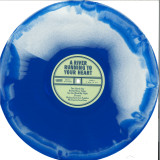
»This River Only Brings Poison« was released in 2002 as the sixth full-length album of Chris Hooson’s Dakota Suite project. This first-ever vinyl edition of the record includes four bonus pieces and makes it possible for fans to re-evaluate one of the most crucial Dakota Suite albums in the project’s vast discography while also providing new listeners with an entry point into its intricate musical cosmos. With contributions by artists as diverse as steel guitarist Bruce Kaphan and drummer Tim Mooney from American Music Club, Derald Daugherty, and Laura and Chris Donohue as well as long-time collaborators such as David Buxton, Colin Dunkley or Ed Collins, »This River Only Brings Poison« turned out as a sonically rich and stylistically versatile as it is emotionally multi-layered.
»Writing music for me has always been a cathartic exercise,« explains Hooson. While the instrumental pieces generally serve to express a raw sense of his internal struggles, his vocal-led songs communicate them more directly. »Those are the words I cannot say openly. It’s not that I cannot voice them in a conversation, it’s just that they only seem half-formed and not ›true‹ unless they are located within a song,« he says. What makes Dakota Suite unique is that throughout the project’s history, the music and lyrics have always had a single addressee: Hooson’s wife Johanna, whose photographs were used for the album artwork and who is featured on clarinet on »sand fools the shoreline.«
»The title of the record was something that I had said when Johanna and I first met to make her see that the journey she was considering taking would be full of love, but also come at a cost,« explains Hooson. »The songs were written at a time when I was really struggling to think I could be the person that she deserved.« In the end however, »This River Only Brings Poison« marked a turning point in Hooson’s oeuvre after highly productive time with Dakota Suite: it would take another five years until he returned with a new album. »The reason for that was that I needed to accept that she had made her choice to be with me and that was a big thing for me to get my head around,« he says.
Hooson’s highly personal approach to writing songs also has an impact on the ways in which he works with his collaborators when recording them. »The people with whom I play really need to understand how I perceive the world to be able to play what I need,« he says. »My instructions would always be things like, ›This is what the song means to me, this is what I am trying to communicate to Johanna when she hears it, so your cello, for example, needs to sound like you have noticed that the cloud is covering the sun, and the weight of the air on your skin is heavier and it has unsettled you.‹«
For this particular record, he reached out to Mooney and Kaphan as an admirer of their group American Music Club. Expecting to be rejected, he instead found himself on a flight to San Francisco together with multi-instrumentalist Buxton shortly thereafter, about to make what he today calls one of his most cherished recording experiences. After the four musicians finished the basic tracks, overdubs were added in Hooson and Buxton’s respective houses as well as Daugherty’s home studio while Hooson was visiting his old friend in Nashville.
Hooson emphasises that revisiting his older releases can be complicated. »I feel intense feelings, as every record is a diary of who I was in that period and what I was feeling. That is why having to play the songs live is always like having PTSD: I need to re-experience the event that caused me to write the song, and I do not enjoy that.« He remains, however, proud of »This River Only Brings Poison,« pointing especially to the opener »the lepers companion« as what might perhaps be his favourite song of his. »But overall I just hope that Johanna feels it spoke to her,« he says, adding that the two do not discuss his records. »For me it's enough that she is listening to the things I mean to communicate to her.«
After a decade-long hiatus, Spanish 8-piece ensemble Pyramid Blue makes a triumphant comeback with two captivating tracks.
Led by producer and composer Oscar Martos, who boasts successful collaborations with Tito Ramirez, Pyramid Blue is set to stretch the boundaries of contemporary world music with their signature sound.
'Lince Rojo,' the enchanting A-side, channels the spirit of the red lynx with its blend of Afrofunk and Ethio Jazz. On the B-side, 'Doctor One' delves into uncharted musical territories infused with a hip-hop edge creating a seamless fusion of past and present.
Repress!
1981 SYNTH CLASSIC BY JAPANESE KEYBOARD WIZARD AND YMO PROGRAMMER HIDEKI MATSUTAKE REISSUED OUTSIDE OF JAPAN FOR THE FIRST TIME IN 40 YEARS. REMASTERED FROM THE ORIGINAL TAPES WITH STRIKING ORIGINAL ARTWORK BY LEGENDARY ILLUSTRATOR PATER SATO INCLUDING ITS STUNNING FULLY ILLUSTRATED
8-PAGE BOOKLET
His name may not be instantly familiar, but Hideki Matsutake has had a huge influence over Electronic music. Starting his career as the assistant of Japanese Electronic Music master Isao Tomita in the early 70s, he went on to work with Ryuichi Sakamoto and then Yellow Magic Orchestra as their keyboard programmer and unofficial fourth member. In 1981 he started his own Logic System project recording "Venus" that year in Los Angeles with Don Grusin, Nathan East and Michael Boddicker, brilliantly mixing Synth Funk, Ambient and Boogie with a touch of Fusion Jazz predating Vaporwave by a mere 30 years. Wewantsounds is delighted to reissue this visionary album, which
comes remastered from the original tapes and features Pater Sato stunning artwork including the rare beautiful 8-page insert with an exclusive interview of Hideki Matsutake by Hashim Kotaro Bharoocha.
The early 80s were prolific for Hideki Matsutake. As the go-to keyboard programmer for the tokyo music scene, he worked on Akiko Yano's "Gohan Ga Dekitayo", YMO's "BGM", Ryuichi Sakamoto's "B-2 Unit", Mkwaju Ensemble's "Mkwaju" and found time to record two Logic System albums in 1981. While the first album, "Logic" had a harder techno feel, the second one "Venus" was different affair. Recorded in Los Angeles at the new state of the art Yamaha Studio, it was loosely themed on the Greek goddess Venus and had a funkier more organic sound. For the album Matsutake had asked a handful of American musicians to provide songs he would then add his synth magic touch to. Michael Boddicker, Don Grusin, Nathan East and Roger Powell duly complied and also played on the album.
The updated sound was achieved by switching from the Moog III to the E-mu modular System (which Matsutake brought over to LA) and other synths like the Prophet 5, the Roland MC-8 and TR 808 and the Yamaha GS-1, a forerunner of the DX7.
The result is an amazing futuristic mix of electronic music and early 80s funk, announcing many genres to come, from techno and house to French electro and Vaporwave. From the breezy ambient synth of "I Love You" to the city pop edge of "Be Yourself" (originally written by Nathan East for Debra Laws) and the vocoder-led Daft Punk-ish "Take A Chance", Venus is a fascinating album that both pushes the boundaries of electronic music and is yet strangely accessible and beautiful.
The other key elements of Venus is the artwork designed by Japanese legendary illustrator Pater Sato. Sato had started in Japan in the early 70s doing many album covers for Japanese artists including Tatsuro Yamashita's cult Spacy LP before moving to New York in 1979 to pursue a career in fashion and advertising. His airbrush style became hugely influential over the years and in 2018, Stella McCartney dedicated a whole Men’s collection based on his Venus. Star make up artist Pat McGrath also regularly posts his artwork to her 3 million fans on her instagram.
The original album came with a beautiful 8-panel insert illustrated by Sato which Wewantsounds has reproduced on this deluxe reissue also featuring remastered sound, OBI strip and a second insert featuring credits and line up plus liner notes by Hashim Bharoocha. The notes will feature an exclusive interview with Hideki Matsutake reminiscing about the making of this visionary album which Wewantsounds is delighted to reissue.
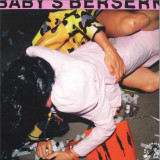
Toy Tonics going New Wave Disco with Baby’s Berserk’s self-titled debut album (to be released on 29 September).
There are many shades of funk in dance music. Berlin’s Toy Tonics label brings up artists that reflect many of these different aspects in dance music. Now the label comes up with a band! A band that is inspired by 1980ies New Wave as well as the Y2K Indie dance scene. Two guys and 2 girls from Amsterdam and Montreal called Baby’s Berserk.
Baby’s Berserk is about taking the freedom to be who you want to be, about being comfortable. Having played in all-girl punk bands since the age of 14, the bands singer Lieselot is an expert on female empowerment. “Dress like a girl and act like a boy,” is a catchphrase she lives up to every day and it clearly is a message that resonates with the band’s wild fans.
In the great tradition of Roxy Music, Throbbing Gristle and Malcolm McLaren, Baby’s Berserk is not just about the edgy music, but also about a very strong own visual style. They readily blend their sounds with underground fashion. What you see is what you get and seeing Baby’s Berserk is feeling right at home. Lieselot is a visionary when it comes to stage presence. Have you always wanted to see an electronic band with a punk attitude perform wearing a mix of haute couture and Flintstone-style rags? Look no further, it’s Baby’s Berserk.
Following on the critically acclaimed singles ‘What I Mean’ (2020) and ‘Toxic Kisses’ (2022), Baby Berserk’s highly anticipated self-titled full-length is now finally about to see the light on Berlin’s Toy Tonics records. Sonically designed for gritty rock venues as well as up-to-date edgy dance clubs, Mano’s lush compositions smoothly intertwine with the highly associative lyrics written by Puggy and Lieselot. Poets and literary addicts may think they’ve just discovered the rock & roll equivalents of Sylvia Plath, Kurt Vonnegut and Allen Ginsberg. To tell you the truth: their wild guess is pretty accurate as the works by these greats lie scattered around the Baby’s Berserk studio for inspiration.
The band was born in a laboratory back in 2019. Tired of being in bands with unruly and unpredictable humans, Mano Hollestelle set out to create a group of high precision robots to create the post-punk sound he had in mind. His outdated technology of floppy disks and cassette tapes worked well to program the androids, until one day a 90s rave mixtape was mistakenly entered into his computer. House music is a feeling and the punk bots instantly got hooked on it upon hearing it for the first time. They could never be reset to factory settings again. Mano worked tirelessly with his androids, currently known by their humanoid names of Lieselot Elzinga, Puggy Beales and Eva Wijnbergen, to fulfil his evil plan to make the rockers dance and the dancers rock. Baby’s Berserk is the fiendish extension of this plot. Beware, the band’s bass driven grooves and computerized beats have been known to cast a spell upon all within earshot.
So what do the songs on ‘Baby’s Berserk’ tell you? That it’s totally fine to have lots of fun in life! To have a boyfriend as an accessory (‘Accessories’), to get inspired by Sponge Bob (‘Dancing with the Fish’) and to blend your spirits with mixers whenever the hell you feel like it (‘Rum ‘n’ Kola’).
Baby’s Berserk member Puggy Beales on ‘Limousine’: “Decant the wine from my tip jar to yours. Soon we'll be on easy street, chauffeured home from the rat race each evening. Is it everything you'd hoped it would be?”
Check not only the debut album but also the forthcoming Remix EP with remixes by Each Other, Niklas Wandt, Sam Ruffillo, Kris Baha and Nicolini.
- Trying To Catch A Fly
- La Grabuge (Pop Theme)
- Agent No. 1
- Opetanie Five
- Saved From Oblivion
- Tajemnica Enigmy
- W Instyucie
- W Pustiny I W Puszczy
- The Dziekanka Student's Hostel (Part Ii)
- Landscapes
- Losy (Mid-Beat Theme)
- Third Part Of The Night Czolownica
- Diabel
- La Grabuge 2 (Orch Pop Theme)
- Rosa Rosa (With Arp Life)
- Bossa Nova (Feat Ewa Wanat)
- The Dziekanka Student's Hostel (Part I)
- Lapanka
- La Grabuge 3 (Orchestral Theme)
- Losy 2 (Mid-Guitar Theme)
- Trying To Catch A Fly (Reprise)
- Wszystko Na Sprzedaz Taniec
Twenty-two rare and unreleased vintage tracks from the secret vaults of one of the most enigmatic composers in 60s/70s/80s European cinema. Originally recorded in the best studios in Poland, Italy and France for experimental film, political allegories, lost television shows, sound libraries and radio – these tracks have been hidden behind the Iron Curtain on lost master tapes and film reels until now! »Secret Enigma«, the first ever dedicated anthology of this great composer’s work, is now back in print.
Originally released exactly 30 years ag In artistic cinema Andrzej Korzyński’s unique experiments with jazz, pop, rock, orchestral and electronic music make his name synonymous with the most praised (Andrzej Wajda) and the most provocative (Andrzej Żuławski) Polish filmmakers (counting many more in between). As an early patron of the Polish New Wave and a key exponent of the development of conceptual Polish pop music his expansive portfolio has remained commercially unreleased and untravelled (like many of the original socialist era Polish made films) and has yet to find its deserved place next to the work of Ennio Morricone, François de Roubaix and John Barry. Now enhanced by a renewed interest in vintage art house film and a subculture of open minded music collectors many Easter European artists, such as Krzysztof Komeda (Poland), Zdeněk Liška (Czechoslovakia) and now Andrzej Korzynski,have finally begun to earn their place alongside their Central European peers.
For lovers of film music and experimental pop this debut anthology and appraisal of Andrzej Korzyński.
UK house icon Mr. G makes his FUSE debut alongside longtime friend and collaborator Duncan Forbes, with the two partnering for their excellent ‘Time To Dip’ EP.
An artist truly regarded as one of UK house music’s greats, Colin McBean, aka Mr. G, stands today as an individual at the pinnacle of the genre as his trademark sound and legendary live sets continue to tantalise crowds across the globe. A special guest at FUSE’s final show at London’s iconic Printworks in March, the event that went on to influence the EP’s curation, the UK mainstay heads to Enzo Siragusa’s globally renowned imprint for the very first time this September as he delivers his ‘Time To Dip’ EP alongside longstanding friend and regular collaborator, Duncan Forbes. Friends for many years, having known one another since Forbes’ Animated project, their collaborations on Phoenix G and 49North and recent LP have seen the duo uncover a selection of high- quality cuts from across the house spectrum - and here they showcase their innate chemistry across four tracks loaded with quality.
“Gotta say, this EP really is born outta standing on the stage before my set at FUSE at Printworks and listening to what was being played. When I got back I said to D that I wanted do something based around what I had heard, never really thinking Enzo or FUSE would get it, but how wrong we were. It’s another fab meeting of minds with D, which makes this joint EP so different yet special... I feel it covers many different bases and tempos, a real gem. Looking forward to see what folk make of it.” - Mr. G.
Title track ‘Time To Dip’ is classy house music that packs a punch typical of that trademark sound we’ve come to know and love. It’s heavy and tough yet stripped back and unquestionably dancefloor focused, all softened by hooky female vocals and hazy textures. Duncan’s ‘Sherbert Dip’ mix highlights the vocal and brings it to the fore as shuffling drums and sweeping melodies build around the elements. The flip welcomes ‘All Night’, a delightfully vibrant track pairing rich rhodes, swirling leads and sharp hats with an abundance of subtle jazzy textures, before Forbes’ ‘In The Zone’ remix delivers an immersive, heady and dubby late-night voyage for a mesmerising final ride.
A former pizza delivery driver and now self-taught full-time musician, CRi first caught the attention of tastemaker press with early single ‘Rush’ and his subsequent ‘Someone Else’ EP. Not long after, he joined the Anjunadeep roster in 2019 and gained attention from the label fanbase, and radio titans Pete Tong, Annie Mac and Jason Bentley with his ‘Initial EP’.
His debut album ‘Juvenile’ exceeded expectations, being nominated for a number of awards, including Best Electronic Album at the JUNO Awards, and three separate titles at the 2021 ADISQ Awards, including Electronic Album of the Year and ‘Revelation’ of the Year, which CRi won. Since the release of ‘Juvenile’, CRi has released three singles, an EP and remixes for Bob Moses and Lane 8; become one of the first electronic acts to headline Montréal Jazz Festival to an audience of 45,000; and performed around the world once more, writing as he went.
Since the slower days of the pandemic lockdown, and Quebec’s tentative reopening of nightlife and music venues, CRi’s life has become much more fast-paced once again; a transformation that has been infused into every beat of his new album ‘Miracles’. The vinyl release of ‘Miracles’ comprises 14 tracks, including two standout prior singles, ‘Something About’ and ‘Losing My Mind’ (feat. Jesse Mac Cormack), which, combined, have already accumulated 10 million streams between them.
The other twelve tracks on ‘Miracles’ (including 3 bonus vinyl-only recordings) showcase Christophe’s signature warming synths, in addition to an impressively wide range of sounds, from drum and bass, to indie, from electronic and chillout, making this work his most expansive to date. After the album’s release, CRi will be heading on a live tour of North America, stopping off in seven cities, including Los Angeles, Denver, Toronto and, of course, his hometown of Montréal, where he’ll be headlining at iconic venue MTelus, which regularly plays host to indie-electronic stars, including, recently, Metronomy, Jungle, Monolink, Max Cooper and Amtrac, and is a perfect spot to celebrate his rise in this scene, before he takes his live tour to Europe in early 2024. ‘Miracles’ is out 22nd September, 2023.
Punk pioneers Crass continue their vinyl reissue series, repressing their limited releases by adjacent artists through Crass Records, in association with One Little Independent. The series, including over twenty bands and solo artists recorded at the legendary Southern Studios and produced by Penny Rimbaud, continues with two more historic pieces from the Crass Records catalogue; ‘Farce’ by Rudimentary Peni and ‘Can’t Cheat Karma’ by Zounds.
Zounds are an English post-punk band from Reading, Berkshire, formed in 1977. Originally, they were part of the cassette culture movement, releasing material on the Fuck Off Records label, and were also involved in the squatting and free festival scene. The name of the band is derived from the old English ‘zounds’, a contraction of ‘God’s wounds’, referring to the crucifixion wounds of Jesus Christ, formerly used as a mildly blasphemous oath.
The band met up with fellow anarchists Crass when, legend has it, their van broke down on the road. They made their way to nearby Dial House, where Crass were based, who helped them with repairs. The two bands became friends, and although musically very divergent, they shared many common political views. Zounds shortly afterwards released their first EP, ‘Can't Cheat Karma’, on the Crass Records label in 1980. The EP featured possibly their most well-known track ‘Subvert’, a call to arms against the grind of daily life. The release of this EP and association with Crass led to an increase in the band's profile in the embryonic anarcho-punk scene, touring with both Crass and Poison Girls. They split in 1982 but reformed in 2007, and remain active today.
Penny continues; “Zounds could have made a fine pop group, but they were far too socially sassy to fall for that one. No, their commitment to radical political change, so abundantly clear in their lyrics, set them apart from the commercialism that had so blighted the likes of The Clash and other punkish pretenders. Having been drawn from the ranks of hippy bands like Here and Now, Zounds encouraged dissent and personal change, and, at their own cost, to pursue and promote them as ideologies. Can't cheat karma? No, nor ever beat it. Zounds were hip to this fine point. Want a better life?
Then make it for yourself. Ain't no one gonna help you out on that one. Find your own way, it's the only way there is.”
First released on 7” vinyl, limiting the sound, the new series has been remastered for 12” by Alex Gordon at Abbey Road Studios, allowing them to be heard as never before. This, plus enlarged replicas of the original covers, brings new gusto to their already radical sound.
Amy Dabbs might be one of the hardest working artists in the game right now. Making it in the current electronic music landscape is not an easy thing, which might be why this talented artist is so heavily invested in her musical output. With releases on Aus Music, Shall not Fade and her own Dabbs traxx, a monthly residency on Rinse FM and a tour schedule that seems to get busier by the minute, we’re happy to see her hard work is paying off. Add to that some support by artists such as Special Request, The Blessed Madonna, Jaguar and Cinthie and you know this Berlin-based artist is right where she belongs: in the spotlight.
With a love for all things high energy – including, but not limited to house music and breaks – Amy knows how to set fire to a dancefloor (or record for that matter). Her music has been described by Resident Advisor as “Elegant and soulful drum & bass, that’ll still catch the ears of house heads.” So here you go, house heads: Amy Dabbs on Heist. The ‘Only breaks can love your heart’ EP is packed with feelgood energy and comes with a Dam Swindle remix that has the duo laying down some pleasantly unexpected breakbeats on an altogether rush-inducing record.
Right from the start, you know you’ve got an anthem on your hands with ‘Everything alright’. The gorgeous vocals by Aika Mal give you that right amount of emotive, ravey energy and come wrapped in a package of solid breaks and mesmerizing chords. With a hint of acid and a couple of meticulously crafted breakdowns you’ll be singing along with this track before you know it.
The Dam Swindle remix drops the tempo a little bit, but with its 140 bpm, warm broken beat and UK bass, the duo delivers a curveball of a track with a lot of crossover appeal. They went for a more stripped back approach that combines introverted percussion with bouncy keys that complement the vocals perfectly for an altogether irresistible remix.
‘Crush’ is a signature Amy Dabbs tracks, with driving 909 percussion, female vocal chops, ethereal pads and classic strings. It’s a warmhearted affair laced with Amy’s feelgood DNA. On the flip you’ll find ‘Eleven eleven twenty two’; a classic deep house track with subtle hints of UKG in its sampling and bass. The pads and leads are moody and the skippy percussion gives this track the kind of energy you’d welcome when pulling an all-nighter.
Rounding off the EP, we’ve got the ep title track ‘Only breaks can love your heart’; another showcase of Amy’s knack to make house aficionados dance to drum and bass. There’s a certain contrast in pace – raging drums versus dreamy chords that makes you feel at ease listening to a fast-paced track like this. The vocals are equally hazy with a subtle 90’s and 00’s RnB feel. Bassface guaranteed on this one!
- A1: Makin' Moves
- A2: Bad Ones (Feat. Dinco D & Charlie Brown)
- A3: Outside The Box
- A4: Support Groups
- A5: The Fat Lacing
- A6: How I Feel (Feat. Makeba Mooncycle)
- B1: Drums And Bars (Feat. John Jigg$)
- B2: Funky All-Stars (Feat. Bobby J Fromrockaway)
- B3: Different Build
- B4: 23 Followers
- B5: The Crop Report
- B6: Three Sixty Five
The Good People, consisting of producer Saint and lyricist Emskee, hail from Brooklyn, New York. The dynamic duo brings a fresh take on the nostalgic elements of East Coast hip-hop. The Good People are coming off of two acclaimed albums, each showcasing their soulful instrumentals and flawless lyricism. In 2019, the duo dropped Good For Nuthin’ featuring Large Professor, Lilí Fame, Sadat X, Napoleon Da Legend, Cella Dwellas, G-Roc and Red Alert. They followed up with The Greater Good in 2021 featuring Lords of the Underground, Shabaam Sahdeeq, Craig G, Rasheed Chappell, DJ C-Reality, DJ Ace, Tone Spliff, Mikey D, Skanks the Rap Martyr, John Jigg$, DJ Eclipse, Rockwelz, Mouf and Nam Nitty. Now, The Good People bring you the new limited edition run of A Good Year. In 2022 they dropped a new single digitally every month which would become the tracklist for the new album. The new 12-track album features Dinco D, Charlie Brown, Makeba Mooncycle, John Jigg$ and Bobby J From Rockaway and is the perfect addition to their growing catalog
C-50 Cassette Tape. 100 Copies only.
dispari introduces you to Hanoi-based Vietnamese artist Trần Uy Đức. Carried by large curiosity, urgency and delight, their sonic expression can be grasped as a self-exploration which is touchingly intimate, fragile, rebellious and cociliating. In their own words:
„It's my desire to escape into this person I don't know.
Die, orphaned kite flutes.
Watch me escape the orphaned kite flutes.
If you beat it up many times.
Don’t, don't, he predict thunder.
Who asked me tonight to explain one, two, two miracles.
Same problem.
C-c-c-fuck
I'm singing for my body.“
Trần Uy Đức
Die Neuauflage von des "Rock Action" Albums von Mogwai, streng limitiert auf Transparent Red Vinyl.
Colour in colour vinyl, transparent and red with blue splatter. Limited to 200 copies. "I had just got off the road and went right into the studio out in the desert at Rancho de La Luna. I was living in the house just behind at the time making sessions super convenient. I was set to record with my band the Bros in a couple weeks but I decided to go into the Rancho early and get some sounds. Tony and I ended up recording a bunch of songs that I was writing on the fly. A week later the Bros showed up and we recorded another batch of songs with the band playing live in the front room. After we wrapped I combined both my solo session and the Bros session and released in as one record called Saved By Magic on my label Duna records. That was 2005. Now I'm rereleasing this record on HPS and I've decided to separate the two sessions into their original bodies of work. My solo session and the Bros session. I mostly did this because I feel the Bros deserve to have something of their own as they were a magical band. I also just thought it would be cool. I call both records Saved By Magic Again." New album cover by Maarten Donders. Remastered by John McBain !!
Louis' Yowie , laying down their first new music since the release of
"Synchromysticism".
This deluxe Gatefold Double Vinyl edition includes three sides of music, with side four silk-screened with exclusive new artwork by Gumballhead the Cat cartoonist Rob Syers and SKiN GRAFT Records' Mark Fischer. Resting inside the gatefold sit two uncut sheets of 18 collectible Lobby Cards. Each card casts a spotlight on one of the album's performers with a band photo and trivia on the flipside. The
entire package is topped off with a collectible "Footlong" OBI, featuring selling points and review snippets for retail display - and the final product is wrapped in a crystal clear resealable sleeve.
The Keplar label presents the next instalment in a series of reissues from the catalogue of Sasu Ripatti’s seminal Vladislav Delay project. Originally released on Mille Plateaux, the vinyl edition of »Entain« from 2000 omitted two shorter tracks and included all others in an abridged form. With this reissue, the full album as it was pressed on CD is finally made available on vinyl. Besides a new remaster by Kassian Troyer, it was also given new cover artwork by Marc Hohmann that picks up on that of the »Whistleblower« reissue, released in early 2023 by Keplar. This serial visual approach highlights the conceptual continuity between those masterful explorations of the interplay between dub techniques, noise, and repetition.
Ripatti himself had reworked material from 1999’s »Ele« album for the release of »Entain,« which means that it can be considered the debut album proper of his Vladislav Delay project. It saw the Finnish artist aim more vigorously for abstraction than in his earlier releases as Vladislav Delay for labels such as Chain Reaction, which were collected on the iconic »Multila« compilation in 2000; another milestone from his back catalogue that has been reissued by Keplar in recent times. To mark this special occasion, »Multila« will be repressed by Keplar with a new artwork that matches the new design of »Whisteblower« and »Entain«.
»Multila« and »Entain« correspond with each other conceptually as much as they seem to differ on a musical level. The material on »Multila« was clearly indebted to the Berlin dub techno sound, marked by its grainy and at times abrasive sonic aesthetics. From the very first moments of the 22-minute long opener »Kohde« however, it becomes clear that »Entain« takes things further away from the dancefloor, aiming less for physical impact than for intellectual stimulation. A sort of electronic minimal music, it was primarily interested in letting discrete elements freely come into play with one another.
Much like »Multila,« however, »Entain« highlighted the subtle differences embedded in what only feels like repetitive music. Of course the massive bassline and ghostly dub riddims that permeate »Notke« as well as the deconstructed beat at the core of »Ele« still hint at Ripatti’s roots in beat-driven music. However, they also make his artistic transformation audible by turning their sources of inspirations into something entirely unheard of. »Entain« took the dub techno formula further than any other record before it—onwards into the realms of pure abstraction.
«Opening Soon» is a culinary buddy movie with a background of gourmet grooves where body tricks at the turntables have been replaced by acrobatic pizza tricks. This album from Jean Tonique and Mi Man is a real tomato concentrate and ingredients cleverly dosed which abound in suave and feel good tracks. 11 tracks that we can imagine as the perfect soundtrack to accompany the dolce vita 2.0 of this great musical duo (between Mario Bros and Cheech & Chong).
A tasty and pop cuisine that gives pride of place to a nostalgia that gathers behind the tiled counter («No One Really Knows», «Memories») or on the dancefloor («Running After Time», «The Music»). We let ourselves slide and be lulled by the smoothness of the arrangements as silky as an «Extra Virgin Olive Oil».
Do The Right Thing, as they say, and it seems like those two found a way to celebrate a lifestyle full of friendly looks.
Tonique, who had already accustomed us to the spiciness of his sharp guitars continues to demonstrate a knowledge all in funk and finesse. He is accompanied by Man, who brings his sweetness and harmony. They combine their strength on this project initiated with the title «Day & Night» and its languorous disco tinged with rhodes and percussions with Salsoul accents.
If the tablecloths are white and red, we don't doubt that the inside of the delivery van is lined with silk and velvet of the most beautiful effect to "cruise" the night as in Brooklyn and East Harlem to the rhythm of «Never Get Old». Lightness and nonchalance for a songwriting full of coolness and analogical charisma boosted by a Moog which invokes the best of the 70/80's.
Iconic and timeless, with or without a disco ball, wouldn't the key word be Pizza-Yolo?
On Rock Island, their second LP, Palm produces evidence of a distinct musical language, developed over time, in isolation, and out of necessity. On the island, melodies are struck on what might be shells or spines. Rhythms are scratched out, swept over, scratched again. Individual instruments, and sometimes entire sections, skip and stutter. There is the sense of a music box with wonky tension or a warped transmission in which all the noise is taken for signal.
Like other groups so acclaimed for their compulsive live show, Palm has been burdened by the constant comparison between their recorded material and their touring set. On Rock Island, they render this tired discussion moot, using the album form to present that which could never be completely live, reserving for performance that which could never be completely reproduced.
Despite appearing behind the instruments typical of rock music, Palm trades in sounds of their own making. On these songs, one of the guitars and the drum kit are used as MIDI triggers, producing an index that can be combed through later and replaced with new information. The percussion is sometimes augmented so as to suggest a multiplication of limbs. The strings are manipulated to choke, crack, and hum like other instruments, or other bodies, might.
Working again with engineer Matt Labozza, the band spent the better part of a month in a rented farmhouse in Upstate New York. With the benefits of time and space, Palm recorded the various elements piecemeal, only rarely playing together in groups larger than two or three. While some members tracked, others holed up in the next room, experimenting with quantization, beat replacement, and other methods borrowed from electronic music. Even accounting for the many labors that brought them to be, these materials seem produced by an organic logic. Their complex friction forms a habit of thought, scores a network of grooves on the floor of the mind.
This is music with dimensionality. Sonic objects are deployed, developed, and dissected in various states of mutation. The listener flits about between the field and the lab. The tone is warm in a way only the sun could make, the pace as forceful and as variable as a gale. Whether one locates Rock Island in a sea or in a refinished attic (as in Greg Burak's album cover), whether one escapes to there or is banished, its psychic environs are charted clearly enough. Only at this remove from the mainland can we sense the conditions necessary for such a strange species of sound.
After more than a decade releasing quality music on prestigious labels worldwide, Italian artist Nico Lahs launches his new label, U FIT, with two new solo EPs. The first, Distant Shadows, is a 4-track EP that showcases all of Nico's skills and his ability to juggle the most diverse shades of deep house.
A package that collects proper club tracks, groovy stuff, emotional deep house, and raw and deep tunes. Simply what one would expect from Nico Lahs. Tip!
Black Truffle is pleased to announce its first release from celebrated London-based Canadian composer Cassandra Miller. Though her body of mature work stretches back almost twenty years, many listeners were introduced to Miller through the success of her astonishing 2015 Duet for Cello and Orchestra, which sets an imperturbable two-note cello part against a series of increasingly dense orchestrations of an Italian folk melody; in 2019, it was selected by The Guardian as one of the ‘best classical music works of the 21st century’. Traveller Song / Thanksong, the first release of her music on vinyl, presents a pair of compositions for voice and ensemble that exemplify Miller’s gently absurd, strikingly beautiful, and utterly unique work.
Like many of Miller’s compositions, these pieces originate in existing music. Traveller Song (2016/2018) begins from a 1950s song of an anonymous Sicilian cart driver recorded by Alan Lomax and Diego Carpitella, which Miller recorded herself singing along to, going on to then record herself singing to her own layered voices. Miller’s untutored voice is an unsteady, wavering wail that has, in her words, ‘more in common with a quasi-shamanistic keening than anything Sicilian’. Heard sometimes alone, sometimes layered, her pre-recorded voice is accompanied by a chamber sextet drawn from London’s Plus-Minus Ensemble. In the first section, Miller’s exposed warble is set to a spare piano accompaniment, somehow both faintly preposterous and magisterial. Following the voice note for note, the piano part often makes use of almost mechanical sequences of parallel chords, reminiscent both of Satie’s Rosicrucian period and the abrupt harmonic movements of a chord organ. The orchestration then opens up to guitar, clarinet, and sliding strings, a delicate environment for Miller’s voice, which, especially when it begins to be layered, generates a powerful sense of intimacy. In its concluding minutes, the folk roots of the original melody return in the form of a glorious full ensemble setting dominated by accordion, clarinet, and strummed guitar. Thanksong begins from recordings of Miller singing along to the third movement of Beethoven’s late quartet in A minor (Op. 132), the ‘holy song of thanks’ the composer wrote to express his gratitude for (temporarily) recovering from illness. Recording herself singing along repeatedly to each of the individual parts of the quartet, Miller created an aural score where each member of the string quartet listens to their own part on headphones, playing by ear. Performed on this recording by Montreal's Quatuor Bozzini, with whom Miller has a decades-long relationship, they are joined by the British soprano Juliet Fraser, who sings material from the Beethoven quartet ‘as slowly and quietly as possible’. The atmosphere of the opening of Beethoven’s Dankgesang, of hushed reawakening and thoughtful reflection, is sustained throughout the fourteen minutes of Miller’s piece, building at points almost to sentimentality before the five individual parts again fall back into a gentle burble of unsynchronised melodic gestures. Like Traveller Song, here the use of the voice is a long way from the mannered performance of much contemporary music, reaching for a human and bodily presence more connected to the reality of the everyday, albeit suffused with wonder. Presented in a stylish sleeve adorned with photography by Lasse Marhaug and liner notes by Cassandra Miller, this is a key release from a major contemporary composer whose work challenges and dazzles in equal measure. .
- Word Games (Live)
- Love The One You’re With (Live)
- Sugar Babe (Live)
- Do For The Other (Live)
- Jesus Gave Love Away For Free (Live)
- 49: Bye-Byes/For What It’s Worth (Live)
- You Don’t Have To Cry (Live)
- The Lee Shore (Live)
- Cherokee (Live)
- Black Queen (Live)
- Know You’ve Got To Run (Live)
- Band Introduction (Live)
- Ecology Song (Live)
- Bluebird Revisited (Live)
- Lean On Me (Live)
Founding member of Buffalo Springfield and folk-rock supergroup Crosby, Stills, Nash & Young, Stills' first solo album, Stephen Stills, earned a gold record, is the only album to feature both Jimi Hendrix and Eric Clapton, and climbed to #3 on the album charts. Stephen Stills’ single "Love the One You're With" became his biggest solo hit, peaking at number 14 on the Billboard Hot 100 and is the first track on this collection. 14 tracks from Stephen Still’s First US Tour, previously unissued and recorded Live at The Berkeley Community Theater in 1971, featuring David Crosby on two songs. In 1971 Stephen Stills embarked on a US tour, opening each show with an intimate acoustic first set, and closing each night with a riveting electric set featuring the Memphis Horns. These historic, previously unreleased recordings took place over two nights at the Berkeley Community Theater, with David Crosby joining him on vocals and guitar for "You Don’t Have To Cry" and "The Lee Shore." These recordings find Stills at peak performance in both vocal delivery and musicianship, effortlessly incorporating alternate instrumentation on his instantly recognizable tracks, including a seamless medley of “49 Bye Byes" and "For What It’s Worth” unexpectedly played on piano. Hand-picked by Stills from his personal archives, this album captures timeless and era defining performances. Fans who were lucky enough to catch his historic debut trek, dubbed “The Memphis Horns Tour,” were treated to the balladeer, the raving troubadour, the acoustic bluesman, the soul driver, and by far the most passionate music maker. Backed by a loyal cast of friends, including his usual steady rhythm section—drummer Dallas Taylor and bassist Calvin “Fuzzy” Samuels—along with keyboardist Paul Harris, guitarist Steve Fromholz, and percussionist Joe Lala, these Northern California shows were one of the most unique and intimate stops on the tour This album, rather than being an artifact from a bygone era, sparkles and stimulates. It cajoles you into thinking, feeling and—most importantly—moving. Stephen Stills Live At Berkeley 1971 is a cornucopia of priceless sound—and all of it bears the distinct and loving fingerprint of Stephen Stills.
- A1: Yantra
- B1: Tor 8
- B2: Temple
- C1: Black Jack
- C2: Astra
- D1: Gamma (Alternate Mix)
- E1: Sexuality (My Reality)
- E2: Space Cowboys I
- F1: Raum 422
- G1: Friedrichshain Funk
- G2: Solar
- I1: Hymn (In The Name Of Fantasy)
- I2: Gamma (The Other Side)
- J1: Don't Be Stupid Day (Extended Album Mix)
- K2: Waver
- L1: It's Time (To Move Your Body)
- M1: Shri Yantra
- M2: Make Me Scream
- N1: Liyah
- O1: Halide Part 1
- O2: Voices
- P1: Halide Part 2
- K1: Space Cowboys Ii
EACH COPY Personally SIGNED BY LEN FAKI
Len Faki has always been a defining character of the techno underground. His unique approach to DJing, the consistent work as a producer and the quality output of his label Figure has all shaped the current environment.
Starting out as a clubber in the 90's, his inspirations have always reached back to the first encounters with electronic music, when new worlds opened and everything seemed possible.
While these experiences have always influenced Faki's productions and used to be released under many different aliases back in the day, they have been waiting since to be made into a proper album under the Len Faki moniker.
After quickly climbing to the top of the international DJ circuit, busy touring schedules never quite allowed for it. Finally faced with the opportunity of a long overdue creative break, Faki decided tackle the life-time venture with the necessary dedication and focus.
Excited about the new project, he also took the time and energy needed to expand his production methods. Finding new techniques allowed him to truly bring all his different influences to the surface. The process was one of following his own heart, occasionally challenging and surprising himself. Naturally the result emerged as two parallel experiences, which are now presented across two discs. Both still carry all the signature features of Faki's style but with added layers of depth and detail. There's that special contrast of dark and heady grooves, paired with dreamy melodies that transport the listener to places beyond the mind. But we also see all strains of his previous work being incorporated, mixed and molded into something new altogether.
While the first disc focuses on the kind of techno, which Faki has been brought up by and given back to for so many years of his life, the second is more loose and experimental, with forays into house, ambient and broken beats - the sounds he has always kept very passionate about.
It creates two distinct experiences, showcasing the entire breadth of Faki's cosmos. Where some ideas stay straight and kick hard, like the neon bleep opener Tor 8 or joyfully booming Astra, others take the newfound freedom to inspire a wistful broken beat ballad such as Hymn (In the Name of Fantasy) or the soulfully subdued Drum & Bass closer Voices.
Many songs even exist as pairings, with their respective counterpart on the other disc. For example, the duo of Shri Yantra/Yantra, where similar soundscapes have been looked through different lenses, making for a more straight-laced or shuffled rhythm. Also noteworthy are Faki's appearance as a veritable house producer on Hymn (In the Name of Freedom) as well as the inclusion of two very personal pieces:
The Halide tracks were made in remembrance of Faki's late mother, who passed away during the final production stage of the EP. These delicate tracks capture the intense sadness Faki was feeling at the time and helped him to process his grief and eventually to finish off the album.
By doing so Faki has given us a complete artistic statement, one that proves him to be as curious and driven now as ever, taking his sound to all-new realms.
- 1: Hello
- 2: A Love From Outer Space
- 3: Crack Up
- 4: Timewind
- 5: What's All This Then?
- 6: Snow Joke
- 7: Off Into Space
- 8: And I Say
- 9: Yeti
- 10: Conundrum
- 11: Honeysuckleswallow
- 12: Long Body
- 13: In A Circle
- 14: Fast Ka
- 15: Miles Apart
- 16: Pop
- 17: Mars
- 18: Spook
- 19: Sugarwings
- 20: Back Home
- 21: Down
- 22: Supervixens
- 23: Insect Love
- 24: Sorry
- 25: Catch My Drift
- 26: Challenge
A.R. Kive collates the three most astonishing works from that most miraculous of duos - A.R. Kane - comprising the ‘Up Home’ EP from 1988 that signified the band’s dawning realisation of their own powers and possibilities, their legendary debut LP ‘sixty nine’ (1988) and its kaleidoscopic, prophetic double-LP follow up ‘i’ (1989).
In founder-member Rudy Tambala’s new remastering, the music on these pivotal transmissions from the birth of dream pop, have been reinvigorated and re-infused with a new power, a new depth and intimacy, a new height and immensity. Vivid, timeless and yet always timely whenever they’re recalled, these records still force any listener to realise that despite the habits of retrospective myth-making and the
safe neutering effects of ‘genre’, thirty years have in no way dimmed how resistant and dissident to critical habits of categorisation A.R. Kane always were. Never quite ‘avant-pop’ or ‘shoegaze’ or ‘post-rock’ or any of those sobriquets designed to file and categorise, A.R. Kive is a reminder that those genres had to be coined, had to be invented precisely to contain the astonishing sound of A.R. Kane, because
previous formulations couldn’t come close to their sui generis sound and suggestiveness. This is music that pointed towards futures which a whole generation of artists and sonic explorers would map out. Now beautifully repackaged, remastered and fleshed out with extensive sleeve notes and accompanying materials, ‘A.R. Kive’ reveals that 35 years on it’s still a struggle to defuse the revolutionary and inspirational possibility of A.R. Kane’s music.
A.R. Kane were formed in 1986 by Rudy Tambala and Alex Ayuli, two second-generation immigrants who grew up together in Stratford, East London. From the off the pair were outsiders in the culturally mixed (cockney/Irish/West Indian/Asian) milieu of the East End, with Alex and Rudy’s folks first generation immigrants from Nigeria and Malawi, respectively. The two of them quickly developed and fostered an innate and near-telepathic mutual understanding forged in musical, literary and artistic exploration. Like a lot of second-generation immigrants, they were ferocious autodidacts in all kinds of areas, especially around music and literature. Diving deep into the music of afro-futurist luminaries such as Sun Ra, Miles Davis, Lee Perry and
Hendrix, as well as devouring the explorations of lysergic noise and feedback from contemporaries like Sonic Youth and Butthole Surfers, they also thoroughly immersed themselves in the alternate literary realities of sci-fi and ancient history (the fascination with the arcane that gave the band their name), all to feed their voracious cultural thirsts and intellectual curiosity.
It was seeing the Cocteau Twins performing on Channel 4 show the Tube that spurred A.R. Kane into being - “They had no drummer. They used tapes and technology and Liz Fraser looked completely otherworldly with those big eyes. And the noise coming out of Robin’s guitar! That was the ‘Fuck! We could do that! We could express ourselves like that!’ moment”, recalls Tambala - and through a mix of
confidence, chutzpah, ad hoc almost-mythical live shows and sheer innocent will the duo debuted with the astonishing ‘When You’re Sad’ single for One Little Indian in 1986. Immediately dubbed a ‘black Jesus & Mary Chain’ by a press unsure of WHERE to put a black band clearly immersed in feedback and noise, what was immediately apparent for listeners was just how much more was going on here - a
tapping of dub’s stealth and guile, a resonant umbilicus back to fusion and jazz, the music less a conjuration of past highs than a re-summoning of lost spirits.
The run of singles and EPs that followed picked up increasingly rapt reviews in the press, but it was the ‘Up Home EP’ released in 1988 on their new home, Rough Trade that really suggested something immense was about to break. Simon Reynolds noted the EP was: Their most concentrated slab of iridescent awesomeness and a true pinnacle of an era that abounded with astounding landmarks of guitar-reinvention, A.R. Kane at their most elixir-like.
If anything, the remastered ‘Up Home’ that forms the first part of ‘A.R. Kive’ is even more dazzling, even more startling than it was when it first emerged, and listening now you again wonder not just about how many bands christened ‘shoegaze’ tried to emulate it, but how all of them fell so far short of its lambent, pellucid wonder. This remains intrinsically experimental music but with none of the frowning orthodoxy those words imply. A.R. Kane, thanks to that second generation auto-didacticism were always supremely aware about the interstices of music and magic, but at the same time gloriously free in the way they explored that connection within their own sound, fascinated always with the creation of ‘perfect mistakes’ and the possibilities inherent in informed play.
‘sixty nine’ the group’s debut LP that emerged in 1988 had
critics and listeners struggling to fit language around A.R. Kane’s sound. As a title it was telling - the year of ‘Bitches Brew’, the year of ‘In A Silent Way’, the erotic möbius between two lovers - and as originally coined by the band themselves, ‘dream pop’ (before it became a free-floating signifier of vague import) was entirely apposite for the music A.R. Kane were making. Crafted in a dark small basement studio in which Tambala recalls the duo had “complete freedom - We wanted to go as far out as we could, and in doing so we discovered the point where it stops being music”. There was an irresistibly dreamy, somnambulant, sensual and almost surreal flow to ‘sixty nine’s sound, but also real darkness/dankness, the ruptures of the primordial and the reverberations of the subconscious, within the grooves of remarkable songs like ‘Dizzy’ and ‘Crazy Blue’. Alex’s plangent vocals floated and surged amidst exquisite peals of refracted feedback but crucially there was BASS here, lugubrious and funky and full of dread, sonic pleasure and sonic disturbance crushed together to make music with a center so deep it felt subcutaneous, music constructed from both the accidental and the deliberate, generous enough to dance with both serendipity and chaos. ‘sixty nine’ remains - especially in this remastered iteration - ravishing, revolutionary.
The final part of this ‘A.R. Kive’ contains 1989’s astonishing double-LP ‘i’ which followed up on ‘sixty nine’s promise and saw the duo fully unleash their experimental pop sensibilities over 26 tracks, plunging the A.R. Kane sound into a dazzlingly kaleidoscopic vision of pop experiment and play. Suffused with new digital technologies and combining searingly sweet and danceable pop with perhaps the duo’s strangest and boundary-pushing compositions, the album did exactly what a great double-set should do - indulge the artists sprawling pursuit of their own imaginations but always with a concision and an ear for those moments where pop both transcends and toys with the listeners expectations. Jason Ankeny has noted that “In retrospect, ‘i’ now seems like a crystal ball prophesying virtually every major musical development of the 1990s; from the shimmering techno of ‘A Love from Outer Space’ to the liquid dub of ‘What’s All This Then?’, from the alien drone-pop of ‘Conundrum’ to the sinister shoegazer miasma of ‘Supervixens’ — it’s all here, an underground road map for countless bands to follow.” Perhaps the most overwhelmingly all-encompassing transmission from A.R. Kane, ‘i’ bookended a three year period in which the duo had made some of the most prophetic and revelatory music of the entire decade.
After ‘i’ the duo’s output became more sporadic with Tambala and Ayuli moving in different directions both geographically and musically, with only 1994’s ‘New Clear Child’ a crystalline re-fraction of future and past echoes of jazz, folk and soul, before the duo went their separate ways. Since then, A.R. Kane’s music has endured, not thanks to the usual sepia’d false memories that seem to maintain interest in so much of the musical past, but because those who hear A.R. Kane music and are changed irrevocably, have to share that universe which A.R. Kane opened up, with anyone else who will listen. Far more than other lauded documents of the late 80s it still sounds astonishingly fresh, astonishingly livid and vivid and necessary and NOW.
Producer Scrappy Jud Newcomb and Cleaves teamed up for the third time in early 2022 between Covid surges to record a new batch of songs, Slaid's first in five years.
Familiar themes of struggle and resilience will be a surprise to no one. As Scrappy puts it, "This album speaks to the hopeful, the hard working, the battered, confused, and the sad. But above all to the believers in the city of freedom that we heard in the stories of our youth and all those FM radio hits."
The first single, "Through the Dark," was co- written with Slaid's long- time collaborator and life- long friend, Rod Picott ("Broke Down," "Take Home Pay").
Slaid describes it simply as "a song about offering comfort in hard times."
Joseph Hudak of Rolling Stone calls Cleaves "a master storyteller, one influenced not by the shine of pop-culture but by the dirt of real life."
"More than 20 years into his career, Slaid Cleaves just keeps getting better . . .
There are few contemporaries that compare. He's become a master craftsman on the order of Guy Clark and John Prine." - Austin Chronicle
You can't get Deeper if you're standing still. That's intentional, says the Chicago quartet's Nic Gohl. "Does it feel good when you're listening to this song? Does your body want to move with it?" These are the questions he asked himself as he and bandmates Shiraz Bhatti, Drew McBride, and Kevin Fairbairn were writing and recording Careful!, their third record and Sub Pop debut. "I wanted these to be interesting songs, but in a way where a two-year-old would vibe out to it," Gohl adds.
"It's pop music, basically." That "basically" qualifier is working pretty hard, as fans of 2020's Auto-Pain might suppose. On Careful!, they're not reimagining their sound so much as testing its limits. If you want to, you can hear echoes of David Bowie's Low in the snapping rhythm and gray-sky synths of "Tele," but you can also hear a bit of Auto-Pain in the nailed-in, stippling lines being spit out by Bhatti's drum programming and McBride's synthesizer.
"Fame" seems to stumble together and nearly fall apart, the dialed-up noise making the beat feel maniacal and a little invincible, the whole thing a series of short, snipped, autonomous gestures that are by now Deeper's trademark. "Build a Bridge" pushes in the opposite direction, using a prickly guitar line to launch into big, smeary art-pop, its emotional palette clear, well-defined, and easy to latch onto.
On "Sub," Gohl sings above and below the melody like Ian McCulloch, bellowing and wondering and ruminating and rounding into swaggering confidence that the band rises to meet. It's festival headliner music that still feels like it was written in a garage. That fraternal interdependence is near the center of Deeper's music. The musical and lyrical devotion to mutuality makes this restlessly curious, stylistically broad album feels like the most coherent portrait of who Deeper is. Or, as McBride ultimately frames it, "Careful! is about looking out for one another."
You can't get Deeper if you're standing still. That's intentional, says the Chicago quartet's Nic Gohl. "Does it feel good when you're listening to this song? Does your body want to move with it?" These are the questions he asked himself as he and bandmates Shiraz Bhatti, Drew McBride, and Kevin Fairbairn were writing and recording Careful!, their third record and Sub Pop debut. "I wanted these to be interesting songs, but in a way where a two-year-old would vibe out to it," Gohl adds.
"It's pop music, basically." That "basically" qualifier is working pretty hard, as fans of 2020's Auto-Pain might suppose. On Careful!, they're not reimagining their sound so much as testing its limits. If you want to, you can hear echoes of David Bowie's Low in the snapping rhythm and gray-sky synths of "Tele," but you can also hear a bit of Auto-Pain in the nailed-in, stippling lines being spit out by Bhatti's drum programming and McBride's synthesizer.
"Fame" seems to stumble together and nearly fall apart, the dialed-up noise making the beat feel maniacal and a little invincible, the whole thing a series of short, snipped, autonomous gestures that are by now Deeper's trademark. "Build a Bridge" pushes in the opposite direction, using a prickly guitar line to launch into big, smeary art-pop, its emotional palette clear, well-defined, and easy to latch onto.
On "Sub," Gohl sings above and below the melody like Ian McCulloch, bellowing and wondering and ruminating and rounding into swaggering confidence that the band rises to meet. It's festival headliner music that still feels like it was written in a garage. That fraternal interdependence is near the center of Deeper's music. The musical and lyrical devotion to mutuality makes this restlessly curious, stylistically broad album feels like the most coherent portrait of who Deeper is. Or, as McBride ultimately frames it, "Careful! is about looking out for one another."
Minor Science—aka UK-born, Berlin-based musician Angus Finlayson—makes his Balmat debut with Absent Friends Vol. III, the third installment in a shape-shifting series across a variety of formats and platforms. And with it, he pushes forward his vision of ambient music as neither static vista or merely mood-setting atmosphere, but rather a dynamic matrix of textures, sensations, and even rhythms.
The first two Absent Friends—a 2014 set for Blowing Up the Workshop, and a 2017 cassette and web player for Whities (now AD93)—were hybrid affairs, part DJ mix and part collage, mostly featuring music made by other people. Then, in 2020-21, Finlayson developed the project into a live show of his own material. Armed with hundreds of bespoke stems created in his studio—idiosyncratic FX chains, feedback loops through cheap rack gear, heavily post-processed field recordings, found voices, etc.—he would improvise on four CDJs, mixer, FX, and live synths, extending techniques he learned as a club DJ into a live context, accompanied by visuals by Stockholm-based artist Paul Witherden.
Absent Friends Vol. III is an album of studio versions of the music developed for the live show. But in Minor Science’s world, even a category as simple as “studio versions” is slightly opaque. “Most of these tracks weren’t ‘composed’ in the studio,” Finlayson explains: “The sounds started out as stems and source material for the live show, and might not have been intended to go together—but then through performance, they settled into shapes that worked. I then recreated those performances in the studio.” That organic process of ideation and realization might help explain the unusual coherence of the album, in which sounds and textures flow seamlessly from one to the next, sometimes seeming to stand still, and sometimes looping back. There are virtually no melodies, few recognizable motifs or riffs, yet the eight-track album nevertheless moves with a distinctive logic and a determined sense of purpose, from the frozen-in-time shimmer of the opening “Introduction” through the early cuts’ studies of space and light; from the seemingly autobiographical “Summer Diary” through the rushing trance (yes, trance) arpeggios of “Contingency” and on to the dulcet denouement of the closing “Gather Your Party (Dispersed Mix).”
This release heralds the launch of a new 7” series from Mr Bongo. In partnership with London-based DJ and digger, Miche, the series will feature his latest discoveries, as well as choice cuts, taken from his 'With Love' compilations. For the inaugural offering, we take a trip to hazy San Francisco, California, in 1977. Smoke, Inc. were an emerging band in the Greater San Francisco Bay area and a regular fixture in the buzzing live music scene. They had a strong following and were in rotation in most of the Bay area clubs, as well as opening for numerous prestigious acts such as Sly & The Family Stone, Taj Mahal, The Pointer Sisters and Toots and The Maytals. Members of the group worked with Jimi Hendrix, Stevie Wonder, Frank Zappa, Martha Reeves & The Vandellas, and many others considered the cream of the crop of the music world.
Smoke, Inc. featured Roy Schmall on keyboards and vocals, Stan Terry on lead vocals and harmonica, Michael 'Ollie' Schotka, on bass and vocals, Keith Stafford on drums and vocals, and Archie Williams Jr on guitar. They went on to release one 12" EP and two 7" singles. One of those 7’s included 'Waitin' For Love’. It was first released in 1977 and came out on the band's own self-titled imprint. It has gone on to become their rarest and most sought-after recording, now fetching up to an astonishing £2,500 on Discogs. It is a breezy, feel-good, modern/crossover soul beauty, with an infectious sing-along chorus, floaty flute solo, and packed with pure, uplifting dancefloor energy. The B-side features a cover version of the Holland Dozier & Holland-penned classic 'It's the Same Old Song’, made famous by the Four Tops.
Miche enthuses, “I included this gem on my first ‘With Love’ compilation and knew that it deserved its own dedicated reissue complete with original artwork. I’m delighted to get the chance to make that happen for this incredible, soulful AOR glide from a band that is well due another round of appreciation. It’s very rare, and consequently very expensive, so here it is for you all to spin and add to your record collections.”
46 years since its original release, it is our privilege to help Roy and the gang’s light shine once again and let a whole new audience relish the beautiful sounds of 'Waitin' For Love'.
Boy Harsher, Portishead, Thom Yorke, Radiohead, Beak>, ERAAS, SUUNS. Over the past seven years, Public Memory's distinctive use of analog synthesizers, electronic beats mixed with organic percussion, lo-fi sound design, and gritty ambience has created a singularly eerie and shadowy world. The first seconds of Public Memory's new record, Elegiac Beat, thrust us immediately into that world. We are in media res, with a feeling of sudden movement from a sensible point A to B. Given some time however, we realize that there is something askew–a bit of brightness here, some shadows pushed aside, some jazz and funk amongst the dub and Krautrock. This is an unfamiliar, ambiguous mood that pushes Public Memory towards new ground. We still drift past the clouded lights and hollowed out buildings of previous albums, but with an occasional bounce in our step now, a bit of golden haze around the edges. First single "Savage Grin" cements this clearly. The track has a jazzy, trip-hop flavor, albeit filtered through Public Memory's narcotic, hazy lens. We could be in a hotel lounge in the alps somewhere on holiday, or out of time in a majestic, sparkling ballroom. But we still have the feeling of being haunted, or perhaps even hunted in some way. This feeling intensifies and comes to a head towards the ever-darkening end of the track, leading directly into "Afterimage", in which someone almost imperceptibly sings "I hear them coming" in a twisted, auto-tuned flail. Second single "7 Floor" begins with flanged drums and damaged synthesizer stabs, evoking a kind of apparition floating towards us in the mist. As the track moves on there is, similarly to "Savage Grin", a contrast in feeling between a cold exterior roaming and an interior, warmer, human place. This time however, we move from the colder to the warmer as the synths from the track's beginning make way for a Rhodes-style organ and backing string synth, infusing an unexpected sense of peace. But like "Savage Grin", the track moves to its end through an in-between place beyond the haze. Faded and distant synthesizers meld with voices–human, or perhaps otherwise–that beckon us, or perhaps warn us. We can't be sure which. Third single "Far End Of The Courtyard" brings us closest to classic Public Memory territory with hip-hop beats, chopped and screwed samples, lo-fi ambience, and ghostly electric pianos complementing the vocals. There is darkness, perhaps more here than in the previous two singles, but with a crucial moment of uplifting lightness so subtle it may be missed upon first listen. As an inverse to both "Savage Grin" and "7 Floor" we end with brightness, the jazzier side of the record pushed to the forefront as the track fades away on that golden haze. In the end though, the haze may be just that: a vapor, a mist, a slight dusting of some other world on top of the degraded one Public Memory so effectively portrays. Elegiac Beat is between two places, and as it straddles the line between the two, we are uncertain if the light it brings shines directly from the sun, or if it is dimly reflected through that majestic ballroom world. For fans of 1990s Bristol trip hop, coldwave, and Thom Yorke's The Eraser
In 1972, a foursome of design students set out to make a record. This was, in many ways, a strictly creative endeavor. The quartet — composed of Dave Pescod, Alan Lewis, Phil Rawle, and Ted Rockley — were all trained, not as musicians, but as creatives. Art school heavyweights, the four were well-versed in the methodology of intentional experimentation, in the delicate balance of pushing the limits without completely unmooring oneself from a guiding creative intention. Emboldened by a high-brow familiarity with thoughtful experimentation and all the non-conviction of non-musicians, Bowes Road Band’s stint in the world of popular music yielded a record that is as much mind-melting as it is a direct product of its time. Their sprawling LP “Back in the HCA” embodies the exigence “art for art’s sake,” but it is for art’s sake that this record, however off the deep end it seems to travel (hear: “Doctor, Doctor”), remains a unified, and stunning, body of work. The LP’s do-ityourself garage rock noisemaking meets highfalutin creative processes. “Back in the HCA” is warbling psychedelic freakout (“Two Fingers,” “Doctor, Doctor”), Donovan-esque English countryside folk stylings (“Inside My Head,” “Goodbye to Rosie”), and avant-garde jazz improvisions (“Grass is Grass,” “Tomorrow’s Truth”) in one luminous release.
Originally an 9-track LP, Jakarta, Uno Loop, and Bowes Road Band decided to mine the six most cohesive tracks for the reissue, though the extras may be released somewhere down the line. Cohesion efforts aside, “Back in the HCA” stands alone in its singular conception of a genre-bending continuum — it evades definition. That said, the LP can easily be situated in the sonic environment in which it was conceived. By the end of the 60s, England was crawling with blues-based rock outfits that were starting to venture into prog rock territory. You can hear this popular dint cast over the folkier side of the LP. But Bowes Road Band was armed with their non-musicianship: they existed completely liberated from the motivating yet ultimately paralyzing lust for stardom. Enjoying this liberation, Bowes Road Band was utterly free to make noise. This freedom meant drawn out sax interludes amidst sweetly folk stylings (“Grass is Grass”) and Shaggs-like fuzzed-out freakouts that spiral into a void (Doctor, Doctor). This freedom also meant straight-forward tuneful cuts like “Goodbye Rosie” that conspicuously introduce heavily distorted auto-organ accompaniment mid-track amidst poignant lyricism. Bowes Road Band crafts a unified sound and then cracks it open.
With a completely off-the-radar status, Bowes Road Band could only press 50 copies of the record — 10 for each of them and 10 for the school. The band’s lifespan was to end there, or so they thought. “Back in the HCA” was the accidental fruit of a Berlin flea market treasure hunt by Jannis Stürtz, DJ and co-founder of Habibi Funk and Jakarta Records. After finding and sharing the LP with a few colleagues, Stürtz managed to get in touch with the band, get ahold of the master tapes collecting dust in Ted Rockley’s attic, and start the reissuing process. The record is still adorned with its original cover art designed by Alan Pescod, both reminiscent of bygone school days and the Zoom calls of yesterday — in short, reunion. Its re-discovery was happenstance and ought to be listened to as such. That is, “Back in the HCA” was not made to be listened to on a broad scale, or, at least, was not made with this goal in mind; it is neither in its time nor of its time. Of course, the group explicitly cites the folk tunes of the English countryside, the distorted rock groups that reigned during the record’s conception, and the fringes of psychedelic music that only the uber-underground might recognize (e.g., “Dreaming of Alice”). Yet still with these obvious influences, “Back in the HCA” always existed beyond the domain of both traditional musicianship and conventional commodification. Bowes Road Band’s DIY musicality beams through in technicolor across “Back in the HCA.” The vinyl includes an 8-page booklet detailing the albums creation and interviews with the band.
Lead single “Grass is Grass,” out July 14 along with album pre-order, encapsulates the record’s range: the track unfurls into a sprawling sax-driven trip following a sundrenched, Donovan-esque intro w/ lyrics “naively about parks and gardens, not marijuana!” The keyed-down folk cut “Goodbye to Rosie” is single 2 and elevates stripped-down acoustics with golden tinges, out August 4th. Focus track “Tomorrow’s Truth” constructs the fuzzed-out underbelly of acid folk. Listen for echoes of late Beatles, Mark Fry, and Donovan (if they were armed by an unshakabele willful naiveté). Like Sgt. Pepper’s on a shoestring budget—take a trip to the underground with LP “Back in the HCA,” available everywhere physically and digitally on September 1st via Jakarta Records and Uno Loop.
Besides online promotion from label profiles, the album will be further promoted by external agencies within the UK and US.
- 1: Dignity
- 1: 2When Will You (Make My Telephone Ring)
- 1: 3Chocolate Girl
- 1: 4Real Gone Kid
- 1: 5Wages Day
- 1: 6Fergus Sings The Blues
- 1: 7Queen Of The New Year
- 1: 8Love And Regret
- 1: 9I'll Never Fall In Love Again
- 1: 0Your Swaying Arms
- 1: Twist And Shout
- 1: 2Closing Time
- 2: 1Cover From The Sky
- 2: Your Town
- 2: 3Will We Be Lovers
- 2: 4Only Tender Love
- 2: 5Hang Your Head
- 2: 6I Was Right And You Were Wrong
- 2: 7Everytime You Sleep
- 2: 8Bigger Than Dynamite
- 2: 9The Hipsters
- 2: 10A New House
- 2: 11The Believers
- 2: 1City Of Love
"All The Old 45s - The Very Best of Deacon Blue" coincides with the band"s UK and Ireland tour of the same name, and charts their multi-million selling history - from bringing "Chocolate Girl" and "Dignity" to life in the corner of a Glasgow basement, to skyscraping, stadium-filling hits like "Wages Day" and "Real Gone Kid", via their swoon-inducing tribute to Bacharach and David ("I"ll Never Fall In Love Again"), their collective favourite single ("Your Swaying Arms"), and one of the most significant songs in the Deacon Blue canon, which followed a split in 1994 and the loss of two original members: 2012"s comeback single "The Hipsters" heralded a new lease of life for the group, and jump-started a second act that"s seen them more fired up, and prolific, than ever.
Following up on the incredible success of El Michels & Black Thought's Glorious Game album the duo treat us to another 7" with two of the standouts from the album. The A Side "Hollow Way" is a testament to the chemistry between Leon & Thought. EMA uses his signature sound with a new approach pulling records from his collection and sampling them. The result is a gritty lofi sonic backdrop that Black Thought flexes his lyrical brilliance on weaving a tune about guns and gun violence. The beat change at the end drives the point home, leaving any samples behind and lets the band remind people why they are one of the most in demand acts out there today. The B side "I'm Still Somehow" is a deeply introspective tune that Thought rhymes about vulnerability and overcoming challenges with heavy lines like "a happy black boy is like an alien" and "one crown, who was run down, somehow still standing tall". Michels again takes his ear and sensibility to the sampler, chopping up an old 45 that makes the perfect backdrop for this powerful and timeless song.
*BLUE VINYL REPRESS* Started during lockdown by three friends from Leeds, UK who wanted to make some crossover thrash, having been fans of the music for years, Pest Control is the classic story of DIY music straight from a time of crisis. Jack (from Death Metal bruisers Mortuary Spawn) joined soon after the release of the Demo in 2020 and the line up was complete with Pest Control’s first show commencing in their home town the week lockdown ended. Influenced by classic thrash giants such as Metallica, Testament etc. but with a healthy spoonful of crossover like Crumbsuckers, Ludichrist and Municipal Waste, the members grew up with one foot in the Leeds metal and hardcore scenes, taking the best from both worlds. Topping it all off, Leah's powerful vocal reminds one of the great Dawn Crosby from Detente. For the recording of the LP they were joined by Luke on second guitar and now have a permanent second guitarist in the shape of Joe Williams (Big Cheese, Fate) and will be seen touring Europe with the almighty Foreseen, having already played across the UK with Municipal Waste, Eternal Champion and as well as appearances at Outbreak and Wrongside Fests. With this LP the band have truly shown their technical chops from the fast and furious title track to the almost operatic thrash style of The Great Deceiver. There is a fresh range of ideas and most importantly catchy songs for the Crossover Thrash fan to sink their teeth into. Mastered by Arthur Rizk, who knows a thing or two about thrash metal excellence having worked with Power Trip and Fugitive, expect to have your brain well and truly FUMIGATED.
- A1: We Crossed The Atlantic
- A2: The Love You Bring
- A3: When I Was Howard Hughes
- A4: Failed Adventure
- B1: Stars (Twilight Mix)
- B2: Grand Central
- B3: International Exiles
- B4: Merry-Go-Round
- B5: Radios Appear
- C1: City Terminus
- C2: Min Min Light
- C3: Oregon Snow
- C4: Cherry Lake
- C5: Blackout
- D1: Please Don’t Say Goodbye
- D2: Museum Station
- D3: Blue Train
- D4: You Were There
- D5: Something Better Beginning
Selected Songs 1997-2003 compiles some of the finest moments in the recording history of Hydroplane, the Melbourne-based indie-pop three-piece that operated alongside The Cat’s Miaow through the second half of the nineties. It’s the third release in what feels, now, like a loosely planned series by World Of Echo, documenting the music made by this group of friends in Melbourne sharehouses (The Cat’s Miaow’s Songs ’94-’98, 2022), or in the case of The Shapiros (Gone By Fall, 2023), while traversing the International Pop Underground.
Hydroplane would be familiar to anyone already following these breadcrumb trails – Andrew Withycombe, Bart Cummings and Kerrie Bolton were the group’s core, all members of The Cat’s Miaow. With Cat’s Miaow drummer Cameron Smith itinerant, having moved to London, the trio used this opportunity to expand their music. It’s a subtle, but important shift. If The Cat’s Miaow was about the perfect, minimalist, two-minute pop song, Hydroplane’s music was far more open-ended, embracing the loops and drones, sampled house-y shuffle beats, the burbling of a Roland Jupiter-4 synth, all of which the trio joined, effortlessly, to their endless capacity for moving, elegant melodicism.
They may have only planned to release one seven-inch single, but the sound Hydroplane created was so bewitching, so compelling, that the project’s lifespan ran for around half a decade, and they ended up releasing three albums, including a self-titled debut recently reissued by Efficient Space, and seven singles. There are all kinds of compelling things happening in the music compiled here – the hazy repetition of the gentler side of Krautrock is in here, somewhere, which also suggests Stereolab at their most intimate and disarmed; the gently drifting guitars, gauzy and oneiric, set the songs adrift and floating, each one lost in its own imagined, distracted world. Songs like “The Love You Bring” set indistinct tonal floats across dance rhythms, in a way not quite heard since My Bloody Valentine’s “Instrumental” – but with the added gift of Bolton’s gorgeous voice.
This loose coalition with dance music, and the quiet experimentalism at the heart of Hydroplane, also gestures towards peers like Hood, Acetate Zero and Other People’s Children, and releases on renegade labels like Wurlitzer Jukebox and Enraptured. Like those groups and labels, The Cat’s Miaow were reconciling independent pop music’s past – sweet melody and melancholy, chiming and droning guitars – with the futures promised by DIY electronics and nascent digitalia, the interface of indie and IDM that led to some of the underground’s most blissful, texturally swoonsome music. All that is here, but also, the poise of the melodies is pure Cat’s Miaow, though, with Bolton’s voice sailing, pacifically, over some of the most pared-down, gorgeous music made during their decade.
It was a time, too, when such music could make waves – “We Crossed The Atlantic”, one of their early singles, was picked up by John Peel, who played it repeatedly on his legendary radio show, the song reaching #13 on his 1997 Festive 50. That the song itself was a cover of a tune by 1960s Australian beatnik-pop-poet Pip Proud felt even more perfect – a group of outsiders paying tribute to another outsider, played on the radio one of the few broadcasters brave and human enough to take a chance on this music. But it was a time where everything was up for grabs, and genres were flowing into each other: folk songs went drone; indie re-discovered noise; ambient pop floated, again, out onto the dancefloor. And while they may have been sequestered away in Melbourne, Australia, Hydroplane felt core to that scene, a quietly driving force.
Compiling material from across their brief but mercurial career, this double album perfectly captures the magic and mystery of Hydroplane’s dreamlike, perfect pop songs.
Monsieur Dimitri from Paris works his magic on Casbah 73's organic disco grooves with a remix treatment that surpasses all expectations.
'To Be Free' and 'Doing Our Own Thing' had a fantastic response when released on 12", at the end of 2019. It received wide support from people in the know like Red Greg, Danny Krivit, Folamour, Soul Clap, Kenny Dope and many others. The first pressing quickly sold out and the tracks were sounding strong on discerning dancefloors until, well, "The Thing" hit and everything stopped.
Despite this, the record has continued to grow by word of mouth, and so we thought it would be wonderful to have a 7" version with an edit or even a remix of the jazzy funky disco banger 'Doing Our Own Thing'. No one better than Dimitri from Paris for the job, one of the DJs who happened to tell us he loved the track. His two-part edit of 'Doing Our Own Thing' is a bomb that will make people dance for years to come.
- 1: Spectacular
- 2: Best Believe
- 3: Vibe Check (Ft. Cadence Weapon)
- 4: Baby Boy (Ft. Paul Wall)
- 5: Loosen Up (Ft. B.k. Habermehl)
- 6: Alexis (Ft. Harriet Brown)
- 7: We Still Here (Ft. Harriet Brown)
- 8: Opportunist Convention
- 9: Kickin’ In
- 10: Don’t Tap In / Contusion (Feat. B L A C K I E)
- 11: Boss Up
- 12: Make A Baby
- 13: Jasper, Tx
With I Will Make a Baby in this Damn Economy, Fat Tony embodies the kind of quixotic figure he would rap about; a singular entity who’s motivated, confident, and hungry; a perpetual-motion-machine locked in a staring contest with his country. It’s the latest album in his catalog produced entirely by L.A-based producer Taydex since 2020’s Wake Up. Later that same year Fat Tony released Exotica, and ever since he’s demonstrated he is in his own lane as a professional rapper with the mind of a magician, as quick to conjure an image as pull it out from under you, deftly manoeuvring through so many details and references a listener feels as if they have witnessed the work of an illusionist. He paints these canvases inside of songs that rarely spill past three minutes; they’re pocket-sized diaries replete with acute observations, character studies, microdoses of storytelling, and single-minded ruminations on a topic that bud, blossom, and fade before too long. Fat Tony & Taydex’s I Will Make a Baby in this Damn Economy cements Tony’s status as someone whose albums are not so much lyrically-lyrical as they are picaresque.
As with any Fat Tony project, the bars are tight as ever, but are so fluid for the 34-year-old it’s almost easy to take for granted the details, warmth, and humanity inside his free-associative tales of day-one friends who’ve passed, edgelord grifters who want to spit game, and nights on ketamine. Taydex’s production sprints through disparate yet simpatico styles, dipping its toes into Pi’erre Bourne-esque bass (see lead single “Spectacular”), house (“Loosen Up”), and even hyperpop. Meditations on loss and grief are woven throughout, but Tony throws a few curveballs as well: Consider “Alexis,” which sweetly reflects on a long-term platonic friendship. Taydex finds a Teddy Riley-indebted New Jack Swing groove just deep enough for the feeling to land and underlines the song’s sincere candor. This is the appeal of Fat Tony writ-large: his boisterous voice and genial personality invite you to the party, then you stick around to hear what he’s saying, which is frequently more introspective and complex than one assumes.
Written and recorded in Taydex’s new studio in North Hollywood, Tony says, “We had much more freedom and flexibility in making this album and you can hear it. It felt like a family project.” If the album is comfortable and loose, it is also dense and substantial. The album’s final two tracks contextualize the immediacy of what came before it—the mezcal with ices drank, Paul Wall swangin’ through to drop knowledge, the Polaris Prize-winning rapper Cadence Weapon providing a vibe check. “Make a Baby” accounts for Tony who’s seen everything, and knows he’s met the one to be a father with, and yet chooses to take his time to get it done. Taydex’s beat recalls turn-of-the-century R&B and the millennial promise of an endless good time. Sombre closer “Jasper, TX” is Tony coming to grips with the story of James Byrd, Jr., a Black man from East Texas dragged to his death by three white supremacists in 1998. These songs are not only trademarks of Tony’s fastidious rapping—they are deeply personal examples of his approach to artistry and life itself, where every decision is made in the shadow of history.
It’s here the mission statement of I Will Make a Baby in this Damn Economy comes into focus—you get the sense he means it, he’s ready for it, he’ll fight for it. He’s waiting to take the world at its word.
The tone always makes the music. But only those who actually make the sound An ancient-house-avantgarde dream has always been there since the legendary -Warehouse- days of Ron Hardy, to bring more sounds and tones constantly to an independent, repetitive development. And thus beyond the limits of an executive creative artist on the otherwise purely commercial sense what we call in common -beyond imagination-. -Raw Footage-, the latest album concoction of Chicago house legend Ron Trent (Prescription) on his new imprint -Electric Blue- works in the best sense of Stanislav Lem heroes Trurl & Klapauciusals, cruising like those two metal brains frantically invented by the universe of 4/4-Sounds to get insane tracks out of the new material matter located there, and put them together to brand new ones. This trackwerk varies as well as of course between classical Chi-Town to the context of contemporary, epic house dubs and lives in a perfidious manner from the interaction of various computer
modules that constantly spits out new and exciting interactions. In the end, the software sings only as digital output of great analog sounds, which may well be understood as a mocking voice to the majority of contemporary Homeboy wackiness formats.-Unpredictable- and less -cryptic- might fit here as a keyword excellent, where you kick out of the rough house plant a significant entertainment value must, without the need to posess necessarily the same nerves of steel. Anyone who has ever really wondered what House sound could be appropriate for a journey through the vastness of the universe is, gets there now at this point completely to his fullest expense. Trent 2012 and its tracks on this album reflect a lot about the revolutionary founder of -Spirit of music- from the mid-80s, who is recorded then as now but with inadequate slogans such as -light years ahead of its time-. For as
Trents body of work -Raw Footage- is also particularly scary genius material, although still of totally solid stress field and background from the musical spectrum between the Windy City and the Motor City engine bridled her.-But heres to the Future- For Sir Trent more than twenty years after -Altered States- and the relevant follow-ups, thats not really a problem!
Der Ton Macht immer die Musik. Nur wer macht eigentlich den Ton Ein uralter-House-Avantgarde-Traum war und ist es seit den legendären
:Warehouse: Tagen eines Ron Hardy, Sounds und Töne immer ständig neu zur selbstständigen, repetitiven Entfaltung zu bringen und somit die kreativen Grenzen des exekutiven Künstlers über die sonst im rein kommerziellen Sinne gängige Vorstellungskraft hinaus zu sprengen.
:Raw Footage:, das neueste Album-Machwerk von Chicago House-Legende Ron Trent (Prescription) auf seinem neuen Imprint :Electric Blue: kommt im besten Sinne der Stanislav Lem Heroen Trurl & Klapauciusals, und cruiost wie jene beiden Metallgehirne wie wahnsinnig durch das All der 4/4-Sounds, um aus dem dort befindlichen Materiematerial neue, wahnsinnige Tracks zu erfinden und zusammenzustellen. Dieses Trackwerk variert denn auch wie selbstverständlich zwischen dem klassischen Chi-Town-Kontext bis zu kontemporären, epischen House-Dubs, und lebt auf perfide Art
und Weise aus der Interaktion verschiedenster Computermodule, die dabei ständig neue aufregende Interaktionen ausspuckt. Am Ende singt eine digitale Software nur noch als Output großer analoger Sounds, die durchaus als Spottgesang auf den Großteil eitgenössischer Homeboy-Frickelei Formate verstanden werden dürfen.:Unberechenbar: und weniger kryptisch mag hier als Schlagwort vortrefflich passen, wo man dem rohen Housewerk ganz erheblichen Unterhaltungswert abgewinnen muss, ohne das man dazu unbedingt gleich Nerven wie Drahtseile benötigt. Wer sich je
eigentlich gefragt hat , welcher House-Sound so für eine Reise durch die endlosen Weiten des Universums angemessen sein könnte, kommt an dieser Stelle jetzt völlig(st) auf seine Kosten. Trent 2012 und seine Tracks reflektieren mit diesem Album zwar viel von dem revolutionären Gründerspirit einer Musik aus der Mitte der 80er-Jahre, die damals wie heute dennoch nur unzureichend mit Slogans wie ihrer Zeit um Lichtjahre voraus zu erfassen ist. Denn wie Trents Gesamtwerk ist eben auch :Raw Footage: insbesondere furchteinflößend genialer Stoff, wenngleich auch immer noch vom ganz und gar soliden Spannungsfeld und Background des musikalischen Spektrums zwischen der Windy und der Motor City her aufgezäumt. :But here's to the future: - Für Trent auch mehr als zwanzig Jahre nach :Altered States: und den einschlägigen follow-ups nicht wirklich ein Problem!
Duca Bianco is back with one of its special various artists' releases, and a mighty fine one it is too. This one finds four guest producers all with their finest studio tools sharpened and ready for action. Two of the artists are well known but use new alias - one is Israeli synth and psyche wizards Red Axes who work their magic as Der Sexa on 'Gabi Plane' and another is Beauty & The Beat party man Cedric Woo as CW. He gets nice and twisted here while the other two cuts - one from Italo king Franz Scala who builds slow new wave funk, and one from Manchester's renowned edit kings Talking Drums who offer some lovely leftfield madness on 'DMNB', all make for crucial listening.
Katie Munshaw really needed to finish the fucking quilt, and find a way to
sew herself into it
The lead singer of Ontario four-piece Dizzy has been thinking a lot about the way
things look and the way you can find comfort in disappearing into it all. She
describes the album, a bright indie-pop beast continuing the legacy built from two
previous shimmering records, as a "patchwork quilt" with each song a square, or a
sliver, of her life. "None of them have all that much to do with each other and yet
they wouldn't exist without one another," she says.
It makes for a colourful record that's intrinsically Dizzy - one that swerves
comparison, instead reflecting the shapeshifting and imperfect nature of its
musicians. Avoiding the spotlight yet more confidently themselves than ever.
Munshaw is satisfied with where this record finds Dizzy. The band's first record,
she says, was "formative" to what kind of musician she became, even though "I
was young and had no business making a record. The Sun and Her Scorch was
our rebellious teenage phase where we thought we could do it all ourselves, this
new chapter is about throwing our hands up saying 'we don't have all the
answers. I'm open to having somebody help me. Help us.'"
Listeners will find that Dizzy have made what sounds like their most confident
work to date; embracing the best parts of what has made fans fall in love with
them in the past while confidently stepping into the future and trying new things;
ready to show the world exactly who they are as artists - mask or no mask.
Heavily supported across DSPs, with prime playlist placements across Spotify,
Apple Music, Amazon, YouTube, Deezer and Tidal.
Plays on BBC Radio 1, Radio 2, Radio X.
Coverage on The Independent, Clash, Line of Best Fit, DIY, Dork, Brooklyn Vegan,
Gigwise, She Makes Music, Scientists of Sound, Cool Music & Things, Mystic
Sons and many more.
If you've seen David Lynch's classic film Mulholland Dr, you might
recognize the title of Paerish's third full-length, You're In Both Dreams
(And You're Scared) - It's a line spoken by one of the two men having a
conversation in that movie's incongruous diner scene - Paerish vocalist/
guitarist Mathias Court was watching the film for maybe the tenth time
last year, and, given the insecurity of being a musician during the COVID
pandemic, that line stood out to him like never before
Given that Paerish was formed when Court was at film school with bassist Martin
Dupraz, it's little surprise that the band--now completed by guitarist Frederic Wah
and drummer Loic Fouquet--would use a cinematic reference for its title. The first
two records were peppered with them, and many of their songs started with Court
fiddling with his guitar while watching something in the hopes that he'd capture
the emotion of whatever was onscreen. This time around, the title is the only
thing directly inspired by the moving image. Whereas on 2016's Semi Finalists
and 2021's Fixed It All, Court would utilize other people's art to draw parallels to
how he was feeling, this time it was his own internal wranglings that influenced
his songwriting.
By December 2021, Court had demoed the album. A year later, Paerish flew to
Philadelphia to record with Will Yip. The band's familiarity with Yip lends a natural
confidence to this album that disproves the very insecurities that inspired it. It
turned into the album Paerish have always wanted to make.
"When I listen to these songs," says Court, "I almost don't realize this is our album.
I feel like we got even closer to our final form. This is the one we've been wanting
since we were kids. I'm so proud of it.
Limited new repress on blue vinyl. RIYL: Sharon Van Etten, Big Thief, Phoebe Bridgers, Angel Olsen, Neko Case, Bonnie “Prince” Billy, Bill Callahan, Steve Gunn, Kurt Vile, Cass McCombs, Jessica Pratt, Kevin Morby, Molly Burch Phosphorescent, Waxahatchee, boygenius. Recorded and mixed by Joshua Wells (Destroyer, Lightning Dust, ex-Black Mountain). Guest vocals from Bonnie “Prince” Billy on the “Don’t Slow Me Down” single. Guest pedal steel guitar from Paul Rigby (known mostly for his studio work with Neko Case) on 3 of the 10 tracks. Support thus far from FLOOD Mag, Stereogum, KEXP, KCRW, Popular TV (ex-Nylon writers), Pitchfork, Exclaim! & more. “Tonight” single synced for a Netflix series 13 Reasons Why in March 2017. Ashley Shadow winks at darkness, but she won’t lead you towards it. It’s easy to fall under the spell of Ashley’s haunting voice. The Vancouver, B.C. based songwriter forged her own identity as a songwriter with 2016’s eponymous self-titled debut. Her sophomore effort, Only the End, maintains the moody introspection that is ingrained in Pacific Northwest life, but now comes armed with a palpable hope complementing her signature melancholy. Ashley explains, “I wanted to make a more upbeat album, something you could play with some friends over. Some of the songs I wrote were initially bummers, but when we went to record them, we lightened them up.” Balancing a couple of jobs and navigating life and love in increasingly unstable times, the album was written over two years by Ashley at her apartment. Her confident vibrato above lightly, distorted guitars mirrors the album’s theme of resilience, if not triumph, over adversity. There is comfort in these warm songs that endorse the realism of contented acceptance, rather than the naïve search for non-existent utopias. While the songs were conceived in contemplative solitude, Ashley invited some very capable collaborators for their journey into the studio. Ashley’s first album saw her take center stage after more than a decade of gracing friends’ projects in a supporting role. The move to the front was a cautious one. “First record was, can I do a solo album? This time, I know what I’m doing. It’s way more clear.” "Don’t Slow Me Down" reunites Ashley with Bonnie “Prince” Billy for the first time on record when she sang vocals on Bonnie's Lie Down In Light album in 2018. The album also includes contributions from Paul Rigby (Neko Case), Colin Cowan (Elastic Stars), Joshua Wells (Black Mountain, Lightning Dust) and Ryan Beattie (Himalayan Bear). It’s clear to anyone listening. It’s Only the End. If only all endings were so glorious
Six Nine Records Ltd. UK proudly presents Angie Gooden’s first release on the label with the two stunning tunes “All Day Long” and the amazing T-Groove remix of “Feelin’ Kinda Funky”, both of them new, fresh and making their premiere on to wax! Both tracks have been produced by Christopher Vignoli (Zapp ChrisFunk) and just oozes with that French fingerspitzengefühl, nothing but exquisite sounds from the first to the last beat.
The song writers consists of Magoo and Yuki “T-Groove” Takahashi togheter with Angie herself and all this combined makes this one a winner for sure.
In summary - modern and funky boogie at its best, these two tracks will definitely make this summer even hotter!
Repress!
‘Make The Call’ comes with an extended version and remixes from the legendary Two Soul Fusion duo of Louie Vega and Josh Milan. These remixes bring something new and special to the track with each creating a subtly different mood for the dance floor, for the radio and for the house party.
MF Robots is a songwriting, production and performing duo created by former Brand New Heavies founder Jan Kincaid and BNH vocalist and multi-instrumentalist Dawn Joseph. The pair left the Heavies in 2014 to record their own compositions and have been wowing audiences and record buyers with their effortless blending of Soul, RnB, Funk, Disco and Jazz ever since.
Louie Vega is one half of the House music dons Masters at Work and Josh Milan is a Grammy nominated vocalist, musician and composer who also collaborate in Vega’s collective ‘Elements of Life’. With both at the forefront of production, composition and remixing for more than three decades, the House, Boogie and Instrumental versions they have produced for ‘Make the Call’ are off the scale here.
- Gumbo’! 4 Tha Folks, Hold On
- Wayans Bros
- Roscoe’!
- Fk U Mean/ Hold Me Dwn
- Bussin’ (Cold)
- Pink & Green, White & Gold
- Back’!
- Doin Tew Much. (In My Mama Name)
- 4: Sho’7
- Living Proof (Family)
- Scurrrrd
- Smile (Wit Yo Gold)
- Call Tha Bro (Tapped In)
- Bravo’!
- Voicemails Uptown
- Big Ole
- Lng Hair Dnt Care
- Play On’! Inshallah
Pink Siifu’s latest release, GUMBO!, is another sprawling Afrocentric vision from one of the boldest voices in contemporary rap. Following up on 2020’s NEGRO, the album’s songs are as rich and varied as its titular stew. Siifu’s boundless style makes for an unpredictable but rewarding ride across the album’s 18 tracks, as he explores the diverse sounds of his influences and breaks new ground with a unique class of co-stars.
Siifu, born Livingston Matthews and raised between Alabama and Cincinnati, has already notched a conspicuous list of collaborations in his burgeoning career, from legendary producer the Alchemist to Australian electronic group the Avalanches. Siifu also embodies various inspirations through a range of alter-egos, often producing under the moniker “iiye,” or as half of the duo B. Cool-Aid with Ahwlee, both of which appear on GUMBO!.
The variety of guest features and production on GUMBO! only elevates Siifu’s ability to push the boundaries of genre and song structure. “Voicemails Uptown” (produced by Soulection’s Monte Booker) is the second of two back-to-back posse cuts, sporting five plus vocalists each. “Lng hair dnt care,” the album’s first single, was produced by Ted Kamal, who first garnered attention for his outside-the-box edits of contemporary rap staples. And while several of the album’s tracks are well within his bag, the jazzy, drumless loop on “Fk U Mean/Hold Me Dwn” could’ve been a cut off of his collab album with Virginia rapper Fly Anakin, FlySiifu’s.
Though rife with standout tracks, GUMBO! is greater than the sum of its parts. Siifu’s ambitious range and impressive pool of features create an otherworldly listening experience. Overall, it reflects an intense desire for self-expression and creative growth, one which he shares with many of his influences. Like Outkast, Sun Ra, Baraka, or Bad Brains, his unique soundscapes re-imagine a genre without restrictions, breaking new ground in search of artistic and personal freedom.
- A1: Fk Pres Director’s Cut Feat. Jamie Principle – Baby Wants To Ride (Re-Directed)
- A2: Fk Pres Director's Cut Feat. Sybil - Let Yourself Go (A Director's Cut Master)
- B1: Fk Pres Director’s Cut Starring Inaya Day - Let's Stay Home (A Director's Cut Classic Club Mix)
- B2: Fk Pres Director’s Cut Feat. B. Slade – You Make Me Feel (Mighty Real) (Dj Meme's Mix Of Epic Proportions)
- C1: Lou Rawls - You’ll Never Find Another Love Like Mine (Kenny Summit, Frankie Knuckles & Eric Kupper Unreleased Anthem)
- C2: Soulful Session Starring Lynn Lockamy - Hostile Takeover (Director's Cut Remix)
- D1: Hardsoul Feat Ron Carroll - Back Together (Director's Cut Classic Club Mix)
- D2: Spencer Parker & Dan Beaumont - The Look (Director's Cut Signature Mix)
There are few people across the globe, who will have not been touched by the work of Frankie Knuckles. Forever regarded as ‘The Godfather of House’. A Grammy Award winner, Frankie had a street in Chicago named after him where the old Warehouse once stood to commemorate the first ever Frankie Knuckles Day on 25th August 2004. Five years ago, Frankie passed away in Chicago on 31st March 2014 leaving behind one of the greatest house music legacies spanning almost four decades.
Now he is commemorated once again by long time writing and production partner Eric Kupper who will release part II of the special commemorative album on vinyl around this date. Eric, himself a seasoned DJ producer and writer, working side by side with Frankie on many his seminal classics, as well as personally working on over 116 Billboard #1 Dance Records. Having both worked together for many years they established themselves at ‘Director’s Cut’ from 2011 and set about producing original releases and remixes based on the classic ‘Def Mix’ sound while sharing equal credits for their creations.
The album features some of Directors Cut’s best works with the Re-Directed version of the seminal classic ‘Baby Wants To Ride’ plus their re rubs of Inaya Day, Sybil, Hardsoul and Lou Rawls - You’ll Never Find Another Love Like Mine (Kenny Summit, Frankie Knuckles & Eric Kupper Unreleased Anthem).
This album is to be released in collaboration with The Frankie Knuckles Foundation who work to continue Frankie’s legacy whilst focusing on music in schools, LGBTQ youth homelessness, AIDS research / prevention & diabetes research / education.
Factory Benelux presents a limited (500 copies only) 180g black vinyl edition of Part-Primitiv, the fifth studio album from post-punk trailblazers Section 25, originally released in 2007.
Recorded after a hiatus lasting almost two decades, Part-Primitiv saw founder members Larry and Vin Cassidy joined by former Tunnelvision guitarist Ian Butterworth, as well as multi-instrumentalist Roger Wikeley. Combining raw postpunk power and retro-futurist electro, the album marked a convincing return to form and drew praise from reviewers.
"Haunting, melancholic beauty - part post-rock, part trance" (Plan B)
"A vibrant, fierce collection of songs played with all the intense, live-wire energy one could want. Well worth the wait" (All Music Guide)
"The music on Part-Primitiv is informed by all phases of the band's back-catalogue, incorporating their early post-punk impulse alongside their later disposition towards electronic music. She's So Pretty is one of the band's closest brushes with pop music, while Power Base is a surprisingly straight-forward venture into techno, with its rampaging drum machine" (Boomkat)
Two tracks, Dream and Better Make Your Mind Up, were written and sung by Jenny Cassidy before she lost her battle with cancer in 2004. Best known for her beguiling vocal on 1984 club hit Looking From A Hilltop, on subsequent SXXV projects Jenny would be replaced by her daughter Beth.
How can anyone do a new remix of Q-Projects definitive old skool jungle classic "Champion Sound"? Well, almost nobody could without retreading the past or losing the thread...But Hyper-On Experience isn't "nobody". Hyper-On Experience takes the original and makes something truly special, keeping the dark and nasty vibe, but bringing it up to date in a way that is both authentic and classic. Flipped with RayKeith remixing The Trip - The Erb in his unmistakeable junglist style, this is two legendary classics on one slim piece of wax....
Limited purple coloured vinyl. First time reissued, includes the original cover artwork. Out of print in any format for 30 years. Most of us likely missed MUDHONEY’s ‘Five Dollar Bob’s Mock Cooter Stew’ when it first cratered here on Earth in late 1993, but we can ALL learn from our previous mistakes RIGHT NOW!!! Out of print in any physical format for 30 years (!), here is their Reprise mini-LP for all to devour in real-time and roll in its naked glory. Initially recorded by the band as an offering for their fans to devour while they were between full-length albums, the majority of ‘Five Dollar’ was recorded in one short, inspired burst on August 1, 1993, between the hours of 9:30 and 10:15 PM (with friend and Fastback Kur(d)t Bloch egging them on from the production booth). They smashed this out in just 45 minutes. It might be the band at their most ‘Stooge-esque’ since there is no flowery imagery; nothing to misinterpret; just in-your-face blunt despair (in that department, Black Flag’s ‘Damaged’ LP comes to mind, especially in Mudhoney’s gleefully punishing highlight: ‘No Song III’). Within two seconds of any of these songs hitting your mind (maybe even within one second), you knew it could only be Mudhoney. You can instantly recognize it, because they truly own it/you/the universe. Track listing: 1 In The Blood 2 No Song III 3 Between Me & You Kid 4 Six Two One 5 Make It Now Again 6 Deception Pass 7 Underide
One of the inventors of the modern bebop style of drumming, Blakey is known as a powerful musician and a vital groover; his brand of bluesy, funky hard bop was and continues to be profoundly influential on mainstream jazz.
For more than 30 years his band, Art Blakey & The Jazz Messengers included many young musicians who went on to become prominent names in jazz. Recorded in 1956, Art Blakey's Drum Suite is a wonderful hybrid of African, Latin, and hard bop rhythms that prefigures the concept of Afro-beat by at least a decade. The sheer energy, not to mention its very special and fresh-sounding intimacy, make it especially astounding.
Even more amazing is that the three parts of the suite -- Blakey's "The Sacrifice," Ray Bryant's "Cubano Chant," and Oscar Pettiford's "Oscalypso" -- were recorded straight through live, and were only intended to be a pre-take run-through. As is obvious here, Blakey and company nailed the whole thing right out of the box.
Groundbreaking for its time, and still sounding vital, powerful, and visionary, the Drum Suite album is somewhat of a lost masterpiece that deserves a fresh audience.
"Art Blakey's first release for Columbia Records is essentially two records. Side one is a percussion ensemble playing what would, ten years later, be called Afro-Cuban drumming. Side two is the mid-fifties version of the Jazz Messengers featuring Jackie McLean on saxophone. Side one features Blakey, Jo Jones and Charles Wright on drums, Candido and Sabu on bongos, and Oscar Pettiford and bass and cello. The group plays three compositions, one by Blakey, one by Pettiford and one by Ray Bryant, fusing African, Cuban, and calypso percussion into a well-integrated suite.
"The group recorded a run through and it was so perfectly executed that they used the practice run for the release, unedited except to add some Swahili chants by the percussionists during a few passages. One cannot help but think of Olantunji's Drums of Passion, another Afro drumming landmark, here. Blakey's drum suite was recorded at Columbia's 30th Street studios in New York in 1957 and is in mono. The almost stereoscopic image is truly remarkable. Mastered by Kevin Gray and pressed at RTI, Drum Suite is a valuable record of one of the most important figures in jazz history. Recording: 9/10. Music 9/10." - Dennis Davis, Hifi+
"...The three-part suite was laid down in one take with no arrangements, and begins with a few tympani thwacks followed by an African chant. Soon the ensemble kicks in and the group takes off an a sweaty Afro-Cuban-bop journey that will leave you breathless, as the thing crackles with terrific energy. Side Two is more conventional hard bop, but given this group's mastery of if not invention of the style, these tracks are extremely satisfying. Kevin Gray's remastering is detailed and immediate, with plenty of bit and air, if not the widest dynamic range. For anyone interested in percussion of this genre, this is not to be missed." - Wayne Garcia, The Absolute Sound
- A1: I Wanna Dance With Somebody (Who Loves Me) (Who Loves Me)
- A2: Just The Lonely Talking Again
- A3: Love Will Save The Day
- A4: Didn't We Almost Have It All
- A5: So Emotional
- B1: Where You Are
- B2: Love Is A Contact Sport
- B3: You're Still My Man
- B4: For The Love Of You
- B5: Where Do Broken Hearts Go
- B6: I Know Him So Well
Whitney did more than turn Whitney Houston into a pioneering sensation known around the world by her first name. Originally released in June 1987, the singer's blockbuster sophomore record became the first album by a female artist to debut at No. 1 on the Billboard 200 chart — a position it claimed for a total of 11 weeks en route to selling more than 10 million copies in the U.S. The Diamond platinum effort also contains four No. 1 Hot 100 hits that, when combined with the three chart toppers from her 1985 debut, gave her seven consecutive No. 1 singles — an accomplishment that no other artist has accomplished. Commercially and creatively, Whitney stands on hallowed ground — especially now that the record plays with a sound that puts into perspective just how extraordinary, engaging, and vital Houston's music remains.
Mastered from the original master tapes and pressed on MoFi SuperVinyl at RTI, Mobile Fidelity's 180g 33RPM SuperVinyl LP of Whitney invites listeners to experience the Rock & Roll Hall of Fame inductee's pivotal album in audiophile quality for the very first time. Free of the dynamic limitations and tonal flatness prevalent on prior vinyl and CD pressings, it lets the music breathe and reveals the copious detail, nuance, and texture within the immaculately produced songs. MoFi's SuperVinyl profile offers further advantages in the forms of a nearly inaudible noise floor, dead-quiet surfaces, and superb groove definition.
In addition to featuring extreme clarity and immediacy, this numbered-edition reissue does wonders for the attribute that inspired more than 20 million people around the globe to add Whitney to their record collections: that inimitable voice. Houston's trademark mezzo-soprano — an acrobatic instrument equally capable of taking off on fantastic flights and unwinding for hushed meditations — benefits from the fantastic airiness and transparency afforded by this meticulously restored edition. Whitney has never sounded or looked better. The crossover landmark deserves nothing less.
Issued just two years after Houston's breakthrough debut, Whitney immediately signalled the genre-defying singer's intent to continue to push ahead and expand her palette. Shot by photographer Richard Avedon, the album cover depicts an iconic image of Houston — captured with a gleaming smile, bright eyes, teased-out afro, toned arms, and a right hand that appears to wave a friendly hello — whose active, athletic profile stands in contrast to the extremely formal sit-down shot of her that graces her '85 record. The change is telling: Whitney overflows with unfettered joy, rhythmic vibes, and deep-seated emotions that forever endeared her to the hearts and minds of countless listeners — and which set the standard for the wave after wave of divas that followed in her footsteps.
It's no coincidence that the first track on Whitney is the declarative "I Wanna Dance with Somebody (Who Loves Me)." Like Michael Jackson's "Billie Jean" and Madonna's "Material Girl," the feel-good smash is one of the quintessential '80s gems — a lithe, melodic, celebratory release of pent-up energy and loneliness that glides across club floors, shouts to the rooftops, and shrugs off any concerns about vulnerability or embarrassment. Houston's swooping voice moves in sync with the sleek beats and dipping-and-diving synths. She practically takes her fellow musicians by their hand and leads them in a blissful dance that nobody would dare sidestep. Focusing on Houston's singing — a task made challenging only because of the impossible-to-ignore hooks and grooves — showcases the virtuosic facets of not only her register but her control, discipline, smoothness, and warmth.
That she replicates those feats for the entirety of the nearly 53-minute-long album makes Whitney that much more special. Houston reaches back and channels her childhood gospel training on the R&B-flared "So Emotional"; effortlessly slips into Quiet Storm mode on the duet with her mother, gospel great Cissy Houston, on "I Know Him So Well"; flirts with smooth jazz and collaborates with tenor saxophonist Kenny G on the lush "Just the Lonely Talking Again"; conjures dreamscapes and shadow-boxes with supple funk on a romantic cover of the Isley Brothers' "For the Love of You"; and, for the majestic power ballad "Didn't We Almost Have It All," displays the sky-scraping reach of her vocals amid a grand arrangement made even bigger by Houston's sweeping performance and triumphant finish.
Houston's once-in-a-generation talents weren't lost on the adoring public, radio deejays, or industry experts. In addition to harbouring four No. 1 hits and receiving nominations for four Grammy Awards, Whitney generated another Top 10 success in the guise of the Afro-Cuban-leaning "Love Will Save the Day." The album also netted Houston four American Music Awards; two Billboard Music Awards; back-to-back People's Choice Awards; a Soul Train Award; and various other accolades. It all makes the crux of the Washington Post's July '87 review of the album appear prophetic: "Her voice sounds stronger still and the songs are varied but so consistent she could garner 10 Top 10s out of a field of 11."
That claim still holds true. A brilliant fusion of pop, R&B, smooth jazz, and soul, Whitney is a showstopper – and one of the key reasons Houston is the most-awarded female artist of all time.
- A1: Introduction
- A2: Take Five
- A3: Bank Introduction
- A4: Nomad
- B1: Thank You ( Djiekuje )
- B2: Castilian Blues
- C1: Introduction
- C2: Just In Time
- C3: Small World
- C4: Make Someone Happy
- C5: Rags To Riches
- C6: One For My Baby ( And One More For The Road )
- C7: I Left My Heart In San Francisco
- D1: Lullaby Of Broadway
- D2: Chicago
- D3: That Old Black Magic
- D4: There Will Never Be Another You
A historic collaboration by two of jazz music's greatest artists on 180g Double LP Set! Impex Records' deluxe production captures the amazing outdoor acoustics with fine detail and wide dynamic range. The beautiful gatefold jacket is coated in a vintage high-gloss lacquer.
The White House Sessions, Live 1962 contains inspired performances of classic tunes "Take Five", "Castilian Blues", "Lullaby of Birdland", and "I Left My Heart In San Francisco".
"Bennett's vocals are particularly natural and present-sounding... Brubeck's group in its prime, with Paul Desmond on Alto, Eugene Wright on bass and Joe Morello on drums... Bennett/Brubeck is nonetheless a record I found myself playing more times than I expected to before sitting down to write this. There's something about a live performance from a time when life was so much simpler, even if more jittery and dangerous because of the cold war, that makes you want to go back in time and enjoy it all again."
This two LP set is beautifully re-mastered and the original artwork has been carefully replicated.
Two remarkable visionaries at the peak of their powers, Dave Brubeck and his quartet and Tony Bennett (both with his group and with Bennett with trio) give hot performances of some of their biggest hits: Brubeck's revved up "Take Five," and Tony Bennett's soulful "I Left My Heart in San Francisco."
Playing the popular White House Sessions concert on the Washington Mall for President John F. Kennedy, these titans of popular jazz have a great time informing, joking and playing the lights out. You'll want to play the grooves out of Impex's impeccably produced issue of this lost treasure. Quiet surfaces, incredible dynamics, full frequency responses and deluxe packaging will provide years of listening and viewing pleasure.
How sad, if timely: this stunning reissue of the 1994 live album arrived in the very week that trumpeter Masekela passed away. One of the most successful ambassadors ever for African music, his fusing of the continent's rhythms and instruments with contemporary jazz and rock proved irresistible. Nearly every one of you has heard him, thanks to guess spots with The Byrds and Paul Simon. His breakthough hit from 1968 — the infectious "Grazing In The Grass" — is here, along with another 11 tracks recorded at Blues Alley, the U.S. club that gave us Eva Cassidy. Notably, despite its early-1990s origins, this is all-analogue." — Sound Quality = 90% - Ken Kessler, HiFi News, May 2018
"...Hope is one of those intensely visceral, large as life, and immediately present recordings that will make pretty much any system sound at least very good, and will cause better ones to raise goose bumps." - Wayne Garcia, The Absolute Sound, August 2008
"...The high quality original mix plus Analogue Productions' superb mastering has resulted in a terrific, very transparent sonic with great impact." - John Henry, Audiophile Audition
What more can be captured from the masterpiece that the late trumpet great Hugh Masekela left devoted fans, the effervescent Hope. Now cut at 45 RPM and spread over four 200-gram premium LPs, you're about to discover the answer to that question. The eight sides of vinyl reduce distortion and high frequency loss as the wider-spaced grooves let your stereo cartridge track more accurately. And this set is plated and pressed at Quality Record Pressings, Acoustic Sounds' own industry-lauded LP manufacturer. Virtually silent surfaces coupled with sharp delineation of musical detail are QRP pressing hallmarks.
Two Stoughton Printing old-style tip-on gatefold jackets house the four LPs, which are contained in a custom-designed slipcase reproducing the original artwork.
A longtime audiophile demonstration disc. Hope will show off your system's dynamic range as well as any record ever released. Hugh Masekela, the outstanding South African trumpeter, assembled a seven-piece group and recorded this great set live at Washington, D.C.'s Blues Alley. The songs stretch over a period of nearly five decades and serve as an informal guided tour of Masekela's life. The songs are honest and bare, and as for the sound — WOW!
Unlike a prior 45 RPM version that included seven songs, this 45 RPM reissue contains the full program as originally recorded with all 12 tracks included! Plus, as an added bonus, we've included a special insert — featuring an exclusive interview with Grammy/Emmy Award-winning engineer David Hewitt, who recorded Hope originally.
"Hugh's record is right up near the top for a lot of reasons," Hewitt says.
Hewitt and his team were afforded the time they needed, and they pulled out all the stops to pull off what's now recognized as an all-time great recording. They used better-quality microphones, they were mic-ing the room for ambient sound, and Masekela was performing for a sophisticated and appreciative audience.
"We used stuff from our stash of mics as opposed to what you'd find typically at a jazz club. We actually had control via the record label and producers, so we could take our time. We had the ability to mic the room for abient sound. ... you've got people that actually know and appreciate the music and respond accordingly. What you've got there is all the right stuff at the right time and the right people, and then something magical happens."
Listen to that magic unfold — put on this Analogue Productions 45 RPM 4LP reissue of Hope, and be transported.
Two Saviors is Buck Meek's second album, following 2018's self-titled LP also released on Keeled Scales and currently on its third pressing. The Big Thief lead guitarist worked with producer and engineer Andrew Sarlo on this album (who's produced all four of Big Thief albums, as well as coproducing Bon Iver's i,i ). Andrew agreed to record it only if it was made under his conditions-- that they make the album in New Orleans during the hottest part of the year, spend no more than seven days tracking live, on an 8-track tape machine, with only dynamic microphones and no headphones, and not allowing the players to hear back any of the takes until the final day. The band, featuring Adam Brisbin (guitar, vocals), Mat Davidson (bass, pedal steel, fiddle, vocals), Austin Vaughn (drums), and Buck's brother Dylan Meek (piano, organ, vocals), set up in a Victorian house one block from the Mississippi River, and worked within these limitations, encouraging every recording to be imbued with the living, intuitive, and human energy of a first take.
Julian Cannonball Adderley's only Blue Note album, Somethin' Else, would likely forever be famous in music lore if just for the presence of Miles Davis. The iconic composer/trumpeter steps into the role of sideman on the 1958 set, one of just a handful of times he'd make such a move after the calendar passed the mid-1950s. Yet evaluating Somethin' Else strictly on Davis' involvement misses the big picture. Plain and simple, Adderley's jubilant work remains a jazz landmark due to the chemistry of its Hall of Fame personnel, enthusiasm of its participants, and sophistication of its arrangements – not to mention the reference-grade production and inclusion of the definitive renditions of two all-time jazz standards.
Limited to 6,000 numbered copies, pressed on dead-quiet MoFi SuperVinyl at RTI, and mastered from the original master tapes, Mobile Fidelity's ultra-hi-fi UltraDisc One-Step 180g 45RPM 2LP collector's edition pays tribute to the record's merit and includes the bonus track "Allison's Uncle." Offering reference-calibre sonics, this spectacular collector's version provides a clear, transparent, ultra-dynamic, and up-close view of a cornerstone effort that witnesses Adderley and Davis sharing horn duty alone for the only time in their fabled careers – an arrangement that occurred as a result of Adderley having joined Davis' majestic sextet a year prior.
The premium packaging and beautiful presentation of the UD1S Somethin' Else pressing befit its extremely select status. Housed in a deluxe slipcase, it features special foil-stamped jackets and faithful-to-the-original graphics that illuminate the splendour of the recording. No expense has been spared. Aurally and visually, this UD1S reissue exists as a curatorial artefact meant to be preserved, touched, and examined. It is made for discerning listeners that prize sound quality and production, and who desire to fully immerse themselves in the art – and everything involved with the album, from the iconic photos to the gorgeous finishes.
The vibrant potency reveals itself openly on an analogue set that provides full-range reproduction of an ensemble that also includes pianist Hank Jones, bassist Sam Jones, and drummer Art Blakey. Each and every snare hit, downbeat, and cymbal splash registered by the latter take on realistic proportions, blooming and decaying as they would right in front of you on a stage. Jones' foundational bass lines register with uncommon depth and palpability, the litheness of the strings and fullness of the instrument epitomizing the definition of rhythm. Stellar, too, are the surefooted 88s. Sublime in scale, tonality, and attack, with the delineation such you can practically separate the white and black keys in your mind. As for that liquid interplay between Adderley and Davis? Breathtakingly lifelike in timbre, naturalism, purity, and presence. This collector's version takes you there – there being Rudy Van Gelder's legendary New Jersey studio in March 1958 to witness it all unfold, again and again.
For reasons that extend far beyond the outstanding playing and flawless repertoire, Somethin' Else is without question a record you'll always want to watch and hear come together. As veteran critic Bob Blumenthal observed writing about the album four decades after its release, "The instant rapport achieved by the quintet is thus the product of much shared and common history, though the tensile strength that they create throughout created a totally unique feeling that can be attributed to the sensitive musicianship of all concerned, including the supposedly hard bopping leader and drummer." Such inimitable feeling, or emotion, courses throughout every passage, and no where more obviously than on "Autumn Leaves" and "Love for Sale."
Without question, the discreet interpretations of the Johnny Mercer and Cole Porter songs, respectively, found on Somethin' Else have long been considered part of jazz's alluring mystique. Adderley and Davis bring contrasting approaches to the table yet sound of a singular mind on "Autumn Leaves," with the latter's muted trumpet and the headliner's lush alto saxophone dovetailing into a performance that endures as a blueprint for expression, counterpoint, sophistication, fluidity, and linearity. Blues, melody, and romance pour from their horns. Their bandmates, picking up on the intimate vibe and calm mood here – as well as on the spry, head-over-heels spirit of "Love for Sale" – join in on the conversation with sharp economy and float-on-air roundedness.
Not to undersell the other three numbers, all deserving five-star status. Twelve measures in length, the title track offers a slow burn in swing. Written by Adderley's brother, Nat, the 12-bar "One for Daddy-O" transmits funk flavors. The closing "Dancing in the Dark" pops with lushness and temptation, its stream of bold colours and understated textures calling for a moonlight twirl, or at least fantasies suggestive of a memorable night. Somethin' else, indeed.
Dot Allison returns with a new solo album, Consciousology. After over a decade away, the former One Dove singer and songwriter broke cover in 2021 with Heart-Shaped Scars and this new album follows just two years later, as she hits a purple patch of songwriting. It’s also her first full release for Sonic Cathedral after contributing to Mark Peters’ acclaimed Red Sunset Dreams last year. Consciousology finds multi-instrumentalist Dot joined by the London Contemporary Orchestra, her new labelmate Andy Bell from Ride, who plays guitar on two tracks, and Hannah Peel, who is responsible for some of the string arrangements with both the LCO and a stellar group of Scottish string players. It expands on the styles and themes of the previous album, all while pushing everything just that little bit further – the songs sound bigger, more avant-garde and experimental and, occasionally, properly out-there and psychedelic. “I wanted to make some albums that felt like a set, exploring love, what lies beyond the visible and how all these aspects dovetail together,” explains Dot. “I see Consciousology a more psych Heart-Shaped Scars with a far fuller, more immersive sound and so, in that sense, it’s a more wayward, bolder, rule-breaking partner.” Right from the eye-catching artwork by PJ Harvey collaborator Maria Mochnacz it definitely does not play it safe. It veers from the techno-played-as-folk of opener ‘Shyness Of Crowns’ and ‘220Hz’ and the Linda Perhacs-meets-The Velvet Underground chug of the first single ‘Unchanged’ to the Mercury Rev-style fantasia of ‘Bleached By The Sun’, the Brian Wilson-esque harmonies of ‘Moon Flowers’ and the kaleidoscopic colour trip of ‘Double Rainbow’. Elsewhere there are echoes of Desertshore-era Nico, Jack Nitzsche’s work with Neil Young, Karen Dalton and Anne Briggs before the relative simplicity of the Tim Hardin-inspired closer ‘Weeping Roses’. It’s a brilliant, breathtaking record.
Joshua Ray Walker announces NEW RECORD “What Is It Even?” - lending his signature alt-country style to iconic pop songs - paying homage to female-identified powerhouse vocalists and their influence on global culture. Launching with his reimagination of Lizzo’s “Cuz I Love You,” Walker pushes himself and his band to respectfully and artfully build a bridge between two seemingly polar styles of music. What Is It Even? Album Rollout 6/2 - “What Is It Even?” Preorder launch & IG1 “Cuz I love You” 7/7 - "Linger" 8/4 - “What Is It Even?” Street Date The catalyst of Joshua Ray Walker’s new album, What Is It Even?, was sparked on the patio of the Tulsa, Oklahoma music venue and dive bar Mercury Lounge, a fitting origin story for any country record. But this is far from an ordinary country record. It was on that Tulsa patio, deep into tour, when Walker and drummer Trey Pendergrass were half joking about what their gospel jump blues version of Whitney Houston’s “I Wanna Dance With Somebody” would sound like, wondering “what if the Blues Brothers covered a Whitney Houston song?” At that point, it was still unclear how the Dallas native would follow up his trio of critically acclaimed, interconnected albums, all of which were packed tight with character-driven songs that put multiple national-tours worth of crowds on the precipice of staining their shirts with either beers or tears, depending on the song. The third of the trio, See You Next Time, led to Walker appearing on The Tonight Show and CBS Saturday Morning, brought with it performances at the Ryman Auditorium in Nashville and Gruene Hall in Texas, landed him on Rolling Stone’s “Best of 2021” list, and prompted SPIN to call him “one of country’s most exciting storytellers.” Those stories about dive bar dwellers running out of last chances made listeners feel a gauntlet of emotions. What Is It Even?, a 10-track covers album consisting of songs made famous by female pop acts, produced with John Pedigo and arranged alongside his touring band of Pendergrass, bassist Billy Bones, and pedal-steel player Adam Kurtz, was born out of wanting to make people feel joy.
*REISSUED ON LIMITED EDITION BLUE VINYL*
London-based electronic songwriter Ryan Lee West aka Rival Consoles to release his most personal work to date in the form of a mini-album titled ‘Night Melody’ through Erased Tapes on 5th August 2016. During the release of his acclaimed full-length album ‘Howl’ and heavy touring in late 2015, Ryan came out of a 13-year long relationship and found himself making music throughout the winter months. The result of his efforts is a 34-minute, 6-track mini album ‘Night Melody’, born out of and shaped by long hours working into the night. It’s nocturnal in sound; mysterious in the way that the early hours so often are.
“I found myself, in a silent home, with the days getting dark very early. I’ve never before in my life been affected by the lack of light so much. I just remember it always being night time. I would either make music into the night, go out drinking with friends, or go to parties and dance into the early hours, every day, week after week, month after month, until eventually the days became brighter again.” The opening statement ‘Pattern of the North’ starts off with a collage of spliced synth melodies, inspired by anxiety that accompanies going home for Christmas. It’s followed by ‘Johannesburg’, an early sketch gradually filled out during his tour in South Africa.
“After playing it around some of the cities, I got a lot of inspiration to bring it to life and push it into something that really moves me. I think this is one of my most colourful pieces of music, with its driving rhythm and almost a homage to Terry Riley’s ‘In C’ towards the end, with a build of very simple, hypnotic parts. I especially love that for over five minutes the piece is tied to just one note. This makes the ending very dramatic, because all of a sudden there is this harmonic change.” ‘Lone’ started life around the time Ryan was working on his ‘Sonne’ EP in 2014. It’s the result of constant adjustments to find the perfect balance of fragility and assurance. As everything on the album, it’s a carefully considered, emotionally mature piece. “I think, as I get older, I need music to represent something and not just sound interesting, though of course the two are connected.” The closing statement ‘What Sorrow’ is a fitting end to the album, building from gentle melancholia to a joyous crescendo. It’s a sensibility that’s central to the record; joy and sorrow both find their counterpoints.
“This record is very personal to me and I hope it offers something for other people, as it helped me to make it and to listen to it. Almost every synth line was recorded intuitively, without perfection but with a lot of intention and expression. I’m not interested in making something sad or making something happy. I want music to be bittersweet, to be more complex, like life – containing moments of vibrant colour and hope, as much as darkness and sadness.” This summer will see Ryan follow on from his recent North American Tour with the appearance at many festivals including Lovebox, Secret Garden Party, La Route Du Rock, Sea Change and Tale of Us-curated Afterlife party at Space, Ibiza.
Stepanida Borisova is an outstanding singer from the republic of Sakha-Yakutia, Siberia, and its most reknowned exponent of folk theatre. As a singer, Stepanida performs in many different styles of traditional Sakha singing. She is mostly known as a performer of poems - tojuks, one of the genres of Sakha storytelling folklore. Tojuks, long with other genres of singing, form the core of the Sakha epic Olonkho, an anthology of supernatural and heroic legends and fables, an absolute essence of Sakha poetic and vocal expression.
Her signature style of singing is "enelgen", a disturbing and somewhat dark yet mesmerising, ecstatic, meditative and improvisational style, conveying a very intimate and personal feeling of love, loneliness or longing. "Music puts restrictions on you. It puts you in the mould. But the real life is different. Without thinking about musicality and form, one must sing what one feels" Stepanida Borisova comments on her art and performance.
During her long career, her desire to break out of the restrictions of tradition and to expand her sound, led her to perform with musicians from many different cultures - Europe, Middle East and Asia. But of all Stepanida's collaborations, the duo with the Czech drummer and composer Pavel Fajt is undoubtedly the most long standing and well documented project.
Fajt, with his relentless desire for experimentation and musical challenge, is probably one of the most reknowned musicians on the Czech alternative rock/jazz scene. With his musical career starting in the early 1980s, he was crucal in laying the foundations of the Czech folk/rock movement, first with legendary rock band Dunaj, then moving on to work with the violin player and singer Iva Bittova, guitarist Fred Frith, Jim Meneses and many other musicians.
The soaring spiritual dialogue between the two free spirits in music began with a run of successful concerts and a TV debut in Prague in 1998 and still continues. Stepanida's stunning embodiment of the ecstatic female shaman, Pavel's vibrant and expressive drumming manner - combined with the theatrical background and performing experience of both - make an amazing spectacle of sound and vision, in which all the colours of Stepanida's unearthly and powerful voice are neatly dovetailed into Pavel's ornamentation of beats and rhythm.
The songs presented on this album were recorded in Brno in 2002 and are finally seeing their first vinyl release.
“Where are you, my sunny feeling I knew as a kid?” This is the question that Origami Angel asks with their latest output, a sharp and shining 8-song mixtape called The Brightest Days. Its opening title track begins with one of many new tricks for the DC two-piece––a ukulele––but quickly turns left-field as childhood innocence makes way for blistering intensity and hopelessness. Told through the lens of a shitty east coast summer, The Brightest Days was written throughout the spring and summer of 2020, and later recorded in August 2022 with producer Drew Portalatin, with assistance from Jake Chekoway and vocalist/guitarist Ryland Heagy (he/him). Across the mixtape are some of the most creative and adventurous moves Gami has ever made. Not quite an EP or an LP, the differences between each track on The Brightest Days is what makes it such a special release, and thus garnering the ‘mixtape’ moniker; diving into specific tones and different vocal techniques on each track allowed Heagy and drummer Pat Doherty (he/him) to shine in ways they never have before. The Brightest Days may be few and far between—with that gap stretching further each day—but as a mixtape, it’s a cloudless collection of the most realized and strongest music that Origami Angel has written yet.
Mike Cooper wrote his final songwriter record, a suite of gloaming glam-rock anthems performed with a spiritual jazz trio, while living on the Costa Tropical of Granada, Spain, an era when he was considering retiring from music altogether. A chance encounter and a last-ditch record deal convinced him to make one last album, which he recorded in 1974 at Pathway Studios in London, with “The Greatest Rock and Roll Band in the World,” featuring the inventive South African jazz rhythm section of Louis Moholo and Harry Miller with UK saxophonist Mike Osborne. This first-ever reissue includes a bonus CD of Milan Live Acoustic 2018, a previously unreleased solo set that represents Cooper’s return, after forty-four years pursuing free improvisation and electronics, to a new, deconstructed approach to singing, steel guitar, and songcraft. The deluxe LP+CD edition also features a six-panel insert with additional artwork and an essay by the artist about both records. The deluxe 2xCD gatefold edition features an eight-panel version of the same insert. In the wake of his magisterial triptych of early 1970s avant-folk-rock records Trout Steel (1970), Places I Know (1971), and The Machine Gun Co. (1972) the British songwriter, guitarist, and fledgling improviser Mike Cooper retreated to the Costa Tropical of Granada, Spain. With no prospects for touring or recording again, his fiery band the Machine Gun Co. had disintegrated. Cooper sets the scene in his liner notes of the first-ever reissue of his unjustly forgotten next album Life and Death in Paradise (1974): No one came running with offers of fame and riches, and we fell apart, and I left the country and headed for the beach, disillusioned and a bit disorientated musically. I went to Almuñécar in Andalusia, a place I had been going since 1969, because a painter friend from Reading, Rowland Fade who made the collage in the gatefold of my earlier album Trout Steel had moved there in 1968. It was in this synthetic coastal “paradise,” unmoored and adrift, considering retiring from music altogether, that he began tentatively writing new songs. A chance encounter with producer Tony Hall, who offered Cooper a last-ditch record deal on Hall’s nascent Fresh Air label, convinced him to make one last album with the stipulation that he could assemble what he called “The Greatest Rock and Roll Band in the World.” I told Tony that I would do it if I could hire some of my South African jazz musician friends that I had used on my Pye/Dawn albums and some friends from Reading that I still knew and admired. I called up Harry Miller, Louis Moholo, and Mike Osborne, who were in fact a trio at the time … and several local Reading heroes, including the singer-songwriter Terry Clarke. The result, recorded live with minimal overdubbing at Pathway Studios in London, was Life and Death in Paradise, an utterly singular suite of gloaming glam-rock anthems performed with a spiritual jazz trio comprising the inventive South African jazz rhythm section of Moholo and Miller with UK saxophonist Osborne. Unlike anything else in Cooper’s extensive catalog. Fresh Air fizzled, and Life and Death became Cooper’s final record as a songwriter, having pushed the form as far as he could. Drifting north from Spain back to the UK, he fell into the scene of the London Musicians Collective (LMC) including Paul Burwell, David Toop, and saxophonist Lol Coxhill, Cooper’s bandmate in the Recedents and fully embraced free improvisation. He was still, however, interested in singing and lyrics, so, influenced by Tom Phillips, William Burroughs, and Brion Gysin, he began experimenting with text collage and cut-up techniques, arriving at his own hybrid compositional strategy for improvisatory songs. The previously unreleased solo set Milan Live Acoustic 2018 represents Cooper’s return, after more than four decades pursuing free improvisation and electronics, to a new, deconstructed approach to singing, lap steel guitar, and songcraft. Presented here together with Life and Death in Paradise, the two records provide fascinating bookends to Mike Cooper’s long, mercurial, and pioneering practice as a songmaker.
Why fiddle and voice? They say the fiddle is the instrument that most resembles the human voice. It’s like I get to sing three part harmony with myself, preparing to be able to play the songs with others. I have played violin as long as I can remember… it changed to fiddle in college after being inspired by so many great fiddle players I ran into at camps and festivals. About a decade ago, when I first heard Bruce Molsky, I remember vividly listening to his album, Soon Be Time over and over, and then going down a rabbit hole to watch videos of him playing and singing at the same time. Then, as I saw others perform in this way, notably Tim O’Brien, Laura Cortese, it would continually floor me. The way the two voices weave as one. The threads of the double stops often accounted for two unique voices, lifting the authenticity of the lyrics. I could feel the lyrics, so vulnerable and exposed, cut through. I was scared to perform this way for years, finally giving it a go in a situation where I was asked to perform and my band members were unavailable. I have always felt that as a musician I want to have strength as a collaborator… Now I am realizing that requires a musician to be able to carry the song alone. If you can feel the groove, the chords, the melody and the meaning all at once, then it makes it easier for others to connect to the song, and lift it up. How is this album a natural progression for you at this point in your career? For years, I have been fortunate enough to play with some extremely talented collaborators. My hope is that never ends, and that this album gives me the chance to learn how to stand firmly on my own two feet, rooted in the song in my heart, calling in friends and collaborators with the resonance of my spirit as naturally as they appear in my life.
Pressed On Clear Vinyl! 'We are the planters of the weeds or roses in our garden. Take the plunge within yourself to find The Main Ingredient.' So reads CL Smooth's album dedication in the liners to Pete Rock & CL's underrated, soulful and deeply grooving sophomore album. For fans, it was bittersweet, as it would be their last as a duo. By 1994, Pete and CL were darlings of both fans and critics, still on a high after 1992's Mecca & The Soul Brother and the album's emotional smash single 'They Reminisce Over You (T.R.O.Y.).' Two years later, they had grown even more as men and artists. Gone was some of the righteous striving of their earlier work, replaced by mature - yet still righteous - wisdom. And a lot more love as well, bringing a larger female constituency into their fanbase. They were adults now, reveling in the plateau they had reached. The duo's '90s swan song is a powerful double album that still resonates with Golden Era hip-hop fans: 16 cuts deep and full of intelligence, fire and warmth. Beats-per-minute-wise, the album mostly clocks at a comfortable strutting pace, bolstered by Pete Rock's pioneering use of filtered basslines and a recently-hatched obsession with Rhodes piano. The new tracks filled speakers and headphones with soul, as CL continued to assert his lyrical prowess all throughout. The lead single, 'I Got A Love,' is a perfect example of the group's '94 steez: a super-catchy and respectful, but far-from-soft love track, suitable for any rap fan's romantic needs. 'Take You There' and 'Carmel City' cover similar ground. Considering CL Smooth's top-level brag rapper status, cuts like 'I Get Physical,' 'Get On The Mic' and 'Check It Out' effectively reminded competitors not to test him. Pete also gets in the game on the mic several times on the album, acquitting himself nicely (and solo) on the cloudy day soul of 'Escape,' alongside other cuts. Add more pensive lyrical forays like 'All The Places,' 'Searching,' and - perhaps the album's sleeper cut - 'It's On You' and you have one of the more complete rap full-lengths of the mid-1990s. This isn't surprising, considering the wonder twins-esque skills of Pete and CL. But it does make fans wonder what would have happened if they had stayed together longer.
n
Available for the first time on vinyl - a 20th anniversary release of The Mystic Chords Of Memory's seminal, unique DIY psych-folk debut. By Beachwood Sparks singer/songwriter Chris Gunst & Aislers Set's Jen Cohen. Mastered at Abbey Road. The seeds of this exquisite album are scattered among the tracks of Make The Cowboy Robots Cry - the LP Beachwood Sparks hung their hats on before a ten year break. A further step forward from west coast country psych towards something with folkier roots but new, mysterious and above all free. Chris and Jen's conjuring of magical, unforced, domestic spirituality. Recorded in a little wood cabin amongst the redwoods overlooking a running creek with a range of collected musical toys. Just give it 5 minutes once you’ve dropped the needle & you’ll be right there. Here’s Amanda Petrussich’s brilliant write up in Pitchfork - “With its soft melodies, sweet vocals, and scratchy DIY production, Mystic Chords of Memory is also an overwhelmingly intimate record, focused and domestic - much closer to Elliott Smith than former-benchmarks the Byrds and Buffalo Springfield…. The duo's wordy moniker was lifted from Abraham Lincoln's first inaugural address, a lecture delivered in the spring of 1861 and boldly eternalised at the base of Mount Rushmore... Appropriately, the band's sound is just as archaic as a truly striking political speech: Gunst and Cohen blend tinkling bells, melodica, harp, keyboards, bits of samples, tinny drums, and strummy guitars, presenting a vaguely contemporary update on the British folk phenomenon of the late 1960s with more blips. Mystic Chords of Memory is a surprisingly coherent re-introduction to Gunst, and his professional coupling with Jen Cohen has proven both a freeing and inspired move.” Two decades later it’s obvious how seminal a record they conjured up. They forged a path that came to define the wave of US indie that followed for a while. In our opinion, the original has a natural, guileless, effortless beauty that trumps them all. Without a whiff of Starbucks. "Mystic chords of memory speech I interpreted the meaning as the underlying psyche fabric we are all creating on this land together. Jen and I thought it would be a great name to inspire our music together. This was really close to post 9/11 times and we were thinking about all of this and also wanting to improve our own contribution to the psychological fabric of the world.” Chis Gunst.
- 1: Kill The King
- 2: Let’s Go
- 3: Season Of The Witch
- 4: Devils Island
- 5: Ramirez
- 6: Mert
- 7: King Of Lynnwood
- 8: Malibu
- 9: Highway Star
- 10: West Seattle Acid Party
- 11: Twisted
- 12: Slut
- 13: Overkill
- 14: Flat Tracker
- 15: Automatic
- 16: Fuck All Night
- 17: Revolution
- 18: Dogfight
- 19: Wanna Fuck
- 20: Out Of Love
- 21: Holly 750 / T-500 / Mainline
- 22: Slut / Mountain Man / Arkansas Man / Eyes Of Satan
- 23: Don’t Give A Fuck
- 24: Schmidt Value Pack
- 25: 302 Cubic Inch V-8 Powered Blues
- 26: Ride With Zeke / Lawson
Clear Vinyl[49,37 €]
First time on vinyl ever, remastered in 2023. Zeke- Live Tracks Uncensored LP. This LP shows Zeke live ... raw, wild, untamed and uncensored. If you’ve seen Zeke before, you know that these guys can be a total beast on stage. This LP offers a bunch of killer live recordings to make it sound like the band is playing in your kitchen: loud, fast and furious. You know that Zeke are the real purveyors of speed rock and roll and that can’t be better heard than here. The LP includes some of their best songs including tracks from ‘Super Sound Racing’, ‘Flat Tracker’, ‘Kicked in the Teeth’, ‘Dirty Sanchez’ and ‘Death Alley’ recorded in different venues from Seattle to Las Vegas to Minneapolis. One of the other special treats this LP offers is it includes two very rare studio tracks that are pretty hard to find. 26 tracks in all with top notch production. Genre: Alternative / Rock n Roll / Pun
- 1: Kill The King
- 2: Let’s Go
- 3: Season Of The Witch
- 4: Devils Island
- 5: Ramirez
- 6: Mert
- 7: King Of Lynnwood
- 8: Malibu
- 9: Highway Star
- 10: West Seattle Acid Party
- 11: Twisted
- 12: Slut
- 13: Overkill
- 14: Flat Tracker
- 15: Automatic
- 16: Fuck All Night
- 17: Revolution
- 18: Dogfight
- 19: Wanna Fuck
- 20: Out Of Love
- 21: Holly 750 / T-500 / Mainline
- 22: Slut / Mountain Man / Arkansas Man / Eyes Of Satan
- 23: Don’t Give A Fuck
- 24: Schmidt Value Pack
- 25: 302 Cubic Inch V-8 Powered Blues
- 26: Ride With Zeke / Lawson
Black Vinyl[44,12 €]
First time on vinyl ever, remastered in 2023. Zeke- Live Tracks Uncensored LP. This LP shows Zeke live ... raw, wild, untamed and uncensored. If you’ve seen Zeke before, you know that these guys can be a total beast on stage. This LP offers a bunch of killer live recordings to make it sound like the band is playing in your kitchen: loud, fast and furious. You know that Zeke are the real purveyors of speed rock and roll and that can’t be better heard than here. The LP includes some of their best songs including tracks from ‘Super Sound Racing’, ‘Flat Tracker’, ‘Kicked in the Teeth’, ‘Dirty Sanchez’ and ‘Death Alley’ recorded in different venues from Seattle to Las Vegas to Minneapolis. One of the other special treats this LP offers is it includes two very rare studio tracks that are pretty hard to find. 26 tracks in all with top notch production. Genre: Alternative / Rock n Roll / Pun
Cristian Vogel, the esteemed electronic music producer and composer, is set to release his 27th album, 'Fase Montuno'. This highly personal release is a visionary take on the futuristic potential of Latin American electronica.
Set to be released on Achim Szepanski's legendary Mille Plateaux label, 'Fase Montuno' is poised to make a significant impact on the electronic music scene in 2023. The label's commitment to innovative and genre-defying music is a perfect match for Vogel's boundary-pushing creativity, and promises to deliver an unforgettable listening
experience for fans old and new.
Don't miss out on this latest release from one of electronic music's most talented and visionary artists. 'Fase Montuno' is an essential addition to any music lover's collection, and a testament to Vogel's continuing relevance and creativity in the electronic music world.
Revered house mainstay Junior Sanchez makes his debut on Carl Craig’s renowned Planet E Communications imprint today with the digital release of his latest EP ‘‘Art O Fact’ out now with a 12” to come this July. Hailing from New Jersey, Sanchez remains a pioneering force in house music for over three decades and a close ally of Craig’s.
‘Art O Fact’ is an exemplar of the energized rhythm and infectious groove that has become synonymous with Sanchez’s work and genre defining productions. The package seamlessly connects scenes and eras, paying homage to the soulful sonic atmosphere of Detroit, Junior Sanchez’s says:
“Art O Fact -- was created purely and simply out of creative inspiration. I walked into the studio one morning not really knowing what to do, so I let my inspiration guide me and my inspiration really was Detroit. I thought about that city, what it meant to me and what techno really meant to my heart. I have loved so many records by Carl Craig, DJ ROLANDO, Derrick May, Kevin Saunderson and Juan Atkins, so the result is something really beautiful and organic, and the fact that it's coming out on Carl Craig's planet E imprint is such an honor.”
In addition to the original mix, the ‘Art O Fact’ EP features a bouncy ‘Luv4Detroit’ Dub, energized edit, and melodic reprise.
Sanchez’s eclectic palette can be credited in part to his time spent in the sonic melting pot of New York City in the 1990s. A pillar of the underground club scene, Junior Sanchez began DJing at iconic New York City institutions such as Limelight and Club USA at the mere age of 13 and released his first track on iconic house imprint Strictly Rhythm at age 15. Sanchez went on to co-found Da Mongaloids collective, composed of the likes of Daft Punk, Armand van Helden, LaidbackLuke, and more which laid the foundation for him to form multi-generational turntablism trio S-Men alongside Roger Sanchez and DJ Sneak.
Sanchez's extensive repertoire of collaborators includes Madonna, Ariana Grande, Good Charlotte, Azealia Banks and more while his own imprints Cube Recordings and Brobot Records have seen releases from the likes of Felix Da Housecat, Sébastien Léger, and Steve Mac.
Led by legendary Detroit techno pioneer Carl Craig, Planet E Communications has been an integral force in shaping electronic music for the past thirty years. Standing testament to the timeless spirit of techno, over the past two years alone Carl has released the leftfield ‘Attenuator’ jazz fusion project from himself and Moritz Von Oswald, DJ Holographic’s multi-genre Detroit Love Vol. 5, and the first electronic music album from Mexican-American percussionist Francisco Mora-Catlett. Planet E continues to transcend the dance floor, as it perpetuates the unifying spirit and unwavering creativity of Detroit.
Romanian maestro Funk E makes his debut on OGE with this 3 track EP, 3 cheeky edits for the dancefloor!!
Repress!
Funkiwala Records presents the third in the series of "Lokkhi Terra meets"albums, with the London fusionistas creating another unique sound-clash, this time with ex-Fela Kuti keyboardist and legendary UK Afro-beat ambassador Dele Sosimi, and members of his critically acclaimed Afro-beat Orchestra.
This particular collaboration has been bubbling away for a few years now, teasing audience expectations with a handful of sold out shows each year in between both bands busy schedules.
Featuring the two pianos of Kishon Khan and Dele Sosimi – Cuban percussionists/vocalists Geraldo De Armas (Yoruba Andabo), Oreste Noda (Ariwo), Javier Camilo (Ibrahim Ferrer) - a horn section led by Justin Thurgur (Bellowhead) featuring Yelfris Valdes (Sierra Maestra) and Graeme Flowers (Kyle Eastwood) to name a few – this is an All-star cast.
Kishon Khan's Lokkhi Terra have over a number of years now been quietly establishing themselves as one of London's more unusual heavyweight outfits, described as "Stunning Headliners… A majestic multi-cultural blend of sounds… effortlessly builds bridges between rolling Indian raga rhythms, Afro-Cuban grooves, Acid Jazz/funk and free flowing improvisation" (Timeout London). Included amongst the band members are London's top Cuban musicians, adding their infectious rich musical history to the city's melting pot.
When the band wanted to explore Cuban links with another of their favourite traditions, Afrobeat, who better to bring in then one of the Afrobeat originators – maestro Dele Sosimi – "Sosimi creates some of the most bewitching grooves in modern African music" E Jazz News.
Bringing together two Yoruba speaking musics - with different accents, from different sides of the Atlantic - Havana meets Lagos in London – A Cuban-Afrobeat-Experience. CUBAFROBEAT.
All About Jazz 4star review
A younger version of London's Grand Union Orchestra, founded by world-jazz pioneer Tony Haynes in 1982, Lokkhi Terra was put together by keyboard player Kishon Khan in 2005. Both ensembles have made a specialism of jazz / South Asian fusion, with Lokkhi Terra also giving as much attention to music from Cuba, where Bangladeshi-born, London-based Khan lived for a while in the early 2000s.
Cubafrobeat, as the title foretells, is a blend of Cuban dance music and Nigerian / Yoruban Afrobeat—a fusion rendered seamless by the synergies existing between Afro-Cuban and Yoruban music, language and mythology. The album is Lokkhi Terra's third and partners the band with the keyboard player and vocalist Dele Sosimi .
A young-going-on-child-prodigy member of Fela Kuti's Egypt 80, Sosimi went on to become musical director of Femi Kuti's Positive Force, before relocating to London and setting up Dele Sosimi's Afrobeat Orchestra, the finest Afrobeat band outside Nigeria, bar none, now with a string of consistently engaging albums under its belt. Cubafrobeat features Sosimi as lead vocalist on all four tracks, and on Fender Rhodes on two of them. His singing plays a prominent role in the Afrobeat Orchestra, but, such is the whirlwind impact of the band in full instrumental flight, that Sosimi is often thought of first and foremost for his keyboard and arranging talents. That may change by the time 2018 is over. Cubafrobeat is the third album in as many months to feature Sosimi as guest vocalist, spotlighting the gravitas, air of mystery, intimacy and ferocity his voice can bring to an occasion.
The first of these albums was the genre-bending spiritual-jazz band Emanative's Earth (Jazzman). One of the stand-out tracks, "Ìyáàmi," features Sosimi making obeisance to the titular Mother Goddesses of the Yoruba spirit worlds. His raw and intense invocations carry the track for nine mesmerising minutes. Otherwordly is not the half of it. Next up was dub / reggae / jazz band Soothsayers' Tradition (Wah Wah 45s), which featured Sosimi as lead vocalist on the compelling "Sleepwalking (Black Man's Cry)." Earth and Tradition are both outstanding albums and have previously been reviewed here.
Cubafrobeat is a total stonking blinder, too. It is an effectively nuanced affair, opening with the fiery "Afro Sambroso" and closing with the relatively reflective "Rumbafro." Sosimi's vocals light up the music, as do the several solos from trumpeters Graeme Flowers and Yelfris Valdes Espinosa and trombonist Justin Thurgur (a member of both Lokkhi Terra and the Afrobeat Orchestra). Sosimi and Kishon Khan's intertwining Fender Rhodes solos on "Cubafro" are also a delight, as is the drum and percussion section throughout.
The sound of summer, for sure, Cubafrobeat has enough depth and variety to make it something for all seasons.
Songlines 4star review
Lokkhi Terra are one of London's most authentic groups. They are a Latin-flavoured collective whose keyboard player and bandleader Kishon Khan segues from percussive montunos to complex Bengali rhythms and back, with jazz chops sparking funky and outward-looking fusions. Their collaboration with Dele Sosimi, Britain's foremost Afrobeat ambassador, has been bubbling for a while; here four tracks at ten minutes see musical conversations that never lose their sense of flow. An extensive line-up of stellar players, including trumpeter Yelfris Valdés, conguero Oreste Noda and trombonist Justin Thurgur, highlights the genre-crossing potential of world traditions. Opener 'Afro Sambroso' showcases batá drums from Gerardo de Armas Sarria before the track links Cuban grooves with Afrobeat. 'Timbafro' crackles and sways via Khan's organ, Sosimi's vocals and Oscar Martinez's timbales. 'Cubafro' features dazzling interplay between Khan, Sosimi and Javier Camillo's Spanish-language vocals. 'Rumbafro' is all rumba choruses, Yoruba vocals and Afrobeat horns. Rooted in their sources, but with musical threads intertwining, separating and reconfiguring – with grooves at a premium – this is a fusion lover's dream
In loving memory of Darrell - you will be missed. "On Wednesday the 15th of June we lost our best friend, our Bobby. Words can’t describe how shocked and heartbroken we are. The joy, or what he would call ‘hot sauce’, that he brought to our lives has left a massive hole in our hearts. This is a photo taken at our last show on Saturday night. After we finished our set, he said “that was fucken sick, I think that was the best show we have ever played.” Darrell, we will love you forever." Love always, Greg & Steph x Eora/Sydney 3-piece Display Homes are back with new music! The asymmetric guitars, bass grooves and dynamic drums we’ve come to love on their previous two EPs are all there brighter than ever on forthcoming debut album What If You’re Right & They’re Wrong?. It’s raw but sharp, minimalist and danceable. Their pop sensibilities make it accessible while their post-punk leanings make it exciting. We’re calling it now as one of our favourite albums of the year! When I put this on I listen all the way through. The other day two times in a row. Unbelievably catchy. I will love this even years and years from now, for sure. Can’t pick a favorite song. This sounds like it could have been released in any of the last 5-6 decades. Solid, tight songs that warm the soul. I’m picking up on a wide diversity of sounds, from The Pixies to Blondie. Really glad to have stumbled across these guys! Extremely catchy, every song is a bop.
Finland's DJ Lifegoals, Forehard and Larry Neverheard debut on Cold Blow with a braindance-flavoured split four-tracker, aptly titled Braindancing. Arguably one of the most interesting, yet humblest, labels out there, Cold Blow is at it again with a candidate for a release of the year!
The two tracks from Helsinki's clubland stalwart, DJ Lifegoals, take the baton from Braindance's golden era and make it his own while paying homage to the tradition. Distorted, yet emotional, catchy yet challenging. On the flipside Inceptum founder Forehard (aka Ruusuvuori) partners up with the enigmatic Larry Neverheard for a mystifying, intricate, but (brain)dancefloor-ready double bill. Use your brain, don't sleep!
Representing Seattle Funk. The Oscillators' debut album is deep, raw and energetic. Led by drummer oLLi kLoMp, the line up features members of the polyrhythmics, Rippin' Chicken, the Pulsations, Lucky Brown, the Trueloves, 45th Street Brass, The S.G.'s, and more...
REAL, DEEP FUNK WITH A PSYCHEDELIC NUDGE.
As of yet, as these words were written, the Oscillators is not a band. the Oscillators is an experimental recording collaboration that turned out swimmingly.
Our gauge was this: "Do we like it?" No agenda or goal. The main mode being simply; create what we like out of thin air. Yet the air was heavy therefore create what we like out of thick air. Magical, gravy-thick air. Molecules, olli'cules. Alchemically thick. Apparently, we needed to sample something out-of-the-ordinary… the process is called, "stackin- phat". Minimal gear, maximum vibe. In fact, this process and this gear would make most educated sound engineers cringe but the players know.
Pushing the tape…yes, tape! 4 track to be exact, pushing the tape to it's edge. First, stack two drum tracks. bounce them to one primal track. Sometimes one drummer, sometimes two; "a great drumbeat already contains melody." This is your first layer of phat. Generally, unless the muse says otherwise, you wanna bring in your bass player next, gently caress guidance and encouragement (maybe a beer or a hit a grass), then he or she can stack the next layer of phat. The next few layers are where things really take off. Maybe it's guitar then horns, maybe keys. Maybe just horns. Whatever the tune calls for. Whatever the muse "calls" for. Everyone stacking is simultaneously inspired, while hindered, by the previous layer; "constricted genius" works of magic from thin/thick air.
Most of the time the players weren't in the same room at the same time, and in some cases, haven't seen each other in years, but it sounds like a family and feels like a band. Create what we like.
The natural unfolding of this creation was affirming, in that the process of creation proved most relevant. An expression of faith and appreciation of the experiMENTAL process with no preparation for something else. Beyond fortunate for the allowance of time. "never underestimate the power of positive thought"
-Ned Blanski
END REIGN makes their Relapse Records debut with their explosive album, The Way Of All Flesh Is Decay. Masterminded by underground music fixture Domenic Romeo (Integrity/Pulling Teeth/A389 Recordings) and featuring an all-star cast of musicians and contributors, END REIGN fuses apocalyptic hardcore with vicious metal in a deadly collision of the classic and the modern. Taking musical inspiration from ’80s linchpins Amebix, Bathory, Slayer and Cro-Mags, END REIGN features the talents of Mike Score of New York metalcore kings All Out War, Adam Jarvis of grind titans Pig Destroyer and Misery Index, the former Bloodlet bassist Arthur Legere and Exhumed/Noisem shredder Sebastian Phillips. Score’s lyrics explore the psychological torment of being trapped between opposing realities. “Most of the album, especially songs like ‘The Hunger’ and ‘Death Comes Crawling,’ deal with being caught between two worlds—the living and the dead, heaven and hell, what was and what is to come,” the vocalist explains. Recorded over a year at Landmine Studios with Len Carmichael at the helm, END REIGN’s full-length debut features vocal cameos from Romeo’s longtime collaborator and Integrity bandmate Dwid Hellion, Full Of Hell’s Dylan Walker and—incredibly—Ed Ka-Spel from avant-rock fabulons The Legendary Pink Dots. The result is one of 2023's most aggressive and enthralling albums. “This album is like riding a rollercoaster in a theme park based on all the extreme music I’ve enjoyed throughout my life,” Romeo says. “I hope that any fans of our musical family tree will enjoy the ride as much as we did.”
Keni Burke's seminal Changes yielded the eternal club classic "Risin' To The Top". You need this record for this iconic steppers anthem alone. However, it's crucial to acknowledge that the whole of Changes, first released in 1982 on RCA but now a tricky one to find, is something truly special. It's a masterpiece of sophisticated 80s groove, containing first class funky soul that sounds as fresh as ever. This is multi-tempo soul music conceived in heaven.
Ace bass player, songwriter, arranger and producer, Keni Burke was discovered by Curtis Mayfield and a childhood member of the Five Stairsteps. Emanating from that magical 81-83 era and pristinely recorded at Philadelphia's legendary Sigma Sound Studios, his third solo album Changes really perfected Keni's groove. It incorporated tight, snappy rhythm arrangements which, despite the era, featured *real drums* courtesy of Steve Ferrone (from Average White Band) to compliment Keni's meaty bass lines. With Dean "Sir" Gant on synths and keyboards and Ed Walsh handling the Vocoder-OBX and Prophet 5, wonderful lines from Earth, Wind & Fire's legendary horn section and hooky rhythm and lead guitar riffs courtesy of Ed "Tree" Walsh, Keni was truly spoiled for excellence. With Doc Gibbs on percussion and Vince Montana on vibes elevating the sensational writing and arrangements, Keni couldn't really go wrong.
“Risin’ To The Top” is undoubtedly the defining crown and lasting legacy of this album. Wth its instantly captivating bassline, slowly creepin' groove and uplifting lyrics, it was a favourite among both the 80s soul steppers and hip-hop crowd and remains canonical to this day. Written by Burke, Allan Felder, and former Chic member Norma Jean Wright, it incredibly failed to garner much American radio play or really trouble the soul charts. Whilst it was an instant classic in the U.K., in the States it took the hip-hop generation and later R&B and hip-hop samples of the tune to finally make it popular, many years later. Of note, Big Daddy Kane sampled it for "Smooth Operator", LL Cool J for "Around The Way Girl", Pete Rock & CL Smooth for "Take You There" and O.C. with "Born 2 Live".
But the highlights are not restricted to this one behemoth. For example, the track which precedes "Risin'" on Side B is another steppers favourite. "One Minute More" is a perfect mid-tempo ballad and the epitome of deep modern soul. A truly timeless work of genius. We, for one, struggle to think of a better song segue than the moment you're still reeling from the intense beauty of "One Minute More" and "Risin'" elegantly stirs into action. Frisson in excelsis. The propulsive, bass-heavy opener "Shakin" is an indisputable cracker and its followed by the timeless mid-tempo class of "Hang Tight". Just gorgeous. Next up, "Can't Get Enough" is another emotional, horn heavy chugger. The side closes with the sparse, tender, floating sl-o-o-w jam "Who Do You Love"; a truly divine ballad. The B-side beings with the title-track, "Changes", a squelchy, melodic boogie banger with fantastic keys, incredible vocals, ace shuffling percussion and spacey synths. It's followed by the ultimate one-two in "One Minute More" and "Risin'" before this sensational set closes with the glorious easy glide "All Night".
An absolutely essential record for fans of deeply soulful modern-funk, Changes was mastered for vinyl by Simon Francis and cut by Cicely Balston for Alchemy at AIR Studios. The artwork was restored at Be With HQ over many painstaking months so, hopefully, this fresh new edition ensures this long-lusted after album is no longer so awkward to find.
DONNA SUMMER gained prominence during the 1970s disco
era, propelled by her incessant and creative driving force
behind the genre’s global popularity, rightly earning the title
“Queen Of Disco” and becoming one of the most
successful recording artists of the entire decade, now
having sold more than 130 Million records worldwide
Donna’s ‘80s close-out album was 1989’s ‘ANOTHER PLACE AND TIME’, which paired her with multi-hit making,
multi-million-selling UK producers Stock Aitken Waterman. The album is widely regarded as the best album they
produced, and which was heavily featured in the recent two-part TV documentary Stock Aitken Waterman:
Legends of Pop.
• The album’s lead single ‘This Time I Know It’s For Real’ was an uplifting, club floorfiller and radio-friendly hit,
peaking at #3 in the UK (#7 on the US Billboard Hot 100), giving Donna her highest charting solo single for more
than a decade.
• Four further singles were released from the album including the two Top 20 hits, ‘I Don’t Wanna Get Hurt’ and
‘Love’s About To Change My Heart’, giving Donna back-to-back UK Top 10 hits for the first time since 1977, as
well as remixed versions of ‘When Love Takes Over You’ and ‘Breakaway’.
• This special Picture Disc edition has a zoetrope effect on Side 2 that incorporates elements from the ‘This Time I
Know It’s For Real’ promo video and which gives a continuous dancing effect. It is best experienced using a
smartphone running a third party stroboscope app.
Repress !
One half of iconic British duo Basement Jaxx Felix Buxton and vocalist Gia make their Defected debut with the soul-stirring 'So Hooked On Your Lovin', alongside two groove-loaded remixes by Mousse T.. The first ever release under their Selace pseudonym, the record comes laden with lingering organ chords and stunningly raw vocals, echoing the stripped back quality of Switch's 'I Still Love You' and with a similar deep-reaching feel to Massive Attack's early 90s classic 'Unfinished Sympathy'. Production maestro Mousse T. works his magic with his funk-drenched Disco Shizzle mix loaded with a pumping bassline and guitar riffs alongside a deeper Dubby Shizzle version laced with a spoken word hook. Less is more with Selace; this is a minimalist yet undeniably stunning record that lets its captivating song do all the work.
Coming straight outta Salerno's vibrant music scene, "Amo' / Voce 'e Notte" is the first 7" single from female rap duo Zetas. Released by DJ's Choice, a partner label of Four Flies Records, it contains two songs produced bybeatmaker, rapper and producer Tonico 70, a true veteran of Southern Italian hip hop.
Both young millennials, rappers Annarella and Miriade were exposed to the world of underground hip-hop from an early age, jamming, freestyling and listening to different music than their peers. Active as a duo since 2019, they're now making their official debut with this 7", which will be followed byan album at the end of September.
The A-side track "Amo'", which is about the overuse and loss of meaning of the word 'love' (amo' translates as 'luv'), makes their intentions clear. Zetas rap in the exuberant dialect and slang of their native city of Salerno, while their sound looks back to the '90s through a contemporary lens. Raw rhymes are delivered with an urgent flow over a beat that, rather than boom-bap nostalgia, is a modern take on classic production styles. The result is a happy medium between old school and fresh – one where the melody of dialect rap and rhymes blends wonderfully with the rhythms of funk, soul and reggae.
"Voce 'e notte", on side B, has a different mood, but the same approach. Here, Zetas weave wistful verses tinged with disillusionment and toughness on top of Tonico 70's 808-led beat, paying tribute to a classic Neapolitan song also titled "Voce 'e Notte". The result is a rap serenade that transforms and reimagines the Neapolitan song tradition through today's sensibility and, of course, through hip hop.
Lewis II was the follow up to Lewis Taylor's epochal, self-titled debut album. It was initially released in 2000 and this double LP release, its first ever vinyl edition, has been heavily anticipated for nearly a quarter of a century. It's often years before most listeners catch up with an album's breathtaking vision and devastating execution, and so it has proved with Lewis II; it stands up exceptionally well today.
After Island rejected Lewis Taylor's second release (later released as The Lost Album), he returned to the studio to record Lewis II. Less esoteric than Lewis Taylor, Lewis II is a more polished, sophisticated funk and mature uptempo soul than the dark psych-soul of his debut. The production, whilst slicker, is a bit tougher, with more crisp, R&B-flavoured grooves and head-nod beats and more bass pumping up his voice. The vocal intensity present on album number one doesn't abate. Indeed, as Lewis himself noted, "my voice is better on Lewis II and the vocals are high in the mix."
The moody funk of "Party" sounds like a mad blend of Riot-era Sly Stone and Brian Wilson. It rides a stuttering drum machine groove with acapella harmony vocals arriving halfway through to stay for the duration. "My Aching Heart", with its clean, slick, late 90s R&B drums, could surely have been a single. Perhaps Lewis's idiosyncratic melodies would've been too challenging for the charts. Lewis *had hoped* "You Make Me Wanna" would be a single but the dank, organ-drenched groove, coupled with the growling eroticism of Lewis's vocals would've, again, made this beyond the pale for most mainstream music fans. Somewhat incongruous acidic synths and bleeps give way to a laconic summertime groove on breezy highlight "The Way You Done Me", all funky acoustic guitars and stunning, good-time vocals. Sumptuous ballad "Satisfied", a real fan favourite, marries unusual instrumentation with classic soul-ballad structure and closes with a monster guitar solo which almost out-Princes Prince in its gritty melodicism, set against sweeping strings of real majesty. Prog-Funk-Rock!
The dubbed-out, spaced-out "Never Gonna Be My Woman" is the closest the album comes to classic D’Angeloesque neo-soul, with echoes of the esoteric funk featured across Maxwell's contemporaneous Embrya. But what follows is on some next level business. As Lewis's biggest fan, Geoffrey Scull, noted, "the "I'm On The Floor" / "Lewis II" / "Into You" song cycle stacks up against any other consecutive 15 minutes of recorded music, ever!" And who are we to argue with that? These could've been hits for Justin Timberlake during his fascinating Timbaland-collaborating days, such is the sonic and textural pop experimentation at play here. The extraordinary title track sounds like an outtake from Marvin Gaye’s Trouble Man and spends its last third as a searingly dark piano-led psychedelic-guitar-crunching soul instrumental. Just astounding. And then. AND THEN! The way it segues into, er, "Into You" is just straight up genius. Goosebumps galore on this one, no words can describe its celestial brilliance. Just kick back and be beguiled by the "Let me come on over again" refrain that ornately adorns its sensational coda. Phew.
The swoonsome, lovelorn ballad "Blue Eyes", apparently written in the spirit of Marvin’s "Vulnerable", is a lush, slow swinger with some gorgeous noir touches. To close, Lewis completely retools Jeff Buckley’s beloved, beautiful "Everybody Here Wants You" and, while talking some liberties, even manages to surpass the original. Yes, really! With soaring, fiery vocals set against icy piano and psychedelic guitars, Lewis recasts Buckley's effort as dramatic, ethereal soul.
When it came to translating the original CD booklet into a 12 inch LP sleeve, thanks to some suggestions from Cally Callomon (head of Island’s art department, who designed all the sleeves for Lewis’s two Island albums and their singles) and his trusting us with his “Lewis Taylor” folder full of various negatives, test prints and whatever else he was able to salvage from the old Island art department, we’ve gotten pretty close to what the original LP sleeve would’ve looked like if it existed. Simon Francis’s vinyl mastering, presents the eleven tracks over a double LP so, as ever, the record sounds outstandingly good. The records have been cut by Cicely Balston at Air Studios and pressed at Record Industry.
From Elvis in Memphis retains the distinction of being the most cohesive, passionate, mature, and emotionally invested record Elvis Presley ever made. Named one of the 500 Greatest Albums of All Time by Rolling Stone, the white-soul landmark features backing by "The "Memphis Boys" and teems with rhythm-heavy country, gospel, R&B, and blues. Lauded for its natural, open sonics, the 1969 set now comes across with remarkable clarity, presence, and warmth courtesy of a premium restoration befitting a king.
Mastered from the original master tapes, pressed on MoFi SuperVinyl at RTI, and strictly limited to 10,000 numbered copies, Mobile Fidelity's UltraDisc One-Step 180g 45RPM 2LP box set of From Elvis in Memphis unearths the ravishing inner detail, sticky rhythms, and brilliant arrangements of Chips Moman's inspired production. In short, this unparalleled reissue unlocks the spirit and gestalt of the recording and takes you inside American Sound Studio. It also brings you up close and personal with Presley's singing – widely considered by many to represent the finest of his career – located dead-centre amidst the instrumental hurricane. Equally impressive are the contributions of the aforementioned Boys, and how their Southern-brewed playing – a balance of leisure with swiftness, grandiosity with concision, freedom with control – dovetails with Presley's vernacular.
The lavish packaging and gorgeous presentation of the UD1S From Elvis in Memphis pressing befit its extremely select status. Housed in a deluxe box, it features special foil-stamped jackets and faithful-to-the-original graphics that illuminate the splendor of the recording. No expense has been spared. Aurally and visually, this UD1S reissue exists as a curatorial artifact meant to be preserved, pored over, touched, and examined. It is made for discerning listeners that prize sound quality and production, and who desire to fully immerse themselves in the art – and everything involved with the album, from the images to the finishes.
Sharing much in common with the full, rich, orchestrated Stax Records sound, From Elvis in Memphis oozes with choice nuances and distinctive flourishes that on this ultra-hi-fi edition not only arise with previously unheard transparency and sharpness, but complement and serve the whole. Take the specific tonalities and blending of violas, cellos, and horns that communicate mood and serve as counterpoints. Or lively performances of the backing quintet, and how the piano and Hammond organ trace the lines of the melodies and Presley's lead. Listen to the uplifting support provided by the cadre of backing vocalists (more than a dozen credited), unrivalled in Presley's canon and a precursor to the approach he'd soon adopt in Las Vegas.
Of course, From Elvis in Memphis precedes the icon's transition into his glitzy jumpsuit phase – and follows his merciful move away from the hoary soundtrack work that consumed nearly a decade of his creative life and prompted a rebirth that began in 1968. As the bridge between eras, the record seizes on Presley's rejuvenated attitude and commitment to quality, facets that drip from the fervency with which he delivers every word. For the same reasons, and for the fact it traces back to Presley's original roots and hip-shaking guise, the album further remains a cornerstone of American music history.
Writing about the work's 40th anniversary for Rolling Stone, James Hunter correctly observed: "From Elvis in Memphis represented the full-on immersion in the Memphis idea of Elvis Presley, the American singer second only to Frank Sinatra for the ability to conjure a particular sonic universe with his merest vocal utterance. And from the album's first song, in which a bluesy Elvis espies a woman 'Wearin' That Loved On Look,' to its last, in which a more straight-up-pop Elvis regrets the injustices of life 'In the Ghetto,' his fully engaged, newly energized voice finds its most logical album setting in years."
Incredibly, Presley and company completed more than two dozen cuts for From Elvis in Memphis. One, "Suspicious Minds," turned into the vocalist's final chart-topping single and lingers as one of his most beloved rock n' roll numbers. Even though it never formally appeared on the record, the non-album song is included here as a bonus track and attains newfound depth, energy, and swagger. Coupled with the other dozen tracks – including the sultry "Power of My Love," balladic take of Dallas Frazier's "True Love Travels on a Gravel Road," and driving cover of Hank Snow's I'm Moving On" – it makes for the finest Elvis listening experience available.
Marc Richter aka Black To Comm released his debut record 20 years ago. In 2023 he is still busy releasing music under various disguises and is currently signed to the Thrill Jockey label. To celebrate this anniversary his own Cellule 75 label is re-releasing some classic out-of-print vinyl albums that originally came out on the defunct Type and De Stijl labels. The LP will feature a full-colour printed inner sleeve exclusive to this edition.
In 2009 the Type Recordings label run by John Twells had just released seminal records by Grouper, Jóhann Jóhannsson and Yellow Swans when they signed Richter and put out his breakthrough Alphabet 1968 album. The LP sold out within two weeks, receiving a glowing full-page review in The Wire Magazine by the late Mark Fisher (later reprinted in his book Ghosts Of My Life), was selected for Boomkat's Top 10 releases of the year (alongside debut albums by Leyland Kirby, Demdike Stare and Oneohtrix Point Never) and was greeted with universal praise in the underground blog network as well as established magazines such as The New Yorker and Pitchfork.
The music itself played with the notion of nostalgia without being nostalgic itself. It's the sound of half-remembered dreams, a surreal distorted vision of the past, an aural polaroid of long forgotten musics, a ghostly voice from a non-existent era.
From the original Type one-sheet:
"The mission statement for Alphabet 1968 was to write an album of "songs" for want of a better word. Short tracks which represented genre points, the milestones which stuck in Richter's mind when he thought back to his favorite records. What we arrive at is a breathtaking 10-track album which, over the course of 45 minutes, explores world music, techno, noise, avant-garde, ambient music and even exotica. Each track is linked with a loose thread of radio static or environmental sound, dragging you through the album, as if tuning in to a stray broadcast or a particularly adventurous mix. Richter has pieced the album together from hours of recordings made at his studio with home made gamelan, small instruments and loops gathered from a collection of ancient vinyl and 78 records. The scope of the album is admirable, but ignoring this, it is simply a shockingly arresting collection of experimental oddities, with references ranging from Moondog to Basic Channel by way of Bernard Herrmann. It's not hard to fall in love with Alphabet 1968, far harder would be to place exactly where the record should fit into your collection."
Mark Fisher in The Wire:
"But what if we were to take Richter's provocation seriously - what would a song without a singer be like? What would it be like, that is to say, if objects themselves could sing? It’s a question that connects fairy tales with cybernetics, and listening to Alphabet 1968, I’m reminded of a filmic space in which magic and mechanism meet: JF Sebastian’s apartment in Blade Runner. The tracks on the LP are crafted with the same minute attention to detail that the genetic designer and toymaker brought to his miniature automata, with their bizarre mixture of the clockwork and the computerised, the antique and the ultramodern, the playful and the sinister. Richter’s musical pieces have been built from similarly heterogeneous materials - record crackle, shortwave radio, glockenspiels, all manner of samples, mostly of acoustic instruments. ….. JF Sebastian's apartment was itself an update of older spaces in which science and sorcery co-existed: the workshops of ETA Hoffmann's inventor-magicians, or of Pinocchio's creator, Geppetto. I think, too, of Auguste Villiers de l'Isle-Adam's astonishing 1886 tale The Future Eve in which Edison, using the expertise he has recently acquired from inventing the phonograph, sets himself the task of constructing an artificial woman. But if there are songs here, they are sung by the gramophone and other recording and playback machines. Richter so successfully effaces himself as author that it is as if he has snuck into a room and recorded the objects as they played (to) themselves. Rather than simply automating his music, as in the case of Pierre Bastien and his mechanical machines, Richter makes us feel that he has merely recorded the unlife of objects. ….. Indeed, the impression of things winding down is persistent on Alphabet 1968. Entropy has not been excluded from Richter's enchanted soundworld. It feels as if the magic is always about to wear off, that the enchanted objects will slip back into the inanimate again at any moment."
A wild and funky collection of Afro grooves that was ahead of its time in 1977 and has become a collector’s item in recent years, especially due to the growing international interest in Colombian picó sound system culture. Fruko and his studio bands Wganda Kenya and Kammpala Grupo treat us to a diverse set of African and Caribbean styles, laced with crazy synths, psychedelic guitar and infectious pan-African polyrhythms. By the time Discos Fuentes released the album “Wganda Kenya Kammpala Grupo” in 1977, Wganda Kenya’s discography was expanding with many 45 singles and appearances in various artists collections. The group’s 1975 debut record “África 5.000” was a full length LP in the U.S. and a various artists compilation in Colombia, which was followed by the self-titled long player the following year. However, Kammpala Grupo, which shared the album’s title and was credited to three songs on the record, had never appeared before, yet was basically the same studio group as Wganda Kenya. Most likely the creation of this short-lived studio band was just a ploy by the label to make it seem like there were more groups playing the type of exotic afro tracks favored by the picotero DJs of Colombia’s Caribbean coast (especially in Barranquilla and Cartagena). 1974 Discos Fuentes’ management had sent musician, band leader and producer Julio Ernesto “Fruko” Estrada to the coast on an A&R mission to discover what people were dancing to in the verbenas (communal open air neighborhood parties) run by the owners of picó sound systems (decorated mobile DJ rigs). Always game for an adventure, Fruko was tasked with bringing some popular examples of these esoteric, hard-to-find African, French and Dutch Antillean records back to Medellín to serve as inspiration (or to outright copy) so that the label could enter into the growing regional market and spread its popularity to the interior of Colombia and other Latin American countries via its own studio creation, Wganda Kenya. Fuentes was always returning to exploit the rich African-rooted culture of the coast as it had with the cumbia and other regional genres before, so in a way it was not surprising that they were attuned to this particular niche phenomenon from a marginalized sector of the population. The most popular genres with the champeta dancers in the 70’s and 80’s were styles like Congolese rumba, highlife, afrobeat, juju, mbaqanga and soukous as well as the music of Haiti, Guadeloupe, Martinique, Curaçao and Dominica, all of which were fiercely guarded by the DJs who had managed to acquire them often through extreme means of travel, barter and intense digging. The record kicks off with the joyful ‘El Gallo Africano’ which features exquisite interplay between Sepúlveda’s highlife style guitar and an authentic-sounding African style saxophone, perhaps played by Carlos Piña. In reality it was ‘Go Call Police Chief’ by prolific Nigerian highlife guitarist Chief Oliver Sunday Akanite, aka Oliver De Coque. Next up is Kammpala Grupo’s ‘La Yuca Rayá’ (‘Grated Yuca’), written by Isaac Villanueva in a style he termed son haitiano which sounds much more like Zimbabwe Shona mbira music. Wganda Kenya’s ‘Caimito’ (star apple, a type of tropical fruit), on the other hand, is actually a cover of a relatively well-known Haitian merengue song. Kammpala Grupo then takes us from the French Antilles to the multi-cultural discotheques of Paris, where a cover version of Black Soul’s Afro-boogie anthem ‘Black Soul Music’ is retooled and renamed ‘King Kong’, perhaps in a nod to the 1976 remake of the monster flick of the same name. Side two introduces us to the infectious merengue rebita of Angola via ‘La riphyta’ with “Paparí”, aka Mariano Sepúlveda, doing the vocals and faithfully replicating the Angolan guitar style. ‘La Trompeta Loca’ (‘The Crazy Trumpet’), probably the nuttiest track on the album, is an ingenious cover of ‘Ye Gbawa Oo Baba (Tribute To Nigeria)’ by Joe Mensah of Ghana. As with all their covers of African tunes, this rendition tightens up the original with some pop sheen, more consistent drumming and higher production values, remaking it into a powerful slow-burning dance floor filler. This is followed by one of the most powerfully original songs to come out of the entire Wganda Kenya project, Mike Char’s reggae anthem ‘El Nativo’ with Joe Arroyo on vocals. The record ends on a more authentically Caribbean sounding note with the instrumental ‘El testamento’, a cheerful islands banger with bright brass, syncopated calypso beats and chunky cuatro guitar (or ukulele). The original was in the mento genre and titled ‘Sweet meat’, written and recorded by Jamaican trumpeter Bobby Ellis. First time reissue. 180g vinyl.
Little Beat More, Do It Youssef, Not a Pub & Un Rêve Nu labels are glad to introduce ÈCH's latest work, a stunning display of musical mastery that will capture your heart and soul.
Led by Heddy Boubaker, the Toulouse-based band has created a sound that defies categorization, blending elements of free jazz and psychedelic afro-latin rhythm, and more to create a truly unique musical experience which they self described as "post-pfunk-afro-voodoo-weird-free-rock".
With 'Au nombre de joie' and 'Le bonheur des uns fait le malheur des autres', the ÈCH make up two little gems of music that take us back to a time when every note, every instrument was carefully thought out, down to the last detail, a time when music was made simply right.
The EP's artwork, created by painter, trumpeter and percussionist Walkind Rodriguez, represents with colors and shapes blending together to create oneiric flames, archetypal symbol of the band's soul, whose name is derived from a Hebrew word meaning 'fire'.
If you love music done with care, of musicians who pour their hearts and souls into every note, then you won't want to miss out on ÈCH's latest release. So sit back, close your eyes, and let the sound wash over you.
- A1: 20
- A2: Little Love (Ft Roland Faunte)
- A3: I Looked Into Her Eyes (Ft Ural Thomas & The Pain)
- A4: Bonxair
- B1: Nomadics
- B2: See You Dancing In The Dark
- B3: Emotional
- B4: Don’t Smoke
- C1: Thinking Of
- C2: Memories (Ft Lord Apex)
- C3: Dreams
- C4: Mo1994By
- D1: Cuzratatat
- D2: Aye
- D3: When My Heart In Your Heart
- D4: Outro (End Of The Part 1)
Three years after his last album ‘I Need Space’, Mounika. is back on his favorite playground: electronic music, which arouses his curiosity since his beginnings. He is now ready to unveil ‘Don't Look At Me’, a new opus that takes us, by other paths, to his unique universe. Recorded during the confinement in the intimacy of his home studio, the French artist reveals little by little another facet of his artistic personality, more raw and affirmed, without totally abandoning the cottony sounds already proposed on titles like ‘Cut My Hair’ (diamond single) or ‘Tender Love’ (gold single). We discover sensitive compositions, still inspired by his love for trip-hop, piano and artists who made his musical culture during his youth: Moby, Ratatat, Air or Bonobo. After all, a Mounika. album without a tribute to these figures is not really an album...
But something new was needed to distinguish this opus from the previous ones. From the very first tracks, we can clearly feel this need for exploration that has always guided the French producer. ‘BonXair’ or ‘Nomadics’ take us, for example, in a more straight electronic, more heady than usual. In the same spirit, the rhythms close to the deep house of a track like ‘See You Dancing In The Dark’ offer to the album a new direction, and yet is quite representative of the work undertaken by Mounika. these last years.
In this new record that will also satisfy the fans of the first hour (a sample loop well felt, as on ‘Little Love’ or ‘I Looked Into Her Eyes’, always makes its effect), the French artist has also opened to collaborations of choice. Mounika. works on the heart, and thus wished to welcome those who have particularly marked him during his more or less recent discoveries. The American artist Roland Faunte lends his voice to the effective ‘Little Love’, while Ural Thomas & The Pain (discovered notably on the series ‘It's Bruno’) takes care of the chorus of ‘I Looked Into Her Eyes’. The British rapper Lord Apex delivers a spellbinding performance on ‘Memories’.
Finally, if you listen carefully, you can even hear Mounika. singing on some tracks... like ‘20’ or ‘Don't Smoke’. Put together, these appearances perfectly complement the energy transcribed by Mounika. throughout ‘Don't Look At Me’.
And what could be better than an amazing graphic universe to open the doors of this album like no other? Meet Carl & TJ, two cartoonish characters created in collaboration with Berlin-based artist Joe Taylor, who take care of guiding the listener through this new adventure. One is dreamy and contemplative, the other asks himself a lot of questions... and between them, they form a colorful duet illustrating with tenderness the universal emotions that punctuate this third opus, and that Mounika. will notably defend in the first part of Wax Tailor's French tour starting next April.
The successive pianos composing the productions of ‘When In My Heart In Your Heart’ then ‘Outro’ come, at the end of the record, to conclude the setting in orbit proposed by this ‘Don't Look At Me’. One more step in the sensory journey that Mounika. is committed, from the intimacy of her room to the international success, to build relentlessly.
- Asking Is There Anything You Believe That You Would Be Willing To Die For, And The Difference Between The Way That Most Beliefs Have Been Accepted/Tolerated And
- A1: Broken And Beaten In 5/8 Time Part 1. Beaten 6:34
- 2: What's It All For?10:39
- 3: Broken And Beaten In 5/8 Time Part 2. Broken 7:6
- 4: Mass Exodus (A Hymn)
- Acceptance Is Not Respect Part One: The Revolution Of Defiance(23:19)
- 1: Anthem For A New Beginning
- 2: Slide Down To Power Off
- 3: What Failure Looks Like
- 4: And So We Rise Again Part Two: Three Martyrs: Pressing, Stoning And Saltire 1/St. Stephen 6:29
- 2: St. Andrew 7:7
- 3: St. Margaret 7:50
In August 2020, following some typical delays at the plant, Fourth Dimension Records released the limited edition 2LP (and now sold out) set of Kleistwahr's This World Is Not My Home and Over Your Heads Forever albums, originally released by the same label in 2014 and 2016 respectively. Packaged together in a single sleeve with printed inners reproducing all the artwork found on the original CDs, the 2LP was always designed to represent the first volume in a series of them. This next volume gathers everything on the next two albums, Down But Defiant Yet and Acceptance is Not Respect, both also initially released on CD in, respectively, 2017 and 2018, and presented in the exact same way. 2017's long sold out at source album, Down But Defiant Yet, collects four lengthy cuts which catch Gary Mundy (also known for Ramleh, Breathless and Broken Flag Records) furrowing his distinct and recognisable take on a kinda contemporary psychedelia with dystopian leanings. Each piece nods towards the fug generated by certain ‘krautrock’ groups whilst retaining threads of those uncompromising power-noise surges he built his reputation on, this is music guaranteed to take you to new spaces before forcing you to nervously look over your shoulder. 2018's Acceptance is Not Respect collects two lengthy pieces themselves broken down into seven parts often tempered to the point restraint assumes new, often disturbed (and disturbing) psychedelic or even filmic, properties, this music arrives like a spitting and foaming scream into the insanity of the void and the myriad challenges and questions it inexorably keeps hurling at us. Whereas Ramleh captures the sound of at least two people dealing as best they know how with the constantly rising rivers of shit around us, Kleistwahr is akin to one man having scaled a great height poking out of an infinite chasm and wondering why he bothered. This is uneasy listening sometimes renderedvirtually elegiac by dint of a prowess rarely found in such realms. Of this, Gary himself quite prophetically, in light of how events have shaped the world since said, “I was trying to make the music more spiritual sounding this time as the album is about belief. The first half is about personal and political belief and the second half about religious belief. I was wondering about whether in the 21st Century, you can seriously get anyone to completely change their beliefs and [am] asking is there anything you believe that you would be willing to die for, and the difference between the way that most beliefs have been accepted/tolerated and [are] supposedly respected in recent times in [the UK]. Now our society is starting to break down, it becomes clear that that acceptance tends not to actually be the same thing as respect at all.”
- 1: Little Plastic Castle (2023 Remaster)
- 2: Fuel (03 Remaster)
- 3: Gravel (202 Remaster)
- 4: As Is (2023 Remaster)
- 5: Two Little Girls (2023 Remaster)
- 6: Deep Dish (2023 Remaster)
- 7: Loom (2023 Remaster)
- 8: Pixie (2023 Remaster)
- 9: Swan Dive (2023 Remaster)
- 10: Glass House (2023 Remaster)
- 11: Independence Day (2023 Remaster)
- 12: Pulse (2023 Remaster)
- 13: Gravel (Bed Tracks)
- 14: As Is (Bed Tracks)
- 15: Two Little Girls (Bed Tracks)
Orange Vinyl[39,92 €]
Twenty-five years later, Little Plastic Castle feels like a greatest hits collection. Her highest charting release on Billboard (peaking at #22) and containing her third Grammy nomination for Best Rock Performance - Female (“Glass House”), Ani DiFranco’s ninth studio album shows the Little Folksinger grappling with her independent career bubbling up into the mainstream — dissection of her fashion choices, a new expanded listenership encroaching on the die-hards, examination of what it means to sell out — encapsulated in singalongs so indelible that they’re staples of her live set decades later. This 25th Anniversary Edition sees a new remaster by Heba Kadry, the addition of three bonus tracks mixed by Tchad Blake, and a new CD package and first-time release on vinyl (2 LP). To make Little Plastic Castle, Ani returned to one of her favorite places to record in that era—the live-in studio the Congress House in Austin, Texas. In this relaxed setting she commented, "This album seemed to happen more organically than earlier studio releases." Ani is joined by drummer Andy Stochansky and bassist Jason Mercer who played with her on her 1997 tours, as well as bassist Sara Lee who toured with Ani in 1996. LPC also prominently features outside musicians including drummer Jerry Marotta (Peter Gabriel, Indigo Girls), a horn section composed of three Austin session musicians who add flavor to "Little Plastic Castle" and "Deep Dish," and trumpeter Jon Hassell (Brian Eno, Talking Heads) providing the sustained subtle solo on the 14-minute final track "Pulse." The three bonus tracks are recordings of Ani playing with the rhythm section of Sara Lee and Jerry Marotta, a trio that never reassembled after their single day of tracking. Though Ani described it as “the most light-hearted album I’ve made in a long time,” this record covers a wide range of topics — the impermanence of existence ("Fuel"), mutual respect ("Pixie"), forgiveness ("As Is"), drugs (“Two Little Girls”) — and emotions.
- 1: Little Plastic Castle (2023 Remaster)
- 2: Fuel (03 Remaster)
- 3: Gravel (202 Remaster)
- 4: As Is (2023 Remaster)
- 5: Two Little Girls (2023 Remaster)
- 6: Deep Dish (2023 Remaster)
- 7: Loom (2023 Remaster)
- 8: Pixie (2023 Remaster)
- 9: Swan Dive (2023 Remaster)
- 10: Glass House (2023 Remaster)
- 11: Independence Day (2023 Remaster)
- 12: Pulse (2023 Remaster)
- 13: Gravel (Bed Tracks)
- 14: As Is (Bed Tracks)
- 15: Two Little Girls (Bed Tracks)
Black Vinyl[39,92 €]
Twenty-five years later, Little Plastic Castle feels like a greatest hits collection. Her highest charting release on Billboard (peaking at #22) and containing her third Grammy nomination for Best Rock Performance - Female (“Glass House”), Ani DiFranco’s ninth studio album shows the Little Folksinger grappling with her independent career bubbling up into the mainstream — dissection of her fashion choices, a new expanded listenership encroaching on the die-hards, examination of what it means to sell out — encapsulated in singalongs so indelible that they’re staples of her live set decades later. This 25th Anniversary Edition sees a new remaster by Heba Kadry, the addition of three bonus tracks mixed by Tchad Blake, and a new CD package and first-time release on vinyl (2 LP). To make Little Plastic Castle, Ani returned to one of her favorite places to record in that era—the live-in studio the Congress House in Austin, Texas. In this relaxed setting she commented, "This album seemed to happen more organically than earlier studio releases." Ani is joined by drummer Andy Stochansky and bassist Jason Mercer who played with her on her 1997 tours, as well as bassist Sara Lee who toured with Ani in 1996. LPC also prominently features outside musicians including drummer Jerry Marotta (Peter Gabriel, Indigo Girls), a horn section composed of three Austin session musicians who add flavor to "Little Plastic Castle" and "Deep Dish," and trumpeter Jon Hassell (Brian Eno, Talking Heads) providing the sustained subtle solo on the 14-minute final track "Pulse." The three bonus tracks are recordings of Ani playing with the rhythm section of Sara Lee and Jerry Marotta, a trio that never reassembled after their single day of tracking. Though Ani described it as “the most light-hearted album I’ve made in a long time,” this record covers a wide range of topics — the impermanence of existence ("Fuel"), mutual respect ("Pixie"), forgiveness ("As Is"), drugs (“Two Little Girls”) — and emotions.
- A1: Breaking News - El Queeno, Deado
- A2: Made In M - Pronto
- A3: Tom Doolie - Yacht
- A4: Flofilz - La Première Fois
- B1: Ellosophy - Lost In Music
- B2: Digitalluc - Never Loose
- B3: Rick Flair - Freedom
- C1: Imaginary Friend - Joke
- C2: Flofilz - Meteora
- C3: Made In M - Balsa
- C4: Digitalluc - Morgentau
- D1: Tom Doolie - Pick Up
- D2: Klaus Layer - Type 2
- D3: Ellosophy - Katanga Nights
Introducing "Beats on Boat Vol. 2" - the highly anticipated compilation album featuring some of the most talented and respected names in the lofi hiphop scene With tracks from the likes of FloFilz, Made in M, digitalluc, and Klaus Layer, to name a few. This project promises to deliver a unique blend of chill beats and groovy rhythms that
will transport listeners to a world of laid-back vibes.
Released through ear-sight, tracks from "Beats on Boat Vol. 2" will be released every two weeks starting from
May 31st and will be accompanied by a live set, filmed on Berlins river Spree.
One of the standout features of this album is how each artist brings their own unique style to the table. From FloFilz's jazzy beats to Made in M's dreamy soundscapes, listeners can expect a diverse range of sounds and textures that will keep them hooked like fish on a rod.
Another thing that sets "Beats on Boat Vol. 2" apart from other compilations is the focus on both lofi hiphop and lofi house. While these two genres may seem vastly different at first glance, they actually share a lot of common ground - both are built on a foundation of warm textures, and infectious grooves.
A must-listen for anyone who loves lofi music, chill beats, or just wants to experience something truly unique. With this roster of top-tier artists, the focus on both lofi hiphop and lofi house, and its live beat sets on a boat in Berlin, this compilation is sure to make waves. Hop aboard and tune in!
Mastered by digitalluc
Cover design by Otto Stobbe
- 1: The Truth
- 2: Mangled Dehumanization
- 3: Pay To Die
- 4: Re-Entry And Destruction
- 5: The Final Conflict
- 6: Man Killed America / Embryonic Misc
- 7: Pervert
- 8: Remorseless Poison
- 9: Live For Free
- 10: The Truth
- 11: Pay To Die
- 12: Master
- 1: The Truth
- 2: Mangled Dehumanization
- 3: Terrorizer
- 4: Pledge Of Allegiance
- 5: The Final Conflict
- 6: Unknown Soldier
- 7: Re-Entry And Destruction
- 8: Cut Thru The Filth
- 9: Drum Solo
- 10: Remorseless Poison
- 11: Pay To Die
- 12: Children Of The Grave
Classic madness and violence! Death Metal history, the ultimate edition! Death Strike need little introduction to anyone who would consider themselves seasoned in the realm of Death Metal, the legendary Paul Speckmann’s debut foray into the genre has garnered pretty much cult status now as a genre classic and not without good reason. This reissue of 1991 album compiles the debut demo from ‘85 together with four other tracks for the rather aptly titled “Fuckin’ Death”, and being brutally honest, could you possibly have a more suitable description for the sensory annihilation present on these recordings? It’s that fact that half this material was recorded back in the mid-eighties that really makes it stand out, Death Metal was still in its infantile stages back then with extreme metal making a transition between the Crust influenced filth of Hellhammer and the ilk to a more brutal strain with bands like Possessed and Slaughter emerging out of the underground with a significantly more potent and brutal form of metal unlike anything heard before, and when you realize it came out at the same time as two monumental releases by the aforementioned bands you wonder why the fuck it never got quite as much attention as it was just as influential if not more so than those classics. If you’re one of the unenlightened still wondering who the fuck Death Strike are, “Fuckin’ Death” was essentially just the first Master album under a different moniker, and along with Master’s debut and “On the Seventh Day...” are Death Metal classics. The first four tracks as previously mentioned are from 1985 and astonishingly ahead of their time. It’s basically ‘Hellhammer on crack’, fast brutal and utterly primal Death Metal with that huge hardcore influence shining through. Paul’s vocals are a maniacal and wretched reverbed howl that just add to the chaos conjured with Kirk’s unbridled leads, the d-beat styled drumming and thundering, bowel shaking bass. Songs like “Pay to Die” and “Re-Entry and Destruction” are impossible not to like, it’s extreme metal heaven (or hell, whichever you prefer), straight-forward, catchy and downright punishing.
A tale of two Indians recorded in Cologne, Stockholm & Berlin.
Anurag Choudhary & Pawas Gupta are Non Solo.
Friends from more than two decades, these gentlemen decided to bring together their knowledge of music at Anurag's apartment in Stockholm back in 2008. Anurag’s life journey took him to Stockholm,
Sweden and Pawas’ culminated in Berlin, Germany; both cities a cultural and a musical powerhouse in their own right. Anurag, a professionally trained Flautist (bamboo Flute or “Bansuri”) in the traditional Hindustani Classical Music and Pawas, someone who has been exploring the realms of electronic music since 1997 as a DJ and releasing records under different monikers since 2007 decided to bring in their forces on a gloomy Stockholm afternoon.
You may ask, why Non Solo? Well, for obvious reasons!
In traditional Indian classical music you are trained as a soloist, mastering a single instrument and each instrumentalist has a deep understanding of the common syntax and rules of engagement that produce some brilliant duets. Both Anurag and Pawas have been pursuing their solo music careers and mastering their craft. However, ‘Non solo’ brought these two (soloists) together to collaborate on something that has not been done before in this way so two soloists coming together and forming NON SOLO.
It all started over a “Fika” which translates to “ a concept, a state of mind, an attitude and an important part of Swedish culture. Many Swedes consider that it is almost essential to make time for fika every day.
It means making time for friends and colleagues to share a cup of coffee (or tea) and a little something to eat” in Anurag’s favourite Cafe, not to forget his exquisite palette for Coffee. After a short brainstorming on how to create something new and fresh without it being too cliched and with the help of impeccably roasted coffee beans that were freshly brewed, the men decided to jam it out to see where this goes.
The first attempt resulted in the second track on the record “Svar” which means “note or tone” which was a one take track. Motivated and excited, they both decided to continue working on this project.
A few months later Anurag visited Pawas' previous Studio in Cologne to record, where Sarang, Tandav and Bhoop were born. Even though the creation had happened, they felt it wasn't the right time to put
it out there just yet. However, time flew by and after almost 14 years of waiting, the men came back to what they had created and decided it was now the time to release it.
The title track “Sarang” is inspired by raga Brindavani Sarang, where Anurag infuses the romantic and mystical flavour of this raga with his flute and Pawas brings his deep repertoire of electronic grooves and
atmospheric sounds to create an intelligent track that touches the listeners.
Svara is inspired by raga Hansadhwani (translated ‘svan song’ or ‘sound of swan’) is an endearing melange of Indian classical and house music.
Tandav is a high energy track based on a variation of Sarang raga. With Pawas’ in-depth knowledge of both Indian classical percussion and electronic music….. This track combines multiple rhythmic layers
manifesting in one exhilarating track that is filled with polyrhythmic cadence and interludes.
Bhoop is melancholy and nostalgia infused into one melodious offering inspired by raga Boopali laid over a bed of organic drums and bass.
The Feel:
Svara is falling in love, the feeling you get when you are walking after that first wonderful date, smile on your face and so much anticipation and joy in the heart for all that excitement that is about to come.
Sarang is being in love, when you start to experience all those emotions you didn’t know even existed inside your heart. It is a complete journey.
Bhoop has a tinge of melancholy, longing and missing each other , while Taandav is coming back together after a long time away from each other. Re-discovering each other and re-experiencing all those
emotions at an even deeper level and celebrating the togetherness, be it in friendship or relationship.
Non solo is first in its kind to bring the melodious/musical depth inspired by the raga traditions to the exhilarating rhythmic world of deep house and electronica.
Available now in your favourite digital store and on limited edition Vinyl with an exquisite typographic artwork by Shantanu Suman in collaboration with Masala Movement's Manoj Kurian!
For his third album, 'Love You, Drink Water', Awir Leon opens a more direct and personal window on his music. The album is about inner monsters, the search for meaning, failure and hope. The music he proposes plays with the porosity of the lines, because it is at the same time complex, rich, stripped, raw, without compromise, and without pretense. It wants to express in the most vulnerable way what it means to be alive today.
Often compared to renowned explorers such as James Blake, Frank Ocean or Thom Yorke, Awir has spent the last two years travelling the world as the opening act for another great spirit, French artist Woodkid, on an international tour for his latest album S16. During this tour, Awir decided to write this new album, testing and perfecting the songs in front of a large audience that knew nothing about his music.
It is both this audacity and the constant desire to jump into the void that makes Awir an artist apart.
The seemingly simple title, which sounds like a joke, actually hides something much more vital and human.
"One day my three-year-old niece said goodbye to me with the exact words "I love you, drink water". It came out of nowhere, and I thought it was the most thoughtful thing anyone had ever said to me. It was like an epiphany; it was exactly what I wanted to express through my songs.
For Awir Leon, constant research and sincerity are the main drivers of a music that is undeniably singular and powerful. Music that he shapes and dances gracefully over chasms, as if it were necessary to make failures into new points of escape towards vitality.
Love You, Drink Water is silk sewn in pain, a raw and resilient jewel.
“Are we having fun yet? Living in the grey zone”? The Toads ask the question and already know the answer. There’s many a wry smile, often packed with gallows humour, shared on the Melbourne groups’ debut album “In the Wilderness” (out June 9th on Anti Fade and Upset The Rhythm). Navigating the dross of modern life, whilst keeping one foot in a dream is the key to their nervy post-punk scuffle. Featuring members of The Shifters, The Living Eyes and Parsnip you’d be forgiven for guessing what The Toads sound like, but their mordant step and minor-key enchantment makes for an intriguing parry.
The Toads hatched after a short period of domestic readjustment mid-2021. Billy Gardner (guitar) found himself in need of a roof after his home was consumed by fire, and was kindly hosted by friend Stella Rennex (bass). Elsie Retter (drums) was a regular visitor to the house and after seeing Miles Jansen (vocals) tear it up with his other band at the local bowls club, they invited him along to sprinkle his deadpan musings across their fledgling sound. Pretty quickly they hit on their direction; a savvy, snappy lo-fi pop as openhearted as it is brooding.
After playing some formative shows, including a debut at Jerkfest in 2022, The Toads set about recording five songs mid-year for a tentative EP. Realising the songs were too long to fit on a 7”, they booked in another recording session the following September to extend the EP to 12”. Two tracks’ chords structures were fleshed out with new melodies and arrangements, and by this point The Toads were surprised to find they had an album’s worth of material. ‘In The Wilderness’ is a beguiling record, full of twists and turns. It’s arch, resilient, thoughtful and straight-at-your-head catchy to boot.
It’s fitting that the title track “In The Wilderness” draws this record to a close, being the peak of their invention so far. Drums pound and tumbling bass-lines sprint among the crisply stabbing guitar phrases and soaring horns outro. It’s a survivalist epic of hard-worn wisdom, ambling and restless. “I open up the door trying to get all of us through” sings Miles, becoming progressively more dizzy and despondent. There is a sense of toughing it out that never falters though and this is the essence of what The Toads do best. They push onwards into the darkness and keep their appetite, pulling us all into the light.
The label returns with a brand new Various Artists vinyl release, this time tapping two of the scene's staples and a couple of uprising talents, plus a collab between Room's very own Angioma and BLANKA.
Finely distorted kicks on "ANOTHER STAIN", by P.E.A.R.L., kick off the VA. With a constant yet evolving synth line, playful percussions that come and go and filter effects, the Spanish artists brings the dynamism to this piece. Maestro Jonas Kopp debuts on the imprint, delivering the acidic "Reversing The Poles". Jonas's shifting atmospheres and depth make this one a perfect tension builder for dancefloors.
On "Spare Matrix", Egotot and Franz Jager (who are no strangers to each other) team up again to present a track with elements from both artists. A rumbling low end, siren-like sounds and a constant uprising energy make this one an essential driving weapon. The deeper cut on the Various Artists, "Innapropiate content", is brought by Room founders Angioma and BLANKA, characterised by the pair's very own rolling rhythms and hypnotism that put an end to this superb 4-track compilation.
Jan Kincl, a Croatian artist with music released on BBE, Far Out, and Sonar Kollektiv, is launching his own label Cycle Records with an EP titled "For A Minute". Written and produced at Jan's Cycle Studio in Zagreb, the EP features two original tracks riding a thin line between techno and house, and a remix from Gene Hunt, one of the pioneering artists responsible for shaping the early sound of Chicago - "I loved the way the original had such an old school feel to it, jazzy vibes with a 70's touch. When I was asked to do a remix I was like yesssir! It reminds me of something that Moodymann would make. It contained a '94 vibe, Detroit and Chicago combo. Not to mention it was a totally different vibe for me, and I'm honored to be a part of something new and different." - said Gene about this collaboration.
Higher Octave is a pairing of two guys intrinsic to the UK rave and hardcore scene. David Salvi, owner of Pro-One Records, the label to originally release this record along with a slew of other artists such as Law & Auder, Bay B Kane, Submania, Utomica and DJ Hopa, who is the other half of Higher Octave. David was also half of the group Utomica, whose Rok A Bye track was repressed by Vinyl Fanitiks in 2020 and has long since sold out.
David always credits Hopa as the guy with the ideas… he was out at all the raves and was always on point with how tracks should sound and any new trends that were incoming were hot on his radar. David was the guy with the studio, ready to help make Hopa’s ideas into reality.
A sought after release, originally released in 1992, with ‘Raise The Bones’ being the track that had the most rotations in the clubs and on the pirates back in the day.
Limited pressing on 180g heavyweight black vinyl, presented in a black inner sleeve with a Vinyl Fanatiks 3mm spined housebag.
Eric Emm and Jesse Cohen of Tanlines are indie-rock lifers turned reasonable, happy middle-aged fathers of two, figuring out their place in a chaotic culture and industry that can no longer command their full attention. They are emblematic of a particular time and place that doesn't really exist anymore, yet here they are existing, and thriving, in 2023. The Big Mess came together when Emm and his family moved from Brooklyn to rural Connecticut, while Cohen launched a marketing career and a successful podcast and stayed in the city. Emm continued writing songs_hundreds of them _ through all the weirdness of the past few years, but he wasn't exactly sure who he was writing them for. "I spent years figuring out in my mind, `What is my musical life going to look like?'" he says. "I just kept writing." Cohen gave Emm his blessing to continue Tanlines, even if his own contributions would be limited due to his own non-musical obligations. "I'm like, `Whatever you can do to keep this thing going, do it,'" Cohen says. And with that, Tanlines was reborn. By January 2022 Emm felt he had a body of work that made sense as a Tanlines album. Cohen spent ten days with Emm at his Connecticut studio, along with unofficial third Tanline Patrick Ford (!!!). This was tied together with a sleek final mix from Peter Katis (The National, Interpol) at his famed Tarquin Studios, resulting in a clear vision of what Emm's musical life was going to look like: The Big Mess. The first sounds on The Big Mess are the title track's coiled guitars and thumping drums, building into the kind of outsize, choral rock anthem artists like Tanlines were almost a reaction to. It is warm and nostalgic, and Cohen likens a lot of the prevailing mood to "a sepia filter on a digital photo." He continues, "we were pretty intentional about making this the first song on the album, underlining the way that this is a new phase of the band." Cohen says. The moody, scintillating "Burns Effect" serves as one of the biggest pushes forward for the Tanlines sound, and for Emm as a lyricist. He says that the song is "deep and dark and dangerous, but in a fun way. It's one of the more personal tracks on the album where this ungrounded part of my personality surfaces, but with an over-the-top machismo, almost an ironic character." Other tracks like "New Reality" and closer "The Age of Innocence" are also demonstrably guitar-forward in ways that wouldn't seem obvious for Tanlines (despite Emm's pedigree in austere avant-garde math-rock outfits Storm & Stress and Don Caballero), but Emm is less sure The Big Mess is a total departure. "I'm trying to make these absolutely simple things," he says. "I think of these songs as Rothko paintings: They're big and they're bold and they're seemingly straightforward, but they have a lot of depth and they engage with you and make you feel something."
A famous anthem once begged: “Don’t Make Me Wait.” Sometimes, though, it’s good to make ‘em wait—even just a little bit. Case in point: The production duo of Fabrizio Mammarella and Phillip Lauer, known to clubbers, DJs and music heads as Black Spuma.
Three years after their last EP—and nearly a decade into their production existence—the duo have finally given us a full-length manifesto. Sure, there have been a smattering of remixes and EPs over the years on labels like Futureboogie, International Feel and Live At Robert Johnson. But on their new LP “No No No,” the Spumas at last get to stretch out and give us their full-meal-deal.
The pair birthed the tracks at Lauer’s famed Pyramide III studio, with 10 tunes finalised and selected remotely, thanks to the wonders of high-speed Internet. While the Spumas are well-known (both together and as solo acts) for their melodic, 80s-tinged club workouts, the album format has allowed the guys to push their sound into parts unknown. The album drops at the end of May on Permanent Vacation, and it distils all the things we love about the duo: The melody, the playfulness and the musicianship of two veterans in full command of their powers.
Take the tune “Obereggen,” which expands a punchy, staccato bassline into that sweet spot where trance and italo can play next to each other. Or the cut “Fracture,” which is built on a Detroit-like chassis but makes room for gorgeous pads, subby bass and a nimble breakbeat.
For the established fans, there’ll be plenty to latch onto, including the title cut (and first single), which sounds like something Robocop may have produced if he’d taught a violence diversion program.
Meanwhile, cuts like “Dillingen” remind us of one of those lost Eurythmics B-sides that show up in the dark corners of MixesDB. The album was mixed and mastered by Lopazz, and boasts a colourful cover from Berlin-based artist Ilja Karilampi.
So, 17 years after initially meeting, we finally have a full album from these Spuma Men. And in the end, it was worth the wait.
Like the winged half-man/half-bull that dominates its outrageous cover, Cleveland Eaton's Half And Half is a mutant bass-heavy monster that absolutely slays. Incredible jazz-funk from 1973, it's been largely overlooked for decades, and unfairly so. This is just sensational music - a crate digger's delight. It's super funky throughout, with lots of layers, jazz breaks for days, dripping with style and gritty class. This is the first reissue of what has been a hard to find record for many years; it's long overdue. Joyous music for mind, soul and body.
Cleveland Eaton was a revered bassist who played an active role in the backing of Count Basie, the Donald Byrd Quintet, The Ramsey Lewis Trio, Terry Callier and Minnie Riperton; amongst many, many others. Half And Half was the first album released under his own name, initially released as a private press record on his - awkwardly named - Cle An Thair Records. It was then picked up by Gamble & Huff for Gamble Records. Varied, string-adorned and with stupid funky grooves, it's just exceptionally good.
Whilst Half And Half is treasured for its famously brilliant interpretations of gold funk-soul standards, Eaton proves an imaginative composer in his own right. Indeed, the album opens with a striking original; the earthy, laconic jazz-guitar-funk fusion of "Keep It Funky". Cleveland and co. do exactly that. Up next is a properly moving cover of Aretha Franklin's eternal "Day Dreaming". The flute and guitar combo truly achieve celestial greatness here. "Here Comes Funky Lou" rides a bassline from the Gods and a driving soul-jazz groove allows the track to go off in all sorts of directions. Serene guitar soul of the breezy variety one moment, crazy hectic violin-driven wig outs the next, courtesy of Ed Green who played with Dorothy Ashby and Alice Coltrane.
His blistering two track salvo of Stylistics covers to close out this A-Side of A-Sides will leave your jaw dropped, and they're likely the reason you're here for this. And why not? "Betcha By Golly Wow", which uses a bed of acidy synths and harmonica to create a unique atmosphere, is on some next level business. Melancholic, wistful, beautiful. "People Make the World Go Round" is so good, dripping in wonderful horns and ace percussive breaks, it could even be regarded as the definitive version. Seriously!
Opening Side B, War's gigantic "Slipping Into Darkness" is tightly tailored to Eaton's funky flute fusion arrangement whilst the insistent "Missing You" is a swaggering horn-heavy version of Luther Ingram's track from the Dilla/Ghostface-linked LP, I've Been Here All The Time. The creeping, screeching guitar-drenched original "John's Groove" features more fantastic horn lines and neck-snapping percussion whilst "The Love Gangster", written by Bill Wyman and Stephen Stills for his seminal Manassas LP, contains a heavy break with slick drums high in the mix and fuzzy guitars.
The album closes with two more Eaton originals. Written with Johnny Guitar Watson, "Lie" is one hell of a funky string and guitar-driven gem whilst the wild, celebratory "Ah Movin' On" cleverly quotes "Wade In The Water" (which he'd recorded with Ramsey Lewis in 1966) folding it into his new free-jazz composition. A message to his old boss, perhaps, as a sign-off?
We've worked on this reissue for 3.5 years, spending the whole time making it sound super sharp and looking as perfect as it possibly can. An absolute must-have for fans of soulful jazz-funk, Half And Half was mastered for vinyl by Simon Francis and cut by Pete Norman at Final Tweak. The bizarre artwork, mutant beast and all, was restored at Be With HQ over many painstaking months! Hopefully, this new edition, a real labour of love, should bring Cleveland Eaton into the homes and record boxes of many more people.
A pivotal record for contemporary times; bright, free, adamant, optimistic. Brain Worms is RVG's fullest, most pristine album yet. All throughout Brain Worms, it's apparent that this is a band in very fine form. Album opener 'Common Ground' sets the tone for what's to come; a shiny, thrilling, punch of an album, with all the beloved RVG hallmarks. Vager's voice is unfiltered and commanding as ever when delivering her clever, not-quite-ironic lyrics. Here, though, those lyrics feel so much less resigned to yearning, and so much more defiant and joyous. 'Tambourine' is the only Covid song Vager wrote when "trying not to write Covid songs", and it's a painfully honest portrait of grieving mid-isolation. 'Brain Worms' tells the all-too-familiar story of a person falling down the internet rabbit hole and finding comfort in conspiracies. 'Nothing Really Changes' is a keys-heavy new wave-ish thing, while closer 'Tropic of Cancer' sparkles with Vager's self-assured new manifesto: I know what I'm like, and I know how I get. If you think I'm strange, you ain't seen nothin' yet. Bloxham, Nolte, and Wallace are flawlessly adept in bringing Vager's songwriting to life. Recorded in London at Snap Studios with James Trevascus (Nick Cave & Warren Ellis, PJ Harvey), all ten tracks surge with lush sounds and clear intentions and the magic of an acoustic guitar once owned by Kate Bush, given to her by Tears for Fears (who, legend has it, wrote 'Everybody Wants to Rule the World' on it). Between the four bandmates lead singer and guitarist Vager, guitarist Reuben Bloxham, drummer Marc Nolte and bassist Isabele Wallace this is the most confident they've ever felt in RVG. They've moved past their influences, pushed themselves, and tried new things. And they have made a record they can, by all accounts, call their best. "Brain Worms feels like the antithesis to what a post-pandemic record could easily be. For a band who were already writing music about being reclusive "we were depressed and not going outside on our first two albums" the enforced isolation and time to think gave Vager space to write about anything she wanted. And, it turned out, she was ready to write about acceptance. "If we could only make one more album, it would be this one," says Vager. "Easily one of the most vital bands on the Aussie scene today" Rolling Stone "A calling card for outsiders... dynamic and vital post-punk" The Guardian
'Malombo music is an indigenous kind of music. If you listen to it, you can feel that it can heal you, if you’ve got something wrong. It’s healing music.'
Lucky Ranku
"Lucas ‘Lucky’ Madumetja Ranku (1941-2016) was one of the greatest African guitarists of his generation. He first made his name with the Malombo Jazz Makers – the successor group to the legendary Malombo Jazzmen, formed in Mamelodi township by guitarist Philip Tabane, drummer Julian Bahula and flautist Abbey Cindi. When Tabane left the Jazzmen in 1965, Bahula and Cindi called on Lucky to replace him, and the Malombo Jazz Makers were born. Building on the popularity and success of the original Malombo Jazzmen, the Malombo Jazz Makers become immensely popular, touring widely, winning numerous jazz competitions, and recording two successful albums for the Gallo label.
The deep and hypnotic Down Lucky’s Way was their third album. Recorded in 1969, it was the first Malombo Jazz Makers album to feature additional instruments, and the first to feature Abbey Cindi on soprano saxophone as well as flute. But more than anything else, Down Lucky’s Way is a transfixing showcase for Lucky Ranku’s sui generis guitar virtuosity. Quite different from their previous recordings, the album shifted the Jazz Makers’ sound toward hypnotic, extended compositions, layered by organ bass and guitar overdubs. Of all the Malombo Jazz Makers recordings, Down Lucky’s Way is the deepest of mood, and the richest of vision.
However, through one of the erasures that are ubiquitous in South African musical history under apartheid, it seems that the record may not ever have been properly issued. Original copies are outrageously rare – only a few are known among collectors. When we asked Lucky about the album, he was unaware it had ever been released, and had never seen a copy. Perhaps it was pulled; perhaps it was pulped; perhaps Gallo simply took their eye off the ball. Nobody knows, but it is not impossible that the apartheid authorities were involved, for by 1969, the Malombo Jazz Makers were well known to them.
Julian Bahula’s introduction of malopo drums to the music of the original Malombo Jazzmen was a moment of crucial political and cultural radicalism for South African jazz. Traditionally used by BaPedi people for healing, the malopo drums of Malombo music re-centered jazz
around indigenous sounds and culture, and over the next decade, the Malombo Jazz Makers became deeply involved in political opposition to apartheid. Their recovery of indigenous sounds made them the musical standard bearer for the Black Consciousness movement, and they toured South Africa clandestinely with the writer and anti-apartheid activist Steve Biko. They also broke apartheid laws by playing with the white rock group Freedom’s Children, sometimes appearing on stage in masks or made up with UV paint to avoid detection by the authorities; they appeared regularly at the rule-bending Free People’s Concerts organized by David Marks, where Marks’ clever exploitation of a loophole – mixed audiences were prohibited from attending ticketed concerts where anyone was being paid, but the law said nothing about private functions played by artists for free – meant people could come together in defiance of apartheid laws. The notorious Special Branch would raid their concerts; Lucky remembered police storming an auditorium, throwing smoke bombs.
Eventually the political situation became too dangerous, and the band were being actively sought by the police. Though Abbey Cindi remained in South Africa, both Julian Bahula and Lucky Ranku went into political exile in the UK, where Bahula founded the group Jabula with Lucky and former members of Cymande, Steve Scipio and Michael ‘Bami’ Rose. With Jabula, Julian and Lucky worked tirelessly for the anti-apartheid movement, raising funds and awareness all over Europe and in the US. They played with Dudu Pukwana’s Spear in the joint formation Jabula-Spear, and worked together in Bahula’s Jazz Afrika formation, and Bahula organized the first Concert for Mandela in 1984 (it was Jabula that supplied the chorus for The Special A.K.A.’s hit single ‘Nelson Mandela’). Lucky also played and recorded with Chris McGregor’s South African Exiles Thunderbolt group. After the fall of apartheid, they both remained living and working in the UK. In 2012 the South African government awarded Julian Bahula the Gold Order of Ikhamanga for his cultural work during the struggle against apartheid.
Until his death in 2016, Lucky continued to play with countless groups and musicians. putting together the band Township Express with Pinise Saul, and leading his own African Jazz Allstars. The influence of his playing on the international perception of South African township music was immense, and he was held in the highest regard by his peers – ‘Lucky was a guitarist who could bring any house down’, said Michael ‘Bami’ Rose.
But despite his continuous presence on the UK live circuit over four decades, Lucky Ranku never recorded an album as leader. And so as well as restoring an important lost piece of South African musical heritage, Down Lucky’s Way is a precious opportunity to hear one of Africa’s foremost guitarists stretching out, in focus and in his element."
First issue since 1969 of the Malombo Jazz Maker’s unknown third album.
Liner notes featuring interviews with Julian Bahula and Lucky Ranku.
Fully licensed from Julian Bahula.
- 1: Secretly Bad 03:08
- 2: I Like To Pretend 0:53
- 3: Rude Body 02:57
- 4: If I Ask Her 02:18
- 5: Stripey Horsey 03
- 6: Lean 03:2
- 7: I Have A Lot To Say 03:09
- 8: Born To Care 03:00
- 9: Done With The Day 03:30
- 10: Lighter Better 03:12
- 11: Wakey Wakey 01:57
PURPLE VINYL[22,65 €]
In a world of endless, bottomless content, to find something that stands out from the crowd is a rare thing. But it’s something that 7ebra manage without breaking a sweat. Based in Malmö, twin sisters Inez and Ella Johansson deal in sparkling indie-rock that’s pretty without being soft, sweet without losing its edge and catchy without being cheap. With Inez on guitar and vocals and Ella on keys, organ and Mellotron, their minimal set-up makes a virtue of simplicity – with a sliver of guitar fuzz, and organ lines snaking around stark, striking vocals, augmented by shivering harmonies, they don’t need a lot to make music that’s colourful, kaleidoscopic, and effortlessly original.
7ebra debuted in 2022 with the double-single “I Have A Lot To Say”/ “If I Ask Her”, two helpings of psych-tinged, street-smart rock and roll, and the music scene around them wasn’t slow to notice. They opened for the Future Islands and the Dandy Warhols, were picked out by Apple Music’s Matt Wilkinson as a Hidden Gem of 2022 and were booked for prestigious showcases SXSW and Eurosonic. With a packed schedule of shows across Europe and the UK already planned for 2023, their world looks set to get a lot bigger – something that their debut album Bird Hour makes certain. The record is a warm, elegant introduction to the sound 7ebra have crafted. The songs are full of personality and character, but also retain a little bit of enigma, a sense of keeping something secret to themselves. To unwrap that elusiveness is a daunting task, but one the listener can’t resist leaping into.
Ella and Inez’s parents played in bands as they were growing up, so picking up music was a natural thing for them. The origins of 7ebra start with Inez whiling away the hours playing guitar in her bedroom. “I learned by playing covers by myself in my room”, she says. “Ella didn’t do that as much, but we sometimes played and sang together, country songs”. Eventually she would start writing her own. Ella wasn’t involved originally (“we did play together a few times”, she says, “and it just went to shit laughs. We fought a lot”), and Inez was originally reluctant: “I was a bit unsure whether I wanted to be in a band with my sister. Because you get clumped together all the time, when you’re twins”. But Ella was keen to join, and eventually persuaded Inez to let her join for a show. It went – so well that producer Tore Johansson (The Cardigans, Franz Ferdinand), saw it and asked if they’d like to record with him. That changed things, says Ella: “It made us think there might be something in this music”. As a duo, 7ebra were in flight. “In the end, it’s kind of a nice thing too being sisters in a band”, Inez says. “It doesn’t bother me anymore. It just made sense to play together”.
On the album that they eventually came up with, the talent that caught Johansson’s eye is immediately obvious. Opener “Secretly Bad” has a way of walking along your nerves, an eerie echo of a hymn in Inez’s vocal backed by a swirl of woozy blend of guitars and organ. That’s followed up by “I Like To Pretend”, an easily charming song that has a sleepy brightness about it, like morning sunlight breaking through a window. They take a couple of different genres for a whirl on Bird Hour – they’re tense and snappy on “If I Ask Her”, breezy and cocky on “Lighter Better”, and there’s even a couple of droplets of blues and folk in the mix, in the raw intensity of the emotions in the slower songs, the vulnerability and aching of songs like “Lean” and “Stripey Horsey”. The record has a way of sweeping you along in its mood and tones, fuelled in part by the band’s use of repetition, sometimes fast and fevered, sometimes crawling and hypnotic. The duo’s musical input blends perfectly, with Inez’s guitar and vocals forming the core, and Ella drawing in the detail with keys, organ, and harmonies, to really bring out the vivid nature of the songs. Indie rock that’s melodic and sweet, but with enough shadow mixed in to make it really compelling.
On Bird Hour, what strikes you first about 7ebra’s sound is how fully formed it is, how much they’ve carved out their own sonic territory, perfected by trial and error in the studio with Johansson. “Tore wanted us to try everything possible”, says Ella. “We had moments where things weren’t working. But that was necessary in order to find the good stuff”. 7ebra’s signature might be found in the deft way they deal with emotion – unafraid of being open, but a little too clever to make things too clear cut: “You can’t take yourself that seriously. It’s too emotional to take it seriously, to start hating yourself. But at the same time, it is quite serious”, says Ella. Another trademark is the simplicity – a 7ebra song has just enough to make it work, and nothing more. “I think it was important for me that our voices were at the centre of the songs”, says Inez, “that all the little melodies have their place, and don’t get overwhelmed. With lyrics, I sometimes come up with something, and just feel ‘there’s no need to add more to this’. Sometimes a line works by itself. You don’t have to add a bunch of lyrics”. Finally, the album’s themes are ones that will resonate with most people that have set foot on this planet. “I guess it’s about trying to understand yourself, in relation to others. Just life. ‘Why am I not good at this, why is this thing happening to me, why is this thing so hard, why am I so stupid?’”, laughs Ella.
7ebra haven’t been around for very long – but a handful of songs and their fizzing live shows have stirred up the biggest buzz in Scandinavian music in quite a while. Their debut album justifies it all. It showcases the magic they’re capable of conjuring up, and hints at even more to come in the future. But from where they are right now, they’ve made something very special. Bird Hour takes all that promise and turns it into something concrete, in the form of one of the year’s best rock debuts.

In a world of endless, bottomless content, to find something that stands out from the crowd is a rare thing. But it’s something that 7ebra manage without breaking a sweat. Based in Malmö, twin sisters Inez and Ella Johansson deal in sparkling indie-rock that’s pretty without being soft, sweet without losing its edge and catchy without being cheap. With Inez on guitar and vocals and Ella on keys, organ and Mellotron, their minimal set-up makes a virtue of simplicity – with a sliver of guitar fuzz, and organ lines snaking around stark, striking vocals, augmented by shivering harmonies, they don’t need a lot to make music that’s colourful, kaleidoscopic, and effortlessly original.
7ebra debuted in 2022 with the double-single “I Have A Lot To Say”/ “If I Ask Her”, two helpings of psych-tinged, street-smart rock and roll, and the music scene around them wasn’t slow to notice. They opened for the Future Islands and the Dandy Warhols, were picked out by Apple Music’s Matt Wilkinson as a Hidden Gem of 2022 and were booked for prestigious showcases SXSW and Eurosonic. With a packed schedule of shows across Europe and the UK already planned for 2023, their world looks set to get a lot bigger – something that their debut album Bird Hour makes certain. The record is a warm, elegant introduction to the sound 7ebra have crafted. The songs are full of personality and character, but also retain a little bit of enigma, a sense of keeping something secret to themselves. To unwrap that elusiveness is a daunting task, but one the listener can’t resist leaping into.
Ella and Inez’s parents played in bands as they were growing up, so picking up music was a natural thing for them. The origins of 7ebra start with Inez whiling away the hours playing guitar in her bedroom. “I learned by playing covers by myself in my room”, she says. “Ella didn’t do that as much, but we sometimes played and sang together, country songs”. Eventually she would start writing her own. Ella wasn’t involved originally (“we did play together a few times”, she says, “and it just went to shit laughs. We fought a lot”), and Inez was originally reluctant: “I was a bit unsure whether I wanted to be in a band with my sister. Because you get clumped together all the time, when you’re twins”. But Ella was keen to join, and eventually persuaded Inez to let her join for a show. It went – so well that producer Tore Johansson (The Cardigans, Franz Ferdinand), saw it and asked if they’d like to record with him. That changed things, says Ella: “It made us think there might be something in this music”. As a duo, 7ebra were in flight. “In the end, it’s kind of a nice thing too being sisters in a band”, Inez says. “It doesn’t bother me anymore. It just made sense to play together”.
On the album that they eventually came up with, the talent that caught Johansson’s eye is immediately obvious. Opener “Secretly Bad” has a way of walking along your nerves, an eerie echo of a hymn in Inez’s vocal backed by a swirl of woozy blend of guitars and organ. That’s followed up by “I Like To Pretend”, an easily charming song that has a sleepy brightness about it, like morning sunlight breaking through a window. They take a couple of different genres for a whirl on Bird Hour – they’re tense and snappy on “If I Ask Her”, breezy and cocky on “Lighter Better”, and there’s even a couple of droplets of blues and folk in the mix, in the raw intensity of the emotions in the slower songs, the vulnerability and aching of songs like “Lean” and “Stripey Horsey”. The record has a way of sweeping you along in its mood and tones, fuelled in part by the band’s use of repetition, sometimes fast and fevered, sometimes crawling and hypnotic. The duo’s musical input blends perfectly, with Inez’s guitar and vocals forming the core, and Ella drawing in the detail with keys, organ, and harmonies, to really bring out the vivid nature of the songs. Indie rock that’s melodic and sweet, but with enough shadow mixed in to make it really compelling.
On Bird Hour, what strikes you first about 7ebra’s sound is how fully formed it is, how much they’ve carved out their own sonic territory, perfected by trial and error in the studio with Johansson. “Tore wanted us to try everything possible”, says Ella. “We had moments where things weren’t working. But that was necessary in order to find the good stuff”. 7ebra’s signature might be found in the deft way they deal with emotion – unafraid of being open, but a little too clever to make things too clear cut: “You can’t take yourself that seriously. It’s too emotional to take it seriously, to start hating yourself. But at the same time, it is quite serious”, says Ella. Another trademark is the simplicity – a 7ebra song has just enough to make it work, and nothing more. “I think it was important for me that our voices were at the centre of the songs”, says Inez, “that all the little melodies have their place, and don’t get overwhelmed. With lyrics, I sometimes come up with something, and just feel ‘there’s no need to add more to this’. Sometimes a line works by itself. You don’t have to add a bunch of lyrics”. Finally, the album’s themes are ones that will resonate with most people that have set foot on this planet. “I guess it’s about trying to understand yourself, in relation to others. Just life. ‘Why am I not good at this, why is this thing happening to me, why is this thing so hard, why am I so stupid?’”, laughs Ella.
7ebra haven’t been around for very long – but a handful of songs and their fizzing live shows have stirred up the biggest buzz in Scandinavian music in quite a while. Their debut album justifies it all. It showcases the magic they’re capable of conjuring up, and hints at even more to come in the future. But from where they are right now, they’ve made something very special. Bird Hour takes all that promise and turns it into something concrete, in the form of one of the year’s best rock debuts.
Formed in Mamelodi township near Pretoria, the group started out as Malombo Jazz Men with Julian Bahula on malombo drums, Abbey Cindi on flute and Philip Tabane on guitar Fusing traditional and improvised rhythms with jazz, Malombo became renowned as one of the first South African bands to fully connect jazz with the African traditions. Despite his undoubted genius, Tabane became erratic on tour and Bahula brought in another Mamelodi-based talent, guitarist Lucas “Lucky” Ranku, renaming the band Malombo Jazz Makers. The group played stadiums and festivals and were soon signed to Gallo. Recording at a studio in Pretoria, the trio debuted with the album ‘Malompo Jazz’ in 1966, showcasing the simple, spacious beauty of the Malombo sound and Abbey Cindi’s compositions, with Mahotella Queens’ Hilda Tloubatla on guest vocals. The partner follow-up album ‘Malombo Jazz Makers Vol. 2’ was recorded a year later, continuing the earthy flow of Malombo’s music. The two albums have since been recognised as unique landmarks of South African jazz through popular tracks like ‘Sibathathu’, ‘Jikeleza’ and ‘Emakhaya’. Alongside full original artwork, the albums feature a new interview with Julian Bahula.
- A1: Bowery Electric - Things'll Never Be The Same
- A2: Asteroid #4 - Losing Touch With My Mind
- A3: Mogwai - Honey
- B1: Flowchart - Ode To Secret Hassle
- B2: Fuxa - Amen
- B3: Accelera Deck - I Believe It
- B4: Arab Strap - Revolution
- C1: Bardo Pond - Call The Doctor
- C2: Frontier - Hey Man
- C3: Low - Lord Can You Hear Me?
- D1: Amp - So Hot (Wash Away All Of My Tears) (Wash Away All Of My Tears)
- D2: Piano Magic - How Does It Feel?
- D3: Transient Waves - Billy Whizz
First repress since its original release in May 1998
Celebrating twenty-five years since its release as rgirl2 – the label’s first LP – Rocket Girl is reissuing its seminal compilation A Tribute to Spacemen 3 on double vinyl with spot varnish sleeve in May 2023.
Widely acclaimed at the time of its release (garnering rave reviews in the UK, US, Canadian and European music weeklies and monthlies), the collection sounds as fresh and inventive as it did three decades ago. Launched at a time when tribute albums were prevalent, A Tribute to Spacemen 3 stands apart from other covers albums in that it not only redecorates S3’s songs in a bold new palette of colours, but also acts as a time capsule documenting a very specific wave of 90s US and UK bands that shared many sensibilities – ‘post-rock’ might be the catch-all genre, but their music also encompassed psych, slowcore, analogue electronica, dream pop and space rock to varying degrees – and many of whom (Mogwai, Low, Arab Strap, Bardo Pond) have gone on to reap major critical and commercial success, and are still thriving today. In 1998 the LP was a gateway for fans of Spacemen 3 to discover these relatively unknown experimental artists operating on small independent labels either side of the Atlantic – today it is a celebration of the timeless innovation and longevity of that scene.
As author Richard Milward states in Rocket Girl 20, the 2019 book illuminating the history of the label: ‘In no way is the LP a collection of imitators simply regurgitating Spacemen 3’s songs sound-for-sound – rather, the compilation celebrates the purity and bravery of Pierce’s and Kember’s song writing (themselves never averse to a transformative cover version) while showcasing the originality and diversity of those bands they have inspired.’ It is the simultaneous simplicity and otherworldliness of S3’s songs that make them perfect fodder for reinterpretation, the band’s ‘three chords good, two chords better, one chord best’ mantra providing a solid, tantalising foundation for these bands to experiment with freely. Throbbing and humming with equal parts euphoria and melancholia, over the course of the album’s 69 minutes the tracks slide from slithering stoner psych (Asteroid #4’s ‘Losing Touch With My Mind’) to hymnal delicacy (Amp’s ‘So Hot (Wash Away All of My Tears)’ and Mogwai’s crisp, glockenspiel-chiming ‘Honey’) to zero-gravity lounge jazz (Transient Waves’ closer, ‘Billy Whizz’). There are radical reworkings: the oozing fuzztone lava of Bardo Pond’s ‘Call the Doctor’, and not least Arab Strap’s startling take on S3 live mainstay ‘Revolution’, replete with aggressive, crunching drum machine and the lyrics delivered down the telephone in Aidan Moffatt’s laconic Falkirk drawl – ‘a change, a solution, a wee… a wee revolution’ – before its explosive climax.
Marvin Gaye at his very best! Two classics from Gaye’s esteemed catalogue, ‘I Wanna Be Where You Are’ and ‘I Want You’ with alternative mixes that have never been on 12 inch before. Plucked from the Deluxe Edition of the spellbinding ‘I Want You’ album that was mixed Kevin Reeves & remastered by Ellen Fitton, these two cuts have always called out for loud and proud pressing on either side of a 12.
Up first, ‘I Wanna Be Where You Are’ written by the magical pairing of Leon Ware and Arthur 'T-Boy' Ross with Ware also behind the production controls. An abbreviated cover of Michael Jackson’s hit, it sees Gaye take a brief respite from his usual steamy and sensual swooning to express his love for his family. Jackson would then return the favour, taking influence from Marvin’s 1977 hit ‘Got to Give it Up’ to make ‘Don’t Stop ‘Til You Get Enough’.
Originally a 1:17 minute segue on the album, the Unedited version clocks in at over 6 minutes, turning it from a transitionary passage to a standalone gem. Extending those delectable grooves, building and breaking with a sun-kissed, funk channelling feeling that washes over like a warm wave. With the 7 inch release trading hands for over £75 on Discogs this ain’t one to miss.
On the flip, ‘I Want You’ written by the same duo as the A, with Leon Ware once again on the production and released as part of the same ’76 album. It was an LP that introduced a change in musical styles for Gaye, songs such as this giving him a disco audience thanks to Leon Ware. The Jam-Alternate version leaves Gaye’s vocals till the final section, letting that sweet soaring soundtrack sing to its absolute emotive peak. Sunrise or sunset, this one is not to be used lightly - tears of joy on the dancefloor guaranteed.
- A1: N.y's Finest - Do You Feel Me (Club Mix)
- B1: Groove Committee - Dirty Games (Victor Simonelli Club Mix)
- B2: Street Players Vol. 1 - Make It Thru The Night
- C1: Sound Of One - I Know A Place (118 Bpm Mix)
- D1: Inner Faith - I've Been Changed (Club Mix)
- D2: International Connection - I Can't Help Myself (Previously Unreleased Instrumental Mix)
Vol.1[31,05 €]
In the words of Bill Brewster - DJ History
‘At the turn of the 1990s, there were few more successful New York house producers than Victor Simonelli. Under a dizzying array of aliases – Solution, NY’s Finest, Groove Committee, Critical Rhythm and Cloud 9 being amongst the better-known – the Brooklyn-born DJ/producer delivered a string of underground club hits during the city’s early ’90s house boom.’
BTG presents “Victor Simonelli: The Early Years Vol 1” a collectors edition double Vinyl release - 2 X 12’s in each Vol
Launching the first Behind The Groove collectors edition vinyl series is New York’s finest Victor Simonelli with ‘The Early Years Vol 1 & 2’ double Vinyl releases. Featuring seminal house tracks such as Cloud 9’s ‘Do You Want Me’, Solution’s ‘Feel So Right’, Instant Exposure’s ‘Wanna Be With You’ and rare mixes of Raiana Page and EZ-AL, this collection brings together classic and rare Victor Simonelli cuts that reflect the early raw energy and buzz of the New York House scene. With ‘Vol 2” scheduled to follow shortly after, this is the most comprehensive collection of rare Simonelli cuts that firmly establishes his esteemed role in 90s House Music as well as introducing new fans to his inimitable sound.
Victor Simonelli is one of the early kings of NYC sampling In house music. The real deal - Victor danced at the legendary David Mancuso’s Loft sessions and developed a serious appreciation for good music. He interned for Arthur Baker at his renown Shakedown Studios (where Arthur worked with the iconic Afrika Bambatta on the seminal dance floor ’Planet Rock’ track) and went on to release hugely influential releases on seminal NYC labels 4th Floor and Nu Groove. Victor’s music was championed by the hugely celebrated iconic House Music DJ pioneers, Larry Levan and Tony Humphries at Paradise Garage & Zanzibar/WBLS/Kiss FM respectively.
Revered as a New York house heavyweight and prolific producer since the turn of the 1990s, Victor Simonelli grew up in Brooklyn, NYC, nurtured by a music loving family, with an avid record collecting father who also worked as a local party DJ. He took music lessons in piano, drums, guitar and bass, before discovering his first love, tuning into NY’s Radio Mix Shows on WBLS, WKTU and WRKS,98.7 Kiss FM) where he discovered the art of mixing and in his own words, ’I just simply got lost in the music’.
Graduating from NYC’s Centre For Media Arts, Victor got an internship in the legendary producer, Arthur Baker’s Shakedown Studios. Soon graduating to editing, mixing and then producing he worked for artists David Bowie, Quincy Jones, Debbie Harry, Sinead O’Connor and Talking Heads. Teaming up with fellow NYC producer Lenny Dee to become the Brooklyn Funk Essentials, they released records ‘Critical Rhythm’ and ‘Subliminal Aurra’ on 4th Floor before Victor went solo as Groove Committee releasing the classic ‘I Want You To Know’ on the legendary Nu Groove Records. Paradise Garage legend, Larry Levan broke ‘I Want You To Know’ rocking 2 copies on his last tour of Japan whilst King of NY House Music,Tony Humphries broke Victor’s new ‘Feels So Right’ across New York on his WBLS/Kiss FM Mastermix show and at his legendary Zanzibar club sessions. It was only a matter of time before Victor’s name became synonymous with quality House music ensuring a worldwide platform for his productions.
In the early 90s alongside his own productions, Victor Simonelli worked on high profile projects, including James Brown’s album, “Love Overdue” BeBe and CeCe Winans single featuring Mavis Staples “I’ll Take You There” and Quincy Jones’ “I’ll Be Good To You” featuring Chaka Khan and the legendary Ray Charles. Never straying too far from his clubland roots, Victor worked with Danny Tenaglia on his classic “The Harmonica Track”.
DJ gigs across the world started flooding in and Victor found himself recording for a dizzying array of labels including Tribal America, Sub-Urban, Bassline, King Street Sounds and Vibe, under a wide range of aliases. He also produced, wrote and remixed for artists such Nile Rodgers (Chic), Afrika Baambata, Hall & Oates, Frankie Knuckles, Kerri Chandler, Madonna and Michael Jackson. Famed for his own productions “It’s So Good” by Creative Force, “I Know A Place” as Sound Of One - the first release on Roger Sanchez One Records -, “Dirty Games” as well as the “Street Players Vol 1 EP”, Victor went on to set up Suburban Records with Tommy Musto and Bassline Records with two other partners. Notable releases on this label include “Do You Feel Me”, Connie Harvey’s gospel inspired, “Thank You Lord”, Urban Blues Project’s “Deliver Me”, Colonel Abrams “Not Gonna Let”, and Mone’s “Better Way”. Never ceasing to produce, DJ, run his own label and host radio shows like Groove Lift, Victor has worked with virtually every NYC producer and has nurtured a next generation talents including Angel Moraes, Jazz ‘N’ Groove, Urban Blues Project, Harlem Hustlers, Jay Jay and Julius Papp. Victor’s releases have also been used on M&S’s “Salsoul Nuggett” hit and Eddie Amador’s underground smash ‘House Music’.
In the late 90’s Victor launched his new Westside Productions, notable for the “Latin Impressions 1 & 2” releases, opened up a studio in Italy as he found himself increasingly working in Europe and now divides his time between New York and Italy. Suffice to say his unique sound of uplifting and spiritual music has kept him at the forefront of House Music and he is credited as one of its leading exponents with his string of classic releases and remixes.
Behind the Groove, branches out from its digital platform to embark on a programme of releases from the iconic pioneer producers of House Music. Esteemed for their high quality features and mixes that continue to explore, celebrate and venerate the contributions of highly respected, scene-shaping Labels, Artists, DJs and Special Events, BTG seeks to bring these talents and tales to the attention of the wider community. Unlocking the stories surrounding the pivotal roles they played and continue to play today in shaping the underground music scene we have come to know and love.
BTG presents “Victor Simonelli: The Early Years Vol 1” a collectors edition double Vinyl release, released on May 12th 2023. ‘Vol 2” follows on May 26th 2023 . These releases are the most comprehensive collection of rare Victor Simonelli cuts that firmly establish his esteemed role in 90s House Music and introduces new fans to his carefree sound.
Hania Rani announces "On Giacometti" a tender meditation on the life and art of Alberto Giacometti and family. "On Giacometti" is a collection of beautiful recordings inspired by the renowned artist and family and features some of Rani's most profoundly delicate compositions to date. Invited by film director Susanna Fanzun, to score her forthcoming documentary on the legendary artist Alberto Giacometti, Hania Rani took herself to the Swiss mountains to compose in blissful isolation. As Rani explains eloquently below the compositions are based on improvised melodies, simple harmonies and structures and inspired by the silence of the mountains as Rani returns to her main instrument, the piano. The results are beguilingly reminiscent of her beloved debut album Esja, but with subtle extra layers of synthesiser, and on two tracks cello from friend and long-running collaborator Dobrawa Czocher.
'On Giacometti' is presented as a limited edition LP with bespoke packaging featuring Les Naturals - Chocolat (Gmund) sustainable recycled paperboard made from 100 % recovered paper with Foil Artwork by Łukasz Pałczyński. Plus Double sided printed insert and download code inside.
Hania Rani "On Giacometti":
‘When I was asked to compose a soundtrack for a movie about the family of Giacometti I didn't think twice.
Alberto Giacometti, a Swiss artist, who worked mainly as painter and sculptor has been one of my favourite artists for a long time. His individual style, aesthetics and the character of his creative process is still fascinating to me on many levels, so being able to dive even deeper into his universe, getting to know not only him but also his family was an opportunity that I couldn't miss. Little did I know how far this "yes" will take me - not only mentally and on a creative level but also physically. Thanks to the director of the documentary - Susanna Fanzun and by a stroke of luck and a couple of extra questions I decided to move for a couple of months to the Swiss mountains, not far away from the place where Giacometti was born and where the place he called home was, although he didn't live there. Susanna showed me a place close to her hometown where I could rent a studio and work on the soundtrack but also for my other projects. It was the middle of a winter, the area was full of ice and snow, just like only it can happen still in the mountains. The residency house was located in a valley surrounded by high mountains and the sun in the winter season was not coming up for too long during the day. I remember she told me about it and added "that not everyone is feeling well there, but I hope you will". I did.
Being almost separated from reality, the city and its entertainments, people rushing and everything that usually takes my attention I could fully concentrate on the music and soundtrack, spending most of the day with my own thoughts and having enough space to experiment and be free in a creative process. This soundtrack would probably be a very different thing if composed in a place that I am usually living in. I took this a chance to explore something new about myself as a composer and human being, taking the opposite direction that I would usually choose for myself.
The album "On Giacometti" includes the excerpts from the soundtrack, the most representative tracks and those which became a strong voice itself. Based a lot on improvised melodies, simple harmonies, structures and silence it reminds me of my debut album "Esja" which was partly composed and recorded in another chilly place - Iceland. All these components, both mental and physical, guided me back to my main instrument - piano, which I tried to redefine again with a language of the space that I was working in. The space is usually the key element that gives me the answer about the arrangement or character of the project. Space seems to be the first to appear and music is the invisible power which is changing its angels.’ Living surrounded by mountains makes you change the perspective and understanding of scale as Alberto Giacometti once famously wrote in a letter: It gives an impression that things that are actually far away, like mountains, are close and the other ones that are not so far away, like people, seem small, watched from a distance. You feel like touching the mountain top with your finger could be as easy as touching the tip of your nose. The snow additionally protects the whole area from the noise, each sound lands softly on the ground accompanied by echoes of immeasurable space. Each scratch or whisper is becoming an autonomic entity, opening the gate to the world of ghosts and lost spirits. It's easy to think that time stands still there, while nothing is moving and changing at the first sight. But the ubiquitous ice and snow reveal the passage of time, transforming frozen paysage into the wild stream of water - each day, hour and second. Melting and vanishing, clearing the space from white powder and noise consuming surface. Invisible process for a one night traveller, becomes painfully real for longer time settlers. Time flows with each new wave of sound coming through the river, reminding us that we are part of the cycle, which endlessly repeats itself.
Eric Emm and Jesse Cohen of Tanlines are indie-rock lifers turned reasonable, happy middle-aged fathers of two, figuring out their place in a chaotic culture and industry that can no longer command their full attention. They are emblematic of a particular time and place that doesn't really exist anymore, yet here they are existing, and thriving, in 2023. The Big Mess came together when Emm and his family moved from Brooklyn to rural Connecticut, while Cohen launched a marketing career and a successful podcast and stayed in the city. Emm continued writing songs_hundreds of them _ through all the weirdness of the past few years, but he wasn't exactly sure who he was writing them for. "I spent years figuring out in my mind, `What is my musical life going to look like?'" he says. "I just kept writing." Cohen gave Emm his blessing to continue Tanlines, even if his own contributions would be limited due to his own non-musical obligations. "I'm like, `Whatever you can do to keep this thing going, do it,'" Cohen says. And with that, Tanlines was reborn. By January 2022 Emm felt he had a body of work that made sense as a Tanlines album. Cohen spent ten days with Emm at his Connecticut studio, along with unofficial third Tanline Patrick Ford (!!!). This was tied together with a sleek final mix from Peter Katis (The National, Interpol) at his famed Tarquin Studios, resulting in a clear vision of what Emm's musical life was going to look like: The Big Mess. The first sounds on The Big Mess are the title track's coiled guitars and thumping drums, building into the kind of outsize, choral rock anthem artists like Tanlines were almost a reaction to. It is warm and nostalgic, and Cohen likens a lot of the prevailing mood to "a sepia filter on a digital photo." He continues, "we were pretty intentional about making this the first song on the album, underlining the way that this is a new phase of the band." Cohen says. The moody, scintillating "Burns Effect" serves as one of the biggest pushes forward for the Tanlines sound, and for Emm as a lyricist. He says that the song is "deep and dark and dangerous, but in a fun way. It's one of the more personal tracks on the album where this ungrounded part of my personality surfaces, but with an over-the-top machismo, almost an ironic character." Other tracks like "New Reality" and closer "The Age of Innocence" are also demonstrably guitar-forward in ways that wouldn't seem obvious for Tanlines (despite Emm's pedigree in austere avant-garde math-rock outfits Storm & Stress and Don Caballero), but Emm is less sure The Big Mess is a total departure. "I'm trying to make these absolutely simple things," he says. "I think of these songs as Rothko paintings: They're big and they're bold and they're seemingly straightforward, but they have a lot of depth and they engage with you and make you feel something."
New album from Jason Isbell and the 400 Unit, tackling issues such as gun violence, the opioid crisis, and women's rights all through Isbell's signature songwriting lens. Weathervanes is a collection of grown-up songs: Songs about adult love, about change, about the danger of nostalgia and the interrogation of myths, about cruelty and regret and redemption. Life and death songs played for and by grown ass people. Some will make you cry alone in your car and others will make you sing along with thousands of strangers in a big summer pavilion, united in the great miracle of being alive. A Jason Isbell record always lands like a decoder ring in the ears and hearts of his audience, a soundtrack to his world and magically to theirs, too. Weathervanes carries the same revelatory power. This is a storyteller at the peak of his craft, observing his fellow wanderers, looking inside and trying to understand, reducing a universe to four minutes. He shrinks life small enough to name the fear and then strip it away, helping his listeners make sense of how two plus two stops equalling four once you reach a certain age - and carry a certain amount of scars. Jason Isbell has established himself as one of the most respected and celebrated songwriters of his generation. The North Alabama native possesses an incredible penchant for identifying and articulating some of the deepest, yet simplest, human emotions, and turning them into beautiful poetry through song. Isbell sings of the everyday human condition with thoughtful, heartfelt, and sometimes brutal honesty. The record features the rolling thunder of Isbell’s fearsome 400 Unit, who’ve earned a place in the rock ‘n’ roll cosmos alongside the greatest backing ensembles, as powerful and essential to the storytelling as The E Street Band or the Wailers.
An unmissable pairing of Texan-born soul queens! Ruby Wilson was Memphis based for most of her life whilst Emily spent her formative years in Houston before relocating to Stockton, CA, to raise her family. Both were signed to Malaco Records in Jackson, MS, where these two timeless example of Southern Soul were recorded nearly 30 years apart and now appear on 7” vinyl for the first time.
Ruby Wilson first came to our attention in the mid-70s with two singles on T.K. subsidiary Glades, with Number One In Your Heart and the funkier Sky High both still sounding good today. She signed to Malaco during their most fruitful period, and her self-titled album in 1981, from which this classy below-midpaced selection comes, despite being a typically polished affair never reached the highs with the label that Jewel Bass, Fern Kinney, and of course Dorothy Moore had set over the previous few years. It remained her only outing with them, but she went on to make a further three albums in the late 80s with the Hot Cotton Jazz Band, one with the Climax Jazz Band, and finally back on her own A Song For You (2000 Cadre Ent.) and Show You A Good Time (2005 Unkut Music). She became an accomplished actress and was also known as the Queen Of Beale Street for her many club performances in Memphis. Sadly, Ruby died in 2016, but hopefully this release on Jai Alai will help us remember what a talent she really was.
Not only is Emily David an extraordinary talent, she is a remarkable woman too. Her only album Queen Emily was a direct result of her finishing as a semi-finalist of America’s Got Talent in 2008 at the tender age of 40. She was no stranger to talent shows having won a Sammy Davis Jr award in 1999, but back then, as a single-mother decided to put her singing career on hold to bring up her two daughters. One day her troubled sister arrived to stay but left without taking her two boys with her, so Emily felt she had to bring up her nephews as well. Her dreams of a musical career had evaporated but years later her daughters encouraged her to try once again.
It was almost a year after America’s Got Talent that Malaco boss Tommy Couch Jr. called out of the blue and offered her a contract without meeting her. As Queen Emily, a digital 4-track EP was released in the US, but her eponymous CD album, bizarrely released by Malaco in the UK before the US, is one of the best examples of 21st century Southern Soul, steeped with the label’s trademark live instrumentation by the Muscle Shoals Horns Rhythm Section and contains a number of polished standards such as Use Me, Angel In Your Arms, I Betcha Didn’t Know That and Going Crazy. However, it is the George Jackson-penned ballad Throw Away Me that really stands out and deservedly received critical acclaim in the UK at the time. It now gets a very welcome vinyl debut on Jai Alai and makes for a fabulous pairing.
- A1: Ghosts Of Decay (Album Mix)
- A2: Let's All Make Brutalism (Album Mix)
- A3: You've Heard This One Before (Album Mix)
- A4: (B) Owls In Tesco Bags (Album Mix)
- B1: Open Your Head (Album Mix)
- B2: Harder Times (Album Mix)
- B3: (B) We Never Wanted You (Album Mix)
- B4: 98 Russell Street (Album Mix)
- C1: (We Never Needed This) Fascist Groove Thang (Album Mix)
- C2: Thee Difference Ov Girls (Album Mix)
- C3: Empire Statement Humanoid (Album Mix)
- C4: Circus Ov Daath (Album Mix)
- C5: (B) Let Me Dada (Album Mix)
- D1: This Is Phil Talking (Album Mix)
- D2: Sound Ov Thee Crowd (Album Mix)
- D3: I Dare You (Album Mix)
- D4: Borstal Communications (Album Mix)
Sometimes, things "just happen". For months, we’d been working away on various projects and then, without really thinking about it, The Black EP just happened. It seemingly appeared from nowhere.
We’d been talking about the old days; making music with friends and dodgy kit, renting small practice rooms and using makeshift recording studios. It was such a common thing back then, you could pick a dusty space in a half-derelict building for as little as £25 a month. In those days, the Cabs and Human League had studios with posh-sounding names, but in reality, they were the same old workspaces long abandoned by the industries they were built for. Nevertheless, the grand names made them sound magical.
Sheffield had thousands of these spaces, and some still exist today, but their abundance and low-cost made Sheffield a very active place. Someone was always doing something. They’d exploded onto the scene in a flurry of excitement before disappearing just as quickly.
There’s something about these little mesters (workshops) that we believe lives in the very consciousness of Sheffield. It’s one of the reasons we never really had big scenes like Manchester or Leeds. The Hacienda would've never been built here.
We don’t really do big gangs or have that kind of mentality. We tend to exist in little pockets, often leaving each other alone. It would be 30 years before any member of The Black Dog talked to Cabaret Voltaire. Sure, we’d stood outside their practice room as kids, trying to listen in, but never felt any reason to approach. Sheffield is like that.
Once we had the first two tracks of the Black EP, we set off to see Jon at Do It Theesen, where he manually cut the tracks to an extremely limited set of 7" singles using a vinyl lathe. It just felt right to go back to the old ways; a small gang creating something special in workshops and sheds. There’s something very satisfying about it, a perfect circle, if you will.
We pushed further by adopting old practices, working with one synth per person and limiting the use of our computers. We only stopped short of putting everything on beer crates. It seems like madness these days, but there is raw creativity within these confines. Pretty much every band started this way. Depeche Mode travelled to the studio on the London Underground for their first appearance on Top Of The Pops, all lugging a synth each. That's how we approached the creation of this album; stripped back, raw and minimal - it just felt so right.
And then there’s the competitive element that was influenced when the original Human League split and became Human League MK II and Heaven 17. Both continued to use the same studio to write what became the albums "Dare" and "Penthouse and Pavement". There is something about that drive that is very Sheffield, just making stuff and hoping everything falls into place.
In Sheffield, we do things differently, because that’s how we are built. away on various projects and then, without really thinking about it, The Black EP just happened. It seemingly appeared from nowhere.
The »Icol Diston« compilation, released in 2002 on DIN, comprised the three first EPs released by Uwe Zahn under his Arovane moniker. Following up on vinyl reissues of his path-breaking debut album »Atol Scrap« as well as 2000’s »Tides,« the German Keplar label finally makes »Icol Diston« available in its entirety on vinyl for the first time in a remastered version with new artwork. This expansive reissue sheds a new light on Zahn’s first two outings as a producer on the »I.O.« and »Icol Diston« EPs on Torsten ›T++‹ Pröfrock’s legendary label as well as highlighting his radical inventiveness as a remixer with the two renditions of Pröfrock-produced material offered on »AMX.« Taken together, these musically complex and emotionally rich electronic compositions form the prologue to an artistic story like none other while also documenting a very specific era in cultural history.
The energy running through Berlin and its boundaryless electronic music scene at the end of the 1990s is reflected by and refined through these eleven tracks. »There was an overwhelming dynamic of liberation reverberating through the city—through the clubs, the arts, the people,« says Zahn today. At this early stage in his career, he had a head full of ideas and slowly started filling up his studio with samplers, synthesizers, and sequencers to put them into practice. »I would compose percussive structures in my mind during long metro rides and record them once I was back at the studio as well as composing melodies spontaneously on my sequencer.« The Yamaha QY700 would become his sketchbook that allowed him to experiment with different patterns, creating polymetric figures out of discrete musical elements.
Zahn’s sessions, recorded live in stereo and straight to DAT, resulted in two very different EPs of original material. His debut »I.O.« showcases a playful and gentle, albeit dubby and at times moody aesthetic. The four tracks are exercises in sonic worldbuilding, creating vast spaces and filling them with a plethora of intertwining melodies and rhythms. Its successor »Icol Diston« drew on similar parameters, but painted a very different picture in terms of atmosphere and mood. »Berlin’s history felt still so tangible and yet somewhat ghostly during the 1990s, and it is a reflection of all that,« explains Zahn. »The weight of its past, starting with World War II up to the end of the GDR, clashed with an atmosphere of departure, a new zest for life among the people in the city.« It is perhaps no surprise then that the five tracks put a firmer focus on beats, at times even approximating techno or electro grooves despite never eschewing the complexity that is so central to Zahn’s work.
The »AMX« EP features two remixes of tracks originally produced by Pröfrock under two different guises. »Außen vor« had been released under his Dynamo moniker and was reworked by Zahn after having been introduced to his label owner’s Studio 440 sampler, sequencer and drum machine. By leaving the groove at the core of the original track mostly intact but infusing it with more dub as well as anthemic synth drones, Zahn gave it more depth both sonically and emotionally. With his remix of »No. 8,« released under Pröfrock’s tongue-in-cheek pseudonym Various Artists, Zahn followed a more radical approach which led him even deeper into dub territory. »I used a relatively short sample as the tonal foundation and then added an incredibly deep bass and percussive elements,« he explains. Widely different from the original version, it perfectly translated the spirit of this singular masterpiece into another stylistic idiom.
The »Icol Diston« compilation is imbued with a forward-thinking spirit that remains exhilarating until today. It captures the sound of one unique artist, but also electronic music during that time more broadly. This is the sound of opening a new chapter, the willingness to venture into the unknown.
All tracks composed and recorded by Uwe Zahn in 1998/99.
D1 is a remix based on the track by Dynamo. D2 is a remix based on the track by Various Artists.
Originally released on three 12inches by DIN in 1998/99 and on CD in 2002.
Remaster and cut by Kassian Troyer @ D&M.
Cover art by Jim Kühnel based on a photograph by Uwe Zahn.
Text by Kristoffer Cornils.
- A1: No Silence (With Vok)
- A2: Speed Of Light (With Dave Thomas Junior)
- A3: Take Me Home (With Mor & Grandfather Machine)
- B1: American Boy (With Asbjorn)
- B2: Chaos (With Run Rivers)
- B3: Matriarch (With Red Dragons)
- B4: Under Pressure (With Olan)
- C1: 4/15/10 11:15 Am - Volcano
- C2: Thank You For Being With Us
- C3: Equal (With Asbjorn)
- C4: Midnight (With Alison May)
- D1: Dna (With Run Rivers)
- D2: Greater Chances (With Olan)
- D3: On Tape
- E1: I Would (With Alison May & Grandfather Machine)
- E2: Break The Rules (With Kaleena Zanders)
- E3: Let Go
- F1: What Is Real (With Vok)
- F2: If You Loop It, They Will Come
- F3: Pulse (With Olan)
Introducing ‘Duality’, the new double album from Andrew Bayer. Two musical threads weave through the collected works of Andrew Bayer. One thread gave us the downtempo masterclass of 2013’s ‘If It Were You We’d Never Leave’ and the brilliant 'In My Last Life' LP. The other thread produced arena-sized anthems like 2014’s ‘Once Lydian’, his epic 'Super Human' with Asbjørn and the club remix project 'In My Next Life'. From the introspective to the explosive, these records are our community’s shared soundtrack: we’ve all got a favourite Andrew Bayer record. But they have come in so many forms and styles. It leaves us asking the question, who exactly is Andrew Bayer? It’s a question he’s asked himself. “Since day one, I have always struggled with how to present myself. I love making these experimental home listening albums of electronica and indie sounds, but I also love DJing and making trance bangers. On my last album I had to remix the album in full after it was released to make the worlds fit. This time around I wanted to capture all the breadth, depth and tension within that duality under one single project” - Andrew Bayer ‘Duality’ brings these two creative threads together under one album for the first time since his debut album 'It's Artificial'. Crafted over three years, Bayer is joined by an eclectic cast of collaborators old and new. ‘Duality’ pt. 1 explores Bayer’s passion for downtempo and indie-pop, while ‘Duality’ pt. 2 takes on his forward-thinking trance and progressive sond. Both are tied by Bayer's unique vision, a shared sensibility and same group of collaborators. Today, you can hear a sample from each side: ‘Equal’ (with Asbjørn), and ‘Midnight’ (with Alison May). ‘Duality’ is the true follow up to my first album ‘It’s Artificial’. It is by far my most raw and honest work, and I can’t wait to celebrate the album around the world with you all on tour” - Andrew Bayer
Today sees Belgian-Caribbean provocateur Charlotte Adigéry and her long-term musical partner, Bolis Pupul announce their debut album Topical Dancer, due for release on March 4 2022 via Soulwax’s iconic label DEEWEE.
Cultural appropriation. Misogyny and racism. Social media vanity. Post-colonialism and political correctness. These are not talking points that you’d ordinarily hear on the dancefloor but Charlotte Adigéry and Bolis Pupul are ripping up the rulebook with their debut album Topical Dancer. The Ghent-based duo, who broke out with their 2019 Zandoli EP, are rare storytellers in electronic music: they take the temperature of the time and funnel them into their playful synth concoctions – never didactic and always with a knowing wink.
Their debut studio record – which cements them as a duo under both their names for the first time and is co-written and co-produced by Soulwax – is both a triumph of kaleidoscopic electro-pop and “a snapshot of how we think about pop culture in the 2020s.” It captures Charlotte and Bolis’s essence as musical collaborators and the conversations they’ve had over the past two years on tour, as well as their perspectives as Belgians with an immigrant background, Charlotte with Guadeloupean and French-Martinique ancestry and Bolis being of Chinese descent.
Beyond the album’s thematic heft, Topical Dancer reflects Charlotte and Bolis’s idiosyncratic sound: it’s thoughtful but it bangs. Their take on familiar genres is always off-kilter; songs sound undone or a little wonky; but these are nocturnal heaters to make the club throb. “We like to fuck things up a bit,” laughs Bolis. “We cringe when we feel like we're making something that already exists, so we're always looking for things to combine to make it sound not like a pop song, not like an R&B song, not a techno song. We’re always putting different worlds together. Charlotte and I get bored when things get too predictable.”
Topical Dancer is fizzing with ideas – there’s certainly no filler among its 13 tracks. But above all, perhaps, it has a restlessness, a desire not to be boxed in and to escape others’ narrow perceptions of who they are. It’s summarised by the refrain of their new single, ‘Blenda’: “Don’t sound like what I look like / Don’t look like what I sound like.” “One thing that always comes up,” says Bolis, “is that people perceive me as the producer, and Charlotte as just a singer. Or that being a Black artist means you should be making ‘urban’ music. Those kinds of boxes don’t feel good to us.”
‘Blenda’ in particular references how “I am a product of colonialism,” says Charlotte, “and I feel guilty for taking up space in a white country.” The song was inspired in part by Reni Eddo-Lodge’s book Why I’m Not Longer Talking To White People About Race. “It talks about the colonial past and post-colonial present in the UK,” Charlotte continues, “but that isn’t merely a British or American problem, Belgium is part of that as well.” She says that her home country is likewise “oblivious to a big part of its history” which “results in general ignorance and a lack of understanding and empathy towards Belgian inhabitants of immigrant descent.”
On Topical Dancer, it’s less about finger pointing or being dogmatic about all the things they speak about. It’s about emancipation through humour. “I don’t want to feel this heaviness on me,” says Charlotte. “These aren’t my crosses to bear. Topical Dancer is my way of freeing myself of these issues. And of having fun.”
Harmony Rec. has closed one chapter and is boldly opening another with its next release, HARMONY011. This latest offering not only presents a fresh redesign of their upcoming vinyl releases with an added screen-printed PVC sleeve but also introduces a new artist hailing from the collective's hometown of Prague.
Trevor Linde (@trvlnd), a member of the Polygon crew responsible for some of the most vibrant events in Prague from 2013 to 2016, has honed his sound design skills and perfected heart-stopping live performances ranging from cinematic ambient to techno. His latest EP, "Whispering Thru The Mask," showcases three indisputable techno compositions with characteristic rigidity and tripping percussions that will make your head spin.
In addition to Linde's tracks, two of the EP's offerings have been expertly revised by Harmony's own Shoal. These versions submerge the listener into an even deeper mood than the original mixes.
"Westerman — the London-born, Athens-based pop maverick — has returned with his new album, ‘An Inbuilt Fault’.
The album's nine songs took shape throughout the depths of the pandemic and soundtrack Westerman’s reckoning with two years of intense isolation, loneliness, heartbreak, and dread. The phrase “an inbuilt fault” itself is an examination of the inherent and innate flaws that make us human – a visceral response to Westerman’s disillusionment with AI and social media during this time period.
Through it all, the album is visceral and live-sounding, full of the sound of breath and the idiosyncratic gestures of acoustic instruments. It creates a spatial feeling, sounding like musicians assembled in a room, passing evolving ideas back and forth. Co-produced with producer and percussionist James Krivchenia (Big Thief), and featuring an extended crew of Los Angeles associates, 'An Inbuilt Fault' exhibits music that is heavier and more sonically daring than Westerman’s previous releases, and it is the most adventurous and unselfconscious songwriting of Will Westerman’s career.
‘An Inbuilt Fault’ follows Westerman’s acclaimed 2020 debut ‘Your Hero Is Not Dead,’ a graceful and self-reflective project which earned him a spot as one of the most talked about new artists of the year thanks to profiles from Pitchfork (‘Rising’), Stereogum (‘Artist To Watch’), and Rolling Stone (‘Artist You Need To Know’)."
In the Detmold area (Westphalia, Germany), there wasn‘t much going on for metal fans in the first half of the eighties. Fortunately, the members of two bands met in 1982 in a chip shop and recognized their common preference for hard music by their long hair, leather jackets and moustaches, which were good manners at that time. In this moment SACRAFICE were born, who subsequently became local heroes - of course influenced by the NWOBHM that was just spilling over into Germany, but also by the usual suspects like Black Sabbath, Deep Purple, Rainbow or Kiss, as well as Judas Priest and the early Accept.
Two unusual choices were made at once: In the spirit of Def Leppard or Led Zeppelin, the band name was deliberately changed - i.e. NOT Sacrifice, but Sacrafice. And they decided not to make the typical demo tape, but a 12“ EP on their own. This one is called „The First Experience WIth The Unknown“ and can be bought here and now on Discogs for 120 Euro and more used.... But already the book „Heavy Metal Made In Germany“, which was published in the nineties via Iron Pages, lists the record as „Top German Metal Rarity“.
No wonder, because the quite aggressive heavy rock and metal knows how to please even today - or maybe especially today - and reminds us of the upbeat mood of the German metal scene in the first
half of the eighties. This is also true for the three live tracks, which have been elaborately restored in days of work.
Another house number are the tracks of the follow-up band TranQuilL
(that‘s right, that‘s the correct spelling). The mostly overlong songs can be classified as heavy prog. Due to various circumstances these pearls remained (as good as) unreleased. Again, a lot of time and work was invested in restoring and mastering these private studio recordings (there are six long TranQuill songs on the CD version, while there was only room for two tracks on the LP, without losing sound quality).
As always, the printed inlay contains liner notes (actual interview with a former band member). Photos and other illustrations.
The CD version of the Golden Core re-release has already received very good reviews in Rock Hard and Good Times, among others!
Tom Zé and Faust collide in Domenico Lancellotti's "machine samba"
Domenico Lancellotti's SRAMBA reaches back to the roots of samba whilst completely revamping its blueprint, indoctrinating guitar and percussion-led rhythms with analogue synthesisers, courtesy of album producer Ricardo Dias Gomes.
The majority of SRAMBA was recorded over two months in The Cave - Domenico's home studio in Lisbon, the city both Brazilian ex-pats reside in, where the arrival of a couple of Russian-designed synths purchased by Ricardo influenced the direction of their initial experimentation: "Ricardo had these instruments, modular machines" remembers Domenico, "and I had my guitar, some percussion instruments. On the first day we started making sounds and recording them, and songs started to appear, sambas started to appear."
The son of a renowned samba songwriter, at home Domenico would watch his father play and compose. At parties, the adults would hand his father a tamborim (a small tambourine) and ask him to play along. "I grew up inside samba, it's my roots", he says. "For me, everything is samba, I bring it into whatever style of music I am making".
Domenico and Ricardo instantly saw how the synthesisers were not at odds with the sambas they were playing, instead they had a similar sound to its typical percussion instruments (ganza, repinique, surdo, tarol). What's more, they saw a connection with roots samba, the samba that existed before bossa nova and samba jazz came along. This was rhythmic samba, with grooves that could go on ad infinitum. "It's samba de clave, geometrically structured" says Domenico. "It's ostinato samba", adds Ricardo.
"Diga" is a great example of what their proposal is capable of, as what begins as a glitchy machine whirring into action soon turns into a glorious samba in which the gurgles and scratchy beats coming from the analogue equipment only add to the arrangement. Likewise, on "Tá Brabo" it's an aching melody from one of the synths that gives the guitar rhythm its needed counterpoint, and shows how the duo's greatest accomplishment is not in invention alone, but in creating a great samba album. It's an album that can go from the opening track "Ere" with its reverberant bass thud, mantra-like vocals and staccato rhythms to the string-accompanied "Nada Sera de Outra Maneira", a swooning samba that pays tribute to the Brazilian ensemble Tamba Trio, who along with Tom Zé's Estudando O Samba, Domenico names as the biggest influence on their treatment of samba.
Other important reference points are made clear on "Um Abraço No Faust". One of three instrumentals on the album its title riffs off a JoãoGilberto song, "Um Abraço no Bonfá", but whereas JoãoGilberto was giving a hug (um abraço) to bossa nova guitarist Luiz Bonfá, Domenico and Ricardo are giving theirs to the German avant-gardists Faust. "Quem Samba", with its horn section and dramatic melody give a whiff of Domenico's Italian ancestry, while "Descomunal" is devoid of rhythm whatsoever, guest vocalist Tori singing over a bed of electronic drums, cello and swirling synths, that highlights the duo's unwillingness to stick to a particular formula.
Both Domenico Lancellotti and Ricardo Dias Gomes are revered names within Brazilian music over the past 20 years. As a member of the +2's, with Moreno Veloso and Kassin, Domenico released a trio of albums on Luaka Bop in the early 00s that pioneered a new Rio samba sound with elements of funk and psychedelia. With Veloso and Kassin he would later form Orquestra Imperial, a big band intent on reviving ballroom (gafieira) samba, and that has worked with guest vocalists such as Seu Jorge, Elza Soares and Ed Motta. SRAMBA is his fourth solo album. Multi-instrumentalist Ricardo Dias Gomes first came to notice as a member of Caetano Veloso's band Cê which helped reinvigorate Caetano's career with a sound influenced by British new wave. As well as collaborations with Lucas Santtana, Negro Leo and Thiago Nassif, and work with his own group Do Amor, he has released a series of acclaimed solo albums that reveal a restless music-maker.
SRAMBA is a glorious showcase of the duo's style, uniting Domenico's playful lyrics and rhythmic, samba-rooted songs with with Ricardo's assured accompaniment of unorthodox textures and instrumentations. It may be a new language for samba, machine samba (samba de máquina), but as Domenico says, "samba da máquina is samba".
ULTRADISC ONE-STEP BOX SET OF BRUCE SPRINGSTEEN'S 1973 DEBUT PLAYS WITH AUDIOPHILE SOUND: LIMITED TO 7,500 NUMBERED COPIES.
1/4" / 15 IPS analogue master to DSD 256 to analogue console to lathe
Teeming with identifiable characters, youthful romanticism, vivid narratives, and sophisticated arrangements, Greetings from Asbury Park, N.J. is a personal postcard from the heart, soul, and mind of a rock ’n’ roll lifer bent on discovering his world and what lays beyond it. The 1973 album establishes many of the signature themes and sounds Bruce Springsteen would embrace throughout his unparalleled career. No wonder a majority of the songs — “Blinded by the Light,” “Lost in the Flood,” “Spirit in the Night” included — remain staples of the New Jersey native’s fabled concerts.
Sourced from the original analog master tapes, pressed at RTI on MoFi SuperVinyl, and strictly limited to 7,500 numbered copies, Mobile Fidelity's UltraDisc One-Step 180g 33RPM LP set is the definitive-sounding version of Springsteen’s daring debut. Afforded the benefits of SuperVinyl’s nearly non-existent noise floor, Greetings from Asbury Park, N.J. plays with a clarity, directness, and emotionalism that practically whisks you into the New York office in which Springsteen — accompanied by then-manager Mike Appel — played a few originals for legendary Columbia Records executive John Hammond and earned a record deal.
That solo-centric aspect of Greetings from Asbury Park, N.J. — credited only to Springsteen and featuring only a handful of accompanying musicians — helps make it unique in his catalogue. So do the acoustic-based frameworks, revealed on this pressing with newly exposed detail, nuance, and immediacy. The music emerges with an openness that gives flight to the Boss’ storytelling. His words flow with unbridled, stream-of-conscious pacing and vibrant imagery; they pay homage to and update a tradition established by Bob Dylan, Woody Guthrie, and Jack Kerouac. Equally important, Springsteen’s still-underrated vocal performances can now be appreciated in full-range fidelity. Earnest, transparent, and sincere, his singing comes across with an urgency that distinguishes him from the era’s singer-songwriter mold and a raw energy that underlines his unflinching belief in rock ’n’ roll.
Recorded in just three weeks, Greetings from Asbury Park, N.J. also stands out by way of its insightful artwork. Designed by Grammy winner John Berg, the inviting cover is appointed with images of the local landmarks, beachfronts, and geography that provide the backdrops for some of the songs. Those graphics are complemented by the beautiful packaging of Mobile Fidelity’s UD1S edition. Tucked in a sleek slipcase, the LP is housed in a special foil-stamped jacket with faithful-to-the-original graphics. In every way, this reissue is made for listeners who prize sound quality and who want to engage themselves in everything involved with this invigorating album.
An aspirational declaration by a then-23-year-old musician who was already a seasoned veteran of the Jersey Shore bar-band scene, Greetings from Asbury Park, N.J. can in many ways be seen as a semi-fictional autobiography released more than four decades before Springsteen penned his official tome. Elaborate, descriptive, and absorbing, Springsteen’s lyrics spark with the enthusiasm and exuberance of a wide-eyed adventurer ready for possibility, excitement, and fun — but who is also mindful of loss, pain, and disappointment. Words often tumble and collide like dice spilling from a jar; shaken and fully intact, they pour forth with purpose and without self-conscious concern.
One of two songs composed after label president Clive Davis cited the need for a radio-friendly single, the opening “Blinded by the Light” provides an unforgettable introduction. It flares with a blend of confidence, fun, and poetry that helps define Greetings from Asbury Park, N.J. Crackling with wiry guitars, funky chords, Clarence Clemons’ cool-toned saxophone, and action-packed lyrics, the shuffle simultaneously expands and contracts — and establishes Springsteen as a master of rhyme, alliteration, and breathless expression. The thread continues on “Growin’ Up.” Steered by ascending piano lines, soulful grooves, and frisky rhythms, the coming-of-age confessional is at once rebellious and controlled, fearless and vulnerable, honest and boastful. It is a tale to which multiple generations still relate.
Such universality has always been a Springsteen trademark. It surfaces throughout Greetings from Asbury Park, N.J., as does another Boss hallmark: the importance of friendship and tight bonds. These concepts relate to the fact many of the songs — see the feverish “Does This Bus Stop at 82nd Street?,” strutting “It’s So Hard to Be a Saint in the City,” and tender “For You,” the latter complete with brilliant Hammond organ shading — are directly tied to the friends, acquaintances, places, and happenings he knew. “Lost in the Flood,” whose cinematic drama and epic scope hint at the directions Springsteen would pursue on his next LP, extends that familiarity while addressing the kind of socially conscious issues with which he’s forever been associated.
Balancing the label’s vision of him as a folk-based singer-songwriter and his own desire to play rock ‘n’ roll with a full band, Springsteen never again made a record like Greetings from Asbury Park, N.J. One of the most captivating debuts in history, it heralds the start of a legacy whose import Springsteen seemingly foretells on “Blinded by the Light”: “He’s gonna make it tonight.” And how.
Clear Vinyl
For polymath artist Wesley Joseph, writing a song is like shooting a film. He sees in terms of scenes and colors, lighting the proper mood, drawing the right emotional arc_far beyond just getting a catchy melody down on tape. Music and filmmaking are Joseph's two great loves. Film came first_he started making DIY videos at age 12 to entertain himself and his friends growing up in a small UK community_but when he moved to London to study it, the energy he discovered in the city demanded to be captured in song, resulting in his 2021 debut ULTRAMARINE, a distinctly cinematic collection of avant-R&B and soulful future-pop shot through with moments of surprising aggression and an intriguingly complex postmillennial aura. Since collaborating with the likes of Jorja Smith and Loyle Carner, he returns with GLOW, eight more songs of love, loss, anxiety, and joy about coming of age at a time of unprecedented change. Showcasing his range across songwriting, performing, and production_not to mention his flawless transitions between singing and rapping, between character studies and raw emotional honesty_it's a stunningly beautiful work that makes it clear Joseph's on the path to becoming a worldchanging talent. As on previous projects, Joseph is providing his own visual accompaniments for GLOW, creative directing its artwork and directing its first video. "COLD SUMMER" finds Joseph singing from a supervillain's perspective over woozy film-score strings, and the concept bleeds over into its video accompaniment, a cryptic post-post-Tarantino gangster comedy shot in Kazakhstan. It's usually hyperbole to call an artist as young and new as Joseph "visionary," but it's undeniable that he has a vision, one that transcends old ideas of genre and medium, one that seems to get bigger and richer every time he steps into a studio or behind a camera. GLOW is one of the deepest and most satisfyingly cinematic listening experiences of the year_and Wesley Joseph is just getting started.
Over the course of a nearly 50 year romantic and creative partnership sound artist Annea Lockwood and the late pioneering electronic composer Ruth Anderson have shared space on a number of significant releases of early electronic and tape music, including Charles Amirkhanian’s trailblazing 1977 anthology of women electronic composers New Music for Electronic and Recorded Media, a 1981 split LP on Opus One, a 1997 CD for Phill Niblock’s XI imprint, and 1998’s Lesbian American Composers compilation on CRI. The couple additionally taught a course on the history of women’s music-making, at Hunter College, called Living Women, Living Music. Throughout their time together, they co-authored a number of Hearing Studies designed for people with no formal musical training, which were collected for a 2021 book publication by Open Space Music. They spent most of their private life between Crompond, NY and the house they built themselves at Flathead Lake, Montana. Although Ruth passed away in 2019, the composers’ dialogue continues today with Tête-à-tête, a collection of unreleased archival and new material spread across an LP and a single-sided 10” record.
It all began with a telephone call. In 1973, Ruth Anderson was seeking a substitute to cover a yearlong sabbatical from her position as the director of the Electronic Music Studio she had founded at Hunter College in New York City. Her friend Pauline Oliveros too was on sabbatical, but recommended Ruth call Annea Lockwood—then living in London—about the post. Already drawn to America by the work of the visionary composers with whom she would soon be labelmates on Lovely Music, Annea jumped at the opportunity and within days of meeting in person the pair were, in her words, “joyously entangled.”
Over the next nine months, while Ruth was living in Hancock, New Hampshire, the couple would speak daily by phone in between visits. Ruth recorded these phone calls and, in 1974, surprised Annea with a cassette containing “Conversations,” a private piece she composed by dexterously collaging fragments of their conversations alongside slowed and throwed snatches of old popular songs: “Yes Sir, That’s My Baby”; “Oh, You Beautiful Doll”; and “Bill Bailey.” The centerpiece of Tête-à-tête, this side of intimate musique concrète extends to its listeners a rare invitation to eavesdrop on the halcyon phenomenon of two people falling in love. Tender and playful throughout, “Conversations” comes to its zenith with a cut-up of relentless laughter of a contagious beauty that is, for once, properly convulsive.
“For Ruth” is Annea’s elegy to her life partner. In 2020, Annea returned to Hancock as well as to Ruth’s resting place at Flathead Lake to make field recordings, which she wove together with further excerpts of the couple’s 1974 conversations for a commission presented as part of the 2021 Counterflows Festival in Glasgow. A consummate field recordist, Annea imbues the simple sounds of church bells, birds, wind, and the bodies of water that permeated her time alongside Ruth with an otherworldly depth and sense of narrative akin to that of her celebrated sound maps of the Hudson, Danube, and Housatonic rivers. An oneiric, subtly tonal evocation of a meeting at the shores of existence.
The collection opens with “Resolutions,” Ruth’s last completed electronic work, from 1984. A meditation for the individual listener composed as the result of her study of Zen, it’s a rigorous, process-driven piece that charts the very slow, smooth descent of a 5th from the octave above middle C down to sub-bass frequencies. Minimalist in execution, yet powerful in effect, it glides by almost imperceptibly, with new tones arriving and hovering or levitating upwards, seemingly out of nowhere. A healing piece, it harnesses the highly focused energy of pure tones as a means to, in Ruth’s words, “further wholeness of self and unity with others.”
Tape transfers by Maggi Payne, master by Giuseppe Ielasi and lacquers cut at Dubplates & Mastering, with domestic photos and liner notes provided by Annea Lockwood.
Ayami Suzuki is a Japanese singer and sound artist who uses her voice and field recordings to create ambient experimental mindmelts. Her new LP, Umbilical, hears the virtuoso team up with Brazilian musician Carlos Ferreira, who normally stays rooted in meditative styles from drone to post-rock.
The pair take up equal weight space on this calming, umbral new cassette album, which was made remotely between Japan and Brazil. Few know how these two masterminds met, but what we do know is that the LP evokes a usually very difficult-to-pin mood - its course makes us imagine the feeling of encountering some otherworldly nymph, or half-divine fairy, in a baroque outdoor bathhouse on one sunny May morning.
Aiming to reflect Suzuki and Ferreira’s intimate and close connection across the distance that separated them, it is (not by coincidence) certainly a gap-bridging album, spanning everything ethereal, REM-sleepy, and stretched-out.
Mammal Hands announce spell-binding new album 'Gift from the Trees', their fifth studio album, pointing to subtle shifts and exciting new departures for the unique trio
"We're at a point now where playing and writing together can sometimes feel almost telepathic, that as individuals we can tune in to a collective resonance..."
Mammal Hands fifth album 'Gift from the Trees' offers a fresh perspective on the unique trio's singular music. The first to be recorded in a residential studio, the band enjoyed the opportunity to go late into the night searching for a deeper, more organic experience, closer to both their writing process but also their trance-like live performances. While some of the music was pre-composed and had even been performed live, the band also enjoyed the opportunity to improvise ideas in the studio. Drummer Jesse Barrett explains:
We wanted to have a more immersive experience that felt closer to our writing process. One thing that was really important to us was feeling free to jam out ideas as they came to us. We're at a point now where playing and writing together can sometimes feel almost telepathic, that as individuals we can tune in to a collective resonance and just follow that thread where it wants to go. Sometimes it's something as simple as a rhythmic, textural flow, like in Sleeping Bear.
There was also a conscious decision to move away from the sound and ambiance of the recording studio, with the band opting to engineer the record with their go-to live engineer Benjamin Capp before mixing the sessions with Greg Freeman in Berlin. The idea was to try and capture more of the energy of the band's captivating shows, saxophonist Jordan Smart explains:
Considering the group of tracks we had, it made sense to try and capture this process as organically and honestly as possible, and so a change in studio environment felt like the right move to us. Some of the tracks have a raw joy and energy that came with being able to play together again after a long period of time of having been apart, and capture that feeling of just being happy to be in a room with our instruments altogether again.
Whereas for pianist Nick Smart there was also the chance to really go deep into the band's music:
The new studio environment really opened us up to different ways of working and thinking because we could record at any hour of the day or night. I think this allowed us much more freedom to try unusual ideas and push elements of the music to extremes because we had the time to really focus in on the detail and work on things without time pressure. With some tracks, we were trying to find the boundaries of our playing ability and push beyond that point. With others, it was just getting into the right mindset and putting as much energy and emotion into the take as possible.'
The Welsh environment outside the studio doors seeped into the music presented on Gift from the Trees, with two recording sessions (one in winter and one in the spring) bringing different moods: one bleak and wintery, the other more hopeful and bright – an energy that permeates through tracks such as Kernel and Dimu.
Gift from the Trees opens with wonderfully elevating The Spinner which grew from one of Nick's piano parts and was developed and arranged into a complete tune without losing the feeling of constant flow and motion. It is almost like a dance, with the interaction of different melody parts and the doubling of certain parts melding together and fitting into the overall energetic flow, while Jesse's drums are both floating and deeply melodic. Riser aims to capture the band's raw energy and intriguingly is influenced by both breaks and modern drum production but also minimalist classical composition. Nightingale features the band at their most delicate and lyrical – a band favourite it draws heavily on modern folk with a beautifully realised melody that came unforced to pianist Nick Smart before being jammed out together. It was recorded early one morning, bringing an extra light and brightness to this beautiful performance.
Another album highlight is Dimu which utilises one of drummer Jesse Barret's favourite rhythmic devices from the Tabla repertoire and draws inspiration from Indian, Greek and Arabic music as well as modern folk arrangements. Dimu starts with saxophone over a bed of drones and percussion and moves through many different sections that frame and present the melodies in unique ways. The beguiling, intimate Deep within Mountains aims to place you in the room with the band as they play; it was recorded late at night to capture a dreamlike, liminal ambiance. The piano solo really reflects this mood and energy while the tenor is some of the softest and closest on the recording. Elsewhere, the remarkable Labyrinth started with what Nick describes as "some weird recording on my phone from a soundcheck, where Jordan was playing some crazy sounding bass clarinet part and I quickly recorded him", giving birth to a captivating, complex slice of propulsive 'almost' contemporary classical that like so much of the music on Gift from the Trees really couldn't be any other band than Mammal Hands.
Finally, the album draws to a close with the glorious Sleeping Bear, a tune that was wholly improvised in the studio. Nick and Jesse entered a simple but 'weird' locked groove and Jordan improvises melodies over the top. The track came about without any planning or thought; it was one of those special things that came by surprise and the band felt offered the perfect ending to their latest gift to us all: a deeply enthralling album that captures so much of what makes Mammal Hands a special band while mapping out new routes and paths for their beautiful, beguiling music.
It’s been a while since Toronto based Hi Bias Records and Crash Records left their indomitable mark on house music, and although not noted for being as musically productive as its North American counterparts of Chicago, Detroit, New York and Jersey, there is none the less a bubbling underground scene there, of which Brother Charles is at the vanguard of. Yogi literally stumbled across Charles on social media and called Roual up right away to make him aware of this prolific producer’s talent, and to explore the possibilities of a vehicle to drop Charles’ incredible, Afro, deep, soulful music on the street. Roual was in agreement with Yogi after viewing Charles’ numerous online videos, all of which feature Charles’ urban freestyle street dancing friends and his skater lovin’ crew too. Is it too early to compare Brother Charles’ deepness to the likes of Kerri Chandler, Larry Heard, Roland Clark, or Osunlade? We think not, and we believe that Toronto is ‘bout to be put back on the musical map, where it belongs.
Space Lady Recordings is a brand new label born out of an irrational musical passion harboured by two industry hardened cronies. Roual Galloway is the A&R man behind Cordial Recordings, was also one of the proprietors at Love Vinyl and he is a man with a wealth of knowledge in the vinyl and CD manufacturing business. Yogi Haughton has worked in A&R at several labels over the years, including one of the U.K.s first modern soul labels, Move Records, as well as numerous respected house labels. He is also one of the U.K.s most influential tastemaker DJs and a record producer, and a former scribbler at DJ Magazine (16 years).
The duo WILDES from the south of Germany, consisting of Jana Pantha and Jenny Tulipa, presents a musical mix of electro-synth-pop, post-punk and dark disco influences. After the release of their first EP “RAWWR” in 2021, their debut album entitled “KLISCHEE” will be released on 3 February 2023. Released via the Kommando 84 label, the album features 11 songs and a musical re-interpretation of German-language Neue Deutsche Welle sounds. The songs combine spoken word passages in which the singers combine a certain irony with word-playful rhymes. In addition to world-political, social issues, the songs revolve around the complexity of the new romance in love - between cosmos and stereo. The strong and experimentally avant-garde lyrics accompany the danceable pulse of the drum computer, melodic synth waves and the shimmering solos of the lead guitar.
The album “Klischee” begins with an electro-pop track that combines consistent grooves with atmo- spheric sound arrangements and a lead guitar that accompanies our journey to the moon. With the chorus’ high-pitched words, „Konsum - leg mich auf den Moon“ (“Consumption - put me on the Moon”), WILDES dryly yet humorously allude to a society that couldn’t fly “higher”.
The following cheeky song Leger in Schwarz combines impeccable post punk with influences from the NNDW scene. A short love story led by the electronic beat of the synthesizer makes the hearts of the night beat faster. With casual reduction, a guitar riff leads through the song. The guitar solo finally rounds off the plea about the longing for a good flirt.
Italo disco shimmers and pulsates on the driving song Capri. With lyrics like “Pack the boats - Vai a bordo”, Capri is a homage to the tried and tested Italo feeling with a cappucino on the terrazza, or indeed on the yacht with a view of the rocky walls of the island. An electric charge of sequencers and synth tracks acts here as a lightness of being in contrast to the porosity of the rock.
An electrifying electric guitar solo kicks off the fourth track with a mysterious invitation to Steig ein translated, get in. Hypnotised by the lights of the road, dazzled in the side mirror, a clearly repeating rhythm leads into the chorus and through the coming verses. English spoken-word lyrics add to the stoicism of the German language. The song’s great power ends with the line Lost in the dark, holding open the finale of the “Night Drive” encounter.
Digital and stereo on all channels, the distinctly tight and robust rhythm sounds in the song Apparat. A clear and simple synth melody is heard as a contrast and the electric bass gives the balance of the machine at points. Hiddenly, WILDES points here to the superior power that can control human action beyond all limits. A piece as a laudation to all the science fiction novels that play with the switching of the individual parts.
Side One of the vinyl is finalised by a song called La Grande Bellezza that motivates to dance and sing along. The punky pop craft lives through the recurring beat of the rhythm guitar. Here the focus is on the woman in all her facets. The great beauty, una donna, who can do everything as well as wanting everything and nothing...a strong woman who, however, also staggers and wants to jump off the cliff. Clearly and distinctly, the musical accompaniment of the drum machine and the accompanying synth melody reflect hidden parallel worlds and the ambiguity of character - of life? We get a desire for more and turn the round record.
The B side starts with a powerful guitar riff, complemented by a catchy and strong bassline that runs through the song. In this work, WILDES provocatively describes the West’s lust for the much-cov- eted Schwarzes Gold black gold. The song is reminiscent of the works of the band D.A.F. and thus ties in with the electronic punk sound spate.
The driving guitar riff joins in with the reduced synth bass sequence - the electro-pop song with the title Hitze (Heat) came onto the digital music market as the first single from the LP in the summer of 2022. Pulsatingly, the drum computer lets the beats vibrate to the rhythm of heated air. The duo po- etically describes heat with supercooled voices, a clarity in the sky that makes everything flow, that makes the breath dry. The work ends with a melodic synth solo.
Ich lad dich ein, I invite you - we have all said or heard this sentence before. A chance meeting of two people later leads to the altar in love. A far-reaching question that more or less arises in many love relationships at some point “Do you dare?” positions itself in lyrical contrast to the simple ques- tion in the refrain “Do you need sugar?”. WILDES plays with laconic poetry and, full of irony, makes the listeners think about living together. Krautrock contours are skilfully used in this piece. Reduced to the essentials, the chorus immediately sticks in the ear. A cheerful mix of steel drums and infec- tious solo.
Toccami - touch me! We sit on padded leather chairs - “you’re a rocket! Peng Puff Peng” - this song by the band WILDES joins experimental art-punk-pop, electronically with flowing synth waves we take off immediately. Melodically sung, lyrical layers of lyrics dance loosely light and gracefully in the ears of the viewer. The rhythmic beat visualises the feeling of floating in a spaceship. It’s love in the universe - “I love you, my darling” sounds tipsy in the beat-heavy disco refrain.
Hypnotically, WILDES launches into the final song of the entire LP. The title Zone takes us on a journey through time. Inspired by the film Stalker, we find ourselves in a science fiction setting that couldn’t be more present in today’s European events. The musicality of the electric guitar riffs ac- companied by simple new wave drums drives the listener into unknown realms.
Repetition and electronic synth sounds play a compositional role alongside rocking guitar riffs like their forerunners in the NDW scene. Lyrically, each song varies between pop-romantic and politically critical passages. Listeners start pondering about hedonistic life and its consequences. Sometimes it feels like listening to a Tarantino soundtrack in German, other times it feels like listening to an 80s track by a James Bond. Science fiction fantasies and reality add up in dadaistic theatricality to spir- ited synthpunk of the New German Wave from the South. Discoid beats and driving drums in digital are included.
For polymath artist Wesley Joseph, writing a song is like shooting a film - he sees in terms of scenes and colors, lighting the proper mood, drawing the right emotional arc. Music and filmmaking are Joseph’s two great loves. Film came first—he started making DIY videos at age 12 to entertain himself and his friends growing up in a small town in the UK. “There wasn’t really much happening,” he remembers, “and from a young age it created this mindset that doing everything myself was the only way to do it.”
But when he moved to London to study as a filmmaker, he discovered something in the freedom and independence of city life that demanded to be captured in song, and found a crew of collaborators—including A.K. Paul, Dave Okumu, Joy Orbison, Leon Vynehall, Lexxx, Loyle Carner and his childhood friend Jorja Smith—to help him do it. The result was his breakthrough single ‘Ghostin’’ and the 2021 debut ULTRAMARINE - released on his own imprint EEVILTWINN - a deeply textured collection of avant-R&B and soulful future-pop that stretched from psychedelic ballads to hard hip-hop bars (often in the span of a single track) and crystallized the mood of a young cohort trying to find love and live their dreams while the world is falling apart. Whilst his collaboration with Loyle Carner on single ‘Blood On My Nikes’ lead to him featuring on the artist’s critically acclaimed - and #3 charting album - earlier this year.
Now the nascent auteur returns with his Secretly Canadian debut GLOW, eight more songs of love, loss, anxiety, and joy about coming of age at a time of unprecedented change. Showcasing his range across songwriting, performing, and production—not to mention his flawless transitions between singing and rapping, between character studies and raw emotional honesty—it’s a stunningly beautiful work that makes it clear Joseph’s on the path to becoming a world-changing talent.
GLOW opens with the title track’s warm analog synths and cascading vocals that channel the harmonious Northern soul Joseph’s dad raised him on, a shimmering bed of clouds for the project’s opening credits. But like any good director, he quickly deepens the mood, drawing together disparate influences and emotions to build a unique sonic world spilling over with synchronicities and juxtapositions. “MONSOON” conjures nocturnal hedonism at the same time as it contemplates grief.
As on previous projects, Joseph is providing his own visual accompaniments for GLOW, creative directing its artwork and adding to his growing filmography as a director—he’s repped by the renowned production company Stink—with its first video. “COLD SUMMER” finds Joseph singing from a supervillain’s perspective over woozy film-score strings, and the concept bleeds over into its video accompaniment, a cryptic post-post-Tarantino film shot in Kazakhstan.
“I've never really seen them separately,” Joseph says of music and film. “They kind of just constantly drift into each other. And when they come together, it's like it was meant to be in my head the whole time.
It’s usually hyperbole to call an artist as young and new as Joseph “visionary,” but it’s undeniable that he has a vision, one that transcends old ideas of genre and medium, one that seems to get bigger and richer every time he steps into a studio or behind a camera. GLOW is one of the deepest and most satisfyingly cinematic listening experiences of the year—and Wesley Joseph is just getting started.
Swedish drone alchemist Mats Erlandsson is sitting in a fictional room on ‘Gyttjans Topografi’, imagining a virtual chamber orchestra using zithers, tapes, double bass, harmonium, organ, and various synthesisers to draft a treatise on alternative tuning and non-normative harmonic structures. Transcendent material.
“The music on this recording is performed by a kind of fictitious chamber ensemble situated in an imaginary room outlined by textures that alternate between gestural foreground and passive landscape. The three pieces contained within this release are tied together by sharing similar harmonic material and instrumentation and could ideally be perceived as parts of one long performance stretching through the two sides of the record. The textural room in which this musical performance operates is unreliable, unstable, constantly shifting in size and activity from sparse and open to dense and claustrophobic. Inside this non-euclidean performance space a chamber ensemble made up of zithers expanded through analog tape transposition, harmonium and organ, double bass, digital FM, feedback-convolution and Serge modular synthesizer perform a music made from justly tuned intervals arranged in a way that blurs the distinction between traditional minor and major tonal harmony in favour of harmonic progression within an essentially modal framework.
‘Oxidationstabell för Hytta A’ unfolds the harmonic material slowly in three sections where individual lines move independently initiated by the attack of the zither while the textural properties of the room shifts and shimmers. ‘Törnar’ forms a dense harmonic counterpoint where lines built from the same intervallic relationships gradually shift the balance from one spectral focal point to the next while the textural-spatial elements move under pressure and permeate the harmonic layers. The double bass heard on this piece was performed by Yair Elazar Glotman.
The whole of Side B is made up of one piece - ‘Sänka’, using a series of chords made from harmonic inversions of a single set of intervals as an anchor, or synchronisation point, for voices gliding towards, or away, from their designated goal as parts of the harmonic structure of the piece. In addition to the harmonic and textural layers previously present, a third percussive voice is present here whose rhythmic material is intimately tied to the intervallic relationships present throughout the record.
The material used to make these pieces included non-harmonic sounds and contaminated field-recordings that have gone through a sort of feedback process between digital and analog, or acoustic, processing where the recordings were edited, processed and re-amplified and recorded again in acoustic spaces to shape their character and imprint acoustic identities on the recordings. The tonal instruments were treated in a process analogous to this - harmonic material built from recordings and digitally generated synthesis recorded, transcribed, rearranged and overdubbed again with additional electronic or acoustic instruments to form a composite electroacoustic instrumental sound.
Mats Erlandsson is a composer and musician, part of the vibrantly reemerging field of drone music in Stockholm, Sweden, associated with practices characterised by the extensive use of sustained sound. Erlandsson presents his work both as a solo artist and in collaborations, most notably together with Yair Elazar Glotman and Maria W Horn.
Plunge deeper into the deranged world of PORTRAYAL OF GUILT with DEVIL MUSIC, the latest EP from the Austin- based trio. In the wake of releasing two full-length records in 2021 - We Are Always Alone and CHRISTFUCKER - they followed up 2022 with a year of relentless touring. In the middle of their frantic schedule, the band took time to craft the five new songs that would make up Devil Music with Viva Studios’ Matt Michel (Majority Rule) in Virginia. They then took their creative vision to the next level with Ben Greenberg (Uniform), by tracking alternate versions of each song with orchestral arrangements in place of the three piece’s standard instrumentation.
Happiness Therapy continues its 2023 release schedule this April with a welcome re-appearance from French talent Mogan. The five track Flowers Remember marks his debut full-length feature on the imprint and includes a remix by label mainstay B From E.
Fast-emerging, with a clear ear for what makes the perfect dancefloor melody, French talent Mogan is one of the country’s leading musical exponents. His discography speaks for itself, with a string of releases on Gents & Dandy’s and Sampling As An Art Records. He’s no stranger to Happiness Therapy either, having appeared on the two most recent Happy House compilations, which led to him receiving massive support from french legend Laurent Garnier. Yeah that’s right! Now, Flowers Remember marks his first full-length outing on the imprint, proving that Mogan is just getting started.
- A1: Petit A Petit (Feat Agnès Hélène) 4 20
- A2: Man Bo Diak (Feat Amatah Keo) 5 06
- A3: Femme Qui Danse (Feat Pat Kalla) 4 11
- A4: Bas Les Masques (Feat Charly Sanga) 4 14
- A5: Oh Ma Cherie (Petit À Petit Part 2) (Feat Agnès Hélène & Charly Sanga) 3 39
- B1: Love Is Jokin (Feat Pat Kalla) 4 35
- B2: Metissage (Feat Sana Bob) 4 24
- B3: Kinkeliba (Feat Jy Cooly) 3 33
- B4: Electro Highlife (Instrumental) 5 10
- B5: T’es Haut (Instrumental) 4 18
After Joao Selva, Dowdelin, The Bongo Hop, Underdog Records continue their exploration of the Black Atlantic with IREKE.Ecstatic brass, 70’s keyboards, elastic guitars, round bass and world percussion: from this sonic heritage, Ireke makes a unique fusion, enhanced by the audacious contribution of his dub science, and a few electronic touches
IREKE
Ireke? Sugar cane in Yoruba. Like her, the duo loves tropical climates and intoxicating rhythms, quick to liberate the bodies gathered on a dancefloor. Afrobeat urgency, funk suppleness, dub alchemy, highlife jubilation: with Tropikadelic, Ireke summons the heritage of the masters and the audacity of machines to give life to new sonic territories. At the crossroads. For the love of groove.
From the West, with their ears to the Black Atlantic, Julien Gervaix and Damien Tes- son are both children of the collective and of improvisation, playgrounds for these complete multi-instrumentalists.
The first one puts his talents of arranger-saxophonist at the service of the Nantes collective Soulshine and of numerous formations - in turn funk or rhythm’n blues - where swinging is the rule.This is notably the case of the afrobeat group Walko, in which Julien Gervaix had the honour of sharing the stage and the studio for several years with Kiala Nzavotunga, guitarist extraordinaire for Fela Kuti and Egypt 80. Meanwhile, Damien Tesson was being trained as a dubmaster-guitarist-arranger at the reggae roots school with the digital option of the Vendée collective Shi Fu Mi Temple.This initiation led Damien Tesson to join, among others, the Nantes-based group BIBA (Bingy Band) and then to collaborate with Jideh High Elements, a key figure on the international dub scene, Roberto Sanchez and the team of his Lone Ark Studio, as well as Sana Bob, a famous reggae singer from Burkina Faso.And then, life being well done, the paths of Julien Gervaix and Damien Tesson ended up crossing within the jazz-funk combo Playtime, before meeting again in the Vendée a few years later.
With an obvious tropism for Afro-Latin grooves, tropical colours, electronic tricks and furious swaying, the two musicians create Ireke like a glass of well arranged rum. Here’s to us, here’s to you! As if guided by the spirit of the plant, Ireke toasts the immense richness of these danceable rhythms, true generators of life, connection and energy.
Like Legba, the Yoruba orisha of intersections and crossroads, Ireke thrives in the between worlds.Aware of the lineage of goldsmiths who preceded them, Ireke
knows his classics and humbly draws inspiration for Tropikadelic from the musical genius of Pat Thomas, Poly-rythmo Orchestra, King Tubby,Tony Allen, Fela Kuti, Maître Gazonga, Ernesto Djédjé or the Vikings of Guadeloupe. Ecstatic brass, 70’s keyboards, elastic guitars, round bass and world percussion: from this sonic heritage, Ireke makes a unique fusion, enhanced by the audacious contribution of his dub science, and a few electronic touches patiently flushed out in the studio - which the duo considers as an instrument in its own right.
Finally, to give voice to his compositions, on Tropikadelic, Ireke calls upon an army of serious enthusiasts, each member of which has come up with his or her own lyrics. Thus, alongside Ireke, we find the groove griot Pat Kalla (“Femme qui Danse”,“Love Is Jokin”), the Franco-Laotian reggaeman Amatah Keo (“Man Bo Diak”), the Vendée- based Agnès Hélène (“Petit à Petit”,“Oh Ma Chérie”) and Charly Sanga (“Bas Les Masques”,“Oh Ma Chérie”), the Burkinabè lion Sana Bob (“Métissage”) as well as the Nantes soulman Jy Cooly (“Kinkeliba”).
For the duo, music is above all a collective practice, an active liberation, a rhythmic approach to letting go, a source of communicative joy... In short, groove is the weap- on! And Ireke knows how to use it.
Alternative Hip Hop Artist Rebel ACA Channels his Pain in "Migraine" ft. Spragga Benz, Rodney P
LONDON - The word "migraine" can make you twinge, especially if you experience the pounding head, vertigo, and tinnitus associated with migraines. Imagine if you put all those feelings into music - that is what Rebel ACA did with his latest single, "Migraine."
Rebel ACA's new single flows through his twenty-year journey of advising on international tax by day and rapping and producing by night. Perhaps, the ACA stands for his accounting qualification.
Dropping in April, there will be two versions, an original version and a DJ Phantasy Remix of "Migraine" on streaming platforms. Depending on the version, "Migraine" is a musical representation of a severe headache. The drum and bass mix features a funky, constant drone throughout the track, while the original version is a funk-latent hip-hop song.
"I suffer very badly from migraines every week," said Rebel ACA. "To me, it was logical to write a song about migraines. The lyrics talk about what it feels like by using synthesizers to bring out the feeling of a migraine."
Joining Rebel ACA on the single is Spragga Benz and Rodney P. The duo shares their thoughts on using marijuana to cure a migraine. While Rebel ACA acknowledges he is not a medical doctor, studies have shown that smoking weed can reduce migraine pain.
"We talk about smoking weed to fight the migraine," he said. "The lyrics revolve around what it feels like to have one in your head. Doctors have told me that migraines are caused by triggers like alcohol and getting f*cked up. Then you get a migraine and now you get more f*cked up on pills or weed to feel better." This revolving cycle spirals throughout the single.
Born and raised in the UK, Rebel ACA experienced London's musical melting pot from birth. Hailing from northwest London, he was exposed to the rich Caribbean influence and massive underground music scene.
From squat parties to illegal raves, London's music was all mashed up, and Rebel ACA soaked up every genre and cultural influence. As a result, he is a successful singer/songwriter/producer who fuses hip hop, reggae, and indie sounds to create his unique style.
"Where I come from, the UK hip hop is like the 90s hip hop in America," he stated. "There is a hip hop scene that talks about poetry. I'm trying to keep it real with my lyrics and talk about things that are important other than guns, money, and bitches."
Rebel ACA's music is versatile but uniquely his own by utilizing numerous live instruments and coming in hard with a big boom-bap sound. The Rebel ACA sound is born by adding a funk influence on his tracks aligned with funky bass. On "Migraine," he uses some vintage 70s French influence vibes to give the single a flavor of its own. There is nothing out there like "Migraine."
Rebel ACA records under Buttercuts Records, a company he owns and operates. The London-based production company has been "bashing out buttery beats" since 2000. Buttercuts Records is the go-to place for releasing hip hop, reggae, breaks, funk, soul, and folk records with a tongue-in-cheek attitude and marketing that surpasses witty wordplay.
As "Migraine" gains international attention, it is easy to understand how Rebel ACA combines old and new hip hop with effortless flows and brilliant lyrics. Maybe the world is ready for an international tax advisor who drops bars and vibes out to some wicked rhymes.
Make sure to stay connected to Rebel ACA on all platforms for new music, videos, and social posts.
a A1. DJ PHANTASY VOCAL MIXfeat. Rebel ACA
b A2. DJ PHANTASY DUB MIXfeat. Rebel ACA
[c] A3. DJ PHANTASY INSTRUMENTAL MIX [feat. Rebel ACA]
[d] B1. OLD KOOL F U NKY MIX [feat. Rebel ACA]
[e] B2. OLD KOOL F U NKY INSTRUMENTAL [feat. Rebel ACA]
[feat. Rebel ACA]
When Leon Michels and El Michels Affair released their first record, Sounding Out The City, in 2005, it was hard to guess what was next for Michels and his then-introduced, now-patented “cinematic soul” sound. Now, four EMA studio albums and scores of tribute and remix projects later all while producing for some of the biggest names in the industry Michels has trademarked his sound, with each project taking audiences somewhere new and pushing the boundaries of what he is known for. The man is a river, not a lake and this time he takes his golden touch into the realm of hip-hop laying down a musical bed for one of the greatest to ever rhyme into a microphone: Black Thought of The Roots crew.
Releasing on Big Crown Records, the LP is called Glorious Game and it is a remarkable debut partnership in more ways than one. Michels provides his bottom-heavy, soul-tinged production for Black Thought who gives us some of the more personal and transparent verses we've ever heard from him. Michels and Black Thought have been in each other's orbit for a while now. The two first met in the 2000s when Thought was first getting familiar with the contemporary soul scene. "Out of that whole world, Menahan Street Band was probably my favorite," recalling the funk and soul group Michels was a founding member of back in 2007. Fast forward a few years and musicians from that collective Dave Guy on trumpet and Ian Hendrickson-Smith on sax are now full time players with The Roots. This connection eventually led Leon and Thought to doing a few fundraising events around NYC and Philly together. "Before long, Black Thought was coming around the studio and would jam with us from time to time," Michels explains. "Then, fast forward to 2020 and COVID lockdowns, he just hit me up out of the blue, wanting me to send him stuff to write to. We both were looking to stay busy."
Being that Black Thought is the co-founder and emcee for, hands down, the best live-band group in hip-hop. Michels took a decidedly different approach to this project and instead of sending recorded tracks of live compositions, he pulled out the sampler and sampled himself and some records from his collection. "I'm a big fan of soul music," as if Michels has to remind us. "And part of hip-hop's appeal to me has always been the sample-based production".
For Glorious Game, Michels would make wholly composed and recorded soul songs in his studio, sample himself, then chop and/or loop up his sounds and create instrumentals for Black Thought. On some tracks he took a more traditional hip-hop approach, starting from samples of other people’s music but then adding live instrumentation on top. But for the most part, it's him reinterpreting his own compositions into something new.
The result is an organic feel of loop-based tracks that breathe and fluctuate enough for Black Thought to ‑ex on. "What I write about is determined by the equation of the producer's energy and my energy," Black Thought says. "It's about where we meet." So armed with Michels sampled and re-sampled soul cinematics, Black Thought rhymes through personal memories and distinctive.
Eric D. Johnson rarely lingers at one location too long. As a kid growing up in the Midwest, Johnson's family moved around a lot, but it wasn't until he became a touring musician years later that motion became a central part of his identity. That transient lifestyle stoked an enduring reverence for the world he watched pass by through a van window. A sense of place is a unifying theme he's revisited with Fruit Bats throughout its many lives. From the project's origins in the late '90s as a vehicle for Johnson's lo-fi tinkering to the more sonically ambitious work of recent years, Fruit Bats has often showcased love songs where people and locations meld into one. It's a loose song structure that navigates what he calls "the geography of the heart." "The songs exist in a world that you can sort of travel from one to another," says Johnson. "There are roads and rivers between these songs." Those pathways extend straight through the newest Fruit Bats album, aptly titled A River Running to Your Heart . Self-produced by Johnson_a first for Fruit Bats_with Jeremy Harris at Panoramic House just north of San Francisco, it's Fruit Bats' tenth full-length release and one that finds the project in the middle of a creative resurgence. After two decades of making music, hard-earned emotional maturity has seeped into Johnson's songs, resulting in a more complex sound that's connected with audiences like no other previous version of Fruit Bats. A River Running to Your Heart represents the fullest realization of that creative vision to date. It's a sonically diverse effort that largely explores the importance of what it means to be home, both physically and spiritually. And while that might seem like a peculiar focus for an artist who's constantly in motion, for Fruit Bats, home can take many forms_from the obvious to the obscure. Lead single "Rushin' River Valley" is a self-propelled love song written about Johnson's wife that clings to the borrowed imagery of the place where she grew up in northern California. Then, there's the gentle and unfussy acoustic ballad "We Used to Live Here," which looks back to a time of youthful promise and cheap rent. But the wistful "It All Comes Back" is perhaps the most stunning and surprising track on the album, Johnson's production skills on full display. Built upon intricate layers of synths, keyboards, and guitars, it's a pitch-perfect blend of tone and lyricism that taps into our shared apprehensions and hopes for a post-pandemic life. "We lost some time / But we can make it back / Let's take it easy on ourselves, okay?" sings a world-weary but ultimately reassuring Johnson in the song's opening lines. It's the kind of performance that makes you hope Fruit Bats stays in this one place, at least for a little while longer.
BLUE & BONE VINYL
Eric D. Johnson rarely lingers at one location too long. As a kid growing up in the Midwest, Johnson's family moved around a lot, but it wasn't until he became a touring musician years later that motion became a central part of his identity. That transient lifestyle stoked an enduring reverence for the world he watched pass by through a van window. A sense of place is a unifying theme he's revisited with Fruit Bats throughout its many lives. From the project's origins in the late '90s as a vehicle for Johnson's lo-fi tinkering to the more sonically ambitious work of recent years, Fruit Bats has often showcased love songs where people and locations meld into one. It's a loose song structure that navigates what he calls "the geography of the heart." "The songs exist in a world that you can sort of travel from one to another," says Johnson. "There are roads and rivers between these songs." Those pathways extend straight through the newest Fruit Bats album, aptly titled A River Running to Your Heart . Self-produced by Johnson_a first for Fruit Bats_with Jeremy Harris at Panoramic House just north of San Francisco, it's Fruit Bats' tenth full-length release and one that finds the project in the middle of a creative resurgence. After two decades of making music, hard-earned emotional maturity has seeped into Johnson's songs, resulting in a more complex sound that's connected with audiences like no other previous version of Fruit Bats. A River Running to Your Heart represents the fullest realization of that creative vision to date. It's a sonically diverse effort that largely explores the importance of what it means to be home, both physically and spiritually. And while that might seem like a peculiar focus for an artist who's constantly in motion, for Fruit Bats, home can take many forms_from the obvious to the obscure. Lead single "Rushin' River Valley" is a self-propelled love song written about Johnson's wife that clings to the borrowed imagery of the place where she grew up in northern California. Then, there's the gentle and unfussy acoustic ballad "We Used to Live Here," which looks back to a time of youthful promise and cheap rent. But the wistful "It All Comes Back" is perhaps the most stunning and surprising track on the album, Johnson's production skills on full display. Built upon intricate layers of synths, keyboards, and guitars, it's a pitch-perfect blend of tone and lyricism that taps into our shared apprehensions and hopes for a post-pandemic life. "We lost some time / But we can make it back / Let's take it easy on ourselves, okay?" sings a world-weary but ultimately reassuring Johnson in the song's opening lines. It's the kind of performance that makes you hope Fruit Bats stays in this one place, at least for a little while longer.
Prinz & Prinz is one of the most mysterious bands from 1980s Austria. It remains unknown who the two of them actually were. Their music has never been sold in shops, either. It only appeared on one of the obscure Youngers of Vienna-compilations, which were the outcome of a local band contest. If this was a one-off project, it certainly was a brilliant one. The first song on this 7“, “Kleine Segelschiffe” (little sailboats), does everything right in combining reggae rhythms and German vocals. The second track, “Einsamkeit” (loneliness), is a weird, organic lo-fi disco tune that amounts to the best Austrian take on Philly disco we have heard yet. Neither of the pieces disappoints. Both will make you want to find out more about Prinz & Prinz.
When Leon Michels and El Michels Affair released their rst record, Sounding Out The City, in 2005, it was hard to guess what was next for Michels and his then-introduced, now-patented "cinematic soul" sound. Now, four EMA studio albums and scores of tribute and remix projects later - all while producing for some of the biggest names in the industry - Michels has trademarked his sound, with each project taking audiences somewhere new and pushing the boundaries of what he is known for. The man is a river, not a lake and this time he takes his golden touch into the realm of hip-hop laying down a musical bed for one of the greatest to ever rhyme into a microphone: Black Thought of The Roots crew. Releasing on Big Crown Records, the LP is called Glorious Game and it is a remarkable debut partnership in more ways than one. Michels provides his bottom-heavy, soul-tinged production for Black Thought who gives us some of the more personal and transparent verses we've ever heard from him. Michels and Black Thought have been in each other's orbit for a while now. The two first met in the 2000s when Thought was first getting familiar with the contemporary soul scene. "Out of that whole world, Menahan Street Band was probably my favorite," recalling the funk and soul group Michels was a founding member of back in 2007. Fast forward a few years and musicians from that collective - Dave Guy on trumpet and Ian Hendrickson-Smith on sax - are now full time players with The Roots. This connection eventually led Leon and Thought to doing a few fundraising events around NYC and Philly together. "Before long, Black Thought was coming around the studio and would jam with us from time to time," Michels explains. "Then, fast forward to 2020 and COVID lockdowns, he just hit me up out of the blue, wanting me to send him stuff to write to. We both were looking to stay busy" Being that Black Thought is the co-founder and emcee for, hands down, the best live-band group in hip-hop. Michels took a decidedly different approach to this project and instead of sending recorded tracks of live compositions, he pulled out the sampler and sampled himself and some records from his collection. "I'm a big fan of soul music," as if Michels has to remind us. "And part of hip-hop's appeal to me has always been the sample-based production" For Glorious Game, Michels would make wholly composed and recorded soul songs in his studio, sample himself, then chop and/or loop up his sounds and create instrumentals for Black Thought. On some tracks he took a more traditional hip-hop approach, starting from samples of other people's music but then adding live instrumentation on top. But for the most part, it's him reinterpreting his own compositions into something new. The result is an organic feel of loop-based tracks that breathe and uctuate enough for Black Thought to ex on. "What I write about is determined by the equation of the producer's energy and my energy," Black Thought says. "It's about where we meet." So armed with Michels sampled and re-sampled soul cinematics, Black Thought rhymes through personal memories.
SKY HIGH BLUE COLOURED VINYL
When Leon Michels and El Michels Affair released their rst record, Sounding Out The City, in 2005, it was hard to guess what was next for Michels and his then-introduced, now-patented "cinematic soul" sound. Now, four EMA studio albums and scores of tribute and remix projects later - all while producing for some of the biggest names in the industry - Michels has trademarked his sound, with each project taking audiences somewhere new and pushing the boundaries of what he is known for. The man is a river, not a lake and this time he takes his golden touch into the realm of hip-hop laying down a musical bed for one of the greatest to ever rhyme into a microphone: Black Thought of The Roots crew. Releasing on Big Crown Records, the LP is called Glorious Game and it is a remarkable debut partnership in more ways than one. Michels provides his bottom-heavy, soul-tinged production for Black Thought who gives us some of the more personal and transparent verses we've ever heard from him. Michels and Black Thought have been in each other's orbit for a while now. The two first met in the 2000s when Thought was first getting familiar with the contemporary soul scene. "Out of that whole world, Menahan Street Band was probably my favorite," recalling the funk and soul group Michels was a founding member of back in 2007. Fast forward a few years and musicians from that collective - Dave Guy on trumpet and Ian Hendrickson-Smith on sax - are now full time players with The Roots. This connection eventually led Leon and Thought to doing a few fundraising events around NYC and Philly together. "Before long, Black Thought was coming around the studio and would jam with us from time to time," Michels explains. "Then, fast forward to 2020 and COVID lockdowns, he just hit me up out of the blue, wanting me to send him stuff to write to. We both were looking to stay busy" Being that Black Thought is the co-founder and emcee for, hands down, the best live-band group in hip-hop. Michels took a decidedly different approach to this project and instead of sending recorded tracks of live compositions, he pulled out the sampler and sampled himself and some records from his collection. "I'm a big fan of soul music," as if Michels has to remind us. "And part of hip-hop's appeal to me has always been the sample-based production" For Glorious Game, Michels would make wholly composed and recorded soul songs in his studio, sample himself, then chop and/or loop up his sounds and create instrumentals for Black Thought. On some tracks he took a more traditional hip-hop approach, starting from samples of other people's music but then adding live instrumentation on top. But for the most part, it's him reinterpreting his own compositions into something new. The result is an organic feel of loop-based tracks that breathe and uctuate enough for Black Thought to ex on. "What I write about is determined by the equation of the producer's energy and my energy," Black Thought says. "It's about where we meet." So armed with Michels sampled and re-sampled soul cinematics, Black Thought rhymes through personal memories.
Tape
When Leon Michels and El Michels Affair released their rst record, Sounding Out The City, in 2005, it was hard to guess what was next for Michels and his then-introduced, now-patented "cinematic soul" sound. Now, four EMA studio albums and scores of tribute and remix projects later - all while producing for some of the biggest names in the industry - Michels has trademarked his sound, with each project taking audiences somewhere new and pushing the boundaries of what he is known for. The man is a river, not a lake and this time he takes his golden touch into the realm of hip-hop laying down a musical bed for one of the greatest to ever rhyme into a microphone: Black Thought of The Roots crew. Releasing on Big Crown Records, the LP is called Glorious Game and it is a remarkable debut partnership in more ways than one. Michels provides his bottom-heavy, soul-tinged production for Black Thought who gives us some of the more personal and transparent verses we've ever heard from him. Michels and Black Thought have been in each other's orbit for a while now. The two first met in the 2000s when Thought was first getting familiar with the contemporary soul scene. "Out of that whole world, Menahan Street Band was probably my favorite," recalling the funk and soul group Michels was a founding member of back in 2007. Fast forward a few years and musicians from that collective - Dave Guy on trumpet and Ian Hendrickson-Smith on sax - are now full time players with The Roots. This connection eventually led Leon and Thought to doing a few fundraising events around NYC and Philly together. "Before long, Black Thought was coming around the studio and would jam with us from time to time," Michels explains. "Then, fast forward to 2020 and COVID lockdowns, he just hit me up out of the blue, wanting me to send him stuff to write to. We both were looking to stay busy" Being that Black Thought is the co-founder and emcee for, hands down, the best live-band group in hip-hop. Michels took a decidedly different approach to this project and instead of sending recorded tracks of live compositions, he pulled out the sampler and sampled himself and some records from his collection. "I'm a big fan of soul music," as if Michels has to remind us. "And part of hip-hop's appeal to me has always been the sample-based production" For Glorious Game, Michels would make wholly composed and recorded soul songs in his studio, sample himself, then chop and/or loop up his sounds and create instrumentals for Black Thought. On some tracks he took a more traditional hip-hop approach, starting from samples of other people's music but then adding live instrumentation on top. But for the most part, it's him reinterpreting his own compositions into something new. The result is an organic feel of loop-based tracks that breathe and uctuate enough for Black Thought to ex on. "What I write about is determined by the equation of the producer's energy and my energy," Black Thought says. "It's about where we meet." So armed with Michels sampled and re-sampled soul cinematics, Black Thought rhymes through personal memories.
Pink Blue Marbled Vinyl
Angelo is an EP, named after a car, featuring nine songs Brijean have crafted and carried with them through a period of profound change, loss, and relocation. It finds percussionist and singer Brijean Murphy and multi-instrumentalist/producer Doug Stuart processing the impossible the only way they know how: through rhythm and movement. The months surrounding the acclaimed release of Feelings, their full-length Ghostly International debut in 2021 which celebrated tender self-reflection and new possibilities, rang bittersweet with the absence of touring and the sudden passing of Murphy's father and both of Stuart's parents. In a haze of heartache, the duo left the Bay Area to be near family, resetting in four cities in under two years. Their to-go rig became their traveling studio and these tracks, along with Angelo, became their few constants. Whereas Feelings formed over collaborative jams with friends, Angelo's sessions presented Murphy and Stuart a chance to record at their most intimate, "to get us out of our grief and into our bodies," says Murphy. They explored new moods and styles, reaching for effervescent dance tempos and technicolor backdrops, vibrant hues in contrast to their more somber human experiences. Angelo beams with positivity and creative renewal _ a resourceful, collective answer to "what happens now?". Angelo the car is a 1981 Toyota Celica they got off Craigslist during their first stint in Los Angeles, where Murphy and Stuart have since settled. "Such a bro-y, `80s dude car, it's been super fun to drive around in a new town," Murphy says. "He's older than us, he's a classic, he's got a story." It is a spiritual vehicle with a cinematic appeal, first dropping them off in an alleyway for the scene-setting intro, "Which Way To The Club." The question is quickly resolved by "Take A Trip" as a cruising bassline mingles with crowd sounds, hand-claps, cuíca hiccups, whip-cracks, even a horse neigh. Brijean have found some club on this cross-dimensional trip - the kind of imagined space or chamber within one's self capable of "shifting a fraction of who you are," says Murphy. They wrote the track with the simple intention to be "as free as we could be," adds Stuart, likening the flip on the B section to a realm unlocked: "What if the world changed completely? You open the door to a new room." Next is "Shy Guy," a motivational anthem for the wallflowers among us. Murphy sets up the daydream: "We are in junior high, we're on the dance floor, what's going down, who is dancing, who is not, how are we gonna make them dance?" The narrator, the MC, hypes up the room as conga-driven rhythms bounce between languid synth and guitar lines. "Show me how to move...I feel something...I know you feel it too," Murphy sings sweetly, calling back to the opening lines of Feelings, and this time the audience chants it back. It is easy to picture Brijean performing this one - something they only got to do a handful of times until more recently, opening shows for Khruangbin and Washed Out, an experience they found informative. Murphy explains, "It was inspiring to be out there and let loose more. To see how people can expand their expression on stage gave me more liberty with how I viewed my musicianship. My role for so long was to be a backup percussionist, so why would I ever leave the drums, you know? But then after playing all these runs, you see these artists and realize you can, you have permission." "Angelo" and "Ooo La La" deliver the danciest stretch in Brijean's catalog to date. The title track adopts a deep house pulse replete with strings, hi-hats, and kicks. The latter opts for a funkier groove that foregoes verses in favor of warbled hums and extended breakdowns. What follows is perhaps the duo's dreamiest run, a comedown initiated with the honey-hued interlude "Colors" drifting into "Where Do We Go?", a tropicália reverie where Murphy contemplates the passage of time and space. It all culminates in "Caldwell's Way," a fond farewell to their Bay Area community - "a part of my life that I knew couldn't come back," says Murphy. Above shimmering organ sounds, lush strings, and the birdcall of their former neighborhood, she wistfully articulates the uncertainty of moving on by remembering the characters dear to them. There's the wisdom of their neighbor, Santos, who refused payment when helping them move out: "I'd rather have 100 friends than 100 dollars." And the song's namesake, Benjamin Caldwell Brown, a friend and club night cohort for many years. "I'm only miles away, maybe I'm just feeling lonely," the line resigns to warm nostalgia, and "Nostalgia" runs the closing credits to this healing and transportive collection.
‘’Ace Todmorden label makes a significant discovery on its own doorstep: a superb cache of ‘loner folk’ songs recorded in the early-70s by Hebden Bridge’s answer to Nick Drake’’ UNCUT PLAYLIST
"This is music that can confidently hold its own with pioneers such as Davey Graham, Michael Chapman, Bert Jansch and Jackson C Frank, as influenced by jazz, blues and steel guitar as any of the old songbook classics from ancient Albion.” Benjamin Myers
"Defiantly Northern and out of this world" Folk Radio
Anti-counter culture loner folk from a teenage attic in the heart of rural Northern hippiedom.
Today the valley town of Hebden Bridge in West Yorkshire is world-renowned as something of a bohemian backwater. It wasn’t like this back in the late 1960s and the early 1970s, when a disparate selection of radicals, drop-outs, heads, musicians, artists and writers started to be attracted to the Calder Valley. Local lad and future poet laureate Ted Hughes called the area “the fouled nest of industrialisation”.
Over time, those seeds of radicalism and collectivism ensured Hebden Bridge evolved into a place where people could be themselves and all shades of individual oddness not only tolerated but actively encouraged. But back at the turn of the dreary 1970s it remained a monochrome world defined by its unforgiving surrounding landscapes, where the old gritstone over-dwellings were stained with soot and rain lashed down for weeks.
It was here that Trevor Beales, who was born in 1953, grew up, and from where he drew musical and lyrical inspiration.
Perhaps it was this dual nationality heritage, unusual in the valley’s largely white working class population at the time, that gave the teenager Trevor Beale’s music an outsider’s perspective. The discovery of Bob Dylan, Django Reinhardt, The Byrds and James Taylor at a young age, lead to him picking up a guitar at the age of ten, and he was soon writing his own originals and performing them at local (though often remote) folk clubs and pubs.
Recorded in the attic of the family home at Ivy Bank in Charlestown on the verdant wooded slopes at the edge of Hebden Bridge between 1971 and 1974, these early recordings are collected here for the first time and mark Trevor Beales long-overdue solo debut.
In these songs is a suffer-no-fools sense of realism that is defiantly Northern, yet also expresses a worldliness that belies Beales’ young years, whilst also showcasing an inherent storyteller’s ear for narrative. Here is a postcard from the past at that crucial musical period of transition, when the idealistic exponents of the 1960s emerged into an austere new decade that was to be shaped by strikes, rising unemployment and economic upheaval.
Two aspects of this music make it remarkable: Beales’ natural ability showcases a sophisticated guitar-picking style that was leagues ahead of many of his (older, more recognised) contemporaries. This is music that can confidently hold its own with pioneers such as Davey Graham, Michael Chapman, Dave Evans, Bert Jansch and Jackson C Frank, as influenced by jazz, blues and steel guitar as any of the old songbook classics from ancient Albion.
Secondly, his lyrics are a far cry from either the naïve bedroom scribblings of a teenager who has barely left his upland home, nor do they fall foul of the type of lazy cliches and sub-Tolkien imagery that was still in abundance in the early 1970s. Most remarkably the earliest songs here were laid down less than a year after he left school (an unearthed report written by his headteacher on July 3rd 1970 noted he had “a considerable ability and interest in music”, though his education ended abruptly when he simply walked out of a science lesson one sunny day while at sixth form, never to return).
Trevor’s music is grounded in reality – his reality. ‘Then I’ll Take You Home’, for example, considers the Guru Marajai, who encouraged his acolytes to give over their worldly possessions, yet who drove a Rolls Royce and lived like a playboy. Unsurprisingly, this latest in a long line of spiritual charlatans found several followers in Hebden Bridge, and Beales casts a disdainful eye over the growing popularity for such false prophets.
With its ancient narratives and propensity for myth-making, folk has certainly produced it’s fair share of cult figures who have enjoyed rediscovery or career resurgence and with this debut compilation of home recordings, rescued from cassette tapes, Trevor Beales might just be the latest addition. Certainly he was the real deal.
Crucially, Beales' music is never jaded or cynical, but instead possesses a poet’s ear, a strong sense of self and some sound critical faculties. And much of it recorded at an age when he could neither vote nor order a pint of heavy.
Trevor Beales died suddenly and unexpectedly on March 29th 1987, aged 33. He left behind Christine and their young child Lydia.