The Oystercatcher is the first collaborative LP from Cucina Povera (Maria Rossi) and ELS (Edward Simpson)
Recorded in London over two days, hours' worth of improvisations have been edited down to form these six tracks.
A fragile interplay is at work between Maria's drifting vocals and the ominous churn of Edward's modular synth. Each sonic element takes a turn at leading the way.
The opening track 'Mantle' is formed from sparse, monolithic electronics, woven gently with a thread of vocals. In the closing track 'Eon' Maria's voice shepherds spontaneous bursts of sounds, almost Rave-like if order were imposed, through 15 minutes of turmoil and resplendent until the end.
Maria's vocals make their own trails amongst the noise, bringing to mind the the exploratory language from Ursula K. Le Guin's album 'Music and Poetry from the Kesh', recalling the same understated mystery.
The overall effect of this collaboration is a completely unique creation albeit within a recognisable lineage of predecessors.
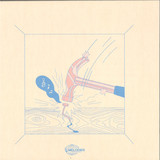
The artwork reflects the vision of these two artists, collaged together. Both images are from a trip to Helsinki. Edward's photograph of Tulips caught after dark are reviled by a flash. Maria's seemingly abstract drawing is a graphite rubbing taken from a granite slab of a pavement somewhere in Kallio. Together the two images represent two different methods for capturing a city's haptic landscape.
The album moves with a feeling of transience, which is no surprise given that the idea to collaborate was formed in Helsinki, realised in London and edited together in Rotterdam.
The Oystercatcher tells a fragile tale, one that spins out into the unknown. A cold union of voice and machine, still tentative and probing, learning to co-exist. A kind of fundamental shift whereby shared moments have been turned to sound.
The Oystercatcher is a bird that can freely travel between the earth, sea and sky. The motif is taken from a Tove Jansson short story. A dead bird washes ashore, two different versions of events are presented to how the bird came to die. The album feels like two different stories being presented on top of one another but ultimately coming to the same tragic conclusion.
Cucina Povera is Maria Rossi - Vocals
ELS is Edward Simpson - Synthesisers
Recorded in London across two days during the Summer of 2019
Mastered by Russell Haswell
Поиск:two em
Все
If you are passionate about local music scenes as much as we are you might already know about the current brood of great bands going on in Cardiff, Wales.
Chain Of Flowers were the first to hail from the Welsh capital, followed by related side projects such as Night Thoughts, more recently came Private World of which the two boys we’re about to introduce are also live members of.
A new wave/synth act from the same city called Plastic Estate is emerging this year.
The duo composed by Nicholas James and Stanley Fouracres have released a few digital singles in 2019 as they’ve opened for The Murder Capital at Sŵn Festival and played alongside the likes of M!R!M, Josiah Konder and The Love Coffin. This Place is their first physical release and it’s due on 7-inch vinyl and digital on June 19.
On the two songs that compose the single, Plastic Estate clearly draw influence from the best UK new wave and pop artists such as Dave Gahan, Paddy McAloon, Roddy Frame and yet there is a sophisticated casualness and an innate freshness in their songwriting that makes them not sounding dated at all.
Amazing composition skills for such a young band and a perfect balance between electronic dance elements and acoustic instruments allow them to pay homage to the above-mentioned masters and to be a perfectly contemporary group at once.
Although it’s possible to pick out some darker lyrics, the overall feel is up-beat and breezy. It’s a contrast that runs through a lot of their music – like a dichotomy between dark, melancholia and happier, brighter feelings.
Whether it’s a happy pop synth riff mixed with sombre lyrics or vice versa, the young Welsh duo is delivering the best 80’s-inspired modern pop craft.
RIYL: Echo & The Bunnymen, Prefab Sprout, Depeche Mode, Orange Juice, Wild Nothing.
Marking his fourth full release on the label, leading UK talent Darius Syrossian returns to Hot Creations this July with Flashlight, a heavy duty two-track release influenced by the 90’s US house sound.
Flashlight embodies the warehouse sound with tough snares, a raw bass and thunderous kicks. On the flip Boujee B' takes inspiration from Darius’ love of the Strictly Rhythm house sound.“I said this year I wanna go back to my roots and focus more on house, those US house 'dubs' that were played by people like Sneak, Van Helden, Gemini, R Sanchez, Derrick Carter etc... this is inspired by that vibe…”
Selector, producer, label curator and radio host Darius Syrossian has dedicated his life to collecting and sharing the highest quality house and techno records. His productions have landed on respected labels including Get Physical, Drumcode, 8Bit, Moon Harbour, We Are The Brave and Defected, with whom his ethos is strongly aligned. Alongside his exploits in the studio and on the road, he has also launched his own record label - Moxy Muzik, which hit the ground running in 2019 with regular sold out Moxy Muzik events at 93 Feet East in London and South Nightclub in Manchester.
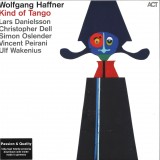
‘Kind of Tango’ is a kaleidoscope of shifting emotions. Wolfgang Haffner’s conception of tango has drama and propulsion in it but also melancholy and longing, with room for frenetic outbursts too. All this is unified by his inimitable groove and feel that commentators have called “an absolute dream,” “magical” and “profoundly relaxed.” Alongside trusted co-protagonists Christopher Dell and Lars Danielsson, he has two guests with him who defy all the clichés associated with tango: guitarist Ulf Wakenius cut his teeth musically in Oscar Peterson’s band and his Swedish heritage always shines through in his playing; Vincent Peirani is one of the leading innovators on the accordion and he finds new ways to define the instrument’s role in the tango. Also, young pianist Simon Oslender makes a first appearance with the band. Jazz and tango find a natural yet constantly shifting equilibrium - to be heard particularly effectively on ‘Close Your Eyes And Listen’ by Astor Piazzolla. In addition to compositions by Haffner himself and by his band members, pieces by the celebrated Argentinian bandoneon player and composer are the focal point of the album. Piazzolla’s innovations with the tango, such as bringing jazz into it, date from around 1955. Haffner and the tango
seem perfectly matched to each other. Tango is no longer a fixed style nowadays, it is above all an attitude to playing and an attitude to life. Wolfgang Haffner’s approach to tango is both authentic and new. It is his and his alone and it is irresistible.
Bélver Yin's soul mining odysseys have been unjustly overlooked for three decades. An anomaly in the Spanish alt-pop scene, their forlorn instrumentals and ethereal romanticism would have struck a chord in the British league of Felt, The Chameleons, Cocteau Twins and Dif Juz, leaving their 1991 debut Luz Bel deserving of reappraisal.
While coining their band name from a Jesús Ferrero novel and quoting Laozi philosophy on album sleeves, Bélver Yin create illuminating textures that unlock a wordless language of memory and adolescent emotion. Formed in Salamanca by self-taught musicians Pedro Ortega Sánchez and José María Martín, the guitar-bass duo spent two years crafting their divine interplay with interim drummers before submitting a demo to Noisex Music, their only attempt at label courting. The phone rang mere days later with owner and producer Bernar Marks (The Dust Sessions) offering to cut an album and the band ventured to Valencia with cloud-touching optimism soon after.
Championed by local press, the release fell short of expectation, fueling the mythology of a vanished band known only to the initiated. Varying lineups would, however, continue to work in the shadows under Pedro's direction, recording two spatially arranged follow-ups at their own pace in 1996 and 2005.
A glorious debut that undeniably set a high watermark, Luz Bel is finally available again, faithfully remastered by Mikey Young and featuring bilingual liner notes from John Gómez, the authoritative ear behind Outro Tempo.
- A1: Kosei Fukuda - ?? - Enso (4 18)
- A2: Uchi - Zro (6 42)
- A3: Ypy - Circulation (6 44)
- B1: Recent Arts - My Default Emotion (5 43)
- B2: Renick Bell - Organize And Unite (4 09)
- B3: Ma + Kosei Fukuda - ????(????)- Enso No Ma (Furutsuki) (1 30)
- B4: Yvesdemey - The Chosen Home (6 11)
- C1: Tobias - He Turned Into Him (5 52)
- C2: Katsunori Sawa - The Stonewall (5 21)
- C3: Yuji Kondo - Zenith (6 09)
- D1: Rabih Beaini - Circle (8 03)
- D2: Ena - 42 1 (4 36)
- D3: Lemna - Moments In Eternal Recurrence (5 00)
Japanese sound artist and producer Kosei Fukuda’s presents a collaborated vision of the first edition of ENSo¯, a two-day audio-visual event collated around the REITEN label. The ENSo¯ Festival invites its artists and audiences alike to appreciate the merging of the improvisational, with the contemplation of rhythmic cycles, based around the conception of enso¯ – ?? – meaning a hand-drawn circle created by one uninterrupted stroke. Now, with an elongated stretch of time in front of us before the next edition of the festival, the compilation stands to provide a sustained glimpse into the world imagined by Fukuda. Blending spontaneity and gravity alike, the record features an array of idiosyncratic artists set to play ENSo¯, all purveyors of their own shaped sound-worlds.
For the A-side, we have Fukada’s own contribution ‘?? – ENSo¯’; a slice of ambient techno dotted somewhere within a faraway galaxy. Venezuelan noise artist UCHI crafts a fourth-world hymn with tribal percussion on the expansive ‘ZRO’, and Osaka based experimentalist YPY aka Korshiro Hino shapes an elusive polyrhythmic ambience on ‘Circulation’. The B-side presents a colossal improvisational track ‘My Default Emotion’ from Berlin based duo Recent Arts. Formed of Chilean artist Valentina Berthelon and German musician Tobias Freund, the duo are masters in audio-visual experimental performances that both surprise and challenge an audience. Renowned artist, programmer and teacher Renick Bell is noted as a pioneer for live coded performance, conducting mutated rhythms that cut across the landscape of electronic sound. His addition to the compilation is a luminescent IDM piece, titled ‘Organize and Unite’. A polished ambient club track from Fukada and MA titled ‘????(????)’ provides a state of organized tranquility, whilst the track ‘The Chosen Home’ from Belgium artist YvesDeMay, whose move from breakbeat to experimental producer has produced gratifying results for all, is a welcome slice of pensive dub- techno.
The C-side brings us a textured and haunting techno track ‘He Turned Into Him’ with revered German artist Tobias, veteran mainstay with an expert hand in shimmering sound design; Kyoto based 10 Label heads Katsunori Sawa and Yuji Kondo brings sample-heavy rushes of sound, the former with ‘The Stonewall’ and the latter with ‘Zenith’, both multi-faceted in their reference points. The D-Side presents the grainy and expansive ‘Circle’ from Lebanese producer Rabih Beaini, who expertly combines club tropes and avant-gardism in his DJing and music. Hypnotic skeletal beats circulate on the pulsating ‘42.1’ by Tokyo artist ENA. Japanese composer Lemna, the alias of Maiko Okimoto rounds it off with a dreamy noise ambience on ‘Moments In Eternal Recurrence’. Released on vinyl July 24th, the compilation stands as a traversable artefact of the festival, rich in spontaneous beauty.
Re-release of the record originally released on 2016-02-05!
Remastered and cut by Rashad Becker at D&M Berlin and presented in an exact replica sleeve of the original 1966 release by Stephen O'Malley.
sales information: Black Truffle is honoured to present the first vinyl reissue of the classic debut album from AMM, AMMMusic. Coinciding with the 50th anniversary of its recording in 1966, this reissue makes one of the cornerstones of the experimental music tradition available again in its original form, replete with Keith Rowe's beautiful pop art cover and the terse aphorisms by the group that served as its original liner notes. A testament to the interaction between the experimental avant-garde and the countercultural underground, the album was originally released on Elektra, recorded by Jac Holzman (the label's founder, responsible for signing The Doors, Love, and The Stooges) and produced by DNA, a group that included Pink Floyd's first manager Peter Jenner. (Pink Floyd paid tribute to AMM's influence on their improvisational sensibility with the track 'Flaming' on their debut album, named after the piece that occupies AMMMusic's first side, 'Later During a Flaming Riviera Sunset').
Formed in 1965 by three players from the emerging British jazz avant-garde - Keith Rowe and Lou Gare had played with the great progressive big band leader Mike Westbrook and Eddie Prévost played in a post-bop group with Gare - AMM quickly evolved from a free jazz group into something decidedly more difficult to categorise. By the time these recordings were made, two more members had joined the group: another Westbrook associate, Lawrence Sheaf, and the radical composer Cornelius Cardew. Then at work on his masterpiece of graphic notation Treatise, Cardew brought with him extensive experience of the post-serialist and Cageian currents in contemporary composition. Using a combination of conventional instruments and unconventional methods of sound production (most famously Keith Rowe's prepared tabletop guitar, but also prepared piano and transistor radio), the group performed improvised pieces often running for over two hours and ranging from extended periods of silence to terrifying cacophonies.
Evan Parker famously described the improvisational logic of AMM's music as 'laminal', in contrast to the 'atomistic' approach more common among the generation of British improvisers (Bailey, Rutherford, Stevens and co.) to which he himself belonged. AMM improvised in layers: layers of sound subtly rising and falling or abruptly starting and stopping without being propelled by the implied pulse of free jazz improvisation. Rather than a pulse, AMM's music began with the sound of the room in which it was played, the Cageian anarchy of silence. By embracing the non-synchronous simultaneity of layered sound, AMM was able to create a musical container into which nearly anything could be incorporated at any moment: on AMMMusic, long tones sit next to abrasive thuds, the howl of uncontrolled feedback accompanies Cardew's purposeful piano chords, radios beam in snatches of orchestral music (and, on the LP's second side, an extended fragment of 'Mockingbird').
AMM's clearest break with jazz-based improvisation concerned the idea of individuality. Where improvised music has tended to foster the development of idiosyncratic stylists who move freely from one group to another, AMM, initially through an engagement with eastern philosophy and mysticism and later though a politicized communitarianism, sought to develop a collective sonic identity in which individual contributions could barely be discerned. In the performances captured on AMMMusic
the use of numerous auxiliary instruments and devices, including radios played by three members of the group, contribute to the sensation that the music is composed as a single monolithic object with multiple facets, rather than as an interaction between five distinct voices.
- Francis Plagne
Black Truffle is pleased to announce a new solo album by Eiko Ishibashi, her first for the label, following on from the duo recording Ichida alongside bassist Darin Gray. Hyakki Yagyō (Night Parade of One Hundred Demons) was produced for the ‘Japan Supernatural’ exhibition at The Art Gallery of New South Wales, Sydney focusing on ghost stories and folklore from the Edo period onwards. As with The Dream My Bones Dream (Drag City, 2018), the album is a response to troubling questions about Japanese history, and the influence of the past upon the present, but finds Ishibashi shifting further away from her earlier piano-led songwriting and showing a deepening interest in electronics and audio collaging.
The two sidelong parts of Hyakki Yagyō feature layered synthesisers, acoustic instrumentation, recited verse and field recordings, at times densely mixed but always with a subtle interplay of changing elements. The influence of European and American forerunners as diverse as Alvin Curran, David Behrman and Strafe Für Rebellion can be traced, yet at the same time Ishibashi evokes the flute and string sounds associated with Japanese storytelling, and draws directly on the subversive literary tradition of Kyoka (‘mad poetry’) with a verse by the 15th-century poet Ikkyū Sōjun repeated throughout the album. Revisiting what has gone before, re-thinking what is possible musically, as a way of articulating what else might be possible in the future.
As Ishibashi’s liner notes make clear, the album reflects an attention to persistent dangers, myths and evasions in Japanese culture – as well as the lurking uncertainties that might threaten positive change. This would seem to be manifested in the emerging melodies soon met by dissonance, erratic collisions and near silence, as well as the eerie manipulation of the double-tracked vocals. Ishibashi’s underlying concerns ring true more widely of course. Hyakki Yagyō is a work of multiplicities, and mystery, a landscape where nothing is as it seems at first, and everything is vulnerable to sudden violent interruptions.
The album was produced with regular collaborators Jim O’Rourke (double bass) and Joe Talia (percussion), and features dancer and choreographer Ryuichi Fujimura performing Ikkyū’s satirical tanka. O’Rourke’s immersive mix creates a three-dimensional effect, with Ishibashi’s various sound sources enmeshing and interacting in captivating ways.
Pressed on coloured vinyl and presented in a deluxe package with an inner sleeve featuring and artist portrait and liner notes from Eiko Ishibashi. Cover and label design by Shuhei Abe.
Back cover design by Lasse Marhaug. Mixed and mastered by Jim O’Rourke.
key selling points:
- Black Truffle is pleased to announce a new solo album by Eiko Ishibashi, her first since her acclaimed 2018 Drag City release The Dream My Bones Dream.
- This album finds Ishibashi shifting further away from her earlier piano-led songwriting and showing a deepening interest in electronics and audio collaging.
- Hyakki Yagyō (Night Parade of One Hundred Demons) was produced for the ‘Japan Supernatural’ exhibition at The Art Gallery of New South Wales, Sydney focusing on ghost stories and folklore from the Edo period onwards and is a response to troubling questions about Japanese history, and the influence of the past upon the present.
- Produced with regular collaborators Jim O’Rourke (double bass) and Joe Talia (percussion), O’Rourke’s immersive mix creates a three-dimensional effect, with Ishibashi’s various sound sources enmeshing and interacting in captivating ways.
- The two sidelong parts of Hyakki Yagyō feature layered synthesisers, acoustic instrumentation, recited verse and field recordings, at times densely mixed but always with a subtle interplay of changing elements, hinting at an influence of European and American forerunners as diverse as Alvin Curran, David Behrman and Strafe Für Rebellion.
- Pressed on coloured vinyl and presented in a deluxe package with an inner sleeve featuring an artist portrait and liner notes from Eiko Ishibashi. Mixed and mastered by Jim O’Rourke.
These are the first two songs released from The Jacknife Lee, the new album from Jacknife Lee. "I wanted to work with people i’d been a fan of so I found out their email addresses and sent beats. Open Mike Eagle was the first person i contacted and he came to the studio and we did Made It Weird. The track is built around sample of Francis Lai’s Young Freedom. "I loved Kenyan Message by Muthoni Drummer Queen and dm’d her on instagram. I sent her three beats and she chose this one. Sisa Wabaya is about being a wild badass. Muthoni tours all the time so she recorded her vocal in Switzerland with some friends".
"AVALPBOX4", Limited Edition- 1.000 Copies' 28-Page Hardback-Book: 10" Vinyl, Hand signed Programme, Tour Poster & DVD.
By the time The Beatles travelled to Blackpool for the first time,
they had toured with the legendary American singer, songwriter, Roy Orbison; recorded several BBC radio shows, including Saturday Club, Easy Beat and Pop Go The Beatles; appeared on many, highly popular television programmes; released their debut album, Please Please Me and issued their first three EMI singles, ‘Love Me Do’, ‘Please Please Me’ and ‘From Me To You’.
Their fourth, ‘She Loves You’ had just been recorded and mixed ready for release. It was an exciting time for the band so, when they reached the popular, seaside resort for the first time, on 7th July 1963, optimism was filling the air. This stunning AVA Editions collectors pack contains a 10" Record feat. two appearances made by the Beatles on the ABC television show, Blackpool Night Out; an impressive 28-page book, crammed full of previously unseen colour images of the group and a high-quality reproduction of an original, 1963 concert programme signed by Skiffle legend, Chas McDevitt, who supported the Beatles on several occasions.
Also included is a full colour A3 poster and an exclusive DVD feat. a new, 30-minute interview with him, alongside his previously unseen, candid, colour footage of the group backstage, and in performance at the ABC Theatre in August 1963.
So too is a unique, fully colorized version of their 17-Mins. appearance before the cameras for Blackpool Night Out in August 1965. For Beatles and music fans alike, this pack serves as a wonderful opportunity to own a unique slice of music history.
*** Side A: Recording 19th of July, 1964
*** Side B: Recording 1st August, 1965
To say Fredfades and Jawn Rice are House music producers would be sneering at their efforts across genres like Hip Hop, Soul, and Jazz. The Mutual Intentions collaborators have forged a sound together in classic House, siphoning a myriad of influences through their intricate constructions in the studio as solo acts since first meeting in 2007. Becoming fast friends over a shared love of the dusty beats of an SP1200, Jawn Rice and Fredfades started working together while the Mutual Intentions collective gestated around them. Individual works by Jawn and Fred dot the collective’s back catalogue like various nodes of evolution through the course of MI’s output.
“We’ve always been sharing sketches,” explains Jawn Rice, “but I feel that these past years have been more productive in getting some of these sketches out as songs with Fredrik. It’s just a continuation of our friendship.” Emboldened by this friendship and with their finely tuned skills in the studio,
honed to near-perfection, they eventually started making music together. Following two seminal solo LPs – Fredfades’ Warmth and Jawn Rice’s Highlights – the pair consolidated their music as a duo in 2019, striking out with their electrifying debut, Jacuzzi Boyz. In a fusion between Jawn’s electronic inclinations and Fred’s soulful eccentricities, Jacuzzi Boyz established the duo as a new force workingNew Release Information within the broad scope of House music, with a sound imbued in the origin story of House and the genre’s hip-hop allegiances.
In 2020 they continue to pursue music together in the sophomore LP, Luv Neva Fades. Following the release of the title track and lead single, Luv Neva Fades finds the producers cementing their artistic voice and re-enforcing their commitment to a singular sound. Lush Rhodes keys and bouncing percussion lay the foundations for the album, while buoyant bass-lines and sparkling synthesisers provide
the catalyst for a crooning vocal or ruminating melody. It’s a record that thrives in a sultry mood; an LP that basks in the warmth of its analogue origins and cools in the shade of languid chord progressions.
Like Jacuzzi Boys, this album is an extended collaborative affair, as Mutual Intentions’ reach stretches across the Atlantic with guest appearances from Byron the Aquarius, Javonntte, Arthur Kay, Bendik HK and the SP1200 that started it all. Shimmering melodies, hazy harmonies and boisterous beats draw Fredfades and Jawn Rice out of the jacuzzi and onto the dance floor, moving under shimmering stars, where the duo cement what they started with Luv Neva Fades.
ANNA HOMLER & ALESSIO CAPOVILLA - VASI COMUNICANTI
Vasi Comunicanti is the oneiric record born from the collaboration between L.A. performer and avant-garde artist Anna Homler and Alessio Capovilla, co-founder of Gang of Ducks.
Alessio Capovilla (1985, Turin, Italy ) is an Italian composer interested in sound modelling.
Imperfect sounds, unpunctual distortion and unsuitable atmospheres are constantly researched by Alessio.
A dialogue between ancient tools and new technologies through synthesis, computer music and field recording, crossing beats and genres towards something not easily definable.
Co-founder of the collective Gang Of Ducks, on which he's published two releases ("NO" and "Eocity") under the moniker of XIII, alter-ego through which he mainly examines the most tactile and digital part of his sound.
Anna Homler is a multy-disciplinary artist working on a blurred line between music, performance, spiritual and visual arts and giving birth to several different projects.
In 1985 she released, in collaboration with composer Steve Moshier, the seminal album "Breadwoman & Other Tales", shamanic and meditative songs brought to life with astonishing live performances.
The record was then re-released in 2016 by NYC label RVNG Intl, bridging the gap with a new generation of listeners, discovering the universal and unique world of Homler.
Capovilla, who was born in the same year of the original release, is one of them. His work focuses on imaginary landscapes and oneiric feelings. He has released two records on Gang of Ducks with his XIII moniker, dedicated to his digital and more computer-oriented sound.
The two of them met for the first time for an improvised live performance in Torino in 2017, after which they decided to spend studio time together exploring where this connection could lead.
The record flows along 5 tracks, with Capovilla taking care of synths, drums programming and audio engineering, and Homler singing in her melodic phonetic language, mixing unique voice and sound effects .
"De'la cocce" moves around on a slow quasi-dub rhythm accompanied by whistle and vocal interventions. In "Ricordo" Anna's voice is more prominent, travelling through a digital dimension made of flutes, Buchla Music Easel sequences and rainsticks.
The B side starts with "Bread Dance", where different layers of vocals and drums repeat themselves in an obsessive and haunting atmosphere.
"Be'ya Sa'di" is an ambient and cinematic piece, which quietly introduces "Mem", the most emotionally and intense song of the collection, transporting the listener into a different dimension.
The whole record creates a world with no geographical coordinates, where humans meet their primary feelings in a suspended time, escaping the present and the intelligible world.
Names You Can Trust is proud to present a special collaboration with Barbès Records and the legendary godfathers of cumbia amazónica, Los Wembler's de Iquitos. Featuring two songs mixed expressly for 7-inch directly from the reels of their 2019 album, VISIÓN DEL AYAHUASCA, it's the latest entry in the group's historic canon of a particular brand of bonafide psychedelia, a worthy addition to a catalog of recordings that have made their way around the world to fans, DJs and sound systems since the group's beginnings in the late '60s.
The band's 50 year-old origin story begins when electric instruments started showing up at the port city of Iquitos, Peru. This seminal moment of international trade at the gateway to the Amazon inspired a shoemaker named Solomon Sanchez to start a band with his five sons. Los Wembler's were the first band in the capital of the Peruvian Amazon to play popular local rhythms with electric guitars. Their revolutionary sound, fuzzy lysergic guitar helixes wrapped around melancholic melodies, would go on to have an enormous impact on the whole of South American popular music, echoing throughout the continent and further, into the States and eventually across the world.
The past few years have seen a new wave of interest in the band's music. Los Wembler's, the sons, now fathers and grandfathers themselves, have brought their trademark sound on recent tours to Mexico, Europe and North America, where it has been embraced by a new generation of musicians and listeners.
As Los Wembler's prepared for a lengthy tour in 2020 to coincide with this new 7-inch issue, the world abruptly changed course. The COVID-19 outbreak has had particularly devastating consequences in the Peruvian Amazon. With an urban density of around a million people, Iquitos is the largest isolated city in the world, reachable only by boat or plane and surrounded by the vastness of the rainforest. A buzzing multicultural city, Iquitos was catapulted into modernity during the late 19th century's rubber fever. It is home to not only the members of Los Wembler's, but several legendary and influential musicians who helped lay the groundwork for the roots of chicha, the distinctively Peruvian brand of cumbia.
Finally being back on his Exhibition imprint, Rico Puestel - without any detours - delivers some intensively uplifting moods within two melodic exhibits that have been circulating here and there over two years now. After ongoing requests about those tracks, these two ultimately join forces and go public on a hand-painted flip design, making this record a wholesome experience again.
Side A discovers the emotional magnitude, circulating and growing around the beauty of redundancy throughout a deeply immersive flute loop, nestled into a bouncing, analogue, almost archaic drum computer setting. Slowly building up over the course of half the track, Exhibit 3.1 emerges into a sphere of multi-layered synth harmonies and an oldschool bass arpeggio.
On the flipside, things suddenly become clear that Side A has just been the build-up to something even larger and stronger: A mechanical marrow-and-bone drum groove (one might not hear everyday) stomps away to spread the bed for one of Rico's possibly most captivating and flourishing synth melodies, spreading some blurry mysteries and clear sun-drenched bliss at the same time.
A vast scenery, unfurling in front of your ears and eyes, almost like smelling blossoms and fresh air
- A1: Mose Allison - If You're Going To The City
- A2: Les Mccann - Sad Little Girl
- A3: Lee Morgan - Psychedelic
- A4: Eddie Harris - Listen Here
- A5: Harold Mcnair - The Hipster
- B1: Art Blakey's Jazz Messengers - Kozo's Waltz
- B2: Joe Gordon - Terra Firma Irma
- B3: Blossom Dearie - Now At Last
- B4: Blue Mitchell - Mi Hermano
- C1: Jimmy Smith - A Walk On The Wild Side
- C2: David Axelrod - Get Up Off Your Knees
- C3: Brand New Heavies - Sphynx
- C4: Marlena Shaw - Look At Me, Look At You
- C5: Charles Williams - Trees & Grass & Things
- D1: Geoffrey Stoner - Bend Your Head Down Low
- D2: Blacks & Blues - Chains
- D3: Leon Thomas - Just In Time To See The Sun
- D4: Norman Connors - Mother Of The Future
- D5: Kamasi Washington - The Rhythm Changes
A follow up to 2018’s Jazz On The Corner which has now sold over 10,000 copies, and last year’s equally successful Soul On The Corner, this compilation see Martin and Eddie return to the world of jazz for another bite at the cherry after Volume one was declared to be “the best jazz compilation of the last 20 years” by Jazz FM’s Chris Phillips
The concept came from a radio show that Freeman and Piller put together for BBC Radio 6 Music which was so well received that the pair decided to dig deep into their record collections and build a double album of some of their favourite tracks.
The concept is simple: an album packed full of jazz gems which they hope are slightly off the beaten track. This year we have hidden gems from Nina Simone and Nicola Conte, classics from Roberta Flack, Roy Ayers and The MJQ, whilst the new British jazz generation is represented by Emma Emma-Jean Thackray. Running the gamut from hard bop, to progressive fusion via Latin beats, it’s an exhilarating listen from start to finish.
Siti of Unguja tells the story of pioneering women, of the ‘golden
voice’ of Siti Muharam, heiress to the singular legacy of her great
grandmother, the mother of taarab, Siti Binti Saad.
On the Corner teases this first taste of a landmark recording that the
label embarked upon two years ago on Zanzibar. Siti of Unguja has a
transformative atmosphere, brimming with romance, passion and
protest.
Zanzibar is an Island archipelago that lies 6 degrees South of the
equator and 30 miles off the East African coast out in the Indian
Ocean. Known for its spices, traditional Dhow sailing boats and being
a mercantile trading capital of Swahili culture.
The modern history of Zanzibar can be animated through the life and
legacy of one artist, Siti binti Saad. Born in 1890 in the small fishing
village of Fumba, on Unguja (Zanzibar’s largest island), she became
the first Zanzibari recording artist and her recordings sold in tens of
thousands across the swahili world.
The tracks recorded for Siti of Unguja demonstrate Siti Binti Saad’s
eclectic influence on Zanzibari taarab and her great granddaughter,
Siti Muharam imbues the compositions with feeling. Siti Muharam’s
golden voice carries the poetry and invects a timeless passion. It is
Muharam’s deep humility and love that brings the spirit of these two
women together.
With Sam Jones at the controls, taarab’s conservative layers were
opened up and given more than a little wiggle room. Under the
direction of Matona, the recording of this album paid homage to Siti
Binti Saad’s innovations by bringing back the percussive Kidumbak
style of music that originated on the streets of Zanzibar. By strippping
back the typically dense string section of taarab a space was created
for Muharam’s beguiling timbre that is gilded with emotion.
Newcomer Hekla releases her uniquely beautiful debut album for solo theremin and voice Á through Phantom Limb Records - run and curated by former FatCat Records, Thrill Jockey and Royal Albert Hall execs James Vella, Ken Li and Mark Pearse.
A Berlin-residing Icelander, Hekla's sparse, delicate, fractal music exists within these two worlds: dark and magical as Iceland's permanight folklore; and (though beatless) as deeply sonic and intense as Berlin's electronic scene. A long-term scholar of solo theremin, Hekla (shortened from her own name Hekla Magnúsdóttir) uses her instrument as an otherworldly and highly evocative Siren-call. A spectral, wailing, howling, lamenting yearning second-voice that underpins a soft vocal delivery, as if her studio had been haunted with a chorus of ghostly backing singers.
While a handful of reference points share a similar ground to Á - Colleen's interplay of voice and instrumentation; the richly immersive filmscore work of sadly passed fellow Icelander Jóhann Jóhannsson's; 'grandmother of theremin' Clara Rockmore's close relationship with such a singular instrument; Julia Holter's intelligent and classically-aligned songwriting - Hekla's music still exists singularly. A one-off talent, emerging from no particular scene, ascribing to no particular rules.
As a creative tool, the theremin - bizarre, unique, rarely heard - can be expressive, intuitive and highly adaptable. In Hekla's hands, her instrument covers an enormous range, from skittering birdsong of high frequency chirrups and chirps, to grinding, tectonic sub-bass. We are given the throbbing, apocalyptic dread of 'Muddle' and the baroque beauty of traditional Icelandic hymn 'Heyr Himna Smiur' in sequential tracks on the album's a-side. Appropriately, she also writes that the album title - Á - is similarly multifaceted in her native Icelandic: 'a river is an á and also it means ouch like when you hurt yourself, and also when you put something on top of something you put it á (on) something.'
The album was written and self-recorded by Hekla in her home studio in Berlin around her son's daycare schedule. Icelandic super-musician Mr Silla (a part-time múm member) guests on a number of tracks. Tallinn-based engineer Jose Diogo Neves - a stalwart of Icelandic and Portuguese music - mixed and mastered Á.
James Vella formed Phantom Limb in June 2017 after eight years in A&R for FatCat Records. Mark Pearse (formerly head of contemporary music programming at the Royal Albert Hall) and Ken Li (formerly of Thrill Jockey, now of Nettwerk) joined the team shortly after.
- A1: Pendulum
- A2: Dark March
- A3: O Lucky Man
- A4: Pull My Daisy
- A5: Beehive
- A6: On Paul's Imp
- A7: Hardly
- A8: Cemetery Raga
- A9: Platform
- A10: Black Flame
- A11: Putty
- A12: One Two
- A13: Nocturnal
- B1: Swordfish
- B2: Cars
- B3: I'm Brave I'm Scared
- B4: Hooks 'N Lines
- B5: Original Putty
- B6: Ooh Everything, Every Little
- B7: Sugar Mommy Part One
- B8: Sugar Mommy Part Two
Alastair Galbraith is considered nothing less than a genius around these parts. A New Zealand underground legend active since the '80s, his solo works have seen release on Siltbreeze, MIE, Emperor Jones and Grapefruit Records while his own labels, Xpressway and Next Best Way have released the likes of The Dead C and Damo Suzuki. His list of collaborators reads like a who's who of freeform musicianship: Peter Jefferies, Bruce Russell, Robert Scott (The Clean; Flying Nun) and Maxine Funke to name but a few. Seconds Mark III is Galbraith's first solo album since Mass (2010) and is a collage of pensive, longing and almost forgotten pieces stitched in his inimitable style. A thrilling addition to A Colourful Storm's ever-expansive catalogue. 21-track LP
For the third instalment of the Dispatch Blueprints series, another of our favourite artists presents their unique take on the Blueprints ethos.
Continuing the theme of exploring organic musical progression, DLR delivers two exceptional tracks that perfectly capture the spirit of the label.
An idea in development for several years, 'You Leave' began life as a hardware-based tune. No longer using the same equipment when returning to finalise the idea, the track was rebuilt with modern emulation, combining old school inspiration with contemporary techniques.
'Intermix' is a stripped-back, two-step journey. Slowly developing changes progress into dynamic and unexpected directions.
We all go through phases. We don’t always feel the way we felt yesterday. Despite all these phases, we’re always drawn to music. It accompanies, touches and feeds us. This debut album is the story of Austrian Apparel and their journey up to this day. “AAplus” stands for inclusion - it takes paths into the openness of sound. It shows two sides. light and dark. While the light side features tracks outside of the four-to-the-floor realm, the dark side showcases their club oriented material. Never leaving behind their signature sound forged from their expertise on stage and in the studio. In coherence with their previous work, Austrian Apparel continue to explore an unconventional approach with their audio equipment, departing from a habitual studio process and emerging with a carefully condensed sonic episode of their journey.
All sounds recorded at various locations in Europe, South America and at EMS, Stockholm using the Buchla 200 modular synthesizer.
soar, all sounds recorded with Klara Lewis in Montreal 2018
Mastered by Russell Haswell. January 2020
Cut at Schnittstelle, Berlin by Andreas Kauffelt, January 2020
Image : Mark Hogben
Layout: Nik Void
The last two years have seen me maintaining an association with an unusual bedfellow, death. The loss of Mika Vainio, as well as three members of my own family, has had a profound effect on me and spurred a lengthy reflection on life, death, and everything in between.
Parallelly, while studying the philosophy of science, I came across shadow photons:
"Tangible photons are the ones we can see or detect with instruments whereas shadow photons are intangible (invisible) detectable only indirectly through the interference effects on the tangible photons.
There is no intrinsic difference between tangible and shadow photons: each photon is tangible in one universe and intangible in all the other parallel universes.
They travel at the speed of light, bounce off mirrors, are refracted by lenses, and are stopped by opaque barriers or filters of the wrong colour. Yet, they do not trigger even the most sensitive detectors. The only thing in the universe that a shadow photon can be observed to affect is the tangible photon that it accompanies. This is the phenomenon of interference.
Shadow photons would go entirely unnoticed, were it not for this phenomenon and the strange pattern of shadows by which we observe it.
Thus the existence of a seething, prodigiously complicated hidden world of shadow photons has been inferred."*
I have drawn a parallel between shadow photons and death. The interference phenomena, parallel universes, and how shadow photons affect tangible photons they accompany, offer, in my opinion, similarities, an unknown universe which is death and how we, remaining tangible human beings, are affected. This quest has led me to be more willing to accept chaos in my life and to conclude that Death is perfection, everything else is relative.
The globe-trotting Robert Millis returns to Helen Scarsdale for this beautifully fragile album of dissolved glass rendered as a collage of recontextualized minimalism. To astute listeners, Millis should be a household name due to his work in the unpredictably diverse Climax Golden Twins as well as his impeccable curations for Sublime Frequencies (collections include the Deben Bhattacharya: Men and Music on the Desert Road and Indian Talking Machine books). Hie previous solo work include Relief (released here on The Helen Scarsdale Agency in 2013) and The Lonesome High for the Sun City Girls’ Abduction Records in 2016. His scholarship into the hidden corners of music across the world has also earned him Guggenheim and Fulbright fellowships.
Related Ephemera is an album composed mostly from the hiss, the crackle, the surface noise of 78rpm shellacs and wax cylinders. “Horrifying,” Millis explains “is the concept to record collectors that vinyl degrades and can be easily damaged. however, initially records were considered ephemeral, especially 78rpm records. They were novelties. Fleeting. Entertainment.” Millis intends for the album to be a feedback loop whereby the patina of handling, playing, living with the record will circle back to the original source material. Furthering that metaphor, Millis amplifies and dilates feedback tones generated from his collection of vintage gramophones.
That said, Millis does cite the intrusion of exactly one field recording, a broken toy, and a few notes from a cello. But the construction of these rarified tones, crispy textures, ghostly rattles, and fluid resonance that ripples through all of Related Ephemera has its origins in the tactile nature of the vinyl medium. It’s hardly the stuff of sentimental nostalgia though. Related Ephemera is more an act of time travel, slipping backwards and forwards with the scratch of a needle (Watch out! What pre-recorded needle jump sound is not your turntable going haywire!). The emotional core to the album is that of a resigned melancholy, almost Bergman-esque in its starkness but not without a brief moment of dark humor.
Here is an album that aligns itself aesthetically with Nurse With Wound’s Soliloquy For Lilith, Philip Jeck’s more languid collages, and even some of Harry Bertoia’s sculptural atmospherics.
The vinyl was mastered and cut by Helmut Ehler at D&M Berlin, whose expertise was necessary given that part of the original compositions from Millis’ reworked surface noise were exceedingly problematic to cut. The D&M cut does temper the composition into a mysterious, diaphanous cloud; where the digital-only mastering provides a cascade of insects gnawing within your inner ear. Two facets. One piece of music.
Carceres Records, an emerging label in the French techno music scene since 2017, has finally decided to release its first vinyl. The two co-founders, Brulee and Deevai have invited Hephaistos and Sluhg for this release.Four video clips produced by Vladimir DMDJ will be part of this new project. The visuals will immerse us into the intimacy of the individual's relationship with himself, admiring his relationship with his body or perhaps testifying to his encounter with the other.
Amnesia Scanner announces Tearless, the Berlin-based duo’s second LP. As Amnesia Scanner founders, Ville Haimala and Martti Kalliala watch their icy home country of Finland thaw, the staggering scale of political recalibration and the worldwide climate crisis to come blows open old norms. This album reflects what it feels to experience Earth at a time when collapse is emerging as the prevailing narrative.
The musical scope of the record is expansive, with guest vocalists—the Peruvian artist Lalita and the Brazillian DJ/producer LYZZA—descending into a vast uncanny valley of sound. Tearless follows the 2014 AS Live [][] mixtape, 2015 audio play Angels Rig Hook, two EP’s for Young Turks, and their 2018 debut album, Another Life (PAN).
“There’s a looming sense of radical change,” they note, connecting the present to a fin de siecle horror and curiosity regarding what new world is being ushered in. Someone called Tearless a “breakup album with the planet.” To which Amnesia Scanner responds, on the LP’s closing track: “Youwill be fine, if we can help you lose your mind.”
With the crossfader on Tearless sitting closer to pop than abstraction, so too does the audience for this record widen in scope. Listening through: Opener “AS Enter” sets a sombre tone until the fucking riffs of the second track(the titular, Lalita-helmed “Tearless”) make clear there’s plenty of roaring to come. A feature from metalcore band Code Orange on “AS Flat” follows, along with “AS Trouble” (feat. Oracle, the third, machinic ghost-member of Amnesia Scanner) and together they hit as black-metal-gaze dirges. At the album’s midpoint, Lalita returns for the beautiful, operatic breakdown of “AS Acá” (released as a single in 2019), before “Call of the Center” guides listeners through three club ready tracks—the grain-processed dembow of “AS Too Late” and “AS Going” with LYZZA, and then the ambientheadbanger “AS Labyrinth.” Closing “Tearless” is the sadboy grunge of “AS U Will Be Fine” with a clear statement of intent: doom, despair, insanity, absurdity, it’s all natural, all cathartic, and all OK. Refuse like the ‘90s and party like the ‘20s—if that seems senseless, you are doing it right.
yellow marbled vinyl / vinyl only
After a long wait we are happy to finally share the next release on Sleepless Musik and welcome Canarian artist Moises to our family!
A1. Circular
The title track is a dancefloor bomb, bursting with groove. You'll find it aptly placed on the A side, along with a remix from Sakro. The deep, rolling bassline of Circular takes similar form to previous Moises releases, a fast pace dance between low and high notes. Eery breakdowns signalled by spiralling synths accentuate the mysterious melody that dominates the track, before rave like chords creep to the forefront. Then with a cheeky hi-hat flick, the bass is back. The energy emanating from this one is enough to have a crowd going wild at peak-time.
A2. Circular (Sakro Remix)
The remix is a little more subtle, yet equally as suited for late into the night. The percussion overtakes this one with a deeper bassline. It becomes clouded with minimalistic growling and an echoing vocal, injecting the dreary trip we've got quite used to hearing in Sakro's productions.
B1. Homecoming
Flip the record over and the four-tracker becomes complete with two more of Moises' own productions, both of which retain that signature groove. Homecoming pulsates repetitive rhythms laced with chattering patter and choppy voice. A sweet layer to house the jabbing synth that follows for another dance worthy beat.
B2. Inside Out
Inside Out completes the set, representing a different approach. This feel good finale ditches the darkness and is instead full of dreamy high notes and percussive swing, making it the uplifting one of the bunch. It's fun, playful and full of life, perfect for celebrating those moments at the afters when the sun is up and so are the people.
The Bees are a textbook case of the chew and spit cycle that was the late 80’s South African music industry. Although their unknown story is likely unique, it is just as likely that it is no different to that of many other young artists who dreamed of getting their music heard at the time.
By 1988, the independent record label was no longer as uncommon as it had been at the beginning of the decade. As the 80s went on, more seasoned A&R reps and Producers that had gained experience and connections from their work under major labels would be trying to cash in on a market they helped create. Without the need of big rooms or expensive recording equipment, the digital advancements allowed many Producers to open or work in smaller studios and promote unknown artists under their own imprints. They would then have their catalogs marketed and distributed by the same major labels they had been working for just years prior. This would open up the possibility of a new era of stars as potential talent no longer had to be pitched to major labels in hopes of them taking a chance on a new signee over their already established artists. With the market growing and a struggle to keep up with the demand for new sounds this agreement would allow the major labels to put new emerging artists or groups on their catalog with little investment and high reward if it happened to be a hit.
ON Records was just one of the independent players at the time. Ronnie Robot had just signed the unlikely trio The Bees in hopes of adding a hit group to his label roster that consisted of solo acts. Despite the debut’s fresh house inspired sound, it failed to catch on was outsold by the bubblegum disco the label was known for. Over the years unsold back stock and promos would build up with the distributor. Luckily this allowed sealed copies from the label’s catalog to survive into the 90s when the distributor’s stock was unloaded and picked up by legendary Johannesburg jazz shop Kohinoor. Here sealed copies of the Bees first attempt sat under appreciated for over 20 years before becoming a hot title after they started circulating online and became club staples. This is how the first album of an unknown group with no success was able to become a collectors item and earn a reissue over 25 years later.
With their first record behind them The Bees were ready move forward and get back into the studio. A suggestion from producers had the trio change camps and go work with the newly formed Creative Sound Recordings, the label that promised “Music for the Future” and ended up being an essential studio in the early years of Kwaito. They would work with producer Chris Ghelakis and guitarist George Vardas, while a young Marvin Moses sat behind the desk. Musically the sophomore album was as good as a follow up as you could get. Building on the first album, Mashonisa delivers catchy melodies backed by heavy drum programming that would score points with any Pantsula. The Black Box inspired “ Never Give Up” was one of two tracks chosen to be pressed as the promo for the album, hoping to trick listeners with their catchy version of the hit( A year later the label would release their first volume of Black Box covers sang by neo soul diva BB, it would be a great seller). The label printed up an unknown amount of these in a last attempt to push the release in Shabeens and on Radio. The cheaper route of flooding the market with promo copies would only pay off 25 years later when unplayed copies started being rediscovered and had survived the years in a quantity that original run of the full album could not. Once again it was clear that with no mainstream appeal, the quality of the music on its own was not enough to garner any success at the time. The album flopped worse than their first and failed to make it past it’s initial run, making it one of the harder titles to get from the CSR catalog.
Mashonisa would be the last attempt from the Bees. They would disappear from the scene as quickly as they appeared. Of the three members it is only known that lead Singer Solomon Phiri continued in music fronting a wave dance group before he mysteriously vanished in 1993, never to be heard from again. Through a combination of luck and circumstance the group, which is unknown in South Africa to even the most plugged in musicians, producers and radio hosts of the time, managed to finally get some of the recognition they deserved 30 years later. Unfortunately this small blip of fame would happen with none of the band members present to give their side of the story, or even aware of how their two albums became popular enough to be printed on different continents in a new millennia. The Bees suffered the same fate as countless other artists of the time, who thanks to emerging independent labels and willing producers were given an opportunity to have a short career, only to be replaced by the meat grinder of the music industry when they failed to produce a hit.
Re-Issue on Extreme Eating. Housed in a gatefold sleeve designed by Steve Lippert, mastered by Matt Colton at Alchemy. Everything else was done by Sleaford Mods. From Original Press Release 2015 "Key Markets was a large supermarket bang in the centre of Grantham from the early 1970's up until around 1980," explains Jason Williamson. "My mum would take me there and I'd always have a large coke in a plastic orange cup surrounded by varnished wood trimmings and big lamp shades with flowers on them. Beige bricks with bright yellow points of sale and large black foam letters surrounded you and this is why we called the album 'Key Markets'. It's the continuation of the day to day and how we see it, the un-incredible landscape." "The album was recorded in various periods between summer 2014 through to October of that year. We worked fast as we normally do, the method was the same as the other albums and like the other two, the sound has naturally moved itself along. 'Key Markets' is in places quite abstract but it still deals heavily with the disorientation of modern existence. It still touches on character assassination, the delusion of grandeur and the pointlessness of government politics. It's a classic. Fuck em." 1/Live Tonight 2/No One's Bothered 3/Bronx in a Six 4/Silly Me 5/Cunt Make It Up 6/Face To Faces 7/Arabia 8/In Quiet Streets 9/Tarantula Deadly Cargo 10/Rupert Trousers 11/Giddy on the Ciggies 12/The Blob
A focal point for the unique punk-funk that was coming together in Bristol as the bridge from the 70s to the 80s arrived, Maximum Joy was formed by Glaxo Babies multi-instrumentalist Tony Wrafter and 18 year old vocalist Janine Rainforth. Soon they drafted in additional Glaxo Babies in the form of drummer Charlie Llewellin and bassist Dan Catsis, along with guitarist John Waddington, fresh from The Pop Group. The group set about making a one-of-a-kind mix of funk, punk, pop, jazz, dub, soul, afrobeat and reggae; creating a brilliant burst of danceable tunes wrapped around elastic basslines and complex percussion, punctuated by melodic horns and stabs of guitar, all of it highlighting Rainforth’s naturally enthusiastic vocal style. They immediately took their place on the rosters of influential labels like Y and 99 with iconic debut single Stretch, as the band had clearly captured something special.
Entering 1982, Kevin Evans had replaced Catsis as Maximum Joy set out to make what would be their only full length LP. Recording at Berry Street and The Lodge with producers Adrian Sherwood (On-U-Sound legend), Dave Hunt (Flying Lizards, Pigbag, This Heat) and Pete Wooliscroft (Kate Bush, Talk Talk, Peter Gabriel, OMD, This Heat) the band would mix practiced grooves with imaginative improvisation. The results were absolutely jaw-dropping.
Station M.X.J.Y. kicks things off with Dancing On My Boomerangand promptly sets forth the blueprint for bands like !!! and The Rapture to capitalize on nearly twenty years later. In fact, those bands can only dream of the mix of driving percussion and spectral shards of guitar that Maximum Joy has clearly already mastered. Do It Todayannounces itself immediately with Rainforth delivering a looping and infectious vocal melody that the others dance around playfully, as handclaps keep the stomping groove intact, leaving a dancehall hit for outer space circling your turntable.
If you ever wondered what it would sound like if ESG and The Slits combined forces, Let It Take You There has the answer for you. Llewellin periodically delivers a cascade of marching band percussion while Waddington’s classic R&B riffs are transformed into a slithering snake trying to keep pace with Evans locked in groove as Rainforth’s singsong vocals are reduced to whispered echoes. They close out side one with the delicious slab of pop that is Searching For A Feeling. Clearly pronouncing the band’s intention to find the positives in a dire time for England, they look to rally those around them to focus on making real change in the face of opposing voices via one of Rainforth’s most delightful deliveries.
Side two sees Wrafter stretching out on Where’s Deke?, showcasing what had already been obvious, as he is the band’s secret weapon, often coloring each tune with his horns, sometimes in several styles just seconds apart. He underlines that feeling with the raucous and bouncy Temple Bomb Twist, before they hit a straight groove in Mouse An’ Me, like a dub infected Train In Vain. Well, if The Clash had ever allowed themselves to properly lose their minds on the dancefloor.
A funky afrobeat flute and guitar battle breaks out (way cooler than it sounds) before Rainforth rallies the troops to not only fill up the disco, but also the surrounding streets in political resistance to Thatcherism via All Wrapped Up. It is entirely genuine and their activism has none of the menace of the others in their scene, but rather a feeling of sharp optimism amongst this danceable masterpiece. It is that optimism that always set Maximum Joy apart, and makes their grooves all the more irresistible today.
Sadly, the upward trajectory of the band was cut short as Rainforth left the group, and soon afterwards seemed to stop making music altogether. The reasoning seemed destined to remain a mystery, until earlier this year when she gave a brave interview to The Guardian where she revealed that an assault by someone in the industry caused her to retreat entirely from music for nearly three decades. Luckily, Janine has embraced music once again, and she refuses to let the magic that was Station M.X.J.Y. be lost as well.
Sincere, sarcastic and unassumingly seminal: Glasgow's answer to Basic Channel, Southside's answer to Pub and Sandy's answer to those endless afters. 2s on the balcony and runs to the shop. An ode to the skyline; a symphony for the local legends; a tapestry of downtempo dreamscapes - from Shawlands to Neukölln and the world beyond. A warm dose of future-proof emotion. Strap in, this is one for heads, the lovers and all those along the way. Welcome to the layer cake son. Forever yours, Dream_E.
Introducing new sounds into the continuing MANHIGH project with Azteka Tekno, emerging Moscow producer Ober Dada finds rare power with his refined combinations of EBM and techno. Fusing concepts from Dadaist, Futurist, and Suprematist art with vocal guests from the Krasnodar Opera on ‘Tomorrow No’ and ‘Erdefalt’, the sophistication of his vision is immediately apparent in the arrangements and structures. With lyrics sourced from World War I-era apocalyptic poetry and a forthcoming opera from the artist, these two efforts show uncommon complexity in their running times, with layers of vocals and melodies trading off in sections with punishing rhythms that move between lashing breakbeats and straighter 4/4 sections. The comparably straightforward title track prominently features the producer’s own snarling vocal refrain, repeated through heavy distortion over pounding kicks and wayward electronics, while a contrasting melodic sequence enters from the breakdown for needed relief. Again featuring Ober Dada’s voice, ‘Hey’ foregrounds its wandering keyboard line for a comparatively restrained but still intense study on the styles found across the record.
May 1990 The Brand New Heavies released ‘that blue album’ and with it came a winning formula which would go on to earn them 16 top 40 hits and three million worldwide album sales not to mention two UK Platinum albums. Emerging at the heart of the Acid Jazz scene, their self-titled 1990 debut made an instant impact with audiences on both sides of the Atlantic and over the last three decades the band have not let up releasing enduring classics such as You Are The Universe, Midnight At The Oasis & Dream Come True to name but a few. To celebrate these thirty years we’re releasing a limited edition 7-inch vinyl, the first 7-inch release since Stay This Way came out in 1992. The 7-inch will contain the vocal performances of both Beverley Knight and N’Dea Davenport on Beautiful and Getaway respectively.
The premise for Quindi Records is simple – to represent music with a universality at its core.
Without adhering to specific genre tropes, the releases are intended to have a meaning and purpose in all kinds of situations – a social soundtrack as much as a stimulating experience,
feeding emotions and the psyche with a sentimental palette of sounds. Lovers’ music, loners’ music, music for friends and family alike.
Woo makes for a perfect choice to meet this loose concept head-on – the music of Clive and Mark Ives straddles disparate worlds and finds its own peculiar balance. On one hand it’s delicate synthesizer music with a minimalist bent, while on the other their joyous, twinkling harmonies have an immediacy that speaks to the soul. You can detect privacy in their craft – the brothers originally recorded their music in relative isolation in London in the 70s, 80s and early 90s. It’s only in recent years their sublime work has enjoyed a wider audience through an extensive run of reissues.
Arcturian Corridor ? presents a rare, previously unreleased piece of music from Woo – the expansive suite of the title track that unfurls across five parts. It’s an enchanting listen that shows a new breadth and depth to the duo – detailed drum programming and a broader palette of synth tones cascading in elegant unison. The name refers to Arcturus, the fourth brighteststar in the night sky. As Woo themselves explain, “The Arcturian Corridor is said to be a channel of light that brings unconditional love and wisdom from Arcturus to Earth.”
In addition to the 20-minute A-side piece, Woo also presents a new version of “Love On Other Planets”, a standout piece from their 1990 album ?Into The Heart of Love? . The fragile subtlety of the original has been embellished here with rich new passages that turn it into a kind of electronica epic, although still marked out with the sensitivity one expects from a Woo record.
Two remixes complete the set, both furthering Quindi’s modus operandi as a genre-agnostic force for cosmically charged music. Dublin’s Wah Wah Wino collective present their Wino Wagon manifestation for a tastefully strange house version of the fifth part of “Arcturian Corridor” that channels the freakiness of Pepe Bradock, the robo-funk of Metro Area and a soupcon of pop nous. British duo Ultramarine maintain the stylistic ambiguity as they channel decades of expressive experimentation between live band dynamics and machine soul on their version of the title track’s second chapter.
You cannot say Nu Groove without saying Burrell. The seminal New York House label that existed from 1988 until 1992 was at the helm of a sound that was as much traditional as it was transitional. Since the closure of the Paradise Garage in 1987 and before the „NYC House sound“ was well-defined and fenced, Nu Groove was a kaleidoscope and an amalgamation of everything that informed it until then: uptempo r&b, reggae, dub, disco, freestyle, techno, jazz, and the sound that was embossed by Larry Heard in Chicago that was so well picked up in the Big Apple, you name it. Ronald and Rheji Burrell provided its basis, first floor and roof. But that story has already been told by our dear friends from Rush Hour, including its most important chapters. But we are going to tell a new one.
Rheji Burrell presents N.Y. House’N Authority & The Utopia Project. Twelve tracks split over two EPs on Running Back. Named „Out of Body Experience“ and „The ’V’EP“, it features all new music that feels like modern garments cut out of a classic cloth. Almost as if the Nu Groove would have never stopped. And that it is - at the risk of self-praise - all that old or new fans and also we could hope for. Two EPs full of deep-that-doesn’t rhyme-with-sleep house music, has simple, yet clever arrangements, features jazzy sounds, but snappy drums, merry melodies and glossy grooves. An overall joy to listen or dance to. The difference in both EPs is for the Burrell-die-hards and Nu-Groove-scientists to decide.
Fantastic first album of Tunisian producer Azu Tiwaline, melting psychedelic dub, industrial and hypnotic techno deeply rooted in her berber culture, supported by Lena Willikens, Nicola Cruz, Toma Kami and Violet, to name a few!
Azu Tiwaline is a new name for a new spirit: one of a producer inspired by the need to explore her origins, rooted in the Tunisian Sahara. The Call to a different sound, organic and raw, vibrating in the great spaces of the African desert where trance music resonates... Ecstatic ritual.
Her first album, Draw Me A Silence, conceived as a diptych, reveals the multiple facets of her identity. Uniting the bonds that connect Berber music, dub culture and techno hypnosis, Azu Tiwaline invites us to refocus on our senses and our Nature. She knows how to use contrasts between light and the invisible, exploring the complexity of our emotions and the mystery that emanates from them, in a polyrhythmic chiaroscuro that runs through each one of her tracks, and of which we discover, as we go along, all the outlines.
Draw Me A Silence Part. I (to be released in February 2020), delivers the most hypnotic variant of her music, centered on dark percussive rhythms and a skillful use of repetition; each of the 5 tracks ineluctably carrying the listener into a trance. Two major tunes particularly illustrate the artist's imagination: "Itrik" and "Berbeka", perfectly synthesizing the heritage of Berber trance music and her techniques derived from minimalist and repetitive electronic music.
The continuation, Draw Me A Silence Part. II (to be released in April 2020), gives prominence to a deep heritage drawn from the dub culture and its numerous bass music filiations. This second part thus gives a new breath in the use of sound space, exploited in a much broader way, leaving all their space to complex syncopated percussive lines, supported by massive basslines dedicated to the best sound-systems. Omok, the first of the five tracks of this Part II is the perfect demonstration of this, playing here the essential role of a bridge to the darker waters of this album's end.
Each of these two parts exist as an Entity, and it is only when they are united that they will reveal their full meaning. Thus, in May, Draw Me A Silence will find its final form in a double-vinyl unifying them. Listening to this album in its entirety offers us a wide panorama of the sound landscapes visited by Azu Tiwaline, who seems to breathe primitive sounds of a faraway desert into a music with modern tones - and vice versa. A resolutely hybrid sound and a singular experience, playing with contrasts and nuances to catch the listener in vast and so far unexplored territories.
Mameen 3 are soFa and Cheb Runner from Brussels. Both versatile players in the rather niche scene of oriental electronic music in the European capital, they only ran into each other at the Nyege Nyege Festival in Uganda two years ago. They clicked and after a first jam session they immediately launched Mameen 3.
Cheb Runner is the young Moroccan producer previously known as Gan Gah, now focussing on giving a modern outfit to various MENA music traditions. soFa is a true digger between all crates (his Pingipung Podcast is a gem!), as well as the curator behind the highly recommended Elsewhere vinyl compilations, released on labels such as Emotional Response or Music For Dreams. Following the Mameen 3 debut singles on Bongo Joe with excellent spaced out reggae- disco hybrids, Pingipung proudly unearths the Collapse EP featuring two collabs with legendary musicians.
A side: "Impostrazione" is a collaboration with Claudia Radulescu and Walter Hus. Radulescu is a Romanian visual artist who has written the lyrics for the song, boldly interpreted by the legendary Walter Hus on the occasion of her exhibition 'Hit' in Kanal - Centre Pompidou Brussels in 2019. Hus gained international reputation as a pianist in the 1980s and works as an avantgarde composer today, among many projects he created an opera for the graphic novel “Lint” by Chris Ware. Walter Hus performs an effusive vocal style accompanied by his modified Decap organ which became his trademark sound in the past decade. This jam delivered the material which Mameen 3 subsequently transformed into a hypnotic oriental slow-mo banger.
B side: "Wireless C" features another music veteran, Rodion GA, who describes himself as „Romania’s first one man band". He produced a remarkable electro-prog output in the 1970s and 80s. “Rodion GA sounds like he learned about music from hearing someone describe it in their second language, drunk. It sounds like nothing else: wrong in all the right ways,“ says The Guardian about his music. His collab with Mameen 3 turns out as a balearic, space reggae trip, with dreamy vocals by Rodion and solid bass, definitely a hymn in this year’s festival season, if only there was one...
- A1: Dissolving Clouds
- A2: Birds Fly By Flapping Their Wings
- A3: Warmed By The Drift
- A4: In Triple Time
- B1: From A Solid To A Liquid
- B2: Arafura
- B3: Fall In Fall Out
- C1: Daphnis 26
- C2: Altostratus
- C3: Sherbrooke
- D1: People Are Friends
- D2: In The Shape Of A Flute
- D3: Fair Winds For Escort
- E1: Windscale Piles
- E2: Insolate
- E3: La Caldera
- F1: Birds Fly By Flapping Their Wings
- F2: Warmed By The Drift
- F3: Lost Horizon
Dropsonde was originally released by Touch (UK) in 2006. This is a reissue with seven previously unreleased recordings.
Widely regarded as one of Norwegian electronic music's most important artists, Biosphere's Geir Jenssen career spans nearly two decades, several albums, lots of remixes, various sound installations, commissions, soundtracks and even the odd Himalayan summit.
You may recognise his work without knowing it, so frequently does it crop up on TV trailers and idents. In the early 1990s he was a pioneer of so-called 'Ambient Techno', but since then, he has refined his sound into something more magnetic and enduring.
Dropsonde' isn't a soundtrack like the interwoven 'Substrata' nor an episodic journey in the way that 'Autour de la Lune' is. Here Geir Jenssen is pushing new directions towards the jazz colours of Miles Davis and Jon Hassell, whilst re-invigorating the pulse and projection of his signature sound: a hypnotic combination of pleasure and dread.
The spatial aspects some have dubbed "Arctic sound" but it summons strong feelings, or as Exclaim from Canada put it, "in order to climb higher, you must first go deeper". Jon Savage adds: "As with all of the Biosphere albums, the music draws you in and makes you want to listen and feel. Jenssen's work acts on a very emotional level, one that encourages you to drift away into a haze of images and scenes brought to you by the music, where spectacular beauty hides unseen danger. Intense and moving, but comforting and soothing at the same time."
A 'dropsonde' is a weather reconnaissance device designed to be dropped from an airplane or similar craft at altitude to take telemetry as it falls to the ground. It typically relays information to a computer in the dropping airplane by radio. The fall may be slowed by a parachute. Information collected by a typical dropsonde may include wind speed, temperature, humidity, and atmospheric pressure.
You cannot say Nu Groove without saying Burrell. The seminal New York House label that existed from 1988 until 1992 was at the helm of a sound that was as much traditional as it was transitional. Since the closure of the Paradise Garage in 1987 and before the „NYC House sound“ was well-defined and fenced, Nu Groove was a kaleidoscope and an amalgamation of everything that informed it until then: uptempo r&b, reggae, dub, disco, freestyle, techno, jazz, and the sound that was embossed by Larry Heard in Chicago that was so well picked up in the Big Apple, you name it. Ronald and Rheji Burrell provided its basis, first floor and roof. But that story has already been told by our dear friends from Rush Hour, including its most important chapters. But we are going to tell a new one.
Rheji Burrell presents N.Y. House’N Authority & The Utopia Project. Twelve tracks split over two EPs on Running Back. Named „Out of Body Experience“ and „The ’V’EP“, it features all new music that feels like modern garments cut out of a classic cloth. Almost as if the Nu Groove would have never stopped. And that it is - at the risk of self-praise - all that old or new fans and also we could hope for. Two EPs full of deep-that-doesn’t rhyme-with-sleep house music, has simple, yet clever arrangements, features jazzy sounds, but snappy drums, merry melodies and glossy grooves. An overall joy to listen or dance to. The difference in both EPs is for the Burrell-die-hards and Nu-Groove-scientists to decide.
Marking their 20th year as a band, Maserati returns with their first new album in five years. Produced by the band and mixed by Grammy-winning producer, John Congleton (Explosions In The Sky, Swans, Angel Olsen), Enter The Mirror is Maserati's most compelling mélange of triumphant guitar hooks, abstract synth-pop, and Wax Trax-inspired noise anthems. The gated drums of Phil Collins and chorus-drenched guitars of INXS were prominent influences on Enter The Mirror, paired to magnificent effect with the increasingly dystopian lyrical themes (which, ironically, were also massive influences on popular music in the 1980s, and feel ever more relevant now). In addition to longtime members Coley Dennis, Matt Cherry, Chris McNeal, and Mike Albanese, Maserati are joined by friends and collaborators, Bill Berry (R.E.M.), Owen Lange, and Alfredo Lapuz Jr. Self-reflection and loss of control as both a positive and negative aspect of modern existence is at the heart of Enter The Mirror. It is Maserati's most efficient and cohesive album, and a monumental accomplishment for a band who have weathered many storms throughout their first two decades - and found the will to not just keep moving, but to move with style and chase.
Following up on the waves made by his latest Diaphragm EP, Cri Du Coeur injects his signature high-octane sound into another techno venture. This one comes in the form of the electrifying 4-track EP Warning on the Belgian producer’s fledgling-but- headstrong label Arkham Audio. Featuring three remixes interweaving threatening cosmic soundscapes with pounding industrial beats, this latest EP pulls no punches in delivering a menacing wall of sound. The A-side opens with Cri’s original mix for Warning, showing off his signature style of making jumpy, liquid 303 basslines bounce around a consistent dark pad sound. The combination emanates a lingering sense of dread intensified by warped delayed vocal samples and high-voltage buzzing underpinning the whole experience. Following up is a remix from American producer Dustin Zahn, who delivers a pulsa- ting battleground of modular noise. The essence of the track is the controlled chaos of the abstract mechanical whirring and wailing born from Zahn’s extensive synthesis experience, having worked as a remixer for Adam Beyer, Chris Liebing, Dubfire and many other high-profile acts. UK producer Mark Broom dedicates two remixes for the B-side of the EP. The first is a dark, atmospheric groove with expert attention to detail paid to the percussive effects and the controlled movement of the synth parts, creating a powerful ebb and flow of soundscapes and textures and a set of unique builds and drops. Closing off the EP, Mark Broom’s second track is a track more faithful to Cri’s original, opting to beef up the kick and switch up the pattern for an original clap intonation and, naturally, Broom’s own signature offer of complex intertwined synth effects. The result is an anthemic warehouse filler that feels saturated with organic layers of electronic foliage.
The third release from Night Dreamer’s essential “Direct-to-Disc” sessions sees an incredible meeting between legendary US saxophonist Gary Bartz and leading UK spiritual jazz ensemble, Maisha, featuring two Bartz classics and three brand new joint songs written by both Bartz & Maisha in close collaboration. Having cut his teeth playing with the likes of Charles Mingus, Max Roach, Art Blakey and finally in 1970, Miles Davis at the peak of his electric period, Gary Bartz became a leading figure of the early-to-mid 70s spiritual jazz movement, releasing a string of ground-breaking albums on legendary NYC jazz label Prestige Records with his NTU Troop, featuring classics such as “Celestial Blues”, “Uhuru Dance” and “I’ve Known Rivers”, before collaborating on Blue Note Records with the Mizell Brothers on the anthemic jazz funk of “Music Is My Sanctuary”. An oeuvre much loved by soul jazzers and hip hop fans alike. Led by drummer Jake Long, Maisha have been central to the UK’s jazz explosion, and have fast become the UK’s most exciting and in-demand young spiritual jazz ensemble, from steller shows at Jazz re:freshed, Total Refreshment Centre & Church of Sound and supporting the Sun Ra Arkestra, to releasing their critically acclaimed debut LP, “There Is A Place” on Gilles Peterson’s Brownswood Recordings in 2018. Theirs is an organic & explosive sound that blends influences from afrobeat and broken beat to Persian music, with a deep love and understanding of jazz, particularly the heritage of spiritual jazz led by titans such as Pharoah Sanders, Alice Coltrane and of course, Gary Bartz. Which makes this collaboration even more special. Bartz was first invited to share a stage with Maisha by Gilles Peterson to headline the inaugural We Out Here festival. Their chemistry was rich and instantaneous, certainly a two-way street, with the young musicians reinvigorating the legend’s performance and wowing the intergenerational festival audience. A European tour followed, including a London Jazz Festival highlight at the Royal Festival Hall, celebrating the 50th anniversary of his album “Another Earth”, originally featuring fellow legends, Pharoah Sanders, Charles Tolliver, Stanley Cowell, and John Coltrane’s own bassist, Reggie Workman. Now the relationship has evolved into a special straight-to-disc recording for Night Dreamer Records, that captures the vitality of their collaboration. Whilst Bartz and Maisha reinvent classic Bartz compositions “Uhuru Sasa” and “Dr Follows Dance”, extending the pieces into long piece improvised grooves, their recording session gave birth to three brand new joint compositions, written the very same day. These include the propulsive “Leta’s Dance” that magically combines the Bartz’ soulful musical lyricism with Maisha’s African-jazz influences, and the organic jazz funk of “Harlem to Haarlem”, featuring a hot solo from guest trumpeter Axel Kaner-Lidstrom of Cykada & Levitation Orchestra fame. Like previous Night Dreamer efforts from afrobeat star Seun Kuti & Egypt 80, and the beautiful
collaboration between Brazilian stars Seu Jorge & Rogê, the album was recorded in Haarlem’s Artone Studio, a stones throw from Amsterdam, in just one-take, straight-to-disc, avoiding postproduction embellishments and retaining the purity of the performance lost in modern recording techniques. This record really is an event, in and of itself, a meeting of talents, minds, generations and zeitgeist moments, captured in a unique and pure manner. The music does not disappoint, as Maisha have been inspired to reach new heights whilst we find Bartz truly reinvigorated, and both artists in tune to the spirit of the other.
Rising Manchester star FINN takes the helm for the next release on Ruf Kutz with two hyper-real contemporary raw bangers crafted for maximum emotional impact backed with remixes from RK big guns RUF DUG & GLOWING PALMS.
Even though he's a comparative youngun, this is by no means Finn's first time at the rodeo - he's a label boss, an NTS pioneer, a Boiler Room veteran, a Defected Records Old Boy and also holds down the coldest twitter account on the information superhighway. It's a big deal to us that we managed to snare him for a release on his ascent to whatever accelerated dimension he is headed for.
Purposely conceived as raw club tracks after a heavy Paul Johnson listening session, TRICK TRICK and BELLE THEME contain many of his beloved hallmarks while also showcasing new creative pathways - the title of the EP surely alluding to what Finn is about to pull from up his sleeve...
Opener TRICK TRICK is many things all at once - a raw turbo-jacker, a hugely emotive bassline roller, a super-fresh club banger that has few elements, yet uses them with such efficiency it's impossible not to be drawn up into its vapour trail.
BELLE THEME winds the pace & harmonic tension up with manic abandon as we find ourselves in Finn's familiar 130-plus territory but while the tempo is slamming he somehow manages to drape everything in a lacy coating, as if we were playing a bonus level from a lost Studio Ghibli PS1 beat-em-up.
Back in the real world we flip the record for 2 textbook Ruf Kutz remixes. First up label boss RUF DUG guts Trick Trick and serves up the fillet on an unashamedly tech-house bed, purpose-built for DC10 circa 2009 - meanwhile Ruffy's partner in crime GLOWING PALMS dips into his secret stash of double doves and takes Belle Theme for an unforgettable night out in a Burnley warehouse.
Of the release Ruf Dug says "It's been a big thrill to follow Finn"s development over the years since we first met. I've been hoping to collaborate with him for quite a while so for it to be finally happening especially at this stage in his career is a genuine mega buzz!"
Finn says: "Been a keen Ruf Kutz fan since Rachel's Team in 2016! So happy to contribute to the label with two rough (ruf) and ready club tracks - late night/early morning hymns"
- A1: Flag Day/The Mother Stone
- A2: I Want To Love You
- B1: The Great I Am
- B2: Lullabbey
- B3: No Where's Where Nothing's Died (A Marvelous Pain) (A Marvelous Pain)
- B4: Thanks For Staying
- C1: Little Planet Pig
- C2: You're So Wonderful
- C3: I Dig Your Dog
- C4: Katya
- B1: All I Am In You/The Big Worm
- B2: No Where's Where Nothing's Died
- B3: Licking The Days
- B4: For The Longest Time
- B5: The Hodge-Podge Porridge Poke
"I think most of it takes place in dreams," Caleb Landry Jones says of his debut solo album, The Mother Stone. "I'm talking more about dreams than I am about what's happened in the physical realm. Or I'm talking about both, and you're not sure what's what." Caleb Landry Jones was born in Garland, Texas in 1989 and comes from a long line of fiddle players. Three, maybe four generations back, on his mother's side. His grandfather wrote jingles for commercials, his mother was a singer-songwriter who taught piano lessons in the house, and his father was a contractor who did a lot of work for the Dallas music-equipment retailer Brook Mays and knew a guy if you needed a bass or a banjo. But Jones is not sure if you can hear any of this in his music and he does not play the fiddle. Jones has been writing and recording music since age 16, around the same time he started acting professionally. Played in a band called Robert Jones for a minute, lost his guitar player to higher education, moved into his own place, and broke up with somebody, at which point the songs really started coming hard and fast. "I started playing guitar and playing more keys," he says, "and then started writing record after record after record after record, because I didn't know what to do with myself. It was a good way of healing. And it felt like as soon as I started doing it, it felt like it needed to happen all the time." In the ensuing years he'd spend a lot of time carrying unrecorded songs around in his head like goldfish in a bag, waiting for a chance to record them in marathon sessions in his parents' barn. "You gotta play the songs every day, or every two or three days, to keep `em," he says. "Otherwise I forget them." Sometimes the ideas fuse together, one chapter to the next; this is how songs grow into seven-plus-minute epics like the ones on The Mother Stone. His back catalog is around seven hundred songs deep_ a whole discography of full albums, most of them unheard outside the barn, at least for now.
This Spring, Life And Death hits a half century of releases with a suitably standout album from leftfield innovator Autarkic. Terms and Conditions is a 10 track window into the Tel Aviv artist's rich, wildly-infused electronica.
Critical acclaim has followed Nadav Spiegel's every move since he debuted in 2015. He is impossibly hard to pin down, and brings real songwriting ability to club tracks that colour far outside the usual lines. Weird dub, psychedelic rock, all forms of wave, sideways pop, swampy techno, Middle Eastern subtleties and plenty experimental in-between sounds all inform his work. It defies convention in ways many cannot, and has come on labels like Disco Halal and Turbo, as well as Life And Death with the Heavy Dreamer EP in 2018.
2016 and 2017 brought his first two albums, Can You Pass The Knife? and I Love You, So Go Away, both on Disco Halal. Both were full of intensely emotional wave, synth and lo-fi sounds that fizzed with innovation. Says the artist of its follow up, "Terms and Conditions was created to celebrate the moment in time that is now. The moment we became peasants in a new digital-feudal world, happily giving away our privacy for the privilege of owning a smart phone."
Terms and Conditions is a unique melting pot, a reimagining of familiar sounds in unfamiliar ways, and is another standalone record from Autarkic.
As Ociya, hardware freaks Tin Man (Johannes Auvinen) and Patricia (Max Ravitz), come together in unholy acid matrimony on a definitive double-album, Powers Of Ten.
We know both sides well. Over a prolific run of records for Acid Test and his own Global A, Auvinen has expounded upon the promise of "Nonneo" (recently named one of Resident Advisor's 2010-19: Tracks Of The Decade), unearthing new, emotional vistas from the Roland TB-303. Ravitz, meanwhile, matches Tin Man in studio ethic, establishing himself as one of North America's hardware masters on records for Ghostly and Opal Tapes.
What we couldn't have predicted is how well the parts merge. Cuts like "Ghost Moons" channel the hazy IDM legacies of the past, while "Hopeful Galaxy" mixes a plaintive Rhodes motif with a hopeful 303 line for the perfect "tears on the dance floor" cut. The track titles on Power Of Ten— a perfect melodic techno LP generously spread across two records—are celestially minded ("Gravity Knots," "Star Scraping") and indeed, the cosmic metaphor is apt or the newly-formed duo. On Powers Of Ten, Tin Man's acid lines rocket through space like brilliant, shooting stars. His signature orchestral acid moments are given the perfect backdrop, the nebula of Patricia's rich atmospherics and melodies.
The album was recorded live to 2 track in Patricia’s studio in New York, no edits.
The impact and influence of music of (Afro) Cuban origin has spread from Cuba to the far corners of the world. Its fingerprint can be found through salsa, jazz, funk, soul, hip hop and everything in between. Cuba has an incredibly rich culture of music and dance which is ingrained in its people from birth. With this release we celebrate two compositions by one of Cuba's finest songwriters: Silvestre Méndez.
Here at Rocafort Records we are delighted to serve up two of Méndez's biggest compositions at their finest. "Mi Bomba Sonó" featuring the emblematic Celia Cruz and her explosive vocals over La Sonora Matancera's inimitable pulsating rhythms! On the flip side we have Joey Pastrana's thundering rendition of 'A Bailar Oriza', a funky reinterpretation of one of Méndez's most covered compositions.
Disclaimer: We will not be held responsible for any turntables, dance floors or pants catching on fire! We hope you enjoy this little tribute to Silvestre Méndez as much as we have delighted in putting it together!
On his third solo album, following the success of "Éternel été", the founder of the electro duo Nôze is exploring, through piano and synths, the encounter between poetry and song. In this new work he has set to music verses by William Shakespeare, Victor Hugo, Pablo Neruda and on three songs, those of the poet Marceline Desbordes-Valmore, a pioneer of romanticism who notably influenced Verlaine and Baudelaire.
But what does this Oh !, giving its title to Ezéchiel Pailhès' third solo album, stand for? Is it an Oh ! of surprise, admiration or pain? "It is rather the Oh ! found in romantic poetry" says the French composer and singer with his deep and sweet voice. "An interjection that refers to a form of lament", even though it can convey other emotions such as complaint, nostalgia, a sad delight or a longed-for solace.
In Tout va bien, his previous album released in 2017, Ezéchiel Pailhès had set two Shakespeare sonnets to music. One of them, "Eternal été" has become a great success, thanks to its lines tinged with spleen and bliss. "Poetry, and its musicality, have always been part of my universe. For this new album, I therefore wanted to explore further the adaptation of poems into songs. "Bien Certain" is, once again, taken from William Shakespeare. "Tu te rappelleras" comes from Pablo Neruda's collection La centaine d'amour. "Oh ! Pourquoi te cacher ?" is from Victor Hugo. As for "Sans l'oublier", "La sincère" and "J'avais froid", they were all written by Marceline Desbordes-Valmore, a 19th century French poetess, still fairly unknown".
With Oh !, Ezechiel Pailhès has become more of a singer than ever before, through seven songs and four instrumental compositions, with intimate and warm modulations, carried by hypnotic piano melodies, instruments with unusual timbre and a subtle electronic production that recalls his past productions with his former duo Nôze.
"I wanted to expand my music further into songs" Ezéchiel adds, "to work more with my voice as a solo instrument and to limit the overlapping of voices and choirs found in my previous records". Produced in his Montreuil home studio, Oh ! is nevertheless imbued with an emotion found in his previous albums, close to 'saudade' or a slight melancholy, sometimes enhanced by chosen texts that evoke the disappointment of love, the longing, the distance between two people, or even men's weakness. "These poems evoke themes that may seem far from the concerns of our times. Yet, they are timeless and eternal; they manage to convey emotions that can often be difficult to say or write."
Among the texts chosen for this new album, the verses of the poet Marceline Desbordes-Valmore (1786-1859) are on a par with William Shakespeare's sonnets or Pablo Neruda's poem found on the same record:
" Sans l'oublier, on peut fuir ce qu'on aime.
On peut bannir son nom de ses discours,
Et, de l'absence implorant le secours,
Se dérober à ce maître suprême,
Sans l'oublier ! "
(…)
" Sans oublier une voix triste et tendre,
Oh ! que de jours j'ai vus naître et finir !
Je la redoute encore dans l'avenir :
C'est une voix que l'on cesse d'entendre,
Sans l'oublier ! "
"Without forgetting, we can run away from what we love.
Banish their name from our conversations,
And, begging the absence for consolation,
Escape the grip of this supreme master,
Without forgetting! "
(…)
"Without forgetting a sad and gentle voice,
Oh, how many days have I seen rise and fall!
And still I fear from the future:
A voice that can no longer be heard,
Without forgetting! "
Although less known today than her male counterparts, Marceline Desbordes-Valmore marked her times and the Romantic movement through the quality of her texts and her formal inventions, which Balzac admired, and whose influence seems to have been decisive on Verlaine and Baudelaire.
"Marceline Desbordes-Valmore's poetry is highly musical," says Ezéchiel with admiration. "Her artistry with rhythm and repetition sounds very good and takes on a new dimension when set to music. She even meant for some of her texts to become songs"
**LP FORMAT IS VERY LIMITED - PLEASE BE AWARE THAT UNFORTUNATELY THERE MAY BE CUTS TO ORDERS**
For Los Angeles' The Black Queen, the depths of isolation and loss have always functioned as a gateway to being born anew. Much has transpired since the band released their cold, cutting debut album Fever Daydream (a record that Revolver described as 'a haunting exploration of the darker side of pop music'). But throughout it all, the trio of Greg Puciato (former frontman of the now-defunct The Dillinger Escape Plan), Joshua Eustis (of Telefon Tel Aviv, Puscifer, and Nine Inch Nails), and Steven Alexander (a tech member for Nine Inch Nails, Ke$ha, and A Perfect Circle) have emerged as triumphant and intense as ever, documenting their journey via the synth-streaked industrial anthems of their sophomore release, Infinite Games.Formed in 2011 after a chance meeting between Puciato and Eustis backstage at a Dillinger show in which they both realized they were huge fansof each other's work, The Black Queen became a labor of love for its members to explore sounds and emotions that they couldn't quite fit into their full-time projects. Injecting a pained, twilit edge into slick new-wave tracks as fit for the dance floor as they are for some imagined dystopian skyline, the trio have managed to channel their scattered, eclectic influences into a surprisingly cohesive vision. 'We've got a pretty weird cross section,' Puciato says of the band's musical chemistry. 'We can go out for food and listen to Power Trip on the way there, then Baltimore club music on the way back, and then talk about how killer Maxwell's Embrya album was, and then get sidetracked and talk about the Celeste video game soundtrack, then all have to be quiet so that we can grab a voice recording of some weird sounding radio interference. It's all over the place and unusually far reaching,and there's a lot of passion for discovery.'After releasing their 2016 debut album Fever Daydream to critical acclaim however, the trio underwent several major upheavals that cast the project in a completely new light. Puciato's main project The Dillinger Escape Plan disbanded. Chris Cornell of Soundgarden killed himself while Puciato was on tour with him. Eustis put out music under his beloved Telefon Tel Aviv monikerfor the first time since his former bandmate Charles Cooper died in 2009. Thetrio's storage space was robbed. Puciato suffered a relapse into crippling anxiety and paranoia. Once again, in the face of tragedy, The Black Queen had to rebuild everything from the ground up.The first step was acquiring a new studio space, which immensely helped the band get back into the rhythm of freely collaborating with one another, and experimenting with sounds for as long (and as loud) as they wanted. The resulting album, Infinite Games, marks a massive leap forward for The Black Queen. Not only are the band's icy R&B instincts more sharply pronounced; they've also rendered their morbid electronics in more lush detail than ever before, filling out the corners of their songs with chilling ambient passages
that create a wide-screen backdrop for Puciato's eerie, tortured vocals. 'I think this album is actually hookier, but more insidious in that it reveals itself over time,' Puciato says about Infinite Games. His choice of words says something about the album's creeping, pitch-black approach to pop music.With this release, the group have also announced a new undertaking in the form of their new label, Federal Prisoner. Resisting the more marketing-centricapproach that feels standard at this point for the record label game, the goal of Federal Prisoner is to provide an outlet for projects that emerge naturally from The Black Queen's own creative endeavors and collaborations with otherartists. In a way, Federal Prisoner solidifies TBQ's commitment to creating music on their own terms, following the same organic sense of inspiration that led them to forming in the first place. As Puciato puts it, 'It's just an expression of passion and individualism in a way that opens more doors for us to create and to own what we create with minimal compromise. It's as much an act of refusal as it is a statement of intent.'Infinite Games, the second album from experimental Los Angeles synth-pop trio The Black Queen, comes out on September 28th
TRACKLIST A1. Reciclo A2. Se Proteja A3. Redescobrir A4. Rastros Raros A5. Pelo Sim, Pelo N–o B1. Cinzento B2. Nada Existe B3. Posto 9 B4. Só Penso Em Jazz B5. Lugares Distantes INFO Marcos Valle launches in LP the new album "Cinzento" (Deck). The record, due to its minimalist design, with little instrumentation and different grooves, refers to his 1973 "Previs–o do Tempo". "Cinzento" comes with new partnerships such as Moreno Veloso (on the track "Redescobrir"), Bem Gil ("Se Proteja"), Kassin ("Lugares Distantes"), Zélia Duncan ("Rastros Raros") and Domênico Lancelotti ("Pelo Sim, Pelo N–o"), among others. Renowned rapper Emicida collaborates on two songs, sharing vocals with Valle. The partnership between the musicians came about through a suggestion by journalist Marcus Preto. Once the connection was set, Valle went to know better the S–o Paulo-born musician work and sent him a melody. Hence the two prospered the collaboration that culminated, even, with the title track. Produced and arranged by Marcos Valle himself, "Cinzento" was recorded at the Tambor studio (Rio de Janeiro) and hits shelves on vinyl as a Polysom release.
Studio Mule drops “Anthologia”, the final chapter of a close look on the work of the Tokyo born DJ and producer Takayuki Shiraishi, a jack of all trades, that sways through Tokyo’s vast music scene since the late 70’s, a time when post punk grooves called the tune. As part of the band BGM he released in 1980 the album “Back Ground Music” on the legendary Osaka based underground label Vanity. Last October Studio Mule reissued BGM’s no wave, free funk mini-mal treasure. A few Month earlier Studio Mule already published “Missing Link”, a thrilling retrospect on Takayuki Shiraishi's unreleased material from the late 1980s, a creative period of which only a little ever saw the light of the day.
And now “Anthologia”, a record that is dedicated to his work during the years 1990 to 1996, a time span, in which Shiraishi moved on to produce house, downbeat and playful electronica. In 1995 he released the ambient/techno 12inch “Spectral Colours” on the R&S sublabel Apollo under the alias Planetoid. Two years later he manifested his techno leaning creativity under his given name on the album “Photon”, a record that helped launching Japan’s techno scene. It was followed by two more long players, that display his wide musical taste with ambient, house, breakbeat and other genre blending styles. Besides producing, Shiraishi was also a prominent figure of Tokyo’s club nightlife, DJing alongside Jeff Mills as well as Krautrock icons like Holger Czukay.
“Anthologia” features three unreleased tunes of this lapse of time, as well as highlights some work Shiraishi produced together with his friend Jun Sonohara as Musica Nova and a hidden gem he tuned in for the “Isolated Audio Players 1” compilation, published by the Tokyo based Pickin' Mushroom Recordings label in 2000.
The three unreleased tracks display his love for diversification. “Distant Thunder” is a drone driven ambient voyage, that slowly melds into a gentle rhythmic sensation driven by loose hi-hat patterns and a soft chord crescendo. On the opposite, “Lapis Lazuli” comes around as a mellow melodic downbeat trip enlarged with twisted rhythms and cosmic infiniteness. “A Voy-age” shows his love for house music with a grooving arrangement that comes close to the kinky house gems of contemporary producers like Lowtec. Also, the already known “Isolated Audio Players 1” compilation tune “Flicker” is located in the house spheres, delivering nervous jacking minimal vibes emerging from a precise produced dance of melodies, grooves and sound effects.
In comparison, the four Musica Nova tracks show again another side of Takayuki Shiraishi’s many musical talents. “Birds in Paradise” is an elegant triphop tranquilizer, while tunes like “Nocturnal Tribes” and “Green on Green” express his passion for electronic arrangements that think out of the box with airy melodies, slow-motion big beat rhythms, jazz particles and an overall cosmic sound complexion. The tune “Shifting Sand” goes the same direction, while adding esoteric reverberations and a touch of Drum and bass.
Together the eight tracks turn “Anthologia” into something more than just an anthology of Takayuki Shiraishi’s work. In association, all compositions work like an album that overwhelms with a reasoned story-arc, who slowly rises to a hypnotizing peak, from where all downswings to a calm finish, that makes you want to start all over again.
New imprint Ernest’s Way delivers its first offering with a debut release from Australian based artist Featherstone! The A-Side of this four-track EP offers two highly effective dancefloor cuts that ride the line between many diverse influences of electronic music ranging from acidic electro to the early roots of techno.
The B-Side follows up with two deeper, heavily emotive tracks that drift into an uplifting, euphoric and dreamy atmosphere whilst remaining complimentary to the driving rhythms that open the EP.
*More downbeat wickedness on the excellent Fasaan!*
This double A-sider is the fruit of a long gestating collaboration with fellow Malmö-based record collector/selector & producer Simon alias Rizzolo DJ (alias Moisture). Closely intertwined with the label in various ways since the start, his path to producing started with re-edits and a more wild-haired approach to deejaying, finally landing into his own groove with the 2018 album A Freak Is Born. Released as a privately pressed cassette, the album featured two tracks co-produced with Fasaan founder Prins Emanuel.
On that first album, the palette was a lo-fi reverie of minimal waves crashing into depths of goth and heights of camp. Here for the 12" format, we instead get the full onslaught of power tools gleaming in the blast of strobe lights. The weight of GAMMUT unfolds and delivers exactly what the title suggests: a complete scope of percussive barrage unleashed in tight locked grooves and smattering reverberations. In addition to that, we are treated with a spine-tingling re-imagining of the concept of a bass drop.
For ORGONE, a 1984 track by Norwegian group Fra Lippo Lippi serves as the backbone of the composition. Championed by cosmic DJ Daniele Baldelli and here pitched down to wrongspeeder tempo, Moisture uses the original song to bridge the gap between his roots in the re-edit scene as well as in the cosmic tradition. Thedry mechanical bassline is flanked by hollow percussion that eventually propels into a crystal-chimmering microcosm of orgone energy.
Ital Tek (a.k.a. Alan Myson) returns to Planet Mu with his sixth album ‘Outland‘. The album was written during a period of new beginnings following a move out of the city to a quieter space and the birth of his first child. During this time of self-imposed isolation Alan recorded a huge amount of source material and spent weeks and months sitting up at night with his newborn, listening back and making notes on how the new record should take form, focusing and developing ideas to shape this lean ten-track album.
Alan talks of the record being a collaboration between two parts of himself, something that definitely comes across as the album unfolds. Textures are something Alan excels at and on his last album, the largely beatless ‘Bodied’, it felt as if he was building a new sound-world. On ‘Outland’ he expands upon this. The album brings together the extremes of Alan's sound, contrasting roughened bass and beats with starker more detailed atmospheres and emotions.
The most beat-driven song here is ‘Deadhead’, with its gnarled bouncing bass, angular distorted melodies and cavernous textures. On tracks like ‘Bladed Terrain’ the contrasts are even more defined with buzzing drones and razor sharp drums plunging into a grainy fog, giving the track a dramatic 3D feel.
Then there are the stop-start pauses of ‘Leaving The Grid’, where the song evaporates into space before reemerging with shuddering rhythms and ghostly textures. Melodies crawl around these tracks as if they’re just waking up, as heard on the atmospheric ‘Angel In Ruin’.
The sleep-deprived fraying of the senses became Alan’s routine and one which he says gave him a renewed creative energy; half-asleep, working through the night, and then into the daytime super-focused but exhausted. Prone to audio hallucinations whilst writing the album, he aimed to capture these distortions in his perception of pitch and time, and you can hear these effects interpreted on tracks like ‘Endless’ and ‘Open Heart’ as melodies phase and slip out of time like an emotional Doppler effect.
This is also true of the soaring atonal synths at the peak of ‘Diamond Child’, which feel like the aural equivalent of eye floaters. These intuitive feelings and functions are a difficult thing to capture in sound, but Alan manages it beautifully and always makes the result feel warm and adventurous, heartfelt and epic.
Repress
A triumphant return to old form after classic bangers like PROTOTYPE (KOMPAKT 92), FREQUENCY (KOMPAKT 102) or MAXIMIZE (KOMPAKT 145), but also a bold step in a new sonic direction: Kompakt ally REX THE DOG presents his latest offering SICKO - a brand new 12" packed with two incorruptible rabble-rousers that hit the floor right behind the ears, employing sharply focussed thrust and dramatic sweeps to stunning effect.
Having started out with just one synth in 2004 -
the same vintage Korg 700S that was used by Mute Records founder Daniel Miller for his legendary "Warm Leatherette" outing -, REX THE DOG knows perfectly well how to squeeze the most out of a limited set of sounds. A growing intimacy with analog gear finally lead the producer to design and build his very own array of modular synthesizer components, including a sampler fittingly called RTD-001.
Armed with this barn-storming DIY attitude, and using gear he made with his own hands, Rex pulls two strikingly muscular rabbits out of his hat: the A-side's title cut SICKO is a raw, pounding cut-up fest that builds a scary amount of tension just with a few distinct elements, while the flipside's KORGASMOTRON loads up its bleep-ridden
chassis with a succulent, sweeping vocal and some well-placed acid drops. Both tracks showcase a leaner, cleaner, but also meaner approach to dance music, making this a particularly thrilling entry in REX THE DOG's oeuvre.
Amsterdam might be susceptible to grey skies and rain as any other, but cup your ear to the music flowing out of the Dutch capital, and another story emerges. The Mauskovic Dance Band are a prime example of an act who have been dialing up the sunshine over the river Amstel in recent years.On Shadance Hall, their first release of 2020, they concoct a tantalising brew of no-wave, psych rock, cumbia, power dub and numerous other colourful shades of global grooves.
No stranger to Dekmantel as one of half of electro-grouping Bruxas, Nicola Mauskovic leads his percussive troupe through a heavy, trippy, disco fiesta with this, their first debut on Dekmantel Records.
The Mauskovic Dance Band’s epic sonic journey on Shadance Hall began deep in the Welsh valleys. Partnering dusty drum machines alongside phat layers of congas, assorted bric-a-brac of percussive tools, and distortion-soaked guitars, Mauskovic’s ensemble suspend the tempo and turn up the grooves. on this soundsystem-inspired, post-punk odyssey. The resulting soundsystem-inspired concoctions are a mixture of 130bpmbeats (‘Ventura Phase’), Jah Wobble-influenced bass rhythms (‘Squeeze Dogs’) and Carnival-ready soca-jams (‘Theorie Amerikaan’).
Taken back to Amsterdam’s famed Electric Monkey Studio (a favourite for Ghanian great Ebo Taylor and Dutch youngbloods Jungle By Night alike, Mauskovic teamed up with engineer Kasper Frenkel to mix down the record. Here the two acted as Mad Professors, experimenting with the recordings and making multiple versions of each track by creating tape loops, bouncing the audio back and forth and layering the resulting recordings in waves of reverb and echo. In classic dub style, the band ended up with dub edits, rich in space echo, reverb, crush, and dub-goodness, completing the second half of Shadance Hall like a funky palindrome. It rounds off an expressive EP steeped in musical history, bursting with inventiveness, projected at the listener as a maze of influences to get lost within.
German veteran Marc Romboy is back on André Hommen’s These Eyes imprint with a stellar two track release entitled Elka, showcasing Marc’s effortless ability to portray alluring and emotive characteristics through music. This offering follows up from Trapped In An Orbit, which he released on the label in 2017 and remains a label highlight to this day.
The title track Elka provides a stirring and suspenseful journey that plays out as it’s melodies unfold over a bassline that pulses gently and impels the listener. Unreal Sun ups the energy with a groove thats ready to fall into and chords that lead the way, dictating the pace as their intensity undulates.
Marc Romboy has dedicated 30 years to the scene, with an impressive history of releases on labels like Innervisions and his own Systematic Recordings, collaborating with artists such as Stephan Bodzin. It is a point to be made that the A side to this release is one of Marc’s personal favourites to date and it is clear to see why.
Thembisa’s Hot Soul Singers were formed in 1975 by promoter and producer Sam “Jiza Jiza” Mthembu. In the early years the trio was called the Thembisa Happy Queens and consisted of sisters Ntombifuthi and Nombuso Mabaso and Lindiwe Ndlovu. The trio would start out playing Jive, Zulu Disco and other popular sounds of the 70s . In 1979 they became the Hot Soul Singers and would begin a career in the emerging Disco scene which their group name was now more fitting for.
Their first single under the new name was a tribute to their producer Sam, and their first album “Together” would come 2 years later in 1981. It contained their Lamont Dozier rip off from a year earlier, and biggest hit to date “ Give Me My Love Back” which was playing in jukeboxes across the country. At this time the Hot Soul Singers were also gaining popularity due to their demand as an opening act for American groups. Sam’s ongoing pursuit to be a successful promoter also helped to ensure they were always in the headlines and playing shows. It would be in 1983 that the group would temporarily step away from a major label and go onto record their first Maxi single with the independent Raintree Records new Lyncell Imprint.
Like most places in the world the early 80s was a fast changing time in music for South Africa. Although the Maxi had a disco standard for years in other parts of the world it had only recently been popularized in South Africa. Thanks to the Brenda and the Big Dudes smash, Weekend Special, the maxi took over as the preferred format for pop music, replacing the cheaper but time restricting 7” single. Singles were being pushed to the limits in the early 80’s with running times of 4+ minutes a sides by some labels. The Maxi allowed for groups to extend their grooves onto a full side and later album art containing smiling musicians infant of cheesy backdrops became the norm. Synthesizers had been used in pop music for years already but the DX7 wouldn’t land in the country for another year. Drum machines were being used but had yet to fully replace live drummers like would happen in the years to come. The recording of this new single would require a full band resulting in it being one of the gems of the crossover period before the complete midi takeover. Durban’s Graham Handley was recording some of the best upcoming Disco sounds for labels like Heads Music and groups like Kabasa and Masike Mohapi and was tasked as engineer. Other known musicians in the session would be Jimmy Mgwandi from the group Image, who’s signature bass playing can be heard on both songs. A young Daniel Phakoe aka “sox” was also present and took care of the male parts of the vocal line. Both musicians have writing credits along with lead singer Nombuso. Other possibilities of musicians would be Thami Mduli aka Professor Rhythm who had been with the group since their early days as well as a young Chicco who was best friends with Jimmy at the time.
The single, which was packaged in a customized but simple company disco sleeve, went on to do quite well. Less than a year later they would feature on a track with Sunset which would lead to them singing with Sounds of Soweto records label. The group would enjoy the growing fame when tragedy struck in 1984. On their way to a show in Mpumalanga they were involved in a car accident which took the life of Nombuso and left her husband Sam with a leg injury he limps with to this day. Upon recovering Sam would organize a tribute concert at Soweto’s Jabulani Amphitheatre. Even though the tragedy left the group broken and without a member the band went back to work to record their second full length album. They worked with Mac Mathunjwa who had written Nombuso’s favourite song “Going Crazy”. This album would be released with two different names and covers. One took the former singer’s favourite song as the album name and used a photo consisting of all three girls where the other released under the name “ A Tribute” and would only have the remaining members on the cover.
Although the tragedy never halted the group, moving forward the trio of singers would see a few members change. Lindiwe would leave to join Freeway and then become Linda “Babe” Majika so by the time they were ready to record in1986, now with Teal records, the only original member was Ntombifuthi. She would also shortly leave the group and provide backing vocals to other artists including her old band mate Linda. The Hot Soul Singers would be kept alive by Jiza Jiza and go on to record 5 more albums before calling it quits in 1990 after a successful 15 year career. Today the only core member left is Sam Mthembu who still lives in Thembisa and is occasionally promoting live events. Even though he did produce a handful of artists back in the 70s, his most significant additions to the music industry were the Hot Soul Singers and his event promotions, which is what he is best known for and will most likely be the legacy of his career.
Alex Figueira, the man behind Music With Soul, Fumaça Preta & Conjunto Papa Upa, has teamed up with Maxado, Brazil's leading rocksteady vocalist, to create another impossible crossover, connecting the dots of the vast tropical music map that have remained appart for far too long.
What if the now-legendary producer Lee Perry had recorded & produced the nascent Wailers trio of Neville Livingston, Bob Marley and Peter Tosh, not in Kingston, the scorching hot Jamaican capital, but instead in Belém, an even hotter city, at the heart of the Brazilian Amazon.
Whilst Kingston's airwaves and street parties were dominated by the locally produced rocksteady, ska and reggae, Belém was dancing to it's own beat of carimbó and siriá.
Alex Figueira and Maxado, two avid fans of both musical traditions, entered the Barracão Sound Studio, Amsterdam's famed vintage recording studio, determined to find an answer to that hypothetical question. The result is not only tangible and unprecedented, but incredibly emotive & hypnotic too.
The chorus of "Quando Será" is unnervingly apt for our times tool, "Quando será que eu vou te ver?", or "When will I see you?" the song asks. Well until we see each other, Music With Soul offers some musical relief in the form of this collaborative song.
The B side offers a beautiful touching instrumental version, led by the impeccable flute rendition of Brazilian multi-instrumentalist Gabriel Milliet, a prominent member of the Brazilian music scene in Amsterdam and Alex's long time collaborator having shared the stage countless times in the past 3 years. His delicate phrasing will give you goosebumps.
Alex Figueira is well known as the man behind experimental tropical rock-outfit, Fumaça Preta, and more recently the psychedelic tropical dance band, Conjunto Papa Upa. Meanwhile, he has become a staple of the Amsterdam scene, having either played with, recorded or produced everyone from Mauskovic Dance Band to Altin Gün. São Paulo-based musician & singer composer Maxado made his mark fronting Firebug, Brazil's leading, if not only, rocksteady band, also featuring influential musician, producer and mix engineer Victor Rice. The two musicians met during Alex's first trip to Brazil, when he was already a massive Firebug fan, and quickly formed a firm friendship. Finally over the course of Maxado's first visit to Amsterdam, the pair had a crack at writing & recording together, quickly discovering that their chemistry extended to the studio. Now you can hear the first fruits of their blossoming musical relationship.
We’ve worked with Ian Willson to reissue his insanely good, self-released West Coast classic “Straight From The Heart”. Privately pressed and originally released in 1985, this is the only album Ian ever put out. A magical blend of AOR/sophisticated funk/synth-boogie/spiritual jazz and modern soul, it’s a spellbinding record of many colours.
You might already know “Straight From The Heart” for the dubby-disco paranoid-balearic anthem “Four In The Morning”, and it’s easy to assume this is probably just another one of those one-track LPs. But trust us when we say it’s definitely not. This is an impressively slick record from start to finish, just ask those modern soul DJs and AOR collectors who’ve managed to find a rare copy in the last 35 years. It could’ve (should’ve?) been number 1 all over the world back in 1985.
Album opener “Think About It” is all sorts of right. It’s emotional. It’s tops-off. It’s funk in its purest form. And take the proto-modern-funk of the title track (half Dâm-Funk / half Dâd-Funk).
The shimmering, spiritual Bossa-Jazz of “If I Were You” serves as the album’s soaring centrepiece. A gorgeous suite of Cosmic vibes to get Gilles frothing, it sounds like nothing else on the record which makes sense given that it was recorded a couple of years earlier, and is the only track on the LP that wasn’t recorded in Ian’s own studio.
Side B opens with the propulsive ode to love that is “Two Is Better Than One”. Wonderfully sparse when it needs to be, it’s also richly percussive and that special kind of California-warm. Frenetic, speaker smashing synth and horn workout “Funk Invasion” dares you not to dance and “A Game Called Love” is heavily indebted to Prince with its lush, deep funk stylings. The sweeping sax-drenched instrumental “Song For Katelyn” is head-nod, beat-heavy AOR for that melancholic magic hour we spend our days longing for. It all adds up to the ultimate BBQ record.
Almost all of “Straight From The Heart” was recorded over a few months between 1983 and 1984 on Ian’s brand new Otari 8 track in the Oakland, California studio he built just the year before. Only “If I Were You” was recorded elsewhere, at Bay Sound in 1982.
A “full time poor musician” at the time (and he says he still is), Ian produced the album himself and played all of the instruments, except for guitar. That’s Peter Fujii you can hear, his good friend from growing up together.
Tower Of Power, Average White Band, Earth Wind & Fire and Stevie Wonder was the list of influences Ian gave us when we asked. No wonder the record’s just so easy on the ears.
And why did he put the record out himself? Simple, he had no idea how to go about getting a record deal.
When we first got in touch with Ian he had no idea that “Straight From The Heart” had become something of a cult record, let alone that there were those of us out there that thought the album deserved to be pressed again. The original tapes have long since been lost so this re-issue was only made possible by remastering Ian’s one and only pristine copy of the finished LP.
The end results have been worth the work, including reproducing the original’s unmistakeable sleeve. Ian Willson’s “Straight From The Heart” is yet another Be With release that will find an easy home on the shelves of those of you who up to now have only dreamt of finding a copy and also those of you who who never knew it even existed.
Pitto is not one to flood the scene with new music considering he’s only released two ep’s in the last three years. He takes the time to let ideas evolve and it’s clearly noticeable on last year’s EP on ‘Something Happening Somewhere’ sublabel ‘Ooshaa’, where his feel for an almost poppy hook is perfectly combined with his love for darker electronics. On the ‘Baila baila EP’ –his return to Heist after his last ep in 2018- he explores this path further. The EP is filled with live percussion, a dark and rolling acid line, chopped beats and catchy piano riffs. The three originals are accompanied by a remix courtesy of Pete Herbert that has ‘summer’ written all over it.
Opening track ‘Sammie’ has a beautiful sense of melancholy to it, where an emotional piano riff is combined with some 80’s tinged vocals and loads of live percussive elements for a smile inducing experience.
‘Discko’ takes a darker approach with a deep and ‘dubby’ low end and a guitar riff that wouldn’t be out of place on a Caribou track. The horn section and synth lead give it a real crossover appeal and it’s the kind of track you imagine working just as well on a summer festival as in a dark basement.
On the flip, there’s the title track ‘Baila’, a proto inspired acid stomper with a nice wink to early 90’s dance music vocals. An acid line gives the track its backbone, but it’s the combination of Pitto’s chords and instrumentation that give this track it’s unique edge.
The EP finishes off with Pete Herbert’s remix of ‘Sammie’. Pete’s version has that full-on summer appeal with his recognizable style of modern day island disco. He adds a bit of drama to the track with some big breakdowns, changeovers in the piano riff and turns the Balearic vibe up a notch with an added dreamy solo.
We’re happy to have Pitto back on Heist and this unique and diverse EP is one we hope will create a lot of smiles on the dance floor in the coming months.
Yours Sincerely,
Lars & Maarten
Seb Wildblood readies his first new release of 2020, the ‘Hazy House’ EP. After a year that saw Wildblood releasing his landmark LP, ‘sketches of transition' – which received a glowing 8/10 review in DJ Mag and made it into Mixmag’s of Albums of 2019 round-up – his new two-tracker is set for release via his London / Los Angeles based label, all my thoughts, on April 17th. Along with his recently released edit of Rosalia’s ‘A Palé’ for charity, the EP marks the DJ/producer’s return to a more dancefloor-focused sound, having ventured further into the worlds of downtempo electronics, R&B and Balearic-imbued house on his introspective and accomplished debut album.
‘Hazy House’ is an encapsulation of what a Seb Wildblood DJ set sounds like in 2020, fusing tough house rhythms with electro’s futuristic atmosphere and an ear for emotive melodic hooks. With dreamy flourishes and subtle complexities, the EP retains much of the depth that ‘sketches’ emphasized, despite being his most club-ready work since 2018’s ‘Grab The Wheel’ EP. The resulting release is one that showcases Wildblood’s considered, painterly technique, and his capacity to create thoughtful soundscapes even when focused on mobility and energy.
‘Hazy House Vol. 1’ on the A-side is buoyant and lush, with a warm synth bed hovering on top of its bouncy beat before a soft, chiming arpeggio motif floats into the mix, tying everything together in a silky deep house bow.
‘Vol. 2’ is similarly inviting, if a little more robust. With a sharp beat, angelic choral synths, and a subtle vocoder, the track is one for the depth of the night, when the last push of energy carries you through, right into the warmth of the afterglow.
Inspired by moments experienced throughout his second world tour in 2019, which saw him playing DJ sets everywhere from Australia and Japan to the UK and across North America, the title ‘Hazy House’ is a tongue-in-cheek nod to the assumptions some may have about Wildblood’s sound. But as the EP highlights, there’s a subtle intricacy at play in the producer’s work that further establishes him as a distinct voice for both club-driven sounds, and for those more suited to headphones.
"NOON" One of the most prominent and widely acclaimed polish producers, returns after a two-year break with the new album called "Nobody Nothing Nowhere".
The fifth solo work of NOON was released by his own label called "Nowe Nagrania". The idea of "Nobody Nothing Nowhere" is connected to the various places in Poland and Europe: from the first sketches recorded in Gdynia, through Warsaw and London, to the final recordings in Łódź. Alan Kamiński is responsible for the graphic design of the album, based on NOON's own photos.
The atmosphere of working on "Nobody Nothing Nowhere" is similar to the aura of "Gry Studyjne" LP - NOON's sophomore album. However, this time NOON puts emphasis on much greater advancement, devoting himself to work alone with one analog beat making machine called Elektron Rytm Mk2.
Mikołaj Bugajak on "Nobody Nothing Nowhere" is accompanied by excellent musicians and also his regular concert partners - drummer Marcin Awierianow, bassist Piotr Połoz (both from polish post-punk band Psychocukier) and violinist Tomasz Mreńca. It is worth mentioning that NOON's part's contained on "Nobody Nothing Nowhere" were programmed on the machine in the shape of live performances, which gave the LP additional element of dynamism and life.
"Album called "Nobody Nothing Nowhere" is an album about escape, which turns out to be impossible. All these struggles and attempts to change destiny resemble a spiral journey. The albums consists of three parts, and is summarized by the song called "Spektrum".
My fifth album is released less than two years after "Algorytm" premiere in terms of experiences that I wanted to share with the audience." (NOON)
Vinyl includes mp3 coupon. Shabazz Palaces' Black Up, the group's Sub Pop debut, was recently hailed as one of the best albums of the decade by outlets like Pitchfork, Gorilla Vs Bear, and Variety. Pitchfork summed it up thusly: "Black Up is drowned in murky instrumentals and bombastic, introspective rhymes. The sounds flirt with jazz but also root themselves in a firm understanding of silence, or the sparse magic of simplicity. The songs teem with unexpected climaxes...From great mystery exploded an album of impossible vision." That "impossible vision" has continued to confound and engage Shabazz Palaces fans over the course of four acclaimed albums and two EPs. Each release feels like an evolution, letting the music speak for itself, while slowly revealing more about its creator. With The Don of Diamond Dreams, the group's fifth album, that spirit remains, this time embracing modernism in hip-hop and rap. Featuring 10 tracks in 43 minutes, the album features the highlights "Fast Learner (ft. Purple Tape Nate)," "Chocolate Souffle," "Bad Bitch Walking (ft. Stas THEE Boss), and "Thanking The Girls." It also features contributions from singer/keyboardist Darrius Willrich, Seattle's OCnotes (who collaborated with Shabazz leader Ishmael Butler on the Knife Knights project), Los Angeles musician Carlos Overall, and bassist Evan Flory-Barnes. The Don of Diamond Dreams was recorded throughout 2019 and produced by Shabazz Palaces at Protect and Exalt: A Black Space in Seattle, mixed and engineered by Erik Blood at Studio 4 Labs in Venice, California, and mastered by Scott Sedillo at Bernie Grundman Mastering in Los Angeles.
LP SKY BLUE VINYL/LOSER-EDITION
Vinyl includes mp3 coupon. Shabazz Palaces' Black Up, the group's Sub Pop debut, was recently hailed as one of the best albums of the decade by outlets like Pitchfork, Gorilla Vs Bear, and Variety. Pitchfork summed it up thusly: "Black Up is drowned in murky instrumentals and bombastic, introspective rhymes. The sounds flirt with jazz but also root themselves in a firm understanding of silence, or the sparse magic of simplicity. The songs teem with unexpected climaxes...From great mystery exploded an album of impossible vision." That "impossible vision" has continued to confound and engage Shabazz Palaces fans over the course of four acclaimed albums and two EPs. Each release feels like an evolution, letting the music speak for itself, while slowly revealing more about its creator. With The Don of Diamond Dreams, the group's fifth album, that spirit remains, this time embracing modernism in hip-hop and rap. Featuring 10 tracks in 43 minutes, the album features the highlights "Fast Learner (ft. Purple Tape Nate)," "Chocolate Souffle," "Bad Bitch Walking (ft. Stas THEE Boss), and "Thanking The Girls." It also features contributions from singer/keyboardist Darrius Willrich, Seattle's OCnotes (who collaborated with Shabazz leader Ishmael Butler on the Knife Knights project), Los Angeles musician Carlos Overall, and bassist Evan Flory-Barnes. The Don of Diamond Dreams was recorded throughout 2019 and produced by Shabazz Palaces at Protect and Exalt: A Black Space in Seattle, mixed and engineered by Erik Blood at Studio 4 Labs in Venice, California, and mastered by Scott Sedillo at Bernie Grundman Mastering in Los Angeles.
NORTHERN SOUL ESSENTIALS!!! 2020 finally sees the long-awaited follow-up to the mega-succesful Frank Wilson 45 in our ‘Soul Essentials’ series. And they don’t come more “essential” than The Tempests “Someday”. What a fabulous record and a top notch dancer to boot! For many, “Someday” is the Northern Soul sound of the millenium, and it is! But we have to go much further back in time to find it’s roots on the scene. Back another twenty years in fact, back to the eighties to the “discovery-city” of Stafford where it was first played to an astonished and eager audience. It was originally released as an LP-only track on the album ‘Would You Believe’ on Smash Records in 1967. And what an incredible album it is offering up a number of potential B-sides for our single: the title track, plus a very credible rendition of “Ain’t No Big Thing”, “Happiness”, “I Cried For You” and “What You Gonna Do” – all totally fantastic. But, we went with the stunningly sublime and pleading “I Don’t Want To Lose Her” dripping in tortured emotion that sends shivers across the dance floor! The Tempests were originally an all-white 10-piece outfit formed in the early-Sixties in Charlotte, North Carolina. They went through a number of personel changes over the years but by the time they signed to the Mercury owned ‘Smash’ label their unique sound featured black vocalist, Hazel Martin. It is Martin’s implouringy desperate delivery that resonated instantly with the Northern Soul scene propelling the band to iconic status. Now, over fifty years on, the two standout tracks from the album are available back-to-back for the very first time! Also available the No.1 oldie “Do I Love You” by Frank Wilson.
Protoelectronics psychedelic Mexican Holy Grail rediscovered by Glossy Mistakes. Inspired by Vangelis, Tomita or Kraftwerk, this unknown rarity gets a second life sounding fresh and pioneering today.
Tito was born in 1946 in Ciudad de México, the son of two Spaniards. Since he was a youngster, he had felt the passion for music and instruments. In the meantime, he started a career as architect. Since his early years, he joined various teen rock bands, where he played bass and guitar. Slowly but surely, his interest in synthesizers started to grow. And the rest is history. Tito defines himself as an “electronic sounds fanatic”. Quetzalcóatl is a truly authentic cornerstone in those terms: an inspired and eclectic artist gives shape to a unique sound through legendary synthesizers such as the MiniMoog or the Arp Odyssey. His passion was so embedded that he even built his own guitars and equalizers; some of which appear on this LP.
Quetzalcóatl, his debut solo album, was originally recorded in 1977 (now remastered) in his bedroom using a four-channel Sony recorder in a truly DIY way. This álbum could be considered as a rarity. But if we listen hard enough, we find a pioneering treasure. Somehow, Quetzalcoátl anticipated the sounds of future decades with simple but inspired compositions. It is a mythological trip to the Pre-Hispanic México. This album is an allegory of the Aztec world. Quetzalcoátl is the most important God for Mesoamerican cultures: it represents the inherent human dualism between the body (represented by the snake) and soul (the feathers). In the song “Profecía”, Quetzalcoátl emerges, announcing the end of the world at the hand Spanish colonialism. Limited edition, 600 copies, remastered in Amsterdam by Wouter Brandenburg.
"Small Worlds" (2004) a is 42-minute composition for improvising sextet by Austrian double bassist, composer and improviser Werner Dafeldecker. The score is written for any instrument and divides the players into two virtual trios whose constellations change every 3 minutes. No restrictions are made regarding material or playing techniques, the only specification is that in each 3-minute trio, one player has the role of the "dynamic leader" which means that no other player within the trio should play louder than the one on that leading position. Apart from that, the only other restriction concerns how pauses are to be made when two players interchange their positions within the trios.
According to Dafeldecker, the object of the piece is to provide a structure that doesn't curtail the qualities of the musicians, yet forces them to listen very closely to each other and make focused decisions about parameters that are often overlooked in completely free improvisation. Especially, the given structure avoids the emergence of certain clichés that are often present in Free Improvisation, while retaining a very high level of openness with regard to how the piece is performed.
The first published recording of "Small Worlds", by Australian ensemble Quiver, was released in 2017 on CDr by Tone List. This LP contains a recording made in 2004 at Taktlos Festival in Basel, Switzerland, that features the line-up that Dafeldecker originally had in mind when he wrote the piece: Burkhard Beins (percussion), Martin Brandlmayr (percussion), Werner Dafeldecker (double bass), Klaus Lang (organ), Michael Moser (cello), and John Tilbury (piano). Partly, this constellation later also played together in the long-running avant-garde group Polwechsel.
Edition of 300 in regular sleeve with three inserts: two featuring an extensive conversation between Werner Dafeldecker and Matthias Haenisch discussing "Small Worlds", Polwechsel and Free Improvisation in general (German and English), the third reproducing the score of the piece.
2020 Split release with contributions by ELEH and NYZ.
ELEH: This side is possibly the artist's most complicated electronic composition. It navigates myriad timbral, tuning and temporal processes while winding itself to completion. It was composed/constructed over a period of months in early 2019.
NYZ: Two crunchy microtonal drone meditations in mono, using techniques of digital FM and hybrid analogue/digital modular synthesis. FM60P::fbk1#03 is from a number of sessions recorded on my very battered SY99 recorded from 2013 to 2014. As the name suggests, this particular session revolved around using feedback in the FM algorithm. EML DRNPi was recorded as part of the 2015 Plum Island Sessions where I had a host of synths on loan from John Brien at Important Records. For this recording I used the EML ElectroComp 101 and my own 4 voice digital microtonal oscillator running a Lambdoma Matrix to make a hybrid analogue/digital system.
This split release between ELEH and NYZ (David Burraston) is packaged in a heavy duty sleeve printed on both sides of the packaging and utilizing metallic inks. This is a first edition of 500 copies and a brand new full length from NYZ is being released at the same time via Important Records.
F.S.Blumm enters Andi Otto's studio with a whole palette of strings and a mission to create quirky, peaceful soundscapes. The artists intertwine acoustic and electric guitars, harps, electric bass, psaltery and cello in eleven electronica compositions ranging from neo-classical gravity ("Entangleland") to spaced-out dub jams ("Active Fault Map"). "Yukiyama" evolves in multilayered patterns braided over warm tape-noise. "Kilani" reminds of Rabih Abou Khalil's ECM recordings, with its oriental scale and a beat that counts to seven. The tunes shine most when silence takes over, when the sounds find space to unfold and decay. Far from being trivial ambient lullabies, these compositions burst with detail: Bells rattle, a kalimba resonates, and vintage synths induce their voltage into the acoustic framework. Andi Otto and F.S.Blumm have been musical collaborators in the studio as well as on stages between Berlin and Tokyo for more than a decade now, the heyday being their previous duo album "The Bird And White Noise" in 2014. On "Entangleland", Andi Otto contributes the cello, harp and synth recordings and takes care of the mixing. Compared to his recent releases on Multi Culti or Shika Shika, these tracks are less dancefloor oriented. The calm of this album is a flourishing environment for Otto to pluck the acoustic cello which we usually hear in a more processed way in his solo works. F.S.Blumm contributes guitar and bass recordings as well as saturated percussion echoes from his self-made spiral box. Blumm is famous for his acoustic solo productions since his early outings on Morr Music or Tomlab. He has also appeared on Pingipung a few times, for example with his album "Up Up And Astray" or as a Lee 'Scratch' Perry collaborator with the "Quasi Dub Development" project. He recorded three duo albums together with Nils Frahm and is a member of the mighty "Jeff Özdemir & Friends" collective in Berlin. "Entangleland" sees the two artists weave together a mass of acoustic motifs, synthetic melodies, riddims and improv jams where the magic emerges from the sum of the parts. "It's not about accompanying a cello theme with the guitar or vice versa," Andi Otto says. "Entangling sound means letting go of hierarchies, that no one is first. Our studio is not a control room, it's a place of imagination where we take things apart and make things whole."
Just act like it didn’t happen…
Reznik & Mikesh crack open a fine vintage bottle of conspiracy with the scorching truth bomb ‘The Moon
Landing Was A Hoax’. Following their remix of Telepopmusik last year, the freshly-formed duo of
Keinemusik affiliates deliver such an acid weapon Justin Strauss insisted they release it after it caused
total Panorama Bar meltdown for him.
In case you missed the inaugural edit, ‘The Moon Landing Was A Hoax’ takes off with pure 303 bounces
before sharp vocal cuts pepper the mix leading to a heaven-opening breakdown. Total euphoria; it’s so
powerful it totally misses the lunar landscape and spins us back around our own planet faster and faster
with every emphatic layer. Reznik & Mikesh’s ‘Area 51 Infinite Mix’ adds three more minutes of feels,
creating this immense drama that sits somewhere between Chemical Brothers and Two Lone
Swordsmen.
It’s backed by a giant leap of a remix by Justin Strauss himself. Teaming up with Throne of Blood’s Max
Pask, they take it up through the gears, ramping the rolling acid tension until the last two minutes pays
out the euphoria jolt we’re waiting for. File under rocket-fuel.
There are no small steps elsewhere on this trip either; ‘The Nostromo Swerve’ goes intergalactic with
such tense, epic acid techno thunder it could dodge entire black holes while ‘Kiss My Axe’ goes all-out
Stingray-style electro with its gravity-defying breakbeat swing and sweeping layers of melancholy
synths. Total celestial immersion: in space, no one can hear you scream, dream or even make up
hoaxes… Happy landings.
Entitled ‘My Heart Is Hungry And The Days Go By So Quickly’ Danish singer and songwriter Jacob Bellens presents his fifth solo album. Thanks to his unique voice and his talent for heartfelt melodies, over the years Jacob, also known as frontman of I Got You On Tape and Murder, has become one of the most distinctive figures on the Scandinavian music scene. Slightly darker in tone than its predecessors ‘Trail Of Intuition’ (2018) or ‘Polyester Skin’ (2016), the new album lets us see the world through Jacob’s eyes.
Somewhere between left-field pop and a classical singer/songwriter approach, the songs were recorded in two sessions with producer Mads Brinch, drummer Tobias Laust, bass player Jonas Westergaard, keyboardist Malthe Rostrup and guitarist Tobias Fuglsang. “So many good friends and amazing instrumentalists have contributed to the sound“, explained Jacob. “And mostly, people were playing what they felt the song needed, which was an incredibly inspiring way of just letting the process develop naturally, and take on a life of its own.” As such, the recordings give off a distinct light-footed and organic feel. Rich in metaphors, the lyrics deal with personal perceptions based on everyday life occurrences that at the same time hint at the meaning of life in general - or at least suggest a higher perspective. The sonical expression is timeless but also modernistic and the lyrical point of view is refreshingly diverse, never just black or white. The sad songs have uplifting, often surreal qualities, and the lighter, uptempo songs also invite to a certain darkness. A flower basket full of difficult emotions, sprinkled with magical fairy dust that somehow makes everything worthwhile.
SEATTLE -- Pearl Jam will release their much-anticipated eleventh studio album, Gigaton, on Monkeywrench Records/Republic Records on March 27, 2020 in the US. Internationally, the album will be released and distributed by Universal Music Group. Produced by Josh Evans and Pearl Jam, Gigaton marks the band’s first studio album since GRAMMY award-winning Lightning Bolt, which was released on October 15, 2013.
“Making this record was a long journey,” explains Mike McCready. “It was emotionally dark and confusing at times, but also an exciting and experimental road map to musical redemption. Collaborating with my bandmates on Gigaton ultimately gave me greater love, awareness and knowledge of the need for human connection in these times."
Gigaton’s cover features Canadian photographer, filmmaker, and marine biologist Paul Nicklen’s photo “Ice Waterfall.” Taken in Svalbard, Norway, this image features the Nordaustlandet ice cap gushing high volumes of meltwater.
In support of Gigaton, Pearl Jam will embark on their first leg of North American tour dates in March and April. The 16-date tour kicks-off on March 18 in Toronto and wraps with a two-date stint in Oakland April 18-19. Full tour dates follow.
Pearl Jam's North American tour is in addition to the band's previously announced European summer tour.
Roy Ayers, at the height of his career, embarked on his own Uno Melodic record label. He wrote and produced for an array of artists including himself on two albums “Silver Vibrations” and “Drivin’ On Up” (amalgamated as “Lots Of Love”) in 1983. From these sessions come the boogie dancer “Everybody” and jazz funk classic “And Then We Were One”, presented here on 7” on original Uno Melodic artwork.
Bastard Jazz is proud to present the sophmore solo album by one of the gems of the New Zealand underground soul scene, Isaac Aesili. Woven through electronic soul, with threads of jazz, funk, R&B and house music, Isaac's 'Hidden Truths' is the stylistic unification of all his previous projects (Karl Marx, Funkommunity, Sorceress) into a dazzling and diverse body of work. Three years in the making, its depth is clear from the first listen, and is peppered with some of New Zealand's finest soul and jazz musical talent, including two stunning female feature vocalists from New Zealand; Ladi6 and Rachel Fraser.
The album opens with an ominous instrumental 'Mirror' setting a dark a tone for the album the start, shimmering with shades of Dilla swing snapping over metallic chords and a graceful trumpet solo that enters midway through. Wild feat. Ladi6' is a heavy downbeat future soul joint with stratospheric synths layered over driving beats that build alongside the elegant vocal weavings of New Zealand's first lady of soul, Ladi6, while 'Player' sees Isaac's unique vocals tell a tale of dangerous seduction within a synth funk-driven dancehall cum house music that feels like the Gap Band on a tropical vacation. 'Jungles' is a deep, native and ocean-like soundscape that begins with syncopated synths and beats that collide dramatically into a frantic, sweeping synth outro, followed up by'Realms' , an intricately crafted song that has sonic elements from techno-house that are other-worldly accompanied by live drums that flip after the breakdown into a swinging conclusion of the album's first half.
'Run Every Way' is an epic percussion-driven electronic blues that begins with a vocal chorus from Isaac that could just as easily be interpreted lyrically as a warning about climate change as it could an expression of the inner-self, while "Refugee" is also a heavily percussion orientated joint that fuses romantic classical strings with otherworldly synth stabs and Isaac's haunting vocals moving climactically into a tender coda conclusion. "Rain Gods" feat. Rachel Fraser is a heavenly pathway into Rachel's luxurious vocals with clever lyrics merging the soaring synths and looped bassline into a short yet memorable chorus'and 'Steps' is classic Isaac Aesili production including deep Rhodes chord changes, a knocking beat with layers of percussion, synths and horns providing a warm emotive accompaniment to Isaac's vocals. 'Last Minute' is a simple yet sophisticated jewel of space and time that concludes the vocal tracks of the album in a proper soulful style, and 'Maureen' rounds out the album as an expressive instrumental outrolude that features Isaac's trumpet.
Isaac Aesili is an Internationally acclaimed solo artist and the producer and creative force behind Funkommunity, Sorceress and Karlmarx. Isaac's original productions have been supported internationally by DJs such as Gilles Peterson (BBC Radio 6 Music), Benji B (BBC 1), and Lefto (Belgium, Worldwide FM). His trumpet playing features on many collaborations including 'Layer' by Julien Dyne (Wonderful Noise/BBE) and 'Midnight in Peckham' by Chaos in the CBD (Rhythm Section). A world-renowned musician on both trumpet and percussion, Isaac is a member of the Lord Echo band. His music fuses Soul, Funk, Jazz, Afro and Latin styles with R&B, Hip Hop and Electronic music. Isaac's much anticipated sophomore solo album "Hidden Truths" is out on Bastard Jazz (NYC) in 2020.
Two years after the drop of his latest solo effort, 'Strangers', Budapest cross-dimensional vibes trader Imre Kiss clocks in on Dalmata Daniel with the eagerly awaited followup to his widescreen, sci-fi ready sonic adventures. Here again, the Hungarian producer - who's made a name for himself through discerning blends of kosmische-infused nostalgia and uplifting emotional apexes, takes us off to a world of sense-awakening wonders and hidden alien treasures, well supported in his quest by Den Haag's legend Intergalactic Gary, up on the flip with a heat-seeking belter of a remix.
Written during a tour across Japan, the title-track 'Oimachi' breaks things in on a punchy yet immersively emotional note, flexing out the blunt Casio arpeggios and muscular bass leads for what results in a soul-whelming, wildly enjoyable trip away from the gridlocked 4/4 paradigm. The further jagged and wonky 'Whipromance' extrudes a weirdo-friendly piece of stretchin' electronics from its squelchy gangue of acid subs and straightforward drumwork, all set against a refreshingly contemplative dawn of pastel-brushed pads and ample beat-free sequences that shall leave weary dancers in a daze.
Flip sides and here comes 'Soft Obsession' - a fine-tuned assembly of organic envelopes, plurally sourced sample library and that idiosyncratic sense of otherworldliness the name of Imre Kiss has become synonymous with. Opening the sunroof onto a luxuriantly arranged and incredibly deep forest of rhythmic folds and textures, this is the very kind of track to send you off to the zone on a one-way trip. Rounding off the journey in true Moebius-esque fashion, Intergalactic Gary lets his unmatched jockey know-how do the talk through a mind-expanding finisher that'll be sure to please both the lovers of stadium-sized epics and all-night-long chock-a-block sweatbox action.
/Baptiste Girou/
- A1: Donde Esta The Donner Party?
- A2: How Many Contracts Do I Have, Linda?
- A3: Cannibal Cowgirl
- A4: How Many Fur Coats Do I Have, Edith?
- A5: Archetypal Unitized Seminar
- A6: How Many Head 'O Cattle Do I Have, Sally?
- A7: Gold Gush Epilogue
- B1: You Pay Rent On Your Brain
- B2: I Feel Like A Martian
- B3: Japanese Disease
- B4: I'm Hungry
Unreleased album from 1981, a collaborative project by David Behrman, Paul DeMarinis, Fern Friedman, Terri Hanlon and Anne Klingensmith recorded at Mills College in 1981.
Previously known only to cognoscenti through an obscure self-released three-track 7”, this is the first publication of the complete album, an outrageous confection that mixes art-song and theatrical monologue with live electronics. Starting life as a performance art piece described by the artists as ‘Western Performance Noir’, the record centres on a series of texts written by Friedman and Hanlon in which female narrators comically embody a series of iconic roles (The Recording Artist, The Former Movie Star, and The Rancher). Other lyrical themes include recurring references to the notorious cannibal pioneers, the Donner Party, an ironic take on Japanophilia, and the luscious “Archetypal Unitized Seminar,” a satirical poke at self-help culture, whose lyrics are rendered in Indian raga style to the accompaniment of electronic glissandi and toy noisemakers. Delivered by Friedman, Hanlon, Klingensmith and special guest Maggi Payne in forms ranging from spoken monologue to Country & Western waltz, the texts are accompanied by instrumental and electronic contributions by Behrman and DeMarinis. Musically, She’s More Wild is truly unique, demonstrating these two pioneers of live-electronic performance adapting their signature processes to something approaching a ‘pop’ format: we hear the gliding, frequency-sensitive electronics familiar from Behrman’s classic On the Other Ocean and the mutant hacked Speak n’ Spell heard on DeMarinis’ Songs Without Throats propelled by drum machines and twisted into song forms. Perhaps comparable only to the David Rosenboom and Jacqueline Humbert’s contemporaneous Daytime Viewing in its interweaving of performance art tactics, high-tech electronics and pop sensibilities, She’s More Wild is an essential document, both immediately gratifying and ultimately thought provoking.
The third in the releases where label favourites are represented for today and backed with a remix / version by a contemporary producer of repute, presents 80s leftfield pop-rock band In Embrace. Appearing here are two versions of The Living Daylights, the original long version and a re-recorded live take, plus additional versions by Timothy J Fairplay.
Coming out of the midlands Post Punk / fanzine scene Gary Knight and friends formed the original incarnation of In Embrace in 1981. Picked up by Glass Records, the early, edgy live recording were re-proposed as Knight developed his 'non-musicianship' with an interest in the possibilities of the studio.
The original "Uncut" version takes it's anti-war themed vocal and lays it over a Jah Wobble inspired bassline and tense electronic rhythm. As it builds, the pressure mounts a visceral sense of oblivion of 9+ minutes of deep dubbing and repeating refrain.
Next to this the "Live In Studio" version sees the later 3 piece band replay it out in an energetic raw form that makes a worth addition. Handing the versions, plus backing tracks to Timothy J Fairplay offered a radical departure. His brooding Redub and Bonus mixes take the track to a darker place, drawing out the induced, relentless madness Knight always intended.
With the collective generosity of all those involved along the way, from mastering, manufacturing, affiliated record stores and PR to the artists themselves and PDD, all profits from this special one-sided Artwork remix of Mildlife ‘Zwango Zop’ will be donated to two charities combatting the bushfire emergency in Australia via Prime Direct Distribution; Wildlife Victoria and the Australian Red Cross.
Their indispensable efforts continue to assist the emergency response, rebuilding homes and habitats, supporting rescued animals and the shelters that house them, alongside aiding the evacuation centres and recovery hubs created in many communities and implementing recovery plans for those who have been devastatingly affected by the bushfires.
Certified man of the people, king of the content and all-round good guy Artwork has been there, everywhere, and done it all - in more guises than many would even know about. From Magnetic Man to Grain, D’N’D to Artwork he’s a master producer, well versed at knowing what dancefloors want and more importantly need.
Now take Mildlife, the boundary pushing, critically acclaimed Melbourne-based space jazz four-piece, who’ve managed to seamlessly blend jazz, funk and disco into one multi-coloured, multi-layered melting pot of auditory excitement. A band whose hype is certainly lived up to, with the likes of DJ Harvey heavily championing them to the point of including ‘Magnificent Moon’ on his ‘The Sound Of Mercury Rising’ VA LP.
A wash with improvisation, soaring synths, stratospheric bass riffs, and a fluidity of grooves, ‘Zwango Zop’, taken from Midlife’s debut album ‘Phase’, is kaleidoscopic cosmic gold. For this special non-profit release, Artwork extracts that undeniable funk energy and turns into a 10-and-a-half-minute, highly hypnotic, instantly addictive creation that it is as psychedelic as it is slamming.
Just one of many examples of the dance music community coming together as a power of good to raise funds for those affected by the emergency in Australia. Support the cause, through the medium of music.
To coincide with the announcement, the pair have shared a video for the album’s title track directed by Sam Davis and Tom Andrew, who has previously received two UK Music Video Awards nominations for his work with Avery. Speaking about the video, Andrew explains, “We were keen to capture a visual representation of the tempo and atmospheric emotion of the track and make a video exploring the notion of collaboration. A super-motion approach allowed us to explore details of motion shared between two people, in tactile actions of aiding and supporting.” Cortini adds, “The video embodies the volatility and hidden nature of the music’s subject and meaning. A meaning that is ultimately personal and unique the listener/spectator.” Watch the clip .
Beginning as a collaborative experiment before the pair had even met, Avery and Cortini then worked remotely and free of concept or deadline over several years. The result, finally completed when both artists were touring with Nine Inch Nails in 2018, is a quietly powerful album rooted in trust, process and experimentation. The first fruits of their labour were unveiled last year when ‘Water’ and ‘Sun’ appeared online, subsequently released as a very limited 7” run that was sold at FYF Festival and Mount Analog in Los Angeles, and Phonica Records in London. Both tracks are included on the album.
“It was very much a shared process”, notes Avery. “I would like to credit Alessandro with his belief that music has a life of its own, as well as the importance he places on the first take... That even something that may be considered out-of-step by some should be respected. Some of the tracks were borne simply out of a tiny synth part, or a bit of tape hiss that we had recorded. And that approach taught me a lot. It’s a record that’s been worked on hard, but not laboured over.”
“I was a big fan of Daniel’s, and his work always spoke to me in a certain way,’’ explains Cortini. “Then, when we started working together, it just clicked. It’s very hard to explain, but I can always hear the love in his work, and that is true on this record. After our first collaboration, we just kept sending each other music and maintaining that dialogue. Next thing you know, we’re sitting in a hotel room in New York and had finished the record in three hours.”
The collaborative album follows Avery’s second record Song For Alpha, released in early 2018, and last year’s expanded edition B-sides & Remixes. Mixmag called the sophomore LP “A beautiful maturation of Avery’s work as a producer,” while The Guardian hailed its “Majestic, cavernous techno” and Loud & Quiet praised Avery as “A producer fast approaching the peak of his powers,” “This album cements Daniel Avery as one of the best,” wrote DIY. The London-based producer will perform at BBC Radio 3’s Unclassified Live on April 3rd, a new series of concerts in the Southbank Centre's Queen Elizabeth Hall presented by Unclassified host and presenter Elizabeth Alker and conducted by André de Ridder – tickets are available here. Avery has also just been announced in the first wave of acts for London festivals Re-Textured and the inaugural Wide Awake, taking place in April and June respectively.
Cortini released his most recent solo album Volume Massimo on Mute in July 2019, following Fine, the Italian artist’s final album under his SONOIO alias, which came out the previous year. The Quietus called the former “an album that showcases just how much Cortini‘s aesthetic has developed since his early days,” while Exclaim! hailed it “a melodic exploration of textures and layers … an instrumental masterpiece that adds to an already incredible body of work by the gifted and skilled composer.”
- A1: Marc Melià – Permanent Waves (04 26)
- A2: Pletnev – Marc O’polo (06 31)
- A3: Douglas Greed – Vancouver (04 11)
- A4: Middle Sky Boom – Missing Drive (05 13)
- B1: Thomass Jackson – Mithra (07 07)
- B2: Goldmoon - Bells (04 08)
- B3: Krikor – Sally Hardesty (05 34)
- C1: Morgan Blanc – Werde Der Du Bist (04 52)
- C2: Cora Novoa – Virtual Aesthetics (04 35)
- C3: Nsdos – Al-G (05 43)
- C4: Rebeka Warrior – Ich Komme Zurück (04 49)
- D1: Theus Mago – Idealistic Stone (07 33)
- D2: The Populists – Prehistoric Lemurs (05 19)
- D3: Acid Love Triangle – Instant Track (06 42)
Back in 2018, Lumière Noire celebrated its first anniversary with a compilation featuring thirteen exclusive tracks by an eclectic group of electronic musicians – a family portrait of sorts. A few months later, a second volume of From Above, compiled by the label's artistic director (and DJ) Chloé, once more brings thirteen established acts together with promising upstarts. The first compilation was the embodiment of the label policy advocating for both artistic excellence and a widening of electronic aesthetics – bopping from deviant house music to adventurous IDM and to the rigor of dancefloor techno, among other electronic explorations. Some of the artists featured are now closely associated with Lumière Noire, while others were more established performers such as Benedikt Frey, Lauer, Jonathan Fitoussi, Il Est Vilaine, Dave e Brun (half of Swayzak) and Frank Agrario, as well as upcoming artists such as C O N T R A (a side project by none other than Iñigo Vontier), Sutja Gutierrez, Théo Muller, Markus Gibb, Bajram Bili, and a sprinkling of UFOs circling the genre (Suuns' Ben Shemie, Drvg Cvltvre, and electro-acoustic combo Lumi). This group photo laid down a number of paths for a label in perpetual evolution.
Since then, the Parisian entity has continued to grow within the international electronic scene, releasing Local Suicide's Leopard Gum EP, Iñigo Vontier's first LP, and planning another slew of releases for 2020. The lineup for this second volume of From Above is once again equally intriguing, offering a crescendo-like track listing over a double LP format, which is a feat of sorts for a "Various Artists" compilation.
Marc Mélias' fascinating, unsettling Permanent Waves gets the proceedings going with a contemplative track that provides a serene opening to the odyssey on which From Above will be taking the listener. Pletnev continues on with the playful, hooky Marco O’Polo, a fundamentally techno track built over a seductive 90s-inspired breakbeat. Douglas Greed (whom Chloé remixed on BPitch a few years back, and had himself remixed track from her album Endless Revisions featuring Ben Shemie’s vocals), supplies Vancouver, a slice of ambiance à la Boards of Canada, supported by a gripping breakbeat. The rhythmic arpeggio of Israeli producer's Middle Sky Bloom makes his contribution a hypnotic, disconcerting slice of dark disco. Thomass Jackson, a safe bet in the new wave of the Latin-American electronic music blowing its sometimes hot, sometimes cold wind, proposes Mithra, a dancefloor incantation to the Antiquity's bull god. With Bells, Goldmoon delivers a track that is both melodic and nostalgic, tinged with rhythmic samples, Moog basses and solar backgrounds. Longtime friend of Chloé, Krikor, who has released two albums on L.I.E.S. Records (Pacific Alley and Saudi), offers a moment of respite with Sally Hardesty (a nod to fans of horror movies), a heavenly and bewitching track that, paradoxically, hints at the highly energetic second half of the compilation. Discovered with Confidences EP released on Lumière Noire, the young French producer Morgan Blanc asserts himself here with Werde Der Du Bist ("Become who you are"), a song with luminous chords and midtempo rhythms to start the second half of the compilation by raising the tension. Galician producer, DJ and designer Cora Novoa continues the rollercoaster's ascent with her Virtual Aesthetics, which once again brings those acid tones – this time without the vertigo. Equally corrosive, but tenser and more percussive, the uncategorizable NSDOS' AL-G attempts to give order to a chaotic electronic world full of violence and danger. Rebeka Warrior (half of the duo Kompromat alongside compatriot Vitalic), takes on a more nostalgic vibe with Ich Komme Zurück, a French/German techno chant evoking a secret dream of a track from a bygone era. Three years after the release by Lumière Noire of Moderna and Theus Mago's stroboscopic Dog Is Calling You, Theus Mago makes a solo comeback with Idealistic Stone, a most acid of club tracks, rattled by the modulations of the inevitable TB 303. French electro-rock saltwarth Yan Wagner's dancefloor alter ego The Populists' Prehistoric Lemurs gives an almost Orientalizing twist to Kraftwerk's techno-pop. To close things off, the collection's last track, the appropriately-named Instant Track by impromptu encounter between Hervé Carvalho (Acid Arab), Jacques Bon (Smallville) and Demian (Kompakt) Acid Love Triangle, releases the pressure with a long, bittersweet reverie that leaves the listener, at the end of these thirteen musical adventures, to rest languorously on an artificial and welcoming shore.
Wildflower (Leon Brichard, Tom Skinner, Idris Rahman) continue to explore areas of groove-based improvised jazz on their 2nd album. Taking a slightly freer approach to the writing process, simple but effective melodies and bass motifs are explored to to create fully realised pieces with dynamic extremes that bring a full range of emotion. Recorded over a two day session at Fishmarket Studios in London, the band sounds relaxed and at ease, giving space to explore intricate improvised interplay and dialogue fully whilst at the same time building to fiery powerful climaxes and emotional peaks. Skinner is on fire here whilst Rahman and Brichard trade riffs and push the harmonic and rhythmic boundaries. Rahman’s use of clarinet and bamboo flute plus additional layers of woodwinds, Skinner’s unique approach to stripped-down use of his very personalised kit, and Brichard’s use of both acoustic and electric basses make for a sonic landscape that is both unique and highly approachable. Touching on heavy spiritual vibes whilst taking in dark alternative grooves and delicate folk-like tunes, the overall sound remains instantly accessible
Sax, Flutes and Clarinet: Idris Rahman
Electric and Double Bass: Leon Brichard
Drums: Tom Skinner
After his last release on Dirt Crew in 2017 we are more than delighted to bring back the talented Harry Wolfman.
With impressive records on labels like Phonica, Omena, Outplay and Toy Tonics in the last years he has drawn up a fine new selection of music that spans across many genres and moods. This is also the first release for us in the new year after a lil break and it continues to explore the more eclectic approach we are following for a while now since the outings of artists like Dampé, S3A and Dan Only.
Harry presents an exciting opener for his new EP, together with vocalist Christian Crow he has made the blissful and breaks laden “poppy” good feel tune “A Way You Come Home to Me” that shines a bright light in these darker months. Followed by the deeper club tune “Step by Step”, building around yet another vocal recording. This time it’s Harry sampling his own voice and looping it into a repetitive piece of good feel House music.
We are getting deeper on the B side with “Speaking Raman”, one of these signature Harry tunes, a playful dusty lo-fi piece of music build around a piano theme and embedded in deep bass and driving beats, his sound trademark on all of these more floor orientated tracks on the EP. To close out the record we added two of his cinematic, ambient electronica works that we personally love so much. The haunting “Always 3” is a deep sphere that sucks you in a meditational and soothing womb of sounds. Ending with the electroid cut “Green Trees”, it’s broken and fragile and gives this indie-tronica track a warm and gentle touch.
We hope you enjoy these tunes and that they may be your soundtrack to the upcoming warmer months.
For our second 12" vinyl release we invited electronic jazz duo Error Subcutáneo to tell their story on our imprint. Hailing from Santo Domingo, Dominican Republic they have blessed us with an outpouring of rhythm and creativity for their eponymous debut album.
An experiment on syncretising Afro-Dominican rhythms with field recordings, jazz tempos, and modular electronic aesthetics, their personality is deeply embedded across the LP through ear-crawling textures, synesthetic imagery, and floor-moving sound. Cacophonous as they are graceful, their rhythmic dexterities come into play with every groove they get their hands on, deconstructing polyrhythms on the fly while still managing to dive on the beat with ease. Space, time, the need to shatter previously conceived notions; these motifs seem to be burrowed along the way for the listener to recall within their own memory.
These two twenty year-olds will surely get you following their careers up-close after listening to this inspiring collection of works, we sure know we will.
Limited to 300 copies only.
- A1: Grind Feat. Latashá
- A2: Til The World Blow Up Feat. Mike Dunn
- A3: Sauce
- B1: Facts
- B2: You Da Shit Girl Feat. Latashá
- B3: Can't Get Enough
- C1: On Everything
- C2: Worth It Feat. Cor.ece
- C3: No Shade Feat. Ramona Renea
- C4: Look @ U Feat. Moruf
- D1: Round The Way Feat. C. Rich
- D2: Day One (Oh Baby)
- D3: Home Feat. Ceeverything
Mavericks of the musical landscape, Brooklyn’s finest genre-defying duo Dave + Sam release their anticipated debut album ‘No Shade’ on Classic Music Company this spring, a thirteen-track narration of the 21st century experience, told through the eyes of vocalist Dave Giles II and production maestro Sam O.B. With the aim to package love, empowerment and socio-political commentary into a collection of tracks that never compromise on groove or soul, this enchanting album never loses sight of its message as it journeys from deep Chicago house and otherworldly melodies to funk-laden jams and adventurous studio experimentation.
Hinged tightly by the soulful nuances of Moodymann, Mos Def and Gil Scott Heron, Dave’s captivating spoken word delivery is purposeful and considered, as Sam weaves rhythms and grooves so deep you can get lost in them – the two musical narratives working in perfect harmony. Impassioned cuts like ‘Facts’, ‘Worth It’ and ‘Sauce’ leverage hip-hop’s tradition of battle rap against white supremacist rhetoric, a message that remains ever more relevant in today’s political climate. Title track ‘No Shade’, ‘Day One (Oh Baby)’ and ‘Can’t Get Enough’ allow stories of love and loss to unfold to the listener, while the stripped-back grooves of ‘Round The Way’ and ‘You Da Shit Girl’ add another dimension to the album. Featuring a number of collaborators such as Chicago legend Mike Dunn, powerhouse vocalist Ramona Renea and fellow Brooklyn natives Cor.Ece and LATASHÁ, ‘No Shade’ is an evocative, powerful and joyful experience when played in its entirety.
Recorded in Brooklyn’s Bedford Stuyvesant, a neighbourhood bearing the scars of over-policing and encroaching gentrification, the vibrancy of the community and its unyielding history of creative expression shines through on the album’s entirety. As products of such environments, Dave + Sam’s music is resilient, revolutionary and organic in equal parts. An homage to their mutual reverence for early Chicago house and the golden era of underground parties in New York, ‘No Shade’ is a riveting body of work ready for you to lose yourself in.
The music of Clan Caima´n is primitive and hypnotic. It is located in the pre-rock era and from there, it proposes a different evolutionary path for music from the 1950' s to present day. Like a different musical development in a parallel timeline. Gamelan, Hawaiian music, surf, exotica, rainforest or aquatic; these elements make up the palette which constructs a mystic and profound music that seeks ancestral connection.
Formed in 2016 by Argentinian musician, composer and producer Emilio Haro, looking to create music generated by group dynamics, Clan Caima´n differs from his past two solo albums ( 'Panora´mico' in 2007 and 'Estrambo´tico' in 2012, both on Radiaciones Armo´nicas) in that these were studio works and not meant to be played live.
The quintet's enigmatic sound is built upon the kalimbafo´n, an instrument created by Haro using several kalimbas, Diego Voloschin's wild and hypnotic percussion (no cymbals, no snare), Gonzalo Cordoba's lap steel and baritone guitar, Facundo Gomez's psychedelic guitar tones and Claudio Iuliano's dry and percussive bass sound. This debut album contains eight anachronistic and oddly familiar compositions that range from introspection to trance, tracing their own sonic landscape.
First vinyl reissue of this 1977 LP by one of the great figures of Brazilian music. Brilliant tracks like E necessario, Verao carioca, Venha dormir em casa or Musica para Betinha make it one of the strongest albums to come out of Brazil in the 1970s. Presented in facsimile artwork and pressed on 180g vinyl. TIP!
Tim Maia was born in 1942 in the suburbs of Rio de Janeiro and started his musical career at an early age, along with close friends such as Roberto Carlos or Jorge Ben. Carlos would eventually help him to get a deal for his first single at CBS.
During the 70s Maia started to incorporate soul and funk elements into his style. After a two-year period involvement in the Racional cult in Brazil, Maia's funky style was still at its best when he released this album in 1977. It was his first and only recording for Som Livre, the legendary label that became extremely popular due to the many soap operas soundtracks in its extensive catalogue.
Red Vinyl
Iggy Azalea is a four time Grammy-nominated and multi-platinum Australian rapper who has become one of the most accomplished artists in history. Her 2014 debut album The New Classic, which debuted at #1 on the Billboard Rap Chart - a first for an international female artist, spawned a US chart topping trifecta of worldwide #1 multi-platinum smash hits: ”Fancy” (featuring Charli XCX, 5x-platinum); “Black Widow” (featuring Rita Ora, 4x platinum); “Problem” (collaboration with Ariana Grande, 6x-platinum). “Fancy” was the longest leading Hot 100 #1 hit by a female rapper in chart history, Billboard’s 2014 Song of the Summer, iTunes Best Song of 2014, the year’s most-streamed song on Spotify, and the most-watched music video on Vevo. While “Fancy” was still residing at #1 on the Hot 100, “Problem” – Iggy’s collab with Ariana Grande – peaked at #2. Iggy had made chart history again, this time as the first artist since the Beatles to rank at #1 and #2 simultaneously with their first two Hot 100 hits. Iggy Azalea’s videos have amassed over 2.5 Billion combined views to date.
In 2018, Iggy released her EP, “Survive the Summer,” featuring the RIAA Certified Gold track “Kream” ft Tyga as she gears up for her sophomore album “In My Defense” in 2019.
The Distillers are excited to announce that the physical version of their 2018 single "Man vs. Magnet" b/w "Blood In Gutters" will be released on February 14, 2019 via Third Man Records. This vinyl 7', pressed at Third Man Pressing in Detroit, is the first chance to own new music from The Distillers in over 15 years.
To call The Distillers simply a punk band doesn't do justice to either the band or the word "punk'. Guitarist, lyricist, and vocalist Brody Dalle, uses her medium as a platform for a higher plane of visceral lyricism and independence. Few modern day punk icons have not only embodied the genre so truthfully but also transformed the depth of what it can mean so thoroughly. Originally formed in 1998 in Los Angeles, the energetic band, with Dalle at the helm, released a string of damaged and powerful albums, EPs and singles with California punk labels Epitaph and Hellcat, then released their third masterpiece of an album, Coral Fang, on Sire before going on an untimely hiatus and ultimately splitting in 2006. After breaking a 12-year silence on social media late last year, these two new tracks from the group are a triumphant return for their rabid and devoted fanbase.
'Man vs. Magnet' kicks off with crashing drums, thumping bass and melodious guitar, before transforming into a rough-and-ready punk anthem. The b-side 'Blood in Gutters' is full of a wistful, wild energy from start to finish, with Dalle's raw vocals gleaming as the chorus hits. Third Man is honored to be a part of The Distillers' continuing legacy by releasing the physical version of this single.
Emergency Ward! (1972) is Nina Simone’s statement on the Vietnam War, and by dealing with matters more spiritual than political, this album aptly reflect the events of the day. The entire first side consists of a 18-minute medley of George Harrison’s “My Sweet Lord” and a poem by David Nelson called “Today Is a Killer,” set to music by Simone. This is a very strong, gospel-like performance, sometimes resembling the Capitols’ “Cool Jerk” with a call-and-response vocal arrangement - one of Simone’s finest moments. It was performed together with the Bethany Baptist Church Junior Choir of South Jamaica, New York. Side two consists of the Lennie Bleecherâ’s Jeremy Wind song “Poppies” and George Harrison’s “Isn’t It A Pity”. Tracks 1 and 3 were recorded november 18, 1971 at Fort Dix, and track 2 is recorded at the RCA Studio in New York City.
• 180 GRAM AUDIOPHILE VINYL
• INSERT
• 1972 ALBUM FEATURING “MY SWEET LORD / TODAY IS A KILLER” MEDLEY
• LIMITED EDITION OF 1000 INDIVIDUALLY NUMBERED COPIES ON TRANSPARENT RED VINYL
Container is the project of American noise veteran Ren Schofield, originally from Providence, Rhode Island, and now based in London. Container first appeared at the turn of the decade with a slew of freakish tapes for various small labels. In wake of thesereleases, Editions Mego offshoot Spectrum Spools –run by old friend John Elliott of the band Emeralds –took the punt to release his debut LP, a collection of mutated Techno tracks simply titled ‘LP’.
The record gained attention quickly in the Electronicmusic scene largely thanks to Schofield’s unique production style that separates him from forms of conventional dance music. Whilst the music of Container sits perfectly fine within the genre and is functional enough to blow apart the walls of any club, years on the US noise circuit have given Schofield’s brand of techno a rawness and direct intensity that stands out in the club and crosses over into other sub-sections of the underground.
His modest set up of Roland MC-909, a four-track porta studio and anarray of pedals allowed him to hone his scuzzy and bewildering beat music over the years, leading to three more well received, and literally titled, LP’s. Over this time period Container also released some EPs on Morphine, Liberation Technologies and Diagonal, did a variety of remixes for acts likeFour Tet, The Body, Panda Bear and Fucked Up plus maintained a healthy touring schedule that reached over every continent.
His exhilarating live show has hit pretty much every major electronic music festival andclub in Europe, as well as tours and gigs with a diverse range of acts such as Wolf Eyes, Zola Jesus, Daughters, Pharmakon and Ryley Walker.Almost a decade since his debut, Container arrives on ALTER with his first non-”LP” titled album called ‘Scramblers’. The title taken from both a Baltimore street drug and a Rhode Island Diner he used to eat at with his father.
Schofield elaborates: “The juxtaposition between these two Scramblers is a great one. I wanted to pay homage to a nice name that lends itself to both depraved and wholesome contexts and do my part to carry on the tradition.” The eight tracks have their origins in live performance and a more high-octane delivery is noticeable when compared with previous Container albums.
‘Mottle’ sits in a mysterious zone between the productions of EVOL and early Ruff Sqwad. Fierce electro cuts like ‘Trench’ and ‘Nozzle’ work alongside the nauseous slink of ‘Duster’, which in typical Container fashion morphs into a frenzy in no time.
A frenzy which may be linkedcosmically to the fact that ‘Scramblers’ was recorded, mixed and mastered in one day, reinforcing further his unorthodox and fun approach to club music.
“Andy Bey is one of those few jazz vocalists who are so singularly personal and distinctive in style that they communicate the material they choose more in the manner of an instrumentalist than a vocalist. On these recordings from 1995, his first after 1974’s “Experience And Judgment”, he sings and accompanies himself on piano on a series of standards, including four by Duke Ellington (including “I Let A Song Go Our Of My Heart” and “In A Sentimental Mood”), two by George & Ira Gershwin (“Someone To Watch Over Me” and “Embraceable You”), Cole Porter’s “You’d Be So Nice To Come Home To”, Jerome Kern’s “Yesterdays”, and others by Ann Ronnell and Tadd Dameron. The setting is intimate and showcases his broad range from baritone to falsetto and his angular and often sparse piano accompaniment. This is the first time these recordings have been issued on vinyl.”
Calum Gunn has spent the past few years becoming a key figure in the European electronic avant-garde. As well as releasing his own music through labels like Entr'acte, FLUF and Tsuku Boshi, the Berlin-based Gunn also helms Conditional Records, one of the most forward-thinking computer-music imprints to emerge in recent times.
Gunn's Addenda EP, his debut drop for Central Processing Unit, contains some of his most dynamic work to date. While his commitment to experimentalism remains, these four tracks represent a clear shift in focus for Gunn - namely that, for perhaps the first time in his career, he is making music that is club-friendly. A whole host of dancefloor innovators are recalled when listening to Addenda - particularly Autechre, Analord-era AFX and several of Mark Pritchard's projects as well as Gunn's contemporaries Rian Treanor and Renick Bell.
These tracks never sit still, their rhythms constantly evolving and turning themselves over. Addenda's first two cuts use metronomic hi-hats to keep these ever-changing grooves in check. With its thwacking kicks and snares, opener 'Esephony' enters the fray with the heft of an early Wiley riddim. Atop these drums we find squeaky half-melodies interlocking and breaking apart, meaning that the overall effect is not dissimilar to the tweaking beats that Pritchard came up with as part of Africa Hitech. 'Esephony' is followed by 'Moebu', another track that harks to grime through its fluttering lead synth. The way that this single-note line snakes above a slow, steady drum pulse pitches 'Moebu' halfway between Last Japan and rRoxymore.
Gunn increases the tempo in Addenda's second half. 'Ternenmarz' introduces itself with more blarts of bass, but whereas these were steady on 'Esephony' they now jump around unexpectedly. Gunn holds the erratic kicks in place with twittering hats and snares - indeed, when you factor in its gnarly synth lines, 'Ternenmarz' steers closer than any other cut here to the high-grade electro drops that CPU has made its name with. Closer 'Pins' supercharges the snap of 'Esephony' to 145 bpm before Gunn softens up the track with reverb-drenched synths that nod to the sombre post-grime of Mr. Mitch's Gobstopper Records.
With the Addenda EP, Calum Gunn has achieved something that proves elusive to so many producers - making club tracks that are at once innovative and immediate, their experimental tendencies serving to elevate their dancefloor impact.
RIYL: Rian Treanor, Africa Hitech, Autechre, Renick Bell, Brainwaltzera
Emerging this January with a duo of debut EPs, Black (Vegan Tinder Lord) and White (Hexxex) , Ϟᑢrəən ϟHAᗌ/W blends pummelling techno, industrial grit and experimental noise for a mood-spanning sound inspired by everything from Google Street View to visiting the dentist.
The Black EP gleans from the heavier end of the club music spectrum, plunging into a hardcore well of nosebleed kicks and synapse-frying synths that bang with raw dancefloor energy. The White EP pauses for reflection, transforming Screen Shadow's spiky reveries into tightly-woven technicolour dreamscapes.
Track highlights include the humour-spiced, pitch-shifted "Vegan Tinder Lord"— immortalised by its disembodied, Amnesia Scanner-esque voice — and the percussive, hardstyle-tinged assault course of "Scanna Hex". Inspired by the unpleasant act of a dentist drilling a tooth cavity, "Bodies" burrows deep into your brain, while the glitchy experimentalism of "Corridor" gets under your skin.
Across the two EPs, vocals are processed and reshaped into other sounds using the sculpture-primed Nord modulars. These '90s instruments have since been discontinued, but remain a staple in the Screen Shadow studio and the upcoming live setup.
Artwork and music go hand in hand, with logo designer Number III (Paul Nicholson, Aphex Twin logo designer ) cooking up the striking black and white imagery.
- A1: La Comtesse Noire (Thème)
- A2: La Mort À La Bouche
- A3: Vox Intima
- A4: Eromantic Jazz
- A5: La Comtesse Noire (Reprise)
- A6: Eromantic Lounge
- A7: La Comtesse Noire (Reprise #2)
- A8: Piano Romantique
- B1: Des Frissons Sur La Peau (Thème)
- B2: Des Frissons Sur La Peau (Instrumental)
- B3: Des Frissons Sur La Peau (Instrumental #2)
- B4: Des Frissons Sur La Peau (Piano)
- B5: Virée Nocturne
- B6: Des Frissons Sur La Peau (Suite Pianistique)
- B7: Ça Tourne!" (Chutes De Sessions)
The Omega Productions Records is proud to present you the Female Vampire (La Comtesse noire • 1975) and Tender and Perverse Emmanuelle (Des frisson sur la peau • 1973) original motion picture soundtracks, composed by Daniel J. White.
Released in Paris on May 7th, 1975, Female Vampire is one of the most iconic films of director Jess Franco. stakhanovist Daniel J. White, who became popular in 1965 with the score of the Belle and Sébastien series, composed the soundtrack of this Eurociné production at the age of 59.
At a time when sound experimentation is in the spotlight among many musicians for the pictures, Daniel J. White takes the opposite to offer two scores mixing a classic compositional obsolete with, however, many atonal and jazzy influences. He composed for Female Vampire one of his most famous themes and repeated many times in innumerable productions stamped Eurociné (Zombie Lake, Oasis of the Living Dead).
With strong Italian influences (like Bruno Nicolai, also a favorite composer of Jess Franco), the Tender and Perverse Emmanuelle soundtrack is the straightforward stylistic continuity of Female Vampire, offering unparalleled melancholy lyricism.
From the great Daniel J. White: an inevitable classic Italian thriller lovers. - We offer you in conclusion, an unpublished suite formed of the musician’s session falls during the recording of these two
original tapes.
Despite working often alone, Savvas Metaxas is someone who rather thinks in terms of community and connectivity, who prefers alliances over ego, who is a sound artist as well as a musical activist.
Coming from Thessaloniki, Greece, he co-founded Granny Records, puts up local shows, worked with the Goethe Institute, did site-specific sound installations in London, collaborates with other experimentalists like Spyros Emmanouilidis and released brilliant albums on fellow tape travellers Coherent States and Falt, among others.
Why is it important for us to write down these trophies/landmarks/selling points? Because Savvas is not at all about trophies/landmarks/selling points, he is about connecting things, and this, in our humble opinion, is one of the most fundamental qualities of experimental music, and experimental art in general. It is about rearranging disparate materials, transcending different layers of reality, speaking without the use of words or clear significants.
On the four tracks of „Transmitter“, he is exploring sound in a classical set-up, experimenting with chance-operational radio frequencies and their impact on harmonic structures extracted from synthesizers.
The result are compositions with a haptic quality, a glimmering, grainy music that is directly effecting the room in which it is played in. So despite its broad frequential range: don’t play this tape too loud, as it really interacts with its surroundings. Hence, the names, or rather name tags of these tracks are mostly devoid of interpretation and are purely descriptive. „Words“ is, easy to suggest, a composition based on a voice talking in greek, while „Stormy And Colourful“ is a specification of what is heard on that piece. These two are framed by „Heterodyne“ and „Paradoxical“ - characterizations of the techniques used in the working process.
The artwork of the tape is a continuation of this work method. Clear structures, using the specially built typeface and the spinning of letters and words to manipulate perception and to obstruct a simplification, reducing the logic of words to a sign language that obliterates meaning and identity, a process which, as Simon Reynolds put it, induces ecstasy.
Cai Bojsen-Møller co-founded the original Multiplex imprint and released his debut solo album A Bit of Something on the label in 1996. Cai is an accomplished drummer and his acoustic talents shine through in his electronic work and 909 skills. Out of the circuit for fifteen years, he now returns in stunning form!
Released as a two part EP, this is the second half of "The Spirit of Man and Machine". The idea behind which, evolved around the point where organic elements meet and elevates the programmed part of the music. Much music today is completely quantized, but to make things flawless, risks the loss of feeling to digital perfection. Emerging from the Danish rock scene in the early 80's, correctness was nothing to strive for. With the formula of analog synths through an analog mixer and the drums and sequences recorded live, with a mindset for the right vibe, Cai's new tracks ties in well with his 1990's productions.
Mark Broom returns to Multiplex to deliver his “Skank Mix” of Cai’s “Decomp” track, which Broom has churned into a massive, deep, thumbing, dub-techno tune. This is followed by the original version - a timeless example of chord-driven, minimalistic techno. On the flip side we find the beautiful melodies of the melancholic “FaxImprov”, before rounding things of with Skudge, who has remixed the track, resulting in his great signature sound for the dark floor.
The second EP of remixes from Man Jumping's reissue on Emotional Rescue features luminaries Bullion, Reckonwrong, Gengahr and William Doyle with their reversions of songs from the Jumpcut album.
Nathan Jenkins aka Bullion follows his recent rerub of Thomas Leer (ERC072) to provide two remixes. His remake of In The Jungle keeps the originals (leftfield) dance floor roots, but sprinkles the ubiquitous warm glow and off kilter fun(k) that he evokes; while his retake of Walk On, Bye drifts back, highlighting intricate percussion; congas, bass and vocal atmospherics along some breezy swing.
Reckonwrong is next; turning the bossa vibes of Sqeezi into his own new wave meets italo reversion; topped with his unique 'under the cupboard stairs' vocals. Funky, driving, this overlooked star adds to his cannon for Whities, Pinkman and DEEK.
After a string of impressive releases for Trangressive / Beggars, Gengahr make a surprise addition, lifting Down The Locale from deceptive beginnings to anthemic heights, adding echo-laden guitar and vocals to the original's underbelly, before a bass break and return lifts to the heavens.
Finally, William Doyle provides perfect closure. Moving away from his East India Youth moniker (XL Recordings), his output has drifted towards ambient introspection, however, here points to addtional layers; rebuilding Belle Dux On The Beach with added bass, guitar, drums and finally vocals that culminate in a prefect 'to the skies' outrospection.
As the world turns the page towards yet another decade the Two Swedes from SpaceTM in MLU embraces new beginnings and paves the way for their very first, and very own musical outlet. MLU Private Press is their new label-not-label and the result of years of joint music making. “We looked ourselves in the mirror and all we saw was us” - it’s a vanity label in the truest sense. An audial outlet candidly and simply releasing streams of future and past sounds flowing through a crack from their Stockholmian mountain and out into the world.
The first release features three tracks of MLU-matic electronics, spanning in making over the last decade. From the energetic rave-sentimentality of “Blue...” eloquently dreaming of approaching future skylines to the sound of breakbeats, to the nostalgic arpeggios of “Astro Travelling Pt. 2”. A track which got lost but recently resurfaced in the MLU lost-and-found bin, recorded almost 10 years ago and sound-wise very reminiscent of their earliest work. The aptly named “Madame of the Magic Mushroom” with it’s mix of acoustic drums and shroomy synthesis ends the 12” in weightless psychedelia recollecting memoria of ecstatic driven 70’s loft-rock.
Paella Hair Sex is the beginning of a new chapter in Alexis Raphael’s musical story. The first two EPs will be from the label boss himself, kicking off with ‘Digital Music Almost Killed Me EP’. Then attention turns to new artists joining the PHS family - please email demos to paellahairsex
Alexis came to prominence in 2011 with his seminal track ‘Spaceship’ and followed with a series of lush, sexy and warm house records that gained universal praise and put Alexis’ sound all around the world with fans from Australia to Peru. As the music and scene evolved, so too did Alexis’ sound becoming somewhat harder whilst still retaining some of his signature elements; references to acid house, hardcore and jungle, deep pads and sweet vocals.
However, by 2016, Alexis had become somewhat disconnected with the path of the music and scene he was involved in. It took a long time to put together what was wrong, but what followed was a three year path to this point now of launching PHS.
A return to and playing vinyl at the end of 2016 was the first step to finding his love again and feeling good about the music. This was followed by a halt to gigs where the music expected from him was different from what he wanted to play and a feeling of disconnect from the crowd. Then came the gradual move away from constant social media output.
The final and most important part of this transition was going back to making music simply without any thought of where it can fit or who can play it, or what label it will go into. In essence this is a return to how Alexis started - making music solely from the feeling inside.
And so PHS returns to some of that more sexy, emotive house music that Alexis was originally known for, but with a fresh sound for the new decade.
Paella Hair Sex is set to be a representation of the music Alexis loves, both his own and other artists.
The first EP: PHS001 – Digital Music Nearly Killed Me kicks off with the main room groover ‘Respect & Belief’ . A jazz-infused bass line underpins chunky rolling beats, punctuated with vocal samples calling for unity and love and laden with floating classical pianos and warm pads. A definite party banger !
.
The second A side track “Sex Appeal” references back to Alexis’ original signature House sound. An emotive and sexy track bound to get temperatures rising on the dance floor .
Flip to the B-side and find the after party brother of Respect & Belief - ‘Liberty’. A seminal minute long speech paves the way to the single breakdown moment of the track when lush Jupiter-8 chords make way for an epic moment as the beats drop back in. A unique piece of minimalistic House music for the after hours .
The bonus track, House of Chorge. ends the EP with a bang. An upbeat cheeky groove that stays in your head long after the turntable stops spinning. But who is Chorge.?
Melodies International are glad to step forward with their latest reissue and 19th release, exploring the sounds of London locals Synchrojack: Daylight and 900th Lifetime, two slabs of mid 90s UK house at its best. MEL019 will be available in January in vinyl 12-inch format.
Melodies International is a reissues record label based in London founded by Floating Points in 2015, dedicated to unearthing, restoring, contextualizing and offering new leases of life to the best of scarcer and lesser known soul, disco, jazz, house and beyond.
Originally from Portsmouth in the UK, Synchrojack is a London based production duo formed by Dean Slydell and Greg Wheeler in the mid 90s. Both deeply into records and production gear, they connected through figuring out how to set up a shared studio in Dean's parents' home and starting to produce electronic music in their late teens.
They were completely taken over by the sounds of Detroit and Chicago that were getting imported at the time. Starting out trying to emulate those sounds they loved, tracks by Model 500, Glenn Underground, Lil Louis, Steve Poindexter and Mike Dunn among many others, what came of Dean and Greg's sessions wasn't a carbon copy but their own distinctive sound.
They began releasing on Russ Gabriel's mythical UK label Ferox records in 1995 and would go on to release a string of releases throughout the 90s, using the moniker Downlink as well. MEL019 presents two tracks by Synchrojack, one from each of their two first EPs released on Ferox, both in 1995.
Above anything, what's clear listening to Synchrojack is their deep love, knowledge and appreciation for music and their talent as producers, channeling their many influences into their own sound. Daylight is a bouncy, stripped back drum heavy banger that just steams ahead with percussive synth patterns and a hypnotic deep bassline whilst 900th Lifetime brings a dramatic sci-fi vibe reminisent of some of the best out of Detroit.
Houndstooth present ‘S.L.F. Versions’, a set of cutting-edge radical reworks from Aïsha Devi’s widely-praised EP ‘S.L.F.’.
Hotly-tipped Chinese scene stalwart 33EMYBW delivers a thunderous percussion-heavy take on ‘Two Serpents’ and rising Indonesian duo Gabber Modus Operandi overhaul ‘Uupar Theory’ with pummelling kick drums encircling frenzied, swirling synths.
Nordic maverick Varg adds jungle breaks and pitched- down crunch to Devi’s pitched-up ethereal voice, whilst lauded JA collective Equiknoxx Music‘s vibey avant-dancehall version gives shout-outs to Devi from vocalists Gavsborg and Shanique Marie.
In addition to acclaim gained for ’S.L.F.’, over the summer Devi toured extensively, performing at some of the world’s most prestigious and forward-thinking events. At Dark Mofo x Atonal in Hobart, Australia she premiered her new AV show ‘∞E=TRv’, an innovative collaboration with visual artist MFO using light in space and reflective surfaces. Centred around Devi’s transcendence/continuum energy formula and inspired by Planck’s Constant in physics, these special shows have wowed and inspired, as have AV events staged with Emile Barret and Devi’s solo shows, where audio takes centre stage.
Underrated drummer’s 1965 album. His debut solo album and one of only two Blue Note albums as leader (the second emerged in 1997).
Recorded at the Van Gelder Studio on 19th May 1965 Featuring Blue Note legend Joe Henderson on tenor, Steve Kuhn on piano and Steve Swallow on bass.
Showcasing three fine La Roca originals (the title track, ‘Candu’, ‘Tears Come From Heaven’), Steve Swallow’s ‘Eiderdown’ and interesting takes on the standards ‘Malaguena’ and ‘Lazy Afternoon’. Produced by Alfred Lion Includes a famous Reid Miles cover, plus photography by Francis Wolff and liner notes by Ira Gitler
10"
* Dilo Variations EP (not released previously before on vinyl) will come as part of the Emika Records 5 year anniversary releases during Spring 2020.
* 10’’ vinyl with new artwork just for this release.
* Completes the vinyl series of Emika’s Klavirni Dilo piano solos.
* Following on from the hugely popular ‘Klavirni’ (Emika’s first solo piano album in 2015).
* Dilo 7 from the first album has been streamed more than 15 million times on Spotify and playlisted in the ‘Peaceful Piano’ playlist.
* Dilo 7 (Variation) was playlisted in the Apple Music ‘Piano Chill’ playlist 380k+ streams.
* A truly personal affair all the Dilo’s were recorded improvisations by the composer on her home piano in Berlin.
* This release marks the 5 year anniversary of Emika Records, celebrating 5 years of independence since her first two albums with Ninja Tune.
* This is also the final release in her Emika Records catalog before starting a new venture in 2020 with more details to follow later in the year.
At home, in the islands of Cabo Verde, there was grog, or grogu, a strong sugarcane moonshine not dissimilar to Colombian aguardiente, copiously consumed at Funaná parties. In the diaspora, in Europe, there was leite quente (hot milk). "I can still remember the taste of the first leite quente I drank in Lisbon," says Antonino Furtado Gomes, Pilon's drummer and current band leader.
Synthesize the Soul, Ostinato Records' second compilation, revealed chapter one of the Cabo Verde cultural story in Europe, zooming in on visionaries like Paulino Vieira who made Lisbon the headquarters spearheading the musical revolution taking place within Cape Verdean emigre communities across Europe in the 1980's. Musicians from across the diaspora would eagerly travel to the Portuguese capital to record.
Grupo Pilon represents the second chapter of the Krioulu diaspora story. In smaller pockets, second generation musicians were independently contributing to one of the most lush periods of cultural innovation by immigrants in Europe. In Luxembourg, in 1986, a group of teenagers formed the largely unknown (outside of Cape Verdean circles) but consistently brilliant band named after the blunt instrument used in the islands to pound corn for Cabo Verde's national dish, cachupa.
With only five members, Pilon combined searing estilo Krioulu drumming and the hybrid ColaZouk style with blissful synth work and rugged guitar licks, creating a stripped-down, addictive sound that masterfully straddled two worlds, a seductive electro-Funaná carnival born from the first few sips of hot milk.
The band drew from the inspiring political changes of the day: the release of Nelson Mandela in South Africa and the fall of the Berlin Wall. The right to democracy became a constant theme in Pilon's songs.
With access to better opportunities than their parents' generation, Pilon's roster were part time musicians. Music was not part of their academic upbringing nor a full-time gig. Their rhythm and style were wonderfully imperfect, made out of rawer skills and inexperience. Pilon did not follow the templates established by revered Cabo Verde bands. Keyboard player Emilio Borges played off beat and the band preferred arranging their songs to start from the beat normally heard in the middle of a composition rather than the beginning.
These two elements made Pilon's music simple, unique, and inimitable. From 1997-2015, a lack of concerts and professional musicians proved near fatal. Today, Antonino and what remain of the original quintet are slowly piecing back together the puzzle of their once mighty outfit from an unlikely pocket of Europe. In it's heyday in the 90's, Pilon serenaded audiences in Paris, Lyon, Marseille, Lisbon, Rotterdam and Frankfurt, securing their reputation as a respected and unifying cultural force.
This LP, drawing from the six most powerful songs from Pilon's three-album catalog, is the serving of still fresh leite quente to spice the summer and maybe even fuel the next generation of musicians in the Krioulu corners of Europe.
Repress
Kali Malone presents a quietly subversive new album featuring almost two hours of concentrated, creeping organ pieces governed by a strict acoustic and compositional code. It’s a major new work with ultimately profound emotional resonance.
‘The Sacrificial Code’ takes a more detailed approach to ideas first sketched out on last year’s ‘Organ Dirges’, which featured canon exercises spontaneously captured without much prior technical planning. By contrast, the recording of ‘The Sacrificial Code’ involved the more careful micing up of several organs in such a way as to eliminate acoustic impurities as far as possible - essentially removing the large hall reverb so inextricably linked to the instrument. The pieces were then performed free of gestural adornments and without expressive impulse - an approach that
flows against the grain of the prevailing musical hegemony, where sound is so often manipulated,
and composition often steeped in self indulgence. The question posed; can this strict methodology still speak to the listener in meaningful terms?
The answer is both obvious and entirely surprising; with its slow, purified and seemingly austere qualities ‘The Sacrificial Code’ guides us through an almost trance-inducing process where we
become vulnerable receptors for every slight movement, where every miniature shift in sound becomes magnified through stillness.
As such, it’s a uniquely satisfying exercise in transcendence through self restraint - a stunning realisation of ideas borne out of academic and conceptual rigour which gradually reveals startling
personal dimensions. It has a perception-altering quality that encourages self exploration free of signposts and without a preordained endpoint - the antithesis to the language of colourless musical platitudes weíve become so accustomed to.
- A1: Starfish – This Town
- A2: Vampire Lezbos – Stop Killing The Seals
- A3: Nubbin – Windyyy
- A4: Saucer – Jail Ain't Stopping Us
- A5: Machine – Blind Man's Holiday
- A6: Medelicious – Beverly
- A7: Hitting Birth – Same 18
- A8: Nubbin – Wonderama
- B1: Crunchbird – Woodstock Unvisited
- B2: The Ones – Talk To Me
- B3: Pod – 123
- B4: Thrillhammer – Alice's Palace
- B5: Yellow Snow – Take Me For A Ride
- B6: Helltrout – Precious Hyde
- B7: Bundle Of Hiss – Wench
- C1: Starfish – Run Around
- C2: Thrillhammer – Bleed
- C3: Chemistry Set – Fields
- C4: My Name – Voice Of A Generation Gap
- C5: Small Stars – It's Getting Late
- C6: Shug – Am Fm
- C7: Treehouse – Debbie Had A Dream
- D1: My Name – Why I Fight
- D2: Soylent Green – It Smiles
- D5: Saucer – Chicky Chicky Frown
- D6: Attica – The System
- D3: Kill Sybil – Best
- D4: Calamity Jane – Magdalena
Soul Jazz Records new release takes us on a serious road trip into the North-West region of the USA, 1986-97, to explore the amazing lost and forgotten sounds of the Grunge era.
This Deluxe massive 28-track Double CD with 44-page outsize booklet features extensive text, band features and interviews, exclusive photos. Also Worldwide digital release + Ltd.Edition Two seperate double-vinyl albums with full notes and free download code.
The underground music scene of the North-west of America arose from the early 1980's, strung out in isolated towns across the vast state of Washington. In its early days bands who showed an allegiance to their roots of punk. Yet, by 1991,Nirvana, the biggest band in the world, had been born from this community of outsiders.
This compilation features some of the many divergent bands who emerged out of the North-west during this era. Intensely researched and documented this album features many bands who have now disappeared from history after releasing maybe just a couple of singles, or an album, or even never making it onto vinyl – alongside some bands that continue to this day.
Perhaps most fascinating is the wide-ranging styles that these grunge bands incorporated - from punk to metal, experimental and more.
All Roads lead to Nirvana: 17 of the bands featured here played alongside Nirvana in the period 1987 to 93. All 23 bands featured feature members who shared a stage with Nirvana. Jack Endino (The Ones) produced 37 Nirvana songs. Dave Foster (Helltrout) was Nirvana's 3rd drummer. Bundle of Hiss became TAD who played more gigs with Nirvana than any other band.
With fantastically in-depth sleevenotes, interviews with most of the bands, exclusive photography and all sonically remastered tracks this is a comprehensive double CD (and 2 volumes of 2x12" vinyl releases) bringing together the hidden, lost and forgotten sounds of the North-west grunge era.
Reviews & Articles: Seattle Times feature here. Irish Times here. Read article by compiler Nick Soulsby in Nirvana Legacy here Read second article by the compiler here. Read article about the artwork here.
Portuguese artist Armando Mendes makes a huge statement with his debut album 'Parallel Universe', which was written and recorded over two and half years between LA, London and Berlin with legends including Robert Owens,Ithaka from the N.W.A. crew and Defected's Jinadu.
Armando Mendes is one of Portugal's most assured artists. His rich and musical sound is informed by jazz and funk and he has played all over the world from Russia to Australia, all while picking up more than 80,000 monthly plays on Spotify for his music. His tremendous debut album ranges across the electronic music spectrum from downbeat and jazzy to deep house and electronica.
Ithaka is the guest on the album opener 'This Life's All We Got,' which is a lush downbeat song with pensive lyrics. Late night jazz house stylings define 'Things U Do 2 Me' while 'Acid Yardies' looks to the club with its serrated 303s and dub wise drums. Chicago vocal royalty Robert Owens lends his heartfelt and buttery tones to the perfectly deep 'No Regrets' and after an acid and piano ambient fusion on 'MS20 Interlude' there is more rich, spiritual and jazzy house ('Parallel Universe,' ' Khun Pui - Mae Nam' and 'The Melody Inside') as well as more synth laden and electronic grooves to get dance floors moving ('One Night in Bangkok').
The majestic, percussive and colourful 'Tropical Affair' is just that, then things get tender and introspective on the gorgeous 'Electric 88' before a radio edit of the classy pop house that is 'The Melody Inside' feat. Jinadu closes things out in emotional fashion. This is a widescreen musical journey that makes a lasting impact from an artist who is looking set for big things.
The newest solo work by Roger Eno in nearly a decade. This Floating World holds rustic and melancholic piano works, as grey and mossy as a country cottage. I hear the LP chiming from the dark corners of a pub, soaking in the damp wood like spilled ale.
I first fell in love with Roger's music with his 1985 debut album Voices, which cradled many rainy and caffeinated mornings when I was living in San Francisco years back. He played on the infamous Apollo, Music for Films vol. 3, and recorded a theme for the Dune soundtrack. Pad-keyboards and veils of reverb pour through those processed tracks.
I later rediscovered Roger Eno in a different light with his 1997 album The Music of Neglected English Composers. A playful and beautiful album of chamber pieces guised as the works of forgotten (and fabricated) composers from the past century. His compositional sensibilities remind me of my favorite recent English composers... Hobbs, White, Bryars, Skempton, etc.
This Floating World feels like a hybrid of these two styles, a melding of both his ambient and 'prelude'-esque compositions. Warm and feathered furniture music. An antique on the shelf gifted from an a cherished relative.
In our communication Roger has been a real charmer, ending every email with Roger and out.' A curious fellow, with a knack for tracing the understated beauties of this world.
In addition to the lovely LP, Roger wrote some brief stories which are set in a 12-page booklet alongside his photography.
- A1: Way The World Is
- A2: You Tear The World In Two
- A3: Sea Of Sound
- A4: True Coming Dream
- A5: Little Hammer
- B1: Insubstantial
- B2: A Deep Sleep For Steven
- B3: Language Of Flowers
- B4: Fell From The Sun
- B5: Sight Of You
- B6: Time Thief
- C1: Sight Of You
- C2: Way The World Is
- C3: Language Of Flowers
- C4: You Tear The World In Two
- C5: Fell From The Sun
- C6: A Deep Sleep For Steven
- C7: Time Thief
- D1: Sea Of Sound
- D2: Insubstantial
- D3: Little Hammer
- D4: True Coming Dream
- D5: She Rides The Waves
- D6: You Tear The World In Two
- D7: Way The World Is
- D8: Time Thief
On the eve of a post-Thatcherite Britain, the Pale Saints, alongside the likes of Lush, Ride and Slowdive, were ushering in a new wave of British indie. And in 4AD, they found a perfect home for their music - an exciting & undeniable meld of noise and dream-pop.
Their debut album, The Comforts of Madness, didn’t disappoint, now standing as one of the best of its era. Pitchfork placed it in their Best 50 Shoegaze Albums Of All Time saying, “There’s a restless urgency, particularly when the volume swells and the rhythms intensify. That energy not only keeps (it) vital, it emphasizes Pale Saints’ inventiveness, how they channelled softness and rage into something distinctive.”
Nearly 30 years on and The Comforts of Madness is finally getting the reissue treatment. Having been remastered, a faithful LP repress on black vinyl is being released as well as double CD and double clear vinyl editions, both of which come with a bonus disc of previously unreleased demos and the band’s only John Peel Session, recorded in 1989.
Ever since dropping her critically-acclaimed debut LP Online Dating through Central Processing Unit back in 2017, Tryphème (Tiphaine Belin) has marked herself out as one of the more unique voices in contemporary electronica. We mean that literally - Belin's productions are characterised by frequent use of vocals, either processed to provide atmosphere or deployed high in the mix as passages of singing/spoken word. When these are wedded to her typically deft electronic productions the results are lush, atmospheric and moving.
Two years on from Online Dating and Tryphème has returned to CPU with the six-track Aluminia EP. While Online Dating leaned into a range of rave styles, Aluminia is more painterly, with Belin putting greater emphasis on timbre and texture. 'Lava', 'Fey' and 'Cry Silent Cry' are some of the most innovative tracks Belin has produced to date.
While another producer would allow listeners to luxuriate in such warm synth tones, Belin doesn't let you get comfortable, constantly surprising you with innovative structural choices or unexpected sounds. The way in which 'Lava' is agitated by chattering voices and processed singing recalls both the uncanniness of Holly Herndon and the maximalism of A. G. Cook, while the synth line that snakes through 'Cry Silent Cry' nods to Lorenzo Senni's recent trance deconstructions. Beats and bass take precedence in Aluminia's midsection.
This is the portion of the record which most closely recalls Online Dating - 'Eedyu' and 'X-Ray Mantra' are more settled than the other cuts on Aluminia, and it's here that the 90s electronica influences that so often inform CPU's output are most keenly felt. Those who enjoyed Bochum Welt's recent Seafire full-length - itself another CPU drop - will be able to get behind these tunes.
The two sides of Aluminia are combined in penultimate number 'In A Cyber Spiral'. The track's eerie beginning, with its ghostly vocals and nagging drums, is reminiscent of Hype Williams. Soon things morph into a leftfield digi-dub replete with speaker-crushing sub. Halfway through Belin wrong-foots us again, cleverly flipping the drums from half-time to a kind of fluttering breakbeat. It's the most diverse and unique production in a record full of them, drawing on everything from IDM to Eskibeat, and a track which furthers Tryphème's status as an exciting new artist on the European electronics scene.
Chicago-born pianist/composer Herbie Hancock had already
made his mark when, in 1962, he recorded ‘Takin’ Off’ for the
Blue Note label; it was his first under his own name. At only
twenty-two years of age, the company offered him a solo contract
which would allow him to record a number of rightly revered
albums throughout the Sixties. The release of ‘Takin’ Off’ almost
immediately singled out Hancock as one to watch, the hard-bop
message delivered in striking fashion by the leader and his
sidemen. Incidentally, trumpeter Freddie Hubbard, only a couple
of years Hancock’s senior, already had a couple of albums under
his belt for Blue Note, and these were as well received as the
pianist’s own debut disc would be.
Favorite Recordings proudly presents Recalling You, a dazzling Disco/Jazz-Funk new single EP by our longtime friend and label mate Andre Solomko. Born in Ukraine and based in Finland for a while, Andre Solomko is a rich and engaging personality, but above all, a talented saxophonist, composer and engineer, with contagious passion. Since they met 7 years ago, Andre and Pascal Rioux’s (founder of Favorite Recordings) collaboration resulted in 3 albums and a couple of singles acclaimed internationally. Primarily known for a sound mixing Jazz-Funk, with European Soundtracks, Pop and Soul influences, Andre Solomko’s skills for composition and production are much wider. Almost 2 years ago, he’s therefore demonstrated his versatility when delivering the hot Disco anthem “Le Premier Disco Sans Toi”. This first attempt definitely seduced many DJs and collectors, and it seems Andre enjoyed the trip too and decided to embark for it again with “Recalling You”. For this new single, Andre’s idea was to revive two of his past compositions, tailoring brand new glamorous Disco suit and arrangements for it. Backed again by a close team of musicians and the beautiful and charming vocals of Charlotta Kerbs, the new session was recorded live and analog as usual, and then brilliantly mixed in France by Jordan Kouby at Question de Son studios. It ended with what might be Andre Solomko’s best level of productions and sound so far. To make it short, “I Recall” and “Teasing You” felt in love and had a baby at the nightclub… here comes Recalling You, packed in a 45rpm 12inch vinyl edition and coming with a hot Dub edit by Charles Maurice on B-side.
Concealed within the eclipse, Overdue presents a new black-label 12" series - symbolic of its sinister auditory contents.
Further proof of their unbridled dedication to sound system music and commitment to quality, the Belgian Dubstep imprint unravels
it's fifth physical release. Based in Denver, its newest signee by the name of Ghast returns to the spotlight, following up on heavyweight releases on prominent labels such as Encrypted and Gradient Audio.
The talented American artist sets the stage with two unruly armaments, alongside murderous remixes by Denmark's bass music stalwart RDG as well as the label operators themselves, Substrada & Caba.
Starting the engines, 'Mothership' immerses the stage in flickering echoes and haunting wails - the air bustling with anticipation. Eerily disfigured, granular reverberations materialize amid a pressurized and truly outlandish soundscape, barren at its core. Heading into the second section with renewed vigour, no dance floor remains unscathed in the ensuing aftermath.
The subsequent doomsday scenario, as engineered by Substrada & Caba, strips the ship to its bare essentials - laced with trippy drum instrumentations and the psychedelic foley samples. The meticulous flow presents itself in a bleak dungeon style - hoodlum vocal fragments rounding off the resulting low-frequency inferno.
Flipping the record to its equally profound B-Side, 'Vehement Mess' unhinges another portal into madness - dance floor upheaval guaranteed. Showing no signs of mercy, the infernal armagedon proves to be emblematic for Ghast's dystopian sound design. Profusely industrial and with clinical efficiency, hitting all the right frequencies as the second wave ignites but all available power reserves.
Finishing off any remaining survivors with his irreproachable signature style, RDG's remix marches onwards with unrestrained might in a four-to-the-floor fashion - super-charged, galvanizing the rave in a no-holds-barred shutdown.
Since relocating from Amsterdam to Bergen on the Netherlands’ north west coast, Tom Trago has gone back to basics. Every day he jams out tracks in his home studio using a small selection of electronic instruments, drum computers and effects units, a process that allows him to quickly capture ideas, emotions and the intense moments he experiences while making music.
It’s these diverse and sometimes surprising musical moments that will be showcased on Trago’s new DIY record label, Jong Nederland. The imprint is named after the building where he now lives and works, an historic and storied place that has been home to artists of all descriptions since the 1960s. Each vinyl release will feature tracks made by Trago using his improvised, straight-to-tape technique, packaged in handcrafted sleeves illustrated by internationally renowned Dutch artist – and fellow Bergen resident – Pieter Bijwaard.
The Jong Nederland story begins with two tracks of undulating, slowly shifting dancefloor voodoo rich in crunchy drum machine hits, lilting electronic melodies and instinctive dancefloor warmth. On the A-side you’ll find “Whisper”, a hypnotic but fluid affair where hushed melodies tumble down over off-kilter polyrhythmic machine drums, spaced out effects and bubbly, ever-changing analogue electronics.
B-side “Belltower” sees Trago up the tempo a little and bounce us towards the farthest reaches of the galaxy. Utilizing a rubbery rhythm track full of sturdy but supple kick-drums and hissing cymbals, Trago layers up fizzing synthesizer lines, poignant minor key chords, wiggling acid-style motifs and starburst electronics to fire the synapses and stir the senses. Like its’ A-side companion, “Belltower” gently twists and turns throughout, reflecting the real time, hands-on changes made by its creator during the spontaneous sessions that led to its creation.
Direct from the Midwest CLEAR is proud to present four tenacious hardware workouts from Juzer.
In theory the 12” starts slowly, with the 100 bpm rattle of Old Reliable, although it’s fitful energy is anything but, while the following track September coils itself into a tightly wound circuit freak-out. Busy Bees and We Work Hard We Play Hard are the buildup and climax of the record’s machinedriven anxiety, fit for a chase scene in a post apocalyptic megacity thriller.
Juzer is the joint project of two artists central to the underground musicscene in Chicago, Beau Wanzer and Dan Jugle. The work of both straddles the fault-lines between, noise, techno, industrial, EBM, and the more frenzied shades of house. In addition to a prolific number of solo releases, Wanzer is a member of Mutant Beat Dance with Traxx and Steve Summers, Civil Duty with Shawn O’Sullivan, and many more. Like Wanzer, Jugle was a habitual collaborator and his untimely passing last year shocked Chicago’s electronic music community. Jugle was a natural collaborator, the sort of person for whom creating music was a daily act, and even better with friends. In addition to Juzer he was also a member of Dar Embarks, Chandeliers, and Ghost Arcade. Previous Juzer material was issued on The Corner and Dog In The Night.
New Zealand juggernaut Fat Freddy’s Drop return with a new studio album, ‘Special Edition Part 1’, due for digital release on 15th November, with 2LP Vinyl and CD following up on 10th January. The 45rpm vinyl edition is produced with
a different track order across four sides and promises to deliver super fat loud audio.
Part 1 of a double album, ‘Special Edition Part 1’, comprises of six tracks of which ‘Raleigh Twenty’, ‘Trickle Down’ and
‘Six-Eight Instrumental’ were written and recorded undercover at the band’s Wellington studio, BAYS, while the other
tracks; ‘Special Edition, ‘Kamo Kamo’, and ‘OneFourteen’, have all been developed and evolved from the band’s celebrated live jam sessions, whilst on the road in front of audiences worldwide.
Supremely crafted at Freddy’s own BAYS studio in hometown Wellington, the deep musical and rich vocal layers reflect
Freddy’s inspiration from the black music lexicon and is a response to the crowd energy at their world dominating live
shows.
‘Special Edition Part 1’ is the first release of a long envisaged double album project with separate chapters. The next
journey, Part 2 will be released in 2020 after stringent road-testing with audiences over 35 shows across New Zealand, UK and Europe celebrating the release of the Part 1. These upcoming live performances will allow the band to fully explore new song-writing technology and give rise to a slamming Part 2. The new album follows on from 2015’s ‘BAYS’ LP, which saw support from Financial Times, Resident Advisor, Dummy, the DJ Mag and Clash-acclaimed ‘Blackbird,’ second album ‘Dr Boondigga and the Big BW’ - which gained rave reviews by The Guardian and BBC Music - and the band’s record breaking debut album ‘Based on a True Story’, which went nine times platinum and remained in New Zealand’s top 40 charts for over two years after its release in
2005.
The album cover artwork is by Wellington artist Otis Chamberlain, a continuing evolution from his creation for the its first single ‘Trickle Down’, a work that's morphed from digital cover art to the band’s massive summer tour backdrop and the recently released late-night buttery steppers ‘Kamo Kamo’. Fat Freddy’s Drop have been performing and recording together for more than 15 years, establishing themselves as one of New Zealand's most internationally successful acts. Considered one of the best live experiences in the world, they will embark on their biggest European and UK tour since they sold out a double hitter at London’s 02 Academy Brixton in 2018. Including an already sold out show in Dublin, the band will headline Cardiff’s Motorpoint Arena on 29th April 2020, Liverpool’s Invisible Wind Factory on 30th April, returning back to London’s Alexandra Palace on 1st May – the palace was the scene of two triumphant sold out headline concerts in 2014 and 2017 - before heading north to Glasgow’s Barrowland on 3rd May.
Total Refreshment Centre is proud to present a brand new mini-LP from Neue Grafik Ensemble entitled 'Foulden Road'. French producer, instrumentalist and DJ, Neue Grafik, has been building a strong rep for himself over the past few years, releasing records previously on labels such as Rhythm Section, 22a, CoOp Presents and Wolf Music.
His sound is a hybrid of jazz, house and hip hop, all with his unique geographical flavours of African ethnicity, Parisian roots and a love for London sounds like broken beat & grime thrown into the mix. In his own words "this mini album has been conceived as a journey from Deptford to Dalston, right through Peckham. During a personal period of transition, I put this music forward at a crossroad of all my influences, taking the time to share and experiment with a band more than that, an ensemble. The idea is to incorporate musicians with their own sensibilities, collaborating together as a reflection of our society; unreal & rebellious, but with magic moments, and full of hope.
The best representation of that is Total Refreshment Centre. This building and its community were a perpetual source of inspiration for me over the past two years & gladly allowed the creation of this project". Having been first properly introduced to the community of the TRC during an after-hours jam, it came to TRC founder Lex Blondel's attention that New design had some exquisite compositions of his own. A few weeks later, it was decided that Neue Grafik would form a band and that they would do their first gig at TRC, a week after the first day of rehearsals. No pressure … Lex continued; "we paired him up with Emma-Jean Thackray, to arrange his compositions for a quartet, added Vels Trio's Dougal Taylor on drums, Matt Gedrych from MaddAddam on bass and Jordan Saintard on sax.
Then the band got to work…" Title track 'Foulden Road' commences the session in truly energetic fashion, named after the street in North London where TRC is based, and where these sessions were largely laid down. Keeping with the geographical vibe, next we have 'Dalston Junction', a two-part affair starting on a sci-fi boom-bap tip, before switching to the ethereal flute playing of Brussels musician Esinam, and the first outing on the collection for Brother Portrait.
'Voodoo Rain' is next, a sweet slice of afro-funk, featuring the incredible talents of London's own Nubya Garcia on sax, and the tempo picks up once again for 'Something Is Missing' - this live version comes from the afore-mentioned infamous first gig at TRC.
The goosebump-enducing vocals of Melbourne soulstress, Allysha Joy, set off the second half of the record with the beautiful downtempo track 'Hotel Laplace', recorded at a live session at Giant Steps, before kicking the energy levels back up with 'Hedgehog's Dilemma', once again featuring the vocals of Brother Portrait, as does the closing track, 'Dedicated to Marie Paule', a mid-tempo piece akin to 90's golden era jazz-hop, bringing the set to its conclusion.
This collection of tracks reflect the many moods and various genres indicative of Neue's creative approach illustrated above.
Bristol’s Sydney returns to Black Acre with two Jazz infused cuts featuring saxophonist Guy Hobley and emerging guitarist Charlie J-W. One of Gilles Peterson’s Future Bubblers, Sydney is a live artist and traditional instrument enthusiast who debuted on Black Acre with a Swaziland inspired debut mini-album entitled ‘Ode to eSwatini’ earlier this year, showcasing an eclectic mix of broken beat and Jazz.
Now the Bristolian returns with two collaborations featuring two vibrant Jazz and Blues musicians - Guy Hobley on the saxophone and guitarist Charlie J-W. “With the record being South American influenced the titles and artwork are based on a garden in Mexico named Las Pozas. Paraíso meaning paradise and Dahlia being the native flower toMexico found in the Las Pozas garden" – Sydney Conceptualized during Sydney’s first session as a Future Bubbler using one distorted PA speaker in a room full of the new generation year 3 bubblers with Gilles Peterson present, ‘Paraíso ft. Guy Hobley’ flutters into place with shuffling percussion, reverberating piano fills and smooth sax melodies from Guy Hobley whilst underlying world instrumentation operates throughout, including bongos, claves and shakers.
Created in one afternoon alongside fellow band member and friend Charlie J-W, ‘Dahlia’ gives a warming aural experience with a Nina Leão vocal sample, cantering south American drums, a mix of traditional guitar strums, pedal hits and accordion strikes, all glued together with stylish synth stabs.
Support from:
Gilles Peterson,Jamz Supernova, Bradley Zero, Moxie, Horse Meat Disco
A chance meeting in a New York club led to the conception of Mowgan’s debut album, in collaboration with renowned African Benin-born Nigeria raised singer and multi-instrumentalist, Kaleta (Leon Ligan-Majek) an ex Fela Kuti, Sunny Ade, Lauryn Hill cohort who also fronted Akoya Afrobeat Ensemble and presently heads up a 70s style afro funk band called Super Yamba based in NYC.
The Frenchman was working at Lina Frey when he overheard a Beninese salsa singer called Laurent Hounsavi channeling Afro-centric vibes through his performance. He approached the singer and was put in touch with Kaleta, who lives in the Big Apple, too. What happened next was pure magic, as the two men got to work in the studio to bring their two worlds together.
It’s the kind of mystical alchemy that only happens once in a blue moon; Kaleta was given carte blanche over Mowgan’s extensive collection of Africa-inspired electronic instrumentals.
He selected his favourites and performed on each one, delivering an original vocal, and his own guitar licks, over the top. To stir up even more electrifying vibes, Kaleta also invited several of his talented friends to join the recordings sessions - they included vocalists Shade Myers Emmanuel, Justin Masters and Gbenga Wise, Freddie Deboe on sax, Mic Dada assisting Mowgan on synth pads and Takuya Kuroda, the infamous Japanese trumpet player from Kobe who specialises in neo-soul, hip hop and electronica.
The result is ‘Karoussel’, a vibrant, dynamic, soul-enriching hybrid between electronica and deep African musicality that sets the standard for contemporary collaborations between western and African artists, and the first in a series of album projects from Mowgan on his fledgling label Mow Records...
Two years after an acclaimed first album, Al Sunny and Favorite Recordings proudly present Planets, carrying on their collaboration and bringing it to another level.
Al Sunny is a young and talented singer/musician/composer emerging from the French soul music scene. During his conservatory studies, he refined his knowledge and confirmed his desire to write and compose. He quickly matured the music that he truly loves, inspired by artists such as Tim Maia, America, Al Green, and Al Jarreau. Giving birth to the majority of his compositions through his guitar, he always seeks to bring his songs’ melody to the forefront. During his studies he kept experiencing live performing on different scenes and confirmed his choice for a musical career, while also meeting many brilliant musicians, including Florian Pellissier, who later introduced him to Pascal Rioux and Favorite Recordings.
It resulted in 2017 in Time to Decide release, a dazzling first album establishing Al Sunny’s music and writing style, looking towards the 70s and 80s Westcoast movement, infused with Blue-Eyed-Soul, Pop and Folk flavors. Built on the same influences, Planets is made of 8 new compositions (including a CD and digital bonus), and is clearly a continuation of its cadet, asserting Al Sunny’s talent and singing skills.
Fully recorded live and analogic in Paris, this new album also stands out by an impressive level of production, faithful to some classics of the genre. Mixing catchy melodies, soulful vocals, warm and heavy bass, strong beat and beautiful guitars and keyboards harmonies, Planets just perfectly meets the AOR and Modern-Soul golden era standards.
Lee Moses' legendary 45 from 1967, produced by Johnny Brantley. Raw, passionate and incredibly moving, this is soul screaming at it's very best. The career of Atlanta's singer and guitarist 'Lee Moses' only left behind eight 45's and an album between the mid-60's and 1973.
Heard today, it's difficult to understand why success evaded those recordings, as they possess a quality and emotional intensity to match any soul track from that classic era.
Particularly his 1967 Musicor single, produced by Johnny Brantley, featuring the two parts of his own composition 'Bad Girl'.
After it's slow build-up comes a torrent of passionate, raw emotion delivered with throat-shredding vocals that is incredibly powerful and moving. ... Pure soul gold.
DJ Mad A (Adam Embleton) & Dr. Stevie The Ambient Guru (Stevie Hewitt) originally met when Adam picked up the Saturday shift at 'Record Mart', a record store run by Stevie back in the late 80's. They quickly bonded over shared tastes and enthusiasm for the growing dance club culture in England.
'Balearic Beat' had arrived from Ibiza, house music was taking over, and clubs were pushing boundaries, encouraging DJs to experiment with the dancefloor. Stevie was a regular selector at classic venues like 'Club Havana' and 'Flixx', where he blended house, electro & techno for the loaded English youth. Adam had signed to Island records, at 17, the first signee for newly appointed A&R rep Darcus Beese. Their collaborations in the Island studio is where the early 'Mad A' production techniques were cultivated.
With Adam behind the programming and Stevie on guitar, the two assembled a few songs to add to their explorative DJ sets. They printed a white label tiny pressing of 'The Mad Vibe', four tracks, "sending out waves that shock", their sound was a frantic blend of electro and house. The E.P. sold out fast locally, with their tune, 'Levitating Pharaohs' catching the attention of Drum 'n' Bass duo 'Spring Heel Jack' and labels like Mo'wax. As the 90's rolled on, the two continued to DJ as residents at clubs like Corner House, Brody's, Arena & Dickens.
Smiling C 2019 repress of this cult 12". Remastered and housed in a die-cut 12" jacket with pharaoh's head sticker.
"Play The Trax. Feel The Vibes. Mad as....."
“Osondi owendi. What is cherished by some is despised by others. One man’s meat is another man’s poison. Different strokes for different folks. To each their own. Osondi owendi.
It’s a conventional aphorism in the Igbo language but if you utter the word “osondi owendi” in Nigeria today, the first thing that comes to anybody’s mind is the cucumber-cool highlife music maestro Chief Stephen Osita Osadebe and his legendary album that takes its name from the adage. Released in 1984, Osondi Owendi was instantly received as Osadebe’s magnum opus, the crowning event of an exalted career stretching back to the early years of highlife’s emergence as Nigeria’s predominant popular music.
Stephen Osadebe first appeared on the music scene in 1958 as a spry, twenty-two year-old vocalist in the Empire Rhythm Skies Orchestra, directed by bandleader Steven Amechi. With his dapper suits, urbane Nat King Cole-influenced vocal stylings and jaunty, uptempo, calypso-scented dance tunes, he personified the frisky spirit and anxious aspirations of a young, educated generation that had come of age in the wake of the Second World War, in a Nigeria that was rapidly shaking off British colonization and marching towards an independent future. 1959 would be the year that he truly made his mark in the business with his debut solo single “Lagos Life Na So So Enjoyment.” A giddy exhortation of the music, sex, fun and freedom availed by life in the big city, the song became a sensation and an anthem, and Stephen Osadebe became the leader of his own popular dance band, the Nigerian Sound Makers.
Osadebe would ride this wave of acclaim through most of the nineteen sixties, but a change in direction would be called for at the dawn of the seventies. As Nigeria emerged from a devastating civil war, so did a new generation of youth inspired by rock and funk, confrontational sounds reflective of a more violent, less idealistic era. All of the sudden, the idioms of the post-WWII dance orchestras that nurtured Osadebe’s cohort seemed quaint, the stuff of nostalgia. Osadebe needed to evolve to respond to the new tumultuous, turned-up times.
His response? He cooled it down.
Abetted by a new crop of fire-blooded young players, Osadebe slowed his music to a mellow, meditative tempo, brought forward the lumbering, Afro Cuban-accented bass and percussion, from the rockers he borrowed searing lead lines on the electric guitar. Over this musical bedrock, doesn’t so much as sing as he dreamily muses, coos, sighs aphorisms, words of wisdom and inspiration. “When one listens to my music, all I say appears meaningful,” Osadebe explained his lyrical approach, “at times they are in the form of proverbs which provoke much thought afterwards.” The result is a blend that is both rollicking and soothingly languid. Osadebe christened the style Oyolima—a tranquil, otherworldly state of total relaxation and pleasure. Osondi Owendi represents oyolima at its finest, and possibly Nigerian highlife in epitome.
Osondi owendi. What is cherished by some is despised by others. In some way, the album’s title constitutes a paradox. Because Osondi Owendi is a record that it’s almost impossible to imagine being despised by anybody."
On The Corner provide the first taste of a landmark recording that the label embarked upon two years ago on the East African island archipelago of Zanzibar.
Pete On the Corner was consulting for the ambitious permaculture development of Fumba Town. The story of Siti Binti Saad, the mother of Taarab is rooted in Fumba. Pete joined the dots to shine new light on the pioneering life of Siti Binti Saad as the innovative town development took shape and looked to connect with the Island's unique history at the centre of the Swahili world.
Whilst steering a recording project that would celebrate Siti Binti Saad's legacy, Pete brought in producer Sam Jones and the pair met with filmmaker Andy Jones (who documented the life and work of the legendary Bi Kidude) who revealed that Siti Binti Saad had a great grand-daughter, Siti Muharam who led a very private life but had a 'golden voice'. With music director Matona on board the scene was set to go beyond celebrating the singular legacy of a Swahili pioneer and find a new hero.
Siti Muharam has a golden timbre and on this 7" we get the first taste of her debut LP that will represent her great grandmother's legacy for the next generations.
- A1: Miss Love (First Version)
- A2: Here Come I, Here Is Me (First Version)
- A3: Hospitals
- A4: One Moment It Will Last
- A5: North South East The West
- B1: The Rose (First Version)
- B2: Mister Nothing
- B3: Looking For
- B4: Roots Of Life
- B5: What's There Left
- C1: Twinkling Stars
- C2: Blinded By The Lies
- C3: Bullshit
- C4: Foolin
- C5: How's About The Aims In Life
- D1: Intro (Live In Queekhoven 1982)
- D2: Miss Love (Live In Queekhoven 1982)
- D3: Here Come I, Here Is Me (Live In Queekhoven 1982)
- D4: The Rose (Live In Queekhoven 1982)
- D5: Something Between You & Me (Live In Queekhoven 1982)
Early Days maps out Nine Circles interpretation of Cold Wave and Minimal Synth. Unbelievably the tracks are mostly from a brief time period, ’80—’82. Alienation and uncertainty course through the 2LP with heavy Yamaha chords, metallic machine beats and brittle vocals.
Nine circles was formed in the early 80s by Peter Van Garderen and Lidia Fiala. In 1980 there was a band called Genetic Factor. This band split up when their three members got girlfriends and they started to make music together with their girls. So at that time there were 3 bands living together in one house.
One of the couples were Peter van Garderen and Lidia Fiala. Lidia had been writing lyrics since she was 15 years old. Nine Circles was born. Within 2 years they wrote about 60 songs.
Also living in the house was Richard Zeilstra, who had a job at the VPRO radio, hosting a show called „Spleen“ where he gave New Wave bands a chance to play. He asked bands to send tapes to him and the best bands had the opportunity to play live at the radio and also got the chance to be on the „Radio Nome“ compilation. Peter and Lidia sent their tape to him and were the only ones from this house to be on the show. Richard knew their music was special. Nine Circles never played a live show on stage, only one concert live at the radio which is also featured on this LP.
Two years later Peter and Lidia split up and Nine Circles disappeared. In 2009 Lidia’s son googled her name just for fun and found a lot about the band Nine Circles. Lidia was surprised, she never knew how popular Nine Circles have been over the years. She got herself on Facebook and since then she got in touch with many people and decided Nine Circles should come back! Peter was not able to join the band these days, he had a different life but he was supporting Lidia and liked that she enjoyed doing music again. Peter still had all the old recordings and sent Lidia a lot of the music they made together back in the days. The best tracks are collected on this 2LP.
Together with Per-Anders Kurenbach Lidia revived Nine Circles. They recorded new material (released on the album „Alice“) and played live until Lidia had to stop playing live for health reasons in 2016. Nevertheless they‘re working on a follow-up album called „Emerge“ which is planned to be released in 2020 and hopefully Lidia will be able to go on stage again soon.
Following on from their stunning debut collaboration - “Fragile” on GLOW/3; we announce a full release from Edlan & Djah.
Introducing the Melancholy EP: 4 uniquely intricate doses of futuristic and deep liquid filled with vibe, funk and soul. Proof this Dutch wonderduo are two of the most forward thinking and exciting new talents emerging on the scene.
Make sure you reserve your limited vinyl copy of Edlan & Djah’s new instalment now to avoid disappointment, dropping this November across all formats.
What more can be said about The Slackers? Having released over 20 albums and countless singles over a decades-spanning career that dates back to 1991, the New York City hometown heroes have managed to thrive both underground and internationally in the firmly entrenched revival scenes of ska, punk and rock 'n roll.
Their generational impact may be unmatched, especially considering the incredible run and reach that they've made throughout a myriad of tours across North America, Europe and South America.
Easily standard bearers for the modern day, working, independent musician, The Slackers have also embodied a very thoughtful and respectful brand of Jamaican roots music and production into their own skilled compositions and writing. It's a concrete connection to the musical roots that makes this particular one-off release on NYCT a prime example of The Slackers in their most classic and reverential stance.
Two unreleased exclusive instrumentals in the canonical Jamaican stylee: one ska, one rock steady, two burners on the preferred 7-inch format.
ALTA’s debut release, 'Reasons' is the product of many long nights making music together in a back room at Hannah and Julius’ Brunswick home. It was self-recorded over 10 months, from January 2018 to November 2018, using midnight sessions, tape delay effects and a literal room full of wall to wall synths to carve out a world all their very own. "It's a collection of songs written together in our home studio - No cowriters or anything, just us two experimenting making the music,” says the band.
The album was later mixed by Seekae’s George Nicholas in Sydney and mastered by Grammy-winning engineer Chris Gehringer at Sterling Sound (Rihanna, Janelle Monae, Chvrches).
Thematically, the album’s title alludes to the sense of complacency that often sets in when people start making excuses for themselves.
“It’s this internal thing,” Julius explains, ‘always coming up with reasons why things did or didn’t happen, or reasons why someone else did something. Often it’s self-preservation but it’s also bullshit.”
‘Push’ follows on from previous singles ‘Figured Out’, ‘Back On It’ and ‘Twisted’, which have just under 2 million streams on Spotify since their release and are receiving global attention, with spins on BBC Radio 1 and praise from the likes of The Line of Best Fit and CLASH.
At streaming, ALTA have seen huge support locally and internationally, with their 2019 releases featuring in Spotify’s New Music Fridays, Indie Arrivals, The Local List, Just Chill, Front Left, New Dance Beats and The Office Stereo, plus Best Of The Week on Apple Music.
Melbourne fans will witness ALTA performing tracks from Reasons for the first time ever at Northcote Social Club on Saturday 5 October. Tickets are on sale now via Northcote Social Club’s website.
Reasons is an intricate and emotional body of work that will see ALTA step out from Melbourne’s underground scene, and into the international limelight. Pre-order your copy today.
The On Board Music imprint returns with its third release this October, a five- track various artist package featuring material from Lanoche, Yugen, Serena Butler, Estrato Aurora and Vera Logdanidi.
Laura BCR’s On Board Music delivers its third release here, following two mini LP projects from Healing Force Project and Mesak. The ‘Point A’ project marks the beginning of a series of VA’s coming on the imprint focusing on both established and up and coming talents from different origins, stylistically ranging from ambient to techno and all meeting together on the dance floor. French painter Natacha Mankowski provided the artwork once again, and mastering was taken care of by Carsten Dämbkes.
Taking the lead is Lanoche’s ‘Love Fall’, an ethereal opener fuelled by hypnotic pads, wandering bass tones and heavily reverberated, shuffled percussion before Yugen’s ‘Phantom’ lays focus on pulsating arpeggios, choppy bass stabs and swirling atmospherics. Serena Butler’s ‘Fertile Fancy’ follows next, a cinematic four minute ambient cut employing subtly nuanced pads and bright voice like tones throughout.
Estrato Aurora’s ‘Icnita’ opens the flips side with murky, oscillating bass tones, gritty, off-kilter drums and an ever-present underlying tension before Vera Logdanini’s ‘VPlanet’ rounds out the package perfectly, delivering a reduced Techno cut fuelled by cavernous atmospherics, arpeggio bleeps and swirling low-end pulses.
Ism opens audaciously with the spiritual mic-check “You Are Free To Choose,” a track that features bassist Junius Paul alongside Vincent Davis (drums), Justin Dillard (piano), and Corey Wilkes (horns). This is by no accident. In many ways, “You Are Free To Choose” captures the spirit of Junius Paul’s artistic roots. Corey, Justin, and Vincent were among the multigenerational cadre of Chicago musicians present when Junius chose to follow his own path of creative discovery at the storied Velvet Lounge on the South Side of the city in 2002.
Though he began learning his craft playing in church, Junius’s creative voice really developed during jam sessions at clubs like The Velvet alongside members of the AACM. It was iron sharpening iron, the most natural form of knowledge transfer. He explained The Velvet’s vibe in 2018: “It’s like in Africa.... If you had this society of diviners or medicine people, or you know, sages… The Velvet stuff is not secret; but there are certain aspects of it… if you weren’t there, you weren’t there.” The Velvet Lounge closed in 2010. But, of course, the spirit of the Velvet Lounge is not dead. “Tune No. 6,” recorded live at the Co-Prosperity Sphere in Chicago, is a sweet interlude here to remind us that jazz is alive, bristling with what’s yet to come.
As Junius pushes forward as a creative musician, he is careful to carry with him the spirit and the knowledge he’s gathered from those who have come before him. He is very literally a bridge between generations of the Chicago vanguard, currently playing in a handful of combos with Makaya McCraven (who produced several of the tracks on Ism) as well as a few of Roscoe Mitchell’s working groups – most notably the Art Ensemble of Chicago – in addition to fronting his own band.
"3x12" - Vinly Only.
The second instalment of minimood's multidisciplinary fusion series features Die Wilde Jagd with an extensive rework of the neo-romantic ’Morgenrot’ as well as a vast array of diverse remixes by Ancient Methods, CV313, Luigi Tozzi, Roman Flügel, Rude 66, Steve Bug, The KVB, Vactrol Park, and Variant. This gatefold 3x12" vinyl only release is visually enhanced with intricate hand-drawn artwork including inlay by Dusseldorf based artist Susanne Giring. Written and recorded by Sebastian Lee Philipp with his Uhrwald Orange studio collaborator Ralf Beck, ’Morgenrot’ originally appeared on Die Wilde Jagd's debut album in 2015.
For this release, Philipp and Beck re-visited the song: the ensuing ‘Fangschuss Version' enjoys an augmented arrangement, additional instrumentation and a haunting guest vocal by New- Zealand based singer Nina Siegler. In Philipp’s words, the 'Fangschuss Version' constitutes “a venture to capture the spirit that has been guiding this fusion release - a desire to explore the concepts of friendship, time, distance and memory. An attempt to unveil fragments of the unseen and to reveal the surge of a distant remembrance in an embracive listening experience." 'Morgenrot' subsequently gets a highly varied remix treatment by a range of carefully selected artists.
While Vactrol Park navigate the original audio material into beautiful ambient territory, Ancient Methods showcase an epic masterpiece of enchanting medieval-vibed techno. The KVB turn the track into a dreamy cold-wave trip and Rude 66 dives into a dark, primetime, anthemic dimension. For Roman Flügel, it’s a slow, organic, starry-eyed approach and Luigi Tozzi transforms 'Morgenrot' into hypnotic & loopy, minimal, deep techno. The rework by Steve Bug plays with the original's melody and a danceable kosmische-infused house cut emerges.
The final two remixes are both crafted by legendary Echospace Detroit mastermind Stephen Hitchell: absorbing deep trips into mesmerizing dubtechno by CV313 and into foggy lo-fi ambient by Variant.
- A1: Breaking The Silence
- A2: Creature
- A3: Two Days Of Horror
- A4: Bells
- A5: The Golden Arm
- A6: Motel Transilvania
- A7: Psycho
- A8: Nosferatu
- A9: Up From The Depths (Feat. Hubert Daviz)
- B1: Halloween Party
- B2: Black Cat
- B3: Cinema Of The Death
- B4: Voodoo Woman
- B5: Wayne Tower
- B6: R.i.p
- B7: Mustard Gas (Feat. Crimeapple)
- B8: Midnight Hour
- B9: Memorabilia
Wun Two remains one of the most envied lo-fi hip-hop producers on the planet. Consistently pumping out thematic releases from last summer’s Pirata to his ever-consistent Snow series, his first vinyl release through Fat Beats since his 2016 Baker’s Dozen was spawned by a horror movie binge watch. “Nosferatu represents the atmosphere of Halloween and cold and darker days. I plugged the SP into my TV and recorded movie dialogs and sound samples while watching. At the end I had a lot of material/sound sources...I liked the outcome of it and decided to release it for Halloween.” Wun Two said.
Inspired in part by composers Maurice Jarre and Bernard Herrmann, Wun Two wanted to create a project that didn’t emote the somewhat-depressive feelings of certain scores, but an atmosphere of tension and suspense so often associated with Hitchcock and Stephen King novels. This deluxe picture disc LP not only includes 2 bonus beats not included on the original digital release, but an additional track featuring vocals from CRIMEAPPLE. “My feature list is very short as I prefer to release instrumental tracks.
But CRIMEAPPLE is definitely one of the most interesting MC´s now and it´s really great that we could win him for a contribution,” added Wun Two on the rare appearance from an MC over his beats. Releasing this Halloween in a strict one-time vinyl pressing, Nosferatu is a perfect accompaniment as the weather gets colder and the nights darker.
When acclaimed South African musician Guy Buttery first sought out Dr. Kanada Narahari in late 2016, it was as his patient.
“It was a dark time.” Buttery recalls, “I had been bedridden for months and had been suffering from debilitating bouts of fatigue which no diagnosis or medication could help me get to the bottom of. When I first met Kanada, I was at the stage where even picking up my guitar to make music had become a joyless and taxing exercise.”
As Buttery’s searched for a cure, a family member recommended he see Kanada an Ayurvedic doctor who had relocated to South Africa from India and set up a practice in Durban. It was during this consultation, that the musician first experienced how Narahari infused the healing properties of Indian Classical music into his practice. Rather than treating him with a smorgasbord of pharmaceuticals, Narahari played his sitar and set Buttery on a strict daily diet of Raga’s to fast track his recovery.
Buttery was not only struck by his doctor’s musical talents but by the powerful healing properties inherent in his sitar compositions. When he left Narahari’s doctors room that afternoon, he asserts he was feeling decidedly clearer, lighter and stronger.
“Diving into Kanada’s music was definitely one of the reasons I'm still here today.” he admits. “The consistent tonal centre at the heart of Indian Classical Music, literally became my support pillar over this period. A central core of sorts in which to fall back on, strengthen and discover.”
Narahari as it turned out, was not only a prominent music therapist (and one of the only Ayurvedic doctors practicing in South Africa) but like Buttery, a highly accomplished musician with a devoted following back in his homeland.
Born in a small village along the Western Ghats in Karnataka, India, Narahari, at the age of nine, had enrolled to study Carnatic classical vocal and developed an interest in Hindustani Classical music with a particular passion for the sitar. While Buttery had secured his reputation as one of South Africa’s musical treasures, a multi-instrumentalist who commands sold-out performances both locally and internationally and more recently had been awarded the prestigious 2018 Standard Bank Young Artist for Music.
From this consultation, a friendship developed between the two musicians with Buttery soon inviting Narahari to join him in his studio. But it wasn’t all plain sailing in the beginning. While Buttery and Narahari’s sensibilities were very much aligned, there were a range of cultural and musical influences, nuances and inflections that first needed to be navigated and understood.
“I suppose we had to find a common ground.” Buttery says, before adding, “Which in the end turned out to be pretty "uncommon ground" for the both of us.”
It was after a few intensive sessions together that something exhilarating began to emerge. What began as a few idle improvisations soon evolved into feverish and lengthier jams. Whenever time permitted, the musicians would meet, descending deeper into the emerging sounds, while reimagining the realms that existed between their African and Indian heritages.
Over the next few months, the duo would rack up over fifteen hours of recordings in studio, and it was up to Buttery to shape the material into an album which they collectively titled Nāḍī, which Narahari translates from the Sanskrit as "The Channel" or "An Internal River".
During this period, Narahari bestowed upon Buttery, the moniker Guruji while Guy would refer to him, in affectionate return, as Panditji. Each time the musicians would meet, the studio space would be cleared by an impromptu ritual, with Guruji burning African Imphepho while Panditji would chant a Sanskrit mantra dusting Indian Agarbatti clouds over their instruments.
Once the room had been made hazy with this aromatic alchemy (with the ancestors welcomed in) the musicians would pick up their instruments and plunge into shimmering tides of sound. Reflecting on these sessions, Narahari recalls the immense creative freedom he felt throughout: “Guy and I tried to wander as much as possible, without any speculative, preoccupied ideologies or limitations. Love remained at the forefront of our journey together.”
“Those evenings we spent together in the studio” adds Buttery, “felt incredibly rich with purpose and a profound sense of freedom. While improvising, anything could happen and mostly did.”
On a first listen, the tracks on Nāḍī emerge as salty, humid invocations to the inscrutable depths and misty myths of the Indian ocean-- that vast body of water that stretches between, and laps the shorelines, of the artists’ respective homelands.
When asked to describe the sound him and Narahari refined, Buttery prefers to relay a series of evocative images.
“For me” he explains, “Nāḍī is a lighthouse, a beacon that resides at the bottom of the ocean.” As Buttery envisions it, “what once offered light to guide ships to safety, has been submerged and re-purposed by marine life as a coral-reef temple. Similarly, this sunken lighthouse exists as a concealed cenotaph, memorializing the ancient sea-routes and passages that once connected the two distant lands.”
On paper this may sound obscure but listening to the songs, it serves as an apt metaphor.
Across each meditative movement, listeners are able to relive the journey, immersing themselves in a series of incantations, replete with high dynamics, delicate African-Indian inflections and virtuoso string playing of an entirely new order. Further complimenting the fusion of musical dialects are a range of guest artists including Shane Cooper on bass, Thandi Ntuli on vocals, Chris Letcher on organ, Ronan Skillen on tabla and percussion and Julian Redpath on guitar, synth and backing vocals.
Now like the submerged lighthouse, the recordings stand as a monument, a marker and snapshot of this fortuitous meeting, a tribute to the healing gifts of Guruji and Panditji in performance. It’s a process that already, both musicians look back on with reverence and nostalgia.
Buttery ruminates in closing, that when he first met Kanada his illness correlated with the biggest drought South Africa had experienced in many years “…for whatever reason, whenever we would connect and make music together, the sky would tend to open. Even if it was just a few drops. This went on for months, until finally the drought dissipated and my health had been restored.”
By the time the heavens did open across the East Coast, a deep friendship had been forged and with it abundant musical offerings poured down. A treasured sample of which we able to share in every time we press play and immerse ourselves in the sacrosanct musical universe that is Nāḍī.
- A1: Love Is All We Have Left
- A2: Lights Of Home
- A3: You're The Best Thing About Me
- A4: Get Out Of Your Own Way
- A5: American Soul
- B1: Summer Of Love
- B2: Red Flag Day
- B3: The Showman (Little More Better)
- B4: The Little Things That Give You Away
- C1: Landlady
- C2: The Blackout
- C3: Love Is Bigger Than Anything In Its Way
- C4: 13 (There Is A Light)
- D1: Ordinary Love (Extraordinary Mix)
- D2: Book Of Your Heart
- D3: Lights Of Home (St Peter's String Version)
Deluxe Box Set[41,60 €]
Double cyan blue vinyl in a gatefold sleeve. Two printed inner sleeves and a six panel oversized booklet. Download card enclosed. The vinyl includes the Deluxe track listing - 17 tracks in total.
U2 return with their hotly anticipated new studio album 'Songs of Experience'. The Island Records priority release completes a stellar year for the Dublin band, following their return to stadiums with the critically acclaimed, sold out 'The Joshua Tree Tour 2017' playing to 2.4 million fans in just 51 shows across Europe and North and South America, as well as the successful 30th Anniversary re-issue of 'The Joshua Tree'.
Recorded in Dublin, New York and Los Angeles, Songs of Experience was completed earlier this year with its subject matter influenced by Brendan Kennelly's* advice to Bono, to ...write as if you're dead'. The result is a collection of songs in the form of intimate letters to places and people close to the singer's heart: family, friends, fans and indeed himself.
Songs Of Experience is the companion release to 2014's 'Songs Of Innocence', the two titles drawing inspiration from a collection of poems, Songs of Innocence and Experience, by the 18th century English mystic and poet William Blake.
Produced by Jacknife Lee and Ryan Tedder, with Steve Lillywhite, Andy Barlow and Jolyon Thomas, the album features a cover image by Anton Corbijn of band-members' teenage children Eli Hewson and Sian Evans.
'The Blackout' and 'You're The Best Thing About Me' were the first songs to be made available from the album. 'You're The Best Thing About Me' is the band's first UK Top 20 airplay record in a decade and has also been remixed by Norwegian superstar DJ and producer Kygo.
*Brendan Kennelly - Irish poet, novelist and Professor Emeritus at Trinity College, Dublin.
Rich NxT heads to FUSE to deliver his ‘Suburban Skool’ EP this November, backed by fellow London favourite East End Dubs on remix duties.
An artist that has remained a central part of the London electronic music scene for over a decade, FUSE residentand NxT records boss Rich NxT is an artist that embodies the sound of the city’s evolution throughout the years, taking influences from all pockets of the scene - from drum’n‘bass and jungle through to the minimal and tech house sounds that later took hold of the blossoming after-hours circuit.
Having touched down on the label earlier this year alongside East End Dubs as the pairing released the impressive ‘The Four Slip’ EP, whilst also recently providing two collaborative cuts on label boss Siragusa’s latest ‘A Decade Of Rave’ LP project, November sees Rich return to home turf to deliver his second solo EP on the label of the year, with Eastenderz head East End Dubs also returning to provide an energy-fueled remix on the flip.
Opening proceedings, title track ‘Suburban Skool’ offers up a trademark slice of rolling house music as slick percussion arrangements meet bumping bass stabs and scintillating electronic melodies swirl around old school rave samples, whilst the slinking ‘Rex Press’ keeps the energy high as echoed vocals ebb and flow amongst bright lead lines, crisp drum licks, intriguing breakdowns and builds throughout. Shaping up the package, East End Dubs steps up to offer up a dynamic interpretation of ‘Rex Press’, utilising punchy kicks alongside soaring synth lines and driving snare rolls to impressive effect.
Second phantasmagorical audio outing from former Seefeel andLoops Haunt members, Mark Clifford and Scott Gordon. 'Two' expands the duo's unique take on spectral synthesis incorporating a diverse amount of approaches to experimental sound. Twoexpoundsa hybrid mix of acoustic based audio design, ambient tonality, sound effects, music, abstraction and world's hybrid video game soundtrack.
There is something of an onomatopoeia quality to the release as the six tracks take on the character of their individual title. Silt, Dapple, Overcurve, Scutter, Strain and Plates appear as extremely well executed versions of the inferred intent of their namesake. This inquisitive approach will appeal to those interested in the more exploratory end of sound production providing hope as newly formed methods and colours are exposed from the duo's contemporary audio tactics.
Seasoned veterans can lie in a bed of laurels whereas 'Two' is an exemplary release revelling in the enthusiasm that comes from the joy of unabated exploration.
I remember the first time I read W.E.B. DuBois eclectic masterpiece The Souls of Black Folk. The way in which this Weberian scholar flowed from personal account to prose to sociological analysis to music and even political intervention has had a lasting impact on my own work as a cultural anthropologist. It made me understand that as scholars we must use different means in order to give expression to the totality of the lived experience: There is only so much in an academic text.
The experience of alienation has always been at the heart of my scholarly and artistic practice. I have used academic writing, lecturing, theatre performance and electronic improvisation to understand and represent it as a theoretical concept, postcolonial condition and lived experience. I believe, some issues need to be told like a story, some analyzed in most abstract terms and others need to be sung like a gospel. The medium changes the message.
In this sense, I guess, I’m a singing cultural anthropologist.
For some time now I have been engaged in the use of dystopian themes and sounds to paint a sonic picture of structural racism and whiteness of our present. But recently I have grown weary of this Ballardian idea of Future Now and the resulting phantasmagorian aesthetics myself and others have been invested in. The widespread availability of Digital Audio Workstations, sequencers, loopers and delay pedals has lead us into a futuristic cul de sac best described by Mark Fisher as the very absence of future.
Likewise, I am most skeptical of the “naturalist” countermovement, the return of folk. Especially in Germany, I am convinced there is no such thing as an innocent or progressive folk musical expression as it is always connected to the idea of the homeland (“Heimat”) which in turn produces the colony. It seems to me, the current zeitgeist is stuck between a “museum of a dystopian future” and a “museum of an idealized past”, but I wanted to sing about the present.
So, I involuntarily returned to pop music in its two-folded meaning of something popular and addressing not an essentialist notion of “Volk” or its woke cousin “communities”, but society as a whole.
I entered the studio just with a few lo-fi sounding melodies and rhythms from my circuit bent CASIO synthesizer. I had no clue what the finished product would sound like. But as soon as Markus started drumming, in a way strangely reminding me of CAN’s Ethnographic Forgery Series, my uptight sounds were suddenly embedded within a warmer global sound spectrum. The alien at home and abroad and the strange overlapped: We were seeing one and the same sound differently but were gently held together by Tobias’ producing.
Making music is about building coalitions. It’s about suggesting an articulation of styles, sounds and people, that hasn’t materialized, yet, but may help us in the current crisis: I wanted Amon Düül II to send their drug induced archangel thunderbird to rescue the refugees, that had tried to escape the police by climbing up a tree in Munich in 2016. I wanted Sun Ra to taunt far-right protesters in Chemnitz in 2018. And I wanted to mourn the loss of a former kebab shop cum discotheque that served as proof that there is such a thing as a minoritarian universalism.
SCHLAND IS THE PLACE FOR ME is a pop album featuring songs of alienation, not only as a tragic experience, but as a pop-cultural promise. Maybe Bill Callahan sung it best, “I am Star Wars today, I am no longer English grey”. I want those who suffer from alienation to stand in alliance with those who seek alienation, and vice-versa. A coalition, that tolerates the possibility that we are moved by the same groove for contrary reasons.
Fehler Kuti
Munich, Autumn 2019
Music by Julian Warner, Markus Acher & Tobias Siegert
Saxophone on RINDERMARKT by Franz Brunner
Trombone on RINDERMARKT and IL by Matthias Götz
Recorded and mixed by Tobias Siegert in Munich.
SONTAGSFAVORIT mixed by Dario Albiez in Dusseldorf.
Mastered by Duphonic in Augsburg.
Artwork by Atelier Grande, Munich.
The time of superficiality is over, we need another perspec- tive. The Tableau Vivant, that reenactment of painting by people, offers a new way of looking at things. A look into the depths, into the innermost of the artwork, a liveliness that jumps right out of the picture. Tableau, the project of the Kame House founder Infuso Giallo and Berlin musician Joshua Gottmanns, dedicates its debut »Double Dream Hands« to a new liveliness. While Infuso Giallo delivered a new interpretation of Moog-Exotica with his first release »Ode to Sansevieria«, Joshua Gottmanns is an »old hand« in the business and has proven his songwriting qualities in different projects for more than ten years, most recent- ly in his project Neuzeitliche Bodenbeläge together with Niklas Wandt. But it’s not about the merits of past records, but the here and now, about the moment. This may have passed in the next second and at the same time lasting an eternity. In four live sessions (the term »Jams« may also be applicable), quite independent entities have emerged that embrace life and come into contact with themselves: Within You, Without You. The congenial pairing of these two new masters of (almost) instrumental songwriting features excursions into New Beat and Percussive Exotica as well as Austro-Wave and Electronica and is promising a playful mix of travels at the edge of stasis with a peculiar musical drawl and abrupt, danceable explosions of ecstasy.
Ellen Allien Keeps It Raw with the Third Release from Her UFO Label Ellen Allien returns with the third release from her label UFO. Focused on a raw aesthetic, UFO serves as a space for artists to explore the dark, rugged side of the music. On this third installment from the label we get three deliciously dark productions... First out of the block is 'La Musica Es Dios' (Music Is God), which comes in two mixes. The first works from the deep tremor of its juddering bassline, subtle beats tease this cut along with a contagious rhythm. As a master of vocal hooks, Ellen skillfully introduces a distorted clip that repeats over and over as the drama unfolds. Wistful pads and a sombre riff keep it melancholy. On the second mix the mood is a little more upbeat with brighter frequencies and skipping beats. Though, once the main body of the track comes in, a menacing swathe of analogue growls and snarls at you with aplomb. A breakdown tinged with 8-bit leads us into a rousing section of the track before another slight break ushers in more menace in the low end. Finally, 'Junge' penetrates our minds with its punchy drums and snares. The pace is quicker and more energi- sed with a pervading sense of dread emanating from the background. This cut is downright nasty, with a snee- ring riff and shadowy atmospherics. Rough, rugged and raw analogue technoid funk from an unknown future.
The new album 'Aesthesis' from Shapednoise aka Sicilian artist Nino Pedone is out in November 2019 on Numbers.
Over the nine tracks and thirty seven minutes, there’s a controlled collision of noise and metal with rave and hardcore. Pedone’s penchant for the peak energies of gritty techno and modern rap/trap bleed through, with earth-shattering blocks of bass and beats conveyed within his practice of sonic sculpture. ‘Aesthesis’ melts these sounds down, evolving them into something new of his own - a complex, hybrid being designed to be played loud. The first listen, CRx Aureal, is one of the most arresting cuts from the record: a nightmarish thrill embracing a sense of constant movement, with intense shards of sound ricocheting and morphing, forged together through a series of metallic refrains. This flirtation with the extremes of sound has engulfed Shapednoise’s entire creative output and lifestyle - from his albums and EPs over the last decade, to his two labels Cosmo Rhythmatic and REPITCH, having recently dropped critically acclaimed releases by King Midas Sound, Shackleton & VTSS. Pedone describes ‘Aesthesis’ as “informed by a set of key elements that intwine all the tracks together, like steps in a long research process. It is intended as a sensory experience where the senses act as an interface, sound as space.” His experimentation with unorthodox rhythmic structures and radical cinematic design reveals actions grounded in direct experience, but “inspired by a kind of speculative realism”. In seeking to master the wild heights of noise and the weight of subsonic frequencies, Shapednoise aims to “generate a sense of unreal-yet-tangible space and time, where the physicality of the music builds up a place that exists between people and objects, rather than the other way around.”
A series of artistic collaborations are heard throughout the album - from the caustic R&B of album opener 'Intriguing (In The End)' which features vocals from multimedia artist E. Jane's alter ego MHYSA (of NON & Halcyon Veil), to Justin K Broadrick (founding member of Godflesh and ZONAL) on 'Blaze', and album closer 'Moby Dick'; a collaboration with Scottish legend Drew McDowall (ex-Coil and Psychic TV member), and Rabit (founder of Halcyon Veil).
Hot off the heels of Aluxes, his 2018 Lumière Noire debut EP, young Mexican DJ/producer Iñigo
Vontier is inviting Chloé's label on a trip to the far corners of the body & mind with an album of
demented grooves, psychedelic take-offs and imaginary comic strips of mystical rituals. A
bewitching debut full-length. Mexicans may never possess the sonic science of the Germans,
the hedonistic madness of the English or the gift for synthesis of the French, but, as proven by
Iñigo Vontier's first full-length for Lumière Noire, their universe is much more exciting than
anyone would have ever thought.
The DJ/producer fully asserts his origins by brandishing the album’s title "El Hijo del Maiz" ("the
son of the corn") almost as an emblem: "in Mexico, corn is eaten daily. It has long been defined
as 'the gold of America', and I consider all Mexicans as children of corn". A spiritual and
embodied vision Iñigo's first Lumière Noire release, the four-track Aluxes, set the tone of the
young talent's distinctive interpretation of dark disco, which creeps up on the dancefloor from its
iconoclastic side. The two tracks and two remixes (one by Flügel, the other by Inigo himself)
featured on the 12" for lead single "Xu Xu" (featuring Red Axes-affiliate Xen's irrelevant vocals)
was a full-bodied confirmation that Vontier sees the dancefloor as an arena for the occult –
whether from the peoples of the equatorial jungle, the Middle East or, even from indocile
machines. But, while the spiritual element seems part and parcel of the Jalisco native’s output, it
is in no way the only ingredient of this first long-player: "this album best reflects my own vision
and spirituality, and the way I feel it" he says.
Whether contemplative or frenetic, the collection of tracks that make up “El Hijo Del Maiz” takes
the kitchen sink and throws it out the window: languid rhythms, haunted vocals, and mysterious
percussion fuel a discombobulated house set that scrambles the listener's five senses, leaving
one disoriented and exposed to the vagaries of vertigo. Following the demented, dystopian “Xu
Xu” EP, which explored an imaginary jungle that harbored Mayan and Egyptian pyramids,
Middle Eastern accents are once more present in the off-kilter “Bo Ni Ke” and its Japaneseinfluenced vocal trickery, which Moroccan flutes à la Jajouka transform into a feverish trance.
With the following three tracks, Iñigo Vontier raises himself to the same level of excellence as
the Pachanga duo (of which pride of the Mexican scene Rebolledo, is also known as a prolific
artisan of deconstruction): “Awaken”'s slumbering voice, heard as through the veil of hypnosis,
slowly introduces a techno beat which, as in follow-up “Time”, literally brings the listener to a
levitative state. In a housier vein, yet continuing in the same psychedelic, 90s-infused spirit,
“Don’t Go Back” disrupts the genre’s usual signatures with an out-of-tune keyboard that is
becoming the artist's trademark, destabilizing the listener into a drunken vertigo, with a good
helping of sexiness: "I think the sexy dimension definitely brings a kind of magic to music," says
Vontier. “I'm sure I felt this magic during my DJ sets, and I like to think that sorcerers use this
element in their practices. I might consider myself a bit of a sorcerer when I take over the DJ
booth, by the way." A mood and sound that can once again be found – in a quieter, more
bucolic version – on “Chiquitita” (feat. the flute stylings of pioneer DJ Rocca, now a partner of
cosmic disco legend Daniele Baldelli). The more cinematic, fast-paced and dreamy beat of the
no less captivating “Little Monster” might evoke the mischievous spirit of the Mayas' minor
mythological creatures, while ode to the magical herb Marijuana (feat Thomass Jackson)
proudly tramples into the debate that such a provocative title inevitably provokes: "psychedelic
drugs are powerful tools to reach a higher level of consciousness about what surrounds us, but
we must learn how to complete this psychic journey by ourselves, notably through meditation
and love.
In the end, El Hijo del Maiz is an album-length confirmation of Iñigo Vontier's uniqueness, and
his adherence to Lumière Noire's policy of letting artists fully express their vision – while letting
their passions guide their idiosyncrasies and explorations of innovative electronic signatures
"The Red" EP by Dominique Fils-Aimé released on vinyl for the first time with new cover art. Special edition Black Friday 2019 pressing.
Dominique Fils-Aimé is a Polaris Music prize-nominated singer-songwriter from Montreal who draws inspiration from soul icons of the 40's and 60's such as Billie Holiday, Etta James, and Nina Simone. While her musical roots are grounded in early soul and jazz, her sound transcends contemporary urban soundscapes.
Dominique's self-produced debut, "The Red" EP, was originally released in 2015. This new version from KingUnderground has been fully remastered and includes a live version of "Love of Yours" as well as two bonus instrumentals.
Sultry vocals follow melancholy guitar and organ on "Like Mama Said." Dominique's calming voice is akin to a meld of Sade and Amy Winehouse. While the edgy 'When You See Me'' has a hypnotic, catchy groove and chorus, she shows off her versatility with a stripped down, acoustic blues-tinged piece on "Ok With You."
The songs were recorded live in the studio in only a few takes with minimal overdubs to capture the unconstrained depth of expression and natural impulse. The faintest of imperfections in the recordings were preserved in an effort to speak the truth, as the nature of her songs reflect on the vulnerability and strength in each of us and their delicate balance. Dominique unifies each song on the record with empowering lyrics, bringing such a commanding voice and precise delivery, you could almost imagine her singing the theme for a new Bond movie.
This cinematic RnB & jazz-inflected debut by one of Montreal's finest soul singer-songwriters is available for the first time on high-quality vinyl.
Rebekah’s Elements label welcomes Storb who delivers two vigorous cuts, while the label boss herself and Scalameriya provide remixes.
Something of a mystery, Storb may be elusive but his driving music speaks volumes. The industrial techno producer has released on labels like Diffuse Reality and Emetic, but now he is invited to join Birmingham’s pivotal techno tastemaker Rebekah’s imprint accompanied by a remix from the esteemed artist herself, not to mention Serbian techno purveyor and live performer Scalameriya who’s recently released on THEM and Genesa Records.
Taking a haunted and brutal route from the off, ‘The Donut Theory’ is built on contorted synths and sewed pads that together generate a twisting and turning aural experience, followed by ‘Gasp’ which thunders forward using hyperdrive drums, frazzled effects, overdriven machine sounds and caustic textures.
On the flip, Scalameriya remixes ‘The Donut Theory’ incorporating hammering broken beats, urgent alarm samples, industrial components and fizzing stabs. Tying it all together, Elements boss Rebekah reinterprets ‘Gasp’ by stripping things back to focus on colossal kicks and firing sirens that permeate a relentless groove to generate a pure warehouse inclined energy.
Ripperton is back with his first compilation on Tamed Musiq! Split in two vinyl parts including his favorite producers: Matt karmil, Lord of the Isles, Jackmate, Crowdpleaser, Dj Nature Iron Curtis, Mary Yalex or Andy Hart. House music with depth and warm! TIP!
Jasmine Azarian caught my ear with a DJ set a while back so I asked her to send some tracks over. The first two she sent were stunning - raw, emotive, warehouse anthems (no Hard Wax you may not steal my description). If that doesn't float your mojito we have none other than Manni Dee and Ossian remixing each track just to add a shit ton more sizzle to the party.
Infinite Tape Loops Vol.1" immediately brings to mind the emotional and gorgeous series of Albums "The Disintegration Loops" by William Basinski.
The records revolve around a very short melodic loop of approximately N/A seconds, that plays through the whole pieces from the beginning to the end. Around them, strings and pad harmonization fill the gaps with a gentle tapestry of long diluted sounds becoming the primary element of the compositions.
Timbric variations are the push that gets these compositions to flow, amplitude automations and gradual filtering develop a certain movement and introduce changes in the background-figure relationship of the two main sound actors. This floating, a heavy sound is lightly elevating, into light sounds that become grounded in appearance and disappearances, underlining a static, eternal landscape that will never change its behavior.
Club Internacional dig deep to launch their new global reissue series in style with two long lost cuts from Rio-based label Top Tape. First up is Jose da Silva aka Zeca Do Trombone.
A massively respected instrumentalist, he has worked his trade over the years with many of Brazil's leading artists such as Tim Maia, Milton Nascimento, Elizeth Cardoso, Beth Carvalo, Martino Da Vila, Gonzaguinha and Carlos Dafe amongst others.
He also produced a very much sought after LP in 1976 alongside Roberto Sax which was finally re-released this year on Mad About Records. Tema Do Brisa dates from a few years later in 1978 and is Zeca's only solo 45 single. Never released on digital and never reissued on vinyl before, it is with great pleasure that Club Internacional re-launch this psychedelic jazz and heavily funk influenced gem with its still stunningly fresh sounding drum patterns to a new generation of listeners. Fans of jazz, funk, rare groove and Brazilian music in general will appreciate the strong vibes of this original track and be delighted to finally have this record in their hands. The track represents a unique moment in the career of a great musician fully in control of his instrument and more than willing to test its musical boundaries. Zeca continues to play out as an artist regularly in Brasil right up to the present time.
On the flip side, Sambacanas, or Os Sambacanas as they were sometimes also known, were a group of Samba musicians recorded by the Sao Paulo based producer Julio Nagib.
Although they were mostly known for a samba covers LP entitled 'Sucessos Da Juventude Em Tempo De Samba' (re-released in the UK under the title 'Fly Me To Brazil'), this song, Panga, Danga, Panga, was the A side of their only 45 single release for Top Tape which came out in 1976. Again this track has never been re-released before in its 45 single version, and has not been made available digitally. A beautiful example of raw and simple Batucada-style Brazilian samba music infused with Latin funk vibes, it features excellent vocals and percussion including the berimbau and cuica. Club Internacional hopes you enjoy this journey back to rediscover these very different, but wonderful, long lost sounds of Brazil on this limited edition vinyl 45 pressing to add to your record collection. Each Club Internacional edition may take some time, but it will be worth the wait!
2x12"
The first LP from Scorn since 2010’s Refuse; Start Fires, Cafe Mor is Mick Harris in his happy place. Which just happens to be in studio, demolishing all standards and rules for electronic bass music, and embodying the darkest, deepest sound in dub. Cafe Mor takes risks outside of the conventional Scorn apparatus, and with these risks come substantial rewards.
The album is comprised of powerful dub excursions, from the deep dark dank of the front two tracks Elephant and The Lower The Middle Our Bit, and gaining steam towards the ultraviolence of Mugwump Tea Room to Never Let It Be Said to the CRUSHING DEATH KICK of Who Are They Which One. A quick drive under the lights with a lasered out snare on Dulce, then we come across the appearance from Sleaford Mods frontman, Jason Williamson, on the standout track on the LP, “Talk Whiff”. A cruise around the Midlands sighting the Broke Fridge and Tinder Surprise, with an instant classic refrain:
“Talk Whiff // I’m a busy person // I’ve had enough of it”
Cafe Mor culminates in the all-in-one dub affair SA70, letting rip all the new mixer and fx techniques of Harris’ most recent incarnation of Scorn. The album is the official soundtrack for all smoked out backroom deals, situations and arrangments, cancelling all small tours, and mongoose rhinocharging the bass to level 24.
All tracks Created and Mixed by MJ Harris in the Lad’s Old Room
B14 Mastered by Daniele Antezza for Dadub Mastering Studio
Artwork, Layout by MachineTM
- A1: Maybellene Aka Maybelline
- A2: Roll Over Beethoven
- A3: Johnny B Goode
- A4: Oh, Baby Doll
- A5: Round & Round
- A6: Come On
- A7: Almost Grown
- A8: Reelin' & Rockin
- A9: School Days
- A10: Carol
- B1: Rock & Roll Music
- B2: Sweet Little Sixteen
- B3: Too Much Monkey Business
- B4: Thirty Days (To Come Back Home) (To Come Back Home)
- B5: Brown Eyed Handsome Man
- B6: Go Go Go
- B7: Run Rudolph Run
- B8: Memphis, Tennessee
- B9: Back In The Usa
- B10: Route 66
This essential LP edition compiles 20 of Chuck Berry’s most emblematic and celebrated songs, taped by the Chess label between 1955 and 1961.
These recordings helped define the exact nature of early rock & roll. All-time classics such as Berry’s car songs (“Maybellene”), his calculated and carefully crafted instant smashes for the 1950s teenage market (“Reelin’ and Rockin’,” “Sweet Little Sixteen,” “School Days”), and his celebrations of the music itself (“Rock and Roll Music,” “Johnny B. Goode,” “Roll Over Beethoven”), are some of the greatest rock tunes ever written.
Take “Johnny B. Goode” specifically - the intro alone is arguably one of the most iconic pieces of music ever recorded, and the subsequent hand in hand energy of both the vocal and the instrumentation not only forms a brilliantly hook throughout the track, but also creates something uniquely Chuck Berry.
This material will convince even the sceptics of Berry’s brilliance. All of these original gems, which have been brilliantly remastered to achieve the most pristine sound, are simple two-and-a-half-minute songs that convey all the sheer power and emotion of rock & roll. Enjoy!
SHAZZer Project created by Shazz and Jean-Marie K on their respective labels : Batignolles Square & Electronic Griot. These long-standing friends were left with an ambitious project to reissue Shazz's most outstanding titles over the past 25 years!
The SHAZZer Project was born out of the desire of these two enthusiasts to help discover or rediscover Shazz's emblematic titles from his albums or F Communications releases remixed by big players of the electronic music scene. The "A" EP is composed of remixes by French rising stars Folamour & Tour-Maubourg as long as established artists such as Ian Pooley & Oliver Dolar.
"SHAZZer Project" you're back from the future!
Made up of Dave Harrington (Darkside/Dave Harrington Group) and Benjamin Jay (NDF/Benoit & Sergio), Lights Fluorescent is, as the two describe it, an ‘experiment in the spaces between song and texture, idea and reference, past and present.’ On their debut album, The Oldest Sons Of The Oldest Sons, the duo develops an atmospheric, slant-pop sensibility that lists toward the experimental tendencies of improvisational and ambient music.
The result is a set of songs meant to be lived with. Entirely percussion-less, recordings drift on a tenderness of guitar, revenant feedback and vocals of autumnal intimation. Space Metal and July 9th process layers of bespoke noise and washed out chords to tarry with integral depth, light, and shadow, while Hotels distills country-western longing into its nth dimensional essence always unrequited.
From within these sonic panoramas, vocals emerge more as watercolor traces than coarse etchings. They aim to capture evocative, lyrical intensities, eschewing the solace of the literal. As such, the album favors 'the gestural, the implicit, and the miniature over the more adolescent urges of grand narratives and epic.’ These preferences map onto the album in all of its moves. J Girls reveals a hint of story buried, like its context, deep in whorls of feedback. Fleeting images of monuments, cathedrals, or epitaphs on tracks like Palace Walls or Small Sacrifices speak to a sense of memory and community paradoxically ungrounded by the material instantiations meant to keep things in place.
Recital publish the newest record by Canadian composer Sarah Davachi. Currently working on her PhD in Musicology at UCLA, her trajectory has been unorthodox. Hailing from Calgary, Alberta, which, if you've never been there, doesn't really scream "Avant-Garde" (Calgary is the rodeo capital of the world). From a young age, Sarah was a driven pianist (and figure-skater, although that's a story for a different time). It is important and interesting that she chose to study esoteric music; as Sarah could have easily been a cowgirl or a concert pianist had her ingrained love of synthesis and sonic phenomenology not taken the wheel.
Sarah is a considered person. I find few people that have the diligence and resolve to take their time with music... especially in a live context. I respect that about her. The first time I saw Sarah perform, I presumptuously told her that her music reminded me of my favorite Mirror albums (the exceptional project of Andrew Chalk and Christoph Heemann). Sarah was not familiar with Mirror, so the compliment was initially lost on her. Years back I was in the same situation when a review compared my music to Andrew Chalk, who was unknown to me at the time. So I felt a kinship in our magnetic drift towards unspoken and clustered beauty.
Let Night Come On Bells End The Day follows the release of her "sound-wheel" LP All My Circles Run, which examines the isolation of different instruments. Let Night Come On..., recorded mainly with a Mellotron and electronic organ, feels like a return to the nest. Burrowed in the studio, Davachi was the only performer on this album. She both splays her compositional architecture and re-contextualizes the essence of her early output. She chiseled careful and shadowed hymns; anchors of emotion.
Two pillars of this album are "Mordents", which to my ears drops hints of her love for Progressive rock music - and "Buhrstone," comparable to a sombre funeral march of piano and flutes. These two examine punctuations of early music, gently plucking melodies and movements. The three other compositions are tonal works, blowing slow jets of lapping harmonics.
Writing this description now, I find it hard to separate "At Hand" from filmmaker Paul Clipson, who made a melancholic film for this piece of Sarah's. A fitting title for Sarah and Paul's relationship - frequently working in orbit of each other, meticulous and tactile. I cherish this track as a memory of Paul.
This is a lovely album to fill an evening living room with. A blanket, a cup of wine, a dim bulb, a wide window.
Three beautiful photo-prints by Davachi are included with Let Night Come On Bells End The Day. Frames are not included.
- Sean McCann
Time for the host to show up: HomeMadeZucchero co-founder Giesse gets in the game with a one track EP plus Demdike Stare's rmx able to fully scan one composition from two absolutely different perspectives. Main track Goji is a deep and overwhelming embrace among decadent IDM sounds, grooves oscillating between jungle and drum'n'bass, and rarefied atmospheres based on vague hip-hop reminiscences turned into echoing and saturnine shards.
The remix brought by Demdike Stare, strips the original piece to its bare bone by subtracting elements and shaping everything in three different blocks, working like independent acts that climax in a stunning drums maelstrom and resolves into a dramatic ending tending to a relentless sonic collapse.
Kontakt brings back two sought after minimal-dubtechno tracks by Metric System, which was one of many aliases used by Thomas P. Heckmann in the 90ties, where he explored the sounds of the legendary Sequential Circuits 440 and EMU SP-12. The original recordings have been carefully restored and officially re-mastered by Thomas himself. Limited coloured vinyl.
Repress with alternate label-art.
Never Ending Similarities sees MB return to his home base Frustrated Funk to do what he does best. Pushing the envelope while still keeping the emotive part of the music on the foreground. Interfusion Biamp and Never Ending Similarities are two relatively new tracks, both crossing boarders of various different sub-genres, telling beautiful little stories with their gorgeous strings and harmonized synth chords. But for most people the main focus will go directly to Demonia. A slowly building and uplifting techno track, already released on the digital version of his 2009 album Switches, Drawers and Washing Machines that we kept aside especially for this 12''. MB proves once again that he still has his own signature touch that makes his music such a treat and a recommendation to any connaisseurs of fine techno music. Hotness..!
After publishing in labels like Semantica, Hara, Stale or Jealous God, Irazu exposes his vulnerable flank in Hooded Records in a record with great healing power for the nightlife-damaged minds. The precious melodies and soothing titles Lavender Mist, Just Breathe, and the homonym Last Rays, manage to tame the Shimmering Substance(s) and to overflow the broken ravers souls with pure, uncut love, while freeing them from the fears and anxieties usually attached to the comedown of an over-extended, masochistic, polydrug fueled sesh. We could say that the work is seeded in a Burialesque music for after the rave kind of feeling, but its root rather emerges from Berlin’s spacious techno soil and the purest, uncut human emotions. The vinyl comes in a classic 4 tracker EP format and the digital adds on Bandcamp two ambient pieces making the whole thing a sort of lifejacket Mini-album for the sinners.
- A1: Coloratura Soprano Singer
- A2: Man Wiithout Larynx
- A3: Buccal Speech
- A4: Parabuccal Speech
- A5: Singing Voice
- A6: Glossopharngeal Speech
- A7: Frogsound
- A8: Esophageal Voice
- B1: Injection--Basic Sound Two Times
- B2: Basic Sound Of The Esophageal Voice
- B3: Basic Sound Of The Esophageal Voice, An Octave Lower
- B4: Esophageal Voice By Telephone
- B5: Singing Voice With Larynxphone
- B6: Pipa Di Tichioni
- B7: Western Electric
The larynx or voice box is a small organ located towards the top of the neck in humans and some other animals. Constructed largely of cartilage, it houses the vocal folds that allow for the manipulation of pitch and volume, which are essential for the phonation of spoken speech. It is also involved in bringing air to the lungs when we breathe and it protects the windpipe when we swallow. However, those unfortunate to experience the potentially fatal malignant tumours of laryngeal cancer will have their larynx removed, resulting in a traumatic loss of speech; thankfully, as this rare record issued by Smithsonian Folkways in 1964 demonstrates, removal of the larynx does not necessarily spell the end of speech for such blighted individuals. Instead, through developments in artificial voice creation, patients could learn to employ modes of vocal communication again. The album was recorded by physician Harm A. Drost at the Phonetic Laboratory of the Ear, Nose and Throat Dept of the University Hospital, Leiden, in the Netherlands, working under the direction of Professor H. A. E. van Dishoeck. As the advances were fairly new and surprisingly varied, Drost felt a phonograph album demonstrating the techniques would be useful for those in the field. The album thus features a narrator explaining aspects of several different techniques, followed by examples of patients employing them. Buccal speech (limited to certain consonants), parabuccal speech (collecting air in a space between the upper jaw and the cheek), glosso-pharyngeal speech (a method deemed obsolete where air is forced between the tongue and the palate), esophageal voice (made by reconditioning one’s esophagus via swallowing, suction or injection), various injection techniques and devices such as the larynxophone, pipa di tichioni and “western electric” are all explored here, along with other aspects of the larynx and its absence. Speech After The Removal Of The Larynx is definitely one of the strangest albums ever given a commercial release!
For this ninth EP and special "10 Years De:tuned" emission we dig deep into Atypic's, better known as Andy and Ed from Plaid, archives for a couple of rare and previously unreleased tracks written in 1992. On offer two mighty lost classics gradually building into a fallout of immense, beautiful proportions produced by one of the most interesting electronic duos of the 90's and modern times.
Kevin Foakes (Openmind, DJ Food, Ninja Tune) created all the graphic work. Mastered by Matt Colton at Alchemy Mastering. This 12" is pressed on 180 gr vinyl and 1 track per side to transfer the rough DAT sound at best condition. A separate digital version will be available from the usual digital shops. Stay tuned!
Photonz is the alias of Marco Rodrigues a DJ, producer and driving force of Lisbon's underground scene. For little over a decade now, he's been crafting his own deeply personal style of Portuguese house and techno. As a DJ, Photonz grew a reputation for deep crates and intensely euphoric sets and in 2017, together with Violet (co-founder at his Radio Quantica) and Lisbon's own Rabbit Hole collective, he started the now infamous Mina parties - a monthly, sex-positive, queer and intersectional-feminist techno party aimed at using the dissociative potential of intense raving to create a temporary space of suspension away from patriarchal expectations. 'Nuit' is Photonz?s debut album and a simultaneous reference the Egyptian Goddess of the Stars or Night. Marco was really swept away by the concept of ?freedom of form under the night sky?, the accepting embrace of Nuit. Ancestral, but also socially advanced and utopian; a deification of the night time. These ideas manifest themselves as eleven songs spread across two LPs that wax and wane like the moon. Photonz channels early techno, Drexciyan rhythms, balearic & atmospheric house; layering sounds, creating moments. All songs have been mastered by George Horn at Fantasy Studios in Berkeley. The vinyl comes housed in a royal blue and neon yellow jacket with duality/birth symbolism and trance-hieroglyphs designed by Eloise Leigh. Each copy includes a glow-in-the-dark sticker and a postcard with notes