Jess Cornelius first began writing the songs that would comprise Distance after moving from Melbourne, Australia to Los Angeles. At the time, she was excited to start fresh after several years as the primary songwriter in the band Teeth and Tonuge. But the distance she addresses over the album is hardly a geographical one. Instrad, Distance finds a deft songwriter analyzing the space between society’s expectations for her and her own dreams, the illusion of the love and reality of disappointment, and a past she is ready to let go of and a future she could have hardly imagined.
Distance documents a songwriter in the pursuit of living life on her own terms. As Cornelius puts it, “A lot of the rEcord was about me deciding to continue this nomadic lifestyle of being a musician. People would ask ne if I was going to have a family and lot of the songs are about me being ok with no pursuing that path. It was about coming to terms with the choice I had made.. And then two years later, I’m knocked up and married! I couldn’t have imagined that”
Cornelius gave a first taste of Distance with “No Difference,” released last year, which was featured by NPR’s All Songs Considered as well as Paste Magazine, Brooklyn Vegan, Hype Machine and Uproxx, who called it “a striking stateside introduction.”
On new single “Kitchen Floor,” Cornelius maps the space between the bedroom and the front door over a Roy Orbison tinged rave-up, lamenting the coming pain: “This is gonna be a hard one.” Its accompanying video, the first in a series in which she plays a familiar female character trope, was filmed by Cornelius and her partner on an iPhone at 5am in Los Angeles so they wouldn’t encounter any people. “I have a weird fascination with Hollywood Blvd — it’s such a grotesque place most of the time,” says Cornelius. “But I knew we’d have the chance to experience it deserted and empty, and it was like a different place. I’d been watching a lot of ‘last human on earth’ apocalypse-type films. Mostly, the concept behind the clip was to have this character just owning it. There are so many things pregnant women are not ‘supposed' be doing, like having casual sex with strangers. There’s a loneliness, too, that I wanted to get across in the clip, but ultimately she’s in a state of friendliness with herself and the world.”
Поиск:type 2
Все
- A1: T'aimer Follement
- A2: Laisse Les Filles
- A3: J'suis Mordu
- A4: Souvenirs Souvenirs
- A5: Je Veux Me Promener
- A6: Tu Parles Trop
- A7: Une Boom Chez John
- B1: Oui Mon Cher
- B2: 24000 Baisers
- B3: Sentimental
- B4: Tutti Frutti
- B5: Nous, Quand On S'embrasse
- B6: Tu Peux La Prendre
- B7: Viens Danser Le Twist - Let's Twist Again
- C1: Retiens La Nuit
- C2: Sam Di Soir
- C3: Ya Ya Twist
- C4: Ja, Der Elefant
- C5: Be-Bop A Lula
- C6: Maybeleene
- C7: Hound Dog
- D1: Madison Twist
- D2: Hey! Baby
- D3: Pas Cette Chanson
- D4: Hey Little Girl
- D5: L'idole Des Jeunes
- D6: C'est Le Mashed Potatoes
- D7: Comme L'été Dernier
- D8: La Bagarre
Jean Philippe Smet went to a different type school: while education came second, he spent most of his time in music halls. He began studio recording at 17 and was still there almost 60 years later, at 74. You can fool people for a long time and an audience for a brief moment, but no one could have fooled such a diverse fanbase for 57 years. There are only few examples, in France or anywhere else, of such longevity in the music industry.
Not only did Johnny Hallyday attract a horde of admirers around him, but he also never stopped growing his fans who stayed with him for 57 years. Staying at the top for five decades is only possible for an artist who combines sincerity with talent.
It is that combination of gifts and personality, along with the exceptional composers and writers surrounding him, that can explain why three years after his death, people are still looking for the slightest opportunity to get together and celebrate their idol.
There’sone word that unites everyone who loves Johnny Hallyday with the ones who don't; and this word is 'Respect'. This record is available in crystal clear with a printed inner sleeve!”
Two bodies dancing hot in the New York City winter before being pushed inside for the rest of 2020. Two hearts that, in the span of 6 months, faced the loss of both of their mothers, the matriarchs that bore them to this planet full of wonder. They held on tight to the beauty of living, together. With this shared language and the confines of quarantine they lost and loved even harder. Battling packed boxes and lost jobs, the two celebrated their tragic journey with broad shoulders forcing power chords and the harmonized chants of utter release. They huddled together for the future while leaking their hearts into pop melodies that collide effortlessly with both a shared melancholy and simultaneous hope. MAN ON MAN (also M.O.M.) is a new gay lover band made up of Joey Holman (HOLMAN) and Roddy Bottum (Faith No More, Imperial Teen, CRICKETS, Nastie Band). Their upcoming self-titled record, MAN ON MAN, is infused with indie-rock distortion and soaked in gay pop confidence while still maintaining the dry acerbic sense of humor they both share. M.O.M.'s music videos take their magical collaboration to another level with otherworldly cinematographic dimension, and of course, the subversive playfulness of two gay lovers unmistakably flirting with their audience and each other. Upon the release of their debut single, “Daddy”, their video (chock full of the pair dancing seductively in their white briefs) was removed from YouTube for violating their “sex and nudity policy.” At this moment, the band solidified their political visibility as queer artists who are not ok with being silenced or removed from history because of their age or size. Bottum told Rolling Stone, “There’s enough representation in the gay community of young, hairless pretty men." Roddy and Joey’s love for each other and their own bodies, histories, and truths are what make this project so tender and lovable. MAN ON MAN’s music transcends both genre or decade, creating a timeless appeal for so many kinds of listening. The varied influences and textures of the record are a meditation on the myriad of emotions of lockdown, as well as this particular moment in their own lives, collectively and independently. The shoegaze whirlpools of “Stohner” transition into the square wave synths of “1983” with ease, while tracks like “It’s So Fun (To Be Gay)” open us up to a new type of queer anthem for the 2020s.
Optimo Music presents “Janara” the new album from Italy’s José Manuel. We always have our ears open for music that is unique, powerful and that can conjure up a ritualistic atmosphere, and this meistrerwerk did all that, and then some. We knew we had to release it after the first listen.
We’ll let José tell you about it….
This album is a result of the necessity of exploring and opening my mind to new musical horizons, by testing the main traditional instrument of the Italian region Campania, whose name is “Tammorra”. It is a big drum, which must not be confused with the typical tambourine, made from a wrap of wood shaped in a circle and covered with dried skin (almost always goatskin or sheepskin). This instrument was used during playful events, especially during rituals and ceremonies, such as the frequent devotional pilgrimages in honour of the Virgin Mary. By using this instrument, the sound, the rite and the magic could take possession of the mind and the body creating a perfect union. Also, the dancers, as if they were bitten by a tarantula and possessed by a strange evil, launched themselves to an uncontrolled dance by moving every part of their body.
In addition to the Tammorra, I also inserted some texts, which have been written by some Neapolitan friends and interpreted with Neapolitans voices, in honour of the “JANARA”. The Janara represents a popular belief of the Southern Italian regions, particularly of the Benevento area. The Janara is one of the many types of witches represented by folktales belonging to the rural tradition.
The Janara was expert in medical herbs, which were also be used for her magical practices, such as the manufacturing of ointment. The ointment gave her the power to become incorporeal with the same nature as the wind. According to the tradition, in order to snatch the Janara it was necessary to grab her by the hair. It was also said that if anyone was able to capture the Janara during her incorporeal moment then Janara herself would offer protection to them and their family for seven generations, in exchange for her freedom.
With this work I hope that the listener might get carried away by the spirit of this pagan and popular legend that can be still be considered as current. As a matter of fact, the folk tales speak of a probable comeback of the Janara, who after being burned at the stake seems to be thirsting for revenge for the evil suffered.
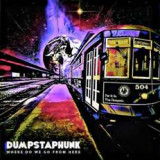
"Where Do We Go From Here" is Dumpstaphunk's first album in seven years. It will be released on April 23, 2021 on The Funk Garage, an imprint of Mascot Label Group.
Over its past 17 years, Dumpstaphunk has earned its reputation as the most well-regarded next-generation New Orleans live powerhouse, the type of band whose live shows attract sit-ins from legends like Carlos Santana, Bob Weir and Trombone Shorty. Alongside Hall, Daniels, Alex Wasily, Ryan Nyther and drummer Devin Trusclair, cousins Ivan and Ian Neville have built upon their family’s iconic NOLA legacy as they’ve transformed Dumpstaphunk into the city’s pre-eminent 21st-century funk-fusion export.
The band’s mix of classic and modern influences can be heard throughout the party-friendly mix of R&B, funk, rock, swamp-pop and blues of "Where Do We Go From Here," from the slap-bass rave "Make It After All" to the band's contemporary renderings of NOLA R&B rarities (the 1975 Blackmail gem "Let’s Get At It") and early Seventies classics (Sly and the Family Stone's "In Time”).
‘Where Do We Go From Here’ is perhaps the best evidence yet of Dumpstaphunk’s ability to strengthen and transform their singular NOLA roots in combination with the deeper outside musical and philosophical influences on which the band is founded.
There’s something new under the sun. If you look at it closely,
something new is only (and always) created at crossroads –
when different and signi¦cant traditions are connected and
combined. On their own, these traditions have often existed
for a while. However, in this new form they have never
appeared together. The latest manifestation of something
new can now be found on the album “No Future Dubs”, the
interpretations of “No Future Days” – the most recent album
by German band Messer – by Finnish producer and old
friend of the group Kimmo Saastamoinen aka Toto Belmont.
The intentional traditions that merge on this grand and
digni¦ed album are post-punk, dub and techno. A new
chapter in the culturally constant narrative of dub is written
here. Through their past and parallel activities in hardcore
and post-punk bands, Messer drummer Philipp Wulf met and
befriended Kimmo, originally a drummer too. In their
continuous dialogue discussing their musical journey, Philipp
and Kimmo over the years more and more immersed
themselves in the aesthetic possibilities of dub and reggae.
Indeed, lots of musicians do not listen to the type of music at
home that they write and play in their respective projects
(Take me as an example: House is the music that I produce
and put on as a DJ. On my own, I listen to various stuff,
music by Monk and Messer for example). The same applies
to the protagonists involved here. By discussing dub und
through Toto Belmont’s steadily increasing producingexpertise, the idea of creating dub versions of selected
Messer tracks was born. The Messer album “No Future
Days”, released in 2020, proved to contain the perfect raw
material as the songs on this album are already produced in
a much more transparent way than on previous LPs – and
are hence more suitable for dub. Still, it’s a giant leap from
the originals to the dubs. These add a third dimension to the
described character of the post-punk/dub amalgam: techno.
The result is a sound that hasn’t existed before, especially
not with German lyrics (which scarcely, however, carry
meaning or messages here. Hendrik Otremba’s voice is used
more like an instrument, as if he was the ghostly ¦gure which
he often sings about and which now §oats and screams
through the sound space). The history of mutual contact and
in§uence of (post-)punk and dub (reggae), which Messer
have kept on writing, is glorious and reaches back far in
musical history. Still, it has always been a rather marginal
chapter not only in punk but also in dub history. But already
in the beginnings of punk (the British version, less the
American one), the presence and in§uence of reggae was
obvious in many places as both are united in their resolute
attitude as rebel music. This is how the two genres
recognized each other – especially the punks regarded
reggae as rebellious. As is known, already Johnny Rotten
mainly listened to dub in private. By using the name John
Lydon, he then – together with bass player Jah Wobble –
established the group PiL as one of the most exemplary
bands at the crossroads of dub and punk. The Slits, Pop
Group, Killing Joke, The Ruts and last but not least The Clash
along with the Mick Jones offshoot Big Audio Dynamite –
the thriving British music scene in the early 80s was full of
dub-in§uenced acts. The echoes meandered everywhere. In
the USA, it took longer until the in§uence of dub became
noticeable and it has never been as distinctive as in the UK.
The history of US hardcore, however, cannot be told without
bands like Bad Brains from Washington D.C. who on their
albums occasionally inserted conscious reggae and dub
tracks between breakneck hardcore tracks. Another
important group is Blind Idiot God who similarly included
dub tracks on their LPs – the contrast between densely
droning rock tunes and widely breathing dub versions can be
experienced very vividly here. In the 90s, dub’s in§uence on
post-punk decreased while turning up even more distinctively
somewhere else: Techno was in many respects susceptible
to dub, to say nothing of the music from the so-called British
hardcore continuum (jungle, drum & bass etc.), which directlydeveloped from dub and reggae. But also “pure” techno –
meaning techno without breakbeats – discovered its a¨nity
for the possibilities of dub at an early stage, in England for
instance in projects like Left¦eld or The Orb. In addition, the
project Rhythm & Sound was established in Berlin with close
ties to the Hardwax record store. With regard to this project,
you can’t really say where dub ends and where techno begins
(or vice versa) because of the interconnection of the two
genres here – everything is based on the steppers pulse
which links the two styles like a common DNA. With dub
techno a new genre was created. Until the present day, there
are producers who don’t produce anything else and DJs who
don’t put on any other music. The Messer dubs are
characterized by a grand majestic manner and force that
presumably someone like Mad Professor is able to produce
and that is also inherent in many Scandinavian productions
of the last 15 years; a crystal-clear aesthetic which locates
itself far away from Kingston or Brixton, but features a pulse
referring clearly to Berlin and Helsinki. The songs appear in a
completely new and deconstructed form, the instruments are
exclusively used as particles and raw material, not as riffs;
merely glaring guitar textures ¦ll the wide dub space. There
are many new elements that were added by Toto Belmont,
especially synthesizer sounds and drums. The ¦nal result
creates an enormous aesthetic power and dignity, and an
atmosphere you don’t want to leave anymore. “No Future” is
a well-chosen title as a reference to the protagonists’ punk
association; as a main thrust of the album, however, a
comma between these two words is imaginable as well.
Launch of a new series of Various Artists 12inches to be released on Night Defined Recordings, which will serve as a platform for the existing NDR label family as well as for new faces. NDVAX01 gathers four tracks by Șerb, SW., Roger 23 and Eduardo De La Calle, which find common ground when it comes to depth and space as well as to walk away from established song structures in favor of establishing a forward-thinking type of club music.
- A1: Marie Touchet - College Infernal (House Paradise Version)
- A2: Michel Moers - La Route
- A3: Anne Zamberlan - Attention Danger
- A4: Thalie - C'est Pas Sorcier
- A5: Histoires De Filles - House Tube
- B1: Fred De Fred - En Amour (Edit 2020)
- B2: Techno 90 - Everybody Dancing
- B3: Jean-Francois Maurice - Top Model
- B4: Claire An - Pres De Toi (Je N'ai Pas Peur) (Je N'ai Pas Peur)
- B5: Artiste Inconnu - Opium (Pirate Mix)
10 track compilation of obscure, quirky and irreverent 90s Europop/dance music from the ever-reliable Born Bad Records crew.
”Real” house music emerges in early 80’s Chicago (where the Warehouse club, which allegedly gave its name to the genre, closes down in 1983). England’s acid house and Belgium’s new beat, its European offshoots, fed the cravings of tabloids in 1988 and 1989. The house music we’re interested in though, the type bound to soon overwhelm European charts, is already pretty far away from the Afro-American music born in Chicago. So far away it inherited a new name: dance music.
Just like it had been the case with disco a few years back, house and techno aren’t exactly in the good books - acid house and new beat even less so. And it’s precisely the genre’s mainstream iteration this compilation focuses on; the house en Fran ais, which strives to get on board the running train in 1990.
The house which sports the all-over jean look, bandana, cap, chewing gum, Peugeot 205 complete with snazzy beats on the radio. The big deal big fuss type, miles away from the original, underground house. It might not have been born in the nineties, but that’s clearly when house music became mainstream.
- A1: Shuko & Hannah V - Do The Right Thing
- A2: Saib - City Lounge
- A3: Sweatson Klank - Play The Shadows
- A4: Konteks - Misty Harp
- A5: Suff Daddy - Fertilized At The Discotheque
- A6: Dj Cam - Aquaverde
- B1: Jinsang - Absence
- B2: Leaf Beach - Coastline
- B3: Loland - Taidana
- B4: Burrito Brown - Ice Cream Sundae
- B5: Melodiesinfonie - Akindstream
- B6: Kazam - With You (Feat Type Raw)
- B7: Flofilz & Digitalluc - Kompass
- C1: Ol'burger Beats - Kaldt 2012
- C2: V Raeter - Dont Play With Birds
- C3: Kreaem & Allan Broomfield - Oblivion
- C4: Yeyts - In Between
- C5: Tesk & Sitting Duck - Letter
- C6: Kupla & Tahmas - Drowsy
- D1: Deauxnuts & Twotrees - Only U (Part 2)
- D2: Imagiro - Watching The Fog Lift
- D3: Smoke Trees - Najana
- D4: Less People - Tragedy For Breakfast
- D5: No Spirit - It's All Good
- D6: Brillion - Lanterns
- D7: Misha & Jussi Halme - Through (Bonus Track)
Back in 2015, when we started Hip Dozer we were overwhelmed by the amount of talents that were still defending that old school way of doing beats and the amazing creativity that was circulating in the scene.
In a period of time where hip hop was evolving so much and getting always further (sometimes for the best but also for the worst), it appeared evident to us that we had to defend this rising scene of young beatmakers that were so tied up to the roots of the 'old-school' beatmaking but still bringing it to another level.
It has been 5 years since we have created Hip Dozer Records with our 1st Anniversary compilation and this is what makes this compilation such a special project every time. Its goal remains the same and will always be, championing the art of beatmaking that we love and help to showcase new artists from the scene.
This year we have the chance to have onboard some of our favorite new talent from the scene with the like of Burrito Brown, Loland, Imagiro, we also have the chance to have standard bearers like Jinsang, Saib, Flofilz, Melodisinfonie, Kazam, Shuko and, cherry on the cake, the french hip hop legend DJ Cam on top of that.
We want to thank so much all the artists who took part in this project and that were as enthusiastic as we are in its realization. It’s been such a thrill since this venture started and this is just the beginning. Much love to all of you guys listening and supporting wherever you are.
PEACE. Hip Dozer Fam.
- 1: This Bitter Earth
- 2: How Lovely To Be A Woman
- 3: You’ve Got To Be Carefully Taught
- 4: Getting To Know You
- 5: The Man I Love
- 6: You’re The Dangerous
- 7: Type
- 8: Trust In Me
- 9: He Hit Me (And It Felt Like A Kiss)
- 10: As Long As He Needs Me
- 11: Everybody Has The Right To Be Wrong
- 12: Prisoner Of Love
- 13: The Sports
- 14: Page
- 15: Sing
Veronica Swift flips the script on This Bitter Earth, the captivating follow-up to her 2019 Mack Avenue Records debut, Confessions. Whereas Confessions played out like pages from her personal diary, on the new album, the 27-year-old singer and master song interpreter looks outward while addressing social ills that plague the world today.
This Bitter Earth takes on the song-cycle characteristics of such classic LPs as Marvin Gaye’s What’s Going On, Kate Bush’s Hounds of Love, and Mary J. Blige’s My Life. For her album, Swift tackles sexism “How Lovely to Be a Woman”, domestic abuse [“He Hit Me (And It Felt Like a Kiss)”], racism/ xenophobia [“You’ve Got to Be Carefully Taught”] and the dangers of fake news [“The Sports Page”].
Accompanied by a team of kindred spirts that includes pianist Emmet Cohen, guitarist Armand Hirsch and flutist Aaron Johnson, bassist Yasushi Nakamura, and drummer Bryan Carter, Swift curates material that covers multiple genres, including jazz, American musicals, vintage R&B and contemporary rock.
They Say: “New directions in contemporary scoring”.
We say: Contempo is one of the best full album listens in the KPM 1000 library. Succinct smoking soul, super tight breaks and string-drenched sleaze composed by the library master, Keith Mansfield.
The creator of the romping tunes that became the iconic themes to the BBC’s Grandstand programme and their televised Wimbledon Tennis Championship coverage, Keith Mansfield was perhaps KPM’s most prolific artist from the mid 1960s right the way through the 1980s. As well as the sort of pop orchestral sound that is all over these classic library records, he could also turn his hand to raw, edgy rock and funk. Quentin Tarantino is a big fan, going as far as including some of Keith’s work on the soundtracks to Kill Bill and Grindhouse.
Many library records are a game of two halves and Contempo is certainly one of those. The first side cooks on a high funk breaks flame whilst the flip is something altogether more tranquil, yet no less groovy. It lays back with dreamier, post-coital grooves.
Rugged funk opener “The Fix” confidently displays its low slung languid grooves with heavy drums, horns and bass. Smokin’ in slow motion. The punchy “What’s Cooking” follows and has a lighter, more whimsical touch. But the drums still roll and the clavs wiggle in fascinating opposition to those horns. The dark and moody intro to “Cut To Music” gives way to a more inclusive, relaxed funk that’s all irresistible bass and stabbing horns. The mid-tempo “Man Alive” signals the time to really get down. A percussive monster jam. If you can’t strut to this then we really can’t help you! Closing out the A side, fresh guitar licks drip all over the slick drums of “Funky Footage”, with a New Orleans piano vibe coming on to really light a fire.
Whilst the dramatic crime funk of the A side is enough on its own to have earned this record its place in the great library record canon, it’s undoubtedly the more smoothed out B side for which Contempo is rightfully adored and celebrated. It’s so chilled and mellow, with beautifully arranged, sweeping strings, sax solos aplenty and a real 70s soundtrack feel. Think Love Boat, CTI label, Bob James, Grover Washington Jr.-type jams.
The super sleek and sexy jazz funk of “Breezin’” is as light and magical as you’d hope. An open-air masterpiece, its indulgent sound is just a taster of the sophisticated funk to follow. The elegant, romantic feels of “Good Vibrations” (used brilliantly by Odd Future’s Mike G for “Swiss Army”) is a string-drenched, wah-wah fuelled ode to living your best life. Nonchalantly. Whilst it keeps a very West Coast feel, the blaxploitation strut is certainly more Blackbyrds than Brian Wilson. “Sun Goddess” will blow your mind with the sensuous sound of glorious horns and beautiful keys. The luxurious “Love De Luxe” and its horizontal grooves have been much sampled, but here it proves that it doesn’t need any help to get you in an intimate mood. Closer “Snake Hips” is a cool mid-pace slouch. Just divine.
Originally released in 1976 but, like the very best KPM records, wonderfully timeless, Contempo is also no mere LP-length collection of loosely related tracks. This is a rare example of a library record that is a genuinely great listen from start to finish.
As with all of our KPM re-issues, the audio for Contempo comes from the original analogue tapes and has been remastered for vinyl by Be With regular Simon Francis. And as usual, the sleeve reproduction duties were handed over to Richard Robinson, the current custodian of KPM’s brand identity.
: Contempo (KPM) (LP)
Obviously is the new album from beloved band Lake Street Dive. It includes the new single ‘Nobody’s Stopping You Now’, a letter of encouragement from lead vocalist Rachael Price to her teenaged self, co-written with bassist Bridget Kearney. Lake Street Dive has figured out how to write tunes that reflect this particularly turbulent chapter in our shared history. The album track ‘Making Do’, which was released at the end of last year, speaks to the world that future generations are inheriting while exploring the lasting impacts of climate change and our responsibility to address it (featuring a cameo from Senator Ed Markey who co-sponsored the Green New Deal).
As Price puts it, “You’re trying to express your anxieties, your feelings, your sadness, your happiness, all of these things – your authentic state of being in a song. But you’re also trying to create something people will listen to over and over again. That’s the unique fun thing about music, putting these messages into three and a half minute snippets, dropping whatever truth we can and hoping it’s the type of thing that people want to ruminate on.”
Obviously was produced by Grammy Award-winning producer, songwriter, and multi-instrumentalist Mike Elizondo who is best known as a songwriting collaborator for Dr. Dre, Eminem, and 50 Cent and has also served as a record producer for Fiona Apple, Mary J. Blige, Carrie Underwood, and 21 Pilots, among many others. Utilizing Elizondo’s hip-hop record-making expertise coupled with the permanent addition of keyboardist Akie Bermiss, Lake Street Dive’s wide-ranging taste in pop, rock, R&B, and jazz have blended together to make an impressively cohesive sound, combining retro influences with a contemporary attitude. “We’ve been a band for so long that we didn’t want to just become a feedback loop of our own ideas,” recounts Kearney. “It felt like a really good time to bring another person like Mike Elizondo, and he really opened us up. He encouraged us to make bolder arrangement choices, take those chances and try those things. The record really is a success in what we set out to do: continue to challenge ourselves, continue to grow, and do things we’ve never done before.”
The members of Lake Street Dive founded the group in 2004 while attending the New England Conservatory of Music in Boston. The band features Rachael Price (lead vocals), Mike “McDuck” Olson (trumpet, guitar), Bridget Kearney (bass) and Mike Calabrese (drums) as well as their newest member Akie Bermiss (keyboards), who has been a touring member of the group since 2017. Since the band’s inception, they have released six studio albums. Their 2018 self-produced record, Free Yourself Up, debuted at #4 on the US’s Top Album Chart and charted #8 on the Billboard 200. In addition, the album’s hit single ‘Good Kisser’ peaked at #5 at Americana radio and appeared in the Top 20 at AAA radio, both career peaks for the band. The group has toured worldwide performing at major music festivals including Bonnaroo, New Orleans Jazz Festival and Newport Folk Festival while preforming alongside artists such as T Bone Burnett, The Avett Brothers, Robert Finley, Jack Johnson and Trombone Shorty.
I’ve known Alex Bleeker my entire life. Well, okay, maybe not since I was born, but there’s no doubt that I’ve shared a fair bit of memories with him over the years. We’ve acted in high school productions of Shakespeare together, gone on late-night diner runs, argued about which Weezer album is the band’s best, and swapped mutual appreciation for the music of Yo La Tengo on car rides careening around the snaky suburbia of our hometown. Just like his Real Estate bandmates Martin Courtney and Julian Lynch, we attended high school in the New Jersey enclave of Ridgewood, a place where sticky summer days yielded cool nights with a glow so nocturnal that you can practically hear the fireflies buzzing off of this sentence alone.
Indie rock—a type of music that can easily be made or listened to in someone’s garage—often dominates teenage suburban preoccupations, and both Alex and I were no exception. You can hear this legacy of listening on his new album Heaven on the Faultline, which departs from his last full-band outing as Alex Bleeker and the Freaks, 2015’s Country Agenda. Whereas that album had a more full-bodied explicitly folk-y feel, Heaven on the Faultline finds Bleeker getting back to his homespun roots over the course of its 13 songs, from the jangly guitar pop of New Jersey heroes the Feelies and YLT’s hushed, acoustic reveries to the open-hearted folk rock that marks so much of the Grateful Dead’s early catalog.
Written and recorded over the last several years, Heaven on the Faultline’s songs were initially recorded straight to GarageBand in Bleeker’s bedroom before receiving further studio refinement in co-producer Phil Hartunian’s Tropico Beauty space in Los Angeles. With contributions from Confusing Mix of Nations’ Josh Da Costa, Cameron Stallones of Sun Araw, singer-songwriter Kacey Johansing, and Parting Lines’ Tim Ramsey, Heaven on the Faultline achieves a warm and intimate feel that defines Bleeker’s mission for the album: “I wanted to capture the moment in which I fell in love with making music to begin with. This is music for myself—me getting back to music for music’s sake.”
The unsteady times we live in certainly creep into view on Heaven on the Faultline. The deceptively easygoing “D Plus” was written on the day of President Donald Trump’s inauguration with the cursed event in mind, while the anxiety of climate change hovers just above the lovely guitar loops of “Felty Feel.” “The album is very much about dealing with the anxiety of a sense of impending doom,” Bleeker states while discussing the album’s portentous vibes. “When is the hammer going to fall? How do we go forward in the face of such anxiety and experience the complexity of life?”
Tough questions with few answers, but try not to stress too much. It’s possible to experience such existential doubt while also enjoying the simple pleasures that life has to offer, and that ethos is square at the heart of Heaven on the Faultline. It defines who Alex Bleeker is, too, and is one of many reasons why I’m proud to have known this special person and artist for so long.
Larry Fitzmaurice
- 01: Stained Glass Body (2020 Remaster)
- 02: Star Garden (20 Remaster)
- 03: Loving Love (2020 Remaster)
- 04: Where I End _ You Begin (2020 Remaster)
- 05: Body Within Body (2020 Remaster)
- 06: Where You End _ I Begin (2020 Remaster)
- 07: Orbiting Love _ White Dwarf Butterfly (2020 Remaster)
- 08: Womb Night (2020 Remaster)
- 09: River Like Spine (2020 Remaster)
- 10: Wild Moon And Sea (2020 Remaster)
- 11: Mirrors Death (2020 Remaster)
Limited
LOVE IS A STREAM :: 10 year anniversary edition. Remastered by Stephan Mathieu. Design by Farbod Kokabi.
Jefre Cantu on Guitar & Electronics. With Lisa McGee, John Twells, and Maxwell August Croy on vocals. Orginally released October, 2010 on TYPE records, UK.
From the original press release: As a member of San Francisco legends Tarentel and Type’s premier astral travellers The Alps, Jefre Cantu-Ledesma is hardly a new addition to the label, so it’s hard to believe that ‘Love Is A Stream’ is his first Type solo album. Previously releasing on Arbor, Spekk and his own Root Strata imprint, this latest album marks his journey into the beautifully cacophonous world of dream pop. Shoegaze music has been much maligned in recent years, probably due to its rebirth and subsequent explosion of popularity (which gave rise to hundreds of young bands aping the over twenty-year-old sound). However it was only a fragment of the genre that these bands attempted to re-create, and on ‘Love Is A Stream’ Cantu, instead of focusing on tired weeping melancholy ballads, focuses solely on expansive, almost noise-ridden hopefulness. This is the kind of noise we fell in love with when My Bloody Valentine blew our ear drums performing ‘Loveless’, or the kind of harmonic excess we heard on hundredth listen to Catherine Wheel’s ‘Ferment’, but taken into deeper, more abstract realms. ‘Love Is A Stream’ is dedicated to love itself, and the dreamy, shimmering blown-out textures might at first sound like white noise before they ultimately give way to blissful harmony and hidden melody. Underneath the grit and growl are hidden guitar parts, synthesizer drones and even vocals (provided by Lisa McGee, John Twells and Maxwell August Croy) that succeed in swelling the dense, tape-saturated songs to heady new heights and belie any influences they might have. On each listen the mind strips away another layer of dust and bones to reveal haunting and deeply moving beauty. The world might be spiralling into despair, but Jefre Cantu-Ledesma has brought us a record that isn’t afraid to share the love. All that’s left to do is drown in it.
A fixture on Copenhagen's music scene for nearly two decades, Nikolaj Jakobsen, aka Sugar, has to date thrived on concentrating - usually to the point of obsession - on one type of music at a time. Early on, it was punk: from his mid-teens he lived in the legendary squat and artistic community Ungdomshuset, toured worldwide with punk and metal bands, and was completely immersed in and dedicated to the city's DIY punk and metal scene.
Then in 2012 he set foot in a techno club for the first time, and his laser-like focus turned in that direction. Jakobsen began producing fast techno under the Sugar alias, and co-founded Fast Forward Productions, an agency and party that has gathered together the city's previously disparate band of fast techno and trance producers, DJs and collectives. Fast Forward has been instrumental in launching the careers of the likes of Schacke, Repro, Funeral Future and Rune Bagge, as well as Jakobsen himself.
Now Jakobsen is launching a new label that, even down to its name, is an open challenge to himself to focus on multiple musical styles at once. Perfumery, of which the Eyes Cream EP is the inaugural release, will be a home for his productions under the Sugar name and other aliases, as well as collaborative efforts with others. The label's open remit defies definitive categorisation of is to come, but its second release will be an abstract, atmospheric album by the cimbalom and tuba player and composer Anders Bo Eriksen, aka OPICA. On that record's heels will be collaborative projects with D.Dan and HVAD, as well as an experimental-minded debut LP by Jakobsen as Sugar.
Though Perfumery will be a platform for the exploration of new musical territories, Eyes Cream comprises four fast-techno hardware jams in Jakobsen's signature style. As well as showing off his knack for punning in a second language, opener Bright Side Of The Spoon is a classic Copenhagen splicing of darkness and light, with insistent, ominous bass waves leavened by twinkling synth textures. On the surface the middle two tracks, Eyes Cream and Try Me, are harder, flintier, Detroit-referencing tools. Just beneath, however, lurks the texture and warmth that is one of Copenhagen techno's prime calling cards. Perhaps the greatest treat of the EP is saved for last: Once And For No One is a gorgeous, gauzy, end-of-the-night banger that packs a hefty emotional punch.
All proceeds from physical and digital sales of the first EP on Perfumery will go to Sea-Watch.Org, a German NGO dedicated to saving migrants trying to reach Europe on stricken vessels in the Mediterranean.
A deluxe vinyl reissue of Demigod's 2002 album Shadow Mechanics. This version comes with a gatefold sleeve and is limited to 500 hand-numbered copies on violet splatter vinyl. Demigod’s criminally underrated second album of cult Finnish Death Metal from 2002 released on vinyl for the first time! Melodic, brooding and doom-laden death metal, punctuated with full-fledged scorchers such as the fierce and blasting "Gates of Lamentation", makes Shadow Mechanics an unpredictable treat, way ahead of its time. This seven-Finn act's potent, driving obscure death metal dispenses pure surges of metal-laced adrenaline thanks to the gruesome vocals and a monstrous Finnvox production. Layering the album with more solemn and atmospheric cuts, Shadow Mechanics shows Demigod pushing at the boundaries of their sound and the conventions of the scene at the time. Pressed in a limited quantity of 500 hand-numbered copies on violet splatter vinyl, with a gatefold sleeve and old-school classic Demigod logo replacing the typeface of the original CD issue, this highly collectible new Svart Records pressing is a treasure for any self-respecting Finnish Death Metal connoisseur to complete their collection.
The self-titled, full-length debut from Bones Owens is a selection of songs both gloriously gritty and undeniably euphoric. In a bold departure from the moody Americana of his acclaimed EPs Hurt No One and Make Me No King, the Missouri-bred musician’s first release with Thirty Tigers delivers a powerful sound deeply inspired by ’60s garage-rock, Hill Country blues, and the swampy roots-rock of bands like Creedence Clearwater Revival (“the first record I remember stealing from my dad when I was ten and just starting to play guitar,” according to Owens). A potent showcase for his formidable guitar work—a talent he’s displayed in performing with artists as eclectic as Yelawolf and Mikky Ekko— Bones Owens arrives as a full-tilt expression of Owens’ wildest impulses, all swinging rhythms, and swaggering riffs. Featuring heavily playlisted hits like “White Lines” and “Keep It Close,” Bones Owens came to life at The Smoakstack in Owens’ adopted hometown of Nashville. With production from studio owner Paul Moak—a five-time Grammy Award nominee who’s also worked with Joy Williams, Marc Broussard, and The Blind Boys of Alabama. “This album really came from opening for some good people over the last few years, from feeding off that energy from the crowd and wanting to write more songs that would feel exciting to play live,” says Owens, who’s recently toured with Reignwolf and Whiskey Myers. “It felt like the right approach to keep the production simple and record everything to tape - I think it creates a good type of nervousness that brings out the best in everyone. Nobody wants to be the one to mess up the take. Besides, all my favorite records were made that way. You can’t fake that sound.”
Calypso Drip FM is a journey of styles & influences that formed the varied musical landscape of its creator. Only known by the moniker of Gryff, the author wanted a project that reminded listeners of radio stations of decades past. Particularly the type you would have on GTA: Vice City.
Gryff is a 90s kid, but the track list of his debut album plays like a greatest hits of a much mature songwriter and producer.
Almost exclusively written by himself, requesting the help from Andrew Threlfo in production for 'Do You Feel Like This?', and with NY songstress Primo The Alien as guest and co-writer for Reverse, his undeniable talent is showing in spades.
This incredible debut album is going to make waves in the scene and turn the young musician into a big player.
Analogue Productions (Atlantic 75 Series)
Celebrating the 75th Anniversary of Atlantic Records!
6x platinum-selling album includes "New Sensation," "Never Tear Us Apart," "Devil Inside," and the No. 1 hit "Need You Tonight"
180-gram 45 RPM double LP release
Mastered by Ryan K. Smith from an EQ'd tape copy
Pressed at Quality Record Pressings
Tip-on old style gatefold double pocket jacket by Stoughton Printing
Kick, the sixth and best-selling 1987 studio album by Australian band INXS, has the unmistakable sound personified by its four U.S. Top 10 singles, "New Sensation," "Never Tear Us Apart," "Devil Inside" and "Need You Tonight," — which reached the top of the U.S. Billboard singles charts.
Between 1980 and 1984, INXS released four studio albums and had toured their native country Australia extensively. With Kick, producer Chris Thomas fused the funk and soul of their previous album The Swing with the mainstream rock of Listen Like Thieves. In an interview with MusicRadar, Andrew Farriss stated, "The melding of funk and rock was always in our heads. We were very excited about the idea of overlaying two types of songs and genres together."
Kick showcased a diverse range of musical styles, blending rock, pop, funk, and dance elements. This versatility appealed to a wide audience, making the album accessible to fans of different genres. It's four catchy singles became radio staples and were accompanied by stylish music videos, helping propel INXS to international stardom.
Incorporating elements such as electronic percussion and synthesizers gave Kick a modern sound, helping it stand out, together with Michael Hutchence's charismatic and sultry vocals that created a strong emotional connection.
All the hallmarks of a top-notch Analogue Productions reissue are here for you to savour: Mastered directly from an EQ'd tape copy by Ryan K. Smith at Sterling Sound and cut at 45 RPM. Pressed on 180-gram vinyl at Quality Record Pressings, and housed in a tip-on old style gatefold double pocket jacket by Stoughton Printing.
Being as LSD was first developed in a laboratory in Basel, it is perhaps no coincidence that one of the most far out albums of all time was made by this Swiss band (no small feat, given the competition!). Braintickets 1971 debut, Cottonwoodhill, begins normally enough with two fine psychedelic/Krautrock-influenced tracks, but the remainder of the album plays like an acid trip with a soundtrack, dominated by Joel Vandroogenbroecks endless droning organ, a variety of musique concrète-type sound effects and vocalist Dawn Muirs trippy vocals. The album, banned in several countries, even came with this self-imposed warning: After Listening to this Record, your friends may not know you anymore. / Only listen to this once a day, your brain might be destroyed!. Gatefold sleeve. Fully remastered from the original master tapes!
Roly Porter returns to Subtext with 'Kistvaen'. The LP takes its name from a type of granite tomb found pre-dominantly in Dartmoor, an area in southwestern England. Scattered across the moorlands, the kistvaens were often found covered in a mound of earth and stone. They housed dead bodies, allowing them to lie facing the sun.
With 'Kistvaen', Porter speculates on the burial site as a mirror, or a gate in time. Excavating stories and images of ancient burial rituals, the record teases out similarities in emotional and social rituals between the Neolithic period and today. While a myriad of social, cultural and technological factors drastically differentiate our contemporary period and the end of the Stone Age, certain affinities may still be found in experiences of death across eras.
Venturing across histories, Porter soundtracks a moorland burial unanchored in time. Raw, unprocessed vocals are folded into field recordings made in the area, wordlessly relaying tableaus of burial rituals in Neolithic Dartmoor. 'Kistvaen' features three singular vocalists—Mary-Anne Roberts, from medieval Welsh music duo Bragod; Ellen Southern, of Bristol's Dead Space Chamber Music group; and Phil Owen, a singer and researcher in vocal traditions.
It was inside Jeff Tweedy’s second home, The Loft in Chicago, that Love Is The King was recorded in April of 2020. Surrounded by an assemblage of treasured instruments and loved ones in a world that felt more and more alien by the day.
Out on dBpm Records, Love Is The King, a “beautifully honest ode to love and hope,” is the follow-up to 2018’s WARM and 2019’s WARMER, and comes on the heels of Tweedy’s second book, How To Write One Song, out October 13th via Penguin Random House's Dutton. “At the beginning of the lockdown I started writing country songs to console myself. Folk and country type forms being the shapes that come most easily to me in a comforting way. 'Guess Again' is a good example of the success I was having at pushing the world away, counting my blessings — taking stock in my good fortune to have love in my life,” comments Tweedy. “A few weeks later things began to sound like 'Love Is The King' — a little more frayed around the edges with a lot more fear creeping in. Still hopeful but definitely discovering the limits of my own ability to self soothe." –Jeff Tweedy
Without warning, a group of young girls from a remote region of Benin is shaking up the world of garage rock with breathtaking freshness, ingenuity and energy, playing spot-on, loud and clear.
A musician named André Baleguemon decided to form an exclusively female band rooted in the concerns of its time. He puts the spotlight on the guitar, drums and keyboard, instruments he has admired since his childhood, symbols of modernity in this remote region. His observation is simple: “In the North, girls have no room to advance and women are put aside. I simply wanted to show the importance of women in the societies of North Benin by forming a female orchestra “.
On July 25th, 2016, with the support of the city of Natitingou, André launched a press release on Nanto FM offering to help train girls in music for free. A few days later, dozens of aspiring musicians showed up at the Youth Center. “The girls who came didn’t know anything about music. We selected seven girls of the Waama and Nabo ethnic groups from the surrounding villages, some had never even seen these types of instruments before. “
The girls quickly became passionate about their new musical activities, learning how to play drums, guitar, piano and sing vocal harmonies. Their progress was astounding. An intense work of musical training took place, starting with drum workshops, their favorite instrument. Angelique and Urrice on drums and vocals, assisted by Marguerite, the third drummer. Sandrine is on keyboards, as is Grace, who also sings vocals. Julienne is on bass and Anne on guitar.
André’s determination is one of the key elements of this human and artistic success. The girls have already performed dozens of concerts in the region, forging and expanding an already solid repertoire, while attracting an ever-increasing local audience. In addition to musical progress, he has been personally involved with each family, showing them the importance of his project, both musically and humanly and in particular the fact that each girl must remain in school and not be forced into marriage.
At the end of 2018, their encounter with the young French sound engineer Jérémie Verdier accelerated the course of things. On a mission in the region, he called on his Spanish friends Juan Toran and Juan Serra who showed up with their recording equipment in order to record the band’s first songs in the annex of the local museum. Random encounters and fate led Jean-Baptiste Guillot to hear the tapes. He decided to go meet them at the end of 2019. This short but memorable journey sealed the fate of the record you are now holding in your hands.
Bay Sine Recordings, originally known as Bunkr Music, started as a project of music blog Playhous net. A year after it's founding, Bunkr separated from Playhous and the name has since been changed to Bay Sine Recordings. Bay Sine was officially launched December 7, 2016 with a party played by the one and only DJ N-Type.
Big Crown Records is proud to present Ekundayo, Liam Bailey’s debut record on the label. This album is a long time in the making, and after listening, clearly worth the wait. It didn’t take a long time to record, but it did take years for all the stars to line up.
Bailey, born and raised in Nottingham, England, the son of an English mother and Jamaican father got his early influences from his mom’s record collection. Bob Marley and Dillinger, Stevie Wonder and The Supremes, The Beatles and Jimi Hendrix would eventually shape the singer/songwriter we know today.
Fast-forward to 2005, Liam is in London and doing the whatever-gig-you-can-get musician hustle with hopes of landing a record deal. And it was through this time that Liam first teamed up with Leon Michels, musician / producer luminary, and the co-founder of Brooklyn's own Big Crown Records. Liam flew out to New York and those first sessions together produced the now classic tunes “When Will They Learn” and “I’m Gonna Miss You” which still get spins at reggae spots around the globe. That trip helped kick off what was to follow next for Liam: a slew of record releases, label deals, and working with some wildly-notable mainstream producers. Even a just-famous Amy Winehouse heard one of Liam's apartment-made, lo-fi recordings through a friend and liked what she heard. Regardless of the audio quality, Liam's particular sound shone through—all guitar, warm-rough and genuine soul. She signed him to her label shortly after.
But, as the story can go with major labels, they already had an idea of the Liam they wanted to make, promote, and push. With the typical pay-day enticement, Liam did his best to fit into whatever shape they put him to. "'Maybe I can make it work,' that's what you're thinking," Liam remembers, "but, you quickly find out that you can't."
While Liam’s career went through a bunch of record industry twists and turns he and Michels stayed in touch and would regularly connect and collaborate. Finally, in 2019, the time was right to do a full-length album together. And this time, it would be free of any restricting major label presumptions and opinions. "This is the record we always wanted to make," says Michels. Set to release in November 2020, the album is called Ekundayo. And the word's meaning may be all you need to know to get to the essence of this project. It means "sorrow becomes joy" in Yoruba, a language spoken mostly in Western Africa. On the surface, Ekundayo is a weighty Reggae record, full of new and old textured riddims. But listen more in-depth, and you'll find subject matter that's more recognizable from a modern-day R&B record. An example of the former is the first single off the album. Sung to the most beautiful woman at the nightspot, "Champion" is a joyous anthem powered by a silly-thick Juno-bass throb and 808-proof drums. In short, "Champion" is dancehall-ready. But then there's a song like "Don't Blame NY." Moody and sparse with a somber drive, you might have to resist the urge to compare it to a Frank Ocean-ish type vibe. Liam's voice is in a different but fitting element here, showing stripped-back emotion and soulful restraint. Anyone who has lived and tried to thrive in New York won't have a hard time relating to the lyrics but they may join the masses who blame the city, while Liam points the finger at himself and sings praises to The Big Apple.
Credit to Leon's hand, elements of Jamaican production are everywhere, peppered throughout the record. Like the pitch-perfect organ stabs that push through the authentically positive "White Light," or the muted, percussive guitar strums that chug along in the back of "Fight." In the same vein of any fantastic singer/songwriter album, Ekundayo is a reflection of who Liam Bailey is, taking on topics and approaches he never would think of just a few years ago. Some evidence: "Ugly Truth" is about reconnecting with his biological father, a subject he once thought would be too personal to address. The journey from conforming to major labels to this latest record has been a long one for Liam, and a bit of a struggle. But struggle may be the only way we truly grow and evolve. With a new clarity of purpose, sound, and life, Liam has found joy out of those struggles. And it's called Ekundayo.
Big Crown Records is proud to present Ekundayo, Liam Bailey’s debut record on the label. This album is a long time in the making, and after listening, clearly worth the wait. It didn’t take a long time to record, but it did take years for all the stars to line up.
Bailey, born and raised in Nottingham, England, the son of an English mother and Jamaican father got his early influences from his mom’s record collection. Bob Marley and Dillinger, Stevie Wonder and The Supremes, The Beatles and Jimi Hendrix would eventually shape the singer/songwriter we know today.
Fast-forward to 2005, Liam is in London and doing the whatever-gig-you-can-get musician hustle with hopes of landing a record deal. And it was through this time that Liam first teamed up with Leon Michels, musician / producer luminary, and the co-founder of Brooklyn's own Big Crown Records. Liam flew out to New York and those first sessions together produced the now classic tunes “When Will They Learn” and “I’m Gonna Miss You” which still get spins at reggae spots around the globe. That trip helped kick off what was to follow next for Liam: a slew of record releases, label deals, and working with some wildly-notable mainstream producers. Even a just-famous Amy Winehouse heard one of Liam's apartment-made, lo-fi recordings through a friend and liked what she heard. Regardless of the audio quality, Liam's particular sound shone through—all guitar, warm-rough and genuine soul. She signed him to her label shortly after.
But, as the story can go with major labels, they already had an idea of the Liam they wanted to make, promote, and push. With the typical pay-day enticement, Liam did his best to fit into whatever shape they put him to. "'Maybe I can make it work,' that's what you're thinking," Liam remembers, "but, you quickly find out that you can't."
While Liam’s career went through a bunch of record industry twists and turns he and Michels stayed in touch and would regularly connect and collaborate. Finally, in 2019, the time was right to do a full-length album together. And this time, it would be free of any restricting major label presumptions and opinions. "This is the record we always wanted to make," says Michels. Set to release in November 2020, the album is called Ekundayo. And the word's meaning may be all you need to know to get to the essence of this project. It means "sorrow becomes joy" in Yoruba, a language spoken mostly in Western Africa. On the surface, Ekundayo is a weighty Reggae record, full of new and old textured riddims. But listen more in-depth, and you'll find subject matter that's more recognizable from a modern-day R&B record. An example of the former is the first single off the album. Sung to the most beautiful woman at the nightspot, "Champion" is a joyous anthem powered by a silly-thick Juno-bass throb and 808-proof drums. In short, "Champion" is dancehall-ready. But then there's a song like "Don't Blame NY." Moody and sparse with a somber drive, you might have to resist the urge to compare it to a Frank Ocean-ish type vibe. Liam's voice is in a different but fitting element here, showing stripped-back emotion and soulful restraint. Anyone who has lived and tried to thrive in New York won't have a hard time relating to the lyrics but they may join the masses who blame the city, while Liam points the finger at himself and sings praises to The Big Apple.
Credit to Leon's hand, elements of Jamaican production are everywhere, peppered throughout the record. Like the pitch-perfect organ stabs that push through the authentically positive "White Light," or the muted, percussive guitar strums that chug along in the back of "Fight." In the same vein of any fantastic singer/songwriter album, Ekundayo is a reflection of who Liam Bailey is, taking on topics and approaches he never would think of just a few years ago. Some evidence: "Ugly Truth" is about reconnecting with his biological father, a subject he once thought would be too personal to address. The journey from conforming to major labels to this latest record has been a long one for Liam, and a bit of a struggle. But struggle may be the only way we truly grow and evolve. With a new clarity of purpose, sound, and life, Liam has found joy out of those struggles. And it's called Ekundayo.
- A1: Prelude
- A2: Satellite To Medusa
- A3: God Dang Burglar
- A4: Bye Gramps & Tv
- A5: Locked In To Medusa
- A6: Medusa & Bye Bye Spiro
- A7: Gramps In Bed & Od Chased
- A8: Sherman Fights Back
- B1: Pluthar Arrives
- B2: Pluthar Dies &…Good Morning
- B3: The Fibonaccis - Terrorvision
- B4: The Fibonaccis - The Friends Of Crime
- B5: The Fibonaccis - Sack Of Suet Suite
- B6: The Fibonaccis - Advice To A Mutant
- B7: The Fibonaccis - He Can’t Stop Laughing
180g blue colored vinyl LP vinyl,
WRWTFWW Records is giggling with pleasure as it announces the official reissue of Richard Band’s director’s cut soundtrack for sci-fi horror comedy classic TerrorVision (1986).The limited edition blue-colored 180g vinyl LP is housed in a heavy gatefold sleeve with full movie gallery, obi strip, and video store stickers. It includes liner notes by Richard Band himself.
People of Earth
Your planet is about to be destroyed...
We're terribly sorry for the inconvenience
Conceived as a late 1960s Lost in Space type score with a 80s electronic twist, TerrorVision is one of the most unique soundtracks in Richard Band’s discography. Part oddball adventure, part eerie soundscape, it mixes the fun and flashy colors of the era with synth explorations that flirt with minimalism and experimental music. Band composed with a Yamaha CS70 plus twin ARP 2800s, a mini Moog synthesizer, as well as DX5 and DX7 keyboards, creating a groovy twilight zone of electrifying alien funk. The soundtrack also includes 5 numbers by deliriously wild LA band The Fibonaccis. One of a kind - like the movie itself!
This is released in conjunction with the soundtracks of Empire Pictures’ Ghoulies and Troll, also out on WRWTFWW Records November 20th. Established by producer and director Charles Band in 1983, Empire Pictures quickly became notorious for the horror-comedy classics made during its brief but legendary lifespan. With wild special effects, outrageous humor and over-the-top horror action, Ghoulies, Troll and TerrorVision were three of Empire’s finest works, and each movie featured an unforgettable score by Charles’ award-winning composer brother Richard Band.
- A1: Gong
- A2: Satori
- A3: California
- A4: Babel
- A5: Oui
- A6: Formantor
- A7: Avant Org
- A8: Berg
- A9: Touch
- A10: Supercussion
- A11: Dx7 Angel
- A12: Cassette
- A13: Healing
- A14: Scr Op42
- B1: Git L9
- B2: Hedges A
- B3: Hedges B
- B4: Karunesh
- B5: Cow
- B6: Marienbad
- B7: Click & Schwell
- B8: Sonic Island
- B9: Bird Snap
- B10: Engelschor Lo
- B13: Liquid
- B14: Gone
- B11: Marina
- B12: Mingus
Waves 1 is the rst release of Curd Duca since the legendary Elevator series (1998-2000). Waves is an album trilogy. Waves 2 and 3 will be released on Magazine in 2021.
If we think of Curd Duca’s Waves in terms of sound, rather than in terms of form, each track on Waves is actually like the large, illuminated, richly decorated initial letter that introduces the narrative of so many medieval manuscripts. It is as if Duca was collecting extraordinary letters, opening up an alphabet of sounds, and developing a musical phonetics between adjacent terms. From gong to gone; bell to bells minus drone; dome to father.
The real beauty of Curd Duca’s cycle lies in the fact that it opens up differently from so many perspectives. That we can understand it as a collection of treasures, as a commentary on our acoustic environment, as an attempt to dissect the world and stylize its parts. Much like a printer's typesetting box, Duca proposes an inventory of everything that sounds. Some of the pieces are exaggerations. Some allusions. Others abstractions, parodies, and trans gurations. It is often not even clear whether the music is based on a recording or a synthetic sound. Is the nightjar real or is it a synthetic imitation? Did Duca really use brass and zither sounds or simulate them on the computer? The hermaphroditic nature between reality and arti ciality is a central aspect of Duca’s sound world.
There is only one thing you must not do with this music: trivialize it or underestimate it. With Waves, Duca is exploring the very essence of sound, and its possible meanings and contradictions.
The 7” is arguably one of the 20th century’s greatest art forms (I’m prepared to argue it anyway). What should have been a disposable format, either as the herald for the altogether more serious LP or the truncated version of the extended 12”, ended up a the perfect expression of modern music - tightened up, fat free and to the point.
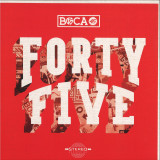
At some point during a DJ career that’s lasted pretty much the entirety of his adult life, Boca 45 (aka Bristolian Scott Hendy) eschewed all other formats to choose the 7” as his weapon of choice. Embracing and celebrating the limitations of the format (both in terms of record length and the type of music showcased on discs of that size), Hendy set out on a truly singular path for soundtracking parties the world over. In 2015 Banksy personally requested him to DJ with his 45s at the opening night at his Dismal Land Show, now, in his forty fifth year on Planet Earth, he’s made an album that reflects a life well spent flipping through the racks the world over.
On this album he has collaborated with lots of the people that he has previously worked with over the past 20 plus years recording music.
Vocal collaborations come courtesy of Louis Baker (Soul On Top / Move A Mountain) Emskee (Energy Boost / The Roxy) Sergio Pizzorno from Kasabian (White, Blue & Red) & Gee Ealey who i worked with on Malachai (Lonely)
- A1: Allegretto For A Lady/Allegretto Per Signora
- A2: Belinda May
- A3: Dream Inside A Dream/In Un Sogno Il Sogno
- A4: Poetry Of A Woman/Poesia Di Una Donna
- A5: Sestriere
- B1: Fashion (N 2)/La Moda (N 2) (N 2)
- B2: Like When It Rains Outside/Come Quando Fuori Piove
- B3: A Bit Of An Acid Irony/Un Po Di Ironia Acida
- B4: Faith/U-Pa-Ni-Sha
- B5: Listen Let's Make Love/Scusi Facciamo L'amore? (The Big One) (The Big One)
- C1: Fashion (N 3 )/La Moda (N 3) (N 3 )
- C2: The Alibi/L'alibi (Shake N 2) (Shake N 2)
- C3: Slalom (Un Cafe Sulla Banchina) (Un Cafe Sulla Banchina)
- C4: The Doll/La Bambola
- C5: To Lydia/A Lidia
- D1: The Alibi/L'alibi (Shake N 3) (Shake N 3)
- D2: Slalom (Una Sera In Albergo) (Una Sera In Albergo)
- D3: Steal To Your Next/Ruba Al Prossimo Tuo (Seq 9) (Seq 9)
- D4: Definitive Turning Point/Svolta Drammatica
- D5: Little Cat Lady/La Donna Gattina (#2) (#2)
Lounge is the third in a series of five double vinyl releases that bring together some of Ennio Morricone’s greatest soundtrack music. Each collection centres on a different movie genre, together they allow the listener to rediscover the unmatched genius of the greatest movie composer of all time. The Maestro. This collection was announced before Ennio Morricone passed away on July 6, 2020. We’ll continue to release the series to honour this great composer.
The term Lounge Music is not one that Ennio Morricone would have heard at the time he was composing these pieces for the movies that they enhanced, but it is one that has been retrospectively applied to a certain type of music, and it is a style that Morricone has contributed a great deal towards.
Lounge is available as a limited edition of 3000 individually numbered copies on solid orange vinyl. The package includes a 4-page insert with liner notes written by Claudio Fuiano. The gatefold sleeve contains a velvet spot varnish on the outside and images of iconic movie posters on the inside.
2020 Re-issue of Keith Kenniff's debut under his Goldmund moniker. Originally only released on CD in 2005 via John Twells' Type Recordings, this album of rare and unusual minimalist beauty is now presented as a vinyl edition for the first time.
Multi-instrumentalist Keith Kenniff is a busy man. He has appeared as Helios on a number of acclaimed releases, including Deaf Center’s ‘Neon City EP’, and released a debut album ‘Unomia’ on Merck records which has appeared on many best of 2004 lists. All this while studying at the prestigious Berklee College of Music, and playing drums, guitar or contributing production to a host of amazing musicians. Kenniff lives and breathes music, something that is very obvious when hearing tracks under any of his pseudonyms.
As Goldmund, Kenniff has disregarded the electronic elements of his music almost entirely in favour of just a piano, a microphone and occasionally a guitar. ‘Corduroy Road’ is thirteen tracks of pure recording, the sound of the piano being opened and the feet on the pedals, the sound of fingers pressing lovingly onto the keys. This is a record of rare and unusual beauty, so shocking and yet unpretentious in its simplicity. When the guitar does emerge from beside the delicately touched piano, it serves as a balancing point for the record. Weaving in and out of the melodies, it adds another layer to what is already incredibly moving music.
‘Corduroy Road’ is rooted in Kenniff’s love of folk music from the American Civil War. We can hear this directly from his rendition of Civil War era classic ‘Marching Through Georgia’, but the influence carries throughout the record. There is an unheard voice which propels each track through history, maybe the ghosts of dying soldiers whispering in a long forgotten bar. Every haunting note drifts deep into the psyche and is lost in the ether of nostalgia. In this way it is a concept recording of sorts, it certainly has a narrative and has to be listened to in sequence. The story has clear themes; loss, history, friendship, camaraderie, forgiveness and hope, all clearly marked out by musical segments. It is no surprise that Kenniff’s passion for cinema shines through so strongly.
It would be hard to draw comparisons to music so rooted in folk traditions, but the music evokes traces of Ryuichi Sakamoto, Mark Hollis, Keith Jarret or even Eno’s more piano based compositions. Yet influence seems unimportant when listening to this deeply personal work. Just let it sink in and drift into the psyche.
Infernal Sounds show no sign of letting up during 2020 as they present their 5th release of the year, this time with a debutant to the label, SWR. The relatively unknown artist (formerly known as Widowmaker) has been making fluctuations since arriving on the scene - his release with Cocobolo Sound receiving high plaudits as he created two tracks which perfectly paid homage to the original '06 sound. As for his Square Soulja EP for IFS022, he's plated up four cuts that showcase his vast variety in skill and sound, taking influence from grime and lacing a future sound within his productions. Whether you prefer the more surreal sounds of 'Vertigo', the downplayed filth on 'Isshin's Theme', or the more in your face skankers in both 'Square Soulja' and Cypher Zero', this is a 12" you'll want to be packing.
Having already received heavy support from the likes of Truth, N-Type, and many other reputable artists in the scene, this is an insta-bag.
After many hints and teases MANIC STREET PREACHERS have confirmed the re-issue of a deluxe edition of their 1993 second album ‘GOLD AGAINST THE SOUL’ on 12th June 2020 for Columbia/Sony. Available as a 120 page A4 book featuring unseen images from the bands’ long time photographic collaborator Mitch Ikeda, many personally annotated by Nicky Wire and original typed and handwritten lyrics from the bands own archive. It will contain two cd’s featuring the remastered album, previously unreleased demos, b-sides from the era, remixes and a live recording of The Clash song ‘What’s My Name’. There will also be a 180g vinyl version of the original album with download codes to the extra tracks on CD1 and a digital version featuring all the songs.
Nicky Wire said of the release “We moved our studio a few years ago and I unearthed a lot of demos and pictures from the ‘Gold Against The Soul’ era and thought it would be a shame not to let them see the light of day. We haven’t always been the most complementary about this album in the past, but with hindsight it was a strange and curious record with many fan’s favourites on it. James always gets a huge response when he teases the riff to ‘Sleepflower’ live.”
‘Gold Against The Soul’ entered the Top 10 on release just over a year after their debut album ‘Generation Terrorists’ and saw the band shift musically to a classic rock sound. Lead single ‘From Despair To Where’ was followed by ‘La Tristesse Durera (Scream To A Sigh)’, ‘Roses In The Hospital’ and ‘Life Becoming A Landslide’. Produced by Dave Eringa who had been working in various guises with the band and continues to do so to this day, the album was recorded over six weeks at Outside/Hookend Studios.
Celebrating live music and record store culture.
After having completed the first run of shows for their recent album "2066" through UK, France and Germany, the Mighty Mocambos did an intimate performance at world-renowned Groove City Record Store in their hometown Hamburg.
Not content with just playing stripped down versions of existing material, the band wanted to step up a notch from the "tiny desk" type concert idea and decided to record unreleased tunes for a vinyl single capturing the live energy and crowd atmosphere with analog studio techniques. After having warmed up with a couple of songs from "2066", a cheerful crowd in the packed shop witnessed the band tracking magic takes of unheard songs directly to tape.
"St. Pauli Second Line", an instrumental live favourite with simple but irresistant swamp funk ostinatoes turned into a frenetic call and response chant workout midway of the song. Singer Nichola Richards' tune "Keep It Movin'", a mainstay of the band's live repertoire for years, was cut with great energy, finally finding its way onto wax. "Something's Missing" is a brand new tune with a raw sister funk vibe - written and arranged for the occasion, rehearsed once and performed live for the first time in the version you hear on this record.
While many live recordings a are mere mix of crowd noise and neglectable renditions of well-worn tunes that are unusable for DJs and hardly appealing to the dedicated listener, THE MIGHTY MOCAMBOS - Live At Groove City au contraire is a treat for turntableists and a testimony of the spark that a well-attuned live band can light up, combining the vibes of a concert with the no-nonsense analog sound of their well-loved studio recordings.
Steel drum cover of Grace Jones. Steel drum cover of Erykah Badu. Third full length album coming in 2021. Bacao Rhythm & Steel Band is back with another crushing two-sider that is guaranteed to set dancefloors on fire and get heads nodding around the globe. The mysterious steel pan outfit hailing from Hamburg, Germany has become a staple in DJ sets from Europe to Japan, from the US to Brasil, and anywhere else these tunes have found their way to speakers. They have released a slew of classic 7”s and two critically acclaimed full length albums. With that they have set a high bar for themselves, one clearly they intend on pushing higher with this new offering. Side A is BRSB’s take on Grace Jones’ nightclub classic “My Jamaican Guy”. They take the tune to a new height from the first beat, laying down an infectious groove that will get people out of their seats immediately. Heavy duty drums and bass shake the speakers through the intro then the pans reveal what they are covering as they play the instantly recognizable top line of the original. Rhythm guitar, heavily echoed percussion hits, and the different pan sets all combine to make this yet another instant classic from Bacao. BRSB has received a lot of praise for their choices of covers. Occasionally reworking hits, but, most notably pulling the album cut gems from artists typically more championed by the underground. Well...here they go again, covering Erykah Badu’s homage to the late great J Dilla “The Healer”. This is the type of thing to make Spice Adams jump on his kitchen counter and scream. From the instant this comes on, necks will be snapping and faces will scrunch up as they take the original beat produced by Madlib and give it a run for its money. Shaking subwoofers with the eerie tremolo bass they replay E. Badu’s vocal melodies on the pans adding their own flourishes. Glockenspiel plays the downbeat and a clap like thunder keeps the two-step swaying, all coming together to make this another must have two-sider from Bacao Rhythm & Steel Band
Kumar, ex-Raging Fyah lead singer, met Fruits Records crew back in 2016, when he invited them to play with I Kong at his Wickie Wackie festival in Bull Bay, Jamaica. From then, the musical friendship never stopped, doing different types of collaboration over the years. His unique voice tone, breathe-taking vocal abilities and songwriting skills make Kumar one of the greatest singers of his generation, as his nomination at the Grammy awards 2016 with Raging Fyah can testify. "Message In Your Radio” brings a different taste to Fruits Record's catalog, noticeably more modern than the previous releases. Kumar's melancholic melodies enhance this powerful riddim played by The 18th Parallel with conscious lyrics: Message in the music is a must, today more than ever. Anthem for radio stations!
► One half of duo Lumisokea and persistent sonic explorer ANDREA TAEGGI (Opal Tapes, SM-LL, Type, Präsens Editionen) debuts on OOH-sounds with a new solo album under-the-influence of mushrooms.
► Recorded at Willem-Twee synthesis studios in Holland, Mycorrhiza is a lucid excursion into a new form of 'ritual-computer-music' — gamelan from the future.
►Master + Cut by Helmut Erler, D&M Berlin. Limited Edition of 200, 12" black vinyl housed in gold cardboard sleeve with 'ad-hoc' fluo sticker.
Of course this is not the first album born under-the-influence of mushrooms, but apparentlyTaeggi doesn't take them here as he rather observes the cognitive and intelligent behavior of mycorrhizal fungal roots—one of the great mysteries inhabiting the forest soil, and from which a network of beneficial underground relationships with plants sprouts. Known as Mycelium, this fascinating wood-wide-web very much resembles the intricacy of the human neural system—transporting carbon, water and nutrients from one tree to another. A mutualistic symbiosis that Taeggi similarly establishes with the rather rare arsenal of sound machineries he had access to at Willem-Twee synthesis studios in Holland—a center for experimentation inspired by Berio and Maderna's Studio di Fonologia RAI in 1950s Milan.
In the process of tweaking and feeding electric impulses and sound signals into instruments of the likes of the iconic ARP 2500/2600 and a number of testing/measuring units from the 50/60s—originallynot conceived as musical instruments—Taeggi engages into an exchange of nutrients and information, while abruptly sabotaging un-welcome elements, hence accelerating the sound superhighway towards spectral psychedelic tension—a process he seems to be extremely in control of. Taking a step aside from his usual minimal approach to address more complex structures and augmented mind-sets, Mycorrhiza sounds at times like gamelan from the future: a lucid excursion into a form of "ritual-computer-music" with a conspicuous penchant for detail,alluding to a continuitybetween pseudo-cerimonial and laboratory-like computer music, steering clear from any reference to a specific creed or religion—imagine Stockhausen drinking the Amazonian sacred brew Ayahuasca..
The swarming micro-movements of "Cuttleburrs" multiply in a series of crescendos marked by sudden falls, saturated drums incursions and tense sonic clusters, introducing the more explicit gamelan percussive tones and compositional forms of "Kodama" and "Icaro". Recorded on the ARP 2500, "Mycorrhiza" uses white noise generators, resonant bass and spring reverb to conjure up a magical fungal diorama, which expands into the spooky shadows of skeletons and demons of "Phantasmagoria" and the spectral mystics of "Oculus Cordis"—the Eye of the Spirit — in which Taeggi grapples with the same sine-wave generators that Stockhausen used in his seminal "Studie I" and "Studie II".