LP Transparent Purple Vinyl in Picture Sleeve
The essential debut album from Chicago’s disco-funk pioneers, featuring the timeless “Free Man,” returns fully remastered from the tapes of Tom Moulton for RSD 2026. Produced by Philly soul legends Bunny Sigler and Bruce Hawes, this record bridges Chicago’s raw energy with Philly’s orchestral elegance. Essential for any collector serious about the roots of disco and dancefloor culture — an all-killer, no-filler LP that sounds fresher than ever today. Remastered and Redesigned labels and sleeve, Transparent Purple Vinyl.
Cerca:u man
- 1: To The Moment
- 2: The Man You Always Wanted Me To Be (Alternate Version)
- 3: From The Turn Of A Card
- 4: Into The Storm (Alternate Version)
- 5: Aliens (Alternate Version)
- 6: Hour Of Need (Alternate Version)
- 7: Words On A Page
- 8: The Gift Of Love
- 1: Words On A Page (Demo)
- 2: The Man You Always Wanted Me To Be (Demo)
- 3: To The Moment (Demo)
- 4: The Gift Of Love (Demo)
- 5: Don't Take No For An Answer (Demo)
- 6: Updraft (Demo)
- 7: To The Moment (Single Mix)
In Sheep’s Clothing announces the long-awaited vinyl pressing of Marc Leclair’s beloved 2005 album Musique pour 3 femmes enceintes. The album will also be available on streaming for the first time via Community Music Group.
For years after Marc Leclair released Musique pour 3 femmes enceintes, he heard from listeners who had lived with the record in an unusually intimate way. Many described how the music became part of the emotional landscape of the months leading to birth. “I never expected that,” Leclair says. “Many women told me they listened to the record throughout their pregnancies. They said it made a real difference, that it helped them. It became more than just a record.”
First issued on CD in the early 2000s, Musique pour 3 femmes enceintes (Music for Three Pregnant Women) now returns in a new edition from In Sheep’s Clothing Hi-Fi, appearing on vinyl for the first time as a double LP. The record is being pressed in Detroit at Archer Record Pressing, the historic plant behind deep-groove classics by Juan Atkins, Kevin Saunderson, Underground Resistance, UR’s Jeff Mills, and J Dilla.
Listeners who know the Montreal-based Leclair through his better-known work as Akufen might be surprised by the tone here. During the same years he was shaping the intricate micro-sampling tracks that made Akufen a cult figure on labels including Perlon, Force Inc. and Trapez, Leclair was quietly developing this far more personal project. The meticulous craftsmanship remained the same, though the focus shifted from the hyper-detailed cut-up rhythms of his dance records toward something slower and more atmospheric. “I always compare my work to a jeweler,” Leclair says. “It’s really very precise. I’m a bit of a detail freak. I can spend hours or days on just one phrase in one song. Everything has to be perfectly put together.”
The project began almost accidentally. A few members of Leclair’s circle became pregnant nearly simultaneously, including one who had long believed she couldn’t conceive. The first track he recorded for the project wasn’t meant to advance a larger concept, he says. “It was meant to highlight the fact that three of my closest friends became pregnant at exactly the same time.”
Leclair was already a father with a three-year-old daughter, so the emotional terrain of early parenthood was familiar. Gradually the idea expanded. “I began thinking, why not make a whole album that celebrates this and also follows the entire pregnancy, the nine months,” he says. The music developed piece by piece, including a track originally commissioned by the Berlin experimental duo Rechenzentrum that would later become the album’s opening movement.
Nearly seven years passed between the first composition and the finished album, and the music mirrors the strange arithmetic of pregnancy itself. What begins as a single idea multiplies outward, sounds layering and branching until the album feels less like a sequence of compositions than a living process unfolding in time. “I work very slowly,” Leclair says. “Everything has to be something I’m completely behind. I never want to rush anything. I want things to come naturally.” Across its 72 minutes, the album blossoms with the patience of a long meditation on time, growth and emergence.
When Musique pour 3 femmes enceintes first appeared via Mutek, it circulated quietly but steadily. Critics who discovered it later recognized its unusual scope. In a 2006 Pitchfork review, Mark Richardson gave the record an 8.1, calling “150e Jour” “an unfailingly gorgeous and tightly sequenced quilt of guitar and piano samples reminiscent of Tangerine Dream,” and describing “85e Jour” as infused with “viscous pop ambient drift, the gauzy synth pads ebbing and flowing with rhythm.” Boomkat described the album as “a majestic opus from a producer that's always promised so much — here delving into a panoramic construction of almost visibly radiant music that works so beautifully through each and every second of its 72 minute lifespan.”
The new In Sheep’s Clothing Hi-Fi edition finally presents the record in the format Leclair long imagined. “I always thought that record deserved a vinyl edition,” he says. Spread across two LPs, the music now has room to unfold at its natural pace. More than twenty years after it first appeared, Musique pour 3 femmes enceintes remains what it was from the start: a carefully shaped meditation on transformation and the quiet miracle of life beginning.
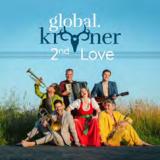
Als Global Kryner 2004 die erste CD präsentierte, stand die Musikwelt Kopf. Es war Liebe auf den ersten
Blick. Die Idee war genauso einfach wie genial: man nehme den legendären Oberkrainer-Sound eines Slavko
Avsenik, verschmelze ihn mit Welthits, nehme eine Prise Jazz und jede Menge Spielwitz dazu und fertig
ist die Rezeptur. Die Süddeutsche Zeitung machte Luftsprünge und fabulierte gar von einer „eierlegenden
Wollmilchsau“ in Sachen Musik. Und mit „verkrynern“ war obendrein ein neues Zeitwort geschaffen. Was
folgte war ein Ritt durch alle Radio- und TV-Formate, wie er selten gesehen wurde. Hunderte Konzerte in
Deutschland, Österreich, Schweiz, Benelux, Frankreich, Italien, Slowenien, Kroatien, Serbien, Ukraine bis
nach Mexiko. Nach heißen und durchaus fordernden Jahren des Tourlebens verabschiedete sich die Band
2013 von der Bühne.
Doch die Liebe ist nie erloschen. Im Gegenteil. Jetzt kommt: Global Kryner „2nd Love“! Bereits
im Sommer 2024 beschlossen die Global Kryner rund um Musikkabarettisten und Klarinettisten Christof
Spörk und Oberkrainer-Akkordeon-Urgestein Anton Sauprügl, neu durchzustarten. Posaunist und NeoFischzüchter Martin Temmel musste nicht zweimal gefragt werden. Markus Pechmann, mittlerweile einer
der gefragtesten Jazztrompeter des Landes, engagierte mit Sängerin Miriam Kulmer ein veritables Stimmwunder. Neu zur Band gesellte sich außerdem „Mister Groove“, Jazzgitarrist und Liedermacher Andreas
Haidecker. Aber Obacht: es wird kein Abnudeln alter Hits geben. Die Band bereitet sich in akribischer Kleinarbeit auf ihr Comeback vor. Neue typische „Verkrynerungen“ müssen dabei sein, ja, natürlich!
Aber diesmal gibt es eben auch eigens komponierte Songs zu hören. Man darf gespannt sein. Alles mit
viel Liebe zubereitet, nur eben nicht zum ersten Mal, sondern quasi „2nd Love“!
Onna Last Live 1983 includes the final performance by the original line-up of Onna, the psych-rock project of revered Japanese manga artist, Keizo Miyanishi. Onna’s legend has largely rested, until now, on one self-released and self-titled seven-inch from 1983. Reissued by Holy Mountain in 2009, its rediscovery, along with several archival live and studio sets that leaked out across the 2000s, signalled to a wider audience the power of Miyanishi’s strikingly hypnotic songwriting. With Onna Last Live 1983, though, we hear the group’s perfect line-up performing at its peak.
While Miyanishi was the core member and conceptualist of Onna, the other members of the group would also go on to make significant contributions to the Japanese underground. Guitarist Michio Kurihara would eventually be known for his membership of YBO2, Ghost and White Heaven, and collaborations with the likes of Boris and Damon & Naomi. Drummer Ken Matsutani formed Marble Sheep & The Run-Down Sun’s Children and The Mickey Guitar Band, while also running the Captain Trip label. Joined by the late bass player Yasui Yutaka, to whom the album is dedicated, this quartet only performed live in 1983; the live set here was recorded at Silver Elephant.
It’s a different line-up to the Onna duo that’s documented on their single. After Miyanishi and fellow manga artist Mafuyu Hiroki recorded that material, Miyanishi decided he wanted to start playing gigs; Hiroki left, and Kurihara, Matsutani and Yutaka joined soon after. This line-up allowed Miyanishi to significantly expand Onna’s powers, leading to a sound that Kurihara once described to Ptolemaic Terrascope magazine as “repetitive and heavy, yet quite orthodox.”
The songs here are simple yet deeply effective in their repetitive power, generally revolving around two or three simply strummed chords for guitar. Bass and drums repeatedly lock into mantra-like grooves as Kurihara’s guitar scales the walls, with Miyanishi’s consumptive moans and sighs sent torquing through FX. The cumulative effect of the seven songs here is very heavy indeed; if the prologue “Always…” drifts beautifully through five minutes of placid, beseeching melancholy, the epilogue, “Never Seen A Light Like This”, spirals out into sixteen minutes of glazed-over psych-rock, completely monomaniacal and thrilling in its slow-motion tumult.
Throughout, you can hear Miyanishi and co. reaching for something ineffable, something beyond and between the notes. It’s a phenomenal performance; it’s also no surprise that the group disintegrated after this show, given its intensity. Matsutani and Yutaka left after the Silver Elephant show, with Miyanishi and Kurihara continuing through the first half of 1984 firstly as a duo, and then a trio with new drummer Yoshiki Ueonyama. Kurihara left soon after. But Onna Last Live 1983 is proof plenty of the powers of the original Onna quartet, sending their Rallizes/Velvets dream-mantras off into darkened, stormy skies.
- Air Dancing
- Christina
- Fortune Dance
- Something More
- Sophisticated Lady
- Decepticon
- I Didn't Know What Time It Was
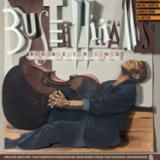
Buster Williams is a man with a strong sense of purpose and a very clear sense of his musical direction. He is also a musician of prodigious gifts - which is implicit in the fact that his years of professional bass playing have included work with Miles Davis, Dexter Gordon, Sonny Rollins, Art Blakey, Sarah Vaughan, Nancy Wilson, Betty Carter, Freddie Hubbard, Herbie Hancock, Chet Baker, Woody Shaw and McCoy Tyner. He is unquestionably one of the giants of the double bass, and his status is a product not only of his natural aptitude, but also of his natural attitude - because Buster Williams is a man who believes in setting himself the highest creative goals. Williams composed five of the seven pieces and wrote all the arrangements. To bring the music to life he had the services of some most distinguished associates. It would be redundant to recite the credentials of Herbie Hancock , Wayne Shorter and Al Foster. This is a most refreshing and exhilarating album to which Buster Williams has brought a high level of creativity and total integrity.
While self-proclaimed "garage and jackin' house" revivalist Marc Cotterell has developed his Plastik People label into a fine outlet blessed with an ever-growing family of artists, he still maintains a steady release schedule of his own. The British producer is naturally in good form on his latest Plastik People missive. Check first opener 'Take Your Time', where breezy piano stabs and deliciously soulful vocals ride a squelchy bassline and loose-limbed garage-house beats, before admiring the more "trad" soulful house flex of the gorgeous and lightly funky 'Mysterious Ex'. Over on side B, 'Feed The Soul' is a string-laden slab of revivalist New Jersey garage-house goodness which doffs a cap to the early 1990s, while 'This Life Living' re-casts Jill Scott r&b classic 'Golden' as a rolling soulful house delight.
- Out Here
- Where Did We Go? (Feat. Kiefer)
- Never Gonna Break Your Heart
- Sing, Everybody
- Please Don't Give Up!
- Imagine
- Half Shuffle
- Running Away
- Play The Game (Feat. Uhmeer)
- Don't Be So Hard On Yourself
- I Need You (Feat. Esme)
- Extraordinary
- Hello Sunrise
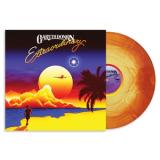
Getreu seinem Namen ,Extraordinary" erweitert Gareth Donkins zweites Album die Bandbreite seines virtuosen Soul-Pop-Songwritings nicht nur auf akustischer Ebene, sondern auch auf einer zutiefst persönlichen Ebene. Ein Schritt weiser und selbstbewusster, frisch aus einem Feature auf dem neuen Album von De La Soul, lässt der in London lebende Singer-Songwriter und Produzent vergangene Konstrukte hinter sich, um die Gegenwart mit seinem bisher ausgereiftesten, umfangreichsten und beeindruckendsten Werk zu feiern, das mit verspieltem Charisma und modernem Glanz an Disco-, R&B- und Funk-Größen anknüpft. Er sagt: ,Bei ,Extraordinary` geht es darum, sein Leben selbst in die Hand zu nehmen, neue Erfahrungen und Abenteuer anzunehmen." Donkins bahnbrechendes Debütalbum ,Welcome Home" aus dem Jahr 2023 fand von BBC Radio bis Billboard (,ein Soul-Genie") großen Anklang und brachte ihn zum ersten Mal zum SXSW. Dennoch war die Saison von Rückschlägen und Herzschmerz geprägt. Zunächst streckte er seine Hände nach der Fantasie aus mit der kathartischen Suite Escape EP. Dann, mit klarem Kopf, engagierte er ein Traumensemble, um seine nächste Vision zu verwirklichen, darunter ESME, Kiefer, UHMEER, Shaan Ramaprasad und Howard Lawrence von Disclosure . Donkin hat sich einen Namen als Old Soul gemacht, als Ein-Mann-Band in der Tradition von Prince und Stevie Wonder, der oft in den sozialen Medien zu sehen ist, wie er mit verblüffender Leichtigkeit Songs zusammenstellt. Wie seine früheren Werke fängt auch ,Extraordinary" dieses unbestreitbare Talent und seinen Charme ein. Was das Album auszeichnet, ist die Weite, in der diese Tugenden zum Tragen kommen. ,Es klingt einfach größer, aktueller", fügt er hinzu. Von vereinenden Hymnen bis hin zu dramatischen Erklärungen entfaltet Donkin eine Art von Optimismus, der nur durch harte Arbeit an sich selbst entstehen kann.
- Mr. Terrestrial
- 89:
- Hurtin
- Profecía
- Sala
- When I'm With You
- Away
- Deseo Celestial
- De La Selva
- Gold
OLIVE GREEN VINYL[23,49 €]
Obwohl es sich nicht eindeutig einem bestimmten Genre zuordnen lässt, hat ,A Way In" was von Afrobeat, Cumbia, Salsa, Jazz, Reggaeton und Soul - eine Mischung aus kraftvollen Rhythmen und geheimnisvollen Melodien, die Mitchum Yacoubs zweites Album in der Welt der Groove-Musik hervorstechen lässt. Zwischen synkopierten Dance-Tracks, ätherischen Klanglandschaften und gleichmäßigen Backbeats finden sich Geschichten über Angst, Liebe, Aufstand und Heilung. Zehn Tracks, die den menschlichen Geist offenbaren und feiern. Yacoub hat das gesamte Album selbst aufgenommen, produziert und abgemischt und damit den sorgfältig geschichteten Sound sichergestellt, den die Fans seines Debüts ,Living High in the Brass Empire" so schätzen. Wir treffen wieder auf Travis Klein, Bradley Nash und Wesley Etienne, seine unnachahmliche Bläsersektion, die man weder auf Platte noch auf der Bühne verpassen sollte. Mit den aufstrebenden Stimmen von Divina Jasso und Lourdes Iri auf der Hälfte der Tracks mangelt es ,A Way In" nicht an herausragenden Singles, die dich von morgens bis abends begleiten werden.
Black Vinyl[23,49 €]
Obwohl es sich nicht eindeutig einem bestimmten Genre zuordnen lässt, hat ,A Way In" was von Afrobeat, Cumbia, Salsa, Jazz, Reggaeton und Soul - eine Mischung aus kraftvollen Rhythmen und geheimnisvollen Melodien, die Mitchum Yacoubs zweites Album in der Welt der Groove-Musik hervorstechen lässt. Zwischen synkopierten Dance-Tracks, ätherischen Klanglandschaften und gleichmäßigen Backbeats finden sich Geschichten über Angst, Liebe, Aufstand und Heilung. Zehn Tracks, die den menschlichen Geist offenbaren und feiern. Yacoub hat das gesamte Album selbst aufgenommen, produziert und abgemischt und damit den sorgfältig geschichteten Sound sichergestellt, den die Fans seines Debüts ,Living High in the Brass Empire" so schätzen. Wir treffen wieder auf Travis Klein, Bradley Nash und Wesley Etienne, seine unnachahmliche Bläsersektion, die man weder auf Platte noch auf der Bühne verpassen sollte. Mit den aufstrebenden Stimmen von Divina Jasso und Lourdes Iri auf der Hälfte der Tracks mangelt es ,A Way In" nicht an herausragenden Singles, die dich von morgens bis abends begleiten werden.
- Zu Kurz
- Das War Ich
- Partybrille Feat. Marlo Grosshardt
- Insamkeitsgefahr
- Froh, Dass Es Dich Gibt
- Herzlich Willkommen Im Club
- Feierabend
- Alles Wird Gut
- Du Erkennst Mich
- Non, Je Ne Regrette Rien
- Anheizen (Skit) Mit Thesukone
- Brich Das Eis
Mit ihrem nun schon siebten Studioalbum im Gepäck zerlegen die beiden selbsternannten Weltverbesserer quer durch die Republik eine Venue nach der anderen - begleitet vom stetig wachsenden Schmierlappen Kommando: Liedfett sind längst kein Geheimtipp mehr, sondern ein kollektiver Zustand aus Euphorie, Haltung und Lebensfreude. Mit ihrem neuen, selbstbetitelten Album "liedfett" klingen Liedfett so nah, so direkt und so ungeschönt wie selten zuvor. Zwischen Aufbruch und Überforderung, zwischen breitem Grinsen und ehrlicher Selbstbefragung bündeln sie Songs wie "Alles wird gut", "Zu kurz", "Einsamkeitsgefahr", "Das war ich" und "Partybrille" mit sechs neuen Tracks zu einem Album, das mitten ins Jetzt und vor allem jedes Herz trifft: Es geht ums Stolpern durchs Leben, ums Weitermachen trotz Zweifel, ums Lautsein, wenn es nötig ist - und ums Verletzlichsein, wenn es sein muss. Haltung zeigen, ohne den Zeigefinger zu heben. Egal ob auf der Bühne oder am Lagerfeuer. Überall. Musikalisch bleiben Liedfett ihrem druckvollen Mix aus deutschem Pop, Punk-Energie und kompromisslosem Live-Charakter treu. "liedfett" ist kein Rückblick und kein Konzeptalbum, sondern eine Momentaufnahme: ehrlich, verbindend, voller Wucht und Wärme. Wer versucht, das Phänomen Liedfett nur über Zahlen oder Worte zu begreifen, wird scheitern. Erst live entfaltet sich das ganze Bild - und erst dann versteht man wirklich, warum so viele einstimmen, wenn es heißt: Kommt ihr mit?
- 1: Stray Dogs (With Iron & Wine)
- 2: Dark Circles (With Fenne Lily)
- 3: Rollercoaster
- 4: Things Change, Even Now
- 5: The Ocean (With Uwade)
- 6: Big Sky (With Ken Pomeroy)
- 7: Charlie, Short For Charlotte
- 8: When I Look At You
- 9: Your Voice (With Ken Pomeroy)
- 10: Swimming Pool
- 11: Home Movies
Hrishikesh Hirway, Musiker, Komponist und Podcast-Ersteller, bekannt für seinen preisgekrönten Podcast und die Netflix-Serie ,Song Exploder" sowie Kompositionen für Film und Fernsehen, darunter ,Companion", Save The Date, Our Nixon und Everything Sucks!, begann sein eigenes Musikprojekt unter dem Namen One AM Radio und änderte seinen Namen mit der Veröffentlichung von To Call My Own EP im Jahr 2022. Produziert vom Grammy-Gewinner Philip Weinrobe (Big Thief, Adrienne Lenker, Theo Katzman, Cass McCombs), In the Last Hour of Light ist eine Erinnerung daran, loszulassen - von Menschen, von Erinnerungen, vom Wunsch, die Zeit davon abzuhalten, zu schnell zu vergehen. Die Songs entstanden nach dem Tod von Hrishikeshs Mutter, als die Jahre sie immer weiter in die Vergangenheit drängten; in den Momenten, in denen er in seinem Krankenhauszimmer darauf wartete, dass sich sein Vater erholte; in dem Traum von einer Tochter, die er nie haben wird. Es gibt auch Liebeslieder - aber es ist die Art von Liebe, die die Patina eines langen gemeinsamen Lebens trägt, in dem man ebenso viel Zeit hinter sich hat wie vor sich. Die Band von Hrishikesh bestand aus Shahzad Ismaily (Feist, Arooj Aftab), Ken Pomeroy, Mike Haldeman (Moses Sumney, Dawn Richards) und Joshua Crumbly. Zur Besetzung von Hrishikeshs Band gehörten Shahzad Ismaily (Feist, Arooj Aftab), Ken Pomeroy, Mike Haldeman (Moses Sumney, Dawn Richards), Joshua Crumbly (Leon Bridges, Kamasi Washington), Oliver Hill (Kevin Morby, Broken Bells, Vagabon), Sean Mullins (Sam Evian) und Cole Kamen-Green (Beyoncé, Taylor Swift); mit Gastauftritten von Iron & Wine, Fenne Lily, Ken Pomeroy und Uwade Hart (St. Vincent), Zosha Warpeha (L'Rain) und Dustin O'Halloran.
- 1: The Package
- 2: Reality Cheque
- 3: Two Revolutions
- 4: Texas Relation
- 5: Greener Pastures
- 6: For Heads
- 7: Lodestar
- 8: Koresh Me Down
- 9: Out Of My Bag
- 10: Strawberry Hero
Manchmal hörst du eine Band, die sich gleichzeitig neu und vertraut anfühlt, und das lässt dich innehalten. TV Star ist so eine Band. In den letzten Jahren hat die fünfköpfige Band aus Seattle-Tacoma, Washington, still und leise an ihrer Stärke gearbeitet - EP für EP, Show für Show -, bis ihr lang erwartetes Debütalbum ,Music For Heads" rauskam und klar machte: Sie haben sich zu etwas Besonderem entwickelt. Eine Mischung aus jangly-psych, Garage-Grit und Soft-Focus-Tiefe; diese Songs leuchten von innen heraus mit einer beeindruckenden Originalität. In einer Zeit, in der so viel Musik in algorithmischer Gleichförmigkeit verschwindet, klingt TV Star trotzig menschlich. Auf den zehn Tracks der LP schärft die Band ihre Instinkte, die sie über die Jahre verfeinert hat - sie kombiniert zeitlose Pop-Sensibilität, psychedelisch angehauchten Jangle in der Tradition von The Brian Jonestown Massacre, punkige Rhythmussektionen und Vocals, die mit der Wärme von Mojave 3 dahinschweben, um etwas ganz Eigenes zu schaffen. Mit Music For Heads greifen sie nicht nur auf die Musik der Vergangenheit zurück, sondern treiben eine neue Welle voran. Die Band wurde 2020 aus der gemeinsamen Bewunderung für den Psych-Rock der 90er Jahre, klassischen Shoegaze und Alt-Country-Underdogs gegründet. Der Startschuss fiel, als jemand die Kassette ,Electriclarryland" der Butthole Surfers aus dem Jahr 1996 von der Wand nahm und auf den Track ,TV Star" zeigte. Was folgte, war weniger die Gründung einer Band als vielmehr die Entstehung eines kleinen Ökosystems. Ashlyn Nagel (Gesang, Keyboard), Bryan Coats (Gitarre), Che Hise-Gattone (Gitarre), Mark Palm (Bass) und Tucker Devault (Schlagzeug) brachten ihre eigenen Instinkte, Eigenheiten und musikalischen Hintergründe mit ein, bis die Songs schließlich nach allen gleichzeitig klangen. Aufgenommen in einer Reihe gemütlicher Studios im Nordwesten - The Unknown in Anacortes und ein paar Verstecken in Seattle - ist ihr Debütalbum ,Music For Heads" eine Mischung aus klirrender Gitarrenmusik, psychedelischem Pop und authentischem Indie-Rock, ohne sich ganz auf einen Stil festzulegen.
Artist and multi-instrumentalist Flaer looks to the landscape to explore pastoral melancholy on debut release, Preludes. It is released in a second edition black vinyl, with an alternate cover artwork.
Ensconced in his family home in rural Leicestershire in the early months of 2020, painter and musician Realf Heygate (b. 1994) picked up his childhood cello for the first time in several years and began to play. Setting himself parameters to only record onto 4-track tape with acoustic instruments – cello, piano and acoustic guitar – he assembled a suite of instrumental compositions that form the basis of Preludes, his debut album as Flaer and the inaugural release on Odda Recordings.
Channelling the tension and unease between the pastoral idyll of the English countryside and the darkness which lurks beneath the surface, the mini-album draws inspiration from the analogue aesthetic of 1970s folk horror films, weaving field recordings of birdsong, church bells and the natural environment into chimerical melodies that reflect on Heygate’s childhood experiences of rural England.
“It was really important not to isolate the sound from its environment,” he explains, describing the compositional and recording process as “site-specific”. Developed over a series of intuitive musical enquiries, the mini-album’s uncanny quality emerges from combining raw demo takes with overdubs of almost orchestral grandeur.
Heygate points to the final track as indicative of the work as a whole: “‘Follow’ really is the mantra for the release and embodies the practical approach I was taking to music making: not to force the music but see where it takes you.”
As a painter, Heygate’s practice takes artefacts through sequences of reproduction that embrace the fluctuating materiality of the copy. Since obtaining a degree in Fine Art from Central Saint Martins in 2017, he has exhibited solo at Peter von Kant and Springseason galleries in London, and has participated in group shows at Saatchi Gallery, Cob Gallery and Senesi Contemporanea.
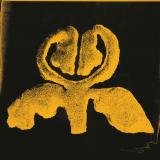
Describing his artistic practice as one of self-erasure, music instead provides Heygate with a more personal and autobiographical outlet. Where the two worlds combine is on Preludes’ striking artwork, which features paintings of 13th century stone carvings from the font of the church in the town where he grew up.
Speaking to a time where people were connected to the land in a more profound way, each symbol is assigned to a track on the album, which Heygate likens to giving them a title.
“To add that one juxtaposition might open a whole new interpretation or language that might be hard to find otherwise,” he explains.“Over time it might reveal itself to you, which is why I'm excited about it being released. To throw them out there and see what comes of it.”
XKatedral Anthology I is the first in a series of archival releases dedicated to presenting music by XKatedral affiliated composers working within the realm of slowly evolving harmonic and timbral music. This double-vinyl set contains an array of pieces dating from 2010 - 2020. Four of the works included here were originally released on cassette tape early on in the label's history, while the two remaining pieces are presented by the label for the first time.
"The works Ir Himinn, Grooenn by Kristoffer Svensson, Disquiet (Heart) by Marta Forsberg and Lamé by Isak Edberg were first released on the compilation XKatedral Volume II in 2016. Svenssons piece from 2014 combines justly tuned gamelan percussion and prepared piano intricately interwoven in a way that obscures the boundaries between the two instrument groups. Forsberg and Edbergs pieces both use a monolithic form to explore the timbral and harmonic spaces provided by the Düben Baroque organ situated in Tyska Kyrkan in the oldest part of Stockholm. While similar in terms of instrumentation the two works differ formally - Edbergs Lamé composed in 2010 uses the registers of the organ to articulate a seamless spectral transformation while Forsbergs Disquiet (Heart) from 2014 deals in blocks of sound with a varying degree of opacity, saturation and intensity.
Glory for two electric guitars by Caterina Barbieri and Kali Malone was composed and recorded in Tempo Reale in Florence, Italy, and was originally released on the cassette compilation XKatedral Volume III in 2016. This music takes the form of an ever-evolving hypnotic pattern shared by the two instruments articulated through an additive and subtractive canon. Dissolving Ceremony, composed in 2012 by Edberg/Erlandsson/Lisinski, was first presented publicly on the self-released record Stratum. The music contained in that release was formed from a collection of gamelan percussion instruments augmented by two sets of live-electronic instruments tuned to the harmonic framework formed by the partials of the metal percussion. Originally positioned in the center of the record running order between two long monolithic process-based pieces, Dissolving Ceremony now stands on its own as a memory of a time and methodology from the not so distant past.
The newest piece in this set is Shipwrecks by Daniel M Karlsson. While this work is a recent one Karlsson should be considered one of the forerunners of the musical expression contained within this record set. Active within new music for two decades his strongly articulated musical ideas and constantly evolving craftsmanship has resulted in an enormous body of work, and has served as an inspiration for many of his fellow composers. This piece is a celebration of transposition and its immense capacity for timbral transformation using a vast array of instruments performed, recorded and electronically treated by the composer to form a liquid uncanny topography where a deeply personal harmonic language constantly shifts, slides and shivers."
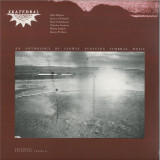
XKatedral Anthology Series II (An Anthology Of Slowly Evolving Timbral Music), featuring exclusive music from Kali Malone, Jessica Ekomane, Mats Erlandsson, Theodor Kentros, Wilma Hultén, and Maria W Horn.
"XKatedral Anthology II is the second instalment in a series of archival releases dedicated to presenting music by composers affiliated with XKatedral working within the realm of slowly evolving harmonic and timbral music. This double-vinyl set contains an array of pieces dating from 2018 - 2020. This collection of pieces focuses on the use of synthetic sound and algorithmic composition languages as tools for precise work within the realm of spectral exploration. In addition to this, the electronic instrumentation in many of the pieces is augmented by acoustic instruments.
The first piece on side A is Kali Malone’s Music for Low Quartet. This piece is an adaptation of the composition “Rose Wreath Crown” originally released on The Sacrificial Code in 2019. In this iteration, the music is scored for two double basses played by Vilhelm Bromander and Zach Rowden, and sine tone electronics performed by Malone herself. The recording of this piece was made at EMS in 2019.
Closing side A is Jessica Ekomane’s ‘First Light’. This computer music piece focuses exclusively on digital sound, layering razor sharp synthetic textures into an otherworldly dynamic weave. The music heard here is a reworked version of a piece originally commissioned by Semibreve in 2020.
Side B contains the work ‘Hands Melt In The Sun’ by Mats Erlandsson. This composition is built from electronically processed tuned zithers and synthetically generated tones arranged in a series of chordal inversions over a sustained fundamental tone. This music, written as a love-letter to the localized drone tradition of Stockholm in the years 2008-2012, was composed and recorded in seven days while in residence at Ställbergs Gruva in Bergslagen, in the summer of 2018.
Opening the second half of the collection is Rough Draft v.7 by Theodor Kentros. Kentros’ compositional practice usually combines acoustic and electronic source material and in this piece he molds the sound of the Buchla 200 and a collection of recorded wind instruments into a molten mass of sound. In its original form, this music was presented as a multichannel immersive work and even in the current stereo configuration it retains some of that enveloping sense of depth.
The second piece on side B, Inertia, is by Wilma Hultén, who makes her debut on record here. An exclusively synthetic piece, Inertia utilizes internal digital feedback in a sealed synthetic system to manifest a harmonic field that swells and abates throughout the length of the piece, interspersed by small gestural elements.
Closing Anthology II is Maria W Horn's work ‘Dies Irae’ for female vocal quartet, pitched glass and synthesis. ‘Dies Irae’ uses a modified form of traditional tonal harmonic language to invoke an uncanny and restless middle ground between the classical western polyphonic vocal tradition and contemporary electronic music. The version heard here is a live recording from Eric Ericssonhallen in Stockholm on May 30th 2020. Performing the piece here are the vocalists Katarina Henryson, Lisa Holmgren, Vilma Ogenblad and Paula Wegmann, as well as Maria herself on glass and electronics."
Double 12" release
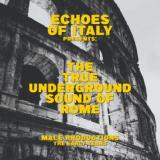
The Story — From the Streets of Rome to the Male Productions Label
In the early 1990s, Rome lived in a kind of suspended moment. The city was still tied to its historic clubs, yet in the outskirts—inside abandoned warehouses, quarries along the coastline, and the wooded parks north of the capital—something new was beginning to stir. A nocturnal, constantly shifting movement fuelled by a hunger for freedom and a sonic curiosity that reached far beyond the mainstream.
Moving through this ferment was Francesco “Chicco” Furlotti. First an organizer of unconventional parties and underground nights, he soon became one of the driving forces behind Rome’s itinerant rave scene. Furlotti sensed that a wave of change was about to sweep across the city. It wasn’t just about parties: it was the rise of a culture, a new way of thinking about music, community, and belonging.
It was within those nights—later held with official permits, properly built sound systems, and an ever-growing crowd—that Furlotti recognized the existence of a distinctly Roman sound, and the need to capture it, preserve it, and give it tangible form.
So, in 1991, he decided to take a bolder step: to found an independent record label—small, determined, and far removed from the commercial logic that dominated at the time.
That was the birth of Male Productions.
Male was not a label like any other: it was a workshop, a gathering point, a creative hub where DJs, producers, friends, and wanderers converged. Within that environment, an artistic core took shape—Stefano Di Carlo, Leo Young, and Mauro Tannino, along with other collaborators orbiting around Furlotti. From their synergy emerged a project whose very name declared its mission:
The True Underground Sound of Rome.
The collective did not simply aim to release music; it sought to tell a story of Rome through sounds that defied categorization: house, techno, ambient, electronic mysticism, psychedelic visions… a unique blend, instantly recognizable, emotional, and experimental. The sessions unfolded using essential yet razor-sharp gear: Roland drum machines, analogue synthesizers, Akai samplers, stripped-down mixers. Few tools, endless imagination.
The first result of this work was the 12” Secret Doctrine, released in 1991 in an extremely limited run—around 500 promotional copies, according to accounts. The record captured something that until then had floated only in the air of Roman raves: enveloping atmospheres, deep rhythms, melodies built to make the mind travel far beyond the dancefloor. A sound that did not imitate what was happening in Detroit, London, or Berlin, but absorbed those influences and re-sculpted them with a distinctly Roman sensibility.
Yet, precisely because it was independent and detached from commercial circuits, Male’s output remained sparse: few EPs, few copies, irregular distribution. Over time, those records became rare artifacts—almost mythical objects within the Italian electronic scene. The legacy of Male Productions seemed destined to survive only in the memories of those early years, in the stories told after raves, and in the private archives of a handful of collectors.
Many years later, thanks to the almost accidental rediscovery of a few original copies of the first two releases issued by Male Productions, it became possible to undertake a meticulous process of recovery and restoration of the audio etched into those grooves, with the aim of preserving as fully as possible the quality and character of that unrepeatable sound.
We are therefore able today to present — at last in a complete and faithful form — the first two mixes created for Male Productions, now released on a double vinyl that brings back into the present the exact moment when it all began: the nomadic nights of the raves, Furlotti’s vision, the creativity of Di Carlo, Young and Tannino, and the sonic identity of a Rome in the midst of transformation.
This is not merely a reissue.
It is a historical document.
A fragment of a culture that changed the city.
The authentic sound of the Roman underground, finally returned to the world.
2026 Repress
Gaudi’s Jazz Gone Dub is a masterclass in genre fusion, seamlessly blending the improvisational essence of jazz with the heavy atmospheric grooves of dub. Known for his eclectic approach to music production, Gaudi pushes the boundaries yet again, creating a sonic landscape that feels both nostalgic and refreshingly innovative.
Four years in the making, from the opening track it’s clear that Jazz Gone Dub is more than just a mashup of styles—it's a thoughtful exploration of the intersections between two rich musical traditions.
Gaudi’s multi-instrumental talents are on full display, and the presence of reggae royalty is palpable, courtesy of rootsy melodies from David Hinds (Steel Pulse), Jah Wobble’s iconic bass grooves, Ernest Ranglin’s intricate guitar lines and Sly & Robbie’s rhythmic genius. Add Sardinia’s Train to Roots band, Manu Chao collaborator Roy Paci, veteran guitarist Marcus Upbeat, Mr Woodnote and Tim Hutton’s brass work, Gavin Tate-Lovery’s sultry sax and flute, Horseman’s percussive flair plus Colin Edwin and Vlastur’s serious basslines, and the
result is a rhythmic foundation that’s both solid and fluid, allowing the jazz elements to float freely above the dub undercurrents.
Despite this star-studded line-up, Gaudi remains the glue that holds this gem together: his production is meticulous yet organic, allowing each track to breathe and evolve naturally. The use of space, delays and reverb—a hallmark of dub music—is expertly handled, giving the album a dreamy, immersive quality. Tracks like Susceptible and Alabaster Moon showcase Gaudi’s ability to create mood and atmosphere without sacrificing melodic and rhythmic complexity.
In Jazz Gone Dub Gaudi has crafted an album that feels both timeless and forward-thinking, a celebration of musical synergy where the free-spirit of jazz meets the deep resonance of dub. Whether you’re a fan of either genre or simply appreciate masterful musicianship and innovative production, this album is a must-listen.
- 1: Blacktop Blues
- 2: Make A Liar
- 3: Be Your Man
- 4 5: Th Of July
- 5: Tennesse Moon
- 6: Over And Over
- 7: Hey Mississippi
- 8: Something Easy
- 9: Wildfire
- 10: Dust On A Dirt Road
- 11: Heart On The Range
WIldfire Smoke Vinyl[34,03 €]