Поиск:u samba

Стили
Все
MINAS - BEATLES IN BOSSA

Minas-cover Minas is a world music duet comprised of Orlando Haddad and Patricia King. Minas reflects a perfect musical marriage with a stage presence and chemistry that only a lifetime can produce. Drawing on the passionate styles of Brazilian and American roots music, the two create a fresh and innovative sound. With a catalog of 8 recordings released on their label Bluezul and a collection of over 100 songs, they have been building their reputation. Multi-talented as composers, vocalists, and instrumentalists, and equally comfortable in Brazilian jazz, folk, and classical genres, Minas is now bringing their world music approach to the Beatles with their latest album titled Beatles in Bossa. This re-imagination of fourteen Beatles' songs is infused with American Jazz and Brazilian styles of Bossa Nova, Samba, Choro, Partido Alto, Afoxé, Marcha Rancho, and Frevo. "Blackbird" has a nylon-strung guitar and vocal intro that sets the tone for this Brazilian-themed arrangement. Minasminas-1 transforms the melody to something new while still keeping the theme recognizable. The male and female vocals of Haddad and King blend beautifully as the band builds a relaxed Brazilian feel. John Swana plays an expressive Evi solo, adding a modern color while still being vivid. Haddad wrote this creative arrangement with a fresh approach to this classic Beatles melody. "With A Little Help From My Friends" is another Brazilian arrangement that is all Minas. The concept came from Haddad and King with the horn arrangement provided by Andrew Neu. Haddad's nylon-strung guitar keeps a Latin pattern as the horns accent the two vocalists trading phrases of the melody. Neu plays an exciting solo. The arrangement is rewarding, enabling us to hear the melodic lines, harmony, and orchestration from a different perspective.minas-2Minas' Beatles in Bossa impresses with its natural, vibrant, and heartfelt presence, allowing us to hear and appreciate the colors and textures of the exceptional music of the Beatles through a Brazilian perspective and thoughtful performances.

Сделать предзаказ18.11.2022

он должен быть опубликован на 18.11.2022

40,88
The Cool Greenhouse - Sod's Toastie LP

While frontman Tom Greenhouse’s off-kilter observations and bizarro anecdotes remain front and centre, this time round the band up their game with a more vigorous sound that keeps pace with Greenhouse’s wholly distinctive lyrical style. Greenhouse continues to revel in telling increasingly surreal short stories, rejoicing in the power of the deadpan one-liner and bedecking his songs with far-flung cultural references. But now the band employ a variety of techniques with improved pro- duction, from the impulsively bashed keyboards and jubilantly repetitive guitar stabs that have be- come their trademark, to flirtations with–heaven forbid!–melody, chord progressions and arrangements which elevate their tried-and-tested blueprint into a more exciting and cohesive whole.

Opener Musicians is the perfect embodiment of this conscious development. Here, Greenhouse re- counts a sarcastic tale of half-truths that see him galavanting around town trying to put a band to- gether. Sonically, it begins with a caustic callback to the group’s first EP Crap Cardboard Pet and its über-minimalist aesthetic. But by the end of the song a joyous festival of afrobeat-inspired in- struments including samba whistles, bongos and saxophones are added to the mix as the front- man, ironically, fails in his mission to recruit more players.

With Get Unjaded, the band have somehow conjured something close to pop, without abandoning the repetition and wit that’s relished by their early fans. I Lost My Head also adopts a jangle-pop sheen with a luscious synth melody, as the frontman ditches the spoken-word for a surly croon (his first known attempt at actual singing!) that provides a welcome breather from the onslaught of dense recantations that are the band’s bread-and-butter.

While the lyrics here are still often humorous and political, Greenhouse has also notably expanded his interests on this album to include a new host of topics. The influence of extraterrestrials, for ex- ample, infiltrates the subject matter frequently. On The UFOs, the mysterious protagonist Blinkus Booth’s isolationist lifestyle is apparently interrupted by the spectres of otherworldly visitors, while closer The Neoprene Ravine feels like an extract from a deep space rock opera. Here, jaunty and angular instruments pile-on as we are fed images of an interstellar Spinal Tap, the titular fictional band “The Neoprene Ravine” who are “the alien equivalent of the Velvet Underground” and include an alien Lou Reed yelping “too busy sucking on my little green ding dong!”.

Meanwhile, Hard Rock Potato is propelled by a vortex of keys and synths, a real noise-pop gem comprised of real guitar chords (!) and rock-orientated riffs. Here the stream-of-consciousness lyrics take shots at the sinister financial industry, and include one of the many top-tier one-liners on the album: “It’s not gambling if you’re wearing a tie (even if you’ve got no trousers on)”.

On Sod’s Toastie, The Cool Greenhouse have pushed their distinctive flavour of post-punk to the point of perfection – their incongruous riffs, alchemical instrumental chemistry, and irreverent spo- ken-word vocals are a delight throughout. Sod’s Toastie is hilarious at times, and at others just hilariously good – a not-so-difficult second album.

Сделать предзаказ11.11.2022

он должен быть опубликован на 11.11.2022

18,87
Wütrio - Wütrio LP

Wütrio

Wütrio LP

12inchBBE717ALP
BBE Music
11.11.2022

Wütrio is the first in a series of re-issue albums curated by legendary German DJ, producer and rare vinyl collector Rainer Trueby. 'Wütrio' is the critically-acclaimed album first released in 1987 on the Bremen based label, Thein Records . A label started by Friedrich Thein whose musical pedigree includes links to the world class and world famous Thein Brass instrument makers and retailers. 'Wütrio', the band, originally formed in the Bavarian city of Würzburg and went through line-up changes before recording this album with founding members Robert Schulte Hemming and Rudi Engel complemented by Wolfgang Pusching, Martin Kübert, Peter Wirth and the amazing vocal talents of Beate Kynast. The album is a work of art; Jazz it certainly is, but it is so much more than this one genre as it moves like a cabaret aboard the Trans-Europe Express travelling across genres and changing tracks as it picks up Samba, Jazz-Rock, Fusion, Electro-Funk and the New York Avant-Garde on its journey. From his time as one half of production duo 'A Forest Mighty Black', Rainer Trueby has been at the forefront of cutting edge Black music as creator, disseminator and curator. Previous releases through BBE include the must have 2020 compilation 'Soulgliding' and co-productions with DJ Kon on the 'Kon and the Gang' album from 2016. It is worth noting that it is Rainer himself who gave the name 'Soulgliding' to a genre of certain paced and soulful groove of music that now bears that name. His selection of the 'Wütrio' album to kick off a highly collectable series of re-issues is an inspired choice.

Сделать предзаказ11.11.2022

он должен быть опубликован на 11.11.2022

34,87
The Cool Greenhouse - Sod's Toastie LP

Yellow and black splatter

While frontman Tom Greenhouse’s off-kilter observations and bizarro anecdotes remain front and centre, this time round the band up their game with a more vigorous sound that keeps pace with Greenhouse’s wholly distinctive lyrical style. Greenhouse continues to revel in telling increasingly surreal short stories, rejoicing in the power of the deadpan one-liner and bedecking his songs with far-flung cultural references. But now the band employ a variety of techniques with improved pro- duction, from the impulsively bashed keyboards and jubilantly repetitive guitar stabs that have be- come their trademark, to flirtations with–heaven forbid!–melody, chord progressions and arrangements which elevate their tried-and-tested blueprint into a more exciting and cohesive whole.

Opener Musicians is the perfect embodiment of this conscious development. Here, Greenhouse re- counts a sarcastic tale of half-truths that see him galavanting around town trying to put a band to- gether. Sonically, it begins with a caustic callback to the group’s first EP Crap Cardboard Pet and its über-minimalist aesthetic. But by the end of the song a joyous festival of afrobeat-inspired in- struments including samba whistles, bongos and saxophones are added to the mix as the front- man, ironically, fails in his mission to recruit more players.

With Get Unjaded, the band have somehow conjured something close to pop, without abandoning the repetition and wit that’s relished by their early fans. I Lost My Head also adopts a jangle-pop sheen with a luscious synth melody, as the frontman ditches the spoken-word for a surly croon (his first known attempt at actual singing!) that provides a welcome breather from the onslaught of dense recantations that are the band’s bread-and-butter.

While the lyrics here are still often humorous and political, Greenhouse has also notably expanded his interests on this album to include a new host of topics. The influence of extraterrestrials, for ex- ample, infiltrates the subject matter frequently. On The UFOs, the mysterious protagonist Blinkus Booth’s isolationist lifestyle is apparently interrupted by the spectres of otherworldly visitors, while closer The Neoprene Ravine feels like an extract from a deep space rock opera. Here, jaunty and angular instruments pile-on as we are fed images of an interstellar Spinal Tap, the titular fictional band “The Neoprene Ravine” who are “the alien equivalent of the Velvet Underground” and include an alien Lou Reed yelping “too busy sucking on my little green ding dong!”.

Meanwhile, Hard Rock Potato is propelled by a vortex of keys and synths, a real noise-pop gem comprised of real guitar chords (!) and rock-orientated riffs. Here the stream-of-consciousness lyrics take shots at the sinister financial industry, and include one of the many top-tier one-liners on the album: “It’s not gambling if you’re wearing a tie (even if you’ve got no trousers on)”.

On Sod’s Toastie, The Cool Greenhouse have pushed their distinctive flavour of post-punk to the point of perfection – their incongruous riffs, alchemical instrumental chemistry, and irreverent spo- ken-word vocals are a delight throughout. Sod’s Toastie is hilarious at times, and at others just hilariously good – a not-so-difficult second album.

Сделать предзаказ11.11.2022

он должен быть опубликован на 11.11.2022

19,71
PEDRO LIMA - RECORDAR É VIVER: ANTOLOGIA VOL. 1

Rare & unreleased 80's bangers from Sao Tome e Principe's most iconic singer !

Bongo Joe pursues their work with friend DJ Tom B and are sharing the fourth effort in their São Tomé & Principe series : “Recordar é viver”, the first volume of an anthology dedicated to the one and only Pedro Lima, , "A voz do povo de São Tomé" (the people's voice of Sao Tomé).

“Recordar é viver: Antologia Vol. 1” features some previously unreleased tracks and gives a comprehensive look into the discography of one of the islands’ biggest stars, known for his political outspokenness as much as for his soft voice, delicate rumbas, and high-energy puxas.

With his band Os Leonenses he built a brand new genre around the strong rhythms and infectious energy of Sao-Toméan Samba Socopé ("only with the feet” in Portuguese), but with the influence of Congolese soukous, Cape Verdean Coladeira, elements from French West-Indies Cadence/Compas, and Brazilian Afoxé, it soon developed into the infectiously danceable style known as “puxa”. The band kept playing together up until Pedro’s death in 2019, performing at large events around the islands and on the continent.

But Pedro shined also on his own. Alone, he demonstrated his compositional skills and ability to balance the band’s powerful rhythm section with São Tomé & Principe’s harmonic backing vocal traditions, creating strong, dance floor ready puxas or melodic, delicate rumbas.

Pedro Lima died in 2019, leaving behind the 23 children he fathered, with thousands of mourners accompanying him to his final resting place. The public funeral, paid for by ex-president Pinto da Costa, was one of the biggest the islands have ever seen. Lima, "O cantor do povo” (“The people’s singer”), was buried with his wireless microphone, so his powerful voice would always be heard.

Сделать предзаказ11.11.2022

он должен быть опубликован на 11.11.2022

26,85
Michele Manzo - Around Brasillia EP

Michele Manzo is an esteemed producer, musician and DJ who has collaborated with a fine list of globally recognised talents such as Omar Lye-Fook, Georgia Anne Muldrow and Declaime, and Yancey Boys, amongst many others. His new EP on Detroit don Wajeed's Dirt Tech Rack label showcases his original house style with opener 'Around Brasilia' bring that South American flair. The bird claps, shuffling samba beats and lively percussion all bring the heat. Wajeed then remixes it into a tougher, more drum lead rhythm. The flip side offers the deep but metallic percussive workout that is 'A Minha Vida' and the soul drenched grooves of 'Brilhante's Anthem.'

нет на складе

Закажите сейчас, и мы закажем товар для вас у нашего поставщика.

14,24

Последний логин: 2 г. назад
M.CHUZI - PAPARA

M.chuzi

PAPARA

12inchSDBANULP29
SDBAN ULTRA
04.11.2022

On the isle of Crete, the ancient practice of dipping your bread in different sauces and dips is called "papara". True to its music-as-sauce philosophy, Brussels-based groove formation M.CHUZI invites you to dip your ear into the sonic sauces that are on offer in its versatile menu.

Released 4th November via Sdban Ultra, the collective's debut album 'Papara' is an inviting mouthful of afro rhythms, funk, and prog jazz, combined with the spacey soundscapes of the Brussels metropole, as they look to Fela Kuti's afrobeat style for inspiration.

Winner of the prestigious Sound TrackIB1 contest held at Ancienne Belgique back in December 2019, the octet has gone from strength to strength, including having album track 'Tzatzìki' feature on the critically acclaimed various artist's compilation 'Lefto presents Jazz Cats volume 2', released earlier this summer. The track was arguably the highlight of the album and received radio support from leading radio DJs including Gilles Peterson of BBC Radio 6 Music and Worldwide FM fame.

It's the tasty 'Tzatzìki' that launches 'Papara', an exotica-spawned, merry bombardment of fizzing percussion and a subsequent brass freakout. Next up is the heavy acid rock of 'Mammoet' featuring rising trombonist Nabou, which soon breaks out into a groove-laden mix of Egyptian-inspired horns and Fela-style rhythms, before poetic warrior Joy Slam, adds her vocals to the dub-centric rhythms of the sweet 'Carbonade'.

Elsewhere, 'Intermetsauce' fuses skittish horns with funky drums while the spicy 'Tahini Miso' bursts into life with trance-inducing beats and mystical, Middle-Eastern seasoning. The album closes with the multi-rhythms of the burning 'Sambal', before we dive-dip into the funky 'Pickles', featuring Mixmaster Menno's (STUFF.) wildstyle scratching skills. With each track named after a band member or featured artists' favourite sauce, M.CHUZI serves you a diverse and flavourful plate of unique compositions, taking afro-groove and its descendants to a new level of eclectic dynamism.

Сделать предзаказ04.11.2022

он должен быть опубликован на 04.11.2022

20,97
M.CHUZI - PAPARA

M.chuzi

PAPARA

12inchSDBANULP29LTD
SDBAN ULTRA
04.11.2022

Limited edition on green vinyl.The collective's debut album 'Papara' is an inviting mouthful of afro rhythms, funk, and prog jazz, combined with the spacey soundscapes of the Brussels metropole, as they look to Fela Kuti's afrobeat style for inspiration.


On the isle of Crete, the ancient practice of dipping your bread in different sauces and dips is called "papara". True to its music-as-sauce philosophy, Brussels-based groove formation M.CHUZI invites you to dip your ear into the sonic sauces that are on offer in its versatile menu.

Released 4th November via Sdban Ultra, the collective's debut album 'Papara' is an inviting mouthful of afro rhythms, funk, and prog jazz, combined with the spacey soundscapes of the Brussels metropole, as they look to Fela Kuti's afrobeat style for inspiration.

Winner of the prestigious Sound Track contest held at Ancienne Belgique back in December 2019, the octet has gone from strength to strength, including having album track 'Tzatzìki' feature on the critically acclaimed various artist's compilation 'Lefto presents Jazz Cats volume 2', released earlier this summer. The track was arguably the highlight of the album and received radio support from leading radio DJs including Gilles Peterson of BBC Radio 6 Music and Worldwide FM fame.

It's the tasty 'Tzatzìki' that launches 'Papara', an exotica-spawned, merry bombardment of fizzing percussion and a subsequent brass freakout. Next up is the heavy acid rock of 'Mammoet' featuring rising trombonist Nabou, which soon breaks out into a groove-laden mix of Egyptian-inspired horns and Fela-style rhythms, before poetic warrior Joy Slam, adds her vocals to the dub-centric rhythms of the sweet 'Carbonade'.

Elsewhere, 'Intermetsauce' fuses skittish horns with funky drums while the spicy 'Tahini Miso' bursts into life with trance-inducing beats and mystical, Middle-Eastern seasoning. The album closes with the multi-rhythms of the burning 'Sambal', before we dive-dip into the funky 'Pickles', featuring Mixmaster Menno's (STUFF.) wildstyle scratching skills. With each track named after a band member or featured artists' favourite sauce, M.CHUZI serves you a diverse and flavourful plate of unique compositions, taking afro-groove and its descendants to a new level of eclectic dynamism.

Сделать предзаказ04.11.2022

он должен быть опубликован на 04.11.2022

23,11
Junior Boys - Waiting Game LP
нет на складе

Закажите сейчас, и мы закажем товар для вас у нашего поставщика.

23,91

Последний логин: 3 г. назад
Junior Boys - Waiting Game LP

Junior Boys

Waiting Game LP

12inchSLANG50431X
CITY SLANG
28.10.2022

Das erste neue Junior Boys Album seit "Big Black Coat" aus 2016 und Junior Boys feiern ihr 20-jähriges Bestehen diesen Herbst/Winter!

Ein sehr ruhiges Album in lauten Zeiten - am 28. Oktober 2022 veröffentlicht das kanadische Duo Junior Boys sein sechstes Album 'Waiting Game' bei City Slang. Sechs Jahre sind seit ihrem letzten Album, "Big Black Coat" von 2016, vergangen. Waiting Game" zeigt die Produzenten Jeremy Greenspan und Matt Didemus in einer zärtlichen und kontemplativen Stimmung; eine Abwechslung zu ihren druckvollen, R&B-lastigen Dance-Melodien. Die zusätzlichen Musiker des Albums sind ebenfalls Kanadier: Caribou-Kollaborateur Colin Fisher spielt durchgehend Saxophon und Bonjay-Frontfrau Alanna Stuart singt neben Greenspan im Song "Yes 2". Damit haben die Junior Boys ein Album geschaffen, das die stille Schönheit der Welt widerspiegelt - vorausgesetzt, man ist bereit, wirklich zuzuhören.

нет на складе

Закажите сейчас, и мы закажем товар для вас у нашего поставщика.

25,17

Последний логин: 3 г. назад
Patricia Barber - Nightclub 1STEP

Patricia Barber

Nightclub 1STEP

2x12inchIMXLPO6037-45
IMPEX Records
28.10.2022

Patricia Barber's 6th studio album is a fascinating collection of classic cover songs shaped by her inimitable downtempo intimacy into startlingly affective journeys through the human condition. Working with her band of the time (bassist Michael Arnopol and drummer Adam Cruz, augmented by star turns from guitarist Charlie Hunter, bassist Marc Johnson, and drummer Adam Nussbaum), Barber creates an atmosphere of austere trepidation that allows her long-time engineer Jim Anderson to hang her haunted vocals directly over top. Like all great jazz albums, Nightclub puts the highlighted artist front and center while carving out plenty of space for the supporting players to give emphatic support.

Impex's 1STEP process provides the perfect showcase for Anderson's peerless audio immersions. Nightclub was originally digitally recorded on a Sony 3348 multi-track and mixed through a Neve analog console to both digital and analogue mix-down masters. Bernie Grundman used the analogue mix-down tapes to assemble a new analogue cutting master exclusively for our 1STEP. Coupled with the incredibly detailed VR-900 vinyl formula, there is instrument detailing to spare, a Mariana Trench noise floor, and incredibly-focused low end. There is simply no better way to enjoy Barber's cool renditions of timeless classics than this one (including the exclusive, never-before-released bonus track "Wild Is the Wind"). Limited to 7,500 pressings!

The 1STEP Process:
The Impex 1STEP process relies on short, tightly-controlled runs that require a new lacquer after each 500 pressings. This unforgiving format has the lacquer skipping the regular father-mother process, going right to a single convert and then pressing. Though this dramatically increases mastering and production costs, it also assures each run is more consistent from disc to disc, with less noise, clearer details and deeper bass.

Reducing production complexity to just a single "convert" disc between the lacquer and the press greatly improves groove integrity, diminishes non-fill anomalies and increases signal integrity from the master tape to your system.

Mastered by Bernie Grundman from the Original Mix-Down Analogue Master Tapes
Pressed on VR-900 Super Vinyl for Incredible Detailing, an Epic Soundstage & Near-Silent Surfaces
Exclusive Ultra-Luxe Impex 1STEP Packaging
Deluxe 12-Page Booklet within a Three-Sleeve Monster Pack Jacket
Colour-Matched Slip Case
Never-Before-Released Studio Session Track "Wild Is the Wind"

Сделать предзаказ28.10.2022

он должен быть опубликован на 28.10.2022

184,83
The Beetools - SoulNova LP

Brand new Italian label “WeDoThings” is happy to introduce “The Beetools” with the debut album ‘SoulNova: The Magical Tones Revenge’.

“The Beetools” are a four elements crew who love music and mostly enjoy live playing instruments and synths.

Their roots start from Latin and Electronic Music as well as Funk & Jazz, inspired and influenced by Mambo & Samba rhythms too.
Starting from here, they have joined together and created an Italian soup/group as follows:
Original Recipe:
- take four poor guys with different music styles and put them in a mixing bowl
- add few spoons of keys, flutes and some drums
- put inside a pinch of synths
- mix and fry 180 grams of magical sound
- a sprinkle of groove and trumpets on top
Everything seems to work fine and now it’s cooked to perfection, ready to please your ears.

Strictly serve it hot on a “vinyl plate”
It’s a limited pleasure, this one is a keeper !!

нет на складе

Закажите сейчас, и мы закажем товар для вас у нашего поставщика.

18,70

Последний логин: 2 г. назад
CHARLOTTE DOS SANTOS - MORFO

Charlotte Dos Santos

MORFO

12inchBEC5610770
Because Music
18.10.2022

Charlotte Dos Santos announces debut album Morfo with lead single 'Hello Hello'. Described as 'as assured as Solange' by The Guardian, Charlotte Dos Santos is a formidable multi-faceted producer, single and composer who has worked with the likes of Blood Orange and Gotts St Park and makes music free of any confines
“MORFO is a sonic tale about transformation, about love and pain. It's a playful journey through my deepest inner thoughts combined with elements of music I admire, such as Soul, R&B, Funk, MBP/Samba and Classical. I am a child of the world, born in two cultures and on this album I am digging deeper into my ancestral roots and into my consciousness, and MORFO is the result”. – Charlotte Dos Santos

нет на складе

Закажите сейчас, и мы закажем товар для вас у нашего поставщика.

24,16

Последний логин: 3 г. назад
Lee Tracy & Isaac Manning - Is it What You Want

As the sun sets on a quaint East Nashville house, a young man bares a piece of his soul. Facing the camera, sporting a silky suit jacket/shirt/slacks/fingerless gloves ensemble that announces "singer" before he's even opened his mouth, Lee Tracy Johnson settles onto his stage, the front yard. He sways to the dirge-like drum machine pulse of a synth-soaked slow jam, extends his arms as if gaining his balance, and croons in affecting, fragile earnest, "I need your love… oh baby…"

Dogs in the yard next door begin barking. A mysterious cardboard robot figure, beamed in from galaxies unknown and affixed to a tree, is less vocal. Lee doesn't acknowledge either's presence. He's busy feeling it, arms and hands gesticulating. His voice rises in falsetto over the now-quiet dogs, over the ambient noise from the street that seeps into the handheld camcorder's microphone, over the recording of his own voice played back from a boombox off-camera. After six minutes the single, continuous shot ends. In this intimate creative universe there are no re-takes. There are many more music videos to shoot, and as Lee later puts it, "The first time you do it is actually the best. Because you can never get that again. You expressing yourself from within."

"I Need Your Love" dates from a lost heyday. From some time in the '80s or early '90s, when Lee Tracy (as he was known in performance) and his music partner/producer/manager Isaac Manning committed hours upon hours of their sonic and visual ideas to tape. Embracing drum machines and synthesizers – electronics that made their personal futurism palpable – they recorded exclusively at home, live in a room into a simple cassette deck. Soul, funk, electro and new wave informed their songs, yet Lee and Isaac eschewed the confinement of conventional categories and genres, preferring to let experimentation guide them.

"Anytime somebody put out a new record they had the same instruments or the same sound," explains Isaac. "So I basically wanted to find something that's really gonna stand out away from all of the rest of 'em." Their ethos meant that every idea they came up with was at least worth trying: echoed out half-rapped exhortations over frantic techno-style beats, gospel synth soul, modal electro-funk, oddball pop reinterpretations, emo AOR balladry, nods to Prince and the Fat Boys, or arrangements that might collapse mid-song into a mess of arcade game-ish blips before rallying to reach the finish line. All of it conjoined by consistent tape hiss, and most vitally, Lee's chameleonic voice, which managed to wildly shape shift and still evoke something sincere – whether toggling between falsetto and tenor exalting Jesus's return, or punctuating a melismatic romantic adlib with a succinct, "We all know how it feels to be alone."

"People think we went to a studio," says Isaac derisively. "We never went to no studio. We didn't have the money to go to no studio! We did this stuff at home. I shot videos in my front yard with whatever we could to get things together." Sometimes Isaac would just put on an instrumental record, be it "Planet Rock" or "Don't Cry For Me Argentina" (from Evita), press "record," and let Lee improvise over it, yielding peculiar love songs, would-be patriotic anthems, or Elvis Presley or Marilyn Monroe tributes. Technical limitations and a lack of professional polish never dissuaded them. They believed they were onto something.

"That struggle," Isaac says, "made that sound sound good to me."

In the parlance of modern music criticism Lee and Isaac's dizzying DIY efforts would inevitably be described as "outsider." But "outsider" carries the burden of untold additional layers of meaning if you're Black and from the South, creating on a budget, and trying to get someone, anyone within the country music capital of the world to take your vision seriously. "What category should we put it in?" Isaac asks rhetorically. "I don't know. All I know is feeling. I ain't gonna name it nothing. It's music. If it grabs your soul and touch your heart that's what it basically is supposed to do."

=

Born in 1963, the baby boy of nine siblings, Lee Tracy spent his earliest years living amidst the shotgun houses on Nashville's south side. "We was poor, man!" he says, recalling the outhouse his family used for a bathroom and the blocks of ice they kept in the kitchen to chill perishables. "But I actually don't think I really realized I was in poverty until I got grown and started thinking about it." Lee's mom worked at the Holiday Inn; his dad did whatever he had to do, from selling fruit from a horse drawn cart to bootlegging. "We didn't have much," Lee continues, "but my mother and my father got us the things we needed, the clothes on our back." By the end of the decade with the city's urban renewal programs razing entire neighborhoods to accommodate construction of the Interstate, the family moved to Edgehill Projects. Lee remembers music and art as a constant source of inspiration for he and his brothers and sisters – especially after seeing the Jackson 5 perform on Ed Sullivan. "As a small child I just knew that was what I wanted to do."

His older brother Don began musically mentoring him, introducing Lee to a variety of instruments and sounds. "He would never play one particular type of music, like R&B," says Lee. "I was surrounded by jazz, hard rock and roll, easy listening, gospel, reggae, country music; I mean I was a sponge absorbing all of that." Lee taught himself to play drums by beating on cardboard boxes, gaining a rep around the way for his timekeeping, and his singing voice. Emulating his favorites, Earth Wind & Fire and Cameo, he formed groups with other kids with era-evocative band names like Concept and TNT Connection, and emerged as the leader of disciplined rehearsals. "I made them practice," says Lee. "We practiced and practiced and practiced. Because I wanted that perfection." By high school the most accomplished of these bands would take top prize in a prominent local talent show. It was a big moment for Lee, and he felt ready to take things to the next level. But his band-mates had other ideas.

"I don't know what happened," he says, still miffed at the memory. "It must have blew they mind after we won and people started showing notice, because it's like everybody quit! I was like, where the hell did everybody go?" Lee had always made a point of interrogating prospective musicians about their intentions before joining his groups: were they really serious or just looking for a way to pick up girls? Now he understood even more the importance of finding a collaborator just as committed to the music as he was.

=

Isaac Manning had spent much of his life immersed in music and the arts – singing in the church choir with his family on Nashville's north side, writing, painting, dancing, and working various gigs within the entertainment industry. After serving in the armed forces, in the early '70s he ran The Teenage Place, a music and performance venue that catered to the local youth. But he was forced out of town when word of one of his recreational routines created a stir beyond the safe haven of his bohemian circles.

"I was growing marijuana," Isaac explains. "It wasn't no business, I was smoking it myself… I would put marijuana in scrambled eggs, cornbread and stuff." His weed use originated as a form of self-medication to combat severe tooth pain. But when he began sharing it with some of the other young people he hung out with, some of who just so happened to be the kids of Nashville politicians, the cops came calling. "When I got busted," he remembers, "they were talking about how they were gonna get rid of me because they didn't want me saying nothing about they children because of the politics and stuff. So I got my family, took two raggedy cars, and left Nashville and went to Vegas."

Out in the desert, Isaac happened to meet Chubby Checker of "The Twist" fame while the singer was gigging at The Flamingo. Impressed by Isaac's zeal, Checker invited him to go on the road with him as his tour manager/roadie/valet. The experience gave Isaac a window into a part of the entertainment world he'd never encountered – a glimpse of what a true pop act's audience looked like. "Chubby Checker, none of his shows were played for Black folks," he remembers. "All his gigs were done at high-class white people areas." Returning home after a few years with Chubby, Isaac was properly motivated to make it in Music City. He began writing songs and scouting around Nashville for local talent anywhere he could find it with an expressed goal: "Find someone who can deliver your songs the way you want 'em delivered and make people feel what you want them to feel."

One day while walking through Edgehill Projects Isaac heard someone playing the drums in a way that made him stop and take notice. "The music was so tight, just the drums made me feel like, oh I'm-a find this person," he recalls. "So I circled through the projects until I found who it was.

"That's how I met him – Lee Tracy. When I found him and he started singing and stuff, I said, ohhh, this is somebody different."

=

Theirs was a true complementary partnership: young Lee possessed the raw talent, the older Isaac the belief. "He's really the only one besides my brother and my family that really seen the potential in me," says Lee. "He made me see that I could do it."

Isaac long being a night owl, his house also made for a fertile collaborative environment – a space where there always seemed to be a new piece of his visual art on display: paintings, illustrations, and dolls and figures (including an enigmatic cardboard robot). Lee and Issac would hang out together and talk, listen to music, conjure ideas, and smoke the herb Isaac had resumed growing in his yard. "It got to where I could trust him, he could trust me," Isaac says of their bond. They also worked together for hours on drawings, spreading larges rolls of paper on the walls and sketching faces with abstract patterns and imagery: alien-like beings, tri-horned horse heads, inverted Janus-like characters where one visage blurred into the other.

Soon it became apparent that they didn't need other collaborators; self-sufficiency was the natural way forward. At Isaac's behest Lee, already fed up with dealing with band musicians, began playing around with a poly-sonic Yamaha keyboard at the local music store. "It had everything on it – trumpet, bass, drums, organ," remembers Lee. "And that's when I started recording my own stuff."

The technology afforded Lee the flexibility and independence he craved, setting him on a path other bedroom musicians and producers around the world were simultaneously following through the '80s into the early '90s. Saving up money from day jobs, he eventually supplemented the Yamaha Isaac had gotten him with Roland and Casio drum machines and a Moog. Lee was living in an apartment in Hillside at that point caring for his dad, who'd been partially paralyzed since early in life. In the evenings up in his second floor room, the music put him in a zone where he could tune out everything and lose himself in his ideas.

"Oh I loved it," he recalls. "I would really experiment with the instruments and use a lot of different sound effects. I was looking for something nobody else had. I wanted something totally different. And once I found the sound I was looking for, I would just smoke me a good joint and just let it go, hit the record button." More potent a creative stimulant than even Isaac's weed was the holistic flow and spontaneity of recording. Between sessions at Isaac's place and Lee's apartment, their volume of output quickly ballooned.

"We was always recording," says Lee. "That's why we have so much music. Even when I went to Isaac's and we start creating, I get home, my mind is racing, I gotta start creating, creating, creating. I remember there were times when I took a 90-minute tape from front to back and just filled it up."

"We never practiced," says Isaac. "See, that was just so odd about the whole thing. I could relate to him, and tell him about the songs I had ideas for and everything and stuff. And then he would bring it back or whatever, and we'd get together and put it down." Once the taskmaster hell bent on rehearsing, Lee had flipped a full 180. Perfection was no longer an aspiration, but the enemy of inspiration.

"I seen where practicing and practicing got me," says Lee. "A lot of musicians you get to playing and they gotta stop, they have to analyze the music. But while you analyzing you losing a lot of the greatness of what you creating. Stop analyzing what you play, just play! And it'll all take shape."

=

"I hope you understood the beginning of the record because this was invented from a dream I had today… (You tell me, I'll tell you, we'll figure it out together)" – Lee Tracy and Isaac Manning, "Hope You Understand"

Lee lets loose a maniacal cackle when he acknowledges that the material that he and Isaac recorded was by anyone's estimation pretty out there. It's the same laugh that commences "Hope You Understand" – a chaotic transmission that encapsulates the duality at the heart of their music: a stated desire to reach people and a compulsion to go as leftfield as they saw fit.

"We just did it," says Lee. "We cut the music on and cut loose. I don't sit around and write. I do it by listening, get a feeling, play the music, and the lyrics and stuff just come out of me."

The approach proved adaptable to interpreting other artists' material. While recording a cover of Whitney Houston's pop ballad "Saving All My Love For You," Lee played Whitney's version in his headphones as he laid down his own vocals – partially following the lyrics, partially using them as a departure point. The end result is barely recognizable compared with the original, Lee and Isaac having switched up the time signature and reinvented the melody along the way towards morphing a slick mainstream radio standard into something that sounds solely their own.

"I really used that song to get me started," says Lee. "Then I said, well I need something else, something is missing. Something just came over me. That's when I came up with 'Is It What You Want.'"

The song would become the centerpiece of Lee and Isaac's repertoire. Pushed along by a percolating metronomic Rhythm King style beat somewhere between a military march and a samba, "Is It What You Want" finds Lee pleading the sincerity of his commitment to a potential love interest embellished by vocal tics and hiccups subtlely reminiscent of his childhood hero MJ. Absent chord changes, only synth riffs gliding in and out like apparitions, the song achieves a lingering lo-fi power that leaves you feeling like it's still playing, somewhere, even after the fade out.

"I don't know, it's like a real spiritual song," Lee reflects. "But it's not just spiritual. To me the more I listen to it it's like about everything that you do in your everyday life, period. Is it what you want? Do you want a car or you don't want a car? Do you want Jesus or do you want the Devil? It's basically asking you the question. Can't nobody answer the question but you yourself."

In 1989 Lee won a lawsuit stemming from injuries sustained from a fight he'd gotten into. He took part of the settlement money and with Isaac pressed up "Saving All My Love For You" b/w "Is It What You Want" as a 45 single. Isaac christened the label One Chance Records. "Because that's all we wanted," he says with a laugh, "one chance."

Isaac sent the record out to radio stations and major labels, hoping for it to make enough noise to get picked up nationally. But the response he and Lee were hoping for never materialized. According to Isaac the closest the single got to getting played on the radio is when a disk jock from a local station made a highly unusual announcement on air: "The dude said on the radio, 107.5 – 'We are not gonna play 'Is It What You Want.' We cracked up! Wow, that's deep.

"It was a whole racist thing that was going on," he reflects. "So we just looked over and kept on going. That was it. That was about the way it goes… If you were Black and you were living in Nashville and stuff, that's the way you got treated." Isaac already knew as much from all the times he'd brought he and Lee's tapes (even their cache of country music tunes) over to Music Row to try to drum up interest to no avail.

"Isaac, he really worked his ass off," says Lee. "He probably been to every record place down on Music Row." Nashville's famed recording and music business corridor wasn't but a few blocks from where Lee grew up. Close enough, he remembers, for him to ride his bike along its back alleys and stumble upon the occasional random treasure, like a discarded box of harmonicas. Getting in through the front door, however, still felt a world away.

"I just don't think at the time our music fell into a category for them," he concedes. "It was before its time."

=

Lee stopped making music some time in the latter part of the '90s, around the time his mom passed away and life became increasingly tough to manage. "When my mother died I had a nervous breakdown," he says, "So I shut down for a long time. I was in such a sadness frame of mind. That's why nobody seen me. I had just disappeared off the map." He fell out of touch with Isaac, and in an indication of just how bad things had gotten for him, lost track of all the recordings they'd made together. Music became a distant memory.

Fortunately, Isaac kept the faith. In a self-published collection of his poetry – paeans to some of his favorite entertainment and public figures entitled Friends and Dick Clark – he'd written that he believed "music has a life of its own." But his prescience and presence of mind were truly manifested in the fact that he kept an archive of he and Lee's work. As perfectly imperfect as "Is It What You Want" now sounds in a post-Personal Space world, Lee and Isaac's lone official release was in fact just a taste. The bulk of the Is It What You Want album is culled from the pair's essentially unheard home recordings – complete songs, half-realized experiments, Isaac's blue monologues and pronouncements et al – compiled, mixed and programmed in the loose and impulsive creative spirit of their regular get-togethers from decades ago. The rest of us, it seems, may have finally caught up to them.

On the prospect of at long last reaching a wider audience, Isaac says simply, "I been trying for a long time, it feels good." Ever the survivor, he adds, "The only way I know how to make it to the top is to keep climbing. If one leg break on the ladder, hey, you gotta fix it and keep on going… That's where I be at. I'll kill death to make it out there."

For Lee it all feels akin to a personal resurrection: "It's like I was in a tomb and the tomb was opened and I'm back… Man, it feels so great. I feel like I'm gonna jump out of my skin." Success at this stage of his life, he realizes, probably means something different than what it did back when he was singing and dancing in Isaac's front yard. "What I really mean by 'making it,'" he explains isn't just the music being heard but, "the story being told."

Occasionally Lee will pull up "Is It What You Want" on YouTube on his phone, put on his headphones, and listen. He remembers the first time he heard his recorded voice. How surreal it was, how he thought to himself, "Is that really me?" What would he say to that younger version of himself now?

"I would probably tell myself, hang in there, don't give up. Keep striving for the goal. And everything will work out."

Despite what's printed on the record label, sometimes you do get more than one chance.

нет на складе

Закажите сейчас, и мы закажем товар для вас у нашего поставщика.

11,72

Последний логин: 3 г. назад
Joe Tossini and Friends - Lady of Mine

2022 Repress

LP+MP3 - Carefully ReEdited, 100% Original

Lady of Mine is the 1989 debut LP by self-made Italian-American Joe Tossini. An astoundingly honest, passionate record of cosmopolitan lounge music, he willed this charming suburban oddity into existence without any formal musical training.
Special remarks : LP with digital download card

Lady of Mine is the 1989 debut LP by self-made Italian-American Joe Tossini. An astoundingly honest, passionate record of cosmopolitan lounge music, he willed this charming suburban oddity into existence without any formal musical training.

Sicilian by birth, Tossini drifted around the world between Italy, Germany and Canada, before finally settling in New Jersey. After the passing of his mother and the breakdown of a second marriage, an anxious and depressed Tossini took to songwriting as a form of therapy, crafting disarmingly candid lyrics from his extraordinary life and loves. Whatever industry savvy or musical virtuosity he lacked was made up for by unflinching resourcefulness and infectious charisma. Befriending bandleader Peppino Lattanzi at local club The Rickshaw Inn, he was encouraged to animate his singular songs with an ambitious cast of 9 players and 5 backing vocalists, sincerely credited as his Friends.

The Atlantic City basement sessions are a low budget, high romance testament to Tossini's character and the power of positive thinking. From the defiant, Casiotone samba of If I Should Fall In Love, to Wild Dream's dizzying escapism and the native tongue croons of Sulla Luna and Sincerita, Lady Of Mine hums with the inimitable magic of a true original. Piercing the heart with an effectively sparse combination of humming keys, CompuRhythm drums, horn flourishes and backing divas, ample room was left for Tossini to frankly deliver his much-needed life lessons.

Underperforming commercially at the hands of short lived label IEA Records, Lady Of Mine has since earned a place in the outsider music canon. Recently peaking interest as a cornerstone of the Sky Girl compilation, the private press trades for inordinate sums, typically with no financial benefit to its creator. Lady Of Mine is now finally reissued on the artist's own terms via Joe Tossini Music, in partnership with Efficient Space, restored from original master tapes with unseen photos, extensive liner notes and Tossini's trademark wisdom.

Devoutly independent, Tossini has previously self-released the 2015 instrumental album When You Love Someone as well as two books - a new fiction novel The Devil In White and his autobiography The Account of My Life.

нет на складе

Закажите сейчас, и мы закажем товар для вас у нашего поставщика.

18,45

Последний логин: 3 г. назад
BKO - DJINE BORA LP

Bko

DJINE BORA LP

12inchBJRLP81
Bongo Joe
04.10.2022

In response to the current political and ecological turmoil, the famous Malian quintet BKO appeals to the magical spirit of the djinn with Djine Bora (the appearance of the genie). An explosive and mystical third album, embodied by a music of resistance, the fruit of their unique experimentation with Mandingo music and their extraordinary history

The three letters B.K.O. are the code for Bamako airport. It is in the Malian capital that the group has been rehearsing since 2012. In the same year that Mali declared a state of emergency, no one could have imagined that these musicians would be responsible for three albums and over 450 concerts in 25 different countries. BKO fights, does not fail, unifies and looks like no one else.

In this album, the band delivers an abrasive music where tradition is tinged with rock, polyphonies, distortions and shrill breaks. They invoke ancestral spiritualities by marrying for the first time in Mali
two diametrically opposed traditions.

In the course of the ten tracks of Djine Bora, BKO propels the traditions within a powerful and hybrid universe, just like Bamako. In this bewitching atmosphere, crackling concrete and ritual ceremonies
meet. The group has released one of its most accomplished albums, tinged with trance, enigmatic melodies (Ntiaro's Peulh prayer) and unifying messages (Maya, Bamako, Toumaro).

нет на складе

Закажите сейчас, и мы закажем товар для вас у нашего поставщика.

20,80

Последний логин: 3 г. назад
Lee Tracy & Isaac Manning - Is it What You Want LP

As the sun sets on a quaint East Nashville house, a young man bares a piece of his soul. Facing the camera, sporting a silky suit jacket/shirt/slacks/fingerless gloves ensemble that announces "singer" before he's even opened his mouth, Lee Tracy Johnson settles onto his stage, the front yard. He sways to the dirge-like drum machine pulse of a synth-soaked slow jam, extends his arms as if gaining his balance, and croons in affecting, fragile earnest, "I need your love… oh baby…"

Dogs in the yard next door begin barking. A mysterious cardboard robot figure, beamed in from galaxies unknown and affixed to a tree, is less vocal. Lee doesn't acknowledge either's presence. He's busy feeling it, arms and hands gesticulating. His voice rises in falsetto over the now-quiet dogs, over the ambient noise from the street that seeps into the handheld camcorder's microphone, over the recording of his own voice played back from a boombox off-camera. After six minutes the single, continuous shot ends. In this intimate creative universe there are no re-takes. There are many more music videos to shoot, and as Lee later puts it, "The first time you do it is actually the best. Because you can never get that again. You expressing yourself from within."

"I Need Your Love" dates from a lost heyday. From some time in the '80s or early '90s, when Lee Tracy (as he was known in performance) and his music partner/producer/manager Isaac Manning committed hours upon hours of their sonic and visual ideas to tape. Embracing drum machines and synthesizers – electronics that made their personal futurism palpable – they recorded exclusively at home, live in a room into a simple cassette deck. Soul, funk, electro and new wave informed their songs, yet Lee and Isaac eschewed the confinement of conventional categories and genres, preferring to let experimentation guide them.

"Anytime somebody put out a new record they had the same instruments or the same sound," explains Isaac. "So I basically wanted to find something that's really gonna stand out away from all of the rest of 'em." Their ethos meant that every idea they came up with was at least worth trying: echoed out half-rapped exhortations over frantic techno-style beats, gospel synth soul, modal electro-funk, oddball pop reinterpretations, emo AOR balladry, nods to Prince and the Fat Boys, or arrangements that might collapse mid-song into a mess of arcade game-ish blips before rallying to reach the finish line. All of it conjoined by consistent tape hiss, and most vitally, Lee's chameleonic voice, which managed to wildly shape shift and still evoke something sincere – whether toggling between falsetto and tenor exalting Jesus's return, or punctuating a melismatic romantic adlib with a succinct, "We all know how it feels to be alone."

"People think we went to a studio," says Isaac derisively. "We never went to no studio. We didn't have the money to go to no studio! We did this stuff at home. I shot videos in my front yard with whatever we could to get things together." Sometimes Isaac would just put on an instrumental record, be it "Planet Rock" or "Don't Cry For Me Argentina" (from Evita), press "record," and let Lee improvise over it, yielding peculiar love songs, would-be patriotic anthems, or Elvis Presley or Marilyn Monroe tributes. Technical limitations and a lack of professional polish never dissuaded them. They believed they were onto something.

"That struggle," Isaac says, "made that sound sound good to me."

In the parlance of modern music criticism Lee and Isaac's dizzying DIY efforts would inevitably be described as "outsider." But "outsider" carries the burden of untold additional layers of meaning if you're Black and from the South, creating on a budget, and trying to get someone, anyone within the country music capital of the world to take your vision seriously. "What category should we put it in?" Isaac asks rhetorically. "I don't know. All I know is feeling. I ain't gonna name it nothing. It's music. If it grabs your soul and touch your heart that's what it basically is supposed to do."

=

Born in 1963, the baby boy of nine siblings, Lee Tracy spent his earliest years living amidst the shotgun houses on Nashville's south side. "We was poor, man!" he says, recalling the outhouse his family used for a bathroom and the blocks of ice they kept in the kitchen to chill perishables. "But I actually don't think I really realized I was in poverty until I got grown and started thinking about it." Lee's mom worked at the Holiday Inn; his dad did whatever he had to do, from selling fruit from a horse drawn cart to bootlegging. "We didn't have much," Lee continues, "but my mother and my father got us the things we needed, the clothes on our back." By the end of the decade with the city's urban renewal programs razing entire neighborhoods to accommodate construction of the Interstate, the family moved to Edgehill Projects. Lee remembers music and art as a constant source of inspiration for he and his brothers and sisters – especially after seeing the Jackson 5 perform on Ed Sullivan. "As a small child I just knew that was what I wanted to do."

His older brother Don began musically mentoring him, introducing Lee to a variety of instruments and sounds. "He would never play one particular type of music, like R&B," says Lee. "I was surrounded by jazz, hard rock and roll, easy listening, gospel, reggae, country music; I mean I was a sponge absorbing all of that." Lee taught himself to play drums by beating on cardboard boxes, gaining a rep around the way for his timekeeping, and his singing voice. Emulating his favorites, Earth Wind & Fire and Cameo, he formed groups with other kids with era-evocative band names like Concept and TNT Connection, and emerged as the leader of disciplined rehearsals. "I made them practice," says Lee. "We practiced and practiced and practiced. Because I wanted that perfection." By high school the most accomplished of these bands would take top prize in a prominent local talent show. It was a big moment for Lee, and he felt ready to take things to the next level. But his band-mates had other ideas.

"I don't know what happened," he says, still miffed at the memory. "It must have blew they mind after we won and people started showing notice, because it's like everybody quit! I was like, where the hell did everybody go?" Lee had always made a point of interrogating prospective musicians about their intentions before joining his groups: were they really serious or just looking for a way to pick up girls? Now he understood even more the importance of finding a collaborator just as committed to the music as he was.

=

Isaac Manning had spent much of his life immersed in music and the arts – singing in the church choir with his family on Nashville's north side, writing, painting, dancing, and working various gigs within the entertainment industry. After serving in the armed forces, in the early '70s he ran The Teenage Place, a music and performance venue that catered to the local youth. But he was forced out of town when word of one of his recreational routines created a stir beyond the safe haven of his bohemian circles.

"I was growing marijuana," Isaac explains. "It wasn't no business, I was smoking it myself… I would put marijuana in scrambled eggs, cornbread and stuff." His weed use originated as a form of self-medication to combat severe tooth pain. But when he began sharing it with some of the other young people he hung out with, some of who just so happened to be the kids of Nashville politicians, the cops came calling. "When I got busted," he remembers, "they were talking about how they were gonna get rid of me because they didn't want me saying nothing about they children because of the politics and stuff. So I got my family, took two raggedy cars, and left Nashville and went to Vegas."

Out in the desert, Isaac happened to meet Chubby Checker of "The Twist" fame while the singer was gigging at The Flamingo. Impressed by Isaac's zeal, Checker invited him to go on the road with him as his tour manager/roadie/valet. The experience gave Isaac a window into a part of the entertainment world he'd never encountered – a glimpse of what a true pop act's audience looked like. "Chubby Checker, none of his shows were played for Black folks," he remembers. "All his gigs were done at high-class white people areas." Returning home after a few years with Chubby, Isaac was properly motivated to make it in Music City. He began writing songs and scouting around Nashville for local talent anywhere he could find it with an expressed goal: "Find someone who can deliver your songs the way you want 'em delivered and make people feel what you want them to feel."

One day while walking through Edgehill Projects Isaac heard someone playing the drums in a way that made him stop and take notice. "The music was so tight, just the drums made me feel like, oh I'm-a find this person," he recalls. "So I circled through the projects until I found who it was.

"That's how I met him – Lee Tracy. When I found him and he started singing and stuff, I said, ohhh, this is somebody different."

=

Theirs was a true complementary partnership: young Lee possessed the raw talent, the older Isaac the belief. "He's really the only one besides my brother and my family that really seen the potential in me," says Lee. "He made me see that I could do it."

Isaac long being a night owl, his house also made for a fertile collaborative environment – a space where there always seemed to be a new piece of his visual art on display: paintings, illustrations, and dolls and figures (including an enigmatic cardboard robot). Lee and Issac would hang out together and talk, listen to music, conjure ideas, and smoke the herb Isaac had resumed growing in his yard. "It got to where I could trust him, he could trust me," Isaac says of their bond. They also worked together for hours on drawings, spreading larges rolls of paper on the walls and sketching faces with abstract patterns and imagery: alien-like beings, tri-horned horse heads, inverted Janus-like characters where one visage blurred into the other.

Soon it became apparent that they didn't need other collaborators; self-sufficiency was the natural way forward. At Isaac's behest Lee, already fed up with dealing with band musicians, began playing around with a poly-sonic Yamaha keyboard at the local music store. "It had everything on it – trumpet, bass, drums, organ," remembers Lee. "And that's when I started recording my own stuff."

The technology afforded Lee the flexibility and independence he craved, setting him on a path other bedroom musicians and producers around the world were simultaneously following through the '80s into the early '90s. Saving up money from day jobs, he eventually supplemented the Yamaha Isaac had gotten him with Roland and Casio drum machines and a Moog. Lee was living in an apartment in Hillside at that point caring for his dad, who'd been partially paralyzed since early in life. In the evenings up in his second floor room, the music put him in a zone where he could tune out everything and lose himself in his ideas.

"Oh I loved it," he recalls. "I would really experiment with the instruments and use a lot of different sound effects. I was looking for something nobody else had. I wanted something totally different. And once I found the sound I was looking for, I would just smoke me a good joint and just let it go, hit the record button." More potent a creative stimulant than even Isaac's weed was the holistic flow and spontaneity of recording. Between sessions at Isaac's place and Lee's apartment, their volume of output quickly ballooned.

"We was always recording," says Lee. "That's why we have so much music. Even when I went to Isaac's and we start creating, I get home, my mind is racing, I gotta start creating, creating, creating. I remember there were times when I took a 90-minute tape from front to back and just filled it up."

"We never practiced," says Isaac. "See, that was just so odd about the whole thing. I could relate to him, and tell him about the songs I had ideas for and everything and stuff. And then he would bring it back or whatever, and we'd get together and put it down." Once the taskmaster hell bent on rehearsing, Lee had flipped a full 180. Perfection was no longer an aspiration, but the enemy of inspiration.

"I seen where practicing and practicing got me," says Lee. "A lot of musicians you get to playing and they gotta stop, they have to analyze the music. But while you analyzing you losing a lot of the greatness of what you creating. Stop analyzing what you play, just play! And it'll all take shape."

=

"I hope you understood the beginning of the record because this was invented from a dream I had today… (You tell me, I'll tell you, we'll figure it out together)" – Lee Tracy and Isaac Manning, "Hope You Understand"

Lee lets loose a maniacal cackle when he acknowledges that the material that he and Isaac recorded was by anyone's estimation pretty out there. It's the same laugh that commences "Hope You Understand" – a chaotic transmission that encapsulates the duality at the heart of their music: a stated desire to reach people and a compulsion to go as leftfield as they saw fit.

"We just did it," says Lee. "We cut the music on and cut loose. I don't sit around and write. I do it by listening, get a feeling, play the music, and the lyrics and stuff just come out of me."

The approach proved adaptable to interpreting other artists' material. While recording a cover of Whitney Houston's pop ballad "Saving All My Love For You," Lee played Whitney's version in his headphones as he laid down his own vocals – partially following the lyrics, partially using them as a departure point. The end result is barely recognizable compared with the original, Lee and Isaac having switched up the time signature and reinvented the melody along the way towards morphing a slick mainstream radio standard into something that sounds solely their own.

"I really used that song to get me started," says Lee. "Then I said, well I need something else, something is missing. Something just came over me. That's when I came up with 'Is It What You Want.'"

The song would become the centerpiece of Lee and Isaac's repertoire. Pushed along by a percolating metronomic Rhythm King style beat somewhere between a military march and a samba, "Is It What You Want" finds Lee pleading the sincerity of his commitment to a potential love interest embellished by vocal tics and hiccups subtlely reminiscent of his childhood hero MJ. Absent chord changes, only synth riffs gliding in and out like apparitions, the song achieves a lingering lo-fi power that leaves you feeling like it's still playing, somewhere, even after the fade out.

"I don't know, it's like a real spiritual song," Lee reflects. "But it's not just spiritual. To me the more I listen to it it's like about everything that you do in your everyday life, period. Is it what you want? Do you want a car or you don't want a car? Do you want Jesus or do you want the Devil? It's basically asking you the question. Can't nobody answer the question but you yourself."

In 1989 Lee won a lawsuit stemming from injuries sustained from a fight he'd gotten into. He took part of the settlement money and with Isaac pressed up "Saving All My Love For You" b/w "Is It What You Want" as a 45 single. Isaac christened the label One Chance Records. "Because that's all we wanted," he says with a laugh, "one chance."

Isaac sent the record out to radio stations and major labels, hoping for it to make enough noise to get picked up nationally. But the response he and Lee were hoping for never materialized. According to Isaac the closest the single got to getting played on the radio is when a disk jock from a local station made a highly unusual announcement on air: "The dude said on the radio, 107.5 – 'We are not gonna play 'Is It What You Want.' We cracked up! Wow, that's deep.

"It was a whole racist thing that was going on," he reflects. "So we just looked over and kept on going. That was it. That was about the way it goes… If you were Black and you were living in Nashville and stuff, that's the way you got treated." Isaac already knew as much from all the times he'd brought he and Lee's tapes (even their cache of country music tunes) over to Music Row to try to drum up interest to no avail.

"Isaac, he really worked his ass off," says Lee. "He probably been to every record place down on Music Row." Nashville's famed recording and music business corridor wasn't but a few blocks from where Lee grew up. Close enough, he remembers, for him to ride his bike along its back alleys and stumble upon the occasional random treasure, like a discarded box of harmonicas. Getting in through the front door, however, still felt a world away.

"I just don't think at the time our music fell into a category for them," he concedes. "It was before its time."

=

Lee stopped making music some time in the latter part of the '90s, around the time his mom passed away and life became increasingly tough to manage. "When my mother died I had a nervous breakdown," he says, "So I shut down for a long time. I was in such a sadness frame of mind. That's why nobody seen me. I had just disappeared off the map." He fell out of touch with Isaac, and in an indication of just how bad things had gotten for him, lost track of all the recordings they'd made together. Music became a distant memory.

Fortunately, Isaac kept the faith. In a self-published collection of his poetry – paeans to some of his favorite entertainment and public figures entitled Friends and Dick Clark – he'd written that he believed "music has a life of its own." But his prescience and presence of mind were truly manifested in the fact that he kept an archive of he and Lee's work. As perfectly imperfect as "Is It What You Want" now sounds in a post-Personal Space world, Lee and Isaac's lone official release was in fact just a taste. The bulk of the Is It What You Want album is culled from the pair's essentially unheard home recordings – complete songs, half-realized experiments, Isaac's blue monologues and pronouncements et al – compiled, mixed and programmed in the loose and impulsive creative spirit of their regular get-togethers from decades ago. The rest of us, it seems, may have finally caught up to them.

On the prospect of at long last reaching a wider audience, Isaac says simply, "I been trying for a long time, it feels good." Ever the survivor, he adds, "The only way I know how to make it to the top is to keep climbing. If one leg break on the ladder, hey, you gotta fix it and keep on going… That's where I be at. I'll kill death to make it out there."

For Lee it all feels akin to a personal resurrection: "It's like I was in a tomb and the tomb was opened and I'm back… Man, it feels so great. I feel like I'm gonna jump out of my skin." Success at this stage of his life, he realizes, probably means something different than what it did back when he was singing and dancing in Isaac's front yard. "What I really mean by 'making it,'" he explains isn't just the music being heard but, "the story being told."

Occasionally Lee will pull up "Is It What You Want" on YouTube on his phone, put on his headphones, and listen. He remembers the first time he heard his recorded voice. How surreal it was, how he thought to himself, "Is that really me?" What would he say to that younger version of himself now?

"I would probably tell myself, hang in there, don't give up. Keep striving for the goal. And everything will work out."

Despite what's printed on the record label, sometimes you do get more than one chance.

нет на складе

Закажите сейчас, и мы закажем товар для вас у нашего поставщика.

23,49

Последний логин: 3 г. назад
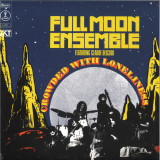
Full Moon Ensemble Claude Delcloo - Crowded With Loneliness

Comet Records present the first release out of the Comet new reissue series with this cult French Free Jazz LP from 1974, Crowded with Loneliness by Full Moon Ensemble was produced by Claude Delcloo, check the classic ‘Samba `Miaou’, like a lost Pharoah Sanders tune mixed with politically-engaged French poetry! The whole LP is varied, avant-garde and spiritual and now available as Vinyl LP with Gatefold cover, set to become collectible as the original is impossible to find.

нет на складе

Закажите сейчас, и мы закажем товар для вас у нашего поставщика.

22,65

Последний логин: 2 г. назад
Продуктов на странице:
N/ABPM
Vinyl